
Ask brides what they pictured and plenty will say hair down. Ask what they actually wore, and a lot of them ended up in a low updo. It keeps hair off the neck through a warm afternoon, it gives a veil comb something solid to grip, and the back of your head, which is what guests look at for the whole ceremony, stays tidy. When I plan one at a consultation, I think about three things before the style itself: how heavy the hair is, what the neckline does, and where the veil will sit. The shapes below run from sleek to textured to braided, and with each one I’ve noted what I watch for while building it.
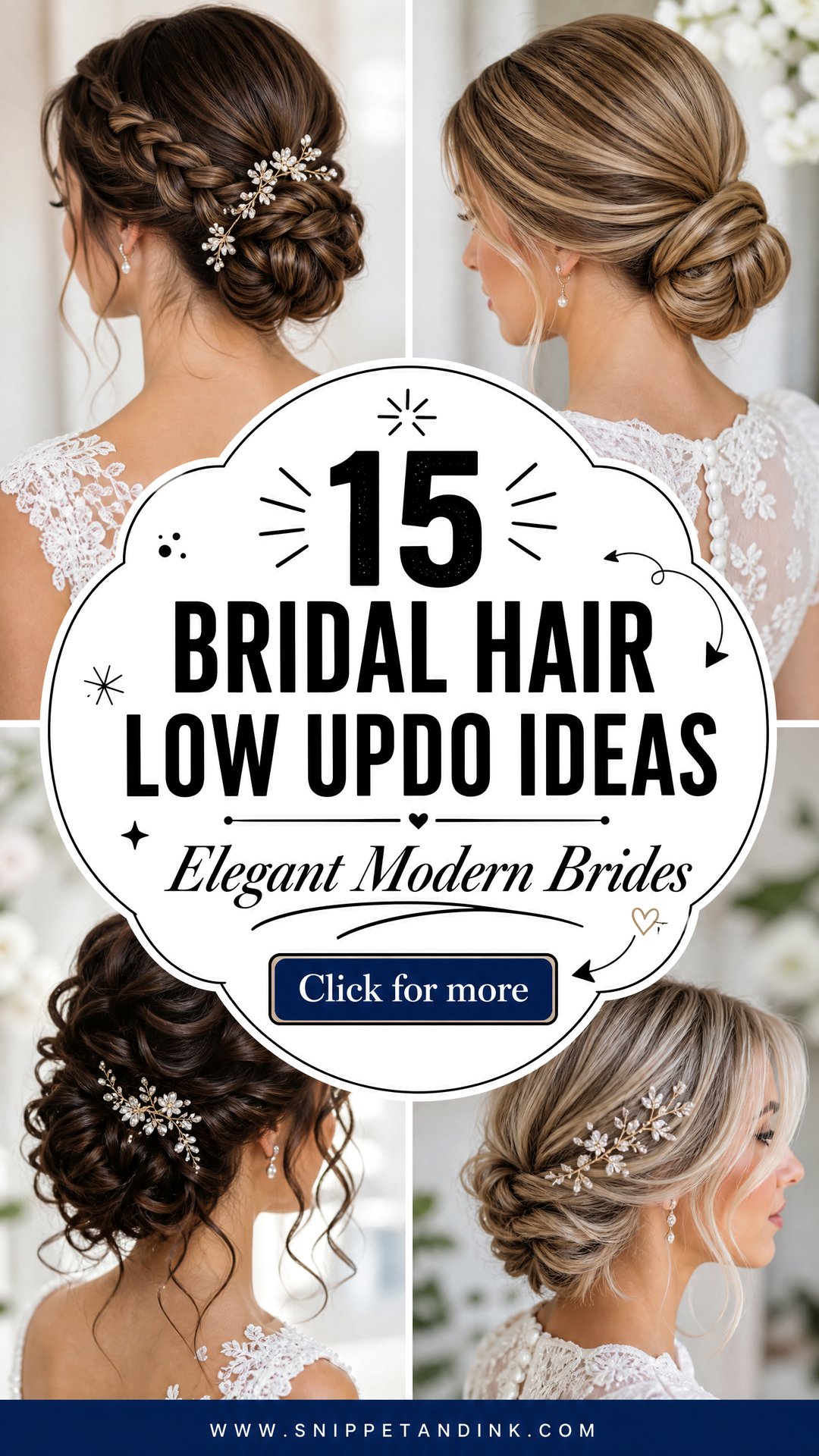
Where the Bun Sits Matters More Than Which Bun
Before you fall for a particular style, decide on height. Low covers anything from right at the nape to just below the crown, and a couple of centimetres either way changes how the whole look reads with your dress. This is the first thing I settle at a trial, before a single curl goes in.
- Right at the nape: the classic placement, and the friendliest to high necklines, collars and open backs, because the neck stays clear and the bun doesn’t push against fabric.
- Level with the ears: gives a little lift in profile and suits strapless or sweetheart gowns, where a very low bun can look like it’s resting on your shoulders.
- Off to one side: pretty with a one-shoulder dress or a deep side part, but check it from the side your photographer will shoot during the vows.
If you’re wearing a veil, tell me whether the comb goes above the bun or tucked under it, because that changes how I build the base. And take side and back photos at the trial, not just the mirror view. The back is what everyone watches while you’re at the altar.
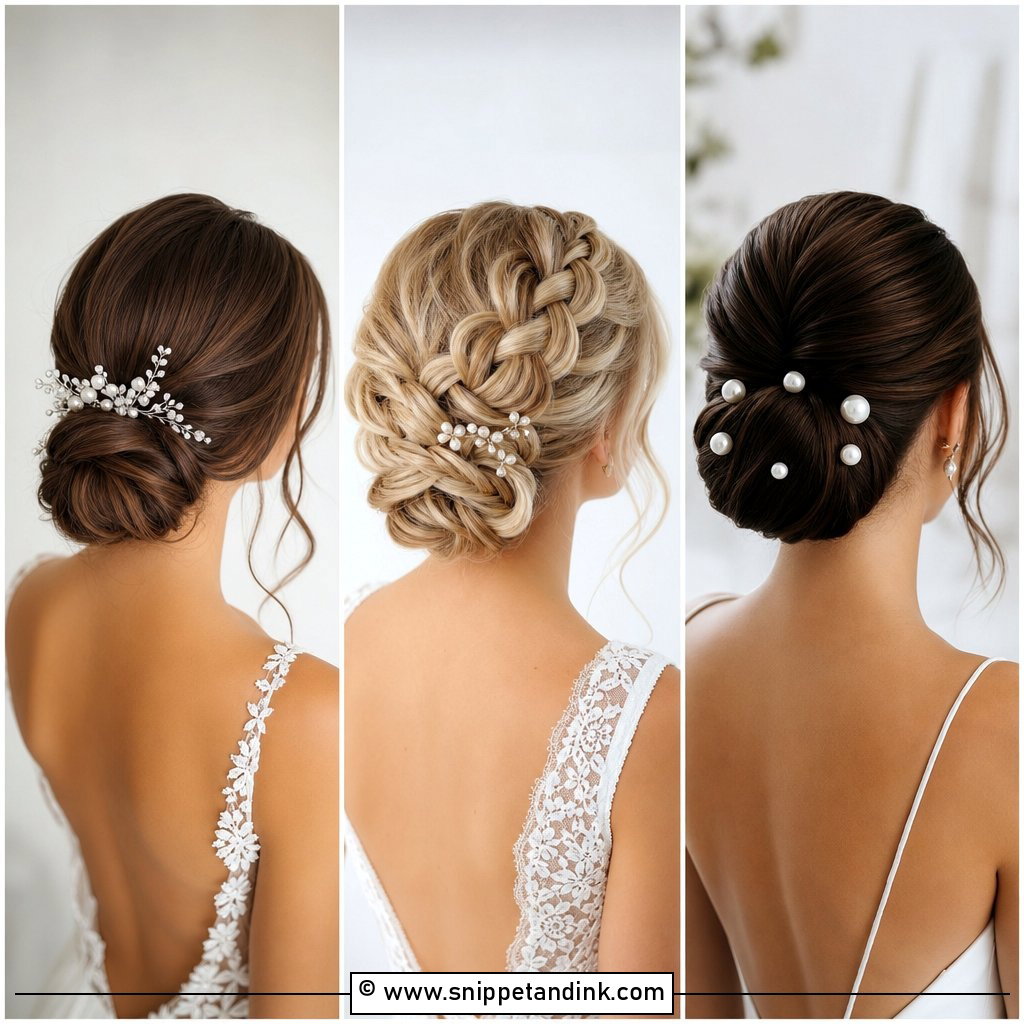
1. Soft Textured Bridal Low Bun
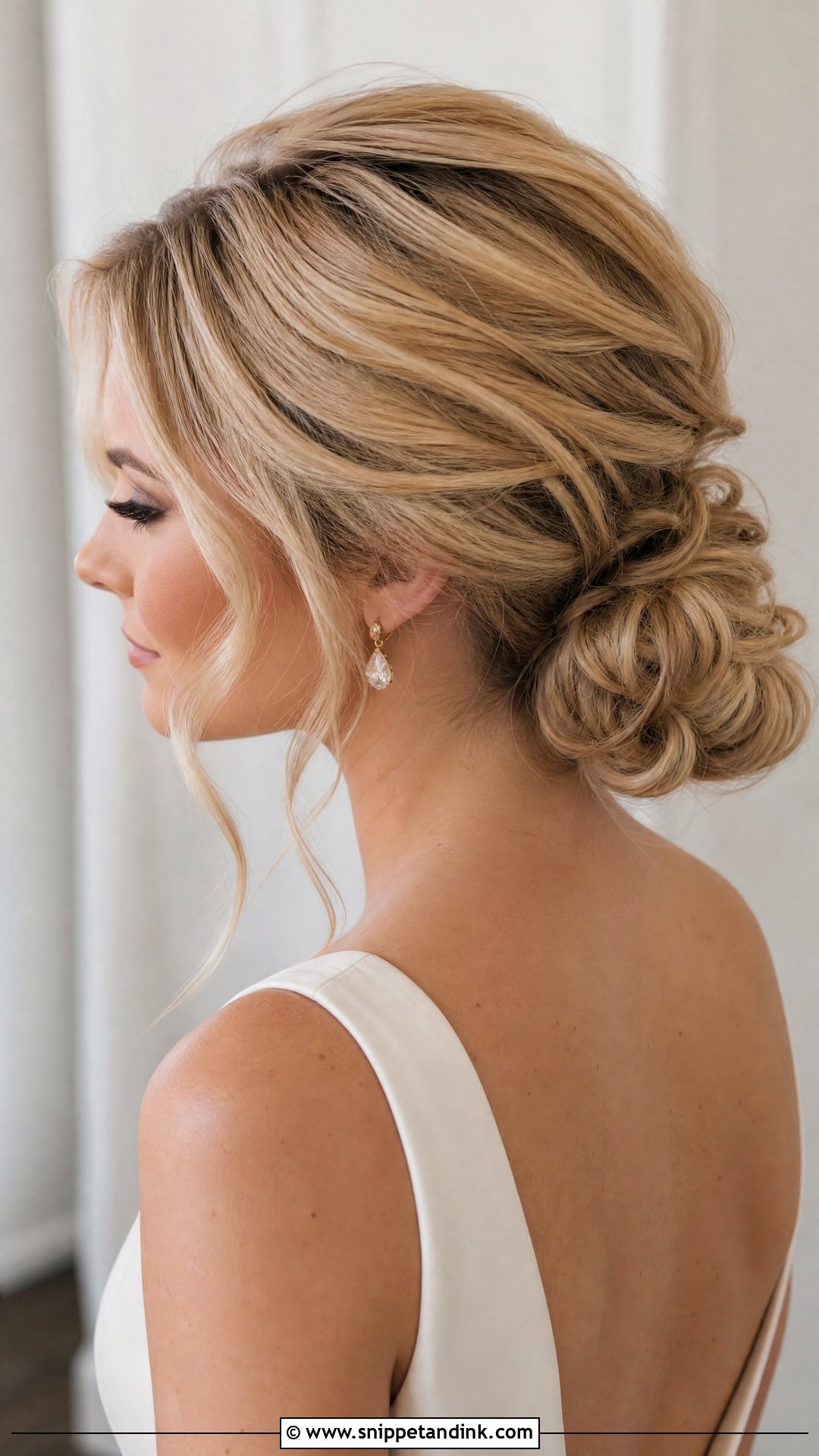
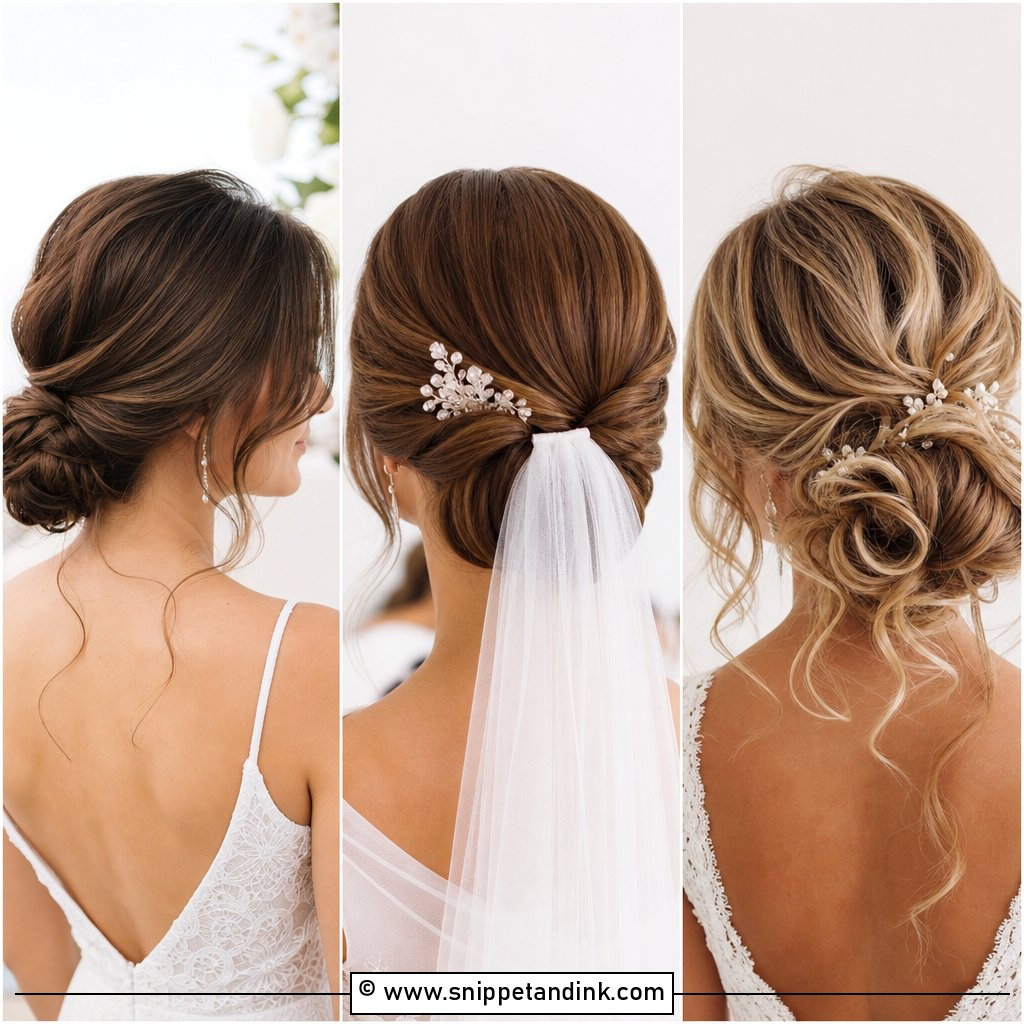
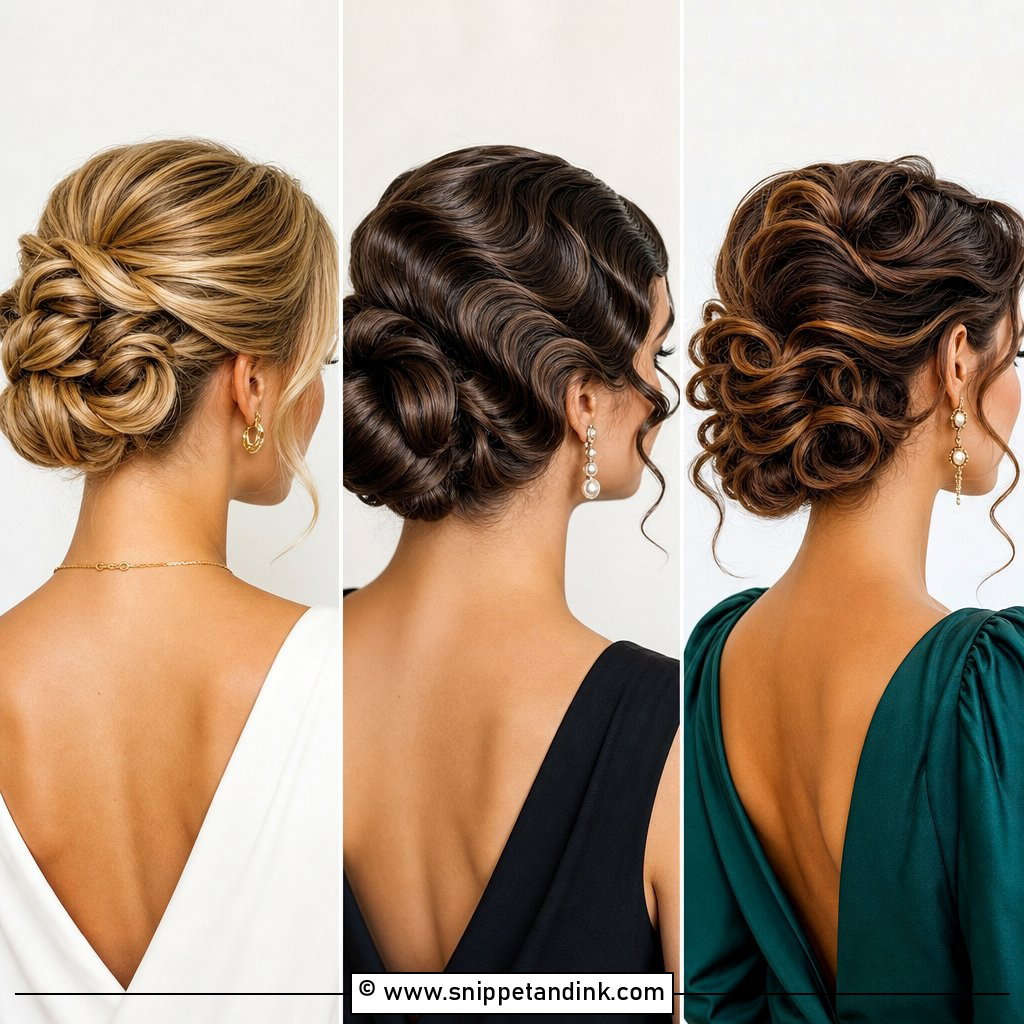
Soft texture is the hardest finish to fake, because it has to look loose while every section is pinned. I curl the hair first and let it cool completely before I touch it; brushing out warm curls is how texture turns into frizz by lunchtime. The bun sits at the nape with a little lift through the crown, and medium to long hair gives me enough length to wrap without the ends poking out. A couple of face-framing pieces soften the jaw. When you brief your stylist, say “soft texture, not messy.” Those two words get very different results.
2. Sleek Bridal Low Chignon
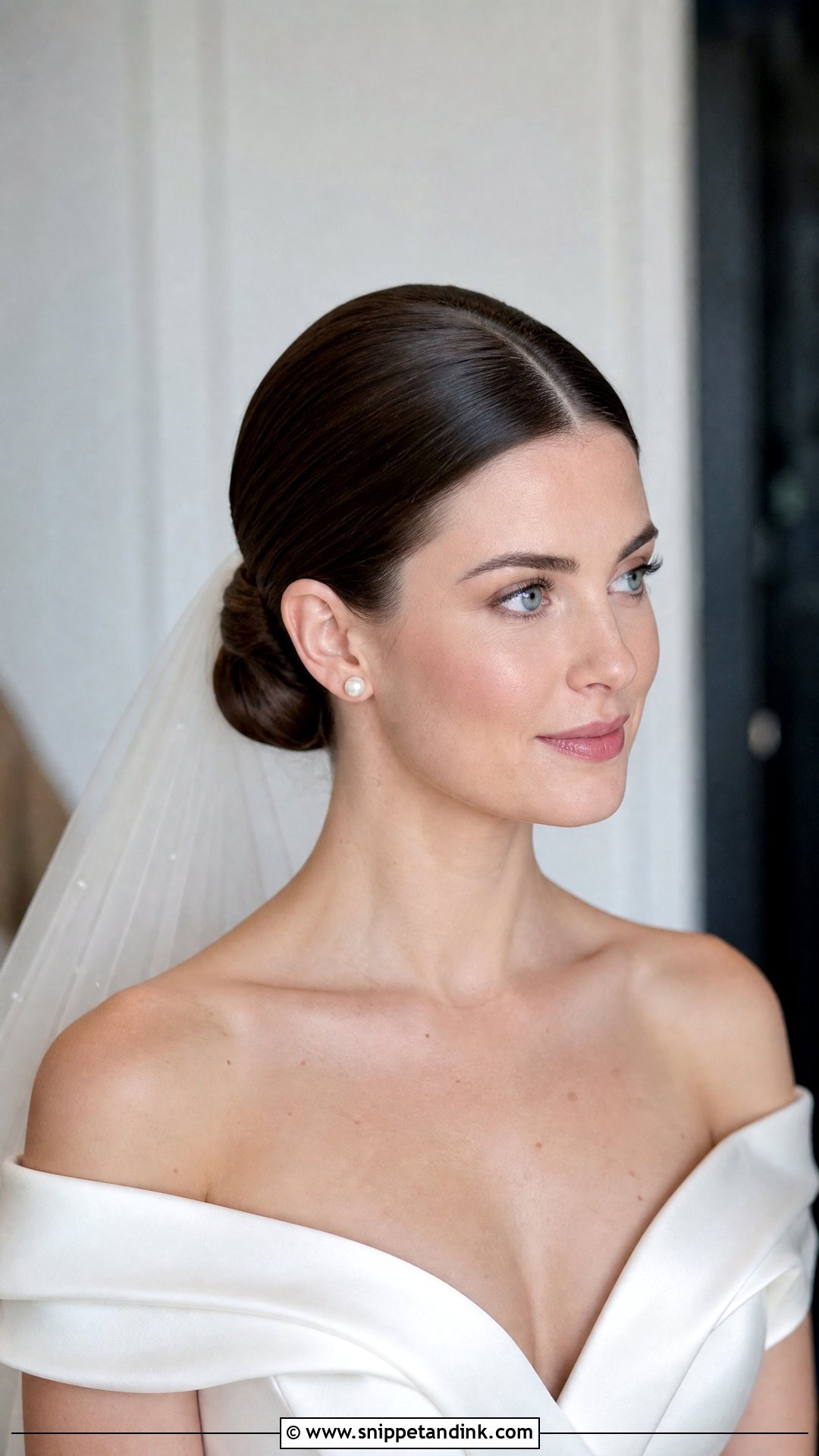
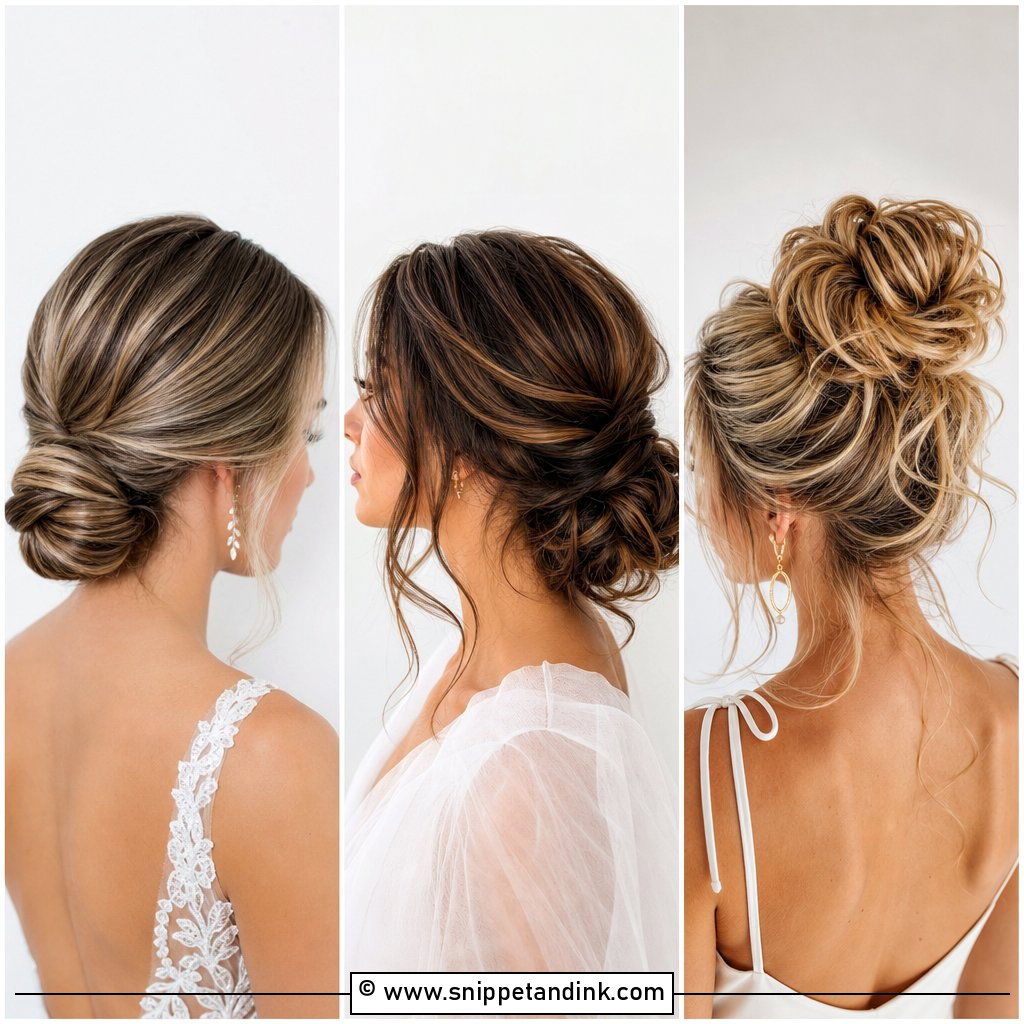
Nothing hides in a sleek chignon. Every bump, every flyaway at the hairline and every pin shows, so I’d only book it if you’re happy to sit through a longer smoothing stage. The hair is parted cleanly or brushed straight back, then wrapped into a neat chignon at the nape. It sits well with satin, high necks and off-the-shoulder gowns, where a busy hairstyle would fight the clean lines. I set it with a flexible hold rather than a hard lacquer, so it doesn’t crack into strands when you turn your head.
3. Romantic Bridal Low Updo With Face Framing Pieces
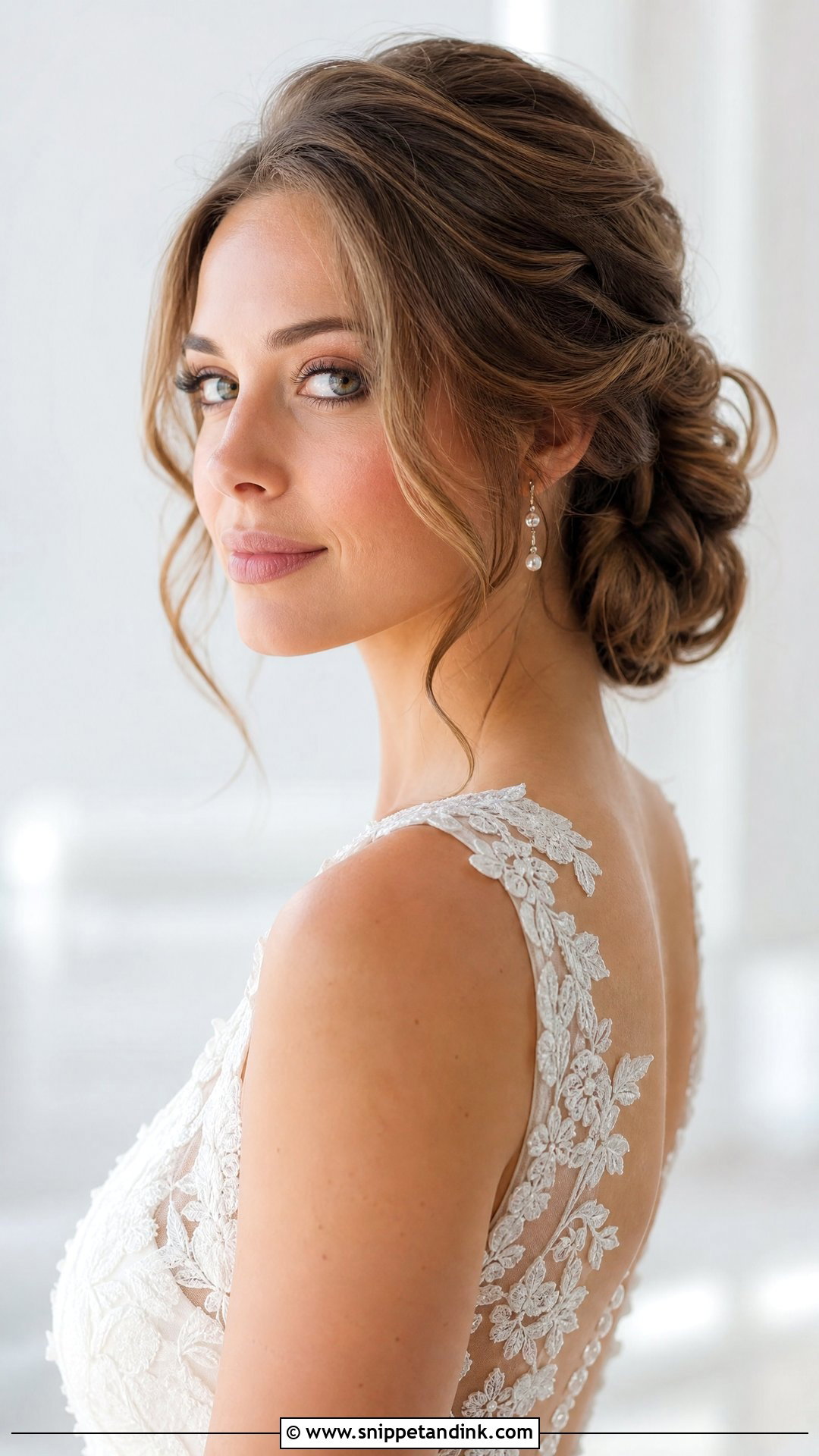
Face-framing pieces decide whether a low updo looks intentional or looks like it’s falling out. I settle it by length: pieces that end at the cheekbone lift the face, while pieces that hang to the jaw can drag a round face down. The rest of the hair sits low and loose, and I wave the front sections in the same direction as the bun so they read as part of it. If a fully slicked-back look makes you feel exposed, this is the gentler route. I pin those front pieces out of the way while makeup goes on and release them last, so they still have spring in them.
4. Braided Bridal Low Bun
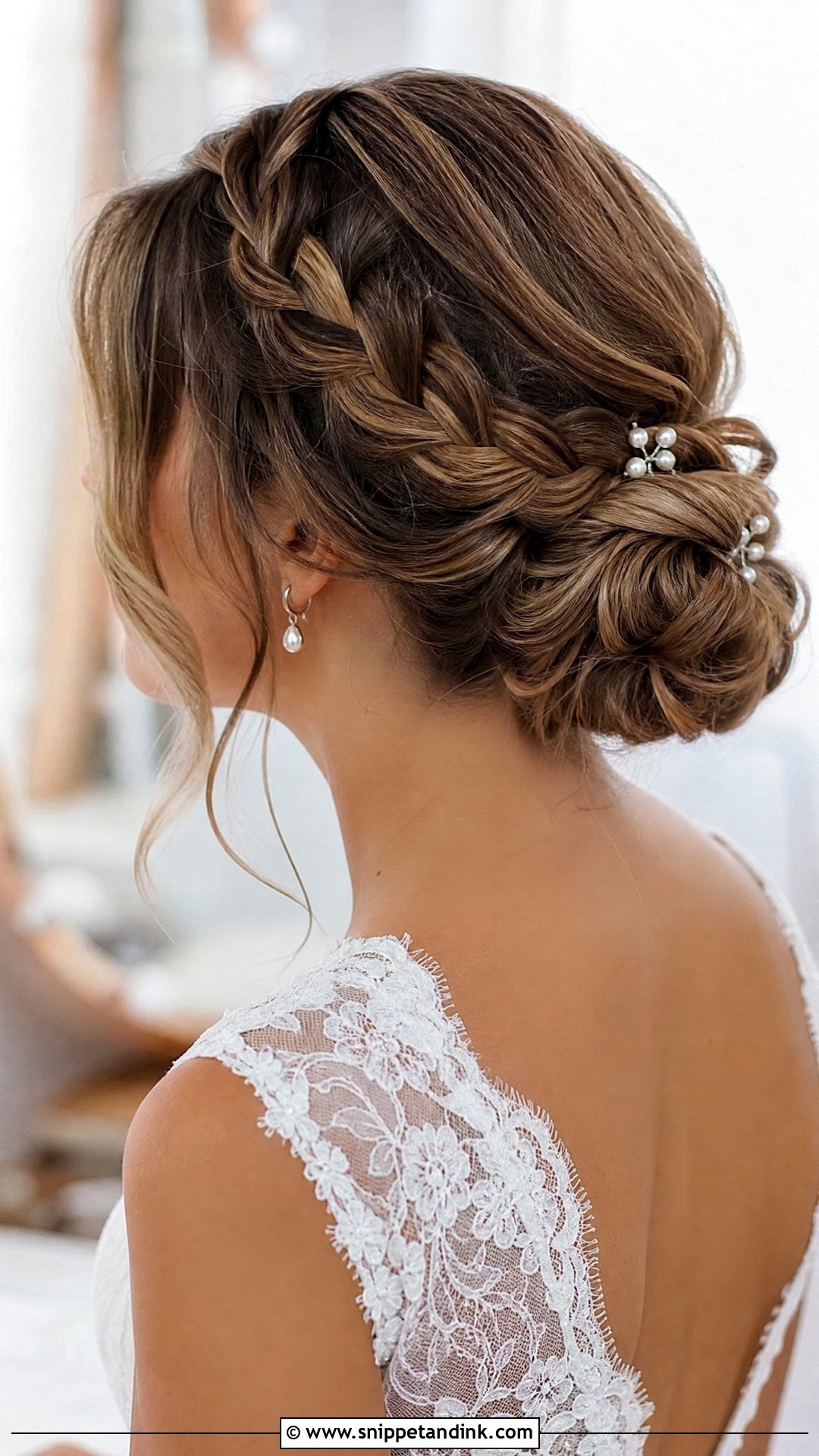
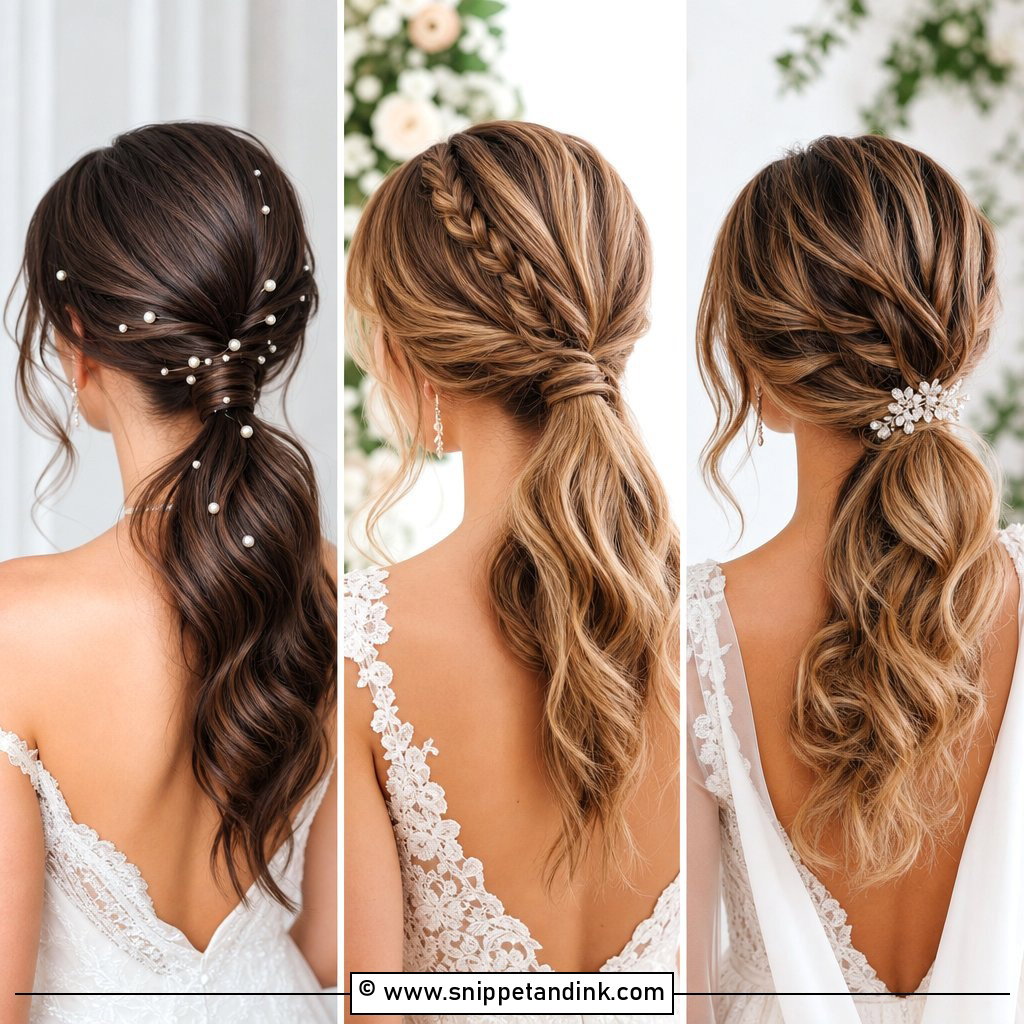
A braid gives a low bun a built-in grip. It can run along the crown, be wrapped around the bun, or be woven into the knot itself, and wherever it sits it locks sections together, which is why I reach for braids at outdoor weddings. Highlights and balayage show up well here because each strand crosses the light at a different angle. I loosen the braid gently after it’s pinned, not before. A pancaked braid is much harder to anchor.
5. Twisted Bridal Low Updo
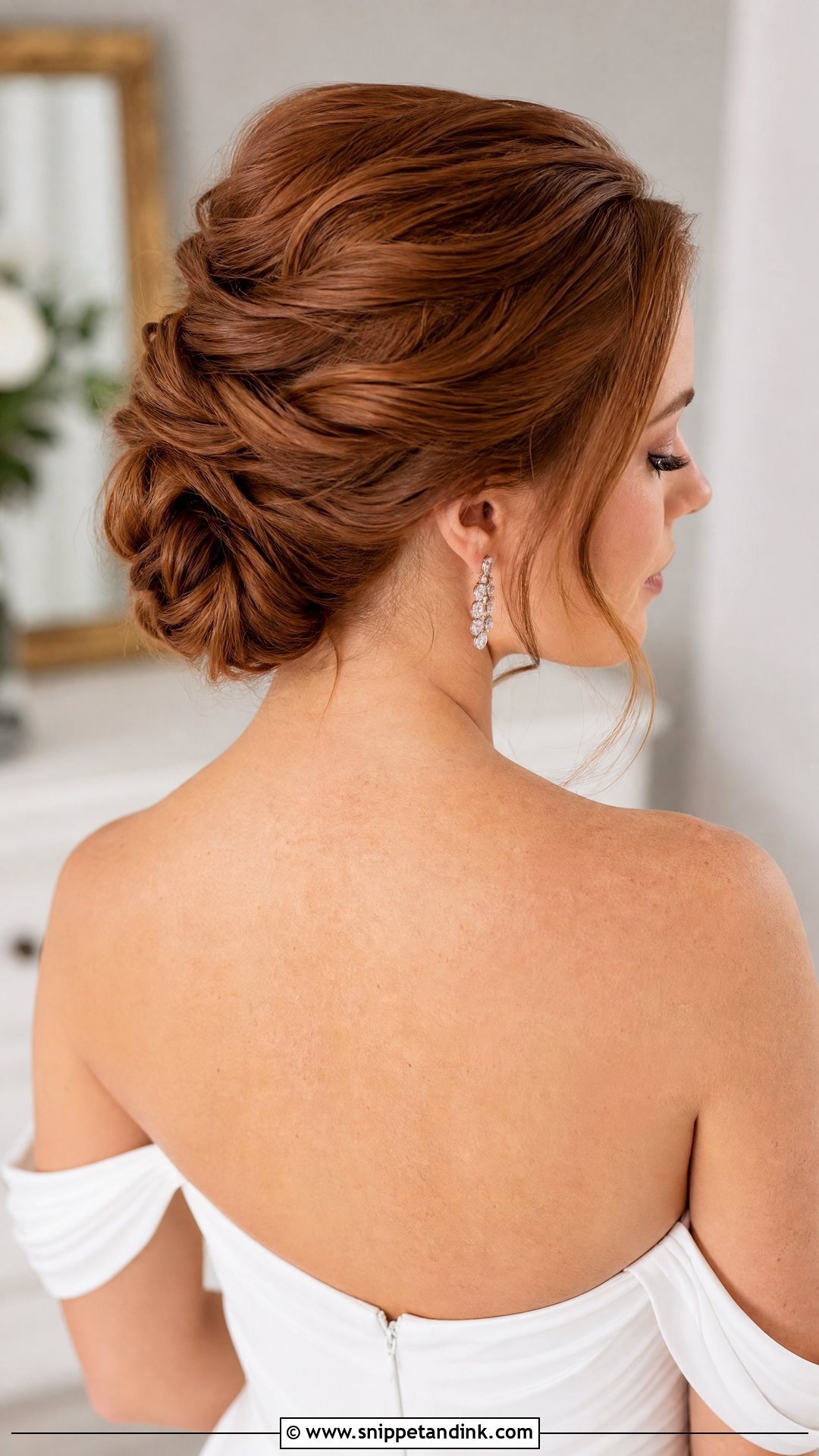
Twists give you detail without the obvious pattern of a plait. I take a section from each side, twist it toward the nape and pin it into a low bun or knot, overlapping them so each set of pins hides under the next twist. That firm, low base is a good seat for a veil comb. Since your guests mostly see the back of your head during the vows, I check the twists from behind with a hand mirror and even out any side that came out thicker. Ask for the ends tucked inside the bun; a loose end on a twist starts unwinding by the evening.
6. Messy Bridal Low Bun
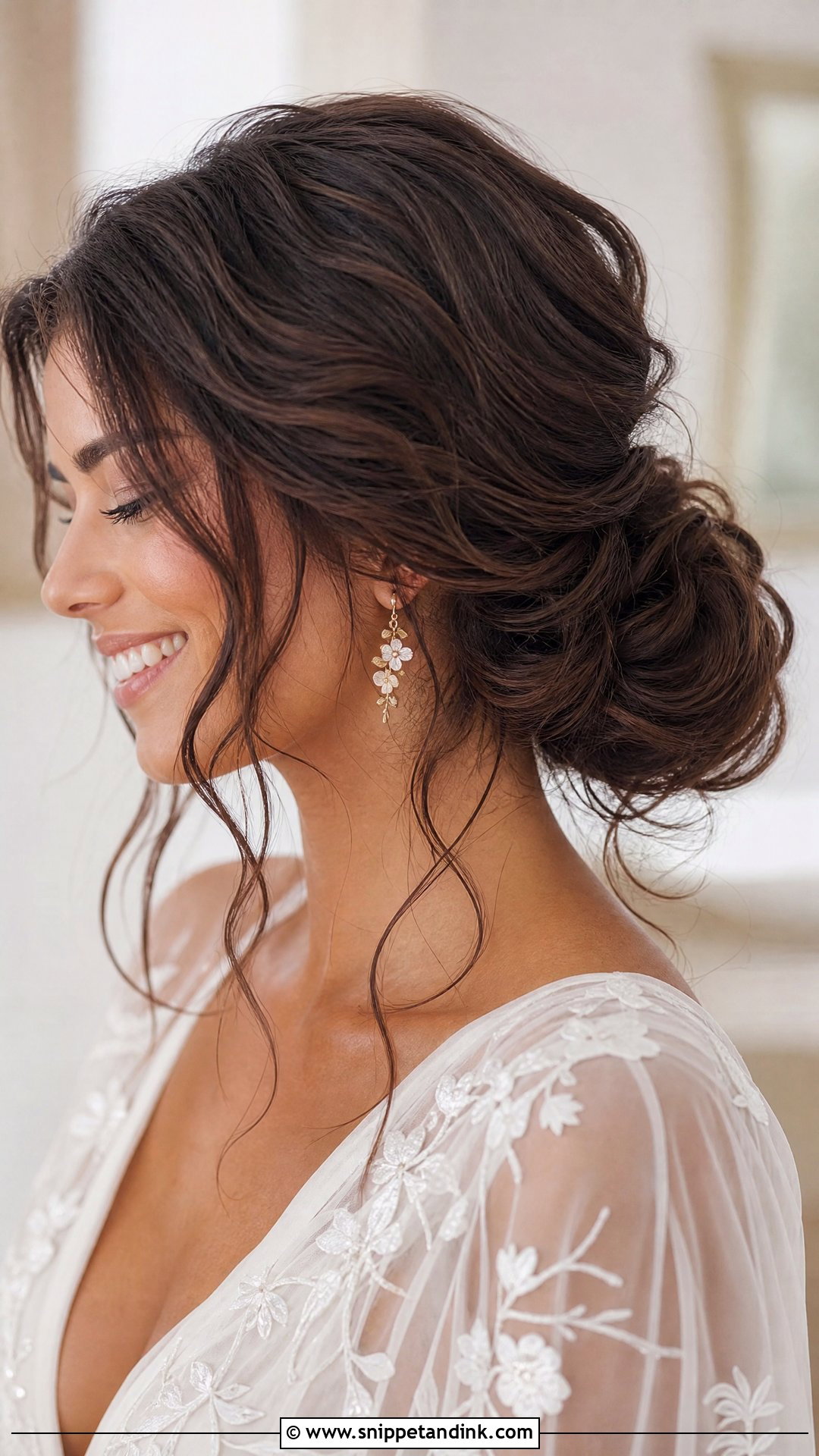
The messy low bun is the one I spend longest on, which surprises people. Under the pulled-out pieces there’s a secure base, usually a small hidden ponytail or a cross of bobby pins, because a bun that’s loose all the way through slides down the neck before the speeches. It suits boho, garden, beach and barn weddings. What separates undone from unfinished is shape: the bun still needs a clear outline and a bit of shine on the surface. A comb, a veil or a few tiny pearl pins is enough to finish it.
7. Classic Bridal Low Knot
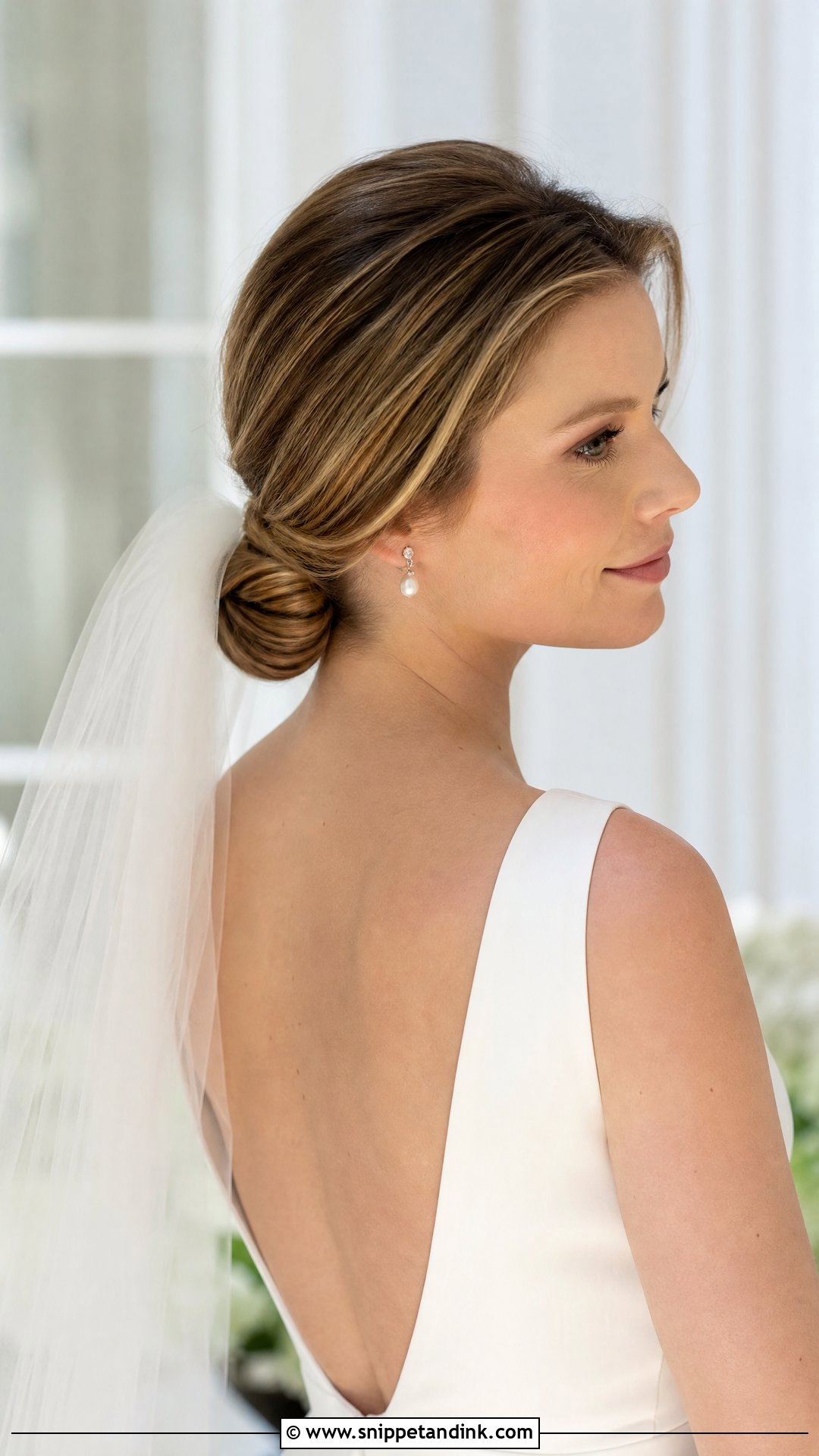
A low knot sits between the messy bun and the sleek chignon, cleaner than one and softer than the other. I find it the easiest to personalise, since it takes a middle part, a side part or a swept-back front without changing the base. It handles straight, wavy, or softly curled hair equally well and doesn’t compete with lace or crepe. On very fine hair it can come out small and plain, so I’d add a padding roll or a single accessory there.
8. Side Part Bridal Low Updo
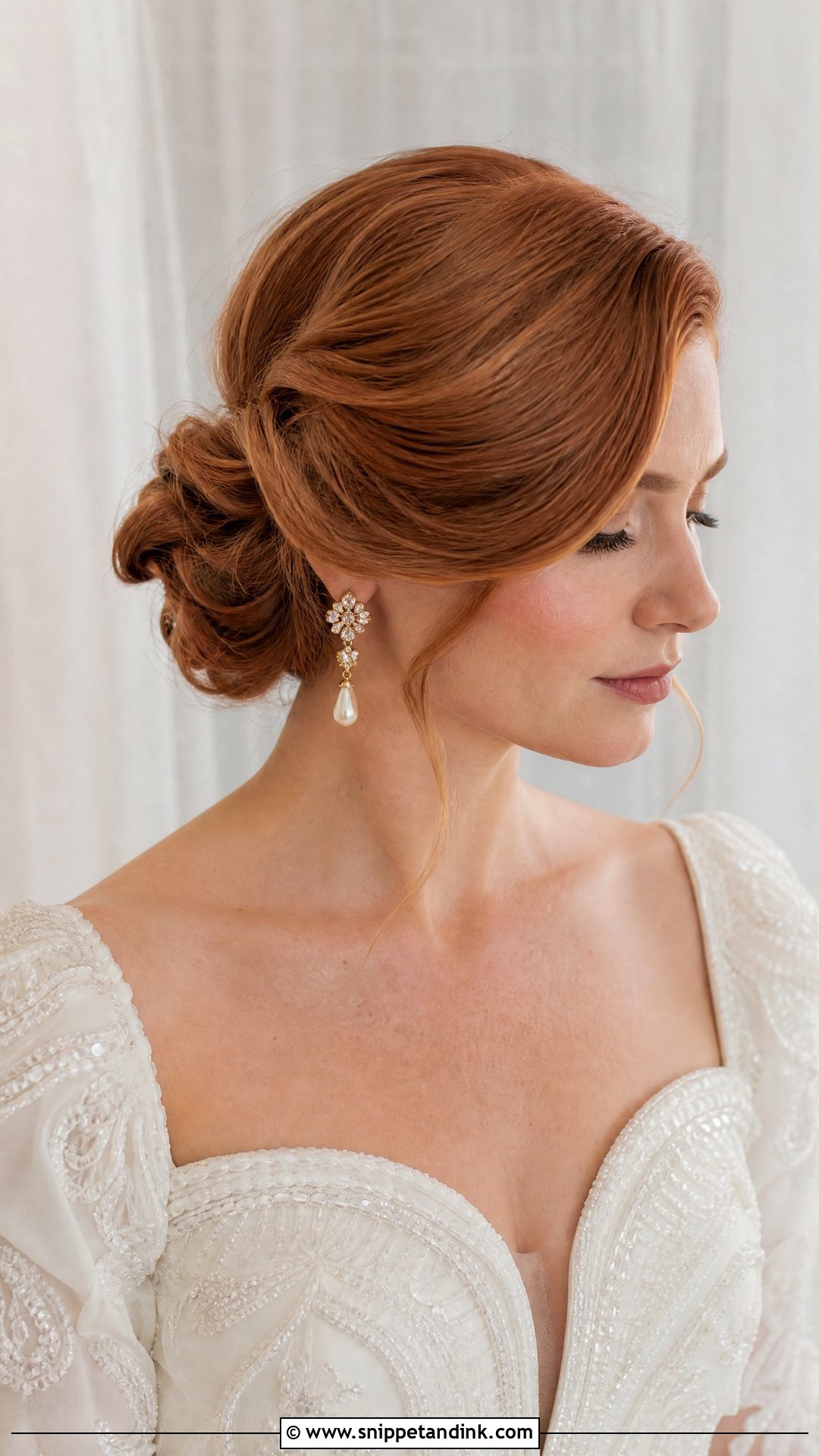
A deep side part gives a softer, slightly vintage line before the bun even starts. If you’ve worn a side part every day for years, keep it. Move it for the wedding and your face will look slightly off to you in every photo. I sweep the lighter side behind the ear and pin it, keep the heavier side smooth across the forehead, then gather everything low, placing the bun a touch off-centre toward the lighter side so the shape balances. Statement earrings sit best on the swept side, and the veil goes low, behind the bun.
9. Middle Part Bridal Low Bun
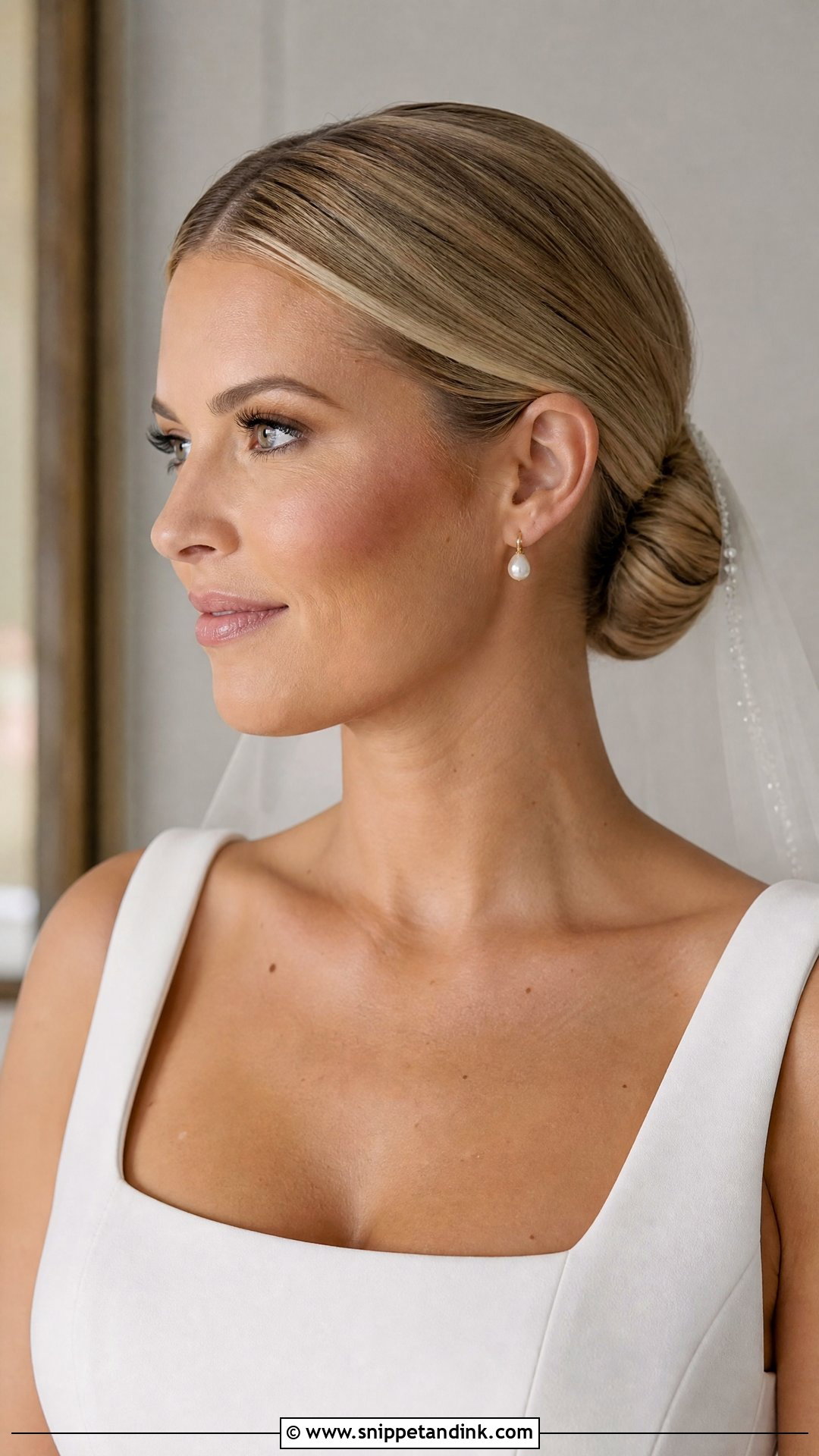
A centre part is honest. It shows any asymmetry in the face and in the bun, so I line the part up with the bridge of the nose instead of trusting my eye. It pairs with minimal makeup and a clean neckline, and it can go sleek or loosely textured. If your hair frizzes, say so at the trial: a middle part shows frizz along the line before anywhere else, and smoothing prep plus an anti-humidity finish needs to be planned, not added on the morning.
10. Pearl Bridal Low Updo
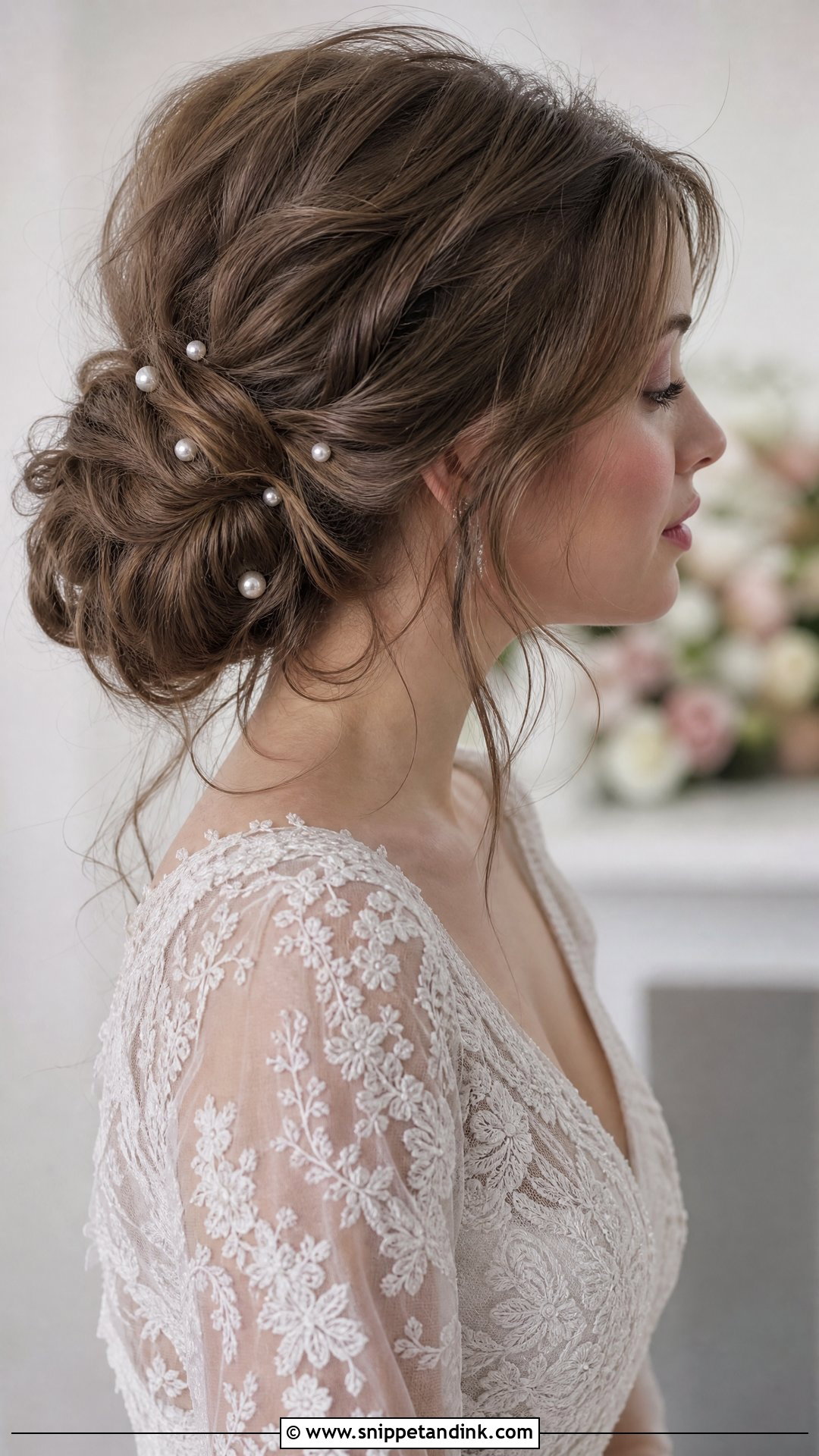
The updo underneath can be a bun, a chignon or a twisted knot. The pearls are what change it. Pearl pins catch light against blonde, brunette, auburn and black hair alike, so they still read in photos taken from the back of the aisle. Spacing is the real skill. I place them where two sections meet, so each pin also hides a join, and I group them in loose clusters rather than an even row. A scatter of thirty looks crowded and pulls the eye away from the shape; far fewer usually does more.
11. Floral Bridal Low Bun
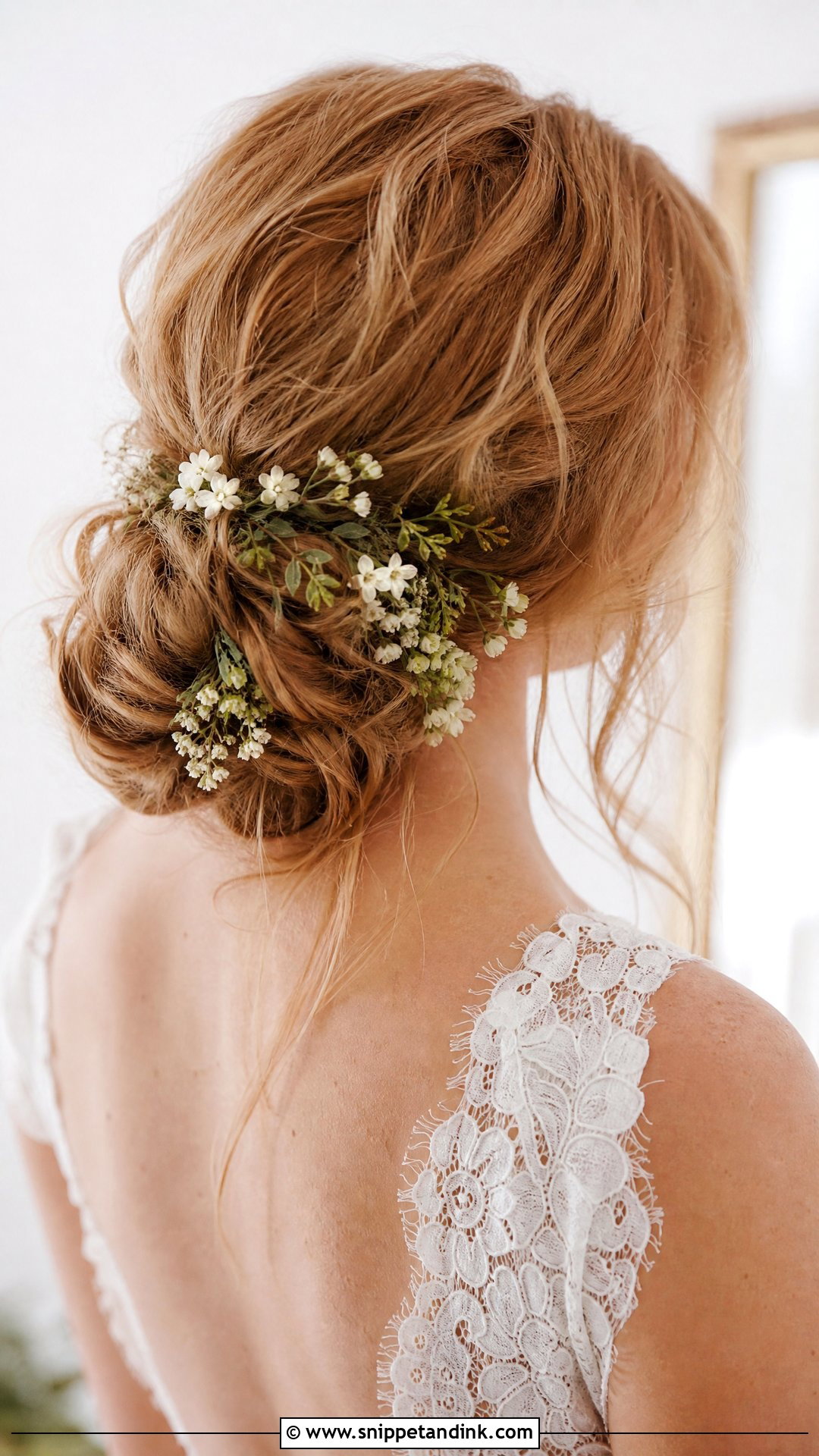
Flowers in hair wilt faster than the bouquet, because they’re out of water and sitting against warm skin. For a garden or summer wedding I ask the florist for hardy blooms such as spray roses, wax flower or small orchids, wired and taped, and I add them right at the end. Soft petals like gardenia bruise brown within hours. Silk flowers sidestep all of that and are easier to fix to a comb. Whichever you choose, keep the flowers smaller than the bun so it never looks like the arrangement is wearing you.
12. Low Updo For Bride With Veil
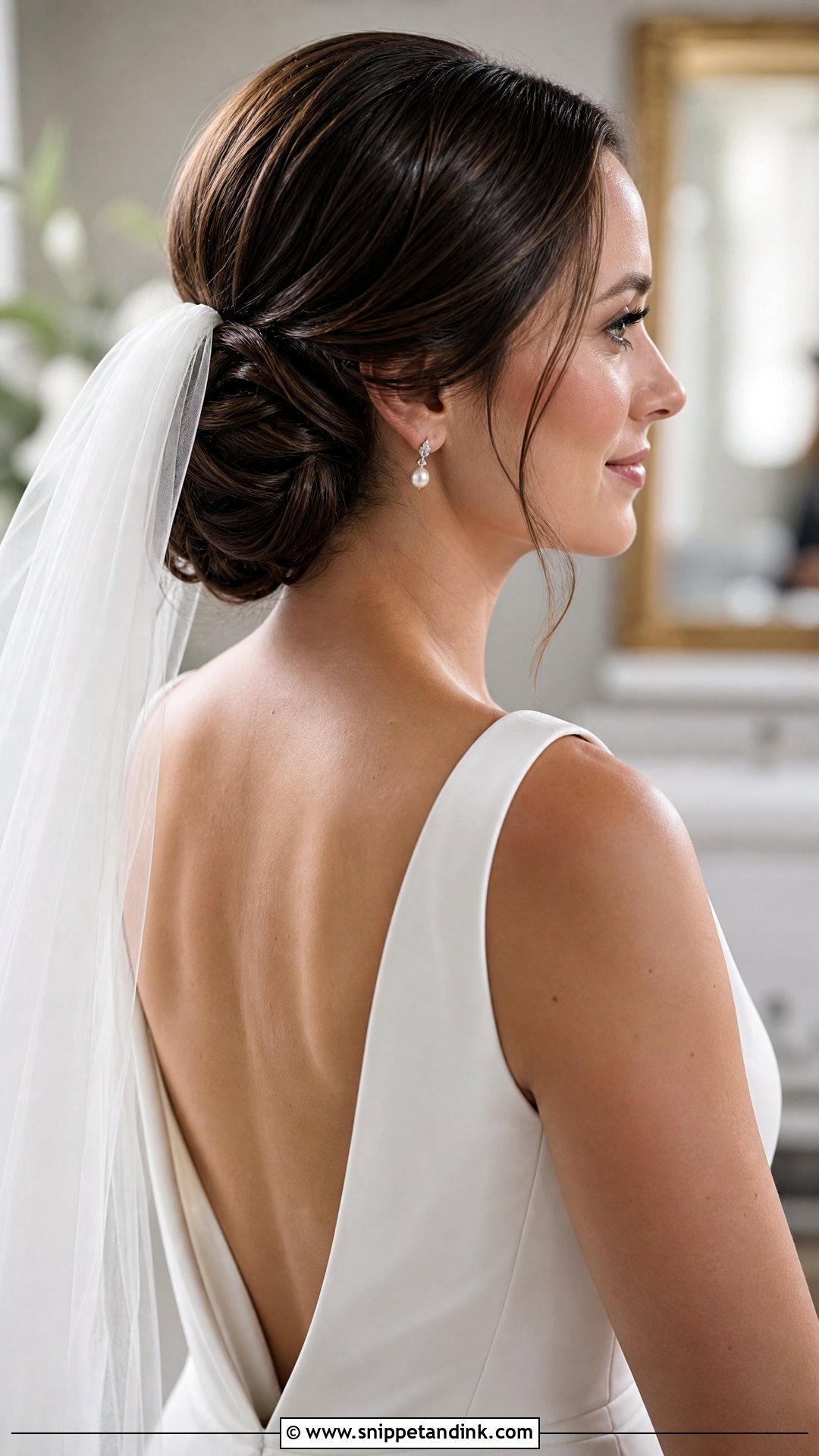
A low updo gives a veil comb the steadiest base you can get, because the comb slides into a dense, pinned section instead of loose hair. Sleek, braided, twisted or textured all work; what matters is that the bun is firm exactly where the comb goes. Once the veil comes off after the ceremony, the back of the gown is clear again. Bring your actual veil to the trial, or a comb of similar weight, and I’ll pin it in and have you walk, turn and sit. A cathedral-length veil drags hard on the comb, and that’s when it needs a crisscross of pins underneath.
13. Curly Bridal Low Updo
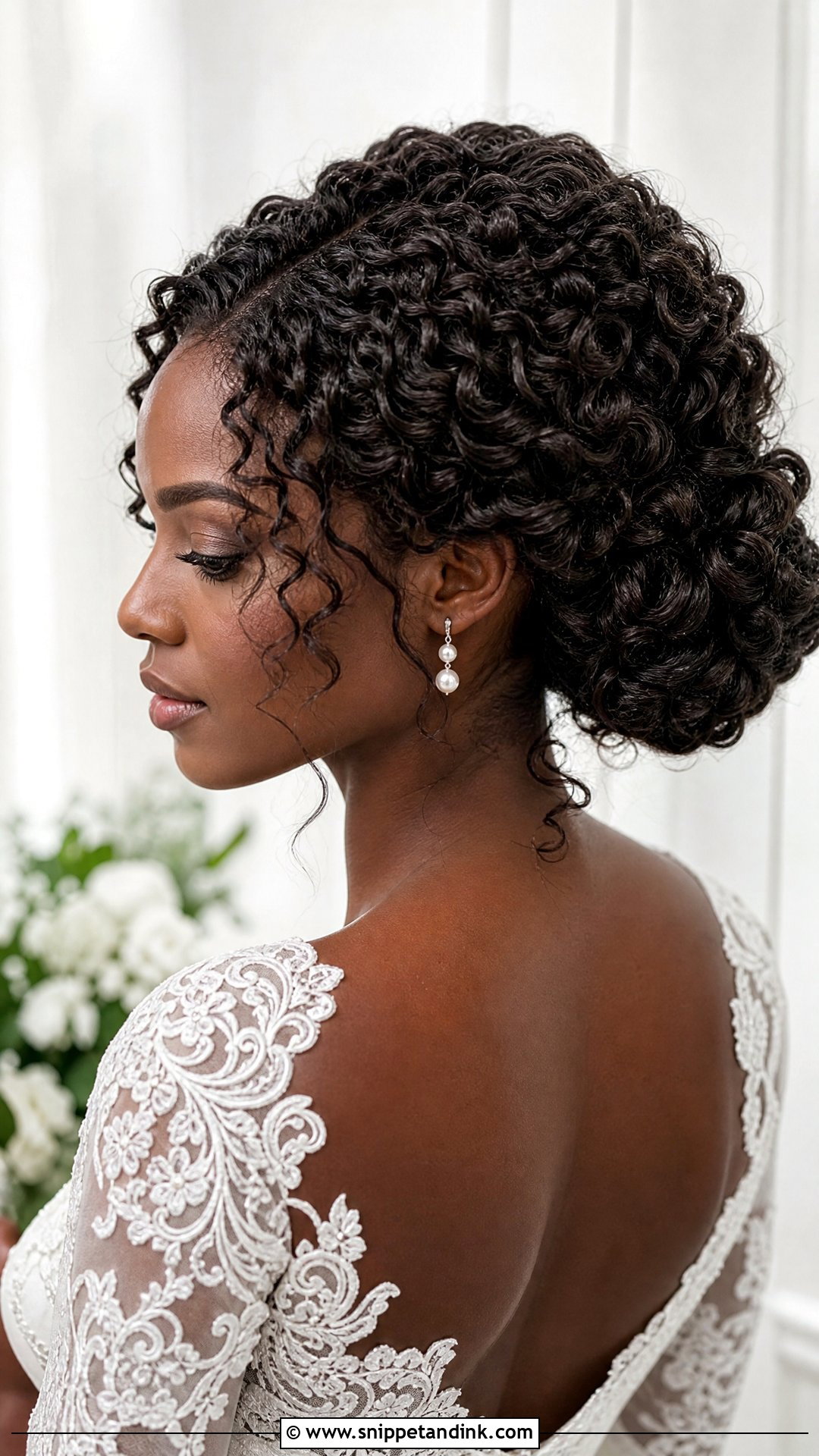
Brushing curls out to make them easier to pin is the mistake I see most often. With natural curls I work with the pattern: define them while damp with the products you already trust, then gather and pin in larger sections so the curl stays visible inside the bun. Naturally curly, wavy, or curled hair brings its own volume, so it rarely needs padding or extra accessories. Humidity is the main risk, and a good seal of gel or curl cream matters more here than hairspray. I leave a few defined pieces at the face and the nape.
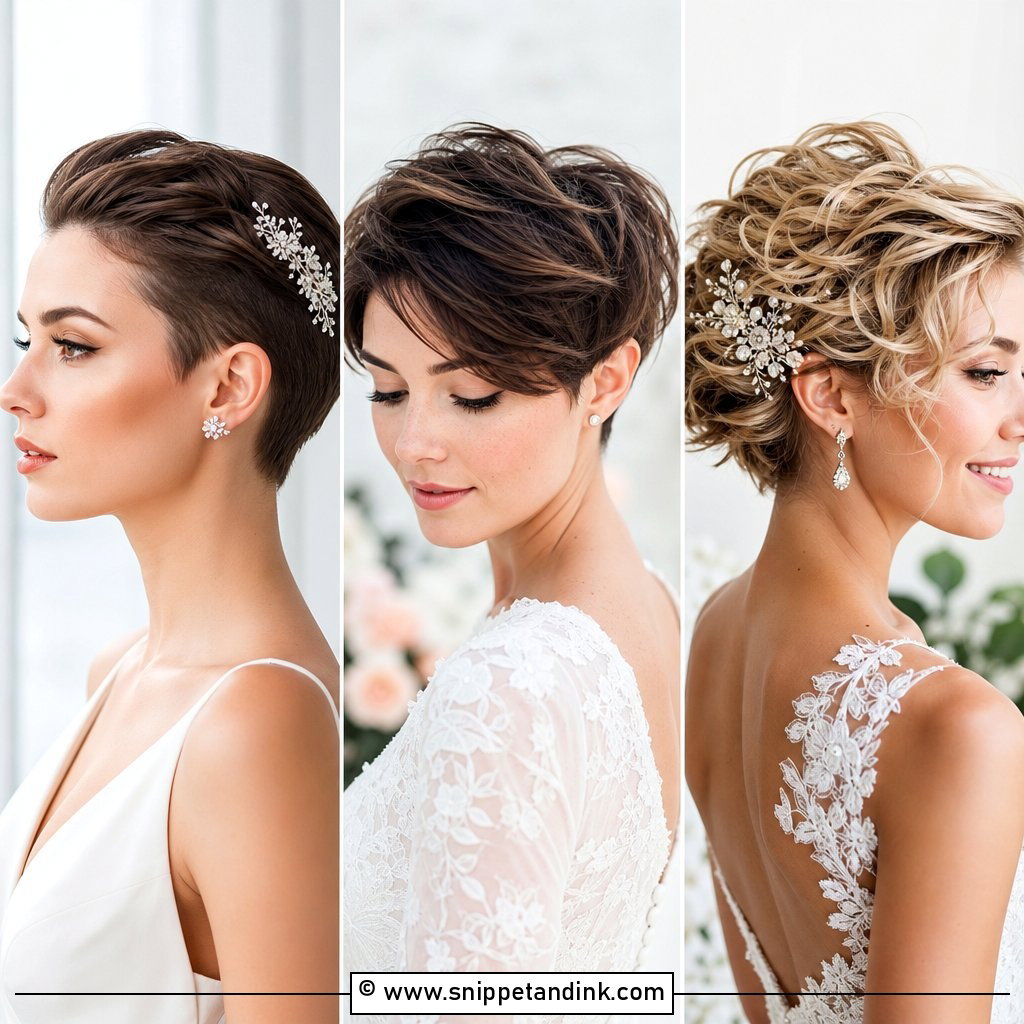
14. Short Hair Bridal Low Updo
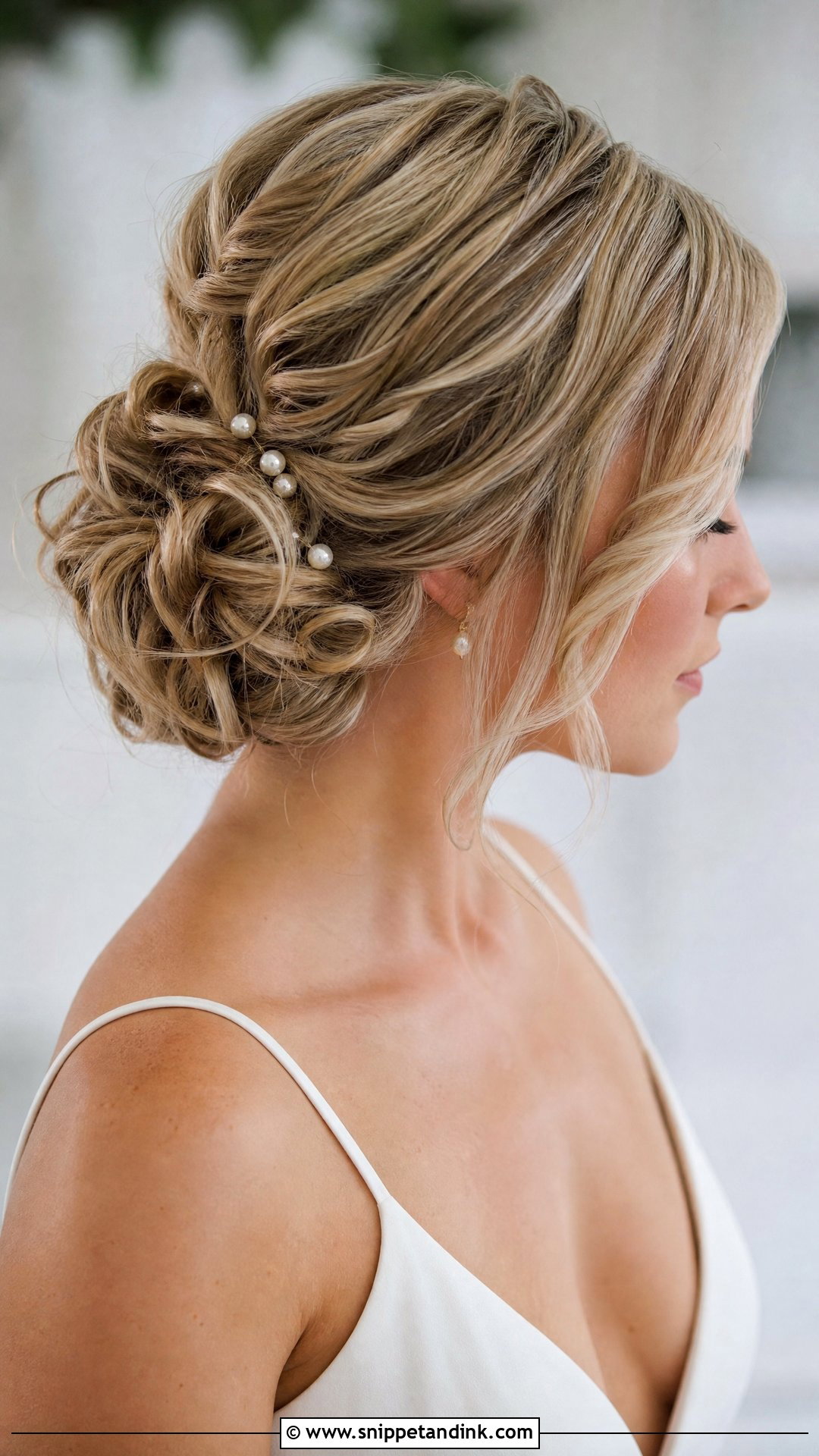
Hair at chin length or longer can usually make a low pinned shape. Shorter than that, I’d suggest a faux chignon with a small clip-in piece. I curl everything first for grip, then tuck smaller sections up and under, pinning each one in a cross. Short layers at the nape are the weak spot, so expect a little spray and a few extra pins there. A mini comb or a fingertip veil hides the joins well. The shape will be smaller than in a long-hair photo, and that’s fine; forcing a big bun out of a bob only makes it heavy and lumpy.
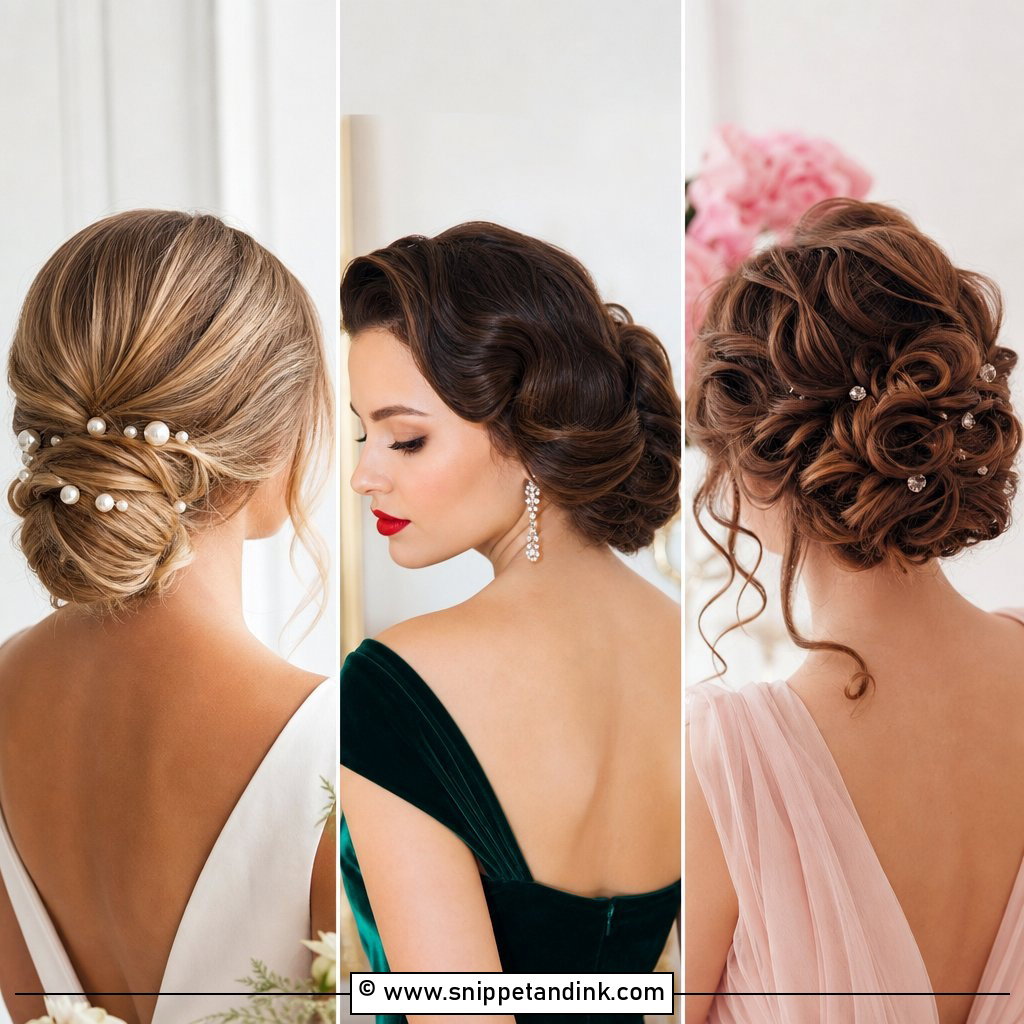
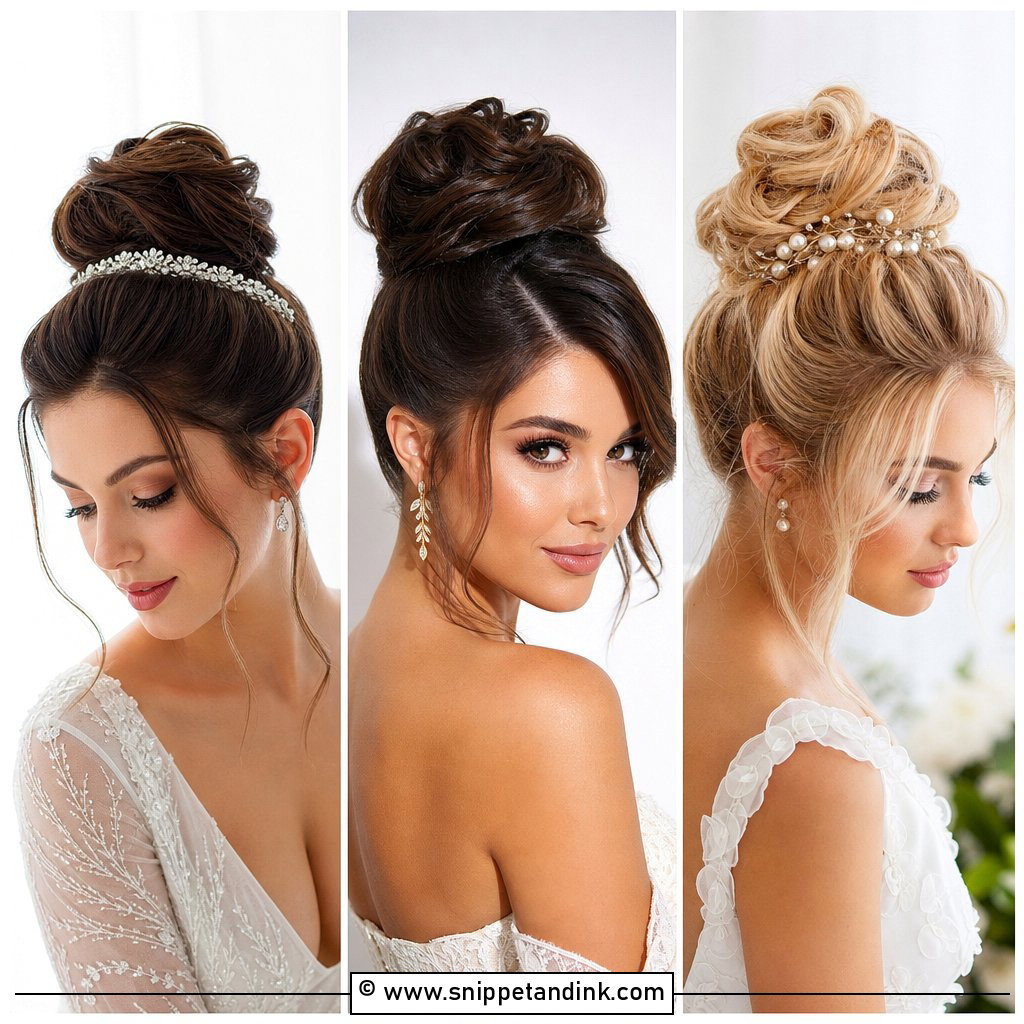
15. Low Updo For Long Bridal Hair
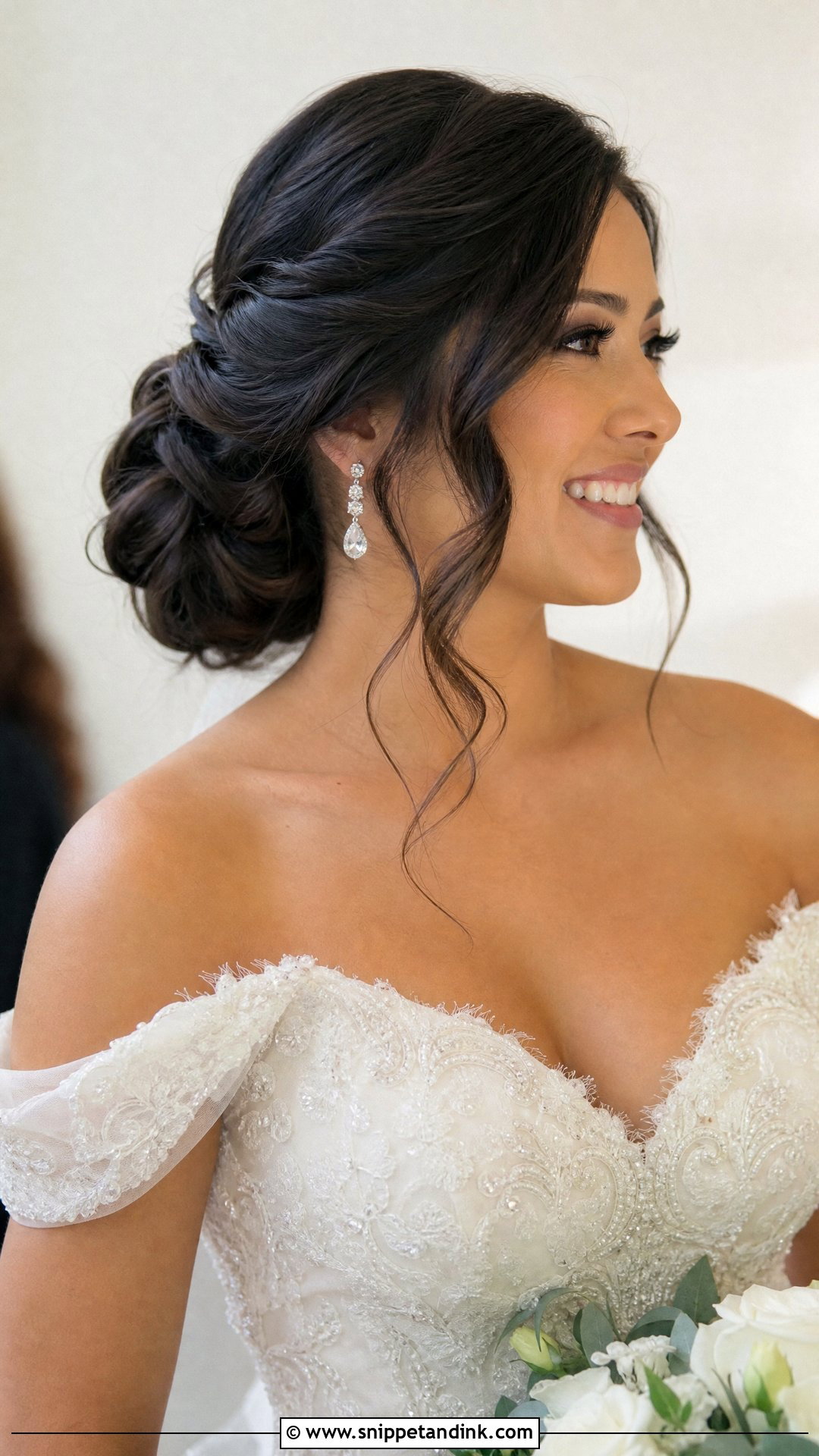
Long, thick hair weighs more than people expect once it’s all pinned at the nape, and that weight is behind most mid-afternoon headaches. I build it in sections, two or three smaller knots that interlock, so the load spreads across more pins. Depending on the gown it can go loose and romantic or sculpted and smooth. If a heavy ponytail has ever given you a headache, mention it at the trial. That one detail changes how I’d anchor the whole style.
Second-Day Hair Holds Pins Better Than Fresh Hair
A low updo is only as secure as the hair it’s built on. Squeaky clean, freshly conditioned hair is slippery, and pins tend to walk out of it within a few hours. I ask for hair washed the day before, or the night before at the latest, dried smooth with no heavy oils or leave-in creams.
- Skip a deep conditioning mask in the last two days unless your stylist asks for one. It feels nice, then nothing grips.
- If your hair is fine or thin at the nape, ask about a small clip-in piece or a padding roll. It gives the pins something solid to anchor into and fills out the bun from behind.
- Have any colour or trim done two to three weeks ahead. A fresh cut can leave short layers that poke out of a smooth chignon.
- Arrive with dry hair in a loose clip, not a tight elastic, so there’s no dent to fight.
Will It Hold Through the Hugs, the Wind and the Dancing?
Low updos are among the hardiest styles you can wear, but they have weak spots. The biggest is weight, which I’ve covered above. The second is hugging. Every guest who leans in brushes the back of your head, and that’s how a soft bun slowly flattens on one side. A quick look in the bathroom mirror after the receiving line catches most of it.
Wind mostly tugs at the face-framing pieces. For a clifftop or beach ceremony I cut those a little shorter or pin them back for the vows and let them down later. Give whoever holds your bag a tiny kit: six or eight bobby pins in your shade, a travel hairspray and a small mirror. With that, most slips take under a minute to fix.
A Low Updo Only Works If You Trial It First
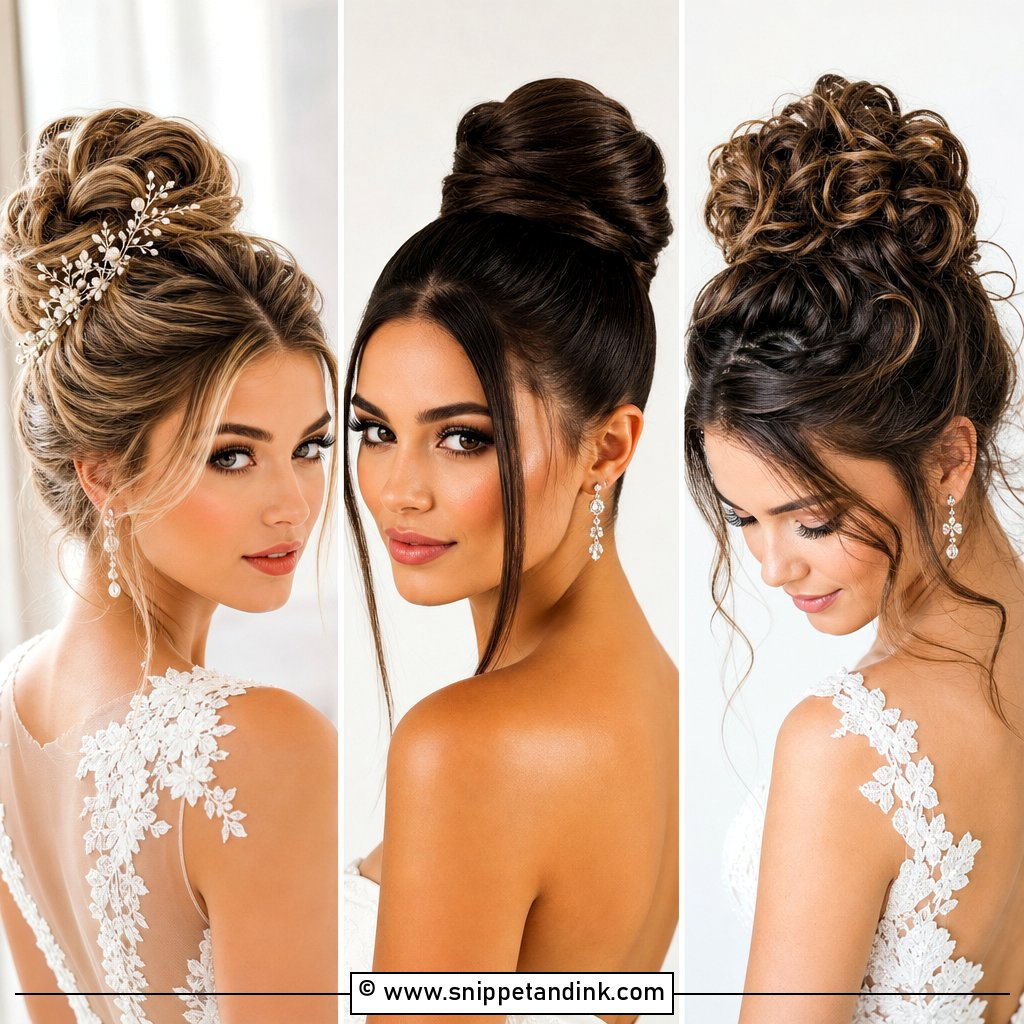
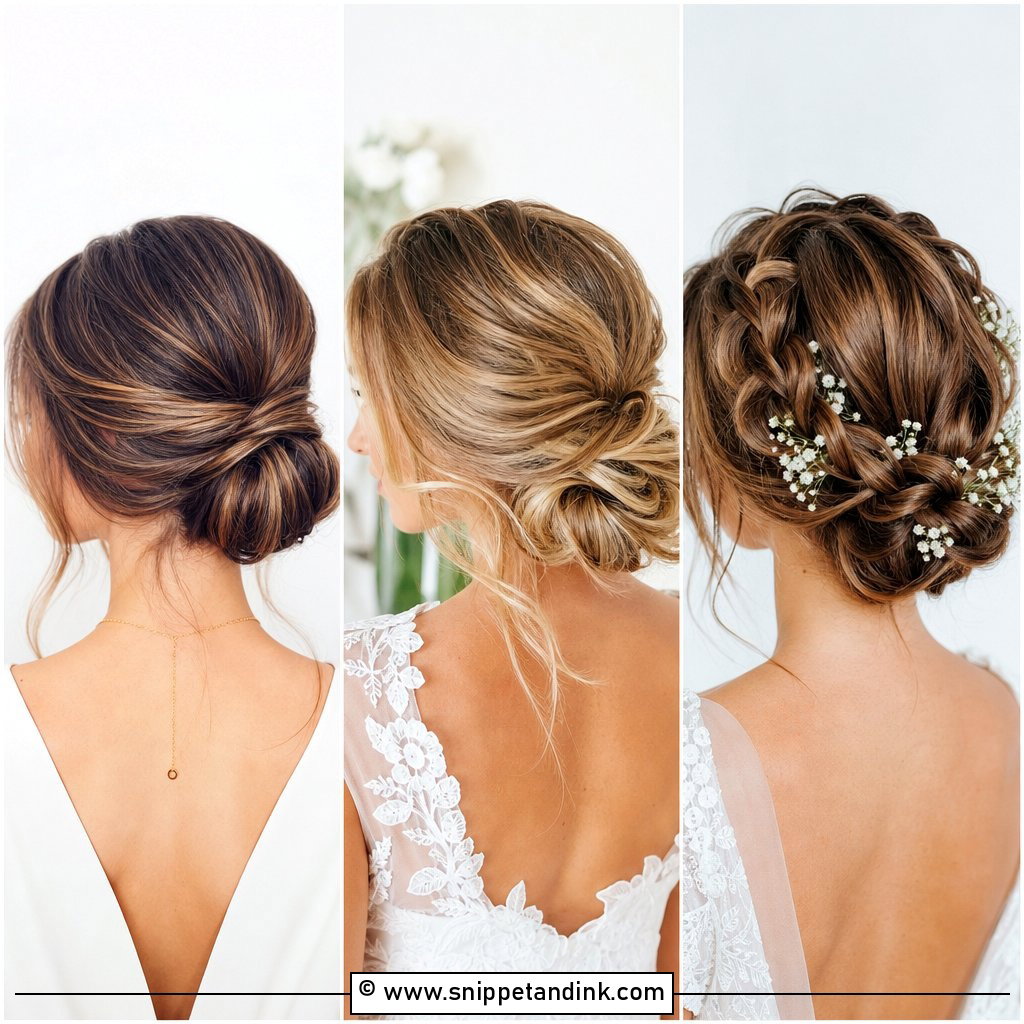
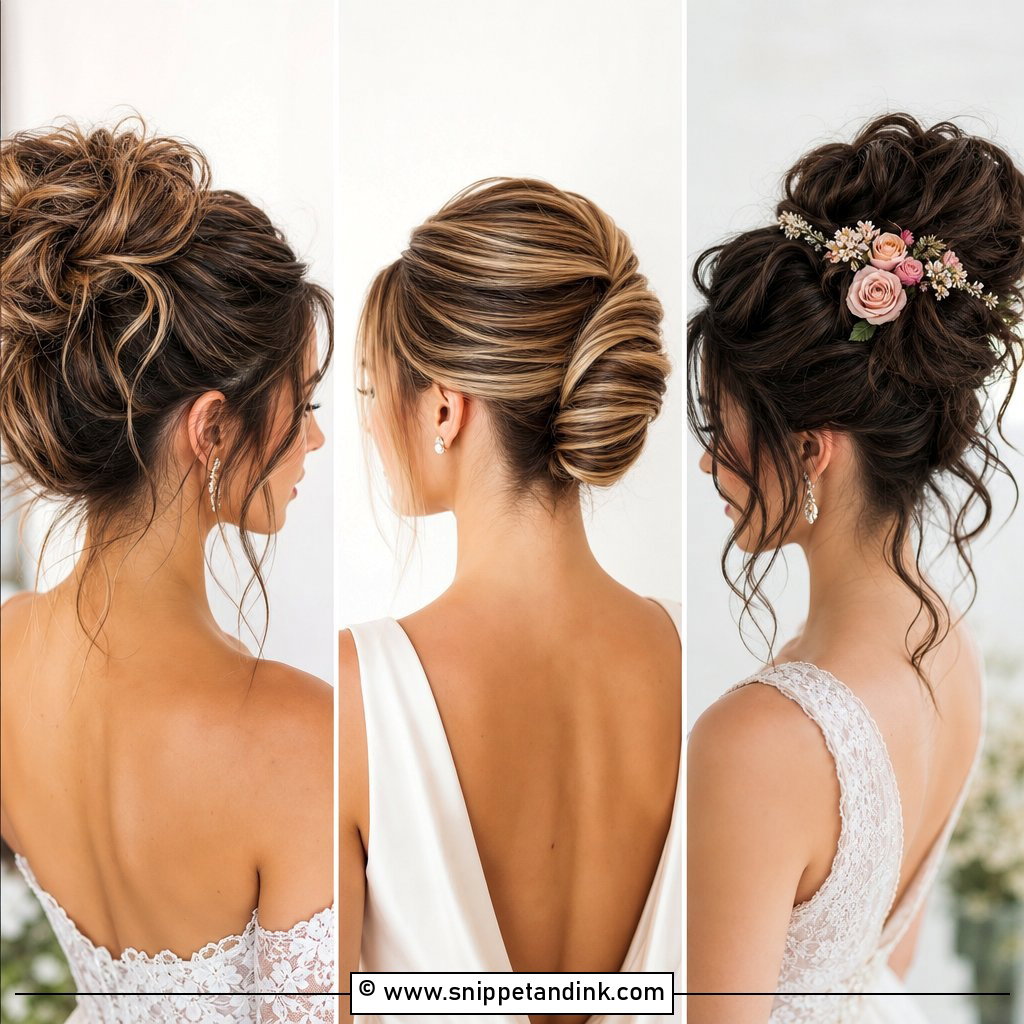
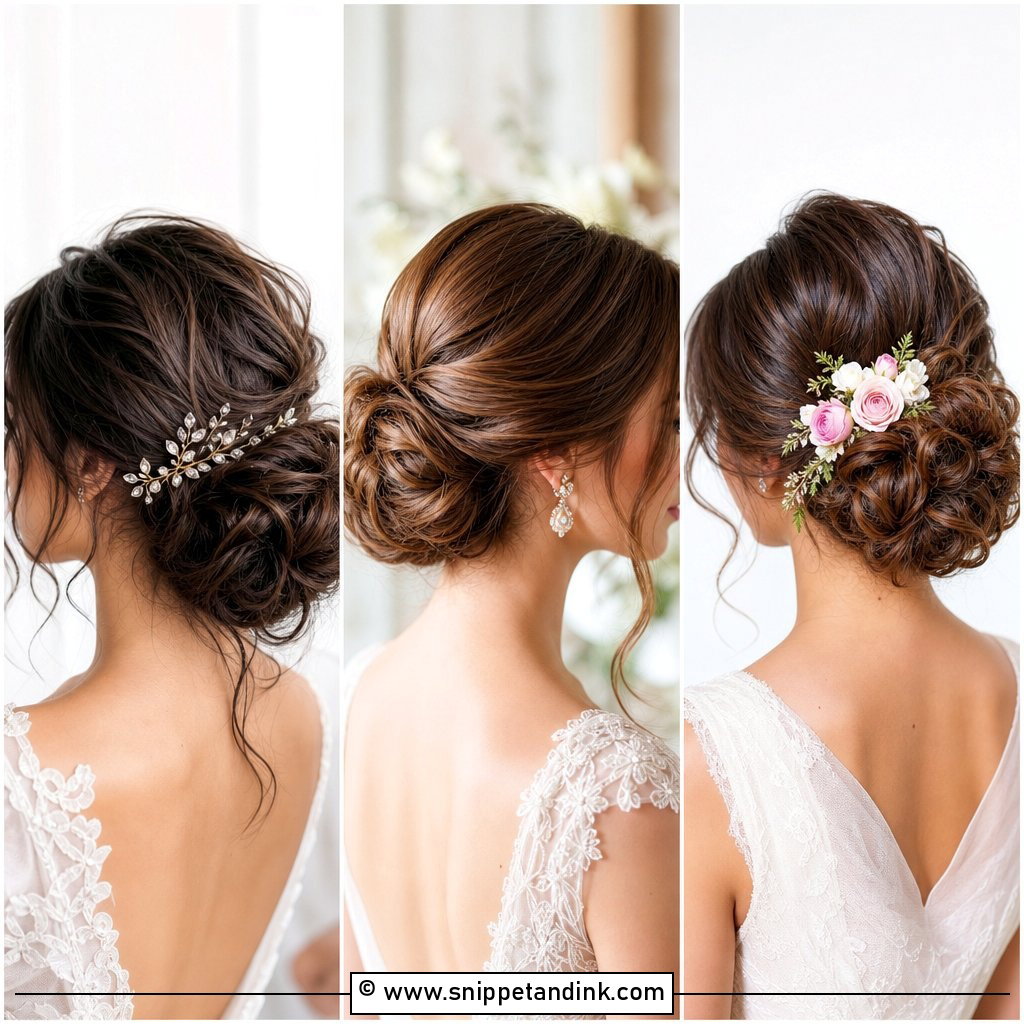
Low updos keep coming back at weddings because they look good and they behave for a long day. Which one suits you depends on your neckline, length, texture and veil, and on how you like to see yourself in photographs. Bring a few reference pictures to your trial, wear a top with a neckline close to your dress, and speak up if a pin digs in; it won’t ease off later. Sort those things early and the style started at nine in the morning should still look like itself at the last dance.
You'll Like These Ideas:



Leave a Reply