
Short hair takes a bridal updo far better than most brides are told. You don’t need length past your shoulders to get a rounded shape at the nape or a solid place to anchor a veil. What a short cut needs is a different method: smaller sections, more pins, some grit in the hair before anything is pinned, and now and then an accessory covering a join. Bobs, lobs, cropped cuts and choppy layers each have their own best options, and below I’ve gone through fifteen of them with notes on how each one is actually built. My rule at every short-hair trial is the same: style the haircut you have, not the one in the photo.
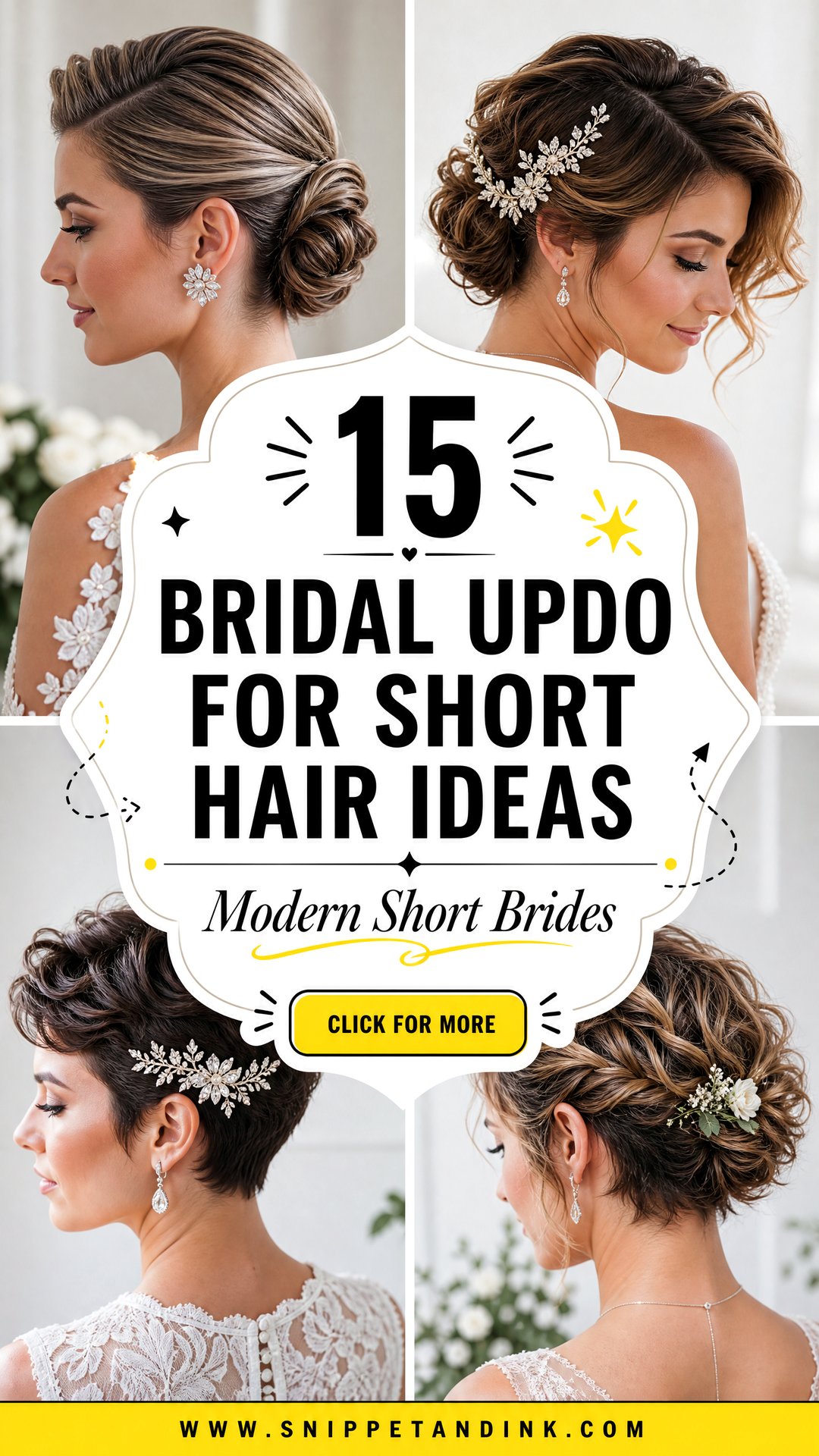
Where Your Shortest Layer Sits Decides the Style
The first thing I check is where the shortest hair at the back stops, not how long the front is. A bob can look long enough for a bun in the mirror, but if the hair behind your ears ends a couple of inches above the nape, those pieces will try to escape all evening. Pull your hair back loosely with both hands and see what falls out. That tells me more than any inspiration photo.
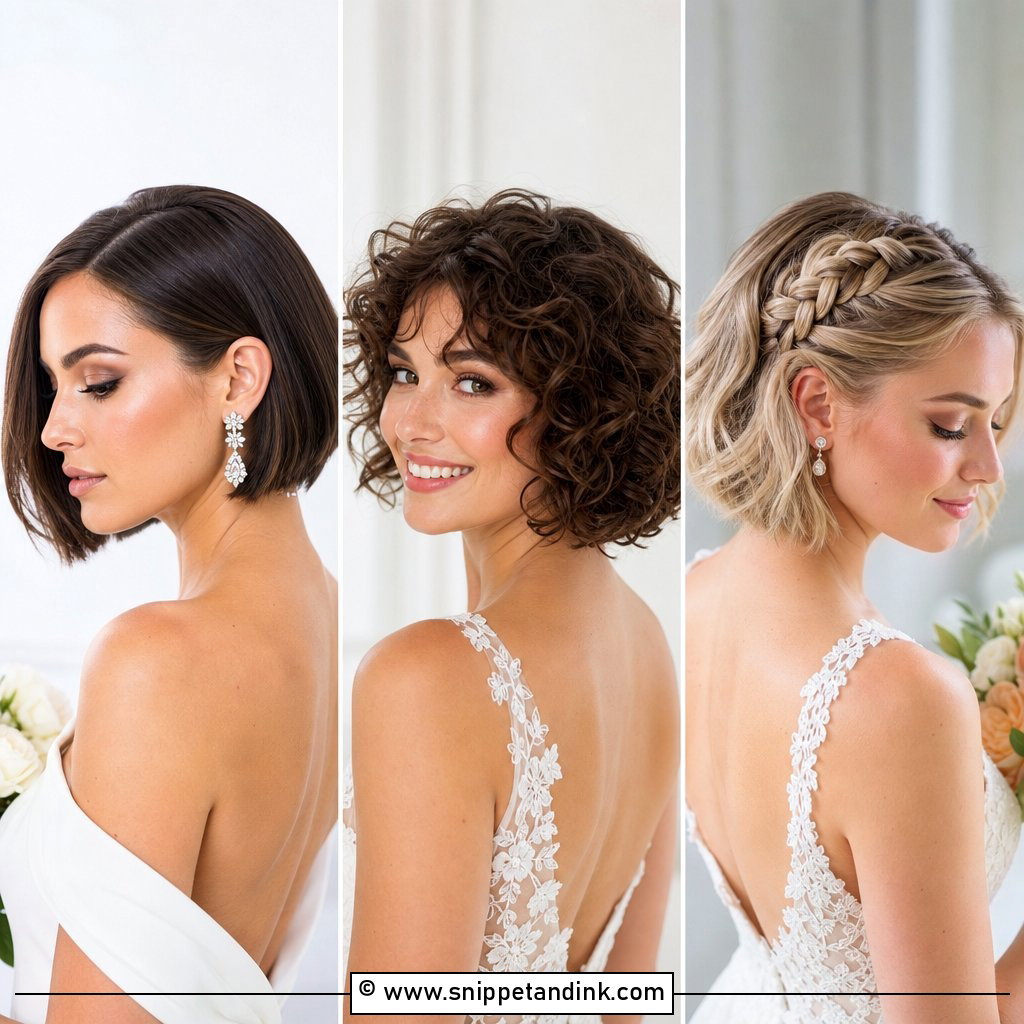
Chin length and above
Think sculpted rather than gathered: vintage waves, a side swept finish, a pixie with lift at the crown, or a braid along the hairline with the back pinned in tiny twists. A true bun usually isn’t realistic here unless I add a small padded form or a few clip-in wefts matched to your colour.
Jaw to collarbone
This is the sweet spot for the tucked bob, low chignon, French twist and twisted bun. Jaw-length hair gathers into a compact shape at the nape, especially once it’s curled so the ends wrap rather than poke.
Shags and heavy layers
Textured, messy and boho versions are where choppy cuts shine, because a few loose ends look planned. I’d avoid the sleek styles on these cuts unless you’re happy to have a bridesmaid tuck pieces back in between photos.
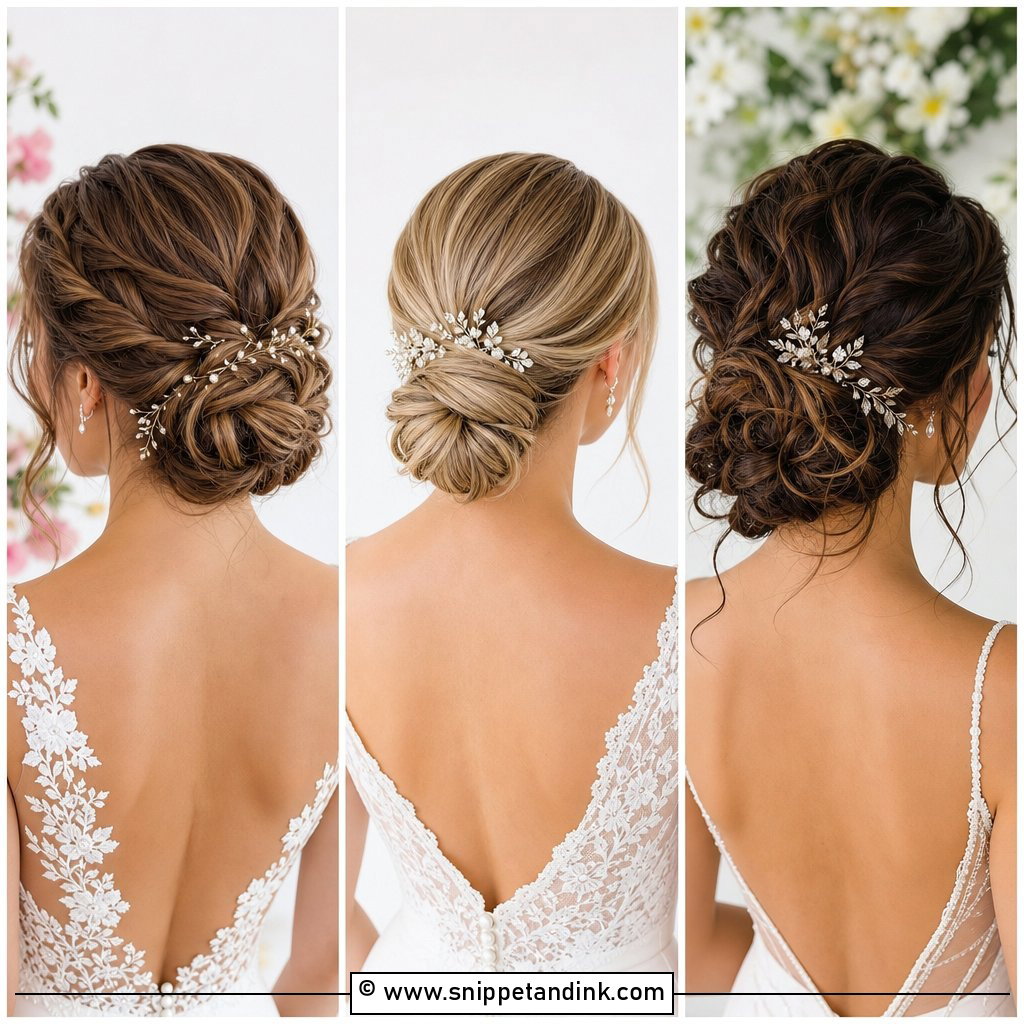
1. Short Hair Low Chignon Bridal Updo
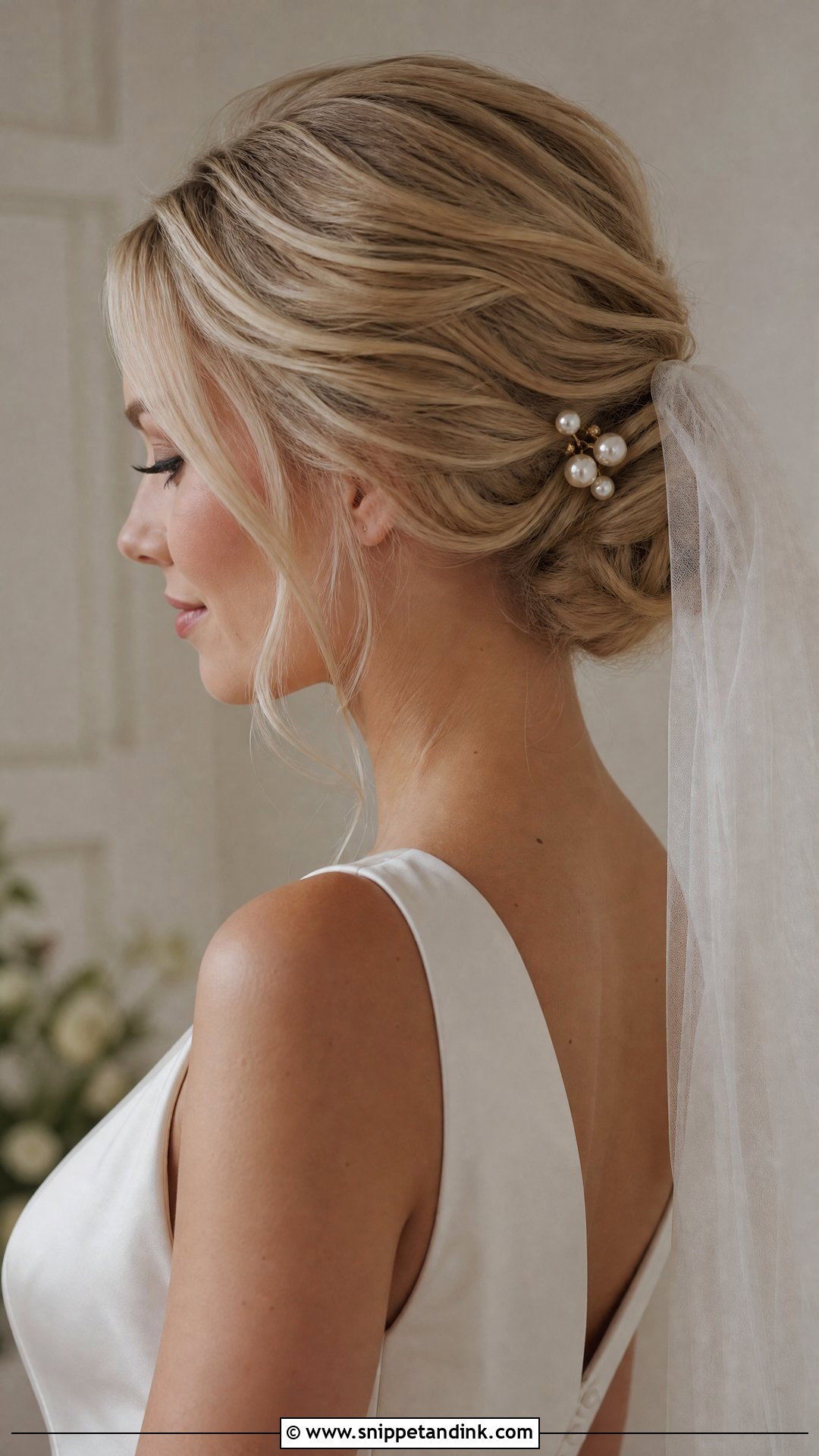
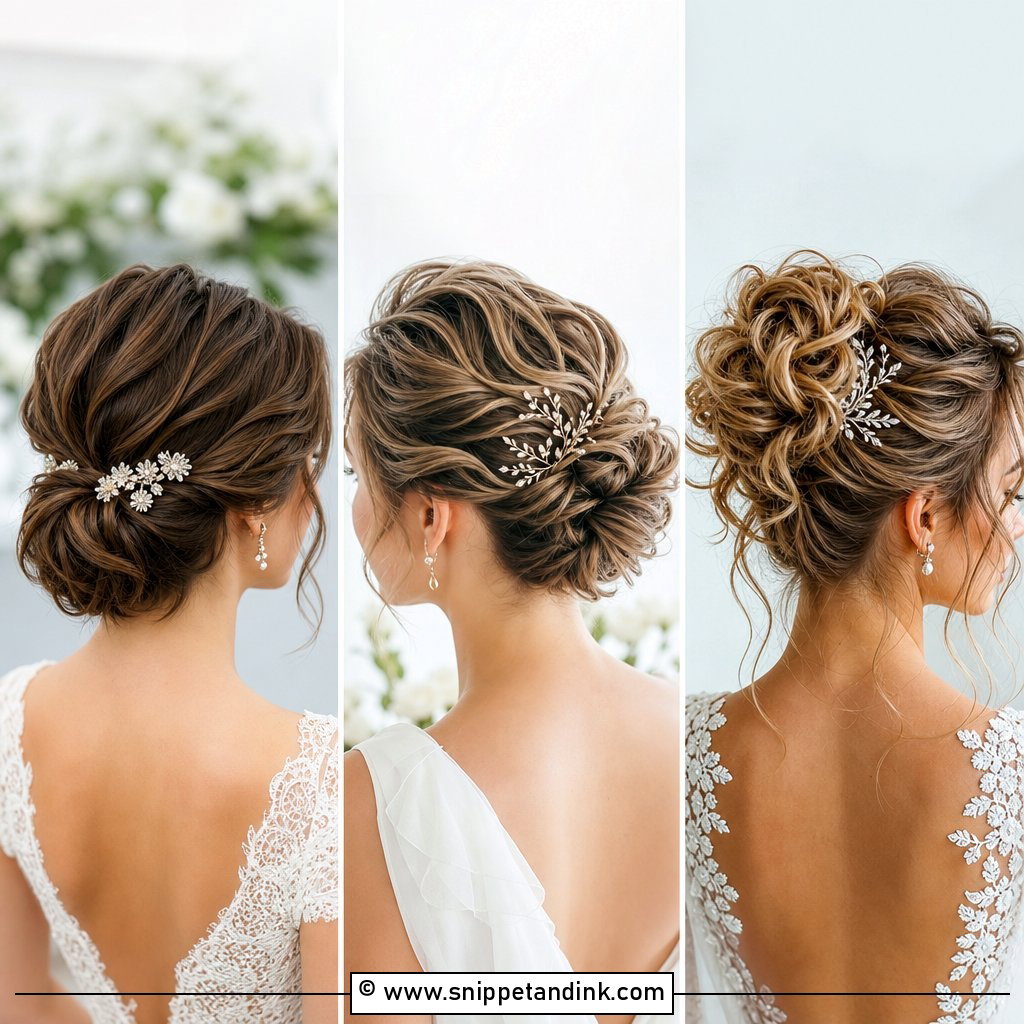
A low chignon on short hair is mostly an illusion of length. I curl the ends first, add light backcombing at the crown so there’s something to shape, then gather everything at the nape, tuck the ends under and pin it round. On a bob or lob, the curl is what stops the bun looking flat, because the ends wrap instead of sticking out. The pieces behind the ears are always the shortest, so I pin those first and build the chignon over them. A veil comb sits happily just above it, and it suits a plain satin or lace dress that doesn’t compete.
2. Short Hair French Twist Bridal Updo
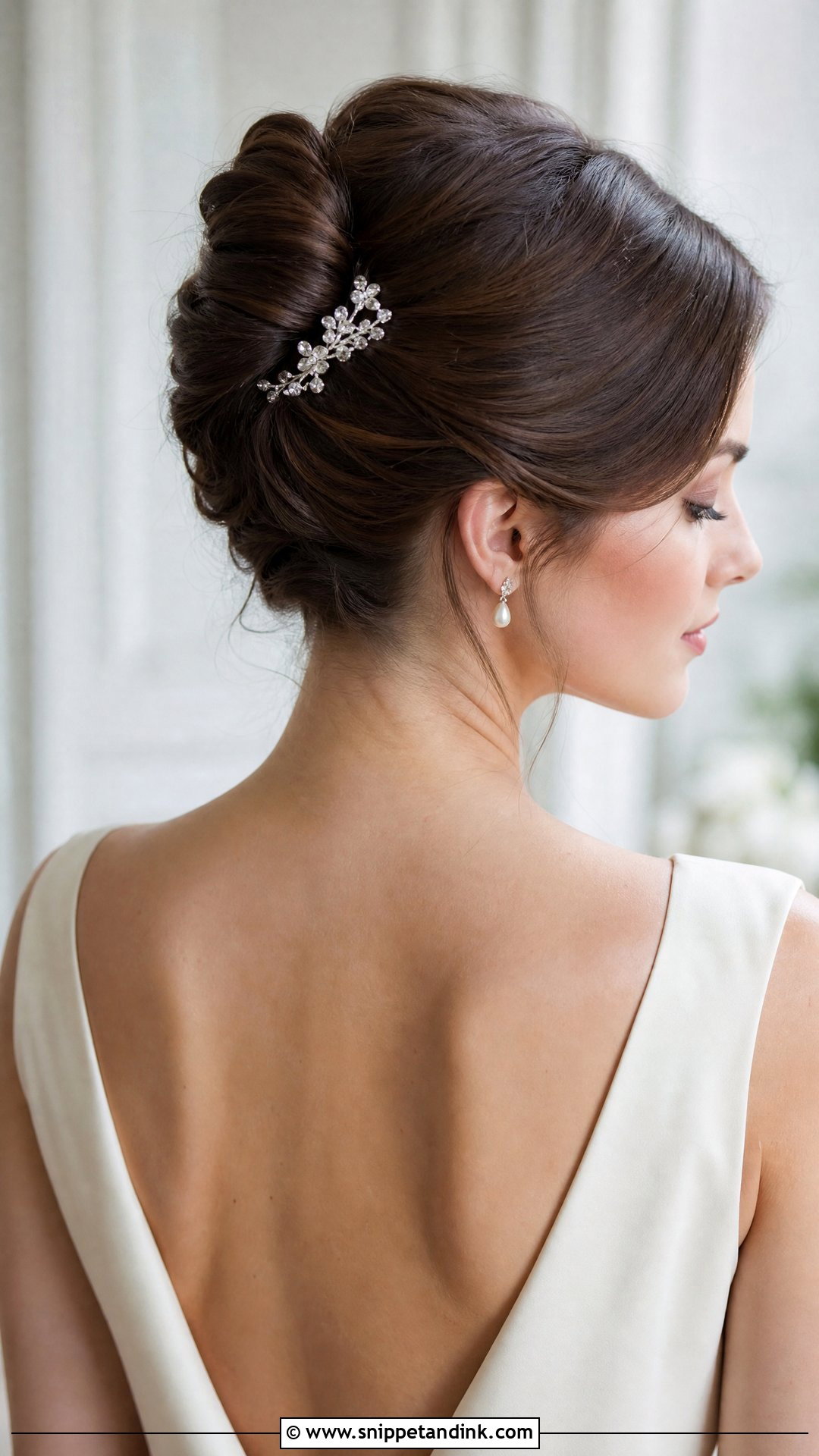
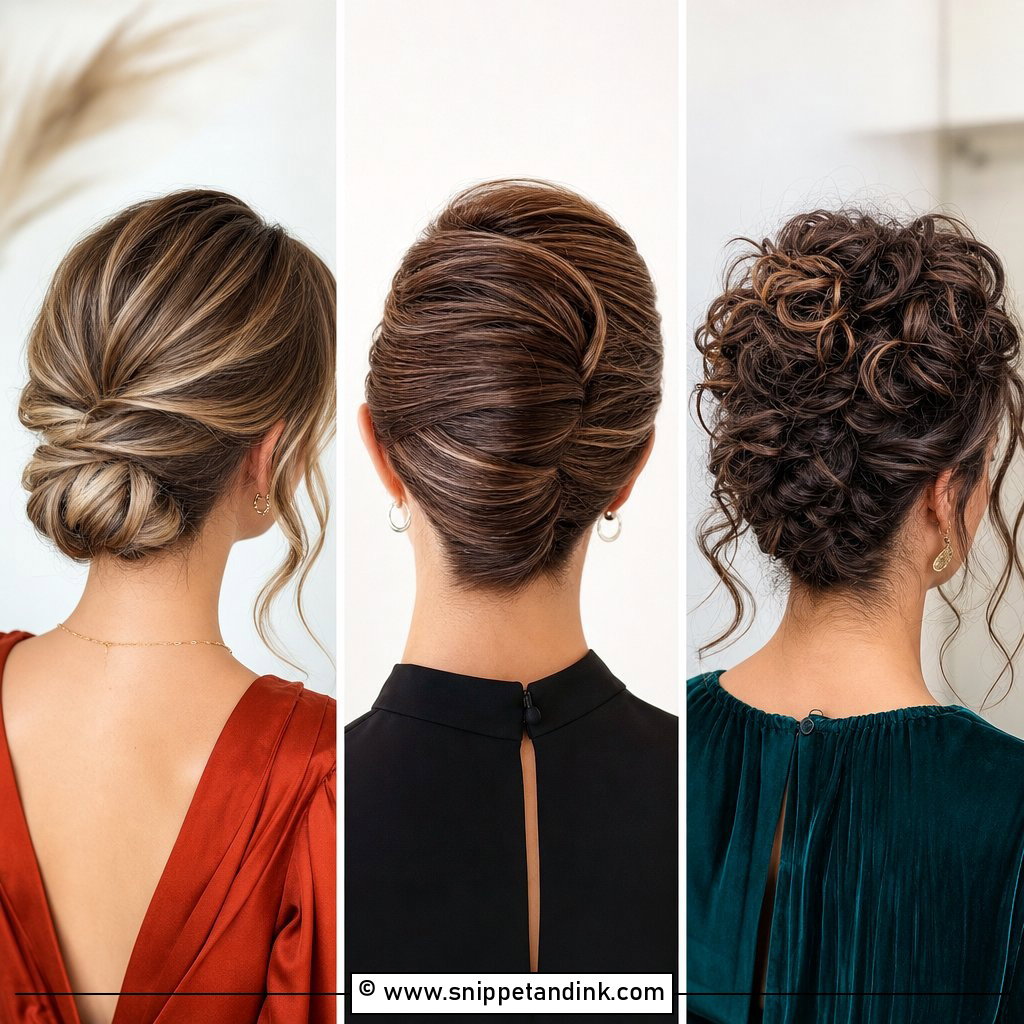
On short hair I keep a French twist compact rather than tall. Trying to force a full vertical roll out of jaw-length hair leaves ends poking out of the seam, so I smooth the layers inward, pin vertically along the fold and let the top sit lower than the classic version. The neckline and earrings get all the attention. A side part softens it; a centre part reads more modern. If the back of your cut is very short, tell your stylist at the trial, because the seam may need a small comb or crystal pin to cover where the ends finish.
3. Short Hair Braided Crown Bridal Updo
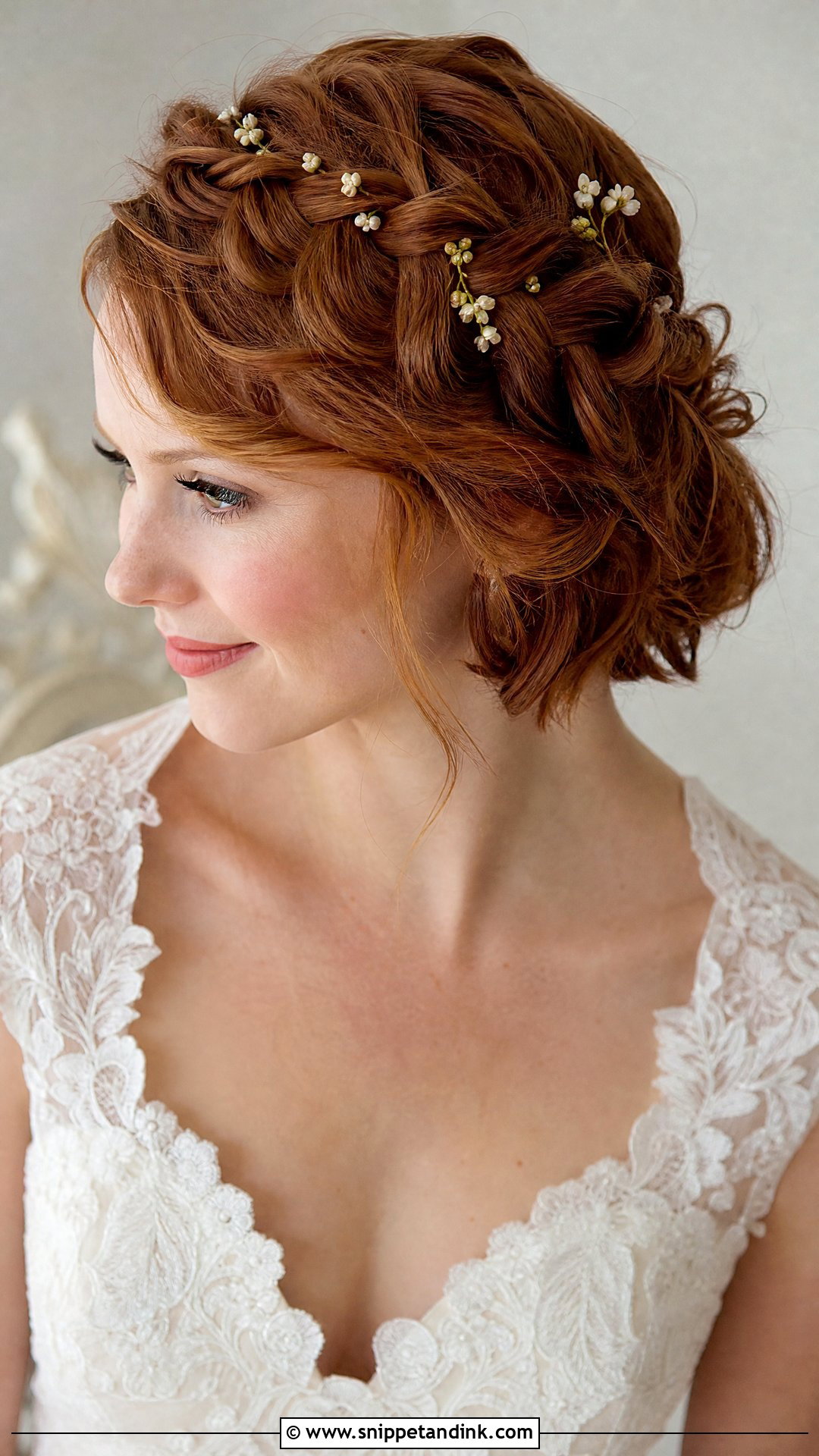
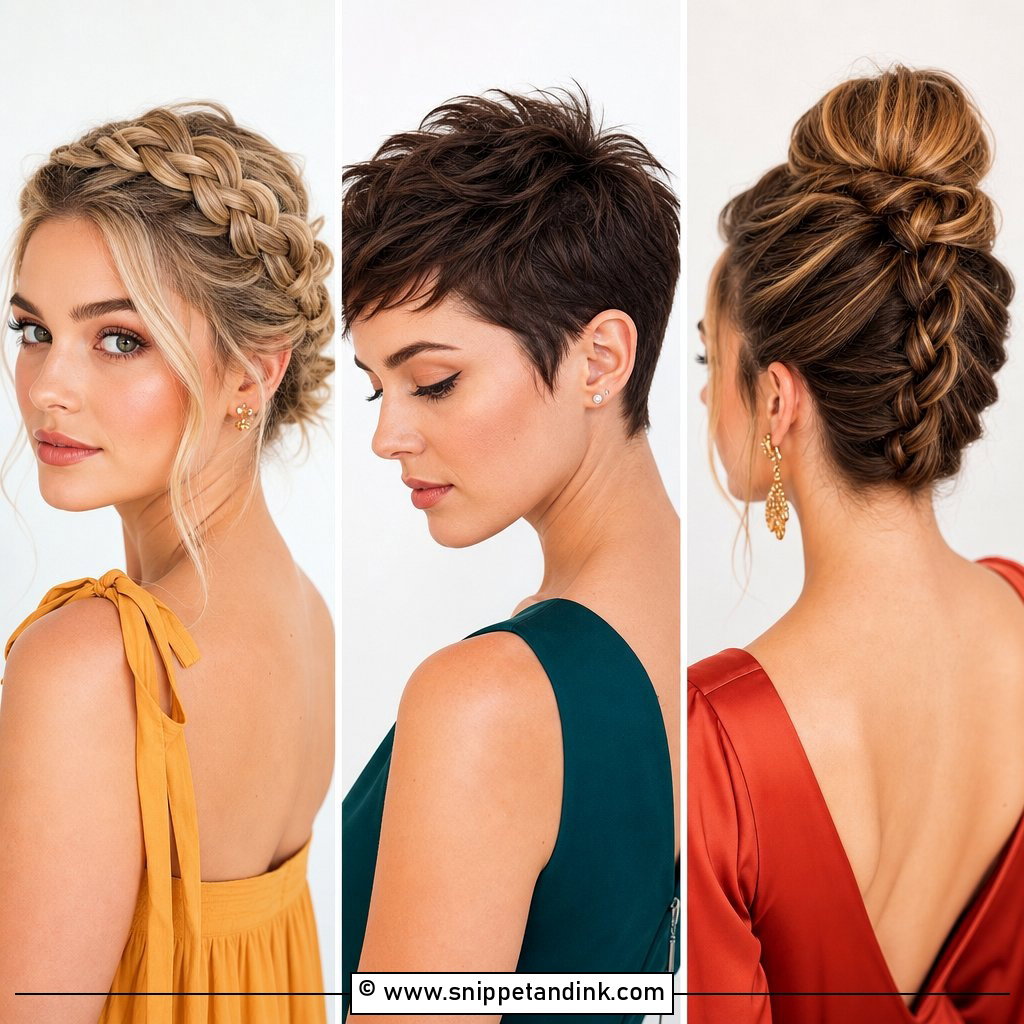
Braids are one of the best tools I have for short hair, because a braid along the hairline locks the shortest front pieces down before they can fall. Depending on your length, I’ll run it across the front, along one side or around the crown, then pin the back into small twists or tucked curls so the whole head reads as an updo even at chin length. Fine hair braids tighter than it looks in pictures, so I pancake the braid gently with my fingers to widen it. Keep a few soft pieces at the temples. It suits garden ceremonies and dresses with fine texture.
4. Short Hair Twisted Bun Bridal Updo
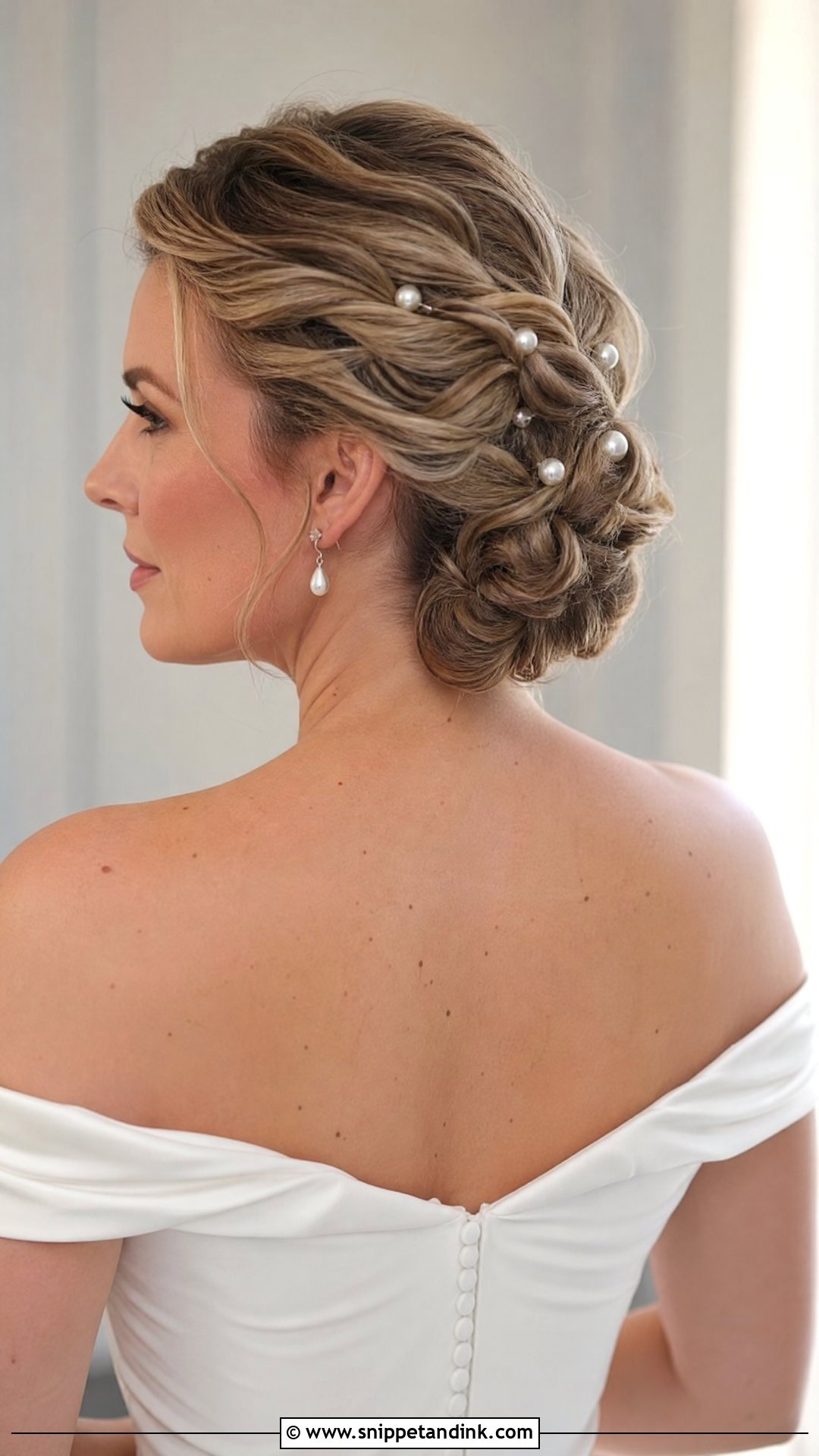
One big bun needs more hair than most short cuts have. Several small twists don’t. I divide the back into four to six sections, twist each one, pin them together at the nape and shape the cluster into a bun. Fine or layered hair comes out looking fuller because each twist carries its own volume. Short pieces are trapped inside a twist rather than relying on one elastic, which is why this one tends to stay put through the ceremony and the dancing. Pearl pins tucked between the twists help hide the joins when your guests see the back.
5. Short Hair Messy Bridal Updo
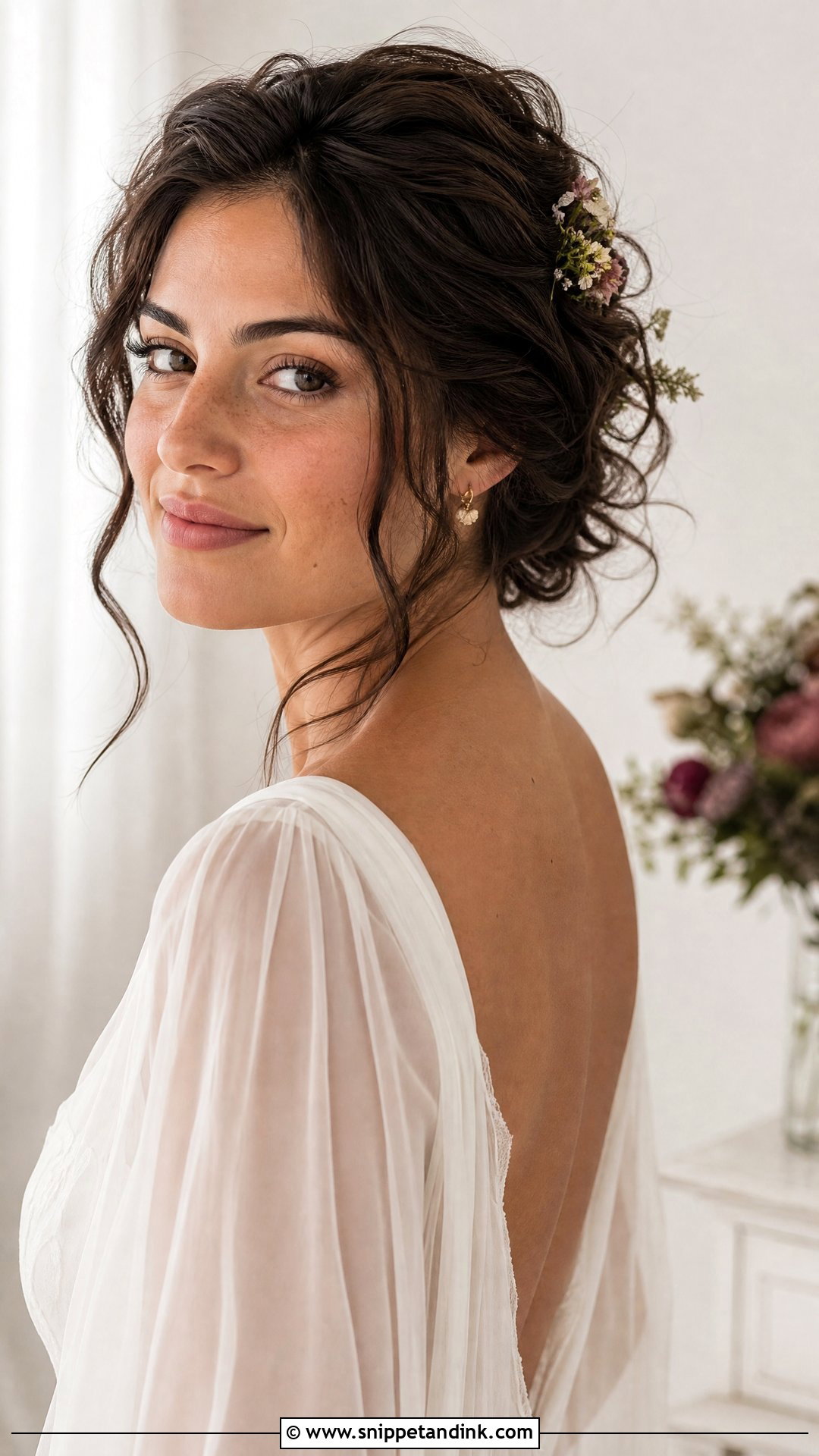
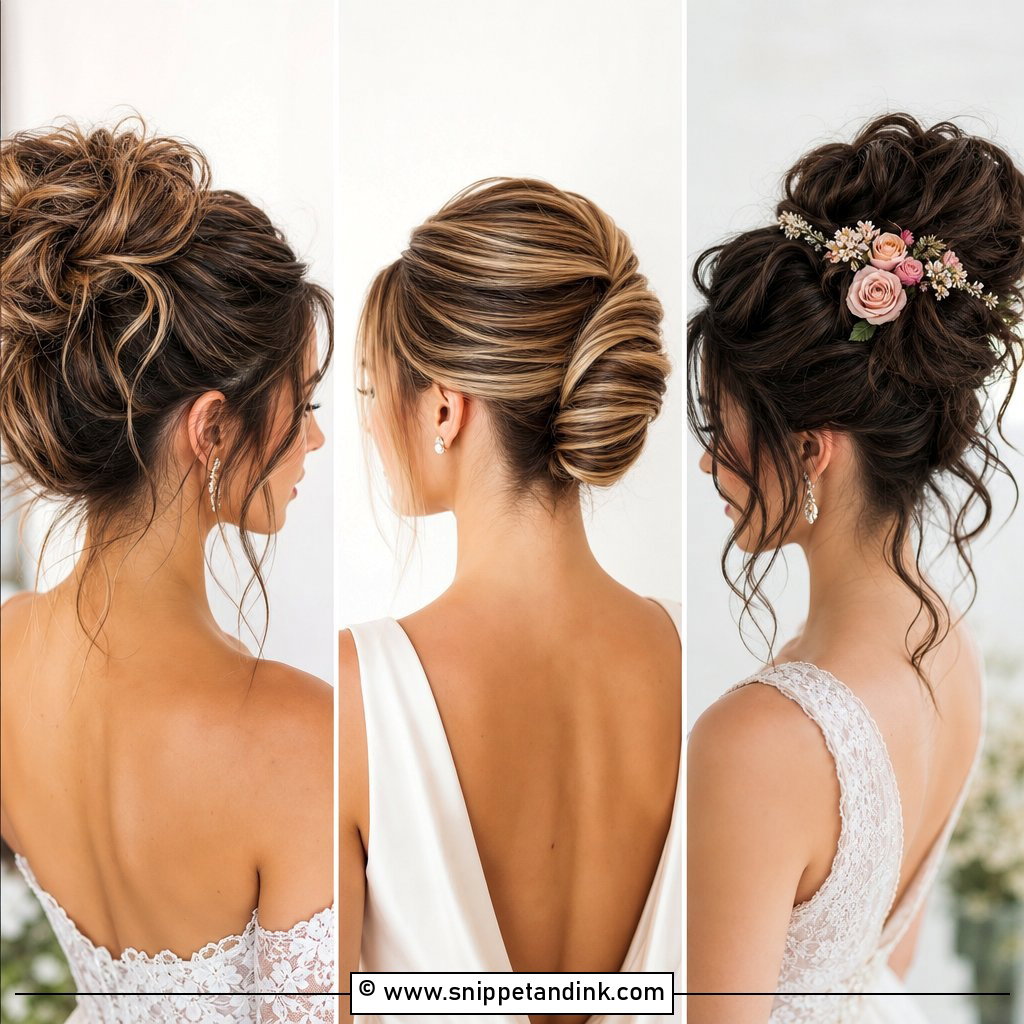
Messy is the hardest updo to get right, because it has to be controlled texture rather than actual mess. I curl everything first, backcomb lightly at the roots, then pin in loose sections and pull a little out at the crown so it doesn’t look helmet-shaped. The trap is overdoing the face-framing pieces on short layers; three or four are plenty, or by evening you’ll be pushing hair out of your eyes. Use a flexible hold spray so the shape can move without collapsing. It’s my usual answer for beach weddings and loose boho dresses.
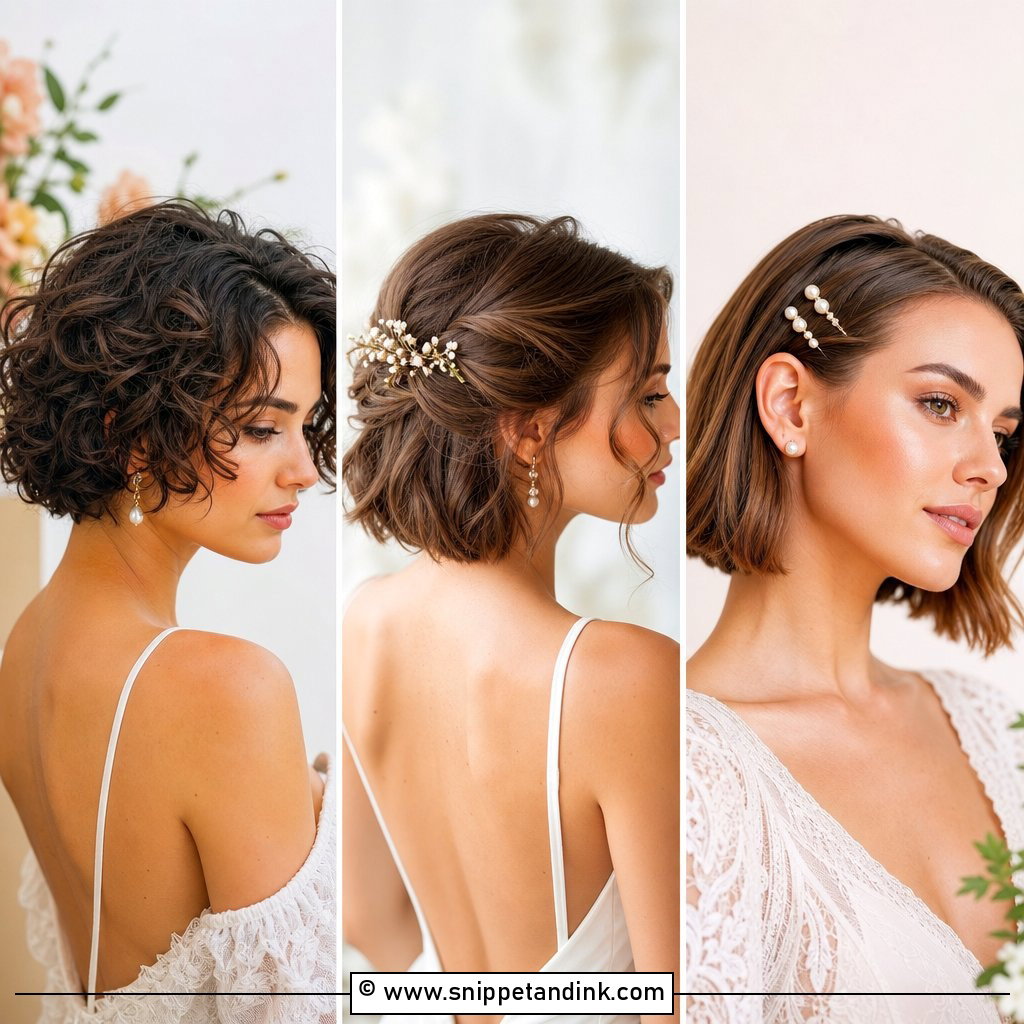
6. Short Hair Curly Bridal Updo
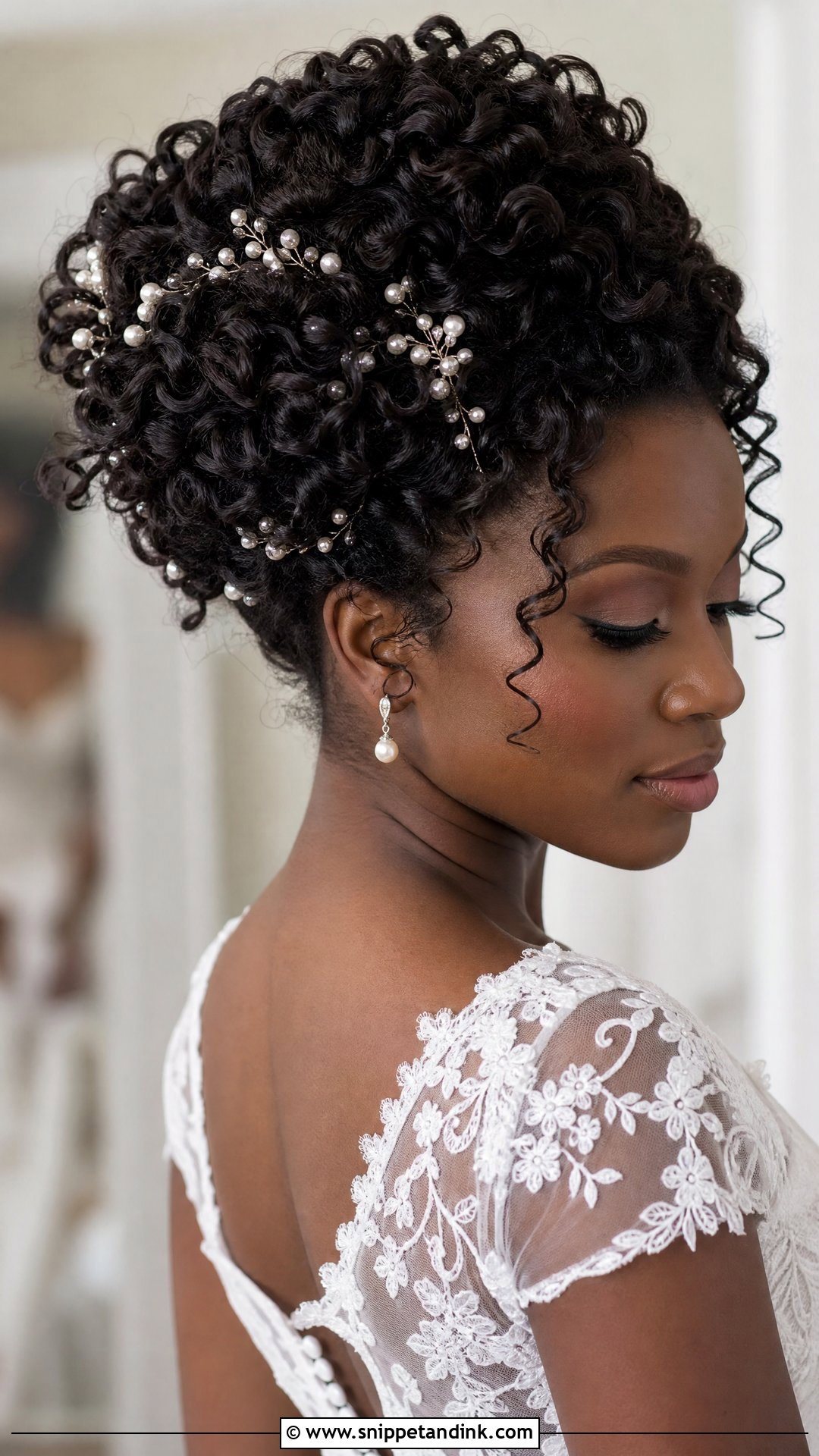
Curls make short hair look twice as full, and a curly updo uses that. The curls are shaped upward or back and pinned to build height and a rounded outline. If your hair curls naturally, I define it with cream and pin each curl at its base so the pattern isn’t disturbed; brushing natural curls out to restyle them only creates frizz. Straight hair gets curled with a small barrel iron first and needs to cool fully in the curl before I pin. Small flowers or a short veil sit nicely in the volume, and you get texture without adding extensions.
7. Short Hair Half Up Bridal Updo
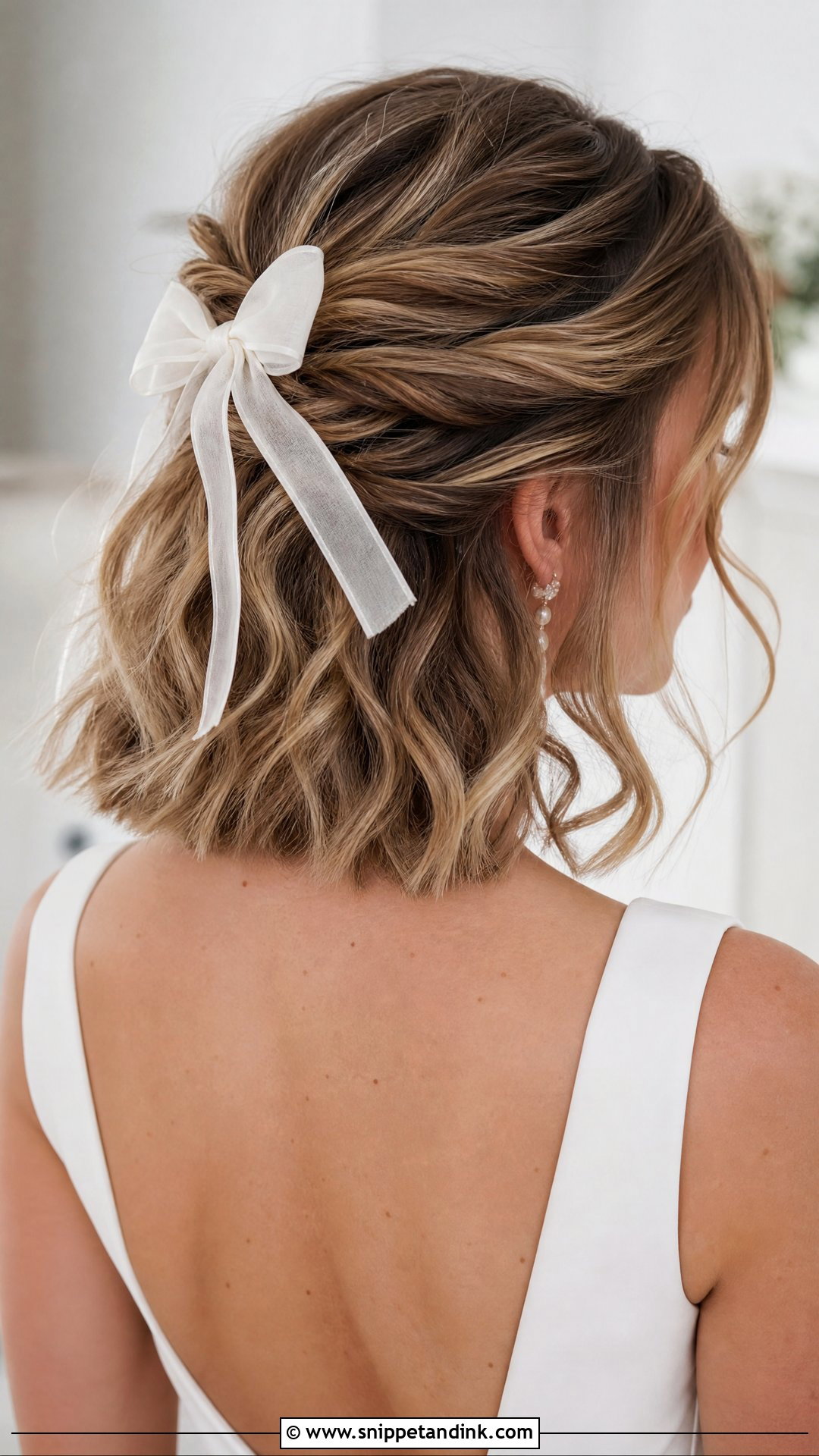
Some cuts are simply too short at the nape for a full updo, and that’s when I suggest half up. The top section is twisted, braided or pulled back, and the lengths below stay curled or waved. You get the lifted bridal shape while keeping the movement of the cut, which on a bob is half its charm. The gathered point at the back is where a veil comb, bow or floral clip goes, so I make that anchor firmer than the rest. It’s also the most comfortable option on this list for a long day.
8. Short Hair Sleek Bridal Updo
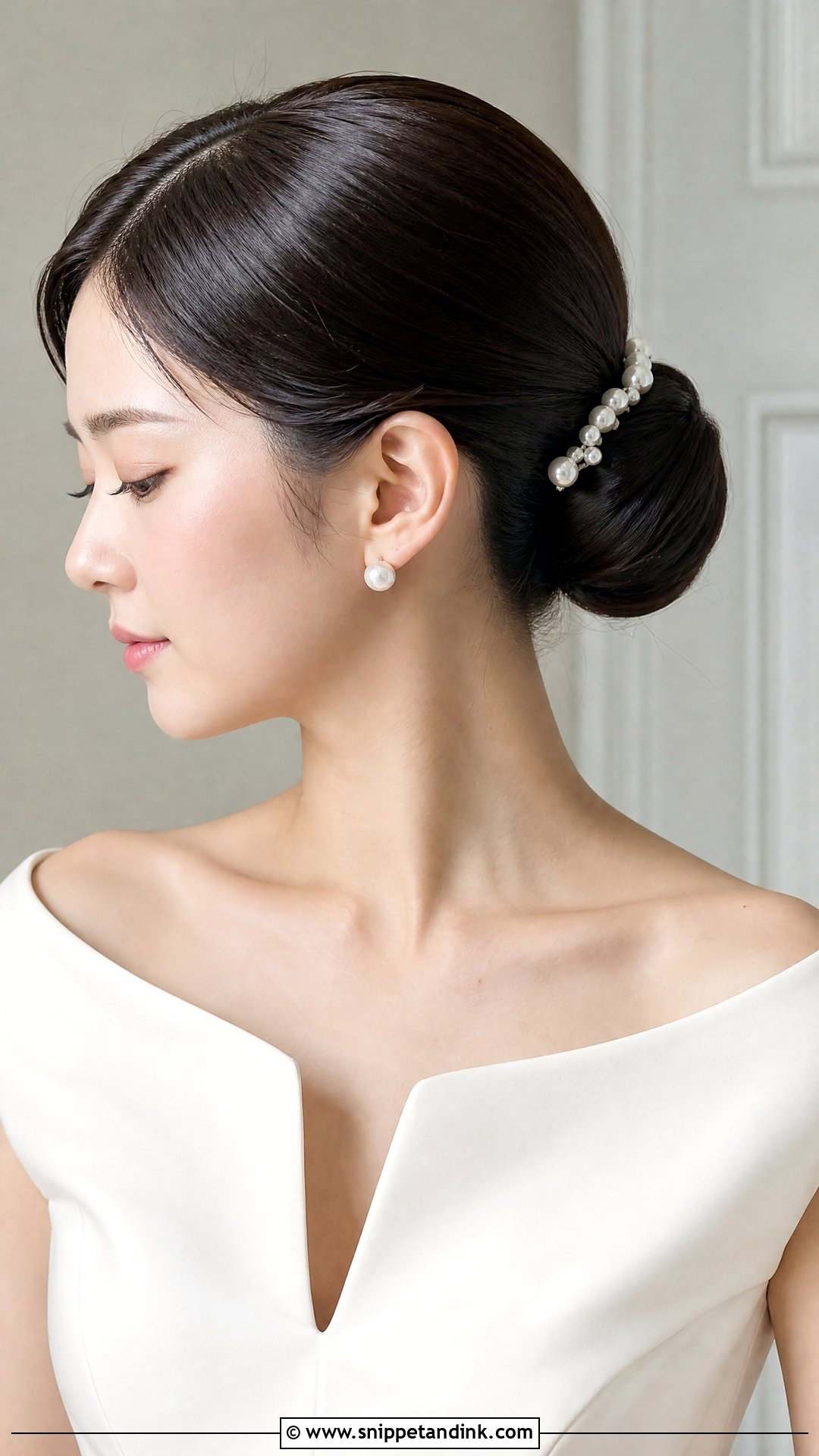
Sleek styles show everything, so the prep matters more than the pinning. I smooth the hair back or cut a sharp part, then pin it into a small tucked bun or rolled shape at the nape, using smoothing cream and shine spray as I go. Pins have to go in under the surface where they can’t catch light. If your cut is choppy or has a lot of short layers at the back, I’d talk you out of this one, because every escaped end shows by the reception. On a blunt bob it looks sharp and modern, and one accessory is enough.
9. Short Hair Boho Bridal Updo
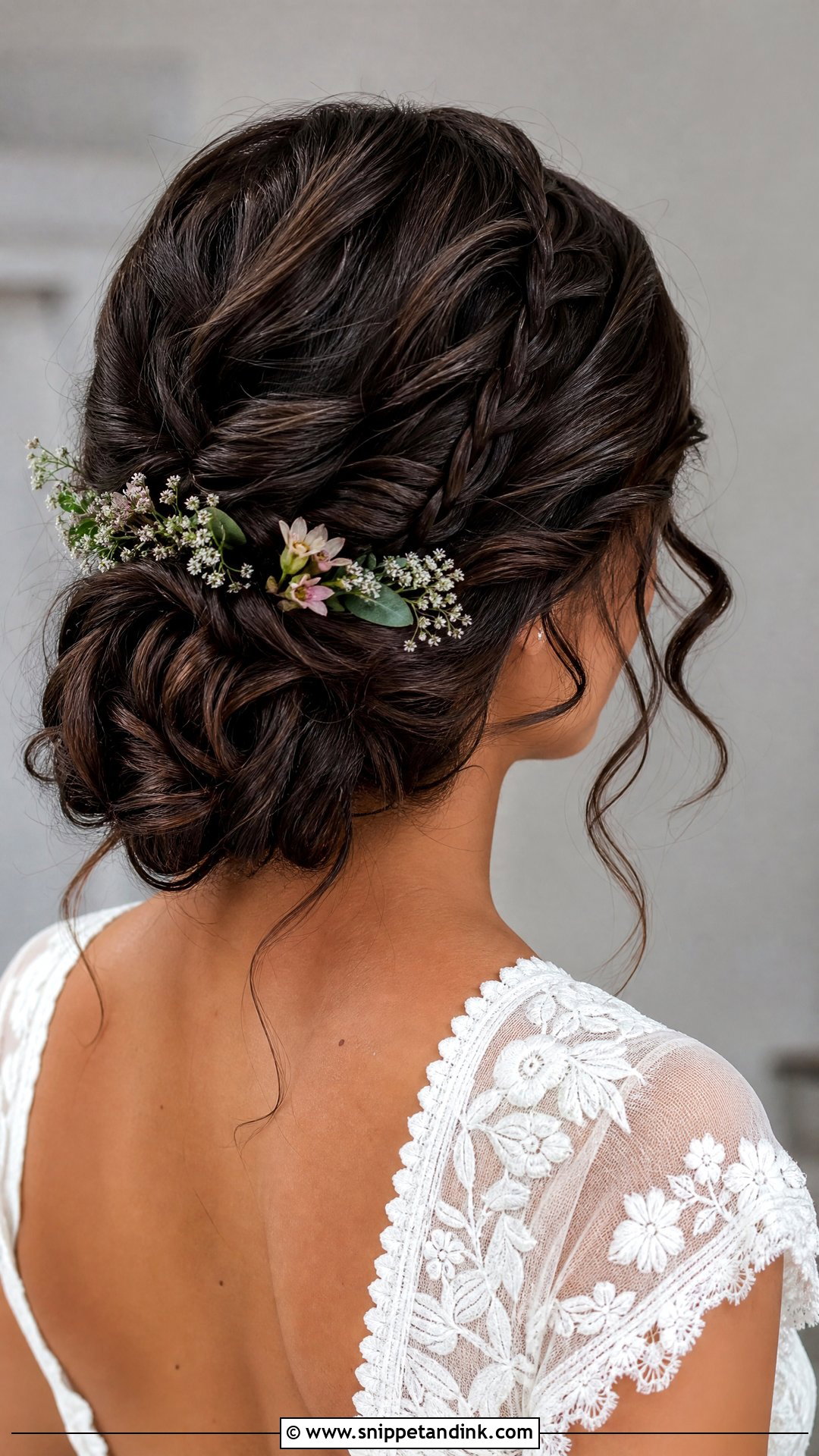
Boho on short hair works because layers are an advantage here, not a problem. I mix loose waves, a couple of thin braids and soft twists, then pin everything low and pull it slightly undone. Ends that would ruin a sleek style just look planned. Tiny blooms or dried flowers can be tucked in, but fresh flowers wilt against warm hair over a long day, so I’d choose sturdy ones or dried. The danger is too loose, so I still pin the base firmly underneath what looks relaxed on top. Lace dresses and outdoor venues suit it well.
10. Short Hair Vintage Bridal Updo
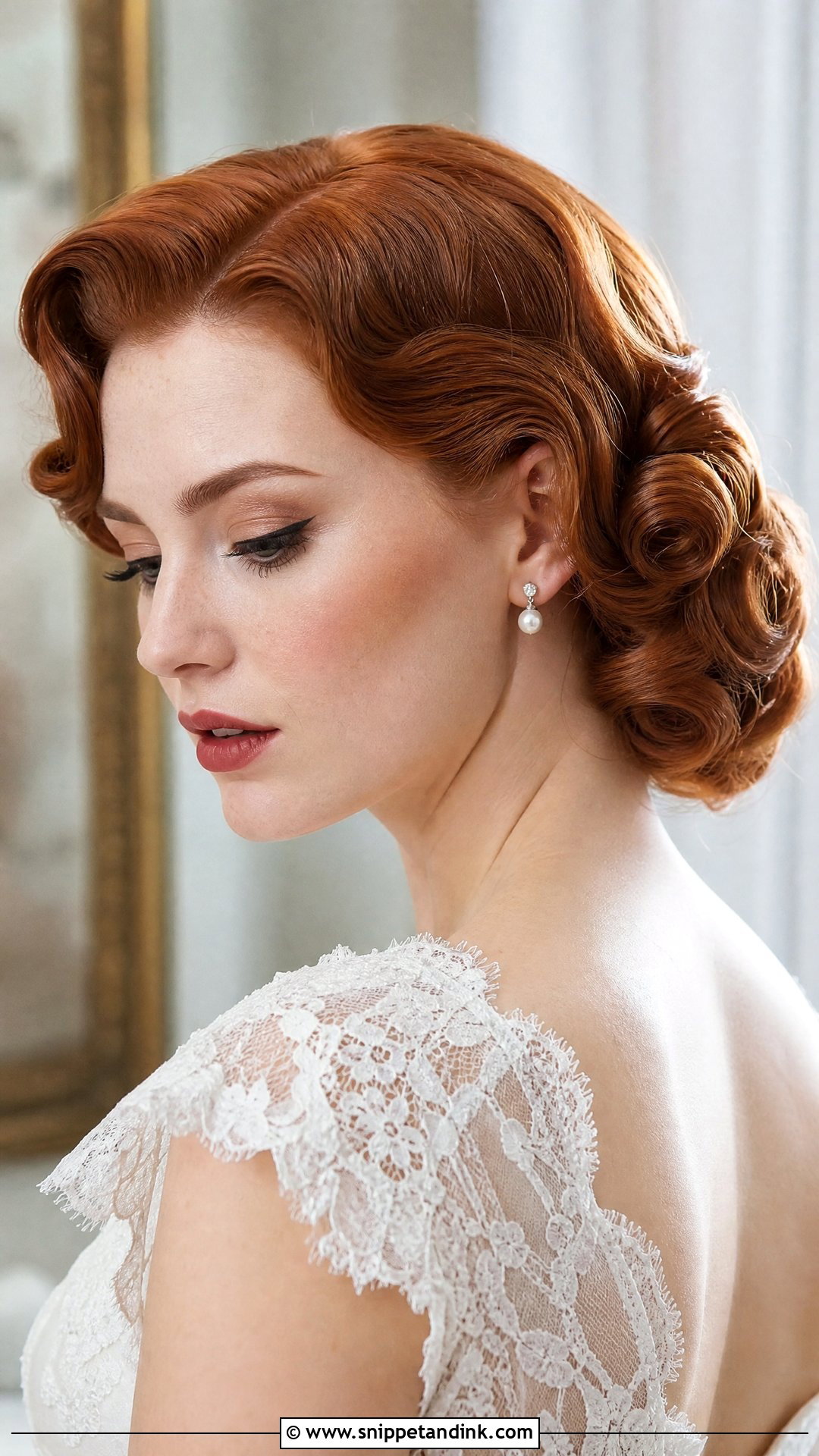
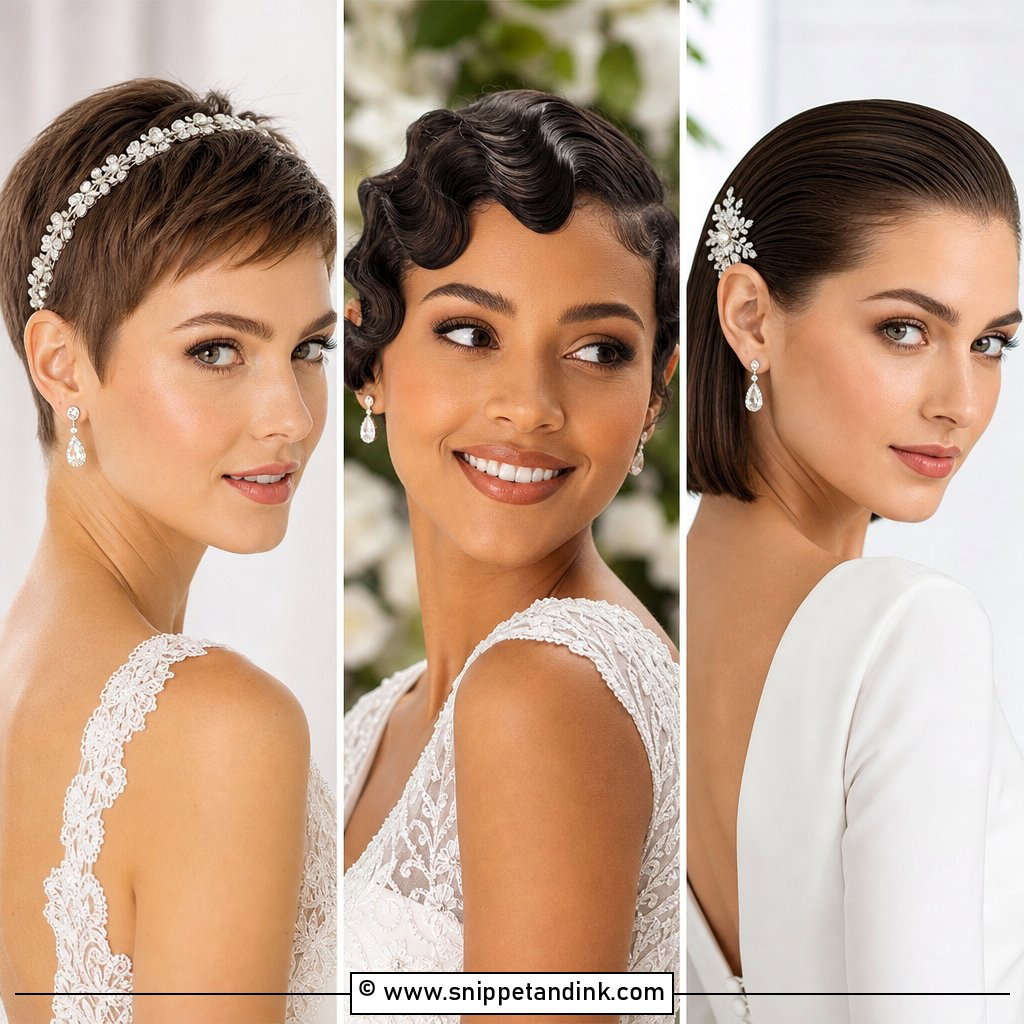
A lot of retro hairstyles were designed for short hair in the first place, which is why vintage looks sit so naturally on a bob. Soft finger waves, rolled sides, tucked curls or a low pinned roll give that old-Hollywood shape without length. I set the front wave with clips while it cools, then brush it out and pin the back into a neat roll. The look needs strong hold and shine, so if you dislike the feel of firm spray, try it at your trial first. Red lips and pearl earrings finish it.
11. Short Hair Side Swept Bridal Updo
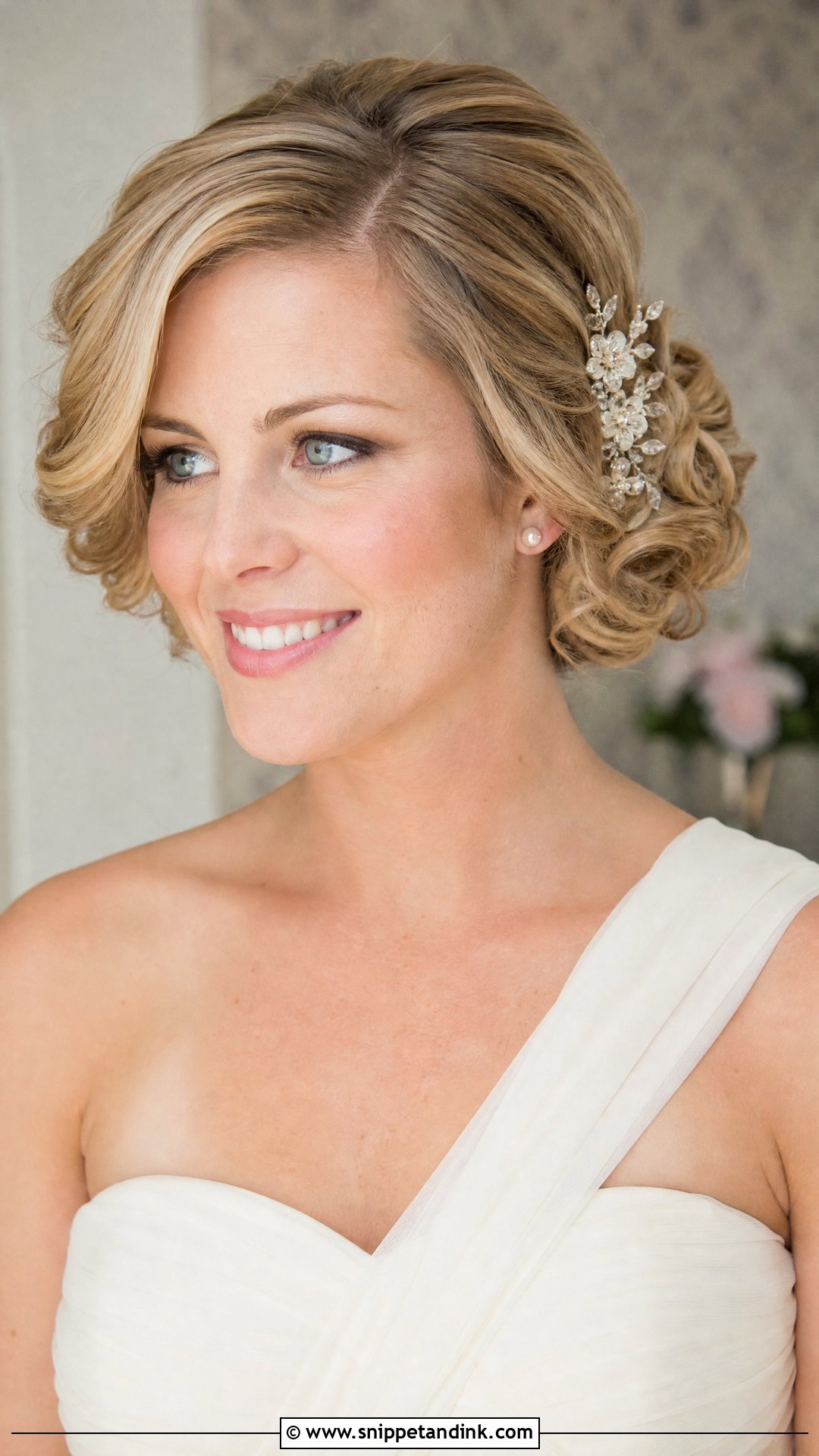
A deep side part changes the whole face. I sweep the hair across the forehead or crown and pin it at the back or the opposite side, with waves adding volume or a smoother finish keeping it classic. It pulls attention to the eyes and cheekbones and suits an asymmetrical neckline. The one thing I check first is which side you’ll stand on at the ceremony, because the fuller side should usually face your guests and the camera. A comb or floral pin on that side balances it.
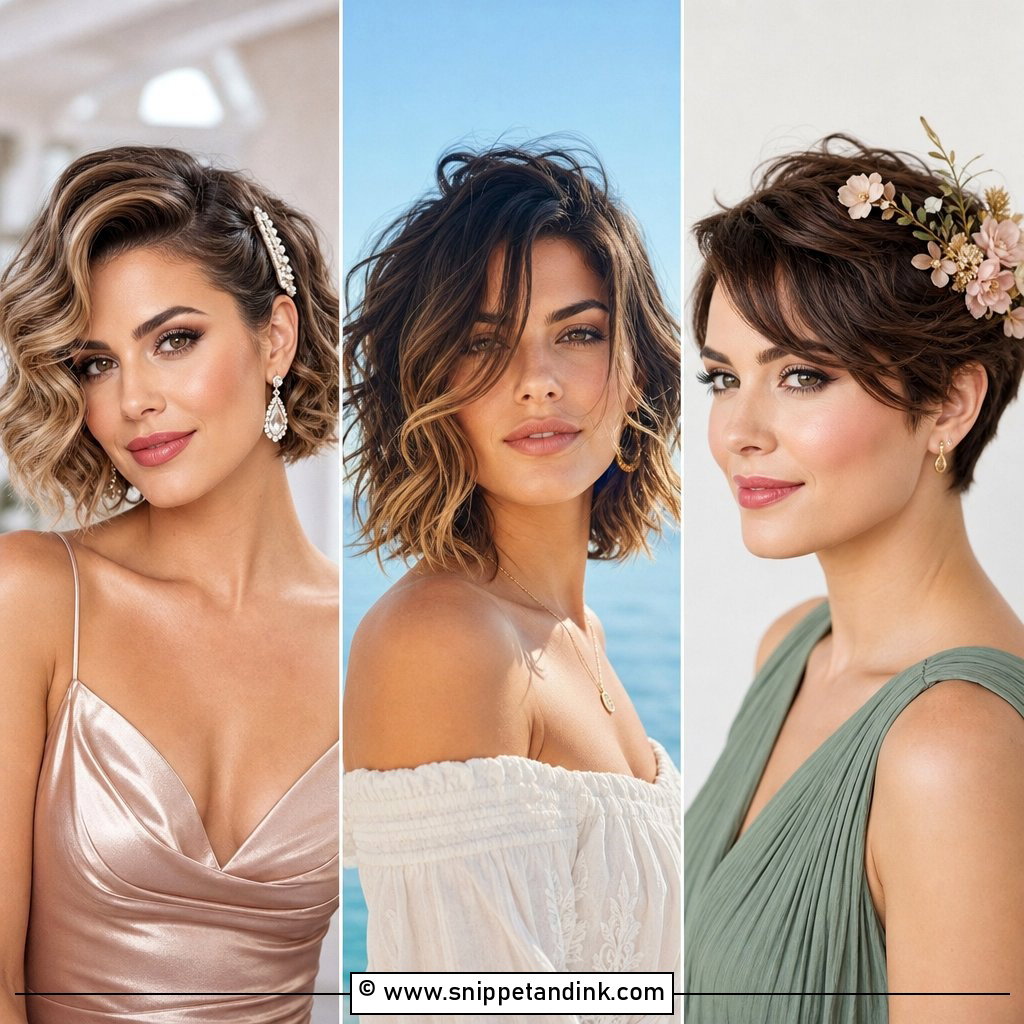
12. Short Hair Pixie Bridal Updo
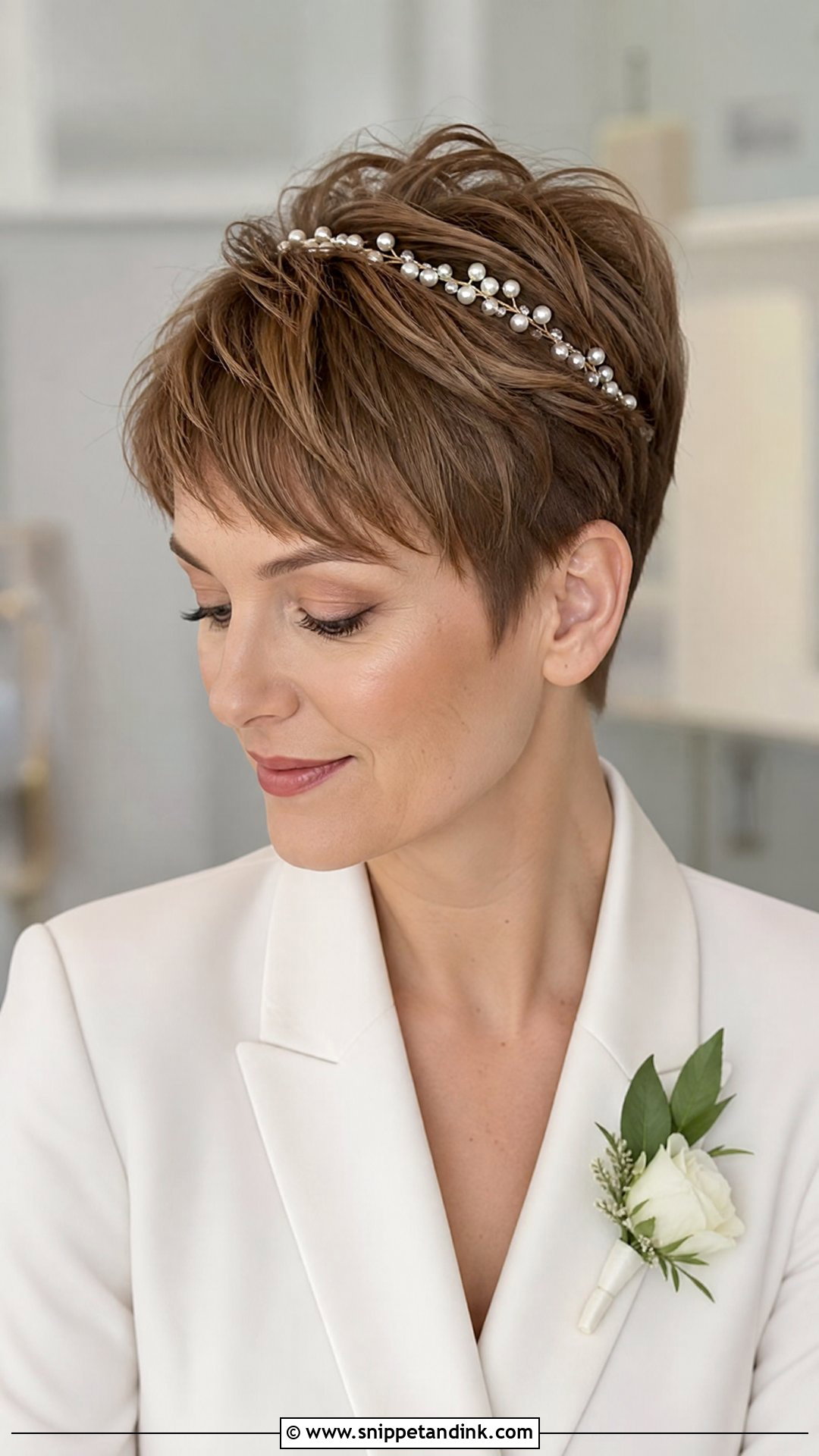
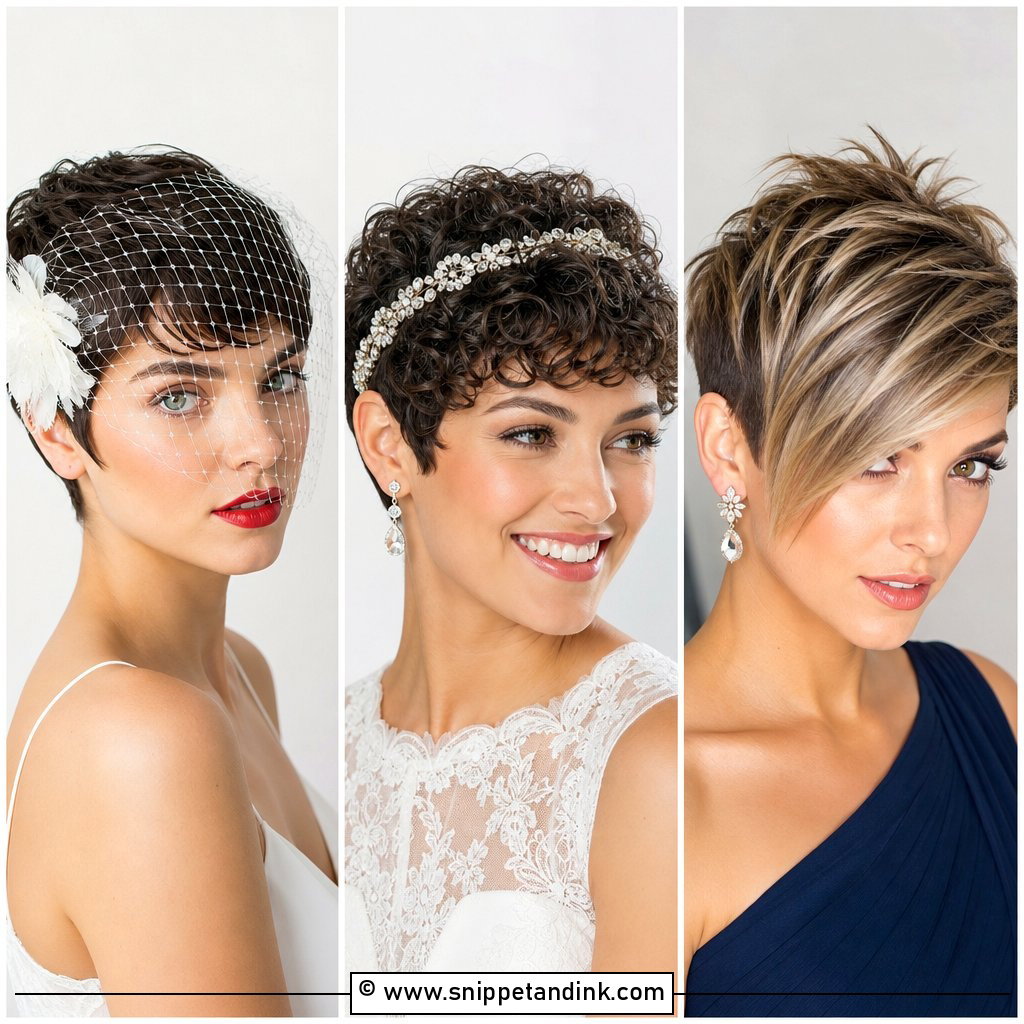
A true bun is not happening with a pixie, and that’s fine. A pixie bridal updo is about shape and texture instead: longer top layers curled or waved and pinned for height at the crown, shorter sides kept sleek for contrast. I work with a small amount of pomade so the shape holds without going crunchy. Accessories do a lot of the bridal work here, so a pearl headband, crystal clip or short veil makes it read as wedding hair at once. If you love your cropped cut, this lets you keep it rather than hide it.
13. Short Hair Bob Bridal Updo
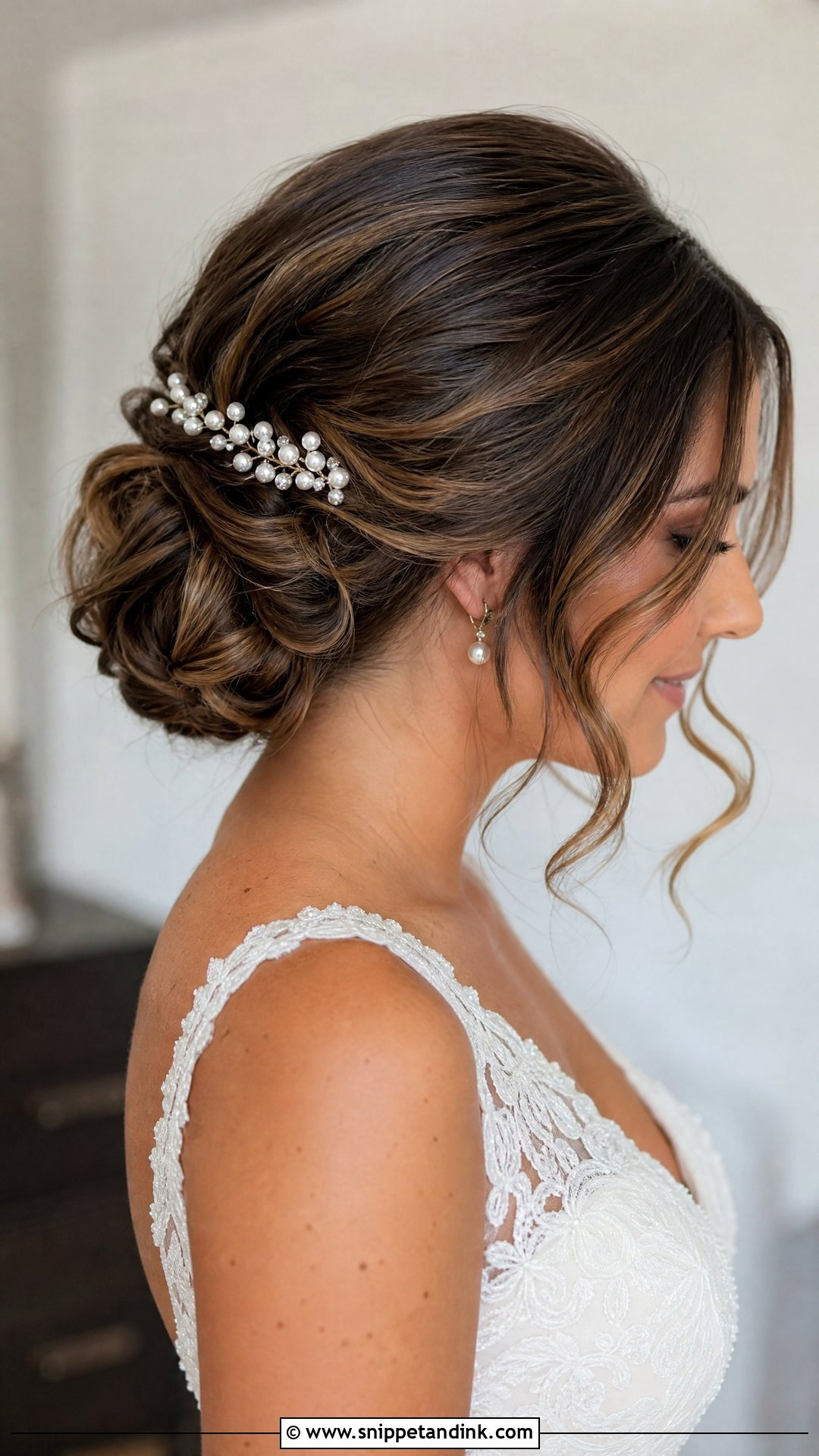
A bob bridal updo looks fuller than you’d expect once it’s curled or waved. I pin the shorter pieces inward to a tucked shape at the nape, which reads as a soft low bun while the bob keeps its structure. Chin-length and jaw-length cuts both manage it. Face-framing layers can stay out, or be pinned back if you want a cleaner front. If your veil is long, I place the comb above the tucked section, not into it, so the weight pulls on a firmer base. Pearl pins along one side finish it.
14. Short Hair Textured Bridal Updo
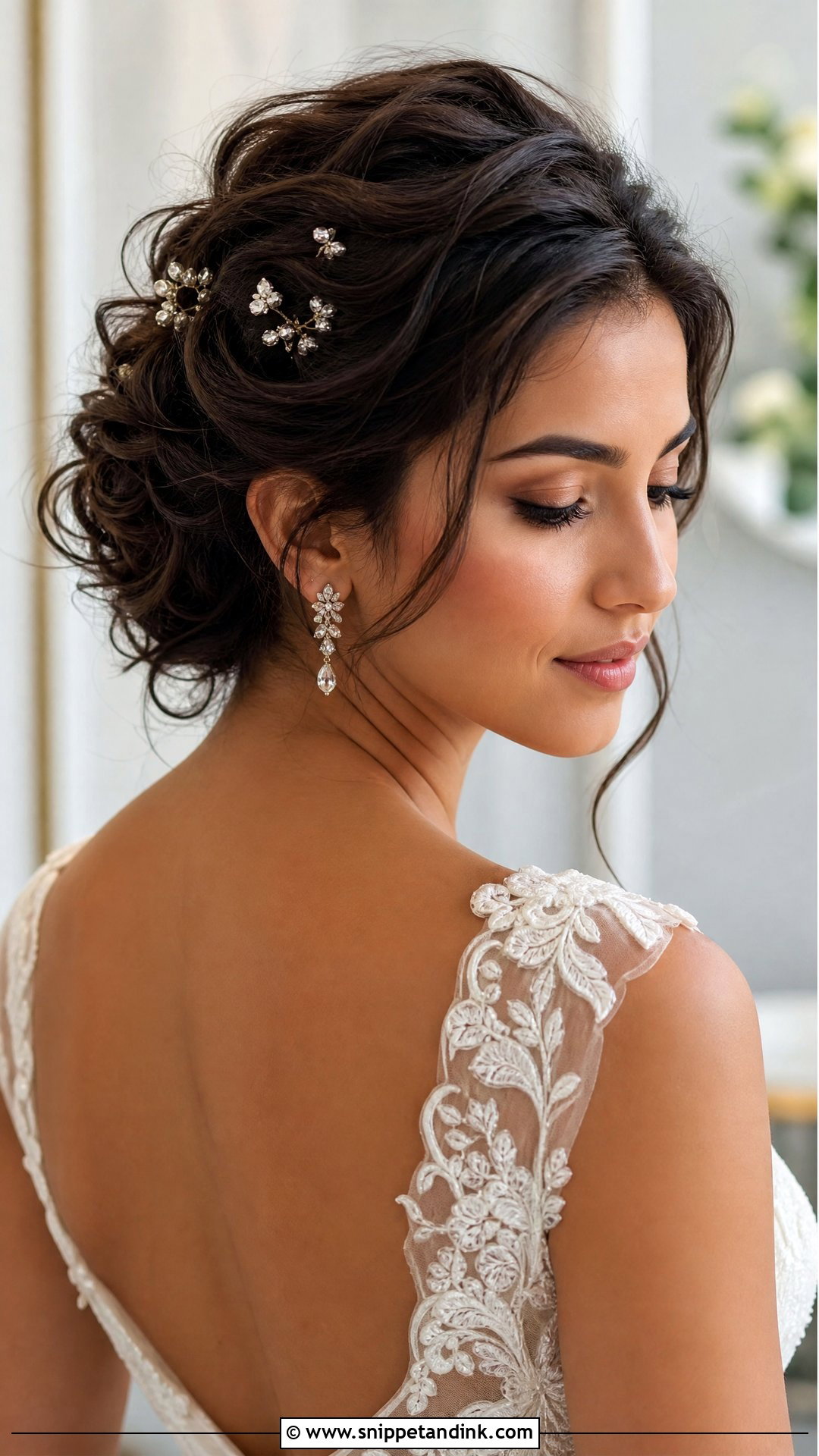
Texture is the secret behind most of the styles above, and here it’s the whole look. Waves, bends and soft backcombing build volume before the hair is pinned into a loose shape, either low at the nape or a little higher at the back. Fine hair especially benefits, because textured strands grip pins far better than smooth, clean ones. Layered cuts blend in rather than poking out. I decide the height by your veil and the profile view at the trial, then leave a few soft pieces at the front. It’s modern without trying hard.
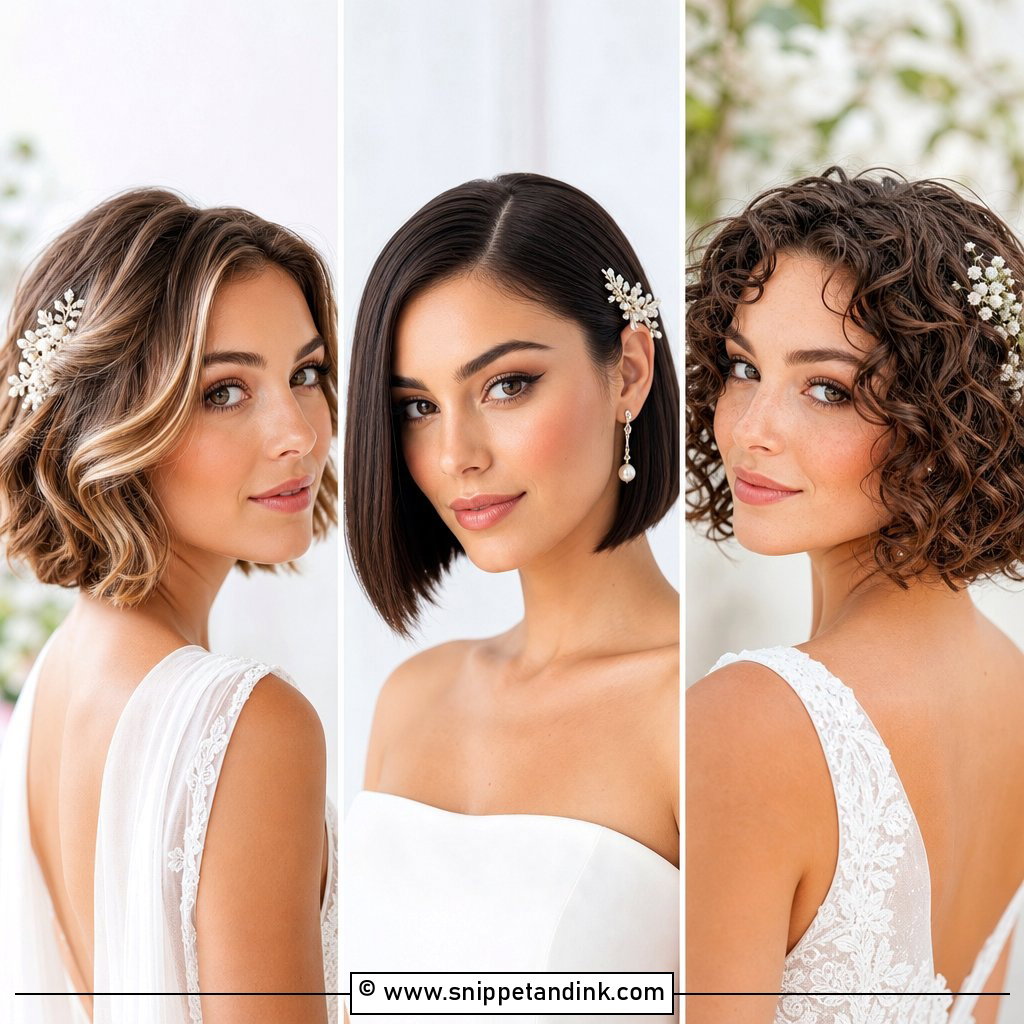
15. Short Hair Pearl Pin Bridal Updo
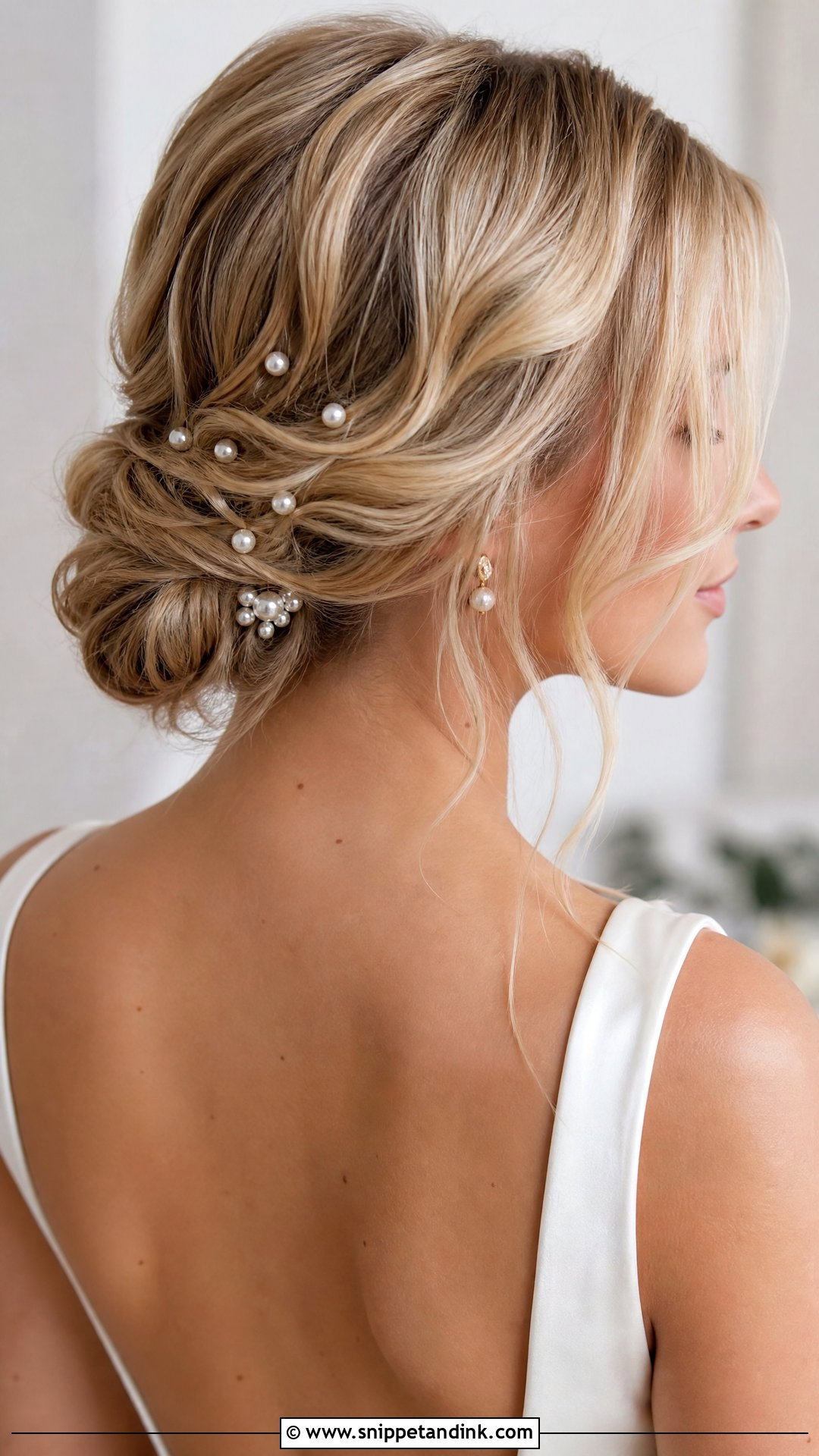
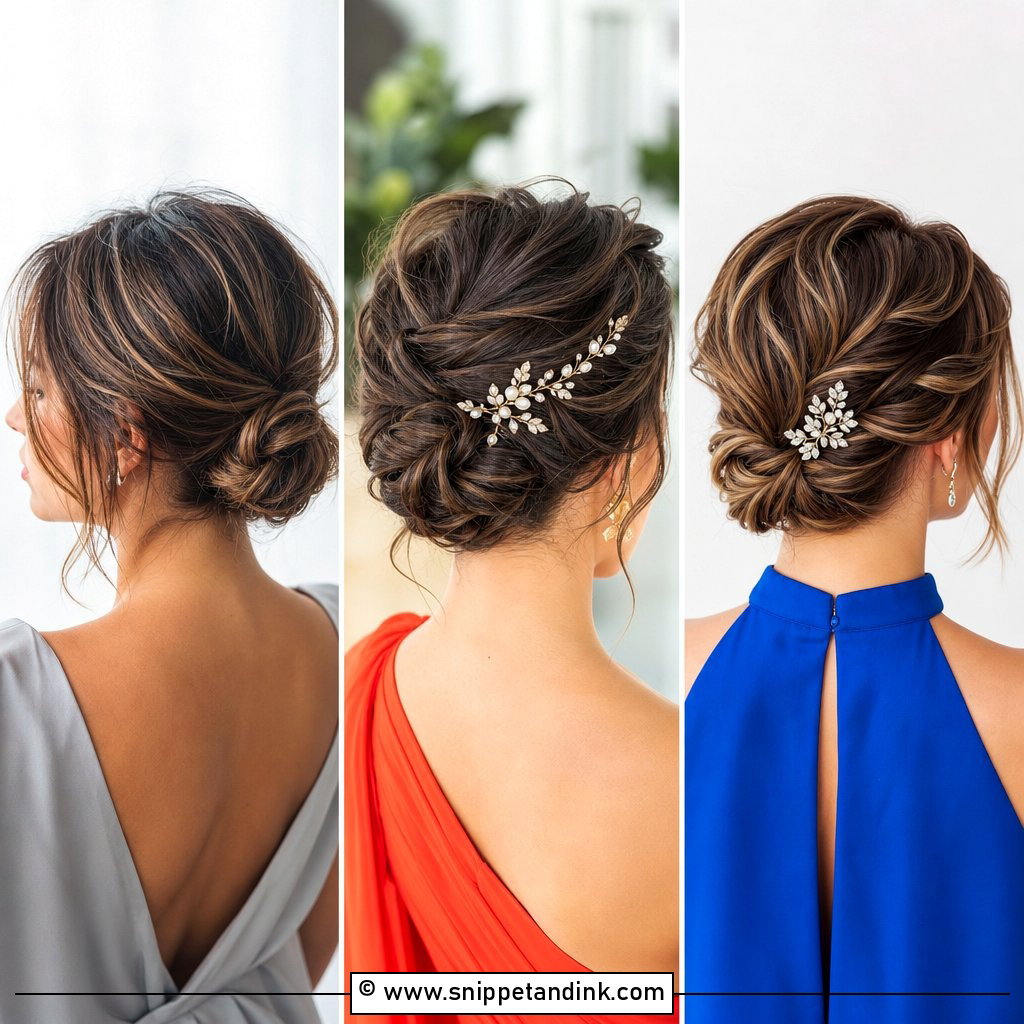
Pearl pins can carry a simple short updo. The base can be a low twist, a mini bun, a tucked bob or soft pinned curls; the pearls add light and make it look finished. I either scatter them evenly or cluster them on one side, and I place them last, after the hold spray, so the pearls don’t go cloudy. On short hair they also earn their place by hiding the points where sections meet. If your dress already has pearl detail, they tie the two together quietly.
Pins, Grip and the Slow Slide of Short Layers
Short updos rarely collapse the way a long, heavy bun can. They fail slowly: one piece behind the ear works loose during the hugs, then another at the nape, and by the evening photos the shape looks fuzzy. Nearly all of that is decided before I put the first pin in.
- Wash the day before, not the morning of. Freshly washed short hair is slippery and pins slide straight out of it.
- I spray texture or dry shampoo at the roots and through the lengths before pinning, so the pins have something to bite into.
- On the shortest pieces I cross two bobby pins in an X instead of laying them in a line.
- Tiny clear elastics on small sections hold fine hair better than pins alone.
- A heavy veil gets anchored into a braided or twisted base, never just into the bun, so its weight doesn’t drag the shape down.
Wear the trial style for the rest of that day
After a trial, I ask brides to keep the style in until bedtime. Walk around, pull a jacket on and off, hug someone. At the end of the day, have someone photograph the back of your head, because that’s the angle your guests see for the whole ceremony. If pieces dropped, show your stylist exactly which ones. A few matching pins and a travel spray in a bridesmaid’s bag cover whatever is left on the day.
Bring a Photo of the Back of Your Head to the Trial
Short hair gives you more choice than most brides are led to believe. Which version suits you comes down to your length at the nape, how much your layers vary, the veil and how polished you want to feel. Low chignons and sleek tucks give a classic finish, messy and boho styles are kind to choppy layers, and a vintage roll makes a cropped cut look deliberately glamorous. Bring photos of your actual haircut alongside your inspiration, wear the veil at your trial, and pick the version that still feels secure when you shake your head.
You'll Like These Ideas:



Leave a Reply