
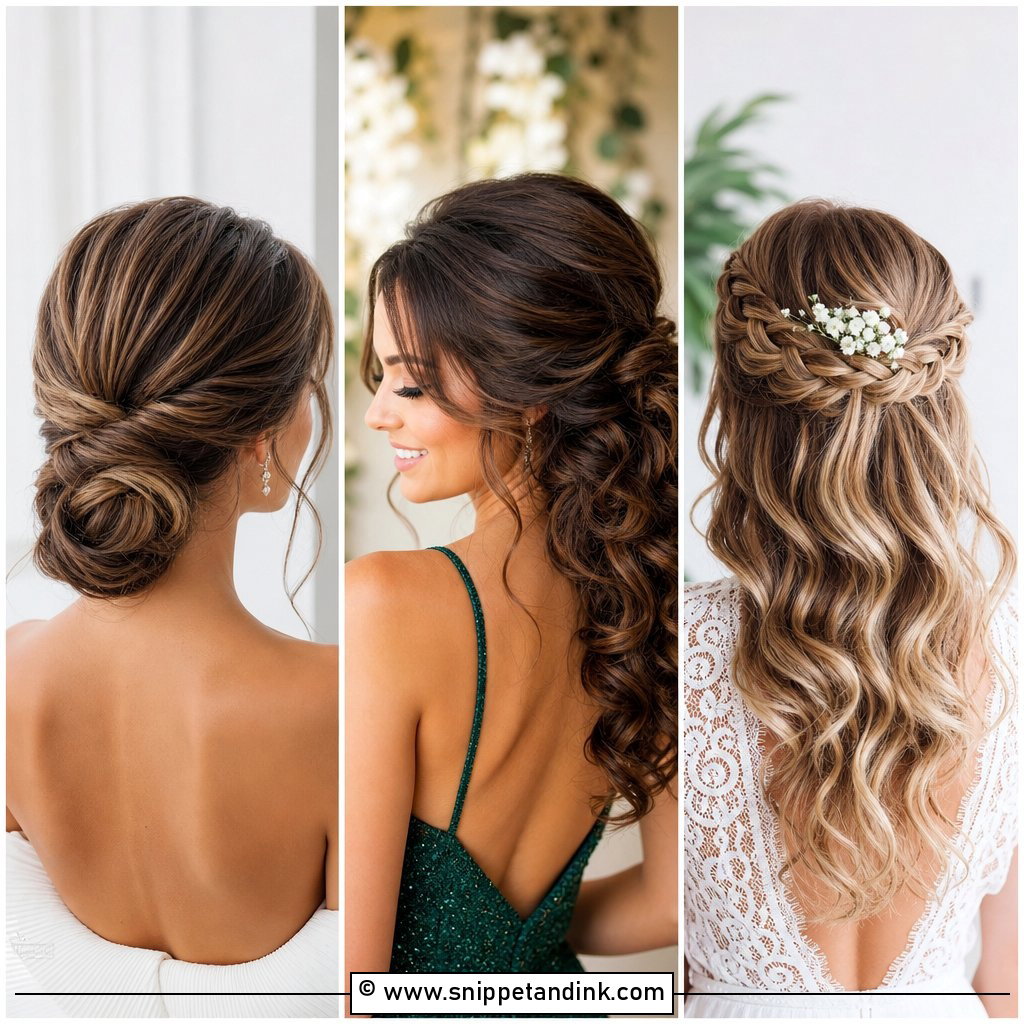
An updo is the style I trust most for a long wedding day. Hair off the neck survives heat, a veil, crying, hugging and a dance floor far better than hair left down, and it keeps the face clear for close-up portraits. The twenty below run from sleek chignons to loose boho buns. For each one I’ve noted what it needs underneath to stay put, which hair it suits, and where I’ve seen it go wrong, because the picture only shows the finished shape, not the work that holds it there.
What Holds an Updo Up Before Anyone Sees It
Every updo on this list depends on work you won’t see in the photographs. When a bride sits in my chair, the first ten or fifteen minutes go on prep, not on the style itself.
- Grip. Clean, silky hair lets pins slide. I prefer hair washed the night before, then I add texture spray or powder at the roots.
- Set curls. Even sleek updos start with curled hair, because curls give the pins something to catch.
- An anchor. Most buns are built over a small ponytail or a cross of pins, which carries the weight so the rest of the style doesn’t.
- The right pin. Bobby pins lock sections flat; U-pins hold volume and curls without crushing them. I use both.
If your updo collapsed at a past event, it was usually one of these steps skipped, not the wrong style.
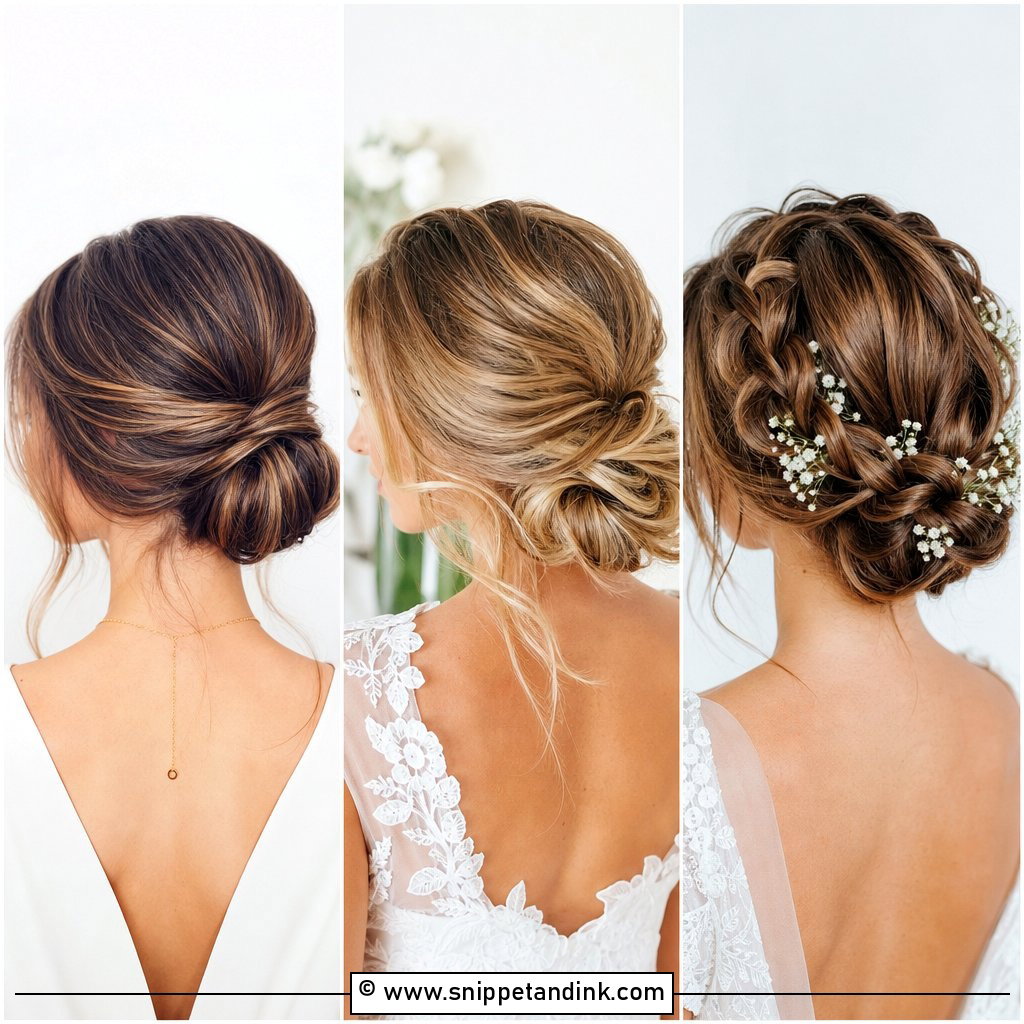
1. Low Chignon Wedding Updo
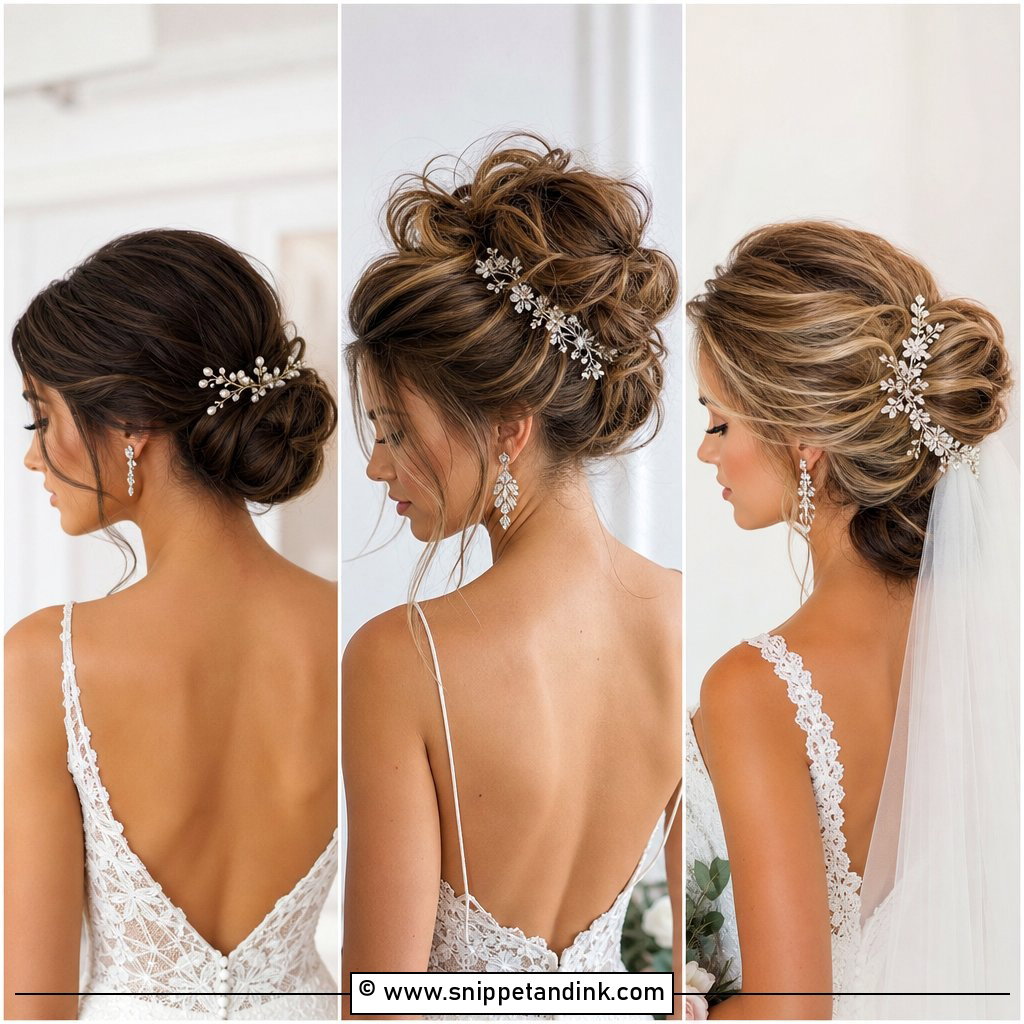
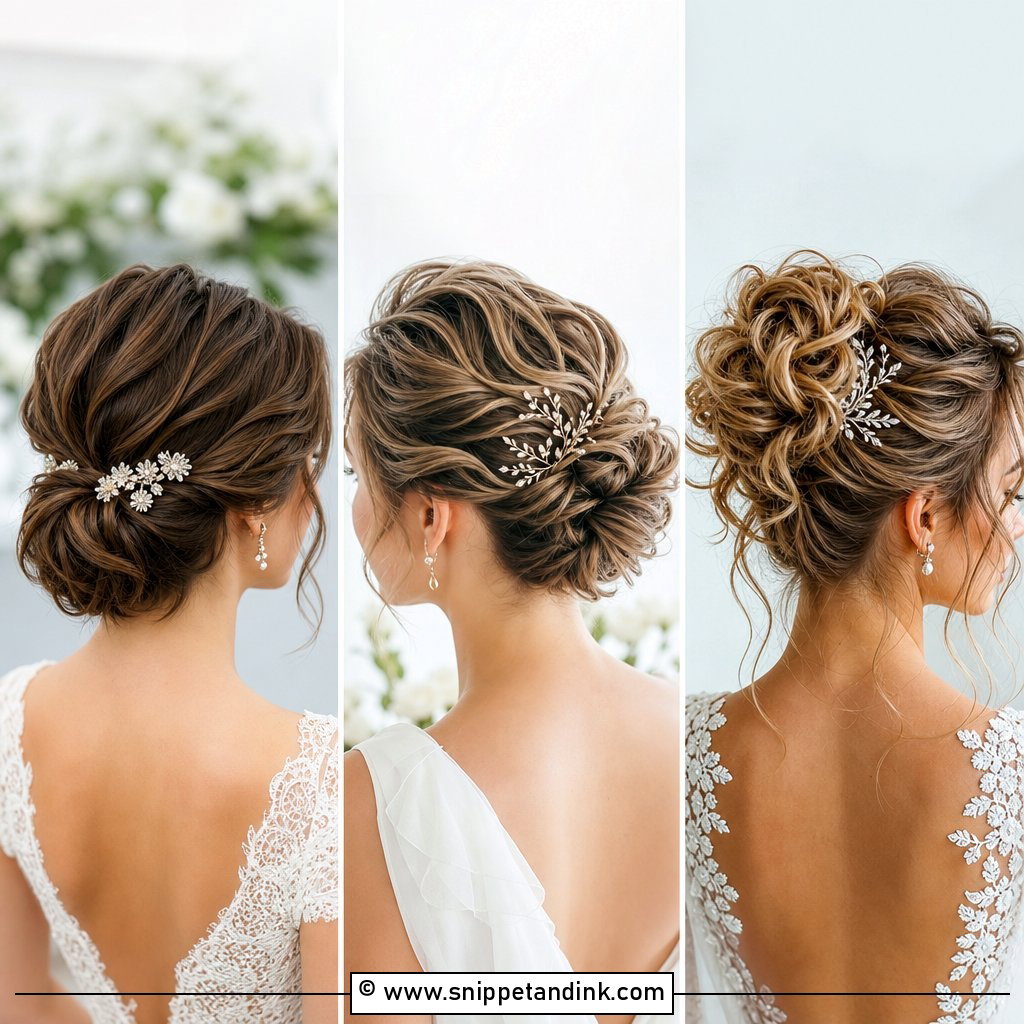
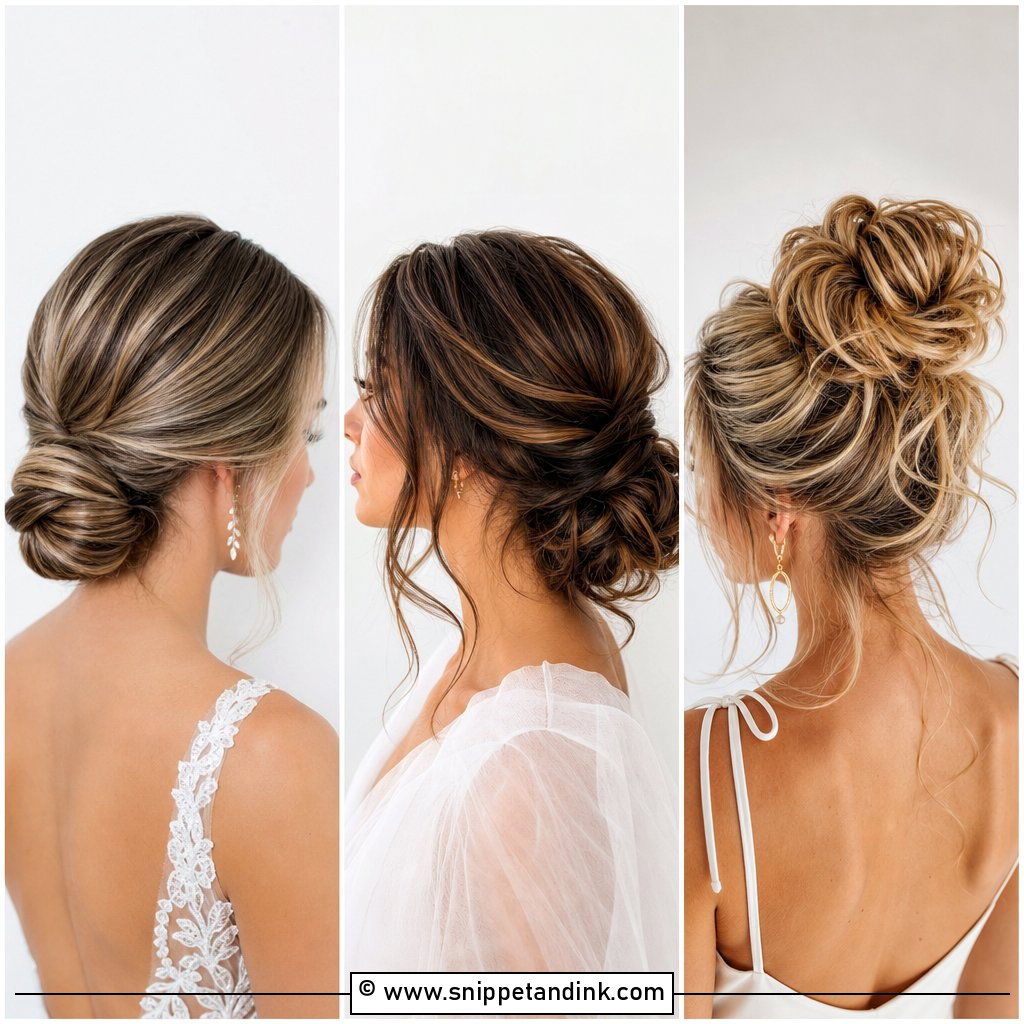
The low chignon sits at the nape and slides neatly under a veil comb, which is why I suggest it to brides who plan to wear one all day. I build it over a small anchor ponytail so the comb has something solid to grip. A few face-framing tendrils stop it from looking severe, and delicate pins add detail. Kept sleek, it reads modern; loosened slightly, it reads romantic. It suits a black-tie ballroom as easily as a small family lunch.
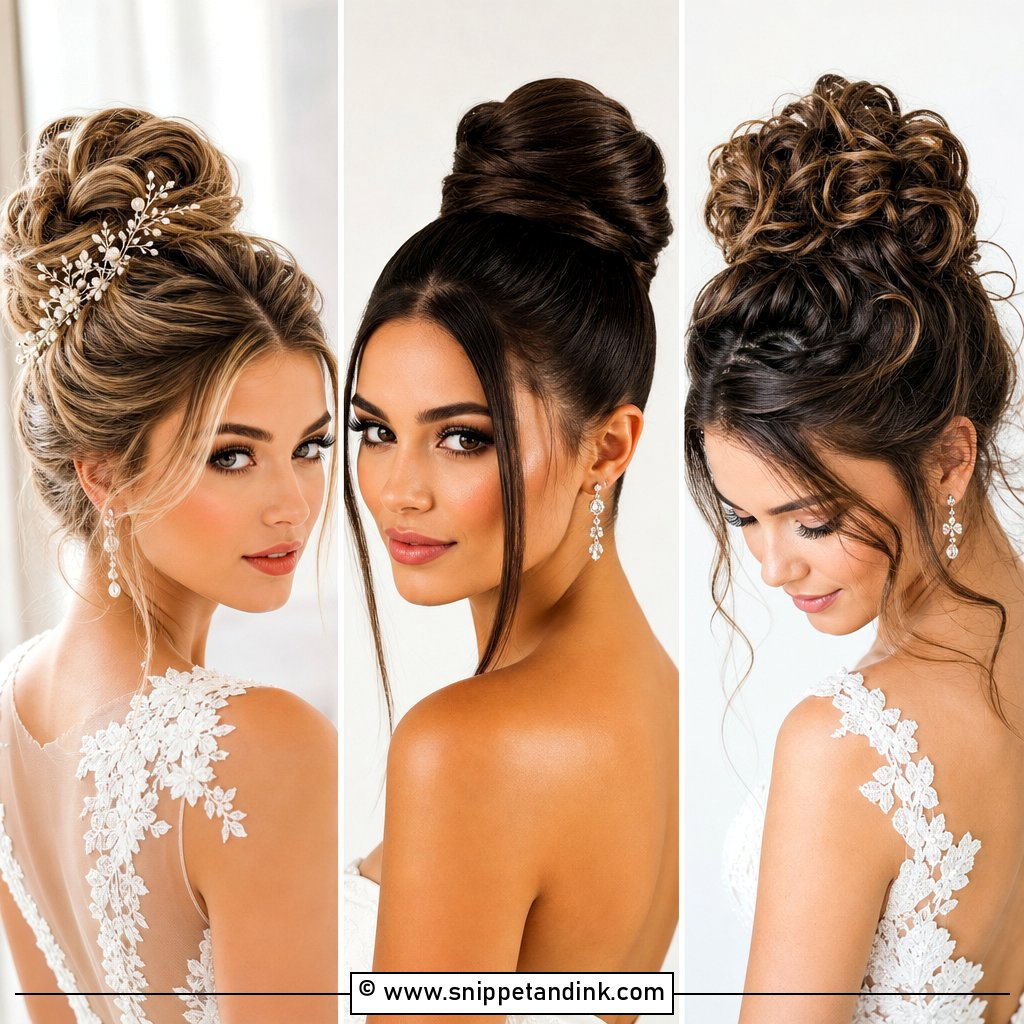
2. Messy High Bun for Brides
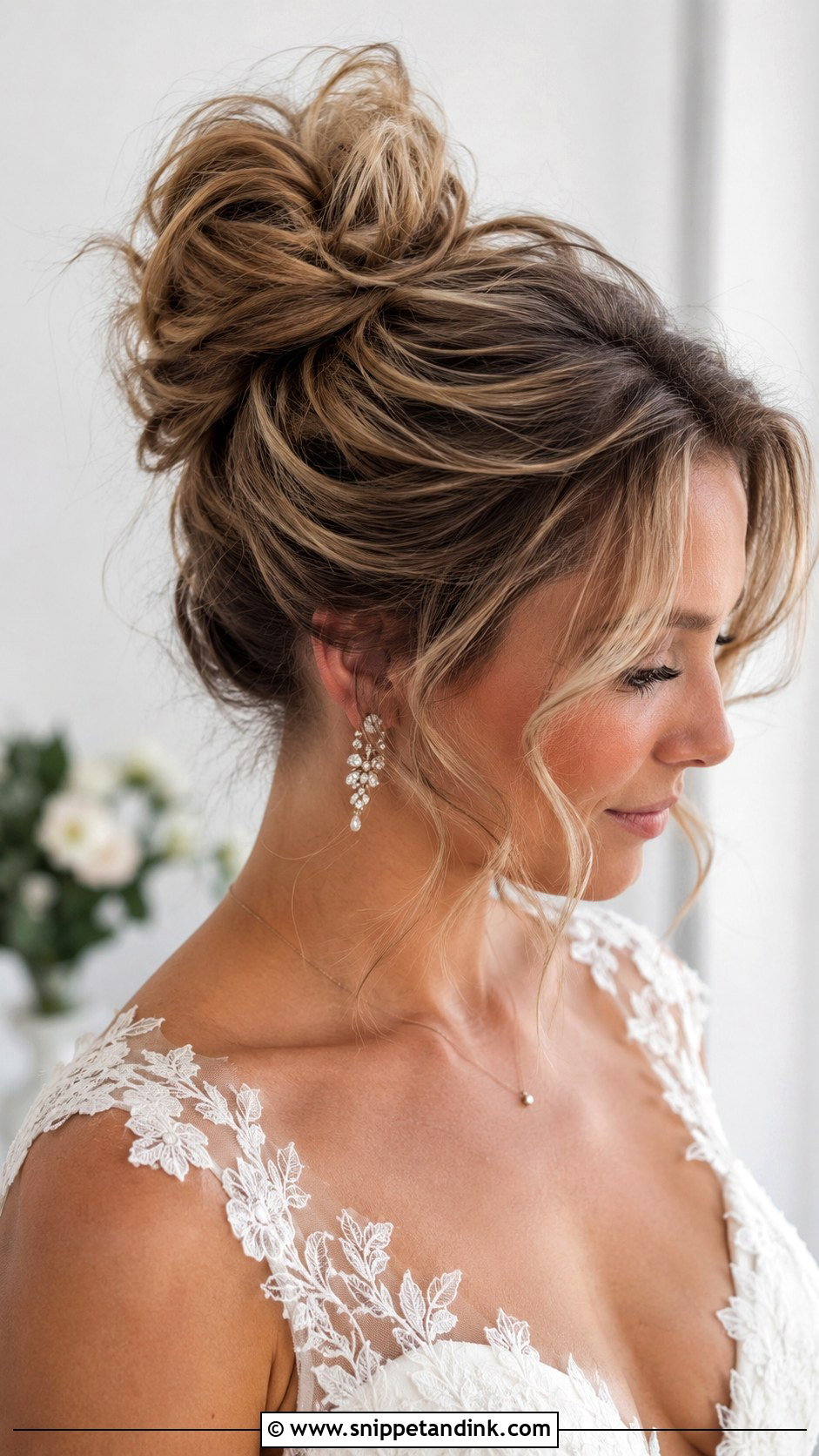
Height at the crown lengthens the neck and draws the eye up, and that’s the appeal of a messy high bun. The risk is weight. A large bun sitting high pulls on the scalp, and by evening some brides find it aches. I keep the base firm but not tight, use light backcombing for size rather than a heavy amount of hair, and leave soft strands around the face. A sparkly hairpiece or fresh flowers can sit at the side. It’s relaxed and still clearly bridal.
3. French Twist Updo
A French twist sweeps the hair to one side and folds it into a vertical seam, giving clean lines that look regal at formal ceremonies. It’s very secure once set. My one warning: freshly washed, silky hair won’t hold the fold, so I’d wash the day before and add a little texture powder at the roots. It sits well with a statement veil or plain pearl earrings, and pulling a few wispy pieces loose softens it into understated old Hollywood.
4. Braided Crown Updo
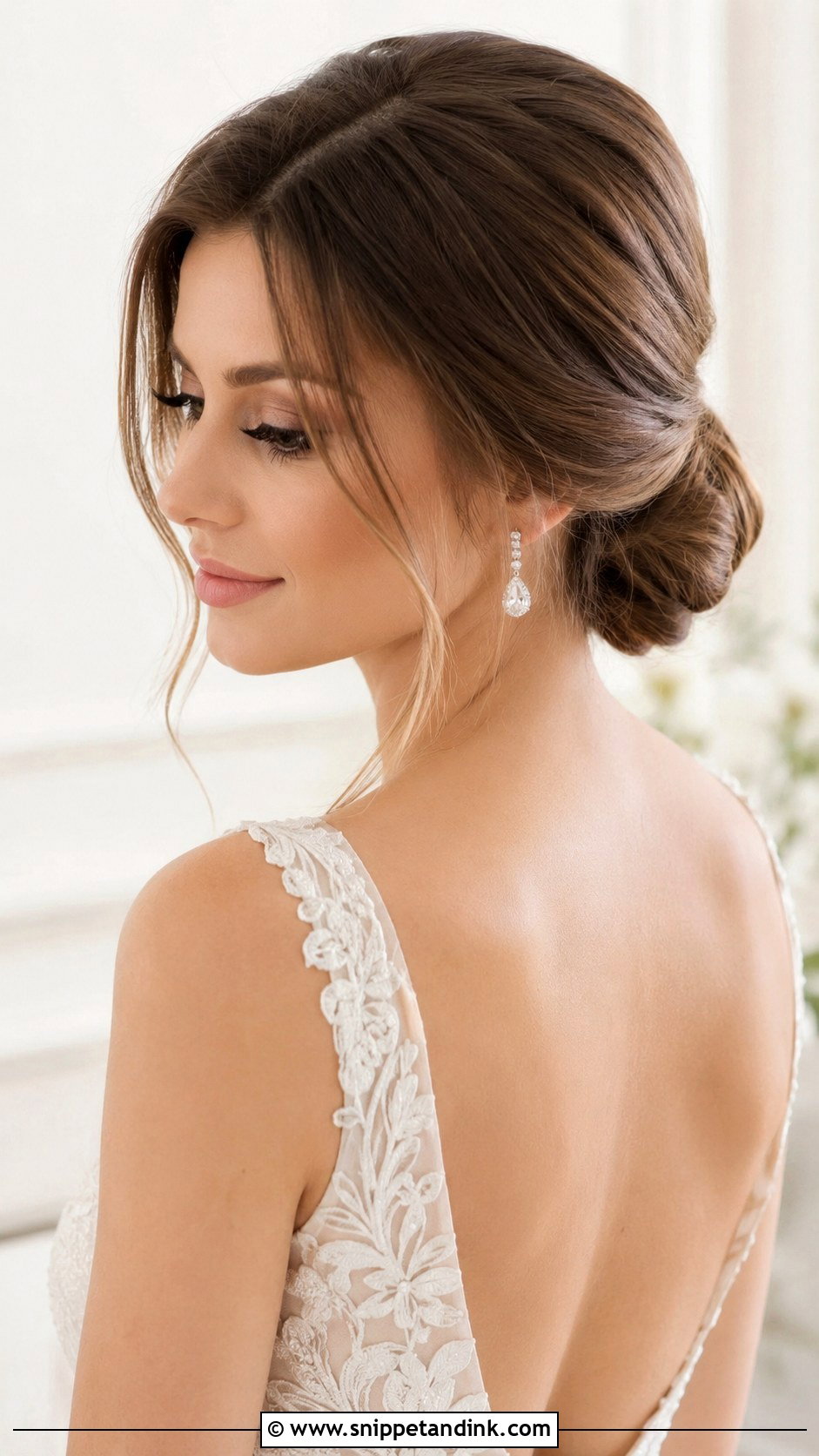
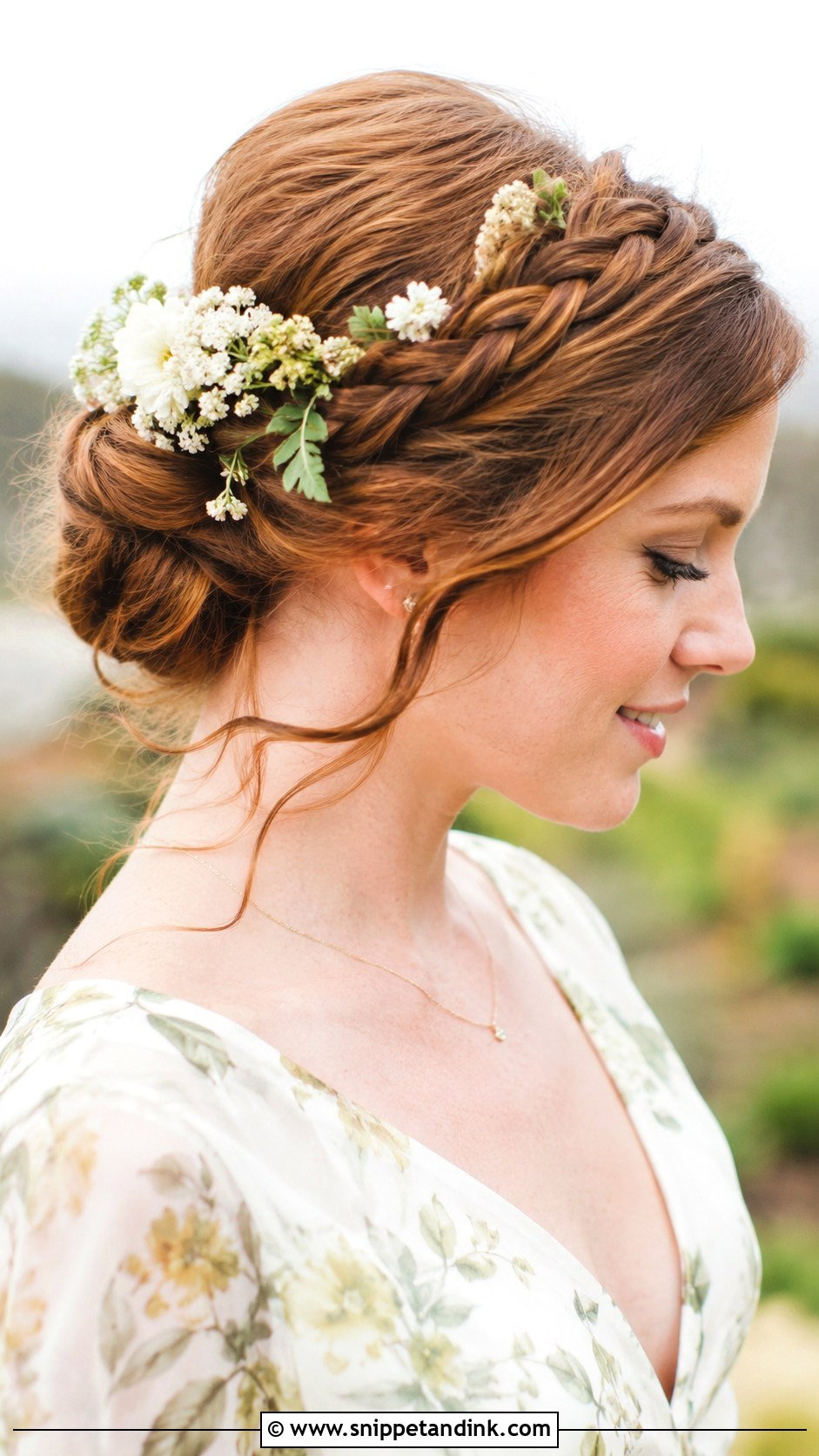
The braided crown wraps a braid around the head like a natural halo, and it’s built for outdoor and garden weddings, especially with blooms tucked into the plait. It keeps every strand off the face, which helps in summer heat. Thick and fine hair can both wear it, though fine hair gets a fuller result if I braid with slightly larger sections and pancake the edges afterwards. It holds up well from every angle, including the back, which is the view guests see during the ceremony.
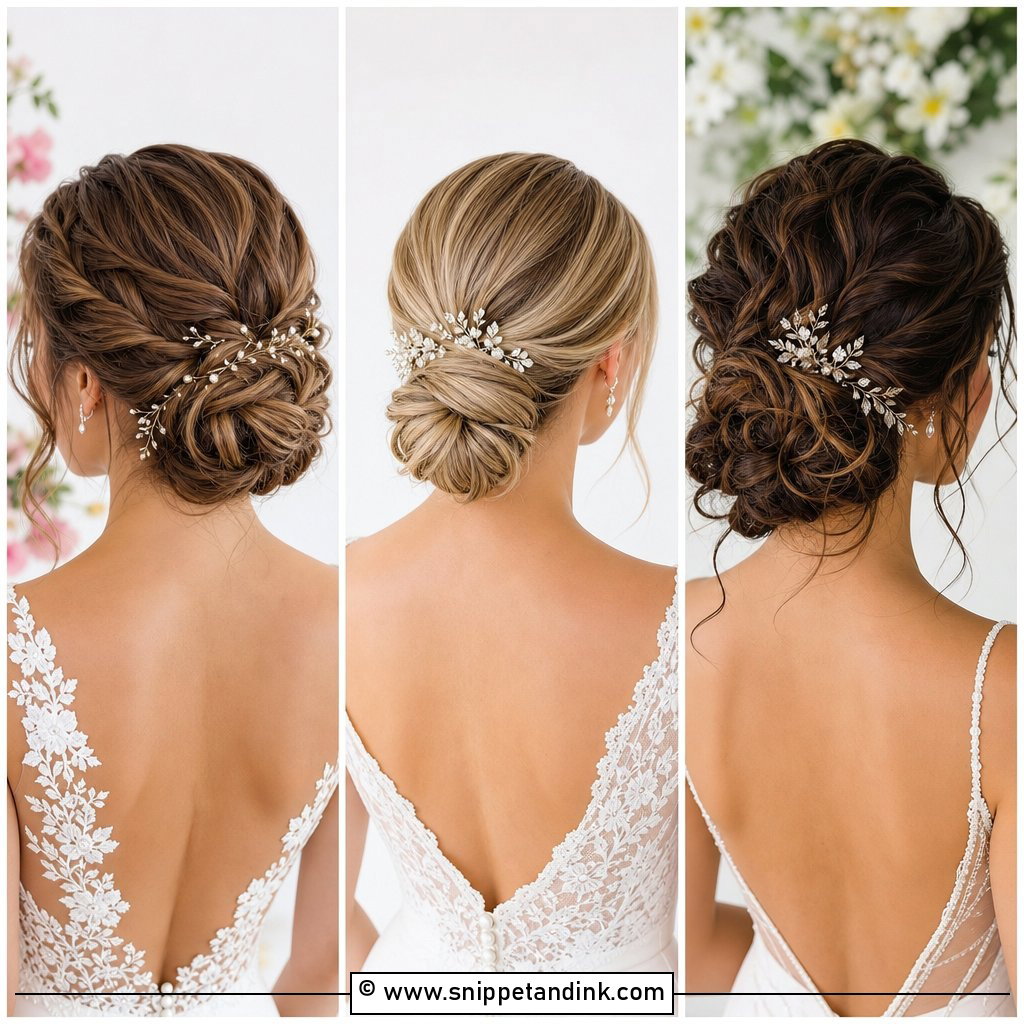
5. Twisted Low Bun Updo
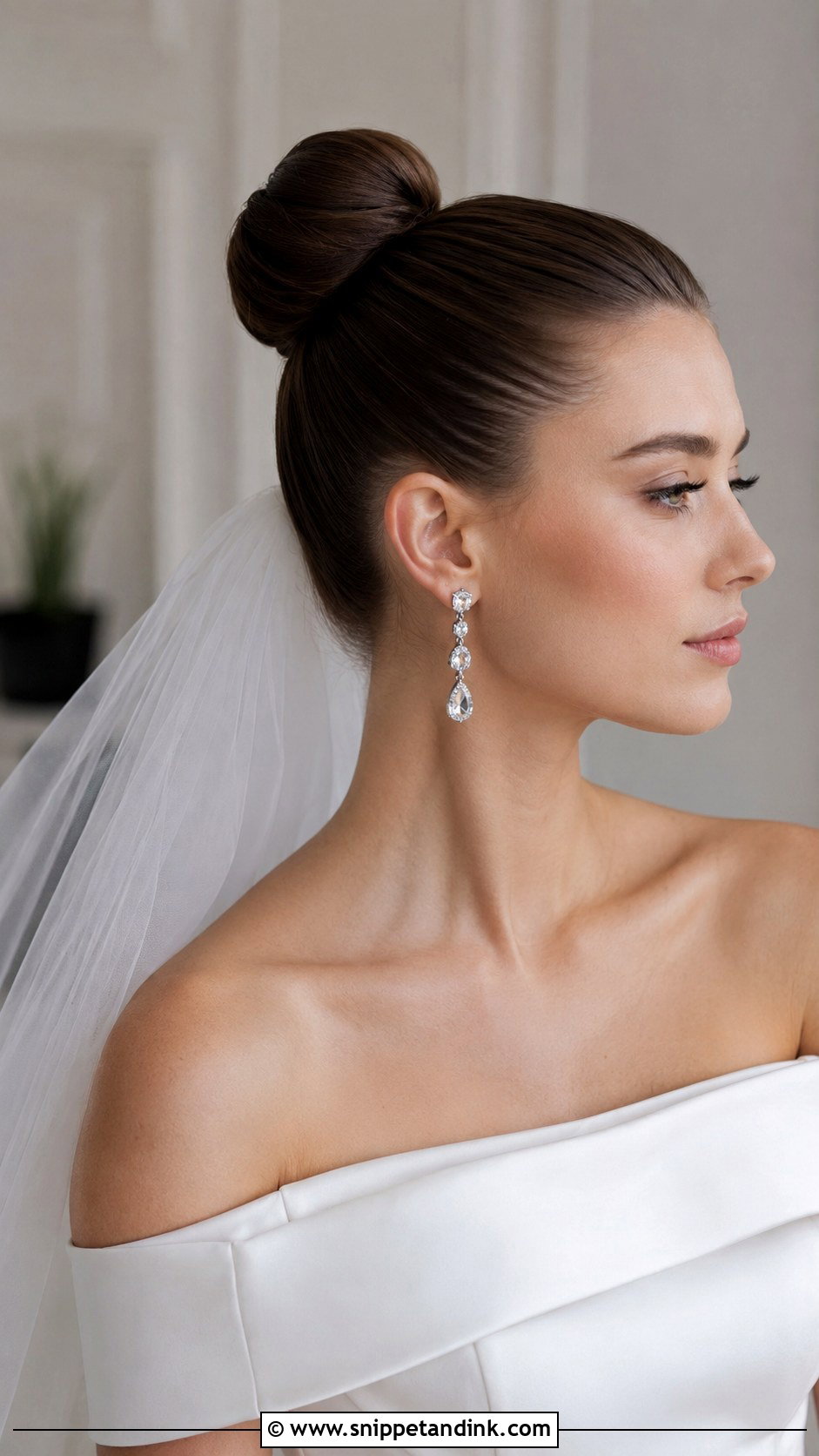
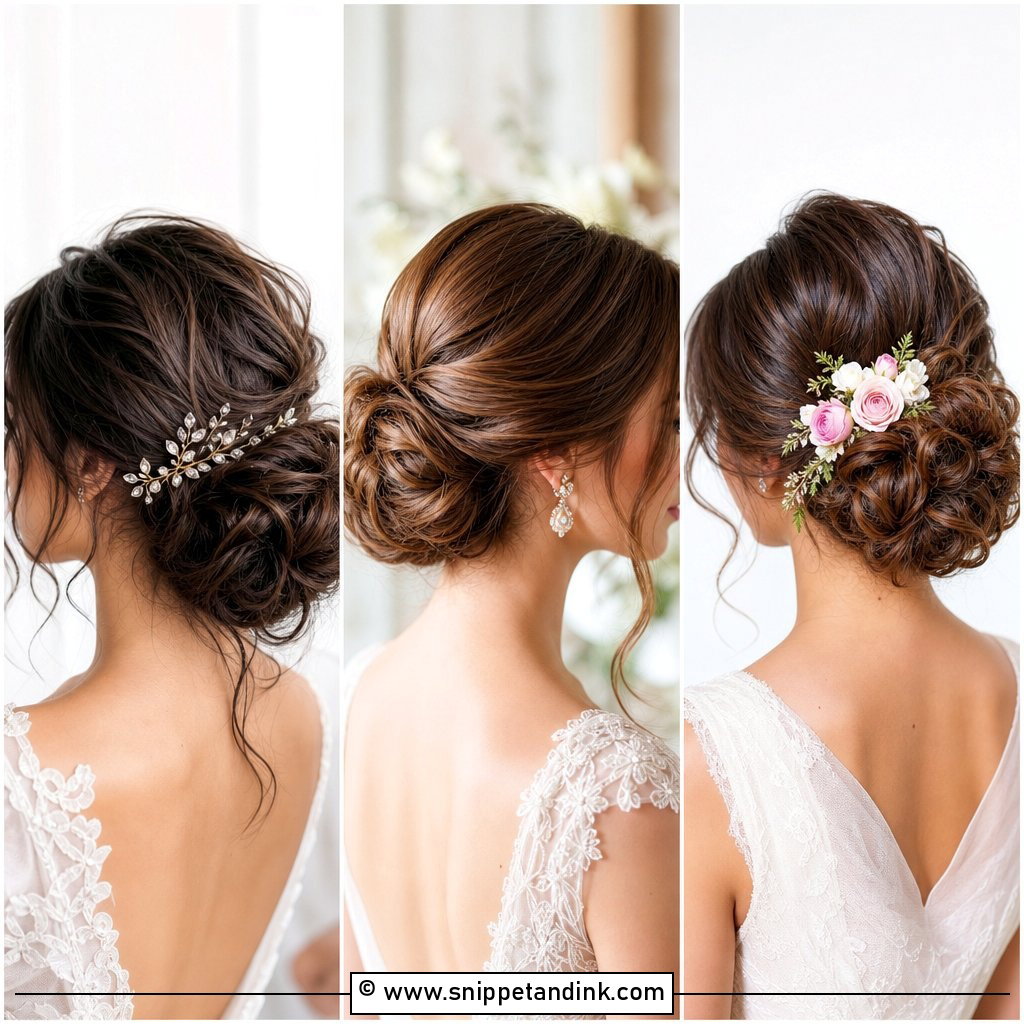
Twisting the hair before it becomes a bun gives a low bun ridges and shadow, so it never reads as flat. I rope-twist in the same direction on both sides, so the twists lock rather than unwind as I pin. It’s polished without being formal and works with modern and classic gowns. Tiny pins, pearls or a single bloom can sit between the twists. In my experience it’s one of the most secure updos for a long day, because each twist is pinned separately.
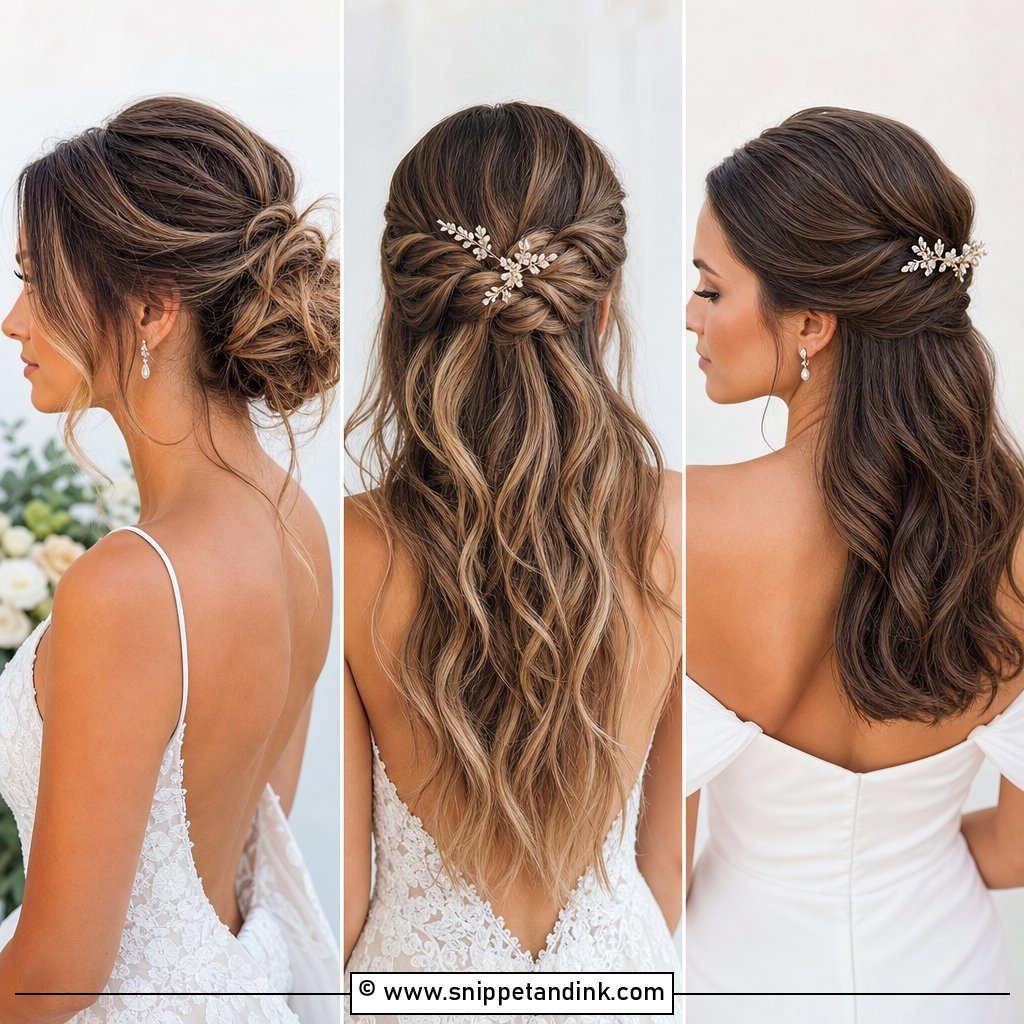
6. Half-Up Half-Down Bridal Updo
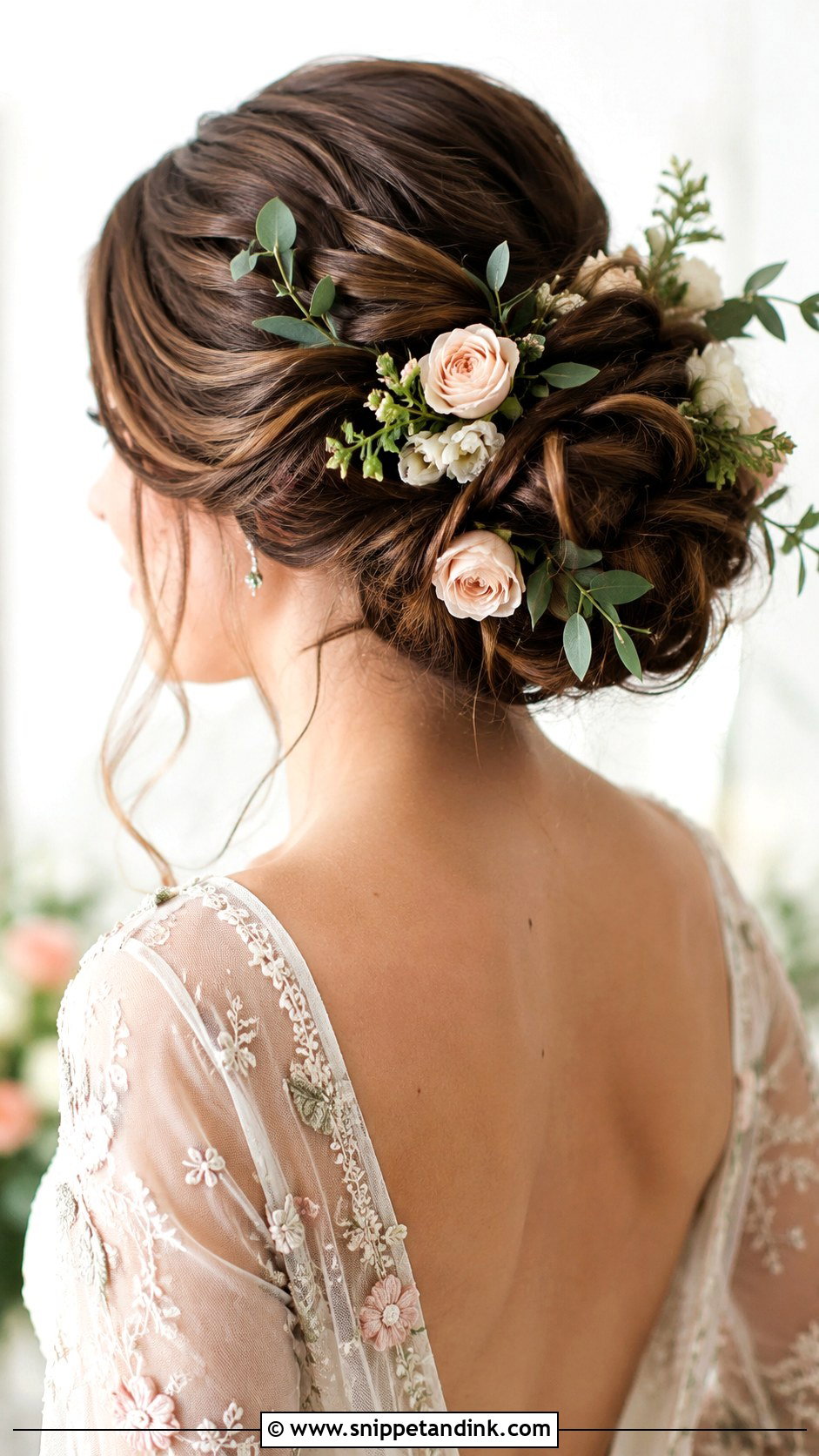
Half-up half-down isn’t technically an updo, but plenty of brides who can’t decide end up here. The top section is pinned back and the rest falls in soft waves, showing length and texture while keeping the face clear. The current version is softer, with loose waves and fine tendrils. A twist, braid or small bun at the crown adds detail. Be honest with yourself about weather: down sections are the first to drop in humidity, so if your venue is muggy, a full updo is the safer choice.
7. Boho Braided Bun
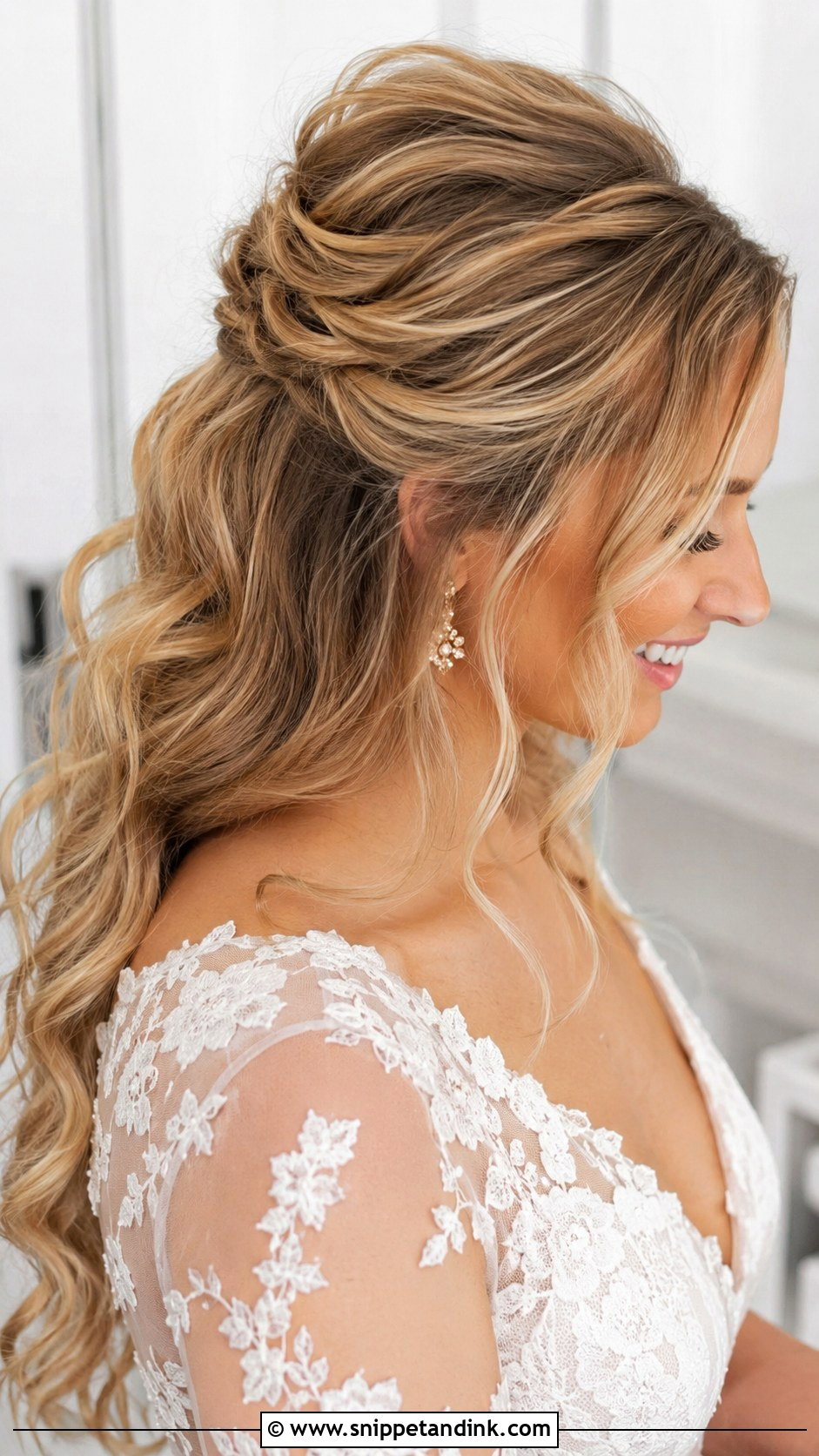
A boho braided bun combines loose braids with a softly gathered bun and a slightly undone texture. Flowing dresses, outdoor venues and natural florals suit it. I’d use dried flowers or sturdy greenery rather than delicate fresh blooms, since they won’t wilt before the speeches. The braids carry the detail, the bun stays soft. Under the relaxed look, it still needs a solid pinned foundation, or the braids loosen out completely by the end of the night.
8. Sleek Ballerina Bun
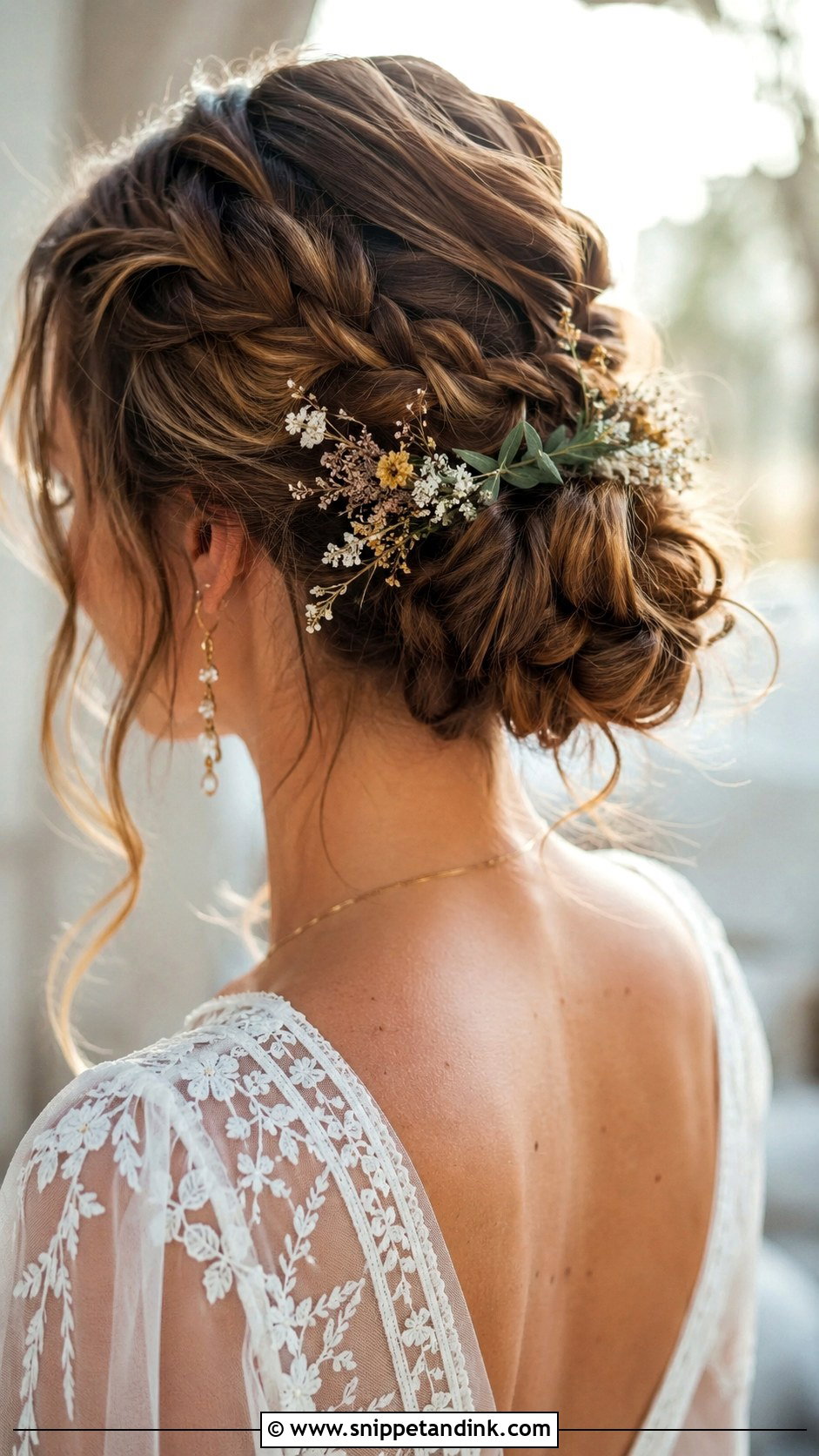
This one is unforgiving. A sleek ballerina bun pulls every strand back tight and high, with no flyaways and nowhere to hide. It shows off an open back and bold earrings, and suits a fashion-forward bride. I’d warn anyone with a sensitive scalp or a history of tension headaches, since a tight high bun worn for twelve hours can be painful. I smooth with a toothbrush and gel at the hairline, then finish with a light shine spray.
9. Romantic Curly Updo
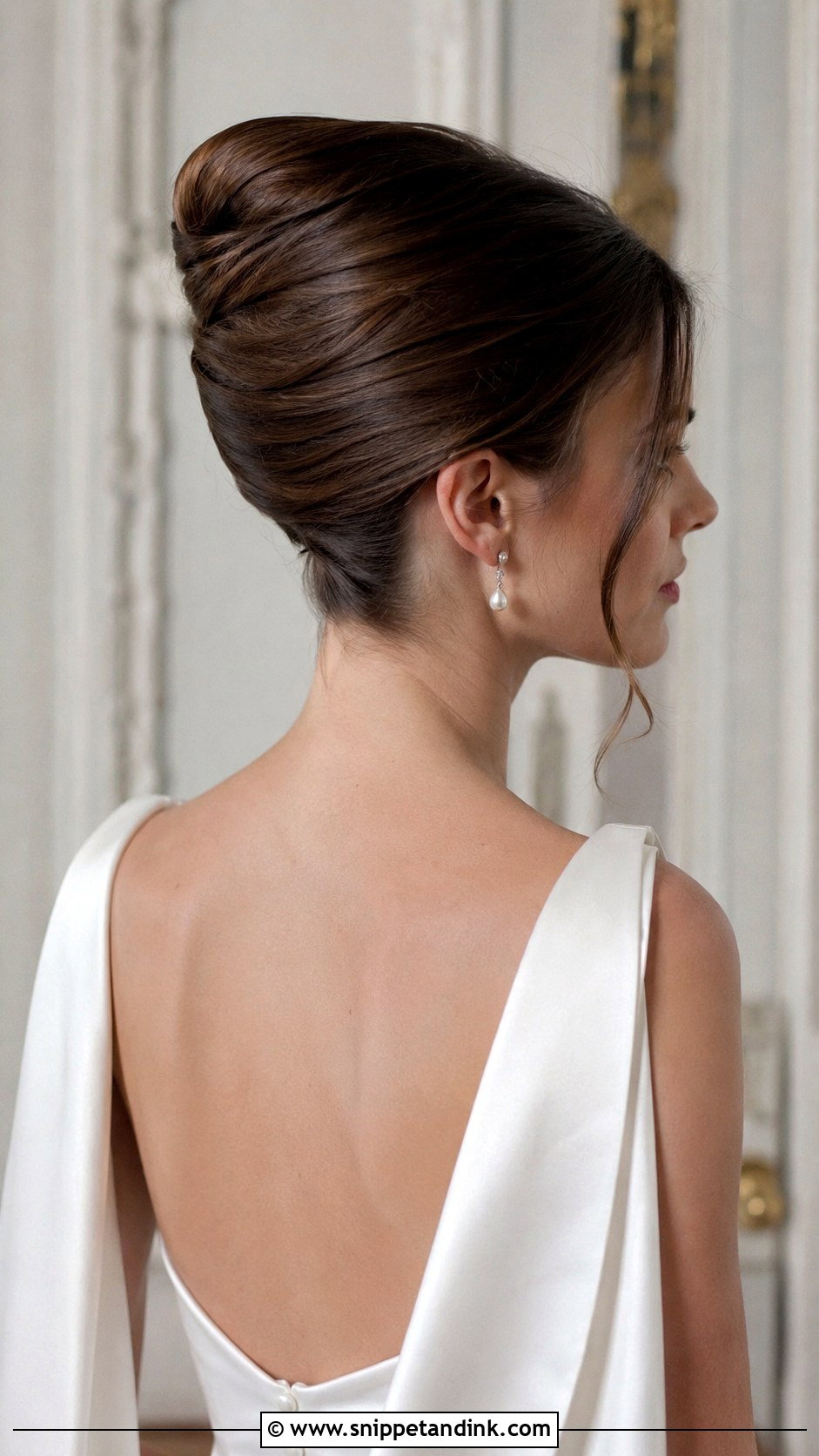
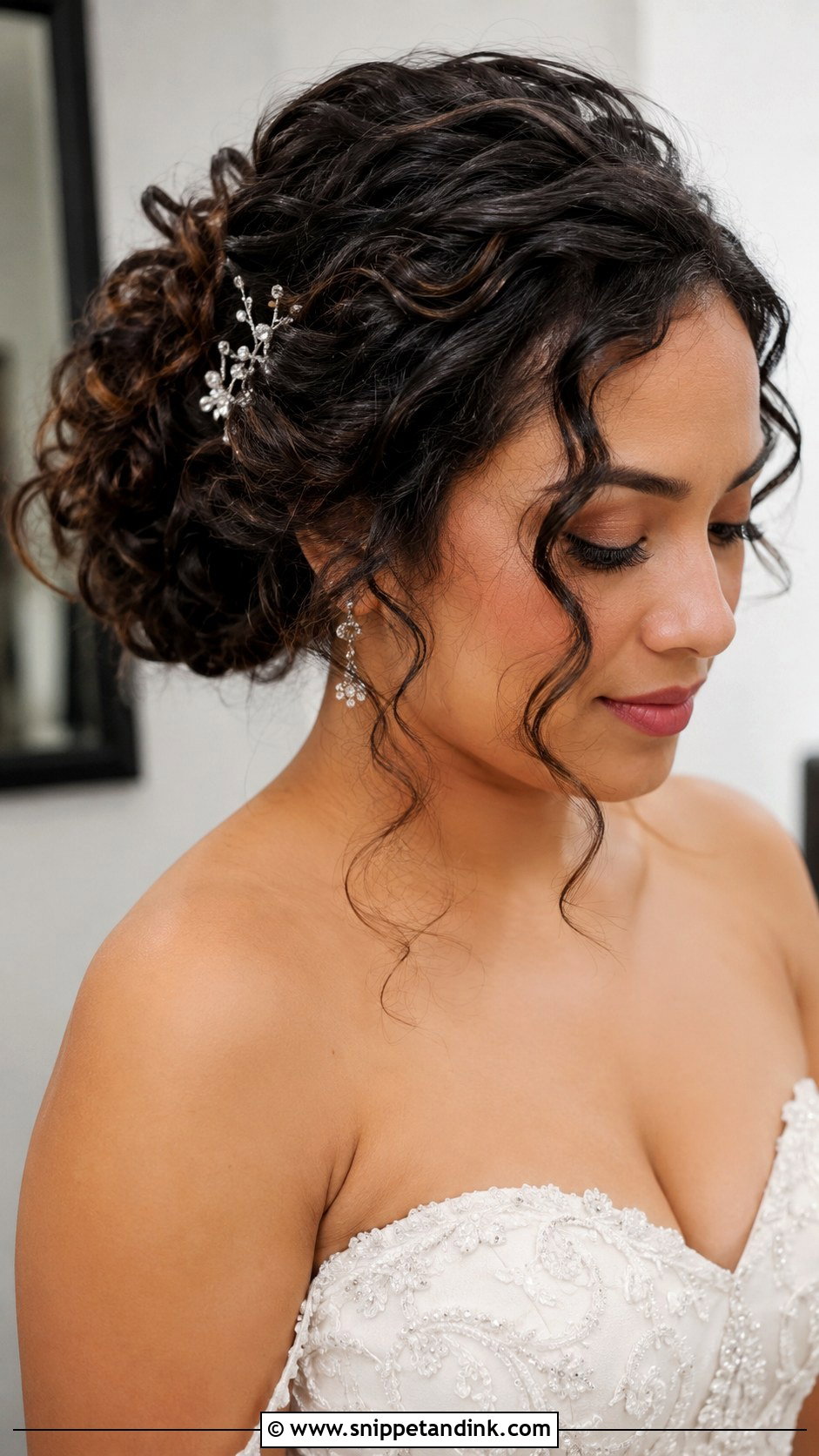
A romantic curly updo gathers loose curls into a soft bun or twist, with texture and volume left in, and a few curls fall around the face. For brides with natural curls, I work with the pattern rather than straightening it first. I use U-shaped pins, which hold curly hair with less tension than bobby pins and won’t flatten the curl. A jeweled pin or fresh flower adds sparkle. It works at formal and relaxed weddings, depending on how full I leave it.
10. Floral Accented Updo
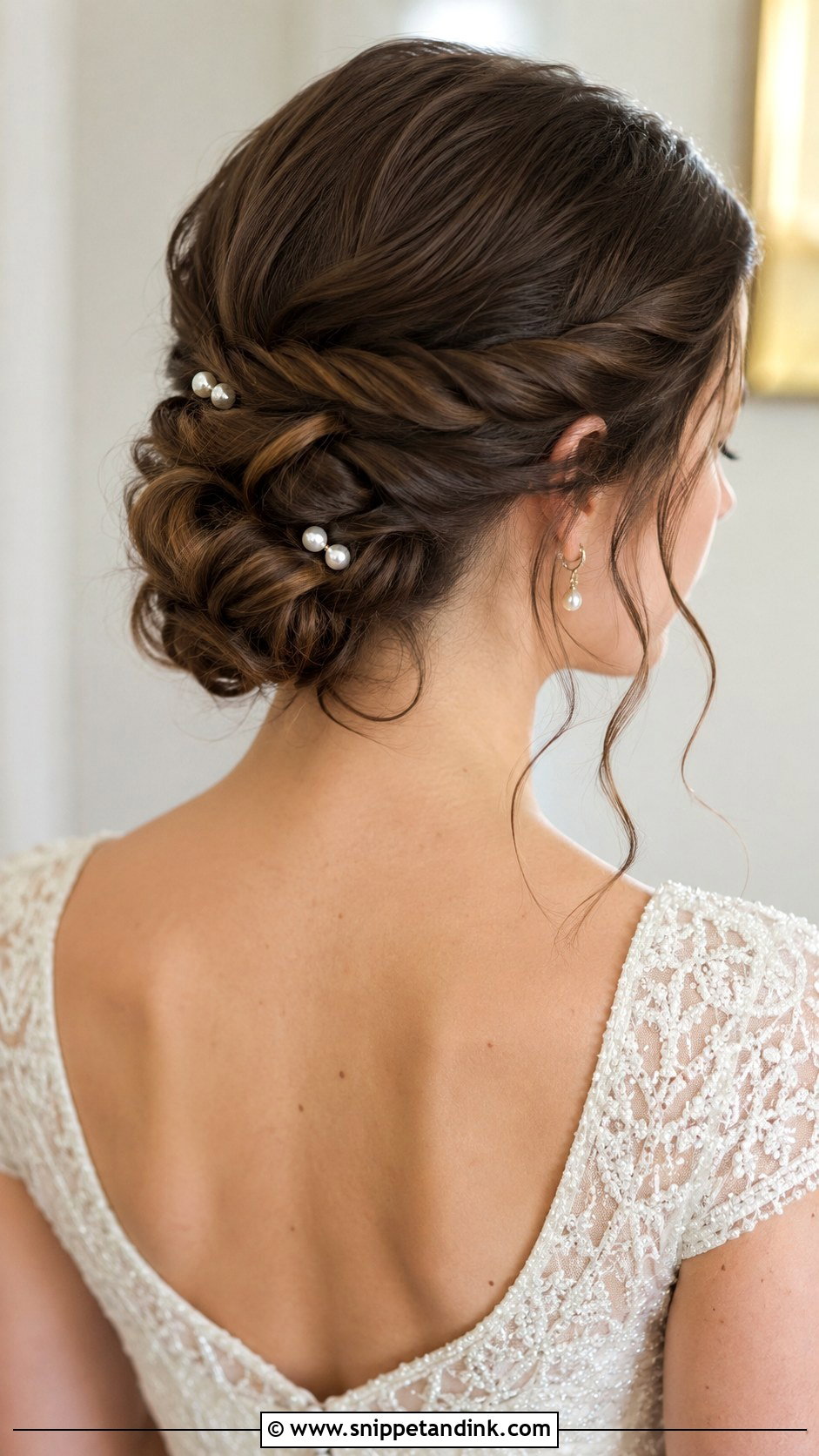
Fresh flowers turn any bun or twist into something seasonal. A floral accented updo can have blooms tucked at the side, around the bun or scattered through the whole style. I’d always coordinate with your florist, because flowers for hair need conditioning and often wiring, and soft petals wilt fast once they’re out of water. Match the hair flowers to your bouquet for a coherent look. Whether you prefer subtle baby’s breath or bold roses, the flowers bring colour and something personal.
11. Dutch Braid Updo
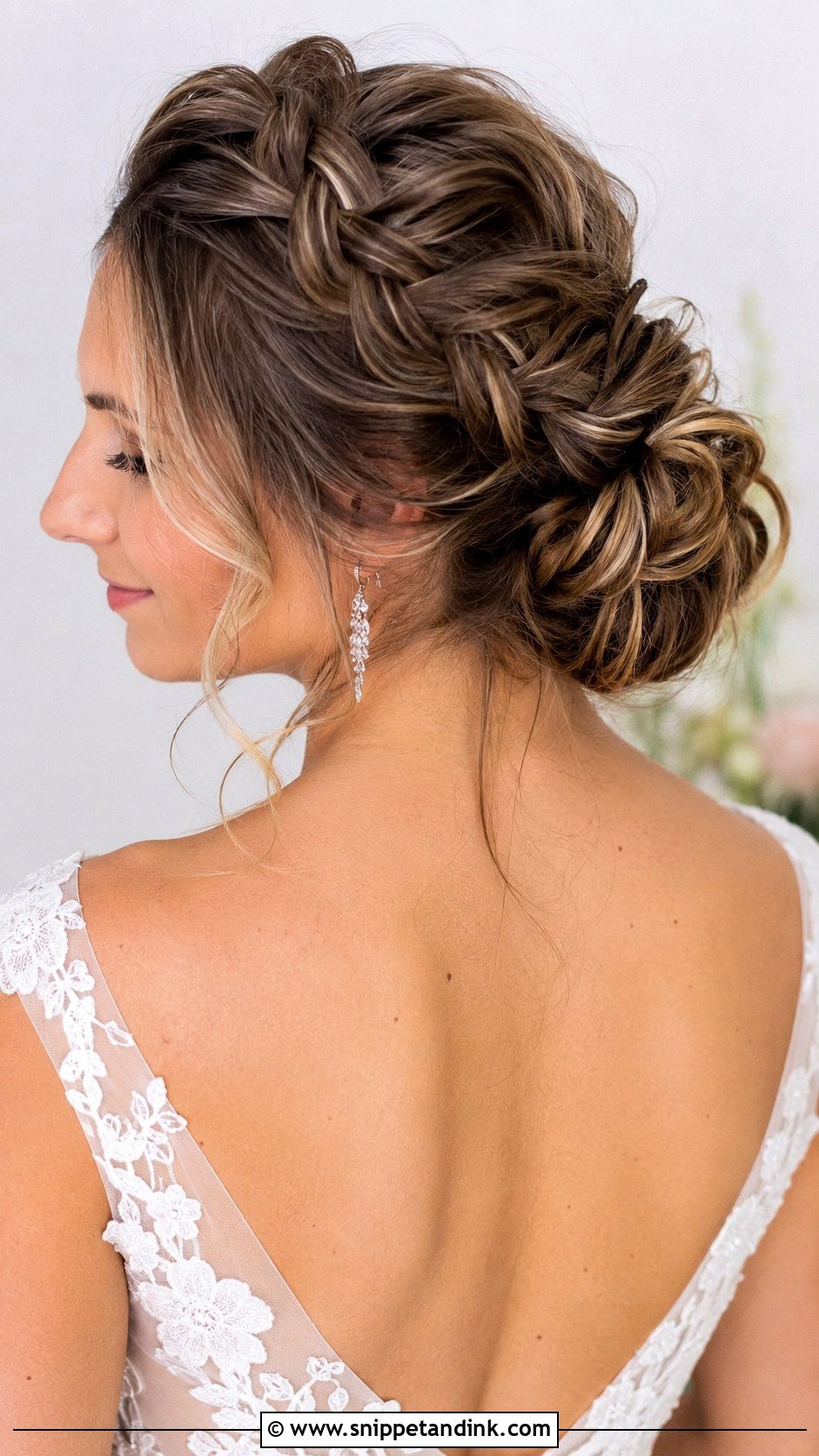
A Dutch braid is plaited under, so it stands up off the head in a raised pattern, then tucks into a bun or twist. The result has real structure and dimension. It’s one of the most secure ways to hold hair off the face, since the braid grips along its whole length. Small accessories suit it, or leave it plain so the braid itself is the detail. Close-up photos show the pattern well. If you have a tender scalp, ask your stylist to braid slightly looser and pancake it afterward.
12. Vintage Pin Curl Updo
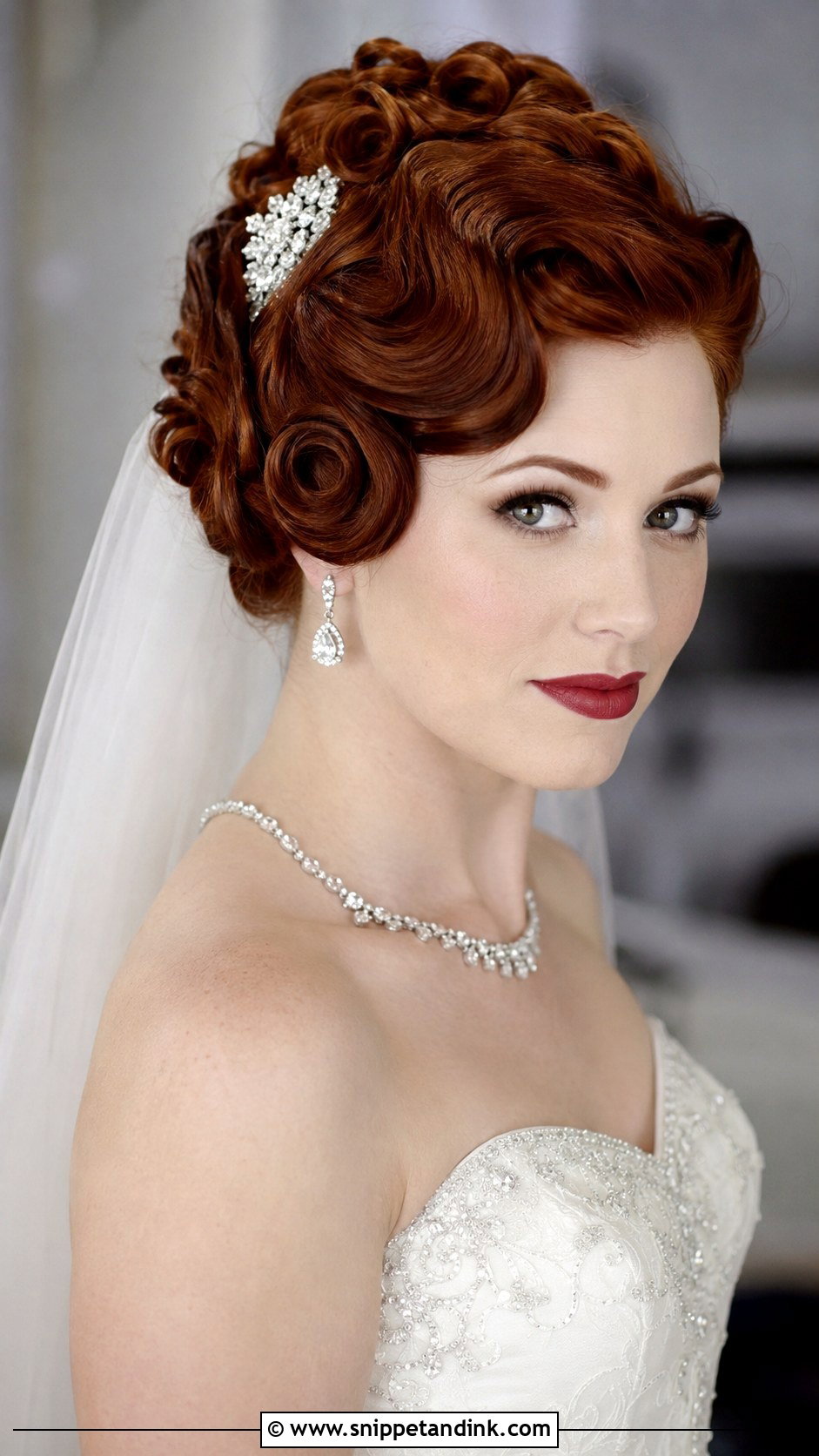
Pin curls are set, not curled and brushed. I roll small sections, pin them flat to cool, then shape the curls into a sculpted arrangement. The retro waves read as old Hollywood and pair with classic gowns, statement jewelry and a bold lip. It can be kept structured or softened for a romantic finish. A sparkling comb or a birdcage veil completes the period look. This style takes time in the chair, so book a trial and allow extra time on the morning.
13. Twisted Updo With Tendrils
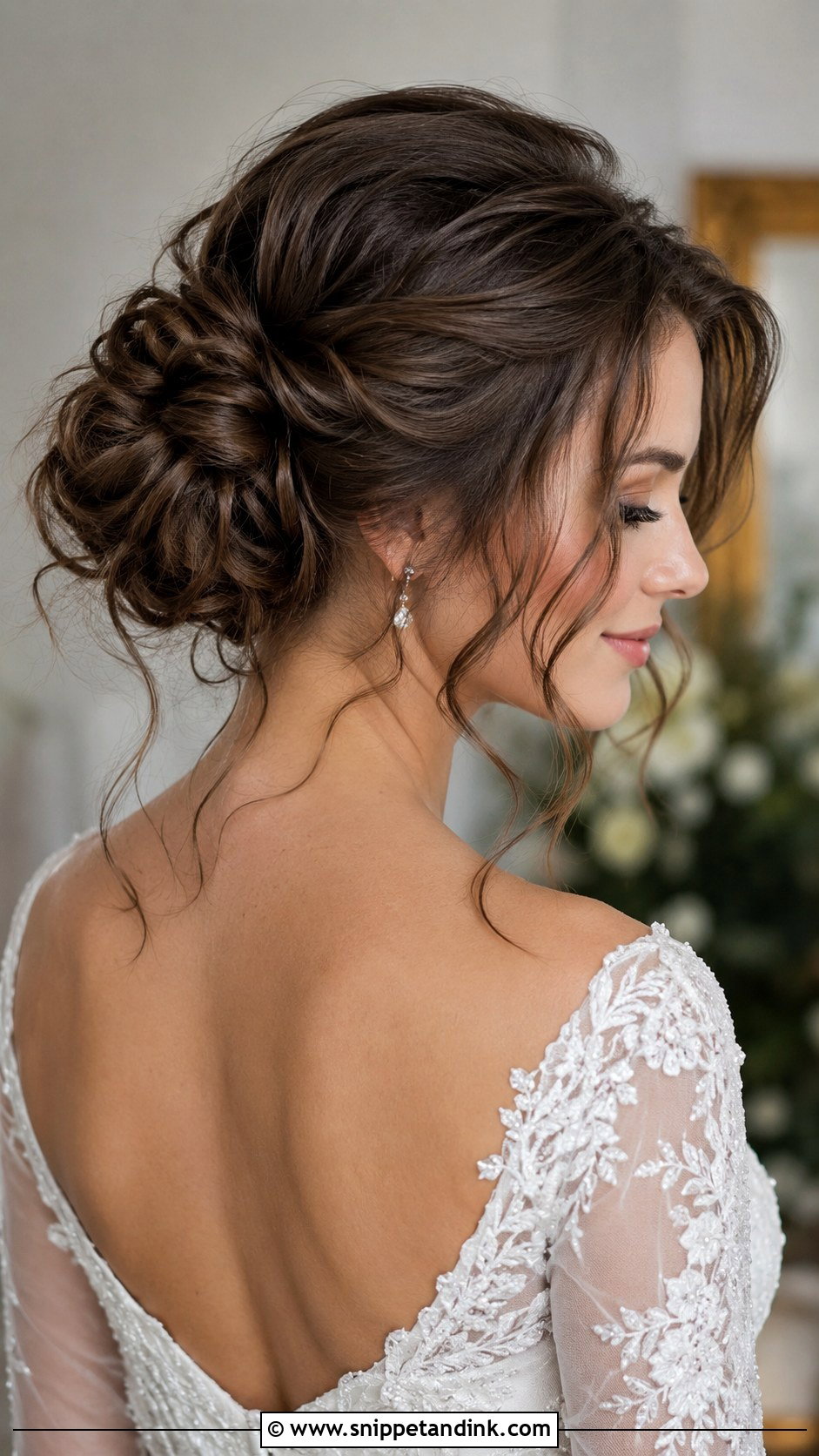
This twisted updo leaves delicate tendrils framing the face, which balances a loose textured bun. Those pieces are where it can go wrong: straight tendrils look like they’ve fallen out by accident. I curl them separately with a small barrel and set them, so they hang with intent. It suits venues from a formal ballroom to an outdoor garden. Dress it up with pins or keep it simple.
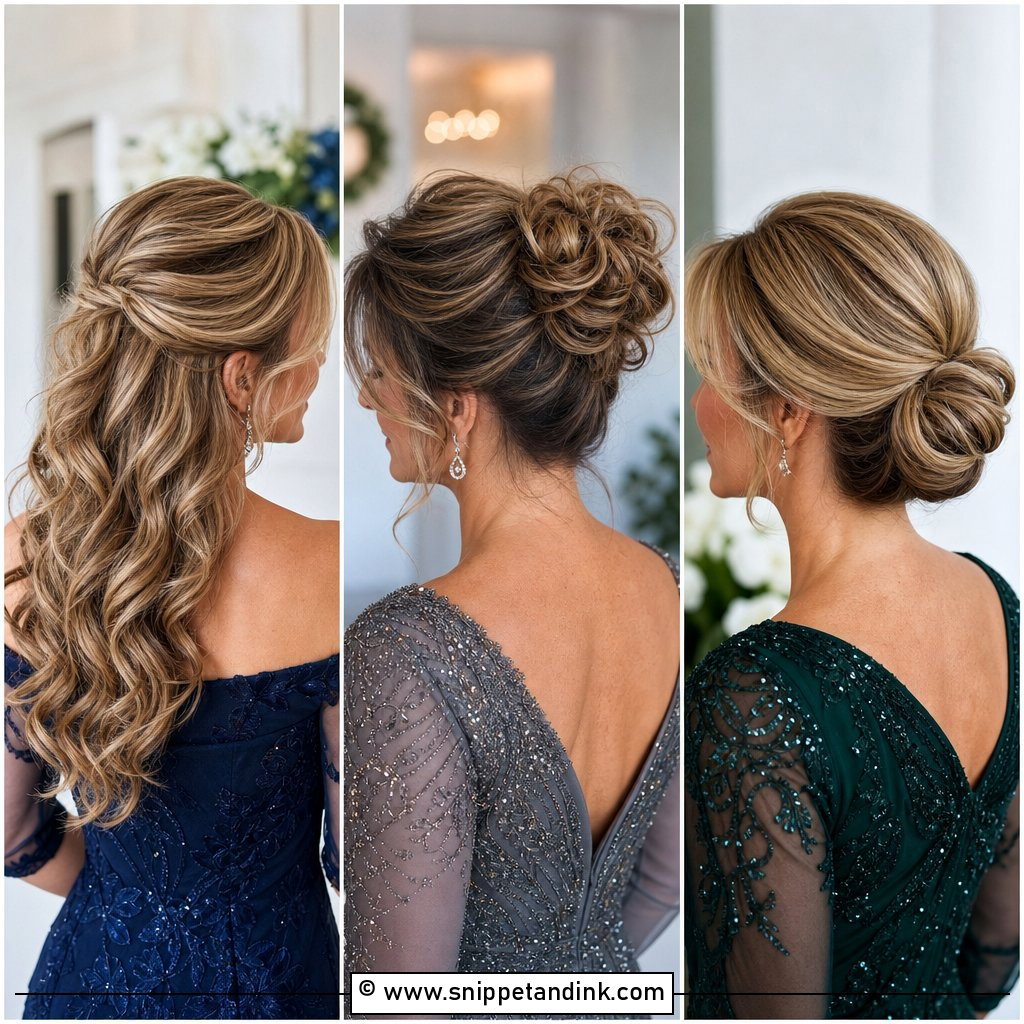
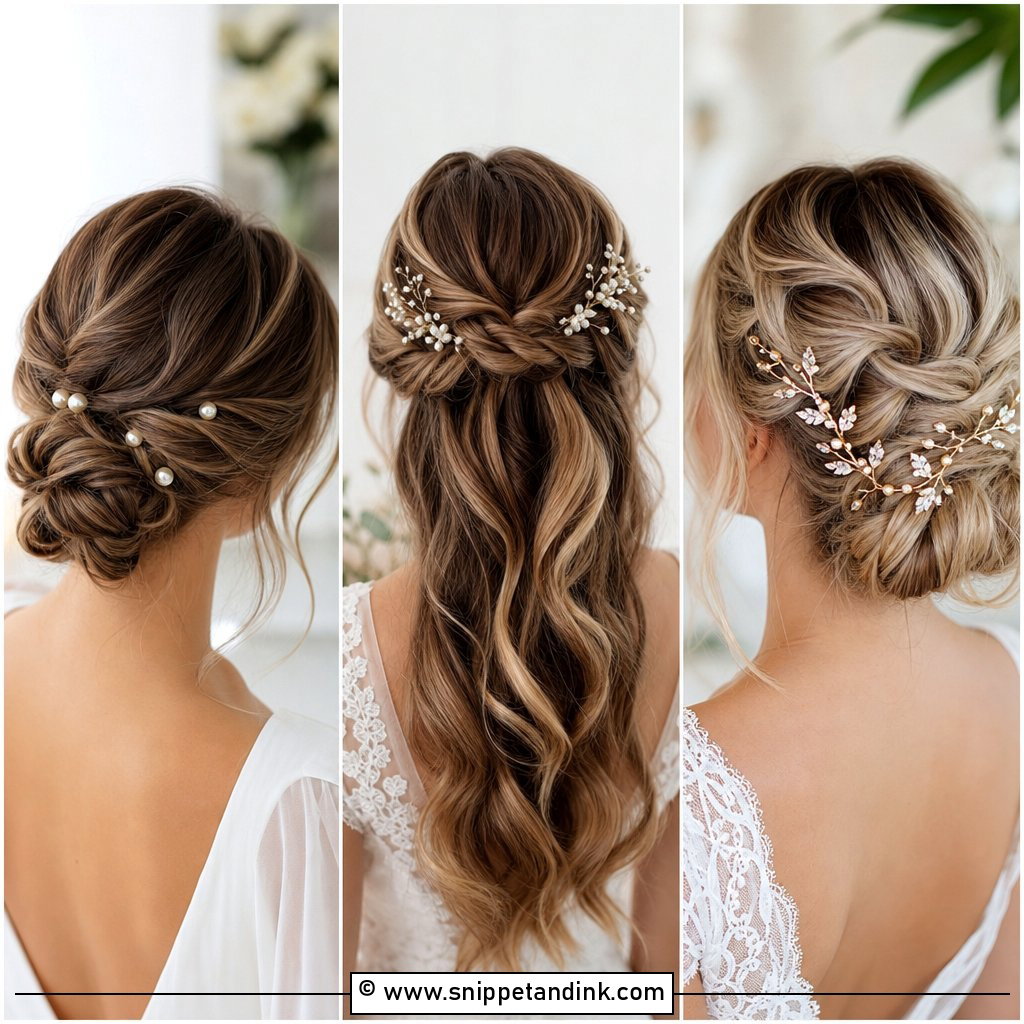
14. Low Bun With Side Braid
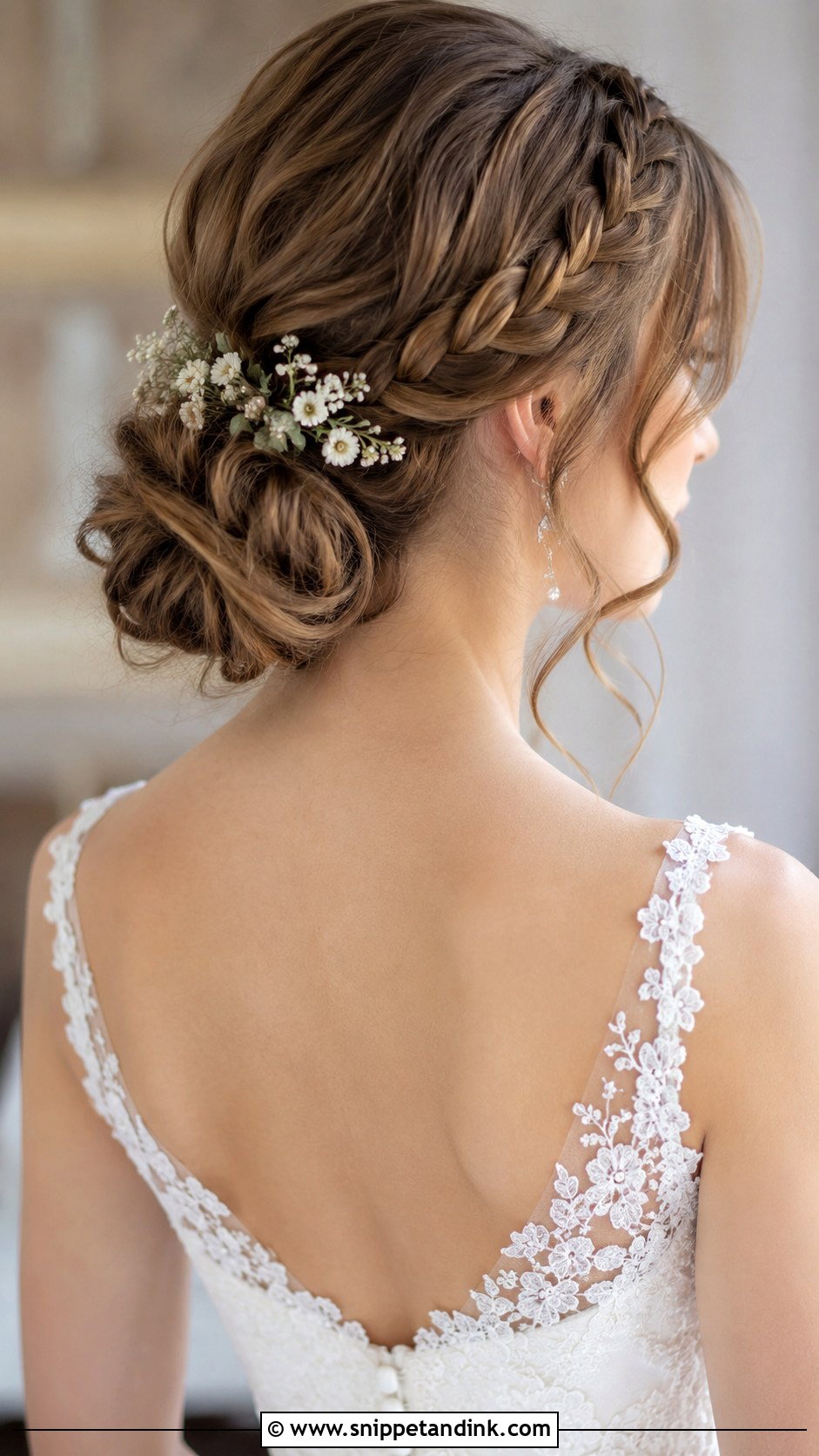
A low bun with a side braid brings detail to a classic shape. The hair sweeps into a soft bun at the nape, and a braid runs along one side. I place the braid on the side that faces the guests during the ceremony, because that’s the side most photos capture. Keep it neat for formal weddings, loosen the braid for something more romantic. Small pins or flowers can run along the braid.
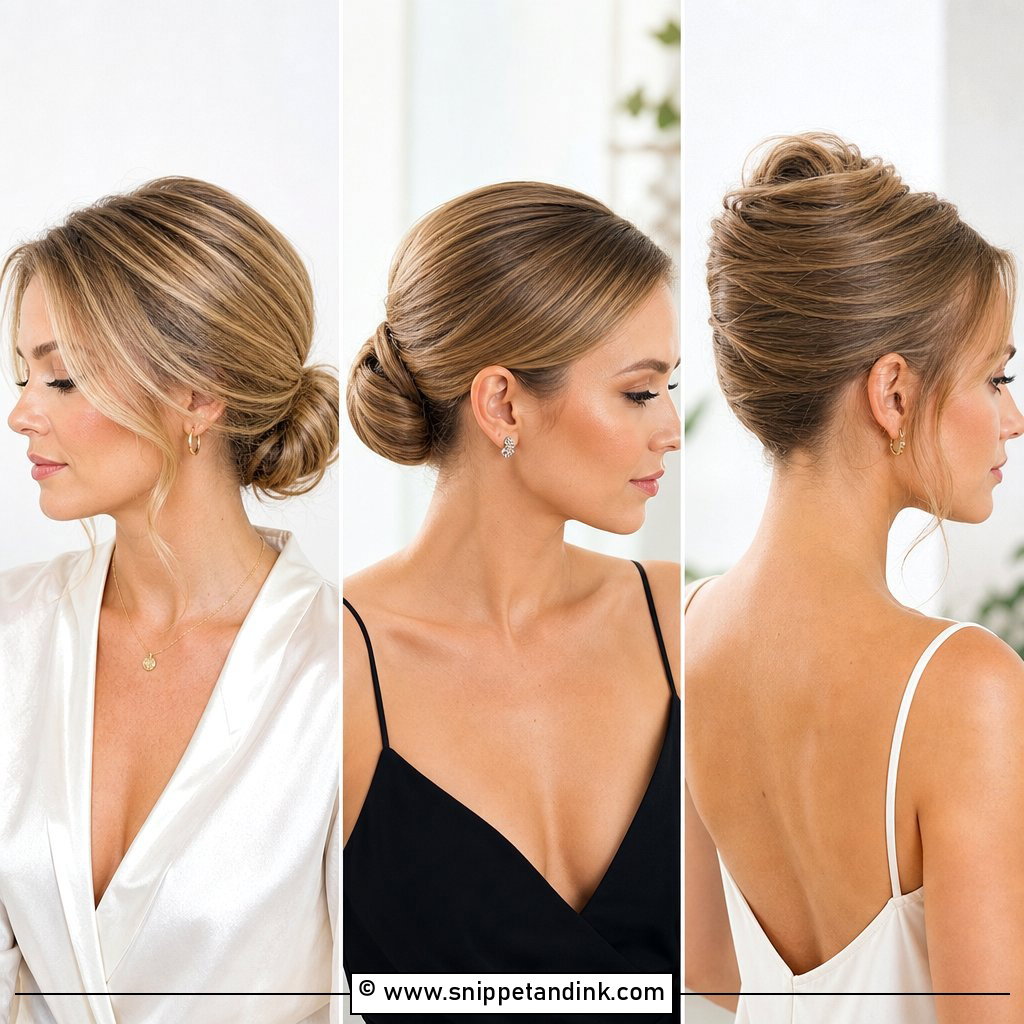
15. Sleek Low Ponytail Updo
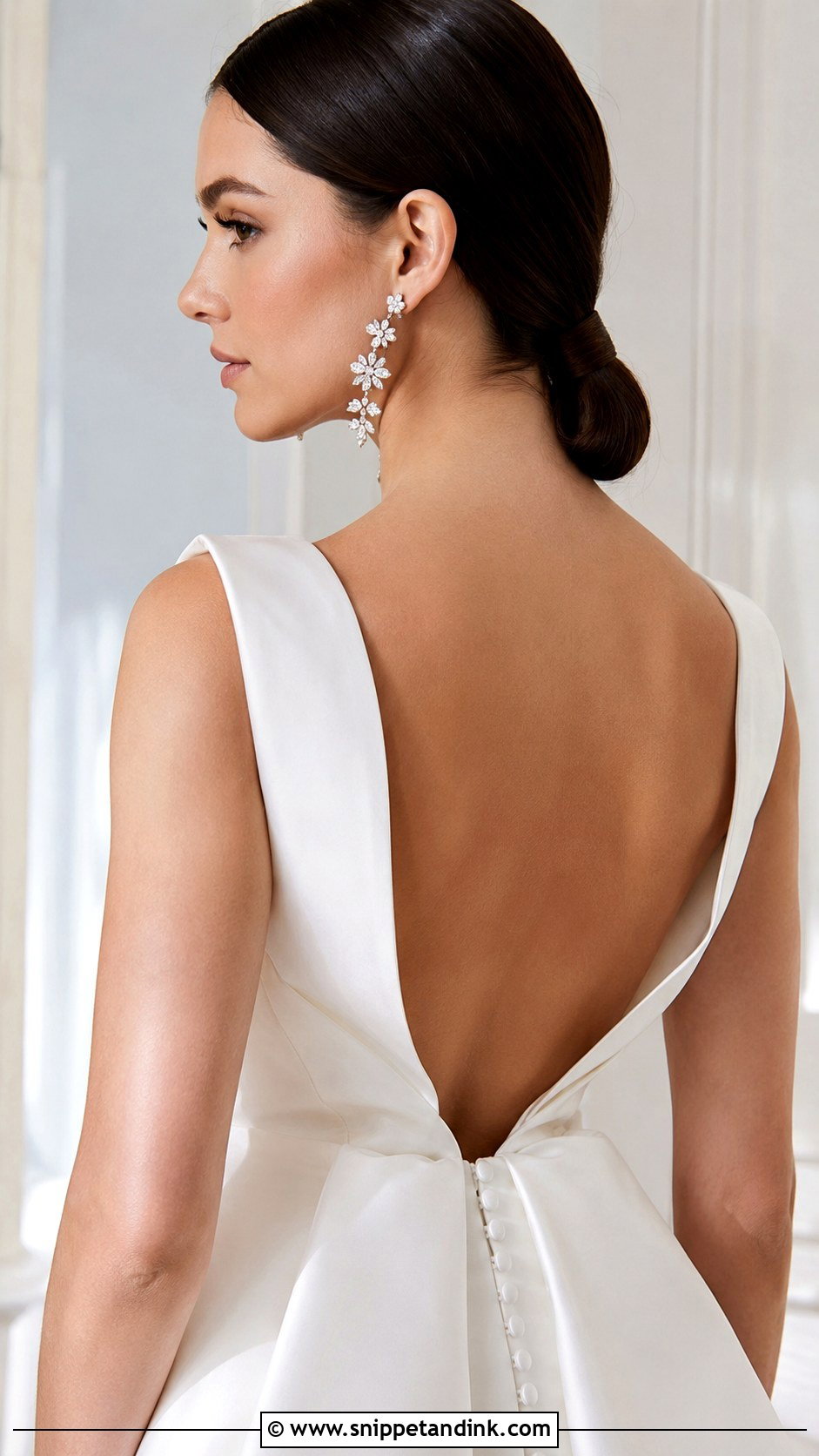
A sleek low ponytail is technically pulled back rather than up, but it looks every bit as finished as an updo. The hair is smoothed and gathered at the nape, with a strand wrapped around the base and pinned under to hide the elastic. It pairs with statement earrings and a structured gown. I’d use two elastics, one tight and one over the top, since the weight of the tail can pull a single one loose during dancing. The face stays clear all day.
16. Braided Halo Updo
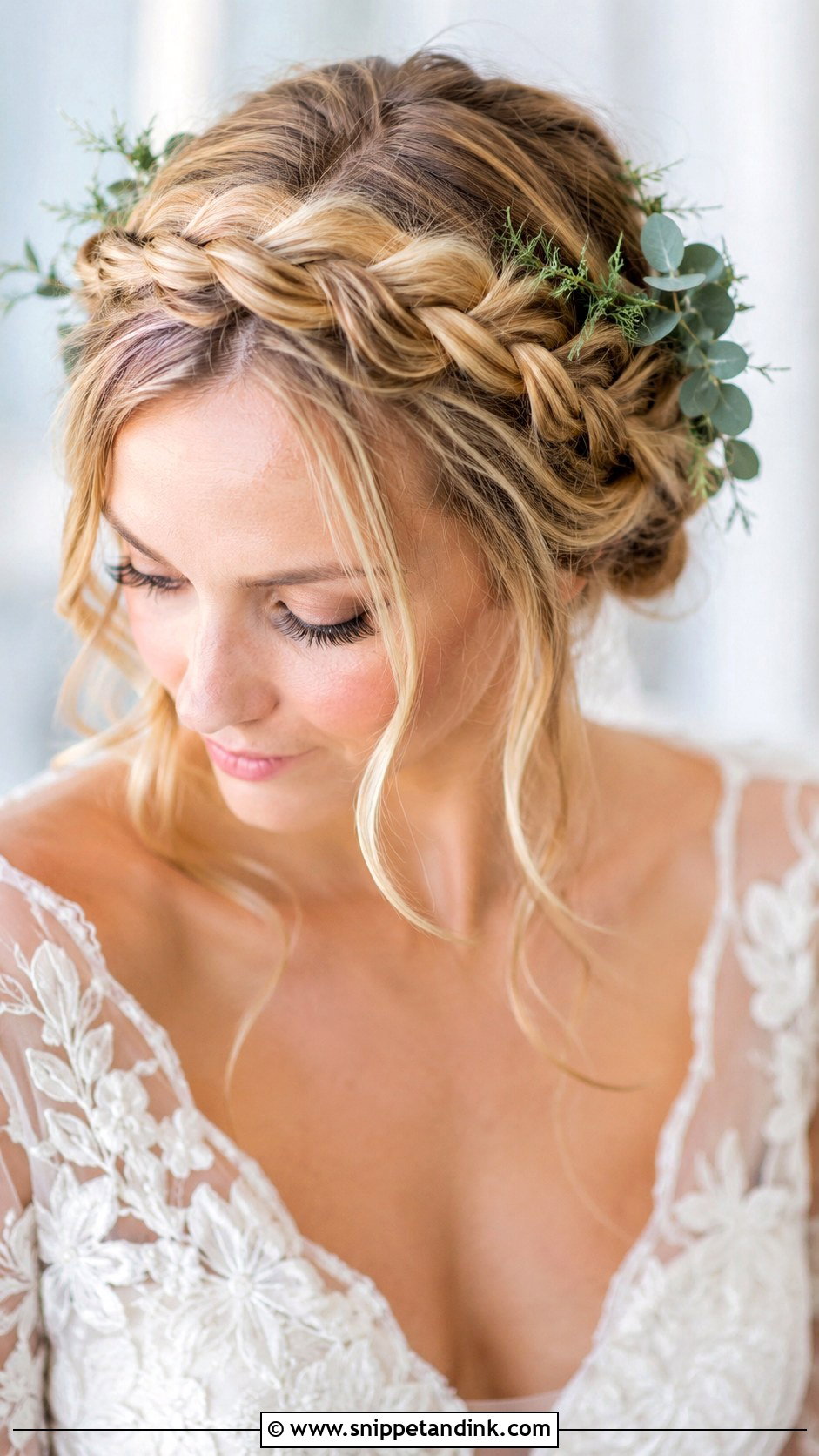
A braided halo wraps braids around the crown and suits boho and garden weddings, with fresh flowers or greenery tucked in. It holds hair neatly and adds texture. It works on most hair lengths; on shorter hair I may use two braids that meet at the back instead of one long one. A few loose tendrils keep it from looking too tidy. It’s soft and a little fairy-tale, which some brides love and others find too sweet, so try it at the trial before committing.
17. Voluminous Updo With Volume
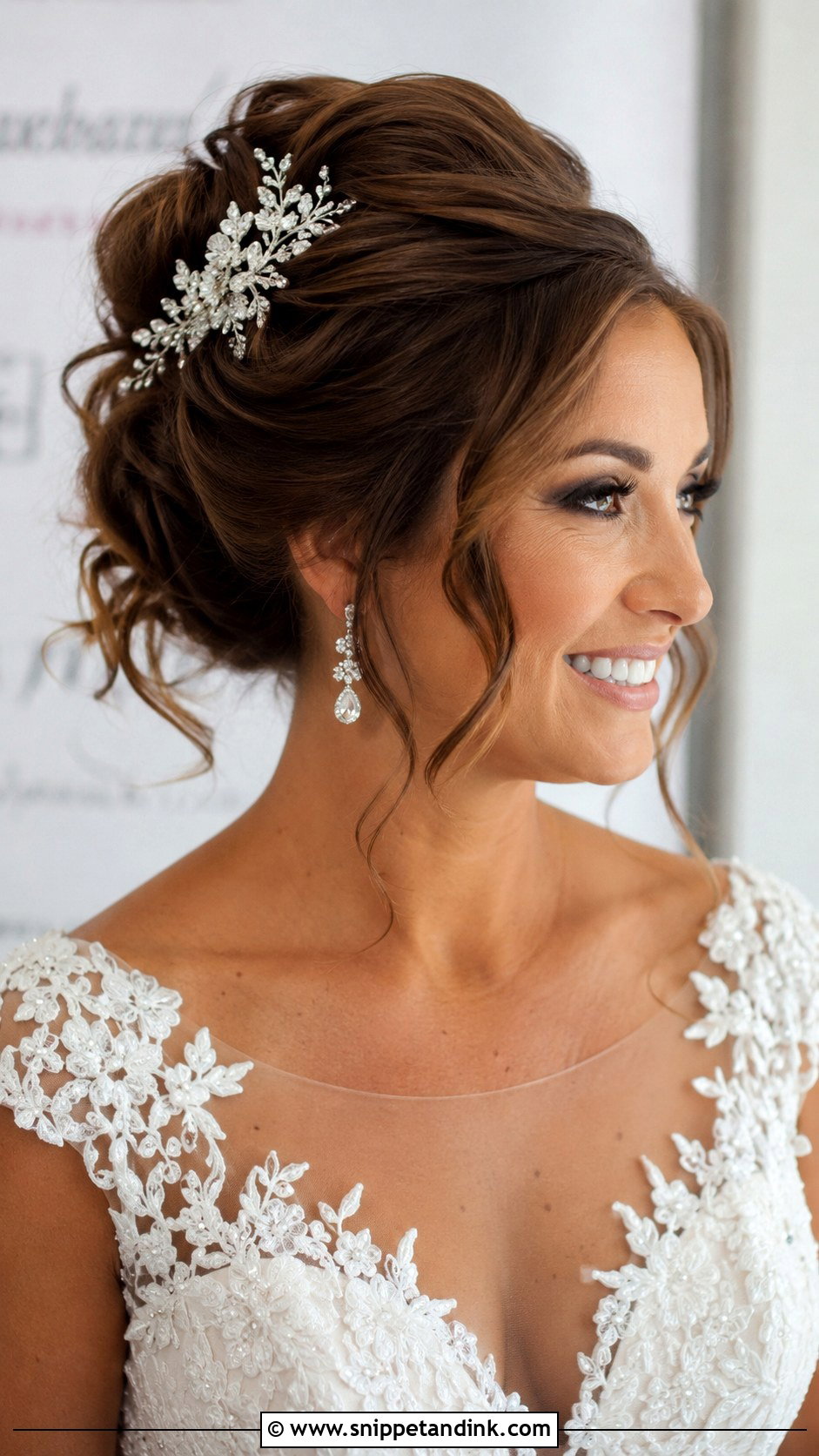
Volume at the crown is what defines this updo, gathered into a full bun or twist behind. It reads glamorous at formal ceremonies and grand venues. I build the height with backcombing at the roots and a little padding if hair is fine, then smooth the top layer over it so no teasing shows. Face-framing pieces soften it, or keep it sleek. One caution: a tall updo can clash with a cathedral veil comb placed on top, so tell your stylist where the veil will sit before the height goes in.
18. Knotted Bun Updo
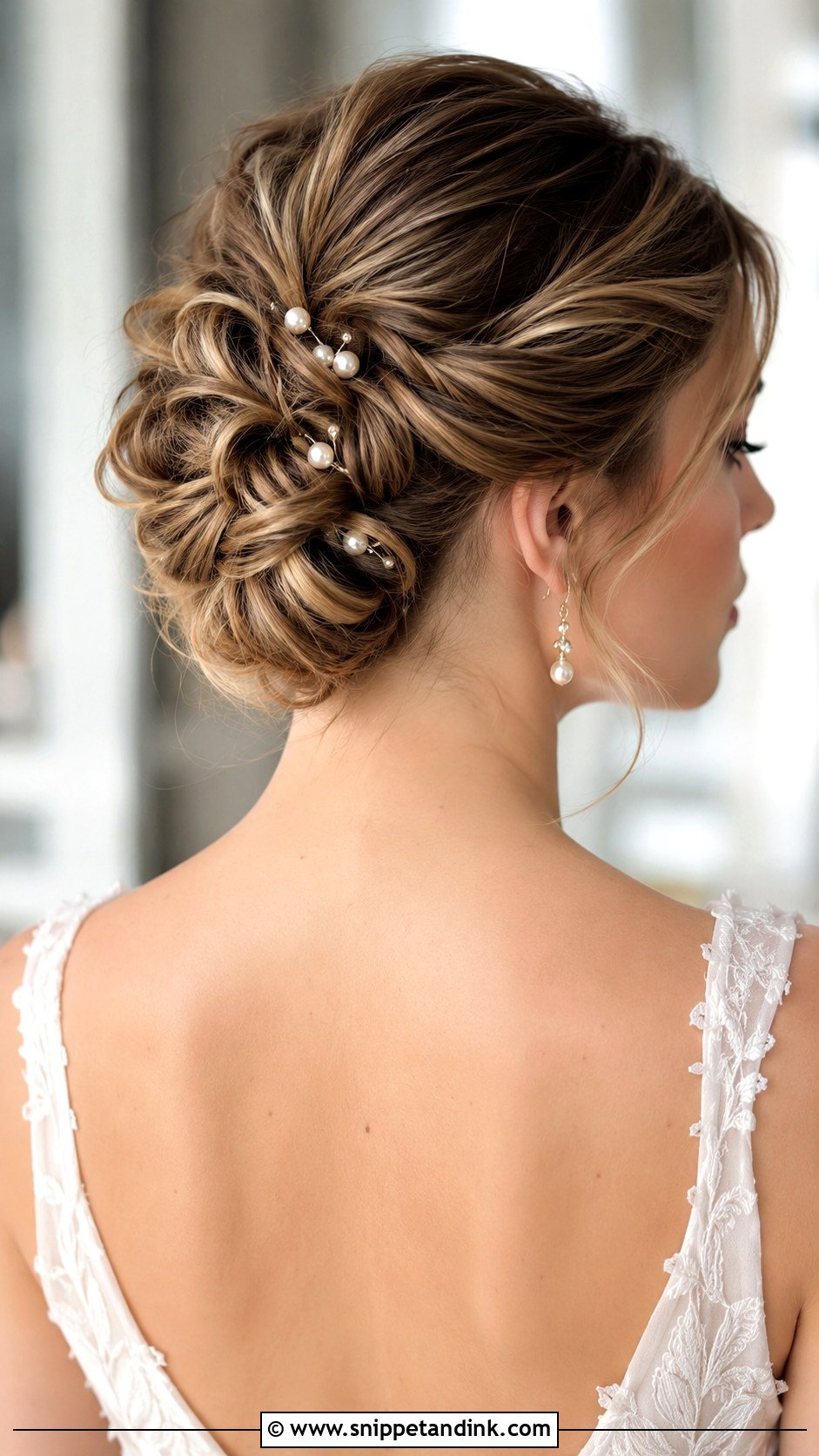
A knotted bun ties sections of hair into soft knots before gathering them into an arrangement. The knots add texture and a modern edge to a classic bun. Formal and casual weddings both suit it, depending on finish. Keep it sleek or loosen it. Delicate pins or pearls add detail. I find it works best on medium to thick hair; very fine hair makes small knots that disappear into the bun.
19. Curly Half Updo With Flowers
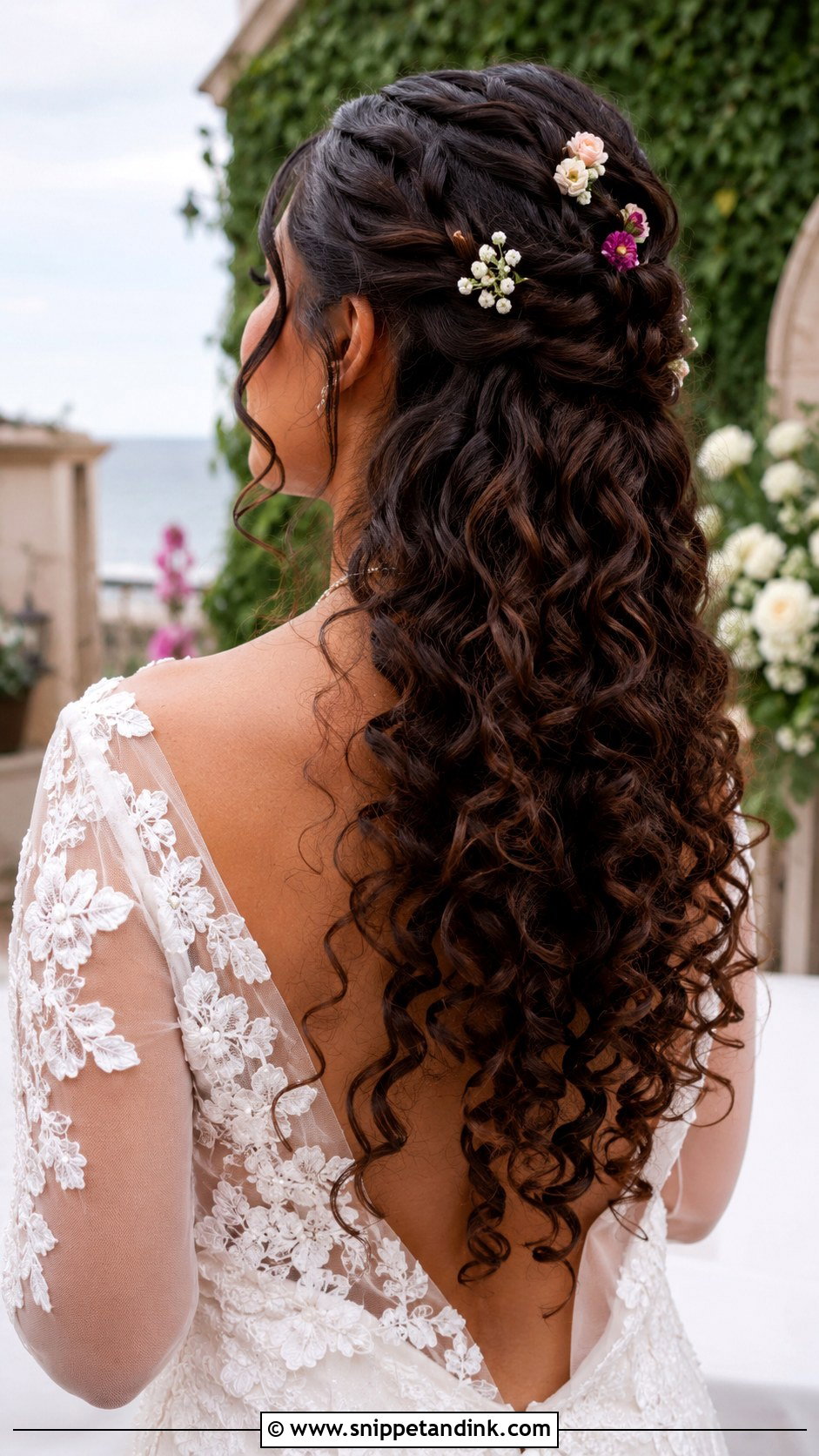
A curly half updo pins back the top of your curls and lets the rest fall, with fresh flowers placed through the style. It shows off natural texture and suits outdoor and spring weddings. I’d keep the flowers light, since heavy blooms flatten curls and drag pins out. Match them to your bouquet for a coordinated look. Keep curl cream and a gel with some hold in your kit, especially if there’s humidity in the forecast.
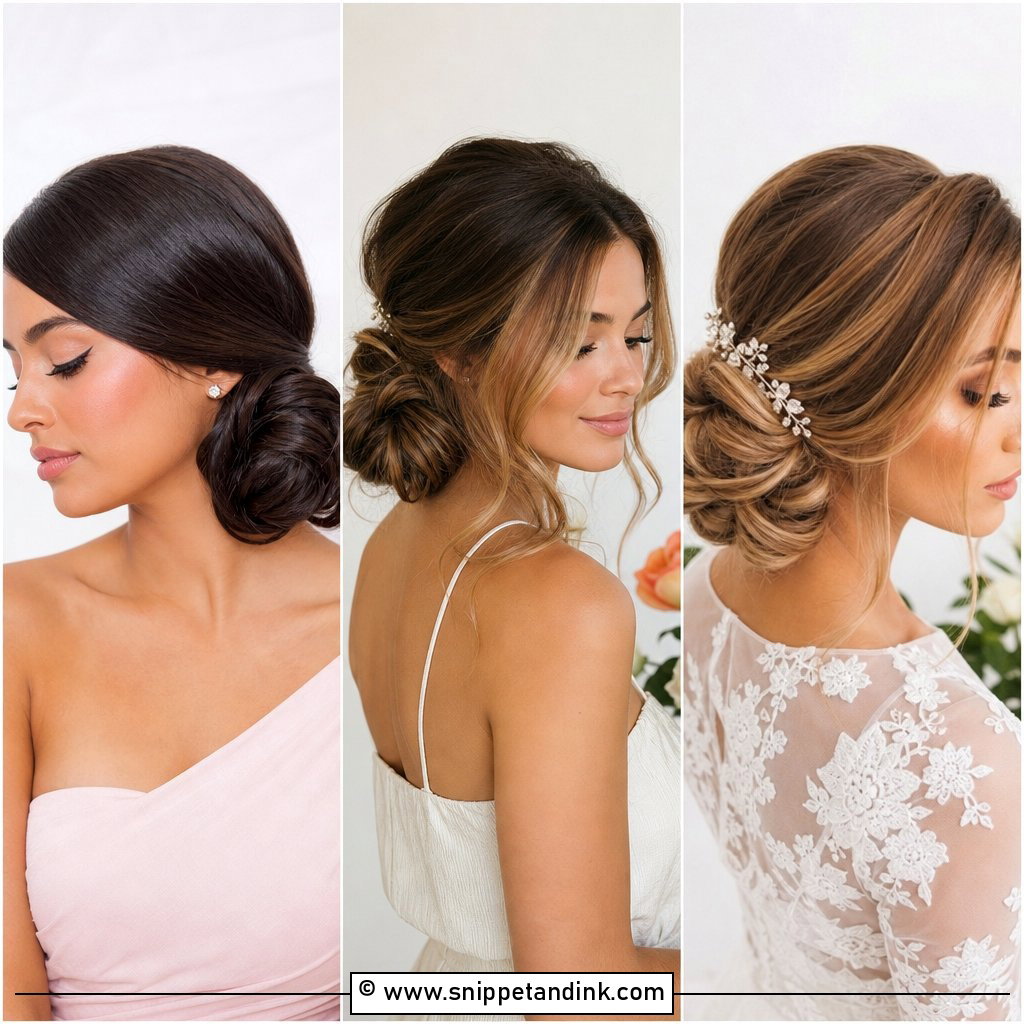
20. Elegant Twisted Chignon
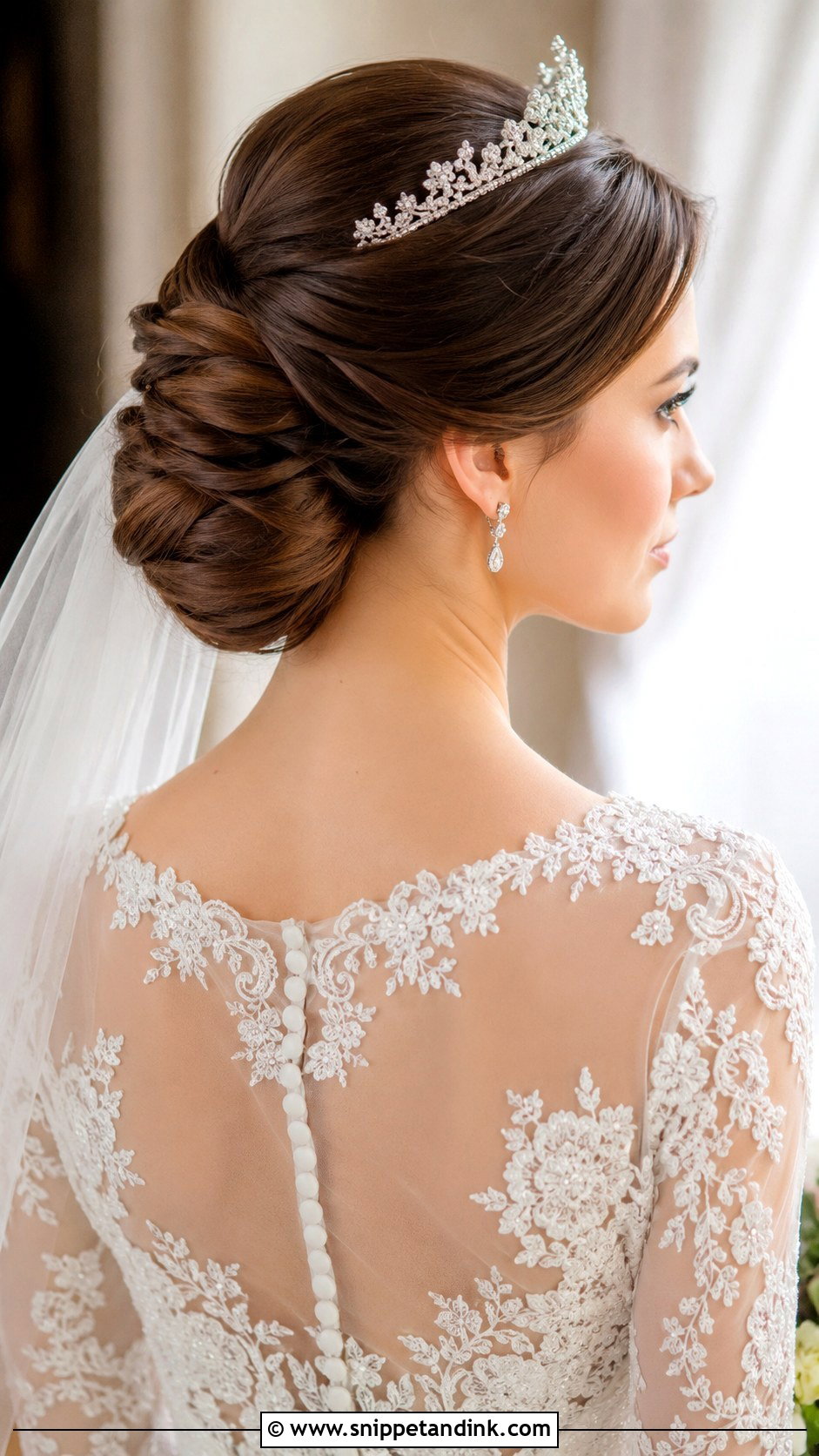
The twisted chignon rounds things off with a classic. Sections are twisted and then gathered into a smooth, low chignon at the nape. The twisting gives movement and depth, so the bun never looks flat. It sits easily with veils, tiaras or simple pins, and can be sleek for formal weddings or softened with tendrils. In my chair, this is one of the most requested styles for traditional ceremonies, mainly because it looks as composed at midnight as it did at noon.
Headaches by Hour Six Usually Mean One Thing
Tension. A style pinned too tight, or a heavy bun sitting high, pulls on the scalp all day. Tell your stylist at the trial if anything feels sore, because that soreness gets worse, not better. I’d rather loosen a section and add a pin than send a bride out with a dull ache she’ll feel during the vows.
Weight is the other culprit. Clip-in pieces, a padded bun and a heavy veil comb all add up, and the load usually rests on a few small anchor points. If you’re wearing a long veil, plan to take it off after the first dance; most brides feel the relief straight away. A heavy jeweled comb can be swapped for a lighter pin for the evening, too.
Taking an Updo Down Without Ripping Out Half Your Hair
After the reception, resist the urge to pull the whole thing out at once. Find each pin by feel and slide it out, working from the outside in. Your stylist can tell you roughly how many went in, which helps you know when you’ve got them all.
Then don’t brush yet. Work a generous amount of conditioner through dry hair to loosen spray and backcombing, detangle gently with your fingers or a wide-tooth comb, and rinse. Brushing set hair dry snaps strands, especially where it was teased.
Book the Trial Before You Fall for a Photo
The right updo suits your personality, your gown and how you want to feel by the end of the night. Sleek chignons, romantic braids, high buns and floral twists all have a place. Think about your venue, your hair type and the overall theme. Then book a trial with your stylist, ideally wearing a top with a similar neckline to your dress and bringing your veil or hairpiece. The trial is where you find out whether a style feels right, not just whether it looks right.
You'll Like These Ideas:


Leave a Reply