
Most of the brides who sit in my chair unsure what they want leave with some version of a low updo. It keeps hair off the neck through a long day, gives a veil comb a firm place to grip, and doesn’t fight earrings or a detailed neckline for attention. The variations below run from glassy and sleek to loose and lived-in. I’ve added what each one needs from your hair, and where I’d talk a bride out of it, because the right low updo depends as much on your texture and your dress as on the photo you saved.
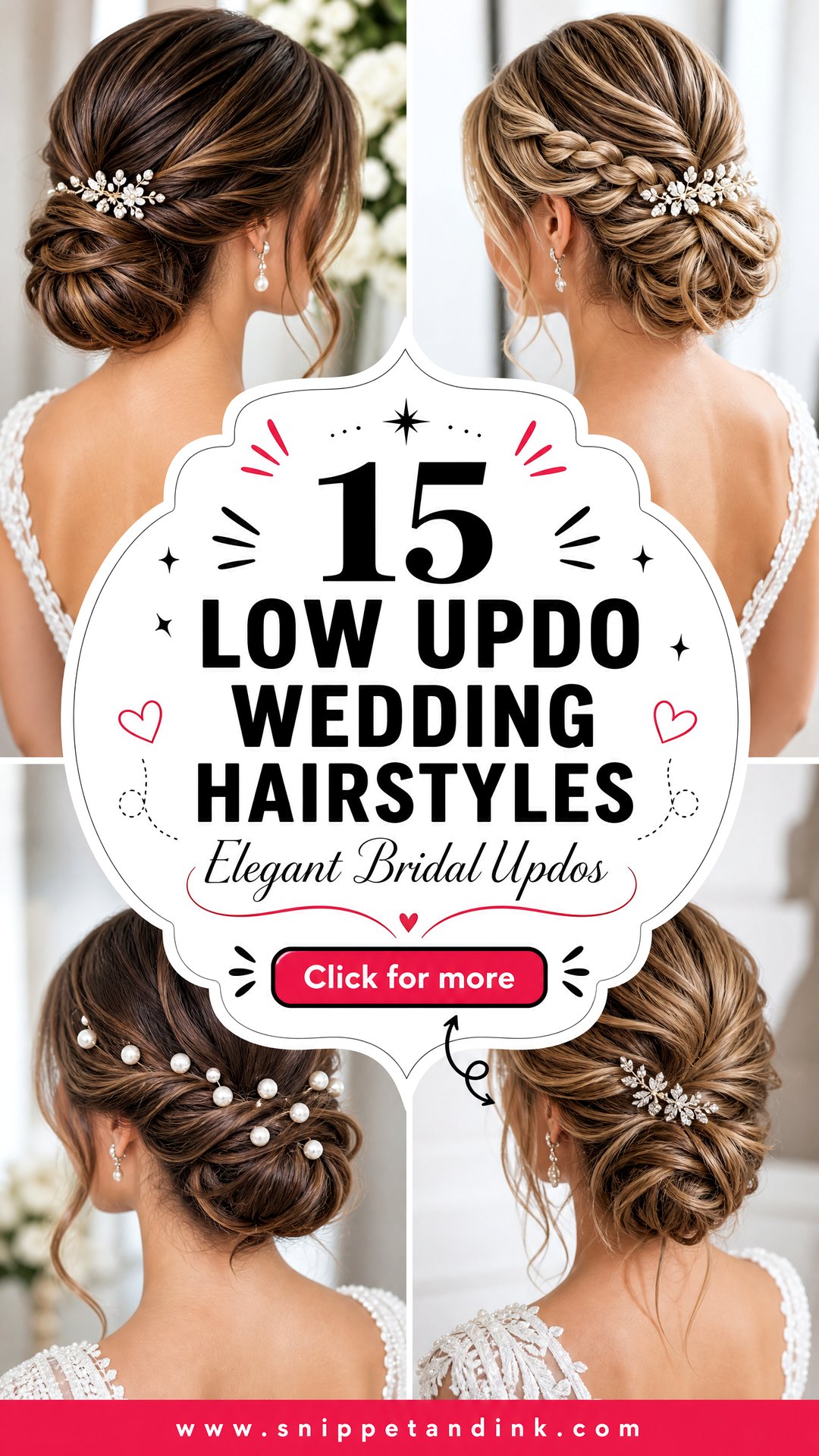
Gown Backs and Collars Decide Where the Bun Sits
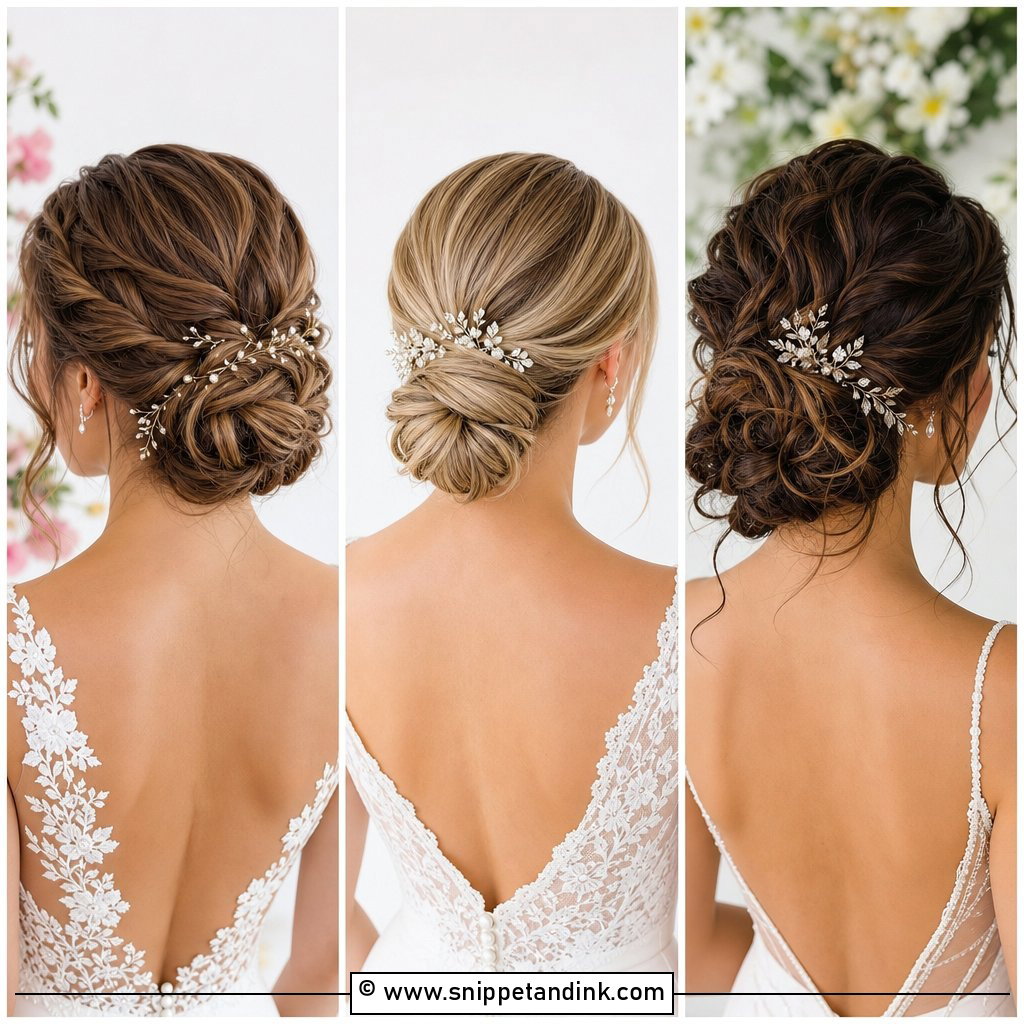
When a bride shows me a hair photo, my first question is what the back of her dress looks like. The bun lives right above it, and the two have to share the space.
- High collars and illusion necklines: keep the bun small and slightly higher, around the occipital bone, so it doesn’t rub the collar every time you look down.
- Open or low backs: the bun can sit lower and be fuller, since the back of the head and the back of the dress are read as one picture.
- Strapless and sweetheart: almost any placement works. I usually go fuller to balance bare shoulders.
- Heavy buttons or a detailed back: choose a simpler, sleeker bun so the two details don’t compete.
Bring a photo of the dress from behind to your trial, or wear a top with a similar neckline. Hair that looks right in a T-shirt can sit wrong on a structured bodice.
1. Low Chignon Wedding Hairstyle
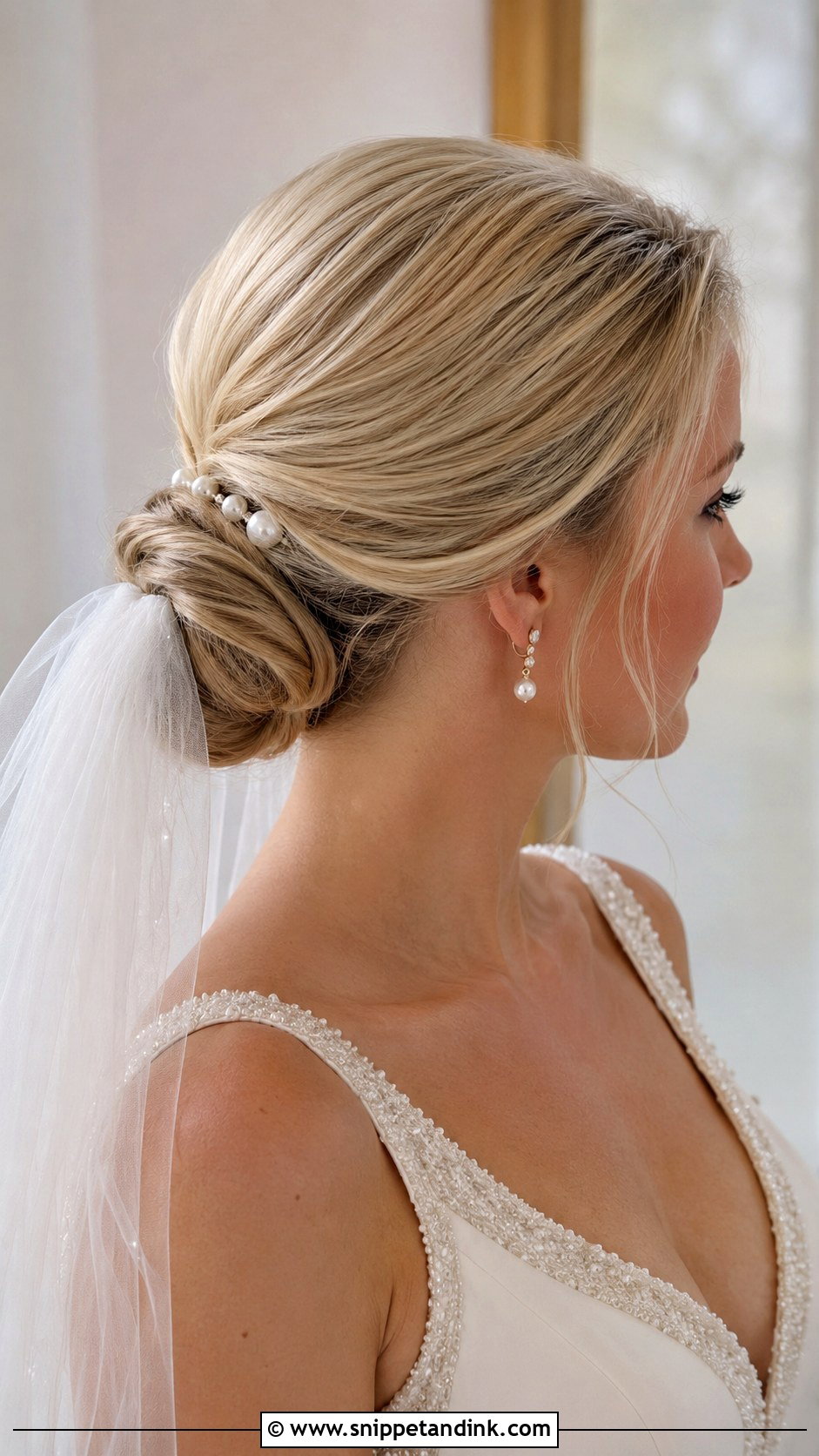
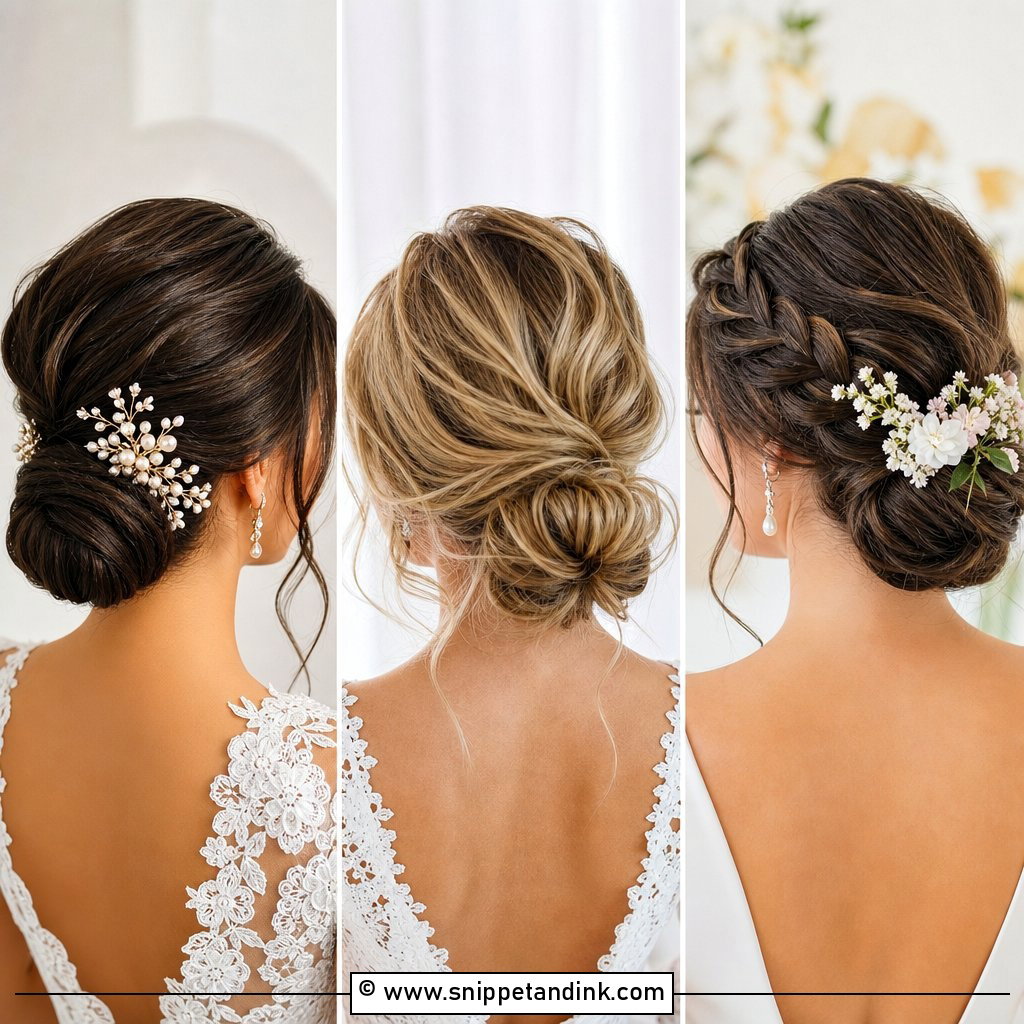
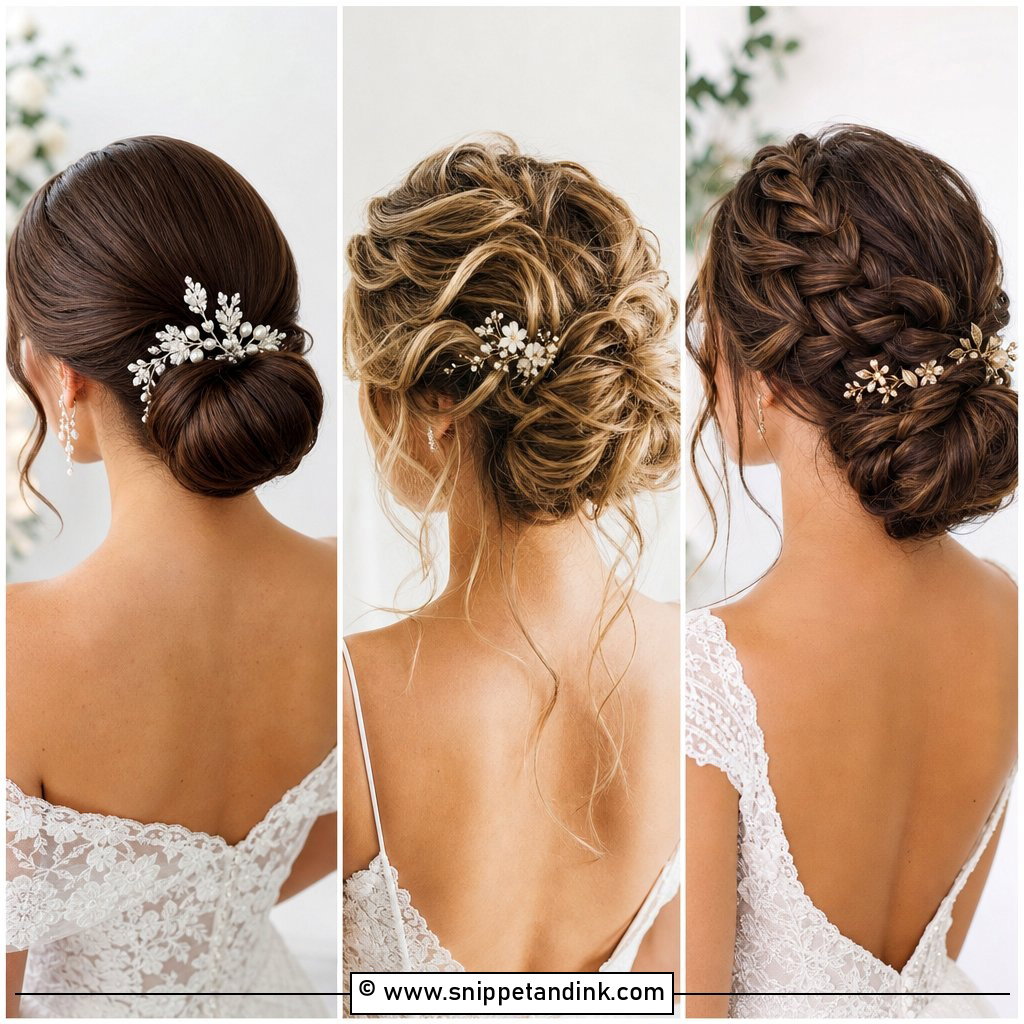
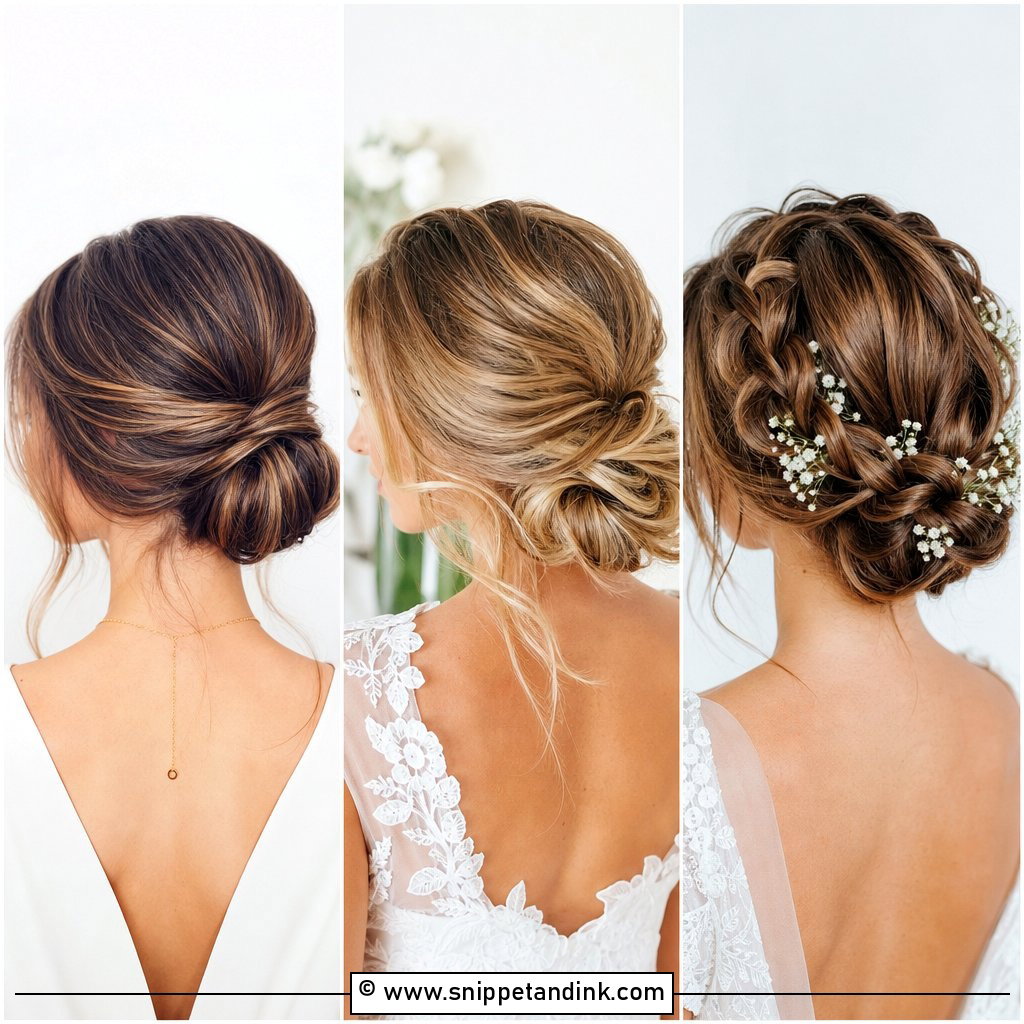
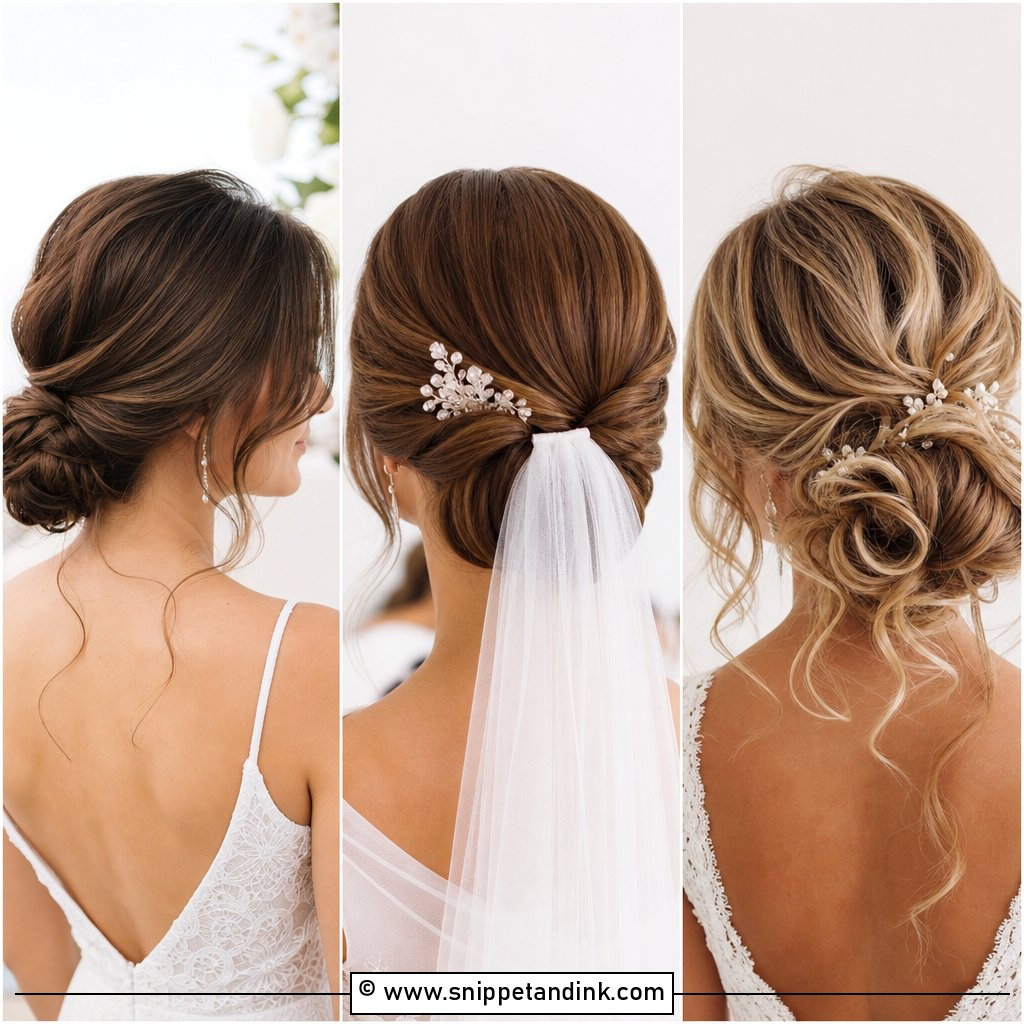
The chignon is the one I can almost always make work. Hair is rolled and tucked at the nape rather than wrapped, so the profile stays soft and the shape sits close to the head. A veil can go above it, beneath it, or straight into its centre with a comb. To keep it from looking dated, I lift the crown a little and leave the sides smooth but not glued. It sits well with strapless gowns and high necklines alike, since it neither crowds the collar nor leaves the shoulders looking bare.
2. Low Messy Bun Wedding Hairstyle
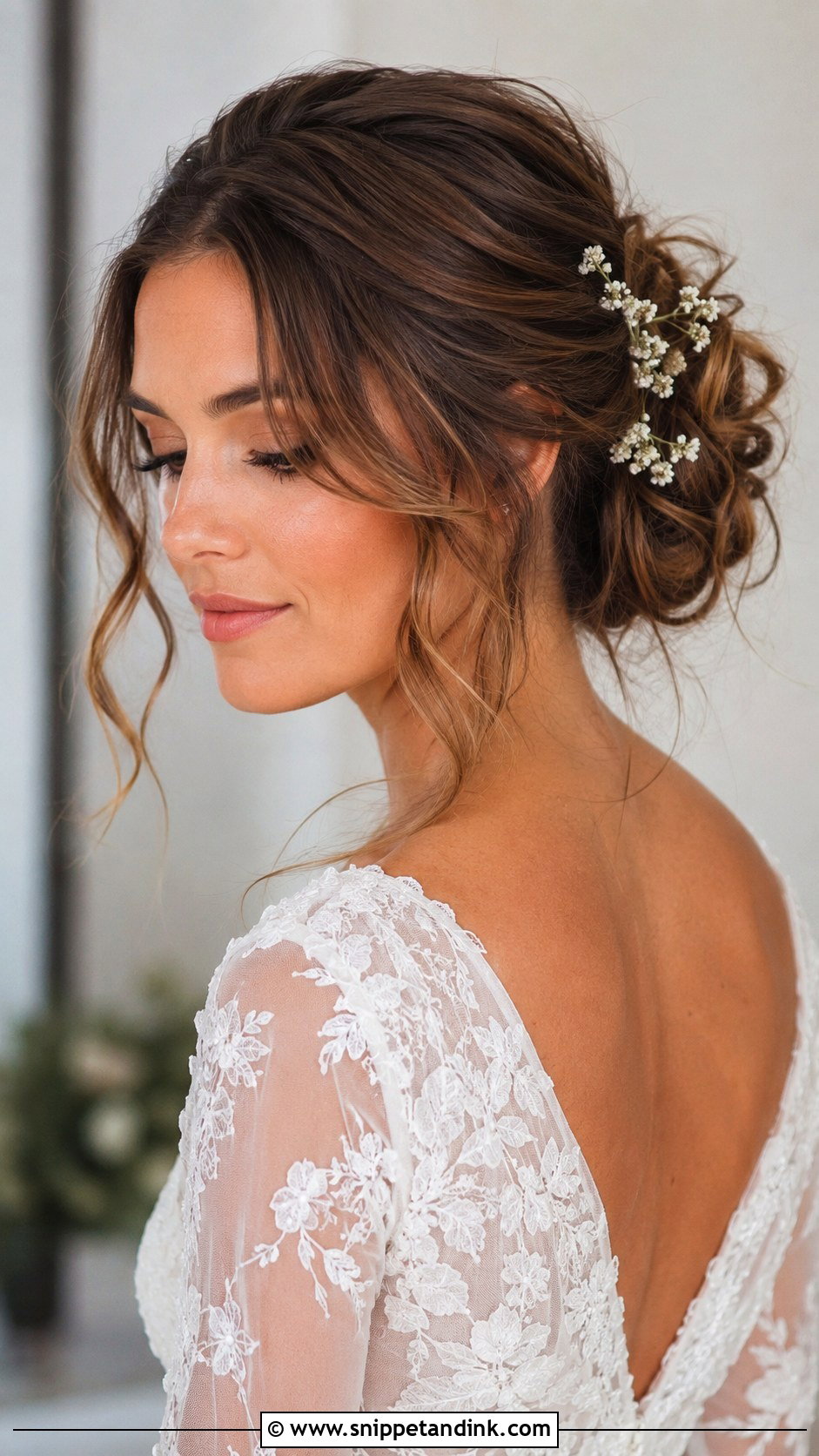
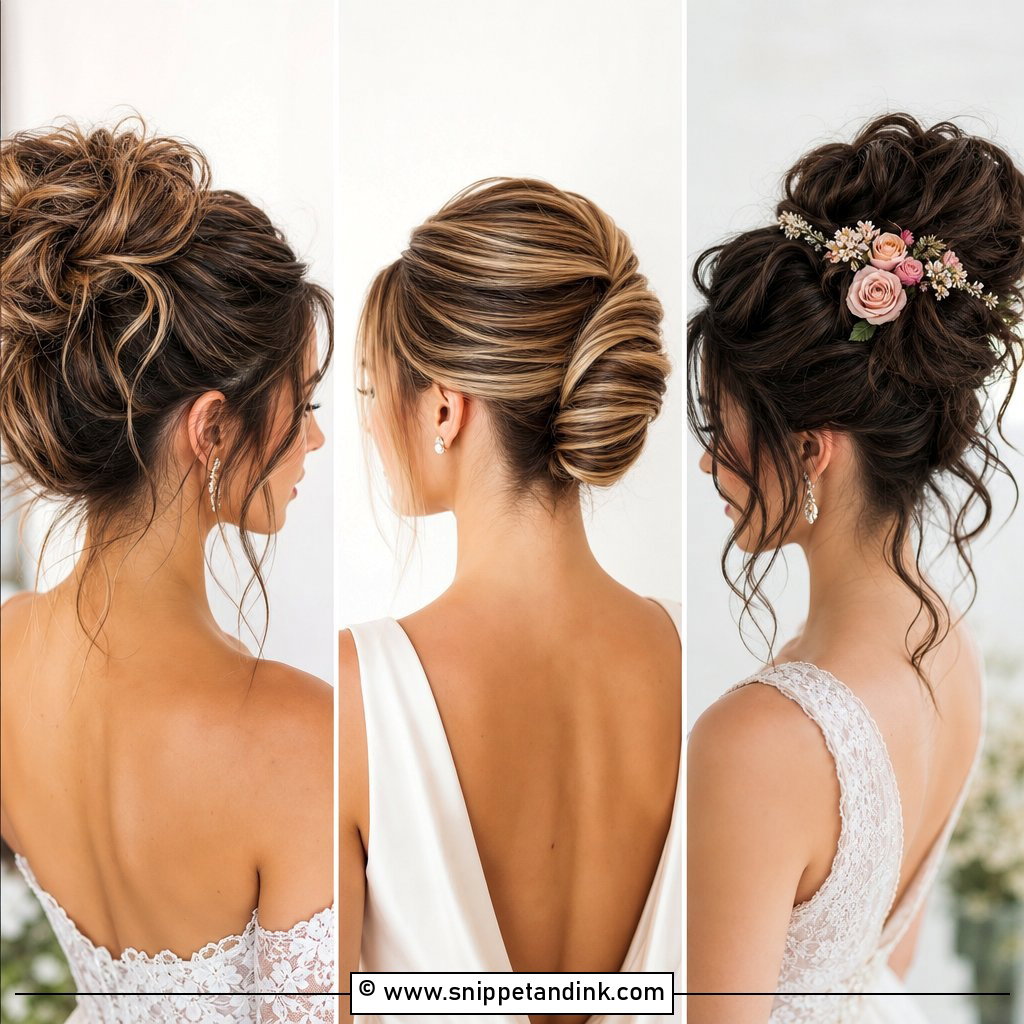
A messy bun takes more pins than a sleek one, which surprises people. Each loose-looking piece is placed and pinned on its own so it can move without falling out. That built-in looseness is why I like it outdoors: a few strands escaping in the breeze only add to it. Wavy hair, balayage and dimensional brunette shades show the texture best, since the tonal shifts make every twist visible. On one flat colour, ask for a little more volume or it can read as unfinished.
3. Low Twisted Bun Wedding Hairstyle
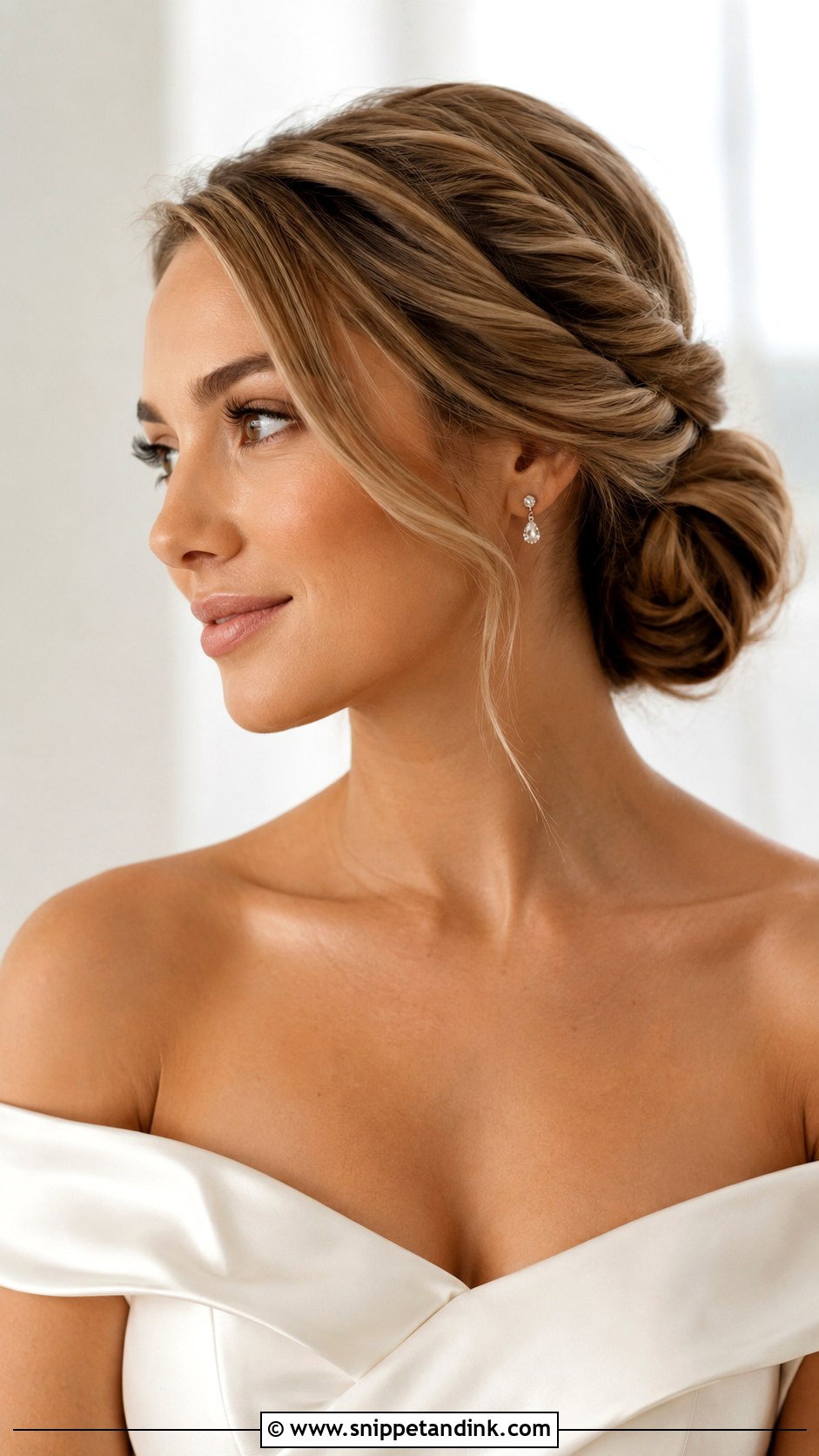
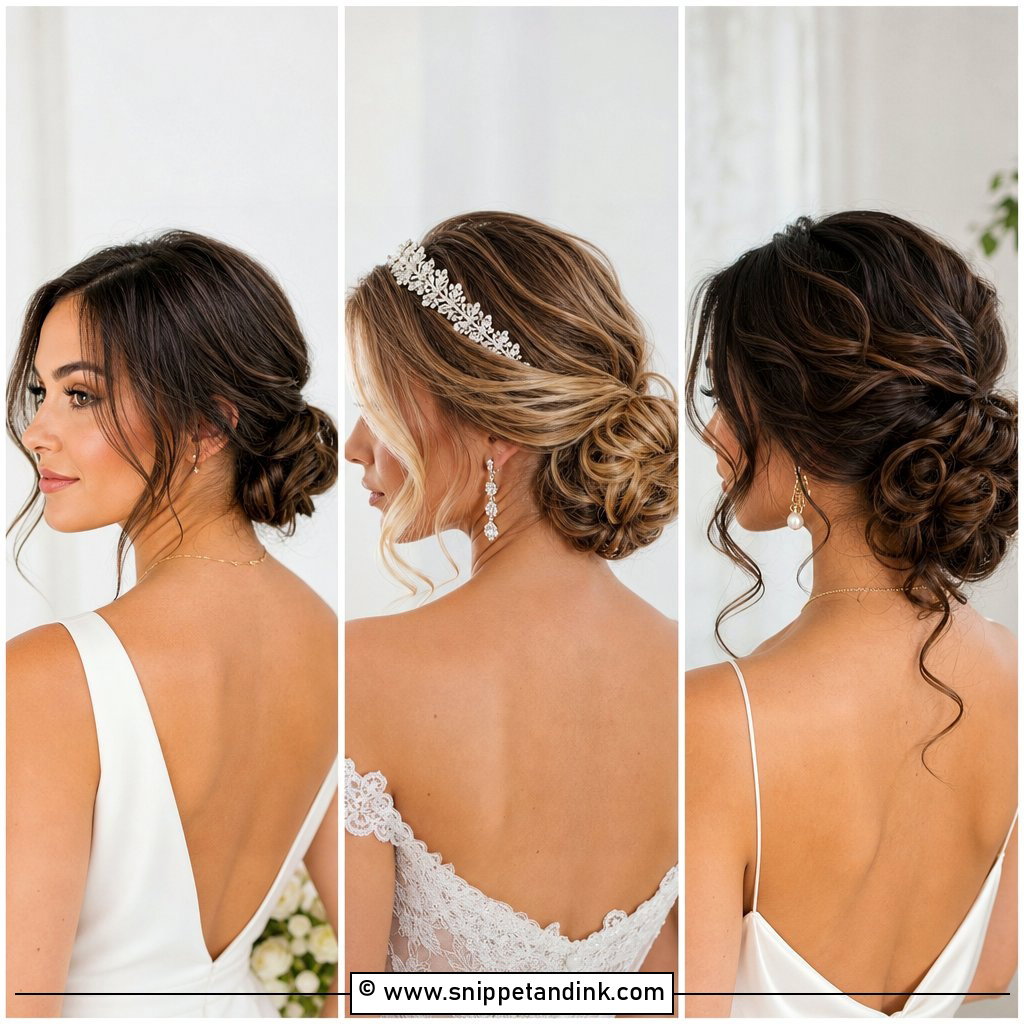
Twisting sections toward the nape before they join the bun adds detail without any braiding. I twist each section away from the face, pin it, then gather the ends into a rounded shape. Fine hair benefits most here, since each twist is a little coil of volume that makes the bun look fuller than the hair really is. The front can carry a centre part, a side part or a lifted crown. Satin and off-the-shoulder gowns let the pattern show; next to a heavily beaded neckline it gets lost.
4. Low Braided Updo Wedding Hairstyle
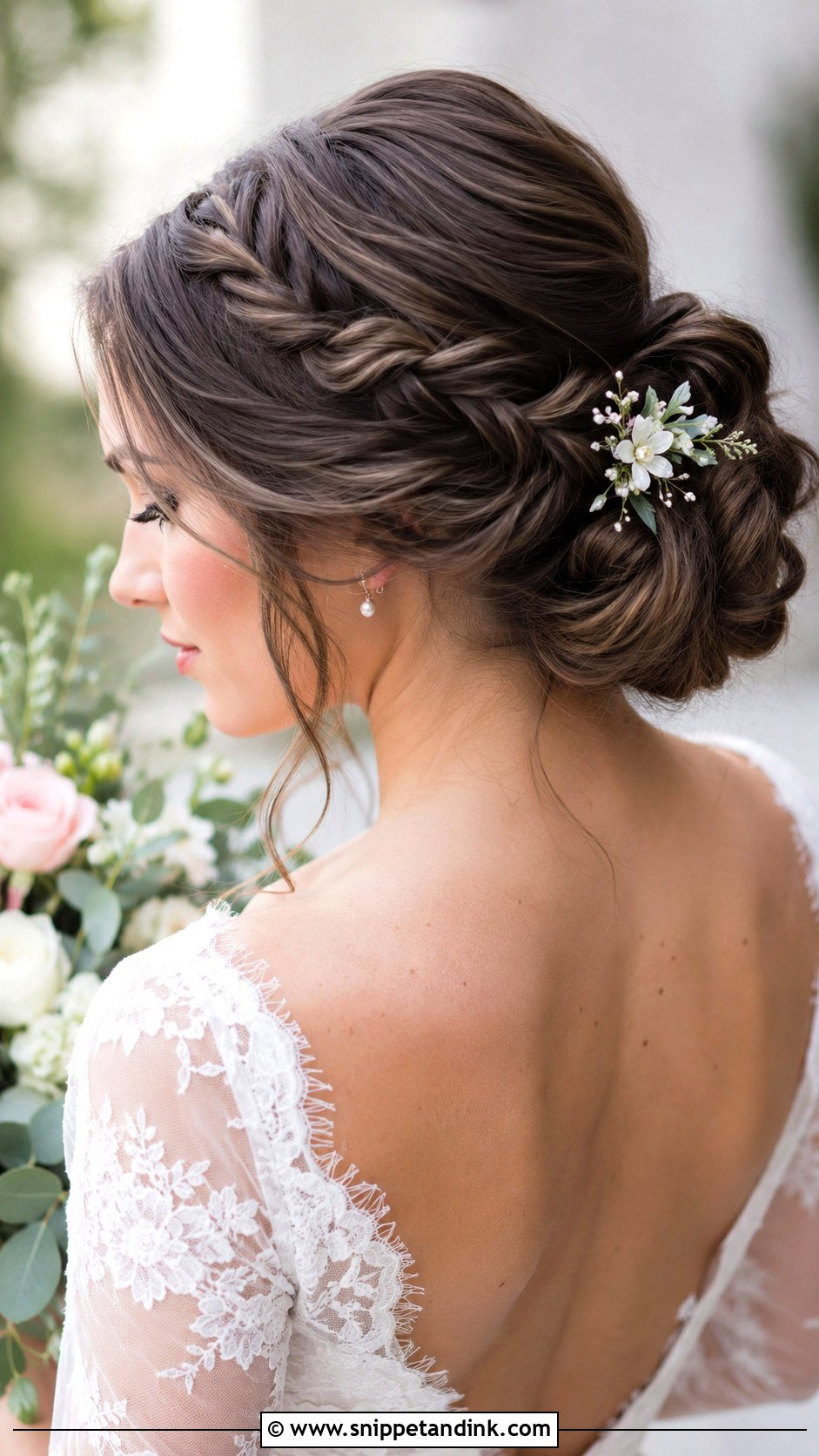
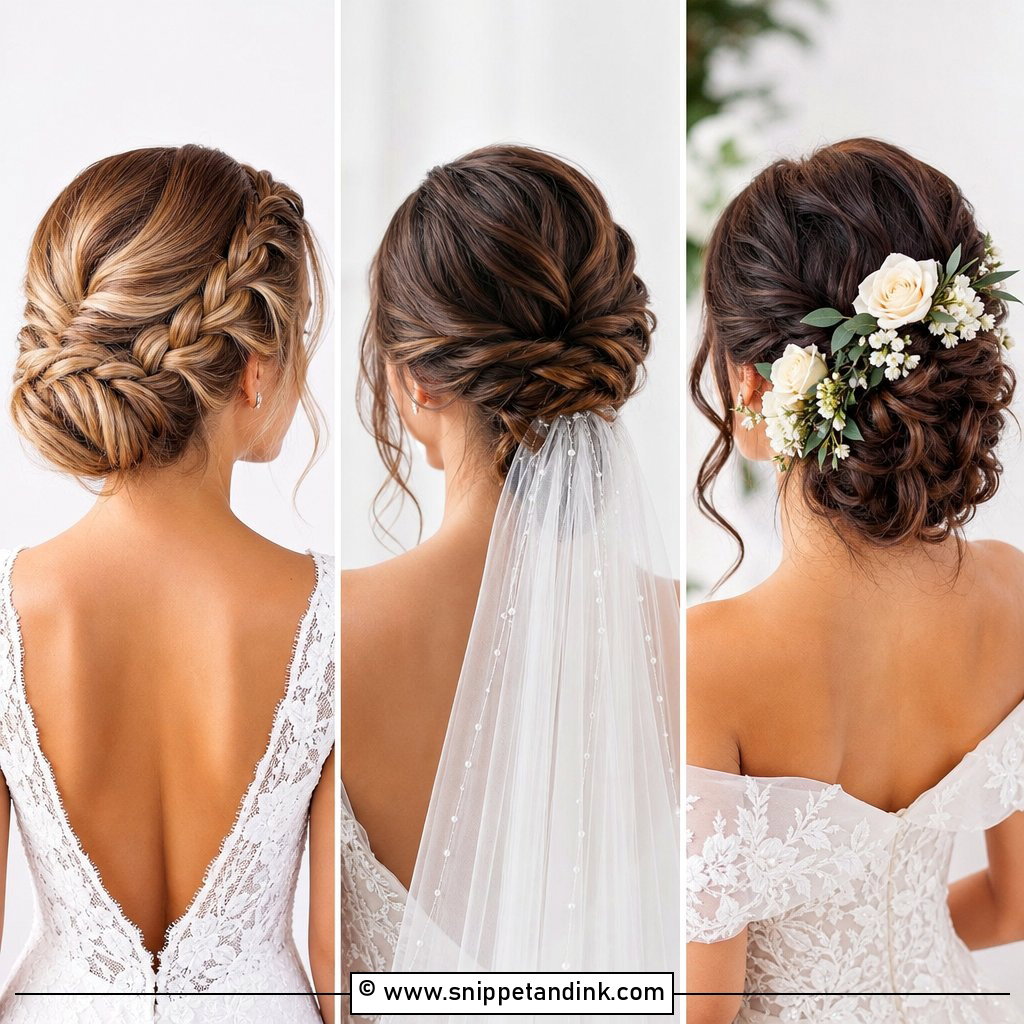
Thick hair is where braids earn their place. A braid compresses a lot of hair into a narrow strand, so a bun that would otherwise be the size of a grapefruit stays in proportion. The braid can wrap the bun, feed into the back, or run along one side first. After braiding I pull the loops apart gently so it looks full rather than tight. Lace dresses and floral combs suit the texture well. If your hair is very fine, though, one loosened braid can look thin, so ask your stylist to test it at the trial.
5. Low Bun Wedding Hairstyle With Veil
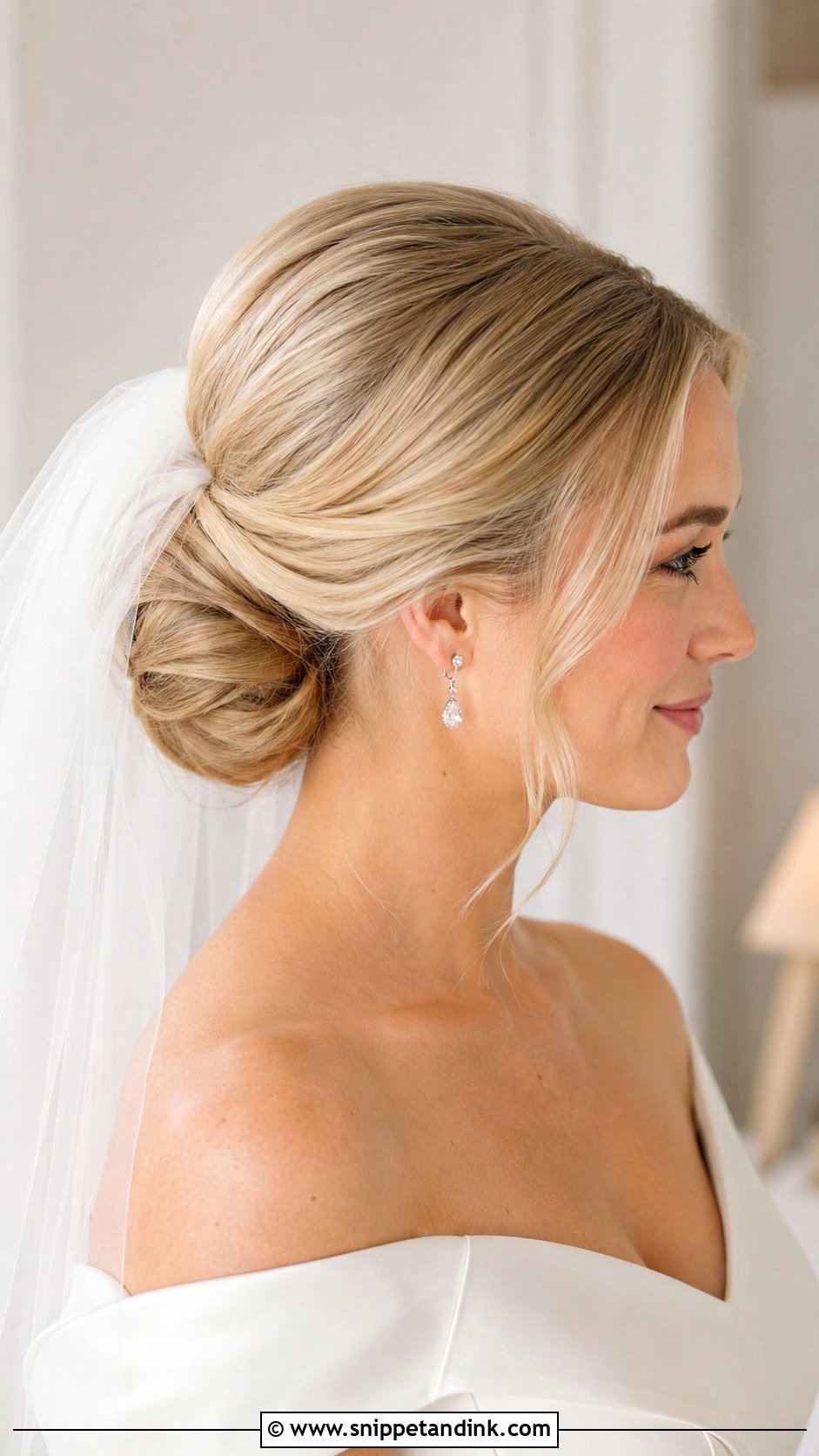
The low bun is the strongest anchor I know for a veil, and that matters most for a long one. A cathedral length drags backward with every step, so the comb needs a dense bun to bite into. Above the bun gives the classic outline; beneath it, the veil seems to float off the nape. The bun itself can be smooth, twisted or slightly undone. I’ve pinned cathedral veils, fingertip veils and lace mantillas into this shape. Lift the crown a touch so the head doesn’t look flat from the front once the veil comes off.
6. Low Bun Wedding Hairstyle With Pearls
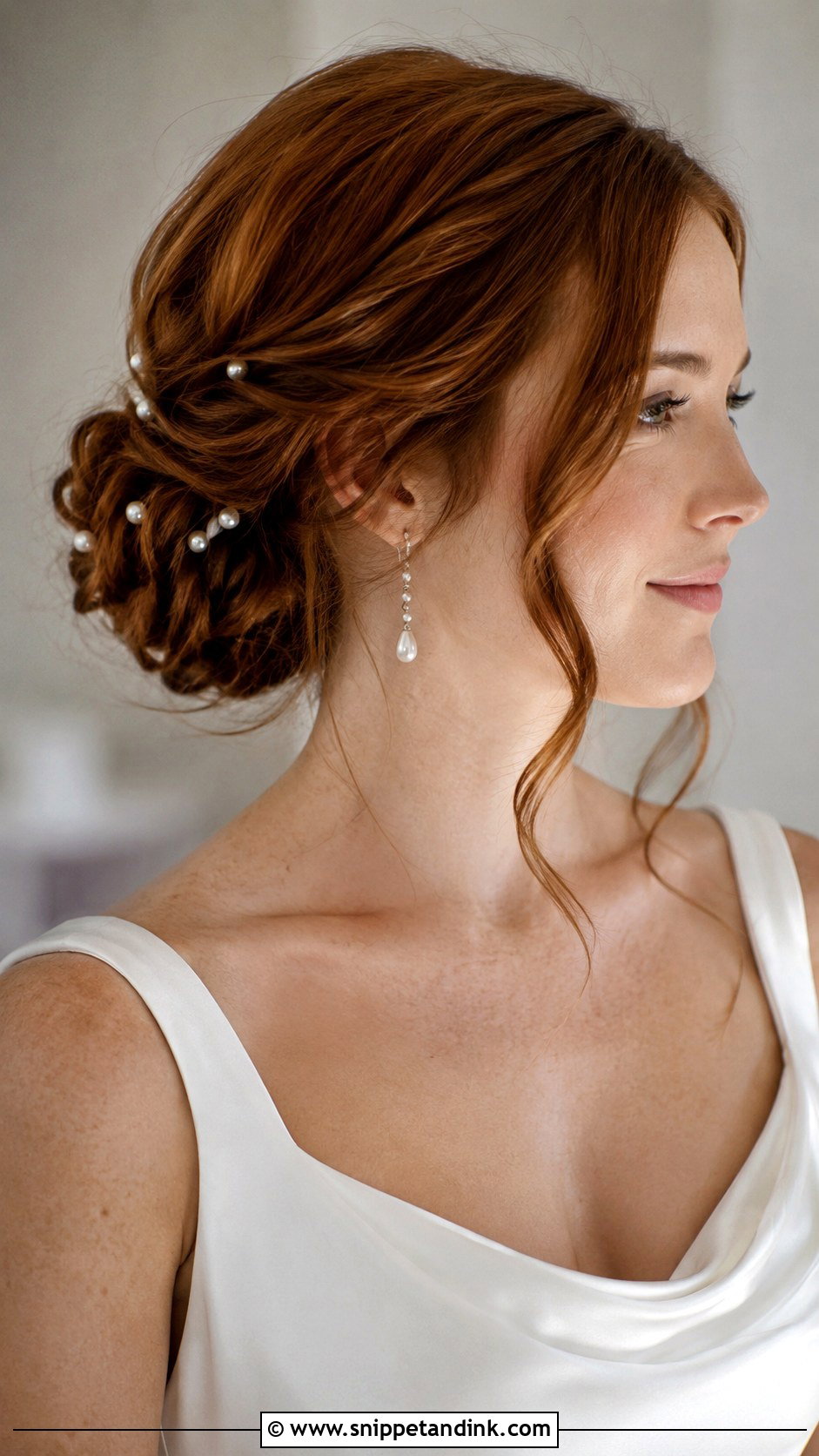
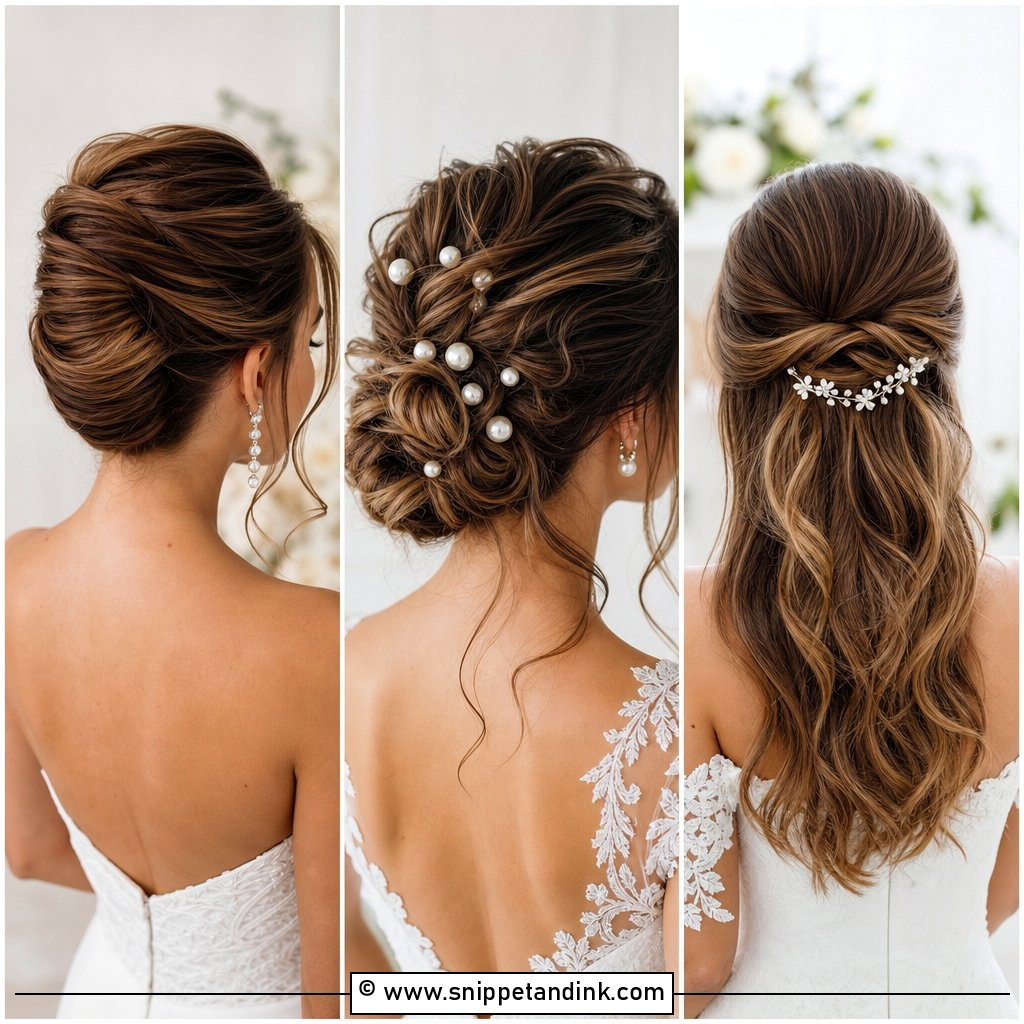
Pearls need texture to sit in. On a polished bun they look stuck on, so I add a little bend or a soft twist where they’ll go. Then the question is how many. A small cluster on one side looks deliberate; pearls scattered all over can look heavy, especially beside lace or pearl earrings. Pin them last, after the structure is finished, and push each one into a section of hair rather than resting it on the surface. It’s a good route if you want detail in photos and would rather not wear flowers.
7. Low Curly Updo Wedding Hairstyle
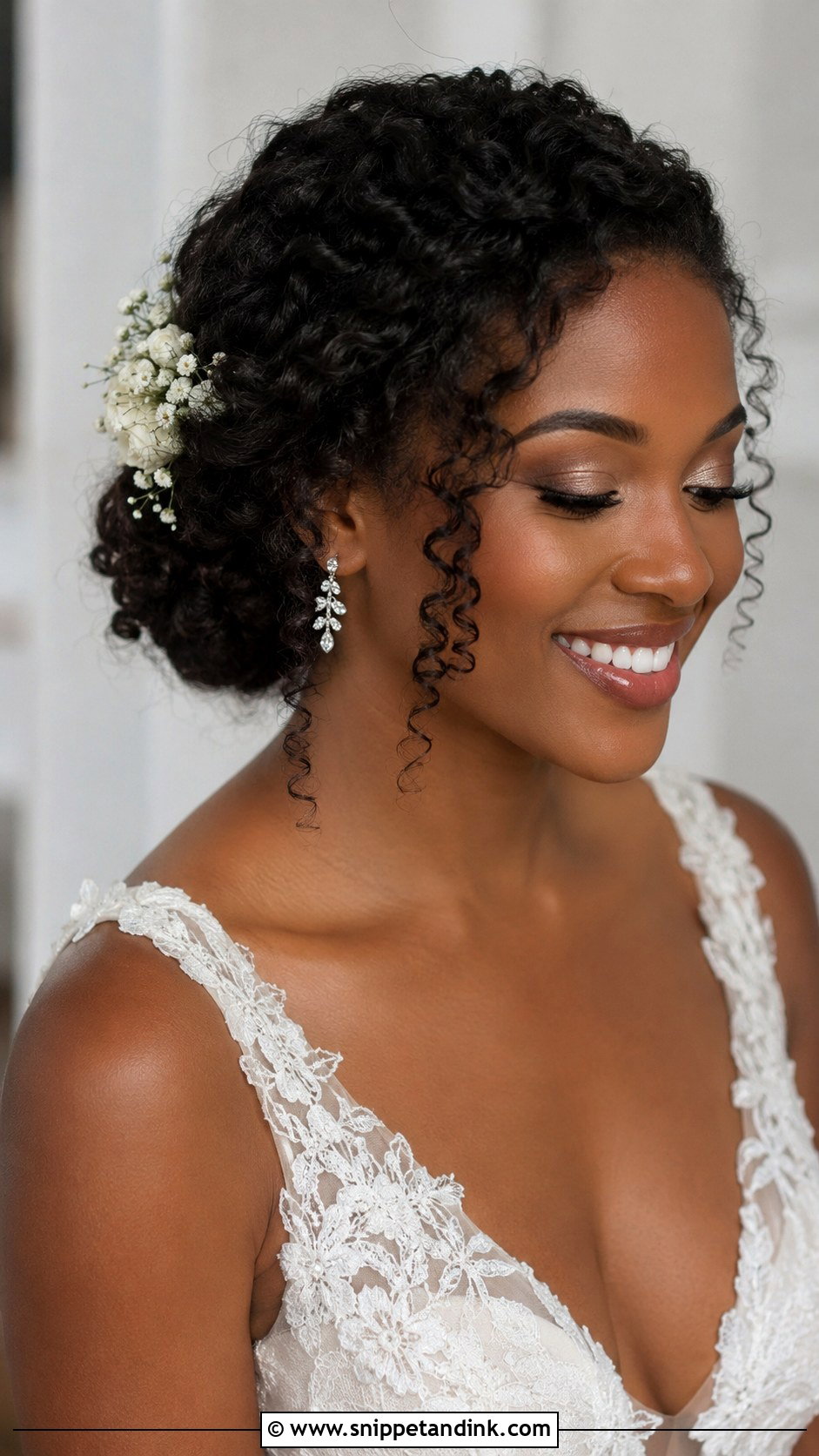
With curls, my job is to keep the pattern intact while getting it off the neck. I gather loosely into a low cluster, pin with U-pins that slide between curls, and never brush. Moisture prep makes or breaks this one in warm weather: a leave-in and a light cream the night before, then a humidity spray after pinning, keeps frizz down without stiffness. A few curls left at the face open up the eyes. Finish with a floral pin, a pearl comb or a plain veil, and keep it to one of the three.
8. Low Updo Wedding Hairstyle For Long Hair
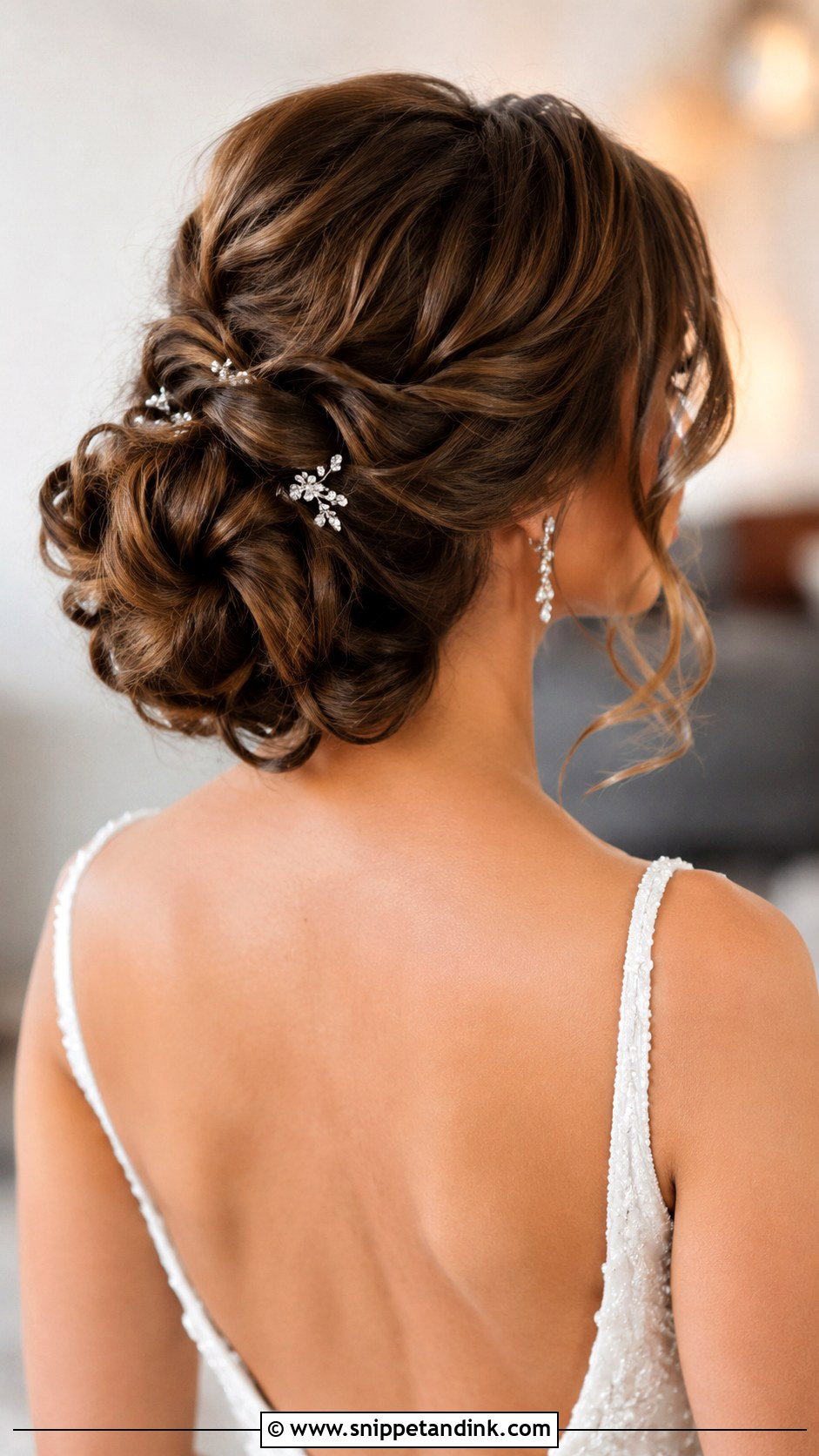
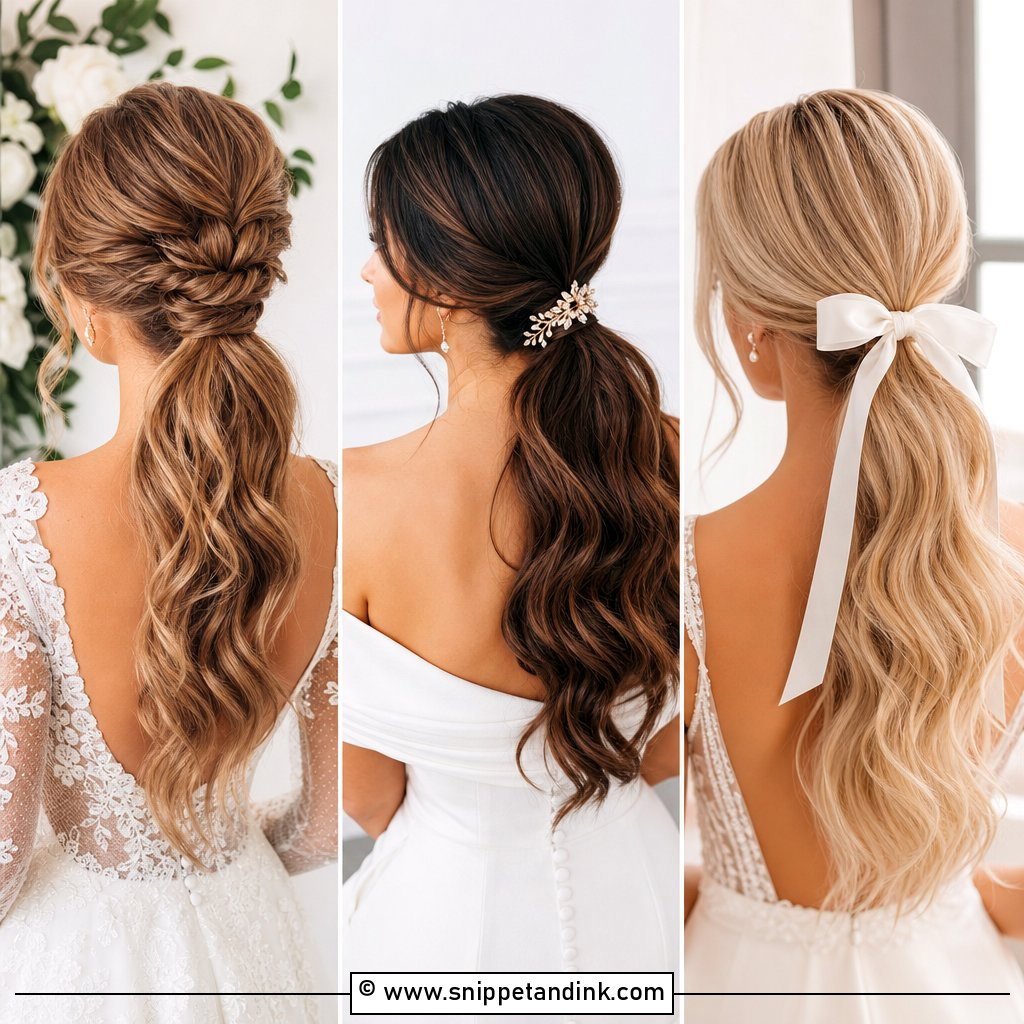
Long hair can build a full shape at the nape, but weight is the problem. If all that length goes into one wrap, it pulls at the scalp by hour four and slides by hour six. I split it into sections, build a core bun from the lowest, then layer twists or loops from the sides around it so the load spreads across more pins. Sitting low helps too, since it puts less leverage on the roots. Open-back dresses suit it well, because the back of the head becomes the detail.
9. Low Updo Wedding Hairstyle For Medium Hair
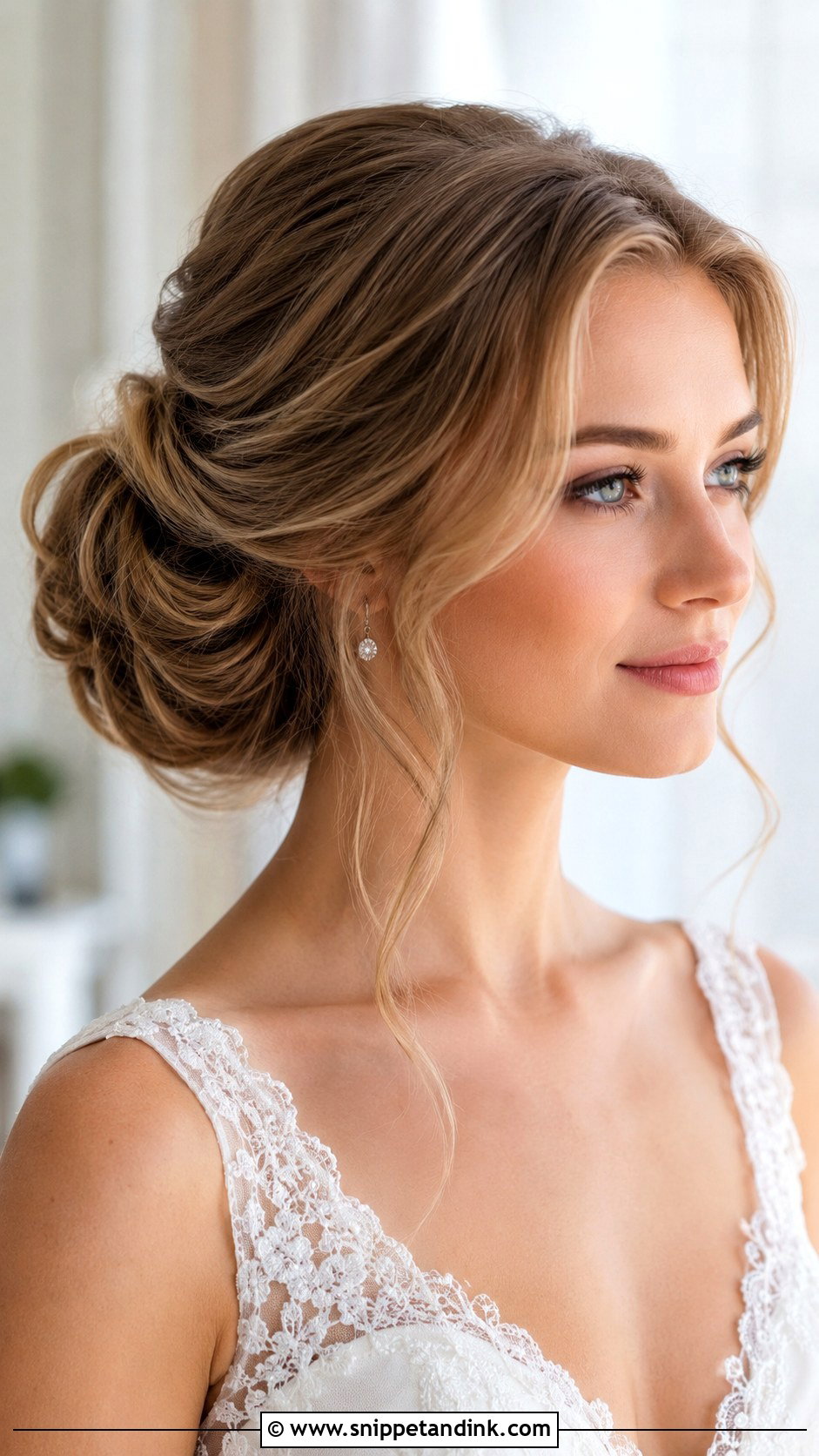
Collarbone length is easier to secure than long hair, not harder. There’s enough to tuck and not enough weight to drag. A tucked chignon, a twisted knot or a soft braided bun all work. To add fullness I use gentle backcombing, sometimes a small hidden padding piece and plenty of pins nobody will see. Waves set before pinning help a lot. When you collect inspiration photos, look for brides with similar hair density, not just similar length; a medium-length bun on thick hair is twice the size of the same style on fine hair.
10. Low Sleek Bun Wedding Hairstyle
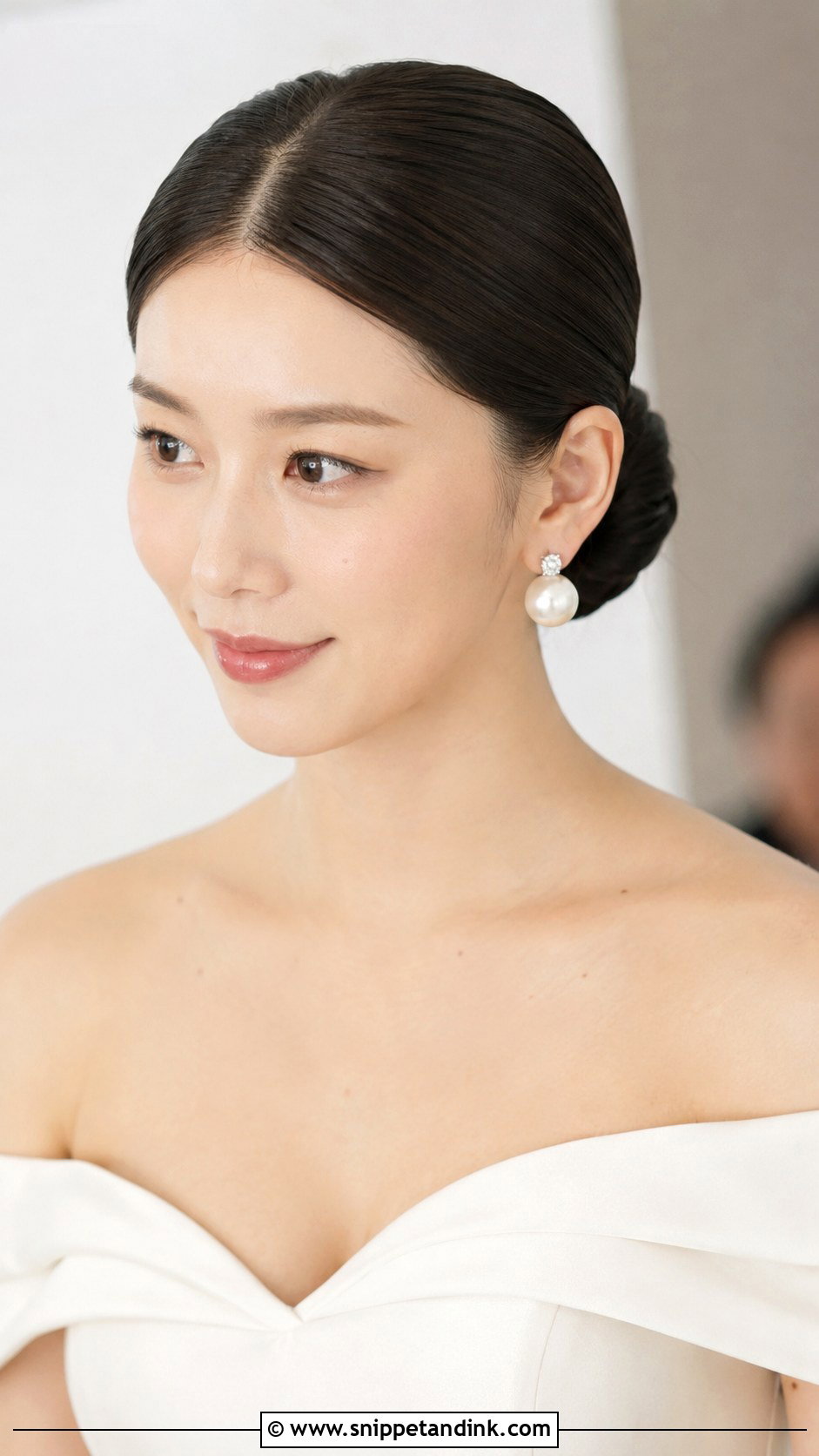
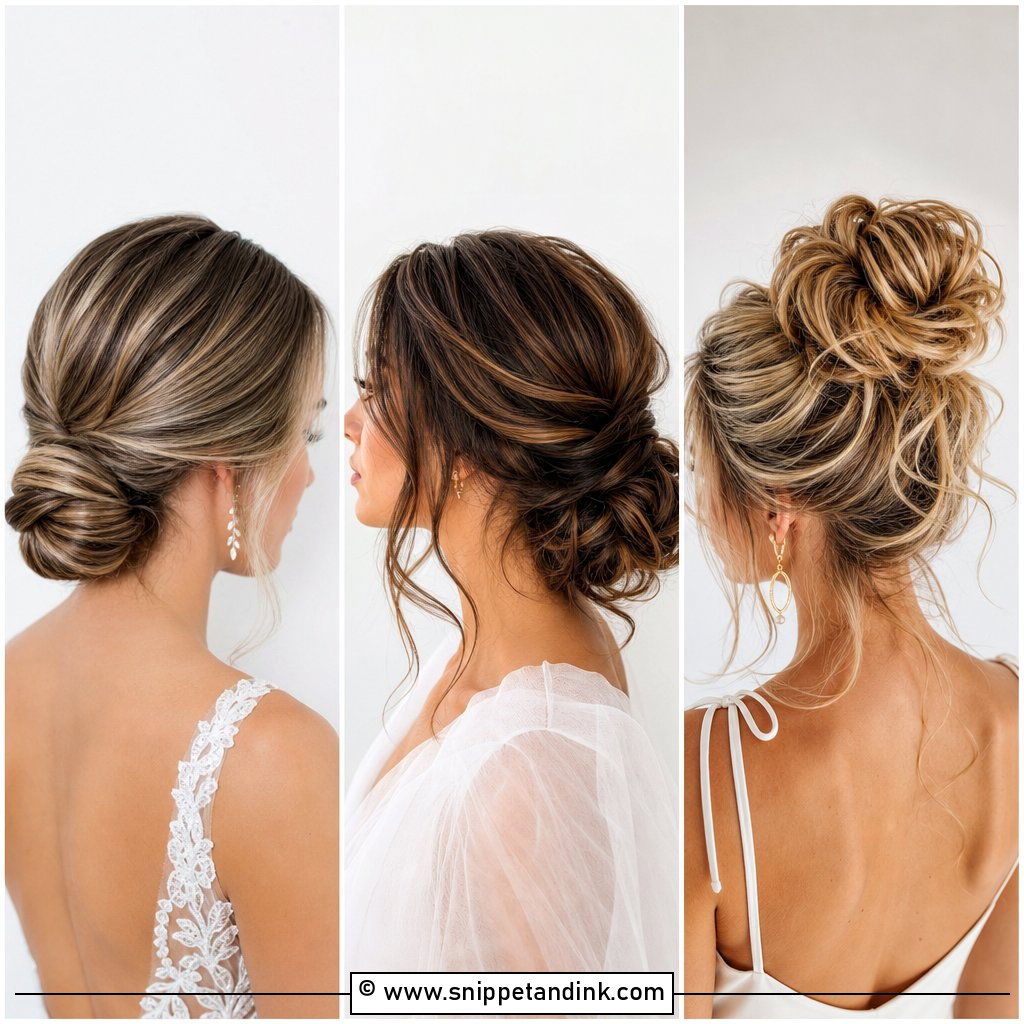
A sleek bun shows every flaw, so prep is everything. I blow-dry smooth, set a sharp centre or deep side part, and brush the hair into the nape before shaping it, rounded, knotted, or wrapped. Flyaways get a little wax along the hairline only; through the lengths it looks greasy under flash. Dramatic earrings and square necklines have room to show with it. I’d think twice if you have strong cowlicks at the nape or a lot of short regrowth, because both resist lying flat all day.
11. Low Textured Bun Wedding Hairstyle
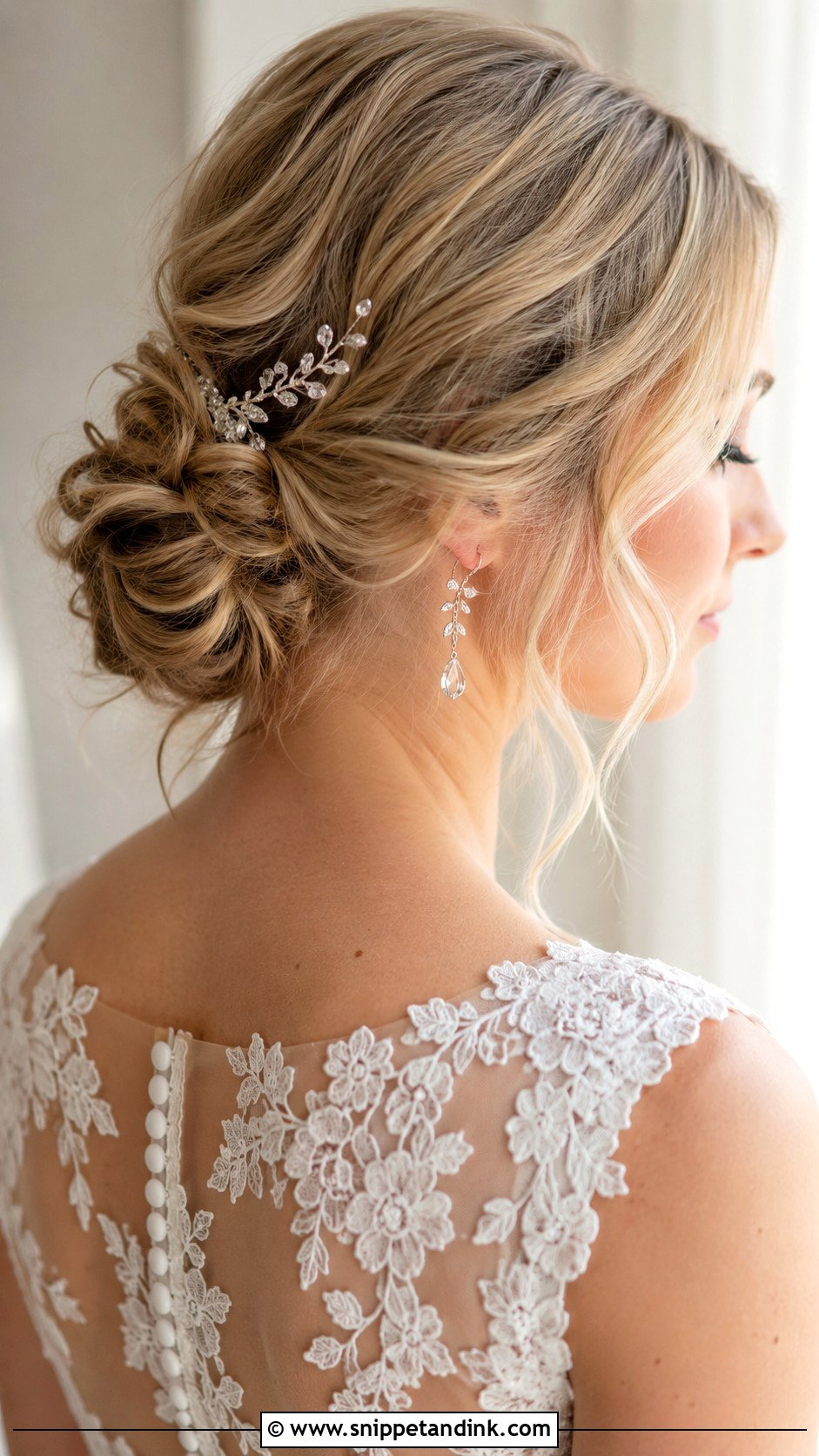
Textured buns are built from waved hair lifted and pinned in pieces, so they look soft but hold their outline. Highlights show the shape best, since the lighter strands trace each section. This one moves between boho lace and clean satin easily. At the front, loose tendrils, curtain pieces or a smooth part all work. Because the texture hides pins, it’s also the easiest base to add combs or flowers to later in the day without restyling.
12. Low Side Bun Wedding Hairstyle
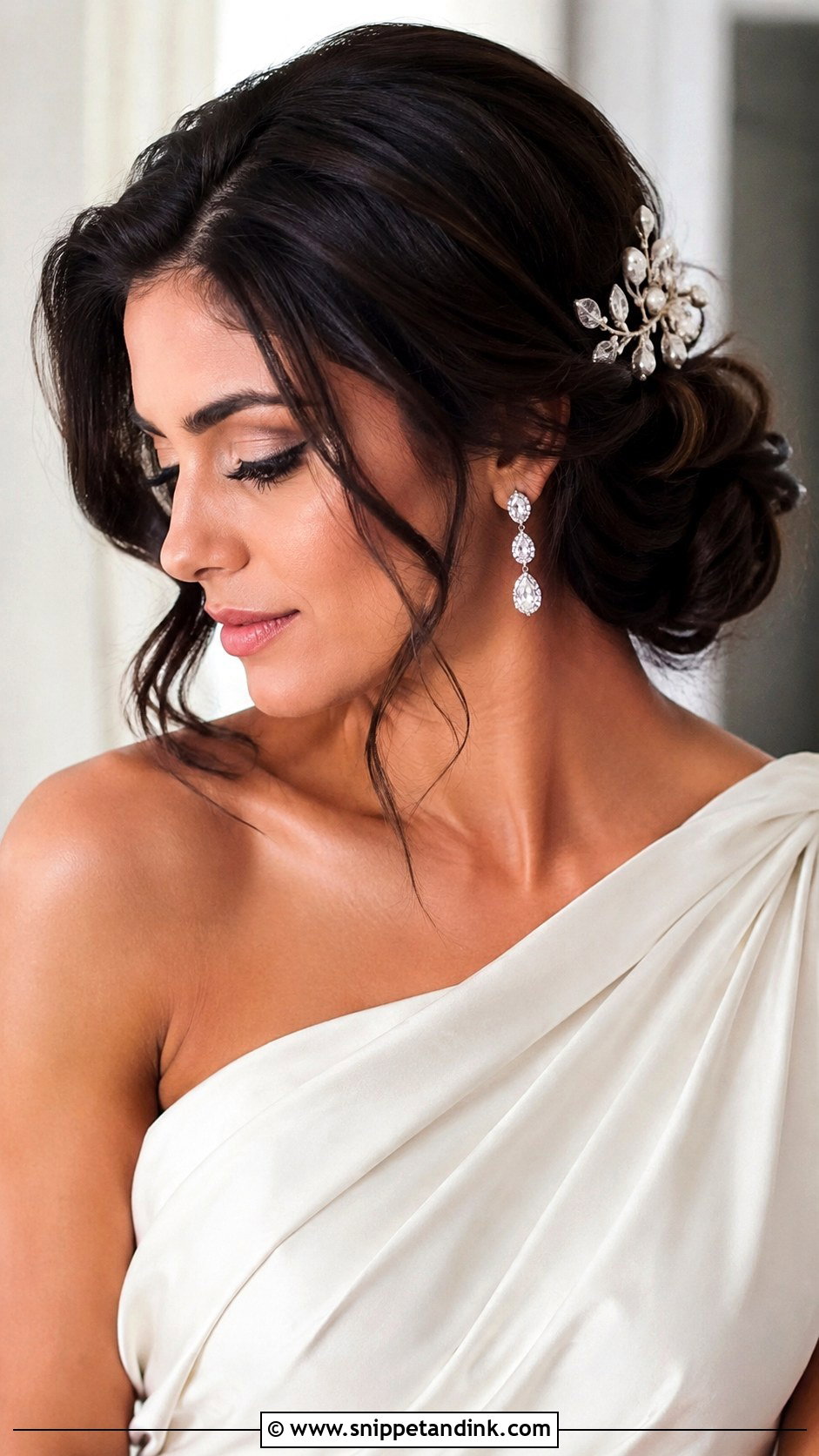
Set just off-centre behind one ear, a side bun shows up in front-facing photos, which a centred bun rarely does. That makes it a good choice with a one-shoulder or asymmetric neckline: I put the bun on the side the dress leaves bare, or opposite a statement earring so both can be seen. The bun can be sleek, curled or braided. Keep the other side smooth or gently waved. A comb slipped just above the bun adds a vintage note.
13. Low Knot Wedding Hairstyle
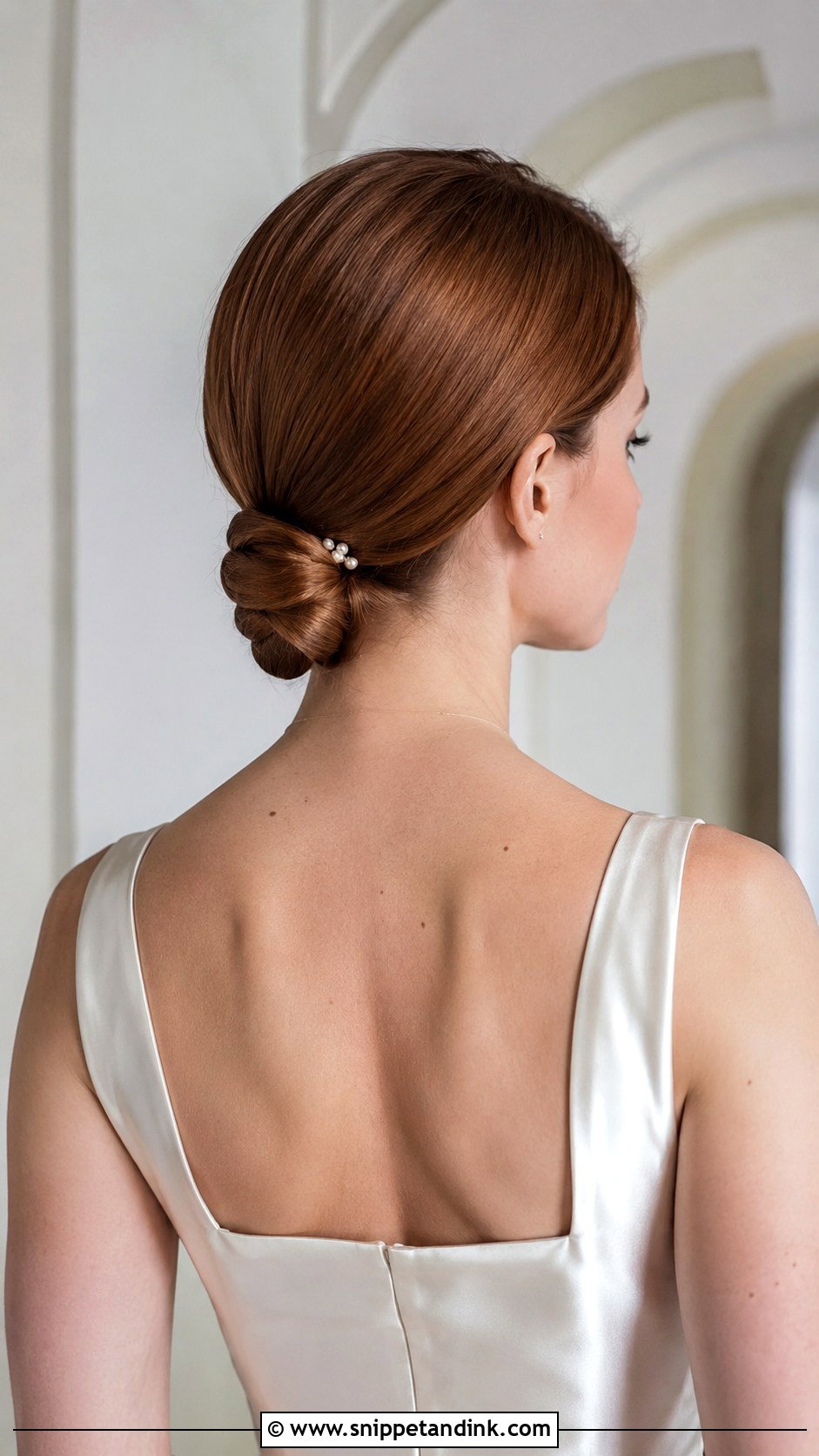
A knot is folded or wrapped rather than coiled, so it lies flatter than a round bun and looks cleaner from behind. I suggest it to brides who don’t want volume at the back or who’ll be leaning against a high chair back at dinner. Sleek suits a formal room; a little texture softens it for a daytime ceremony. You need enough length to wrap around itself at least once. Medium hair can manage with careful pinning, but the knot will be smaller. One pearl pin or a slim comb is all it needs.
14. Low Updo Wedding Hairstyle With Flowers
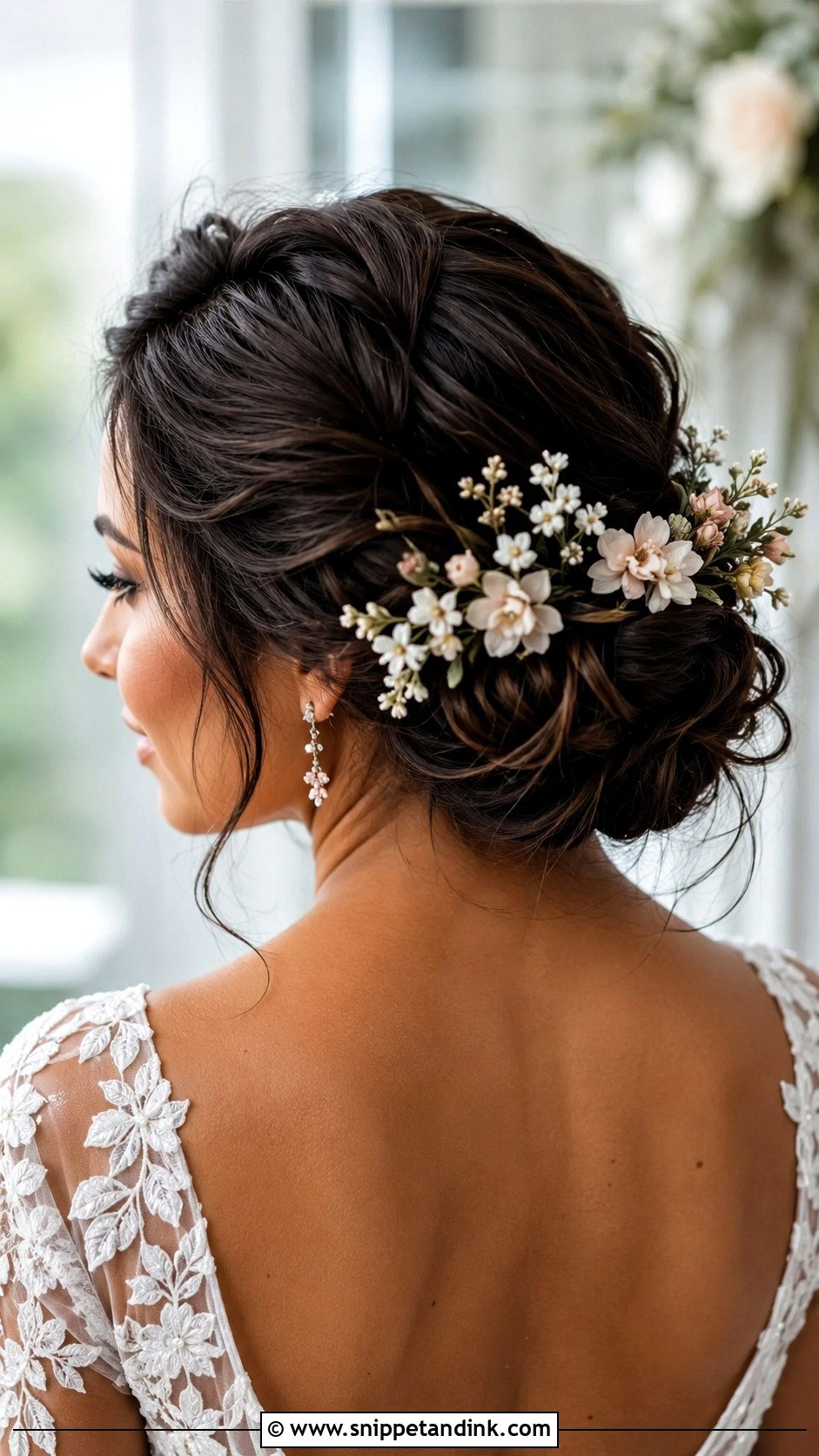
Fresh or faux flowers tucked into a low updo look best small and placed with intent. Wrap a crescent along one side of the bun, or tuck blooms into twisted sections, rather than covering the whole shape. Large flowers on a soft low bun pull it down and look clumsy. Ask your florist for the same blooms as your bouquet, wired and taped, and keep them chilled until pinning. The style suits wavy texture, loose tendrils and some lift at the crown. Pin every stem twice, because a single pin lets flowers swivel by the first dance.
15. Low Updo Wedding Hairstyle With Face Framing
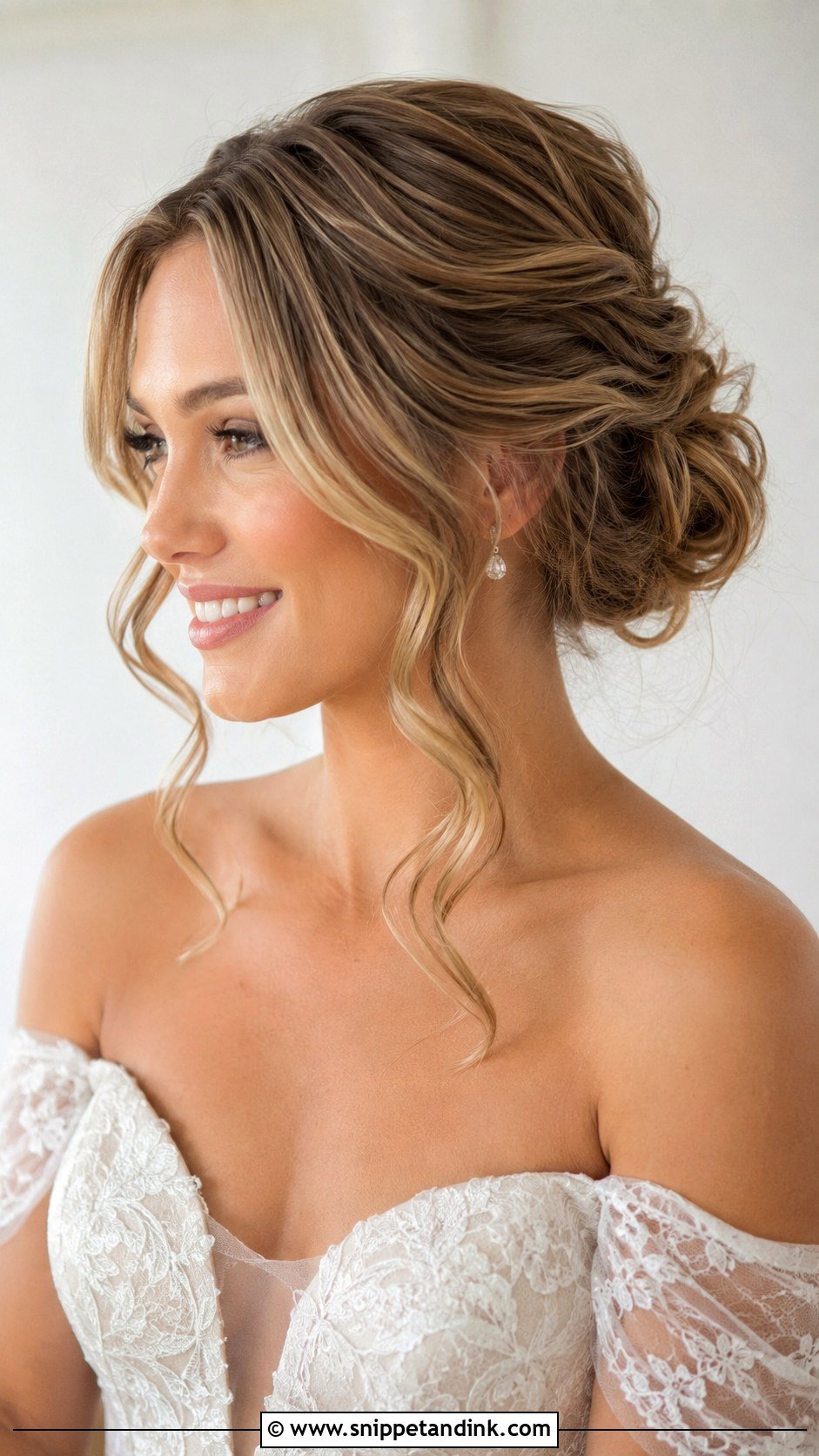
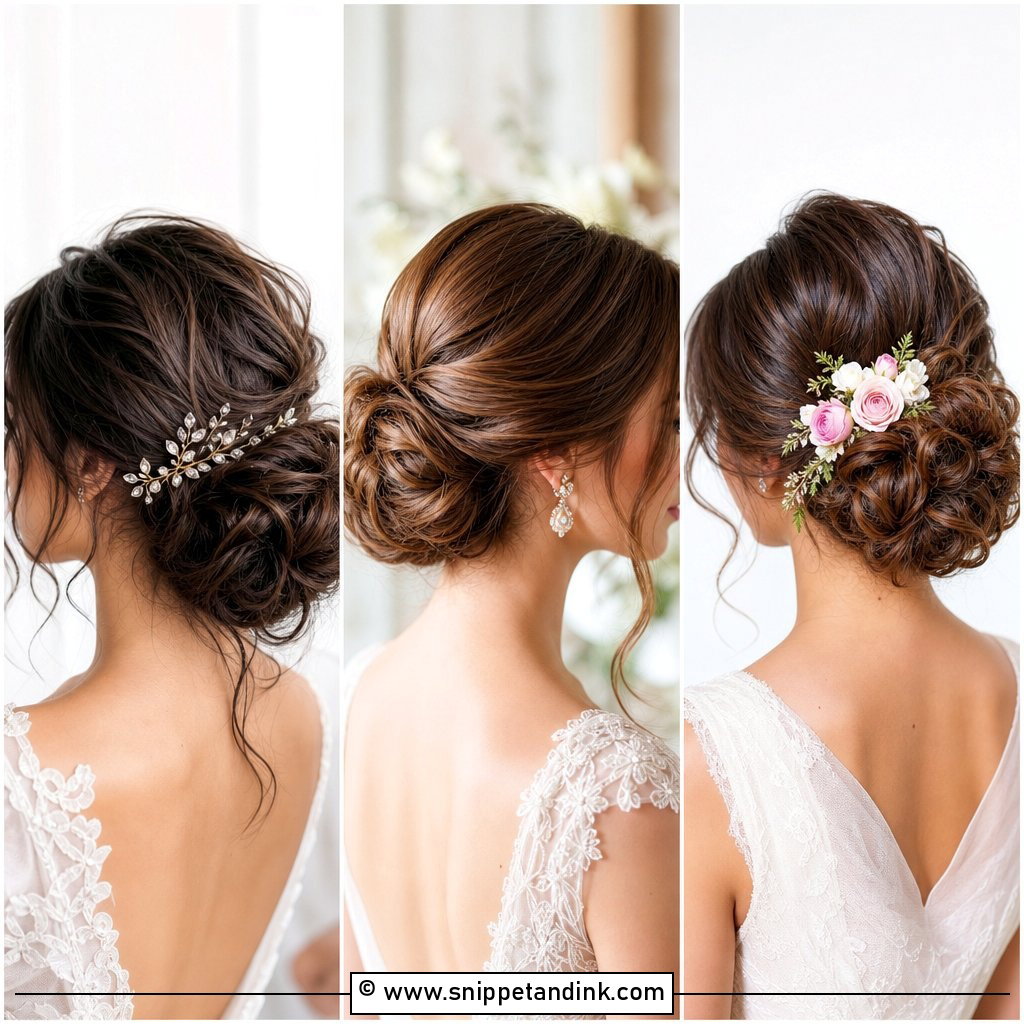
Face framing is where most of my trial time goes, because a few millimetres change everything. Too much hair at the front falls into your eyes and sticks to lip colour; too little looks like a mistake. I leave out two slim sections, curl them back, and break them up. Behind them, a chignon, textured bun or braid keeps the shape. Front pieces cut as curtain bangs, long layers or soft curls all suit this. If you feel too formal with everything pulled back, this is the version I’d steer you toward first.
Hairpieces, Padding and Extensions Hidden in a Full Bun
Many full low buns in wedding photos have help inside. A mesh donut, a crepe-hair pad or a few clip-in wefts can double the size of a bun without anyone seeing them. There is nothing to be embarrassed about; tell your stylist what your hair can do on its own and what you’re hoping for.
What the Fillers Are For
- Bun pads and donuts give fine or shoulder-length hair a rounder shape. Match the colour to your hair so a gap between sections doesn’t show grey or beige foam.
- Clip-in wefts add length to wrap, useful when a knot or chignon needs more hair than you have.
- If you already wear tape-ins or sew-ins, mention them early. The bonds need to be hidden in the pinning plan, and some updos pull them toward the surface.
Order clip-ins at least a few weeks before the trial, so they can be colour-matched and cut to blend. Wear them at the trial; new hair behaves differently from your own, and I want to know how it pins before the morning of the wedding.
Give the Trial Updo a Full Afternoon Before Deciding
Low updos hold up because the weight sits where your neck supports it, and every style here can be made softer or sleeker to suit you. Before the trial, gather the details your stylist needs: the neckline, the veil length and where it will sit, your natural texture, and how much humidity or wind the venue will throw at it. Bring photos of your dress from behind, not just inspiration hair. Wear the trial style for as many hours as you can afterward. That tells you more about how it will hold than any picture.
You'll Like These Ideas:


Leave a Reply