
An updo is the most practical bridal hair there is. It keeps hair off a neckline, gives a veil something solid to grip, and survives hugs far better than loose curls. It’s also where the craft shows most, because every pin is placed to carry weight. Below are 25 updos I build regularly, from a plain low chignon to a pearl-scattered knot, with notes on how each one is made, what hair it needs and where it tends to go wrong. Use them to work out what you like, then bring the photos to your trial.
Is Your Hair Long Enough for the Updo You Saved?
Most updo photos are taken on long, thick hair, often with extensions. Before you fall for one, check your length against what the style needs. These are rough guides from what I see in the chair; your stylist can confirm at the trial.
- Chin to shoulder: a low chignon, twisted chignon or side-swept updo can work with pins and a padded form. Braided crowns may need two braids meeting at the back.
- Shoulder to collarbone: most low buns, knotted updos and half-up styles work comfortably.
- Past the shoulder blades: French twists, top knots, bubble braids and big curly updos are easiest, and you’ll have enough length for a full shape.
- Very fine hair at any length: clip-in extensions or a hair form add volume, so ask your stylist if they bring them.
If you’re growing your hair out for the wedding, keep regular trims to remove split ends. Dry, broken ends poke out of updos and make sleek styles look frizzy.
1. Low Chignon Bridal Updo
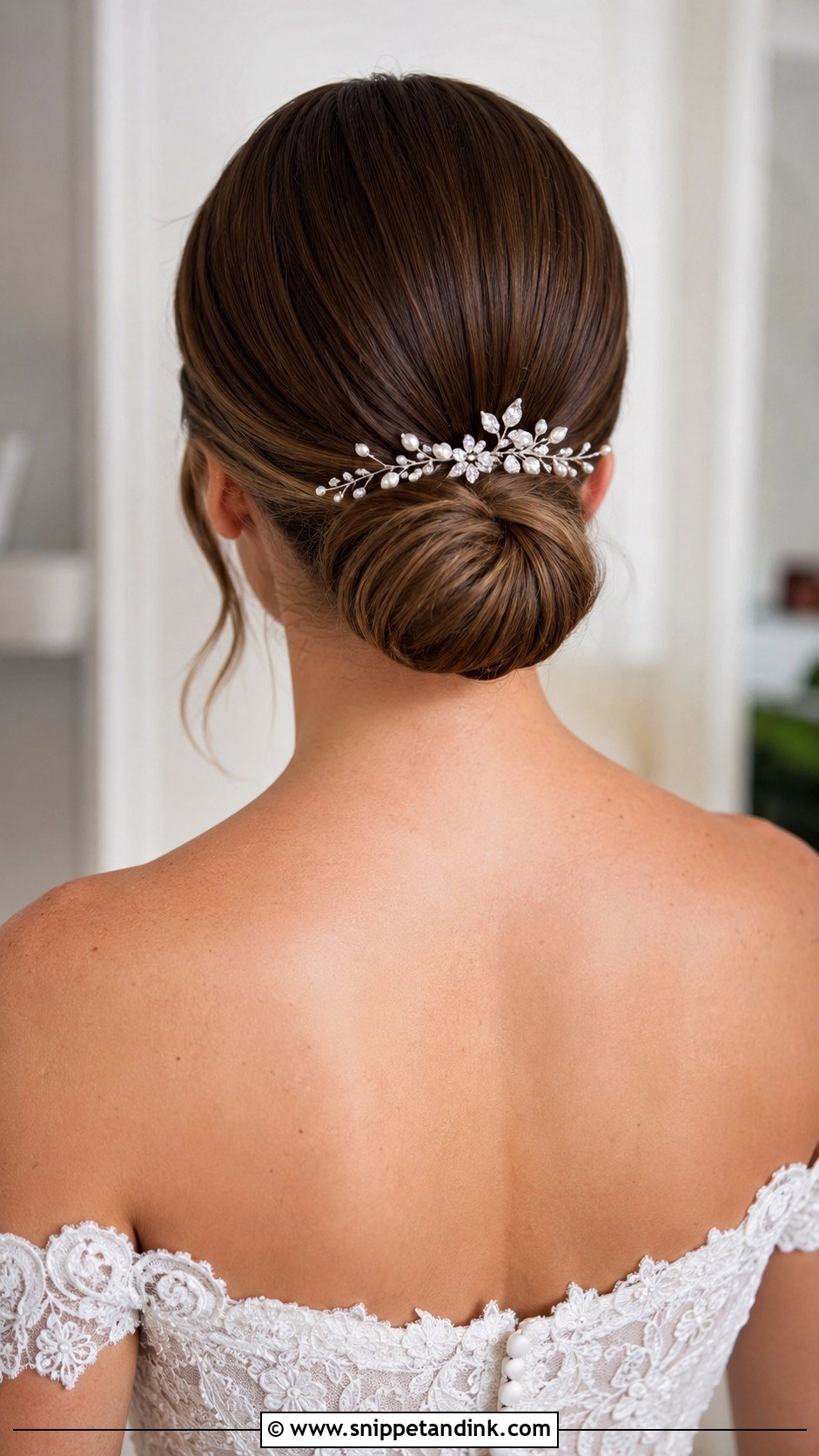
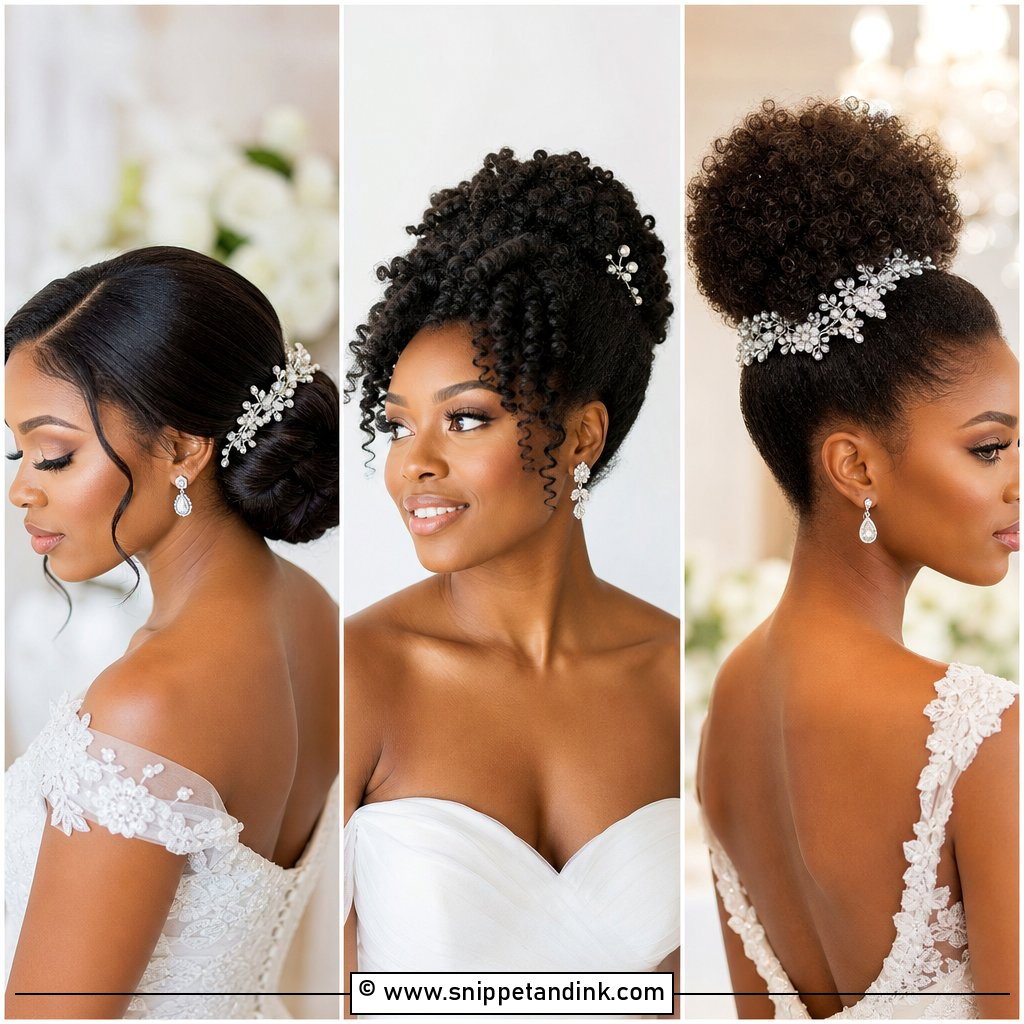
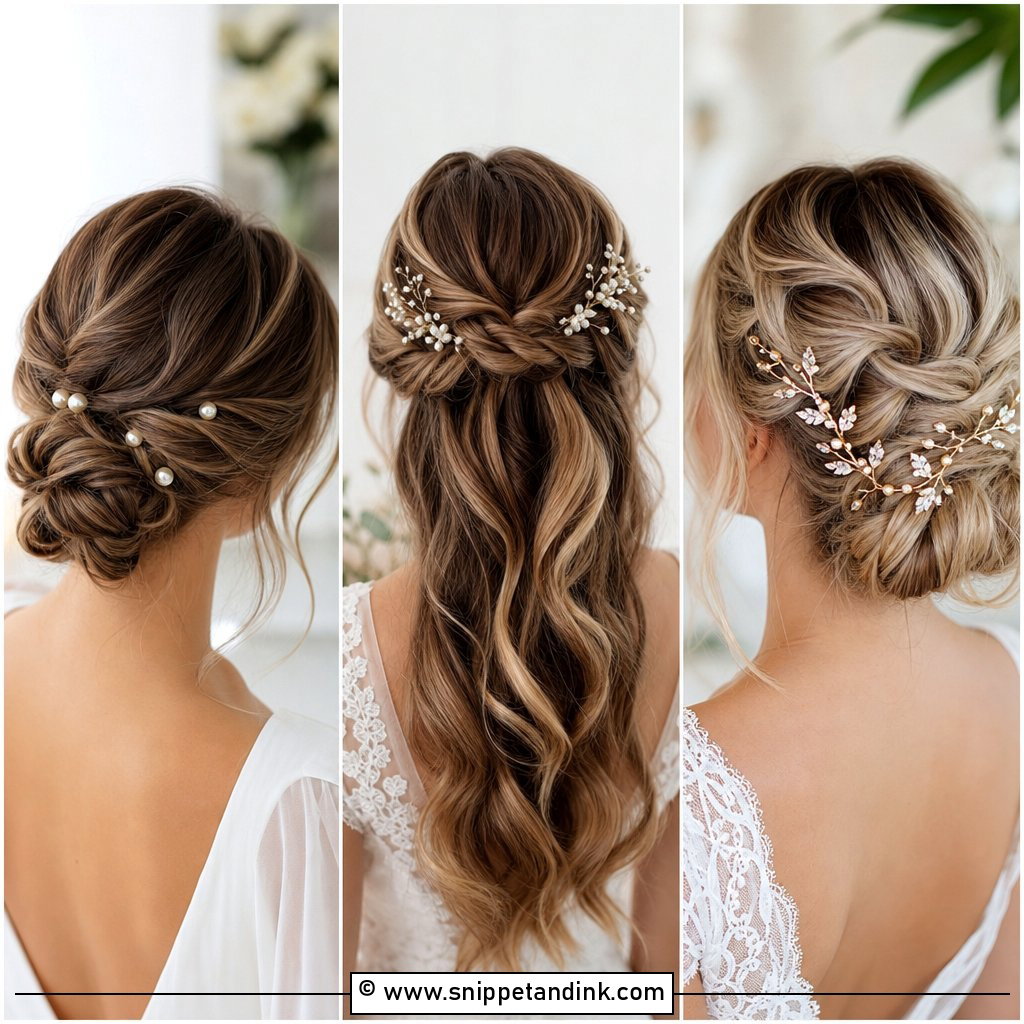
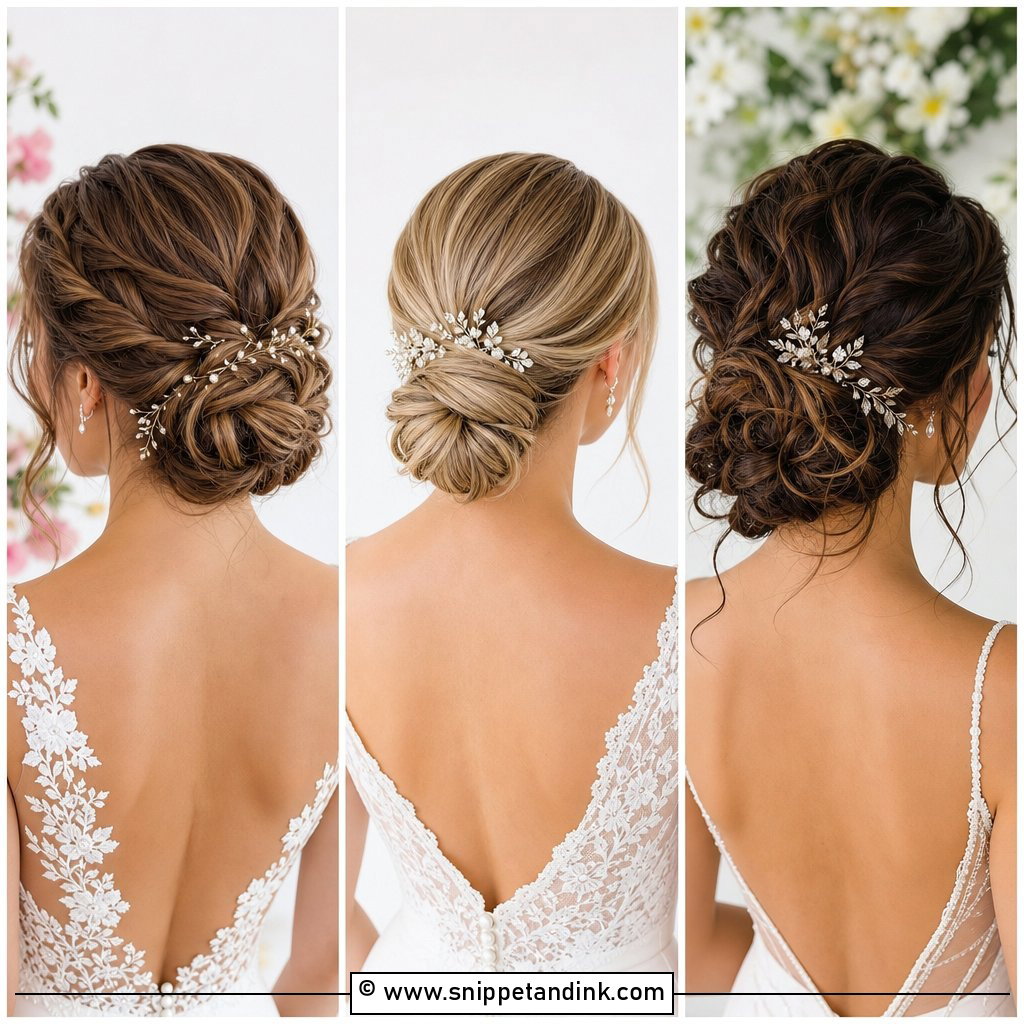
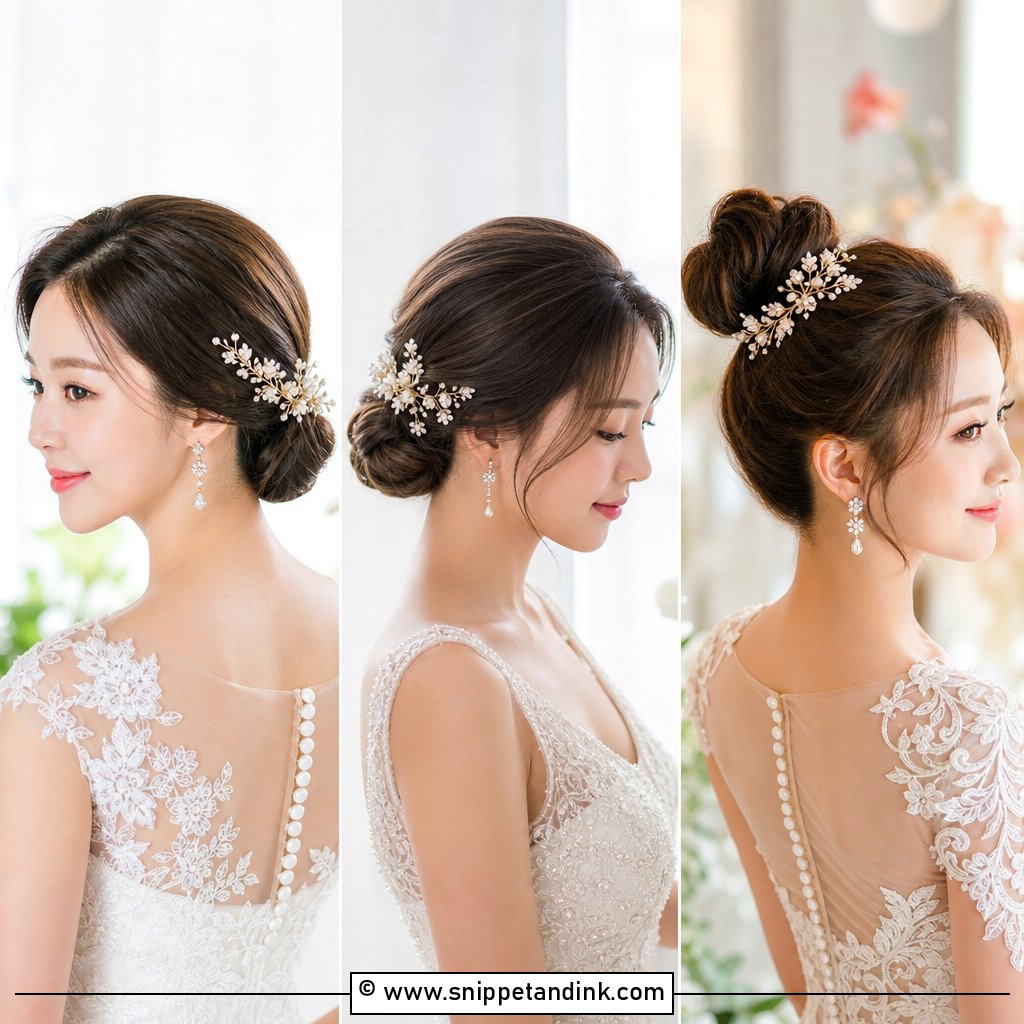
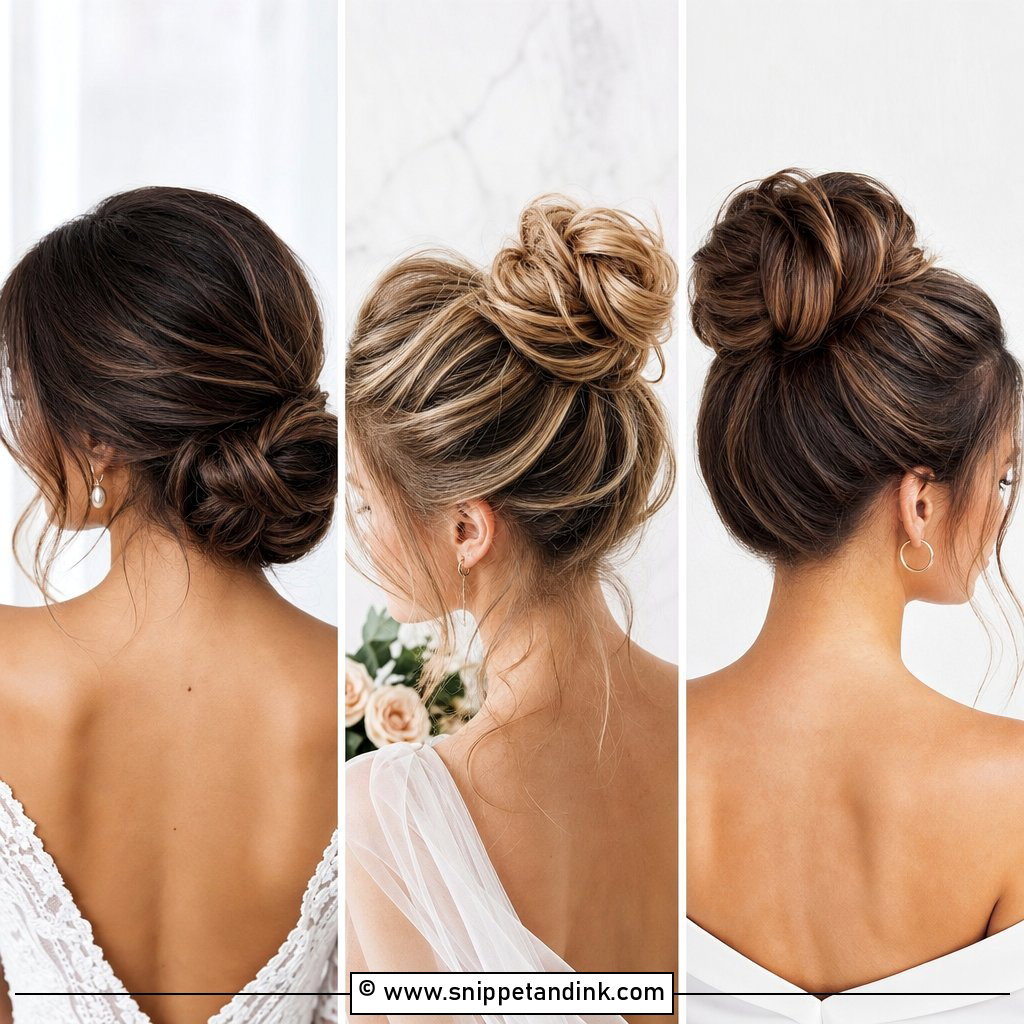
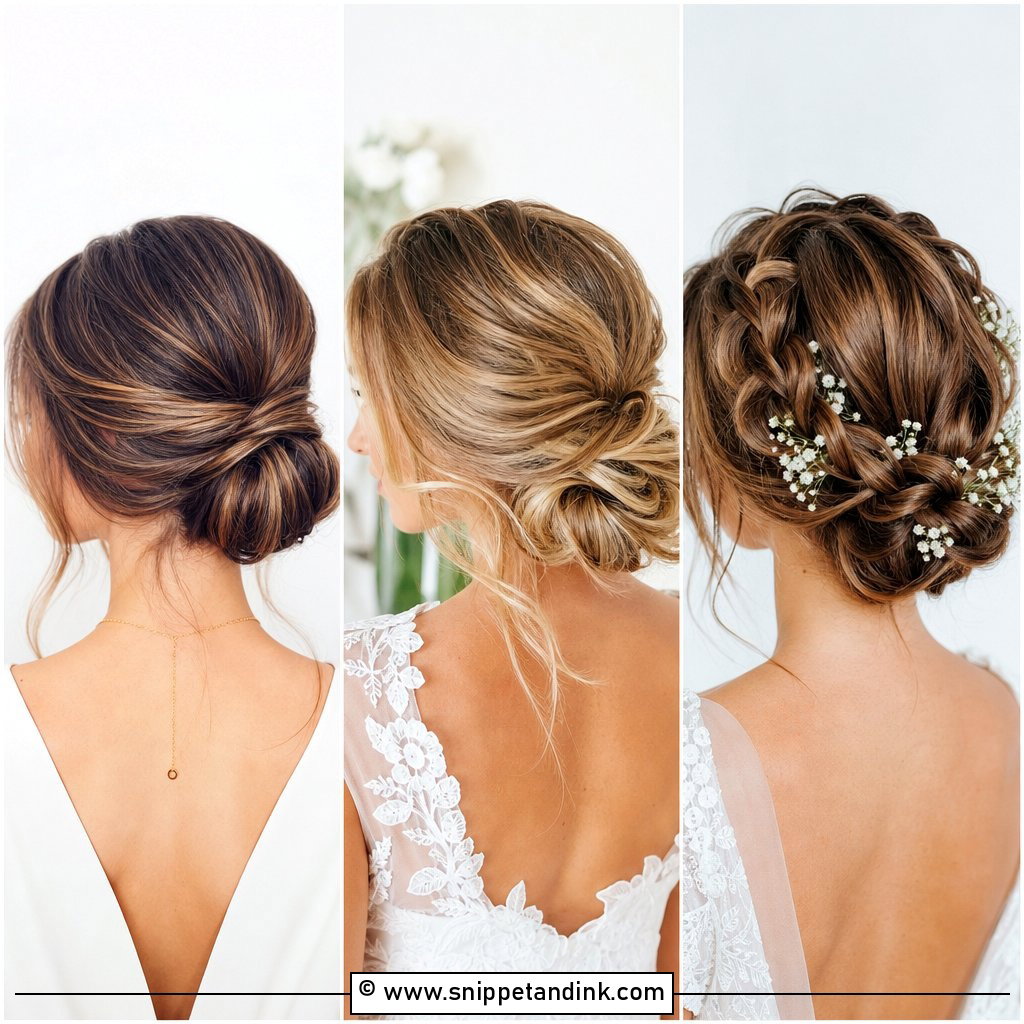
If I had to pick one updo that works for almost everyone, it’s the low chignon. The hair is smoothed back and twisted into a neat bun at the nape, and because the weight sits low, it doesn’t pull on the scalp the way high styles can. It sits neatly under a cathedral veil comb and leaves off-the-shoulder necklines clean. A jeweled comb or a few pins add sparkle. I secure it with crossed pins at four points, which is why it survives a full night of dancing.
2. Textured Low Bun With Loose Tendrils
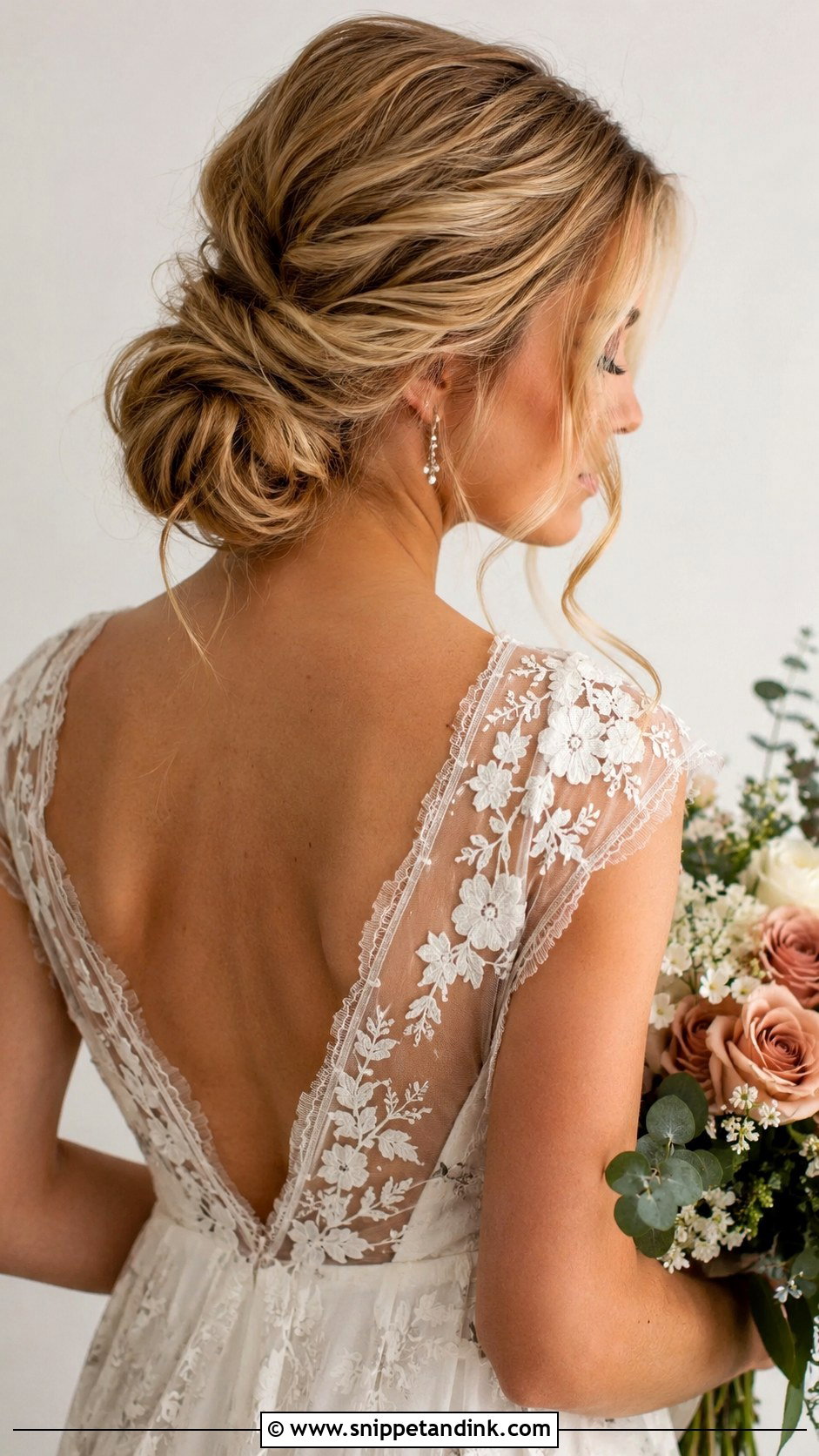
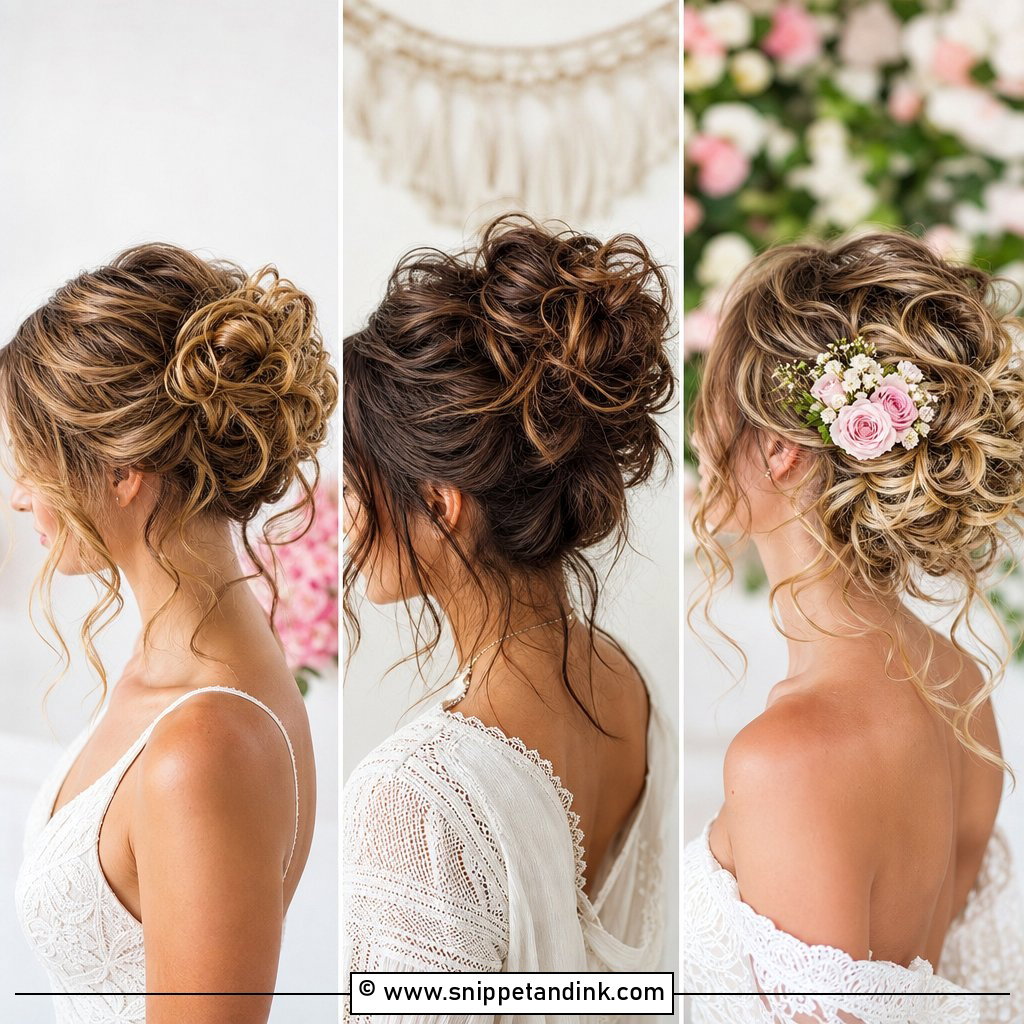
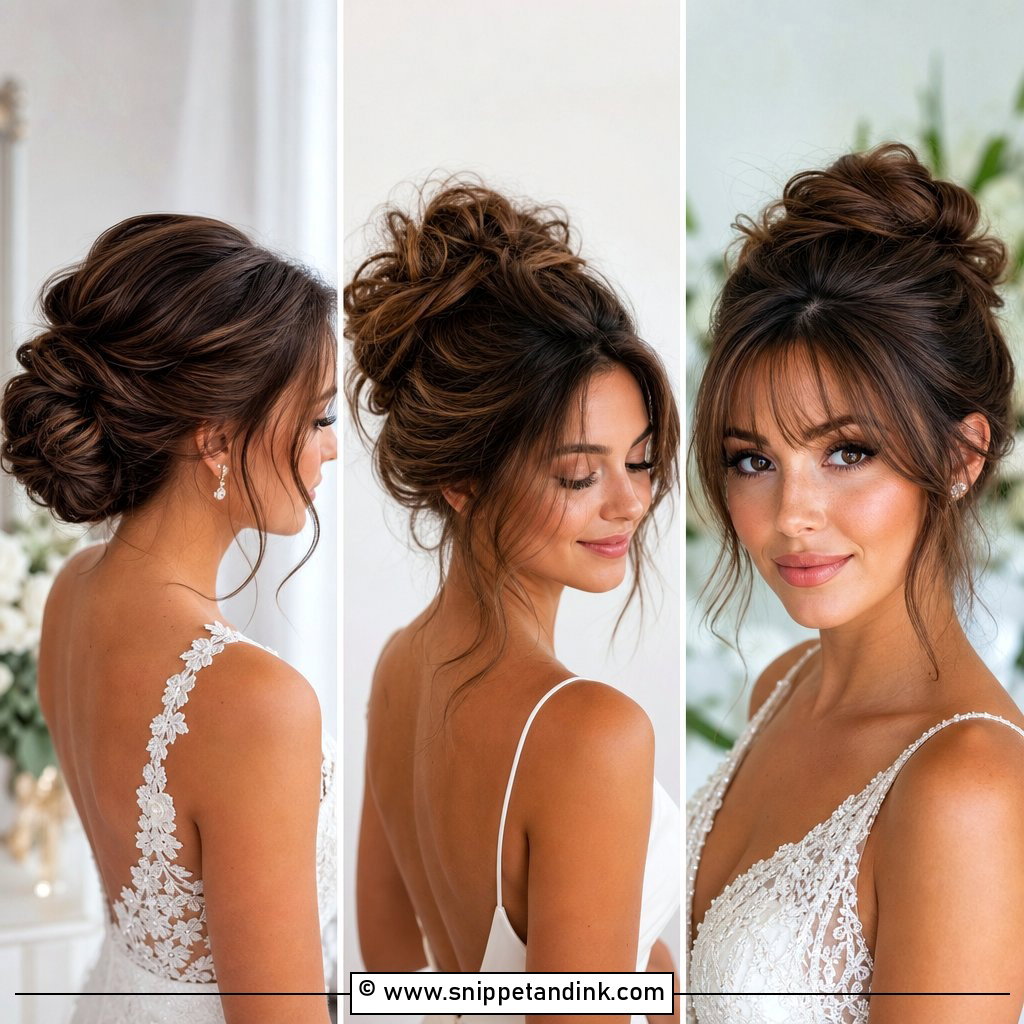
A textured low bun is softer and less formal than a chignon. I add light volume at the crown, gather the hair loosely at the nape and pull out loose tendrils near the ears once everything is pinned, never before, so they don’t get caught in the bun. It’s forgiving on both fine and thick hair because the texture hides uneven sections. Fresh florals or nothing at all; it suits flowing, bohemian gowns.
3. French Twist Wedding Updo
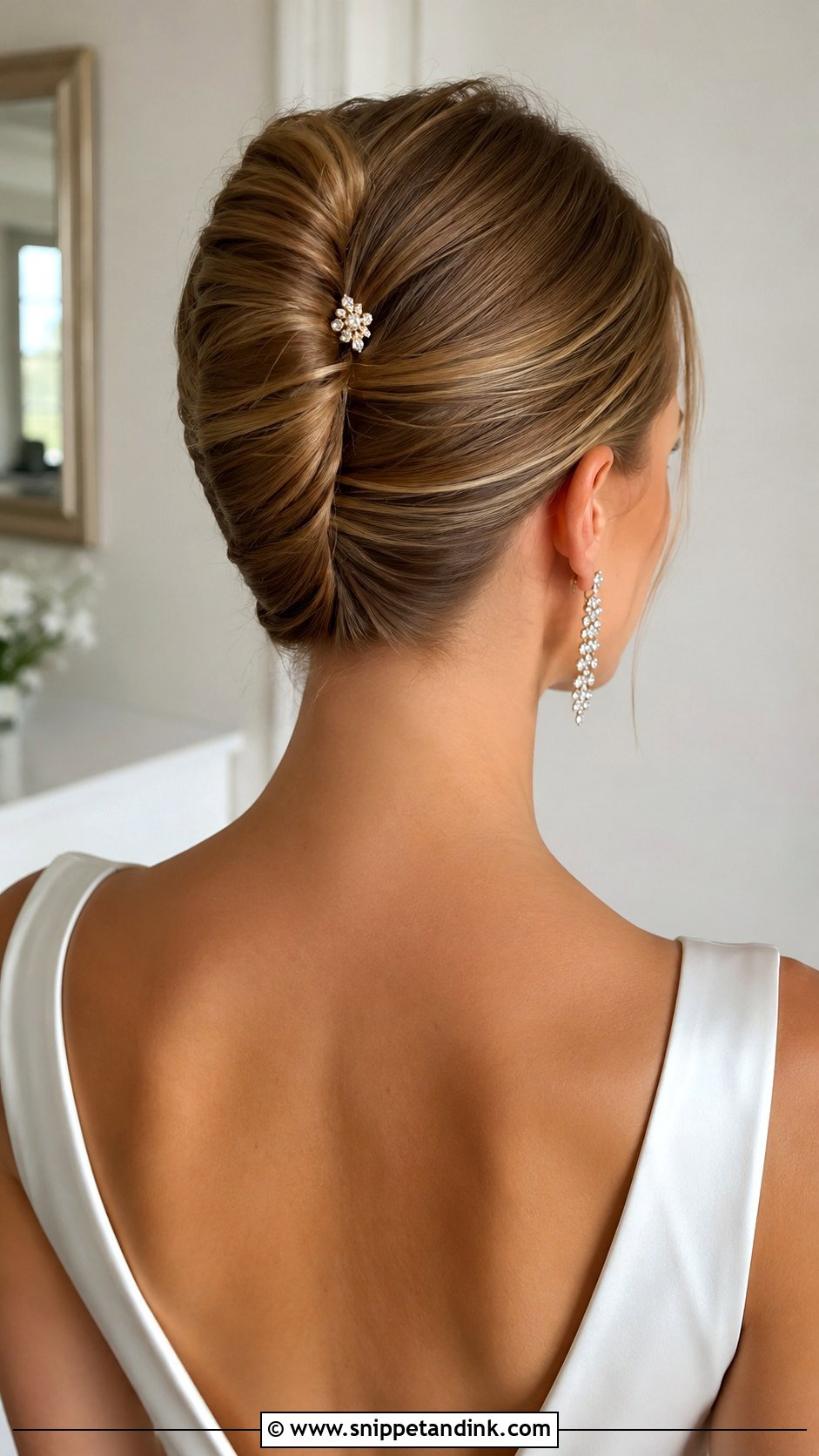
Sleek, sophisticated and harder than it looks: the French twist. Hair is swept to one side and folded into a vertical roll up the back of the head. I backcomb the underside so the roll has grip, then pin along the seam with pins slid in at an angle so they lock. It shows off a neckline and suits formal ceremonies and ballroom receptions. A birdcage veil gives it a vintage feel. Medium to long hair only; shorter layers escape the roll.
4. Braided Low Bun Updo
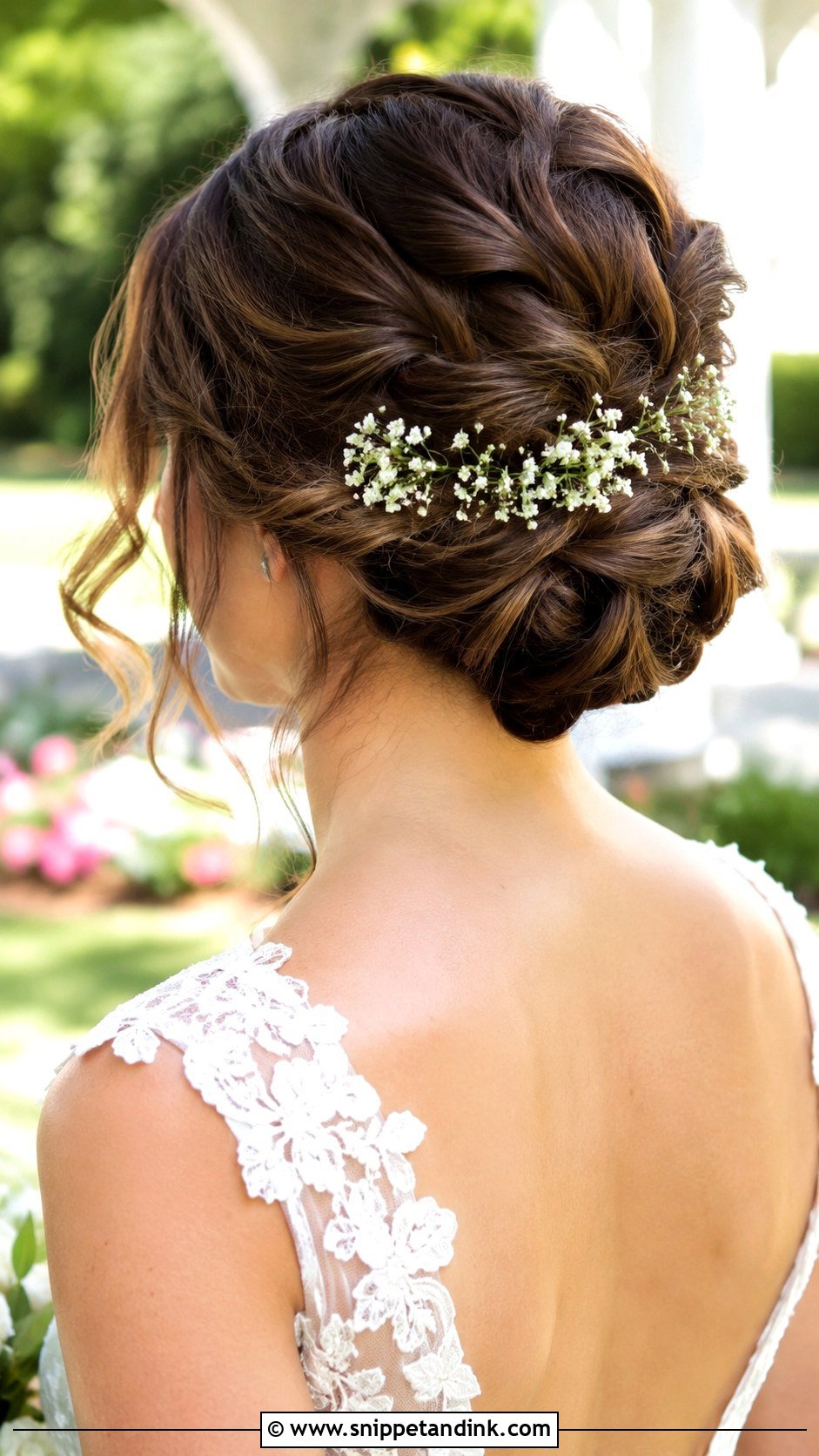
Braids woven into a low bun give texture from every angle, which matters because guests mostly see the back of your head during the ceremony. One or two braids are wrapped into the bun at the nape. Fine hair gains body from the braids; thick hair gets controlled by them. Keep the braids tight for definition or loose for a garden feel. Baby’s breath or small rosebuds tuck easily into the braid loops.
5. Messy Bridal Bun
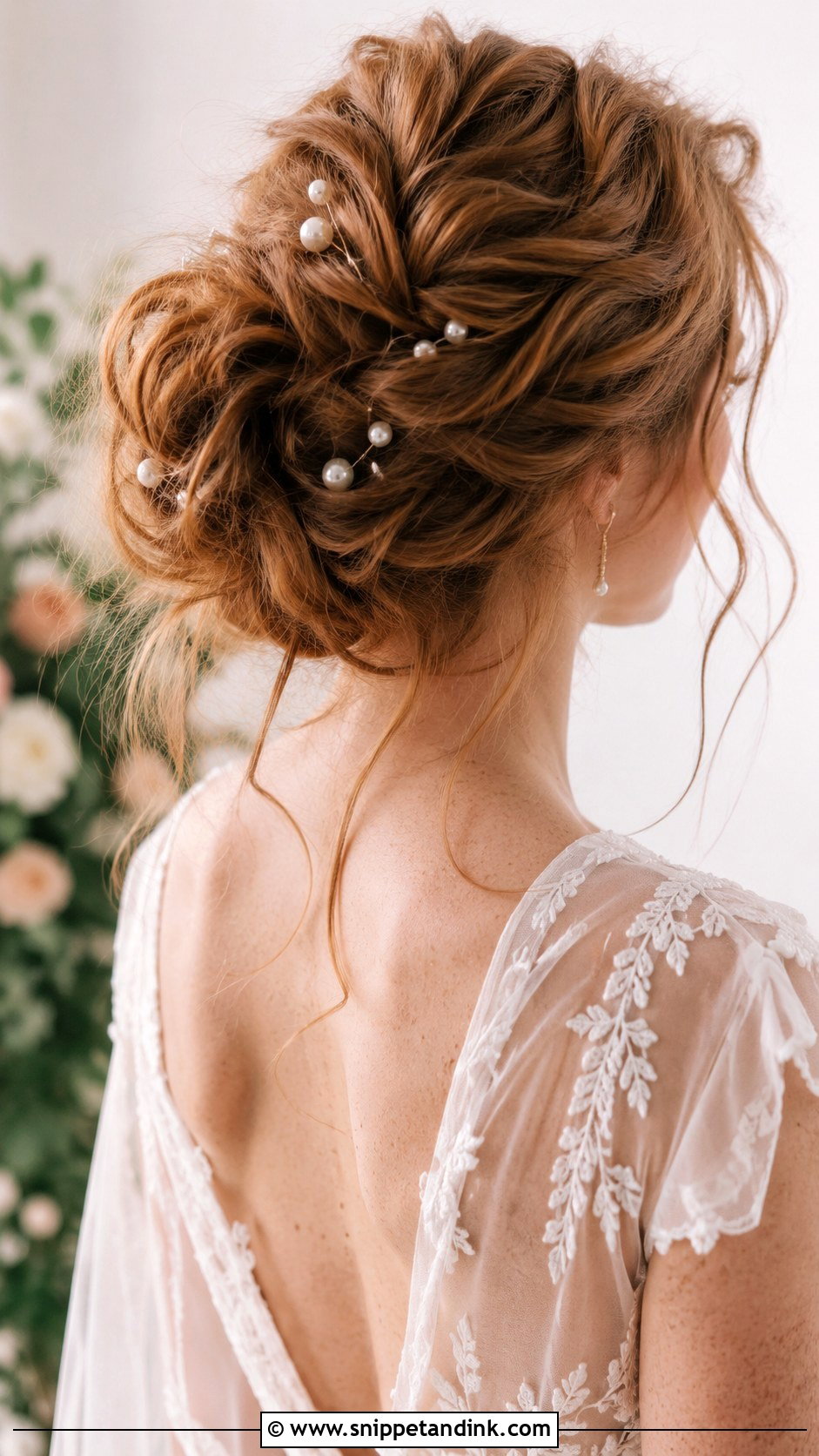
A messy bun takes more pins than a sleek one, and brides are always surprised by that. The undone look is built from small sections, each pinned separately so the bun holds even though it looks relaxed. I loosen pieces around the face and crown last. It works best on hair with some natural wave or texture. A vine of greenery or scattered pearls finishes it, and it suits outdoor celebrations and relaxed gowns.
6. Twisted Chignon Updo
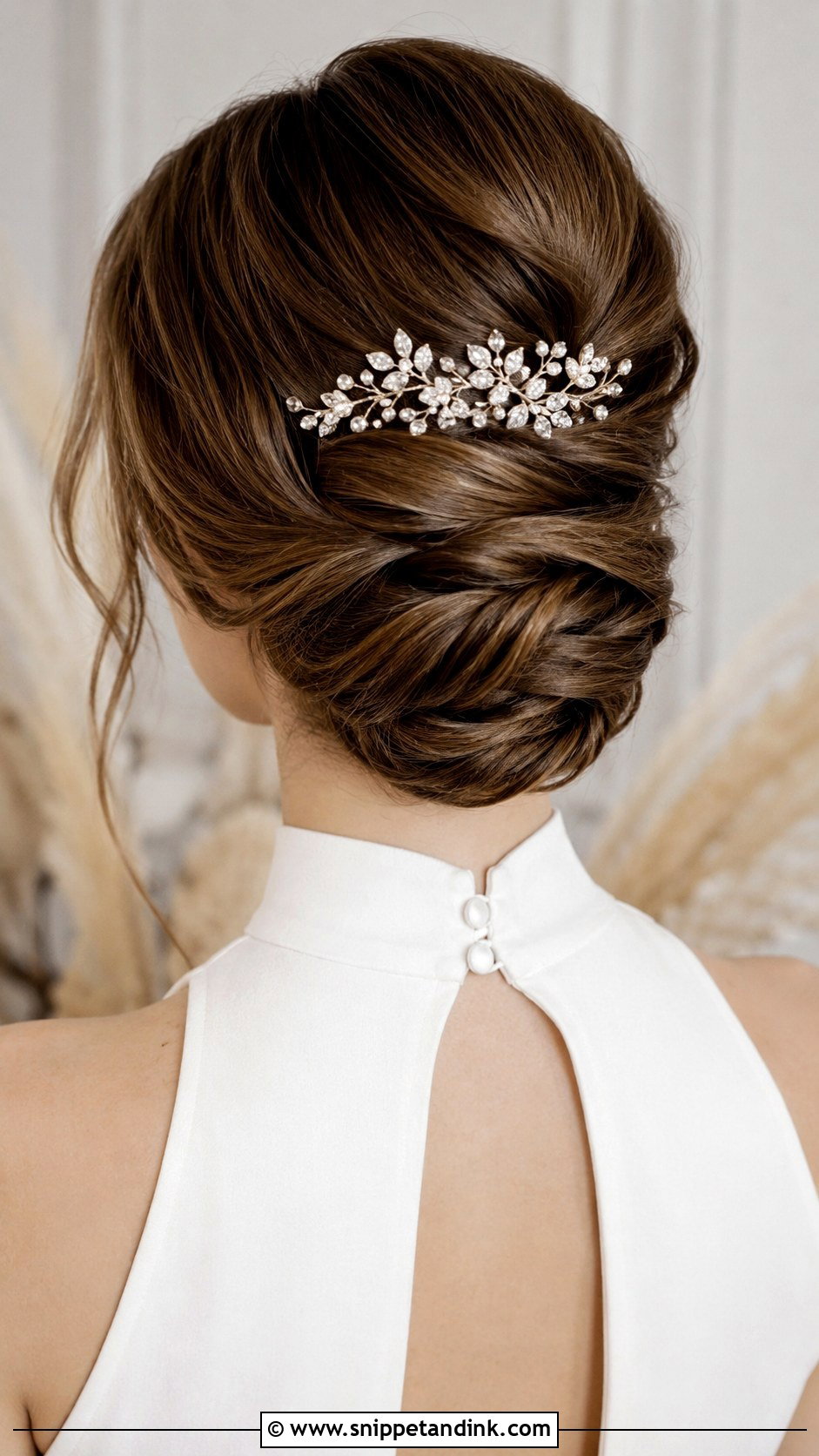
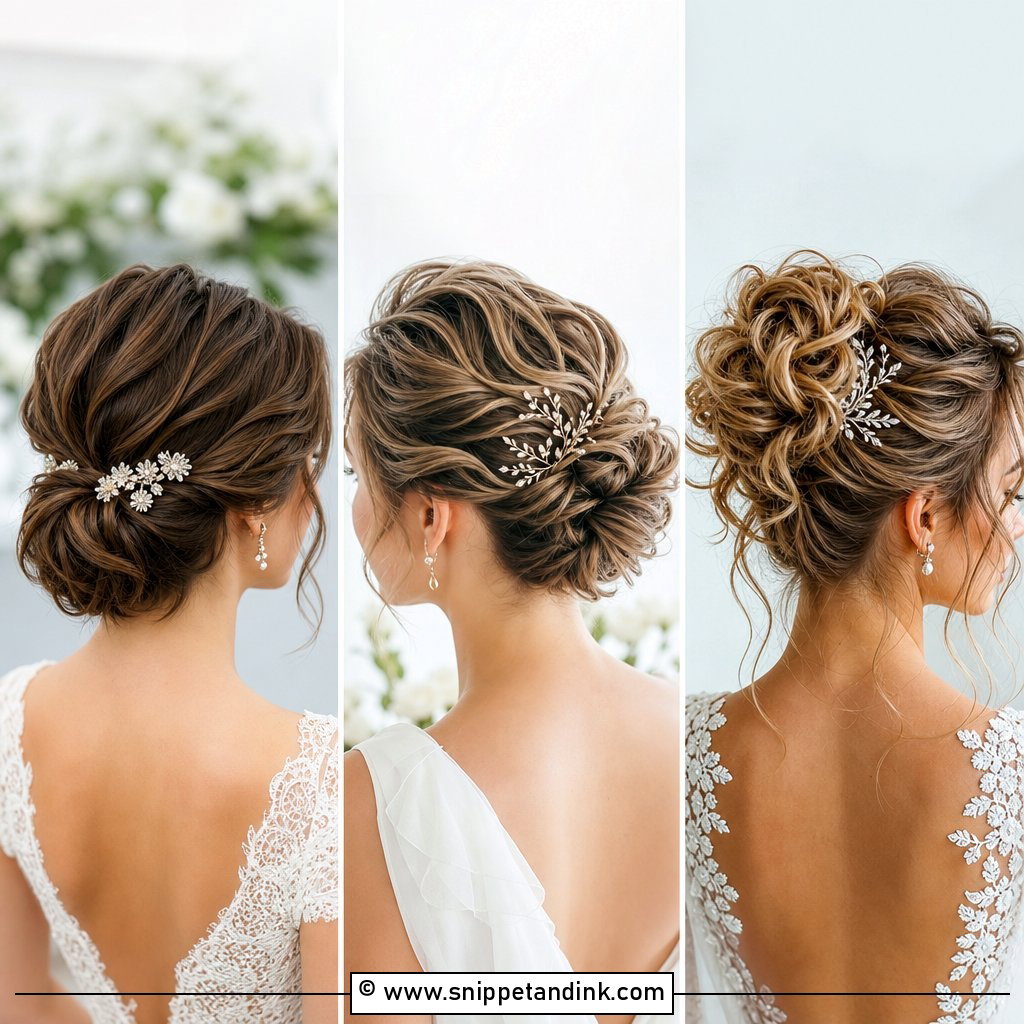
Twisted chignons are a step up from a plain bun without being fussy. Sections of hair are twisted and wound together at the nape, so the bun has visible texture. It works equally with off-the-shoulder and high-neck gowns. I tuck a jeweled comb into one of the twists, where it has plenty of hair to grip. Fine hair benefits from a light texture spray first so the twists hold their shape.
7. Pearl-Embellished Updo
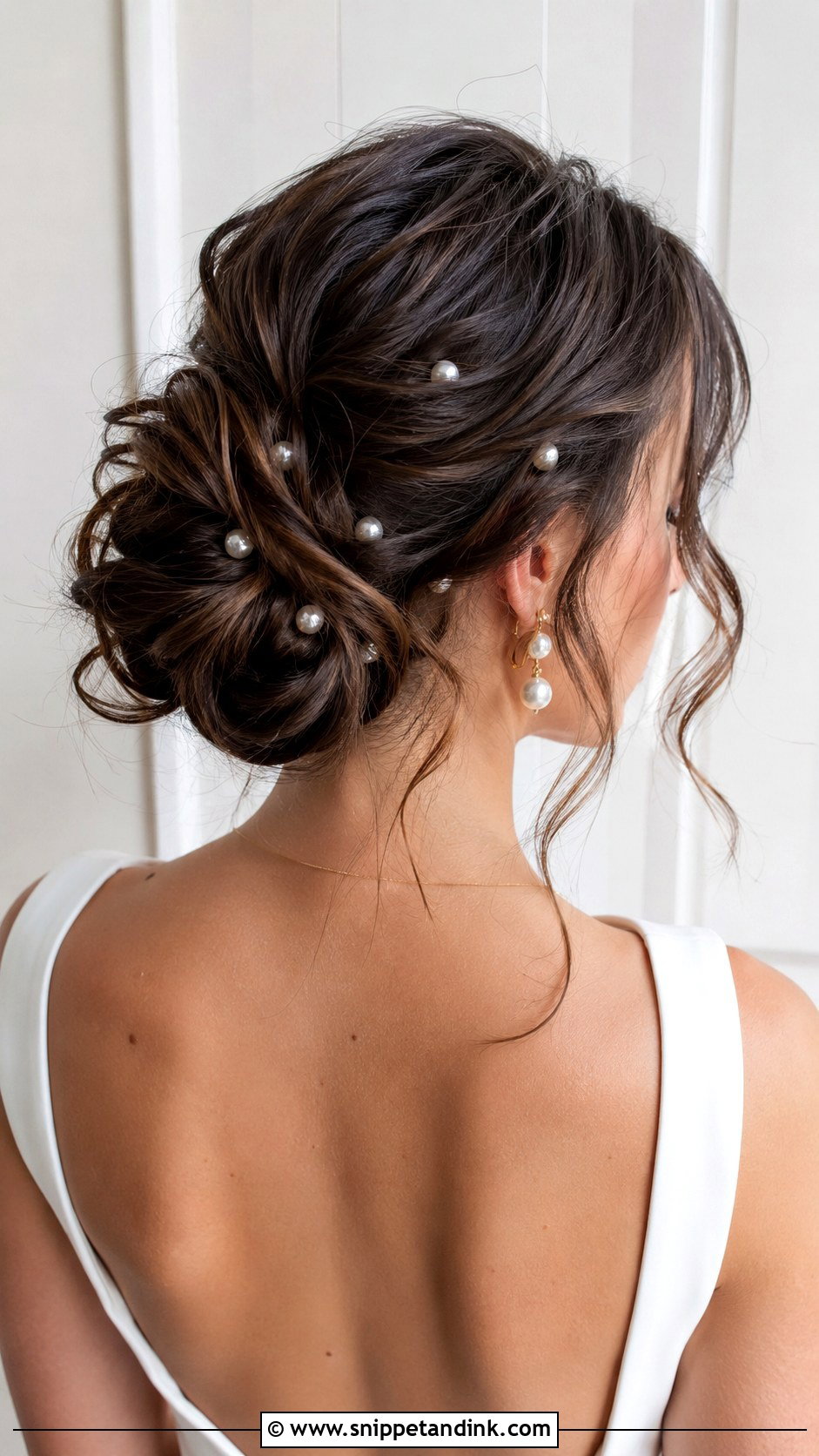
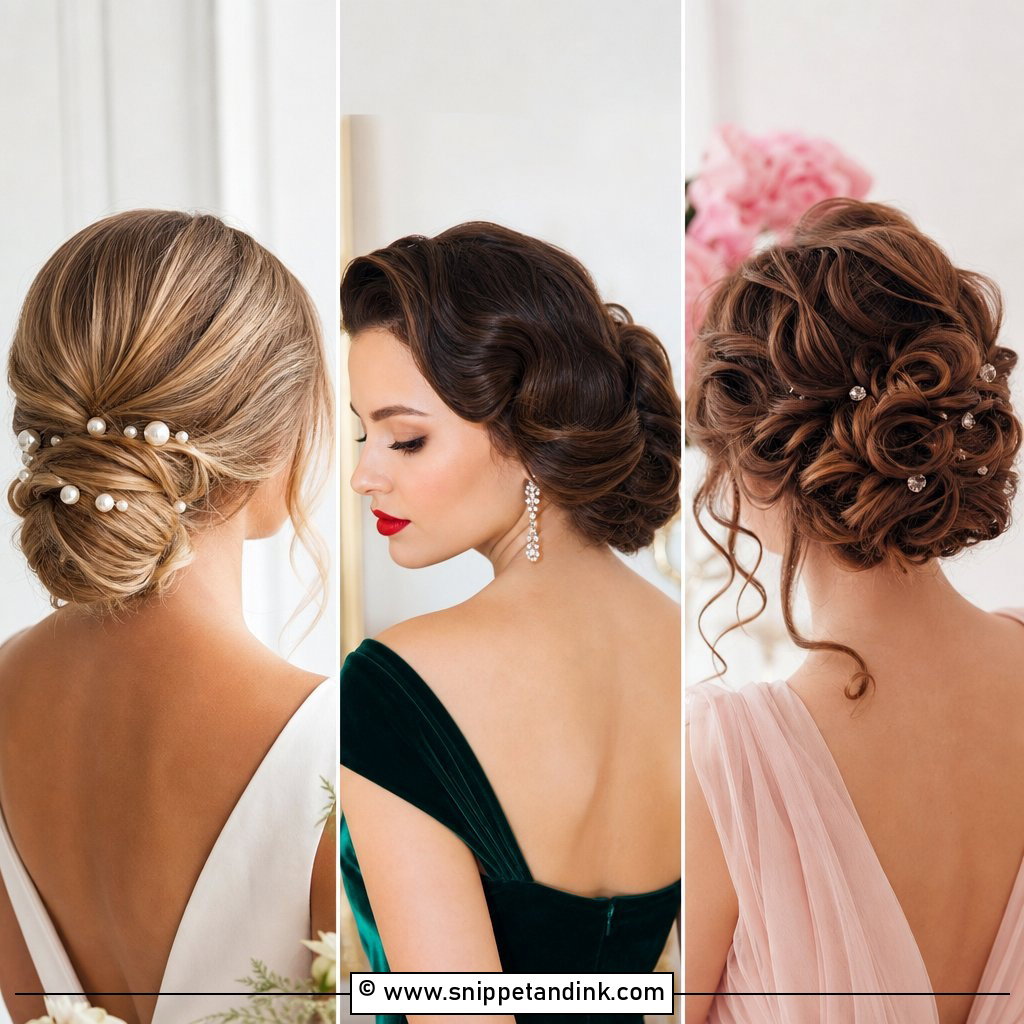
Pearl pins turn a simple low bun into something special, and placement is the whole skill. I cluster a few near the bun and scatter a few across the crown in uneven spacing, because a neat grid of pearls looks mechanical. They suit modern and vintage gowns and show up against both dark and light hair. Match them to pearl earrings or a necklace and keep other accessories out of the hair.
8. Sculpted Chignon Updo
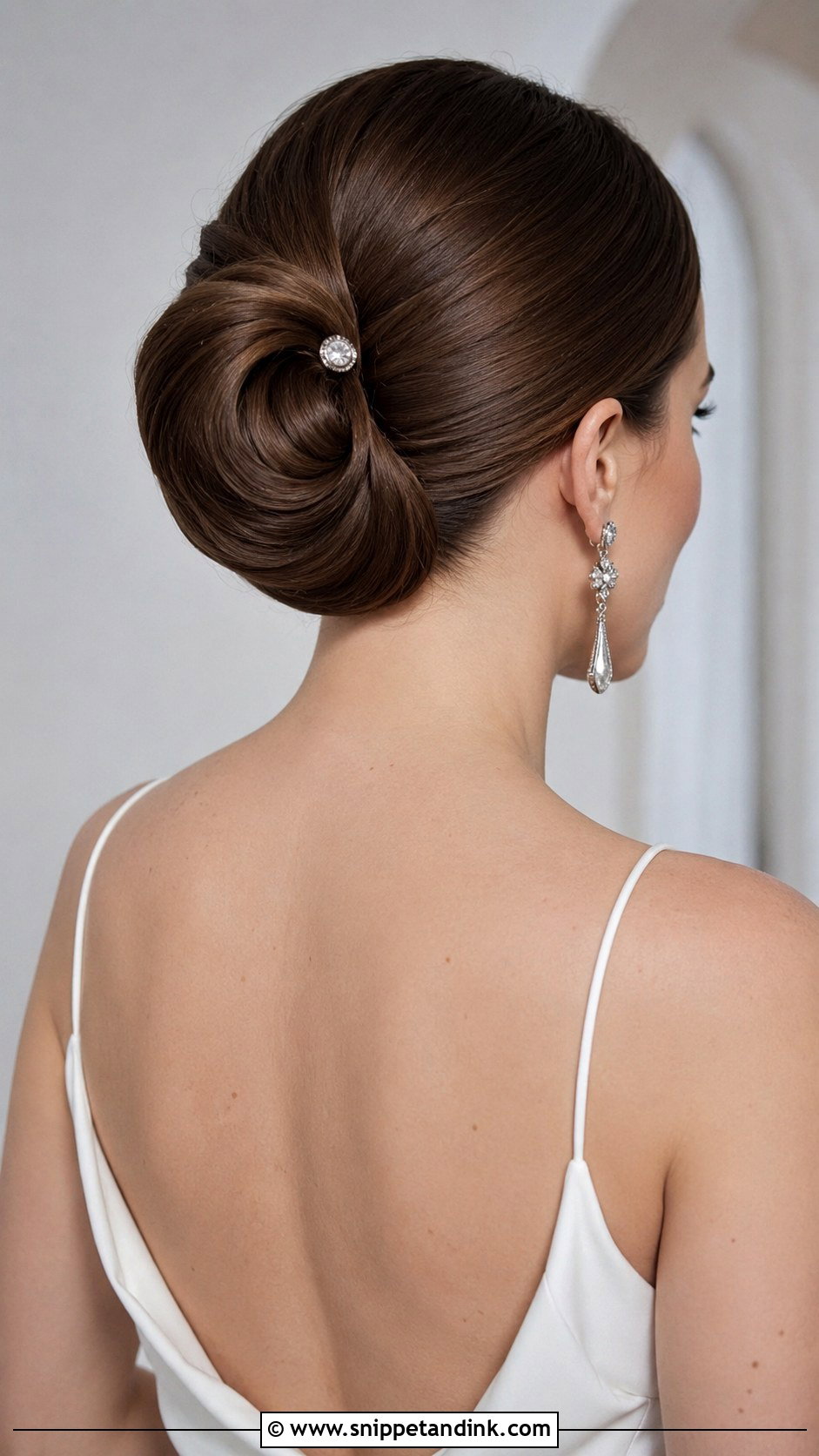
The sculpted chignon is the sleekest, most architectural bun here. Shaped curves and smooth sections at the nape give it a precise outline. I work in small sections with a firm cream and a fine brush, and I’ll use a small padded form under fine hair so the shape doesn’t collapse. It pairs with minimalist, modern gowns and statement earrings. One decorative pin is enough; more starts to clutter the line.
9. Half-Up Half-Down Bridal Updo
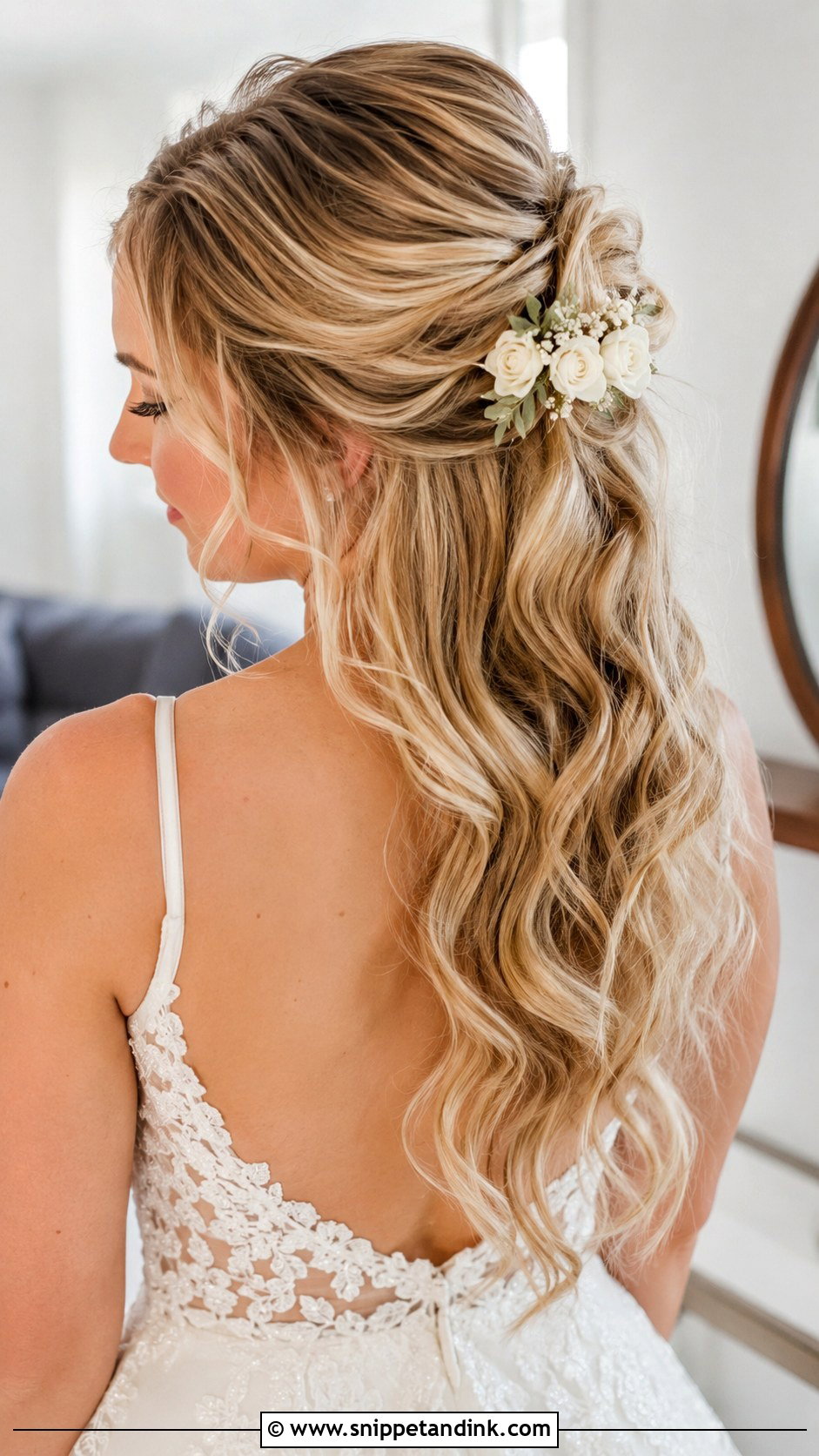
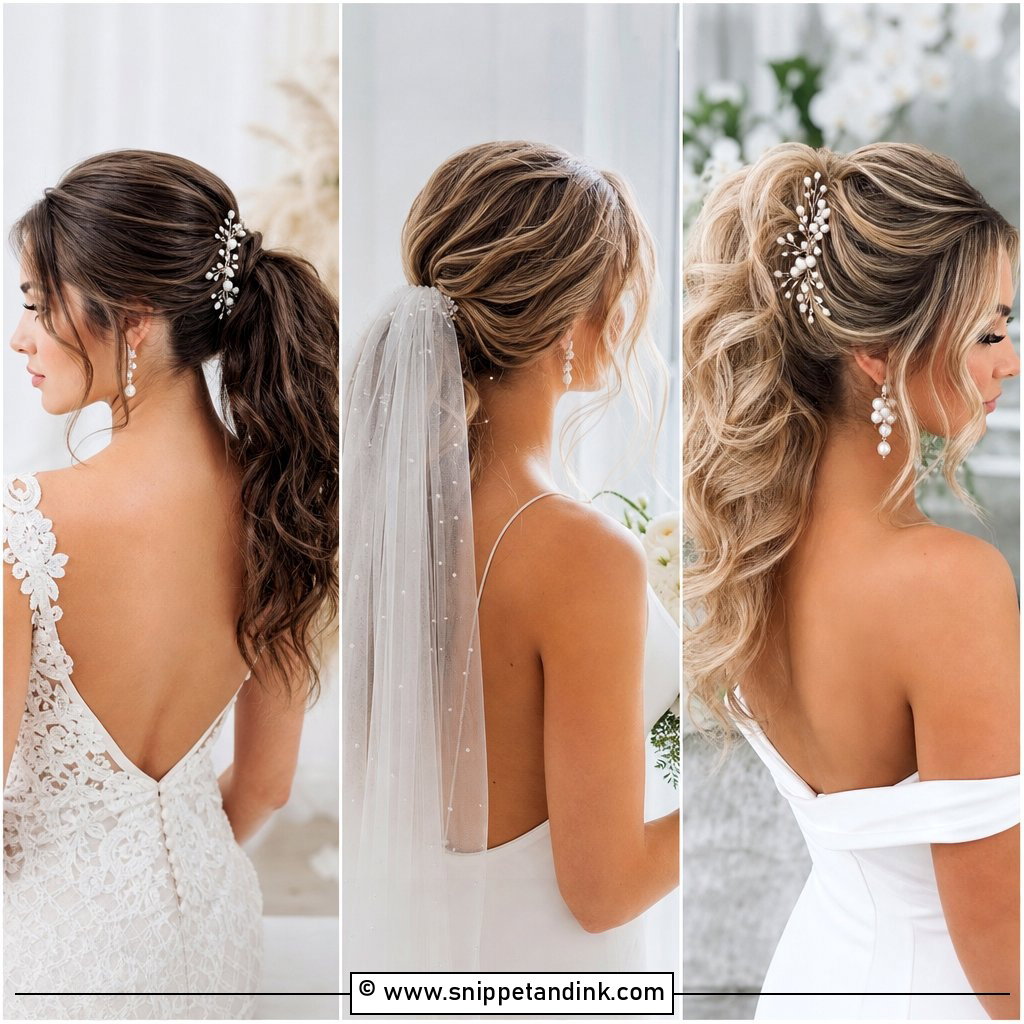
Half-up, half-down gives you an updo’s security up top and length below. The current version is softer, with loose waves cascading below and pinned sections above. A veil slides in just beneath the pinned section. A floral clip or jeweled barrette hides the gathering point. The waves are what drop first, so I set them firmly and brush them out later. It flatters most face shapes and suits both relaxed and formal weddings.
10. Victorian-Inspired Updo
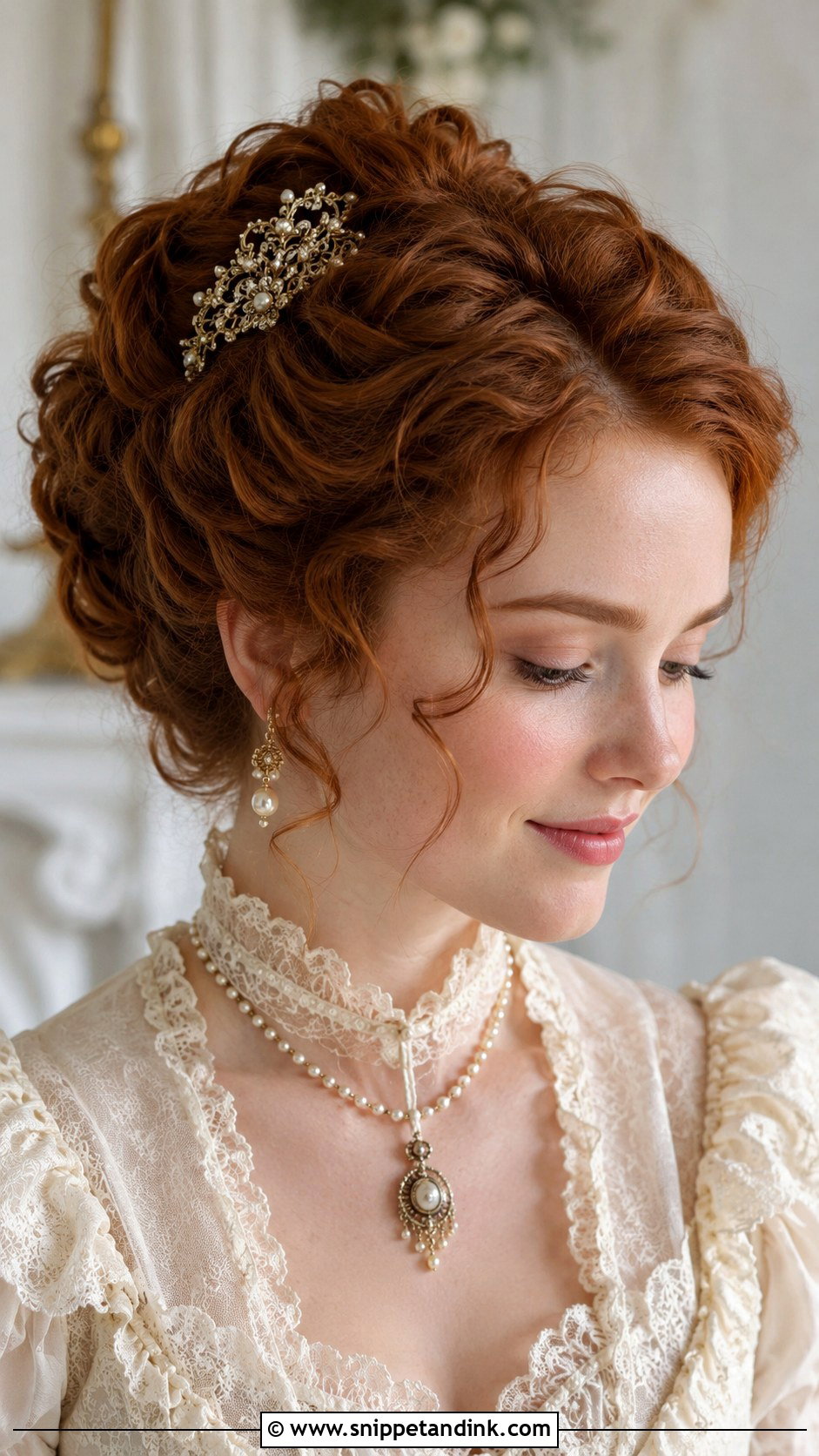
Victorian-inspired updos have soft lift at the crown, delicate framing around the face and intricate twists or braids. I create the lift with a little backcombing at the crown and smooth over it, then pin twists or small curls at the back. Lace gowns and antique-style jewelry suit it. A vintage comb or fresh flowers finishes it. It needs medium to long hair to get the full shape.
11. Braided Crown Updo
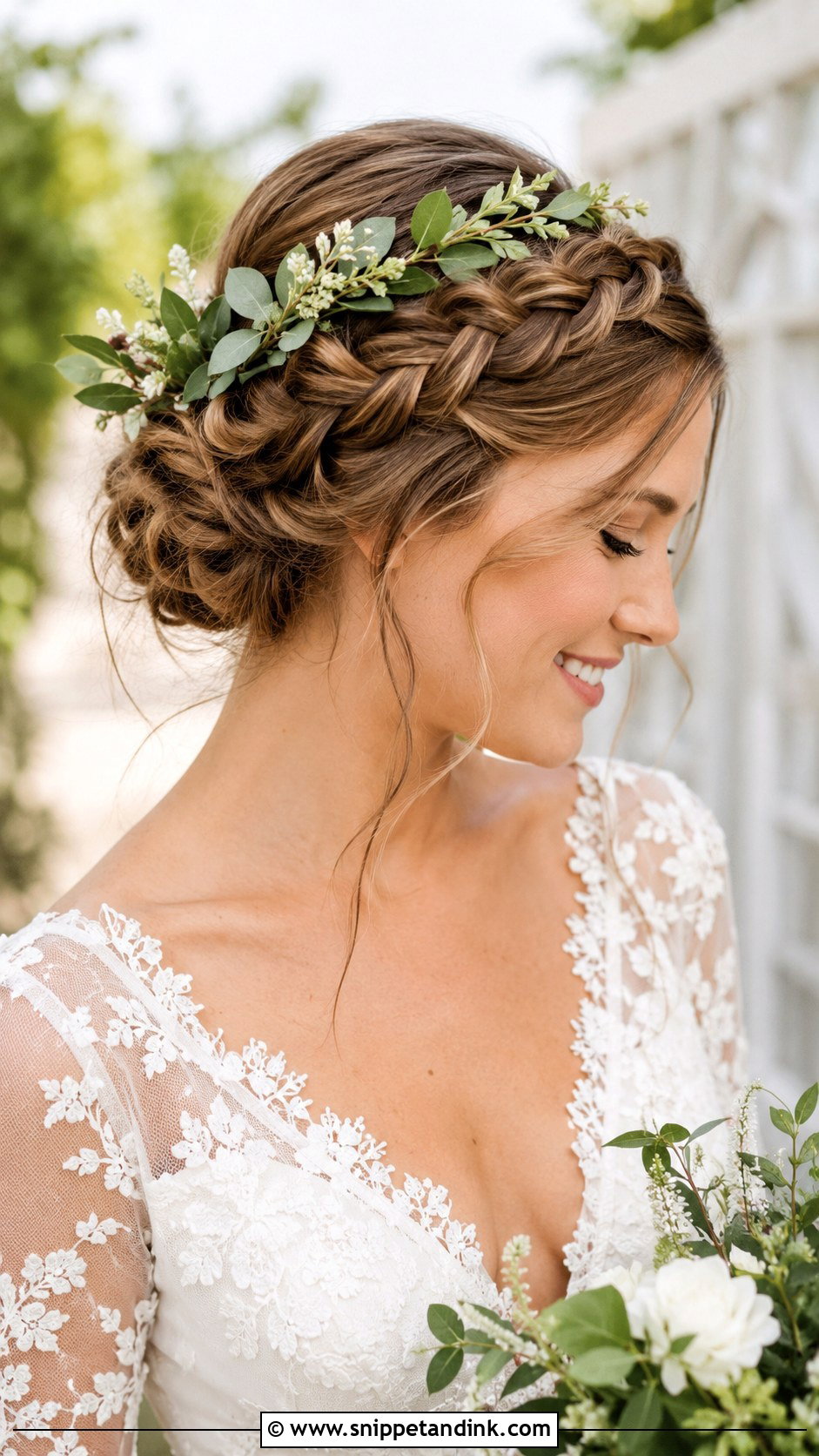
A braided crown gives ethereal goddess vibes by running braids along the hairline into a halo. I pin it as I braid, because pinning a finished crown means it can sag at the back. It suits bohemian and garden weddings, especially with fresh flowers. Shorter hair can still do it with two braids meeting at the back. Pair with waves below or gather everything into a soft bun.
12. Sleek Ballerina Bun
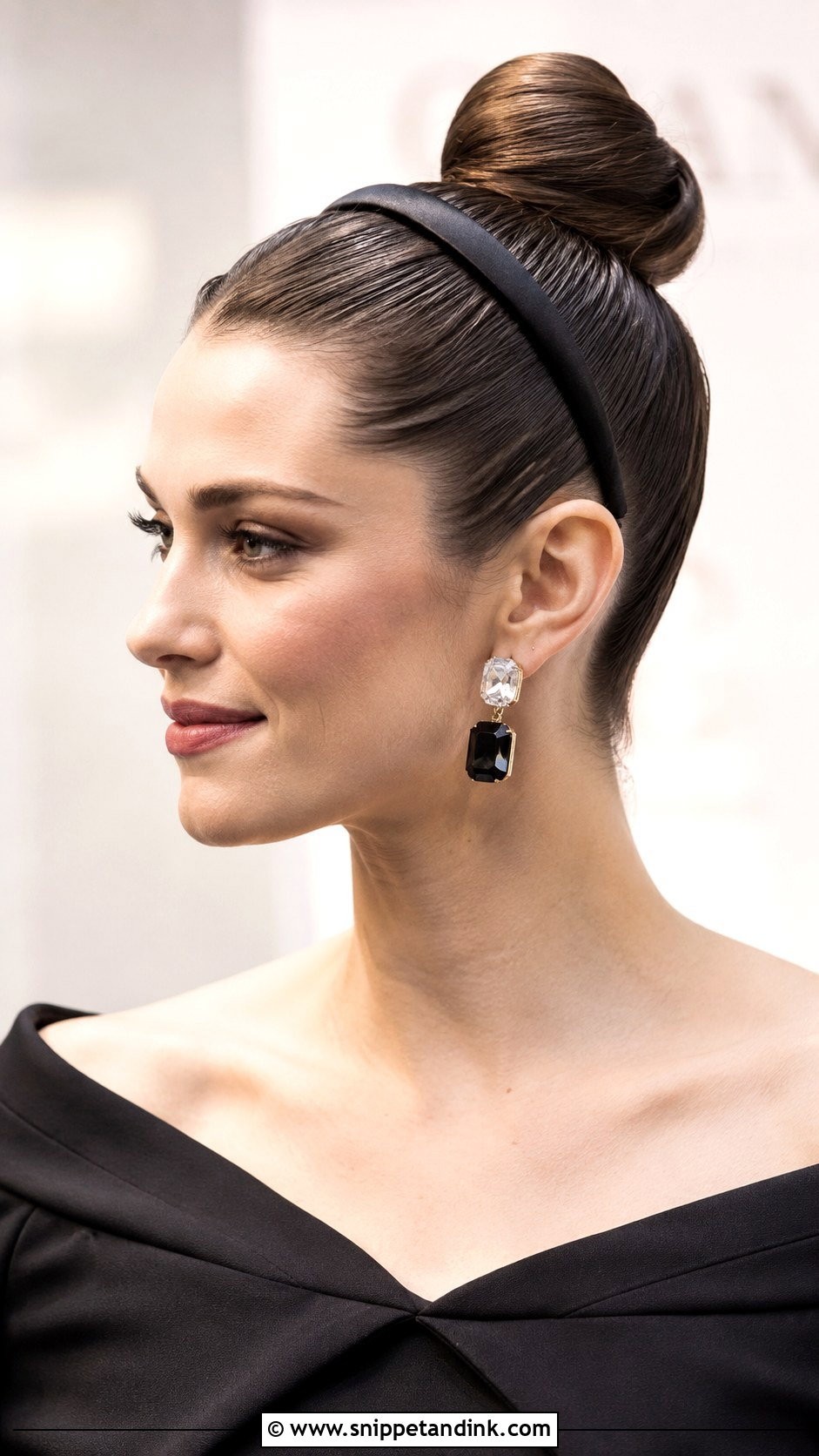
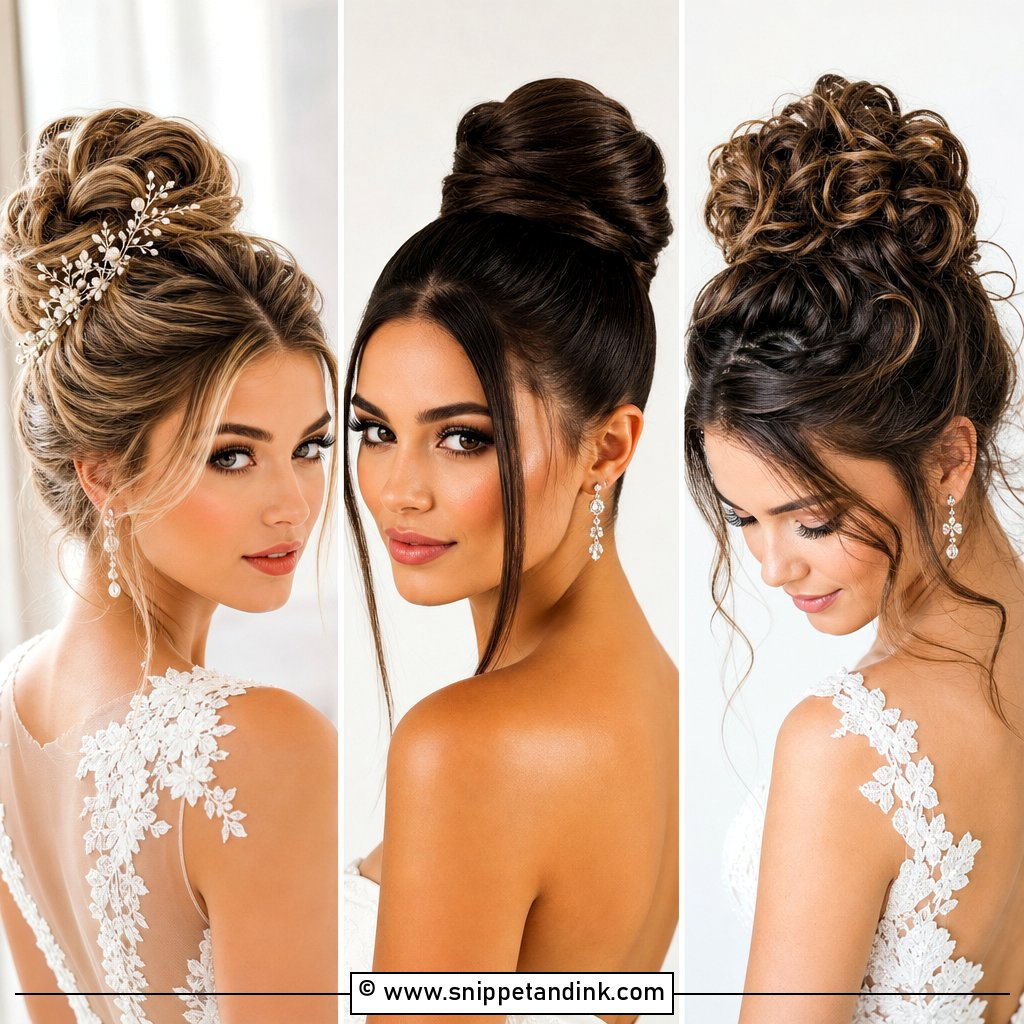
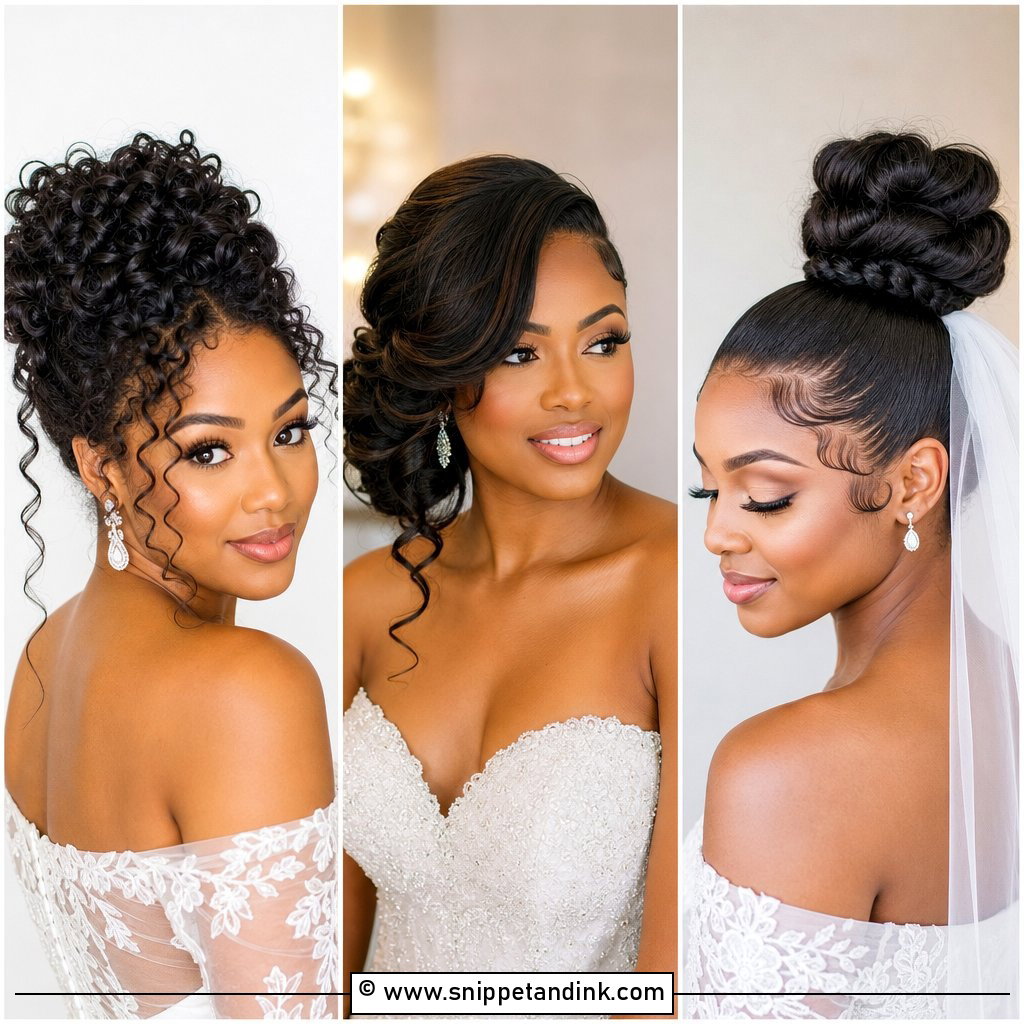
Minimalist brides, the ballerina bun is your updo. Smooth, high or low, every strand polished. I brush the hair back with gel, tie it, then wrap and pin the bun so it’s round and tight. It keeps hair entirely off the face, which is ideal in heat and wind. Structured gowns and bold earrings suit it. If you have a cowlick at the crown, tell your stylist; it shows on a sleek bun.
13. Floral Accented Updo
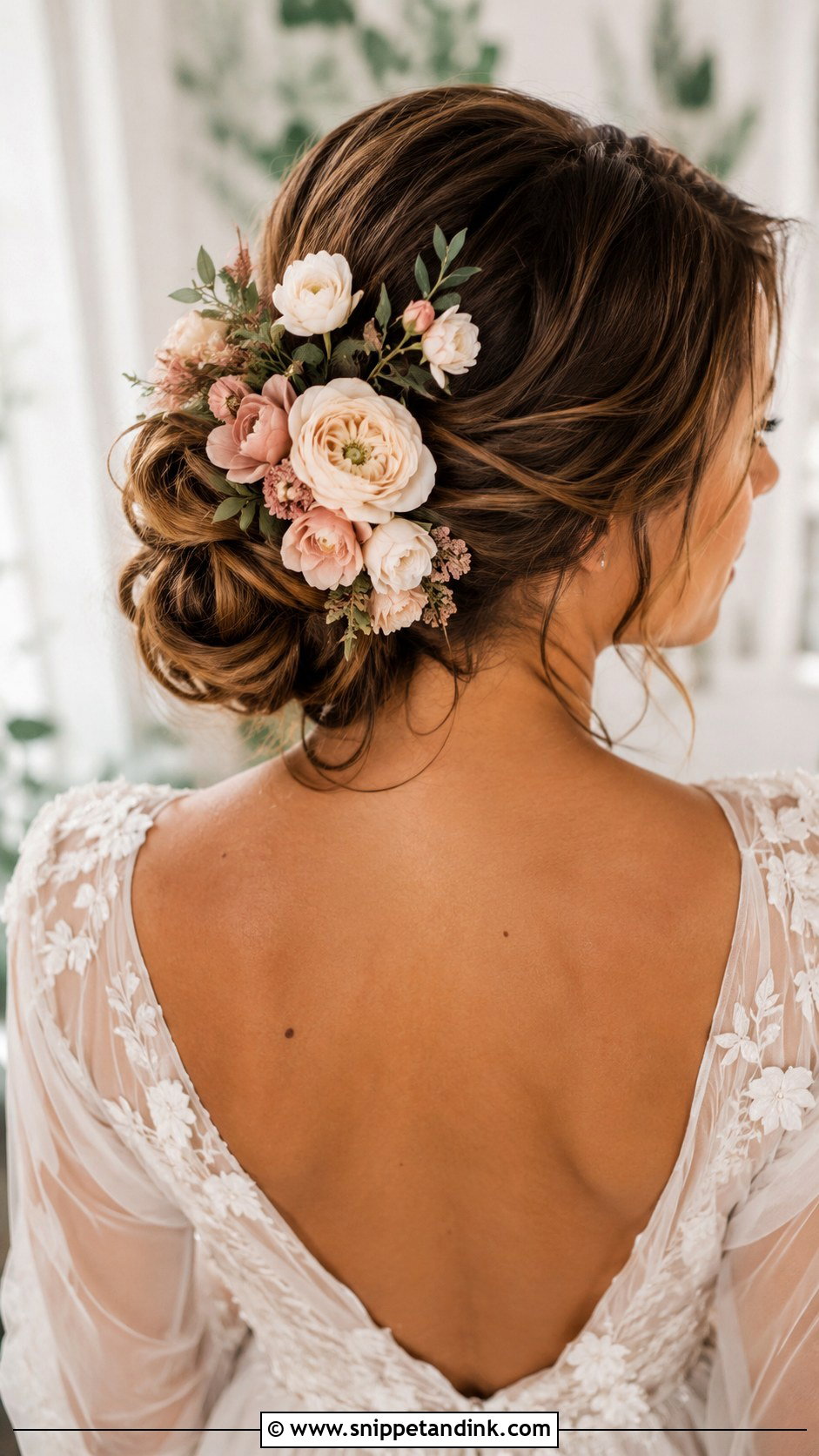
Fresh flowers bring color and scent that no accessory matches, but they need planning. I ask the florist for hardy blooms, wired and delivered in the morning, and I place them last. Roses, ranunculus or baby’s breath can match your bouquet. Cluster them on one side or scatter them. Delicate flowers wilt in heat within a couple of hours, so in summer stick to sturdier stems.
14. Curly Bridal Updo
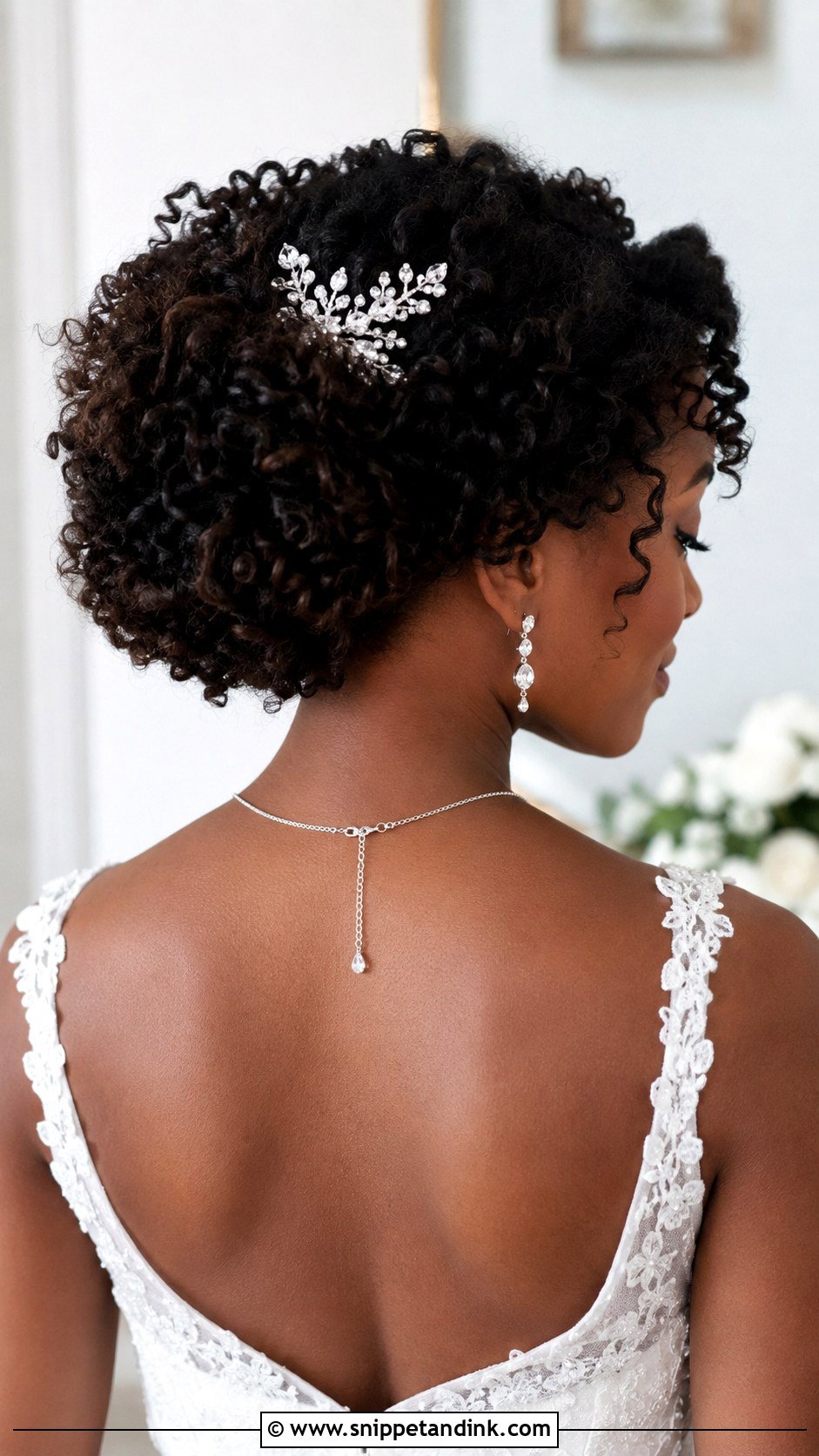
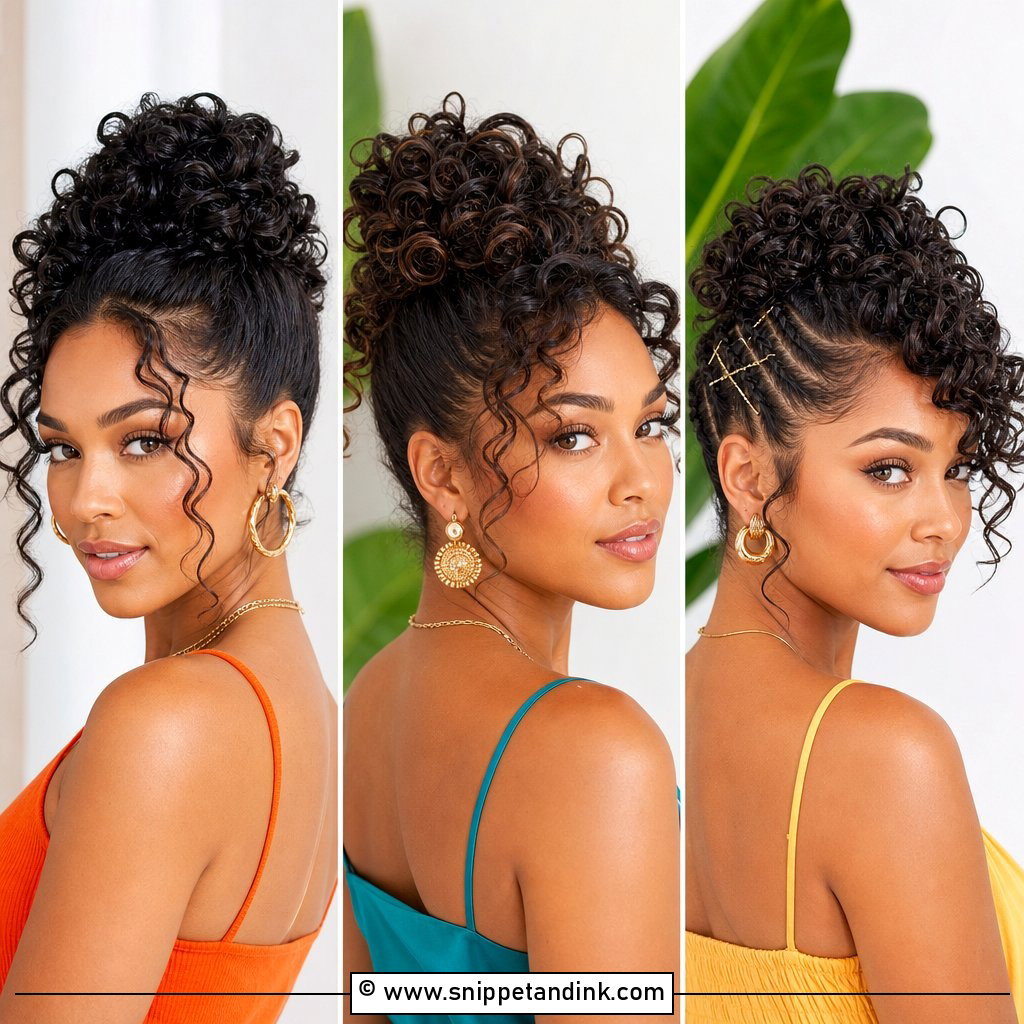
Curly updos show off texture rather than smoothing it away. I gather curls or coils into a full bun at the nape or crown and keep the curl pattern intact. Curls need to be fully dry before pinning, since damp hair shrinks and loses definition. A few loose curls can frame the face. Jeweled pins or fresh florals sit well in coily hair because it holds them firmly.
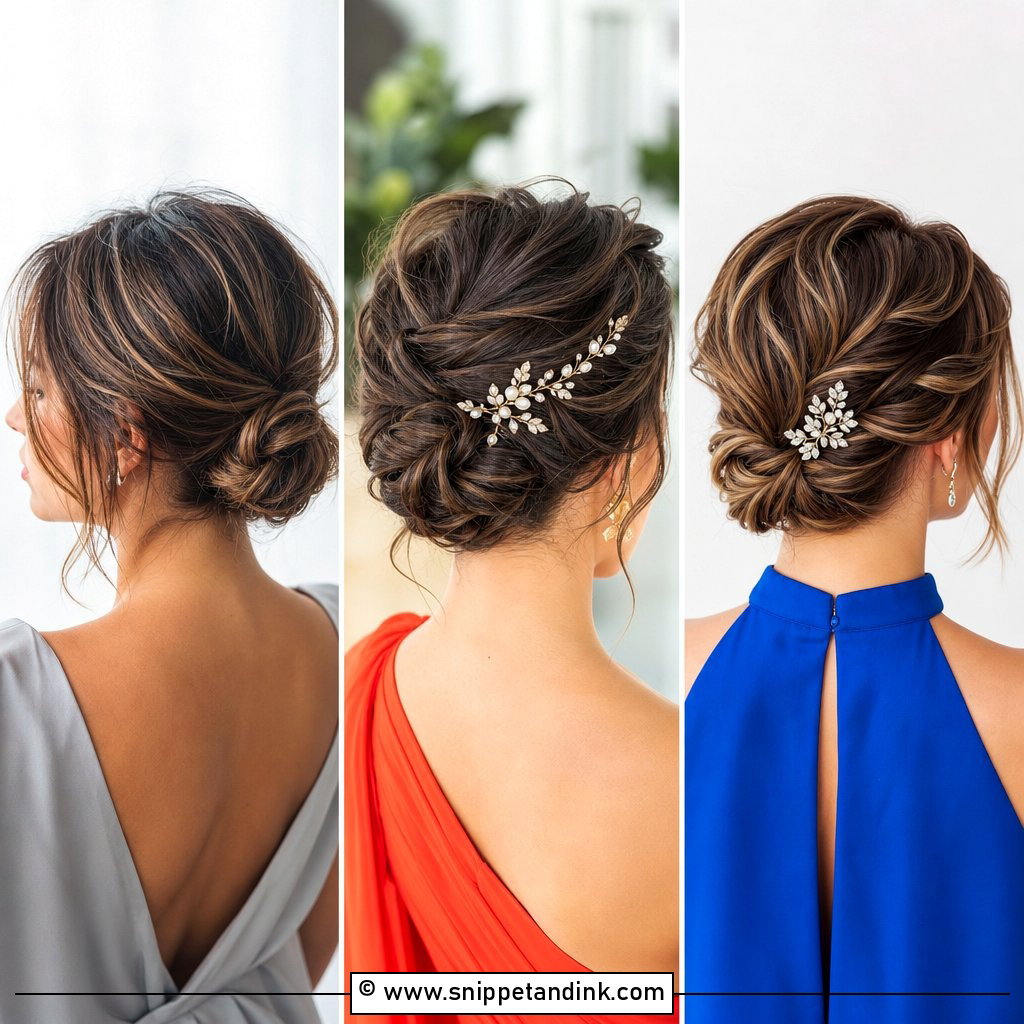
15. Low Knotted Updo
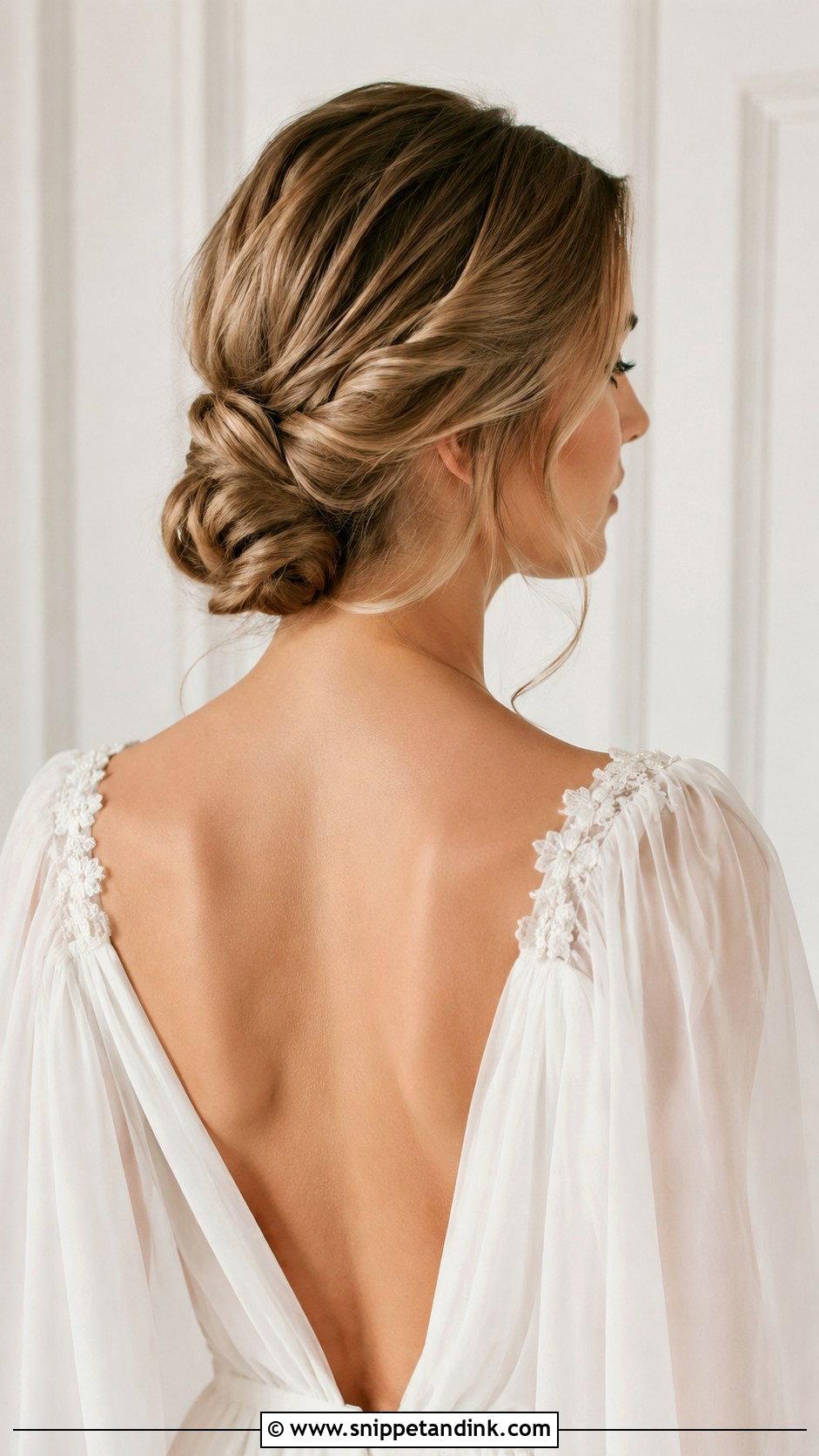
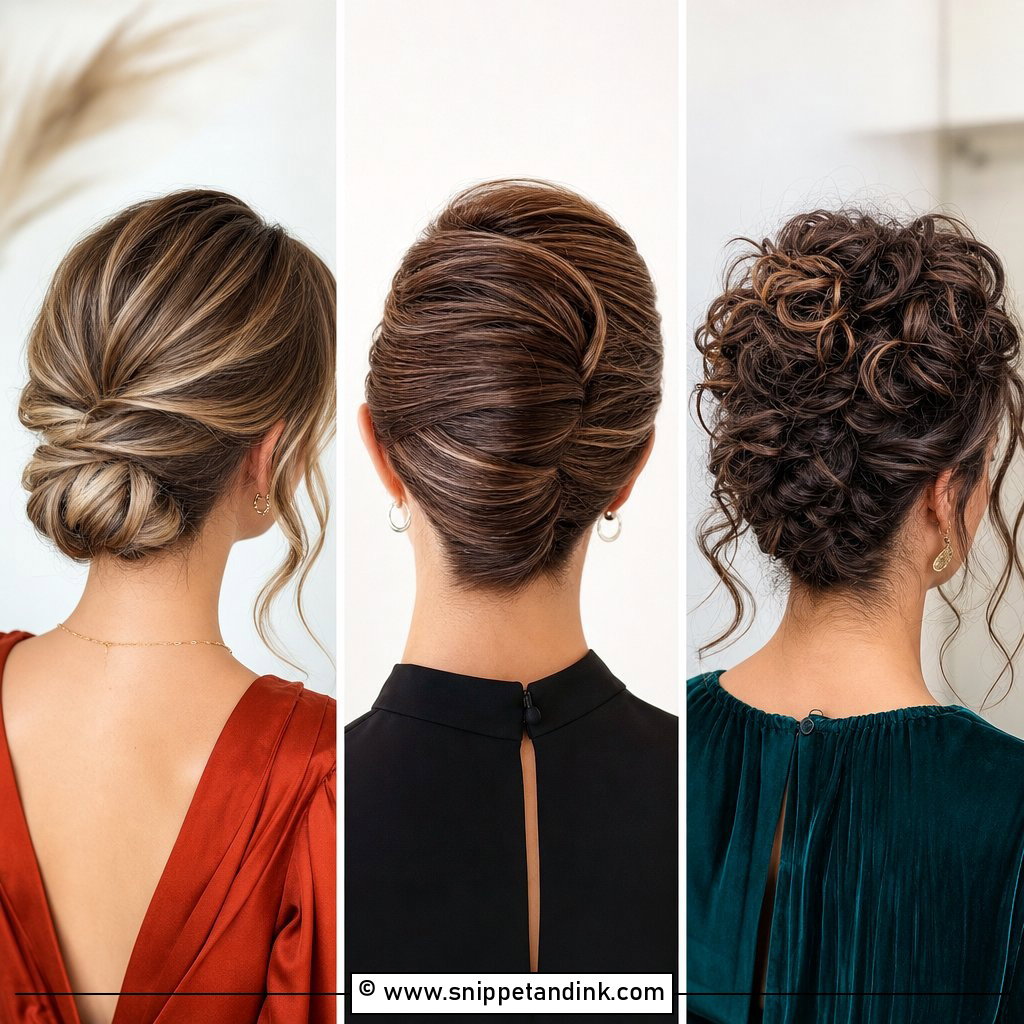
A low knotted updo weaves hair into soft, interlocking knots at the nape. It has more texture than a sleek bun but less formality. I knot the sections and pin each one, so they don’t loosen as the day goes on. Medium to long hair suits it, indoors or outdoors. Leave a few tendrils loose or keep it polished, and add a decorative pin or small flowers.
16. Vintage Finger Wave Updo
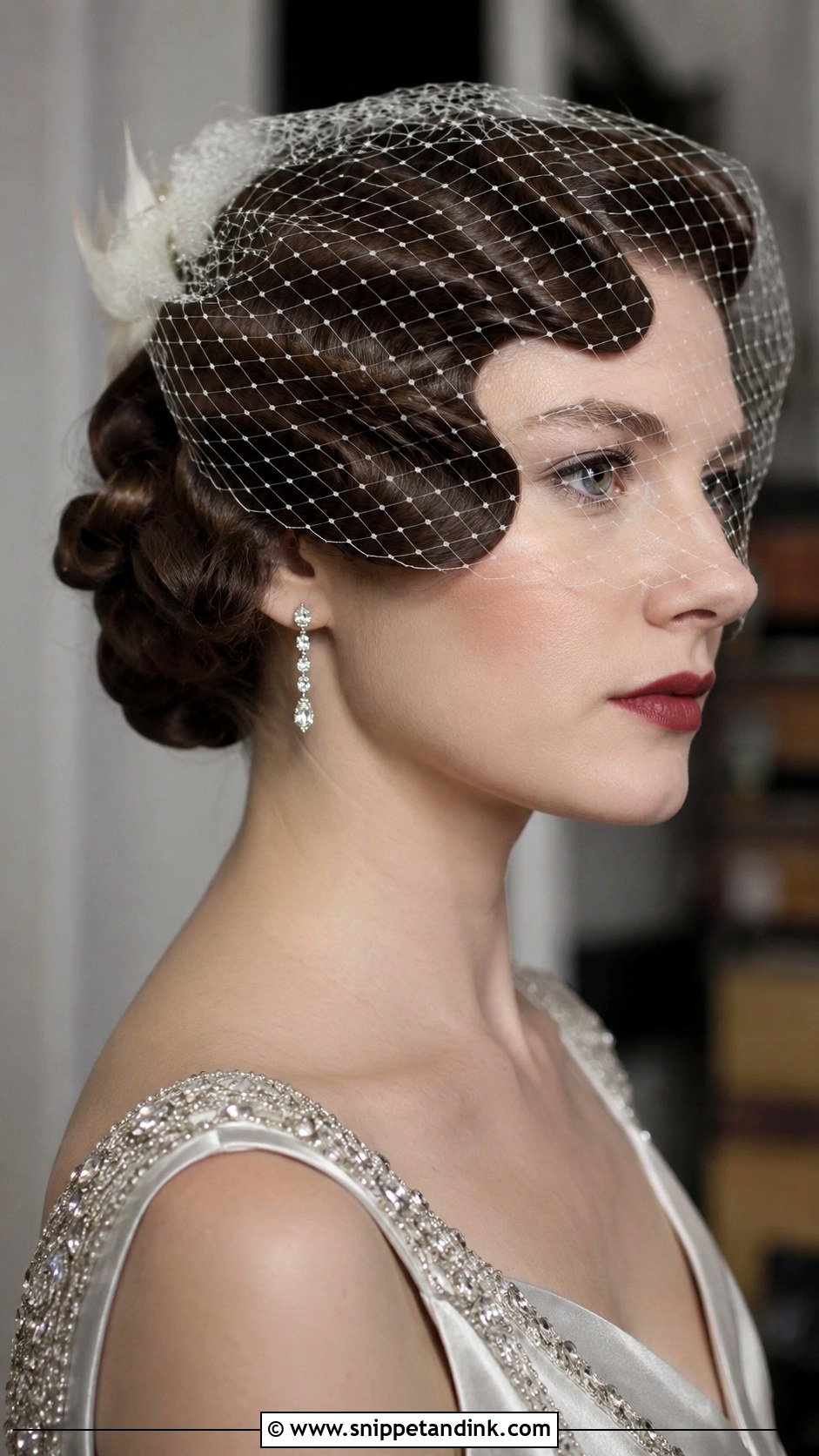
Finger waves are sculpted S-shaped waves set close to the head at the front, with the rest gathered into a bun or twist at the back. I set them with gel and wave clips while damp, then let them dry fully before removing the clips. It suits Art Deco weddings and satin or vintage lace gowns. A jeweled comb or birdcage veil finishes it. Once set, the waves hold well, but a rainy day softens them.
17. Bubble Braid Updo
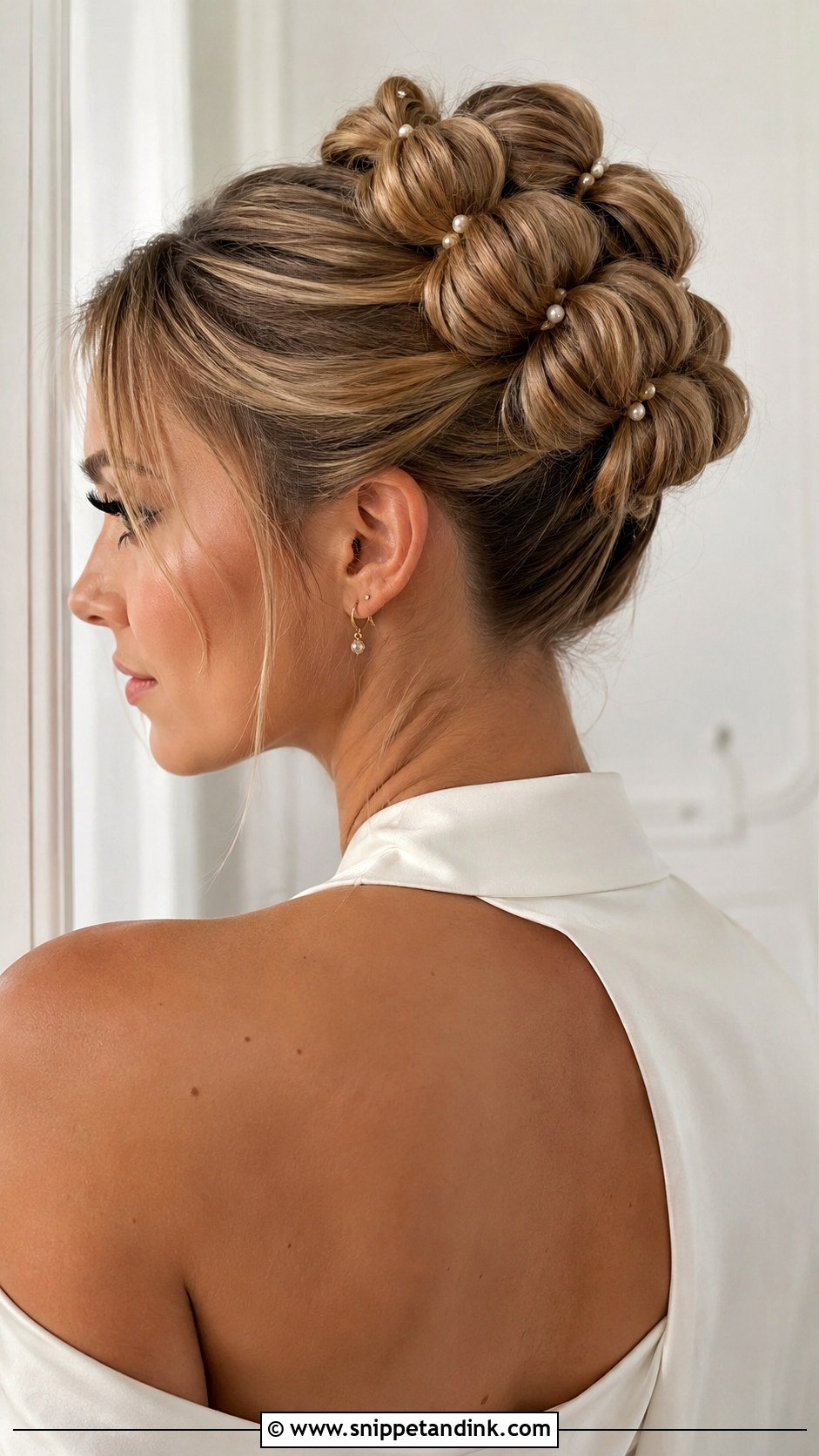
A bubble braid is made by spacing small elastics down a ponytail or braid and pulling each section into a rounded bubble, then coiling it into an updo. It’s playful and modern. Long hair shows the segments best. I use clear elastics so they disappear, and I decorate the bubbles with small pearls or flowers. It works at casual and formal weddings alike.
18. Side Swept Updo
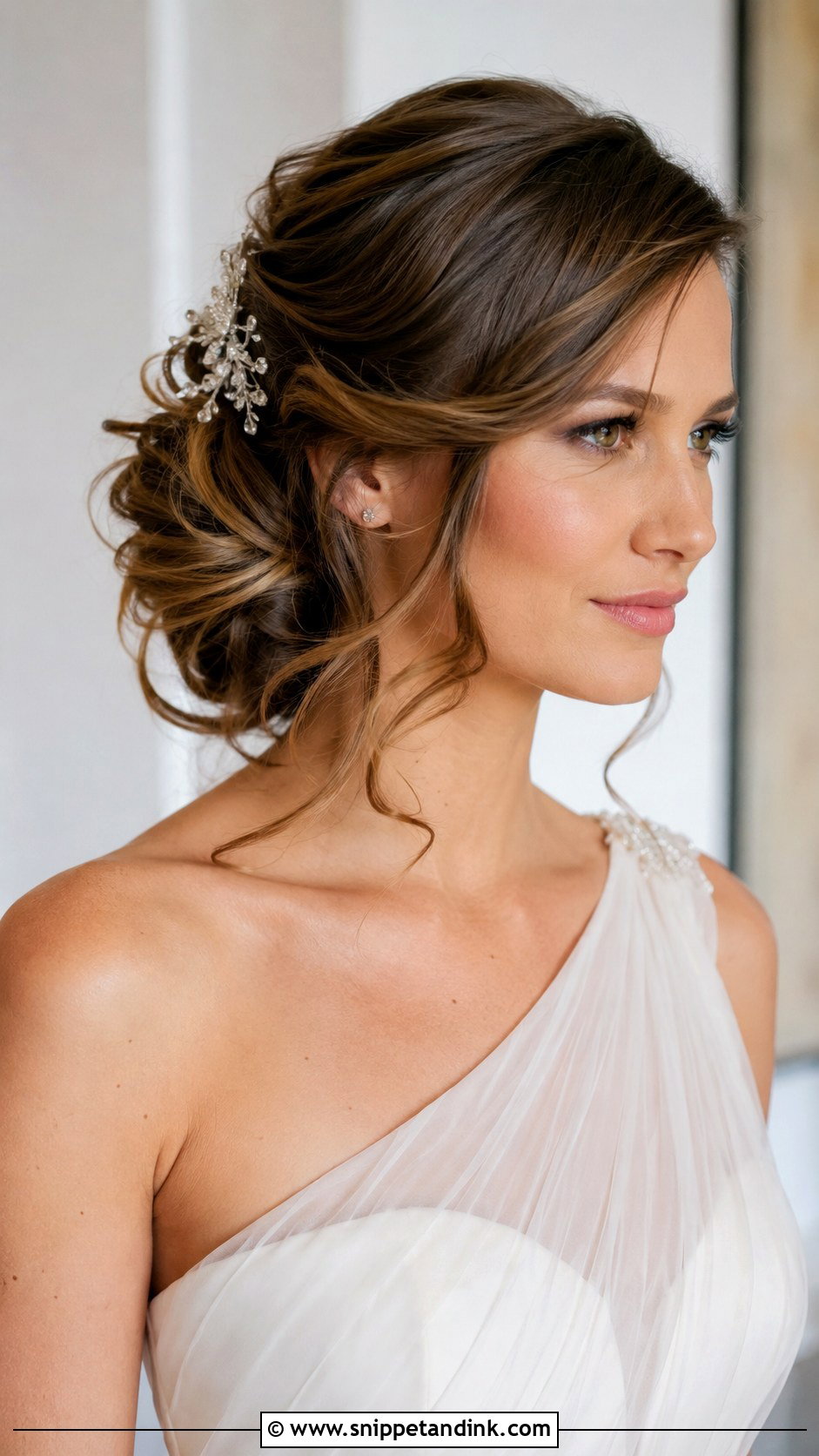
A side-swept updo gathers hair toward one side for a soft, asymmetric shape. I set it on the side opposite a one-shoulder strap, so earrings show on the open side. Medium to long hair and most textures work. Loose tendrils soften the face. Add a jeweled comb or flowers at the gathering point, and expect the sweep to need more pins on the heavy side.
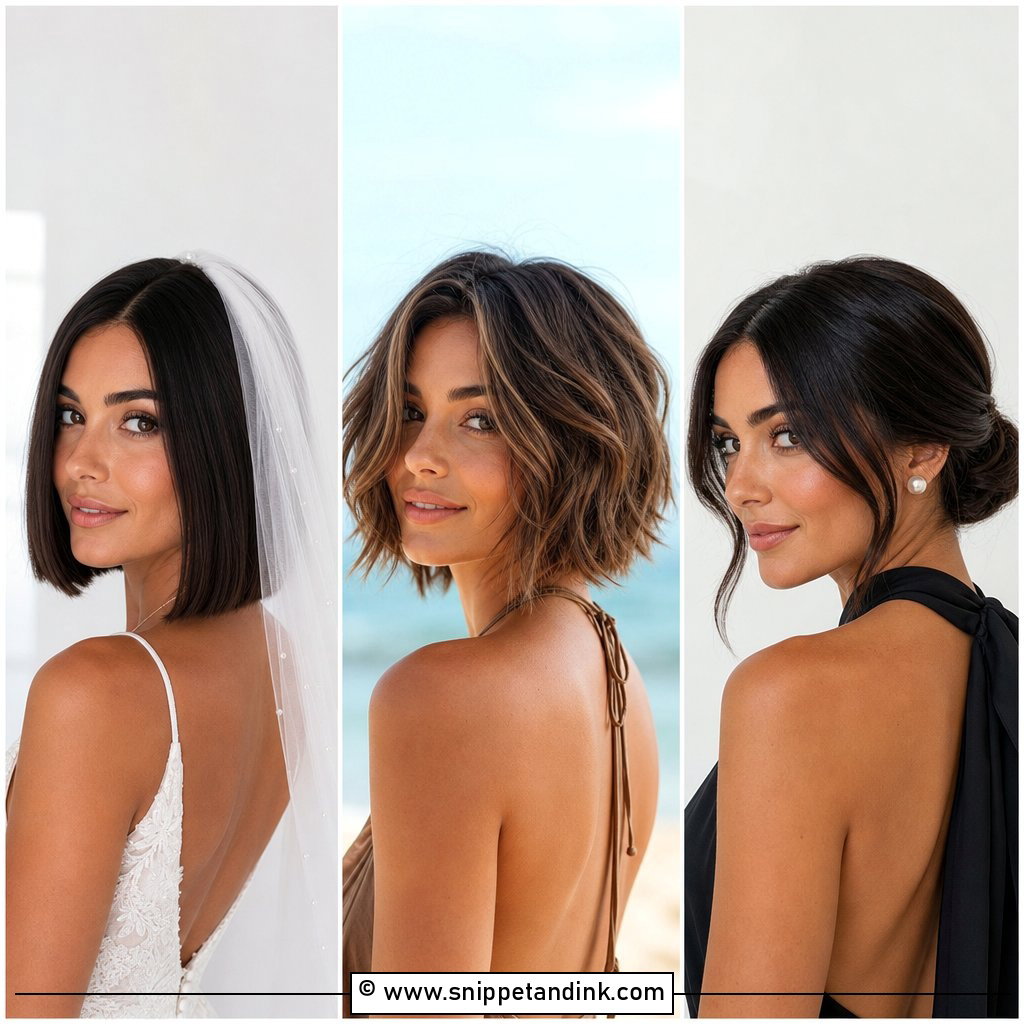
19. Twisted Updo With Veil
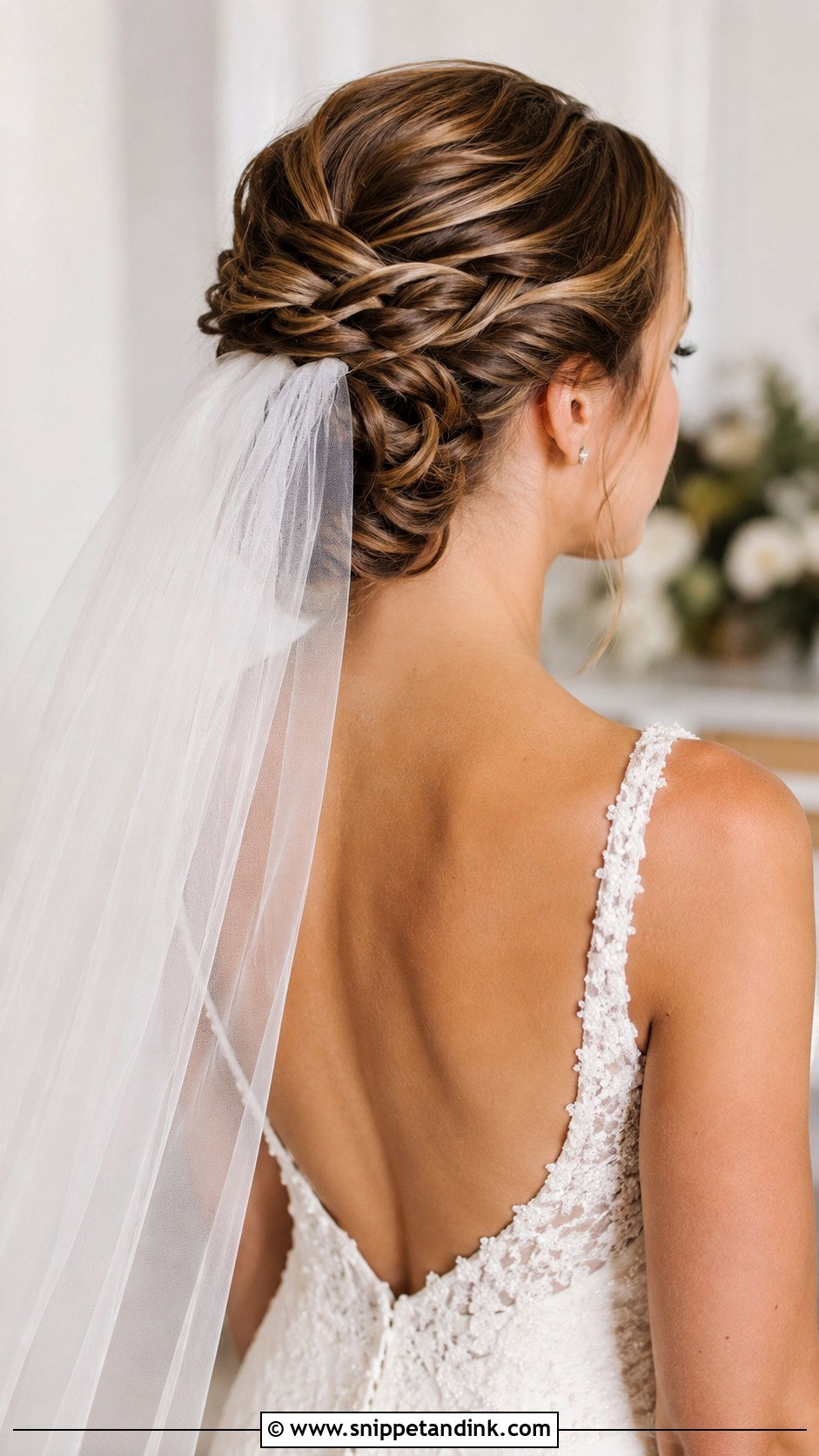
A twisted updo with a veil is the classic ceremony pairing. The twists give the veil comb something solid to anchor into, and I place it just above or below the twists depending on veil weight. You can choose a cathedral, fingertip, or birdcage veil to match your style. After the ceremony, the veil comes out and the twisted updo carries you through the reception. Ask your stylist to show someone how to remove the veil without pulling pins.
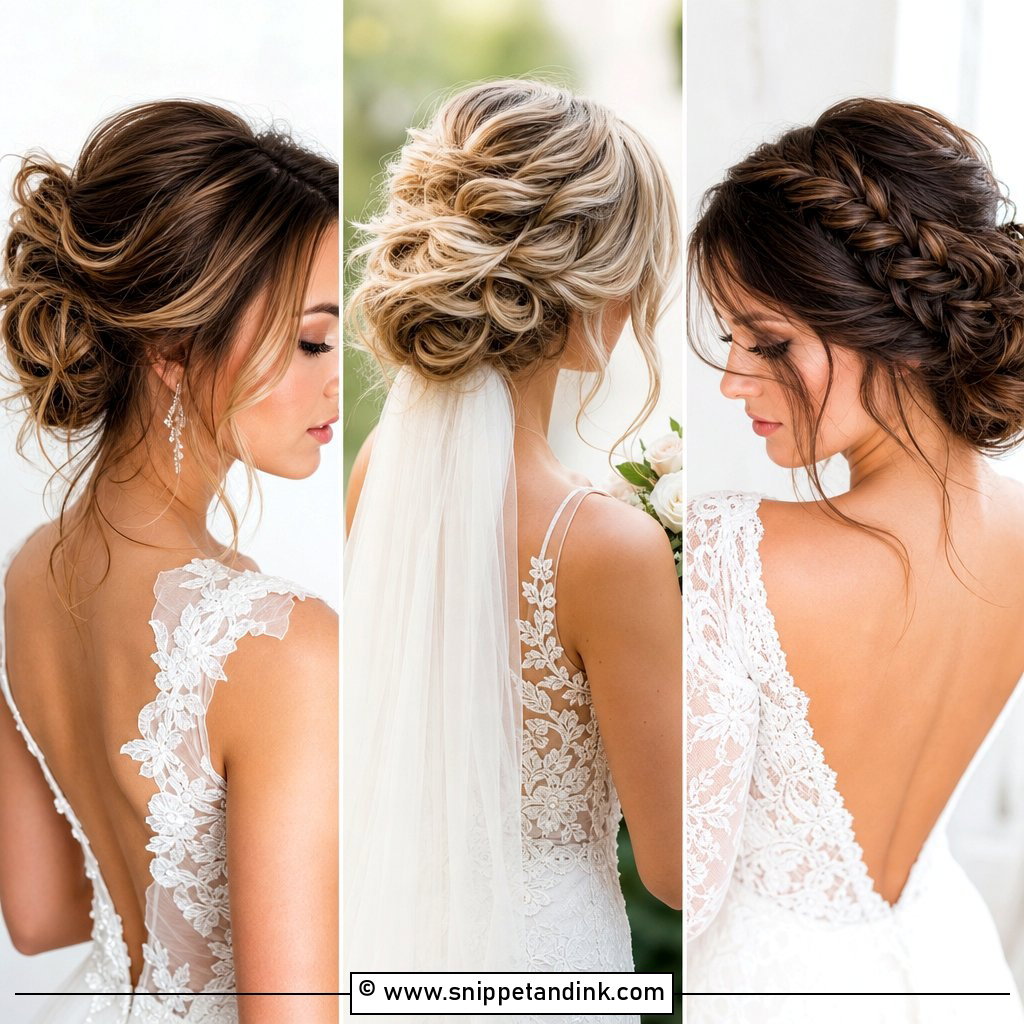
20. Boho Braided Updo
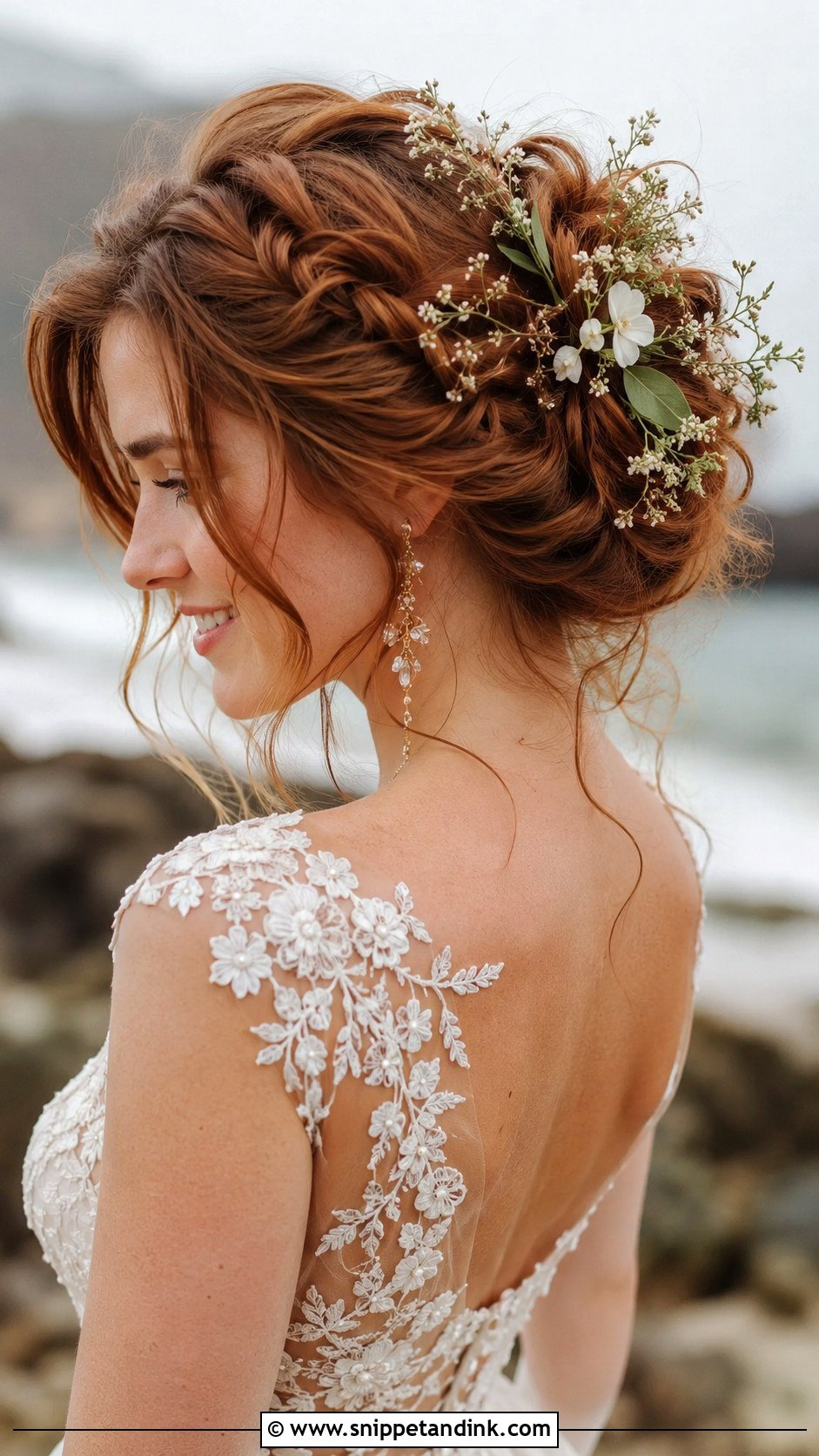
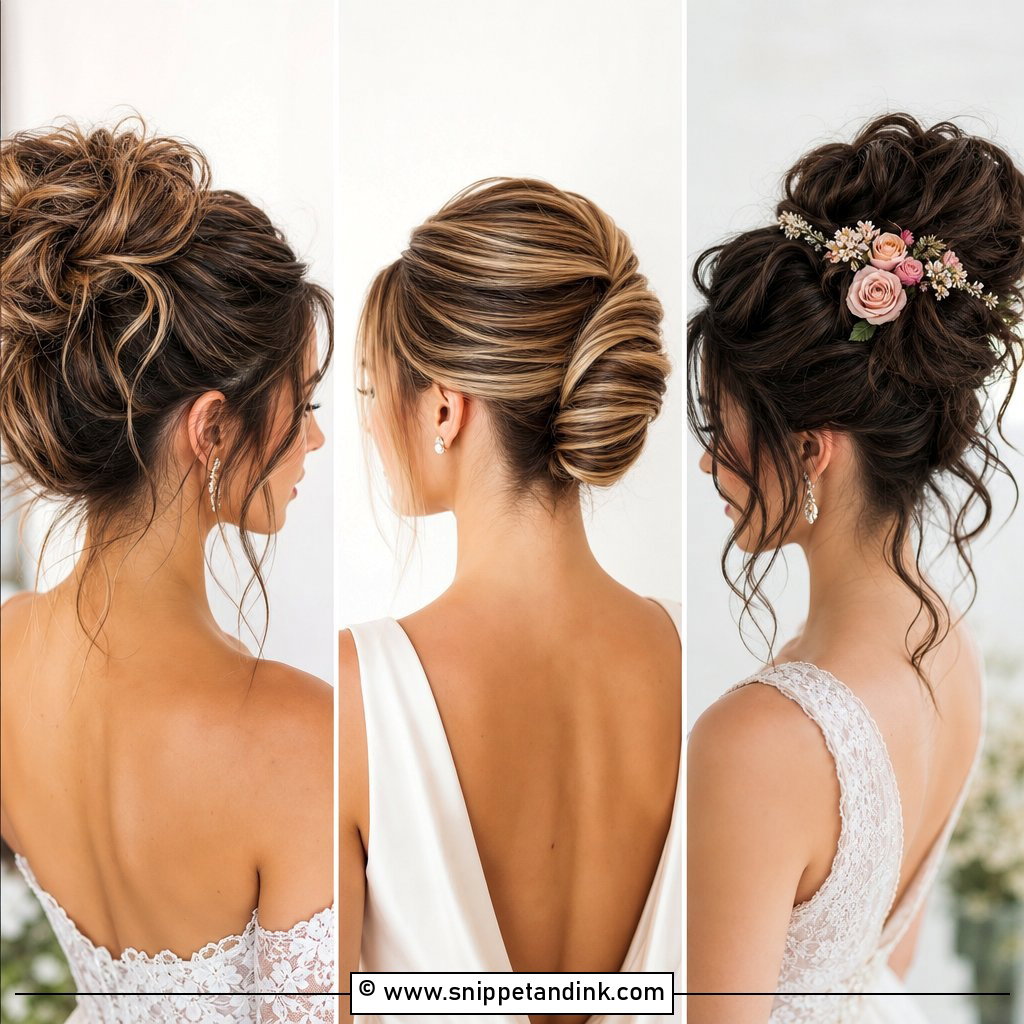
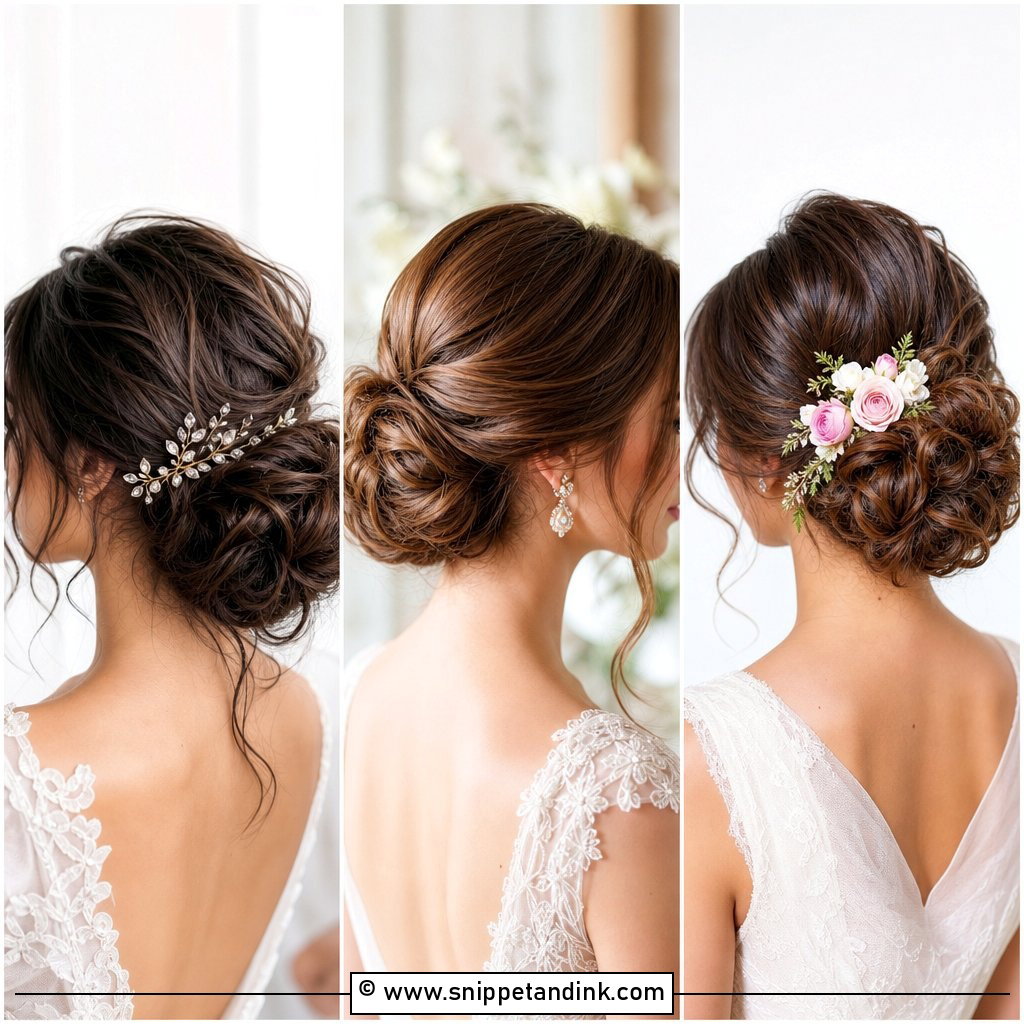
Boho braided updos combine loose braids, soft twists and undone texture. They suit outdoor, garden and beach weddings and flowing gowns. I pull pieces loose for a lived-in feel, but each section is pinned firmly underneath. Greenery, wildflowers or vines work well. Fine hair gains body; thick hair is controlled. Expect more pins on windy days.
21. Elegant Top Knot
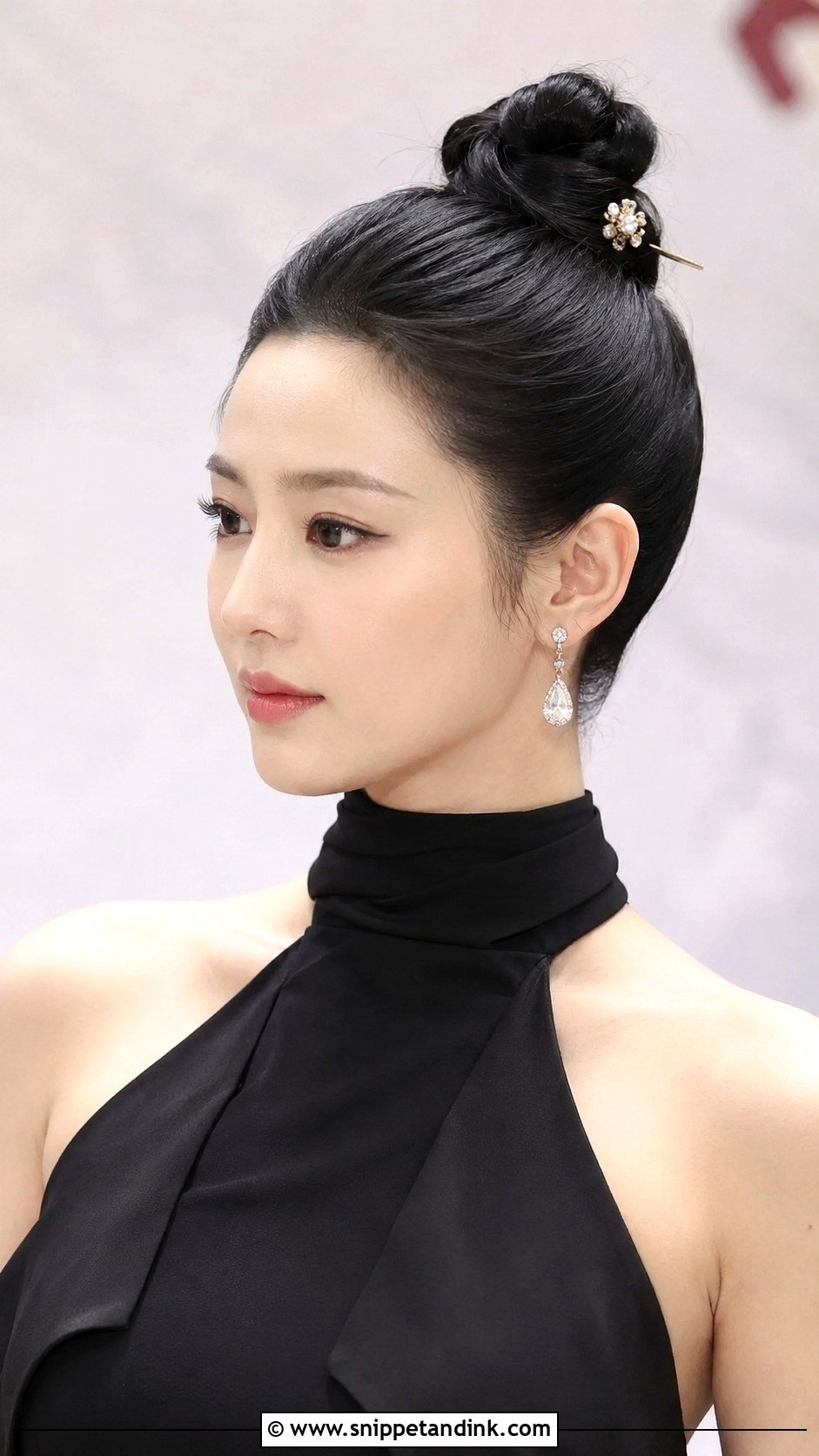
A top knot sits high on the crown and lengthens the neck. I place it at the highest point of the head, smoothed or lightly textured. High-neck and structured gowns suit it. Keep it sleek for minimal elegance or texture it for softness. Hair stays completely off the face, so statement earrings show. A delicate pin or small flowers add a finishing touch. It can pull if too tight, so try it for several hours.
22. Rolled Updo With Curls
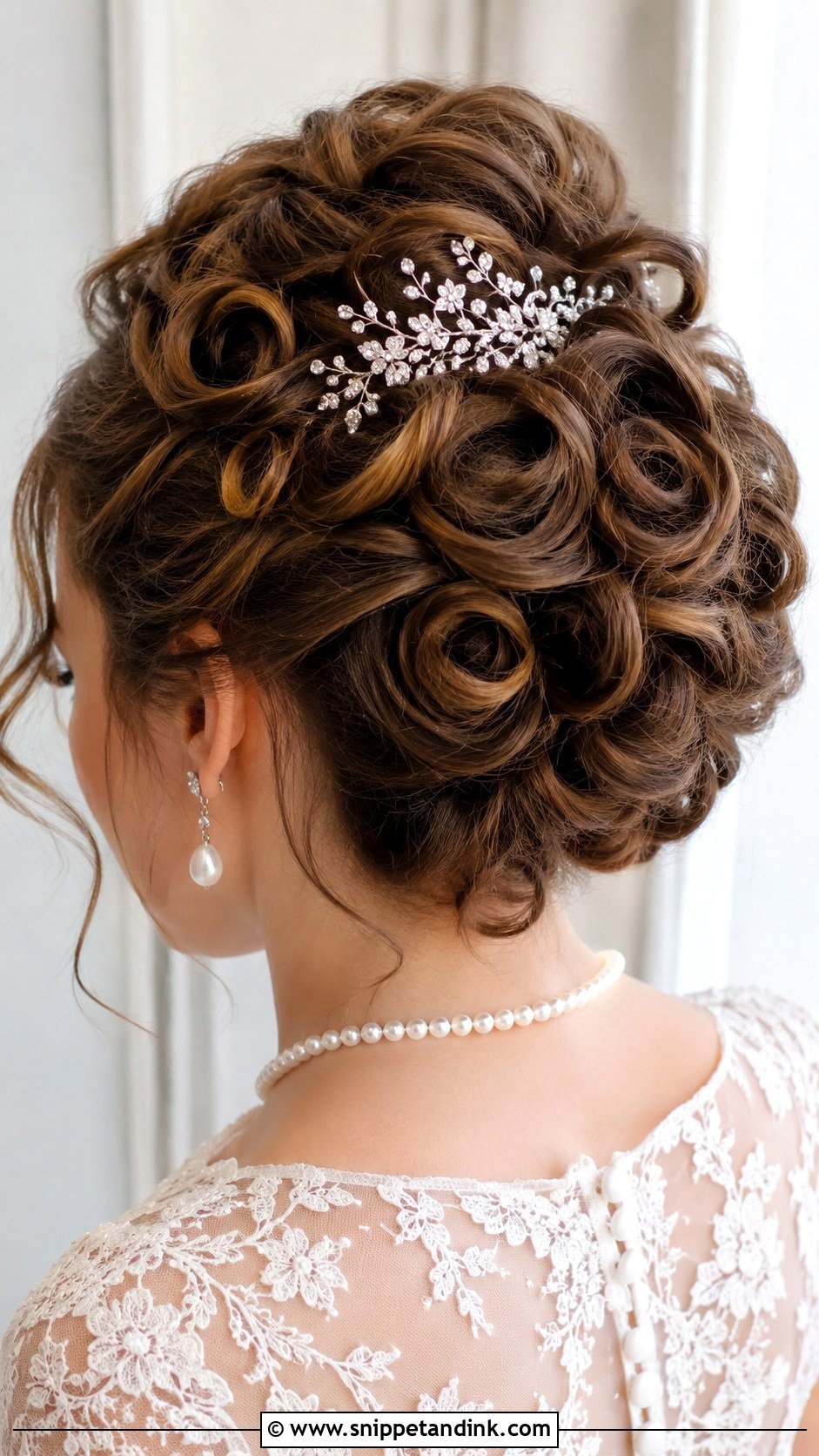
A rolled updo with curls combines pin curls and structured rolls. Curled sections are arranged into loops and twists at the back. It suits formal, classic weddings, lace gowns and pearls. The curls hold well all day when set properly. It needs medium to long hair. A sparkling comb or fresh flowers between the rolls finishes it.
23. Low Ponytail Updo
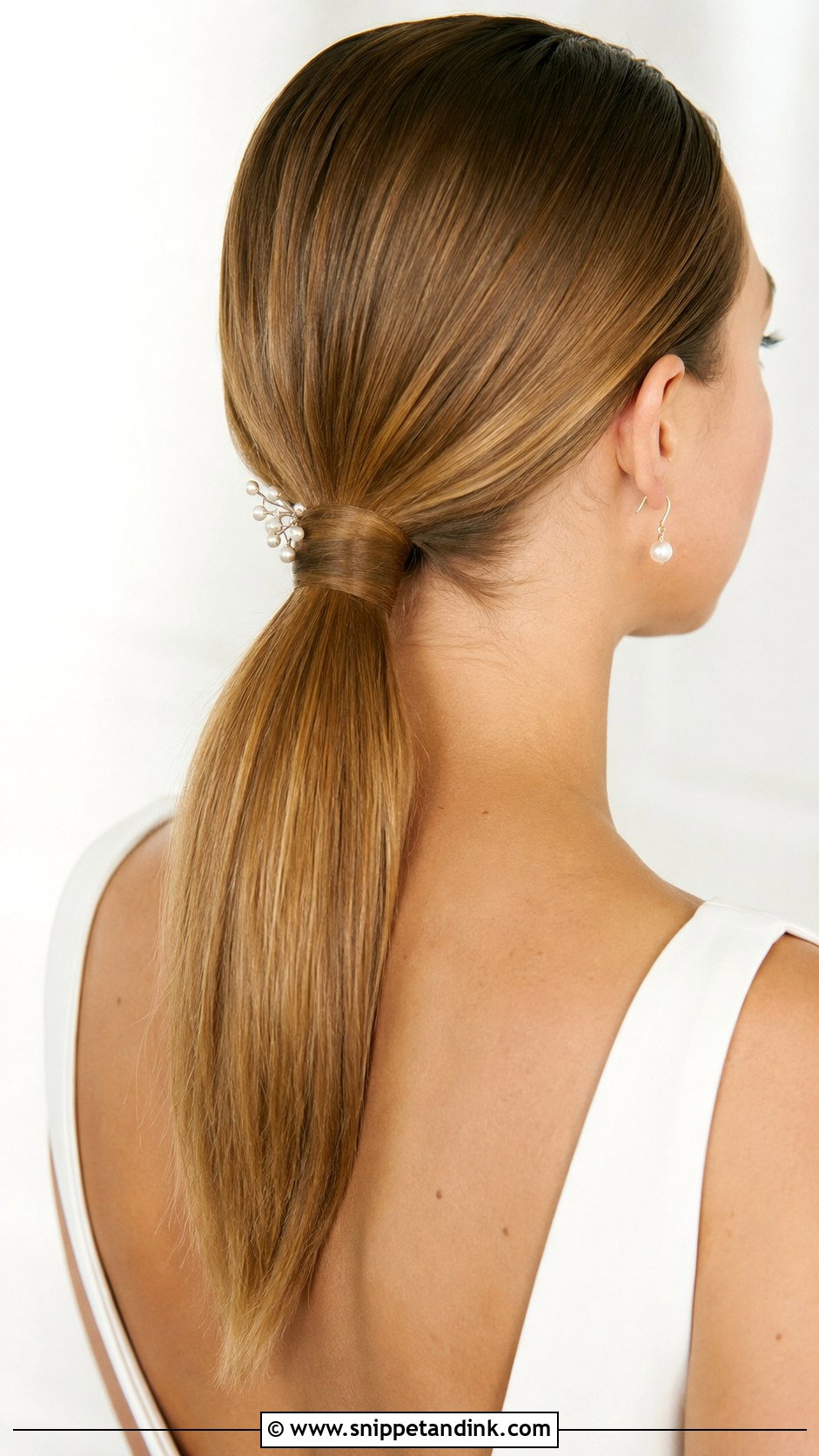
The low ponytail is the simplest updo, and simplicity hides nothing. I smooth hair at the nape, tie it and wrap a strand around the base to hide the elastic. It suits minimalist brides and modern gowns. Soft waves or straight and glossy, your choice. It works on various textures and pairs with statement earrings. A jeweled pin adds subtle sparkle.
24. Accessorized Updo With Hairpiece
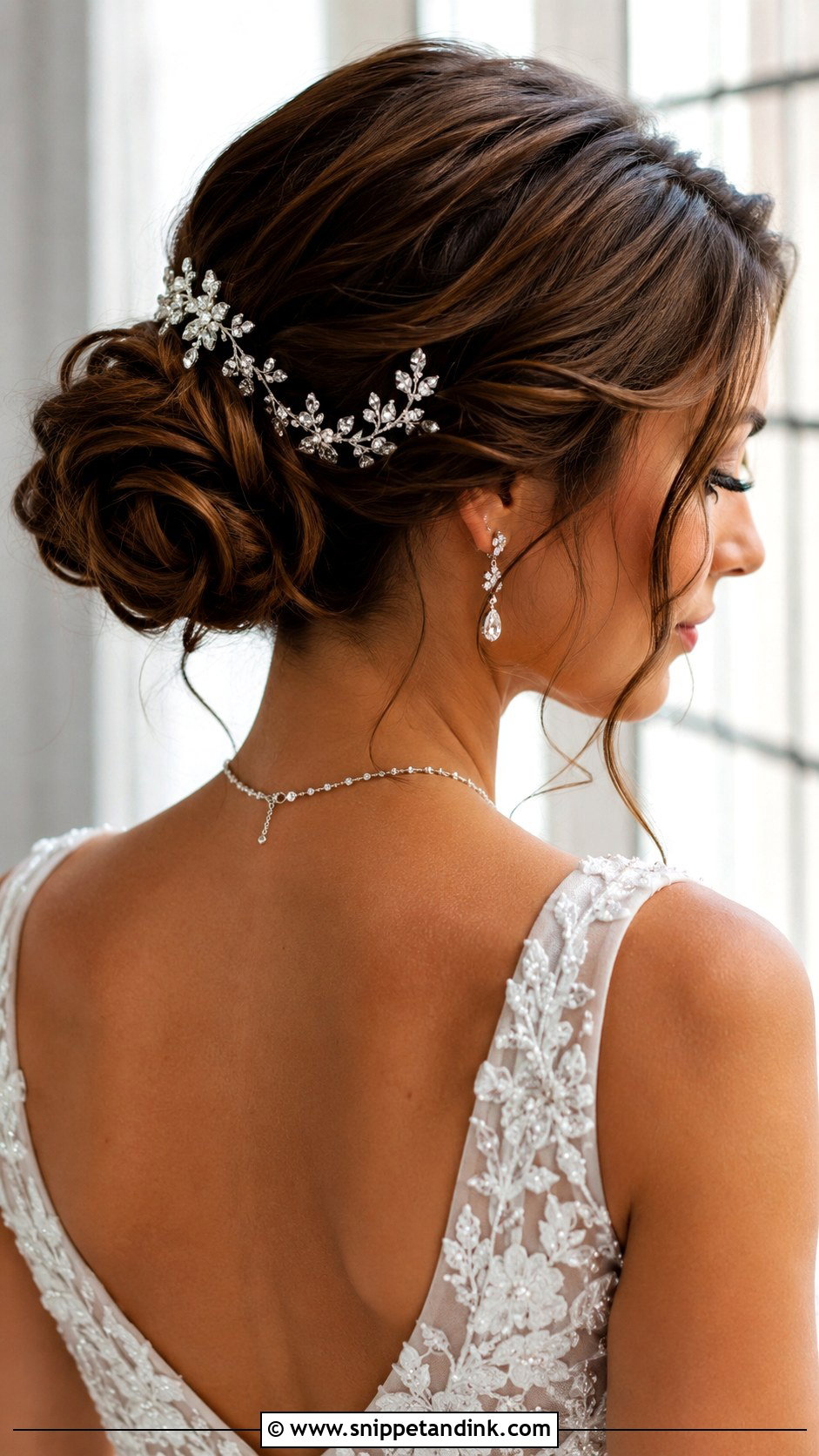
Any updo can take a decorative hairpiece. A crystal comb, jeweled vine or sparkling tiara turns a simple bun into something more formal. The piece can anchor a low chignon, top knot or twisted updo. Coordinate it with earrings and necklace. Heavier pieces need a firm base, so I always do the updo first and slide the accessory in afterwards, then secure it with pins hidden under the hair.
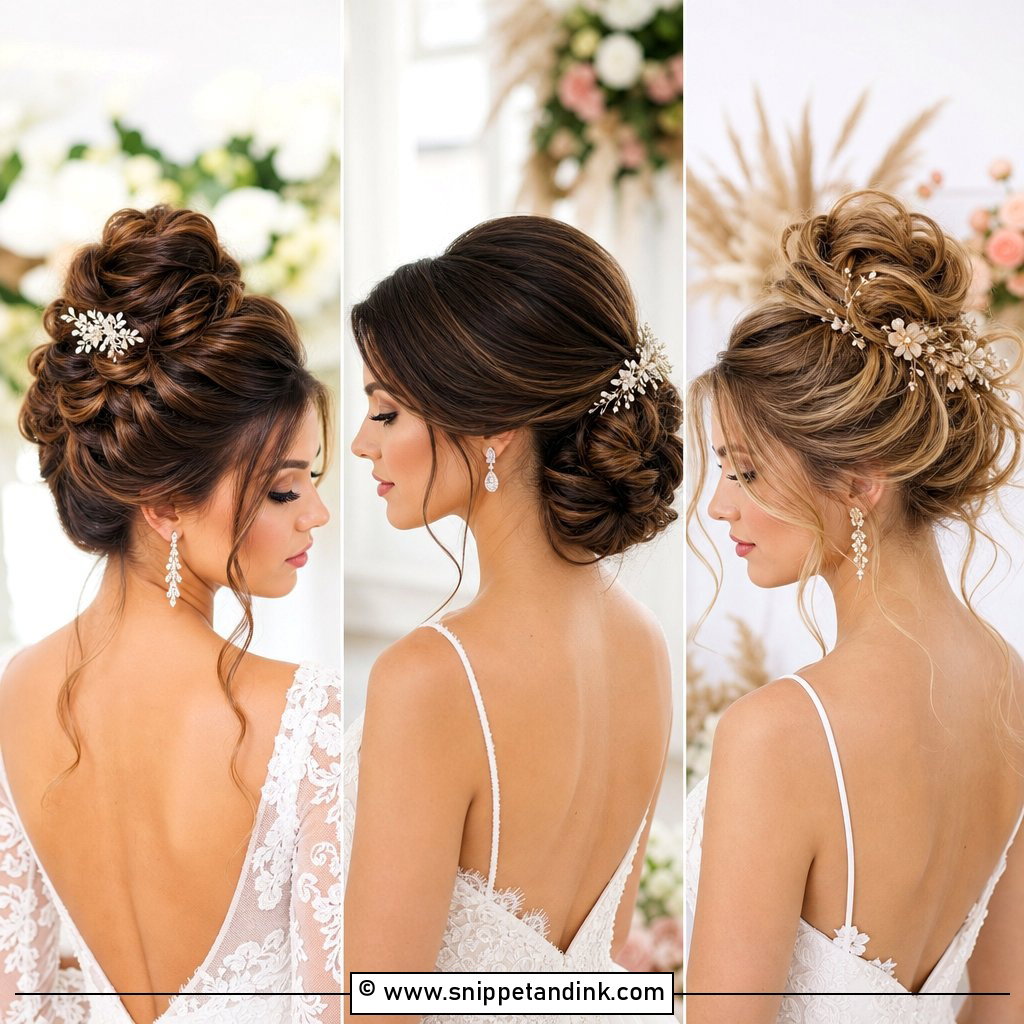
25. Romantic Wavy Updo
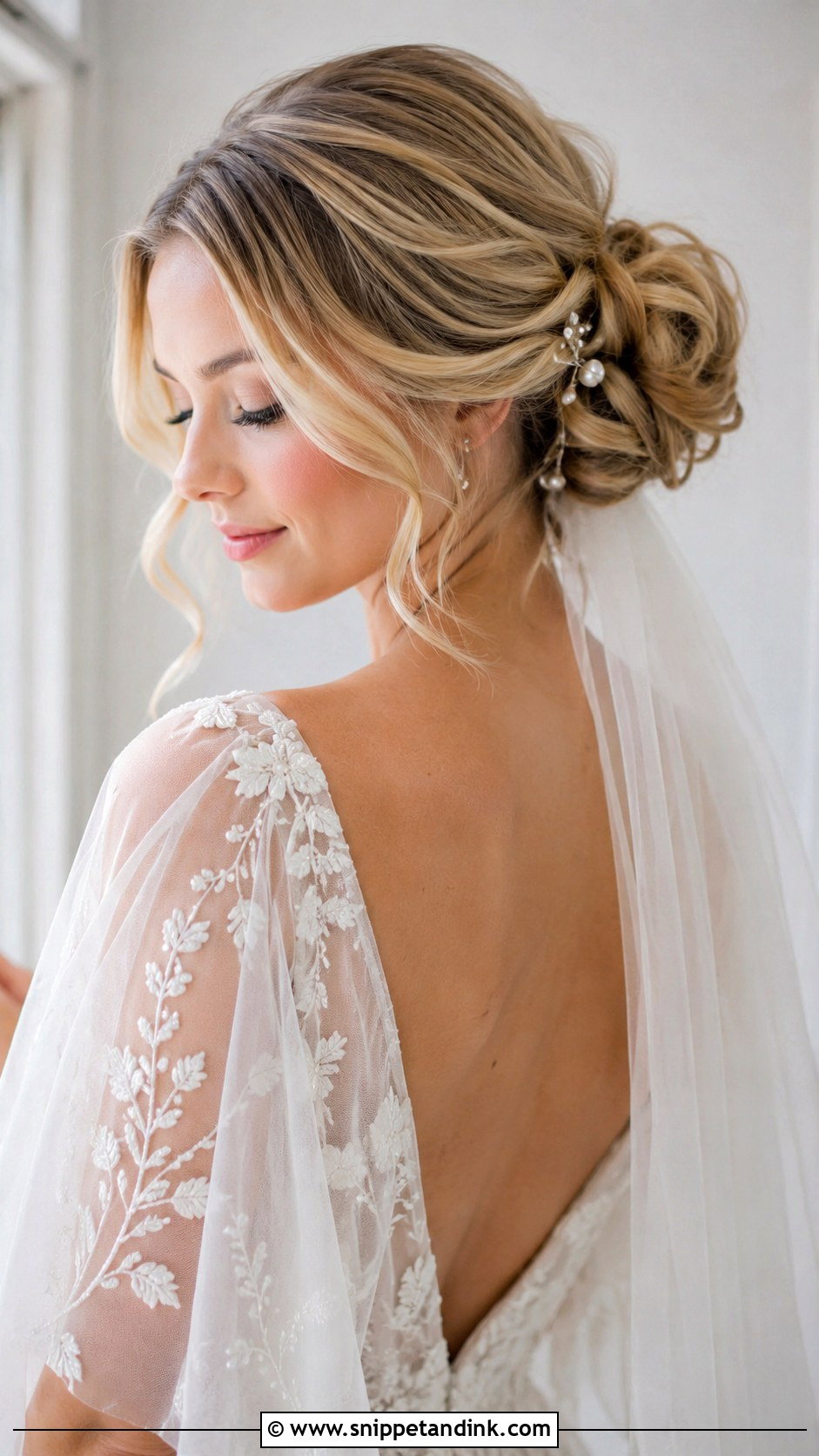
A romantic wavy updo gathers loose waves into a soft bun or twist, with face-framing pieces left out. I curl the hair first, pin each curl to cool, then gather it while it still has shape. It suits brides who want softness rather than structure. Flowing gowns and delicate veils go well. Pearls, flowers or a jeweled pin finish it. The waves hold best if set firmly early.
Sitting for an Updo: How the Morning Actually Runs
An updo usually takes longer than brides expect. A simple low bun can be done in under an hour, but braided and sculpted styles take longer, and that’s before the veil goes in.
Hair before or after makeup?
It depends on your team, but many stylists like hair to go first or alongside makeup. Wear a button-up shirt so you can change without pulling anything over your head.
If the pins start to hurt
A dull ache usually means one pin is pressing on the scalp. Ask your stylist or a bridesmaid to find it and reposition it rather than removing it. At the trial, mention anything that feels tight; it’s much easier to adjust then than mid-reception.
Taking it out at night
Remove pins slowly, one at a time, before brushing. Then apply conditioner to dry hair to soften the spray before washing. Pulling a brush through a pinned updo snaps hair.
Expect a heavy updo to leave your scalp a little tender the next morning. That is normal after a long day of pins and spray, and it settles after the first wash.
Which Updo Will Hold Through Your Whole Day
An updo is only as good as its foundation: the right prep, the right pins and a stylist who knows your hair. Whether your heart is set on a low chignon, a French twist or a floral bun, try it on at a trial and wear it for a full afternoon. If it still sits comfortably and looks right by evening, it will carry you through hugs, a veil and a dance floor. Then work with your stylist to tweak the details until it feels like yours.
You'll Like These Ideas:



Leave a Reply