
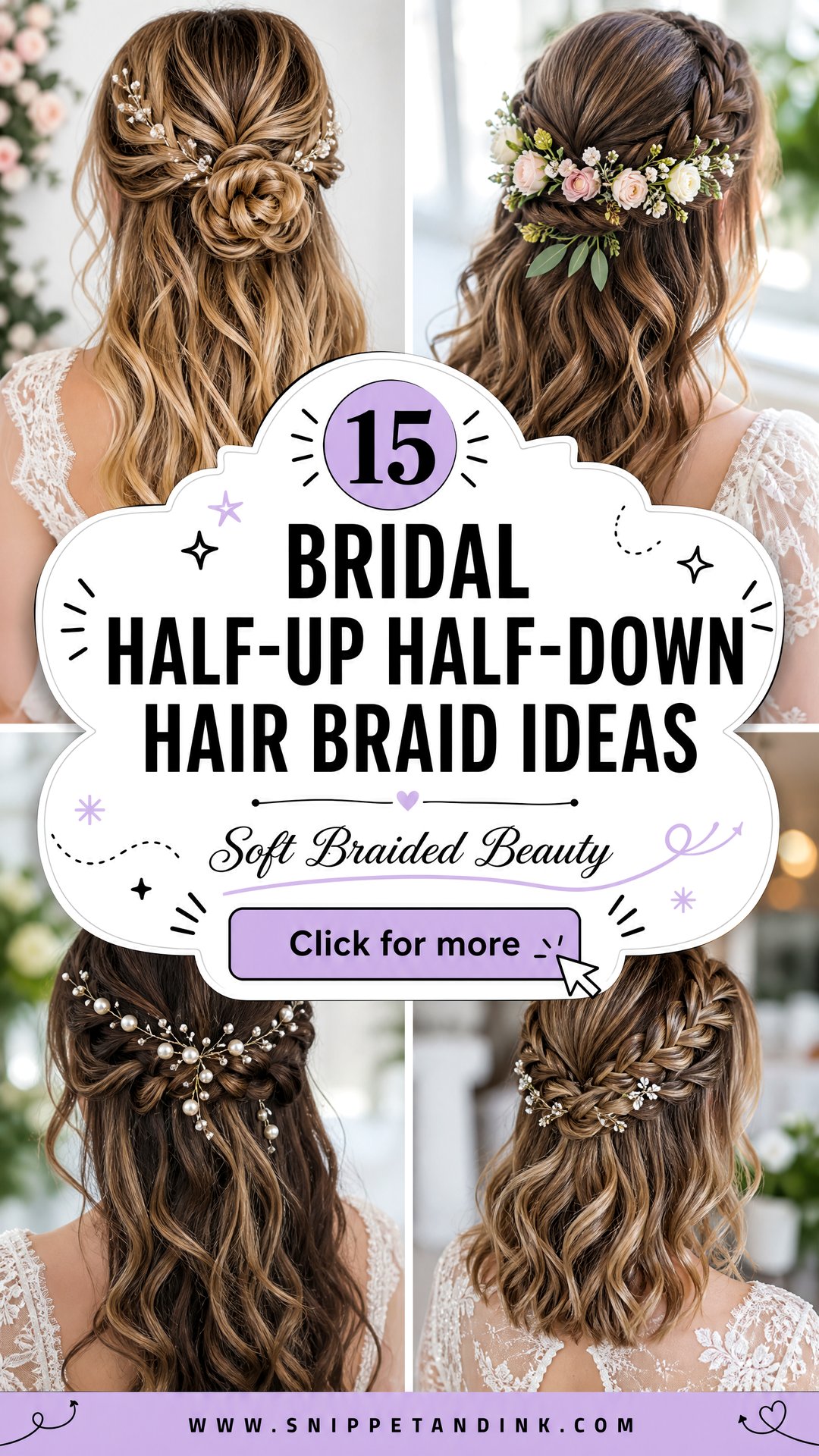
Half-up braids are the style I suggest most often to brides who can’t decide between up and down. The braid takes care of the part that annoys you, hair falling in your face during vows, while the rest stays loose to show off length, curls, waves and color. The braided section also gives a veil comb or a few pearl pins something solid to grip. The same basic shape goes polished in a ballroom or loose and beachy outdoors depending on how tightly it’s woven. Below are fifteen versions, with notes on which hair types each one actually suits.
Dutch, French or Fishtail? Getting the Name Right at the Consultation
Braid names get muddled all the time, and a mix-up at the consultation is how brides end up with a flat braid when they wanted a raised one. It helps to know what you’re actually describing.
- French braid: strands cross over each other, so it lies flat and blends into the head.
- Dutch braid: strands cross under, so it sits up on top of the hair. More visible in photos and easier to pancake out for volume.
- Fishtail: two sections with tiny pieces swapped between them. Very detailed; looks best slightly loosened.
- Pull-through: not woven, just ponytails flipped through each other. Looks twice as thick on fine hair.
- Waterfall: a horizontal braid that drops strands as it goes. Needs hair with some grip to hold.
Bring pictures of the back of the head, not only the front. Half-up styles are mostly seen from behind during the ceremony, and the braid’s placement, how far down the head it sits and how much hair goes into it, is what you’re really choosing.
1. Bridal Half Up Fishtail Braid
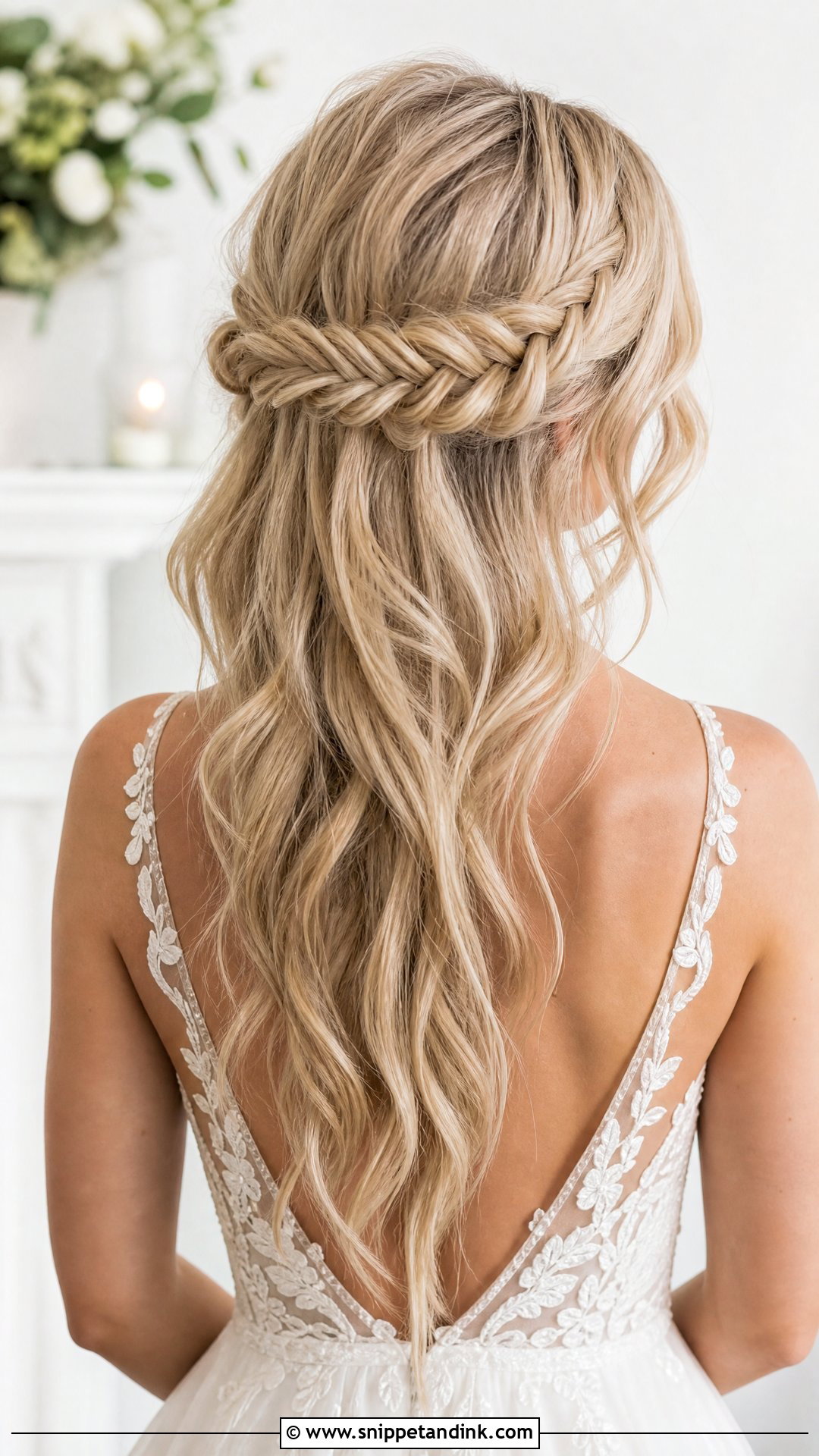
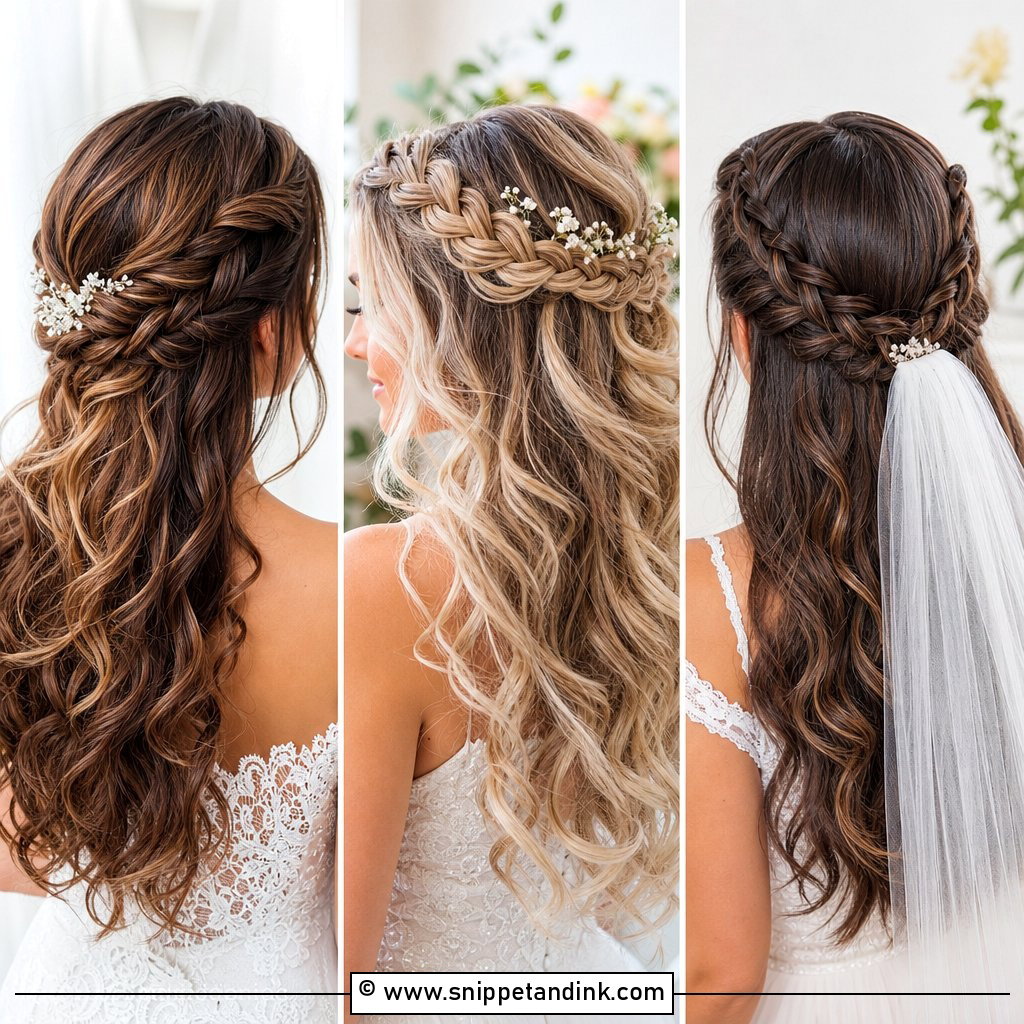
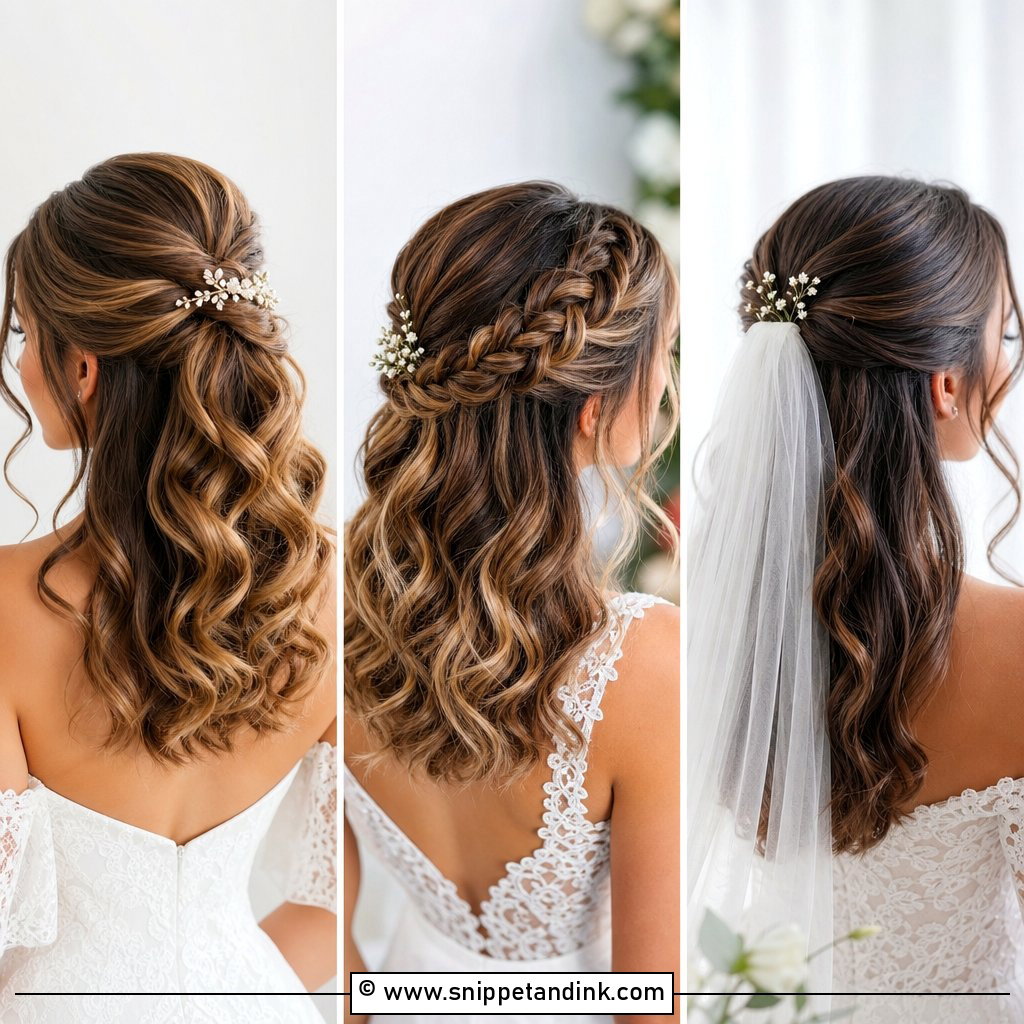
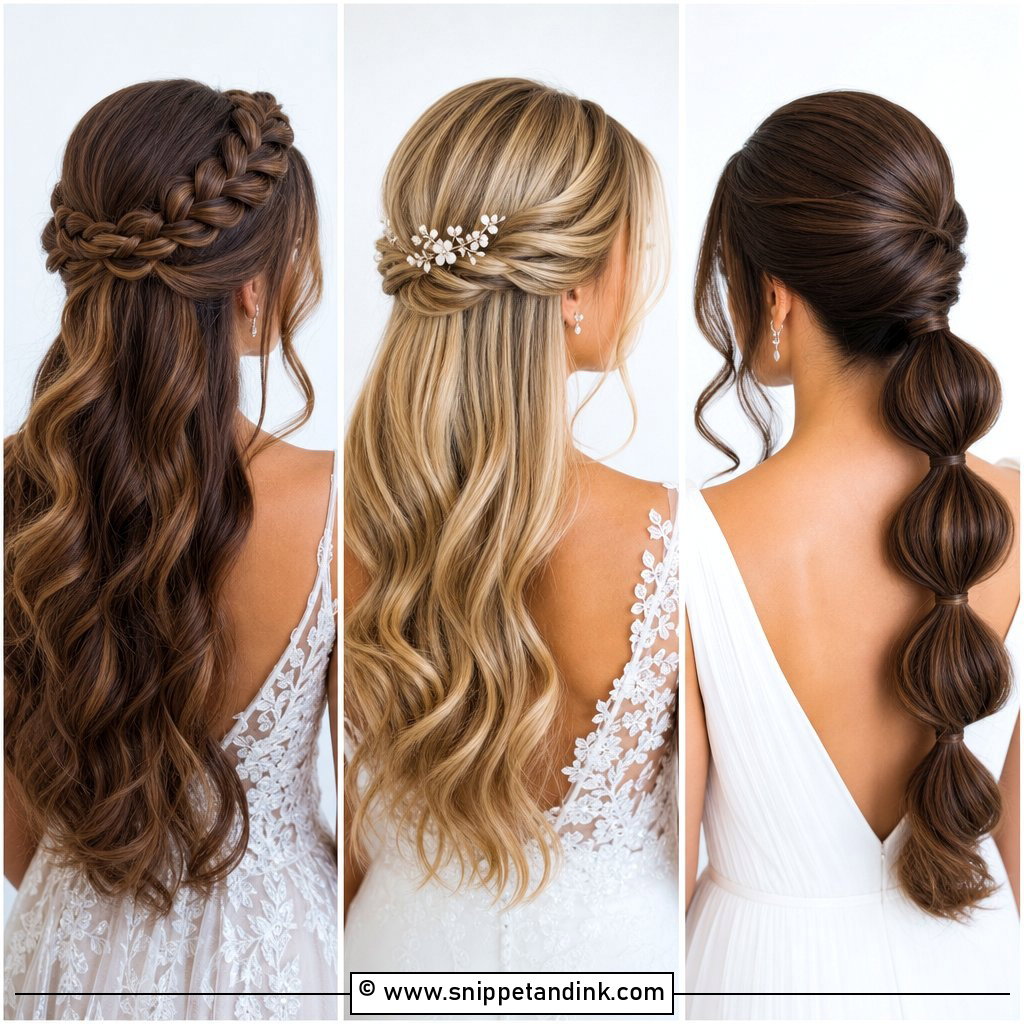
Fishtails look intricate, but they’re really just two sections with small pieces crossed between them, which makes them easier to loosen evenly than a three-strand braid. I’ll start it at the crown, wrap one from each side, or run one wide braid across the back. The contrast between the tight weave and loose curled ends is the whole point. A dress with lace, beading or fine straps echoes that detail nicely. Pull it apart gently once it’s tied, then add a few pearl pins or small flowers. On very slippery hair, prep with texture spray, or the tiny crossed pieces slide out by the evening.
2. Bridal Half Up Dutch Braid
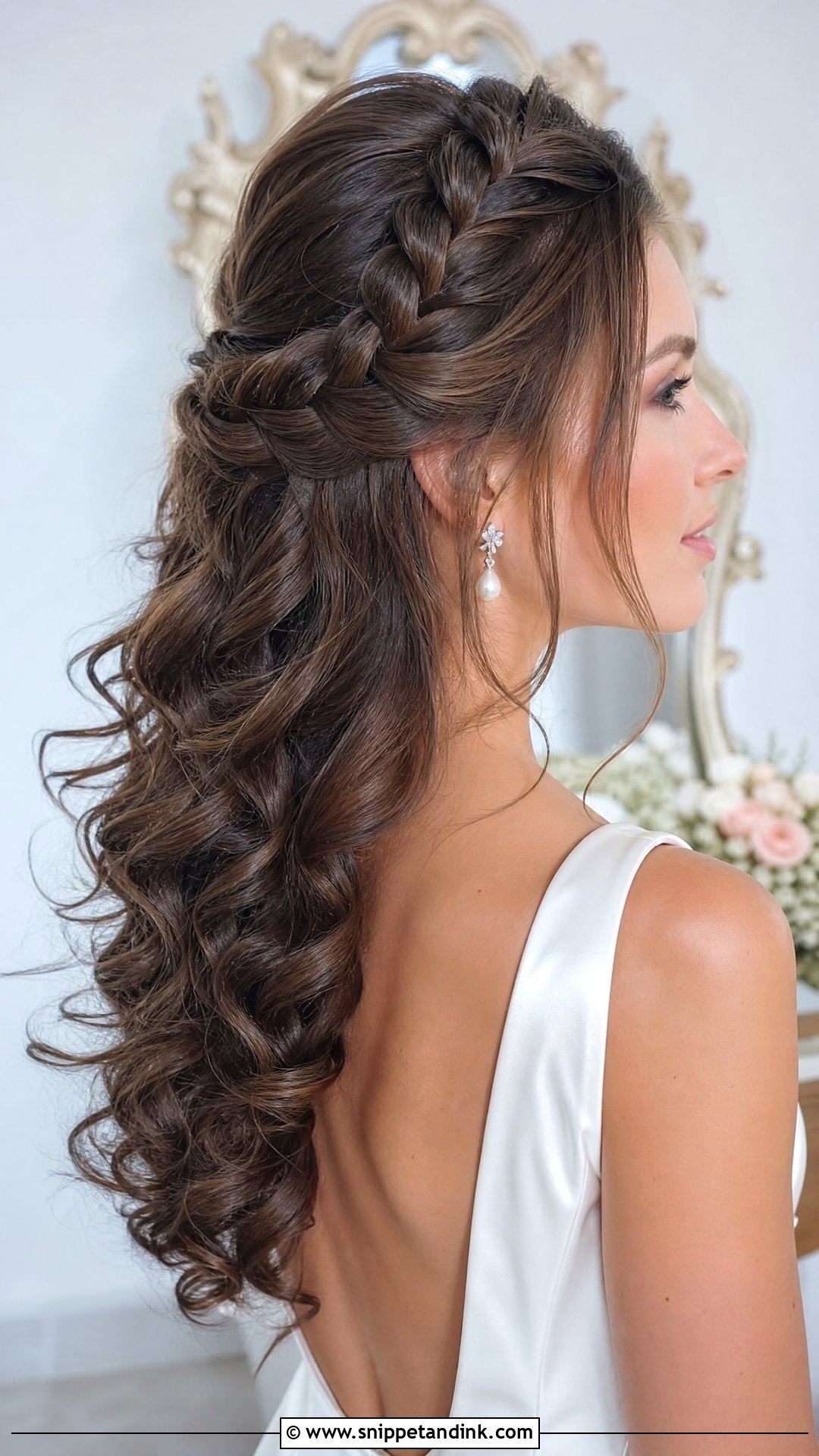
The Dutch braid is the one that shows up best in photos, because the strands cross under and the braid sits raised on top of the hair. Thick hair carries it well, and highlights or balayage really show in the ridges. Underneath, I’ll do polished curls, soft waves or smooth bends. Tuck the front pieces for a cleaner look. If you leave a couple of strands loose at the cheeks, curl them away from the face, or they’ll stick to lip gloss all afternoon.
3. Bridal Half Up French Braid
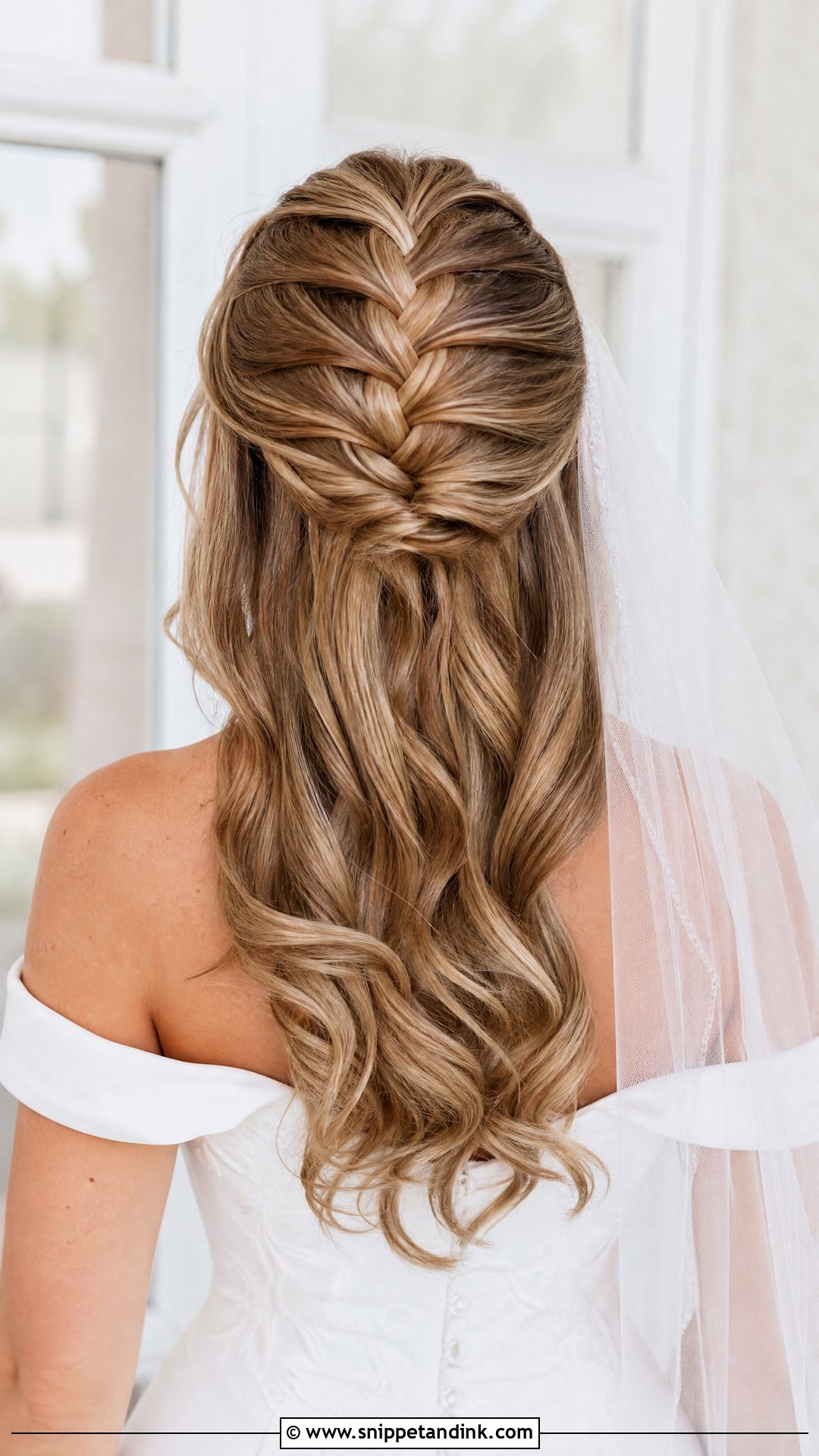
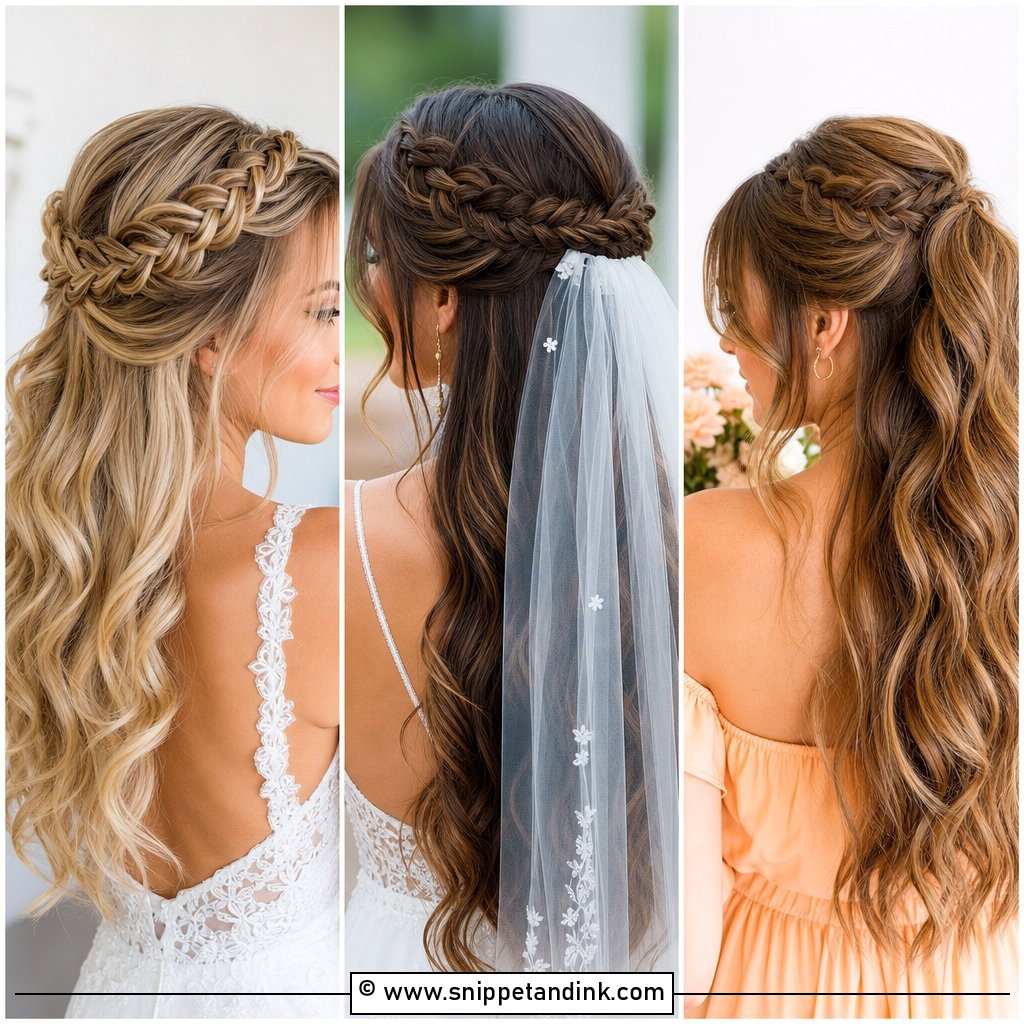
Where the Dutch braid stands up, the French braid lies down. The strands cross over, so it melts into the crown and gives detail without bulk. That’s my pick when a bride wants texture but feels self-conscious about height. Center it for a traditional look or angle it a little for something more relaxed. It’s also the most veil-friendly braid I know, because the comb slides into the tight weave and stays there. Finish with a light shine spray; braids can look dry under flash.
4. Bridal Half Up Waterfall Braid
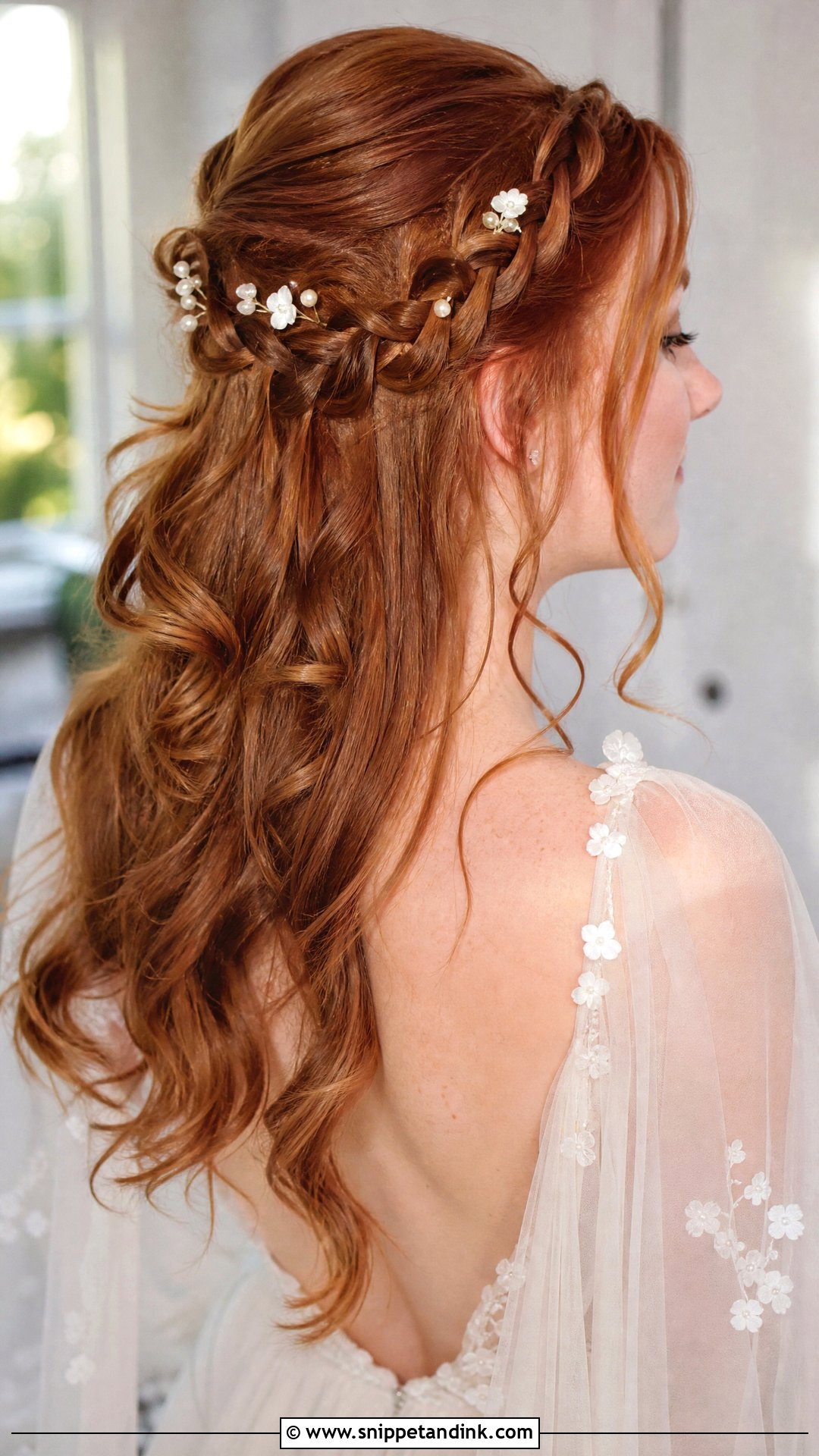
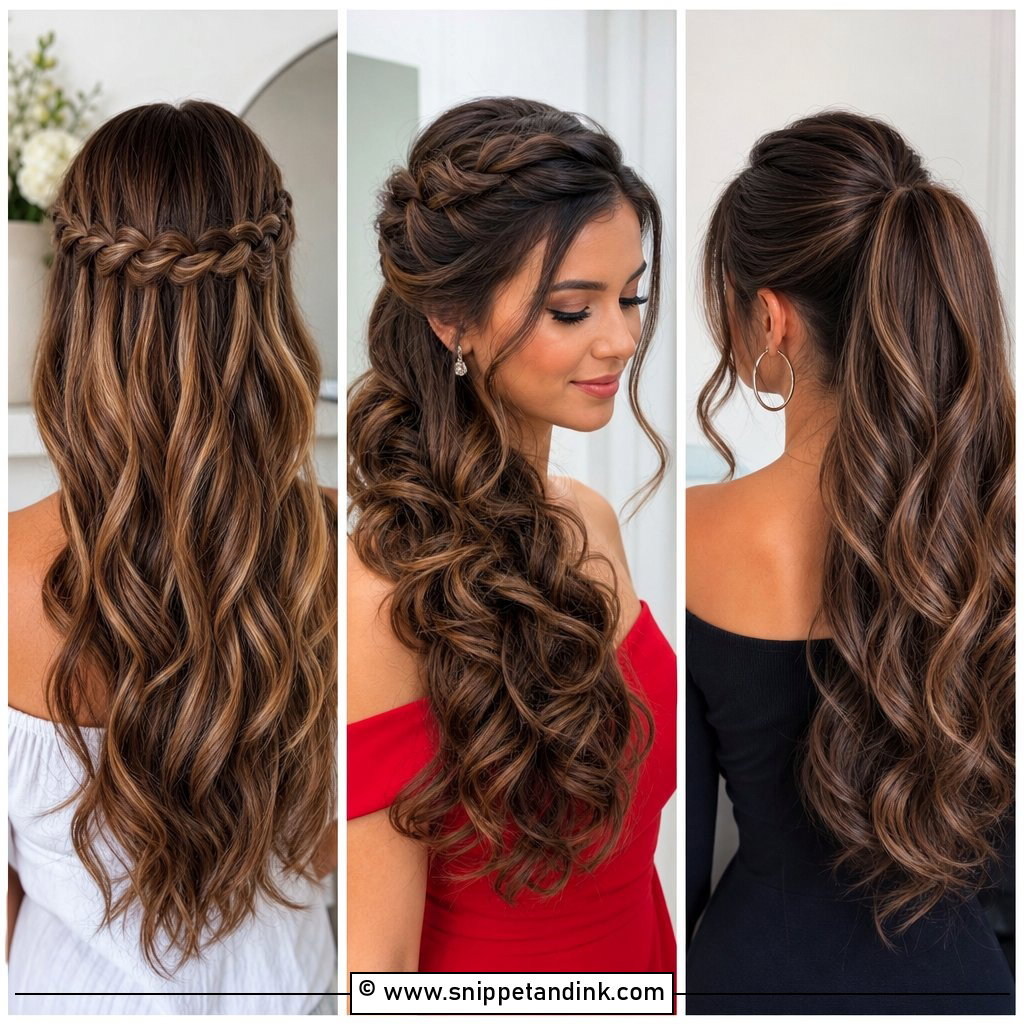
In a waterfall braid, a strand drops out of the braid at each pass, so pieces fall through like ribbons. It needs movement below to make sense, so I always pair it with loose curls or brushed-out waves. Spring and summer gardens suit it. Here’s the honest catch: it’s the least secure braid on this list, because half the strands are being released. On silky or freshly washed hair it can loosen within a few hours. Second-day hair and a strong grip spray make a real difference.
5. Bridal Half Up Crown Braid
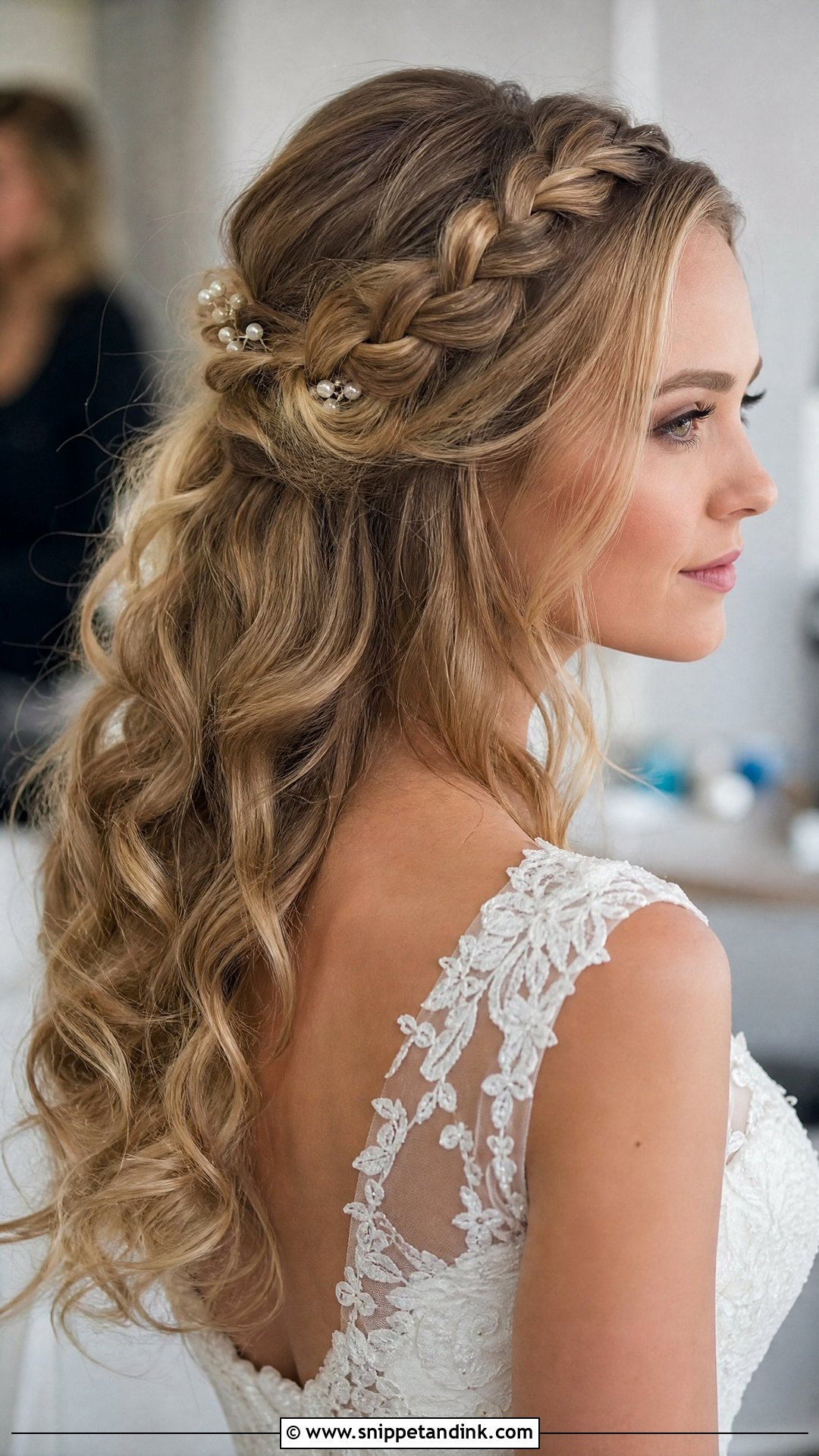
A crown braid wraps around the sides of the head and meets at the back, framing everything like a halo while the rest hangs free. It’s the closest you’ll get to a fairytale look without committing to a full updo. A veil sits neatly underneath where the two sides meet. Keep it slightly loose. A tight crown braid pulls at the temples, and by the reception you’ll feel it as a dull headache.
6. Bridal Half Up Boho Braid
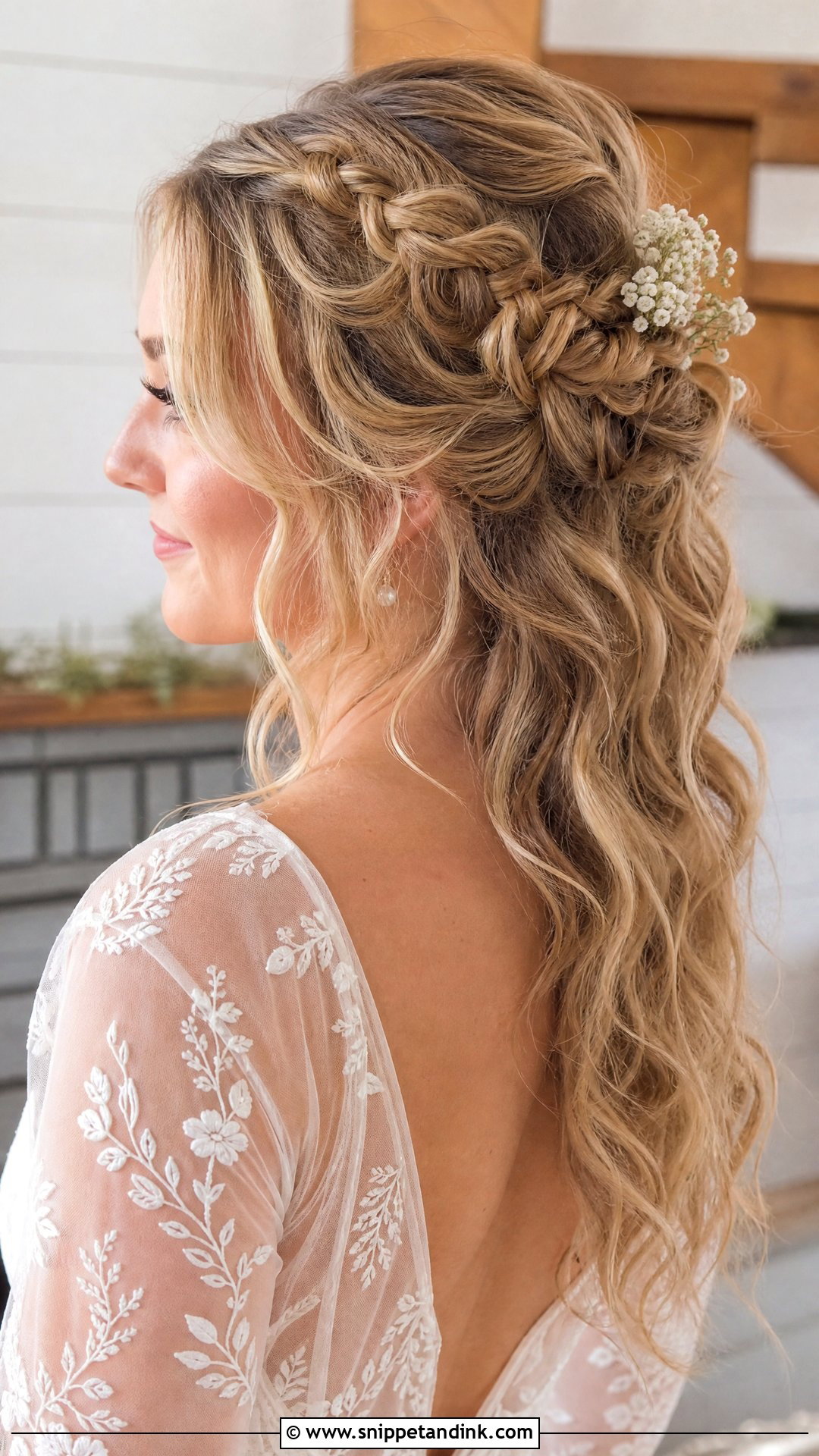
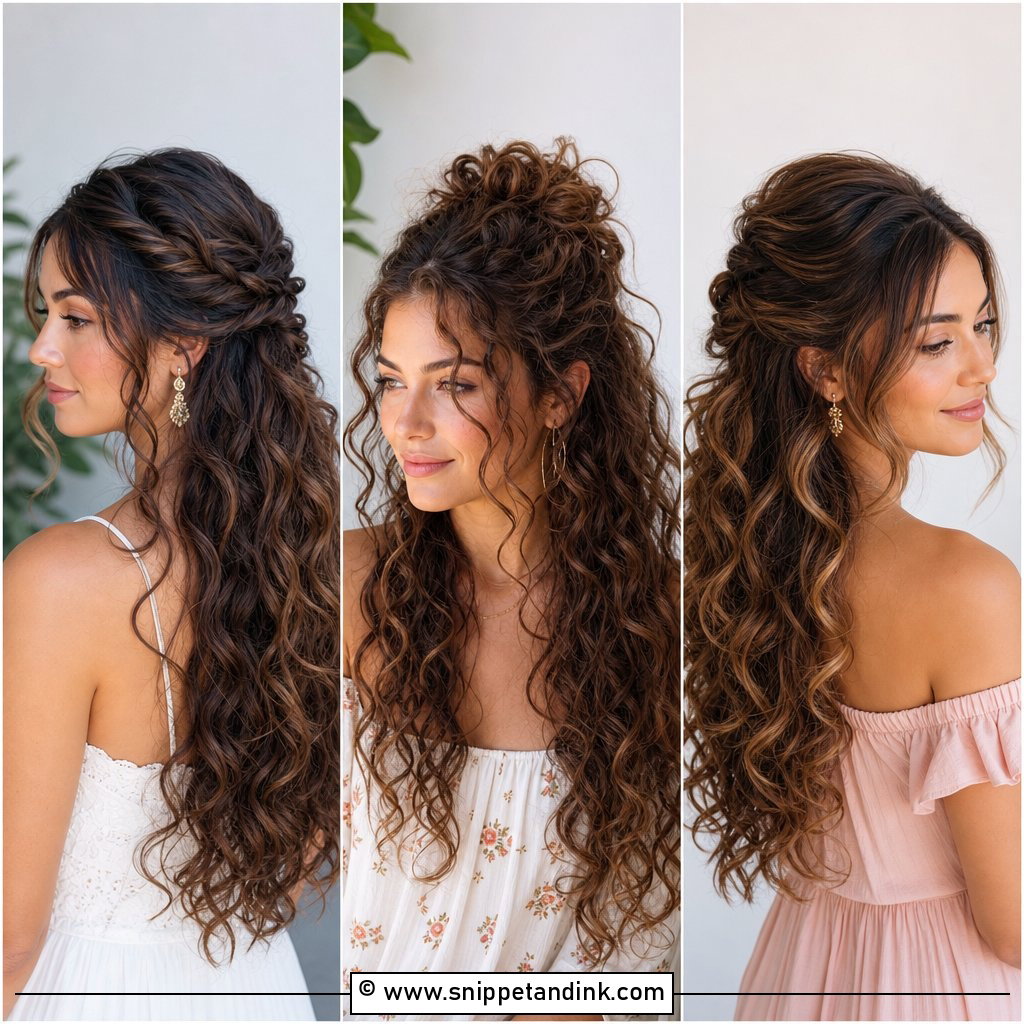
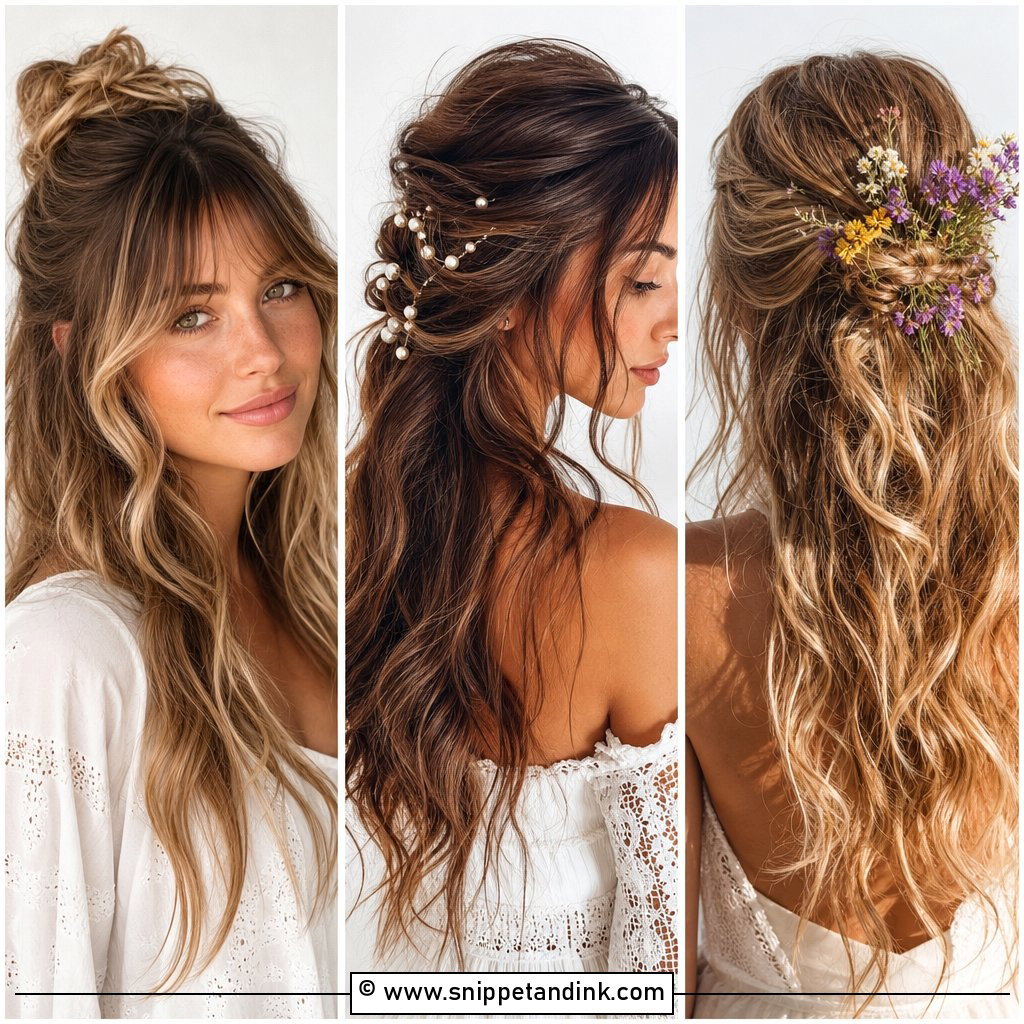
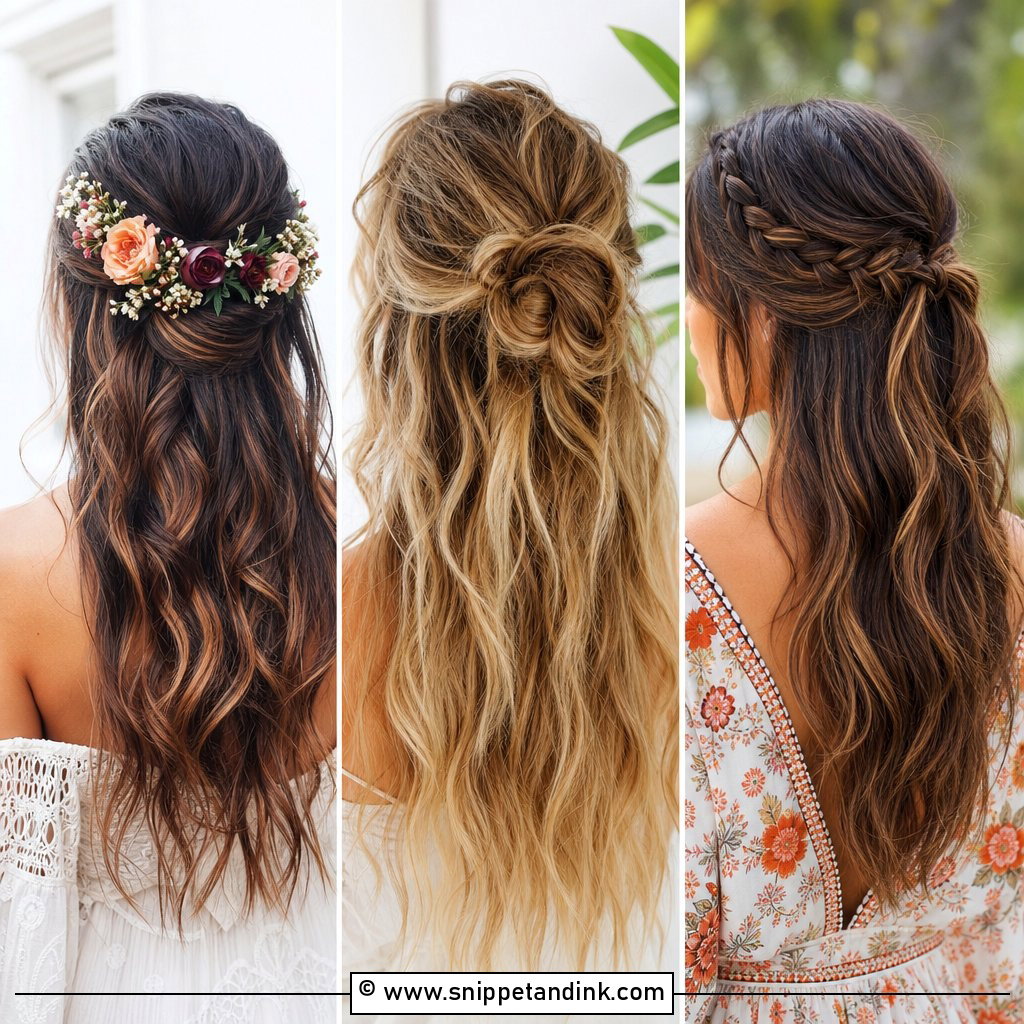
Boho braids are deliberately undone, with soft volume and a few wispy pieces around the face, which makes them ideal for beaches, barns and destination weddings. The texture forgives a lot: wind, hugs and dancing all just add to it. That said, undone isn’t the same as unplanned. I still pin each section so the shape holds and only the surface looks loose. A few tiny flowers or leafy pins bring it back to bridal.
7. Bridal Half Up Braided Bun
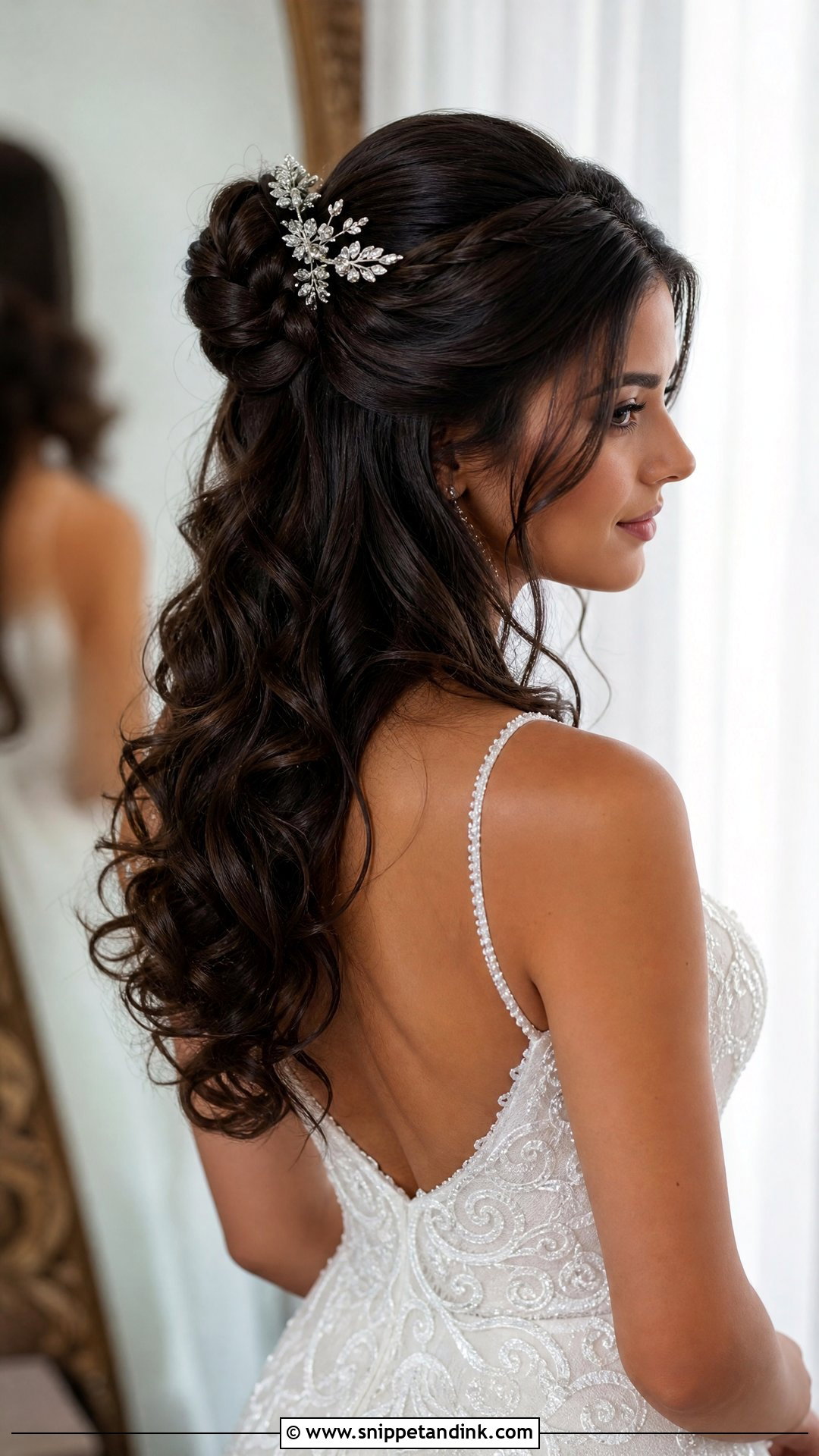
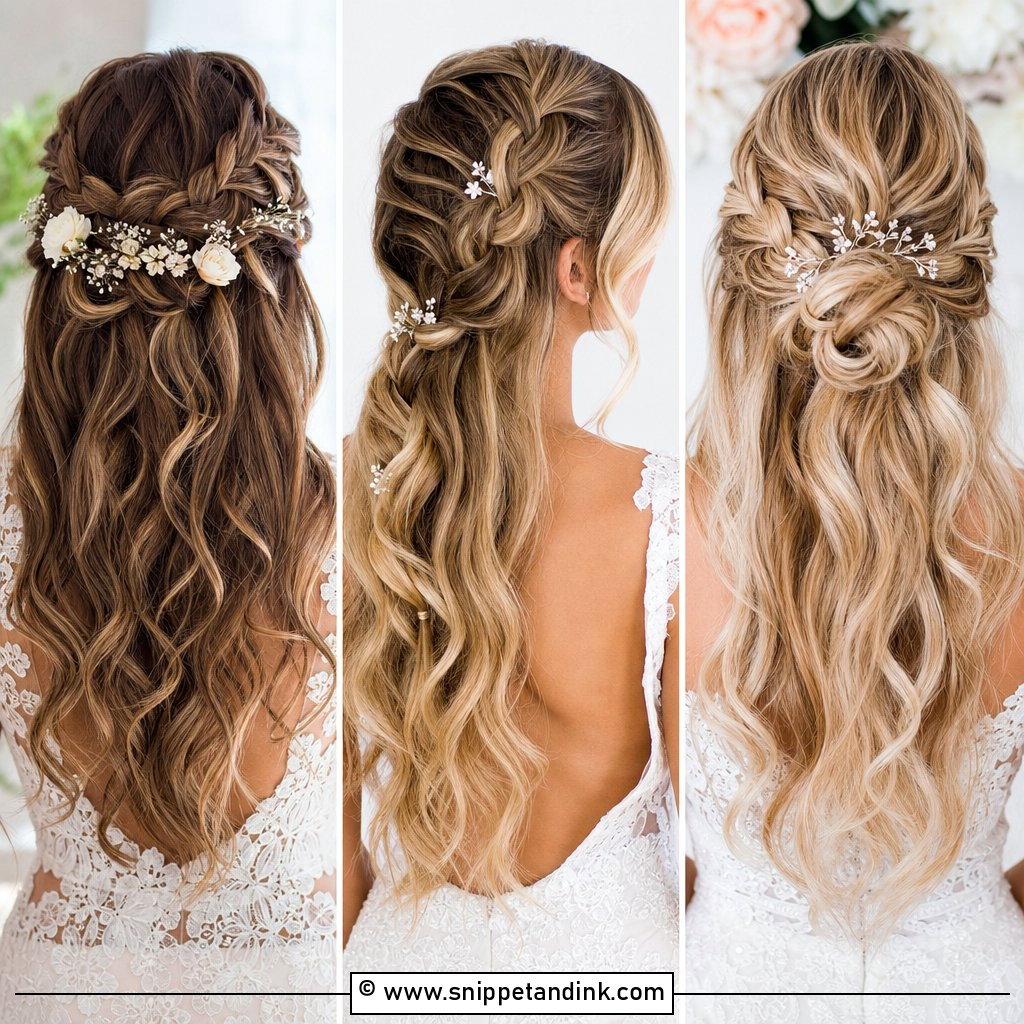
Here the top section gets braided and wound into a small bun, rosette or twisted knot, and the rest stays curled below. It’s more structured than a plain braid but less formal than an updo. Medium and long hair both work. The small bun gives real shape to back-view photos and makes a natural base for a veil, a jeweled comb or pearl pins. Watch the size of the bun on fine hair; it can end up looking like a button, so I’ll sometimes add a small clip-in to bulk it out.
8. Bridal Half Up Side Braid
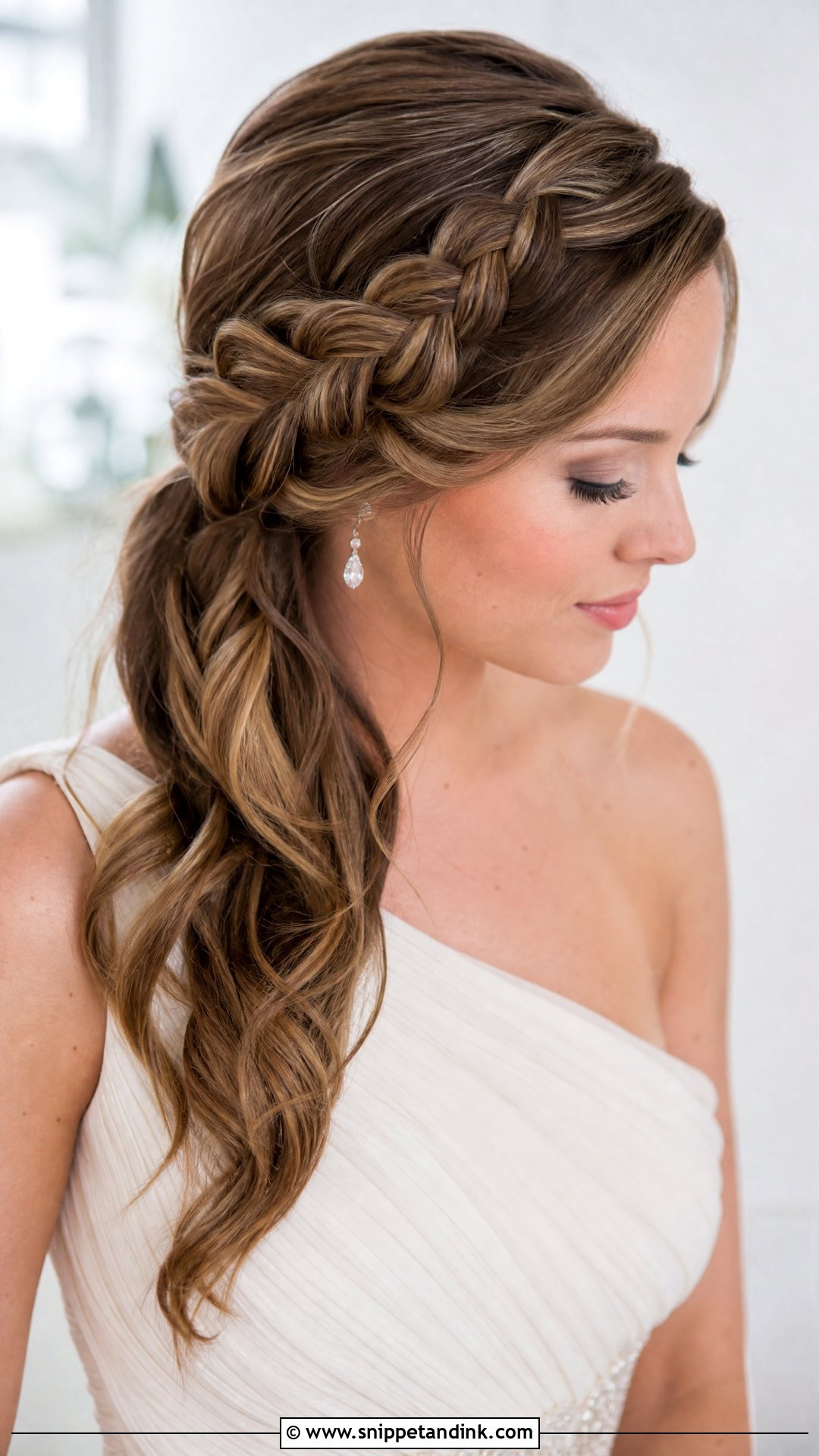
Asymmetry suits a lot of faces, and a side braid that starts near one temple and sweeps across the back is an easy way to get it. It goes naturally with a side part and face-framing layers. It’s also useful if one side of your dress has a special strap, sleeve or detail you want visible, since you can sweep the loose hair to the opposite shoulder. Keep the braid full and slightly loosened. A tight thin side braid reads schoolgirl rather than bridal.
9. Bridal Half Up Pull Through Braid
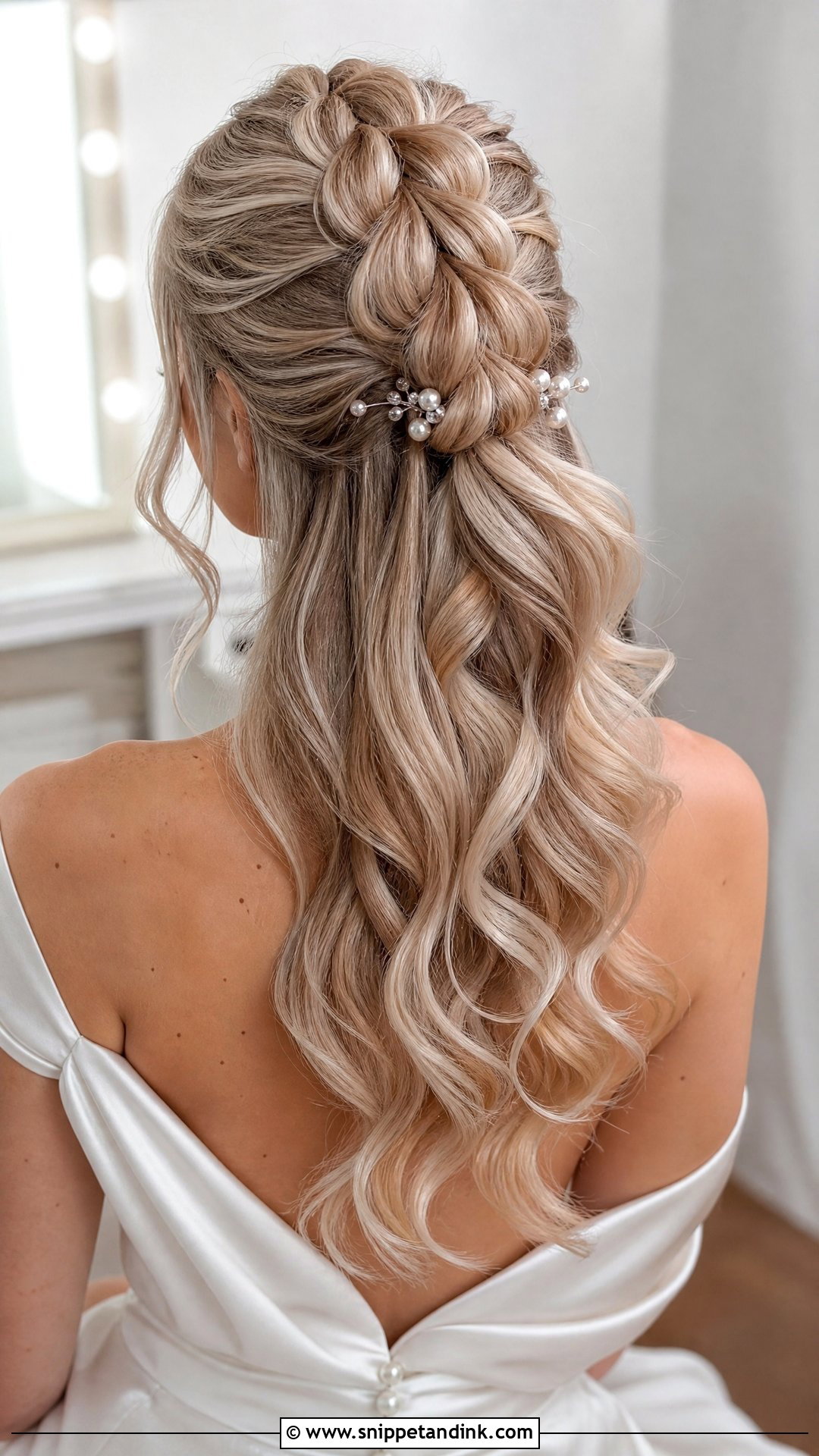
Fine or medium-density hair is where the pull-through braid earns its keep. It isn’t woven at all: it’s a row of small ponytails flipped through each other and then pancaked out, so it looks about twice as thick as a regular braid. The bold shape reads well from a distance. Curl the lower half into bouncy waves for more volume. Use clear elastics and hide them by wrapping a strand of hair or tucking a pearl over each one. It holds up well over a long day too.
10. Bridal Half Up Braids With Curls
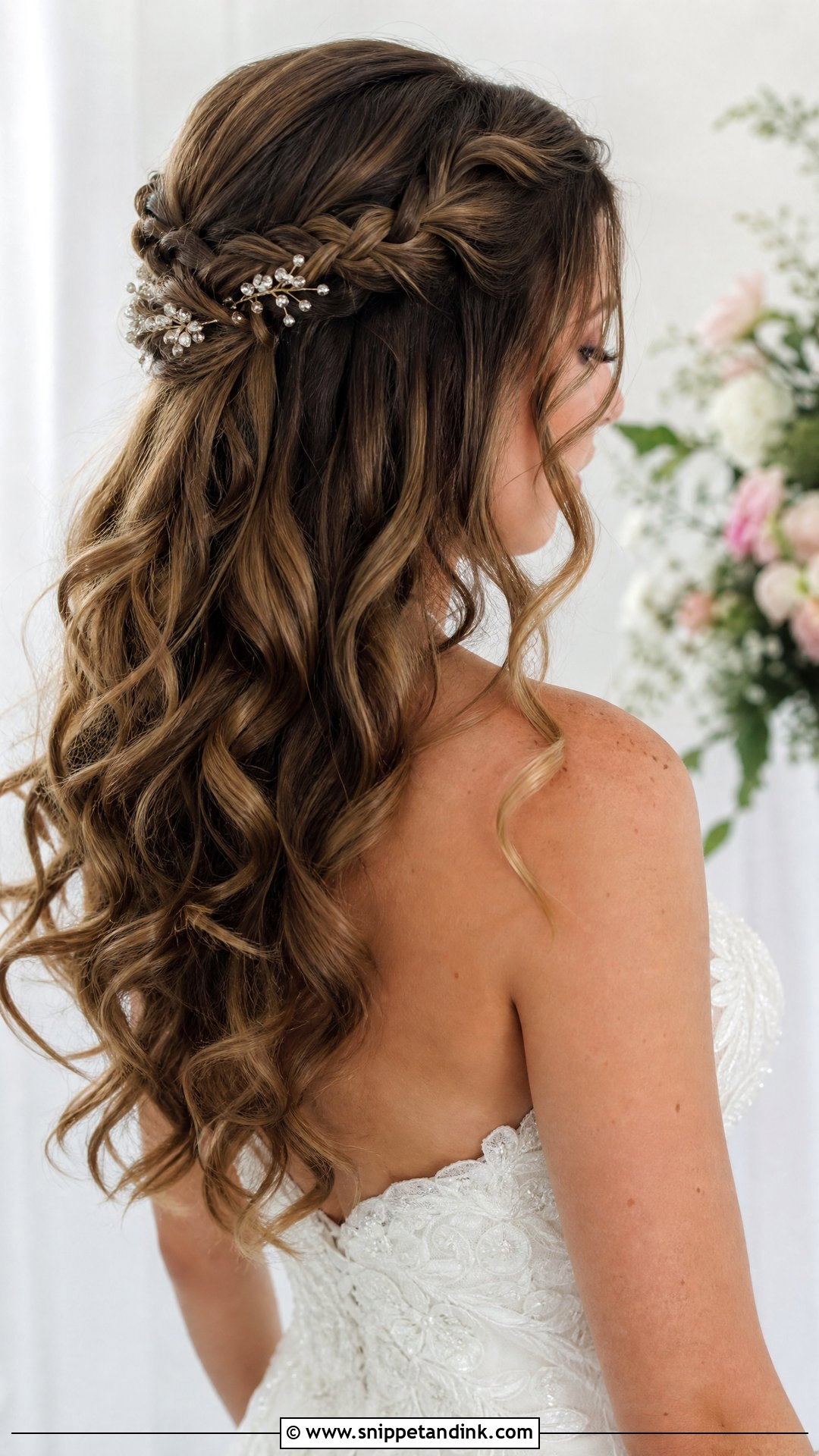
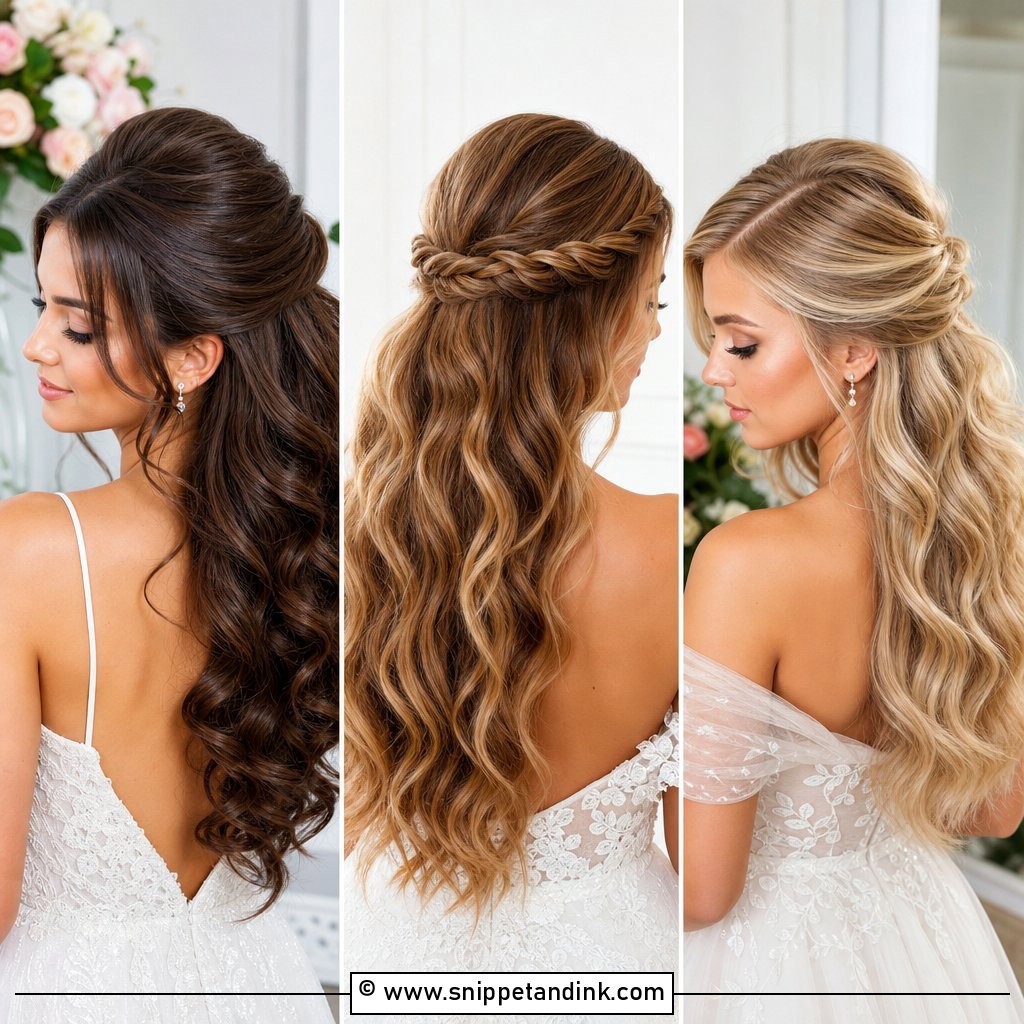
This is the version most brides picture when they say half up. Two small braids, one larger braid or a braided twist keep the crown neat while curls do the rest. Long hair, extensions and layered cuts all suit it. I brush the curls out slightly once they’ve cooled, since freshly dropped ringlets look stiff in photos. A light flexible spray keeps them touchable through hugs; anything stronger and the curls go crunchy.
11. Bridal Half Up Braids With Flowers
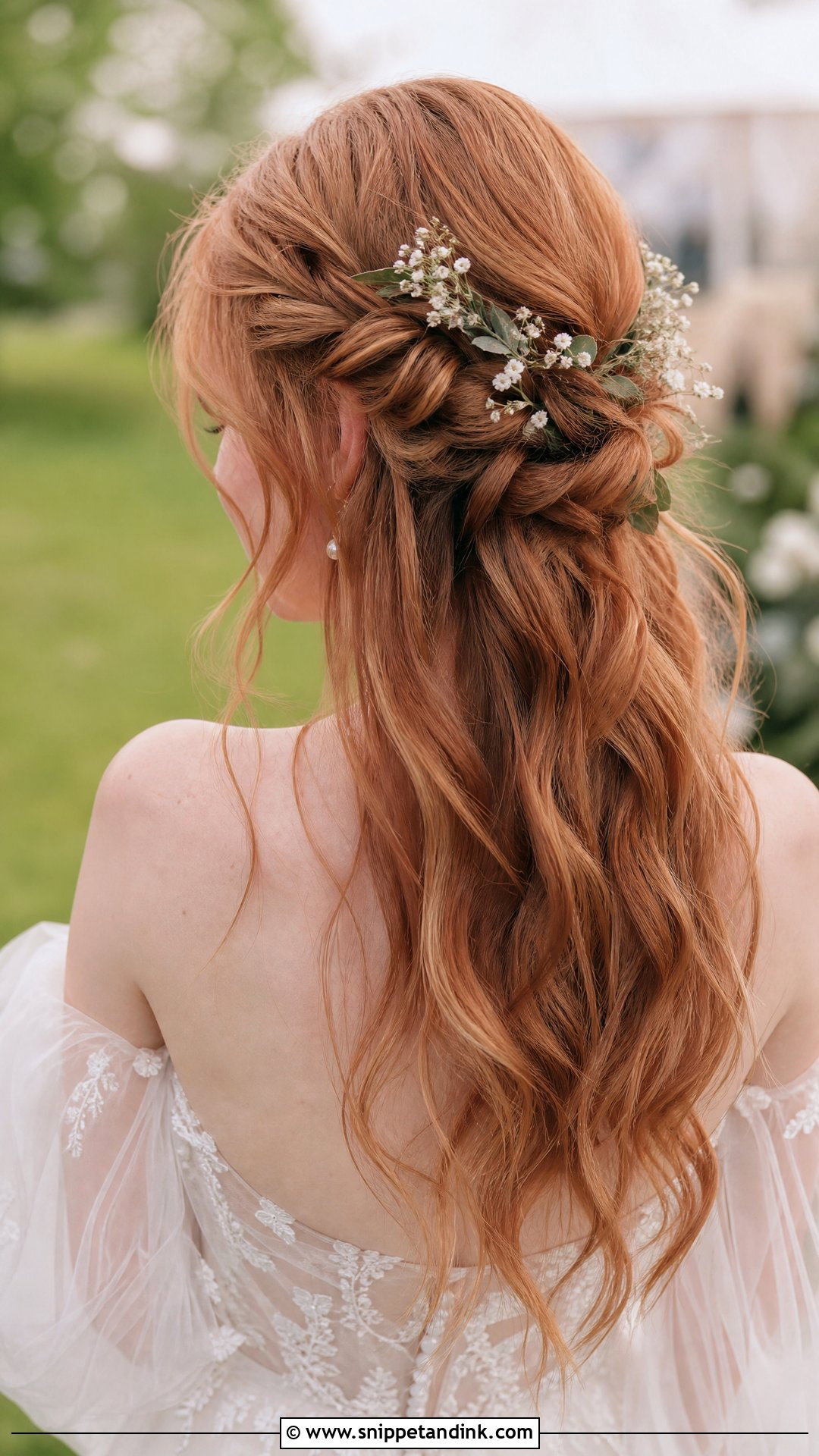
Fresh flowers in a braid are lovely, but they wilt, so I’m picky about which ones go in. Small sturdy blooms like waxflower, spray roses and baby’s breath last; soft petals like garden roses or peonies brown at the edges within hours out of water. Ask your florist to wire and tape the pieces so they hold in the braid without wet stems touching your hair. Tuck them in along the crown or cluster them where two braids meet. Keep the braid loose and the lower half waved, and the flowers look like they belong.
12. Bridal Half Up Braids With Pearls
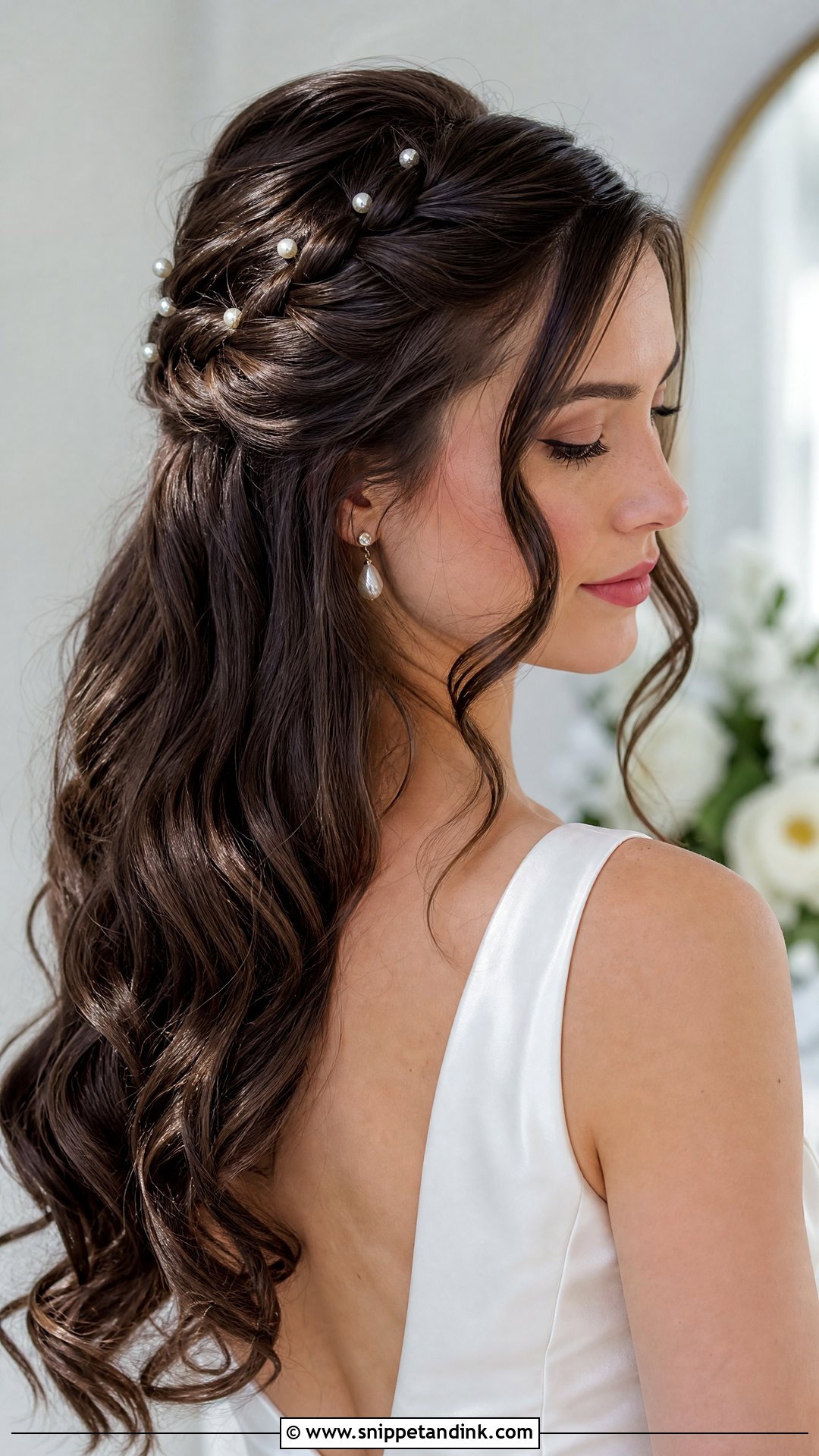
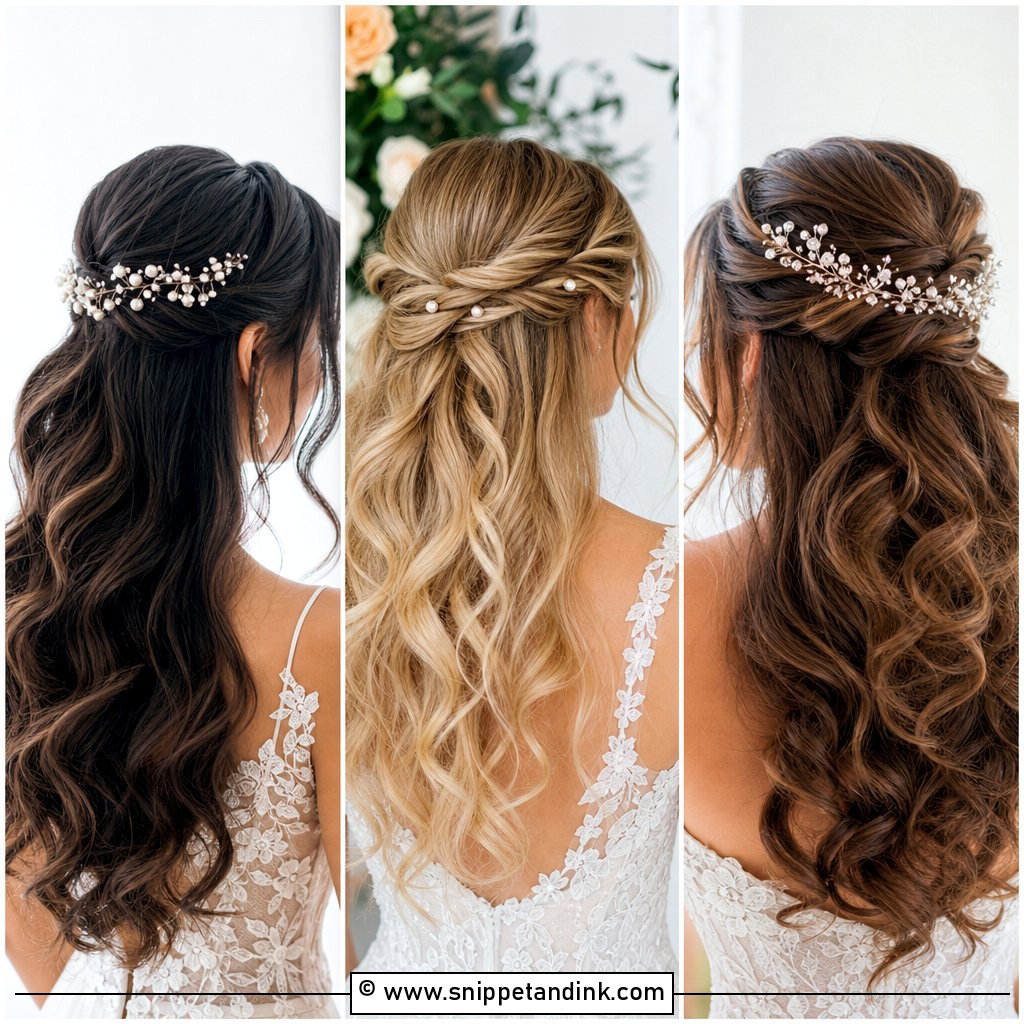
Pearls suit the cleaner end of the braid spectrum: sleek waves, glossy hair, satin dresses and minimal gowns. I place them through the braid, scattered across the crown or pinned near the back, and I’d only choose one of those zones. Too many large pieces at once and the braid loses its texture behind them. Let the weave give the detail and the pearls give a little shine. Up close and in full-length photos, that restraint is what reads as polished.
13. Bridal Half Up Braids For Long Hair
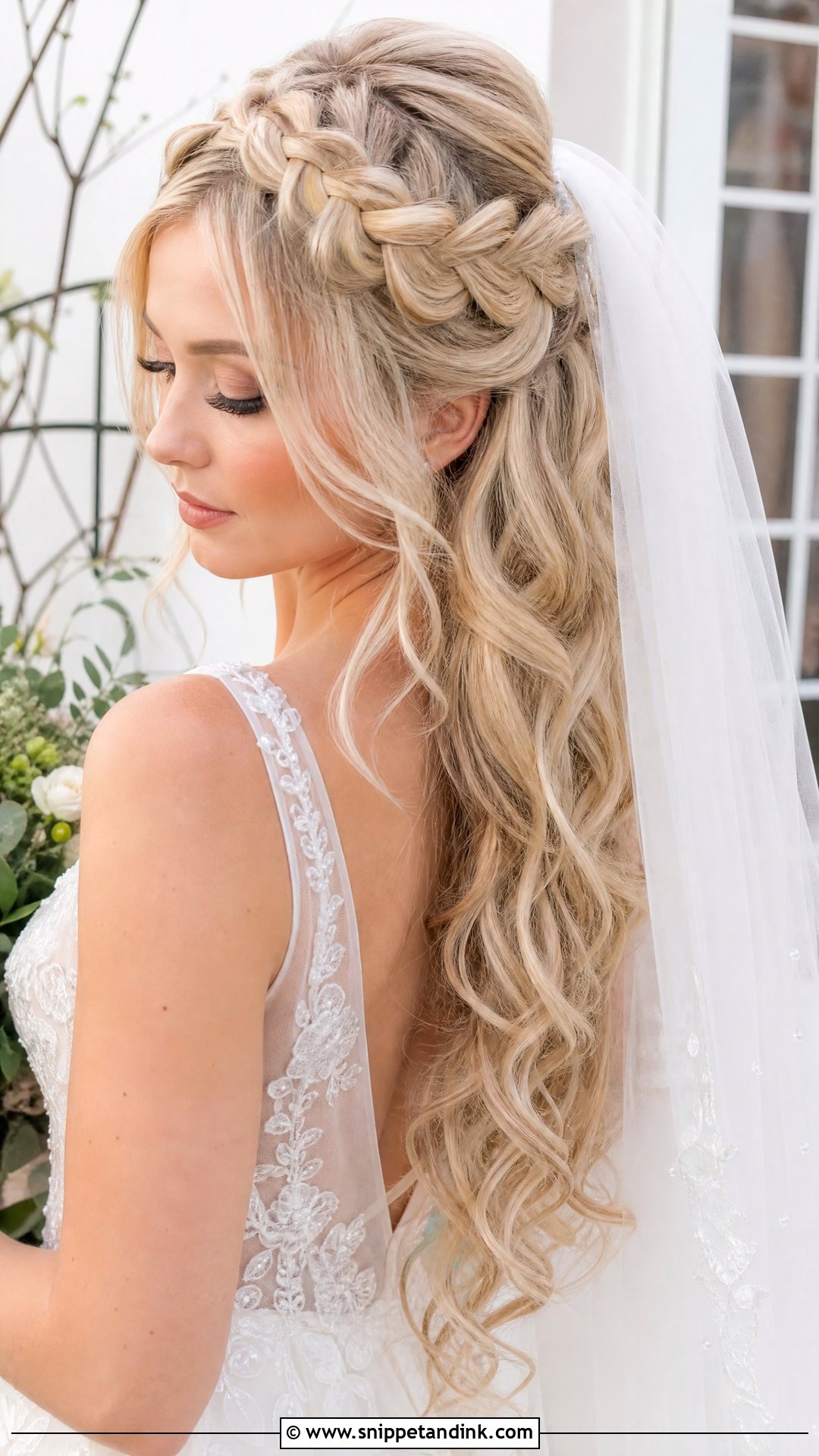
Long hair gives me room to build a full braid, soft twists and plenty of curls. The problem is weight. Very long hair pulls on the top section all day, and that’s what makes a half-up style slip downward by the evening. I counter that with crossed pins under the braid and a light hold rather than stiff spray. Layered waves keep the lengths from feeling heavy. The braid keeps hair off your face for vows and the first dance.
14. Bridal Half Up Braids For Medium Hair
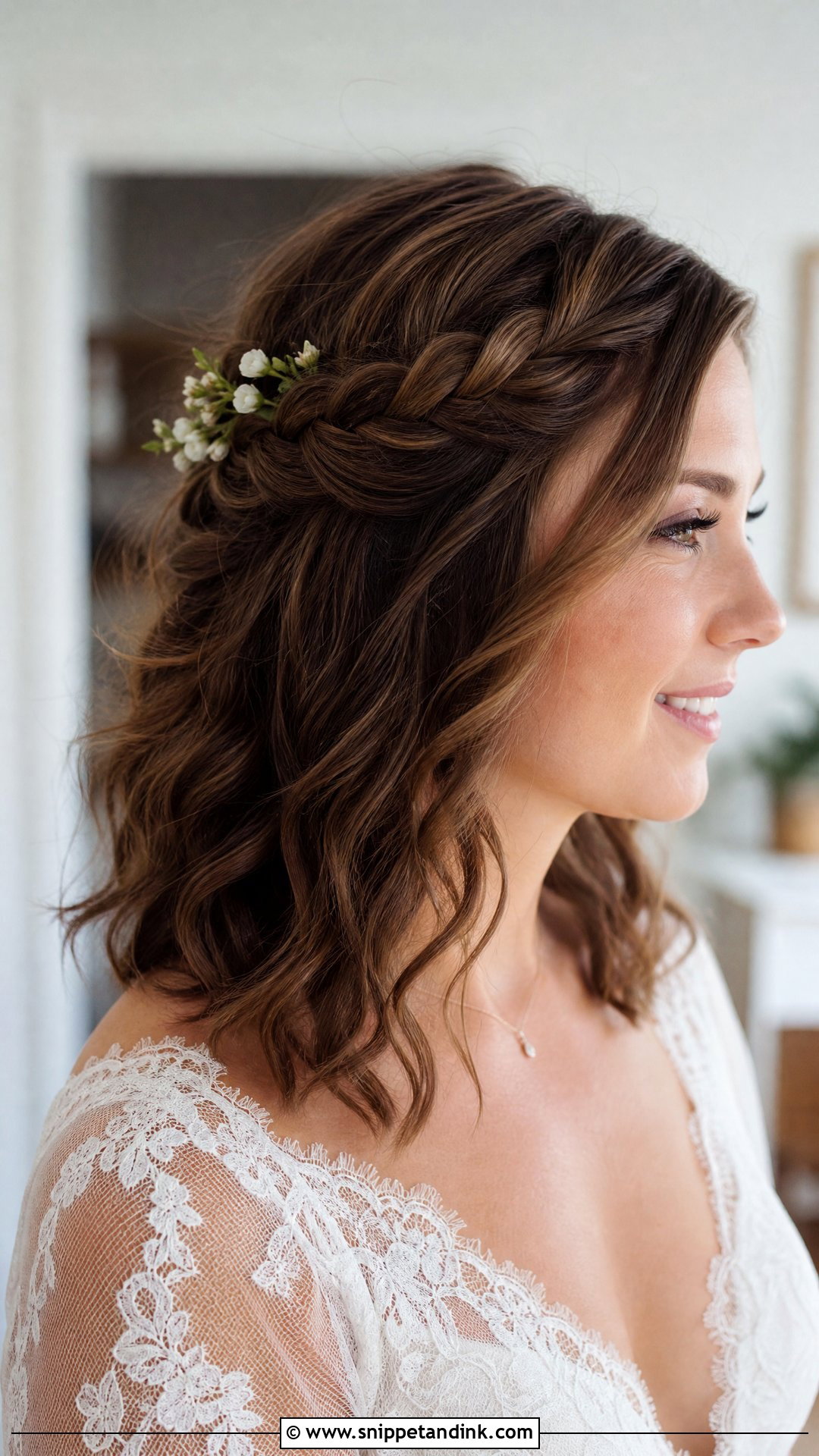
Shoulder-length hair, collarbone cuts and long bobs can all wear a half-up braid; it just needs better placement. A crown braid, side braid or small braided bun adds enough detail without length. The challenge is that shorter layers poke out of a braid, so I braid tighter at the start and use small pins to tuck stray ends. Soft waves below make the lower half look thicker. If you want more fullness, a couple of clip-in pieces blend in easily at this length.
15. Bridal Half Up Braids For Curly Hair
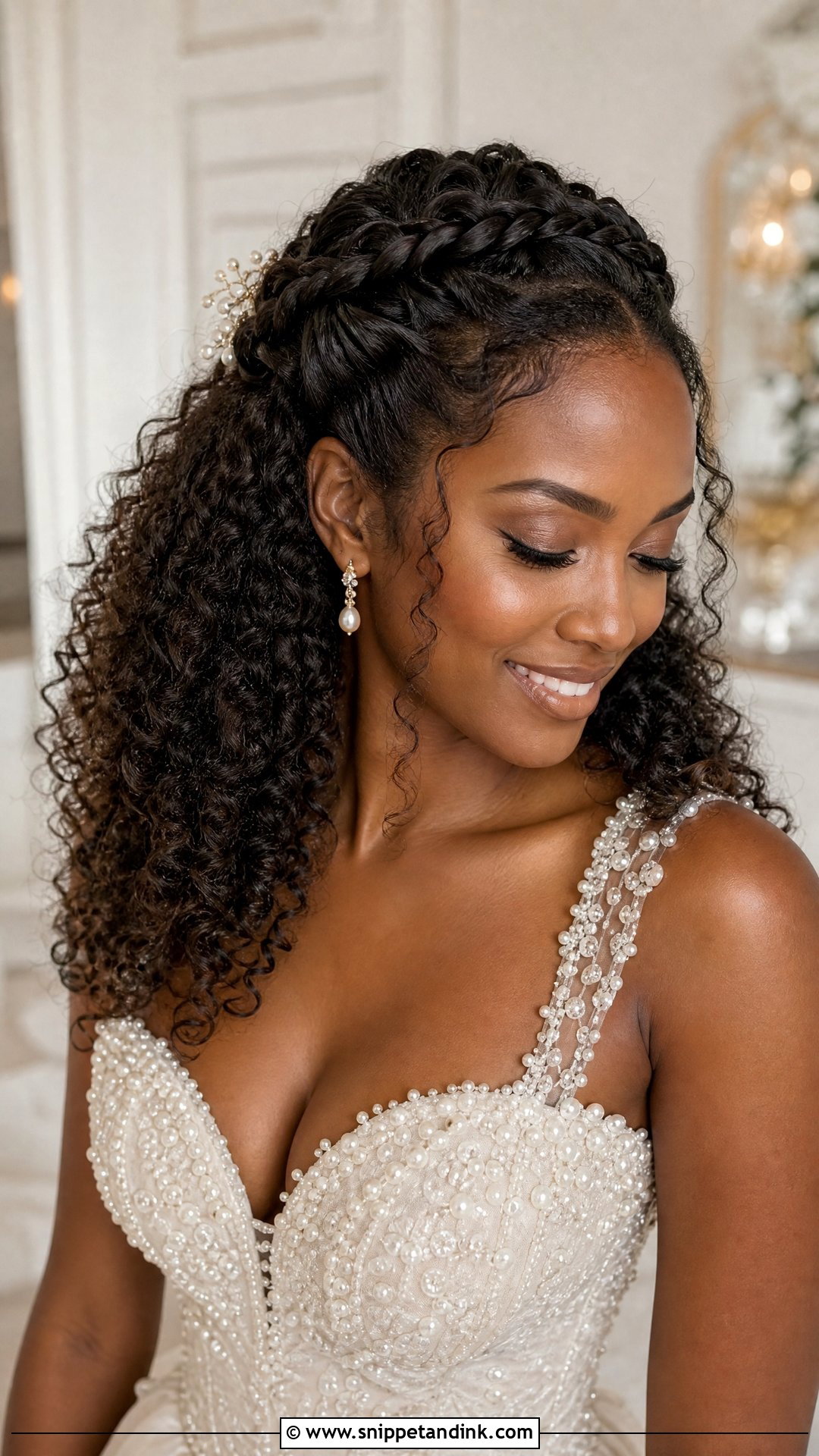
Curly hair gives a braid built-in grip, which is a real advantage. A braid can run along the crown, frame the sides or connect at the back while the curls stay full. Loose curls, tight curls and textured waves all work. I braid on damp, product-coated hair rather than brushing it dry, because brushing breaks the curl pattern into frizz. Pins, flowers or pearls can go into the braid, but let the curls stay the main event.
The Loose Half Is What Gives Out First
The braid itself rarely fails. What changes over a long day is the hair hanging down. Curls relax under their own weight, humidity puffs them out, and in a warm venue hair sticks to the back of your neck by the speeches. Plan for it.
Helping the curls last
- Wash the day before, not the morning of. Slightly lived-in hair holds a curl and a braid far better than squeaky clean hair.
- Ask your stylist to pin each curl while it cools. It adds time, but the shape sets properly.
- Fine or very straight hair often benefits from a few clip-in extensions even when length isn’t the goal. They add grip and weight to the curls.
- Texturizing spray before braiding stops the braid sliding loose on silky hair.
When the day is genuinely too hot
For an outdoor summer wedding in real heat, put more hair into the braid and leave less down, or ask for a style that converts. Most half-up braids can be twisted into a low bun in a few minutes with a handful of pins. Tuck those pins and a small elastic into a bridesmaid’s bag and change after dinner without anyone noticing.
Test the Braid With Your Veil in Before You Commit
Half-up braids give you the softness of hair worn down with enough structure to get through a long day, and there’s a version for nearly every texture and length. Fishtail, crown, Dutch, waterfall or a small braided bun: the choice really comes down to your neckline, where the veil sits and how much grip your hair has. Book a trial and wear the style for a few hours afterwards. You’ll learn more from how the curls look at dinnertime than from how they look in the salon mirror.
You'll Like These Ideas:


Leave a Reply