
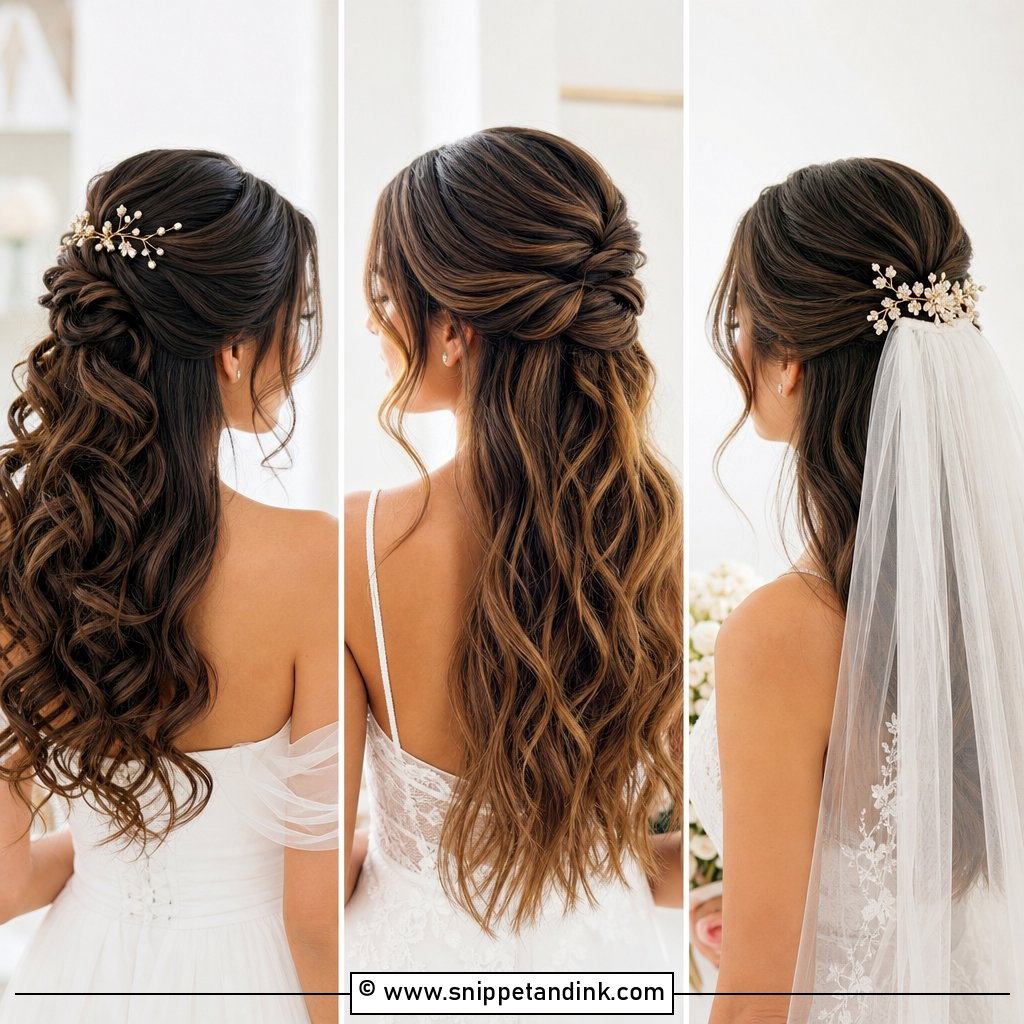
A half-up braid gives a bride two things I rarely get from one style: hair off the face for the vows, and length left down for the photos taken from behind. The braid is also the part doing the structural work, so it holds the top section far better than a plain pinned half-up. Below are twenty versions, from fine fishtails to raised Dutch plaits dressed with baby’s breath, with my notes on which hair each one grips, where it tends to slip and how I’d adapt it on the morning.
Your Hair’s Grip Decides the Braid
Before I suggest a braid, I run my fingers through a bride’s hair at the trial and feel how much it grips. Hair with some texture holds a plait on its own; silky, freshly washed hair lets every crossing slide. That one test rules out more styles than anything on a mood board.
Fine or Silky Hair
Wash the day before, not the morning of, and let your stylist add texture spray or dry shampoo at the root. Fishtails and Dutch braids suit you best, because their many crossings lock onto each other. Pancake gently and late. If you want width you don’t naturally have, a clip-in weft hidden under the braid gives it, and nobody can tell once it’s plaited.
Thick or Coarse Hair
Your problem is weight. A heavy top section pulls on its pins and sags by evening. I take smaller sections into the braid, secure the end with an elastic as well as pins, and sometimes leave the underneath layer of the loose half a little straighter so it adds less bulk.
Layered Cuts and Grown-Out Fringes
Short layers poke out along a braid. Fishtails and rope twists hide them better than a three-strand French braid, and I keep small pins handy to tuck ends as I go. If you’re planning a cut before the wedding, ask for longer layers and book it well ahead so it has time to grow in.
Natural Curls and Coils
Your texture grips well, so braids hold all day. The real decision is the loose half: your own defined curl pattern, or the hair stretched smoother. Settle it at the trial, because blow-drying for a smoother finish changes how the braid sits too.
1. Fishtail Braid Crown Half-Up
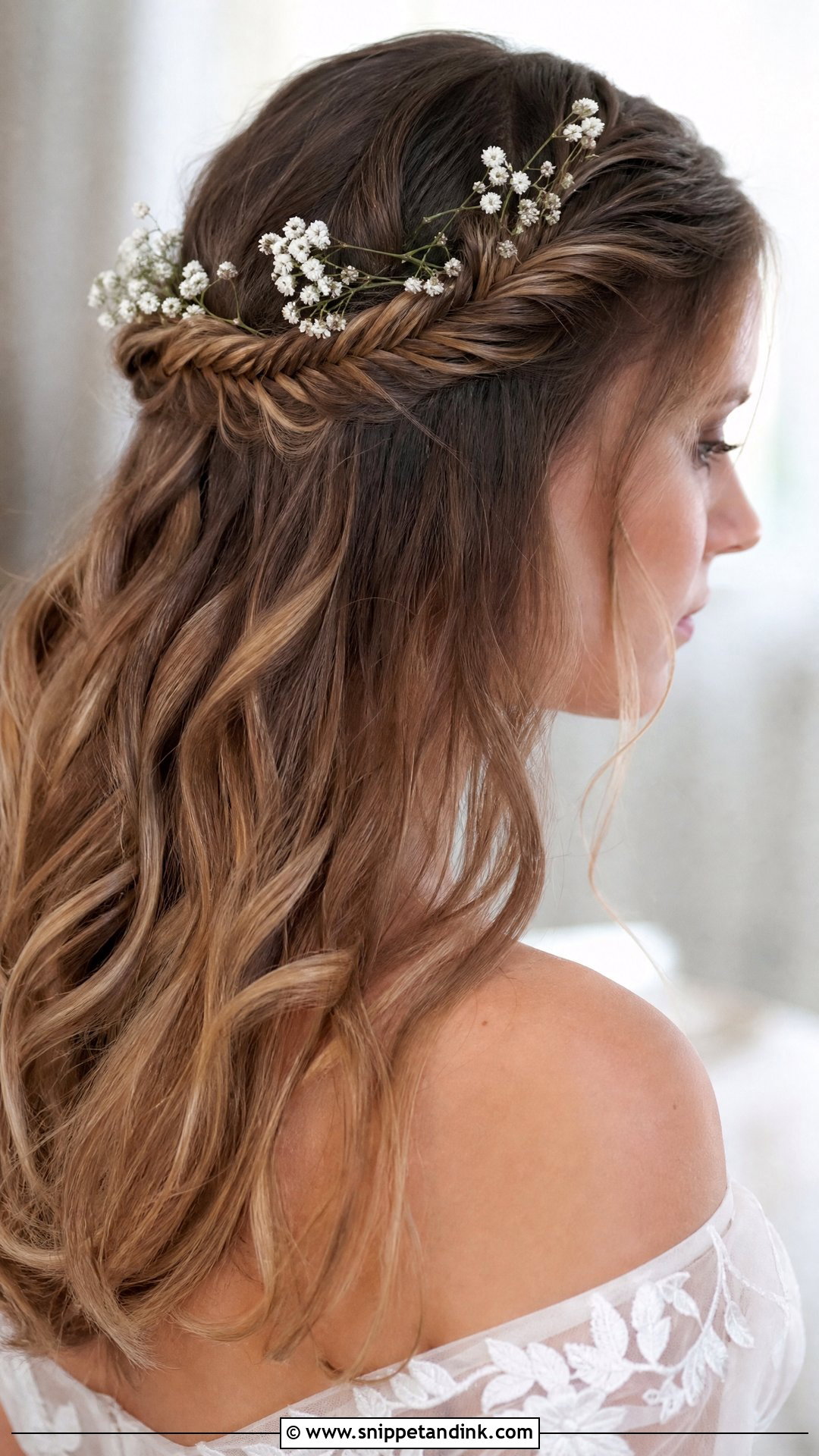
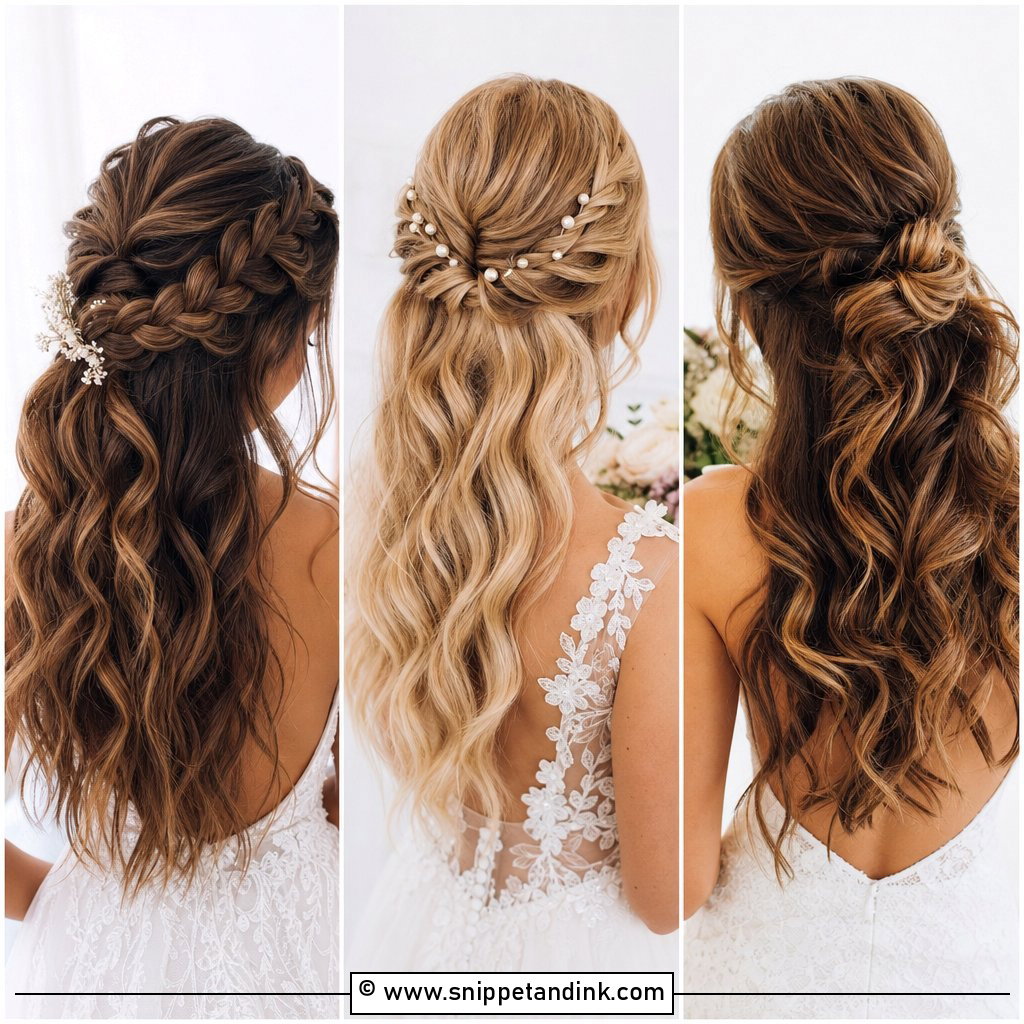
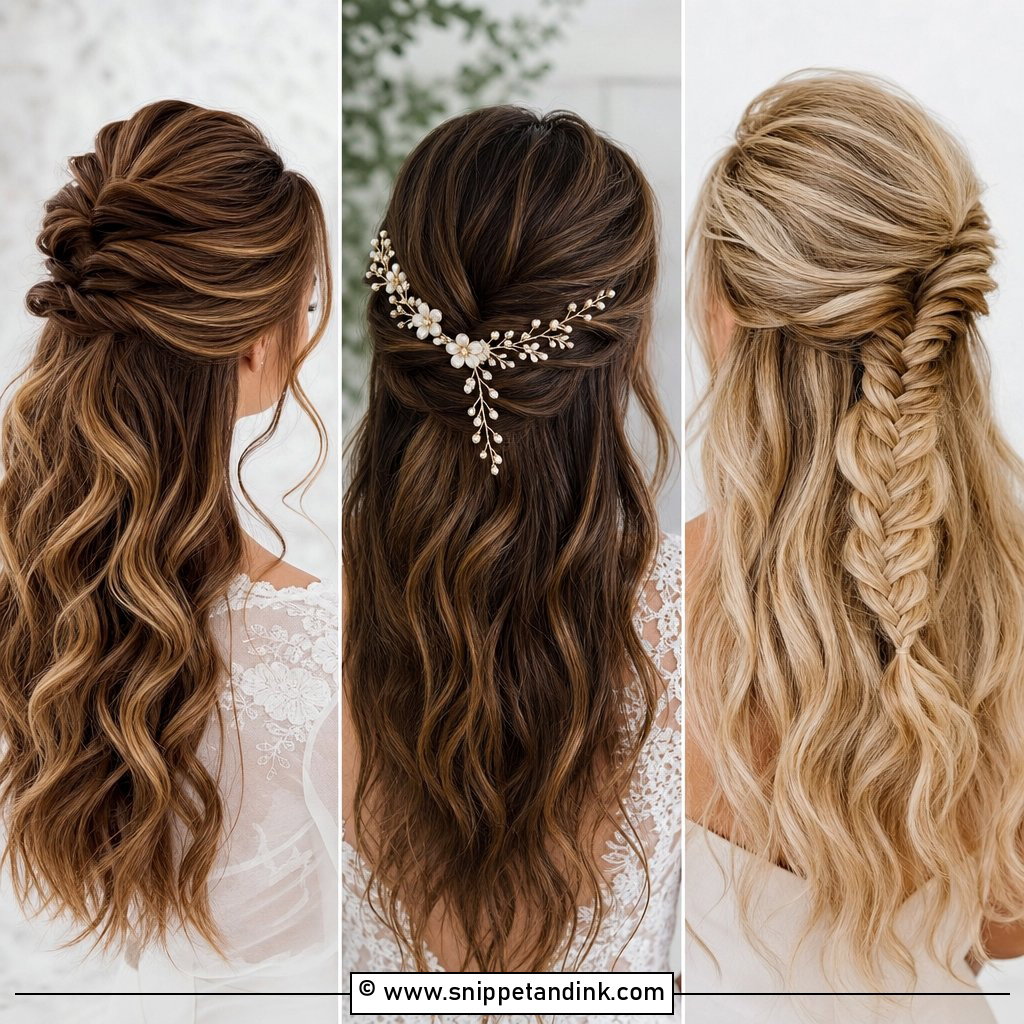
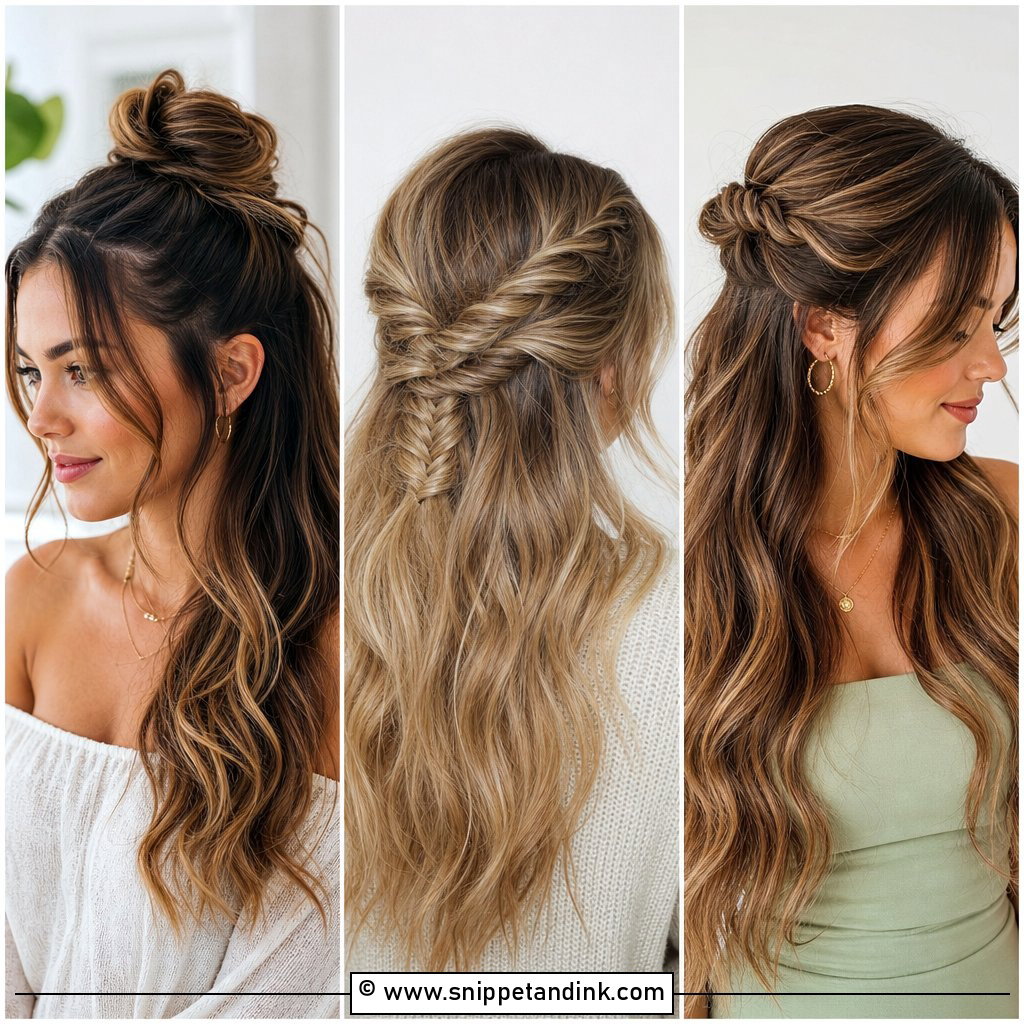
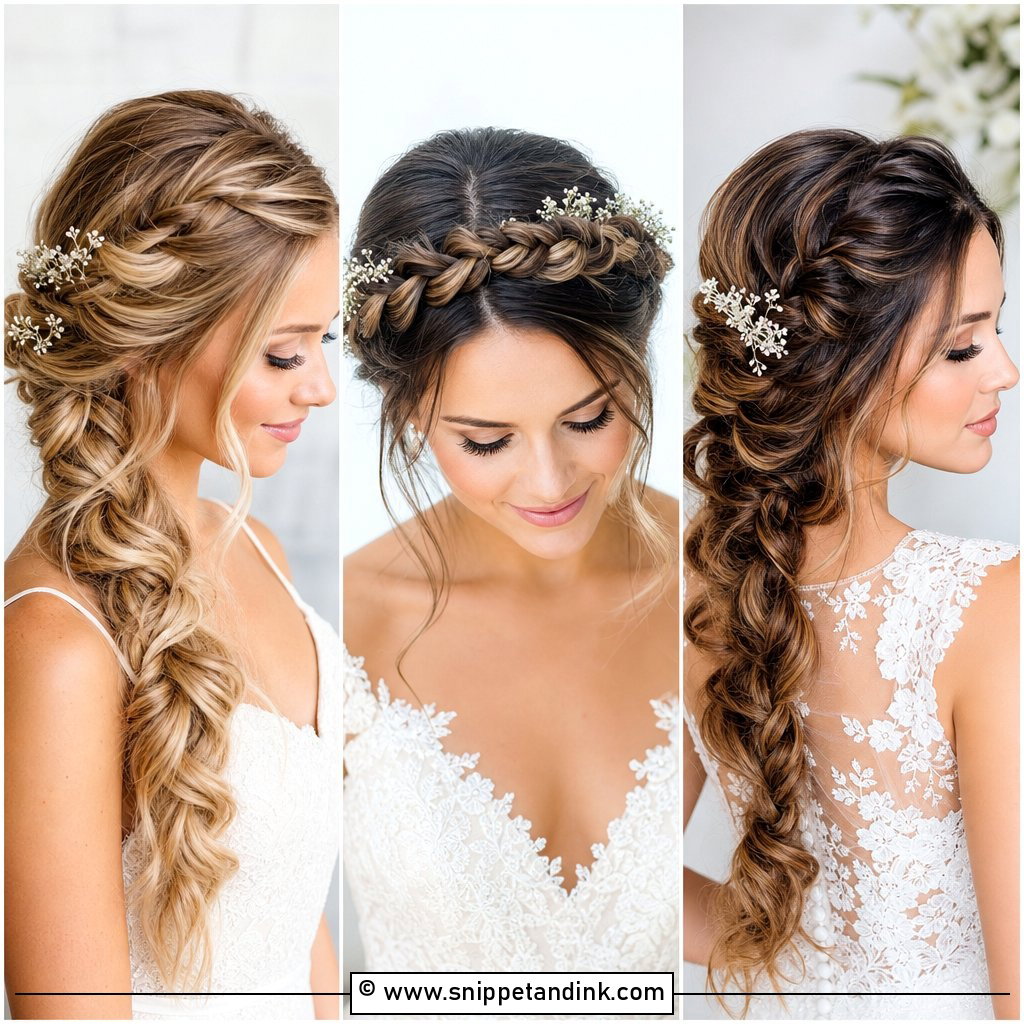
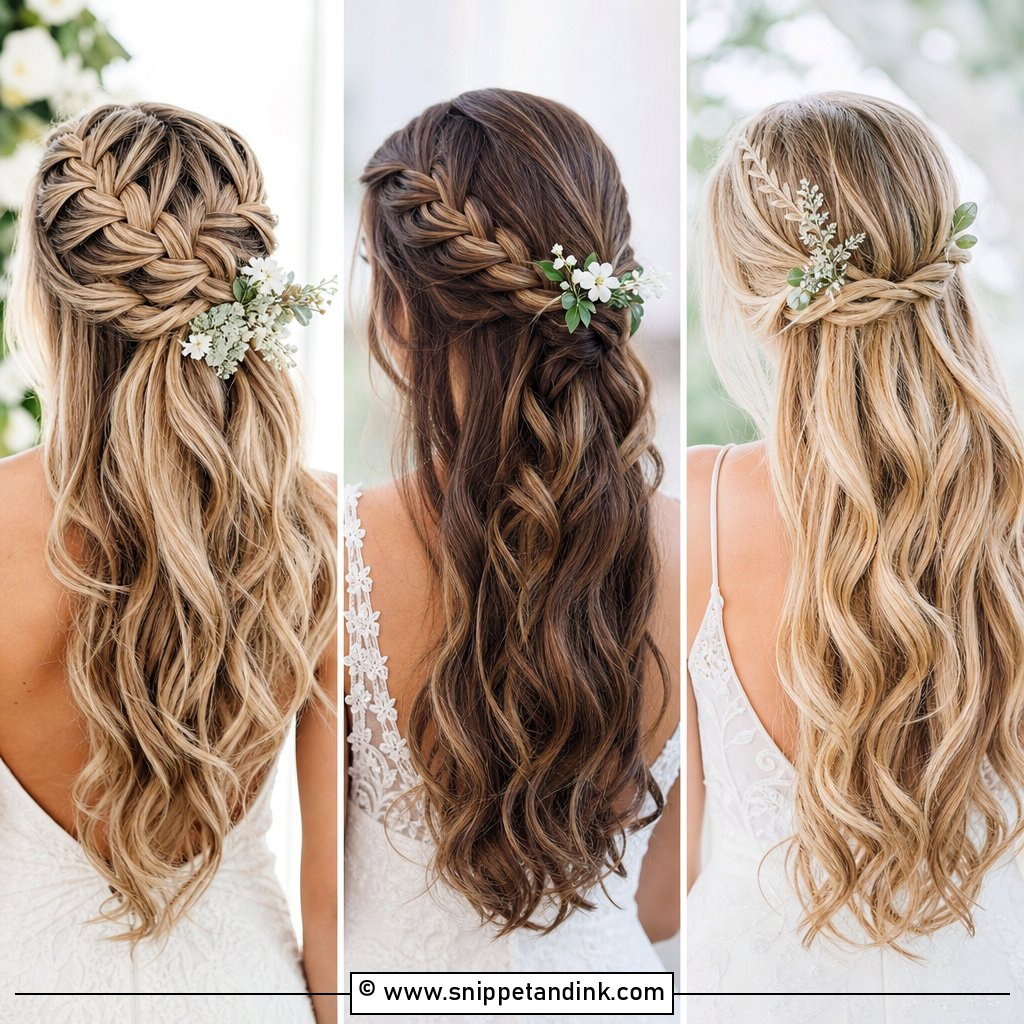
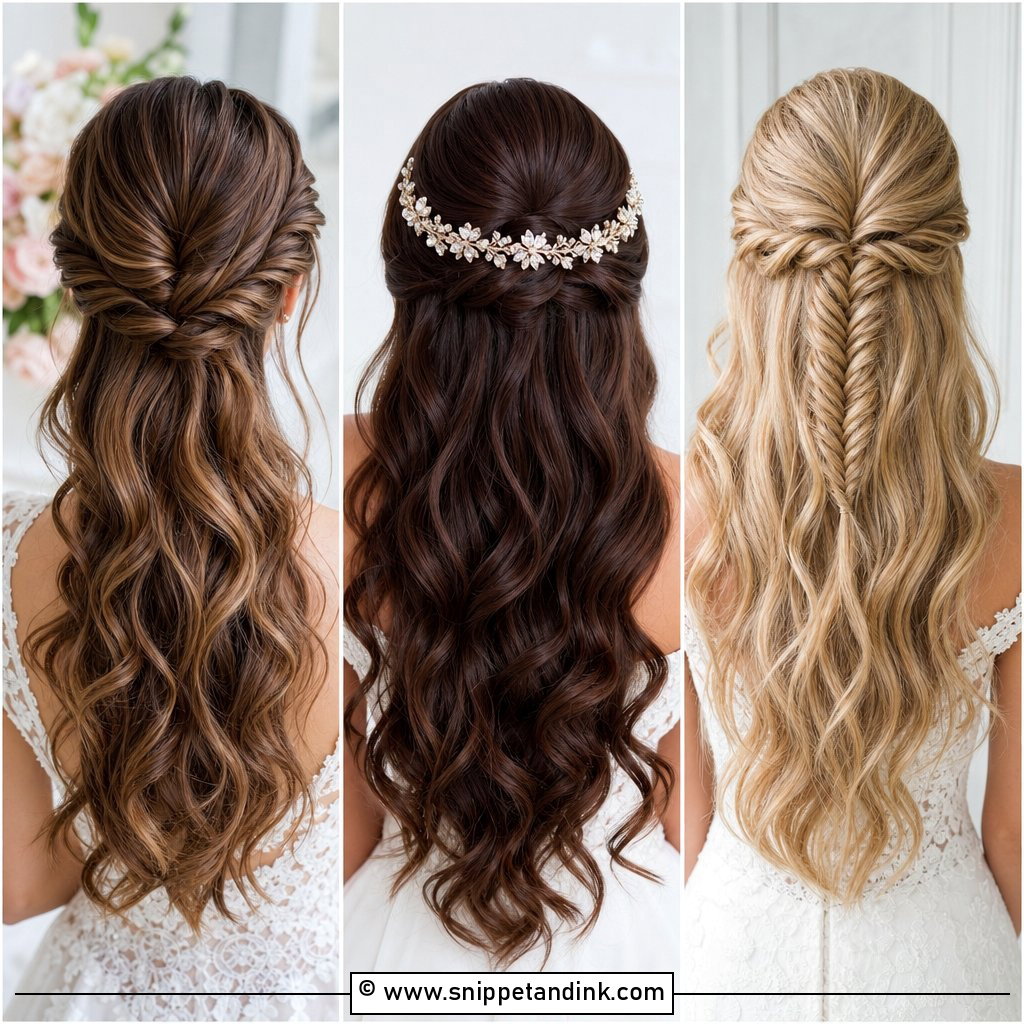
A fishtail crown takes a thin section from each side and weaves them into a narrow plait that meets at the back, with the rest left in loose waves. Fishtails split hair into dozens of tiny crossings, so they look intricate even on modest density, and they forgive a little pancaking, which is how I get the fuller shape you see here. On very layered hair I pin the short ends that pop out along the plait rather than fight them. Tuck baby’s breath sprigs into the crossings; the stems hold there without any wire.
2. Dutch Braid Half-Up With Loose Waves
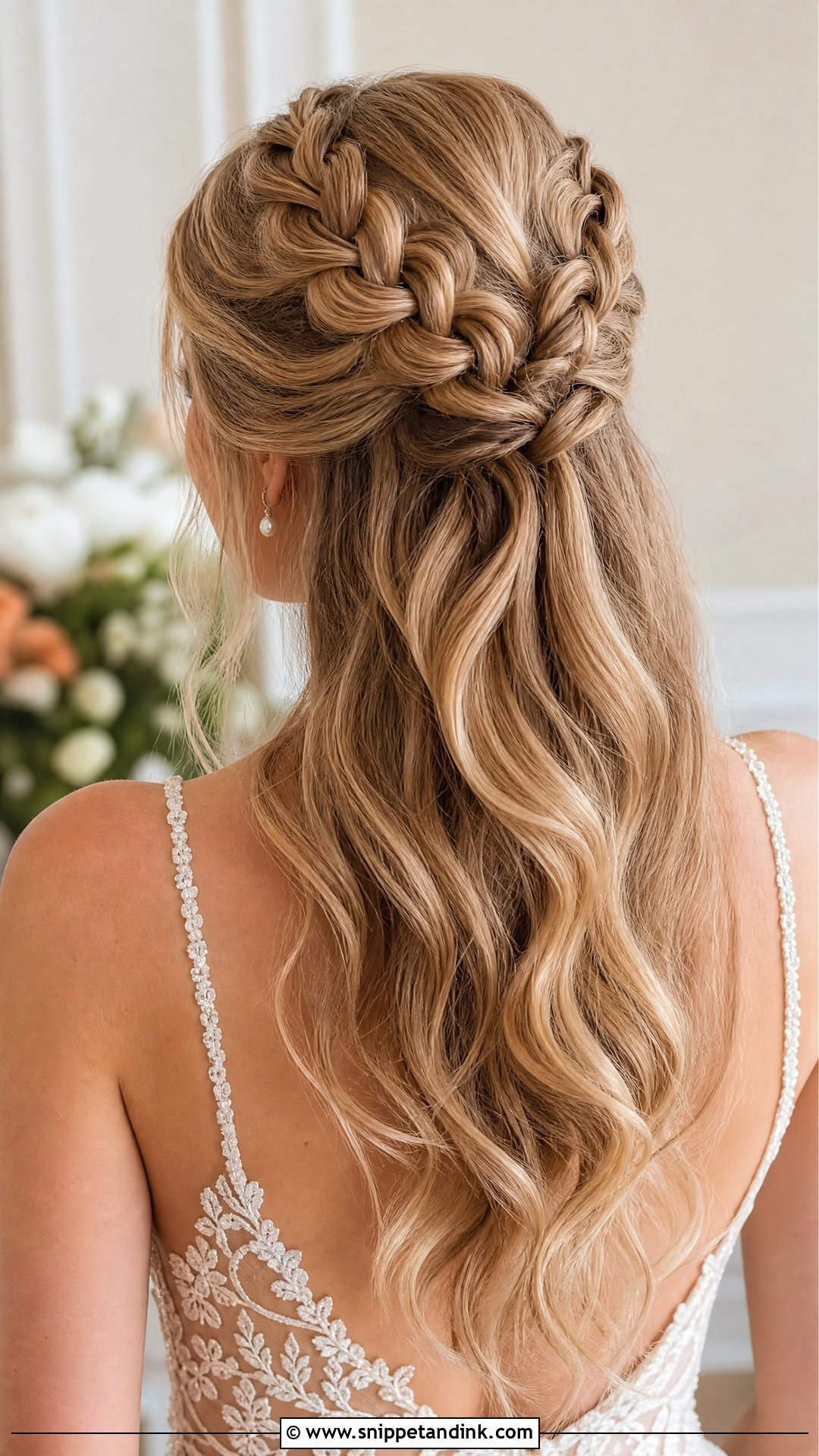
Dutch braids are worked underhand, so the plait sits raised on top of the hair instead of lying flat, and that ridge is what reads in photos from the back. Two raised Dutch braids join behind the crown here, with waves left below. Thick hair gives a bold, rope-width plait. Fine hair can still wear it, but I pancake gently and only at the very end, because pulling too early loosens the whole braid and it sags by the reception. It holds up well at barn and outdoor ceremonies where wind is part of the day.
3. Waterfall Braid Half-Up
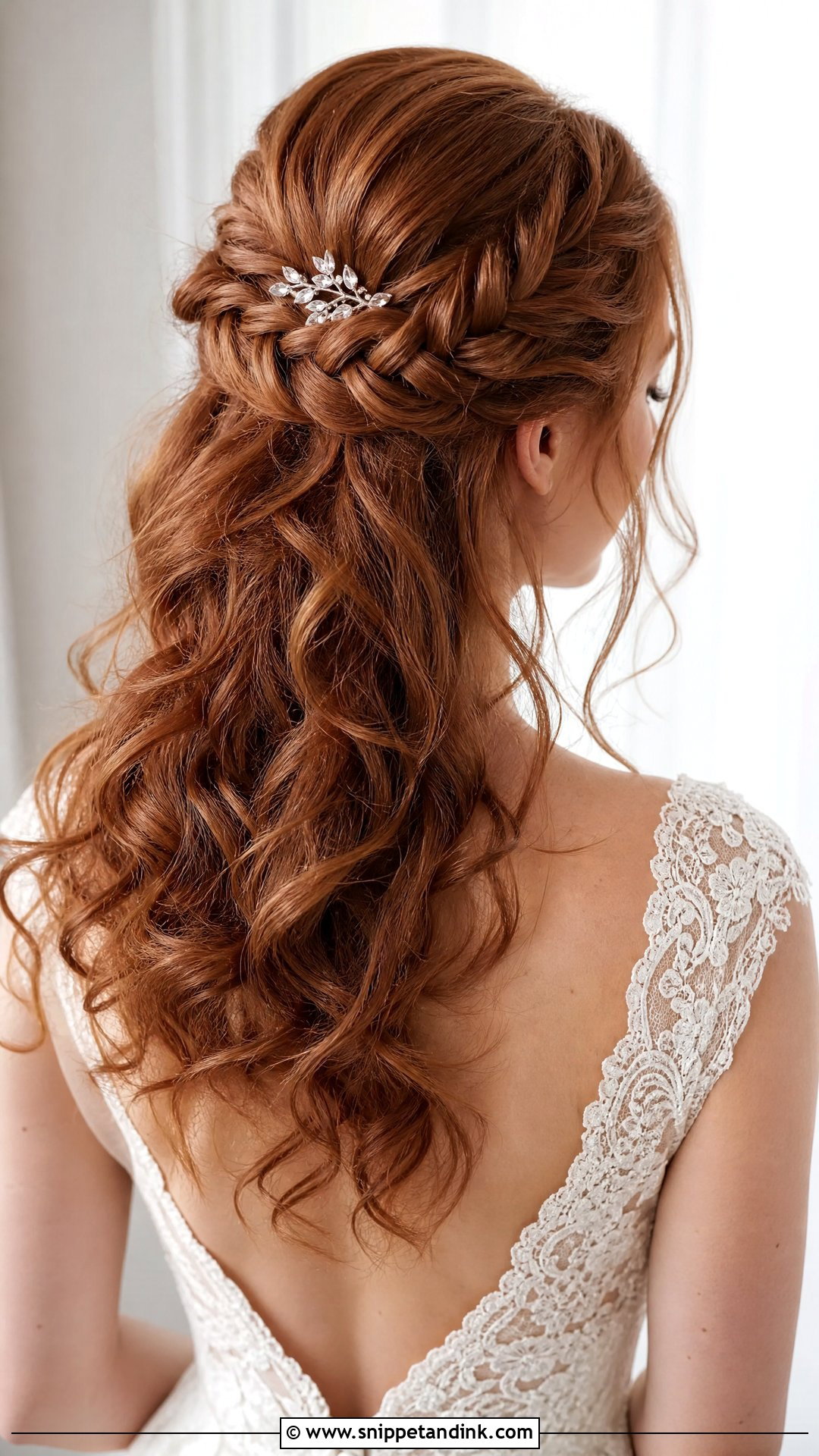
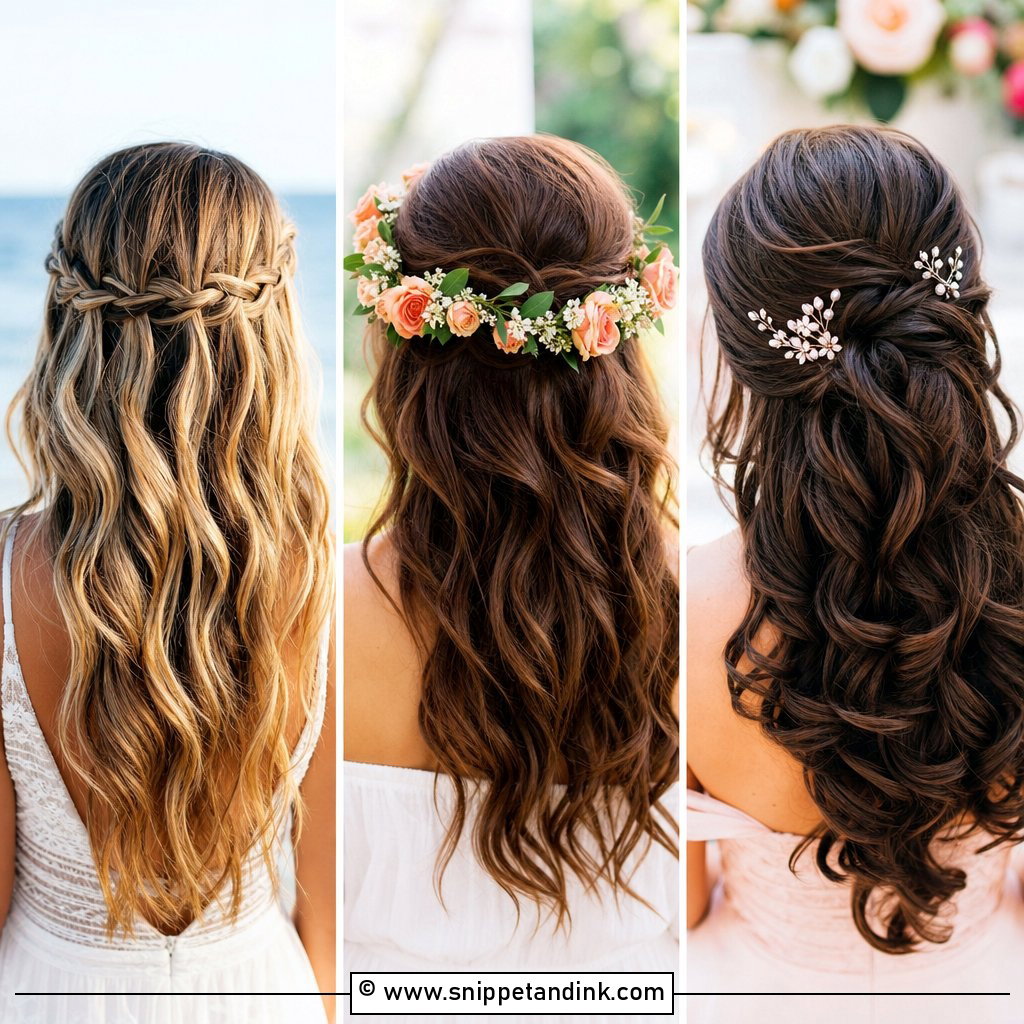
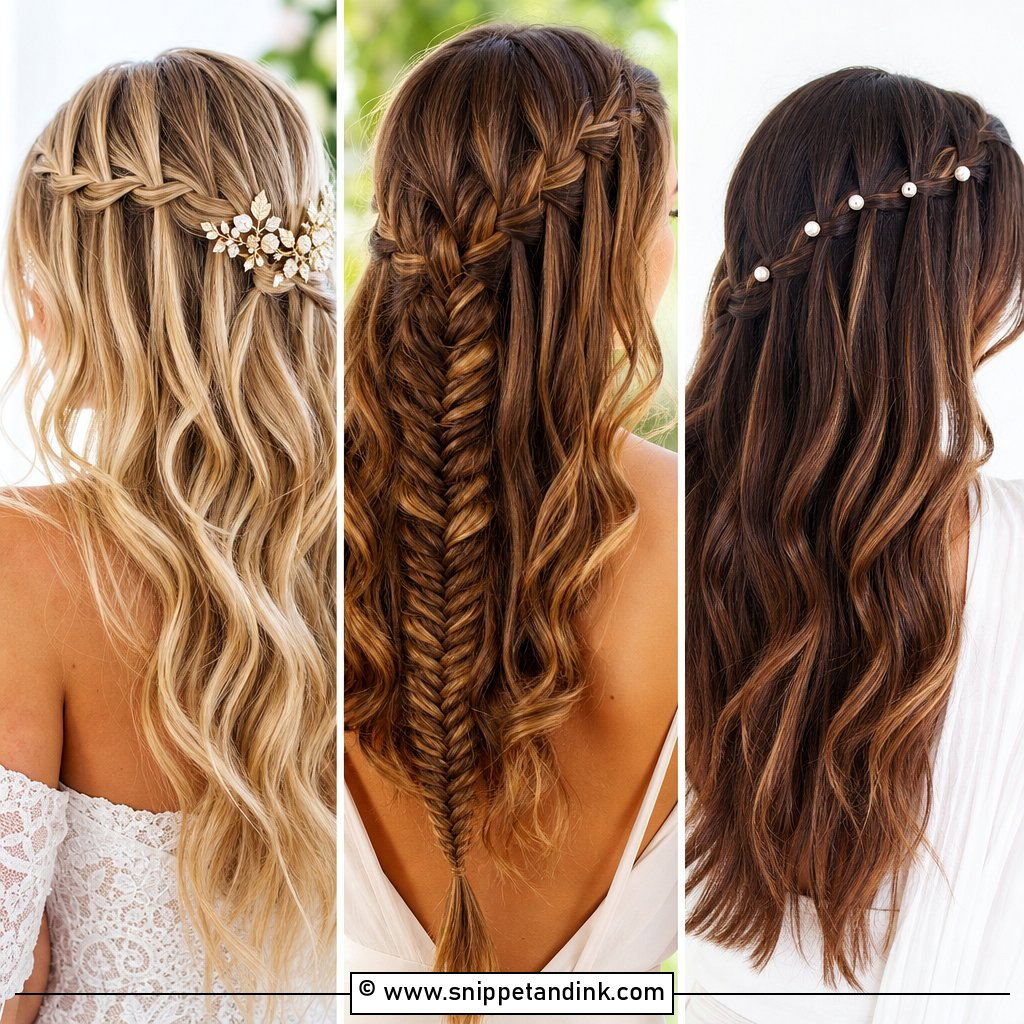
A waterfall braid half-up runs horizontally across the back of the head, dropping one strand at every pass and picking up a new one, so the loose pieces fall through like a curtain. It needs curled hair underneath, because those dropped strands vanish into straight hair. The weak point is the end. I finish with a small elastic hidden under a sparkling clip; otherwise it starts to unravel by the speeches. On shoulder-length hair it still works, but the braid has to sit a little higher.
4. French Braid Half-Up Crown
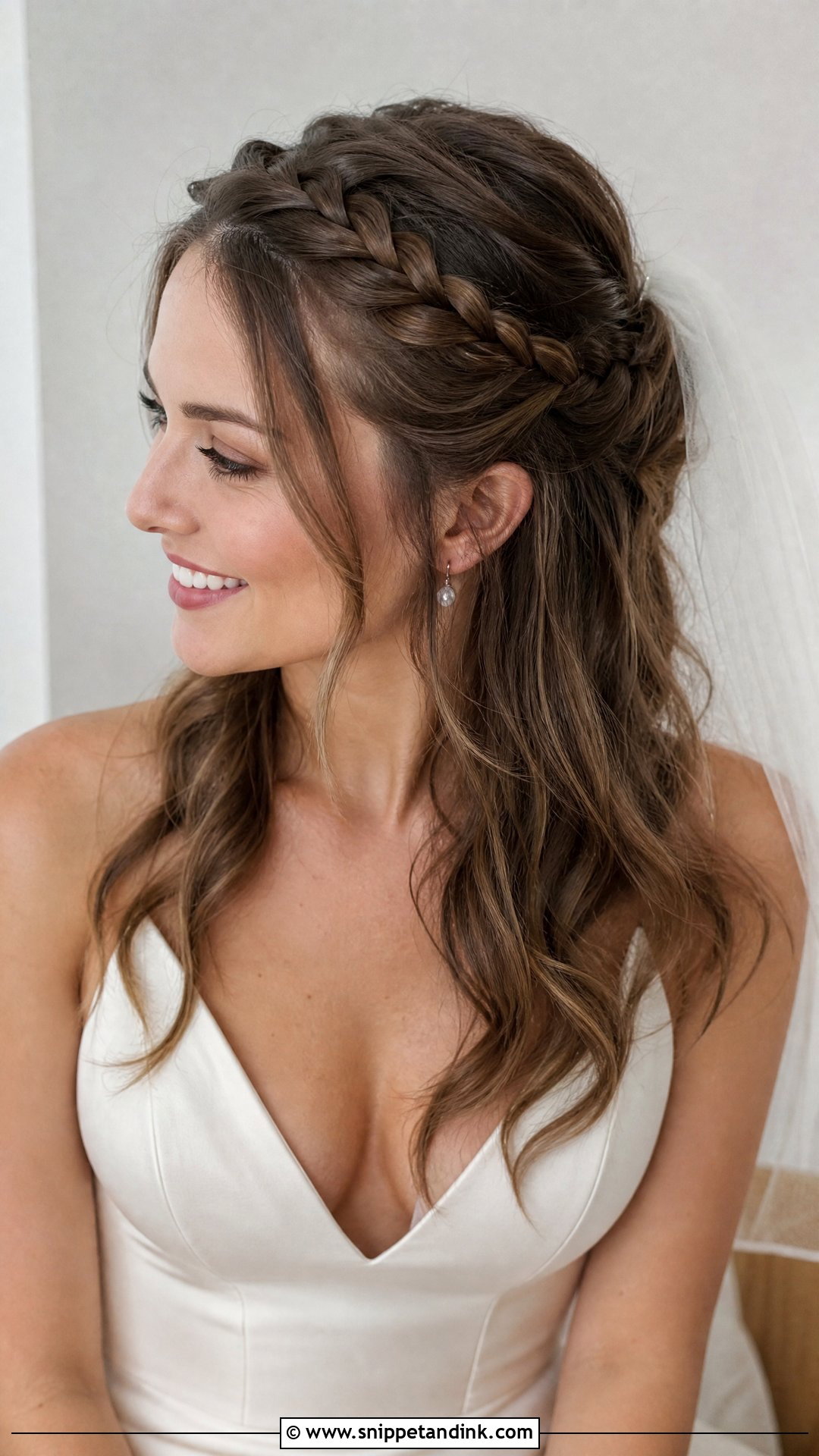
A French braid travels back along the crown overhand, so it lies flatter and smoother than a Dutch plait. That smoother line is why I reach for it at formal weddings: it looks neat from the front and doesn’t fight a veil, which tucks right under the braid’s end. You get a clear face without the tug of a full updo. I leave two or three thin face-framing pieces out before I start braiding, rather than pulling them free afterwards and dragging the hairline loose.
5. Boho Braided Half-Up With Flowers
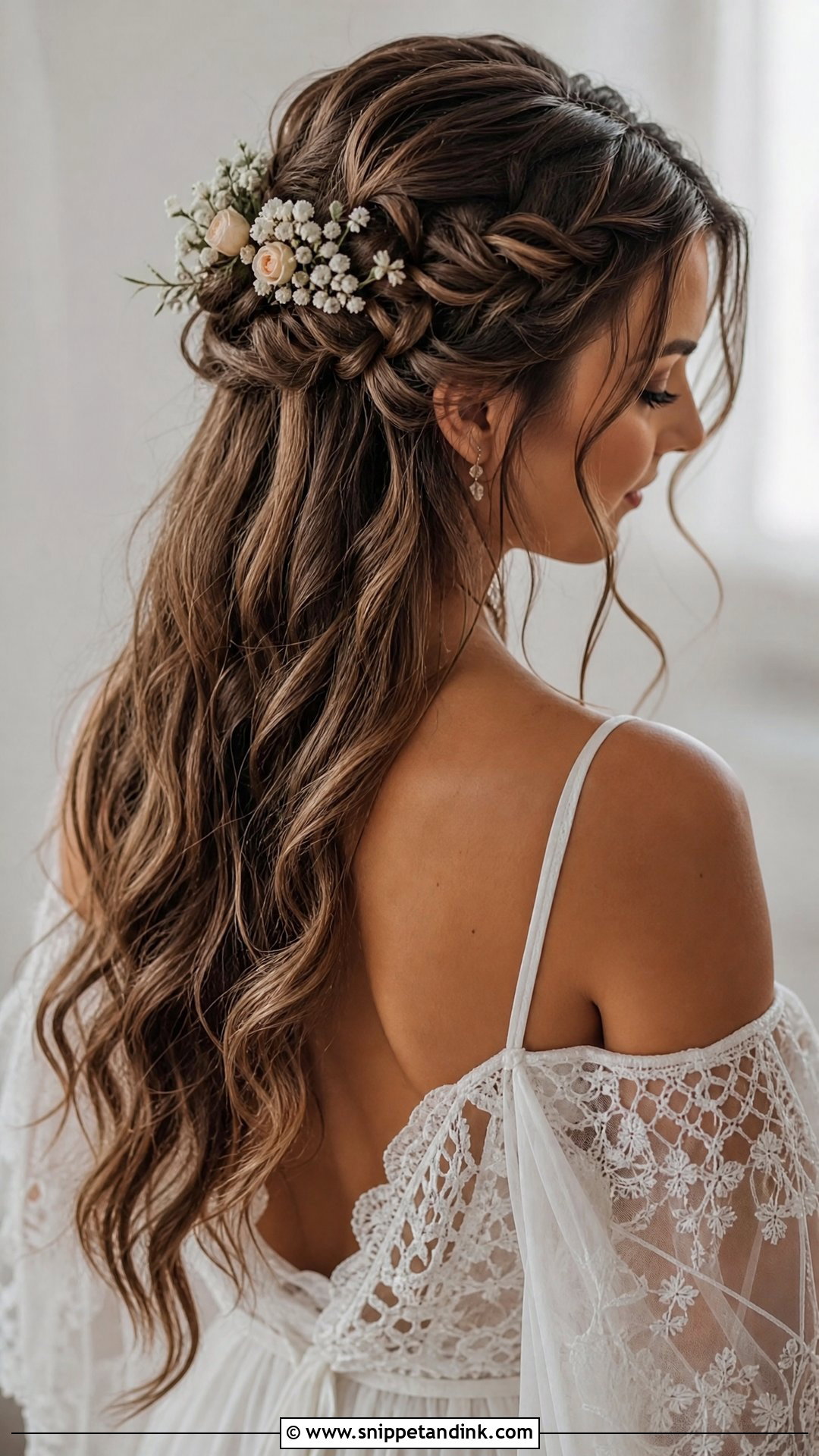
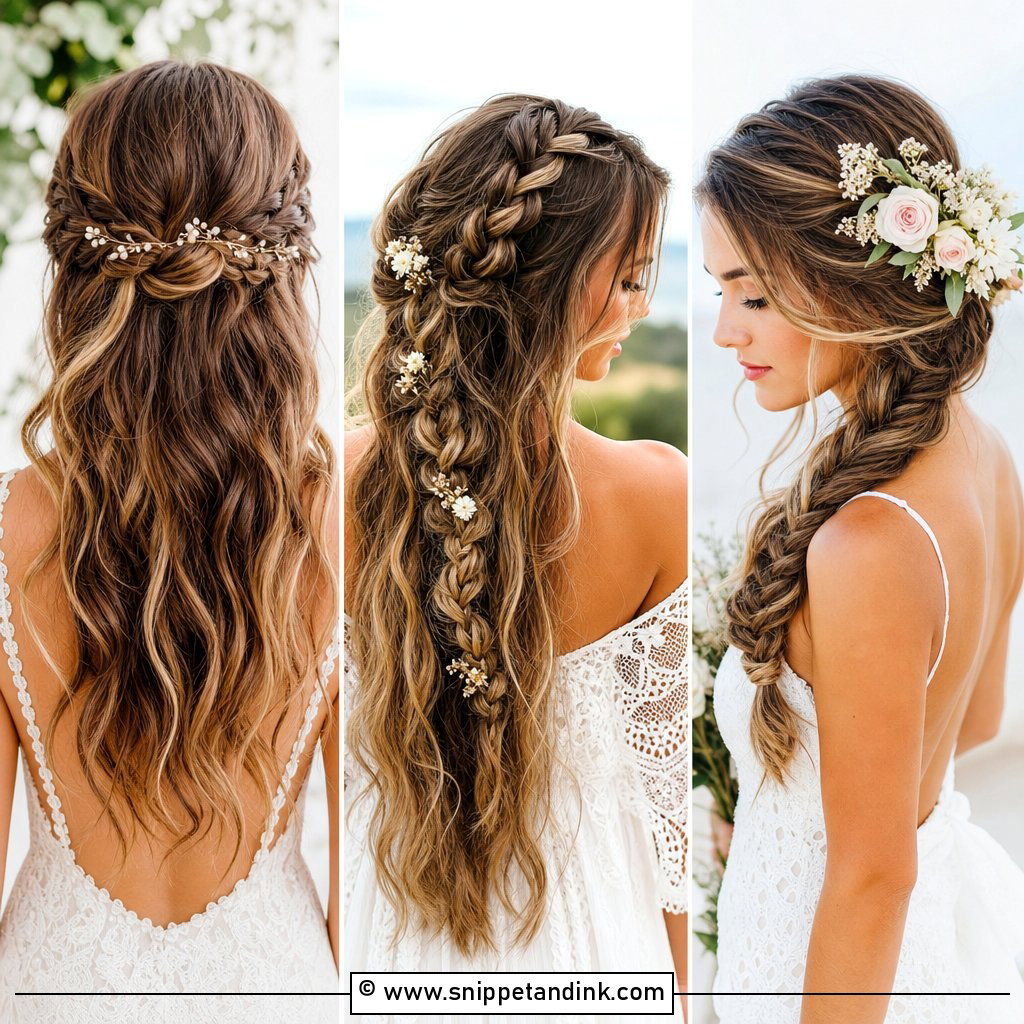
Flowers are the point of this one, so I build it as two loose, textured braids that leave room between the crossings for stems. Small roses, baby’s breath and wildflowers tucked along the braid all work, as long as they can survive hours out of water. Spray roses and waxflower last; sweet peas and other delicate blooms wilt against warm hair surprisingly fast. Leave plenty of waves loose underneath. The undone finish is deliberate, and it’s forgiving on beach and outdoor days when wind would wreck anything sleek.
6. Crown Braid Half-Up With Veil
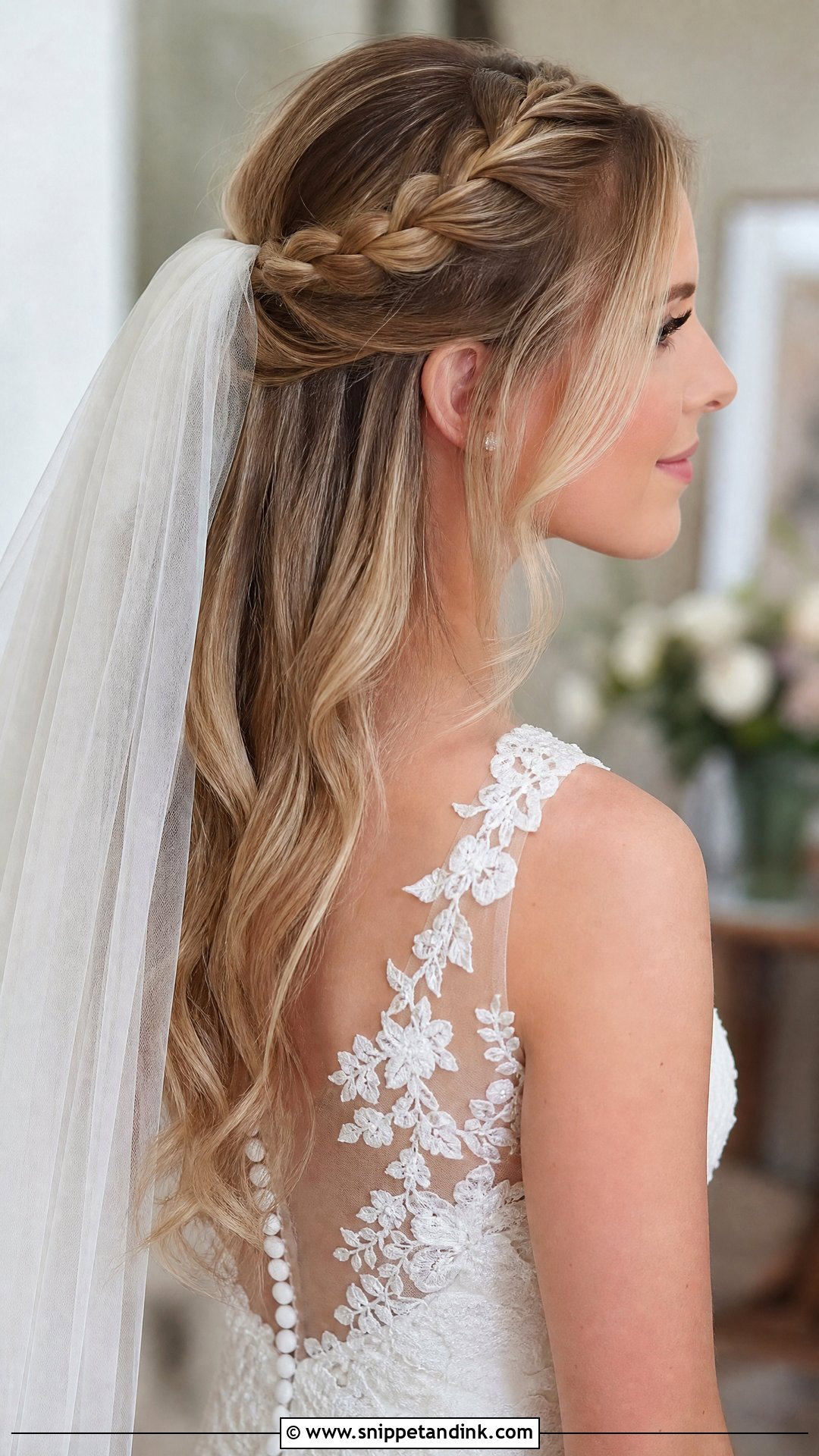
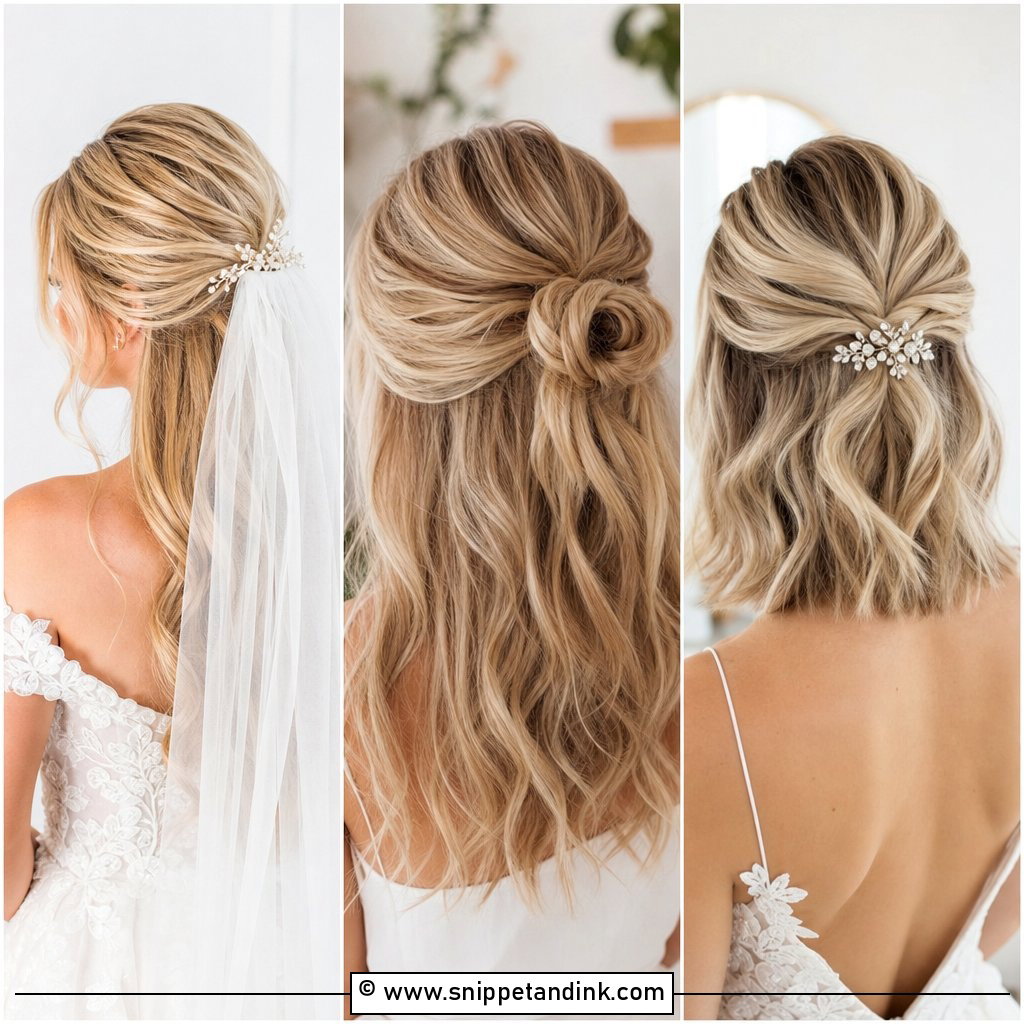
A braid wrapped over the top of the head like a tiara gives a veil something solid to grip, and that’s the practical reason I like this pairing. The veil comb slides under the braid and catches woven hair instead of slipping through loose waves, which matters with a long cathedral length. It reads traditional and suits church and formal ceremonies. When the veil comes off for the reception, the braid is still there, so the hair never looks like something is missing. I set the comb at the trial, because the braid’s placement and the comb’s angle have to be decided together.
7. Twisted Rope Braid Half-Up
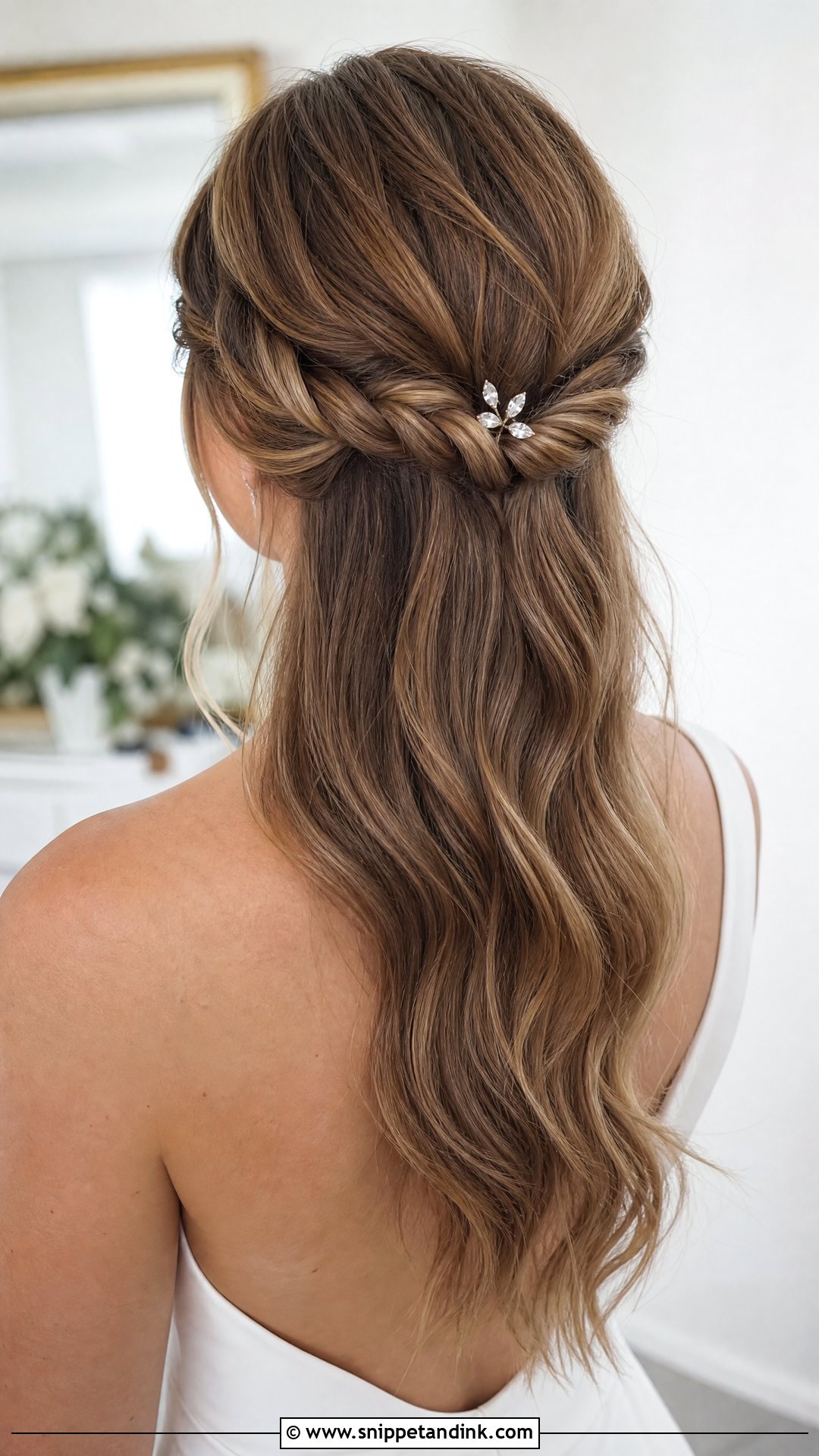
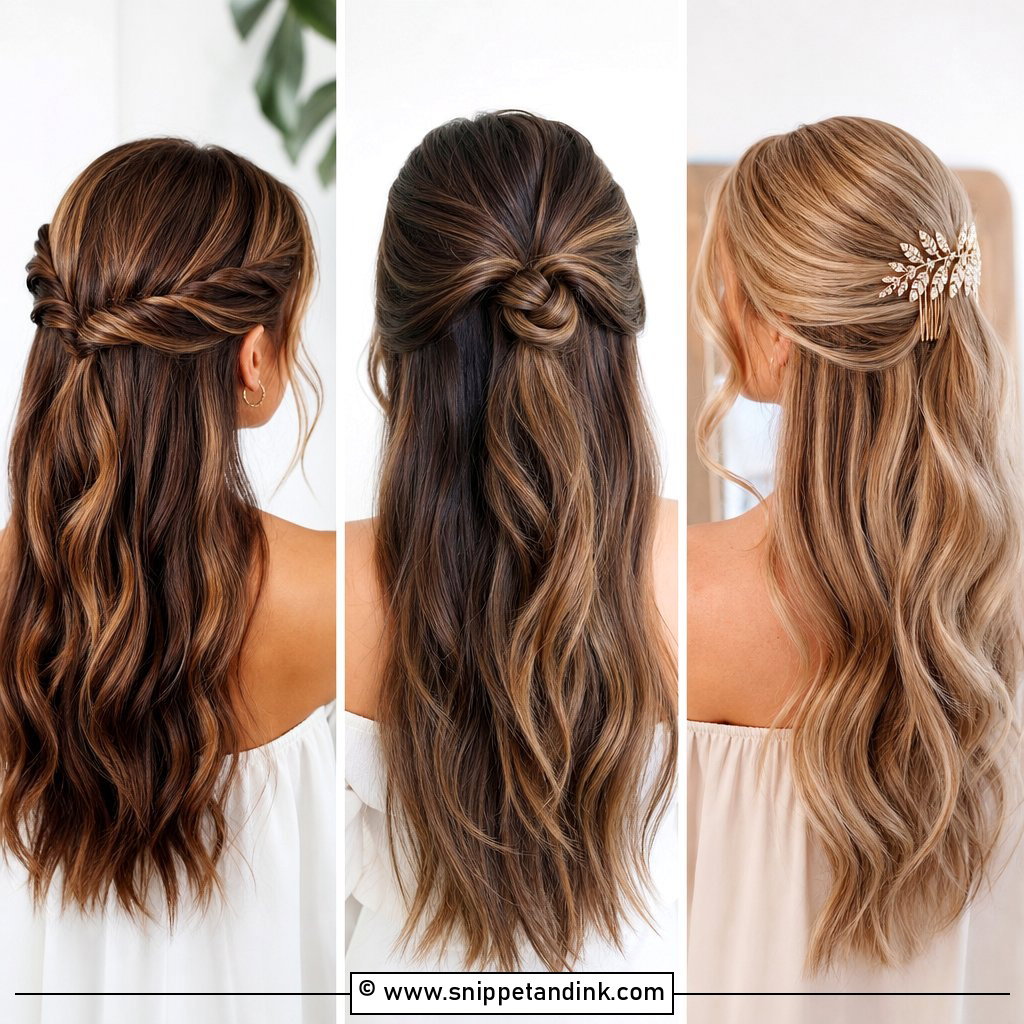
A twisted rope braid is two sections, each twisted in the same direction, then wrapped around each other in the opposite direction. That counter-twist is what locks it. If both go the same way, it unwinds within the hour. Take a section from each side, rope them together at the back and leave the rest in waves or curls. The smooth surface catches light, so it’s my suggestion for brides who find plaits too busy. One pin where the twists meet hides the join.
8. Fishtail Braid Half-Up With Curls
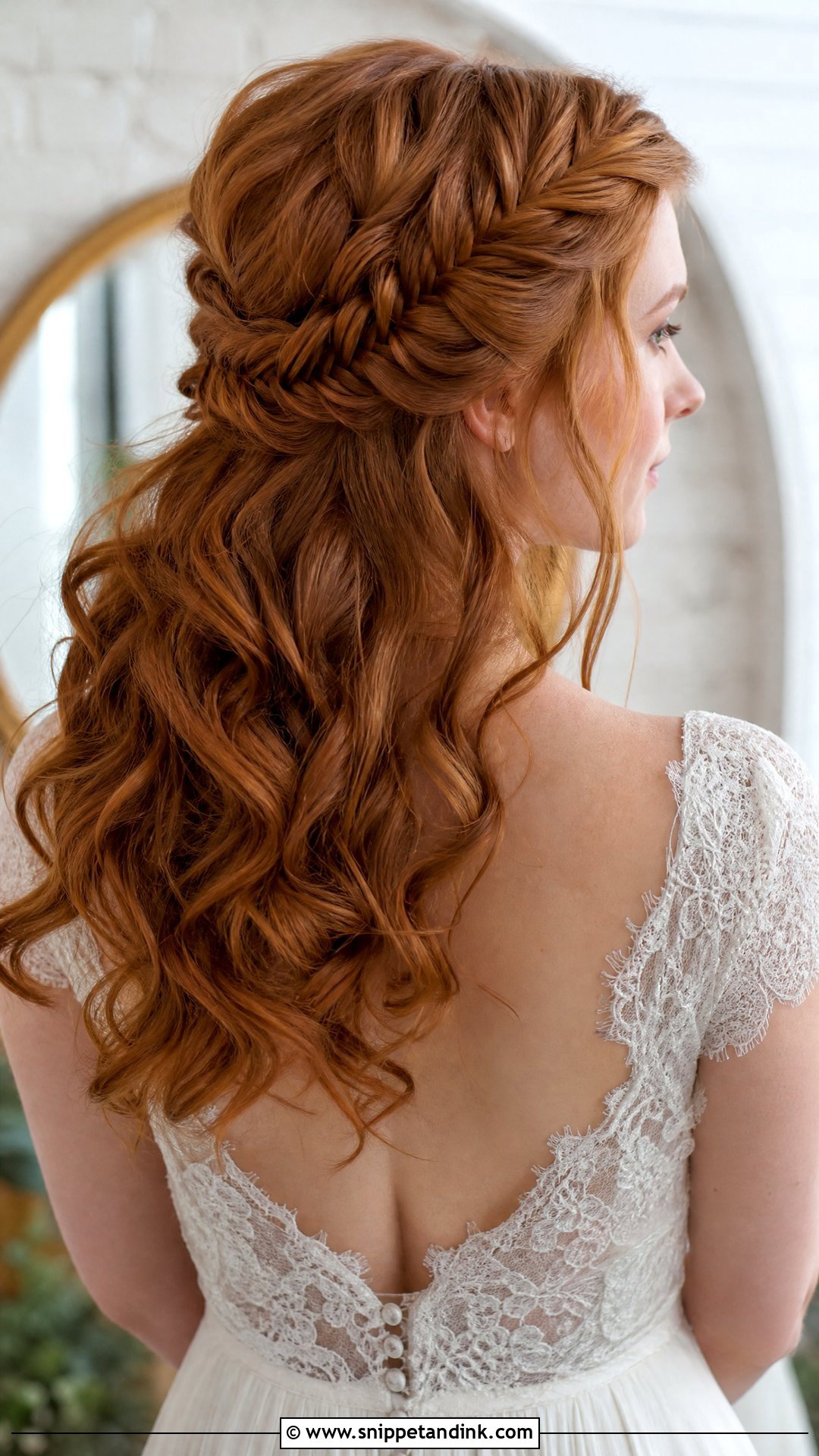
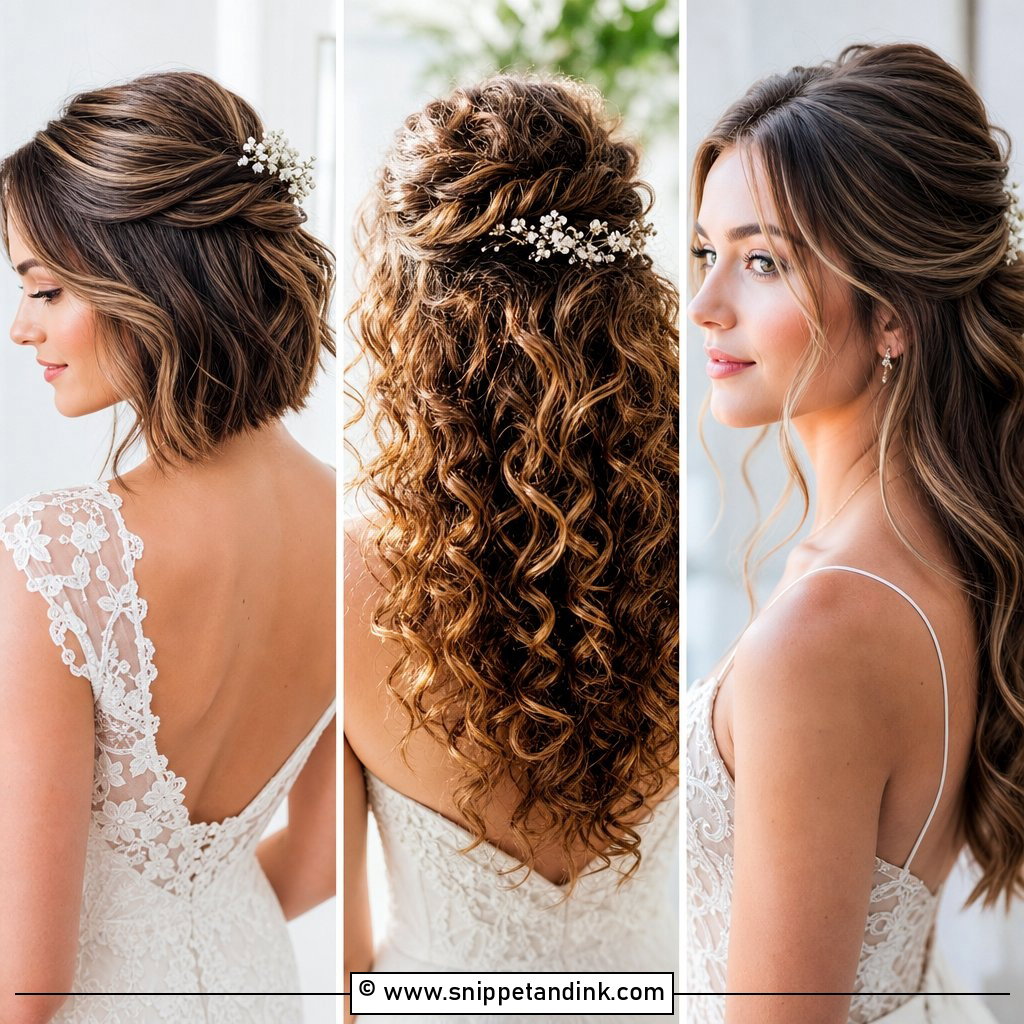
A single fishtail through the top section with tumbling curls below gives the strongest contrast in texture of anything here. The curls carry the volume, so I’d suggest it for medium to long hair that already has some weight. Curls drop over a long day, especially on fine or freshly washed hair, so I set each one on a pin to cool before brushing out. Loosen the fishtail only slightly; a heavily pancaked plait competes with the curls instead of framing them.
9. Double Braid Half-Up
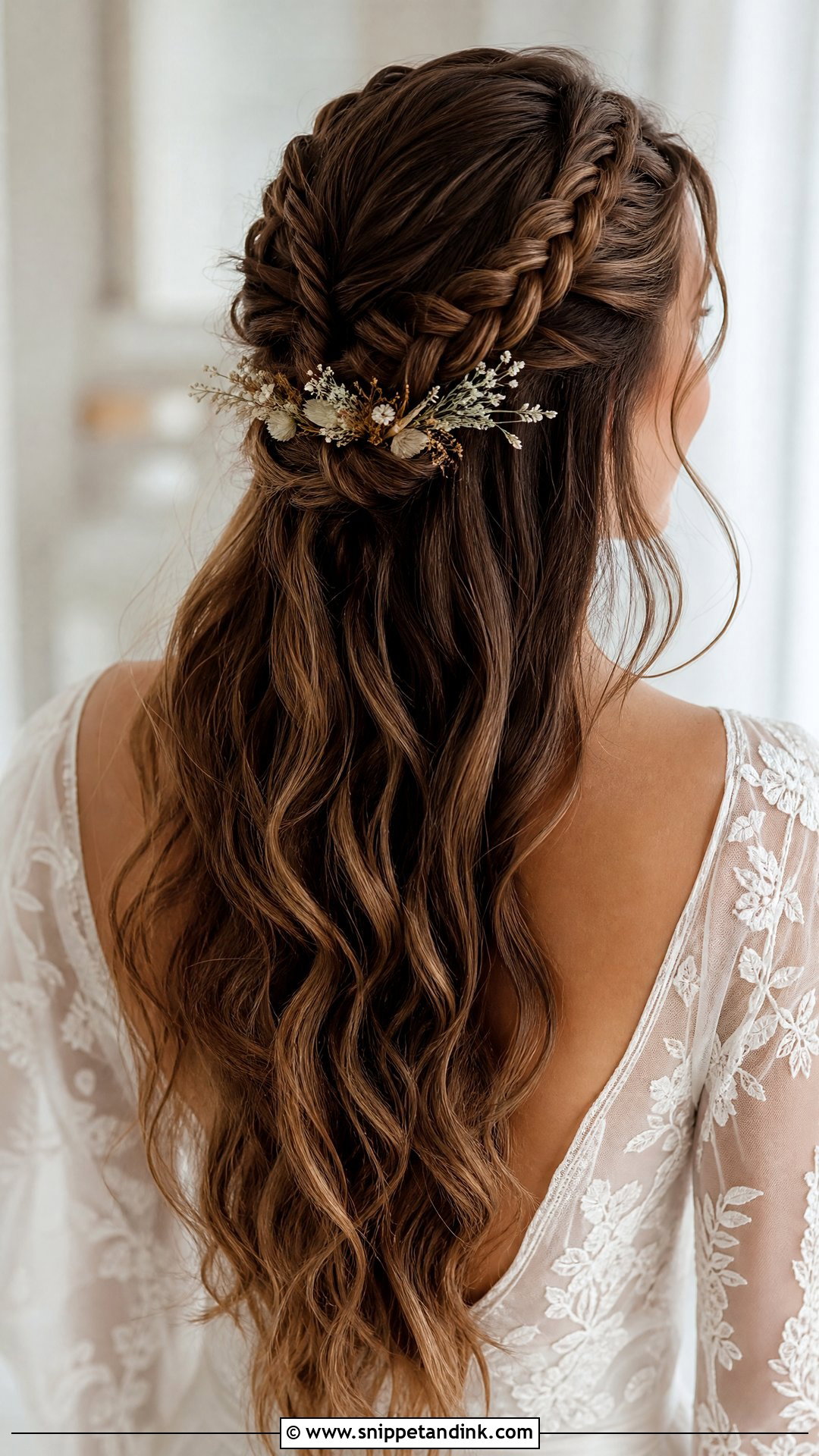
Two braids, one from each side, meeting at the back make a bigger focal point than a single plait. You can mix types, a fishtail on one side and a French braid on the other, and the change in texture is what makes people look twice. Keep the two braids close in thickness, though, or the join looks lopsided from behind. It’s a playful choice for boho and casual weddings, and a few tiny pins or flowers where the braids cross cover the elastic.
10. Halo Braid Half-Up
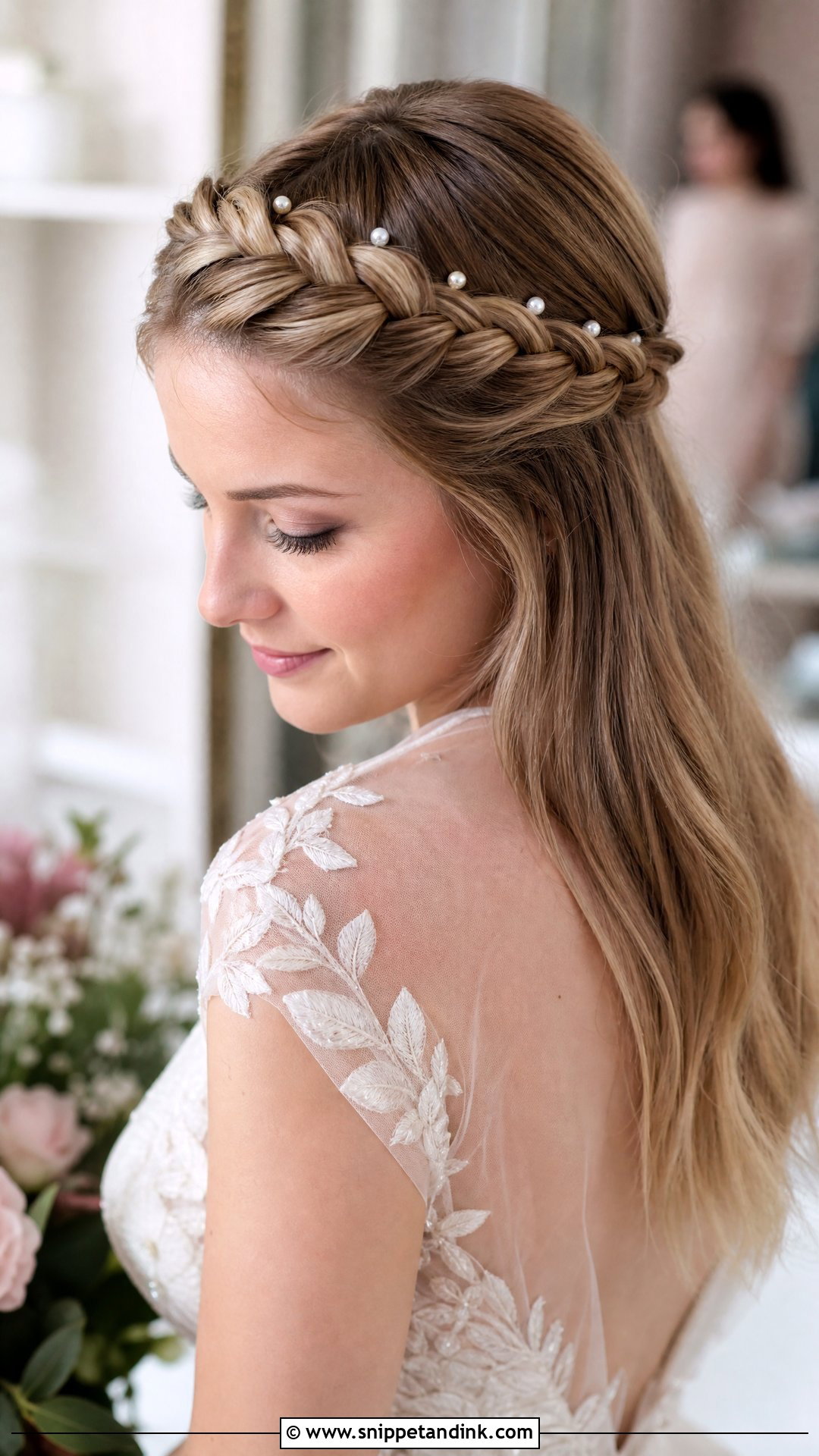
A halo braid circles the head, and in this half-up version it wraps the crown while the lower hair stays down. It needs real length to travel all the way round. On hair shorter than the collarbone I add a clip-in piece just for the braid, which disappears once it’s plaited in. Straight or wavy hair underneath both work, and small pearls or flowers sit well along the braid. Pair it with a simple floral crown or a veil, not both; the halo already does the framing a crown would.
11. Messy Braided Half-Up
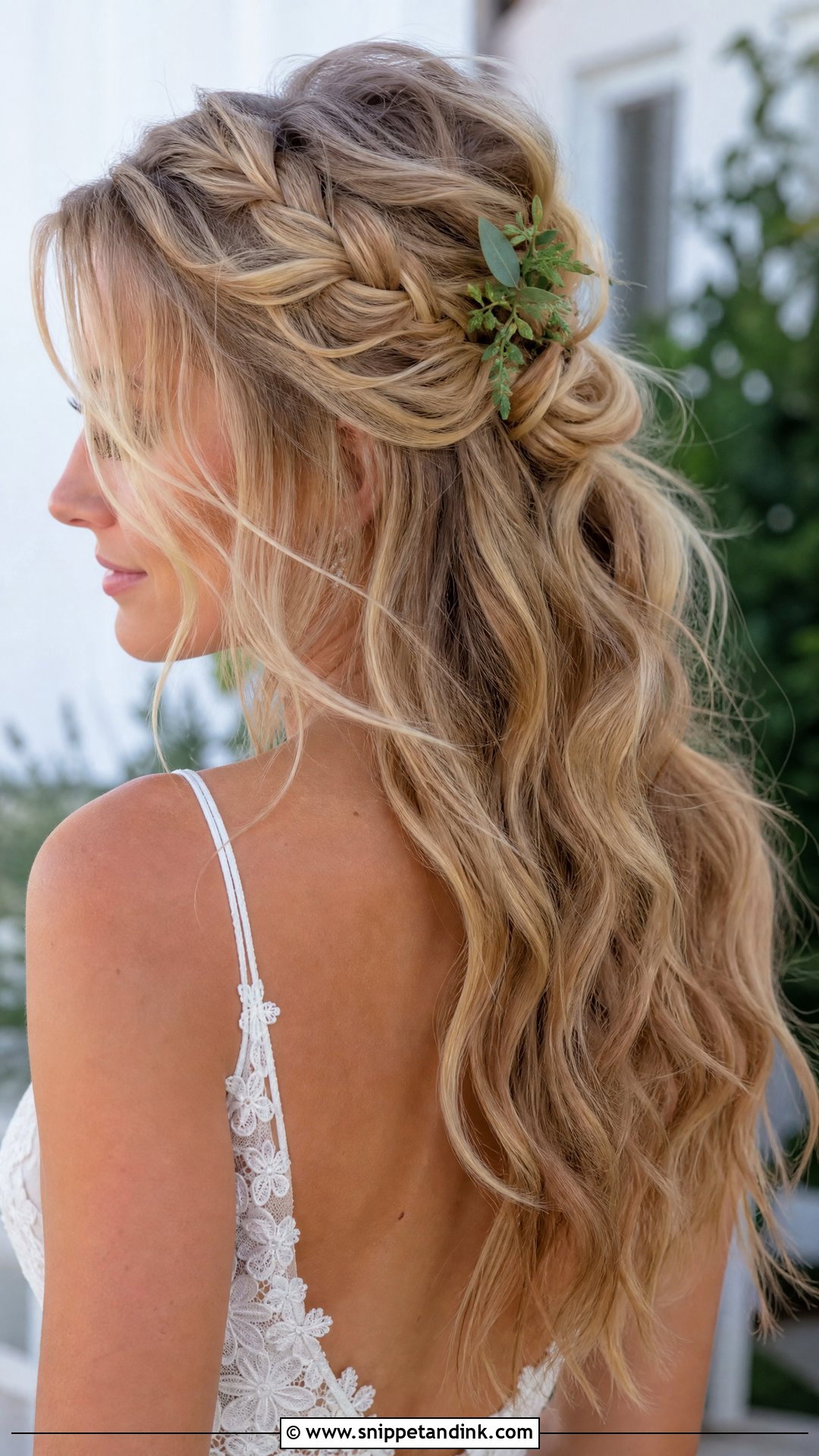
The undone texture here is planned, and that’s where most home attempts go wrong. I braid firmly first, secure it, and only then loosen the plait and pull out face-framing strands, so it looks relaxed but doesn’t actually fall apart. Fine hair gains the most, because the loosened braid adds visible volume. It suits beach and casual outdoor weddings where a polished style would fight the weather. A sprig of greenery finishes it without making it look overdone.
12. Braided Half-Up Ponytail
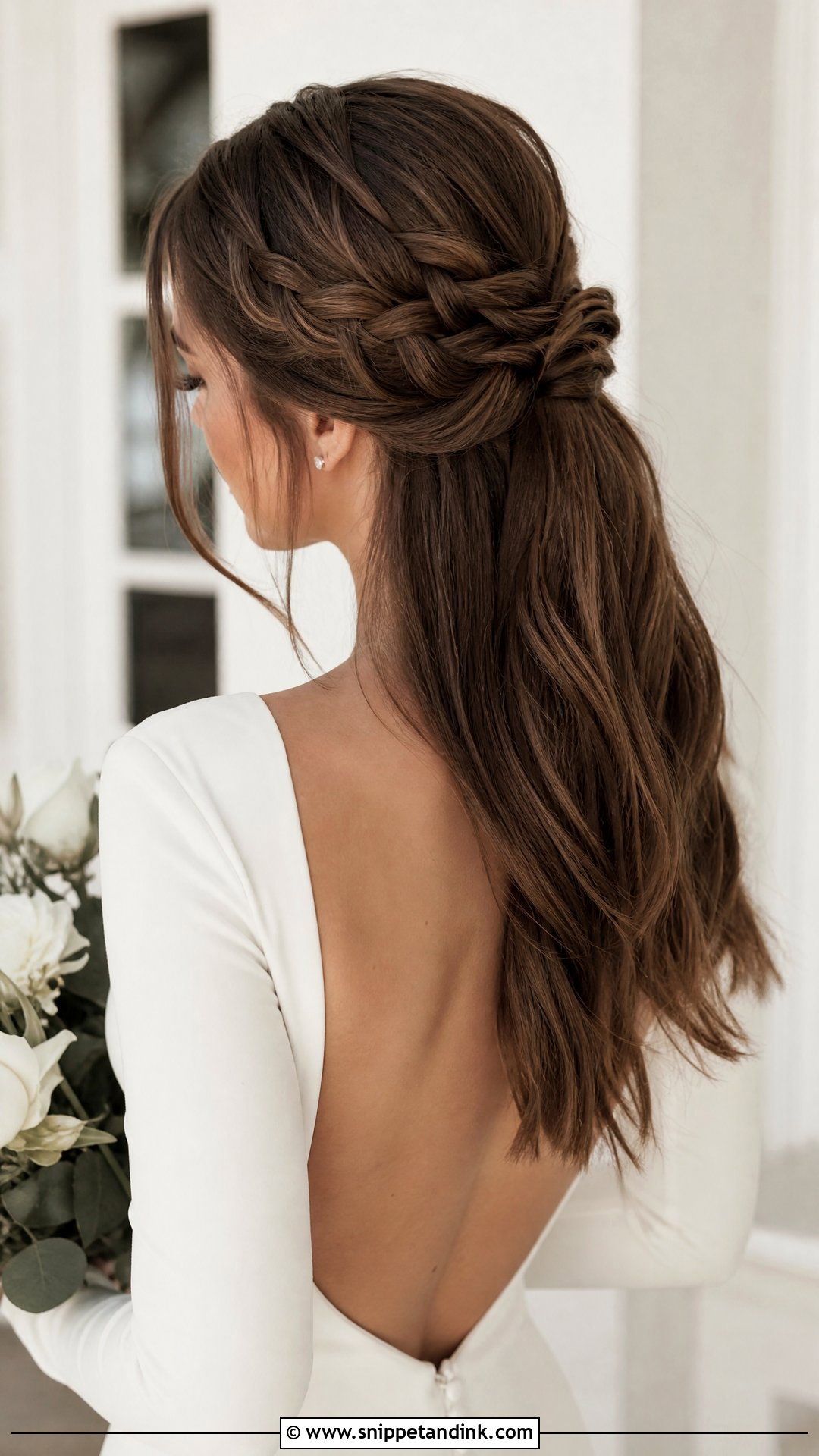
Braid the top section, then tie it into a low half-up ponytail, and you get a cleaner, more modern shape than a loose half-up. It’s also one of the most secure options on this list, because the elastic takes the strain rather than pins. I wrap a strand of hair around the base to hide the band and pin its end underneath. Pull the braid wider once it’s tied, not before. Brides who plan to dance hard and never think about their hair again tend to land here.
13. Side-Swept Braided Half-Up
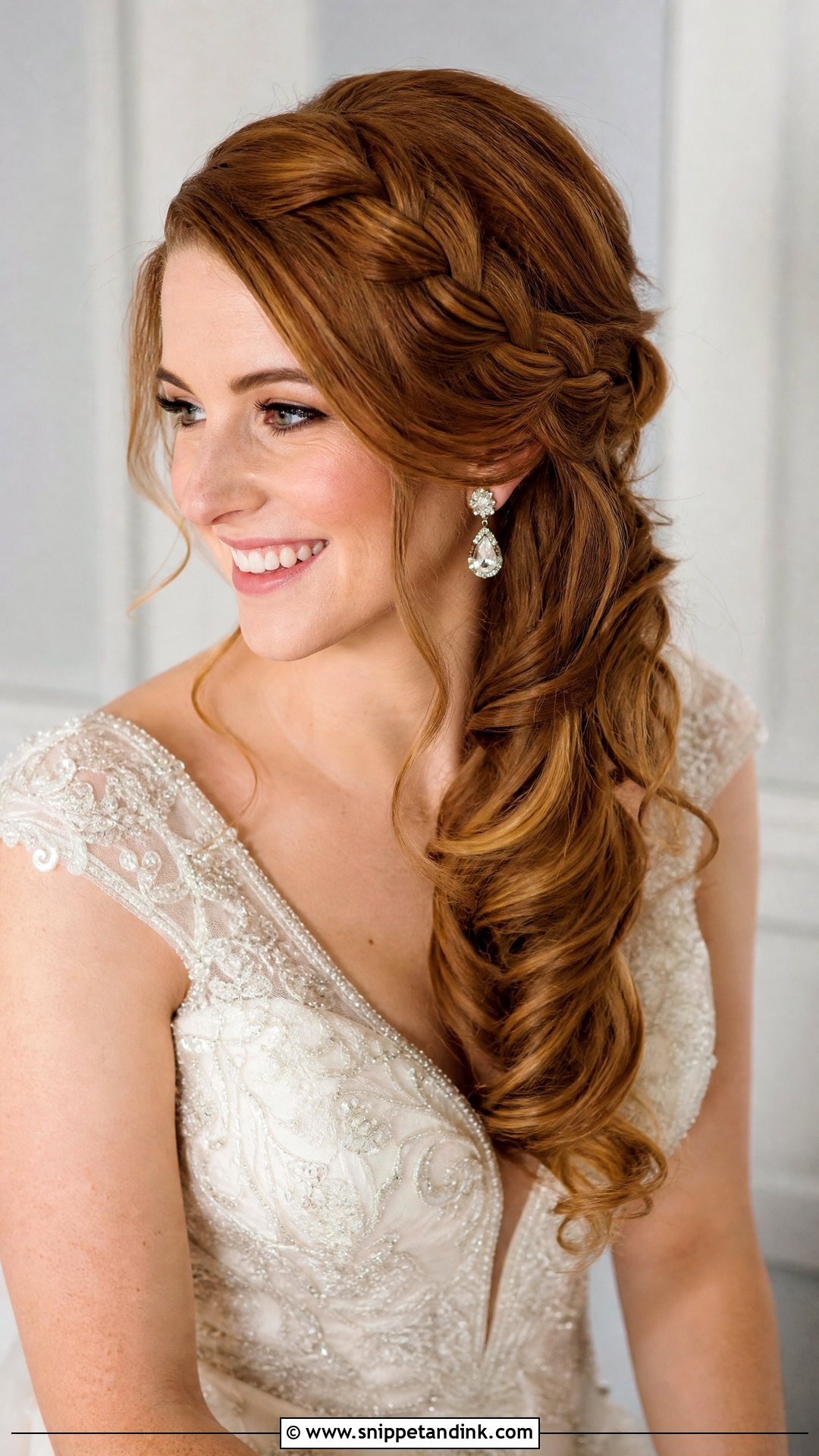
Sweeping everything to one shoulder, with a soft braid across the top, opens up one side of the neck and puts statement earrings on full view. The asymmetry has an old Hollywood feel that suits vintage and glam weddings. One practical note: decide which side goes over the shoulder by where you’ll stand at the ceremony, so guests and the photographer see the braid rather than the bare side. Anchor the swept hair with crossed pins behind the ear, or it creeps back toward centre by the first dance.
14. Pearl-Embellished Braided Half-Up
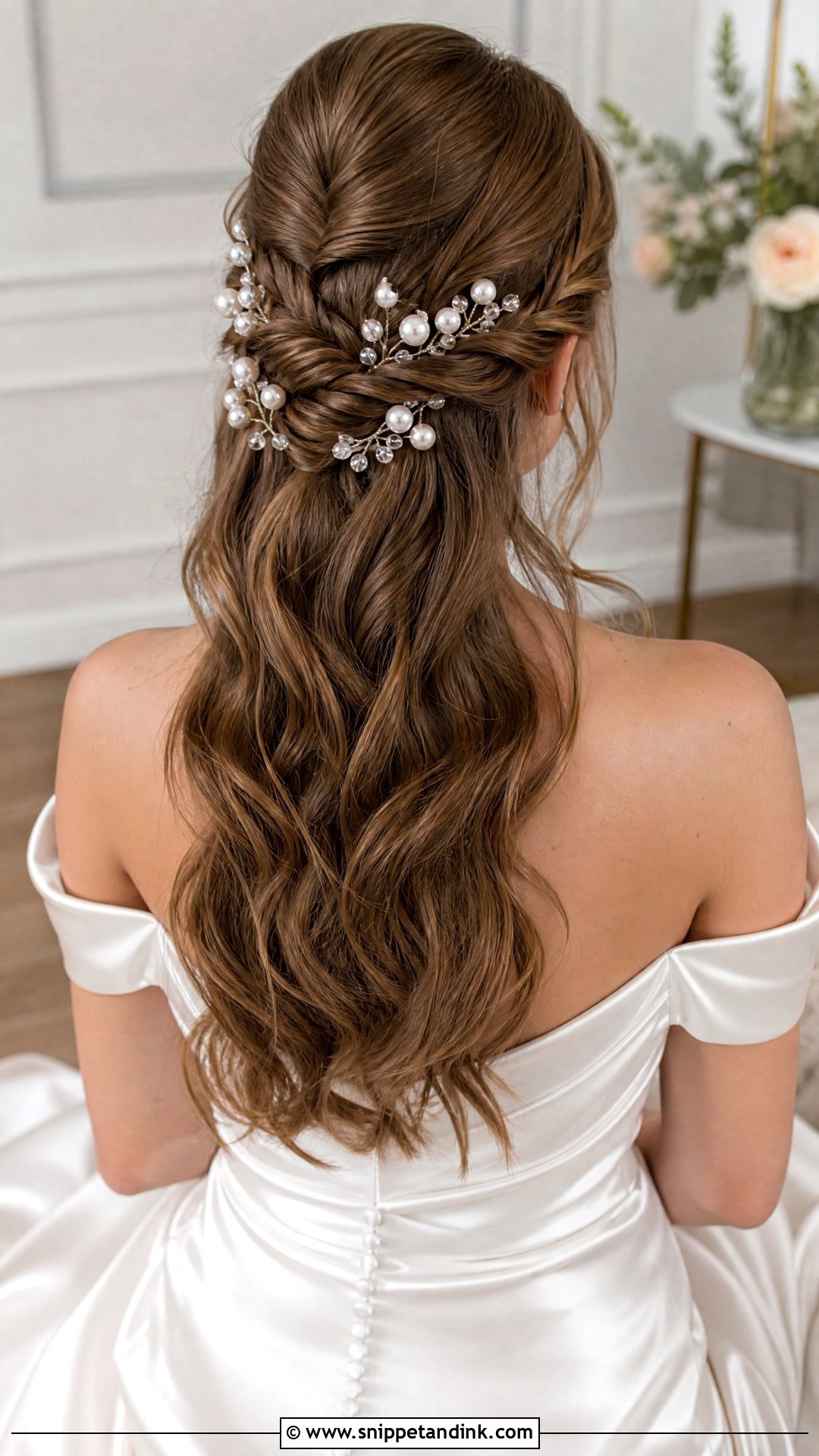
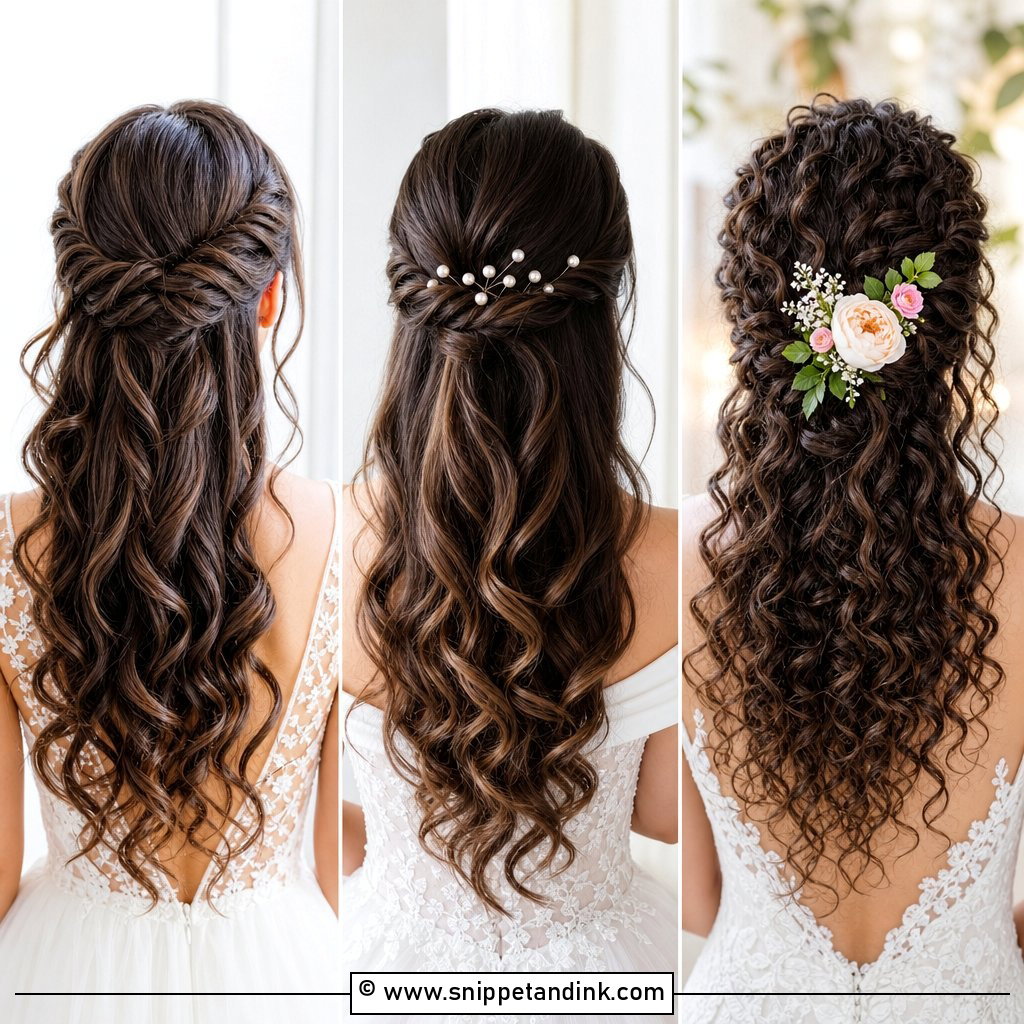
Pearl pins on a braid give a refined finish for classic and formal weddings, and pearls sit happily against almost any gown fabric. I add them after the braid is finished and loosened, sliding each pin into a crossing so it’s gripped from both sides. Scatter them along the braid or cluster them at one point. Clustering reads better on fine hair, where scattered pearls can look sparse. Check the weight of any pearl strand at the trial, since heavy pieces drag a braid down within hours.
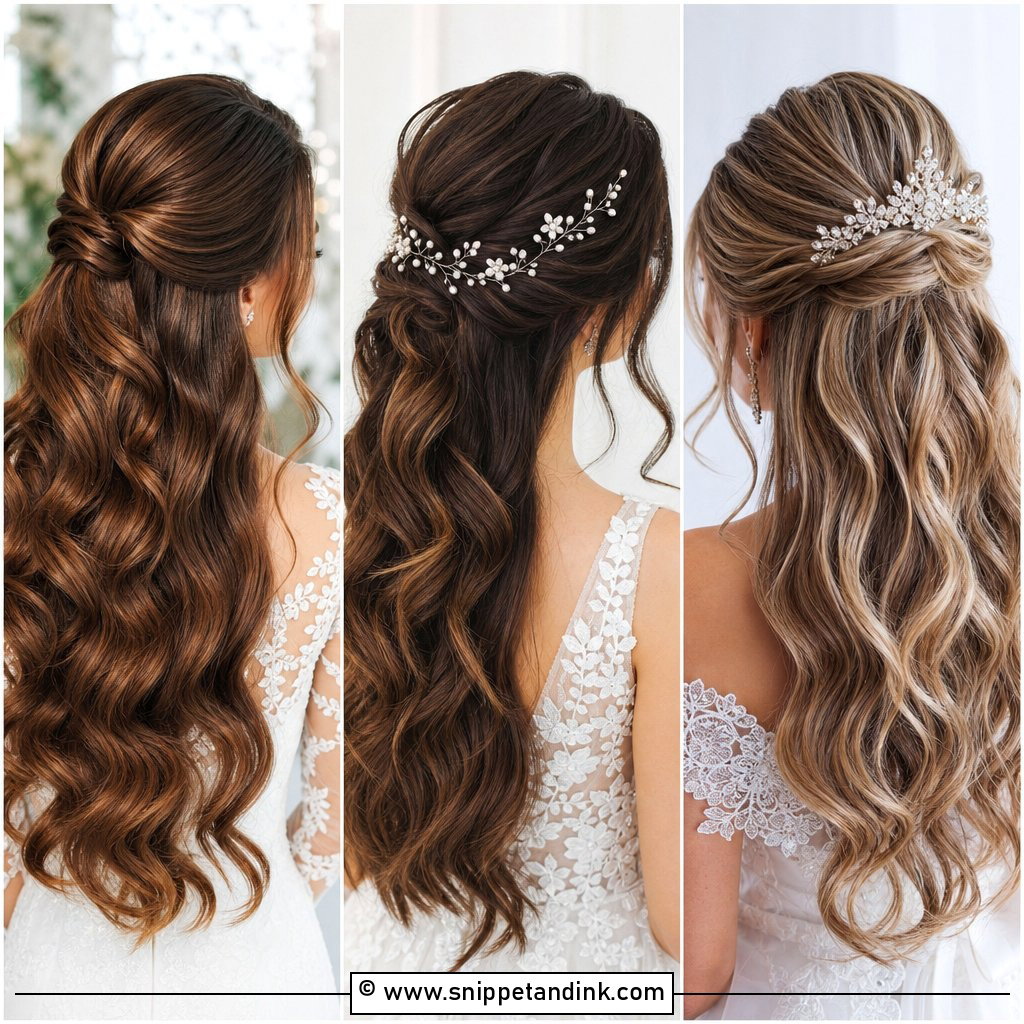
15. Braided Half-Up With Curtain Bangs
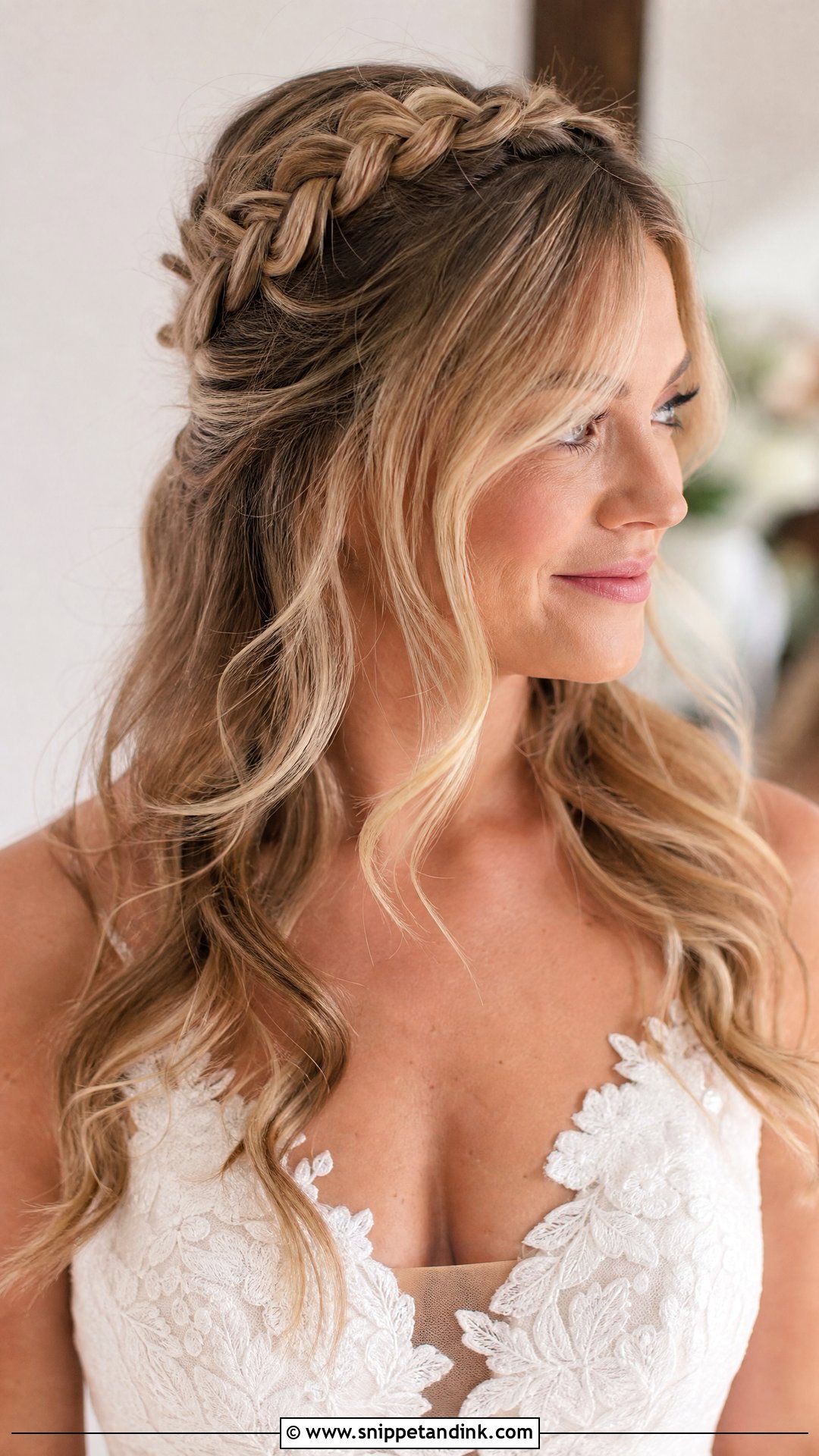
Curtain bangs left free at the front, with a braid across the crown, keep this feeling current and soften the forehead. They suit most face shapes because they part in the centre and fall toward the cheekbones. The risk is timing. A fresh trim right before the wedding often sits too short and too blunt, so get the bangs cut two to three weeks ahead. On the morning I blow them back off the face with a large round brush and let them settle before the photos.
16. Boho Bubble Braid Half-Up
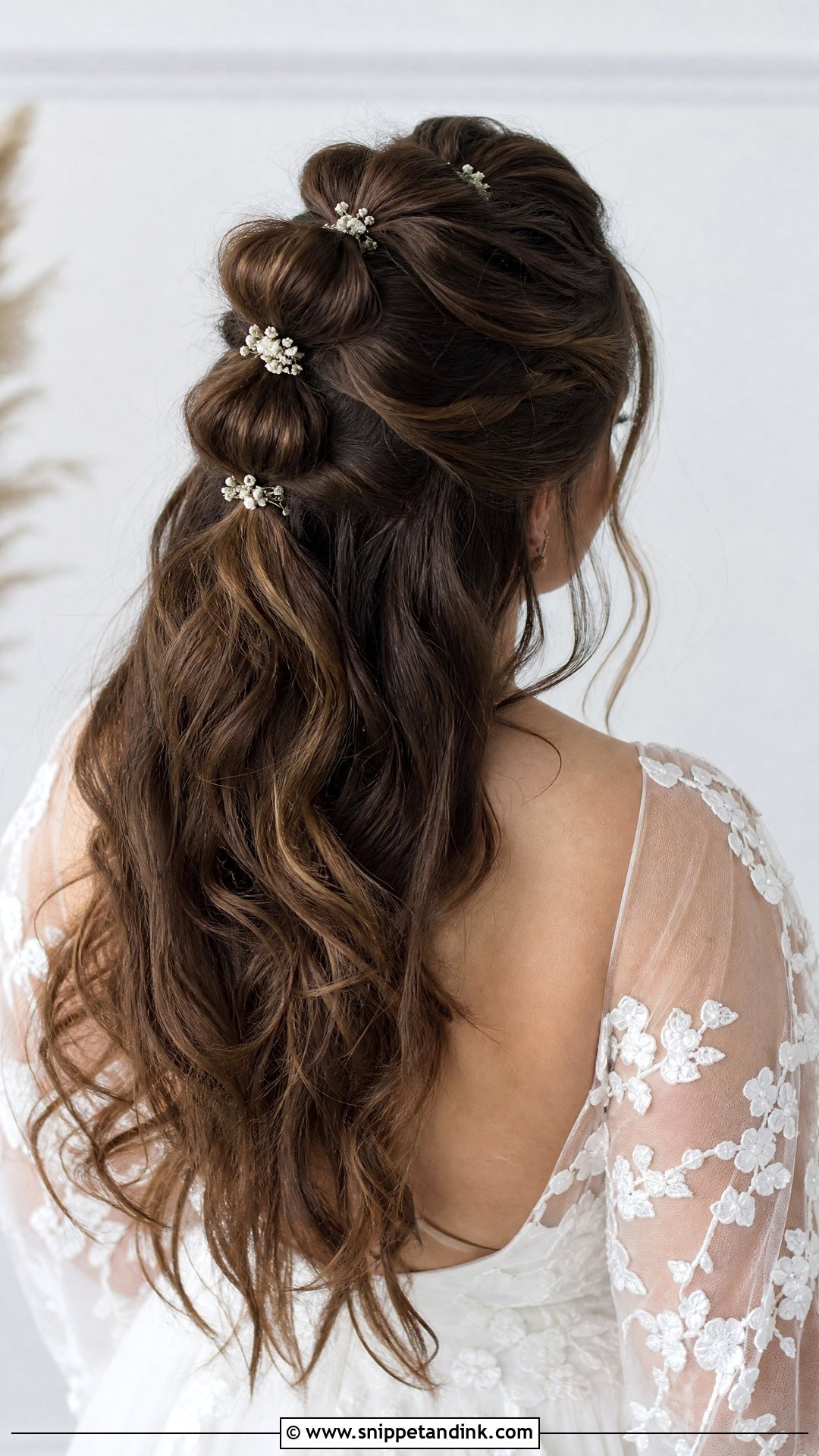
Bubble braids aren’t plaited at all. The top section is tied off with small elastics at intervals, and each segment is pulled wide into a soft bubble. That makes it one of the fastest looks here and a good answer for hair that won’t hold a traditional braid. It’s playful, so it belongs at a boho or unconventional wedding more than a black-tie room. Use clear elastics and wrap a thin strand of hair around each one; colored bands show up in every photo.
17. Accent Braid Half-Up
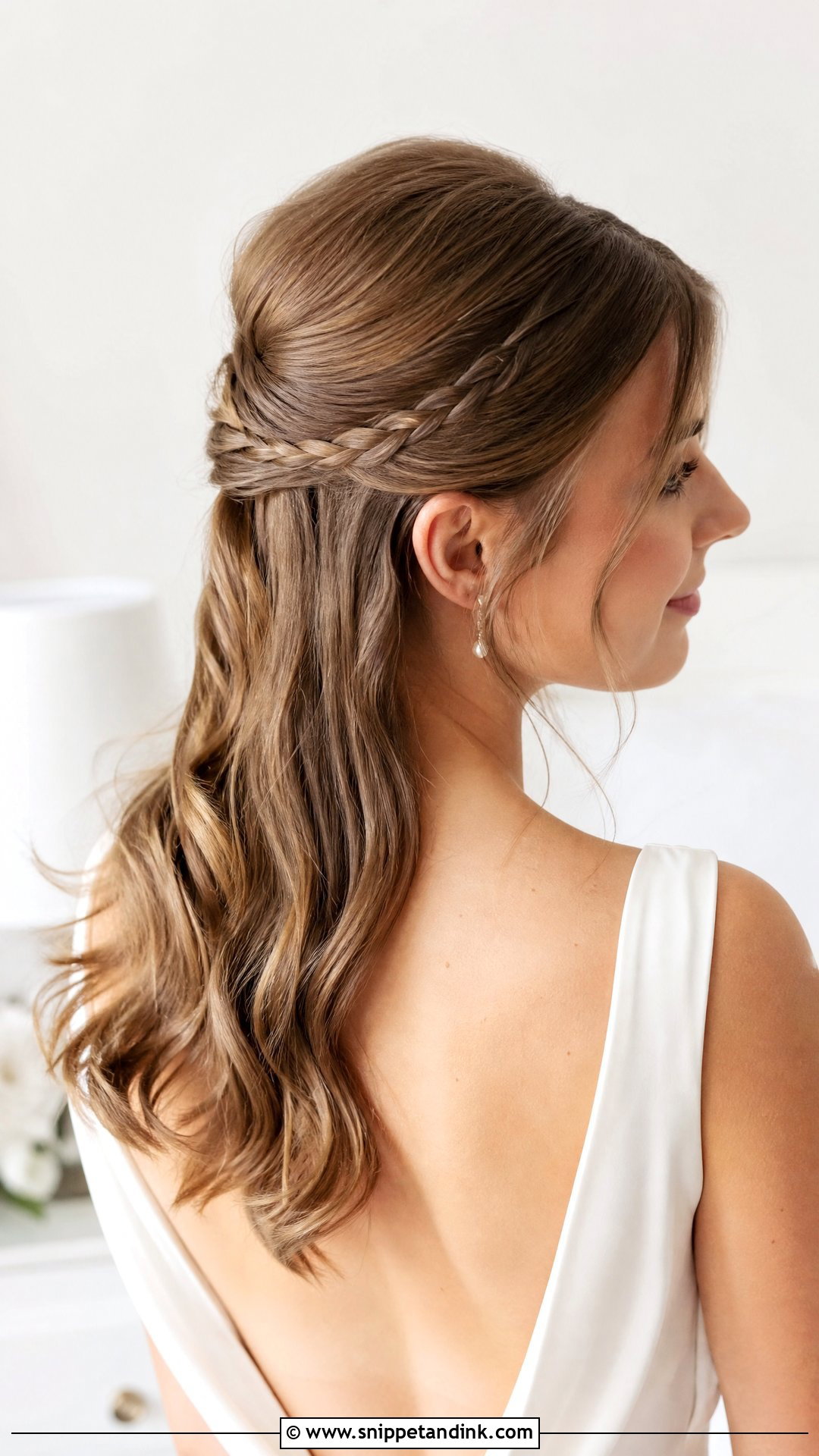
Sometimes one thin braid is enough. An accent braid runs along the part or near the hairline within an otherwise simple half-up, adding texture without changing the overall shape, and it fits minimalist and romantic themes alike. I place it on the side you’ll turn toward the camera most. Because it’s so slim, it’s also the braid most likely to frizz, so a touch of smoothing cream on that section before braiding keeps it crisp all day.
18. Braided Half-Up Updo
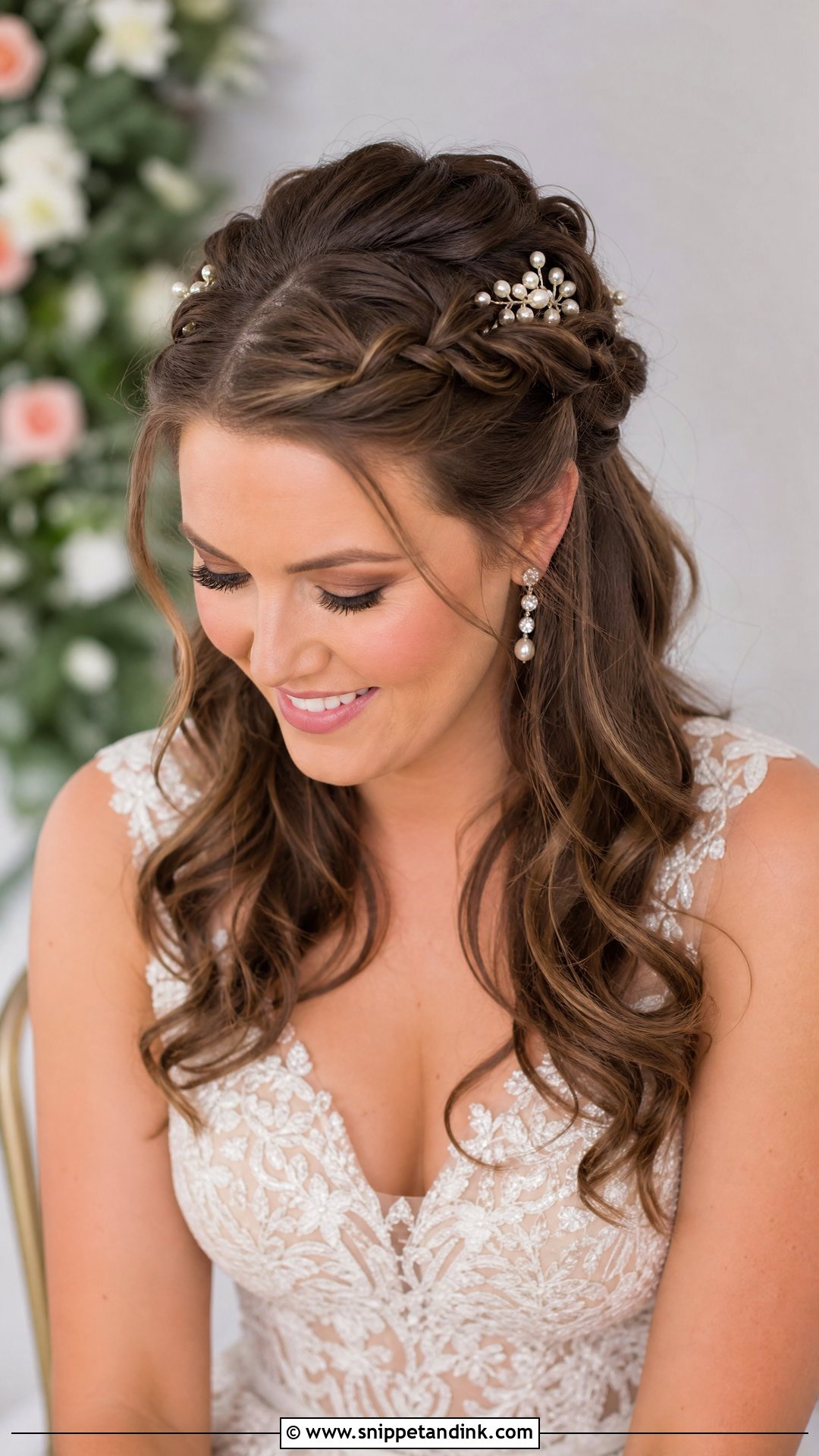
Here the top and sides are braided, then gathered into a raised, fuller half-updo at the back, with the lower hair still down. You get height from the gathered section and texture from the braids feeding into it, which is why it belongs at formal and glam weddings. That volume comes from backcombing at the root, so I’d skip it if your scalp is sensitive or your hair tangles easily. Pearls, pins or flowers sit naturally at the gathered point.
19. Romantic Twisted Half-Up
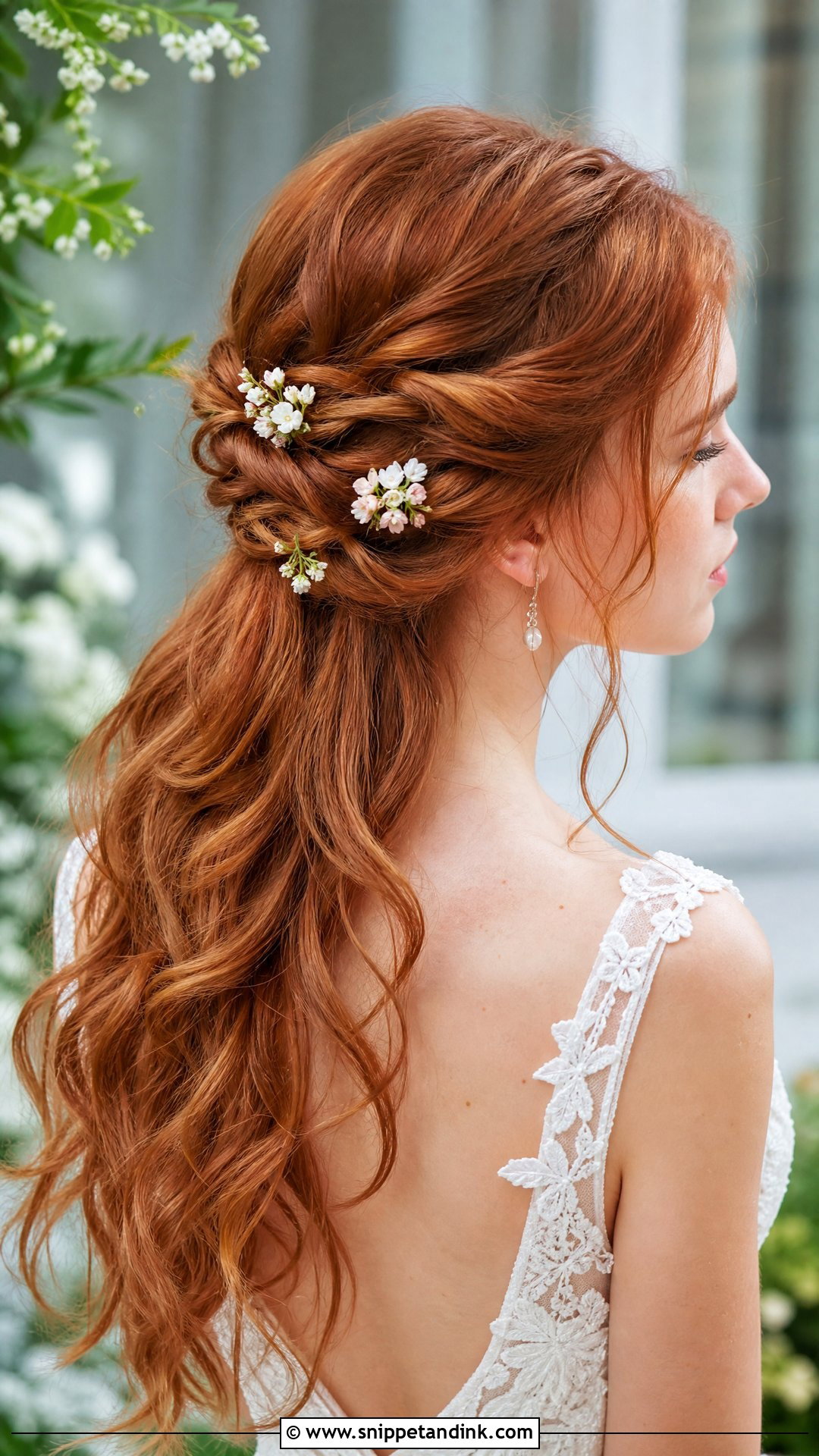
Twists are the gentlest option here: sections from each side are rolled and pinned together at the back, with no plaiting at all. They give a woven look without the time or grip a full braid needs, which makes them sensible for slippery, freshly washed hair. The trade-off is hold. Twists relax faster than braids, so I pin each one with bobby pins crossed in an X and spray the section before twisting, not after. Loosen them slightly and tuck in a few small flowers or pearls.
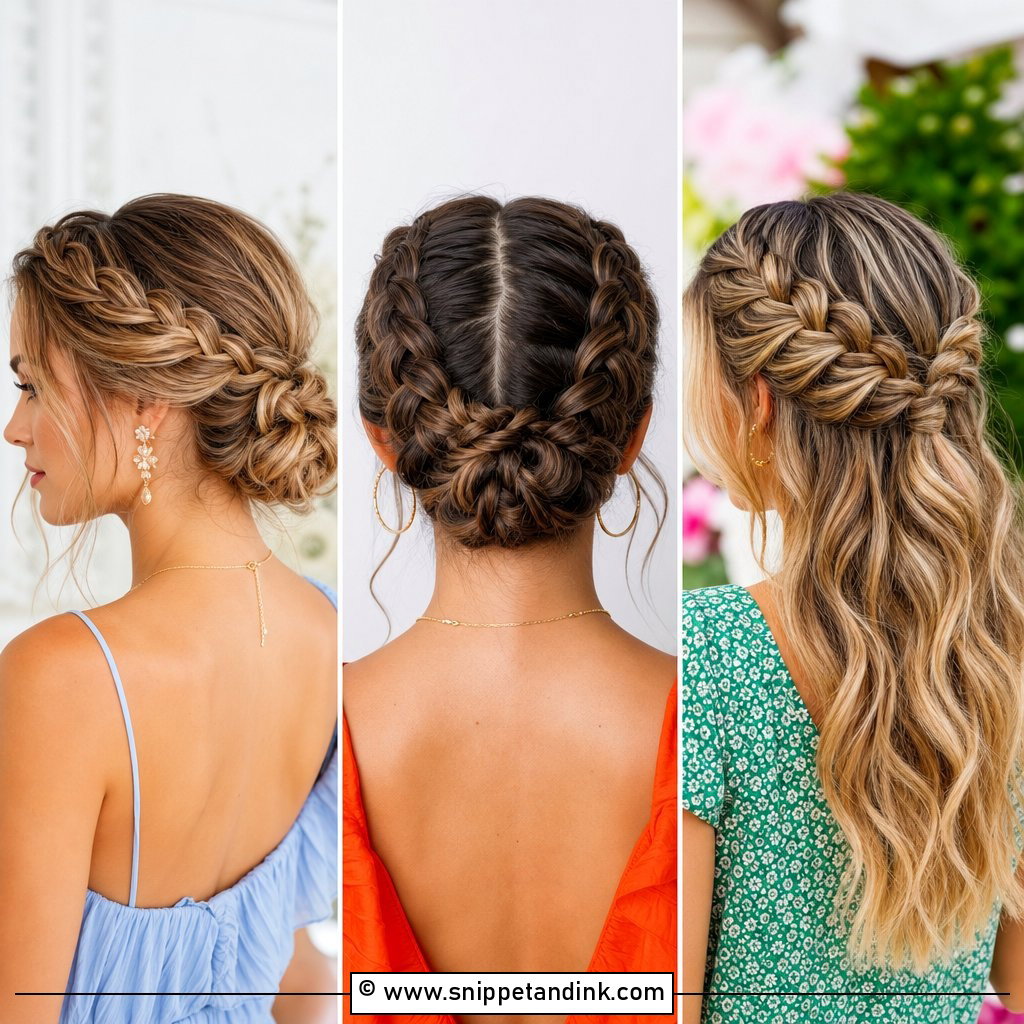
20. Braided Half-Up With Floral Crown
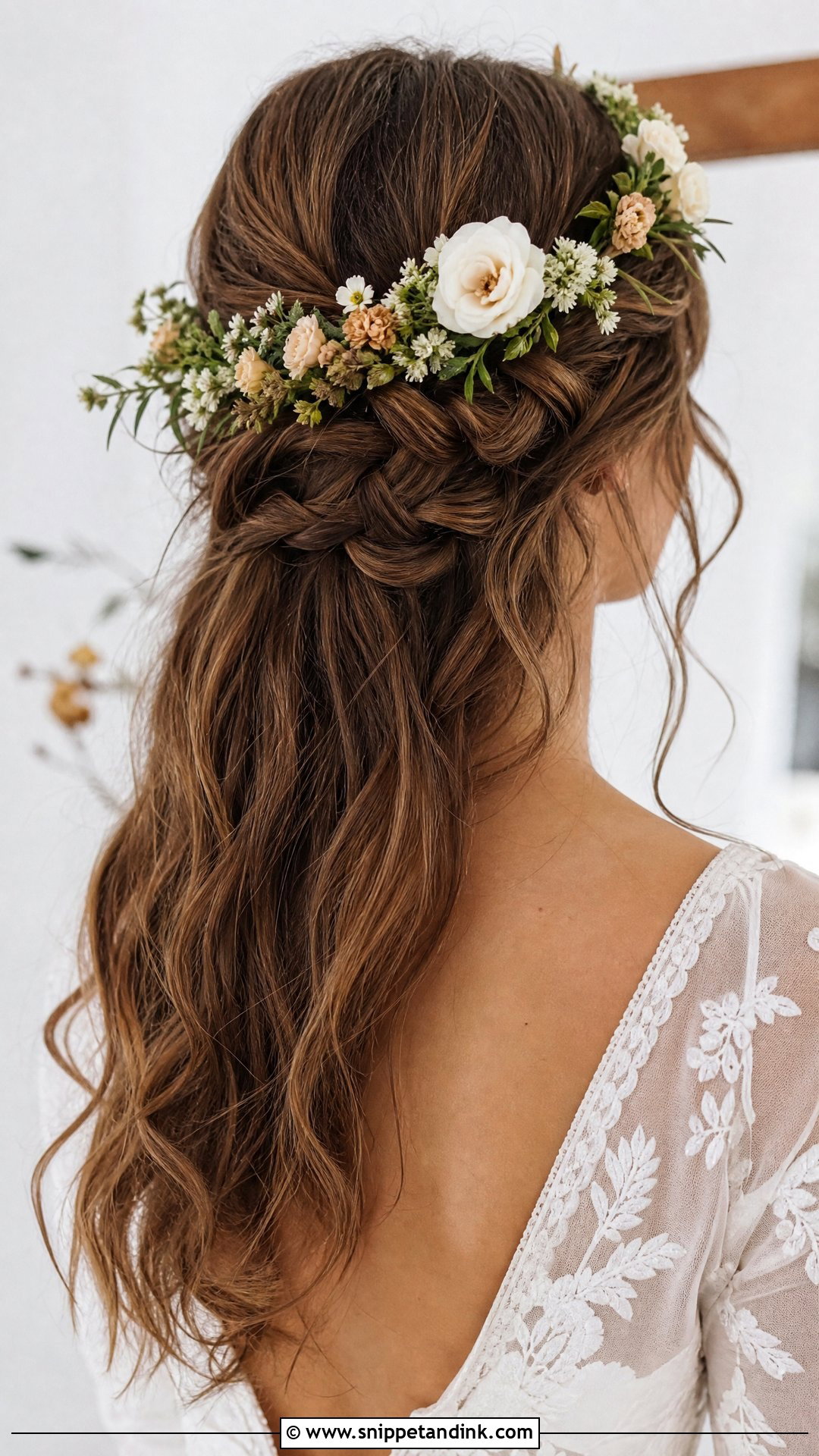
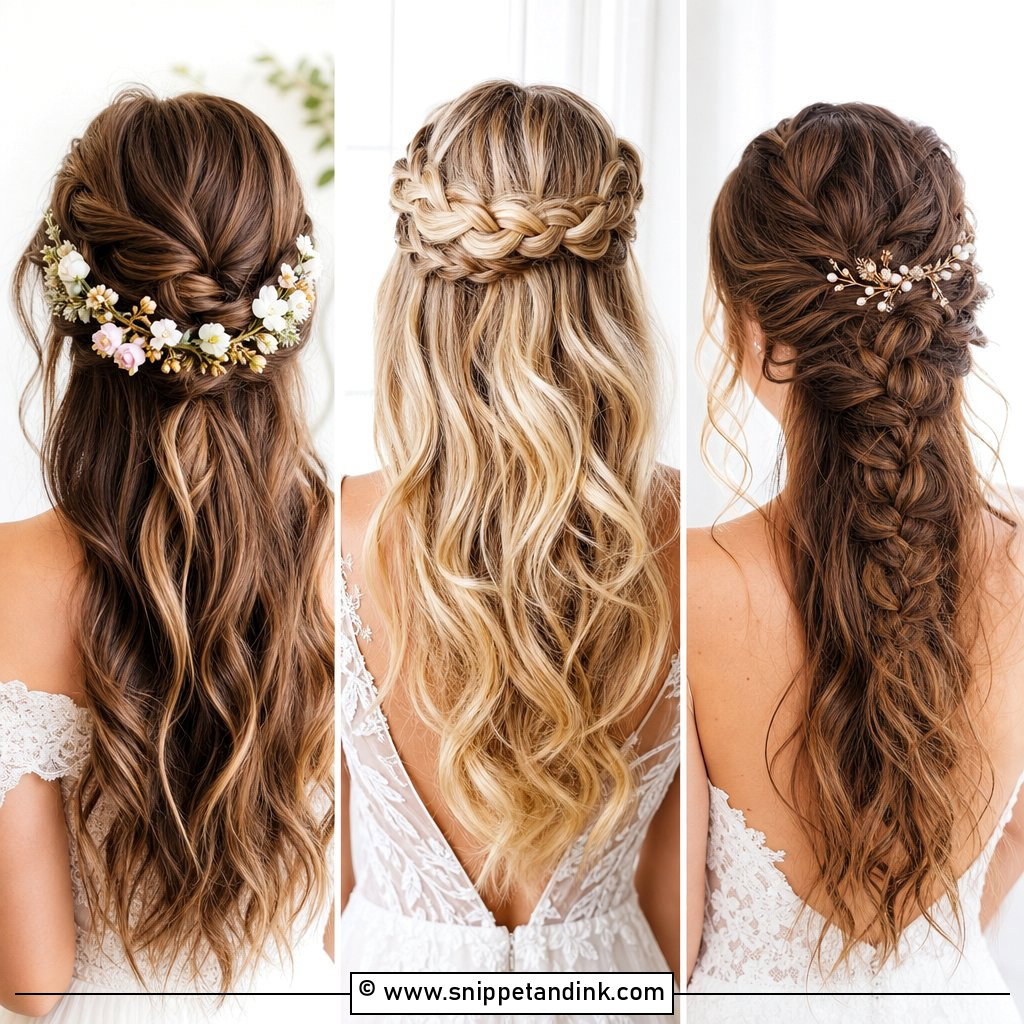
A soft braid topped with a crown of fresh or dried flowers is the most bohemian look on this list. The braid does useful work under the crown, giving the band something to rest against so it doesn’t slide down onto the forehead. Matching the blooms to your bouquet ties the two together. For a long day outdoors, dried or preserved flowers won’t wilt; a fresh crown should be made that morning and kept cool until the last minute.
Pins, Weight and the Dance Floor
A half-up braid usually outlasts the curls underneath it. The braid loosens a little as the day warms up, which most brides end up liking. The waves below are what drop, especially in humidity or after a long receiving line of hugs. So I plan for both at the trial.
- I set curls with slightly more hold than looks right in the mirror, because they relax within the first couple of hours.
- Pins go in crossed pairs, and the braid end gets an elastic under any decoration, so one lost pin doesn’t undo the plait.
- When the veil comes off, have someone who watched the trial lift the comb up and out rather than pulling it backwards through the braid.
- Fresh flowers in the braid go in last, roughly an hour before the ceremony, so they look fresh at the aisle.
In your bag, keep six bobby pins in your hair colour, a mini hairspray, a few clear elastics and a small comb. If a section slides, twist it back and pin through the braid itself, never just into loose hair. And for a hot outdoor reception, ask for the braid a touch tighter than you’d normally wear it. It will soften on its own by sunset.
Bring Photos of the Back, Not Only the Front
Twenty braids is a lot to choose from, and most brides narrow it down by hair type before anything else. A fine fishtail, a raised Dutch plait and a whimsical floral-topped style each ask different things of your hair. Bring pictures of the back of the styles you like to your trial, along with your dress neckline and veil, and your stylist can tell you which braid will still look like the picture when you’re cutting the cake.
You'll Like These Ideas:


Leave a Reply