
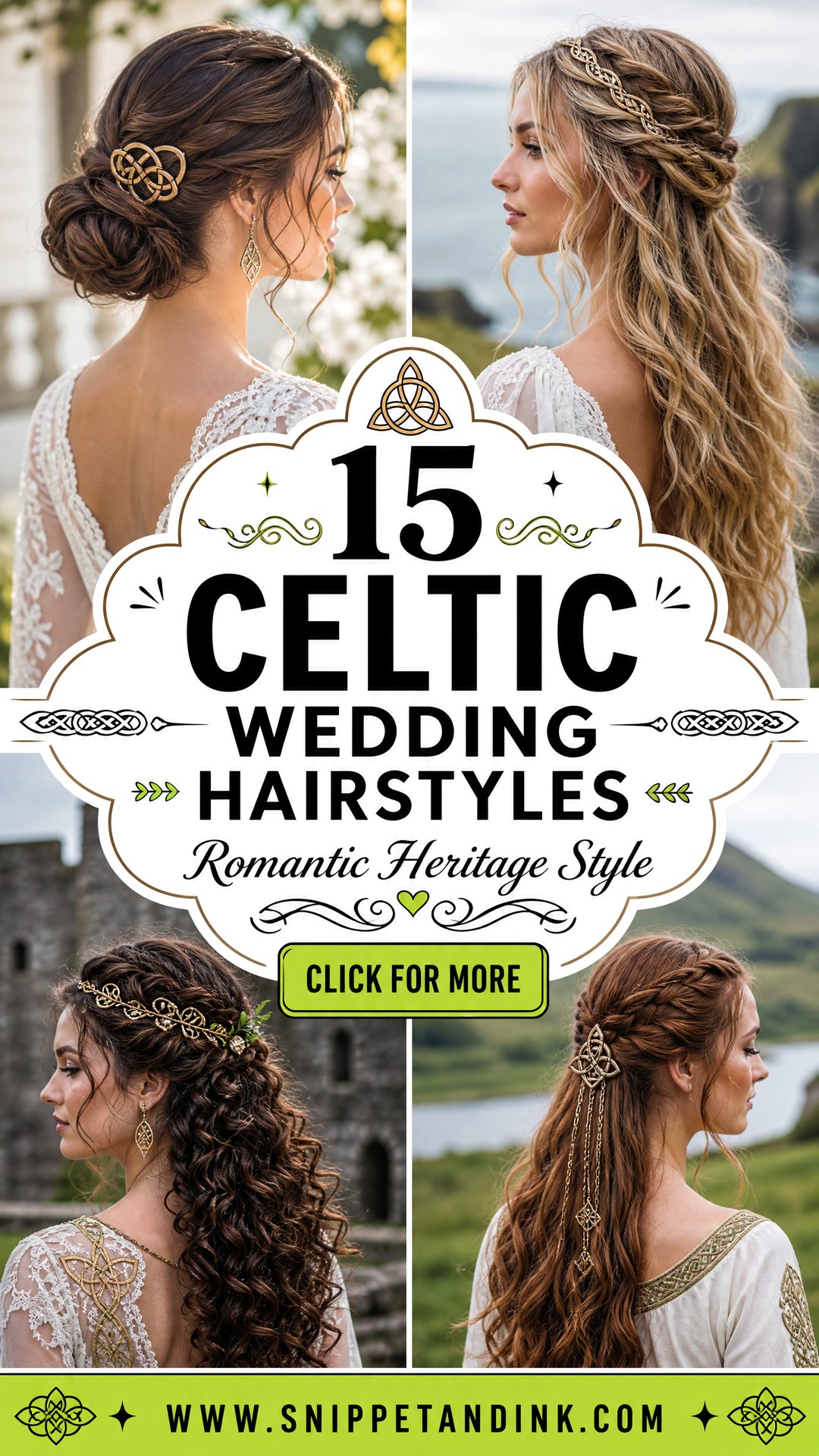
Celtic bridal hair has an old-world softness that suits a forest ceremony, a stone castle, a walled garden or a barn strung with lights. Most of these looks are built from braids, loose waves and twisted sections, then finished with flowers, pearls, ribbon or a metal piece that echoes Celtic knots and heritage jewelry. Done well, it reads as meaningful rather than fancy dress. Long, medium, curly, fine and thick hair can all carry it. What changes from bride to bride is how much weaving the hair will hold and how much support I need to build underneath it.
Weaving a Family Tartan or Heirloom Brooch Into Your Hair
The Celtic styles with the most meaning tend to have something real tucked into them. A narrow strip of family tartan threaded through a fishtail. A grandmother’s small silver brooch pinned where a decorative comb would normally sit. A Claddagh charm wired onto a hairpin. It costs almost nothing and gives the style a story nobody else at the wedding has.
A few practical notes before you hand anything precious to your stylist:
- Tartan wool frays and is bulky. Ask a dressmaker to cut a thin strip and seal the edges, or use a ribbon in the clan colours instead.
- A brooch can’t be pinned straight into hair. I anchor it to a bobby pin with fine wire or attach it to a small comb, so bring it to the trial, not on the morning.
- Old silver is heavy for its size. Place it low, near the nape or the base of a bun, where it rests on structure rather than dragging a loose section.
- Keep it to one heirloom. Two family pieces plus flowers plus pearls starts to look like a display case.
If your heritage is more distant, a knotwork pin or a sprig of heather does the same job quietly.
1. Celtic Braided Crown Wedding Hairstyle
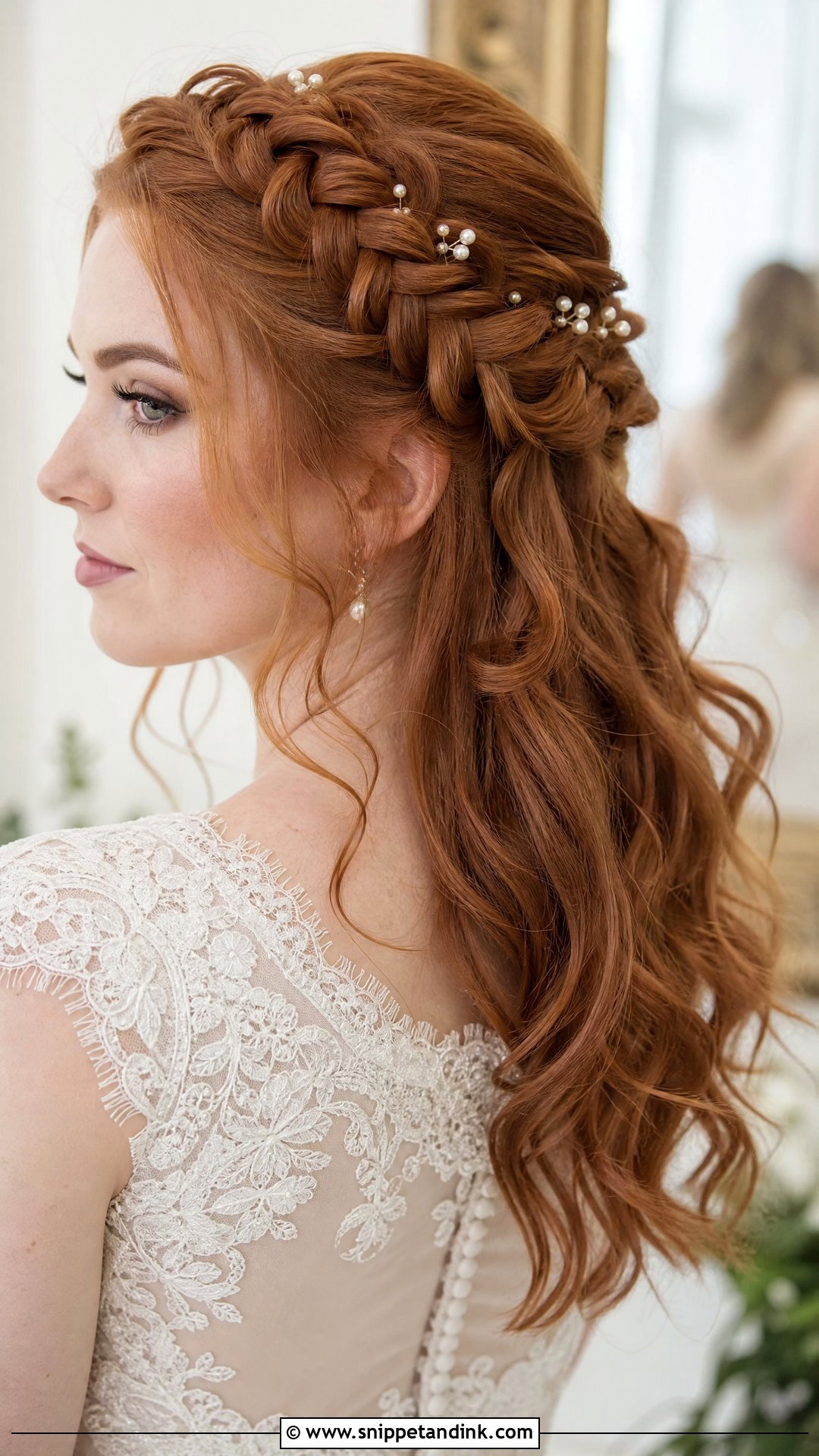
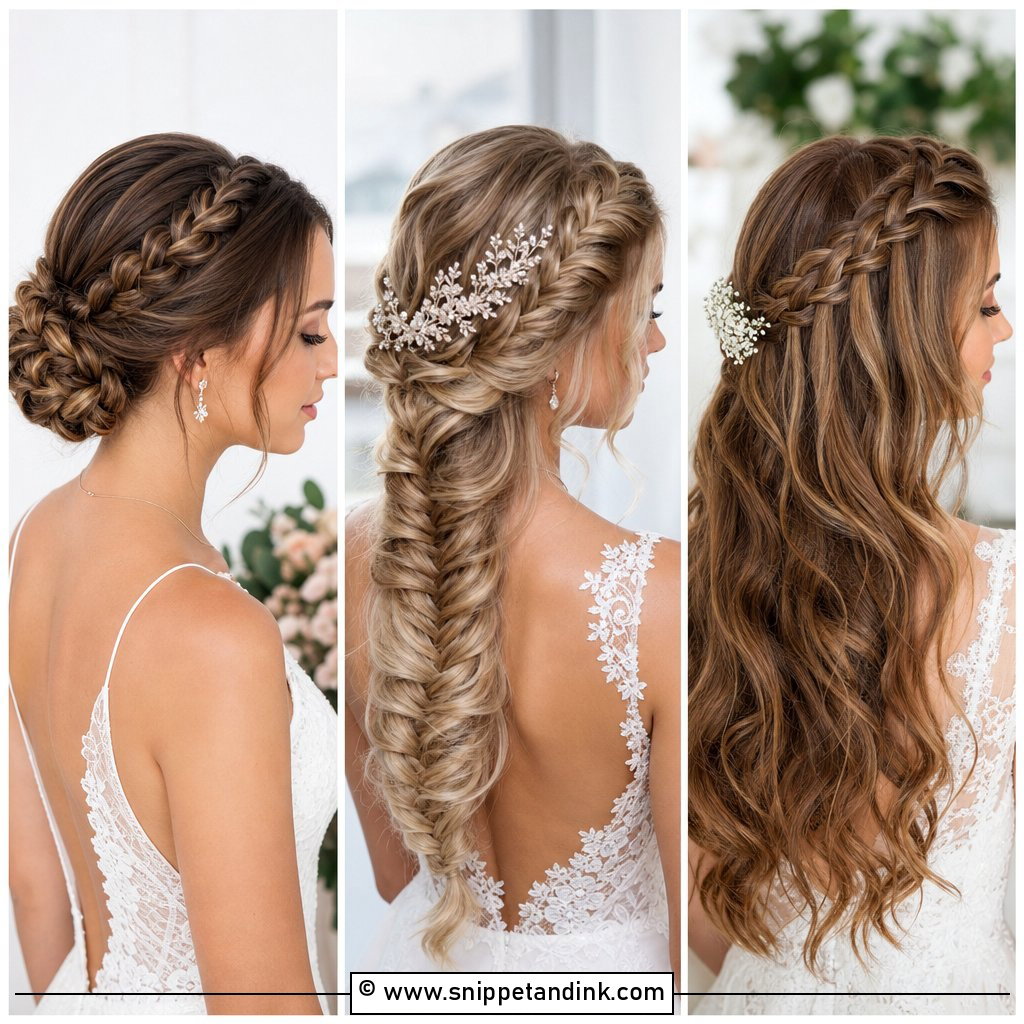
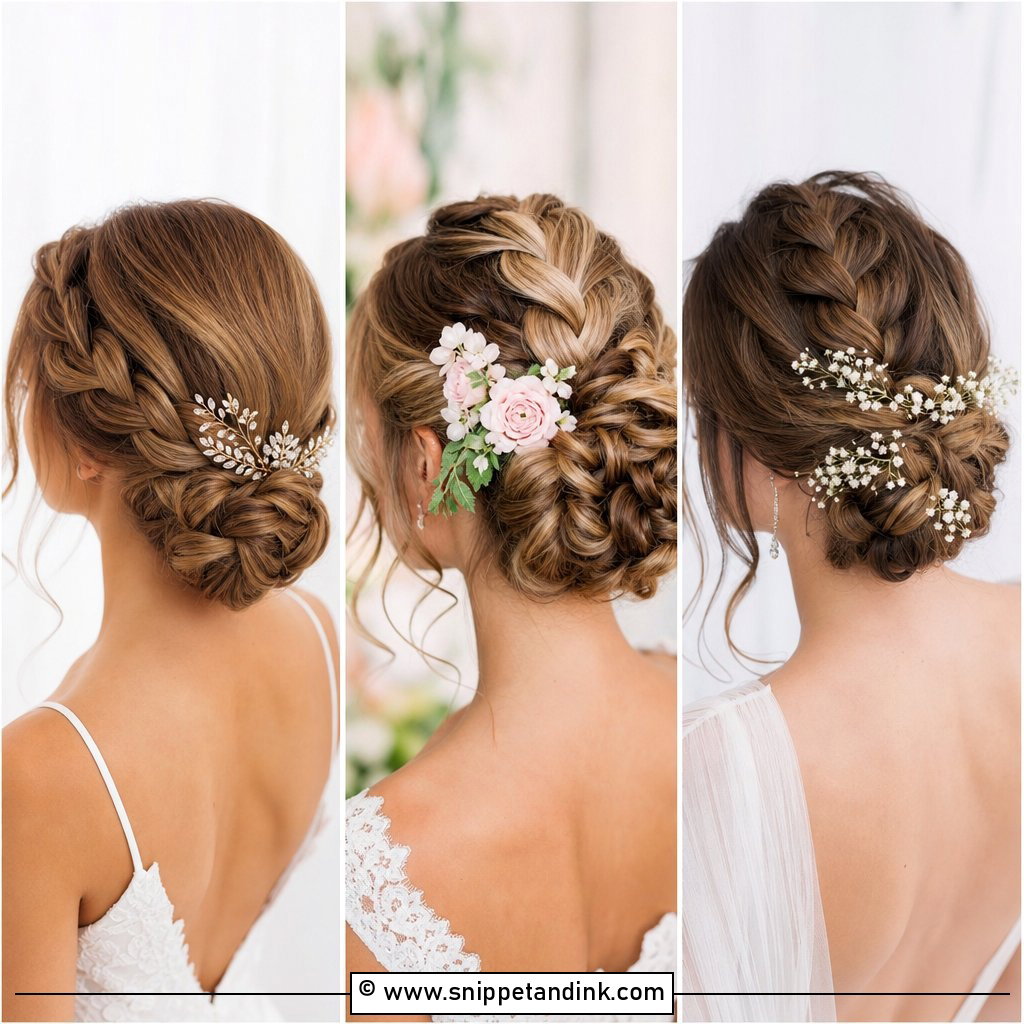
The braided crown frames the face like a halo, and it can either circle the whole head or sit across the top like a woven headband. I usually pair it with loose waves at the back, because the braid gives the structure and the length keeps it soft. The trick is anchoring the crown to small pin-curl bases behind the ears; pin it only to itself and it creeps forward by mid-afternoon. A few pearl pins or a delicate vine accessory finish it. Outdoors it earns its place, since the front pieces stay put in a breeze.
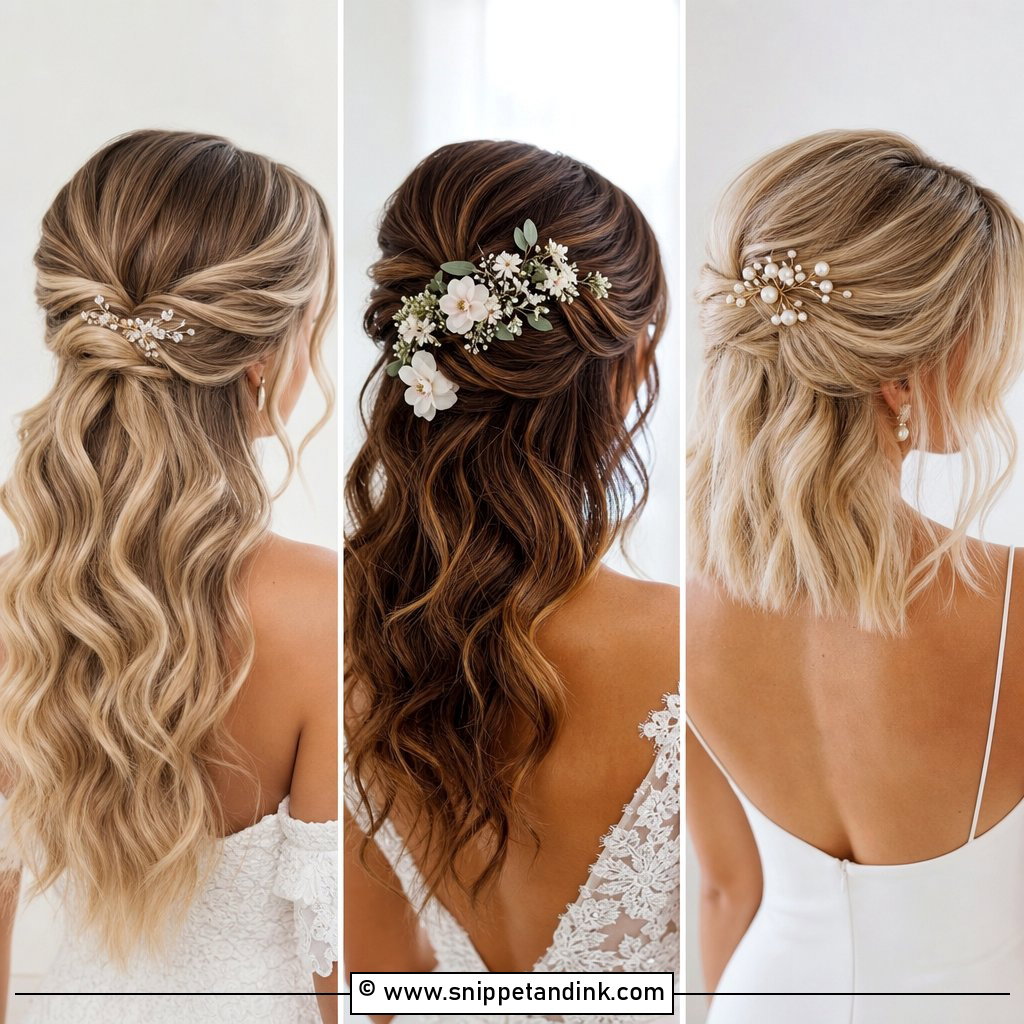
2. Celtic Half Up Half Down Wedding Hairstyle
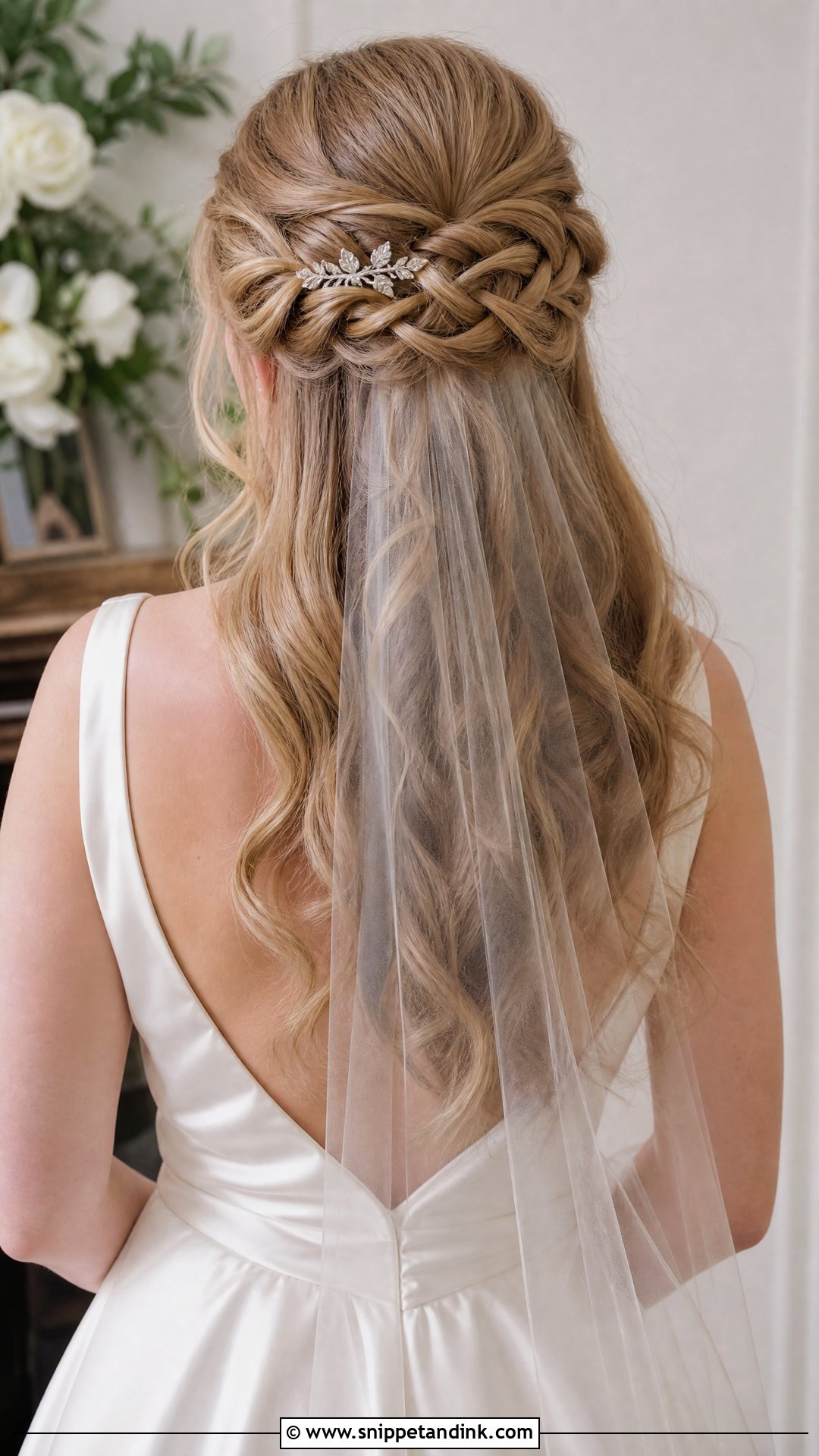
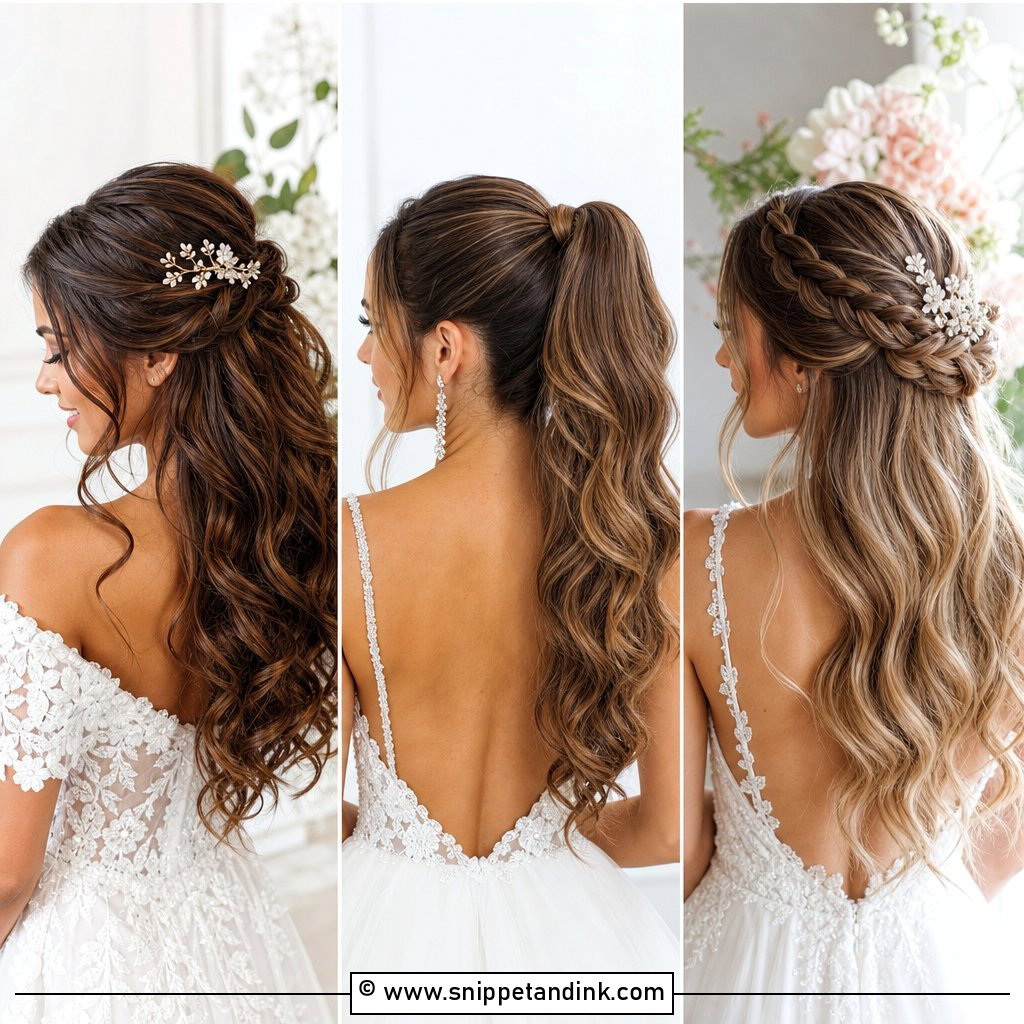
Half up gives you the length without loose hair whipping across your face during vows. I twist or braid the top section into a knot shape and blend it into curls below, and that pinned centre is exactly where a veil comb wants to sit. Be aware that the back is what guests stare at for the whole ceremony, so I check it in a hand mirror at the trial far more carefully than the front. A silver barrette or a small knotwork clip is enough heritage detail. Very layered cuts struggle here: short top layers poke out of the twist unless they’re curled and tucked first.
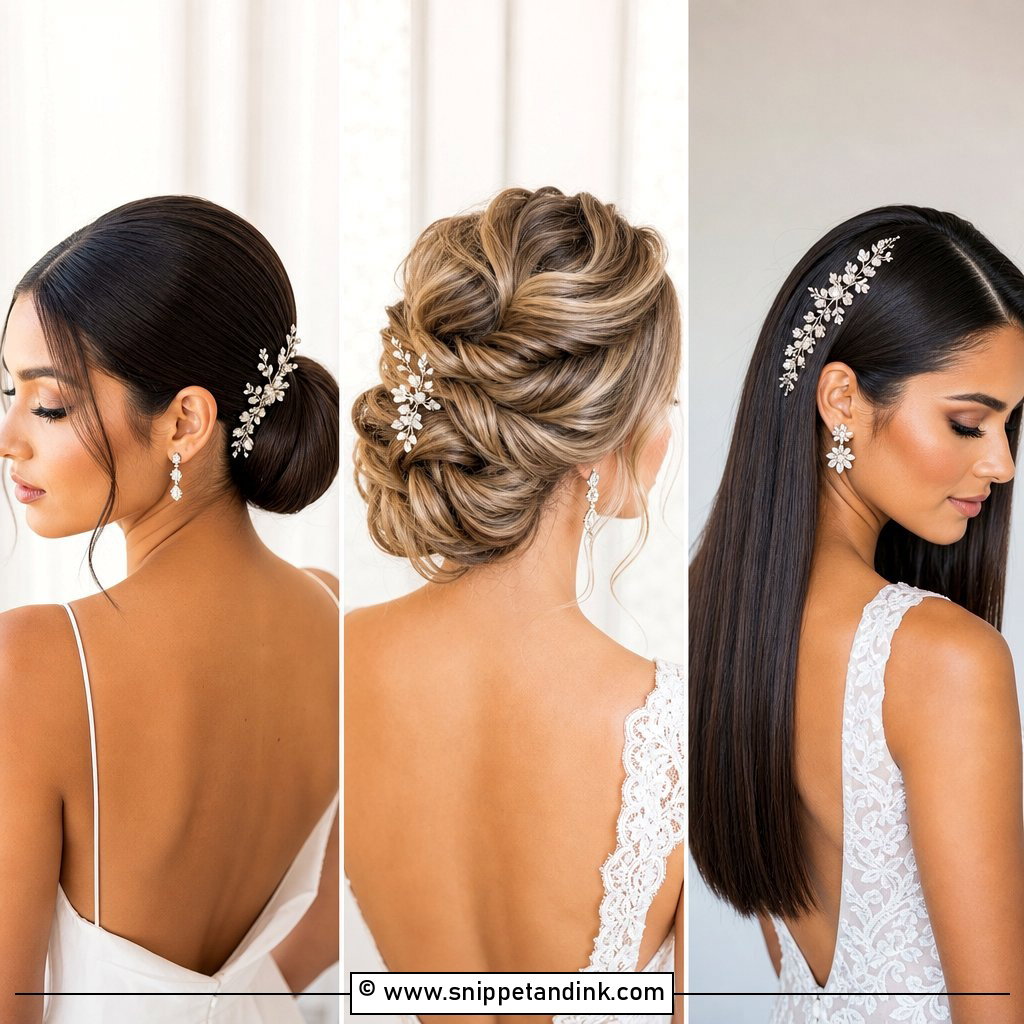
3. Celtic Knot Bun Wedding Hairstyle
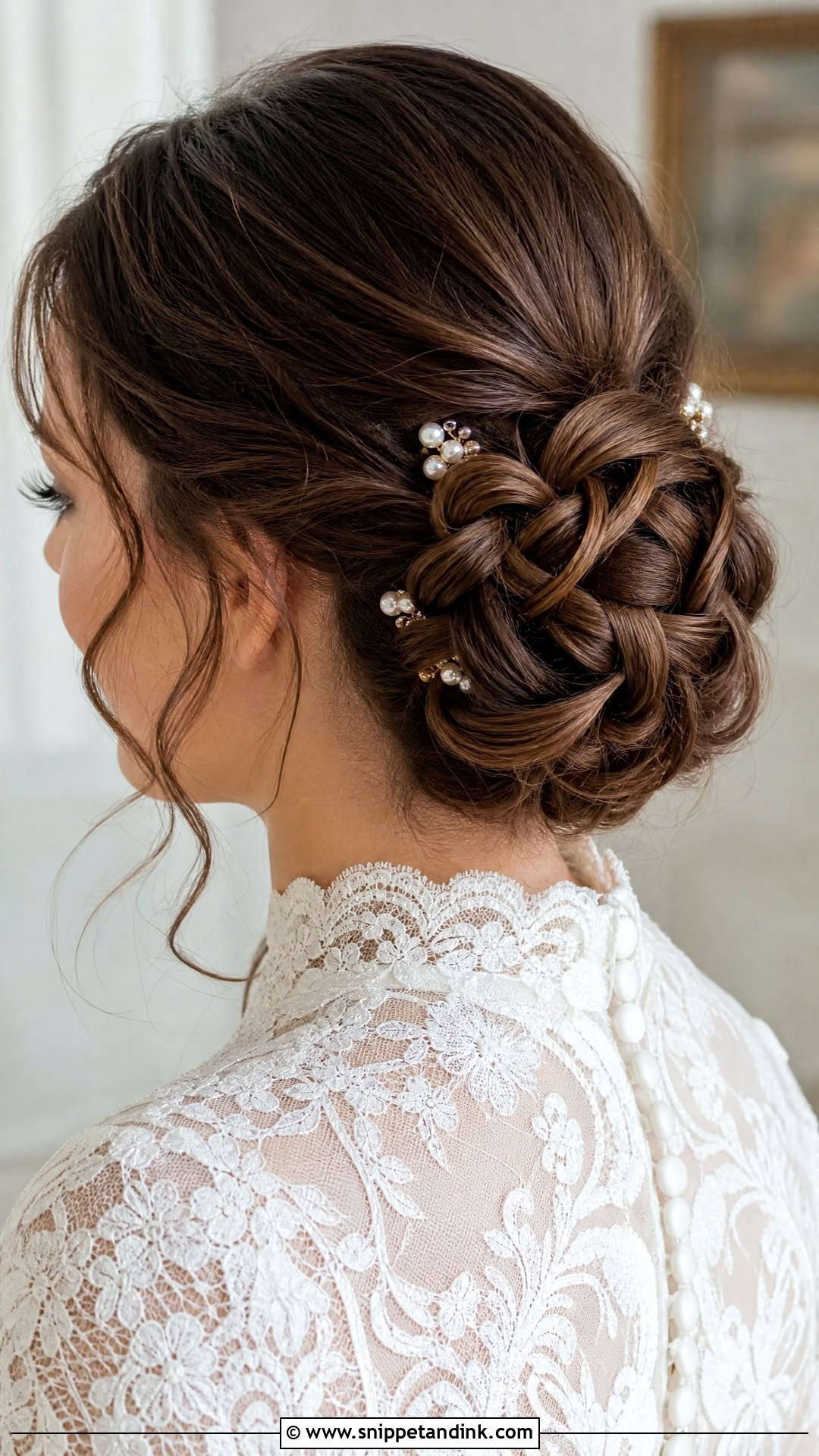
This is the polished option. Instead of a plain low bun, I twist and loop sections into a knot shape at the nape or slightly higher, so it still looks woven rather than wound. It suits lace, high necklines and statement earrings because the shoulders and neck stay clear. Thick hair is ideal; the volume fills the loops on its own. With fine hair I hide a small padding or a few clip-in wefts inside the knot, otherwise the loops look thin and you can see the scalp between them. Leave two soft face-framing pieces or it can tip into formal.
4. Celtic Fishtail Braid Wedding Hairstyle
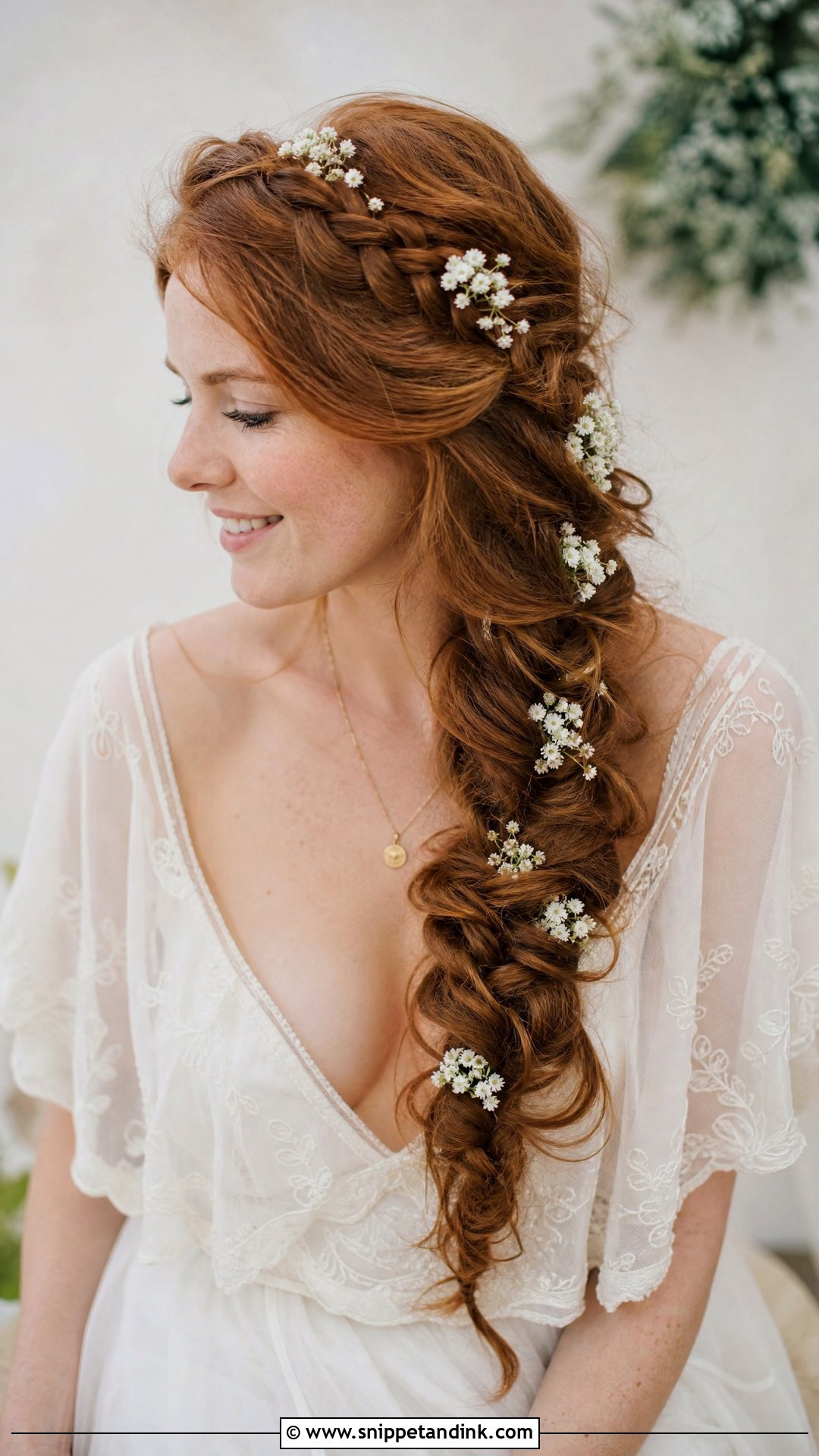
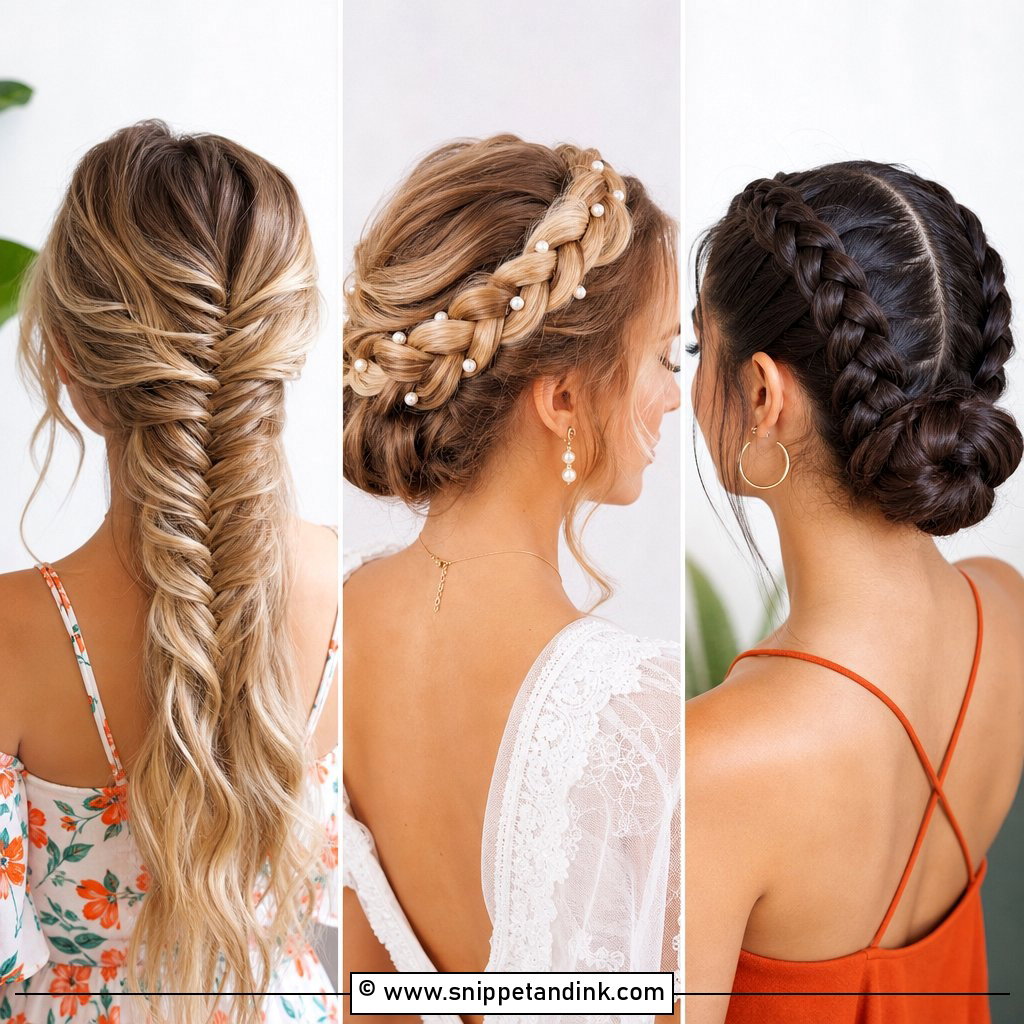
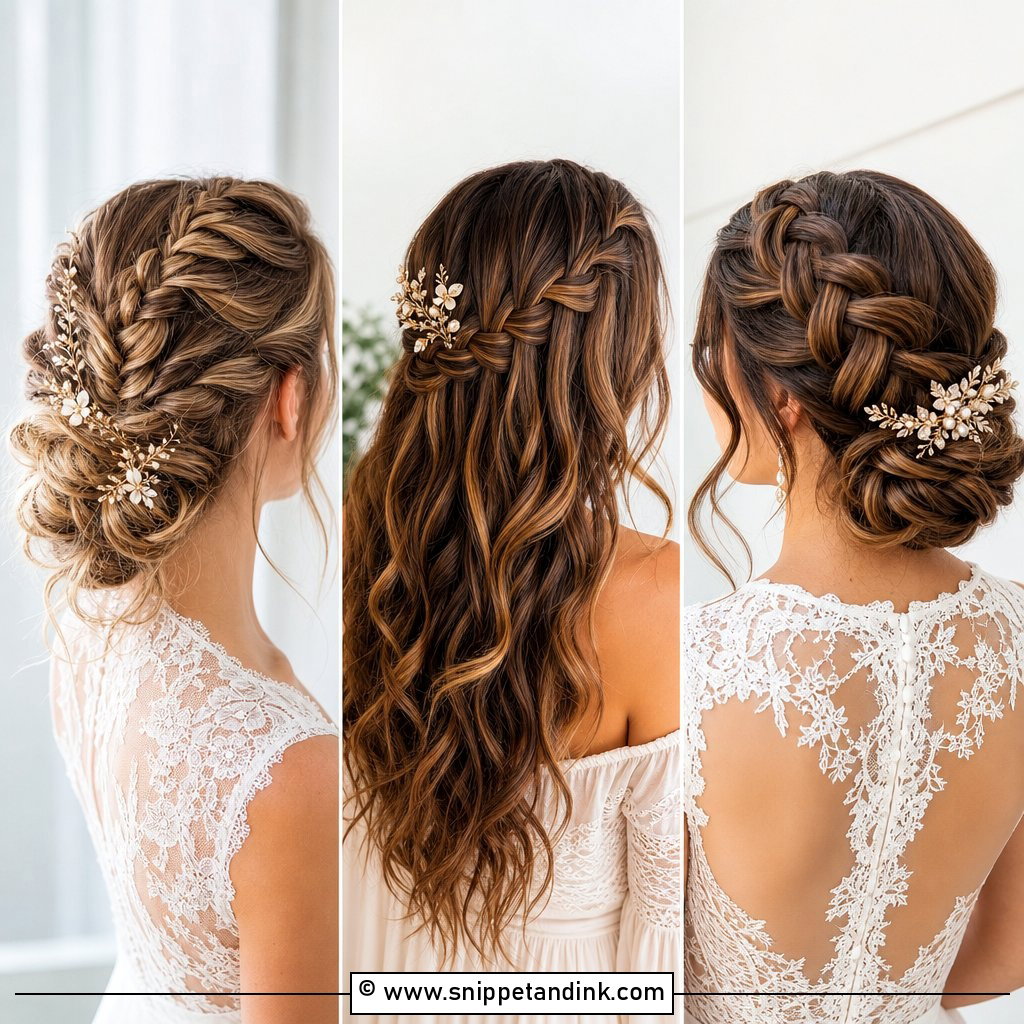
A fishtail is more forgiving than a three-strand braid, because the tiny sections hide uneven layers. It can fall over one shoulder, trail down the back or start from a twisted half-up section. The fullness comes from pancaking, gently pulling the edges outward once it’s tied, and I always do that before any spray goes on, not after. It sits naturally with elopements, outdoor ceremonies and boho dresses, and a ribbon or a few tiny flowers woven in look right. Fine hair needs extensions for this one. Pull a thin fishtail apart and it simply turns see-through.
5. Celtic Side Braid Wedding Hairstyle
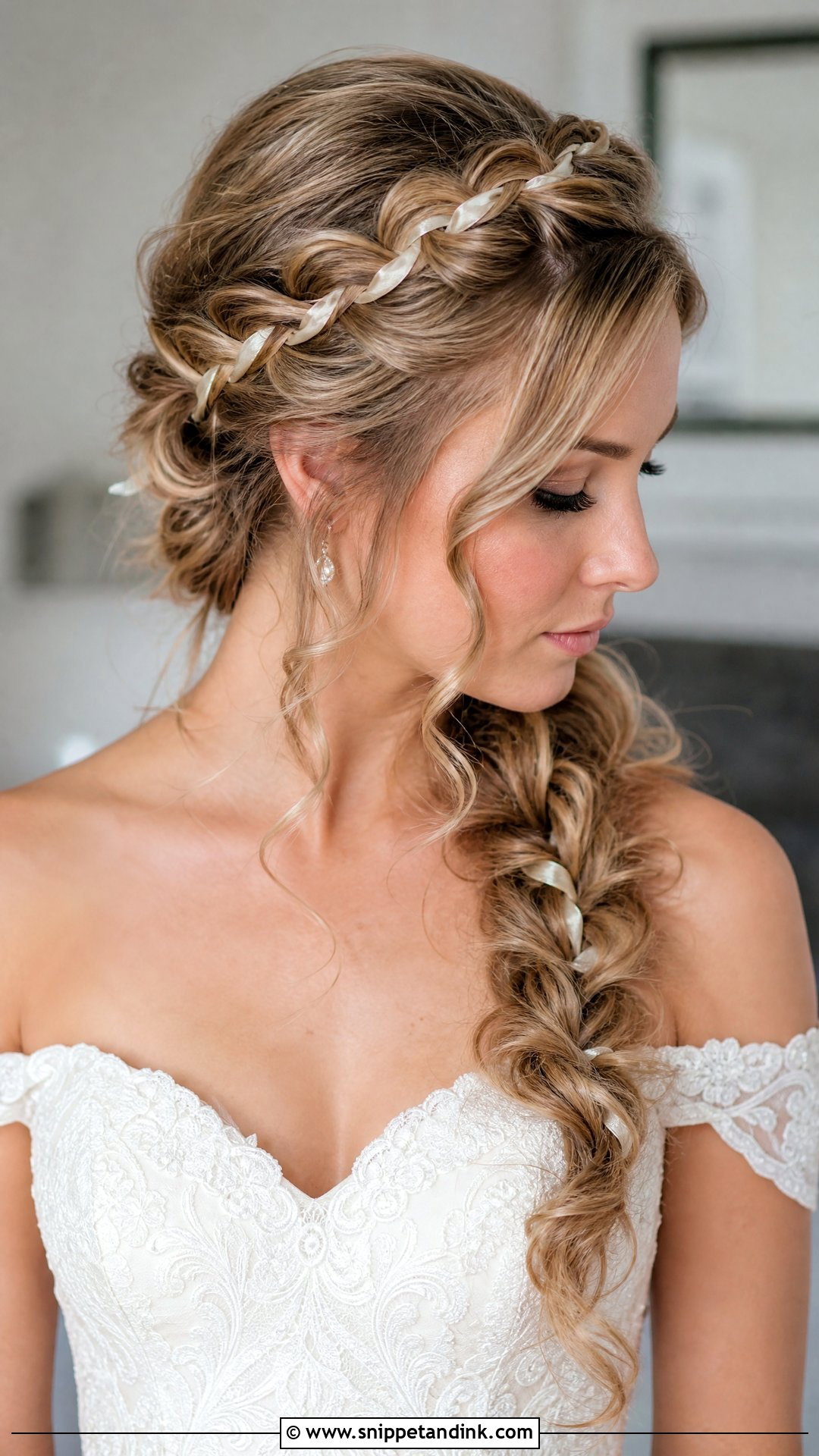
Choose this when you want the braid seen from the front. It starts near the temple, sweeps across the crown and drops over one shoulder in a loose, textured finish. The movement around the face suits most face shapes, and it gives an off-the-shoulder or cap-sleeve gown some detail at the neckline. My one caution: a side braid lies on the shoulder you’ll be photographed from, so decide with your photographer which side faces the guests at the altar. A small knotwork pin or a thin ribbon threaded through is plenty. Keep the braid loose, never tight and shiny.
6. Celtic Low Bun Wedding Hairstyle
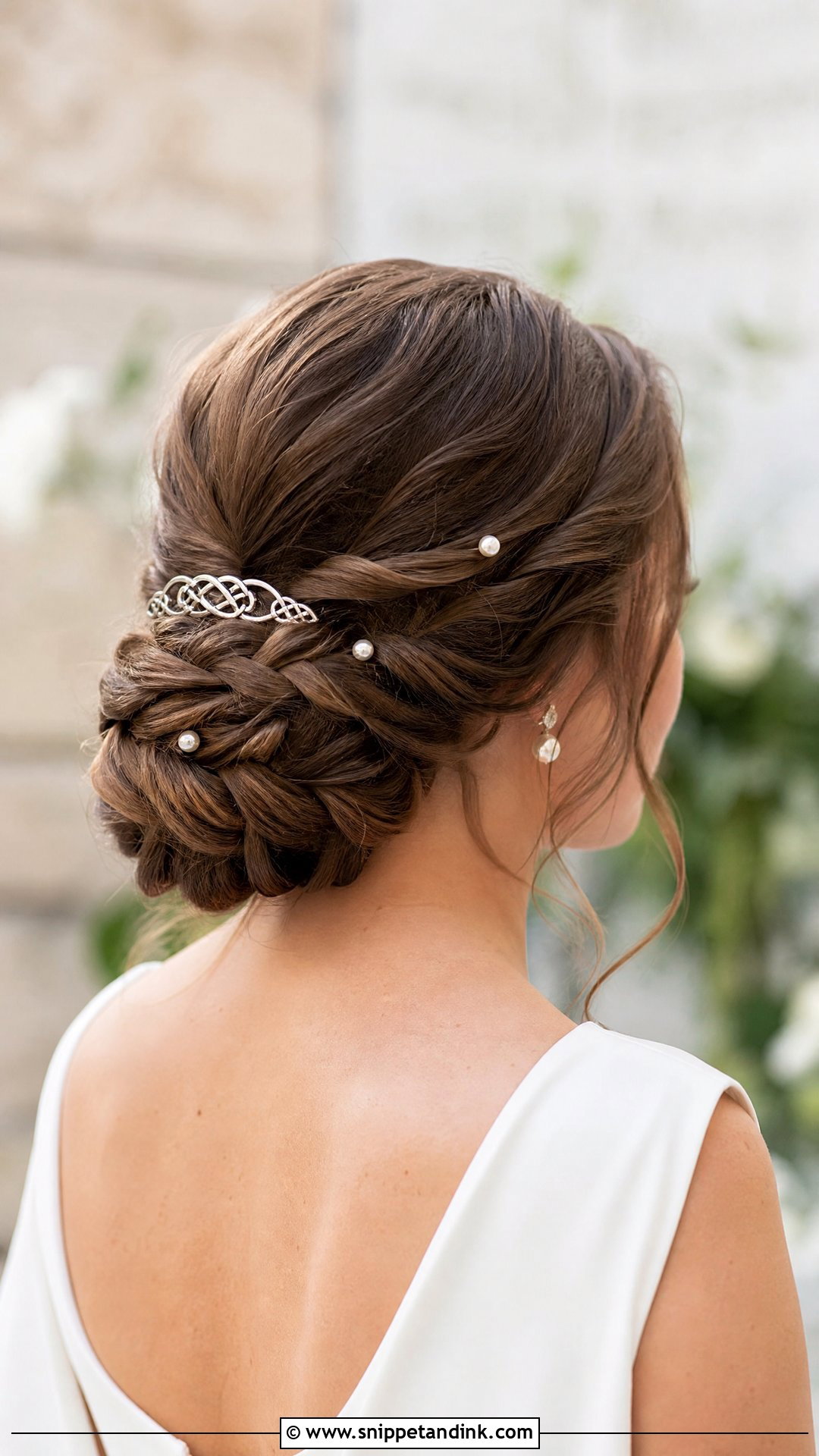
The woven low bun is the style I’d suggest to a bride who is nervous about anything coming down. The bun sits at the nape with braided or twisted sections crossing over it, and because the weight sits low it doesn’t drag on the scalp over a long day. It is secure without looking stiff. Loose tendrils soften it, and pearl pins or a Celtic-inspired comb slot neatly into the crossed sections. It works with veils, hair vines and floral clips alike. If you have a lot of hair, ask for the bun to be built in two halves so it stays flat against the head instead of bulging out over the collar.
7. Celtic Loose Waves Wedding Hairstyle
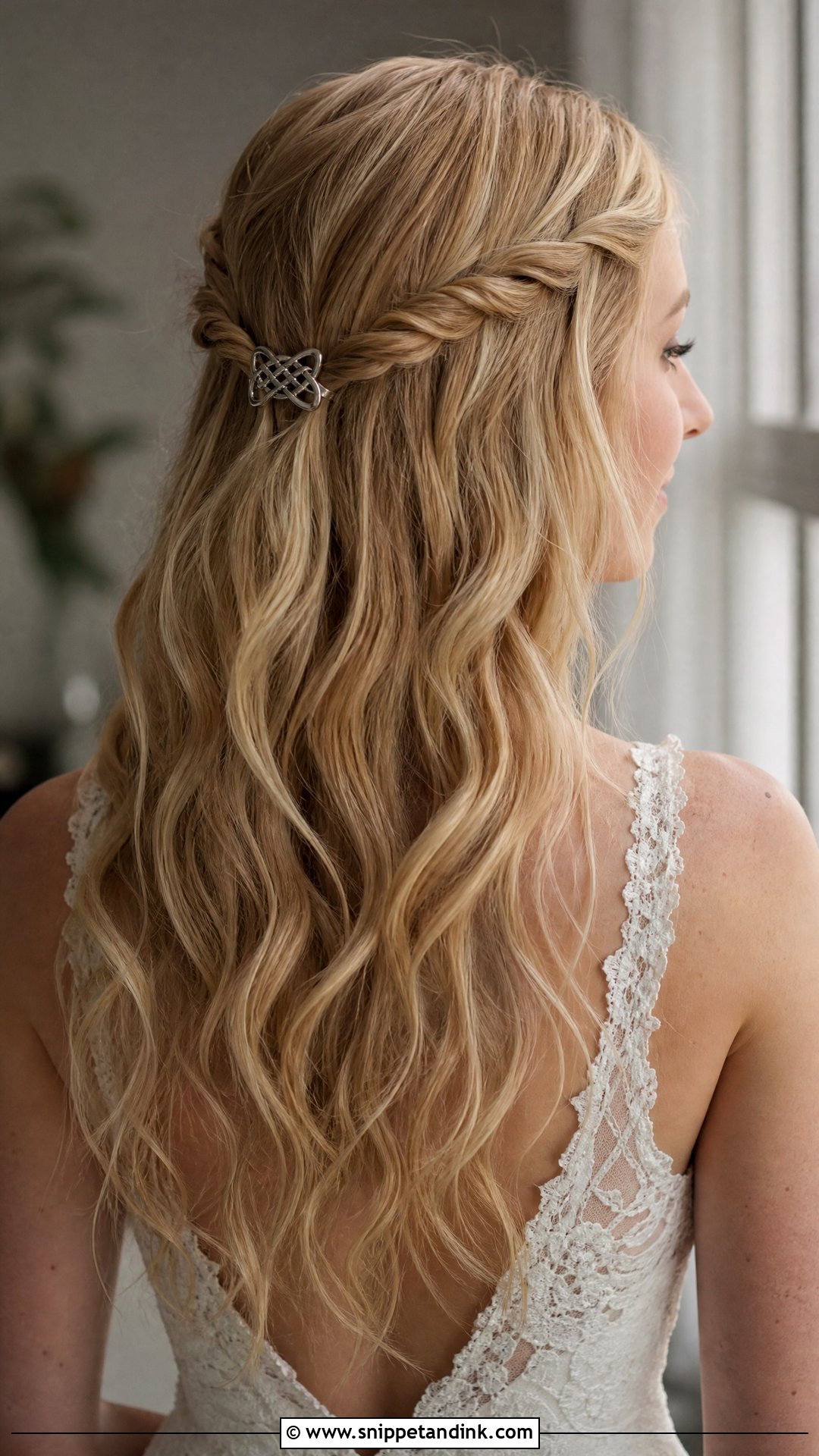
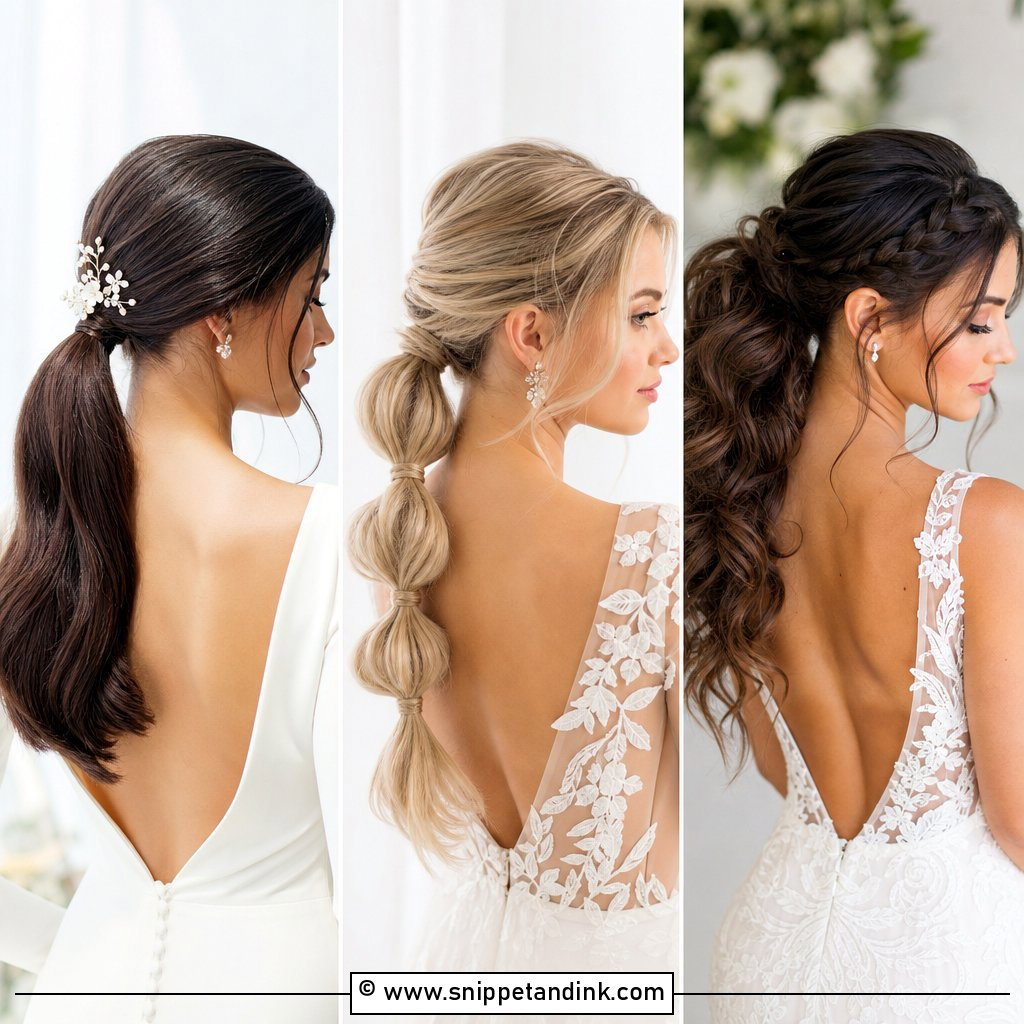
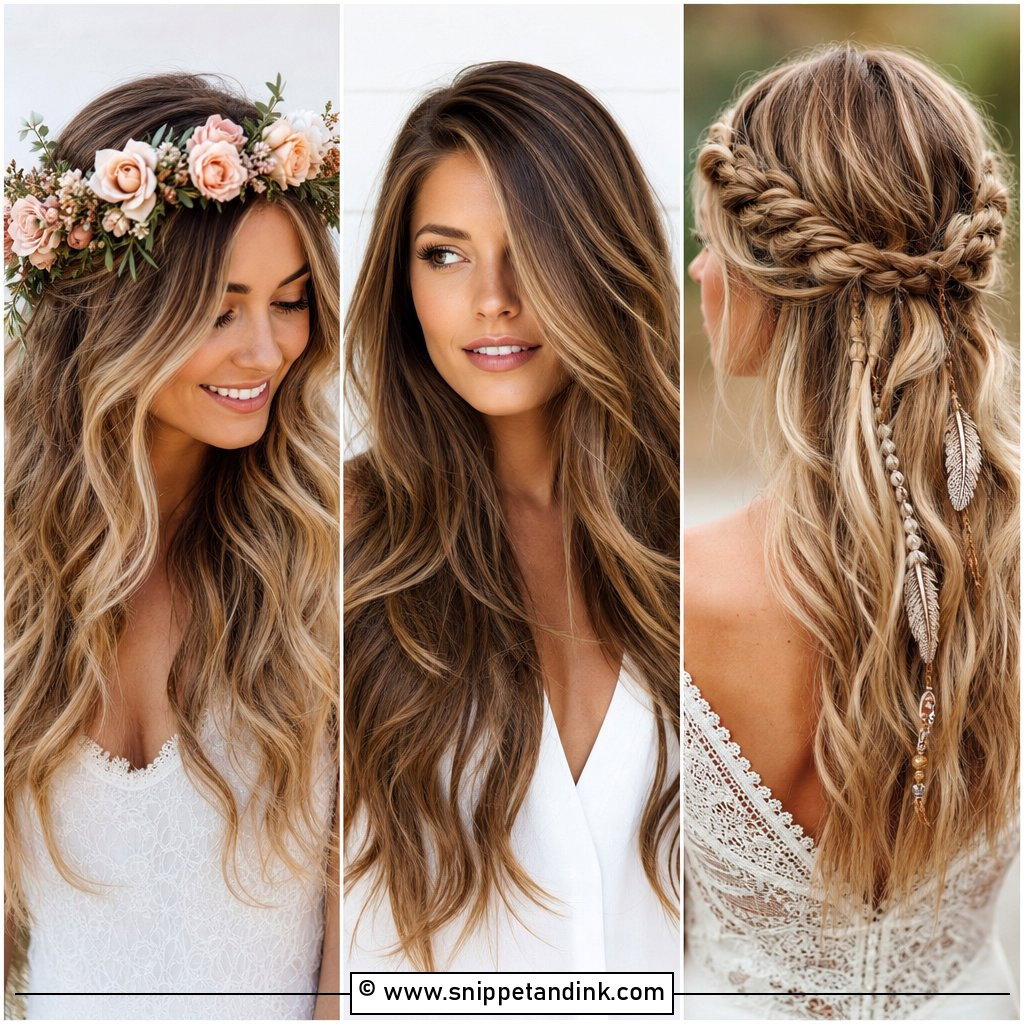
Loose waves are the simplest look here and, honestly, the one that drops fastest. They should feel soft and slightly undone, not glossy. I bring in the Celtic feeling with two small side braids, a knotwork clip or a delicate circlet, and I set every curl cooled and pinned in place before brushing it out, which is what makes waves last into the evening. A middle or soft side part both work. With flowing gowns and embroidered dresses it looks right at home outdoors. Use one or two meaningful details and stop there; more and the style looks busy.
8. Celtic Waterfall Braid Wedding Hairstyle
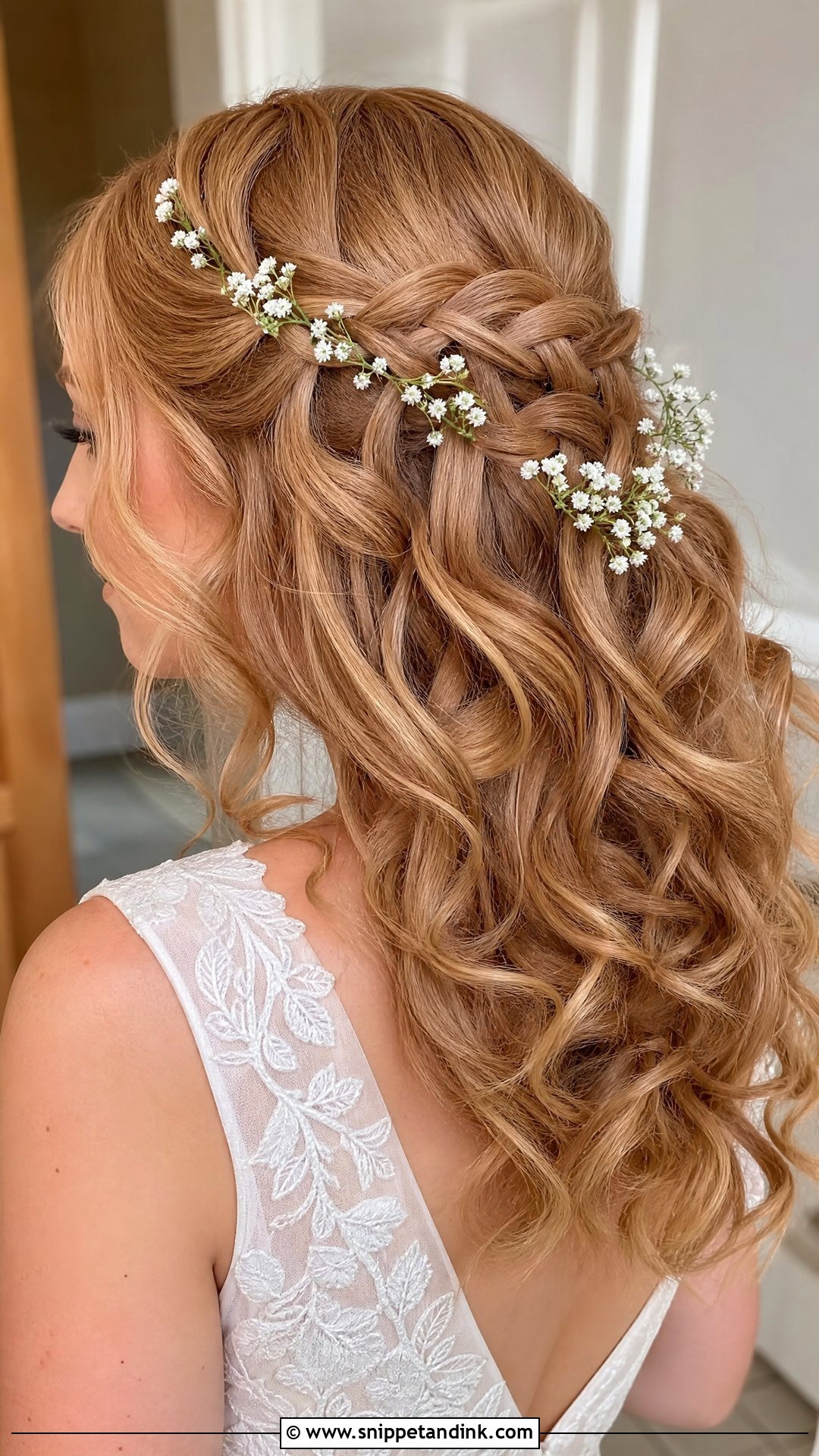
A waterfall braid crosses the back of the head while sections drop through it like ribbons, so you keep the length and still get a woven pattern. Highlighted, auburn and curled hair show it off best, because the dropped strands catch dimension. Very dark, sleek hair can hide the pattern in photos, and I’ll sometimes add a little texture spray to separate the sections. It sits between simple waves and an updo in formality. Tuck in baby’s breath or small pearl pins along the braid line. Your photographer will get a lot from it during vows, when the camera is behind you.
9. Celtic Braided Updo Wedding Hairstyle
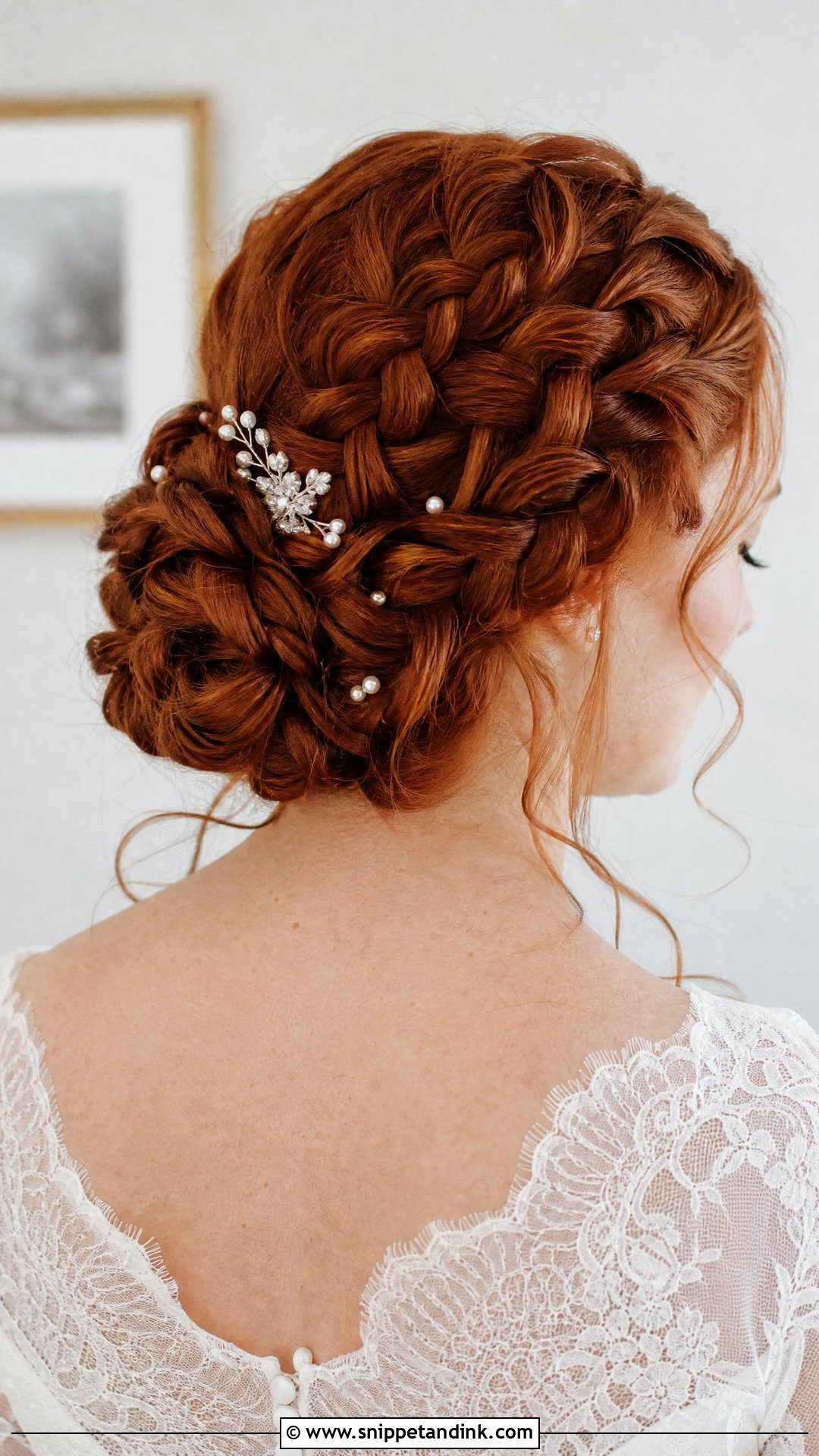
For long or thick hair, a braided updo turns sheer volume into the feature instead of the problem. I braid several sections first, then wrap, cross and tuck them into a low or mid-height shape. Because every braid is its own anchored unit, this style survives the ceremony, portraits and a full dance floor better than almost anything else in this list. Leave a few curled pieces at the temples and neckline so it isn’t severe. The downside is weight: a heavy updo pinned high can give you a headache by evening, which is why I keep it low on brides with very long hair. A small metal comb or pearl pins add the Celtic note.
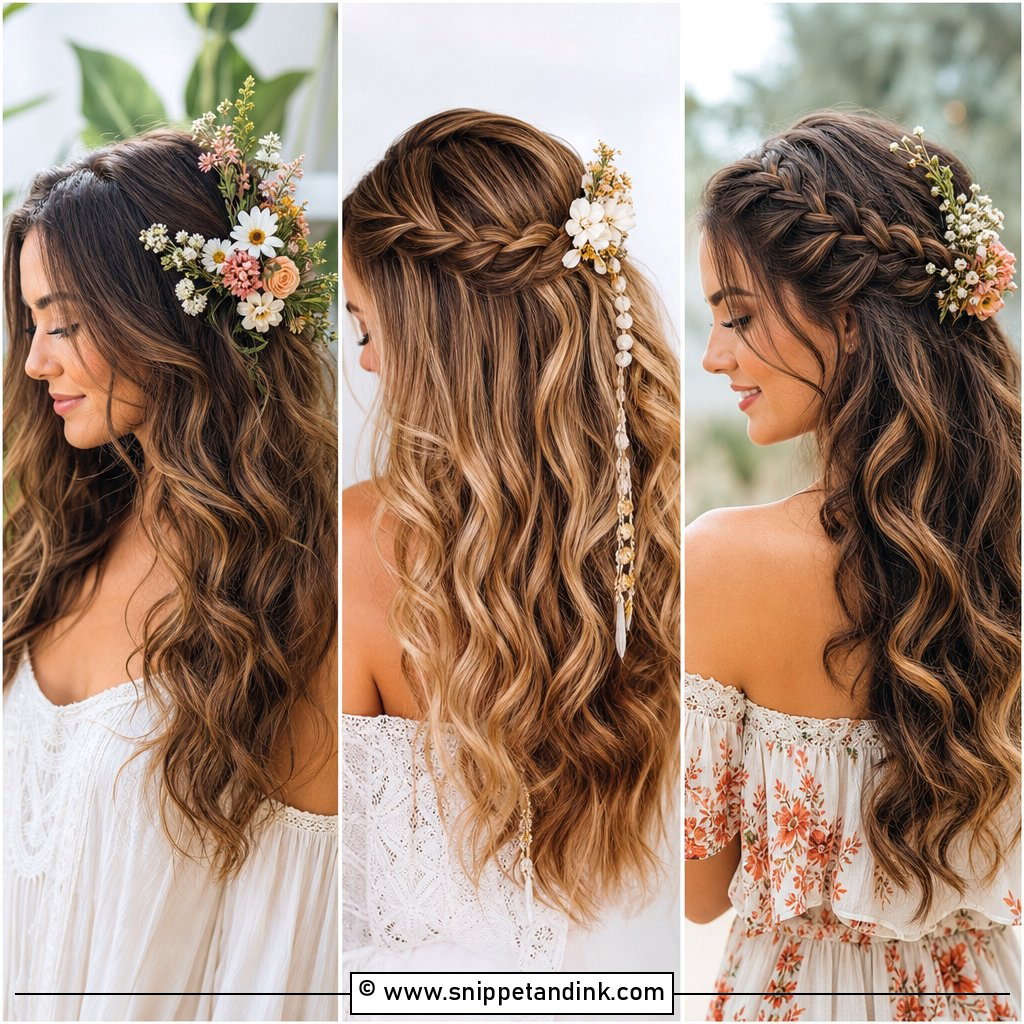
10. Celtic Boho Wedding Hairstyle
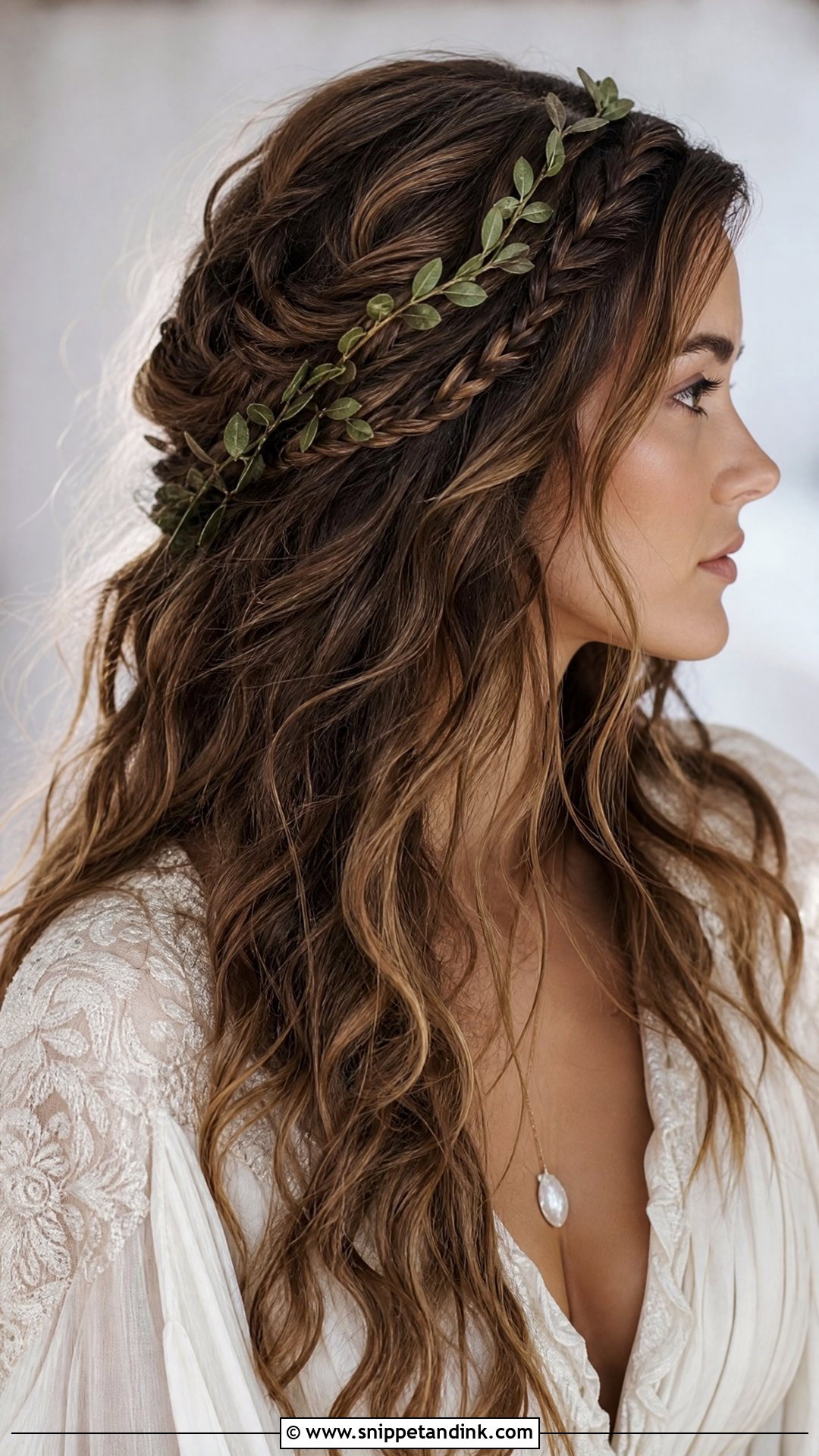
Boho Celtic hair is loose waves, small accent braids and twisted pieces, sometimes with a flower crown or greenery vine on top. Avoid anything tight or glossy; it should look lived in. Meadows, forests, barns and simple lace dresses all suit it. A knot-shaped clip, a braided halo or a ribbon in an earthy colour is your heritage detail. Here’s what most people don’t expect: undone hair takes just as long to set as a polished updo. The relaxed finish comes from structure hidden underneath, and without it the look collapses into plain loose hair by the speeches.
11. Celtic Curly Wedding Hairstyle
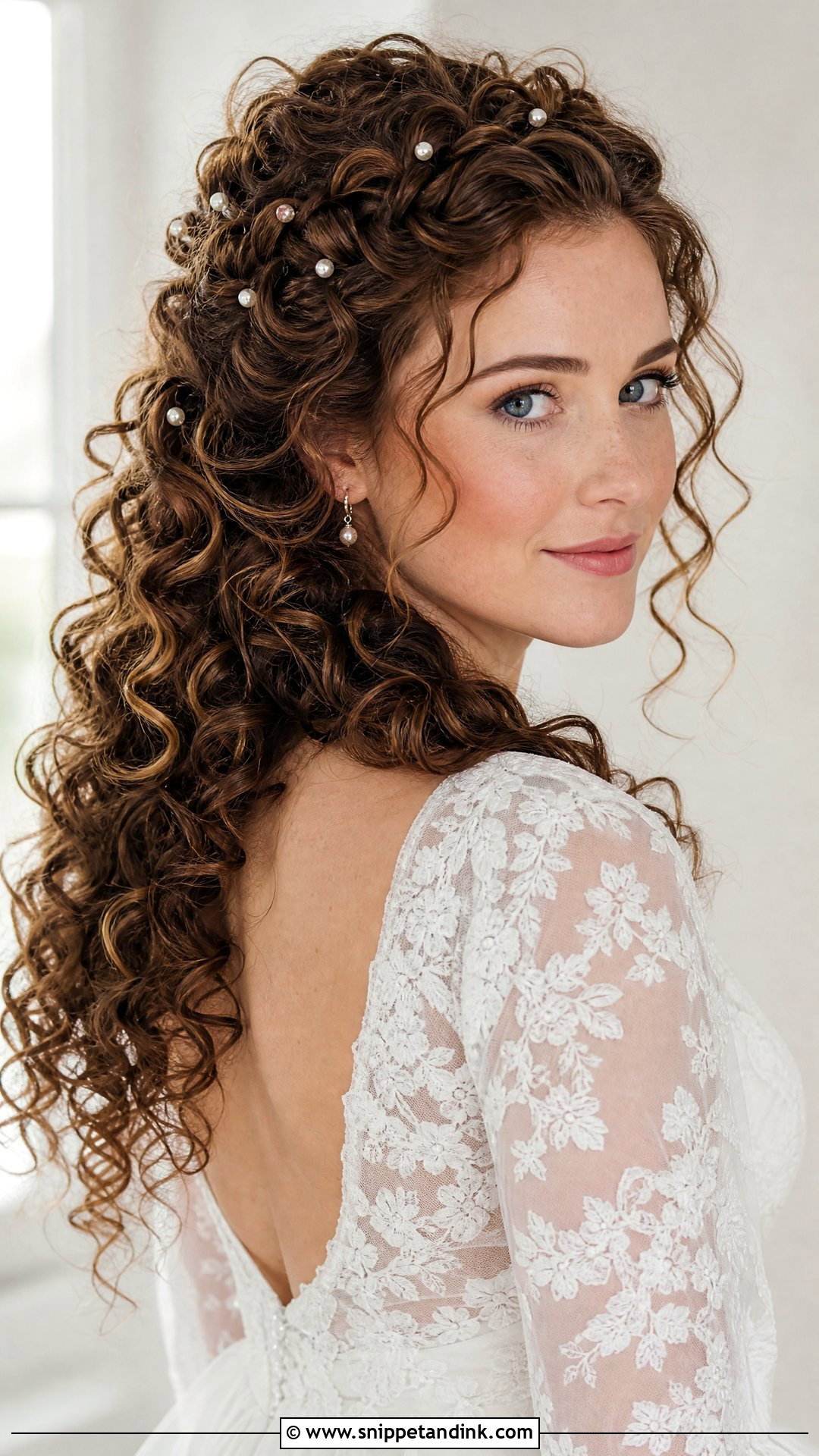
Curly hair should keep its own pattern. I style curls half up, pinned into a soft updo, or mostly down with a braided crown, and I never brush them out dry, because that turns definition into frizz. Instead I braid and twist with damp-defined curls and a light hold product, then pin with open hairpins rather than bobby pins, which crush curls flat. Accessories need to be small: tiny flowers, pearl pins or slim metal clips sit well in the texture. A large comb just disappears into the volume. Bring your usual curl products to the trial so we can test with what your hair already likes.
12. Celtic Medium Length Wedding Hairstyle
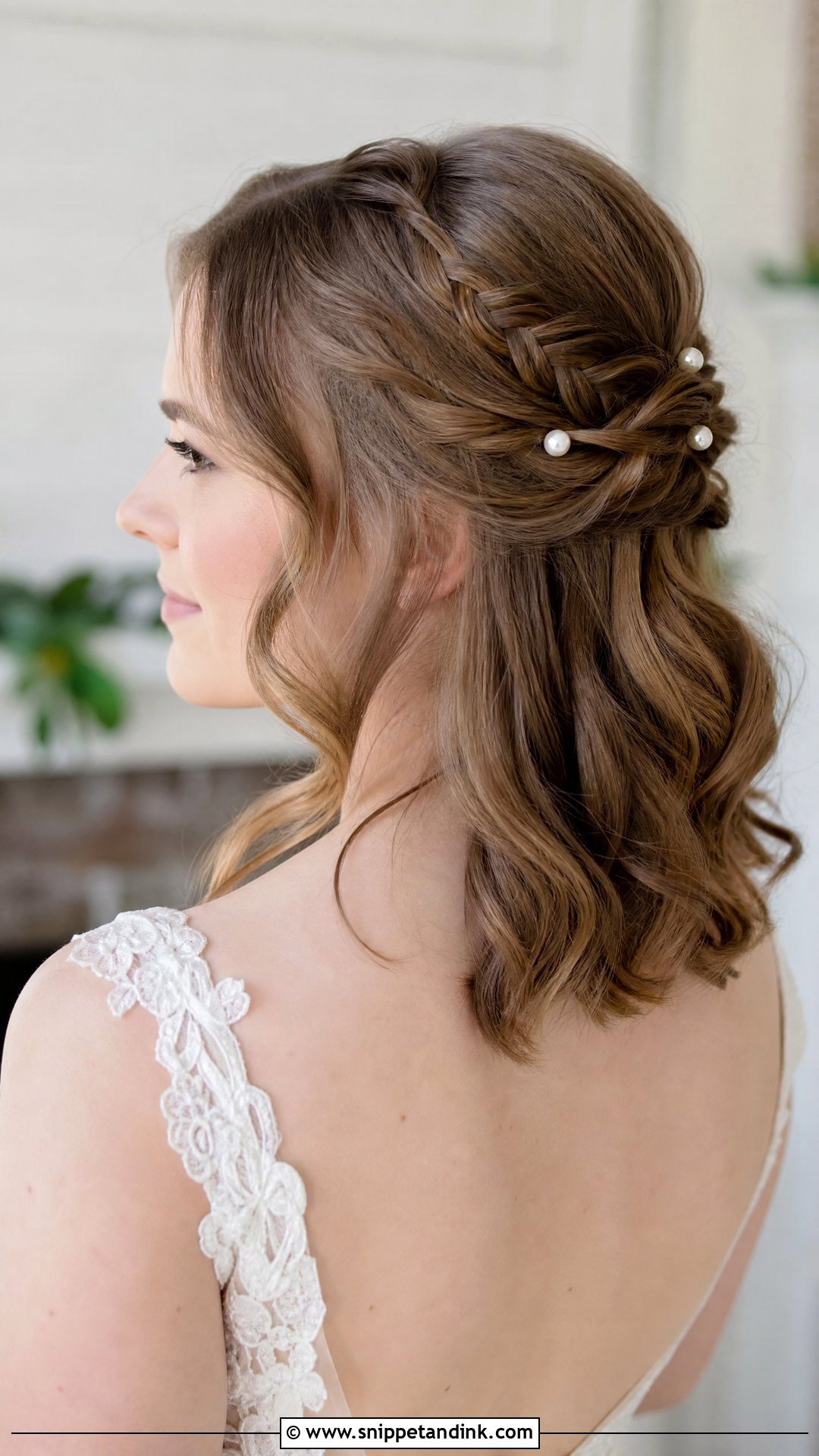
Shoulder and collarbone length can still look full and detailed with the right shape. A half-up twist, a braided crown, a soft low bun and waves with side braids all work at this length. What I avoid is forcing a style that needs more hair; a long fishtail on collarbone hair ends up stubby, and the ends escape from the bottom of a bun. Volume at the crown and curled ends does more than extensions for most medium cuts. A small knot clip, pearl comb or floral pin completes it. If your cut is very blunt, ask for the curls to be set in alternating directions so the ends don’t sit in one hard line.
13. Celtic Long Hair Wedding Hairstyle
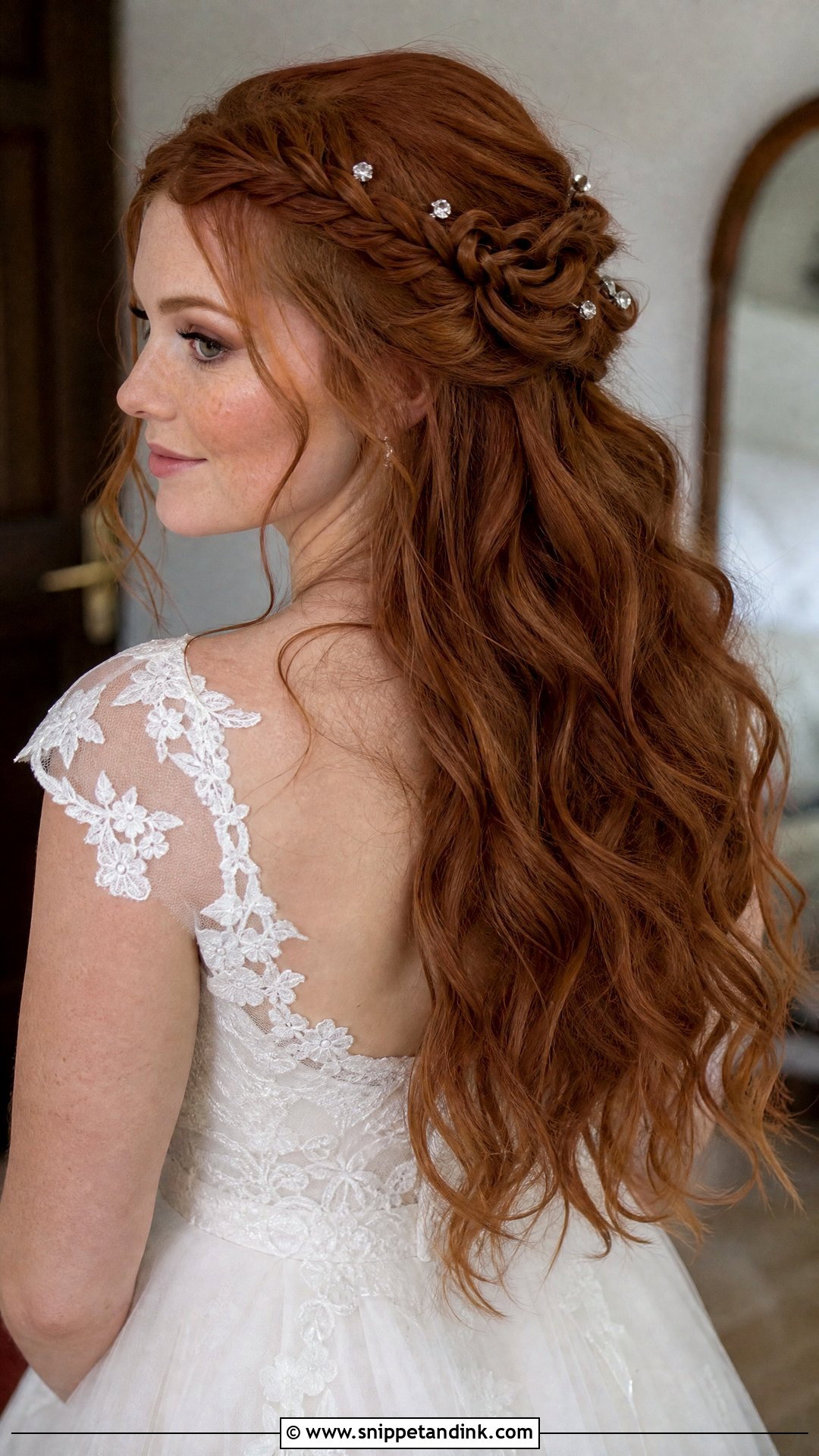
Long hair gives the most room: a dramatic side braid, a flowing half-up knot, a waterfall braid or waves with a braided crown. The richness shows from the back, which is where long styles really earn their keep. Comfort is the thing to plan for. Hip-length hair down all day is heavy and warm, so I hide pins to share the weight and keep volume balanced rather than stacking it all on top. Velvet ribbon, lace, pearls and fine silver pieces all sit well in long hair. If you’re debating up or down, a half-up version is the compromise most long-haired brides are glad they chose by the evening.
14. Celtic Wedding Hairstyle With Flowers
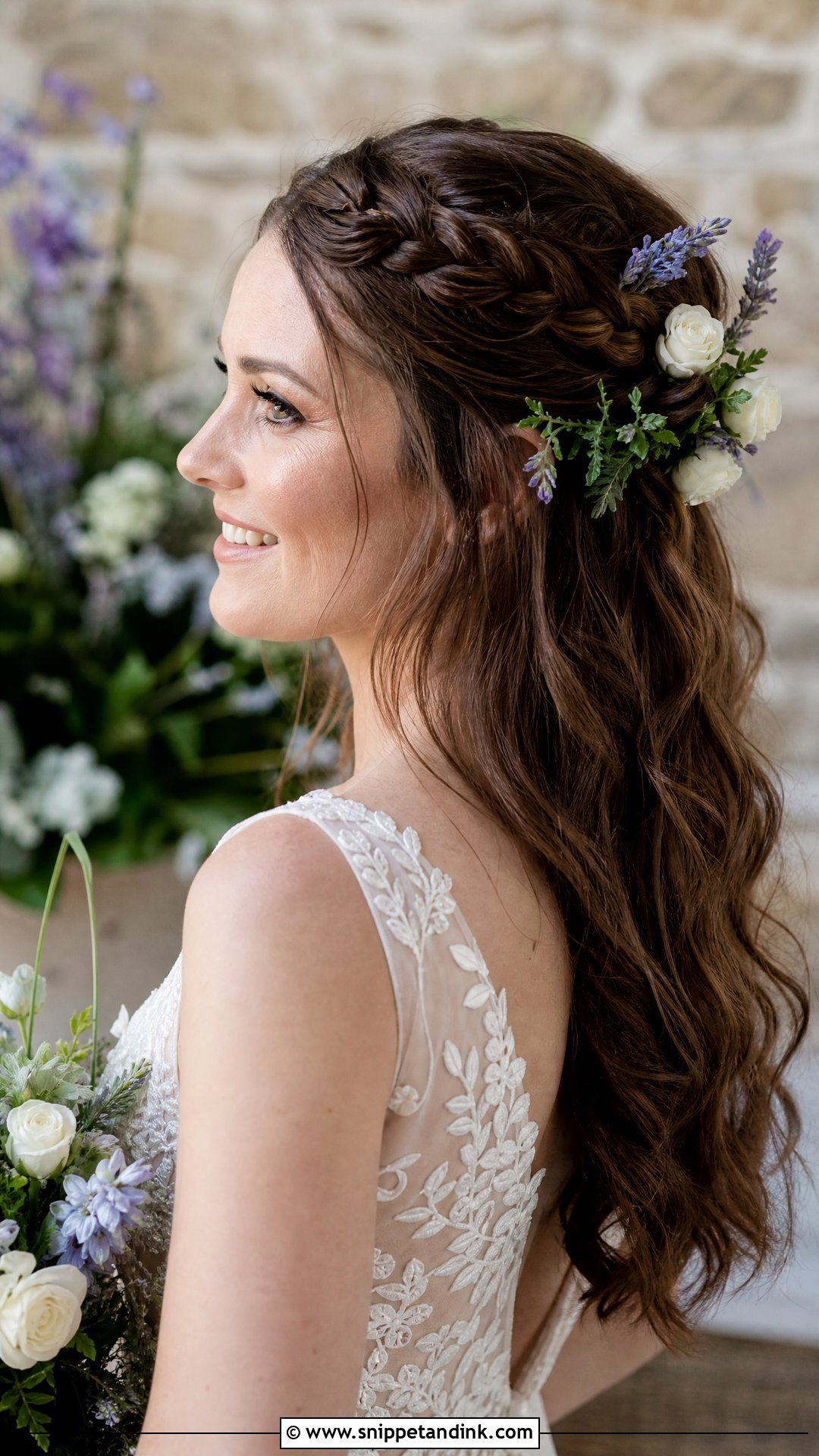
Flowers suit nature-inspired ceremonies best when they look like they grew into the braid. I tuck them into the plait, scatter them through curls, ring a bun or set a soft crown, and small blooms almost always look better than big heads that sit on top of the hair. Baby’s breath, spray roses, lavender and greenery all hold up. Fresh flowers wilt fastest where they touch the scalp, so I ask the florist for wired, conditioned stems and add them last, after the spray. Pair them with braids or twists so the Celtic shape stays clear. In spring and summer the hair ends up echoing the setting.
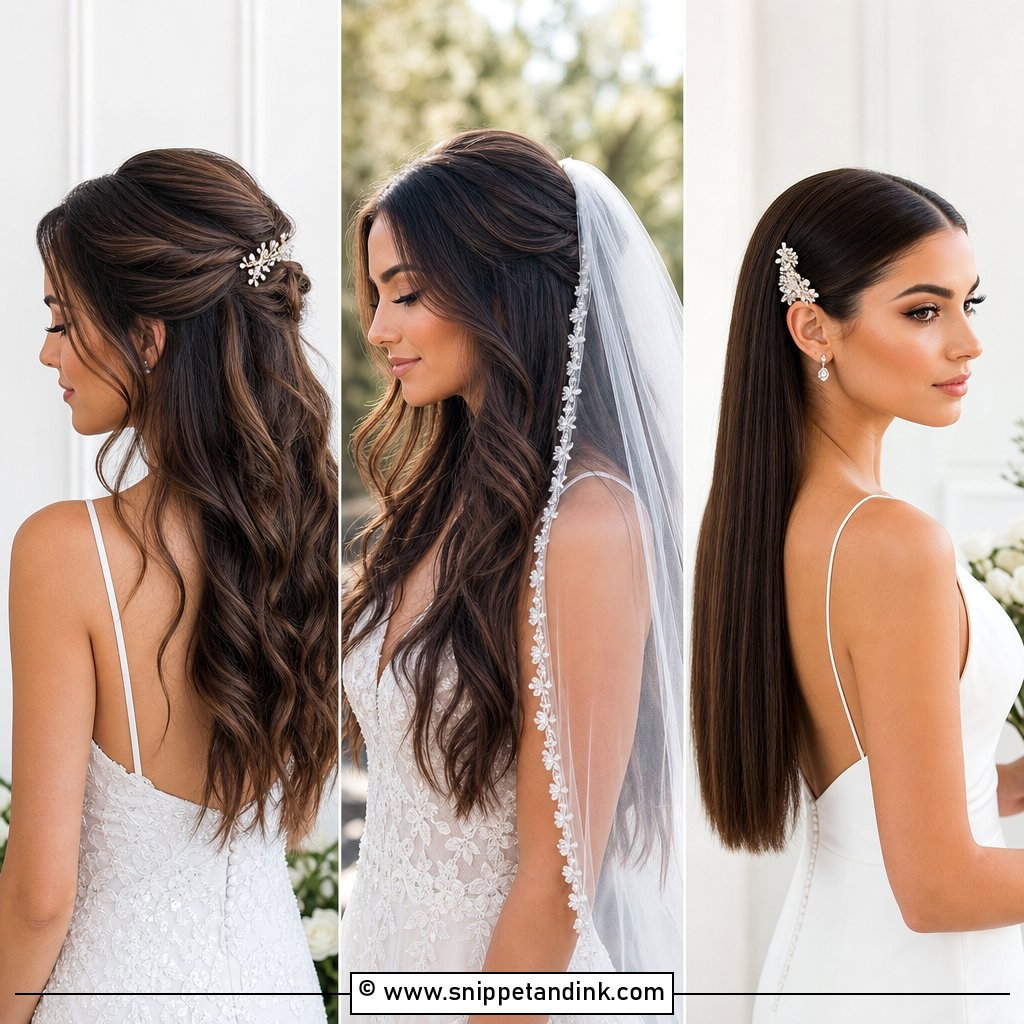
15. Celtic Wedding Hairstyle With Veil
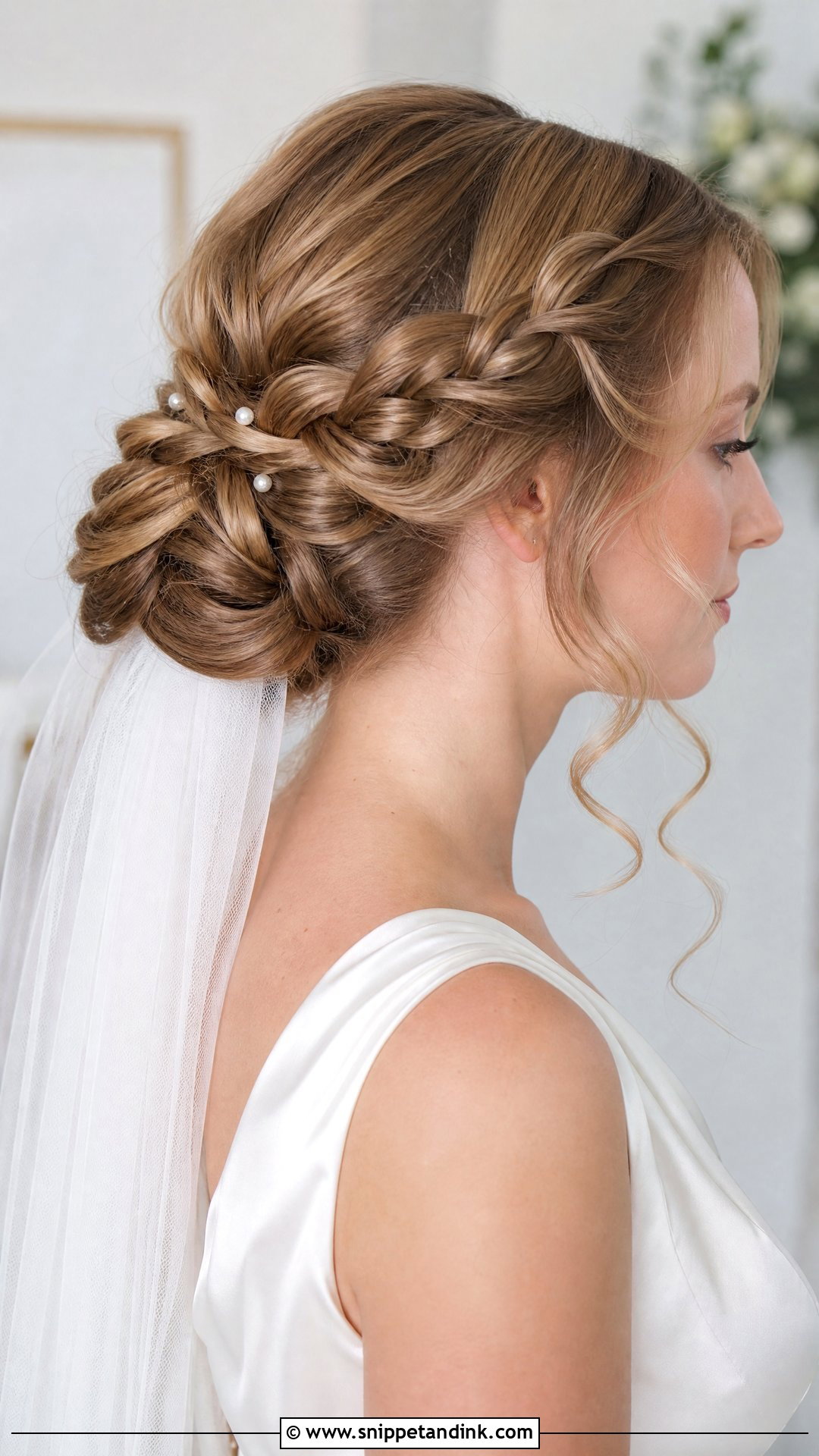
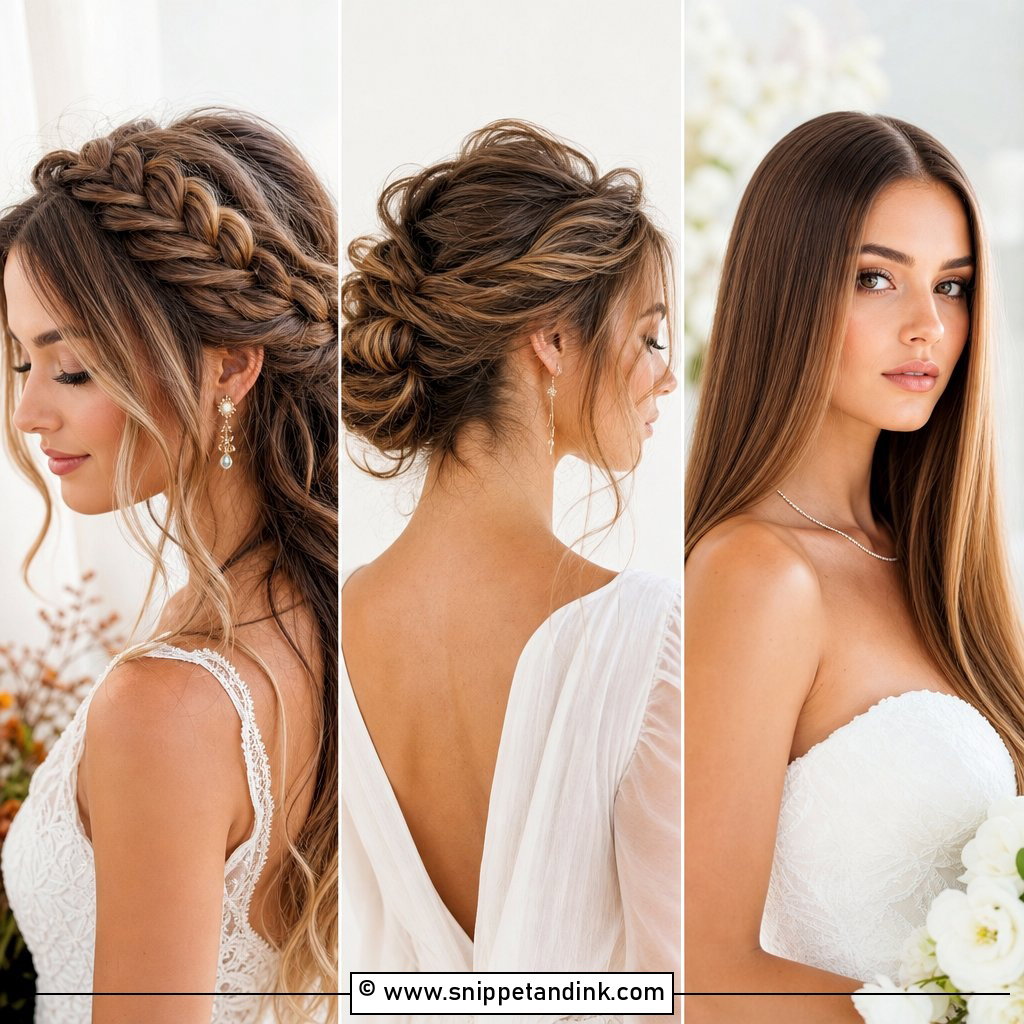
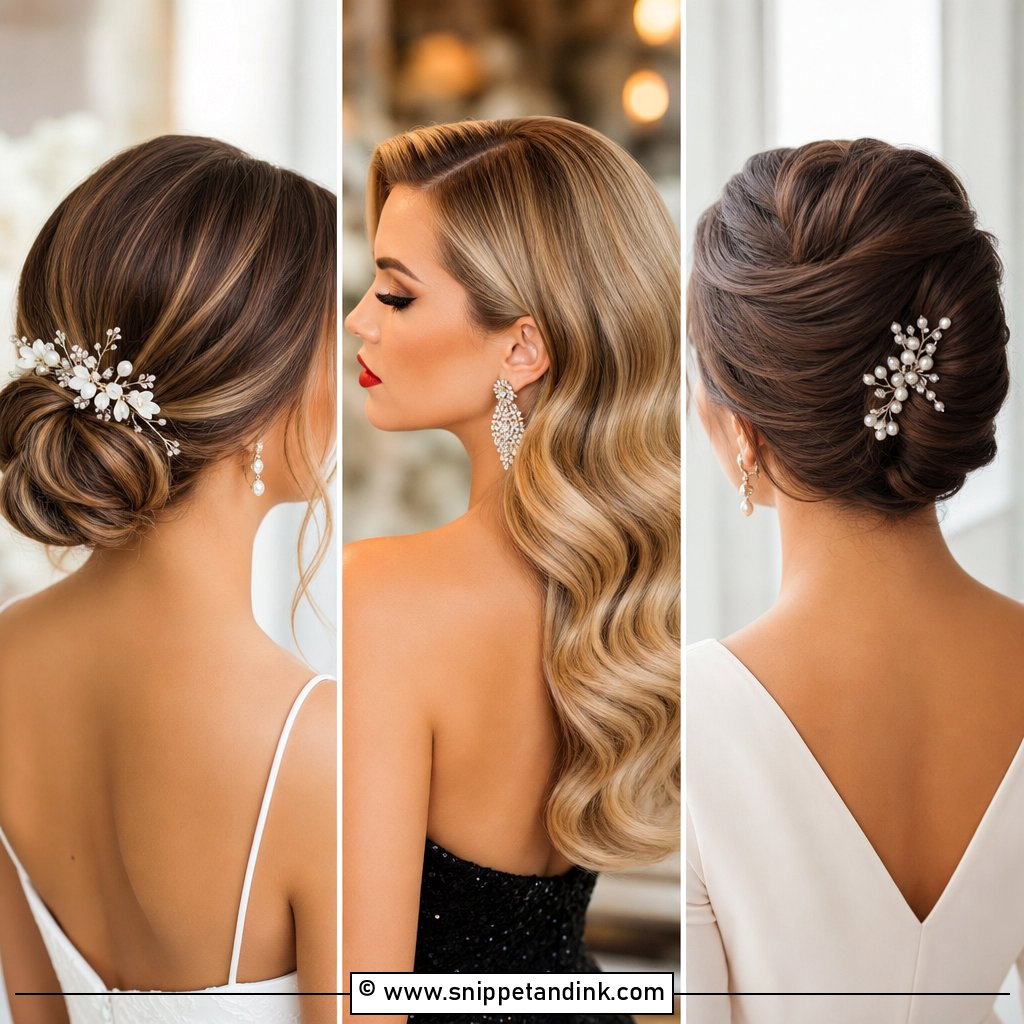
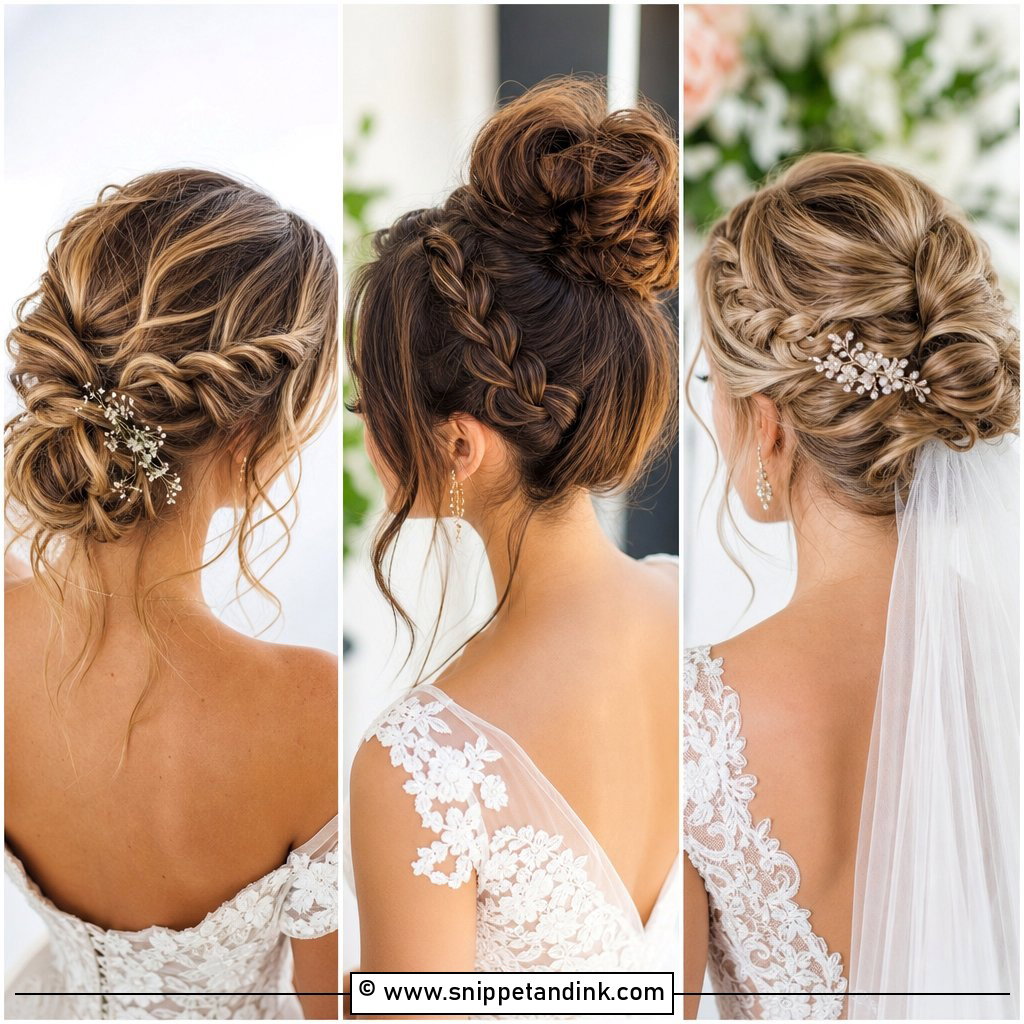
A veil needs a solid base, so half-up braids, low buns, braided crowns and twisted updos all suit it. I place the comb into a braid or a pinned section, never into loose hair, and I test it at the trial by having you turn your head sharply. Plan for the moment the veil comes off too: the hair should look finished on its own for the reception, with no comb gap showing. Celtic detail can sit in a knot braid, a silver comb or a woven texture. Keep the front comfortable and flattering, since that is what everyone sees across the table.
Damp Castle Air, Sea Wind and Braids That Hold Until Midnight
Plenty of Celtic-inspired weddings happen in soft rain and coastal wind, or in old stone halls that stay cool and slightly damp even in August. Braids cope with that weather better than loose curls do, but only if they are built for it.
Prep the hair the day before
Freshly washed, silky hair lets braids slide loose within a couple of hours. I prefer hair washed the night before, then I work texturizing spray or dry shampoo through so each section grips. Fine hair benefits from clip-in wefts hidden under a crown braid; they add grip as much as thickness.
Pin across the braid, not along it
Pins slid in the same direction as the plait work their way out by the first dance, so I cross them in pairs. At your trial, shake your head, step outside if you can and see what moves. A pancaked braid is also the first thing to flatten in mist, so I finish with a light flexible hairspray rather than a stiff one that turns crunchy.
Plan for a handfasting
During a handfasting you stand close and still while cords are tied, often outdoors. Long loose waves blow straight into faces and cords; a half-up braid or a side plait keeps everything clear. Give a bridesmaid a small kit: a dozen bobby pins in your shade, a travel hairspray, a few clear elastics and a fine-tooth comb for tucking frizz back into the weave.
Let the Braid Carry the Heritage
Across all fifteen looks, the braid does most of the work. A crown, a knot bun or a loose fishtail already says Celtic; the accessories only need to nod along. Match the shape to your dress and venue, be honest about what your hair texture will hold, and pick one or two pieces that mean something to you. Pearls, a sprig of greenery, a silver comb or a strip of ribbon is plenty. Then let the trial tell you whether it still feels like you once the veil is on and you’ve moved around in it for an hour.
You'll Like These Ideas:


Leave a Reply