
Braids are the bridal style I get asked about most, and also the one most often chosen from a photo that was shot on hair three times thicker than the bride’s own. That doesn’t mean you can’t have one. It means the braid has to be picked for the hair you actually have, then built so it survives a veil, a hug line and a long night of dancing. Below are thirty braided looks, from a pearl-studded fishtail to a full crown, with notes on how each one is made, who it suits, and where I’d change the plan.
Layers, Density and Length Decide Which Braid Works
Most braid photos you’ll find online are made with clip-in extensions, even when the caption doesn’t say so. That’s not a problem, but it does mean the first question I ask isn’t which braid you like. It’s how much hair you have to braid with.
Fine or thin hair
Dutch braids are your friend, because the strands sit on top and can be pancaked wider than they started. A fishtail on fine hair looks delicate up close but can disappear from the back row. If you want real volume, plan on a set of clip-ins matched to your color and ask your stylist to bring them to the trial.
Heavy or very thick hair
You’ll get width without help, so the risk is weight. A large braided bun can pull on the scalp by evening. I split thick hair into two smaller braids or thin out the ends before pinning, and I avoid styles that put all the weight on a single point.
Layered cuts and grown-out fringes
Short layers poke out of braids, especially along a crown or halo. A small amount of pomade before braiding helps, and in some cases a few face-framing pieces left out on purpose look better than ends sticking up. If you’re still growing out a cut, tell me how long your shortest layer is, not your longest.
1. Fishtail Braid Wedding Updo
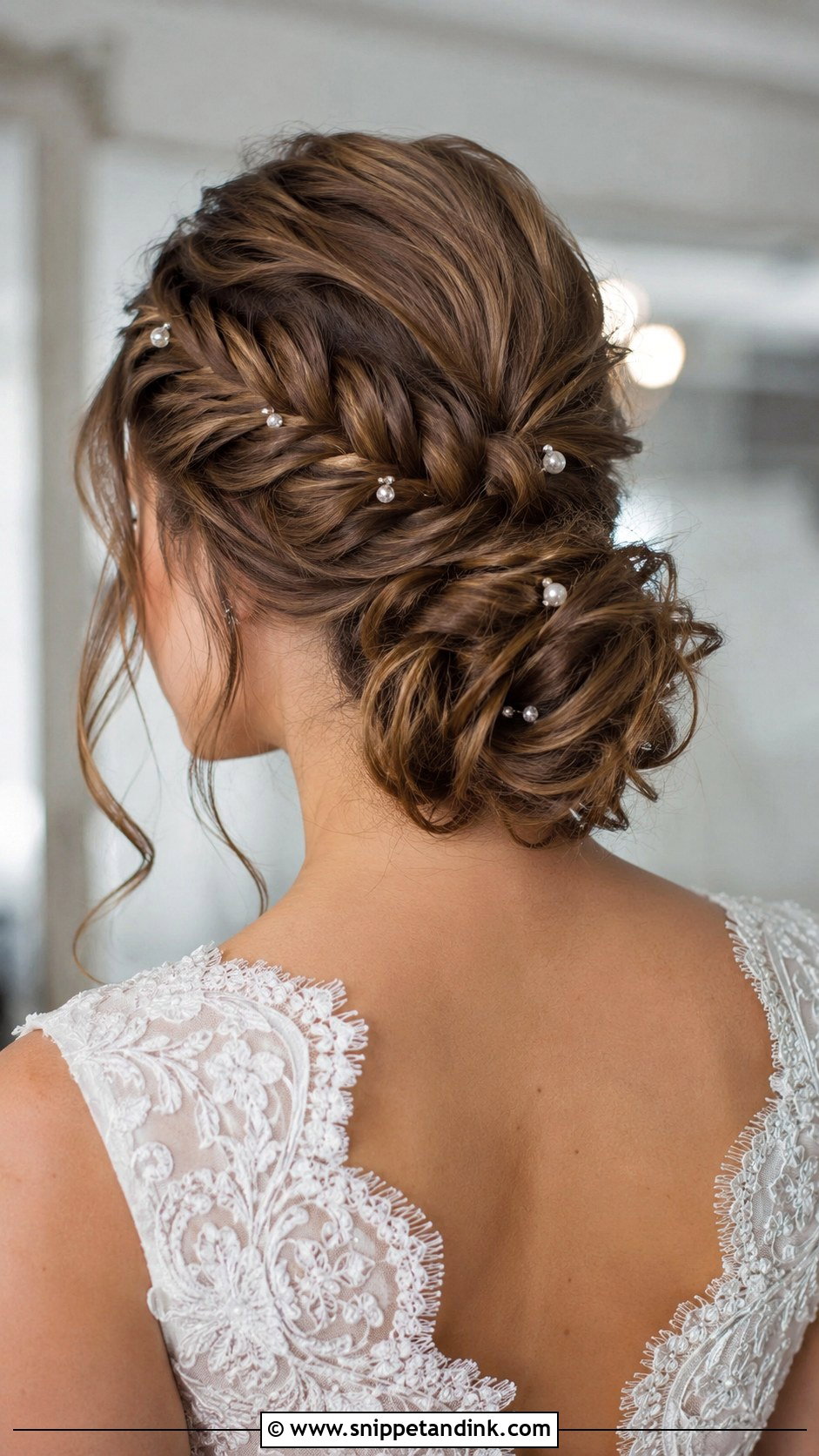
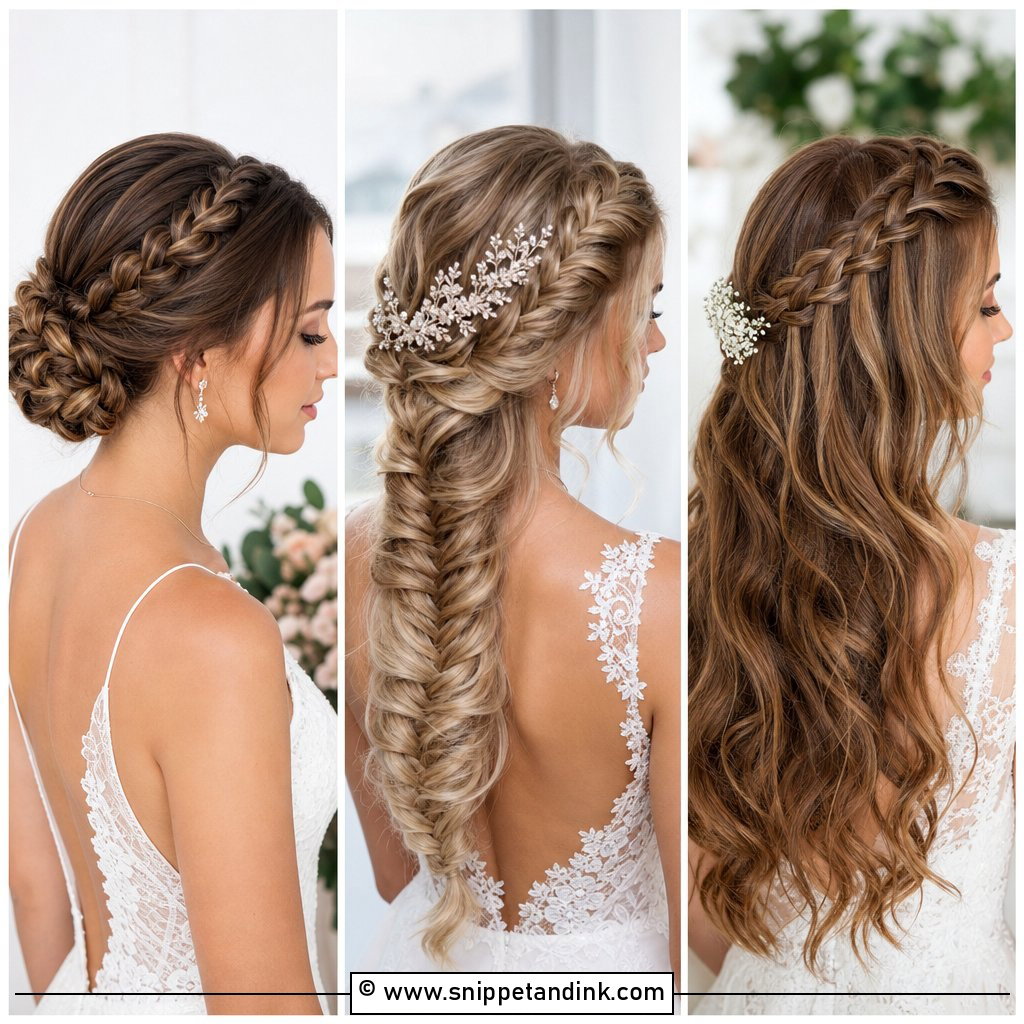
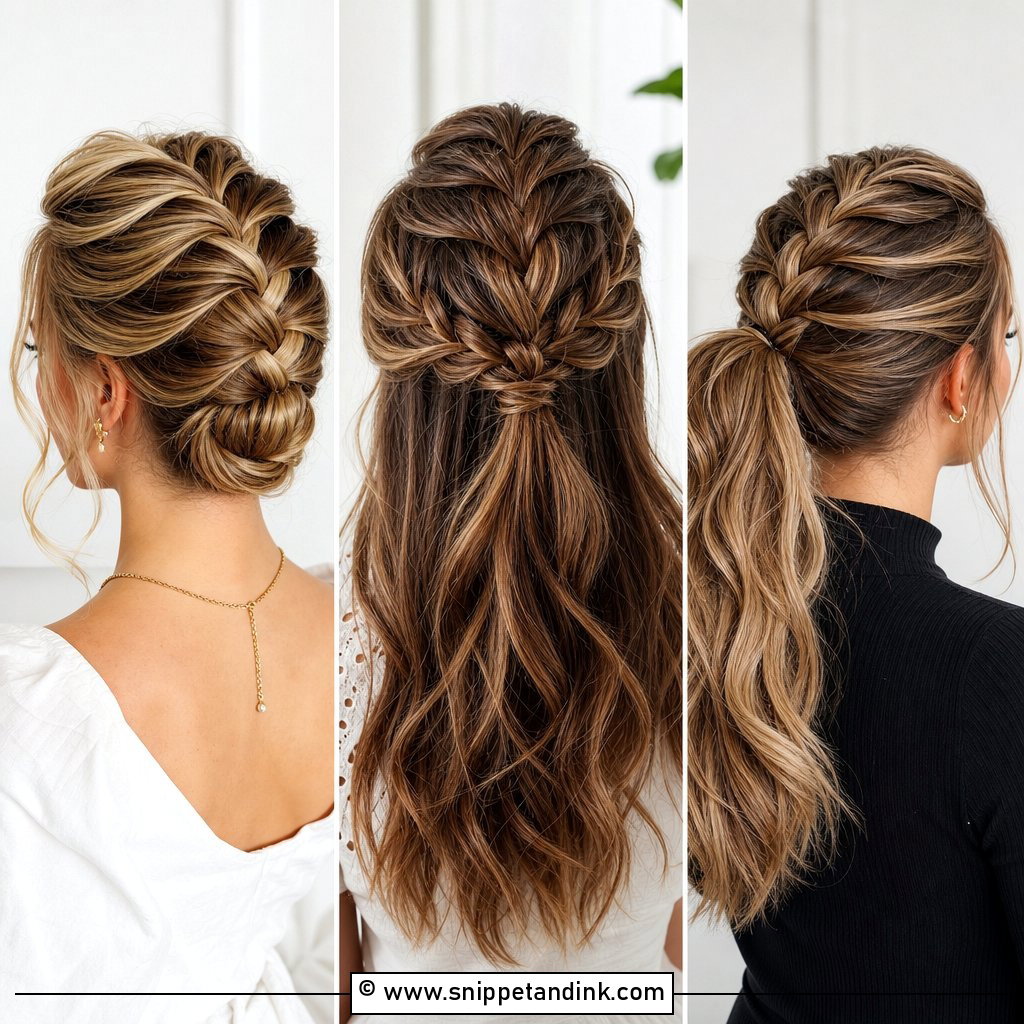
A fishtail splits the hair into two sections instead of three, crossing a thin strand from the outside of each side over and over, which is why it reads so detailed. Coiled into a low updo it sits neatly under lace and a long veil. The fuller version you see online comes from pancaking: gently pulling the edges of each crossing outward once the braid is secured. I always pancake from the bottom up and pin before I loosen, because pulling an unpinned fishtail can slide the whole thing loose. It needs at least shoulder-length hair; on shorter layers the crossings run out before the braid does.
2. Boho Waterfall Braid
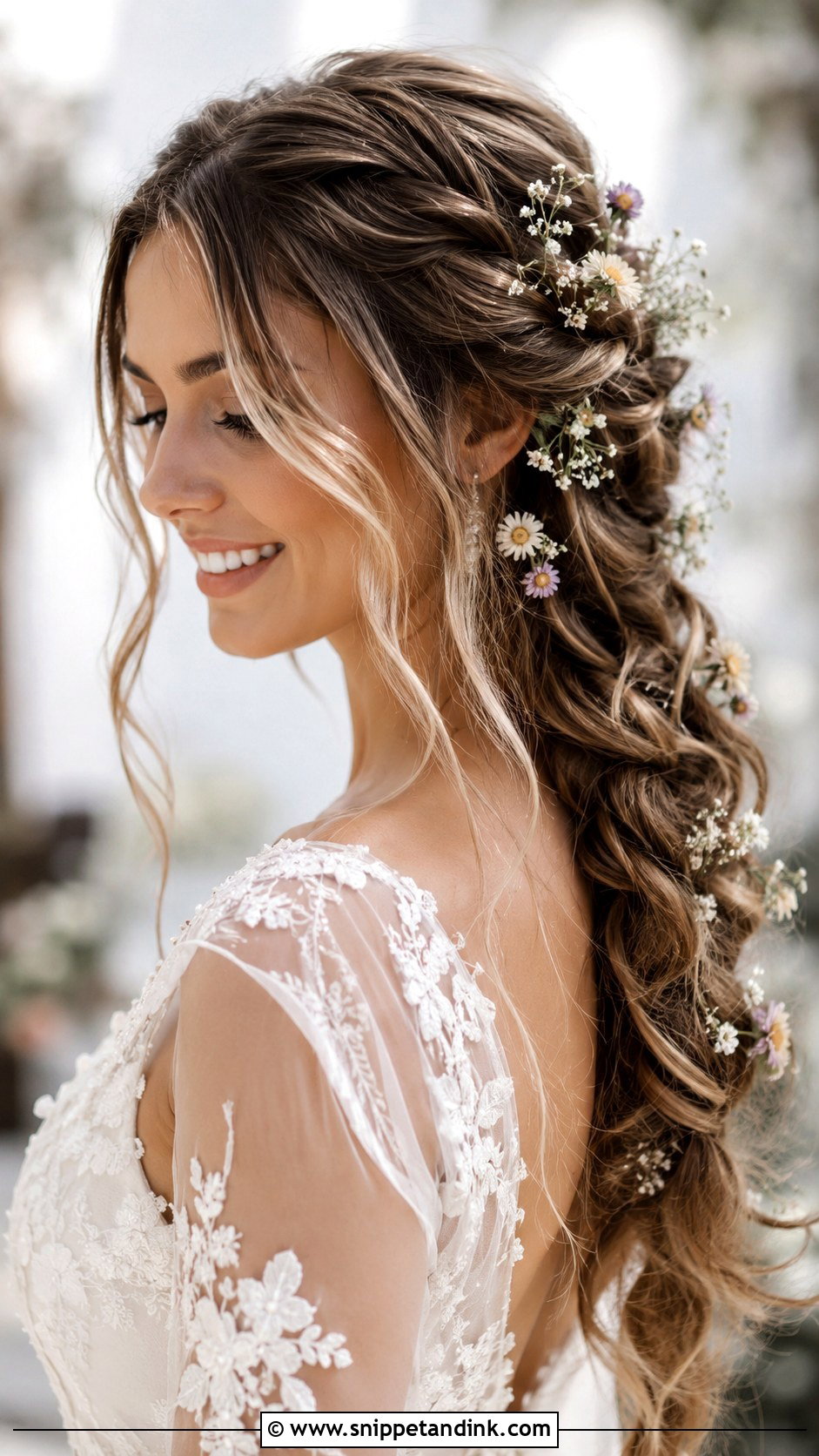
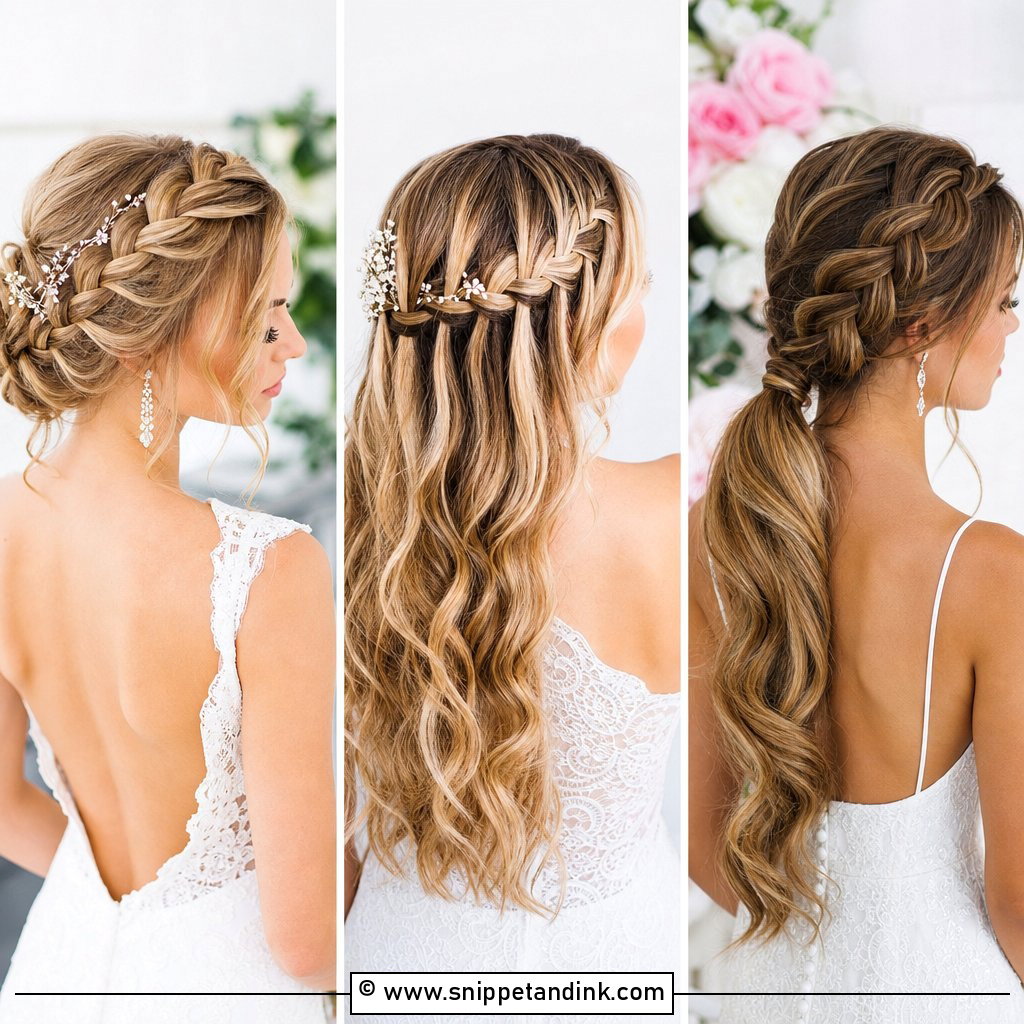
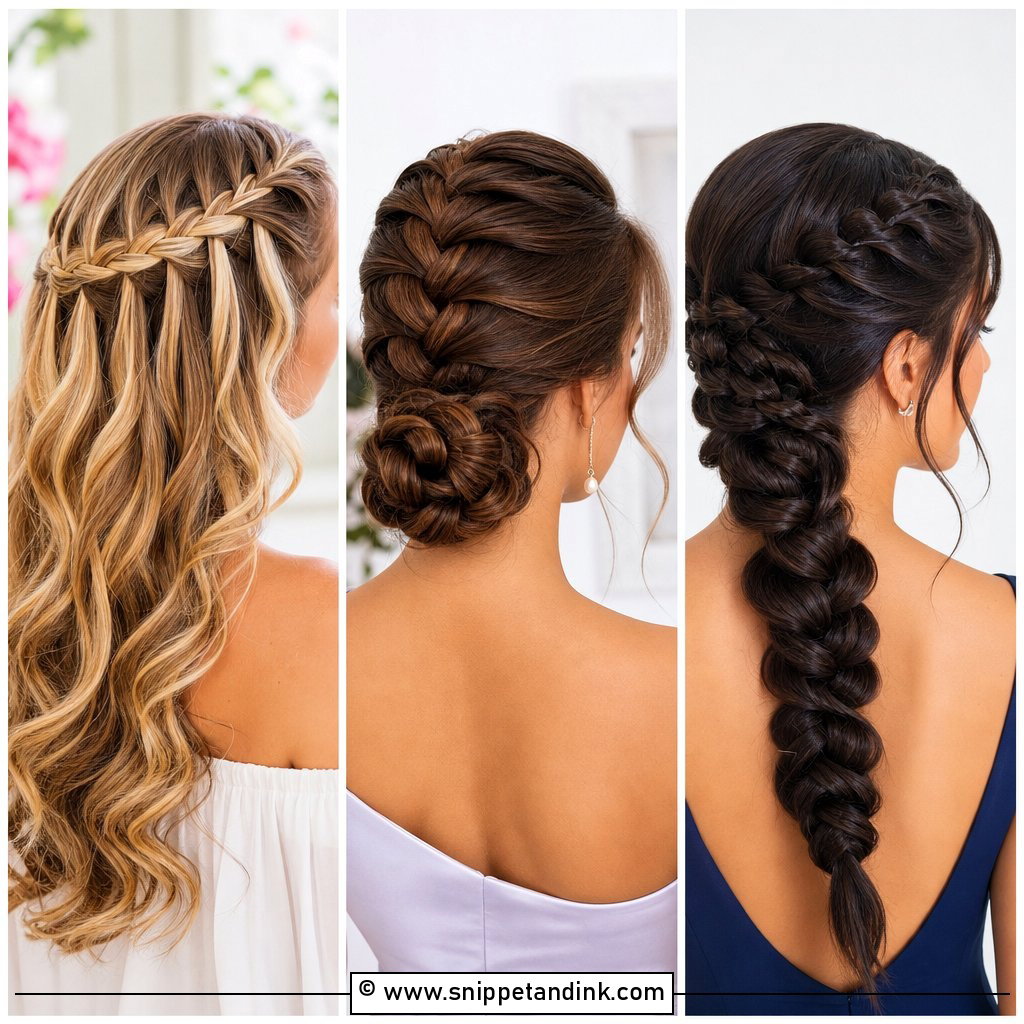
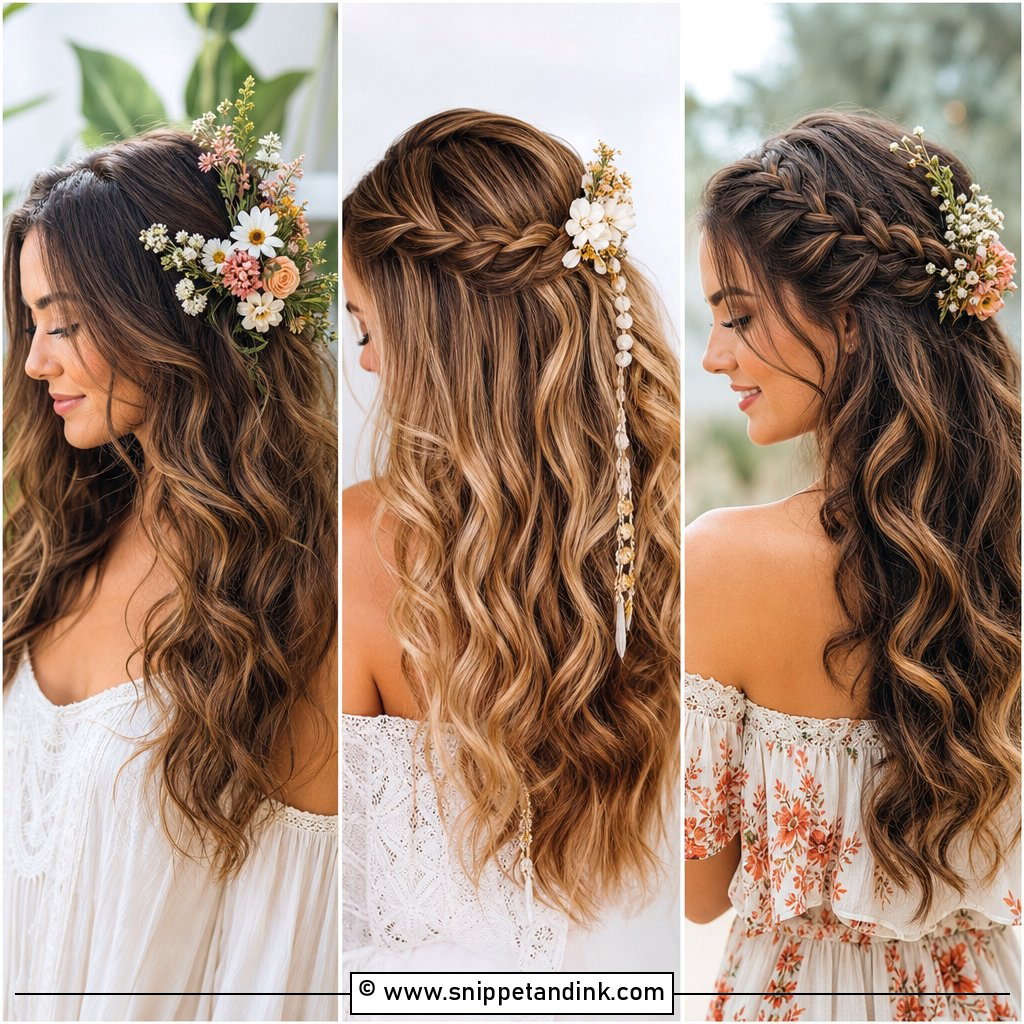
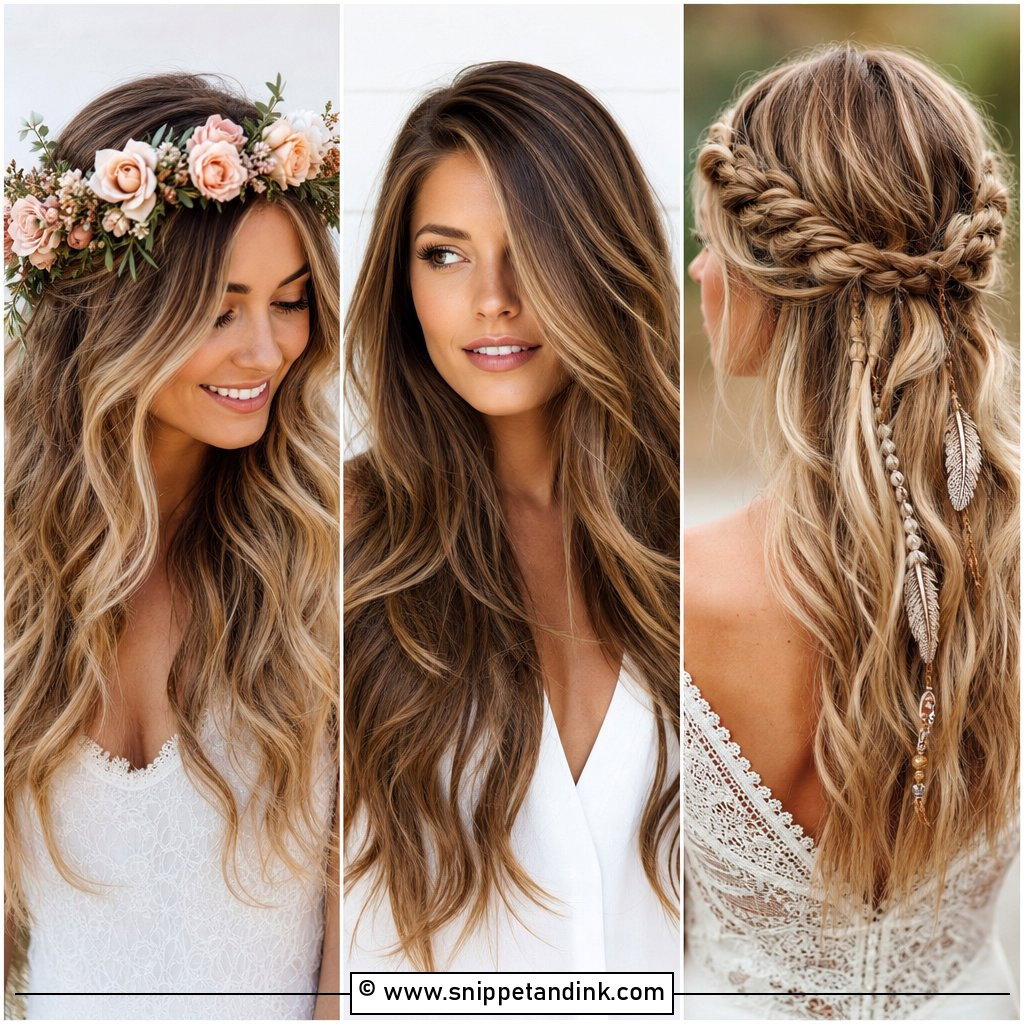
A waterfall braid drops one strand out of the plait at every pass, so soft strands cascading down fall through it while the braid travels diagonally across the back of the head. It’s half up, so most of your length stays visible. The detail people miss is that the dropped strands need a curl set first; flat, straight pieces falling out of the braid just look like the braid is failing. I curl the whole head, let it cool, then braid, and add a small pin or a few wildflowers only where the braid ends.
3. Crown Braid for Brides
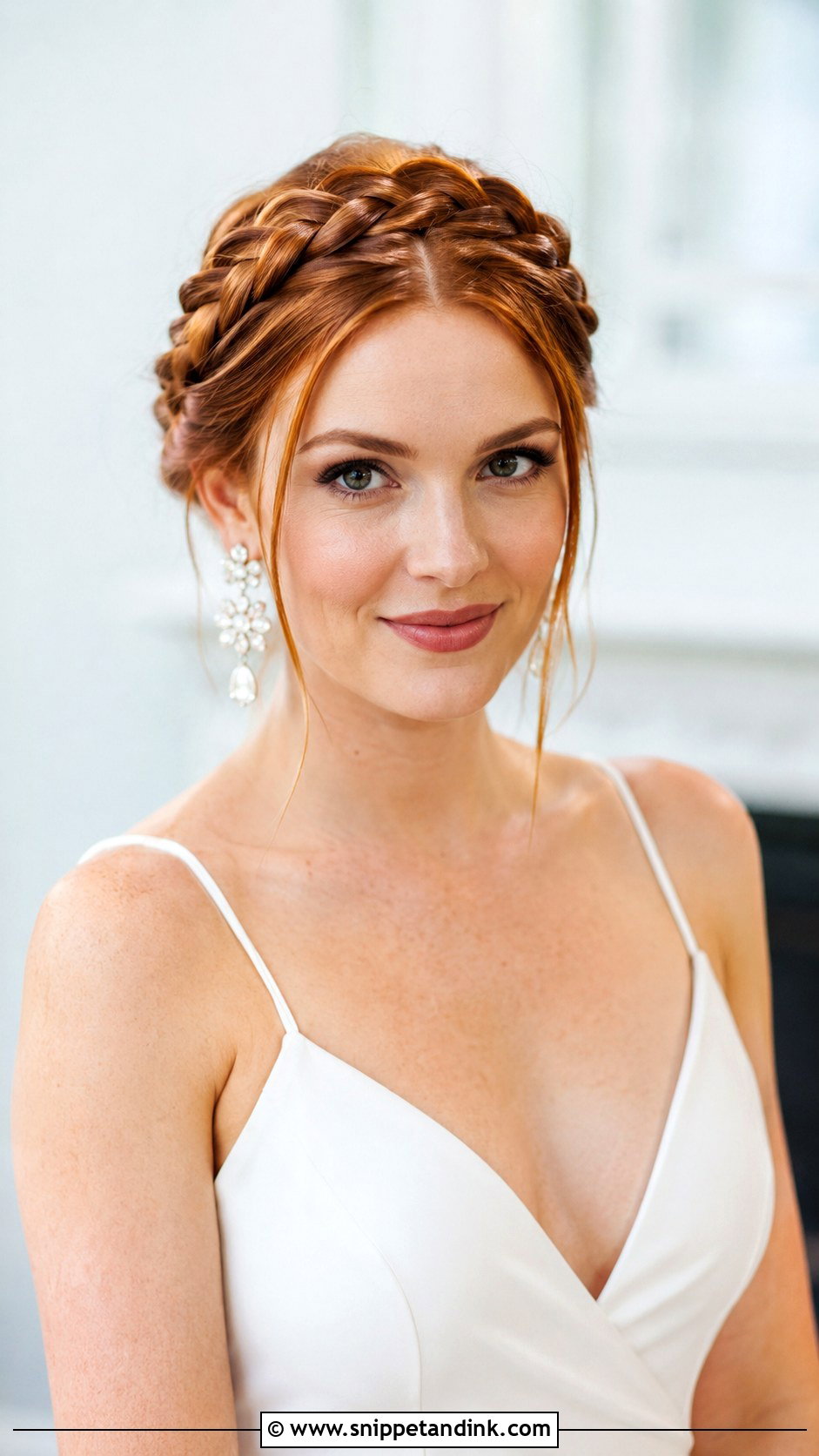
The crown braid starts at one side of the hairline and works all the way around the head, picking up hair from both the front and the back until it closes in a ring. Everything is off the neck, which is why I steer August and beach brides toward it. Before committing, look at your hairline: a crown braid frames the forehead closely, so if you have a strong widow’s peak or you’re growing out a fringe, we’d talk about leaving a few softer pieces out. Sleek suits a minimal gown; pulled-out edges suit lace.
4. Dutch Braid Wedding Hairstyle
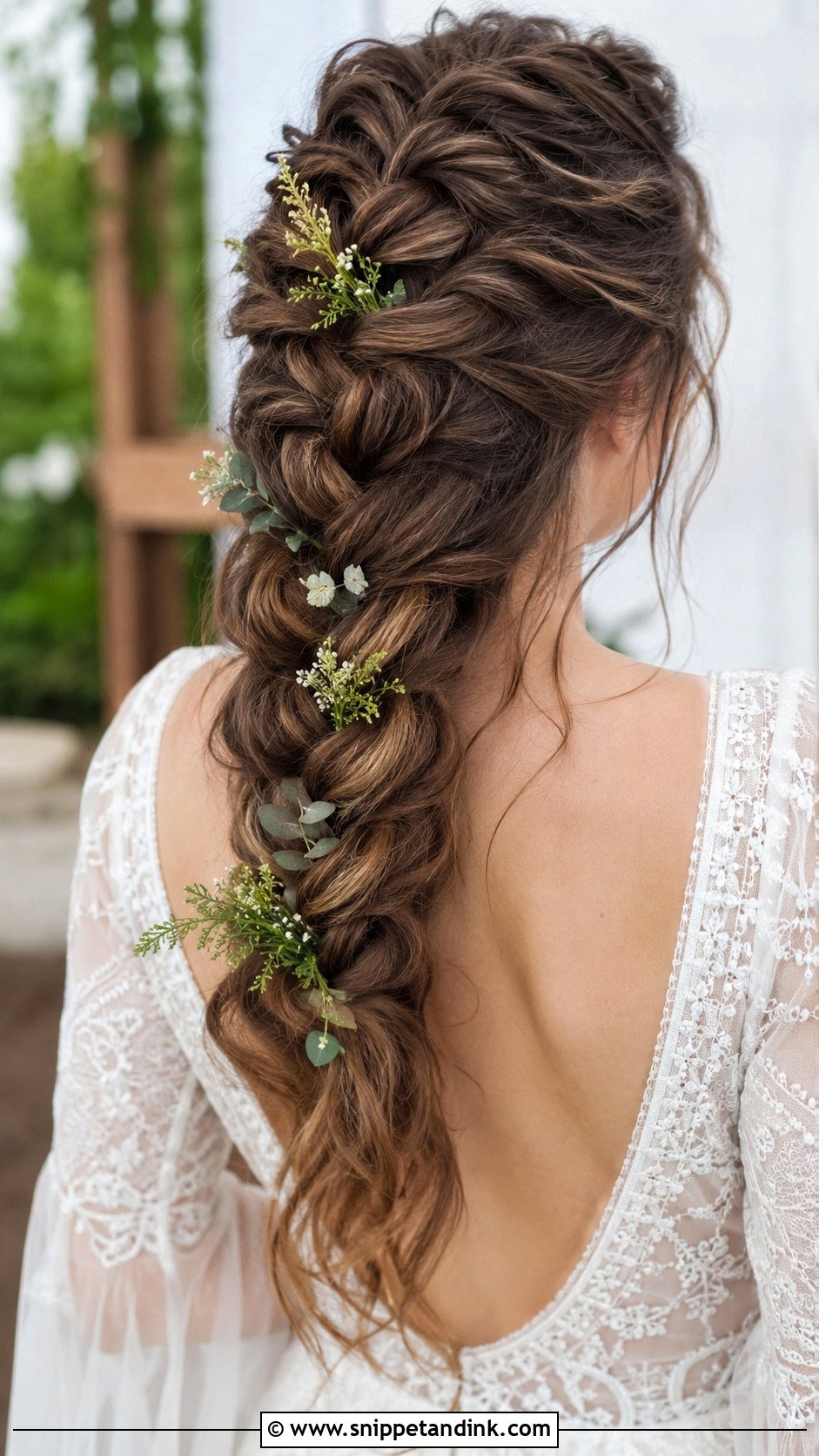
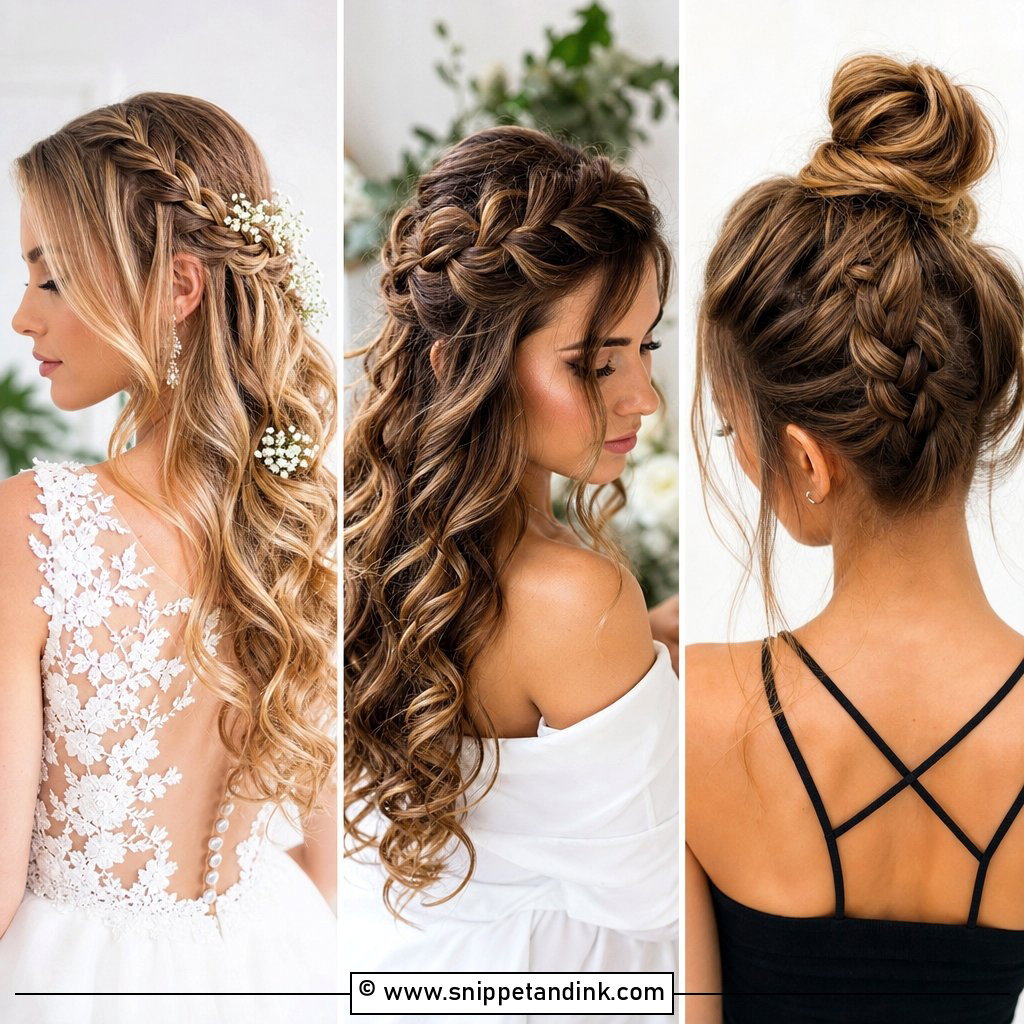
In a Dutch braid the strands cross under rather than over, so the plait stands up off the head instead of lying flat inside it. That raised ridge is what gives it depth in photos. It’s easy to pancake into something much wider than it started, which helps brides with finer hair. Worn as one braid down the back or two joined into an updo, it suits a relaxed farm or woodland wedding. A little greenery softens the structure, but I keep it to one spot so the braid itself stays the focus.
5. Braided Chignon Updo
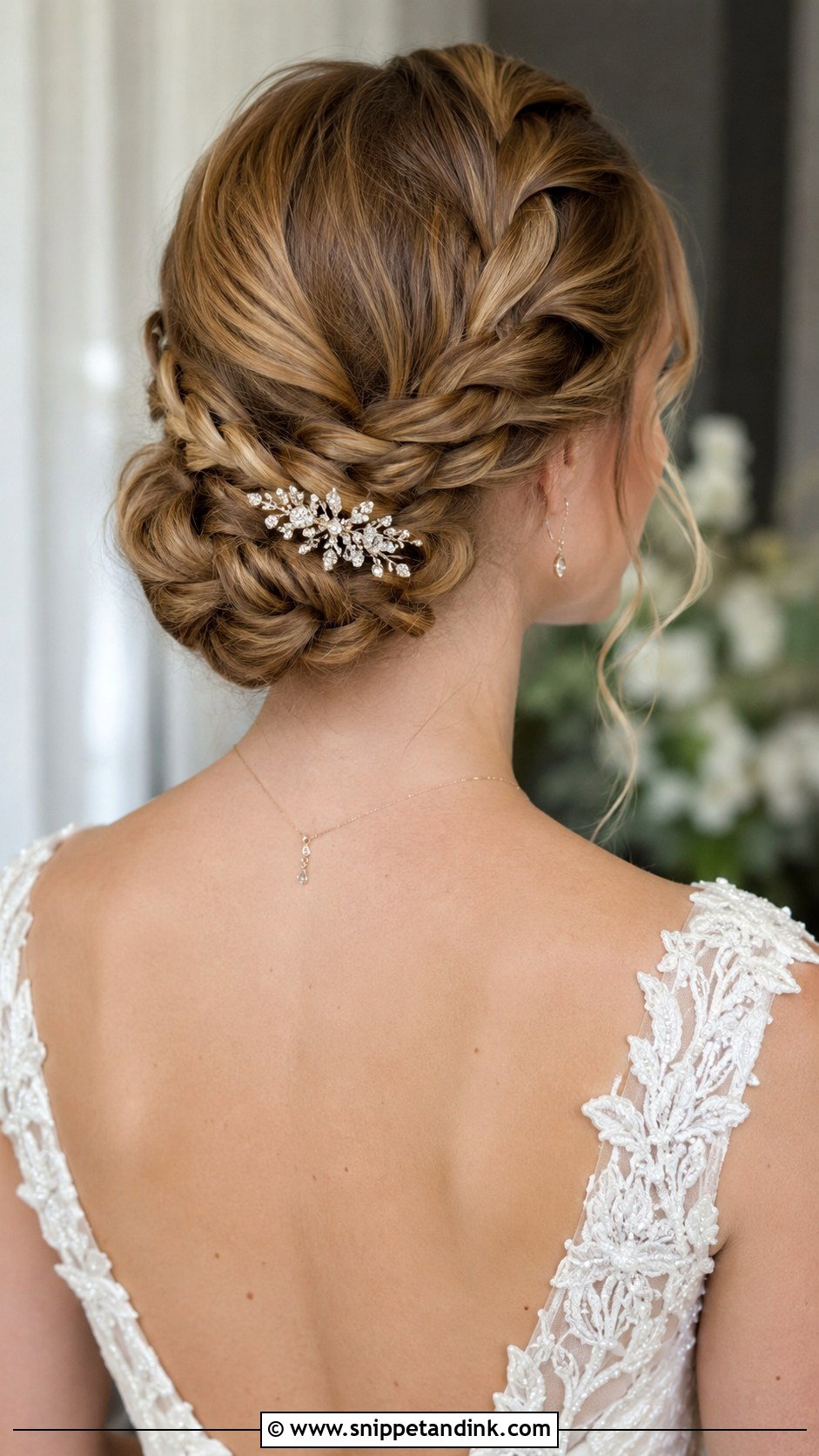
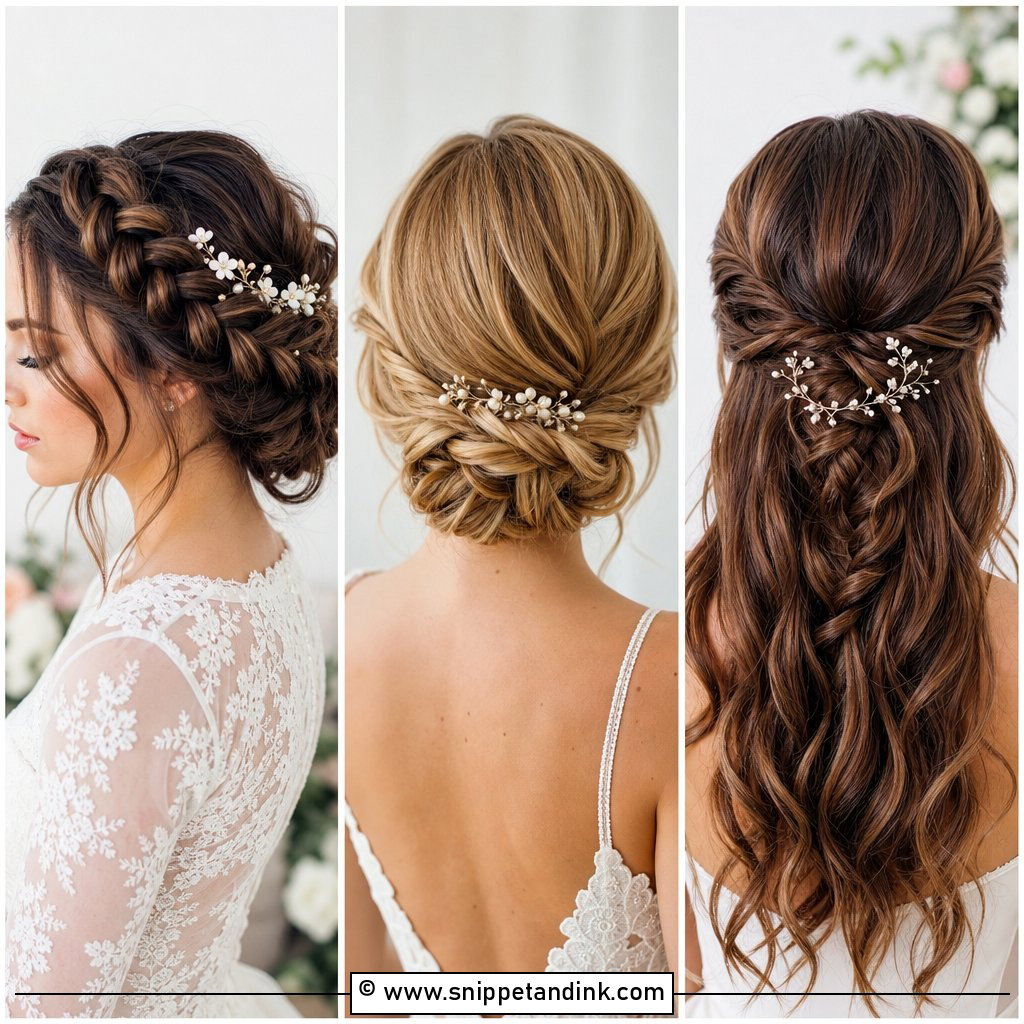
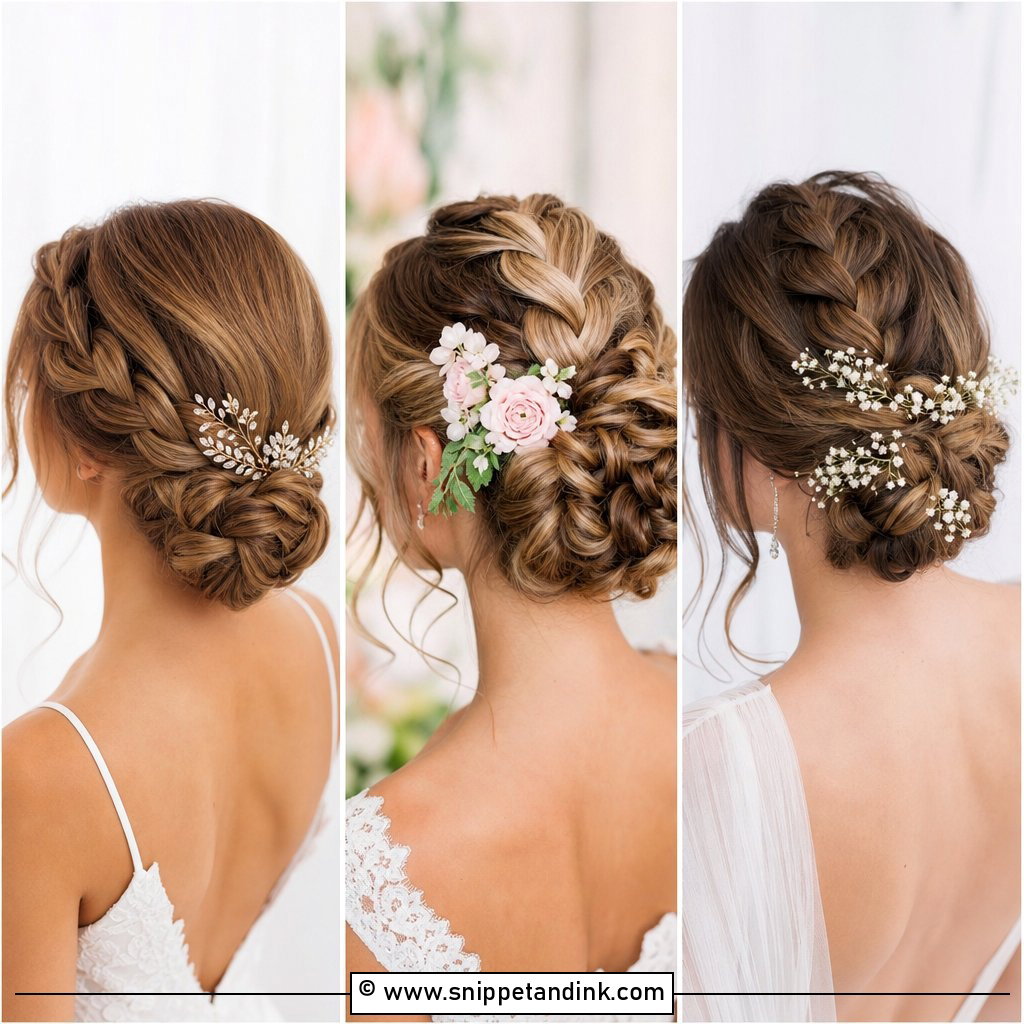
Here the braids are worked into a low, twisted bun at the nape, so you get a classic shape with texture inside it. I build the base first with a small anchored ponytail or criss-crossed bobby pins, then wrap the braided sections around it; that base is what lets a heavy cathedral veil comb grip without dragging the bun down. French or fishtail sections both work inside it. A jeweled pin or a couple of fresh blooms on one side is plenty.
6. Milkmaid Braid Wedding Look
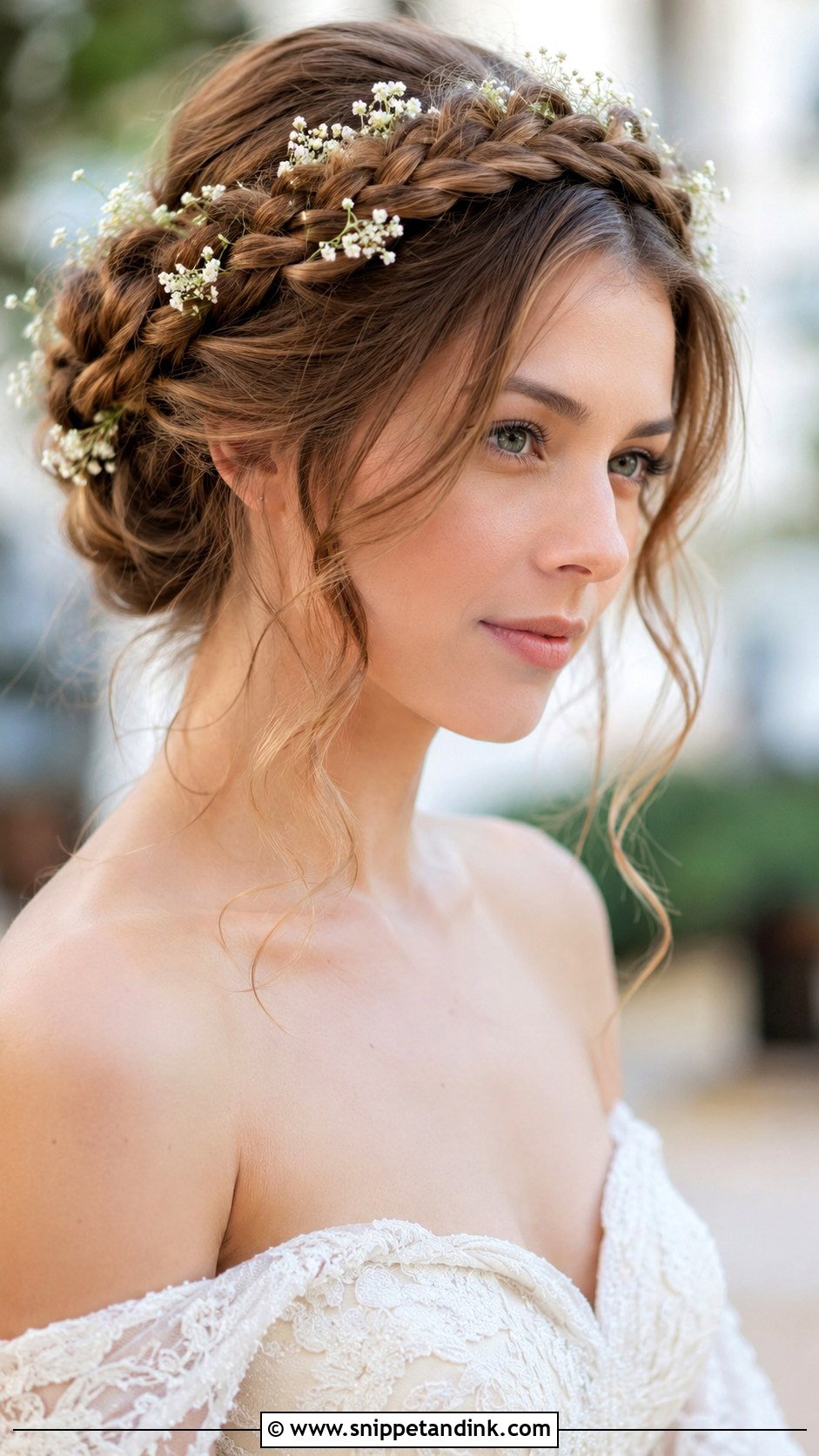
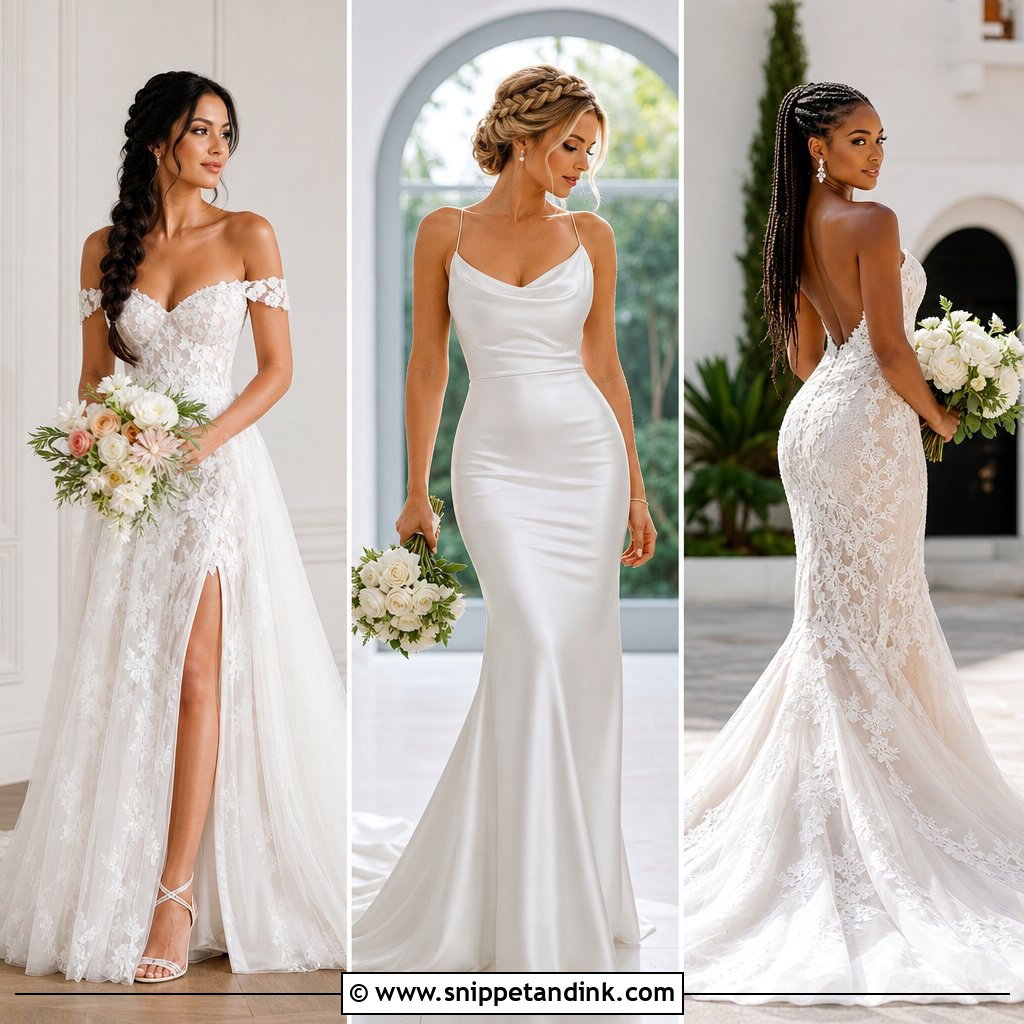
Two braids, one from each side, are lifted over the top of the head and pinned across it like a band. It’s a vintage country look and it stays put, since the braids are pinned rather than woven into the scalp. The catch: you need hair that reaches comfortably over the crown once braided, roughly past the shoulder blades. Shorter hair can still do it with a pair of clip-in braids matched to your color. Small flowers or pearls sit nicely in the gaps, and the shape pairs well with an off-shoulder neckline.
7. Half Up Braided Crown
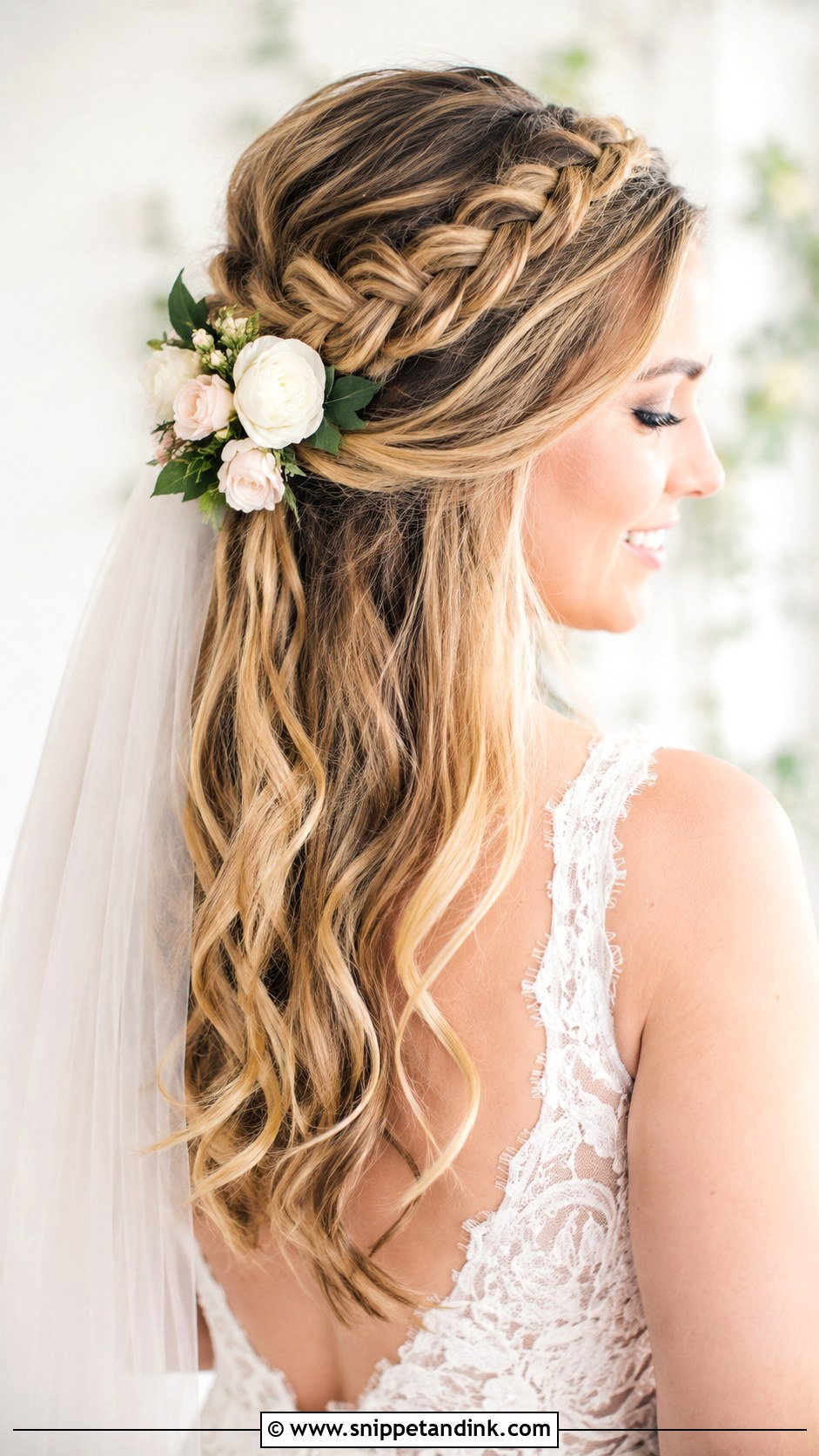
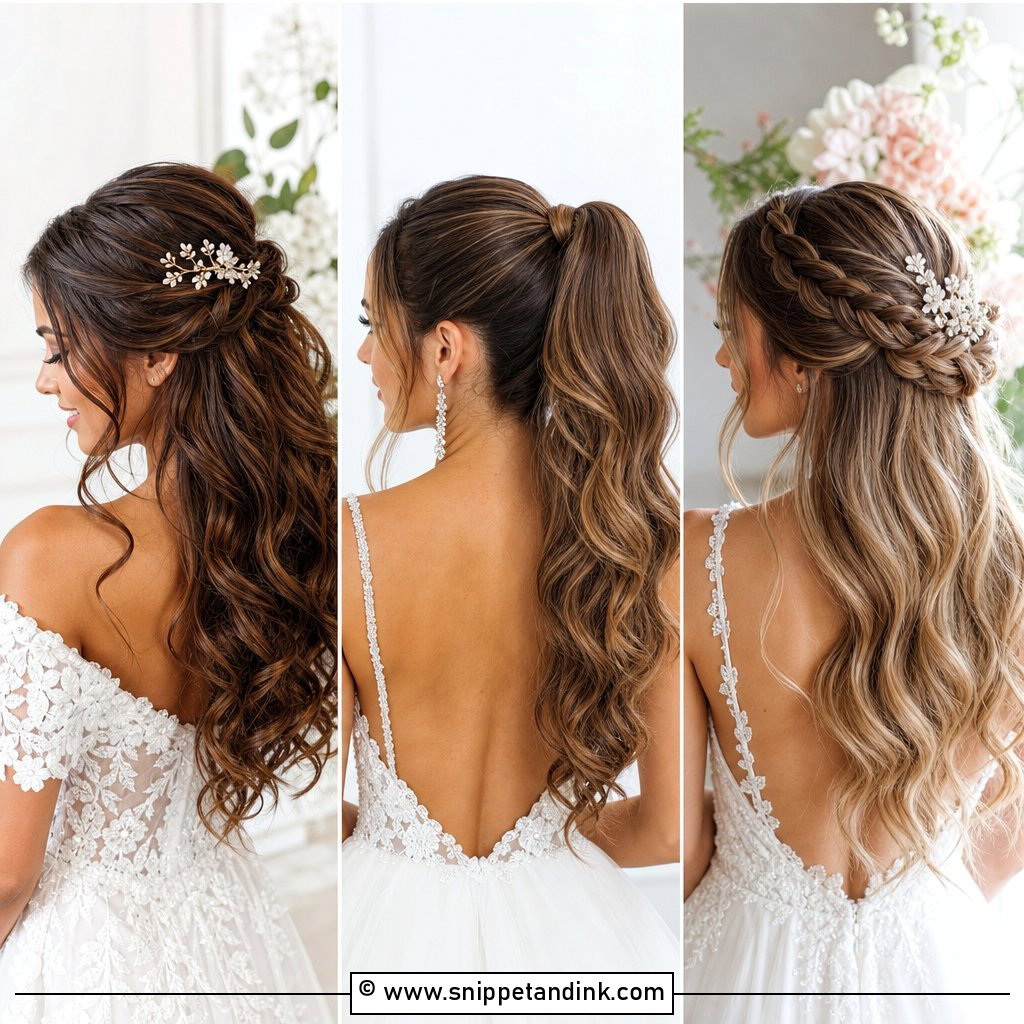
If you can’t choose between up and down, this is the compromise I suggest most. The top section is braided into a crown at the back and the rest falls in waves or curls. It shows off length and gives a veil comb a firm braid to slide into. Hair-down styles drop faster than updos, though, so I set the curls with a hot tool, let them cool fully in a pin curl, and only brush them out right before you dress. Add one accent at the crown and leave it there.
8. French Braid Bridal Updo
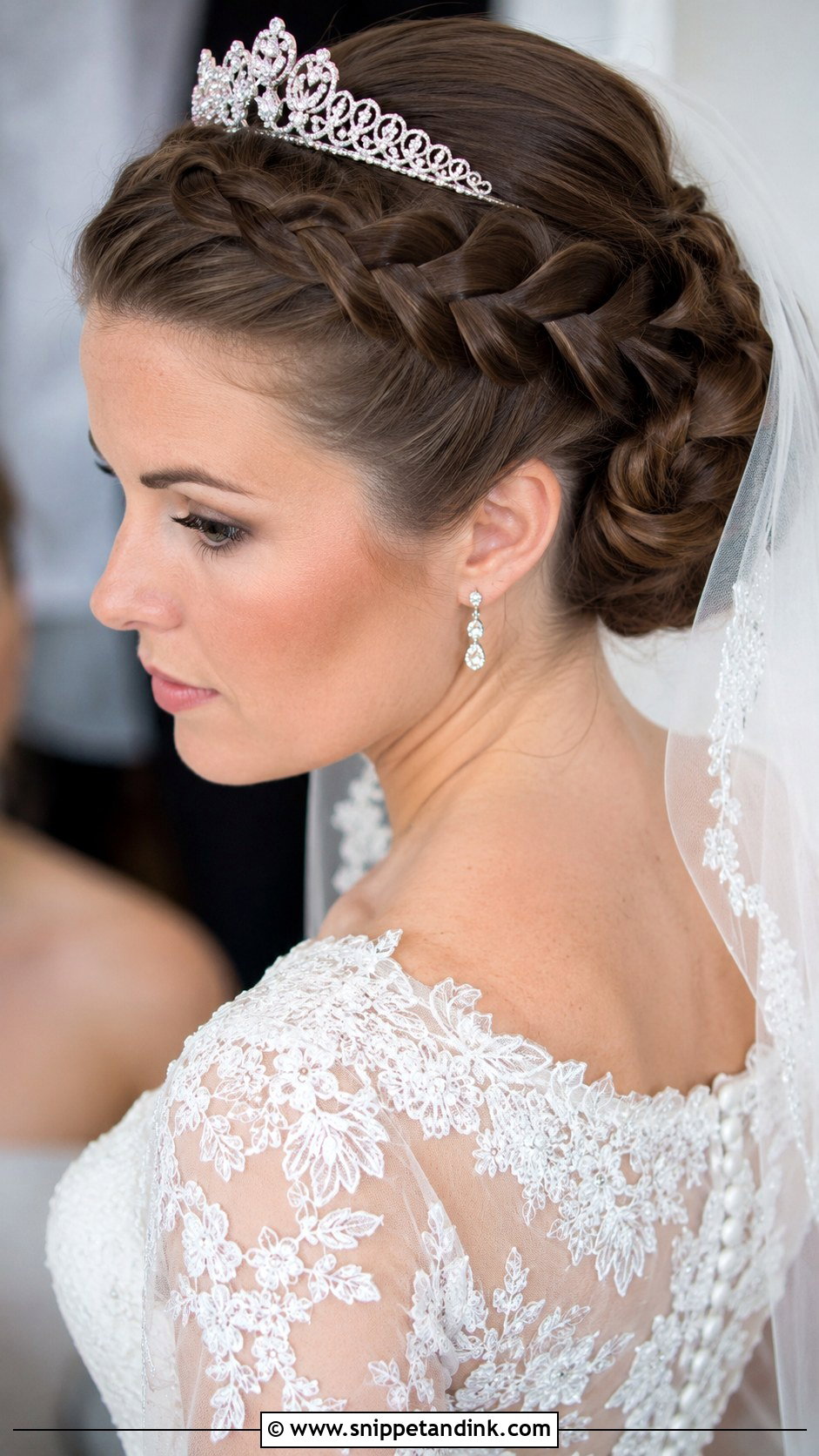
A French braid picks up hair as it travels, so it lies smooth and close against the scalp and gives a clean base for an updo. It’s the braid I trust for very traditional ceremonies and for brides wearing a tiara, because the flat line keeps the accessory level. Tight reads polished; pancaked reads softer. If your hair is very slippery and freshly washed, ask your stylist to prep with a texture spray or dry shampoo first, or the braid will loosen within an hour.
9. Fishtail Braided Bun
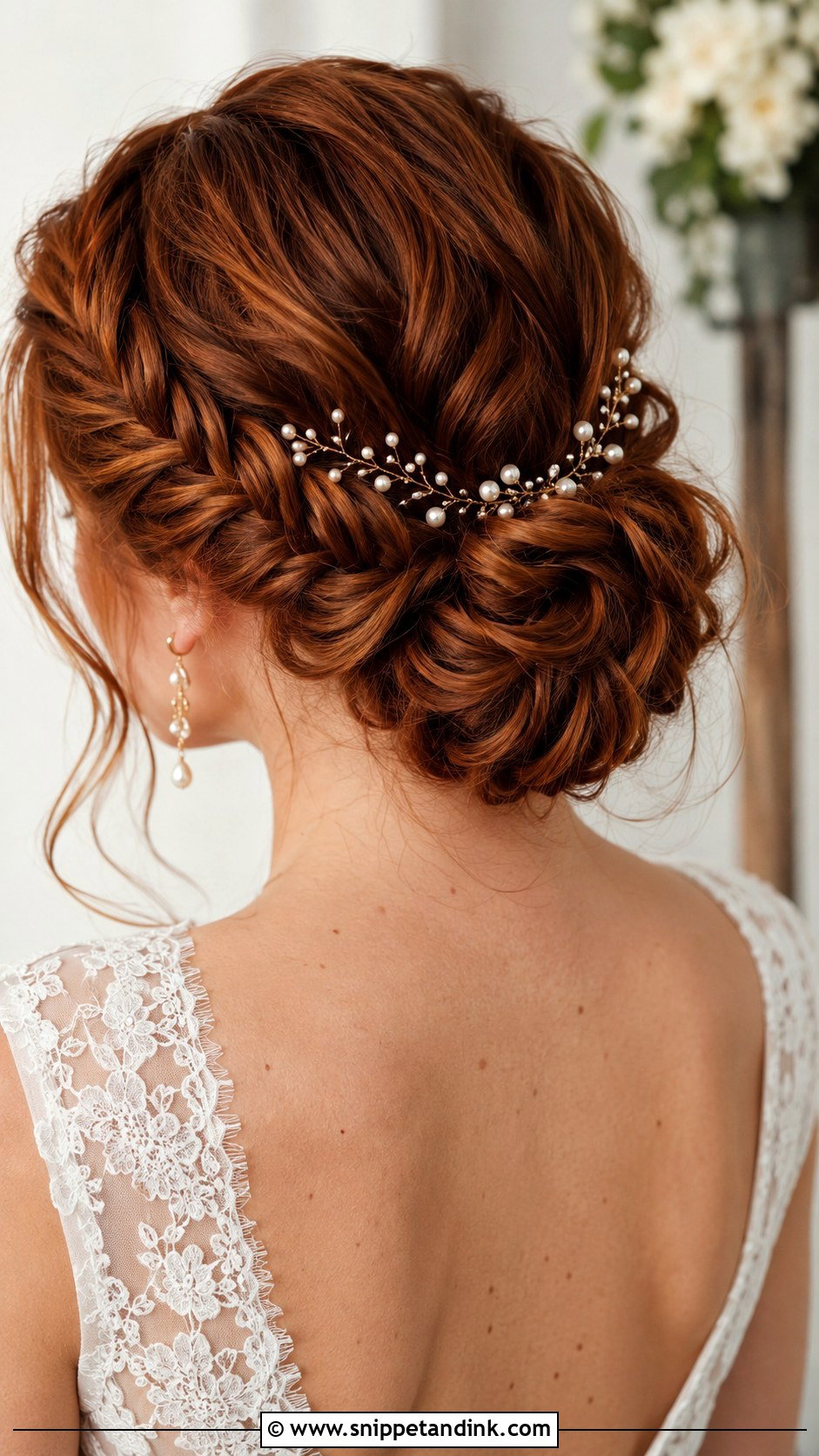
A fishtail coiled into a bun gives you the detail of the braid without length swinging around. Because the fishtail is flatter than a three-strand plait, the coil comes out wider and softer. I like this for brides with a lot of hair who find a regular braided bun too heavy at the back. Keep it tight for a formal room or loosen it for a garden. Pearls or a jeweled pin finish it; too many and the herringbone gets lost.
10. Loose Boho Side Braid
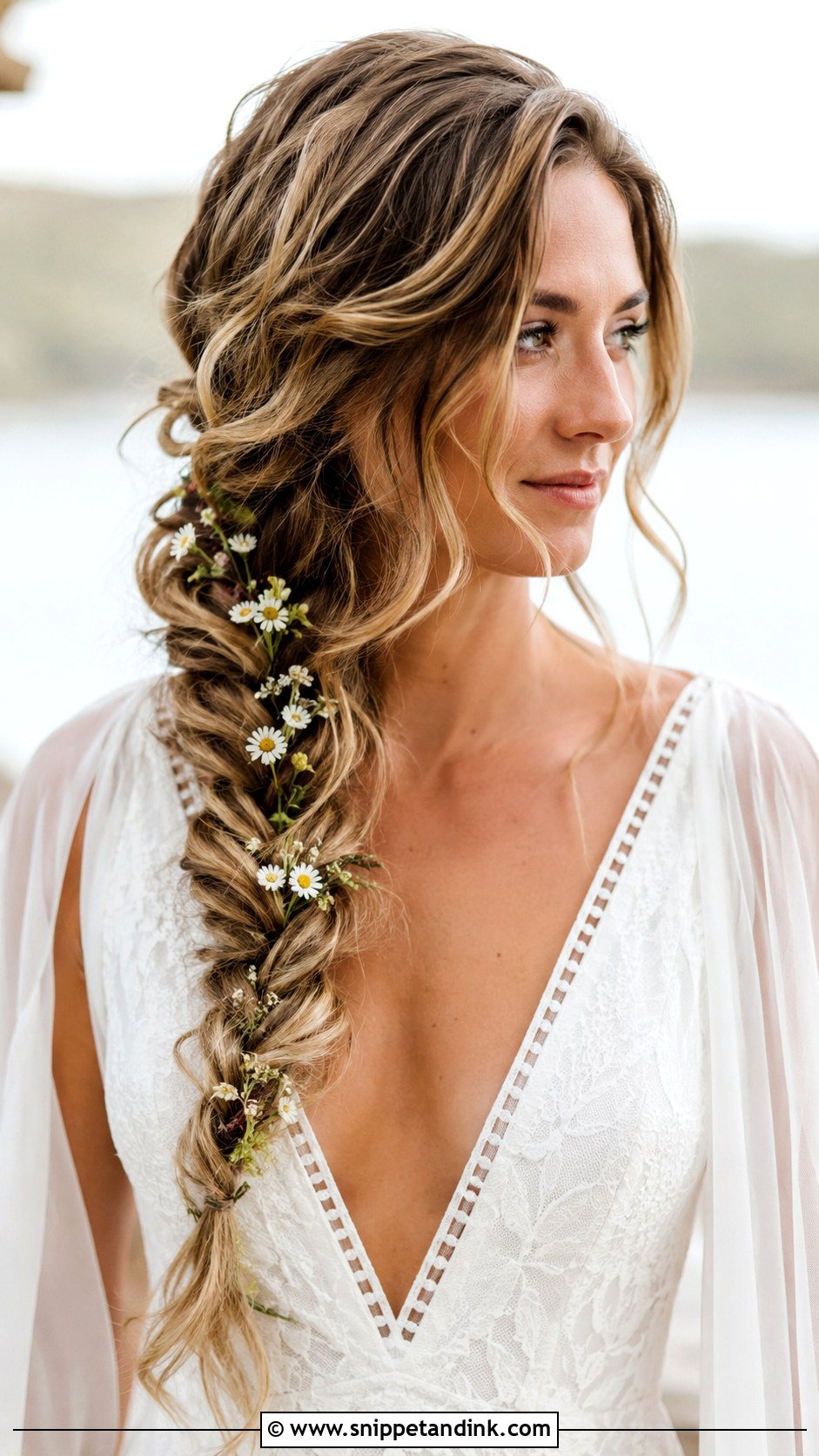
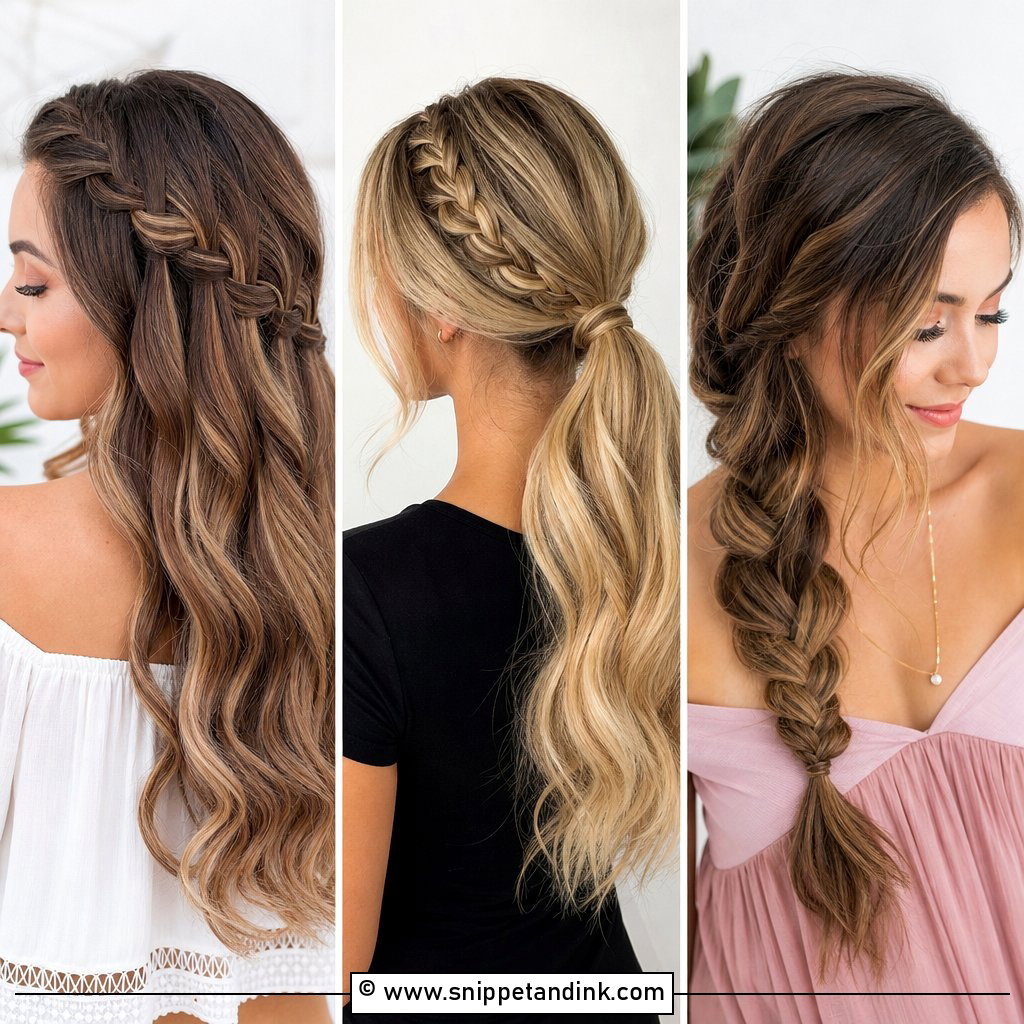
A chunky braid pulled over one shoulder is about as relaxed as bridal hair gets, so it’s an easy match for a beach or garden ceremony and a flowing gown. The honest drawback is that a side braid moves with you and can get caught under a bag strap or a partner’s arm in photos. I secure the base just behind the ear with crossed pins so it can’t swing round to the back. Pull a few face-framing pieces out, and if you weave in ribbon or greenery, test it at your trial to make sure it doesn’t scratch your neck.
11. Braided Halo Hairstyle
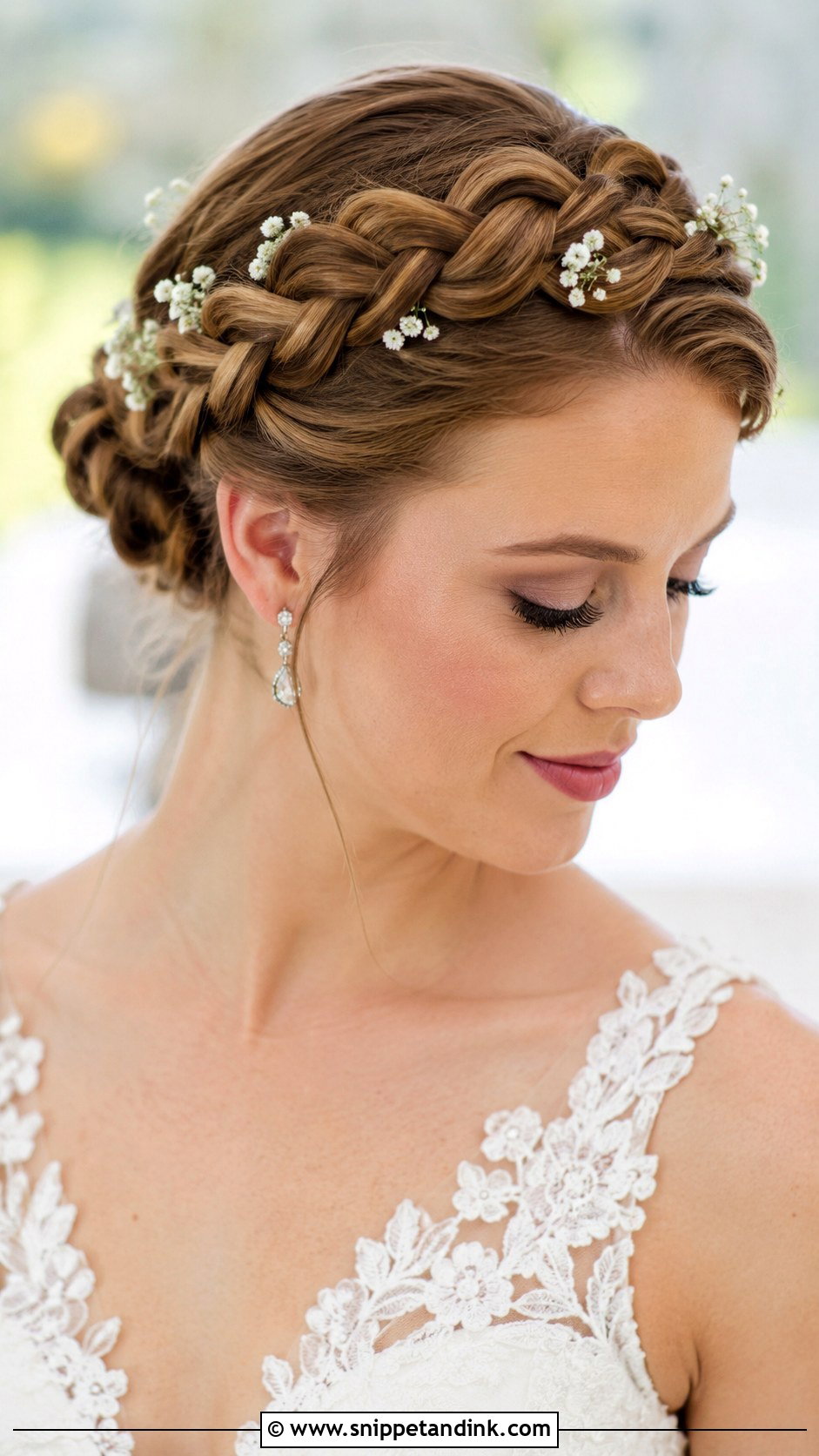
The halo is close to the crown braid but built from two sections that wrap toward each other and meet below the crown, where the ends are hidden. That join is the hard part. On thick hair the tucked ends make a bump, so I sometimes thin the last few inches of each braid before pinning them under. Done well it reads as one continuous ring. Sleek leans formal, loosened leans boho, and a few small flowers along one side are enough.
12. Waterfall Braid With Curls
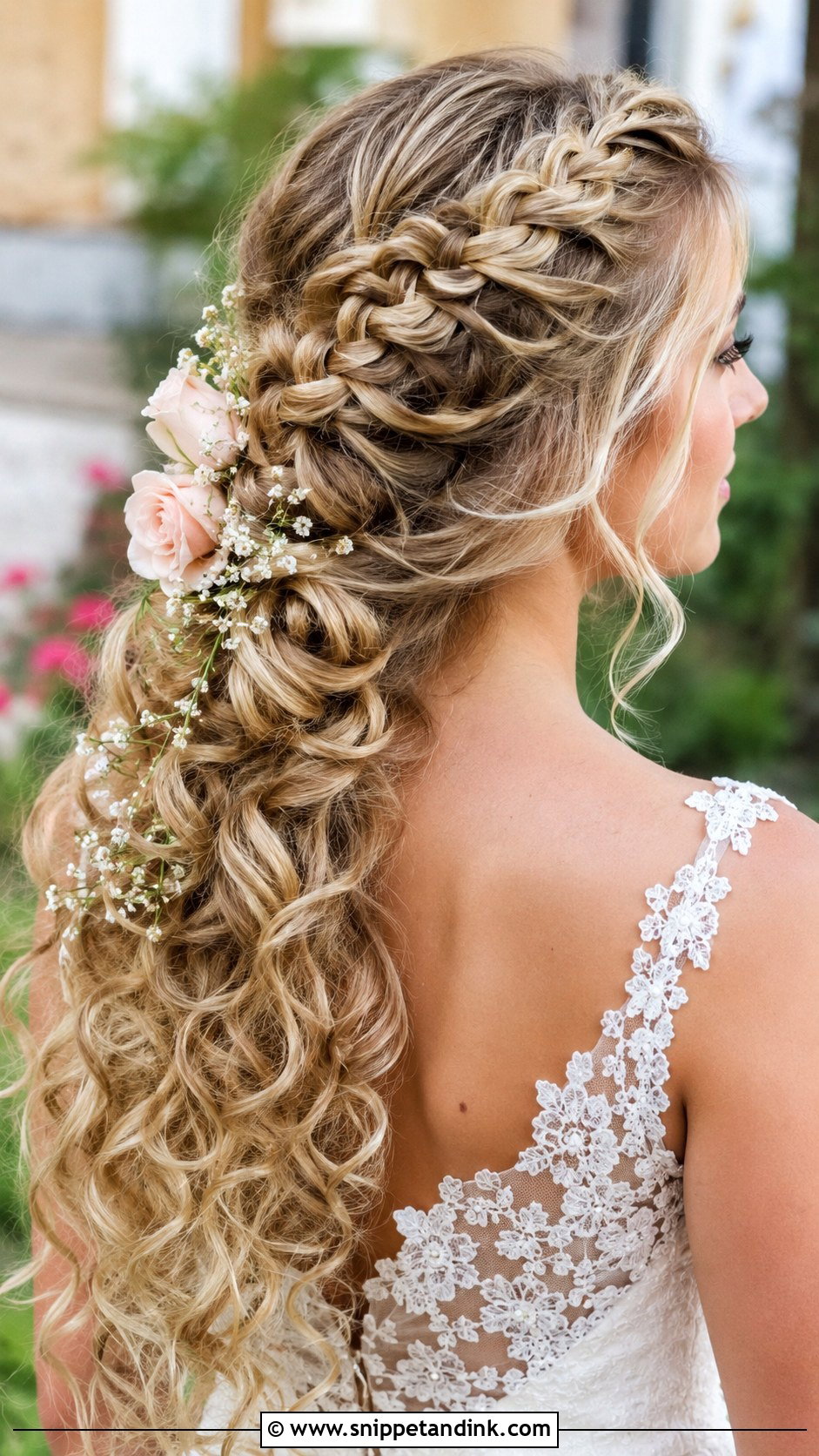
This pairs a diagonal waterfall braid with ringlets left free below it. The waterfall braid with curls works best when the curls are set a little tighter than you want them, because they relax over the day. If your venue is humid, I’d use a smaller barrel and more hold at the root. A cluster of flowers on one side balances the diagonal line of the braid. It’s a natural fit for a vineyard or garden ceremony.
13. Braided Low Ponytail
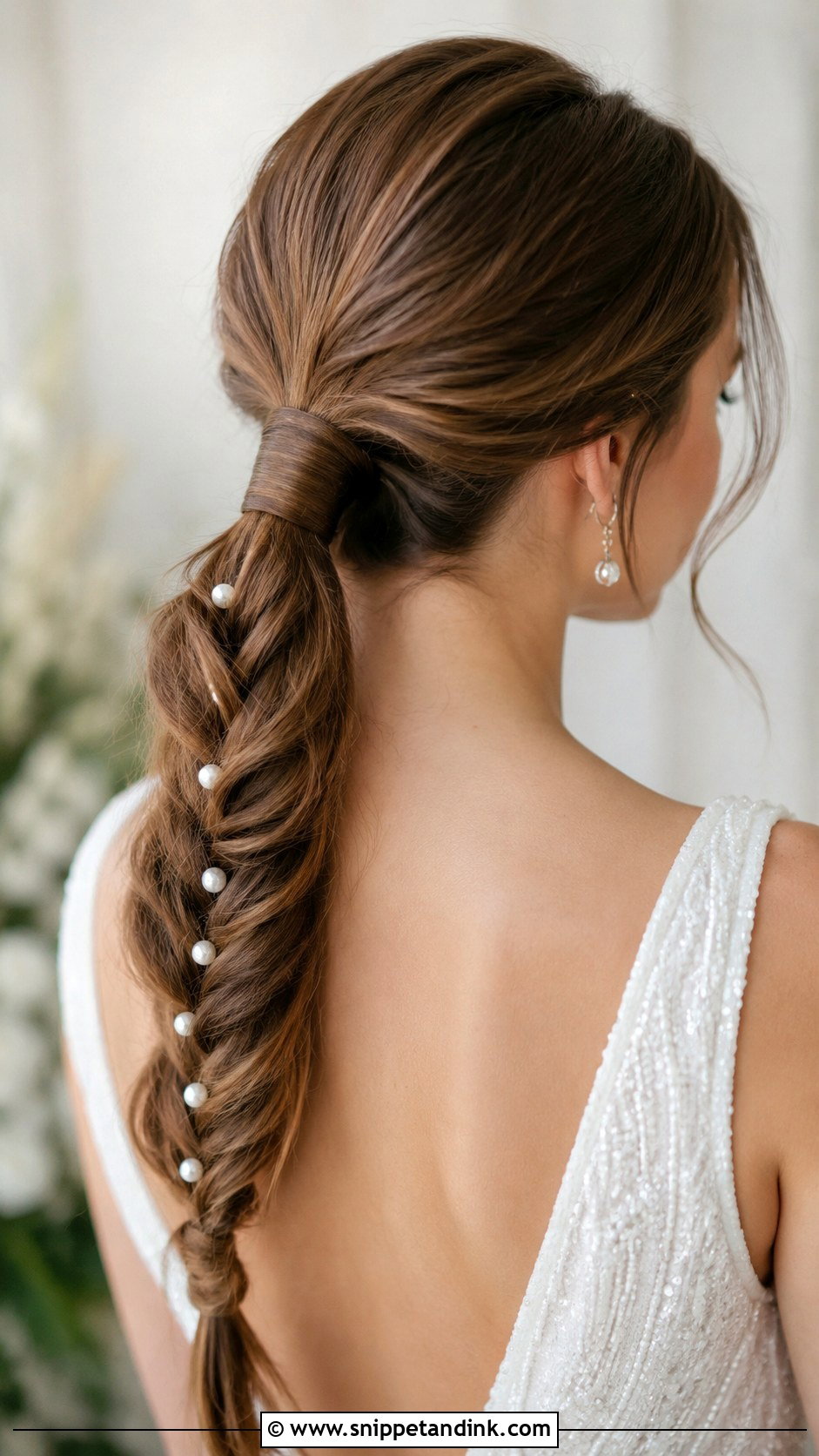
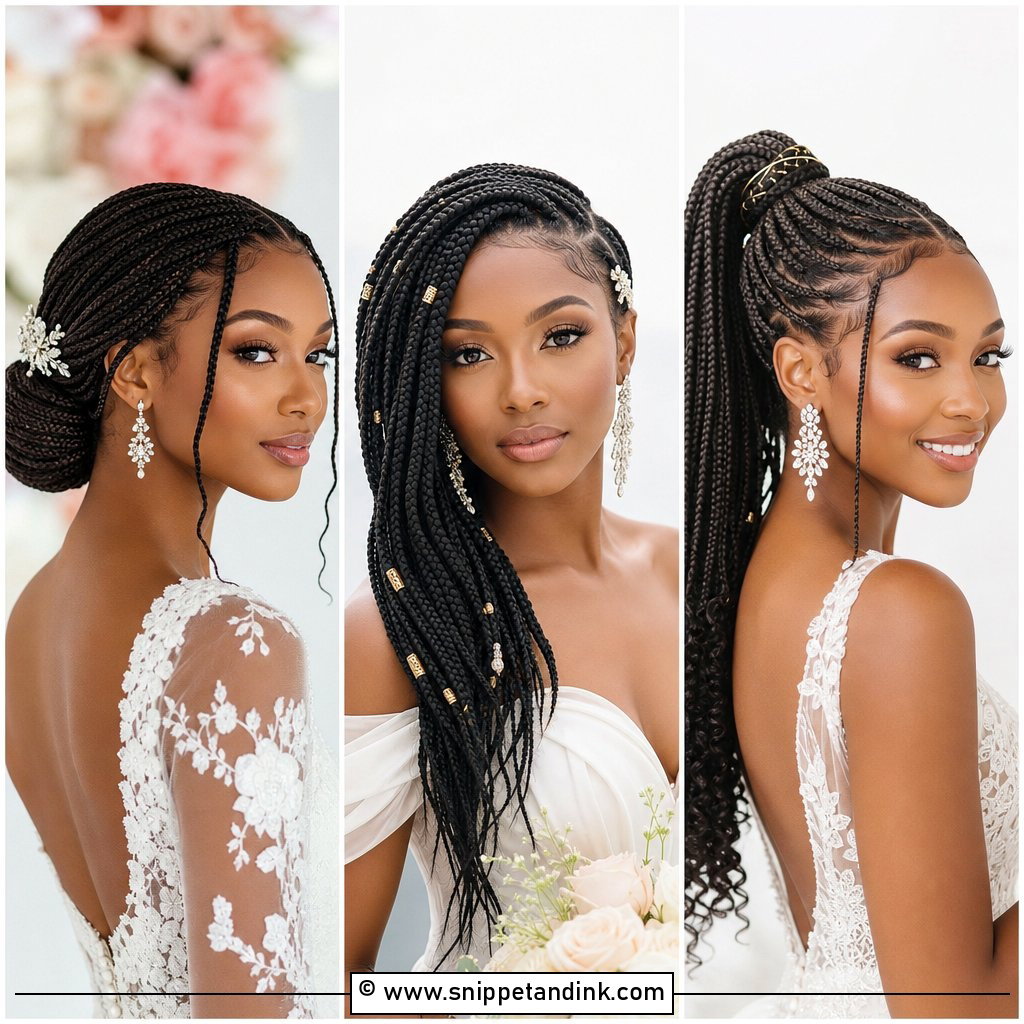
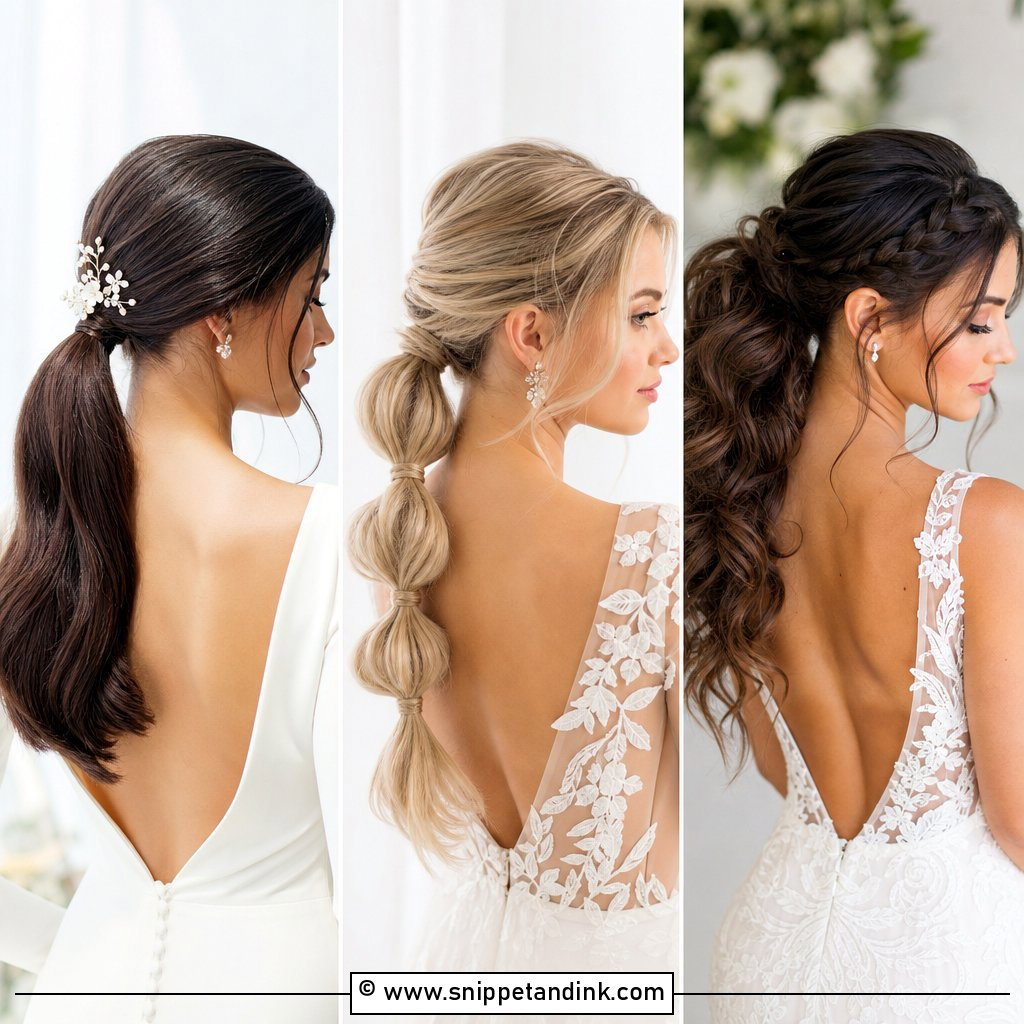
A smooth low ponytail with the length braided is one of the most modern options here, and one of the quickest to do. It’s clean enough for a contemporary venue and sits nicely with statement earrings. The elastic is the weak point visually, so I wrap a strand of hair around it and pin underneath. Very layered hair can poke out along the braid; a light pomade on the pieces before braiding keeps them in. A ribbon or a line of pearls finishes it.
14. Infinity Braid Updo
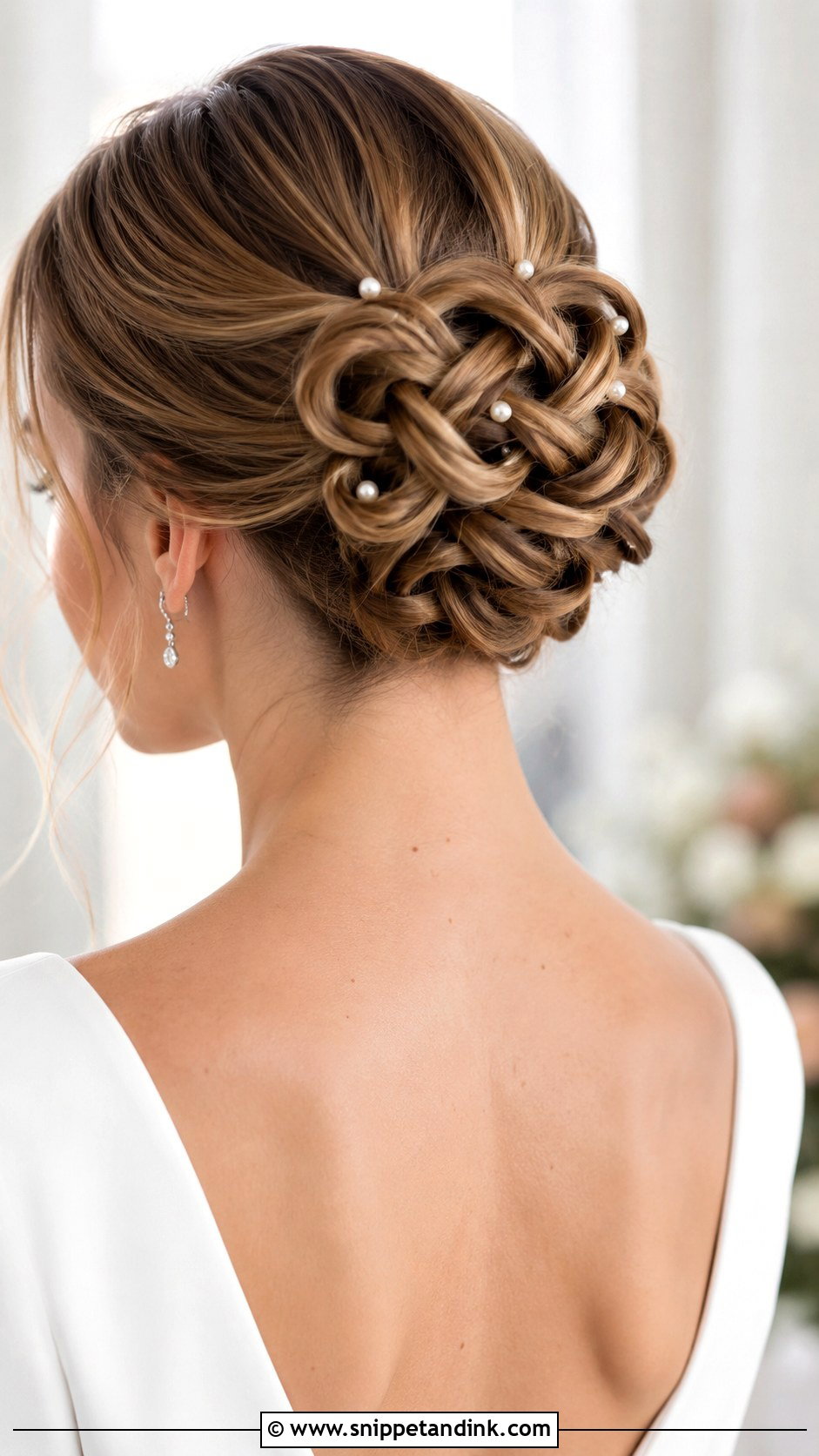
I treat the infinity braid as a specialist style. It loops two sections around each other in a figure-eight motion, so the finished pattern looks like interlaced ribbon, and it’s slower to create than a standard plait and harder to fix if it slips, so I only recommend it when your stylist has done it before; ask to see her own photos of it. Worn in an updo with a sleek gown and simple jewelry, it can carry the whole look. A few tiny pearls along the pattern are optional.
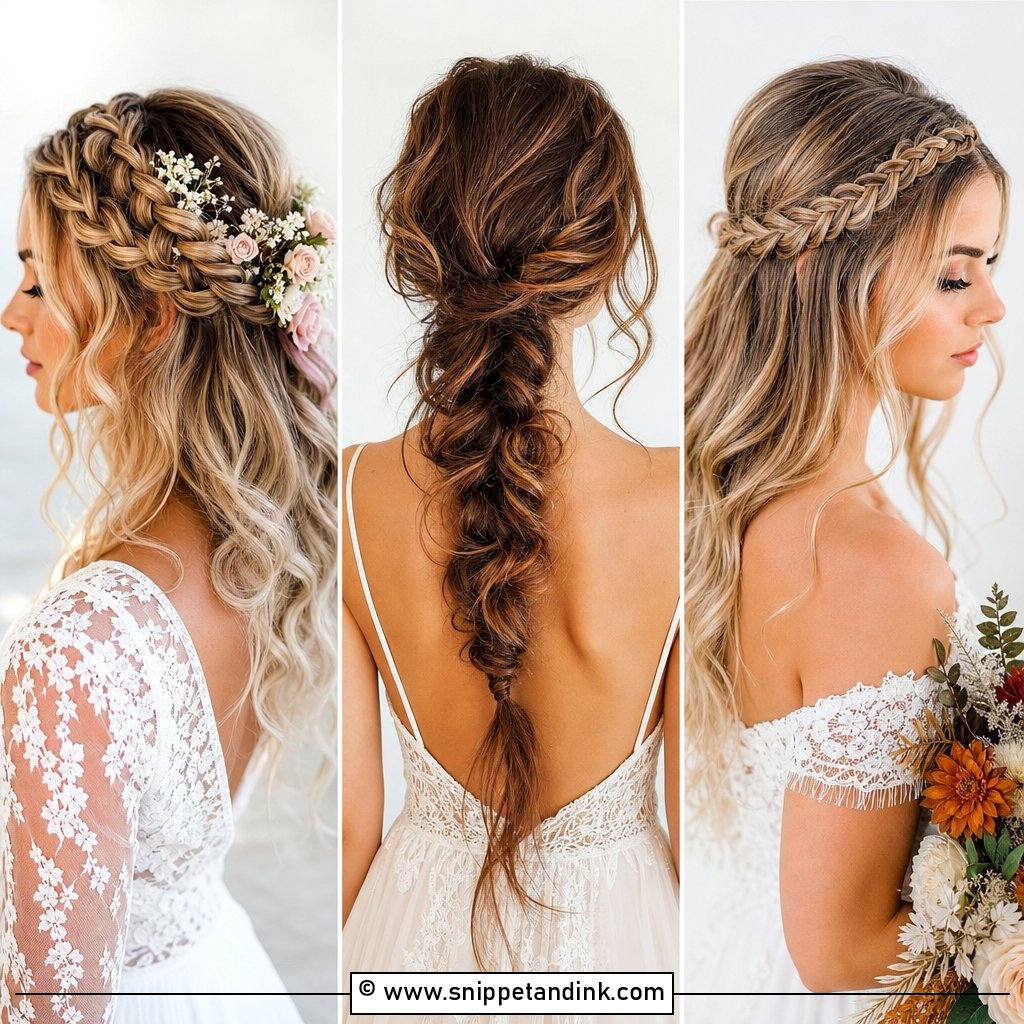
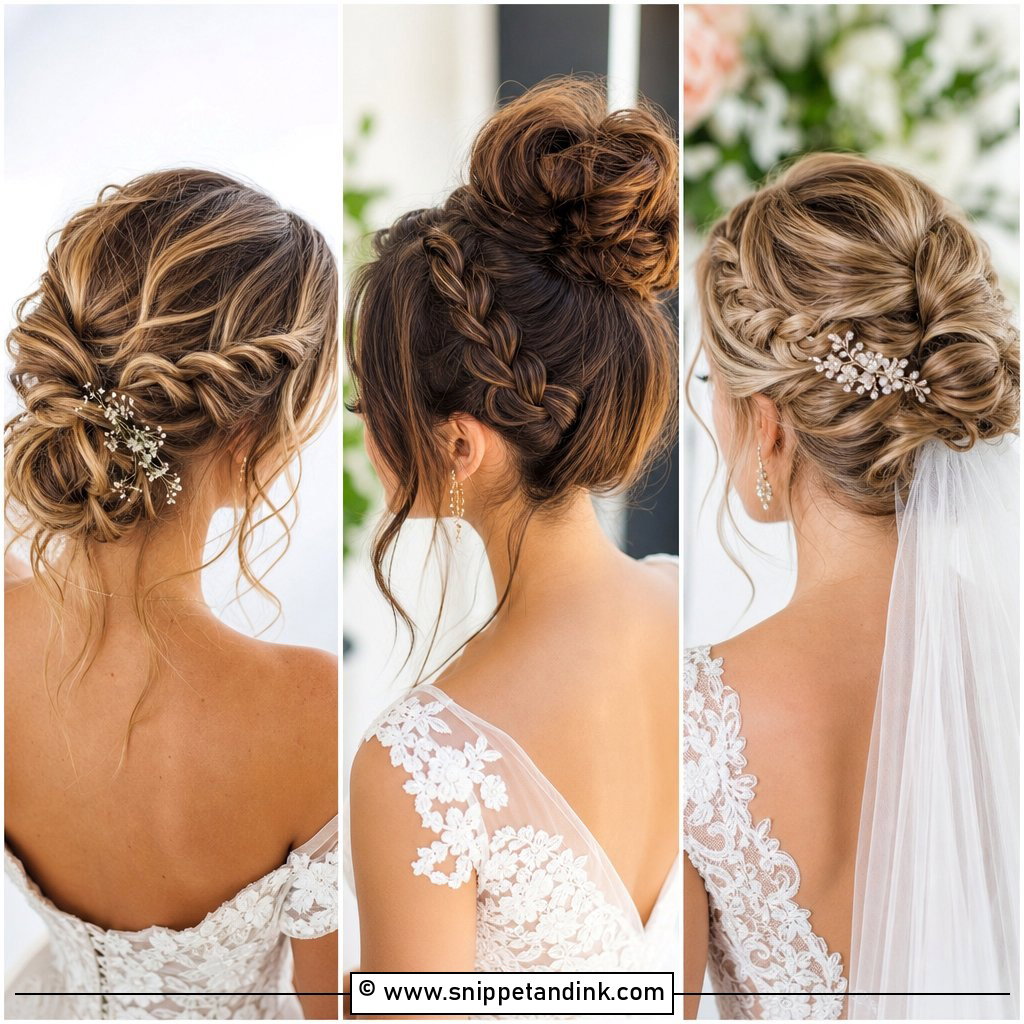
15. Braided Updo With Veil
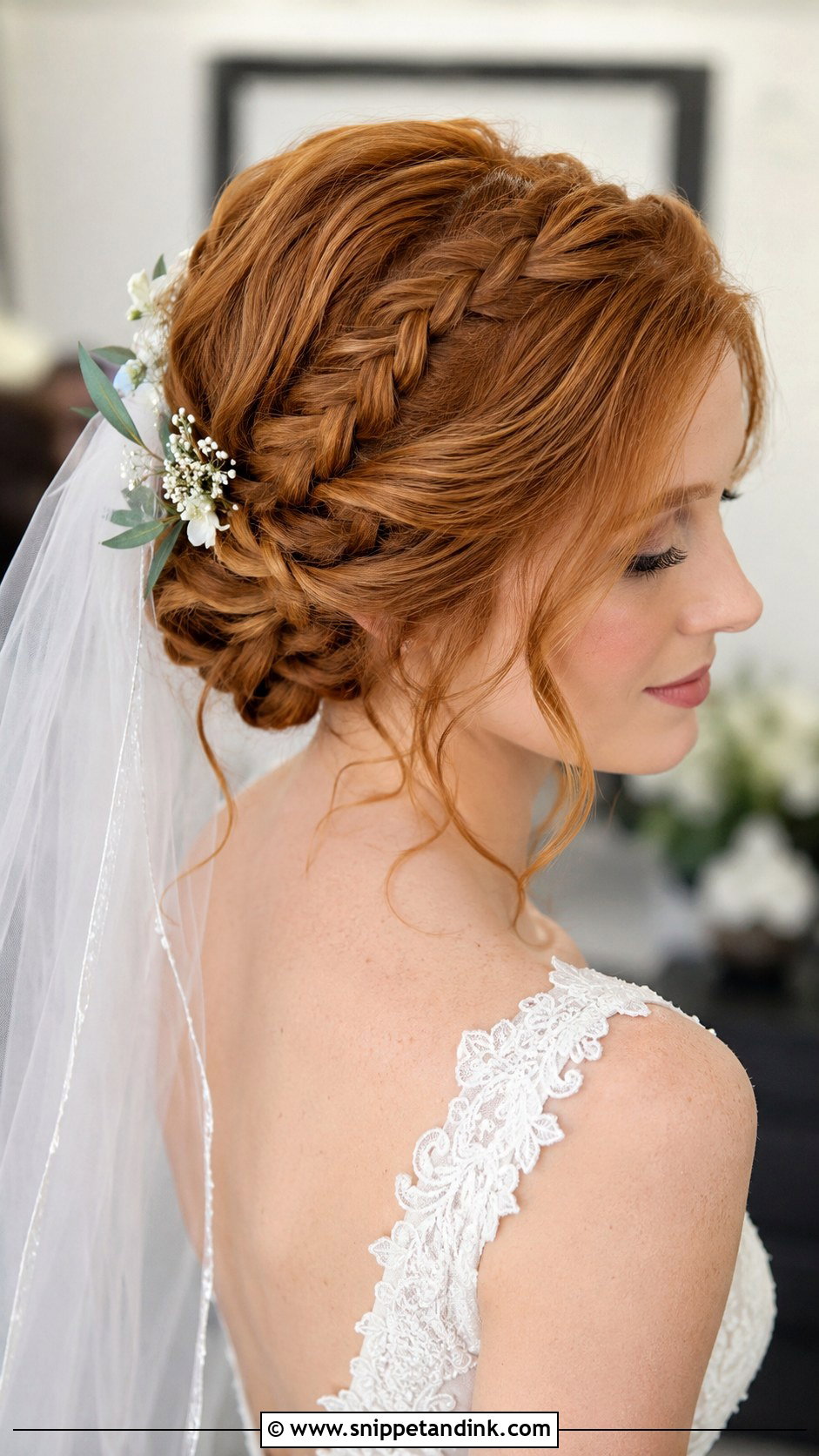
A braided updo is the most secure base I know for a veil. The comb slides into the braid itself instead of into loose hair, so it doesn’t sag during the processional or slip when you hug people. I place the comb before the final pinning so I can lock it in from underneath. French, fishtail and Dutch sections all work, and the braid keeps its shape once the veil comes off for the reception. A jeweled pin can hide the spot where the comb sat.
16. Micro Braid Bridal Style
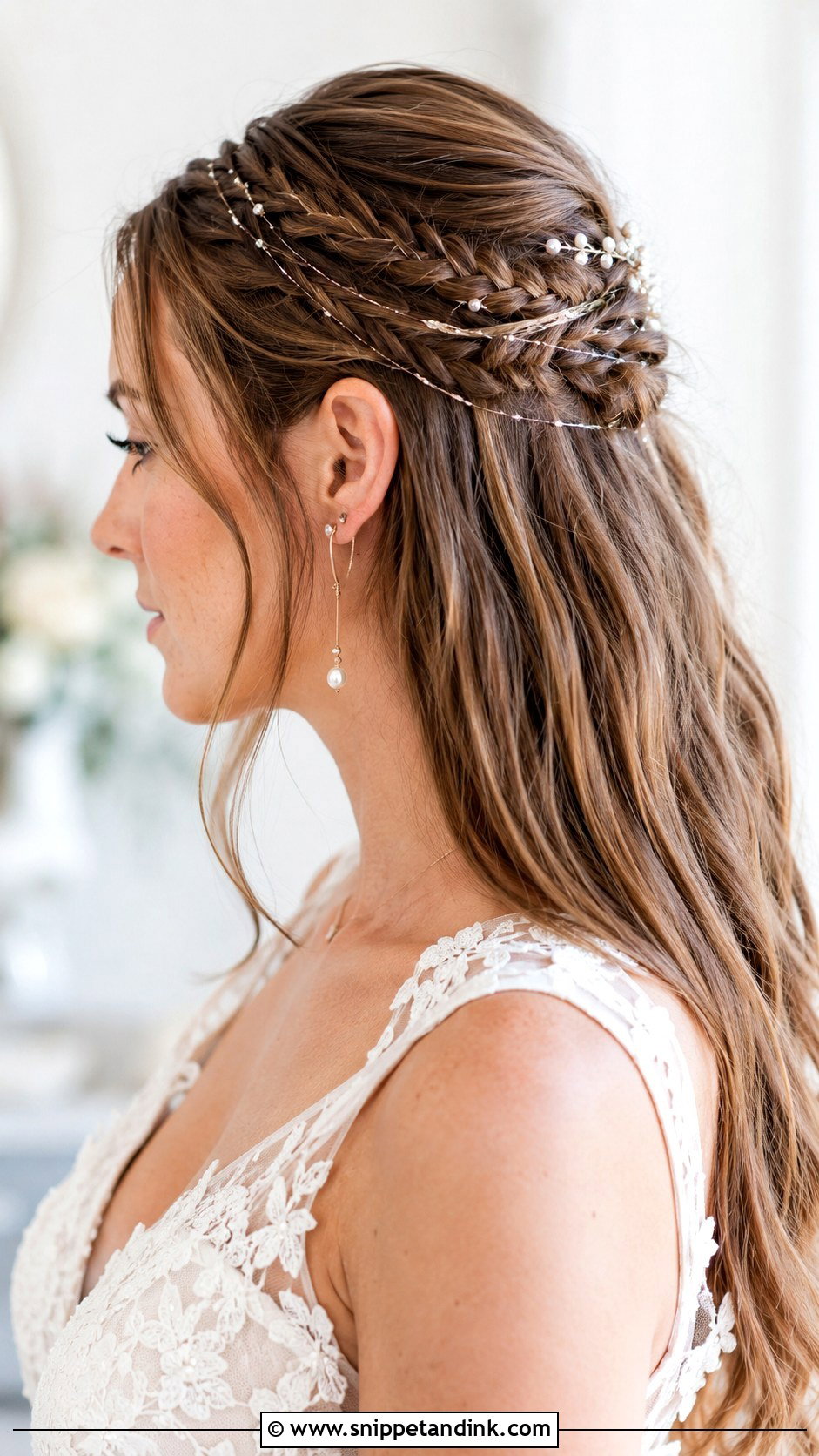
Micro braids are tiny plaits used as accents, either scattered through loose hair or tucked into a larger updo. They add detail without changing the overall shape, which makes them a good choice for a bride who wants something different but subtle. They take time: a dozen micro braids can add a noticeable chunk to your appointment, so build that into the morning schedule. Threading in small pearls or metallic thread gives them a little shine.
17. Twisted Braid Half Updo
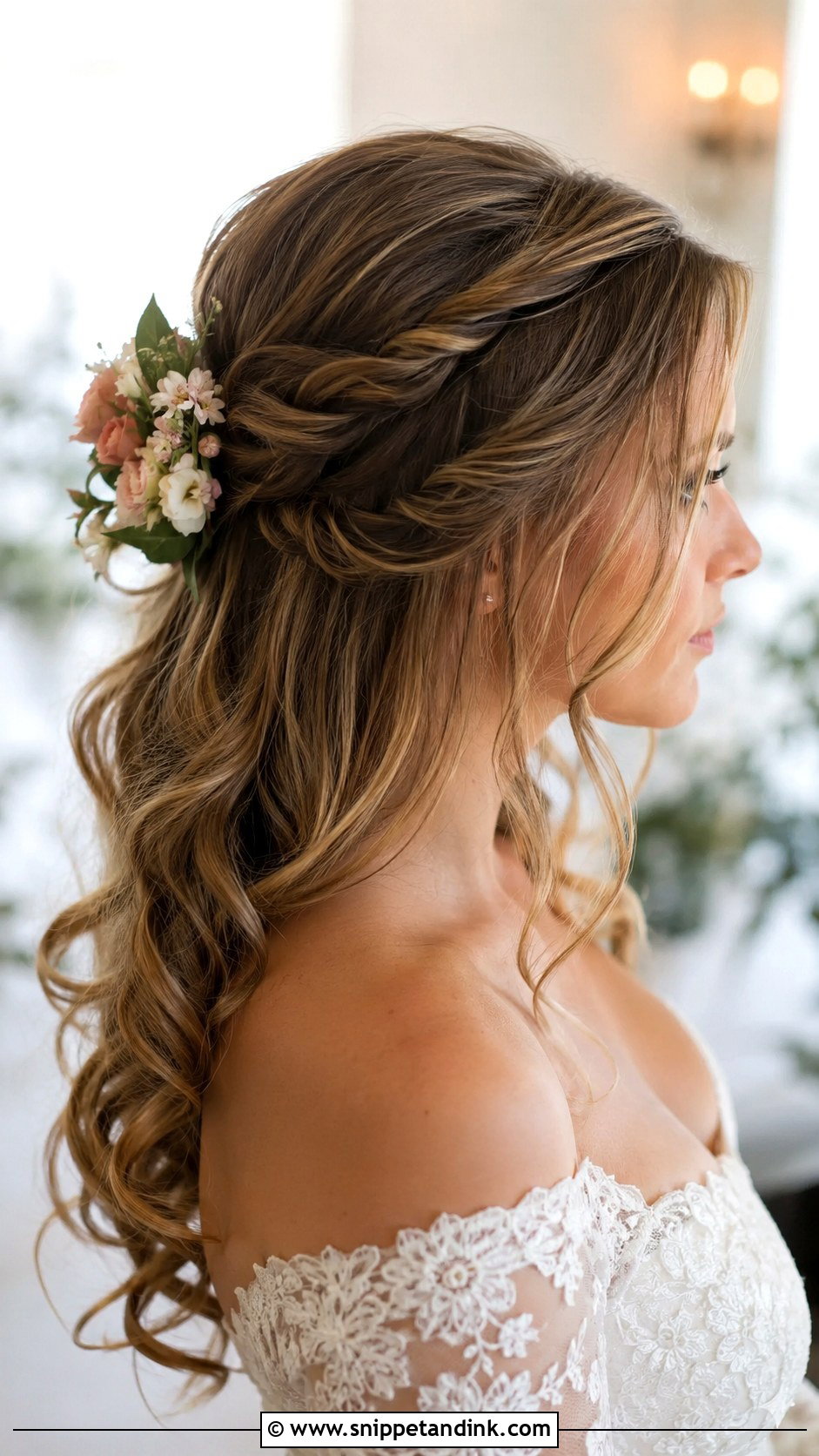
Twists are softer than braids and quicker to do. Here the top section is twisted and pinned at the back, leaving the rest loose. It’s comfortable with a veil and suits most face shapes. The weak spot is that a twist can untwist if the hair is heavy and silky, so I lock each twist with a small elastic underneath before pinning, then hide it. Pull a few pieces around the face and add one accent where the twists meet.
18. Braided Bun With Flowers
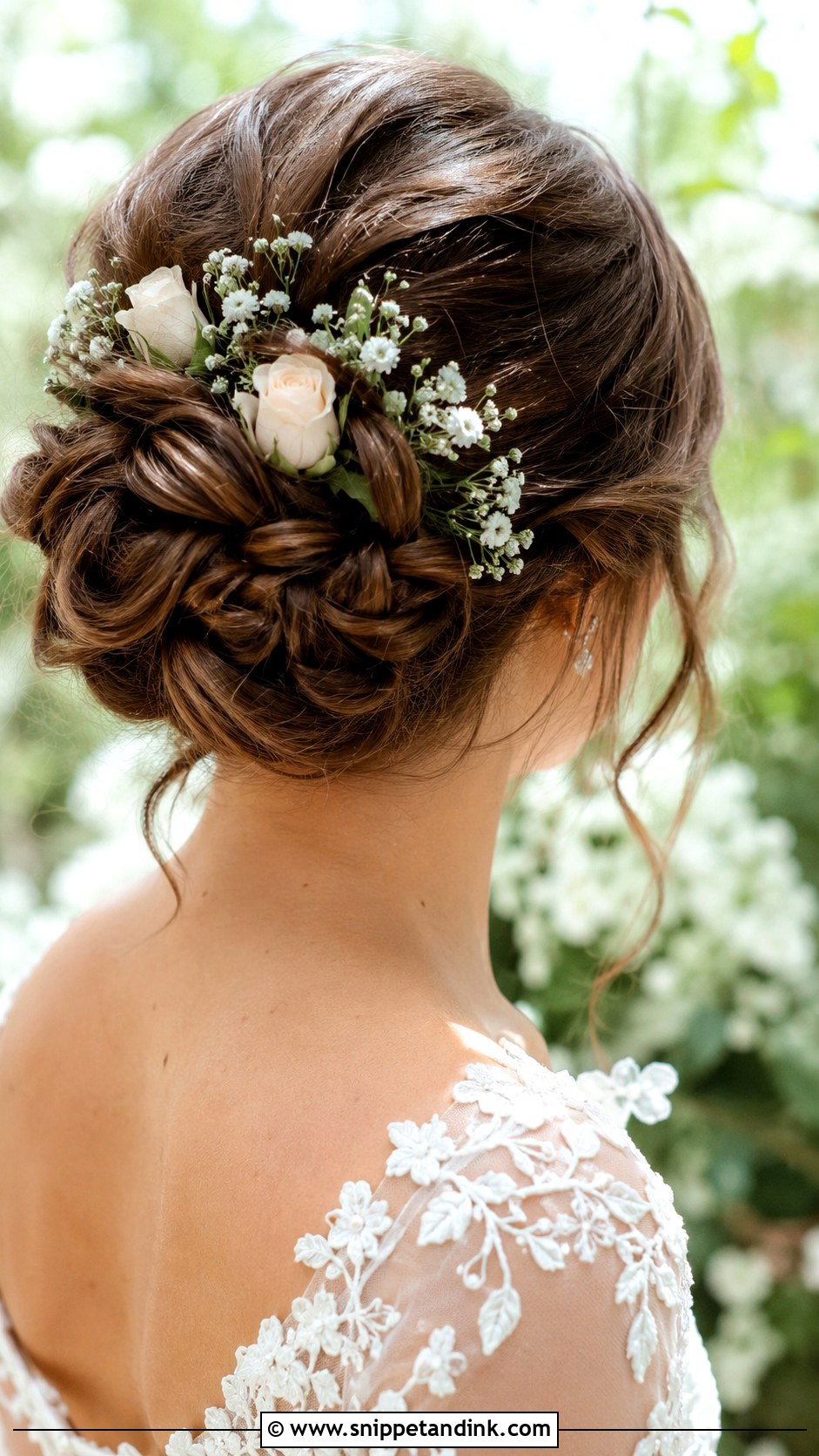
A braided bun with fresh flowers tucked in is one of the most requested looks for spring and outdoor weddings. My advice is to talk to your florist early. Sturdy blooms like spray roses, waxflower or baby’s breath last far better out of water than garden roses or hydrangea, which can wilt against warm skin within a couple of hours. Ask for the hair flowers to be wired or picked separately and delivered a little before the ceremony. Matching them to your bouquet ties the look together.
19. Side Swept Fishtail Braid
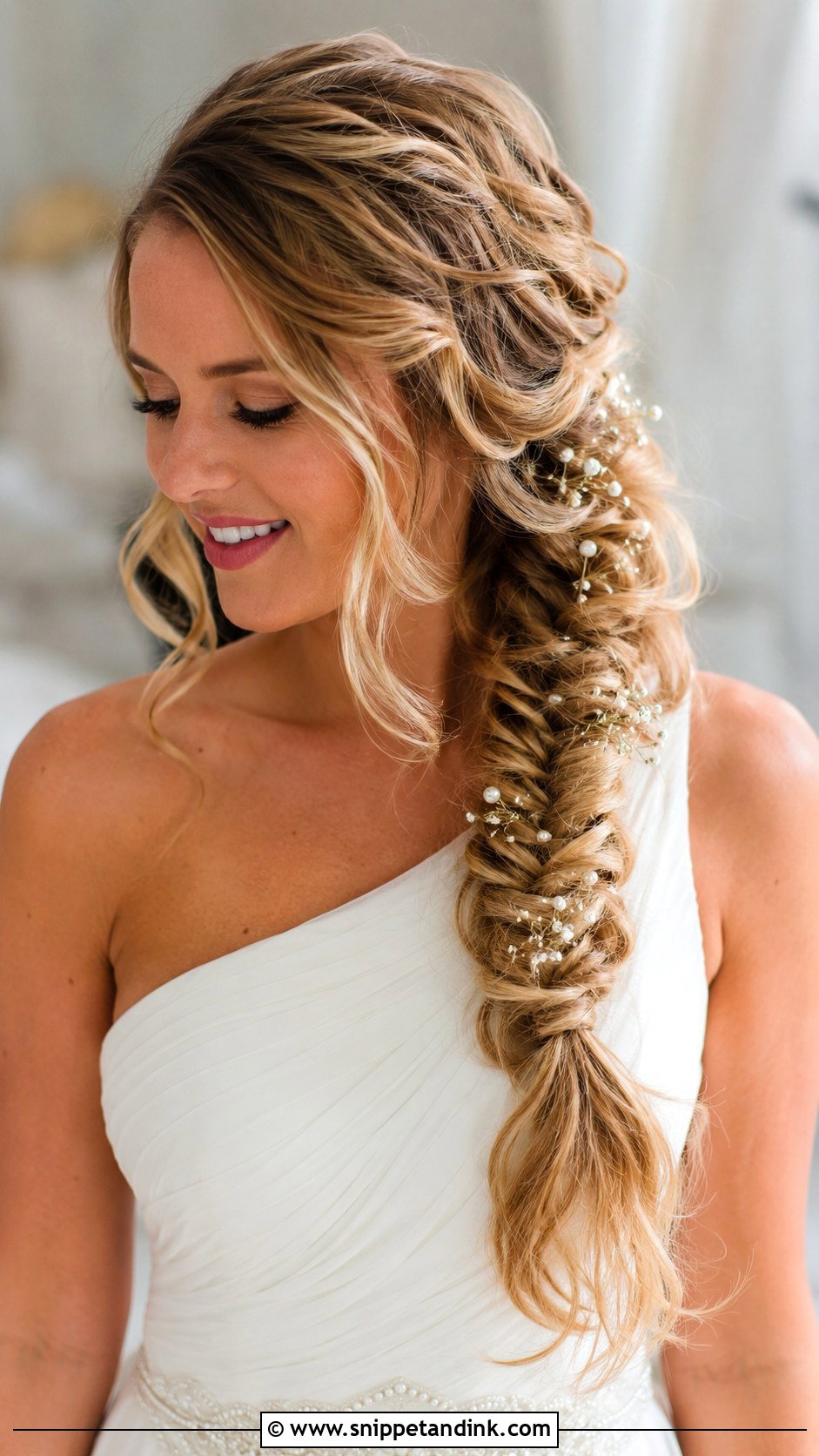
Sweeping a fishtail over one shoulder shows off the neckline and suits one-shoulder and off-shoulder gowns, because the braid falls on the bare side. It works on most textures. I’d check which side you’ll stand on during the ceremony, though; most brides want the braid facing the guests, not hidden from the camera. Keep it sleek or loosen it, and tuck in a few small flowers or pearls if you like.
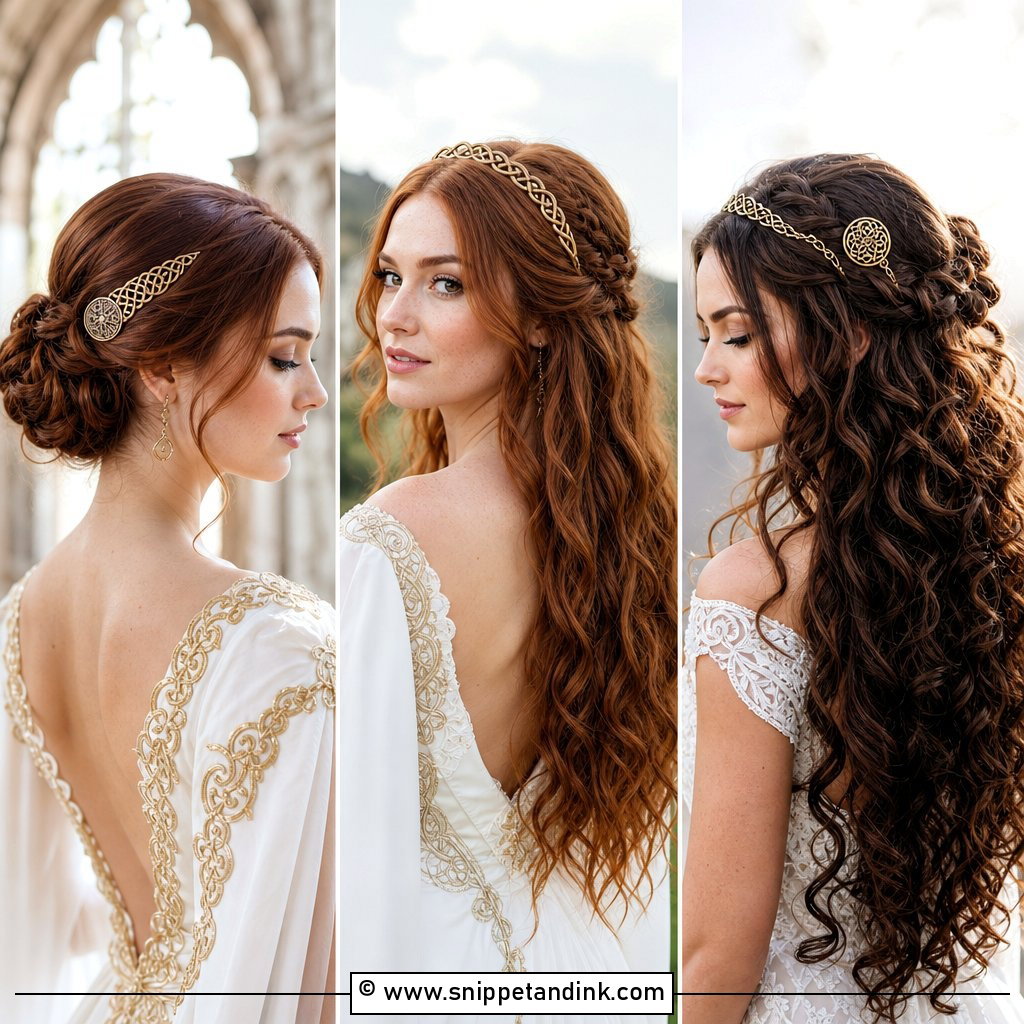
20. Braided Crown With Loose Waves
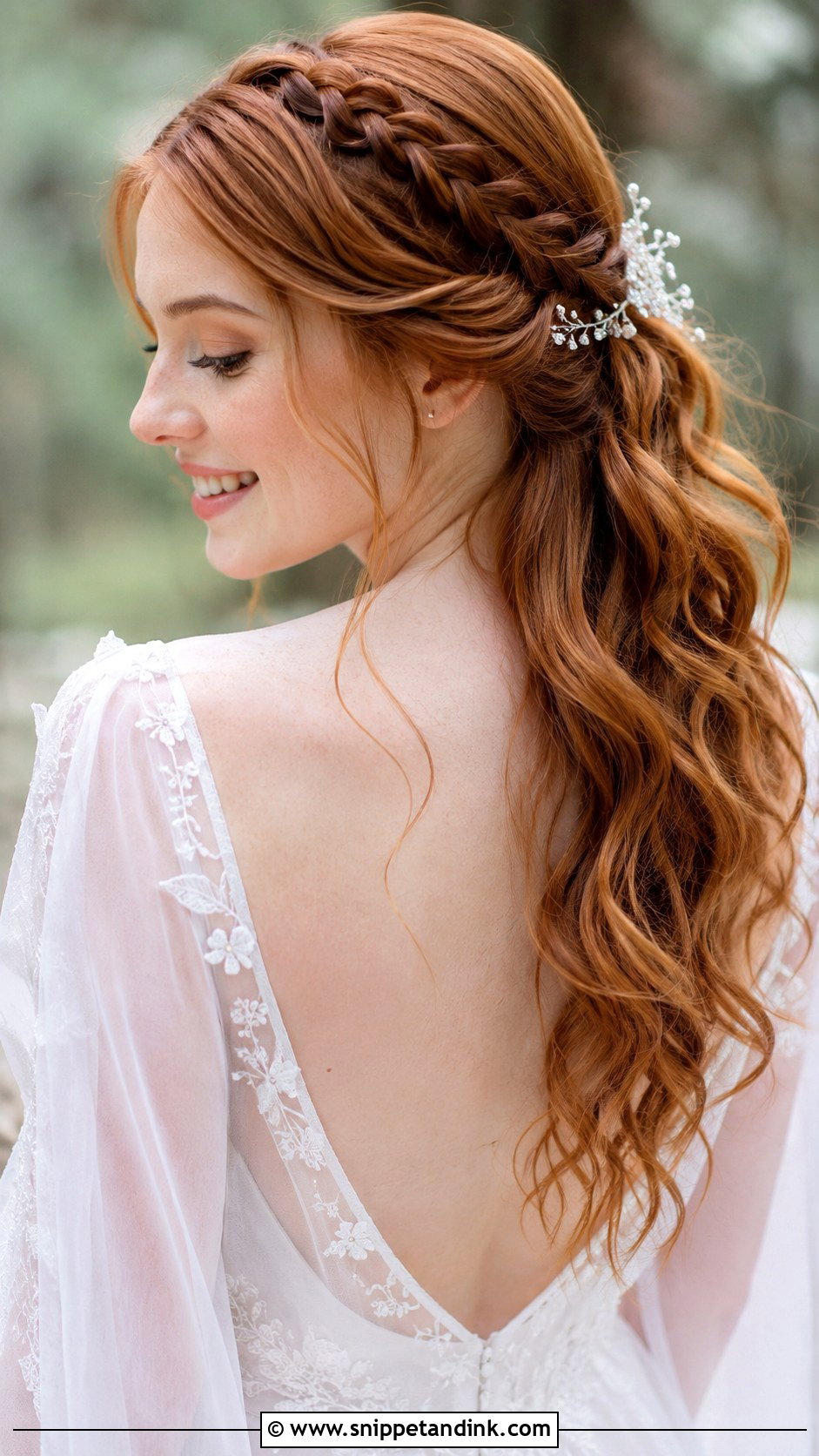
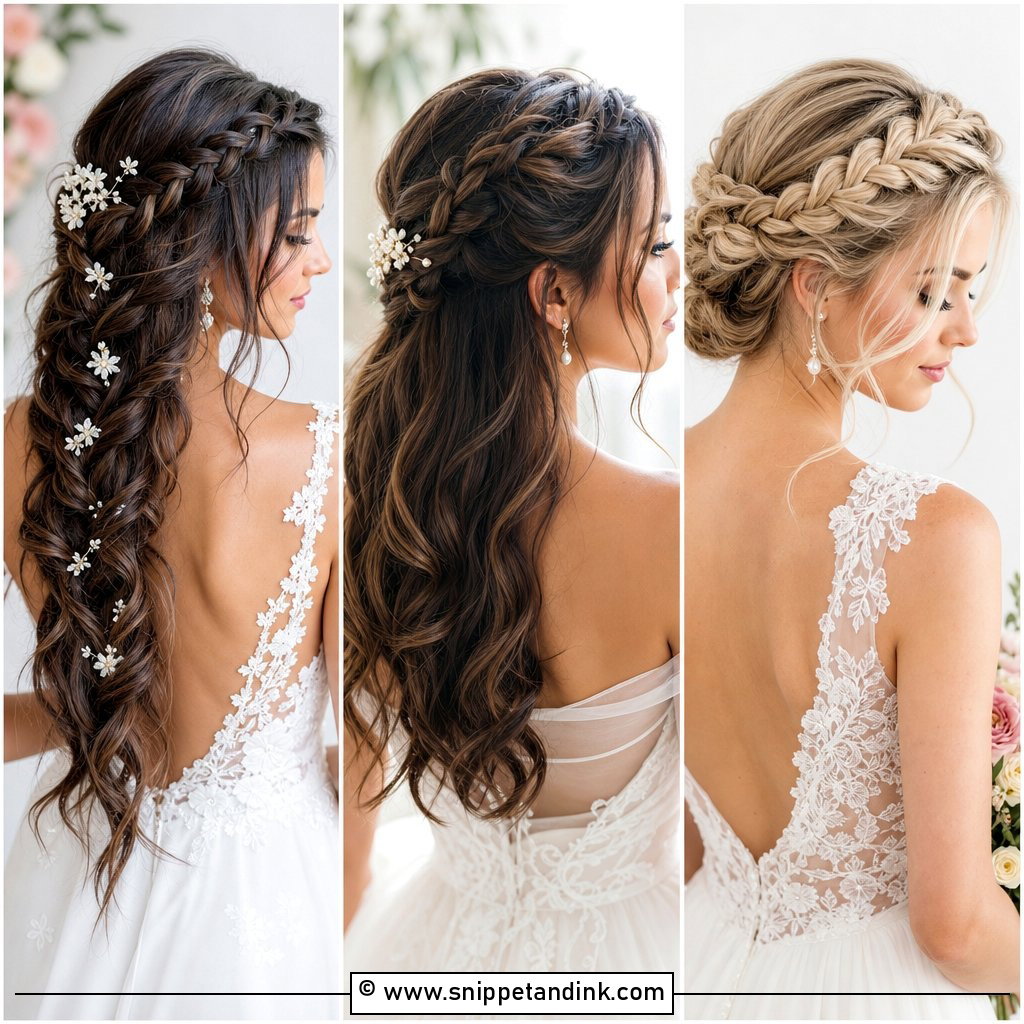
A crown braid at the top with waves left loose underneath gives structure to a hair-down style. It frames the face, shows off length and gives a veil something to hold on to. Because the waves will drop as the day goes on, I’d plan this one with an eye on the forecast. In high humidity or for naturally very straight hair, consider a half-up version where more of the hair is secured. A sparkling pin or florals along the crown finish it.
21. Dutch Braid Updo
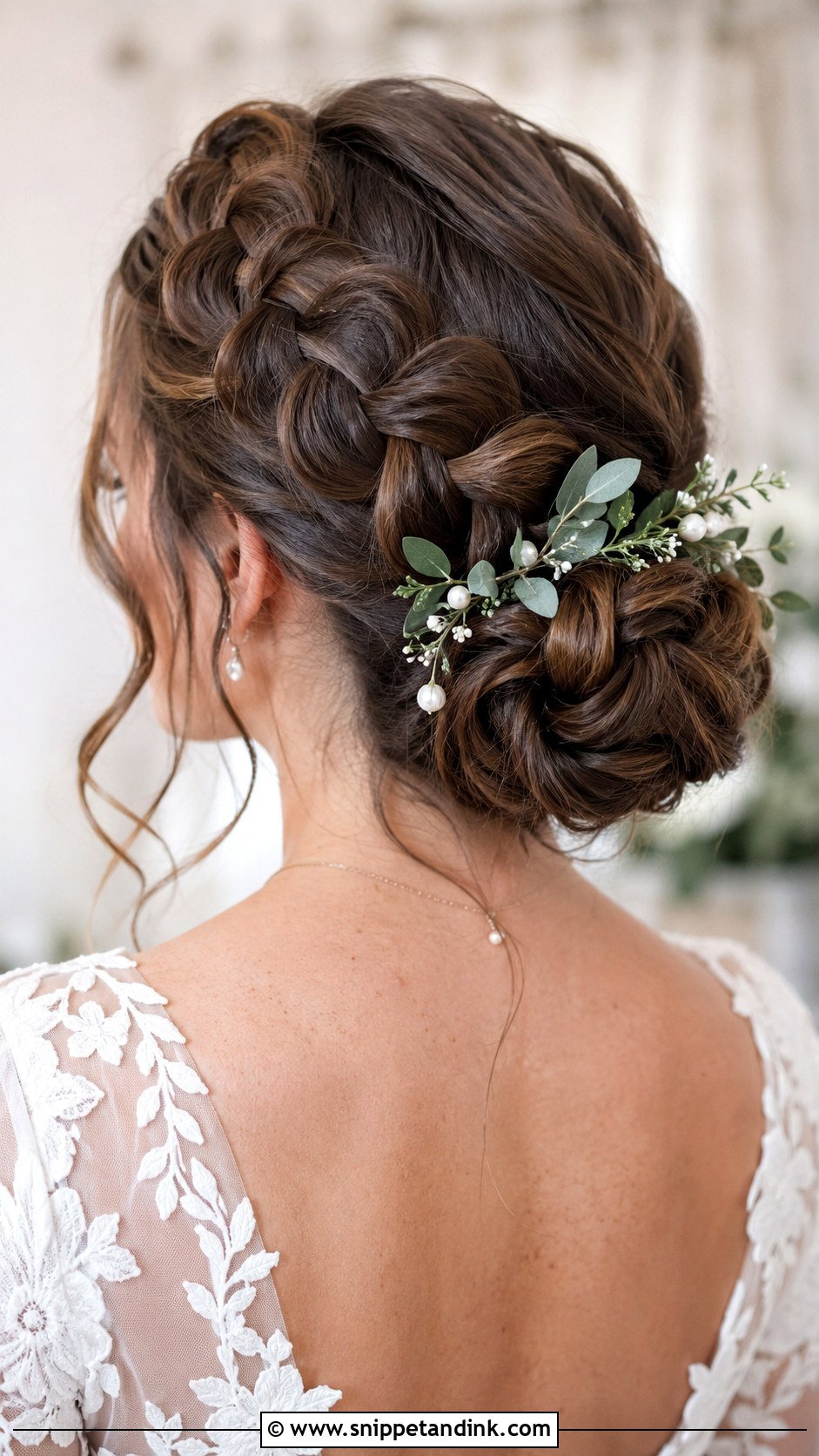
Here Dutch braids are wrapped into a low bun or twisted shape at the back. The raised pattern adds depth in photos, and because the braids are tight to the scalp, it handles a lot of movement. It’s what I’d suggest for a bride planning to dance hard all night. Pancaking makes it fuller and softer. Greenery or pearls work as accents; keep them small so the braided texture stays visible.
22. Braided Ponytail With Curls
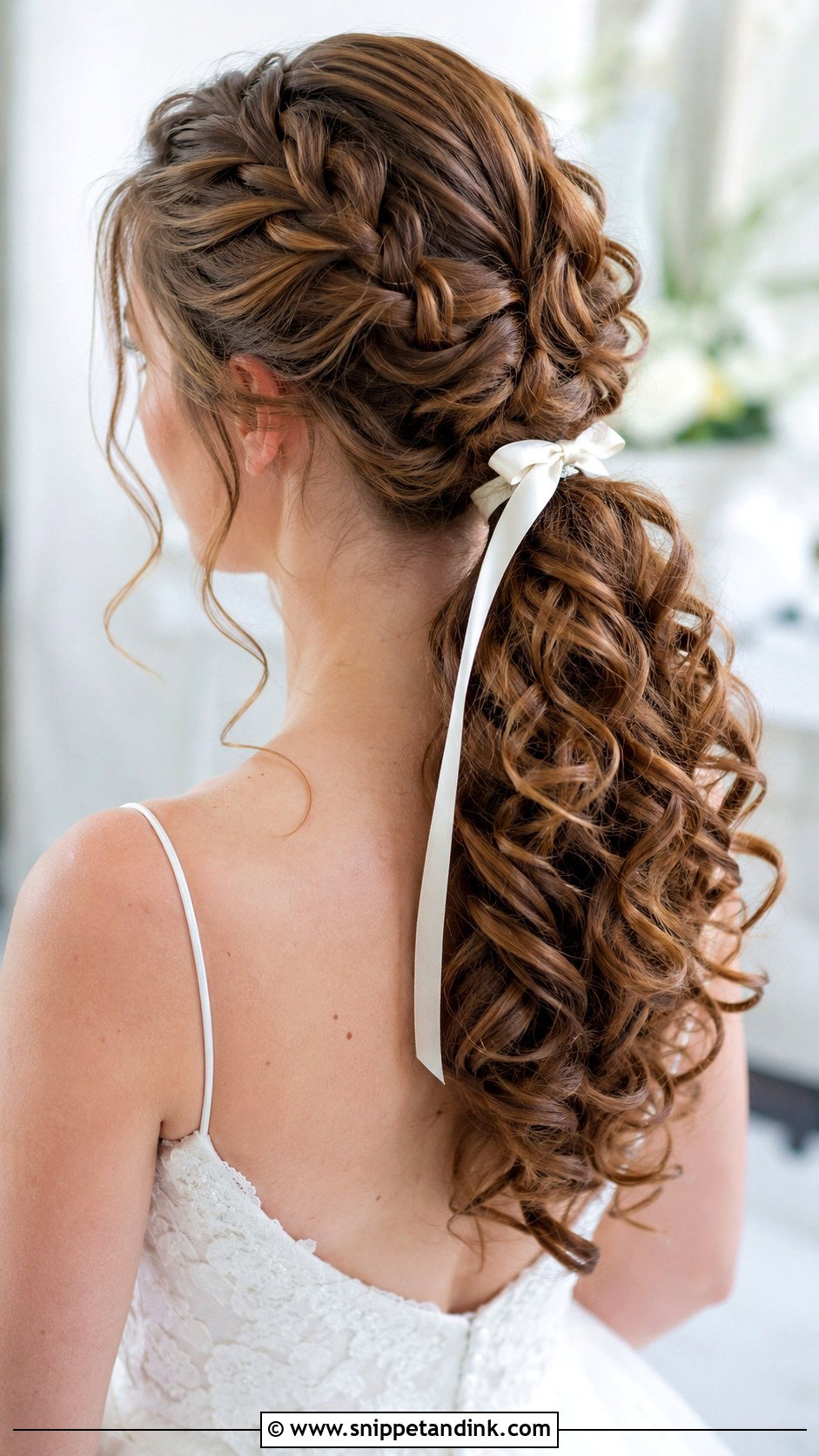
A ponytail with part of the length braided and the curled ends left free is a fun, youthful option. It’s comfortable and easy to move in. The curls carry a lot of the look, so they need a good set; if your hair drops curls quickly, a light setting spray and pin curls during your makeup can help. Wrap a strand around the base to hide the elastic. A ribbon or floral at the tie is enough.
23. Grecian Braided Updo
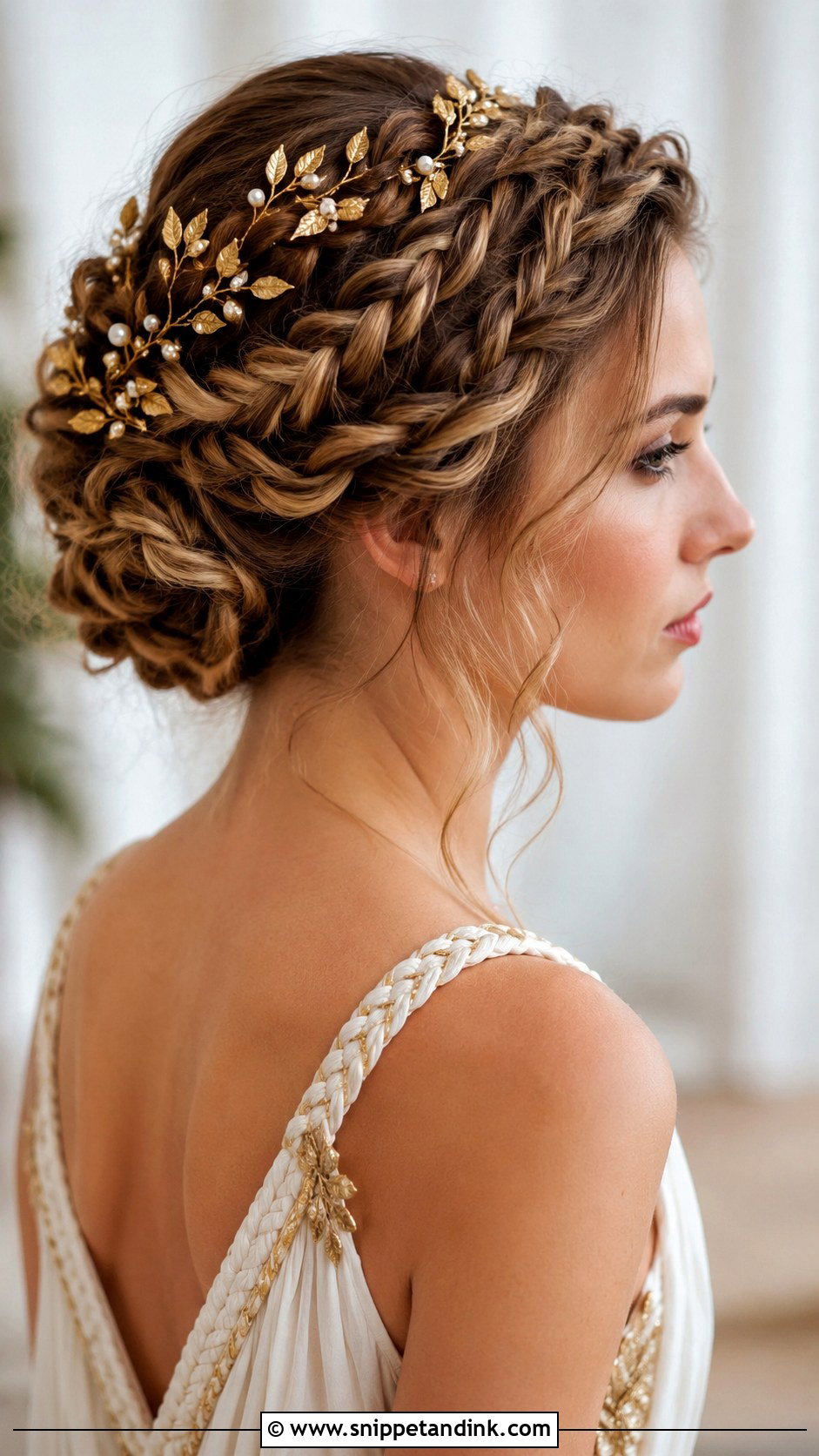
A Grecian updo uses braids to build a soft, draped shape at the back with the hair kept off the neck. It suits garden and destination weddings and works best with grecian-style gowns and simple gold jewelry. I often place a fine braided band across the top to give the drape its anchor. Gold leaf pins or a few pearls fit the style. Pull a couple of pieces loose at the face so it doesn’t look too severe.
24. Braided Low Bun
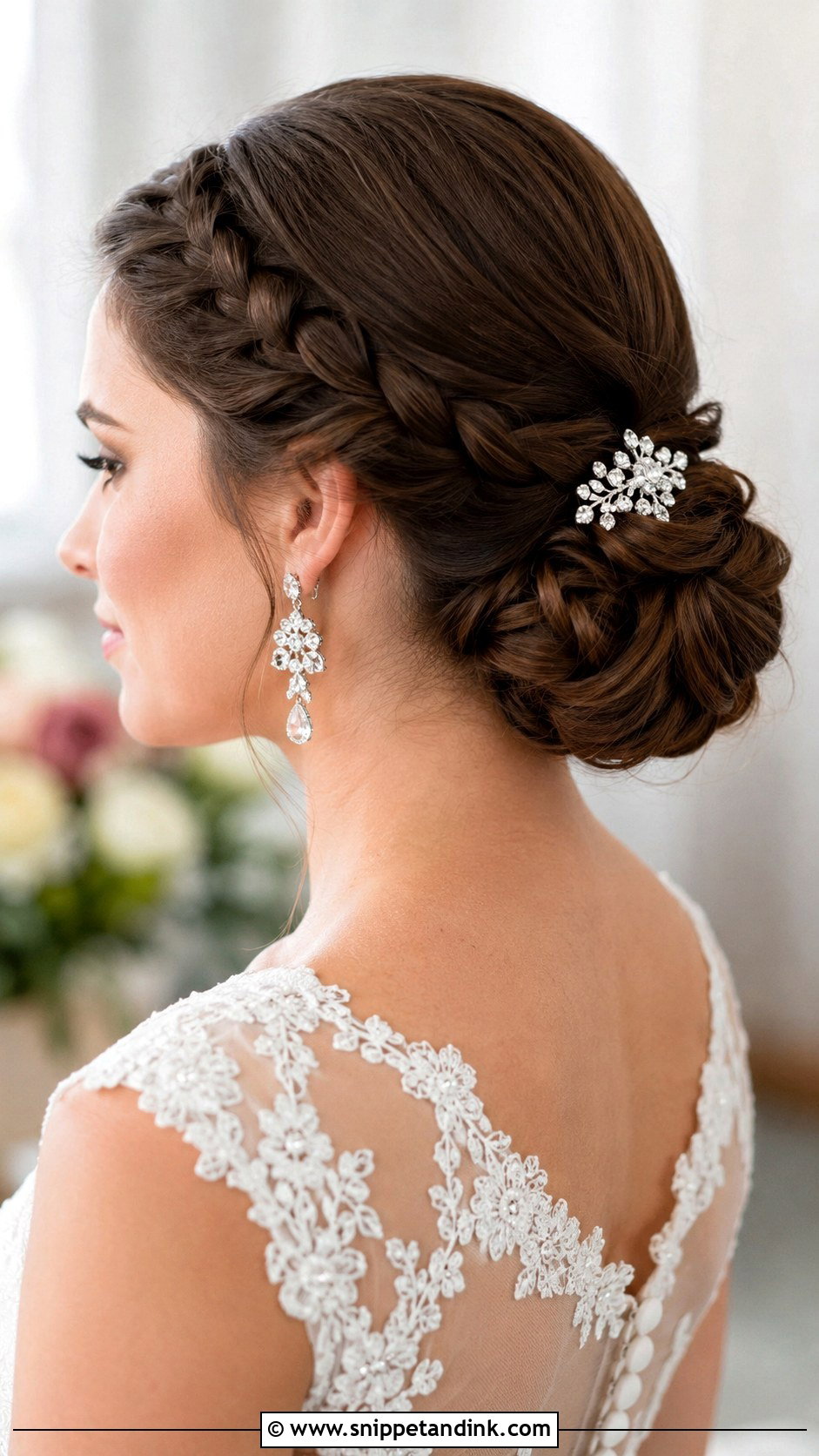
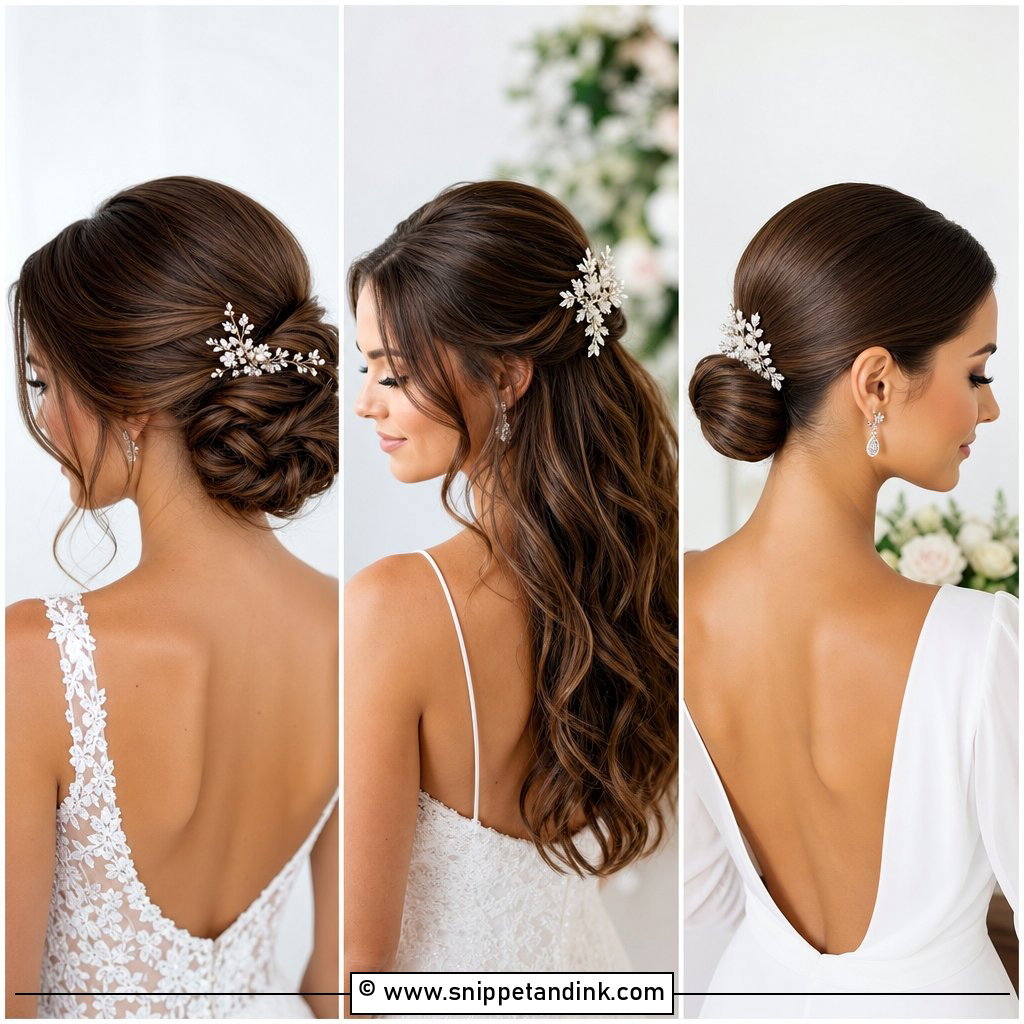
The braided low bun is the safe, classic choice at the nape of the neck. It pairs easily with a veil and statement earrings. On fine hair, the bun can look small, so I either backcomb lightly underneath or add a clip-in piece to give it size. Sleek or loosened, the braid holds well all day. A jeweled pin or fresh flower on one side finishes it.
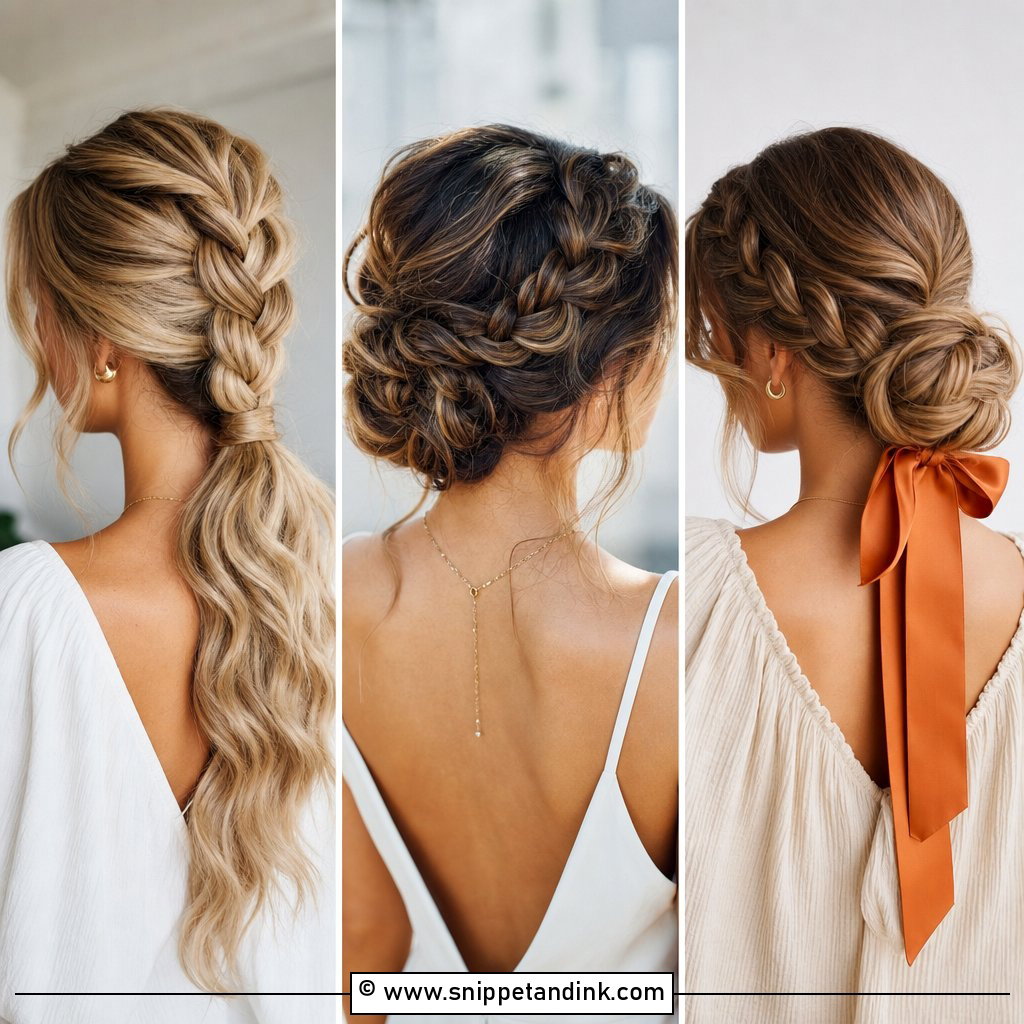
25. Waterfall Braid Updo
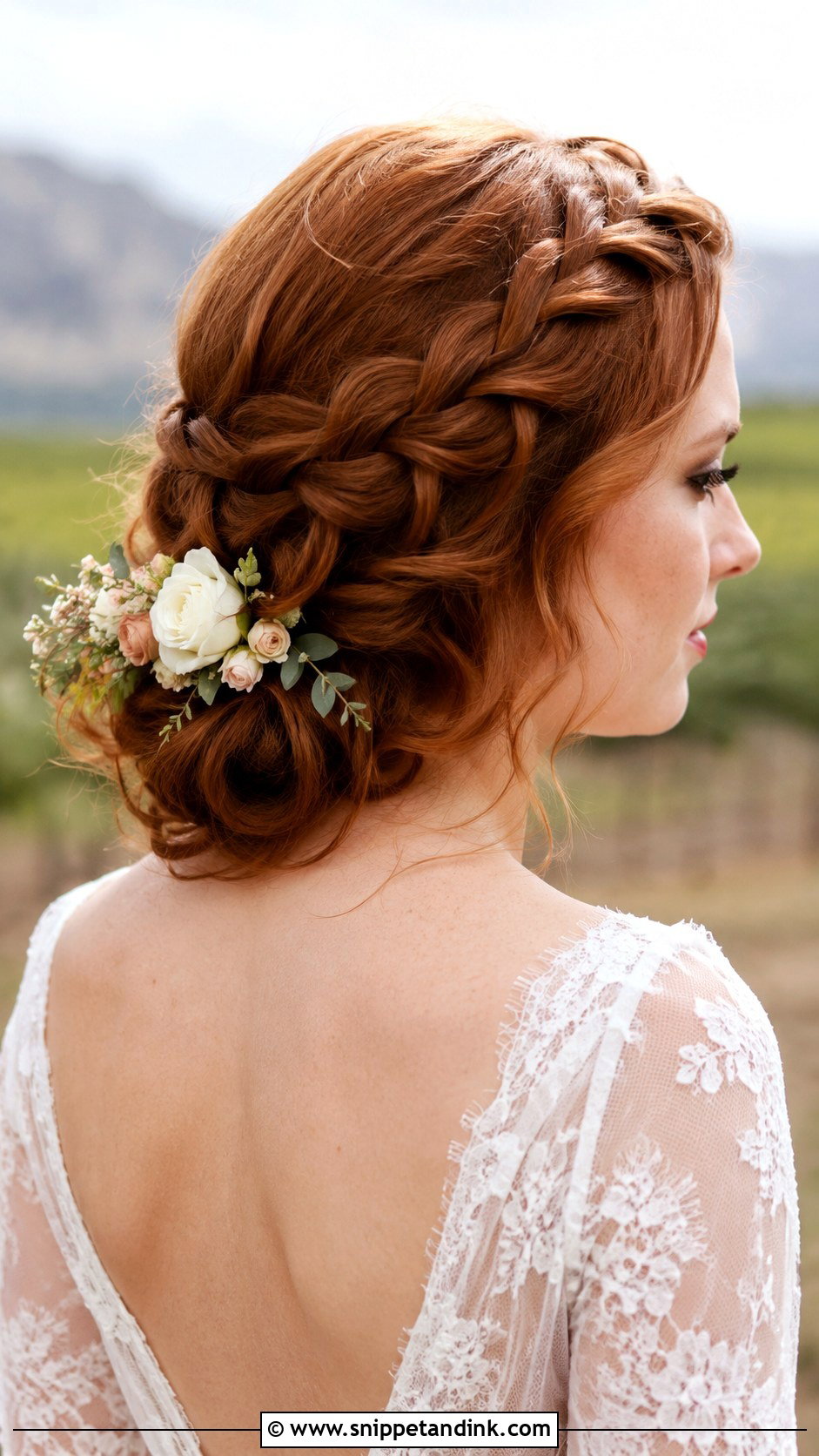
This takes the waterfall pattern and gathers the free strands up into a soft updo instead of leaving them down. You get the detailed braid across the back and a secure finish that won’t drop in heat. It’s what I suggest to brides who love the waterfall but are marrying somewhere humid. Pancaking the braid adds fullness, and a few blooms or pins at the join add interest.
26. Braided Bun With Pearls
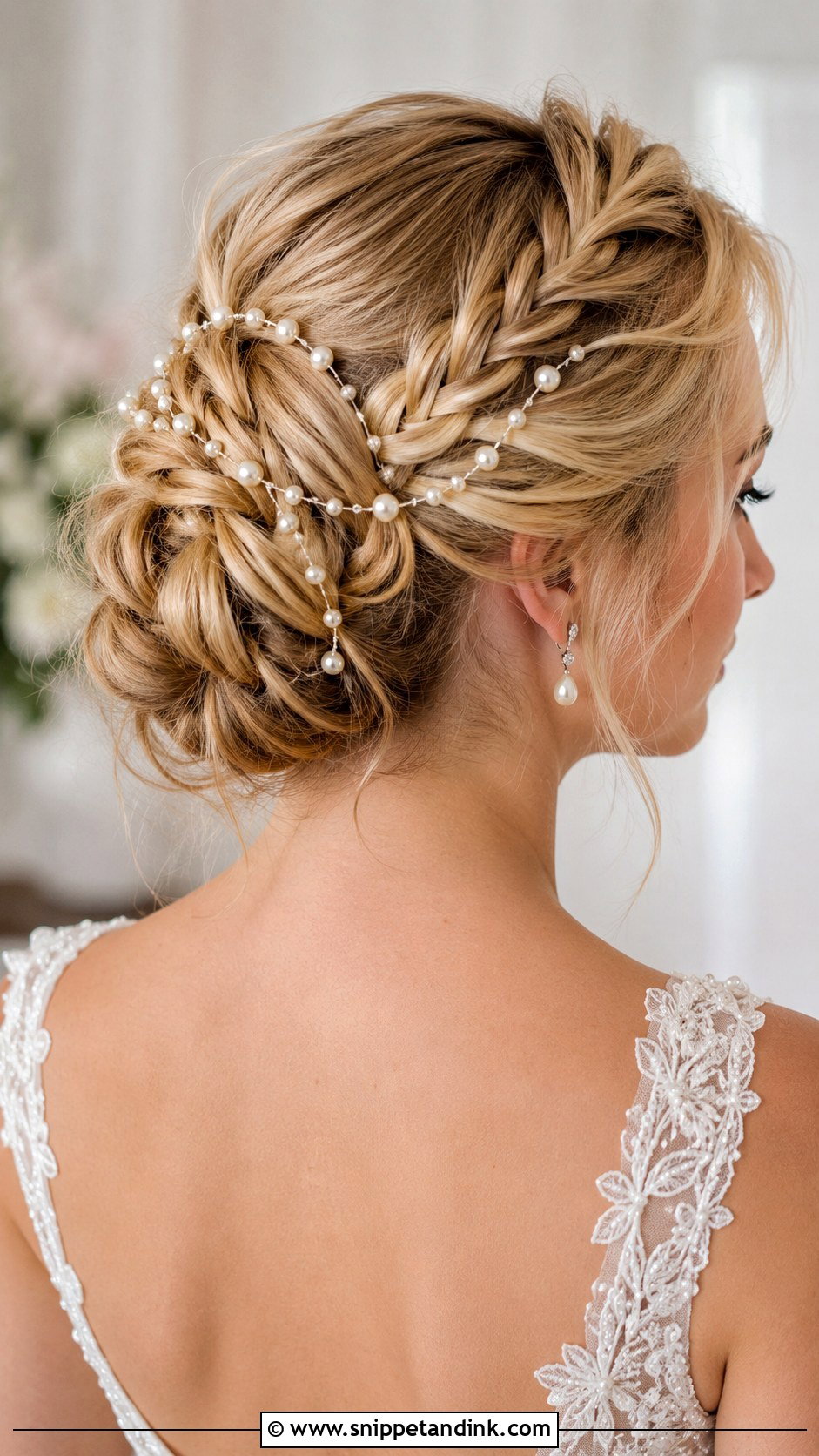
Threading pearls through a braided bun, either on strands or individual pins, adds subtle sparkle. Pearl pins come in different finishes, so I’d bring the actual pins to your trial and test them under natural light; very white pearls can look odd next to an ivory gown. The bun holds all day, and you can keep it tight or loosen the braids. Avoid overloading it, since a few well-placed pearls look more expensive than a crowded cluster.
27. Boho Braided Half Up
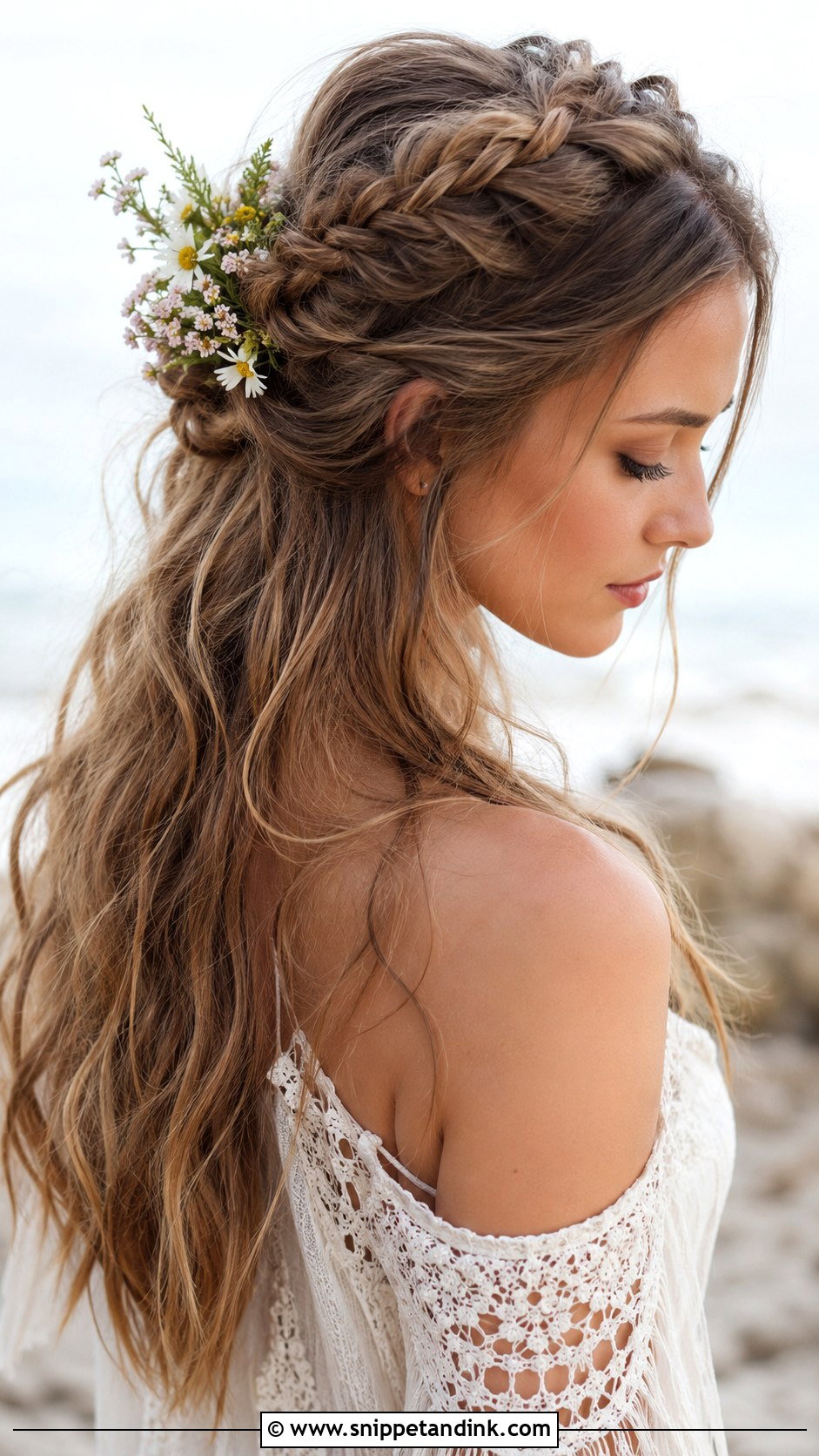
This is a relaxed half-up style with loose braids at the top and natural waves below. It suits beach and garden ceremonies and works with a veil. I keep the braids small enough that the waves stay the star. If your hair is very fine, a few clip-ins underneath will give the waves more body. Wildflowers, ribbon or greenery add a natural touch.
28. Braided Updo With Tiara
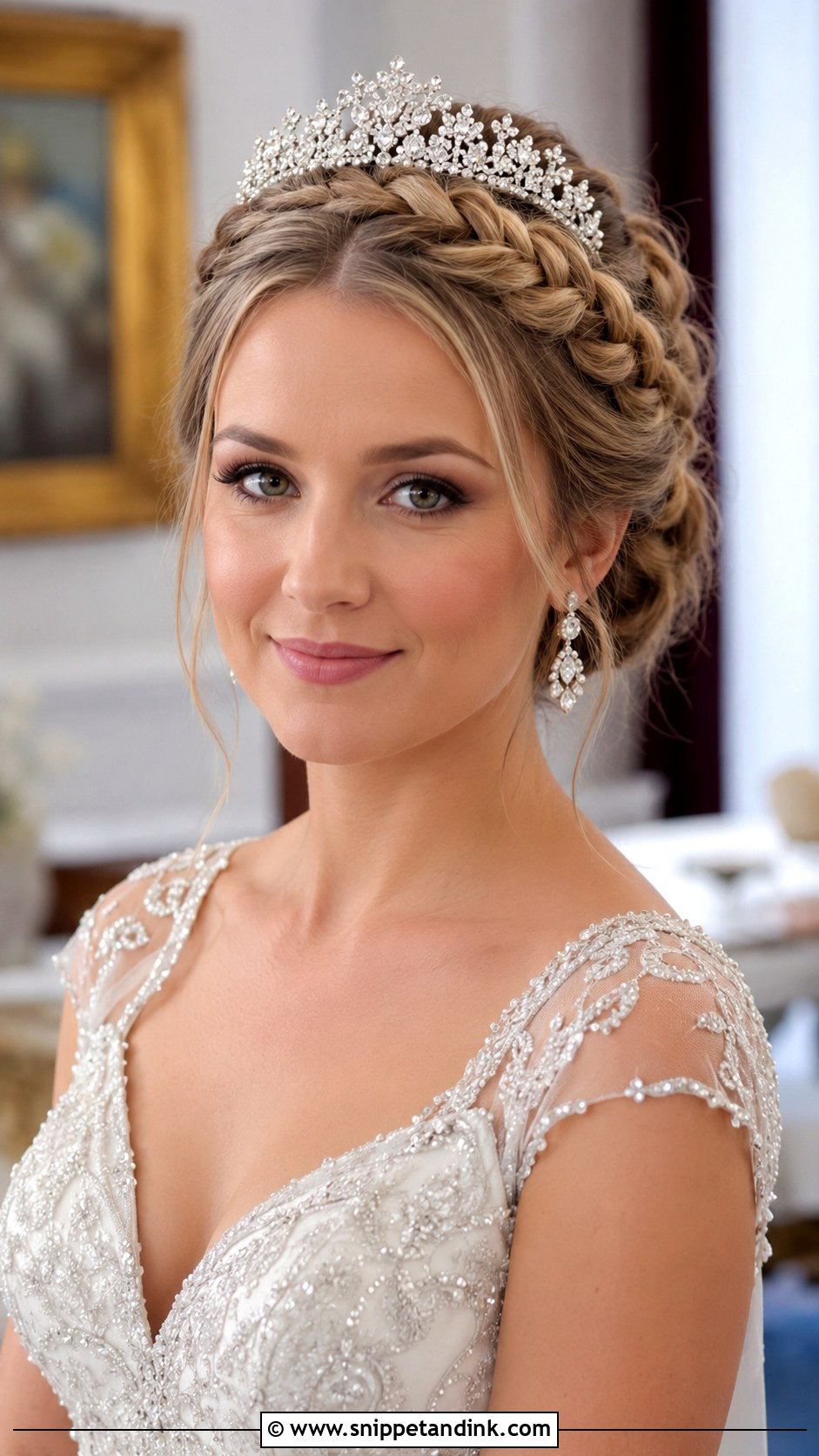
A braided updo with a tiara gives a formal, regal look for a ballroom or very traditional wedding. The braids provide a firm base, so the sparkling tiara can be pinned securely without sliding. I always ask brides to bring the tiara to the trial, because its shape decides where the braids go; a tall tiara needs a slightly higher updo to balance it. French, fishtail or twisted braids all work underneath.
29. Double Dutch Braid Bun
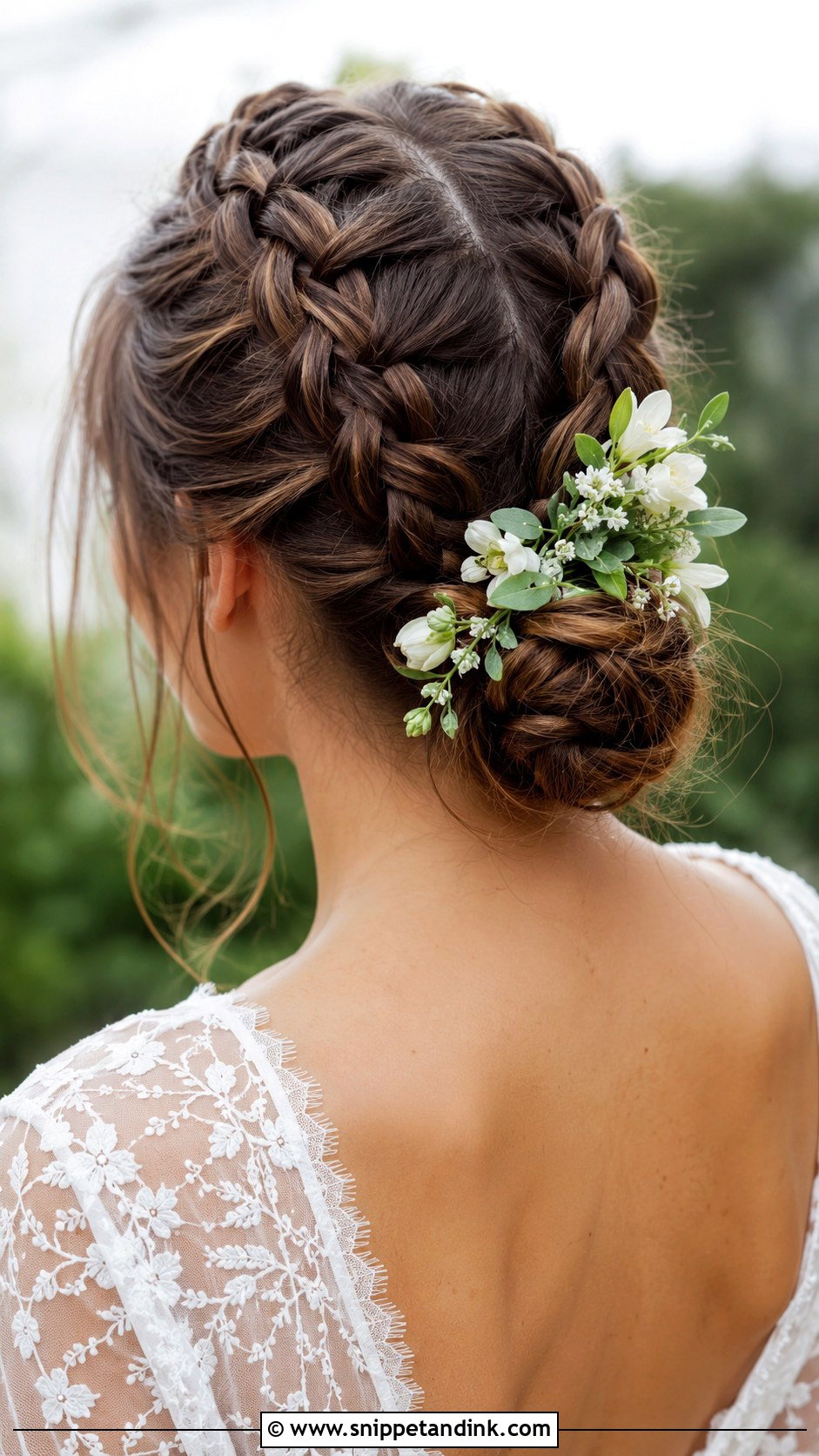
Two Dutch braids run back from the temples and meet in a bun, so the structure does most of the holding and very few pins are needed. That makes it the most dance-proof style on this list. The tricky part is symmetry: both braids have to start at the same height and tension, or the bun ends up off-center. I mark the parting with a tail comb and check both sides in the mirror before joining them. Flowers or pins can hide the join.
30. Braided Mermaid Hairstyle
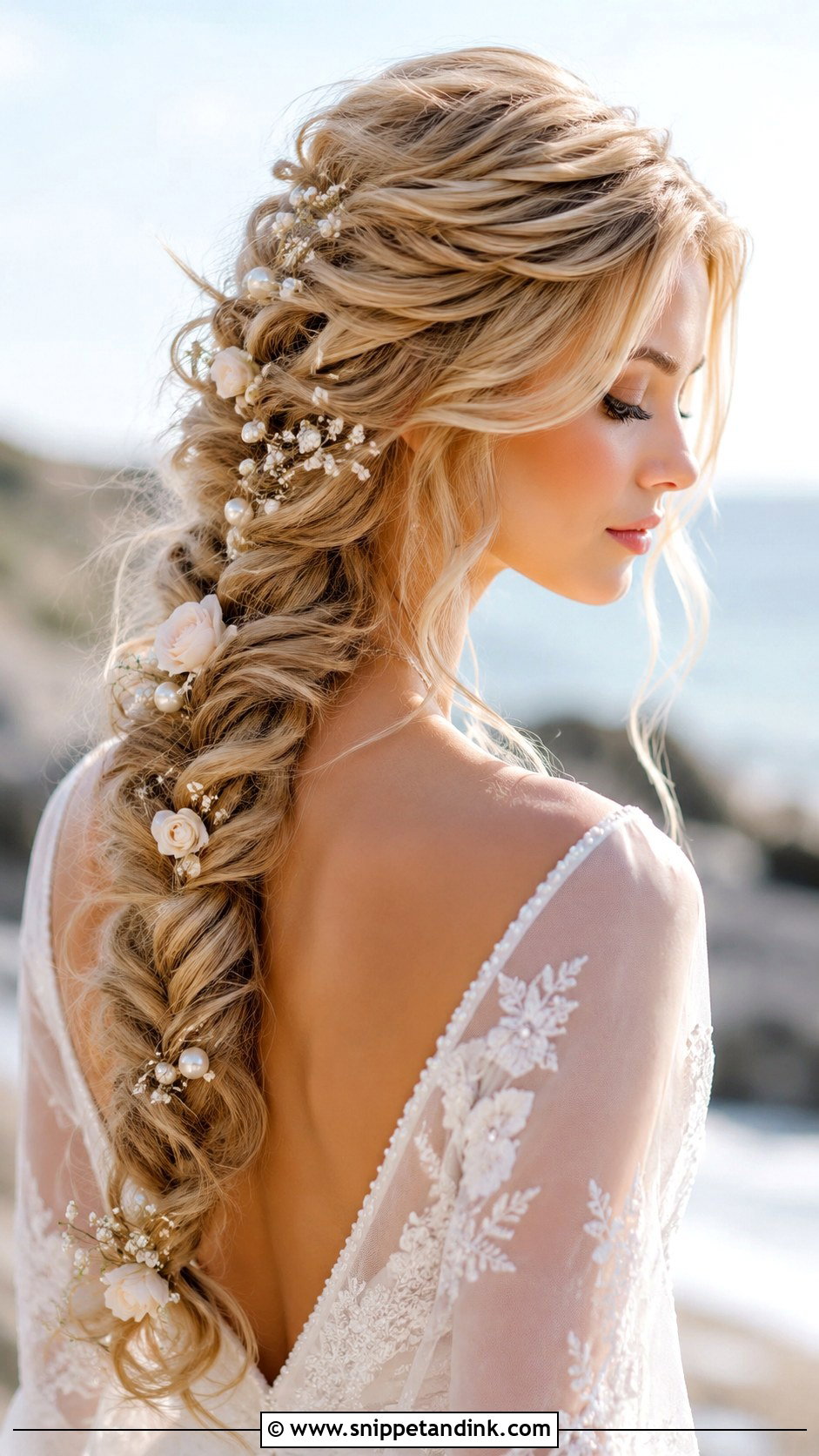
A braided mermaid hairstyle is a loose, voluminous braid full of waves, worn down the back for a beach or boho wedding. That width almost always comes from heavy pancaking plus clip-in extensions; few people have enough hair to create it alone. I braid it looser at the top and tighter at the end, which keeps the ends from unraveling while the top stays full. Expect it to spread over the day. Shells or pearls are optional, and light ones only, since heavy pieces drag a loose braid down.
Arriving at Your Appointment With Braid-Ready Hair
Braids hold best on hair with a little grip. I ask most brides to wash the evening before rather than the morning of, and to skip conditioner on the roots. Freshly washed, silky hair slides out of a braid within an hour; day-old hair grips the pins.
- Wash the night before, dry fully, and skip heavy oils or serums.
- Wear a button-up top so nothing has to come off over your head.
- Bring your veil, any pins or tiara, and any clip-ins.
- If your hair is very coarse or curly, tell your stylist ahead of time so she can plan extra prep time.
How a Pancaked Braid Holds Up by the Last Dance
A pancaked braid is pulled loose on purpose, so it has less grip than a tight one. Over a long day it will spread a little more and some pieces will drop. That’s normal, and in photos it often looks better by evening.
What you don’t want is the braid sliding as a whole. That’s why I pin every few inches along the underside, out of sight, and finish with a flexible hairspray rather than a stiff one. If you’re getting married somewhere hot, ask your stylist to leave you a few spare pins and a small travel spray. A bridesmaid can tuck a loose piece back in between the ceremony and the reception in under a minute.
Bring Two Braids to Your Trial, Not One
If you’ve narrowed it to a couple of favorites, bring both to your trial and ask your stylist to do half your head in each. Seeing them on your own hair, with your veil and earrings, answers more than any photo can. Mention your venue and the forecast, since heat and humidity change which braids last. And give yourself enough time on the morning itself so the braid isn’t rushed.
You'll Like These Ideas:


Leave a Reply