
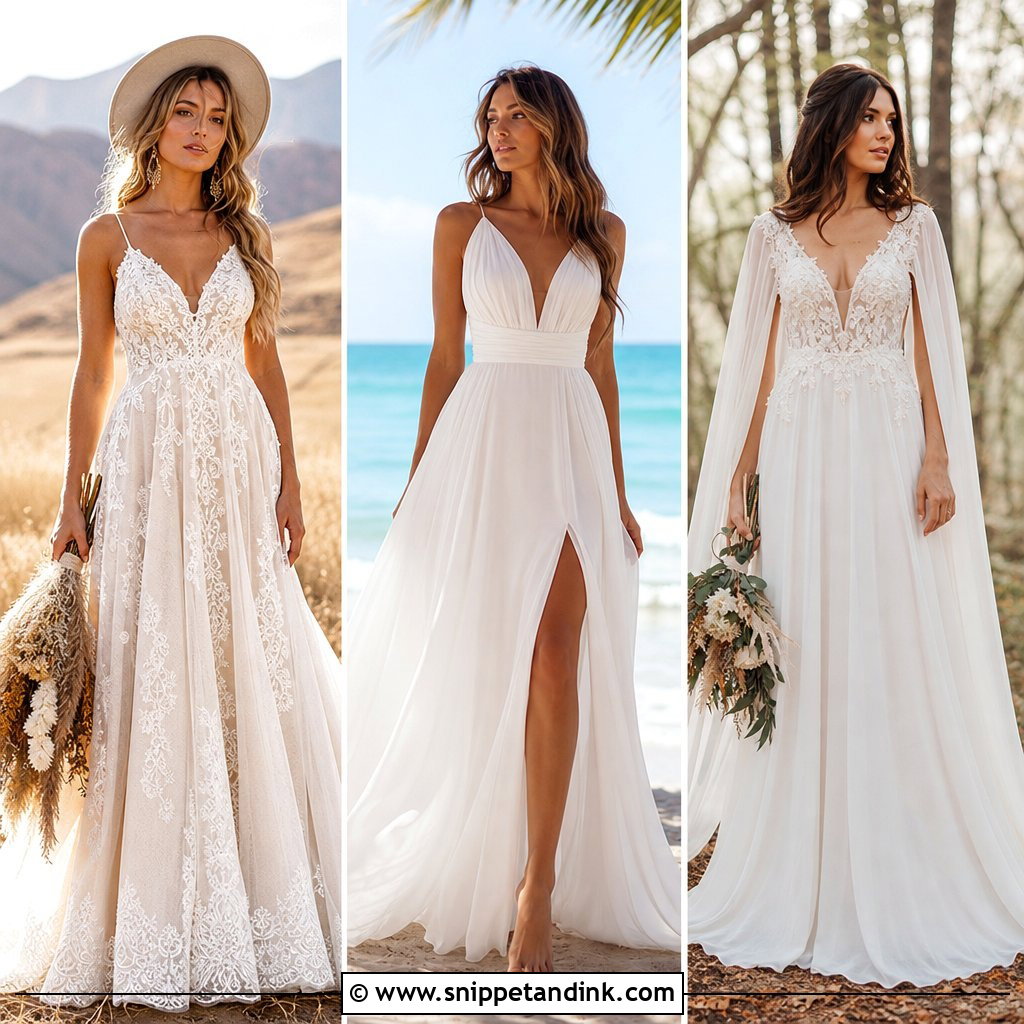
A pagan or nature-based ceremony asks different things of a dress than a church aisle does. You may be standing in a forest clearing, on wet grass at dawn, beside a fire or with your hands bound in a cord, and the gown has to cope with all of it. So the dresses I put together for these weddings lean on flowing fabric, sleeves that move, botanical and celestial detail, and colors taken from the landscape: moss, clay, stone, deep wine. Below are thirty ideas, from linen to velvet cloaks, each with the practical checks I’d make for the setting and the ritual. Think about the cape, crown, shoes and bouquet as you go, because in these ceremonies they carry as much meaning as the dress.
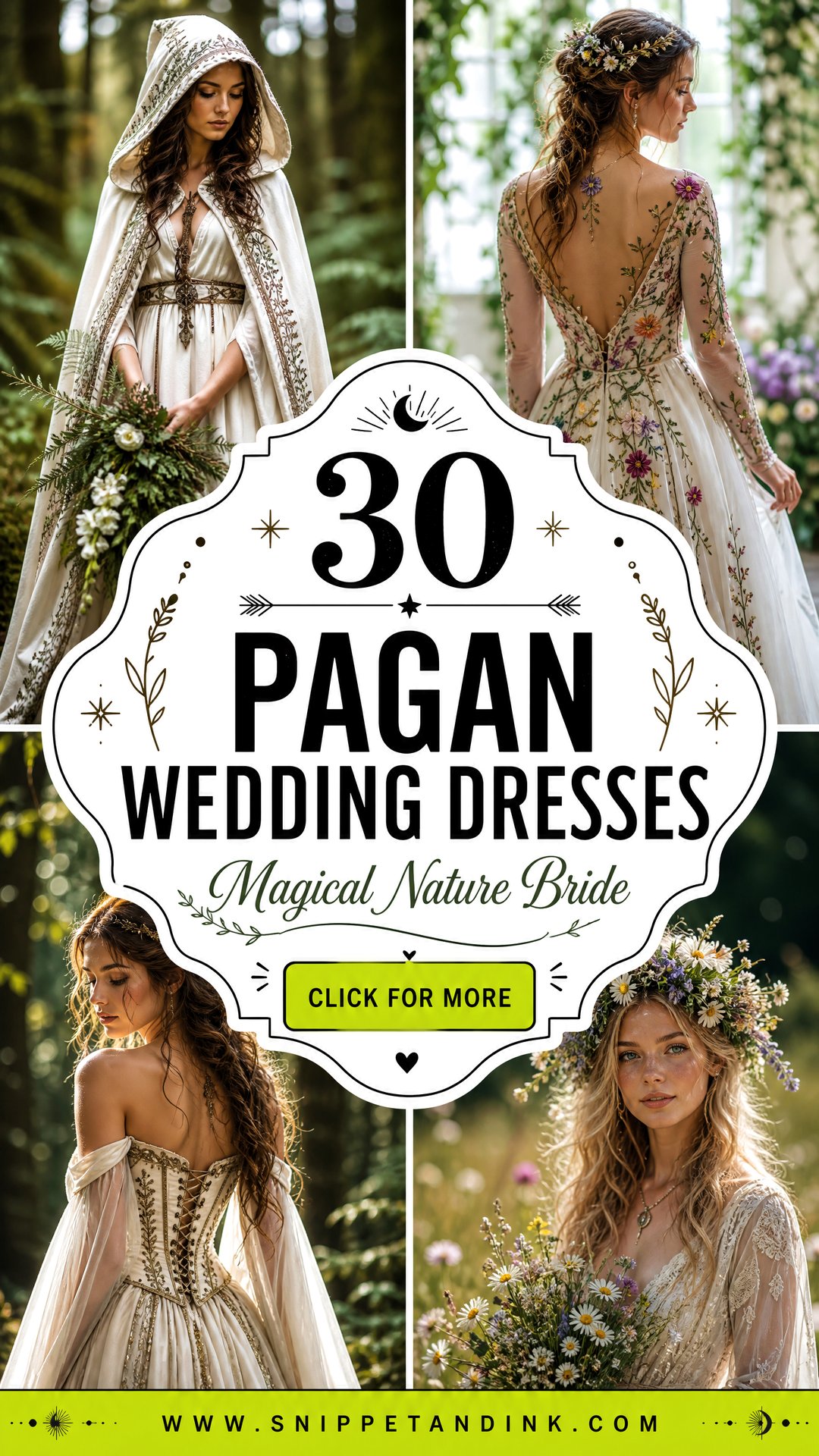
Put the Dress Through Candles, Cords and Wet Grass First
Most bridal fittings happen in a carpeted room under flattering lights. A pagan ceremony happens on uneven ground, often outdoors, with props that interact with the dress. I’d put every shortlisted gown through the actual moves of your rite.
- Handfasting: join hands with someone and have them wrap a cord around both wrists. If the sleeve gets pulled into the binding, the sleeve is wrong for this ceremony.
- Fire and candles: hold your arm out over a table as if reaching for a candle. Loose chiffon and polyester sleeves catch flame far more easily than wool, linen or silk, and should stay well back from open fire.
- Kneeling or sitting on the ground: kneel and stand up again. Tight mermaid skirts and stiff boning make this difficult, and pale fabric marks on grass and earth.
- Walking a path: walk across rough ground in the shoes. A hem that drags will collect mud and leaves within a few steps.
None of this means giving up the dress you love. A bustle, a shorter hem, a fitted inner sleeve or a different cord placement usually fixes the problem.
1. Pagan Wedding Dress With Bell Sleeves
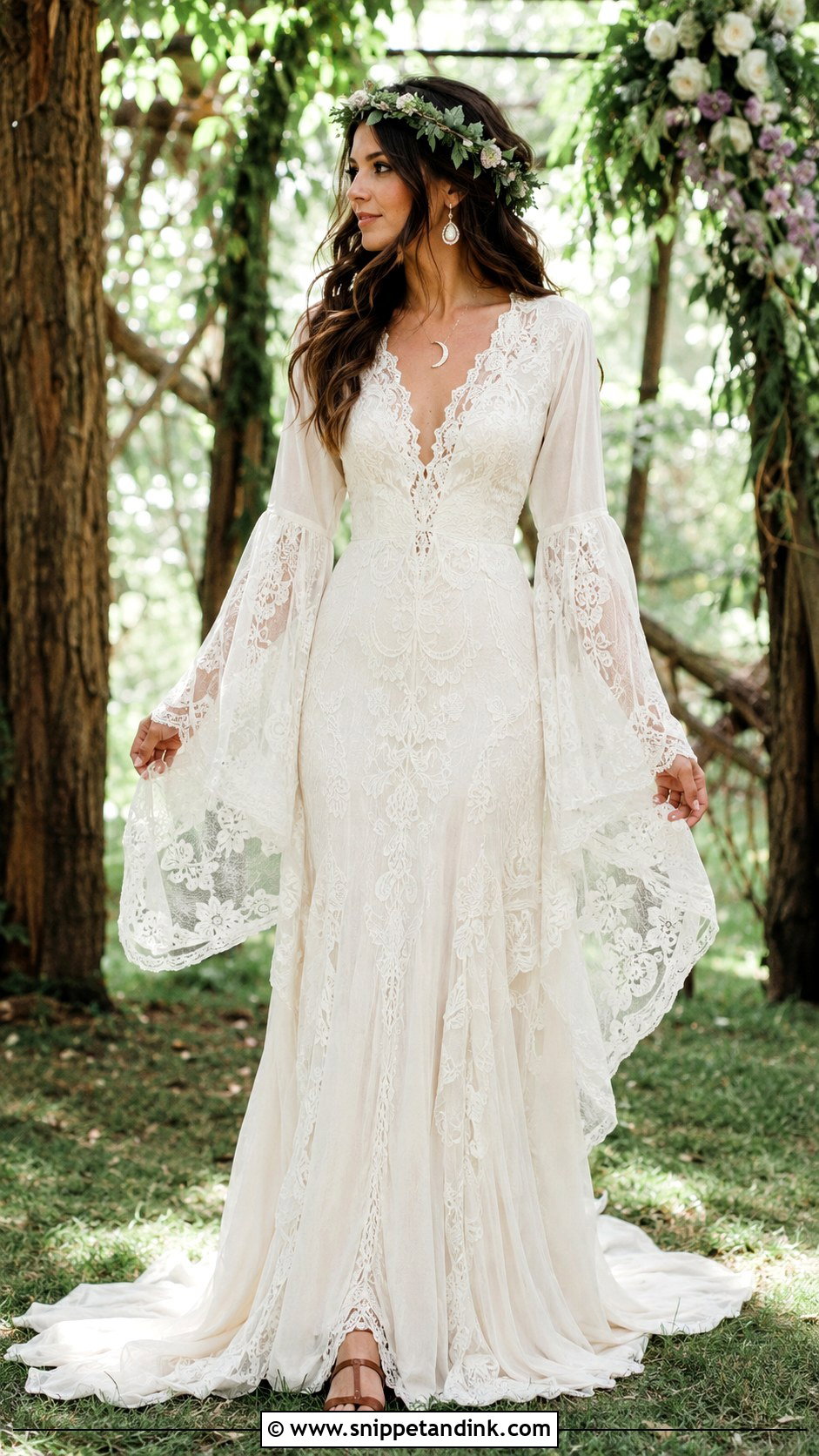
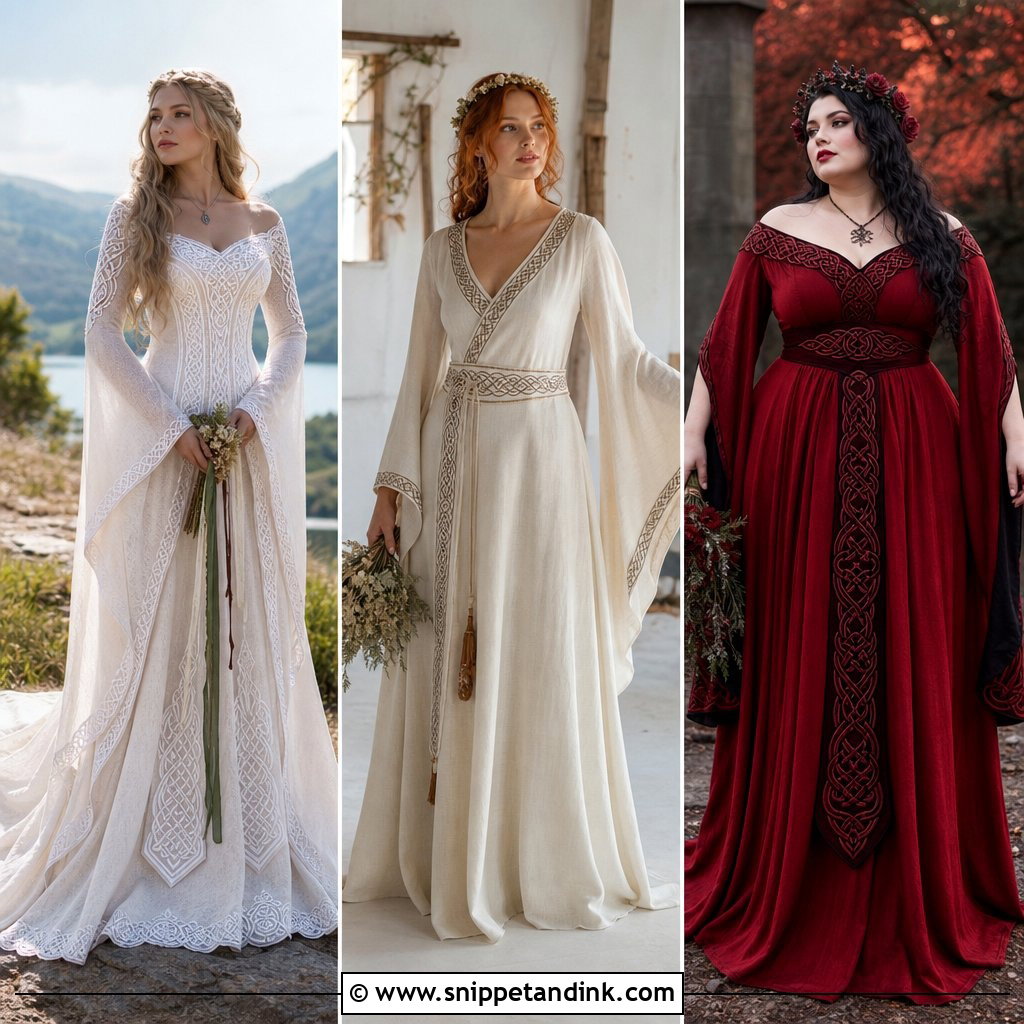
Bell sleeves are the shape I see most often at handfastings, and for good reason: they fall back from the wrist as your hands are joined, so the cord sits on skin rather than fabric. Ivory lace, cream chiffon or soft linen gives a bridal base with an older, mystical outline. I’d keep the sleeve length above the fingertips, since a sleeve that swallows the hand gets wrapped into the binding. Low leather sandals, a braid, moonstone earrings and a greenery crown suit it, and a hem cut to clear the ground makes forest paths easier.
2. Pagan Wedding Dress With Hooded Cape
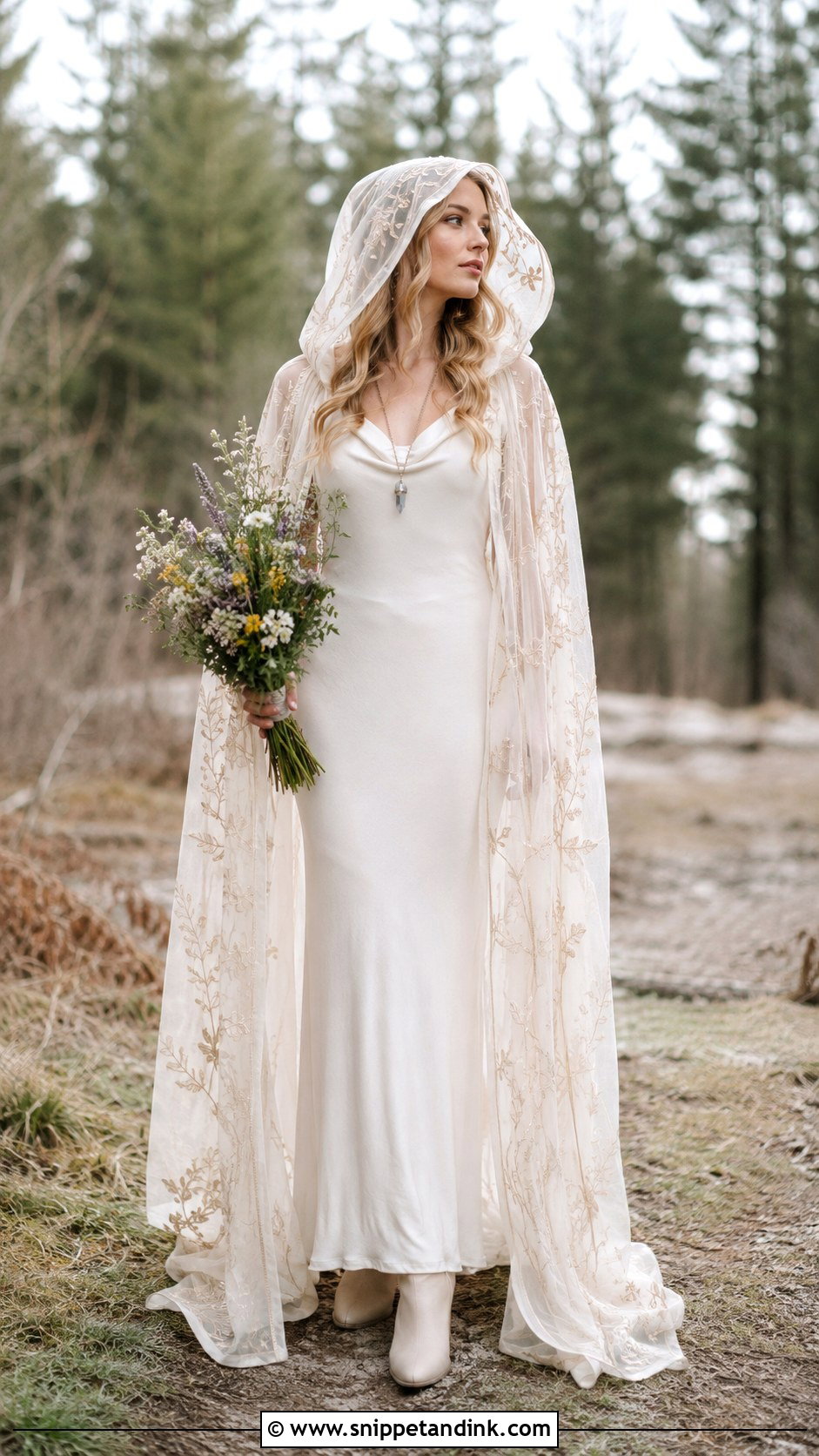
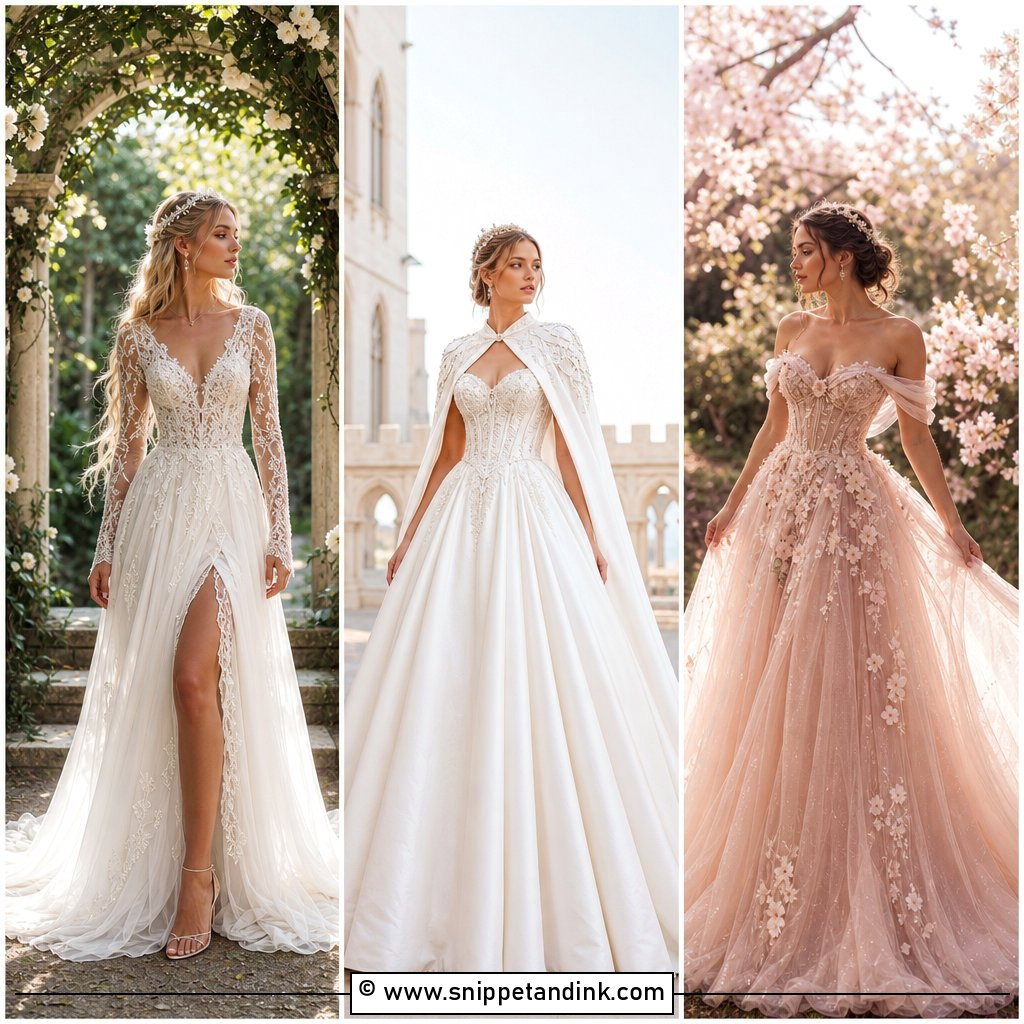
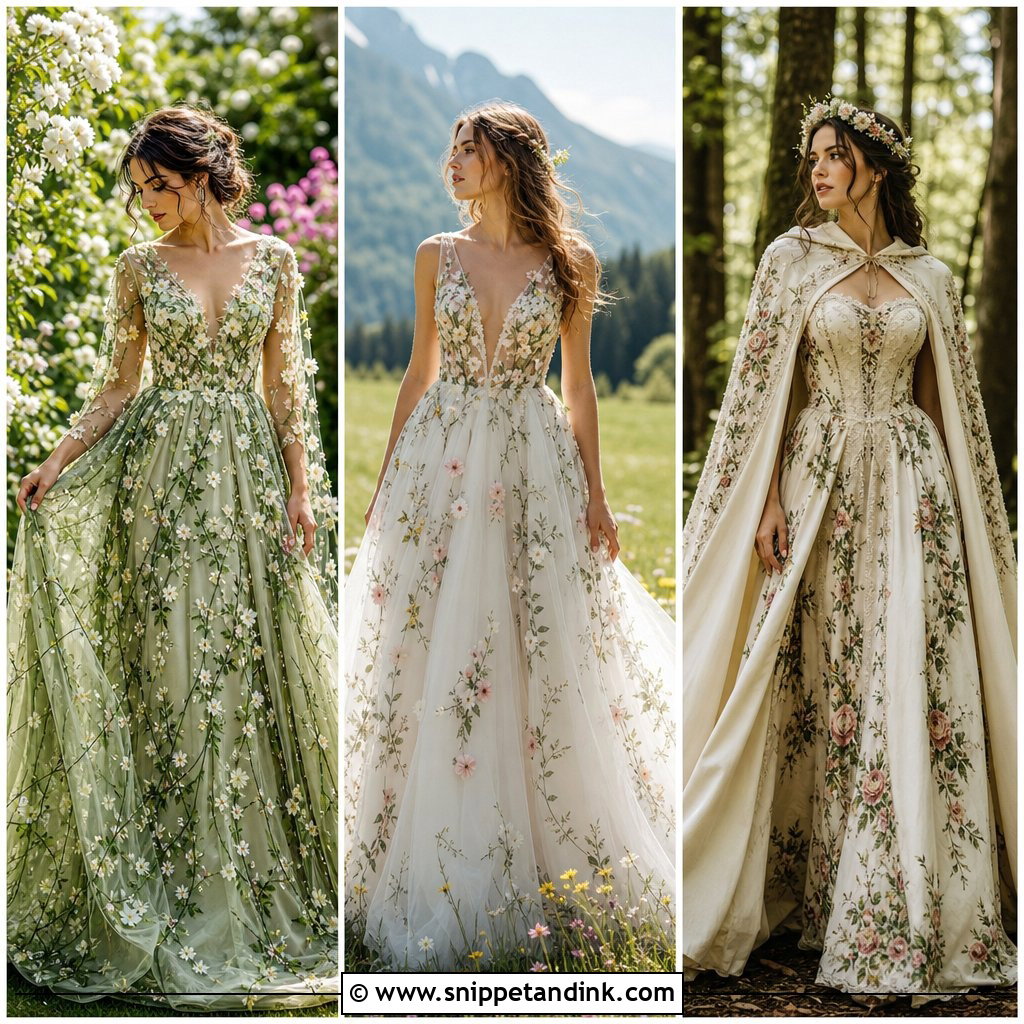
A hooded cape turns the walk in into a moment, and lowering the hood before the vows is a gesture guests remember. It also keeps you warm at a dusk ceremony. Under it, a plain ivory slip, lace A-line or long-sleeve satin dress keeps the outline simple. The fitting detail that matters is how the cape fastens: a clasp at the collarbone pulls backward on the throat if the cape is heavy, so for velvet I’d ask for loops sewn to the shoulder seams of the dress. A crystal pendant, soft waves, ankle boots and wildflowers finish it for woodland weddings and mountain elopements. Make it detachable if you want to dance.
3. Pagan Wedding Dress With Floral Embroidery
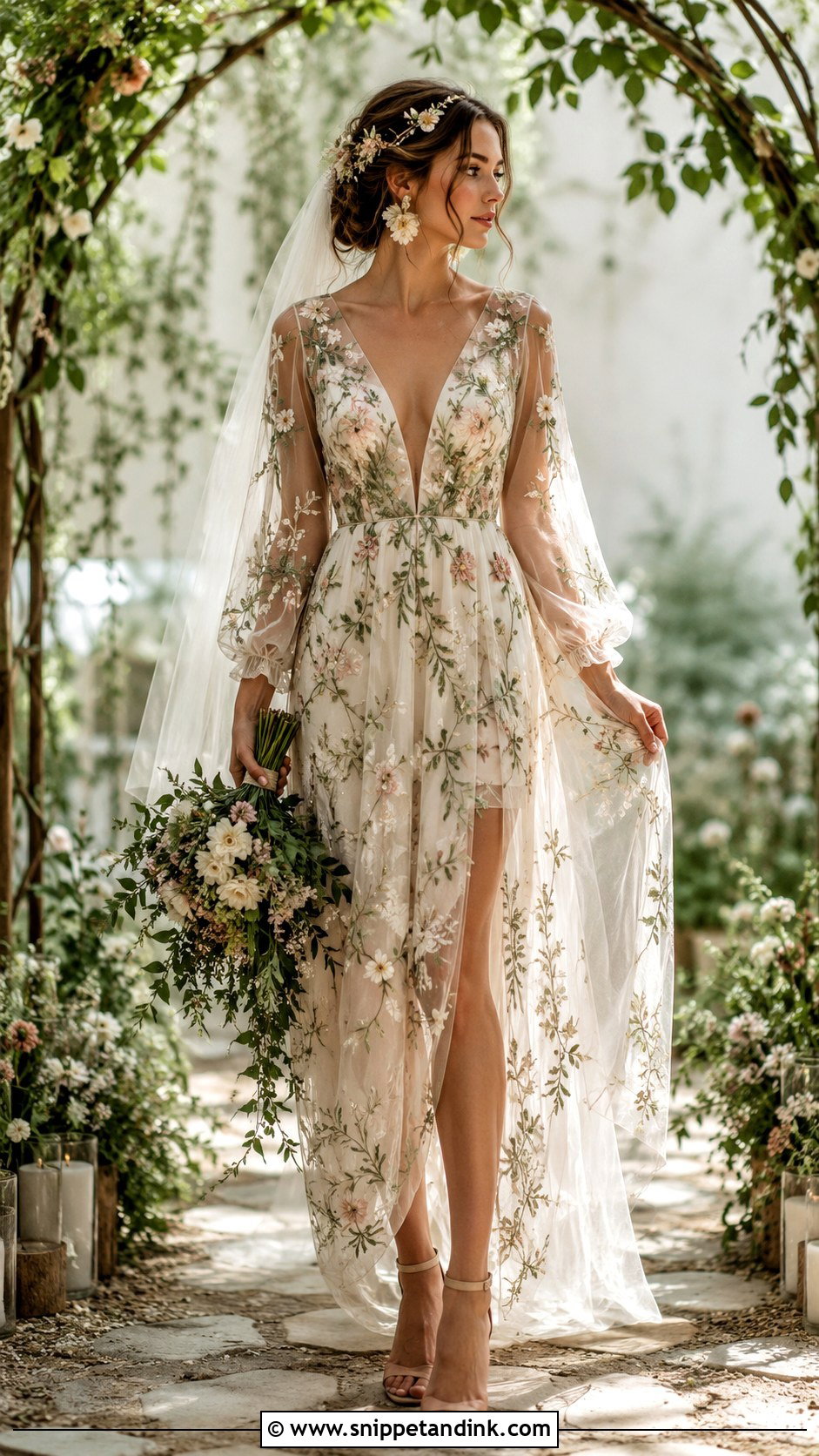
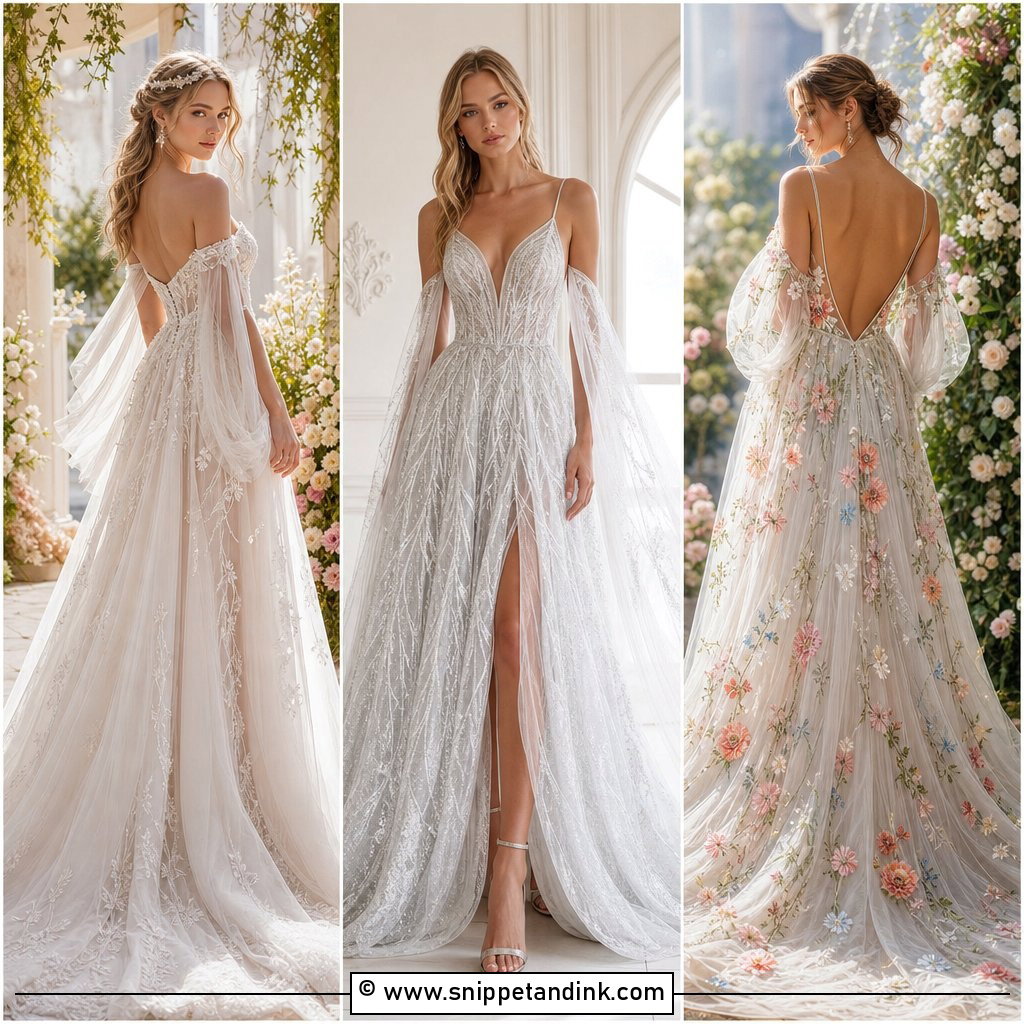
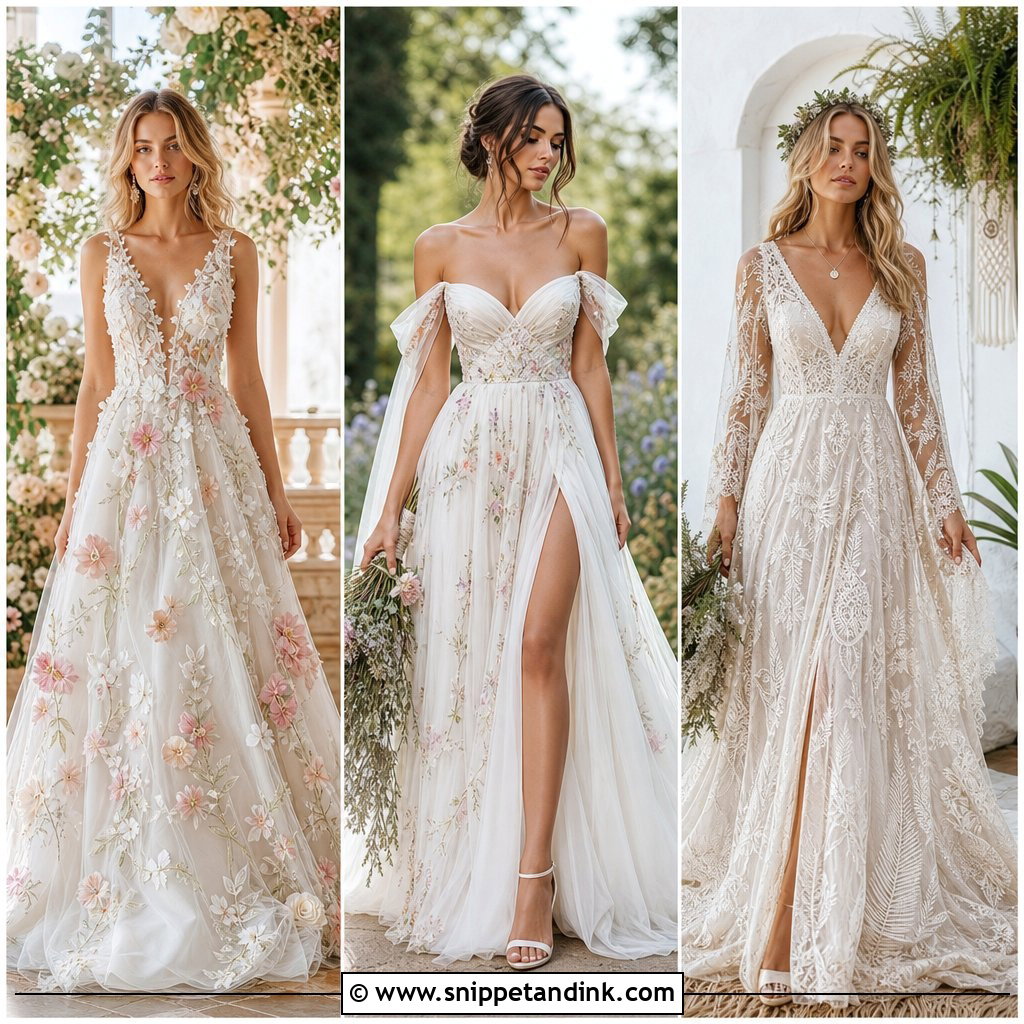
Floral embroidery ties a dress to the season you marry in, which is why it sits so naturally in a pagan ceremony. Vines across the bodice, wildflowers scattered down a skirt or leaves along the sleeves all work. Embroidery on a sheer overlay is light; embroidery stitched straight onto satin adds weight and can pucker if the dress is altered, so do alterations before any added stitching, never after. Ivory, sage, blush or gold thread suit most skin tones. Pick bouquet colors from the threads, and keep earrings small.
4. Pagan Wedding Dress In Forest Green
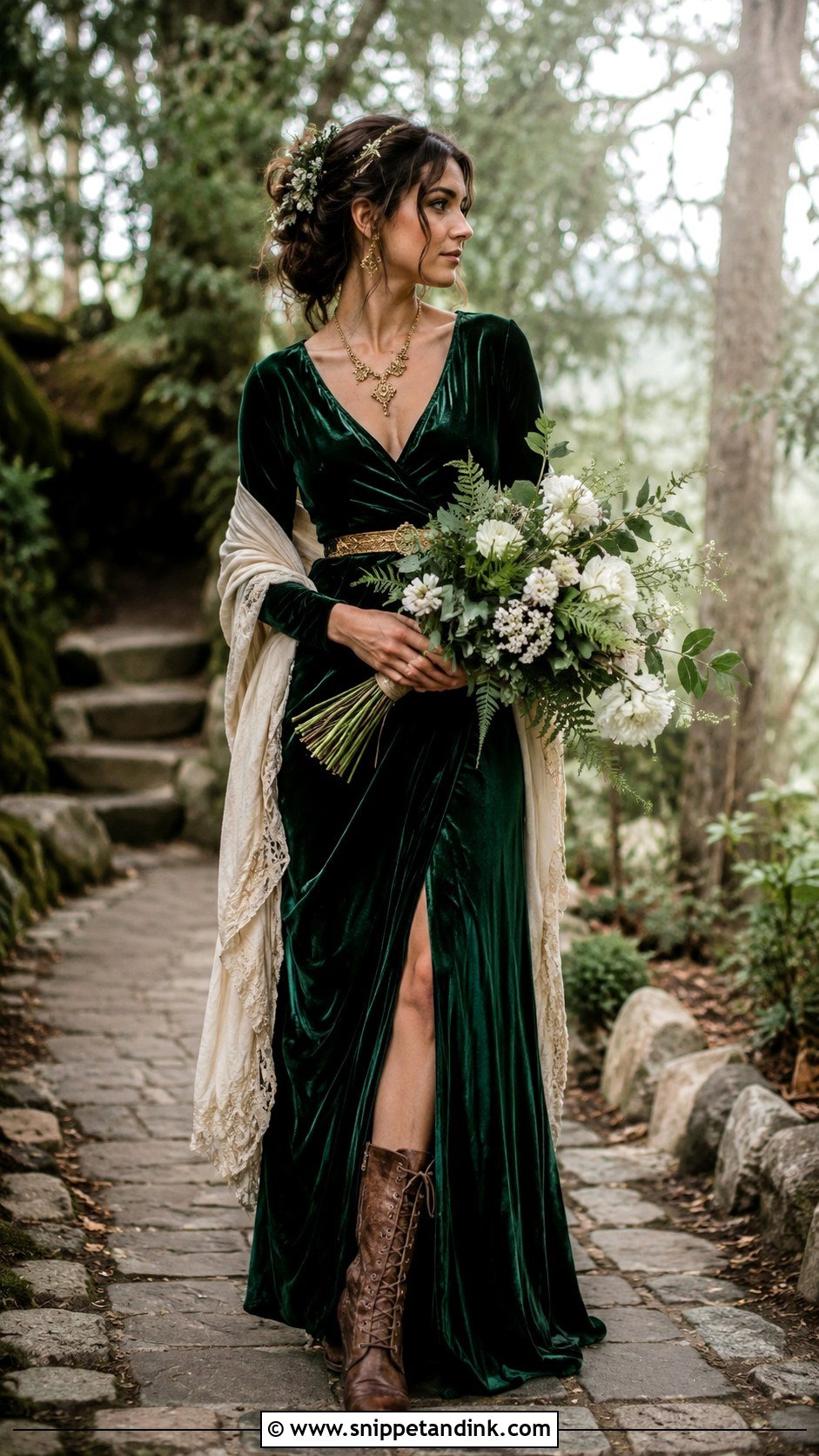
Green is the boldest step away from ivory, and forest green is the version I find brides are least likely to regret. It looks grounded in daylight and rich by candle. Velvet suits autumn, chiffon suits summer, and satin gives a more formal finish. To keep it reading as bridal rather than as a guest, I lean on the extras: a cream shawl, white flowers with dark foliage, gold jewelry and boots. Ask your photographer to see the fabric before the day, since deep greens can lose detail against dense trees if the light is flat.
5. Pagan Wedding Dress In Ivory Linen
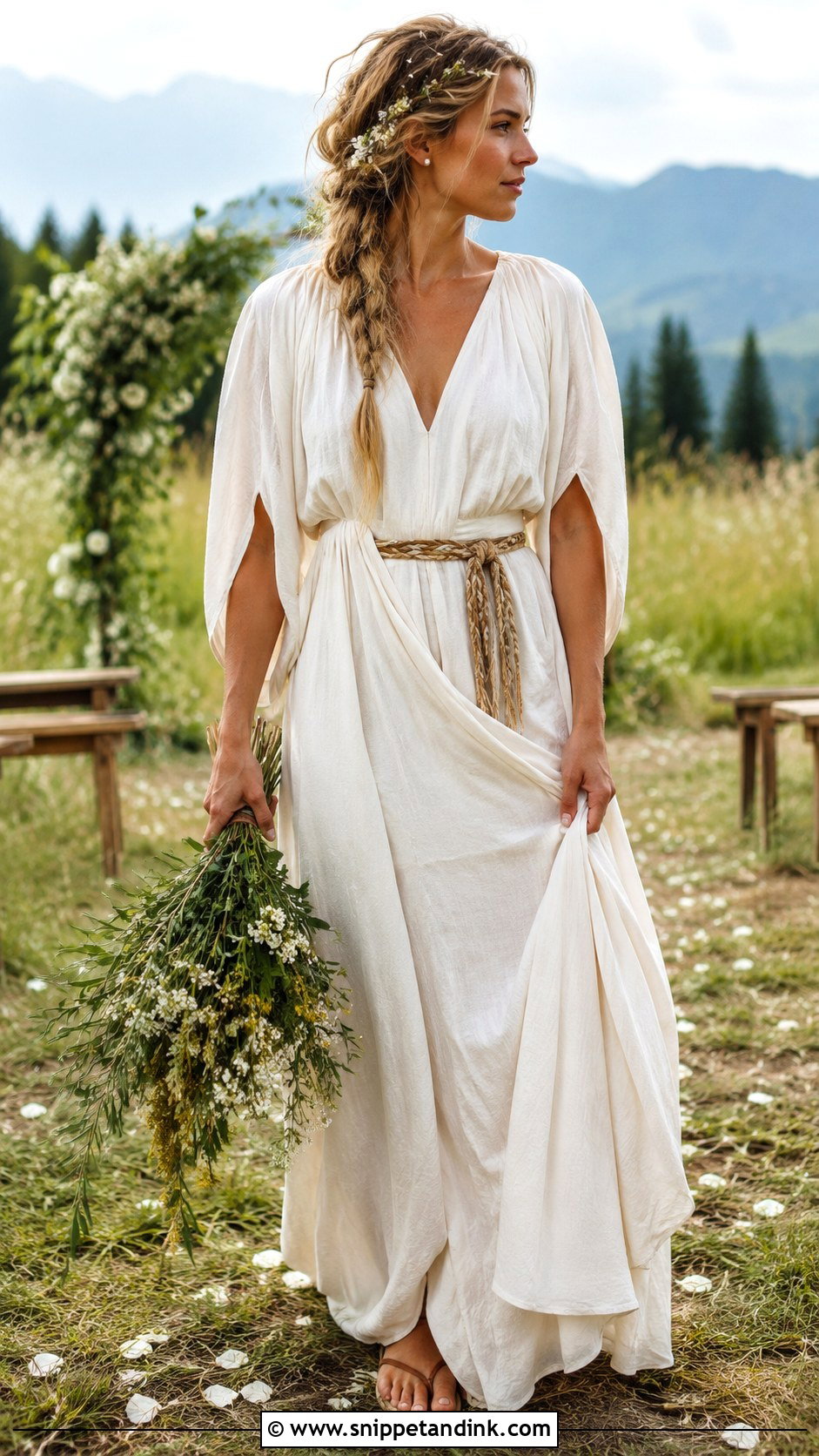
Linen breathes like nothing else on a hot day, and it creases like nothing else too. I tell brides to accept the wrinkles as part of the look, because they will appear within an hour of sitting. A wrap, empire waist or gathered shape suits the fabric’s softness. Flat sandals, a woven belt, pearl studs and a loose braid with tucked flowers feel right for meadows and backyard rites. Pick a linen with some weight to it, since very thin linen goes see-through in direct sun.
6. Pagan Wedding Dress With Corset Bodice
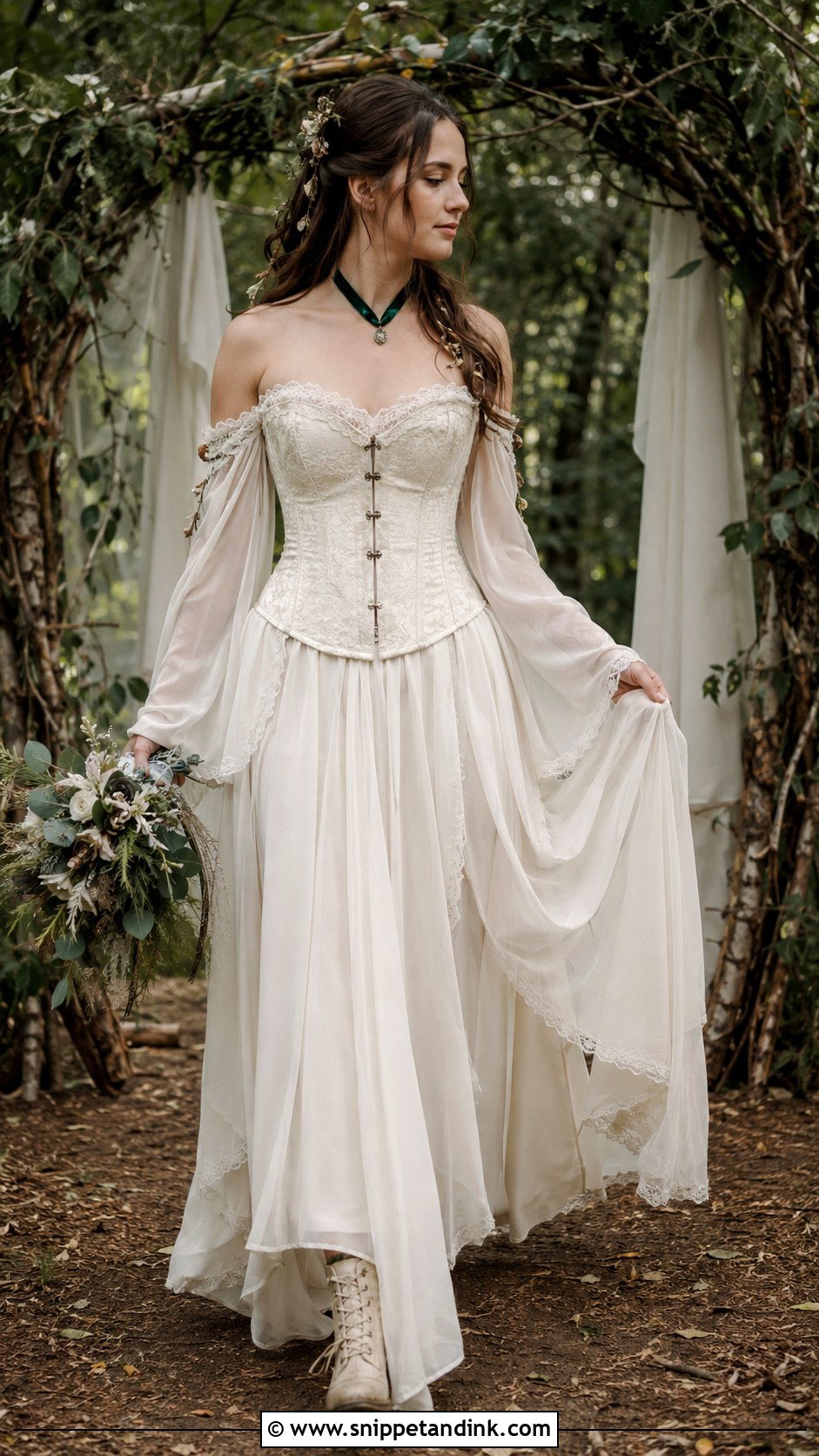
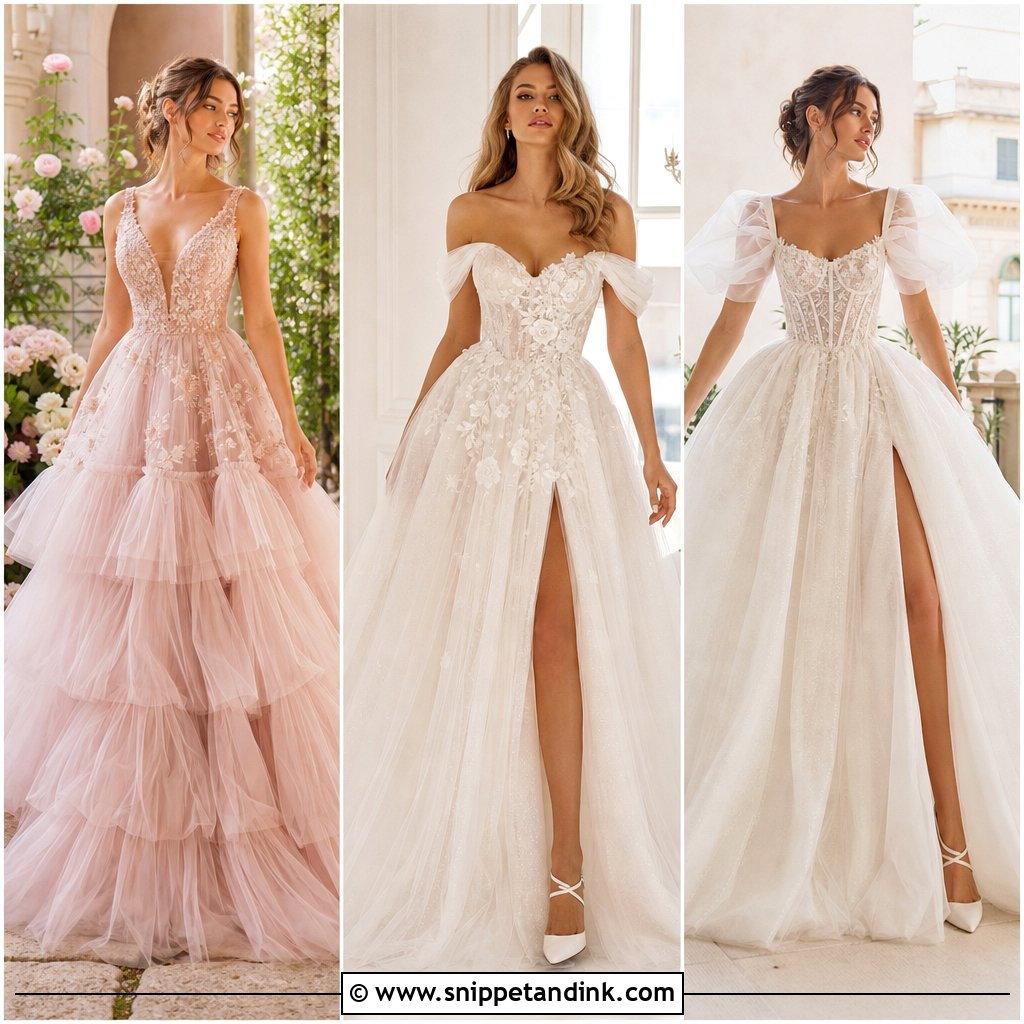
A corset bodice gives an old-world line and holds the dress up without straps, but it’s only as good as its boning. Spiral steel or a quality synthetic bends with you; stiff plastic boning digs in when you sit on a log or bench. Ask for a modesty panel behind the lacing, too, so skin doesn’t show in gaps. A flowing chiffon, tulle or silk skirt balances the structure. Lace-up boots, a velvet ribbon choker and a half-up style suit castle-style and woodland rites. Embroidered vines or stars on the bodice add more detail if you want it.
7. Pagan Wedding Dress With Lace Sleeves
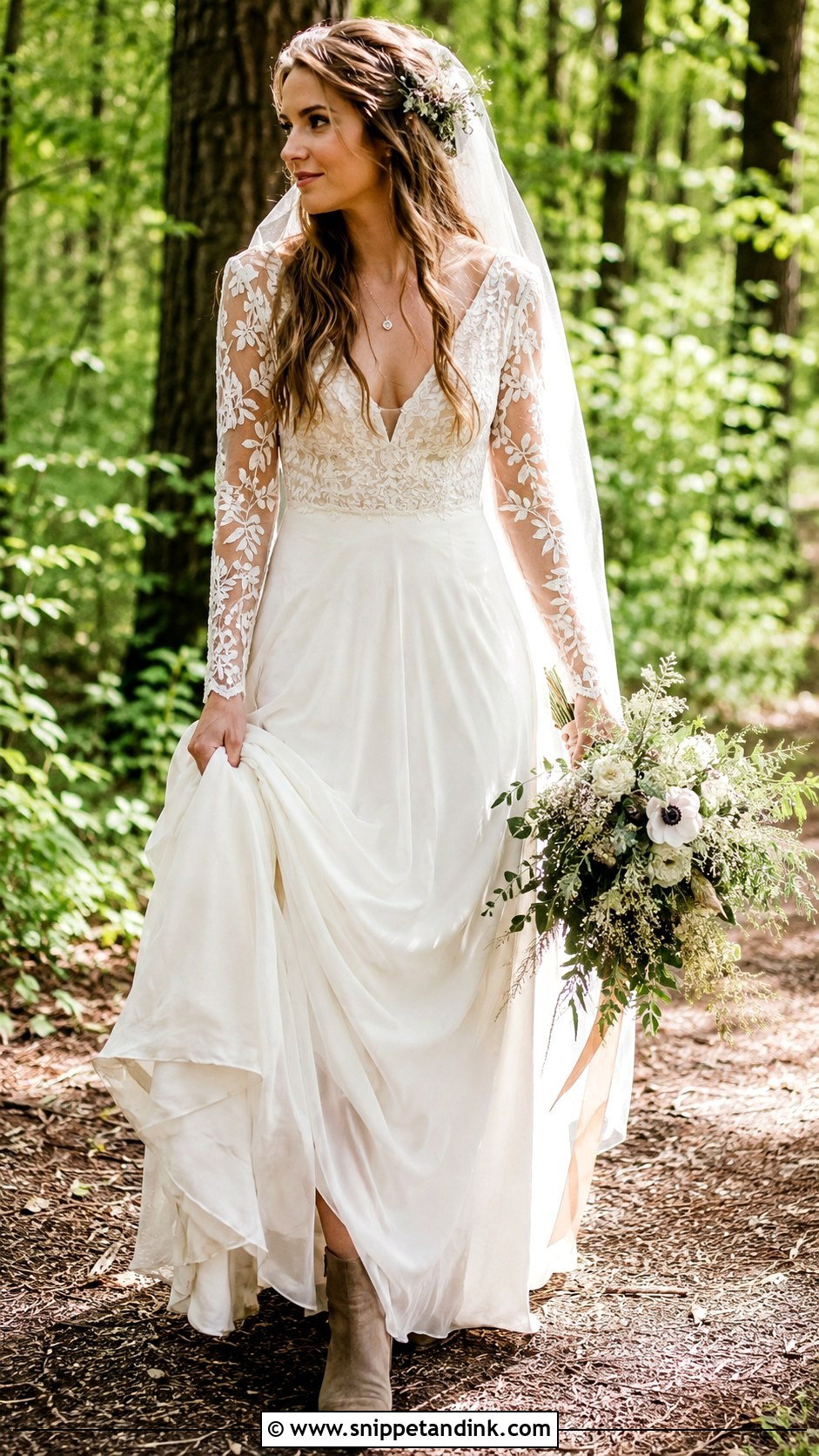
Lace sleeves give detail at the arm, where it shows in nearly every photo of joined hands. Long lace sleeves suit cooler weather; sheer short sleeves suit summer. Leaf-pattern and floral lace connect to the setting best. I’d check the sleeve’s cuff on the try-on: lace scratches if the edge is cut raw, and a scalloped or bound edge is far more comfortable over a long day. A fitted waist and full skirt flatter most frames. Ankle boots, a pendant and a circlet or soft veil finish it.
8. Pagan Wedding Dress With Velvet Cloak
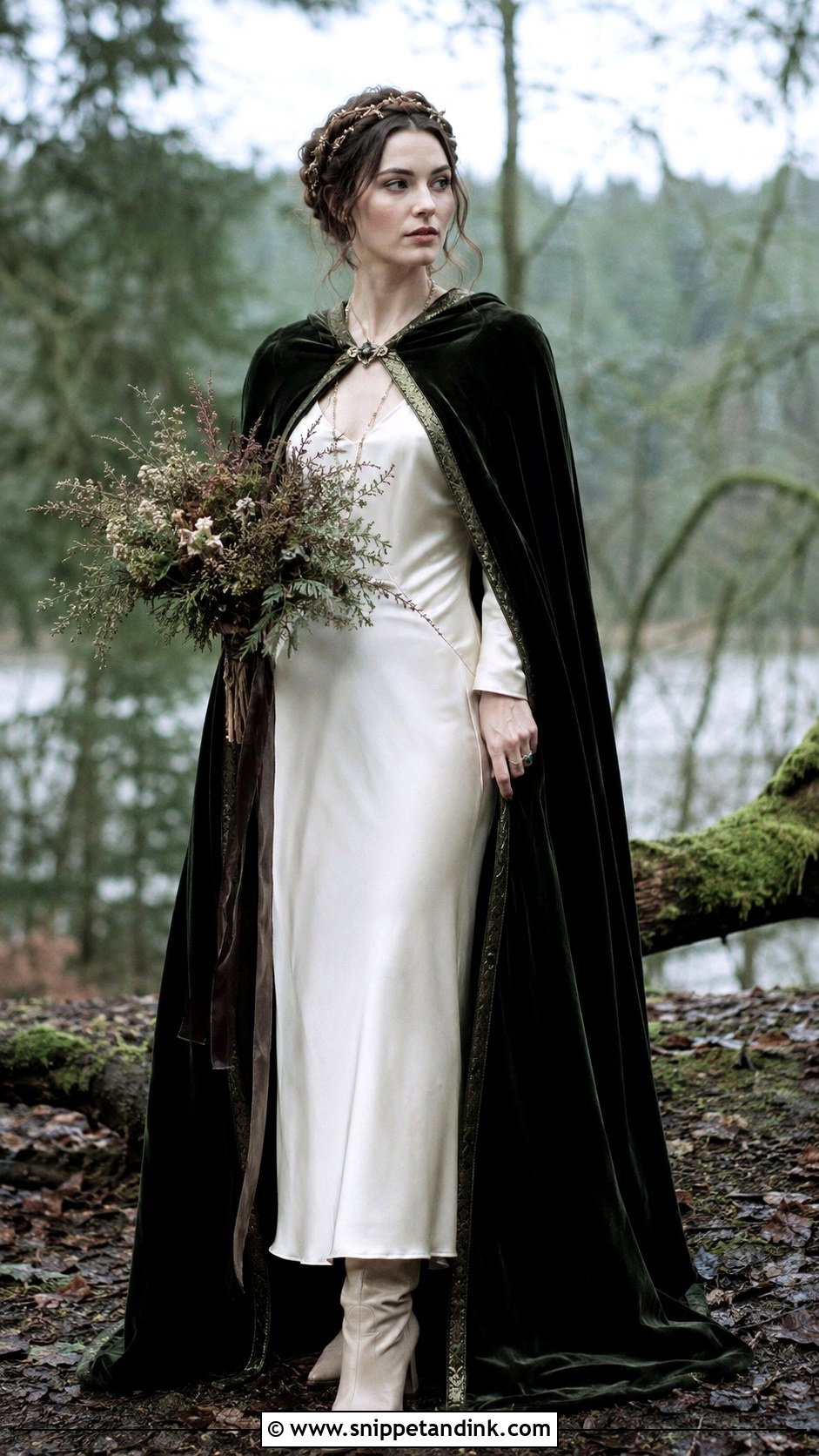
A velvet cloak turns a simple dress into something ceremonial, and it’s practical: autumn and winter rites happen outside in the cold. Deep green, burgundy, navy, charcoal or ivory velvet all work. Under it, a satin column, lace gown or long-sleeve crepe keeps the base clean. Velvet cloaks are heavy once they’re full length, so the clasp has to be strong and comfortable; I’d test a metal clasp against bare skin for an hour. Heeled boots, a gemstone ring and a crown braid suit it, with dried flowers or dark greenery in the bouquet.
9. Pagan Wedding Dress With Celtic Knot Details
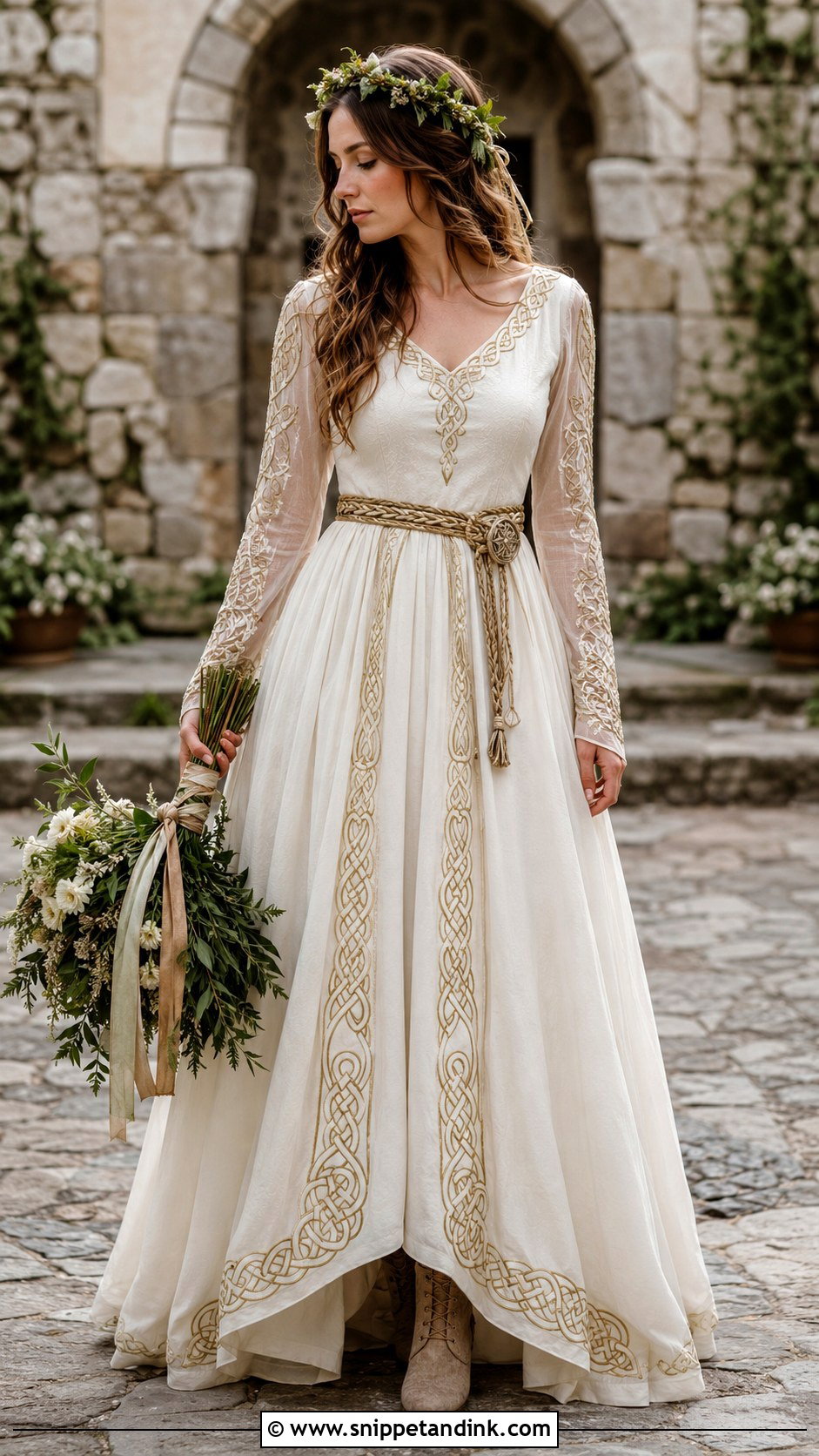
Celtic knot details bring heritage into the dress quietly. Knotwork can be embroidered at the neckline, beaded along a hem, worked into a belt or placed on sleeve cuffs. Subtle gold or silver thread on cream or ivory is the easiest version to wear. I’d keep the silhouette plain, an A-line or sheath, so the knots read clearly rather than getting lost in ruffles. A braided belt, simple boots, a greenery crown and a bouquet tied with a ribbon that echoes the handfasting cord pull it together, especially at stone circles and outdoor ceremonies with traditional music.
10. Pagan Wedding Dress With Moon And Star Details
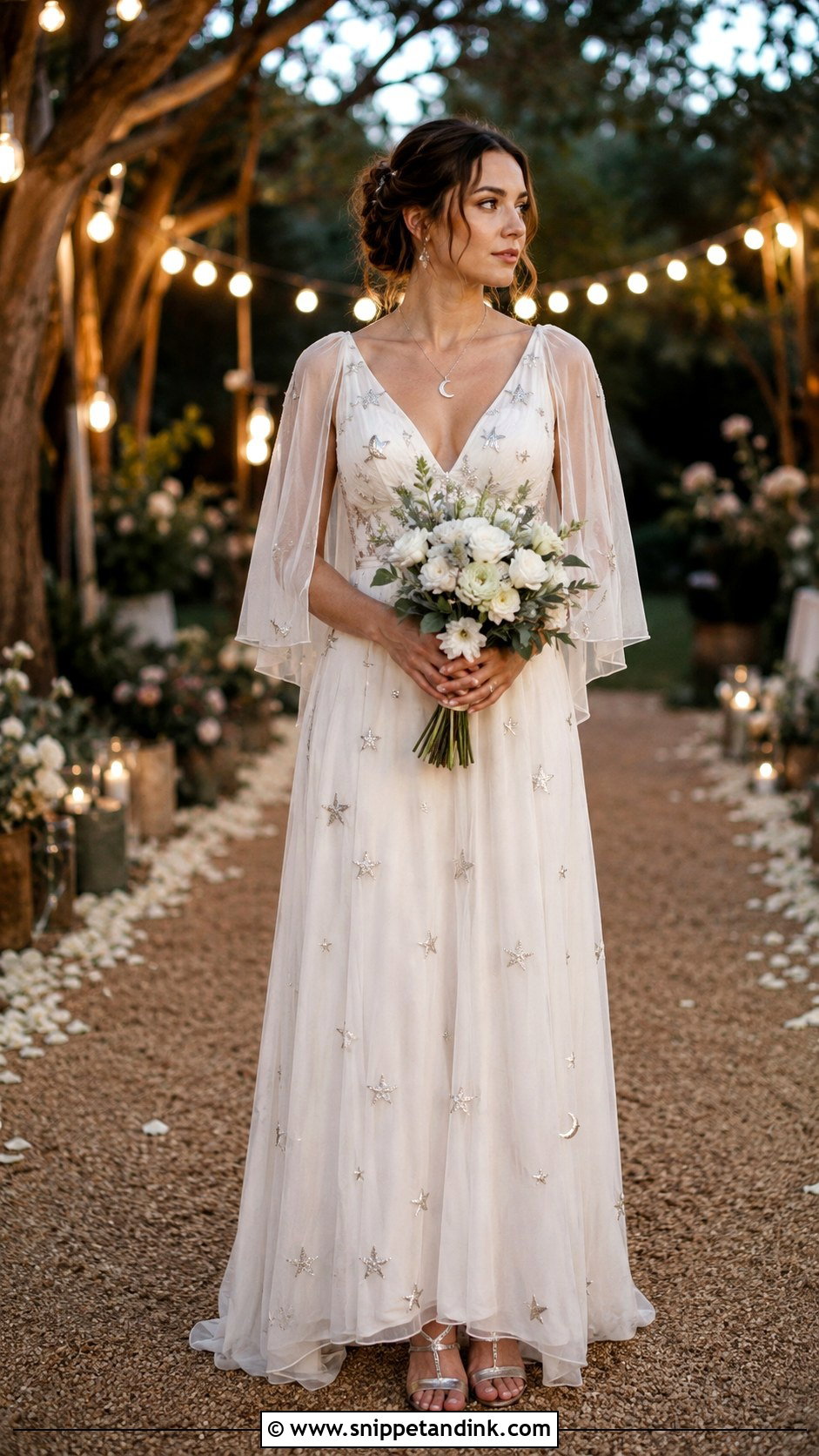
Stars and moons can tip into costume quickly, so scale matters. Tiny embroidered stars, small pearl moons or scattered silver beading make a celestial pagan wedding dress feel dreamy; large appliqued crescents feel theatrical. Ivory, silver, champagne or pale blue bases carry it best. Metallic sandals, a crescent pendant and small hair pins are enough. For an evening rite or an elopement under open sky, keep the bouquet simple, with white flowers and silver-green foliage, so the sparkle on the dress isn’t competing.
11. Pagan Wedding Dress With Crochet Lace
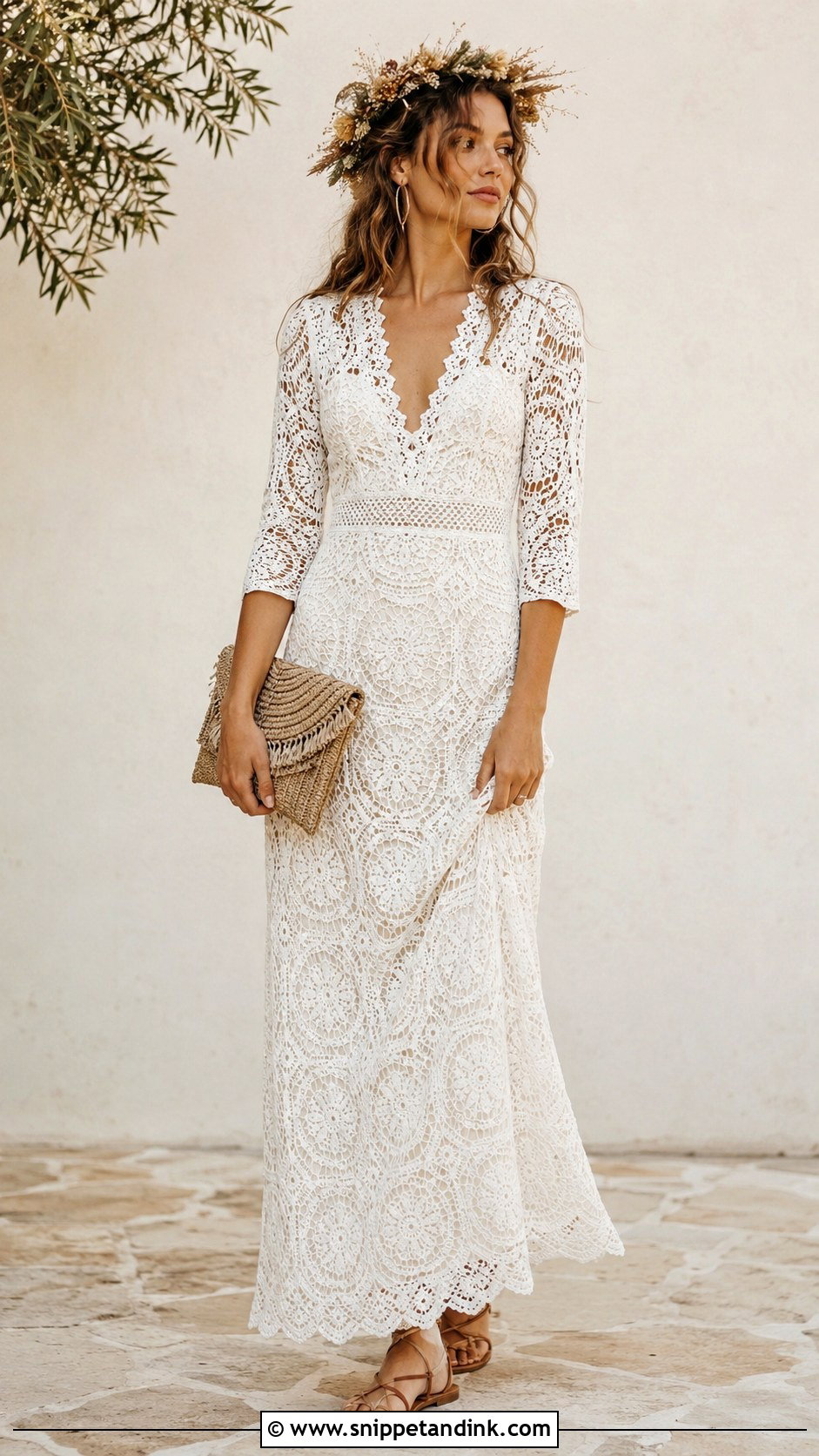
Crochet lace looks handmade because often it is, and that quality suits a ceremony built on personal meaning. It’s also heavier than people expect, and it stretches when it hangs, so I’d ask for a lined bodice and check the length again after the dress has hung for a week. Tan sandals, gold hoops and a crown of dried flowers suit warm weather and coastal rites. If a full crochet dress feels like too much, crochet sleeve panels or a crochet-trimmed veil give the texture with less weight.
12. Pagan Wedding Dress With Off Shoulder Neckline
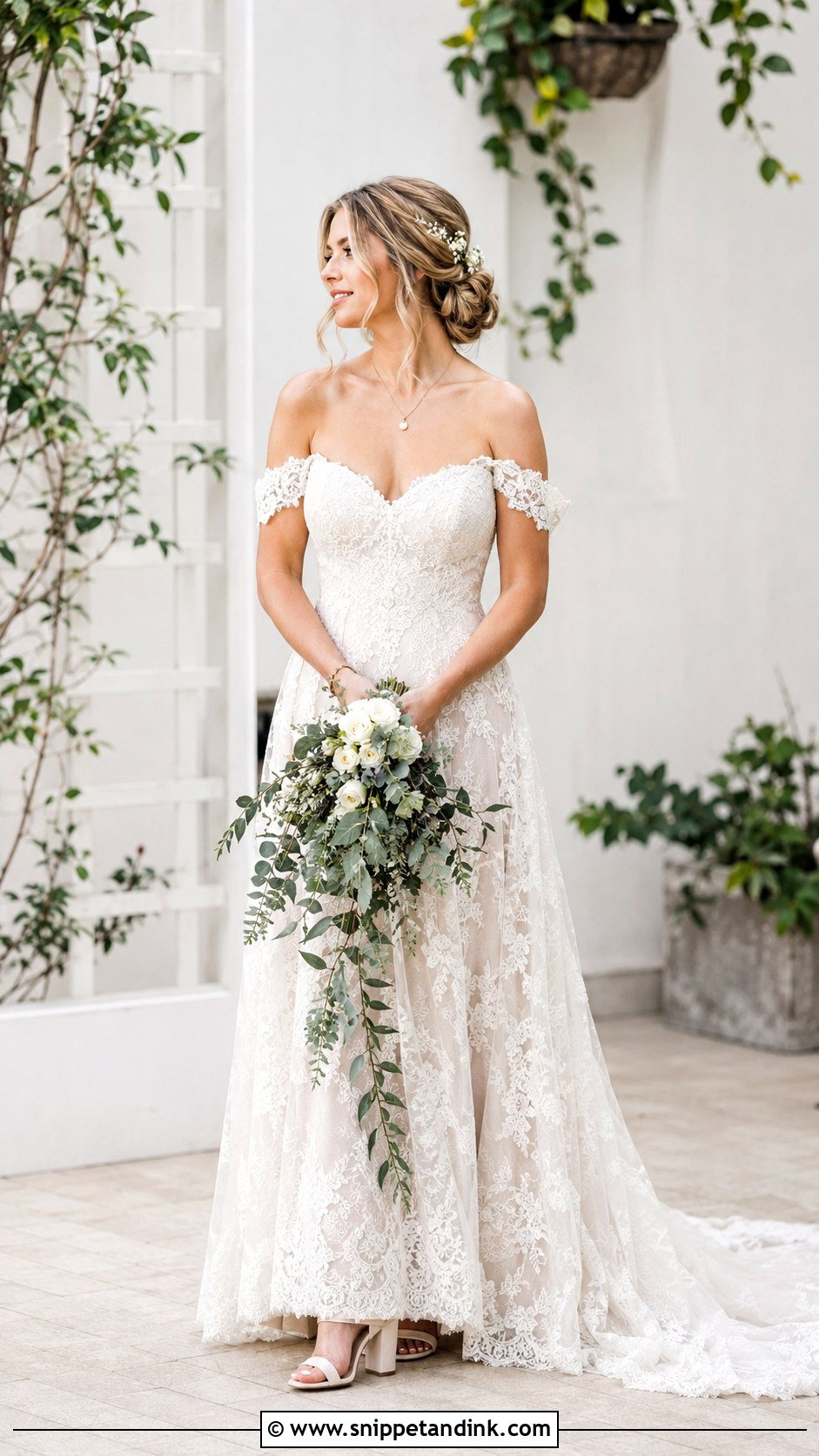
Off-shoulder necklines need special attention in a pagan ceremony, because you raise your arms more than in most weddings: for the handfasting, to embrace, sometimes to toast. Lift both arms in the fitting room. If the neckline rides up, ask for a stronger elastic or a hidden bra cup to anchor it. Ivory lace, champagne tulle or soft cotton all work. A short pendant, floral pins, block heels and trailing greenery suit spring gardens and candlelit halls.
13. Pagan Wedding Dress With Long Train
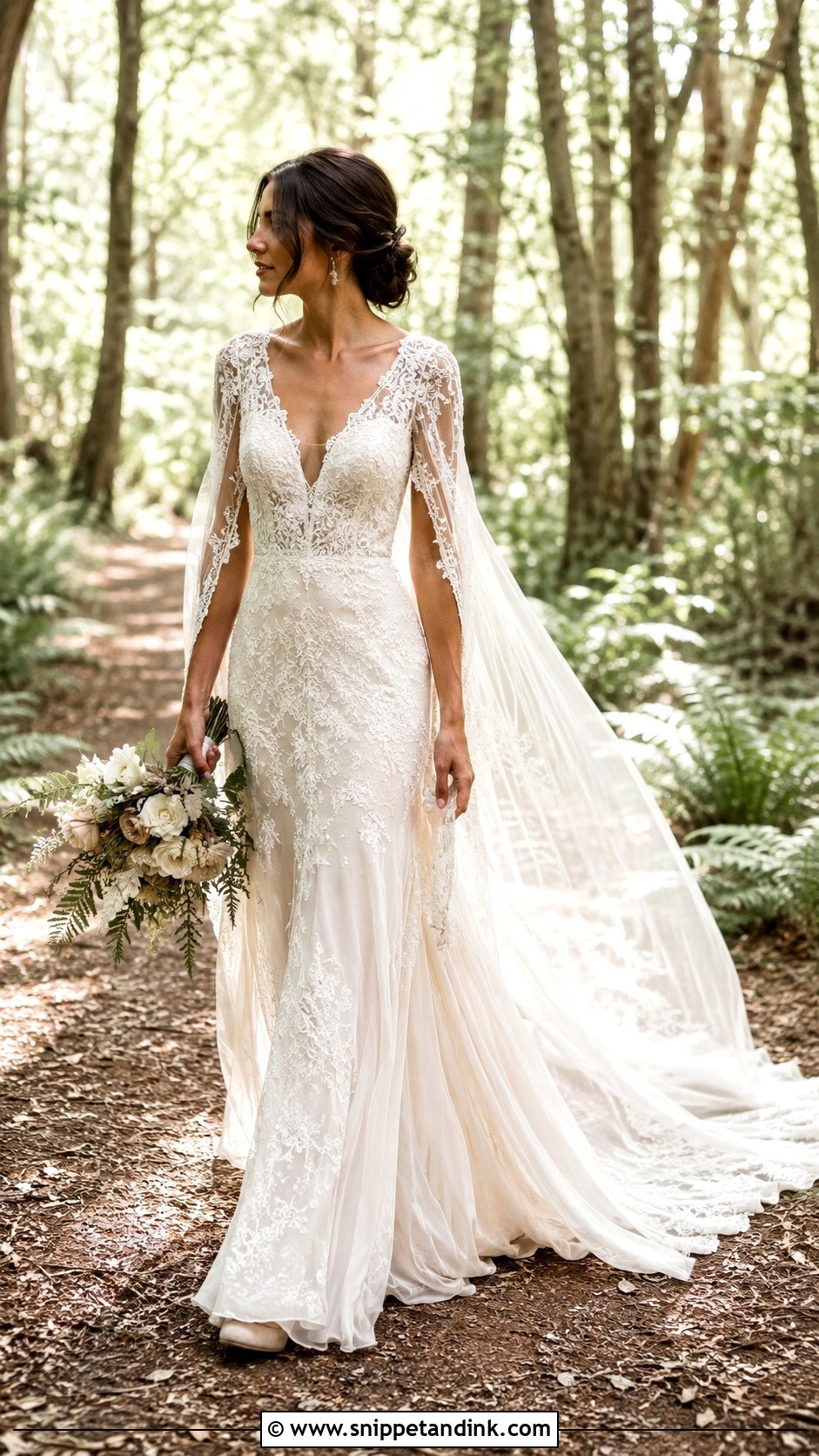
A long train looks wonderful on a forest path and collects everything on it: leaves, mud, pine needles. I’d plan for that rather than fight it. Chiffon and tulle trains are light and shake clean more easily than satin. Ask for a bustle, or choose a detachable train, so you can lift it after the procession. Someone should be assigned to arrange it before you walk and gather it after. Underneath, wear sturdy shoes that suit the ground, since nobody will see them under the hem anyway.
14. Pagan Wedding Dress With Leaf Appliques
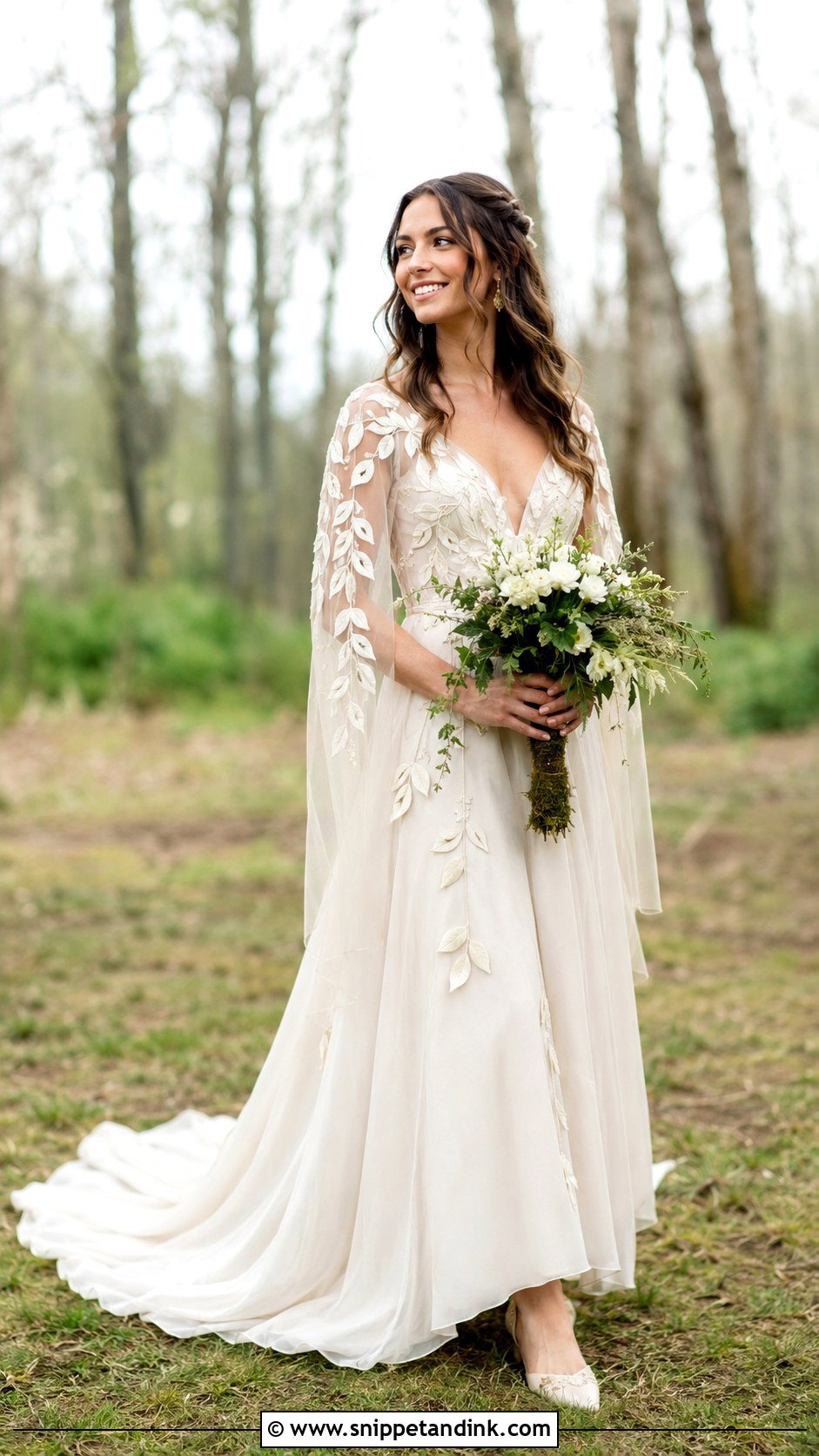
Leaf appliques make a dress feel like it grew in the setting. They can sit on the bodice, sleeves, hem, veil or cape. Ivory leaves give quiet texture, green leaves make it obvious, and metallic leaves feel more enchanted. Appliques are stitched on by hand, so check that the edges are secured; loose leaves catch on bark and brambles. Pointed flats, small gold earrings, a moss-wrapped bouquet and loose waves suit forest and autumn ceremonies. Keep everything else plain, since the leaves already carry the detail.



15. Pagan Wedding Dress With Sheer Overlay
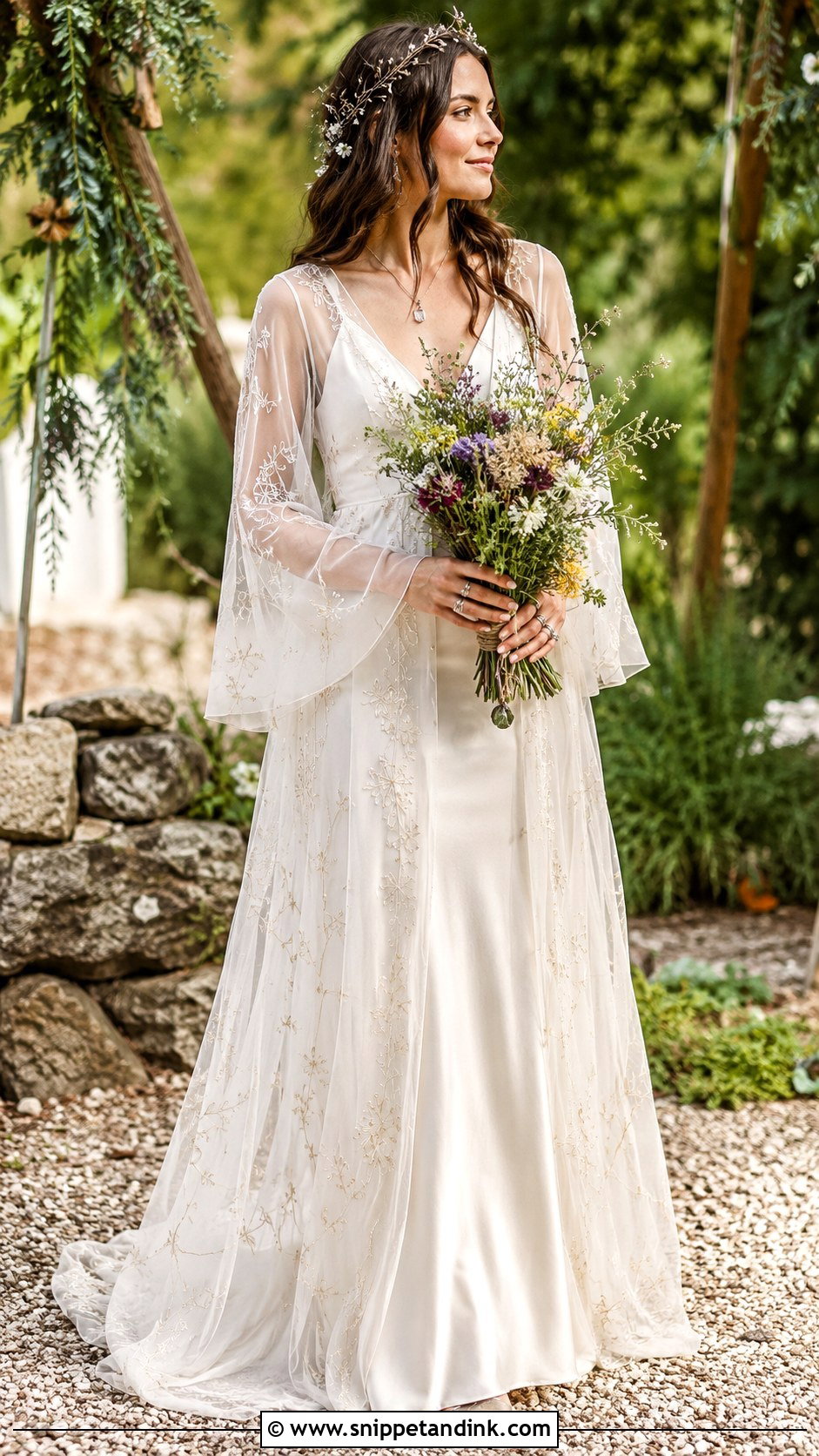
Sheer overlays let you change the color and mood of a dress without changing its weight. A simple slip or sheath underneath, then an embroidered, starred or lace-edged overlay on top. It’s a good way to get coverage on the arms and back while staying cool. Pick the underdress color carefully: a warm nude under ivory tulle reads soft, while a stark white base can make the overlay look grey. Neutral heels, delicate rings, a small crown and a bouquet with herbs suit it.
16. Pagan Wedding Dress In Champagne
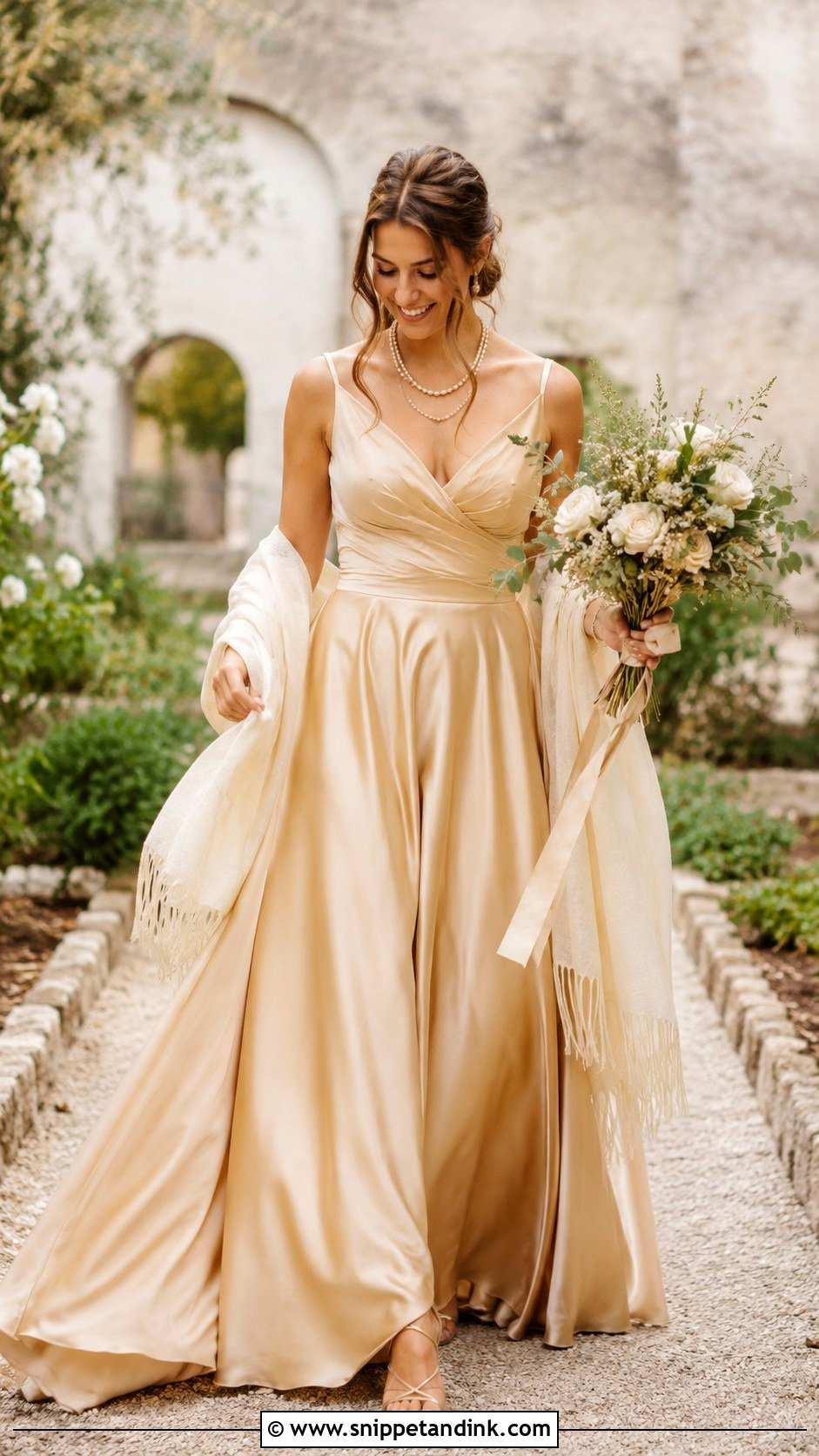
Bright white can look harsh against bark and stone, and champagne solves that. It warms the skin and sits naturally in golden outdoor light. It works on satin, tulle, lace, chiffon and beaded fabrics. Bronze sandals, pearls, a cream wrap and a bouquet in ivory, beige and sage suit it. I’d test the exact shade on your skin in daylight, though, because champagne ranges from pinkish to grey-gold, and the wrong undertone can wash out a fair or olive complexion.
17. Pagan Wedding Dress With Medieval Sleeves
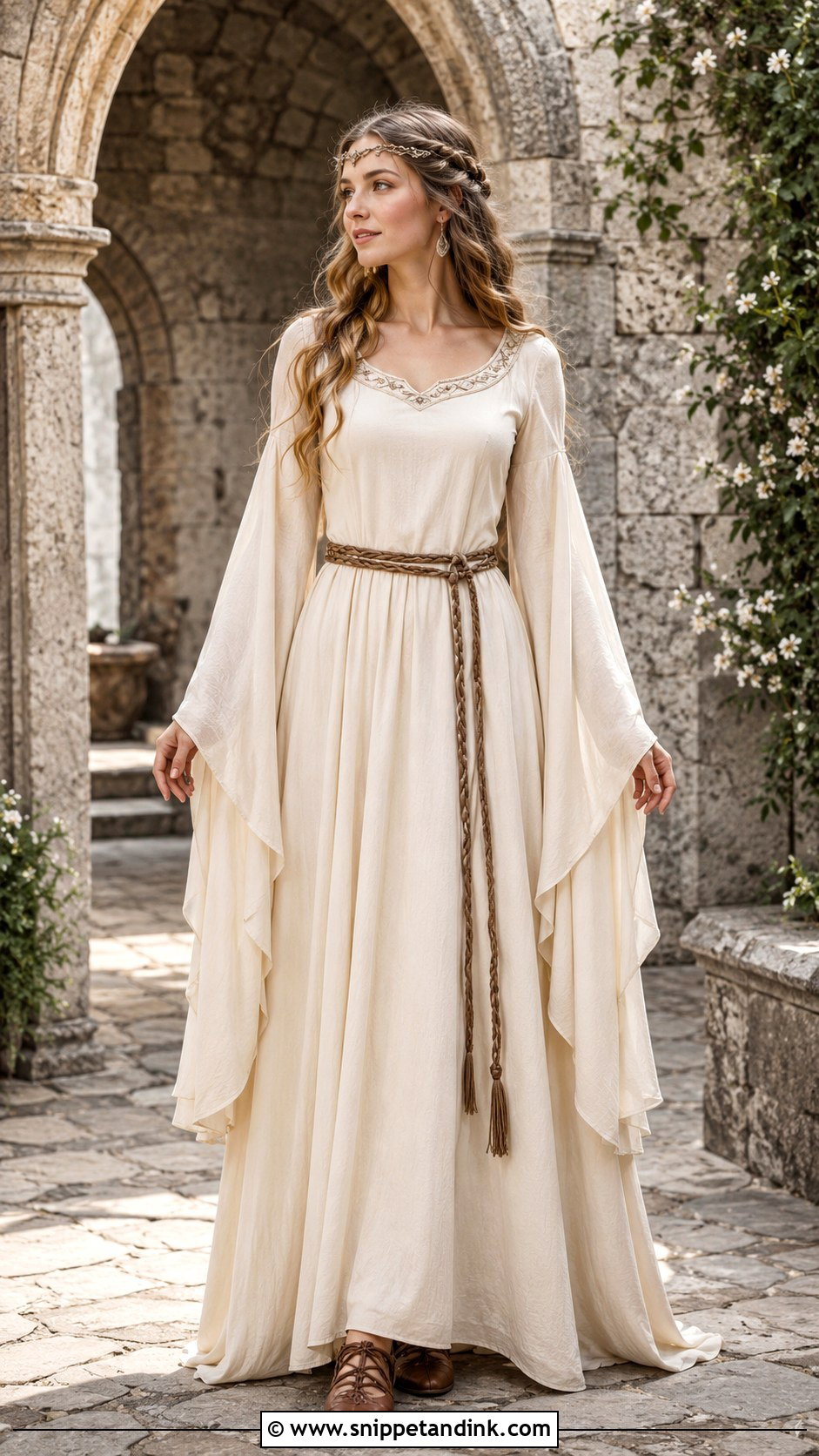
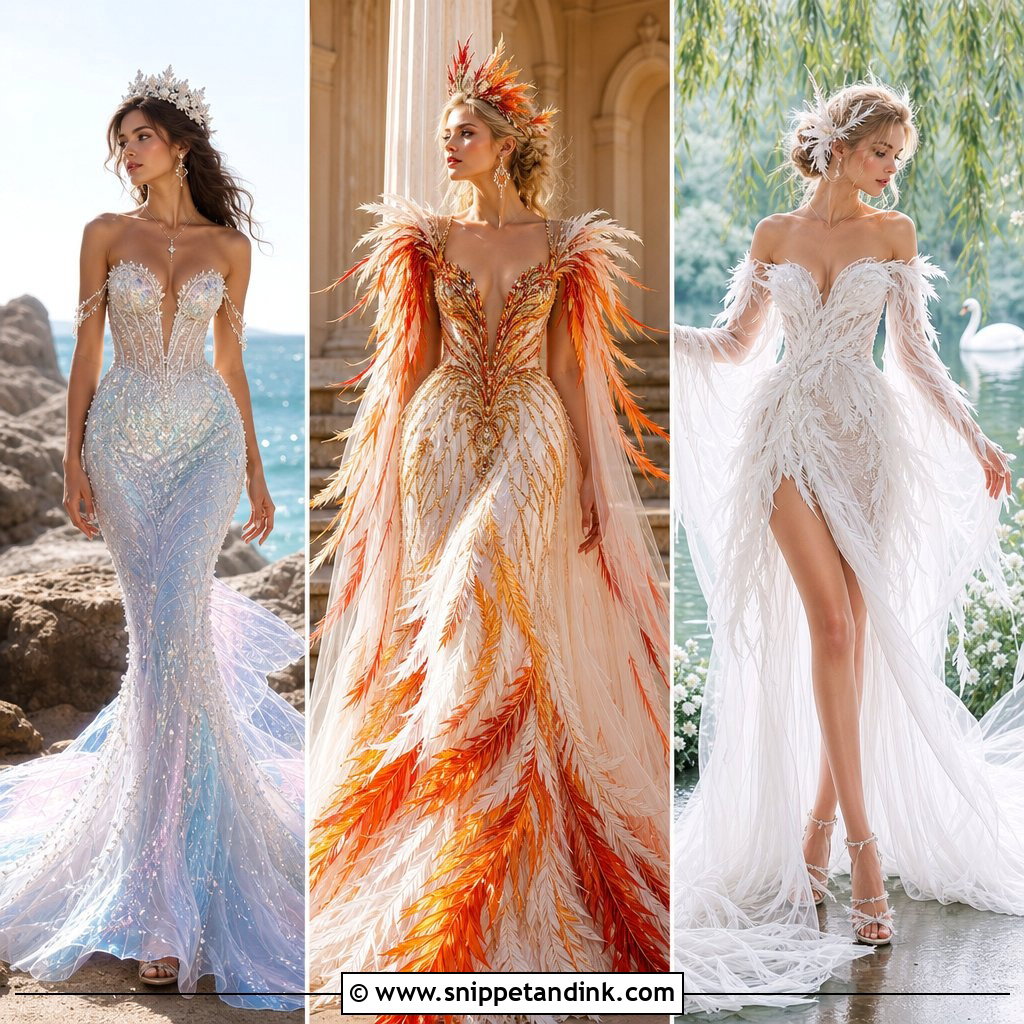
Medieval sleeves give an old-world outline on their own, so the rest can stay quiet. Long flowing sleeves, split sleeves and pointed cuffs all work. My caution is with fire and candles: long, loose sleeves in chiffon or synthetic fabric pass very close to flame when you reach across an altar, so I’d ask for a natural fiber or a fitted inner sleeve if a fire rite is planned. A cream gown, leather flats, a braided belt and a circlet suit stone venues and forest clearings. Keep the neckline and skirt clean if the sleeves are dramatic.
18. Pagan Wedding Dress With Wildflower Crown
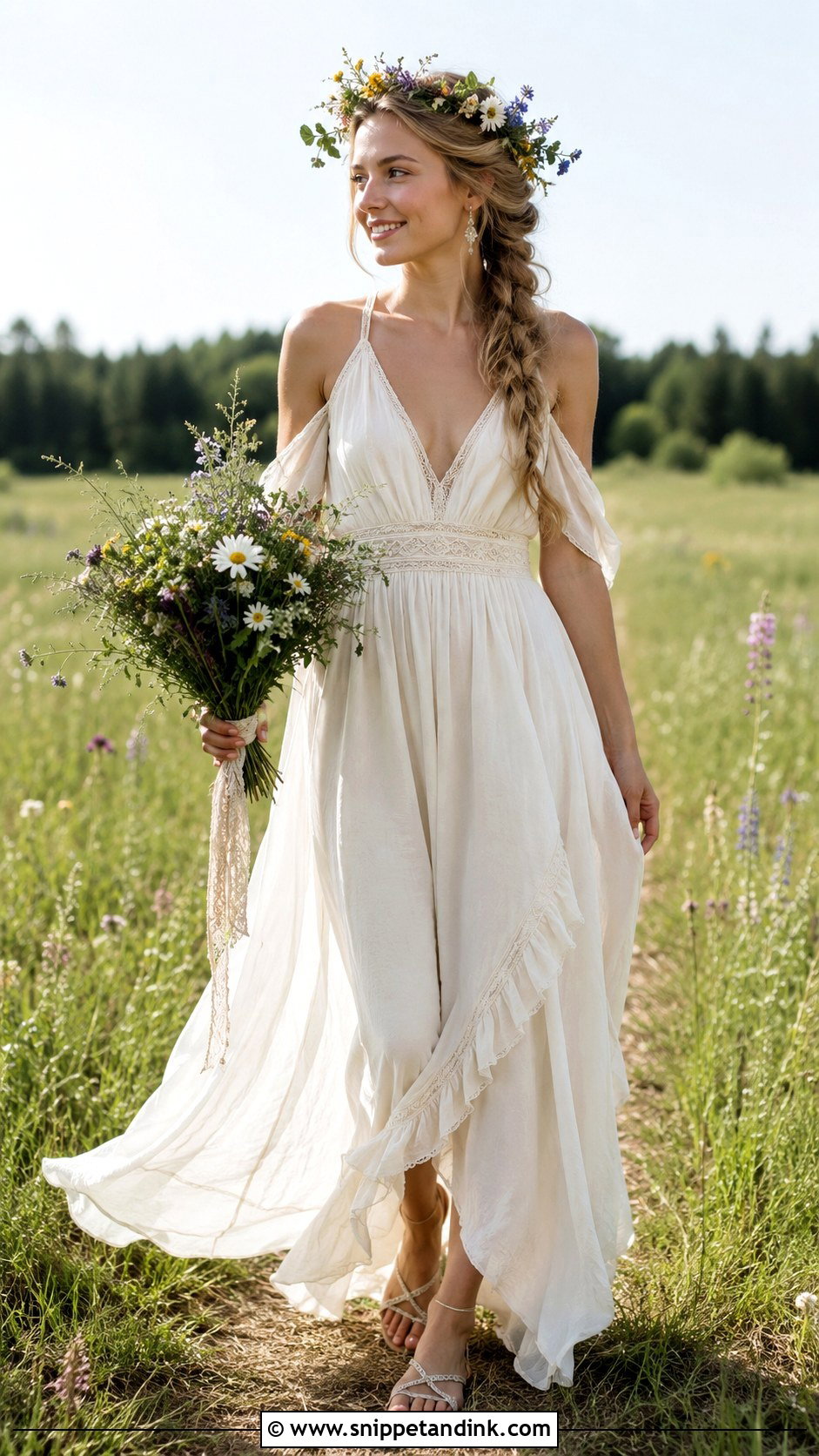
A wildflower crown can finish an otherwise plain dress, and it’s the first thing a florist and I talk about together. Daisies, lavender, greenery, gypsophila and soft wild blooms all hold for a few hours if they’re wired and kept cool until the last minute; delicate petals like poppies wilt fast. Start with a flowing ivory, cream, blush or sage gown, then choose flowers from your season. Flat sandals or low boots, simple earrings and a loose braid suit meadows and backyard handfastings. Keep the dress and jewelry calm so the crown reads as part of the outfit.
19. Pagan Wedding Dress With Black Lace
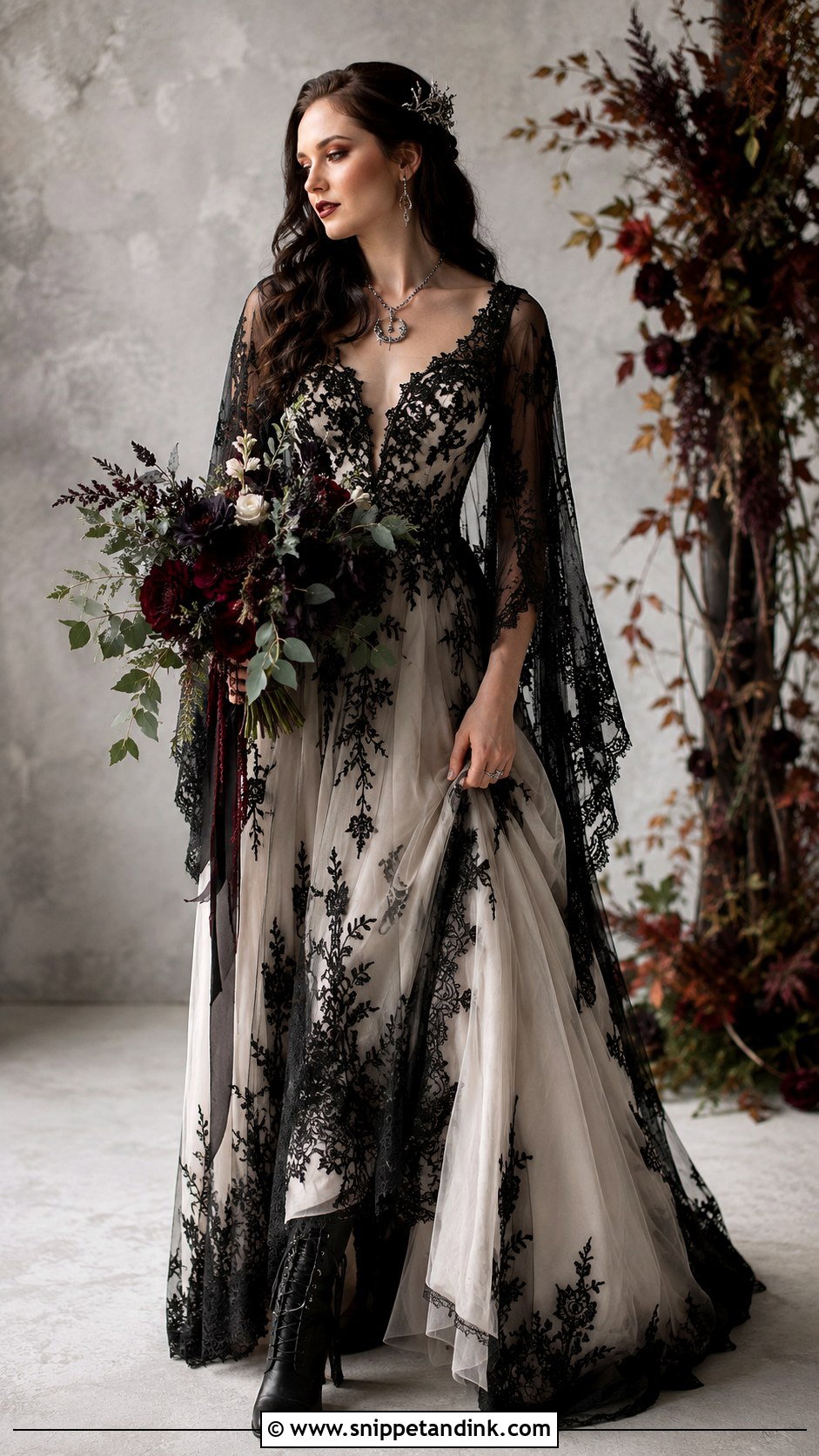
Black lace is for the bride who wants something darker and more dramatic, and it carries well at evening and autumn rites. You can go full black lace, put black lace over ivory, or keep it to the sleeves on a softer base. Fit matters more in black than any other color, because there’s no softness of tone to hide a poor cut. Black heeled boots, silver jewelry and a deep floral bouquet suit it. A soft veil, cape or floral crown adds romance and reminds everyone it’s a wedding.
20. Pagan Wedding Dress With Burgundy Velvet
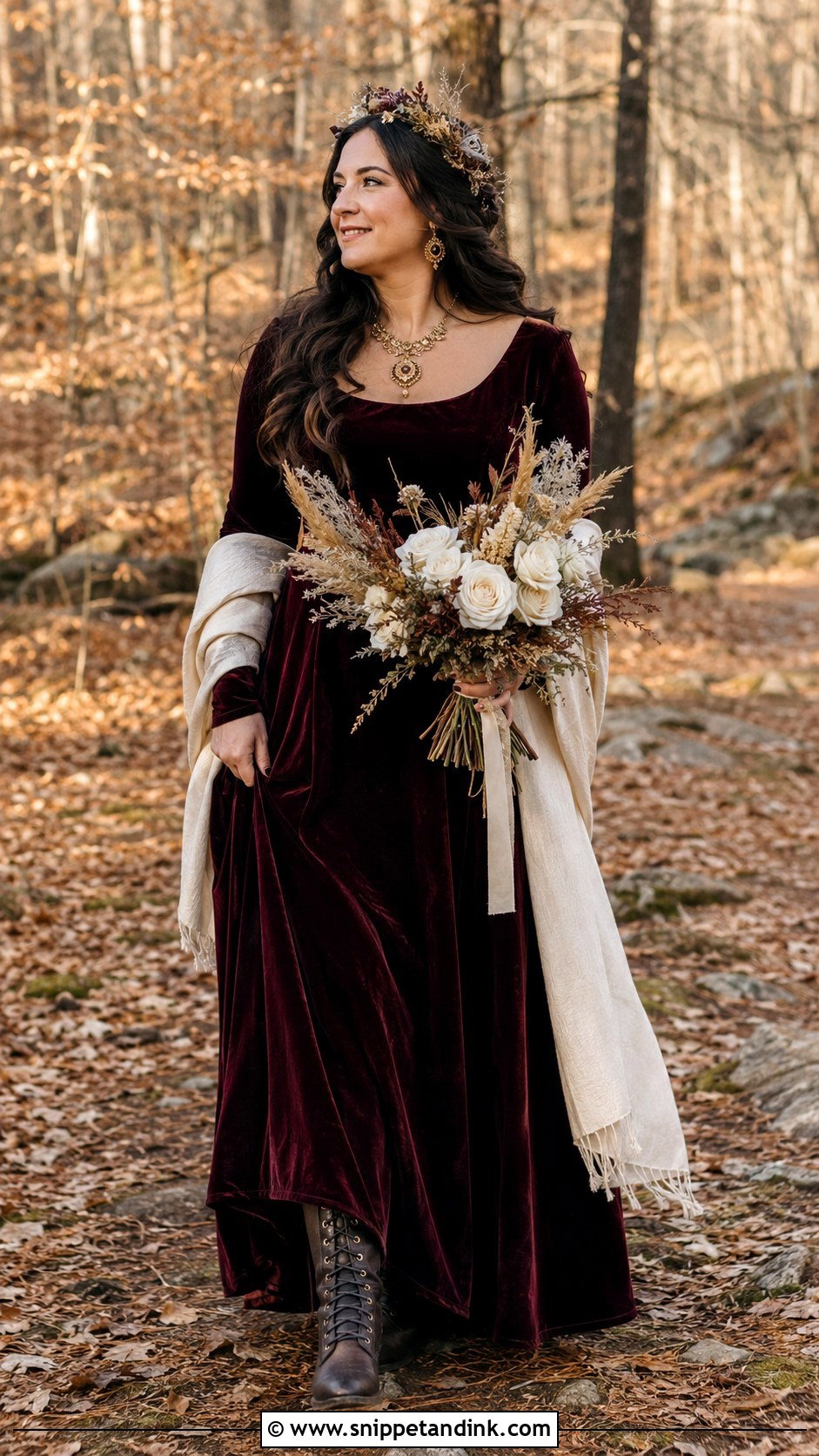
Burgundy velvet is made for a cold-weather rite. It’s warm, heavy and drapes in deep folds. A wrap gown, long-sleeve fitted dress or A-line all work. Velvet marks easily when you sit or kneel, so I steam it the morning of and brush the pile in one direction afterward. Gold jewelry, dark boots, a cream wrap and a bouquet with ivory flowers, dried grasses and dark greenery complete it. Keep the cut clean and let the color do the work.
21. Pagan Wedding Dress With Sage Green Tulle
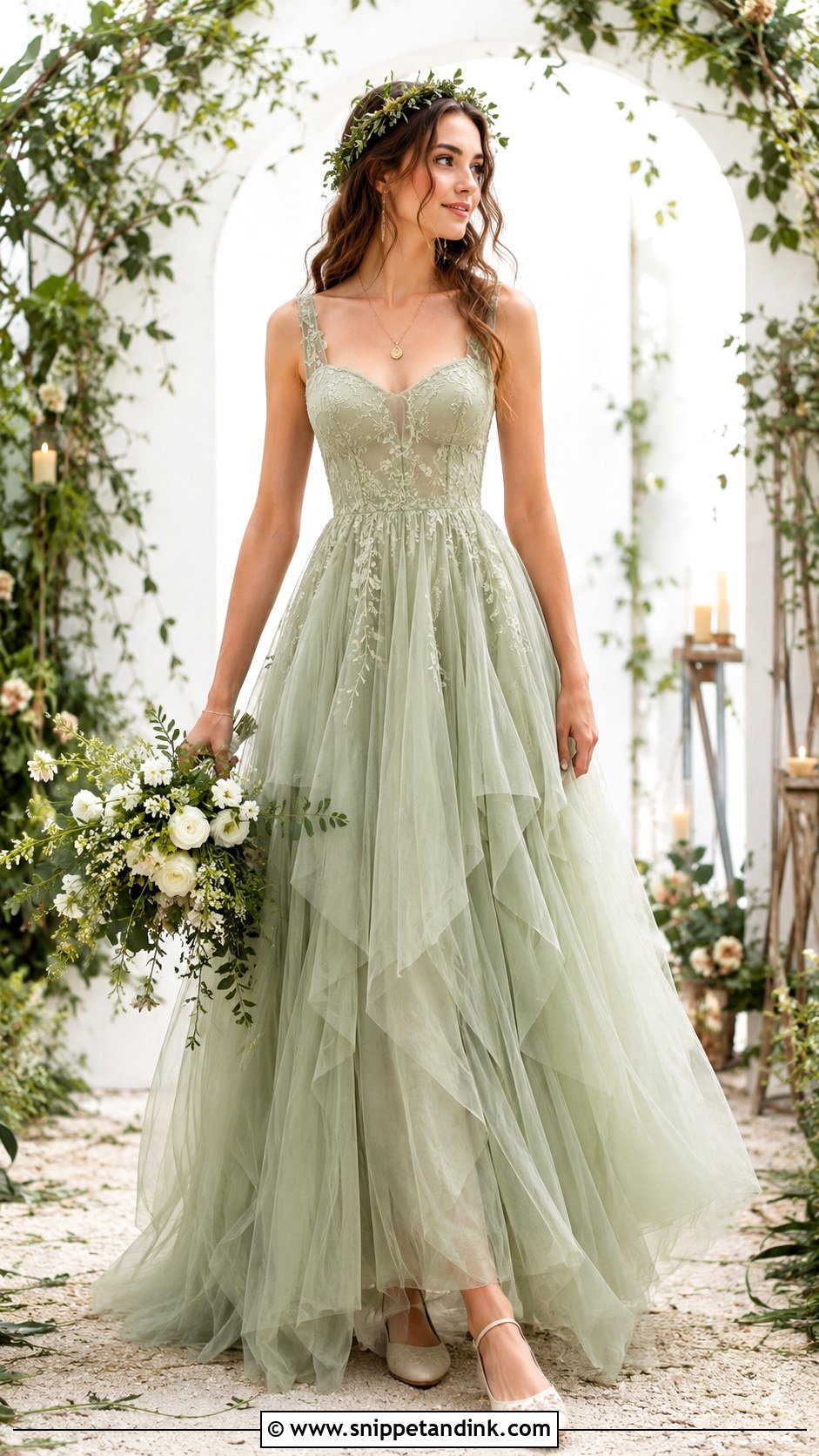
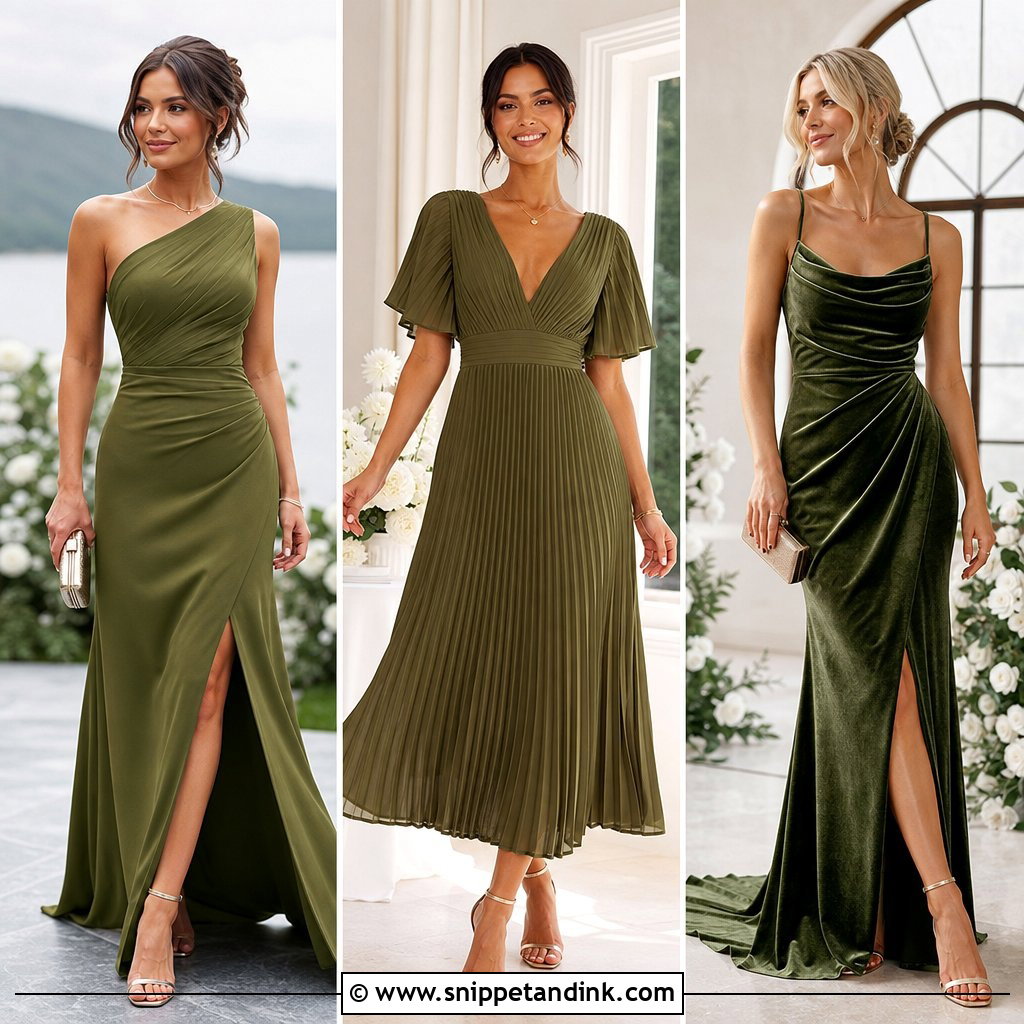
Sage tulle is a gentle way into colored bridal wear. It reads as green in some light and as soft grey in others, and that ambiguity suits a garden or woodland setting. Layered tulle skirts are airy, but they snag on brambles and rough wood, so watch where you sit. A fitted bodice with sheer sleeves or a simple satin top balances the volume. Ivory flats, fine gold jewelry and a greenery crown suit it for spring and early autumn.
22. Pagan Wedding Dress With Handfasting Sleeves
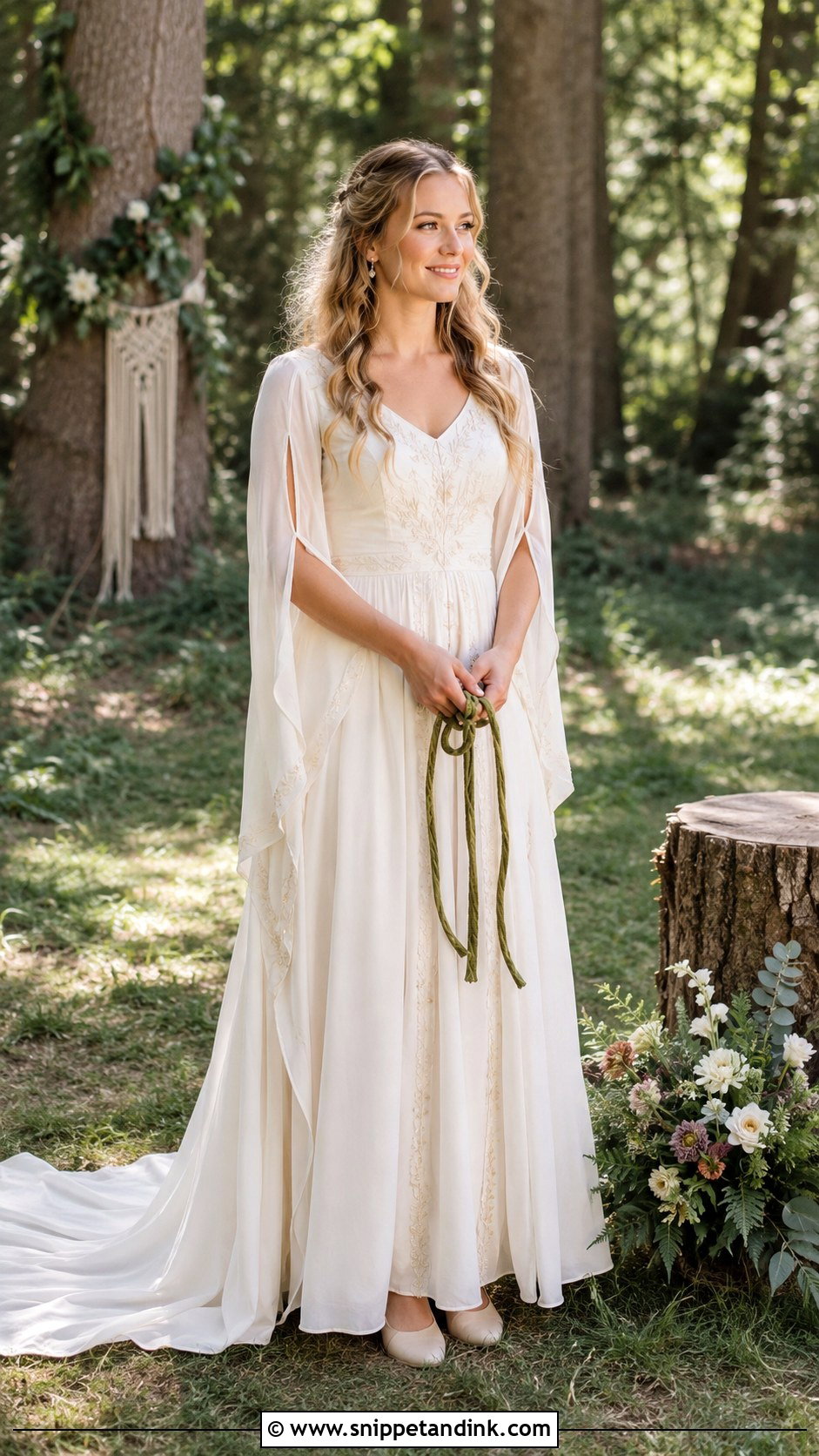
If your ceremony includes handfasting, think about sleeves before anything else. The cord is wrapped around joined hands and wrists, and fabric there gets caught, pulled or bunched. Bell sleeves that fall back, sheer fitted sleeves or split sleeves let the cord sit cleanly. I’d steer you away from bulky cuffs and fragile beadwork near the wrist, which can snag or shed beads. Rehearse the binding once with your officiant in the actual dress. A flowing gown, comfortable shoes, small earrings and a bouquet you can set down make the rest simple.
23. Pagan Wedding Dress With Crystal Belt
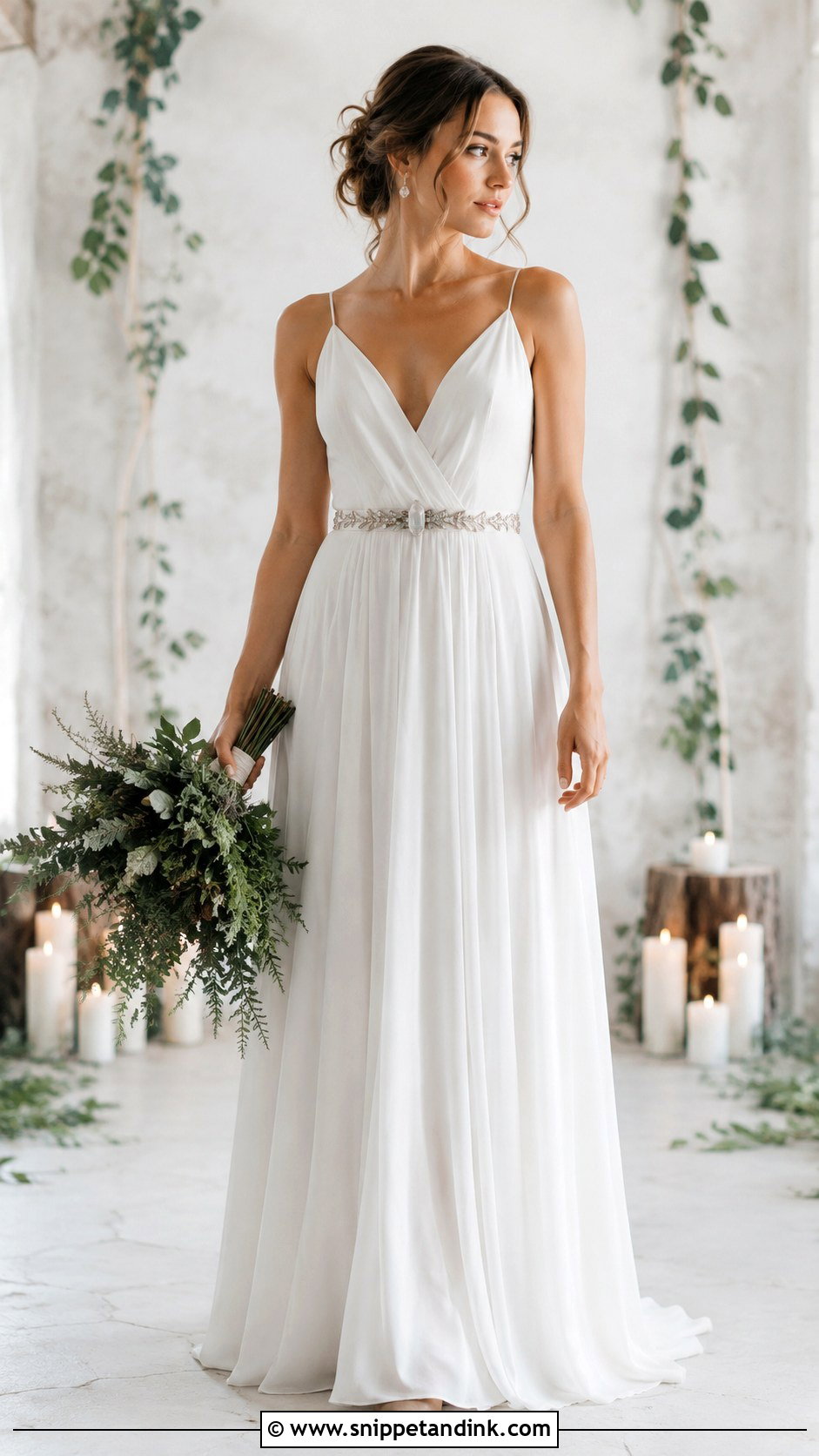
A crystal belt gives a plain gown a waist and a little light. It suits chiffon, satin, crepe and linen. Clear crystal reads classic, smoky quartz tones read earthy, and moonstone-like shimmer reads soft. Heavy beaded belts drag a light fabric down at the front, so I’d have it tacked to the dress at the side seams. Simple shoes, small earrings and a loose updo keep the rest calm. It’s a good answer for a minimal dress that feels too plain on the hanger.
24. Pagan Wedding Dress With Detachable Skirt
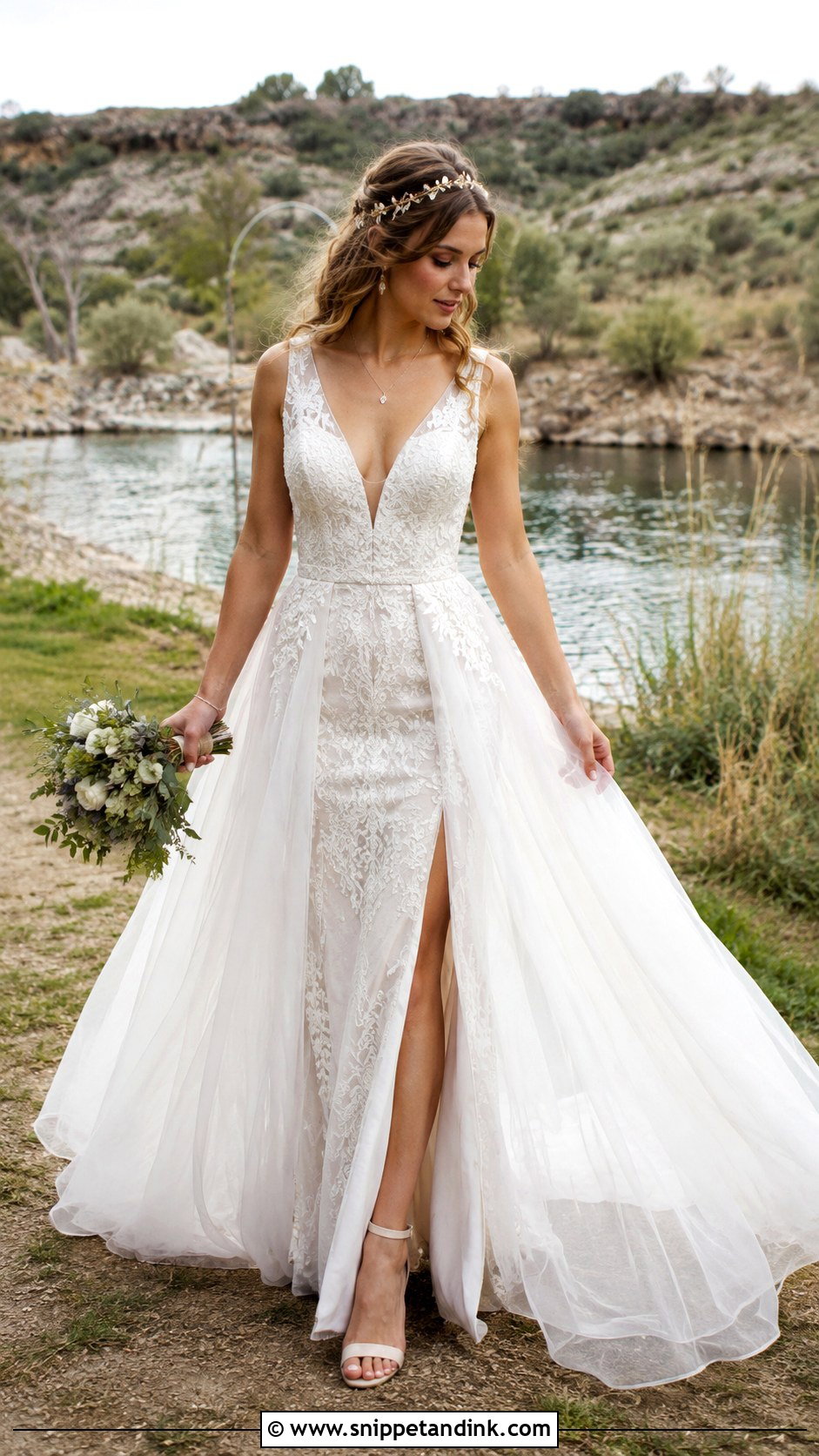
A detachable skirt gives you two dresses. The full overskirt carries the ceremony, then comes off for walking, feasting and dancing. Start with a fitted lace, satin or crepe base, and add a tulle, chiffon or organza overskirt. The fastening is the bit I’d test most: hooks and buttons hidden under a waistband are quicker than a zip, and someone other than you should practice removing it before the day. A hair vine, simple jewelry and comfortable heels suit it.



25. Pagan Wedding Dress With Earth Tone Details
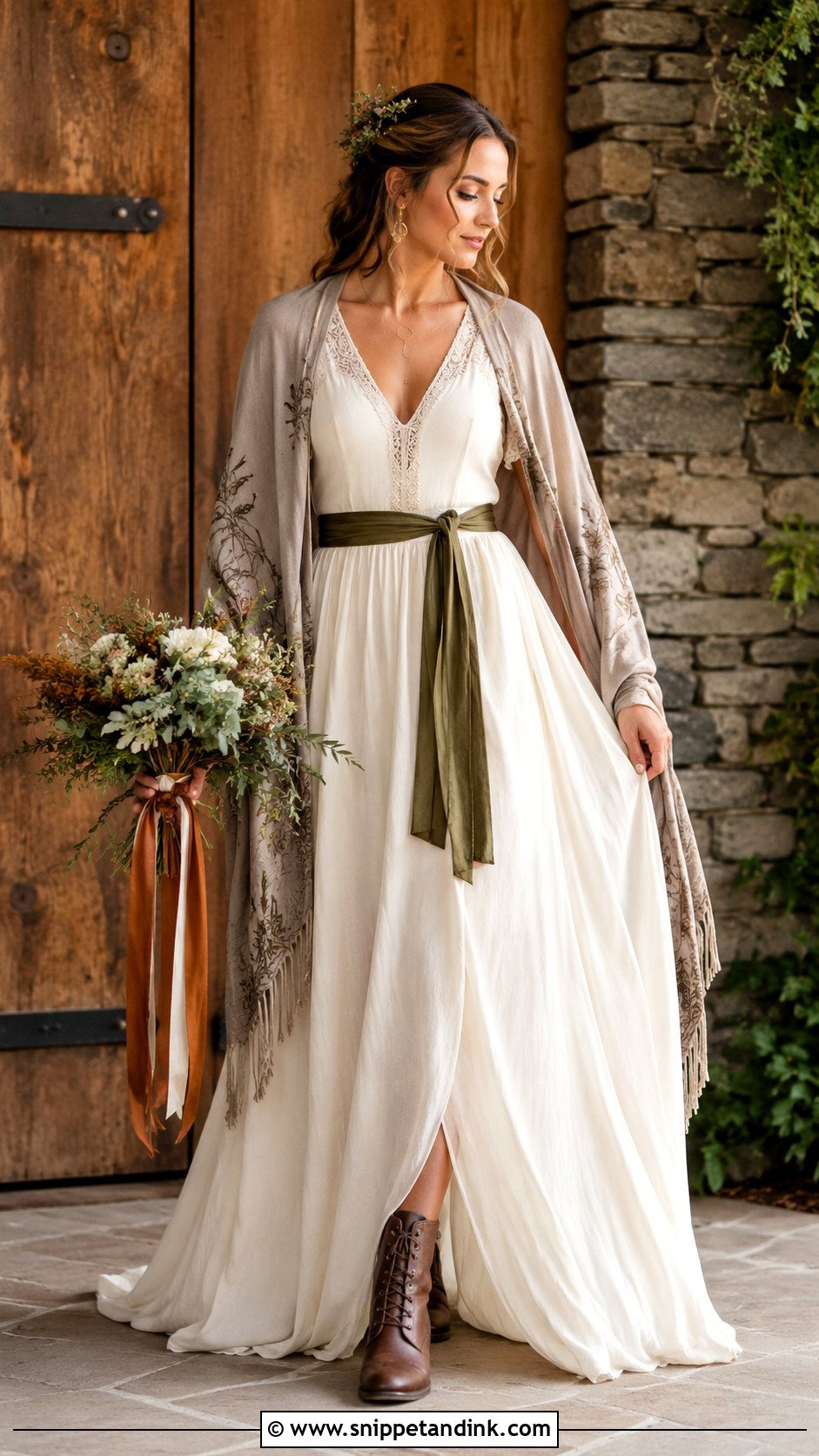
Earth tones let you add color without giving up a bridal base. Taupe, sand, clay, olive, rust and soft brown can show up in embroidery, ribbons, belts, shawls, shoes or bouquet ribbon. A cream gown with an olive sash and brown boots feels grounded; a champagne dress with rust florals feels autumnal. Keep the base dress plain so the earthy accents look deliberate. I’d hold fabric swatches up against the venue itself, whether wood, stone, grass or desert, before deciding on the shade.
26. Pagan Wedding Dress With High Neck Lace
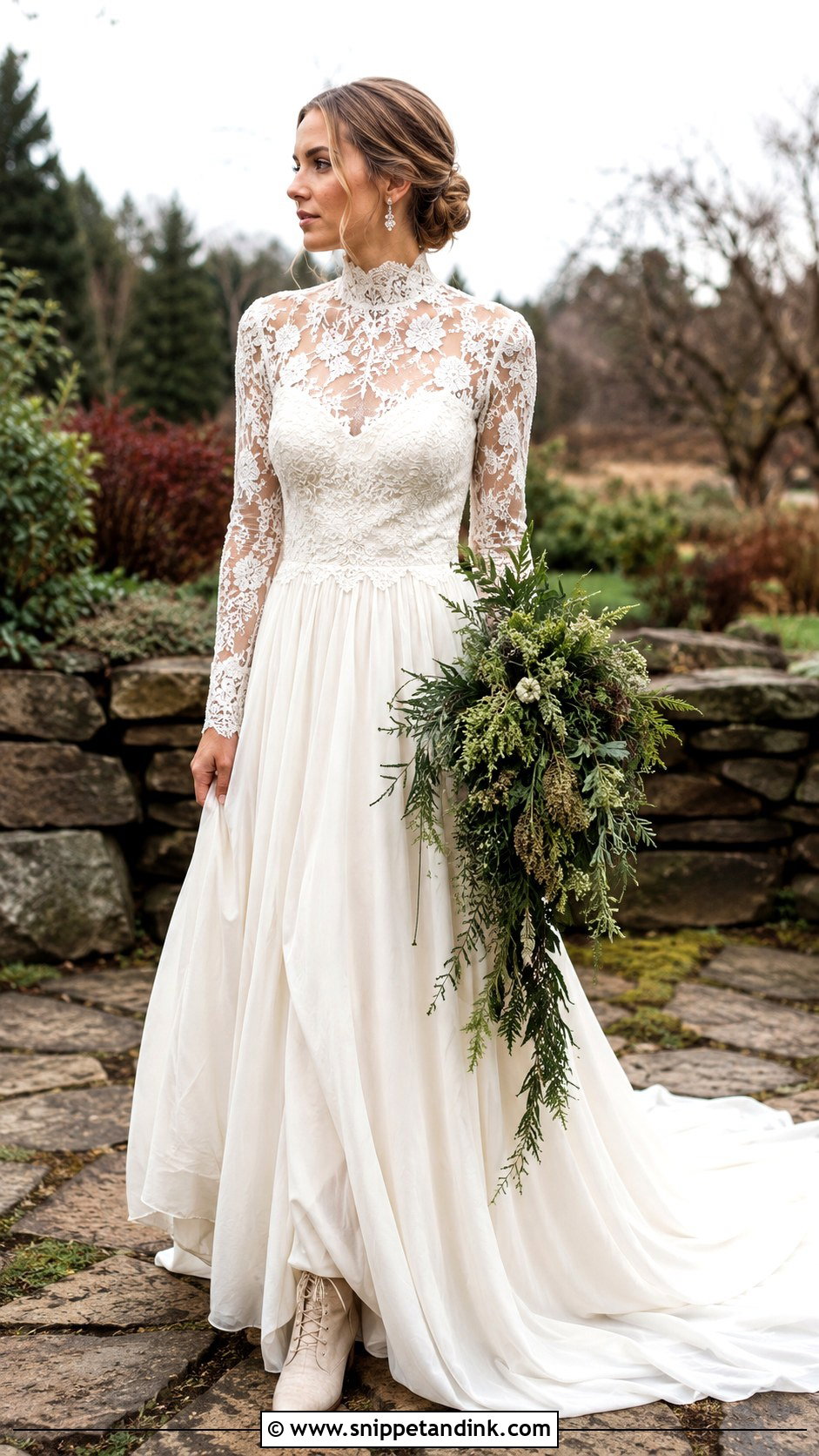
A high lace neck gives coverage and a vintage line at once. Sheer lace at the throat, long sleeves and a flowing skirt balance each other. The thing I check is the closure: a high neck usually fastens with tiny buttons or a hook at the back, and it needs to sit flat without pressing on the throat when you turn your head. Low heels or boots, earrings rather than a necklace, a low bun and trailing greenery suit cooler seasons and indoor rites.
27. Pagan Wedding Dress With Barefoot Sandals
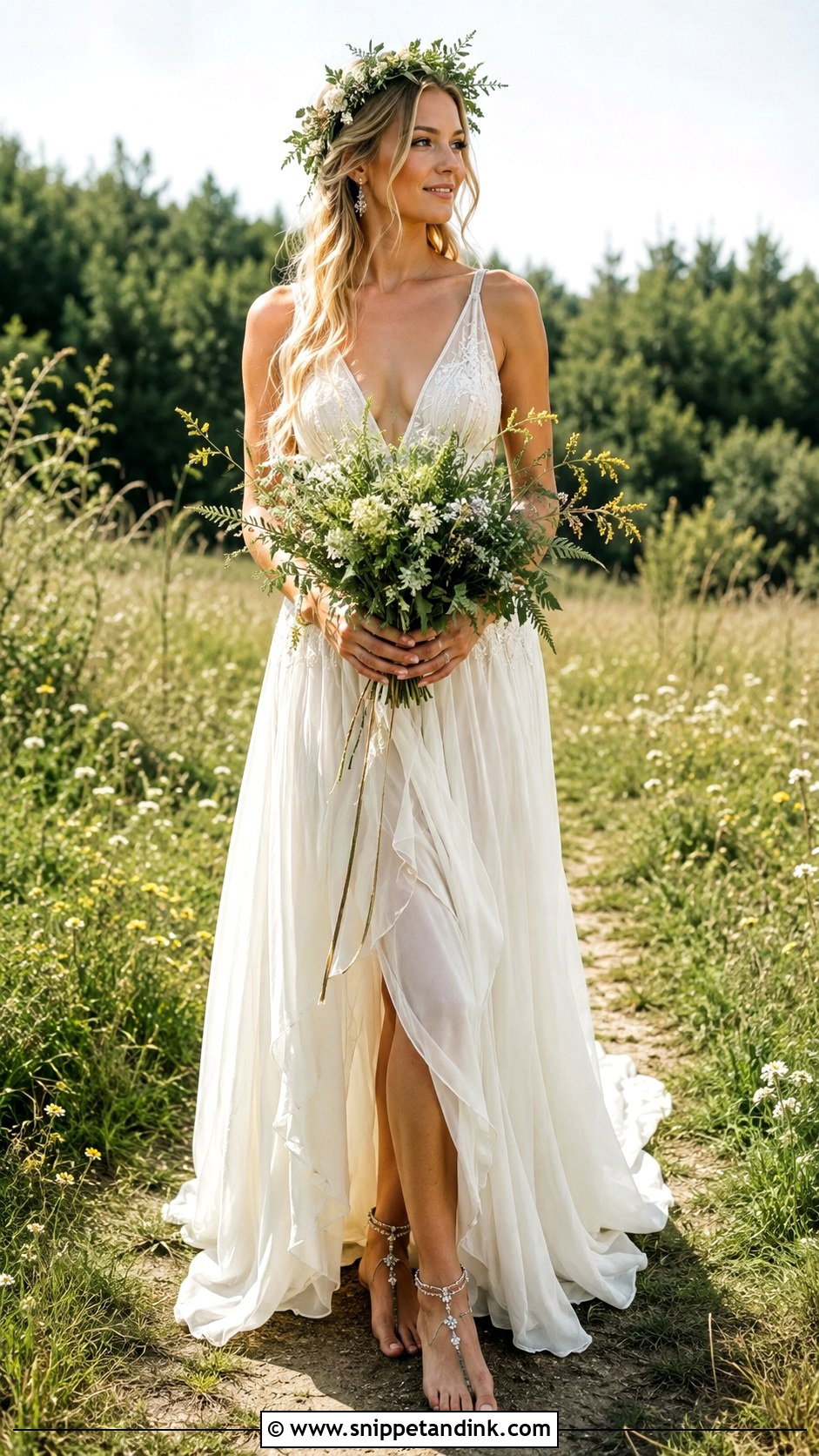
Barefoot sandals are for ground you trust: sand, soft lawn, a familiar backyard. A soft, flowing dress in chiffon, cotton, linen or light lace with an ankle-skimming hem suits them, since a long train drags without shoes to lift it. Anklets, a flower crown and a wild bouquet complete it. Walk the ceremony spot barefoot the day before to check for stones, thorns or thistles, and keep flat sandals nearby for the rest of the day.
28. Pagan Wedding Dress With Dramatic Veil
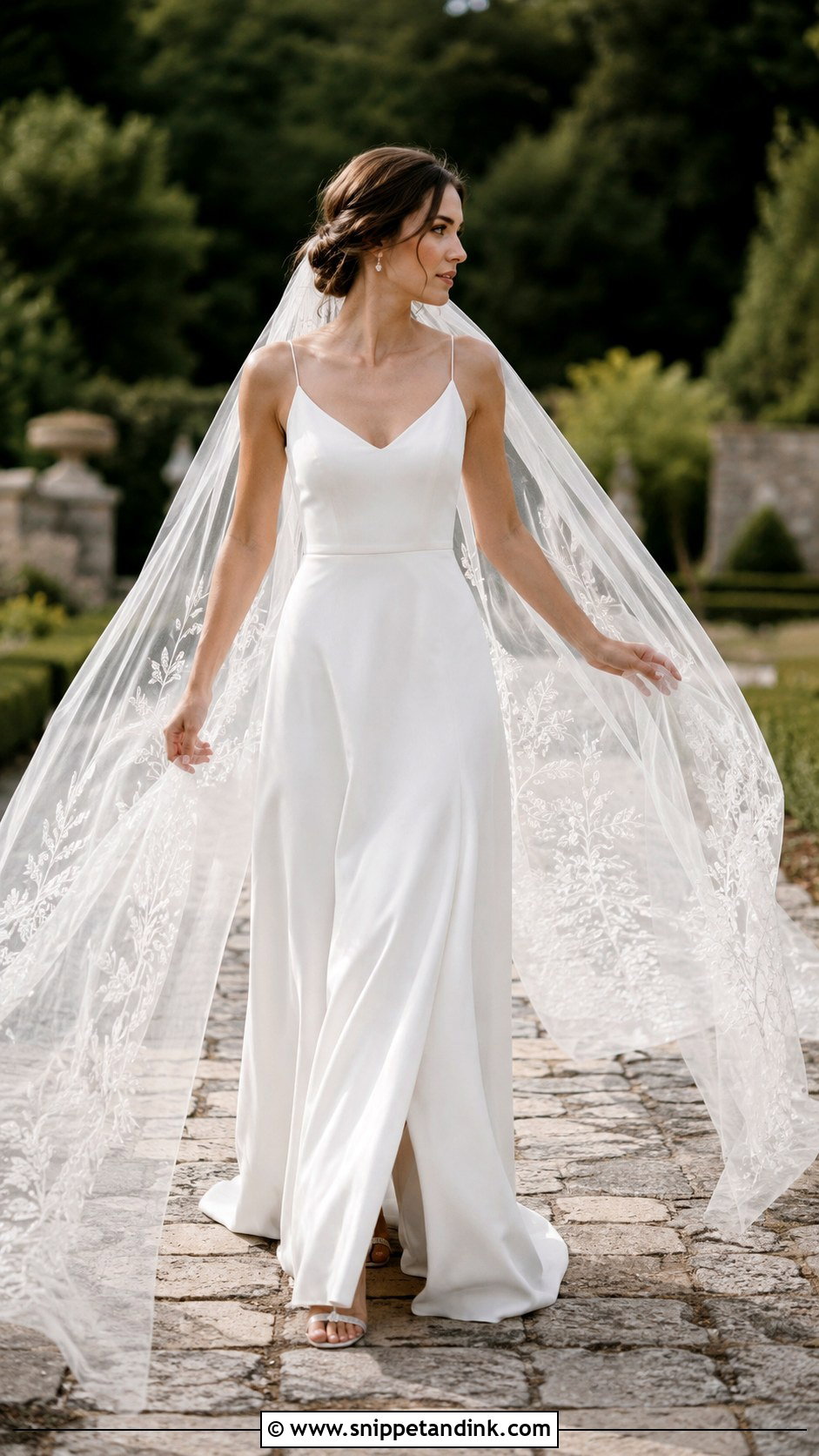
A dramatic veil can carry a simple gown. Floral embroidery, scattered stars, lace edging or soft tulle that catches light all work. Pair it with a clean ivory dress so the veil leads. Outdoors, the veil is at the mercy of wind, and a cathedral length in a breeze can wrap around your face during the vows. I’d anchor it with a comb sewn to a low bun, and bring a few small weights or clips to tack it in place if the forecast is gusty. Test it outside before the day.
29. Pagan Wedding Dress With Two Piece Set
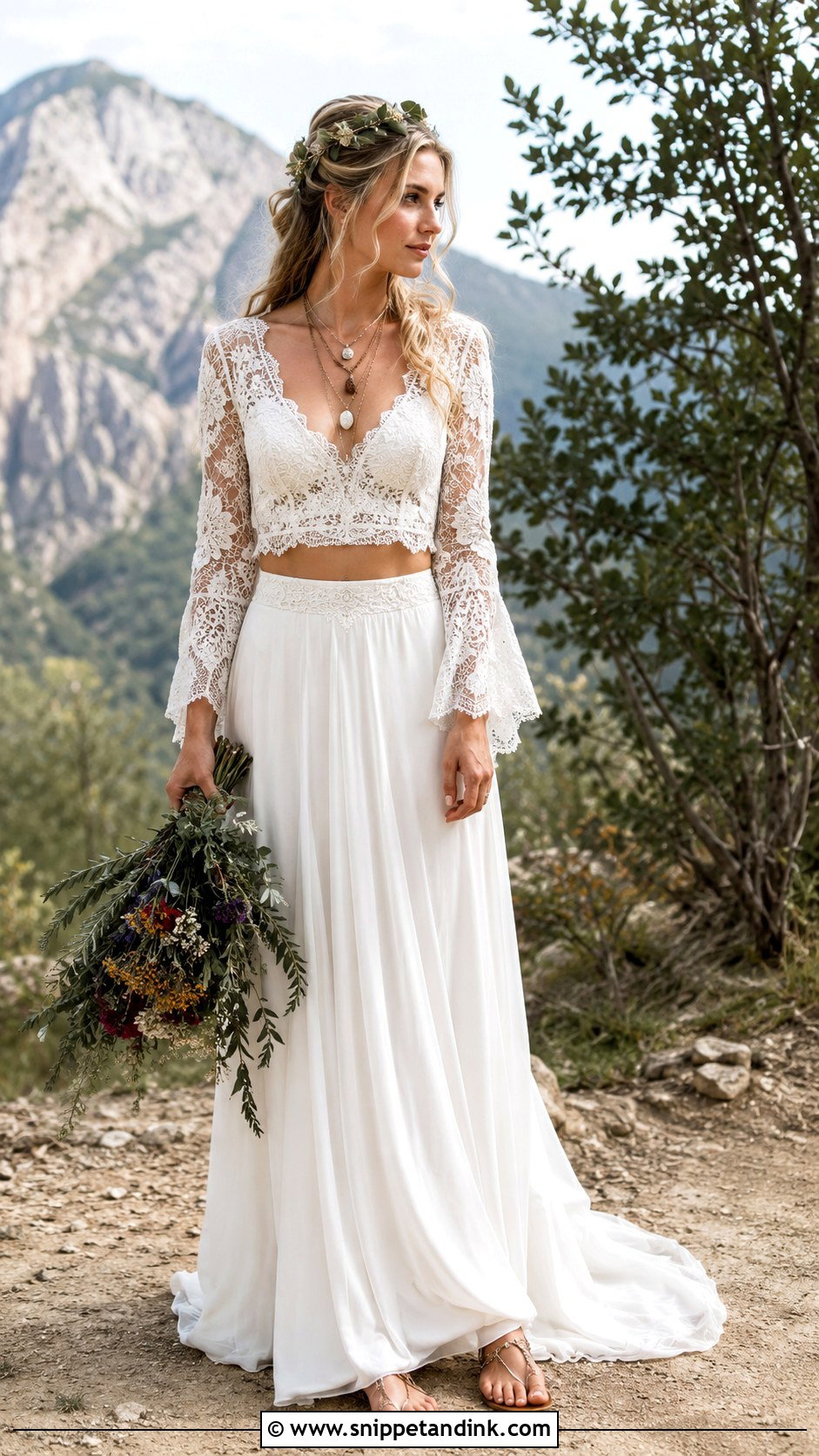
Separates suit pagan ceremonies because they’re comfortable and personal. A lace crop top with a high-waist skirt, a linen wrap top with a maxi or a beaded bodice with chiffon all work. Tie the two pieces together by fabric, color or texture so the set reads as bridal rather than as a festival outfit. Flat sandals, layered necklaces, a hair vine and a seasonal bouquet suit outdoor elopements. The skirt or top can be worn again later, which plenty of brides appreciate.
30. Pagan Wedding Dress With Blue Gray Color
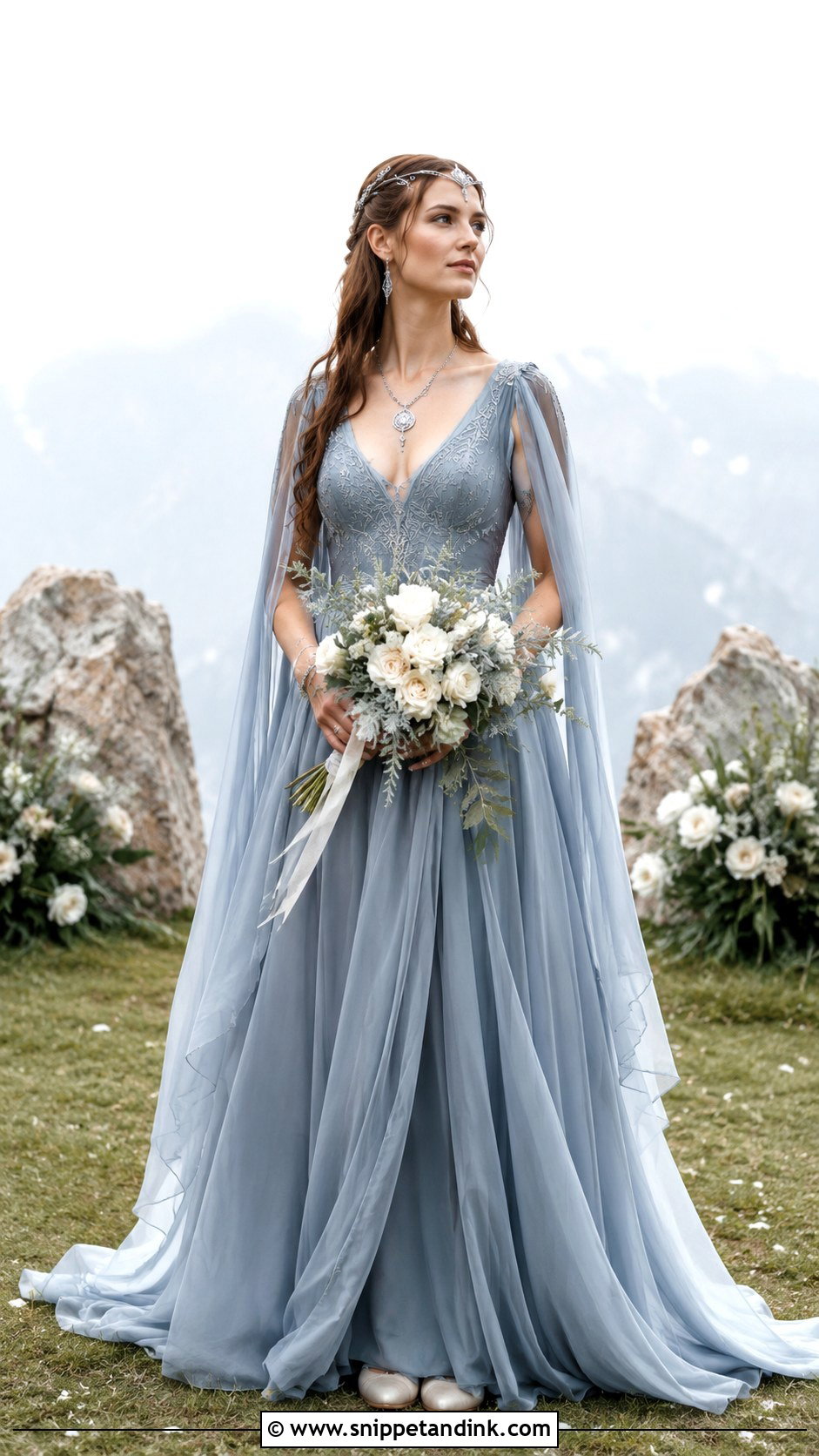
Blue gray is a color for misty mornings and cold light. It’s calm and slightly otherworldly without being loud. Silk, chiffon, tulle or satin in a flowing shape give it the best movement. Silver jewelry, pale flowers, grey or ivory shoes and a soft cape for cool weather suit it. Blue grays can look dull on warm skin tones, so I’d try the exact fabric near your face in daylight before ordering. It shines at mountain elopements, winter gardens and evening rites.
Commissioning a Dress From a Small Maker
Many of these dresses come from independent makers rather than bridal shops, and that changes how you order. A made-to-measure gown from a small studio often takes several months, and handmade lace, crochet or embroidery can take longer, so I’d start conversations early in the planning.
What I’d ask before paying a deposit
- Can you send a fabric swatch? Colors like sage, champagne and blue gray vary hugely between screens.
- How many fittings are included, and can measurements be retaken if my shape changes?
- Is the dress lined, and with what? Unlined lace and linen show everything in sunlight.
- What happens if the dress arrives late or doesn’t fit? Get the answer in writing.
- Can extra fabric be sent with the dress? A spare length lets a local tailor repair or alter it.
Even with a made-to-measure dress, budget for a local tailor to do a final hem once you’ve chosen your shoes, because the ground you’re marrying on decides the right length.
Dress for the Ritual You’re Actually Holding
The right dress for a pagan wedding is the one that suits what will actually happen at your ceremony. Some brides feel most themselves in linen, lace and wildflowers. Others want velvet, celestial embroidery, a hooded cape or deep earthy color. Before you decide, picture the ritual step by step: where you stand, what you hold, how your hands are bound, whether there’s a fire or a walk through trees. Then check the fabric, sleeves, shoes and accessories against each step. A forest, a garden, a stone circle or a cozy hall will each ask for something slightly different, and that’s what makes the look your own.
You'll Like These Ideas:


Leave a Reply