
Brides who come to me for a Celtic look usually have one detail in mind, a grandmother’s tartan, a knot pattern or a pair of long medieval sleeves, and want the rest of the outfit built around it. That’s the right instinct. Irish, Scottish, Welsh and woodland influences show up through sleeves, knotwork embroidery, lace, capes, corset bodices, linen and tartan, and the same idea can lean rustic, fantasy or modern depending on how it’s styled. You might want a dramatic gown for a castle or a plain linen dress for a hillside ceremony. Below are 25 head-to-toe outfits for different moods, seasons and venues, with notes on how each one wears.
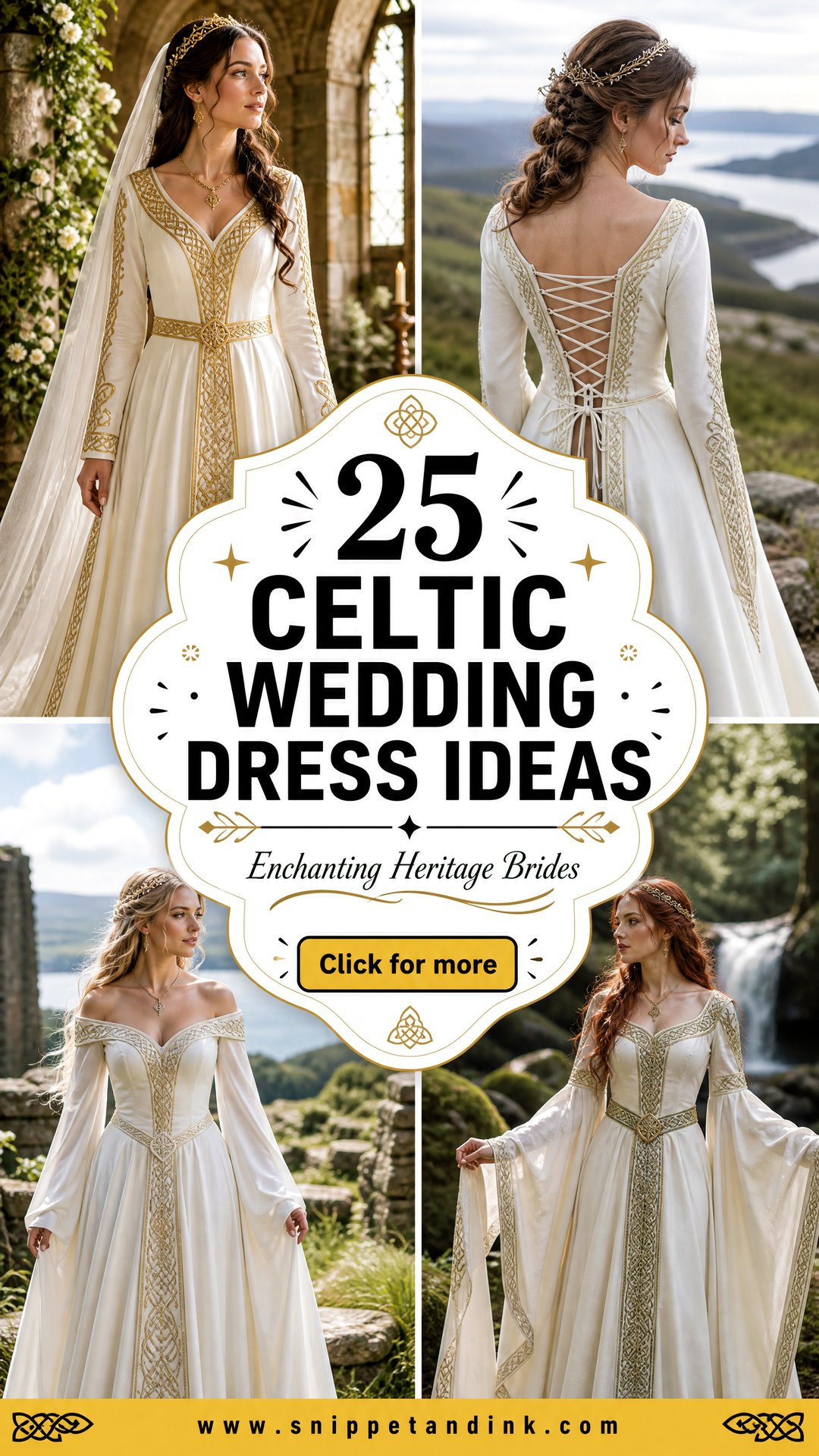
How Much Celtic Detail One Gown Can Hold
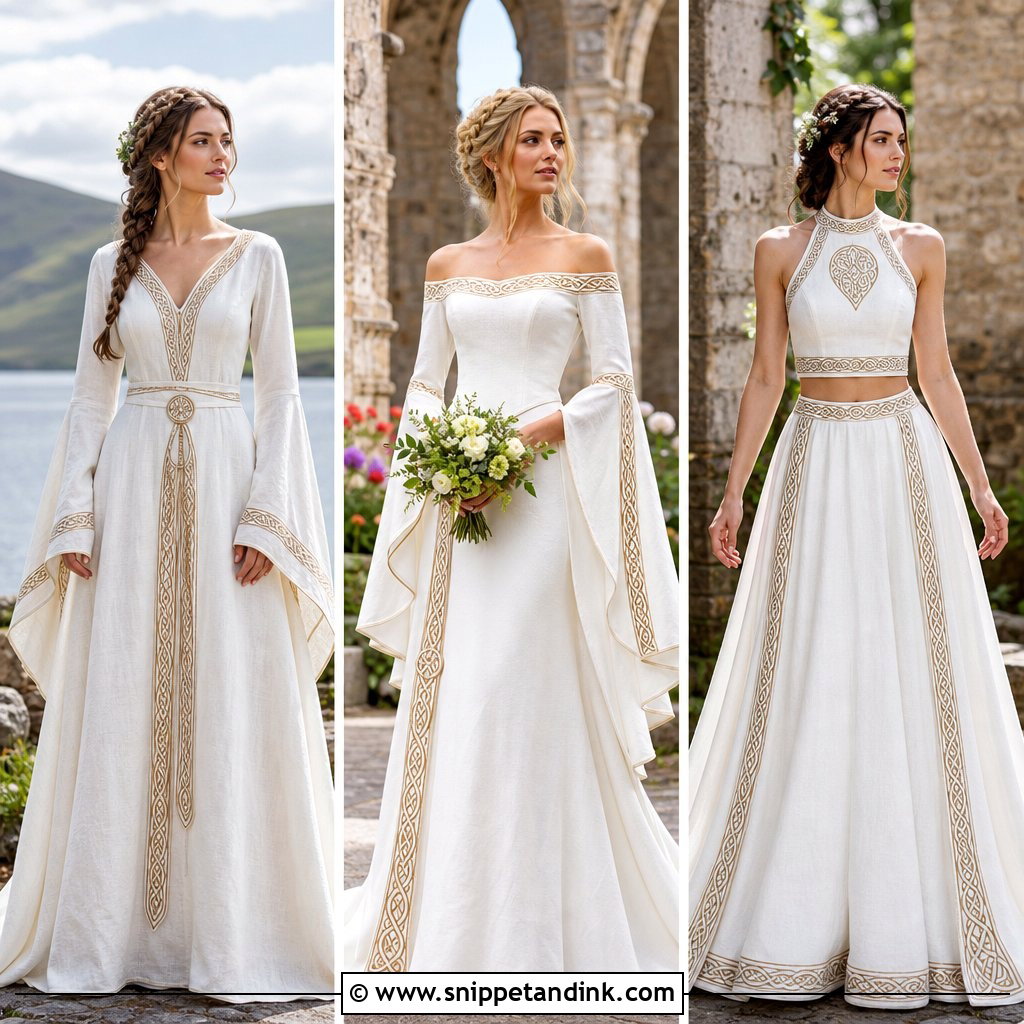
The line between heritage bridal and fancy dress is crossed by quantity, not by any single detail. Bell sleeves, a corset, tartan, a cloak and a flower crown all together tip into costume. My rule at fittings is one lead detail and one supporting detail, with everything else plain.
- Lead with the element that means the most to you, often a family tartan or knotwork that echoes a ring.
- Support it with something structural rather than decorative, such as a sleeve shape or a lace-up back.
- Keep fabric colours to ivory or cream plus one accent, usually green, blue or gold.
- Look at the outfit in a full-length mirror from across the room. If you notice the costume before you notice yourself, remove one piece.
Tartan and the family question
If you plan to wear a clan or family tartan, ask the older relatives first. Families often have strong feelings about which tartan is theirs and how it’s worn. The usual convention for women is a sash over the right shoulder, held with a brooch, though there are traditional variations for particular roles in a clan. If you have no clan connection, many districts have their own tartans, and some are considered open for anyone to wear. Tartan mills generally need several weeks to weave or source a specific pattern, so order early.
1. Celtic Lace Wedding Dress With Long Sleeves
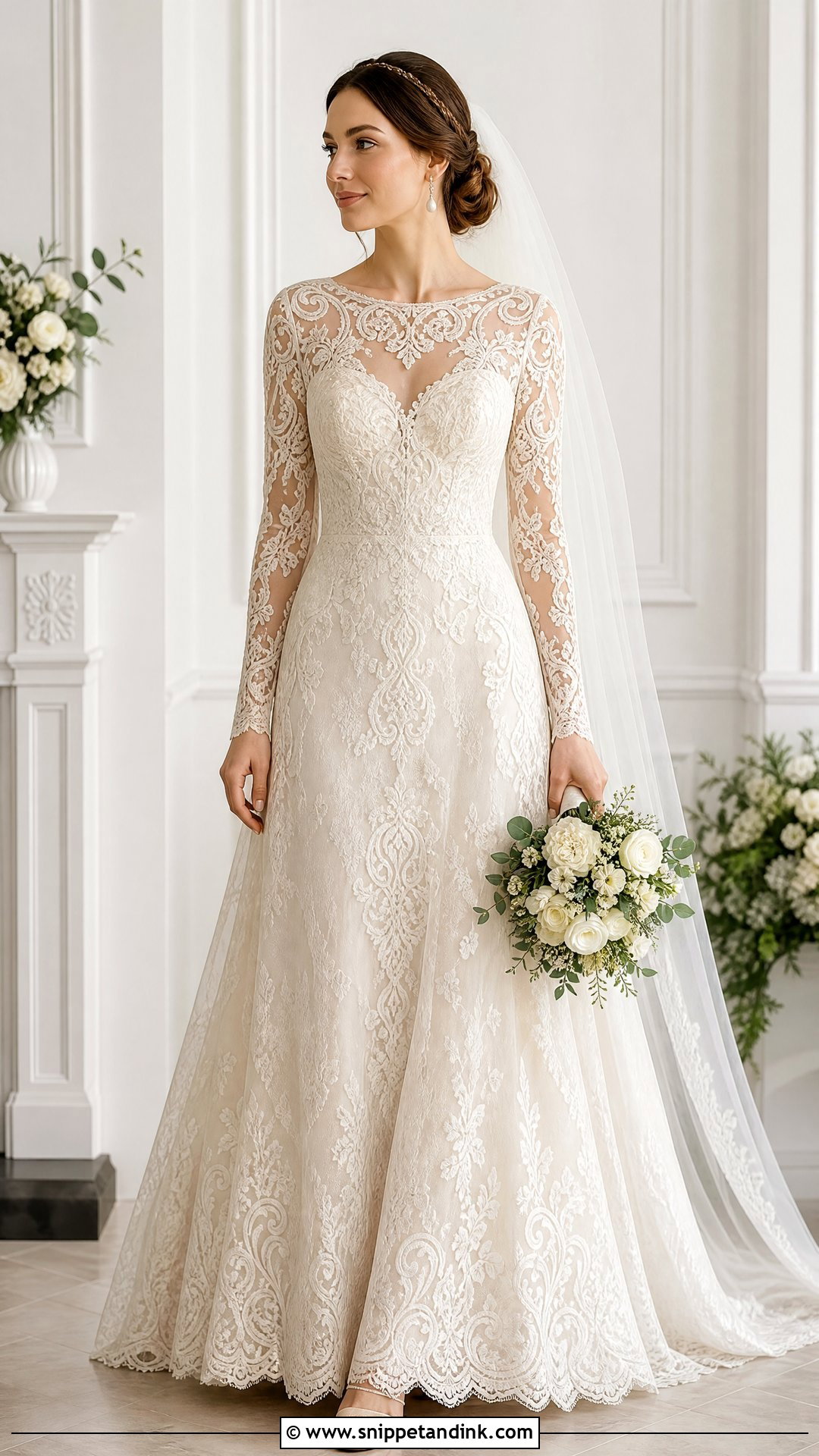
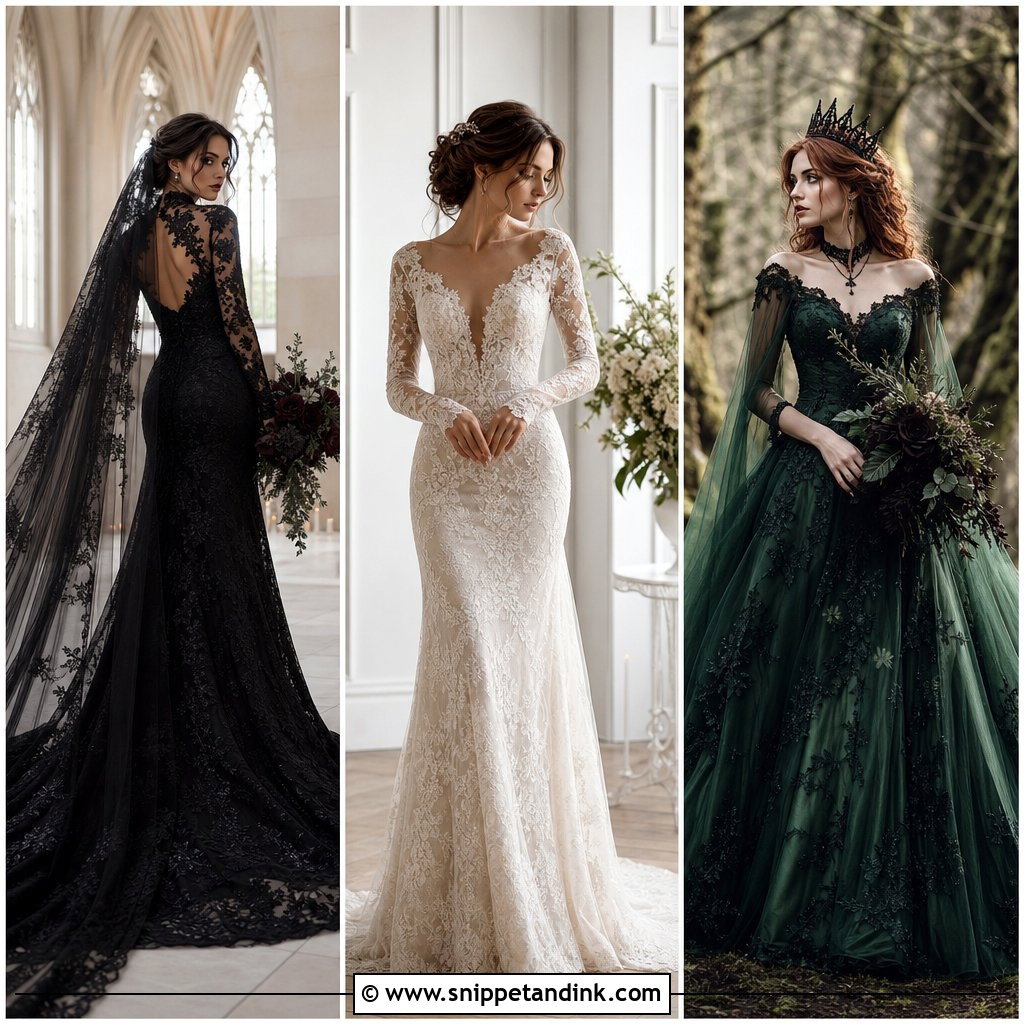
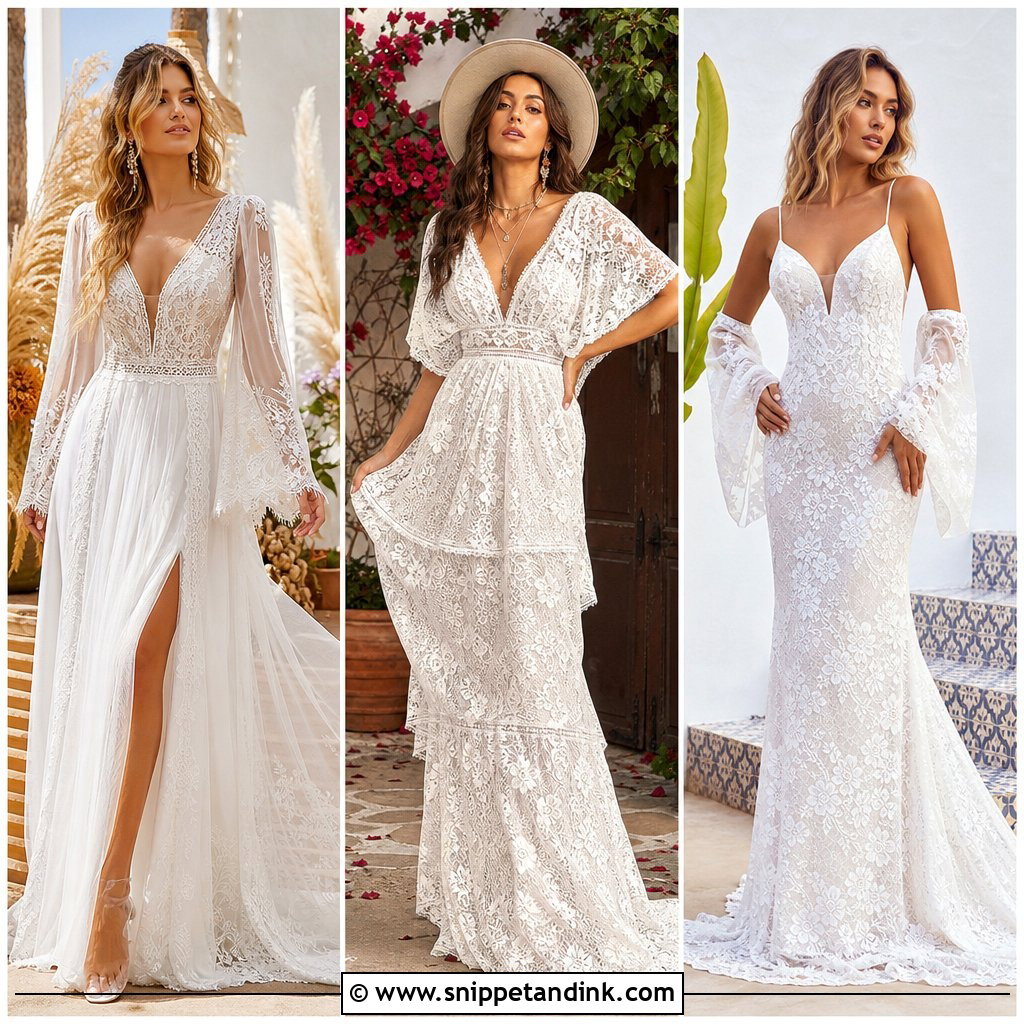
Long lace sleeves are the gentlest way into a Celtic look, and the lace pattern does most of the work. I look for vines, knots or florals and avoid crisp geometric lace, which reads modern rather than heritage. A fitted bodice over a soft A-line skirt keeps the shape easy, and illusion sleeves give coverage without weight. The sleeve should end at the wrist bone, not over the hand, or it will catch on rings during the vows. Pearl drops, a low braided bun and ivory heels or embroidered flats finish it, with a lace-edged cathedral veil if you want length.
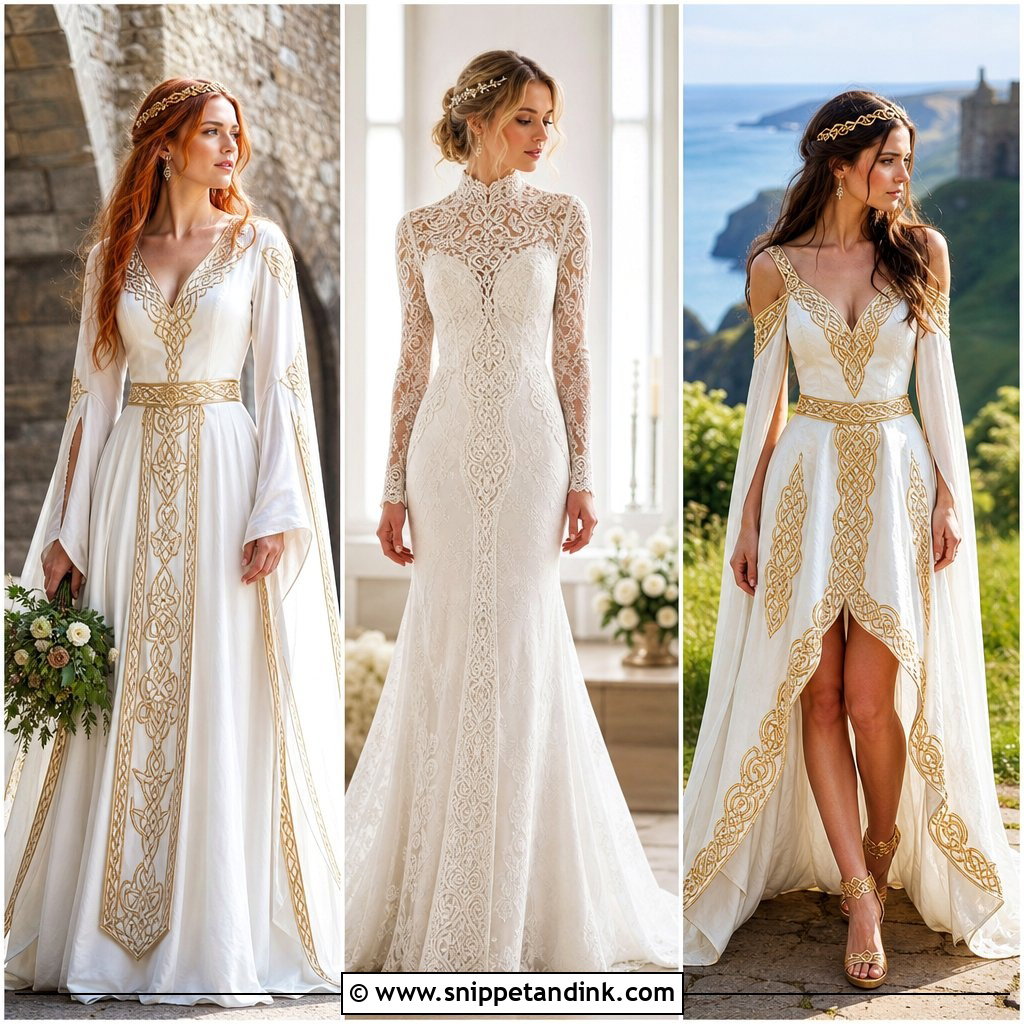
2. Medieval Celtic Wedding Dress With Bell Sleeves
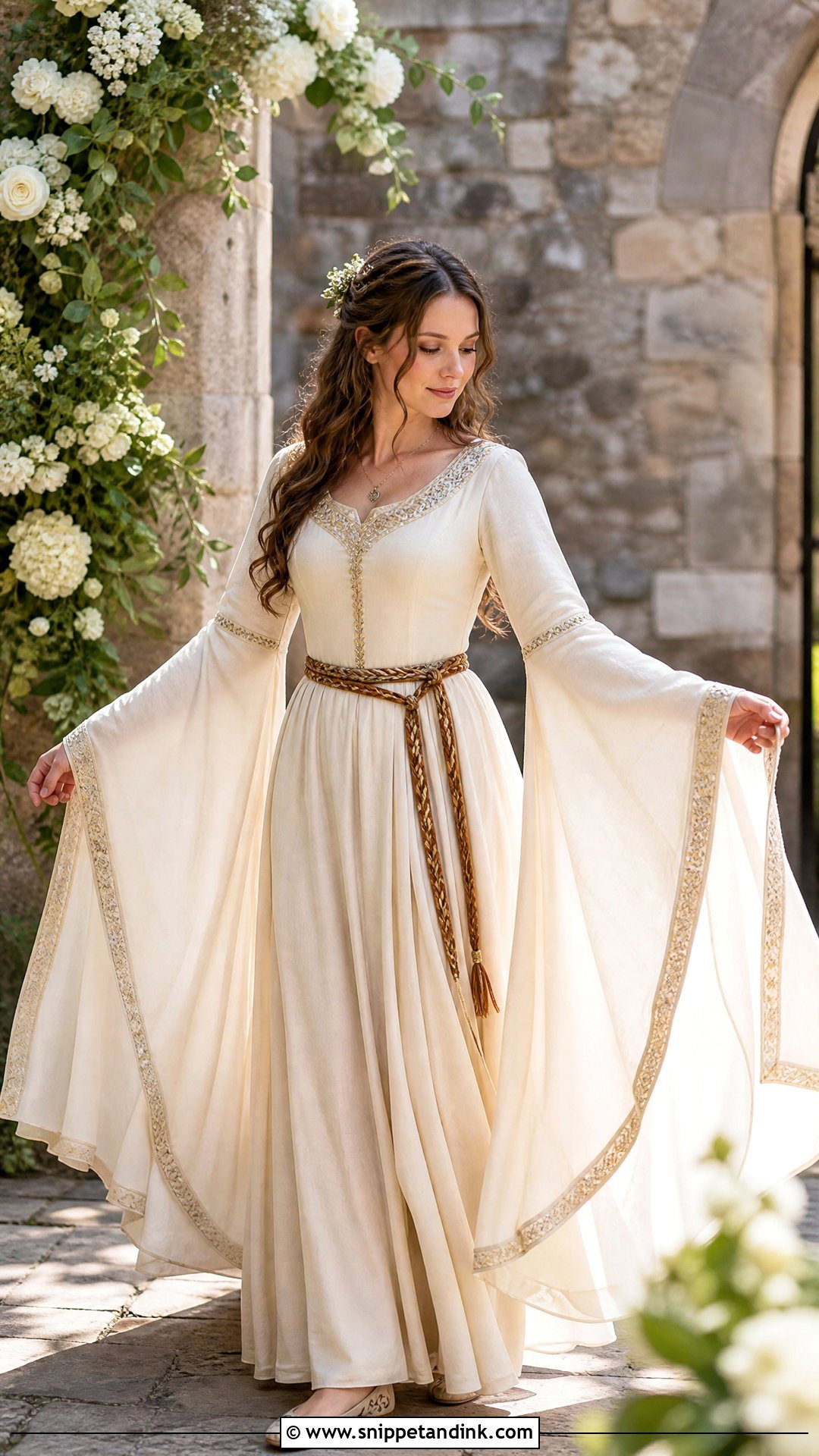
Bell sleeves give a storybook outline while the rest of the gown stays wearable: a fitted waist, a flowing skirt and sleeves that widen from the elbow or the wrist. I always ask brides to eat a mouthful of cake at the fitting, because a wide sleeve drifts straight into the plate. Ivory, cream and soft champagne suit this shape. A braided belt, a delicate hair vine and leather or satin shoes complete it, and jewellery can stay minimal since the sleeves are the feature. Forest settings, stone buildings and historic estates suit it best.
3. Irish Celtic Wedding Dress With Knot Embroidery
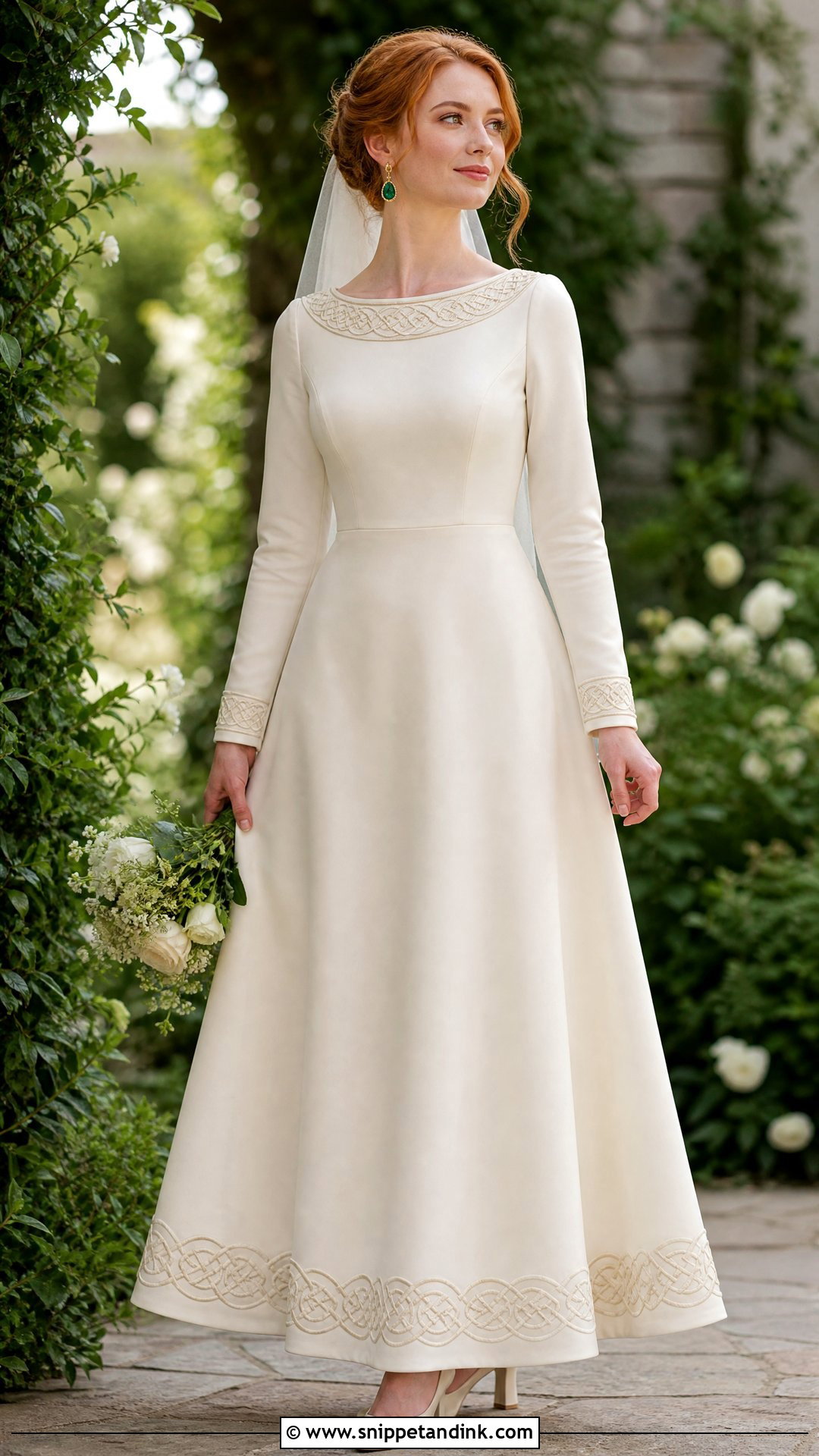
Knot embroidery carries meaning that many couples want in the dress itself, since the unbroken lines of a Celtic knot are commonly read as connection and continuity. Placement decides whether it feels intentional or crowded. I’d choose one zone, the neckline, the cuffs, the waist or the hem, and keep it there. A simple A-line or sheath gives the embroidery space. Finish with a soft veil, green gemstone earrings and ivory block heels, and a loose updo or half-up braid.
4. Scottish Celtic Wedding Dress With Tartan Sash
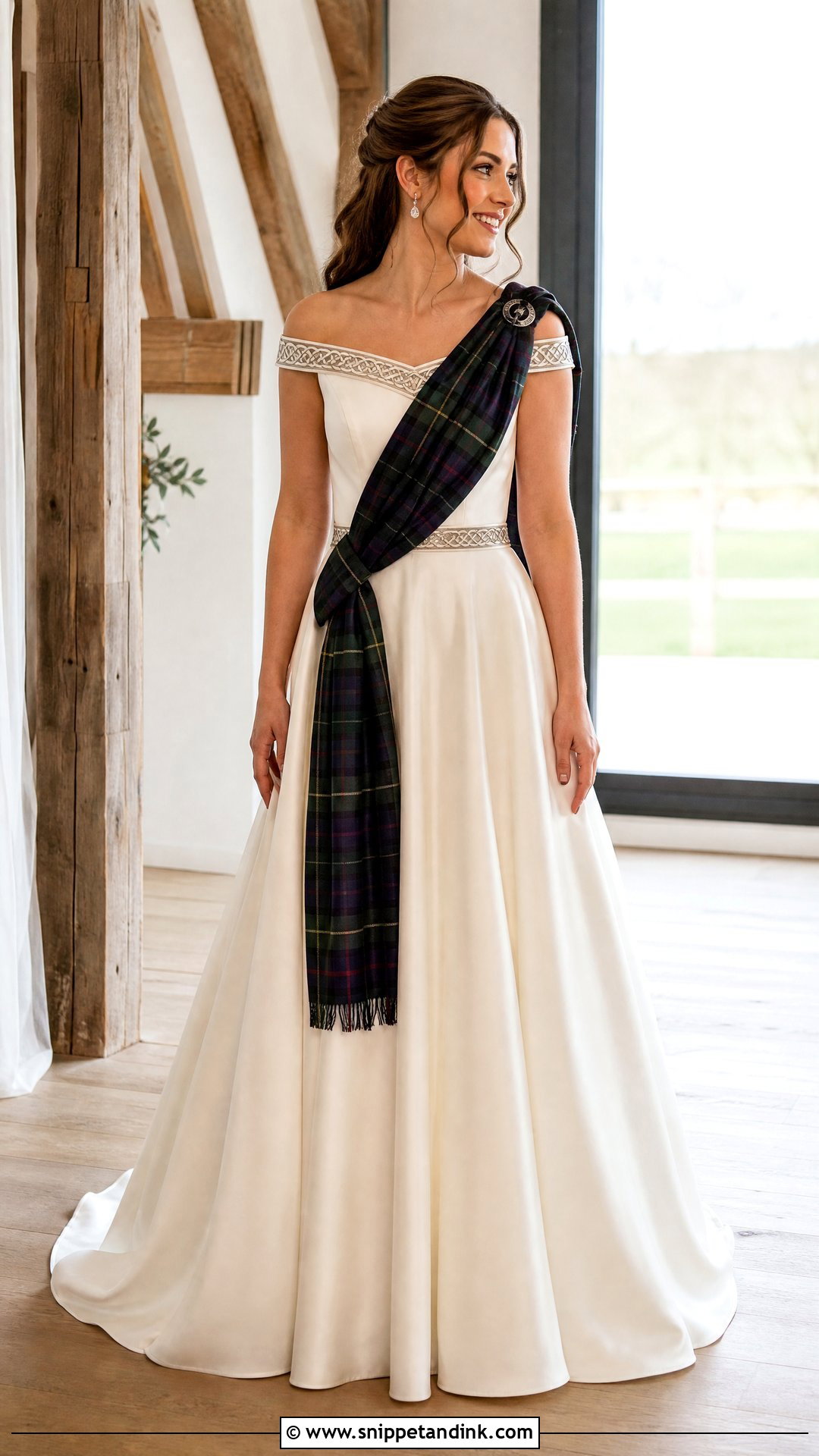
Tartan brings family heritage into the outfit, but a full-width sash on a delicate gown can look bulky. I start with a plain ivory dress, a satin A-line, lace or long-sleeve crepe, and use a lightweight tartan sash across the shoulder, around the waist or draped at the back. It needs to be pinned firmly, usually with a brooch at the shoulder, or it slides off every time you lift your arm. Understated earrings, soft curls and neutral heels keep the tartan in front, and a small matching wrap helps on a cold Scottish evening.
5. Celtic Wedding Dress With Hooded Cape
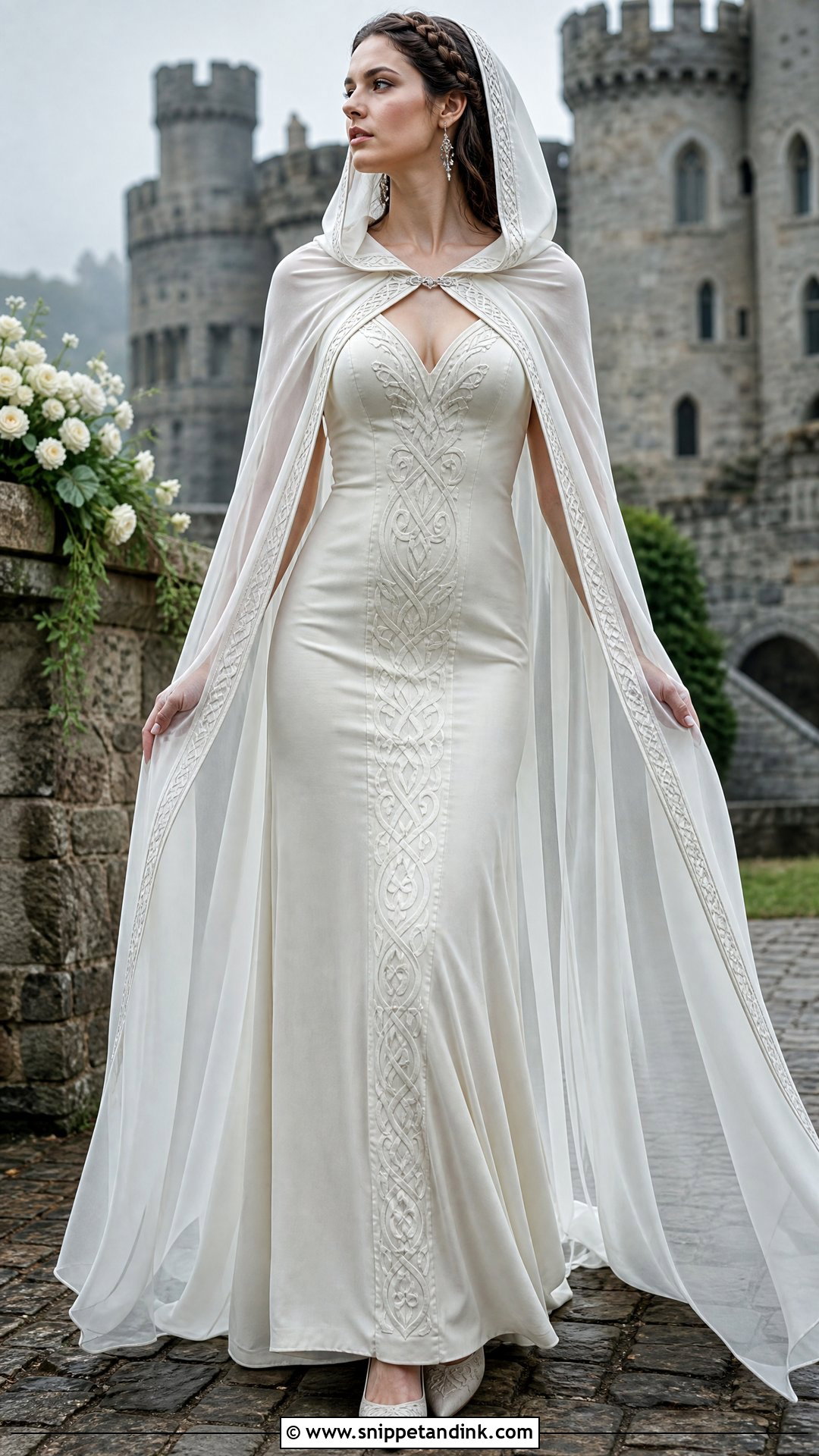
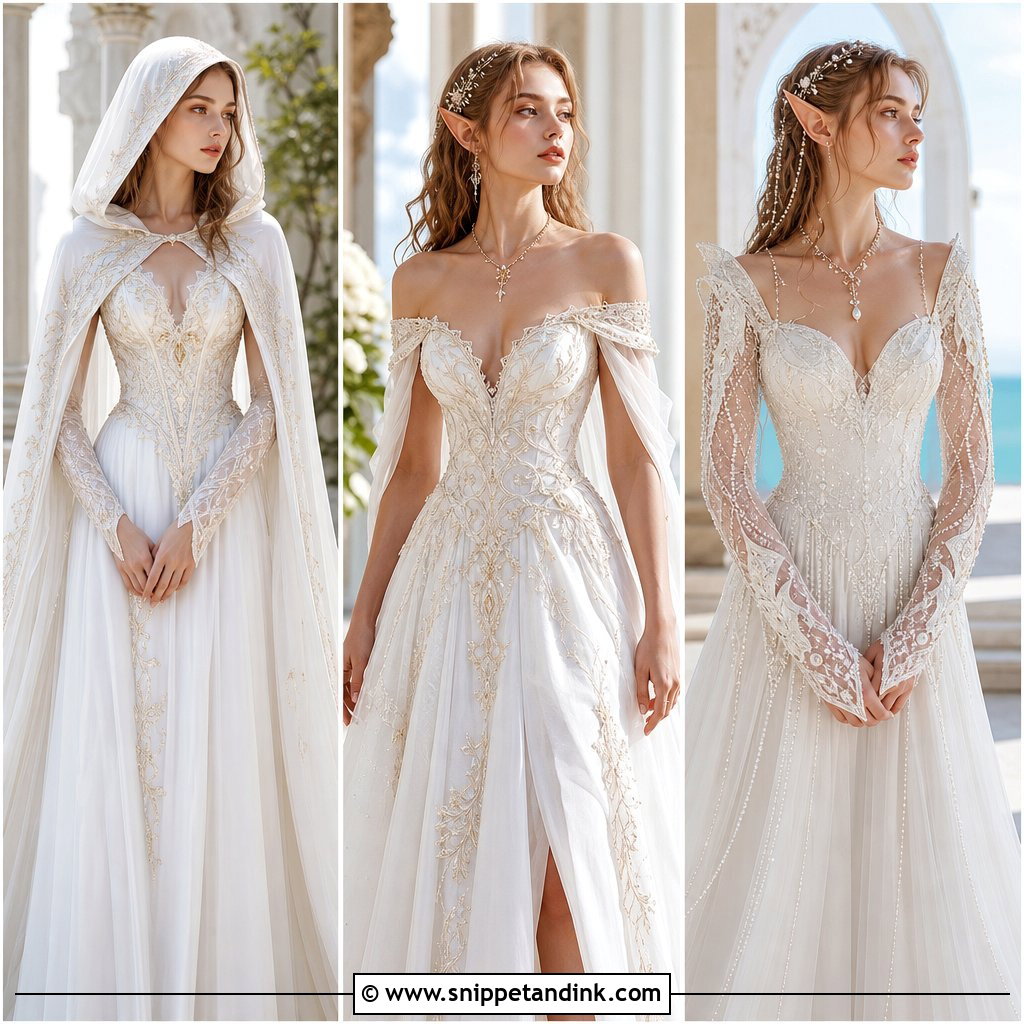
A hooded cape over a Celtic gown is as dramatic as bridal outfits get, especially for misty countryside photos. Sheer and lace hoods suit milder months; velvet or wool blends earn their place in winter. Under the cape, a fitted or A-line gown keeps a clean outline. I’d plan the hair with the hood in mind: a braided style stays neat underneath, while a voluminous updo gets crushed. Keep accessories small, with fine earrings, a delicate ring and soft bridal shoes.
6. Celtic Wedding Dress With Corset Bodice
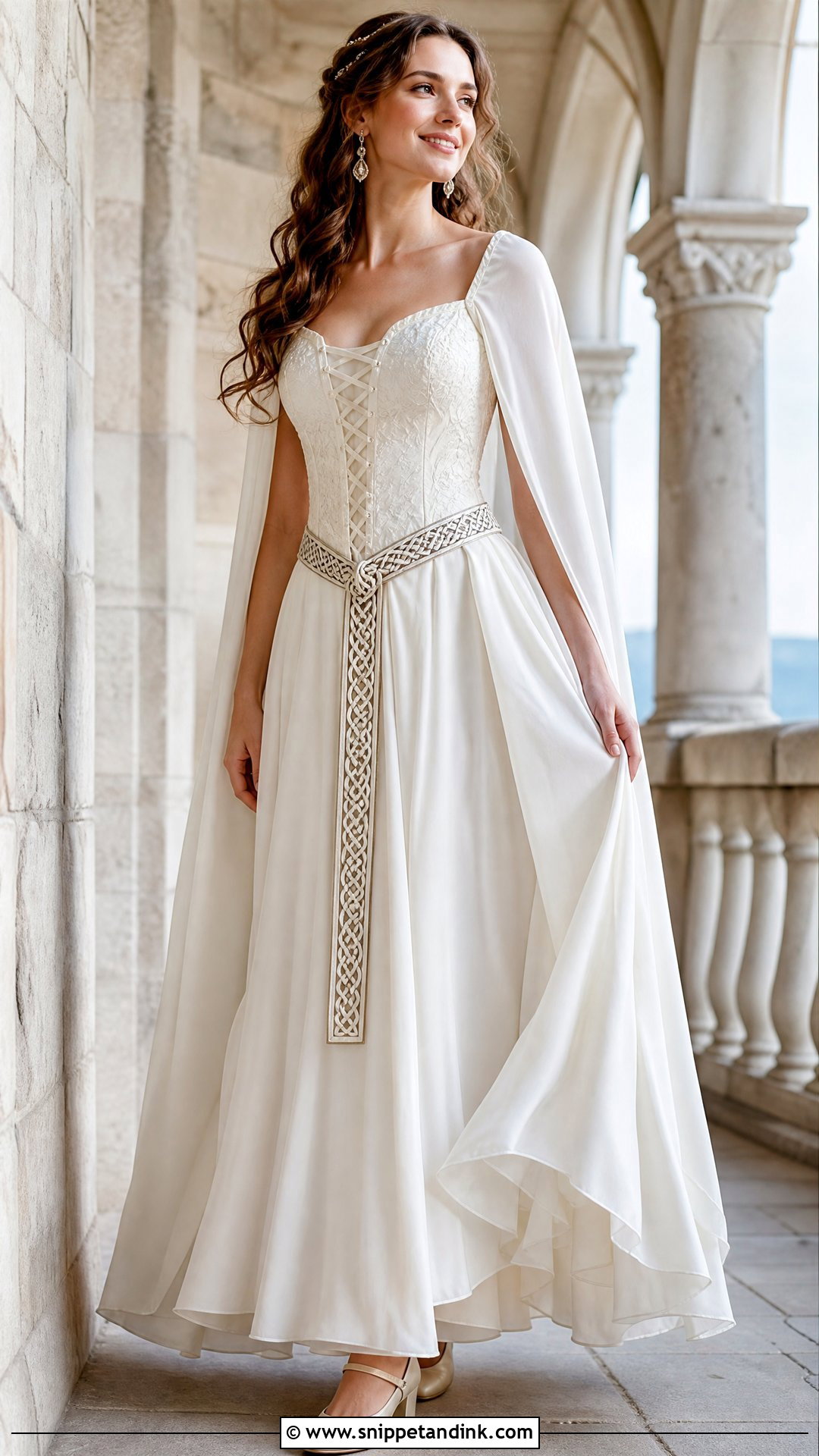
A corset bodice gives the old-world shape most Celtic brides picture. A lace-up back, exposed boning or a softly shaped bodice over a full skirt keeps it balanced, and the skirt can be chiffon, satin, linen or lace depending on formality. Real boning supports the bust and defines the waist on most figures, but it does take getting used to, so I recommend wearing it seated for a while at a fitting. A knotwork waist belt, soft curls and simple drop earrings suit it, with satin heels or embroidered flats.
7. Celtic Wedding Dress With Green Velvet Cloak
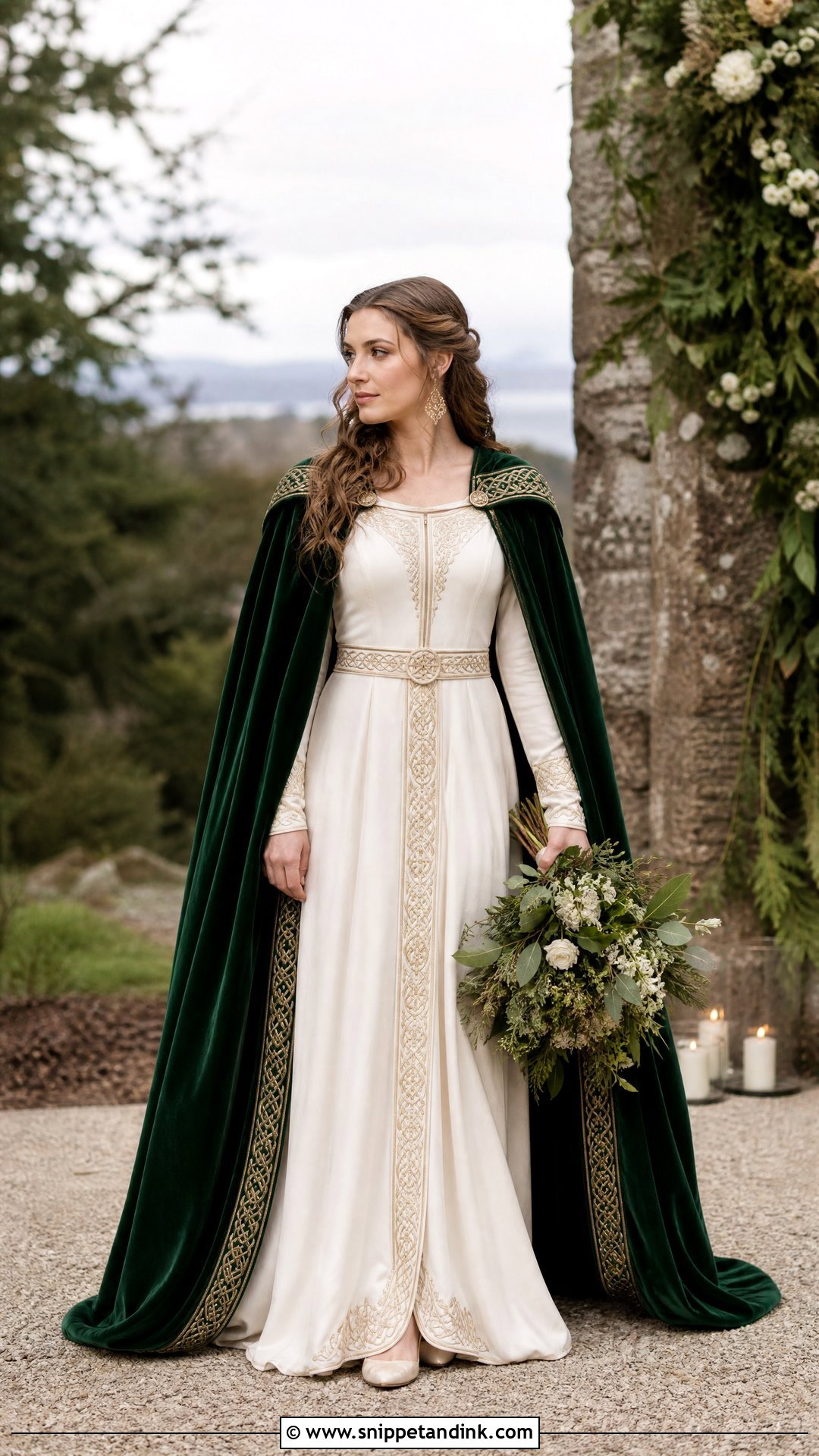
A green velvet cloak over ivory is the outfit I’d suggest for an autumn or winter ceremony in Ireland or the Highlands. Emerald, forest or moss green against ivory looks rich and links to woodland and Irish themes. Velvet is heavy, though, so the cloak should fasten securely at the collarbone and the gown underneath needs long sleeves or a smooth bodice to layer cleanly. Gold jewellery, soft waves and ivory or nude shoes are enough, and a greenery bouquet ties the cloak in.
8. Celtic Wedding Dress With Gold Embroidery
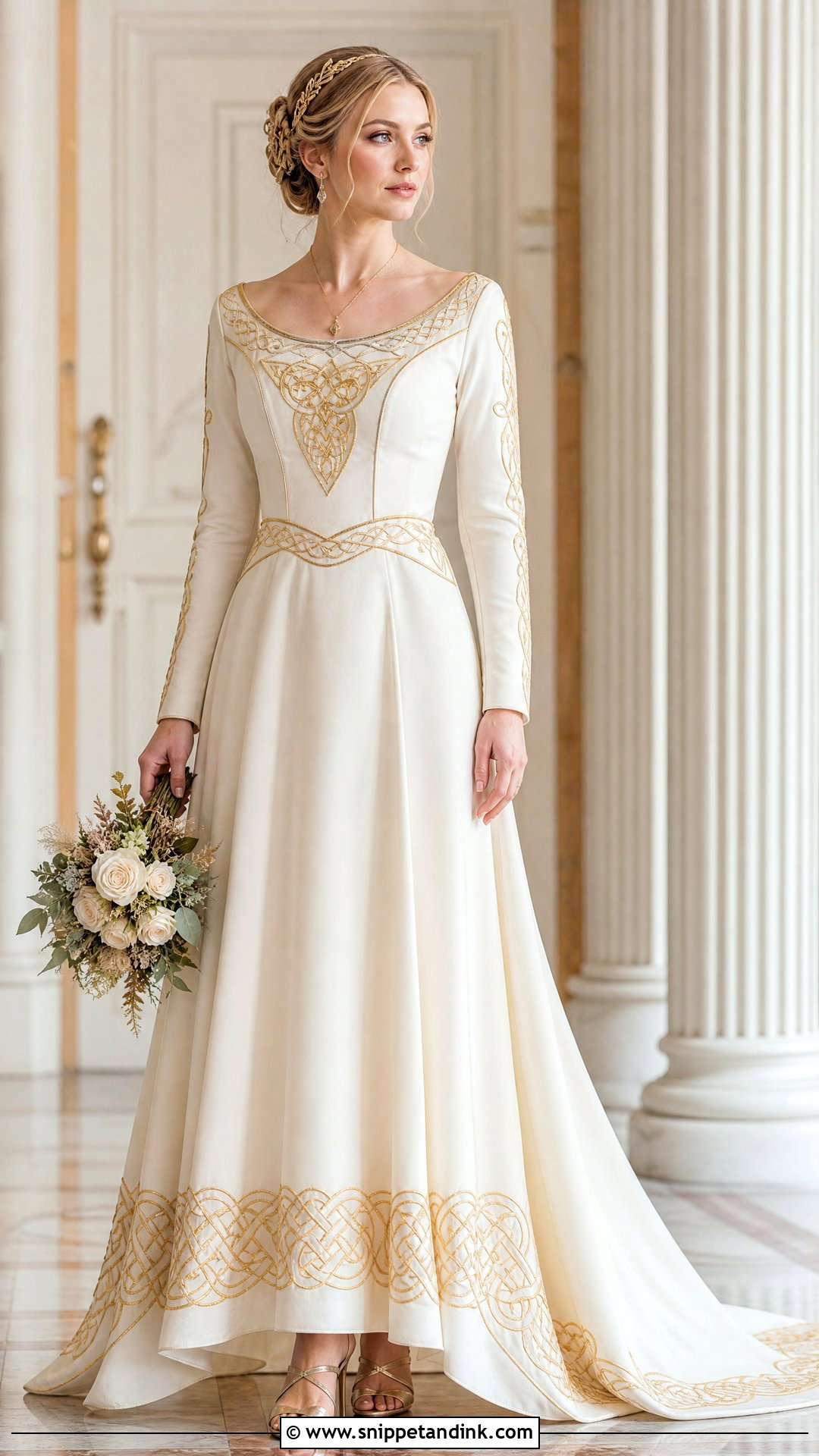
Gold thread warms an ivory, cream, champagne or soft beige gown and gives it an heirloom feel. Metallic embroidery is stiffer than silk thread, so I keep it off the inside of the arms and the side seams where it can rub. The waist, neckline, sleeves or train are better places. A flowing A-line or a fitted gown with a long skirt lets the gold show without weight. Gold earrings, a fine bracelet and soft metallic heels match it, and a small gold hairpiece works with braids, twists or loose waves.
9. Celtic Wedding Dress With Lace-Up Back
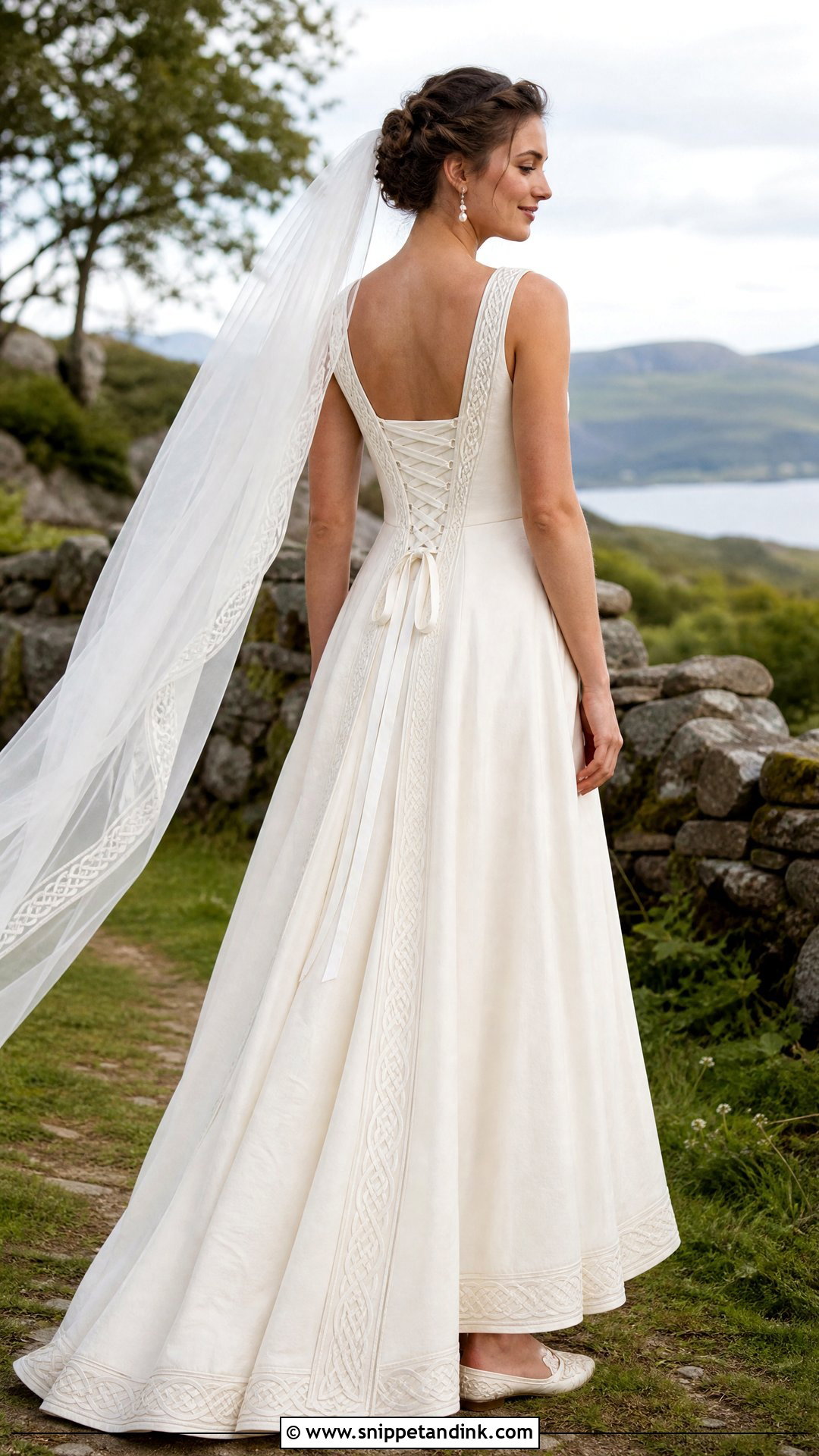
Lace-up backs are one of the most practical details on a Celtic gown, because they adjust. If your weight shifts slightly before the wedding, or you want a little more room after dinner, the lacing gives it to you. Satin ribbon looks bridal, corded lacing looks medieval and braided ties feel rustic. Keep the front simple with a sweetheart, square or modest scoop neckline. Ask whoever laces you to start from the bottom and keep tension even; uneven lacing twists the back panels. A soft veil, small earrings and comfortable heels or flats complete it.
10. Celtic Wedding Dress With Flowing Chiffon Skirt
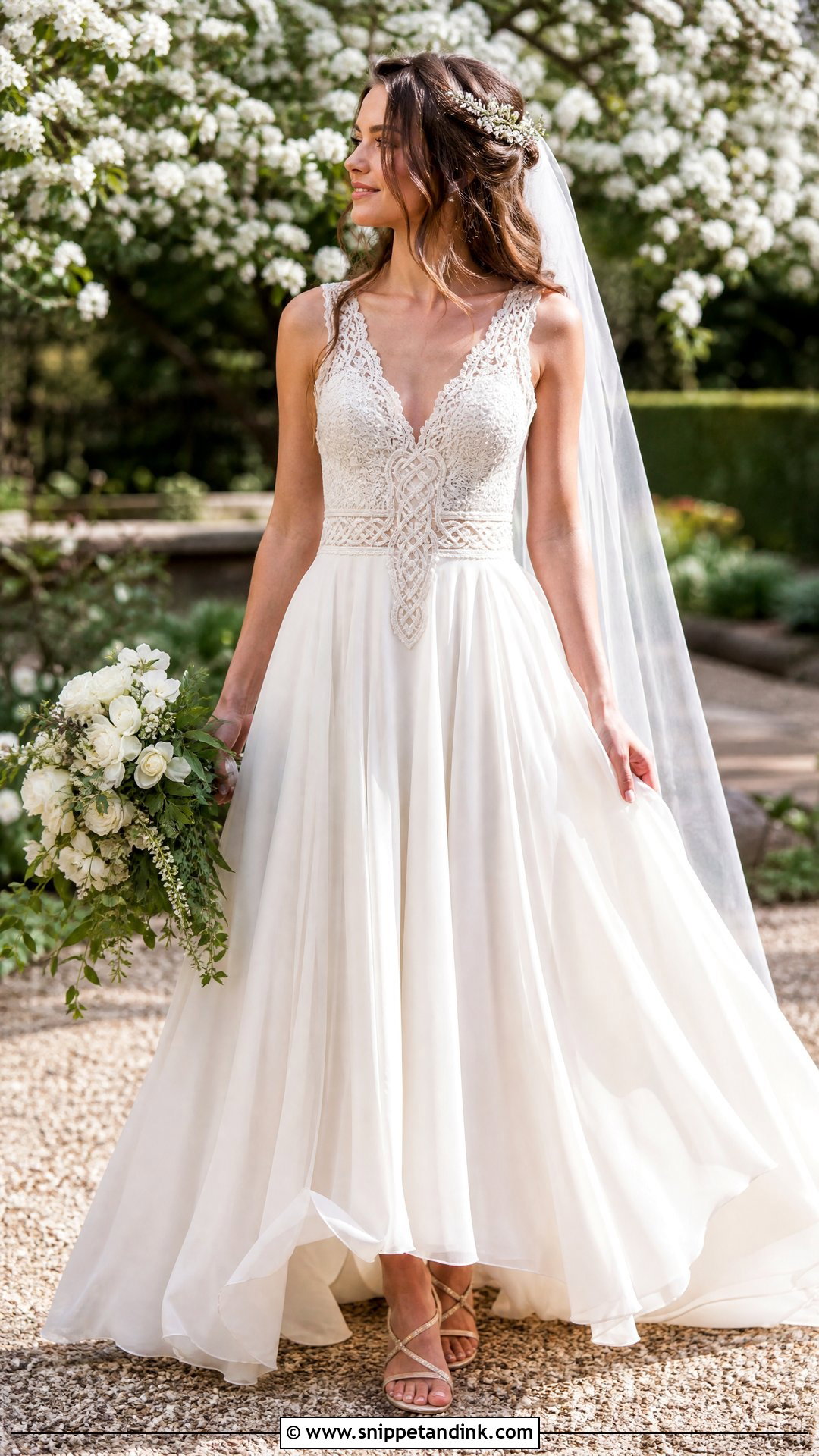
Chiffon is the fabric I’d choose for a cliffside, meadow or garden ceremony in warm months. It moves in the slightest breeze and feels cool on the skin. Pair the skirt with a lace bodice, an embroidered neckline or soft long sleeves to bring the Celtic note in. On grass, chiffon picks up moisture at the hem, so I’d go ankle-length or plan a bustle. Delicate sandals, a floral hair comb and simple earrings keep it light, and a chiffon scarf or sheer cape adds movement without weight.
11. Celtic Wedding Dress With Linen Fabric
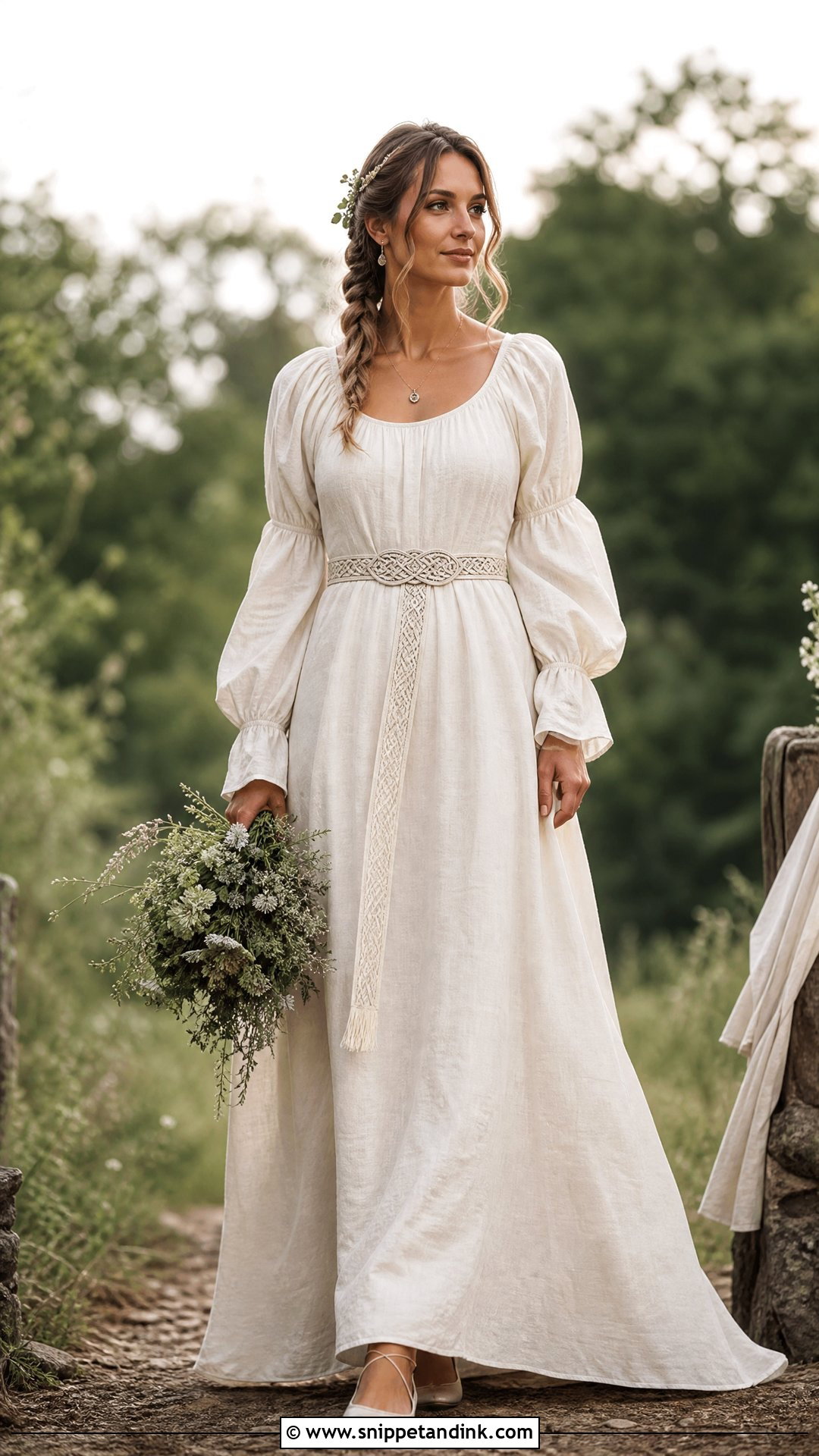
Linen has the most honest historical feel of any bridal fabric, and it breathes better than almost anything else in summer. Its one drawback is creasing: linen wrinkles as soon as you sit, so I tell brides to accept the soft crumple as part of the look rather than fight it. A long A-line with a square neckline and gathered sleeves balances well. Leather sandals or ivory flats, a woven belt and minimal jewellery suit it, with a loose braid or natural waves for a small, rustic ceremony.
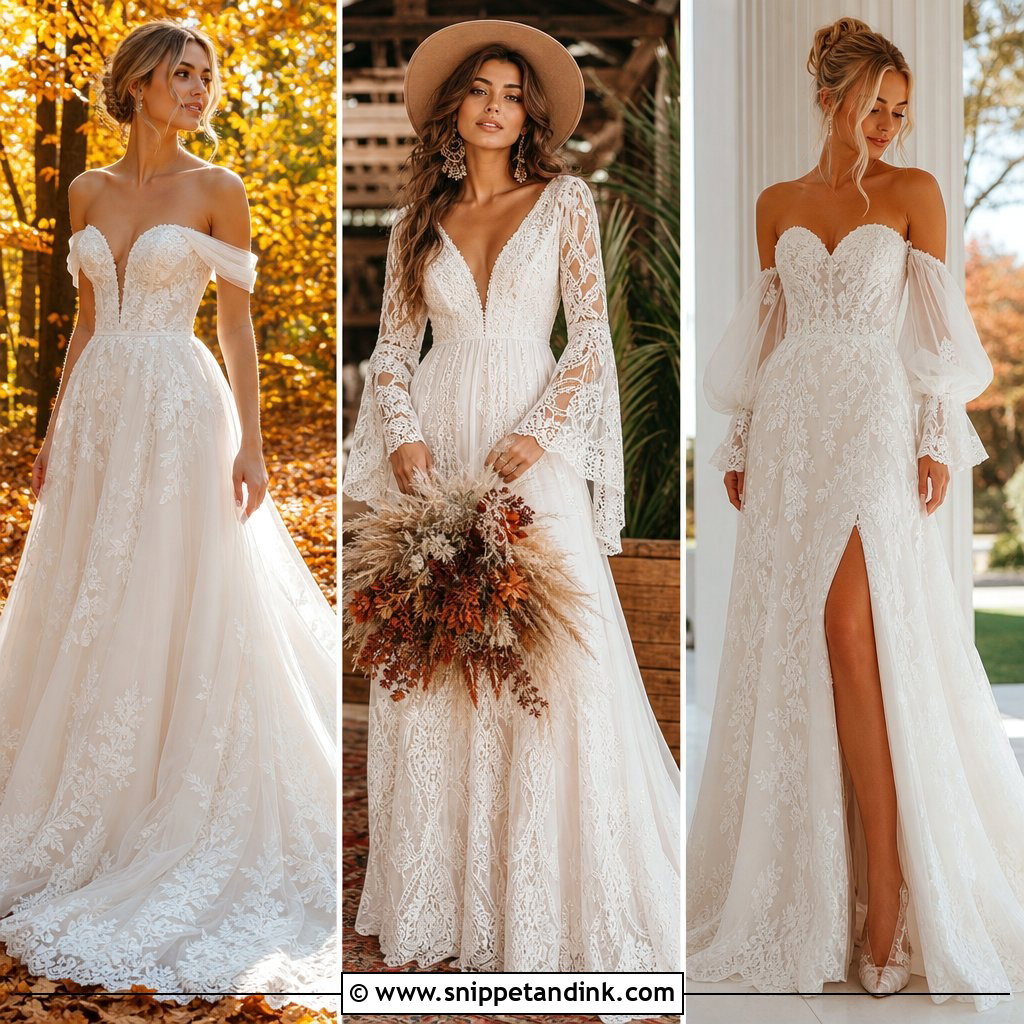
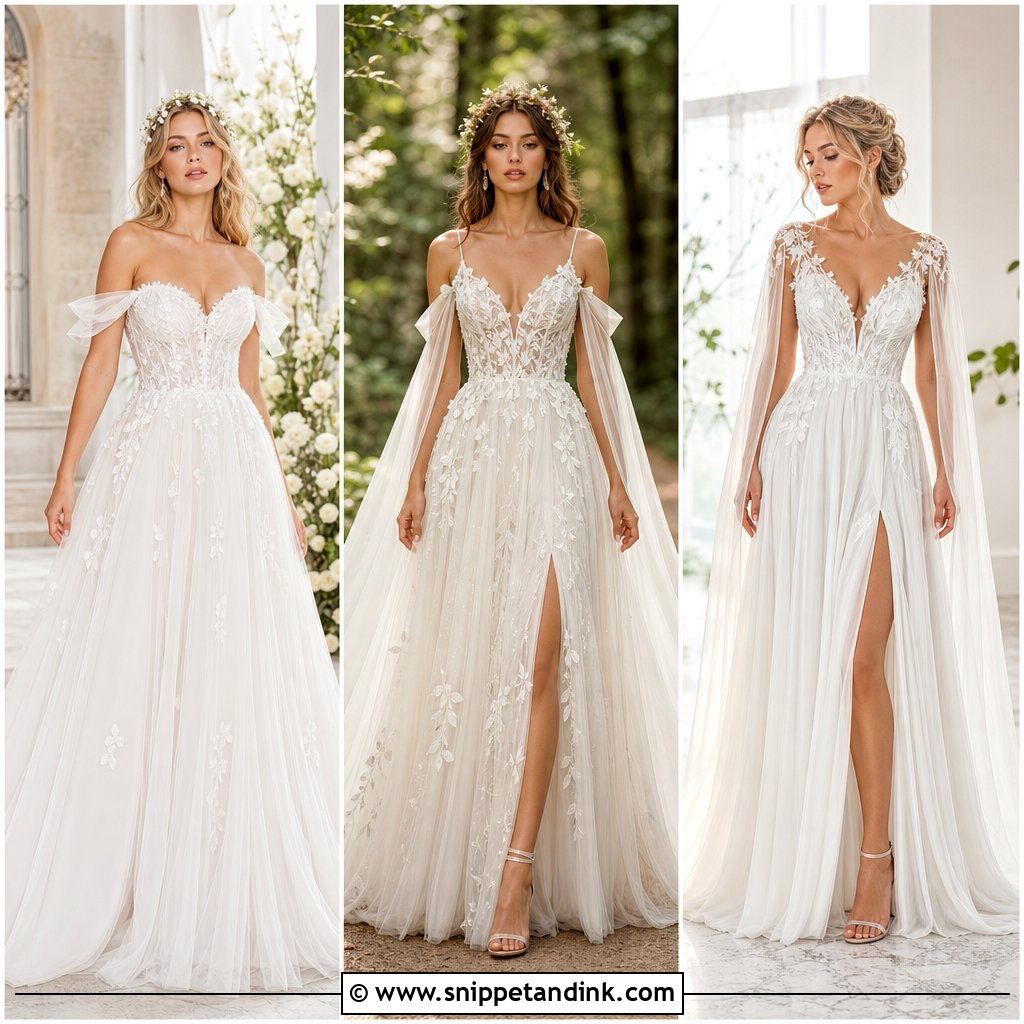
12. Celtic Wedding Dress With Off Shoulder Neckline
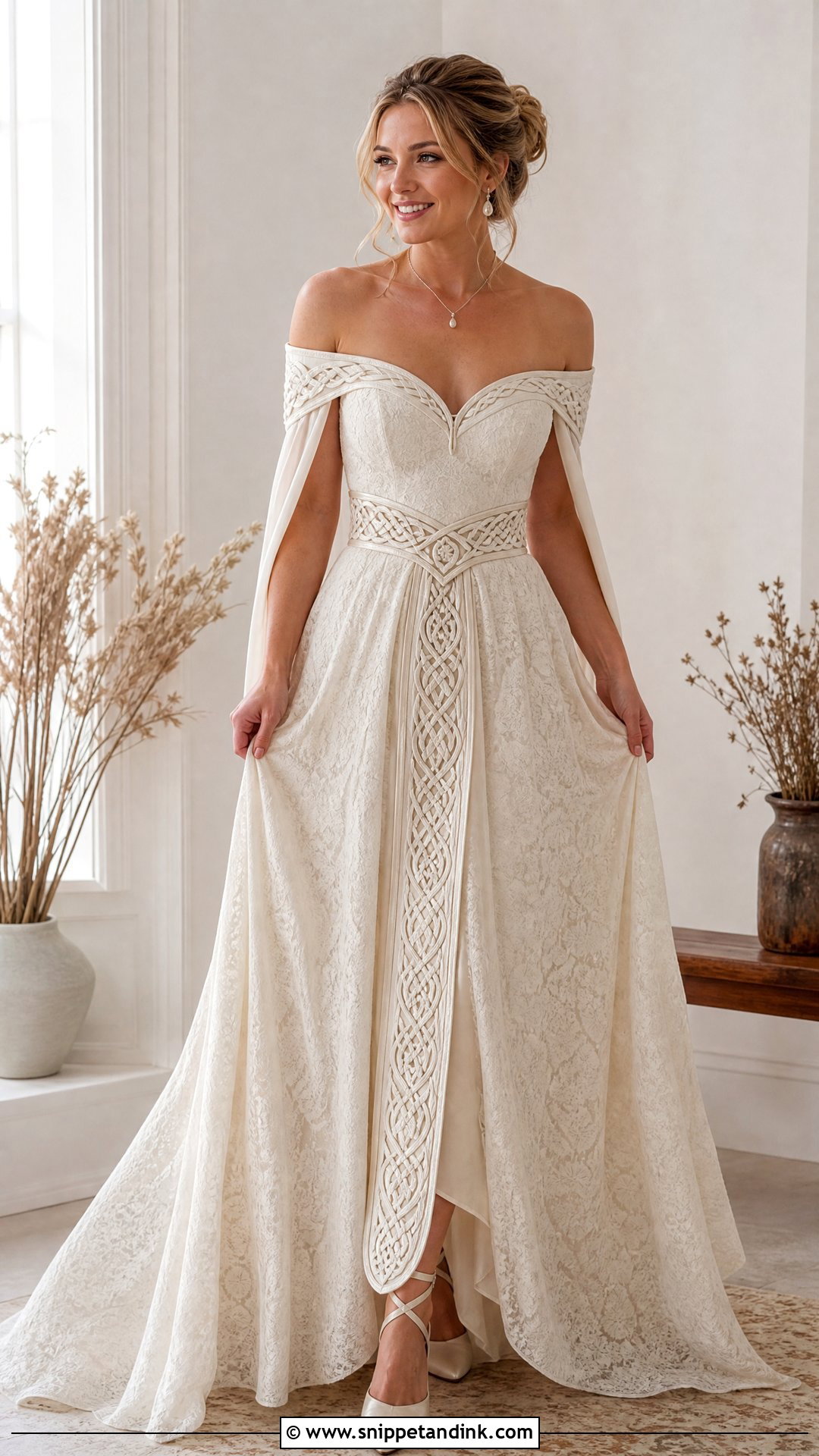
Off shoulder necklines soften the Celtic look, especially in lace, chiffon or satin with long sleeves or gentle draping. To keep the heritage feel, add knot embroidery, a braided waist or a flowing skirt. Off shoulder sleeves limit how high you can lift your arms, which matters if your ceremony includes handfasting, so I test that at the fitting. A delicate necklace, pearl earrings and soft heels work here, with loose curls, a braided crown or a low bun with a few face-framing pieces.
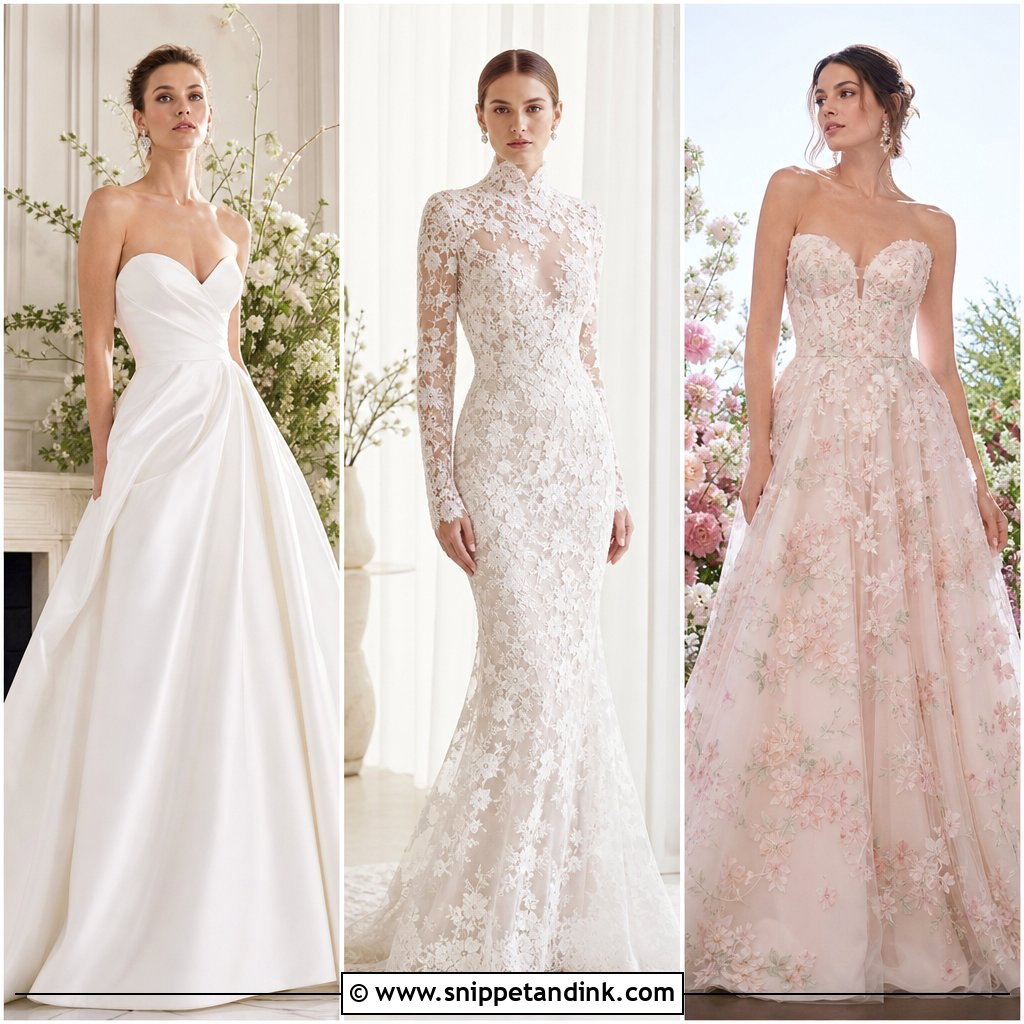
13. Celtic Wedding Dress With High Neck Lace
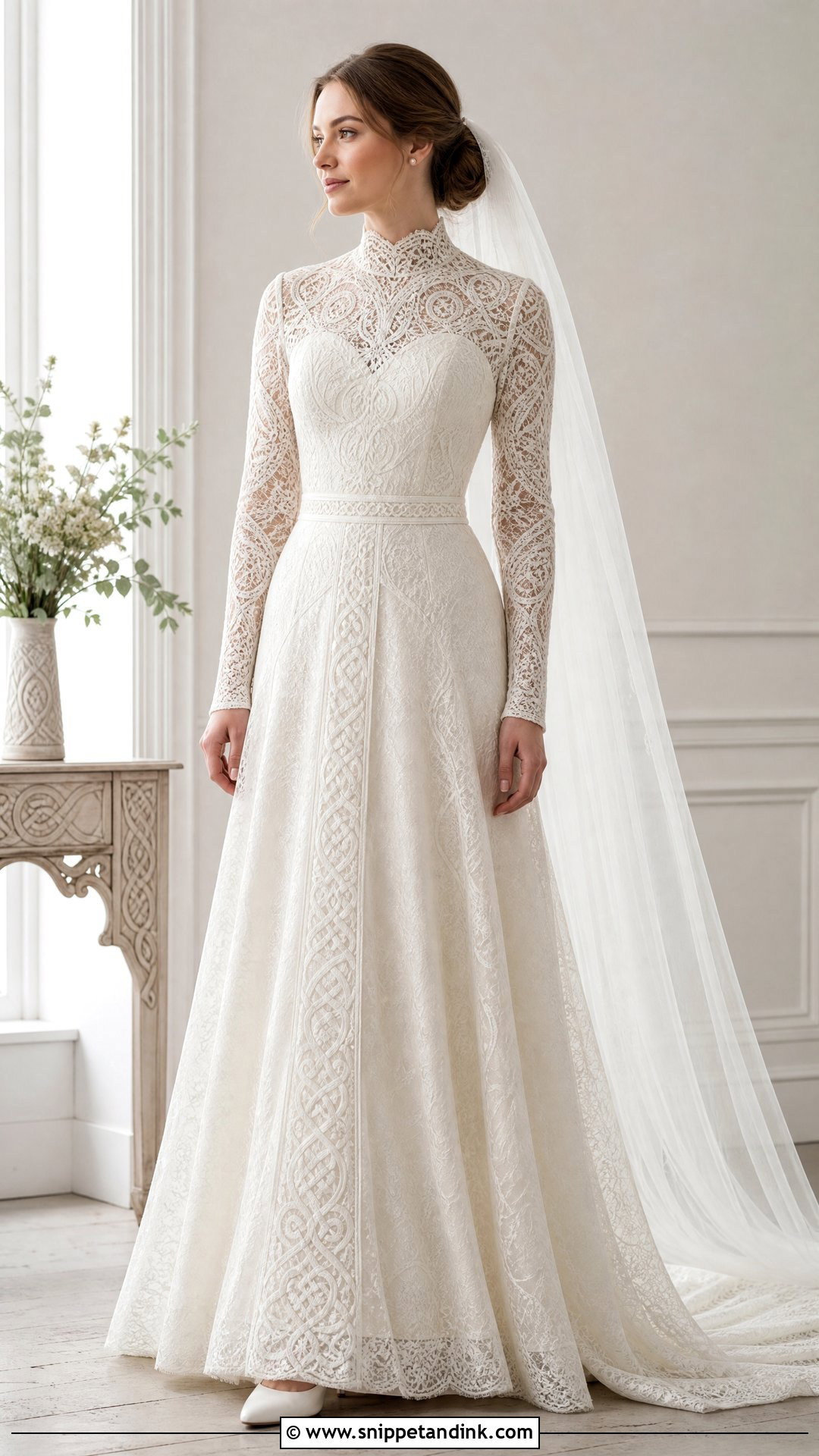
A high lace neck gives the most coverage and the strongest vintage feel. With long sleeves, a fitted bodice and an A-line or column skirt, the silhouette stays balanced. Vine motifs or subtle embroidery at the collar bring the Celtic detail. The collar has to sit comfortably when you turn your head, so I fit it with a little ease. A low bun, pearl studs and simple ivory shoes suit it, with either a long veil or a small hair comb if you want a cleaner finish.
14. Celtic Wedding Dress With Detachable Sleeves
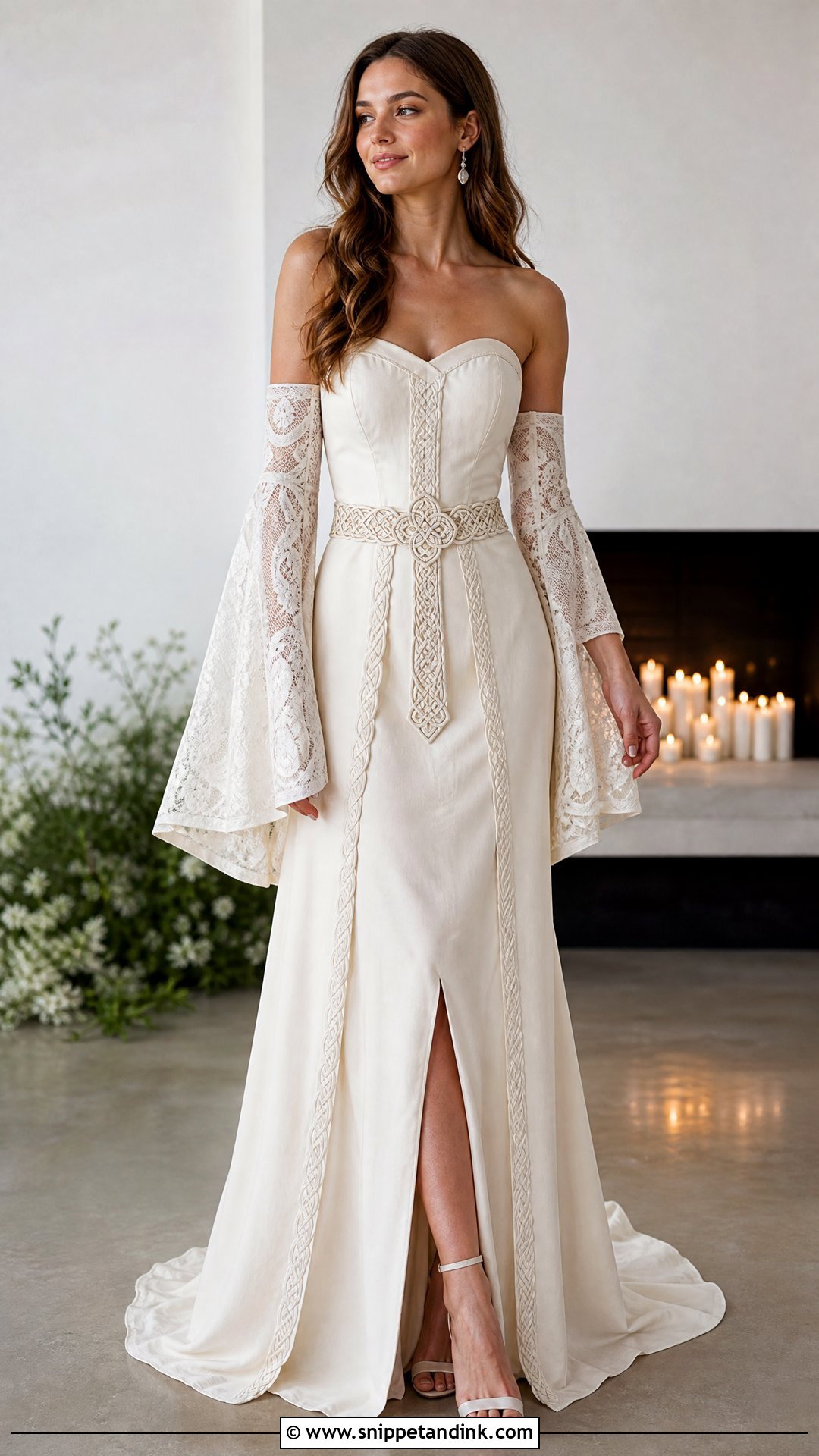
Detachable sleeves solve a real Irish and Scottish weather problem: a cold stone church followed by a warm, crowded reception. Wear lace, chiffon or bell sleeves for the ceremony, then take them off to dance. The attachment should be hidden snaps or small hooks on a strapless or sleeveless gown, and I practise removing them with a bridesmaid at the last fitting. A knotwork waist belt, soft earrings and elegant heels stay with you through both looks.
15. Celtic Wedding Dress With Blue Embroidery
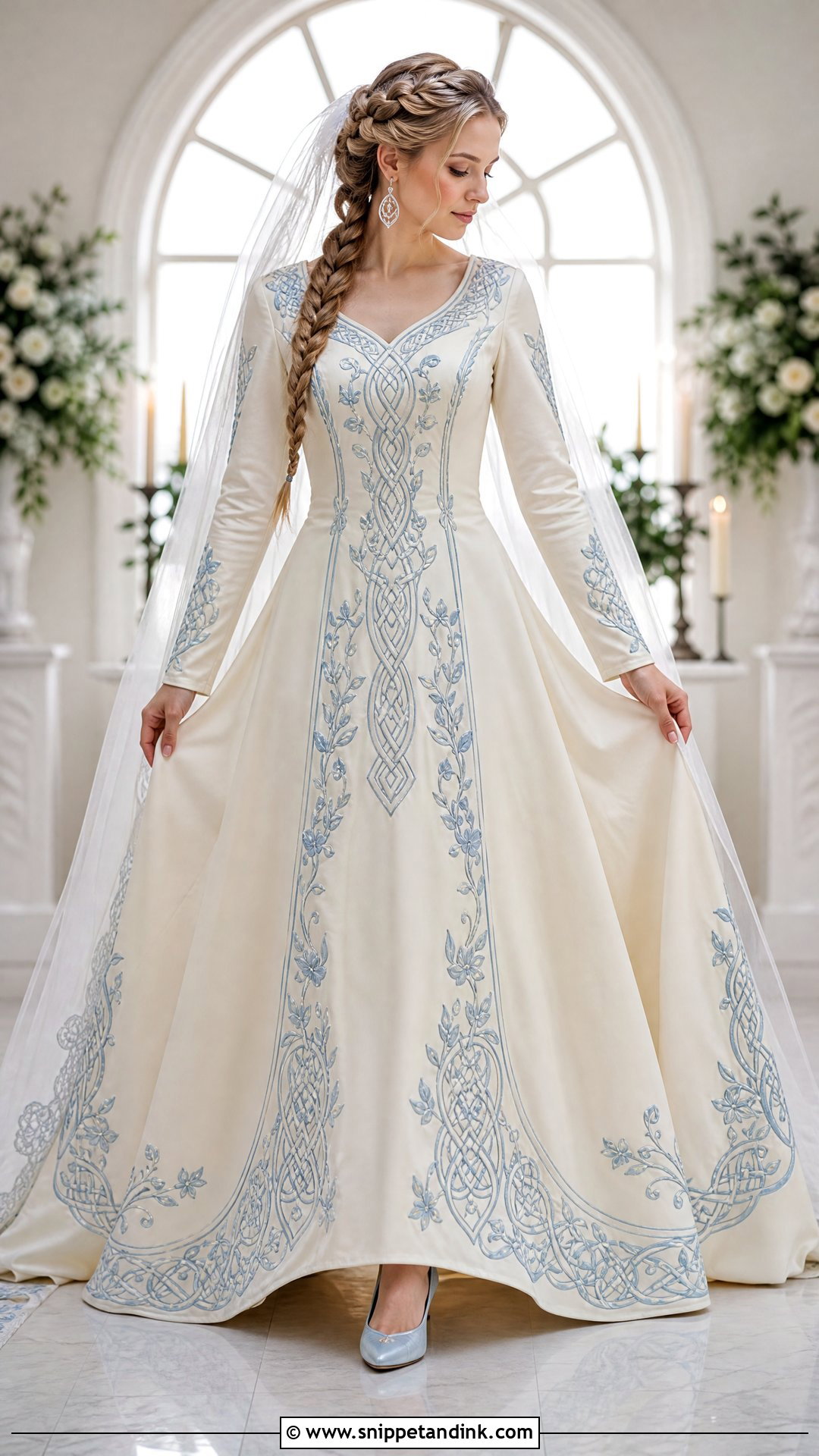
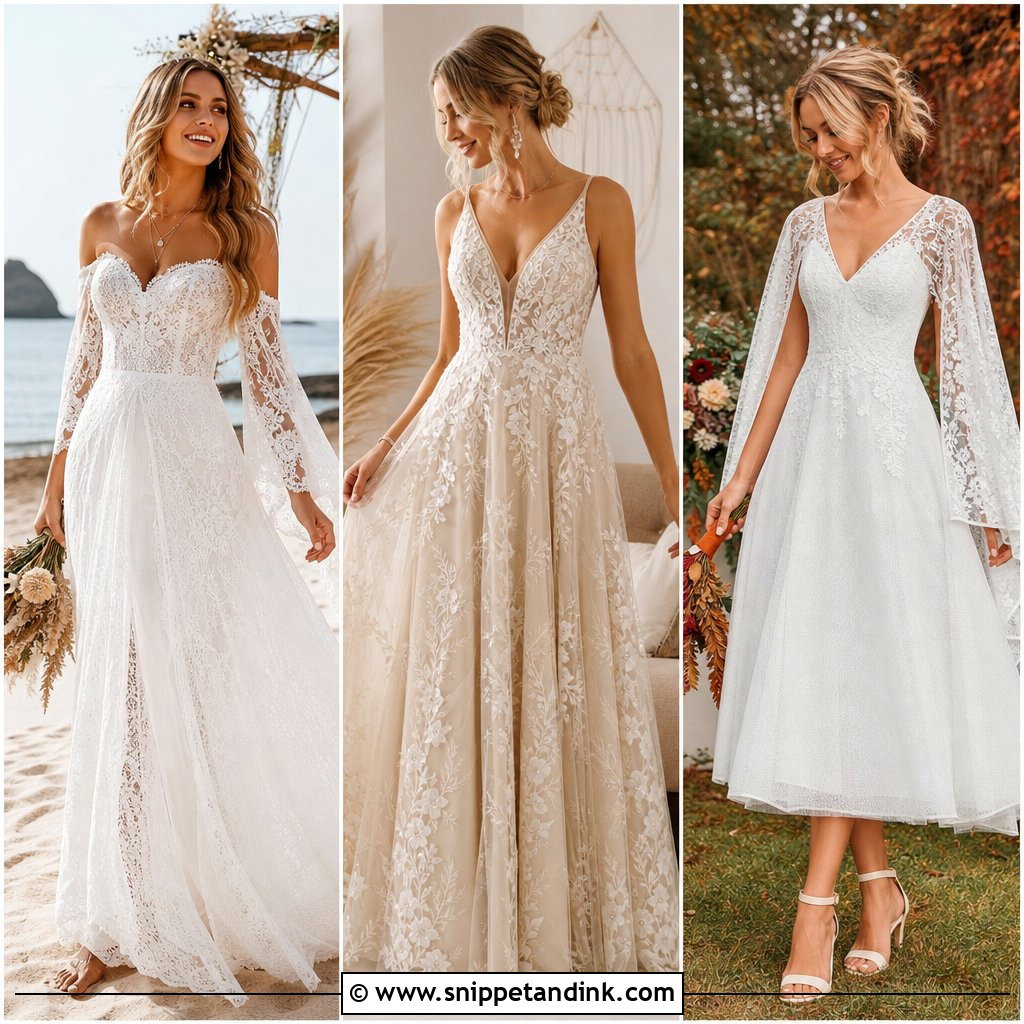
Blue embroidery on an ivory, white or pale grey gown gives you your something blue without an extra accessory. Blue thread works in knotwork, floral vines, sleeve trim or a hem border. Choose one shade of blue and match it to one other detail, the shoes or the earrings, so it looks planned. I keep the silhouette simple so the stitching is the focus. Silver earrings, pale blue shoes and a soft veil or braided style finish it.
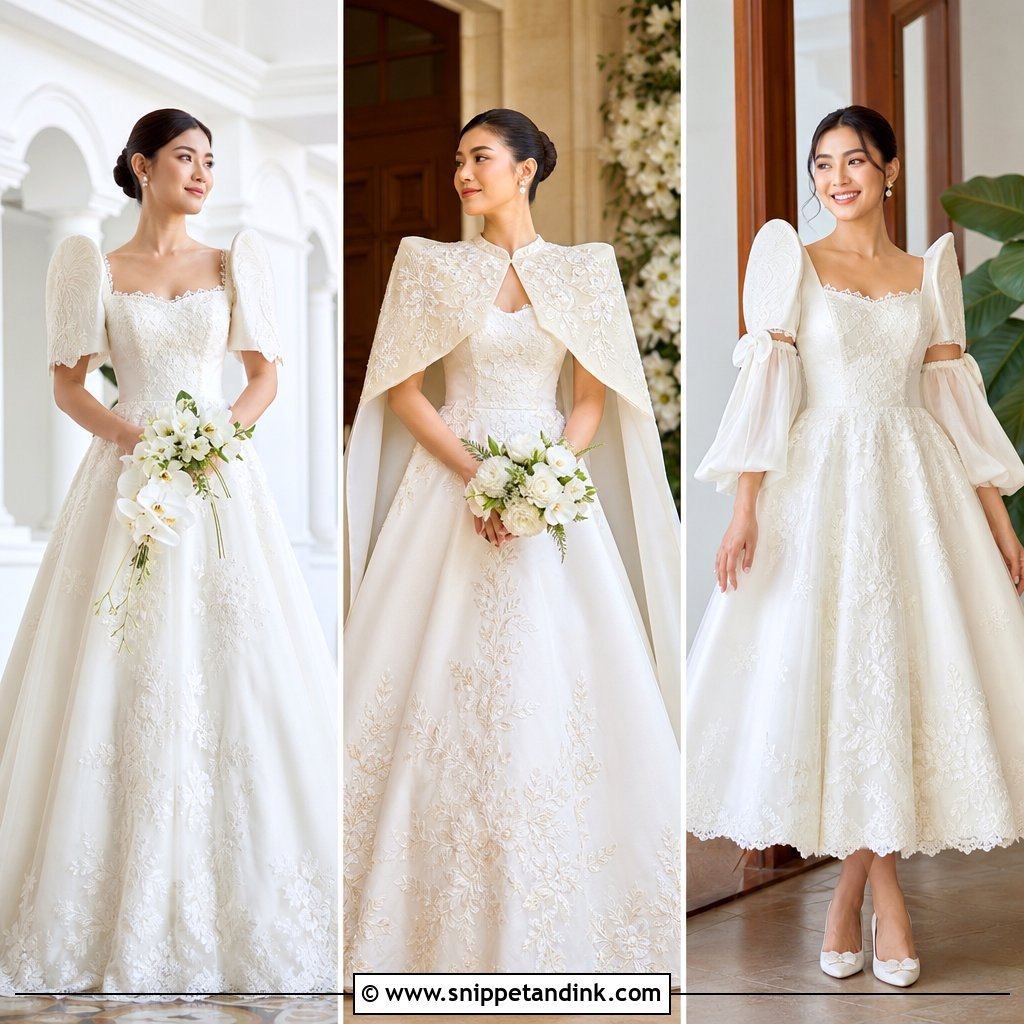
16. Celtic Wedding Dress With Renaissance Sleeves
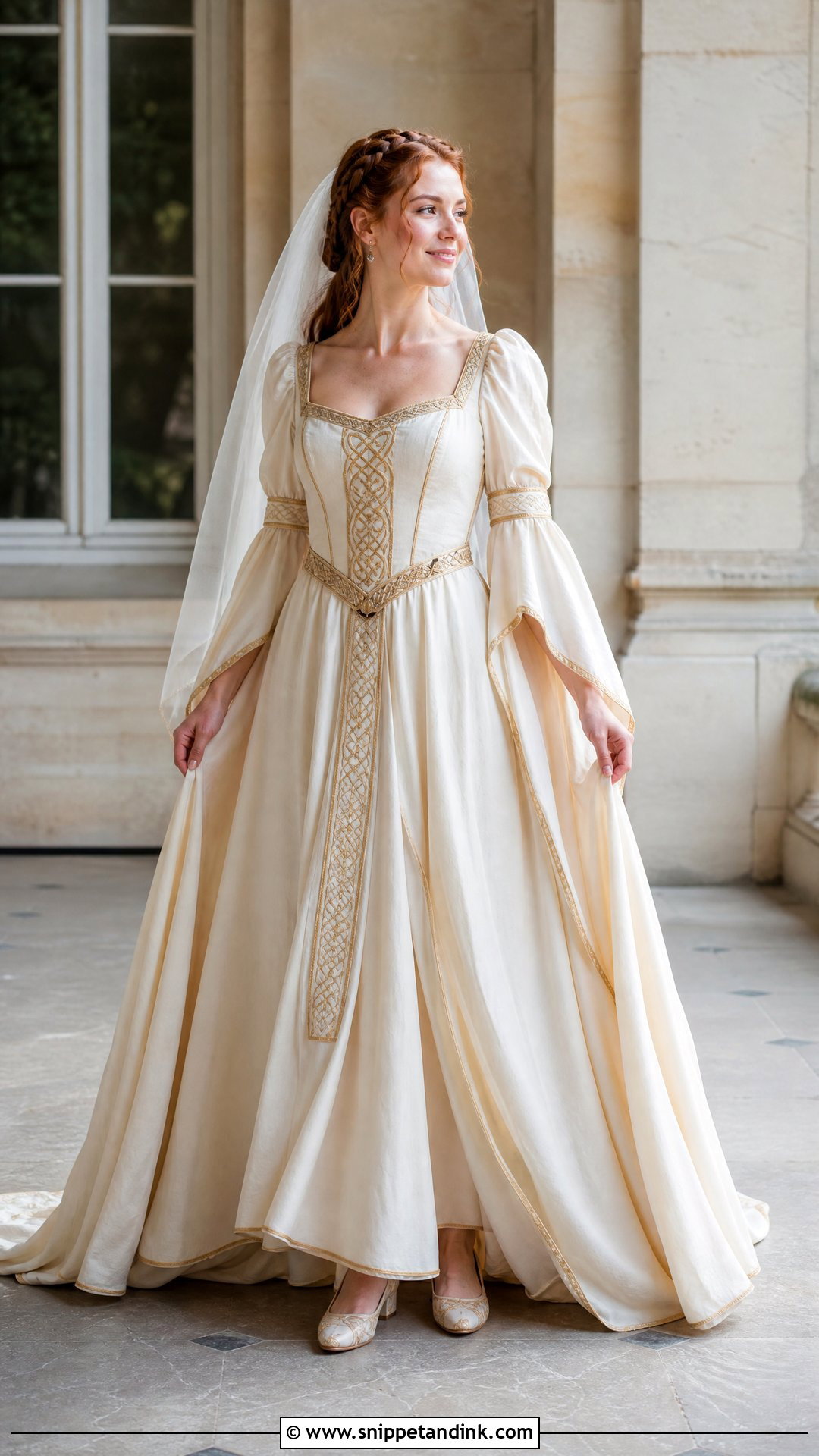
Renaissance sleeves are the boldest historical note on this list. Puffed at the shoulder, fitted through the forearm or gathered with lace or ribbon, they need a structured bodice and a flowing skirt to keep the proportions right. Ivory, cream and champagne are easiest, with gold or green trim adding Celtic character. Big shoulder volume makes the upper body look wider, which can be good for balancing a full skirt and less flattering on a petite frame. A simple veil, braided hair and delicate shoes keep the sleeves in charge.
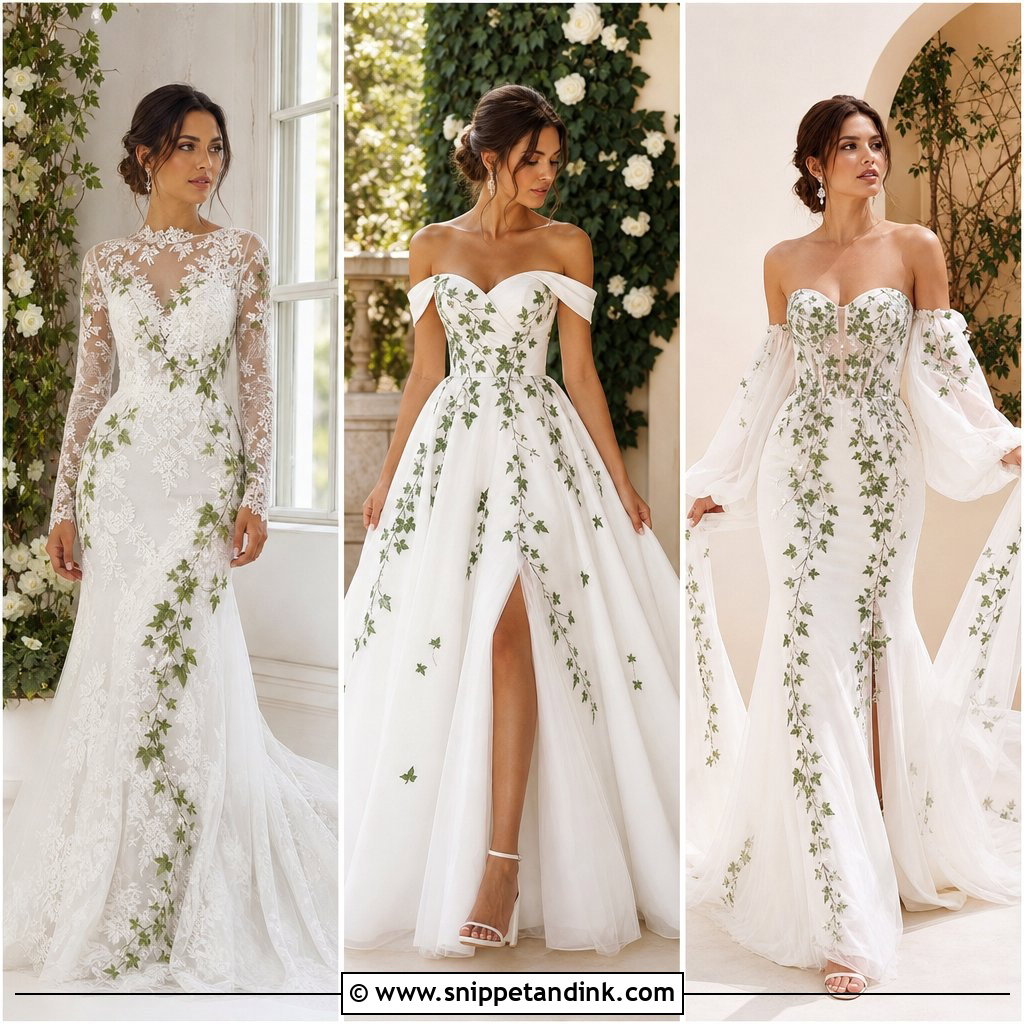
17. Celtic Wedding Dress With Floral Vine Embroidery
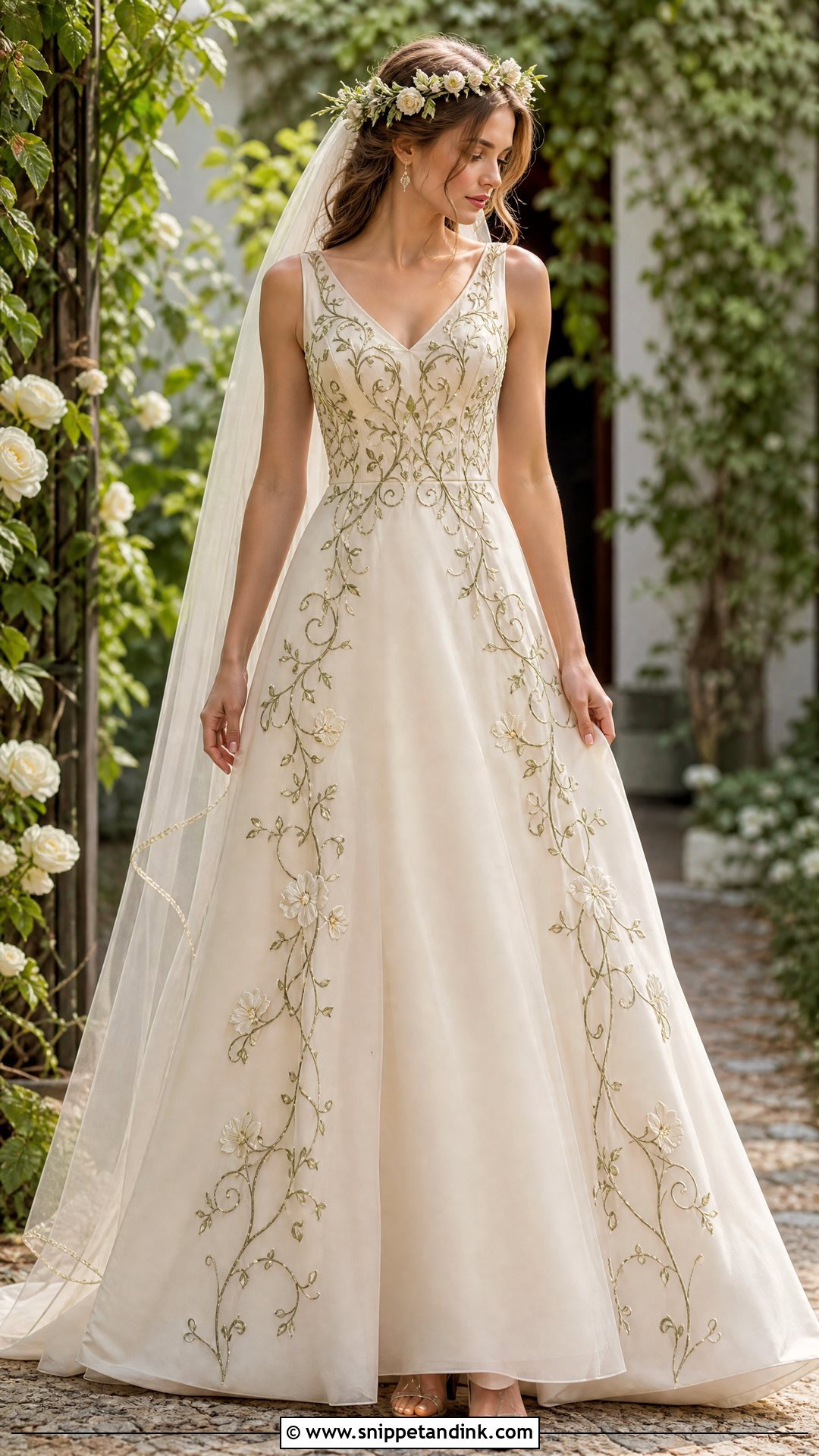
A gown with floral vine embroidery lets the dress echo a garden or meadow setting. Ivy, small leaves and shamrock-like accents give a Celtic mood without heaviness, especially when the vine trails along the bodice, sleeves or skirt rather than covering it. A flowing A-line gives the pattern room. A flower crown, small earrings and neutral heels or flats suit it, and I’d pick crown flowers in the same tones as the thread so the two don’t clash in close-ups.
18. Celtic Wedding Dress With Silver Belt
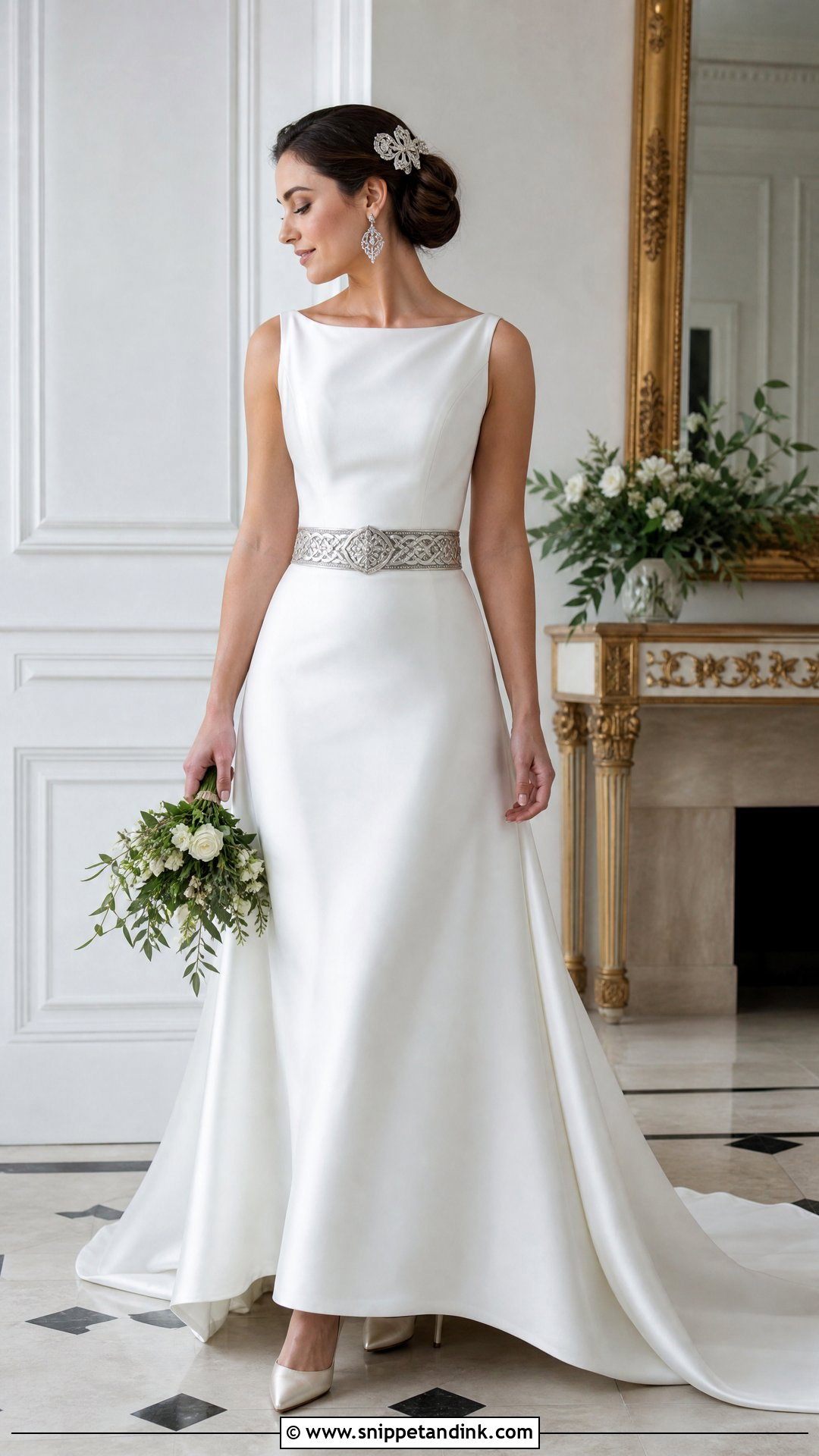
A silver belt is the smallest Celtic detail on this list and often the one I recommend to brides who don’t want a themed dress. Knotwork, leaf designs, filigree or a simple braid can all suit. Worn over a plain satin gown, lace or chiffon A-line, it defines the waist. Metal belts are heavy, so the clasp needs to be firm and the belt should sit on a seam or waistband, not on bare tulle, where it drags. Silver suits cool ivory, white and pale grey. Matching earrings and a hair comb finish it.
19. Celtic Wedding Dress With Tulle Overskirt
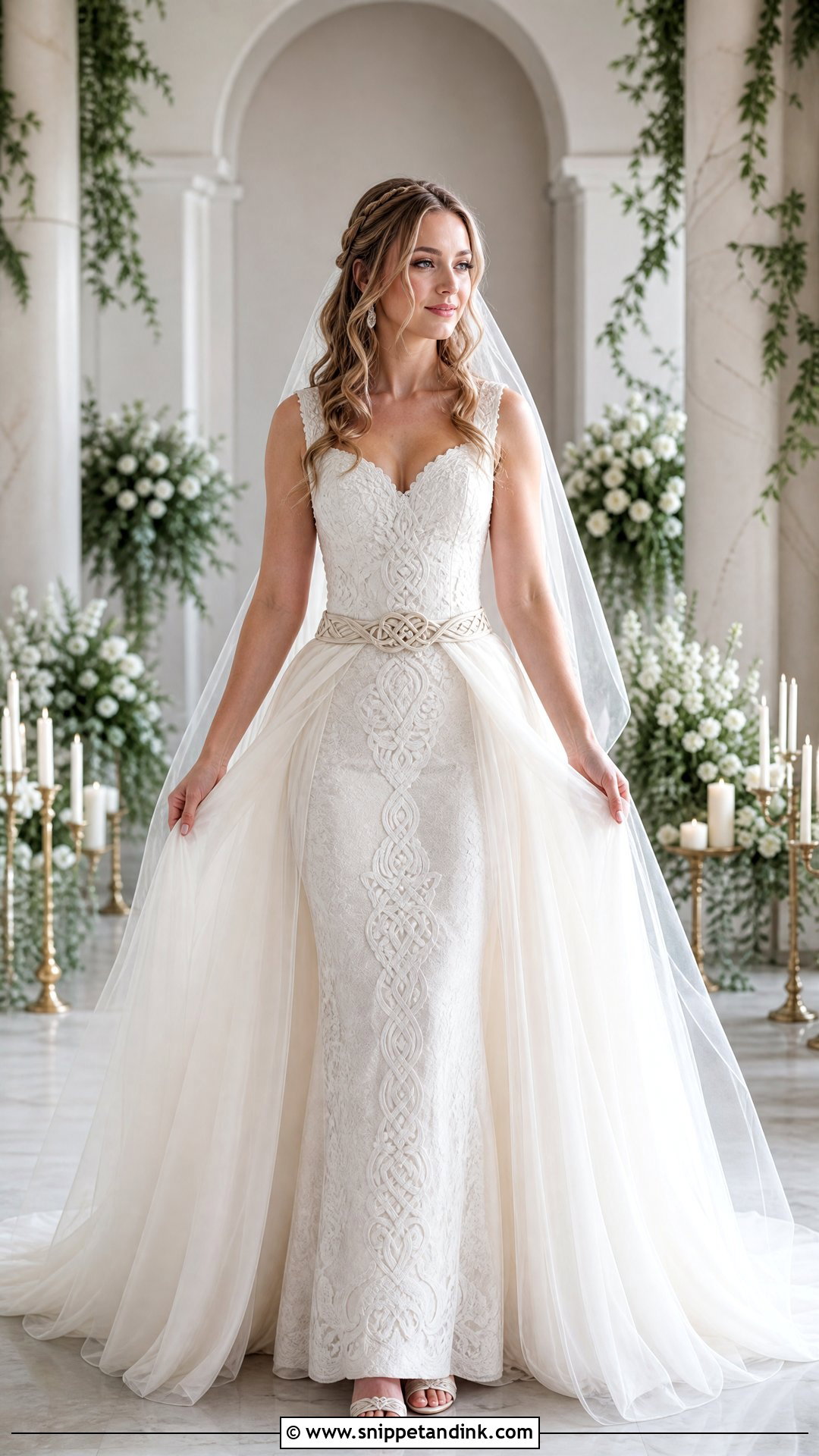
A tulle overskirt adds ceremony volume to a fitted lace or satin gown, then comes off for a lighter reception look. Subtle knot trim or vine lace at the waist keeps it Celtic. The waistband of the overskirt is where problems start: if it’s bulky, it shows a ridge on the gown underneath, so I ask for a flat fastening. Delicate heels, a sheer veil and soft waves or a braided updo suit both stages, and the overskirt needs a bag and someone to look after it once it’s off.
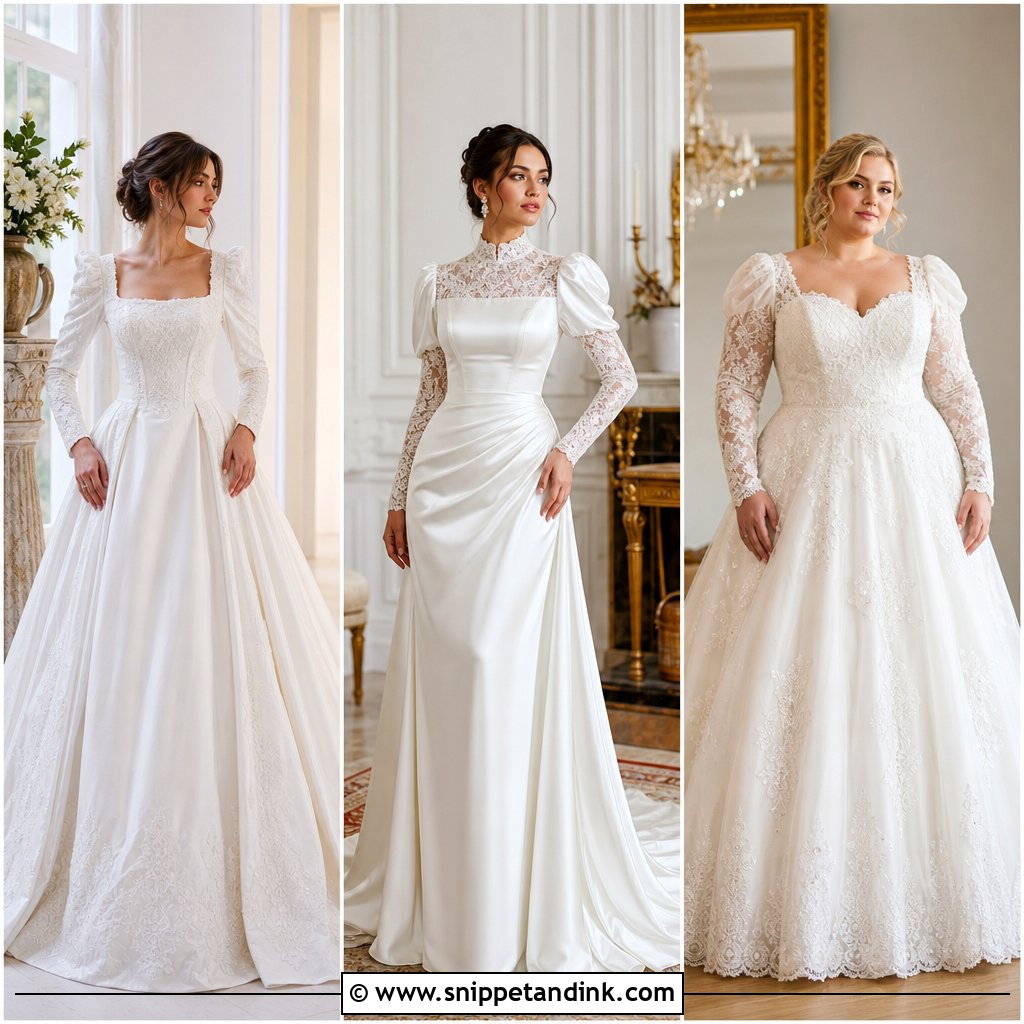
20. Celtic Wedding Dress With Ivory Capelet
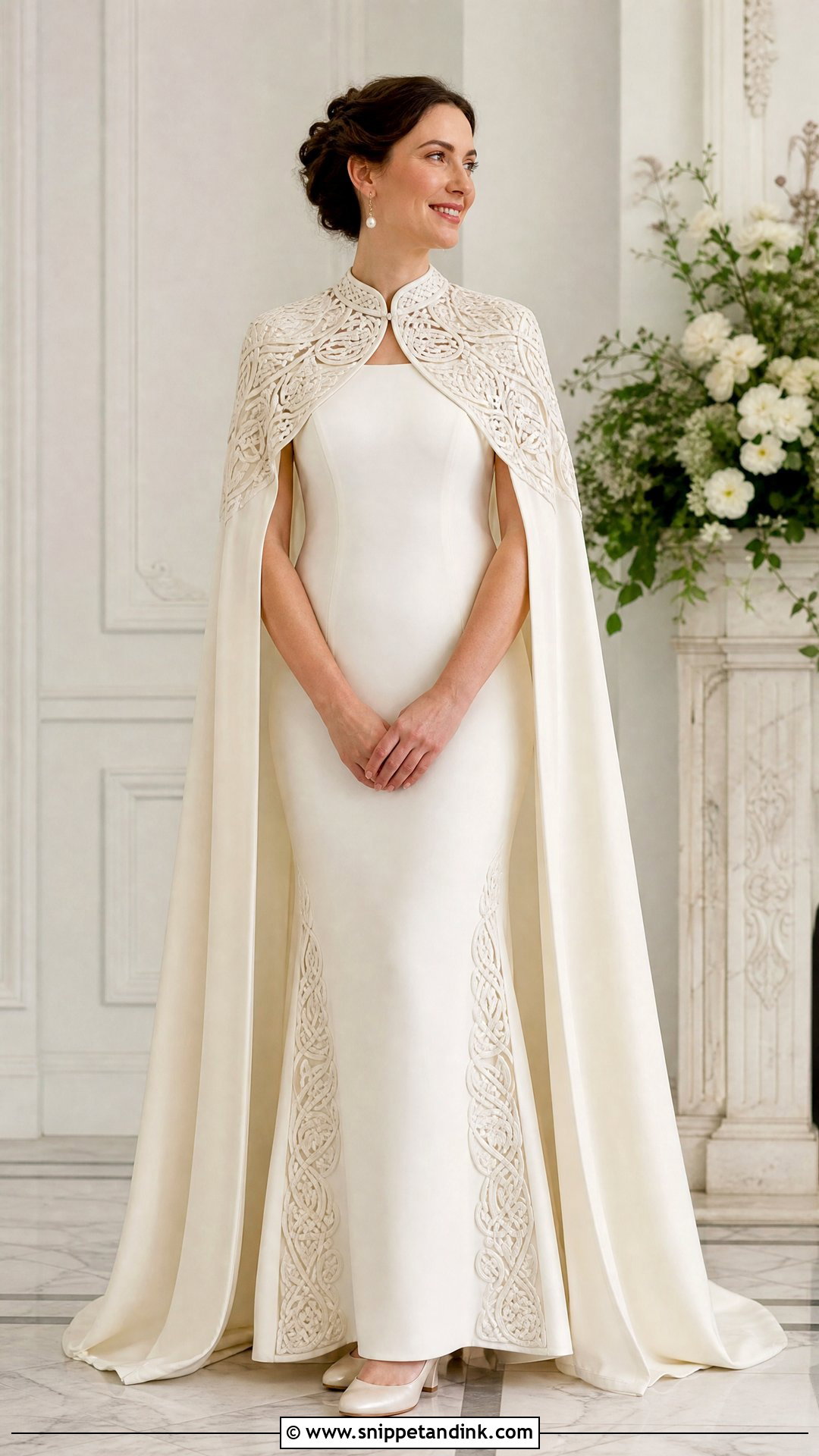
Capelets give shoulder coverage without the weight of a full cloak, which makes them easier to wear all day. Lace, wool blend, chiffon or embroidered fabric can suit depending on the season. Over a fitted gown, A-line or simple sheath, the capelet should end around the elbow or above so the dress shape still reads. Pearl earrings, low heels and a neat updo keep it tidy, and the capelet can come off for the reception if you want a lighter look later.
21. Celtic Wedding Dress With Square Neckline
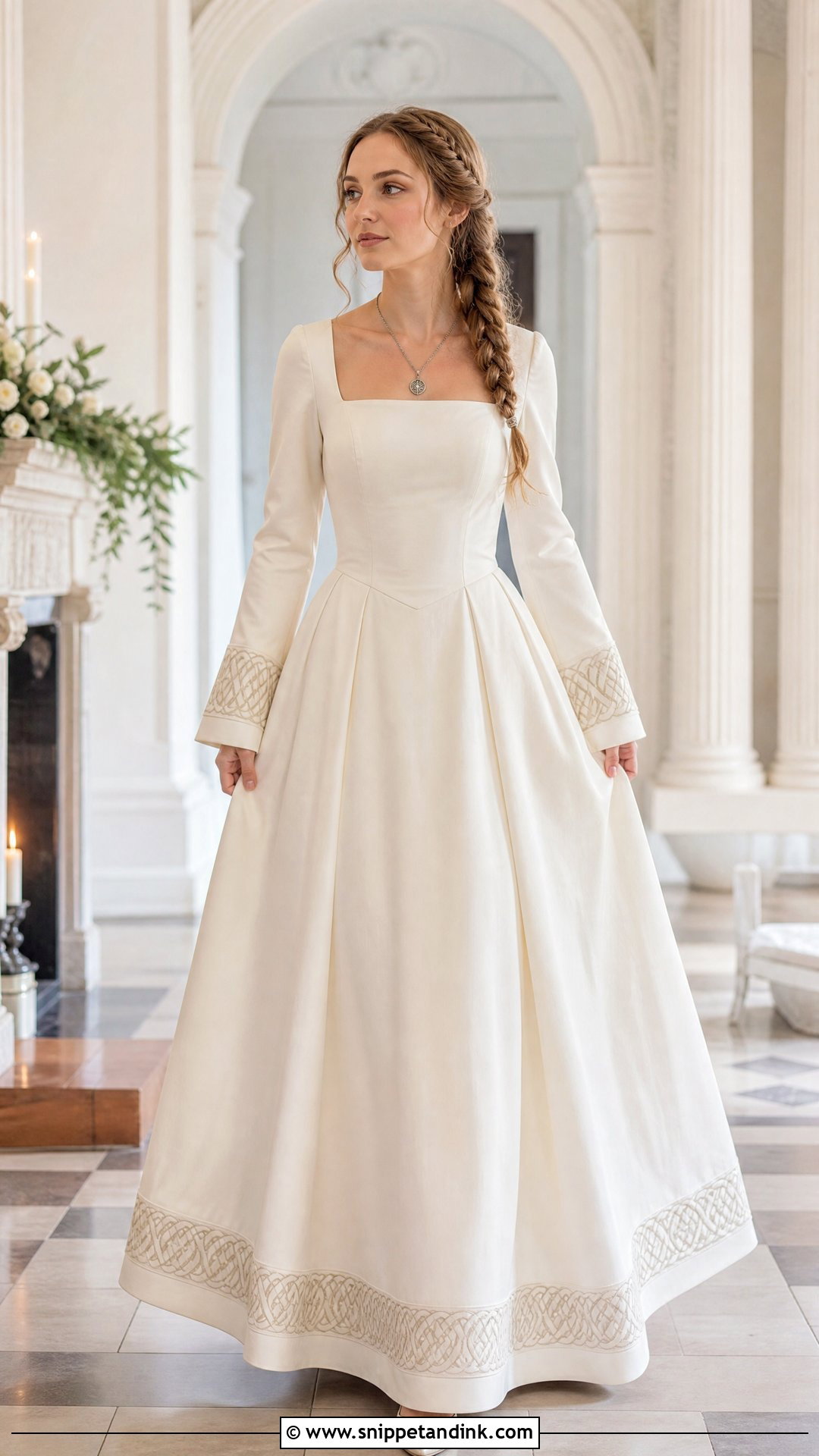
Square necklines have a historical feel and frame the collarbone while giving more structure than a plunge. With long sleeves, a fitted bodice and a full or flowing skirt, it reads quietly medieval. Subtle knot embroidery at the neckline or cuffs adds the Celtic note. I’d keep the neckline width in line with your shoulders; too wide and straps slip. A pendant necklace, braided hair and classic ivory shoes suit formal, rustic or outdoor weddings alike.
22. Celtic Wedding Dress With Sheer Lace Cape
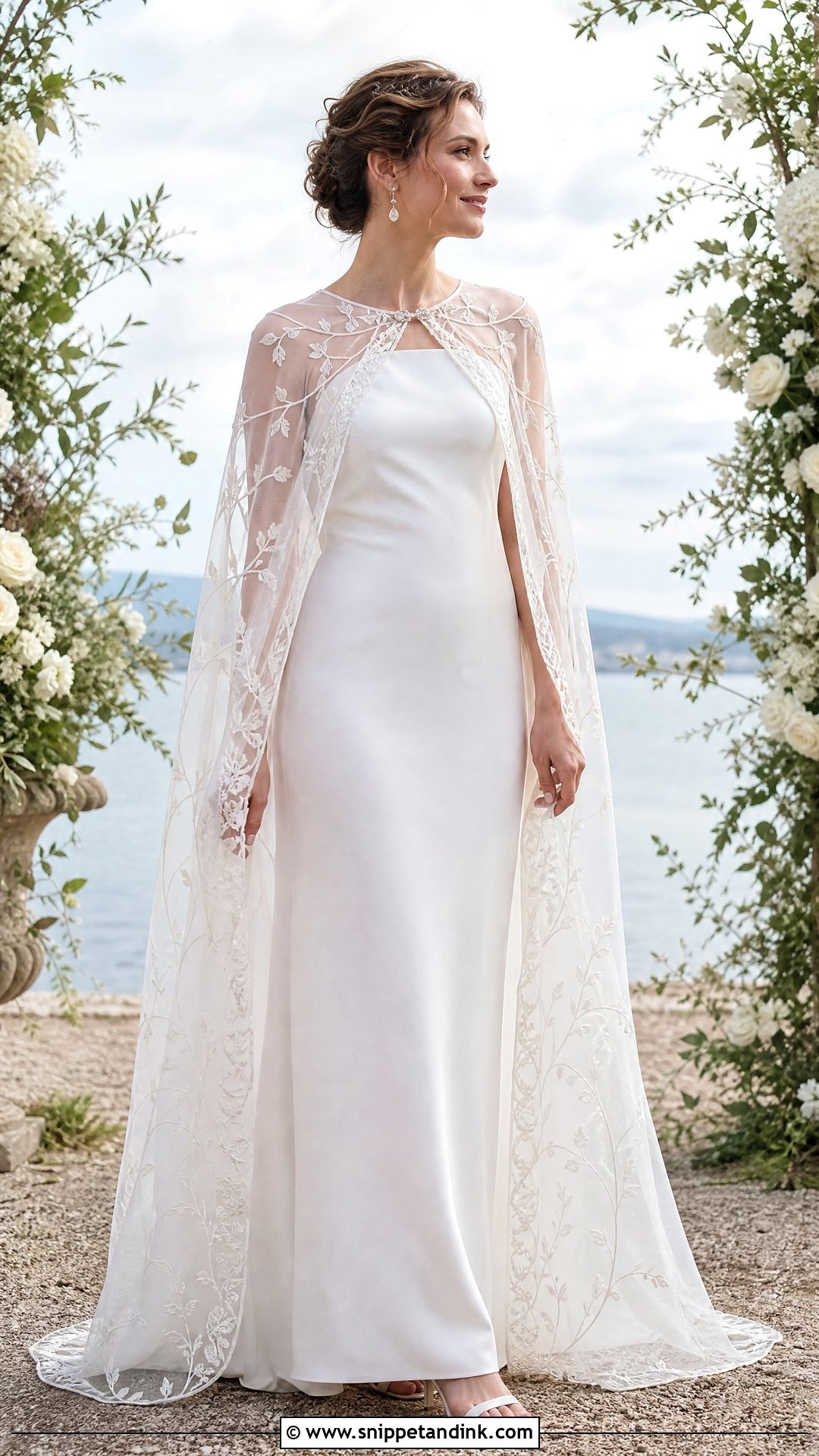
Sheer lace capes give movement without covering the dress. They can fall from the shoulders or attach at the neckline, and vine, knot or floral lace keeps the Celtic thread running. Underneath, a simple fitted gown, an A-line or a satin column works best. I treat the cape as the veil and skip both, since two sheer layers blur each other. Delicate earrings, soft heels and a relaxed updo complete it, and the cape catches the light every time you turn.
23. Celtic Wedding Dress With Champagne Satin
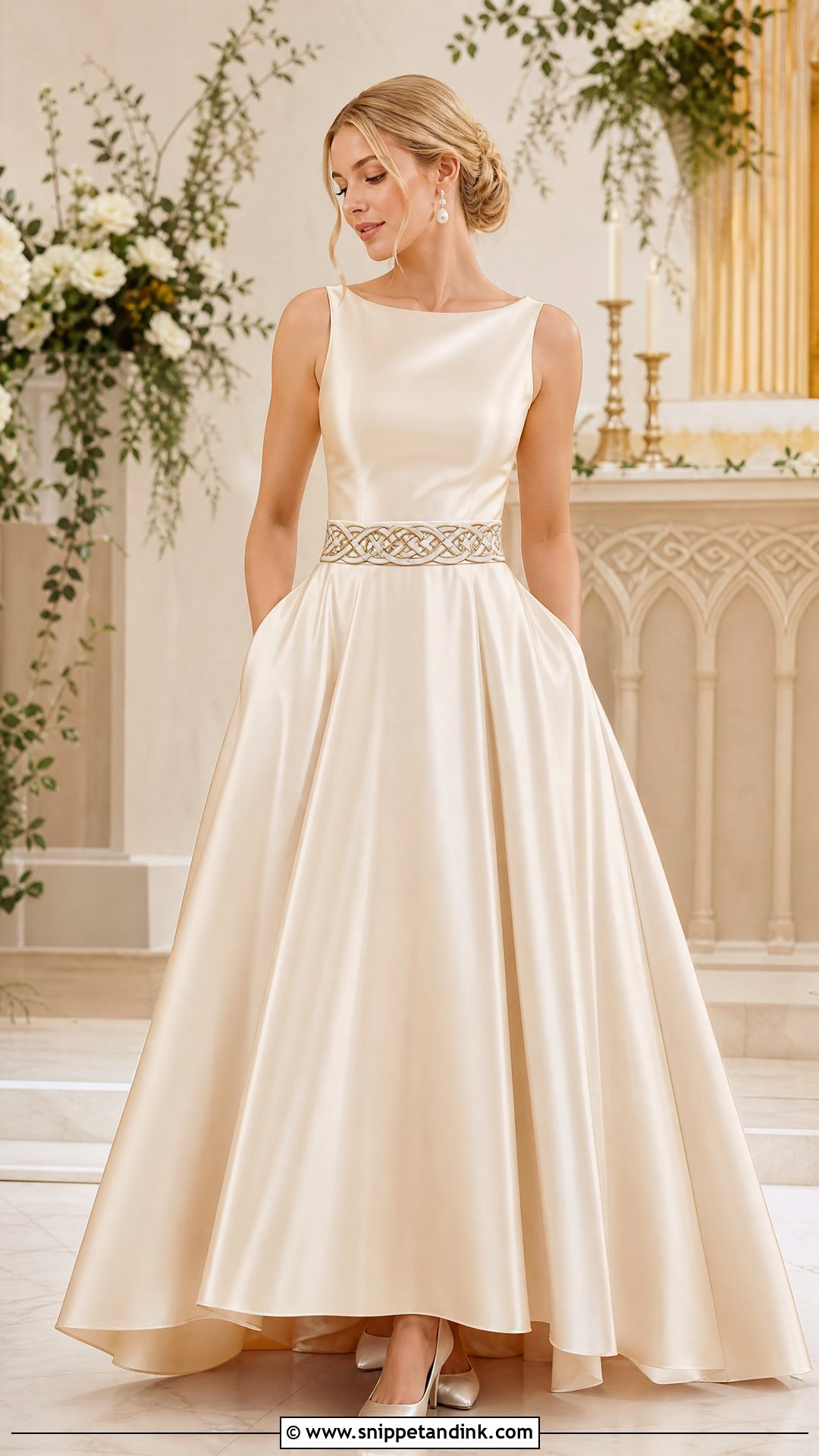
Champagne satin is warmer than ivory and suits skin that looks washed out in bright white. It pairs naturally with gold embroidery, pearls and soft green accents. A fitted bodice, a full skirt or a long train all give satin room to reflect light. Satin creases in the lap, so I steam it at the venue before the ceremony. A Celtic knot belt, simple earrings and satin heels finish it, with a low bun or loose curls.
24. Celtic Wedding Dress With Braided Hair Crown
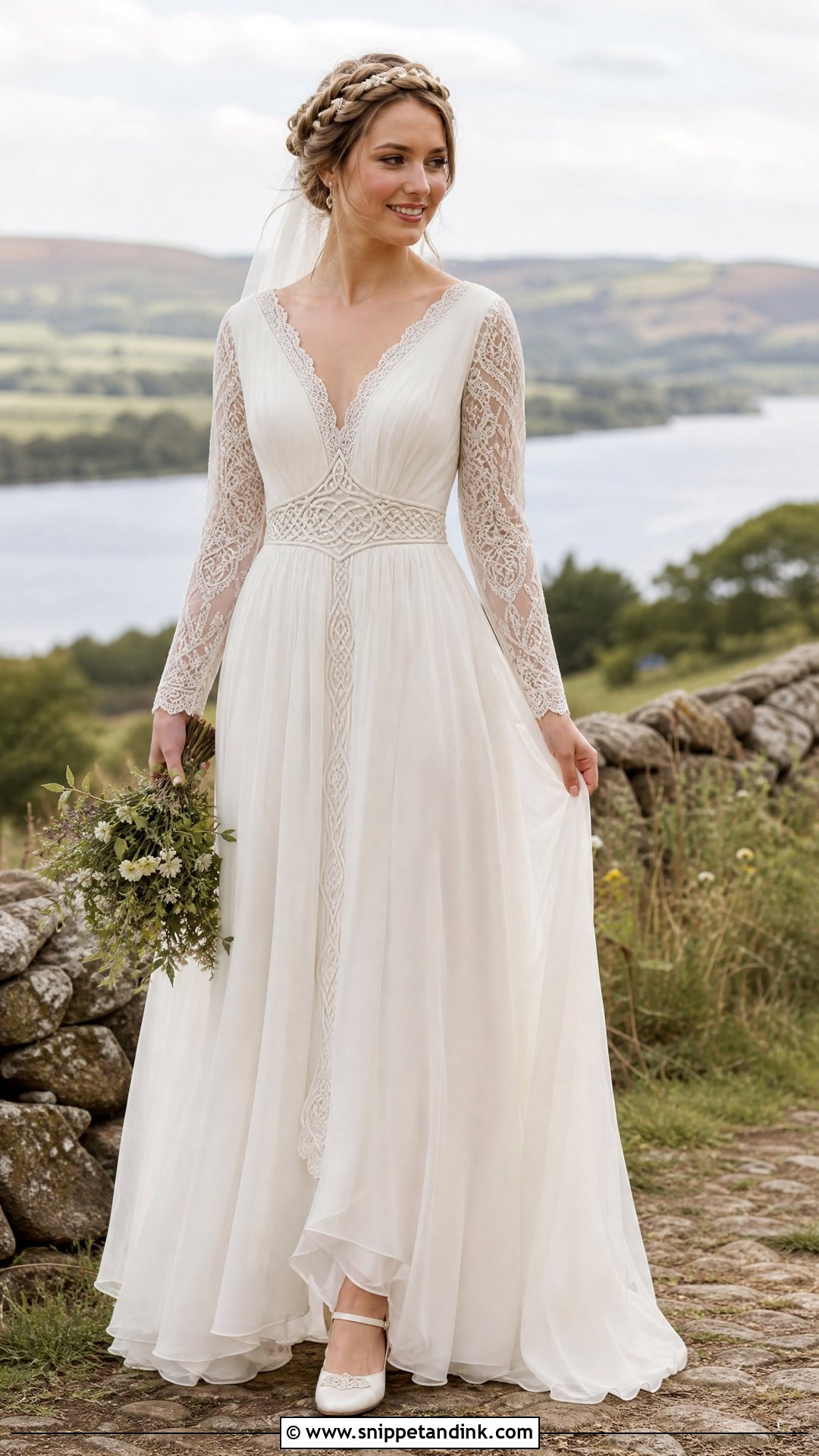
A braided crown ties a Celtic outfit together from the head down. The dress can be lace, chiffon, linen or satin, ideally with soft sleeves or embroidery that matches the natural feel of the braid. Weave small flowers, pearls or a hair vine through it. For fine or slippery hair, I braid on second-day hair or add a little texture spray first, otherwise the crown loosens by the evening. Simple earrings, comfortable shoes and an optional light veil complete it.


25. Celtic Wedding Dress With Woodland Bridal Look
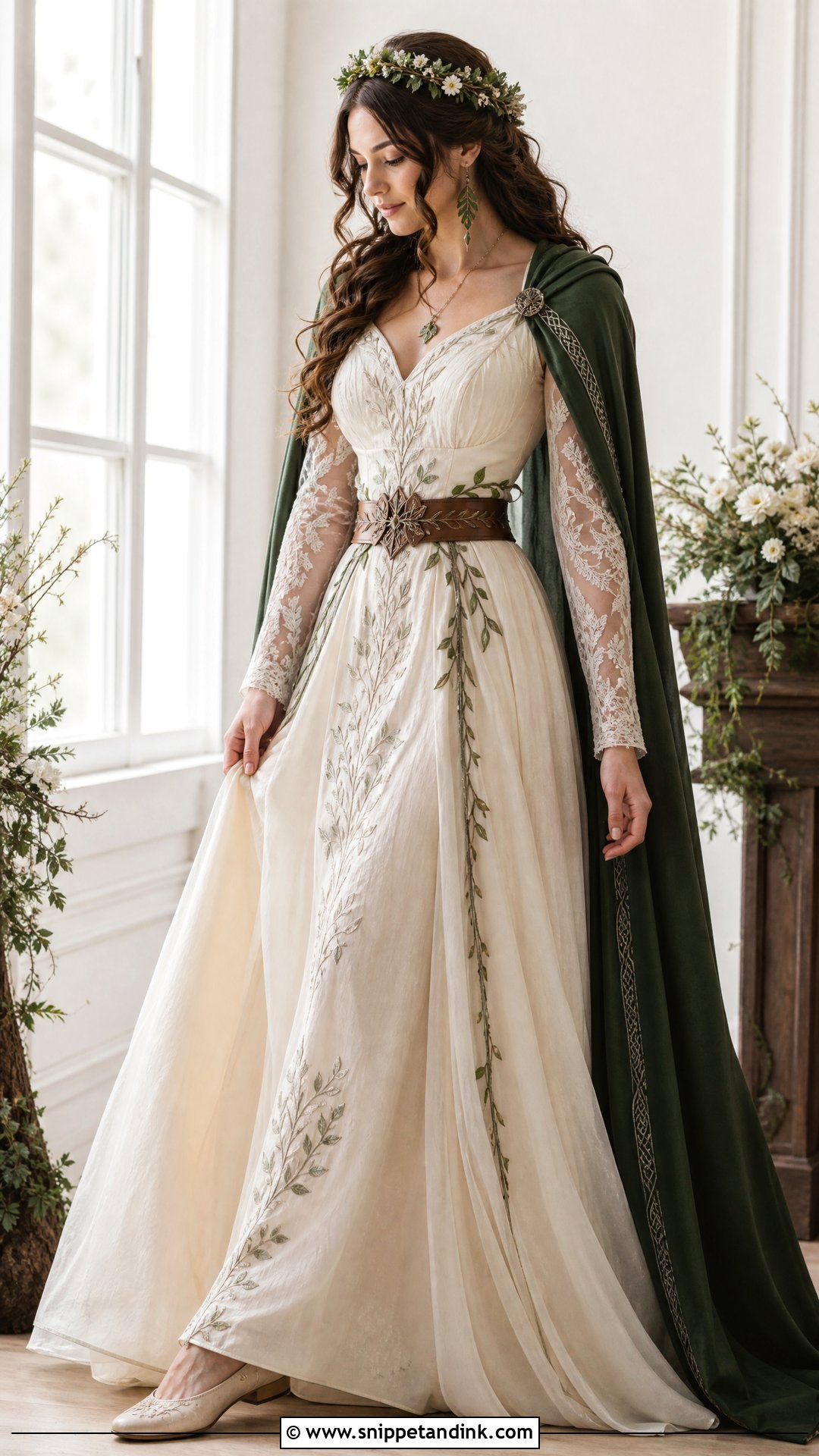
The woodland bridal look pulls together the softest parts of this list: a flowing ivory gown with lace sleeves, vine embroidery or a chiffon skirt, a green or ivory cloak, a floral crown and a leather-style belt. Flats or low heels matter in a forest, where soft ground swallows stilettos. Keep makeup fresh, hair in loose waves or a textured braid, and accessories organic, such as leaf earrings, pearl pins or fine gold. It suits forest venues, gardens and countryside celebrations.
Handfasting Cords, Castle Stairs and Wet Grass
Celtic weddings tend to happen in places that test a dress. Here’s what I prepare brides for.
During a handfasting
A handfasting binds the couple’s hands or wrists with cord or ribbon, and long or bell sleeves get in the way. I either pin wide sleeves back at the elbow for that moment or choose sleeves that end at the wrist bone. Practise the binding once in the dress so you know how your arms need to sit, and leave rings off the bound hand until the cord is removed if your officiant agrees.
Stone floors, stairs and damp ground
Castles and old churches are cold underfoot, with narrow spiral stairs and uneven flags. A gown cut to touch the floor will be stepped on going up, so I set the hem just off the ground in the shoes you’ll wear. Outdoors in Ireland or Scotland, assume wet grass: a bustle for the train, a shawl or cloak in the car, and flat or block heels for any walk to the photo spot. Tulle and chiffon wick up moisture at the hem, while satin and velvet show water marks, so keep the lightest fabric for the driest ground.
Let One Heritage Detail Carry the Whole Outfit
A Celtic bridal look can be simple, dramatic, traditional or modern, and it works best when the details are chosen for meaning rather than piled on. A knotwork belt, an embroidered sleeve, a tartan sash, a hooded cape or a lace gown can each carry the look alone when the rest is calm. Think about your venue, the season, comfort and your own family history before you settle. You could lean on medieval sleeves, Irish embroidery, Scottish tartan or soft woodland styling, as long as the outfit still feels like you rather than a costume.
You'll Like These Ideas:


Leave a Reply