
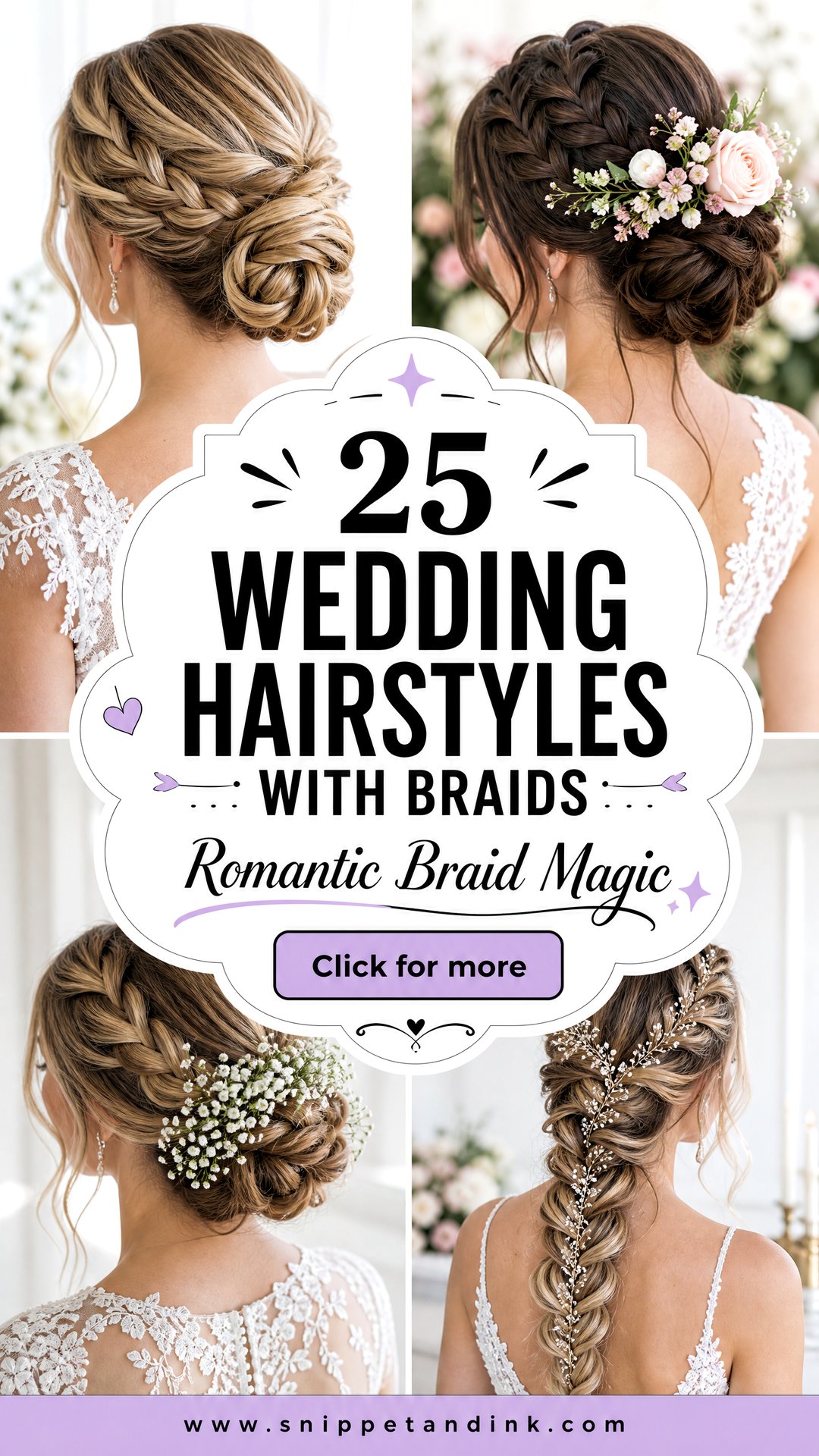
Braids are the bridal style I trust most to look the same at midnight as they did at the first look, because the structure is woven in rather than sprayed on. They give a veil comb something solid to grip, they hide the flyaways that a smooth updo exposes, and they can be built on almost any length once you know where to start the pattern. Below are 25 braided looks I’d happily recreate, from a loose fishtail to a sculpted cornrow updo, with notes on what each one asks of your hair and where it tends to struggle.
Your Hair’s Grip Decides Which Braid Will Last
Before I look at a single inspiration photo, I run my fingers through the hair and check how much it grips. Silky, freshly washed hair lets crossings slide apart within hours. Coarse or textured hair holds a braid almost by itself. That one test tells me more than the dress does.
Fine or slippery hair
Wash the day before, not the morning of, and skip heavy conditioner on the lengths. I add a dry texture spray before sectioning and choose raised braids such as Dutch or fishtail, then pull the edges wider so the plait looks fuller. If your ponytail is thinner than your thumb, a couple of color-matched clip-ins underneath make a crown or halo possible.
Thick, curly or coily hair
You have the opposite problem: volume and weight. I braid in smaller sections so the finished plait doesn’t turn bulky, and I work with a leave-in or light cream rather than spray so the texture stays defined. If you want cornrows or goddess braids, book the install a day or a few days ahead with a braider, and keep the trial close enough to the date that you can judge comfort over a full evening.
Layers and growing-out fringes
Short layers poke out of braids at the crown and behind the ears. Tell your stylist about them early. I either braid tighter at those points, add a tiny accent braid to catch the ends, or let them fall loose on purpose so they look planned rather than escaped.
1. Boho Braided Crown for Wedding
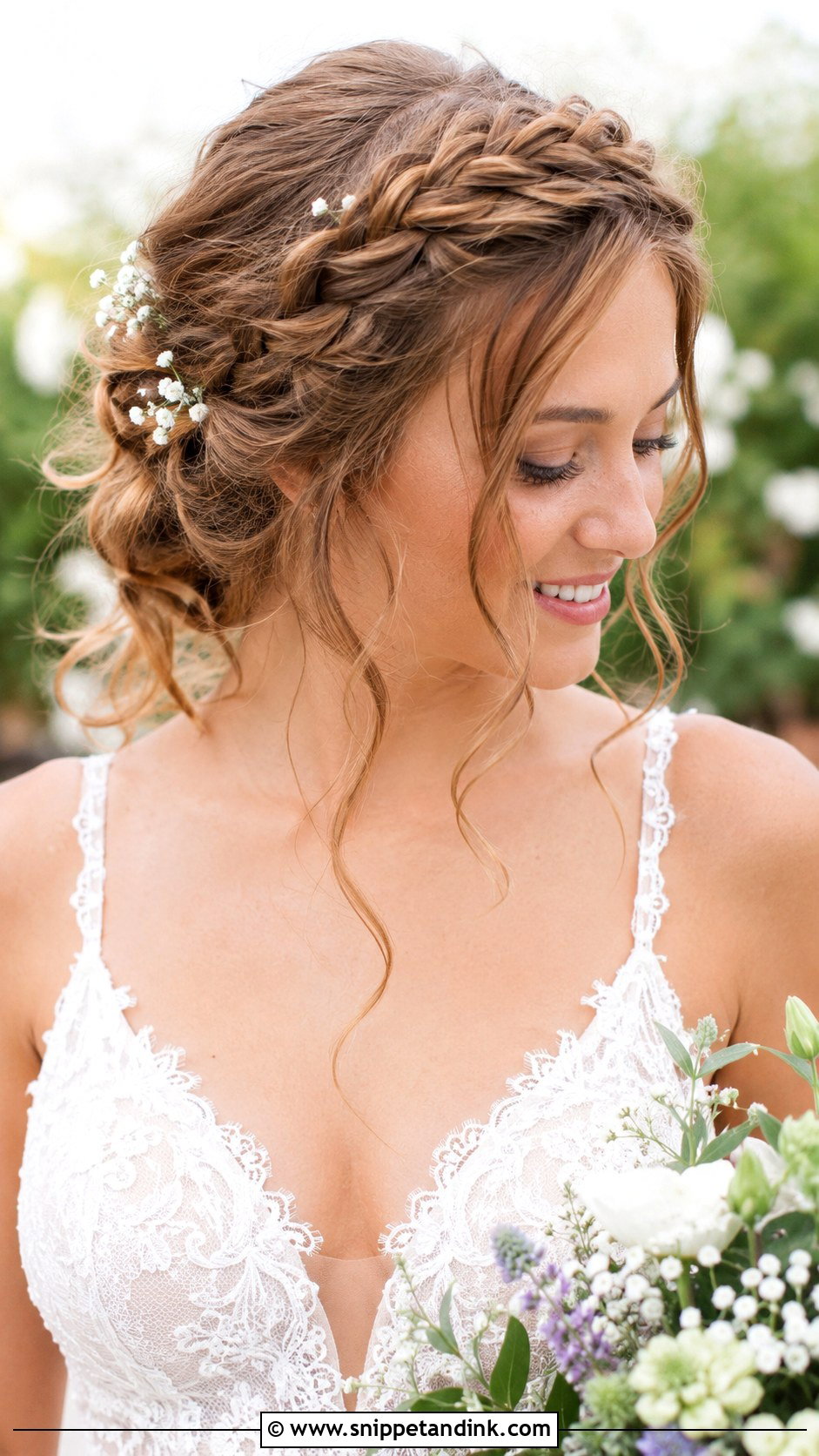
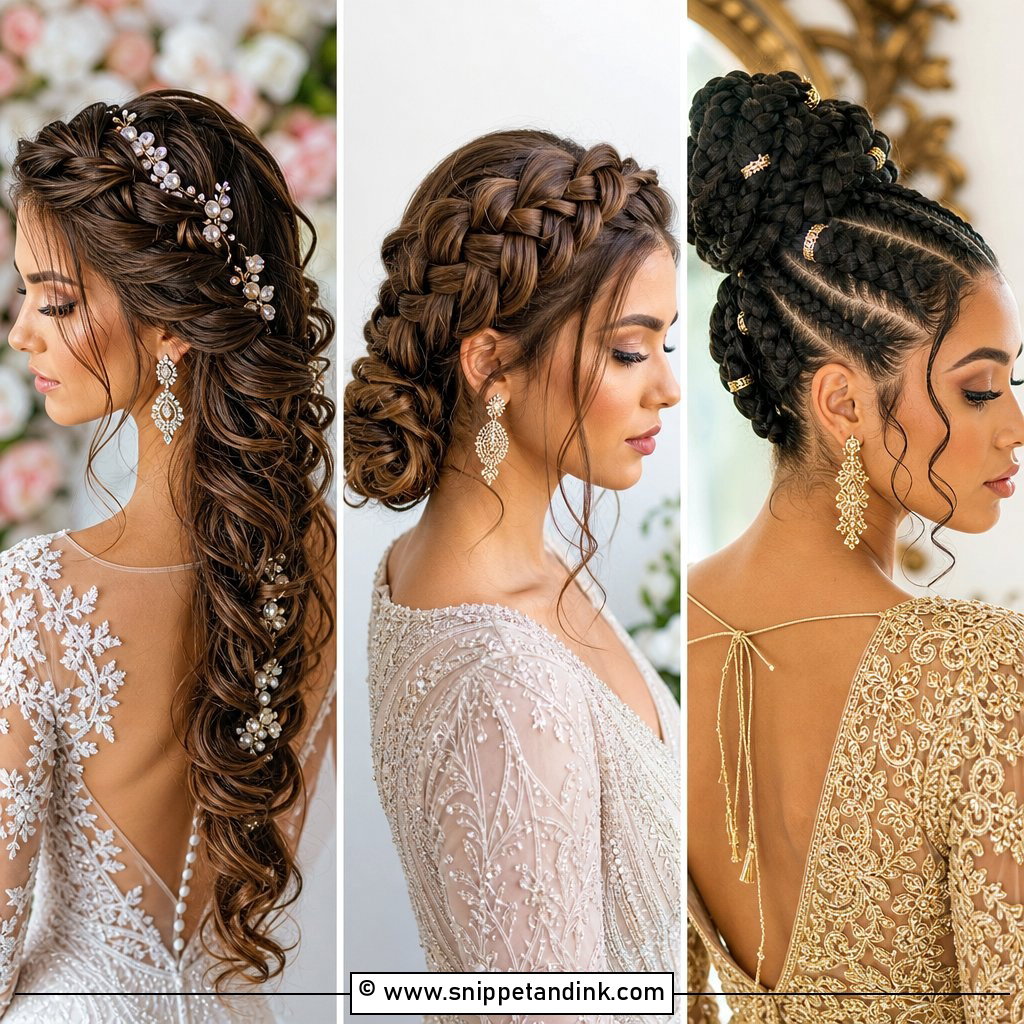
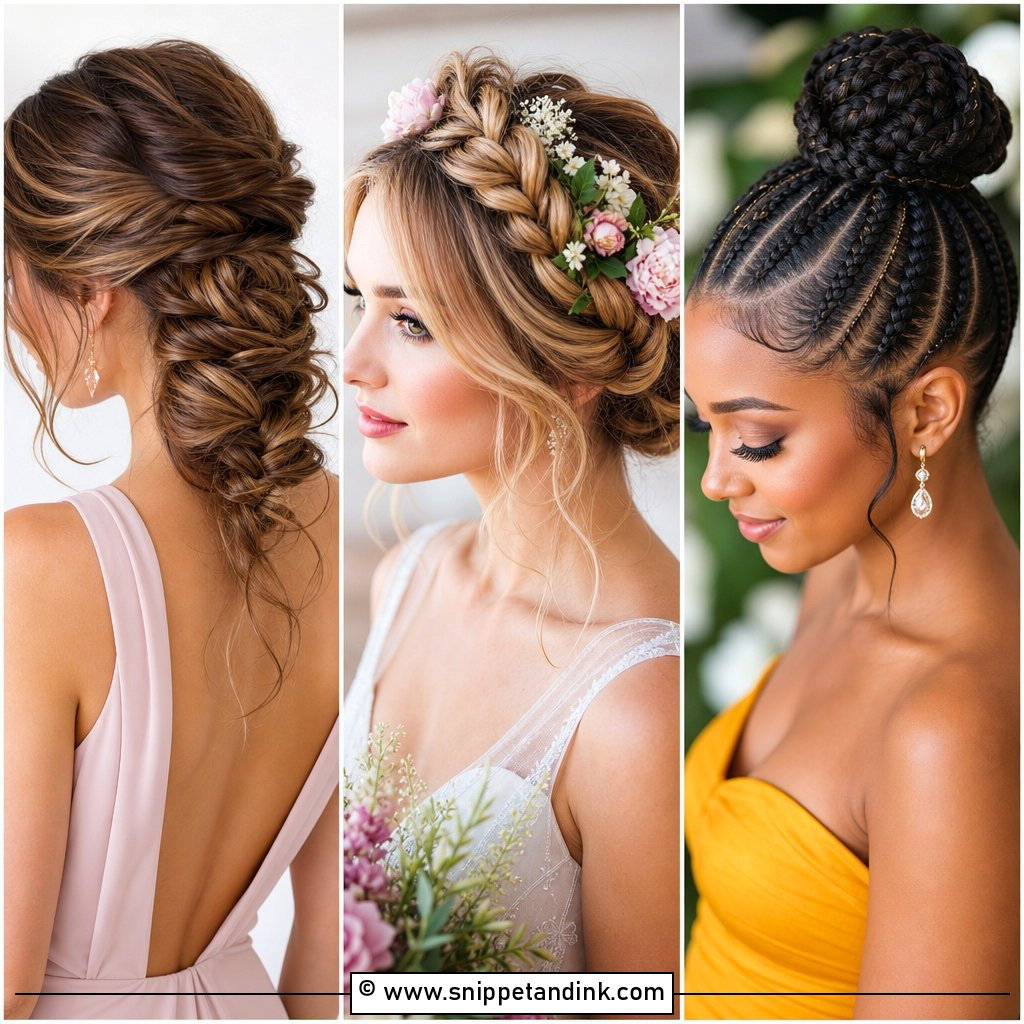
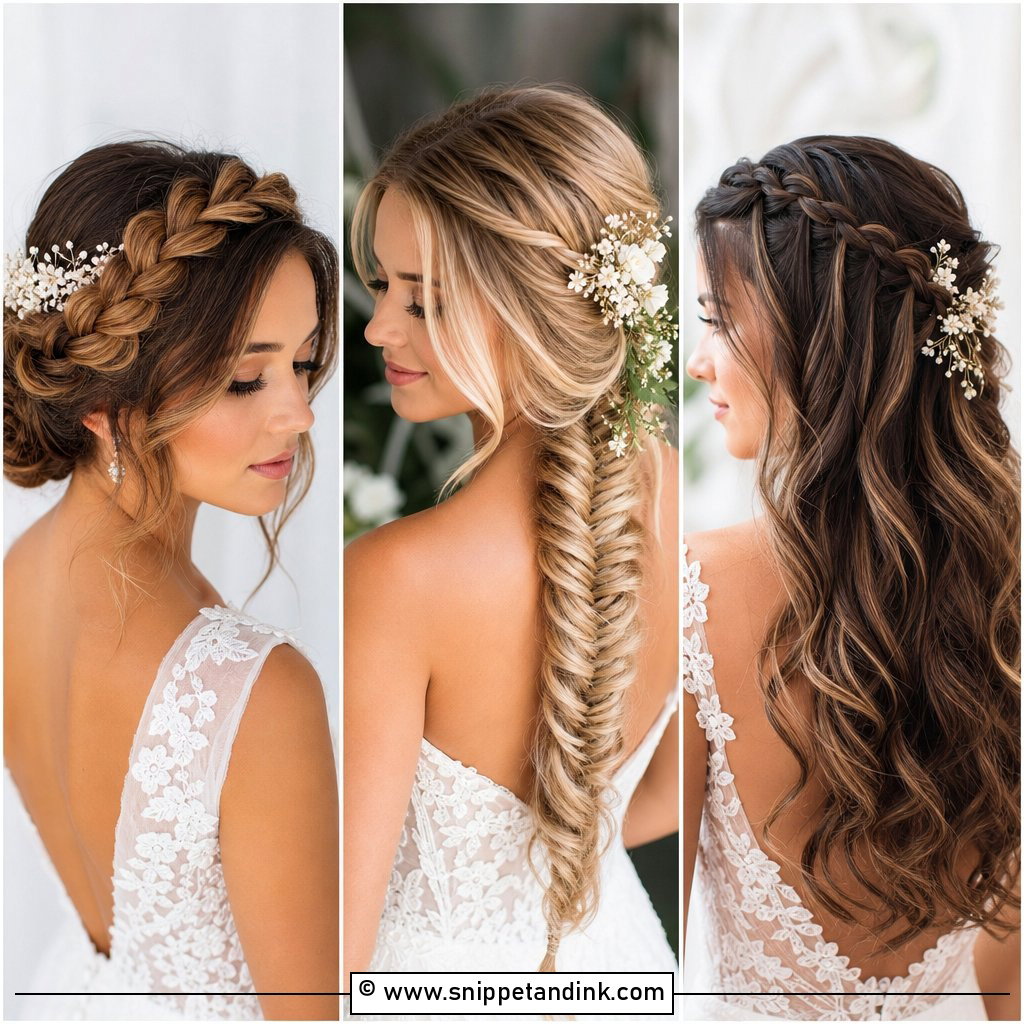
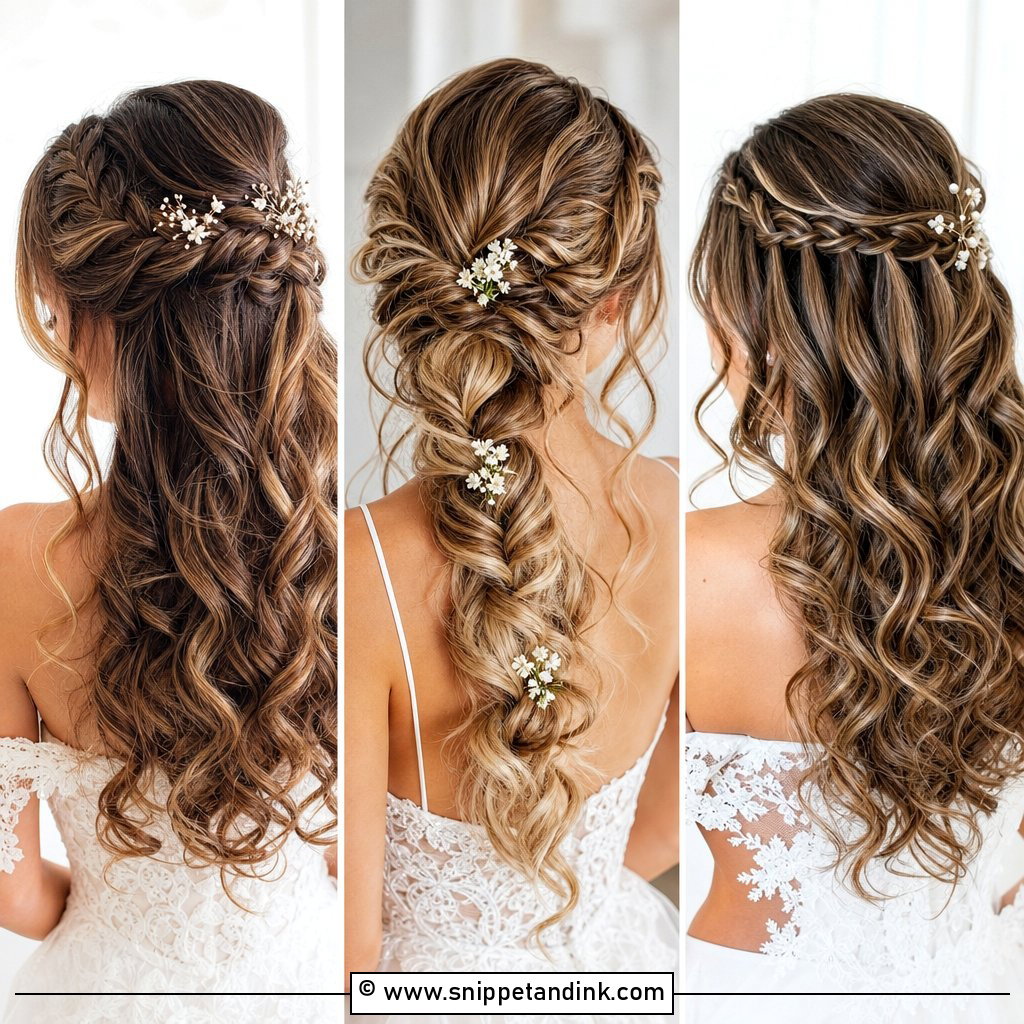
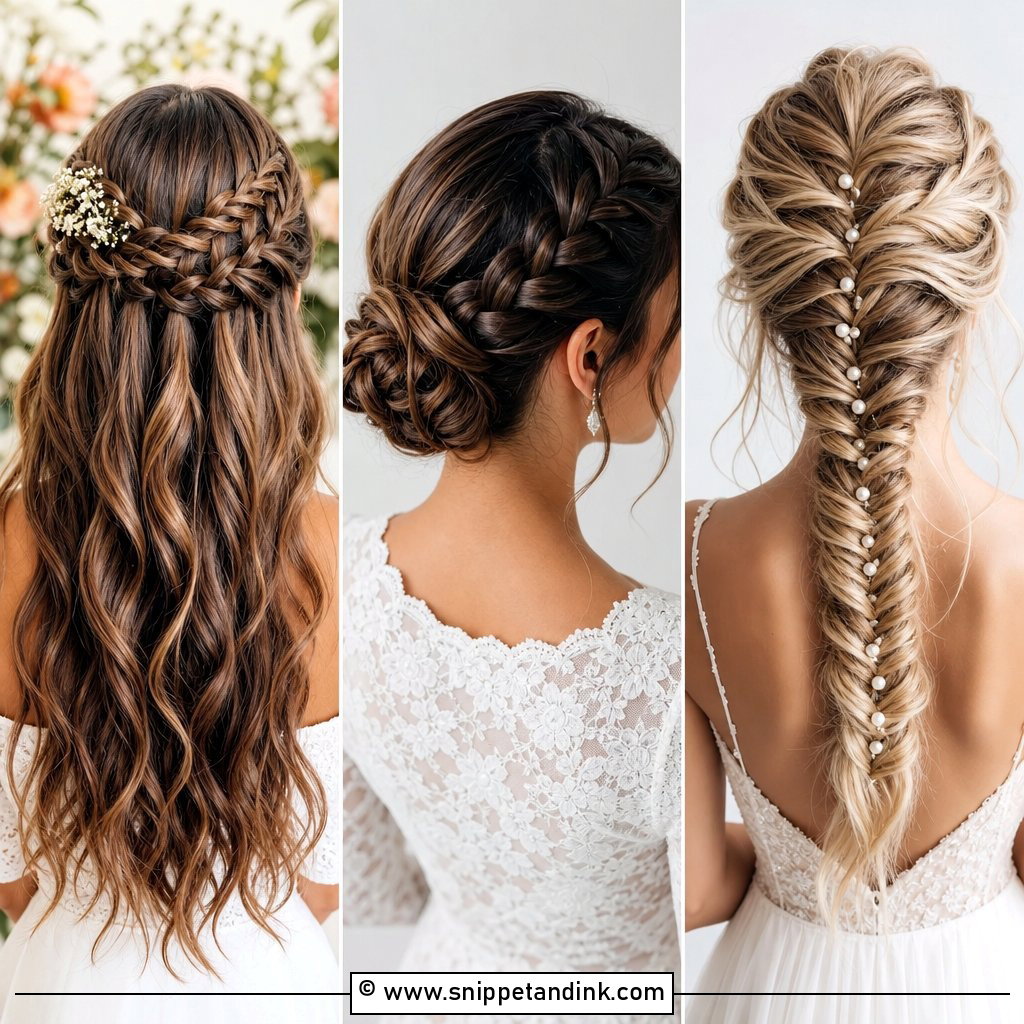
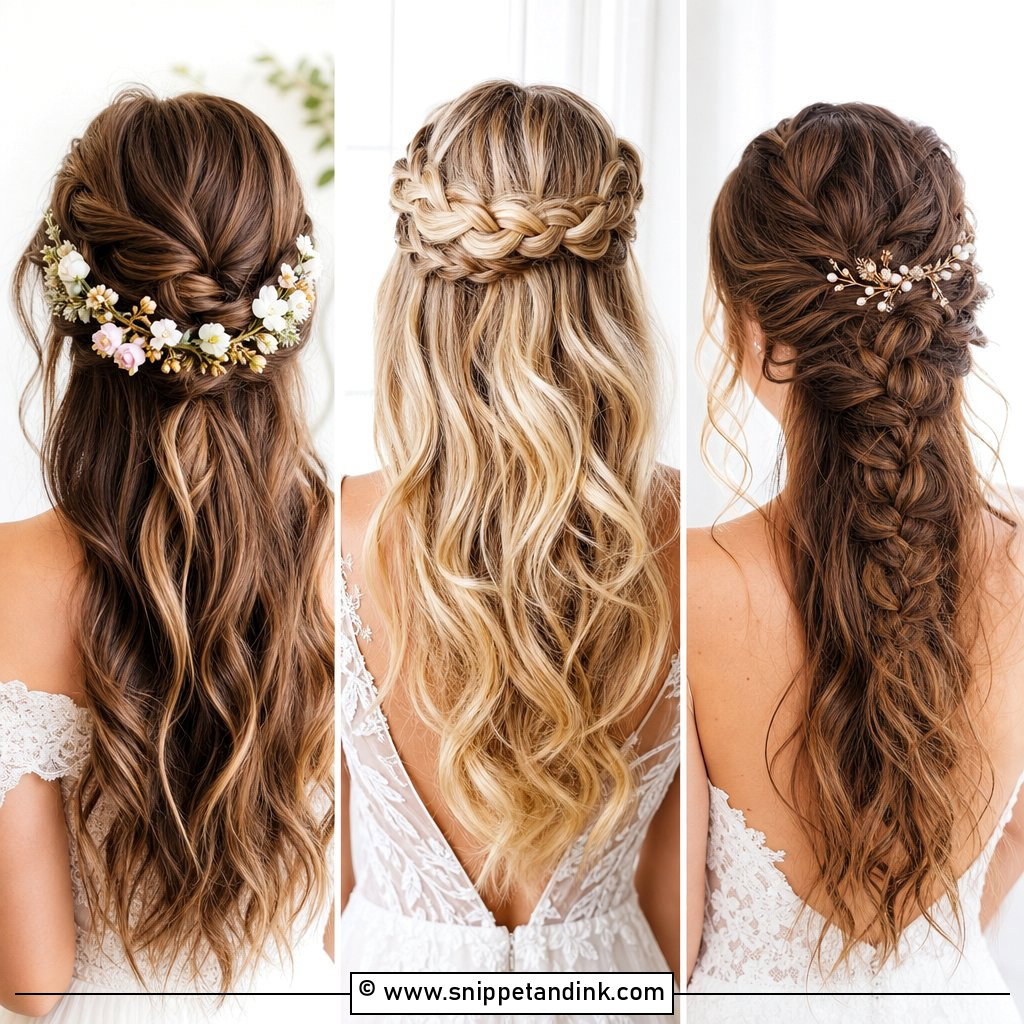
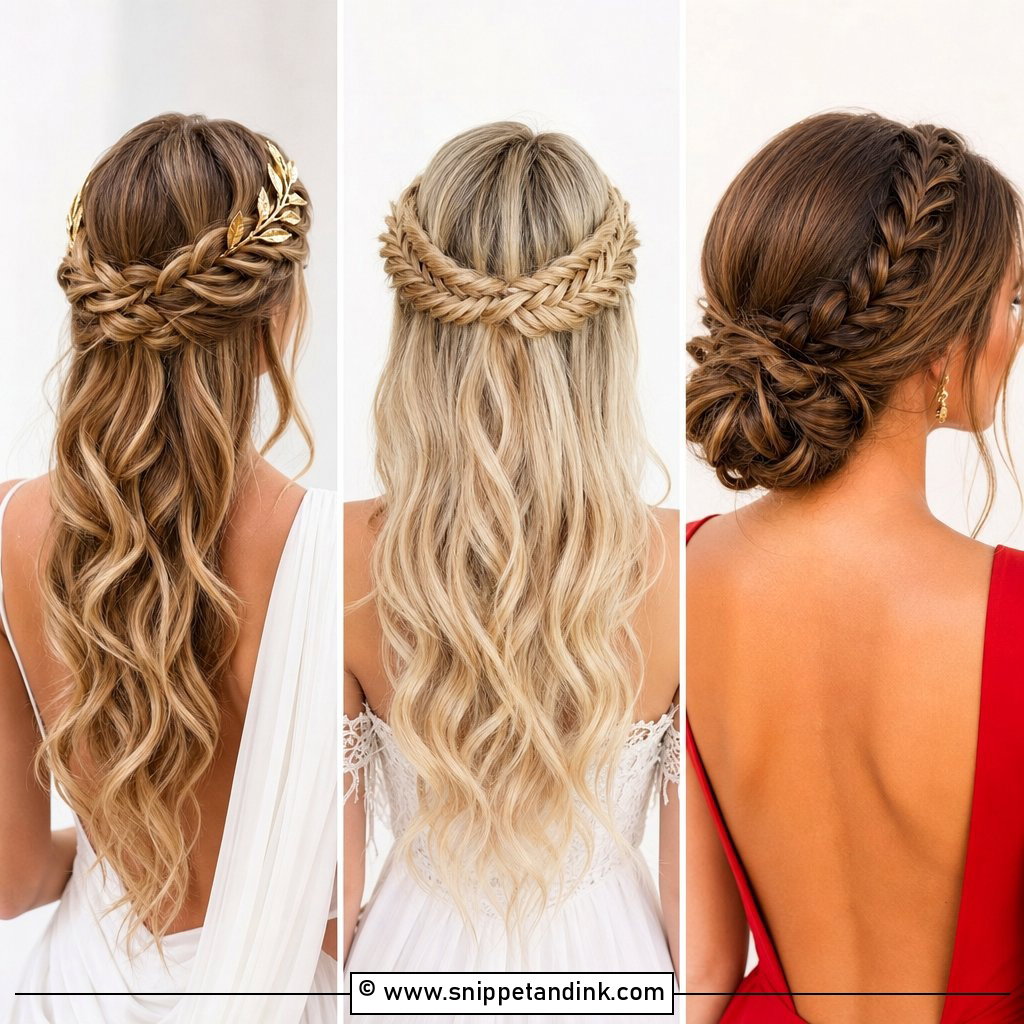
A braid that runs from one temple around the back to the other side sits on the head like a natural halo, and it’s the braided crown I’m asked for most at garden weddings. I start the plait slightly behind the hairline so it doesn’t drag the front flat, then pin the tail under the opposite side. Small sprigs of greenery slide straight into the crossings without extra wiring. You need at least shoulder-length hair to make the full circle; shorter cuts usually end up with a partial crown that I finish with a hidden pin cluster.
2. Half Up Fishtail Braid Wedding Hairstyle
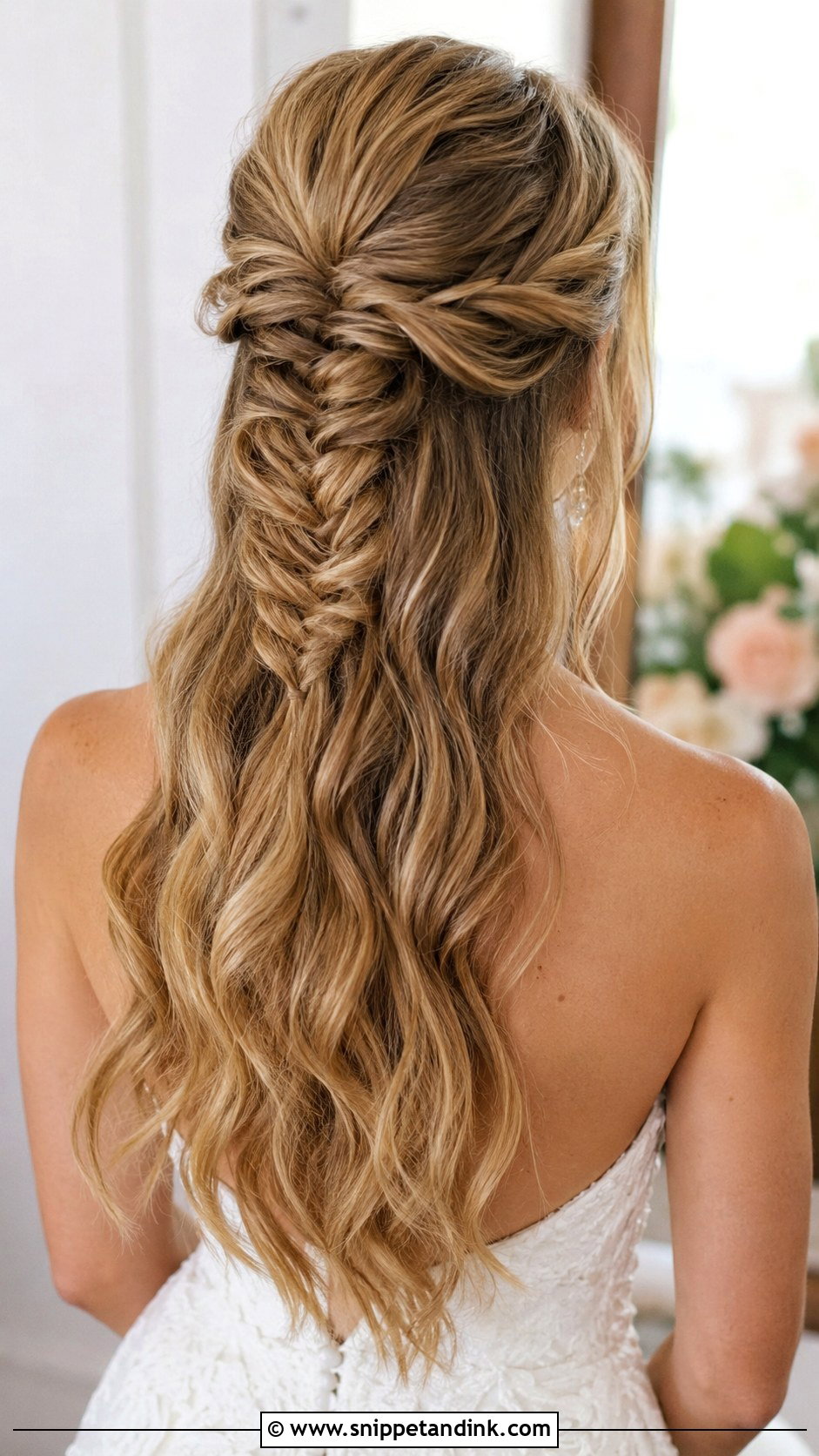
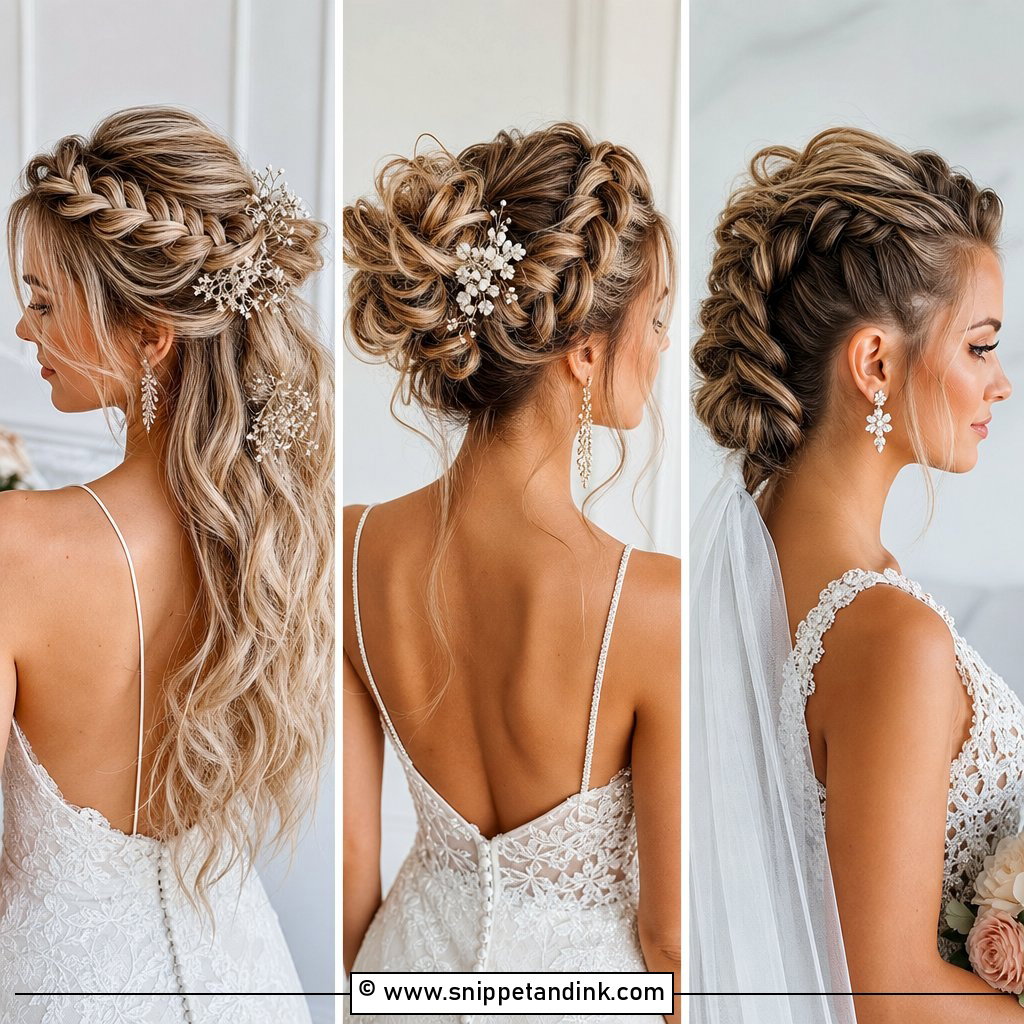
Weaving only the top section into a fishtail keeps the front neat while the lengths stay loose. A fishtail uses two sections and dozens of tiny crossings, so it reads as detailed even on finer hair. The weak point is actually the waves underneath. On straight hair that refuses to hold a curl, they can be flat by the speeches, so I set them early and let every curl cool pinned before it’s released. One small pin where the fishtail starts is plenty, and the veil sits just above it.
3. Low Braided Bun Wedding Updo
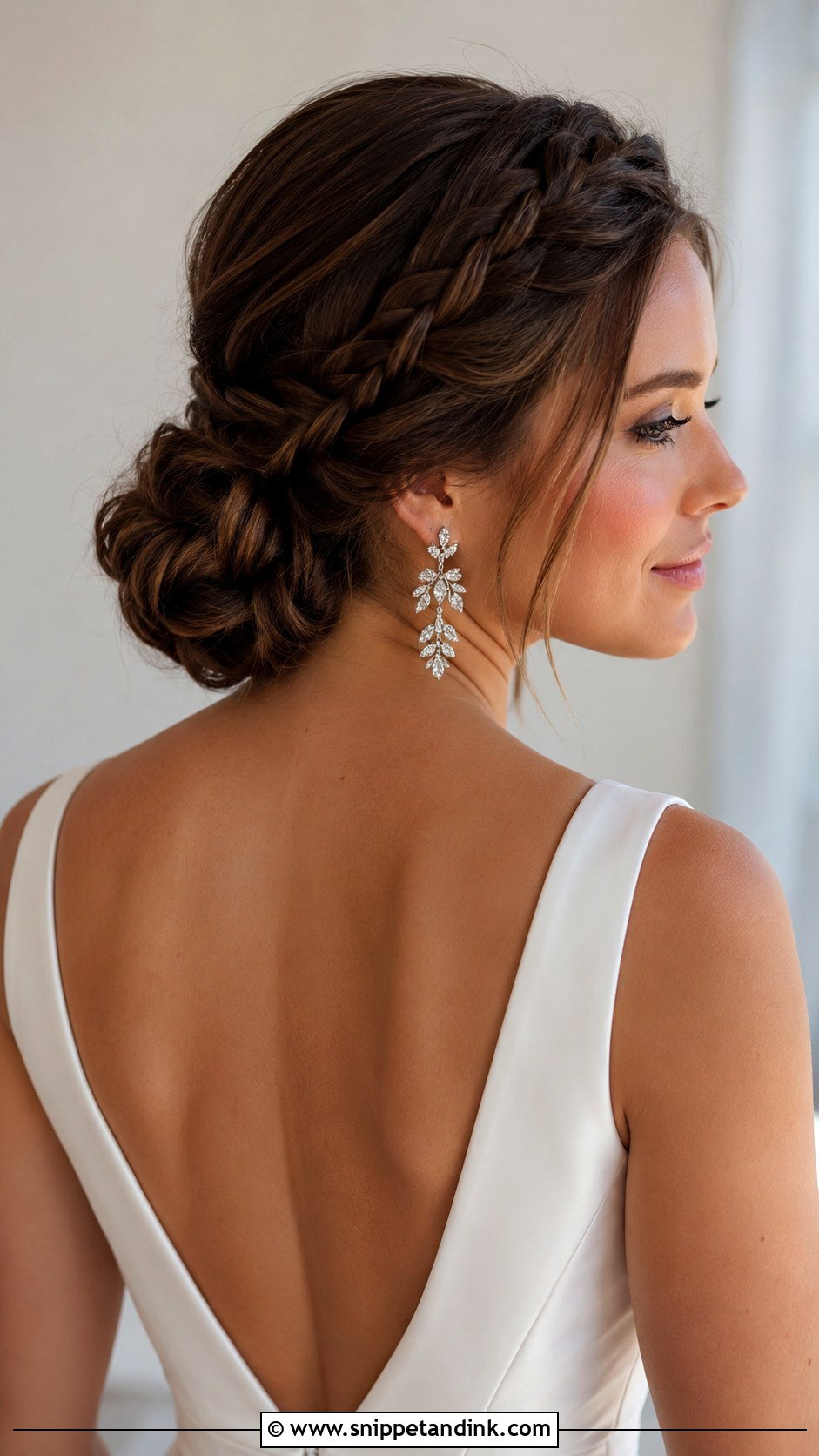
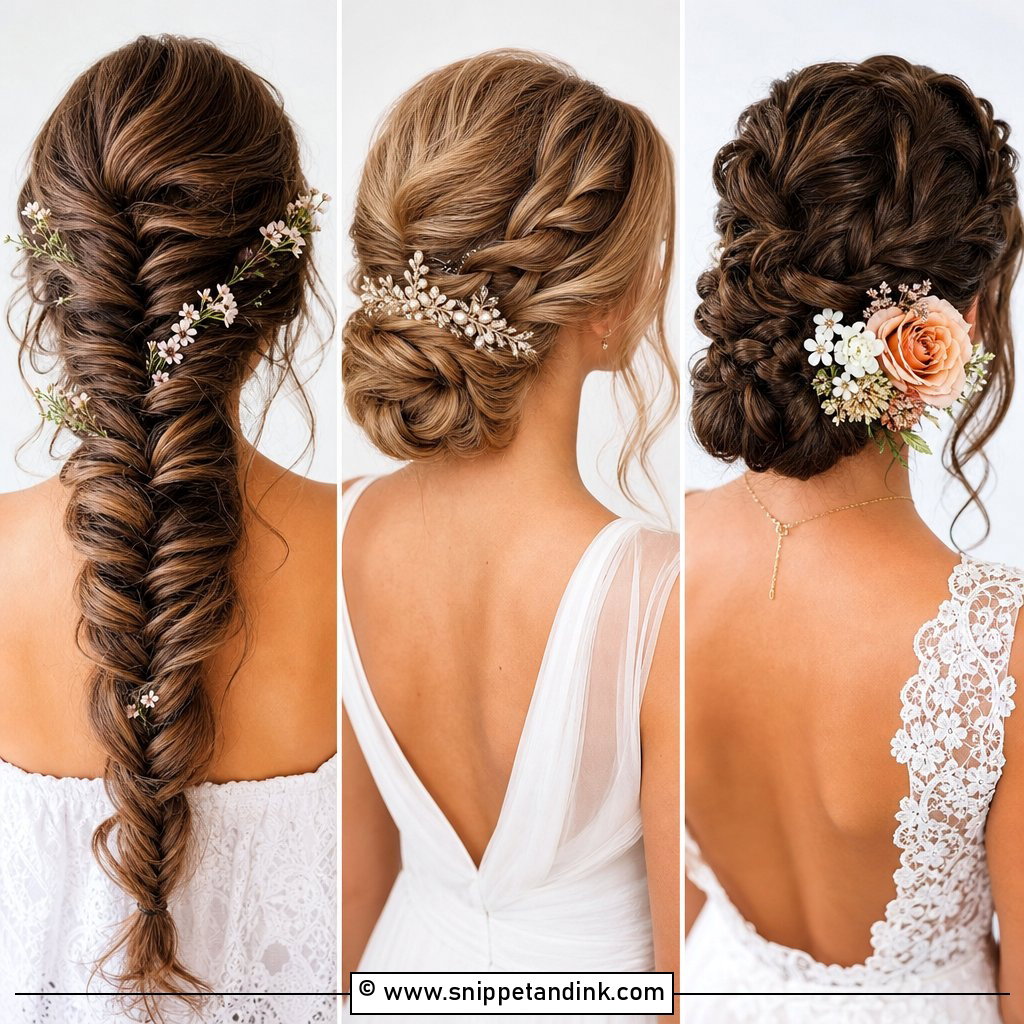
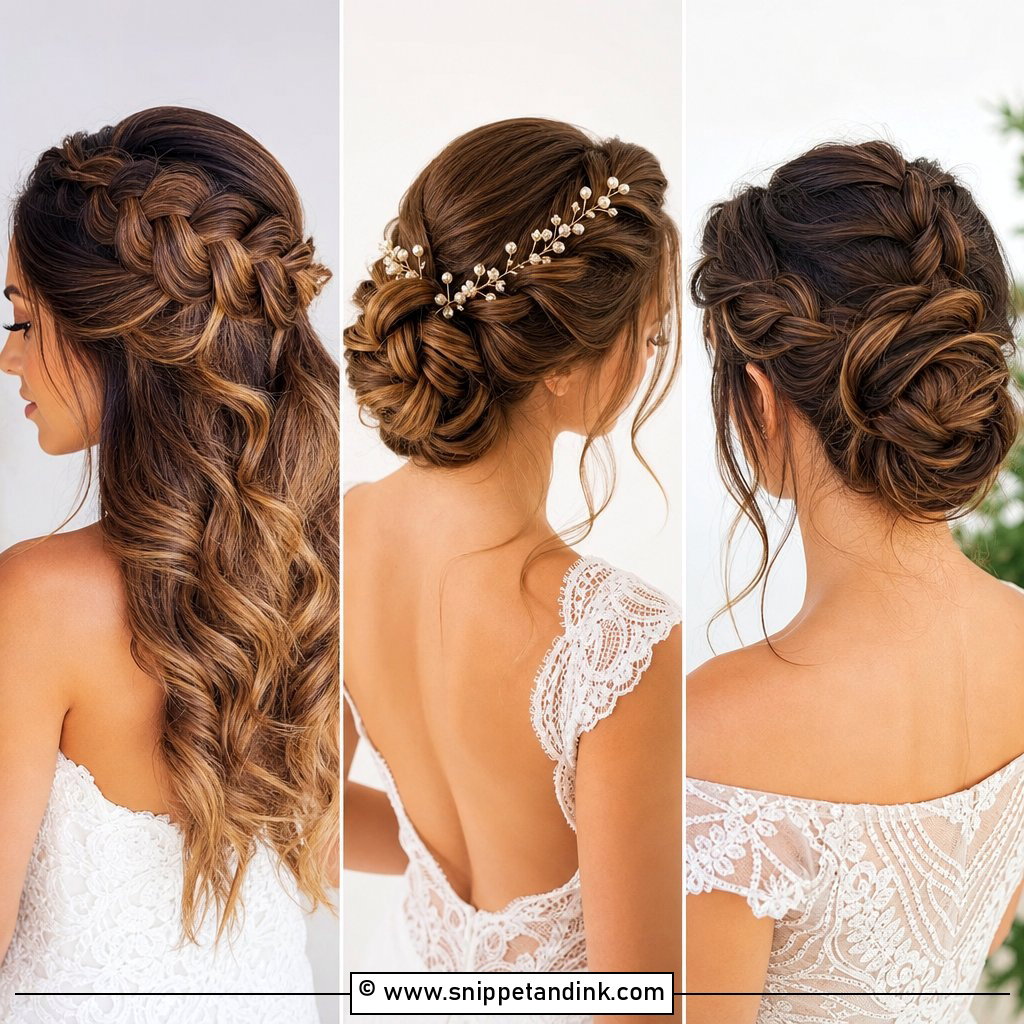
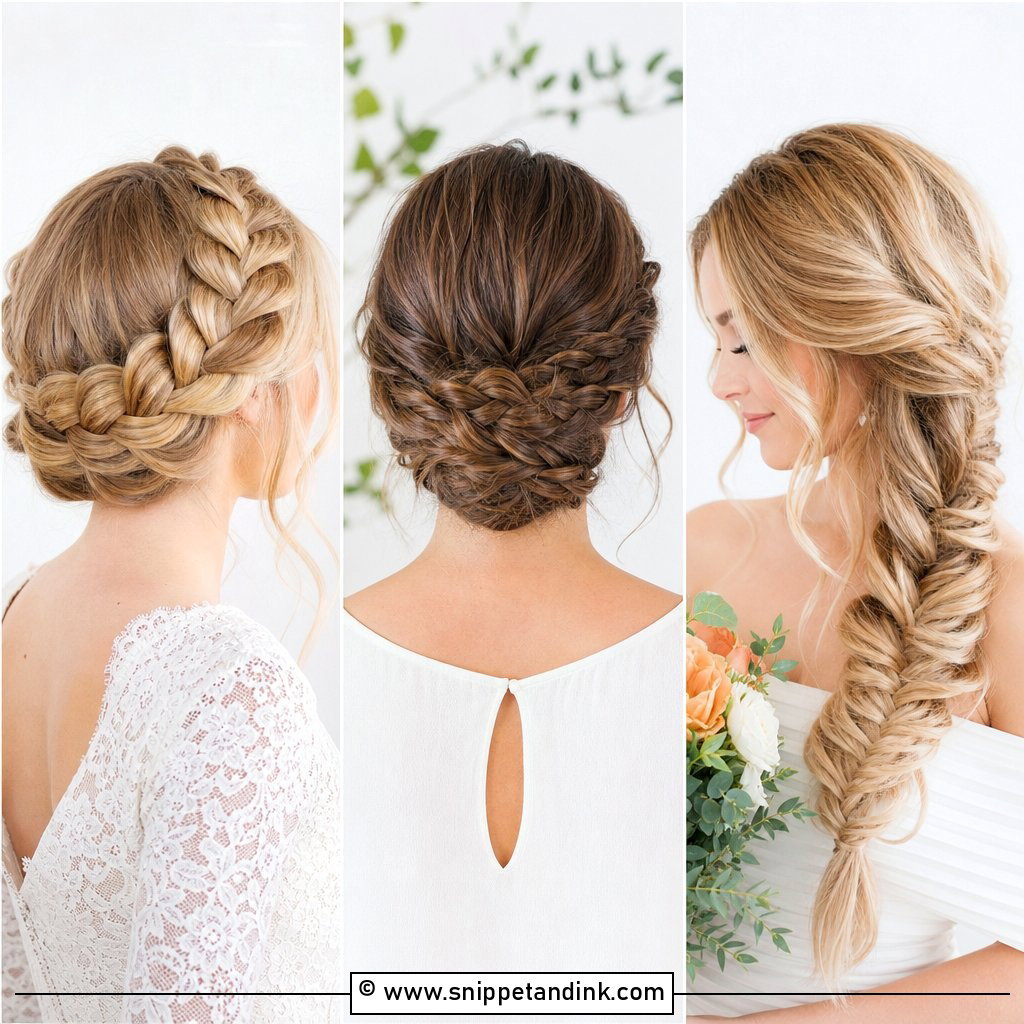
A low chignon with braids running through it is my default for ballrooms and formal venues. With the weight sitting close to the neck, it stays put through dancing without a mountain of pins. The braids also break up the surface, which matters on camera: a plain smooth bun can look flat under flash. Keep it sleek if you’re wearing statement earrings or a high neckline, and loosen a couple of face-framing pieces if it feels severe at your trial.
4. Dutch Braid Wedding Hairstyle
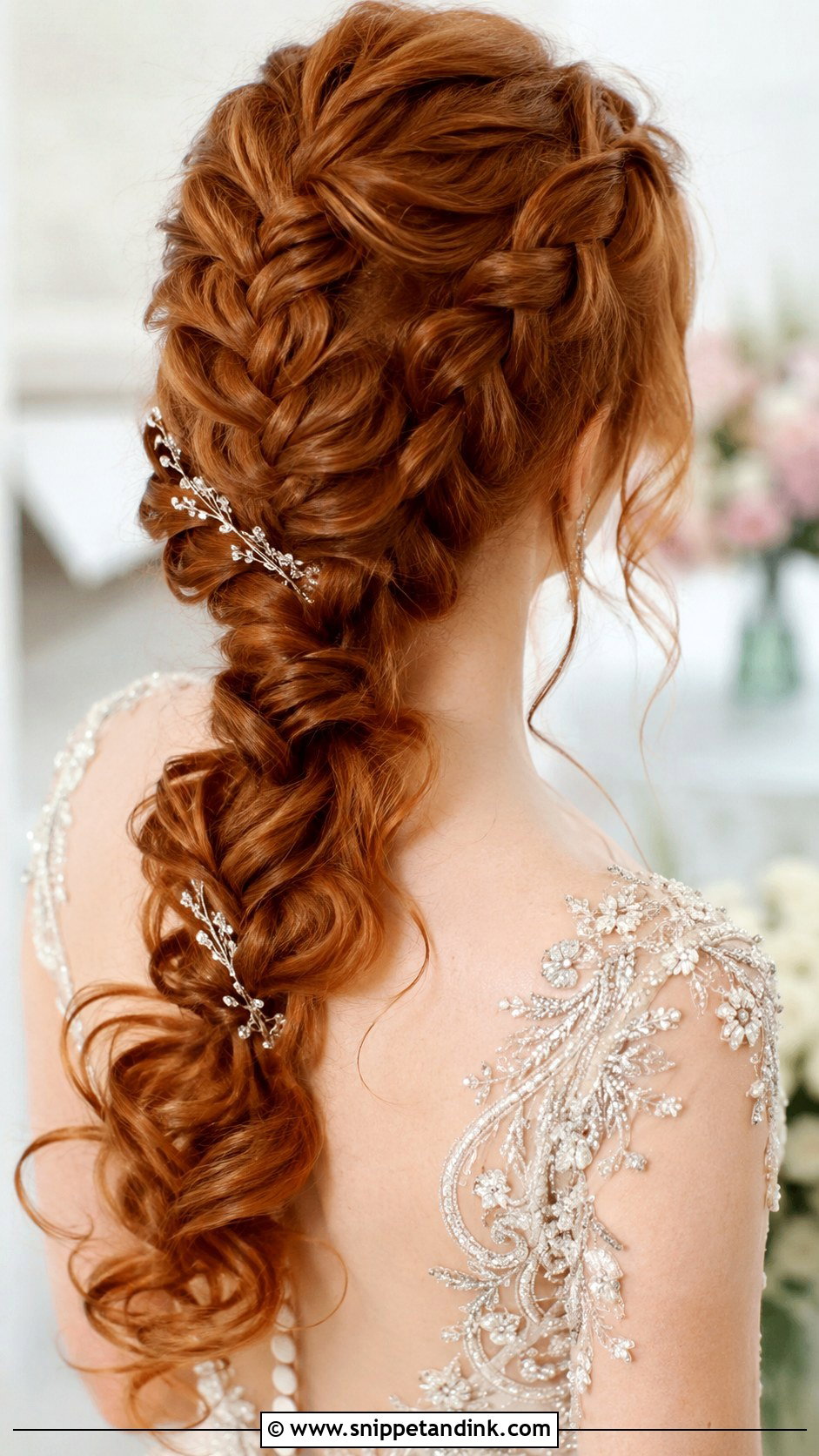
In a Dutch braid the strands cross under instead of over, which pushes the plait up off the head so it looks raised and sculpted. That’s exactly why I reach for it on fine hair. Once I gently pull the edges wider, a thin Dutch braid can look close to double its real width. Run a single one into a low bun or into curls; each crossing locks hair against the scalp, so it’s one of the most secure options here. I’d skip it if you hate tension at the hairline, because the first few crossings do need to be snug.
5. Waterfall Braid Wedding Hairstyle
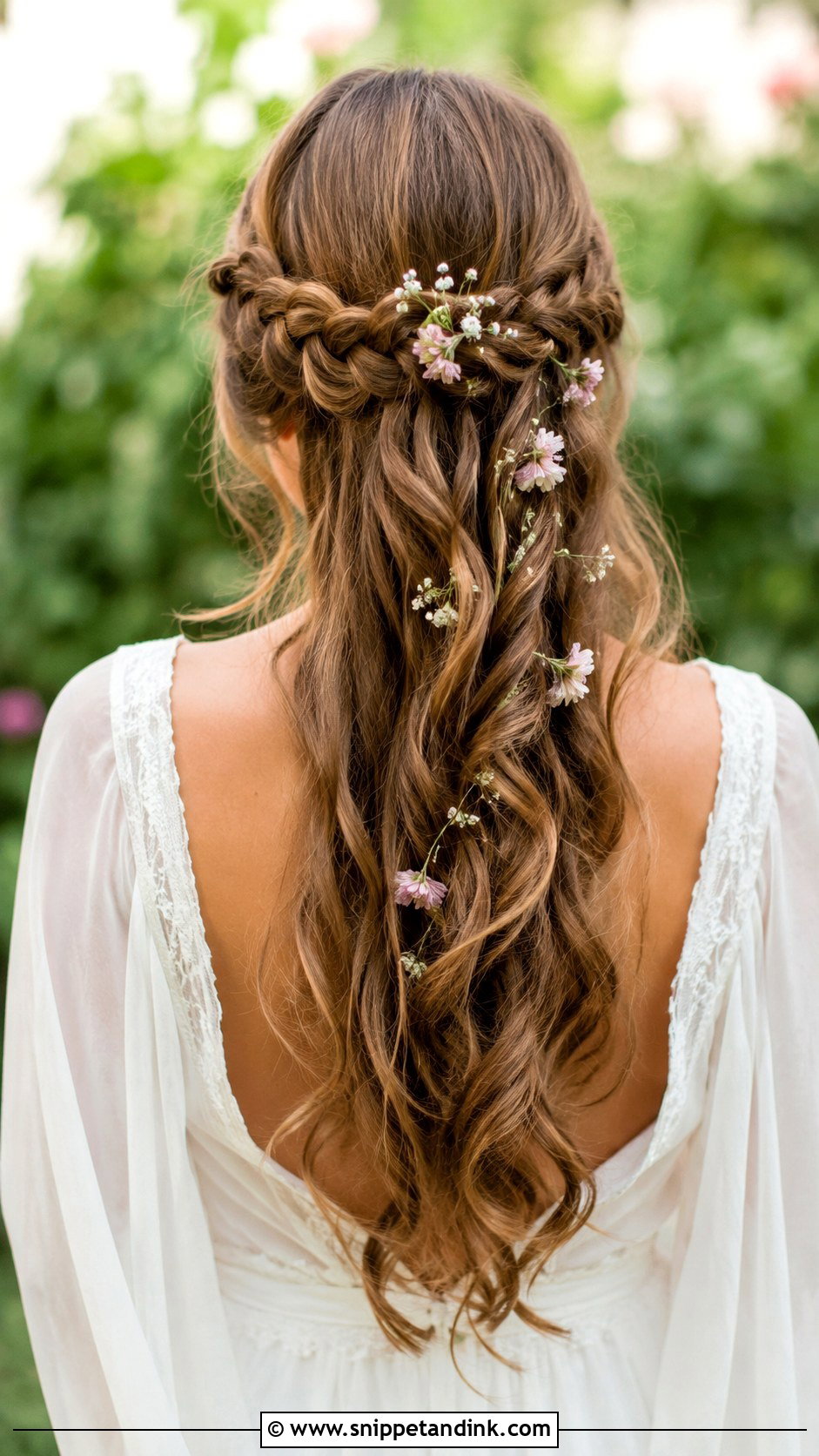
A waterfall braid travels horizontally across the back of the head and drops a strand at every pass, so the hair below falls loose through it. Honestly, it’s the most fragile braid on this list. Those dropped strands aren’t anchored, and in humidity the pattern can soften into plain waves by evening. I mist a light hold spray between passes and hide the end under a pin on the opposite side. Wavy and curly textures disguise any loosening best, and a few tiny blooms along the line give it a fairytale feel without weighing the strands down.
6. Crown Braid Updo for Bride
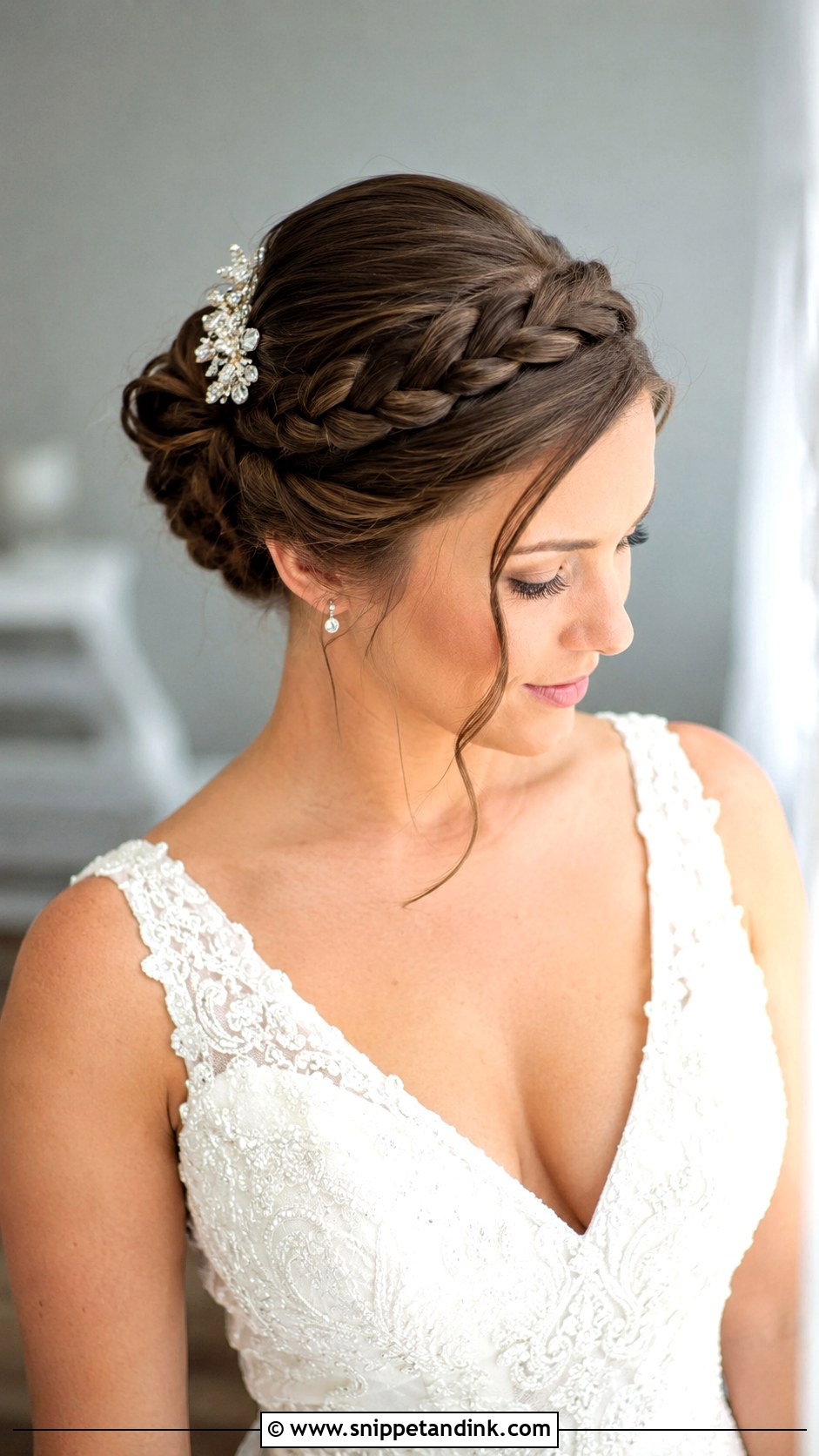
A full crown braid wraps the whole head, so nothing touches your neck. For hot destination ceremonies that’s the real selling point: no hair sticking to damp skin and nothing loose for the wind to pull apart. The shape is clean enough to suit a plain crepe gown or a heavily beaded vintage dress. Long hair can usually do it from its own length, while shoulder-length hair needs two braids joined at the back. A jeweled comb or a few fresh stems at one side gives the front a finished point.
7. Side Braid Wedding Hairstyle
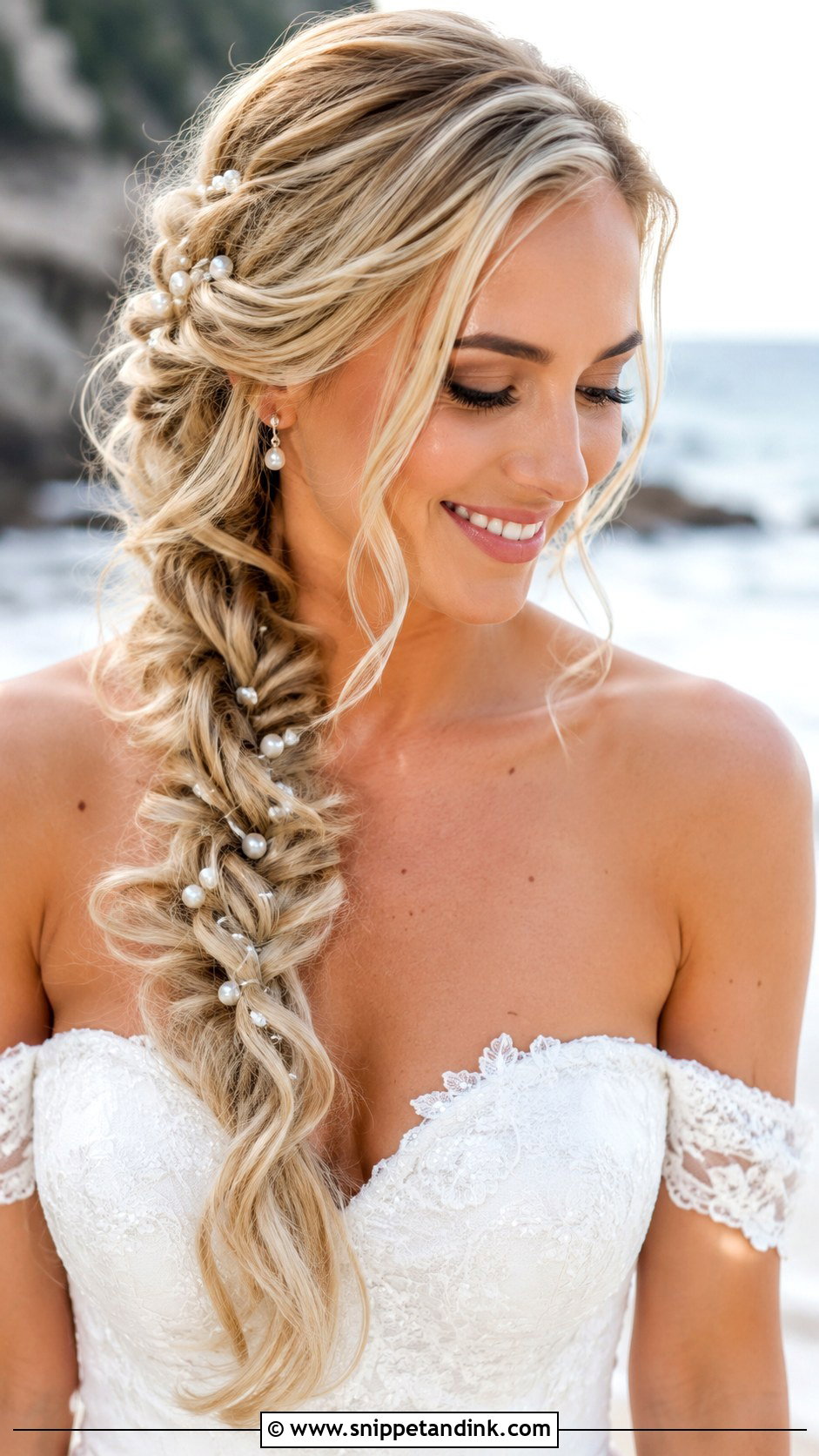
There’s barely any tension in a loose side braid, which makes it kind to sensitive scalps and easy to wear all day. I tie it off with a clear elastic, wrap a strand of hair around it, and pull the braid apart a little for width. The trade-off: it rests against your gown for hours, so it can snag on beading or lace at the shoulder. Check that at your final fitting. It sits best with an off-shoulder or sweetheart neckline that leaves the other side bare.
8. Braided Updo with Flowers
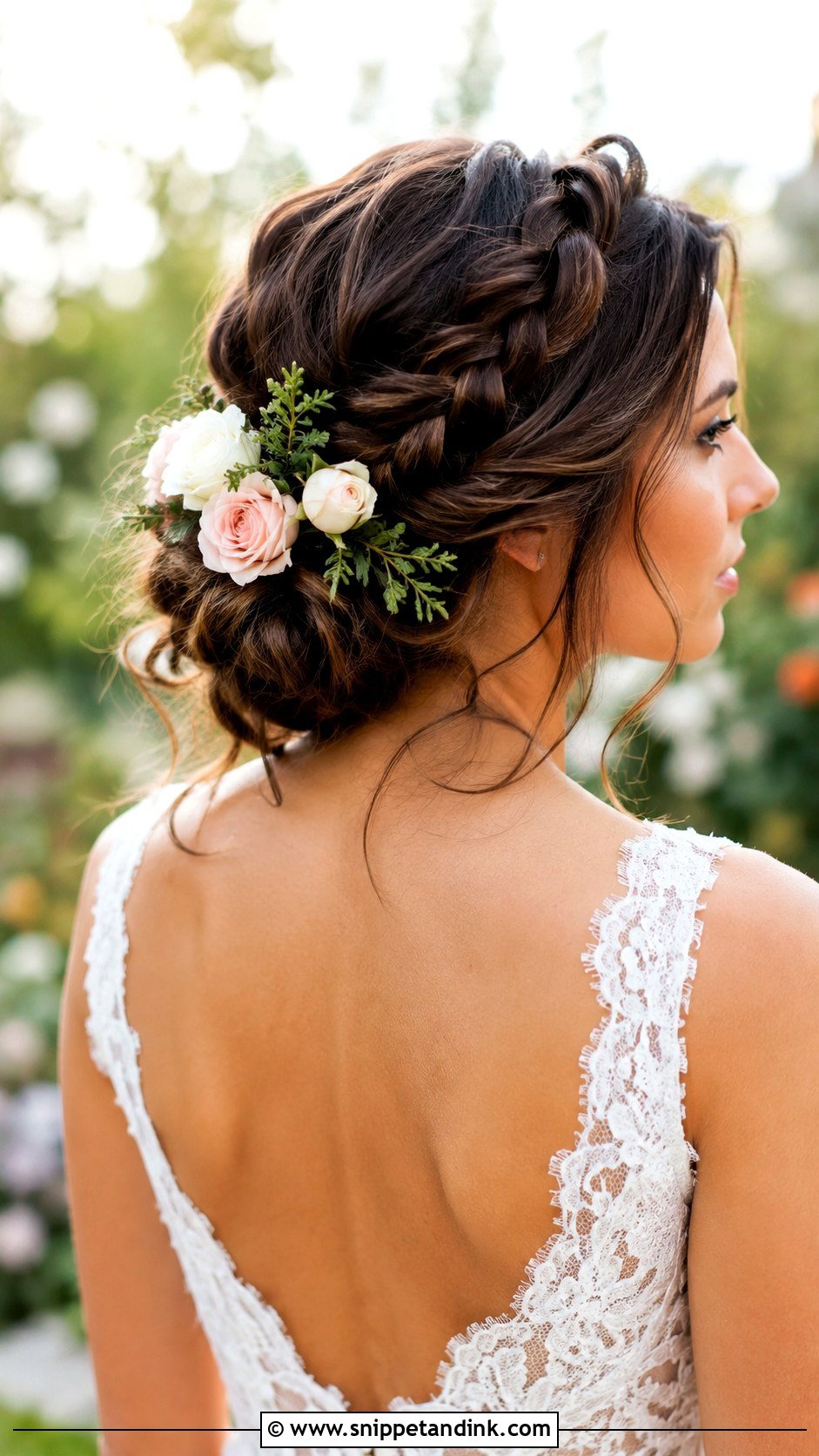
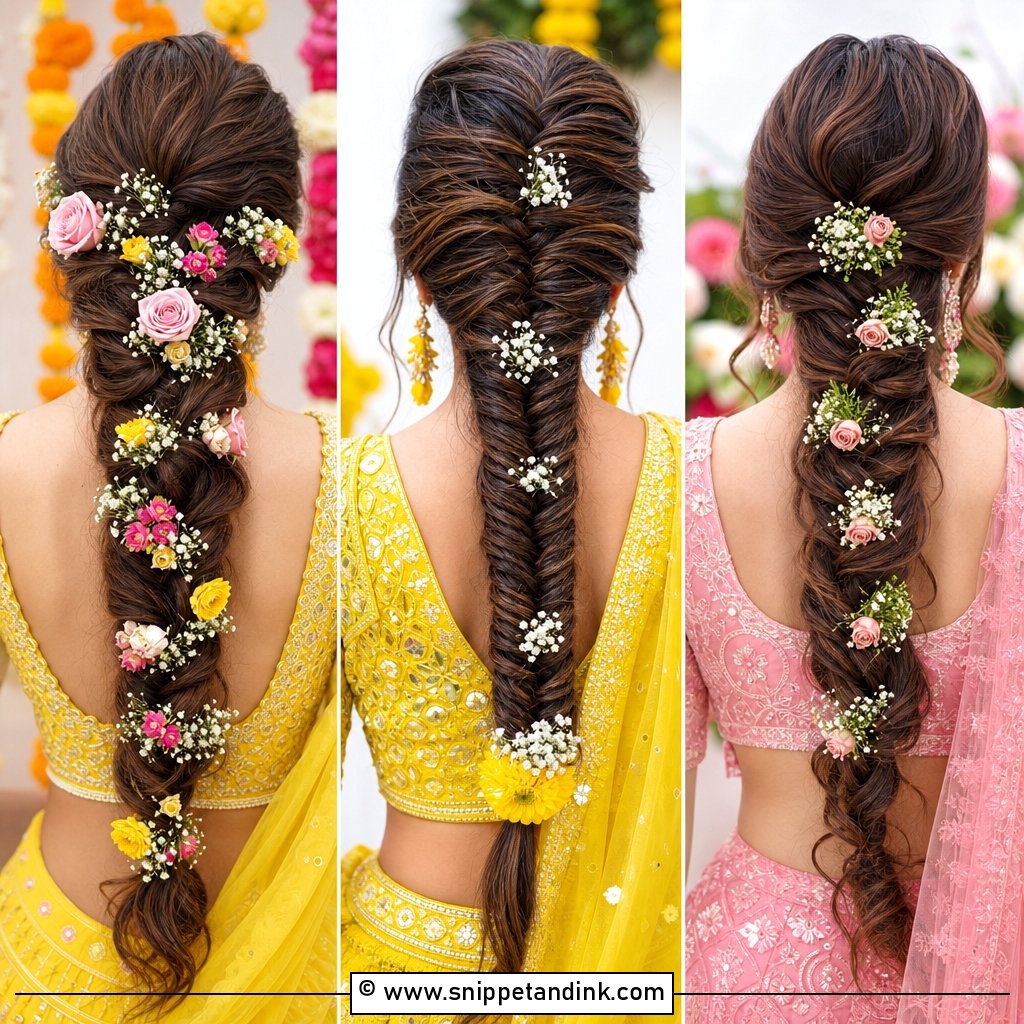
Braids make a natural holder for real or silk flowers, because stems slide between the crossings and stay put. With fresh flowers, I ask the florist for small, sturdy blooms that are wired and kept cool until the last minute. Soft petals such as gardenia bruise and brown quickly against warm skin. Matching a couple of stems to your bouquet ties the photos together, and silk is the safer choice for a long, hot day outside.
9. French Braid Wedding Hairstyle
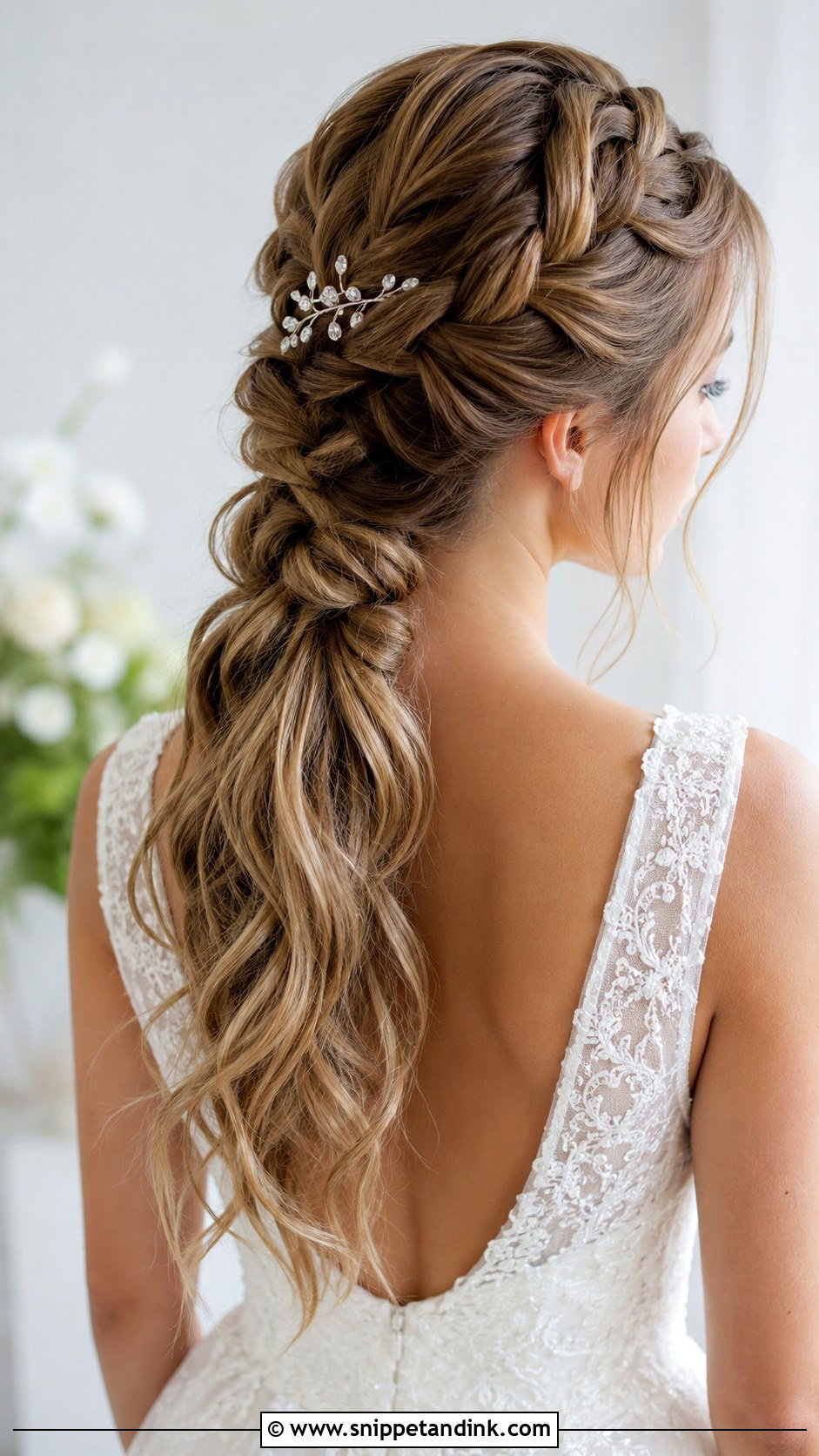
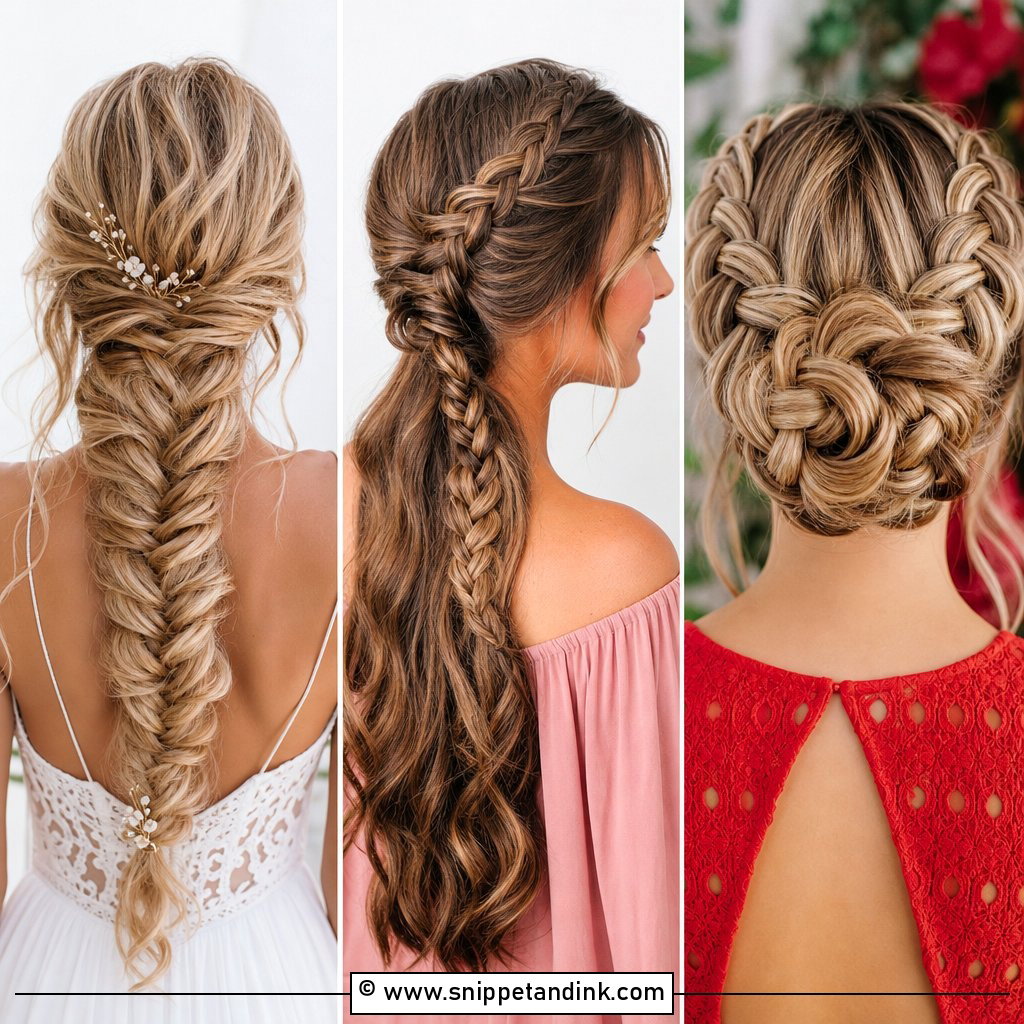
Because the strands cross over, a French braid lies flat along the scalp and gives a smooth line that can lead into a bun or loose waves. It’s also the braid most people can do quickly and well, which helps if a bridesmaid is styling you. On very slippery hair I prep with a dry texture spray first; without it, the braid tends to slide loose by mid-afternoon. Pull the edges out gently for fullness, or keep it tight for a more structured finish.
10. Messy Braided Bun Wedding Updo
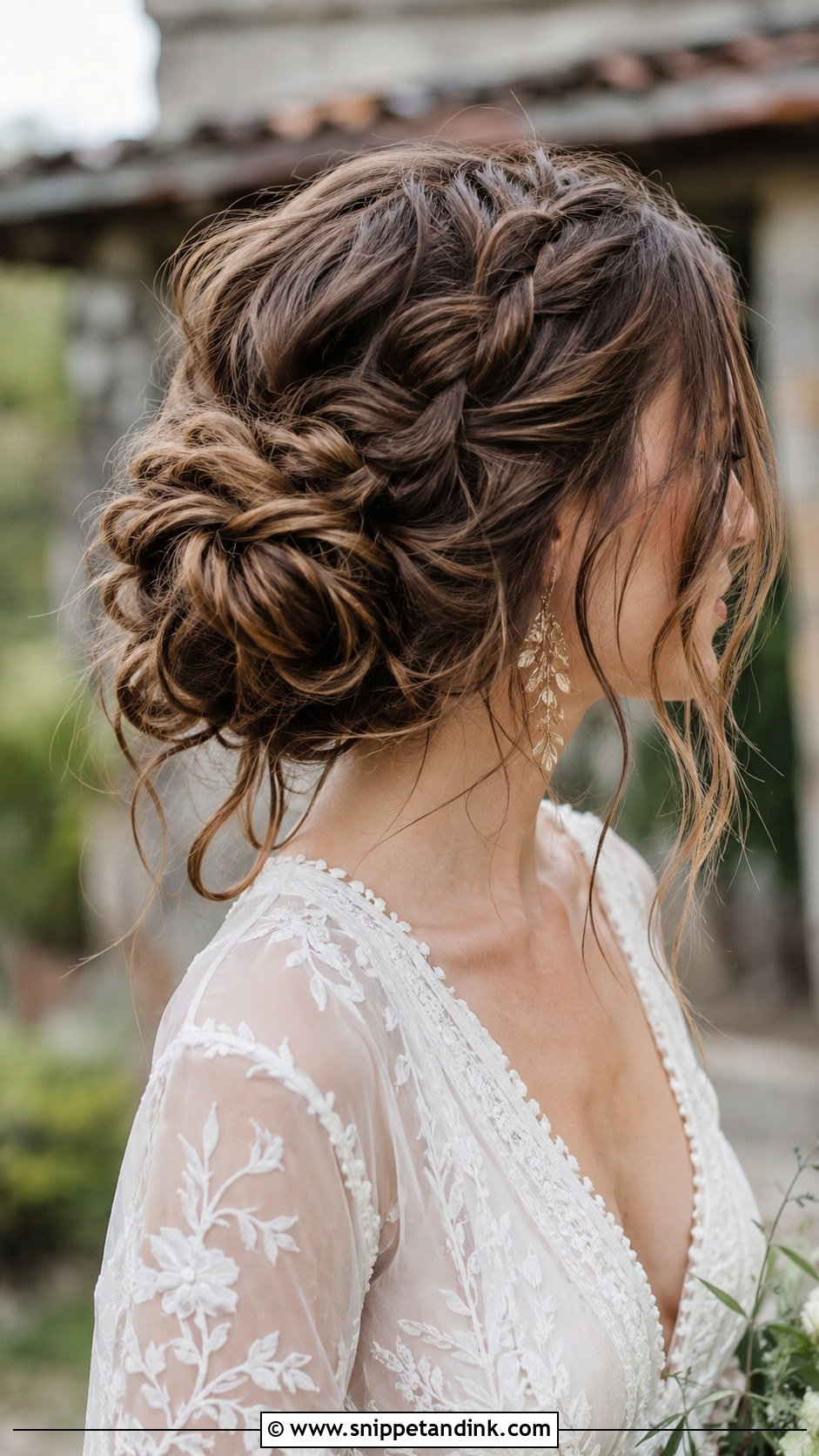
This bun is braided and twisted loosely, then pieces are pulled out on purpose so it looks lived-in. It forgives a lot. On thick or wavy hair, any strand that falls during the day only adds to the effect. Very fine hair is where I’d be careful, since messy can start to look thin once the texture flattens, so I’d build it over a small padded base or add a clip-in for bulk. One jeweled pin is enough; a crowd of accessories fights the undone finish.
11. Halo Braid Wedding Hairstyle
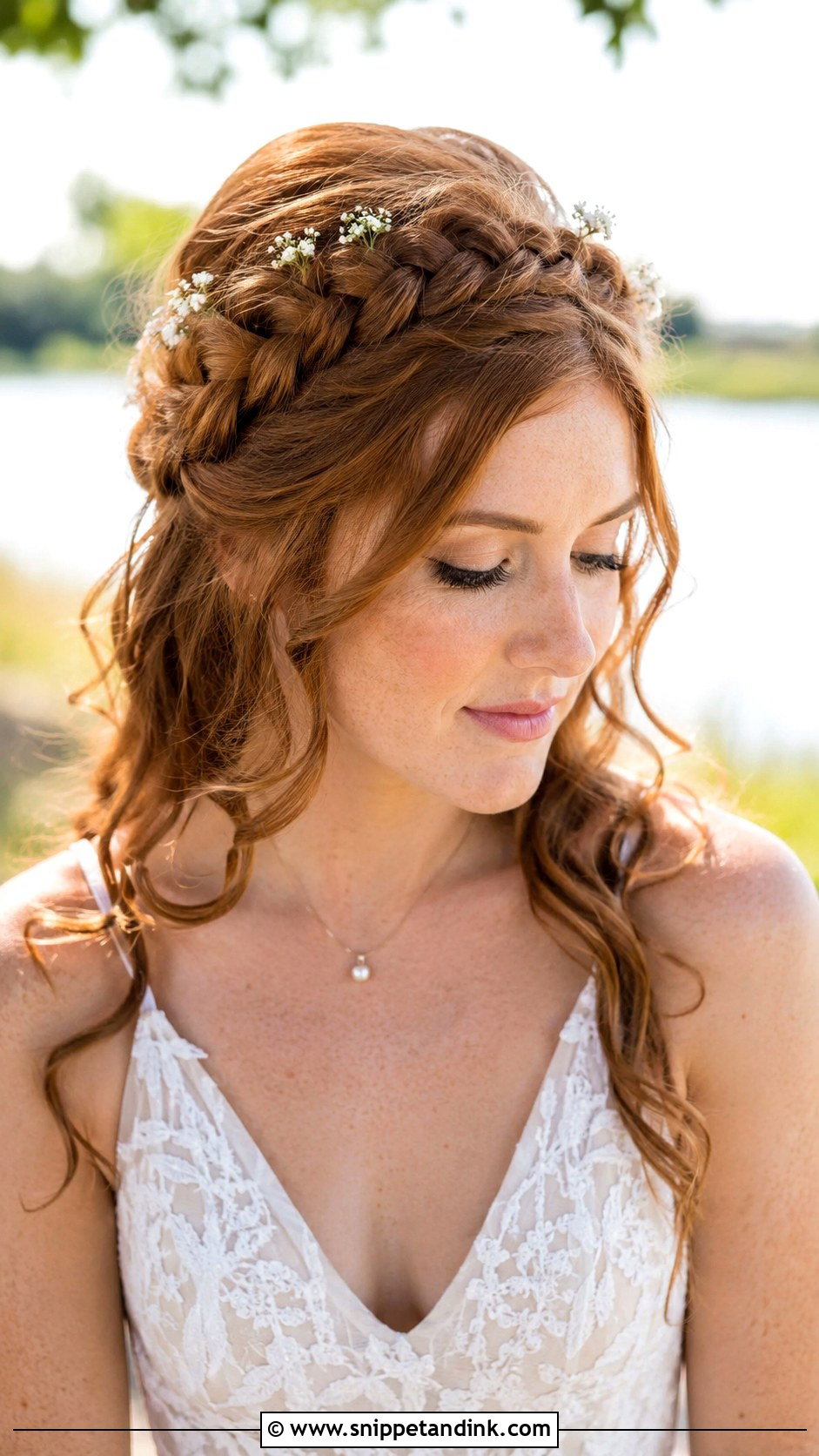
A halo uses one long braid circling the crown, rather than the two separate plaits of a milkmaid. It keeps the neck and shoulders completely clear, which is the comfort you want at a beach or a July garden party. Making the full loop from a single braid takes real length, usually past the shoulder blades; otherwise I add a matched clip-in to finish the circle. I pin it every couple of inches so it holds through hugs, and leave a few wisps at the temples so it doesn’t look too tidy.
12. Braided Ponytail Wedding Hairstyle
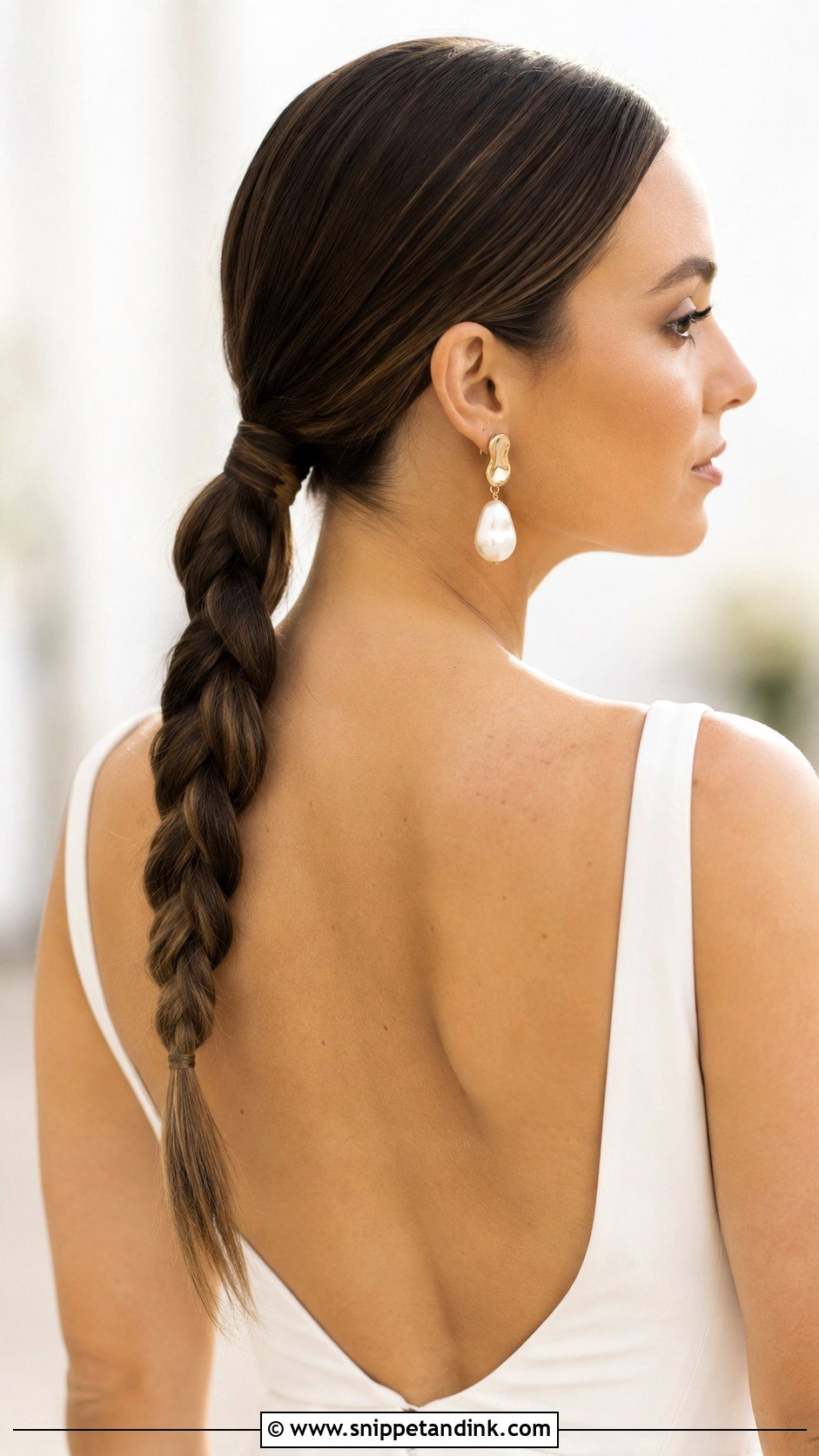
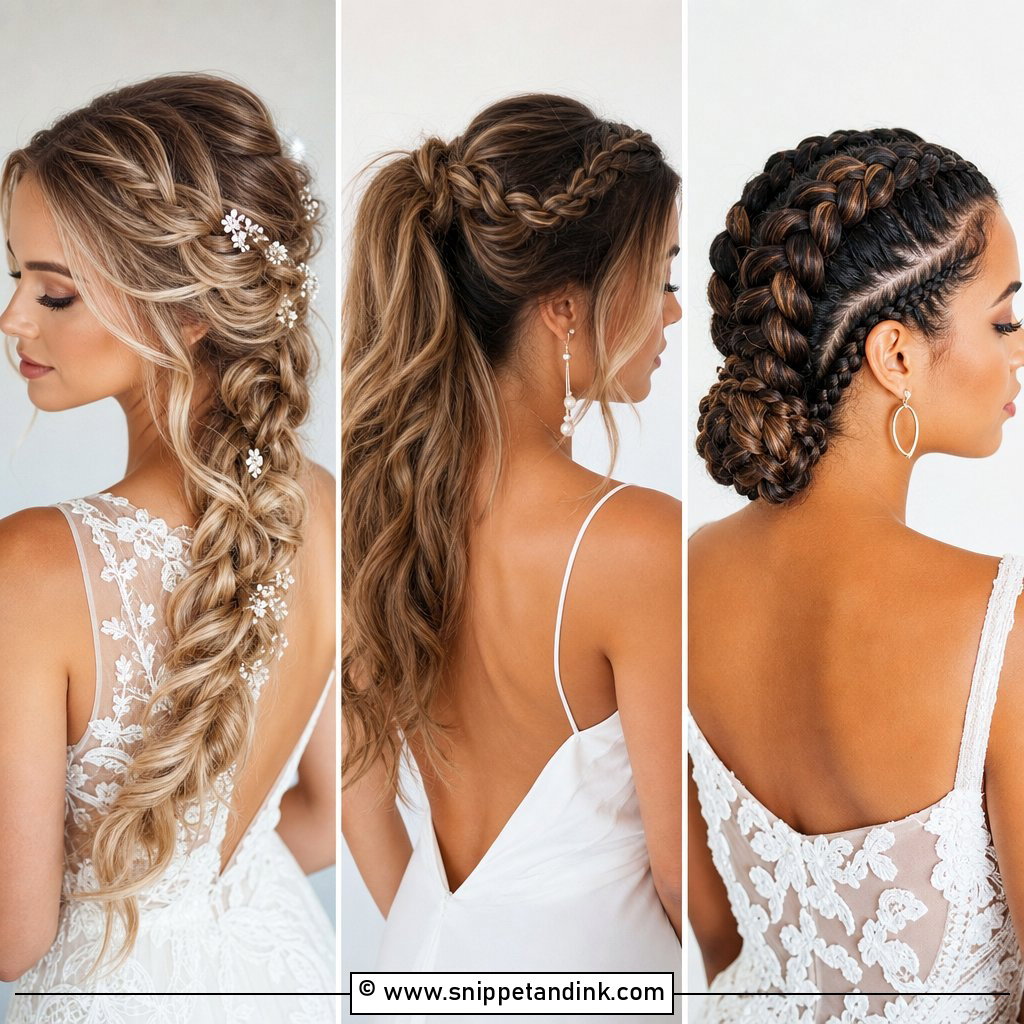
Placement decides how a braided ponytail reads: high feels young and playful, low feels polished and grown-up. Either way it’s a cleaner, more fashion-led shape than an updo. I use a strong elastic at the base, then wrap a strand of your own hair around it and pin the end underneath. The weight of a long braided length can drag a high pony down by evening, so I anchor it with crisscrossed pins beneath the base. Bold earrings and a sleek gown suit it best.
13. Boho Fishtail Braid Wedding Hairstyle
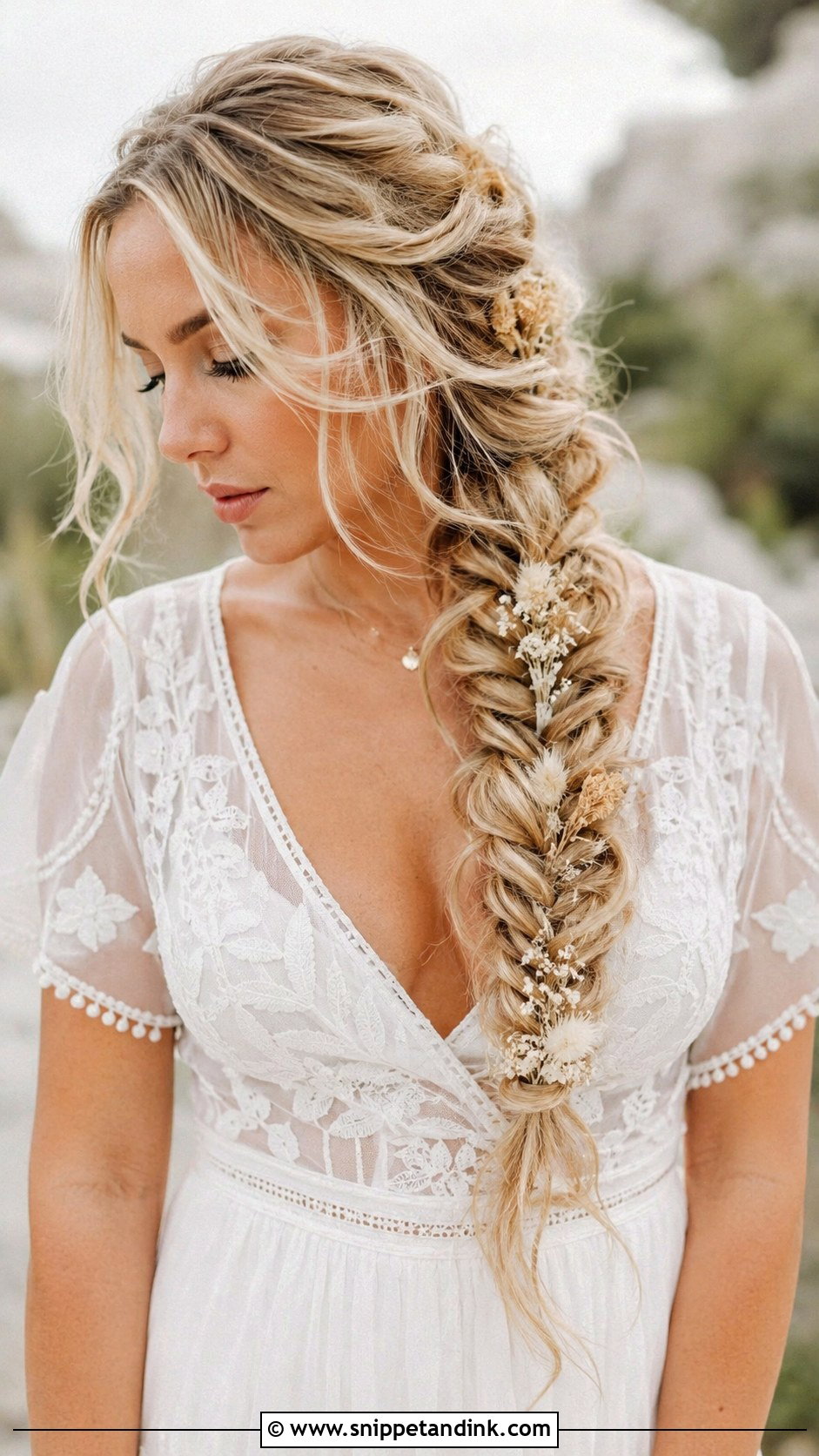
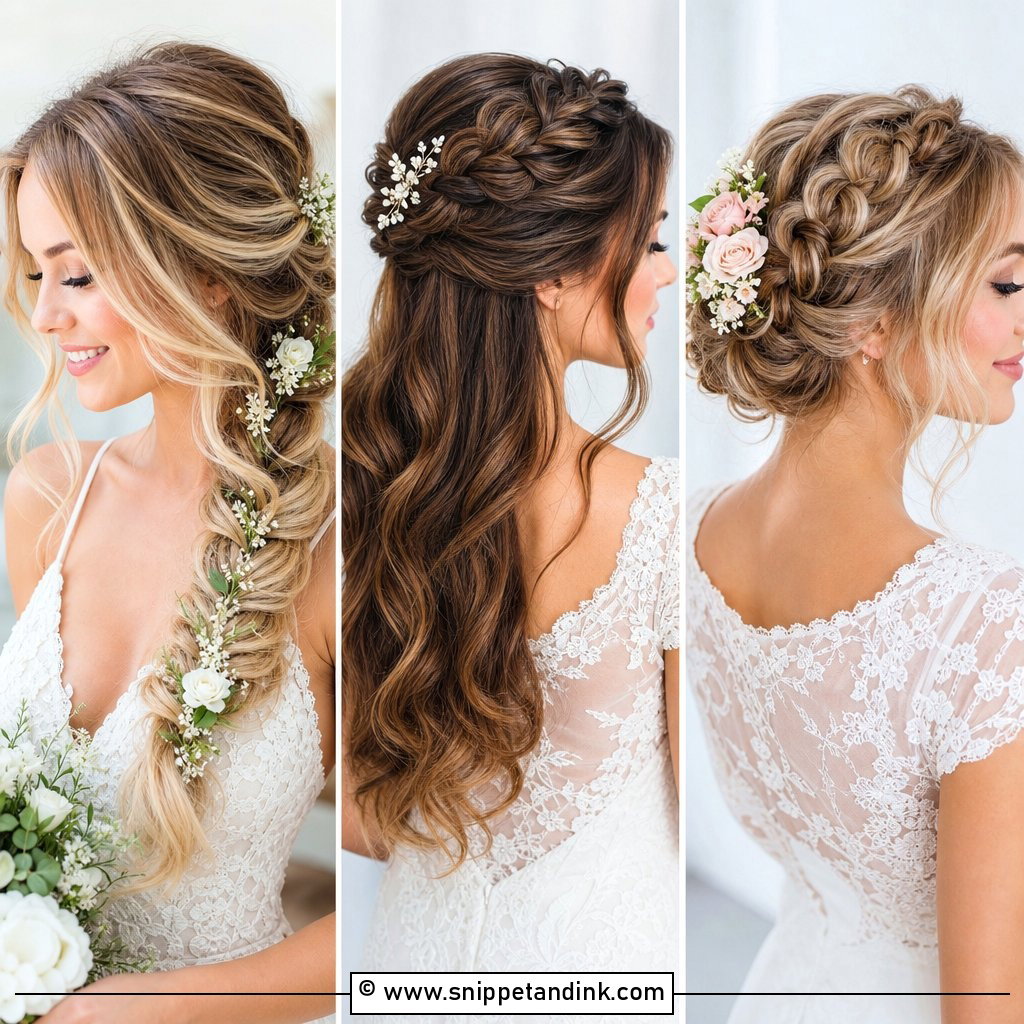
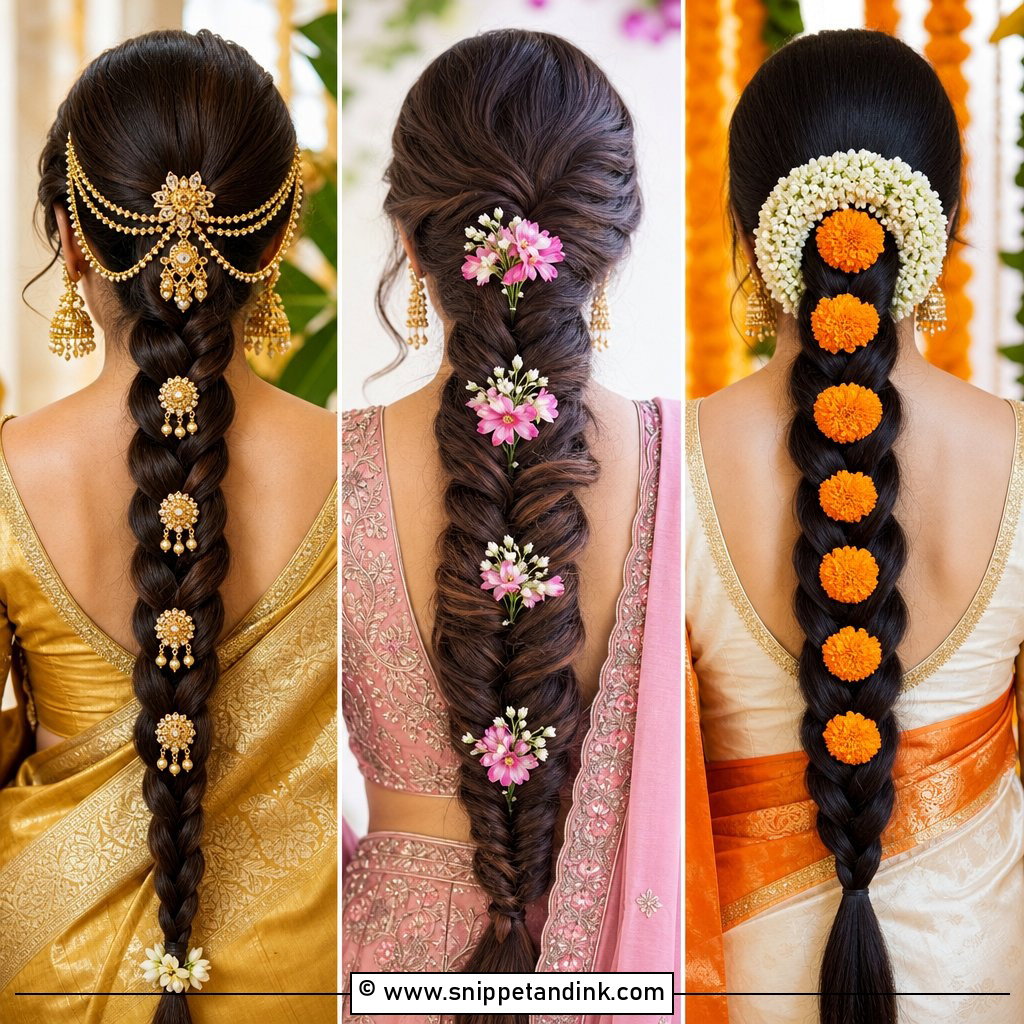
A chunky fishtail over one shoulder is the most relaxed look here. After braiding, I pull each loop outward so it looks fuller and softer. Long, thick hair gives the best result; on thinner hair the ends can look stringy unless you add volume with clip-ins. Dried flowers and greenery stay in better than fresh stems because they won’t wilt by the reception, and the whole style is comfortable for a long outdoor day with natural makeup.
14. Braided Half Up Half Down with Curls
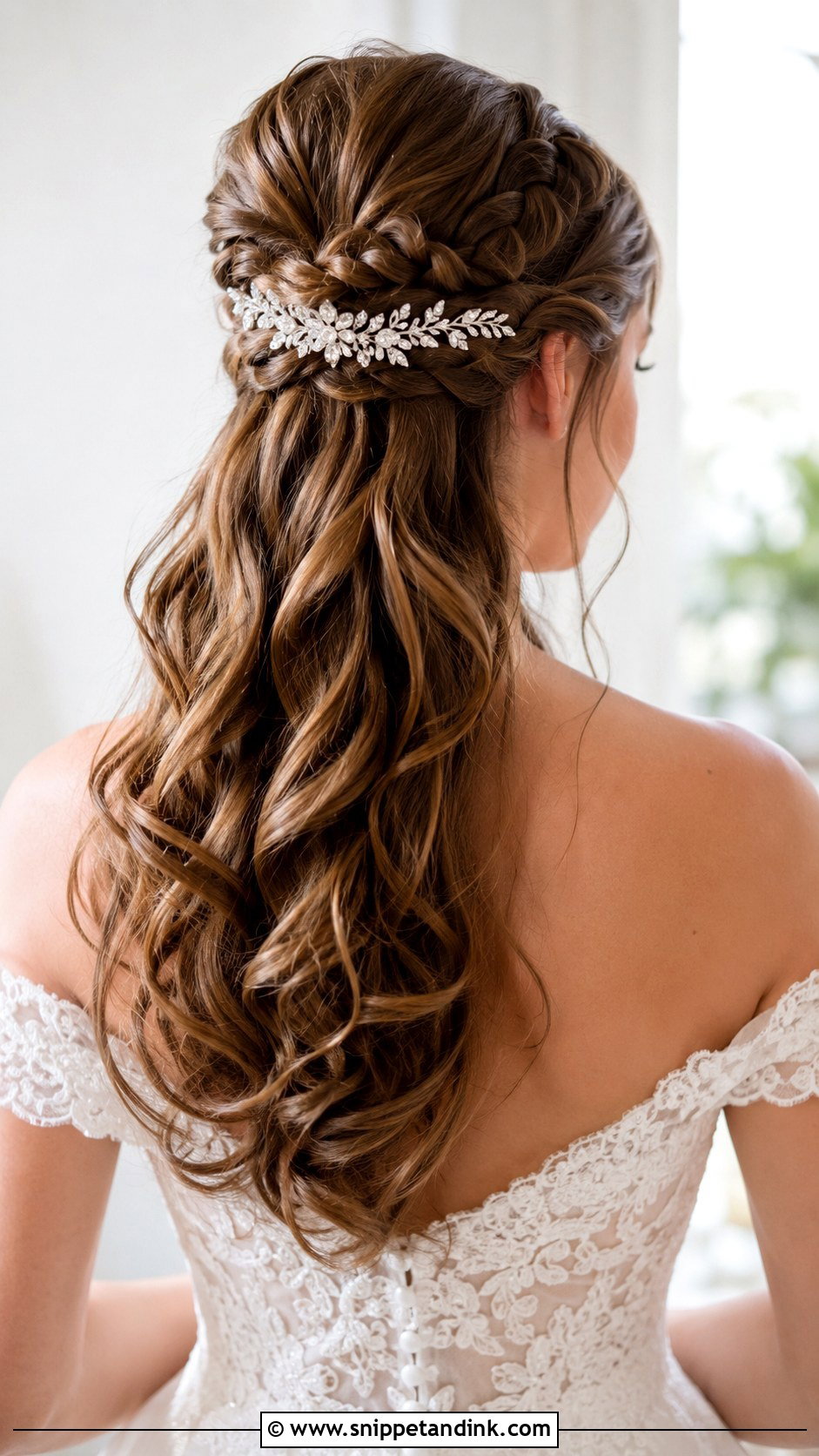
Braiding just the top section keeps hair off your face while the curls below show off length. The spot where the braid meets the curls is the natural home for a clip or a few flowers, and it’s usually where I anchor a veil comb too. The curls are the part to test. I’d only promise they’ll last if your hair takes a curl well at the trial, and medium to long hair gets the most from this shape.
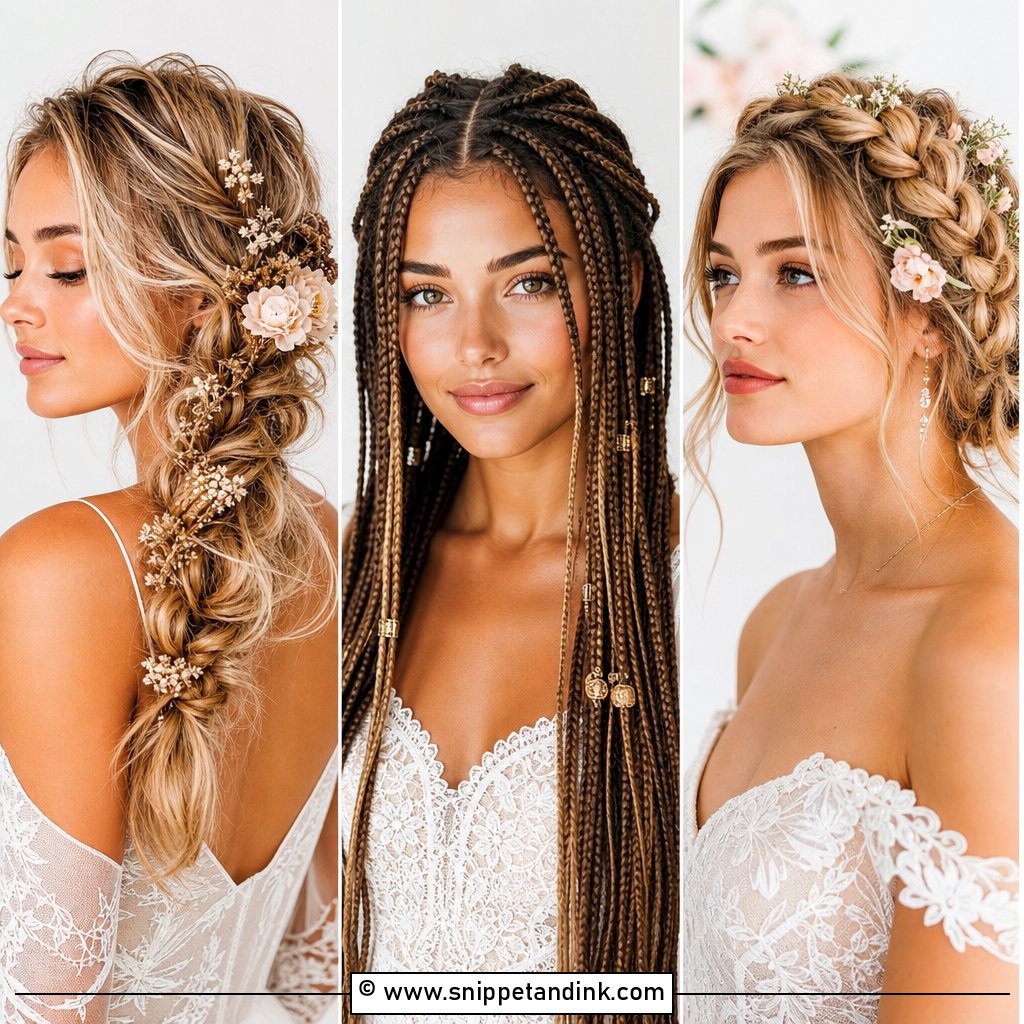
15. Milkmaid Braid Wedding Hairstyle
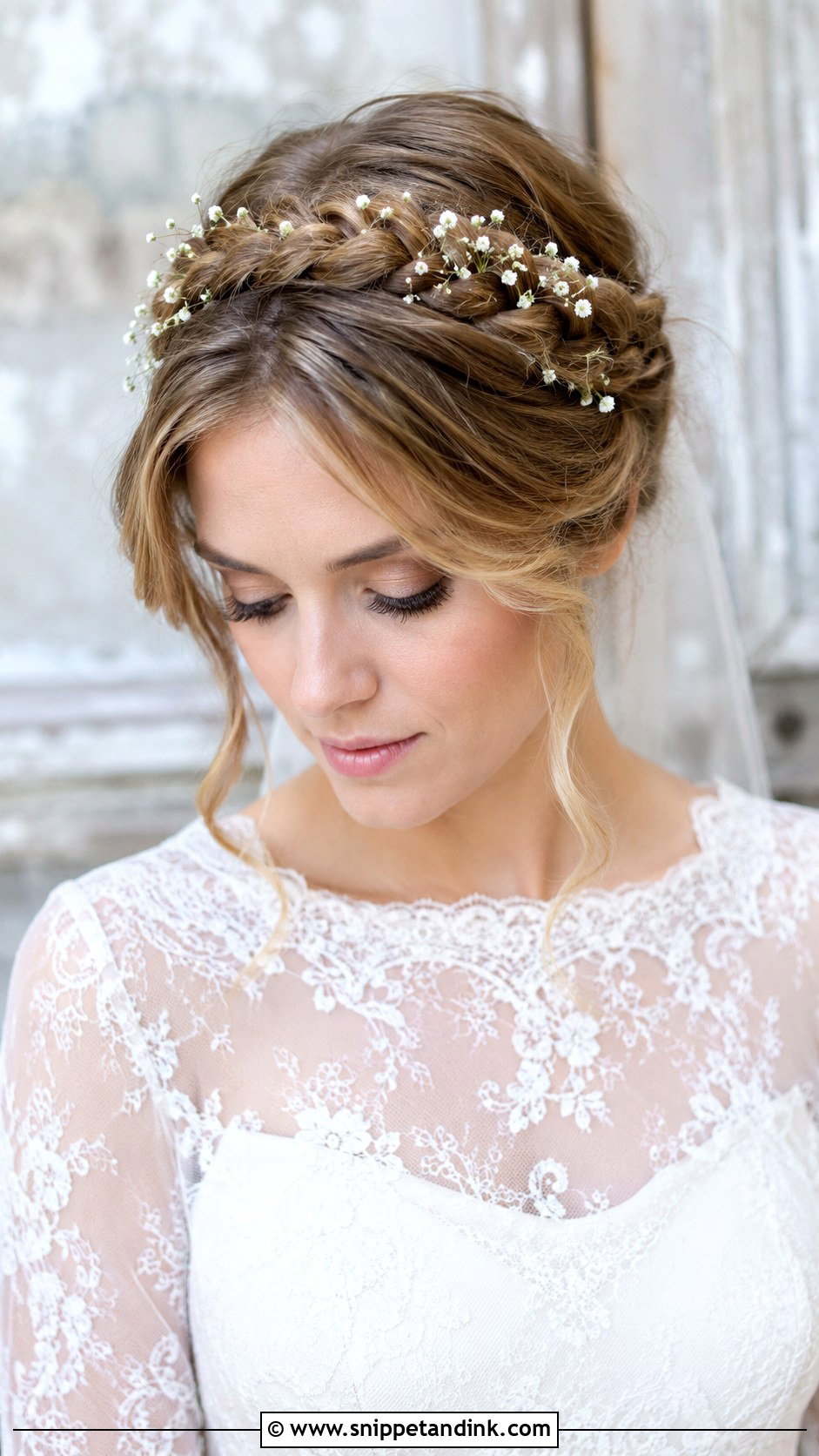
The milkmaid braid crosses two plaits over the top of the head and pins each one down on the opposite side. Since every bit of hair is up, it’s a cool choice for a warm rustic venue. I find the added height flatters round and heart-shaped faces. There is a seam where the two braids meet behind one ear, so plan a flower or a decorative pin to cover it. Keep the plaits tight for a crisp look or loosen them for a softer one.
16. Braided Chignon Wedding Updo
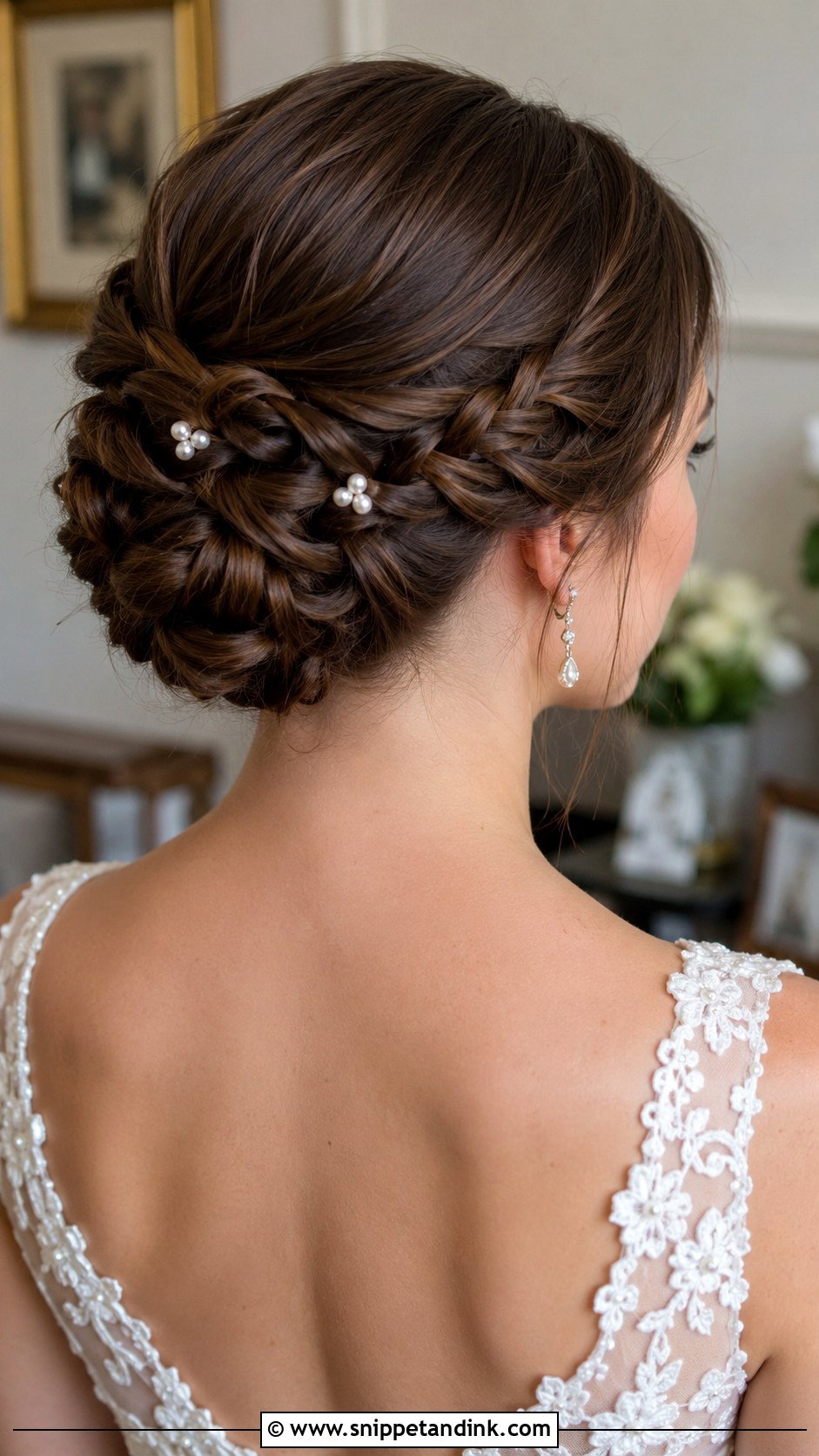
Coiling braided hair into a low, smooth knot gives a chignon a woven surface that catches light in a way a plain twist can’t. For black-tie weddings, this is the updo I’d pick. The coil is wound tightly, so it holds for hours, and the low placement leaves room above it for a long veil comb. A couple of soft face-framing pieces keep it from looking stern, and pearl pins pressed into the coil add a little sparkle.
17. Loose Braid Wedding Hairstyle with Veil
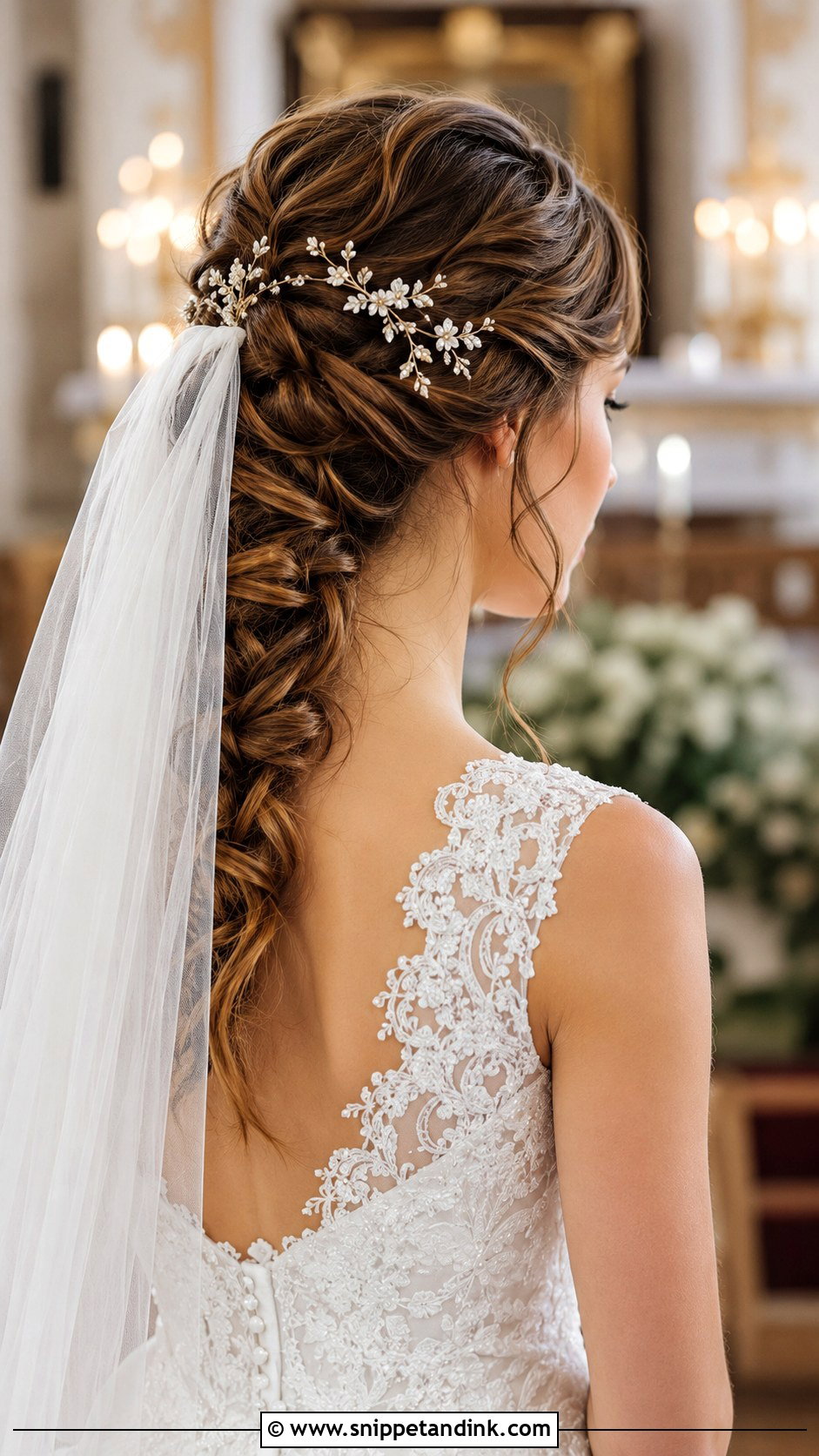
A loose braid under a long veil is a pairing I like for church ceremonies, since the braid stays visible through sheer tulle. I set the veil comb above the braid and anchor it into a small cross of pins underneath, so the veil’s weight doesn’t drag the plait apart. Keep the braid looser than you think; a tight plait can look harsh next to soft tulle. Once the veil comes out after the ceremony, the braid stands on its own for the reception.
18. Braided Updo with Pearls
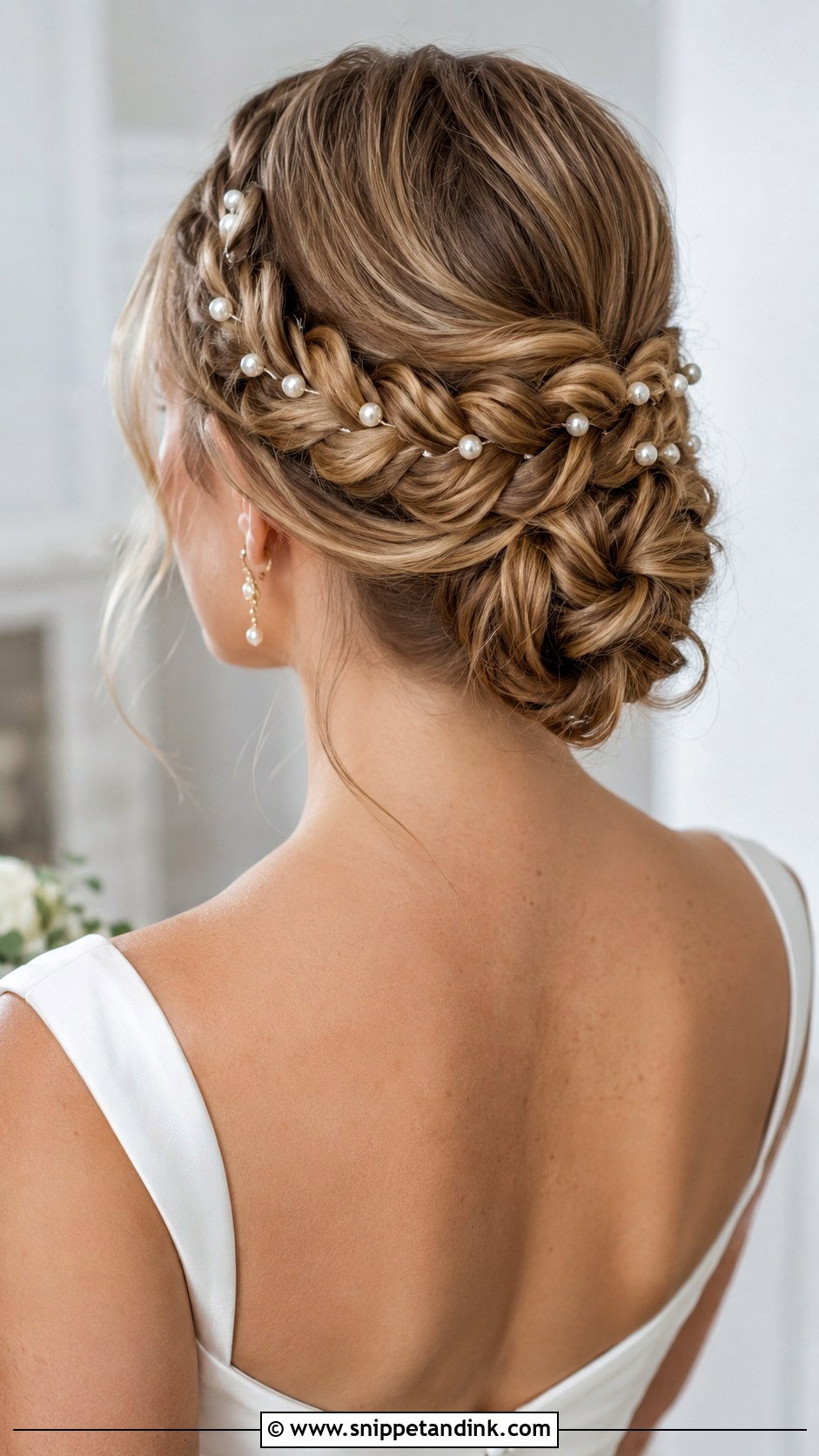
Pearls through a braided updo look like an heirloom without feeling dated. You can push pearl pins into the crossings or braid a pearl strand right into the plait. I prefer the pins. A strand pulls on fine hair and tangles at takedown, while pins come out in seconds. Scatter a few for a light finish or line them along the braid for more impact, and let a simple gown keep the focus on them.
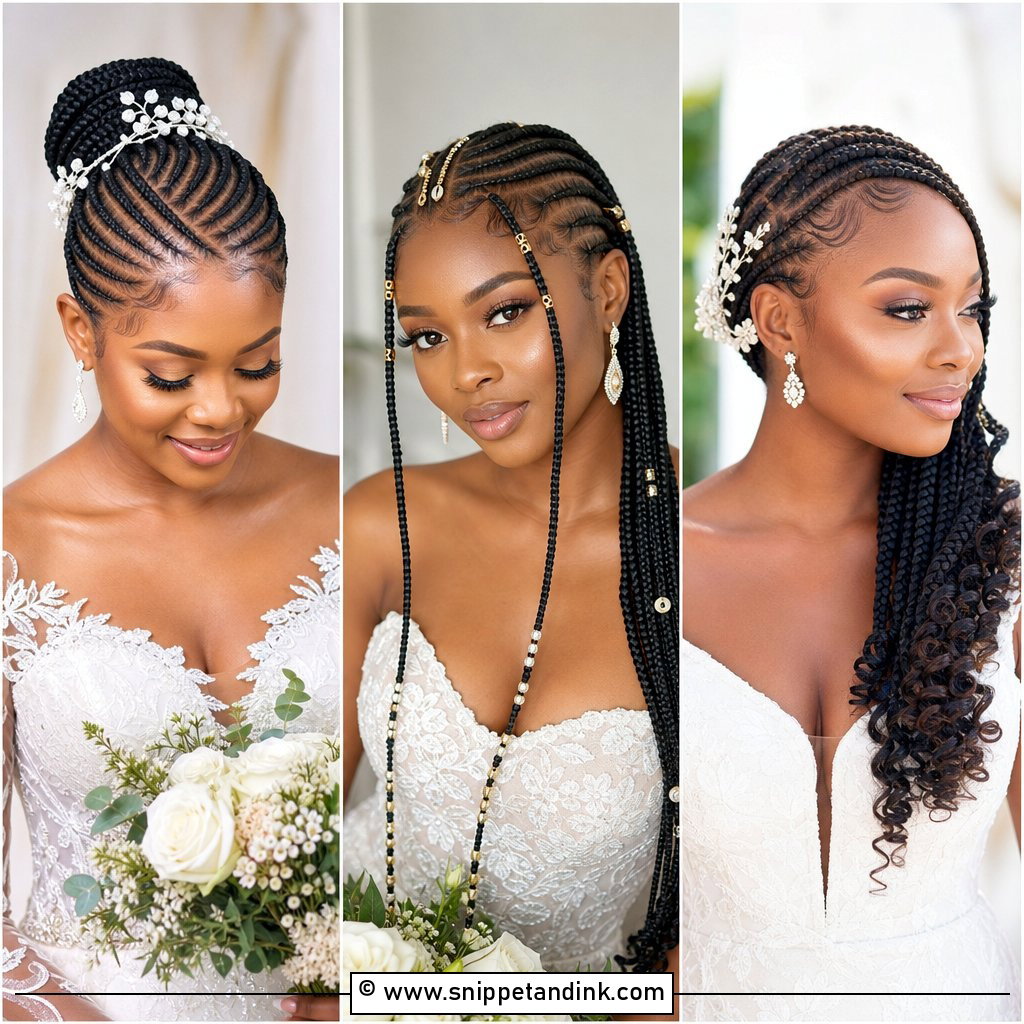
19. Cornrow Braided Wedding Updo
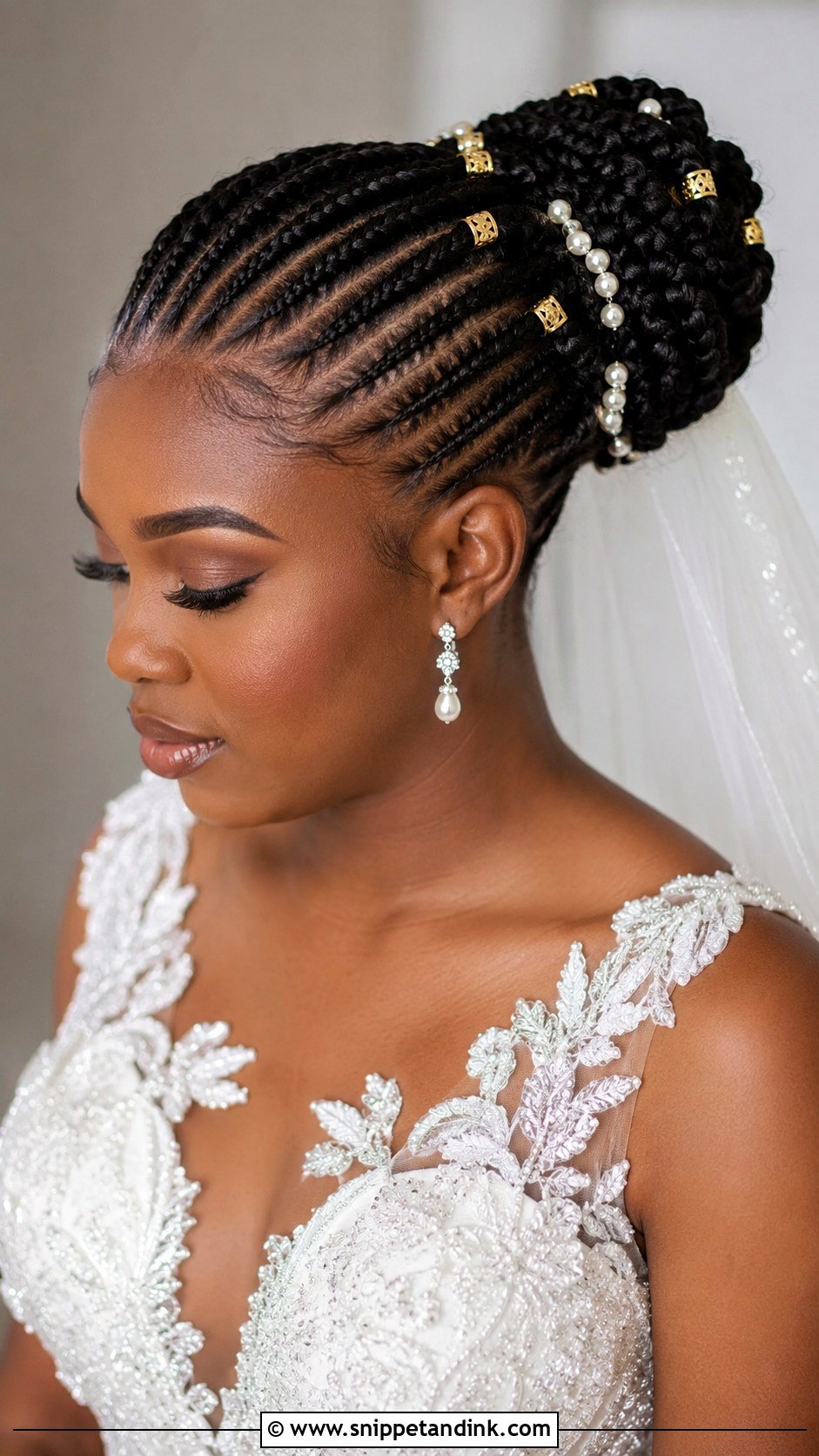
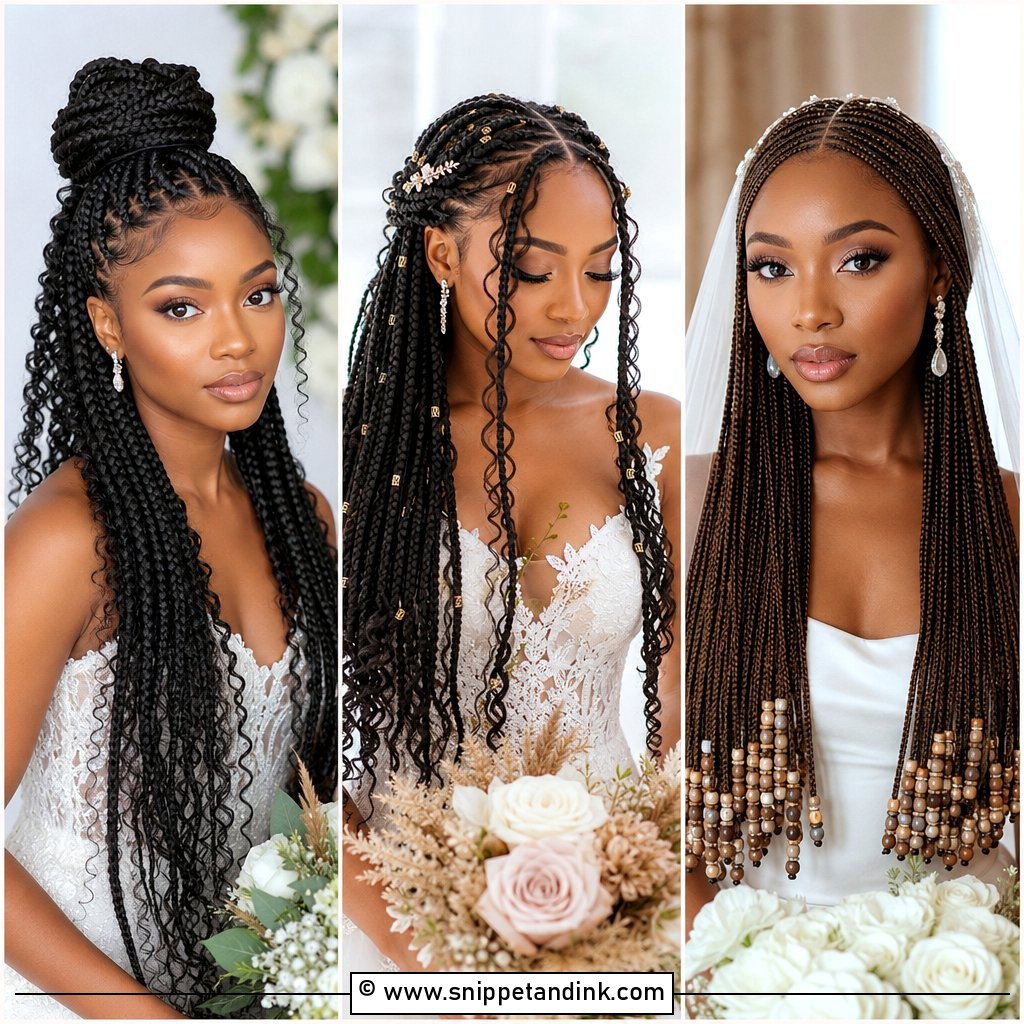
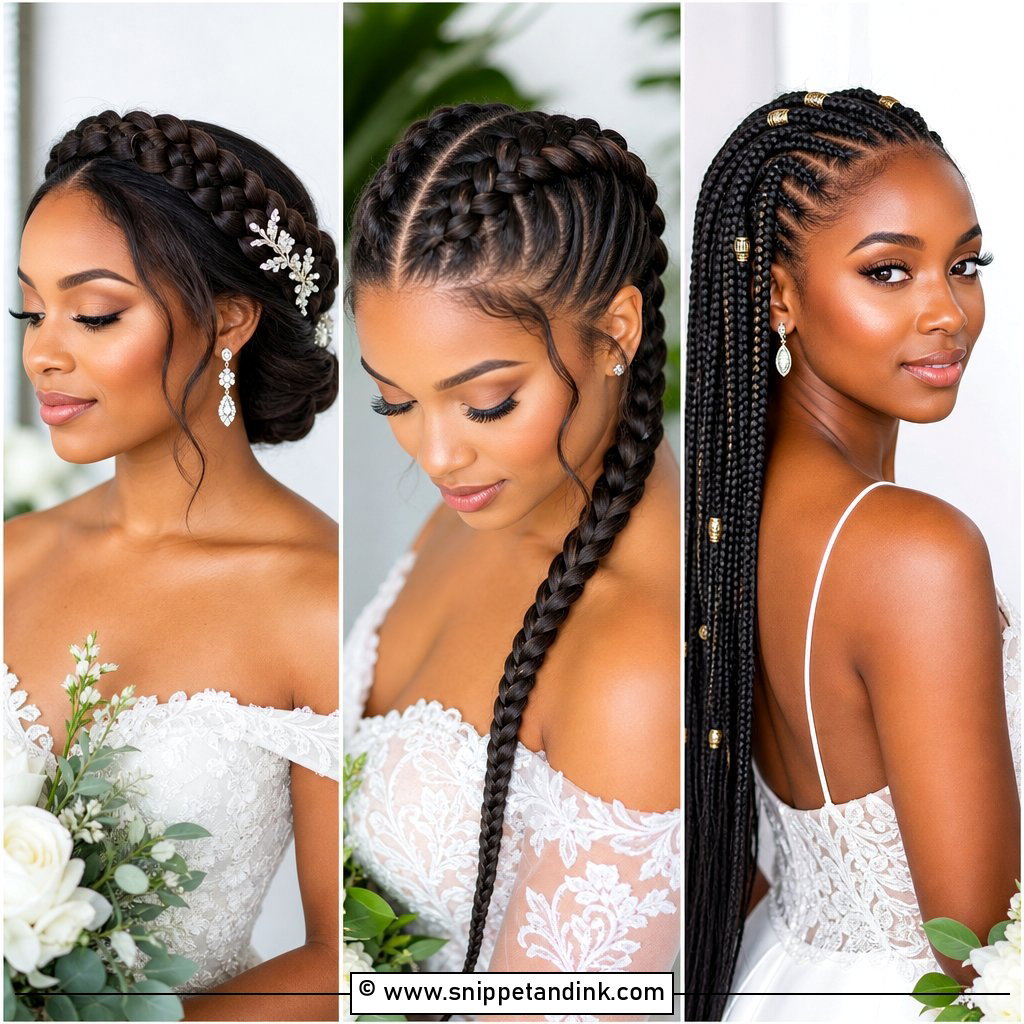
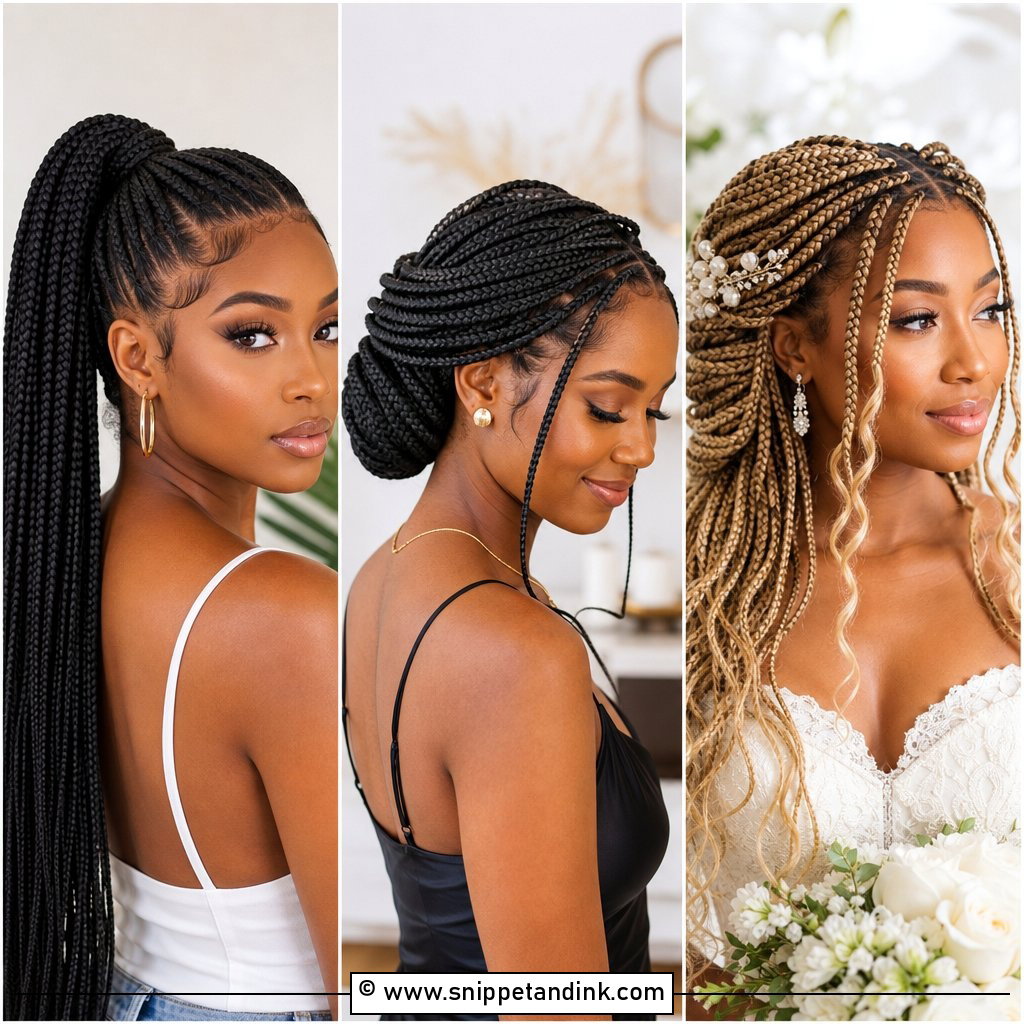
Cornrows gathered into an updo give a precise, sculpted pattern that often lasts well past the wedding. As a protective style, they’re usually installed one to three days before, which gives any tenderness at the edges time to settle before the photos. Ask your braider to keep tension light along the hairline; tight edges are the thing I’d guard against most. Gold cuffs and pearl beads slide neatly onto the braids, and the finished shape holds its lines all day.
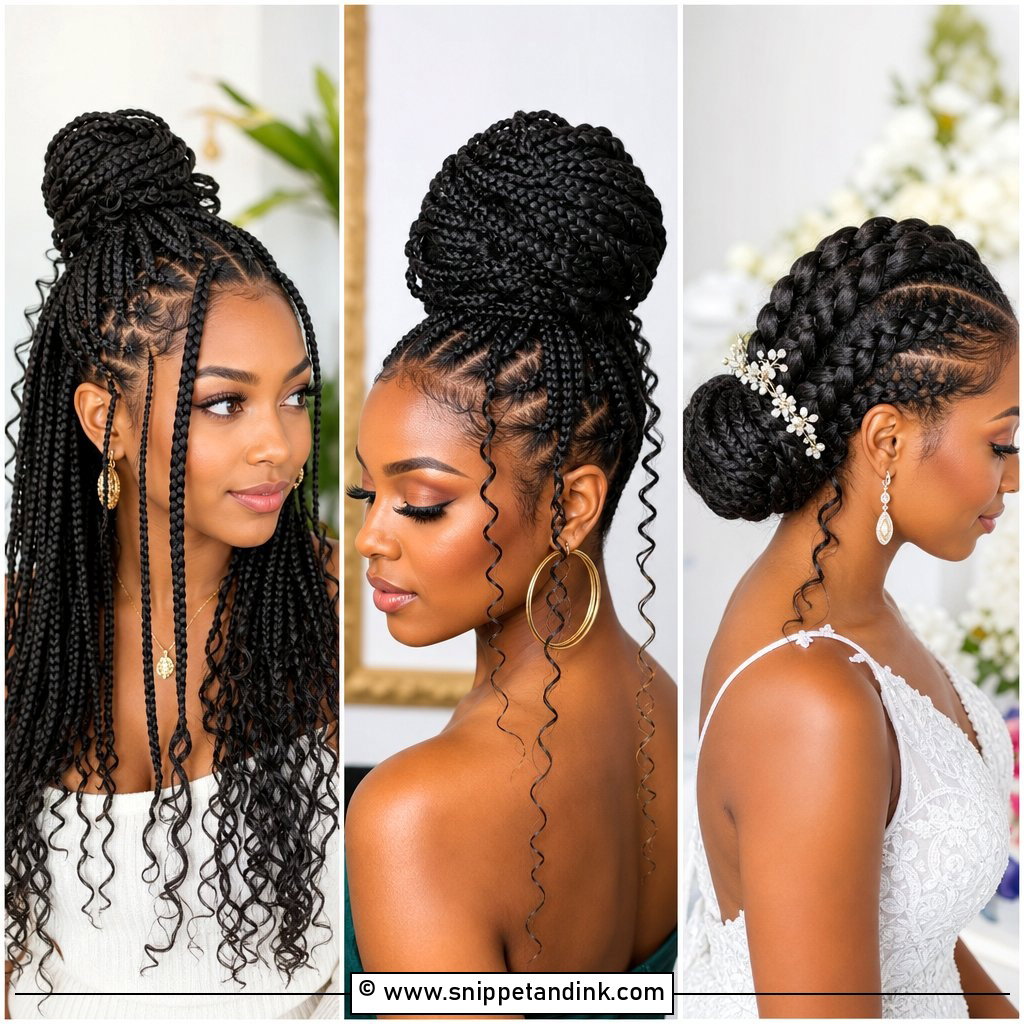
20. Braided Bun with Baby’s Breath
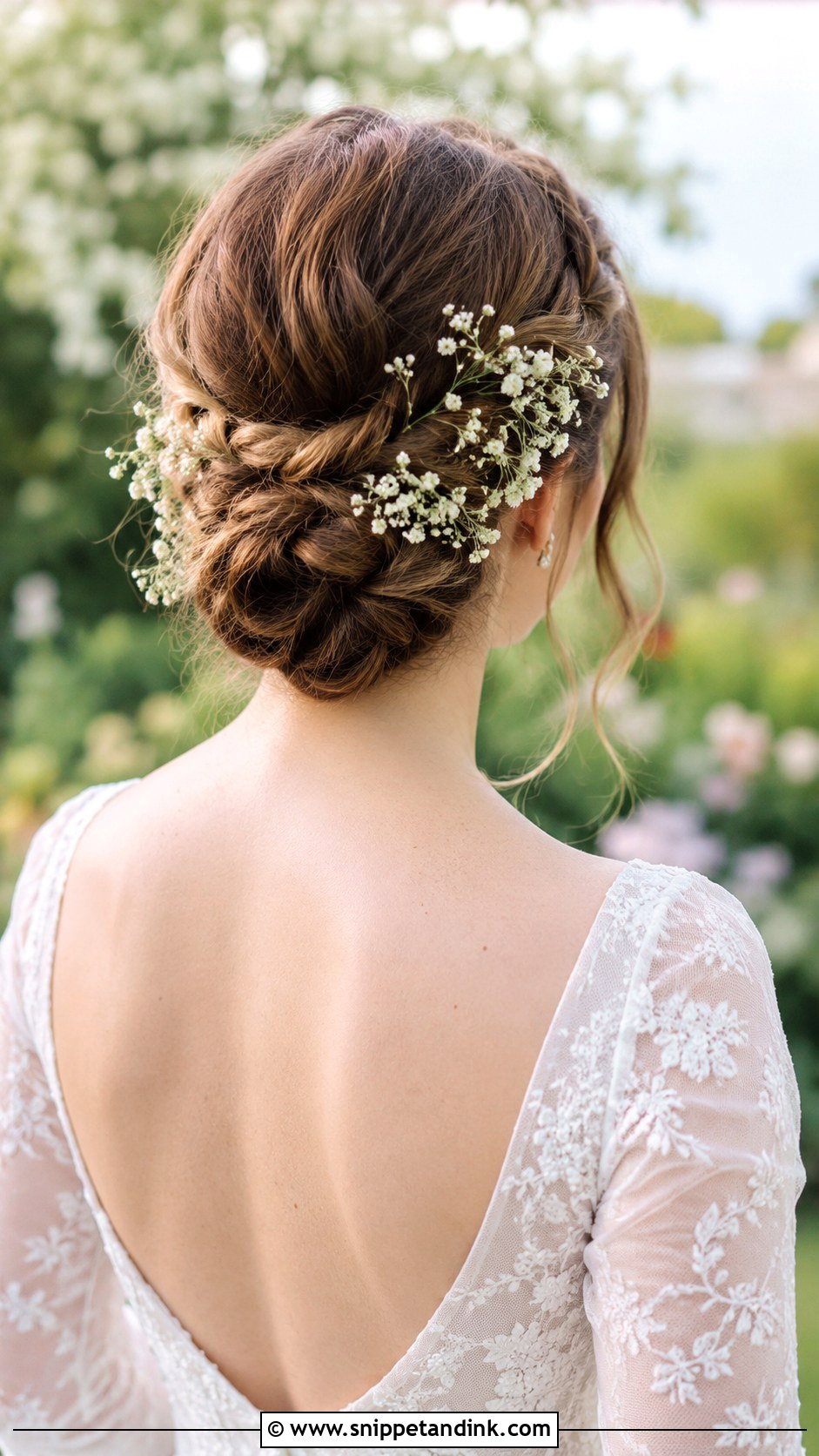
Baby’s breath is inexpensive, holds up well out of water, and its tiny heads nest neatly into the crossings of a braided bun. Cluster it for a full effect or scatter a few sprigs for something lighter. One thing to know before you commit: it can drop small florets as the day goes on, which shows on dark hair. I trim each sprig short, use the freshest bunch available, and tuck the stems in deep.
21. Twisted Braid Wedding Hairstyle
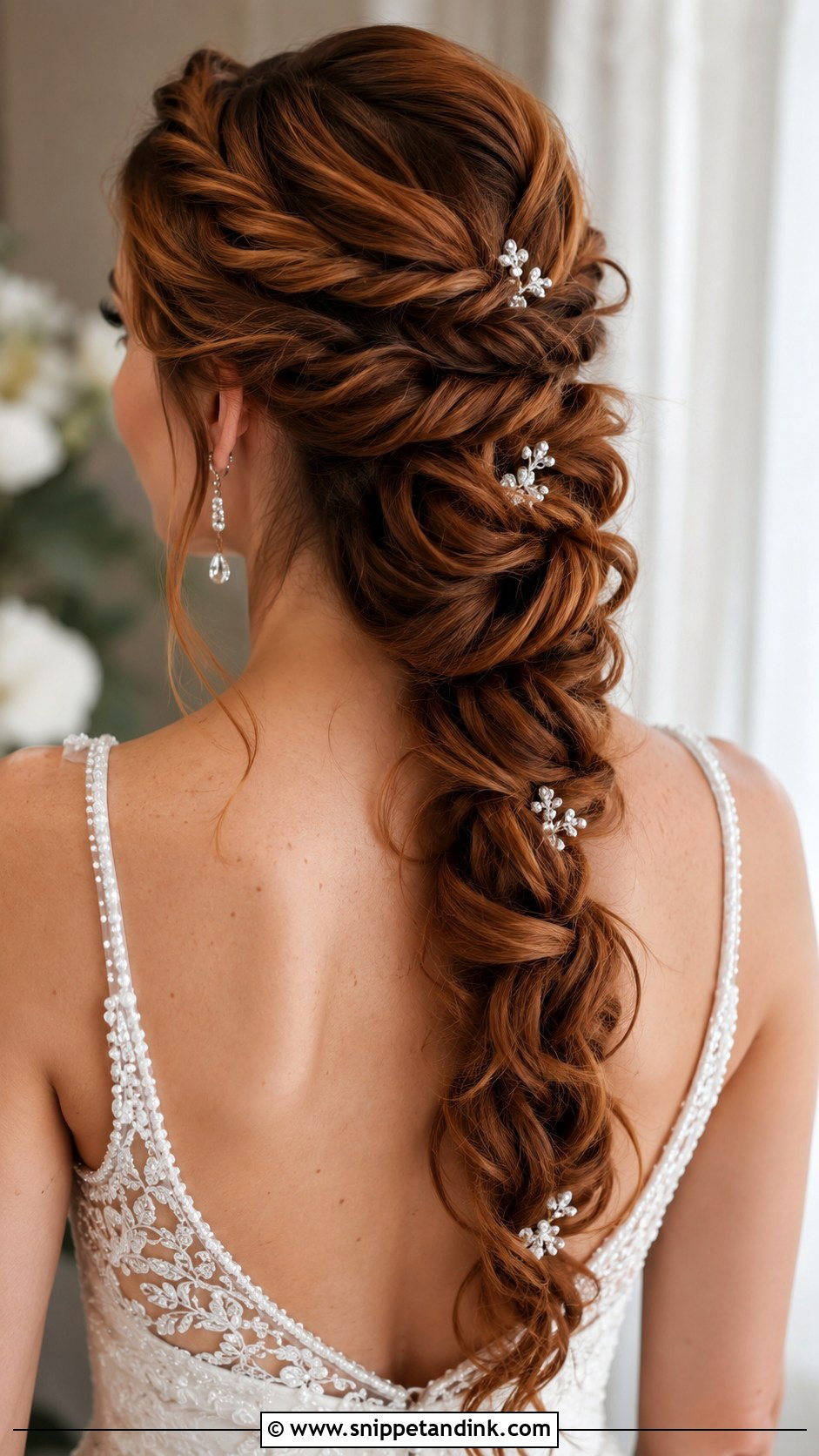
Two-strand rope twists are braided together here, so the plait has more texture than a standard three-strand braid. It can fall down the back or wrap into an updo. Silky hair is where twists struggle, since they unravel faster than braids, so I set each twist with a little spray before working it into the pattern. You can pull pieces loose for softness or keep it sleek.
22. Braided Updo for Short Hair Wedding
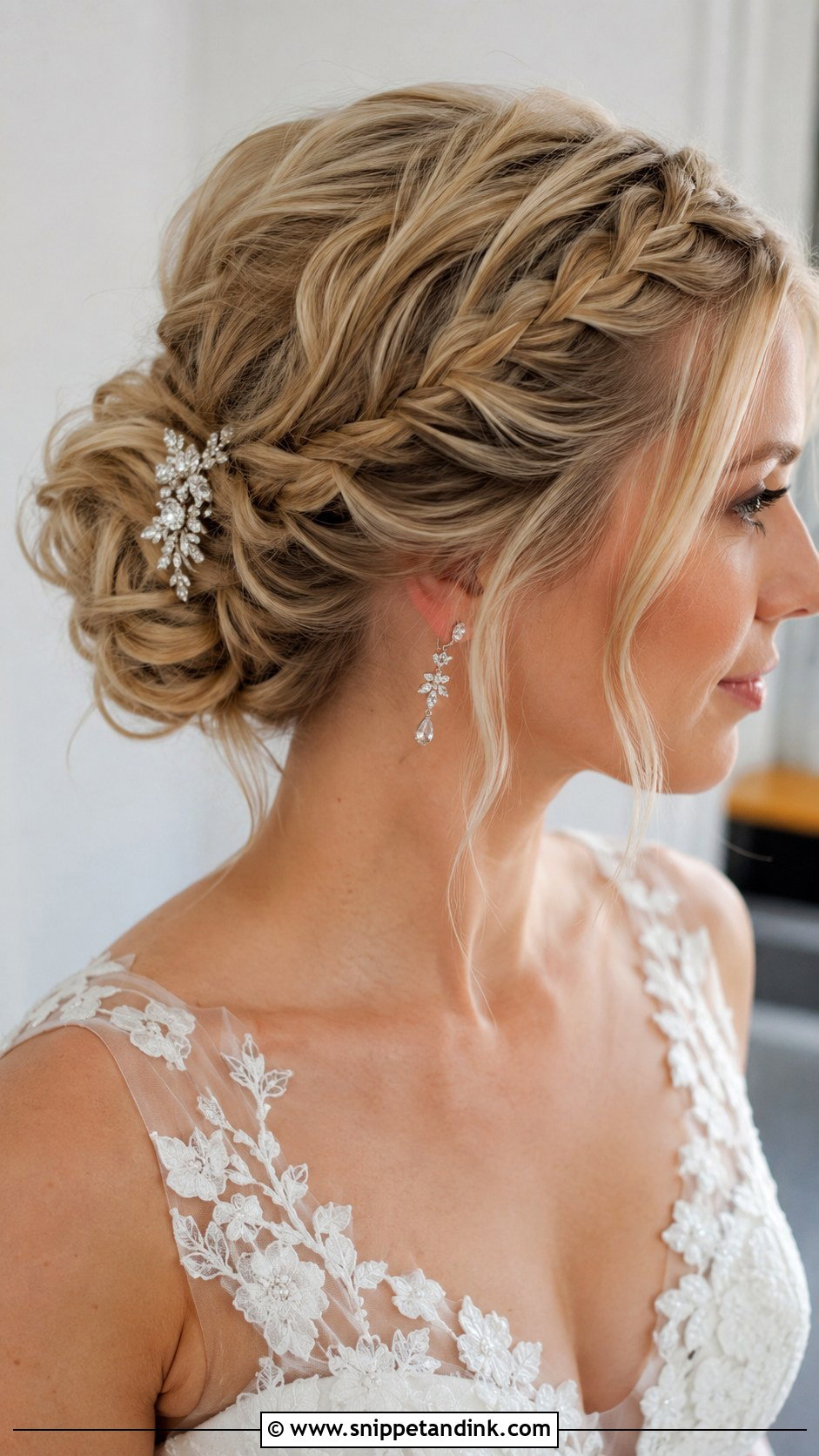
Short hair can carry a braided style; it just needs the braids placed where the length allows. On a bob or lob, small braids along the part or above the ear give the pinned sections structure and give pins something to grip. A sparkly clip or slim headband finishes it neatly. If your hair sits above the chin, I’d suggest one tiny accent braid near the face instead of trying to force a full updo.
23. Goddess Braid Wedding Hairstyle
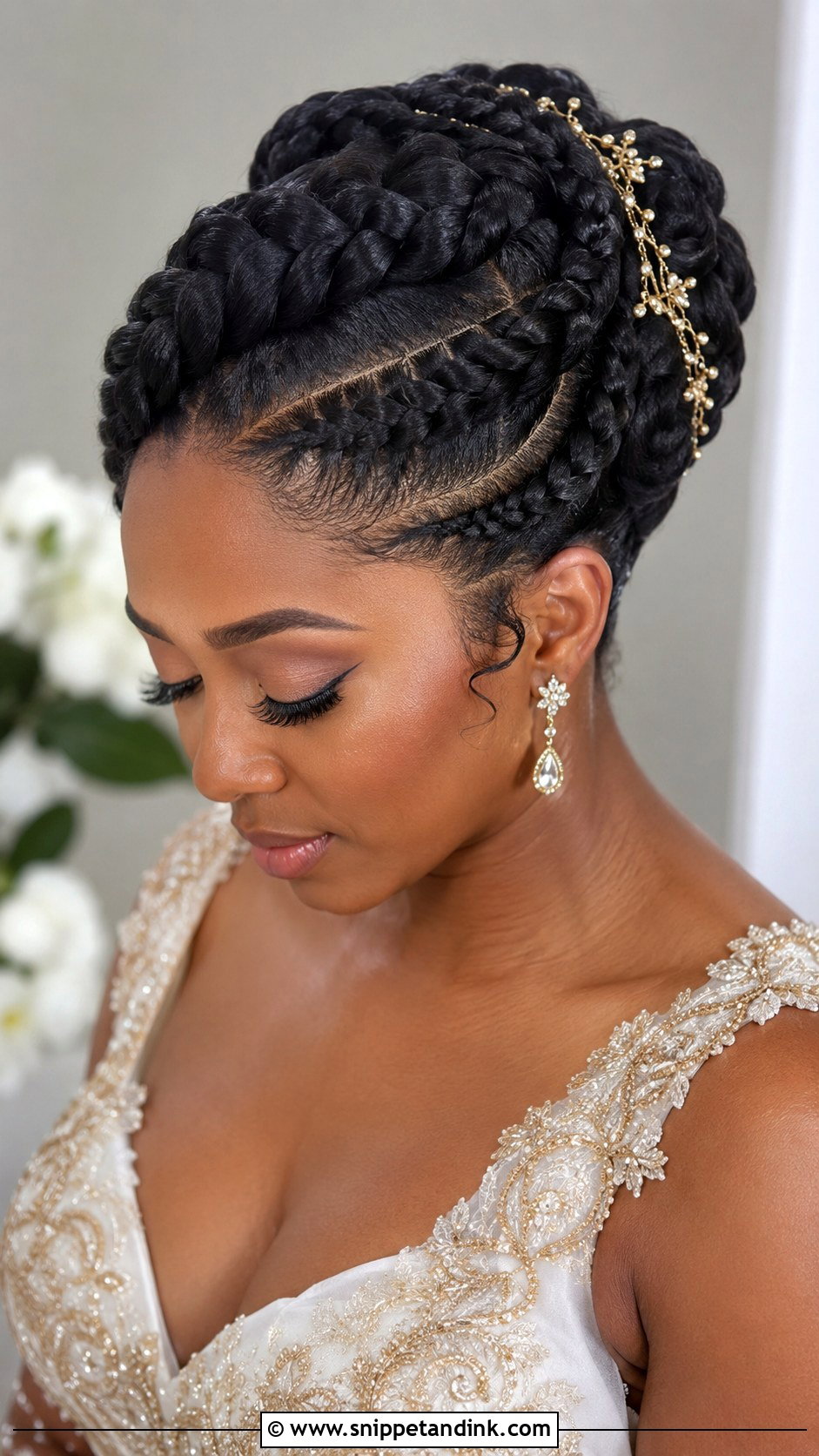
Raised, chunky goddess braids give bridal hair a bold structure that can sweep into an updo or fall down the back. They’re thicker than standard cornrows, so the pattern reads clearly across a room and in group photos. Installed with sensible tension, they suit natural hair and hold for days. Big braids carry real weight, though, so wear yours for a full evening at the trial before you settle on an updo shape. Gold accessories and pearls slip on easily.
24. Braided Updo with Tendrils
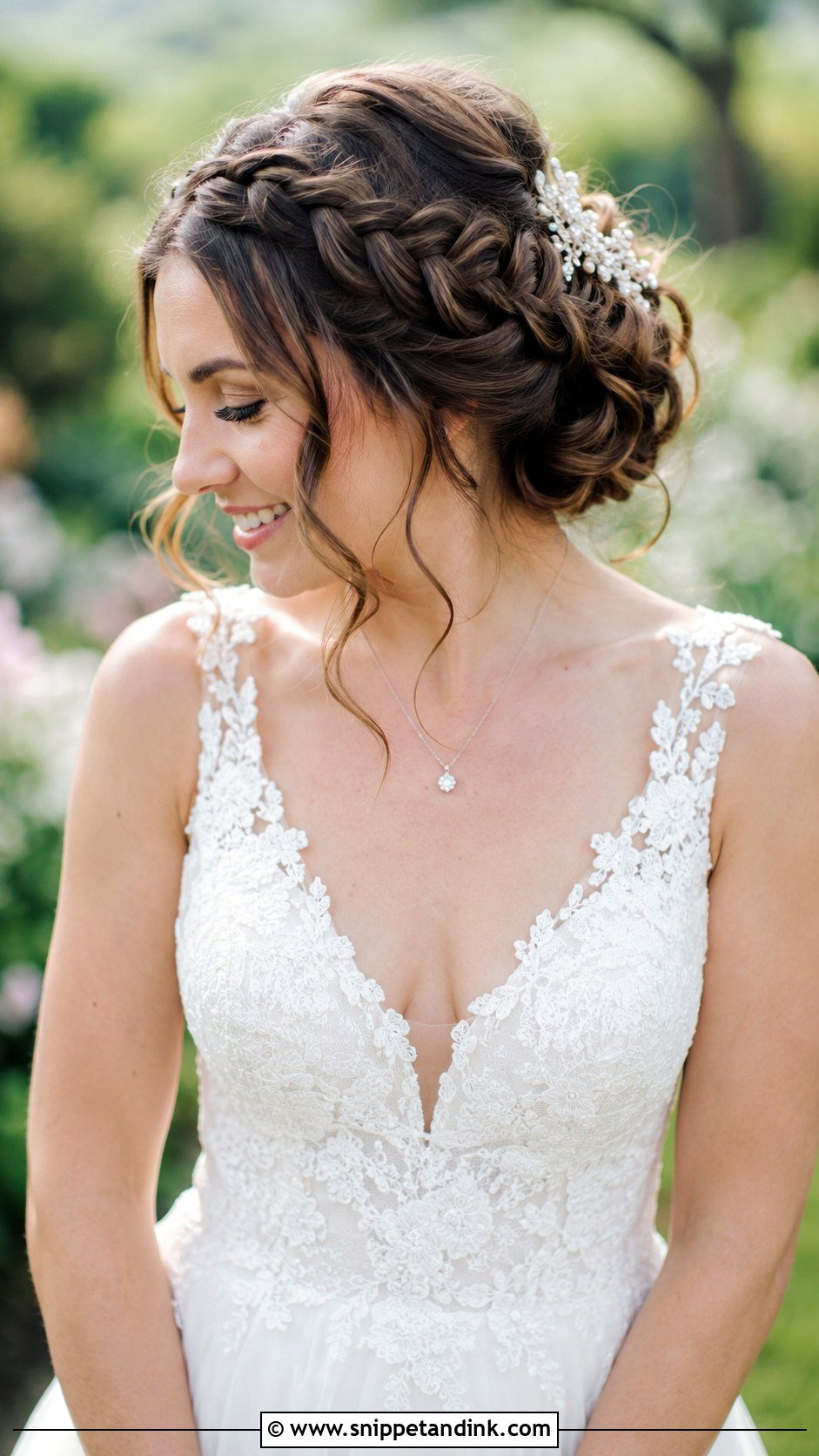
Leaving a few wispy pieces around the face softens a braided updo and draws attention to the cheekbones and jaw. Tendrils are also the first thing to go limp in humidity. I curl them last, leave them pinned up until just before photos, and only then let them drop. The braided base underneath does the holding, so you can keep the tendrils straight if that suits your face better.
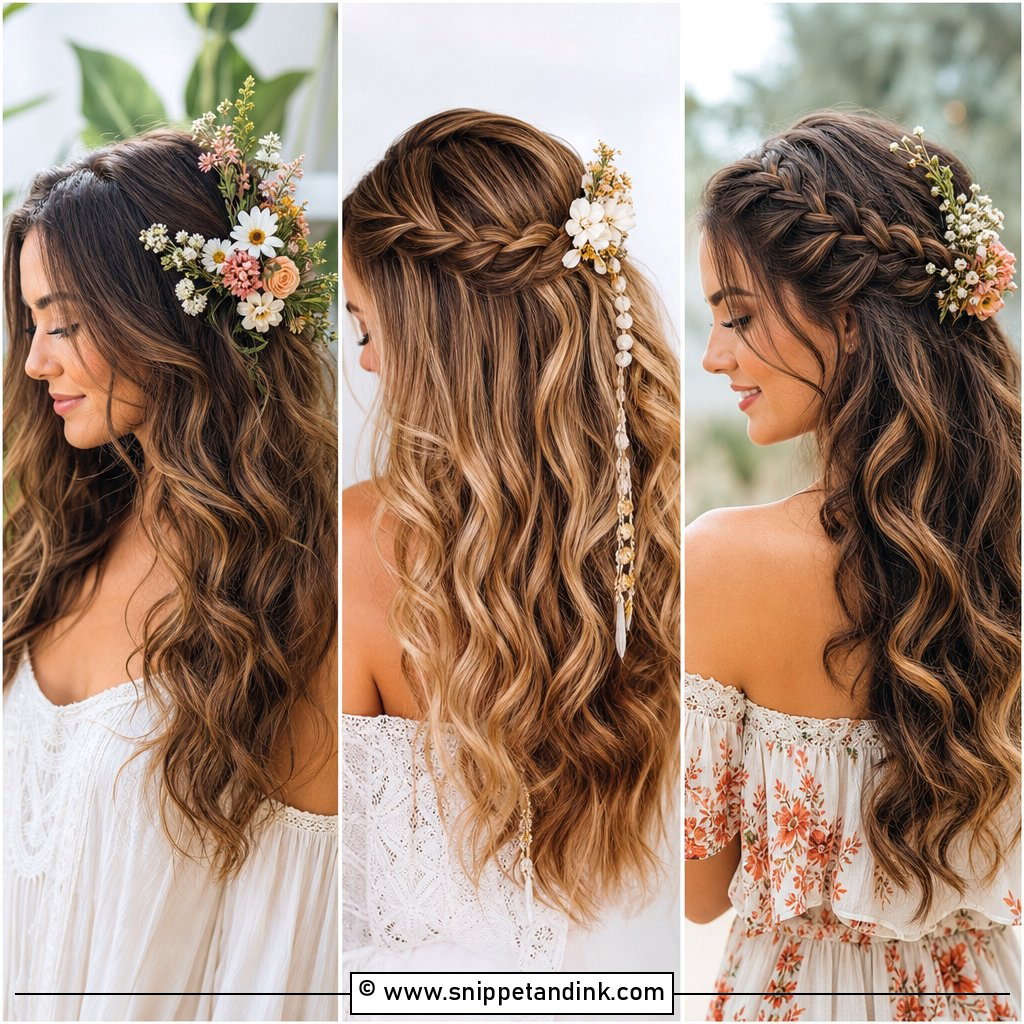
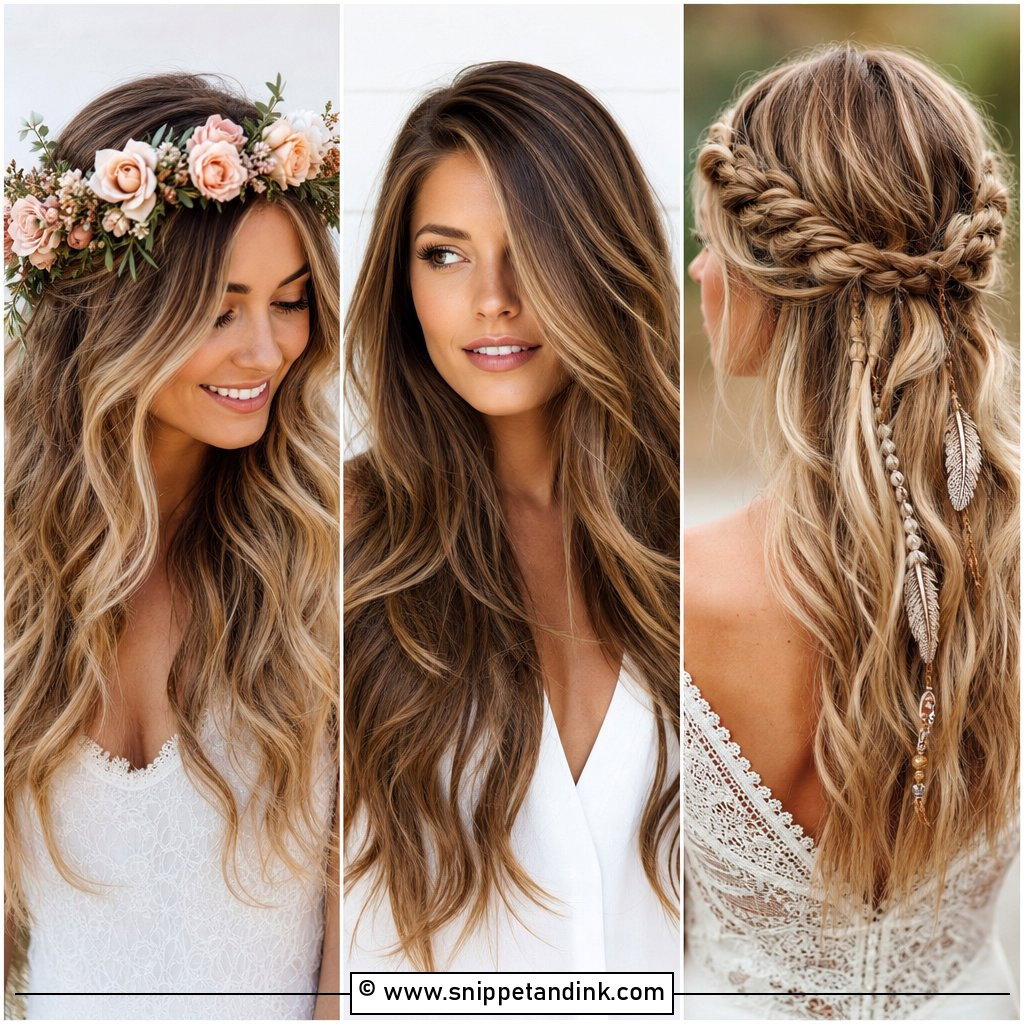
25. Accent Braid Wedding Hairstyle
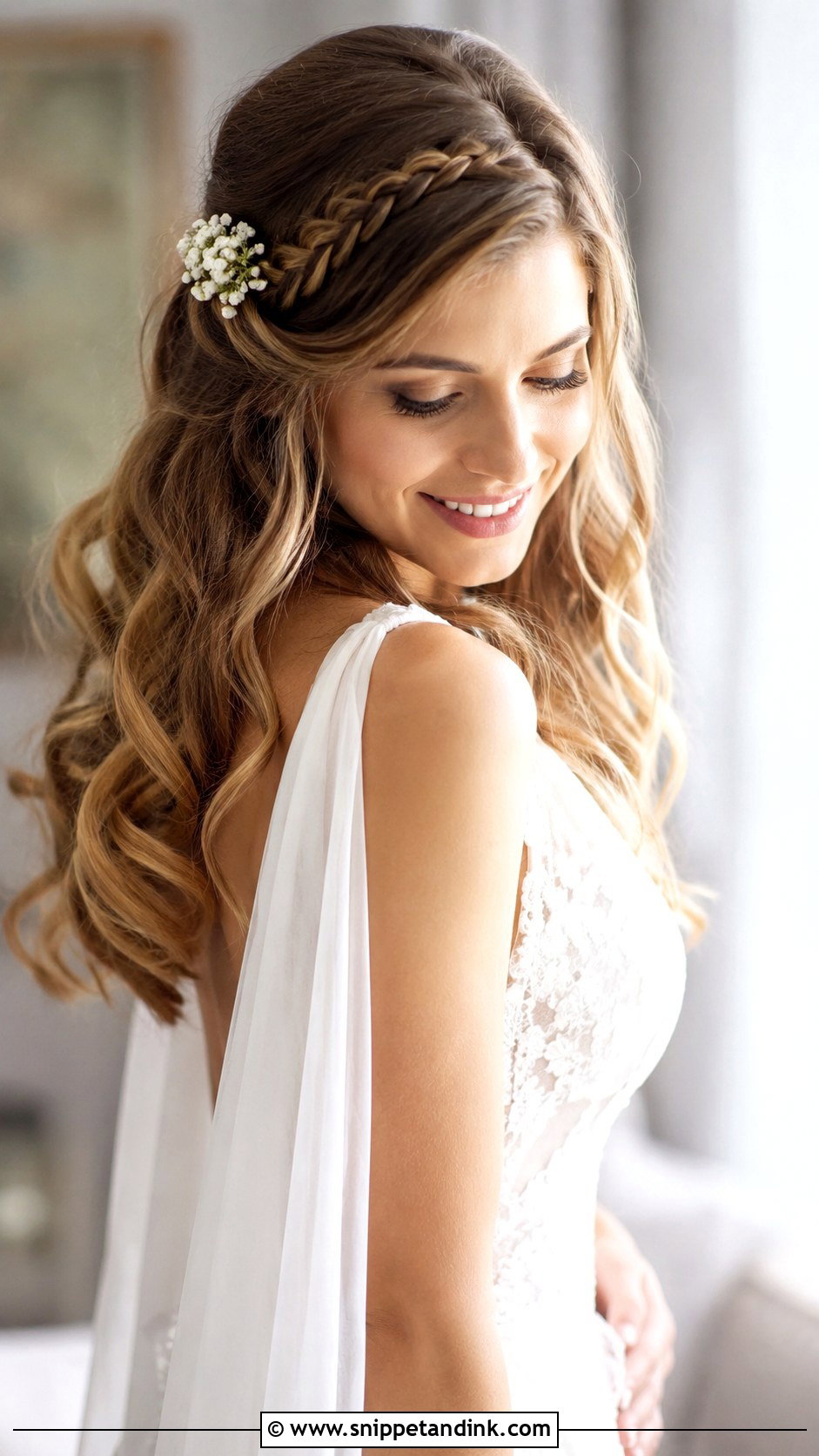
One slim braid along the hairline or tucked into waves adds detail without committing to a fully braided look. It’s the easiest idea here to add to a style you already love, and it’s the one I suggest to brides who aren’t sure braids are for them. Run it into an updo or let it disappear into loose waves, then tuck a single flower or pin at the end.
Veils, Accessories and the Weight a Braid Can Carry
Braids are the best anchor a veil can have, but only if the comb goes in the right place. I never push a comb straight into a braid; it slides along the plait and drags it loose. Instead I build a small cross of bobby pins just above or below the braid and slide the comb teeth through that cross so the pins carry the weight.
- Bring the actual veil and any hairpieces to your trial; a cathedral length pulls very differently from a fingertip one.
- Heavy jeweled combs belong on solid sections, like a chignon or the base of a crown braid, not on a loose waterfall strand.
- Plan when the veil comes out. Removing a comb takes ten seconds if the pins underneath were placed for it, and it leaves the braid intact for the reception.
How Braids Behave by the Last Dance, and Taking Them Down
Loosened, pulled-out braids relax a little over the day; that’s normal and usually looks better in late photos. What I’d tuck into a small bag for your maid of honor: bobby pins in your hair color, a few clear elastics, a travel hairspray and a fine comb. Those fix nearly every slipped tail or loose loop in a couple of minutes.
At the end of the night, find and remove every pin before you touch the braid. Then undo the plait from the bottom up and work a little conditioner or oil through the ends before brushing. Hairspray and backcombing tangle together, and rushing this is how brides lose more hair than they need to. Installed cornrows or goddess braids can stay in, so sleep in a satin scarf to keep them neat.
Bring Your Real Hair to the Braid Trial
Every style above can be adapted, but only to the hair you actually have on the day. Save the two or three photos that match your length and texture, wear your hair the way you’ll wear it for the wedding to the trial, and ask to see the back in a hand mirror and in a phone photo with flash. Then add the finishing piece, a few pearls or a single bloom, once the braid itself is right.
You'll Like These Ideas:


Leave a Reply