
Wedding hair looks its best when it fits the dress, the room and the way you already like seeing yourself in pictures. Right now the chic end of bridal hair is polished but soft: smooth low buns, loose chignons, brushed-out waves, sleek ponytails and half-up shapes that survive hugs, dancing and long photo sessions. Which one suits you comes down to length, texture, neckline, veil and the forecast. I’d treat the looks below as a starting point for a conversation with your stylist rather than a blueprint.
Reading an Inspiration Photo Before You Fall for It
Most bridal hair pictures online are a little misleading, and not on purpose. The model often has clip-in wefts adding half her volume. The light is soft and from the side. The photo was taken minutes after styling, and flyaways were smoothed in editing. None of that makes the style wrong for you, but it changes what you should ask for.
When you save a look, I’d check a few things before it goes in the folder for your stylist:
- Compare density, not length. A thick chignon on someone with twice your hair will need padding or extensions to copy.
- Look at the hairline. Sleek styles show every cowlick and baby hair, and a photo shot from behind hides all of it.
- Notice the texture. Glossy Hollywood waves and brushed-out soft waves need different prep, so be clear which you mean.
- Find the angle you’ll actually be seen from. Guests watch the back during vows; you see the front in the mirror.
Three photos is plenty. Add one you dislike as well. Knowing you hate a centre part or crunchy curls tells me more than a dozen pins of things you like.
1. Low Bun Wedding Hairstyle
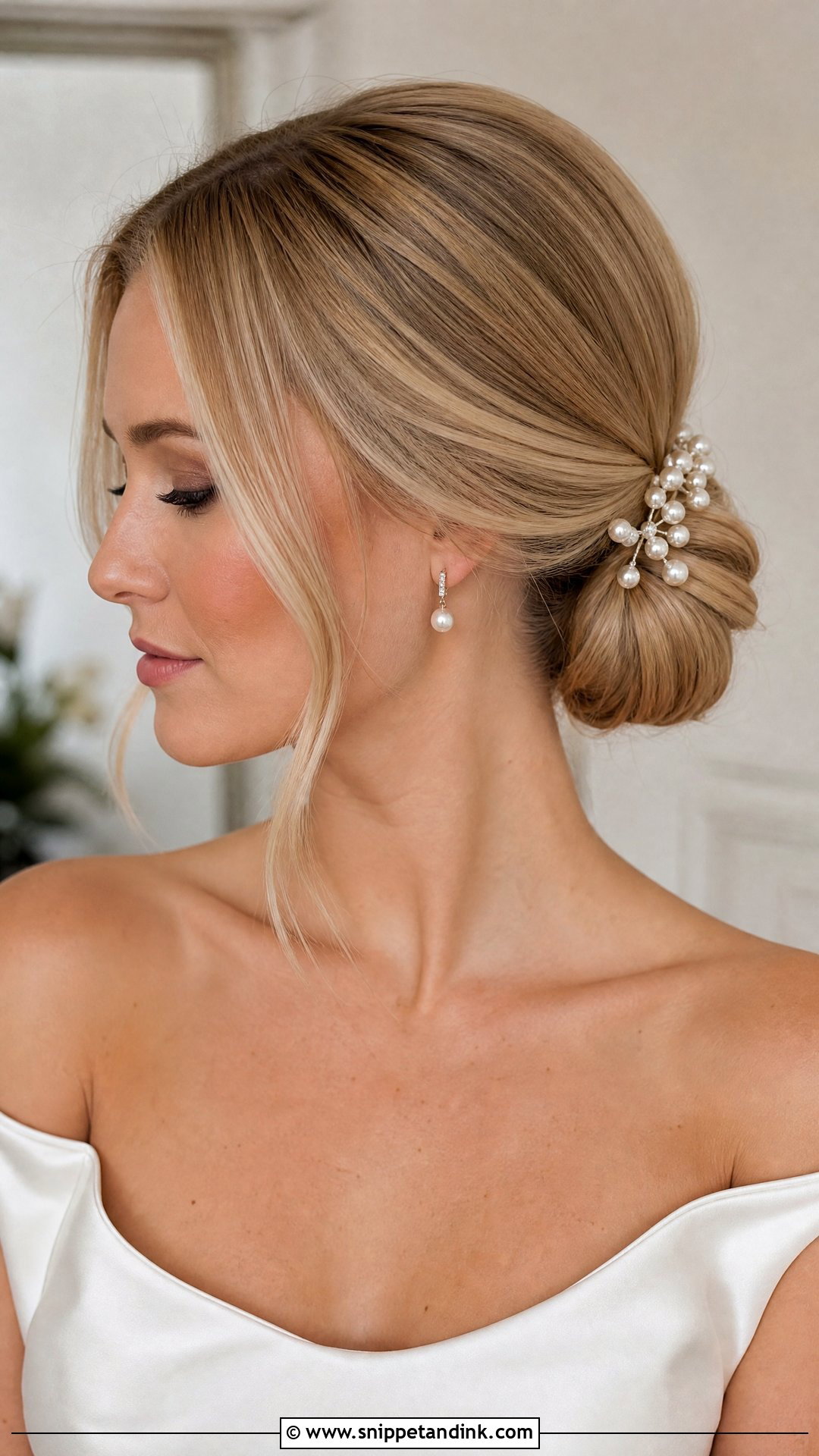
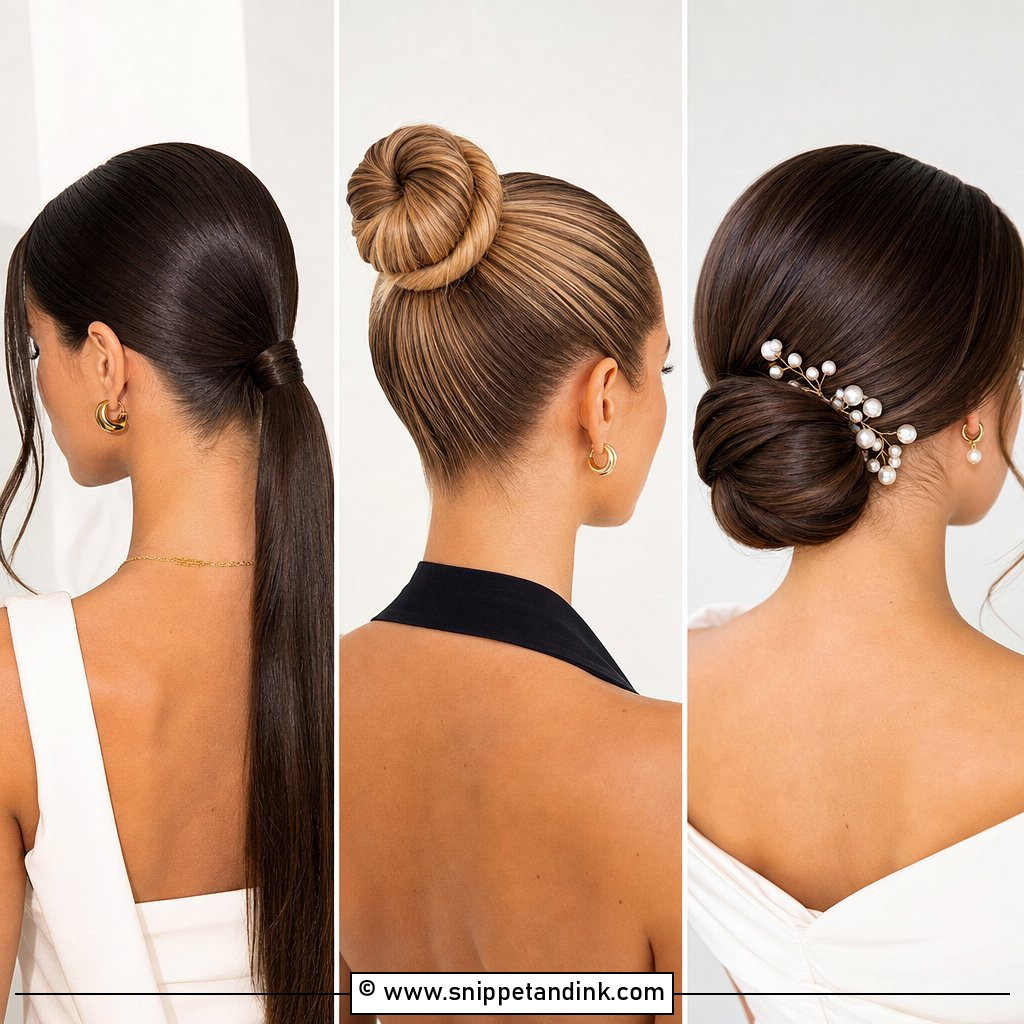
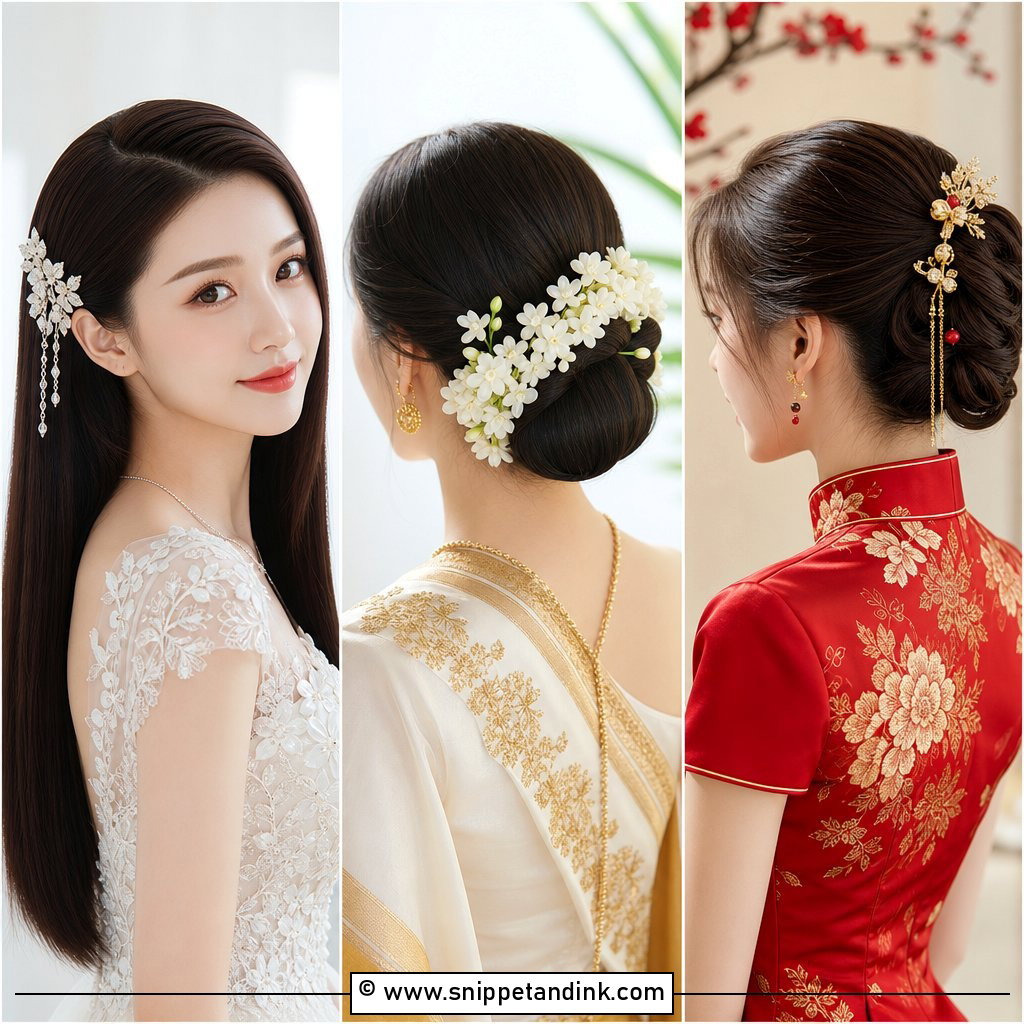
If I had to name the style that fails least often, it’s this one. A low bun sits at the nape, so the weight rests on the strongest part of the head and it stays put through a long day. Veils, pearl pins, combs and big earrings all sit around it easily. Go sleek for a minimal dress or keep some texture for a garden. My usual adjustment is a little lift at the crown, because a bun that is flat on top looks heavy in side profile. On a hot day it keeps hair off your neck, which you’ll appreciate by the speeches.
2. Romantic Chignon Wedding Hairstyle
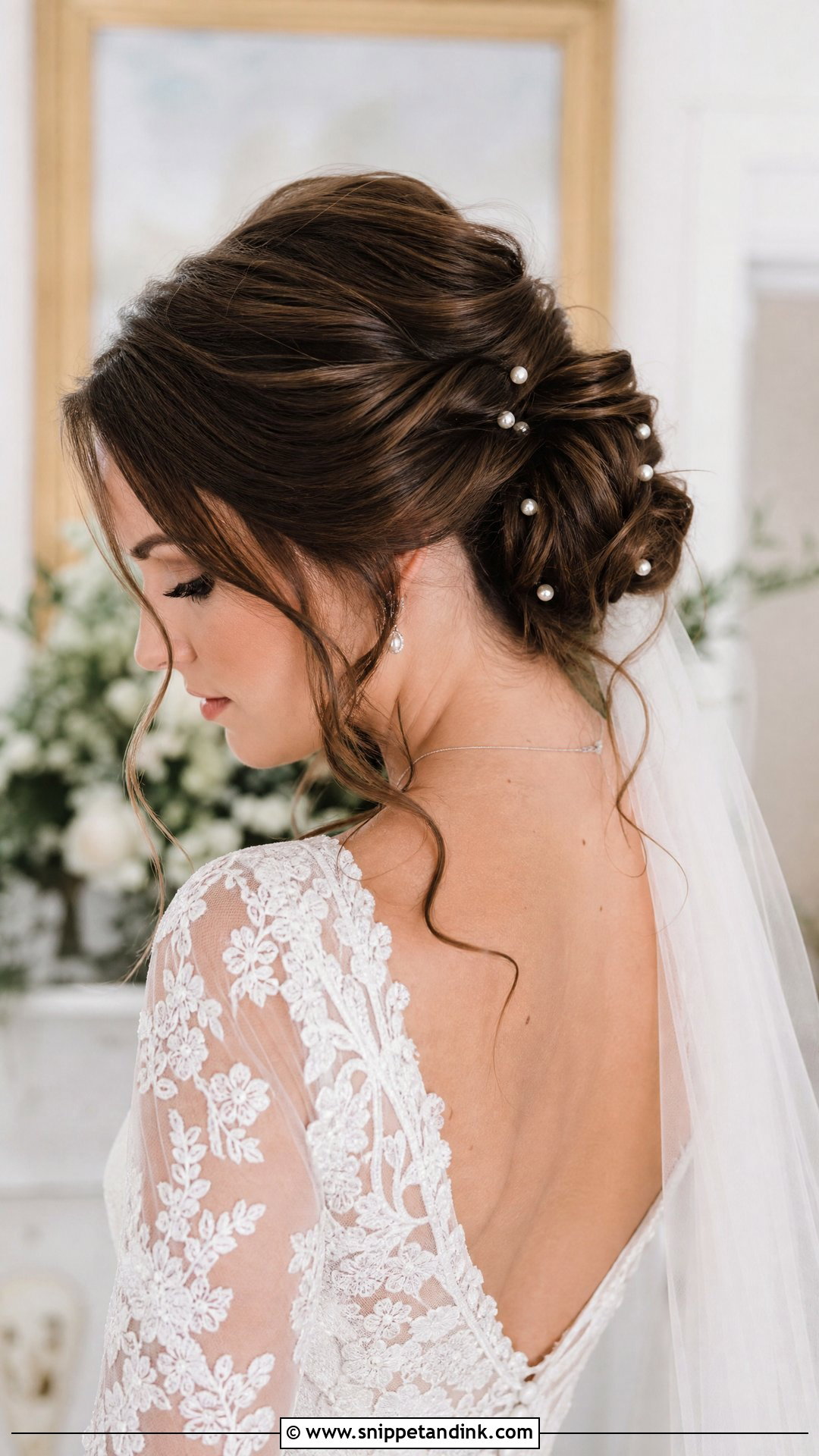
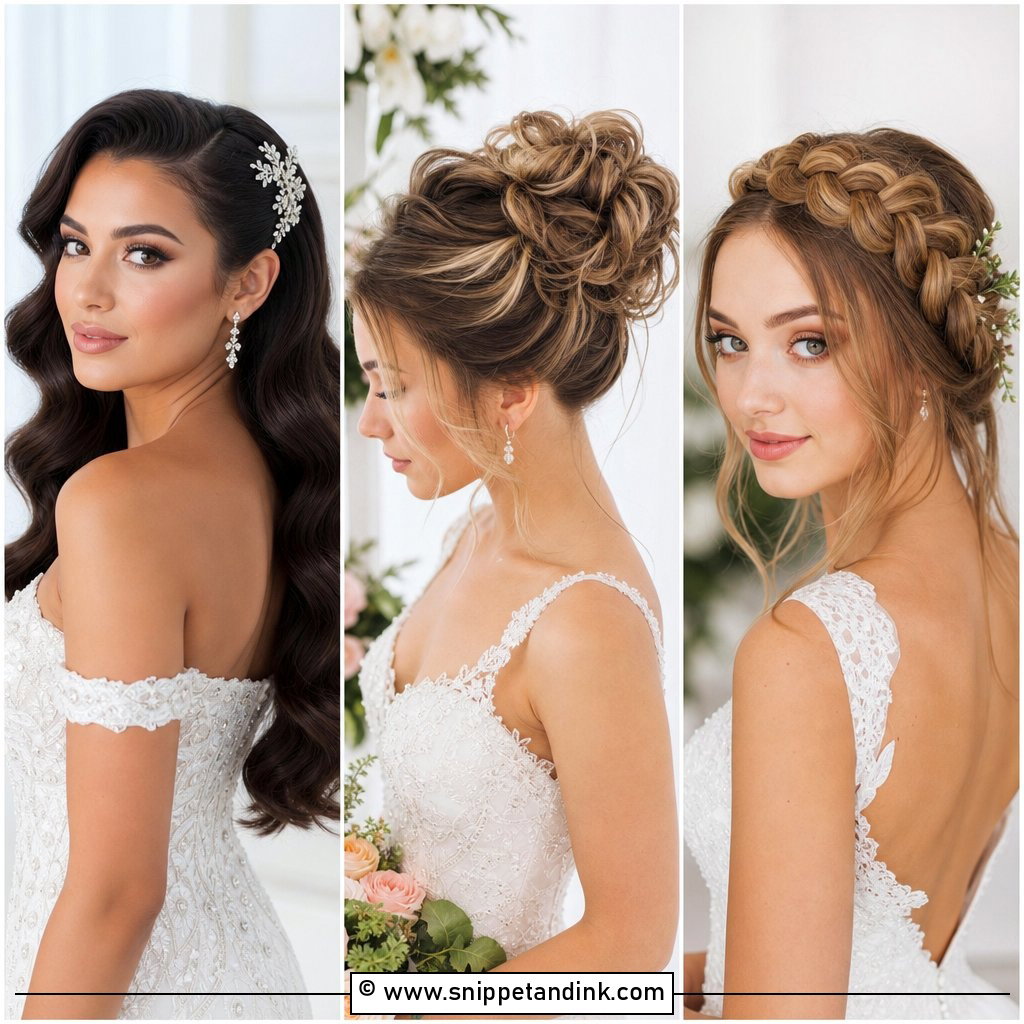
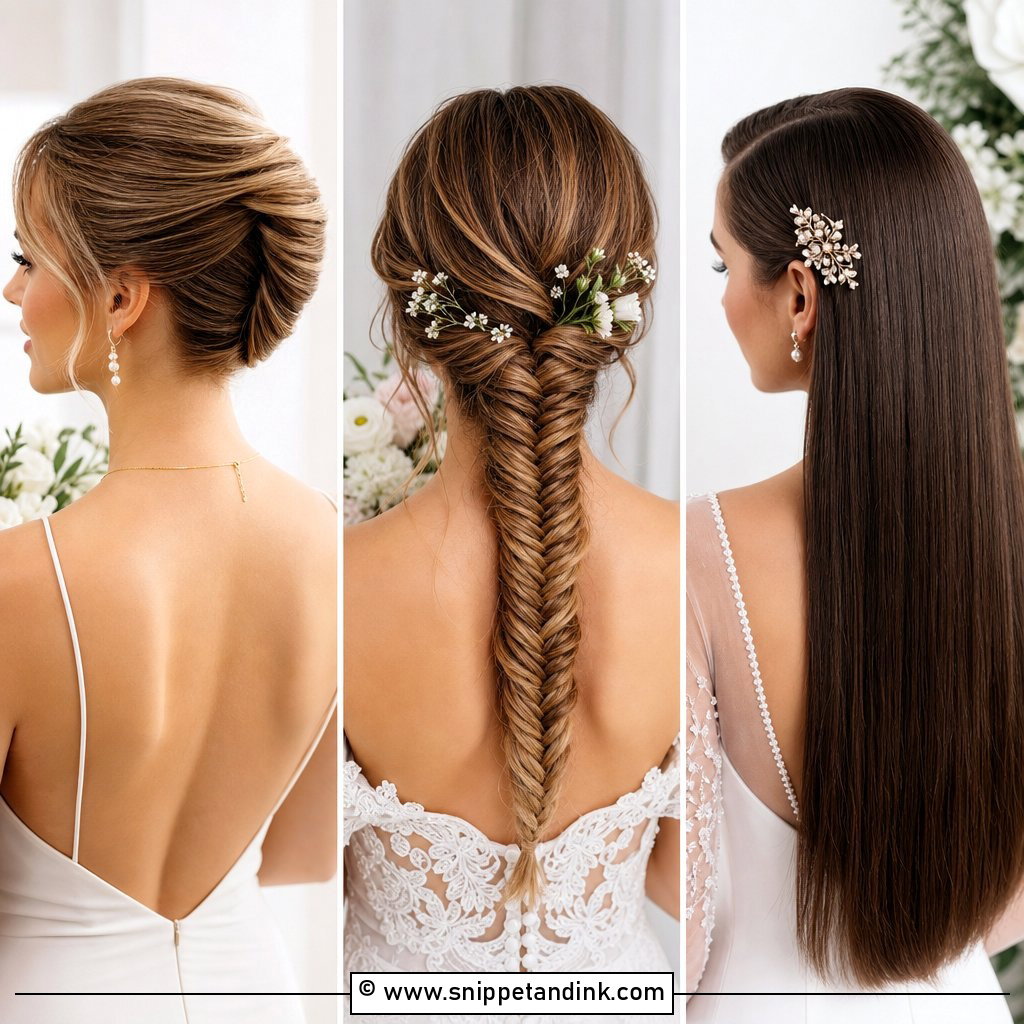
A chignon is a low bun with more shaping: the hair is gathered at the nape and folded into a soft knot or twist, with curved movement through the sides. The back is the whole point, so it pairs well with lace, button rows and open backs. Medium to long hair works; for thinner hair I’ll hide a small donut or a weft inside to give the shape some body. Leave two loose pieces at the temples. Hidden pins and a flexible spray hold it without that helmet feel.
3. Sleek Bun Wedding Hairstyle
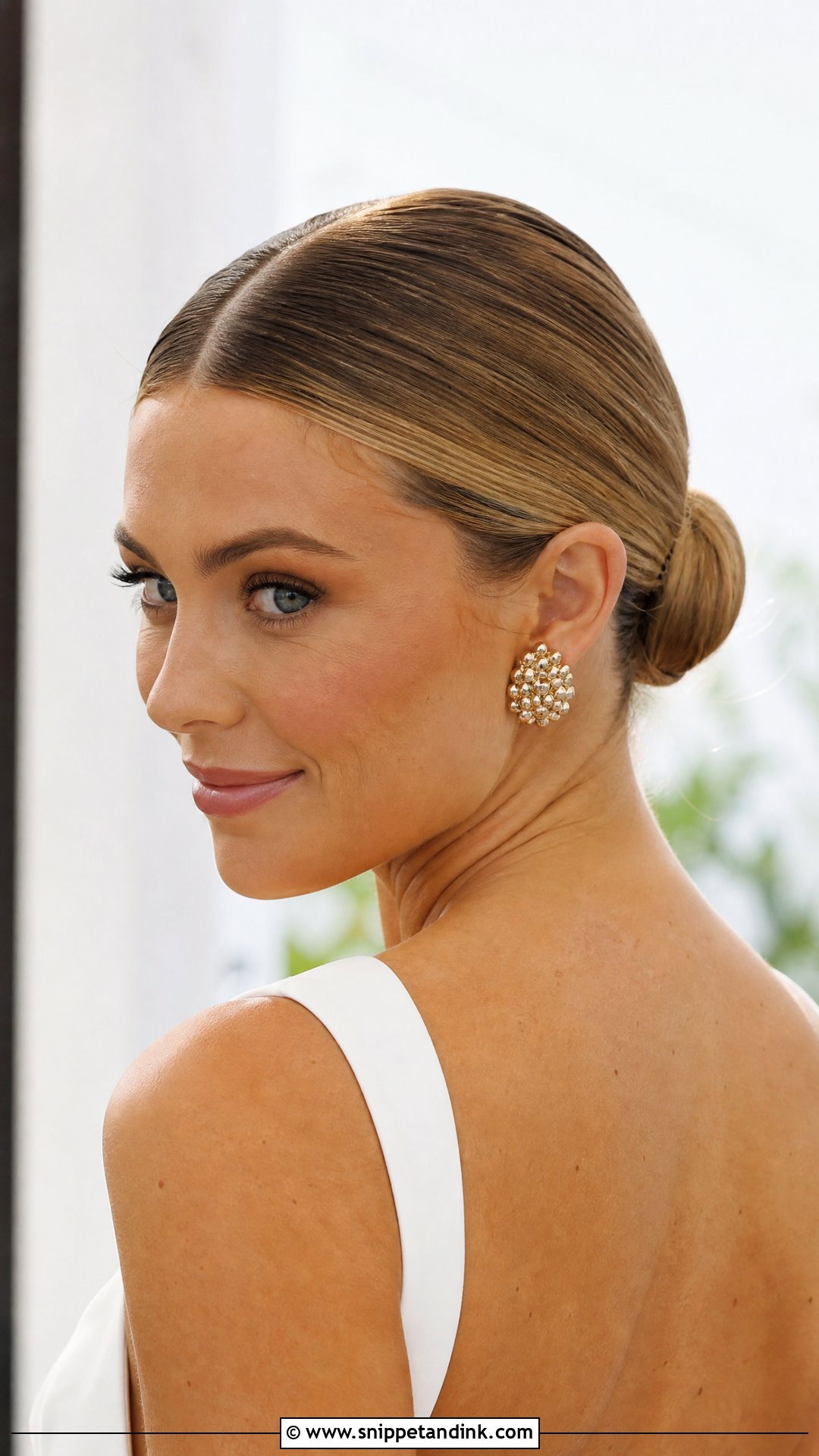
Sleek buns look simple and are actually the least forgiving style in this list. Every bump, cowlick and baby hair shows, so I blow-dry the hair completely smooth with a paddle brush before anything is pulled back. Set at the nape or a little higher, it suits simple gowns, high necks, strapless dresses and bold earrings, and it puts the focus on your makeup and cheekbones. A touchable gel or styling cream controls flyaways; too much and it looks wet in flash photos. Tightness is the other risk: pulled hard, it can give you a headache by mid-afternoon.
4. Half Up Half Down Wedding Hairstyle
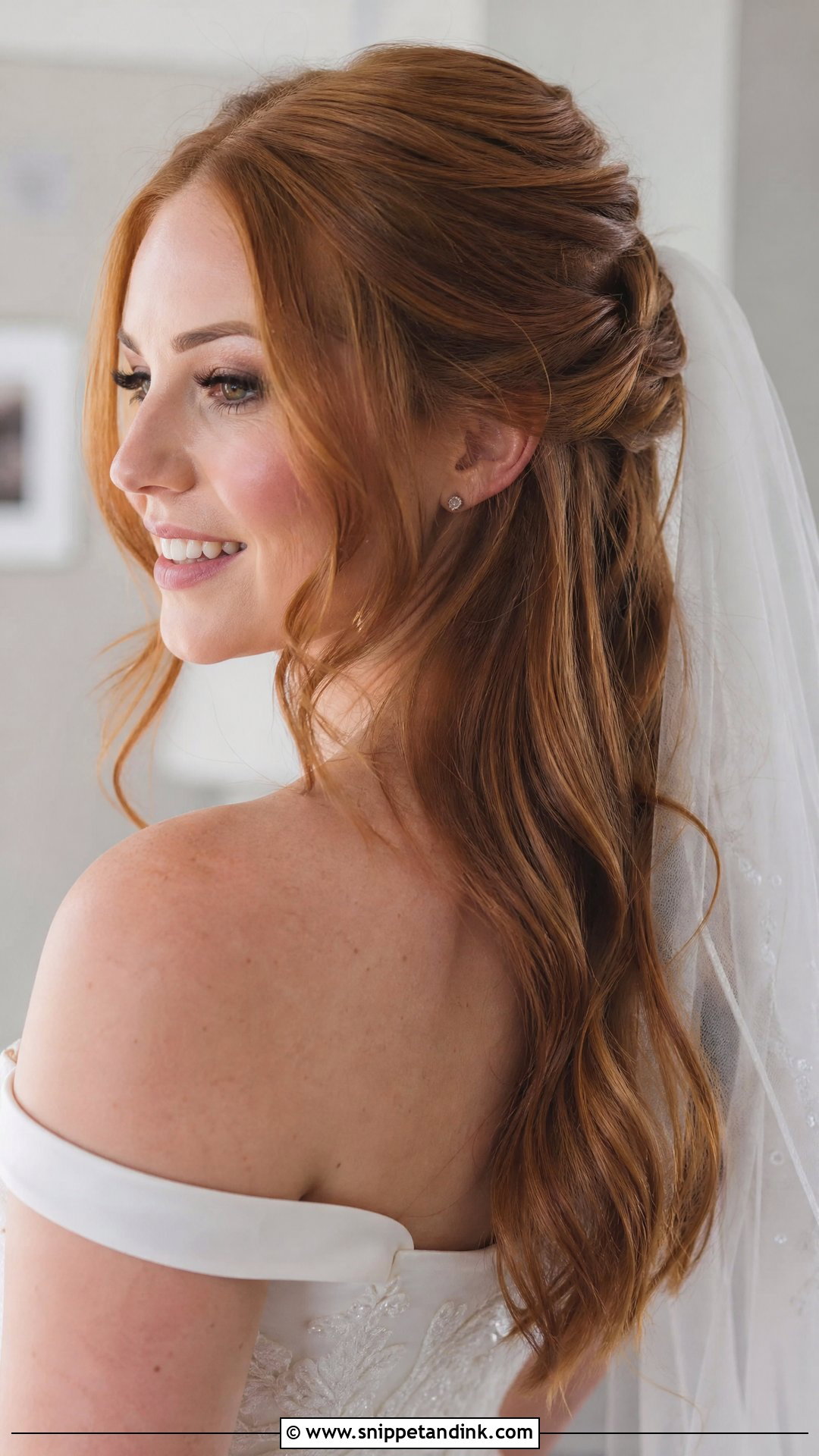
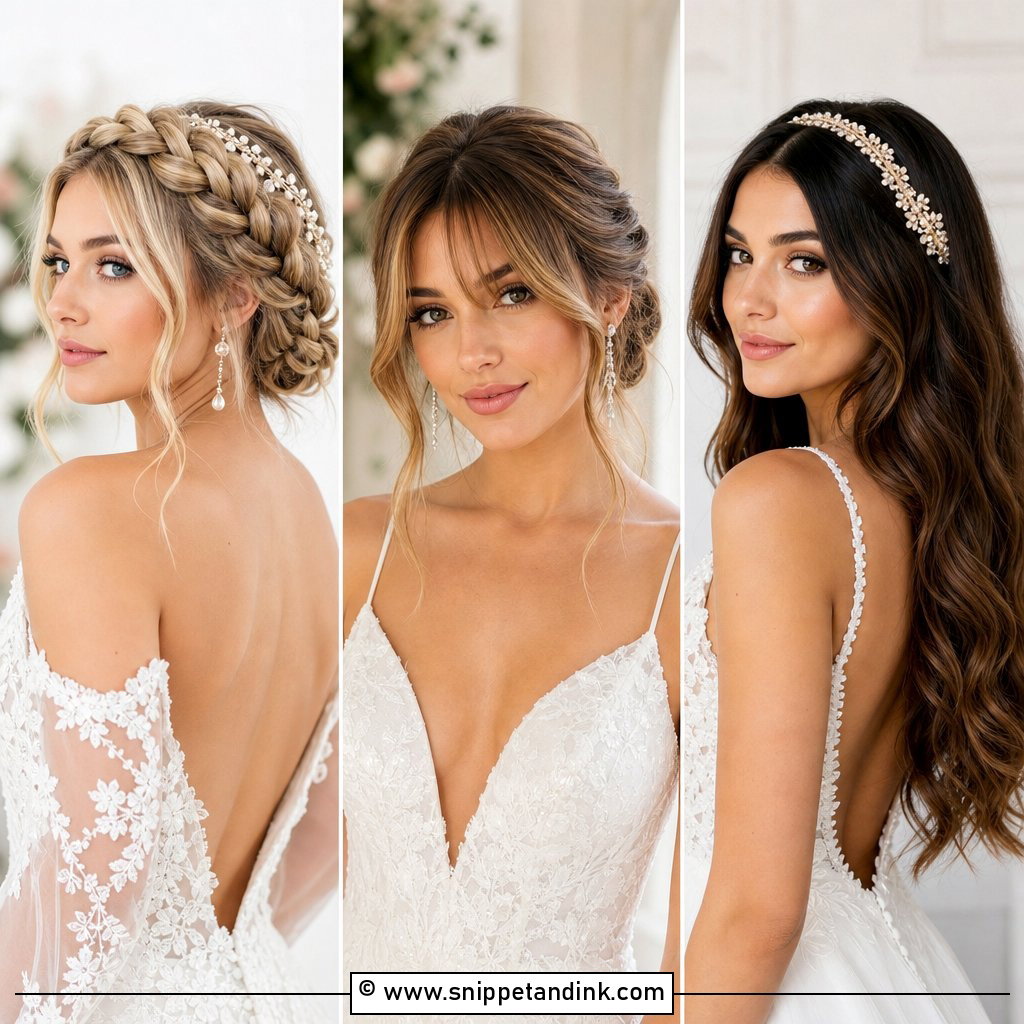
Half up gives you loose hair at the back with an updo’s security at the top. I lift, twist or braid the top section and leave the rest in waves or curls, and that pinned section becomes the anchor for a veil comb. Sweetheart, off-the-shoulder and V-neck dresses all suit it. The weak spot is the loose part: if your curls usually drop within an hour, tell me at the trial, because it changes my prep. I’ll use a setting mousse and let each curl cool fully pinned before I touch it.
5. Hollywood Waves Wedding Hairstyle
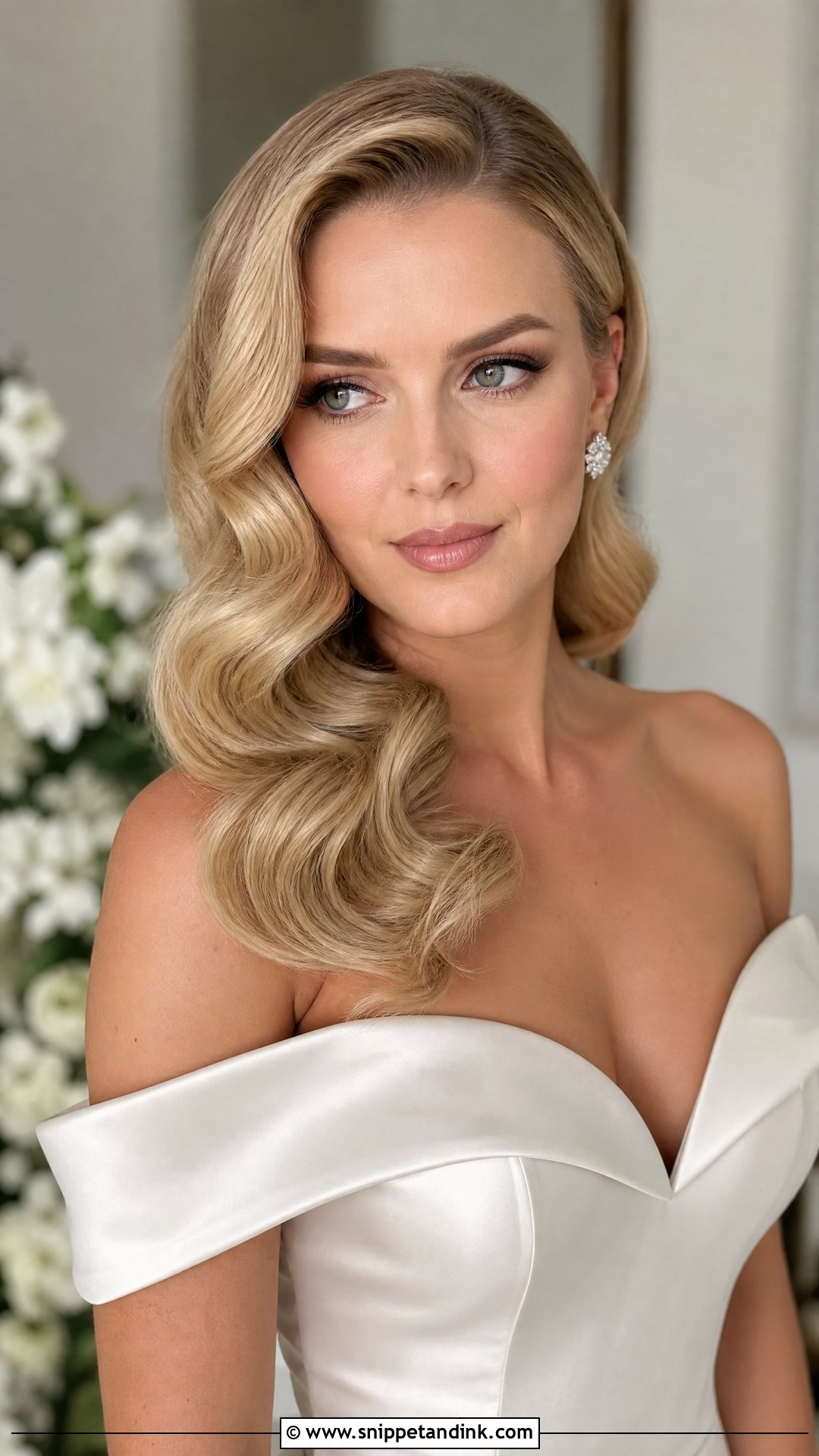
Hollywood waves are smooth, uniform and brushed into one sculpted shape, nearly always with a deep side part. They need length to show the wave pattern, so long hair, lobs and extensions carry them best. Satin dresses and simple veils suit the glamour. The method is specific: every curl is set in the same direction, pinned to cool, then brushed out together until the curls merge into waves, and the ridges are pressed in with clips while the spray dries. Done any other way, you get curls, not waves. Humidity is the enemy, so I’d think twice for an outdoor summer ceremony.
6. Soft Waves Wedding Hairstyle
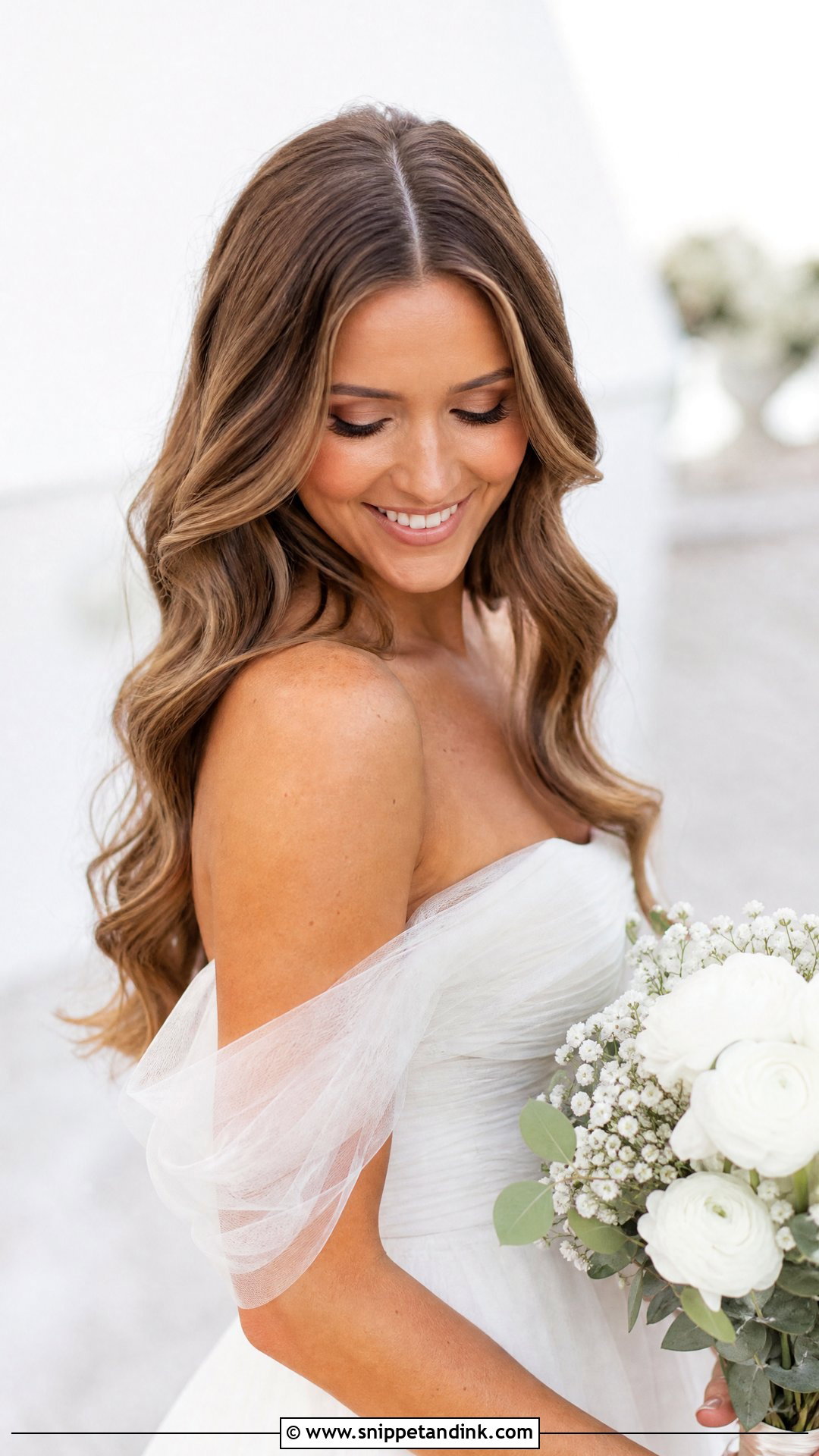
Soft waves are for brides who normally wear their hair down and want to feel like themselves. They’re polished but loose, and they move in photos. Beach, barn and courthouse weddings all suit them. A centre part looks current; a side part looks softer. Here’s the honest catch: soft waves are the style most likely to fall flat, especially on fine, straight hair. Heat protectant with hold, a properly set curl and a humidity-resistant finishing spray make the difference between waves at the first dance and straight hair by the cake.
7. Textured Updo Wedding Hairstyle
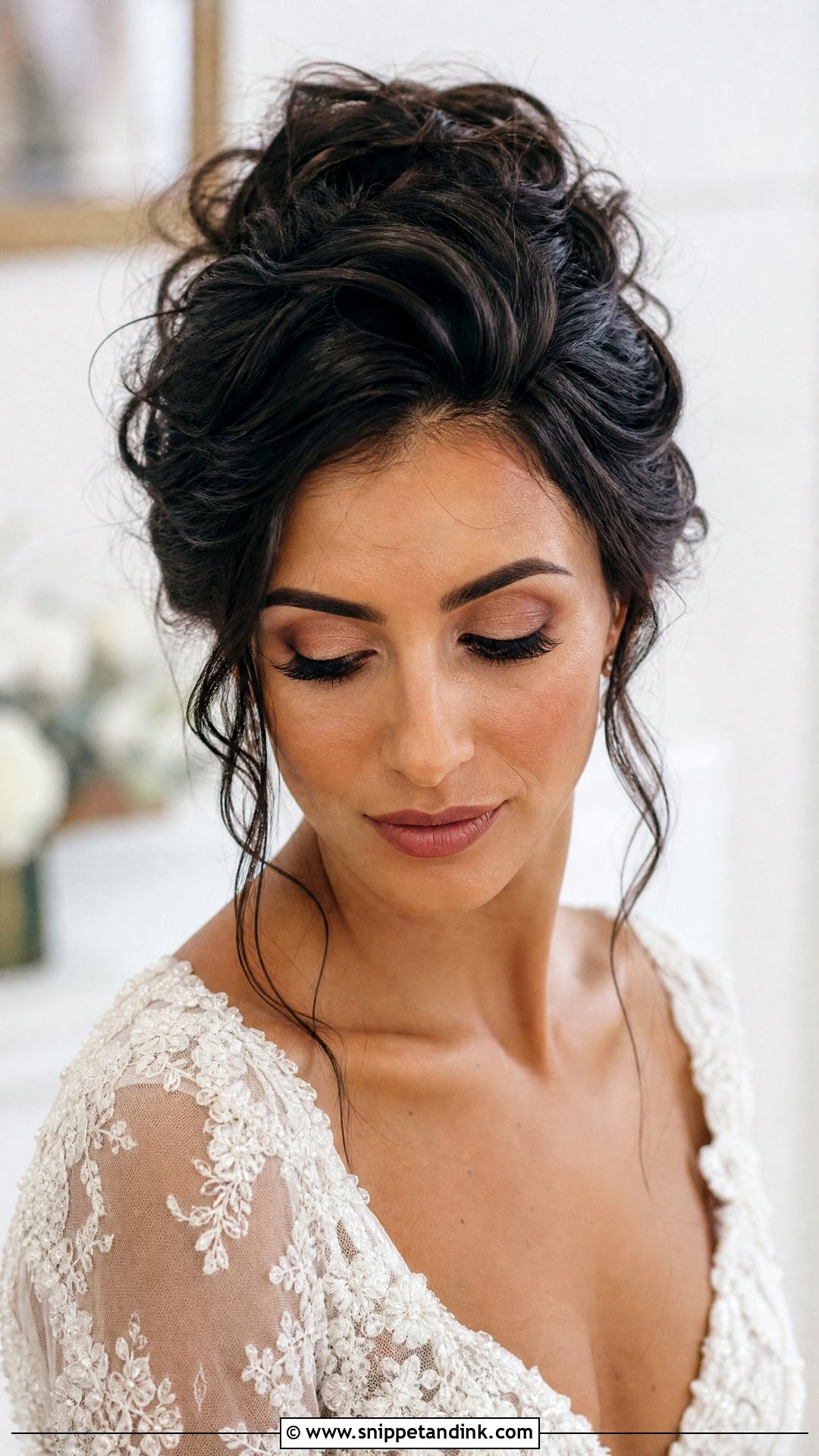
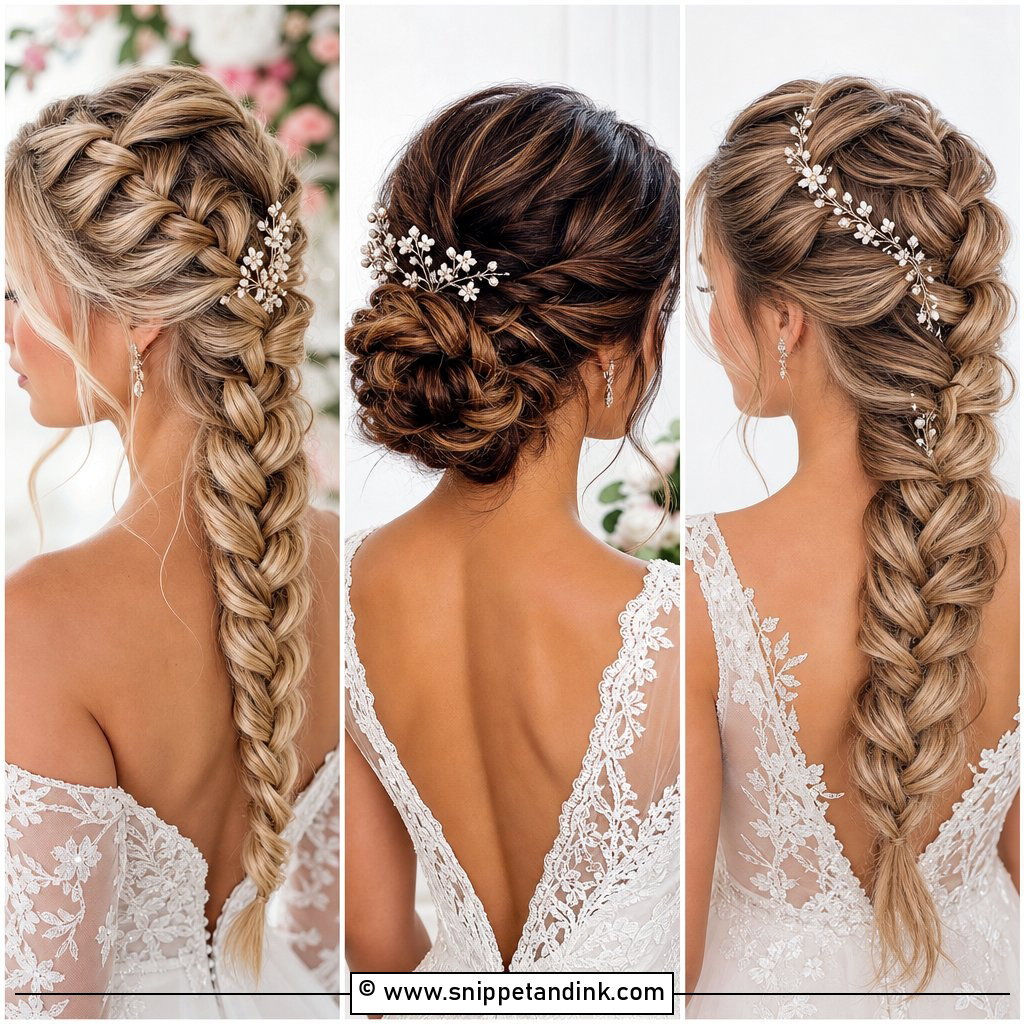
Layered hair often fights a smooth updo, which is why I steer layered cuts toward a textured one. The hair is pinned up in soft bends and lifted sections, so shorter layers blend into the shape instead of poking out. Floral pins, pearls, tiny combs or nothing at all can finish it. It suits lace, tulle gowns and outdoor settings. The line between textured and messy is fine, though. I check it from every side at the trial, because a loose bit that looks deliberate from the front can look like an escaped section from behind.
8. French Twist Wedding Hairstyle
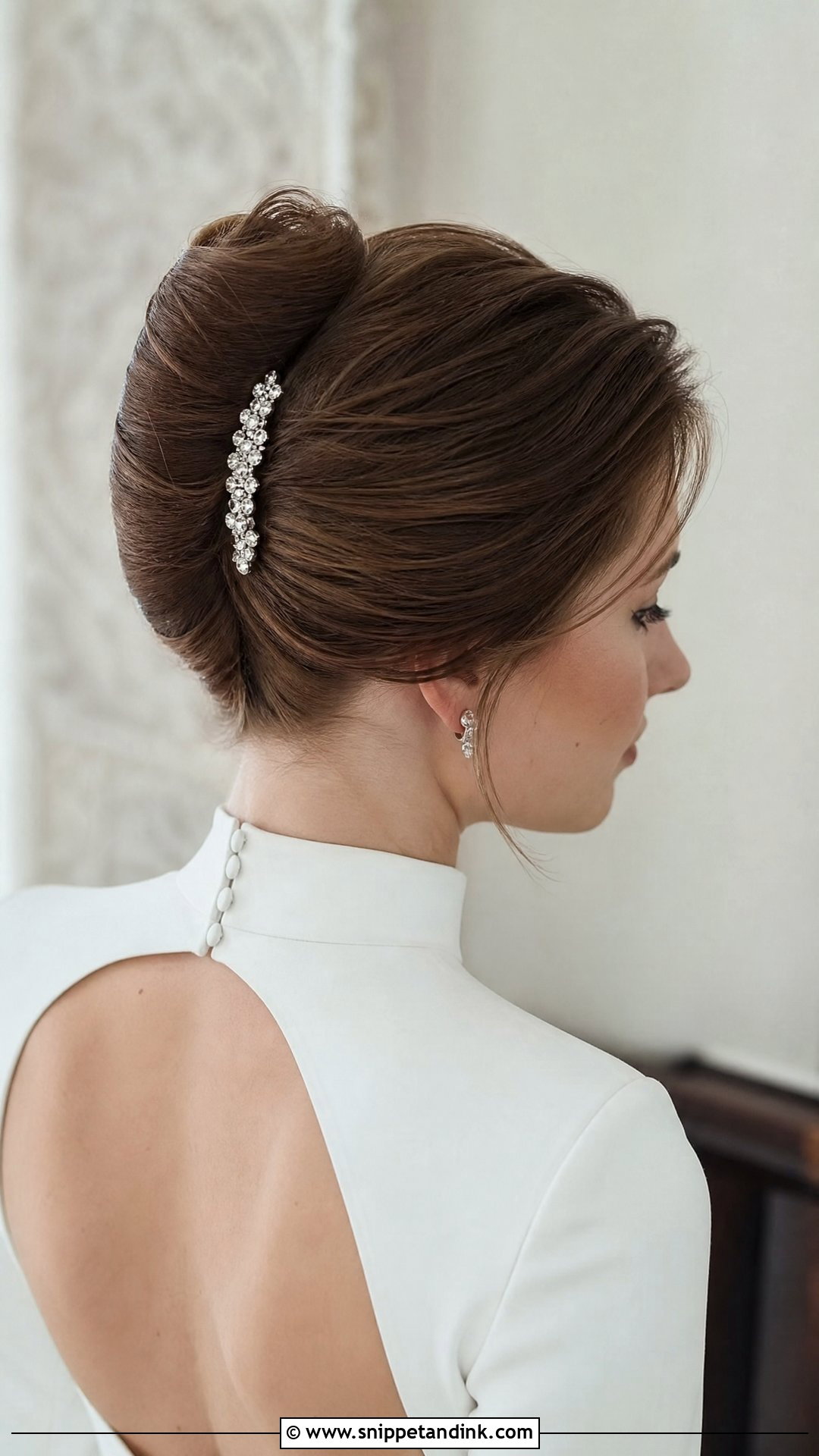
A French twist sweeps the hair up into a vertical roll, which lengthens the neck and quietly adds drama. High necks, bateau necklines and fitted dresses are its natural partners. Modern versions are softer than the old formal twist, with some volume and a curved piece at the face. Slippery, freshly washed hair won’t hold the roll, so I work texture spray through first and lock the twist with a line of crossed bobby pins down the seam before folding over. Add a comb at the top if you want something bridal.
9. Braided Bun Wedding Hairstyle
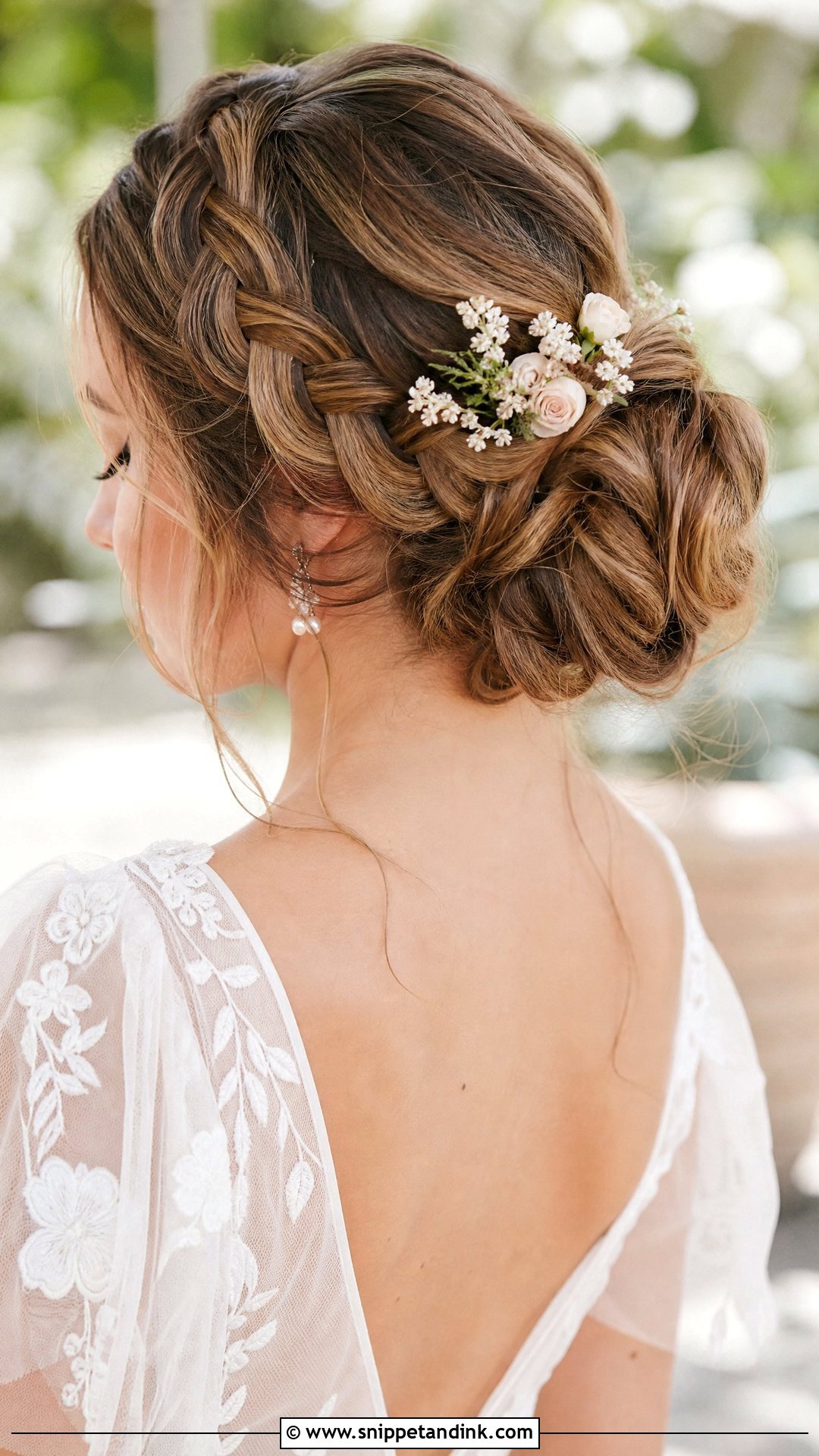
Adding a braid to a bun gives detail without wearing your hair down. It can wrap around the bun, feed into it or run along one side. From a practical point of view, braids are anchors: pins grip a braid far better than they grip smooth hair, so this style holds for a long day. I loosen the braid gently after it’s in, because a tight braid looks thin from a distance. Outdoor venues and floral accessories suit it, and a veil can sit either above or below the bun.
10. Low Ponytail Wedding Hairstyle
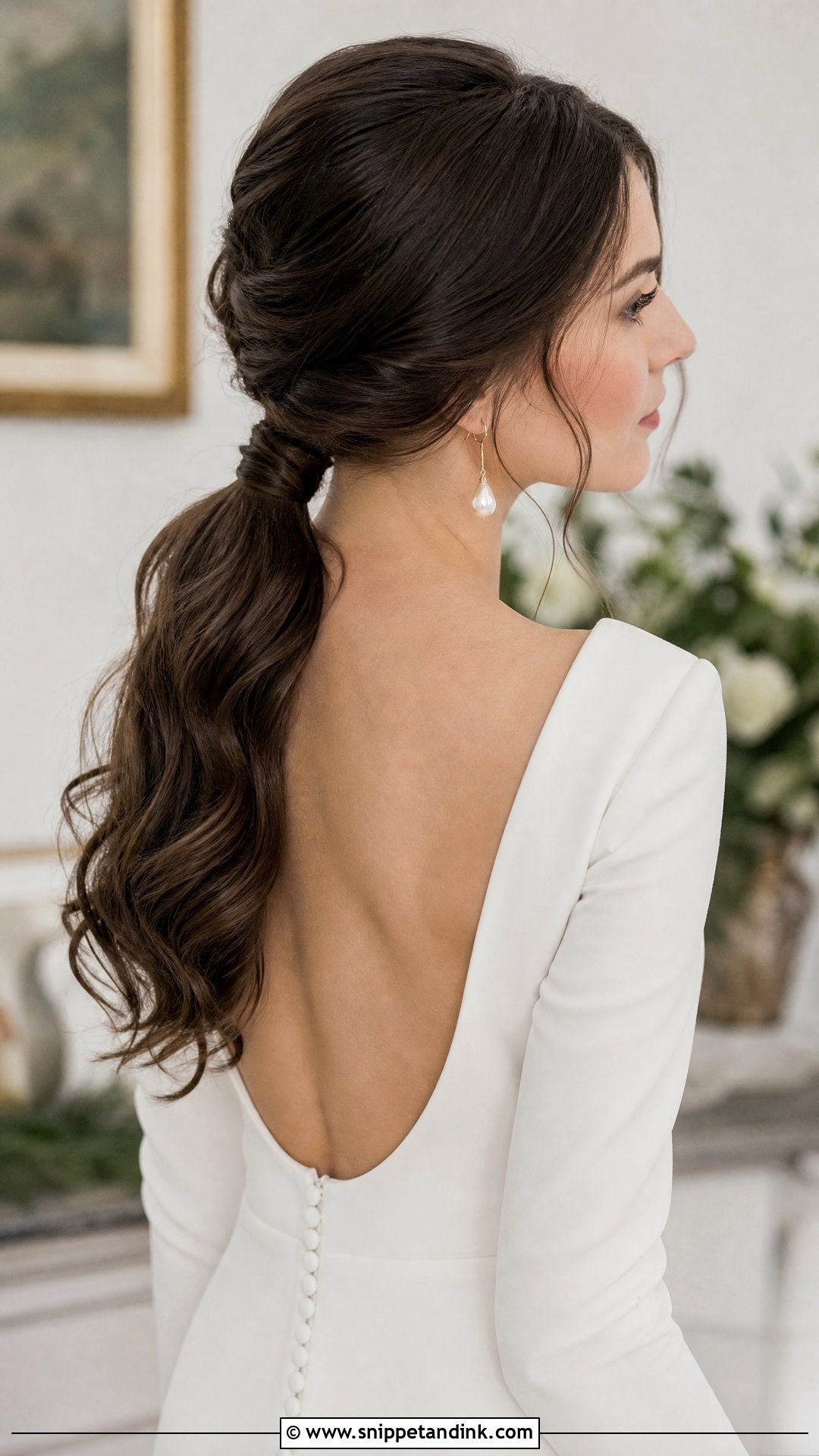
A low ponytail is sleek, modern and much lighter than an updo. It sits at the nape and can be smooth, softly waved or wrapped with a section of hair to hide the elastic. Long hair and extensions give it swing; medium hair works with soft waves. It shows off earrings and necklines without hiding the face. My one warning is the elastic: a single band lets the pony droop by the evening, so I use two, one hidden under the other, and pin the wrap section through both.
11. High Ponytail Wedding Hairstyle
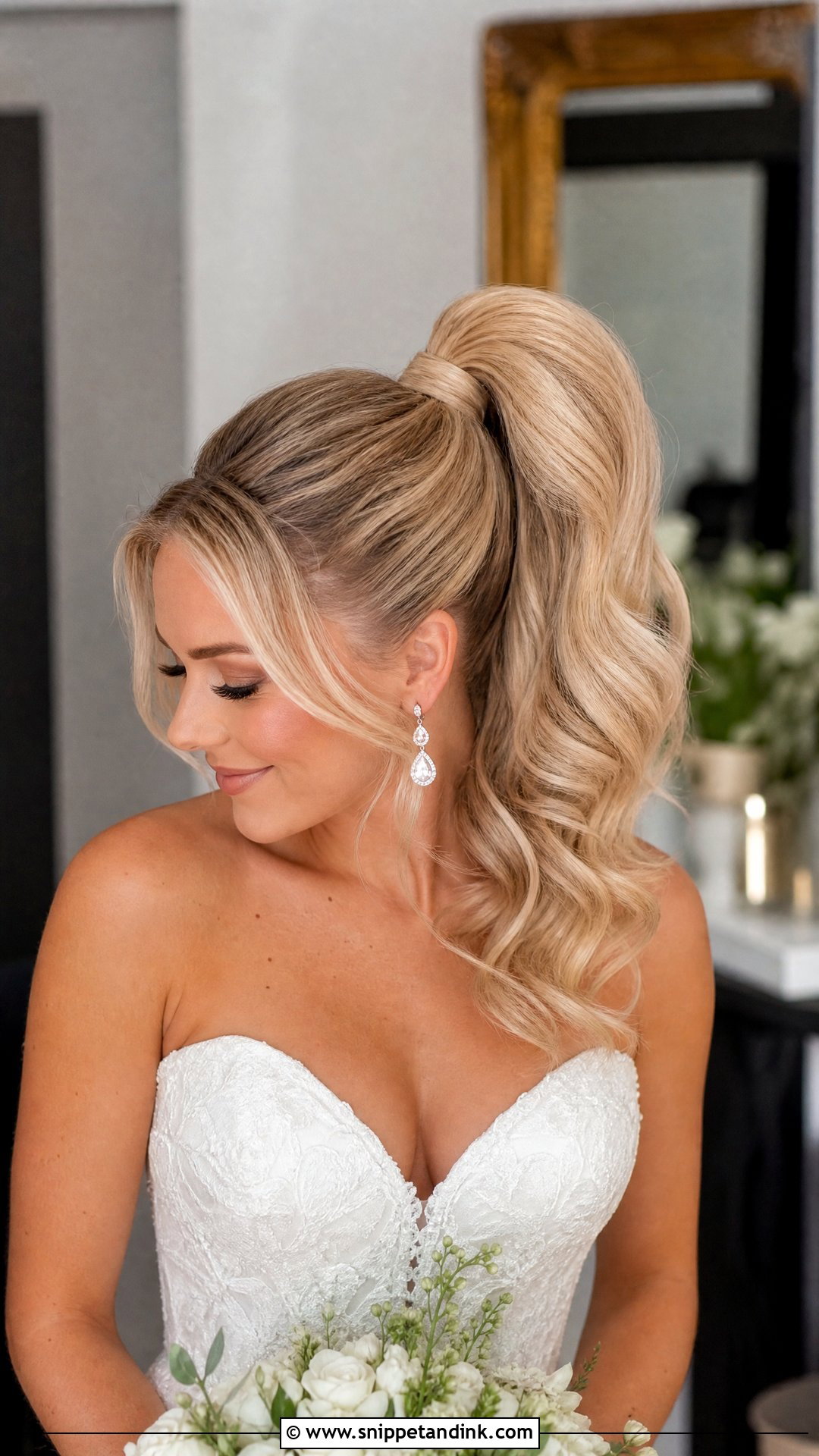
A high ponytail brings energy, and it is a favourite reception change because it moves when you dance. Keep the roots smooth and the length in big curls, or tease a little at the crown for bounce. Strapless, square-neck and fitted dresses suit it. Placement matters more than people expect: I set it in line with your cheekbone and the top of your ear, because too low looks undecided and too high pulls at the scalp. Hide the elastic with wrapped hair or a small accessory.
12. Side Part Wedding Hairstyle
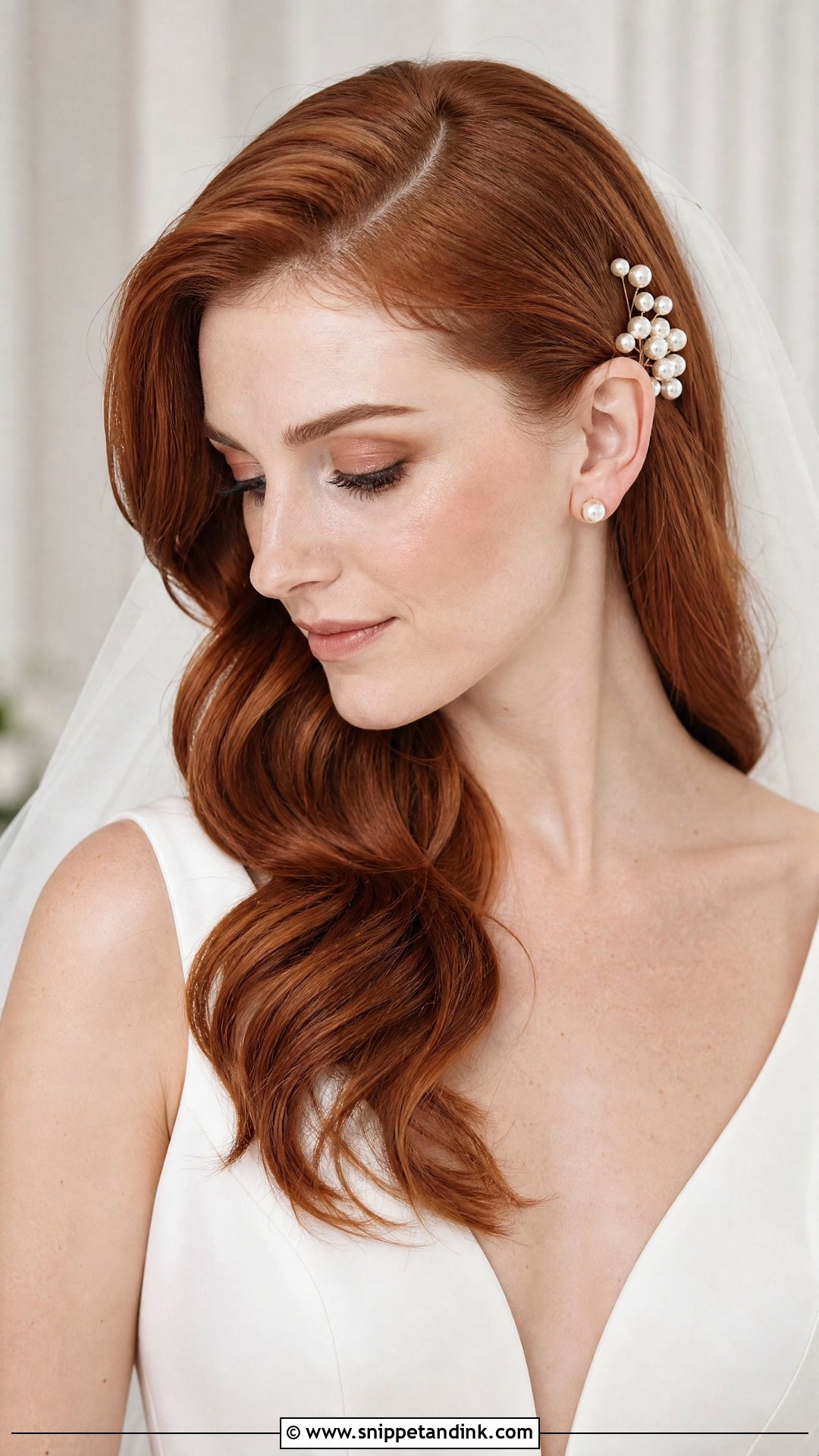
A deep side part changes the whole mood of waves, curls or an updo. It adds shape around the face and a touch of glamour, and it pairs naturally with Hollywood waves, low buns, chignons and sleek ponytails. It also balances features and shows off the earring on the open side. If you’ve worn a centre part for years, though, your hair may resist flipping; I’d train it with a blow-dry in the new direction a few days before. Keep some lift at the root so it doesn’t lie flat. Put the veil, comb or pearl pins on the opposite side.
13. Curly Wedding Hairstyle
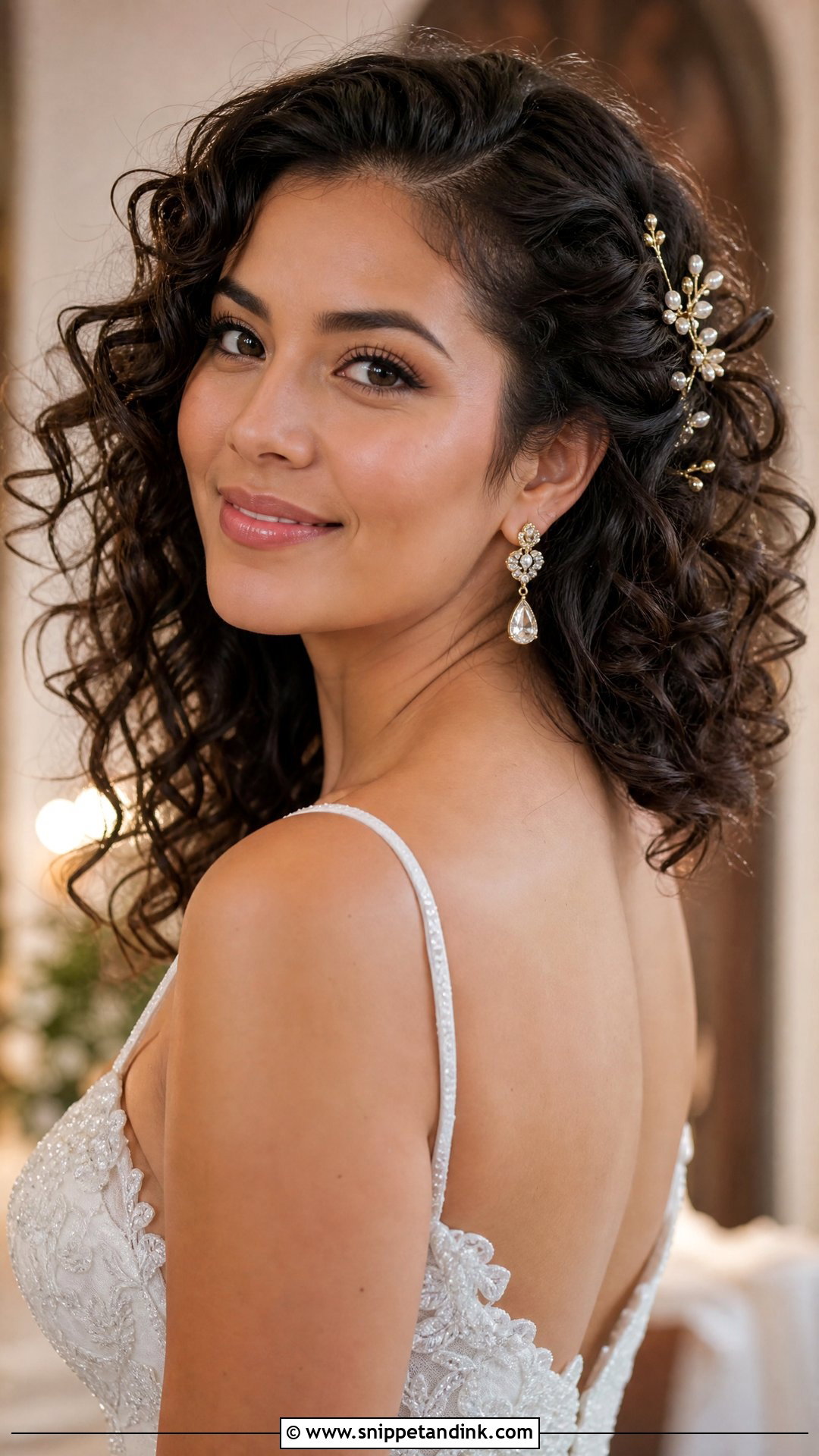
Curly hair can look formal without being straightened. The best versions define the curls, cut back the frizz and give the silhouette some balance around the face. Wear them down, half up, swept to one side or shaped into an updo. I work with curls while they’re still damp and defined, and I pin with open hairpins, since bobby pins crush the pattern. Hydration on the days before matters as much as the styling on the morning. Do your trial with the same products you’ll use on the day, and keep accessories small so the curls stay the focus.
14. Short Hair Wedding Hairstyle
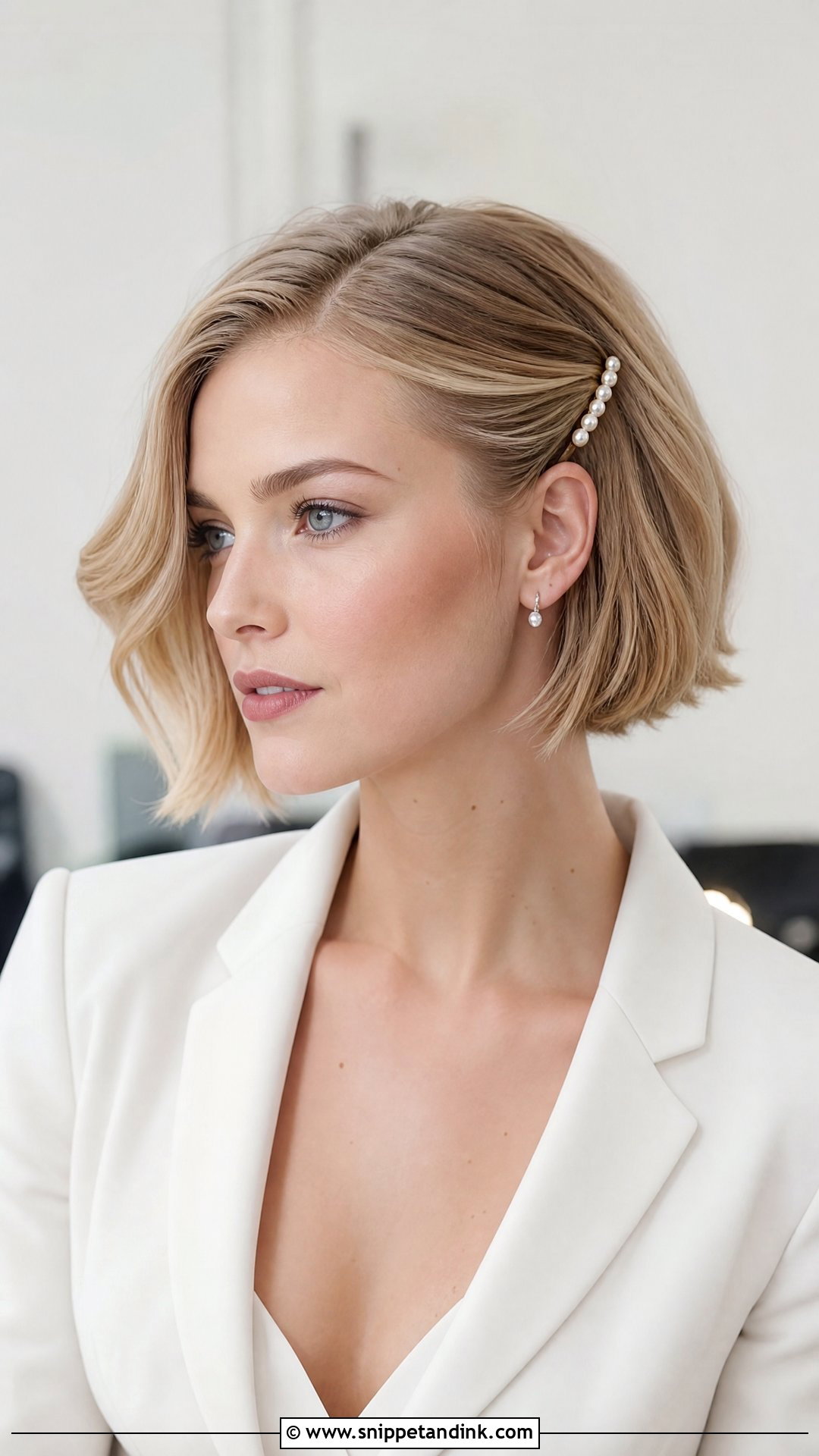
Short hair can look every bit as bridal as long hair once the shape is polished. Bobs, lobs, pixies and cropped cuts take soft waves, smooth bends, tucked sides or a glossy finish. Accessories do a lot of the work here: a pearl clip, a slim headband, a mini comb or a short veil. I style the cut you have instead of trying to disguise it. A glossy bob reads modern, while a waved lob reads romantic. Time your last trim about two weeks out, so the ends have softened but haven’t grown out of shape.
15. Natural Hair Wedding Hairstyle
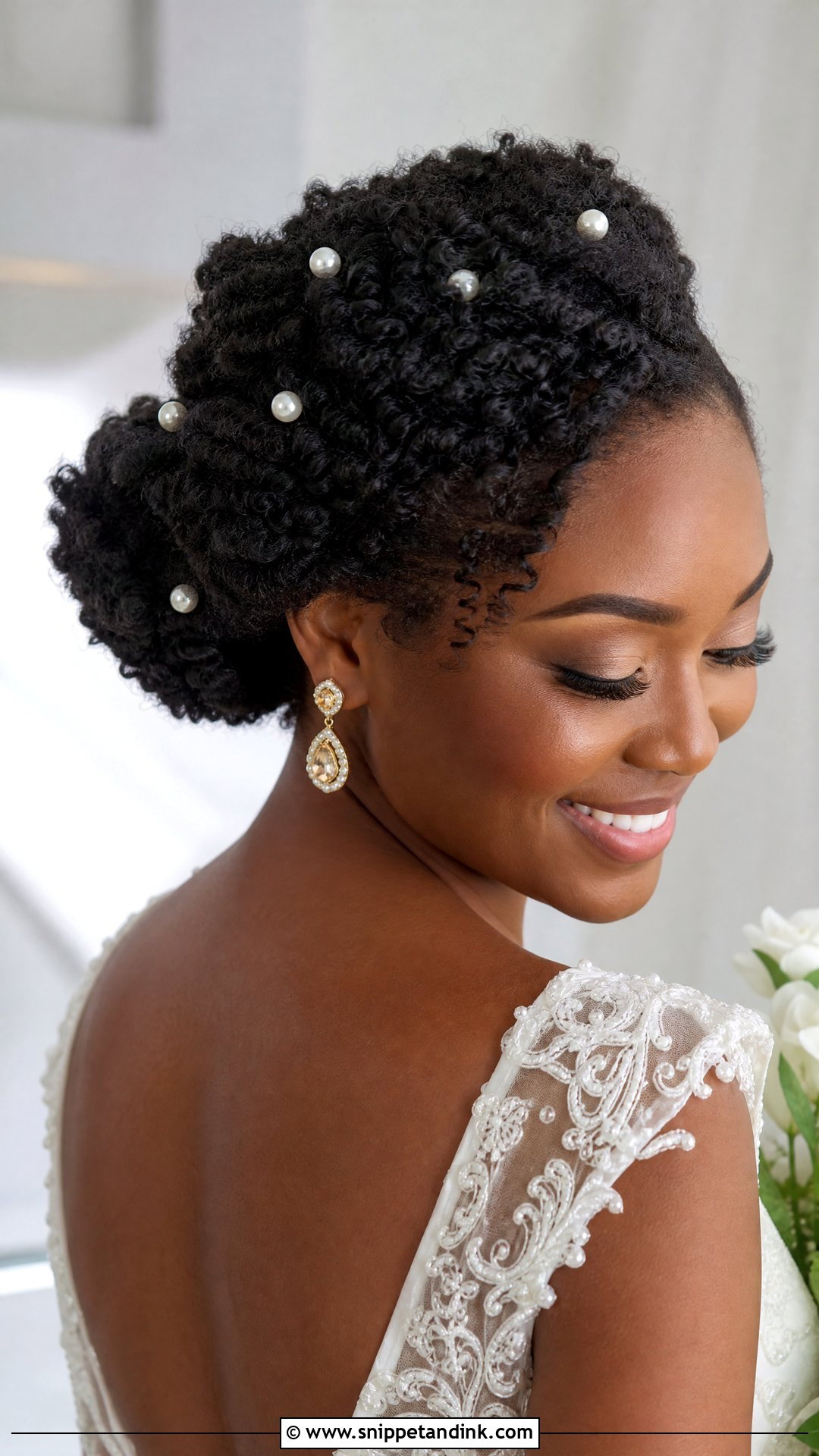
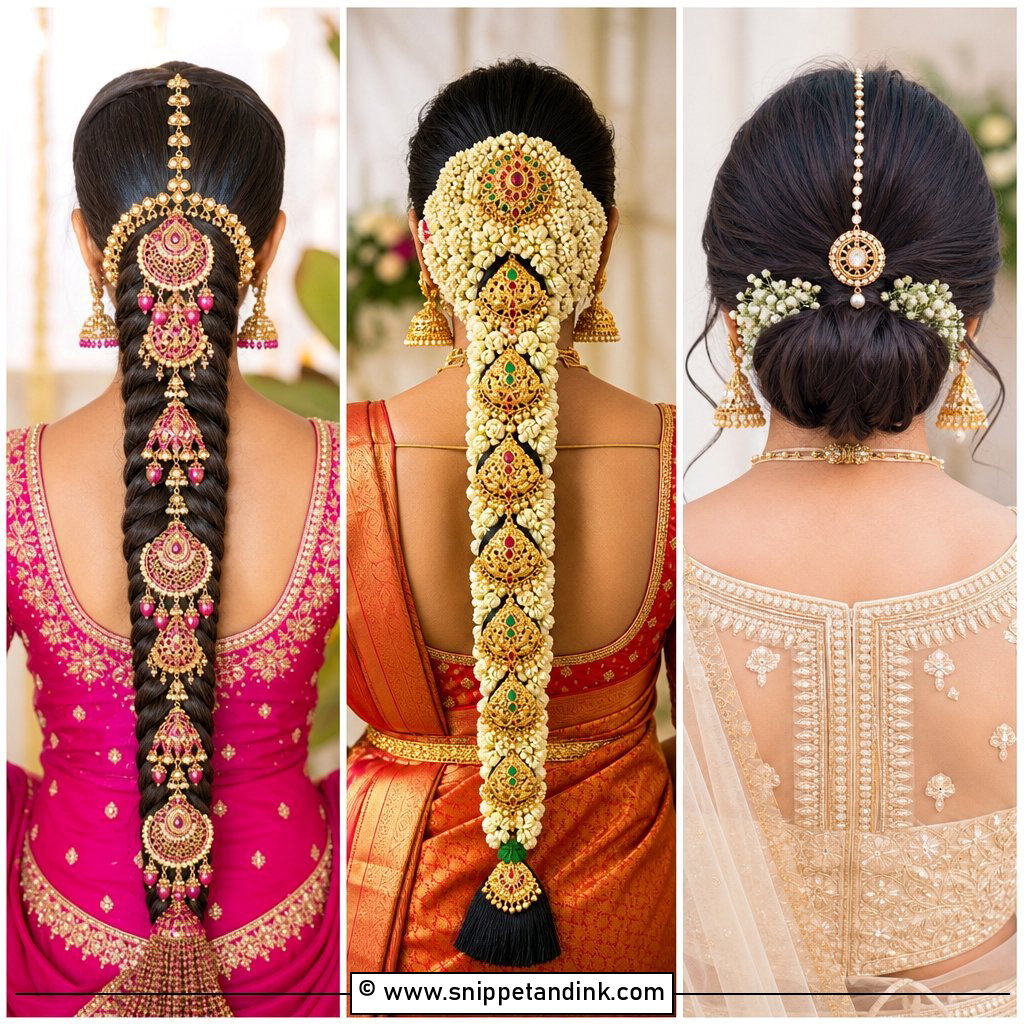
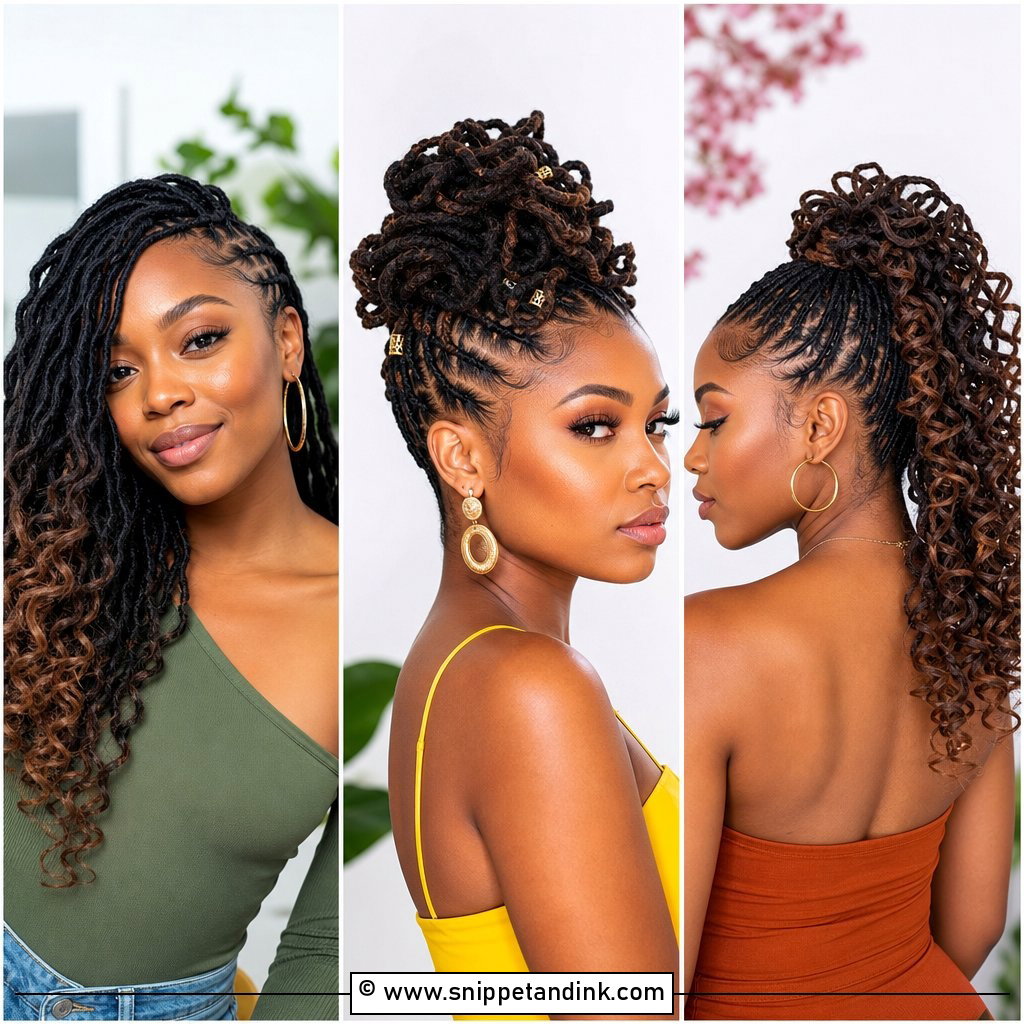
Natural hair has the widest range of all: a defined twist-out, pinned curls, a low puff, a braided crown, a textured bun or a sleek updo that keeps its volume. What decides the look is prep. Moisture, stretching and setting take time, and twist-outs often need setting the night before, so I plan the timeline around your hair rather than squeezing it into a slot. Shrinkage should be discussed at the trial, since a style that measures well on stretched hair can sit shorter on the day. Gold pins, pearls or a veil all work. Choose a stylist who already works with your texture regularly, and ask to see their photos.
One Look for the Aisle, Another for the Dance Floor?
More brides now plan a quick change after dinner: the veil comes out, the hair goes up or down, and the second half of the night feels different. It can be a lovely reset. It can also eat half an hour you didn’t budget for, so it helps to know which swaps are easy and which aren’t.
Swaps that work
- Half up to high ponytail: the top section is already pinned and set, so it’s mostly gathering and wrapping the elastic.
- Low bun to low ponytail: take out the pins, finger through the curls, tie and wrap.
- Soft waves to sleek low bun: a good option for a hot room, since tired waves simply disappear into the knot.
Swaps that usually disappoint
Taking a full updo down to wear loose rarely looks how people imagine. After eight hours of pins, the hair has kinks, flat patches and product build-up, and there’s no time or heat tool to fix it. If you want hair down later, I’d start with something that already has length showing.
Practise the change at your trial, time it, and decide who does it. If your stylist leaves after the ceremony, a bridesmaid needs to have watched once. Keep a small bag ready with a hairbrush, matching elastics, a few pins, a travel spray and a hand mirror.
Polish Comes From the Prep, Not the Style
Any of these fifteen can look chic, and any of them can look tired by nine o’clock. The difference is almost never the style itself. It’s whether the shape suits your dress and face, whether your hair was prepped for it, and whether you tested it with the veil and earrings on. A sleek bun feels sharp; soft waves feel easy; a twist or a ponytail sits somewhere between. Book the trial, bring a few clear photos, and go with the version where you still recognise yourself in the mirror. That’s usually the one that looks right in the album too.
You'll Like These Ideas:



Leave a Reply