
Most brides arrive at their first consultation with a folder of pictures and one worry: will this actually work on my hair? That’s the right question. Below are 25 styles I’d happily put on a bride, from sleek low buns to loose braids, and for each one I’ve written what it asks of your hair, where it tends to fail, and who I’d quietly steer toward something else. Read it with your own length, density and venue in mind, not just the photo.
Reading Your Own Hair Before You Pick a Photo
The pictures below were taken on models with ideal hair for each style. Before you fall for one, spend a minute checking a few things about your own hair, because they decide which styles last until the last dance and which drop in the first hour.
- Density, not length: pull your hair into a ponytail and measure the thickness of the tail with your fingers. A slim ponytail can still do an updo, but expect padding or clip-ins for anything voluminous.
- Curl memory: curl a section on an ordinary morning and look at it six hours later. If it’s nearly straight, choose updos, braids or half-up styles over long loose waves.
- Layers: short layers around the face and nape poke out of sleek buns and fishtails. Textured updos and boho braids hide them far better.
- Your venue’s air: beach and garden weddings in summer mean humidity and wind. Braids and secured updos beat sleek straight hair or Hollywood waves in those conditions.
I’d also tell you to take a phone photo of the back of your head in natural light. Most brides have never really looked at it, and that’s what your guests see through the whole ceremony.
1. Half-Up Half-Down Wedding Hairstyle
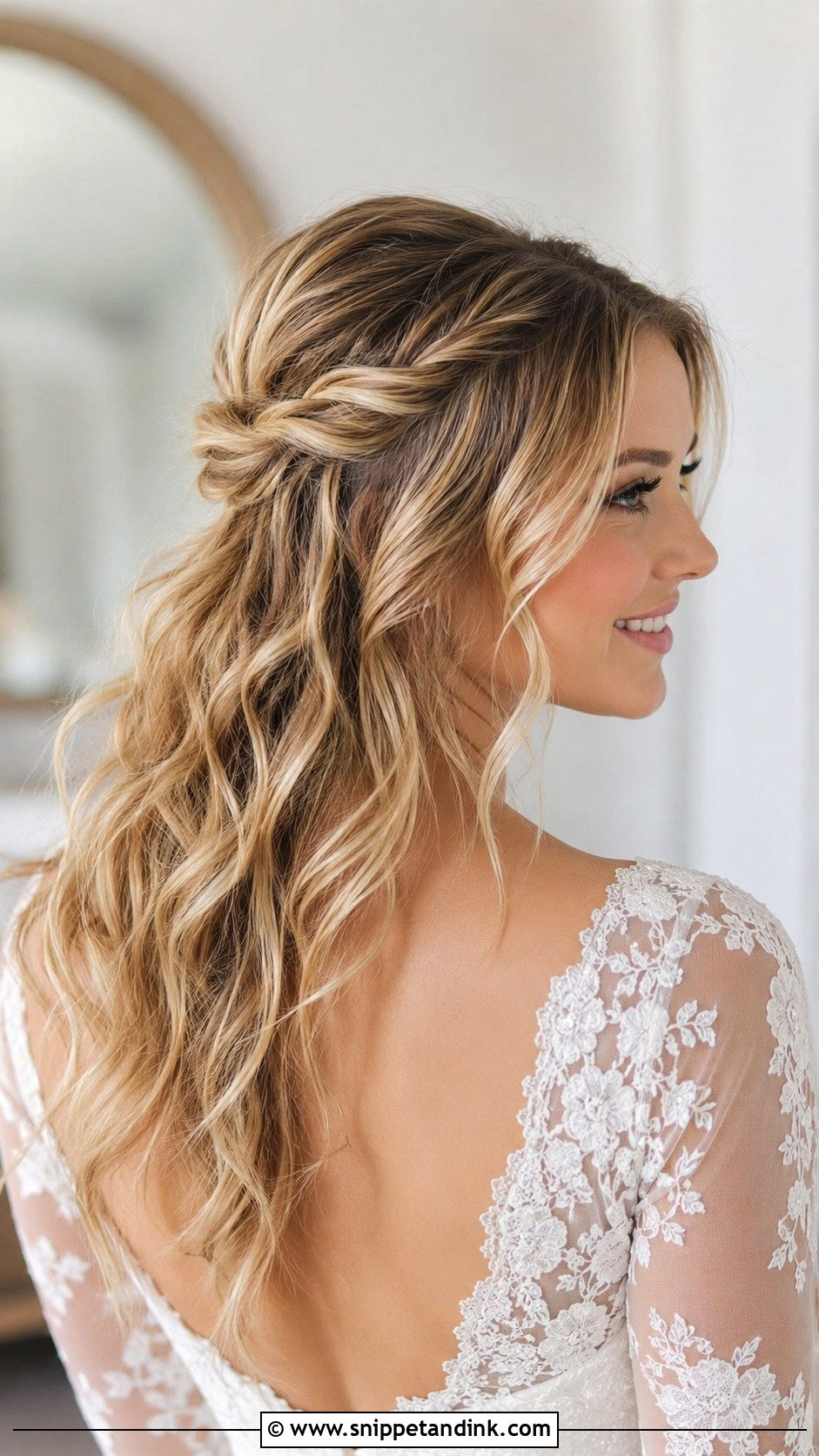
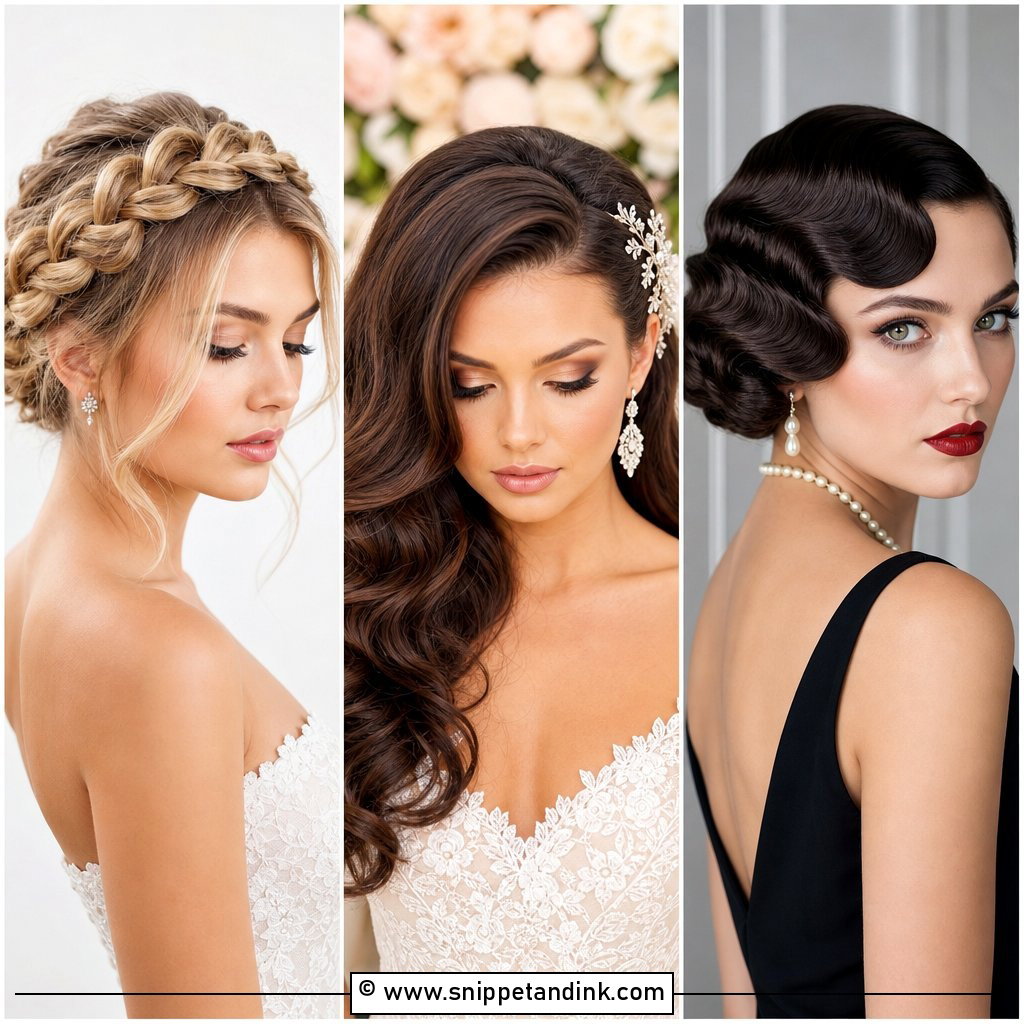
If you can’t choose between up and down, this is the compromise that genuinely gives you both. I take the top section back and secure it at the crown, then curl the length. The part people underestimate is the anchor: on fine hair I lay a small hidden braid or a pair of crossed bobby pins first, because a veil comb pushed into loose curled hair will slide by the first hour. Curls on the lengths also relax faster than the pinned section, so I set them with a little more hold than you’d think you need. A few face-framing tendrils soften the front, but keep them longer than your cheekbone or they’ll stick to lip gloss.
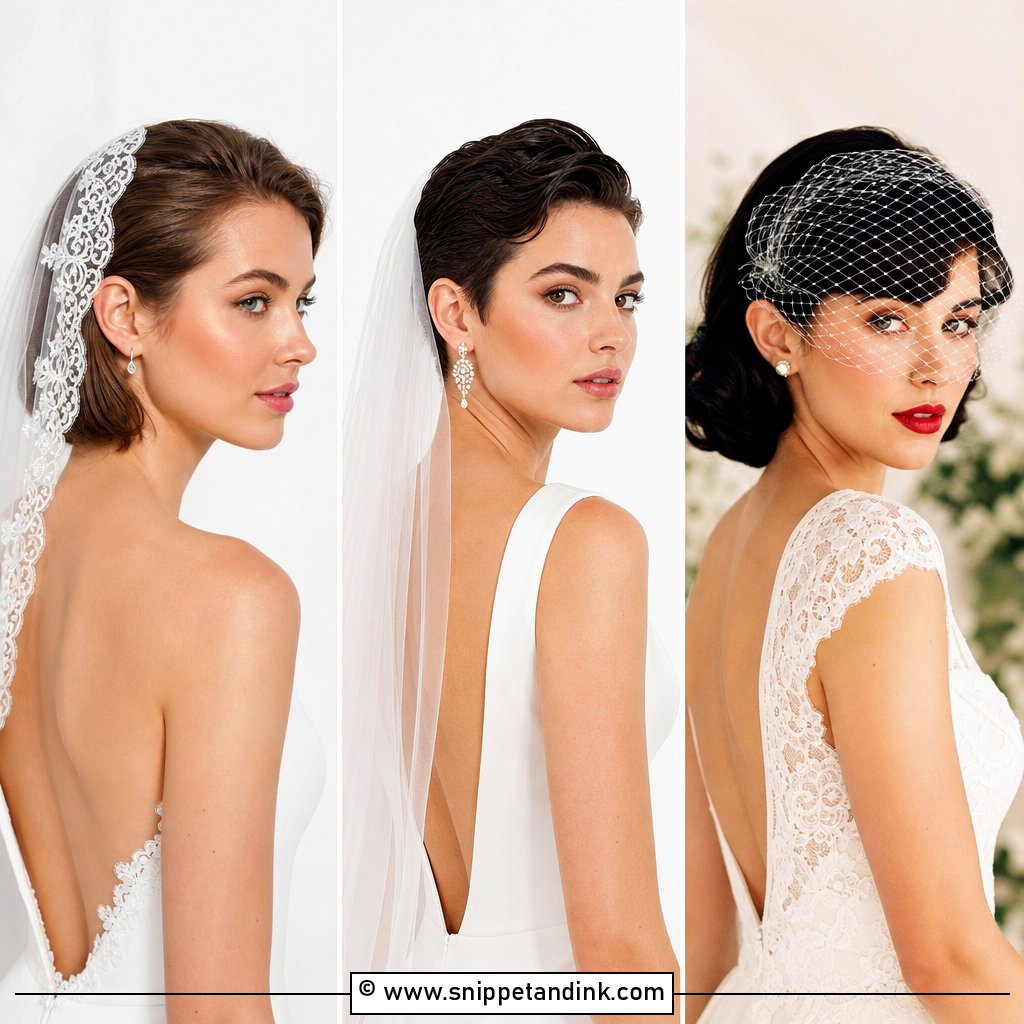
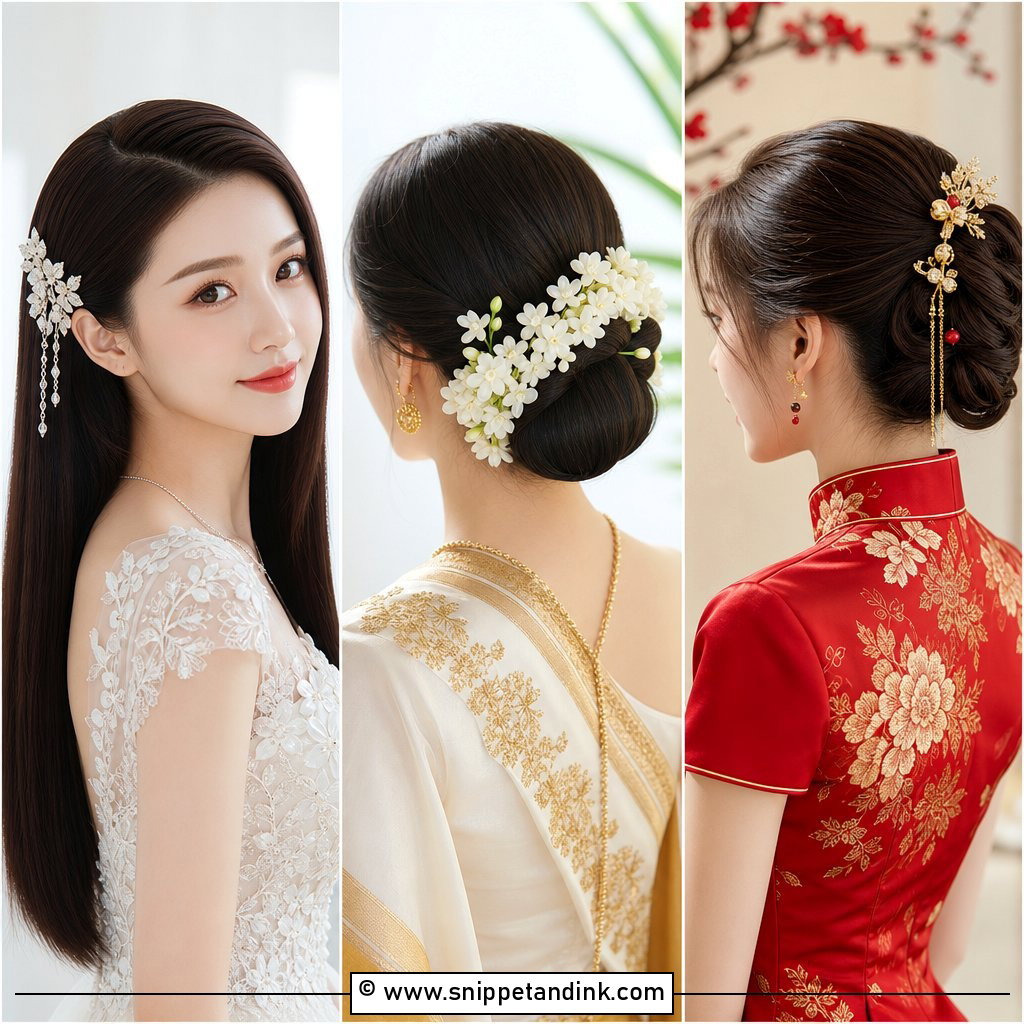
2. Sleek Low Bun Wedding Hairstyle
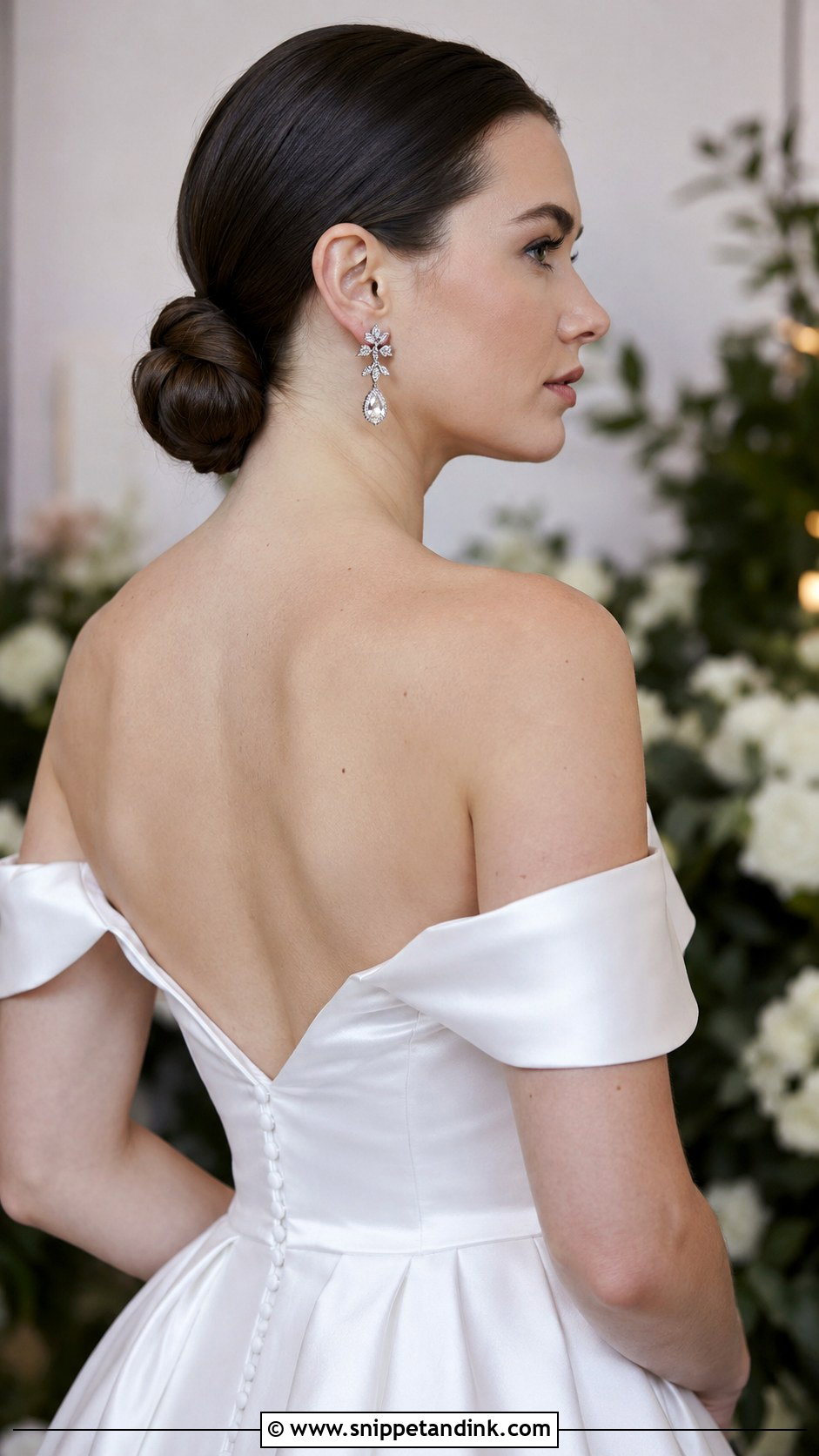
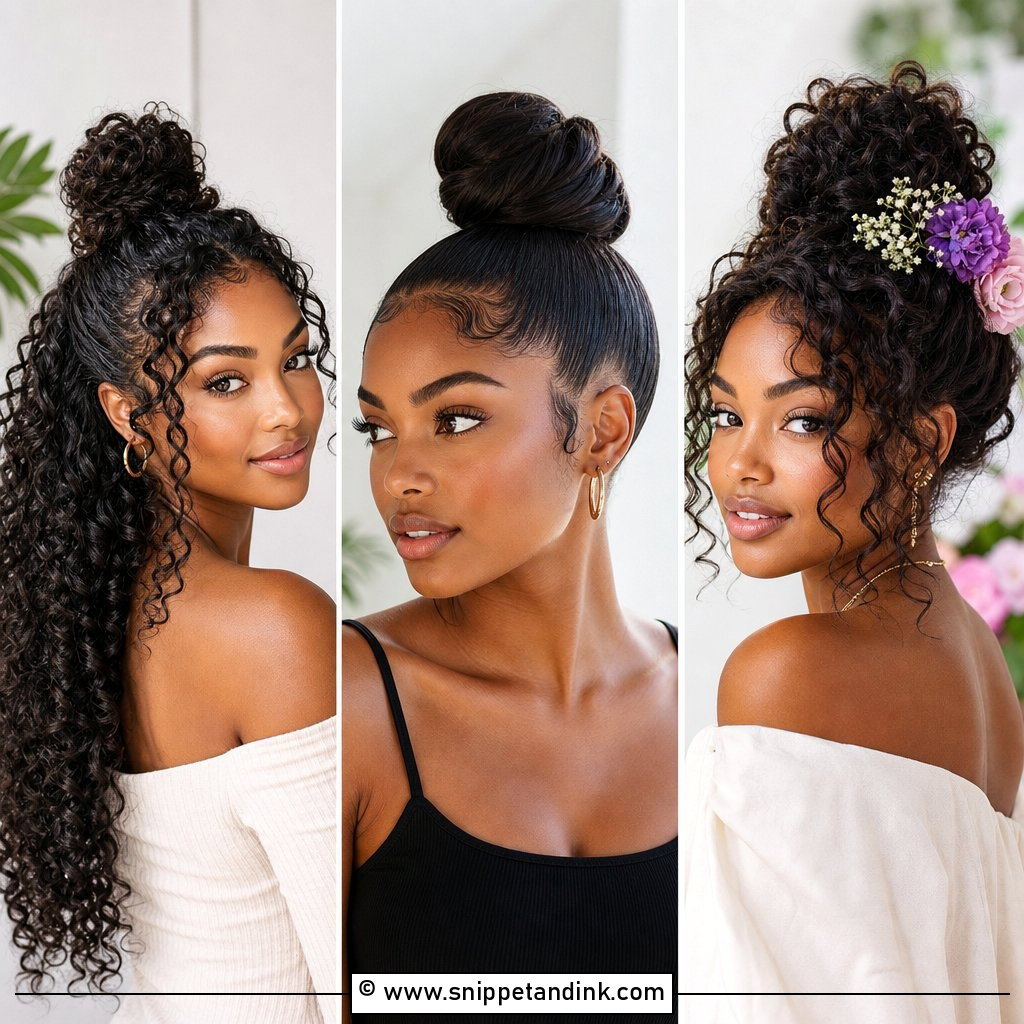
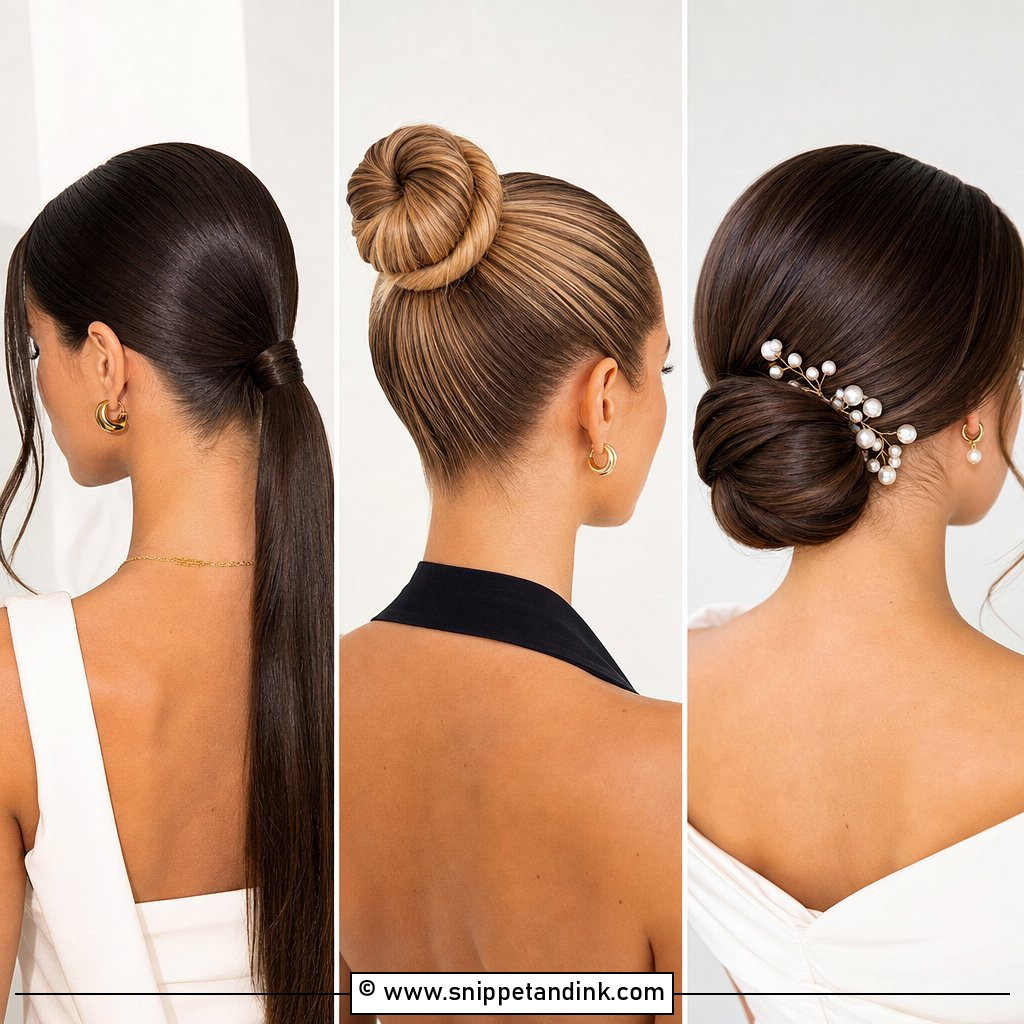
A sleek low bun lives or dies on the prep, not the twist. I blow-dry the hair completely smooth with a paddle brush, brush it back into a tight elastic at the nape, and only then wrap and pin. Any kink left from sleeping or a rough dry shows up as a ridge in close-up shots. It sits comfortably under a long veil and lets statement earrings carry the look. I’d hold back on this one if you have a cowlick at the nape or a lot of short layers, because those pieces pop out within hours and need gel and patience.
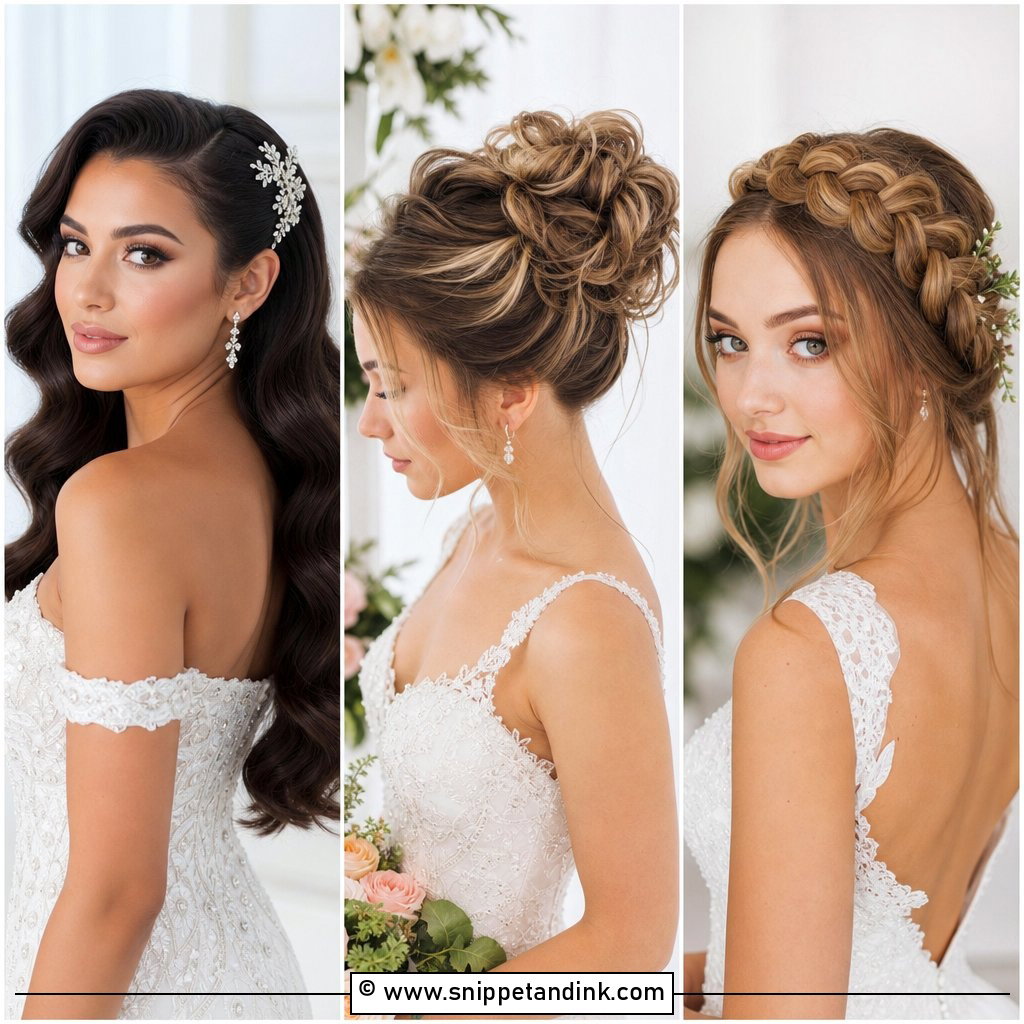
3. Messy High Bun Wedding Hairstyle
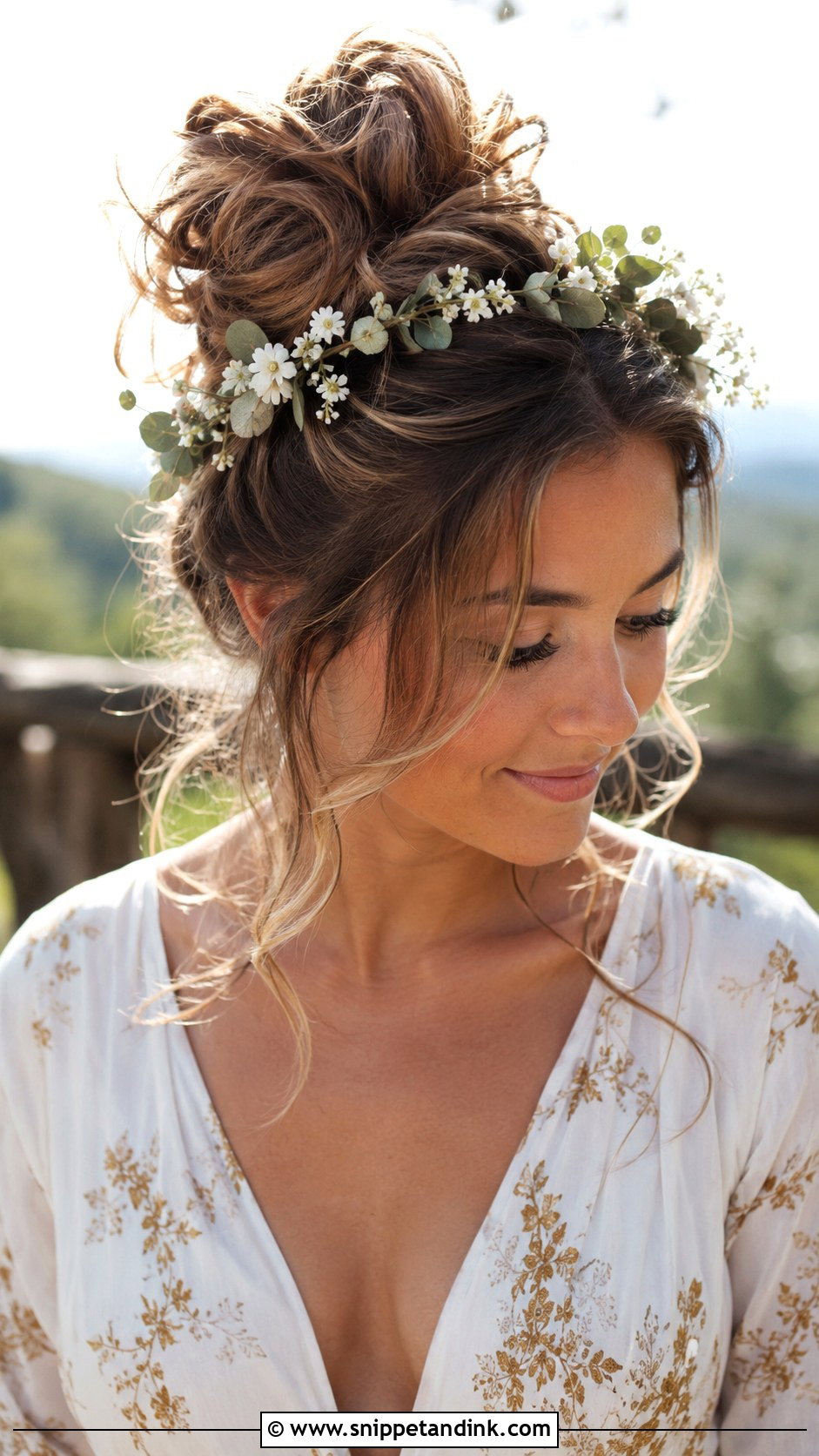
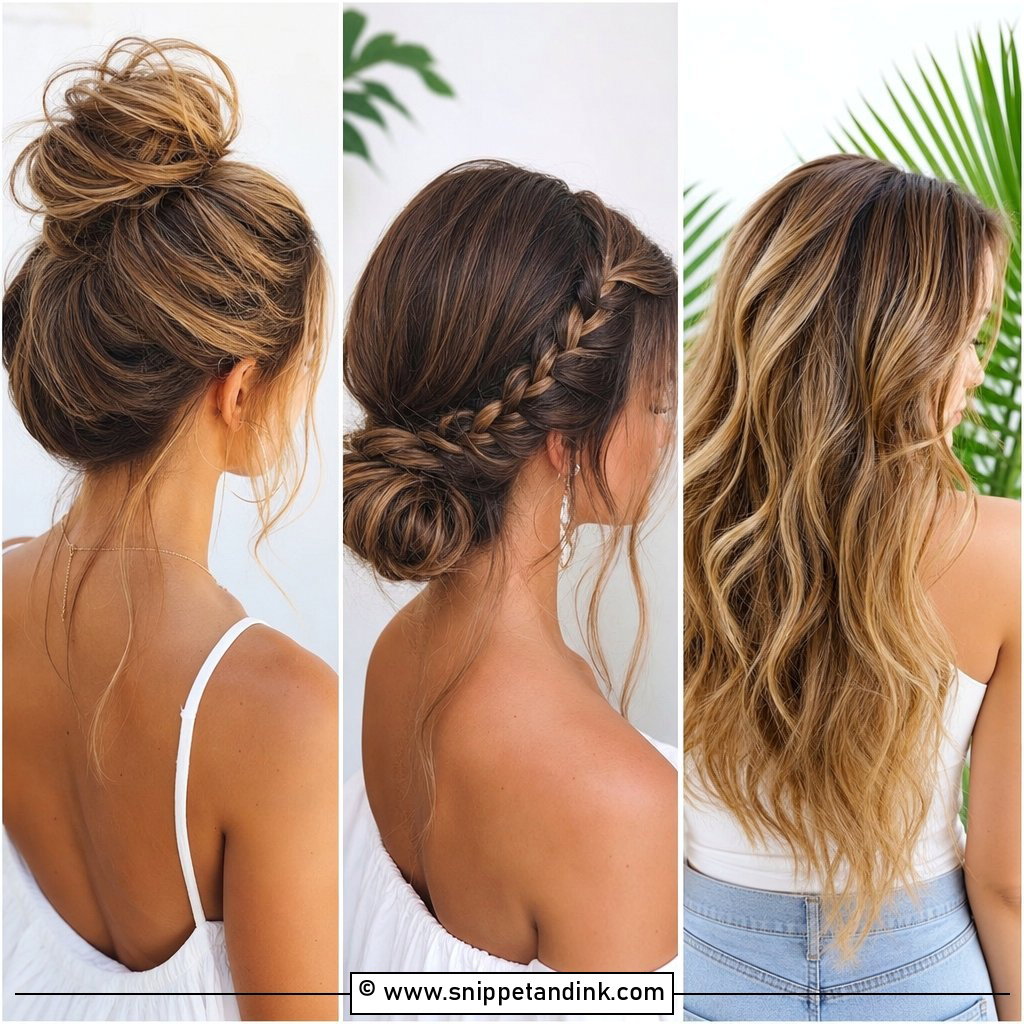
The messy high bun only looks careless. I build it from backcombed sections pinned in a loose circle, then pull out a few strands at the temples, so the texture is placed rather than random. It needs medium to long hair with some grip; very slippery, freshly washed hair is the enemy here, so I ask brides to wash the day before. Sitting high on the crown, it adds height and suits an outdoor or rustic setting with an unstructured dress. It’s a poor match for a cathedral veil, since the comb has nowhere sensible to sit.
4. Classic French Twist Wedding Hairstyle
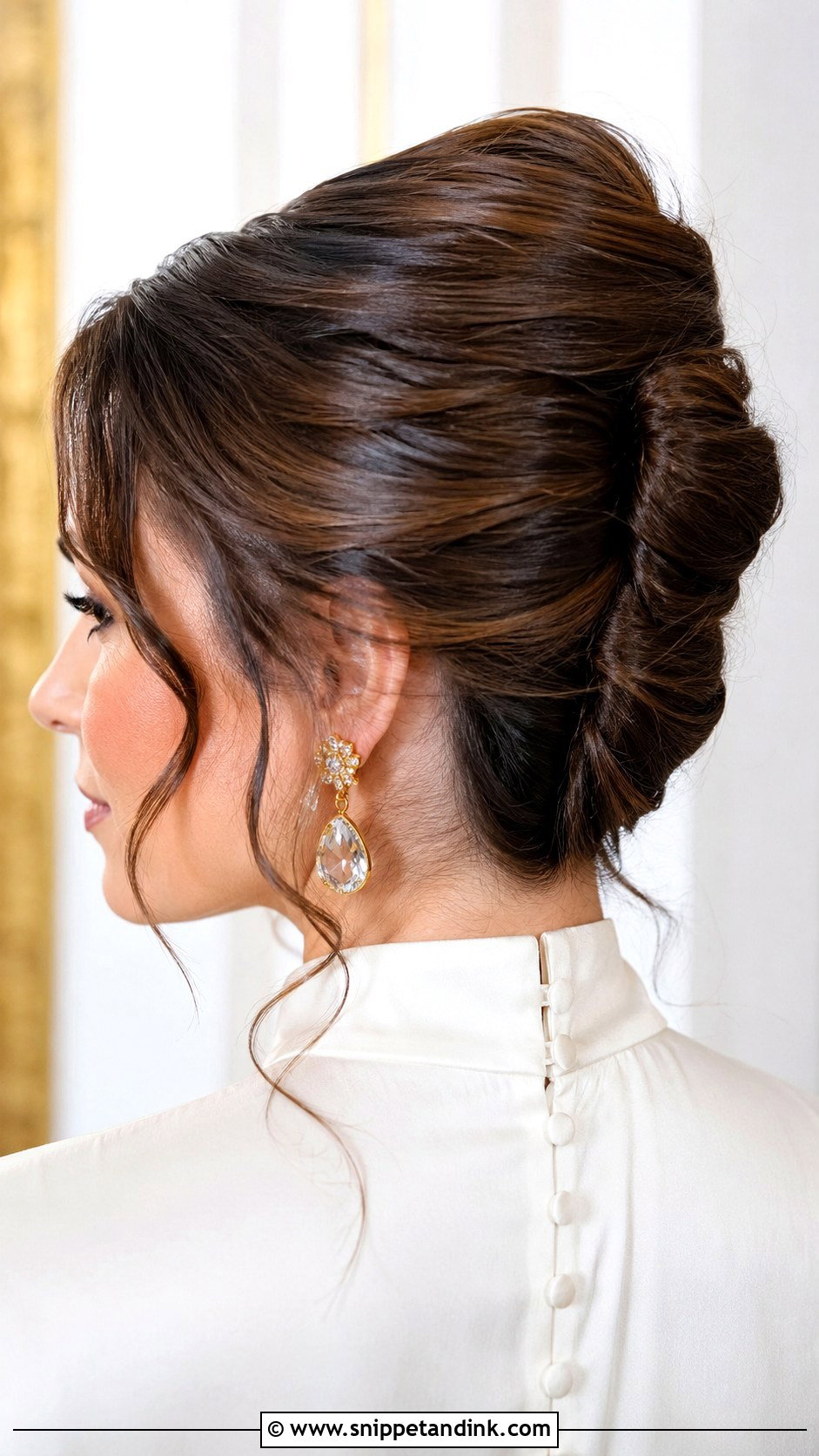
A French twist is a vertical roll tucked along the back of the head, and it’s one of the most secure updos I can do. Once the seam is pinned with interlocking pins, it doesn’t budge through a full night of dancing. That’s why I suggest it for long receptions and high-neck gowns, where hair on the shoulders would hide the neckline. Shoulder-length hair is the minimum; shorter layers fall out of the roll. You can leave a couple of loose pieces at the face, or keep it entirely smooth for a stricter 1950s line.
5. Loose Romantic Waves Wedding Hairstyle
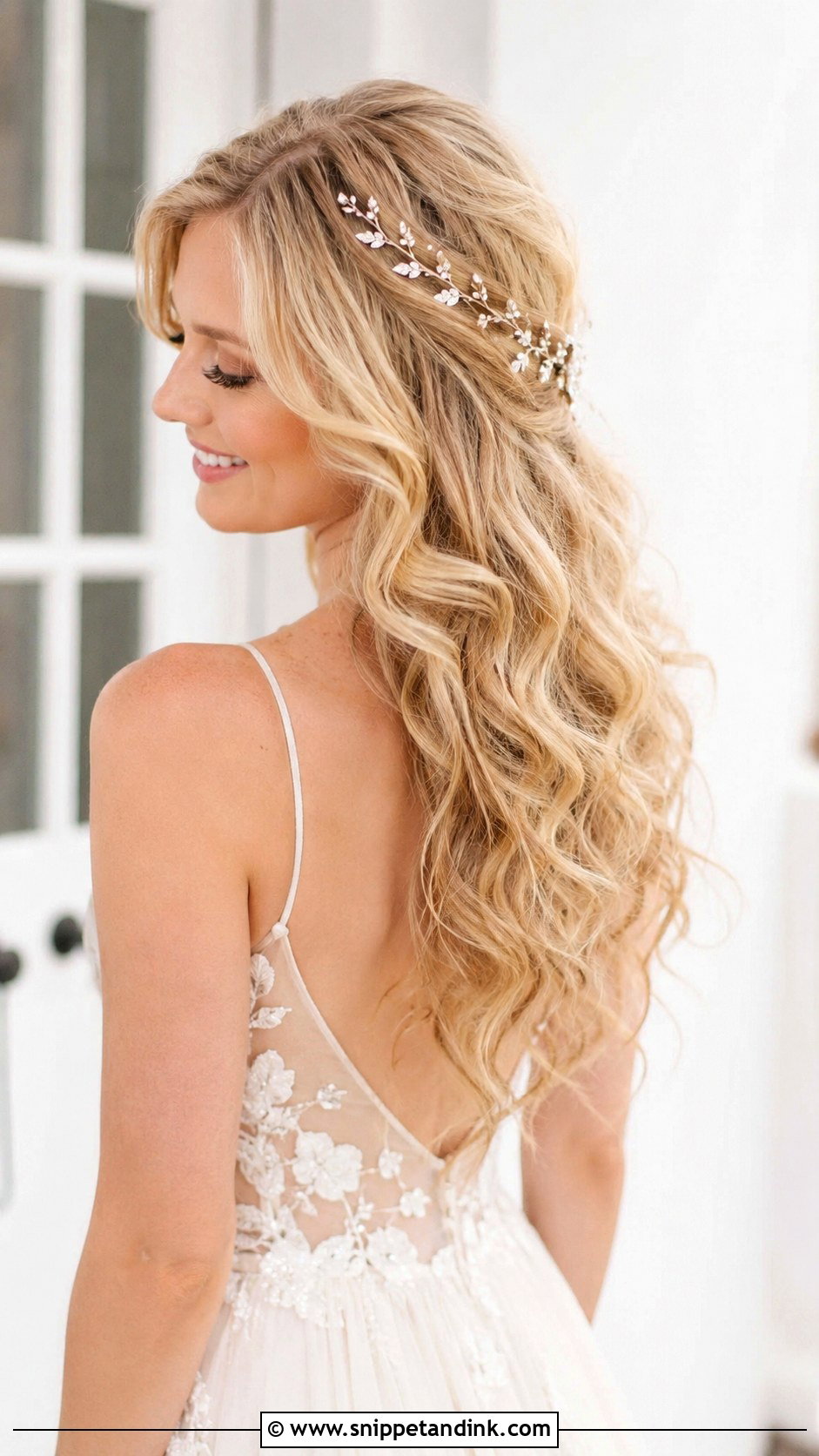
Loose waves are the style brides assume will be easiest, and they’re the one I worry about most on humid days. Curled hair drops; straight-leaning hair can lose half its bend within a few hours. I curl in small sections, let every curl cool pinned in a loop before brushing out, and use a working spray before the iron rather than heavy hairspray after. These soft, cascading waves sit best on medium to long hair and work with a flowing gown or a delicate hair vine. If your hair won’t hold a curl overnight on a normal day, plan for a half-up version instead.
6. Bridal Ponytail Wedding Hairstyle
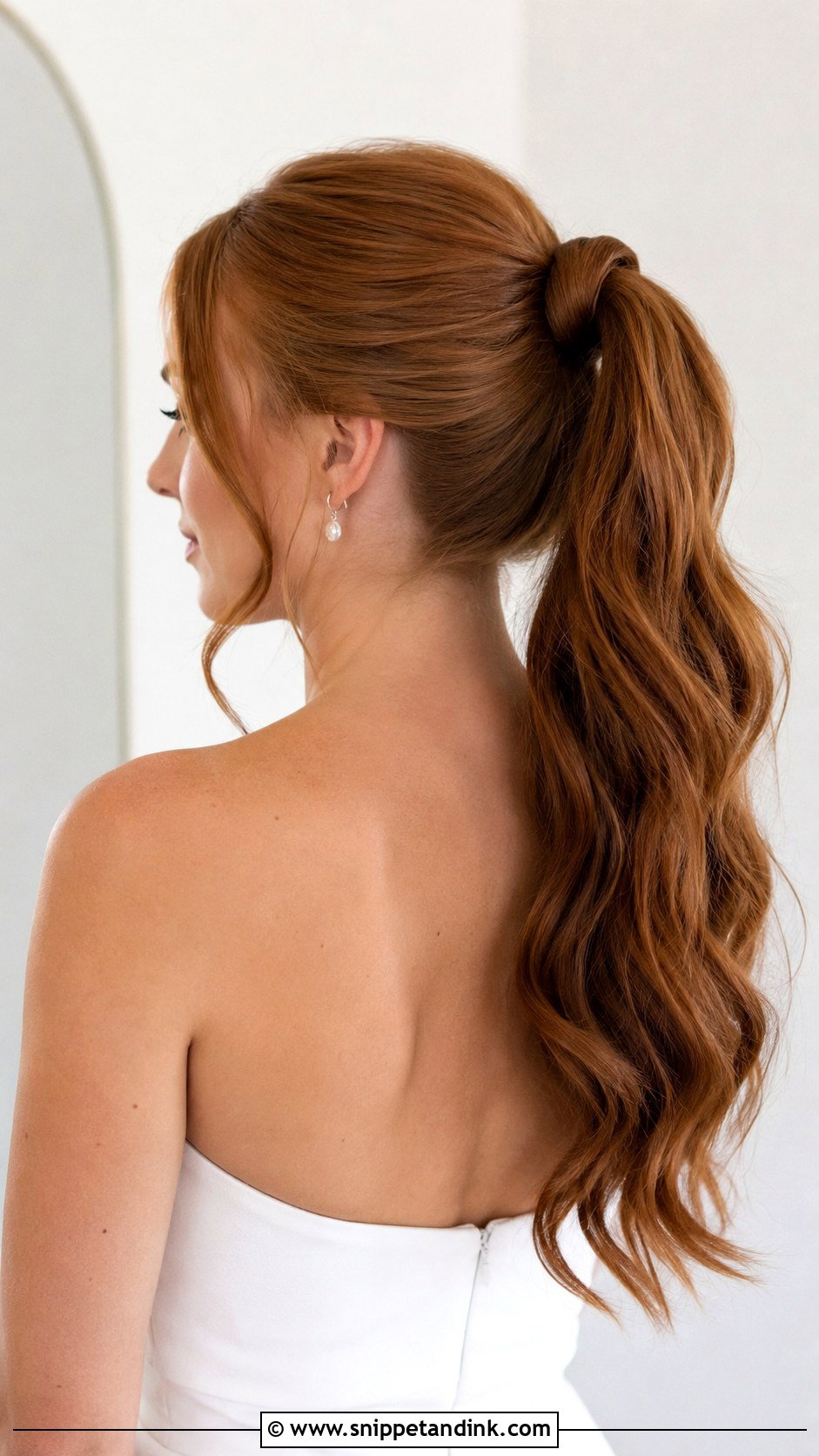
A bridal ponytail is the least fussy style on this list and one of the most practical for a dancing-heavy reception. High and polished, or low and textured, it keeps everything off the face. The trick is the base: I wrap a strand around the elastic and pin it underneath, then hide two or three bobby pins inside the ponytail to stop it from sagging, since gravity drags a high pony down by the evening. Curling the length adds swing. I’d skip it if your hair is very thick and long, because the weight pulls on the scalp and can give you a headache by the speeches.
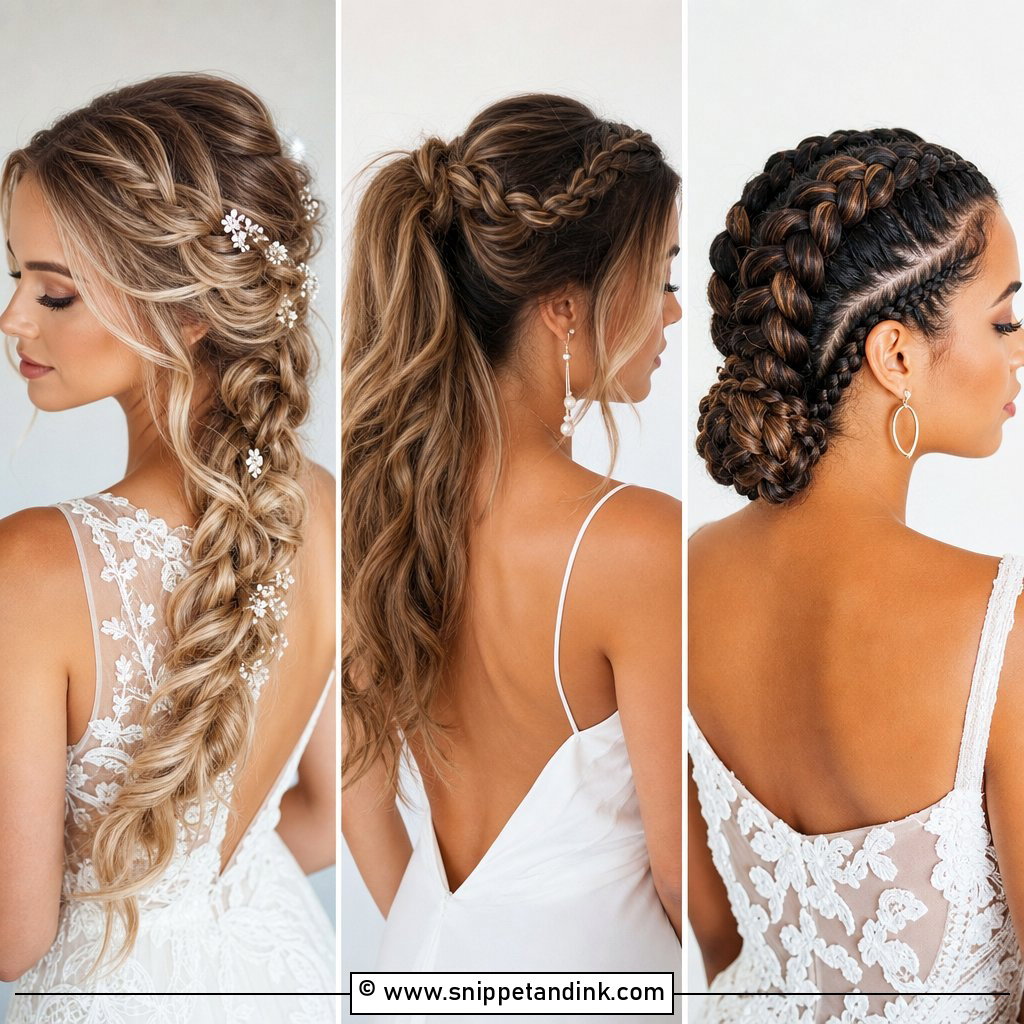
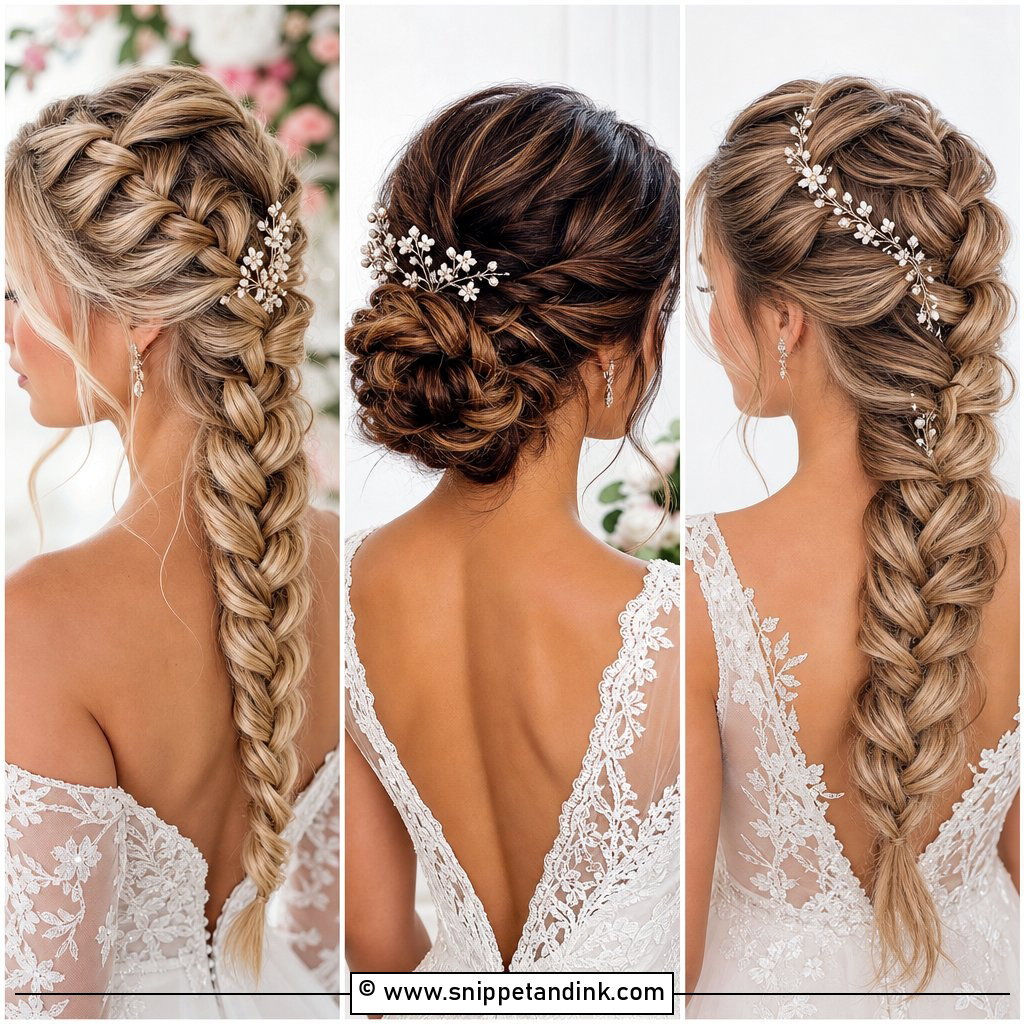
7. Braided Crown Wedding Hairstyle
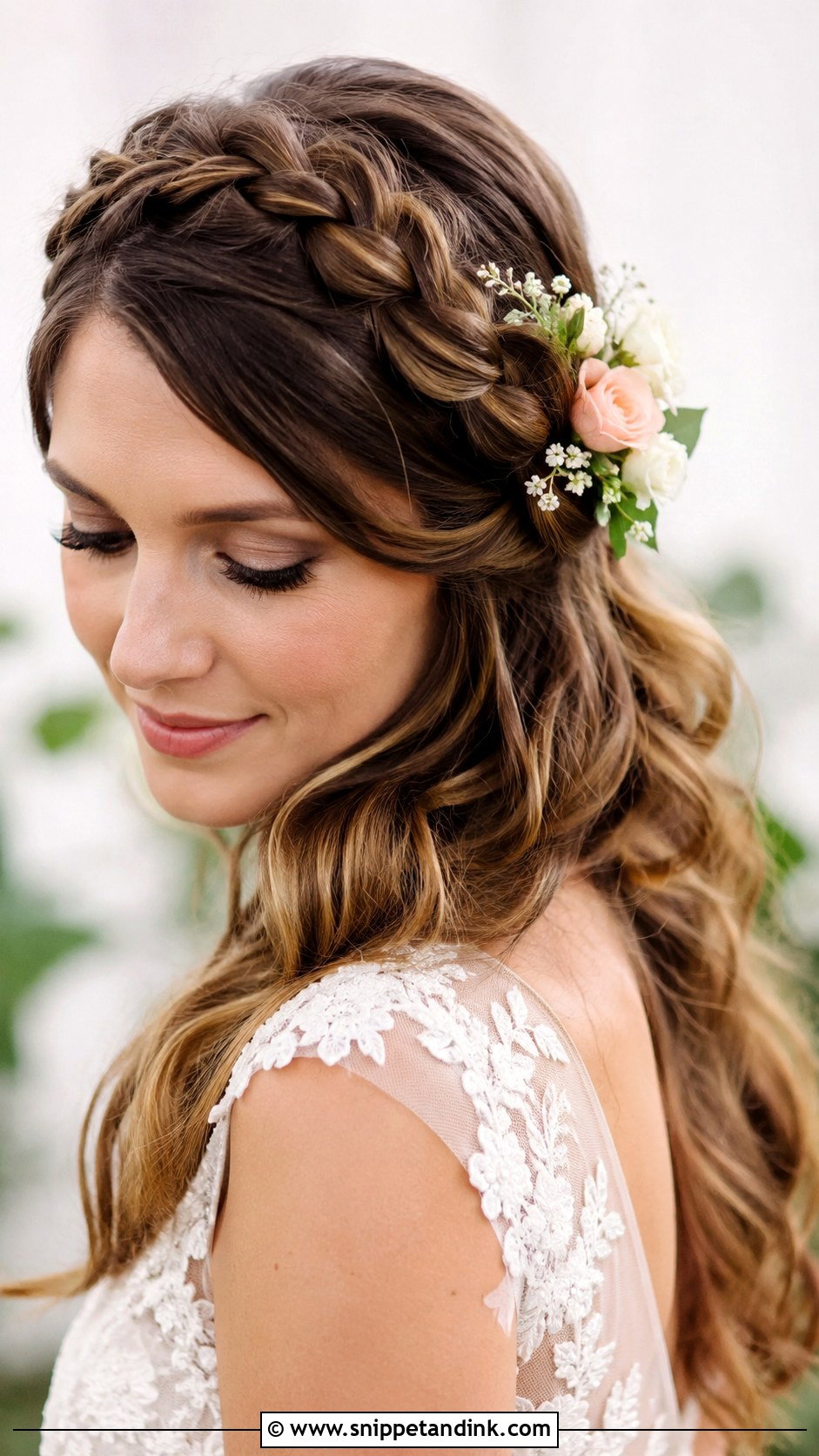
A braided crown circles the head like a halo and is one of the sturdiest options for an outdoor wedding, since nothing hangs loose to catch the wind. I usually start with two Dutch braids from behind the ears and pin them across the top, then pancake the edges so they look fuller. Long, thick hair gives the best result; on fine hair I’ll weave in a matched clip-in strand to bulk out the braid. Small flowers tucked into the plait sit securely here. Do check it works with your veil plan, because a crown braid leaves little room for a comb.
8. Soft Chignon Wedding Hairstyle
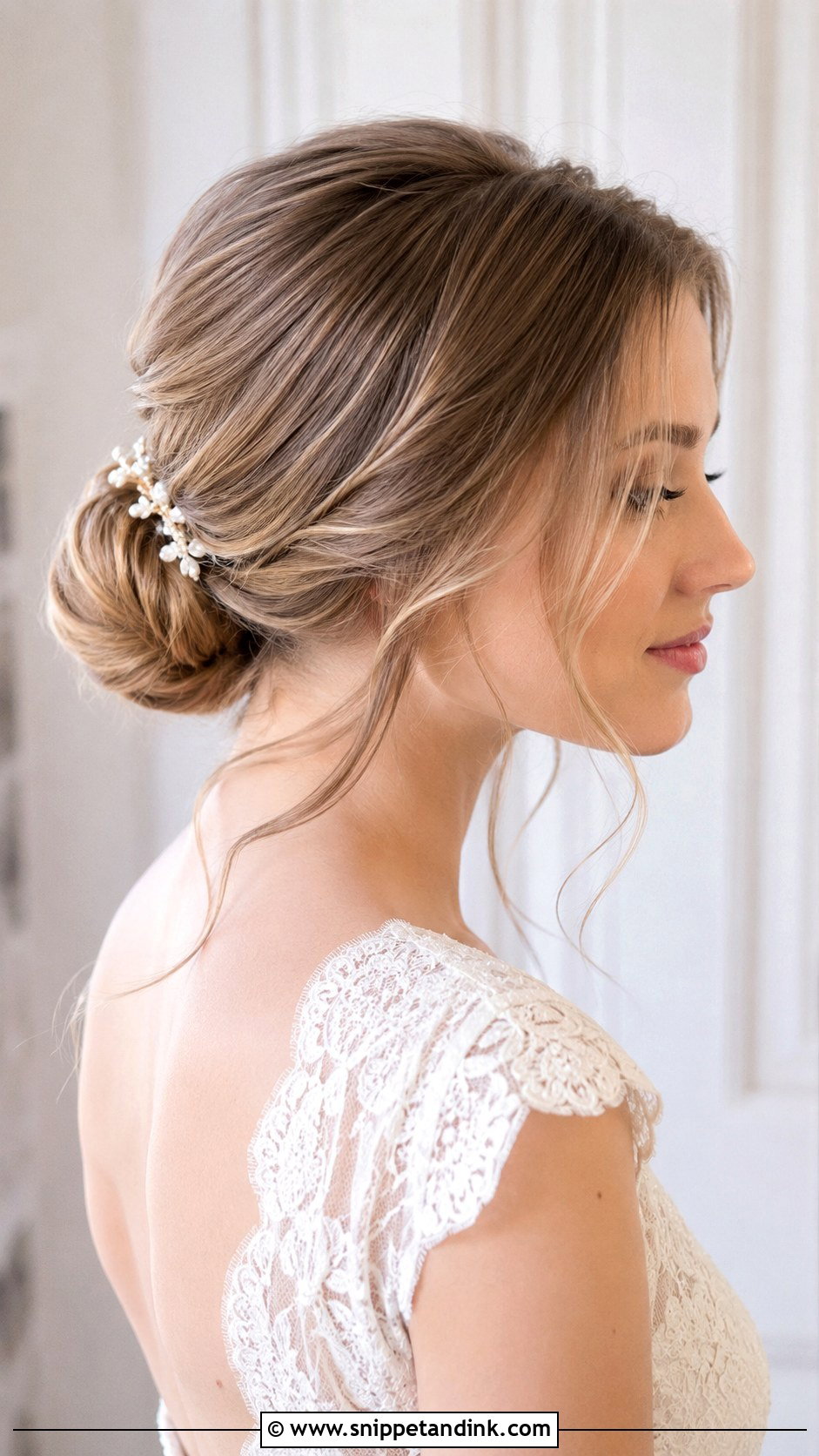
The chignon has stayed a bridal standard because it adapts to almost any dress and setting. It’s a low, looped knot at the back of the head, and I can make it polished or soft depending on how much I smooth the surface. This is my usual recommendation for a bride who wants a veil and doesn’t want to think about her hair again, because the knot gives the comb something firm to grip. Shoulder-length hair can manage a small chignon with padding. If you have a long neck or a low back on the dress, this is where it really earns its place.
9. Fishtail Braid Wedding Hairstyle
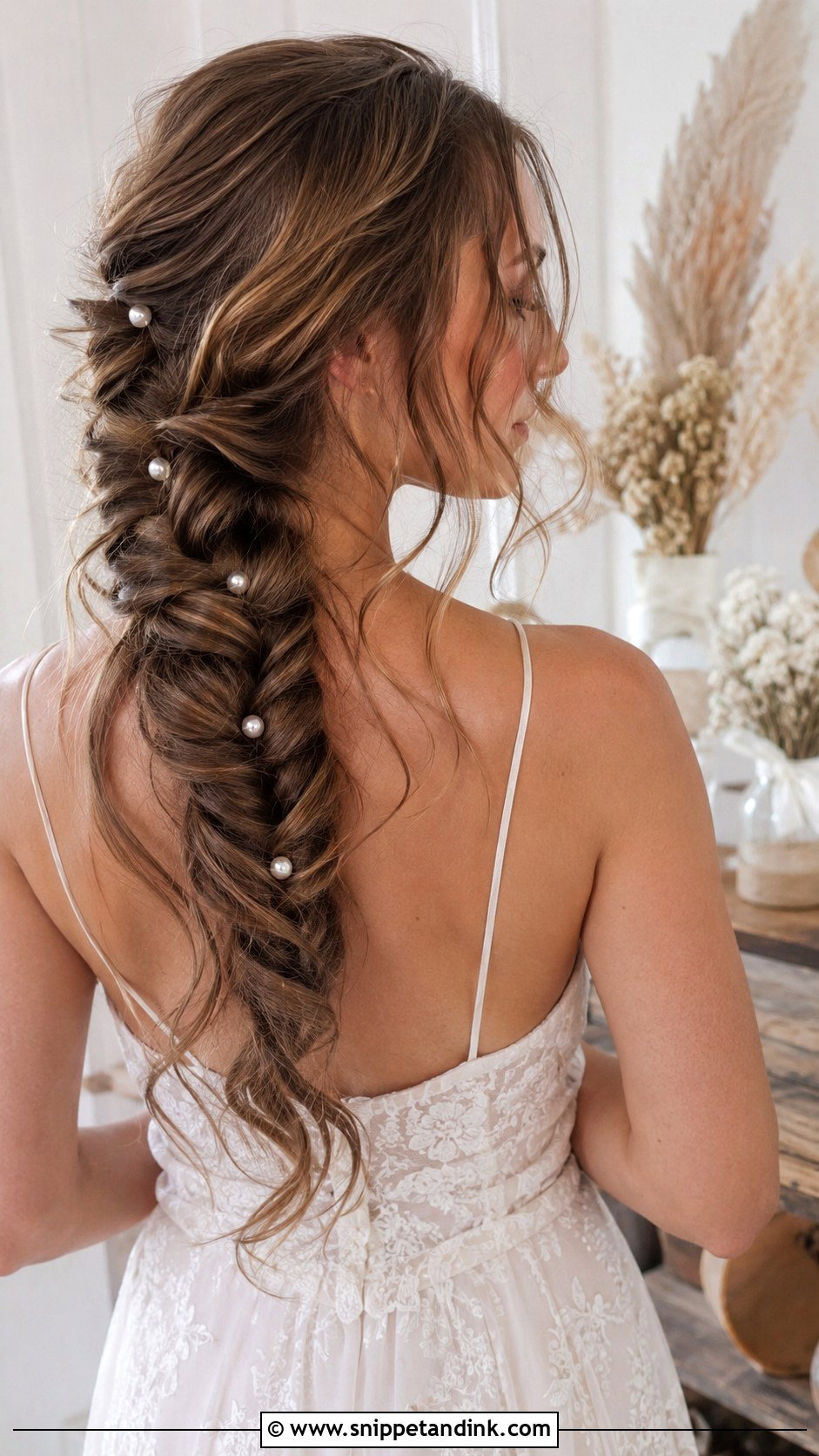
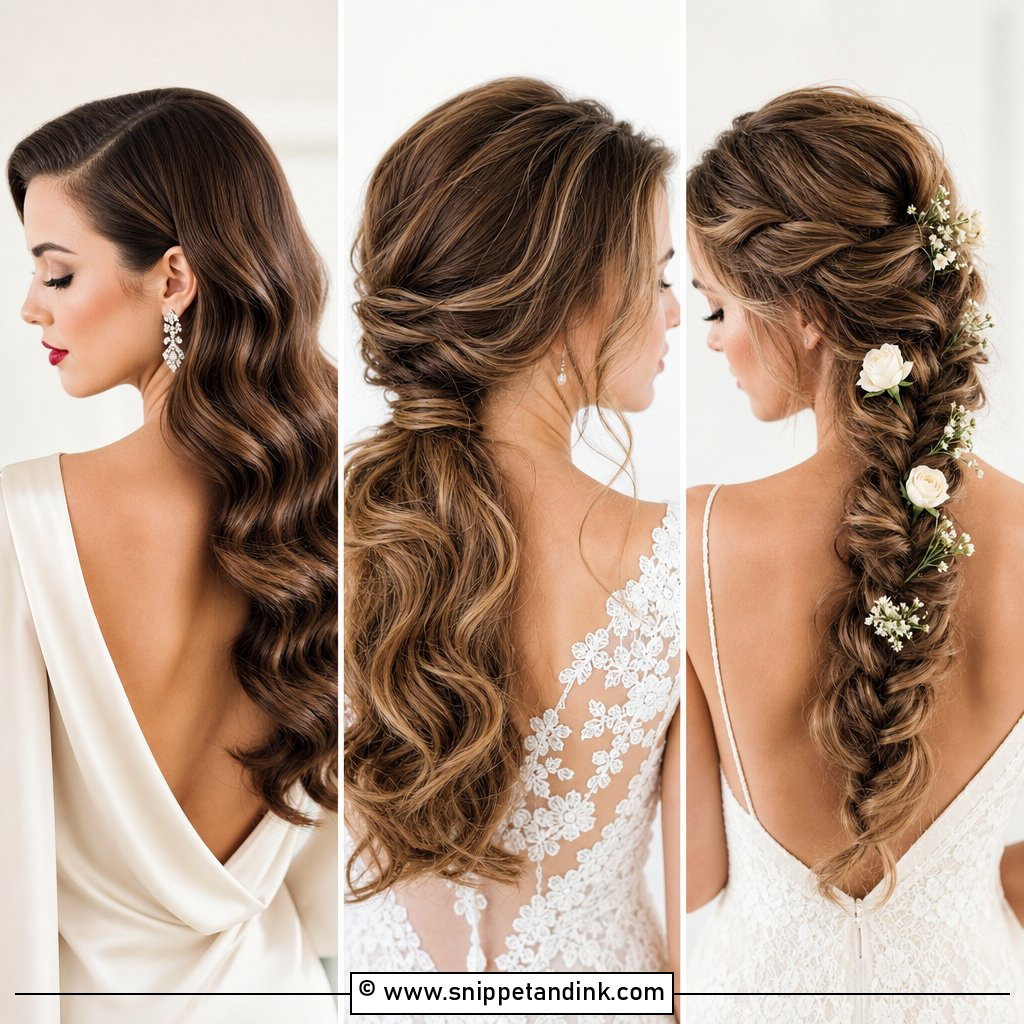
A fishtail braid is made from two sections rather than three, crossing tiny pieces from the outside in, which is what gives that herringbone texture. It takes longer than a standard braid and needs hair long enough to show the pattern, ideally well past the shoulders. I braid it fairly tight, secure it, and only then loosen the edges, because loosening as you go makes it uneven. It can be worn over one shoulder, worked into a half-up style or pinned into an updo. Very layered hair tends to poke out along the braid, so expect a few pins along the length.
10. Vintage Hollywood Waves Wedding Hairstyle
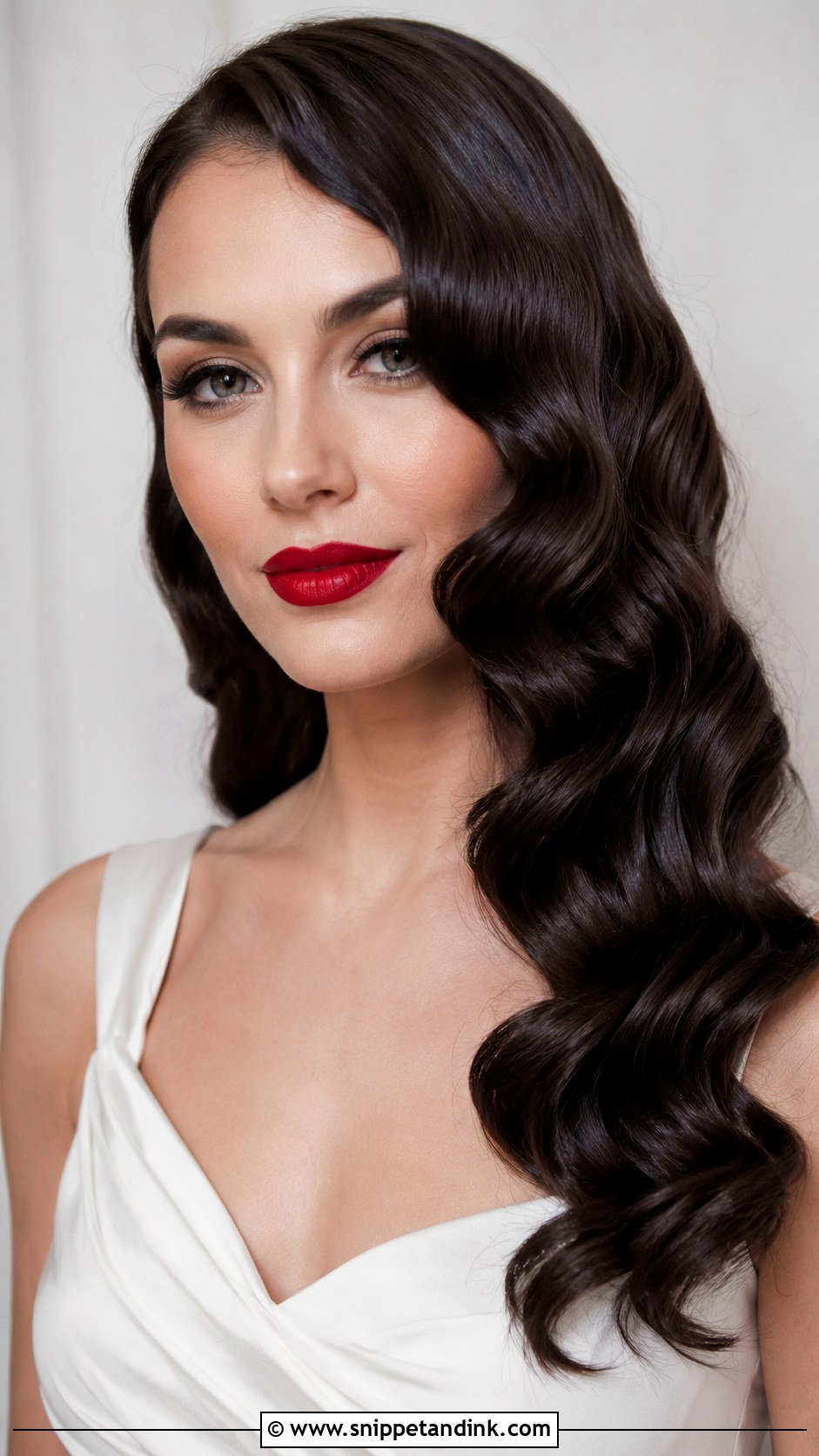
Vintage Hollywood waves are the most technical style here. I set the curls all in the same direction, brush them out once they’ve fully cooled, and then shape the S-pattern with clips that sit in for a while before the final brush. The result is smooth, sculpted and glossy, and it reads best with a sleek gown and a red lip. It suits medium to long hair with a fairly blunt cut; heavy layers break up the wave pattern. Shine spray finishes it. On humid days I’d seriously consider sweeping it to one side and pinning, since the waves frizz at the ends first.
11. Boho Braided Updo Wedding Hairstyle
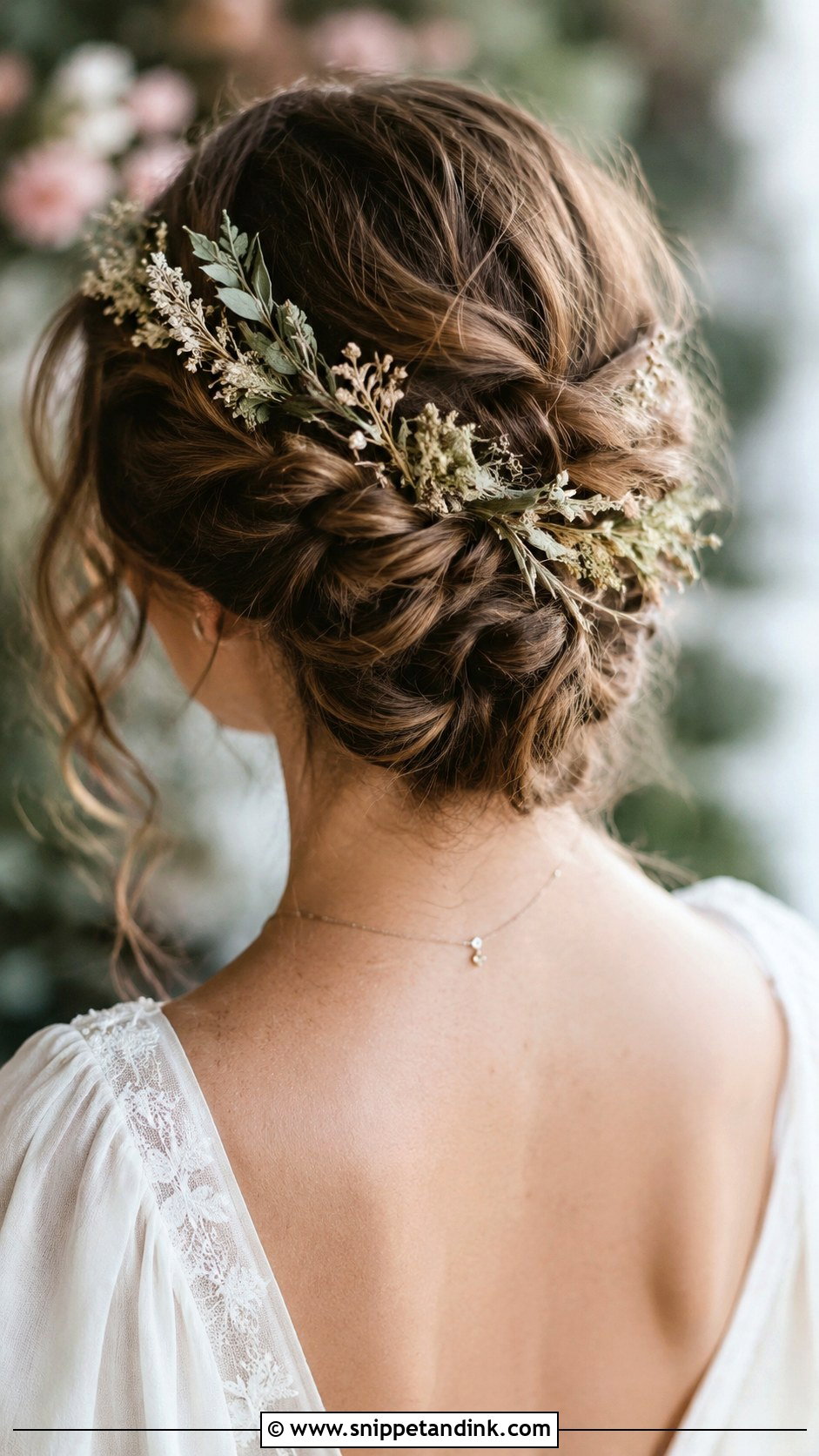
A boho braided updo is loose braids and twists pinned up with plenty of soft texture left in. I build it on second-day hair whenever I can, since clean hair is too slippery to hold the softness. Wisps at the face keep it light. It suits garden, beach and rustic weddings, and dried flowers or greenery tuck into the braids well because they don’t wilt. Long, textured hair gives the best volume. The honest drawback: this style is meant to look slightly undone, so if you’re a bride who will want to smooth every loose piece in the mirror, pick something sleeker.
12. Sleek Straight Wedding Hairstyle
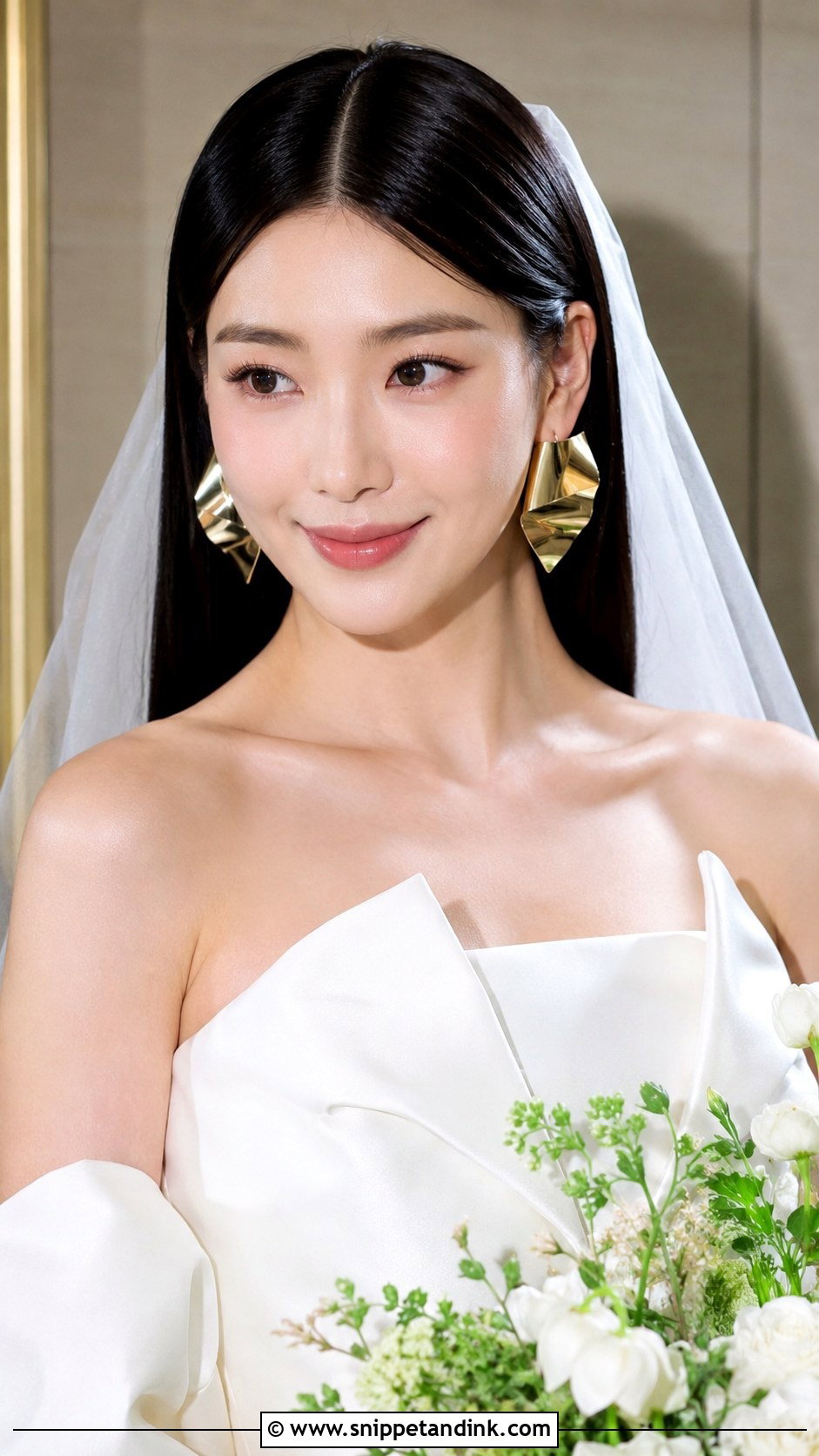
Sleek straight hair is simple to describe and unforgiving to execute. It needs healthy, conditioned ends, because flat ironing exposes every split and dry patch. I work in thin sections with a heat protectant and a light serum, then go easy on the shine products near the roots so the hair doesn’t separate into strings by evening. A center part reads more modern; a side part softens a strong jaw. Worn with a structured gown, it’s a clean fashion statement. In rain or sea air, though, it can puff up quickly, so keep a small flat iron in the bridal suite.
13. Floral Crown Wedding Hairstyle
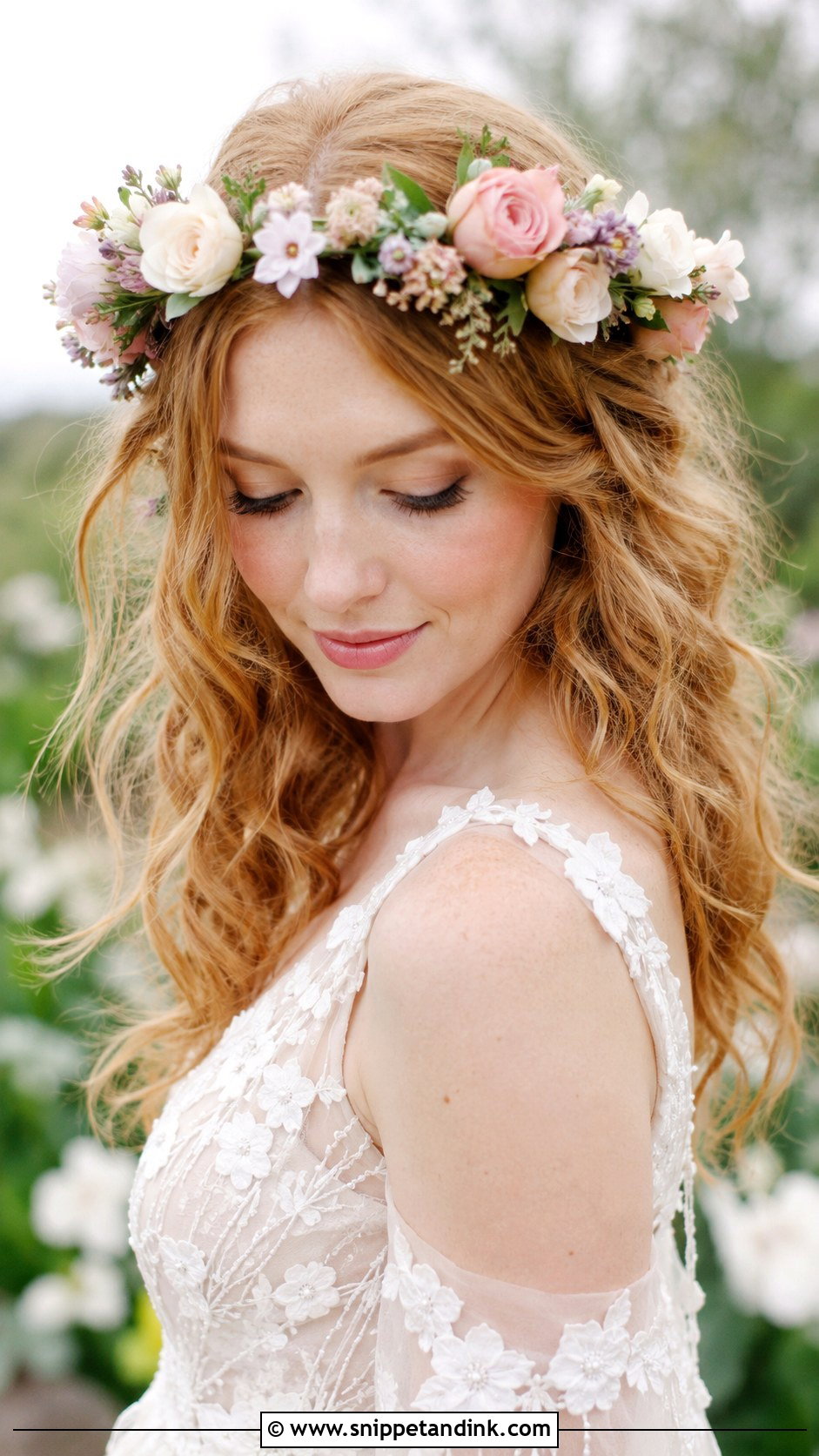
Fresh flowers in hair are the detail I plan with the florist, not after. A full floral crown or a few stems scattered through waves both work, but the blooms need to be ones that survive hours out of water: spray roses, waxflower and small orchids hold up, while hydrangea and gardenia wilt and brown fast. Matching them to your bouquet keeps the look connected. Pastels look soft; deeper colors read stronger in photos. I wire and tape each stem, then pin it into a firm base, because flowers placed into loose hair slip within the hour.
14. Twisted Half-Up Wedding Hairstyle
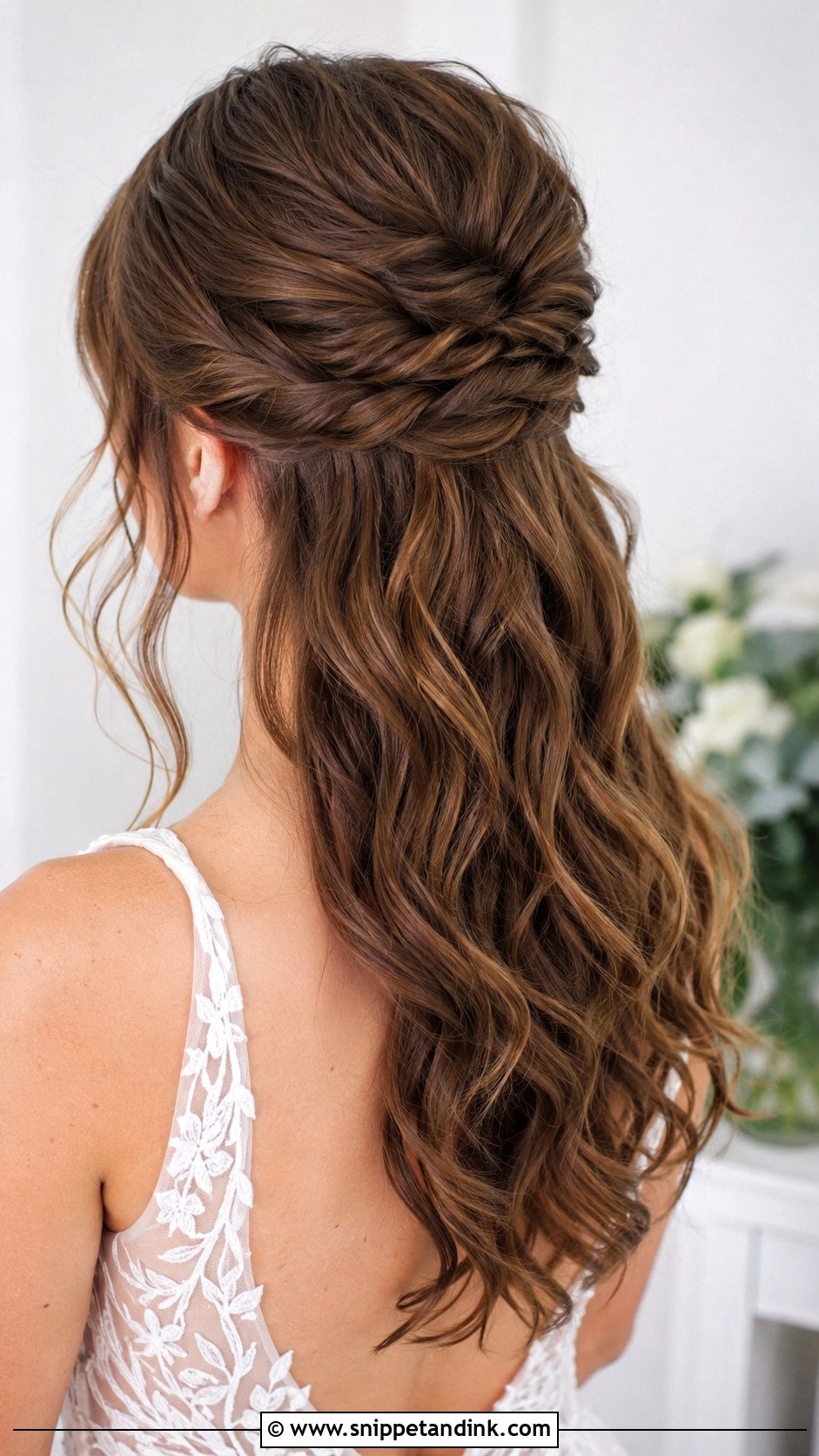
A twisted half-up is quicker than braiding and still shows detail from the front. I take a small section from each side, twist it back, and secure the two twists at the crown, letting the rest fall in waves or curls. Because twists unwind, I always spray each one and cross the pins in an X. It works for both modern and boho brides and pairs well with a veil or hairpiece sitting just below the join. If your hair is very short at the sides, the twists won’t reach the back; that’s the one case where I’d move to a pinned-back style instead.
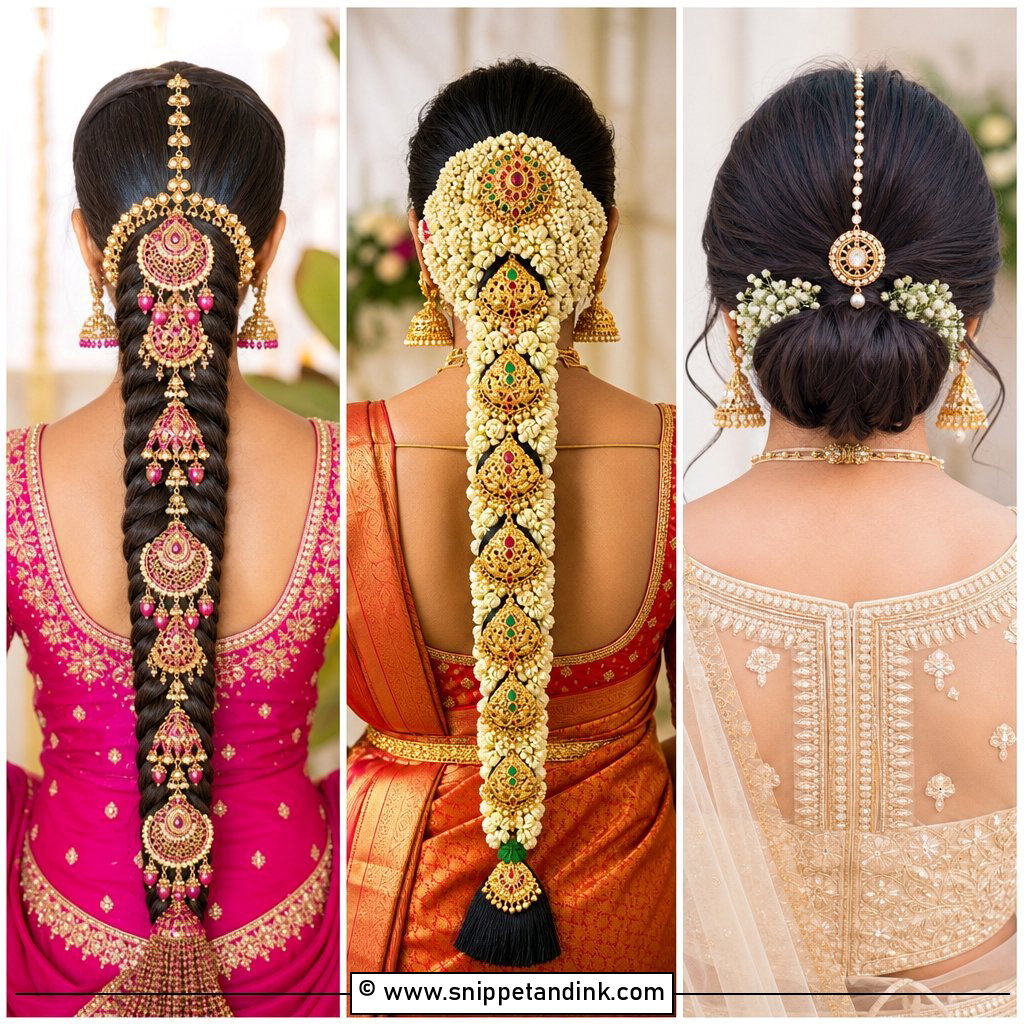
15. Low Bun With Side Part Wedding Hairstyle
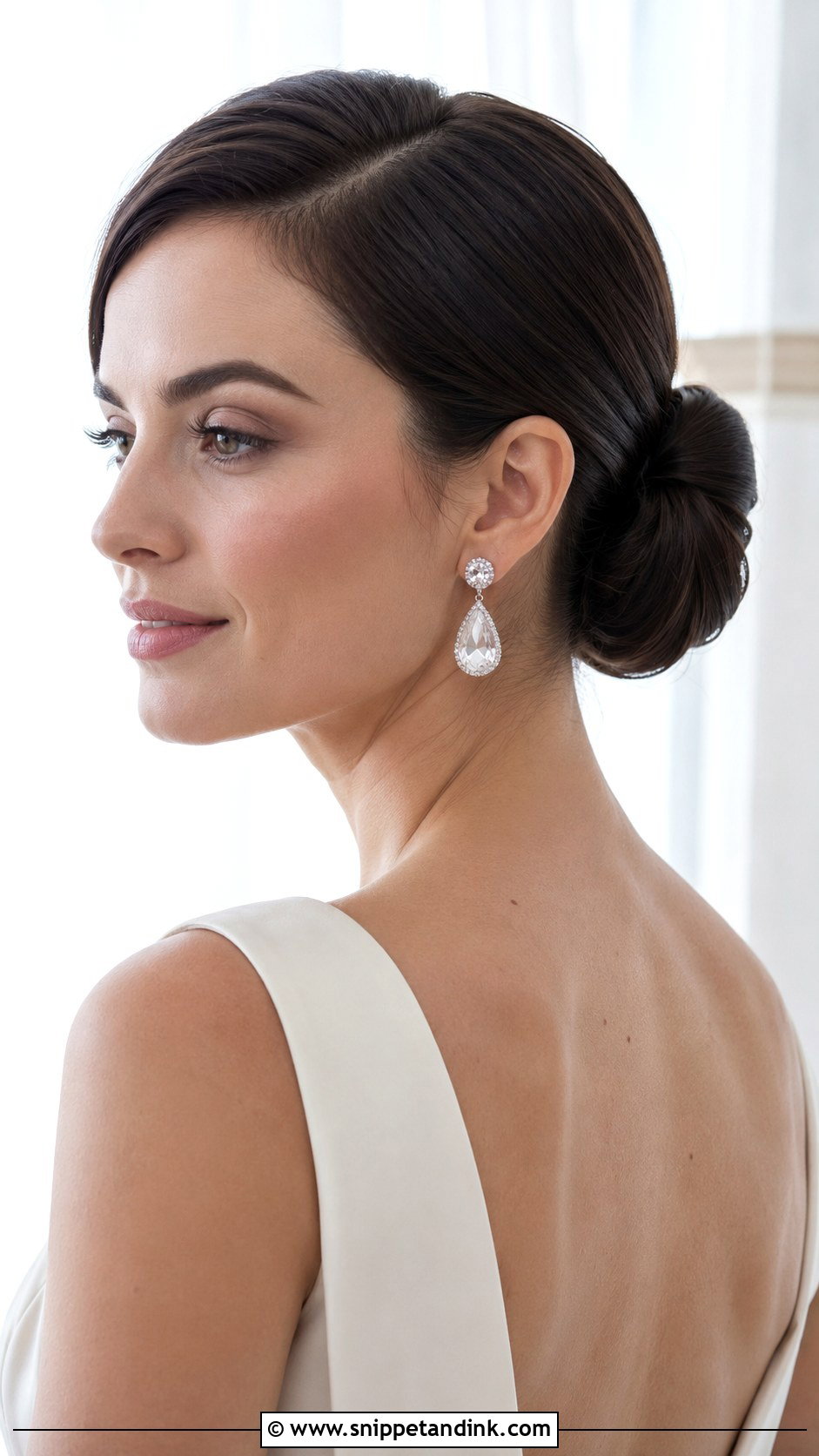
A deep side part changes a low bun more than people expect. It adds asymmetry, frames one side of the face, and stops a sleek bun from looking severe. I set the part while the hair is damp so it doesn’t spring back, then gather the bun just off-center toward the fuller side. It works with statement earrings and modern gowns. The one thing I check: a deep part can reveal thinner areas at the crown on some brides, so I’ll test both sides at the trial and photograph each.
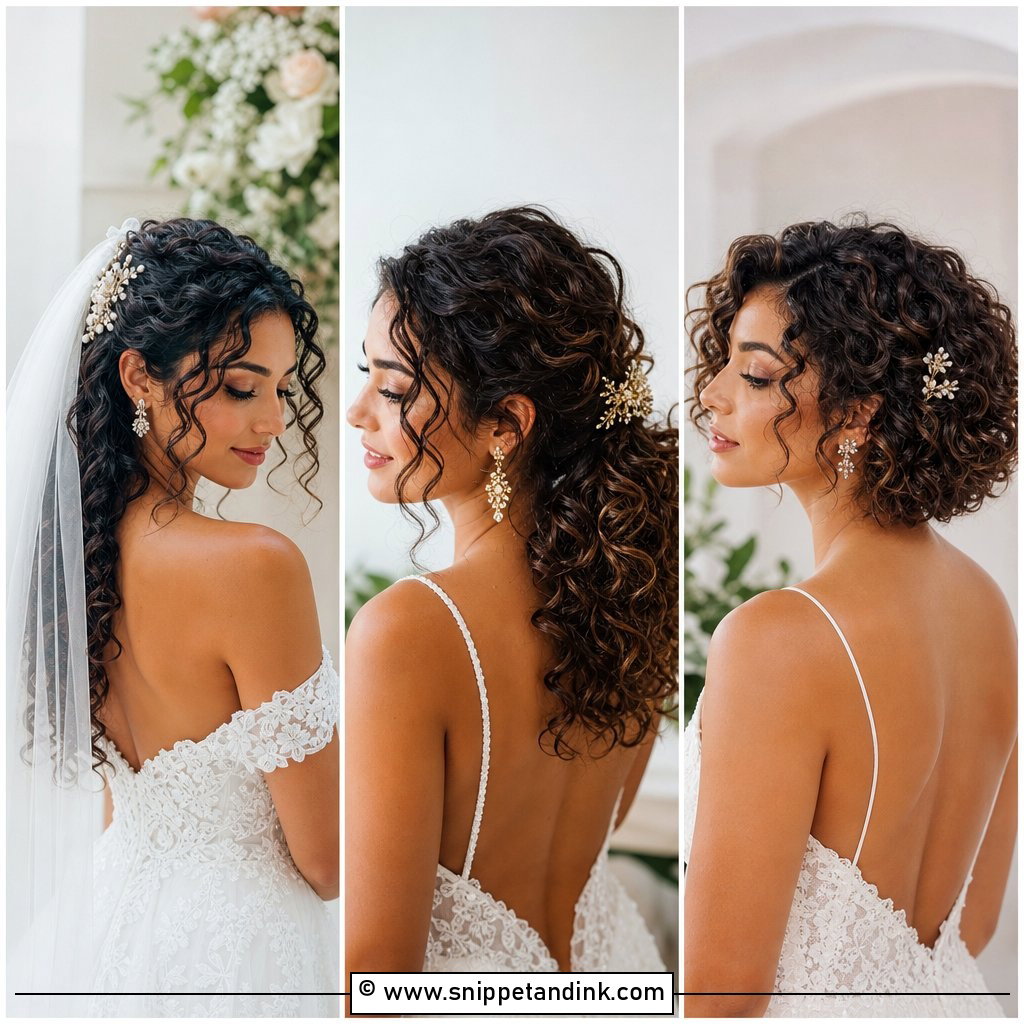
16. Curly Hair Wedding Hairstyle
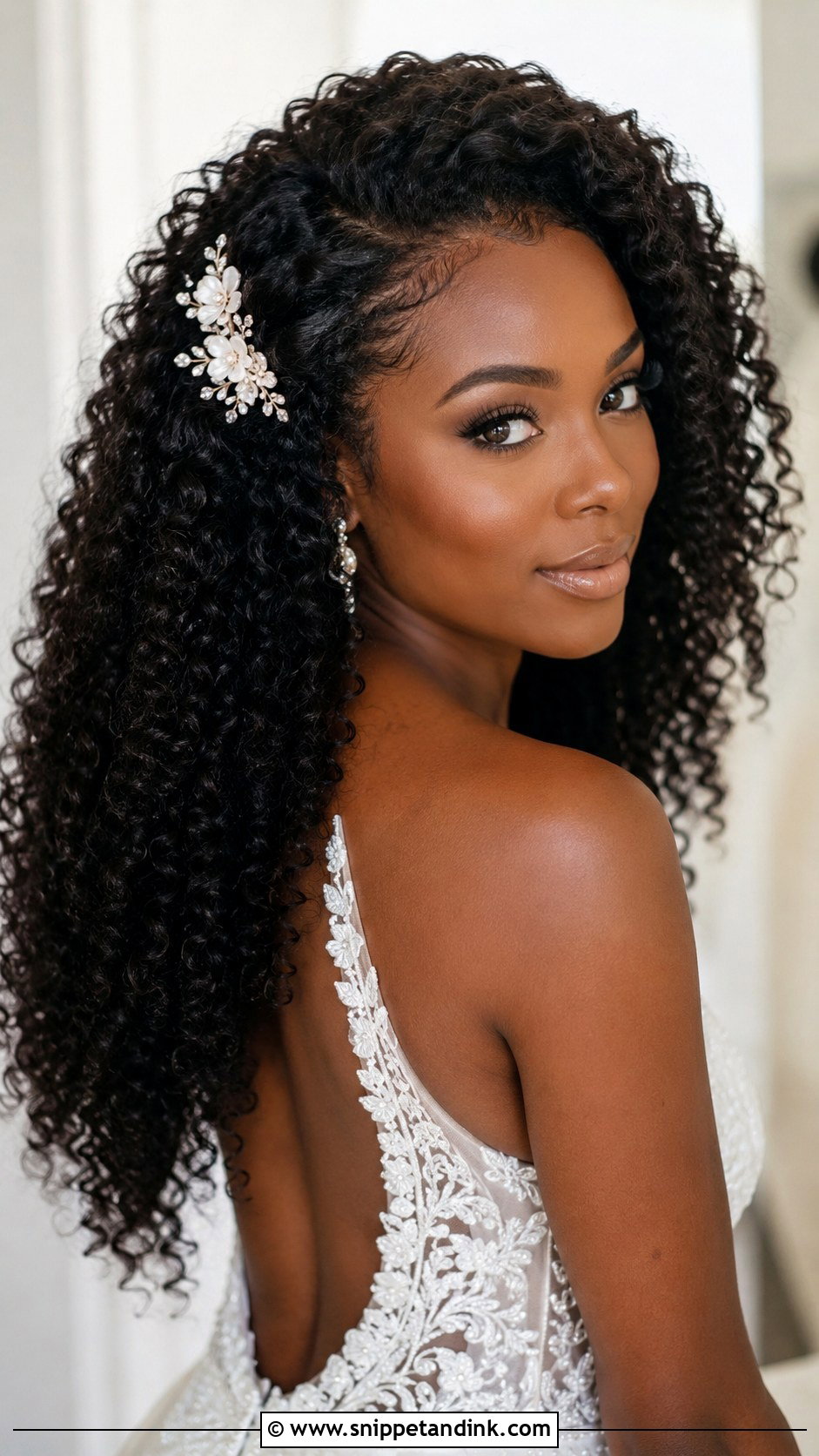
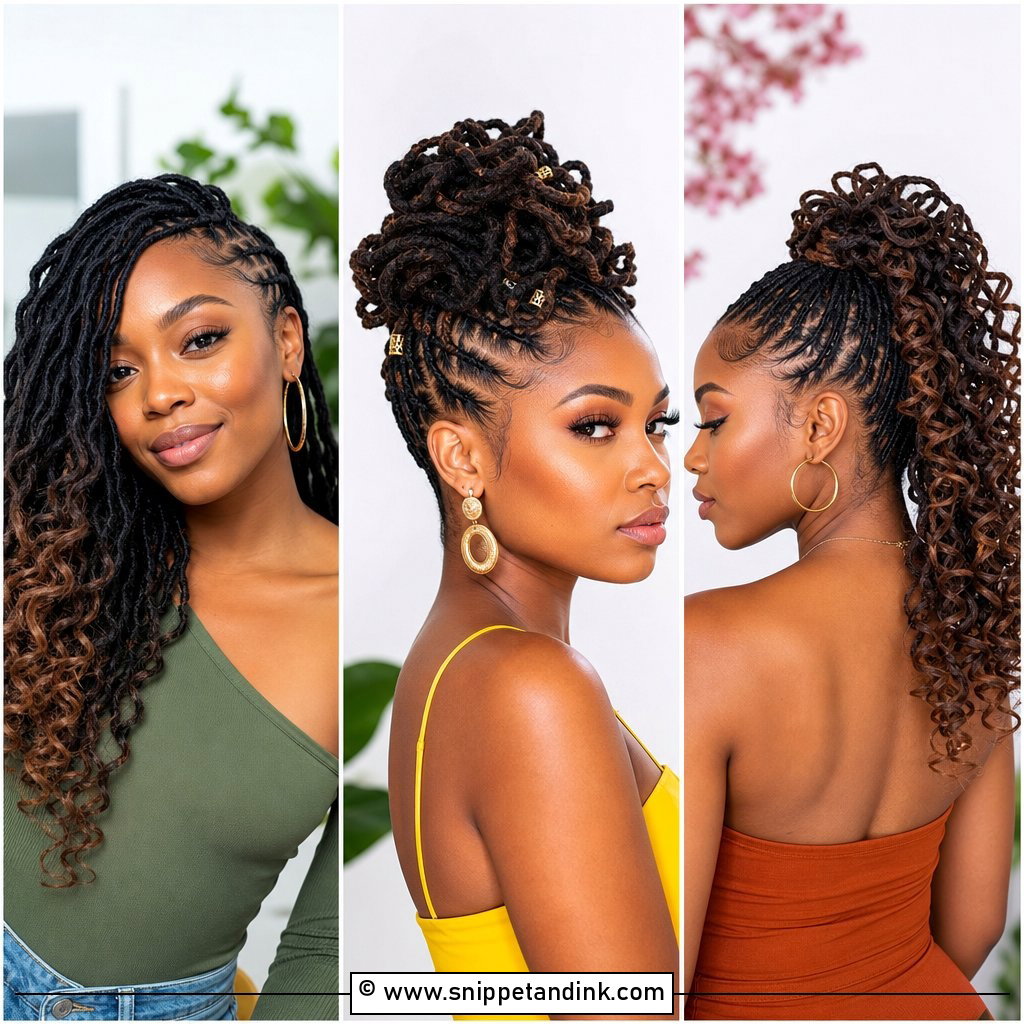
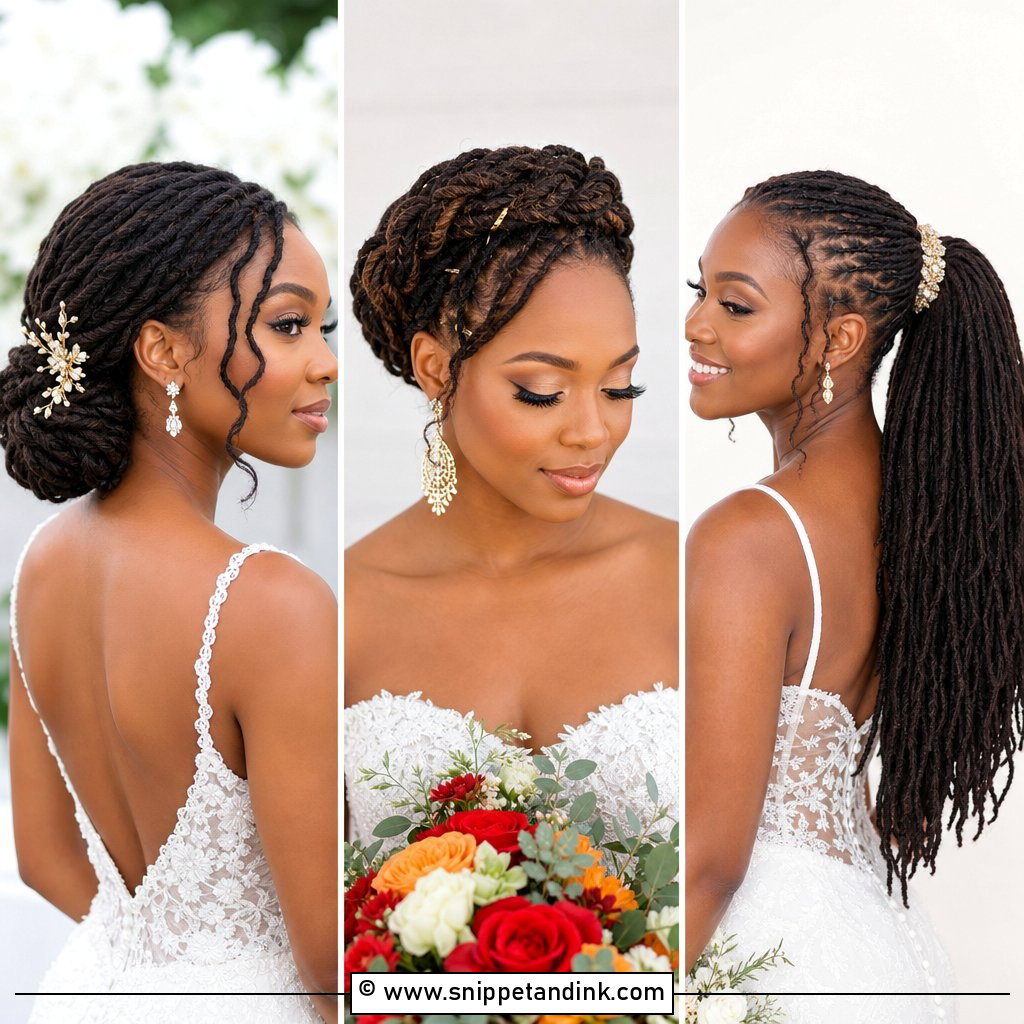
Curly brides should never be talked into straightening for the wedding unless that’s what they want. Whether your curls are loose or tightly coiled, I’d rather define them with a cream and gel in the way you normally do, then diffuse or let them air dry, and shape the finished curls into a full down style or a soft updo. Avoid brushing them out, which turns definition into frizz. I’d also do the trial with your own products if they already work for you. Floral pins and delicate veils sit easily in curly hair, which gives them plenty of natural grip.
17. Pinned Back Wedding Hairstyle
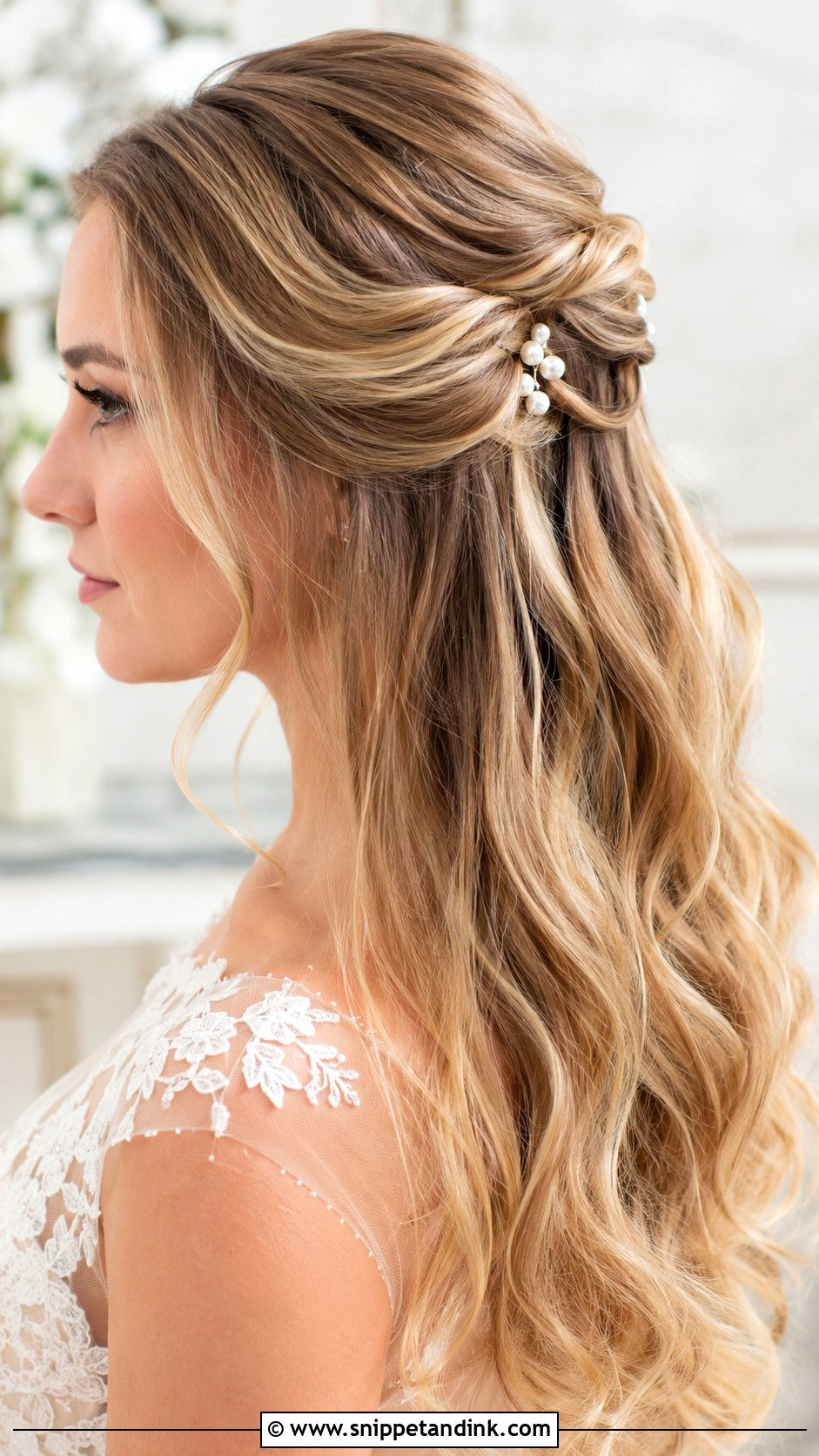
The pinned-back style is the gentlest way to keep hair off the face while still wearing it down. I take the sides back and secure them with decorative pins, combs or clips, letting waves move through the length. It works on most lengths and textures, including shoulder-length hair that can’t manage an updo. The accessories do the work here, so I fix them over hidden bobby pins rather than relying on the decorative pin alone; pearl and crystal pins are often too light to hold anything on their own. It’s easy to wear all day and simple to refresh at the reception.
18. Dutch Braid Wedding Hairstyle
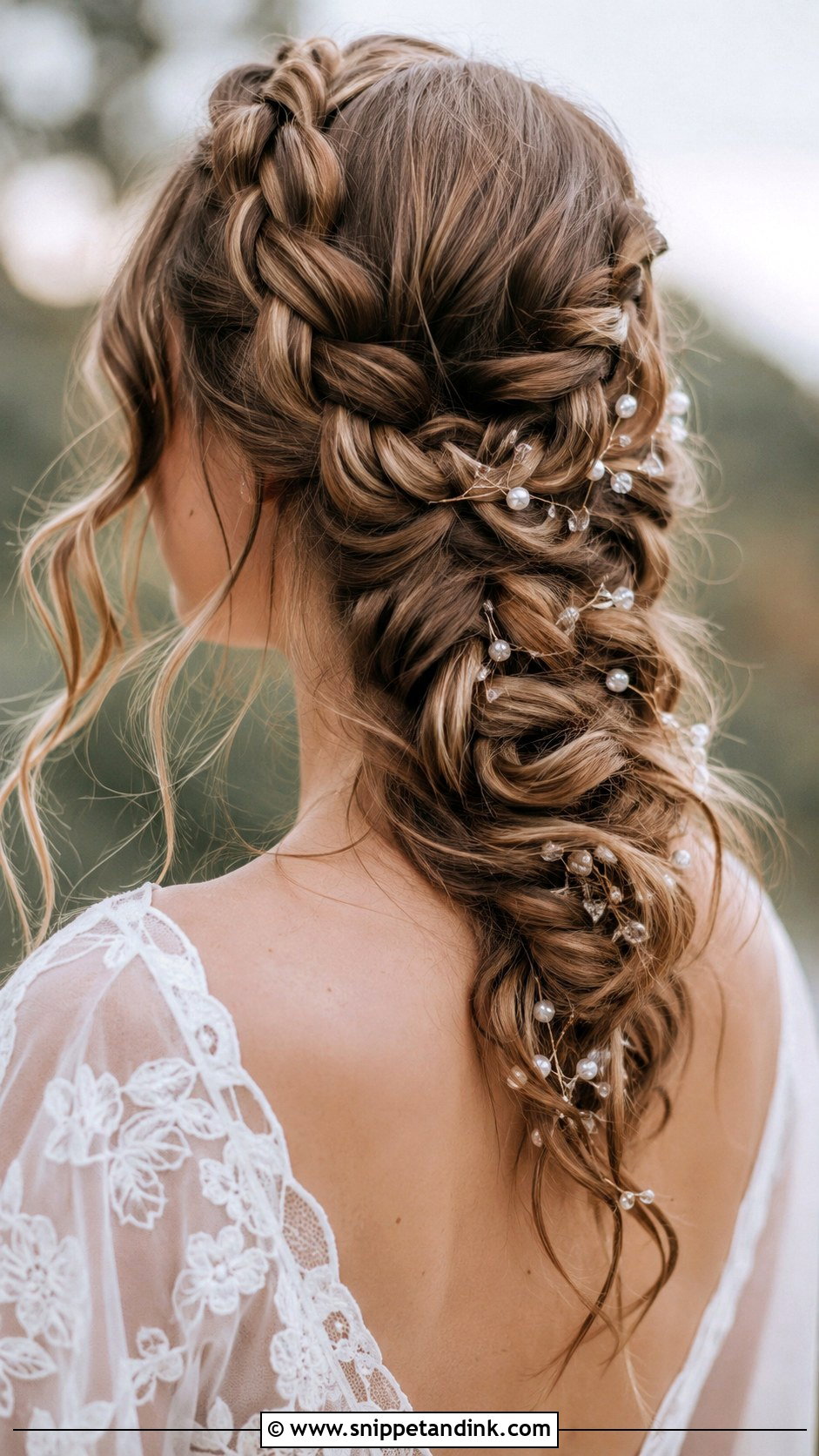
A Dutch braid crosses the strands under rather than over, so the plait sits raised on top of the hair instead of tucked into it. That 3D effect is why it reads so clearly in photos. You can wear one braid, two, or work it into an updo, and pulling the edges looser gives it a softer finish. Dutch braids work best on long, thick hair and stay secure all day because each section is locked in from the scalp. Small flowers or pearl accents slot in well. If you’ve never worn one, try it for a full day before the trial; some brides find the tension at the hairline uncomfortable.
19. Side-Swept Wedding Hairstyle
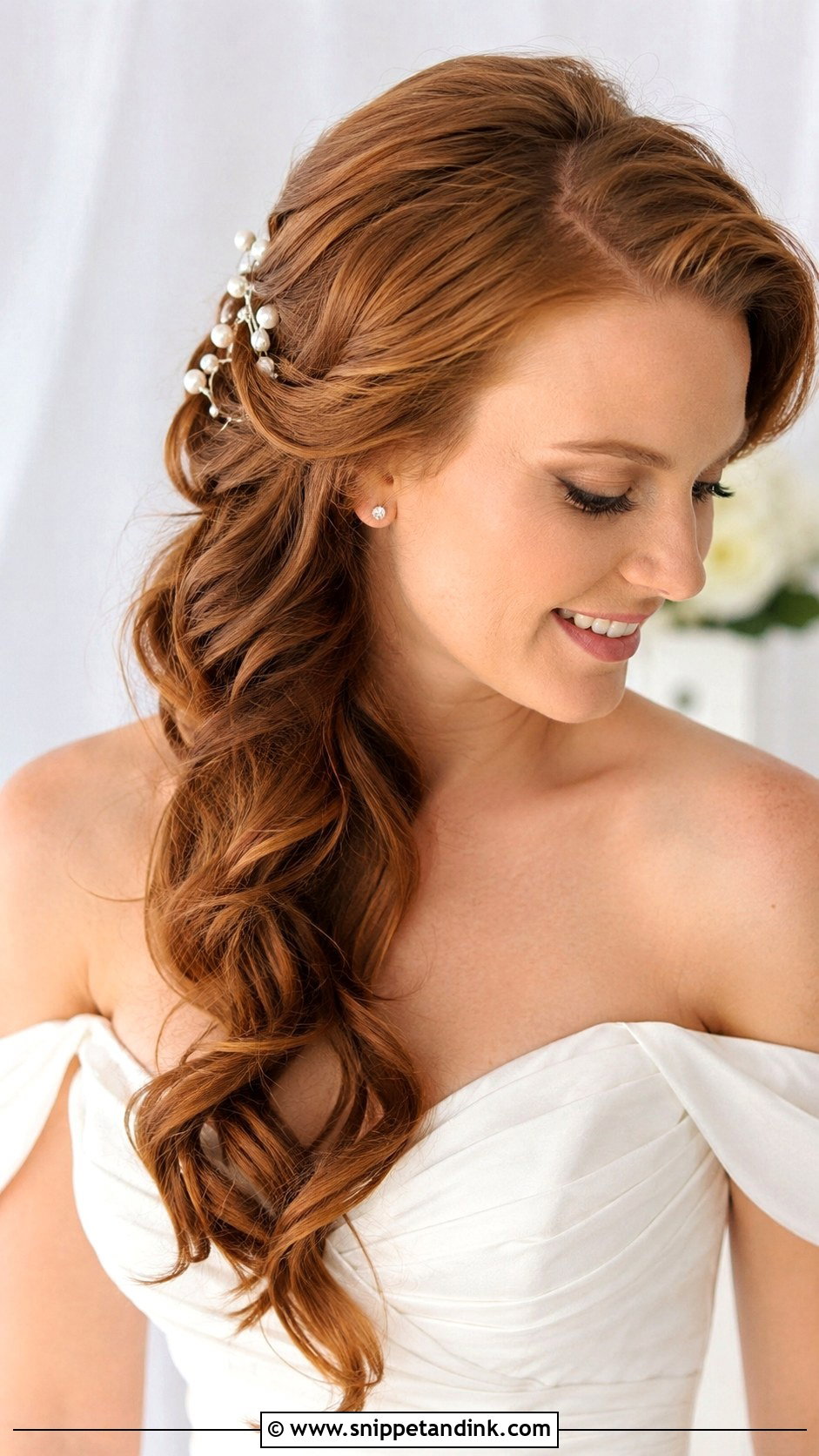
A side-swept style brings all the hair over one shoulder, and it’s my go-to with off-shoulder and one-shoulder gowns because it balances the neckline. It can be loose waves, a side braid, or a low side bun. The structure underneath matters: I pin the hair across the back of the head in a hidden row of crossed pins, otherwise it drifts back to the center as you move. It suits most lengths and textures. Think about which side you’ll stand on at the ceremony, so your partner and the guests see the side with the detail.
20. Textured Updo Wedding Hairstyle
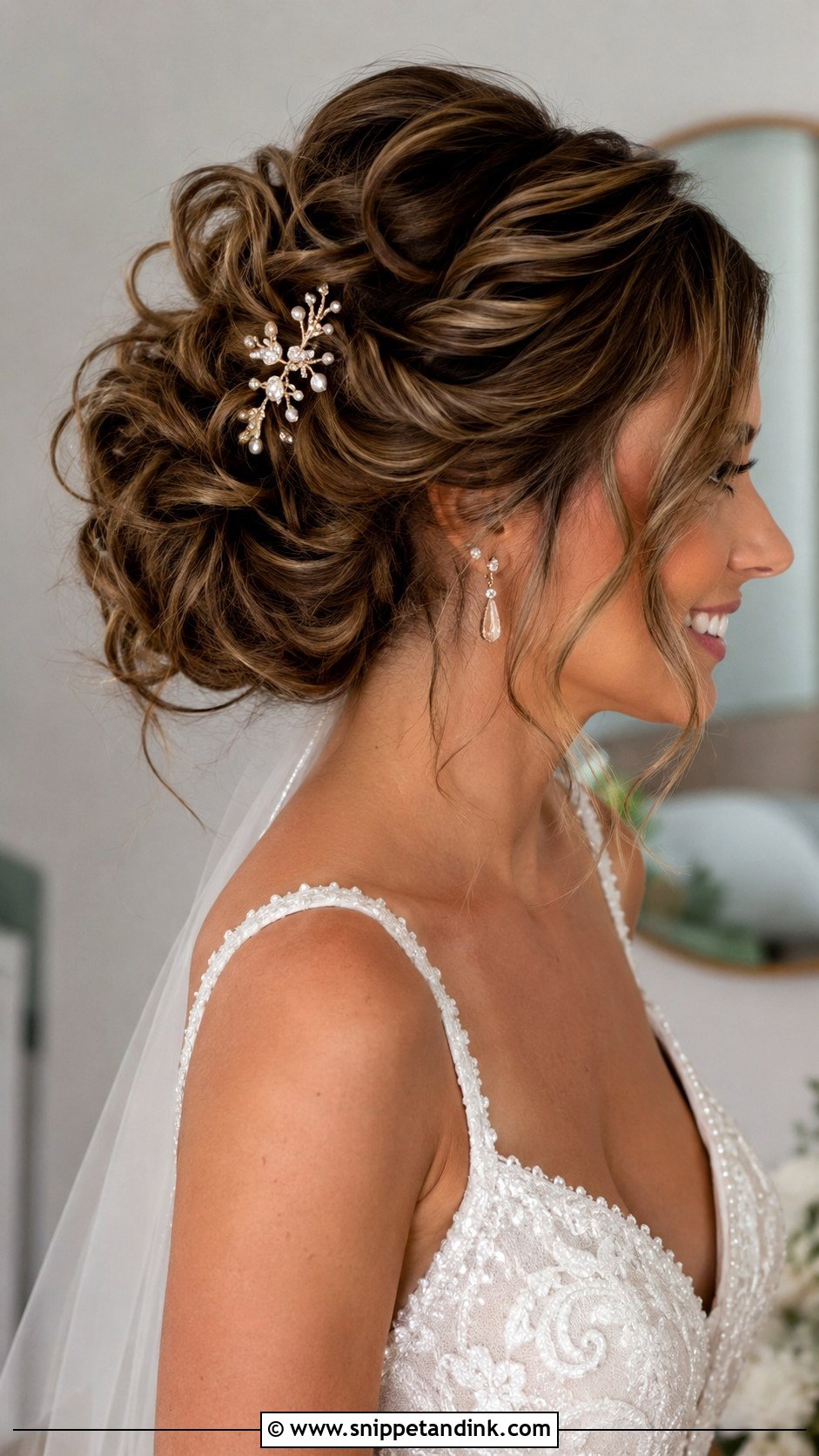
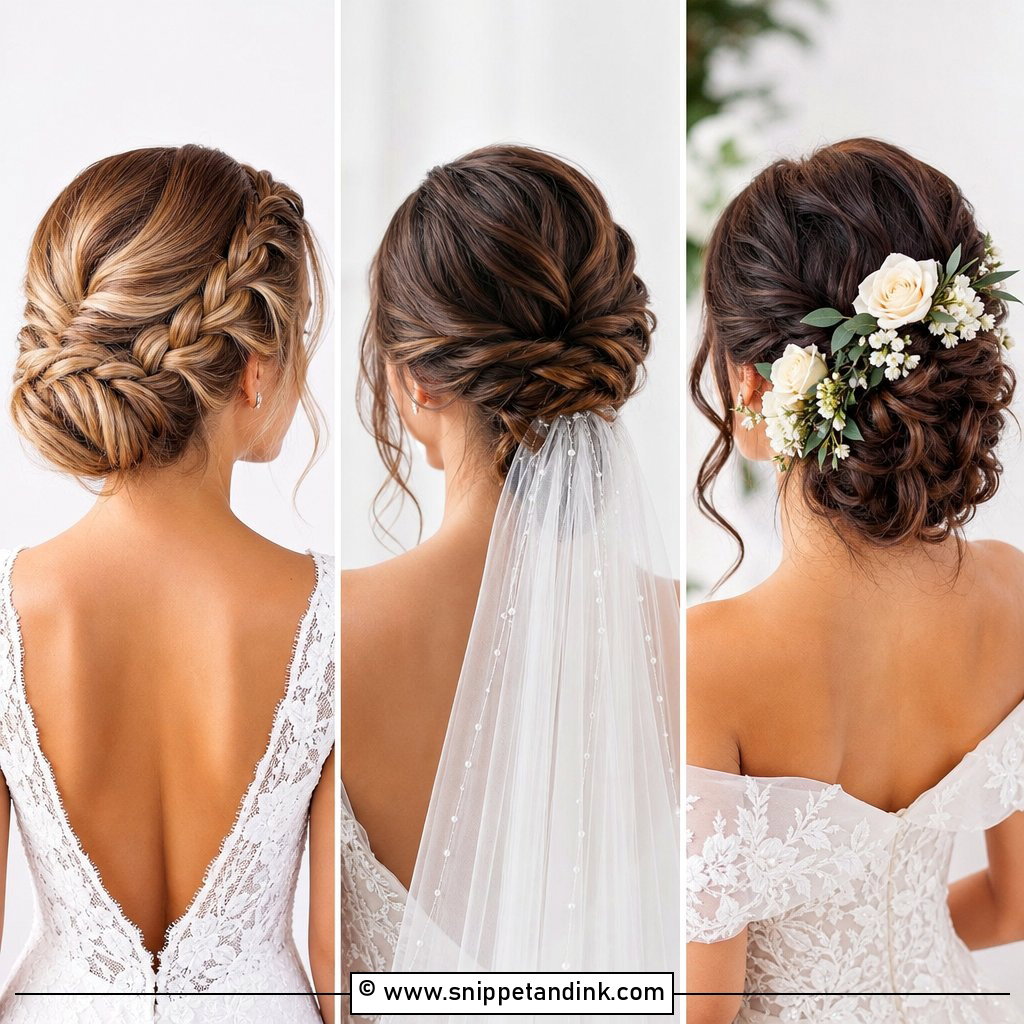
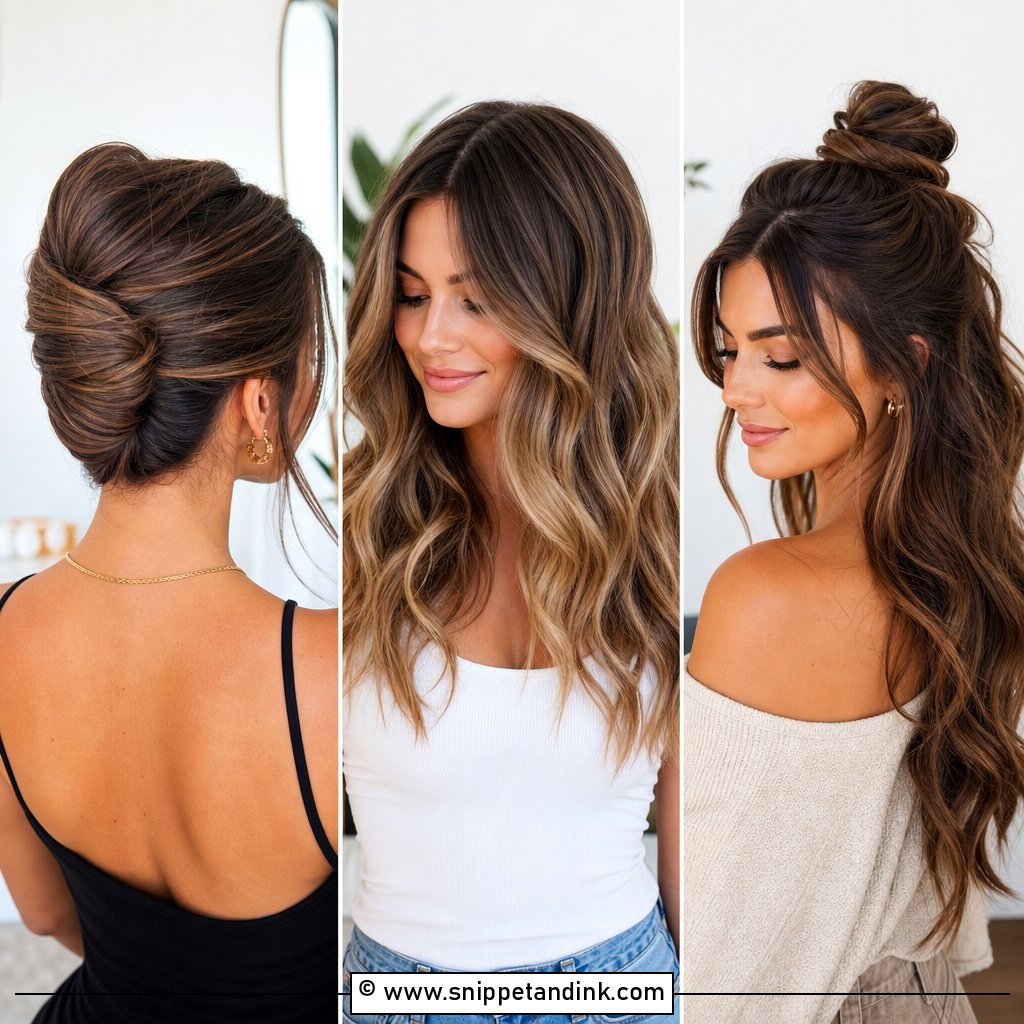
A textured updo combines loose curls, twists and pinned sections, so it reads as soft and lived-in instead of stiff. I curl the hair first and use dry texture spray before pinning, which lets each section hold its shape without looking glued. Face-framing pieces stop it from feeling heavy. It takes a veil, hairpiece or flowers equally well and moves between formal and boho settings. This is also the most forgiving updo for hair with lots of layers, since stray ends become part of the texture rather than a problem.
21. Pearl-Adorned Wedding Hairstyle
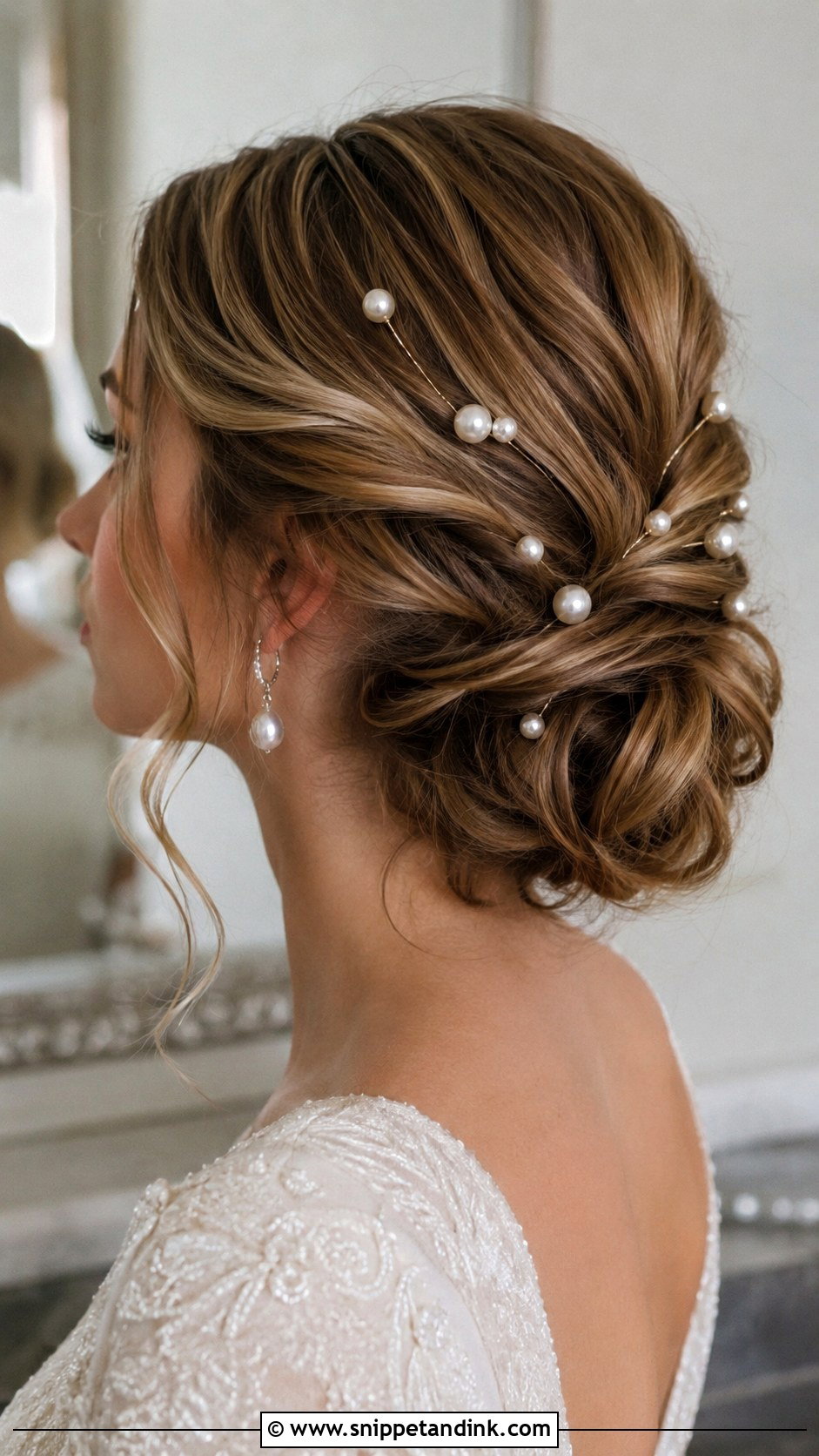
Pearls are a finishing touch rather than a hairstyle, and they work in waves, braids and updos alike. I’d keep the count lower than you think. A cluster of five or six pins around a bun reads clearly in photos, while forty pearls scattered through loose waves can look like a hair condition from across the room. Pearl pins are light, so I push each one through a section that’s already secured. They pair well with classic gowns and vintage themes and suit any length, which makes them a practical way to add detail without changing the whole style.
22. Bridal Bob Wedding Hairstyle
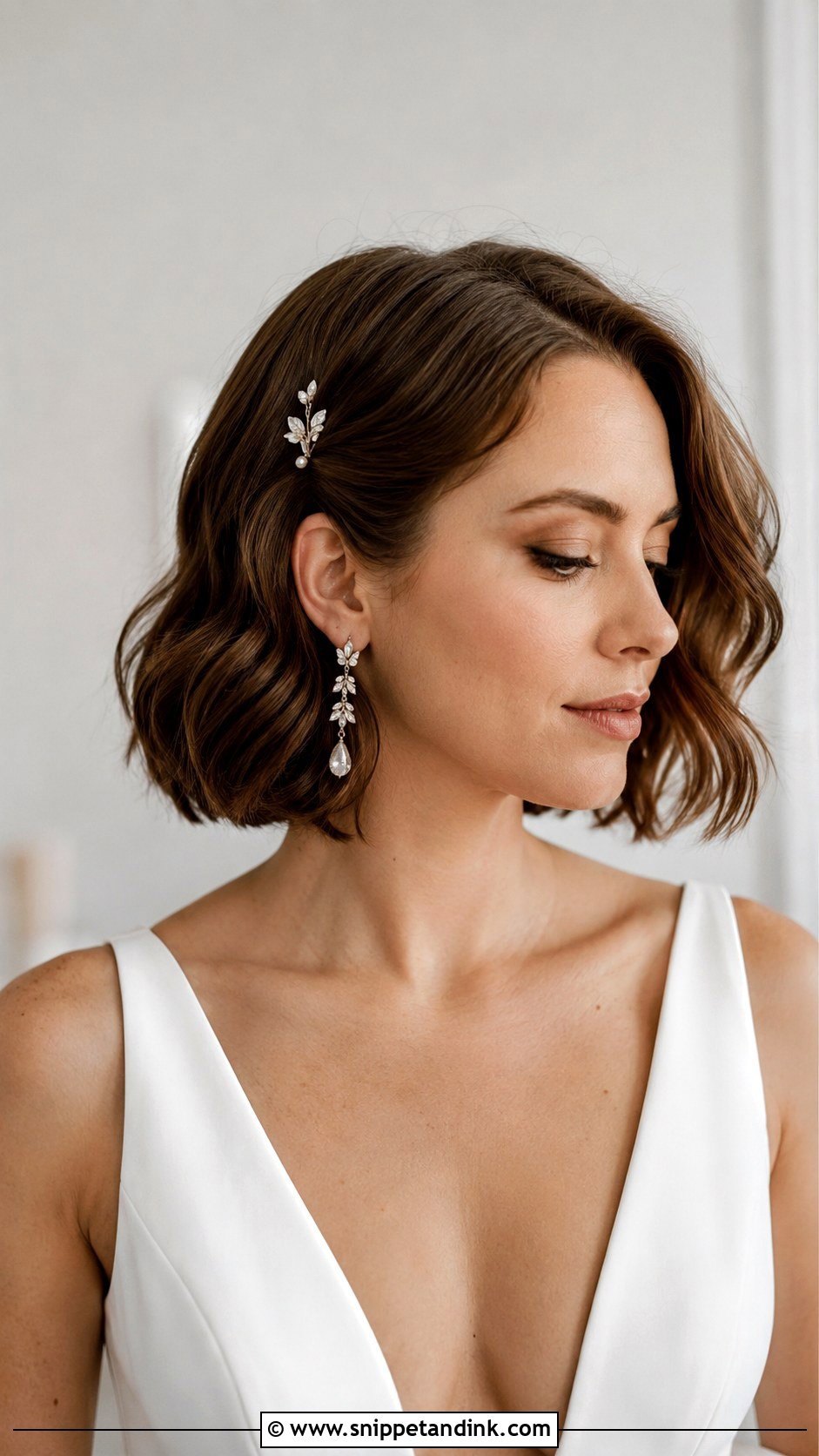
Short-haired brides often assume they have fewer options. A polished bridal bob proves otherwise. I’ll style it with soft bends, a sleek straight finish or a little texture, and a single hairpin, headband or a few fresh flowers adds detail without hiding the cut. Statement earrings show off well with short hair. The practical note: get your trim about two weeks before the wedding, not the day before, so the line has softened and any mistake has time to grow out. A tucked-back side or a deep part gives the shape some structure.
23. Greek Goddess Wedding Hairstyle
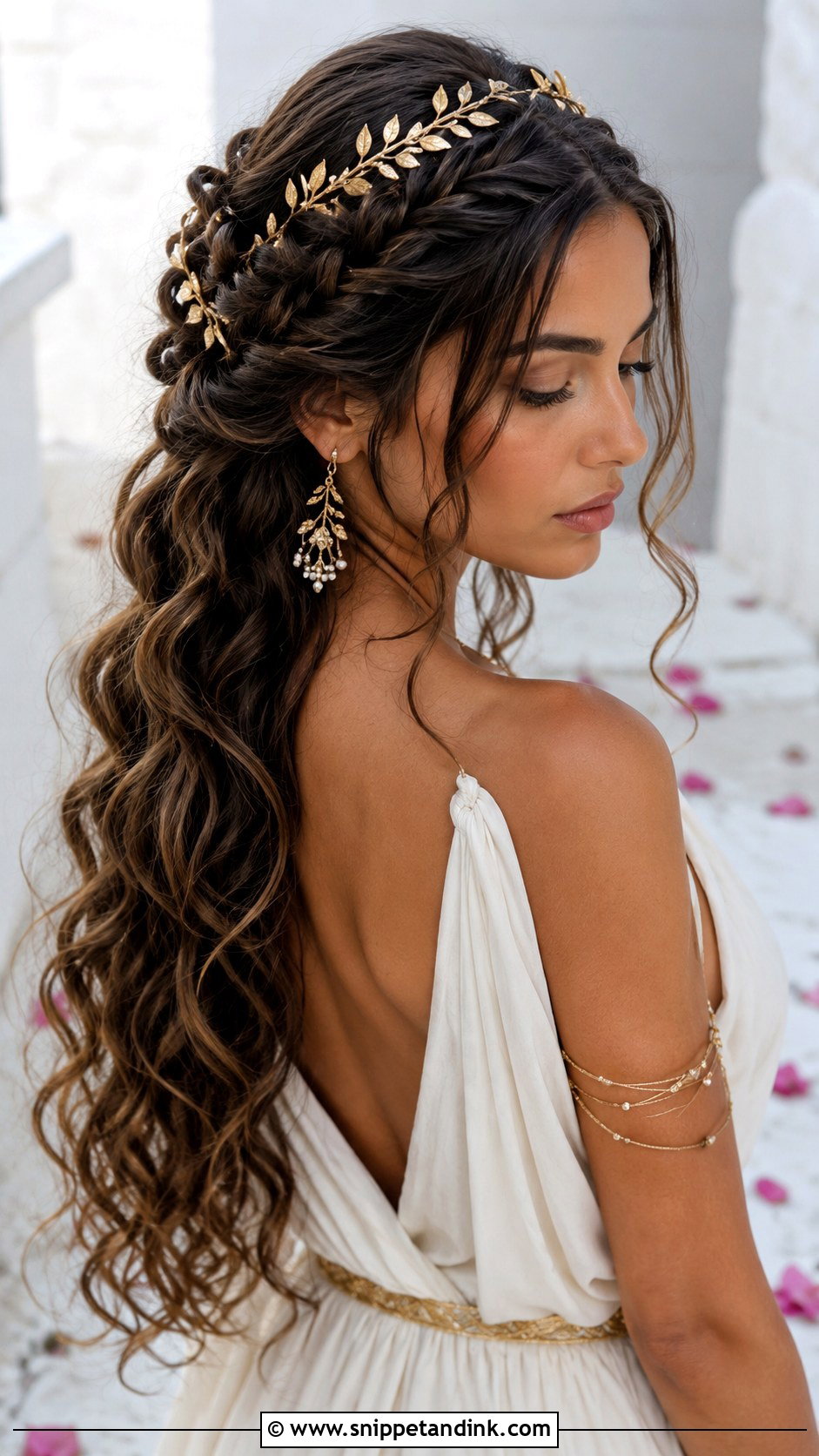
The Greek goddess look mixes soft curls, thin braids and twists, often with a braided crown or a low gathered updo with loose tendrils. I’d describe it as the most romantic style in this list and also the one that most depends on the dress. It pairs with flowing, draped gowns and outdoor ceremonies; with a structured ballgown, it can look like a costume. Gold leaf pins or a thin band suit it well. Long, thick hair gives the fullest result, and fine hair usually needs some padding underneath to hold the shape.
24. Accessorized Veil Wedding Hairstyle
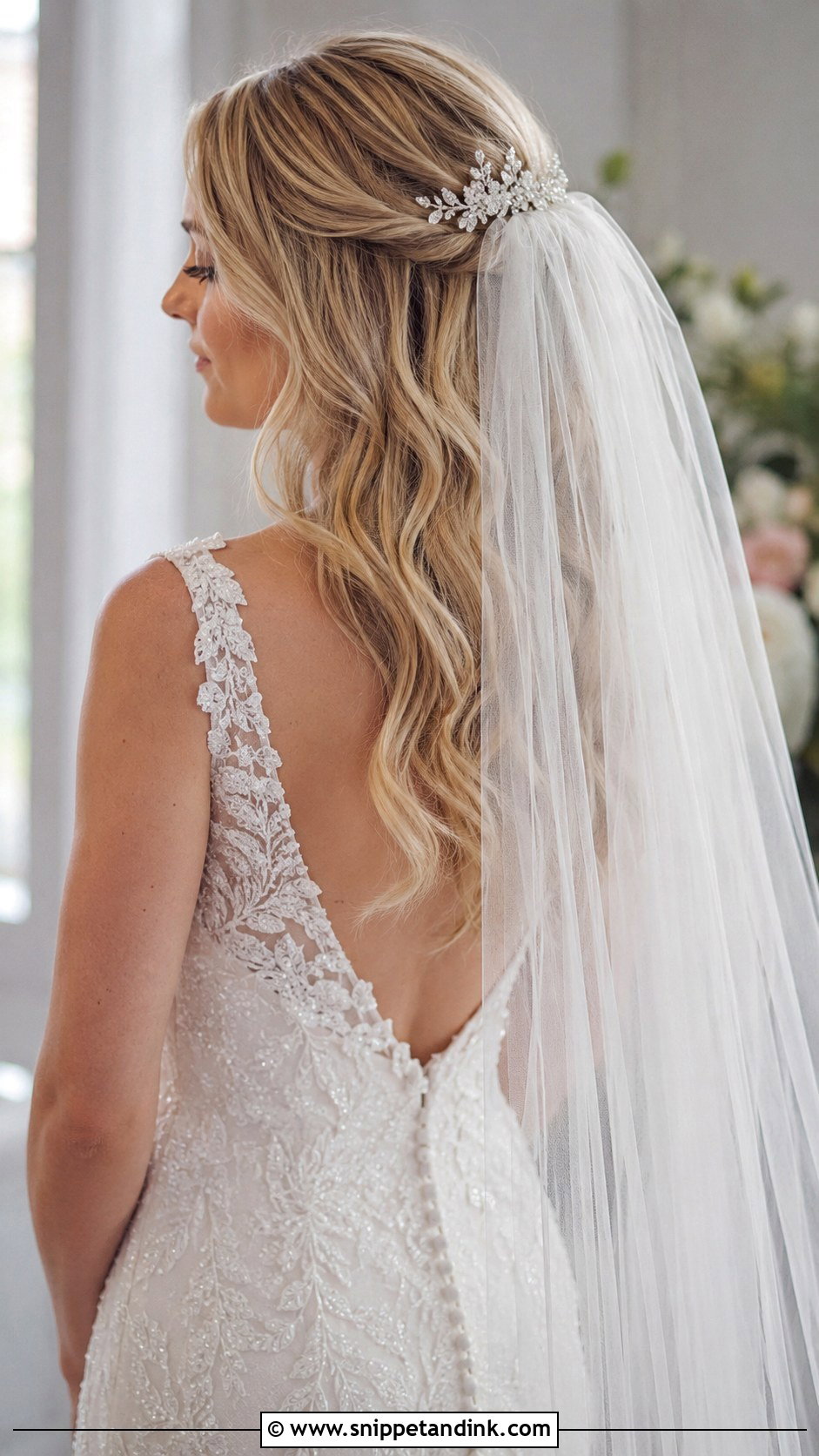
With a veil, I plan the hair around where the comb will sit, not the other way round. A long cathedral veil needs a solid anchor, usually just under or behind an updo, while a short birdcage sits forward on the head and suits waves or sleek styles. I set the comb into crossed bobby pins so its weight pulls on them instead of the hair. Adding a headband or flowers at the attachment point hides the comb and joins the two pieces visually. Always bring the actual veil to the trial; weight and length change everything.
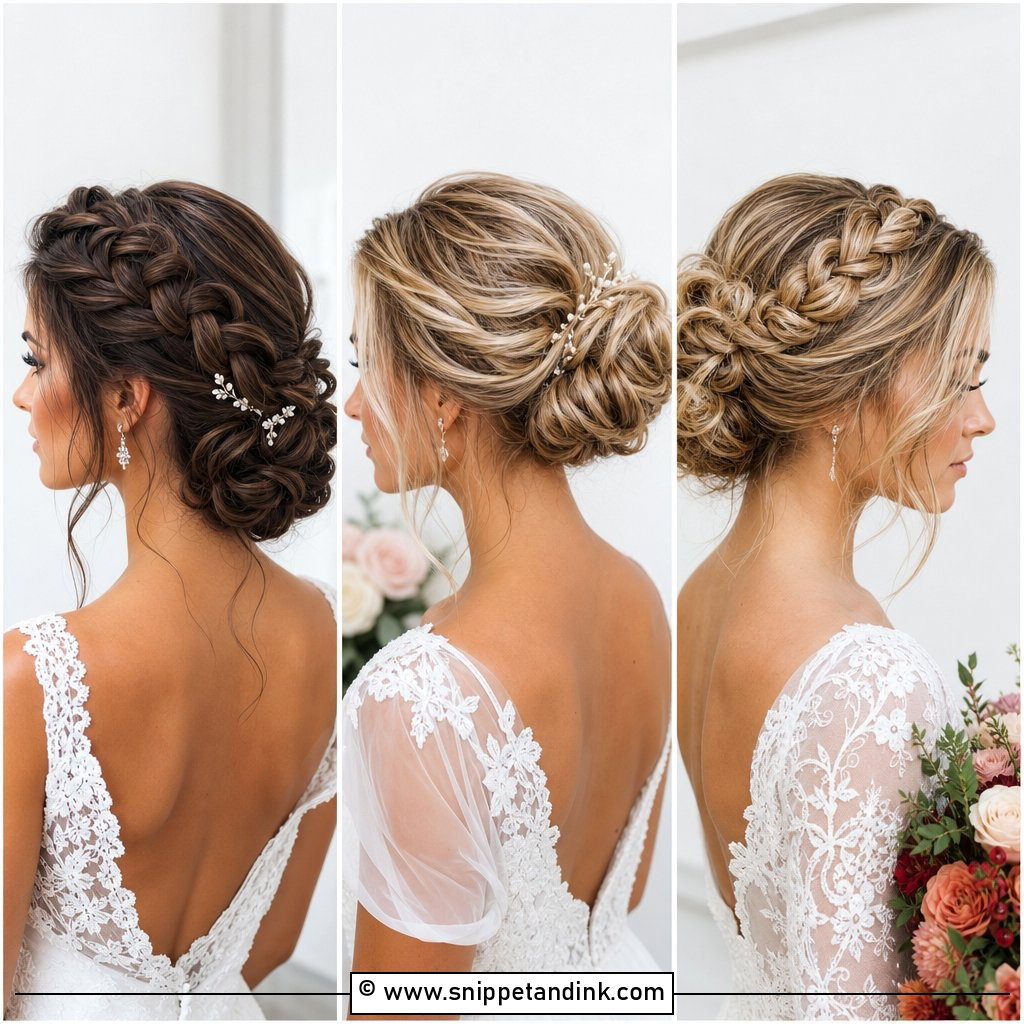
25. Tousled Beach Waves Wedding Hairstyle
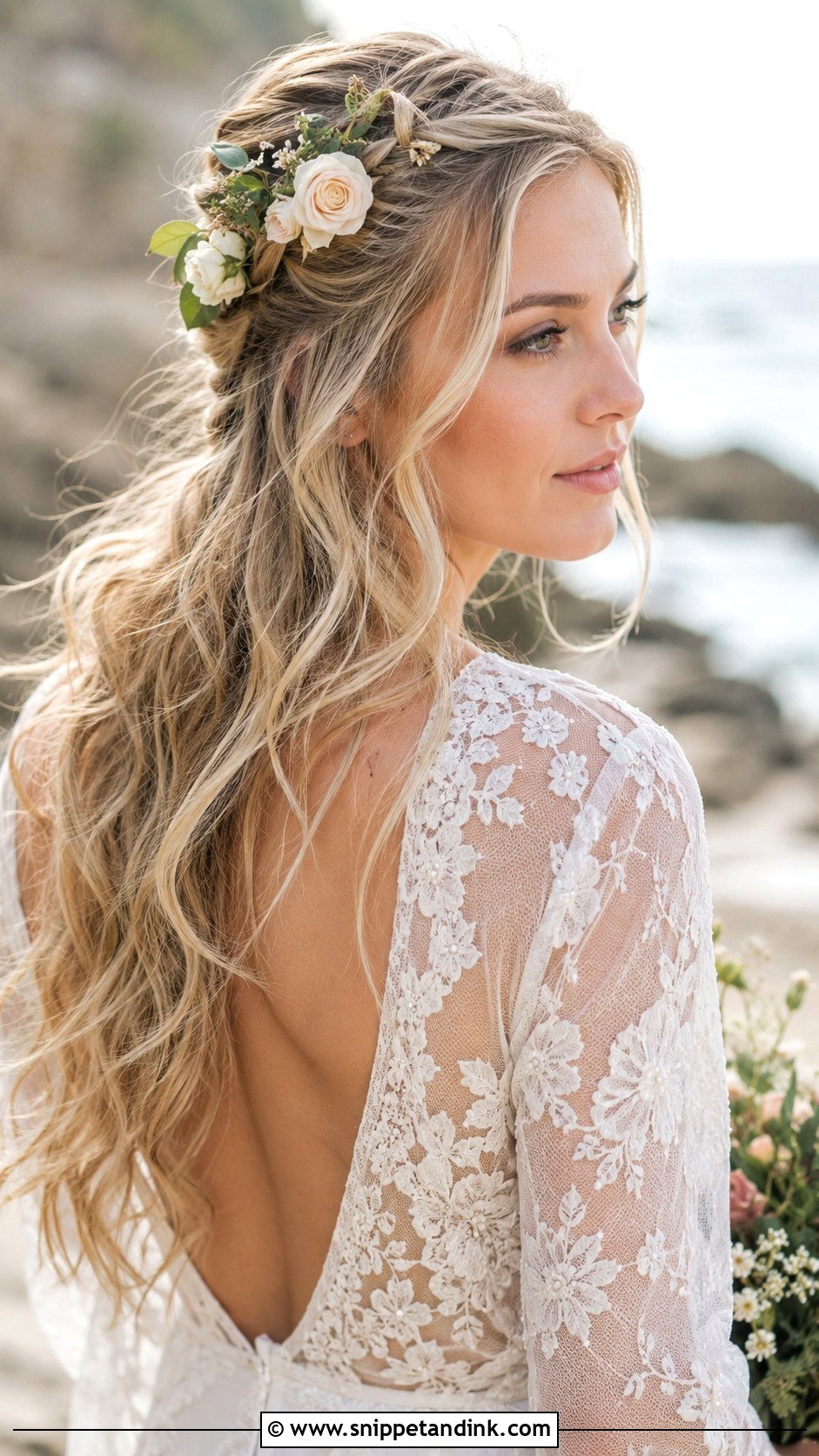
For seaside and laid-back weddings, tousled beach waves give soft texture and movement with nothing that looks set. I use a flat iron or a large barrel, leave the ends straight, and break the waves apart with my fingers after spraying. Sea salt spray adds grit but can make dry hair crunchy, so I mist it on lightly. They work fully down or with one side pinned back. Medium to long hair shows the shape best. Expect the waves to loosen on the beach, which is part of the look, but bring a texture spray for the reception.
How Long Each Group Holds From Ceremony to Last Dance
Wedding hair has a long day: getting dressed, photos outside, the ceremony, hugs, dinner, dancing in a warm room. Here’s how the main groups on this list tend to hold up, from my own chair.
Almost no movement
The French twist, sleek low bun, chignon and braided crown stay put because every section is locked against the head. If your timeline is long or you’ll be dancing hard, start here.
Softens but keeps its shape
Textured updos, boho braided updos, Dutch and fishtail braids loosen a little, which usually looks better by evening rather than worse. A few pins may need pushing back in after the first dance.
Needs a touch-up plan
Loose waves, Hollywood waves, beach waves and sleek straight hair all change through the day. Curls drop, straight hair puffs. Ask your stylist to leave a small curling iron or flat iron, or have a bridesmaid trained on a five-minute refresh before the reception entrance.
Pins, Spray and a Rattail Comb in the Bridesmaid’s Purse
Hair rarely goes wrong in a big way on the day. It’s small things: a pin poking into the scalp, a curl falling flat, a veil comb working loose after photos. A tiny bag solves almost all of it.
- Ten bobby pins matched to your hair color, opened and ready
- A travel-size flexible hairspray, not a stiff one that leaves flakes on dark dresses
- A rattail comb for lifting flat sections without disturbing the style
- Two clear elastics in case a braid end slips
- Blotting papers, since a shiny forehead under the hairline is easy to fix and shows in every flash photo
When you take the veil off for the reception, have someone remove the comb slowly and push back any pins it disturbs. That two-minute moment is where most updos start to slip.
Wear Your Trial Style Home Before You Decide
Treat these 25 styles as starting points for a conversation with your stylist, not finished orders. The dress, the veil, your venue’s weather and how your hair behaves on a normal Tuesday all matter more than any single photo. Bring your accessories to a trial, wear the style for the rest of that day, and notice what moves, what pinches and what you keep touching. That honest test tells you more than any inspiration board.
You'll Like These Ideas:



Leave a Reply