
When a Black bride books a consultation with me, the question isn’t really which style is prettiest. It’s what her hair can carry for a full day, how far ahead it has to be done, and whether it’ll sit under the veil she’s already bought. Sleek buns, jumbo knotless braids and a soft curly halo with flowers all work under a veil, but they get there in different ways. Below are twenty I’d happily do for a wedding, each with what I’d want you to know before you commit.
Braider, Stylist or Both? Getting the Appointments in Sync
Many of these looks involve two people: a braider who installs the base and a bridal stylist who finishes it on the morning. When they don’t talk, you end up with a braid pattern that doesn’t suit the veil placement, or extensions in a shade the stylist can’t blend.
- Decide the final shape first, with a photo of your veil or headpiece, then book the braider.
- Share that photo with both of them so the braid direction leaves a solid spot for the comb.
- Install braids or twists a few days before the wedding, not the night before; fresh installs can feel tight.
- On the morning, your stylist only needs to refresh edges, add accessories and fit the veil.
1. Sleek Low Bun for Black Brides
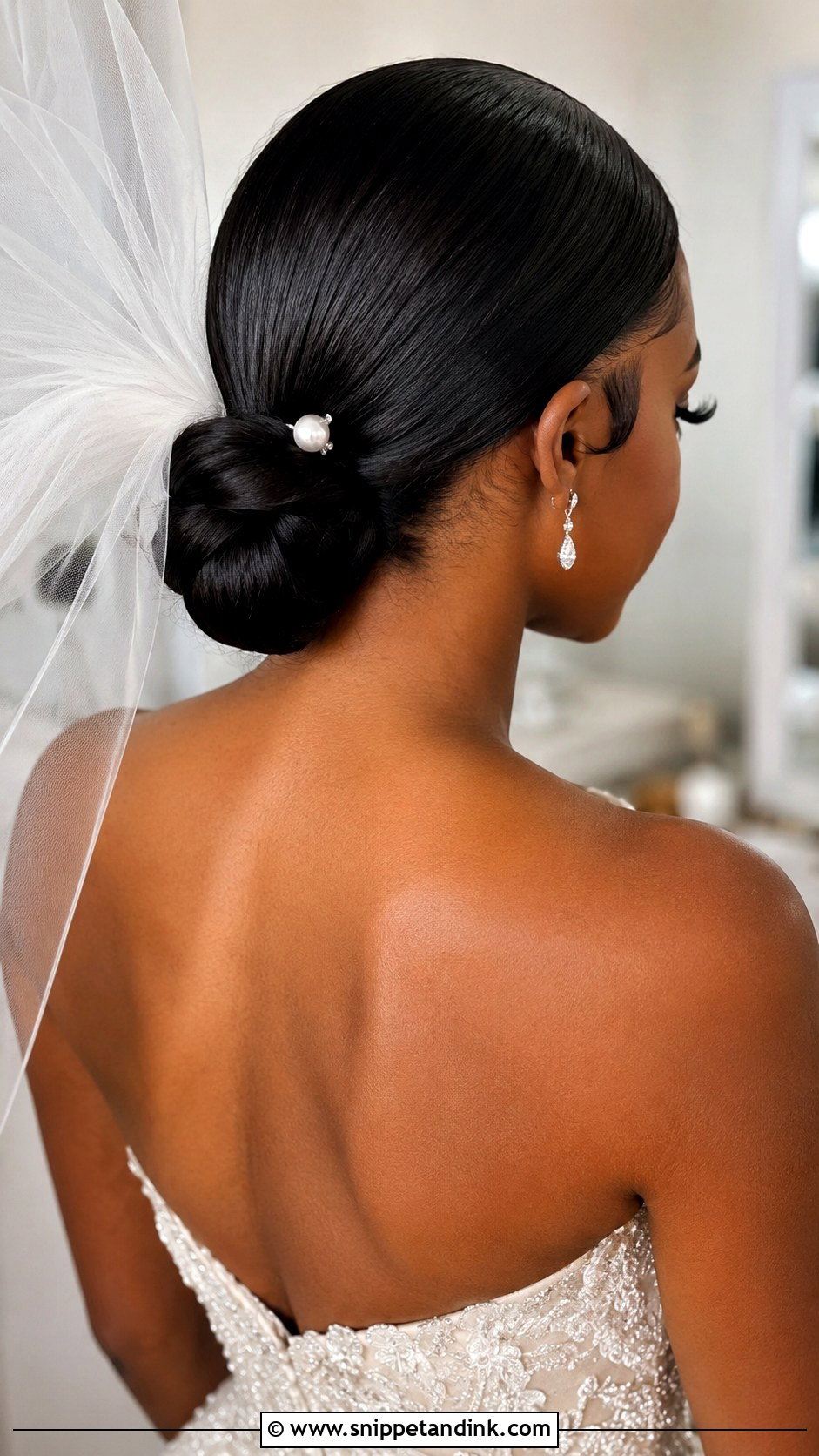
Smooth hair pulled back to a knot at the nape. It’s simple, and that’s exactly why the prep matters. I start from a silk press, relaxed hair or a fresh blowout, brush it back while it still has a little product in it, and tie a scarf over it to set before I lay the baby hairs. If your hair is thick, the knot gets big quickly; I’d split it into two pinned sections so the bun stays low and flat. A pearl pin on one side is enough.
2. Jumbo Knotless Braids for Weddings
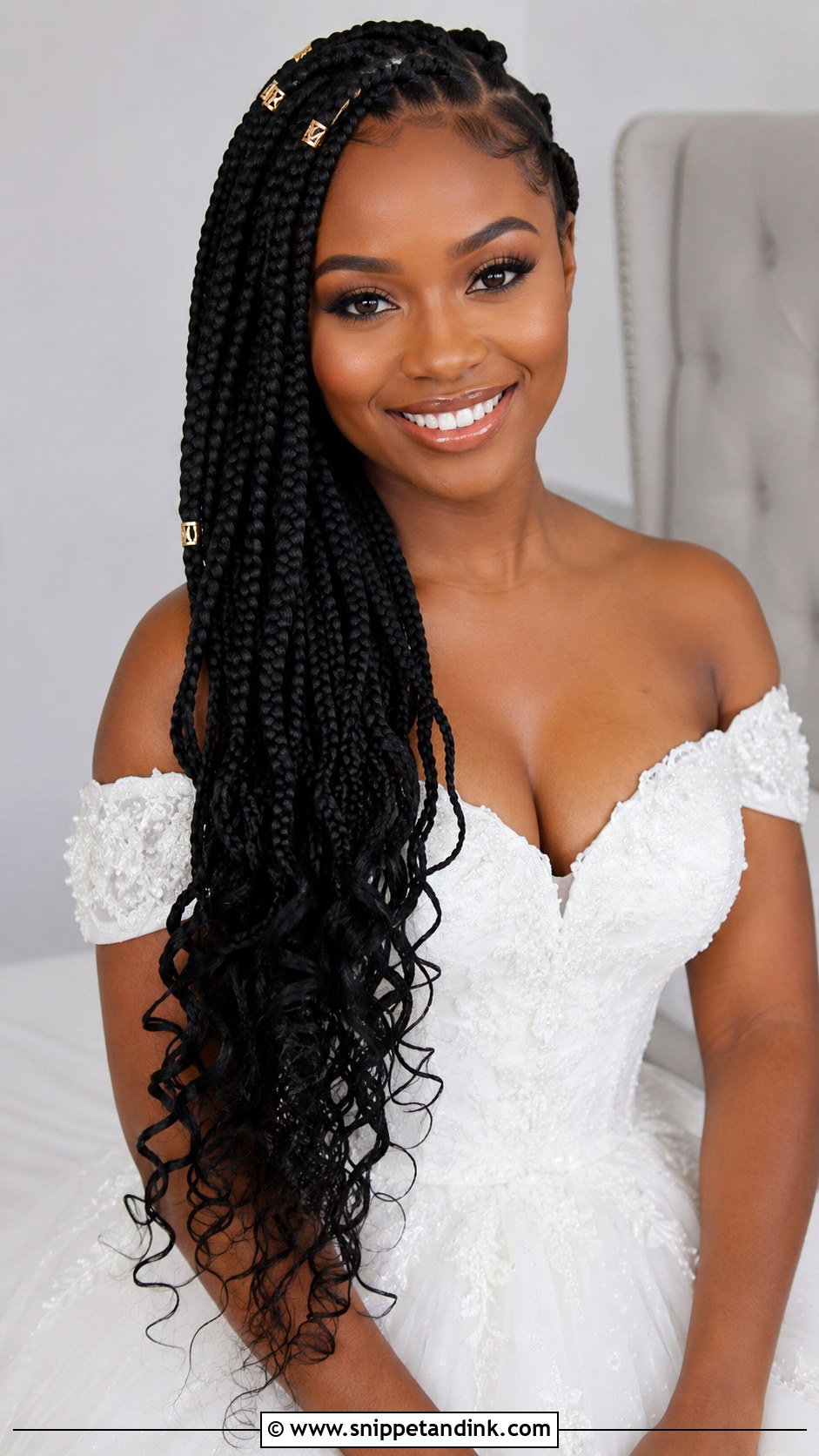
Knotless braids start flat at the root, so there’s no bump at the scalp and far less pull than old-style box braids. Jumbo sizes go quickly in the chair and look bold, but they’re heavier per braid, so I’d watch the weight on a long, waist-length set. Curly ends soften the look. Gather them low, drape them over one shoulder or leave them down. Two or three gold cuffs near the crown are plenty.
3. Curly Halo Braid for Black Brides
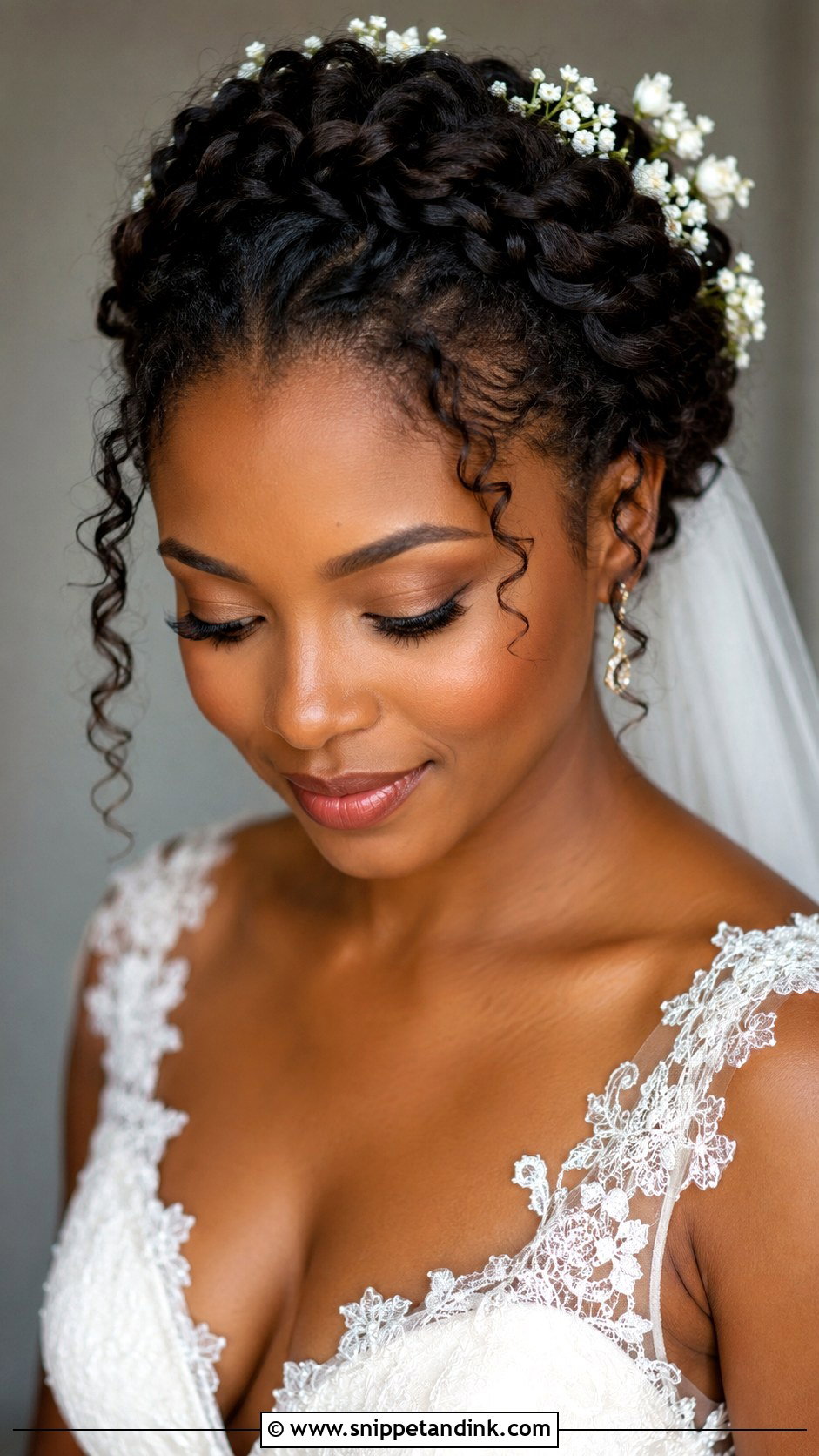
Here a braid circles the head while curls come through around it, so you get structure and texture together. I braid the halo first on stretched hair, then define the curls left out, because doing it the other way round tends to frizz the curls while I work. It keeps hair off your face at an outdoor ceremony. Small flowers or pins tucked into the braid look natural. It works especially well on round and heart-shaped faces, where the lift at the crown adds length.
4. Natural Curly Half-Up Half-Down
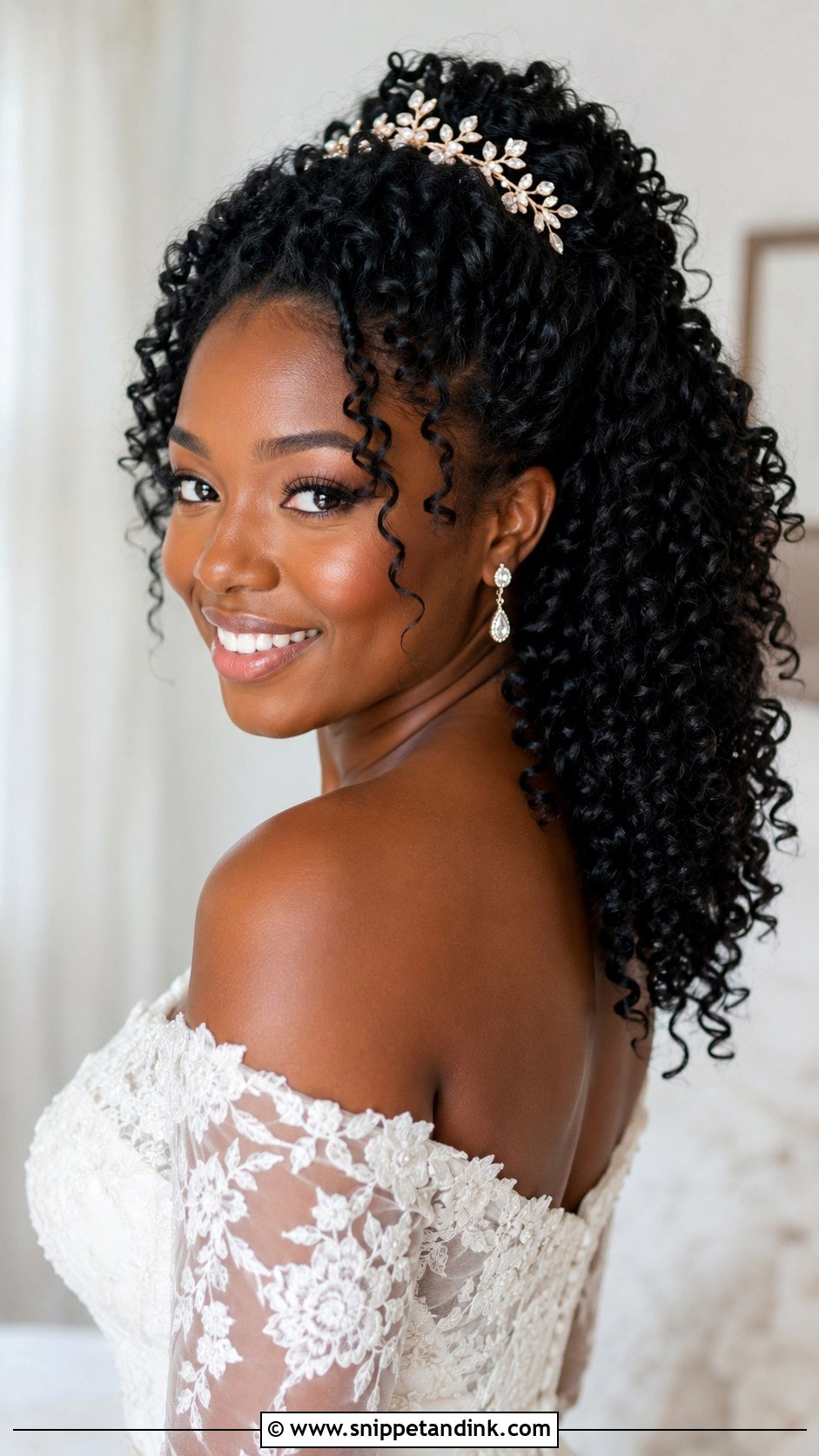
Can’t decide between up and down? Half up gives you both, and on natural coils it shows the curl pattern without hiding it in a bun. I gather the top section with a soft band, then add the comb or flowers through that base so they’re anchored. Thick, voluminous hair suits it best; on fine or low-density curls, I’d add a few clip-in curls at the back so the down section doesn’t look thin by evening.
5. French Roll Updo With Tendrils
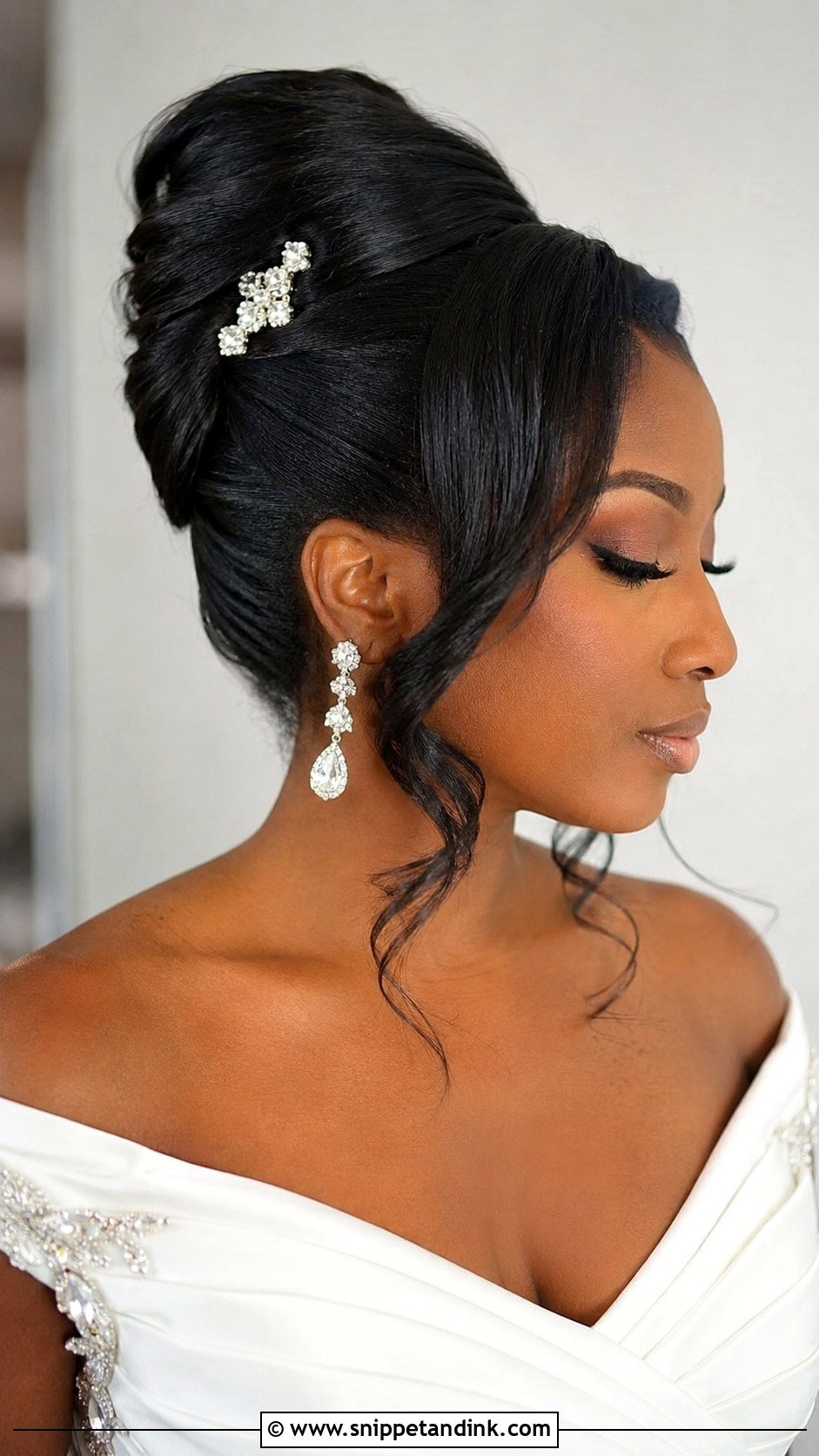
A French roll is a vertical fold up the back of the head, and on textured hair it’s best built on a silk press or relaxed hair. The secret is underneath: a line of crossed pins down the centre that the roll wraps over. Leave it out and the fold slowly loosens through the reception. Soft tendrils at the face take the edge off the formality. It suits a church wedding, a gown with a detailed back, and a small veil set at the crown.
6. Goddess Braids Updo for Black Brides
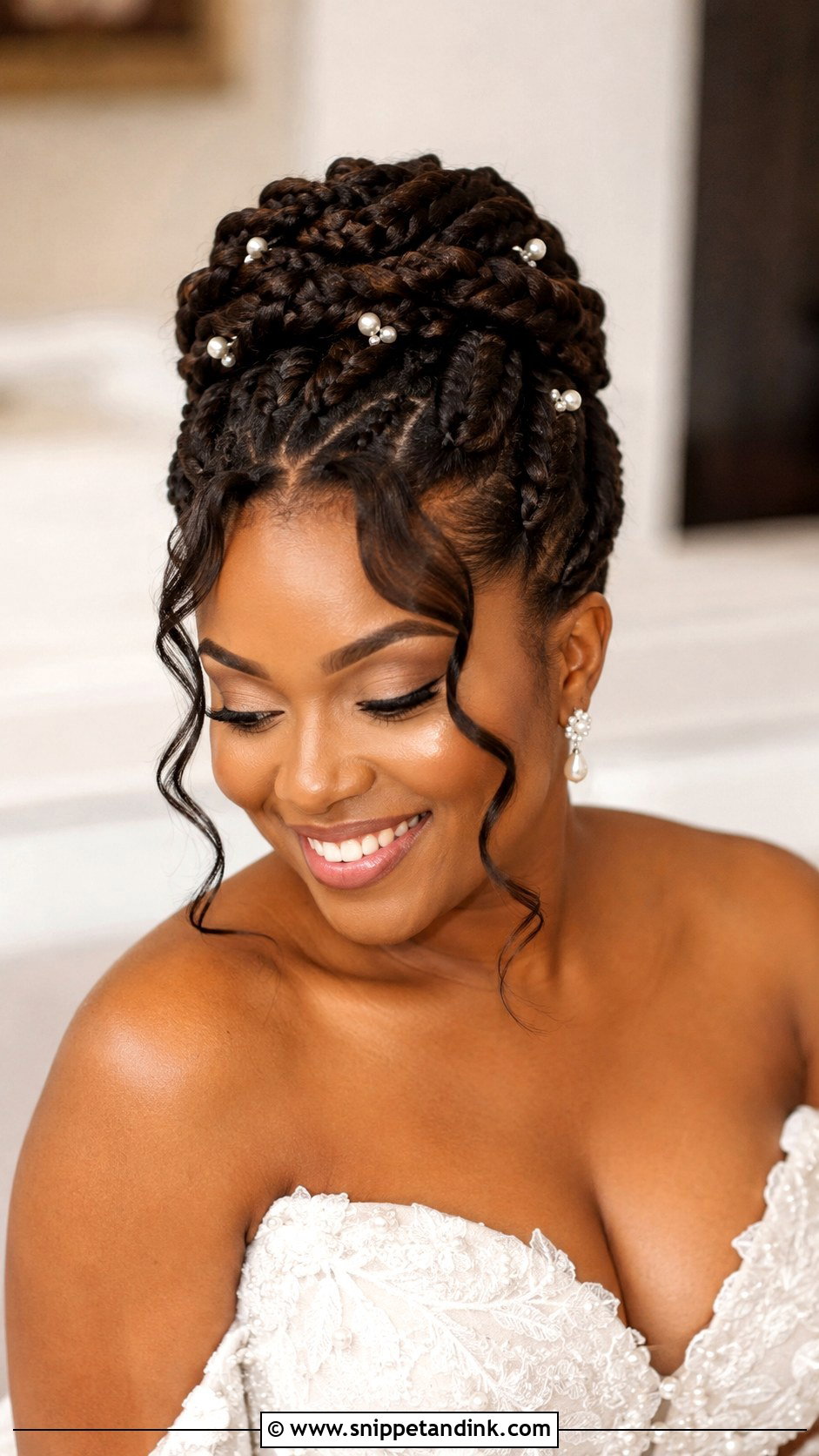
Goddess braids are raised and thick, with loose wavy pieces left out to frame the face. Gathered up, they make a crown shape that holds without much help. As a protective style, they keep your own hair tucked away through all the pre-wedding stress. I’d ask your braider to keep the hairline braids light; the loose wavy pieces will cover any tension marks at the front, but they won’t protect the hair. Gold accessories or pearl pins slide right into the braids.
7. Sleek High Bun With Baby Hairs
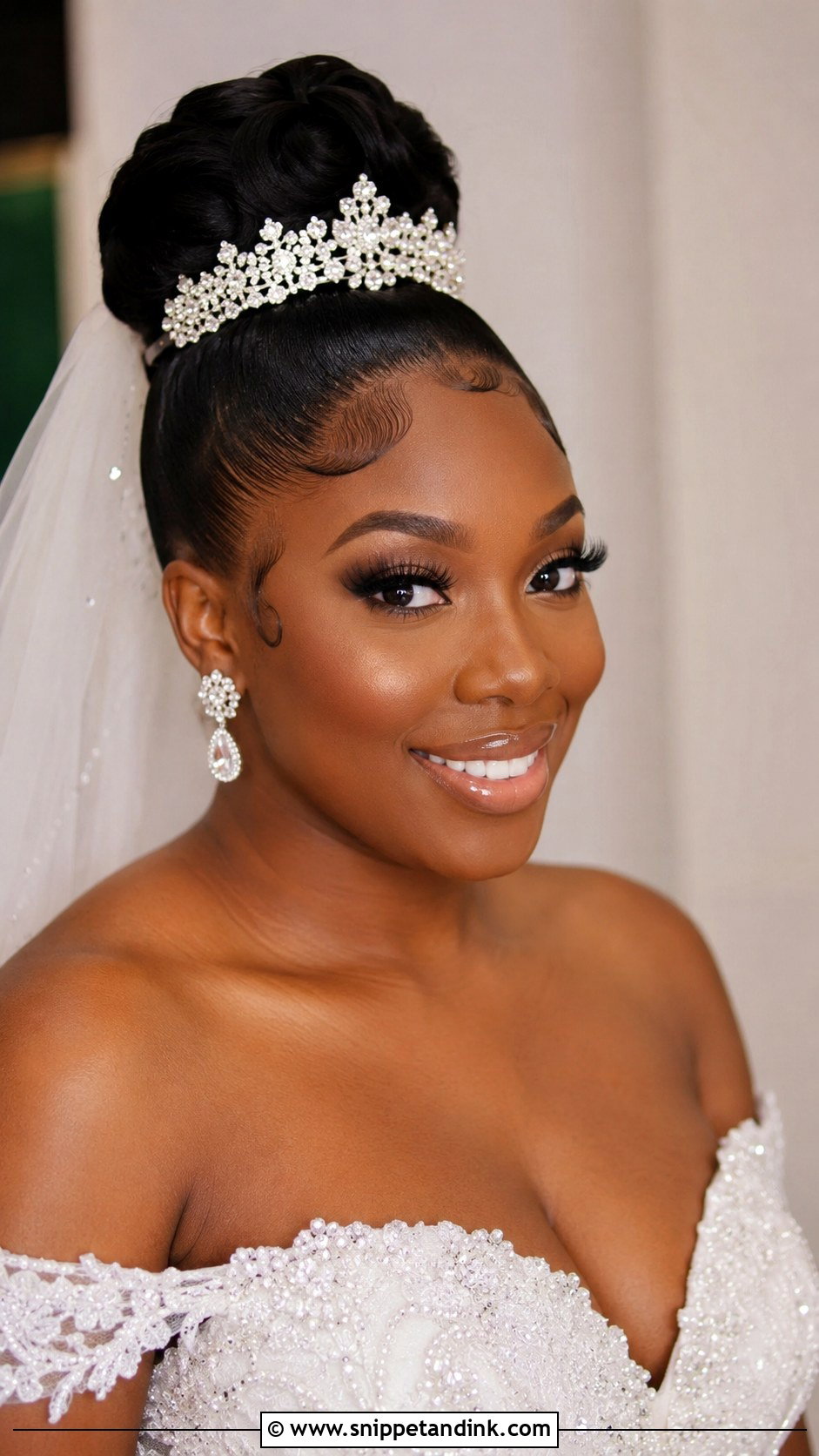
A high bun lifts the whole face and shows off the neckline. I smooth the hair upward with a firm brush and a little gel, lay the edges, then wrap the bun around a doughnut or extension if your own length is short. Height brings a trade-off: a cathedral veil hangs awkwardly from a high bun, so I’d pair it with a tiara or a short veil set beneath. It also keeps your neck cool at a summer wedding.
8. Twist-Out Updo for Natural Hair
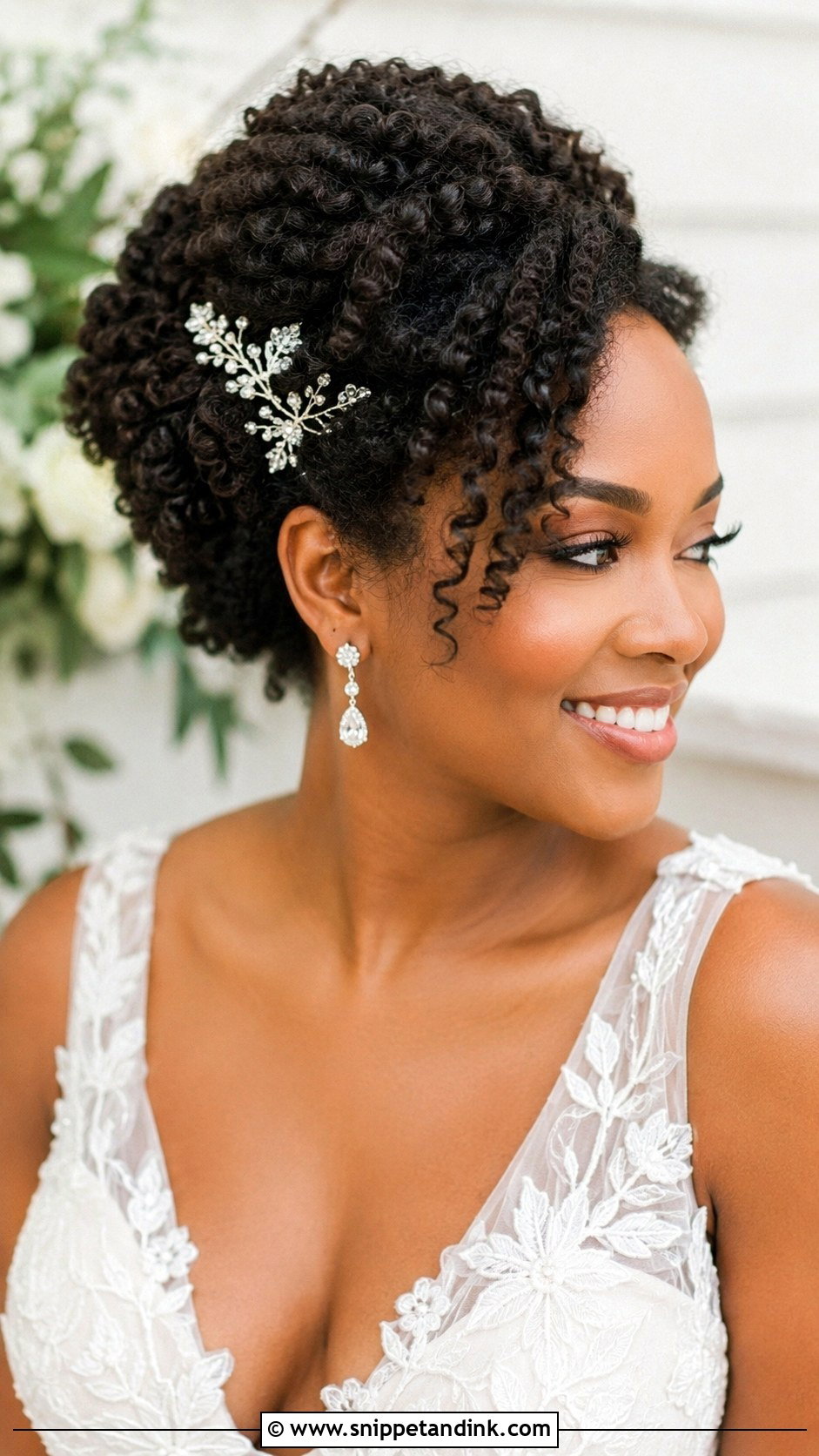
This updo starts from a twist out, so the curls are defined before they go up. I pin the sections loosely, leaving space between them, because packing them tightly flattens the texture you’ve worked to define. The result has volume and dimension. A jewelled comb or flowers add bridal detail. It suits garden, boho and smaller weddings, and it’s one of the gentlest options for natural hair since there’s no heat or tension.
9. Tribal Braids for Black Brides
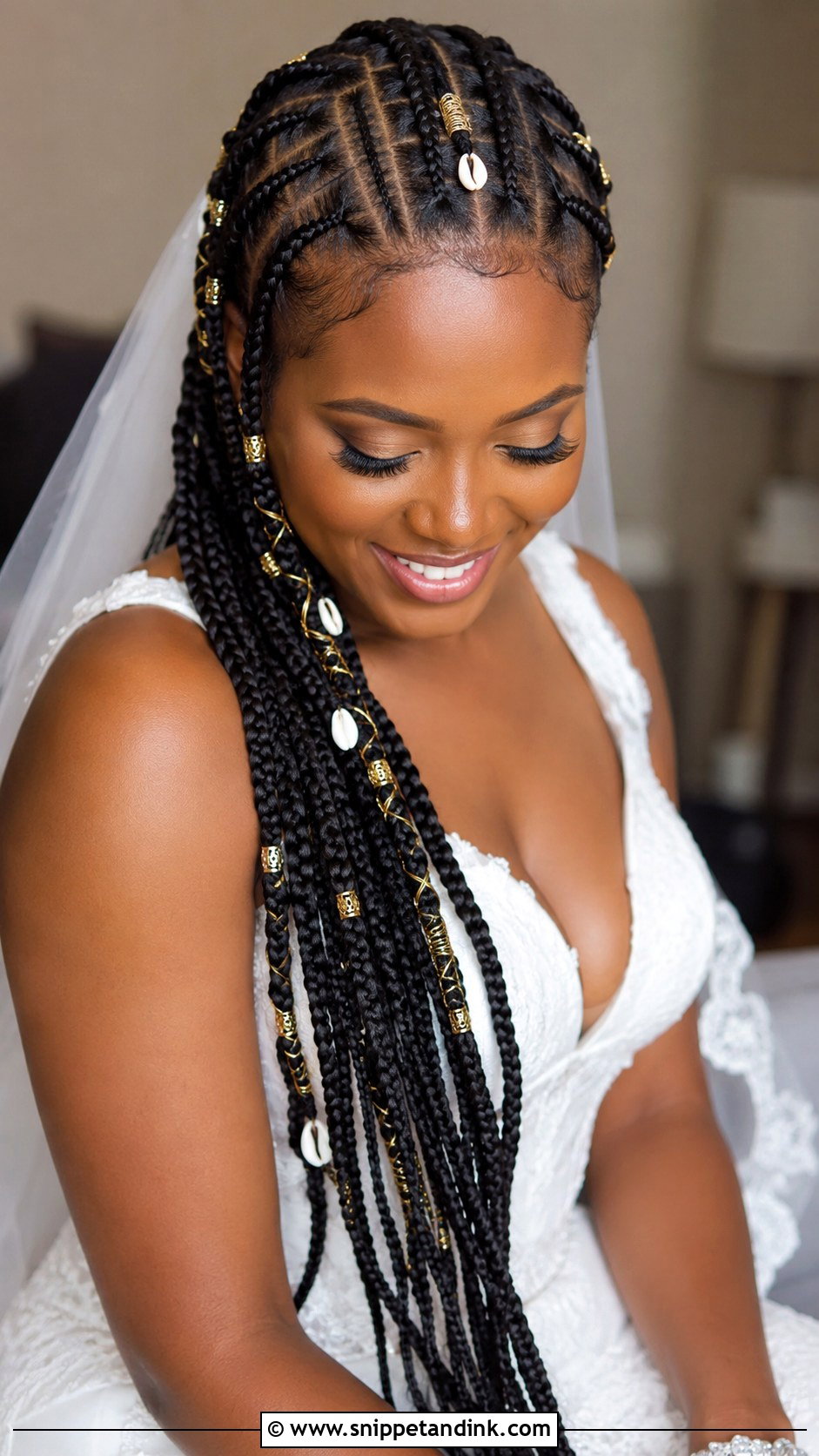
Tribal braids mix thick and thin sections in a pattern, often down to the waist or hip. That length is heavy, and I’d sweep them into a half up style for the ceremony if your neck tires easily. Gold cuffs, beads or cowrie shells add cultural meaning as well as decoration. They’re protective, durable and need no touch-ups. Tribal braids honor African heritage, and for many brides that matters as much as how they look.
10. Sculpted Natural Puff Updo
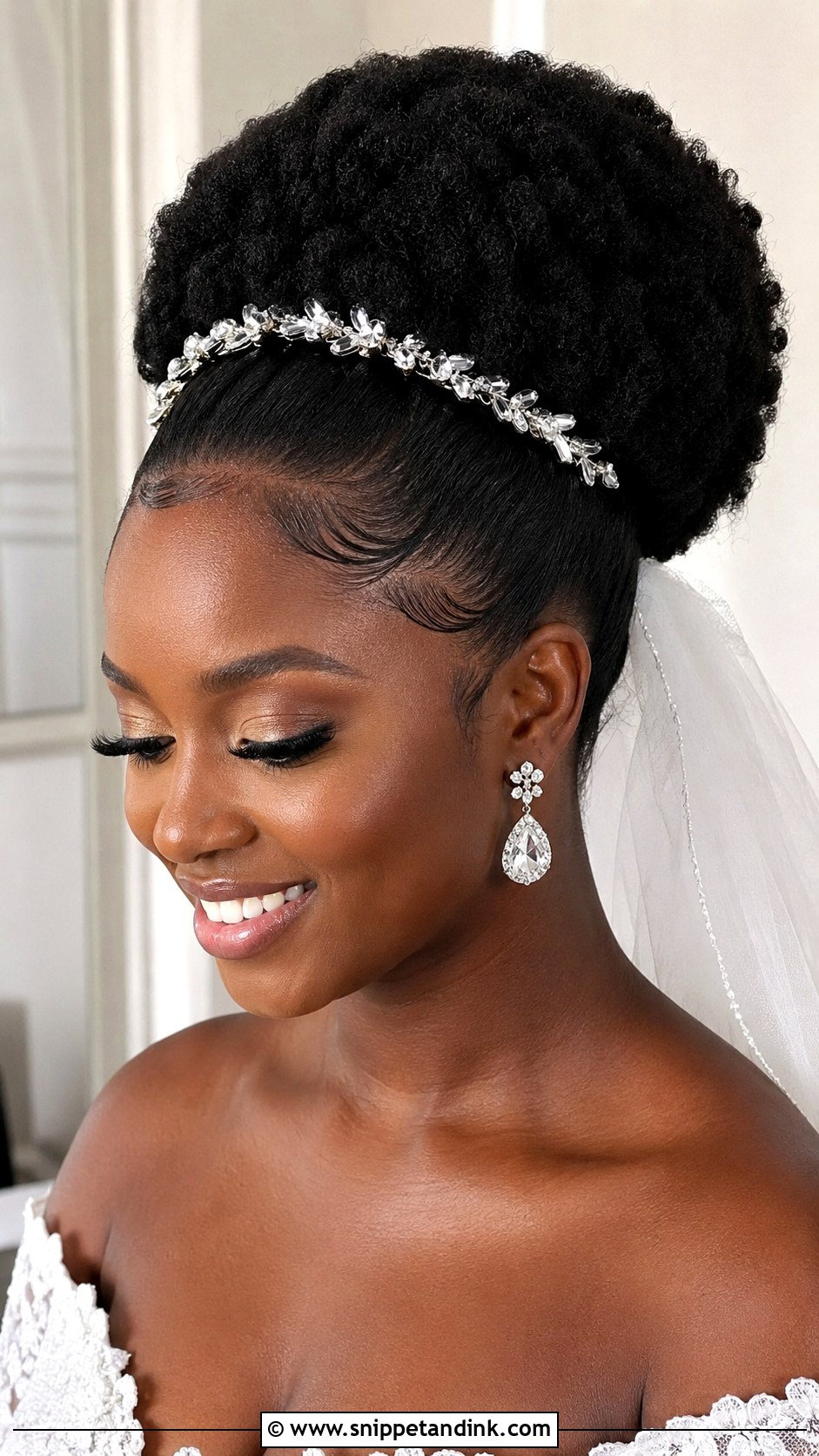
A sculpted puff gathers natural hair up into a rounded shape, smooth at the edges and full on top. I stretch the hair a little first, through banding or a light blow-dry, so the puff holds its rounded shape instead of shrinking into a tight ball. A jewelled headband in front adds the bridal note. The style is comfortable, secure and quick, and it suits brides who like a clean, graphic shape.
11. Stitch Braids Into a Bun
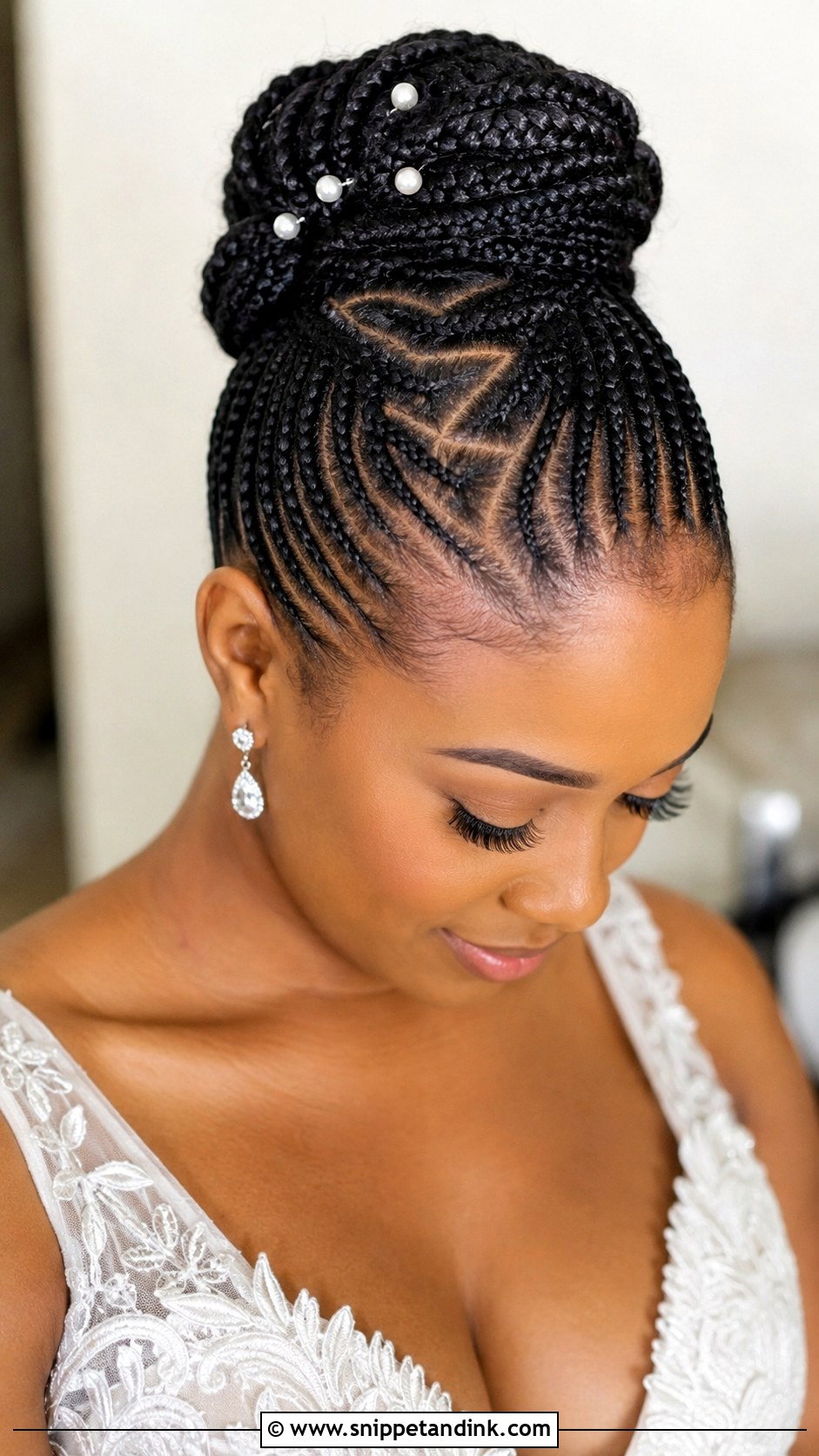
Stitch braids have those crisp, stepped lines along each part, and the parting is the whole point. I’d look at the braider’s portfolio for clean, even stitches before booking. They gather into a sleek bun at the back that holds through the night. The detail reads well in close-ups. A couple of decorative cuffs or pearl pins finish it, and it suits city weddings as much as traditional ceremonies.
12. Soft Curly Updo With Flowers
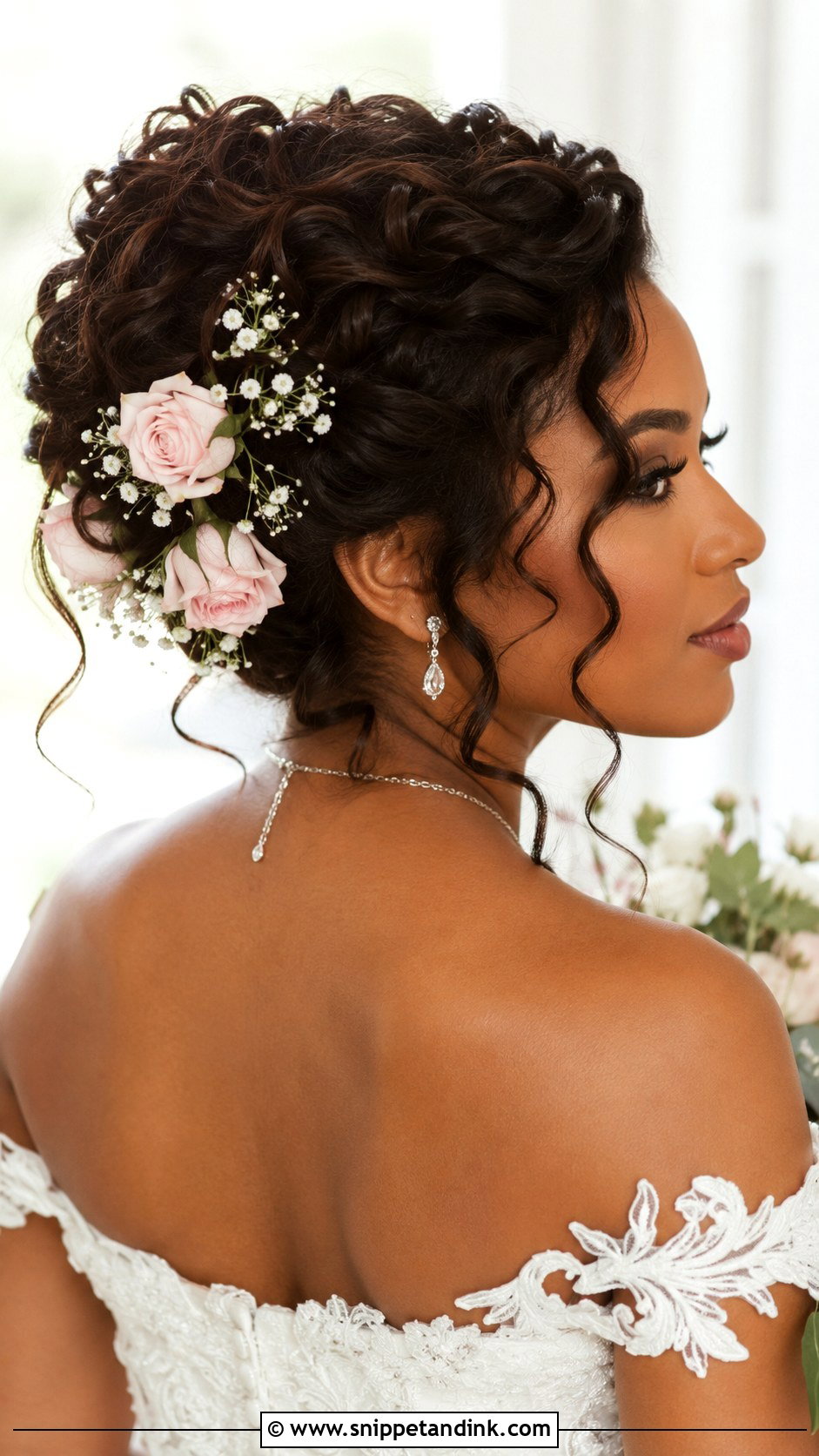
Loose curls gathered into an airy updo with flowers tucked in is the garden wedding look. The trick is to keep it from collapsing: I pin each section into place rather than relying on the curls to hold, then pull out a few pieces for softness. Baby’s breath and wildflowers wilt quickly in heat, so for a summer wedding I’d ask for sturdier stems or silk flowers. It works on natural curls or a curl set, and the flowers can tie in with the bouquet.
13. Cornrows With Curly Ponytail
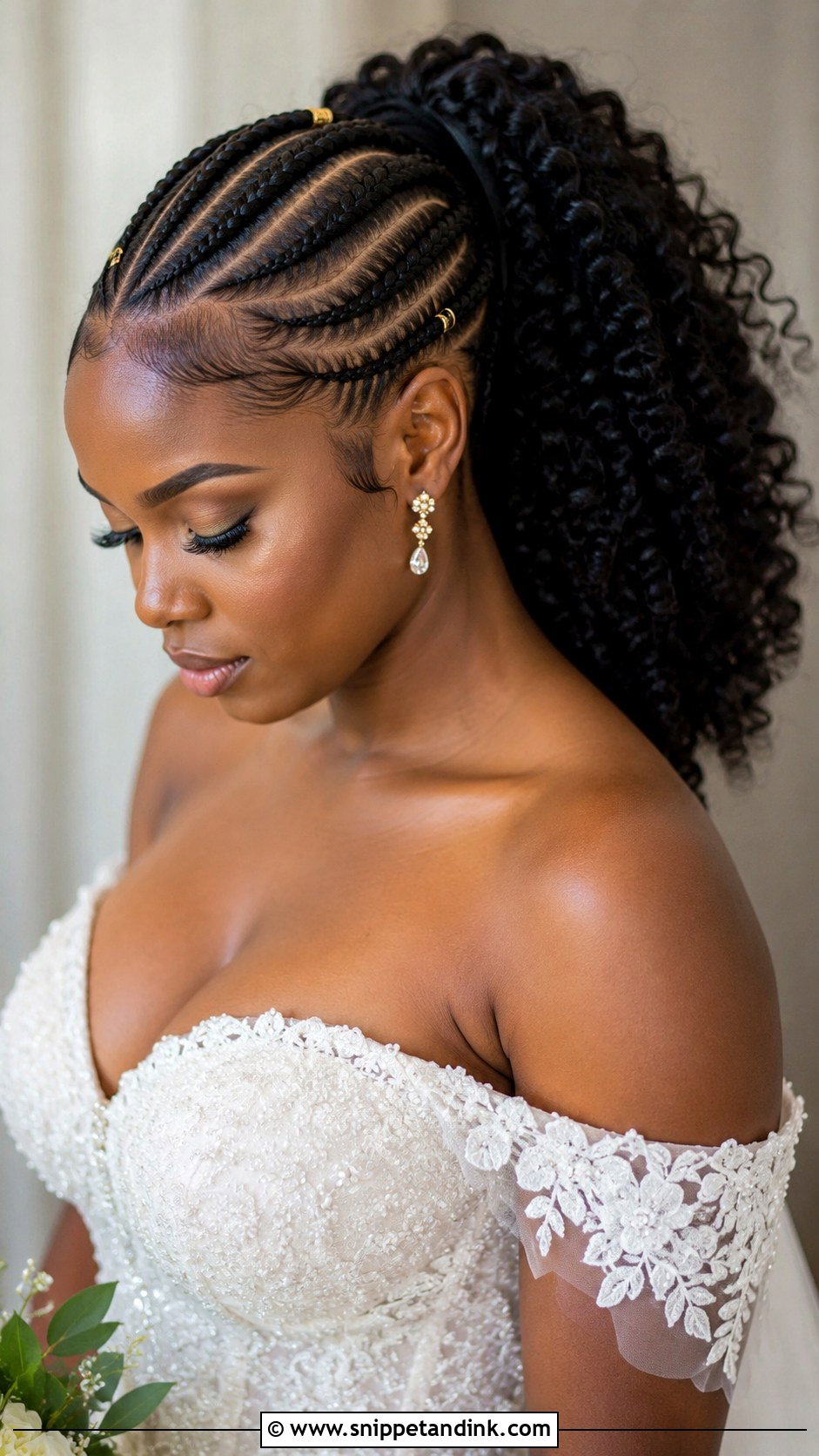
Cornrows at the front and a full curly ponytail at the back give you clean lines and movement at once. I usually add the curly ponytail as an extension clipped or sewn onto the cornrow ends, matched carefully to your curl pattern so the join doesn’t show. It keeps hair off your face during the vows. Gold accessories along the rows add sparkle. It suits a bride who wants something youthful, and it’s very secure.
14. Bantu Knots Bridal Style
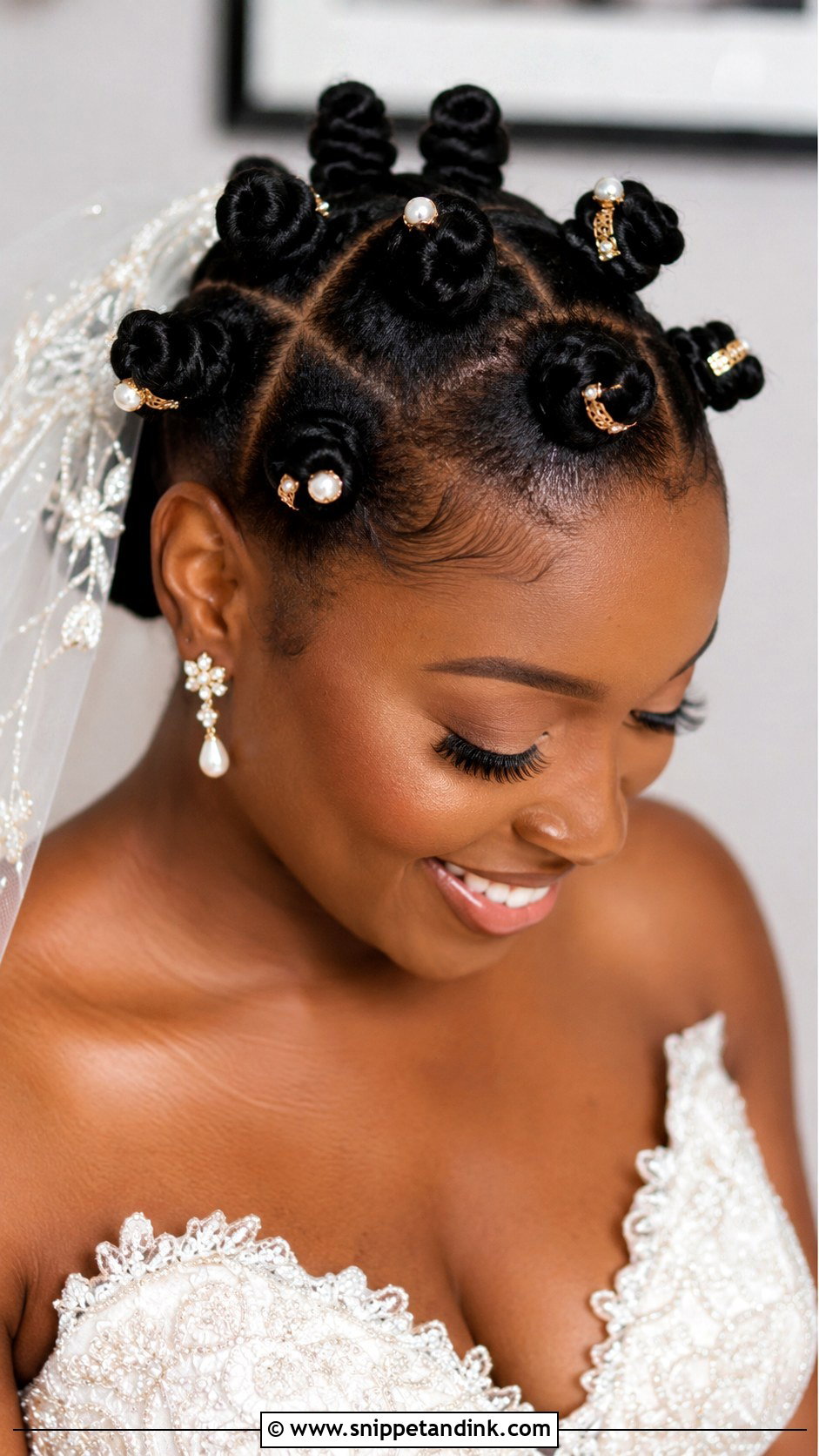
Bantu knots celebrate African heritage and make a strong pattern across the head. These coiled knots need very clean parts, and I’d take time on those since they’re the first thing people see. For a bridal version, I add gold cuffs, pearls or small pins between the knots, or leave a few loose curls at the front for softness. They’re secure, protective and need no fussing. Unravel them the next day and you’ll have a knot-out set for the honeymoon.


15. Low Bun With Dutch Braid Crown
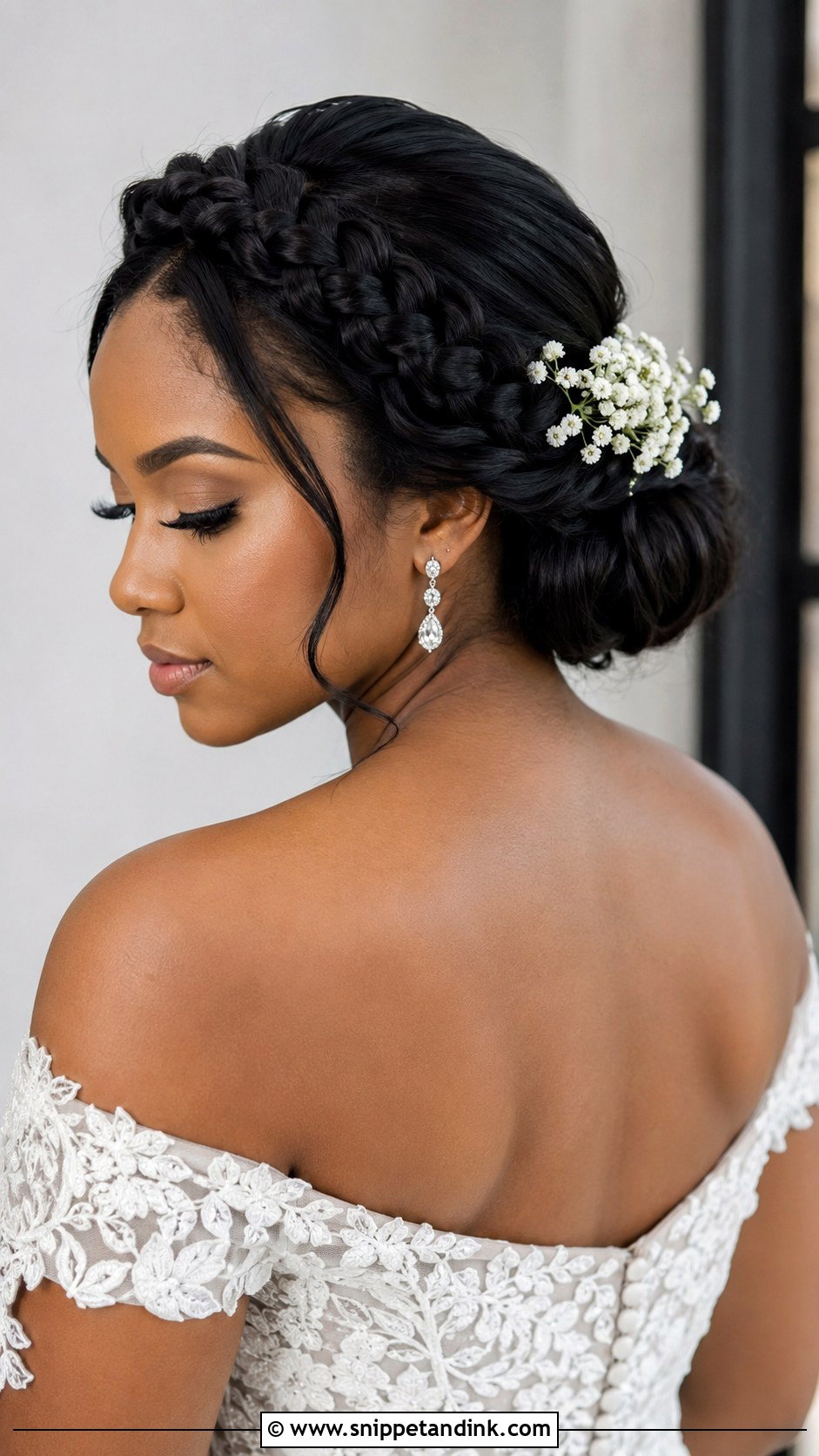
A Dutch braid around the crown with a sleek low bun at the back combines detail and polish. Dutch braids sit on top of the hair rather than lying flat, so they show up clearly in photos. I braid the crown first, then build the bun; it keeps the braid from loosening when the bun is pinned. It works on natural or relaxed hair. Small flowers or jewelled pins along the braid add a bridal touch, and the whole thing stays put through dancing.
16. Silk Press With Soft Waves
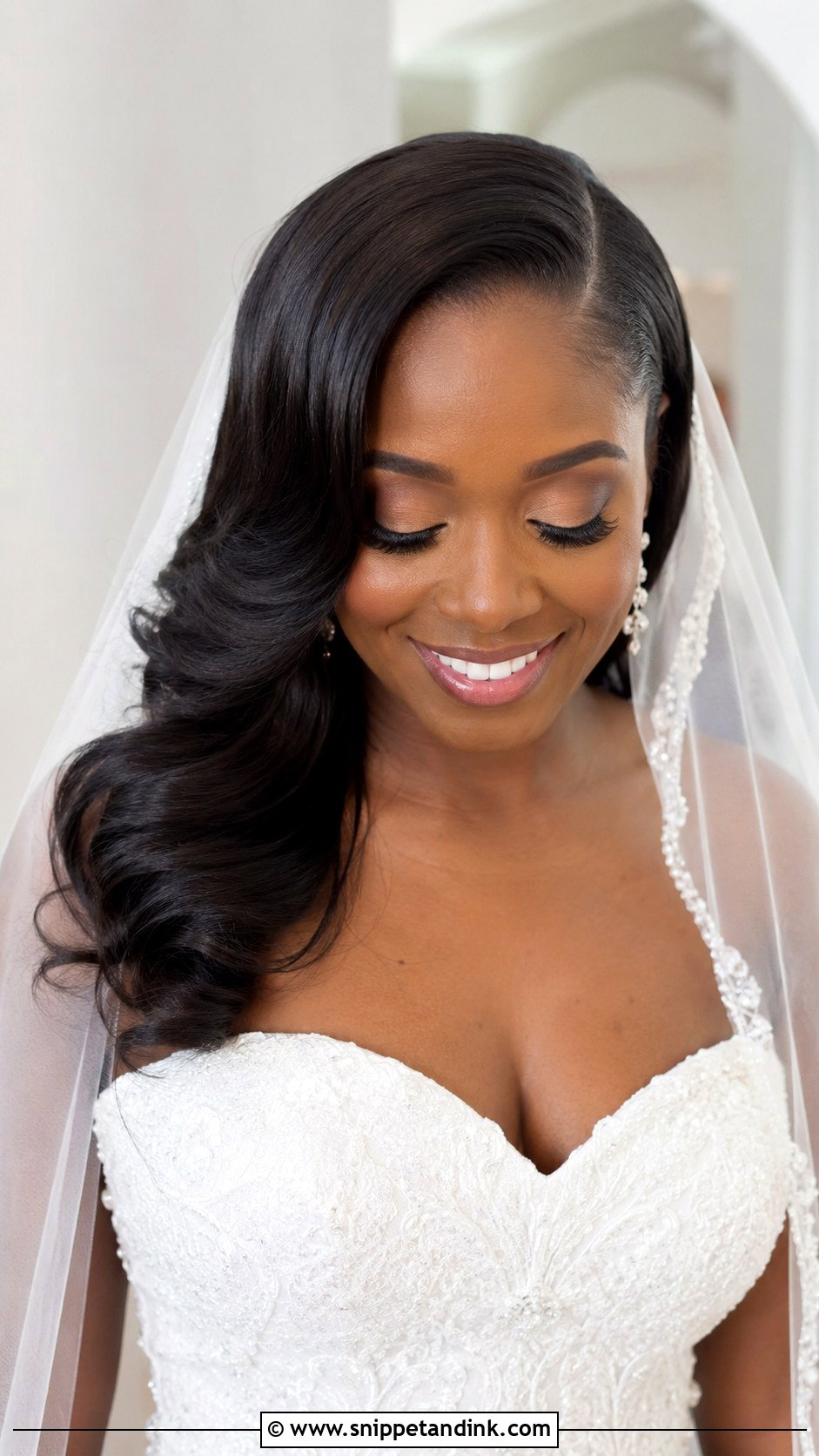
Smooth, glossy hair with soft waves gives you length and movement for a veil or tiara. Timing is critical: do the press the day before or on the morning, as heat styling a week ahead means sleeping and sweating on it. Humidity reverts a press quickly, so if your wedding is outdoors in summer, I’d plan a half up option for the reception. Waves hold best when set with a light hold product and left to cool before brushing.
17. Fulani Braids for Black Brides
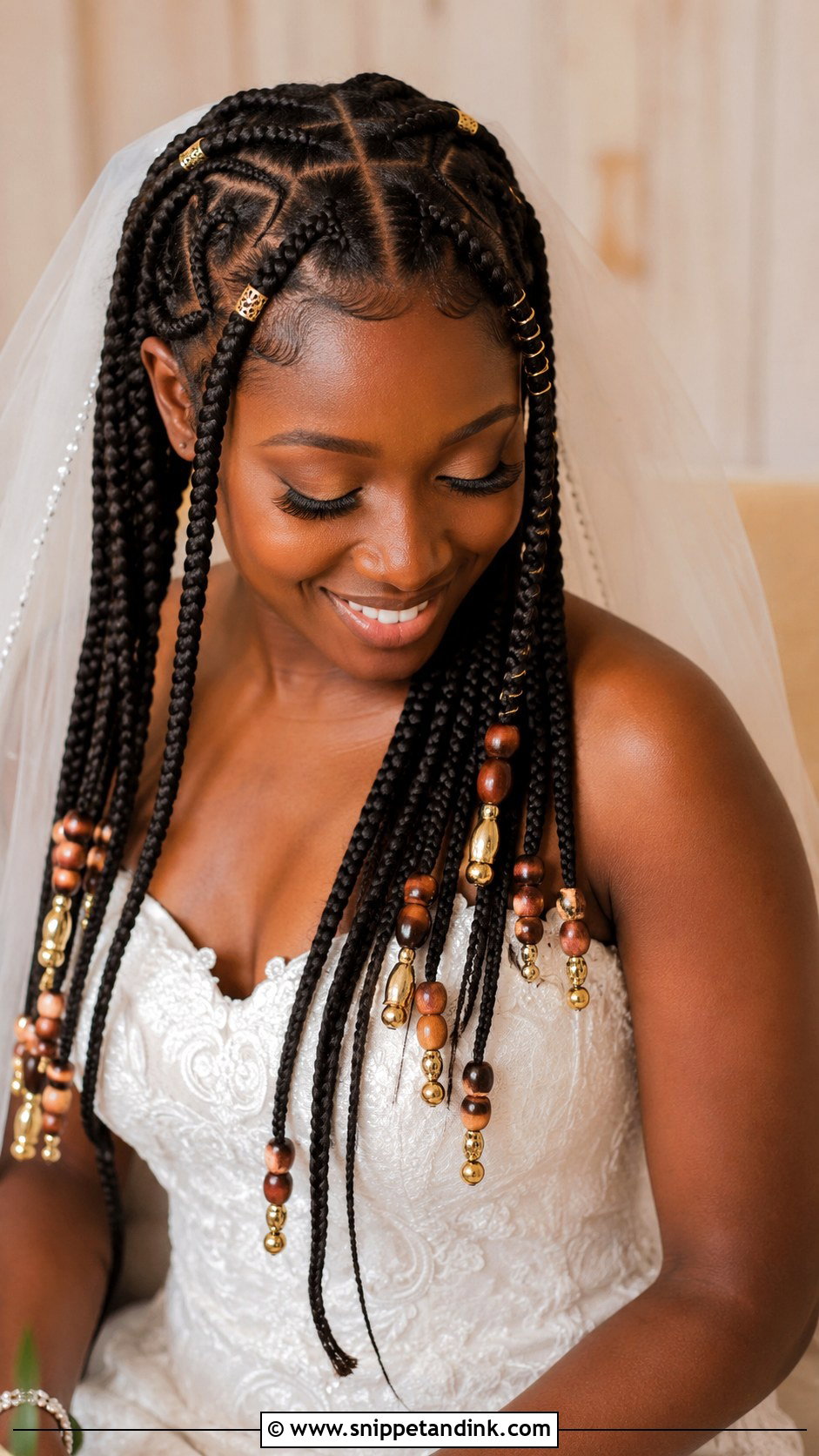
Fulani braids pair center-parted cornrows with side braids and beads, a style rooted in West African heritage. The centre braid is the signature, so I’d make sure it lines up with your nose and the middle of your face. Beads add weight; I’d use them on a few braid ends rather than every one. Wear them long or gathered half up. Gold cuffs or cowrie shells add more bridal detail if you want it.
18. Criss-Cross Braided Bun
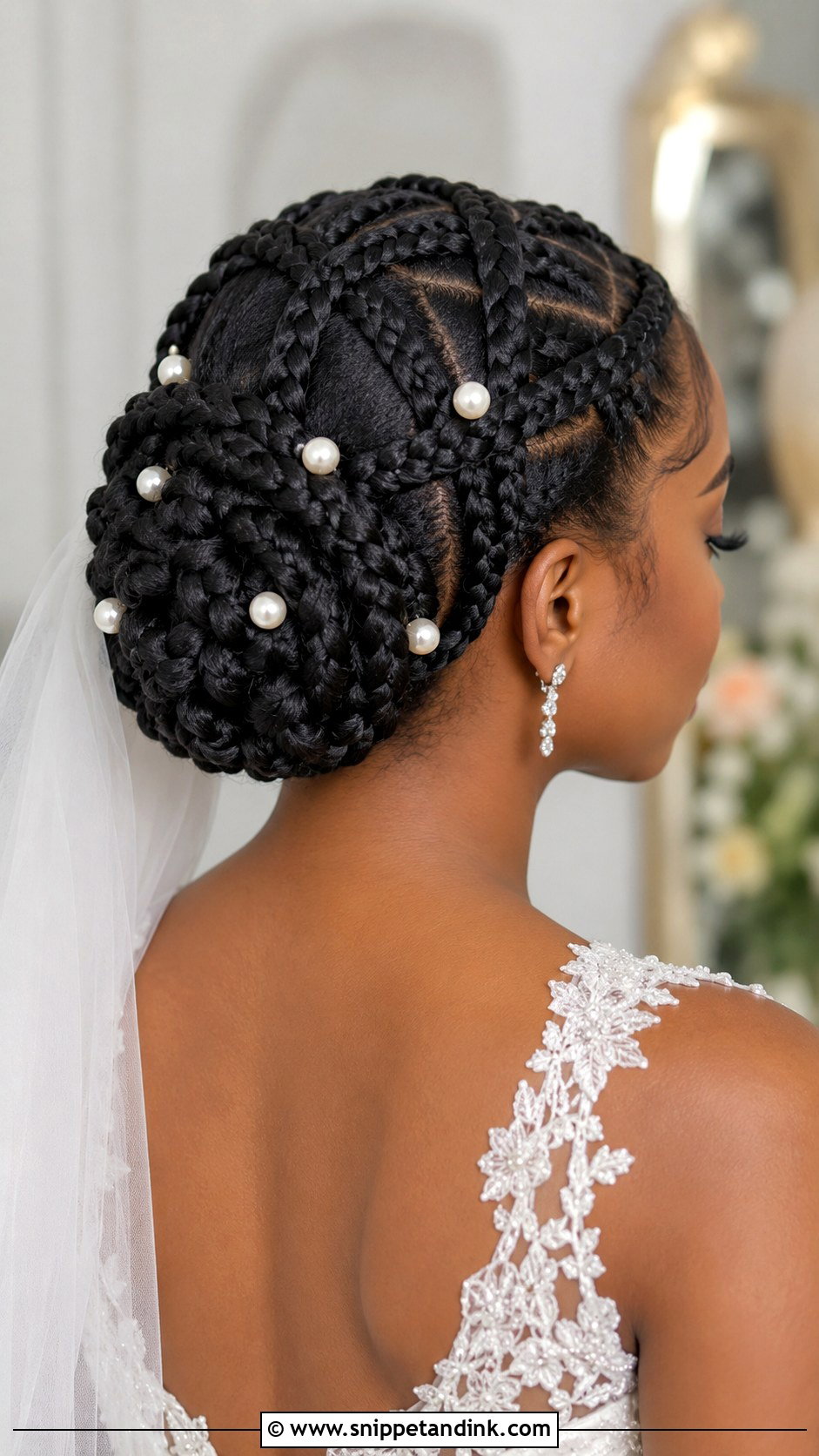
Several braids weave across the head in a crossing pattern and gather into a neat bun. It takes longer to install than plain cornrows, so plan extra time with your braider. The woven pattern reads beautifully up close, and pearl pins along the crossing points add a polished touch. It’s very secure through long ceremonies, and suits a bride who likes structure and detail.
19. Afro Updo With Gold Accessories
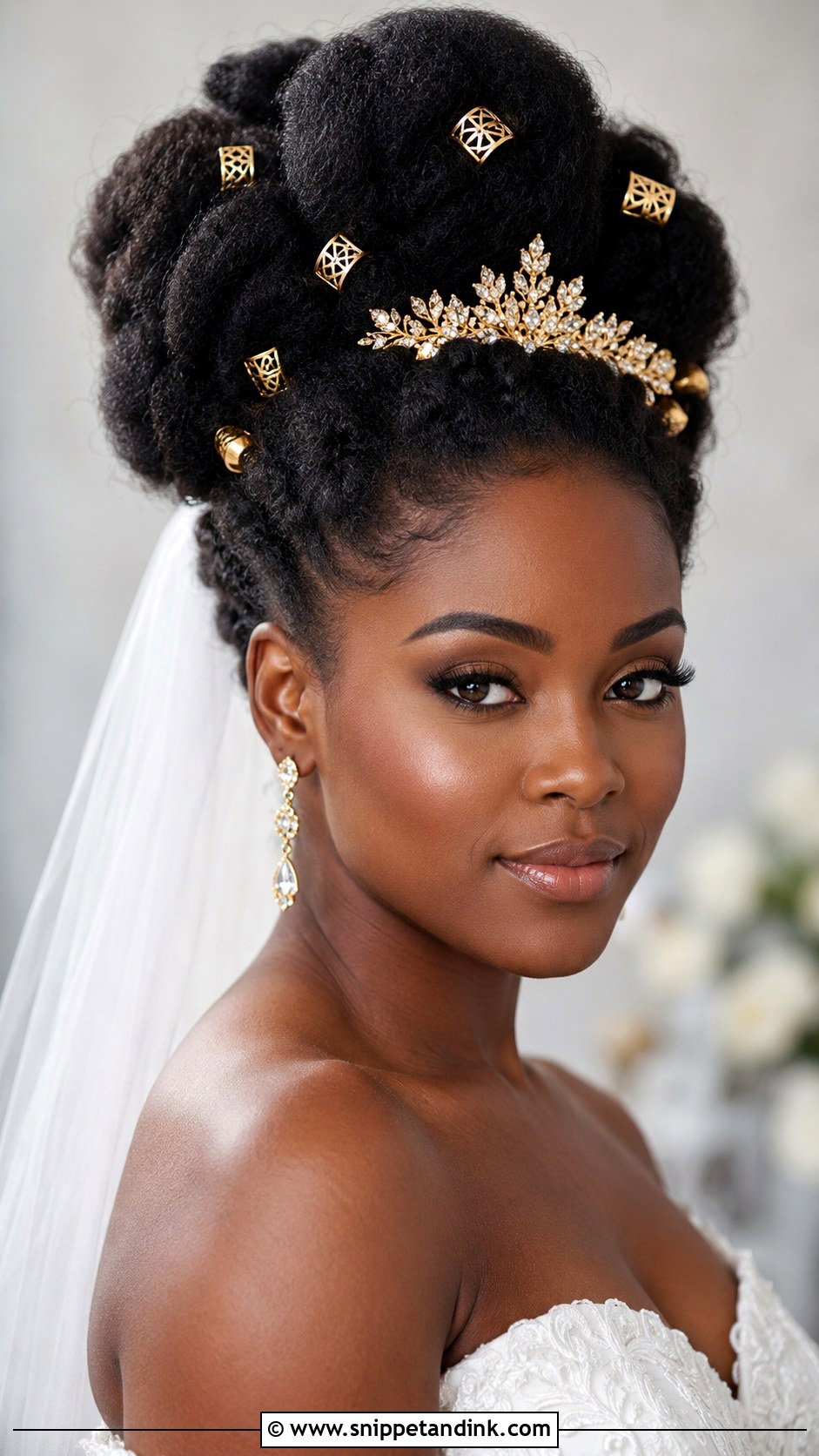
Gathering your natural afro upward into a sculpted shape keeps all its volume while lifting it off your neck. I shape it with a pick and a soft brush, using a wide band at the base so nothing snaps. Gold cuffs, pins or a small crown are the bridal touch. Gold sits well against dark hair under reception lights. It works for cultural, modern and boho weddings and keeps your texture front and centre.
20. Sleek Side-Swept Updo
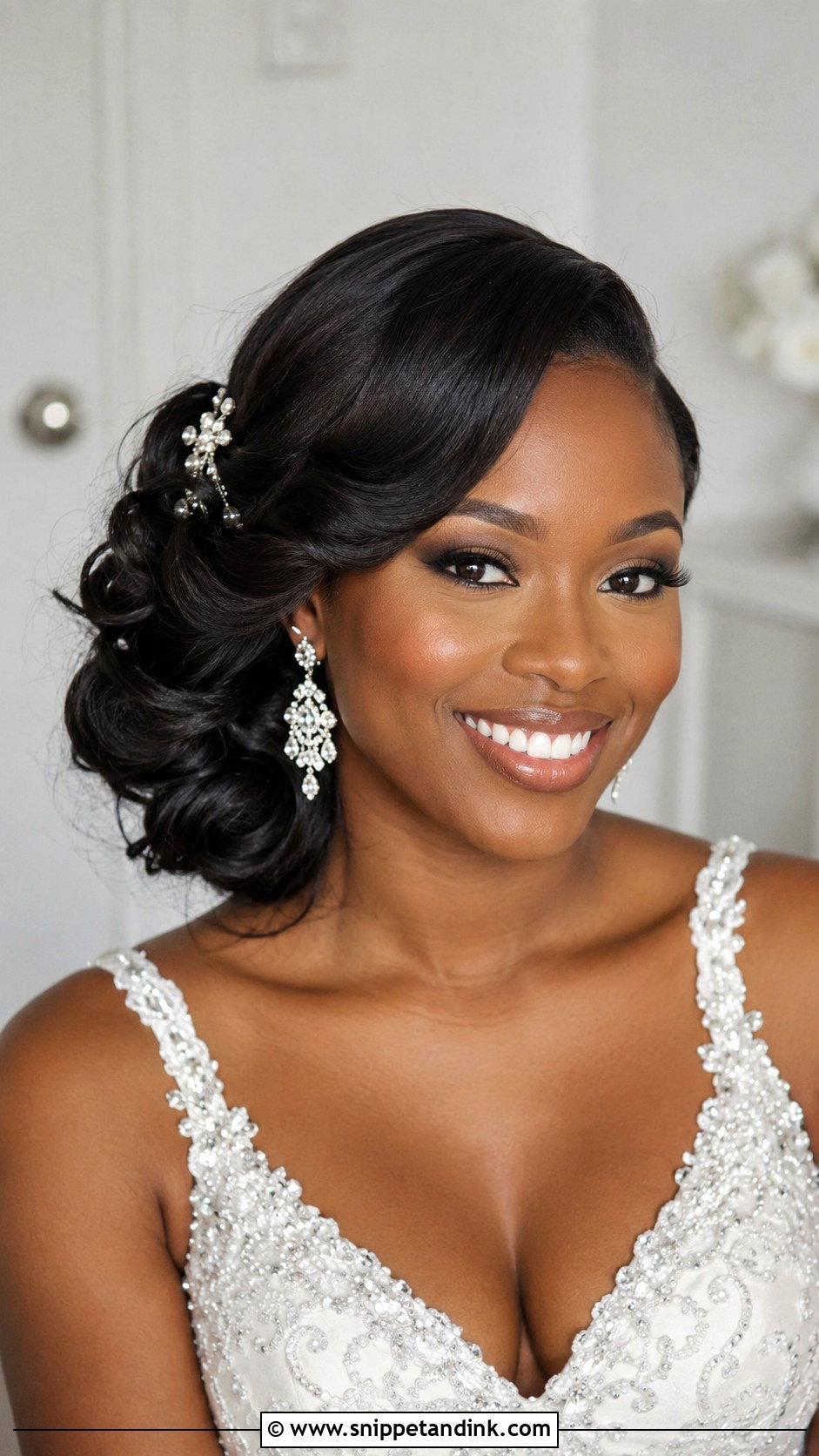
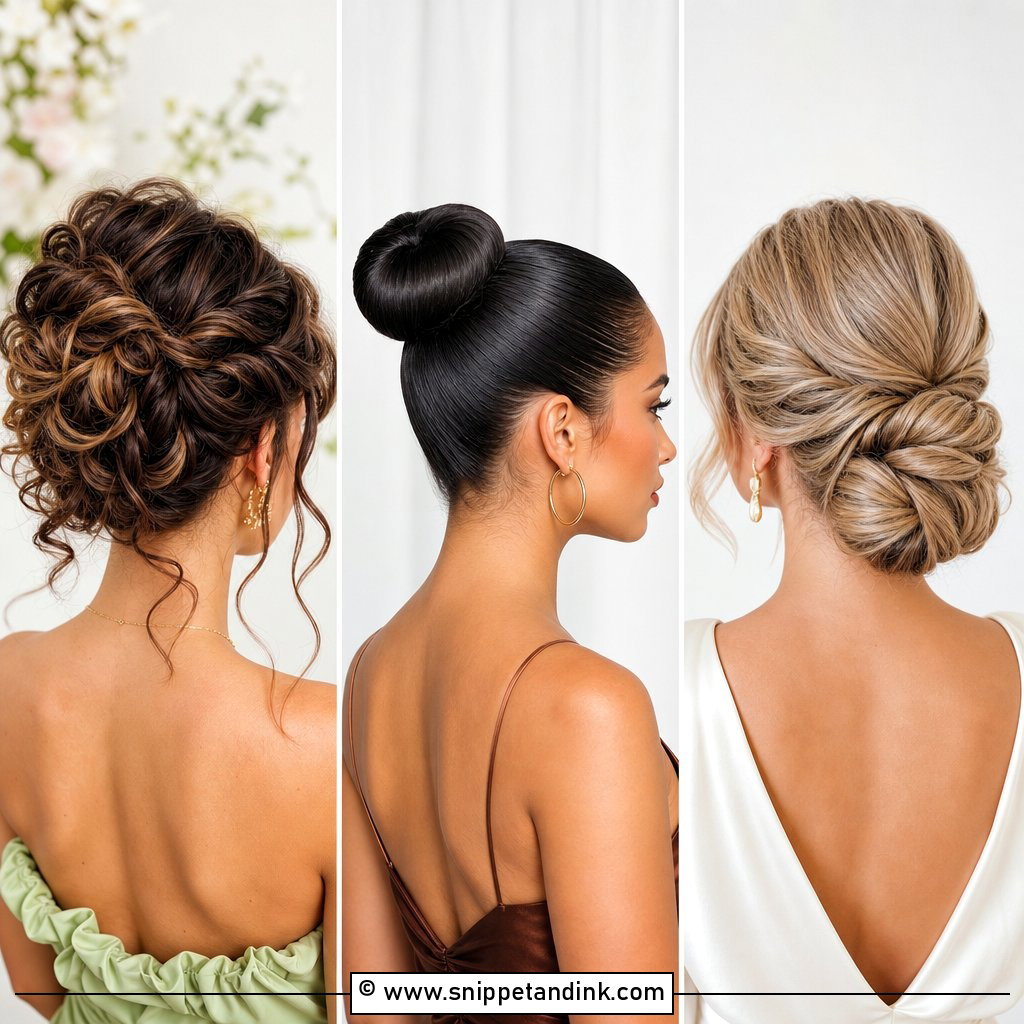
Gathering everything to one side gives an old Hollywood feel and shows off the neckline on the other side. I anchor it behind the ear with crossed pins, since a side style tends to slide down toward the shoulder over the day. It works with curls, waves or a sleek finish. Jewelled pins or flowers at the gathered point add detail. It photographs best from the front and the open side, so mention that to your photographer.
1 or 1B? Matching Braiding Hair to Your Own
Shade matters more on a wedding day than most brides expect, because close-up photography shows every mismatch. Colour 1 is jet black and can look flat or blue-tinged under flash, while 1B is a softer off-black that matches most natural dark hair better. If your hair has warm or brown tones, ask your braider to blend 1B with a touch of colour 2 or 4 at the root so the join disappears.
Texture is the other match. Smooth synthetic hair next to coily natural edges looks shiny and separate in photos. For styles where your own hair shows, like a curly ponytail or loose ends, I’d choose a textured or kinky-straight extension that echoes your natural pattern.
Getting a Comb to Grip Braids, Coils and Pressed Hair
A veil comb slides out of smooth pressed hair, so on a press I build a small pinned base under the bun for the comb to grab. Braids are the easiest: the comb teeth catch between braids and hold firmly. On an afro or puff, I’d sew a short loop of thread or use two criss-crossed pins at the spot where the comb sits. If your veil is long and heavy, a second pair of pins slanted through the comb from below keeps it from tipping back when you turn.
Plan Around the Veil and the Calendar
Sleek low buns, French rolls, tribal braids and afro updos all have a place at a wedding. The one for you is the one your hair can carry comfortably for the length of the day, done at the right point in the week. Think about your venue, the season and how much you’ll be moving. Add gold cuffs, pearls or flowers once the shape is settled, and book a trial so you know how it feels after a few hours, not just in the mirror.
You'll Like These Ideas:




Leave a Reply