
A bun is the shape I reach for most often on wedding mornings, and for good reason. It frames the face, leaves earrings on show, gives a veil something solid to hold and sits comfortably with almost every neckline. The buns brides ask for now are polished without being stiff: low chignons, sleek knots, soft textured shapes, a few pearls, a couple of loose pieces at the face, and twists that stay put from the aisle to the dance floor. Classic, garden, modern or black tie, there’s a version below for the feel of your day. I’ve written about what each of these classy bun looks needs from your hair and where it tends to go wrong, so you can bring better questions to your trial.
Bun Height Changes Everything
Two brides can ask for the same bun and look completely different, mostly because of where it sits on the head. Before you pick a style below, have a rough idea of the height that suits you. I set it by looking at your profile, your dress and the veil together.
At the nape
The most forgiving height. It works with high necks, open backs and nearly every veil length, and it’s the most comfortable to wear for twelve hours. Shorter necks look longer with it set a fraction higher, just above the hairline.
Mid-height, behind the ears
This placement shows up in profile photos, which a nape bun barely does. A veil comb can go underneath it. It suits strapless and sweetheart necklines, where there’s plenty of bare skin to balance.
At the crown
Dramatic and lifting, and best on brides who are comfortable with height. Watch your partner’s height difference in photos, and know that a long veil will have to sit below it. It also suits a short neck less, so I’d test it at the trial before committing.
Whatever height you choose, sit down in a chair with a high back during the trial. If the bun presses into it, it’ll be uncomfortable at dinner.
1. Low Chignon Wedding Hairstyle
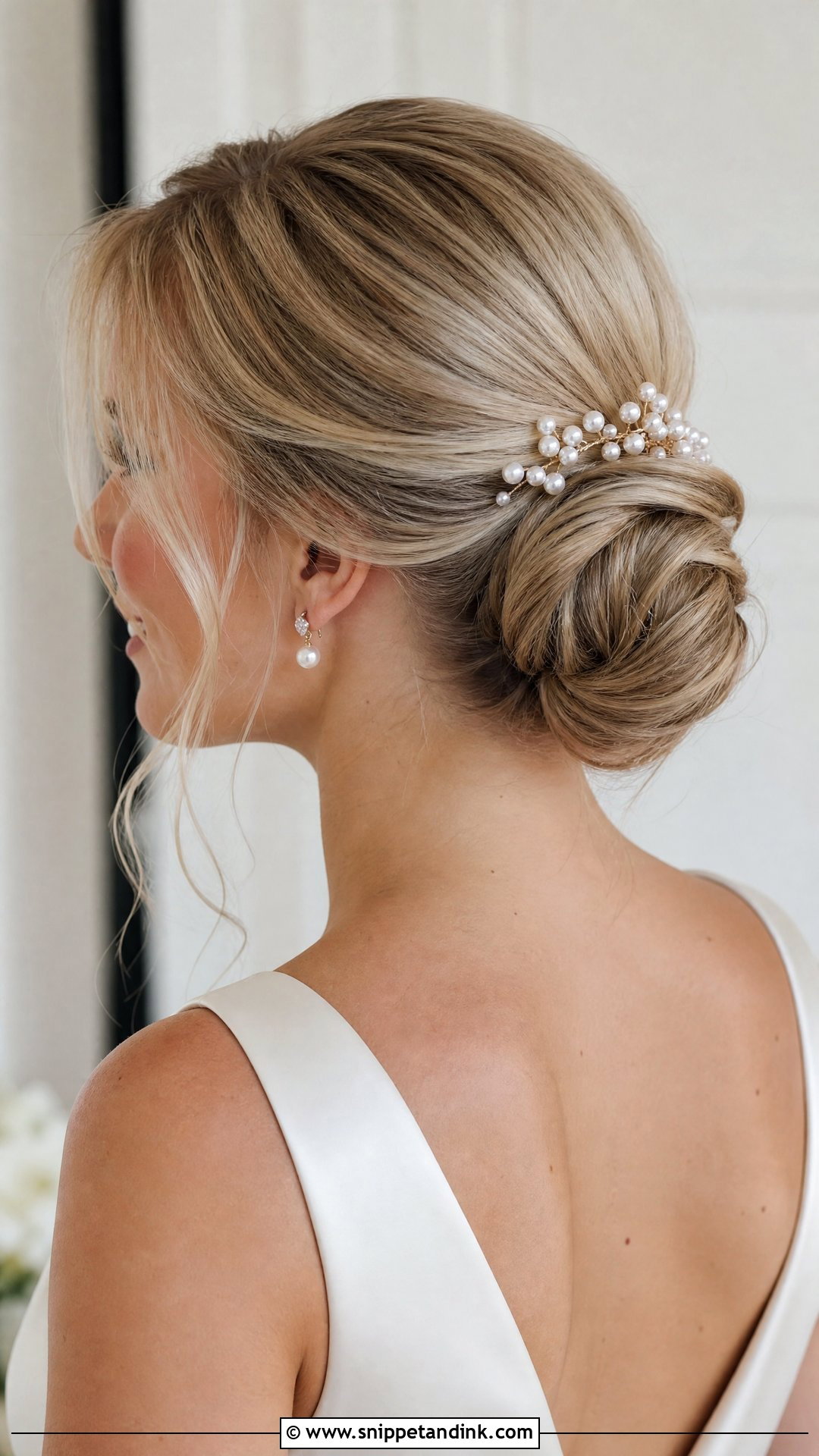
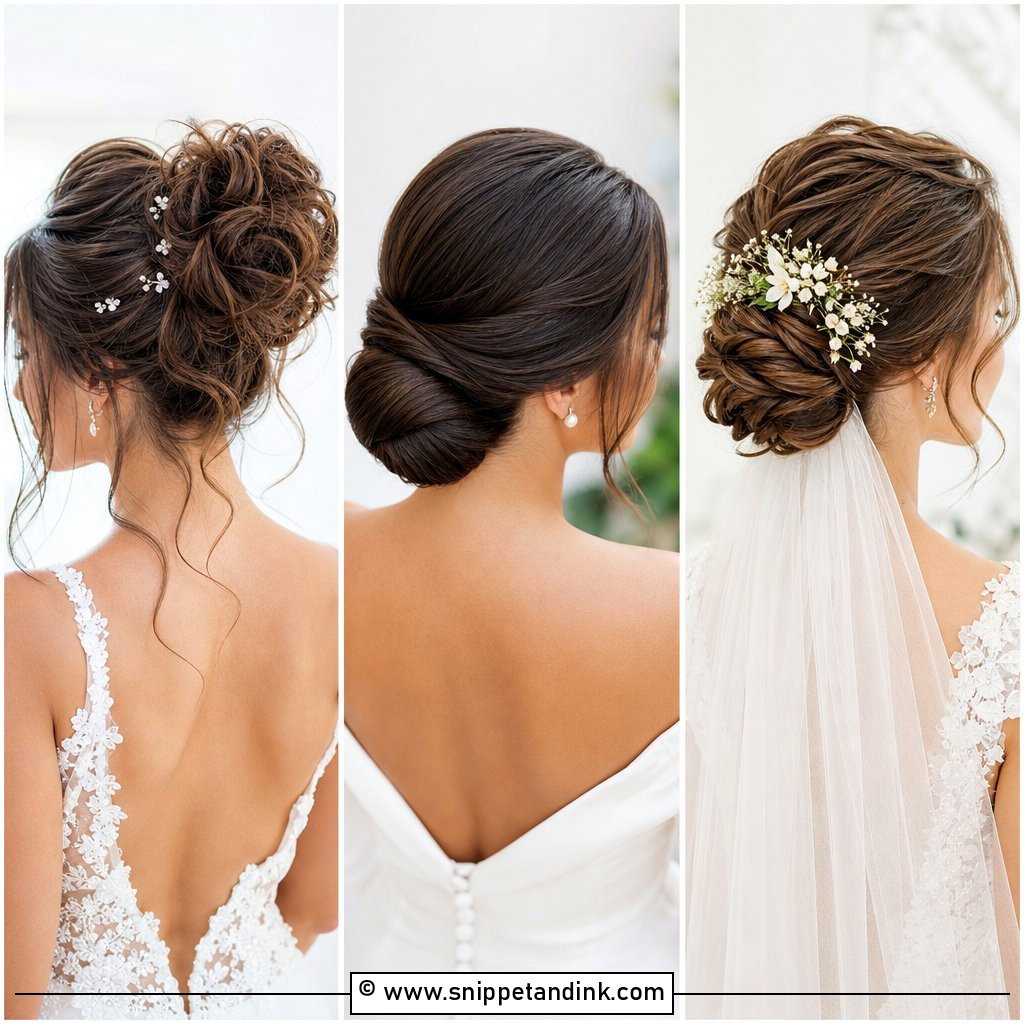
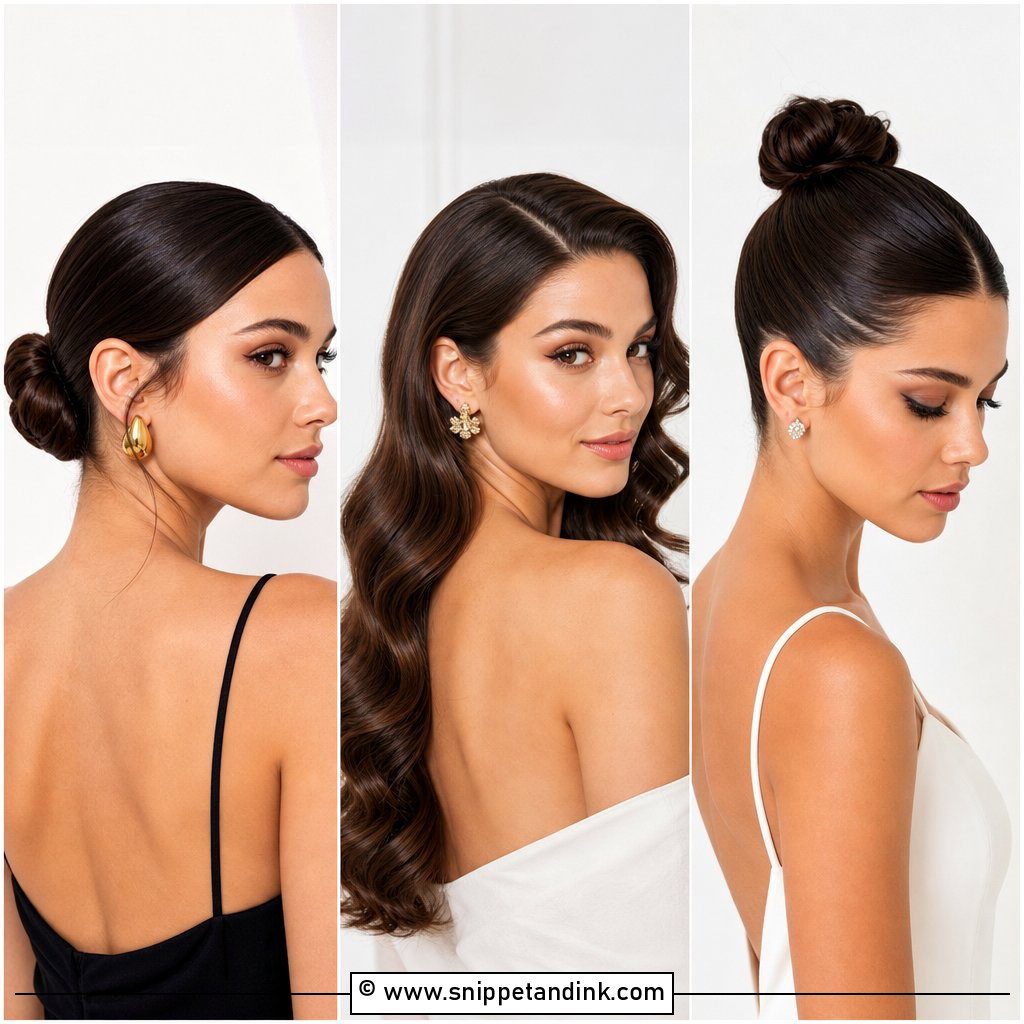
If you can’t decide, start here. A low chignon sits near the nape, where it takes a veil comb, pearl pins or a fine hair vine without any fuss, and it lasts. Whether it looks better with a centre or a soft side part depends on your face, and I’d try both at the trial before choosing. It can be smooth for a formal room or loosely textured for something softer. The thing I watch is width: a chignon spread too wide reads heavy from the front, and one pulled too small looks severe, so I keep it tucked to roughly the width of the neck.
2. Sleek Low Bun Wedding Hairstyle
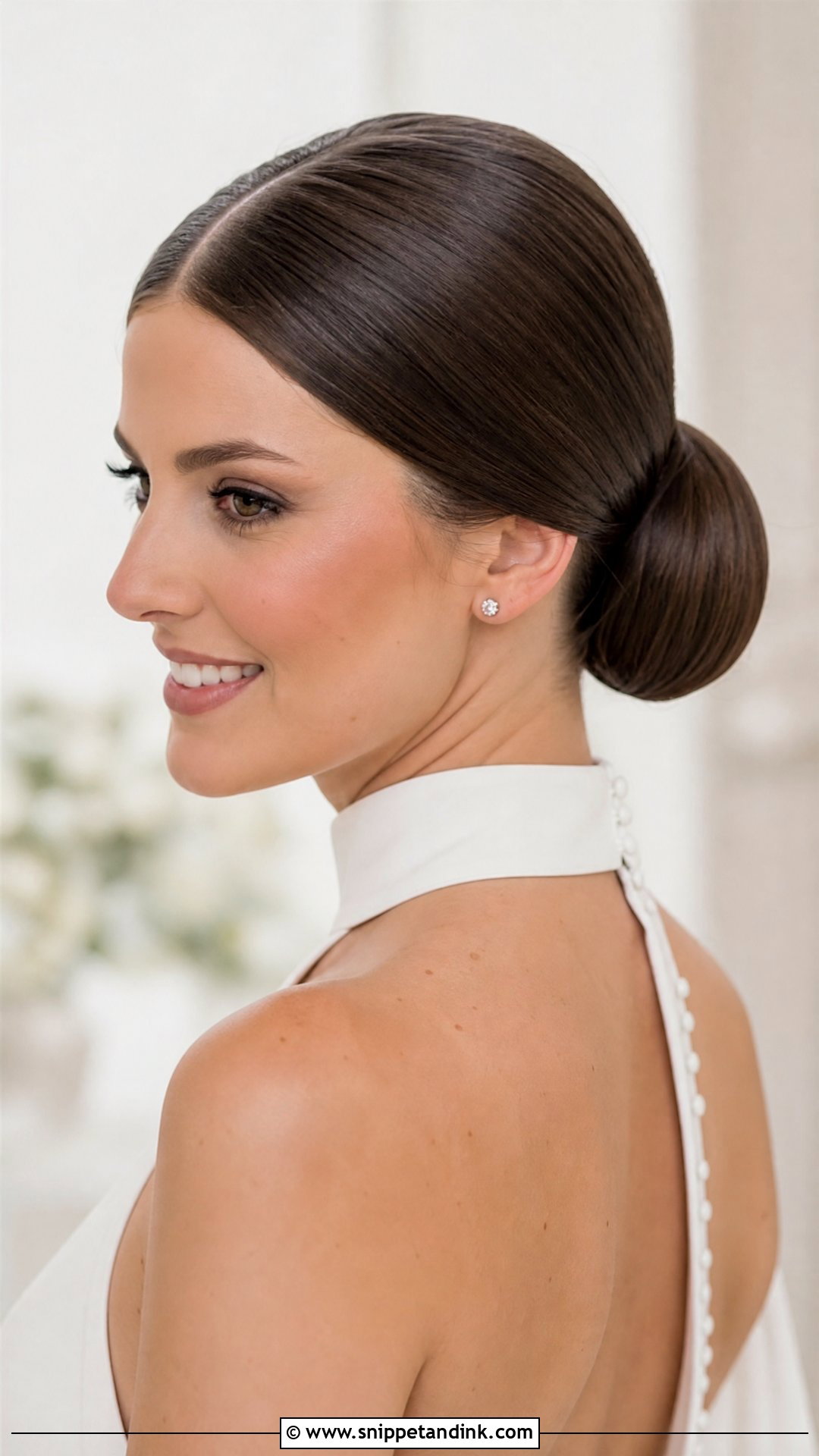
Everything about a sleek low bun depends on the smoothing. The hair is brushed flat to the head, gathered at the nape and wound into a tight knot, so any bump or flyaway is visible. A middle part makes it sharp and editorial; a side part softens it. High necklines, open backs and dramatic earrings all suit it. I work smoothing cream through damp hair before blow-drying it completely straight, because a bun built on hair with any kink in it never sits perfectly flat. Shine spray and strong pins do the rest. That plainness is exactly what makes it so classy for a wedding.
3. Textured Low Bun Wedding Hairstyle
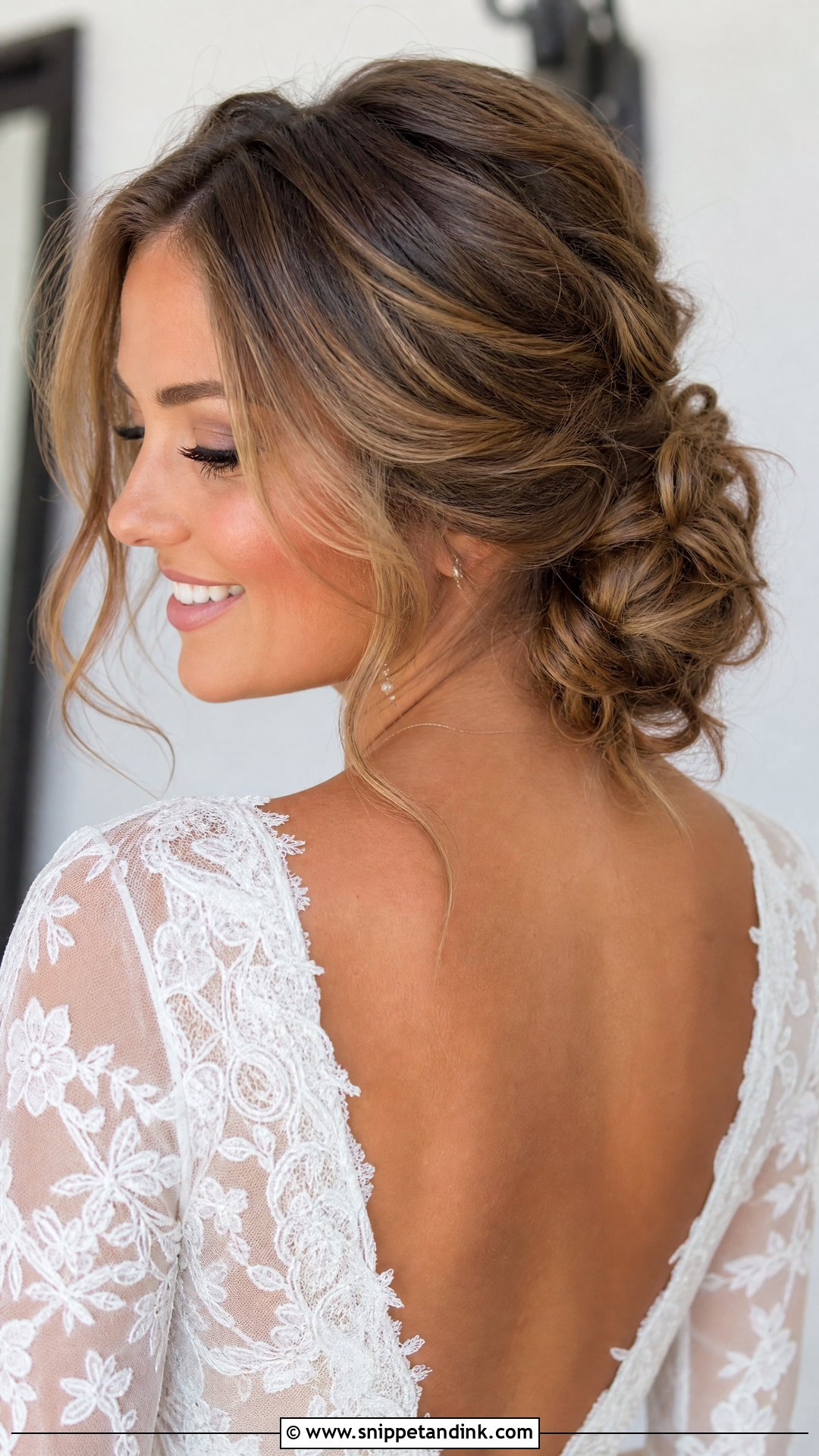
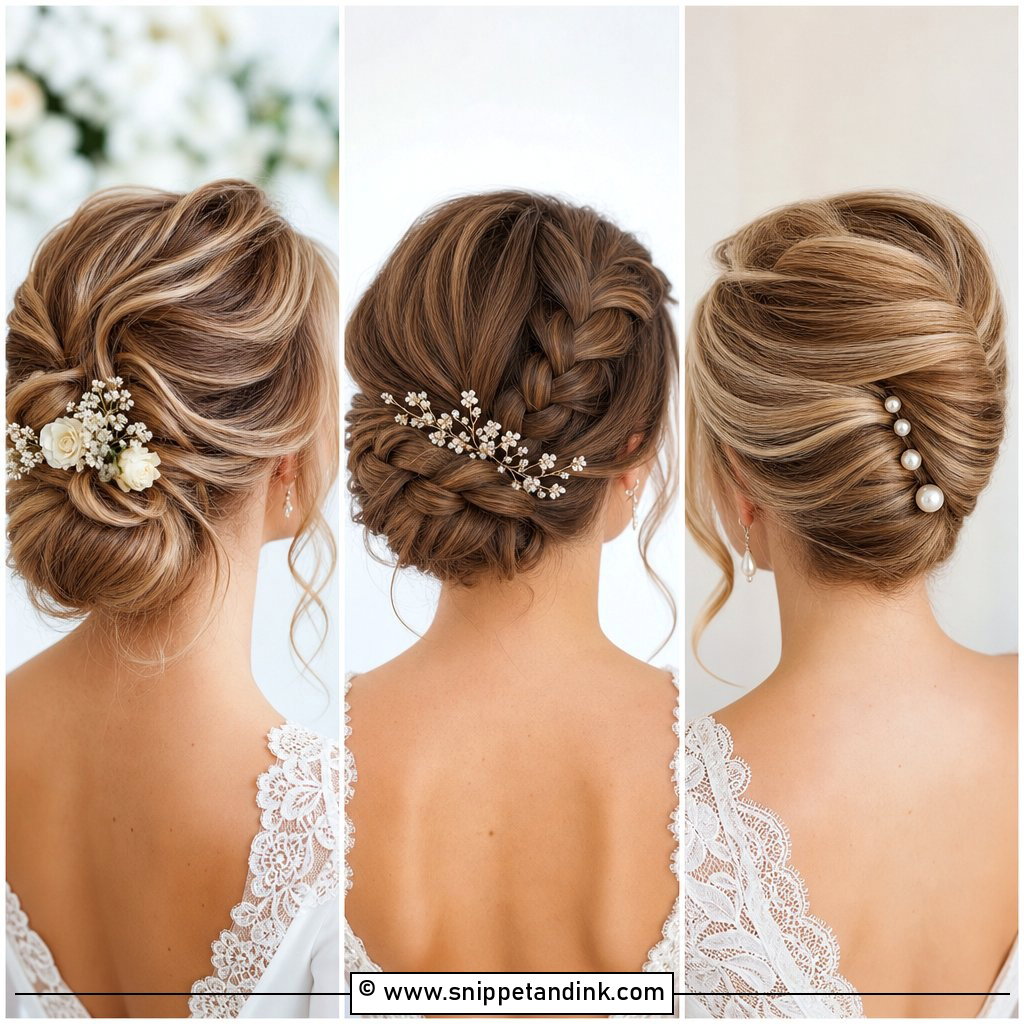
Texture is the fine-haired bride’s best friend in a bun. I curl the hair in loose waves first, then pin it into a low, airy shape, and those bends add a fullness that fine and medium-density hair can’t give on its own. The twists catch light nicely in photographs, too. Lace, floral appliqués and outdoor ceremonies suit it. Watch the loose pieces if the forecast is windy, though: two at the face are charming, ten blowing across your lip gloss during the vows are not.
4. Messy Low Bun Wedding Hairstyle
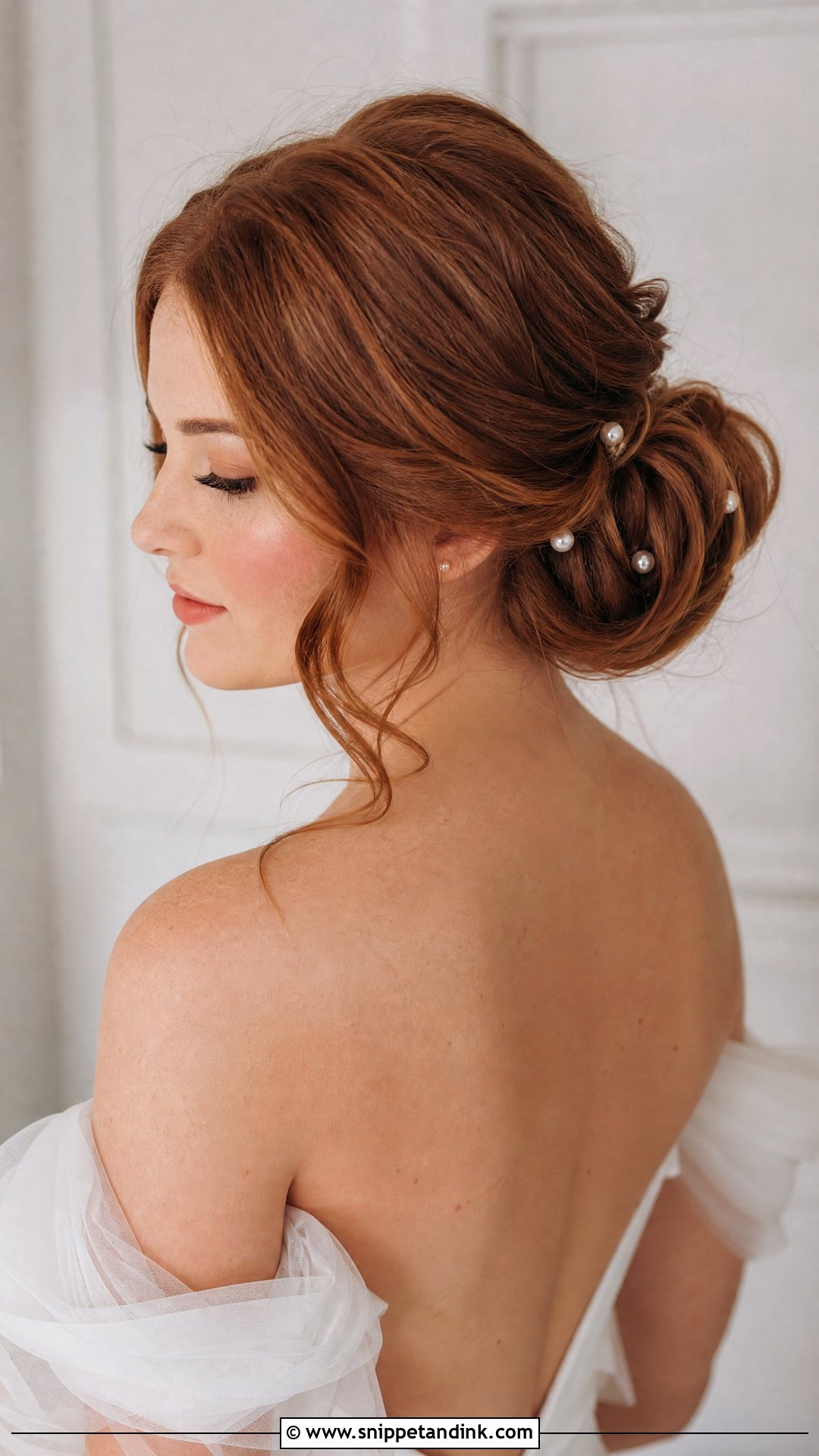
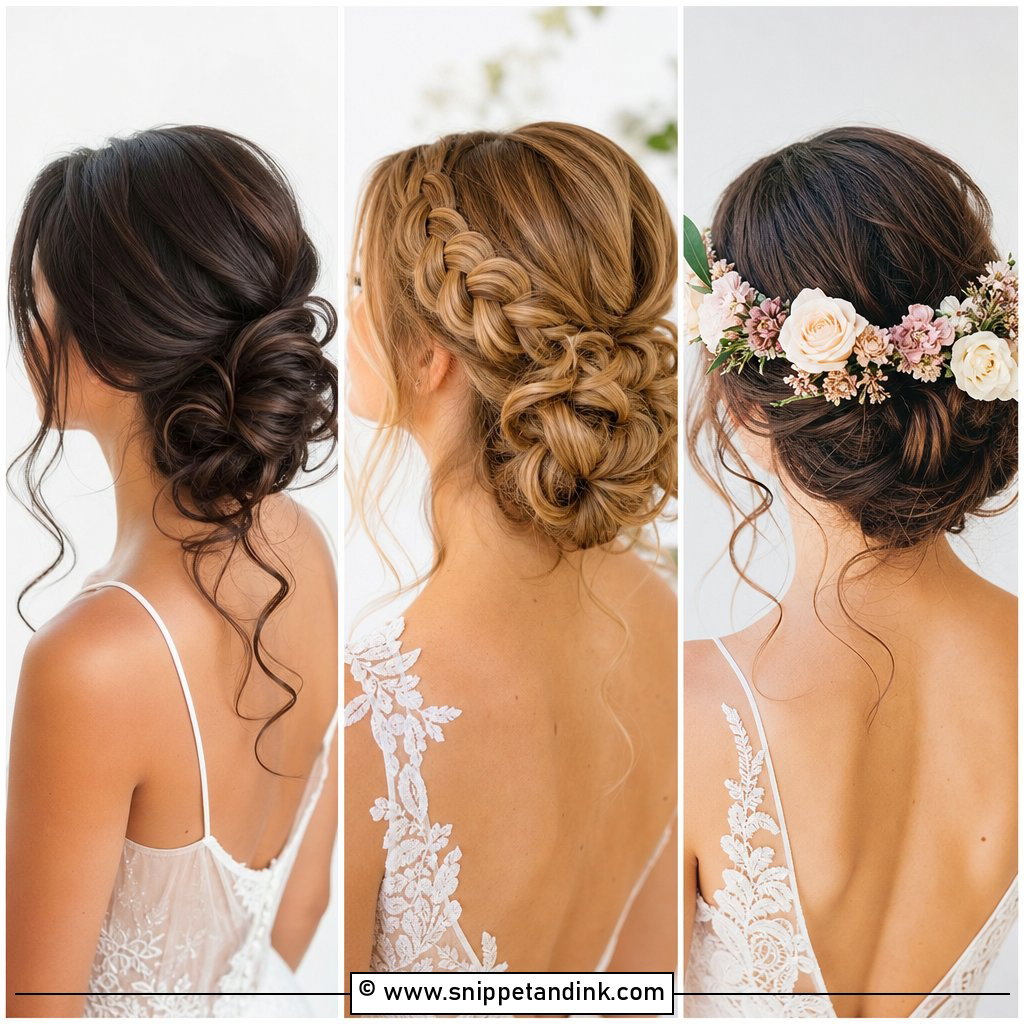
Done carelessly, a messy bun looks like you slept in it. Styled on purpose, a messy low bun can look incredibly classy, and the difference is that the outline stays controlled while the movement lives inside it. I curl everything, tease the crown lightly and pin sections in a loose, overlapping pattern, so it looks relaxed but every piece is secured. A sheer veil sits nicely above it, and it suits garden and beach ceremonies and softer gowns. Skip it for a black-tie ballroom, where it can look underdressed beside the setting.
5. Braided Bun Wedding Hairstyle
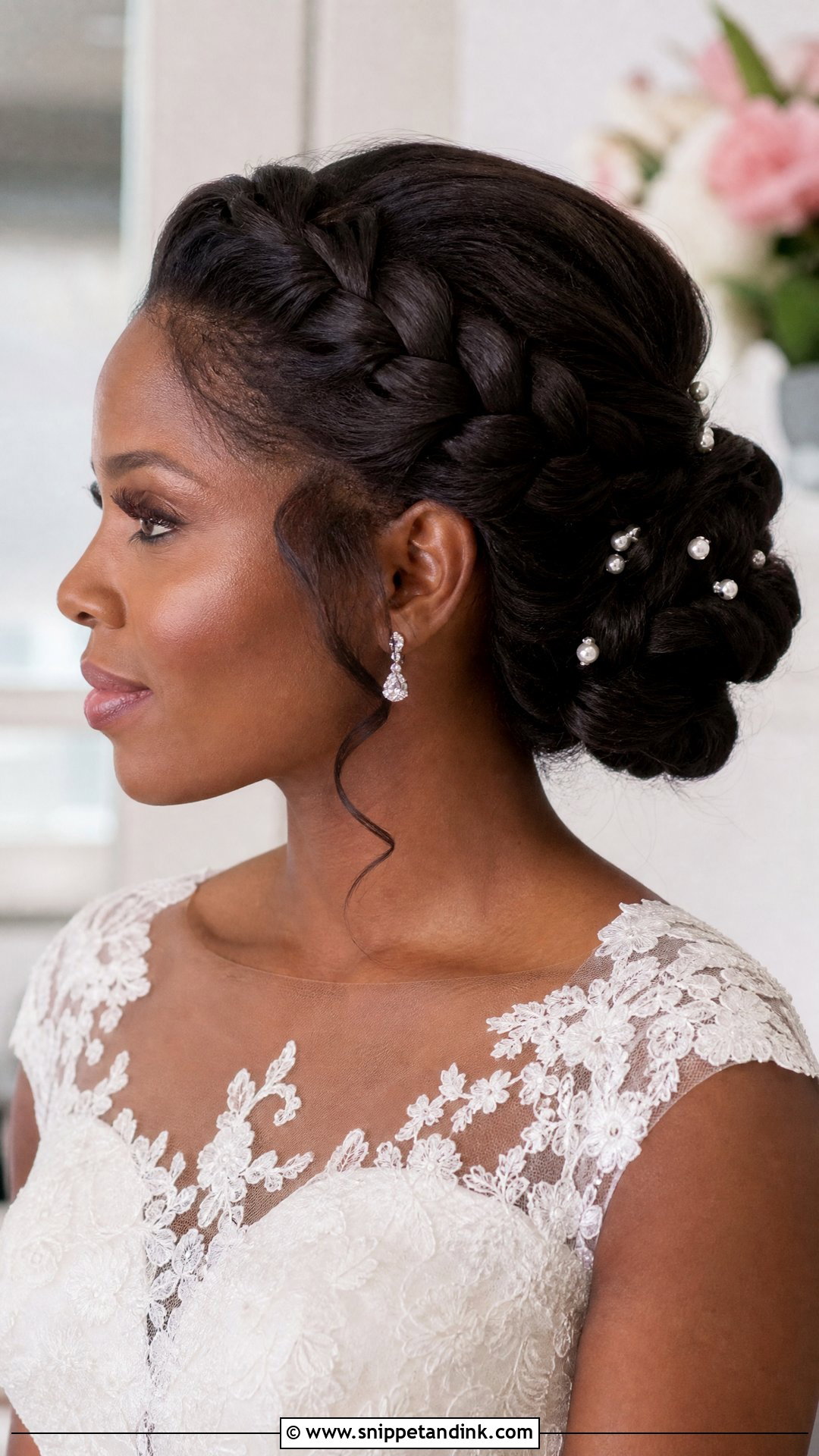
Hair that slips out of pins by mid-afternoon is usually the reason I suggest a braid. A braided bun holds layers in place, because each strand is locked into the plait before the bun goes up, so short layers that would normally escape stay tucked. The braid can wrap around the bun, cross through the crown or fold into the updo. I loosen it gently once it’s done so it feels soft rather than sporty. Tiny pearl pins or a few flowers can echo delicate details on the dress.
6. Twisted Bun Wedding Hairstyle
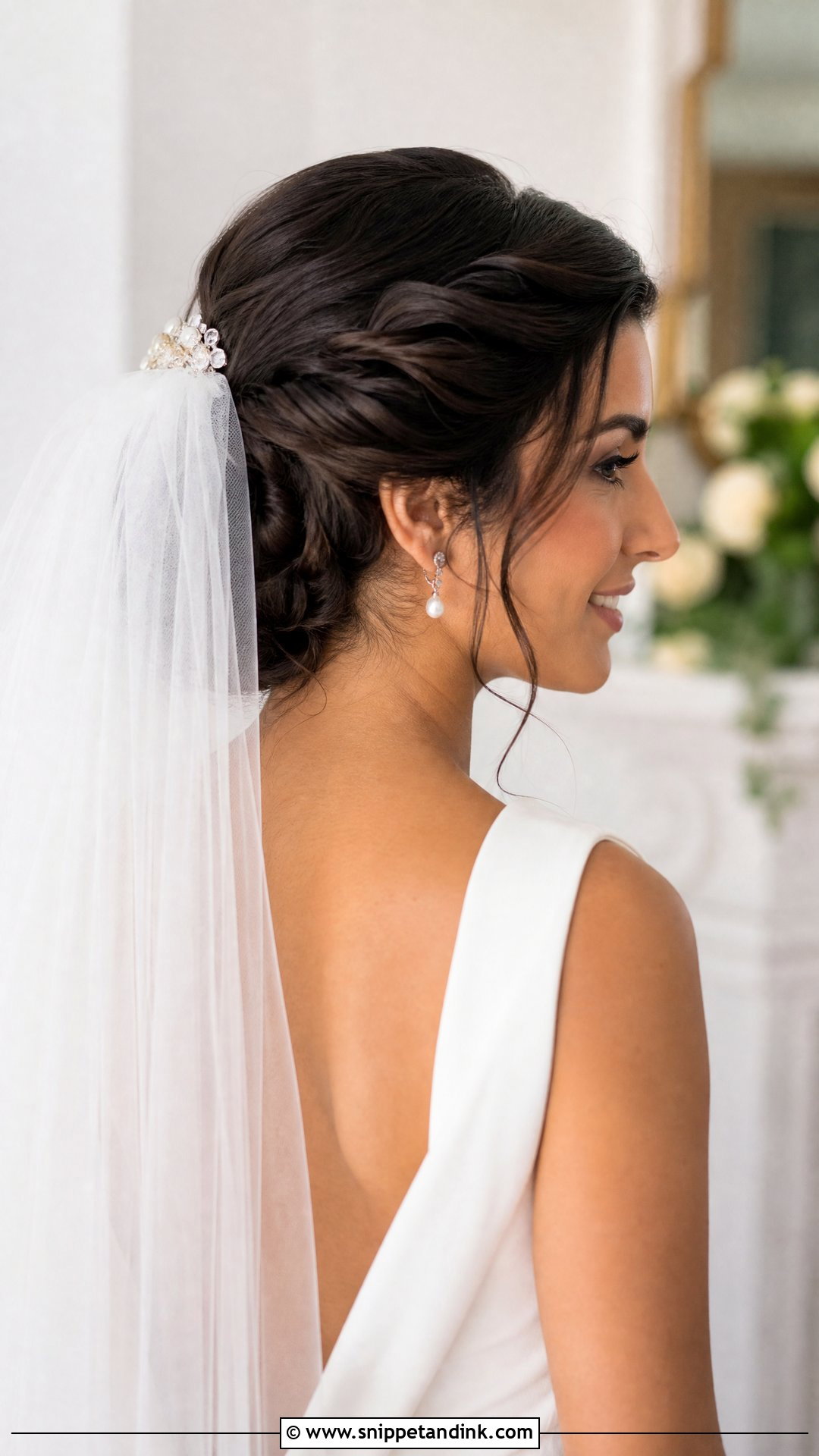
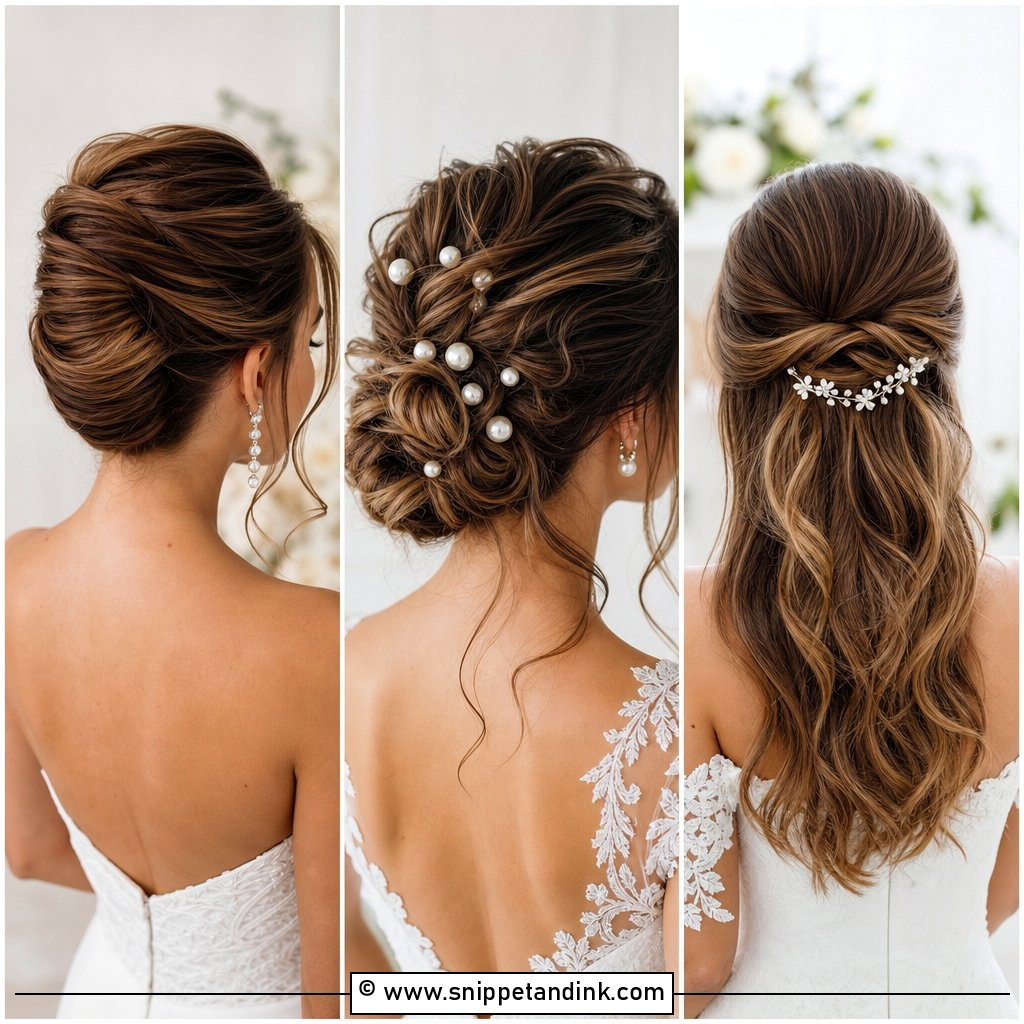
Twisting the hair in sections before pinning gives a bun dimension you can see from across a room, and it shows off colour especially well, whether balayage, highlights or a rich brunette. It sits between a sleek chignon and a textured updo, so it suits brides who find one too plain and the other too undone. Medium to long hair works best. The sections are twisted back and pinned into a low or mid bun, and the twists themselves give pins something to grip. Wear a veil tucked underneath or a comb placed above, decided at your trial.
7. Pearl Bun Wedding Hairstyle
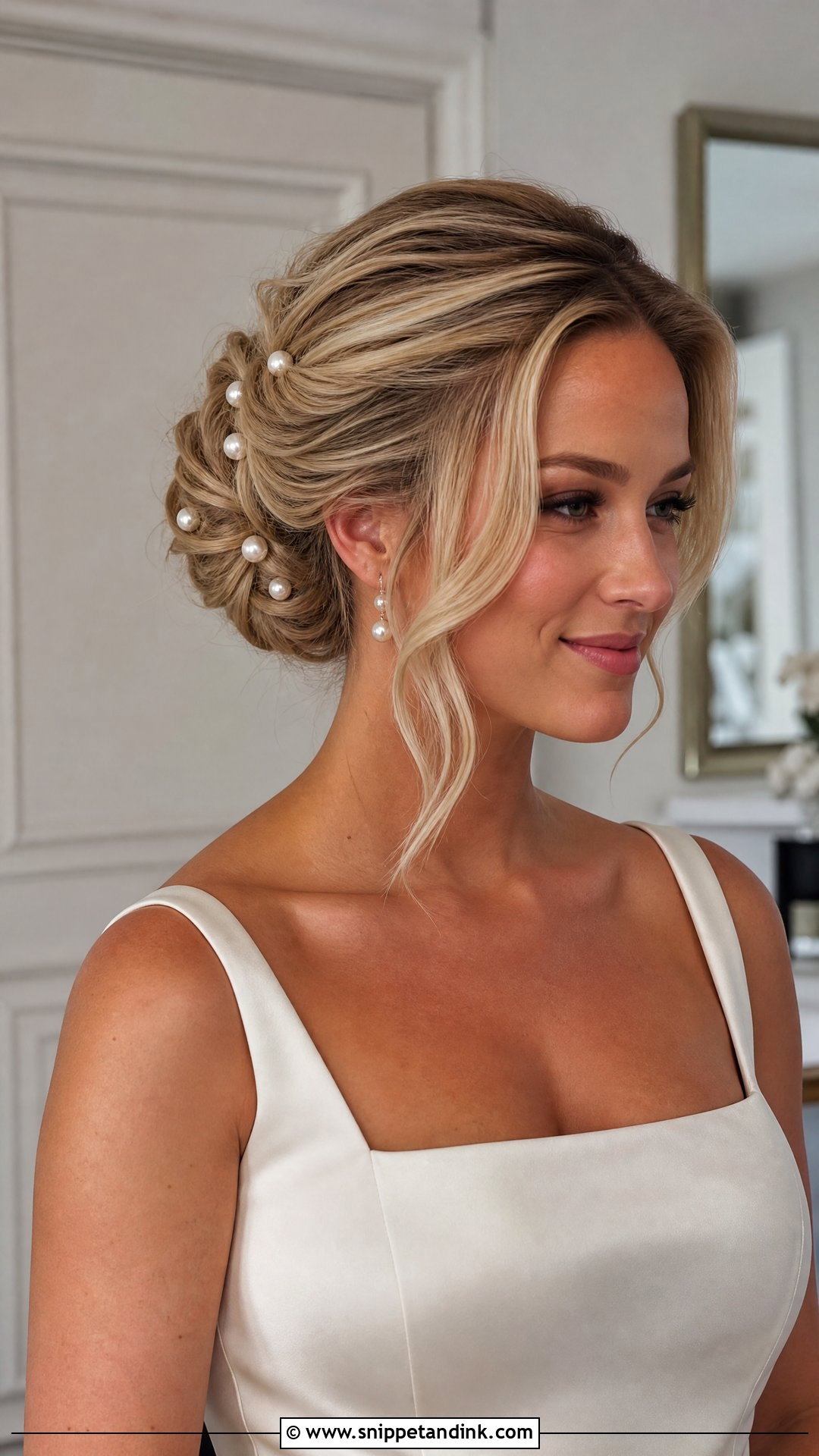
Pearls change a bun from pretty to bridal in about thirty seconds. The base can be sleek, textured, braided or twisted. A scatter of small pearl pins reads soft and romantic, while a single pearl comb feels more classic. If your dress already carries pearls, I go smaller in the hair and fewer, so the two don’t compete. Check the shade against your gown in daylight, as bright white pearls can look grey next to ivory. Satin, lace and minimal gowns all suit it, as long as the rest of your accessories stay quiet.
8. High Bun Wedding Hairstyle
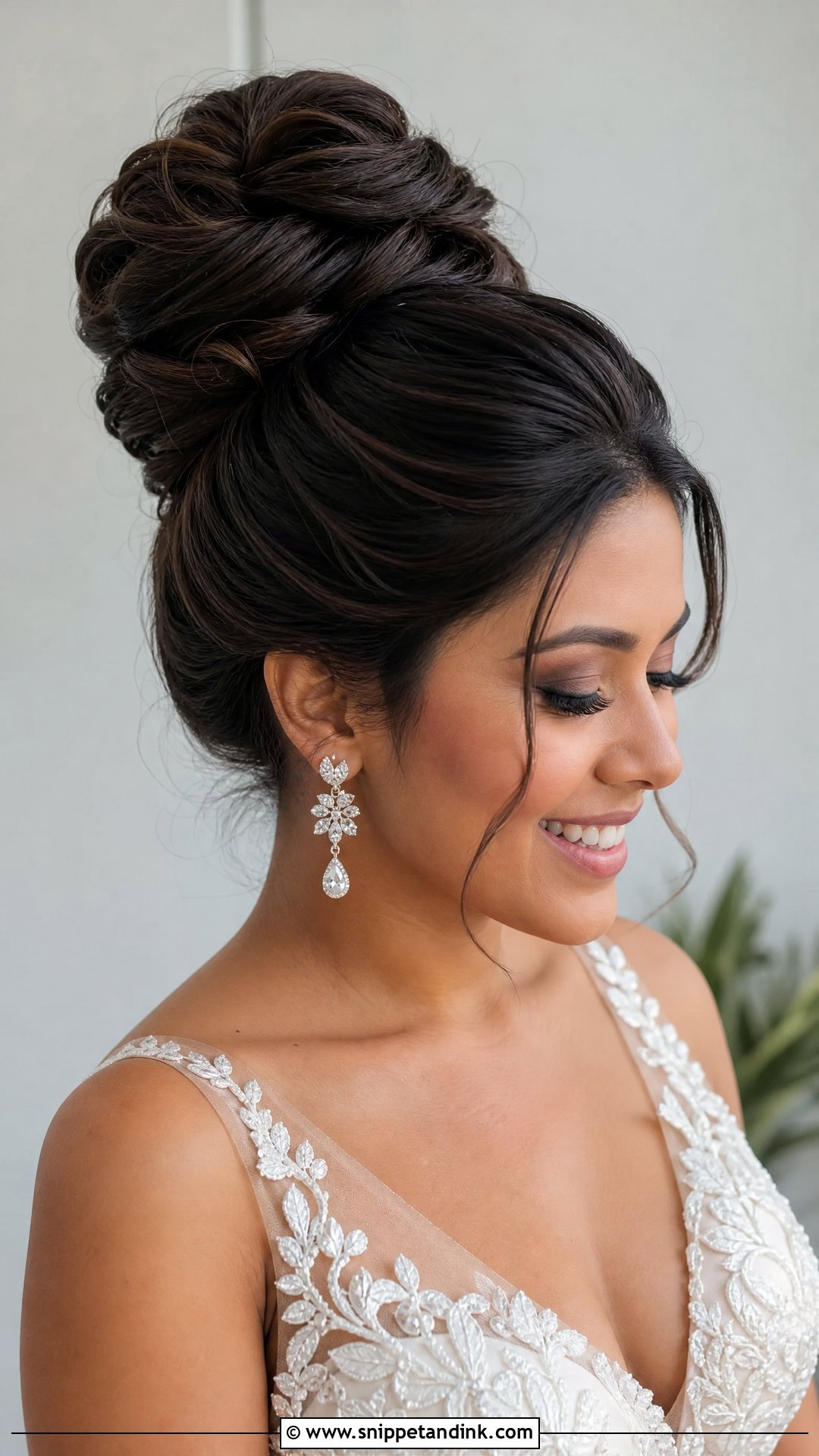
A high bun lengthens the neck and puts your cheekbones on show, which is why it reads formal and a little dramatic. It sits well with strapless gowns, bateau necklines and detailed bodices, and it keeps hair off the neck on a hot day. Smooth like a dancer’s bun or softer with wrapped sections, the placement is what makes or breaks it. I find the spot by looking at the bride in profile: the bun should continue the line from the chin up through the back of the head. Too high and it starts to look like a costume.
9. Ballerina Bun Wedding Hairstyle
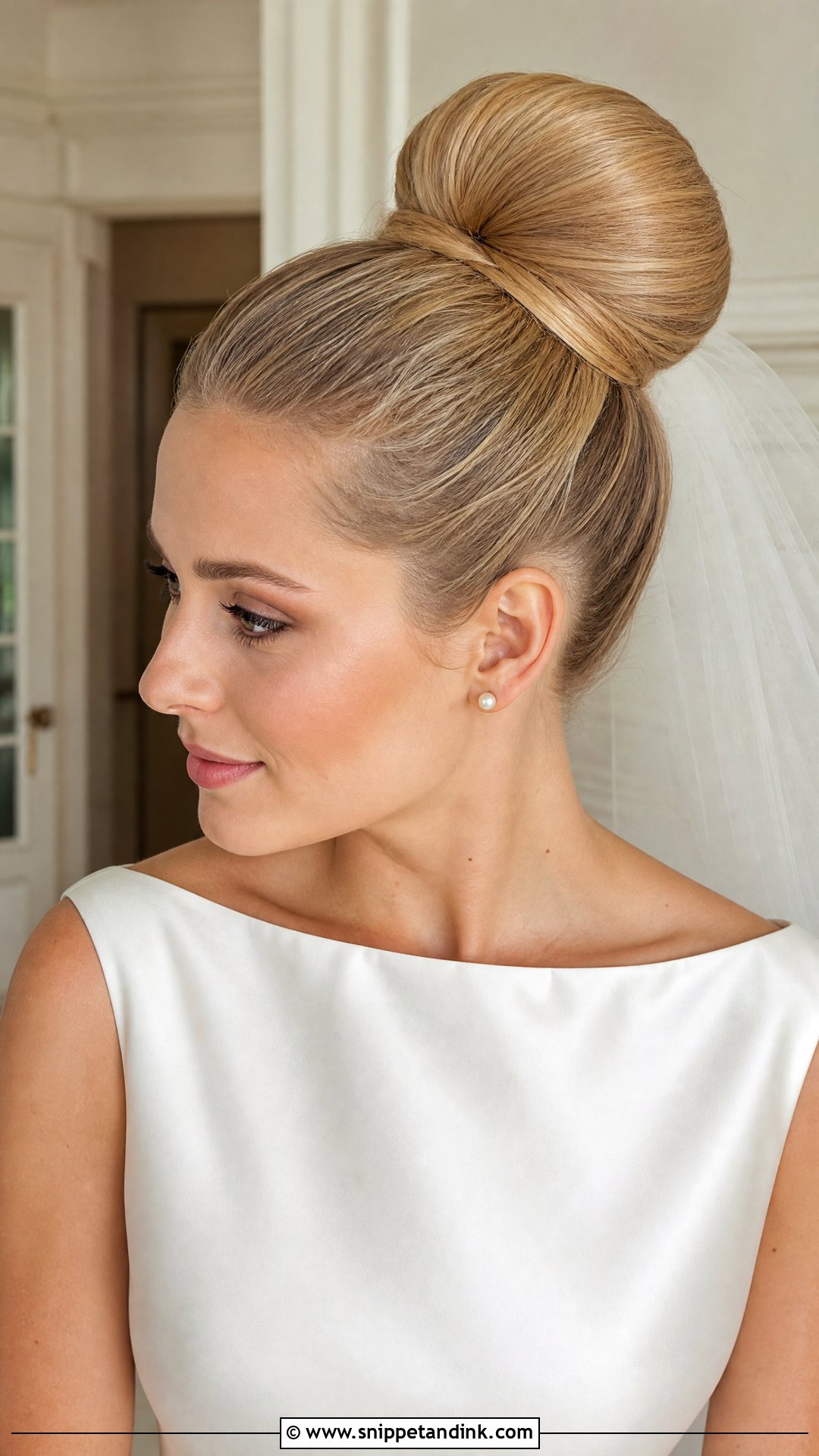
Round, smooth and perfectly placed, the ballerina bun is all about clean lines. It can sit at the crown or slightly lower, which feels gentler on brides who don’t love a lot of height. Simple gowns, pearl studs and classic makeup suit it, and a veil or headpiece sits neatly below it. Because there’s no texture to hide behind, the condition of the hair shows. I ask brides to book a gloss or a trim a week or two before, then prep with a smoothing product and finish with strong-hold spray.
10. Side Bun Wedding Hairstyle
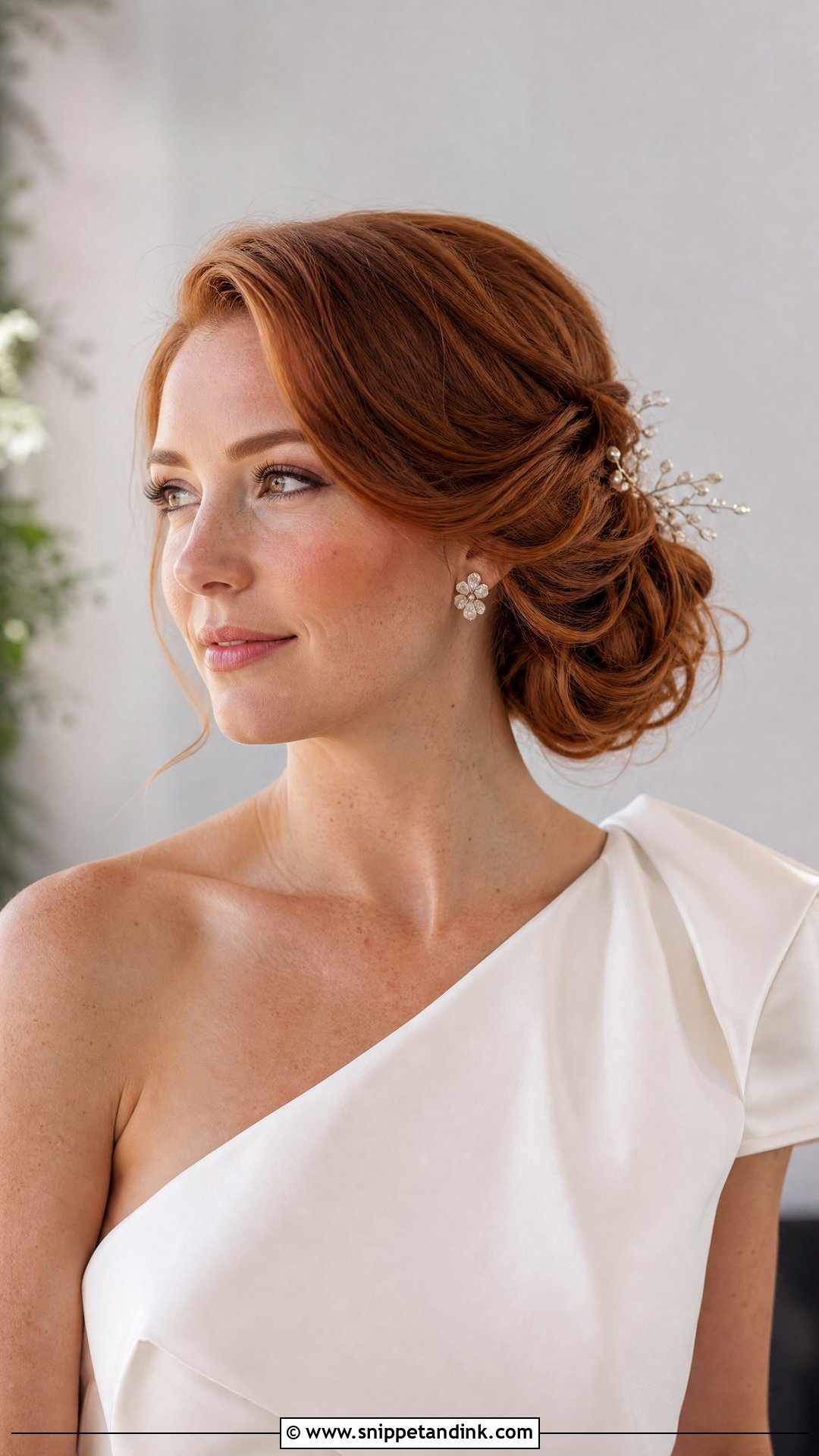
A side bun puts interest at the front of the picture rather than only at the back. It sits low near the jawline or nape, off to one side, and it suits side parts, soft waves and asymmetrical dresses. It can be smooth, twisted, braided or textured. Size is the thing I’m most careful with, because a side bun that’s too big pulls the whole face visually toward it. Choose the side opposite any one-shoulder strap, and think about which side of you the camera will see during the ceremony.
11. Curly Bun Wedding Hairstyle
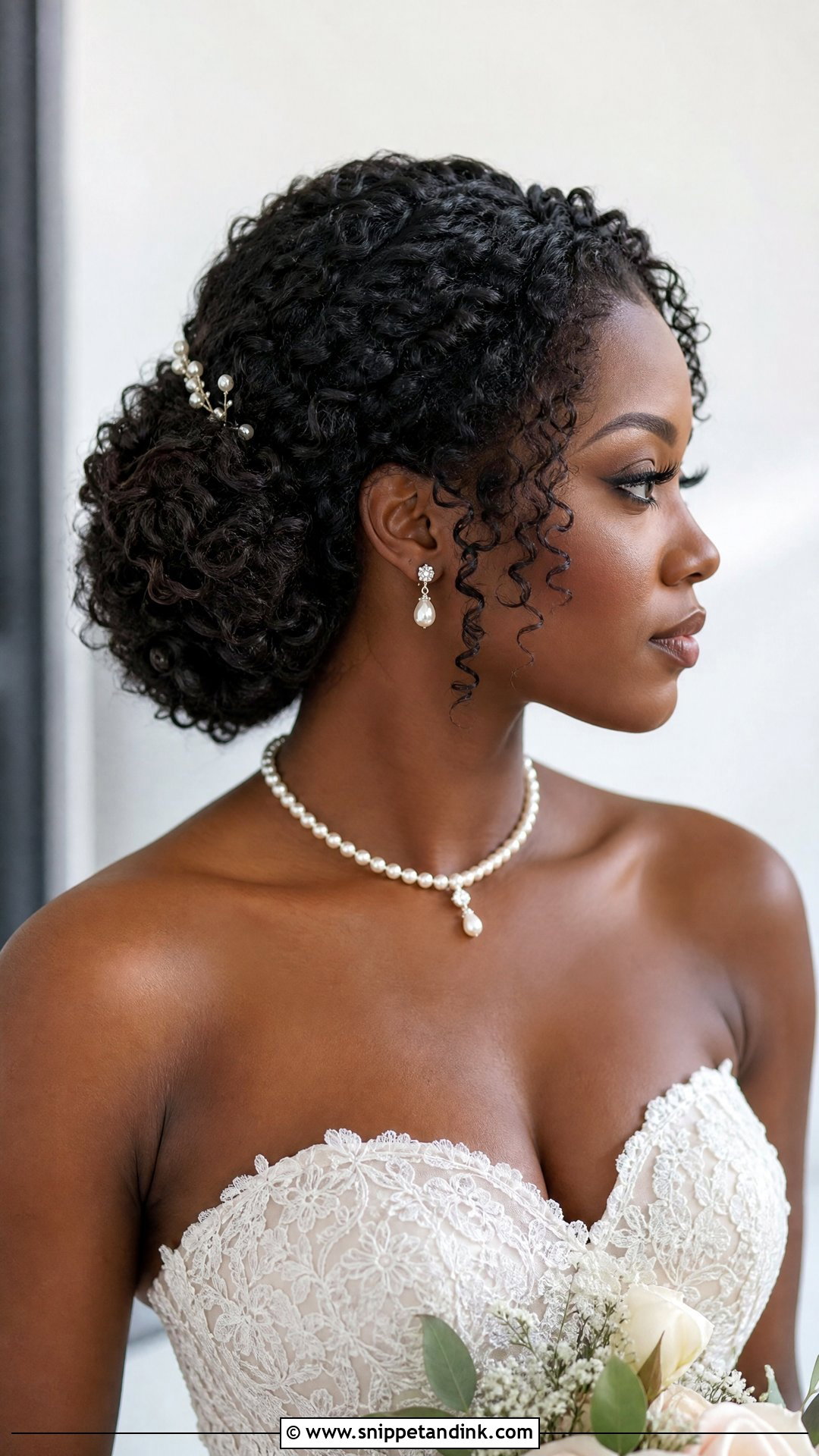
Curls make a bun with real shape. On a curly bun, I keep the pattern visible and gather it up low, mid or high depending on the dress and face. Products matter: a curl cream or light gel defines without stiffness, while heavy hairspray on curls dries them into frizz. I pin around the curls, not through them, so the texture keeps its spring. A few defined curls at the face keep it soft. It’s a polished way to wear your natural texture without hiding it.
12. Bun Wedding Hairstyle With Veil
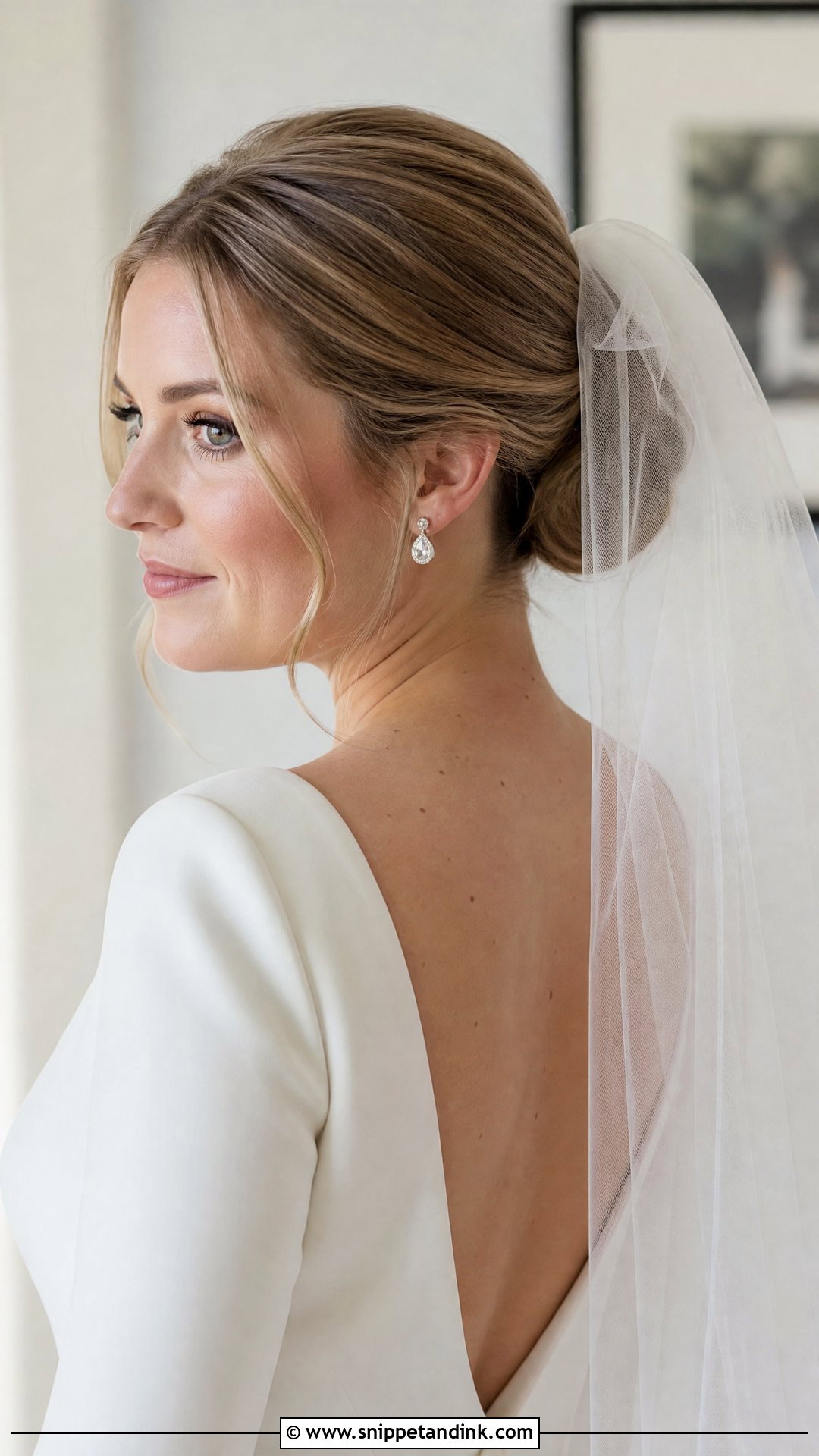
Plan the veil with the bun, not after it. A low bun gives a veil a strong base: pinned above for a traditional line, or tucked underneath for something softer. A high bun can carry a veil too, but the comb has to go below it and angled in, which needs testing at the trial. Bring the actual veil and any accessories to that appointment. Then take the veil out before you leave and look again, since that’s the hair you’ll wear for dinner and dancing. It should look finished on its own.
13. Bun Wedding Hairstyle With Flowers
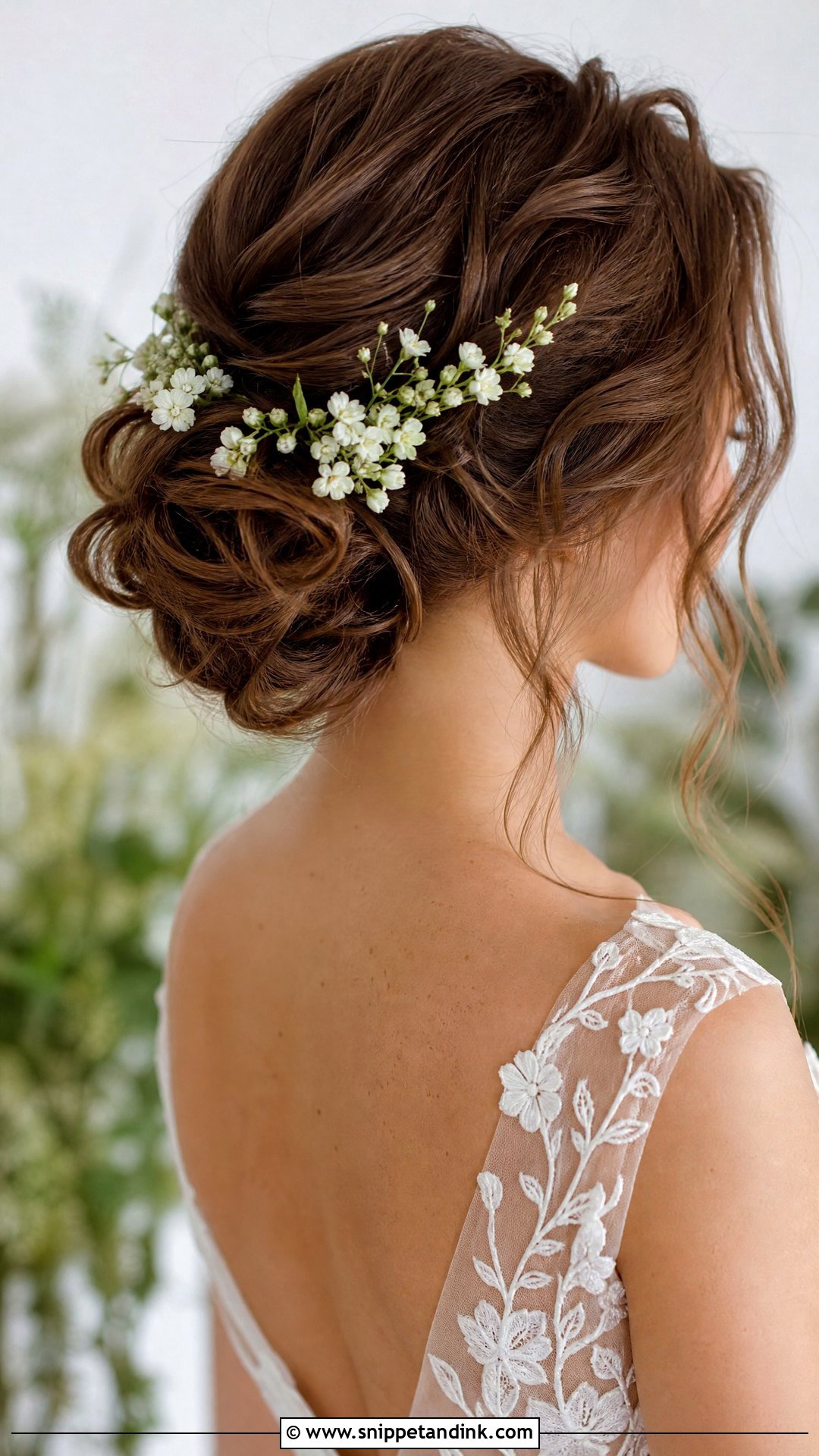
Flowers connect the hair to the rest of the day. Small blooms tucked around a low bun suit garden, spring and outdoor weddings; larger flowers can work too if they sit where they don’t crowd the face. They suit textured, twisted and loose buns best, because a sleek bun makes a flower look stuck on. Ask your florist for blooms that hold up out of water, wired or taped, and deliver them to your stylist rather than to the venue. Delicate petals can bruise and wilt by the reception, and good faux stems never do.
14. Bun Wedding Hairstyle For Long Hair
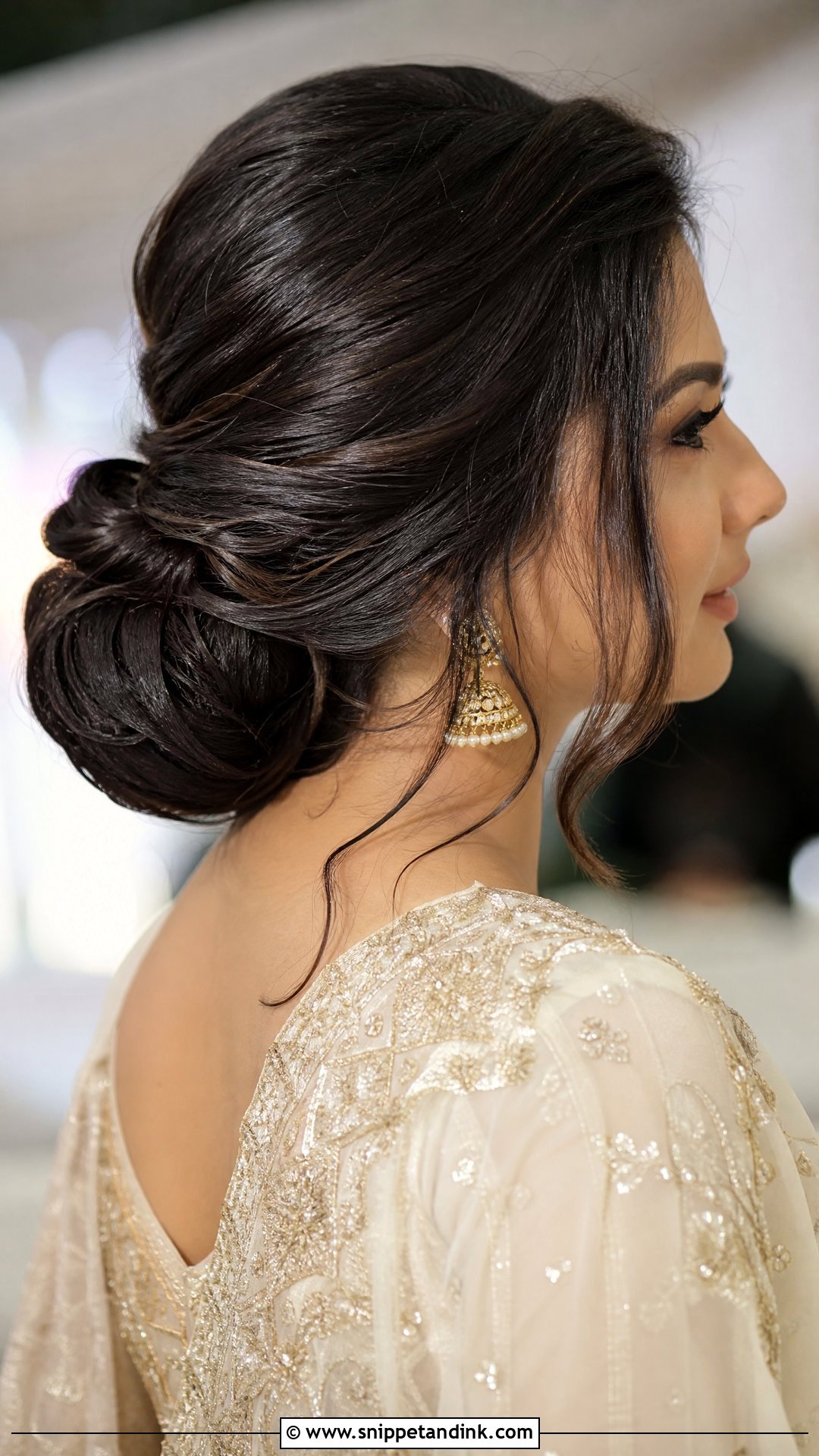
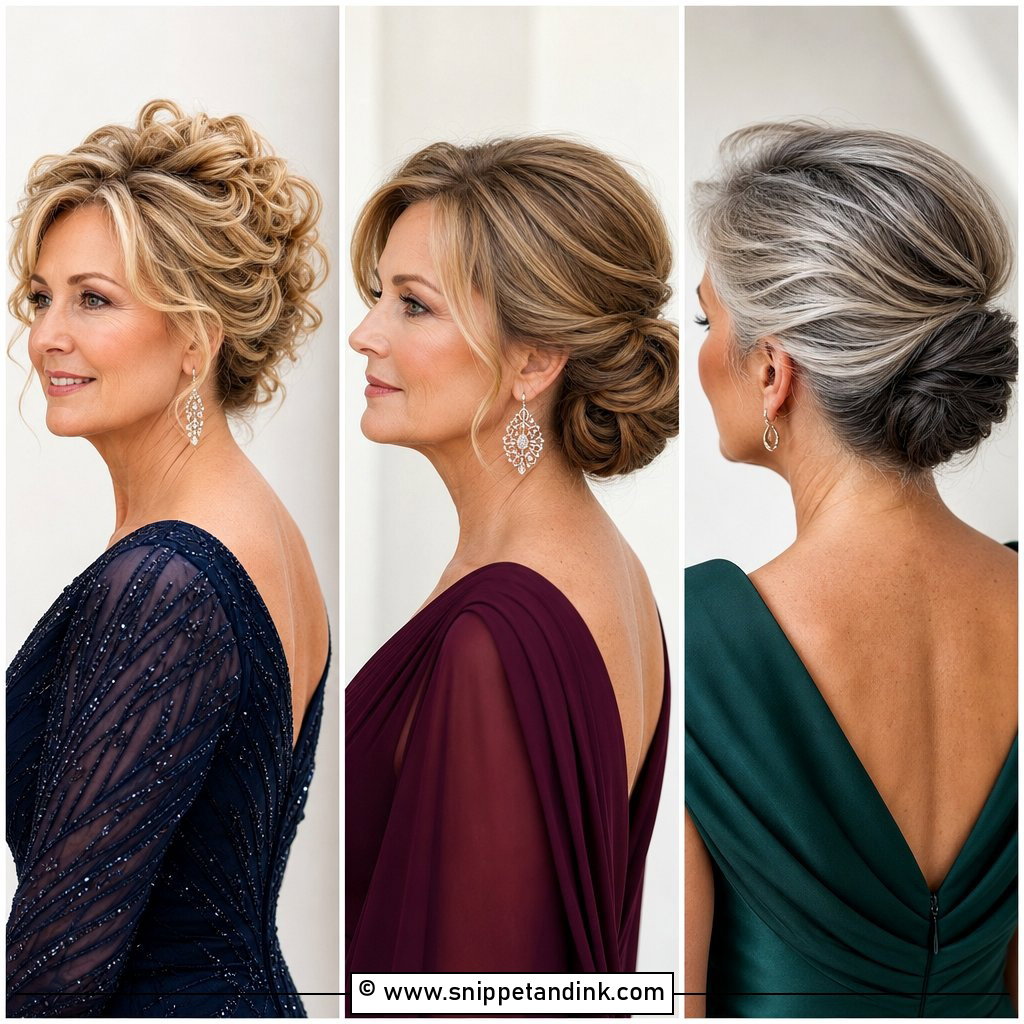
Long hair gives you a classy bridal bun with real volume, wrapped, twisted, braided or built into a large chignon. Weight is the challenge. A metre of hair twisted into one knot pulls on its pins all day and sags by the speeches. I build long-hair buns in sections and layers, each one pinned on its own, so no single pin carries the whole load. That also keeps it comfortable on the scalp. Soft crown volume and a pair of loose pieces at the face finish it.
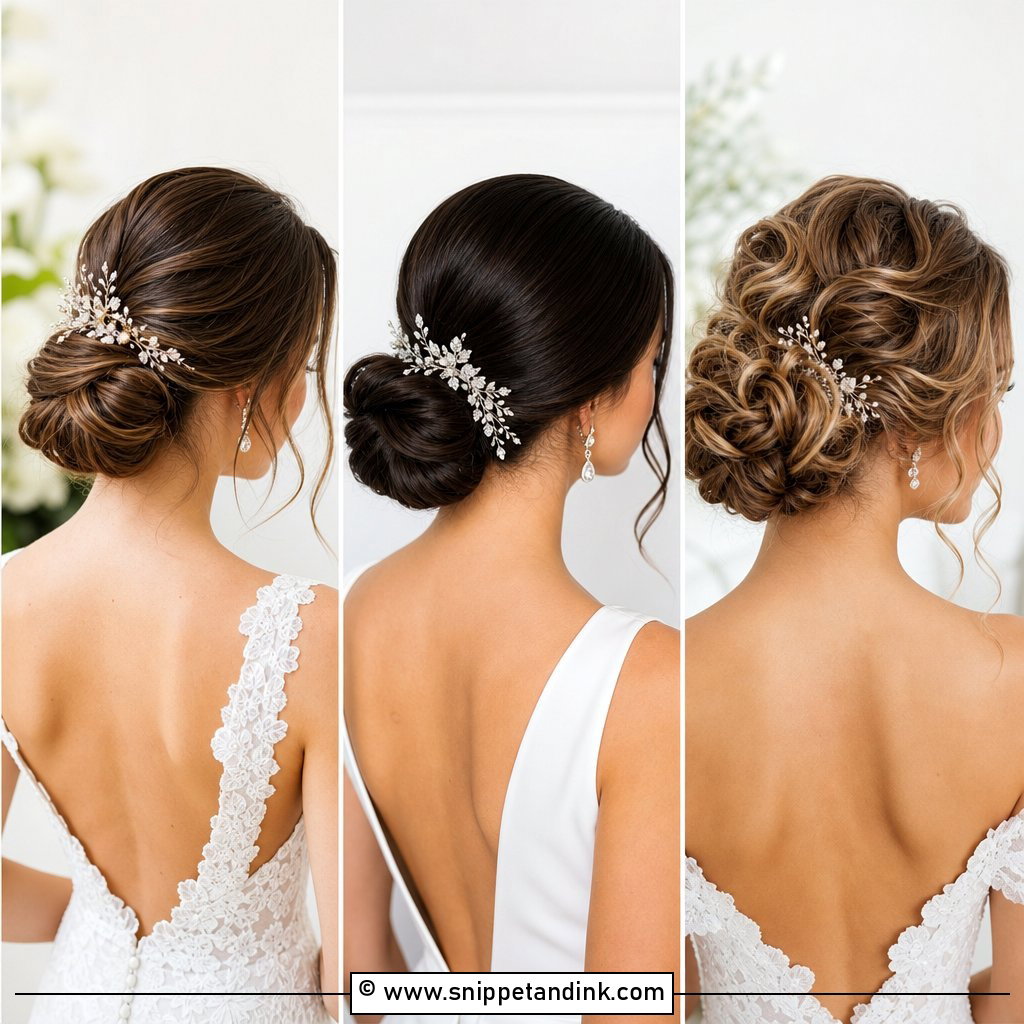
15. Bun Wedding Hairstyle For Thin Hair
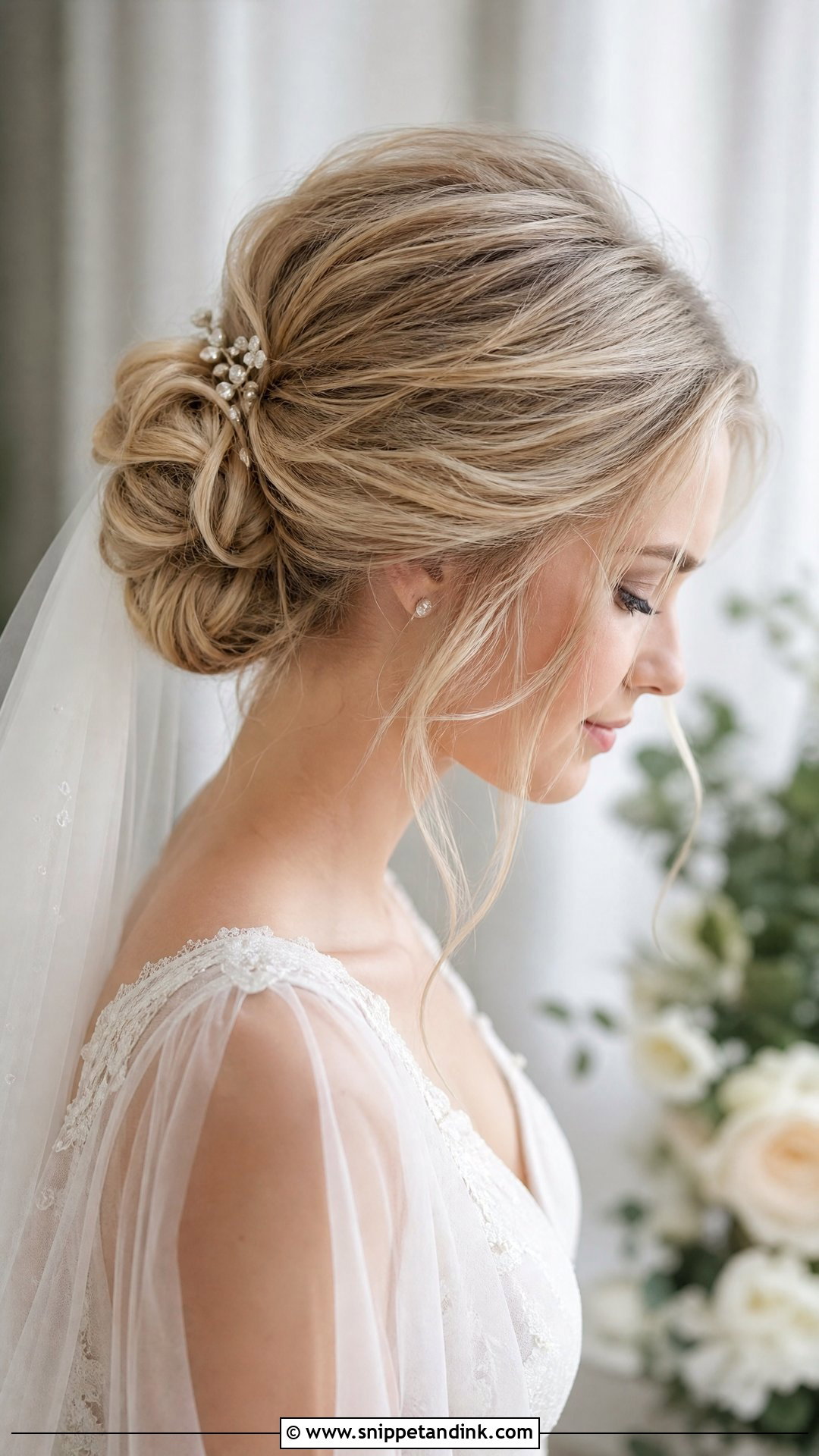
Fine hair can make a full bun with the right prep, and I’d say this is where a skilled stylist matters most. Texture spray, light backcombing, soft waves and a small hidden padding or clip-in pieces do the heavy lifting. Low chignons, twisted and textured buns all add fullness without forcing it. I’d avoid very slick styles unless you want a minimal look, since flattened fine hair can show the scalp through it in flash photos. A comb, pearl pins or a veil add visual weight too. The goal is fullness that looks like your own hair.
Taking It Down at Midnight Without Tearing Your Hair
Nobody thinks about the end of the night until they’re standing at a hotel mirror with forty pins in their head. A wedding bun is built with backcombing, spray and a lot of pins, and pulling it apart roughly can snap more hair than the whole day of wear.
- Ask your stylist roughly how many pins went in, and where the anchor pins sit. It saves you hunting.
- Remove every pin before trying to let the bun fall. Feel slowly section by section, starting from the bottom of the shape.
- Don’t brush. Teased, sprayed hair tangles into knots if you drag a brush through it dry.
- Work a generous amount of conditioner or a detangling oil through the hair, then finger-comb from the ends upward.
- Wash it out properly in the morning. Sleeping in heavy spray dries the hair and leaves the scalp itchy.
If you’re leaving for a honeymoon the next day, pack a wide-tooth comb and a small bottle of conditioner in your overnight bag. I always tell brides to put them in there the week before, because nobody remembers on the night.
Low, High or Off to One Side?
Buns earn their place on wedding days because they stay put and suit nearly every dress. Each version here, from a sleek low knot to a soft textured chignon, sets a different mood. Your neckline, veil, texture, face and venue decide which. Book a trial, bring every accessory you plan to wear, and look at the bun from the front, side and back before you commit. A good bun feels comfortable on your scalp, looks balanced from every angle and still looks polished in the last photo of the night.
You'll Like These Ideas:


Leave a Reply