
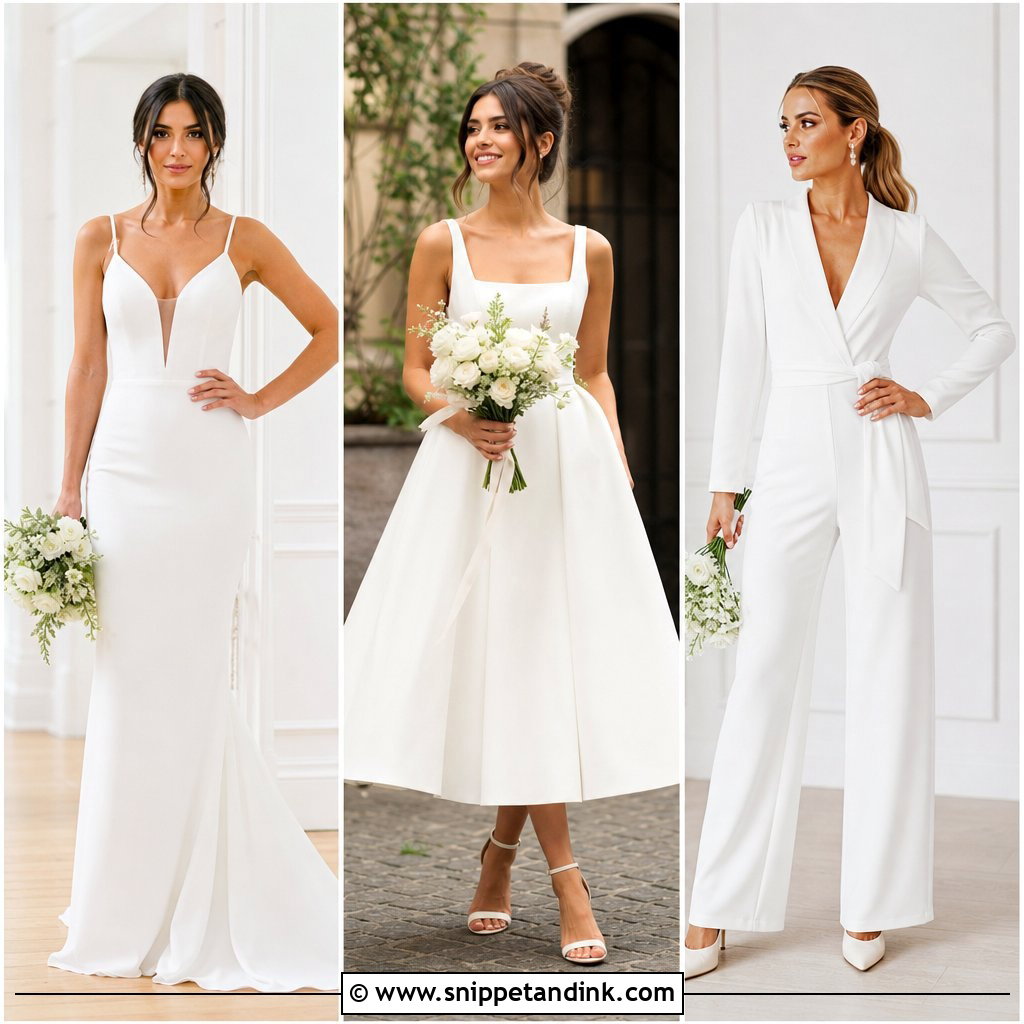
Most wedding gowns are cut for a bride several inches taller than five foot three, standing in heels. So when a petite bride steps into a sample, the waist sits low, the straps gape and the skirt pools on the floor, and she decides the style doesn’t suit her when really the proportions just haven’t been adjusted. What actually flatters a shorter frame is length created through the neckline, waist placement, skirt shape and hem. A-line, sheath, fit-and-flare, empire waist, tea-length and column shapes do this well, and details like a V-neck, vertical seams, fine lace and a scaled-down train help. The aim isn’t to look taller at any cost. It’s to look balanced, and the 25 dresses below show how.
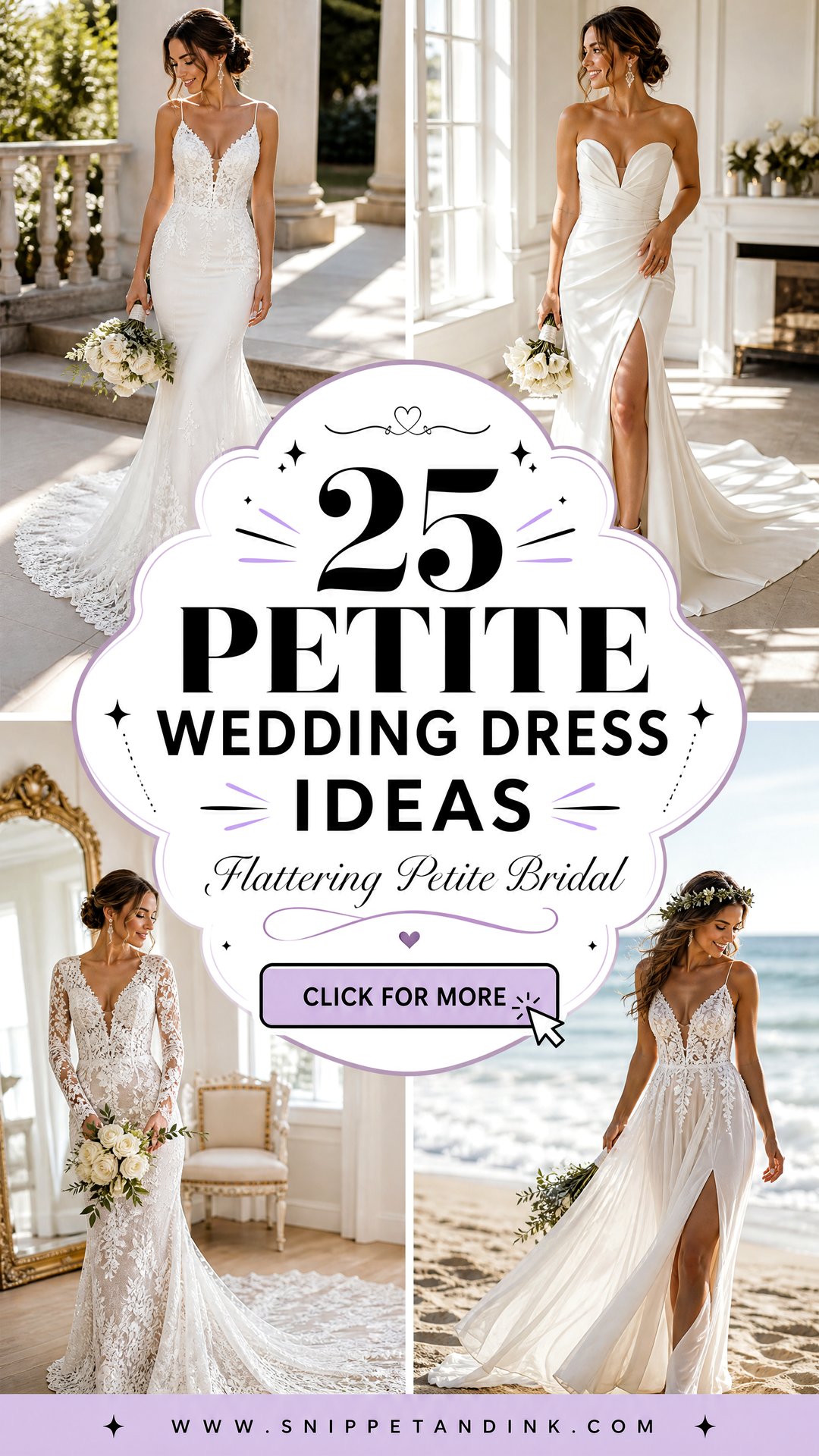
What a Seamstress Changes on a Gown Cut for a Taller Bride
Hemming is only the start. On most petite brides I see the same handful of alterations, and knowing them before you shop helps you judge a sample that doesn’t fit yet.
- Straps shortened, which raises the bust and the waist seam with it.
- Bodice length taken up, so the waist sits at your waist and not on your hips.
- The hem raised, sometimes from the waist instead of the bottom so a lace or horsehair edge isn’t lost.
- The train shortened in proportion, since a long train on a small frame overwhelms it.
- Sleeves taken up from the shoulder or cuff.
In the boutique, ask the consultant to clip the back, fold the hem up to your ankle and hold the waist where it will sit after alterations. A gown that looked wrong pooled on the floor can look completely different once you see it at your real proportions, and that two-minute adjustment saves a lot of good dresses from being rejected.
Some designers offer petite or shortened lengths at order. Ask, because a gown made shorter from the start saves alterations. Either way, plan for at least two fittings, and buy your shoes before the first one so every measurement is taken at the height you’ll be on the day.
1. Petite A-Line Wedding Dress
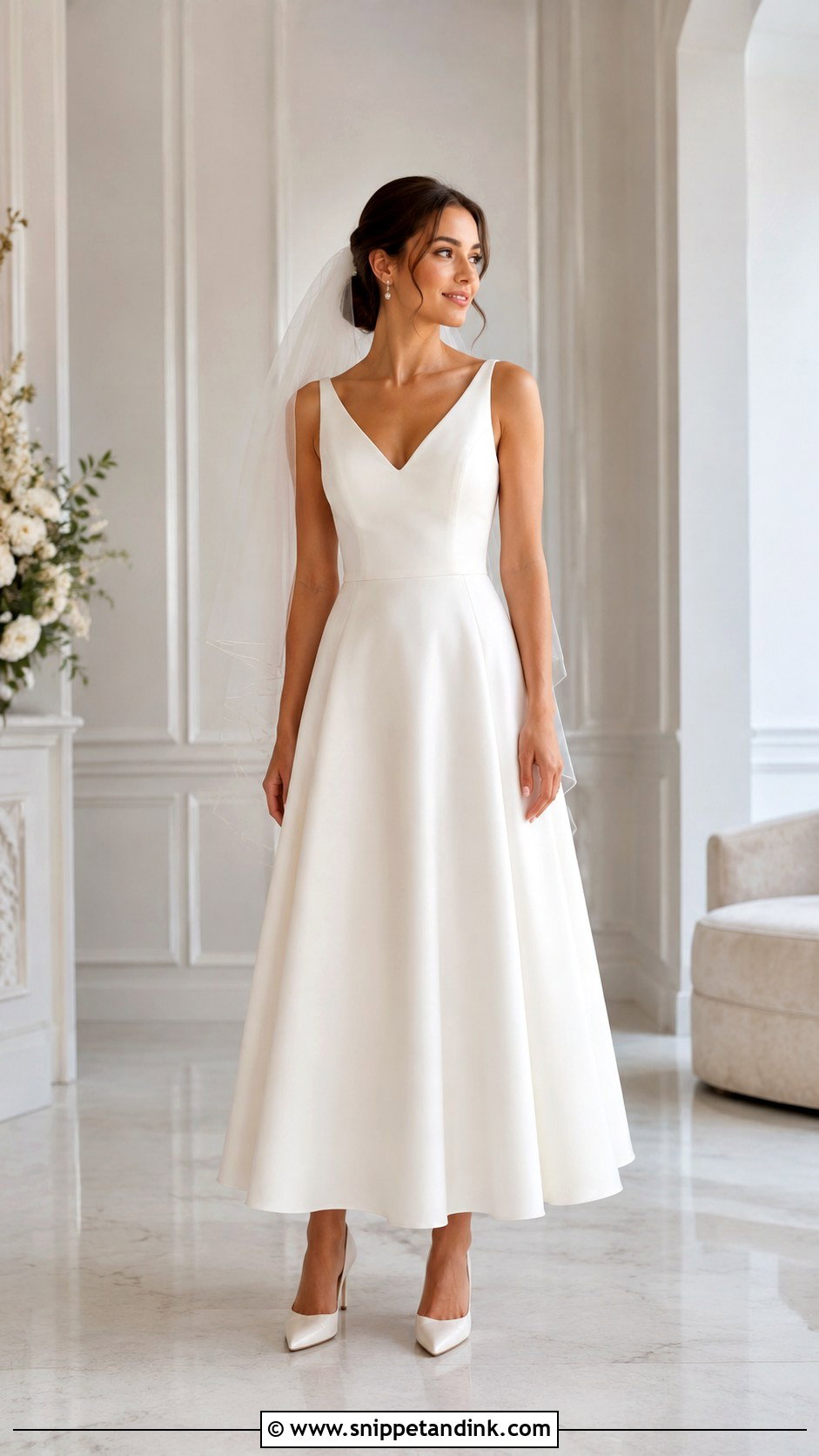
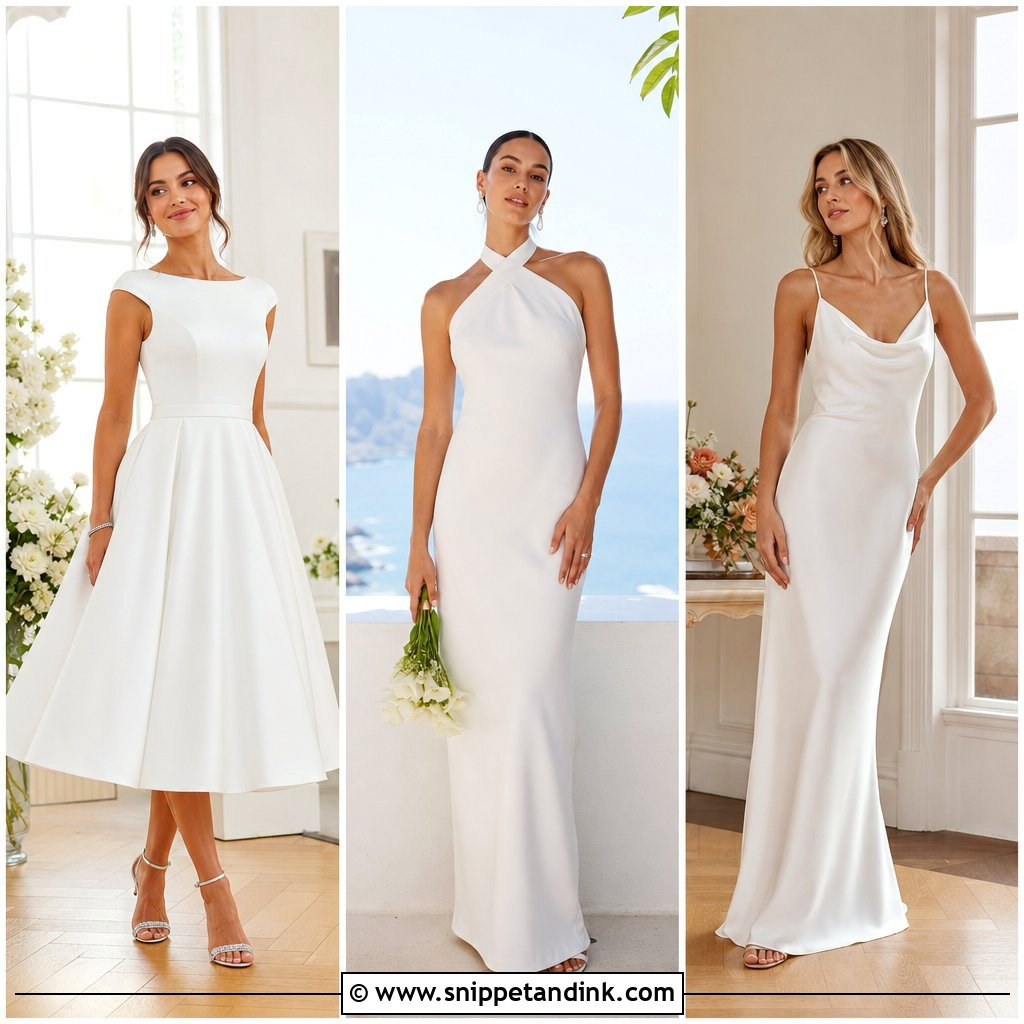
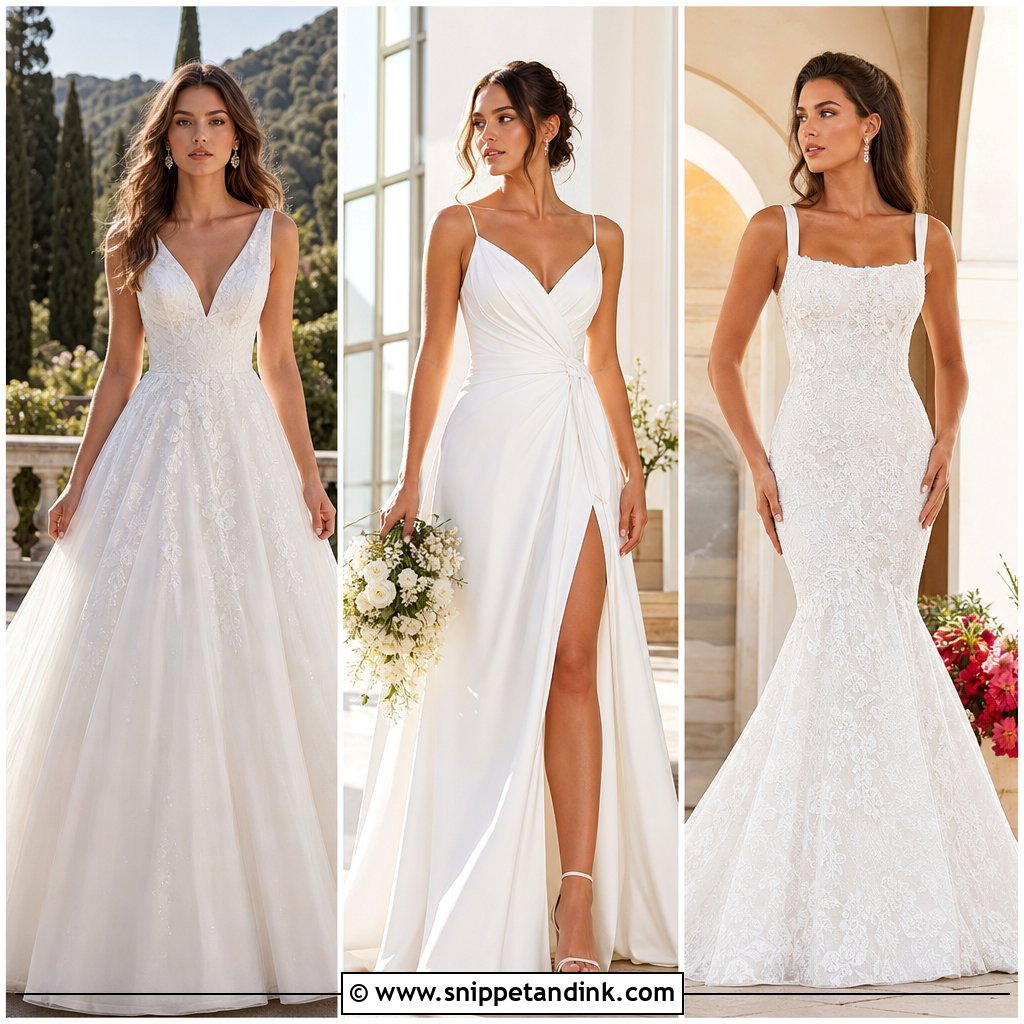
The A-line is where I start most petite brides, because it gives shape without much risk. The fitted bodice marks the waist and the skirt falls away in a soft vertical line. Keep the skirt in chiffon, organza, tulle or soft satin; a heavy satin A-line on a small frame starts to look like a bell. If your torso is short, a waist seam raised slightly above your natural waist makes the legs read longer. Pointed-toe heels, a simple veil and delicate earrings finish it for a garden, hotel or classic indoor wedding.
2. Petite Sheath Wedding Dress
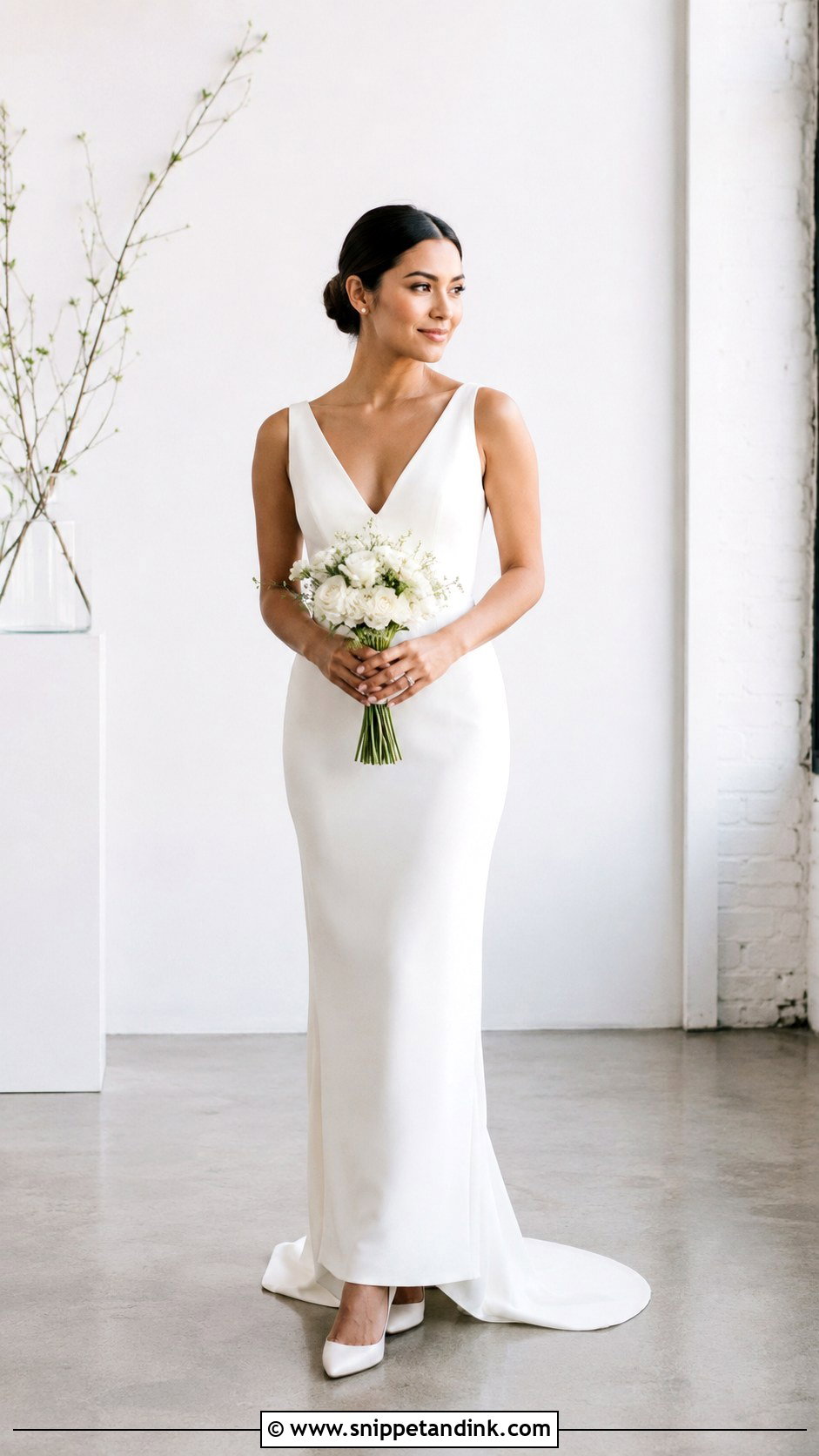
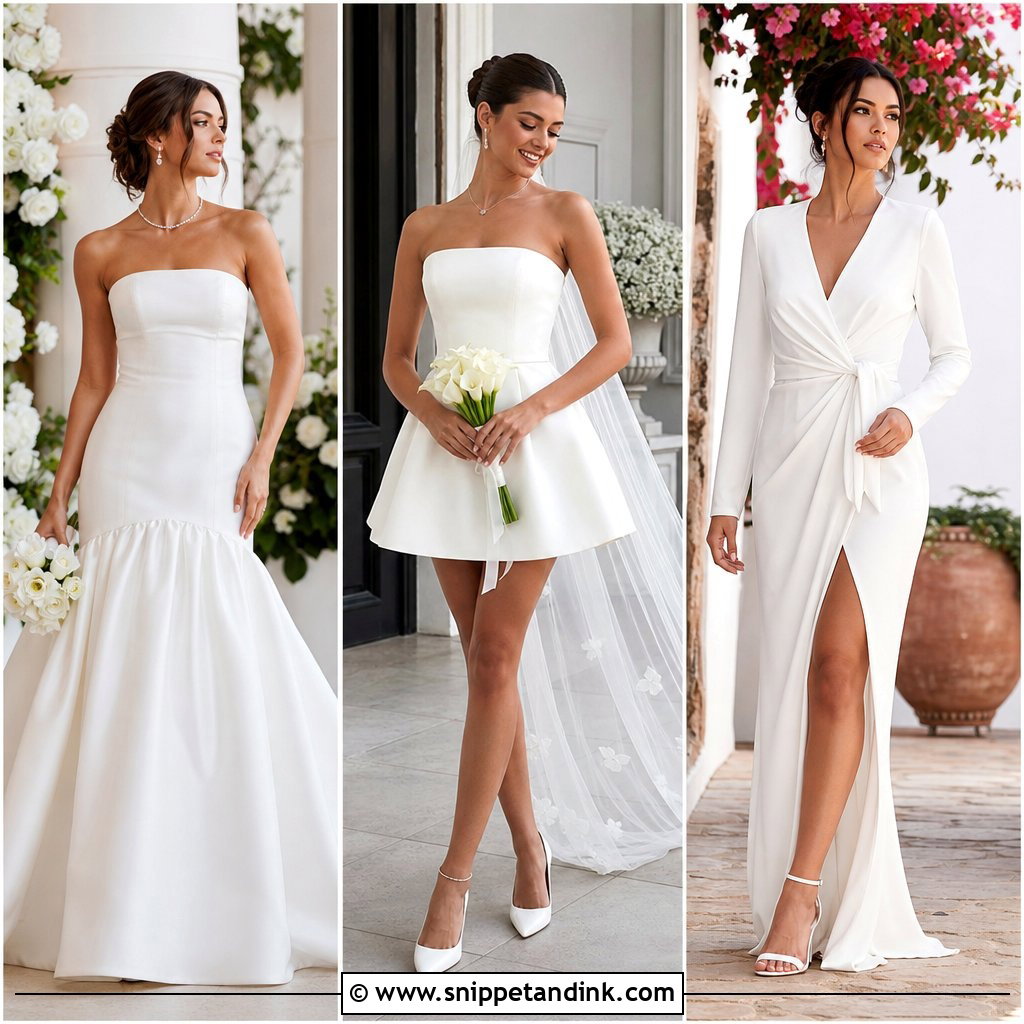
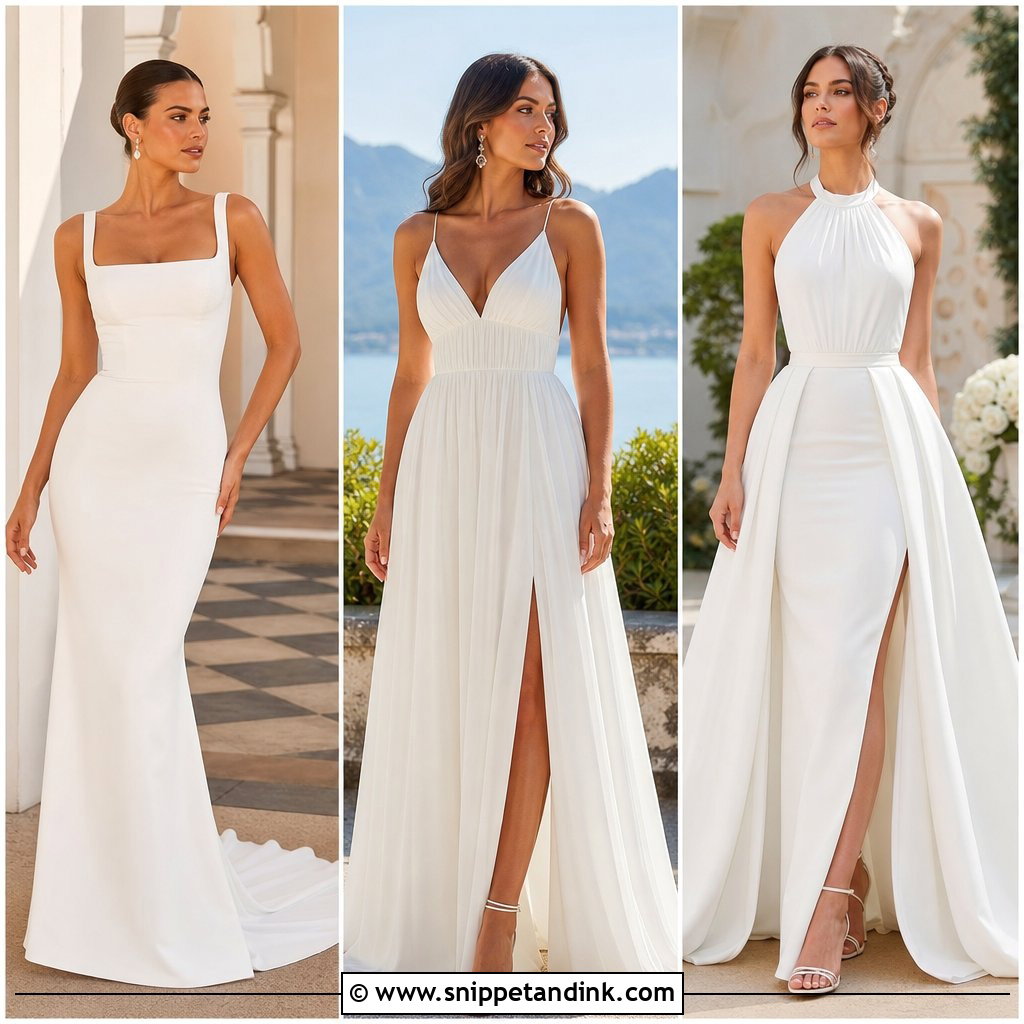
A sheath follows the body from neckline to hem in one unbroken line, which is exactly what a shorter frame needs. The fabric decides whether it works. Crepe, silk, satin and soft stretch fabrics skim; anything stiff stands away from the body and adds width. A V-neck, square neck or strapless neckline keeps the top open. Sheaths are also among the easiest gowns to hem, since there’s no train shape to protect. Barely-there heels, a low bun and a small bouquet keep it clean.
3. Petite Fit And Flare Wedding Dress
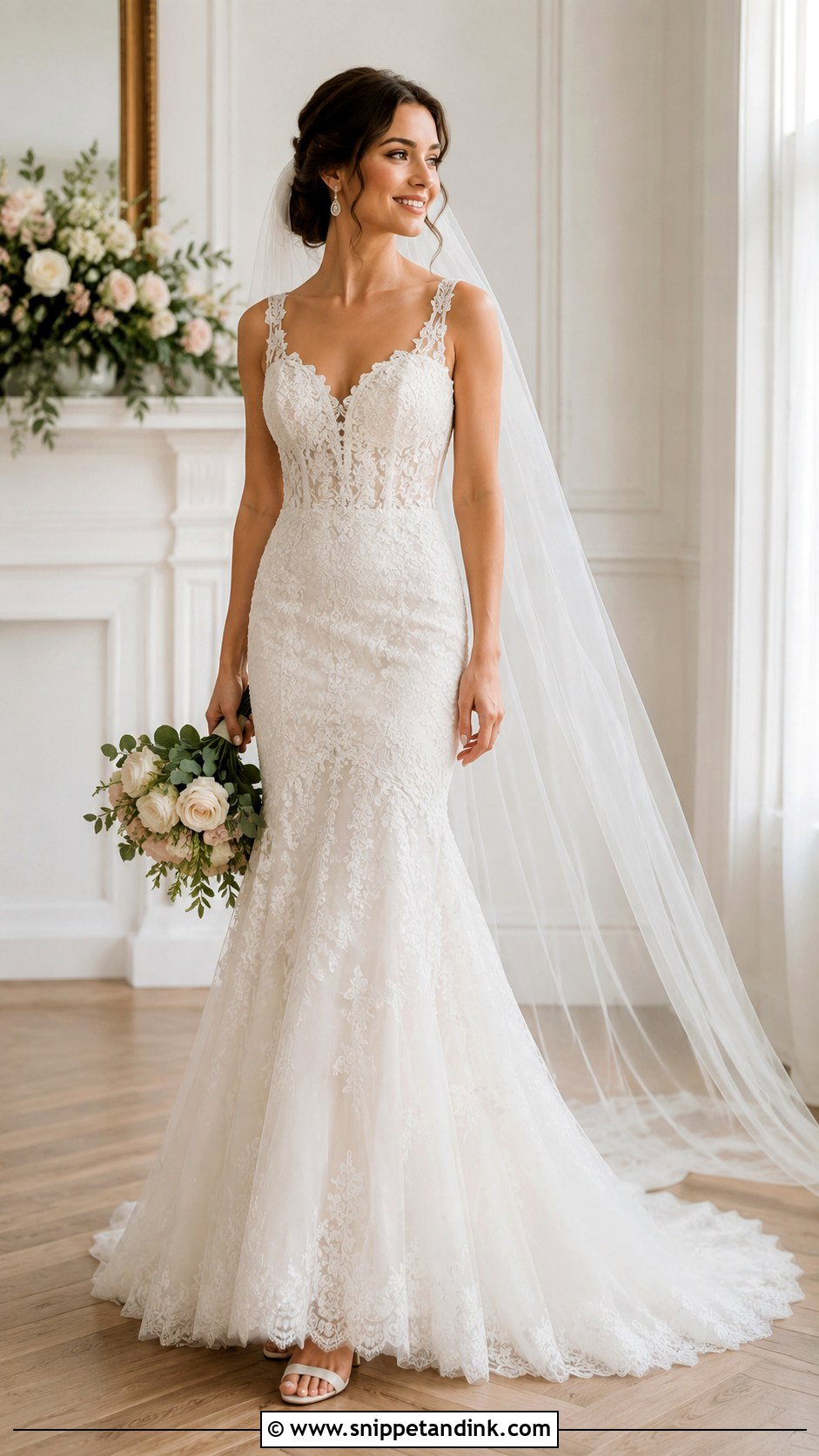
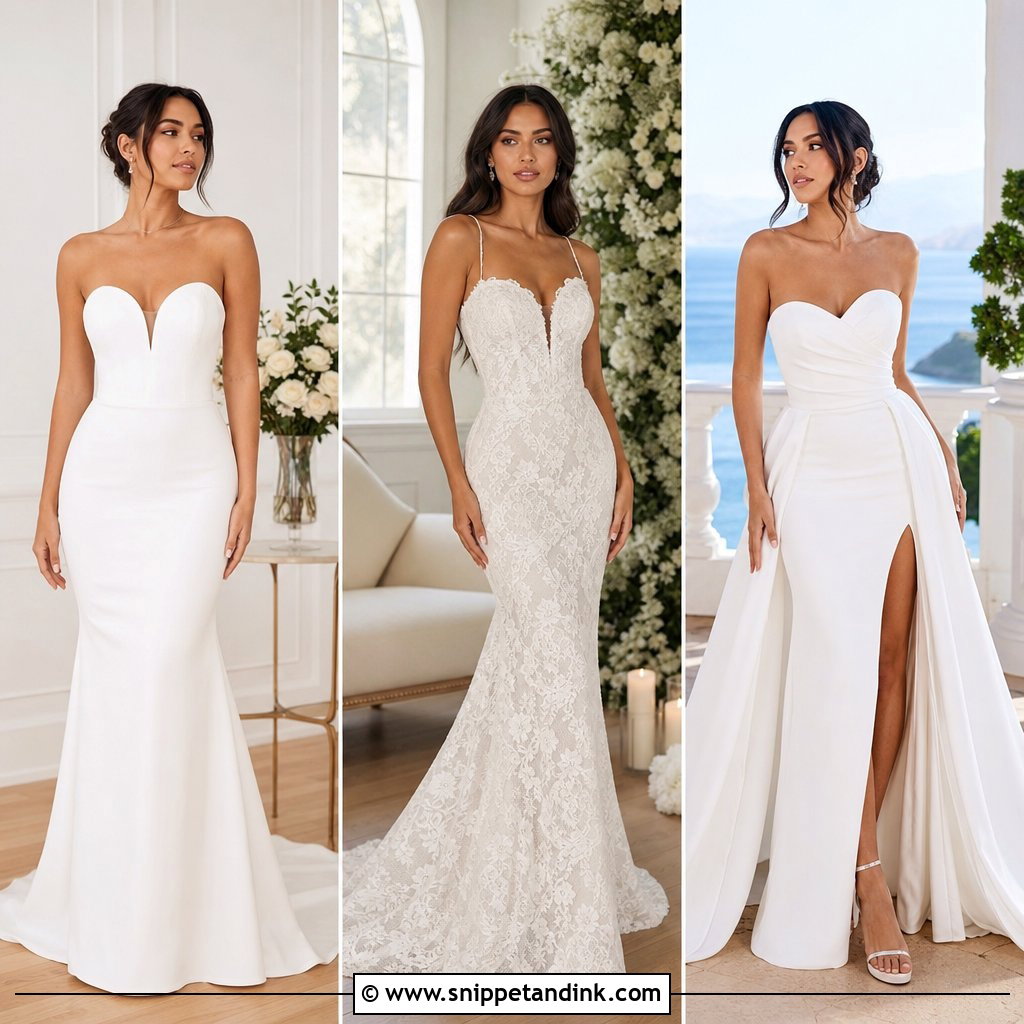
With a fit and flare, the flare point is everything on a petite bride. It hugs the bodice and hips and opens around the lower thigh or knee, and if that opening starts too low, the legs look shorter. I usually pin the flare a little higher than the sample at the first fitting and let the bride see the difference in the mirror. Vertical lace, clean seams or minimal beading guide the eye along the body. Medium-height heels, drop earrings and a fitted veil suit it, and it’s a gentler alternative to a full mermaid.
4. Petite Mermaid Wedding Dress
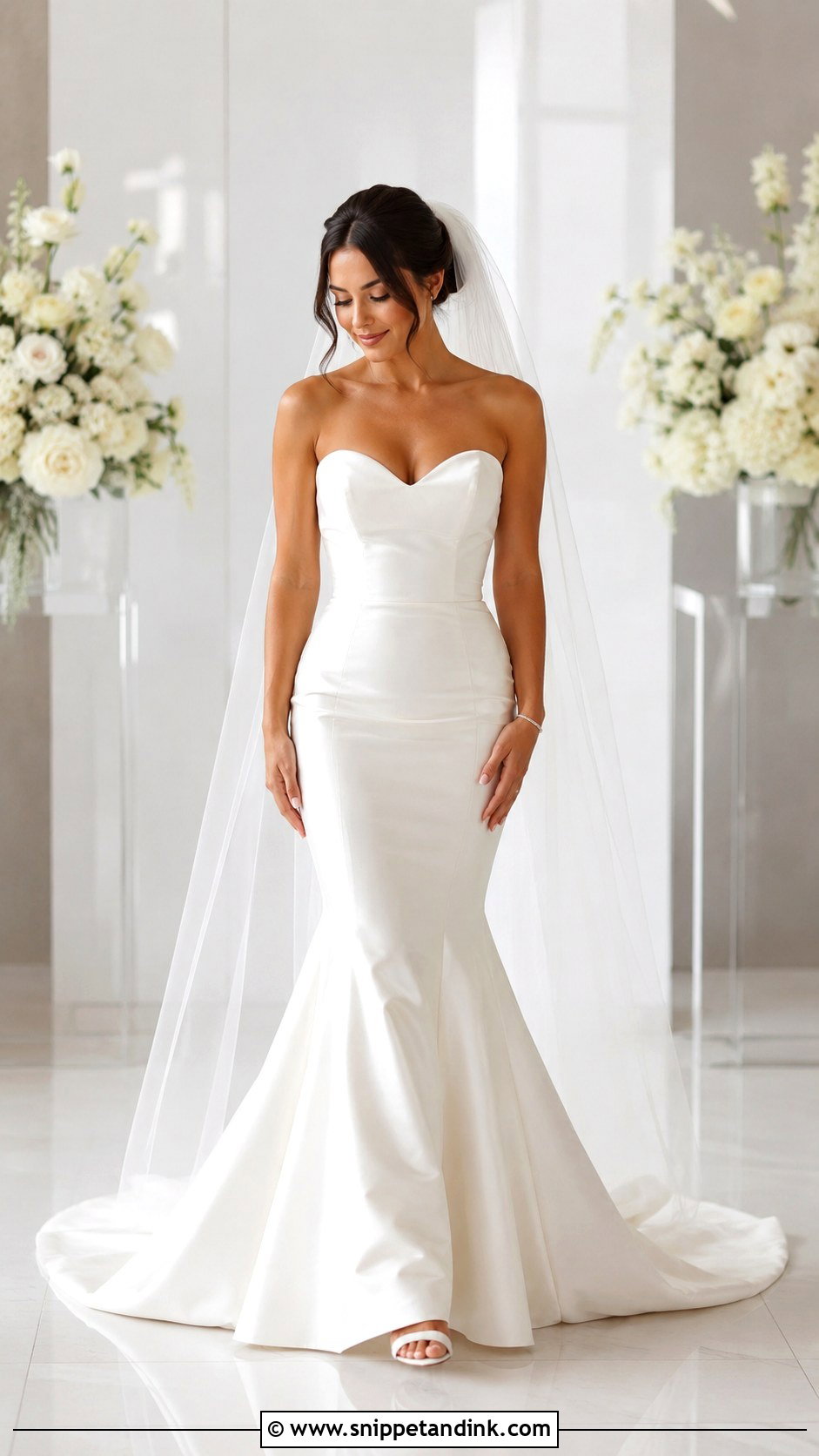
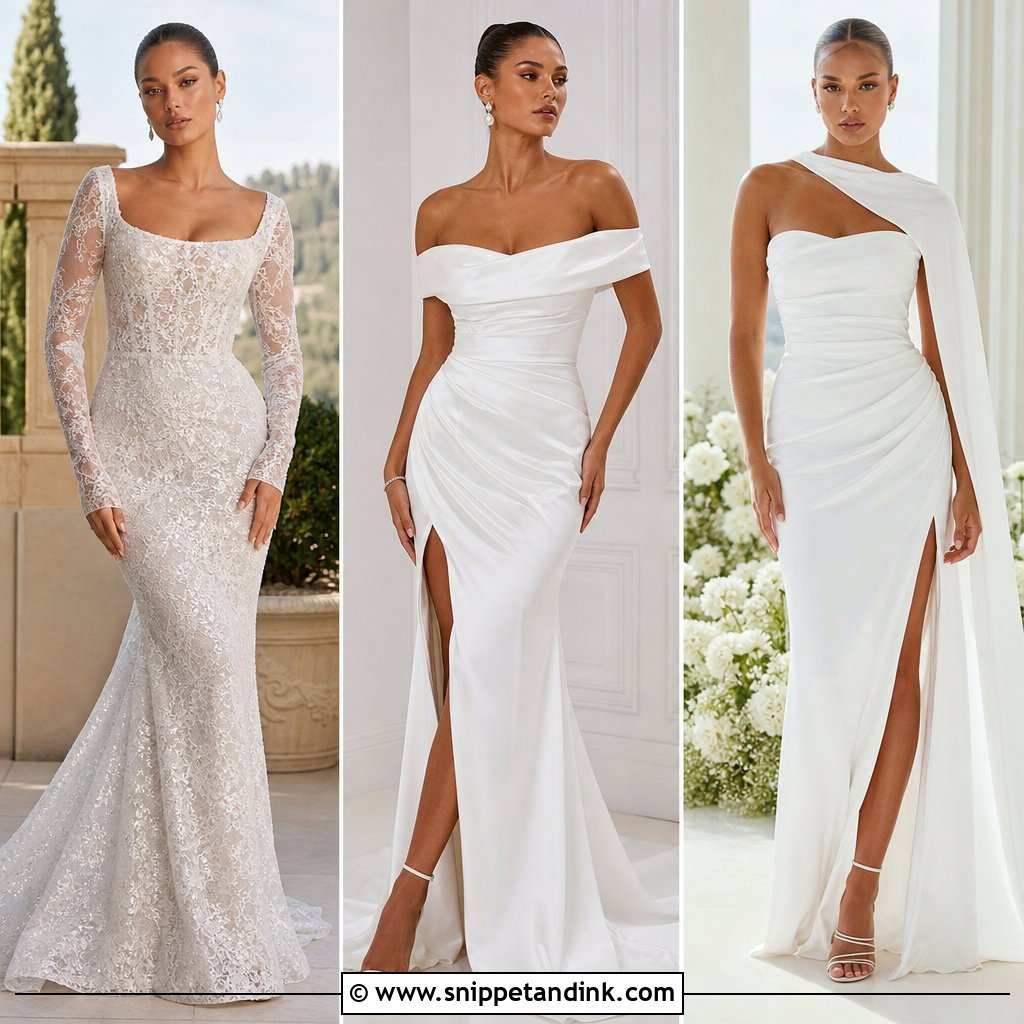
Can a petite bride wear a mermaid? Yes, if the gown is proportioned for her. That means a fitted bodice, a neat waist and a flare starting at or slightly above the knee so the shape stays long rather than bottom-heavy. Oversized ruffles and very wide skirts work against you. Clean satin, crepe or lace with vertical pattern placement does better, and a sweetheart or off-the-shoulder neckline balances the top. Mermaids restrict your stride, and on shorter legs that restriction is more noticeable, so walk the length of the boutique before deciding. Slim heels and simple jewelry finish it.
5. Petite Empire Waist Wedding Dress
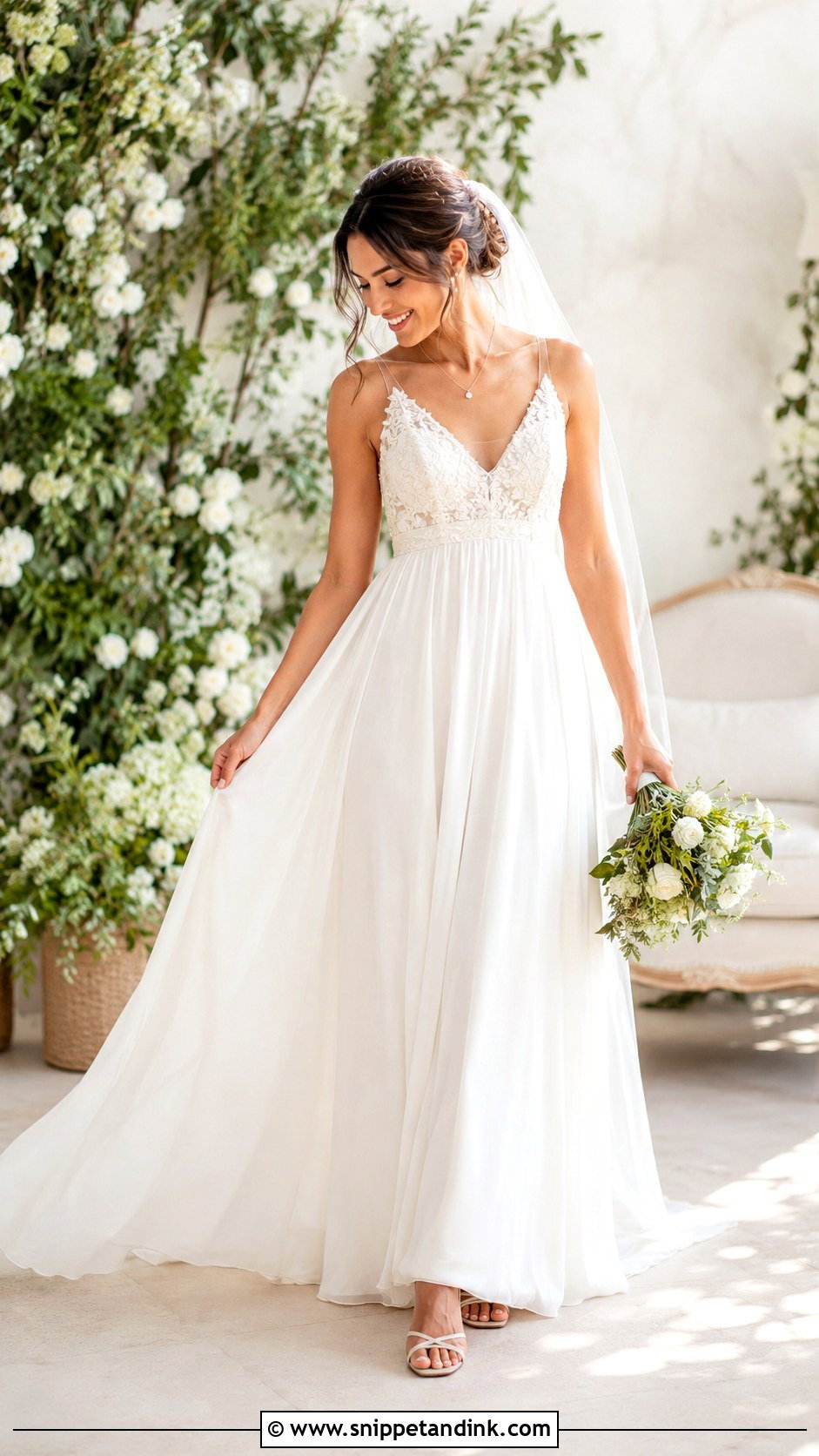
An empire waist puts the seam just below the bust, so the skirt falls in an unbroken line from there and the legs seem to start higher. It suits a short torso especially well. Keep the fabric light, chiffon, soft tulle or fine lace, or the skirt will spread and add width. The bust has to fit precisely, because on an empire gown the whole dress hangs from that seam and any gap shows. A subtle necklace, comfortable heels and a veil set low at the back of the head finish it.
6. Petite Tea Length Wedding Dress
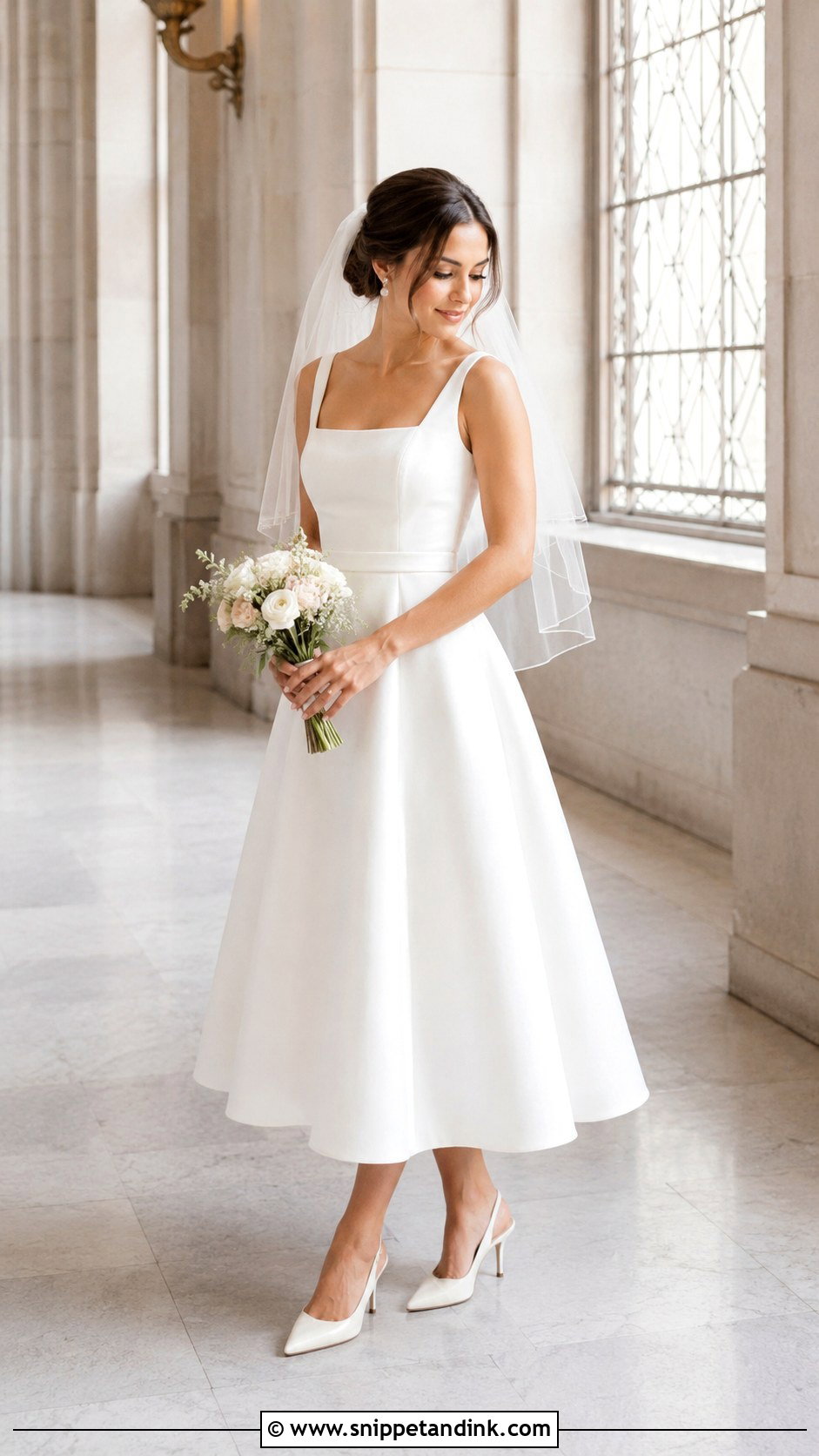
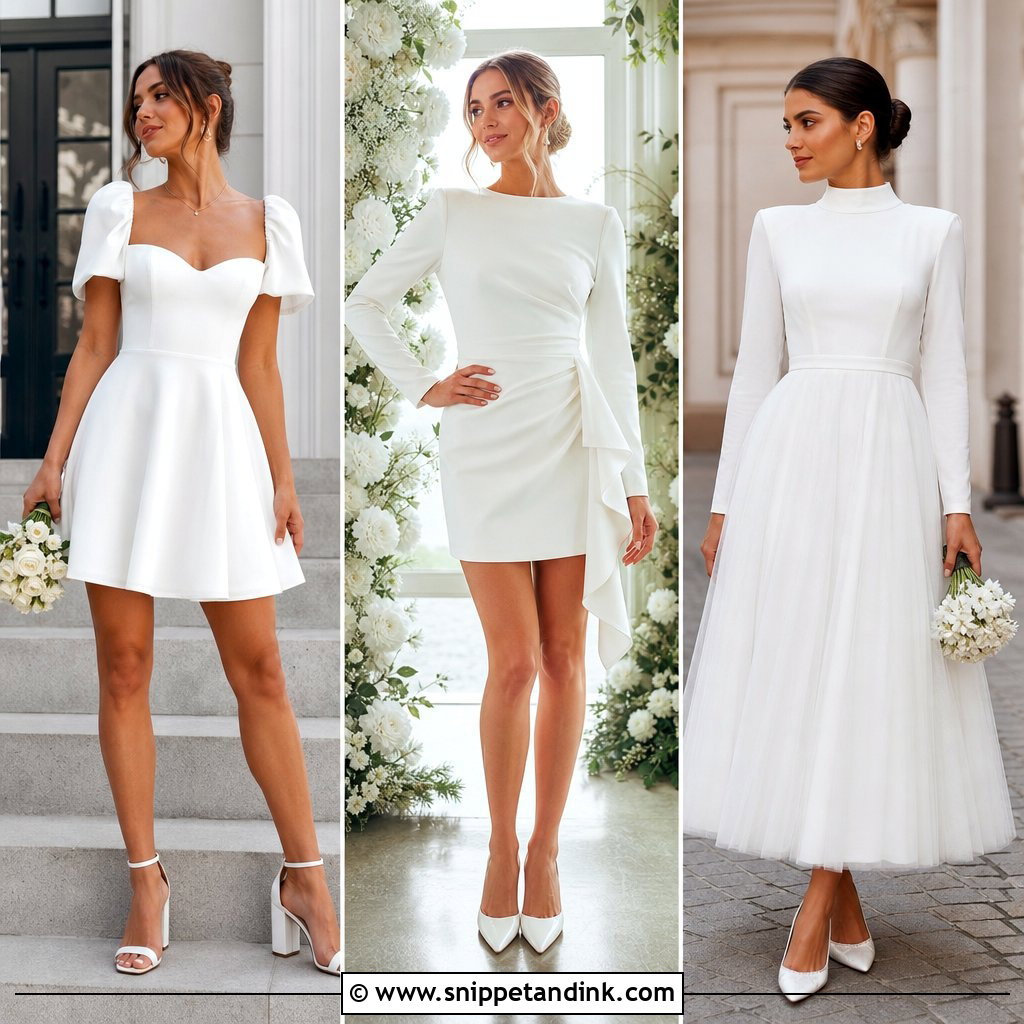
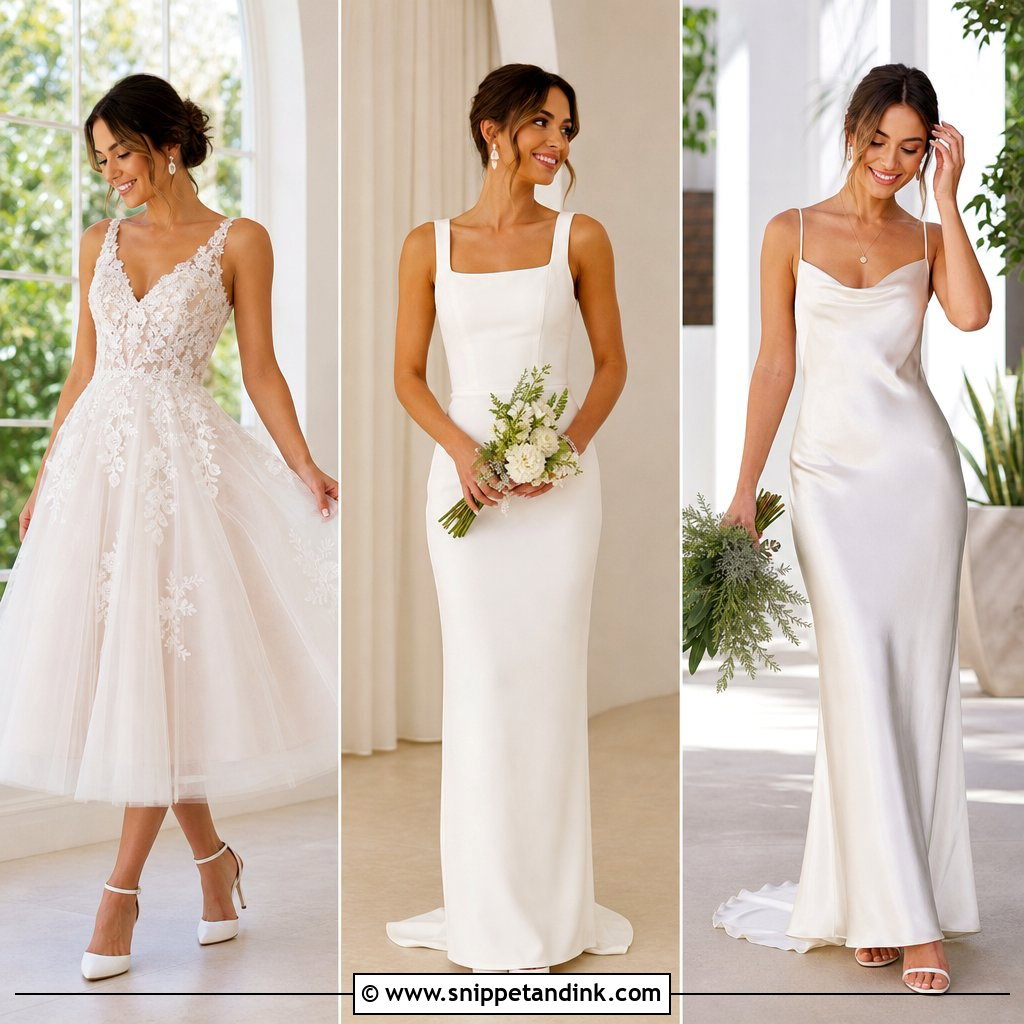
A petite tea length wedding dress is fun to wear and easy to move in, with the hem landing between knee and ankle. The length matters more on a shorter leg. Hit at the narrowest point of the calf or just above the ankle, never at the widest part of the calf, which cuts the leg visually. A defined waist, a simple A-line skirt, a fitted bodice and structured fabric keep it crisp. Pointed pumps, slingbacks or block heels complete it for a courthouse, brunch reception or city wedding with a vintage feel.
7. Petite Short Wedding Dress
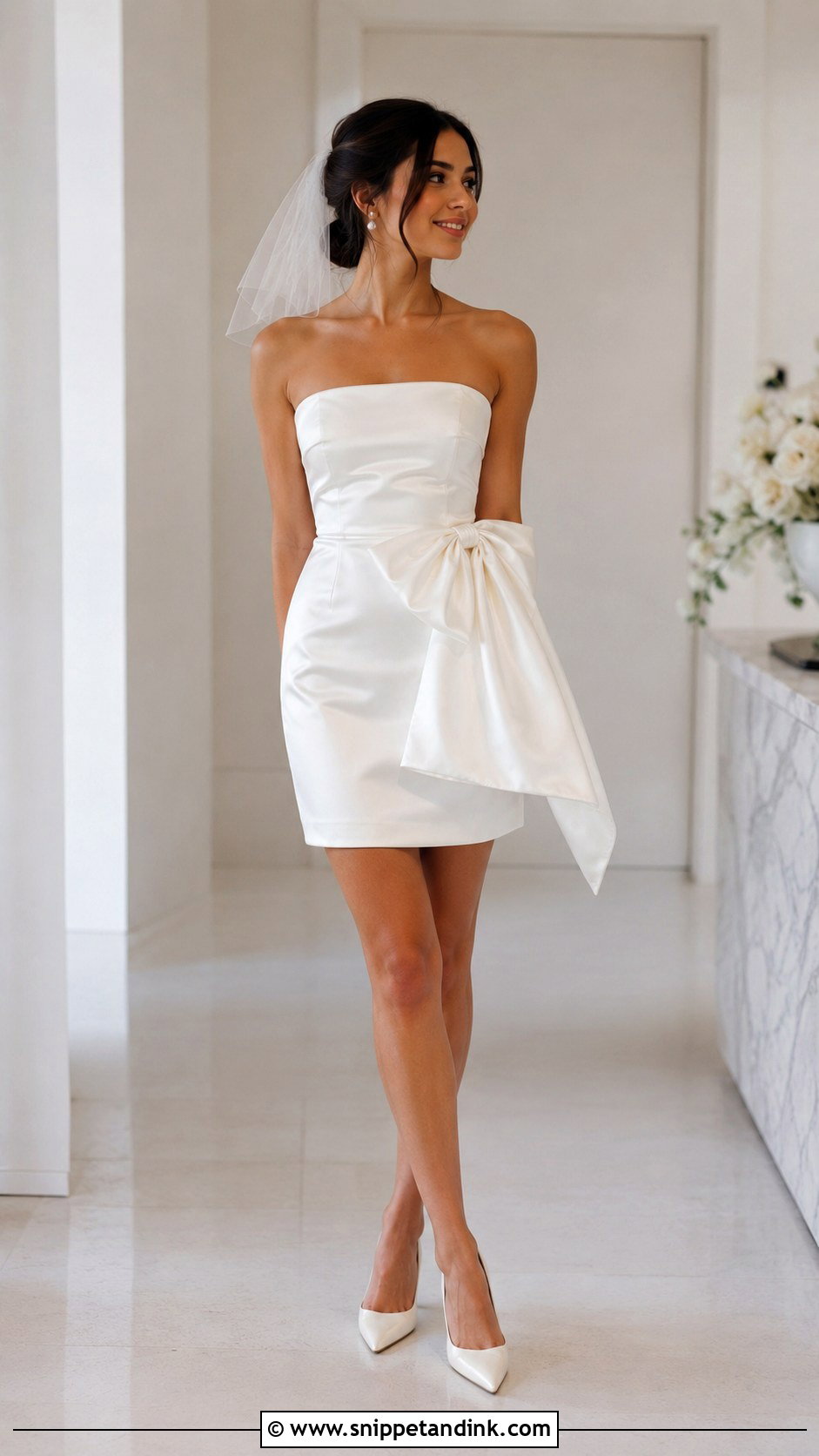
A short wedding dress can make legs look longer than any gown, especially with nude, ivory or metallic heels that extend the line of the leg. To keep it bridal, look for satin, pearl buttons, lace sleeves, a bow back or a structured bodice. A clean A-line mini suits many bodies because it shapes the waist without clinging. Short dresses ride up when you sit or get lifted into a photo, so test the hem sitting down in the fitting. A short veil, statement earrings and a small bouquet suit a civil ceremony, after-party or small wedding.
8. Petite Column Wedding Dress
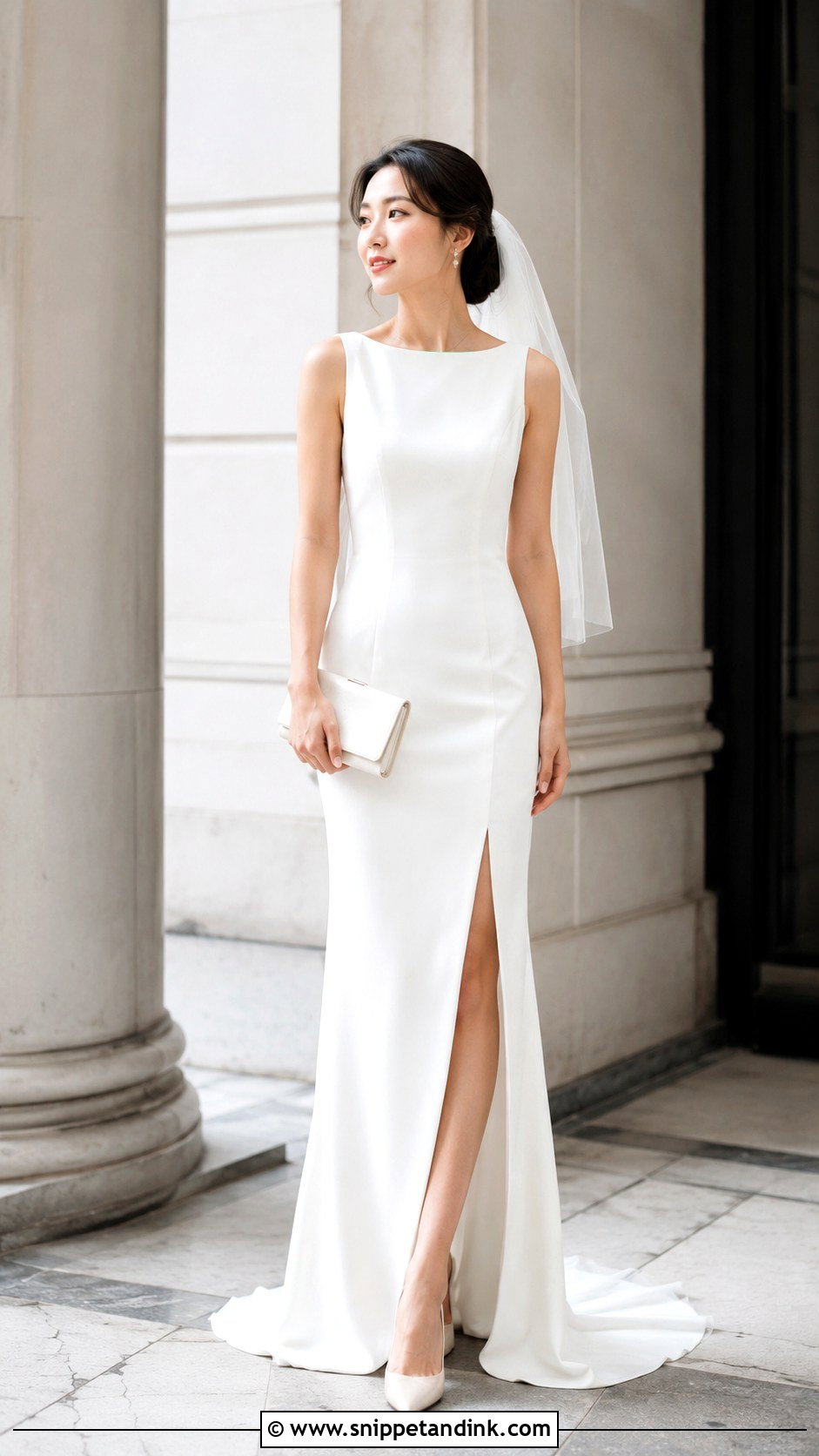
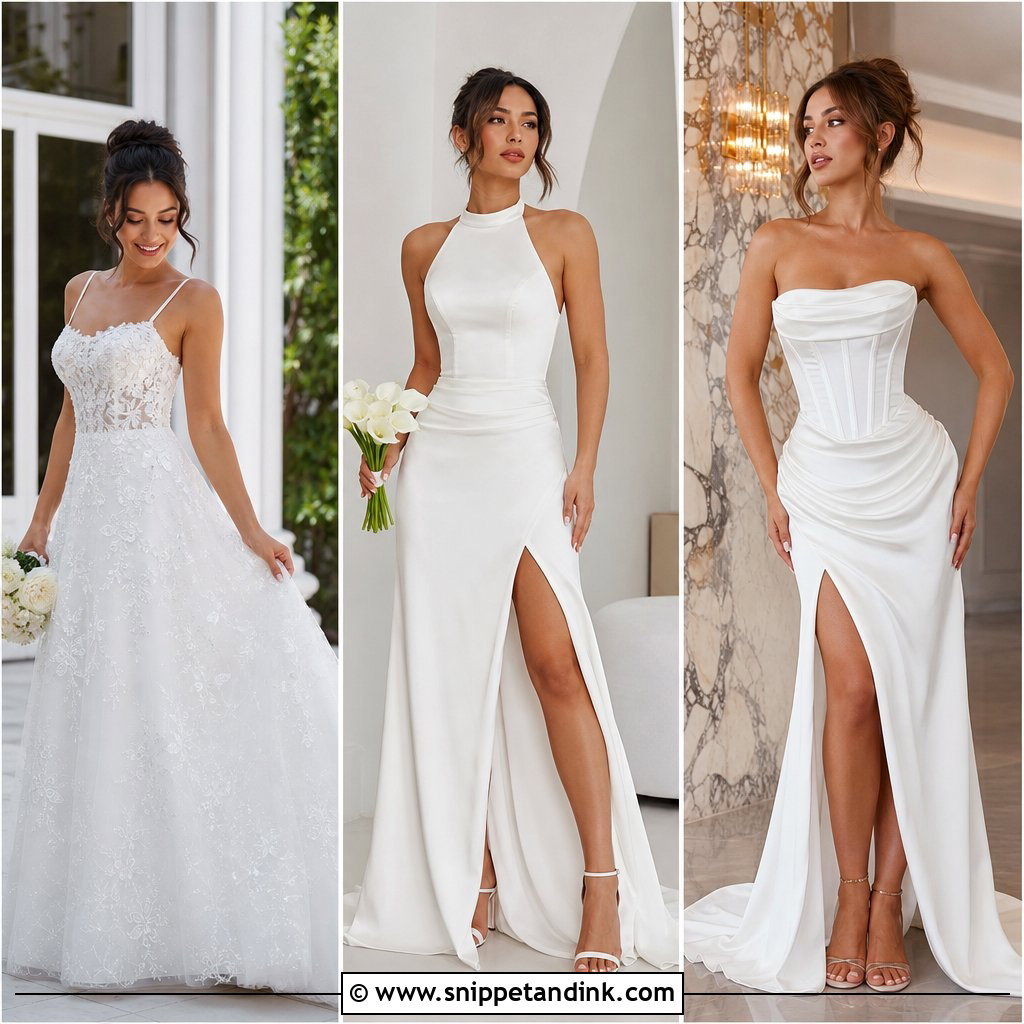
The column falls straight and close without flare, giving the tallest uninterrupted line of any shape here. It’s a strong choice for a petite bride who prefers minimal design. Smooth crepe, satin or silk needs careful tailoring at the bust, waist and hips, since there’s no volume to hide a poor fit. A side slit adds movement and makes walking easier without spoiling the line; check its height when seated. Pointed heels, a sleek clutch and delicate jewelry finish it for modern venues and evening weddings.
9. Petite V Neck Wedding Dress
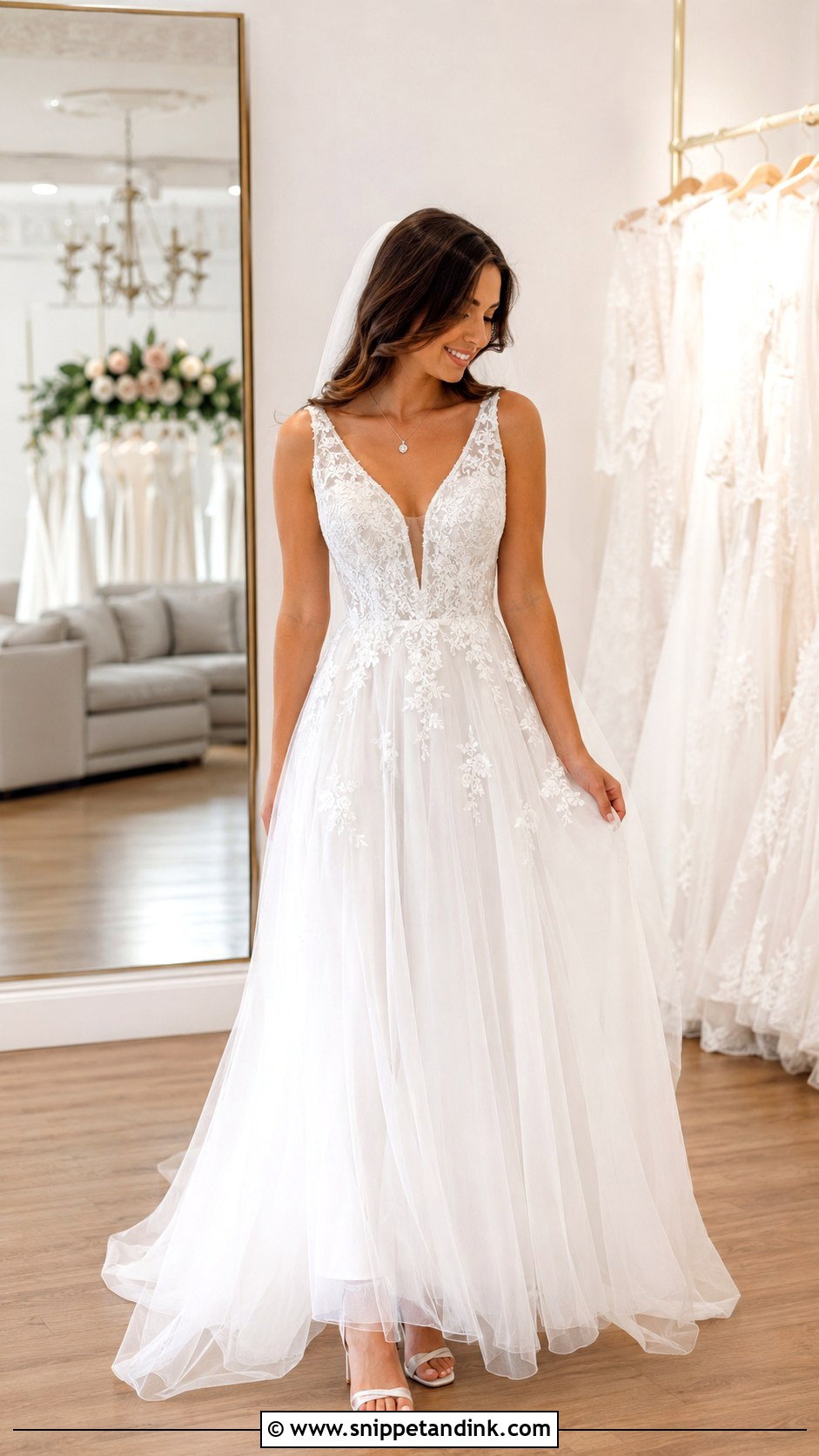
The V neck works on a petite bride because it draws a vertical line through the upper body. It doesn’t need to be deep. Even a modest V opens the chest and balances a shorter frame. It suits A-line, sheath, empire and fit-and-flare shapes. On a small bust a deep V can gape when you lean forward, so I’d ask for wider straps or an illusion panel if you want depth. Keep accessories simple, a pendant or small earrings, with soft waves or a low updo so the neckline stays visible.
10. Petite Strapless Wedding Dress
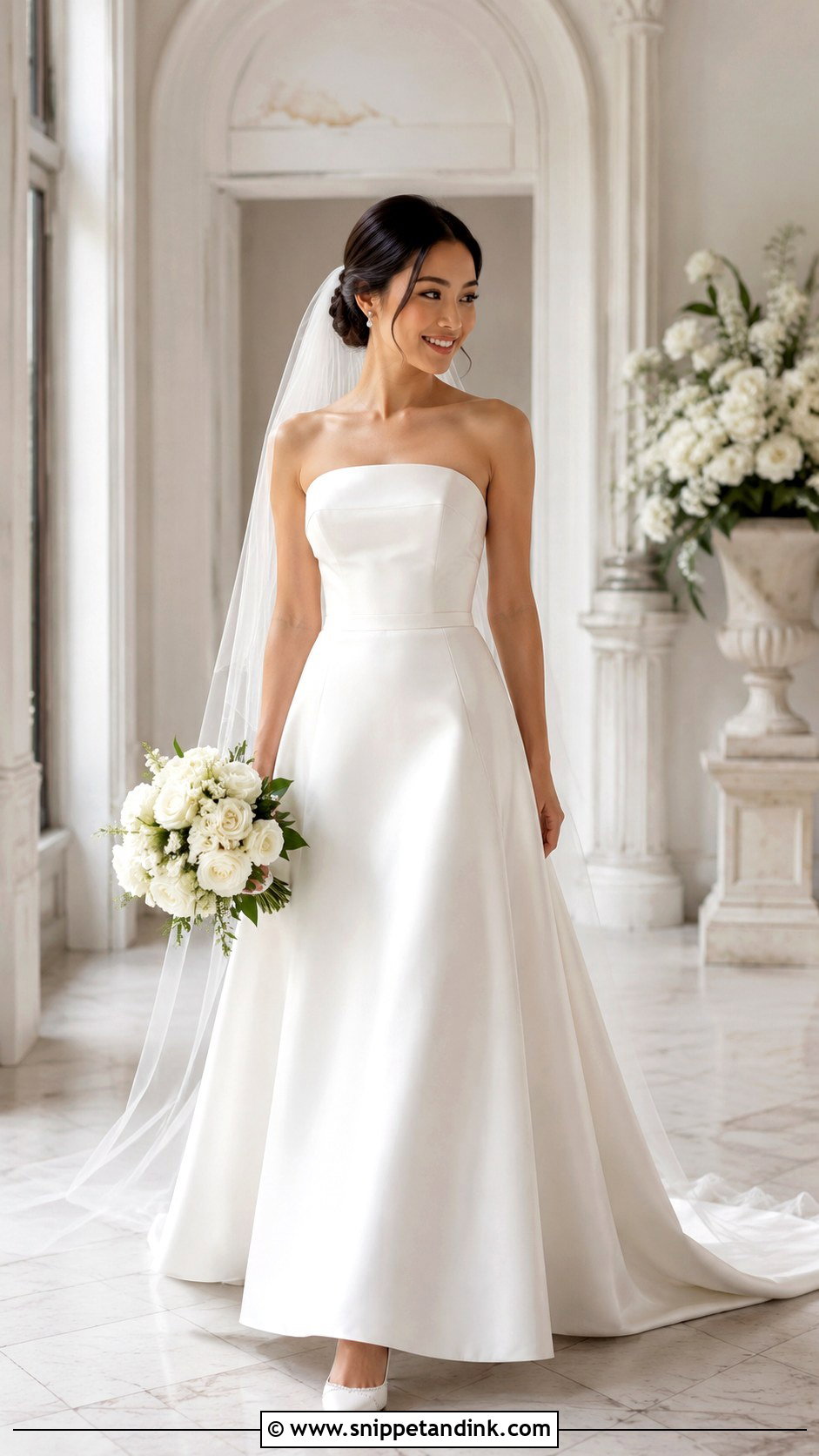
Strapless can be very clean on a petite frame when the bodice fits exactly. It shows the shoulders and collarbone, which keeps the upper body light. The trap is bodice length: a strapless bodice built for a longer torso pushes the waist seam down and shortens your legs, so have the bodice shortened if needed rather than just the hem. A slightly raised waist or corset structure defines shape, over an A-line, sheath or fit-and-flare skirt. A simple veil, soft curls and comfortable heels complete it.
11. Petite Off Shoulder Wedding Dress
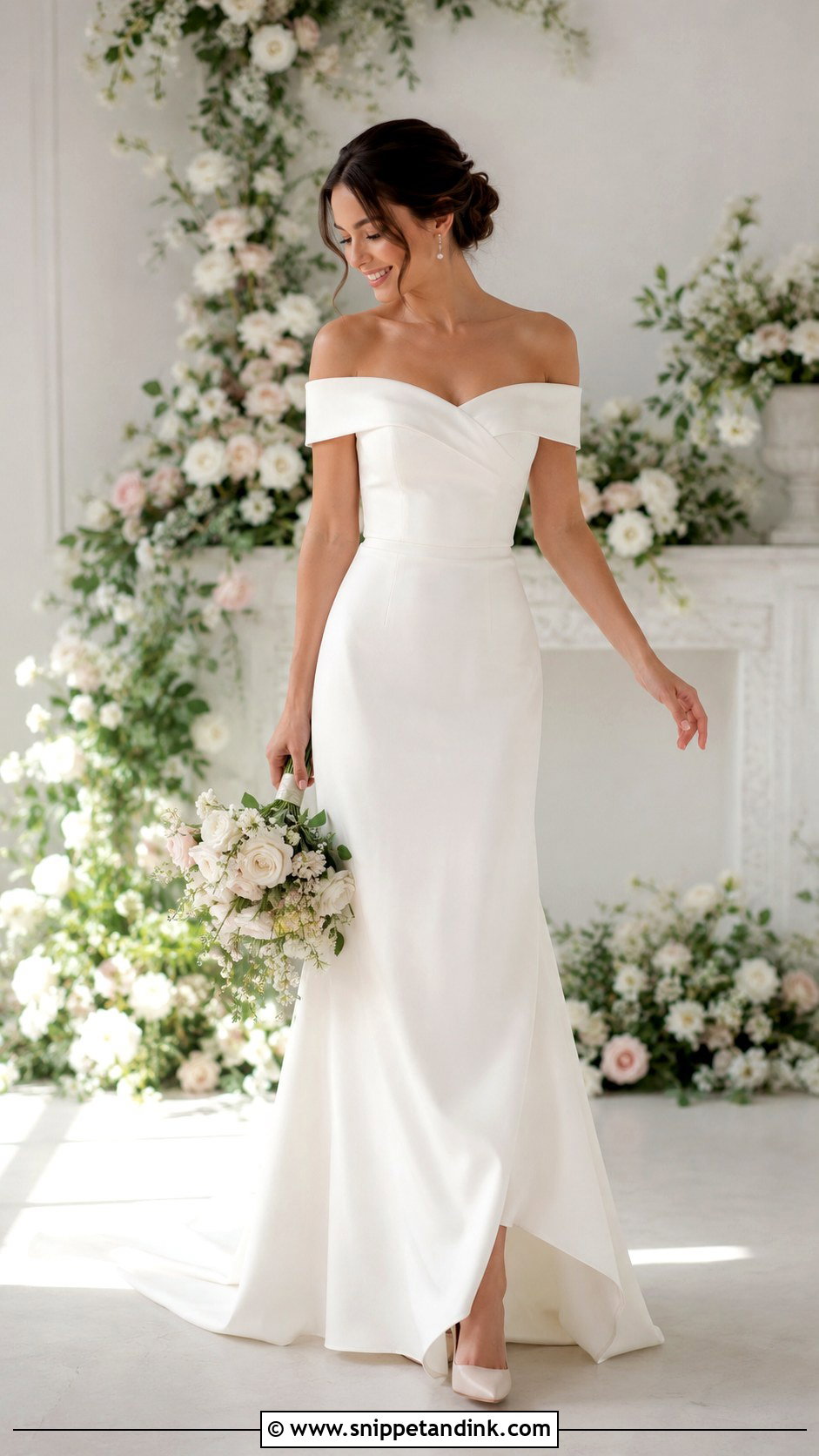
An off-shoulder neckline frames the face and adds romance without needing a big skirt. On a shorter bride, the rest of the gown has to stay clean and well-fitted to balance that horizontal line across the shoulders. A slim A-line, sheath or fit-and-flare suits it; delicate lace sleeves or smooth satin folds stay graceful without bulk. The sleeve band is often too long on petite arms and drops off the shoulder, so expect it to be taken in. Hair up or swept back, small earrings, slim heels and a light veil finish it.
12. Petite Square Neck Wedding Dress
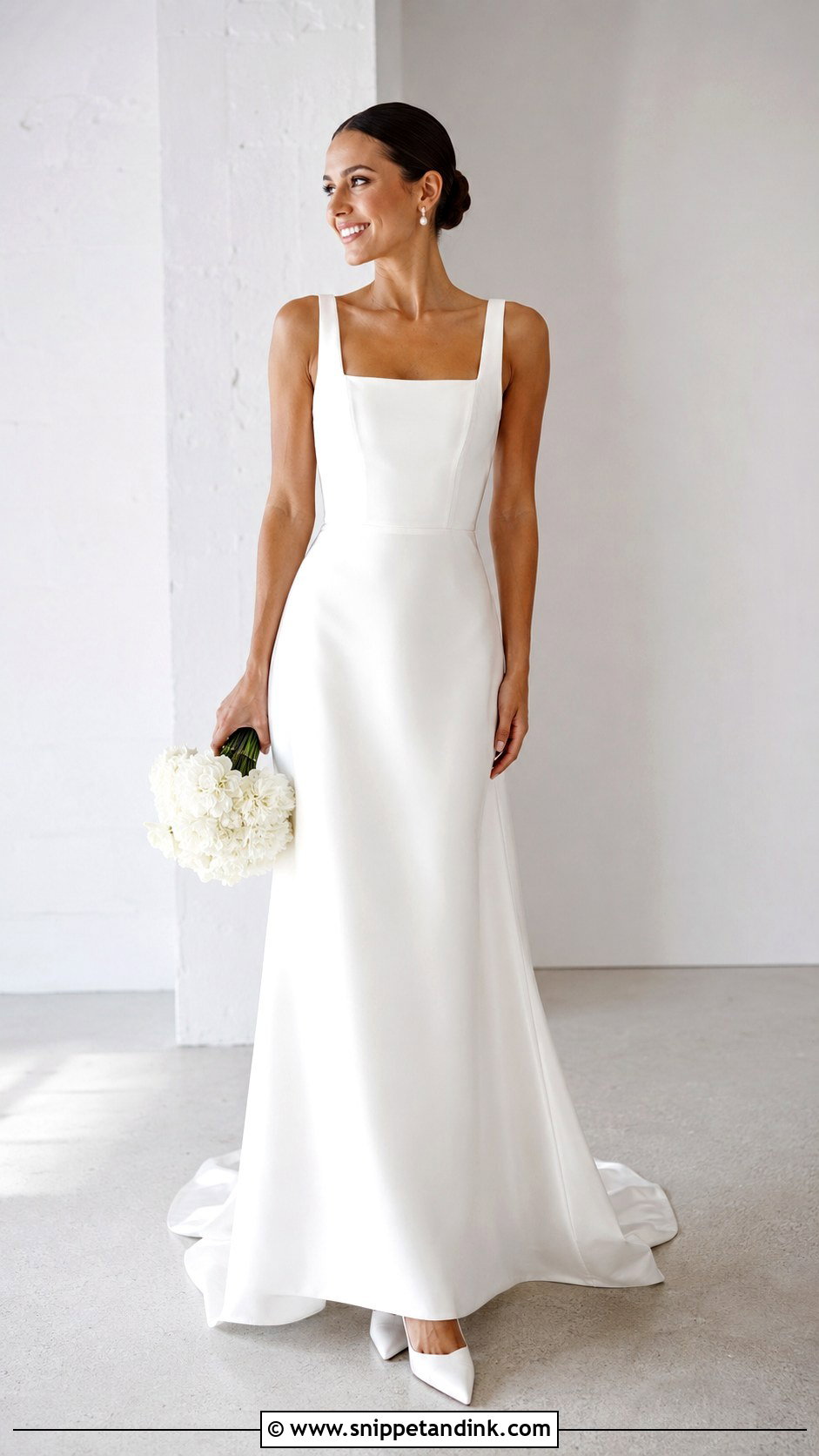
The square neck frames the collarbone and gives the bodice structure, and its vertical sides help lengthen the upper body. Pair it with simple straps, a fitted waist and a narrow A-line or column skirt. On a petite frame, straps placed too wide make the shoulders look broad and the bodice boxy, so this is one cut where strap placement needs adjusting at the fitting. Satin, crepe or mikado suit it if you like structure. A neat bun, pearl earrings and pointed heels complete it.
13. Petite High Neck Wedding Dress
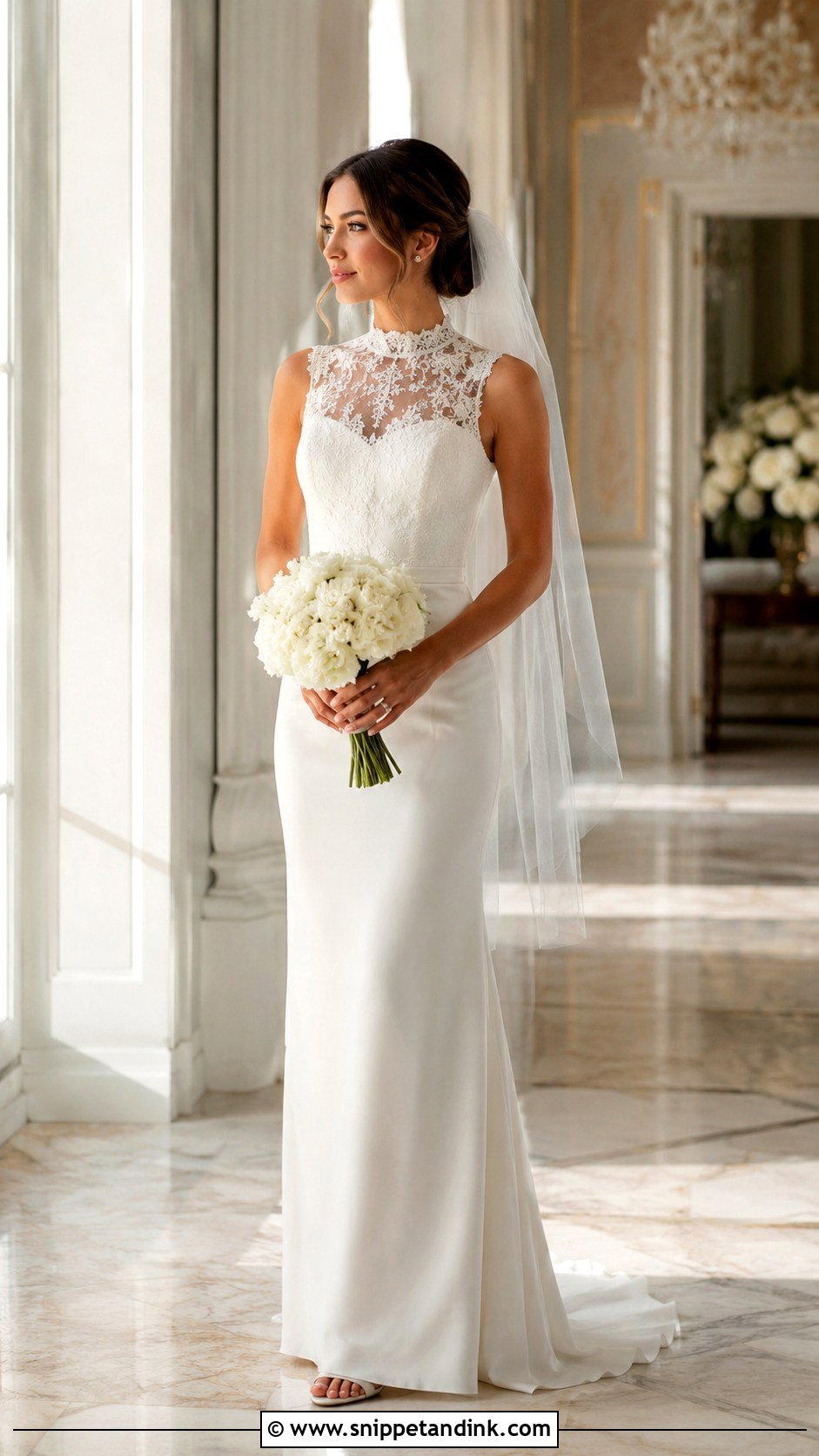
A high neck can shorten a petite neck if it’s heavy, so the version I’d choose is light: sheer lace, illusion tulle or a sleeveless cut that keeps the shoulders defined. A slim sheath or column skirt makes the long line look intentional. If there are sleeves, keep the fabric fine rather than heavy lace. A narrow belt or seam set slightly above the natural waist helps the legs, and wearing your hair up shows more neck. Keep jewelry minimal and let the neckline carry the look.
14. Petite Long Sleeve Wedding Dress
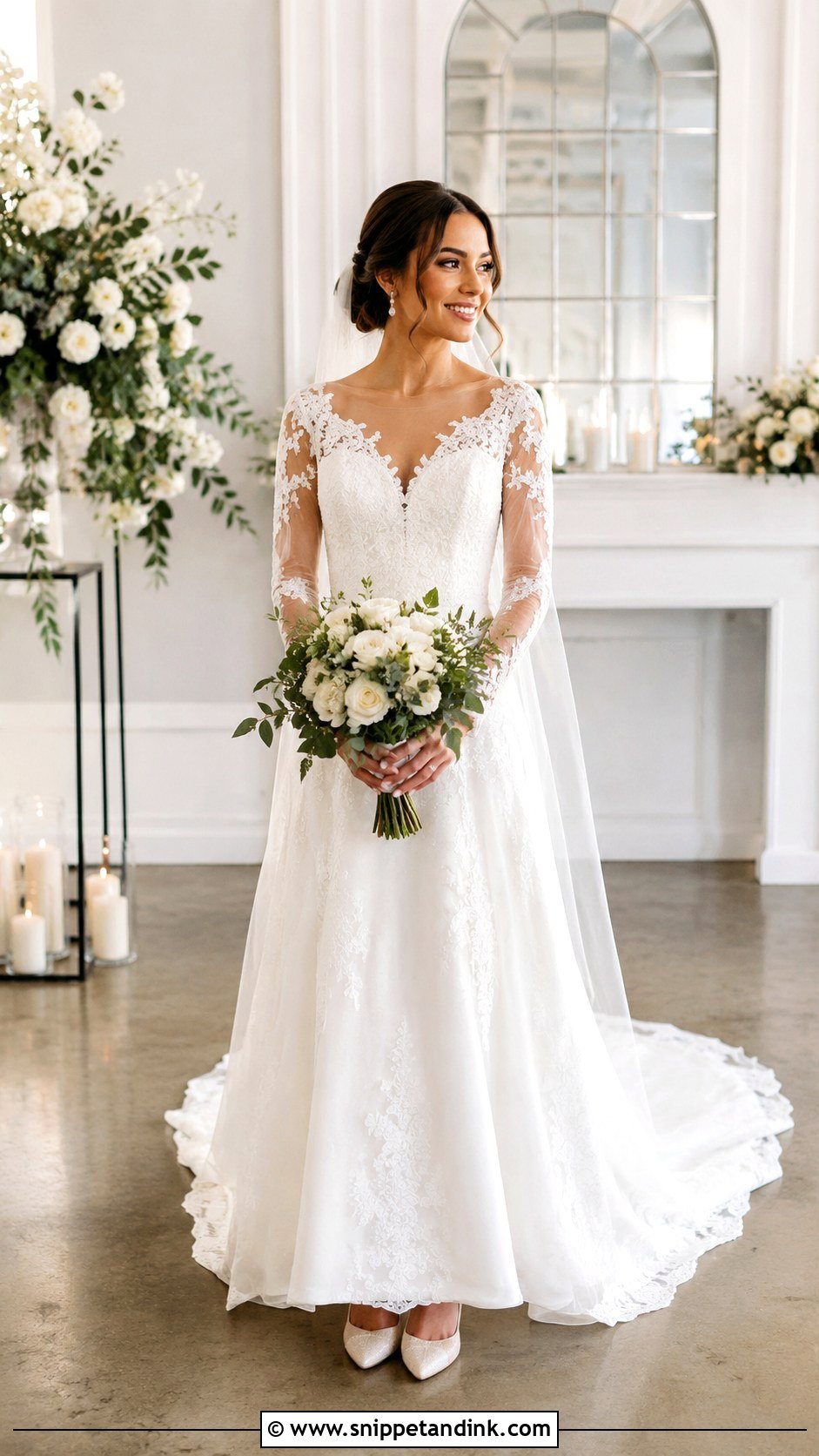
A petite long sleeve wedding dress works when the sleeves are delicate. Sheer lace, fitted crepe or illusion sleeves give coverage without weight. Sleeves are where a gown most often looks borrowed on a shorter bride: too long and they bunch at the wrist, too wide and they swallow the arm. Have them shortened from the shoulder if the lace pattern at the cuff matters, or from the cuff if it doesn’t. A slim A-line, sheath or fit-and-flare skirt balances them, and a V-neck, square neck or open back stops the gown feeling closed in. Simple heels and a low veil finish it.

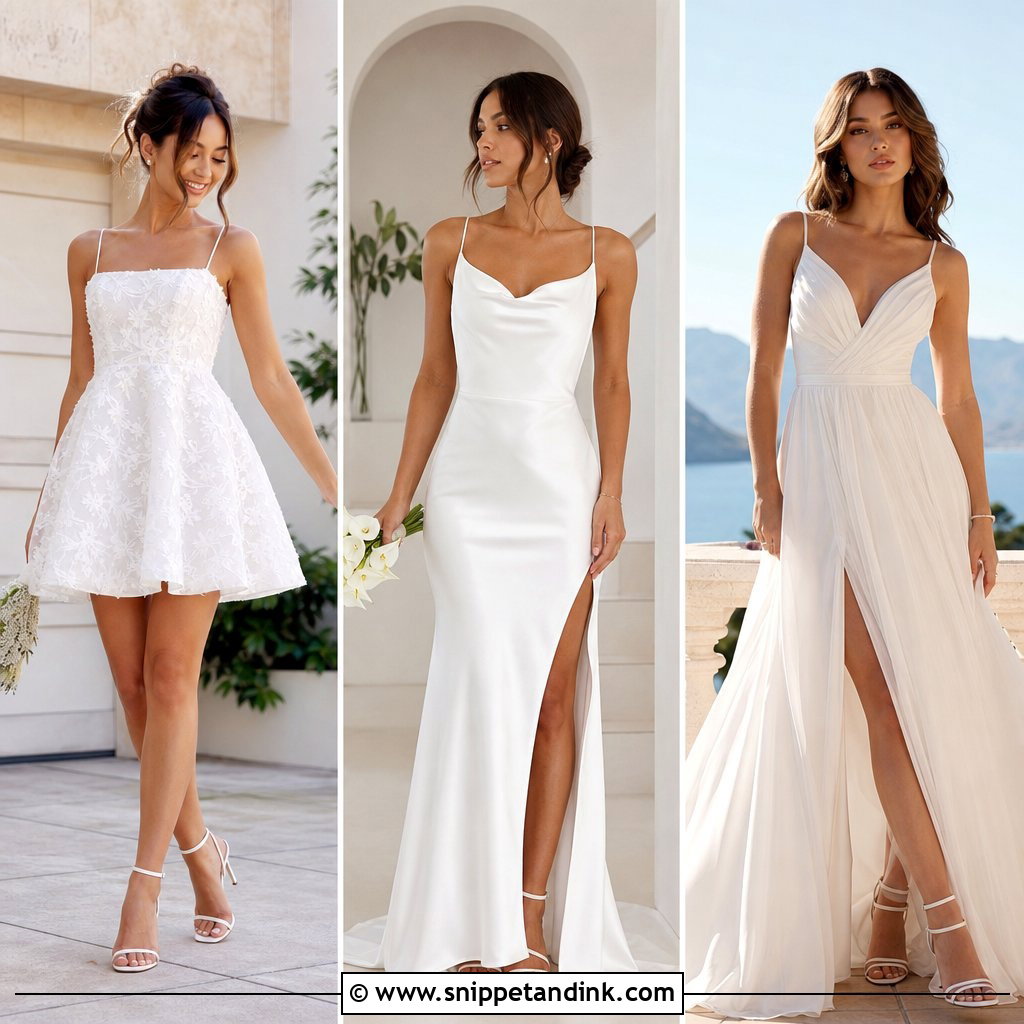
15. Petite Lace Wedding Dress
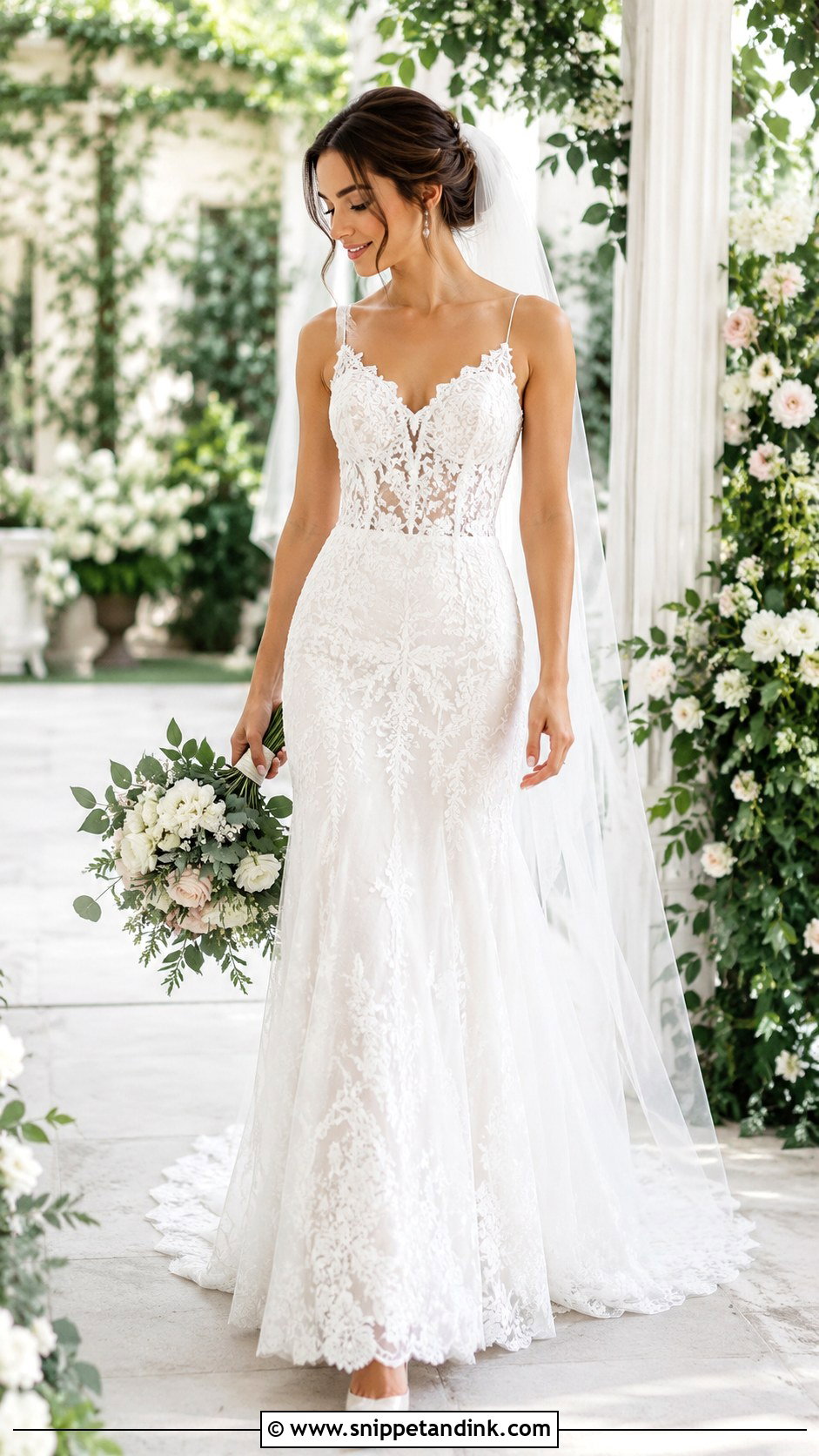
Lace on a petite frame comes down to scale. Fine lace, vertical placement and soft floral motifs sit comfortably; large, heavy motifs covering the whole gown can look busy. A lace bodice with a clean skirt is a good compromise, as are lace sleeves, straps or appliqué trailing downward. When a lace gown is hemmed, the scalloped edge can be lost, so ask whether the seamstress will take it up from the waist or move the scallop rather than cut it off. Simple heels and minimal jewelry let the texture lead.
16. Petite Satin Wedding Dress
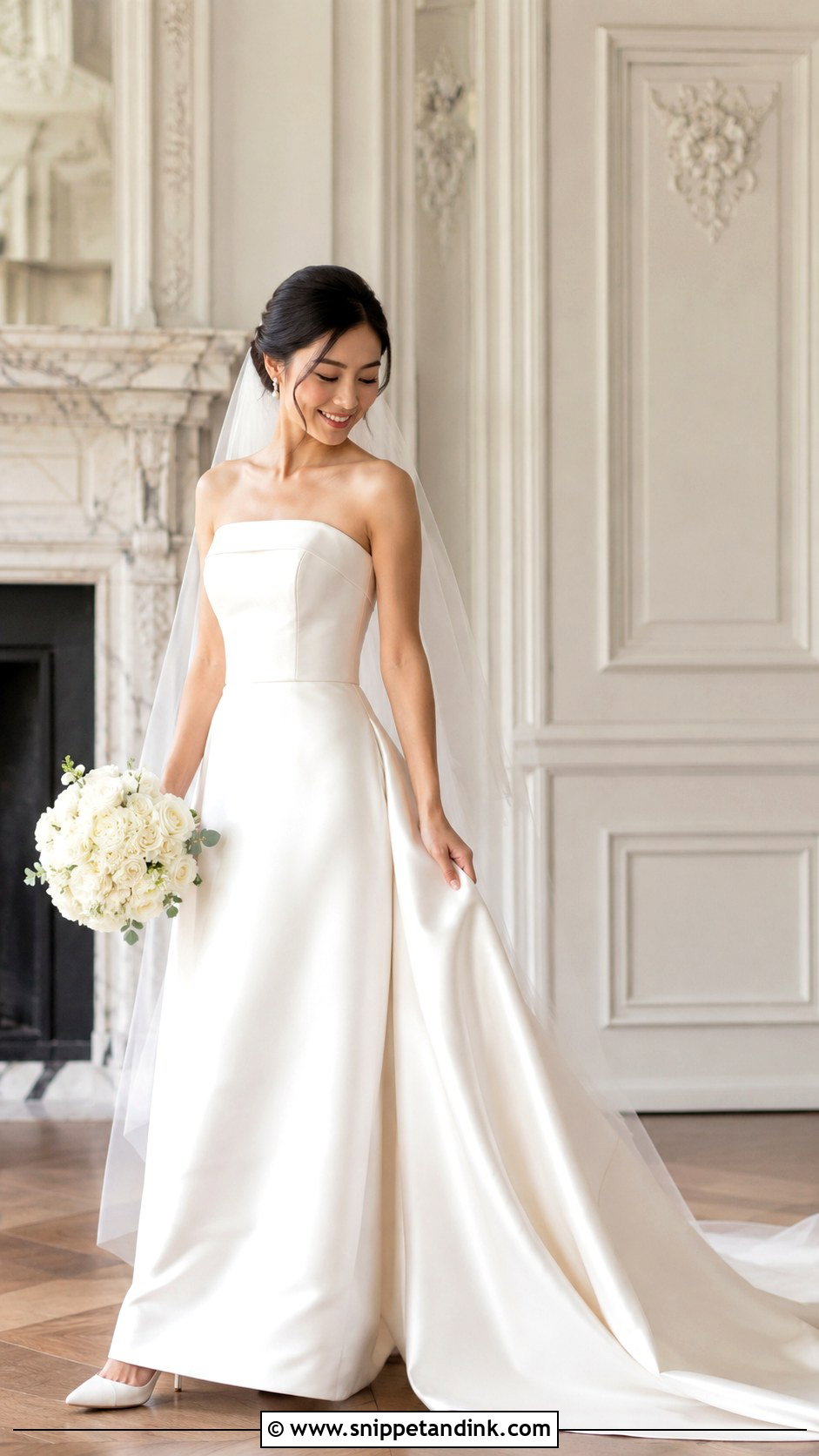
Satin reflects light, so even a plain silhouette looks considered. For a petite bride, a clean satin A-line, sheath or column usually beats a gown with lots of folds or oversized draping, which add width. A structured bodice defines the waist and a narrow skirt keeps it long. A small train gives drama without dragging. Satin creases where you sit and shows every alteration seam, so choose a seamstress used to working with it. Pearl earrings, pointed heels and a sleek veil finish it.
17. Petite Crepe Wedding Dress
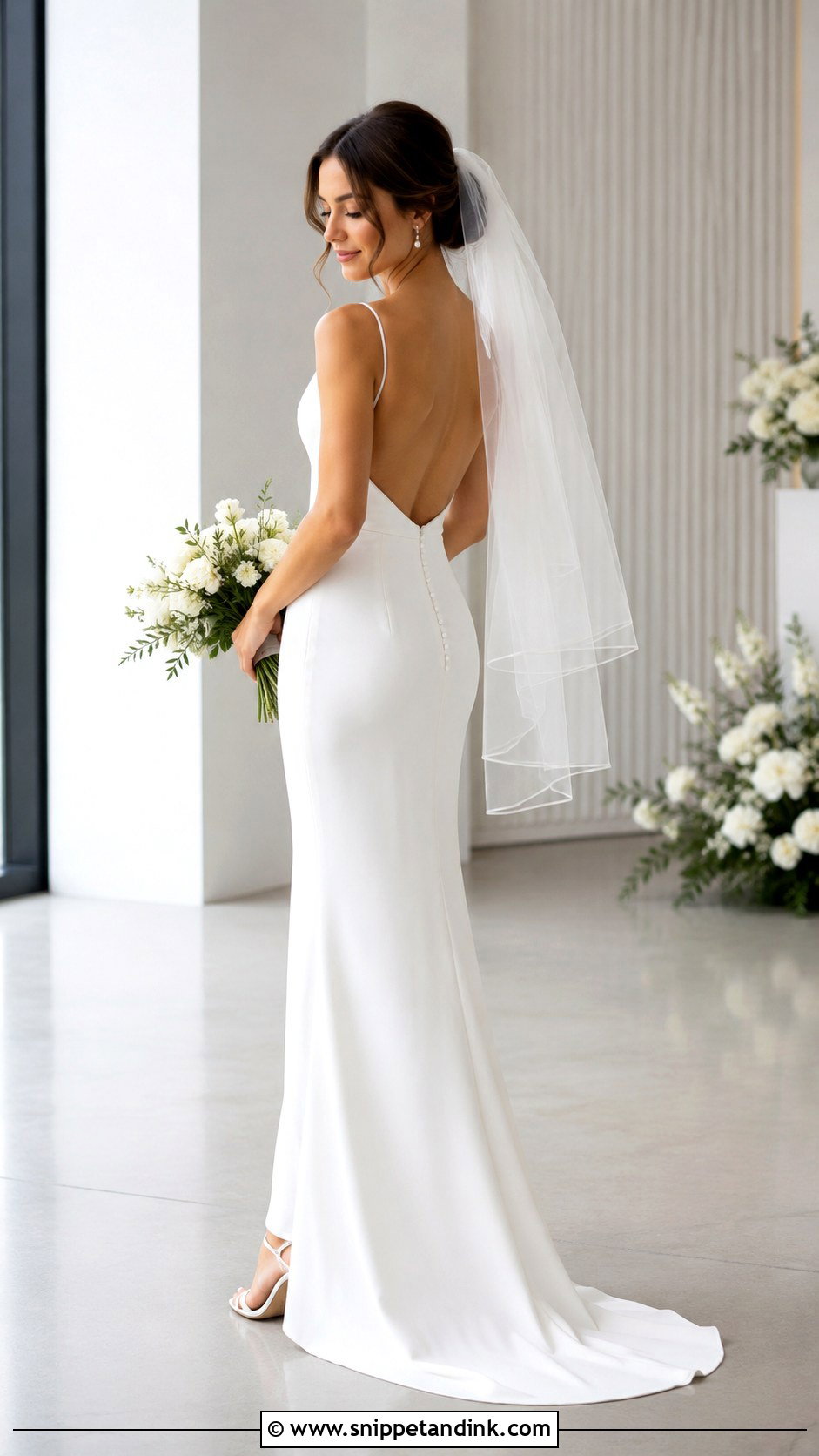
Crepe has a slight weight that skims the body, and its matte surface lets the shape do the work. Sheath, column and fit-and-flare cuts suit it. Because crepe shows fit so clearly, petite brides need careful alterations at the hem, bust and waist; a waist seam even an inch out shows as a horizontal crease. A low back, side slit or bateau neckline adds interest. Sleek heels, a soft veil and delicate earrings keep it understated.
18. Petite Chiffon Wedding Dress
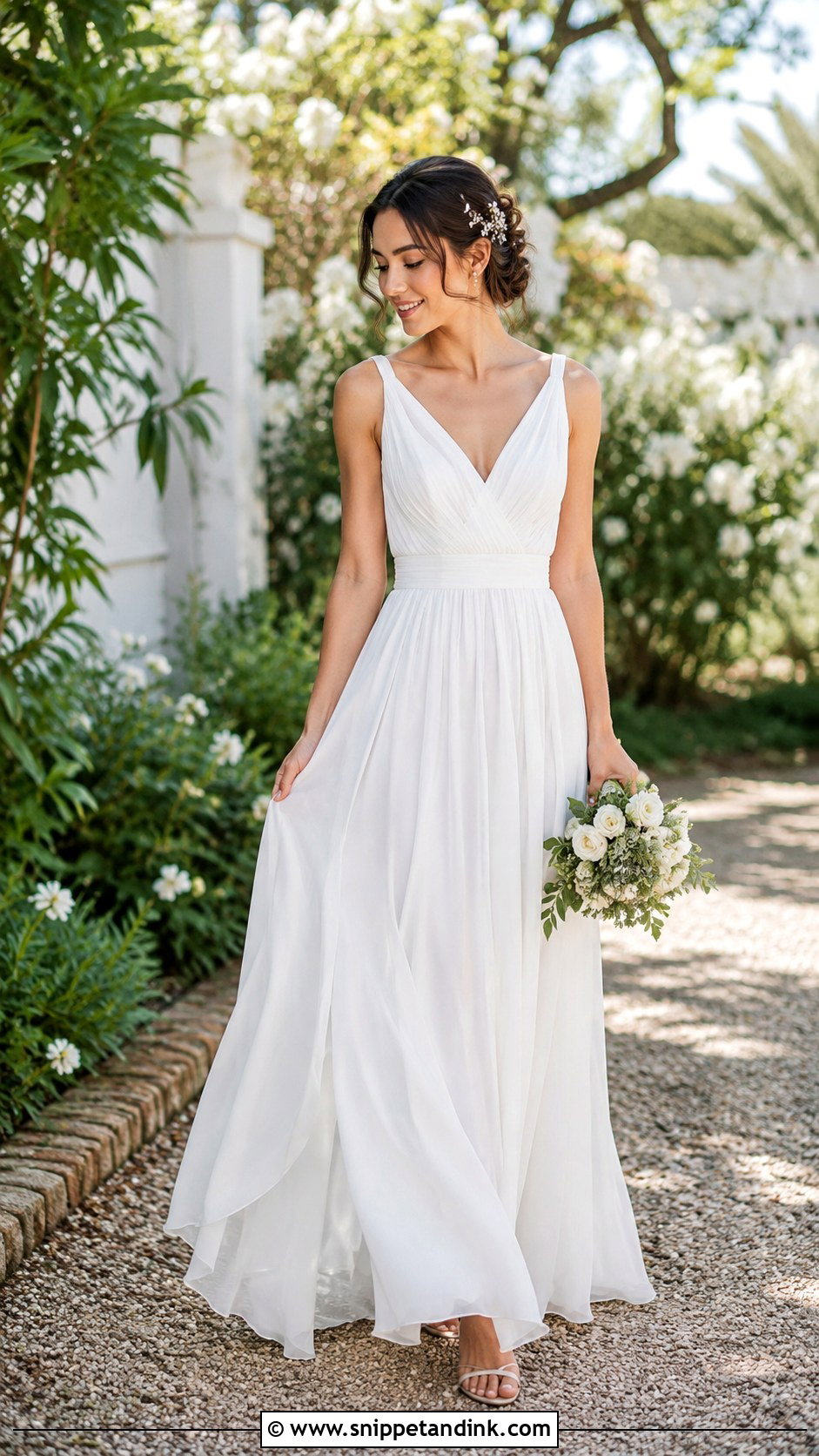
Chiffon is airy and moves in a breeze, which makes it a natural fit for outdoor, beach and warm-weather weddings. The best chiffon gowns for a petite bride have a defined waist and a skirt that falls close to the body rather than spreading. An empire waist, A-line or V-neck bodice adds length. Too many layers of chiffon add width quickly, so two or three is usually enough. Simple sandals or heels, soft waves and a delicate hair accessory suit it.
19. Petite Tulle Wedding Dress
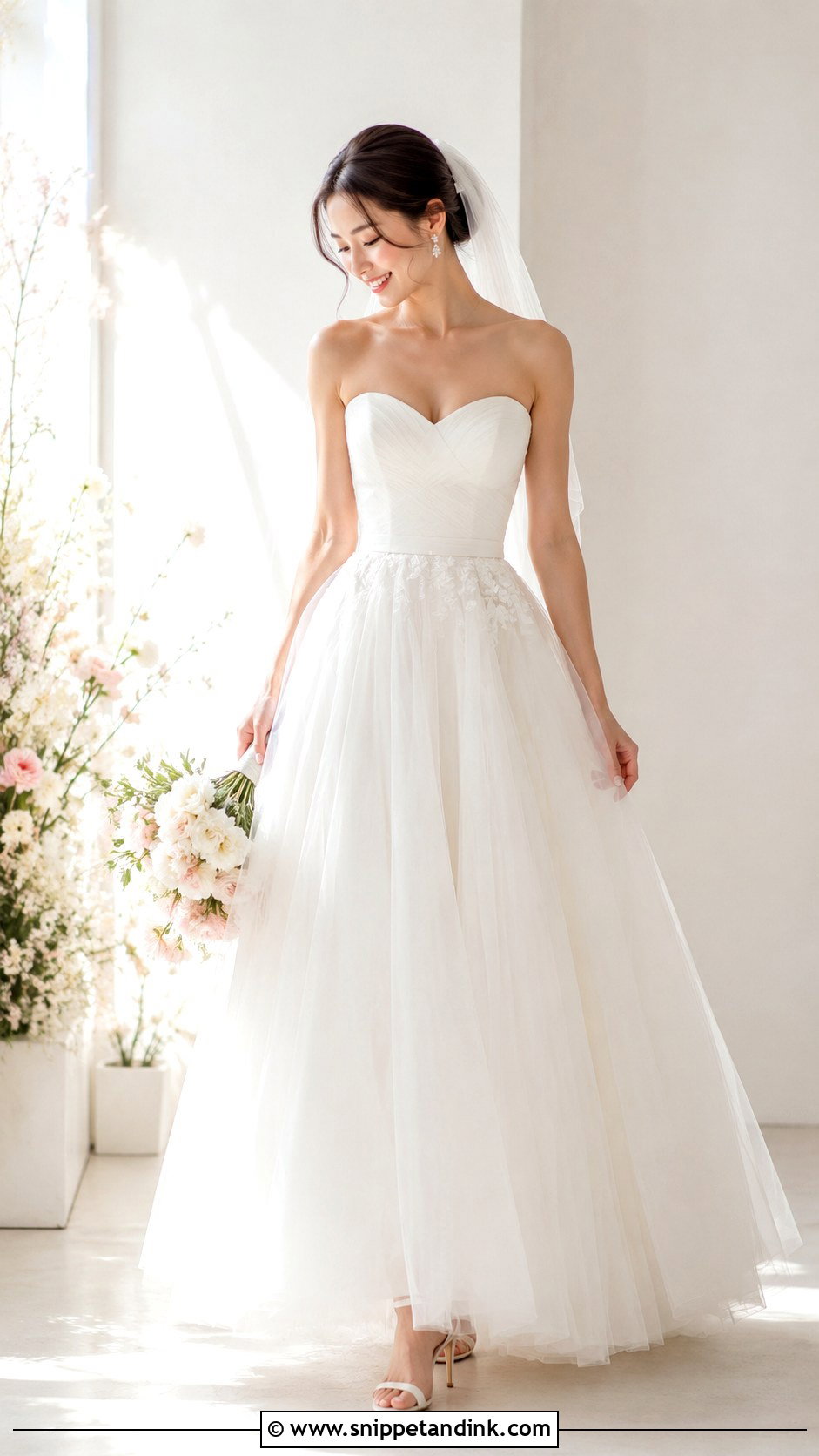
Tulle can swallow a shorter bride if the volume isn’t controlled. Choose a slim A-line, a light ballgown alternative or a tulle overlay on a fitted base. A defined waist keeps the skirt from looking shapeless, and delicate straps, a V-neck or sweetheart neckline balance it. Ask whether some layers of the petticoat can be removed; a seamstress can often take one or two out to reduce width. Choose subtle shimmer over heavy beading, with slim heels and simple earrings.
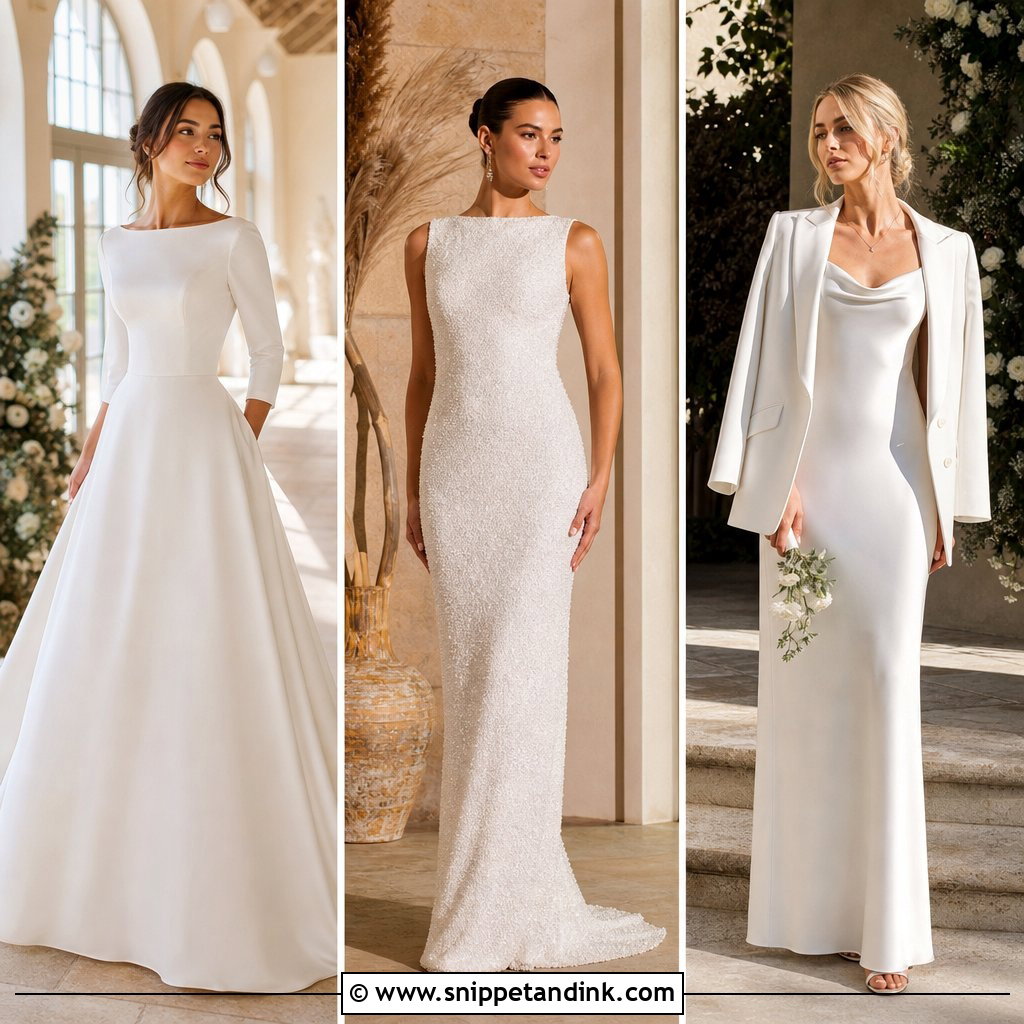
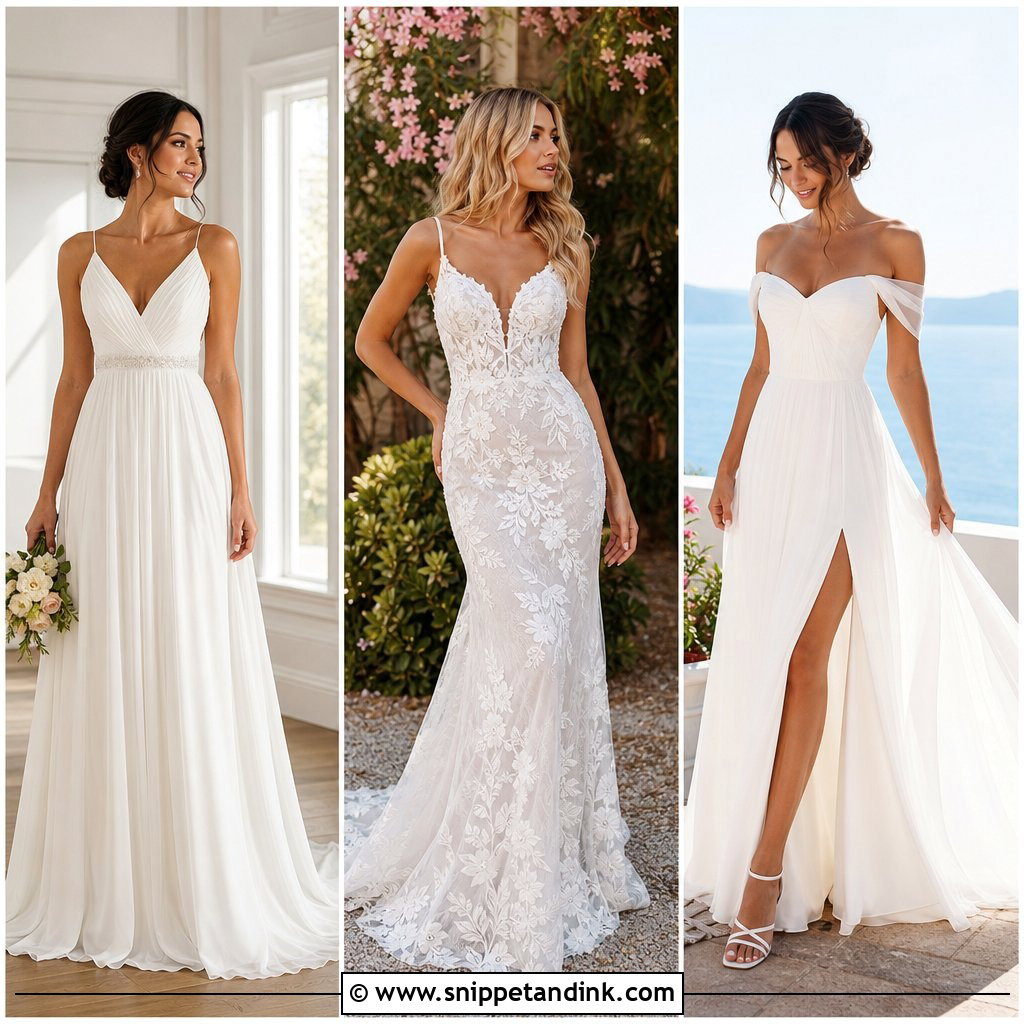
20. Petite Simple Wedding Dress
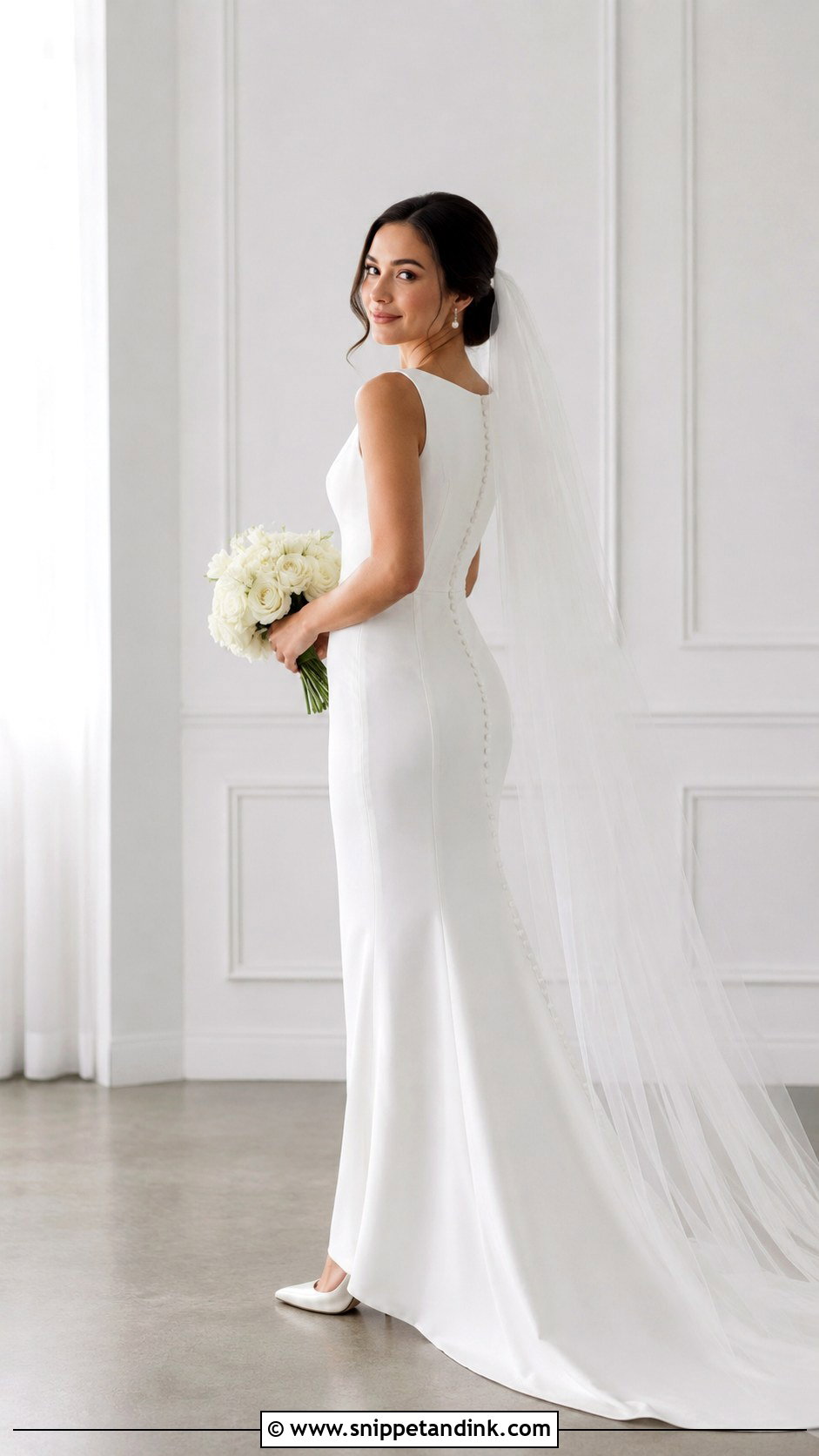
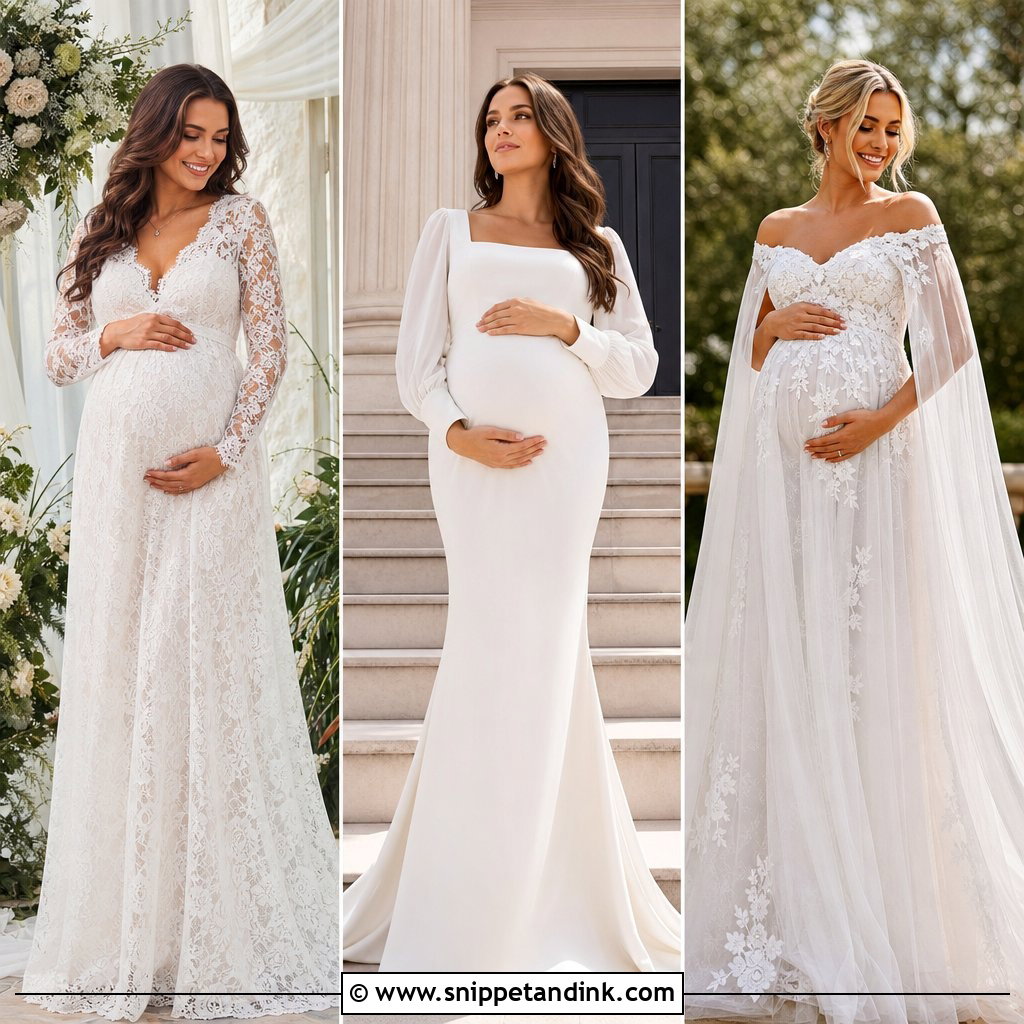
Simple gowns often suit a shorter frame best, since they don’t break up the body with detail. A smooth sheath, column or A-line makes a strong base. Look for one good detail, a neckline, covered buttons, a neat train or a well-placed waist seam. With nothing to distract the eye, tailoring is what people see, so the hem, straps and bodice must sit cleanly. Add interest through a veil, pearl earrings or heels.
21. Petite Boho Wedding Dress
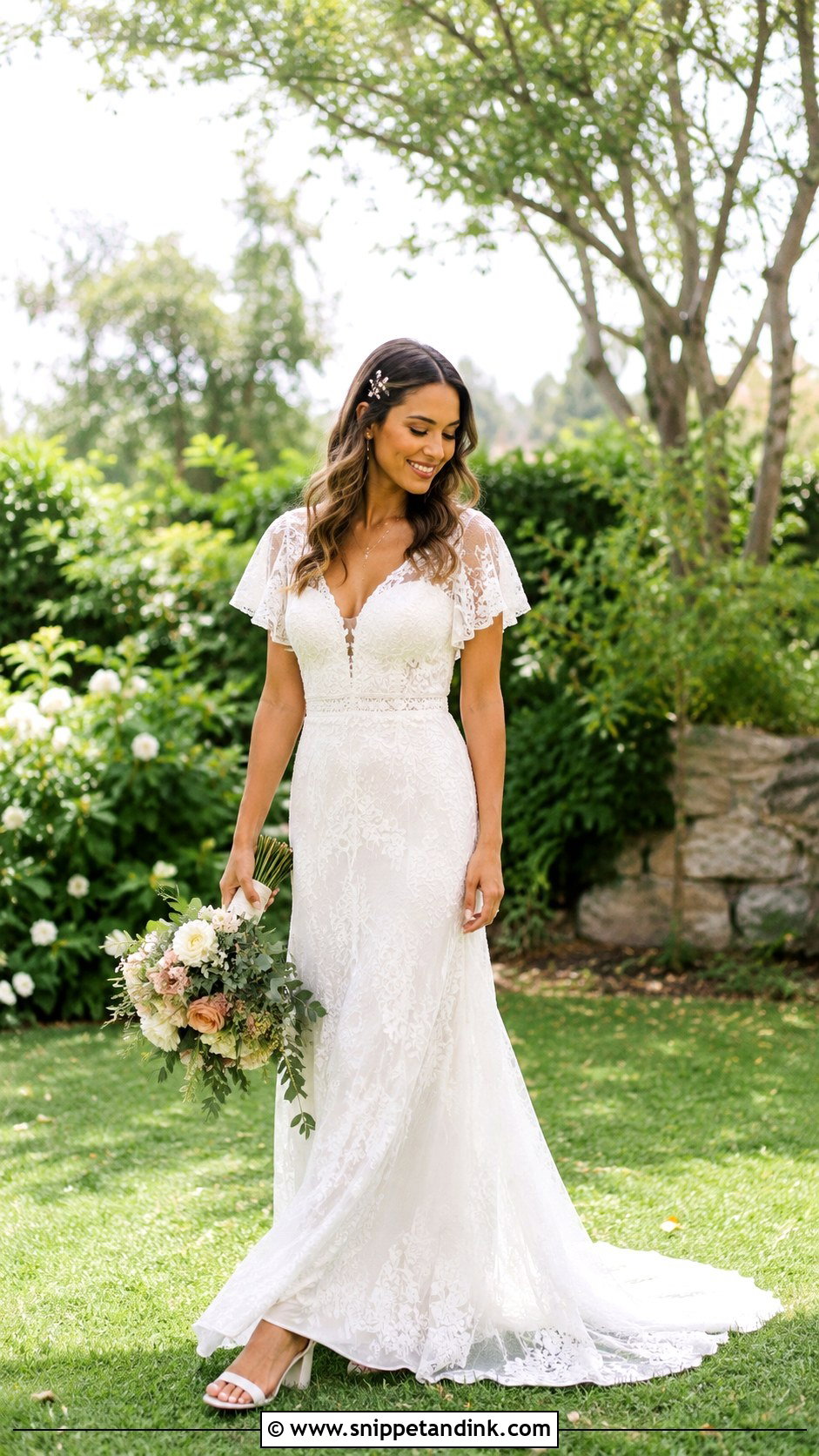
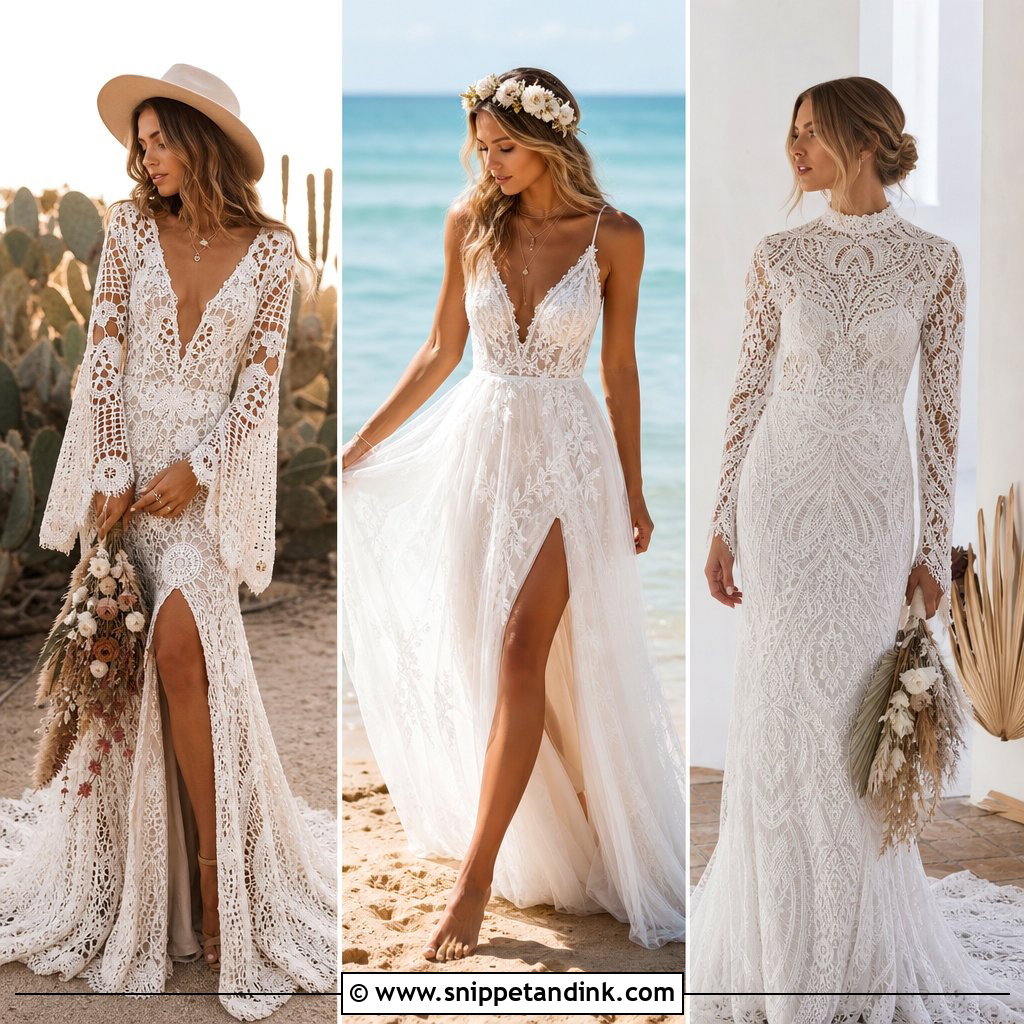
A boho dress still needs some structure on a petite bride. Soft lace, flutter sleeves, light chiffon and subtle embroidery give the relaxed mood, but very loose shapes hide the waist and make a small frame look lost in fabric. Choose a fitted bodice, empire seam or narrow A-line skirt. A V-neck or open back adds length. Flutter sleeves should be short and light, since a deep flutter widens the shoulders. Soft waves, delicate hair pins and block heels or sandals suit outdoor and coastal venues.
22. Petite Beach Wedding Dress
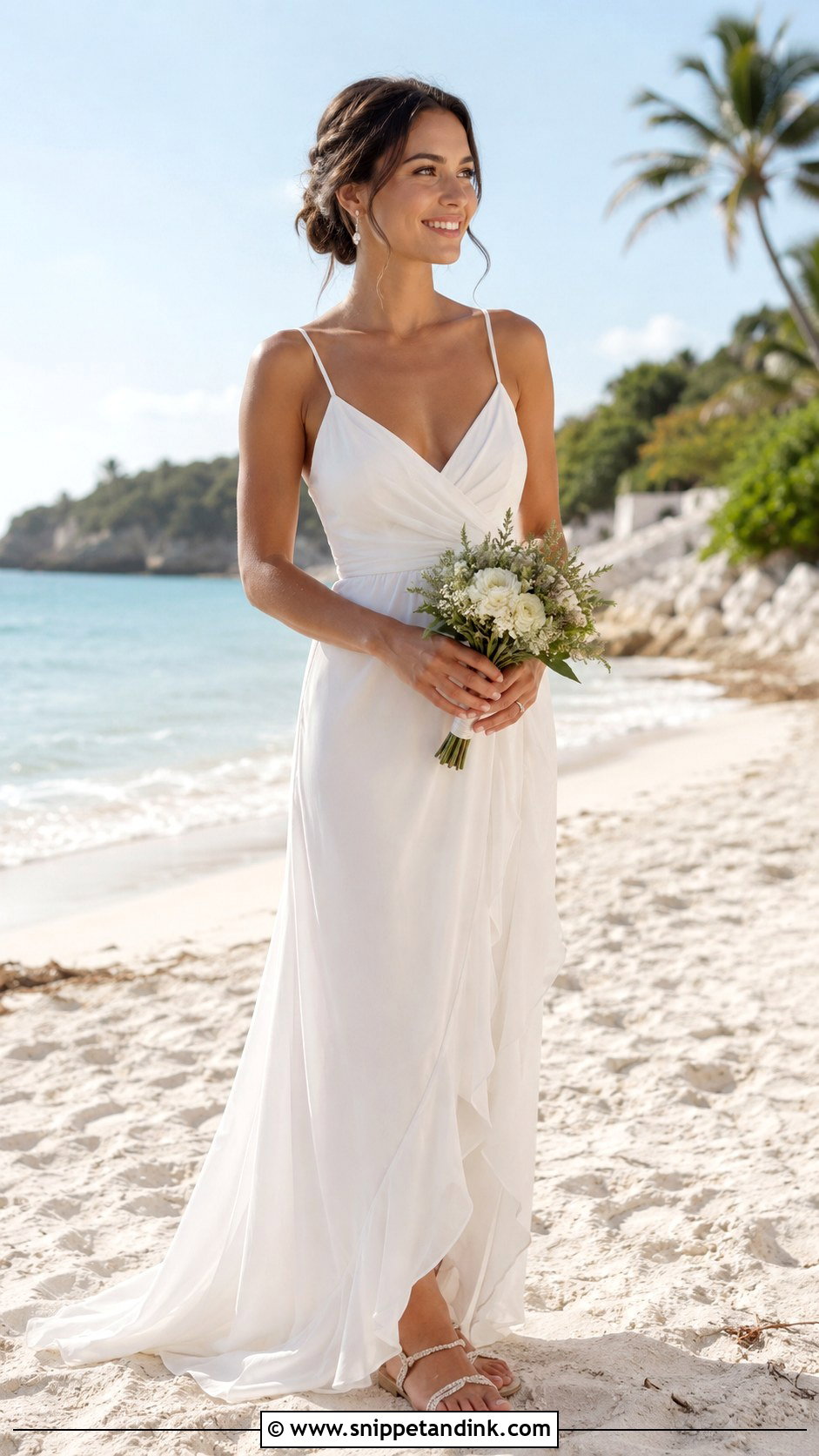
On the beach you’ll be walking on sand, so the dress has to be light and the hem short enough not to drag. Heavy trains and stiff skirts are impractical. Chiffon, crepe, lightweight lace or simple silk blends work. A sheath, empire waist or flowing A-line gives length. Hem it for the shoes you’ll actually wear, which on sand often means flats or bare feet; a hem cut for heels will drag several inches. V-necks, spaghetti straps or an off-shoulder neckline keep it airy, and a short veil handles wind better than a long one.
23. Petite Courthouse Wedding Dress
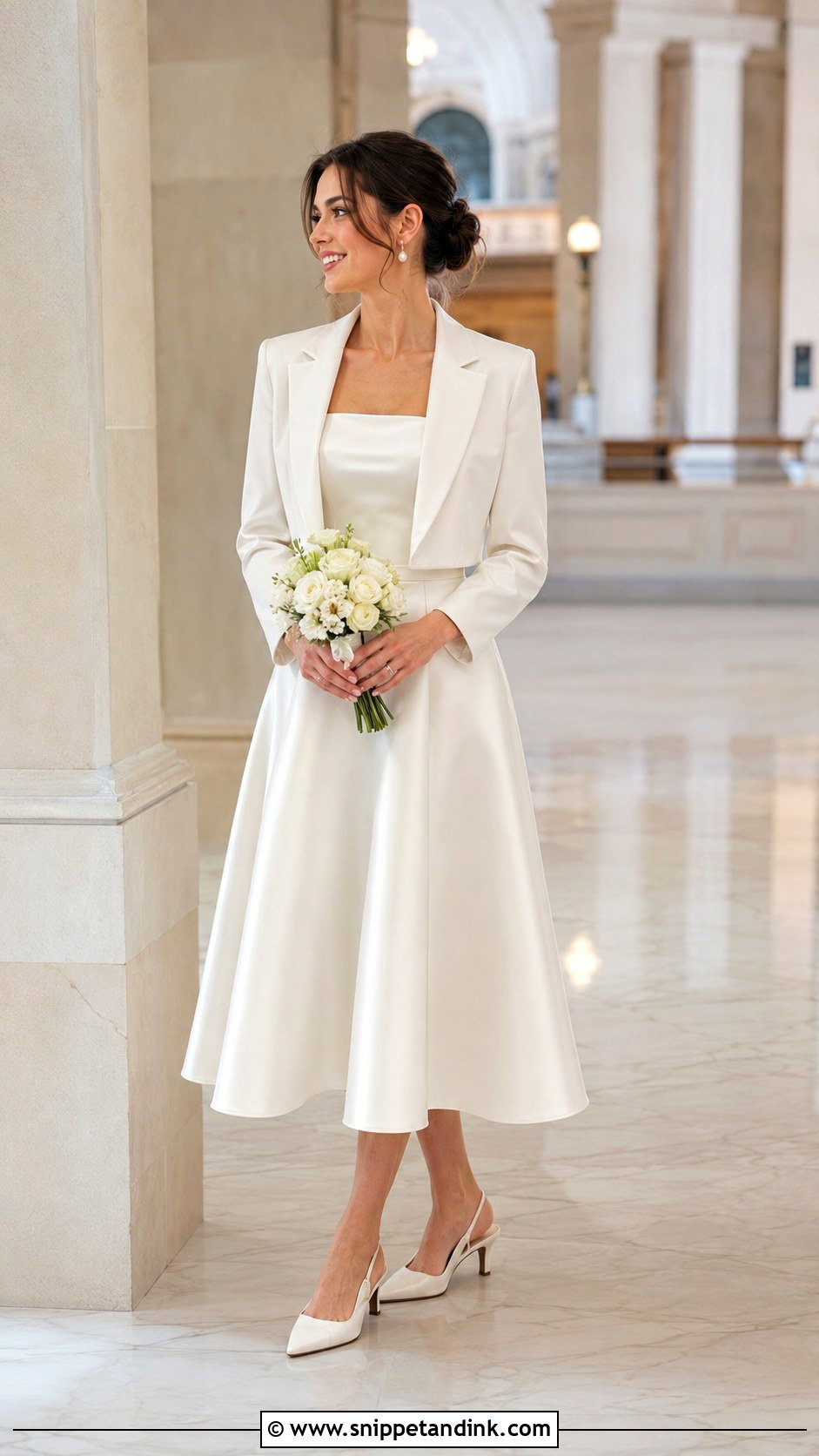
Courthouse weddings suit a short dress, tea length, satin midi or tailored sheath. Petite brides can use the moment to show great shoes, a sharp neckline or a clean silhouette. A blazer, cropped jacket or pearl hair accessory makes it feel bridal without being formal. Make sure a jacket is cropped to your waist; a standard-length blazer hits mid-hip on a petite frame and cuts the line in two. Keep the hemline deliberate, and add pointed pumps or slingbacks to lengthen the leg.
24. Petite Plus Size Wedding Dress
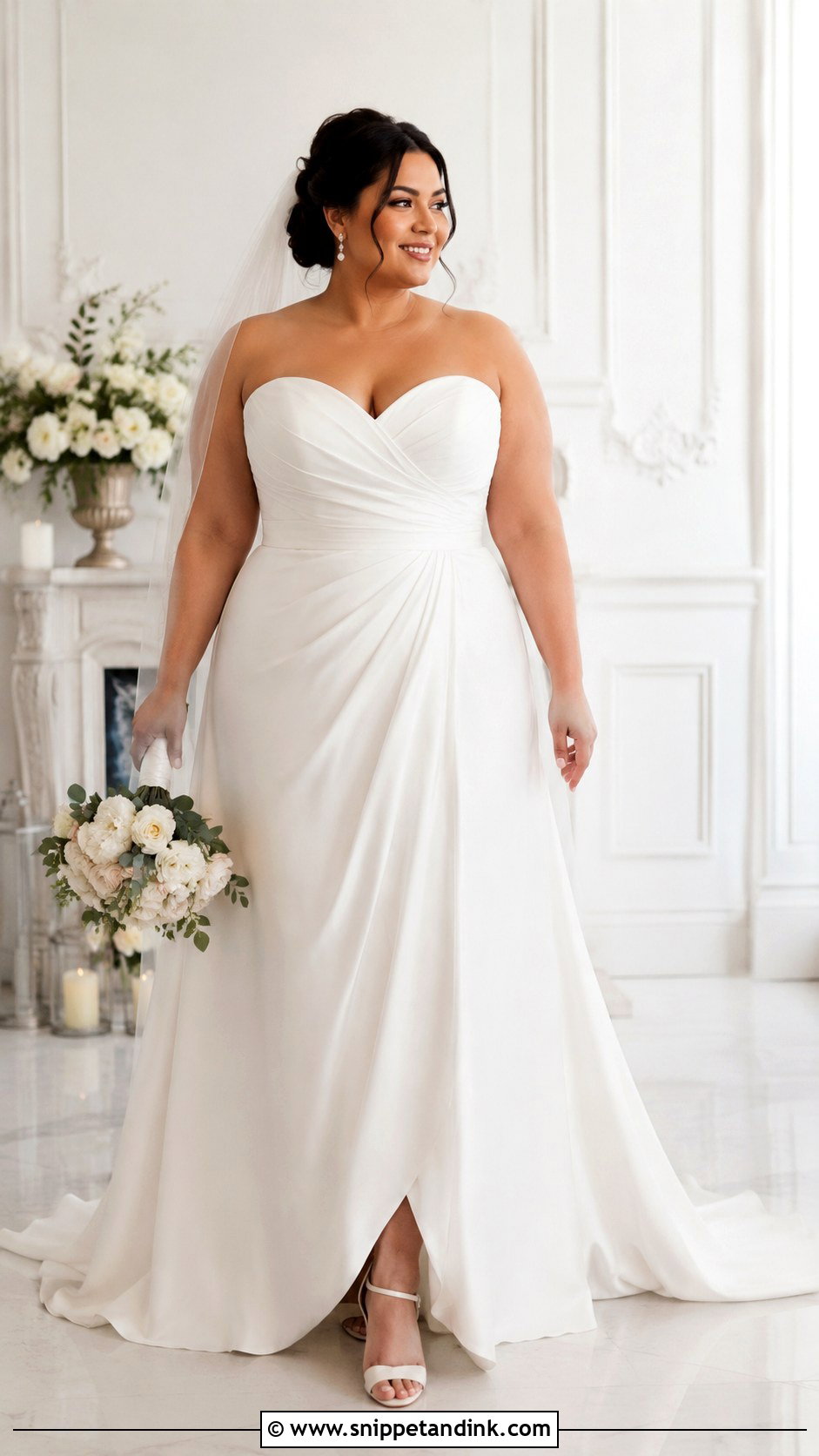
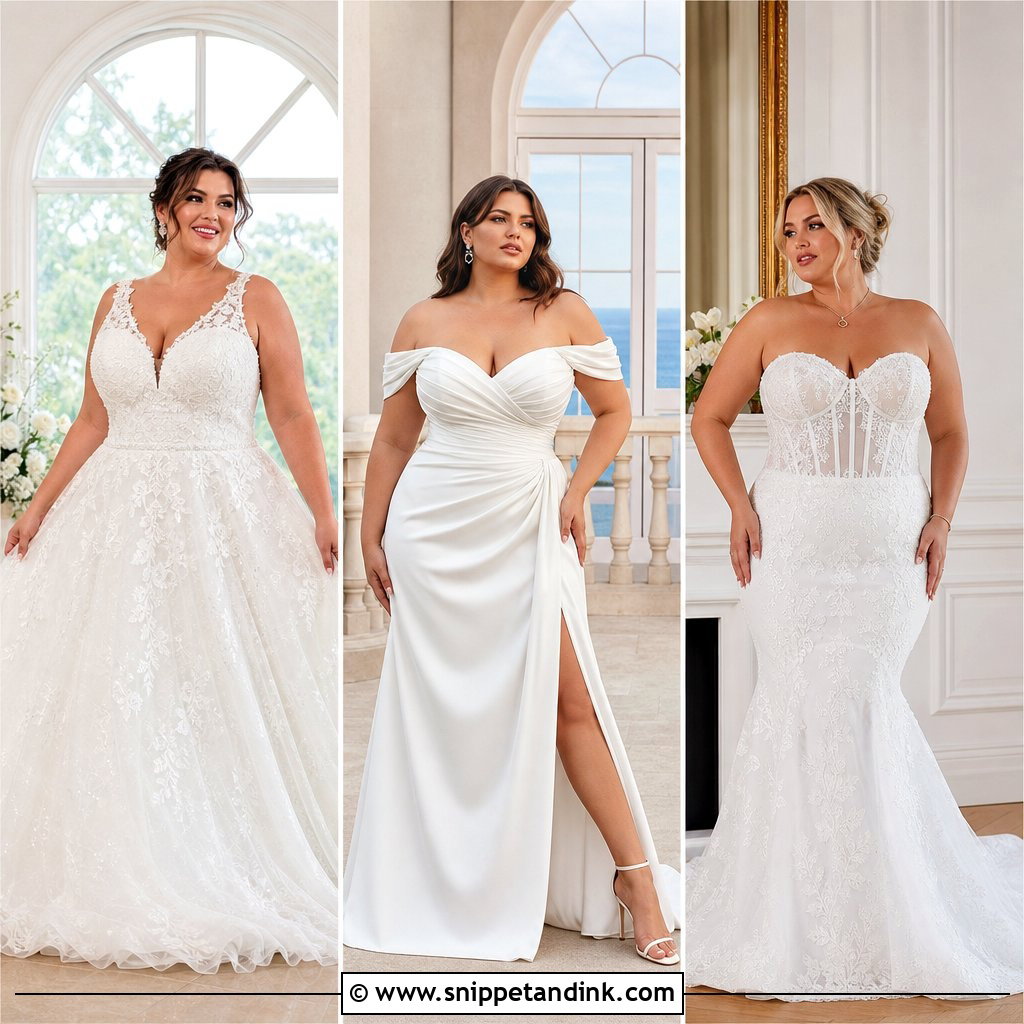
A petite plus size wedding dress has to support and balance at once. A-line, empire waist, fit-and-flare and structured sheath silhouettes all work. Look for a bodice that fits through the bust and waist, then a skirt that moves without excess fabric. A V-neck, sweetheart or off-shoulder neckline frames the top, and vertical seams, soft draping and fine lace placement build a long line. Many plus size gowns are cut long in the torso, so the bodice may need shortening as well as the hem. Choose supportive construction and alterations that let you move freely.
25. Petite Mature Bride Wedding Dress
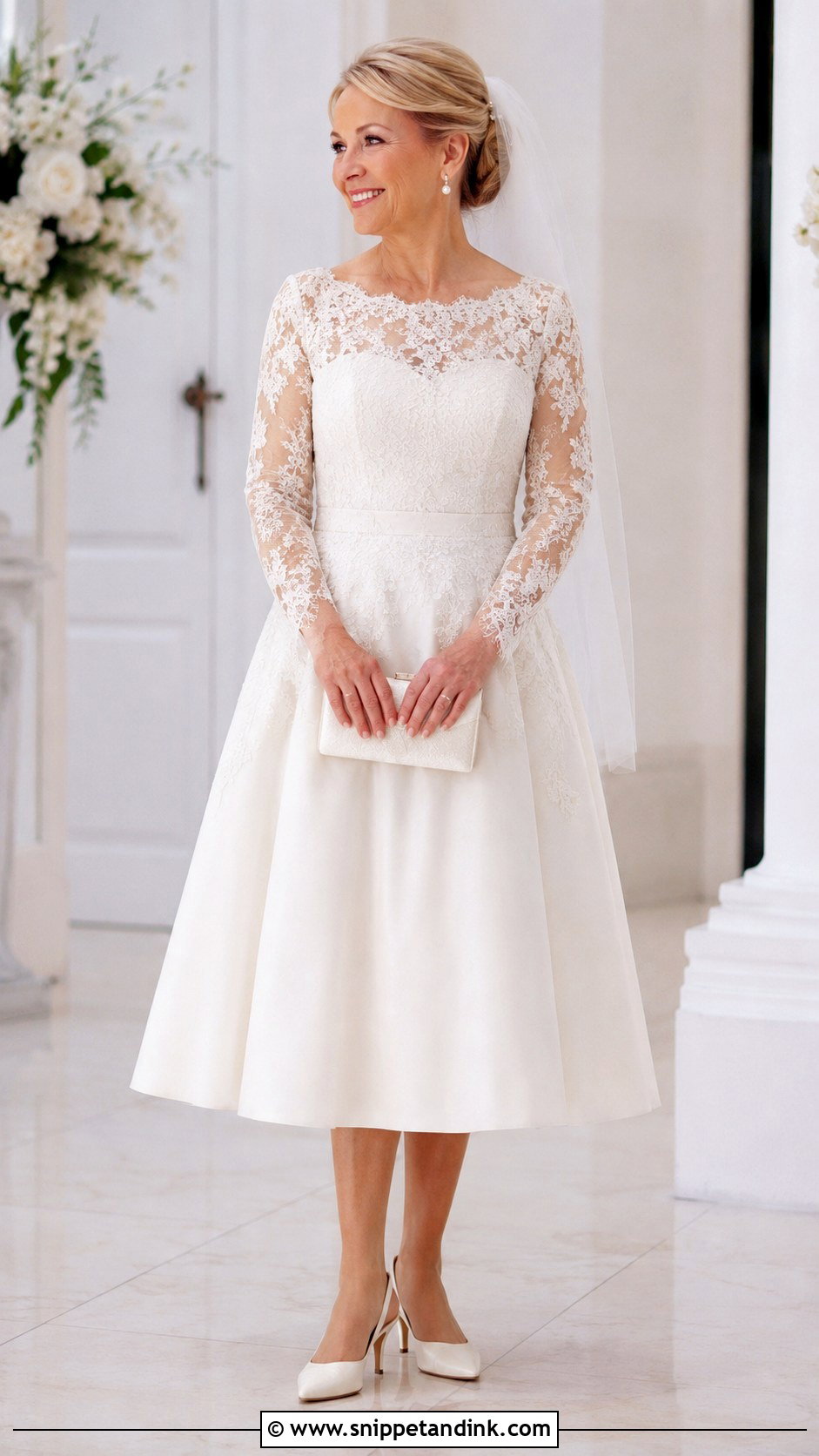
For a petite mature bride, I focus on fit and comfort over trend. A tea-length dress, long sleeve lace gown, satin sheath or simple A-line all suit a shorter frame. Soft sleeves, a considered neckline and a gentle waist add polish without stiffness. Very heavy fabric drags on a small frame, so lighter weights wear better through a long celebration. Supportive heels, pearl or crystal earrings and a neat clutch complete it.
Heel Height, Veil Length and Where Your Hair Sits
A dress doesn’t stand on its own. Shoes, veil and hair change your proportions as much as the gown does, and on a petite bride they can undo good tailoring.
Shoes
Choose a heel you can stand in for hours, not the tallest one you own. A pointed toe and a colour close to your skin extend the leg line better than extra height. Once the hem is cut, you’re committed to that heel.
Veil
Elbow, fingertip and waltz lengths keep a petite frame in proportion. A cathedral veil can still work if the gown is simple, but it shouldn’t be much wider than your shoulders or it starts to look like you’re being swallowed.
Hair
A slightly raised crown or a mid-height bun adds a little height without looking forced. A very low veil placement at the nape is lovely with a simple dress, but with a heavy veil it can drag the eye down.
Proportion First, Then the Silhouette You Love
There’s no rule that a petite bride can’t wear a certain shape. A-line, sheath, mermaid, tea-length, lace, satin, boho or a courthouse dress can all work when the proportions are adjusted to you. What matters is where the waist sits, how heavy the fabric is, how the neckline opens, and how well the alterations are done. Go in expecting almost any dress to need altering, and trust the version you see once it’s pinned to your height over the one in the sample rack.
You'll Like These Ideas:



Leave a Reply