
Classy bridal hair rarely shouts. It sits quietly beside the dress, lets your face lead, and still looks tidy when you’re cutting the cake hours later. The shapes I’m asked for again and again are polished but soft: low chignons, smooth buns, Hollywood waves, half-up hair, French twists, braided crowns and natural curls given a clear bridal outline. Some brides want sleek; others want movement. Here are 15 classy bridal hairstyles, each with the necklines, venues and hair types it suits, so you can weigh them against your own gown, veil and forecast.
That Saved Photo Probably Has Extensions in It
A saved photo is the fastest way to explain what you want and the easiest way to end up disappointed. Before you hand one to me, look at it the way I will.
- Count the hair. Many editorial buns and full waves use extensions or padding. If the bun in the picture is twice the size of your ponytail, expect to need added hair for that shape.
- Look at the colour. Highlights and balayage make braids and twists stand out because light and dark strands separate. On solid dark or very pale hair, the same braid can look flat. That’s a reason to choose a smoother shape, not a flaw.
- Find the back view. Most photos show the front or a three-quarter angle. A style can look full from the front and thin from behind.
- Notice the setting. Shoots are often done indoors with good light and a stylist just out of frame. A windy hilltop or a long reception is a different test.
- Check the hairline. Center parts and slicked-back crowns rely on it. If yours has a strong cowlick or thin temples, I’ll suggest a softer part.
Bring two or three photos and say what you like about each. “The height at the crown from this one, the softness around the face from that one” gives me far more to work with than a single picture.
1. Low Chignon Bridal Hairstyle
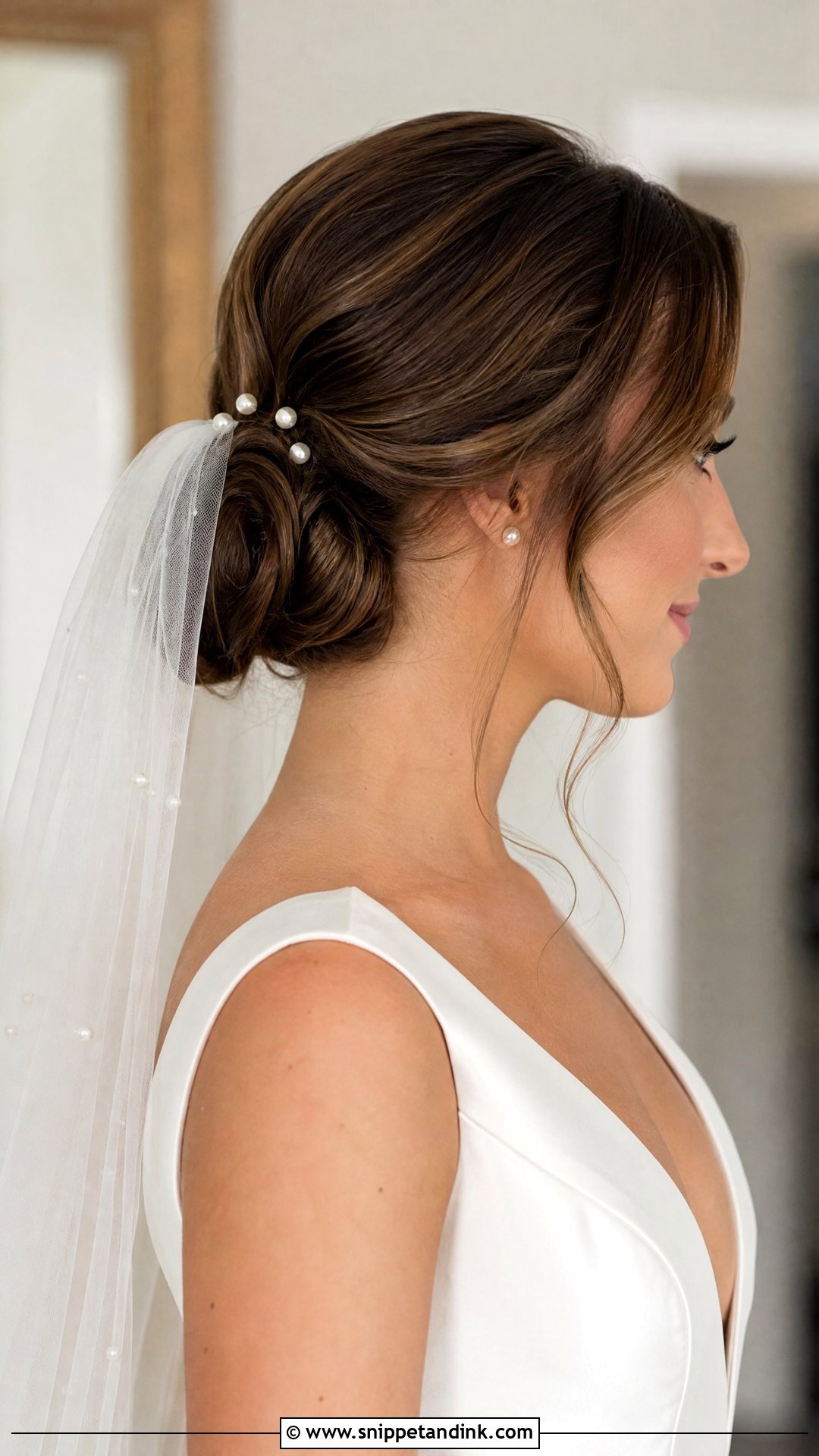
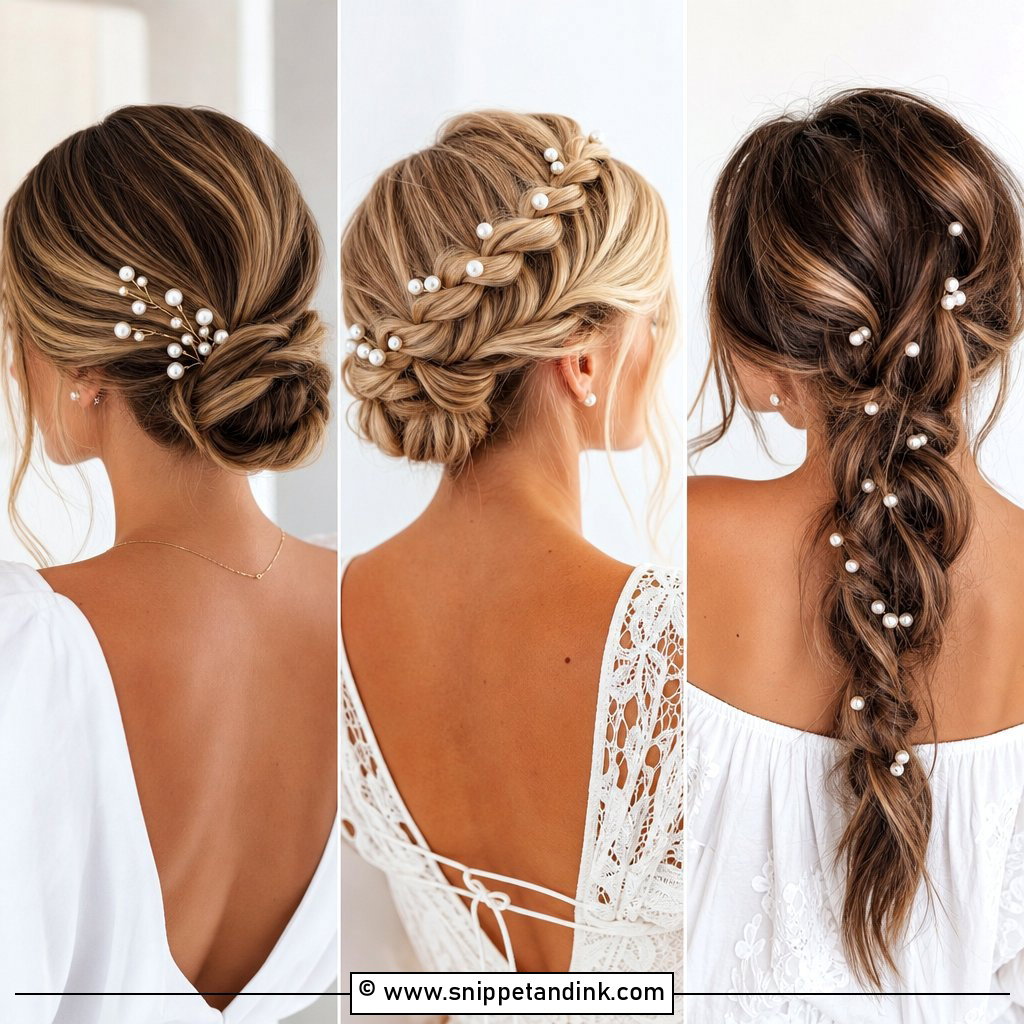
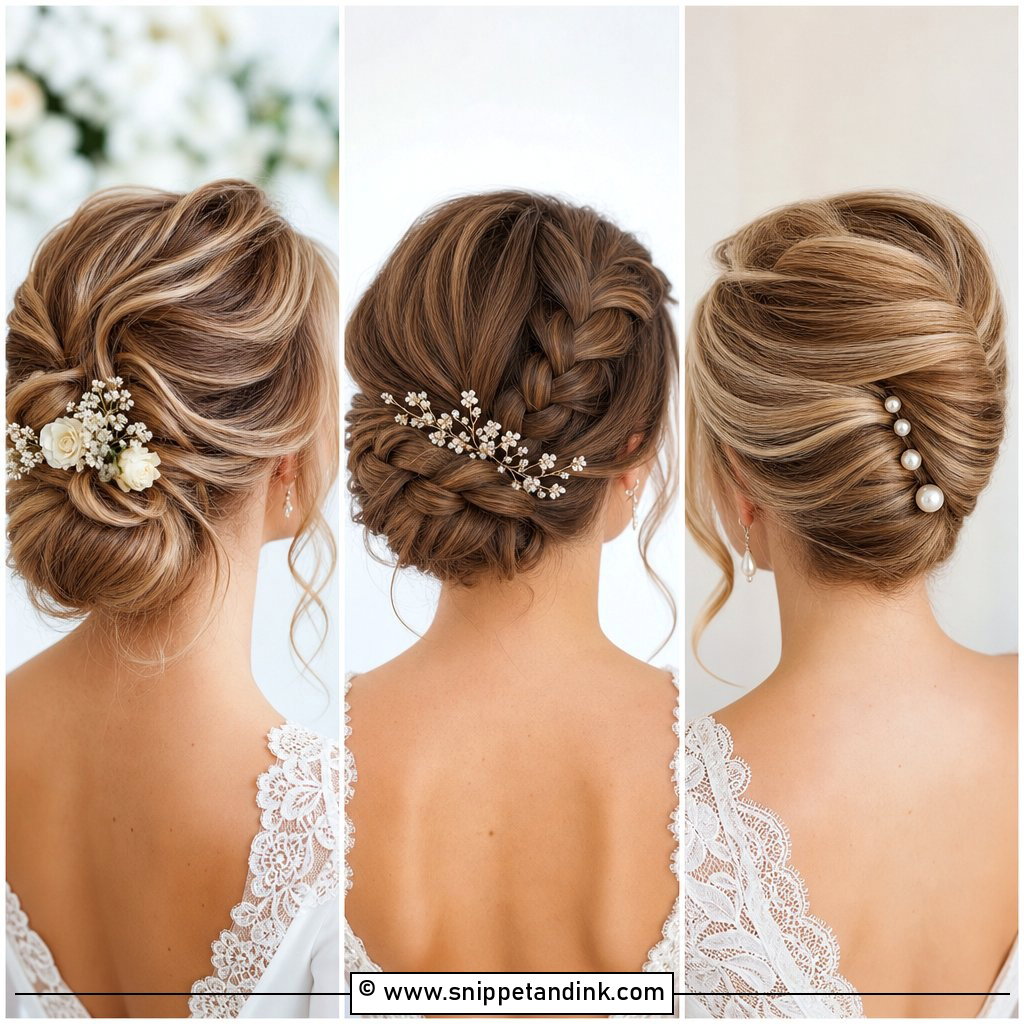
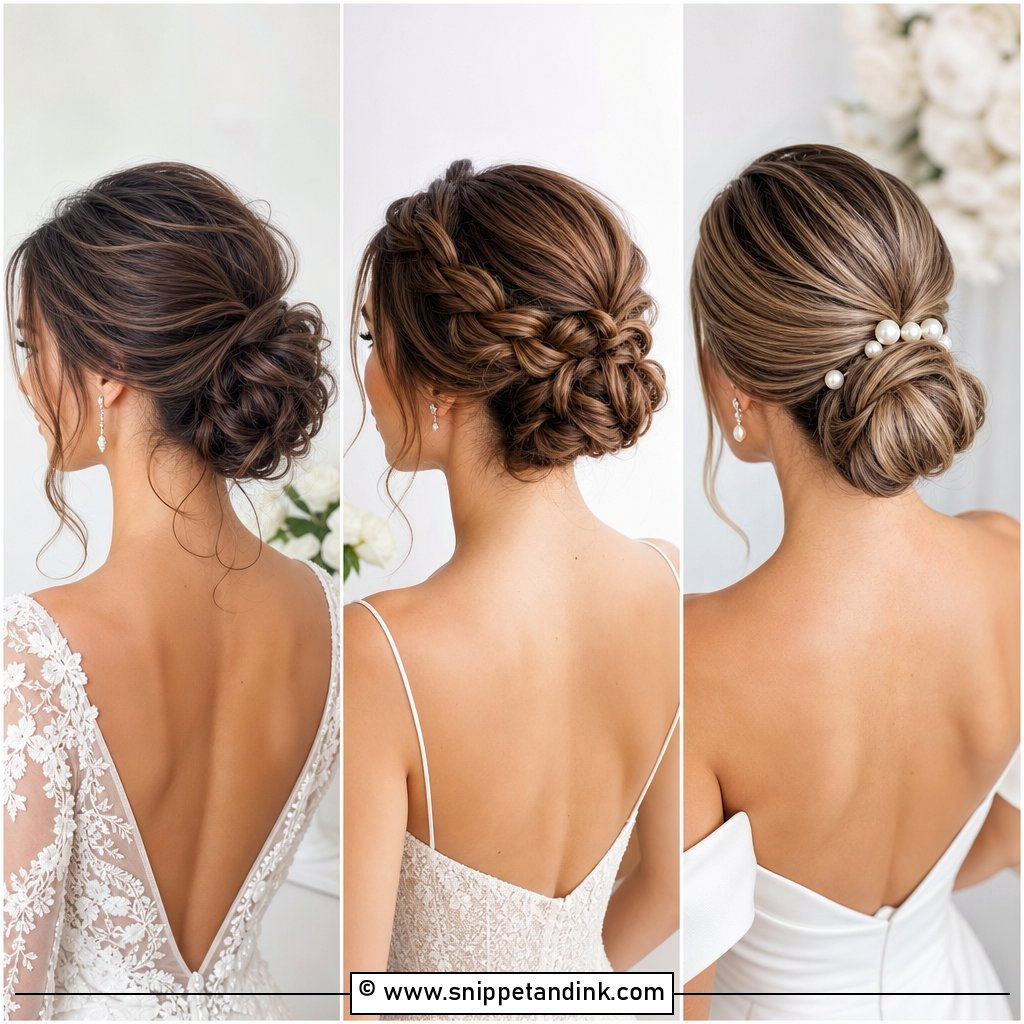
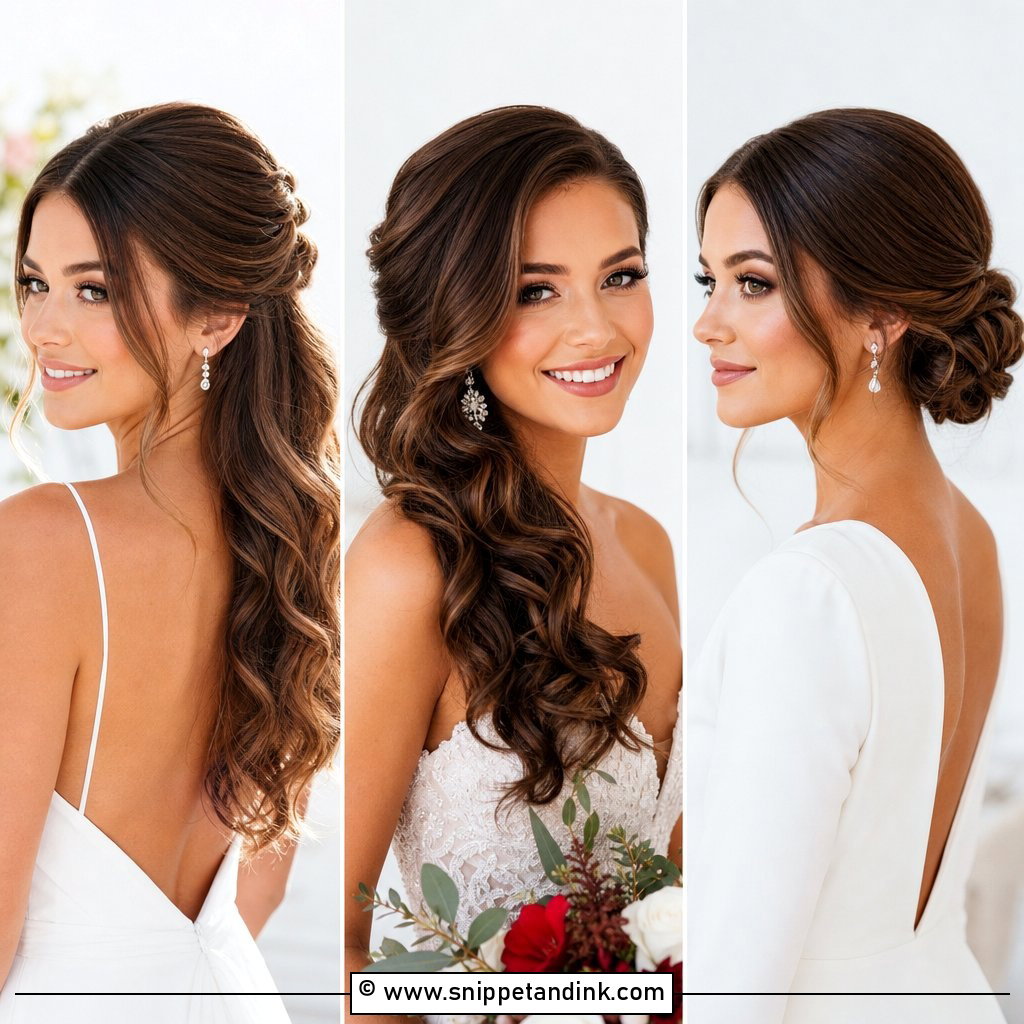
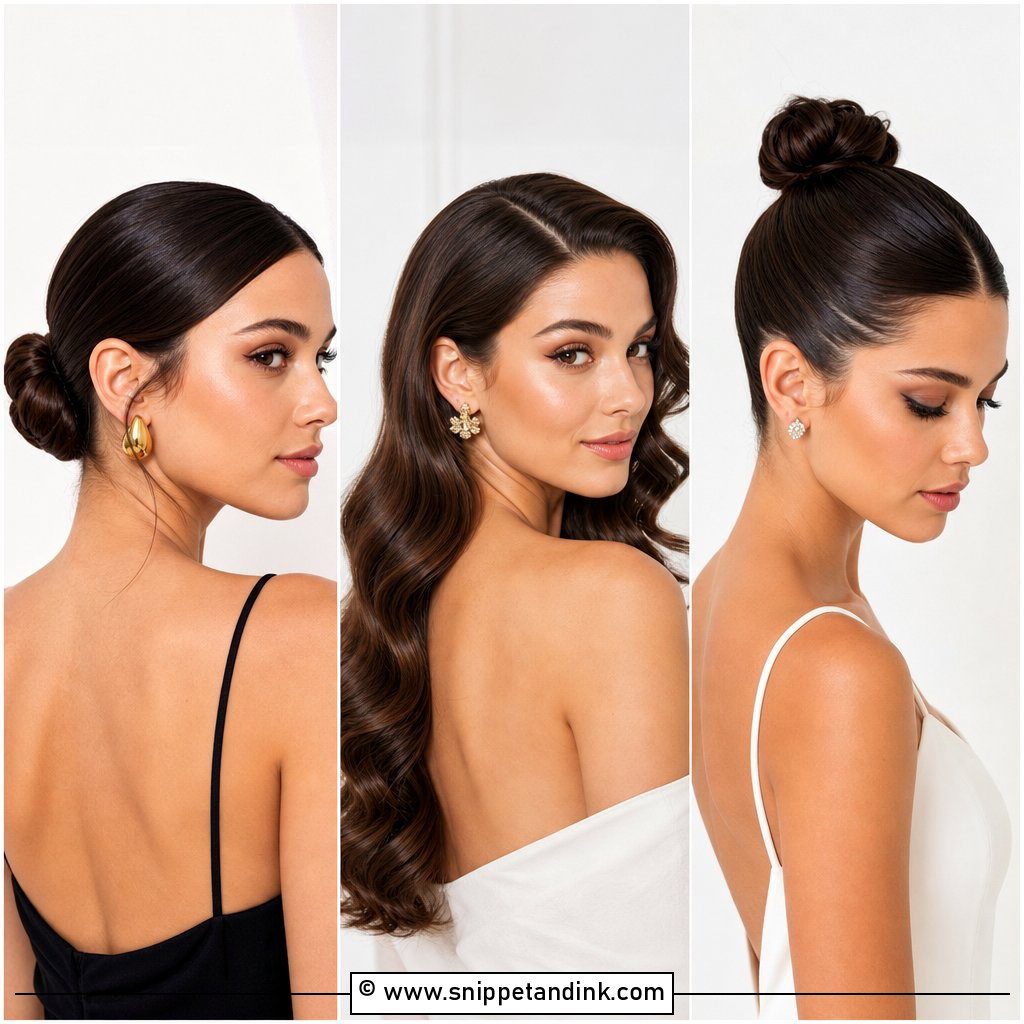
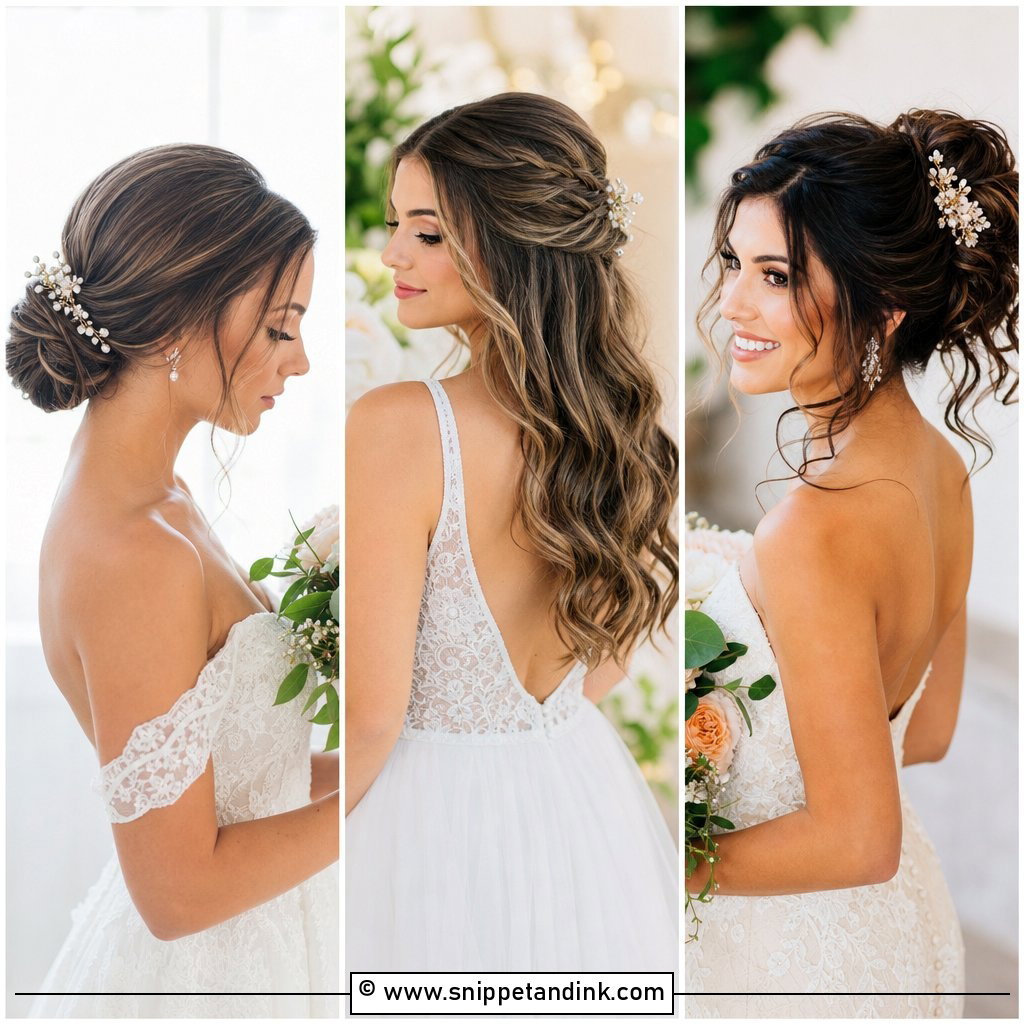
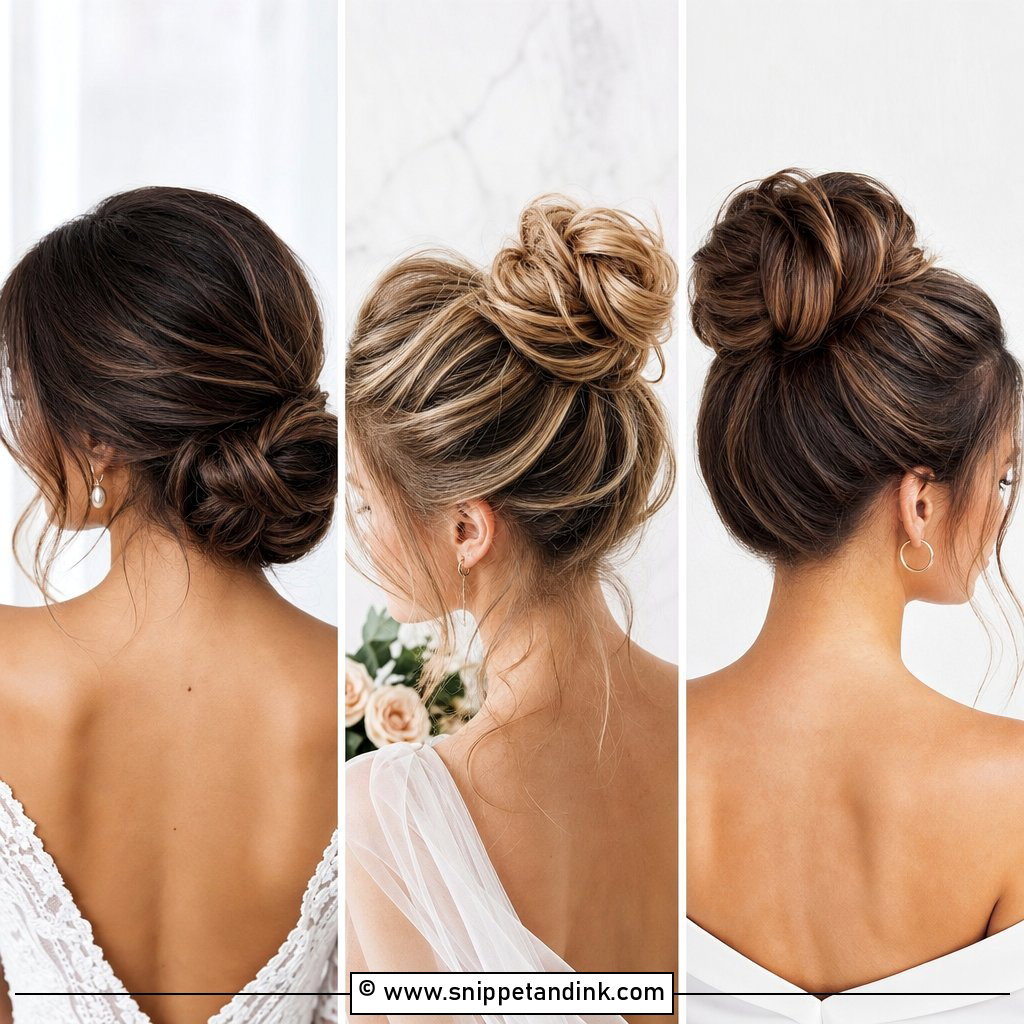
If I had to pick one style to trust on a day with unknown weather, it would be this. A chignon at the nape stays clear of an open back, leaves room for pearl pins and a veil, and balances statement earrings. Medium to long hair suits it, either sleek or softly textured. What makes it look expensive is the tuck: the ends should vanish inside the shape, with no little tufts poking out at the sides. Two soft face-framing pieces take it from formal to romantic without loosening the structure.
2. Sleek Bun Bridal Hairstyle
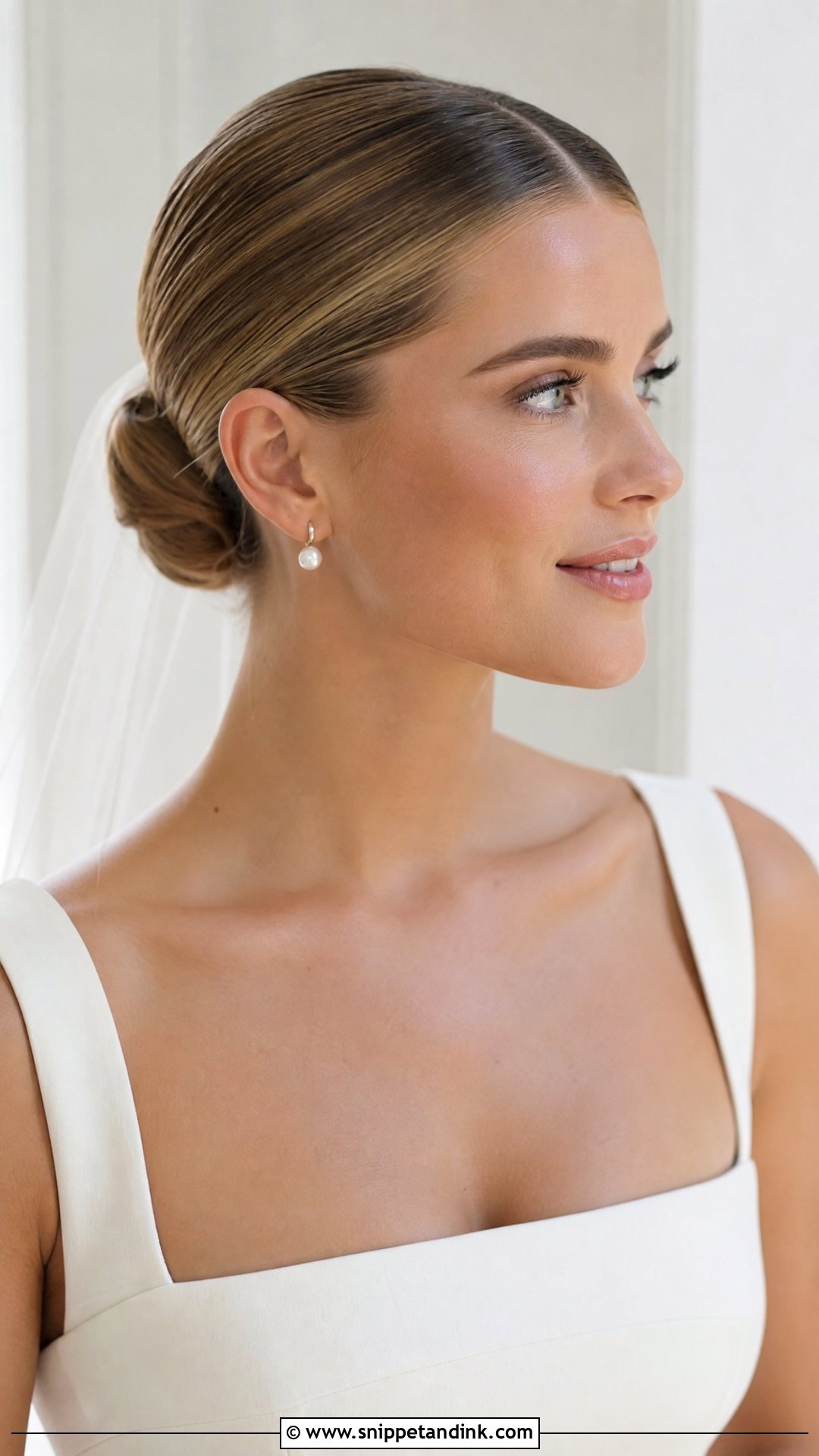
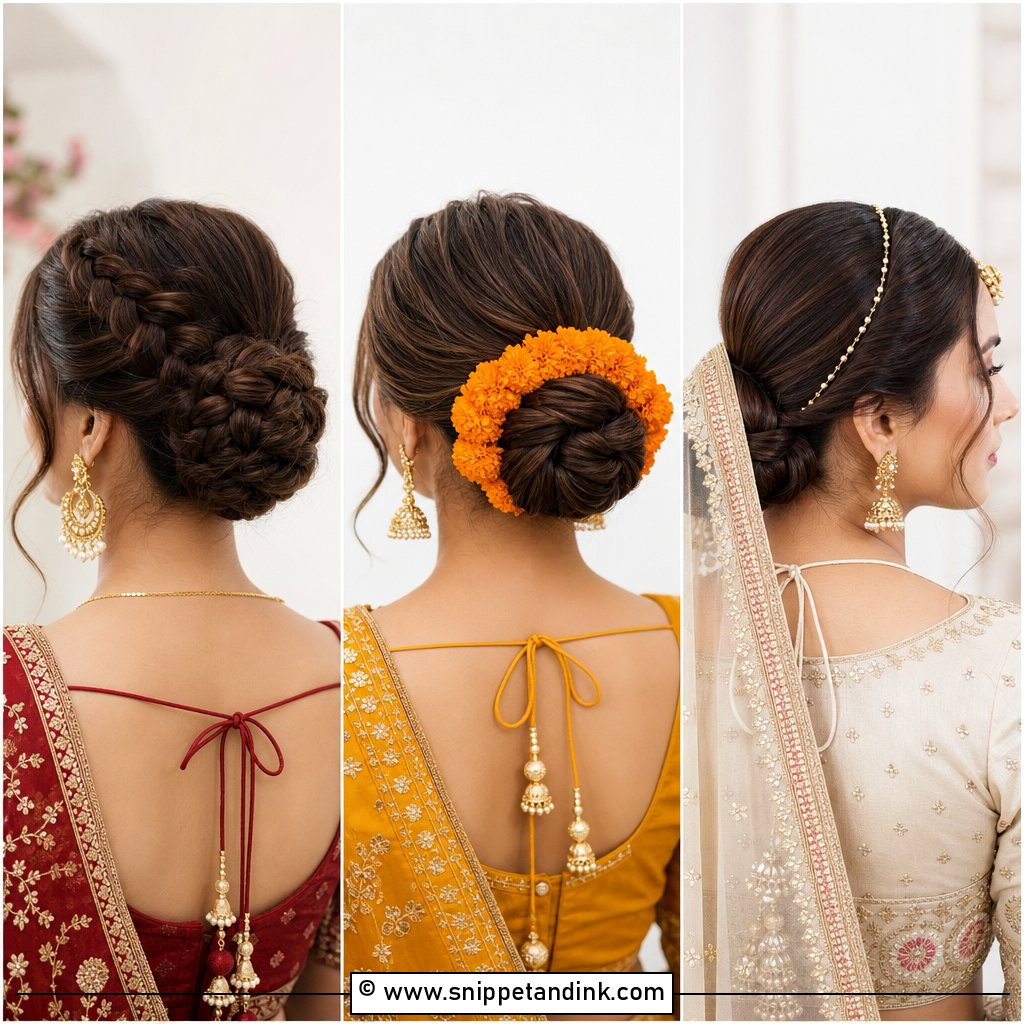
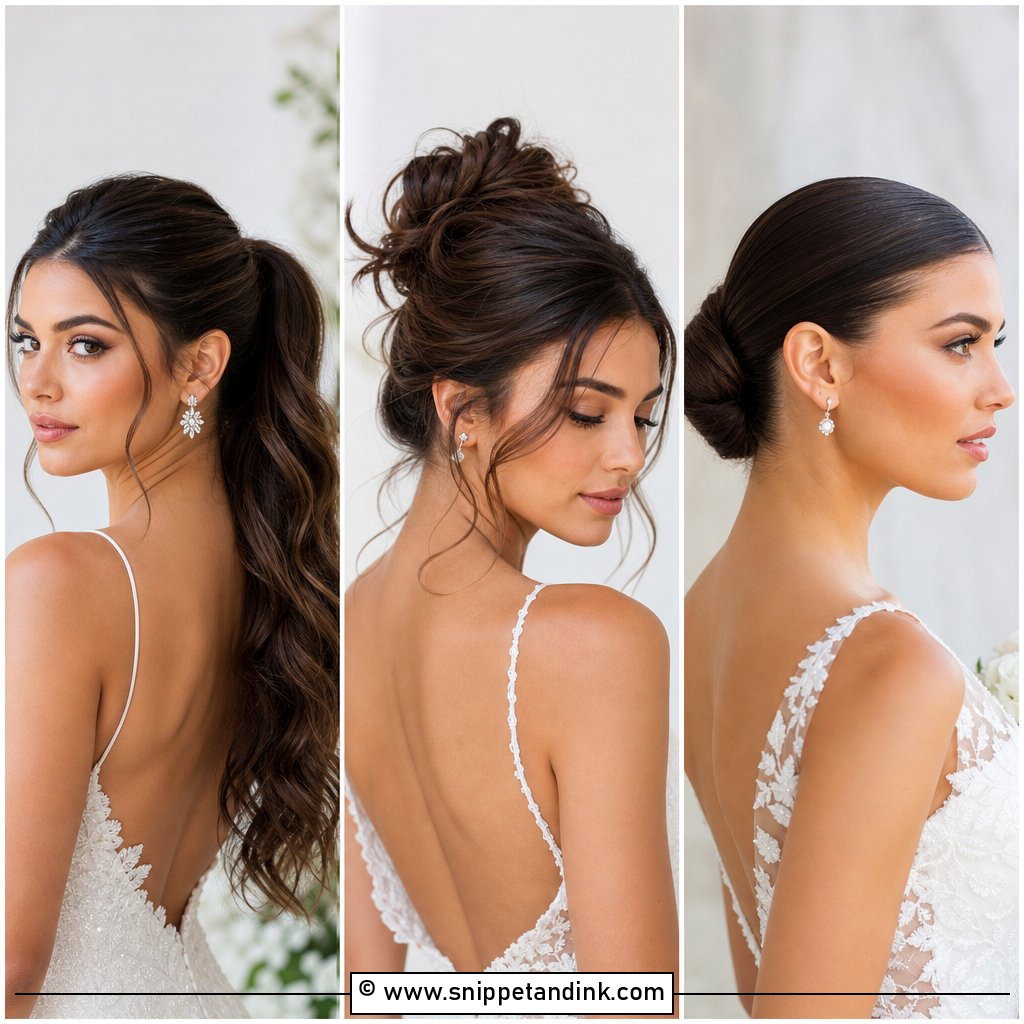
Smooth hair close to the head, a neat bun at the back or just above the nape. It’s the cleanest frame I can give a modern gown, high neck or square neckline, and it lets your makeup, earrings and veil carry the detail. The trap is overdoing product. Strong gel can leave visible comb lines and a wet sheen under a flash, so I use a firm-but-flexible cream and a fine shine spray instead. Get your brows and makeup done before the final brushing, because there’s nothing to hide behind afterward.
3. Hollywood Waves Bridal Hairstyle
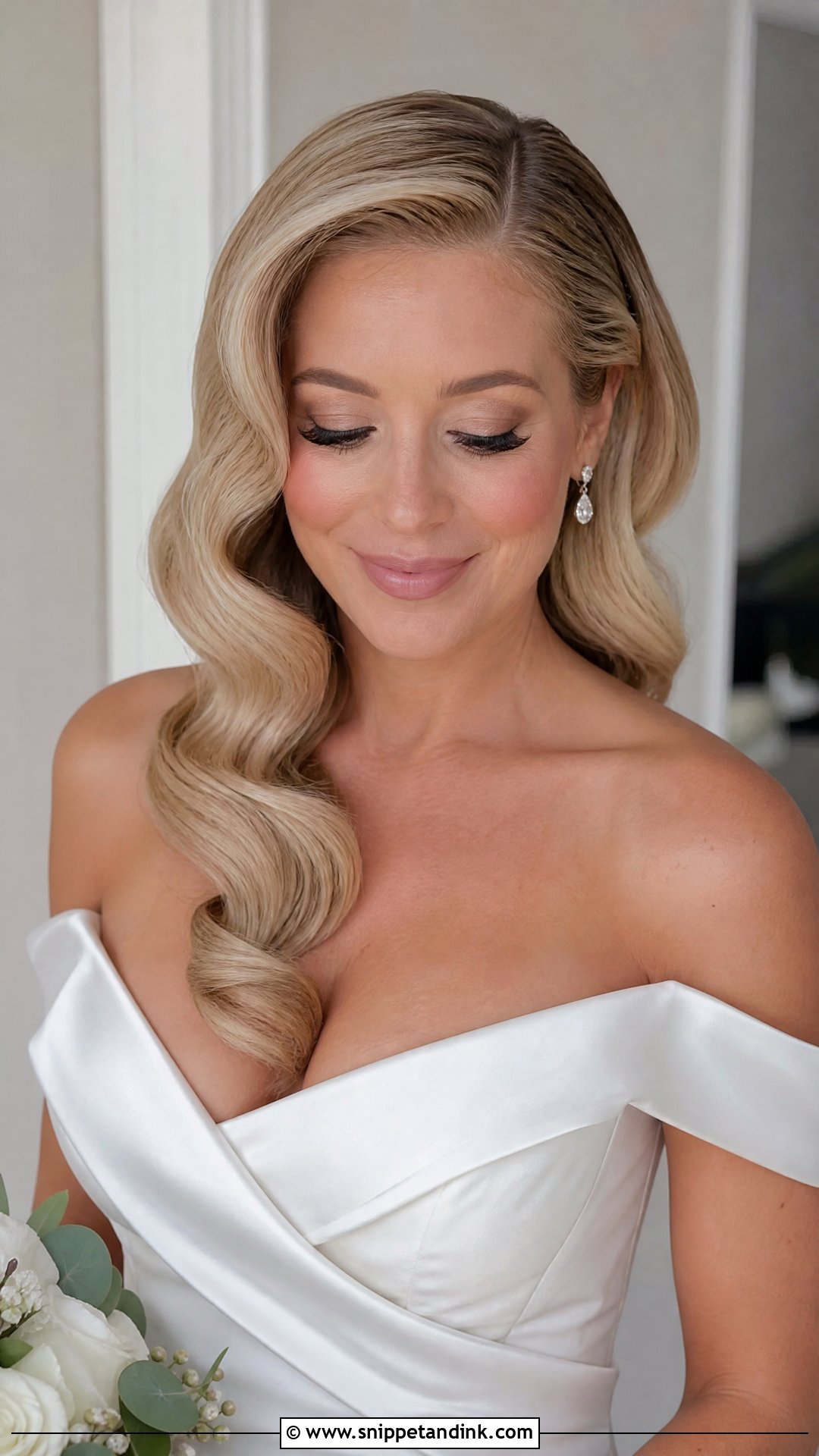
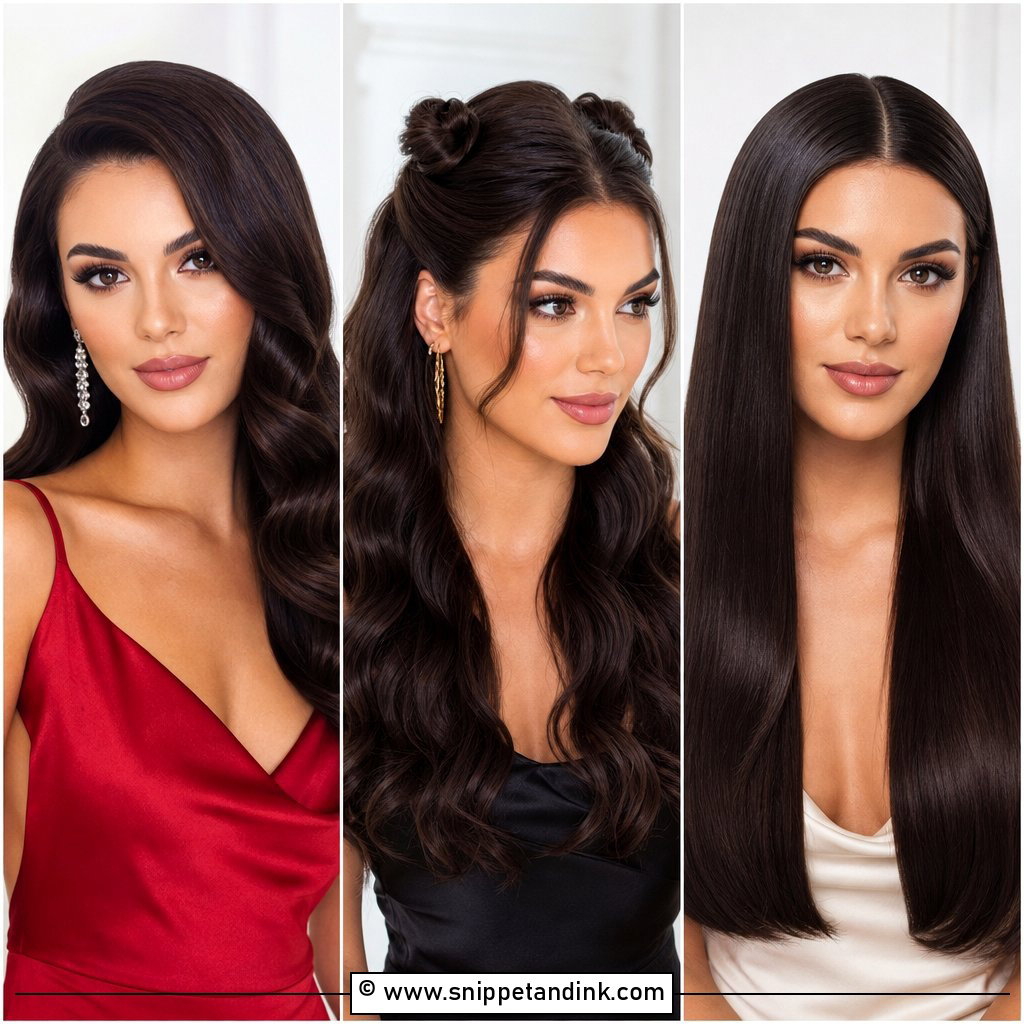
Glamour with restraint is what these waves deliver. Each section is curled the same way, set in clips, and brushed into one glossy ripple. They suit strapless, off-the-shoulder, satin and vintage-inspired dresses, on medium to long hair; extensions help if yours is short or fine. A deep side part adds drama, a center part softens them. The setting stage is what makes them last, so don’t let anyone rush it. I leave the clips in through makeup if the timeline allows, then brush out last.
4. Half Up Half Down Bridal Hairstyle
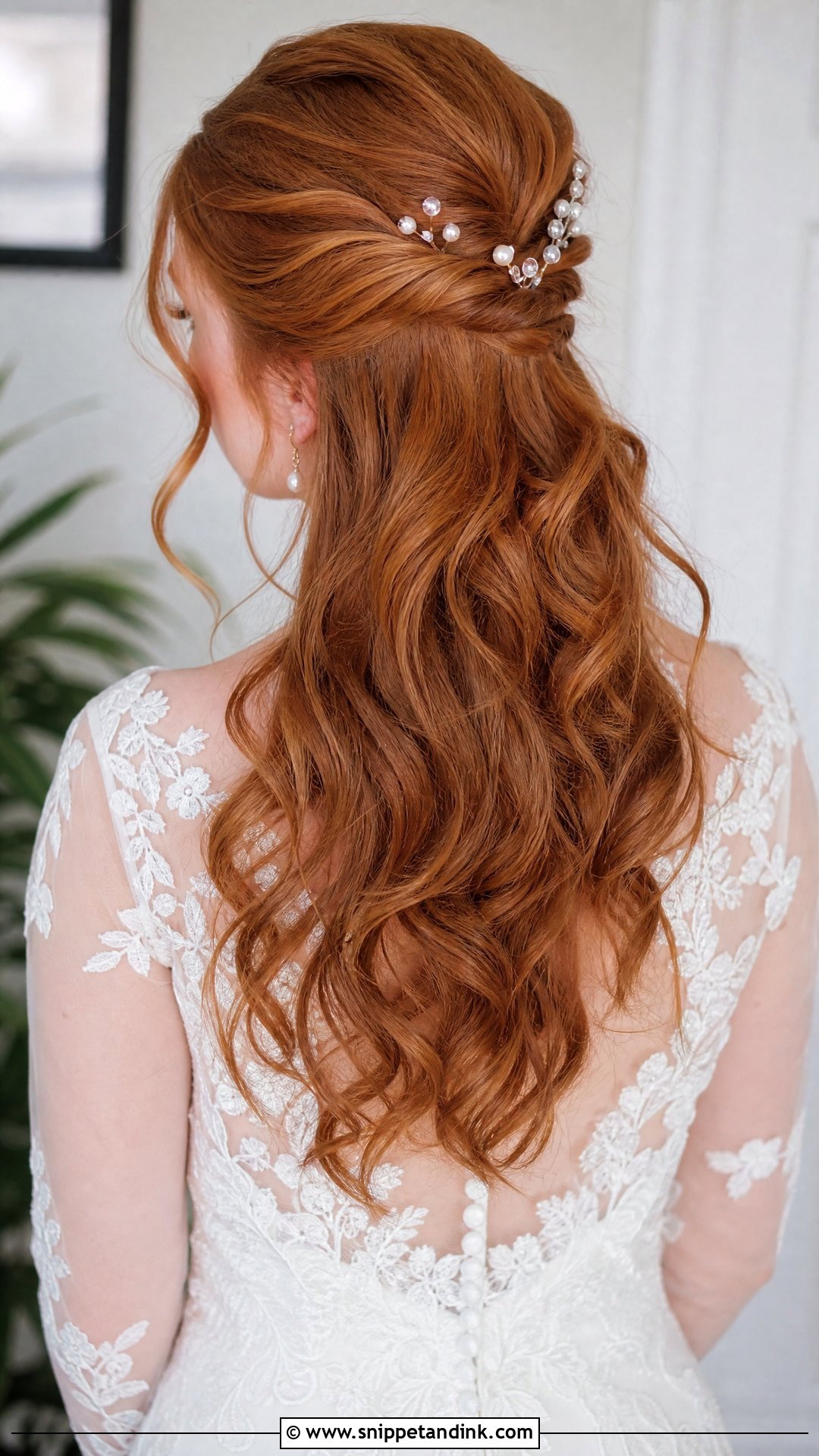
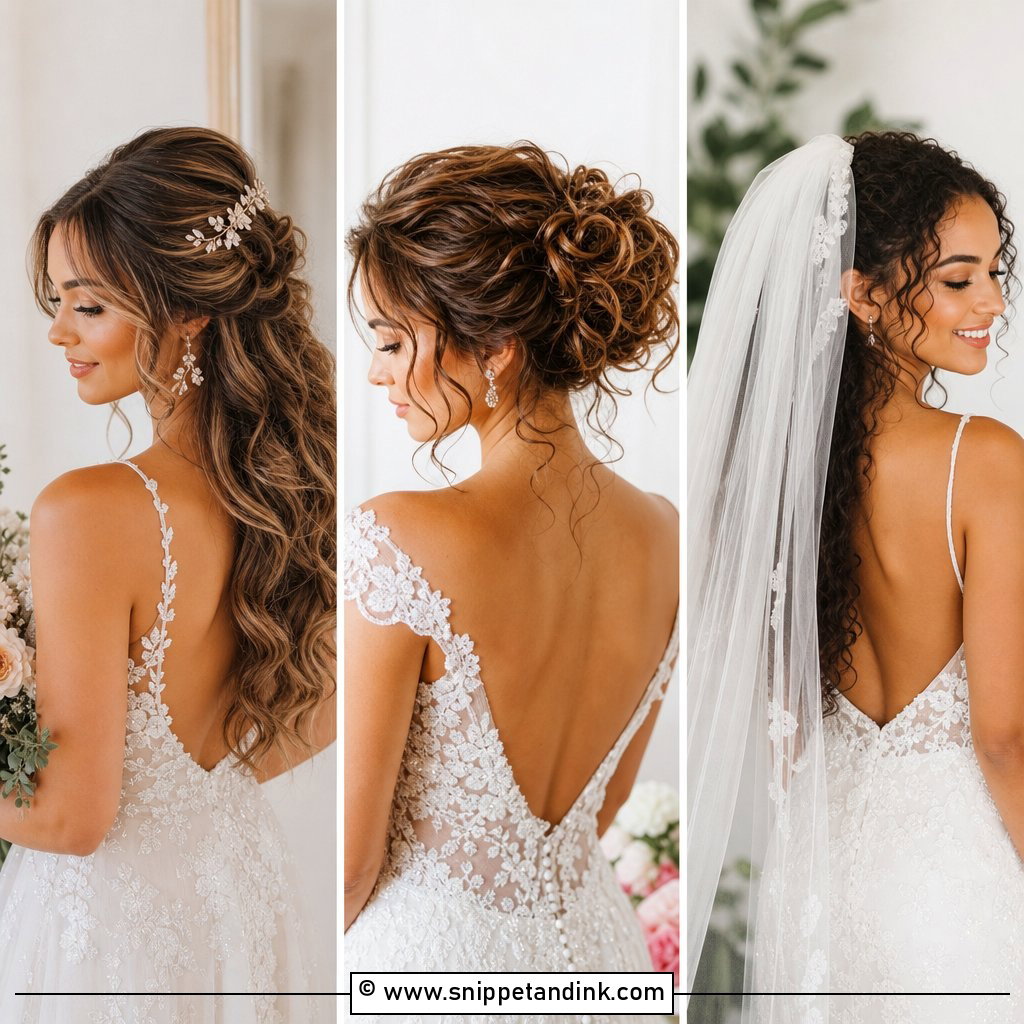
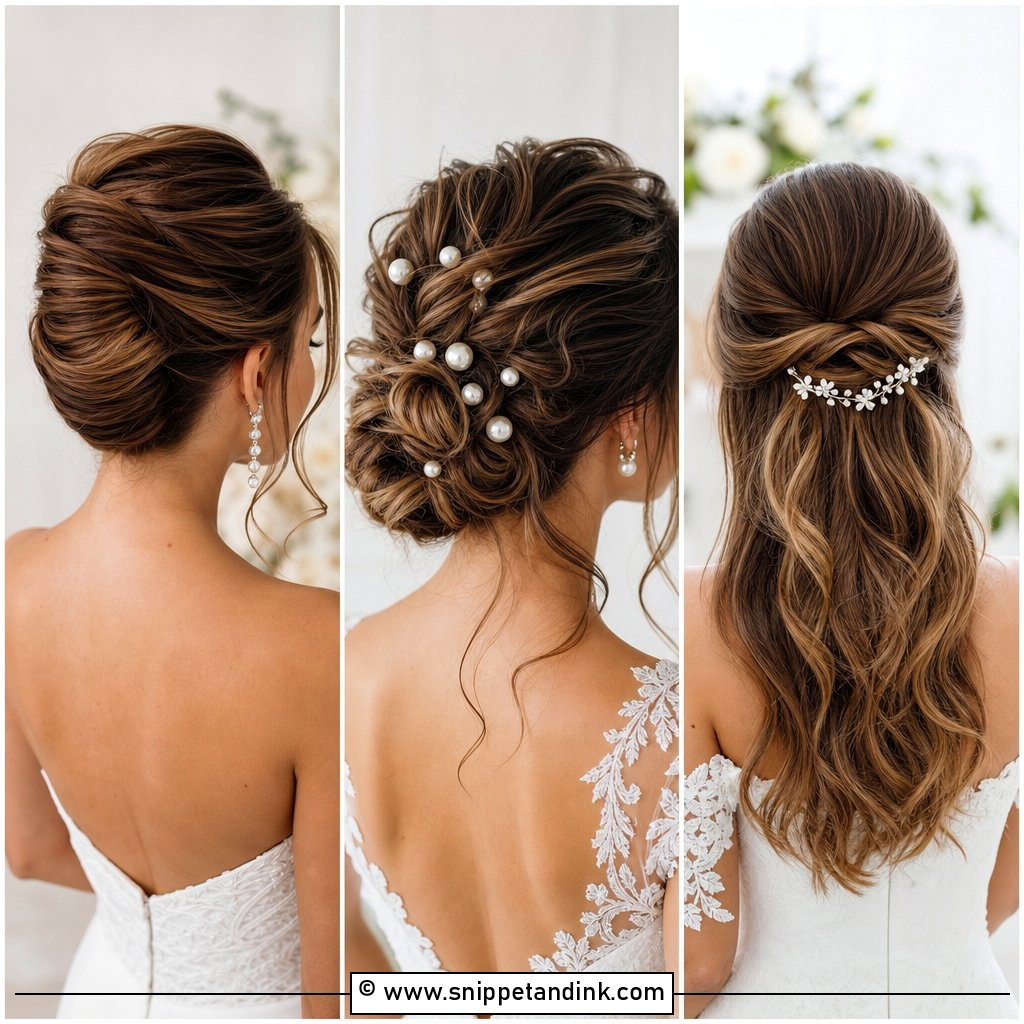
Half up hair is my answer for estate gardens, beach ceremonies and romantic indoor rooms alike, because it keeps loose lengths while the crown stays secure. The top can be pinned, twisted, braided or simply lifted. It frames the face and leaves the dress fully visible from the front. Veils, small combs, pearl pins and floral pieces attach easily to the pinned section. If your hair drops curl within an hour on a normal day, ask about extensions or a firmer set underneath before you commit.
5. French Twist Bridal Hairstyle
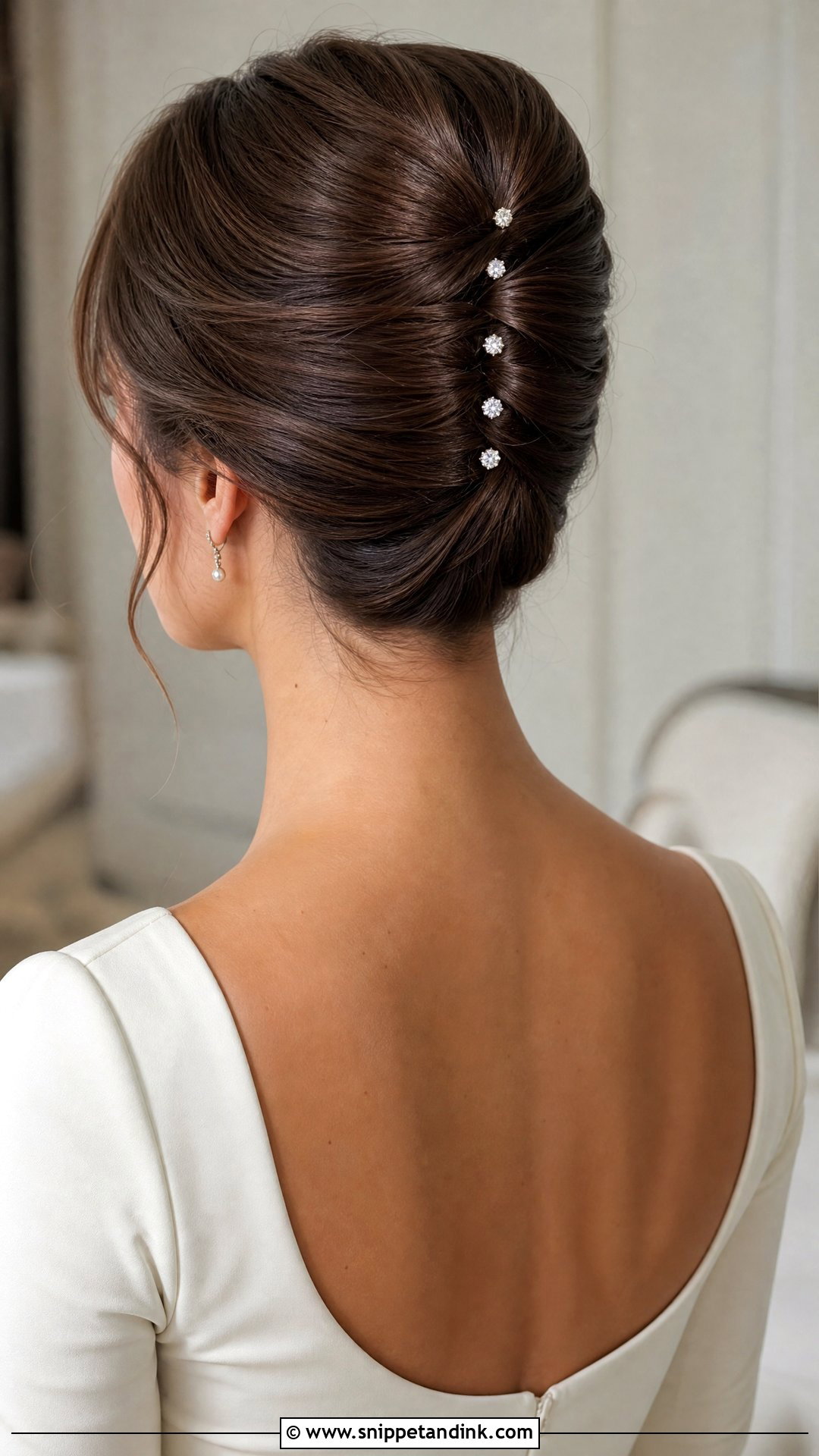
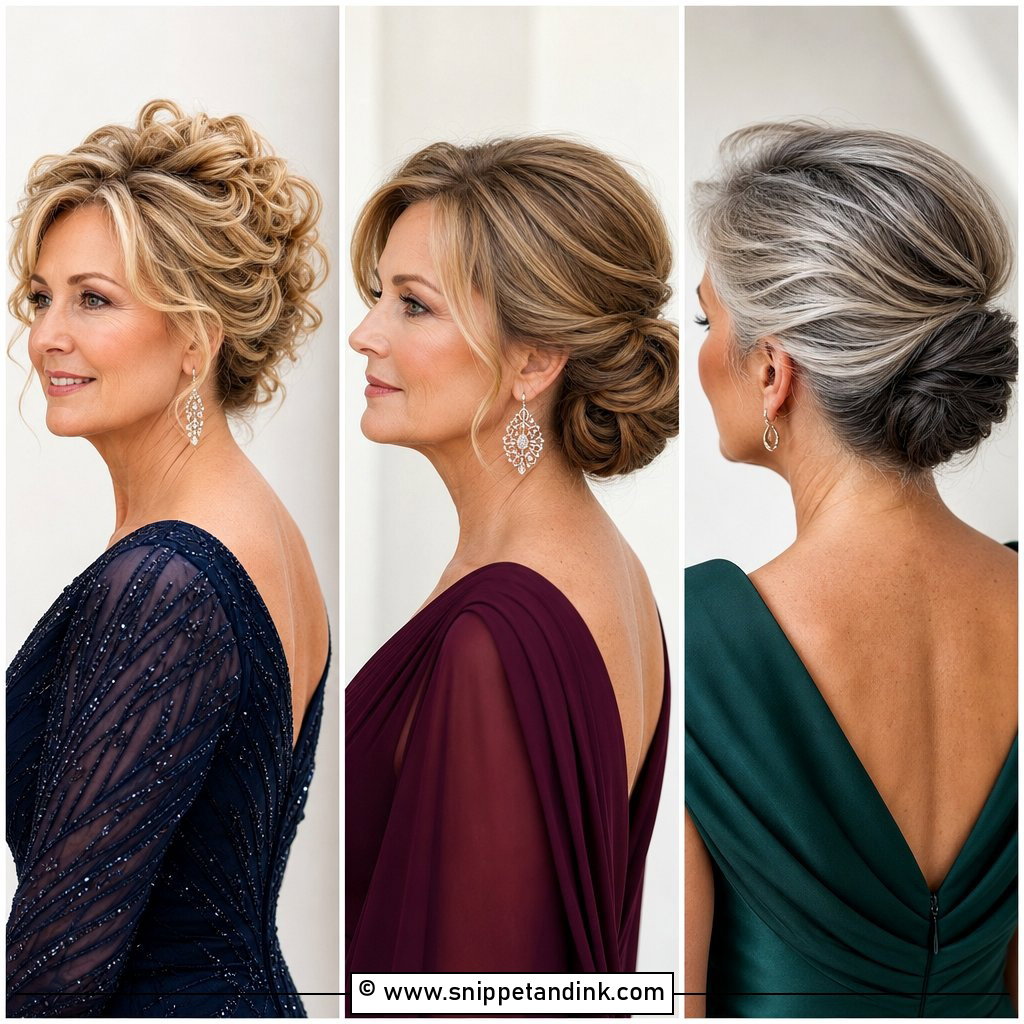
A French twist is grown-up and quietly dramatic, a style that suits formal ceremonies especially well. The hair is lifted and folded into a smooth vertical seam, which pairs with column gowns, bateau necklines, silk and vintage-inspired bridal fashion. It can be tight and sleek or slightly loosened at the crown. I tell brides one practical thing: this style is hard to touch up yourself, because the seam is at the back and the pins are woven in. If it loosens, a bridesmaid with a mirror and a couple of long pins will need to step in.
6. Soft Textured Bun Bridal Hairstyle
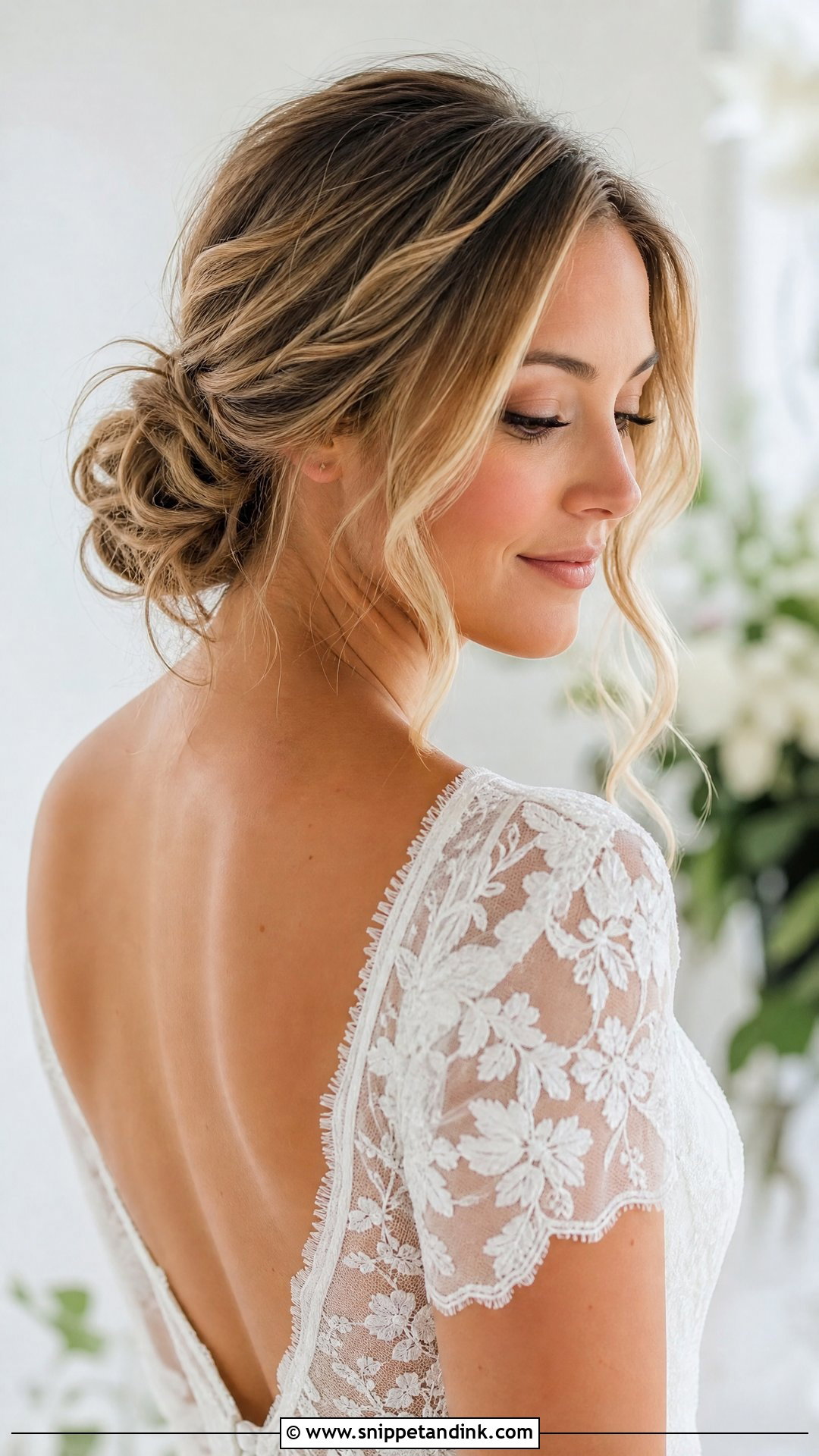
Not every bride wants her hair slicked back, and a soft textured bun is the gentler alternative. It has volume, loose bends and a few carefully placed pieces. Rustic venues, gardens and lace dresses are where it looks most at home. There’s a line between controlled texture and messy texture, and I control it by curling the hair first, then pinning sections loosely so the bends show. The bun should look airy but feel completely solid when you shake your head. A couple of soft strands near the face keep close-ups flattering.
7. Side Swept Curls Bridal Hairstyle
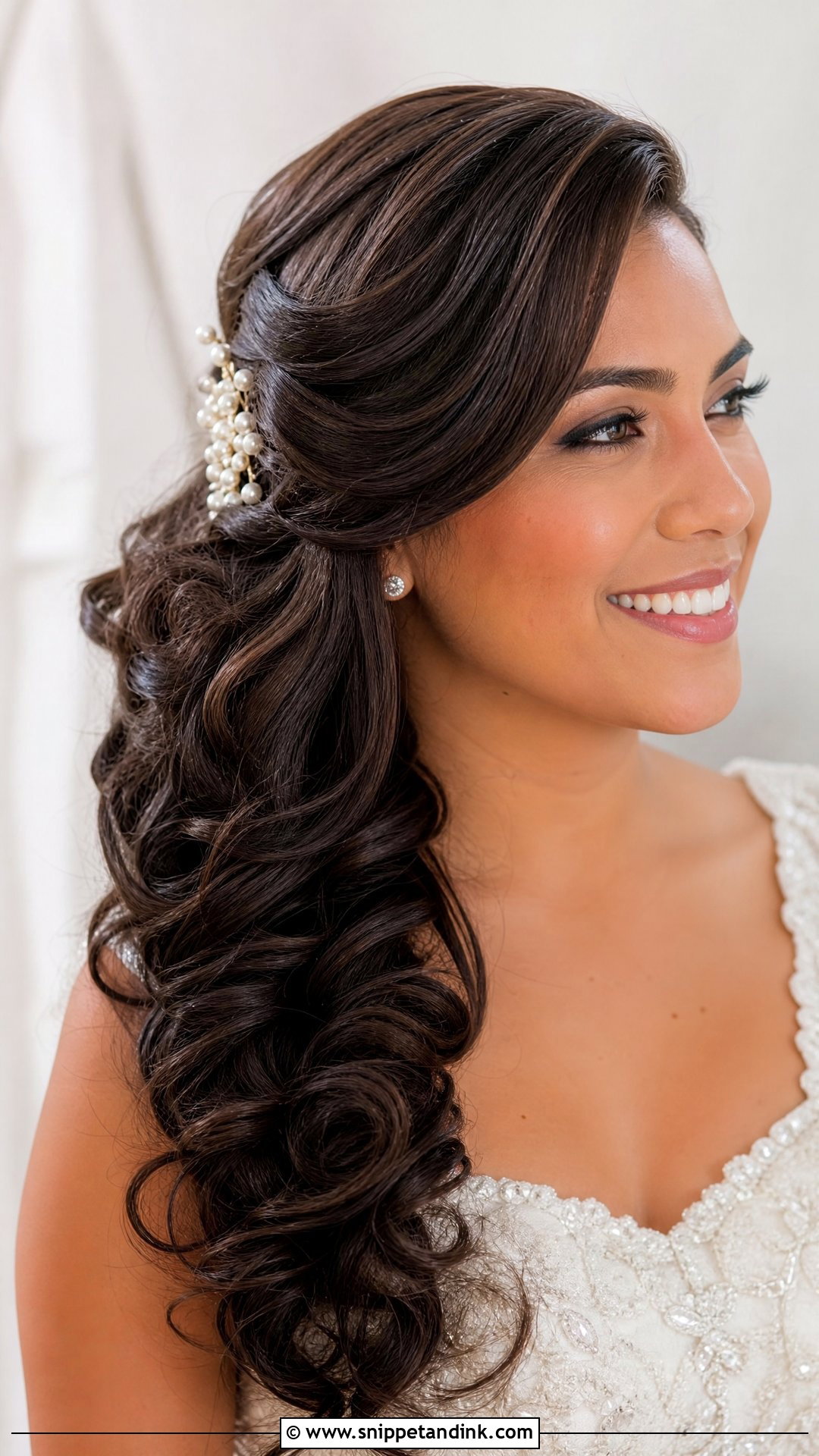
Side swept curls add a bit of red-carpet energy while keeping your hair visible in front-facing photos. The curls are brushed into soft movement and gathered over one shoulder. One-shoulder gowns, sweetheart necklines, strapless dresses and detailed bodices all suit it. The whole style relies on a hidden pin structure behind the ear: I build a small anchor of crossed grips first and pin the curls onto it, so hugs and dancing don’t drag the hair back across. A sparkly comb or a few pearl pins can cover the anchor.
8. Braided Crown Bridal Hairstyle
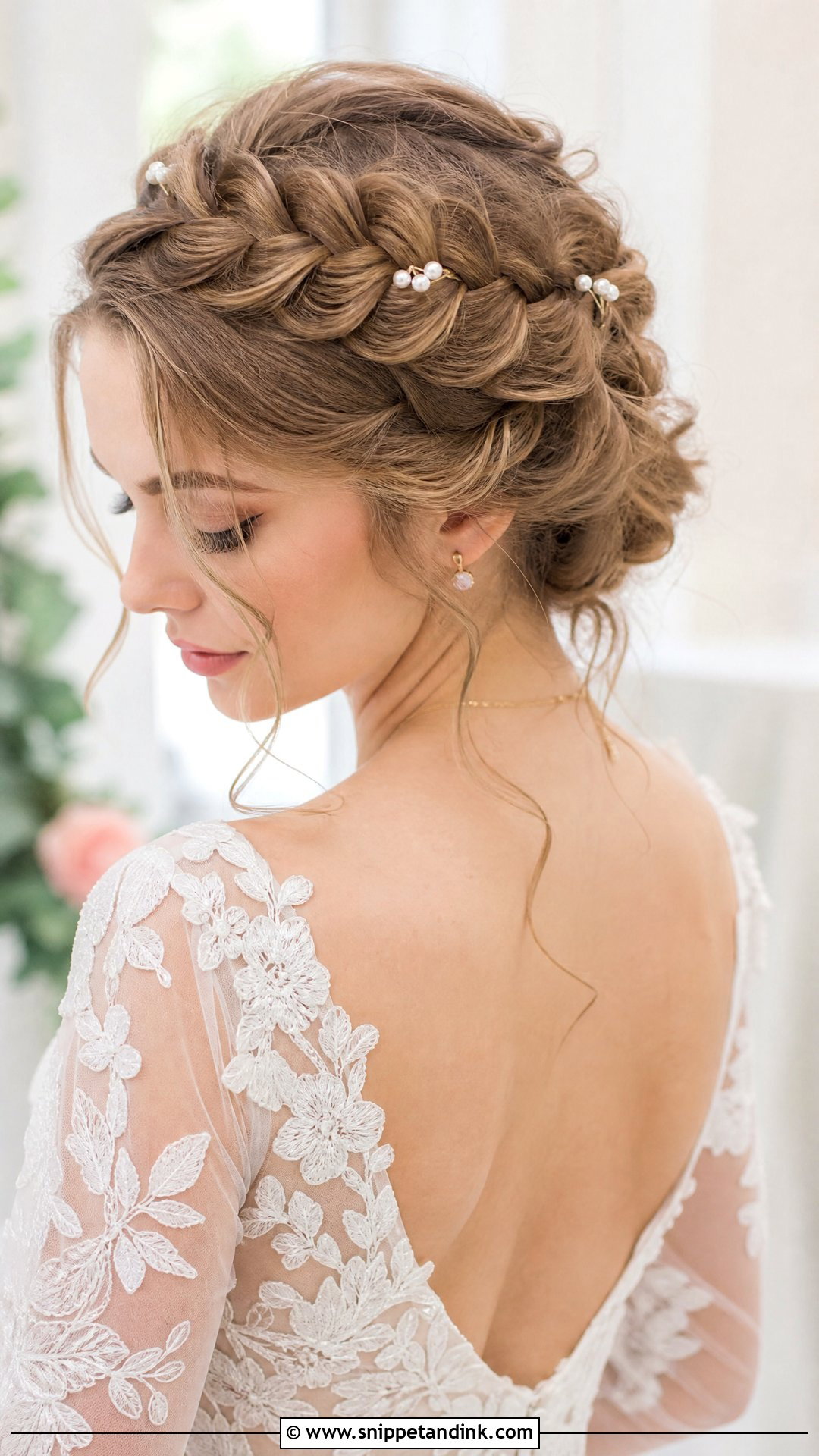
A braided crown is detail you don’t need to accessorise. The braid wraps the head or sits across the top like a soft halo, with the rest tucked up or left in waves. Woodland venues, gardens and boho-classic looks suit it, and it handles wind well. To keep it classy rather than festival, I keep the braid full but neat and resist over-pancaking it. Shorter layers can poke out of a crown braid, so I lightly texturise the hair first for grip. Small flowers or pearls are optional; the braid is the feature.
9. Loose Waves Bridal Hairstyle
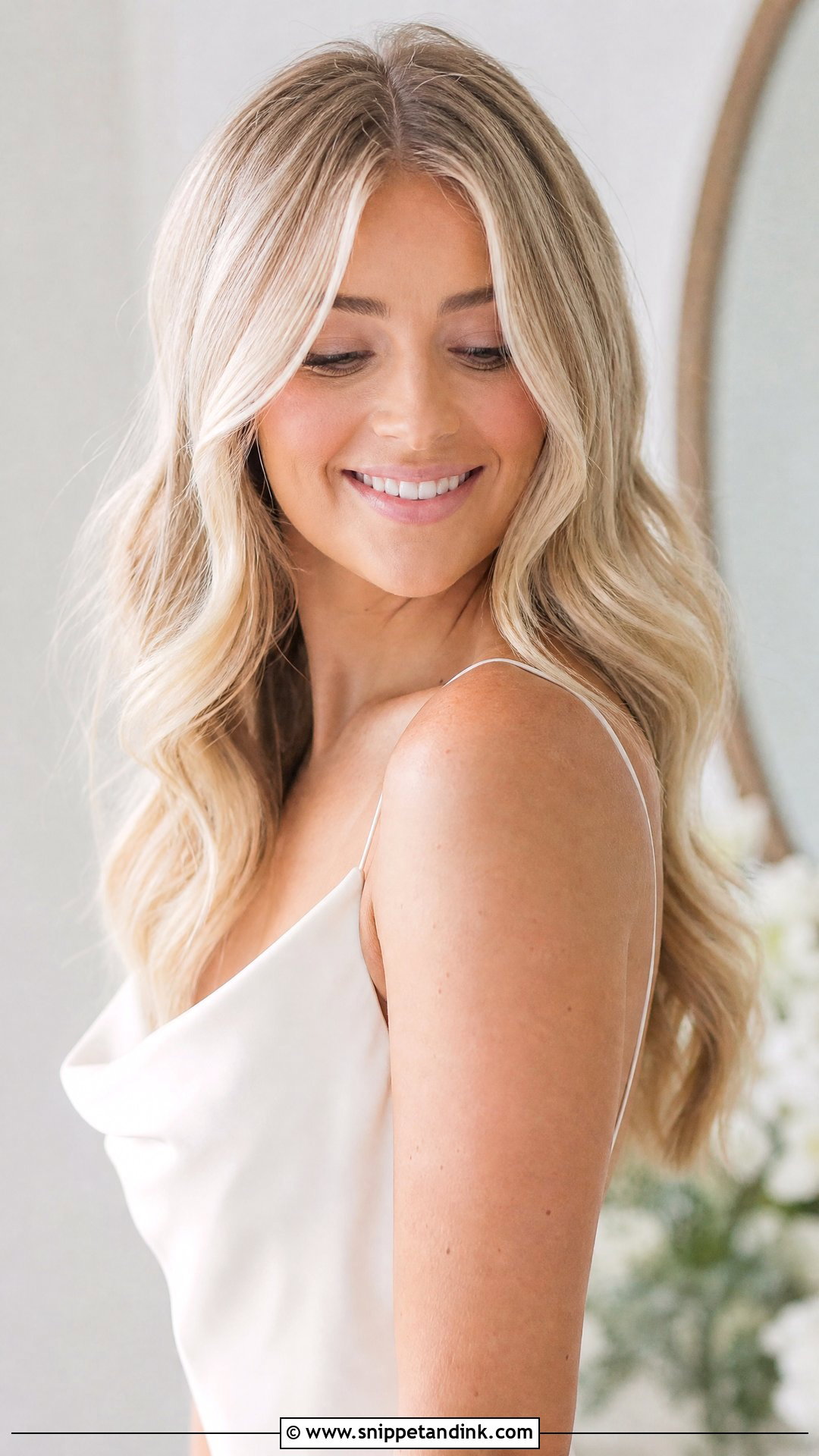
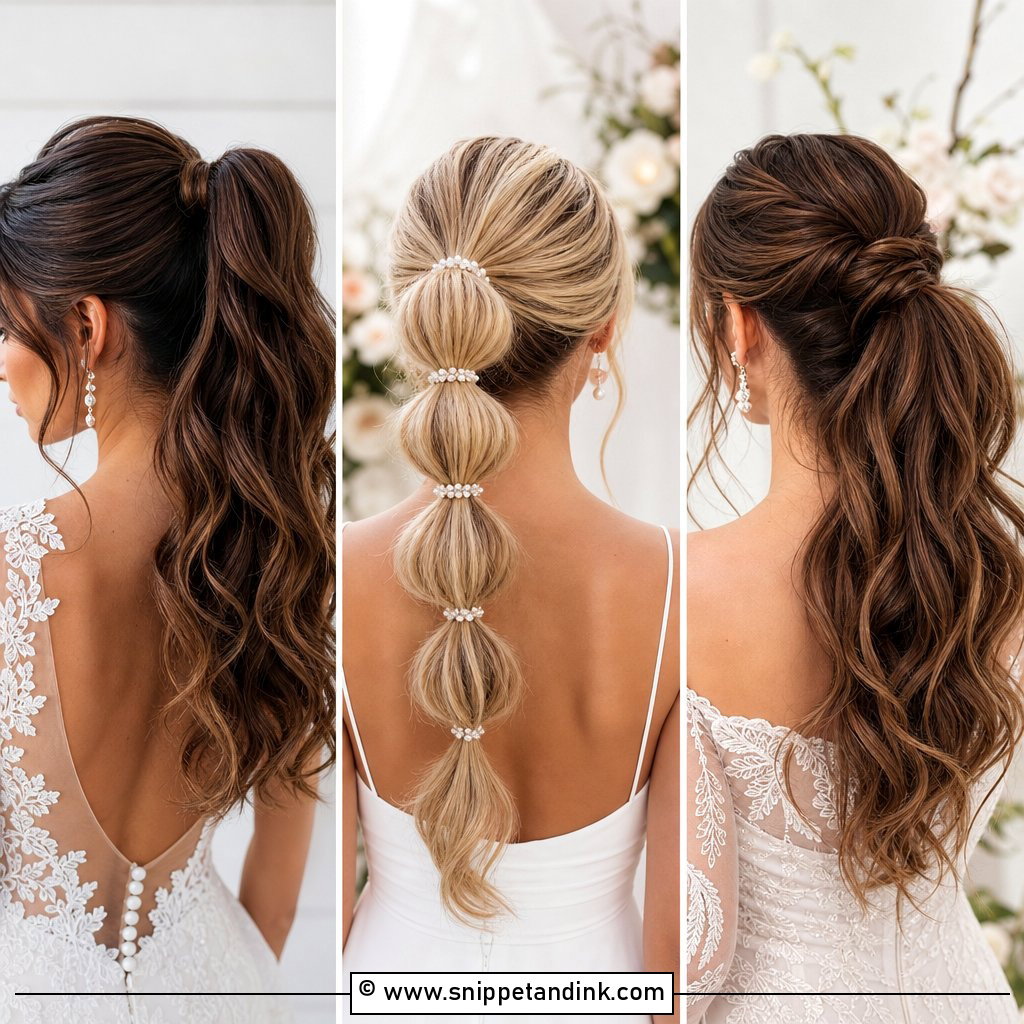
Bridal loose waves are smoother and shinier than beach waves, and they need to be set firmly to last. Long hair, layered hair and medium hair with some body all take them well. Simple gowns and floral lace pair nicely, and the style fits relaxed luxury weddings. A center part reads modern; a side part a little more glamorous. I curl tighter than the final result, let everything set, then brush out lightly. Starting loose is the most common reason waves are gone before dinner.
10. Curly Updo Bridal Hairstyle
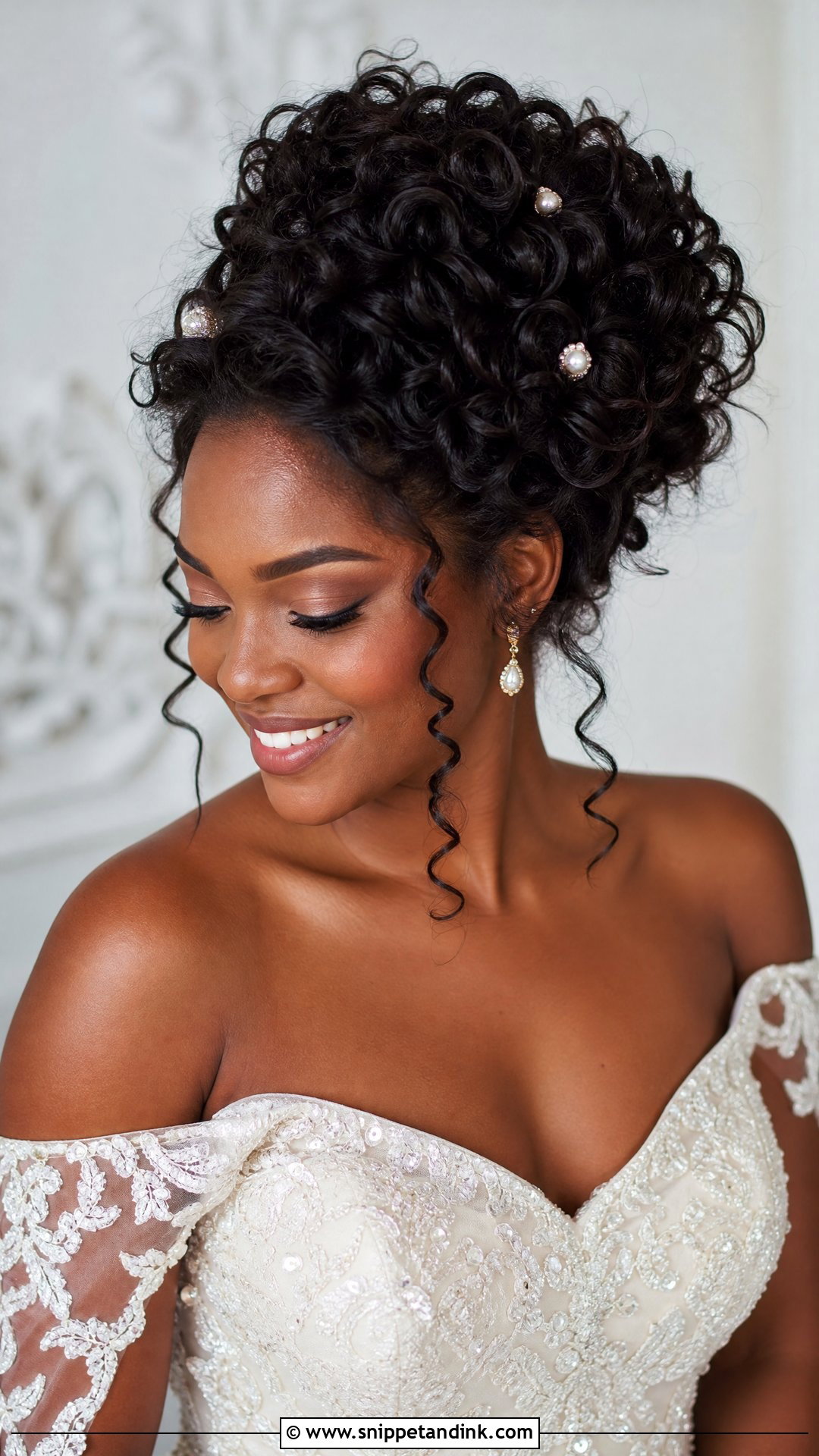
A curly updo celebrates natural curl and volume while keeping the hair off your neck. The curls are shaped upward or toward the back and pinned evenly so the texture stays visible. It suits coily, curly and textured hair, with pearl pins, gold cuffs or a soft veil. You keep fullness around the face without the heat of curls resting on your shoulders. I moisturise and define the curls well ahead, then pin into stretched, fully dry sections. Damp curls keep shrinking as they dry, which pulls against the pins and loosens them.
11. Bridal Ponytail Hairstyle
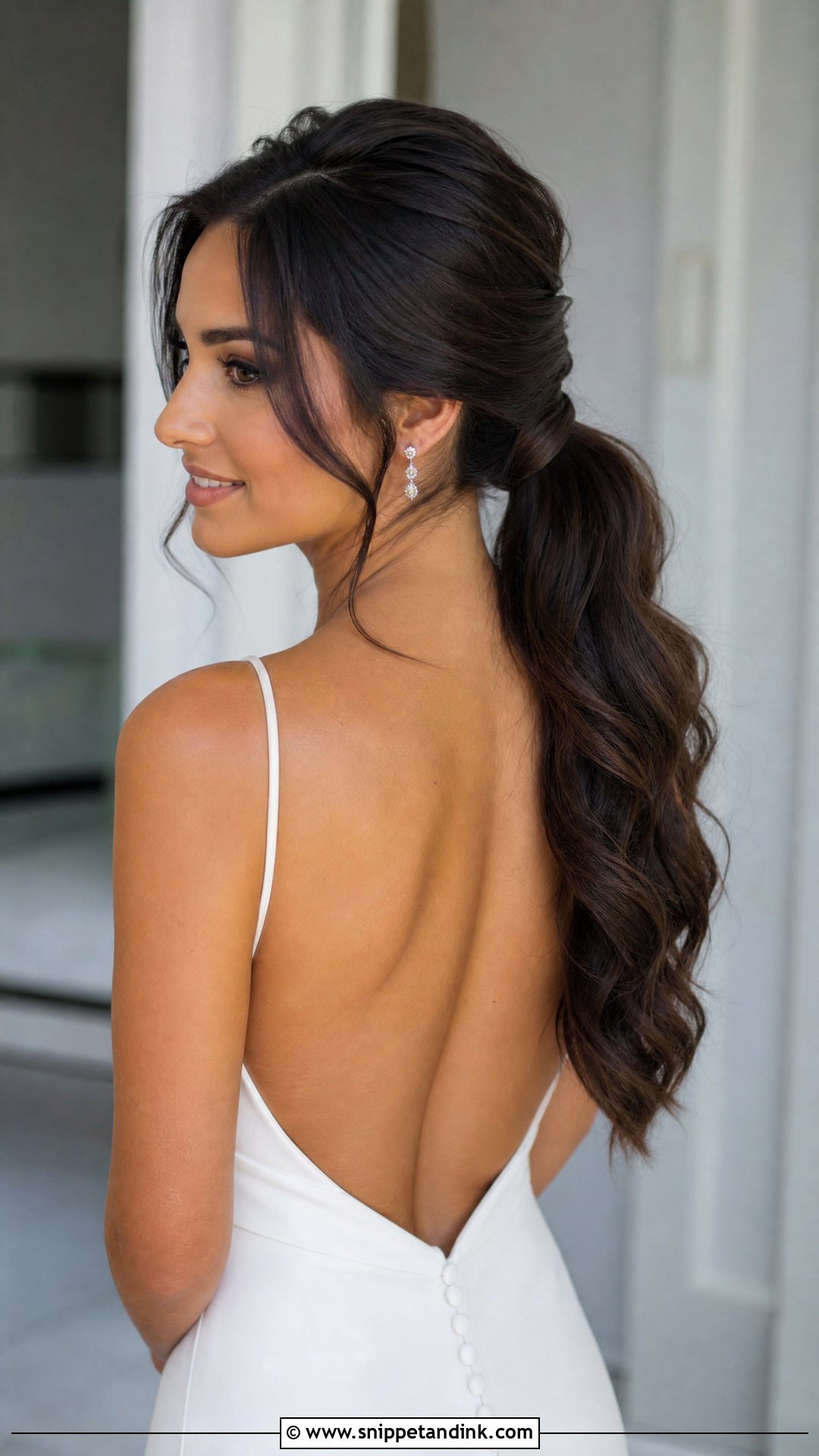
Ponytails surprise people. With shine, volume and a polished finish, they look far more formal than the gym version. A low ponytail feels soft; a mid-height one looks lifted and current. Waves through the length add fullness, and I wrap a section of hair around the base to hide the elastic. Backless dresses and sleek gowns suit it particularly well, as do clean veils set just above the tie. It’s also very comfortable over a long day. Fine hair benefits from a hidden clip-in piece under the tail so it doesn’t look thin from behind.
12. Vintage Bridal Updo Hairstyle
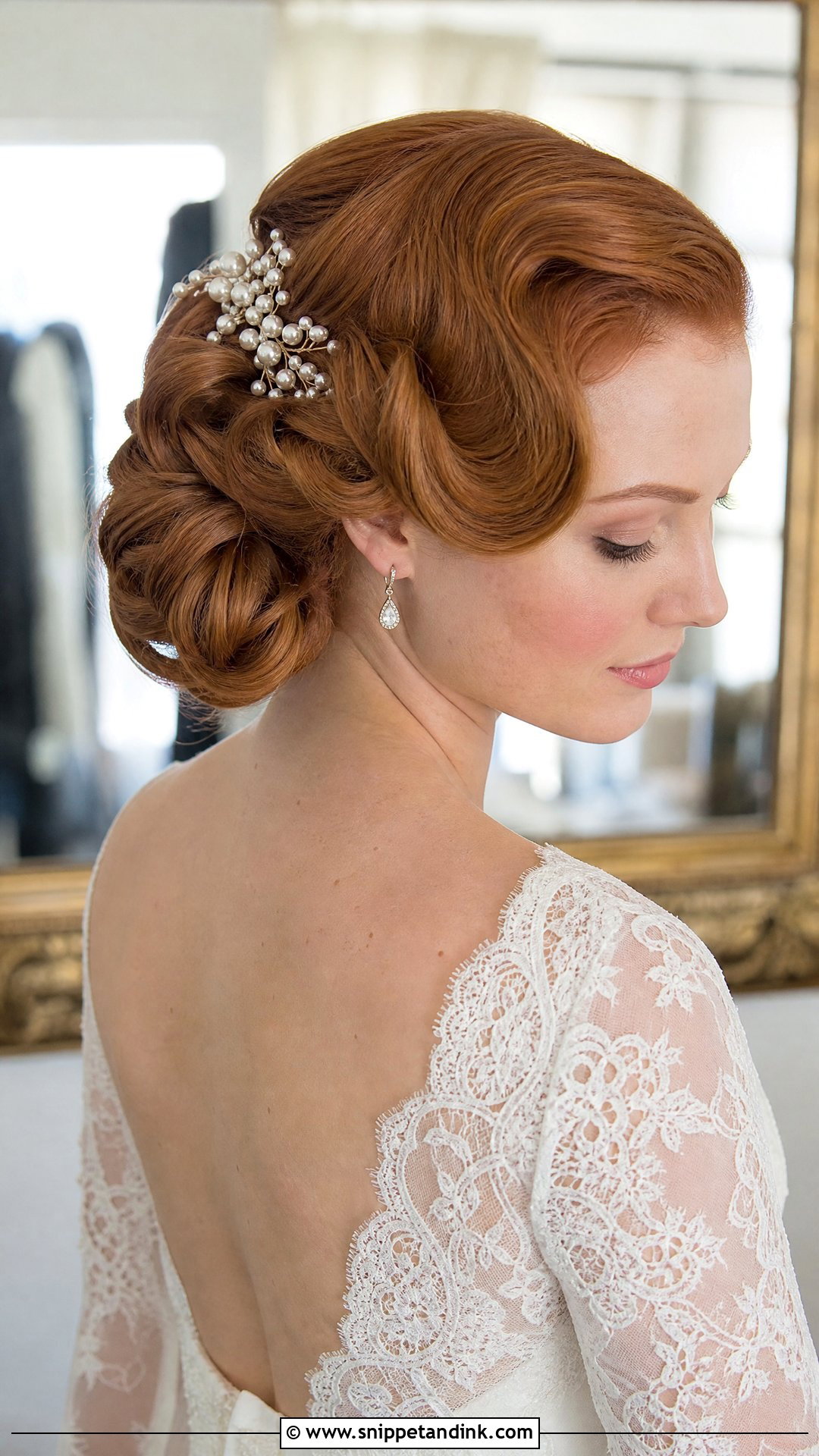
Vintage updos can tip into costume quickly, so balance is everything. The shape may include soft rolls, sculpted curls, a tucked outline or smooth volume at the crown. Lace sleeves, satin, birdcage veils, pearls and classic makeup all fit the mood. My rule is one main accessory and a soft hairline. A fully sculpted front plus a large headpiece plus red lips is usually one element too many. Keep the edges soft so it reads as inspired by an era rather than copied from one.
13. Bridal Bob Hairstyle
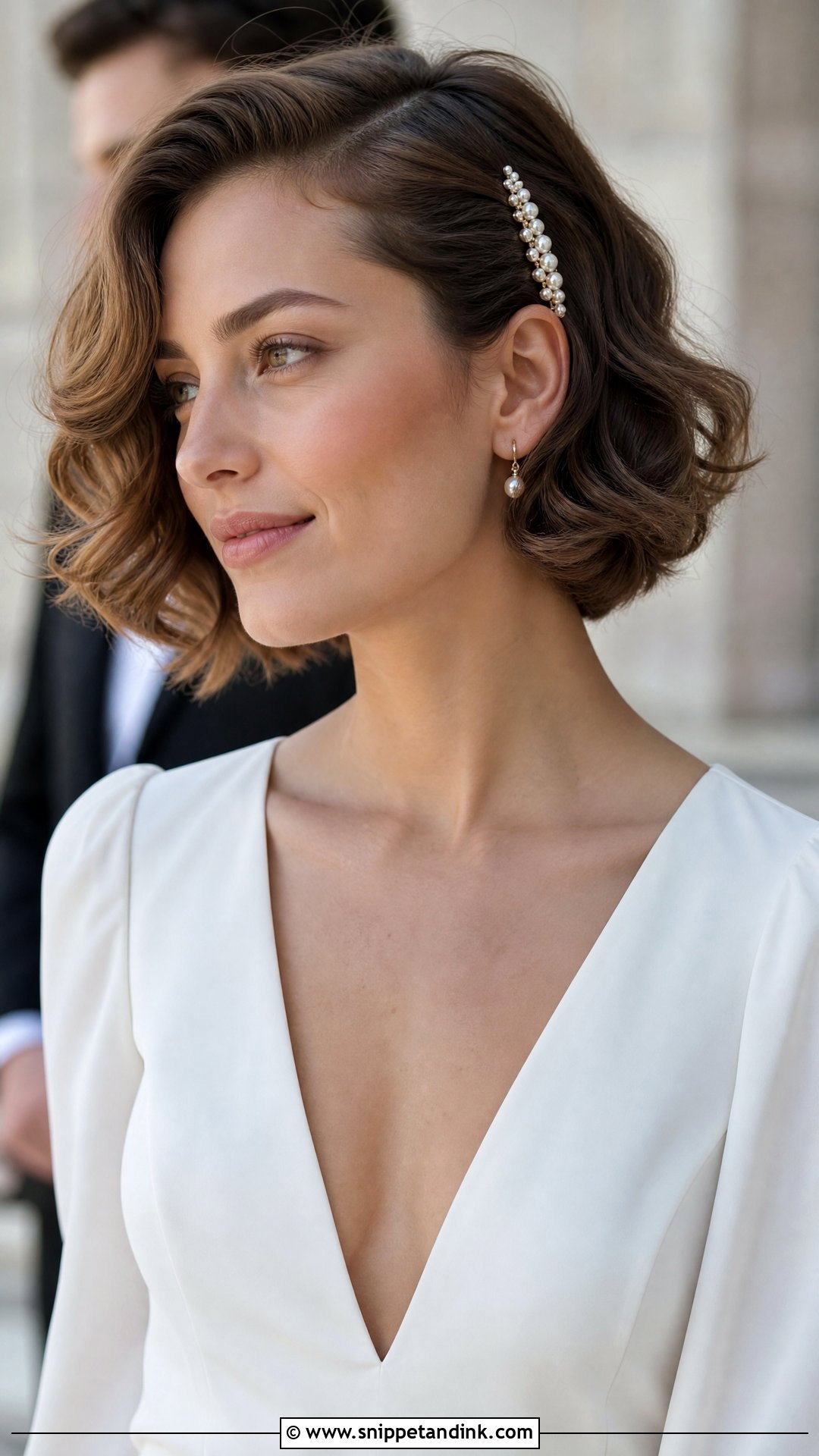
A bridal bob suits brides with short to medium hair who don’t want extensions. Soft waves, a sleek tuck, a side part or one small accessory near the ear all work. It fits modern gowns, courthouse and city weddings, and minimalist bridal fashion, showing off earrings and the neckline. I’d book a trim roughly a week before so the line is crisp. If you want more bridal detail, a pearl barrette, slim headband or short veil is enough. Check the shape from every angle, because bobs often look uneven at the back when they’ve been smoothed in a mirror.
14. Long Hair Bridal Updo
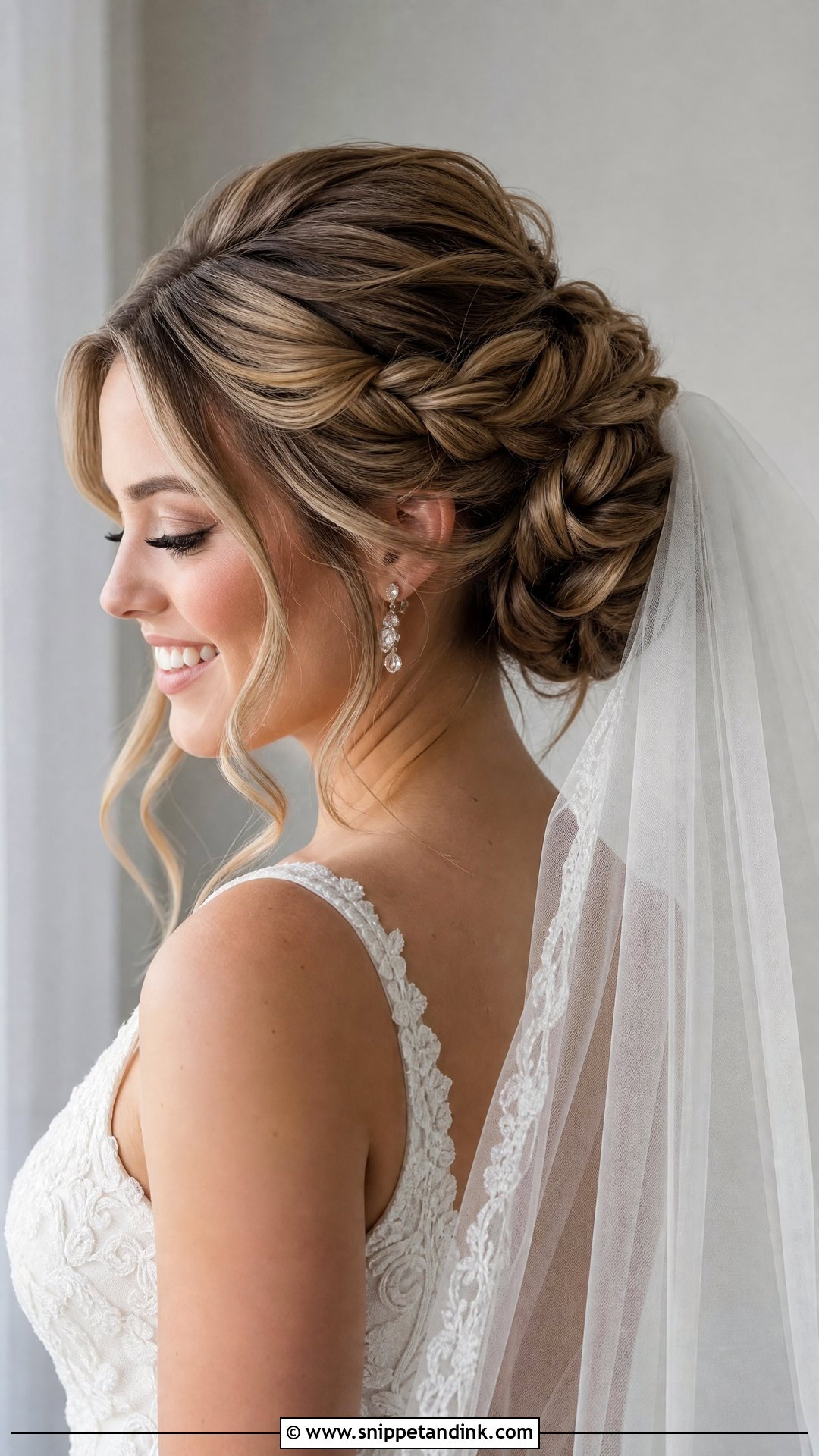
Long hair gives me enough length to build a full bun, a twist, braided detail or a sculpted shape with real volume. It holds up in warm weather, windy venues and long receptions, and it pairs well with dramatic veils and detailed dress backs. The catch is weight. Very long, thick hair can pull on the scalp by evening, so I split it into sections pinned in different directions to spread the load. Some softness at the face and height at the crown balance the shape. Do a trial and wear it for several hours to check it feels secure but not heavy.
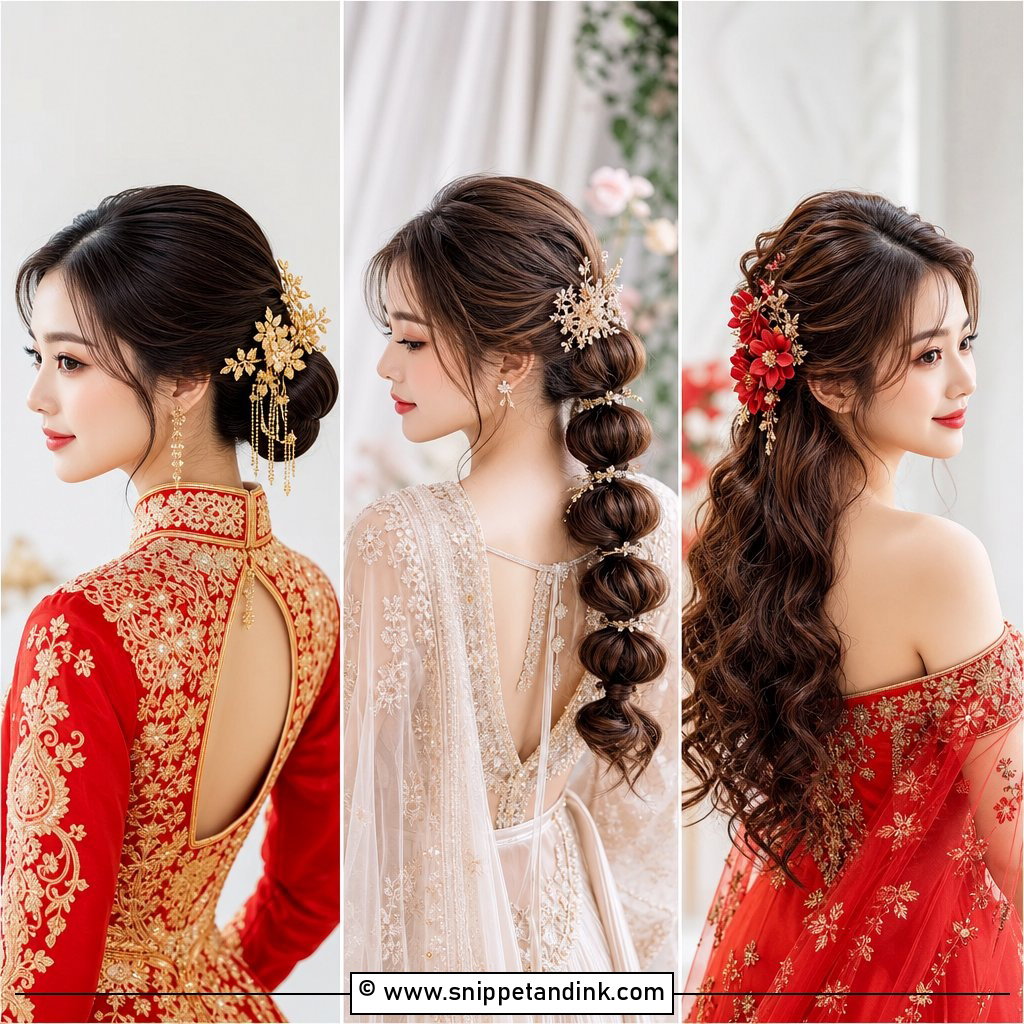
15. Natural Hair Bridal Hairstyle
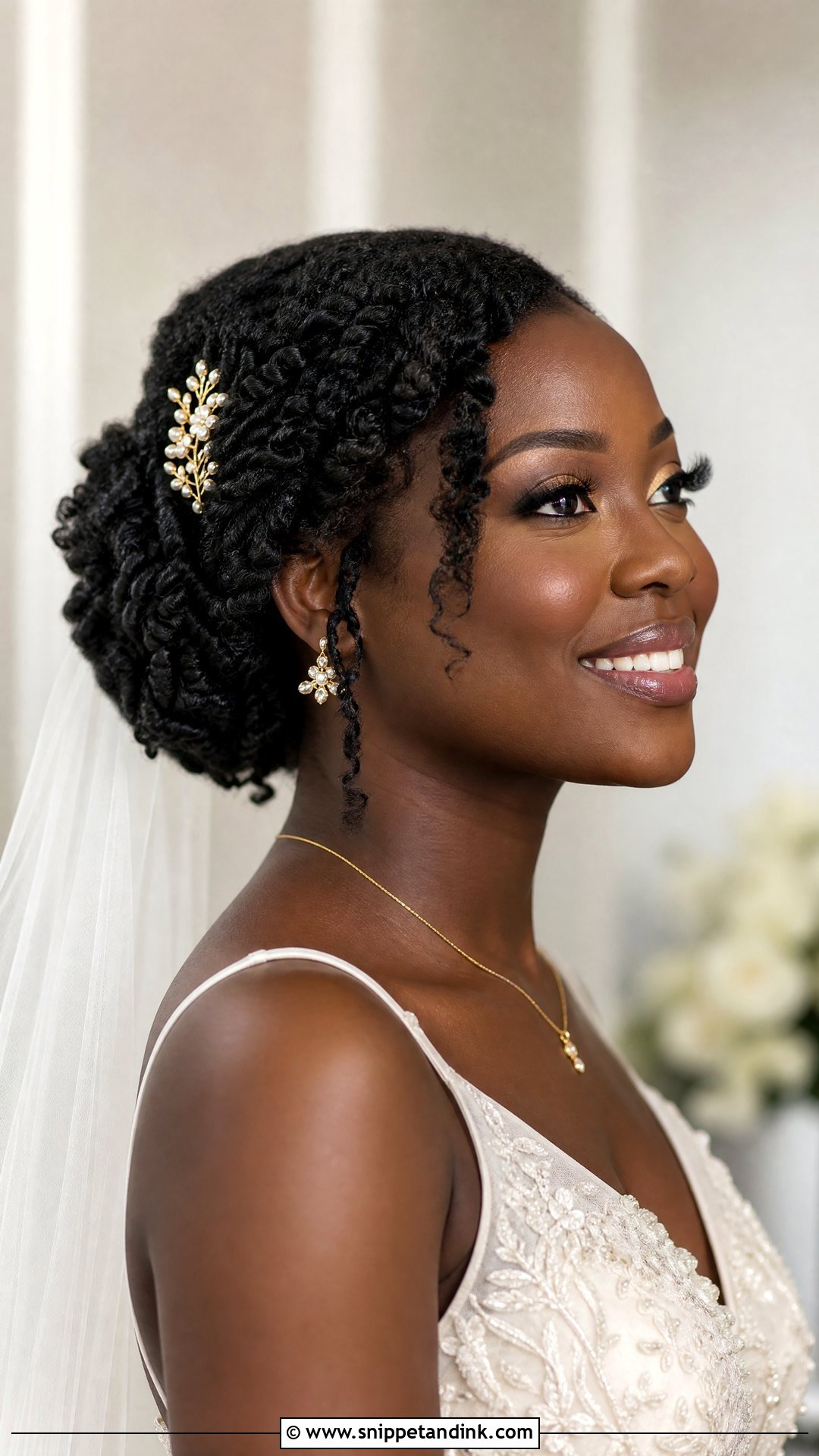
Natural hair can be shaped into something unmistakably bridal: a sculpted afro, defined curls, a twist-out updo, a roll-and-tuck, a low curly bun or pinned coils. Veils, combs, pearls, florals and gold details all sit well on textured hair. I plan the wash day backward from the wedding, because many twist-outs and sets need a day or more to dry and settle. Hydration and definition matter more than any accessory. Ask your stylist how much time each option needs on the morning, then build your schedule around that.
A Bridal Stylist’s Quote Often Hides More Than the Hairstyle
Prices for wedding hair vary a lot by region and experience, so I won’t pretend there’s a normal figure. What you can control is knowing exactly what you’re paying for, because quotes that look similar often cover very different things. Ask these before you sign:
- Is the trial included or charged separately, and is it at the salon or your home?
- Is there a travel fee to your getting-ready location, and does it change for a distant venue?
- Is there an extra charge for very early starts?
- Will the stylist stay for the ceremony or photos to fix things, and what does that cost per hour?
- Are extensions, padding and pins supplied, or do you buy your own?
- How many people can be styled in the time available, and will an assistant come for a larger bridal party?
- What’s the deposit, and what happens if the date moves?
Get the answers in writing. The cheapest quote can become the most expensive once travel, an early start and a touch-up stay are added, and you’d rather know that months ahead than on the morning.
Classy Usually Means Fewer Things, Done Well
If there’s one thread running through all fifteen, it’s restraint. A clean shape, one good accessory and hair that looks cared for will read as classy in any decade. Trends can point you in a direction, but your dress, venue, texture and weather should make the final call. A sleek bun might be exactly right on one bride and feel stiff on another who lives in loose waves. Bring your shortlist to the trial, ask me (or your stylist) how each one holds through ceremony, photos and reception, and trust the version you forget you’re wearing after an hour.
You'll Like These Ideas:


Leave a Reply