
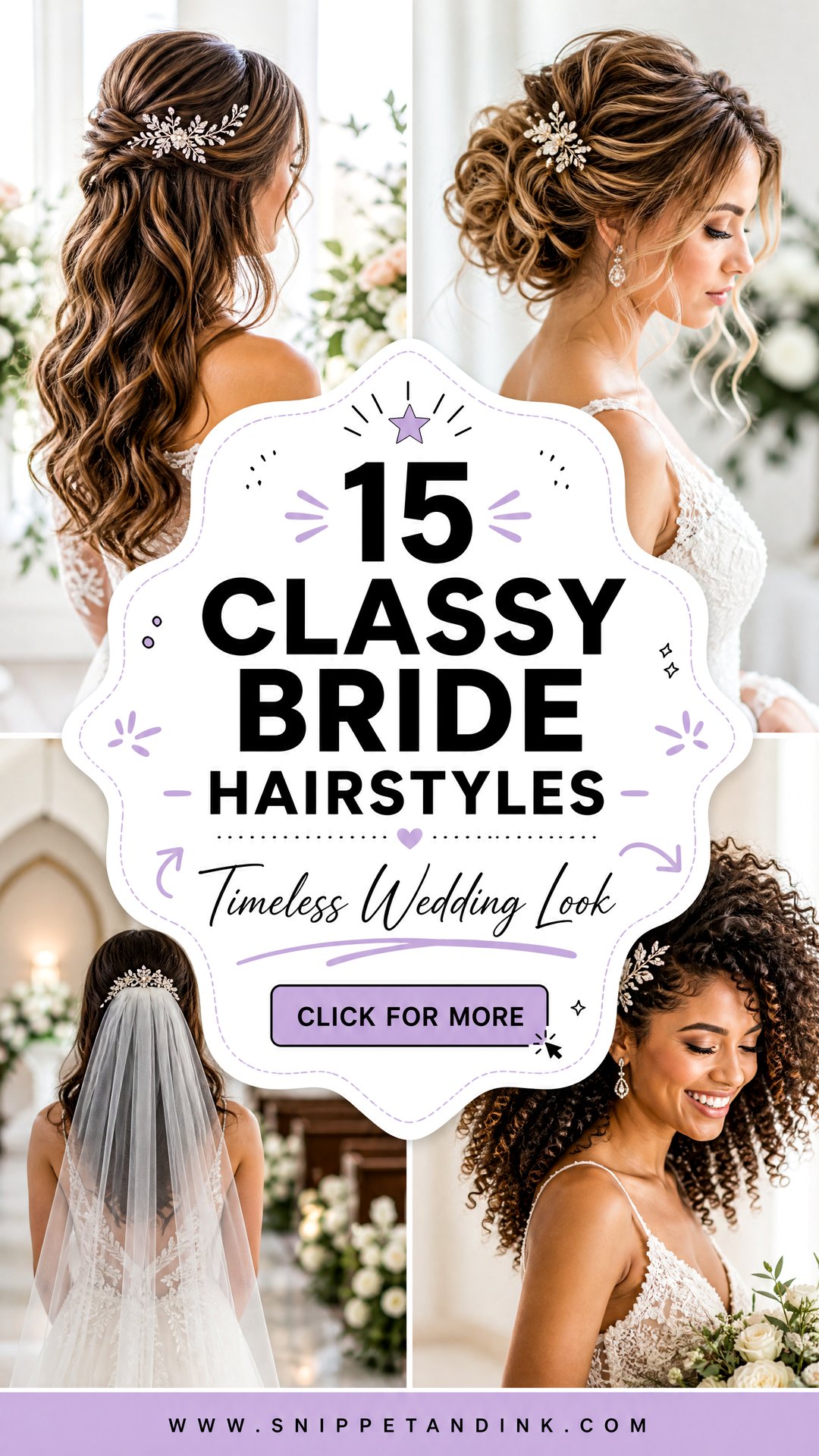
Classy bride hairstyles share one quality: you can look at them framed on a wall years later and not wince. For 2026 that means soft structure, healthy shine, texture you could actually touch, and one or two personal details instead of ten. Clean buns, modern chignons, glossy waves, pearl accents, natural curls, low ponytails and easy half-up shapes all fit that brief. What separates them is your neckline, your real texture, your face and where you’re getting married. I’ve added notes to each one about what it needs from your hair and where it tends to struggle, because that is what decides whether a picture you love will hold up on your own head.
Read the Neckline First, Then the Hair
When a bride shows me a hair photo, my next question is always about the dress. The neckline does half the work of deciding where the hair should sit, and getting this pairing right is what makes a look read as classy rather than busy.
- Strapless and sweetheart: lots of bare skin, so the hair can go either way. Waves down soften the shoulders; a sleek bun turns the focus onto your jewellery.
- High neck or lace collar: hair up, nearly always. Hair worn down tangles against the fabric and hides the detail you paid for.
- Off-shoulder: a low bun or chignon follows the horizontal line of the neckline. Long hair down tends to cover it completely.
- One-shoulder: sweep the hair to the bare side, or wear it up. Hair falling over the strap side fights the asymmetry.
- Open or low back: a low ponytail or a higher updo shows off the back. A big half-up covers exactly the part of the dress guests stare at during the ceremony.
Bring a photo of your dress from behind to your consultation. I’ll look at it as closely as the front, because the back is what most of your guests see for the whole ceremony.
1. Classic Low Bun Bride Hairstyle
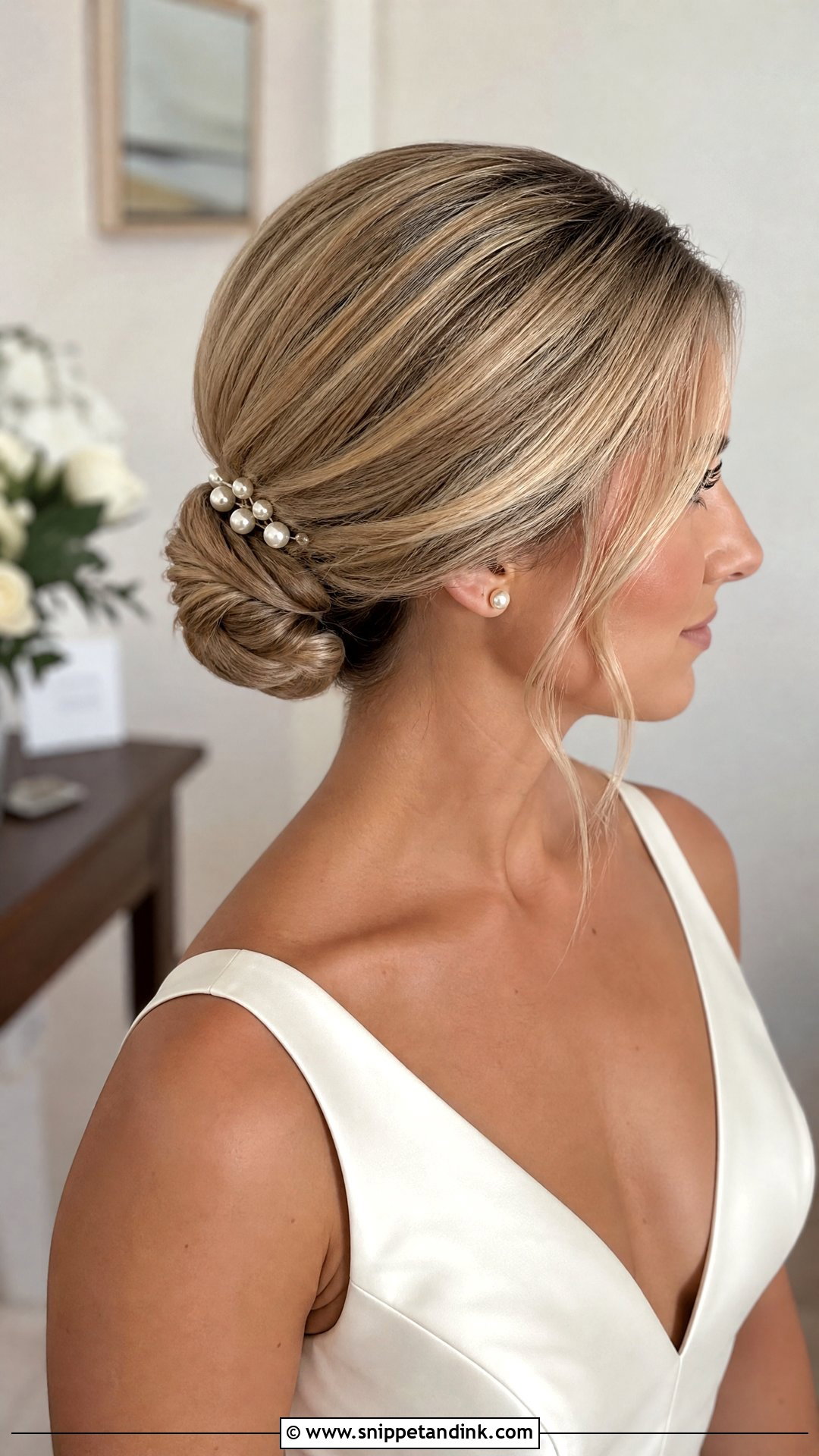
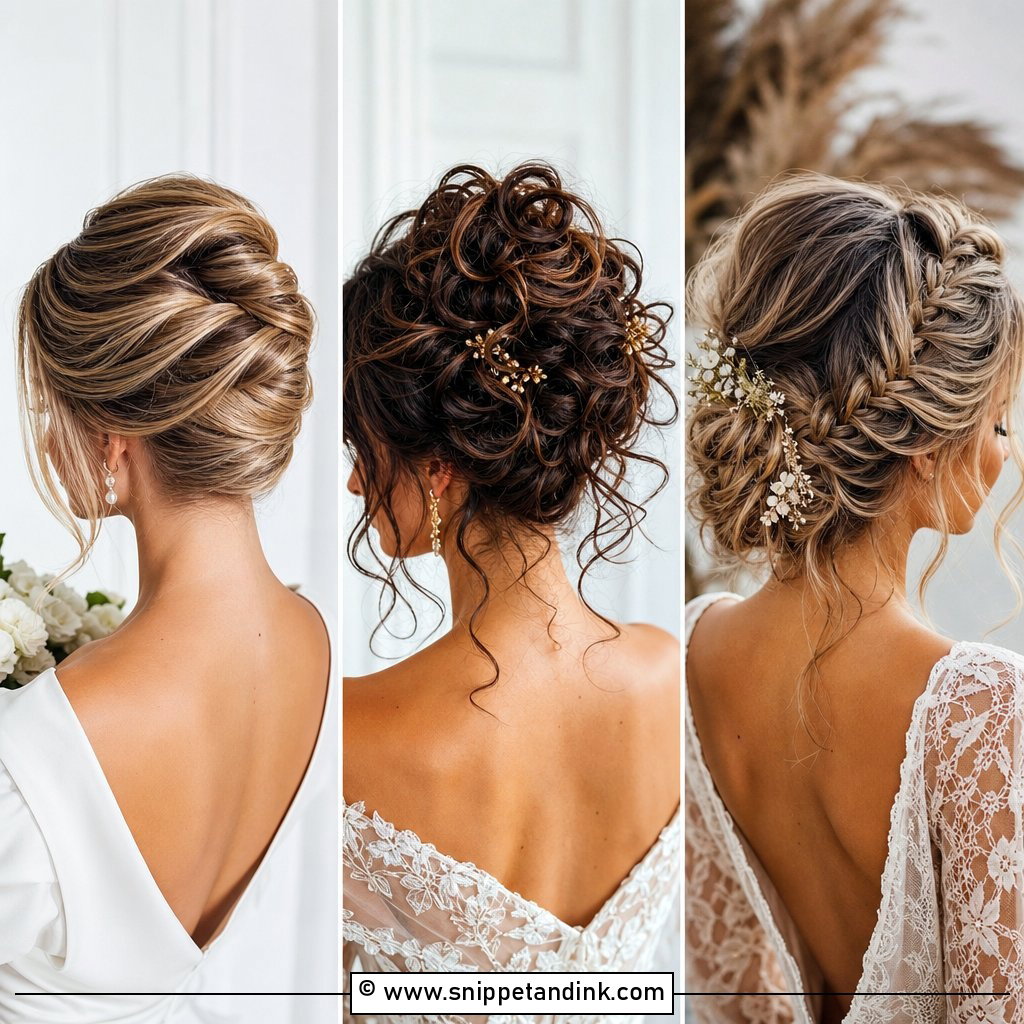
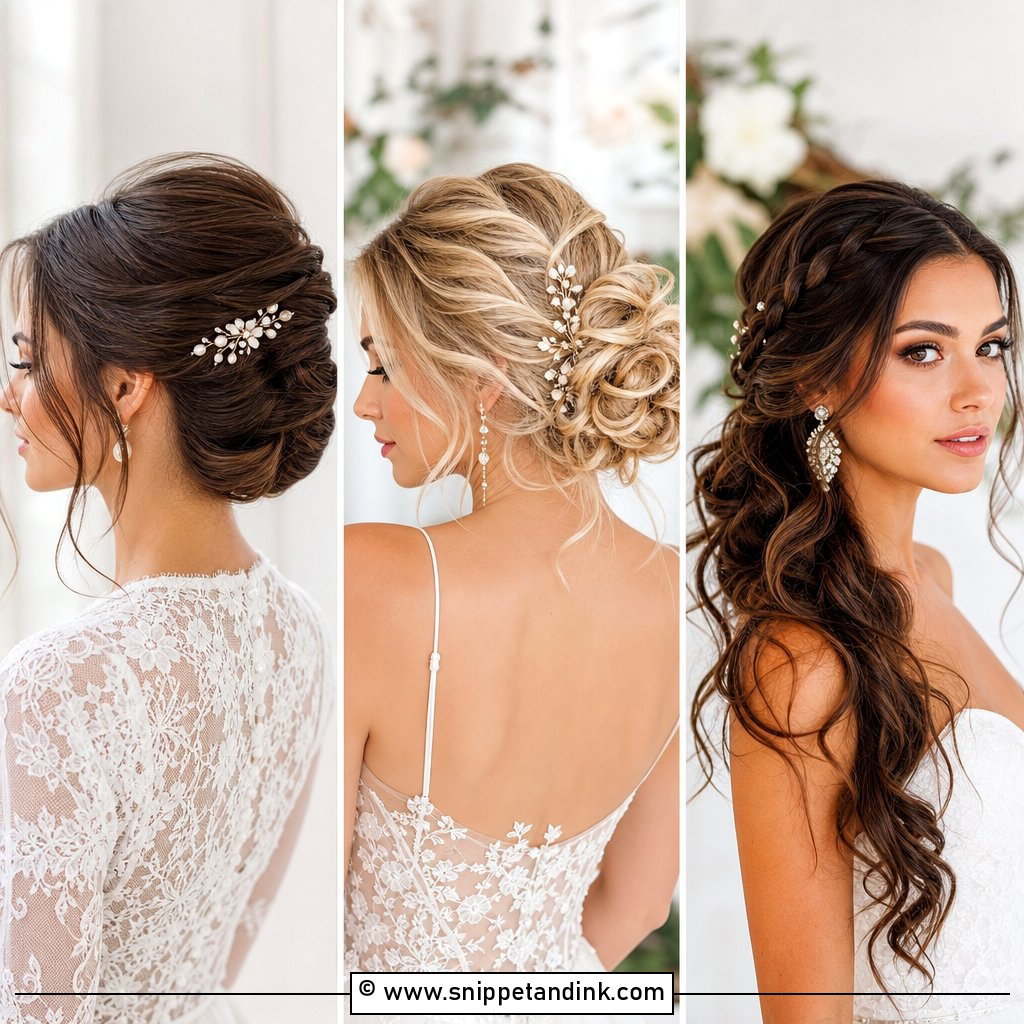
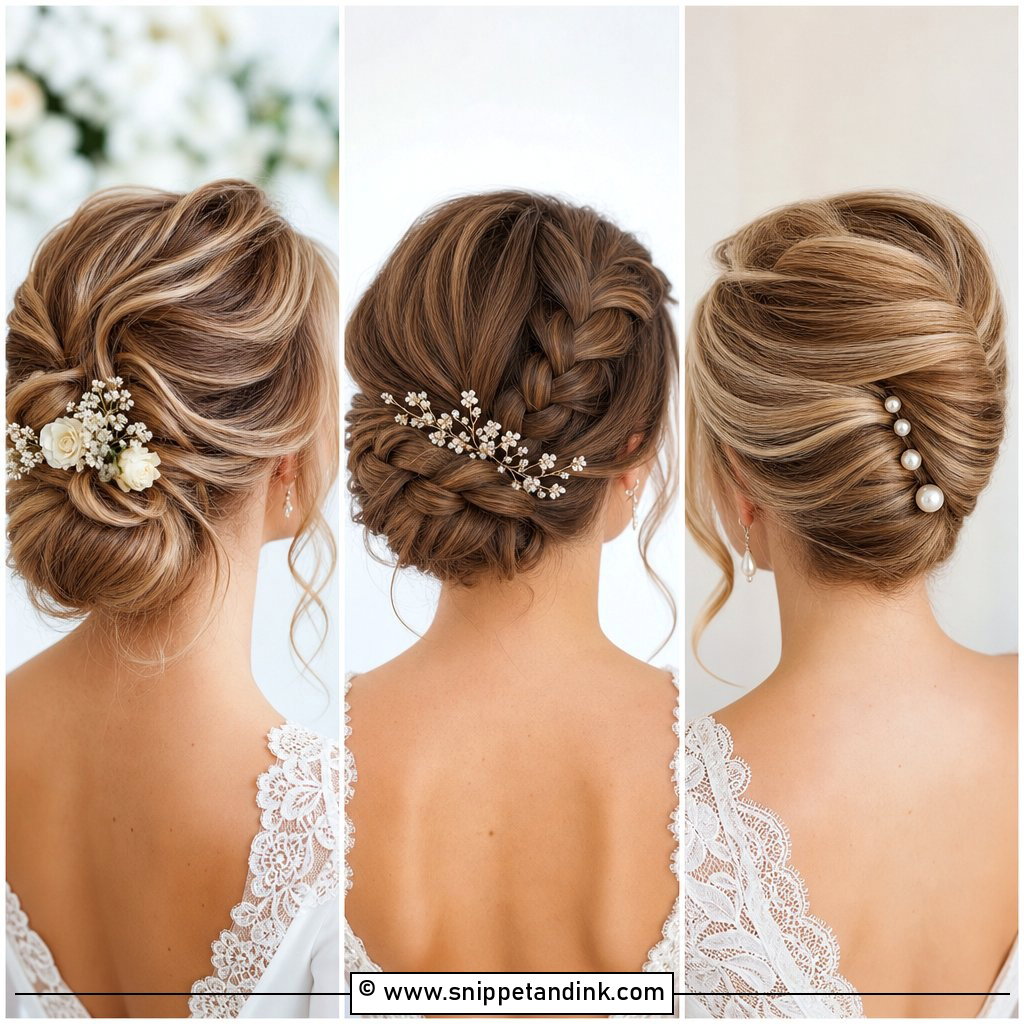
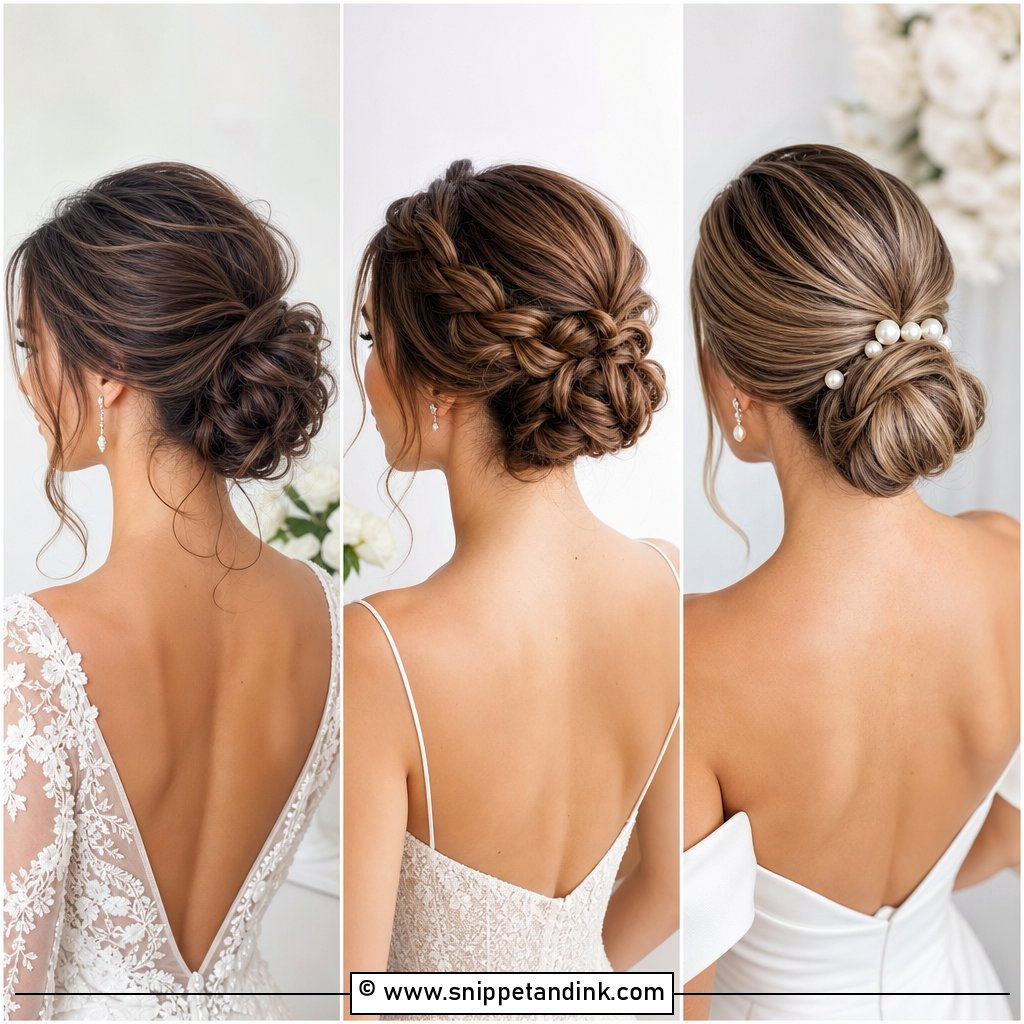
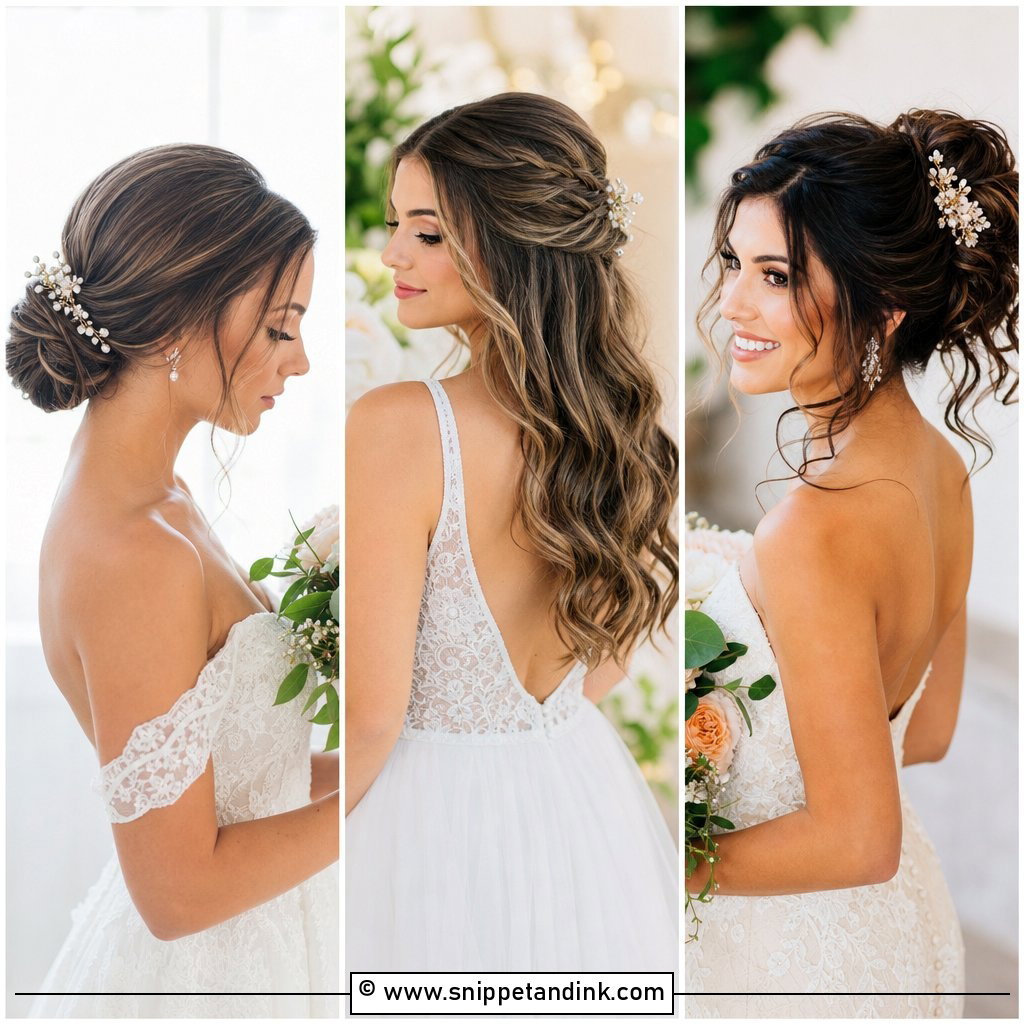
Nothing on this list is easier to wear with a veil. A classic low bun sits at the nape, where a comb can slot in just above it and hold firm, and it leaves the neckline completely clear for satin, high necks and off-shoulder bodices. The common mistake is a flat crown: from the front, a bun that tight can make the head look small in photos. I add a little lift at the crown before gathering the hair, then smooth over it. A couple of soft pieces at the face stop it reading strict, and a flexible hold spray keeps it in place without that crisp helmet finish.
2. Soft Chignon Bride Hairstyle
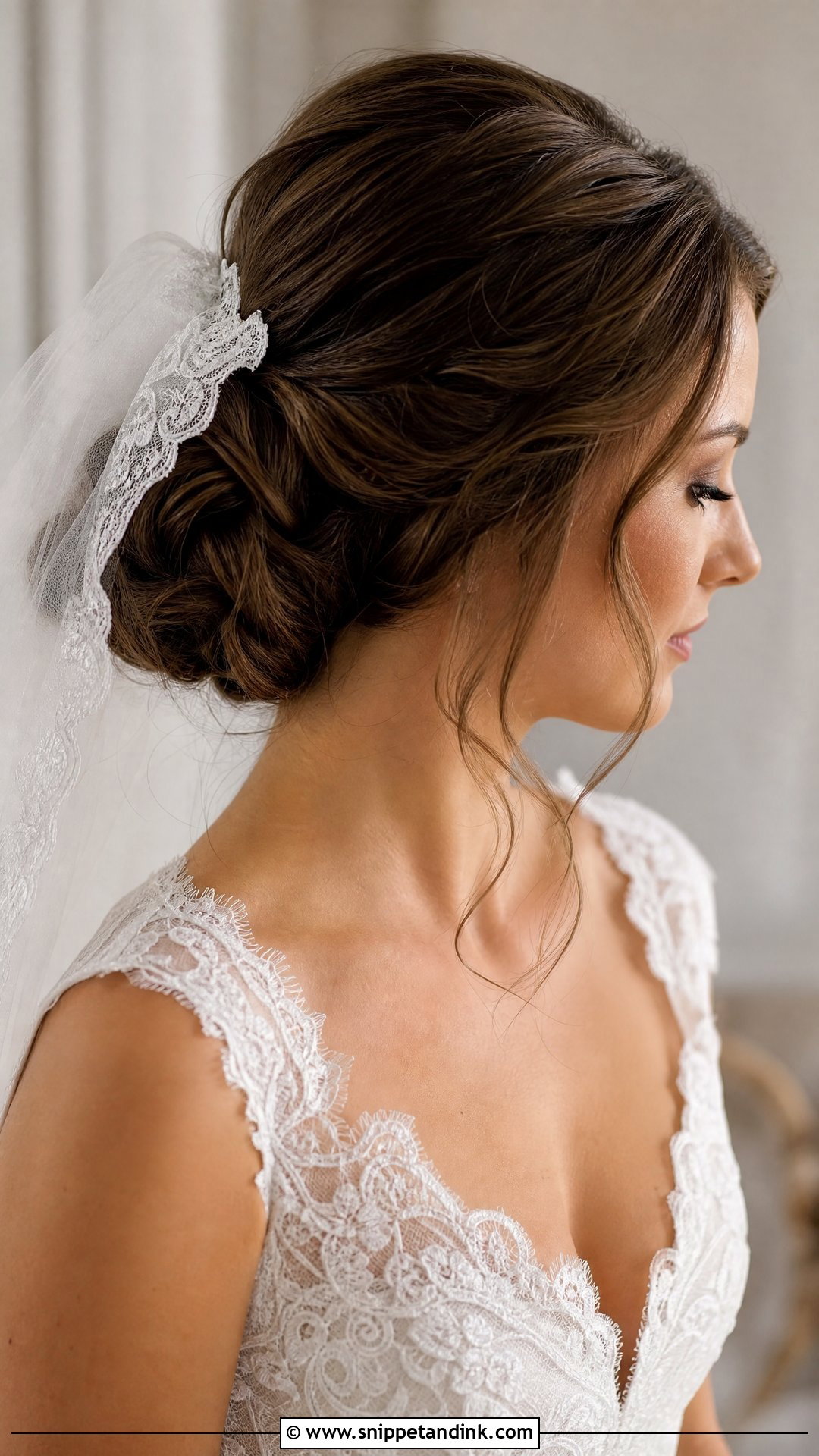
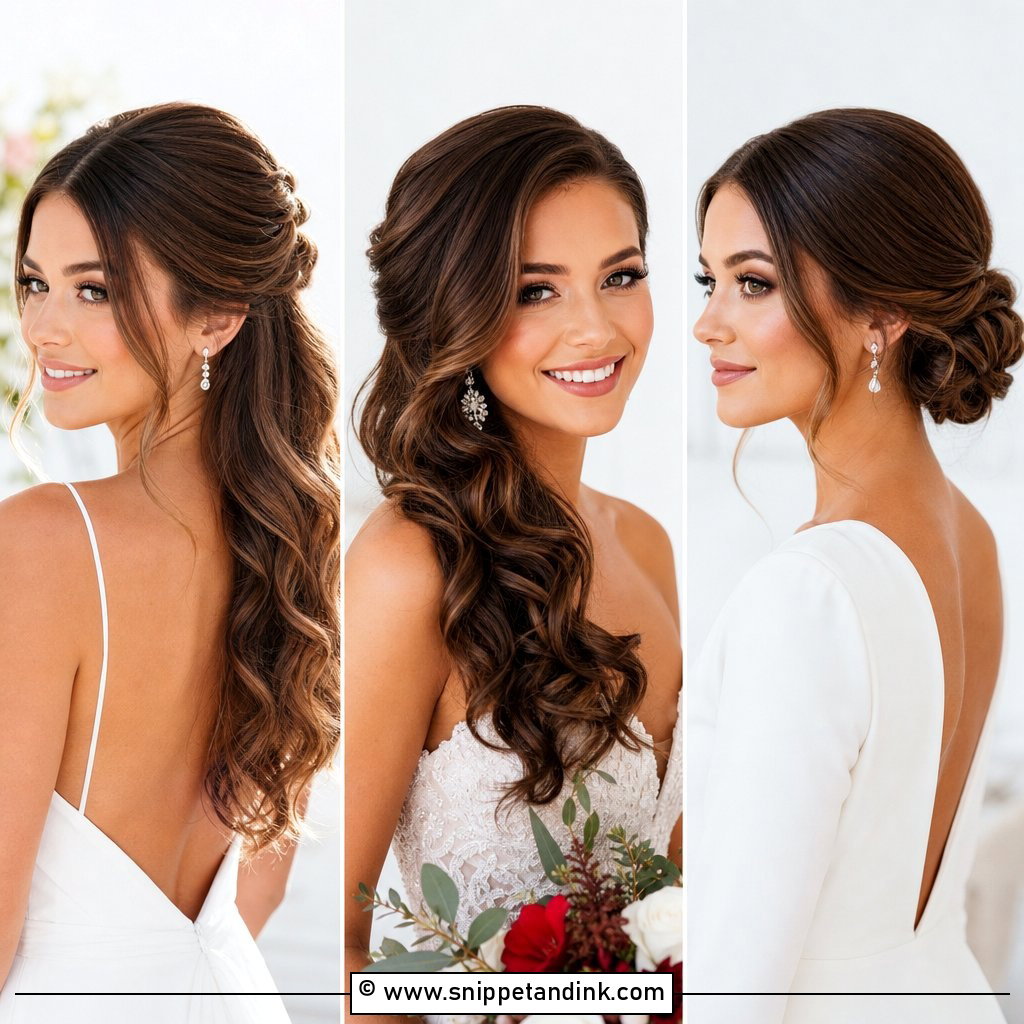
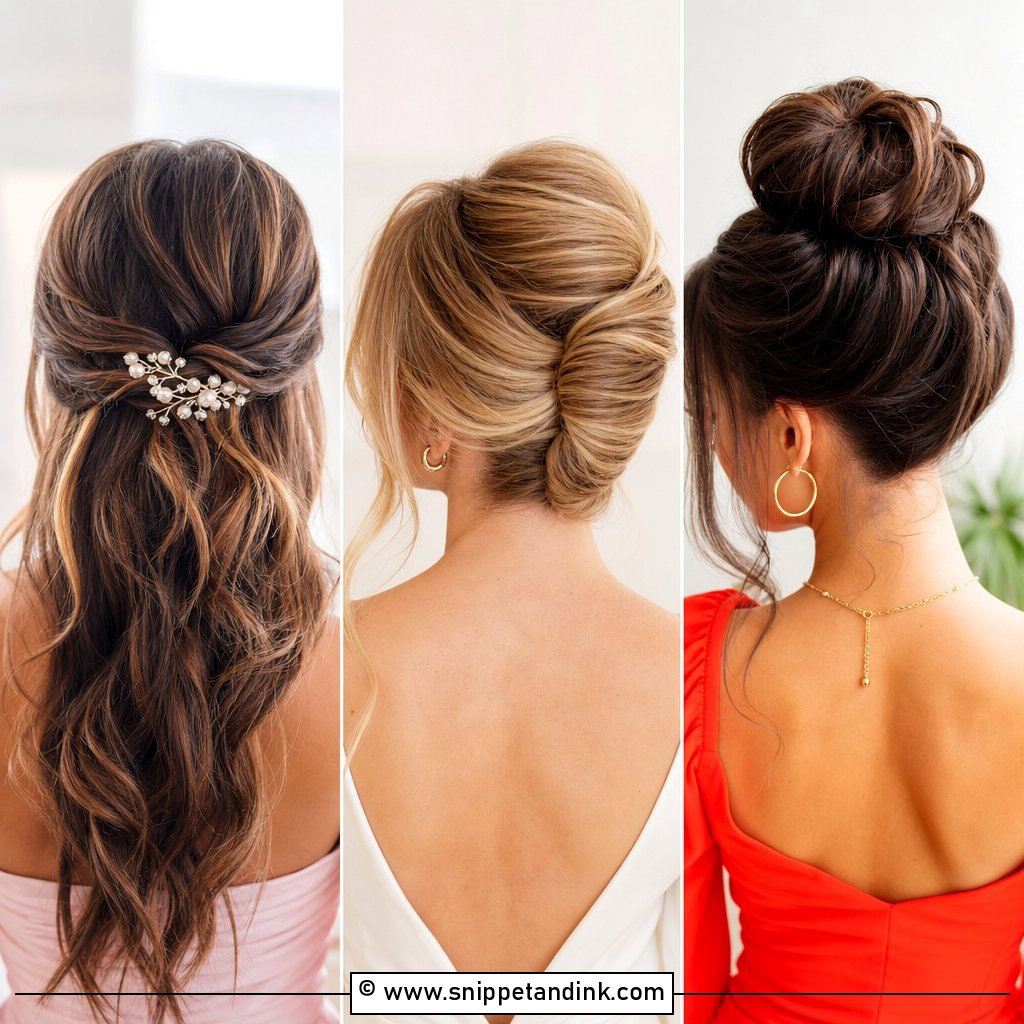
A soft chignon is the one I suggest to brides who like an updo but dread looking pinned to within an inch of their lives. It has movement and tucked pieces, and the shape stays slightly airy. I set loose waves through the hair first; those bends give each fold something to hold, so the chignon doesn’t slip flat by evening. Medium to long hair suits it best. Lace gowns, cathedral veils and floral combs all sit comfortably with it, and in a hot month it keeps hair off the back of the neck. Keep the front smooth but not scraped back.
3. Sleek Middle Part Bun Bride Hairstyle
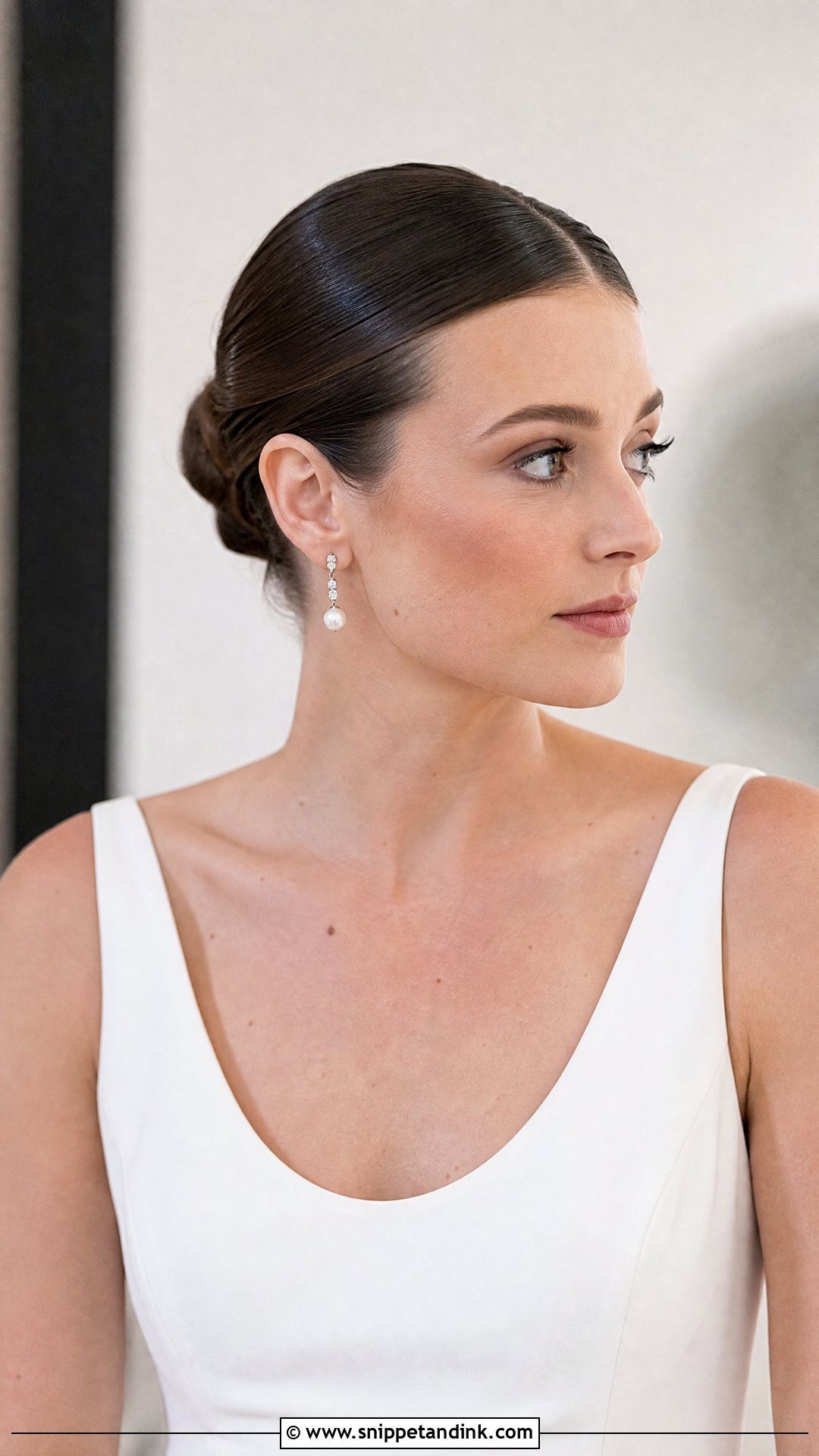
A middle part is less forgiving than it looks. On a sleek middle part bun, I check the part against the bridge of the nose and the centre of the chin before anything else, because faces are rarely perfectly symmetrical and a part that’s off by a few millimetres shows in every straight-on portrait. Once it’s placed, the hair is smoothed down with a fine-tooth comb and a cream or light serum, never so much gel that it looks wet under flash. It suits simple gowns, structured silhouettes, statement earrings, courthouse ceremonies and evening receptions. Strong pins through the base keep it neat through hugs and dancing.
4. Hollywood Waves Bride Hairstyle
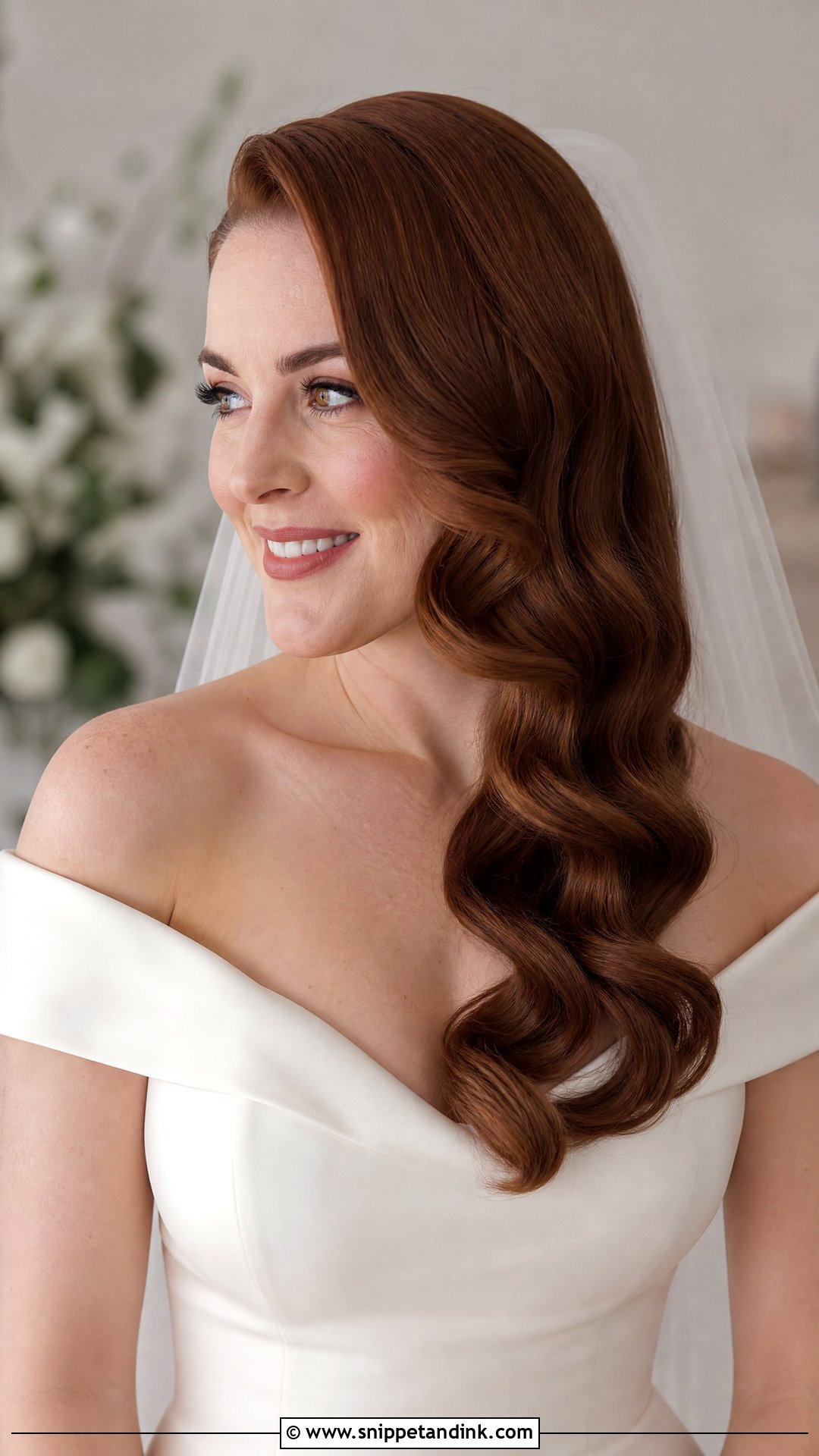
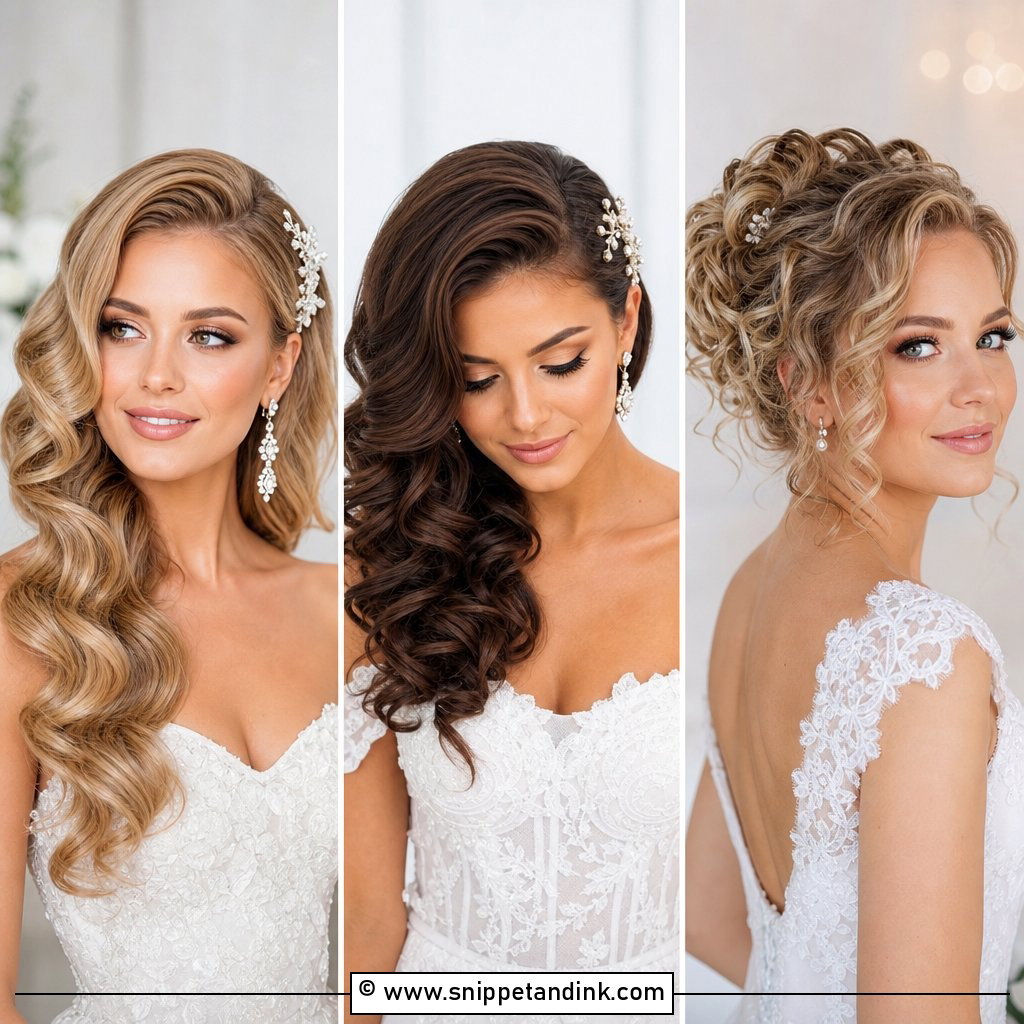
Glamour is the whole point of Hollywood waves, and they still read as bridal. A deep side part, one continuous wave pattern and a glossy finish make them flattering on long and medium lengths, and they come into their own with strapless gowns, vintage cuts and plain veils that let the wave show. The curls have to be brushed out into one flowing shape; left as separate ringlets they look like a prom set. Ask for firm prep, hidden pins at the back and a humidity-resistant finish, then accept that a muggy afternoon will loosen the wave a little.
5. Half Up Half Down Bride Hairstyle
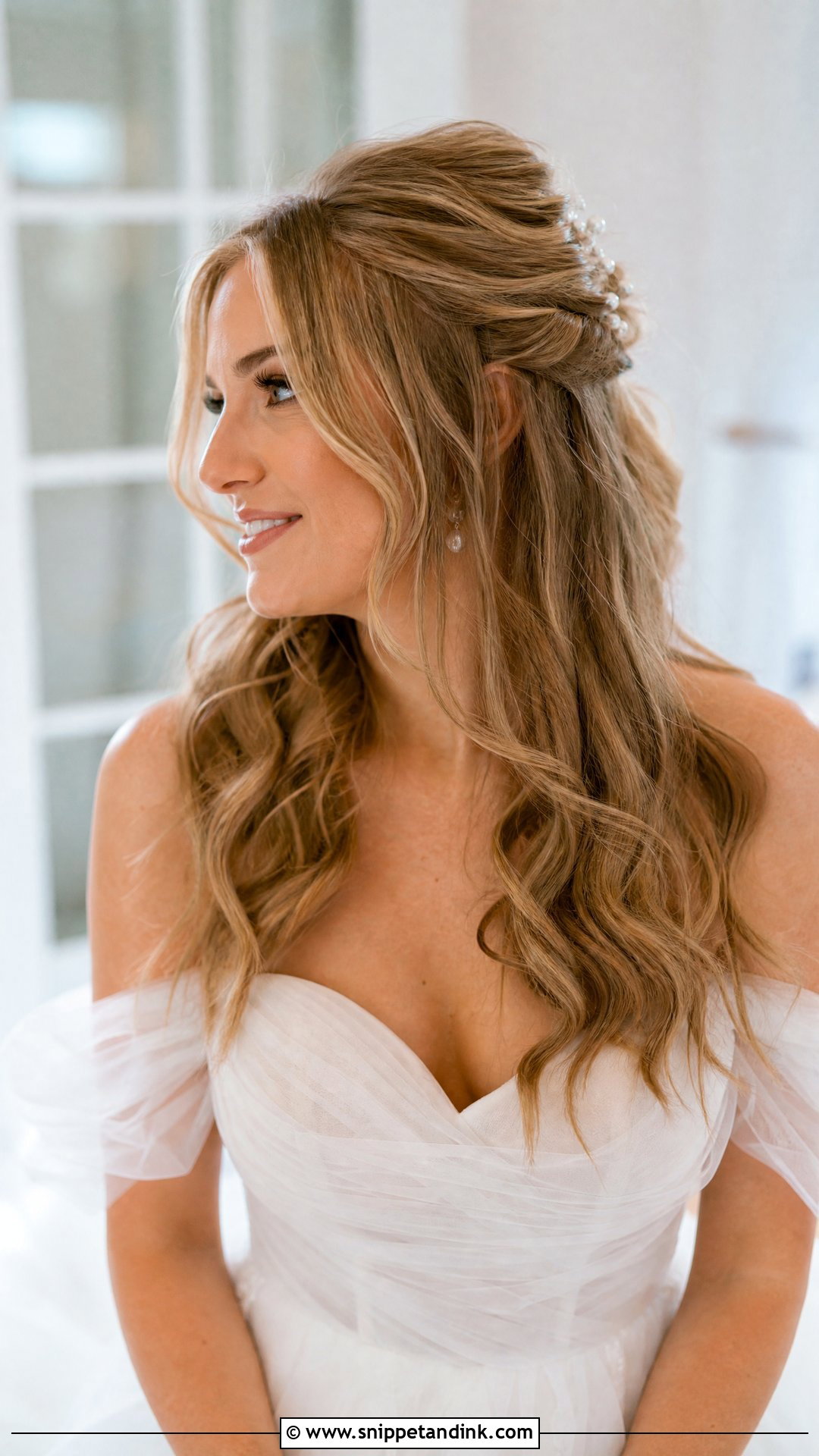
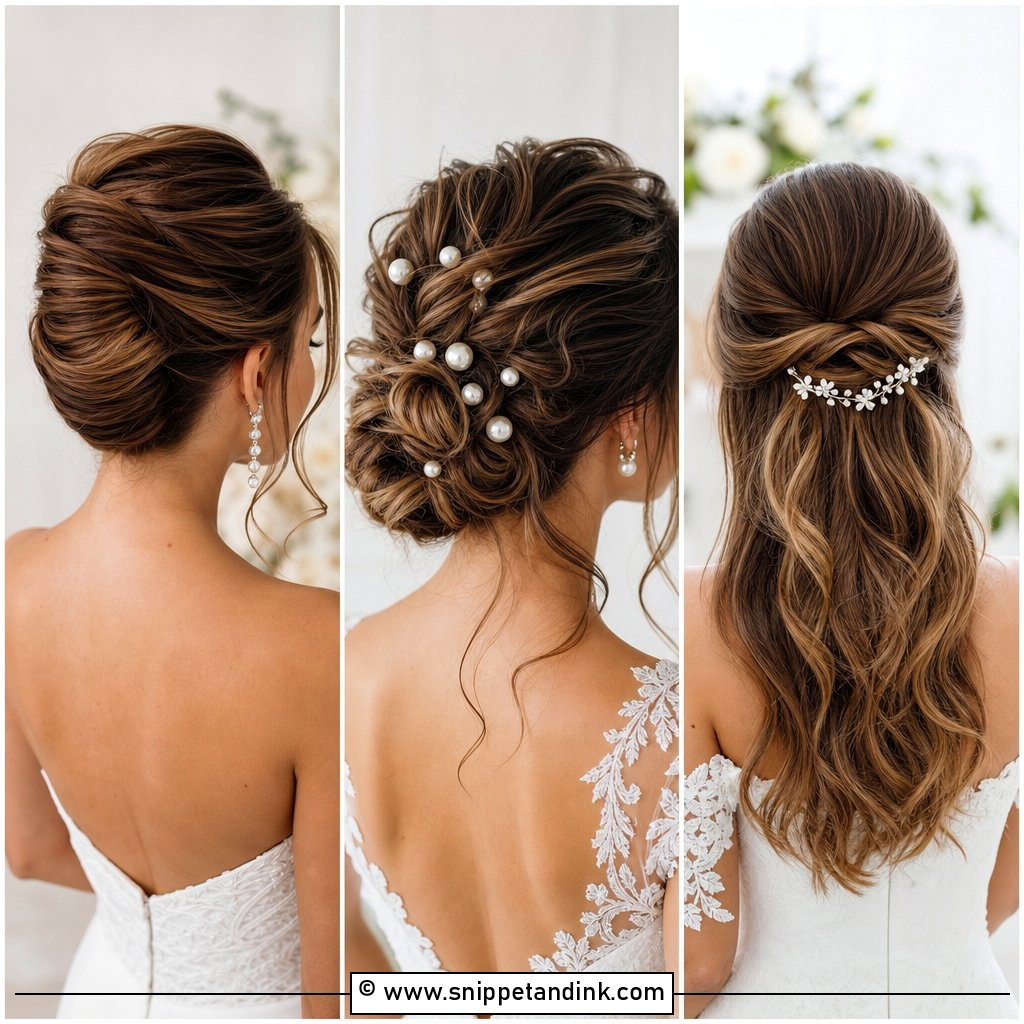
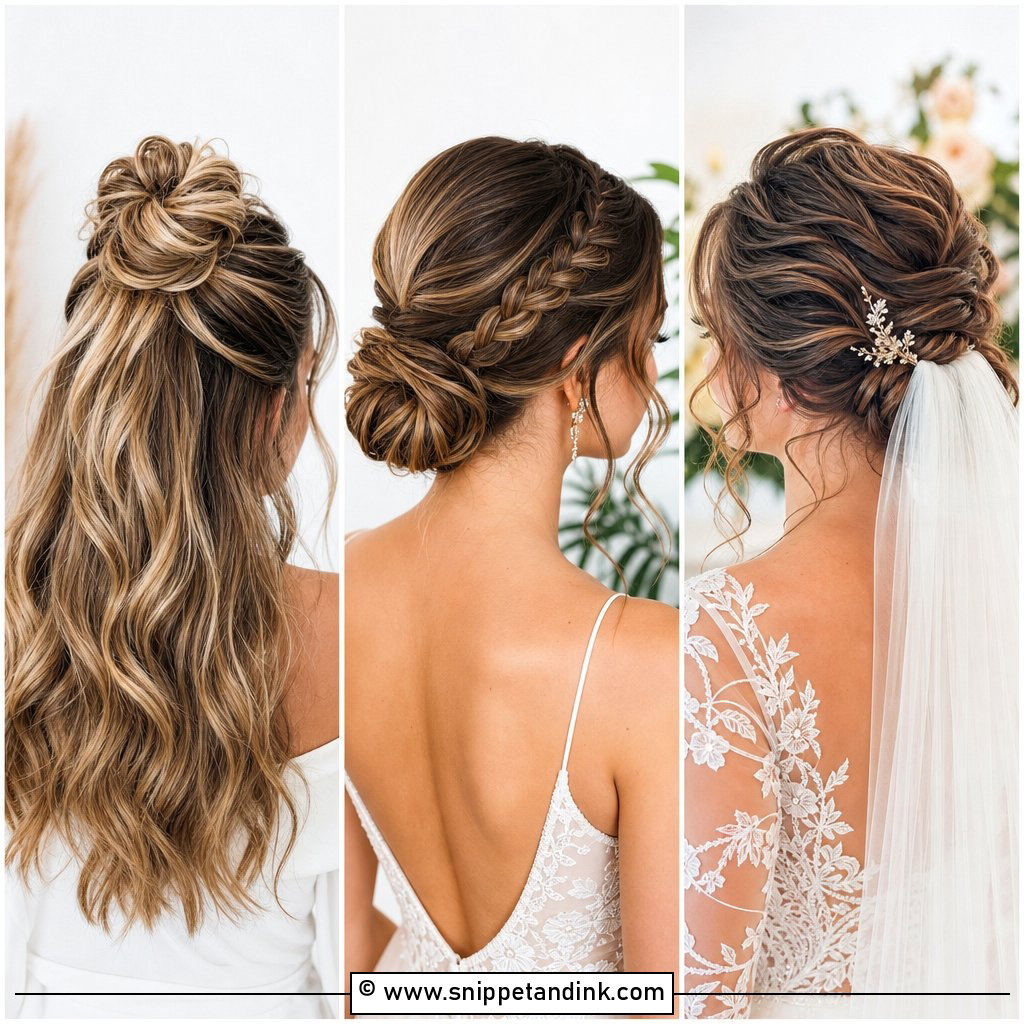
Half up, half down gives you softness at the shoulders and control at the crown. The lifted top keeps hair off your face for the vows and the kiss; the lower section brings length and movement. A small veil tucks neatly under the pinned section, which is a tidy way to hide the anchor pins. Outdoors it reads relaxed without looking unfinished. I’d steer away from tight twists across the top, which look dated, and from loose pieces that are messy on purpose, which just look like the style fell out early. Smooth top, brushed curls.
6. Loose Curly Updo Bride Hairstyle
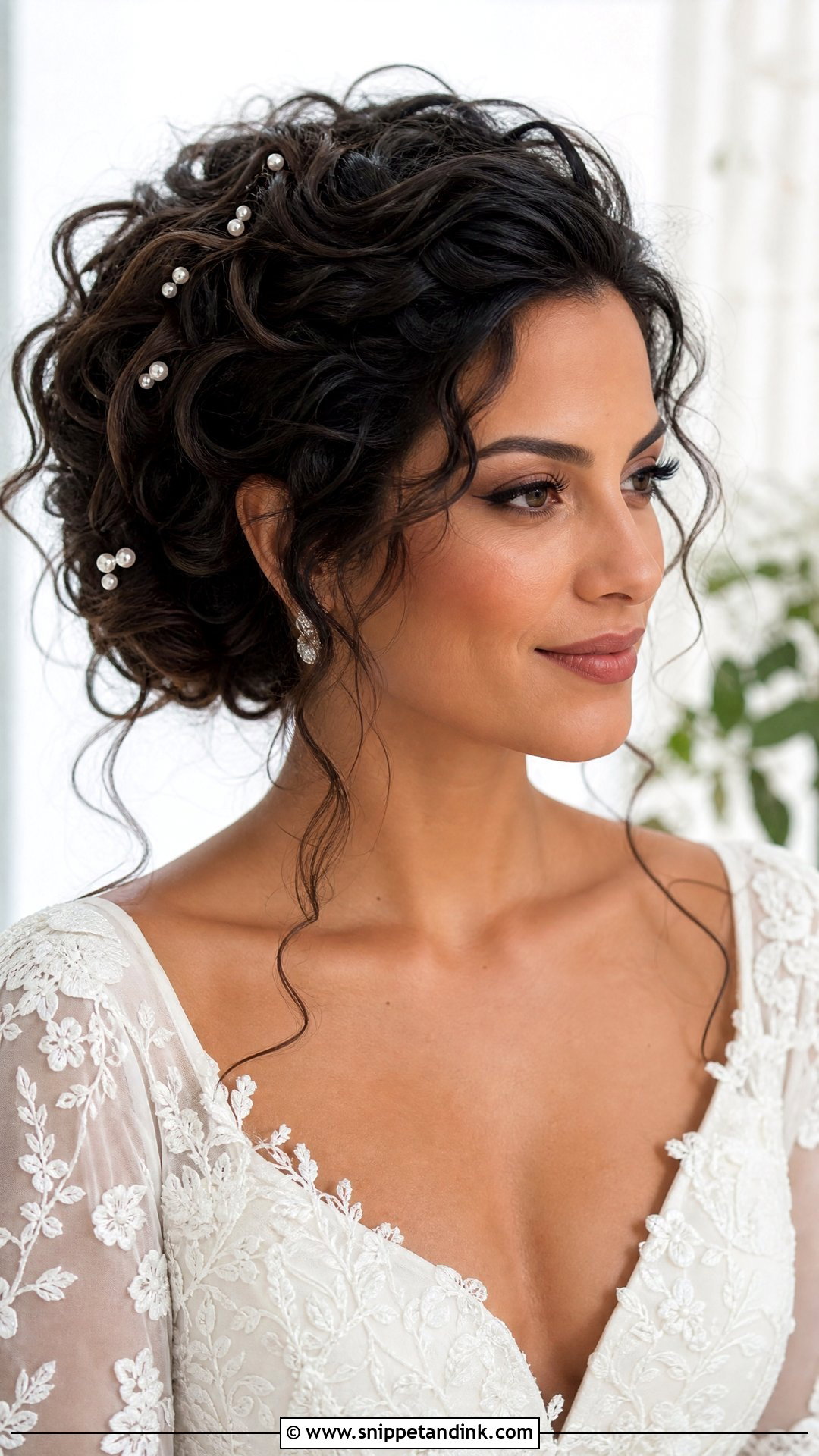
Curly, wavy and textured hair is at an advantage here, because the updo is built from the hair’s own pattern instead of fighting it. I apply curl cream while the hair is damp, diffuse or let it set, and pin the curls low or loosely at the back with a few tendrils at the face. Over-handling is the enemy: every extra touch of the fingers breaks a curl into frizz. Floral pins, pearl details and airy veils all suit it. An anti-frizz finish at the end keeps the definition through the evening.
7. Low Ponytail Bride Hairstyle
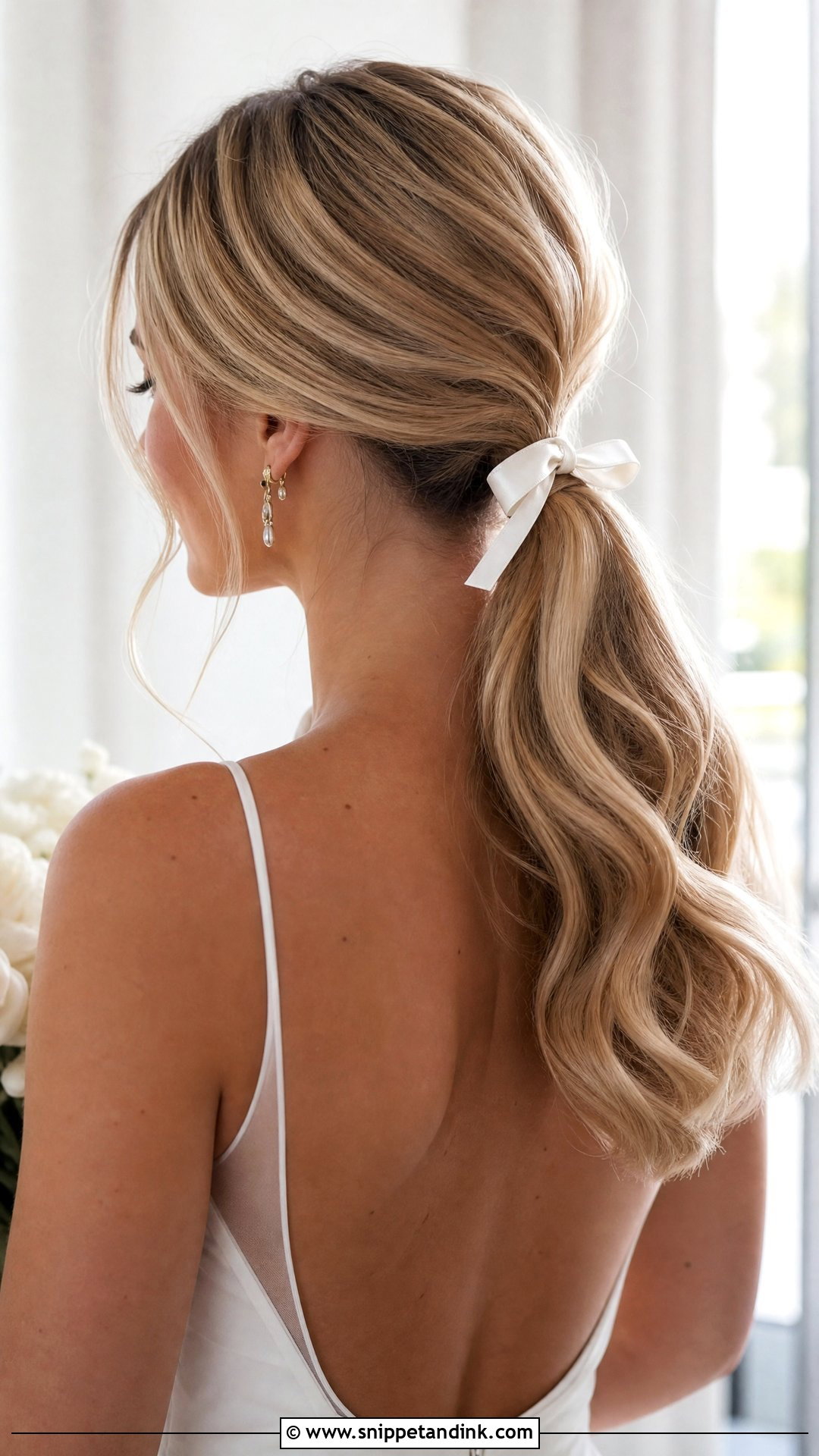
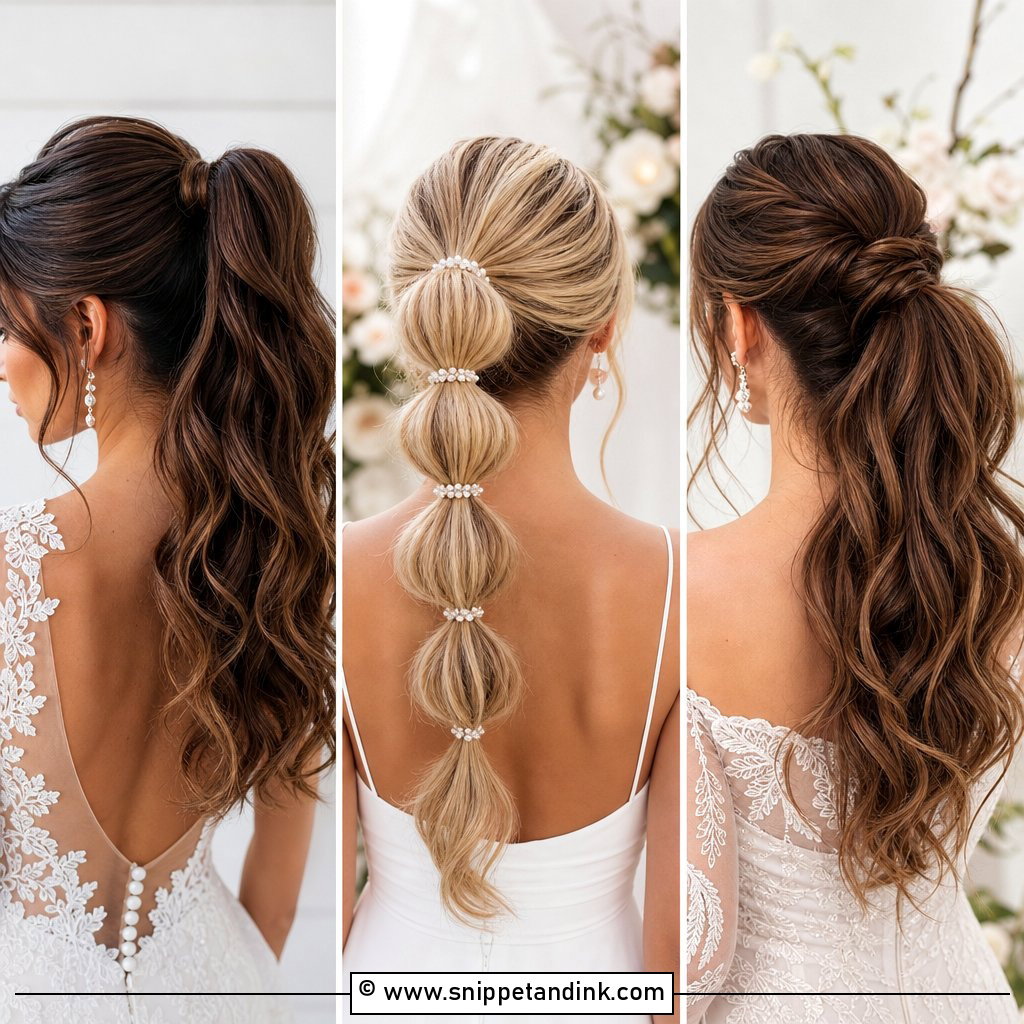
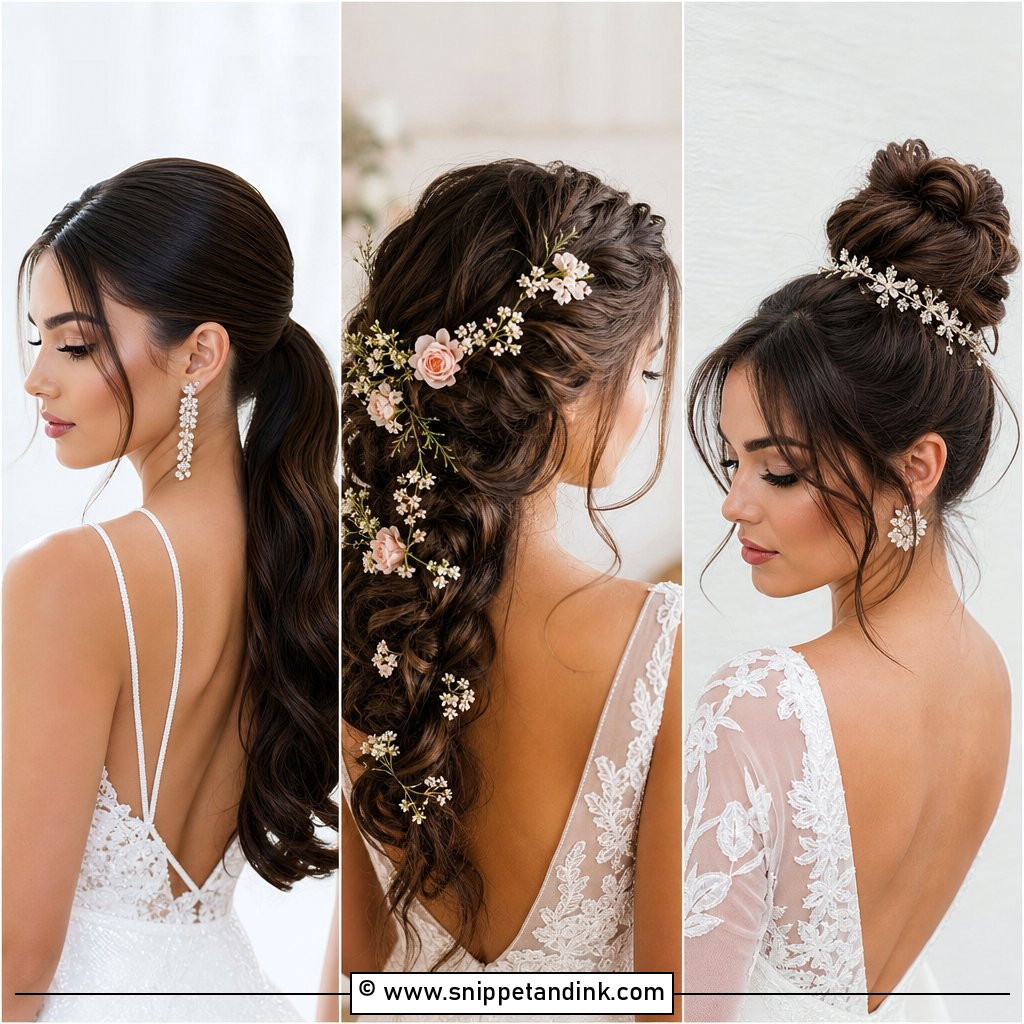
A low ponytail looks plain in a photo and surprisingly bridal in person once it’s properly finished. It can be sleek, softly waved, wrapped at the base with a strand of hair, or tied off with a pearl clip or a satin bow. Open-back dresses love it because the tail draws the eye down the spine. For thick hair it’s a relief: the length stays visible, the bulk comes away from the face and nothing heavy pulls on the scalp all day. Keep it low and smooth, with a little lift at the crown and soft bends through the ends.
8. Side Swept Waves Bride Hairstyle
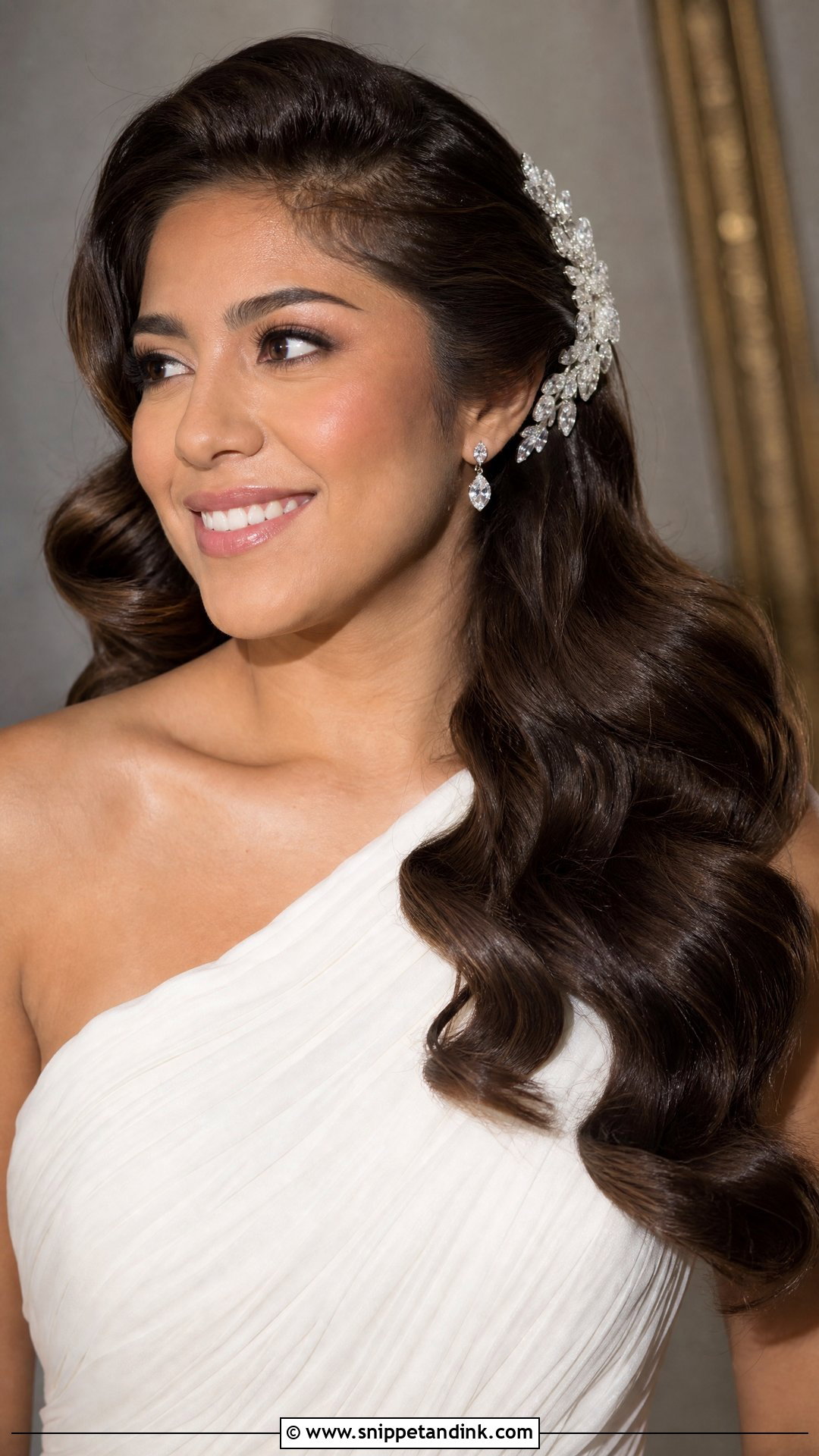
With side swept waves, the first question I ask is which side. The answer depends on your parting, which profile you prefer, and where any statement earring will sit, since the hair will cover the ear on the swept side. The style suits one-shoulder necklines, open backs and detailed bodices, and it needs medium to long hair; extensions add the fullness most photos show. The waves should feel smooth to the touch, never crunchy. Pins tucked behind the opposite ear hold the weight, and a comb or a few pearl pins on the bare side balances the look.
9. Braided Low Bun Bride Hairstyle
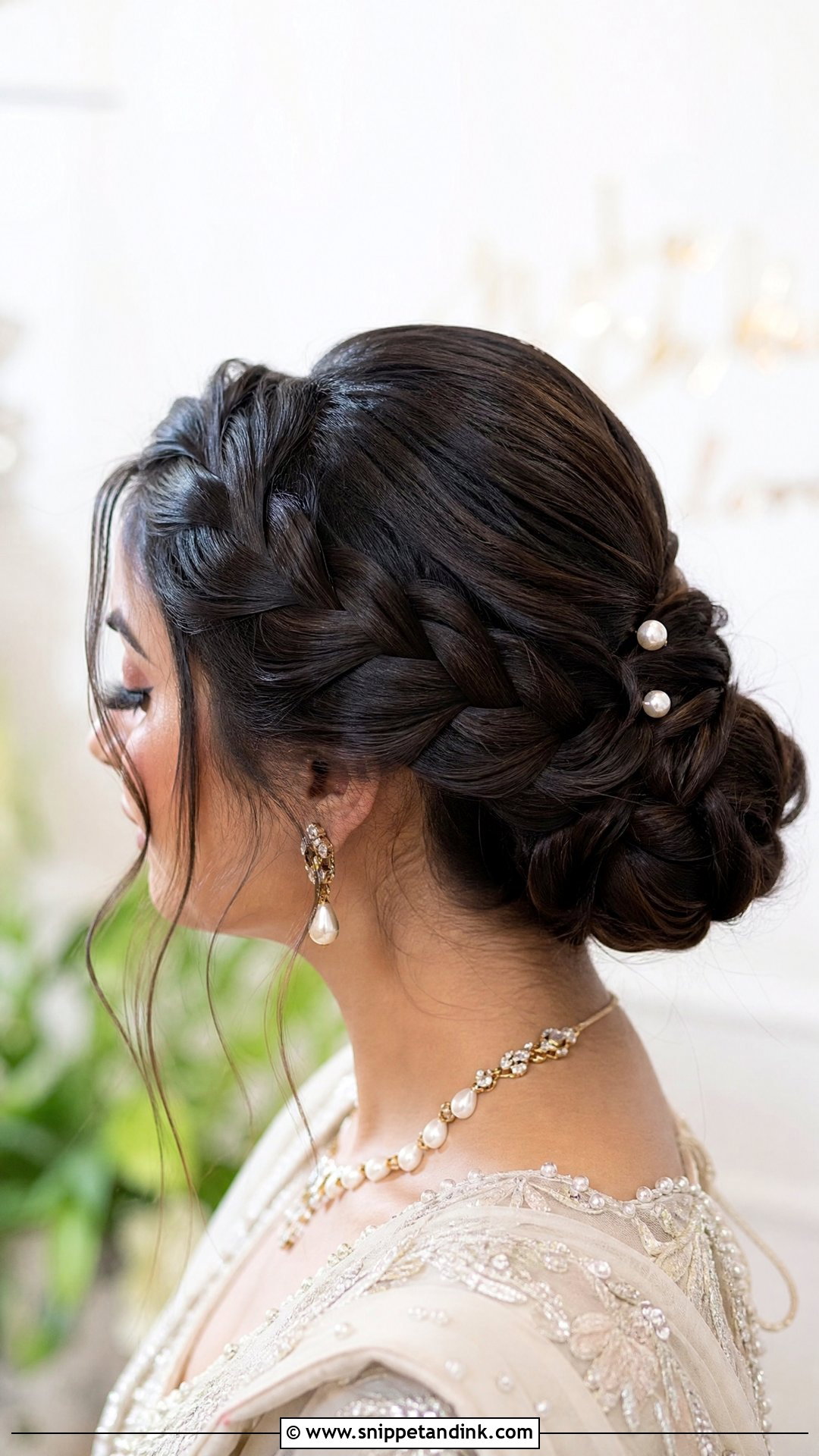
Highlighted hair is where a braided low bun really shows off, since the braid catches the different tones and gives the shape real dimension. Thick and textured hair braid well too. The braid can wrap around the bun, blend into the crown or run softly along one side. I keep it smooth and gently widened rather than pulled apart, because heavily loosened braids start to look messy once the veil has been on and off. Garden weddings, lace and delicate pins all suit it, and two soft pieces near the face keep it from looking too formal.
10. French Twist Bride Hairstyle
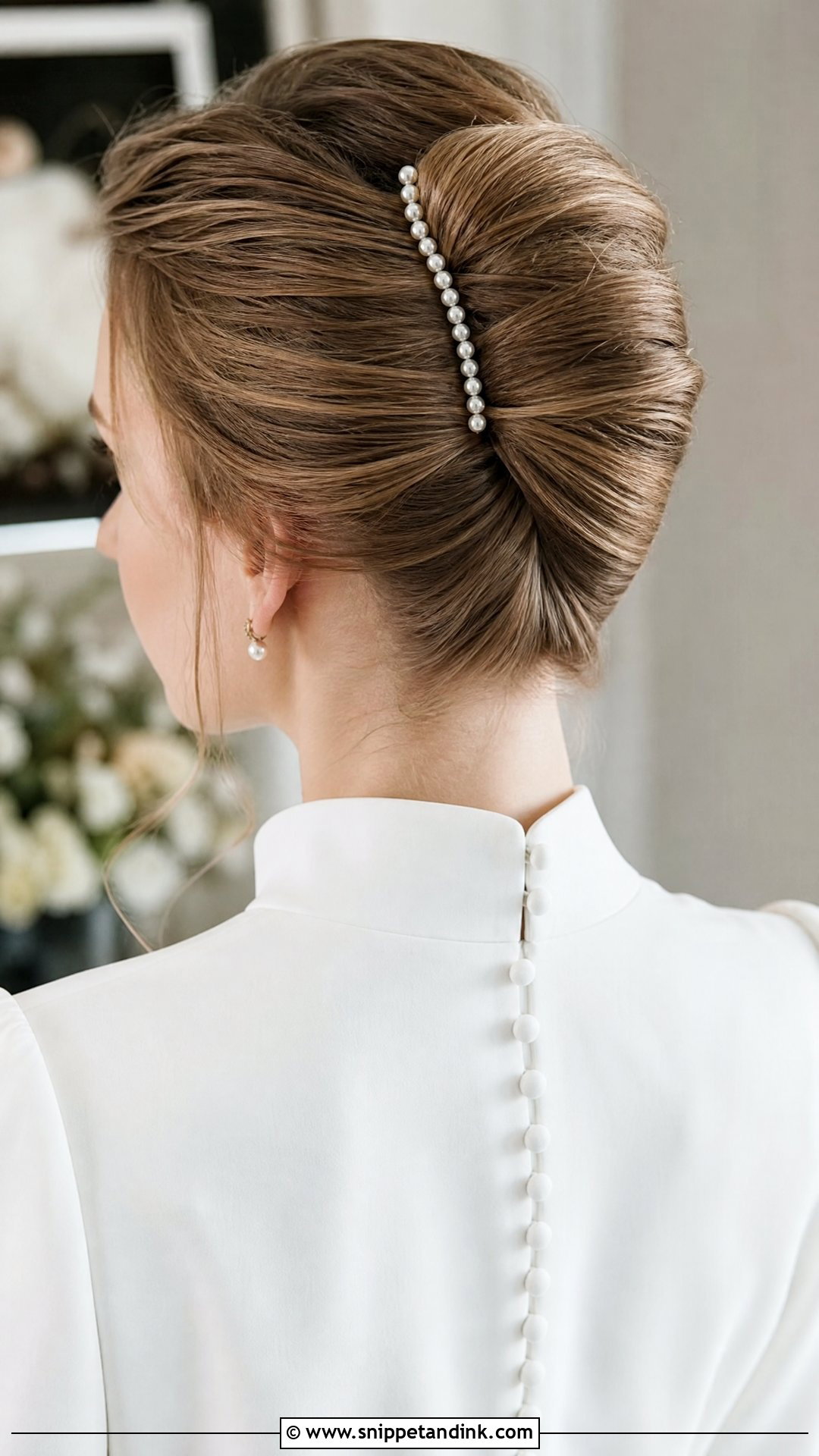
The French twist is the most structured shape here and arguably the most refined. It lifts the hair up the back and tucks it into a clean vertical line, which makes the neck and shoulders look longer, a natural match for high necks and classic lace. Grip matters more than length; medium to long hair works, but freshly washed, silky hair slides out of a twist, so I prep it with a dry texture spray. A modern version keeps a touch of crown volume and a few loose strands at the front. Pearl pins or a slim comb along the seam are all it needs.
11. Long Veil Bride Hairstyle
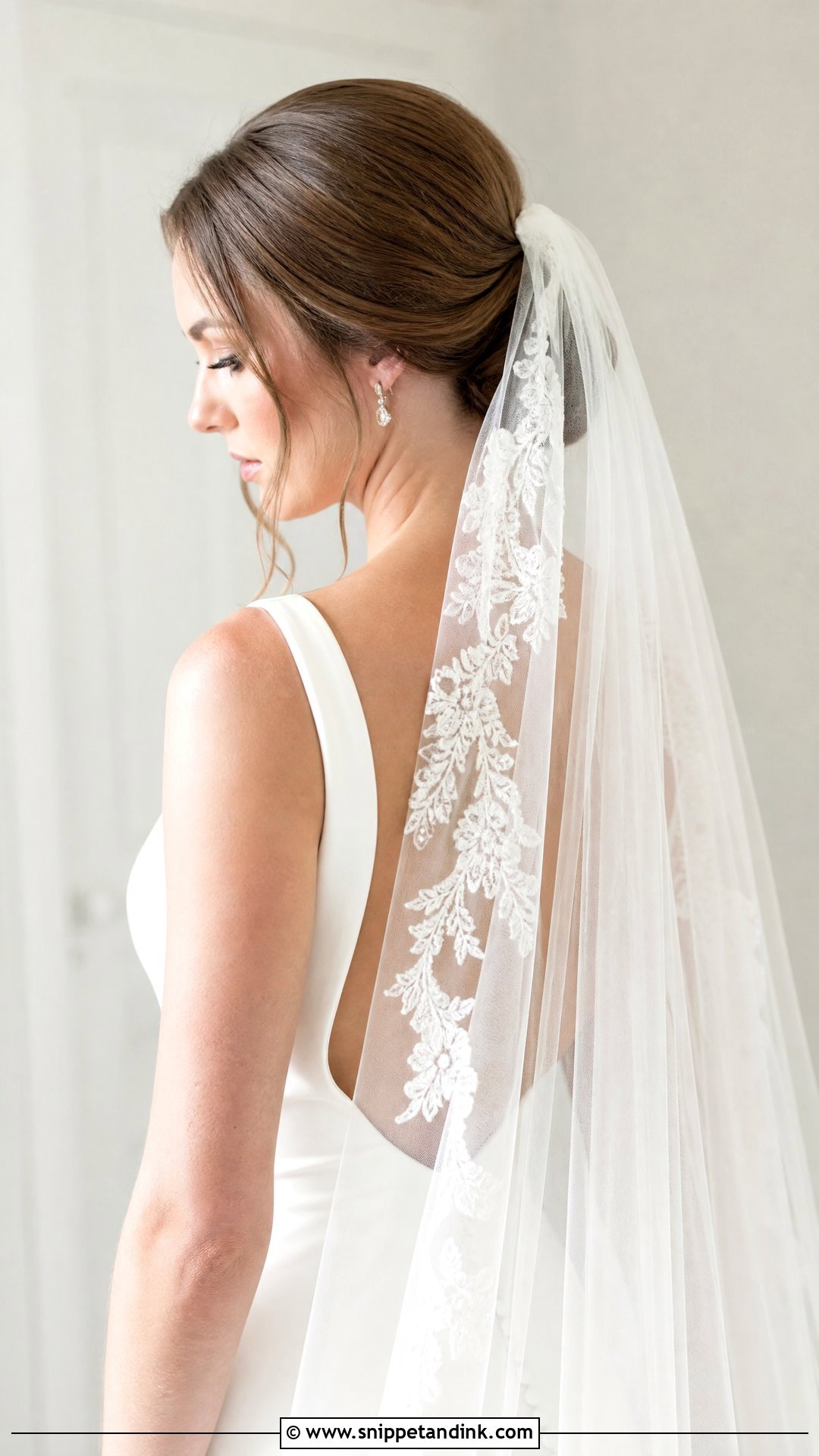
A long veil changes the whole brief for your hair. A cathedral length of tulle has real weight, and everything it’s pinned into must carry that pull for hours, then still look finished once it comes off. Soft buns, low chignons, half-up waves and smooth updos give a comb a solid base. I place the comb just under the crown, angled into the shape so it locks in. Do the trial with your actual veil or one of the same length, so you can judge height, balance and the front view properly. If the veil has lace or beading, keep accessories minimal.
12. Short Hair Bride Hairstyle
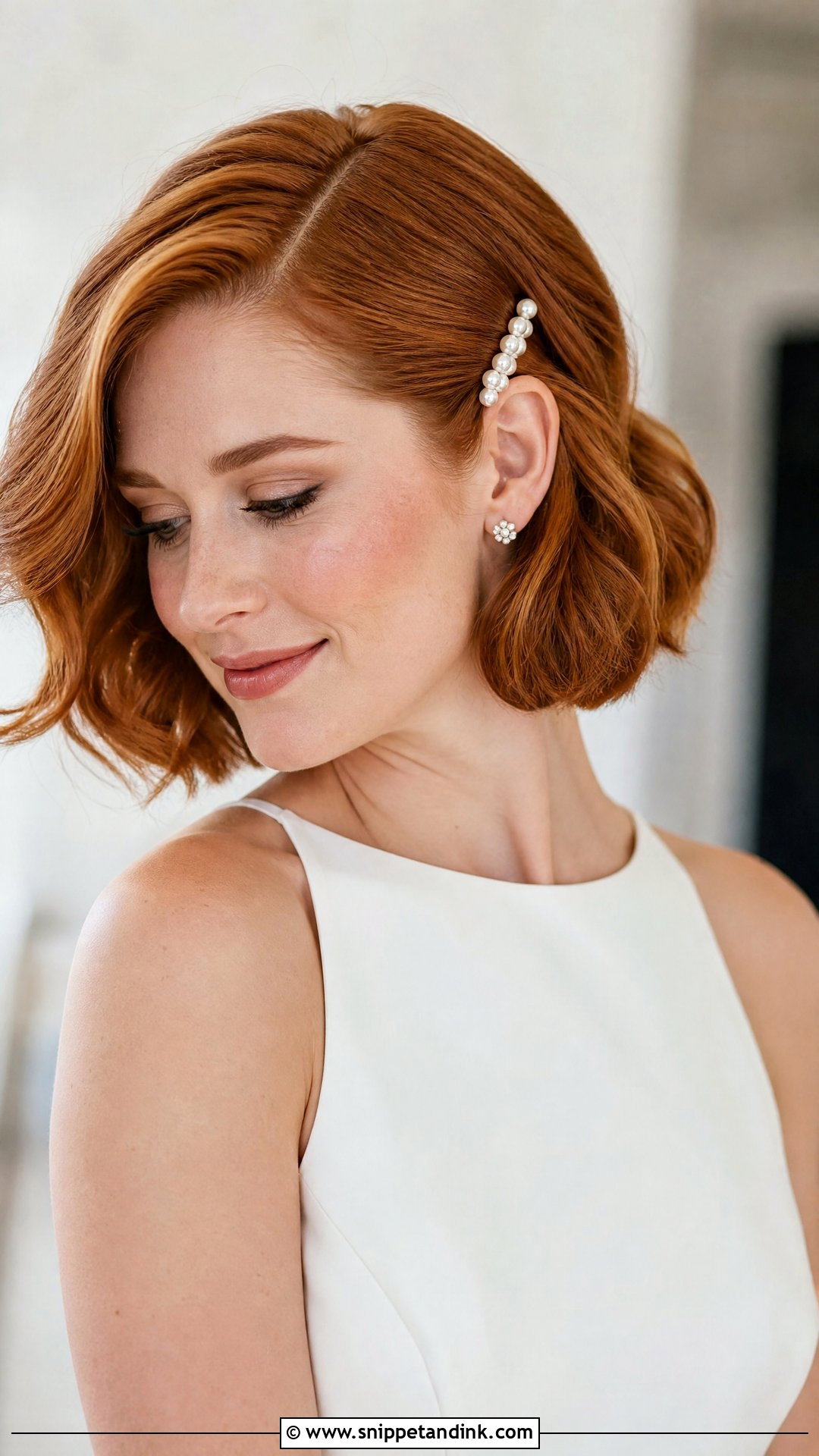
Short hair has fewer places to hide a mistake, which is exactly why it looks so polished when it’s done right. A soft bob, waved lob, tucked pixie or side-parted crop can be every bit as bridal as long hair. The finish comes from shine, a little texture and one well-placed accessory: a pearl clip, a slim headband, a mini veil or a delicate comb. Get your trim one to two weeks before the wedding so the line is crisp but not freshly blunt. I use a light hand with product, since short hair goes stiff fast.
13. Natural Curls Bride Hairstyle
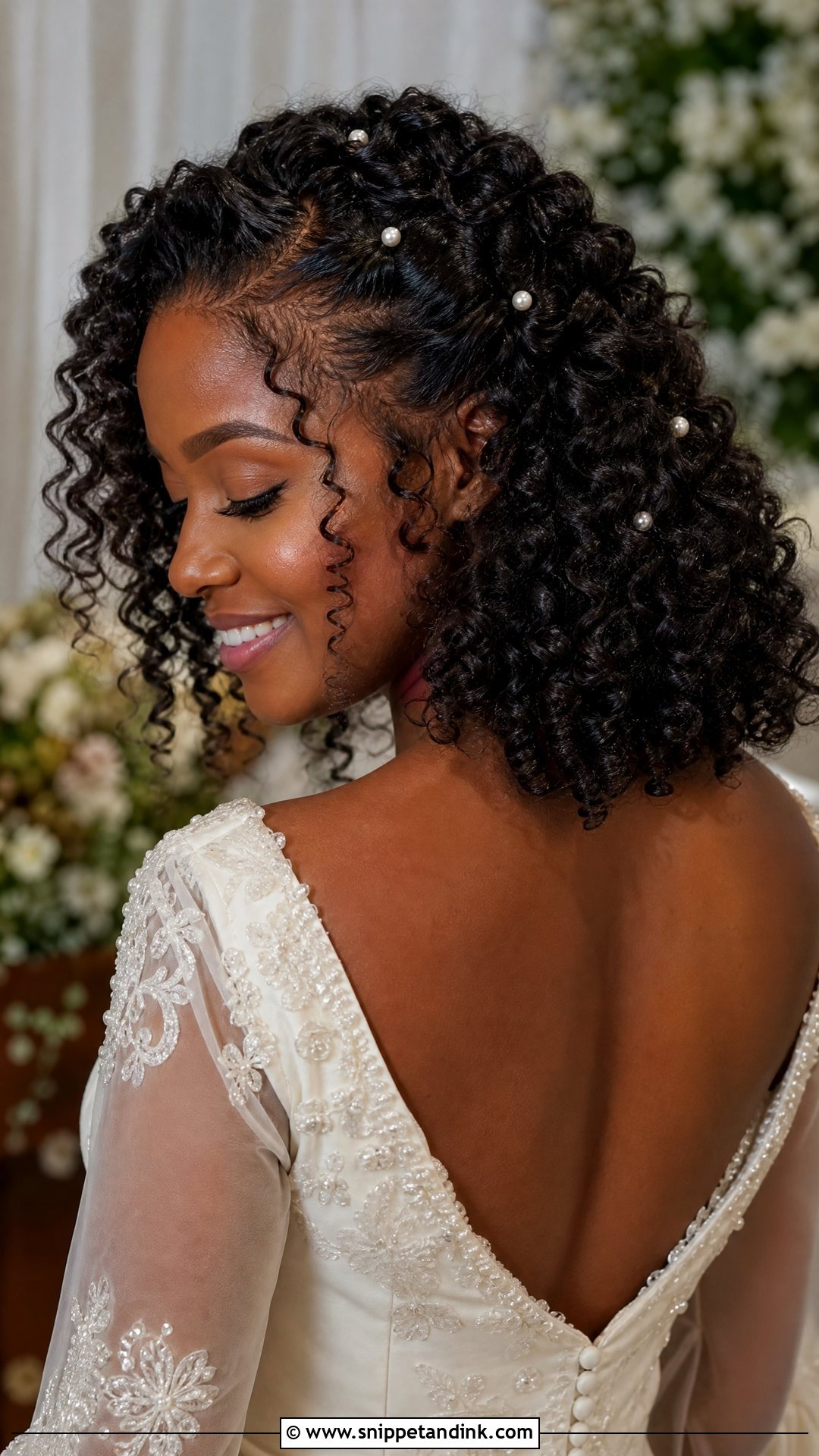
Moisture is the foundation for natural curls. Dry curls look dull in pictures and frizz the moment the room warms up. The trial is where I test the products, the drying method and where accessories can sit without flattening anything, and I’d book it on a day you’ve followed your usual wash routine. The curls can be worn down, half-up, pinned to one side or shaped into an updo. Pearl pins, floral combs and veils all work if they’re placed gently. The aim is to shape and support the texture, never to hide it.
14. Pearl Hair Pins Bride Hairstyle
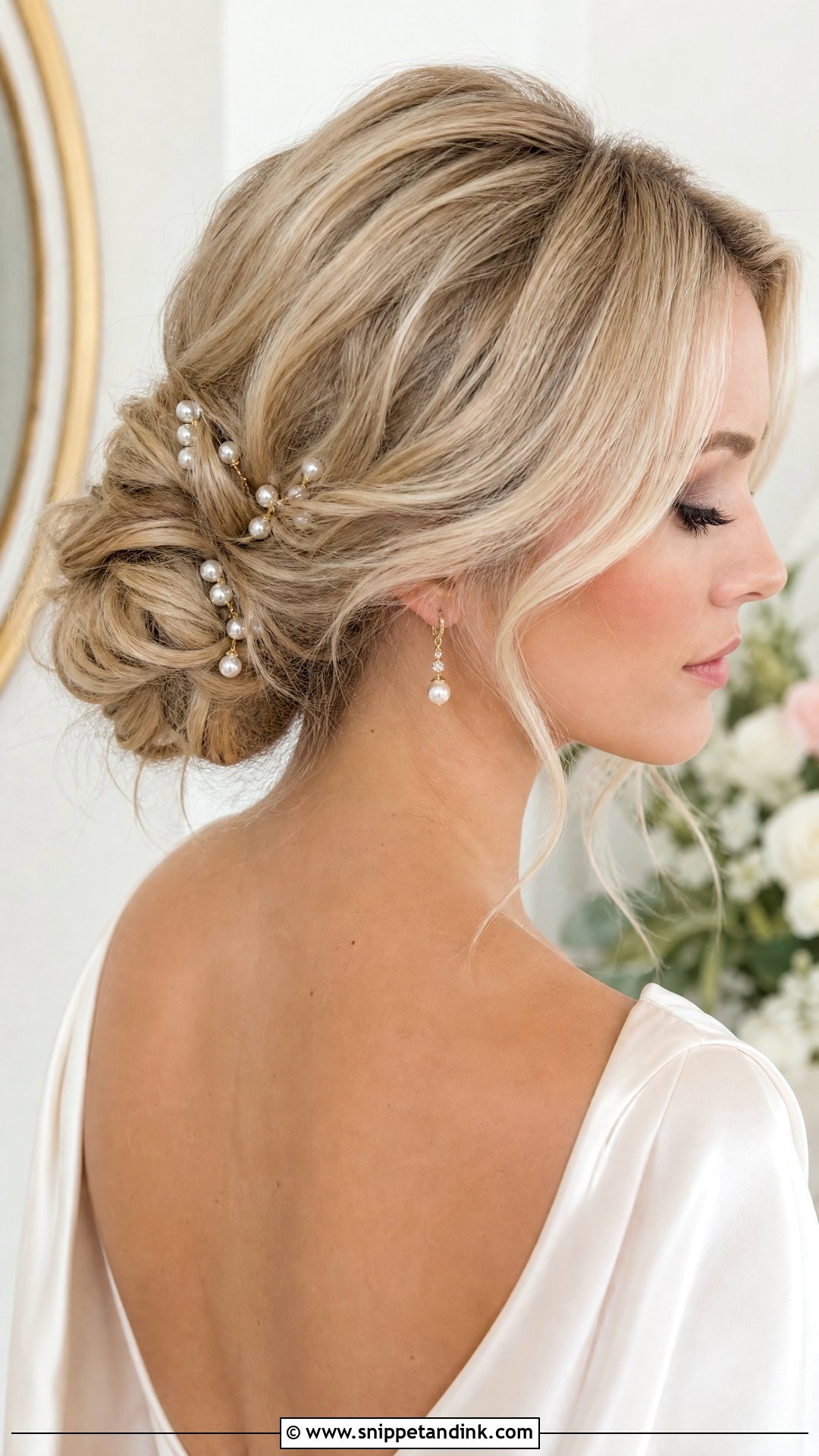
Too many pearls and a hairstyle looks like a craft project. Pearl hair pins suit low buns, chignons, half-up waves, braided buns and curly updos, and the placement should follow the line of the style: along one side of a bun, down a braid, or a light scatter through pinned curls. I keep them to one size family, perhaps two, and stop before the hair looks studded. They suit satin, crepe, lace and plain gowns, where they add a little texture, and they look just as good with or without a veil.
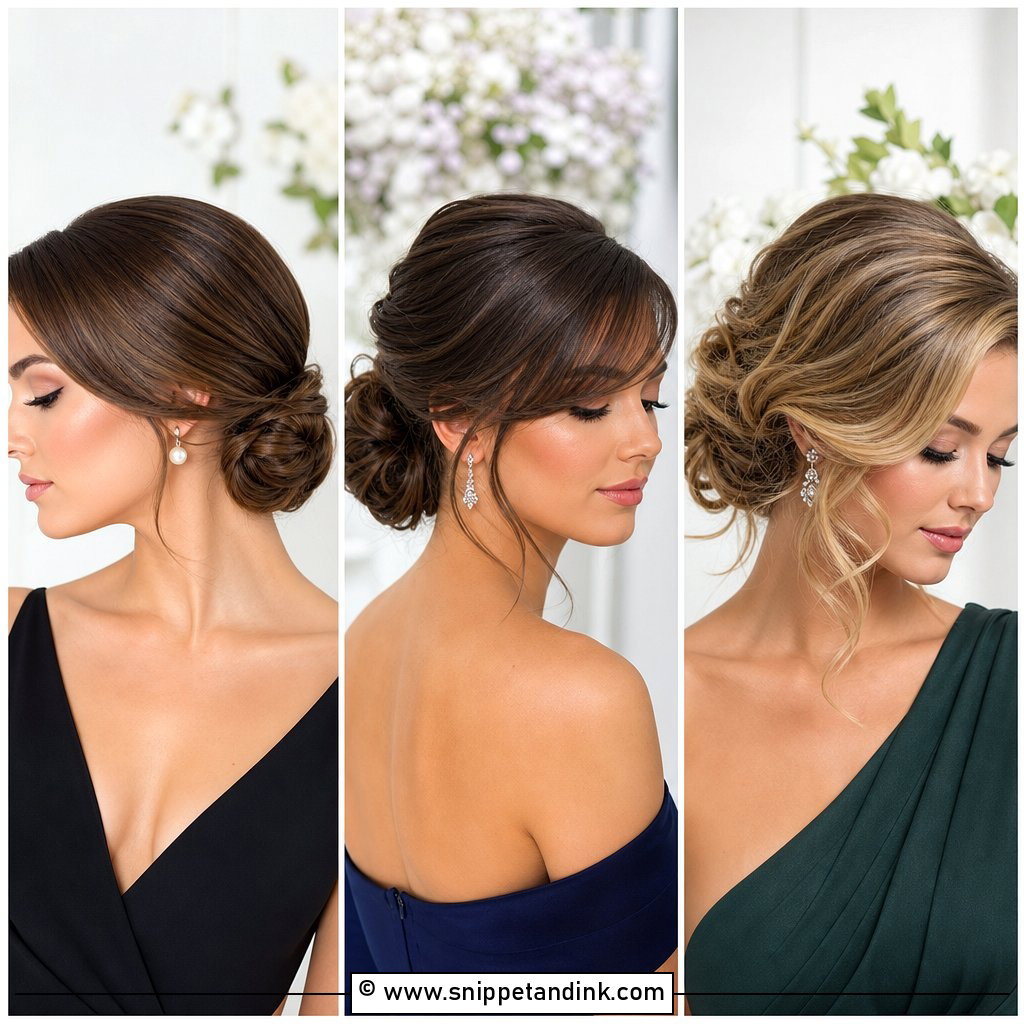
15. Crown Braid Bride Hairstyle
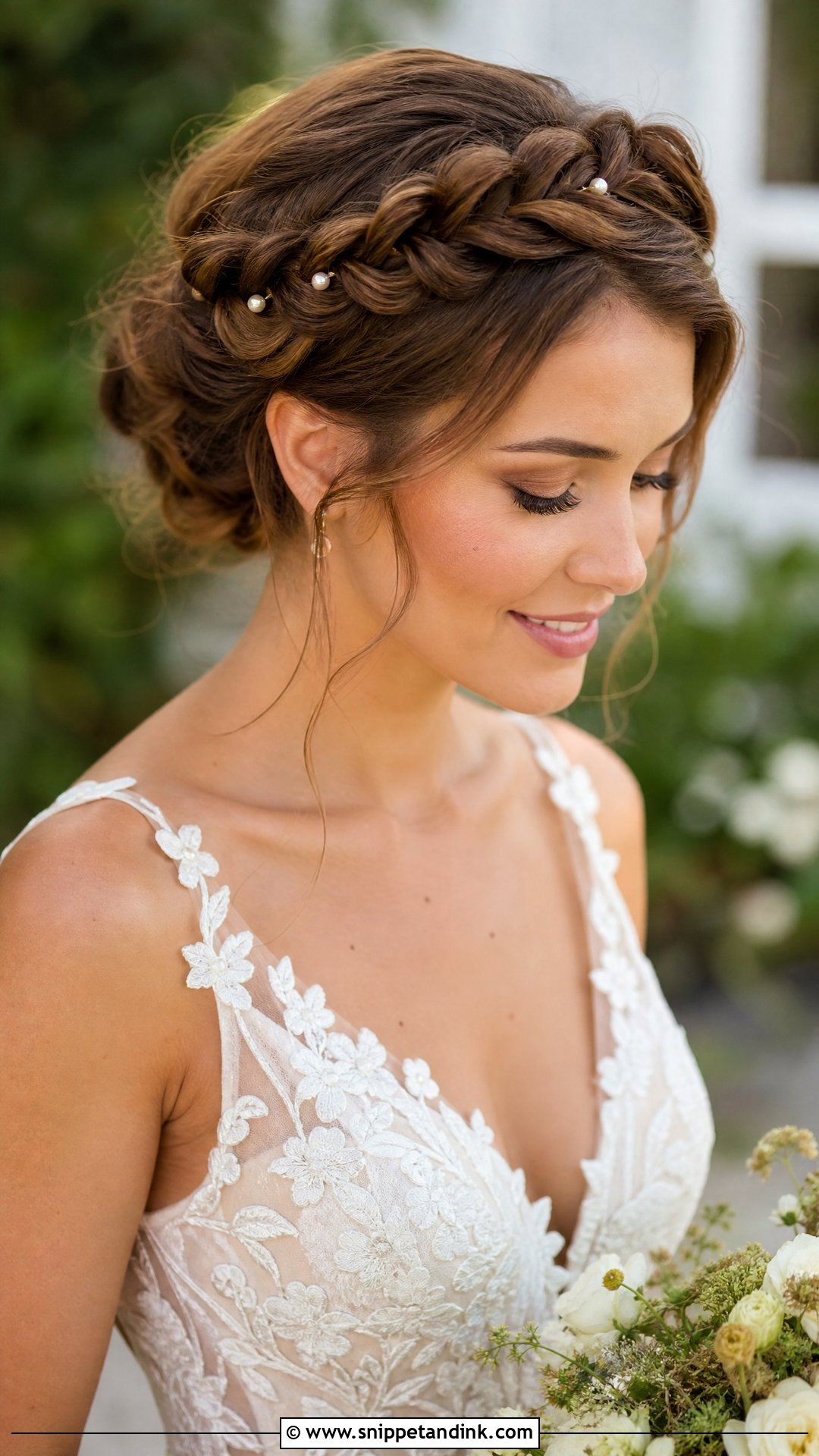
A crown braid is one of the most secure styles a bride can wear, which is why I like it for gardens and windy outdoor ceremonies. The braid wraps around the head or crosses the front and blends into a low bun. It needs long hair; extensions can bulk it out if yours is thin at the ends. The risk is tension. A crown braid pulled too tight gives a headache within a couple of hours, so I keep the plait snug at the root but gently widened through its length. Small pearl pins or tiny flowers can sit in the twists.
Making Your Hair Trial Count
A trial is your chance to find problems while there’s still time to fix them. Most stylists suggest booking it two to three months ahead, and I’d plan it on a day with a dinner or event afterwards so you can see how the style lasts while you’re actually moving.
What to bring
- Your veil, or one of the same length and weight
- Any hair accessory you’ve bought, even if you’re unsure
- A top with a neckline close to your dress
- Three or four photos you love, plus one you definitely don’t
What to check before you leave
Turn your head quickly from side to side and look down as if signing the register. Ask for photos from the back and both sides in natural light. Then watch it for the rest of the day: if it drops, itches or gives you a headache by evening, tell your stylist. That feedback is exactly what the trial is for, and I’d always rather hear it then than on the morning.
The week before
Get colour done one to two weeks out so it settles, avoid new treatments or products, and ask your stylist whether to wash the night before or the morning of. Fine hair and curly hair usually want very different answers.
Polish That Lasts Past the Speeches
The hairstyle worth keeping is the one that feels like you once the nerves wear off. A sleek bun may sit best with a modern gown and soft waves with a romantic one, while curly updos, short styles, pearl pins, braids, ponytails and chignons all look polished when they’re planned around your texture, veil, neckline and venue. Book the trial, bring photos from the front, side and back, and test every accessory you’ll wear. A good bridal style looks finished in the pictures, holds for the whole day and still moves when you do.
You'll Like These Ideas:


Leave a Reply