
Updos are where most of my wedding mornings are spent, and the ones I’m proudest of never look stiff. A classy updo starts from the dress: its neckline, the veil, your face and the texture you were born with. Low buns, chignons, French twists, braided shapes and sculpted knots all hold well because they keep hair secure while leaving the face and gown on show. The same shapes adapt for bridesmaids, mothers of the bride and guests, with a few changes I explain further down. Under each idea I’ve added what it asks of your hair and where it tends to fall short, so you can see quickly which ones are realistic for you.
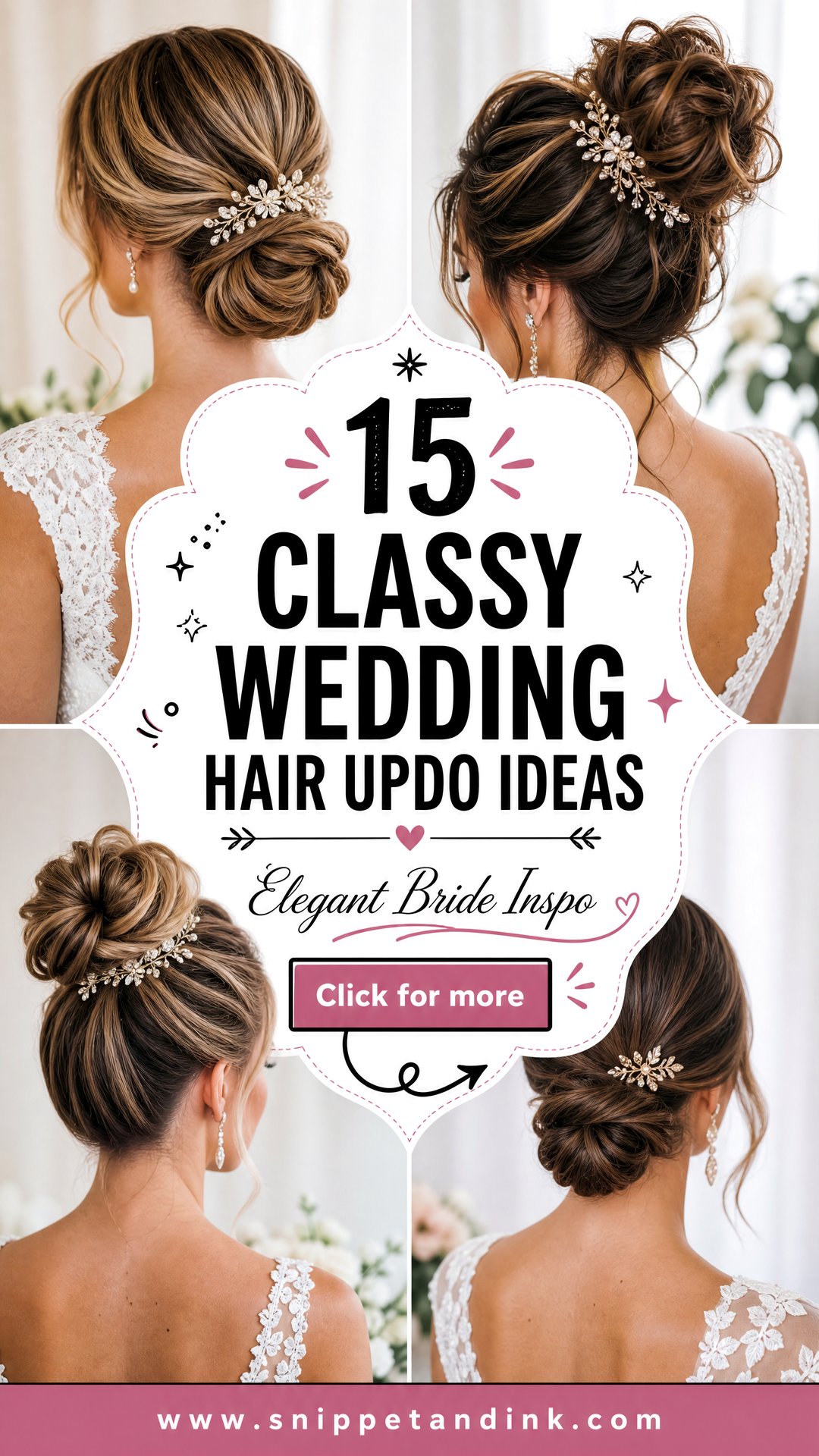
Adapting an Updo for Bridesmaids and Mothers
Most of the shapes below work for the whole wedding party, but the same updo on the bride, a bridesmaid and a mother of the bride shouldn’t look identical. Here is how I usually adjust them.
The bride
She gets the most detail and the most structure, because her hair carries a veil, gets photographed up close and has to last longest. If the bridesmaids wear buns, I often give the bride a slightly different shape or height so she stands apart in group photos.
Bridesmaids
Coordinated works better than matching. I’ll agree a family of styles, such as low, soft and textured, and then adjust each one to the person’s length and texture. A bridesmaid with a bob and one with waist-length hair can’t wear the same chignon, and forcing it makes one of them uncomfortable all day.
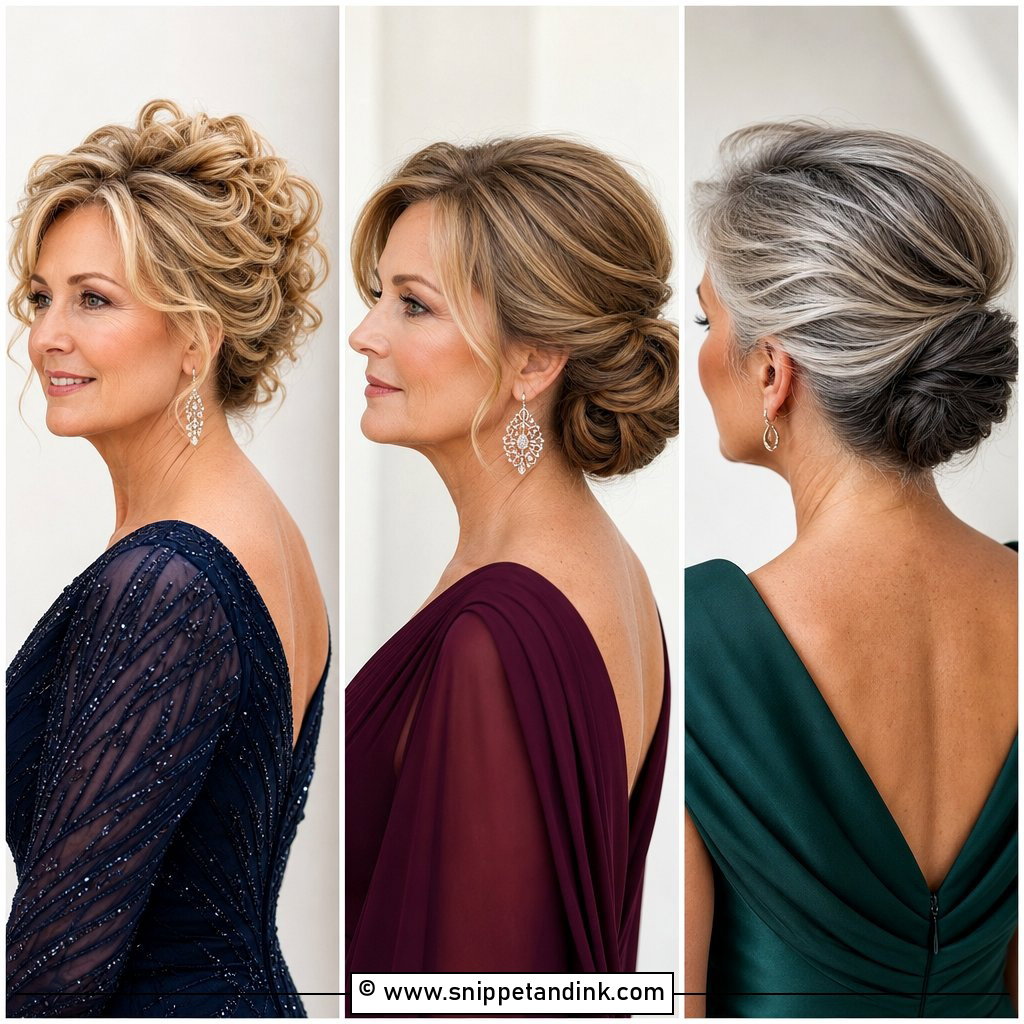
Mothers and grandmothers
Hair often thins with age and can be finer at the crown, so I build softer, lower shapes with gentle volume rather than tight sleek ones. If she’s wearing a hat or fascinator, the updo sits lower to leave room for it, and glasses need the hair kept clear of the arms above the ears.
1. Low Chignon Wedding Updo
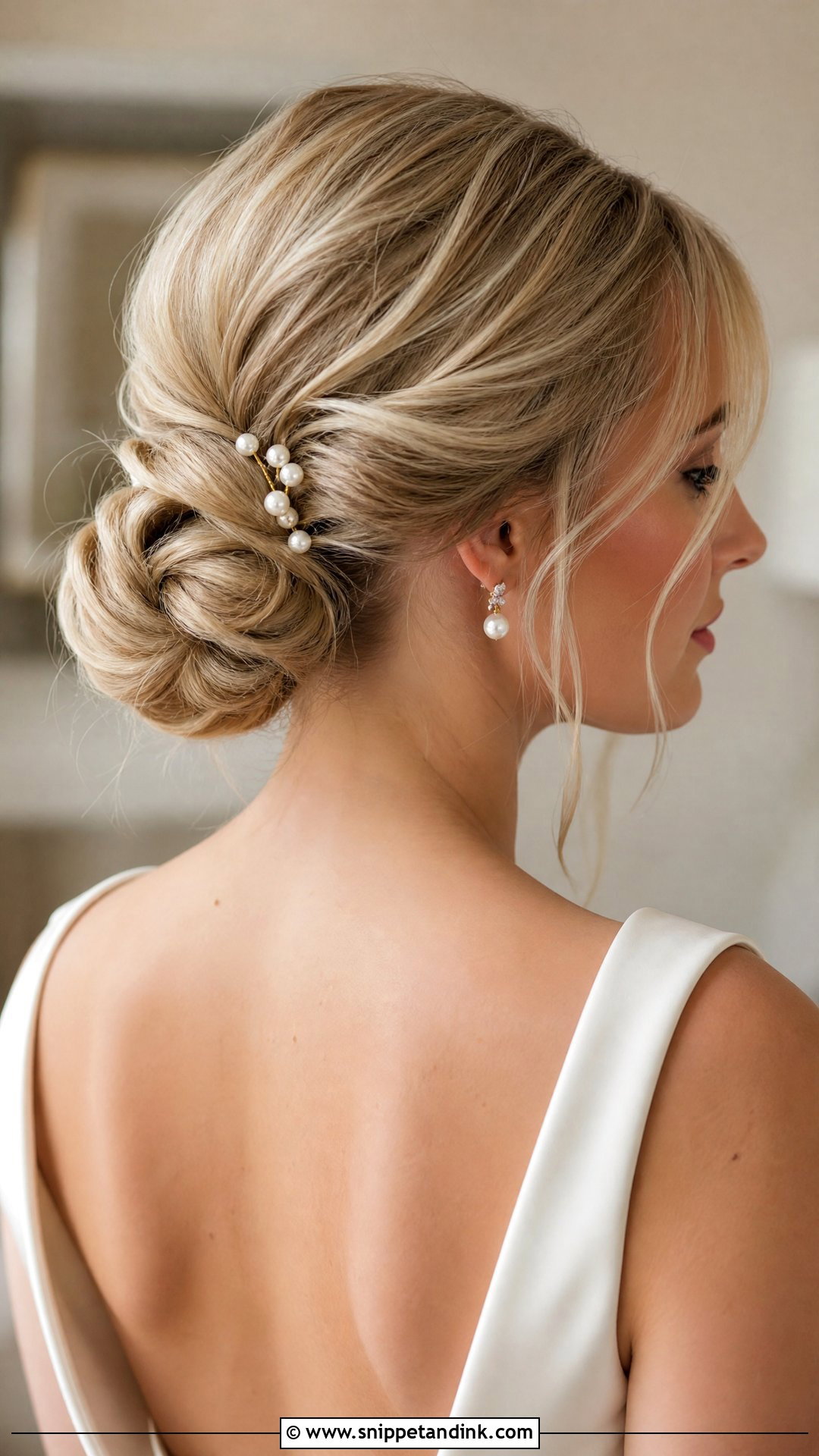
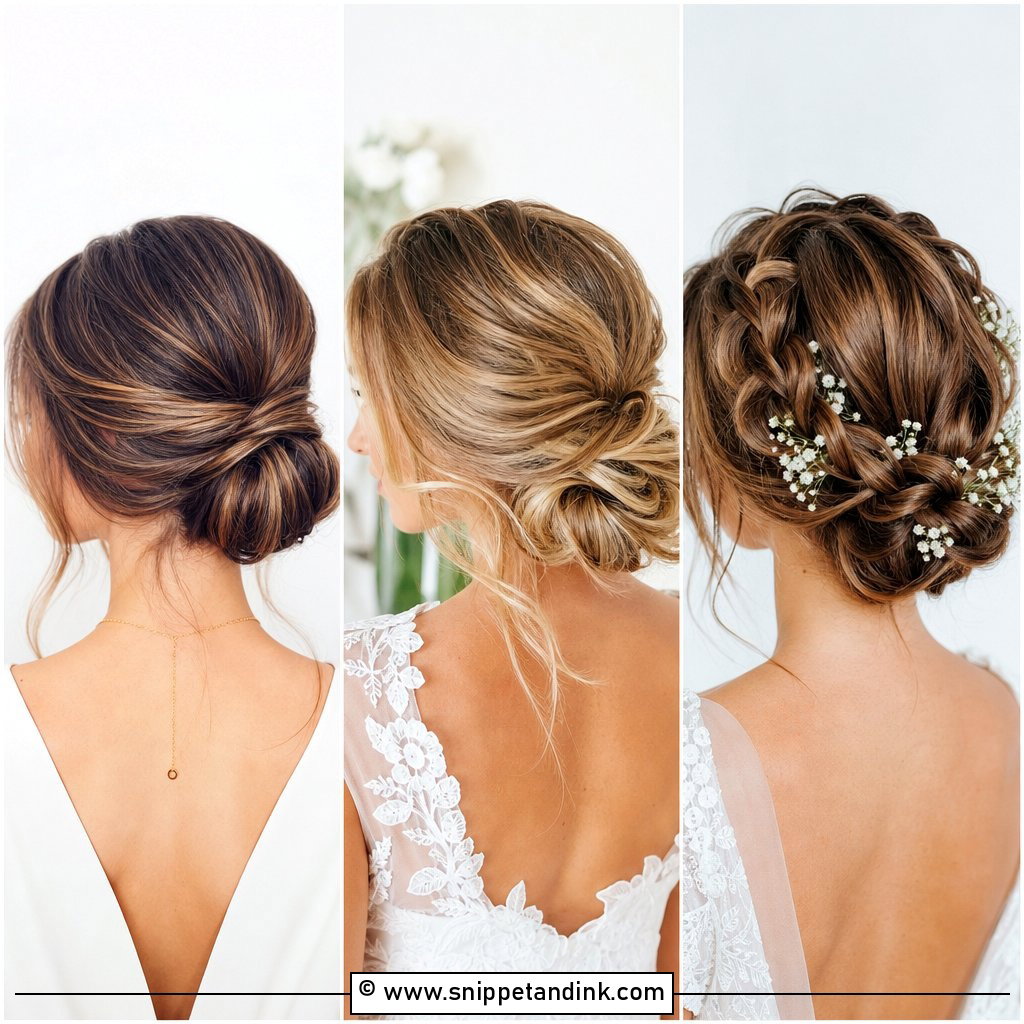
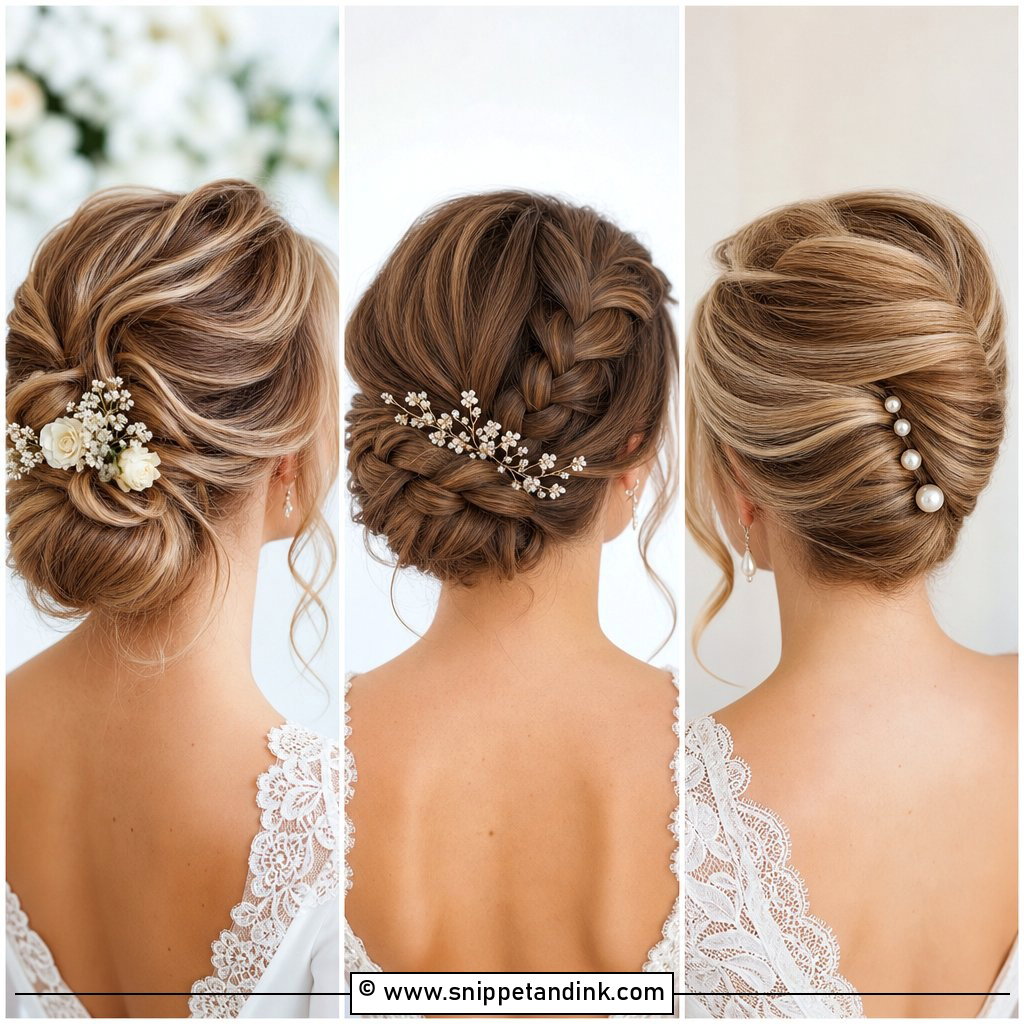
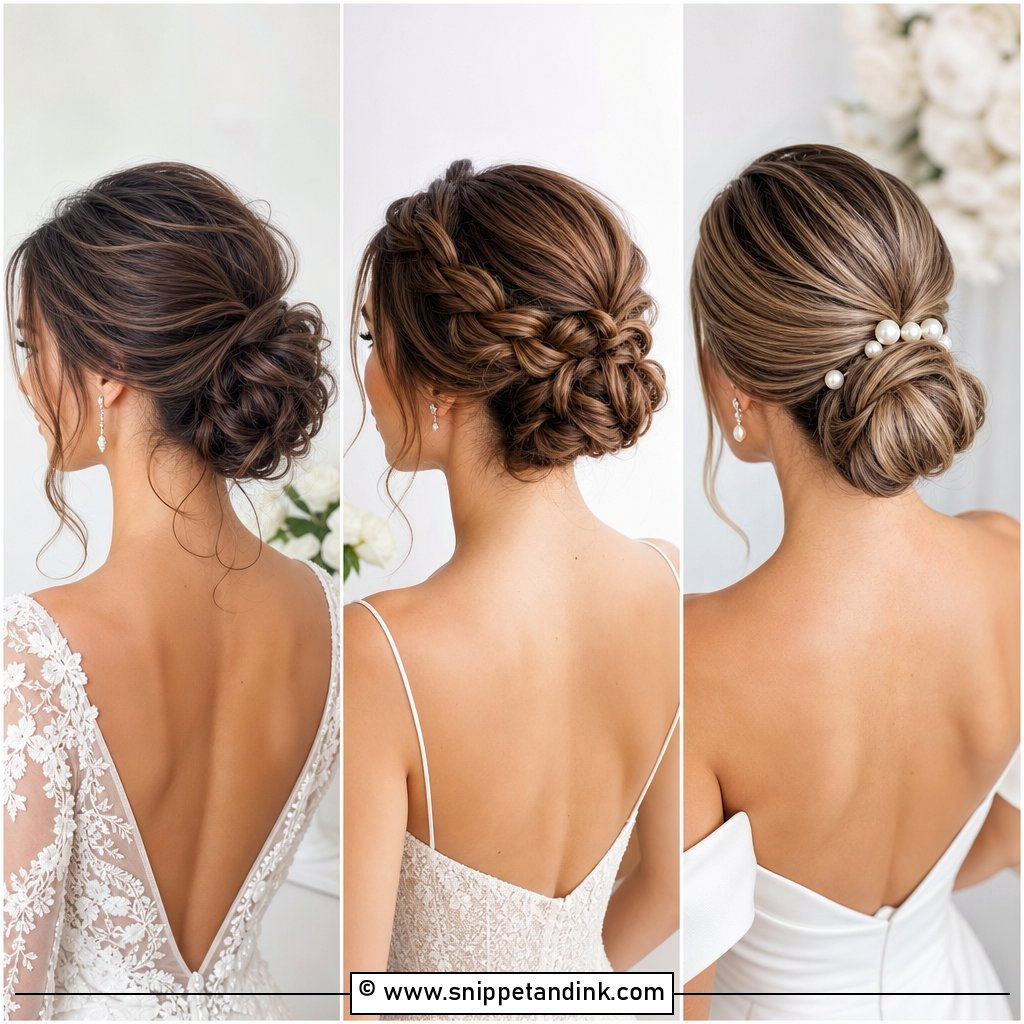
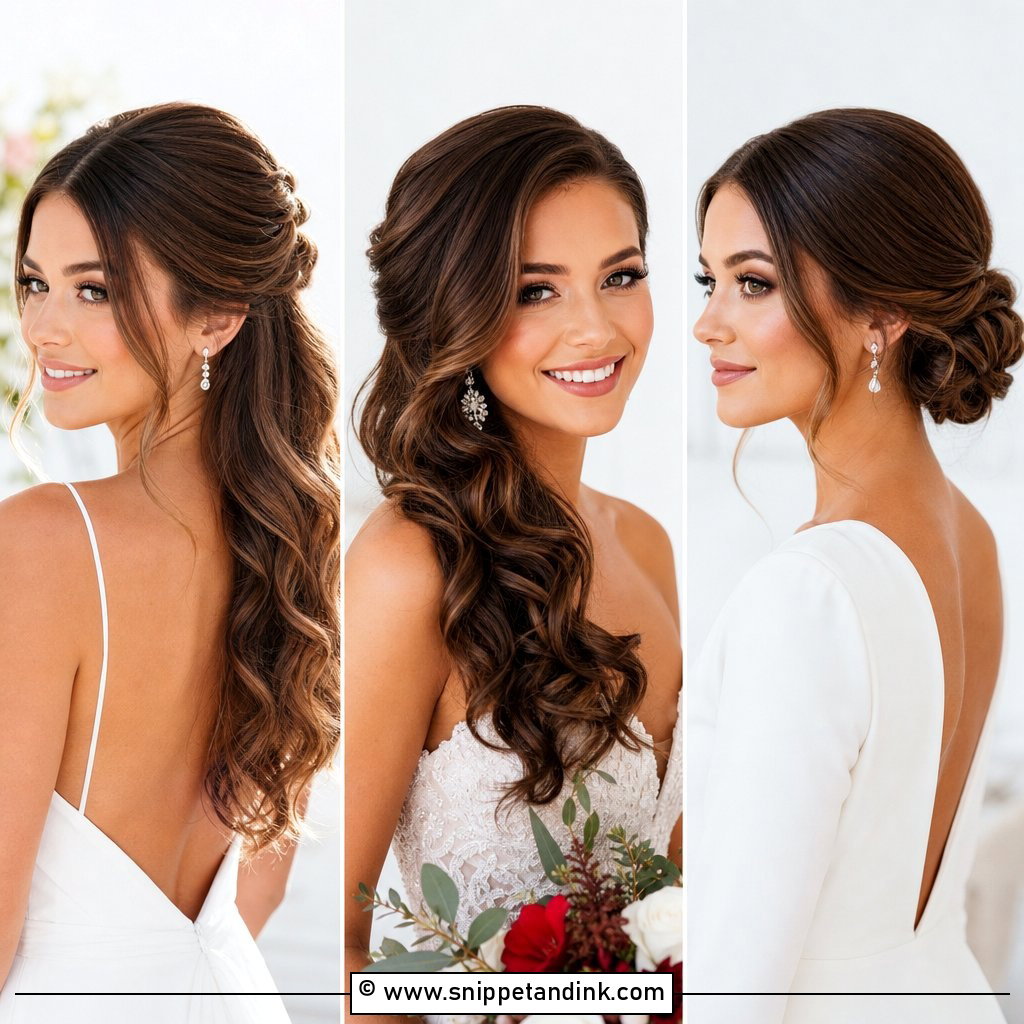
When a bride has no idea where to start, I show her this first. A low chignon sits at the nape and suits high necks, open backs, lace sleeves and pearls alike. Softness is what stops it looking severe: I bend the front pieces gently with a large iron and keep the back smooth and firmly pinned. The veil can sit above or tucked beneath it. If you want a classy bridal look that you won’t think about once it’s in, this is the one.
2. Sleek Low Bun Wedding Updo
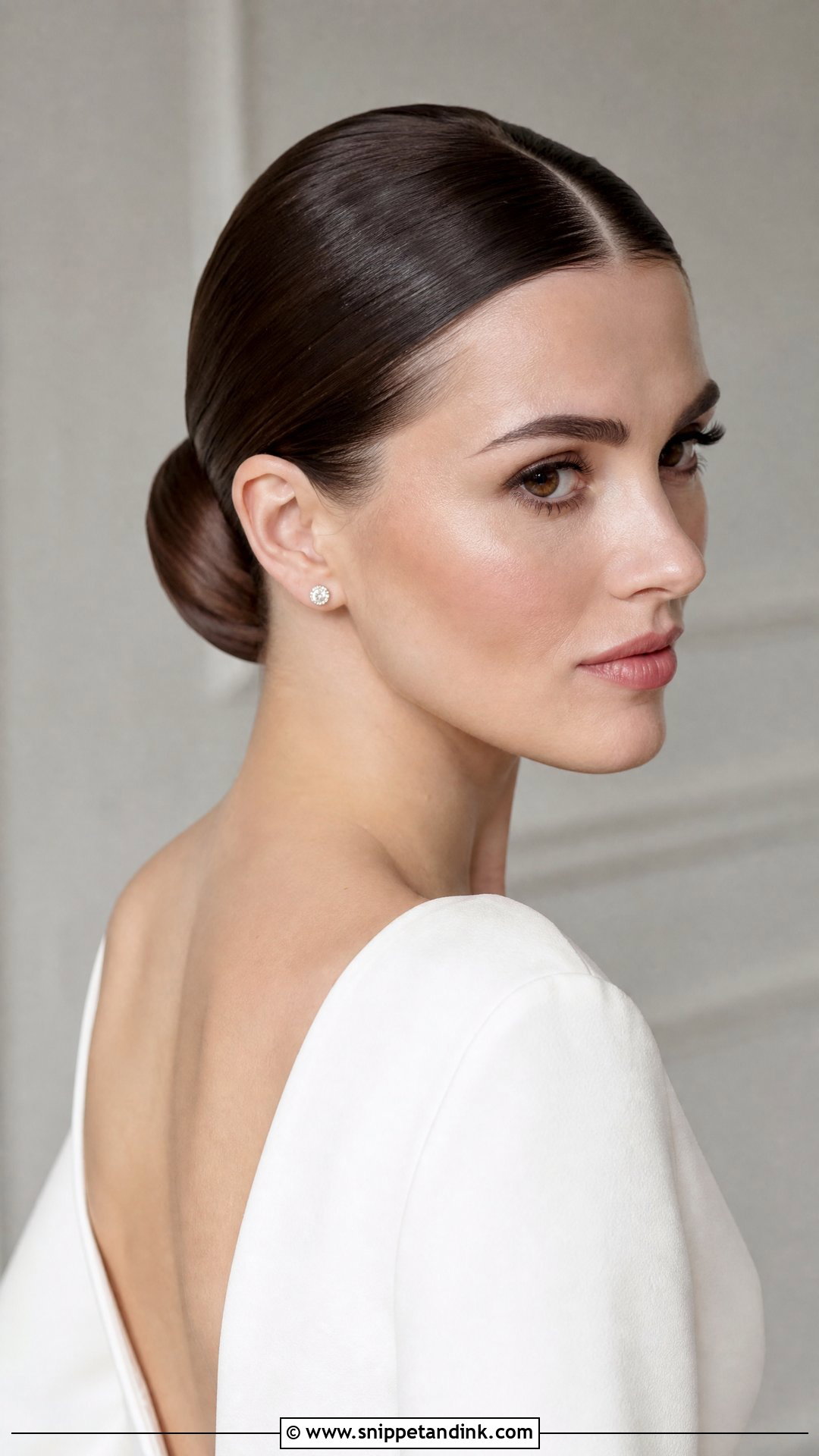
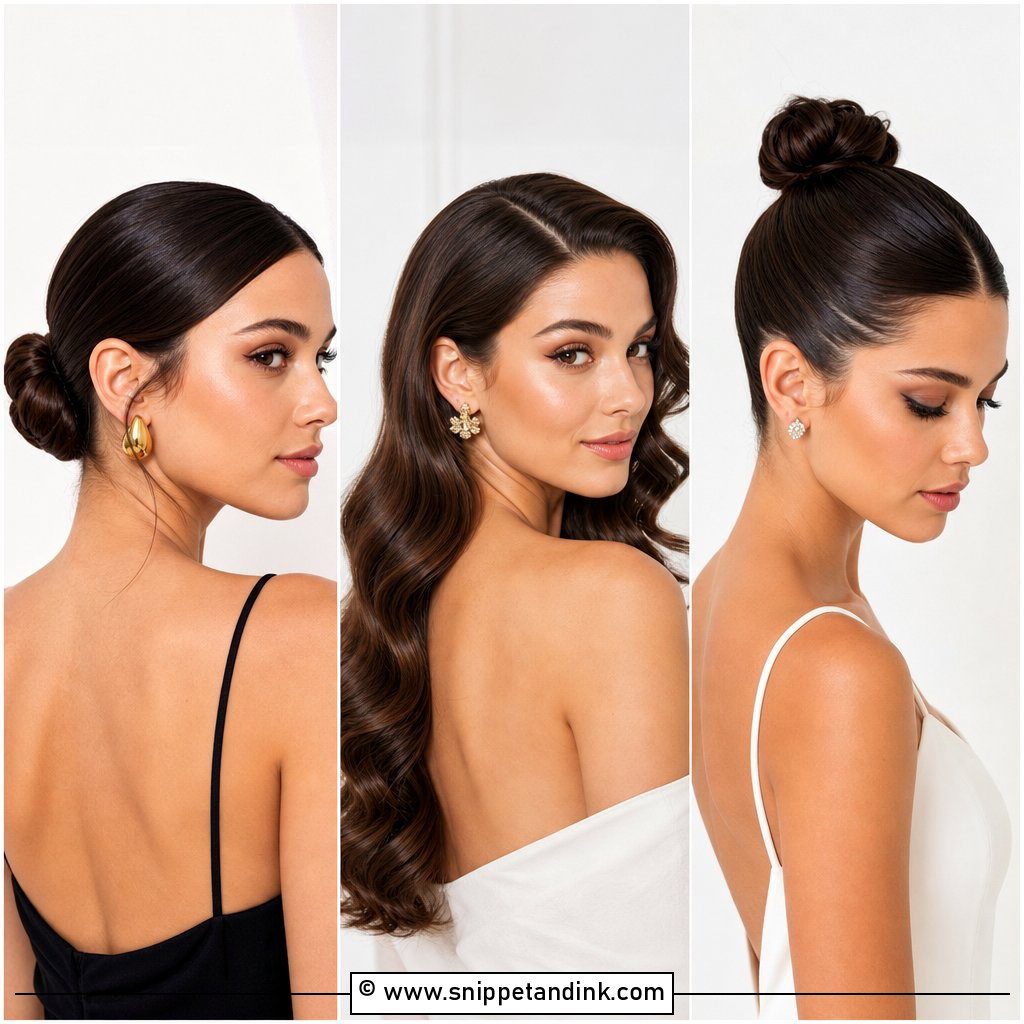
Minimalists love a sleek low bun, and it rewards a gown with strong lines, satin or a dramatic neckline. The hair is smooth from part to bun, so earrings and dress details take the attention. A centre part looks modern; a side part softens it. In heat it keeps everything under control. Ask for shine without crunch, and know that this style needs the hair blow-dried properly straight beforehand. I can’t smooth a kink out of a bun once it’s pinned.
3. Textured Low Bun Wedding Updo
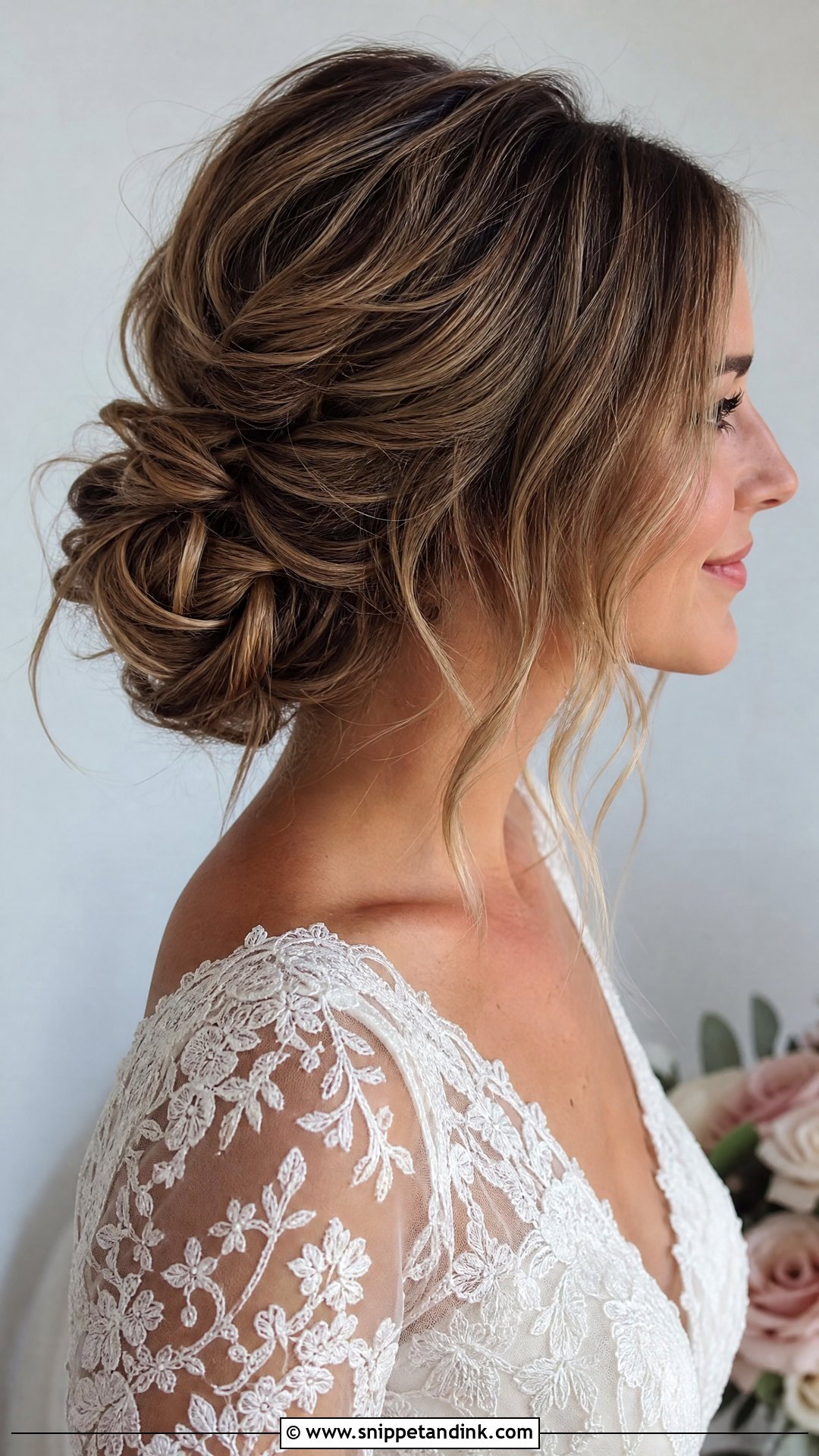
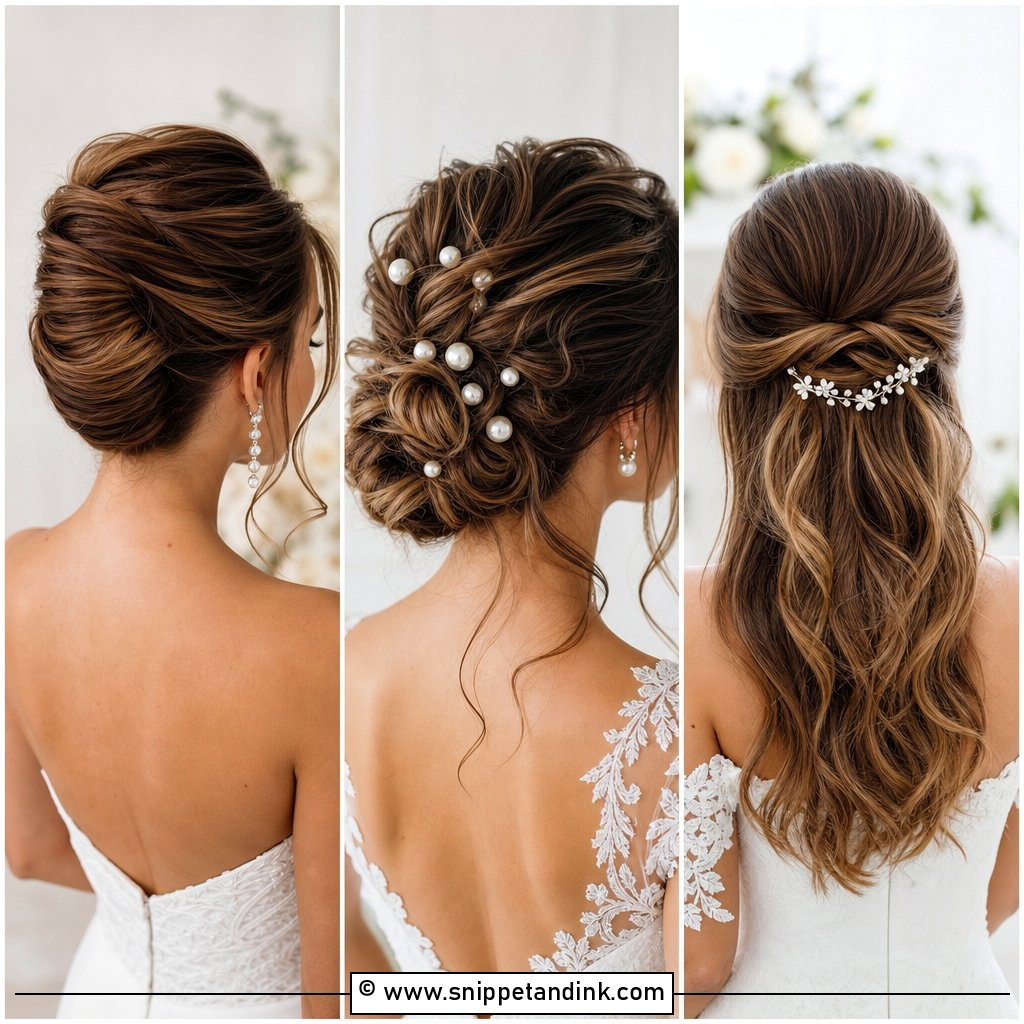
Dimensional colour is made for a textured low bun. Highlights and balayage show through the loose twists and small pinned sections in a way a sleek finish hides. It has movement and volume without looking messy, and a few pieces at the face or a scatter of pearl pins adjust how dressed-up it reads. It suits garden ceremonies and airy fabrics such as chiffon, tulle, or soft lace. Prep matters: hair washed the night before gives the twists more grip than squeaky-clean hair does.
4. French Twist Wedding Updo
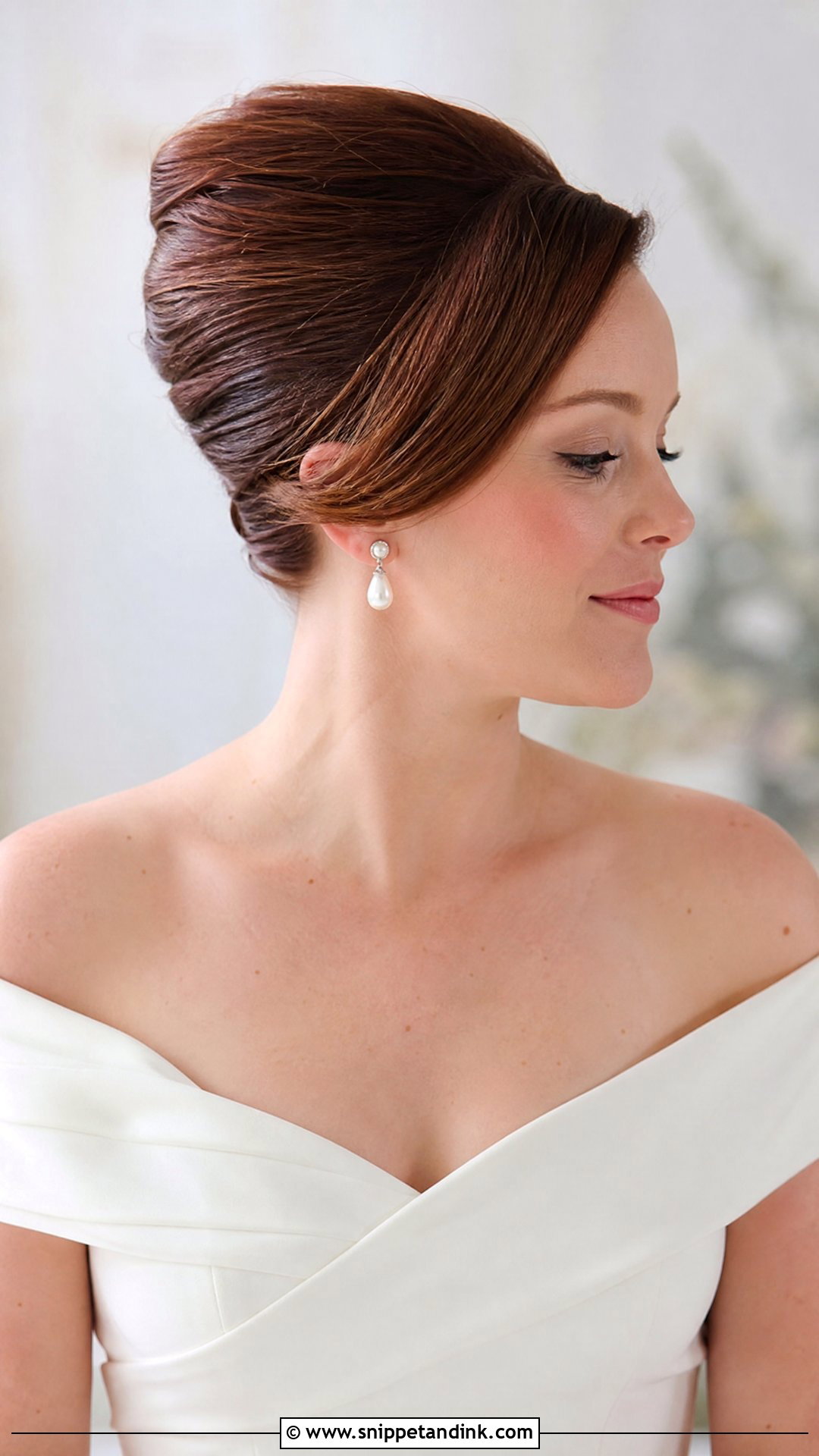
The French twist is quiet glamour. Swept upward and tucked into a vertical roll, it lengthens the neck, which suits strapless gowns, bateau necklines and statement earrings. The traditional version is sleek and formal; a softer one leaves a few loose pieces at the hairline. It needs medium to long hair but no big bun, which suits brides with less density. Inside, it’s held by a line of crossed pins along the seam, so ask your stylist to show you where they are for removal later.
5. Braided Chignon Wedding Updo
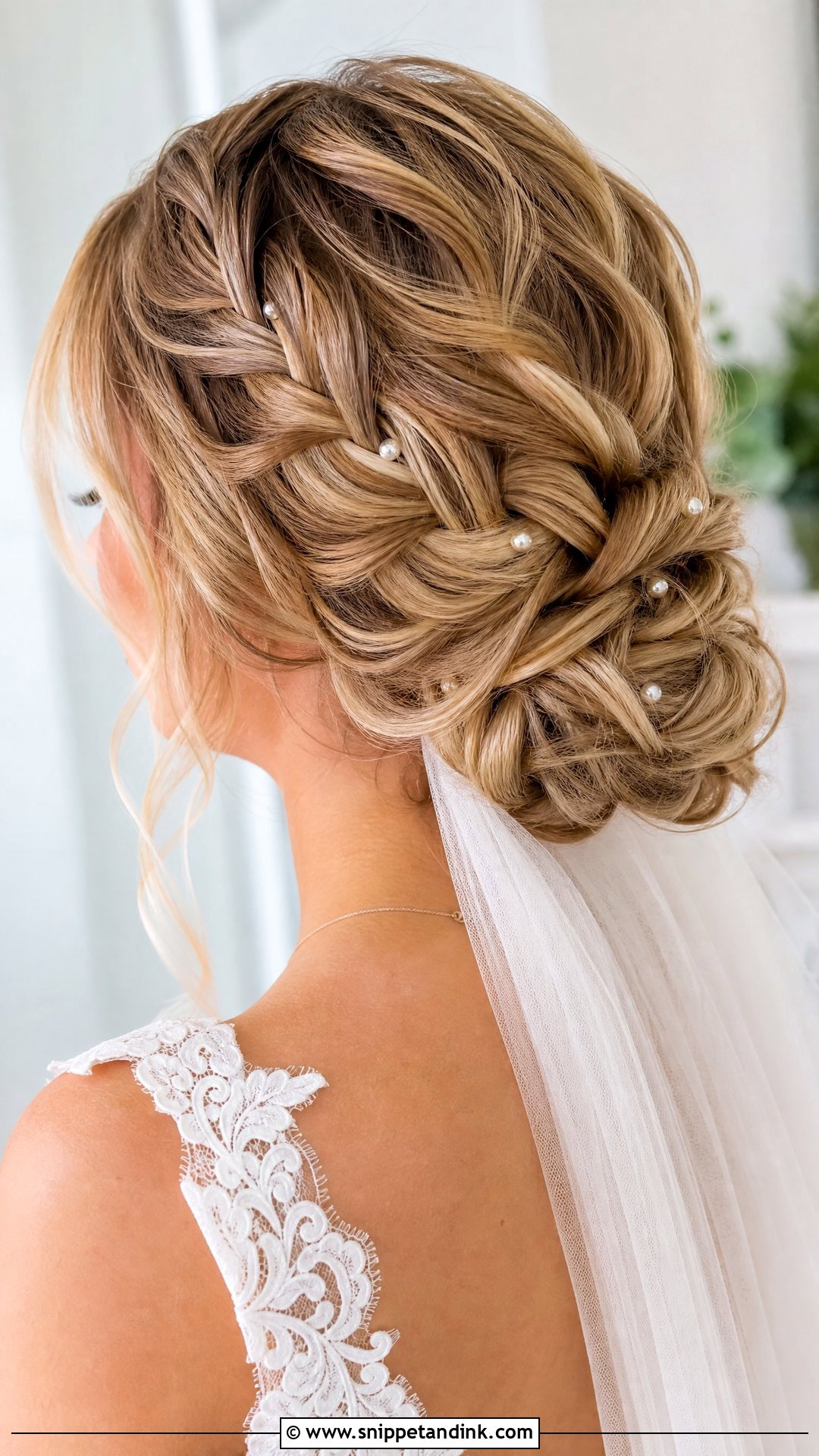
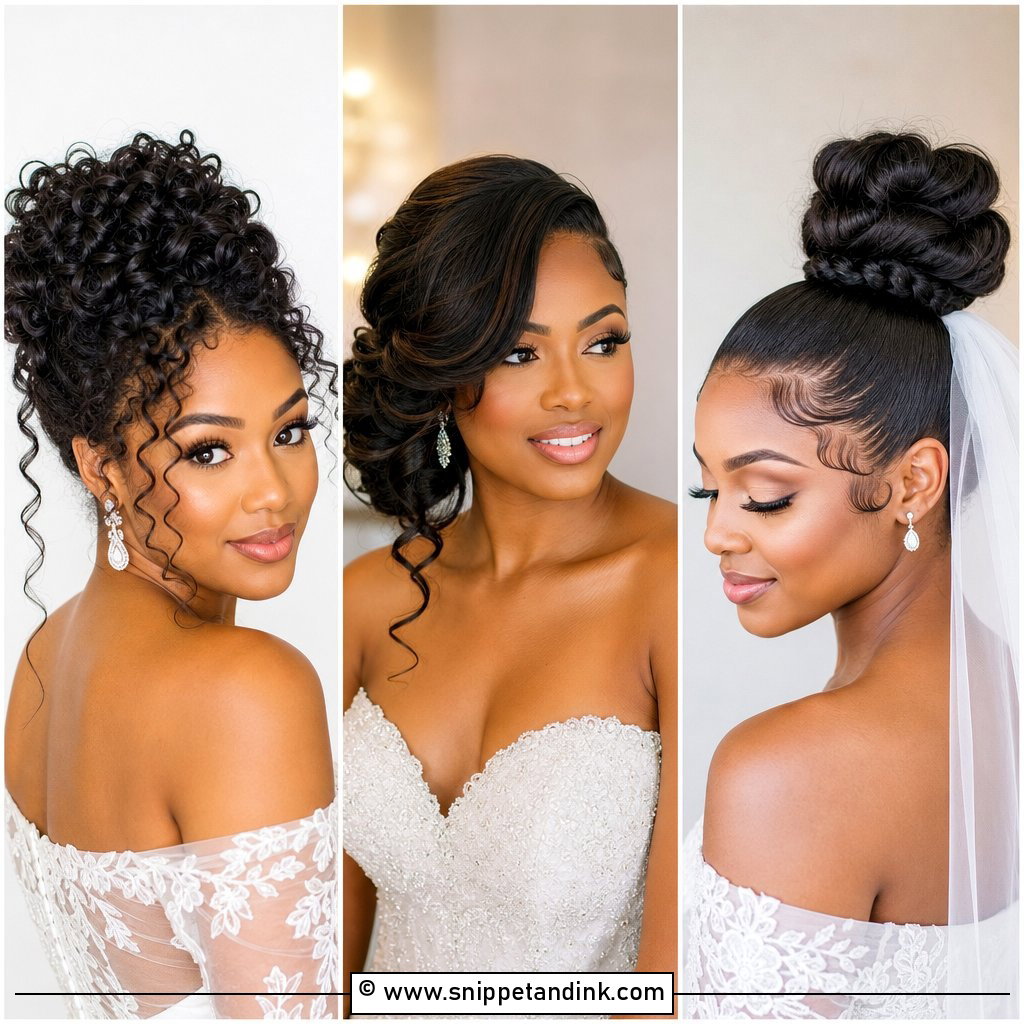
Lace gowns and braids belong together, since the woven texture echoes the fabric. A braided chignon wraps the braid into the bun, across the crown or along the sides, adding detail while staying formal enough for a church or a ballroom. I keep the braid slightly loose so it reads romantic, but not so loose that it frays once the veil has been in and out. Pearls or tiny flowers are optional. The braid is detail enough on its own.
6. Twisted Bun Wedding Updo
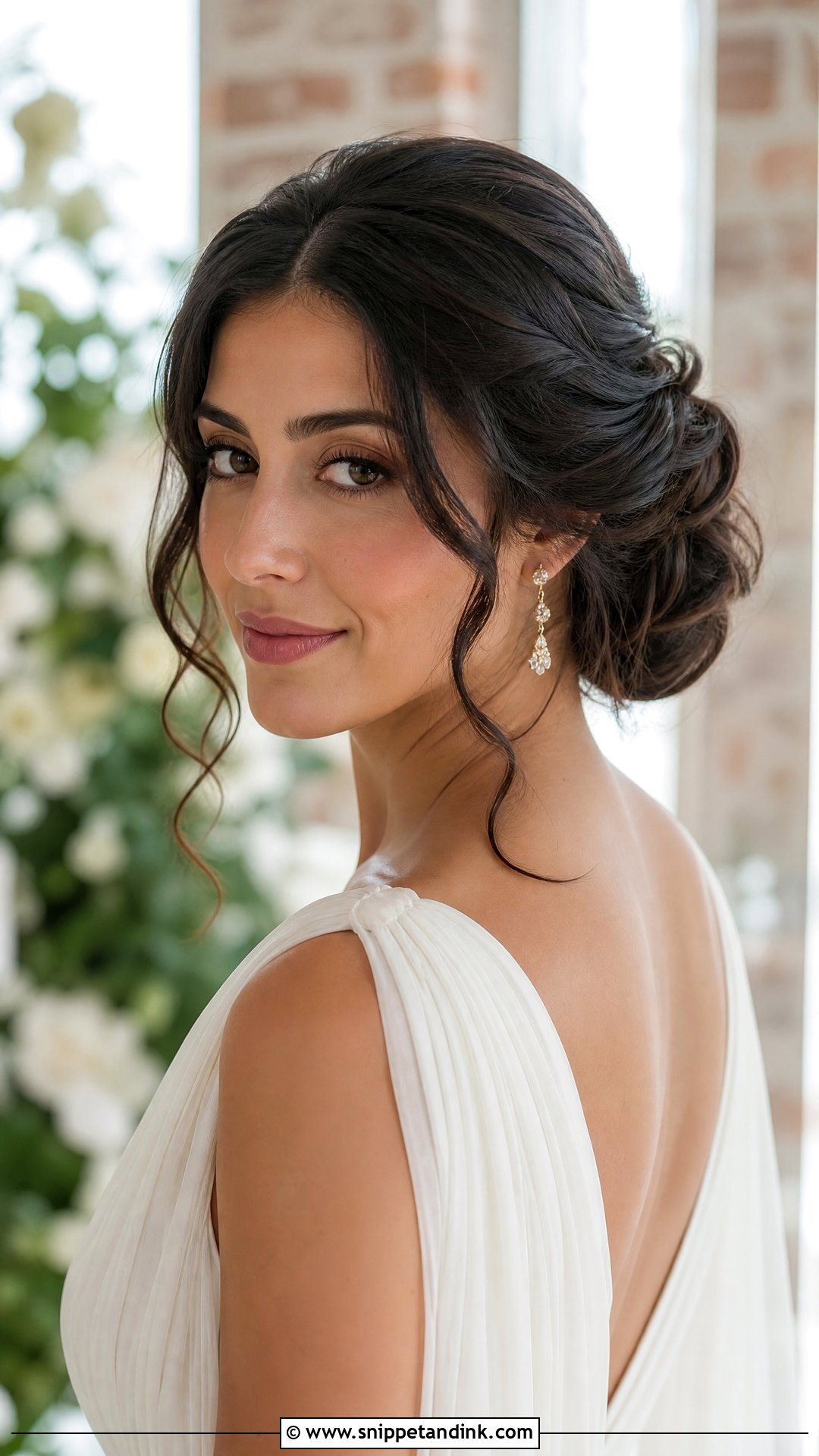
Twists give movement without the obvious pattern of a braid. Sections are softly twisted back and pinned into a low or mid bun, and the twists can add volume exactly where a face needs it, at the sides for a long face or at the crown for a round one. Fine hair copes well with this one if it’s prepped with texture spray and gentle teasing. Delicate jewellery, a soft veil and feminine detailing on the dress all suit it.
7. Messy Bun Wedding Updo
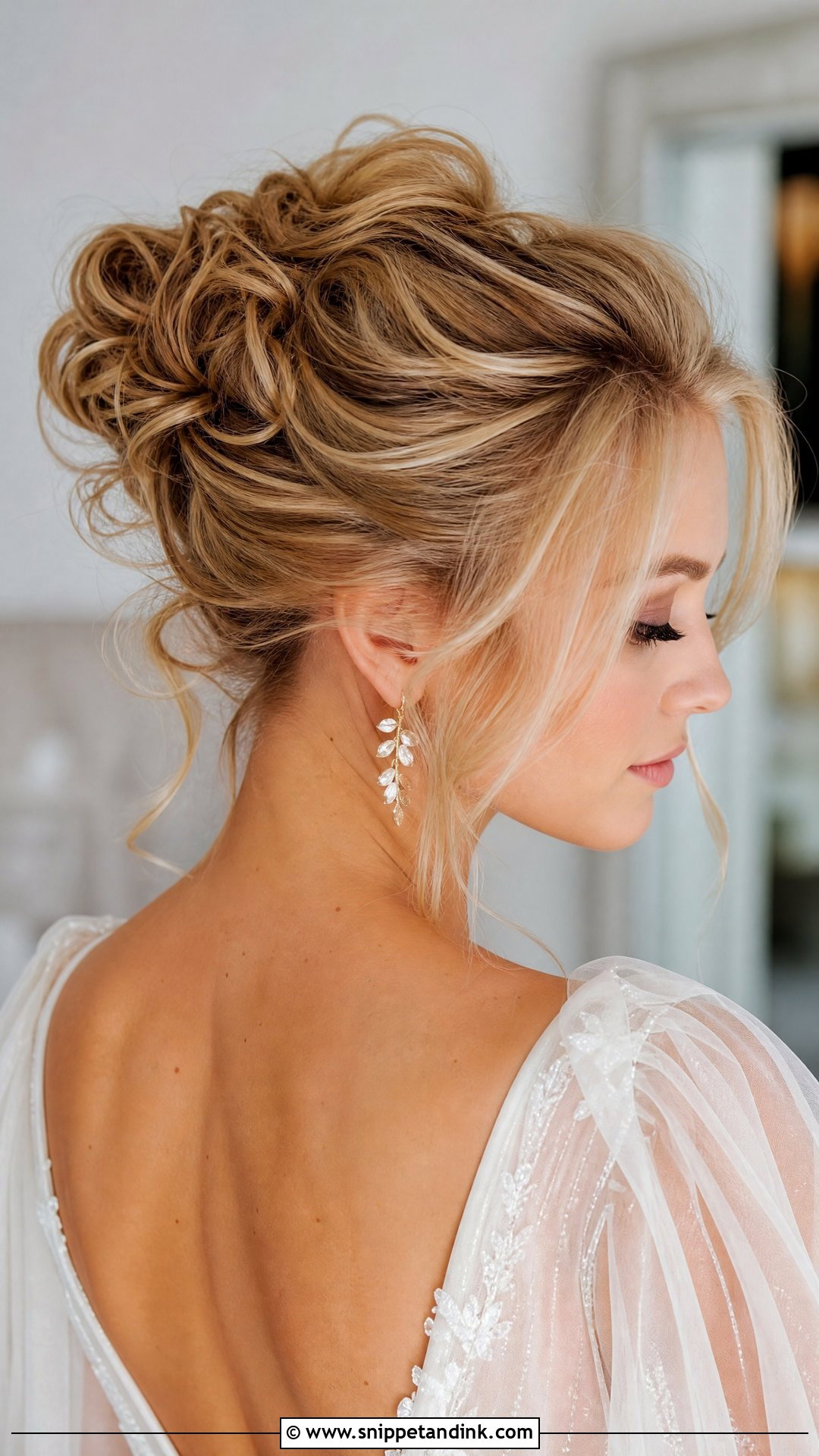
Random loose pieces are what make a messy bun look sloppy. A classy one has controlled softness: real volume, pinned texture and an outline that looks good from every angle, plus two or three strands at the cheekbones and jaw. Brides who find sleek styles too traditional usually like it, and it sits naturally at rustic venues, beach ceremonies and gardens. I set it with more hold than its looks suggest, because soft texture is exactly what falls first during hugs and dancing.
8. High Bun Wedding Updo
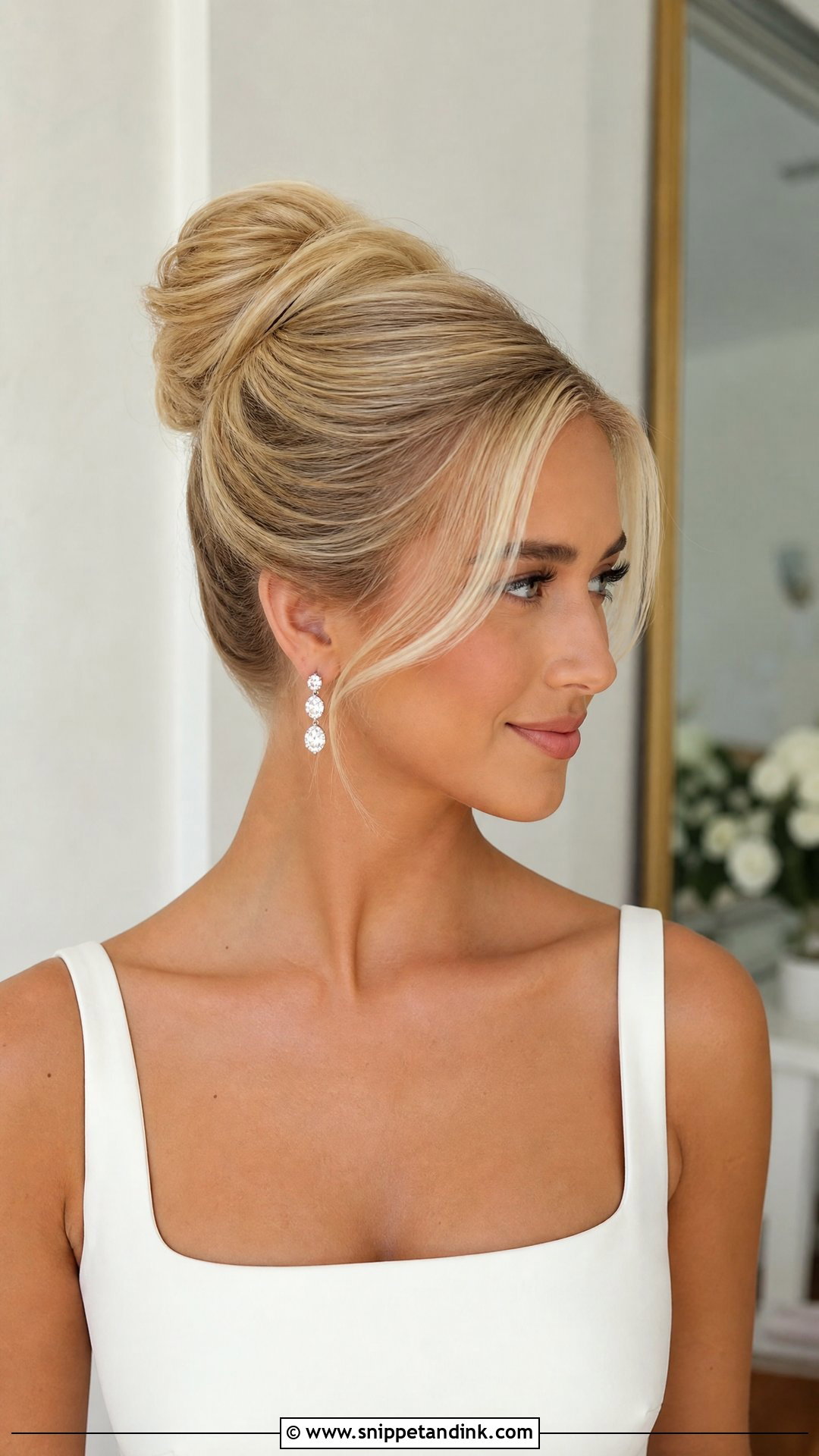
A high bun lifts the whole look. It draws the eye up, sharpens cheekbones and gives tiaras and veils a solid base. Smooth and dancer-like or softly textured, it suits simple bodices, square necklines and off-shoulder dresses, and it keeps hair completely off the neck. The catch is the veil: a high bun means the comb sits beneath it, so long veils need testing at the trial. Brides with a strong profile carry the height best.
9. Side Bun Wedding Updo
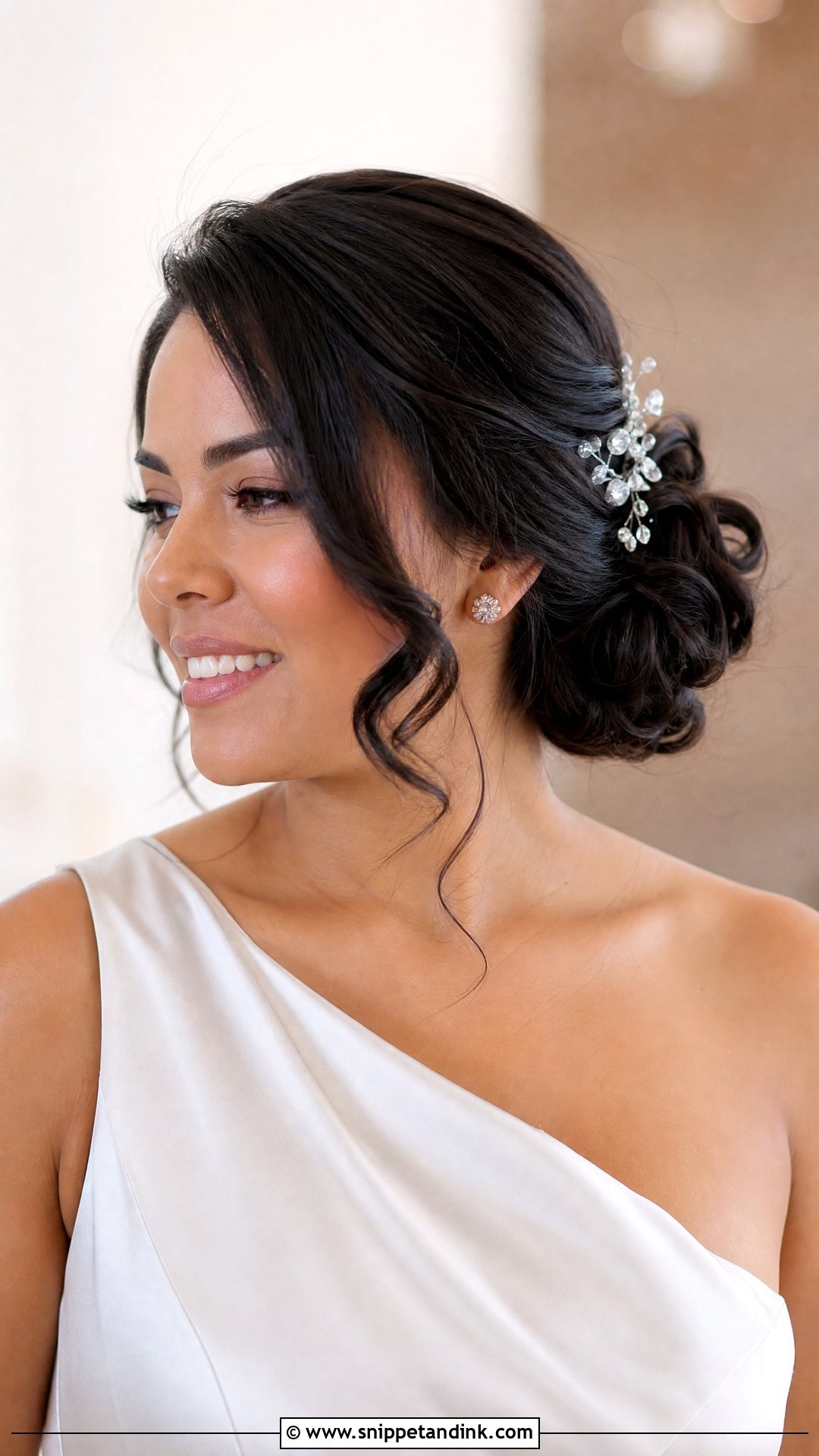
Placed slightly to one side, a bun suddenly shows up in front-facing portraits rather than only from behind. It sits naturally with side parts, side-swept bangs and one-shoulder gowns. Smooth reads polished; textured reads relaxed. Combs or floral pins near the bun suit it. I keep it compact, because a side bun that’s too big pulls the whole face off balance.
10. Curly Wedding Updo
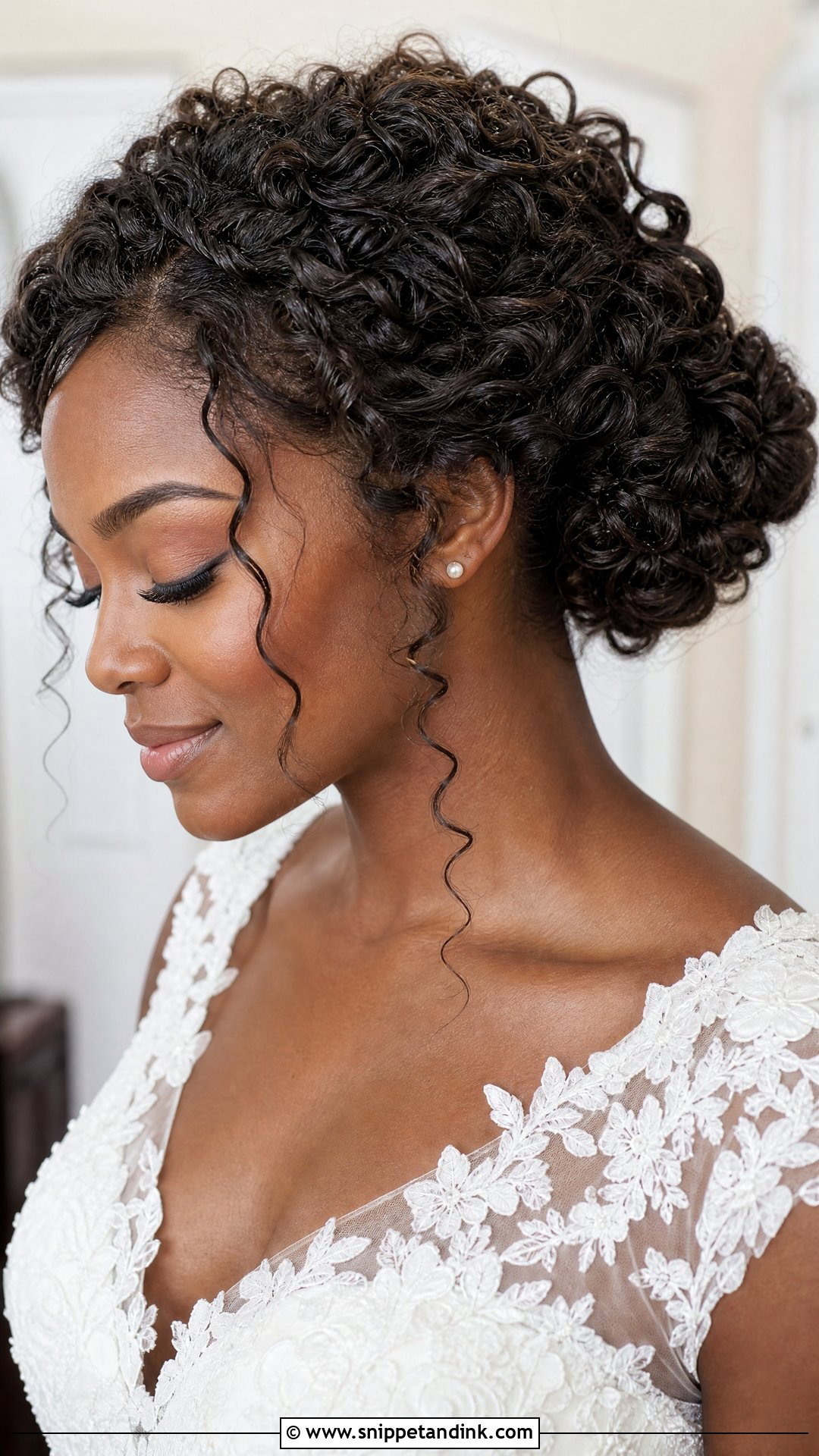
Curly hair shouldn’t be brushed out to fit an updo. A curly updo keeps the definition visible, pinned into a soft bun, gathered at the crown or arranged at the nape. I prep with moisture and a curl cream, set it, and handle the curls as little as possible, because each touch adds frizz. A flexible hold finishes it. Brides with natural curls or waves often say this is the first wedding style that felt like their own hair. Pins should support the shape, never flatten it.
11. Pearl Pin Wedding Updo
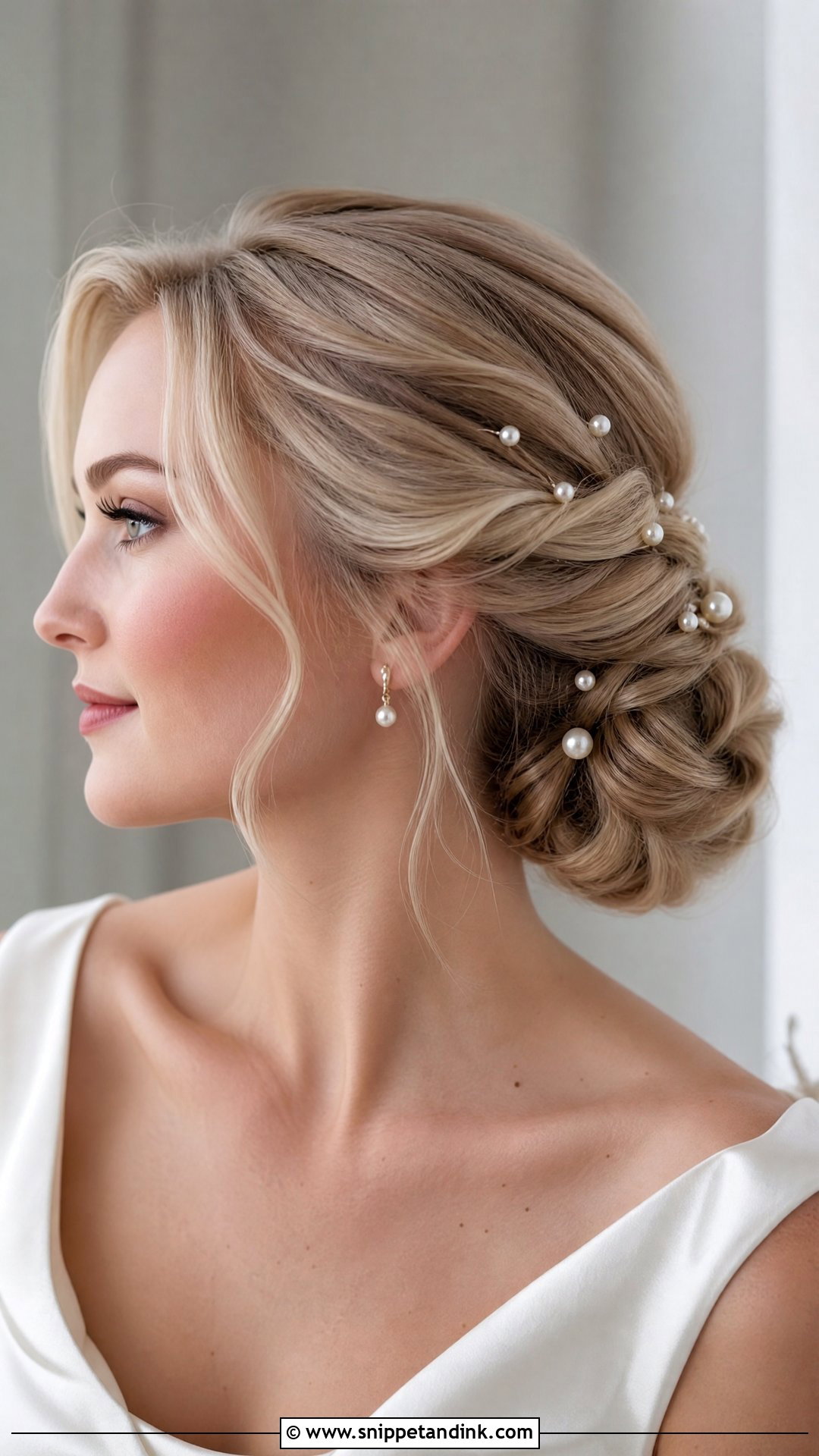
Pearls add light without weight to any base, whether a low bun, chignon, French twist or textured knot. Scattered pins feel modern; a pearl comb feels traditional. They pick out twists and texture especially well on hair with soft colour dimension. Satin, lace and simple veils all suit them. Placement is what keeps them elegant: I follow the lines of the style rather than dotting them at random, and stop well before it looks crowded.
12. Veil Wedding Updo
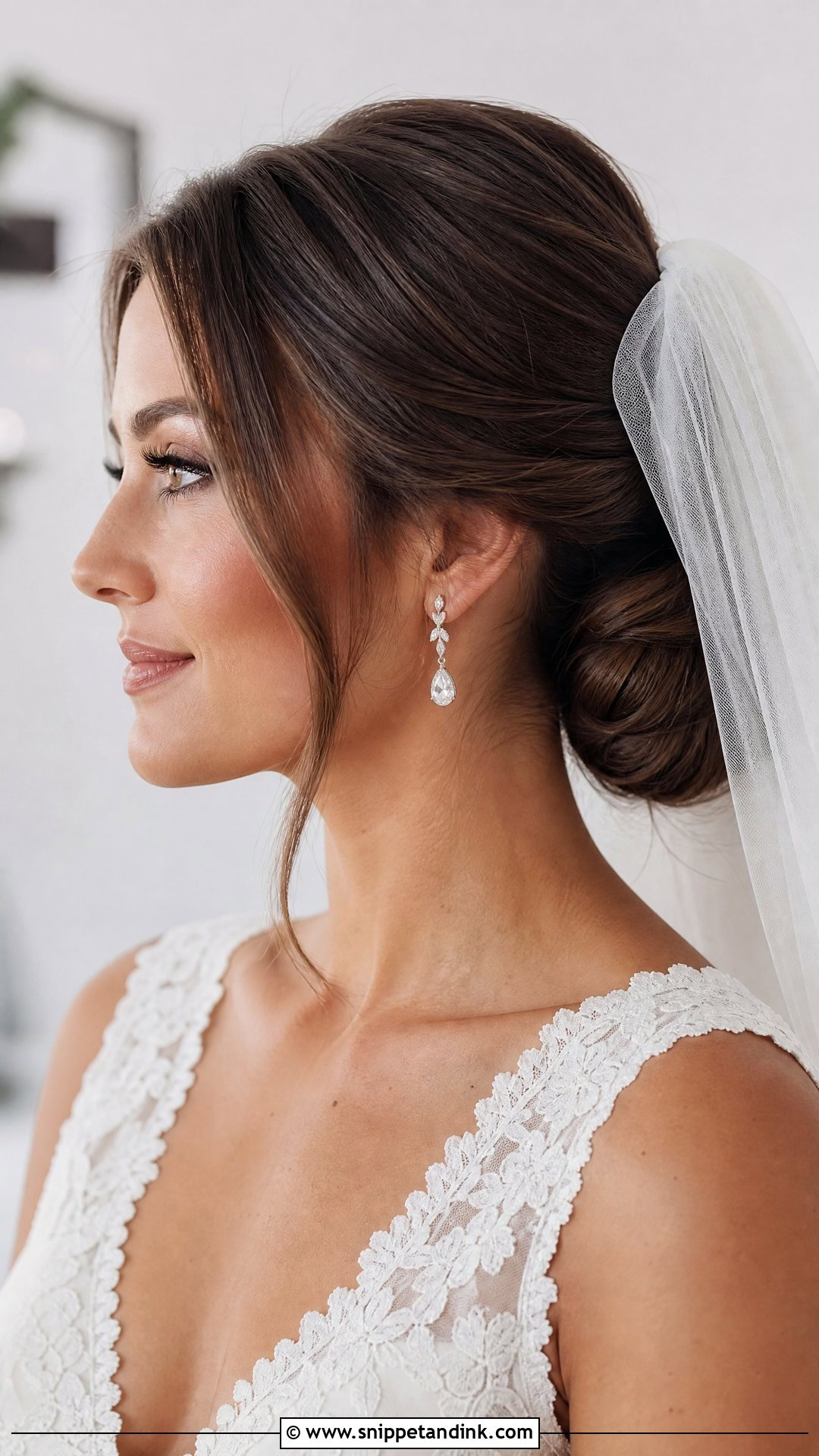
Plan a veil updo around how the veil will sit, move and look on camera. Low buns and chignons are the usual base, with the veil above the bun for height or beneath it for a softer drape. A sleek bun gives a clean line under tulle; a textured one suits lace. Bring the veil to your trial so your stylist can test placement, since that’s where pulling, slipping and awkward gaps get caught. And check the updo with the veil removed, because that’s how guests see it at the reception.
13. Vintage Wedding Updo
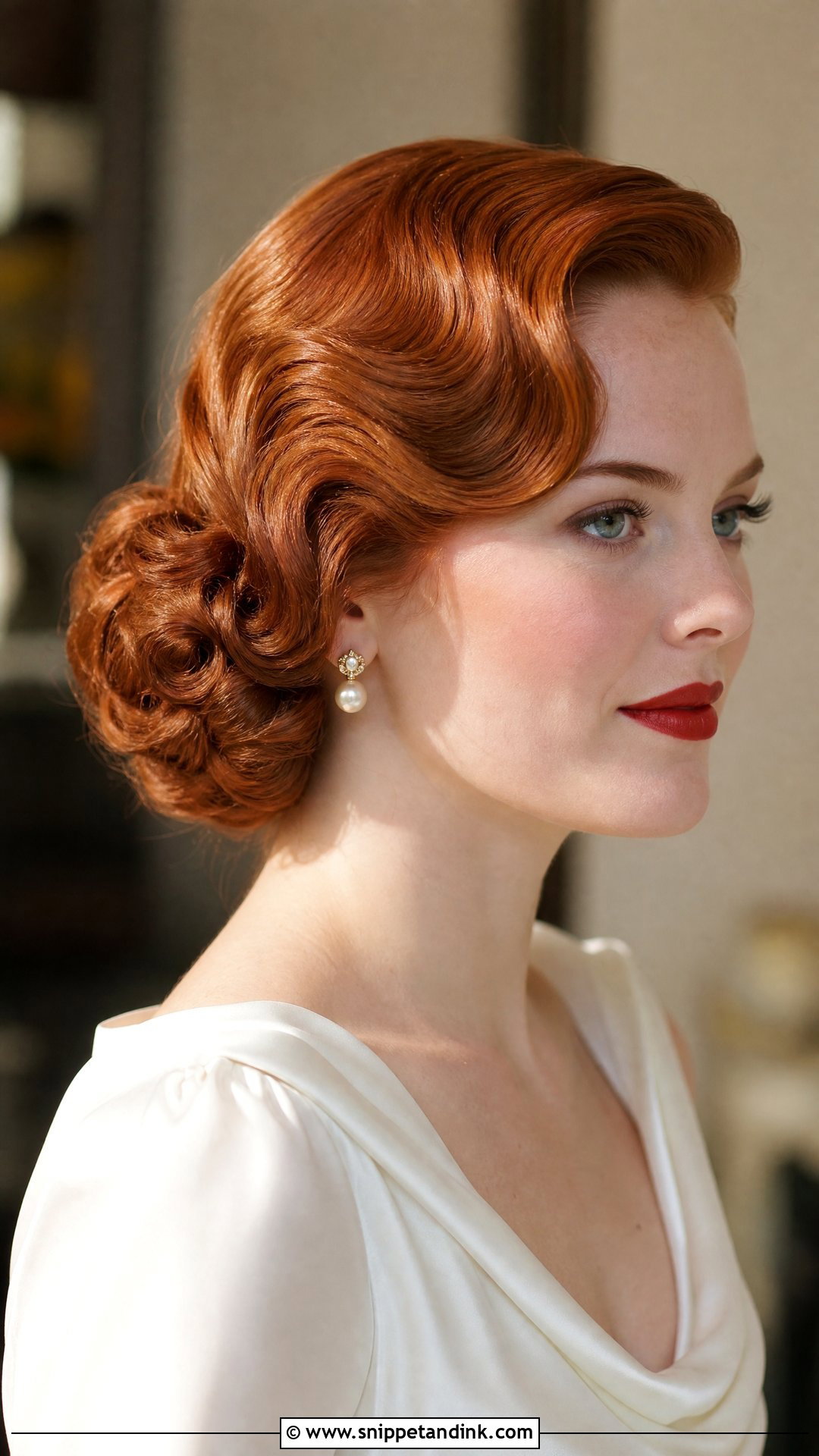
Soft rolls, sculpted waves and tucked curls are the building blocks of a vintage updo, and they’re harder than they look, because every roll needs a set curl underneath to hold its shape. Satin gowns, birdcage veils, red lips, pearl earrings and classic lace all suit them. The style can stay smooth and structured or be softened for a current feel. Balance is everything: too much height or stiffness looks like a costume, while a controlled shape with shine reads refined. Choose a stylist who has done period hair before and ask to see it.
14. Crown Braid Wedding Updo
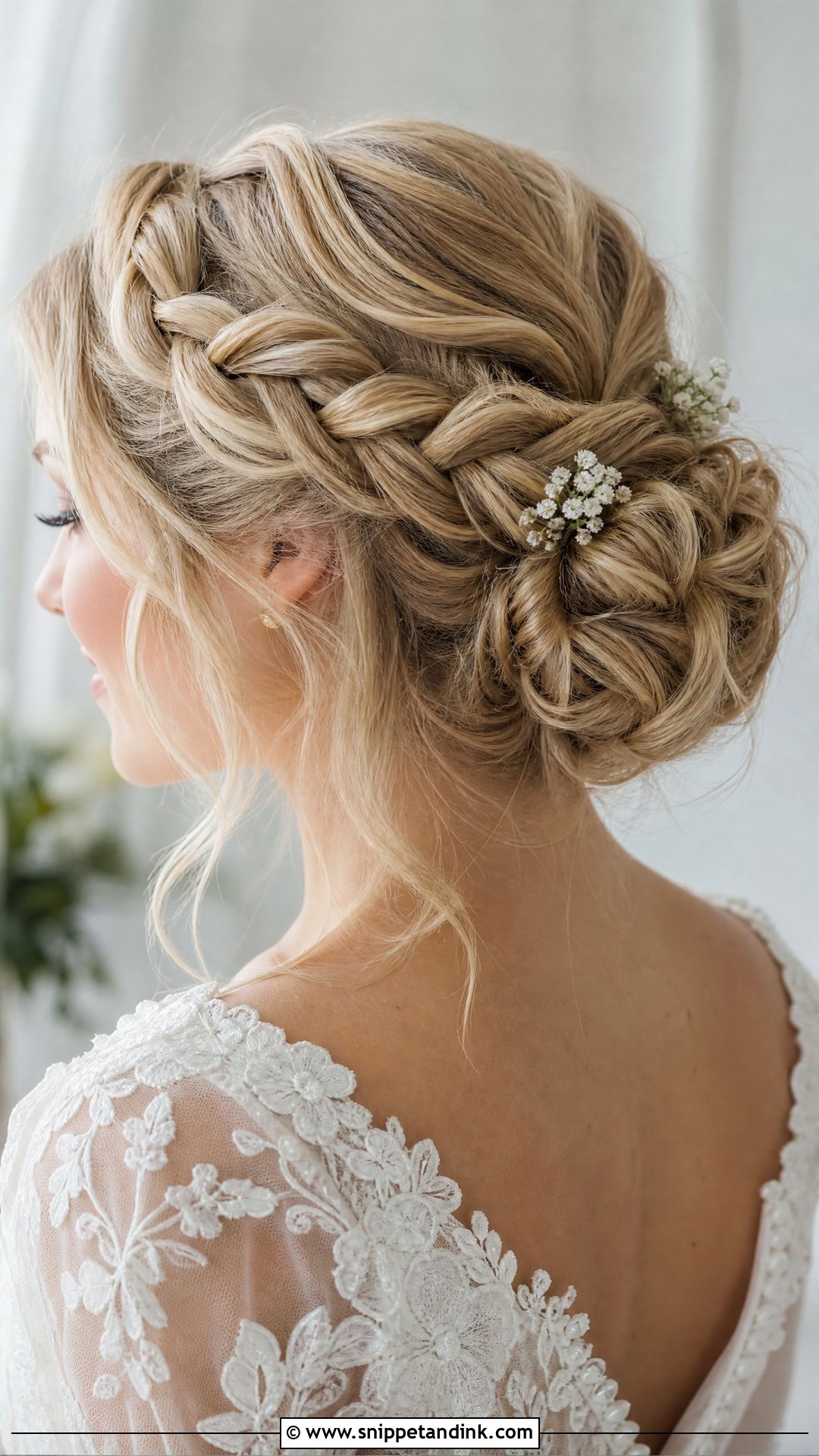
Fully secured and still romantic, a crown braid wraps around the head or blends into a low bun at the back. It suits outdoor weddings because it holds against wind without heavy accessories. Textured hair, dimensional colour and medium to long lengths braid best. A few loose pieces around the face soften it. I braid it snug at the root but widen it through the length, because a braid pulled tight enough to look neat can also give you a headache by dinner. Tiny flowers or pearls can be tucked in.
15. Low Knot Wedding Updo
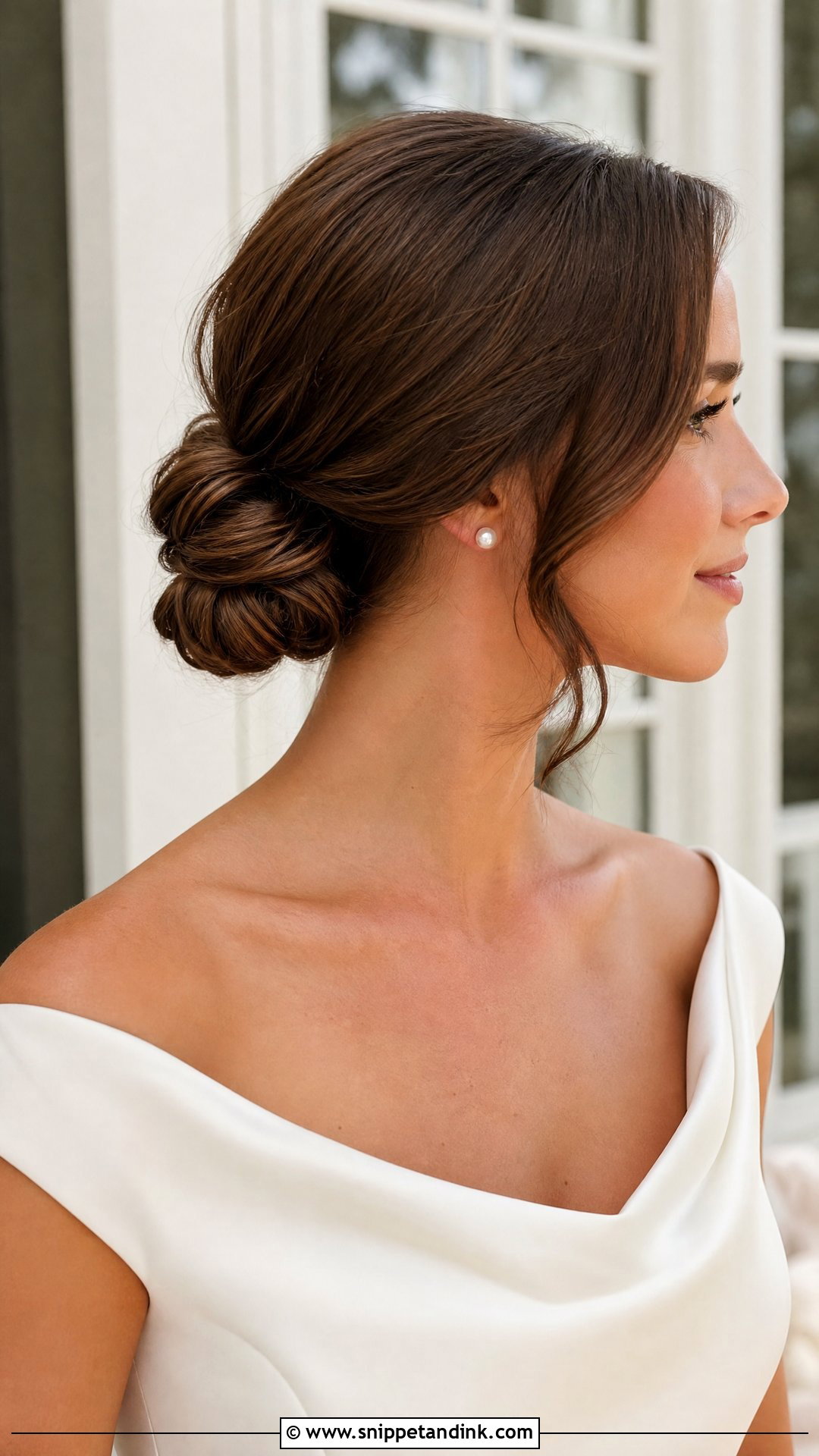
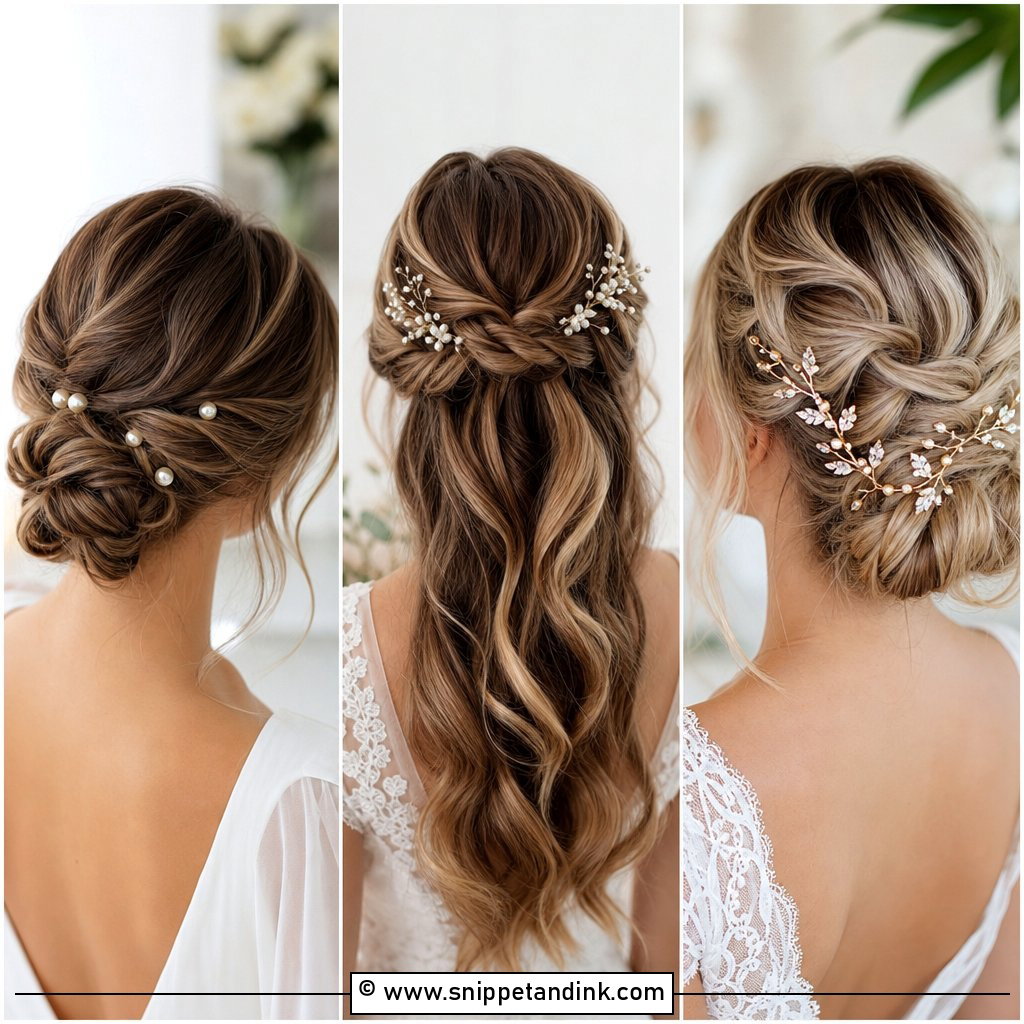
Of the fifteen, the low knot is the most understated. It’s less rounded than a bun, folded rather than wound, and sits close to the nape. Clean gowns, modern veils and simple jewellery suit it, sleek for a city wedding or softly textured for something romantic. It needs less length and less hair than a full bun, which makes it a quiet favourite for brides with shoulder-length or fine hair. I pin it close so it can’t drop as the day goes on.
How Long an Updo Takes on the Morning
Updos take longer than down styles, and a rushed schedule shows in the result. Rough timings, which vary by stylist and hair length:
- Bride: about 60 to 90 minutes, longer with extensions or a braid detail
- Bridesmaids and mothers: about 40 to 60 minutes each
- Veil placement and final touches: 10 to 15 minutes, done after the dress is on
I prefer the bride in the chair second to last, not first, so the style is fresh for photos but there’s still time spare. Arrive with clean, completely dry hair unless told otherwise; drying it on the morning steals time that should go into the style.
Think about the dress, too. If it has to go over your head, wear a button-front shirt while your hair is done and get help stepping into the gown, since pulling fabric over an updo can flatten it in seconds.
Shape First, Accessories Last
Classy wedding hair updos keep coming back because they do several jobs at once: they hold, they frame the face and they show off the dress from the ceremony to the last dance. Your style, texture, neckline, veil and venue decide which one. A sleek low bun feels modern, a chignon classic, a braided updo romantic and a French twist refined. Settle the shape first at your trial, then add pearls, flowers or combs once you’ve seen it on your head, and let your stylist know what felt uncomfortable before the day.
You'll Like These Ideas:



Leave a Reply