
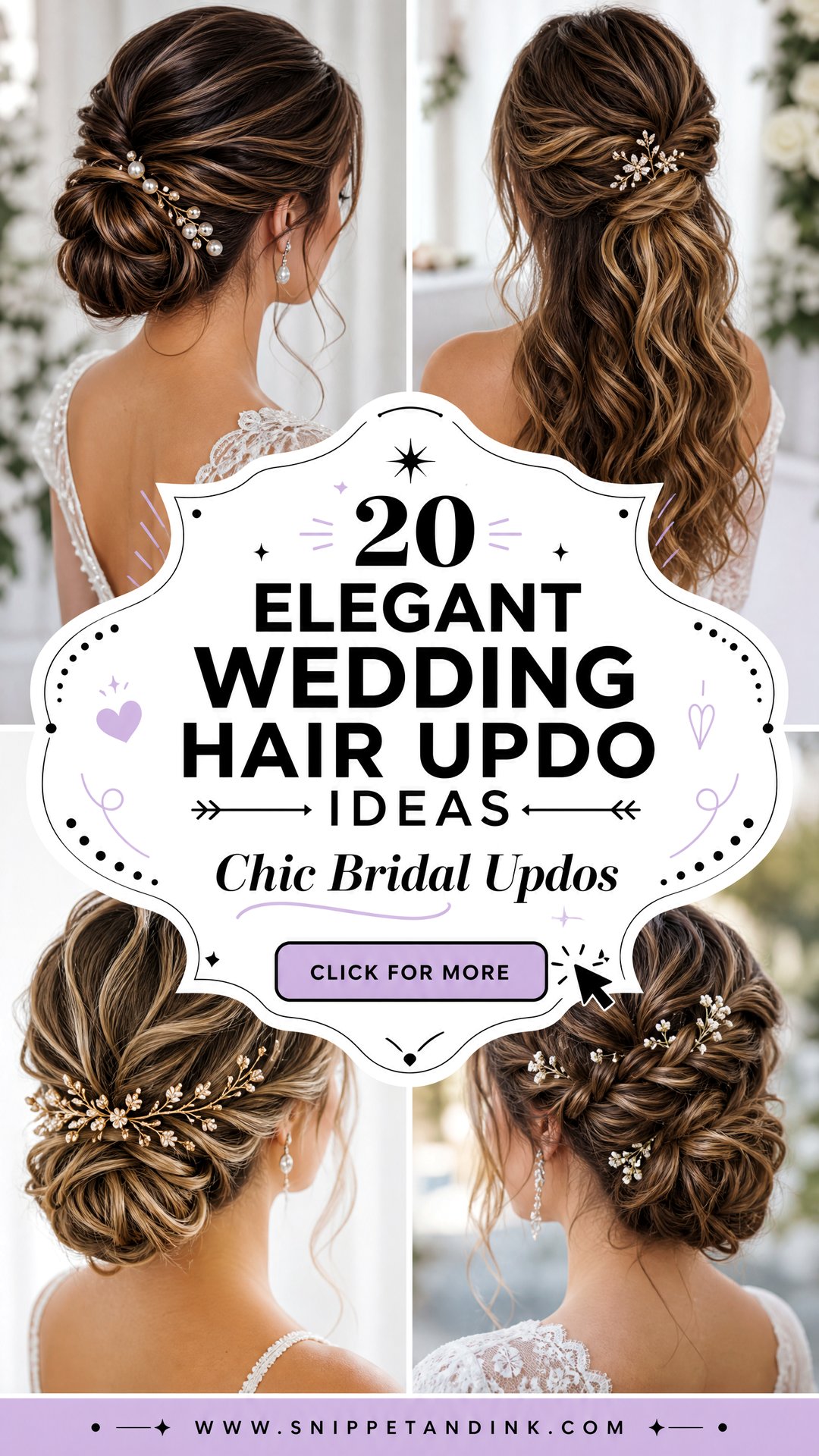
An updo has one job that a photo can’t show you: it has to look the same at 11 p.m. as it did at 2 p.m. I spend most of a bridal trial on that problem, not on the shape. Shape is the fun part, and the twenty styles below cover plenty of it, from a low chignon to a pinned crown with real height. What I’d like you to take from each one is how it’s built, what hair it needs and where it tends to slip, so the version you pick is still in place long after walking down the aisle.
What Your Hair Density Decides Before Any Updo Does
Before I look at inspiration photos, I pick up a bride’s ponytail and feel its thickness. Density, not length, decides which of these updos will look like the picture. Many reference photos have extensions in them, which is fine, but it means the same style may need far more hair than you have.
Fine or thin hair
Fine hair holds shape poorly and shows pins. I’d lean toward low buns, twists and the face framing styles, built on texturizing spray and a small padding piece. Sleek high buns expose the scalp at the part, and big crown braids need clip in wefts to look full.
Thick or very long hair
Weight is your problem. A heavy bun pulls down and loosens pins by evening, so I split the hair into two or three sections and anchor each one separately. Braided crowns and voluminous updos suit you; small, tight buns can feel heavy and start to ache.
Curly, coily and textured hair
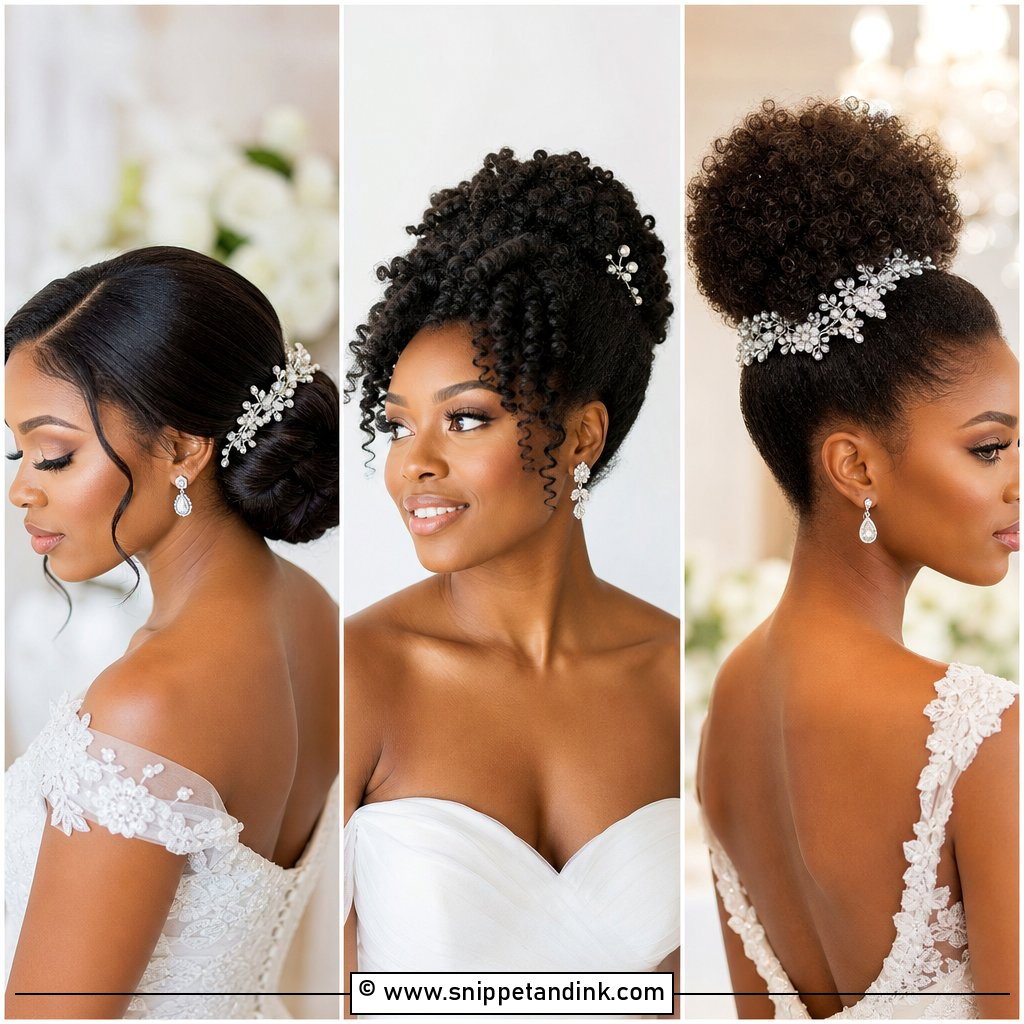
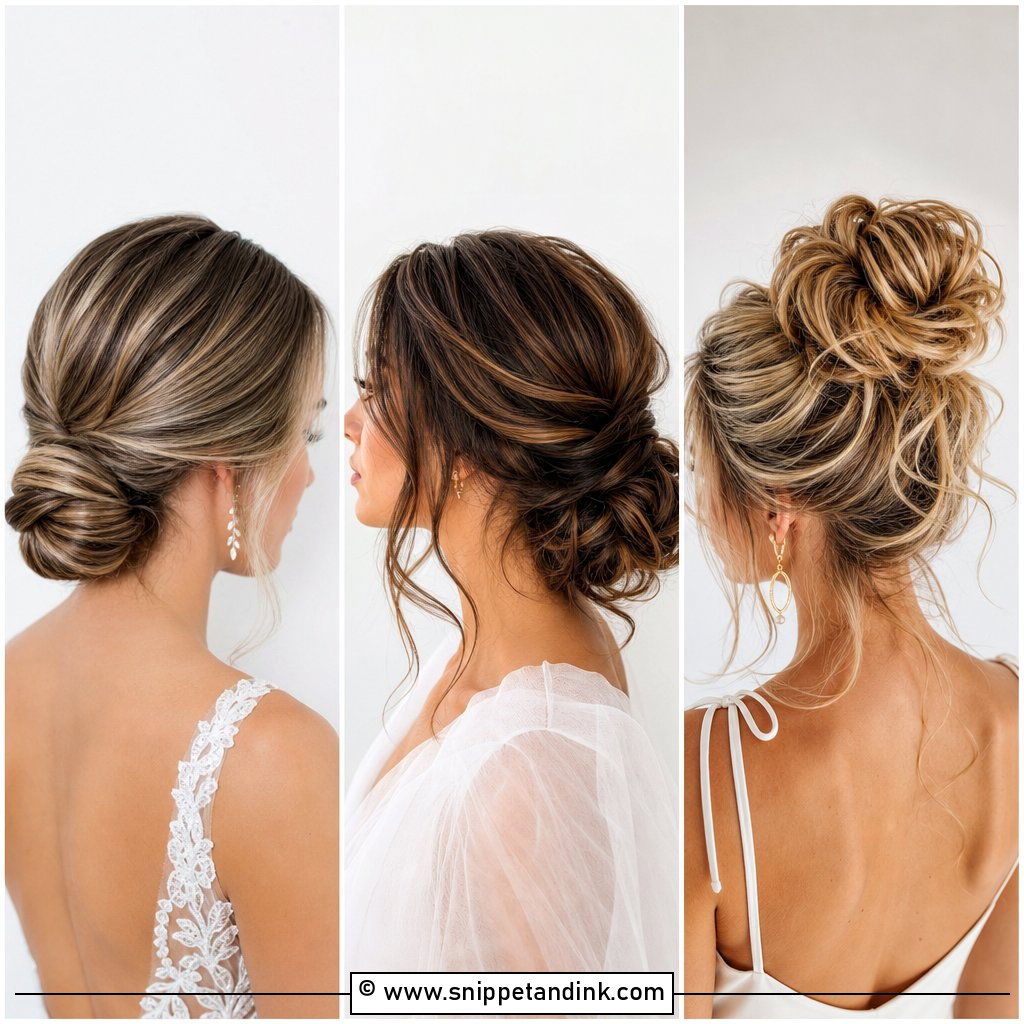
Your natural texture holds an updo well. Ask for styles that work with your curl instead of straightening it, and agree on wash day timing with your stylist so the curls are defined but not slippery.
Layered or shoulder length hair
Layers fall out of sleek styles. Textured buns, twists and messy buns hide shorter pieces. If your hair barely reaches your shoulders, a few clip ins make almost every style here possible.
1. Classic Low Chignon Wedding Updo
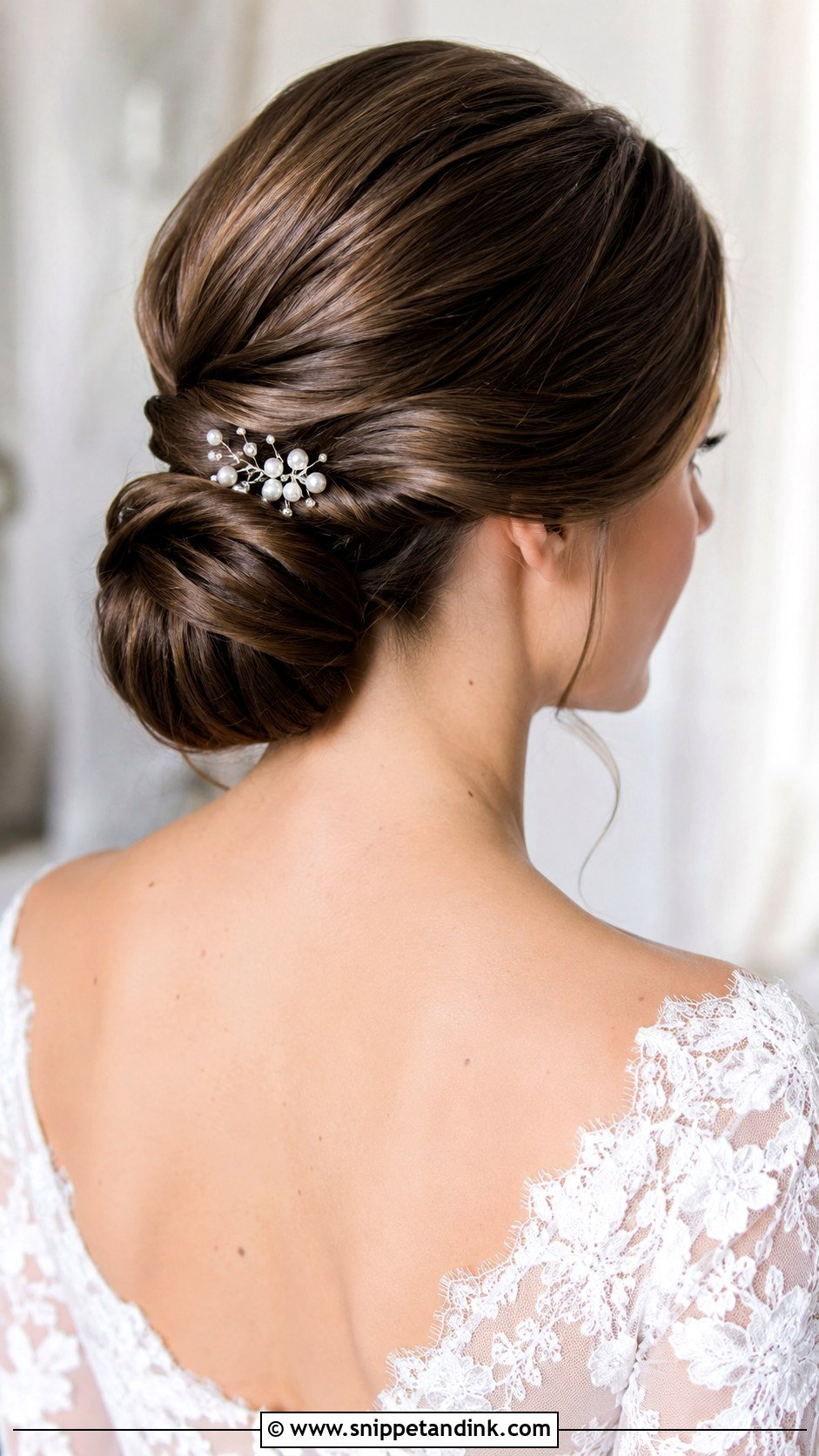
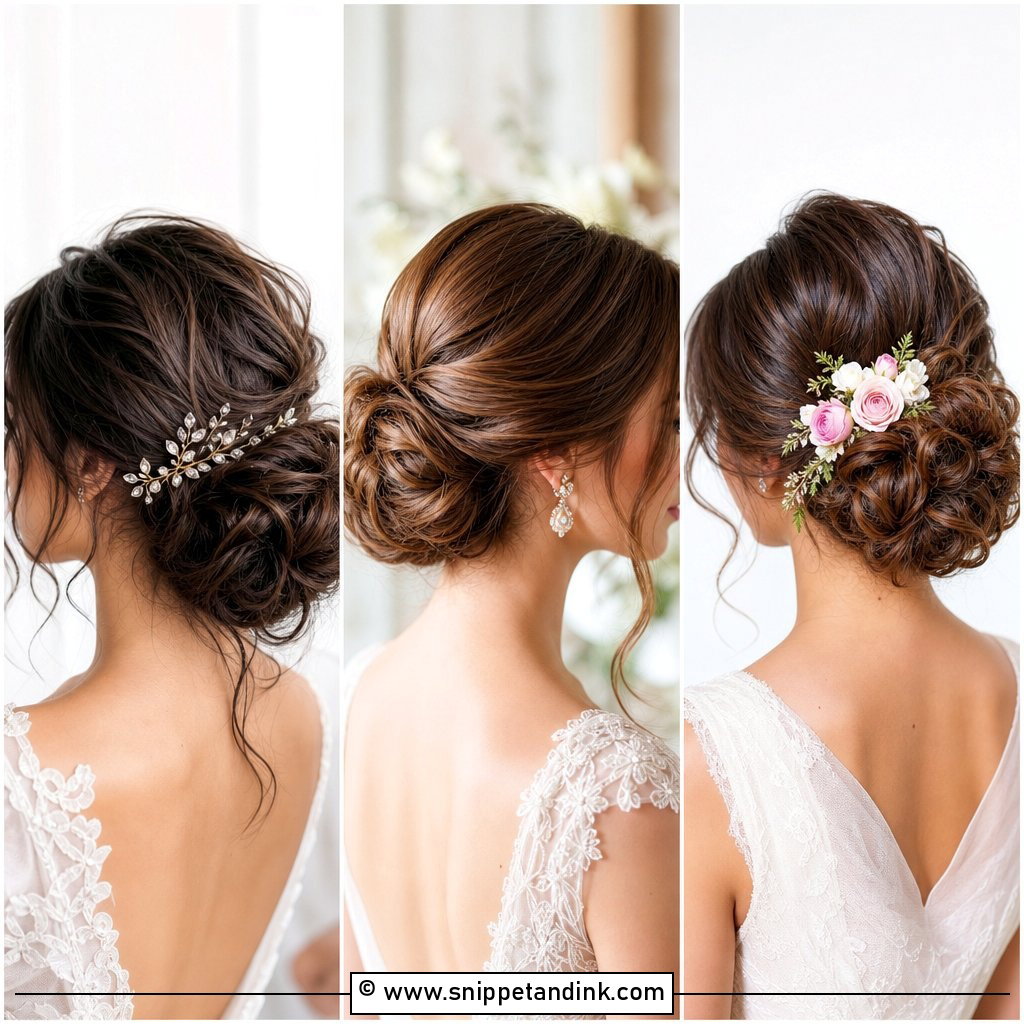
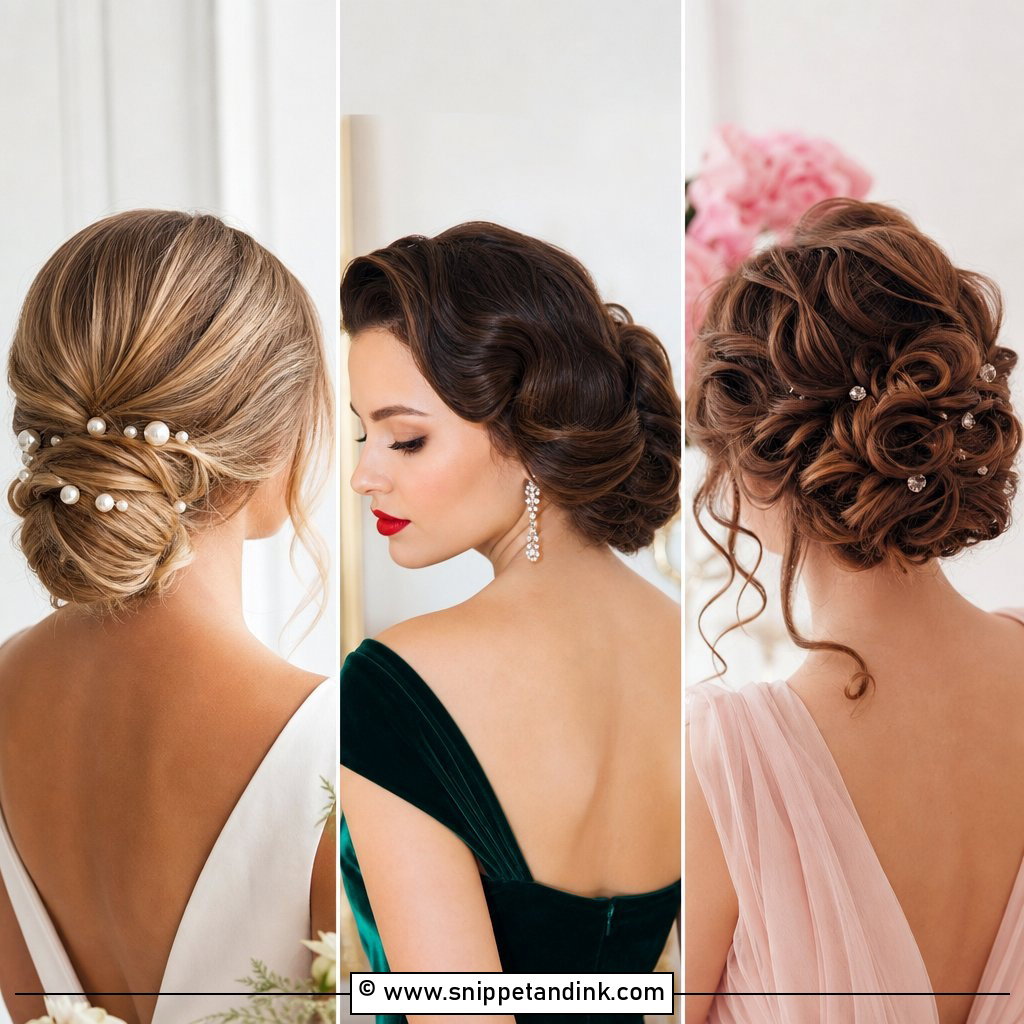
I reach for a low chignon more than any other updo, mostly because it sits below the veil comb instead of fighting it. The hair is smoothed to the nape, twisted and wrapped into a neat bun, then anchored with crossed bobby pins into a small elastic base. Shoulder length hair can manage it if the ends are long enough to wrap twice; anything shorter needs a donut or a few wefts. Pearl or crystal pins look best along the lower edge, where they catch light when you turn your head. It holds through hours of dancing because the weight sits low and close to the head.
2. Textured Low Bun With Loose Tendrils
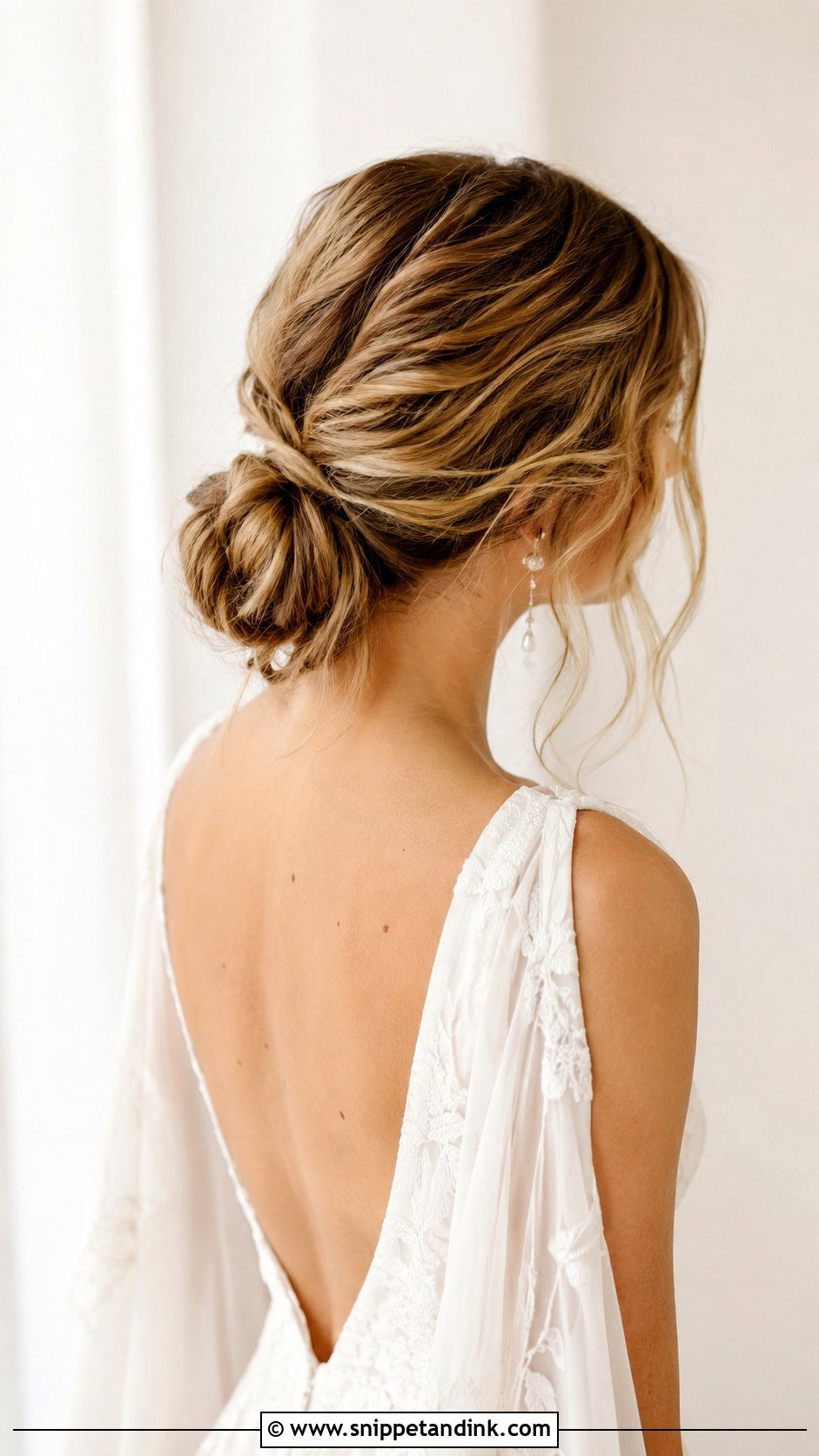
This is the softer cousin of the chignon, and it’s harder to do well than it looks. I curl everything first with a 1.25 inch iron, let it cool fully, then brush it out so the bun has grip and volume instead of slipping. Then I pull a few soft tendrils loose around the face. The risk is humidity. At a garden wedding in July those pieces can go straight or frizzy by the speeches, so I set them with a light hold spray and leave a small curling wand with the bridesmaids. Floral pins suit it; heavy jewels drag the loose texture down.
3. French Twist Bridal Updo
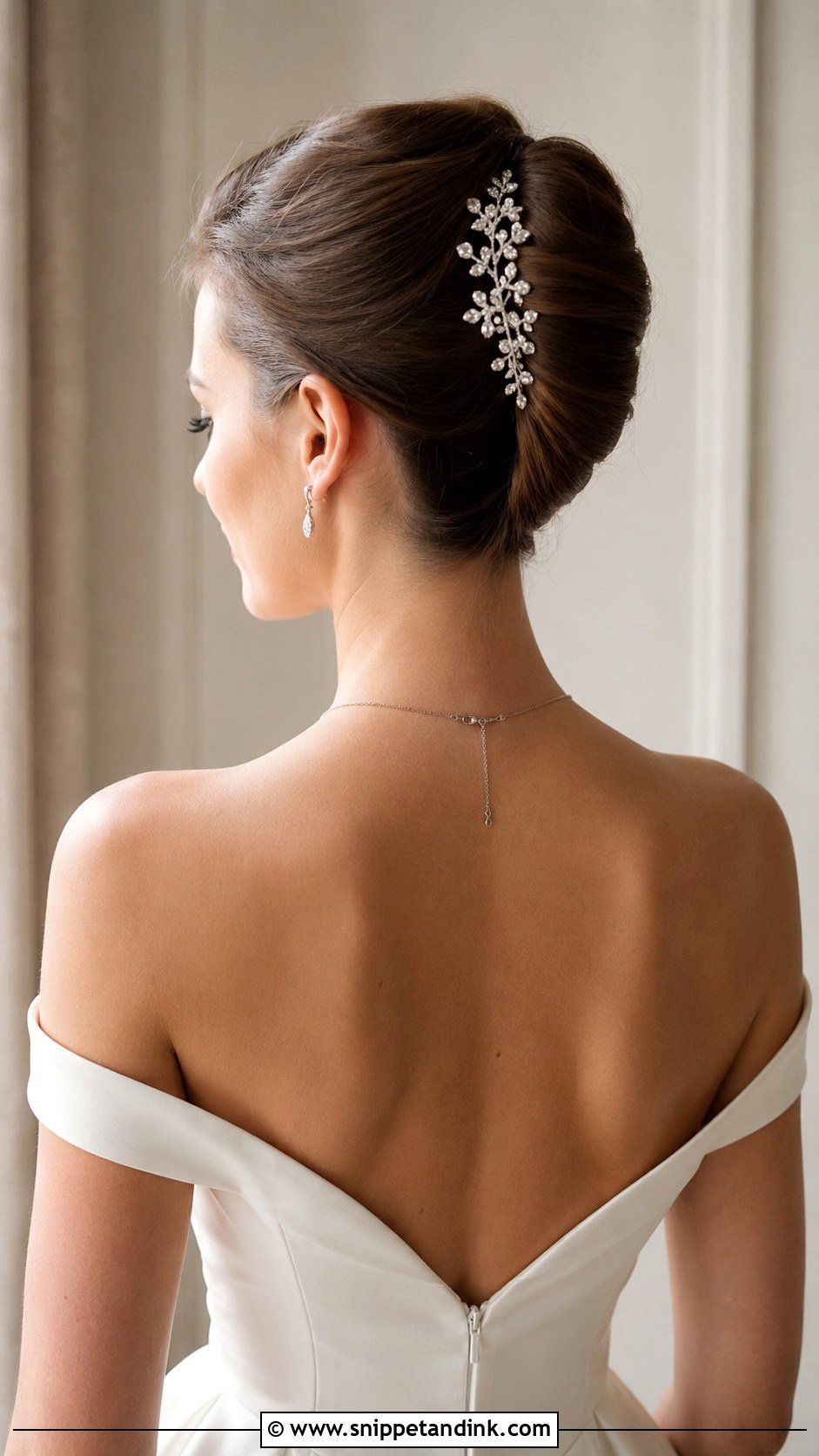
A French twist is a vertical roll up the back of the head, and its secret is something nobody sees: a row of interlocking bobby pins along the center line before the hair is wrapped over it. Without that spine, the roll loosens by evening. It needs medium to long hair with some body. Very silky, freshly washed hair slides right out of it, so I ask brides to wash the day before. The clean line suits a structured gown, especially one with a high or square back, and a single comb tucked at the top of the roll is all the decoration it needs.
4. Braided Crown Updo With Bun
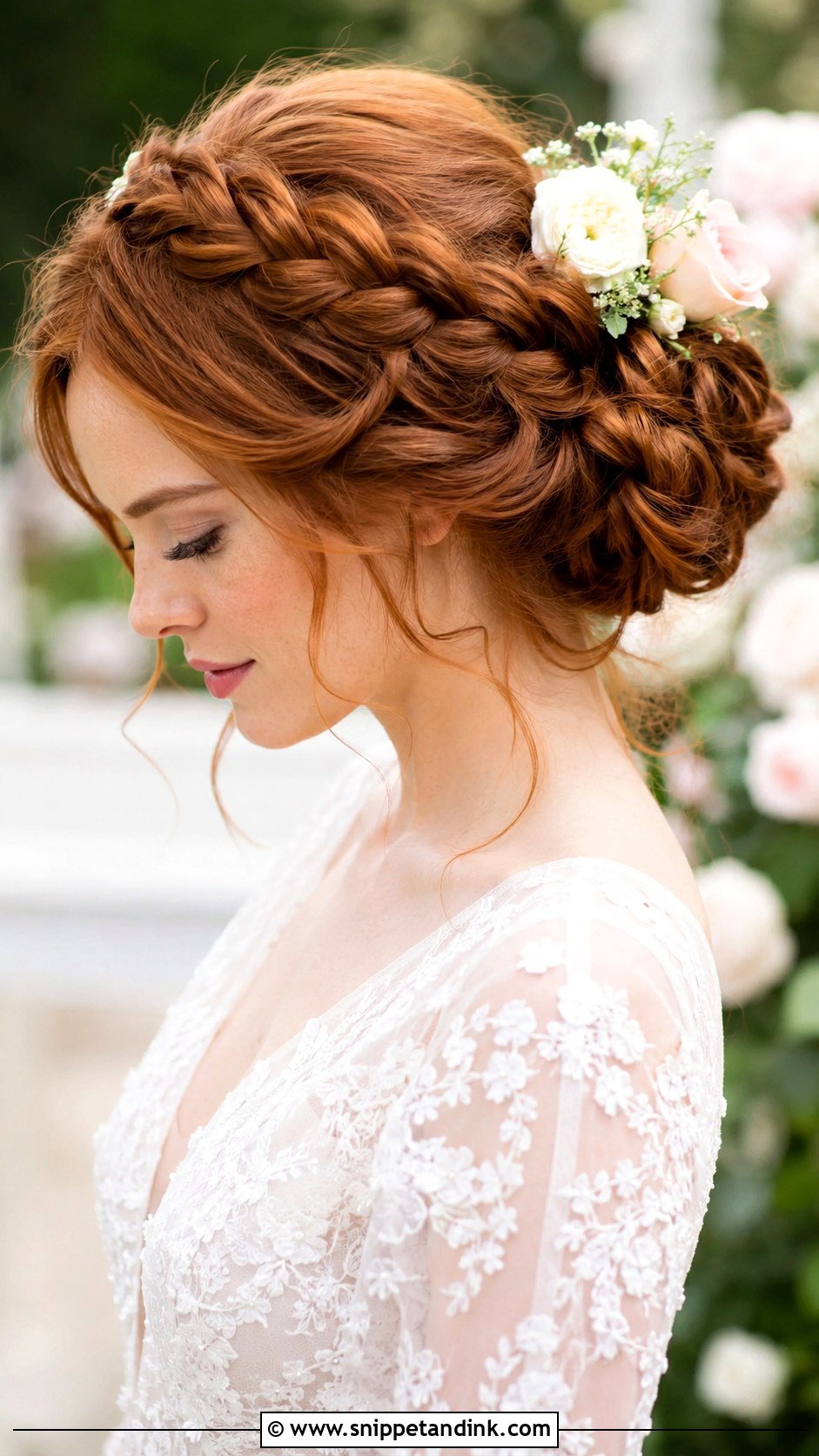
A crown braid takes more hair than people expect. To wrap a braid fully around the head and still finish with a voluminous bun at the back, you need long, fairly thick hair, or a couple of clip in wefts woven into the braid. Once it’s pinned, I pancake the braid by gently pulling the edges wider, which makes it look fuller and hides the pins. It’s one of the sturdiest styles here, which is why I like it for windy outdoor ceremonies. Flowers can sit right in the braid, as long as they’re stems that won’t wilt after six hours out of water.
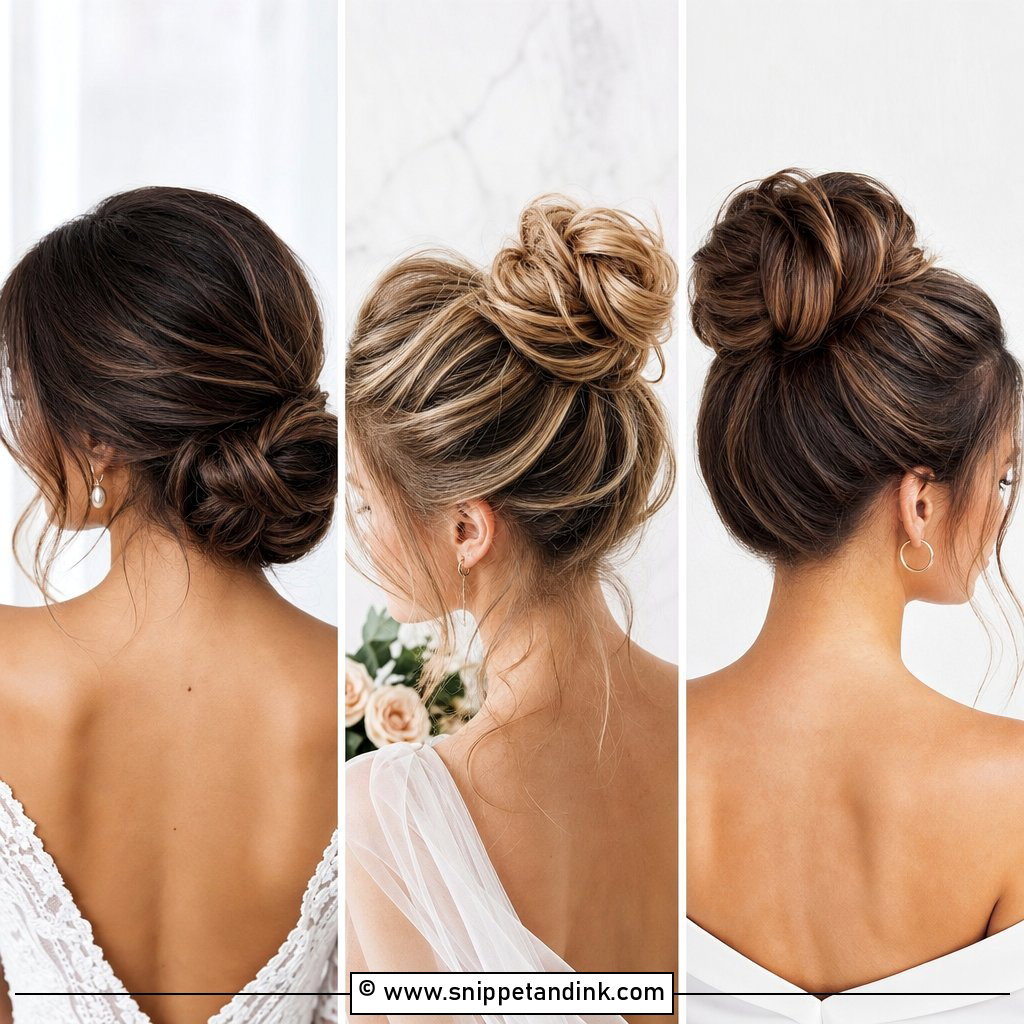
5. High Bun Wedding Updo
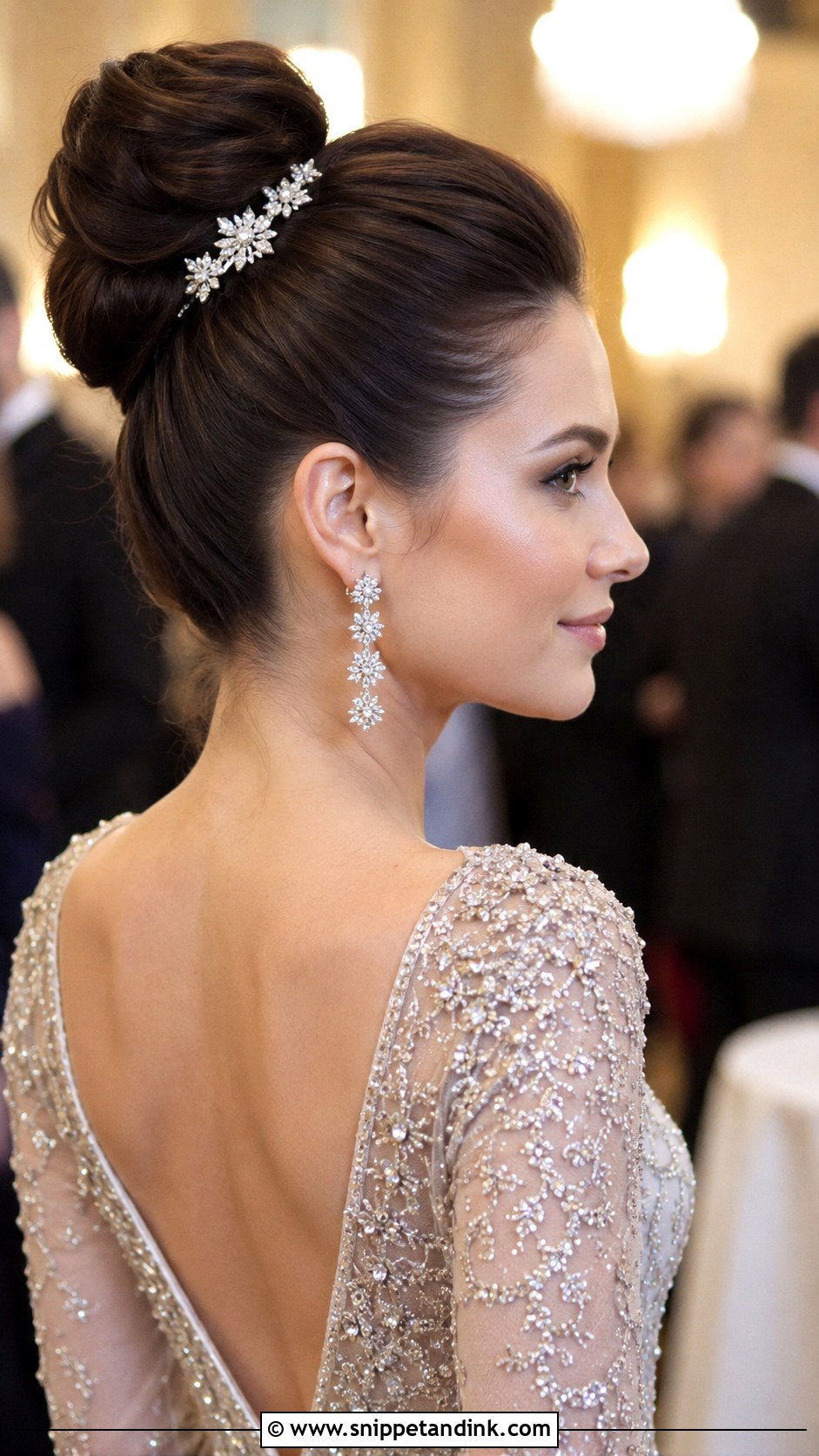
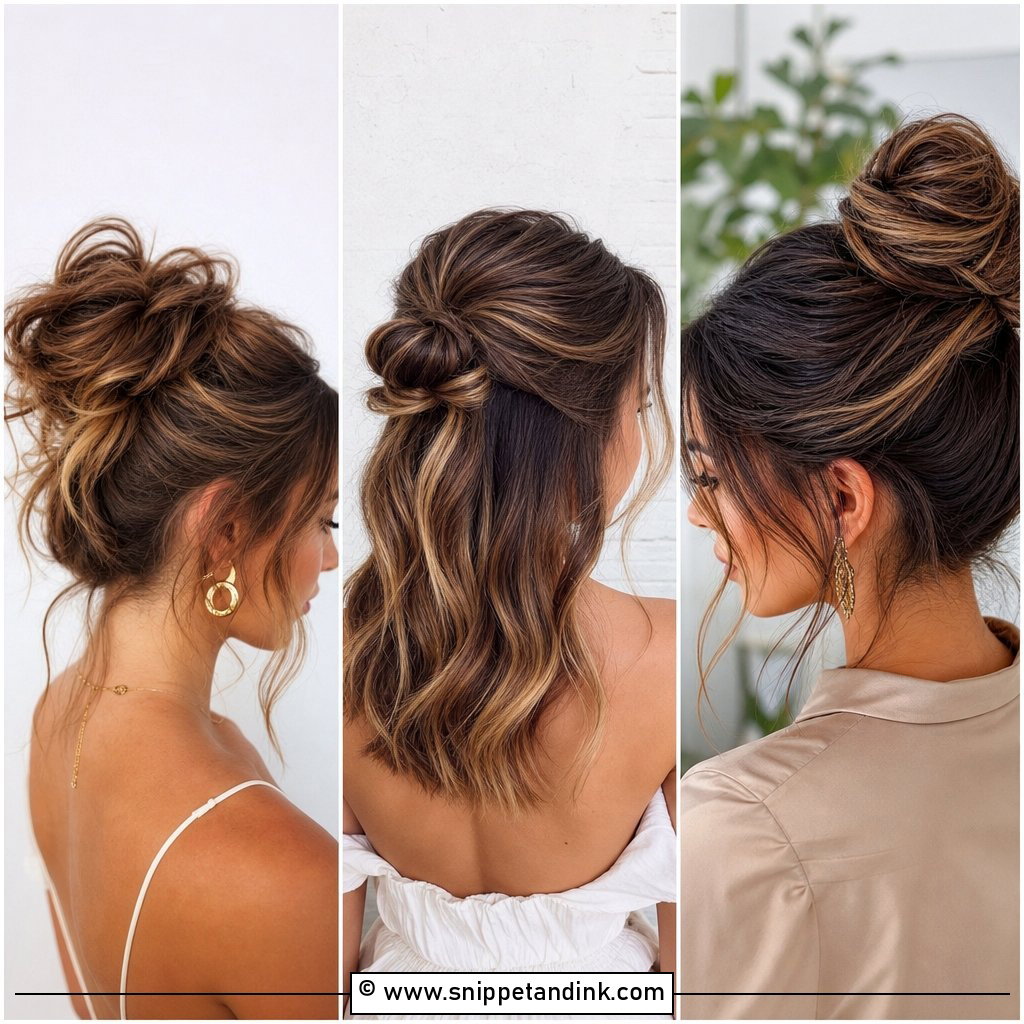
A high bun changes your profile more than anything else on this list, so I always photograph it from the side at the trial before a bride commits. Gathered near the crown, it lifts the face and shows off the neck and earrings, which is why it pairs so well with a strapless or sweetheart neckline. It does not sit happily with a long veil, because the comb has no comfortable place to go; I tuck the veil underneath the bun or suggest skipping it. Keep it sleek for a ballroom, or tease the base slightly for a softer finish.
6. Soft Romantic Updo With Curls
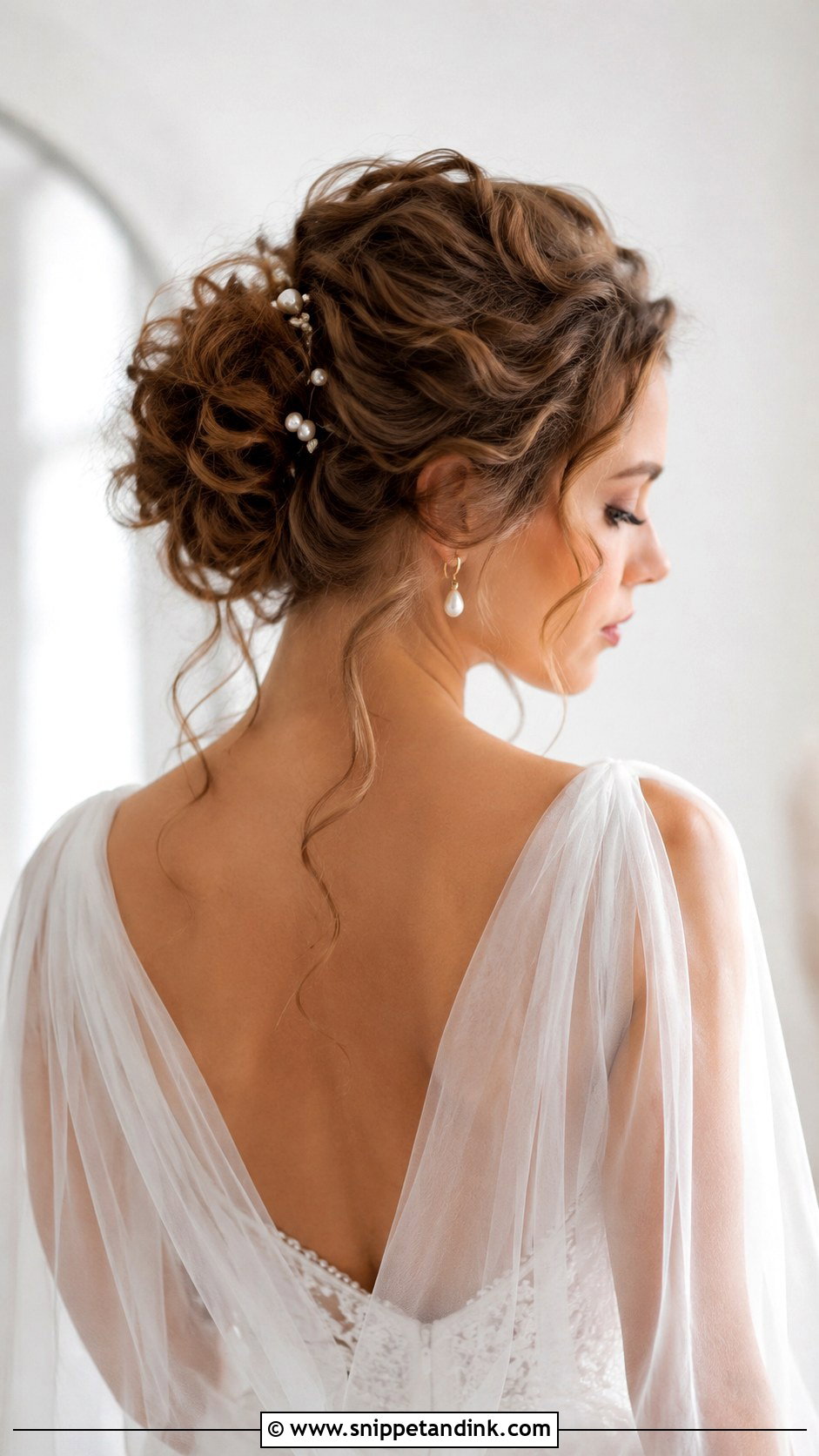
Pinned curls show exactly how good the prep was. I set each section in a pin curl while it cools, then gather the curls loosely at the back so they keep their shape instead of melting into a knot, with a few pieces left out near the face. Fine hair tends to drop its curl in a warm room, so for spring and summer weddings I spray texture in before curling, not after. Small flowers or pearl pins slot easily between the curls. Medium to long hair gives the best result.
7. Sleek Sculpted Chignon
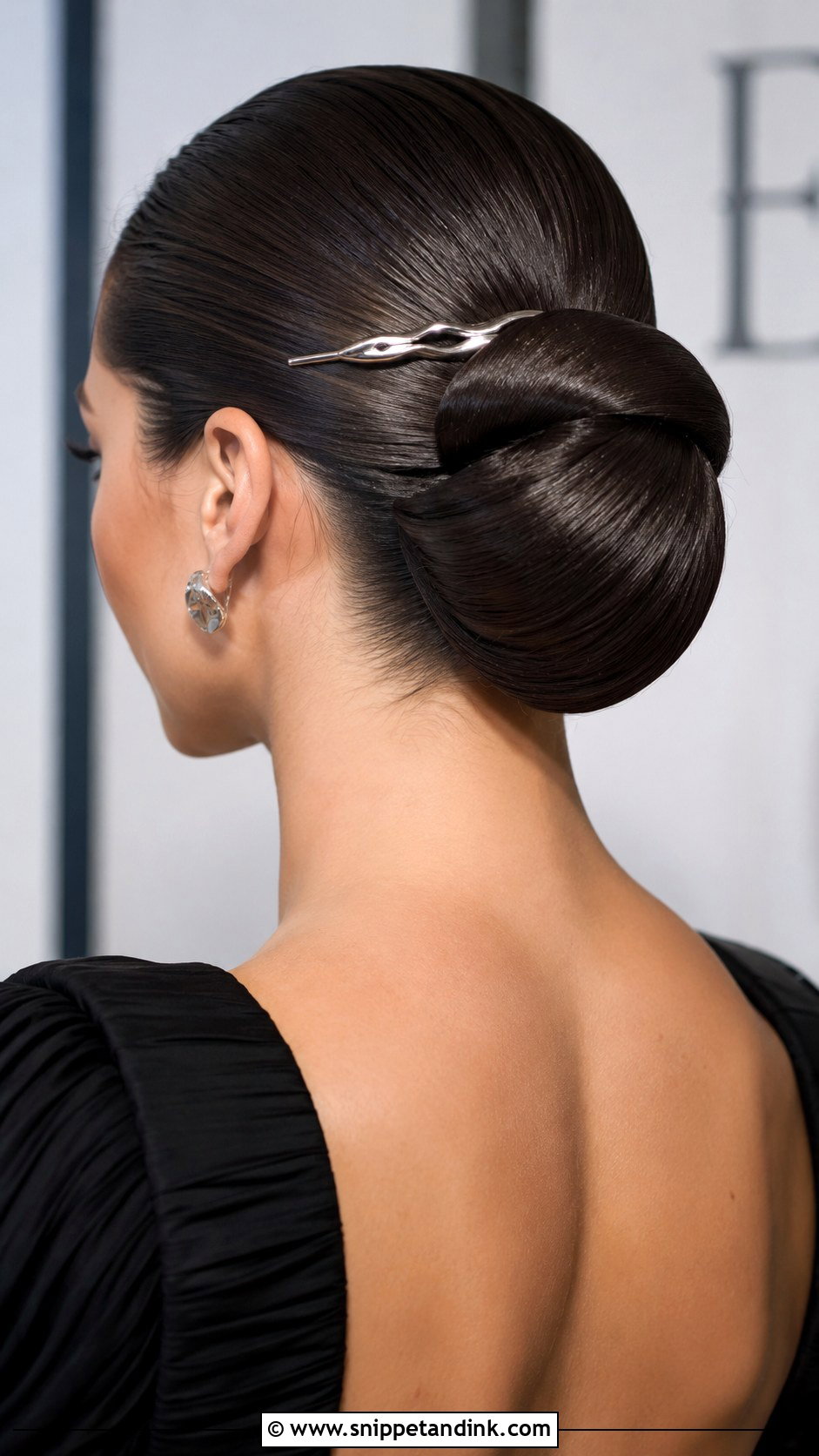
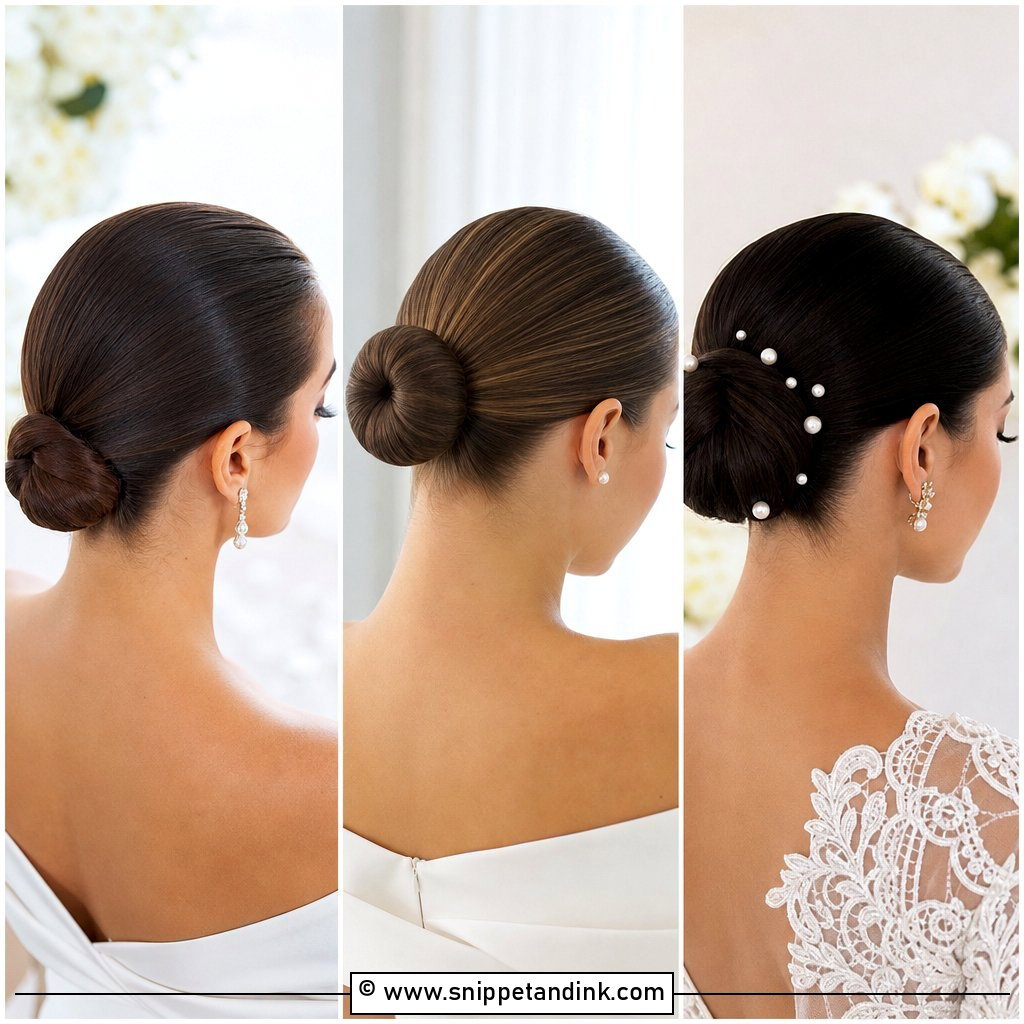
Everything here depends on the surface. Every strand is brushed back with a boar bristle brush and a smoothing cream, then the bun is shaped with sharp, defined edges. Layers are the enemy: short pieces around the crown pop up within hours, so I lock them down with a wax stick and a fine tooth comb. Straight or blow dried hair suits it best, and one statement pin keeps it minimal. I’d steer you away from this one if your hairline has strong cowlicks, because a sleek finish shows every swirl. It sits naturally with city weddings and clean, modern gowns.
8. Messy Bun Bridal Updo
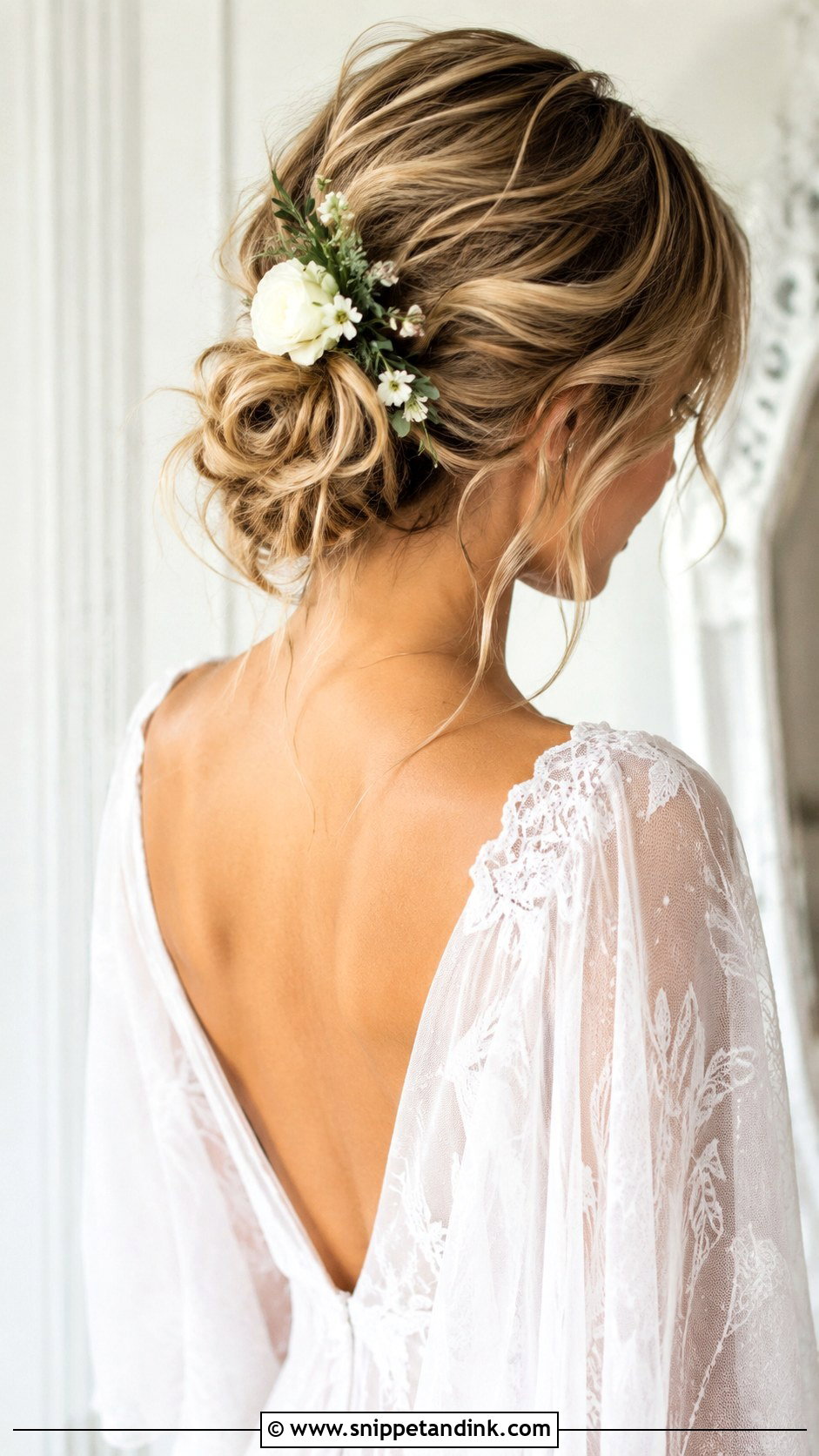
Undone styles need more pins, not fewer. A bun that looks loose still has to be anchored firmly underneath, so I build it on a secure ponytail base and only then pull out wisps on top. The texture comes from curling first and adding dry texture spray. It works on most lengths and textures, including layered hair that won’t stay in a sleek bun, and fresh flowers can go in without much planning. One honest warning: ‘messy’ can read as unfinished in photos if the loose pieces are too long, so I keep the face framing wisps short.
9. Vintage Victory Rolls Updo
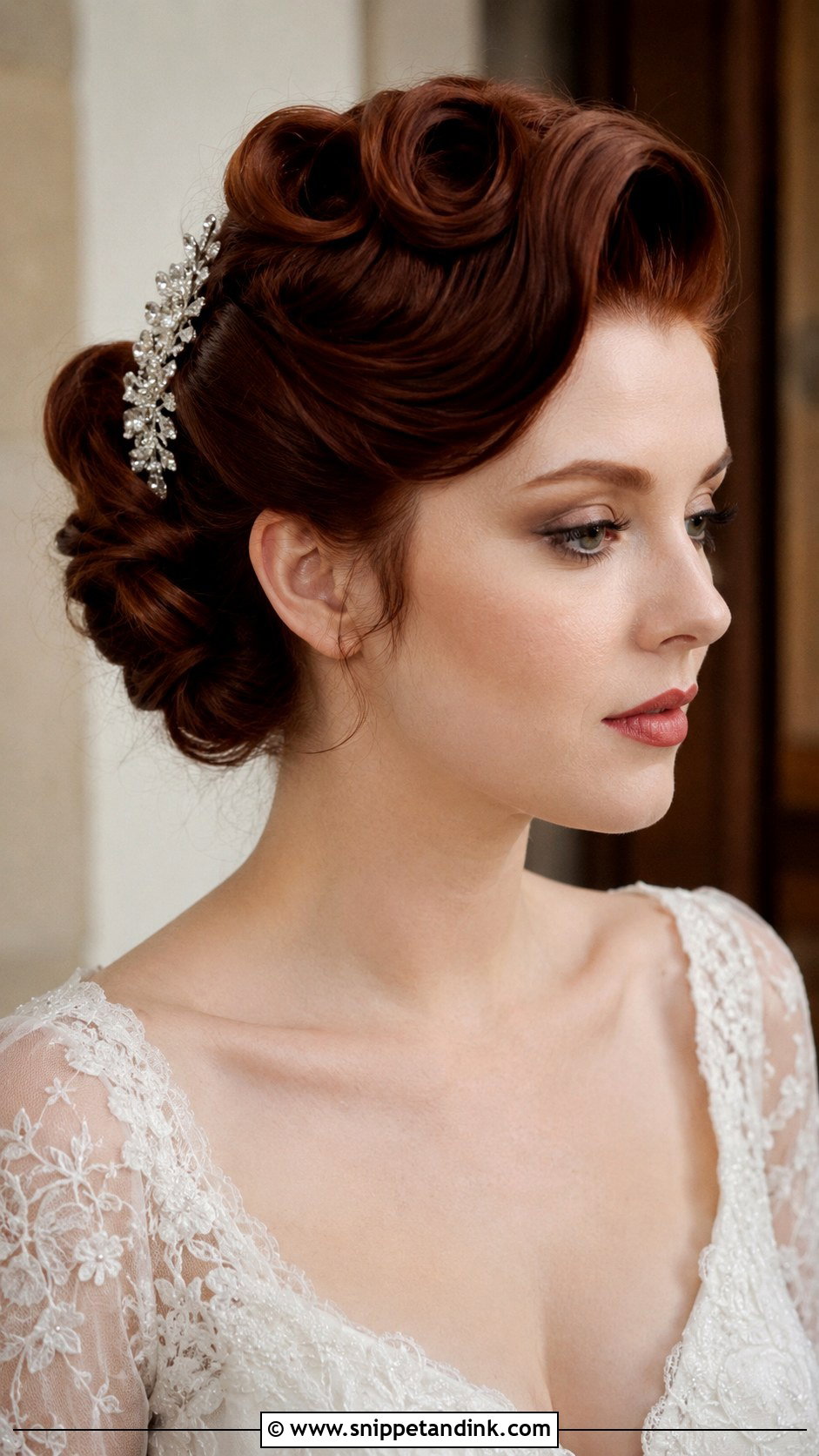
Victory rolls are a setting technique, not a curling iron trick. I roll each section around two fingers, pin it from underneath and smooth the sides with a little pomade so the rolls look sculpted rather than fluffy. Hair that won’t hold a curl needs a hot roller set first. Lace gowns, a red lip and a decorative comb at the side all fit the era. Be honest about your theme, though. Outside a vintage or old Hollywood wedding, full rolls can look like costume, and a single soft roll at the front is often the better compromise.
10. Twisted Low Updo With Pearls
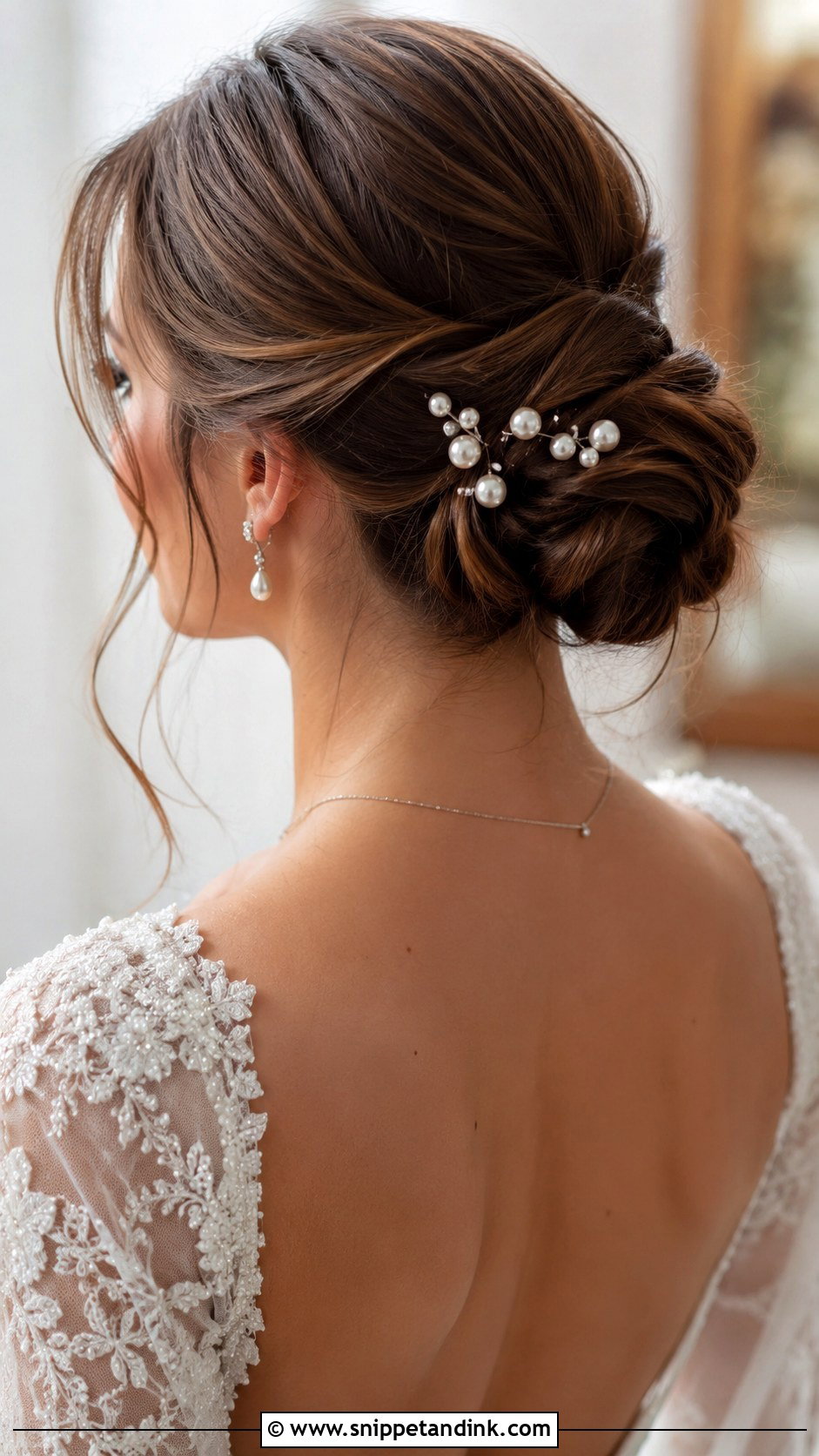
Twists hold better than braids on slippery hair, which is why I suggest this one when a bride’s hair won’t keep a braid. I twist two sections toward the nape, join them into a low bun and add pearl pins along the twist line. Pearls look more natural scattered in odd numbers than set in a straight row. It’s a quiet, classic style, so pearl earrings and a simple veil complete it without anything competing. Medium to long hair is ideal.
11. Braided Updo With Flowers
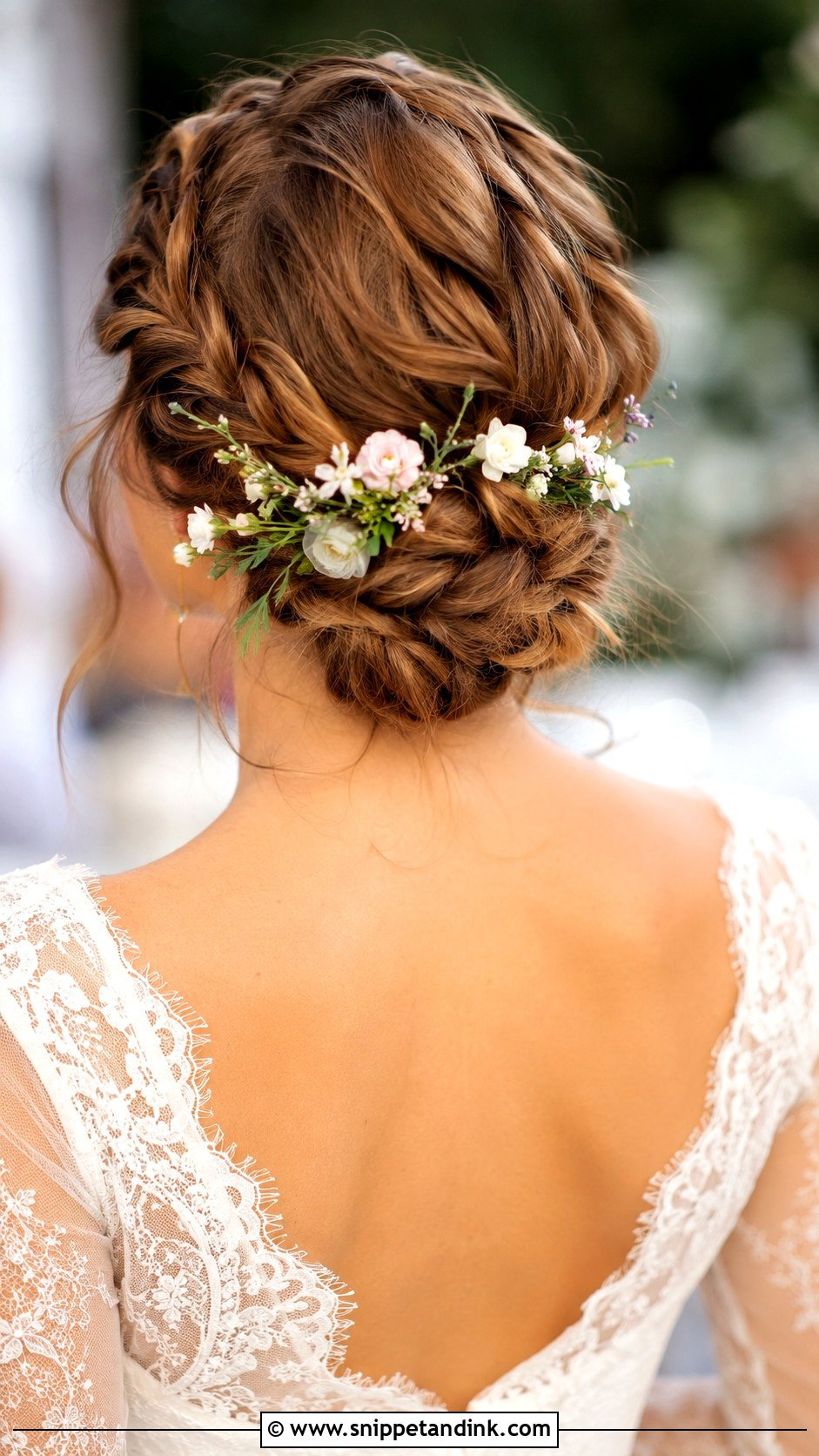
Fresh flowers in hair need the same care as your bouquet. I wire or tape small, sturdy blooms like spray roses, waxflower or baby’s breath, then push them between the braids so the stems are hidden. Delicate flowers such as gardenias brown quickly against warm skin and hairspray, so I leave them out. The braided base needs long, thick hair to look full. Matching the bouquet is easy if your florist makes a few extra stems for your stylist, and the braids keep everything secure through a breezy outdoor ceremony.
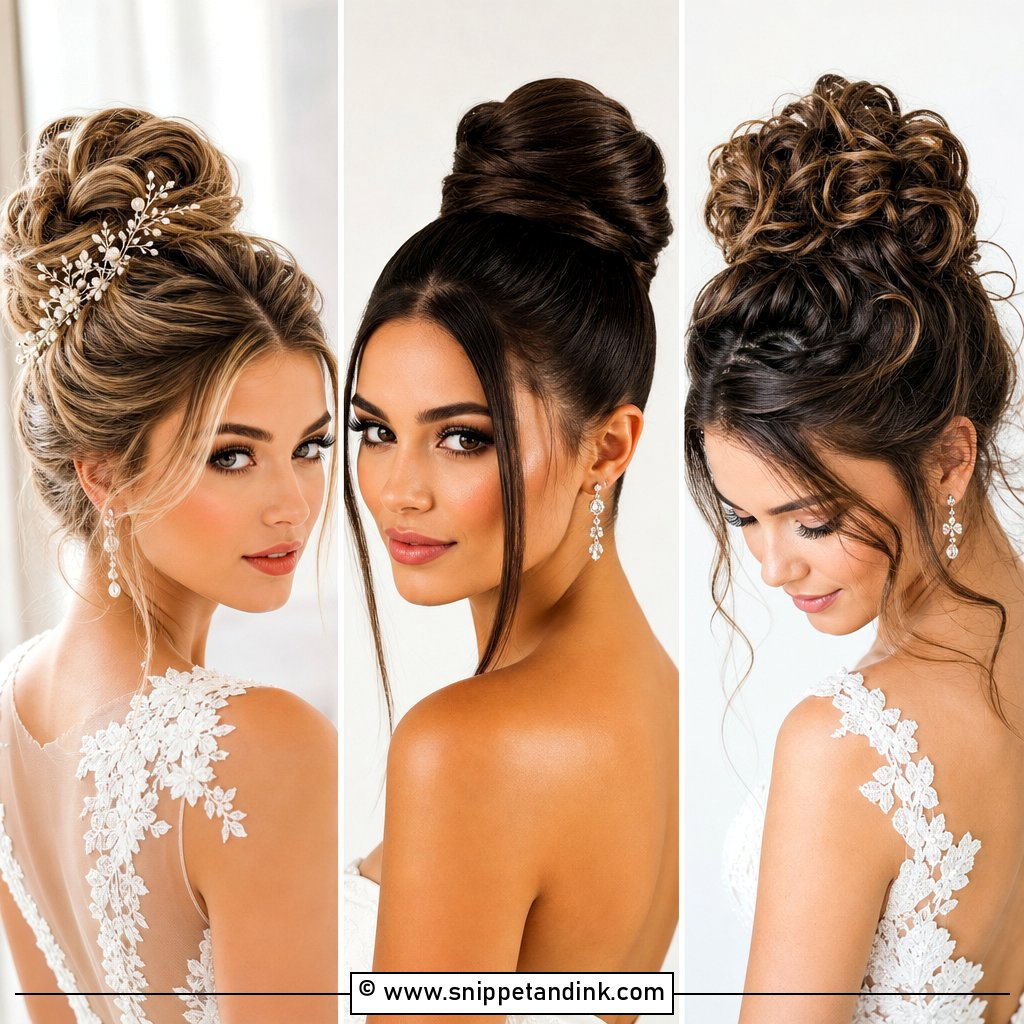
12. Sleek Ballerina Bun
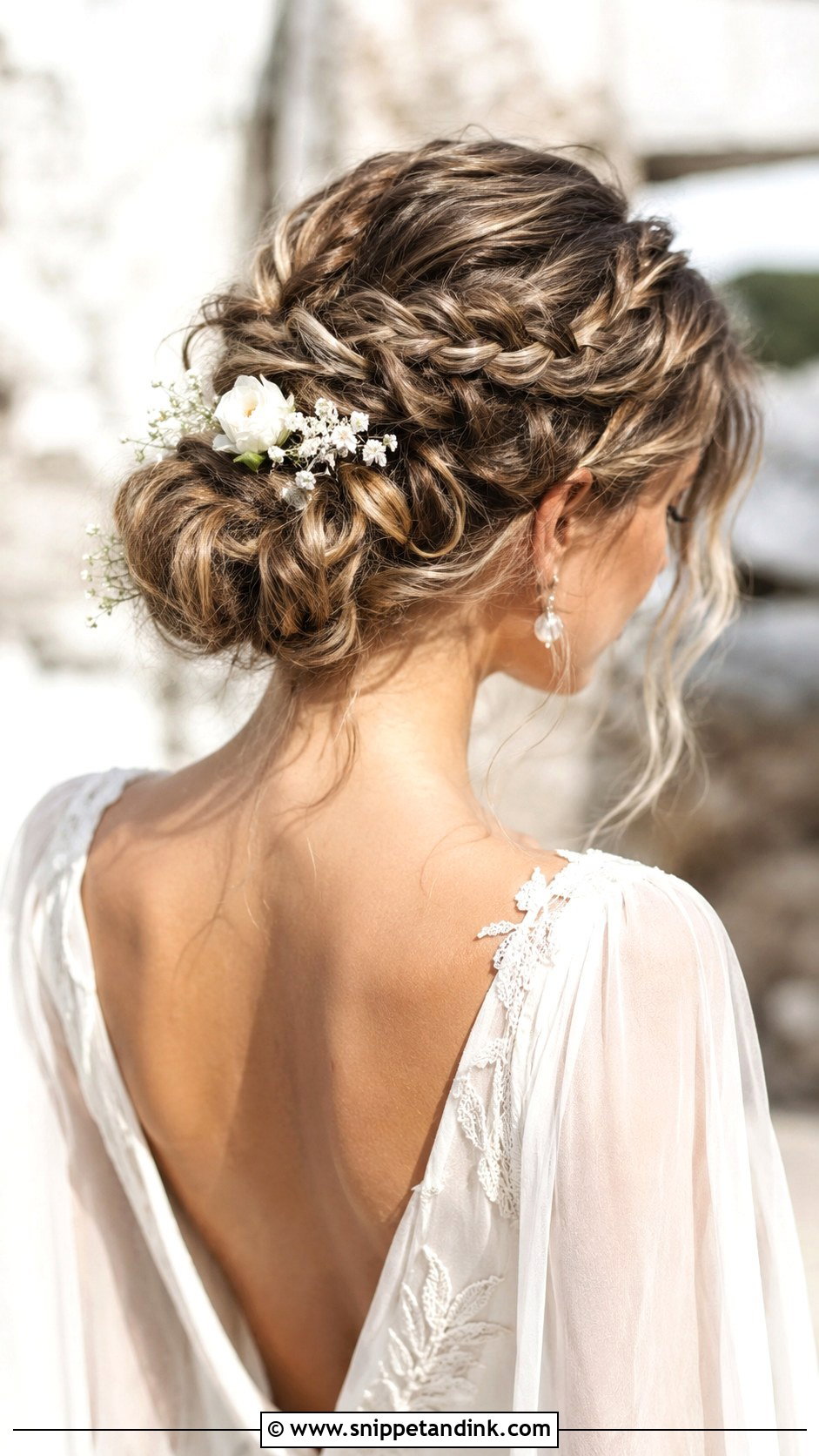
A ballerina bun is a high, tight bun pulled smooth from the hairline, and it is less forgiving than it looks. The tension that makes it sleek can cause a headache after eight hours, so I keep the base slightly looser and secure the bun with spin pins instead of a tight elastic. It needs straight, medium to long hair and a shine serum for that polished surface. Clean necklines and statement earrings sit naturally with it. A jeweled pin at the base is all the decoration I’d add to a timeless ballerina-inspired updo.
13. Curly Updo for Natural Hair
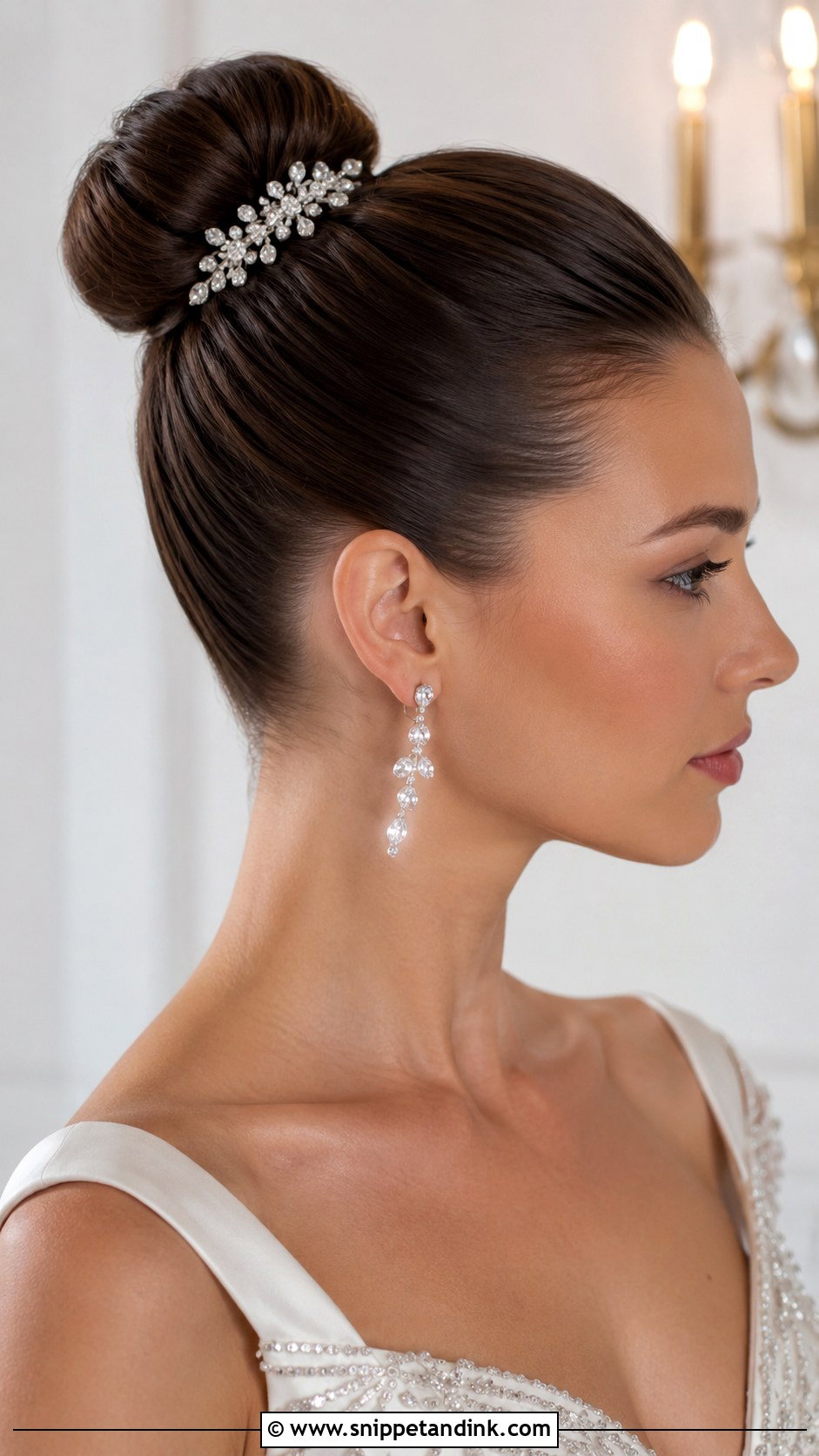
Natural curls and coils make one of the strongest updos I work with, because the texture already holds the shape. I start with well moisturized, defined curls and gather them into a full updo at the back or crown, using large U pins rather than bobby pins so the curl pattern isn’t flattened. I never brush coily hair dry for this; it turns to frizz. Gold pins, pearls or flowers sit well in the volume. Book your trial with a stylist who works with your curl type regularly, since wash day timing matters as much as the pinning.
14. Half-Up Half-Down Wedding Updo
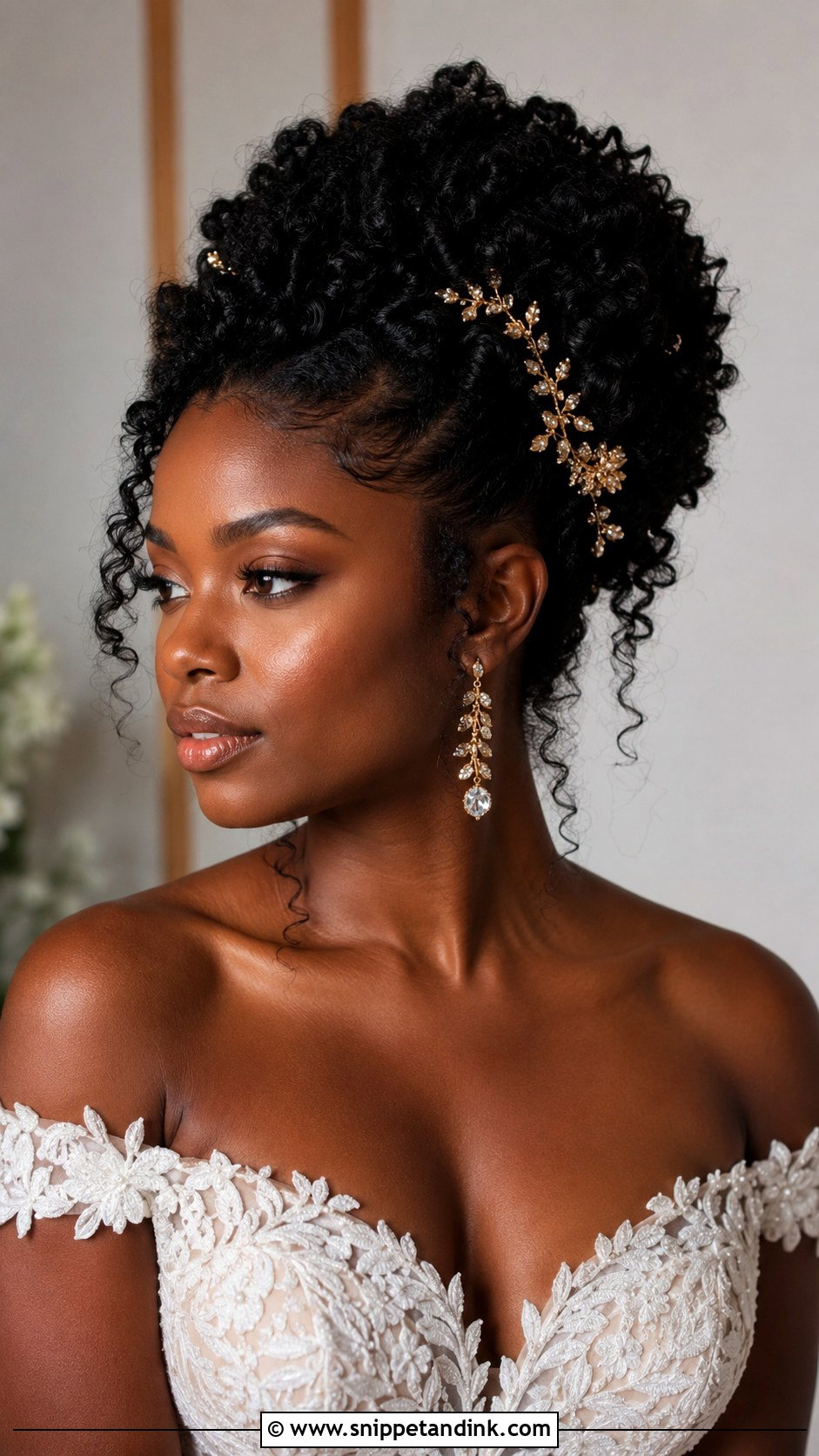
Strictly speaking, a half up style isn’t an updo, and that is its main weakness: the down section is exposed to heat and humidity all day. I curl the lower half with a smaller barrel than you’d expect, because curls loosen noticeably over an evening. The top section is pinned over a small elastic hidden under a clip, which is also where a veil comb sits most securely. It frames the face and keeps movement in photos. For an outdoor wedding in humid weather, I’d honestly choose a full updo instead.
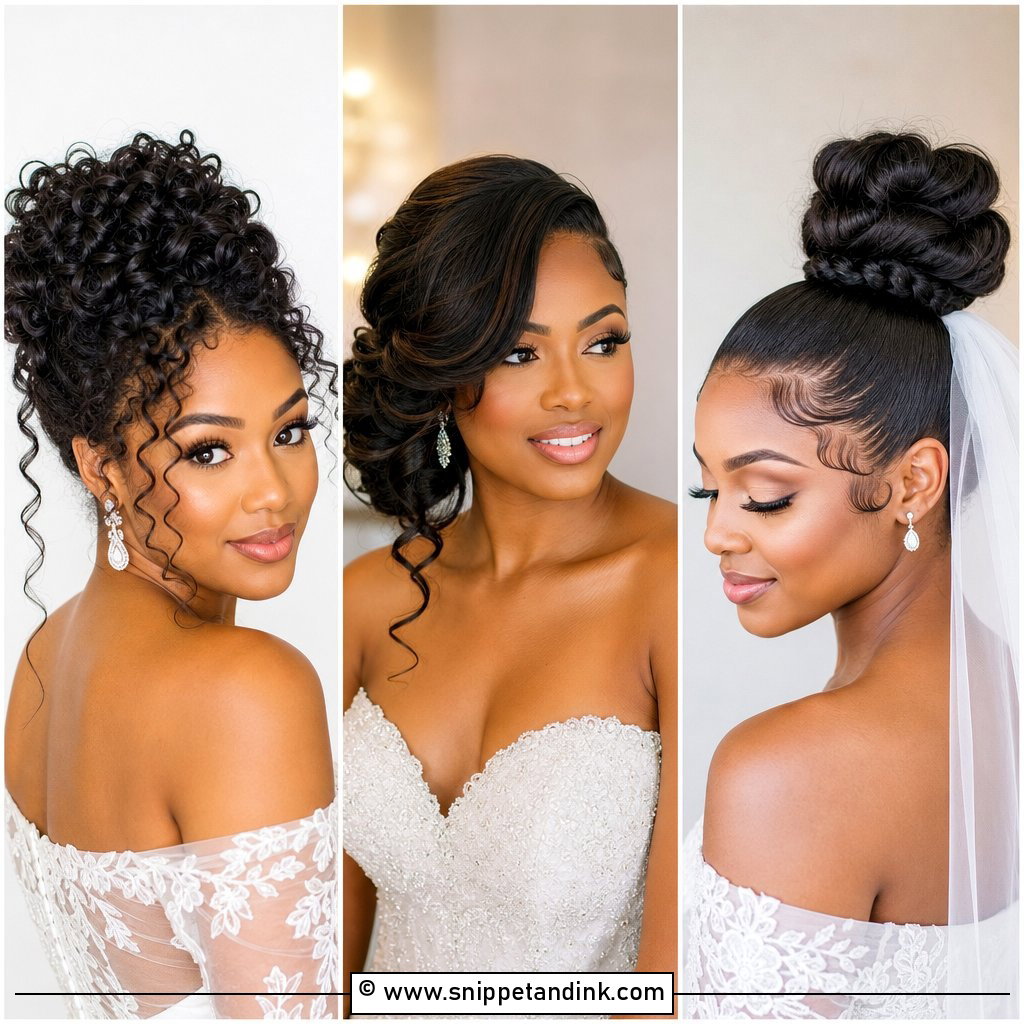
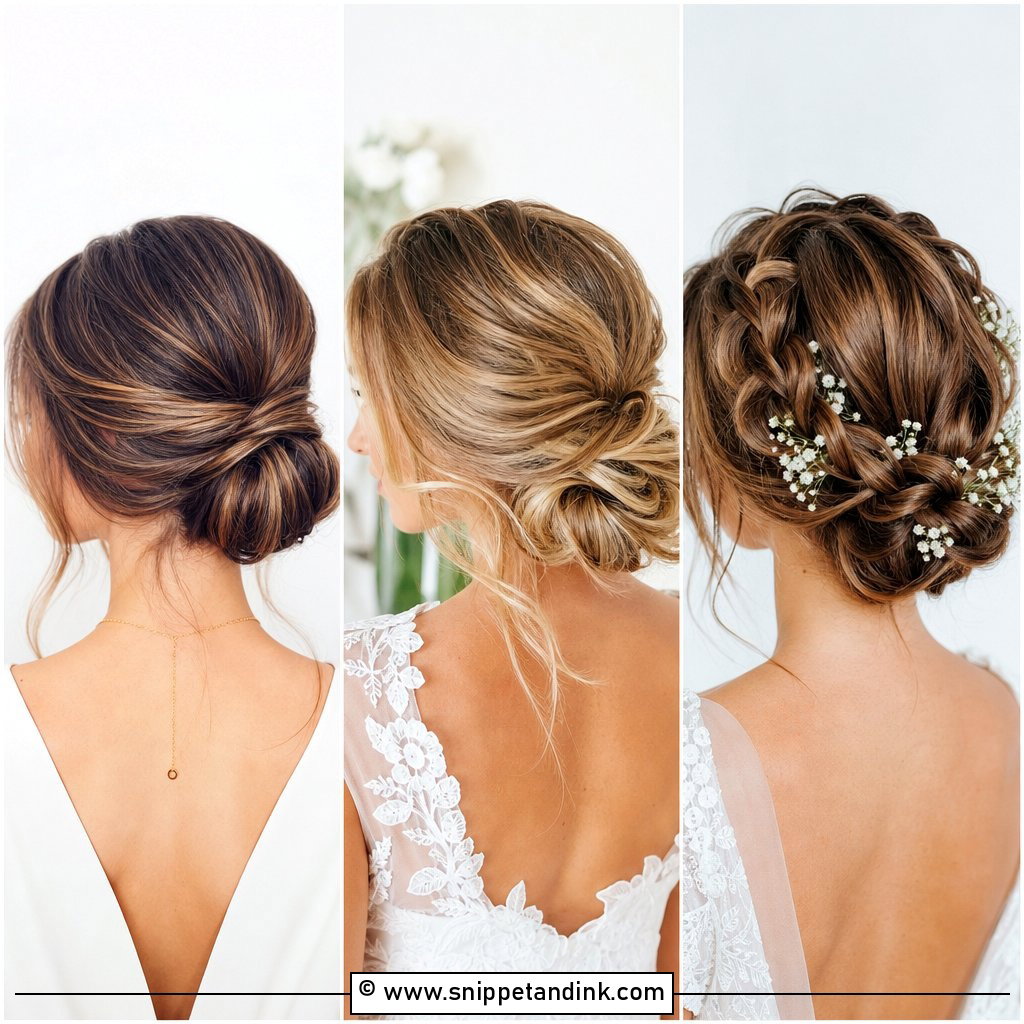
15. Twisted Side Updo
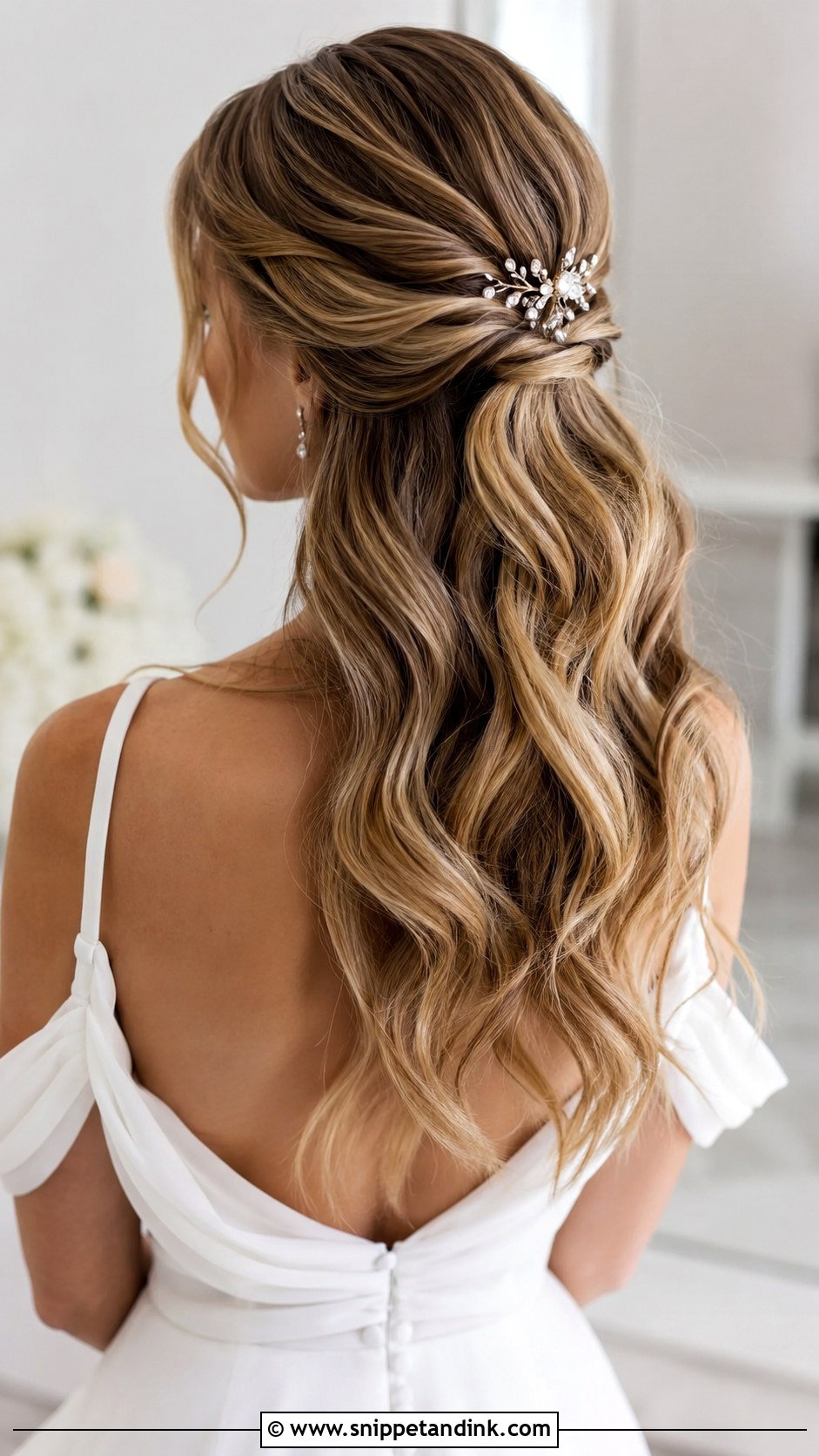
Side updos are about where the weight lands. I twist the hair toward one side and pin it behind the ear, so the finished side shows your neckline and earring while the other side stays clean. With a one shoulder gown, I put the hair on the bare side so the look balances. Before deciding which side, I check where the photographer will stand during the ceremony, so the detailed side is the one facing the camera. A small comb or a cluster of pearls can mark the end of the twist.
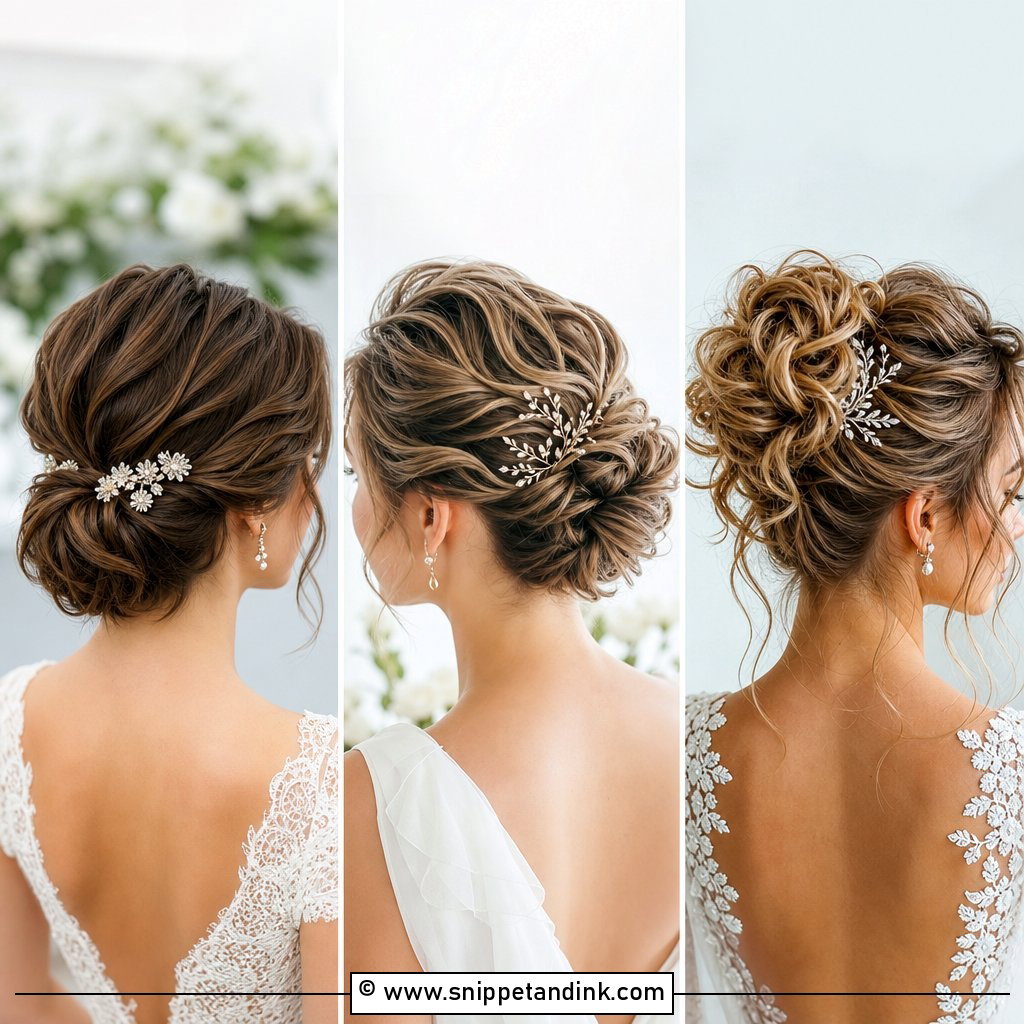
16. Elegant Bun With Hair Vine
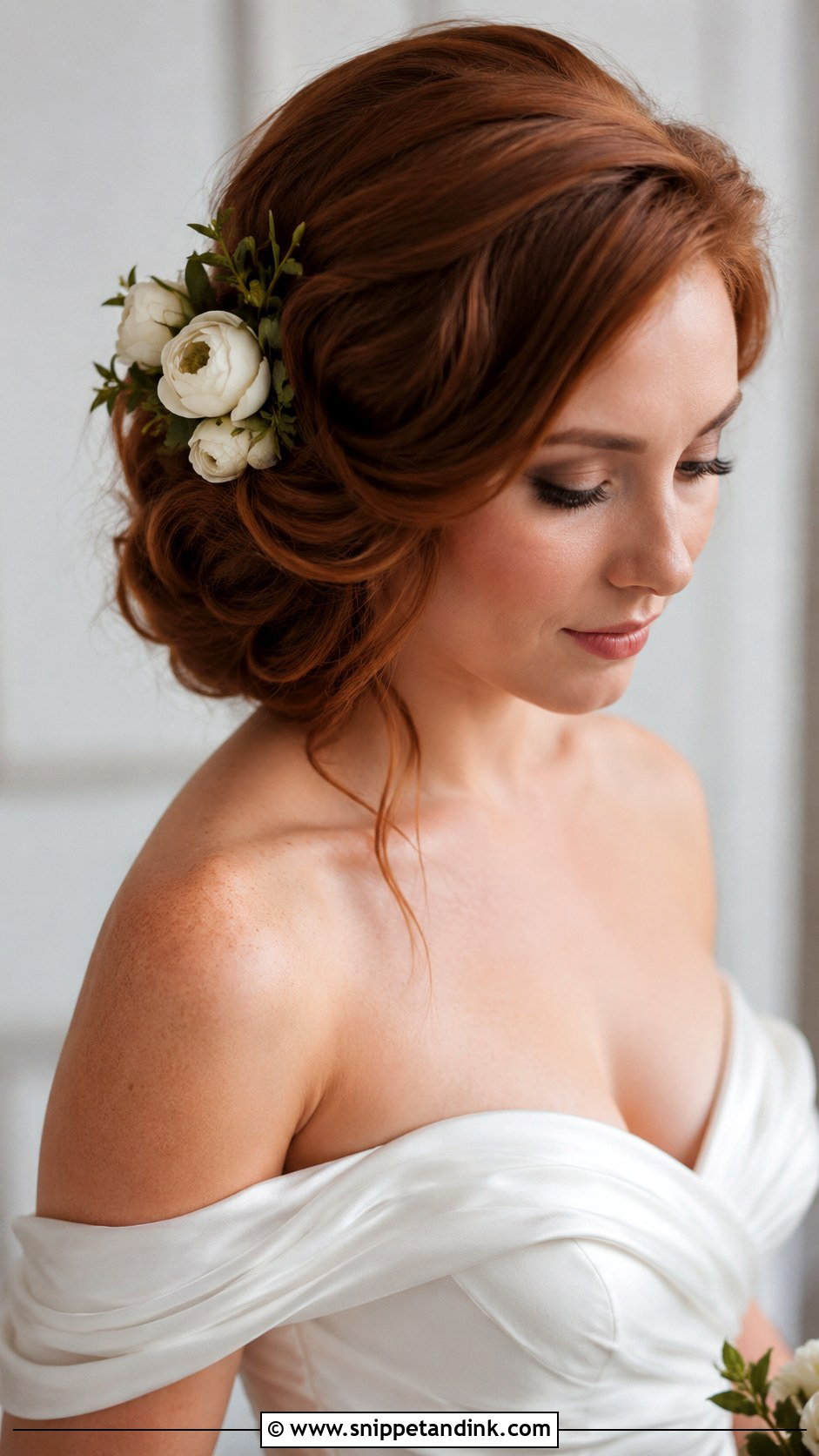
A hair vine is a flexible wire strand of pearls or crystals that wraps around or through a bun. I weave it in after the bun is built, anchoring each end with tiny pins and adding a few more points along the way so it doesn’t sag by the reception. Match the vine to your jewelry metal; mixed gold and silver looks accidental in close photos. Keep the bun underneath simple, because the vine is doing the decorative work, and it shows best at evening weddings where it catches candlelight.
17. Low Bun With Face-Framing Pieces
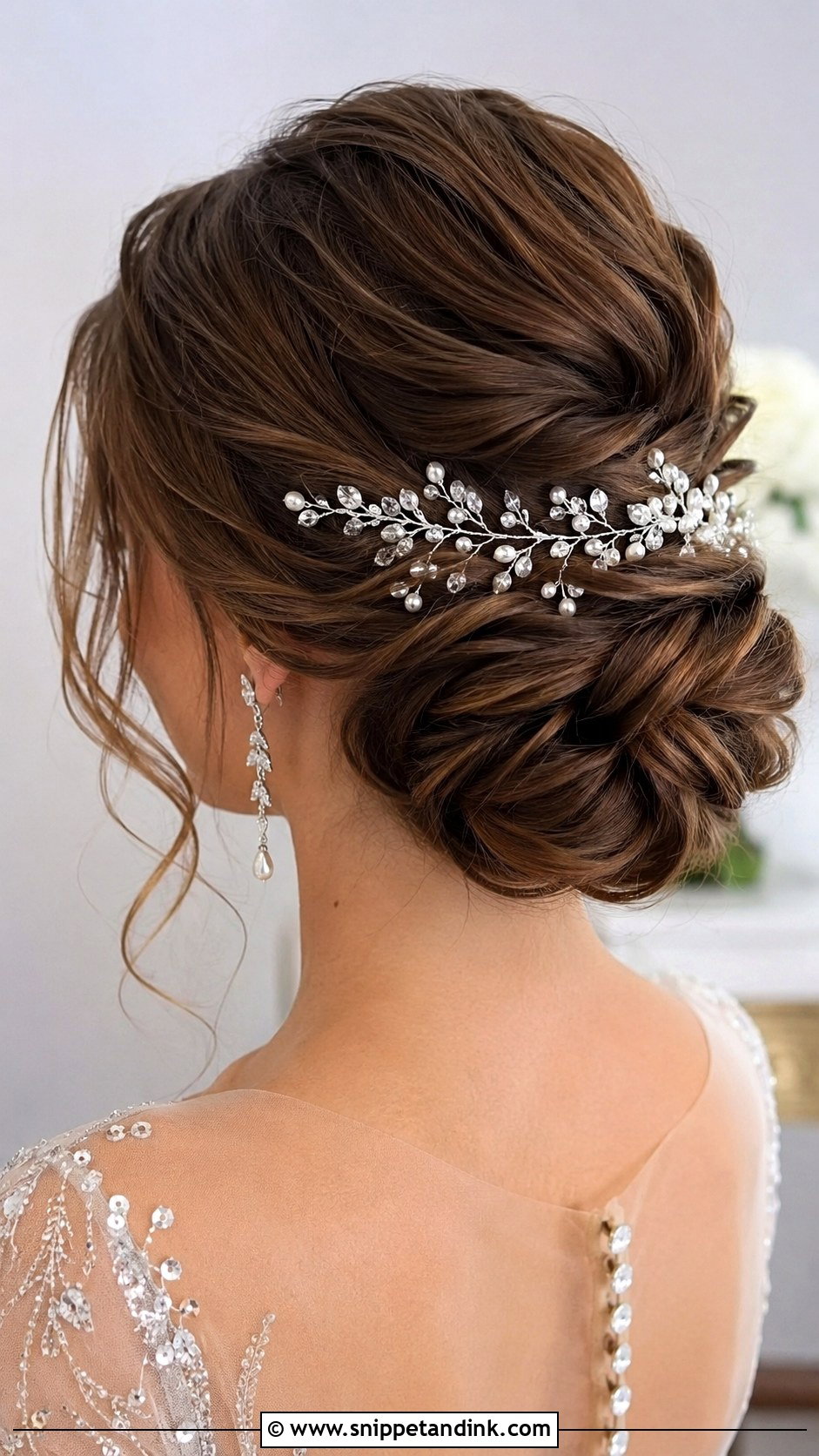
Face framing pieces are the small decision that changes the most. I don’t cut anything; I choose which pieces to leave out, usually from just in front of the ear, and curl them away from the face. The rest is gathered into a smooth bun at the nape with a few polished tendrils left loose. Too many pieces and they stick to lip gloss all night, so two on each side is usually plenty. It flatters most face shapes, which makes it my usual suggestion for brides who can’t decide.
18. Boho Braided Bun
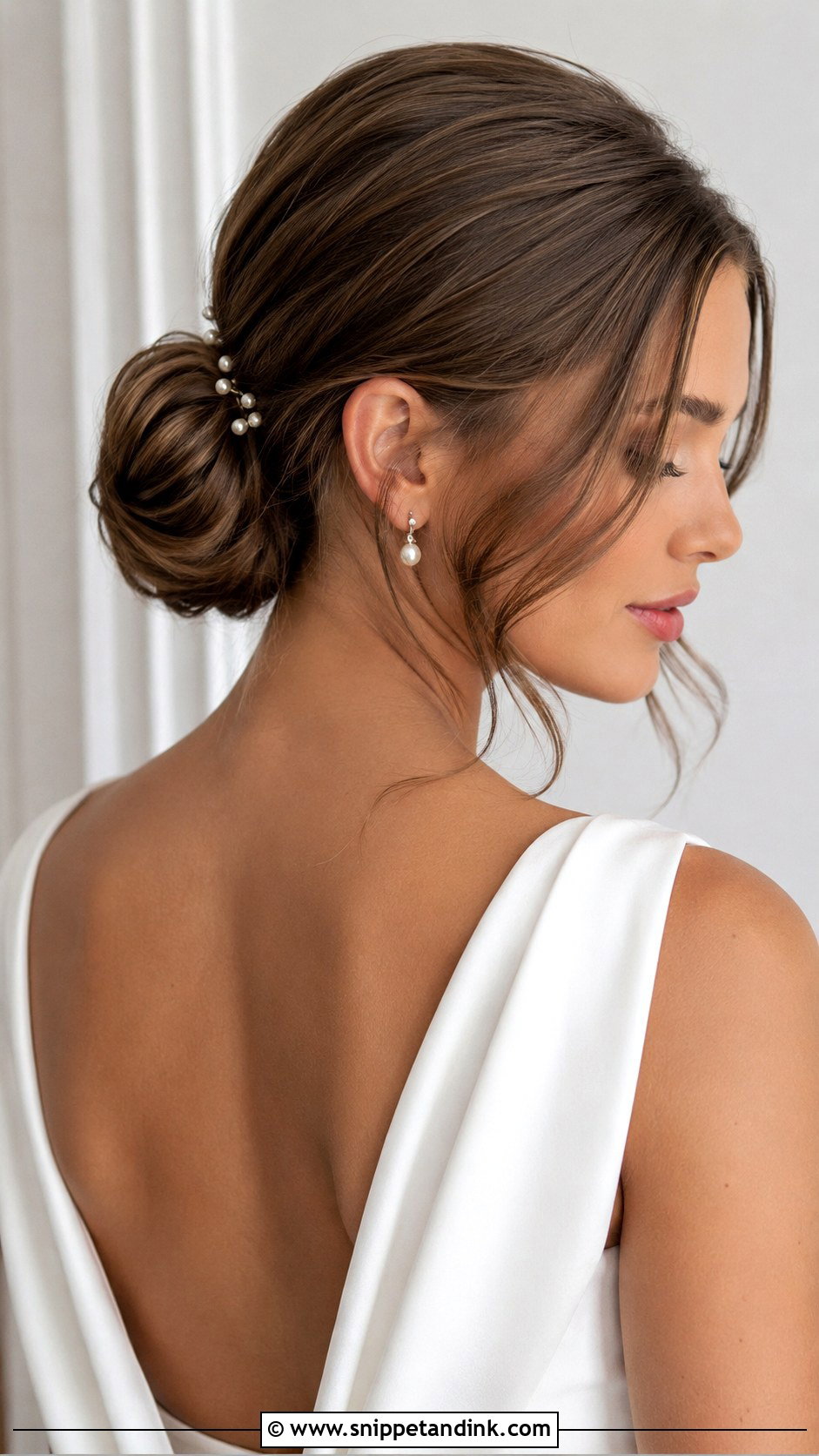
Braids give a loose bun something to hold onto. I usually work two loose Dutch braids along the sides, pancake them, then gather everything into a low textured bun, so it looks relaxed while staying pinned tight. Garden and beach weddings suit it, along with lightweight gowns. On a windy beach I add more spray at the hairline and a few extra pins than usual. Fresh flowers slide into the braids without much planning.
19. Sculpted Crown Updo With Volume
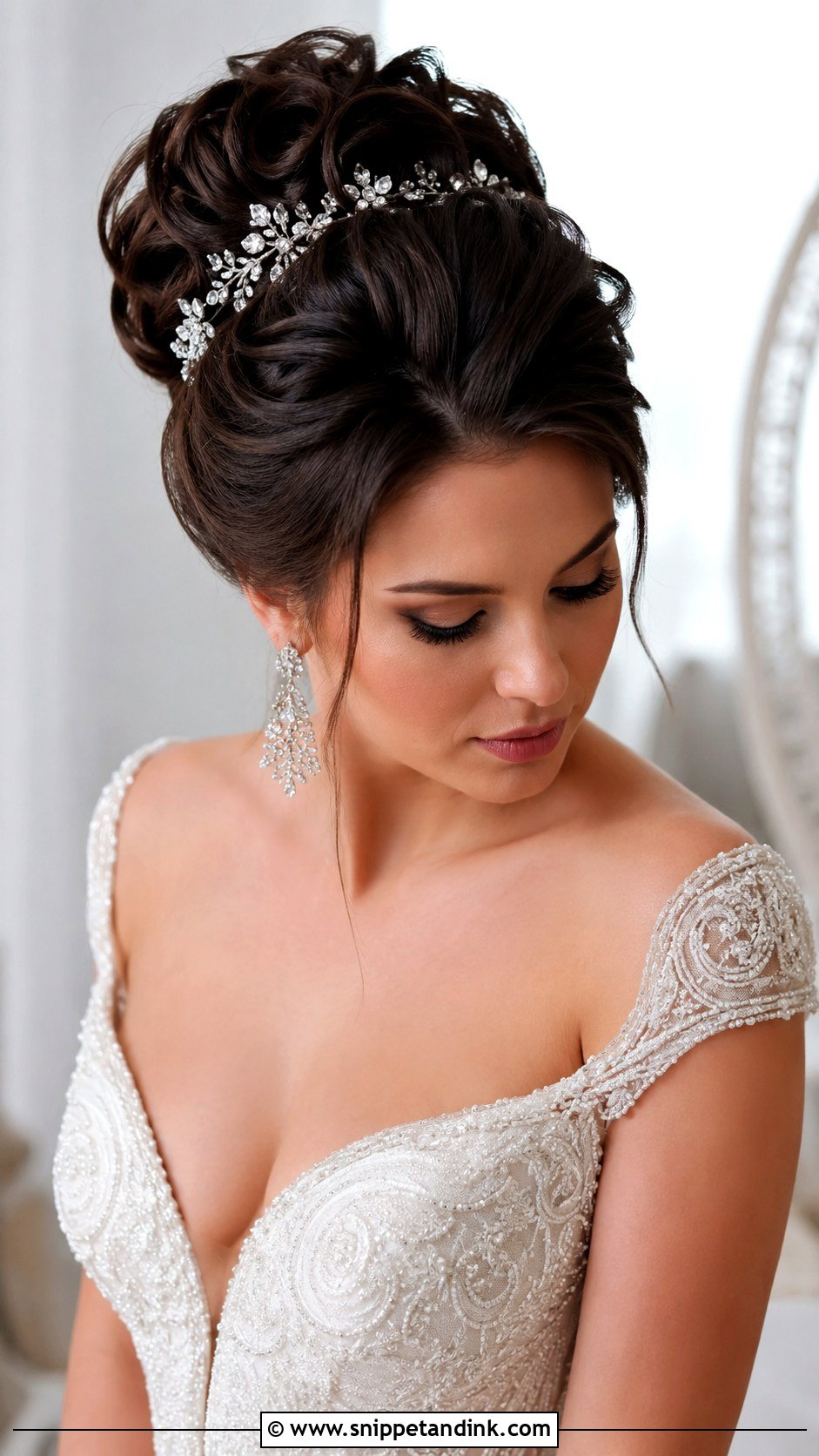
Edwardian hair is all about height at the crown. I tease the crown section from underneath, smooth the top layer over it and pin that volume in place before building the rest of the updo. Fine hair can still manage the shape with a small padding insert hidden under the smooth layer. Structured gowns and classic, formal weddings suit it, and a tiara sits naturally on that lift. Ask for a side view at the trial, because height that looks balanced from the back can look tall from the side.
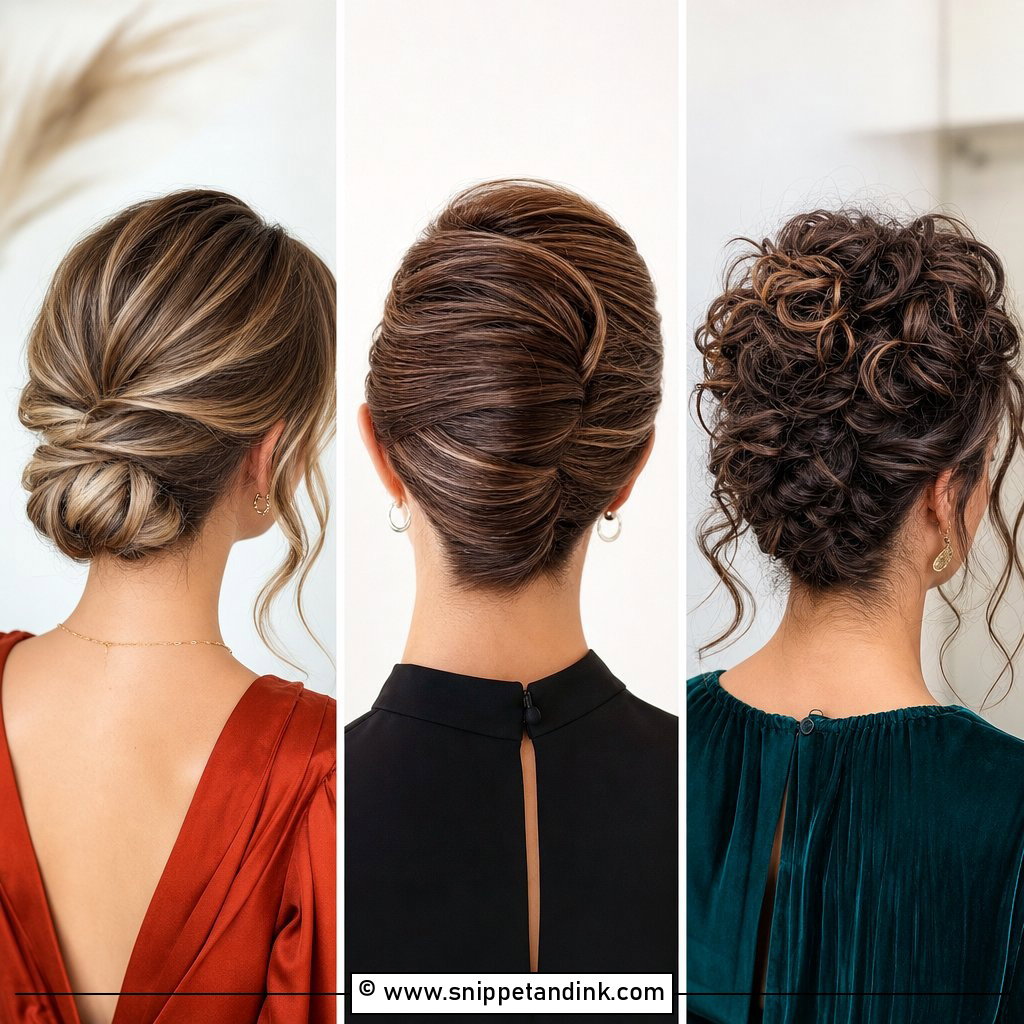
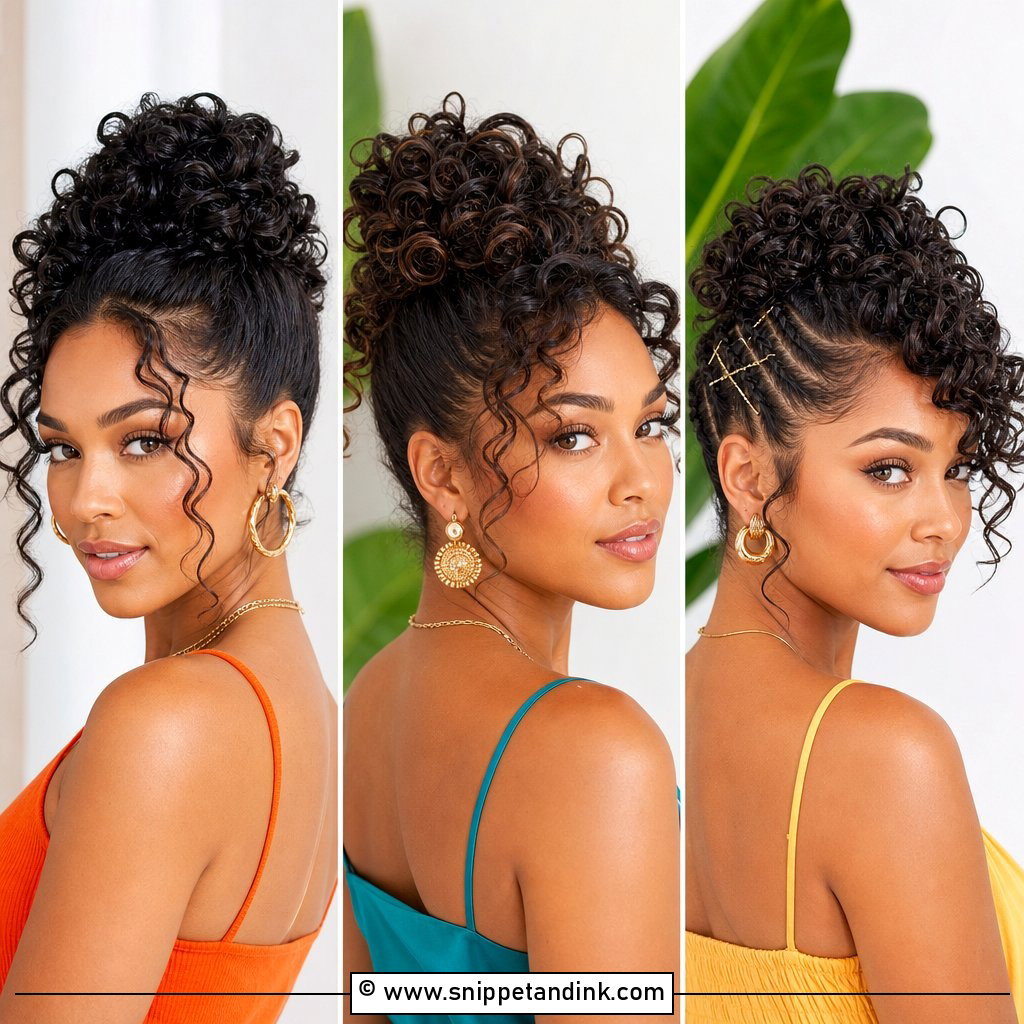
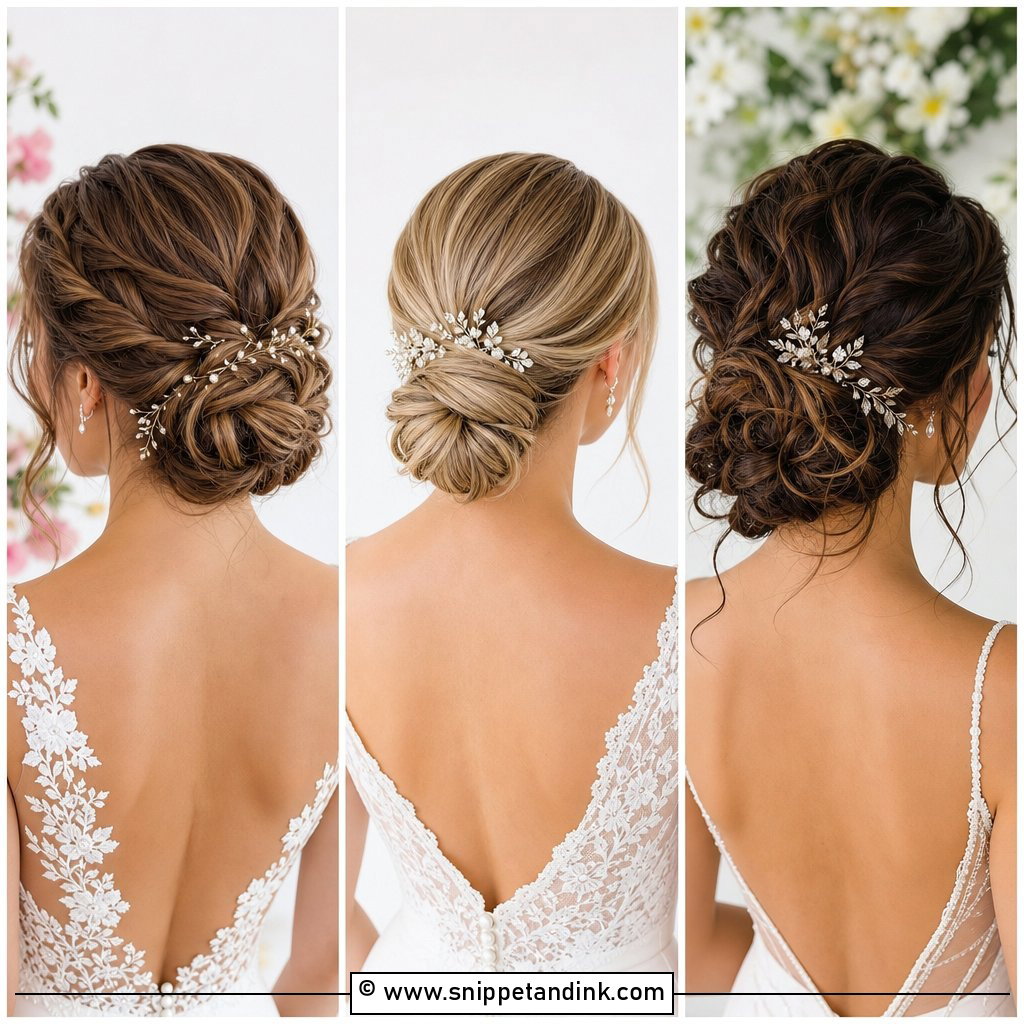
20. Twisted Updo With Crystal Pins
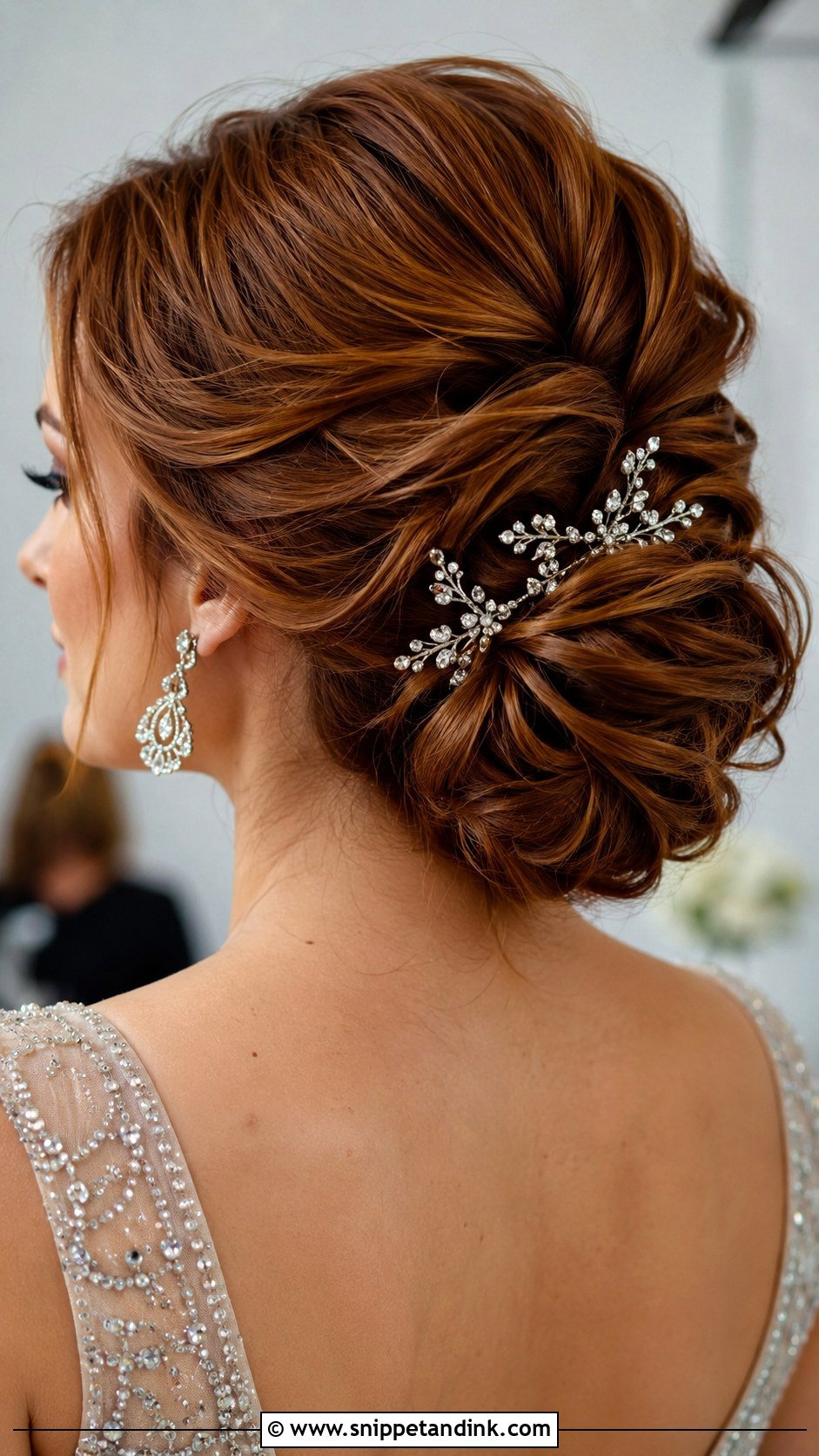
Crystal pins are small, so placement matters more than quantity. I twist and pin the hair into the updo first, then cluster the crystals where the twists cross, which leaves the style adorned with shimmering crystal accents exactly where the light hits. Evening receptions under warm lighting show them best. If you’re wearing statement earrings, I use fewer pins so the two don’t fight.
Pins, Padding and the Parts of an Updo Nobody Sees
When a guest tells me her updo fell apart at a wedding, the cause is almost always the base. A lasting updo is built in layers that never show up in a photo.
- A base: a small hidden ponytail or a row of crossed bobby pins for the rest of the style to grip.
- Prepped hair: curled or textured hair holds pins, while freshly washed, silky hair lets them slide. I usually ask for day old hair.
- The right pins: bobby pins for locking, U pins for volume and curls, spin pins for buns. Pins in your hair color disappear.
- Padding where needed: a donut or soft padding piece adds fullness to fine hair without extra weight.
- Spray in stages: a light mist while building and a firm hold at the end, never one soaked finish.
Surviving the Veil Removal and the Last Dance
Most updo trouble starts at the reception, usually right after the veil comes off. A veil comb grips the pins underneath it, so I tell brides to have someone lift it straight up and out, never sideways. I also place the comb into a braid or twist rather than relying on a single pin.
Give a bridesmaid a small kit: six bobby pins in your hair color, a travel hairspray and a few clear elastics. If a piece falls during dancing, pin it back underneath instead of trying to tuck it. And if your style uses fresh flowers, ask your florist for a spare stem or two.
Bring Your Neckline and Veil to the Trial
Look at each style with your neckline, your hair’s density and the weather at your venue in mind, not only the photo. I like a trial two to three months ahead, which leaves time to change course. Wear a top with a similar neckline to your dress and bring the veil if you’ll wear one. Then save the two or three updos you liked most and show them to your stylist; the right one is whichever still looks the same at the last song.
You'll Like These Ideas:



Leave a Reply