
A plain wedding dress is harder to get right than a beaded one. With no lace or sparkle to draw the eye, everything rests on the cut, the fabric’s weight and how precisely it’s been fitted to you. That’s the part I love about dressing minimalist brides: the conversation stops being about decoration and becomes about drape, neckline and proportion. The thirty silhouettes below run from bias-cut satin slips and sculpted crepe columns to clean ball gowns and courthouse midis, with notes on who each one flatters, what it asks of your fittings and where it tends to struggle.
Plain Gowns Show Everything Underneath, So Plan the Fittings Early
A beaded bodice hides a lot. Smooth satin and crepe hide nothing: a bra line, a pucker at the zip or a strap that’s a few millimetres too long all show in the photos. Because of that, I treat the alterations as part of the dress, not an afterthought.
- Order early. Made-to-order gowns commonly take four to six months to arrive, and alterations need roughly two to three months on top.
- Bring your actual underwear and shoes to the first fitting. Changing either afterwards changes the hem and the bodice fit.
- Look at the dress under daylight and flash. Some satins photograph shinier than they look in the shop, and thin crepe can go slightly see-through.
- Sit, raise your arms and walk stairs in the sample. Minimalist cuts rely on fit, so any pull will show.
Plan on three fittings, with the last about two weeks before the wedding. Weight can shift with stress, and a sleek gown shows a gap at the bodice more than any other style.
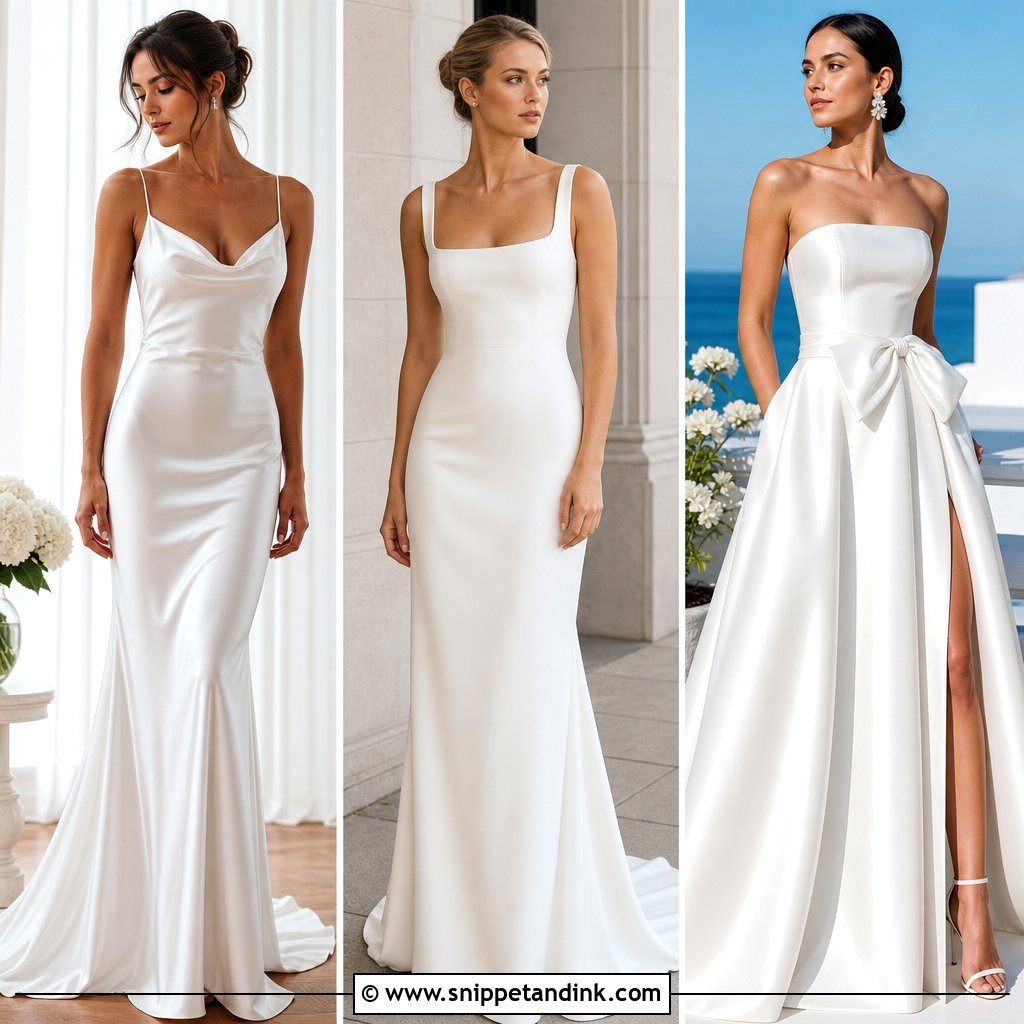
1. Satin Slip Wedding Dress
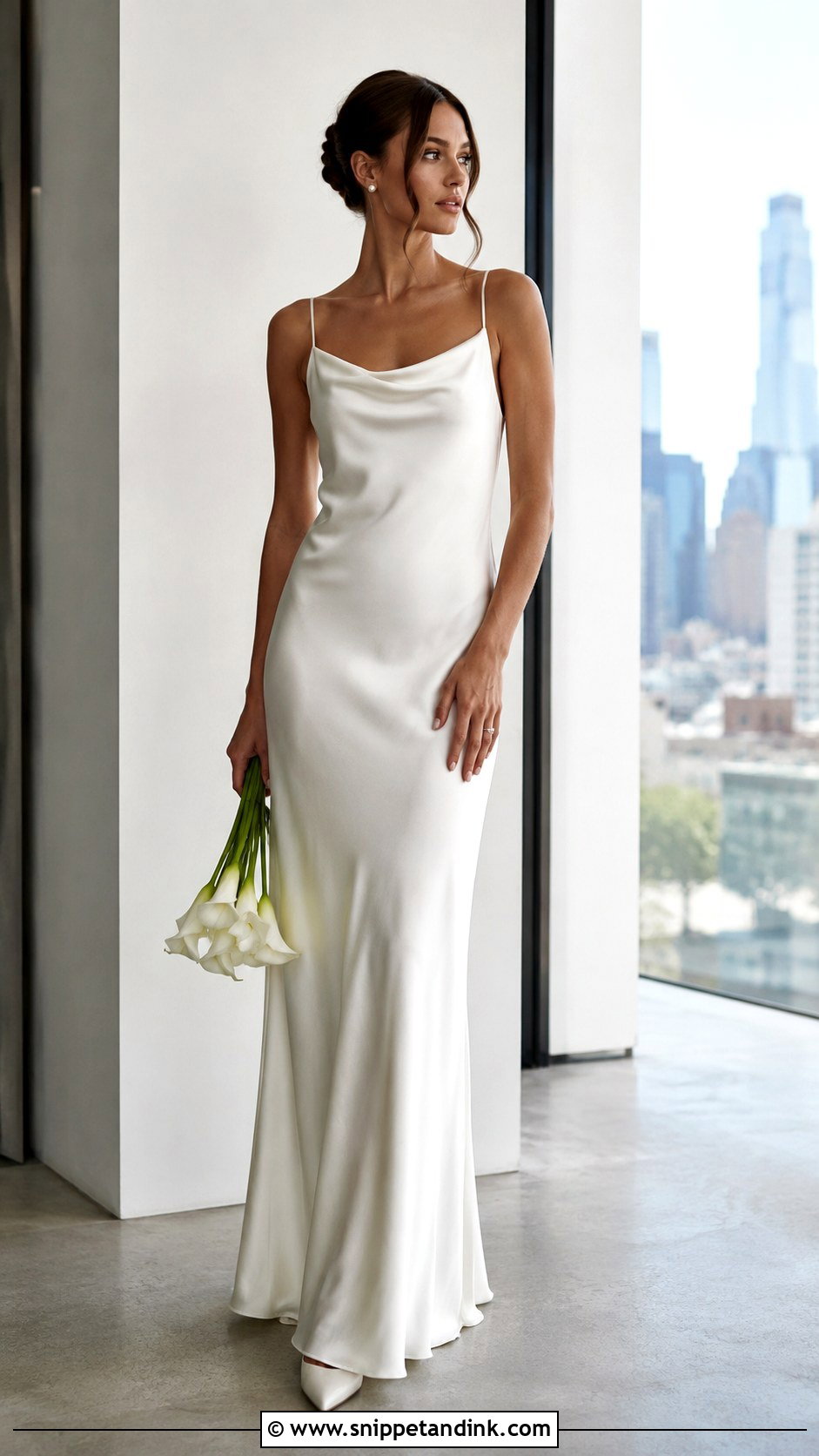
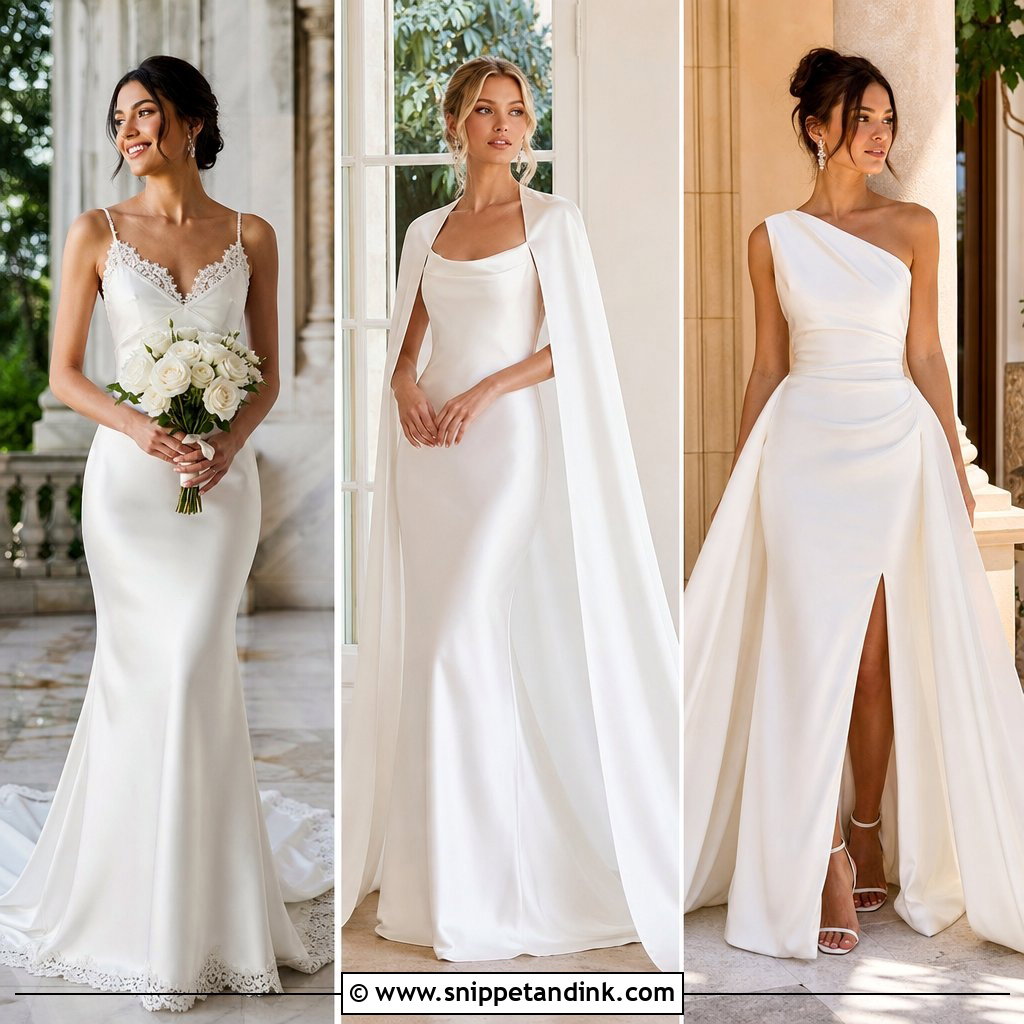
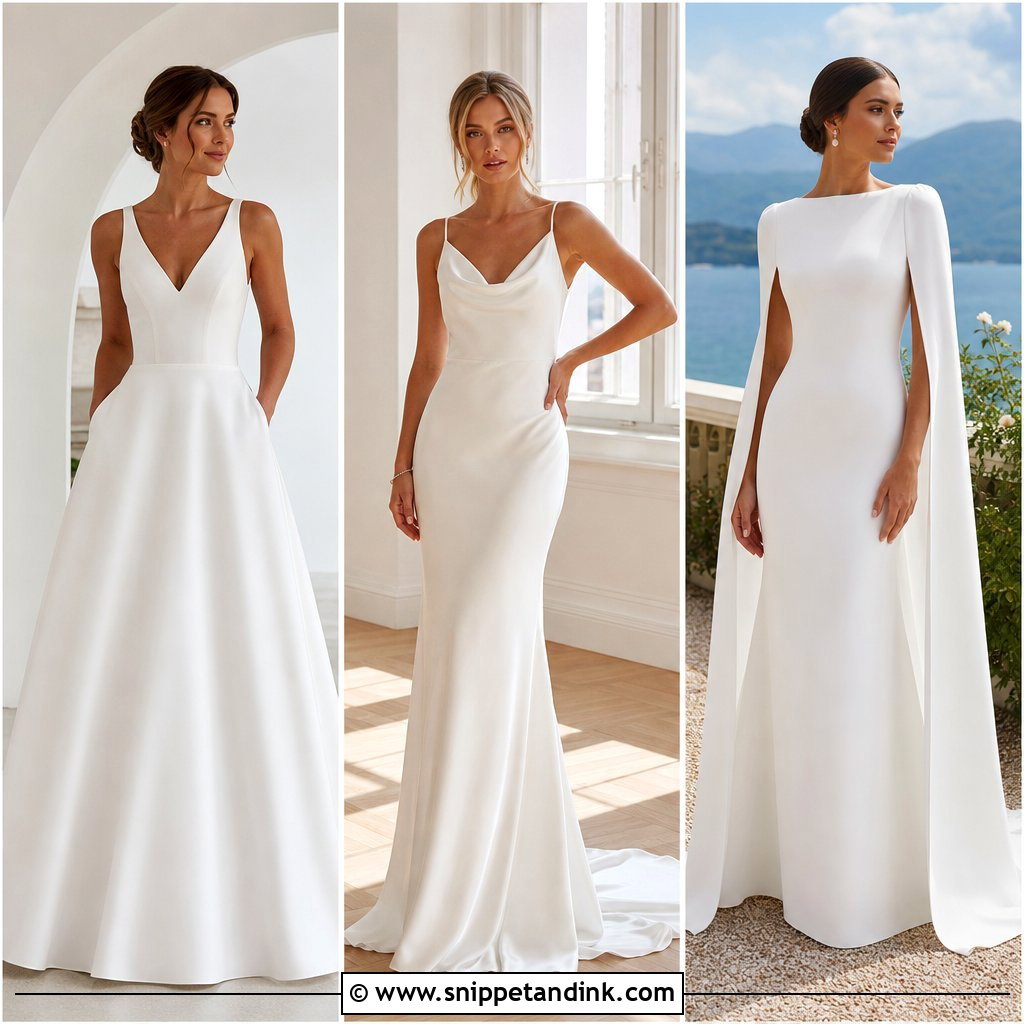
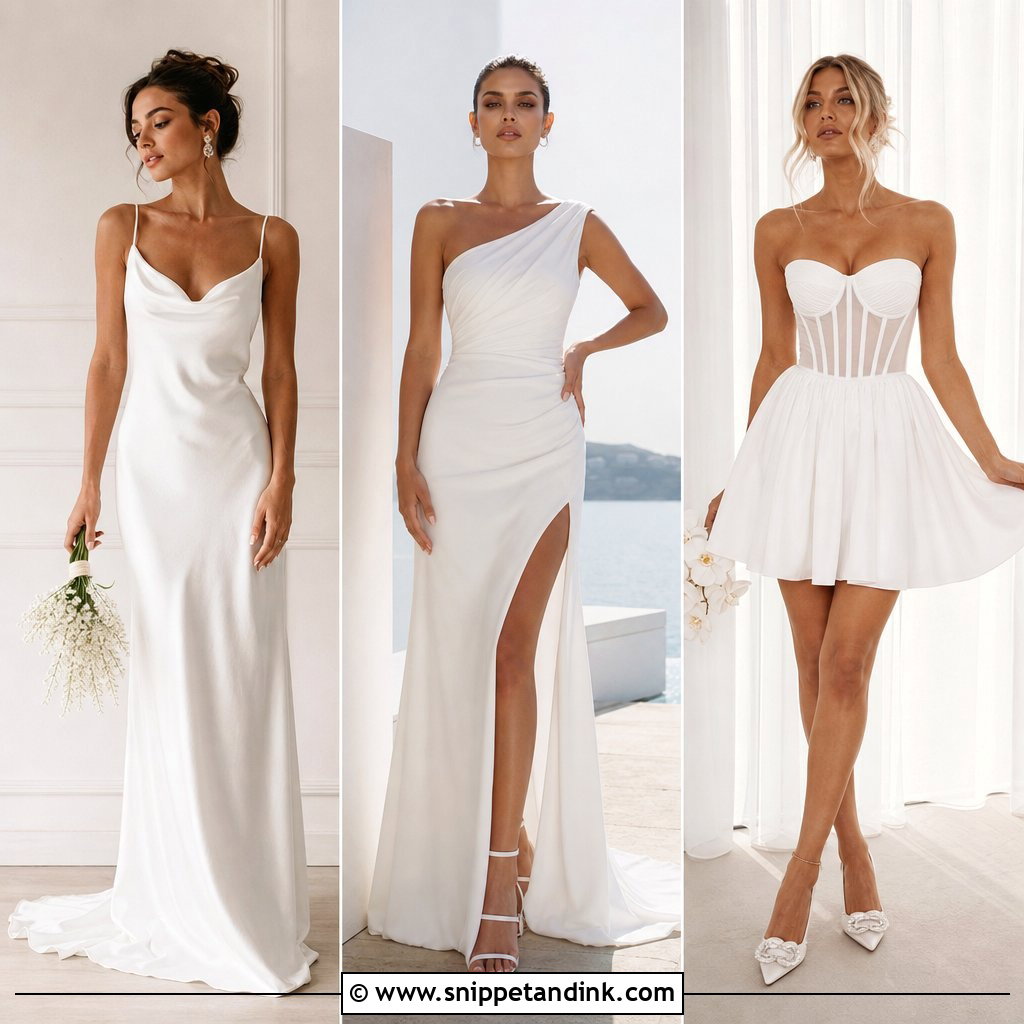
The satin slip is the dress most brides picture when they say “simple”, and it’s also the least forgiving. Cut on the bias, the fabric stretches diagonally and follows the body, so I always try it with the exact underwear the bride will wear on the day. A soft cowl and thin straps keep it clean. Heavier satin backs hang better than thin charmeuse, which can ripple over the hips. Pointed ivory heels, pearl studs and a smooth low bun suit it. I love it for a city ceremony or a warm evening, less so for a long day of hugging and sitting.
2. Square Neck Wedding Dress
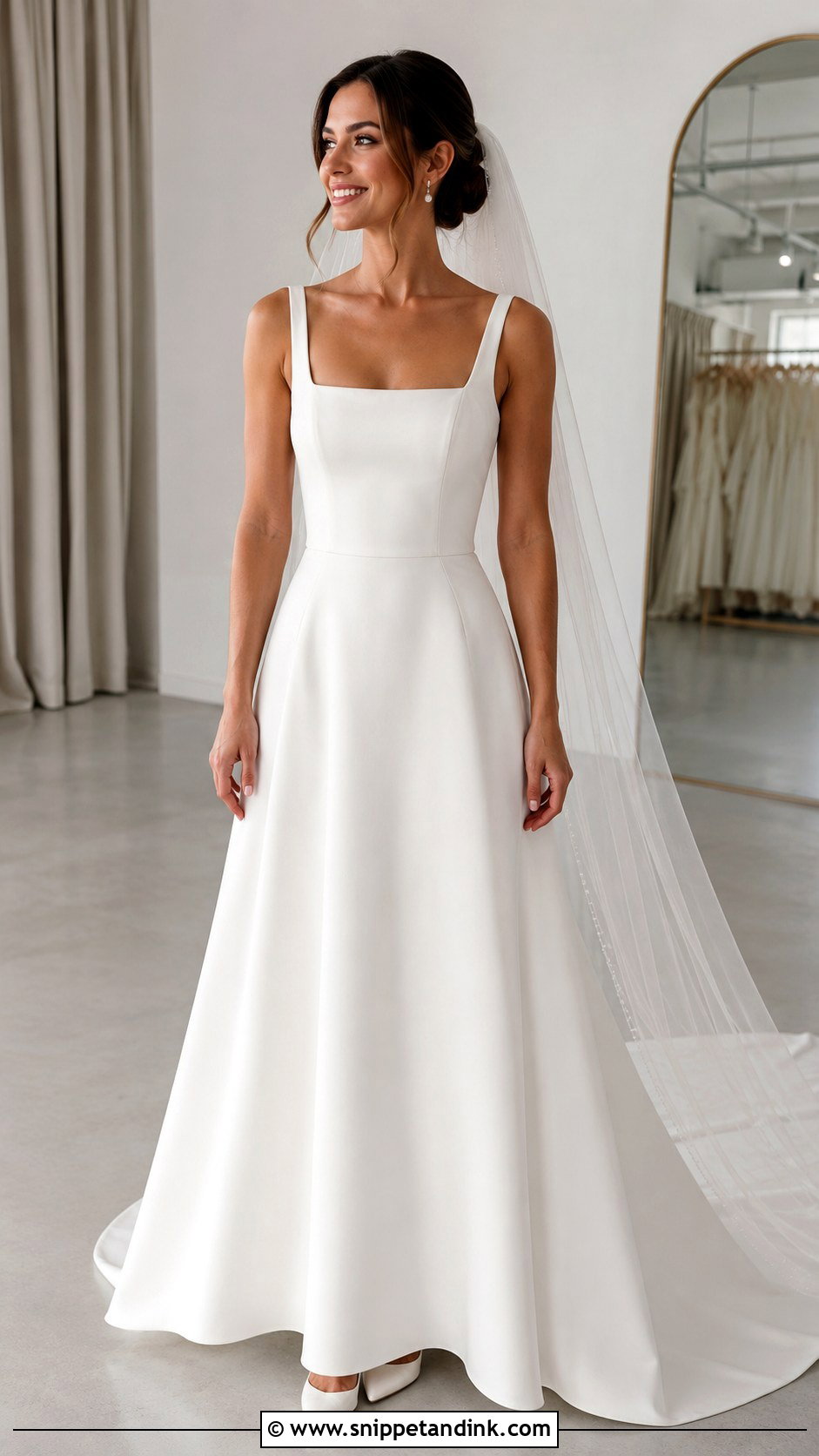
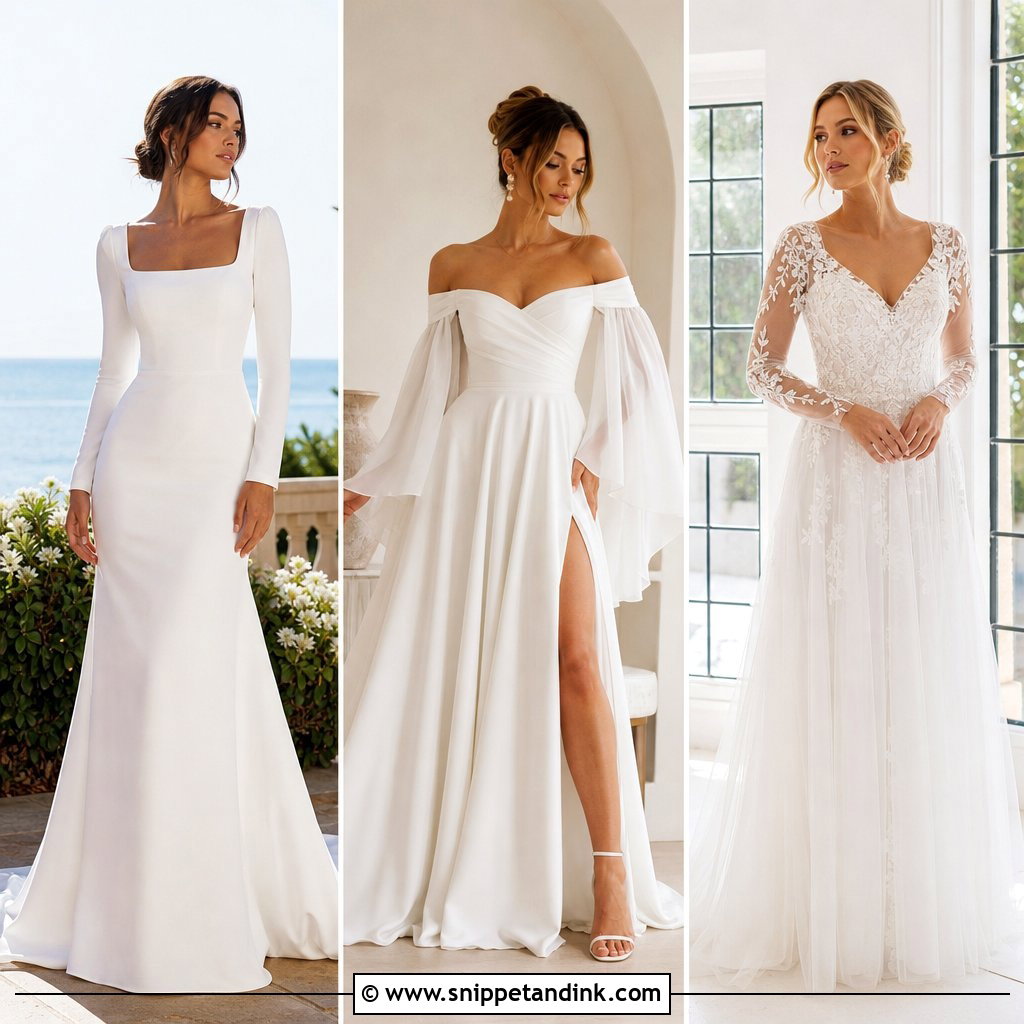
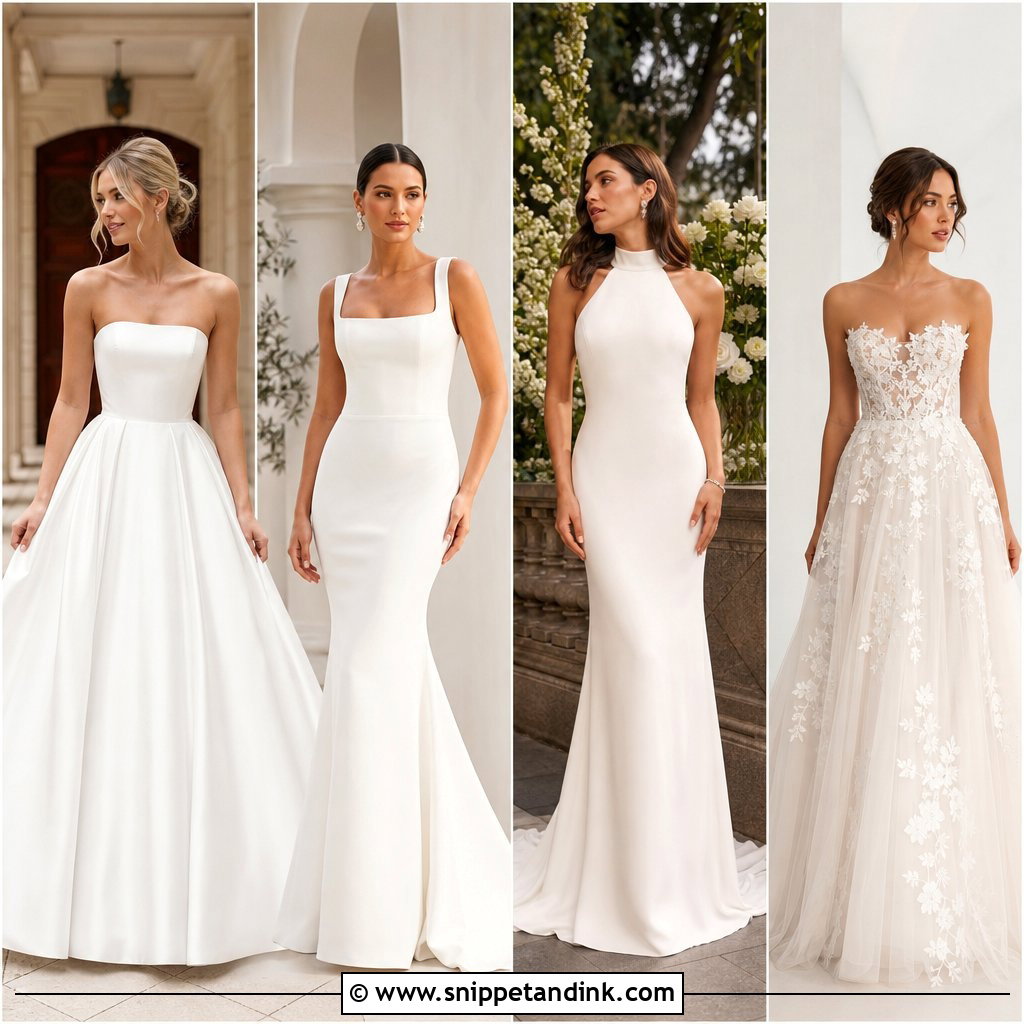
A square neckline frames the collarbone and gives an architectural line that suits a wide range of figures, especially fuller busts that need a stable edge. Mikado and structured crepe hold the corners crisp; thin satin lets them curve and collapse. Medium-width straps give support and balance the neckline visually. When I fit these, I check the corners when the bride lifts her arms, since a square neck can gape at the sides. Pearl drops and classic pumps work, and either a centre-part bun or soft waves suit it.
3. Strapless Column Wedding Dress
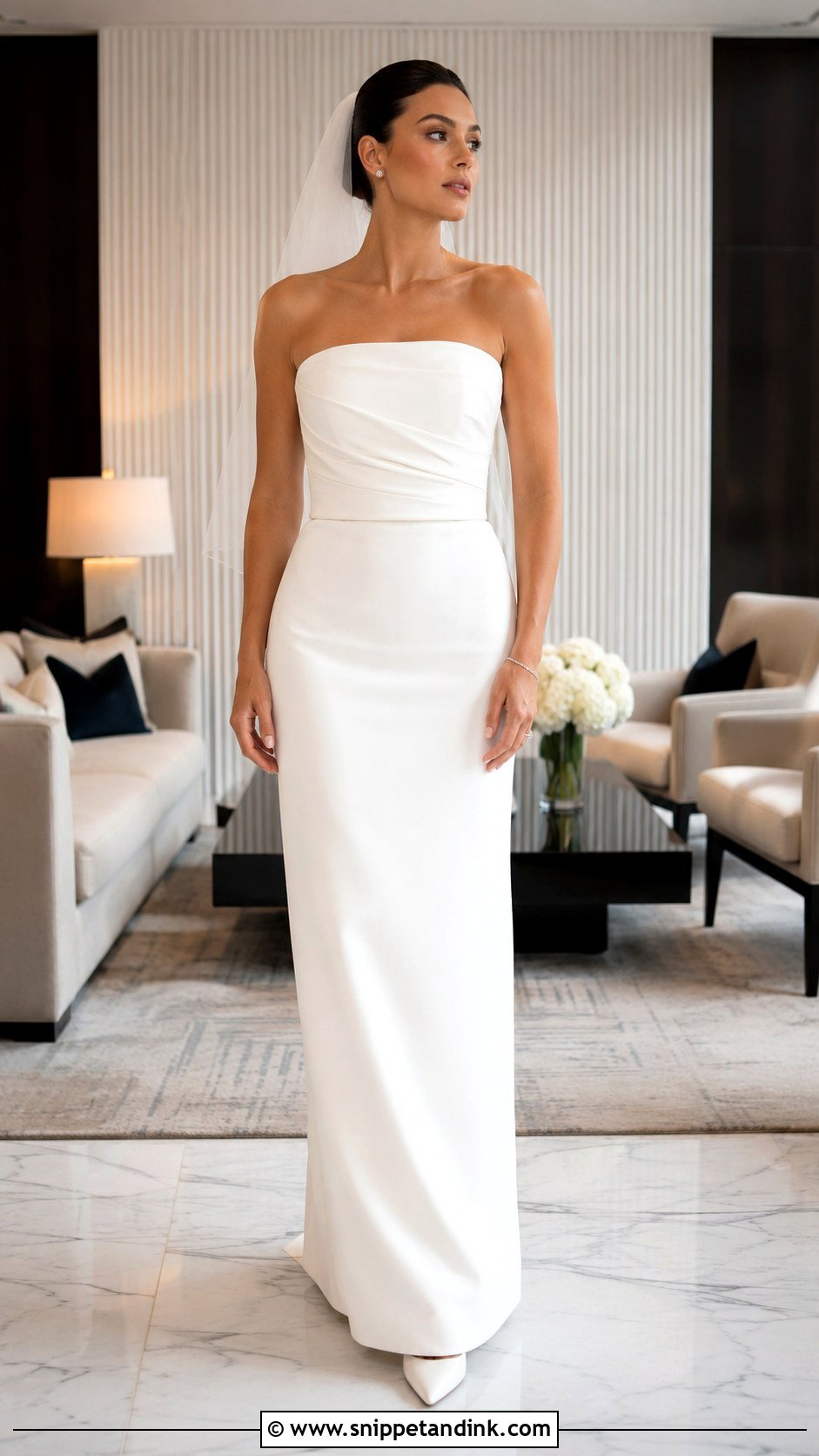
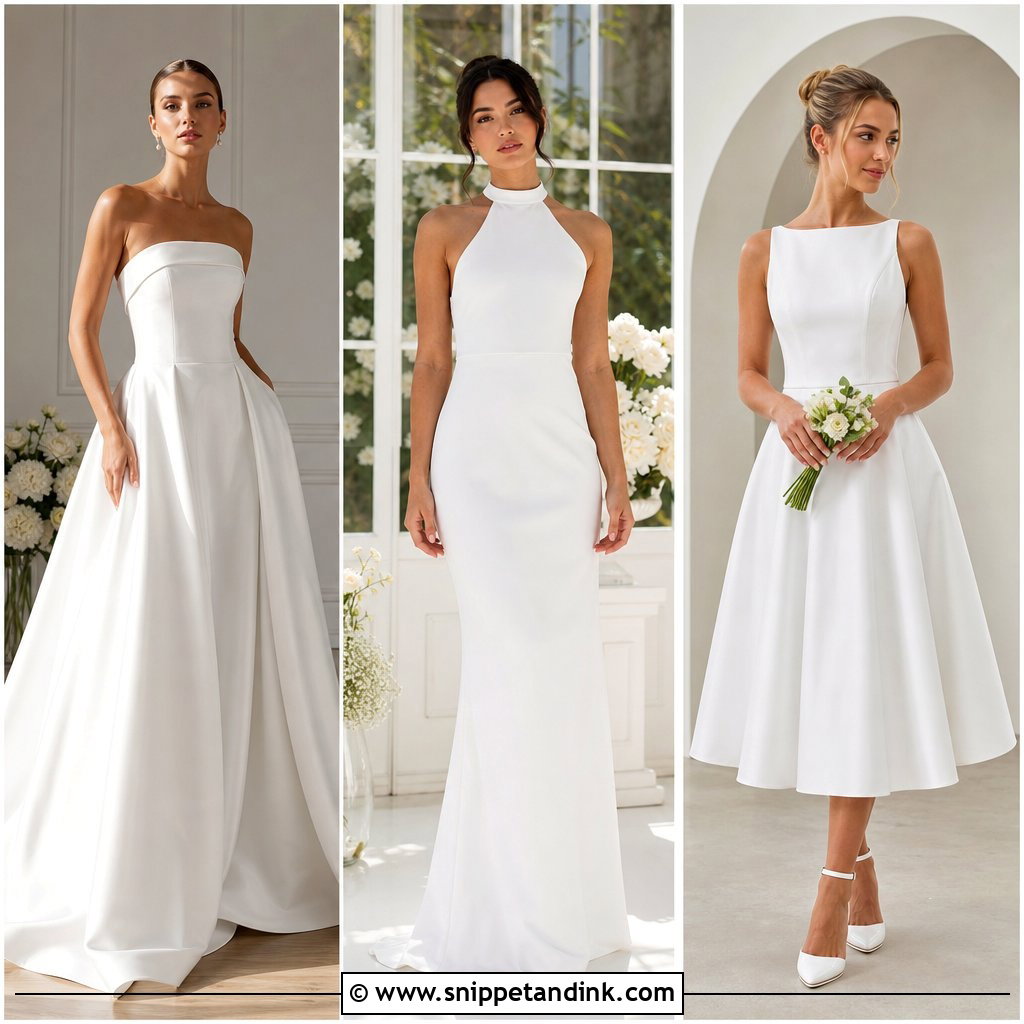
Strapless columns lengthen the body and make good posture look like part of the design. The bodice has to do all the work, so internal boning and a waist stay are non-negotiable; I’d walk away from a strapless column that relies only on a tight top edge. A back slit or a short sweep keeps it walkable. Sleek heels, a short veil and small crystal studs keep the line clean. Galleries and hotel ballrooms suit it, and it carries a lot of presence for something so plain.
4. Long Sleeve Crepe Wedding Dress
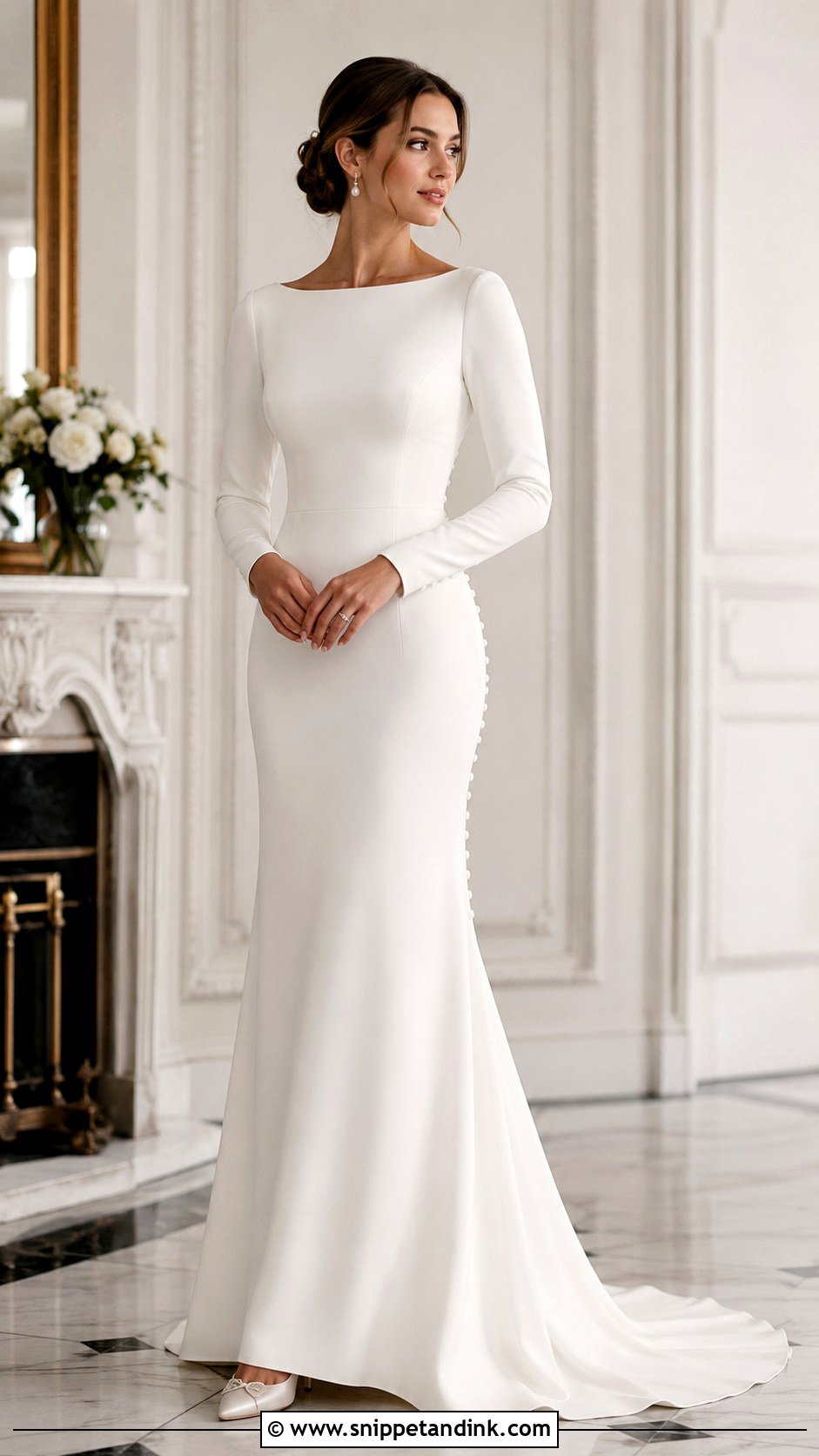
Crepe is my first suggestion for a bride who wants coverage without bulk. It has a matte surface and just enough weight to drape cleanly, which makes a long sleeve crepe wedding dress look calm and expensive. Fitted sleeves need careful work at the armhole: too tight and you can’t hug anyone, too loose and they bag at the elbow. A row of covered buttons down the back adds classic detail. Low ivory heels, pearl earrings and a chignon suit cooler seasons and formal ceremonies.
5. Off Shoulder Wedding Dress
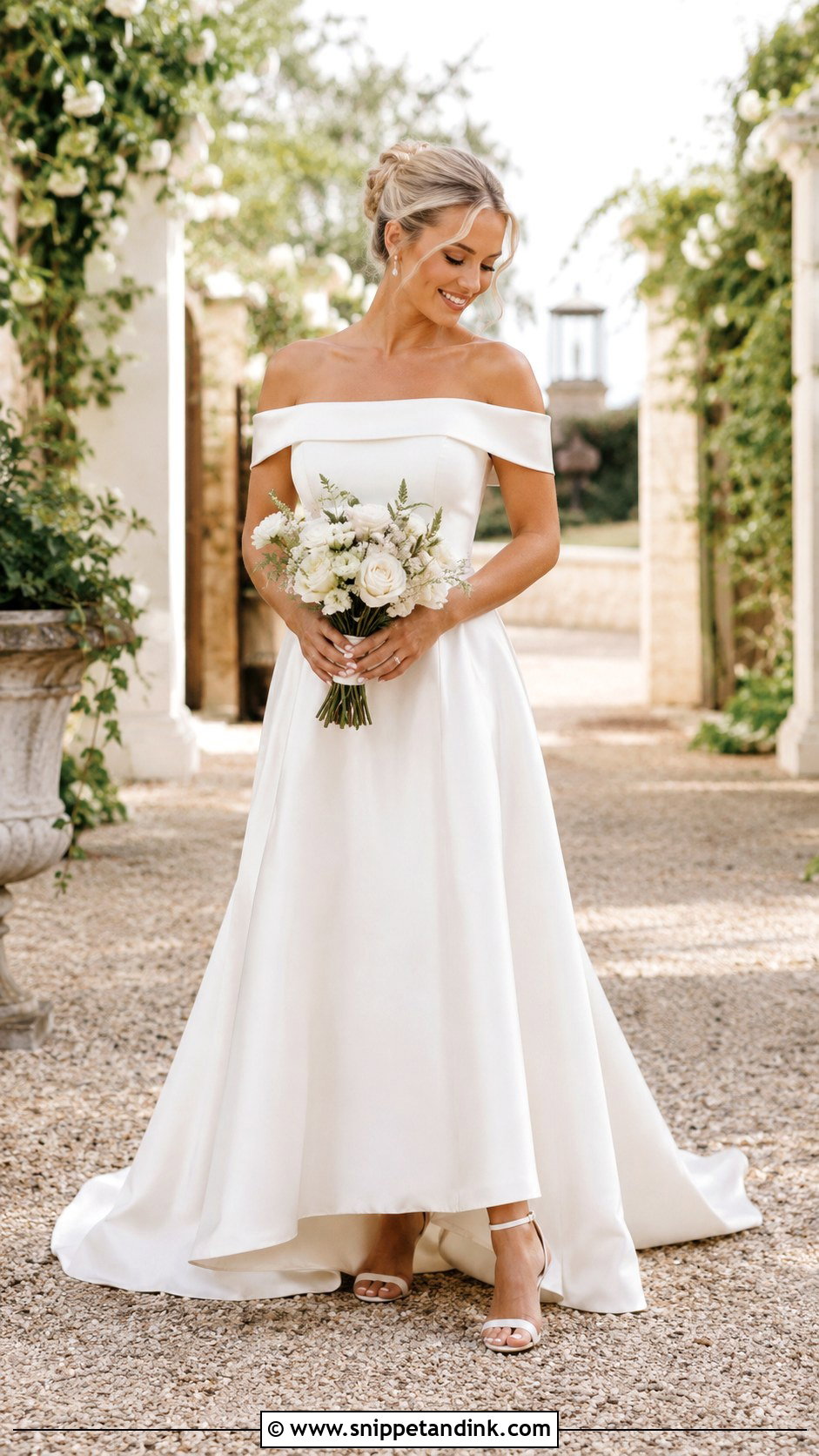
An off-shoulder neckline softens a plain gown. With smooth satin or crepe and a gently flared skirt, the shoulders become the only real detail, so I keep lace and sparkle out of it. These necklines rely on elastic or boning to sit in place; I always test them by having the bride raise her arms for a hug, since the band can slide up toward the neck. A fingertip veil, delicate drops and a low bun suit garden ceremonies and indoor receptions alike.
6. High Neck Wedding Dress
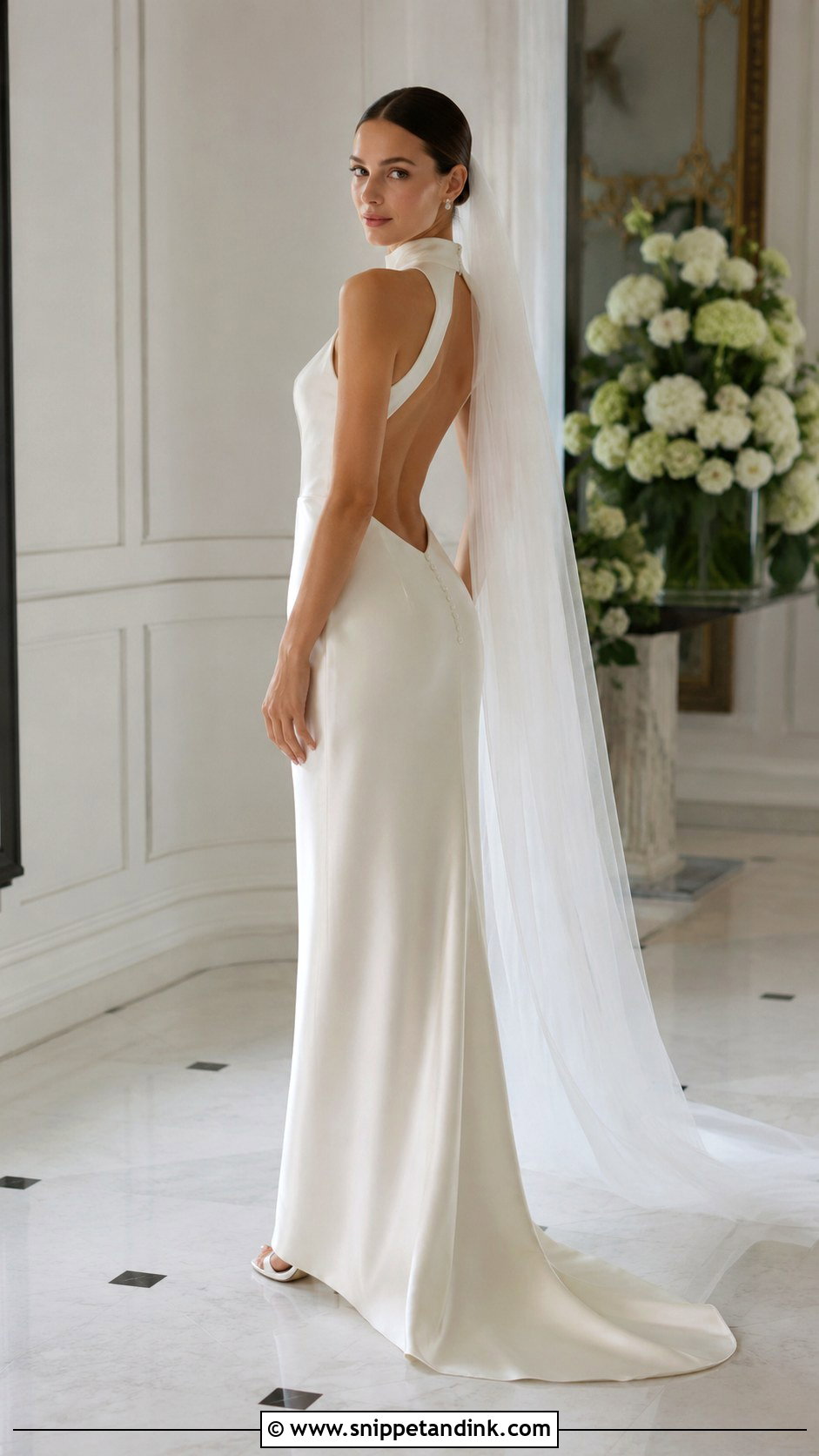
A high neck covers more while still reading sleek. Sleeveless versions in satin, crepe or structured silk give a long clean line, and a low open back balances the coverage in front. High necks can feel tight once you’ve been talking and laughing for hours, so I check that two fingers slide inside the collar comfortably. Keep everything else minimal: small earrings, a smooth updo, and a long veil if you want drama. City weddings and formal evenings are where this one shines.
7. Minimalist Ball Gown Wedding Dress
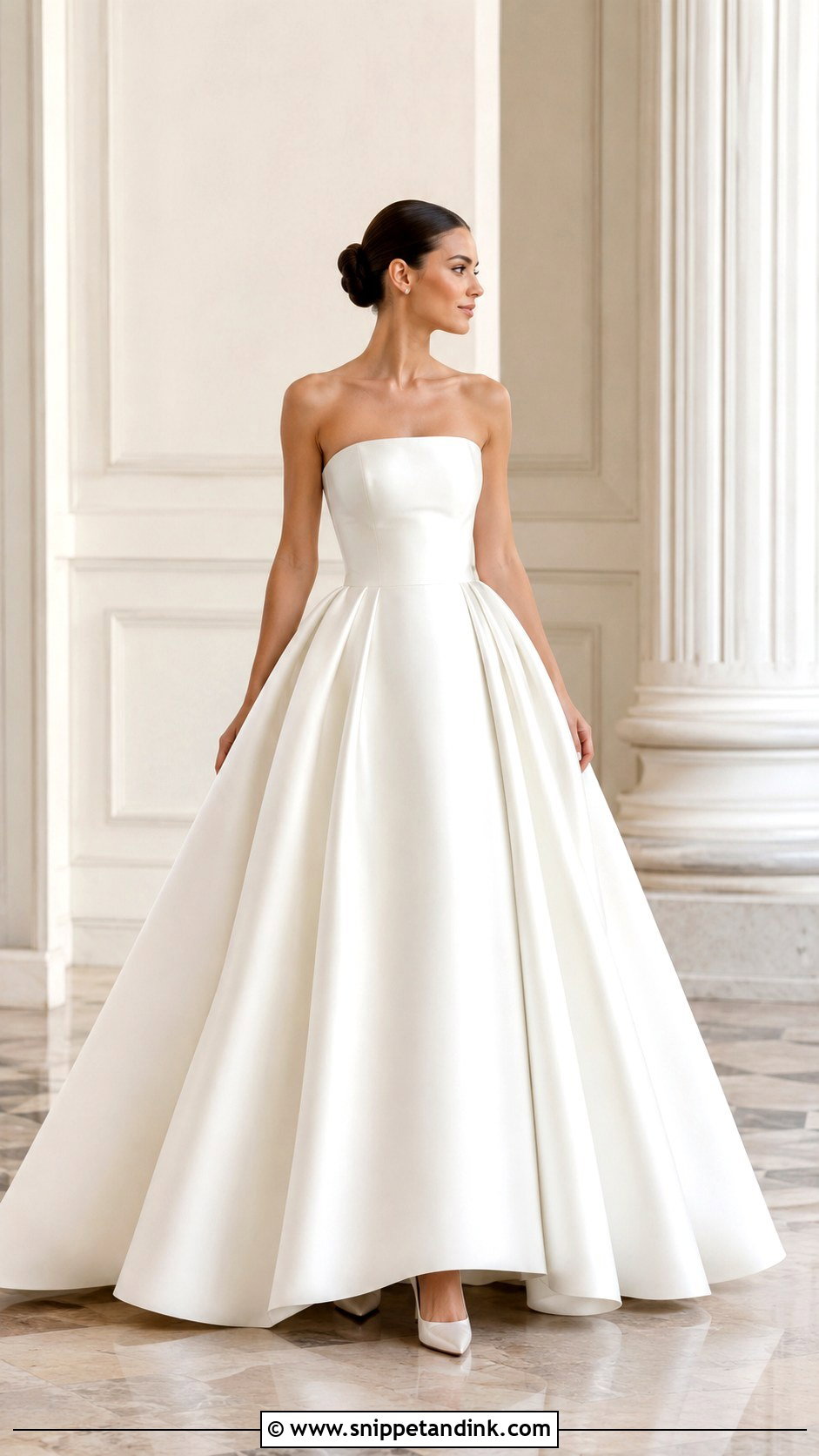
Volume without ornament is a minimalist ball gown in a nutshell. One good fabric does it, usually mikado, satin or silk faille, because these hold the skirt out on their own. A strapless, scoop or square neckline keeps the top fresh. The weight of a full mikado skirt surprises brides; I have them walk and sit in a sample before ordering. A sleek bun, pearl studs and a structured bouquet balance the scale in grand venues and formal estates.
8. Minimalist A Line Wedding Dress
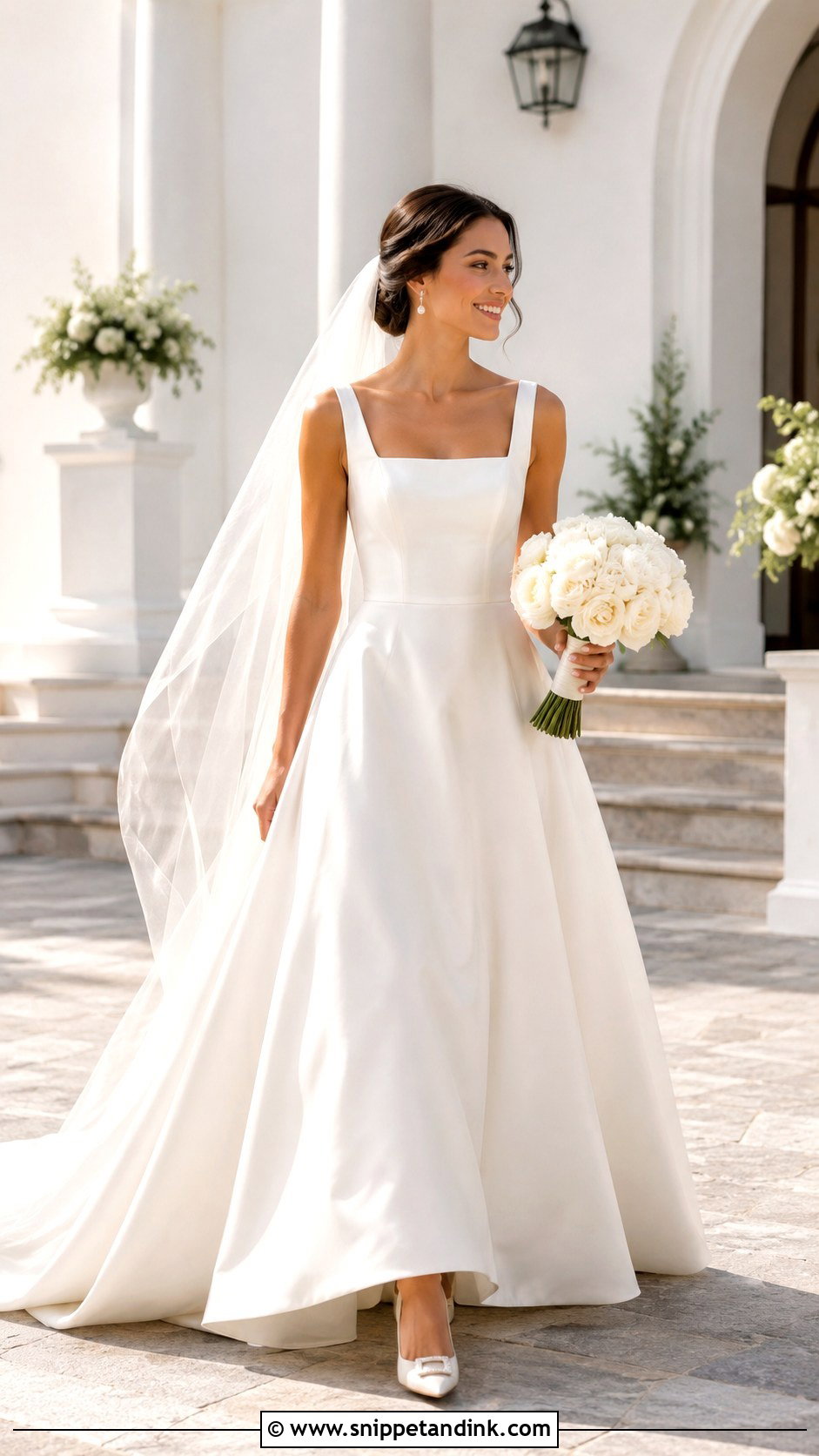
If a bride doesn’t yet know what she wants, I start her in an A-line. The fitted bodice and gently widening skirt suit almost every body shape and every venue, from a lawn to a ballroom. Plain satin or crepe with minimal seams keeps it modern. Where it can go wrong in a minimalist version is fabric weight: a thin satin A-line looks limp, so I lean toward a heavier fabric that holds the flare. Simple heels, pearl earrings and a soft veil.
9. Minimalist Mermaid Wedding Dress
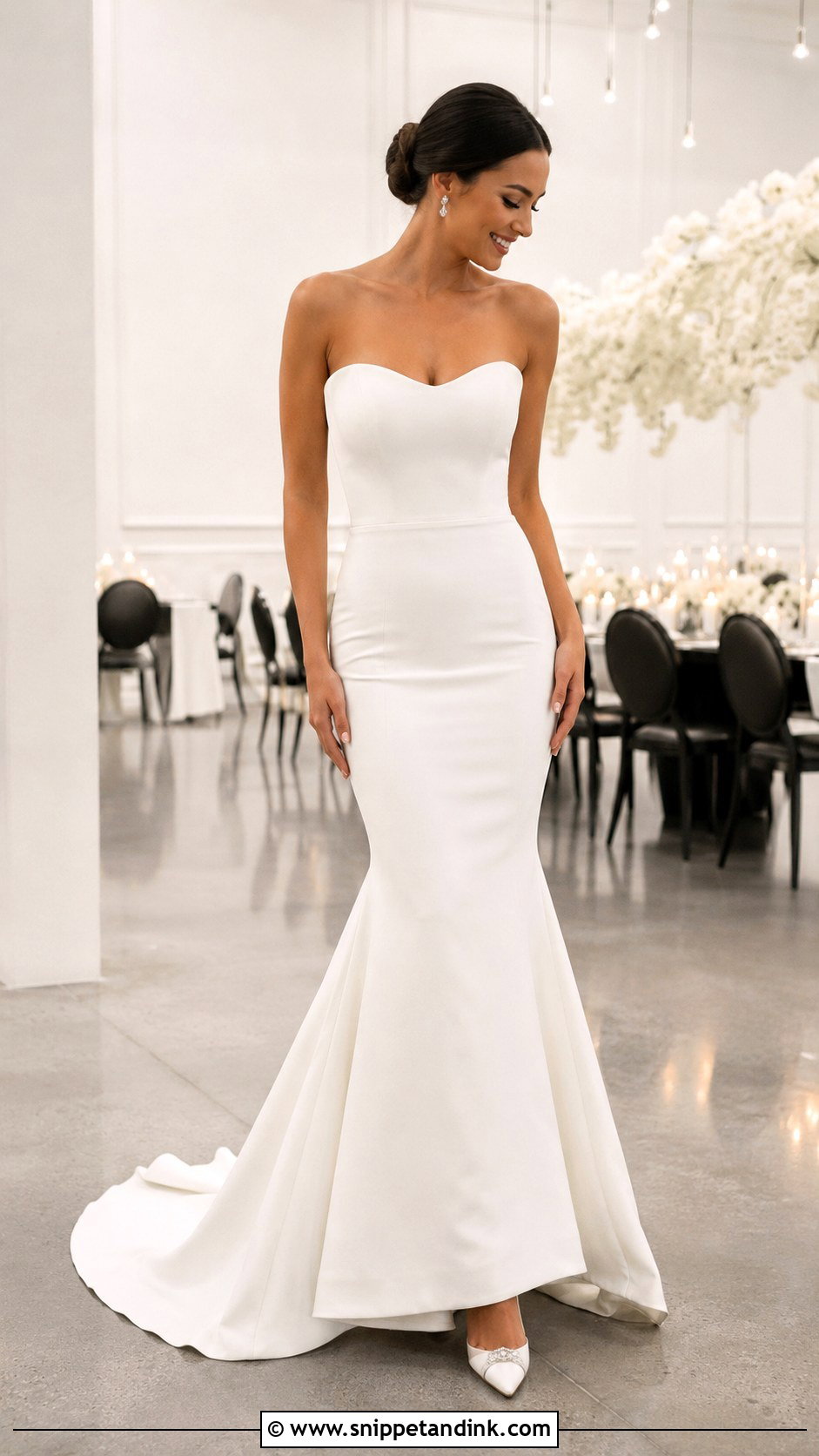
A mermaid follows the body through the hips and flares near the knee. Without lace to distract, every millimetre of fit shows, so this is the silhouette I warn brides will need the most alteration time. The flare point matters: set too low, you shuffle; set just above the knee, you can walk and dance. Smooth crepe or satin with clean seams, a strapless or square neckline, pointed heels and a polished hairstyle.
10. Minimalist Sheath Wedding Dress
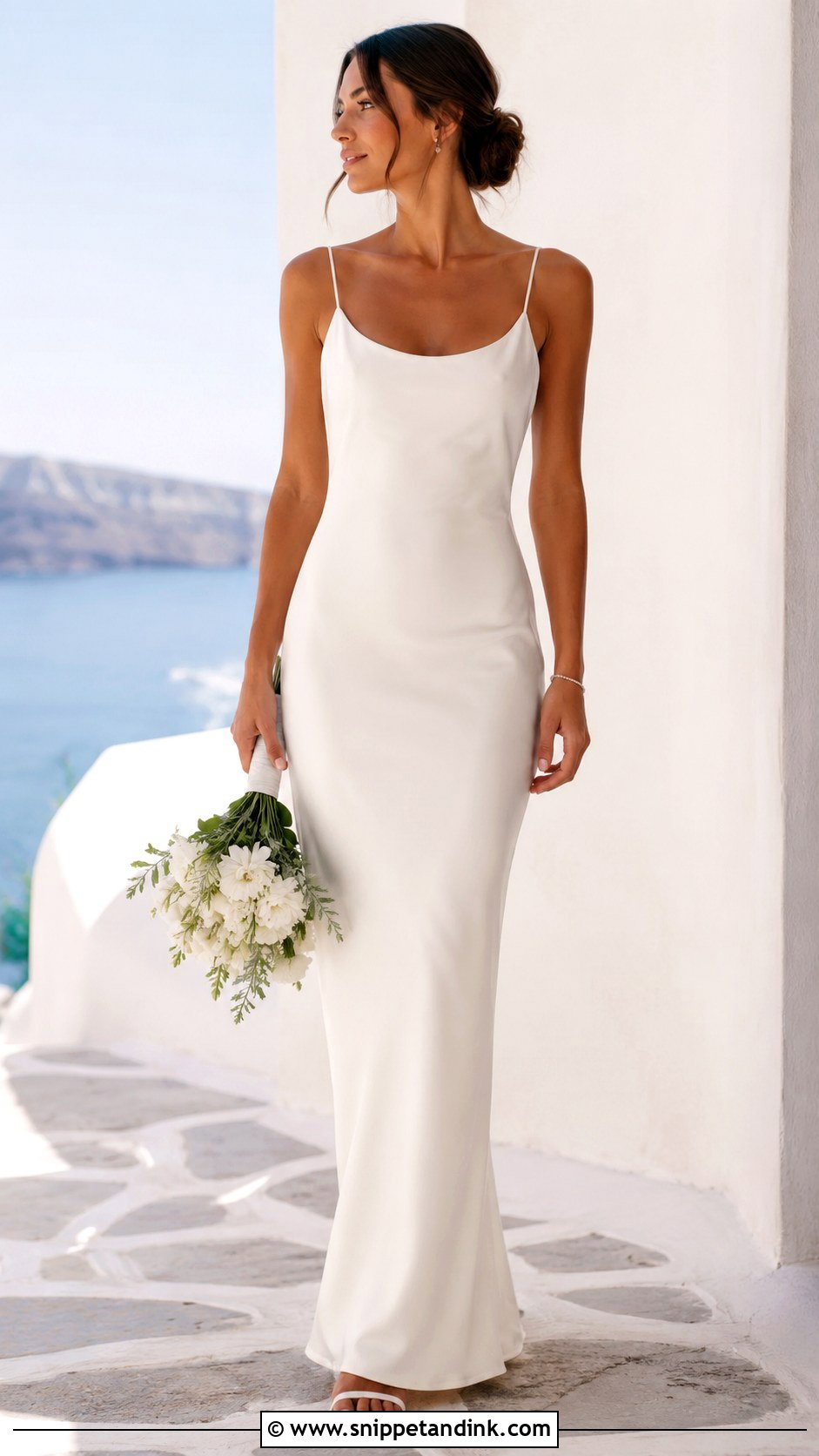
A minimalist sheath wedding dress falls straighter than a mermaid, skimming rather than gripping, which makes it one of the most comfortable gowns I fit. Silk, charmeuse and crepe give the cleanest finish. It’s lighter to travel with too, which is why I suggest it for beach ceremonies and destination weddings. A sheath shows lines underneath on lighter fabrics, so try it with your shapewear. Strappy sandals and soft waves complete it.
11. Backless Wedding Dress
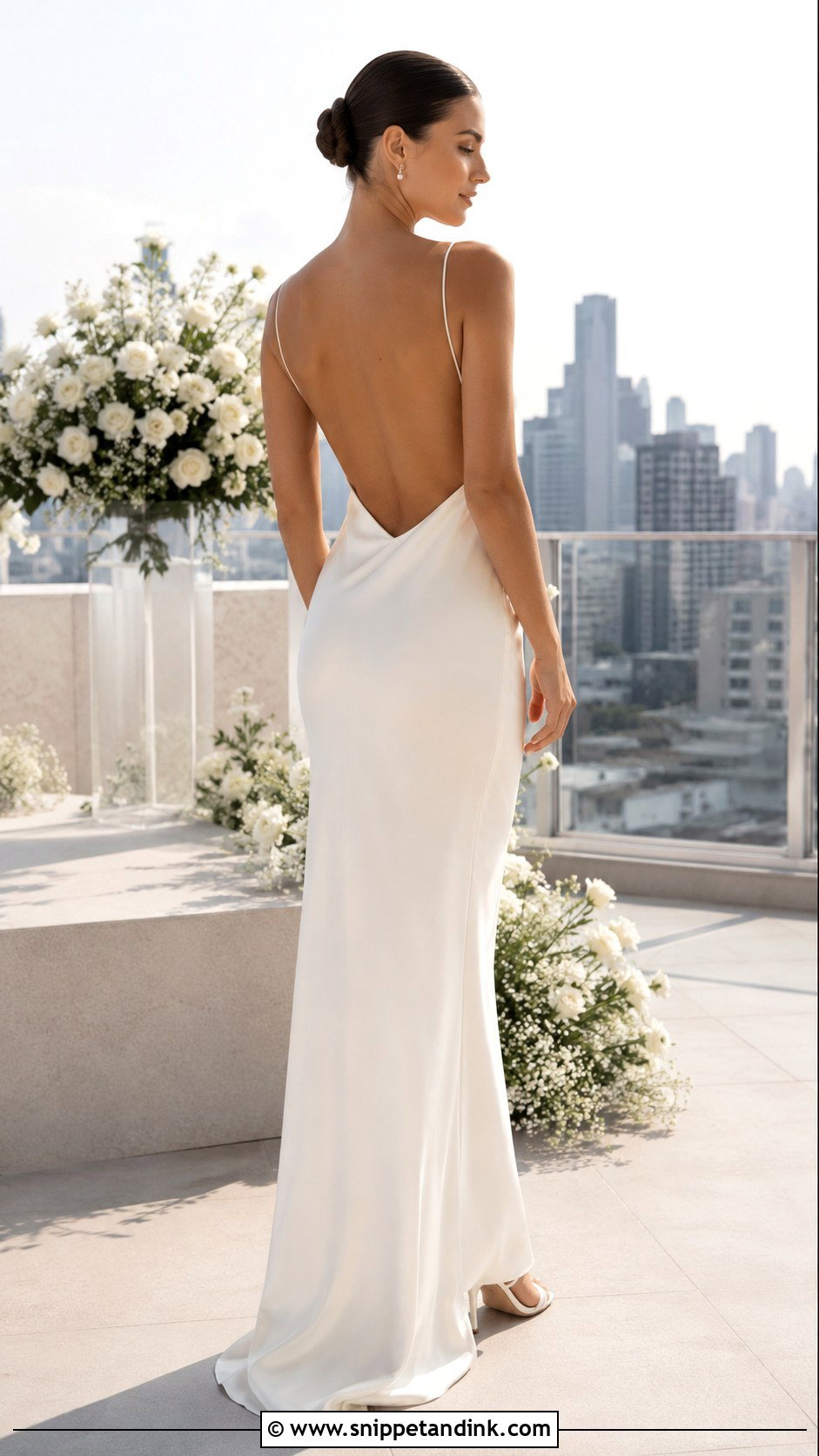
An open back gives a plain gown its moment when you turn to walk up the aisle. The front can stay understated in a sheath, slip or column shape, with a cowl or low V behind. Backless gowns need a plan for support, usually built-in cups and a clear or skin-toned stabilising strap, which I decide at the first fitting rather than the last. Keep jewellery minimal so the back stays the focus. Warm-weather, rooftop and destination weddings suit this quiet drama best.
12. Halter Wedding Dress
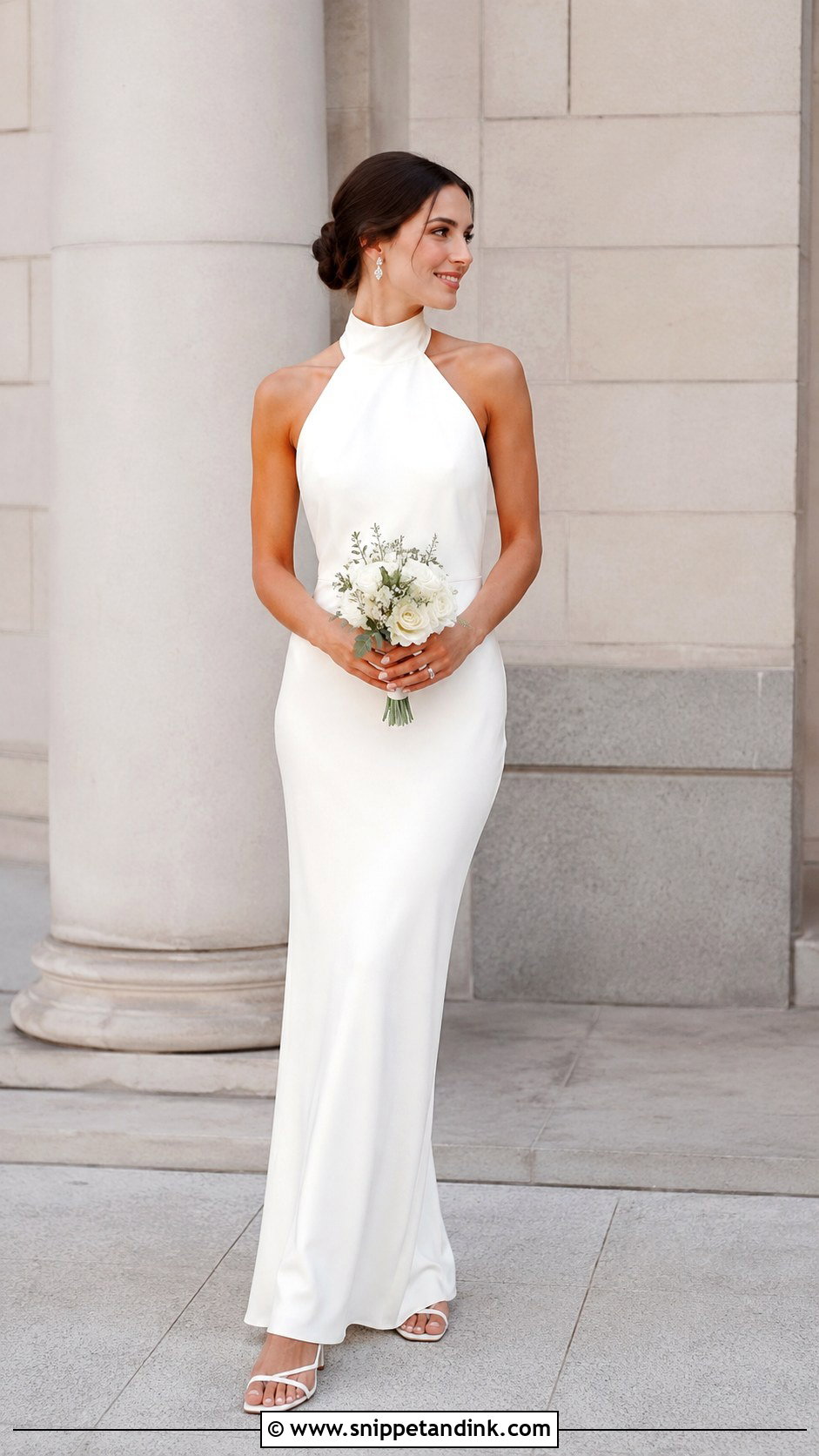
A halter draws the eye upward and shows off the shoulders, which suits brides with an athletic frame especially well. High or softly draped halters in satin, crepe or silk work with a column or fit-and-flare skirt. The neck strap carries weight, so I check it after twenty minutes of wear; a heavy skirt pulling on a halter strap gives brides a headache by dinner. Skip necklaces entirely and wear earrings. A low twisted bun and sleek heels finish this fresh, fashion-led option.
13. Bateau Neck Wedding Dress
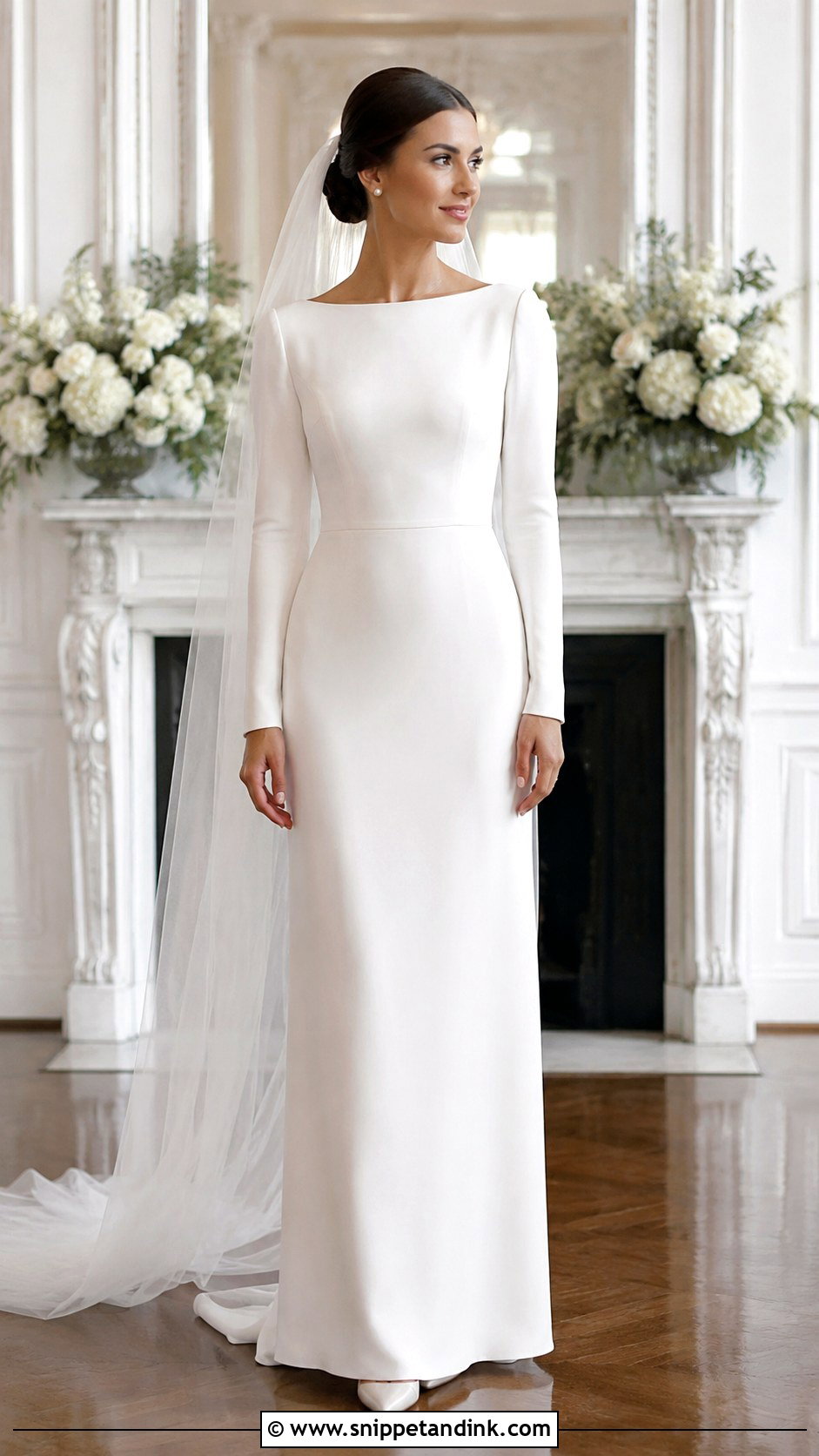
A bateau neck wedding dress runs straight across the collarbone, which gives a refined, covered look with a hint of old Hollywood. It pairs well with long sleeves, cap sleeves or none at all. Bateau necklines widen the shoulder line, so they suit narrower or sloping shoulders more than very broad ones. Crepe or silk, a slim column or soft A-line skirt, pearl studs, a low bun and a simple veil.
14. Scoop Neck Wedding Dress
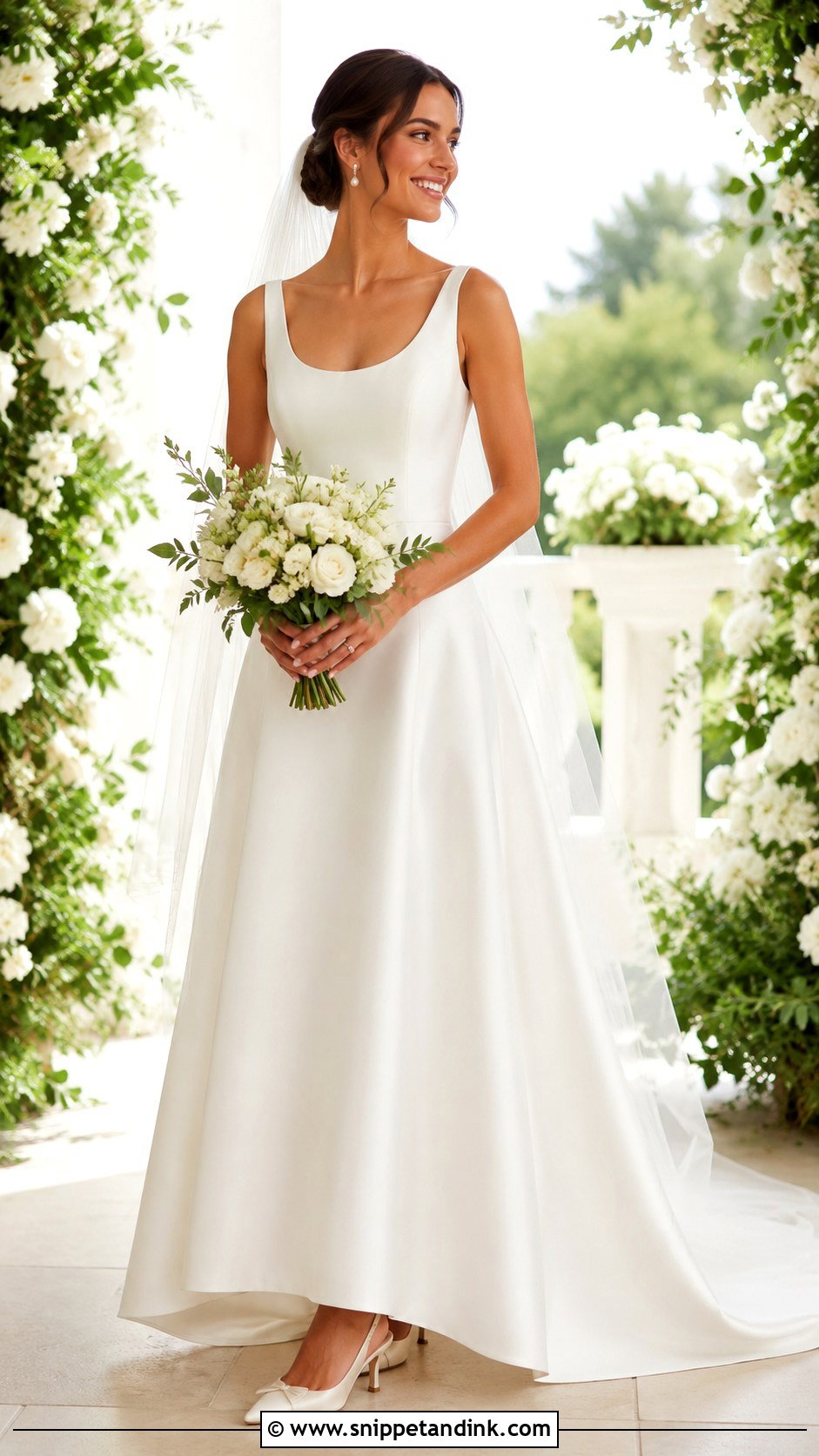
A scoop neck is gentler than a square and easy to wear. Wide straps and a fitted bodice over an A-line, sheath or column skirt give a relaxed but bridal feel. I find scoops especially kind to fuller busts because the curve sits naturally. Pearl earrings, a simple bracelet and ivory slingbacks are enough; a soft veil or a clean hair bow adds a touch of sweetness without clutter.
15. One Shoulder Wedding Dress
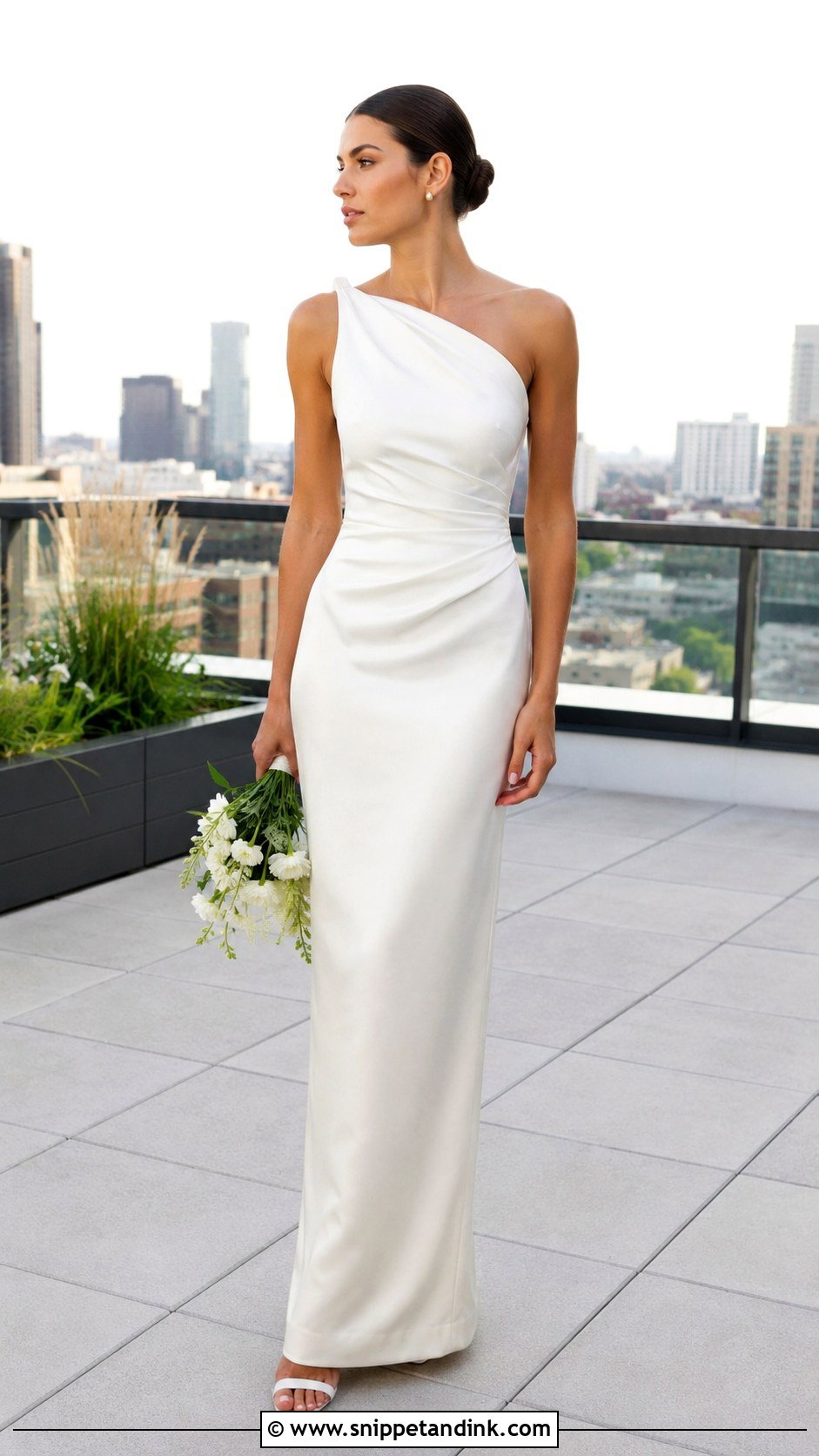
One shoulder, one strap, and the gown suddenly has a sculptural line with no embellishment at all. Keep the bodice smooth and seams few, in satin or crepe over a column, sheath or fit-and-flare skirt. The single strap needs to be anchored firmly at the back, otherwise the bodice twists toward the bare side over the evening. One statement earring on the bare side, or small matching studs, and pulled-back hair show the line off. It suits modern venues and formal evenings.
16. Minimalist Wedding Dress With Bow
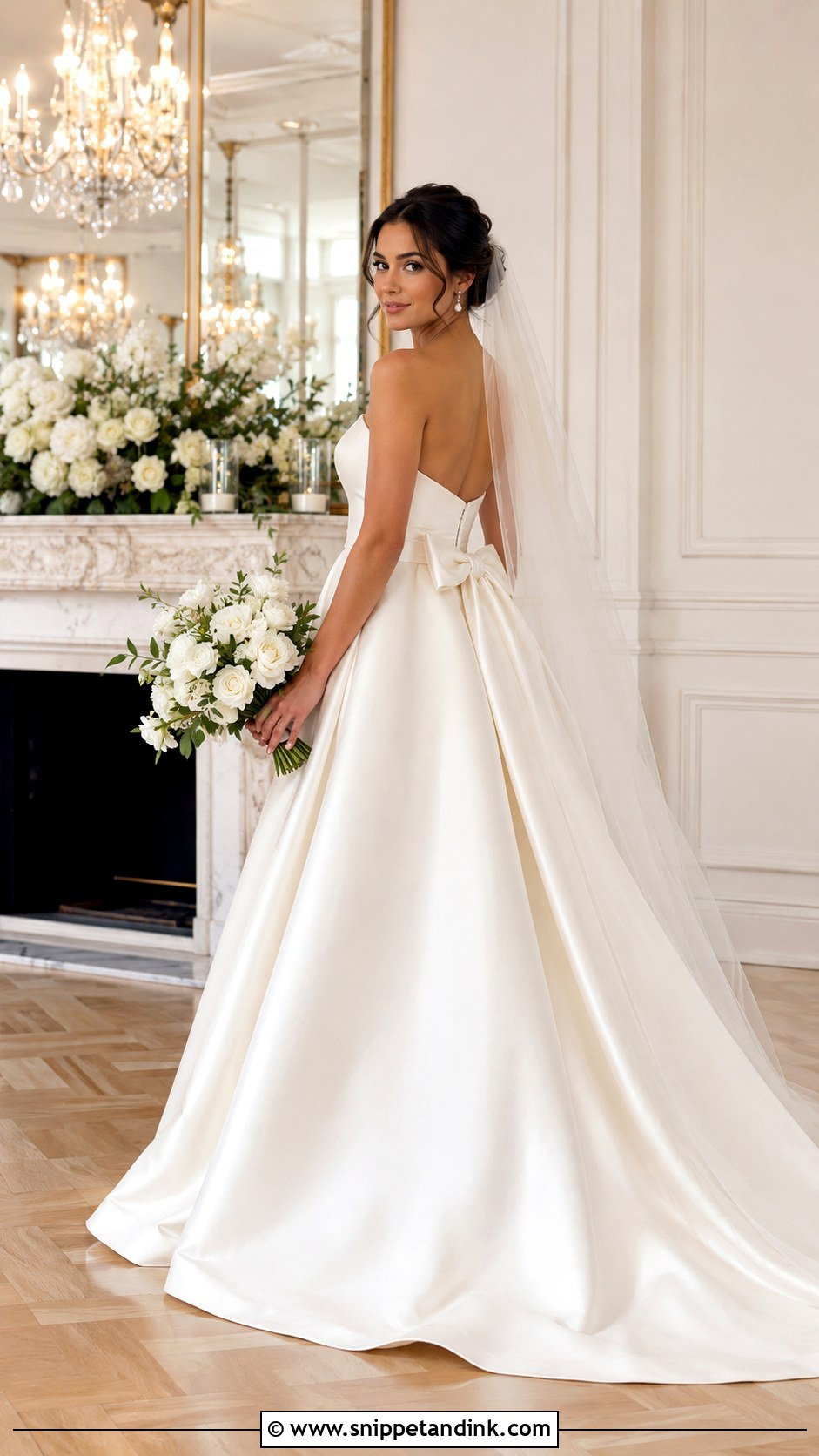
A bow works on a minimalist gown only when it’s small and crisp. A neat waist bow, back bow or shoulder tie in satin or mikado looks intentional; a floppy bow in thin fabric just looks unfinished. I like a strapless A-line with a single back bow, because guests see it for the whole ceremony. Bows crush when you sit, so ask your seamstress to interface them lightly. Pearl earrings, classic pumps and a clean veil.
17. Minimalist Wedding Dress With Train
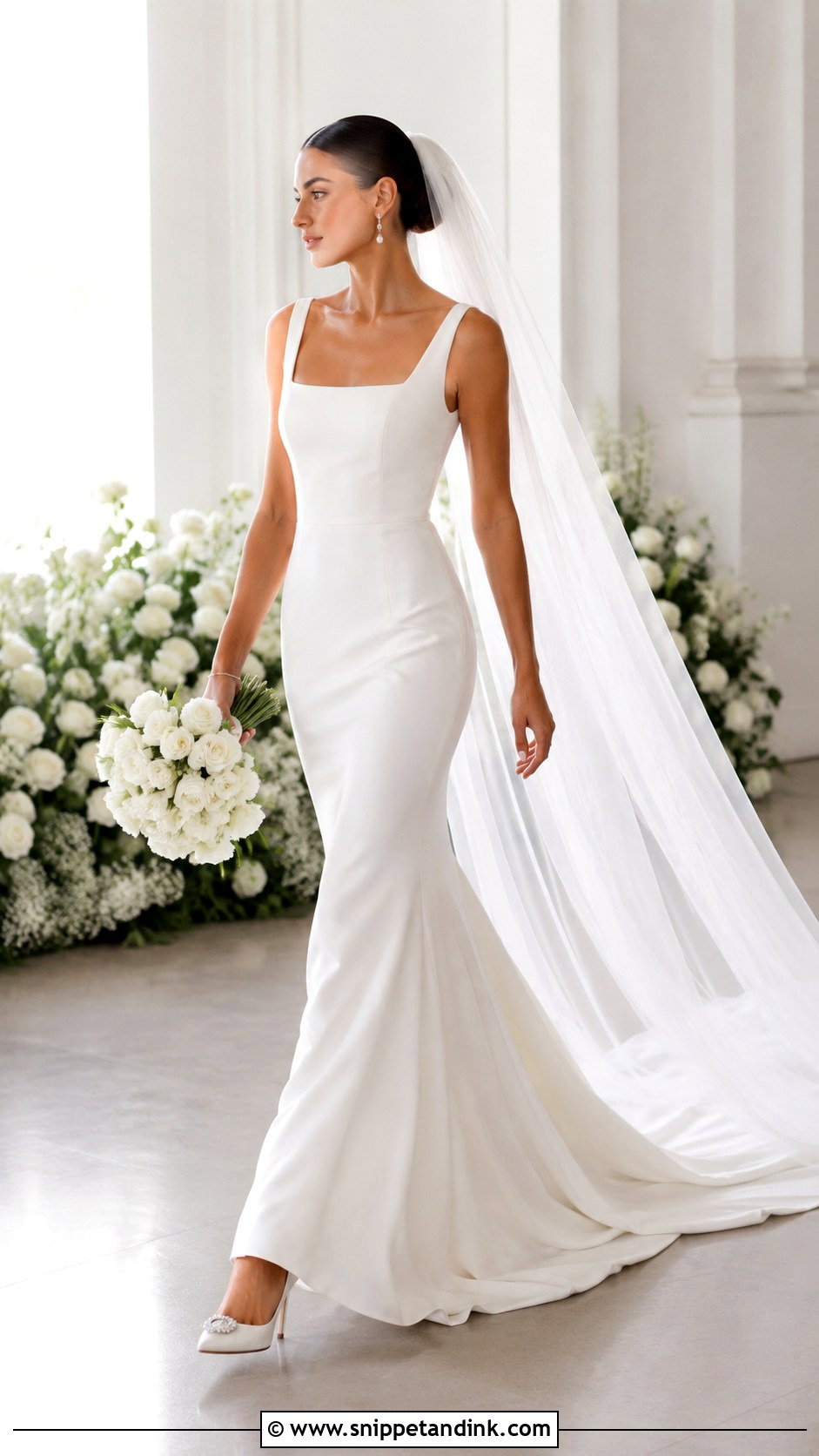
A train lets a plain gown make its entrance through shape alone. Chapel and sweep lengths in satin, crepe or mikado fall smoothly and hold their shape. Keep the front simple and let the train do the work as you walk. The day-of reality is the bustle: decide the type at your final fitting, and have the person doing it practise there with the seamstress watching. A long veil, delicate earrings and refined heels.
18. Minimalist Wedding Dress With Slit
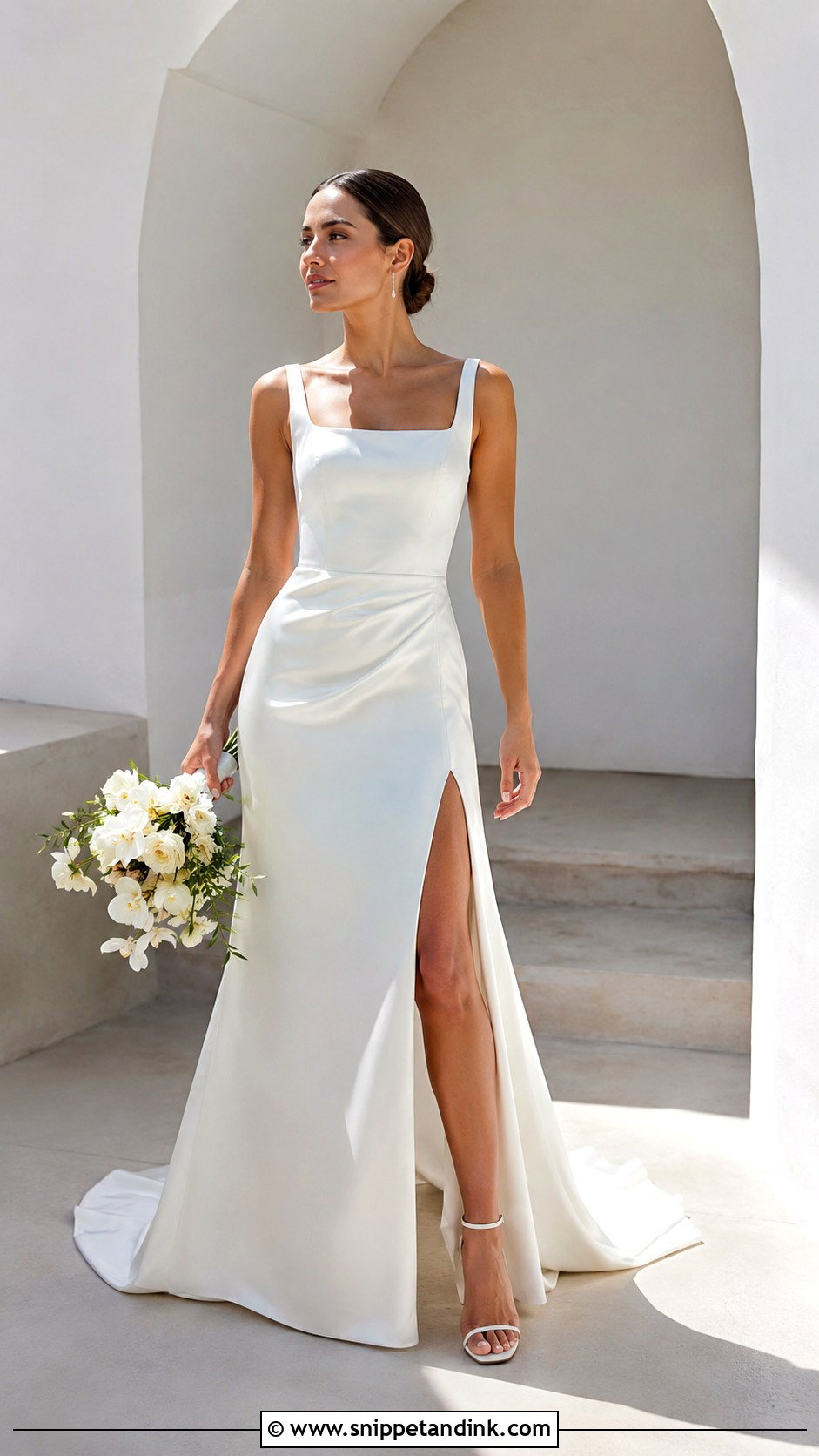
A minimalist wedding dress with a slit adds movement and makes walking and dancing far easier. The slit should open naturally with each step, which means placing it over the front of the leg rather than the side seam. I check it seated, too, because a slit that looks modest standing can open much higher on a chair. A square neck, strapless or halter bodice balances it. Strappy heels and a sleek hairstyle suit beach, destination and summer weddings.
19. Minimalist Two Piece Wedding Dress
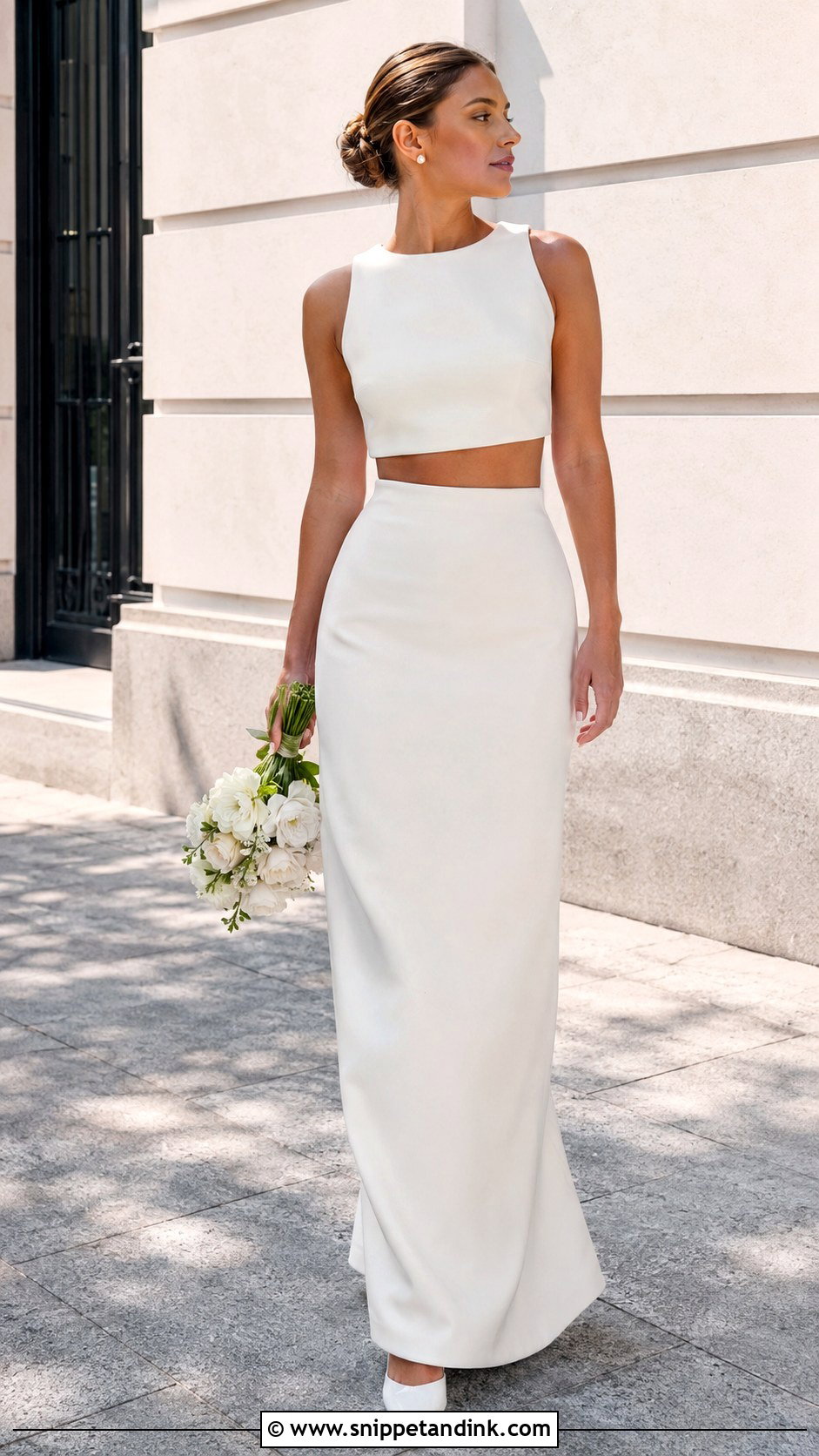
Two-piece bridal looks have grown into something sophisticated: a structured bodice over a satin skirt, a crop top with a high-waisted skirt or a sleek long-sleeved top with a column skirt. Keep both pieces in the same fabric family, and get the gap right; I usually want the top to just meet or overlap the waistband so nothing shows when you raise your arms. Simple heels, pearl studs and a polished bun suit courthouse, rooftop and contemporary receptions.
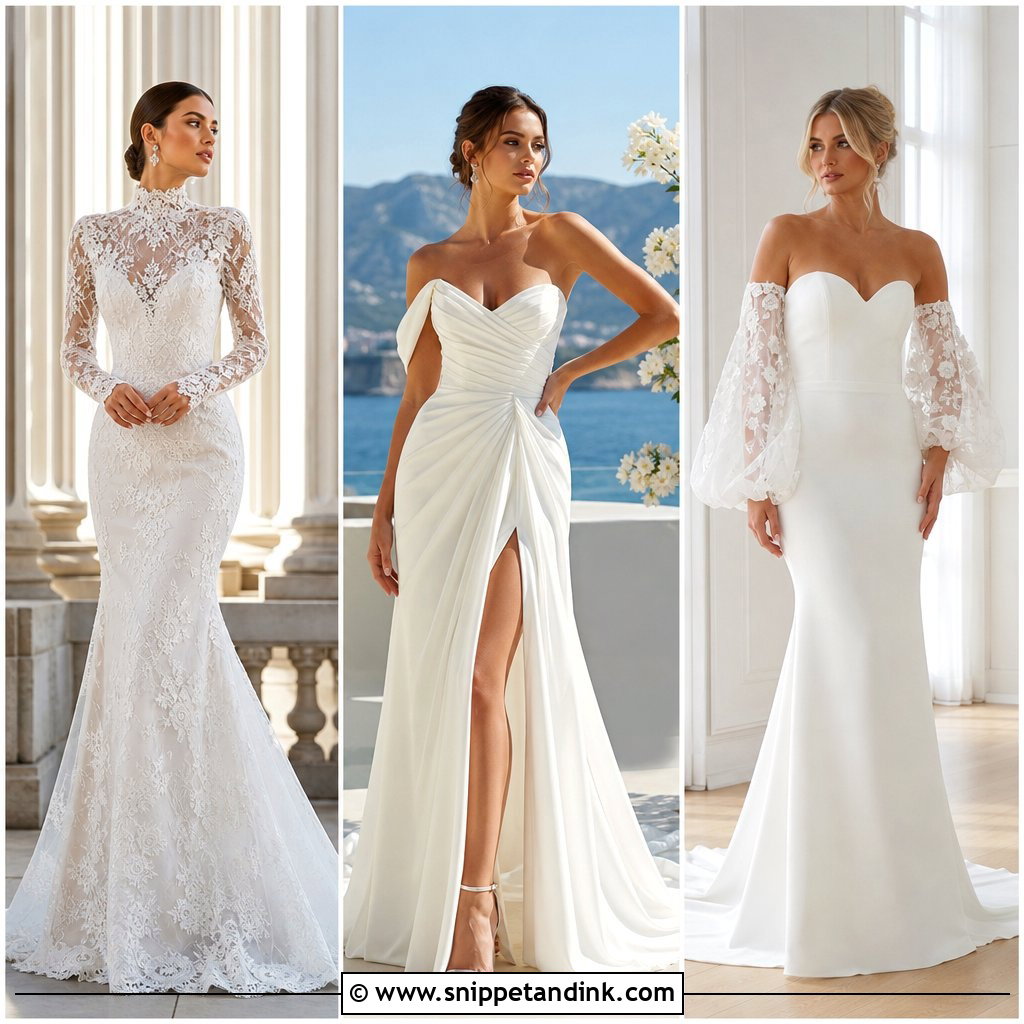
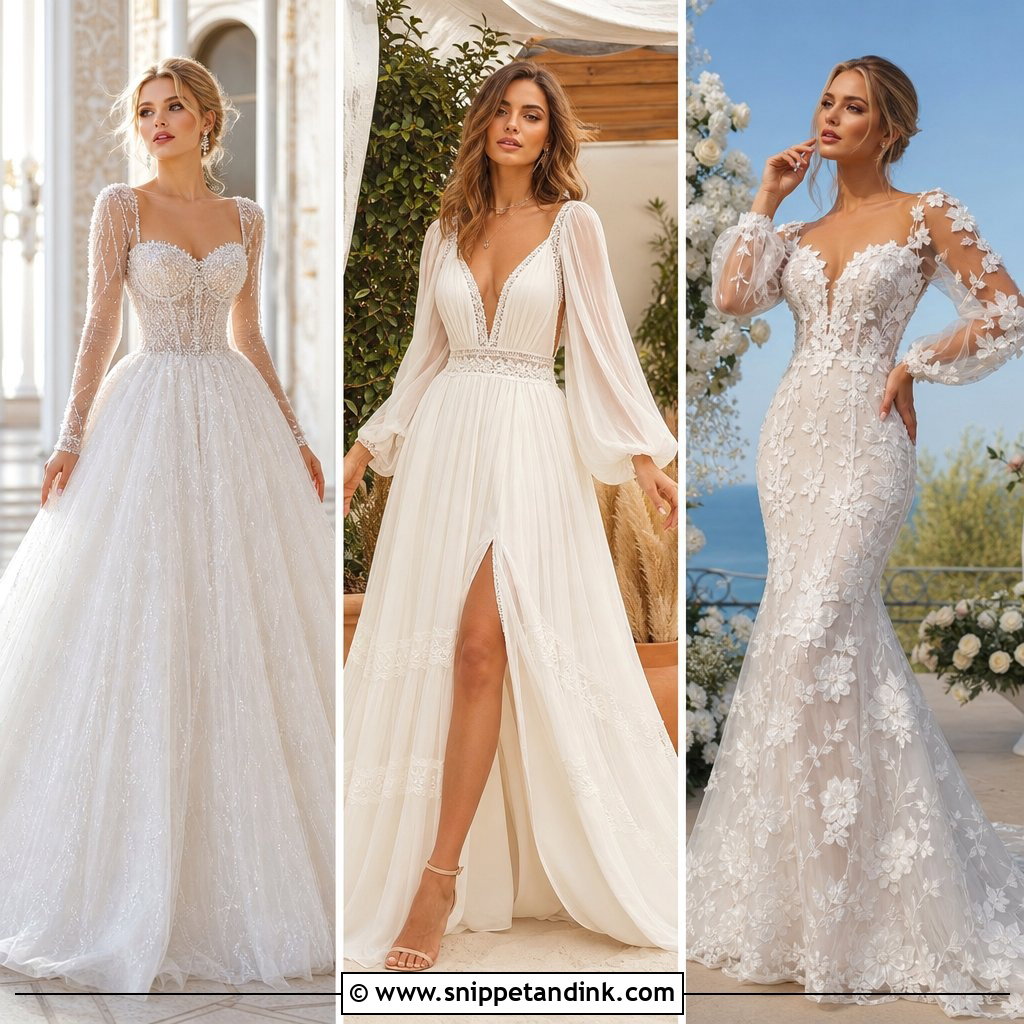
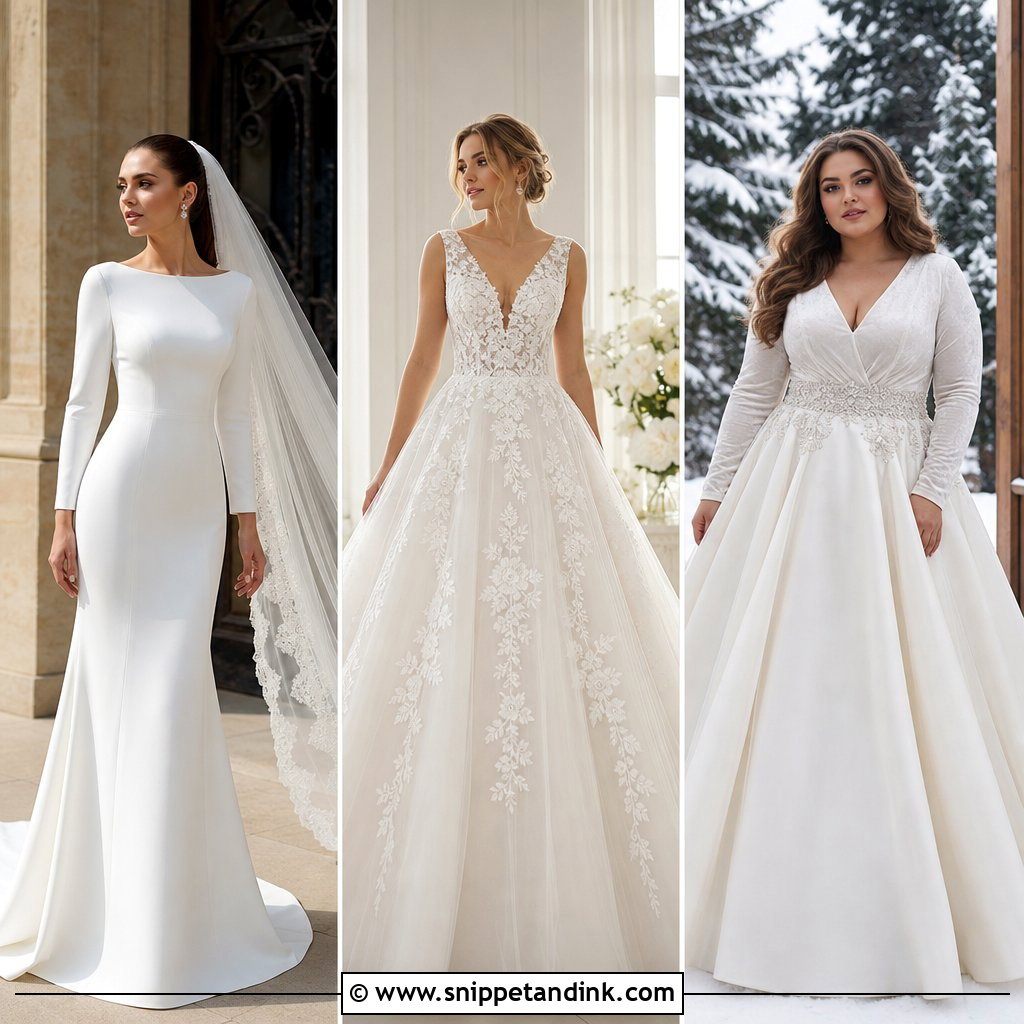
20. Courthouse Wedding Dress
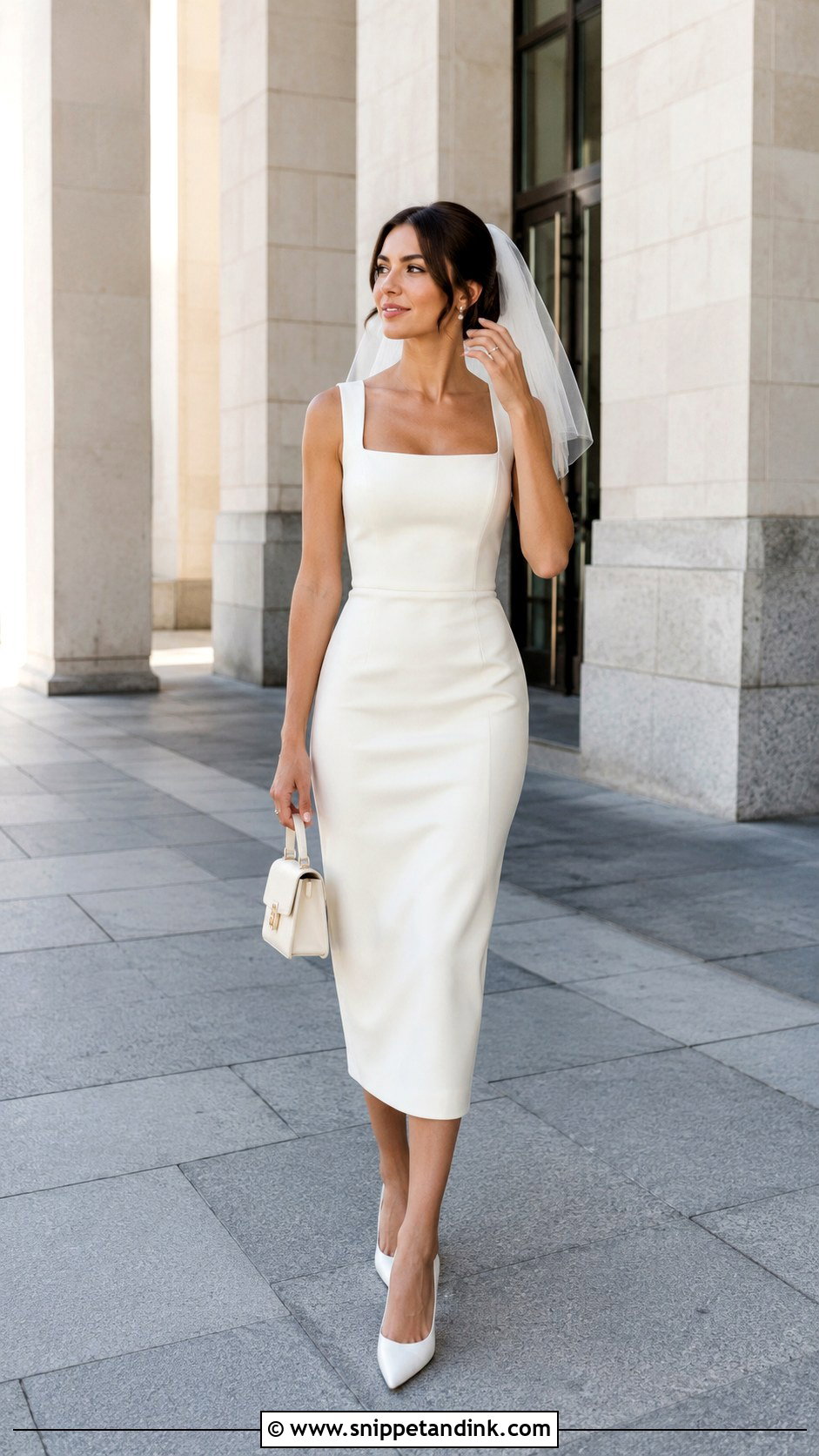
For a courthouse ceremony, I think about the whole day: standing in a hallway, walking city streets for photos, then a long lunch. A minimalist midi, tailored sheath or short crepe gown handles all of it. Choose a strong neckline, square, bateau or strapless, in white or ivory. A short veil, hair bow or satin headband signals bride without feeling over-dressed in a civic building. Pointed heels, pearl earrings and a structured mini bag.
21. Minimalist Midi Wedding Dress
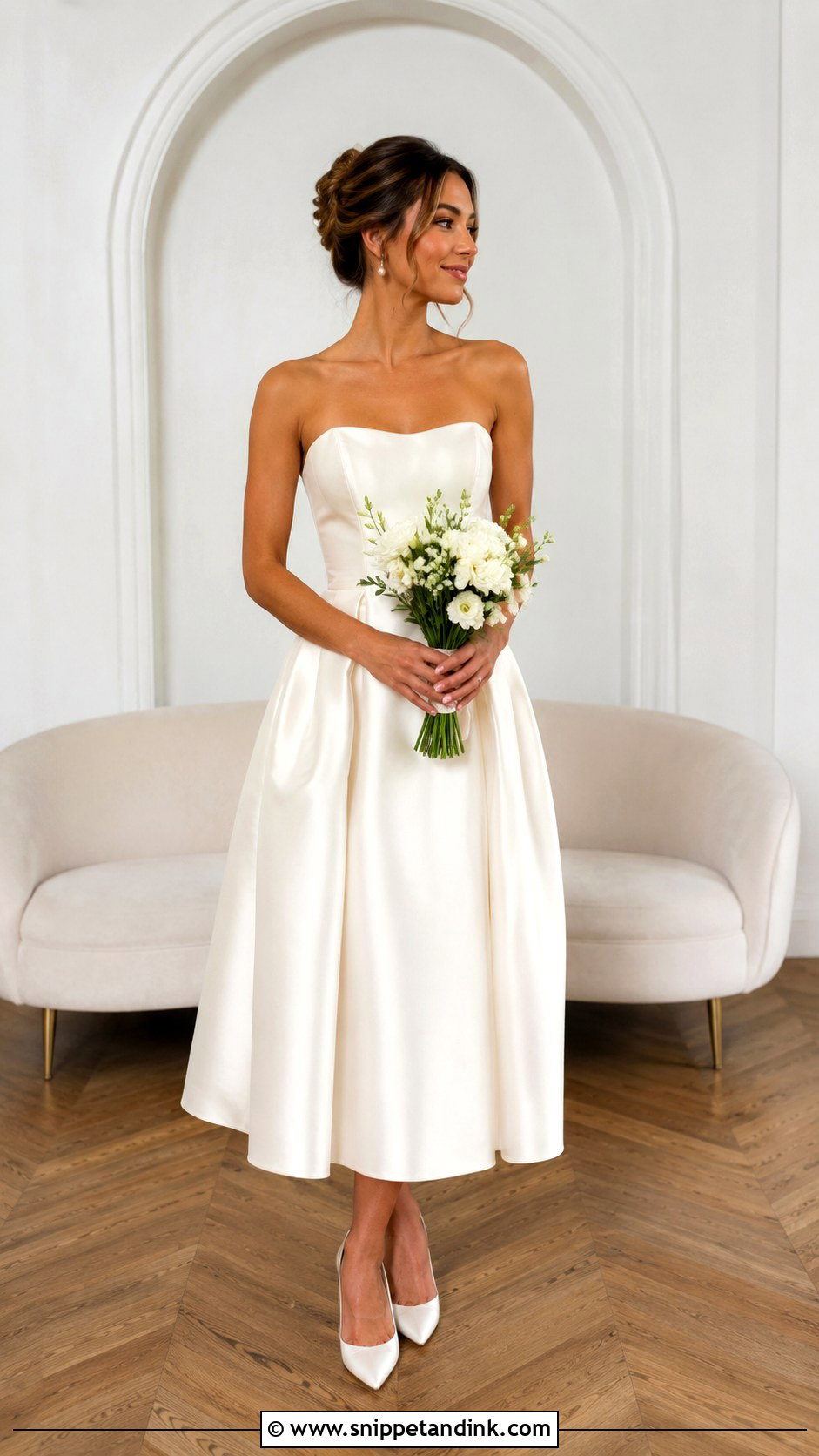
A midi hem shows off your shoes and frees you to move. Structured satin, crepe or mikado with a fitted bodice and clean skirt keeps it bridal, and a square, strapless or off-shoulder neckline adds shape. Midi lengths are the hardest to hem because the right point depends on your calf: just below its widest part is usually most flattering. It works for civil ceremonies, elopements and as a second look after a formal gown.
22. Minimalist Short Wedding Dress
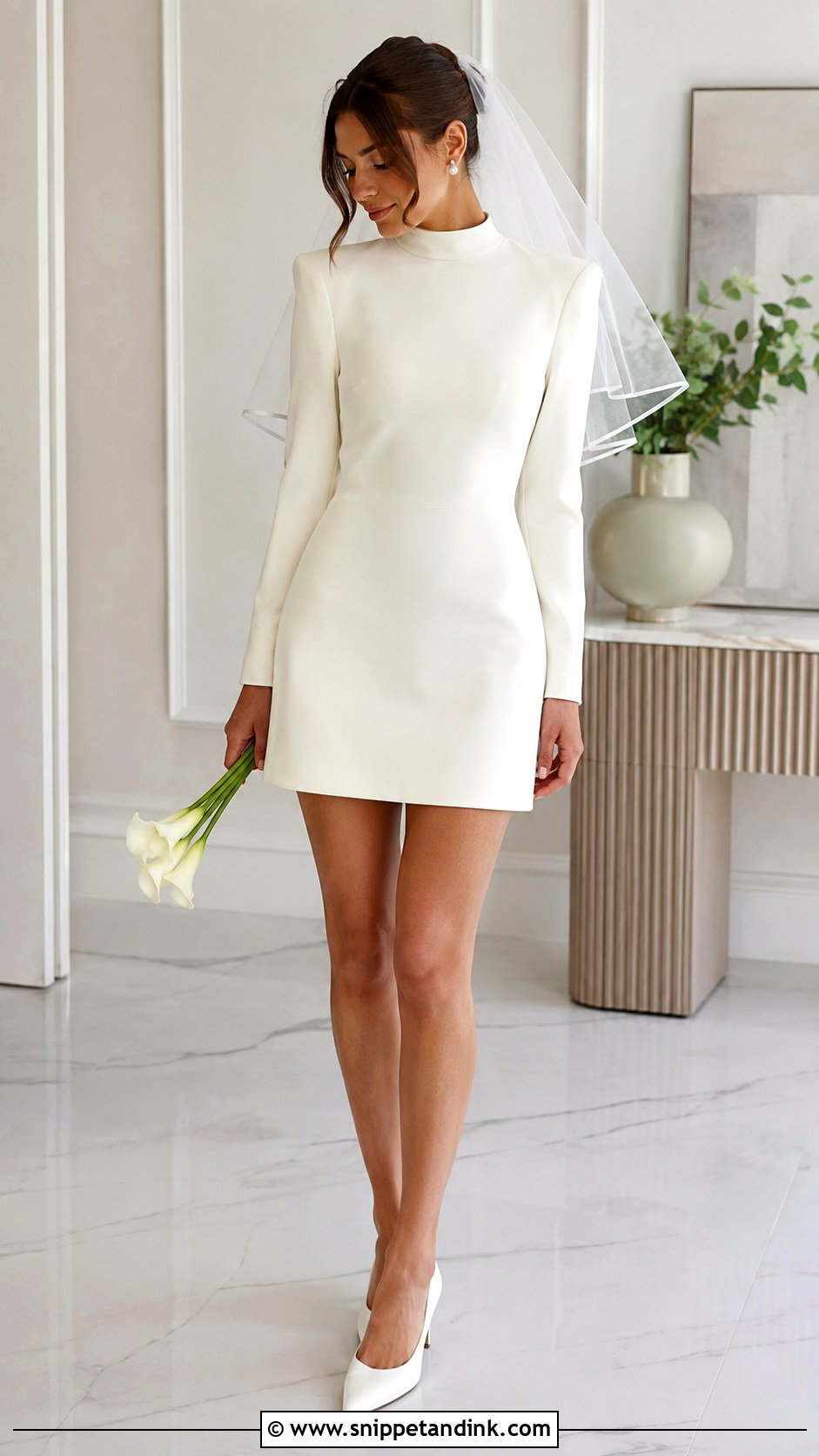
Short dresses are playful, but in a minimalist bridal version, structure is what keeps them from looking like a party dress. A structured mini or above-the-knee shift in satin, crepe or mikado with sharp tailoring looks polished. Long sleeves, a high neck or a square neckline balance the shorter hem. White pumps, pearl studs and a sleek ribbon or short veil finish it for a courthouse ceremony, an after-party or a warm-weather celebration.
23. Minimalist Wrap Wedding Dress
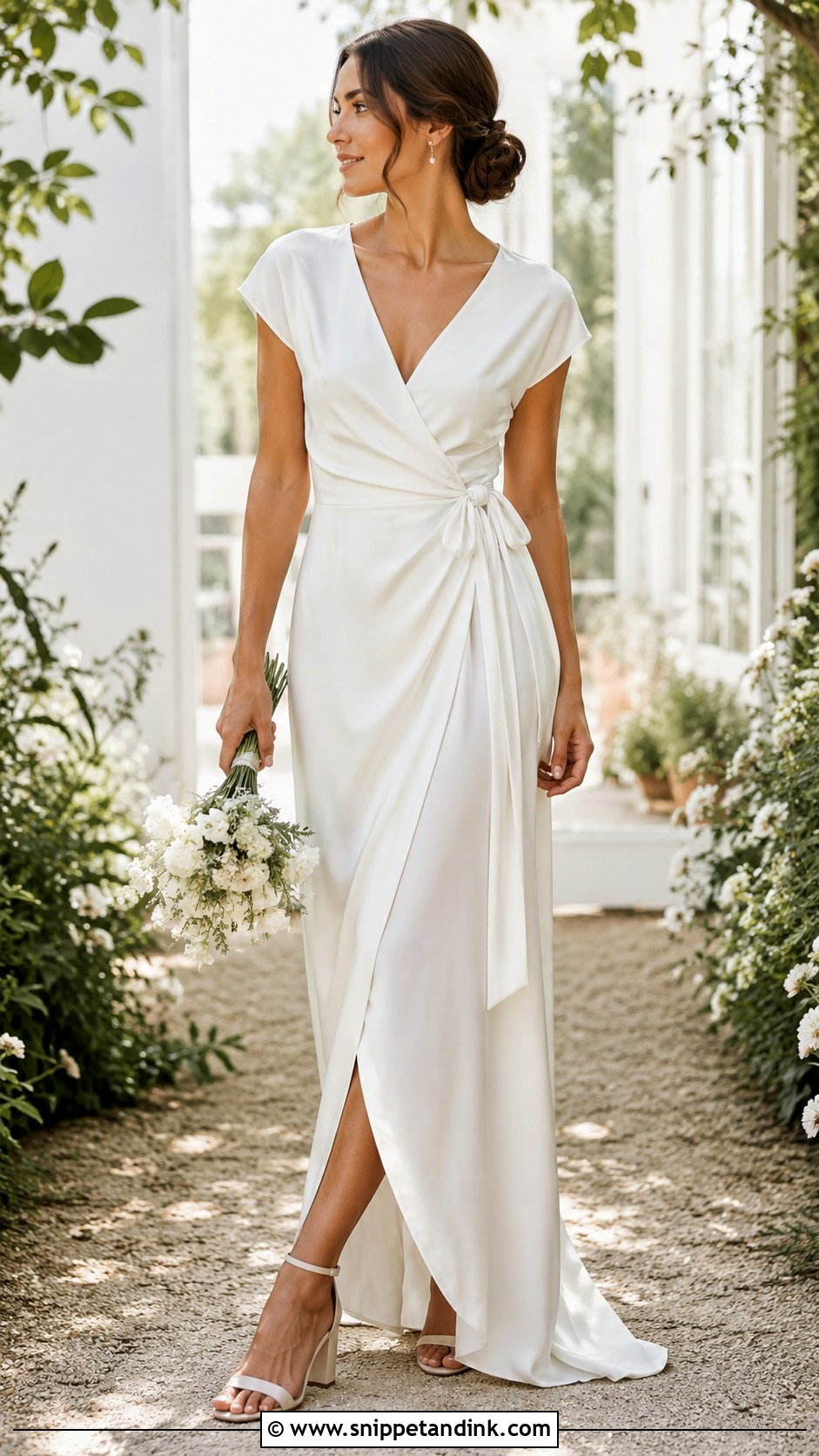
Wrap dresses define the waist naturally and need almost no internal structure, so they’re among the most comfortable gowns I fit. Silk, satin or crepe drape best. The one thing I always fix: a wrap front can open when you sit or bend, so I add a hidden snap at the crossover. Long wrap gowns feel romantic; a midi version looks modern. Keep the ties plain, add block heels and a soft low bun. Gardens, beaches and relaxed venues suit it.
24. Minimalist Cape Wedding Dress
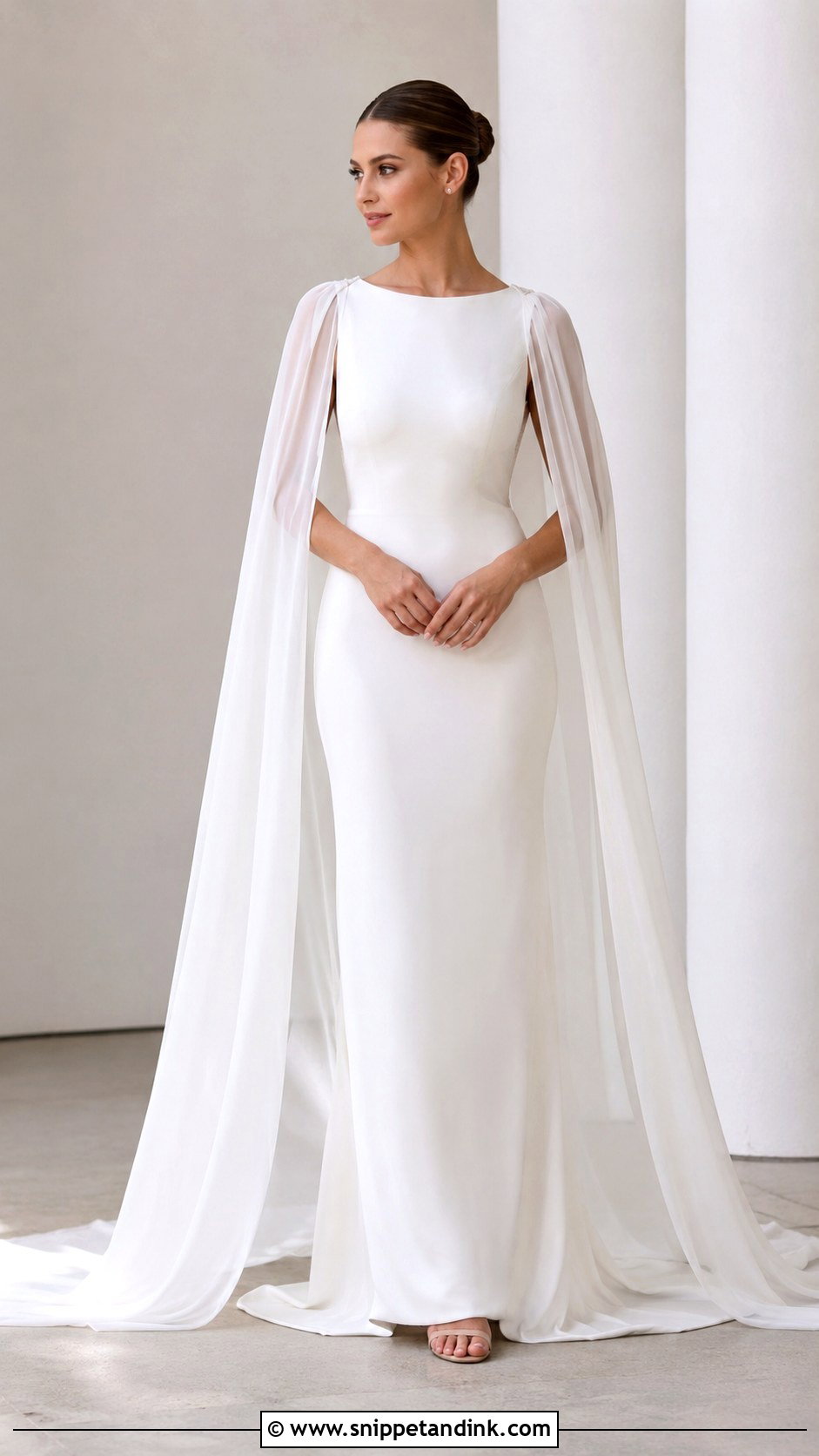
A cape brings ceremony drama without a single sequin. It can fall from the shoulders, attach at the neckline or replace a veil altogether. A simple column, sheath or A-line underneath lets the cape be the feature. Sheer organza floats more in walking shots; crepe hangs heavier and looks regal. Capes catch wind outdoors, so I suggest small weights or a hidden wrist loop for outdoor ceremonies. Small studs and a slim bracelet.


25. Minimalist Wedding Dress With Detachable Overskirt
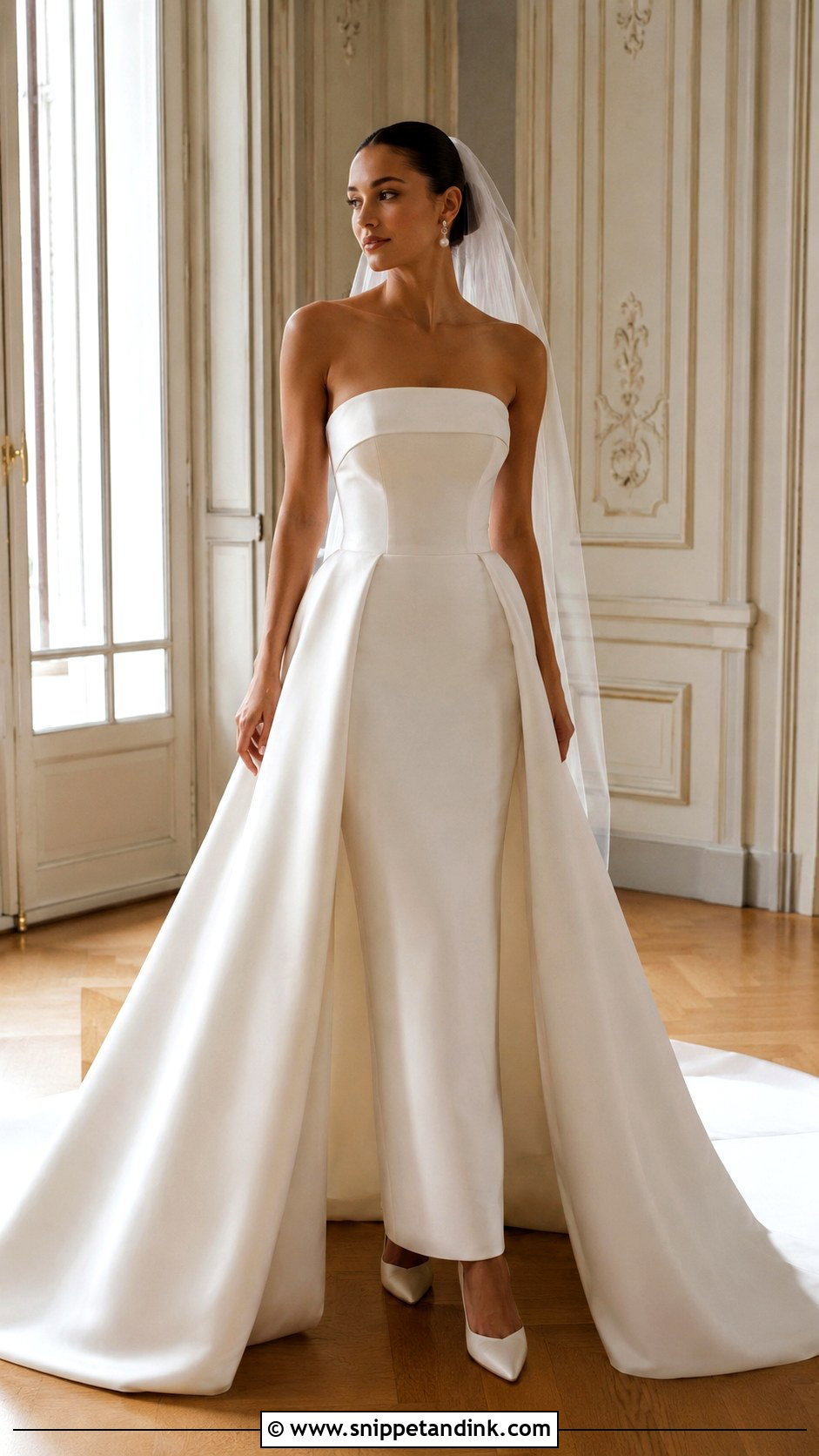
Two looks, one dress. A minimalist wedding dress with a detachable overskirt gives you ceremony volume, then a sleek column, sheath or fitted gown for the reception. Matching satin, crepe or mikado keeps both layers intentional. Practise removing it at the final fitting: hooks and snaps are quicker than buttons, and someone needs to know where the overskirt goes once it’s off. Simple heels, pearl earrings and a smooth veil.
26. Minimalist Wedding Dress With Pockets
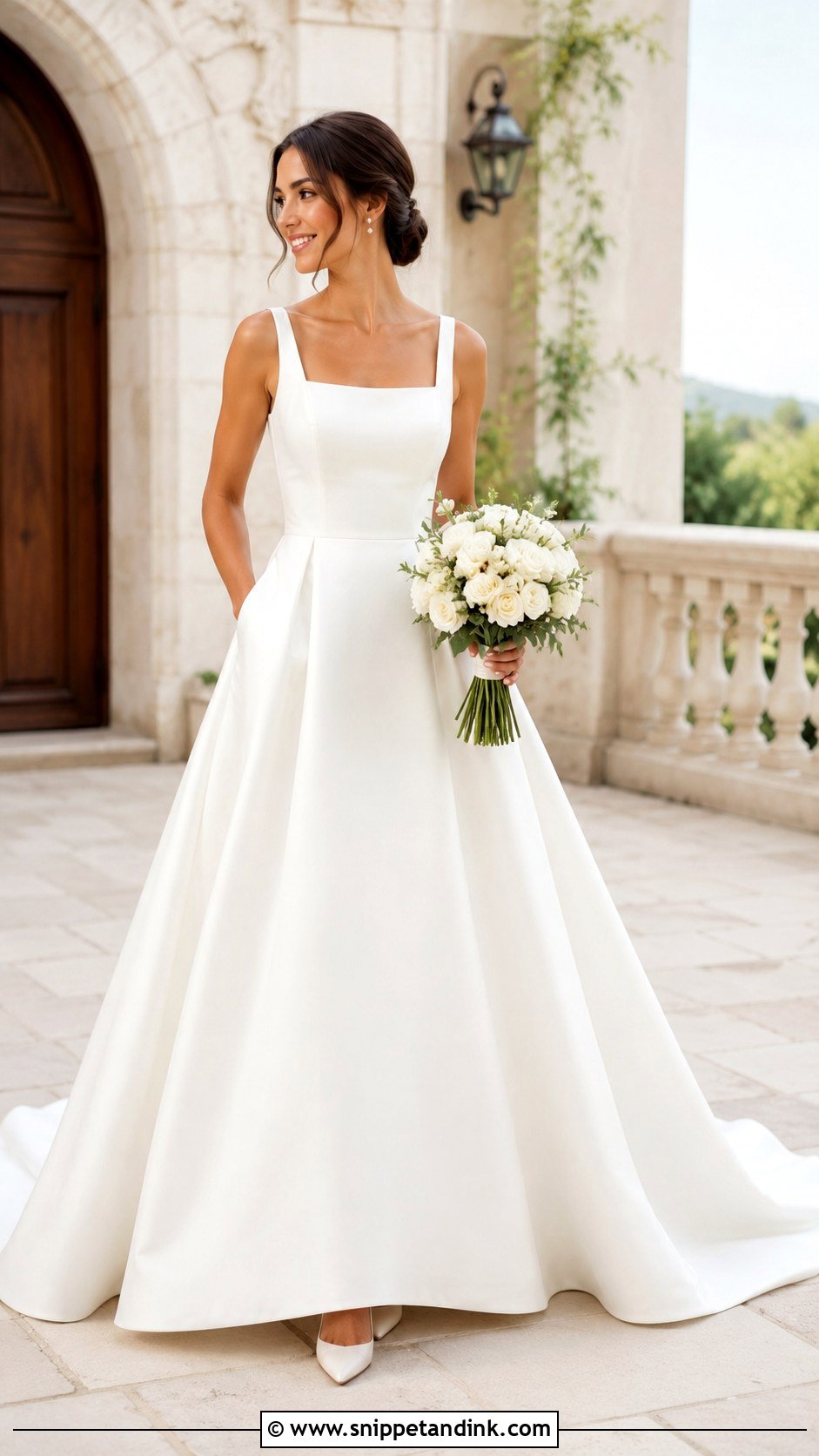
Brides who’ve worn a gown with pockets rarely want one without. A-line and ball gown skirts hide them best, since the fullness absorbs the opening. Structured satin, mikado or crepe keeps the skirt clean. The catch: pockets that are too deep or overstuffed with a phone pull the skirt out of line in photos, so I keep them for hands, a lipstick and tissues. A square neck or strapless bodice, pearl studs, classic heels and a neat bouquet.
27. Minimalist Silk Wedding Dress
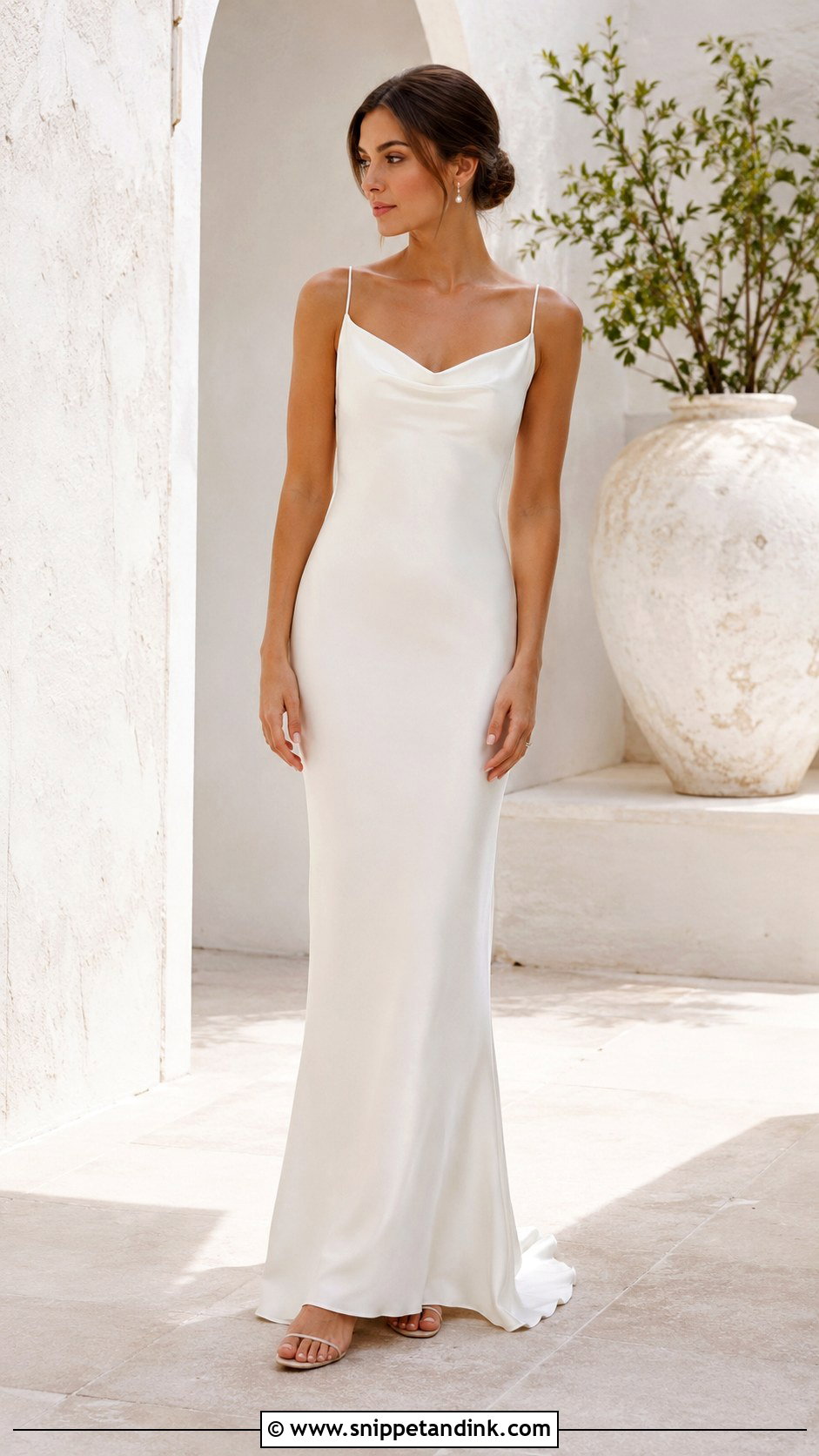
Silk is all about the fabric itself. Its natural glow makes a plain slip, sheath or A-line look special, but it’s delicate: it marks with water, shows perspiration and creases where you sit. I recommend excellent fit and smooth underpinnings above all, and a silk gown deserves a careful steam the morning of. Barely-there heels, refined earrings and a soft low bun. A simple veil or no veil both suit it.
28. Minimalist Crepe Wedding Dress
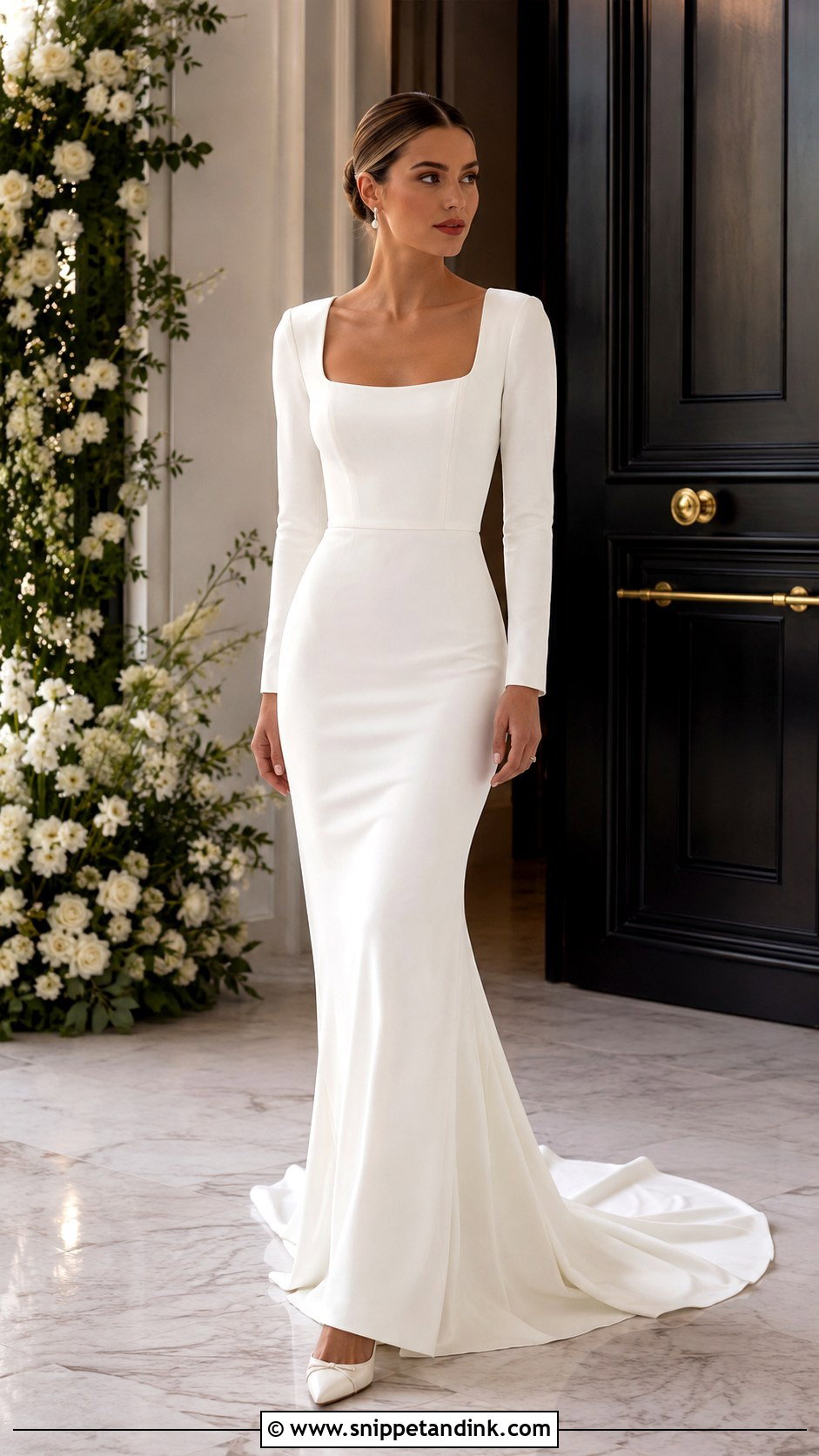
Crepe is heavier than silk or satin and has a matte surface, so it skims the body and hides more. That’s why it works so well for fitted gowns, long sleeves, square necks and sculpted bodices. Thoughtful seams, a subtle train or covered buttons give understated detail. Crepe holds its shape after hours of wear far better than thin satins, which matters at long formal indoor weddings and cool-season celebrations. Pointed heels, pearl earrings and a polished updo.
29. Minimalist Satin Wedding Dress
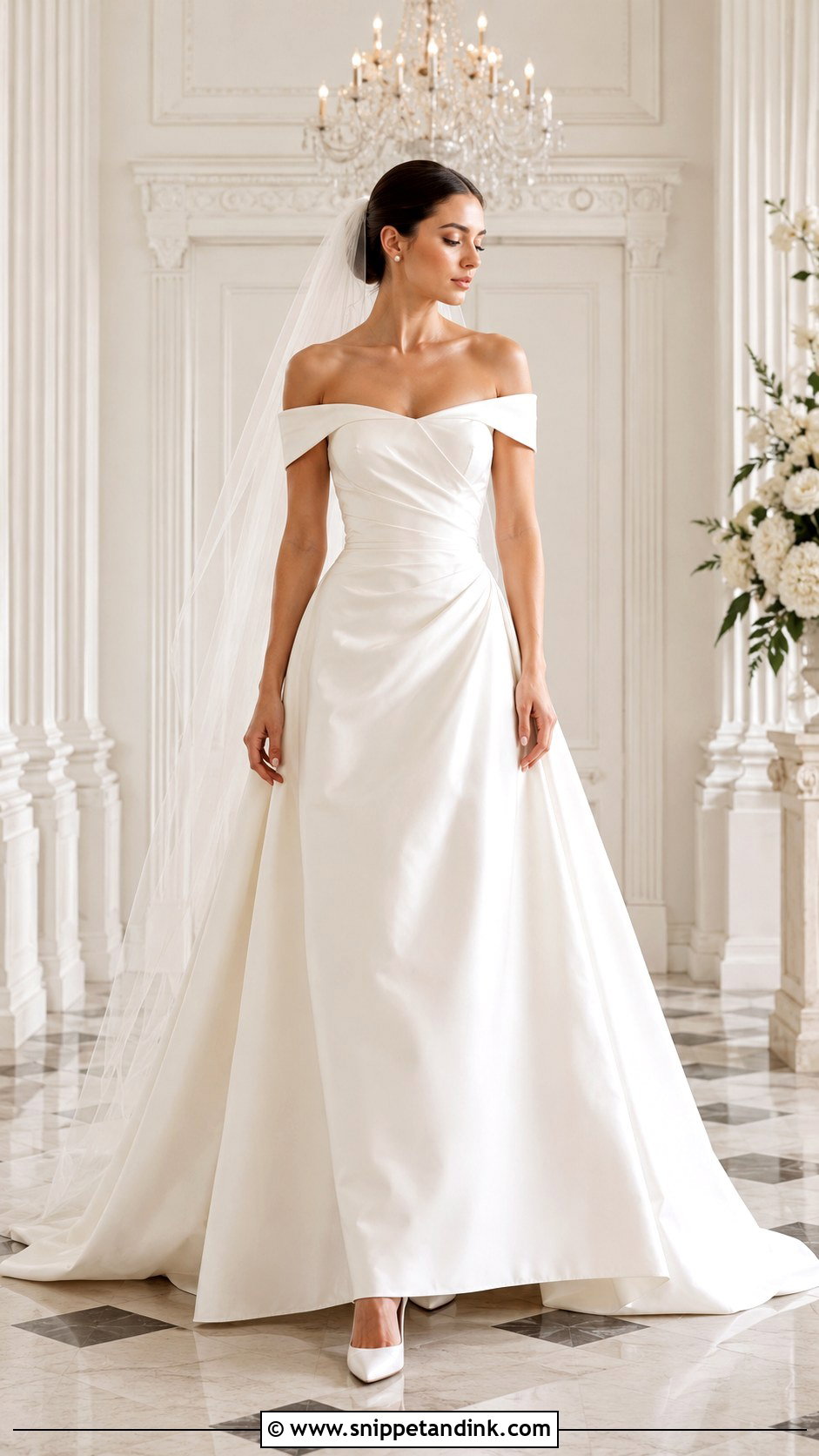
Satin reflects light, which gives a clean silhouette a sense of occasion without a single bead. A strapless column, scoop-neck A-line or off-shoulder gown all suit it. Avoid heavy ruching if you want a pared-back feel. Duchess satin is thick and structured, while thinner satins show every wrinkle and pull, so I always show brides both side by side. Pearl studs, ivory pumps and a simple veil; satin suits almost any venue.
30. Minimalist Wedding Dress With Veil
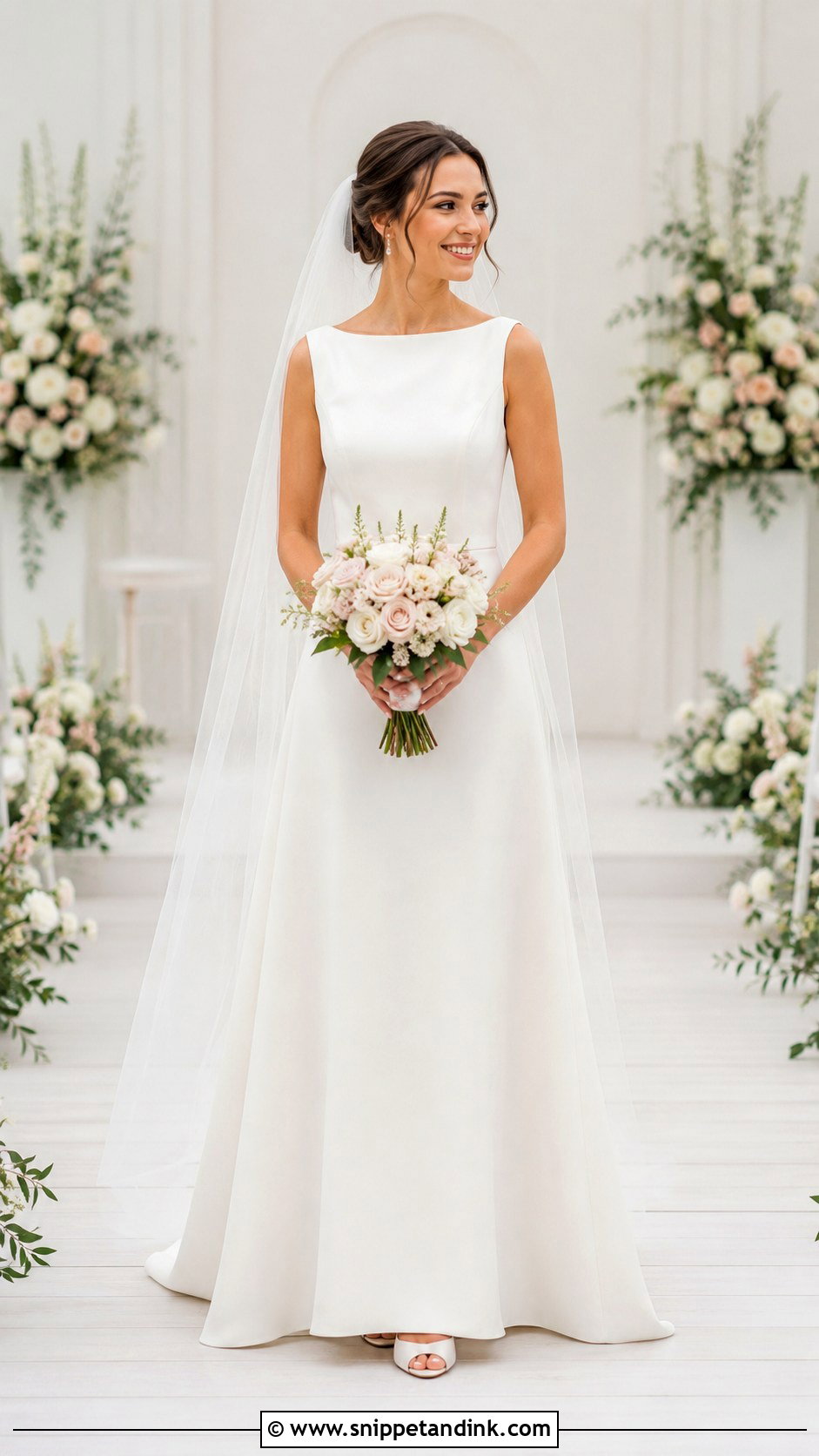
A veil completes a minimalist dress without changing its mood, as long as it supports rather than competes. Plain tulle with little or no trim, in fingertip, chapel or cathedral length, pairs with a satin slip, crepe column or simple A-line. Match the veil’s tone to the gown in daylight; a bright white veil against an ivory dress makes the dress look dingy. Keep jewellery delicate and shoes matched to the gown’s formality. A veil gives you movement and soft photo moments with a traditional bridal finish.
Creases, Bustles and the Week After
The trouble with a smooth gown on the day is creasing. Satin and silk crease the moment you sit in the car, and crepe less so. Have the dress steamed at the venue rather than at home, and stand for portraits before the ceremony if your schedule allows.
The bustle needs a rehearsal
Bustles fail more often than any other part of a gown on the day, usually because a well-meaning friend has never seen one. Ask your seamstress to colour-code the hooks or ribbons, and have your bridesmaid do it herself at the final fitting while you stand still. Take a short phone video of her hands as she works; at ten at night in a dim reception hall, that clip is worth more than any memory of the fitting room.
Cleaning and storing it
- Get it to a specialist cleaner within a few weeks. Sugary drinks dry invisibly and turn brown later.
- Store it in an acid-free box or a breathable cotton bag, never the plastic one it came in.
- Keep it somewhere cool, dark and dry. Attics and basements yellow fabric faster than anything.
Let the Cut Carry It
A minimalist gown isn’t plain. It’s a dress where the line, the fabric and the fit all have to earn their place. Satin slips, square necks, clean ball gowns, capes and courthouse midis all show how much range simple bridal style has. Pick the silhouette that suits your venue, your body and how you want to move that day, then put your effort into fittings rather than accessories. A well-cut simple gown looks as right in photos twenty years from now as it does on the day.
You'll Like These Ideas:






Leave a Reply