
A classic wedding dress is one you can look at in a photo twenty years from now without wincing at the year. In my experience that comes down to three things: a clean line, good fabric and fit that looks deliberate. Bridal design right now leans toward minimal silhouettes, refined satin, pearls, high necklines, basque waists, lace and detachable pieces, and most of those will age well because they borrow from long-running traditions rather than one season. The most elegant gown is still the one that suits your venue, your body and how much you want to move. The thirty styles below range from ball gowns to slips to a bridal suit, each with the fitting detail I’d look at first.
Will It Date? What Ages Well in Wedding Photos
When brides bring me their parents’ wedding photos, the dresses that still look good share a few traits, and the ones that look dated share others. Trend details tend to date faster than shape and fabric do.
Usually ages well
- Silhouettes drawn from long tradition: A-line, ball gown, sheath, column.
- Natural-looking fabrics with body, such as silk satin, mikado and crepe.
- One clear focal point, like a neckline, a back or a row of buttons.
- Ivory and soft white rather than very cool optical white.
Usually dates fast
- Very trend-led cut-outs and novelty sleeves.
- Large amounts of glitter tulle or sequins over the whole dress.
- Several statement features competing on one gown.
- Accessories with logos or of-the-moment shapes.
None of this means you can’t wear something current. I’d just keep the trend in the parts you can change, like the earrings, shoes or a second outfit, and keep the dress itself on the classic side.
1. Satin A Line Wedding Dress
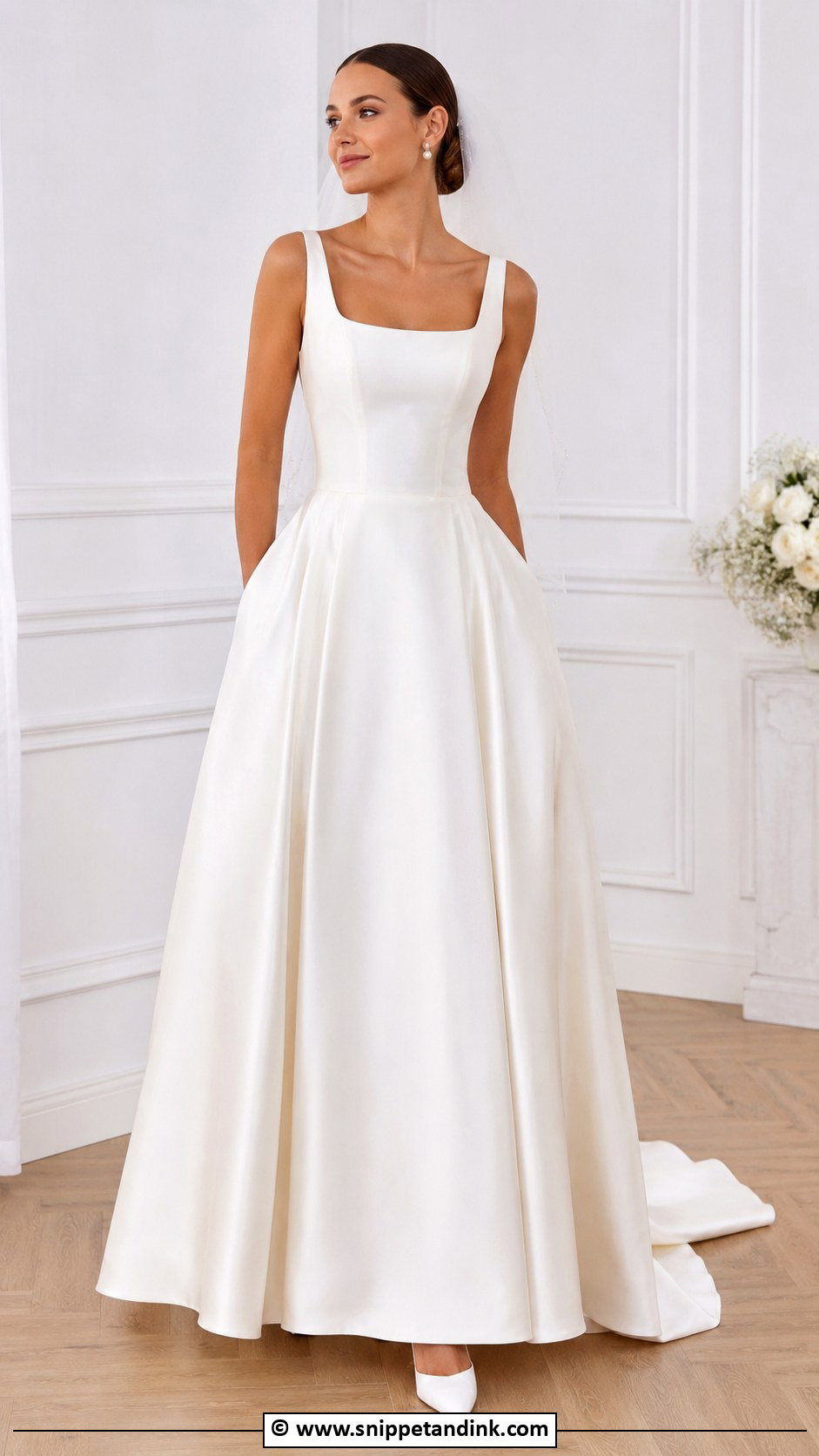
If I had to put one dress on every rail, it would be satin in an A-line. The fitted bodice gives shape, the skirt falls from the waist without too much volume, and satin’s low sheen looks polished in photos with no decoration at all. It suits a wide range of figures, which is why it’s my first suggestion for a bride who doesn’t yet know her shape. Ivory, soft white and pearl satin all work. A hidden side-seam pocket is a practical extra I’m always glad to see. Pointed heels, pearl earrings, a low bun and a simple veil finish it.
2. Long Sleeve Lace Wedding Dress
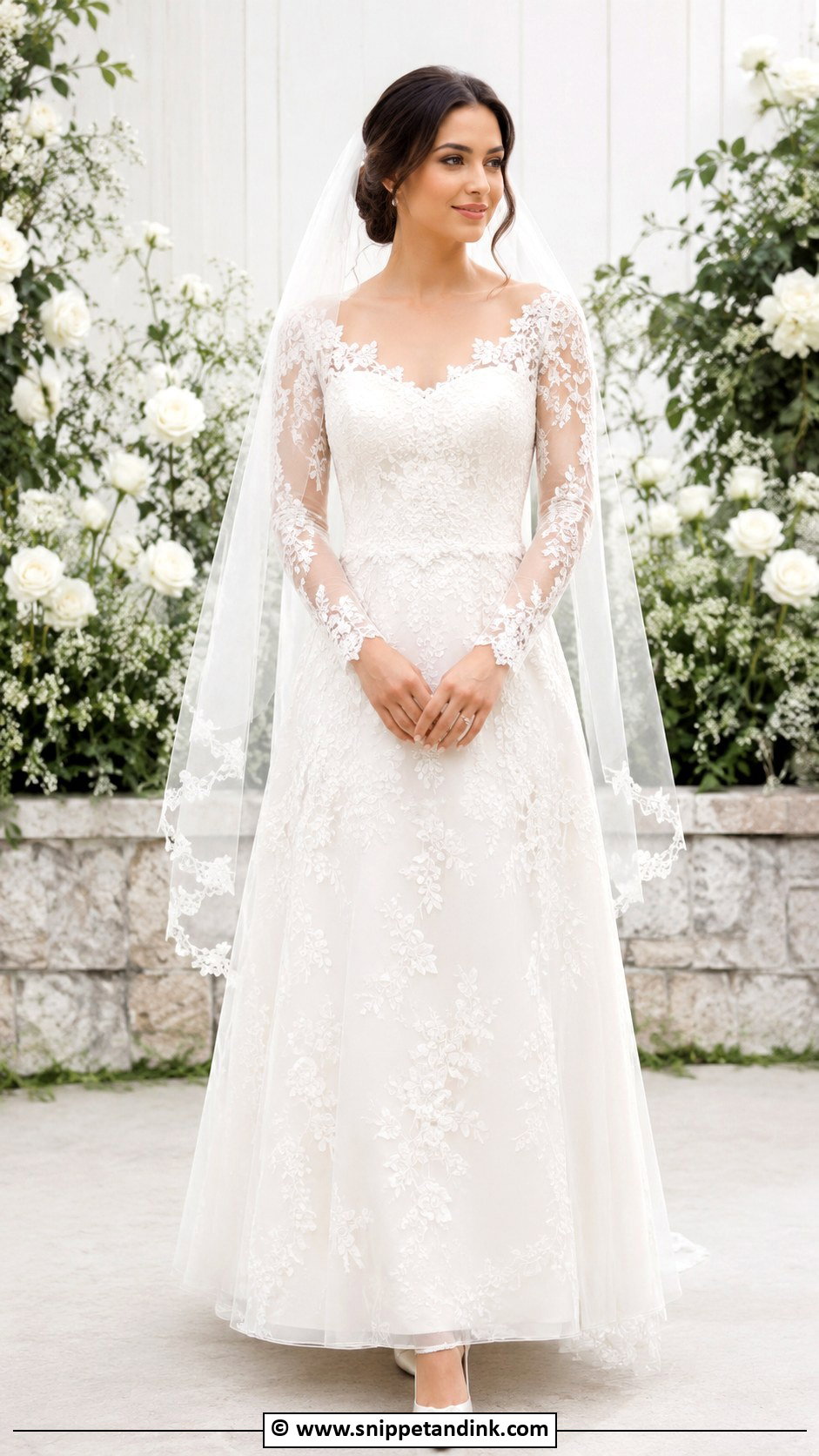
Long lace sleeves bring coverage and texture at once. Sheer, delicate lace keeps the dress light; heavier corded lace leans vintage. Lace sleeves paired with a plain crepe or satin skirt look more modern than an all-lace gown and keep the dress from feeling sweet. The fit check I always do: a lace sleeve with no stretch needs room at the elbow, or it will strain the moment you bend your arm to hold the bouquet. Pearl studs, a fingertip veil, satin heels and a neat chignon suit it for formal rooms, gardens and cooler months.
3. Off The Shoulder Wedding Dress
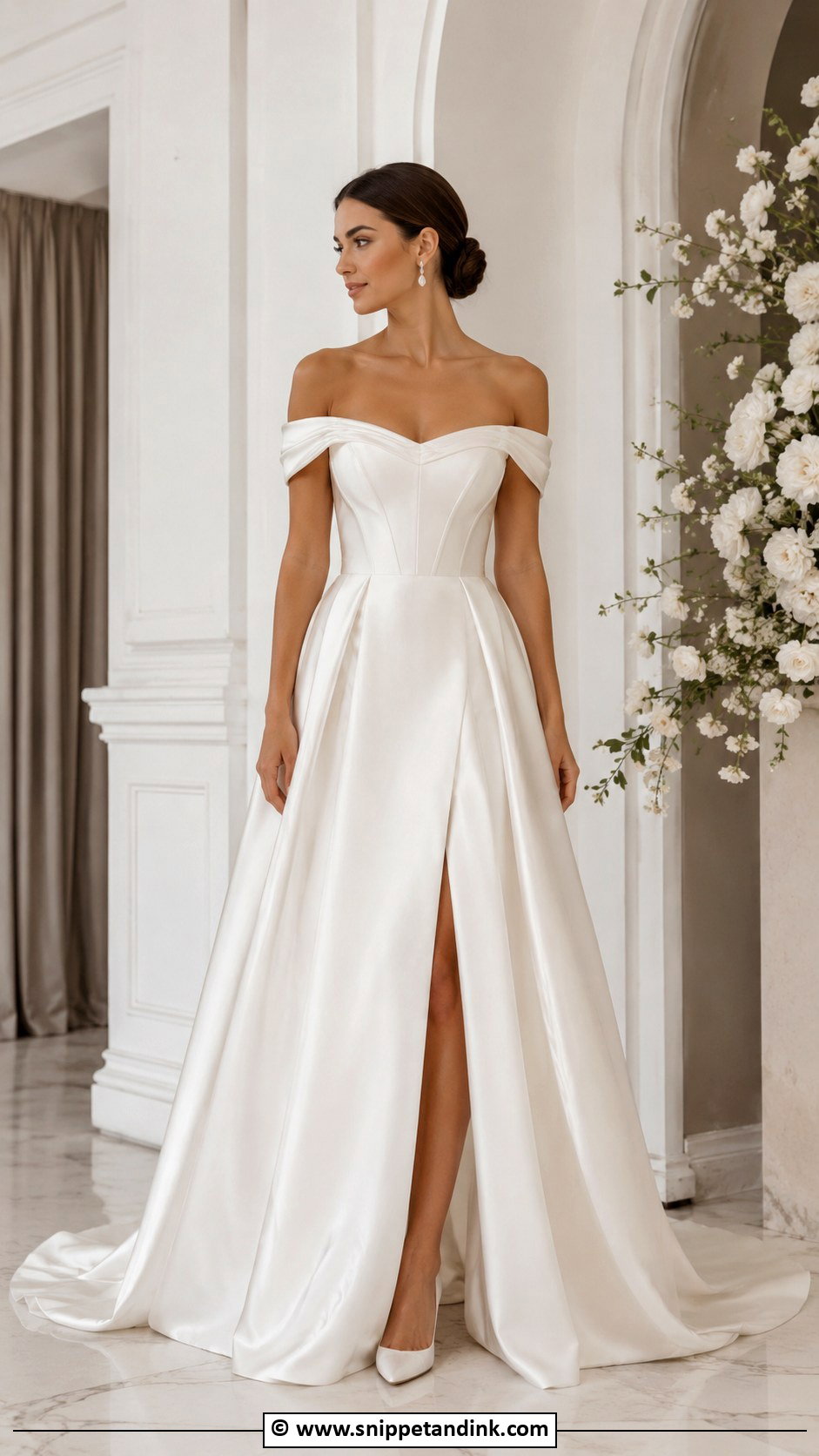
Off the shoulder frames the collarbone and shows some skin without much exposure. Satin, mikado, lace and crepe each change the formality. A fitted bodice over an A-line or fit-and-flare skirt keeps the outline classic. The sleeve band is where these dresses go right or wrong: it needs to grip the upper arm securely without cutting in, and I test it with the bride lifting her arms to shoulder height. Soft waves, a low bun or a clean updo all suit it, with drop earrings and simple heels.
4. Square Neck Wedding Dress
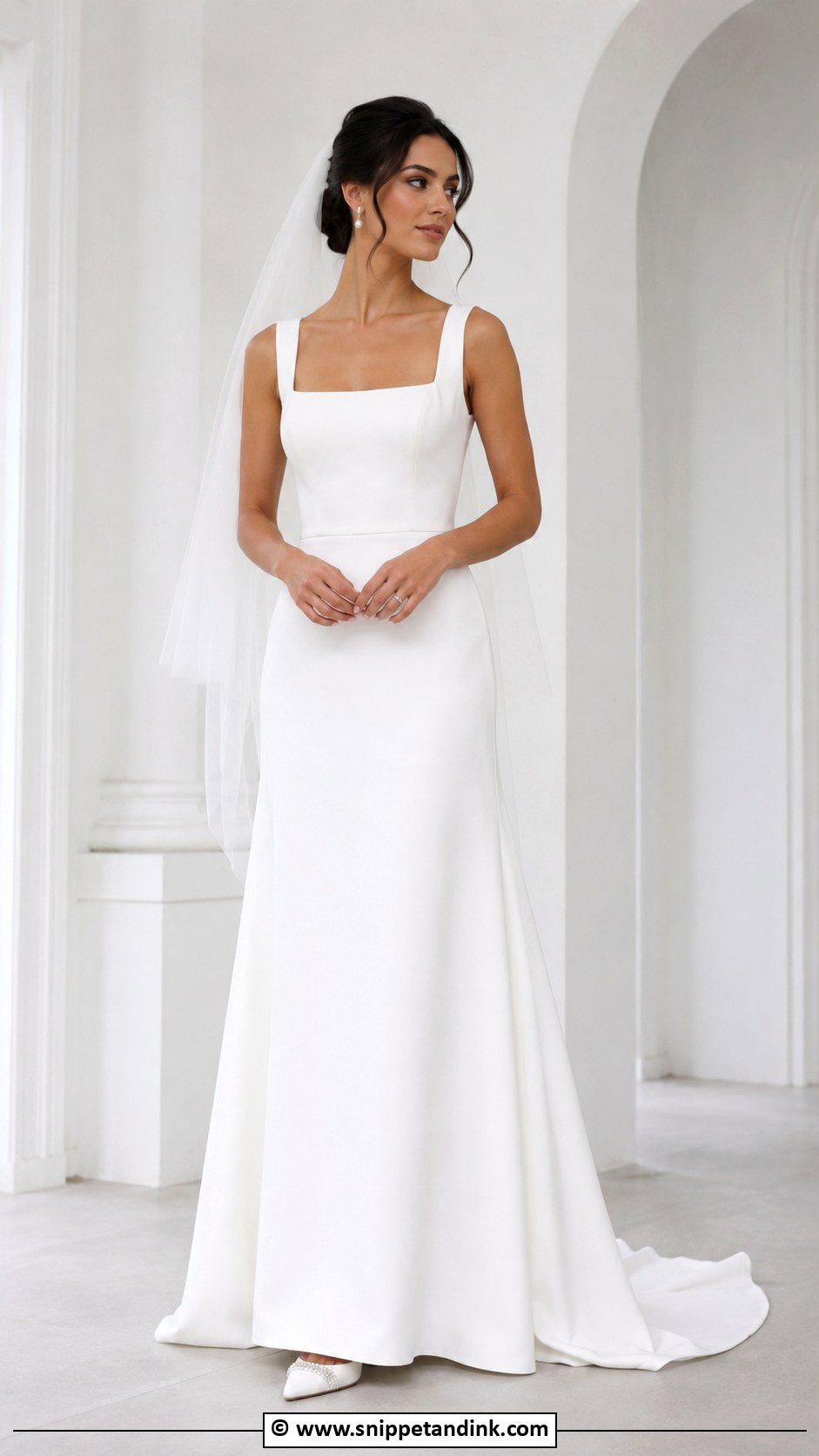
Square necklines feel both structured and fresh: the straight edge holds its shape while the open front flatters the neck and shoulders. A fitted bodice with wide straps over a slim or A-line skirt is the classic build. Crepe reads modern; satin reads traditional. I reach for it when a bride asks for a plain dress that still has a point of interest. Pearl or diamond studs, a sleek veil, elegant pumps and a smooth bun or half-up style are enough.
5. High Neck Wedding Dress
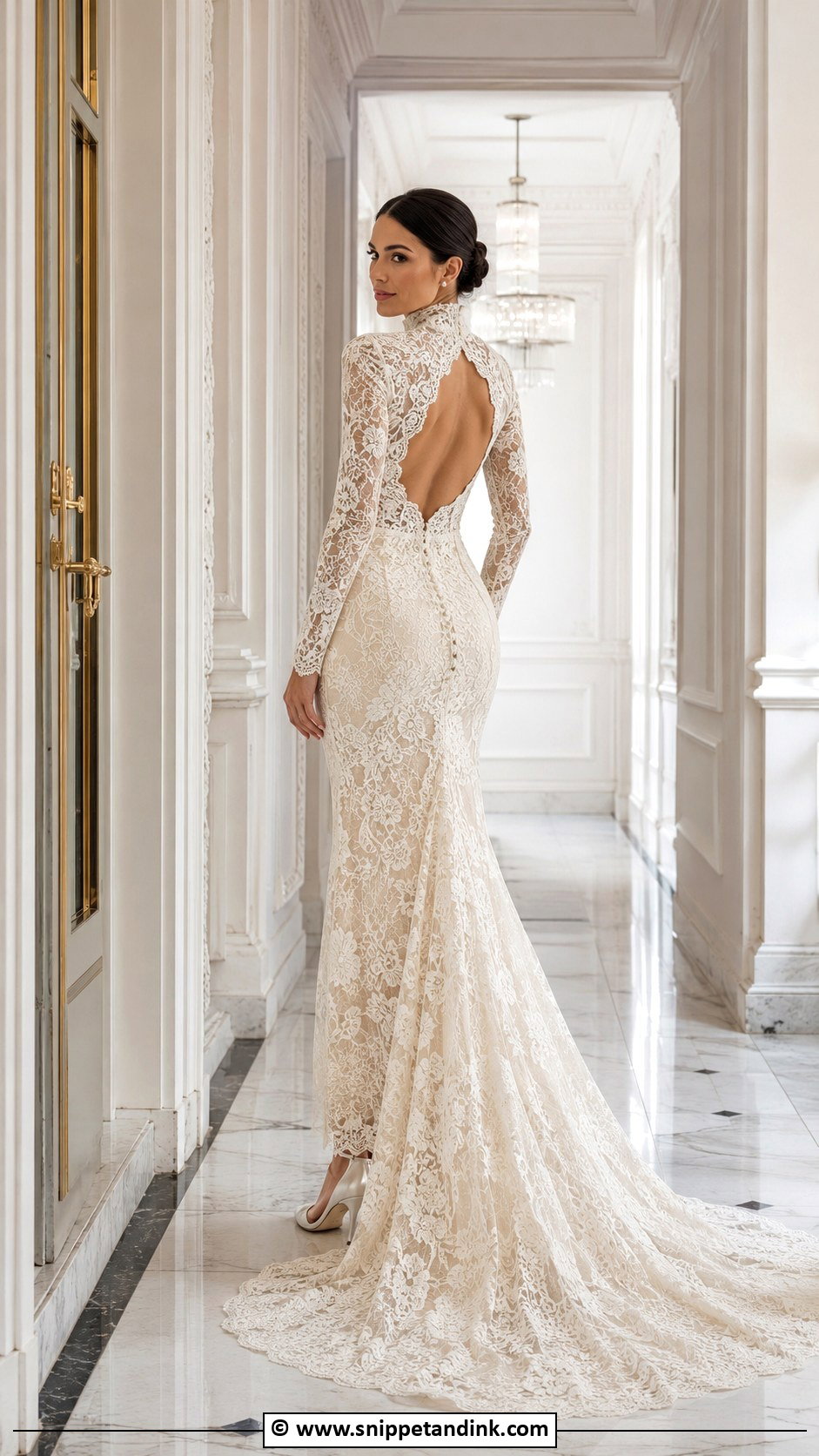
A high neck instantly looks finished. Lace versions lean vintage; satin and crepe look sleek and modern. Keep the rest of the dress clean so the neckline leads, and consider a subtle open back for balance. With a high neck I attach the veil underneath the hairstyle rather than on top, so the comb doesn’t fight the collar line. Small earrings and a low bun are all it needs.
6. Minimalist Slip Wedding Dress
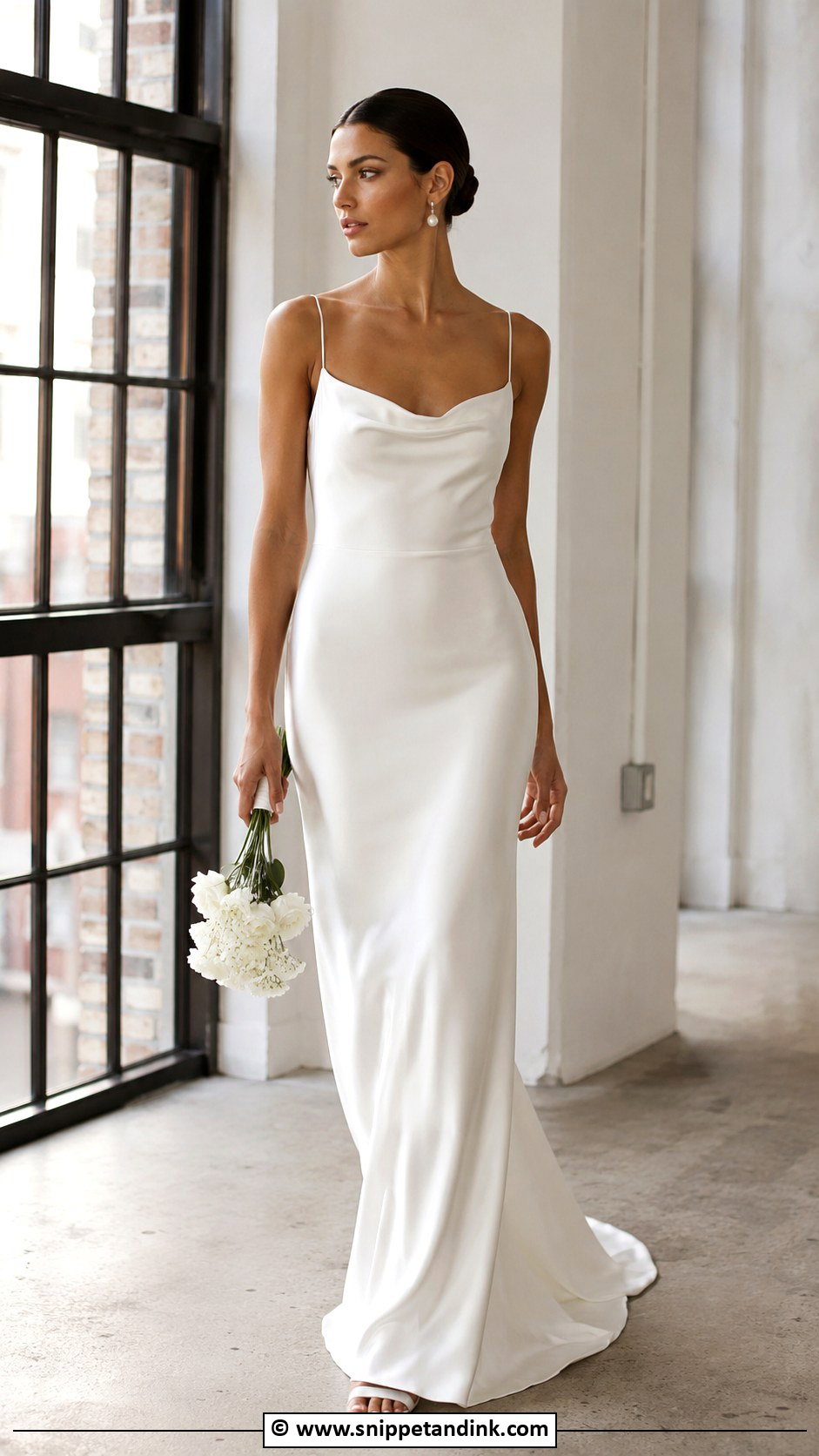
A slip depends entirely on fabric and cut. Bias-cut satin or silk skims the body and moves like water, which is the whole appeal, but the same cut shows every line underneath, so it suits brides who are comfortable with a close drape. Tailoring matters more here than anywhere: strap length, neckline and hem need to be precise to the quarter inch. It suits intimate weddings, city ceremonies, beaches and modern venues. Barely-there heels, a short or scarf veil, pearl earrings or a fine necklace.
7. Ball Gown Wedding Dress
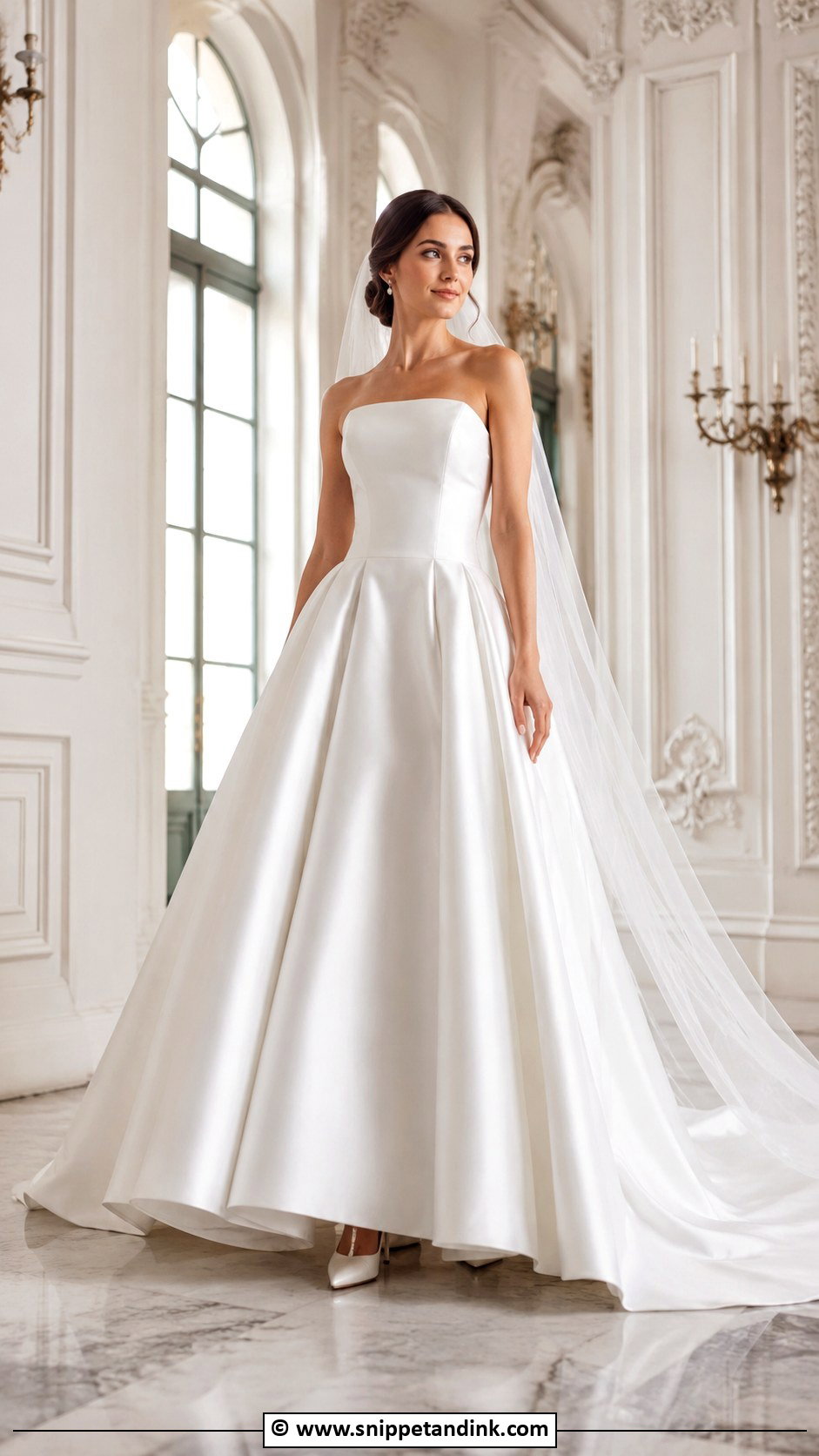
Nothing makes an entrance quite like a ball gown. A fitted bodice and full skirt are the traditional bridal shape. To keep it classic rather than costume, I steer brides toward clean satin, mikado or organza instead of heavy all-over embellishment. Strapless, square and off-shoulder bodices all suit it. Plan for the size: a full skirt needs a wide aisle, a roomy car and someone to help with bathroom trips. A cathedral veil, simple earrings and classic heels suit formal receptions and historic venues.
8. Crepe Fit And Flare Wedding Dress
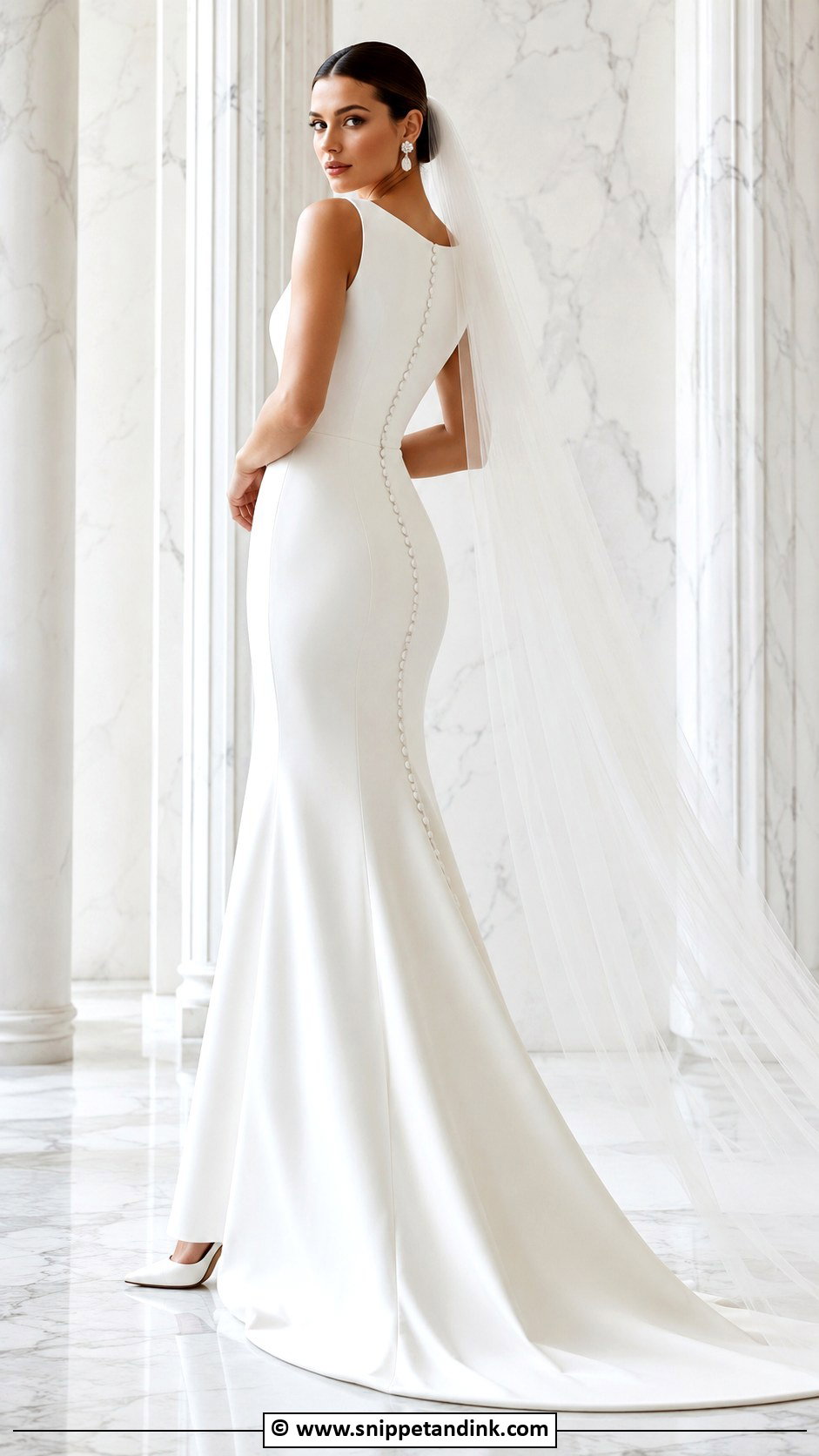
Crepe in a fit-and-flare follows the body without stiffness, then opens below the hips for walking room. A bateau, square or plunging neckline shifts the mood while keeping the line clean. Plain crepe hides nothing, so the waist and hips need precise tailoring. Covered buttons down the back are the detail I’d add to make it feel classic. Pointed pumps, a long veil and sculptural earrings suit city weddings and formal venues.
9. Pearl Detail Wedding Dress
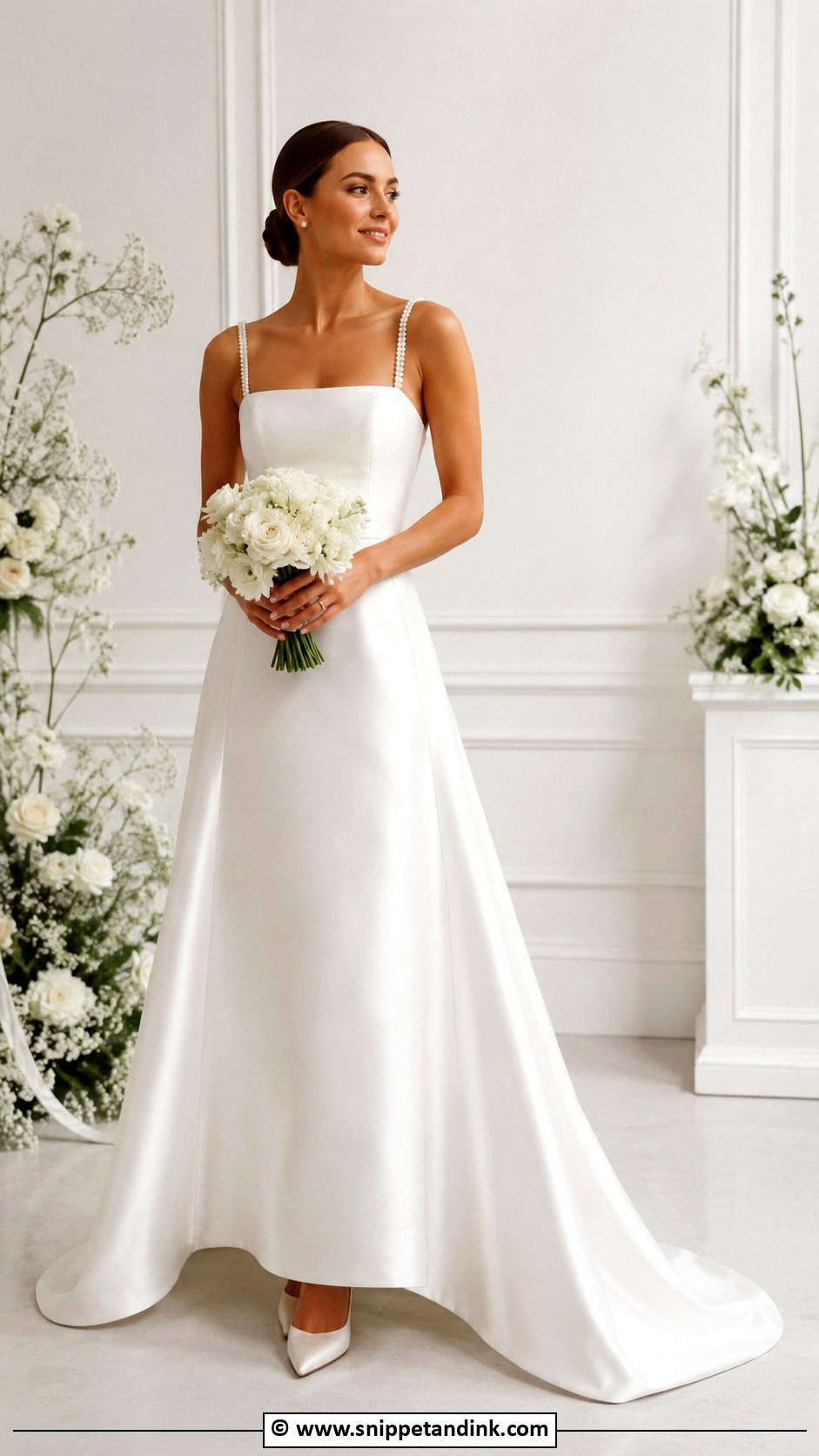
Pearls are one of the few bridal details that never really go out of style. They can line a neckline, sleeves, bodice, veil or back buttons. The rule I give brides is one pearl feature, not five: pearl straps on a plain satin or crepe gown, for example, rather than pearls everywhere. If the dress carries pearls, skip the necklace and keep to studs. Satin heels and a soft updo pull it together for classic, romantic or modern weddings.
10. Basque Waist Wedding Dress
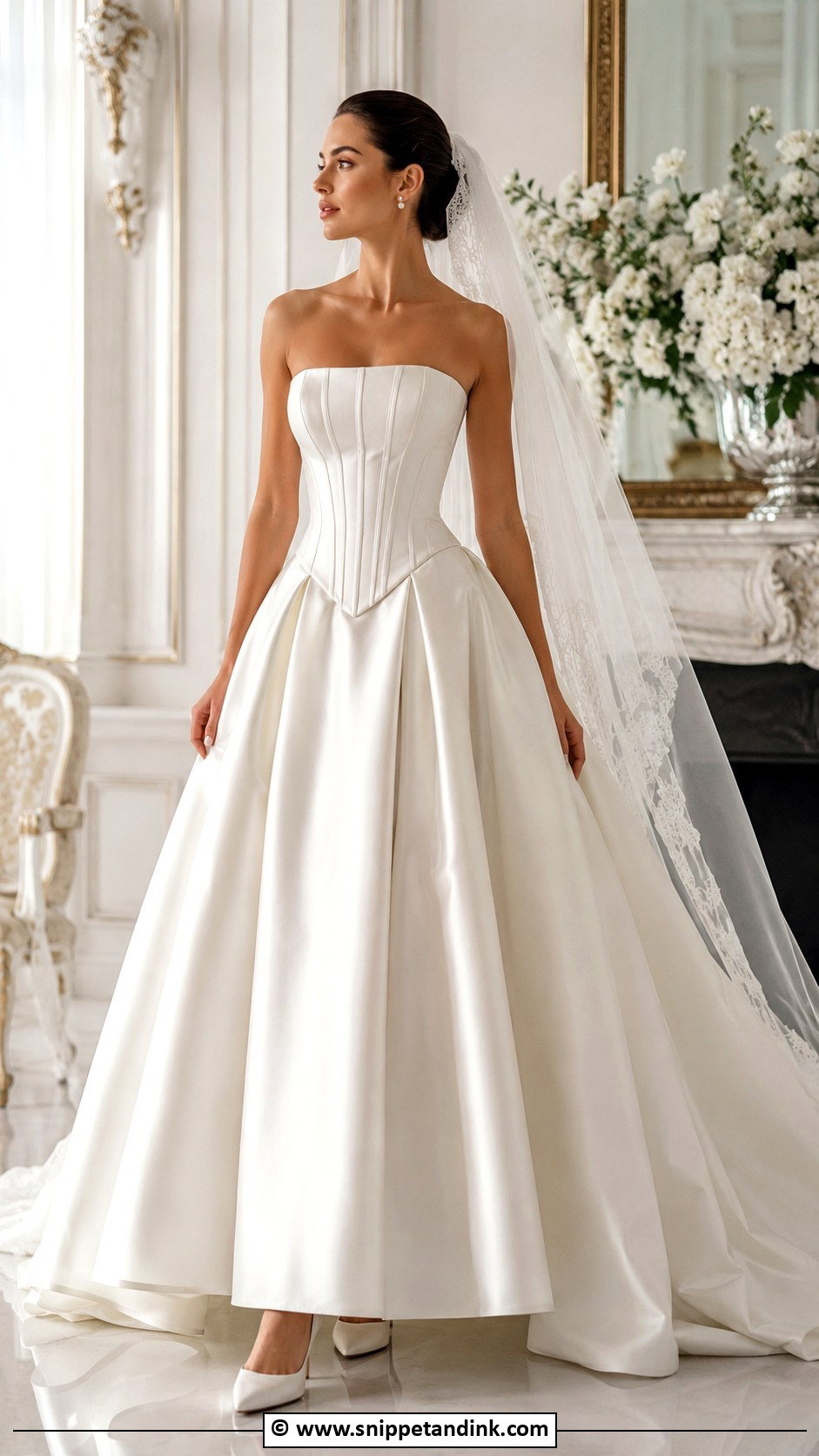
A basque waist dips into a soft V below the natural waistline, which lengthens the torso and gives the gown an old-world shape. It pairs well with full skirts, structured satin or fine lace; a softer A-line skirt gives the regal effect without huge volume. The V point has to sit exactly centred, so I check it from a step back at every fitting. The waistline is the statement, so keep to a long veil, pearl earrings and classic heels.
11. Bateau Neck Wedding Dress
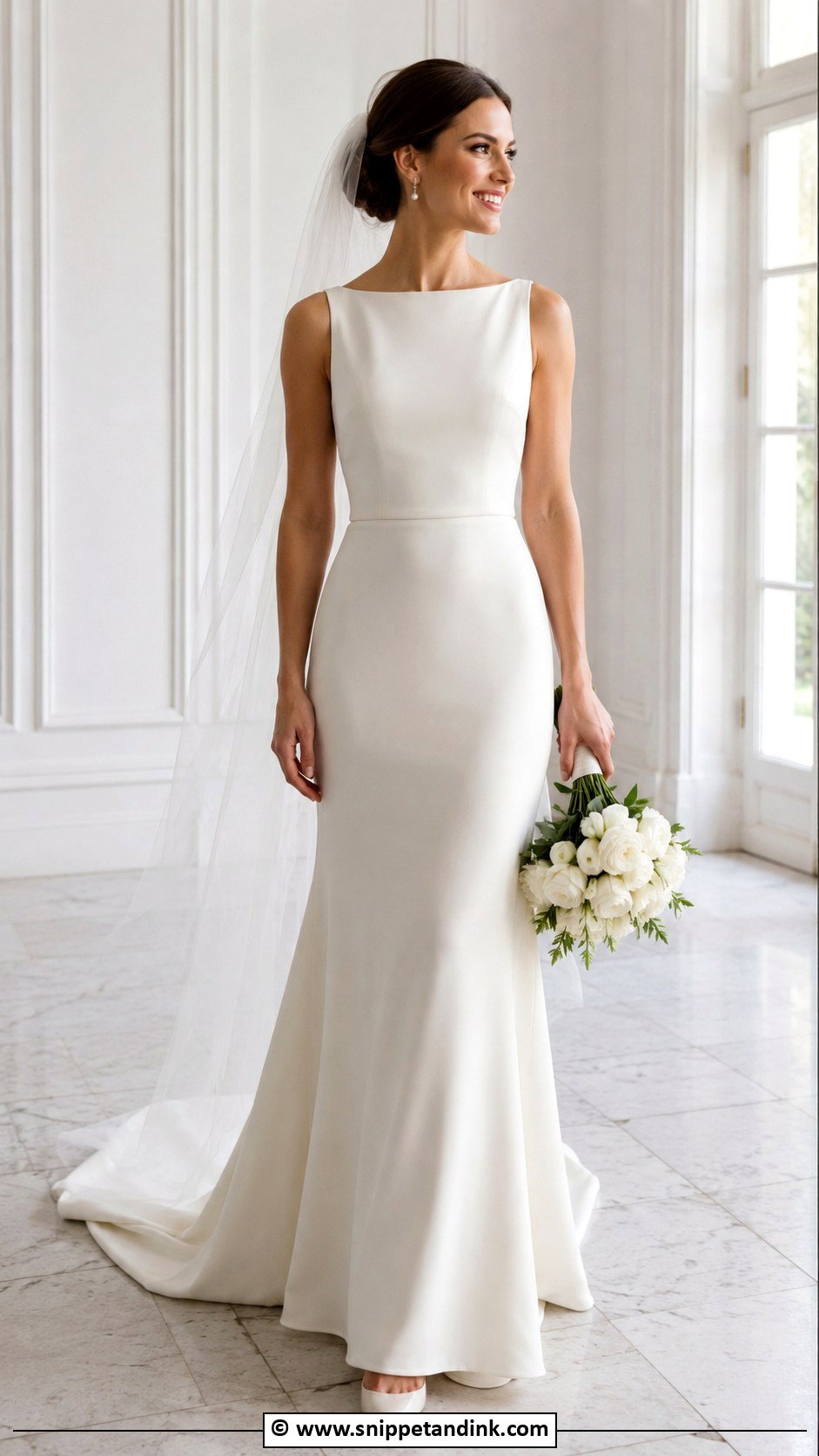
A bateau neckline runs across the collarbone from shoulder to shoulder, borrowing from mid-century bridal fashion. It works on crepe, satin, mikado and lace, with long sleeves, cap sleeves or none. Skip the necklace and let the line frame the face. It tends to suit brides with straighter shoulders; on very sloping shoulders I sometimes adjust the width so it doesn’t slide. A sleek bun, small drop earrings and a simple veil. It holds up in close-up portraits and full-length shots alike.
12. Tea Length Wedding Dress
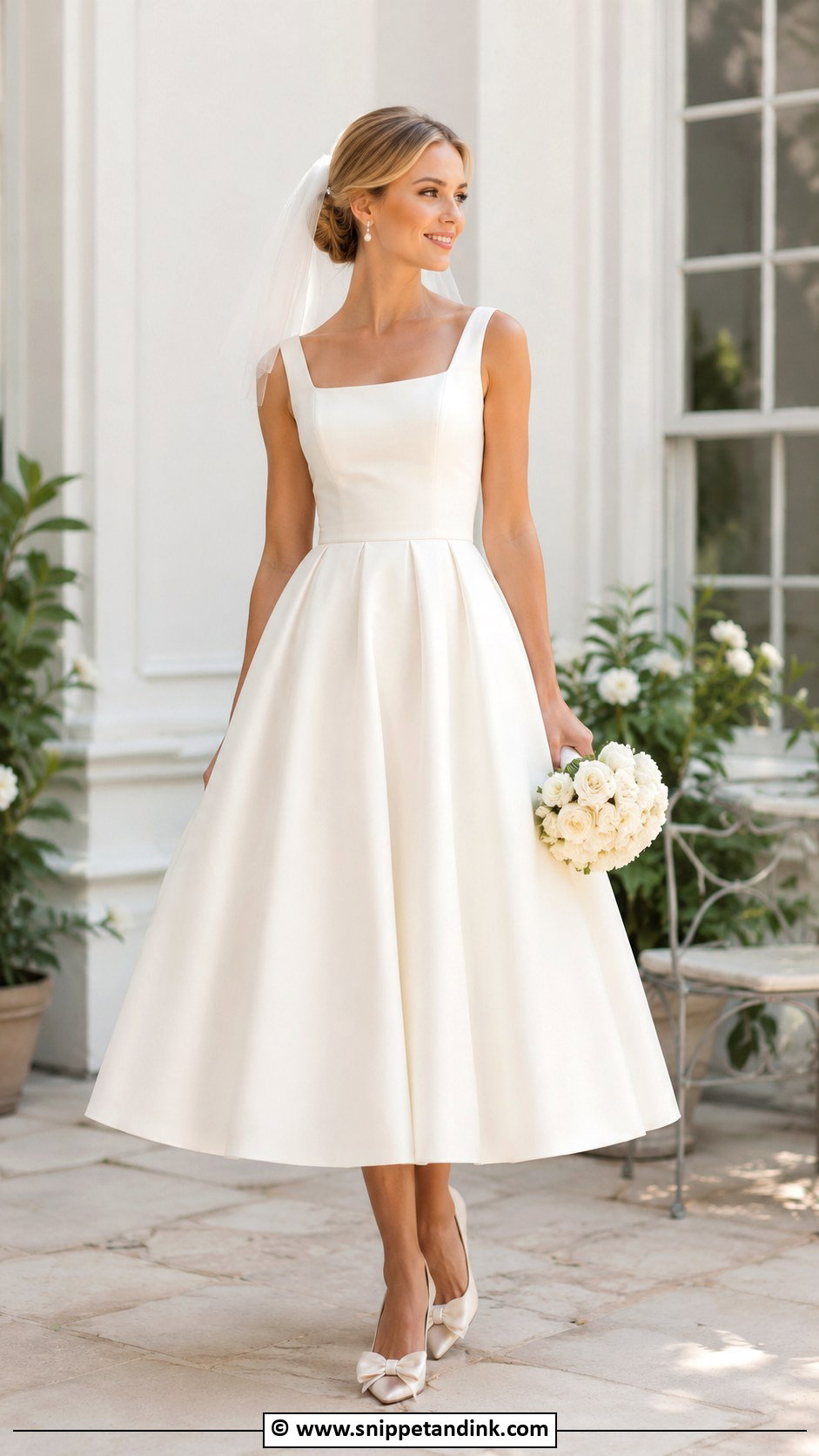
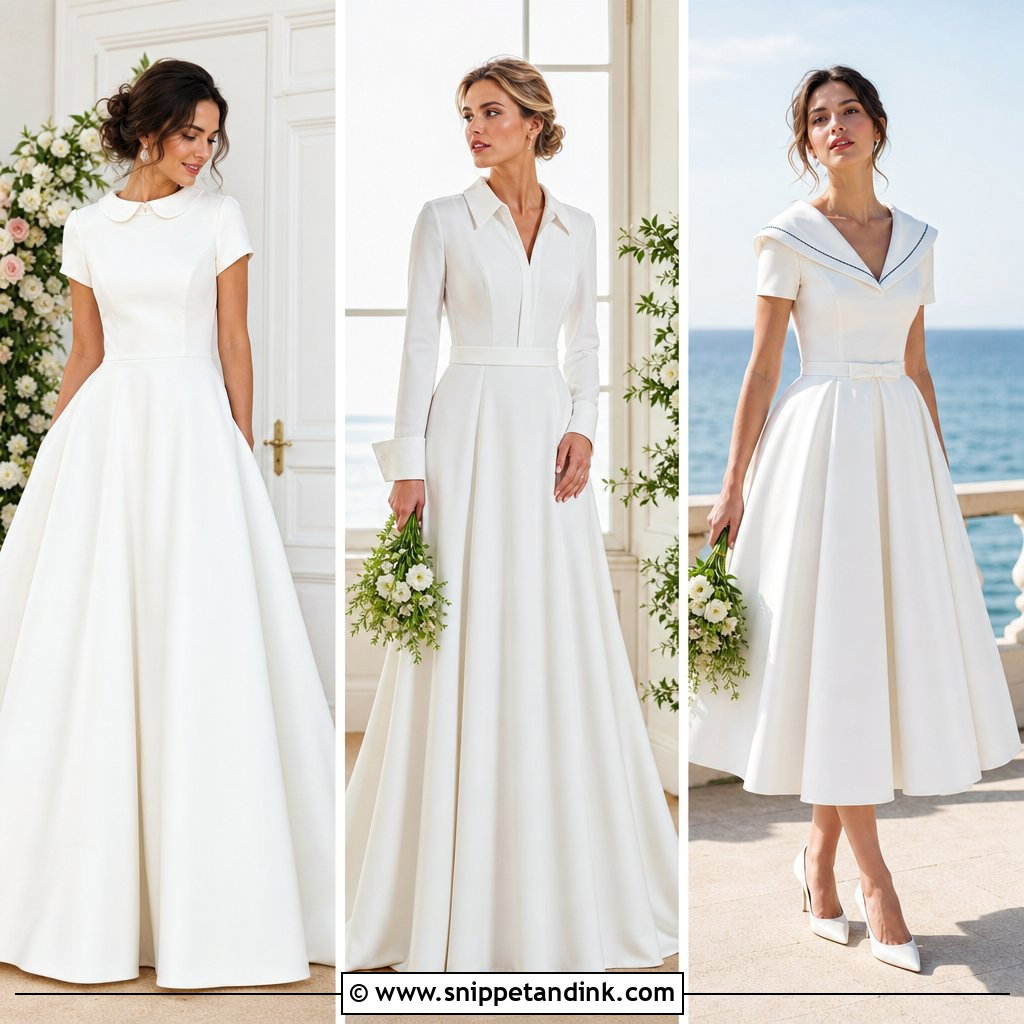
A tea length wedding dress ends between knee and ankle, which suits courthouses, garden ceremonies, brunch receptions and vintage-themed days. Your shoes will be on show, so choose pumps, slingbacks or satin bow heels you can stand in. A fitted bodice with a full skirt feels classic; a slim column version feels modern. Buy the shoes before the hem fitting, since heel height decides where the skirt falls. Pearl earrings, a short veil or a small hair bow, and you can dance all day.
13. Strapless Satin Wedding Dress
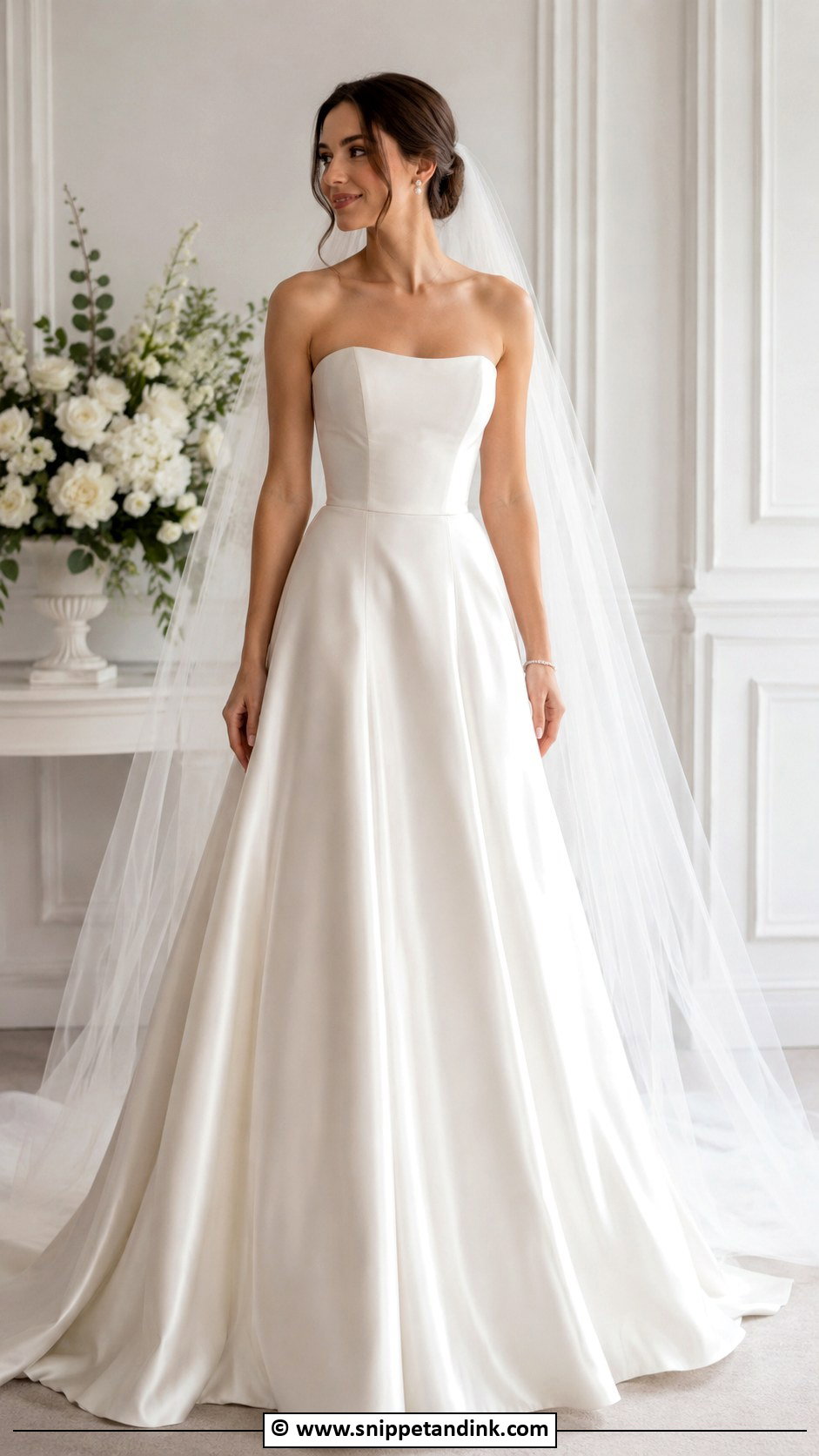
Strapless satin highlights the shoulders and collarbone with a smooth finish. With a full A-line skirt it’s classic; with a fitted column it’s modern. Bodice structure is everything: proper boning and a waist stay keep it secure, and I always fit it with the bride bending forward and raising her arms. A statement veil, pearl studs, a soft updo and perhaps a fine bracelet. It works in any season and almost any venue.
14. V Neck Wedding Dress
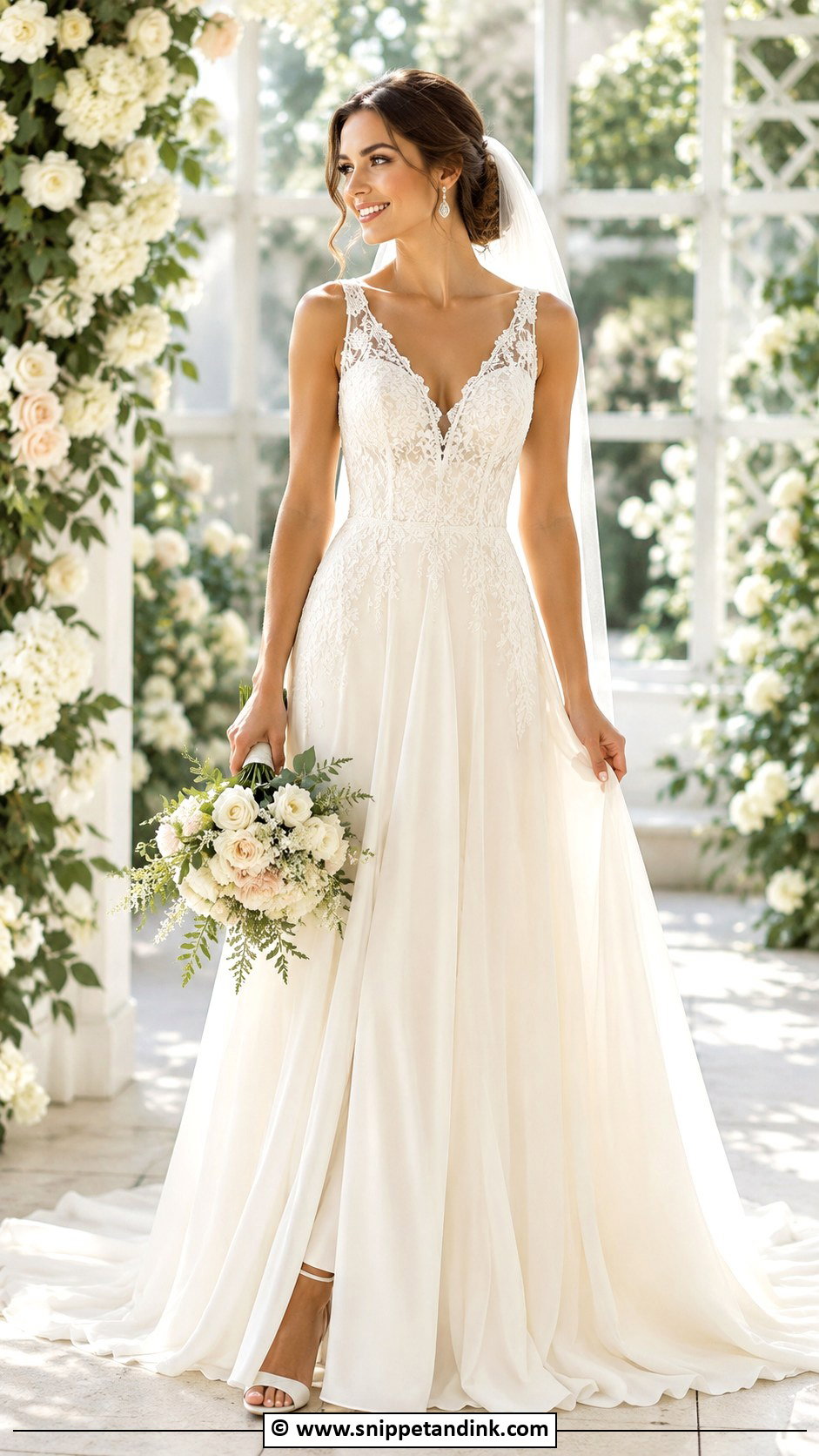
A V neck draws a long line through the torso and flatters a wide range of figures. Shallow is modest; deeper is more dramatic. For a classic version, choose a balanced V with supportive straps over a flowing A-line or fitted crepe skirt. Lace softens it, satin keeps it clean. On deeper Vs I ask for a discreet mesh panel or a tacked lining so nothing shifts during hugs. Drop earrings, a simple veil and elegant heels, with no heavy necklace.


15. Illusion Sleeve Wedding Dress
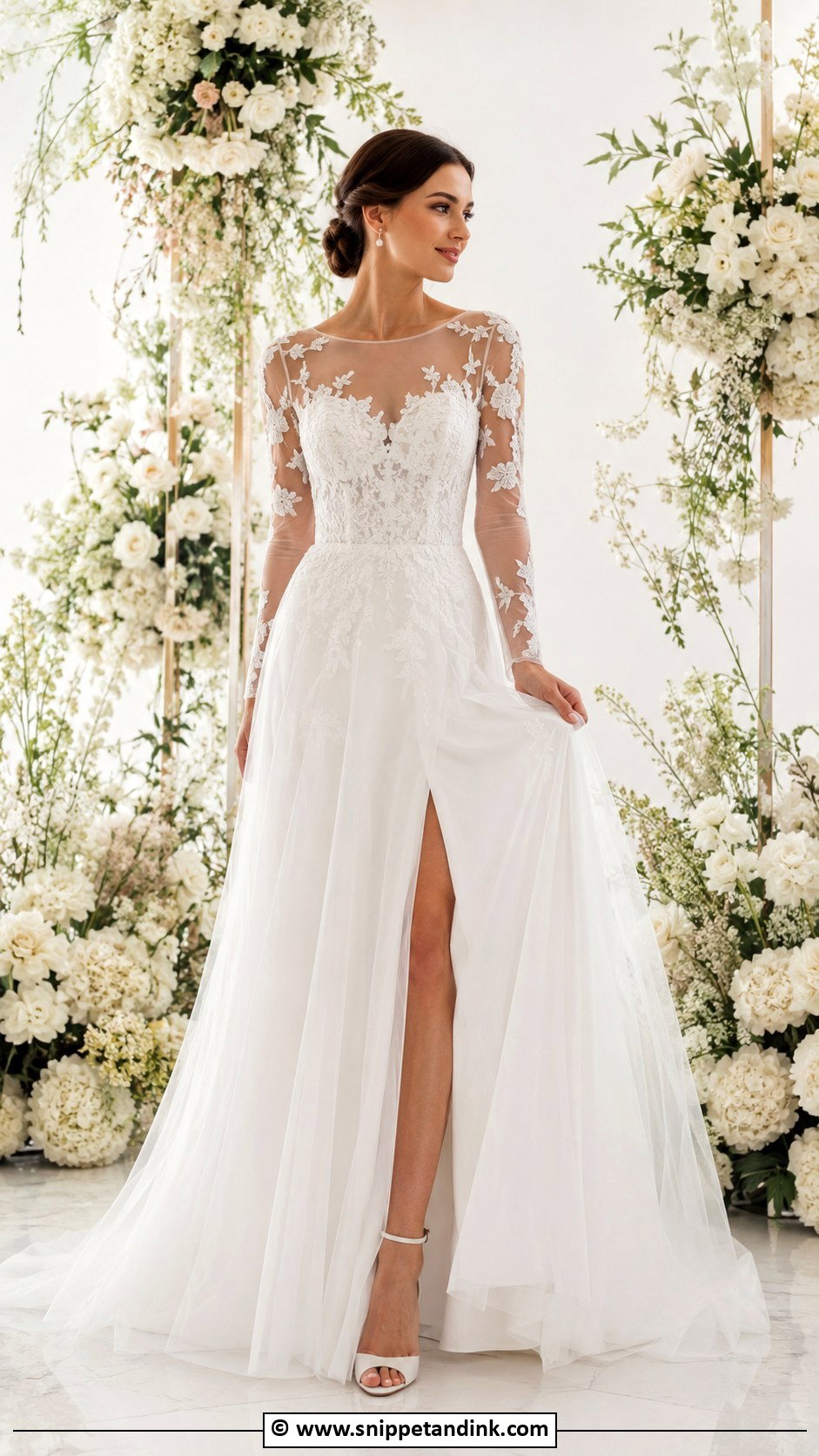
An illusion sleeve wedding dress uses sheer tulle so that lace appliqué, pearls or embroidery appear to float on the skin. It gives sleeves without weight and suits A-line, mermaid, sheath and ball gown shapes. Tulle tone matters: it should be matched to your skin, so ask to see swatches in daylight before ordering. Keep makeup soft, hair in a low bun and the veil plain enough not to compete with the sleeve.
16. Mikado Wedding Dress
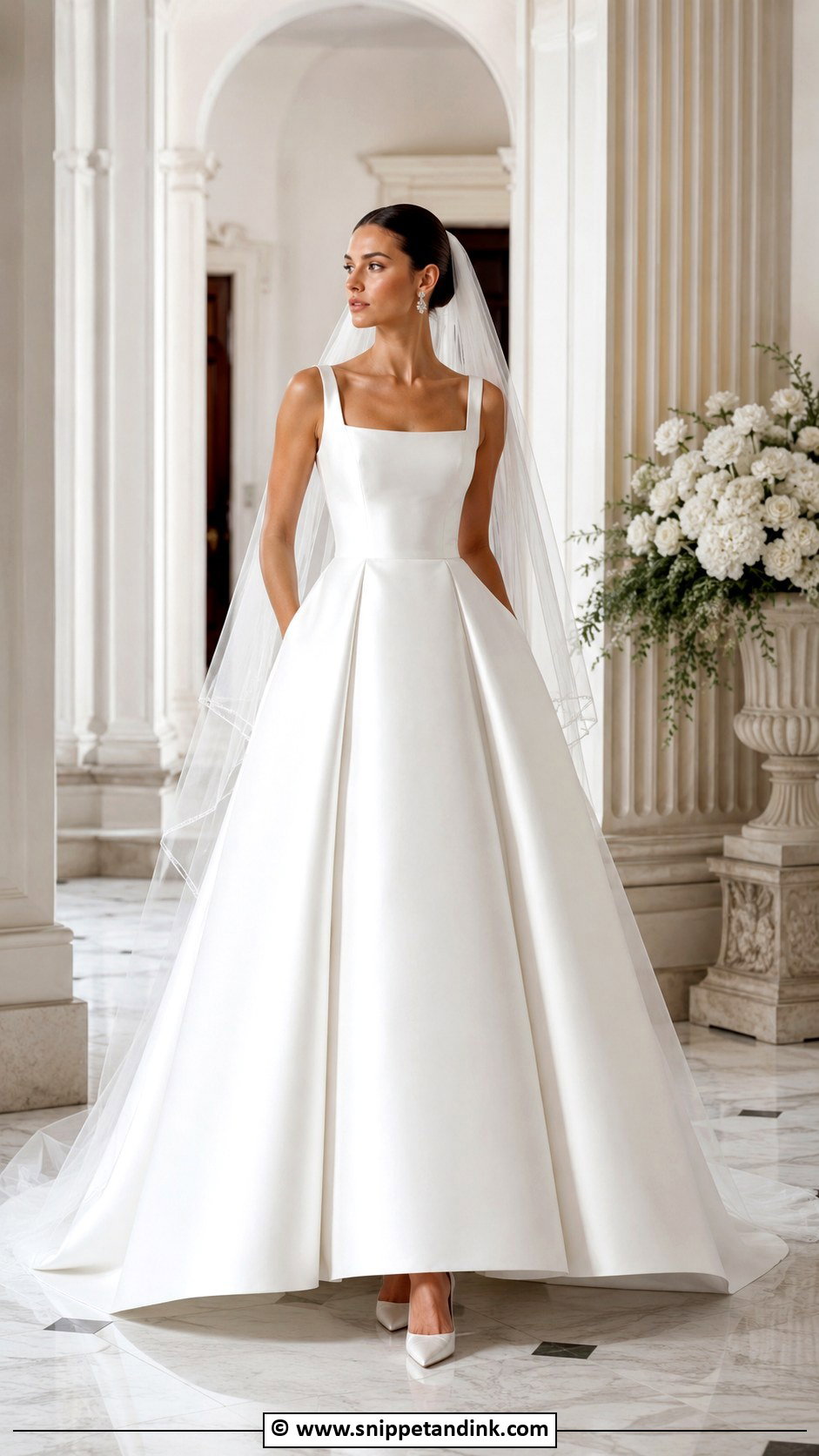
Mikado is a heavy silk blend (often silk with polyester) that holds structure on its own, which is why I use it for ball gowns, A-lines and sculptural bodices. Its subtle sheen looks luxurious without glitter, and the silhouette does most of the work. The trade-off is warmth and weight, so I’d think twice for a midsummer outdoor ceremony. A square or off-shoulder neckline keeps it modern. Pointed heels, a sleek veil and polished earrings; it belongs in formal venues and crisp editorial photos.
17. Lace A Line Wedding Dress
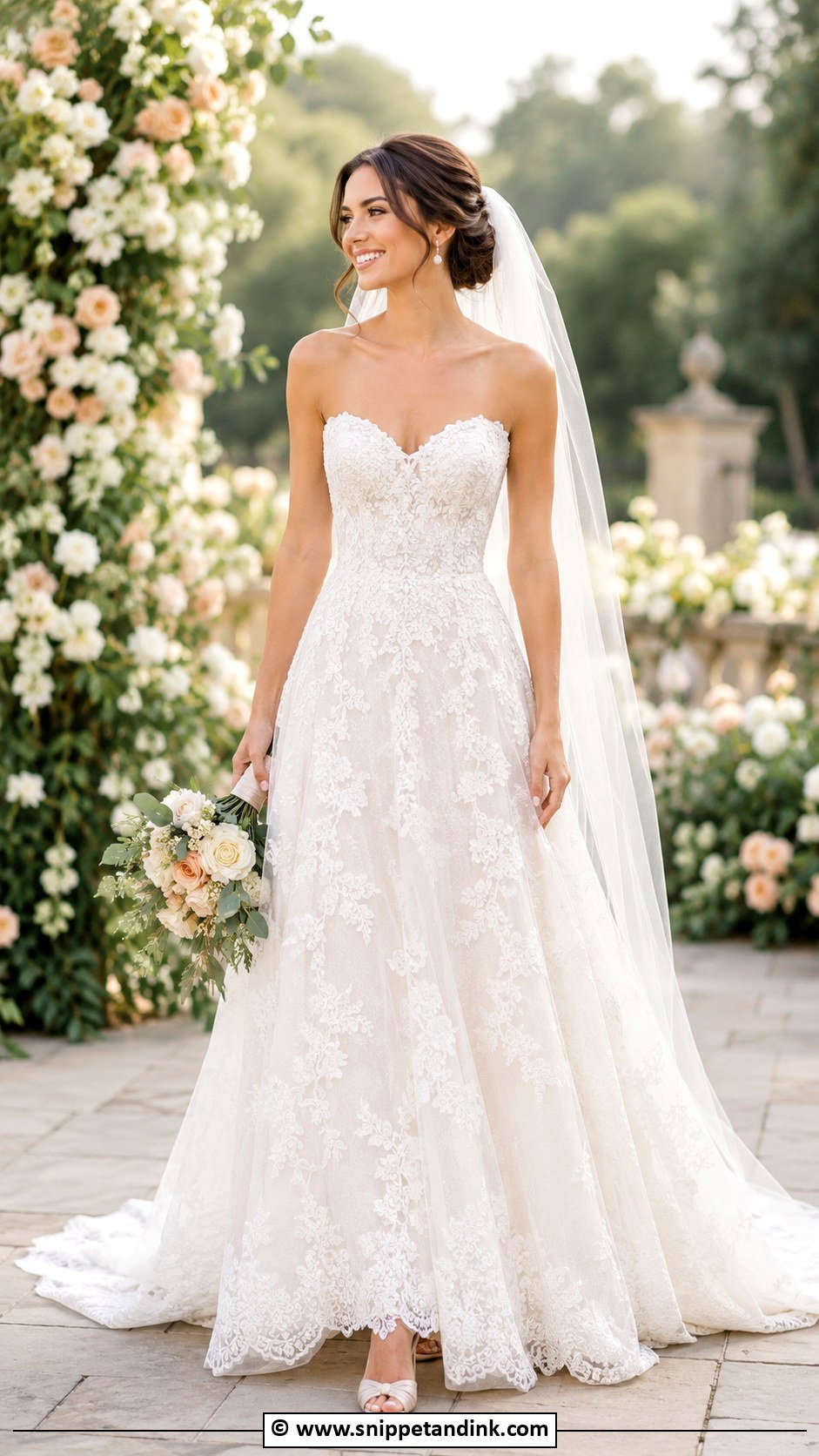
Lace in an A-line pairs movement with texture and suits gardens as easily as ballrooms. For a dress that won’t date, choose lace with a fine, refined pattern rather than oversized or very trend-led motifs. Sweetheart, V and illusion necklines all suit the shape. I usually pair lace gowns with a plain-edge veil, because a lace veil over a lace dress can look busy in photos. Soft curls, pearl earrings and delicate heels.
18. Column Wedding Dress
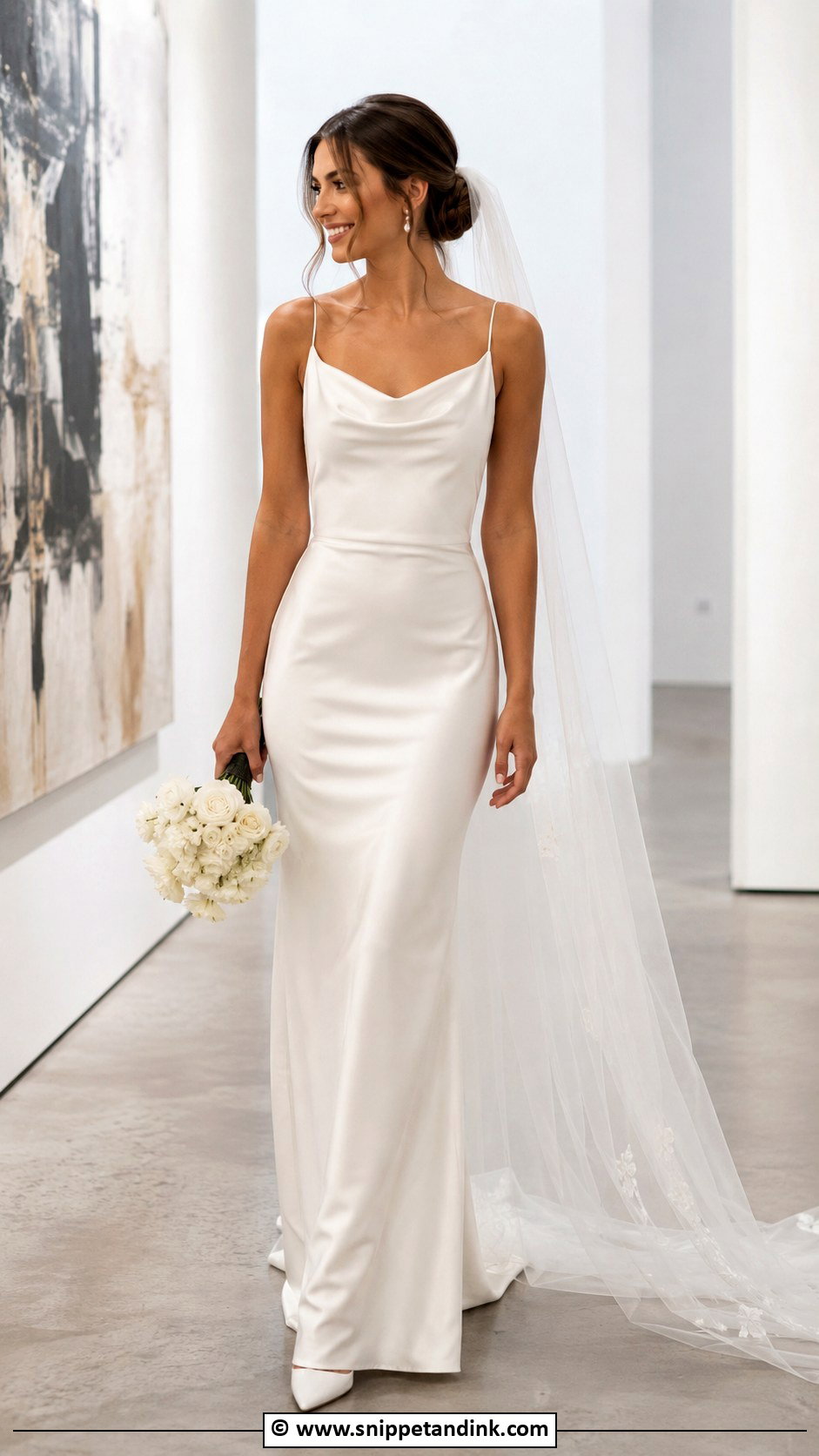
A column falls straight and narrow, with little volume, so tailoring and fabric carry everything. Crepe, satin and silk all suit it. It works for modern brides, courthouses, destination weddings and evening celebrations. A draped neckline, open back or a row of covered buttons adds interest. Hem length is critical; a column should just touch the top of the shoe, and puddling fabric breaks the line. Long veil, minimal earrings and sharp heels.
19. Sweetheart Neck Wedding Dress
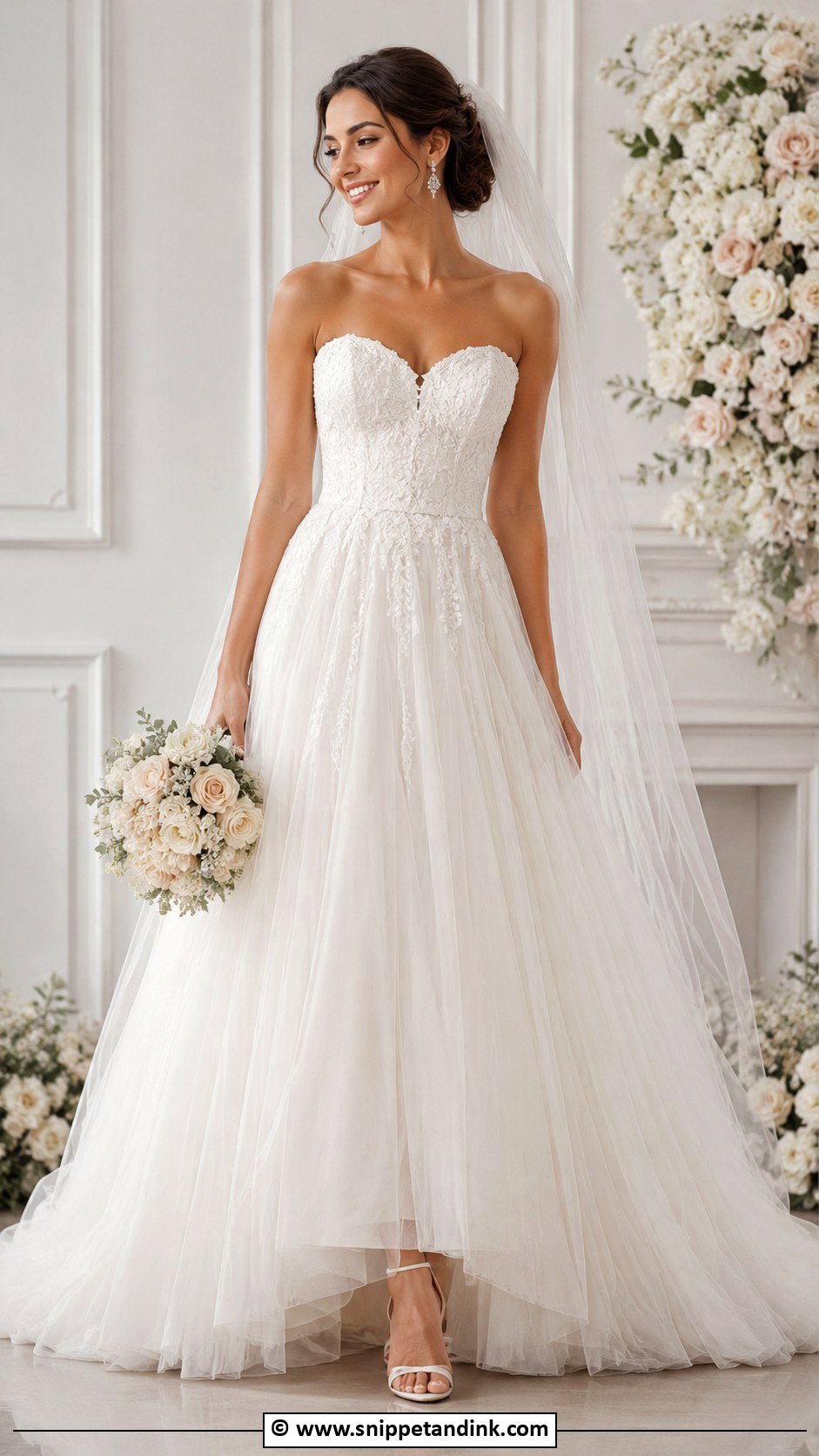
A sweetheart neck wedding dress curves over the bust and softens any bodice. It works strapless, with off-shoulder sleeves, thin straps or a lace overlay. For a lasting version, pair it with satin, tulle or lace in an A-line or fit-and-flare. A structured corset bodice gives the most support, and I always check that the centre dip sits flat rather than lifting away from the chest. A delicate veil, drop earrings and soft waves suit simple or detailed accessories.

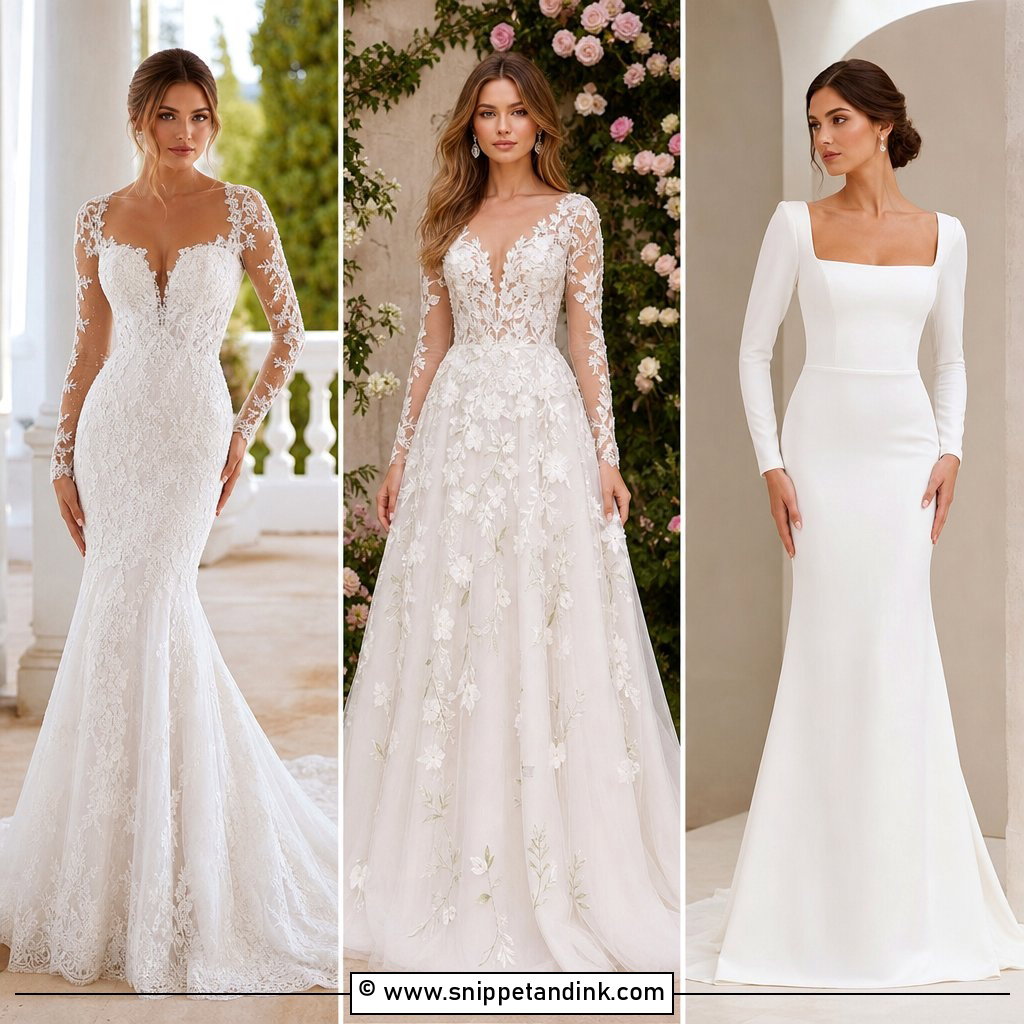


20. Wedding Dress With Bow Back
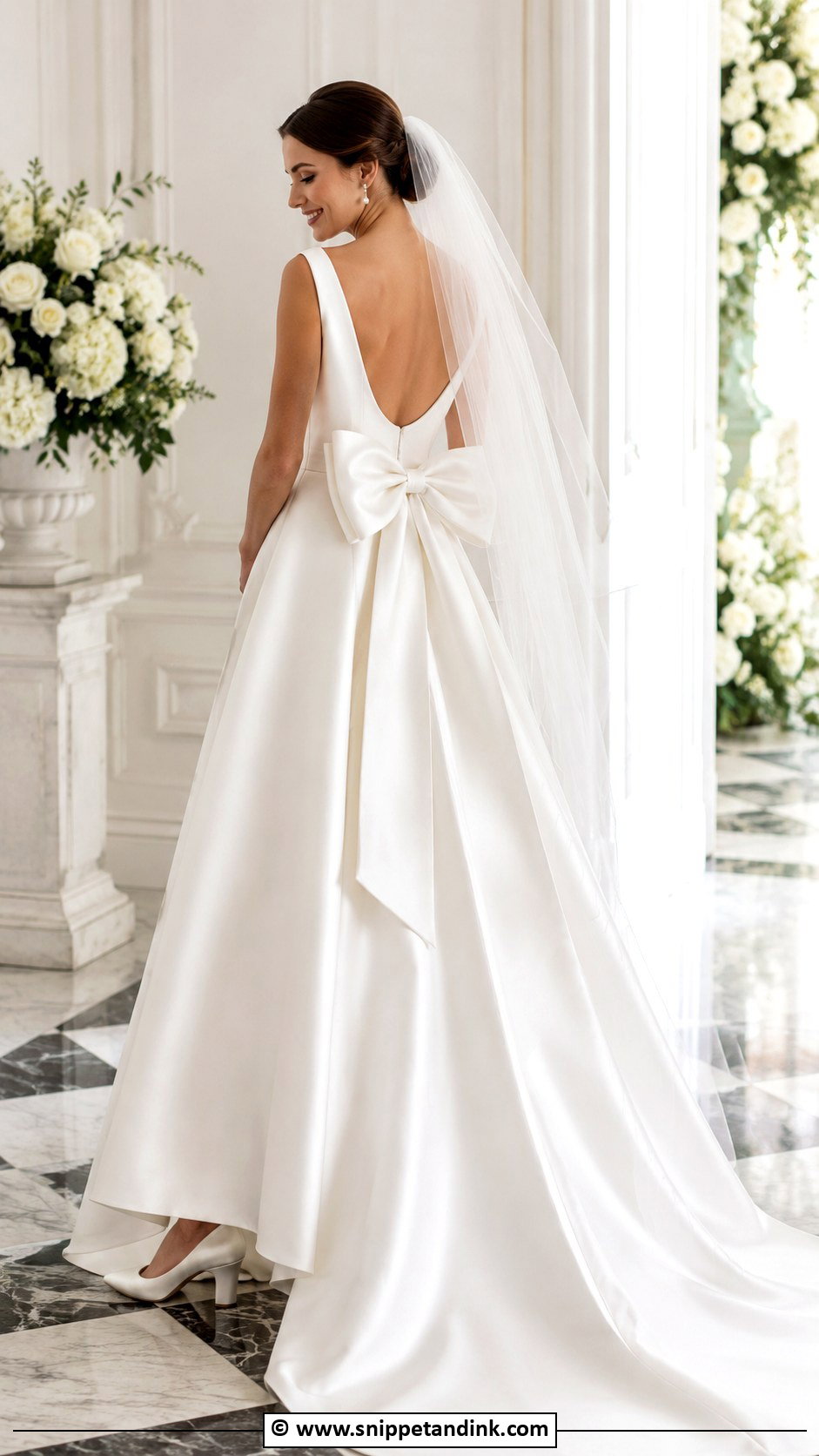
A bow at the back gives the gown one strong focal point for the moment guests see it most. It can be small at the waist or large on clean satin. A strapless A-line, square-neck gown or column all carry it well. Large bows flatten against chair backs through dinner, so ask whether it is stiffened inside or detachable. Clean earrings, a smooth bun and a plain veil you can remove after the ceremony to show off the bow.
21. Detachable Train Wedding Dress
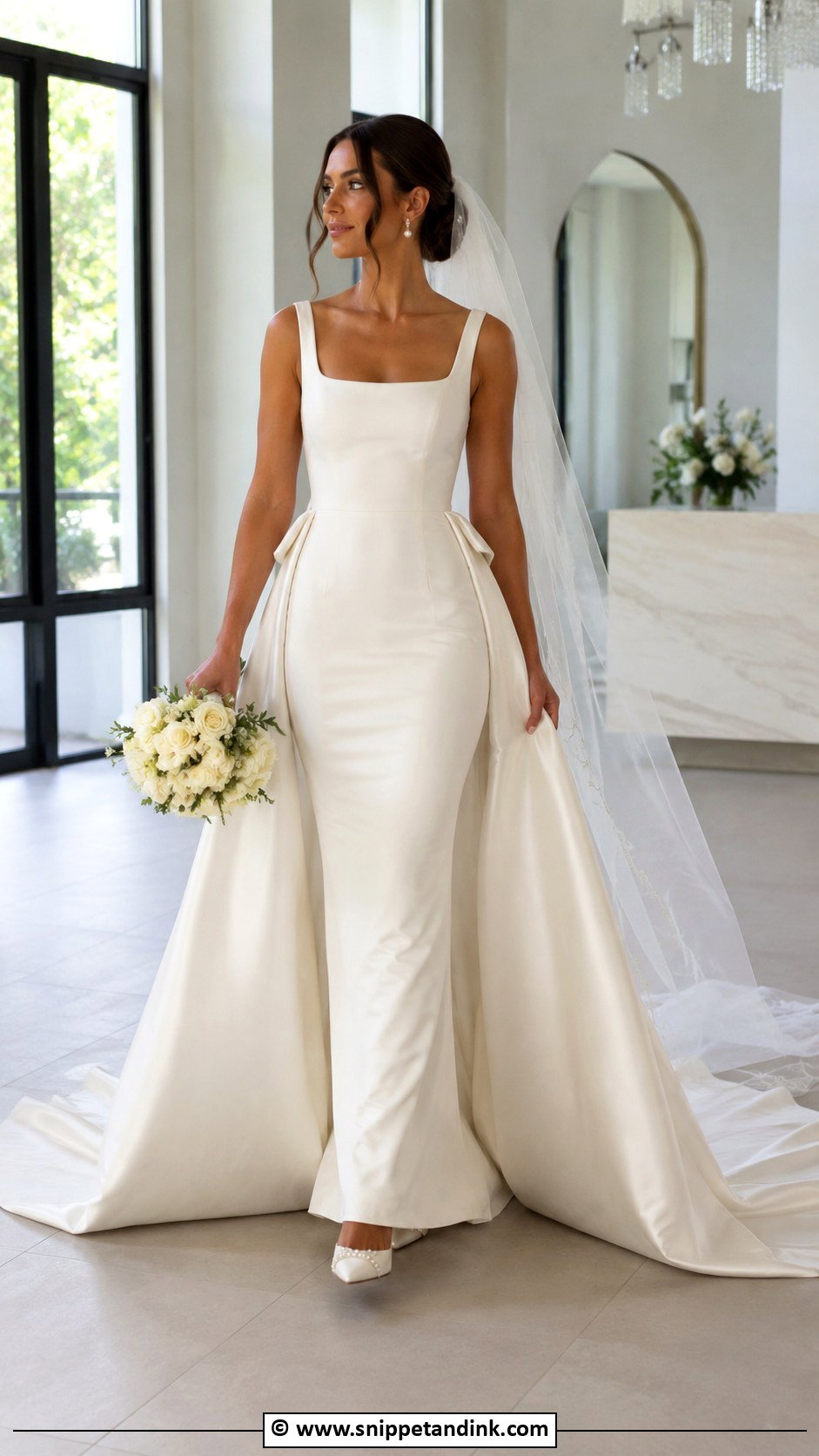
A detachable train gives drama for the ceremony and portraits, then comes off for the reception. Fitted crepe, a satin column or a structured A-line all take one. The attachment is the part I scrutinise: hidden hooks or snaps should sit along a seam and be strong enough to hold the weight when someone steps on the train. Practise the removal at your last fitting and teach it to a bridesmaid. Classic heels, a long veil and simple jewelry.
22. Draped Neck Wedding Dress
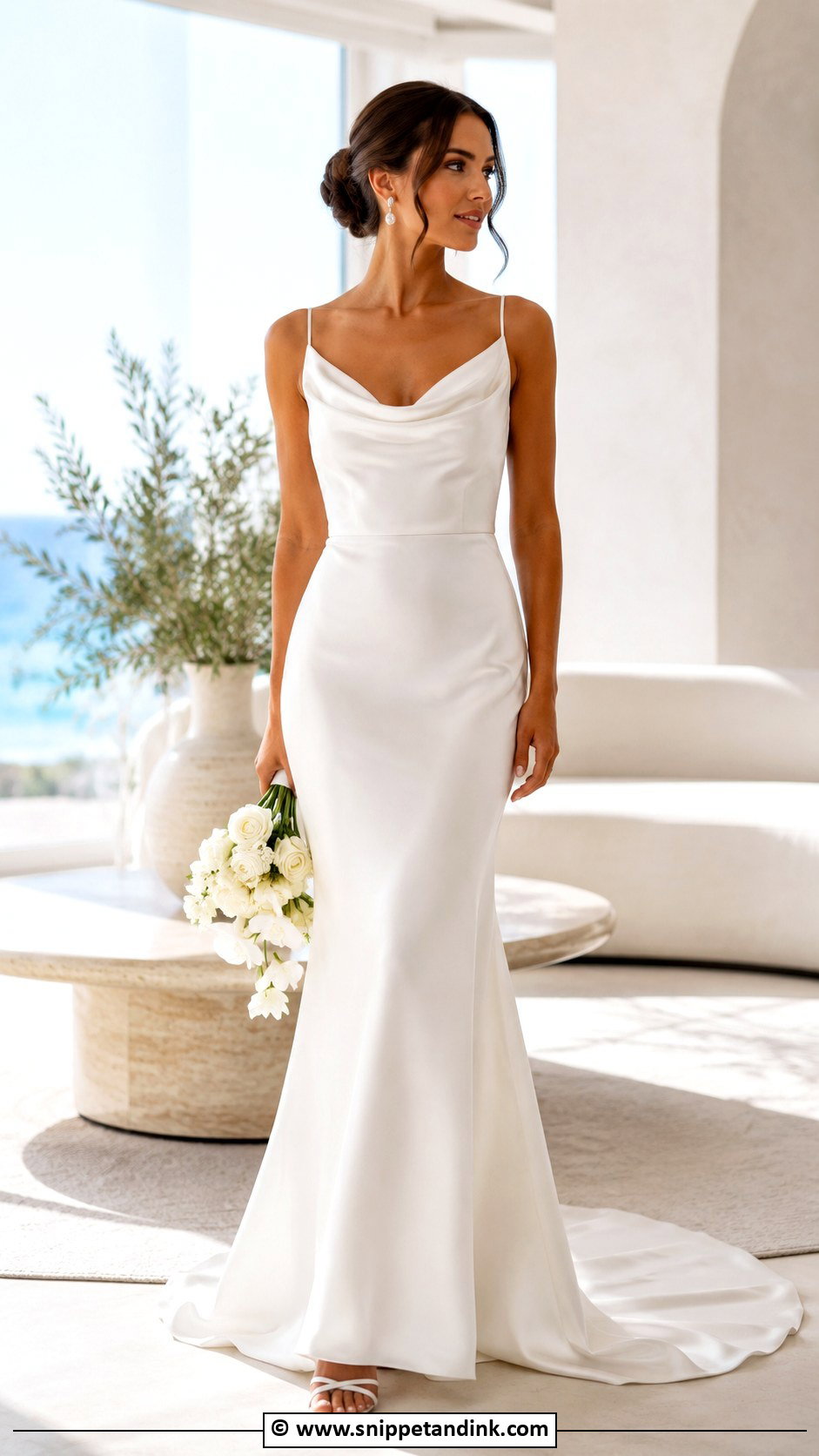
A draped neck falls in soft folds and adds movement without embellishment. Silk, satin and lightweight crepe drape best; stiff fabrics won’t fold properly. It suits slip, column and soft A-line skirts. Draped necklines shift when you lean forward, so I’d tack the folds lightly at a fitting or plan on a little fashion tape. No necklace; delicate earrings, strappy heels and polished hair for modern, coastal and intimate weddings.
23. Cap Sleeve Wedding Dress
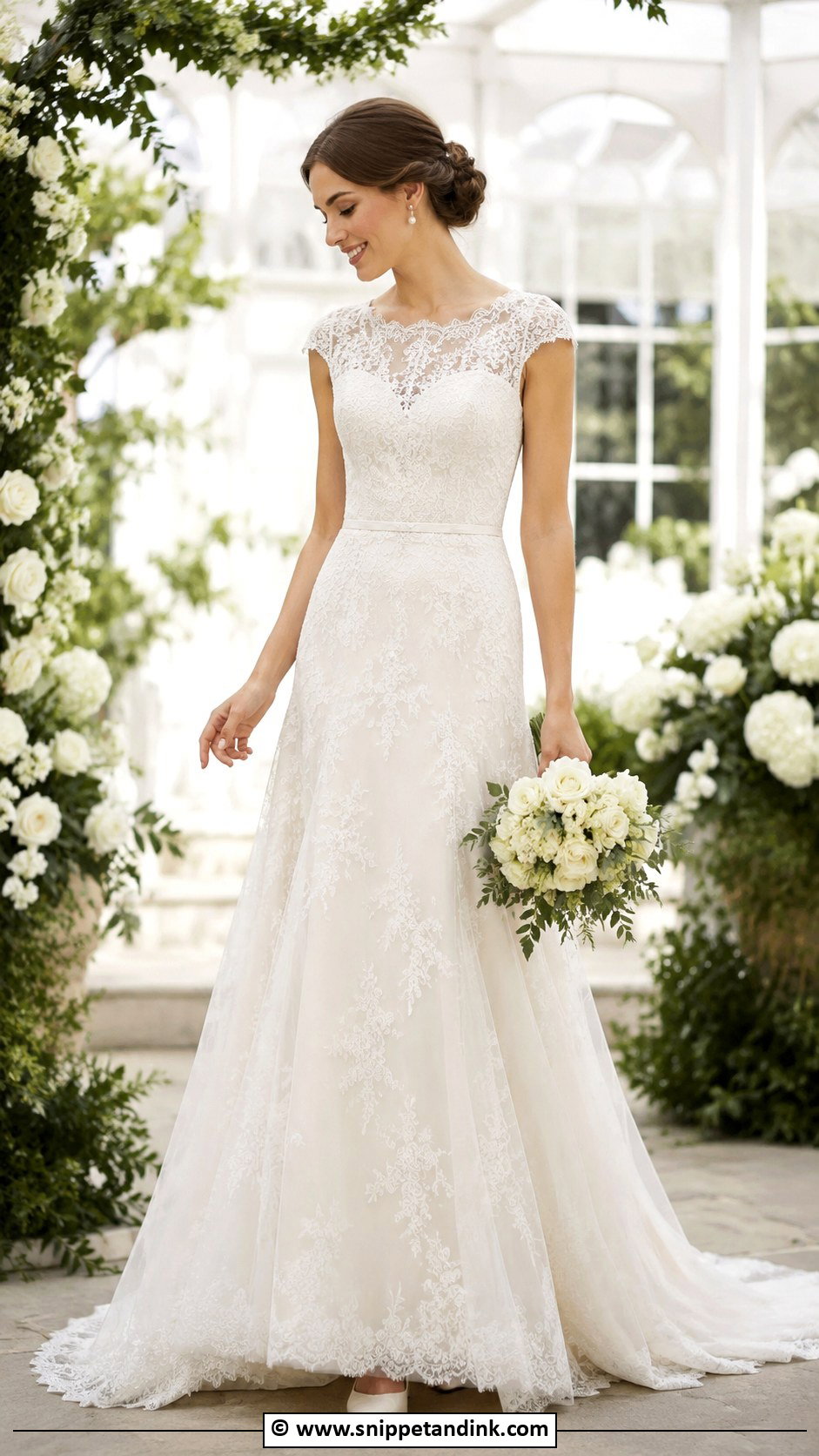
A cap sleeve wedding dress covers just the top of the shoulder and keeps the dress light. Lace, satin, crepe and illusion fabric all work, with bateau, V or sweetheart necklines. Cap sleeves also give a little extra security to the bodice, which many brides find comfortable. Lace caps feel vintage; clean satin caps look modern. Low bun, pearl earrings and classic pumps.
24. Wedding Dress With Covered Buttons
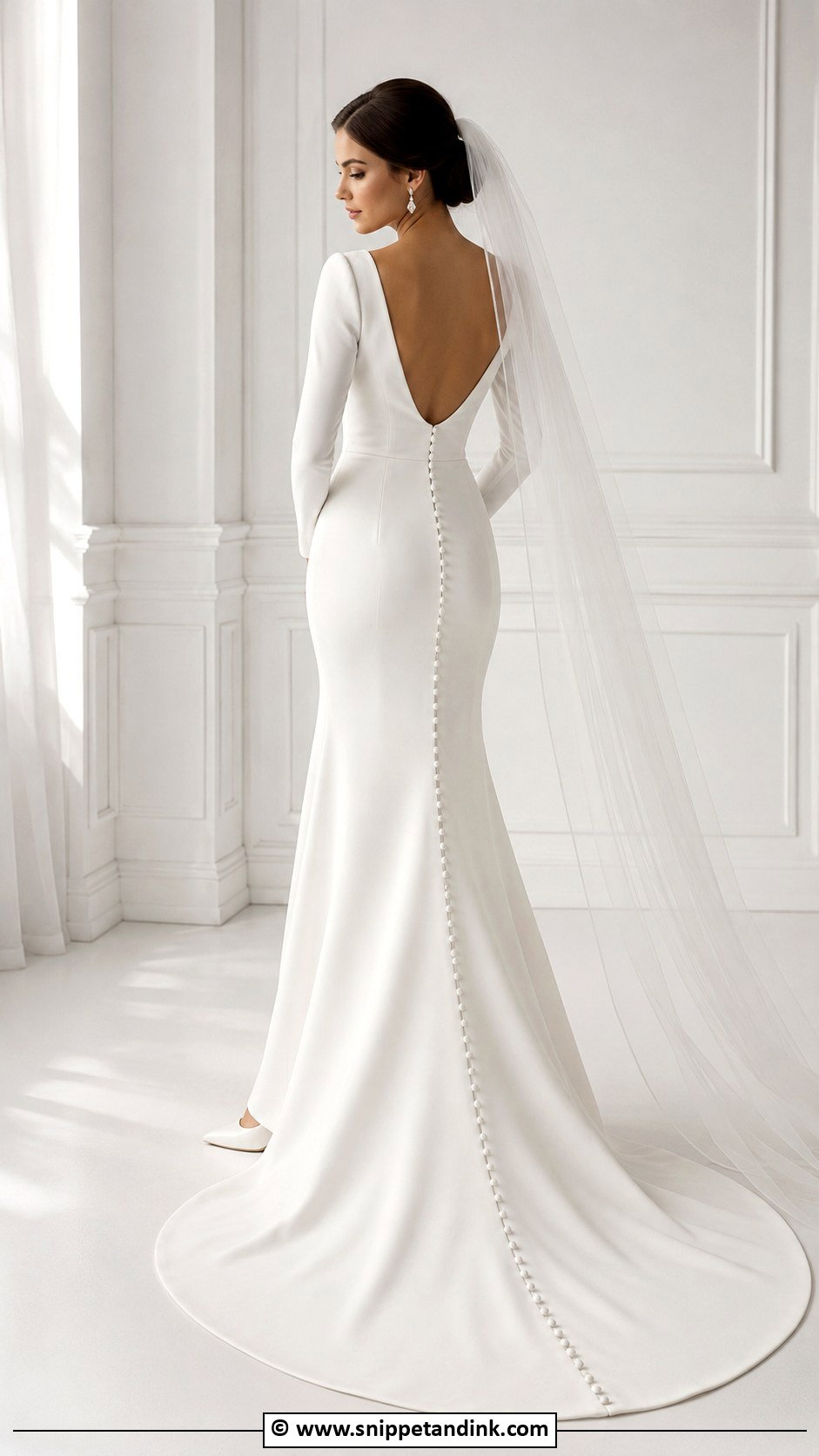
Covered buttons down the back are a small detail that looks finished from every angle. They suit satin, crepe, mikado and lace, and can stop at the waist or continue down the train. Be honest about time: a long row of button loops can take a while to fasten, so most dresses hide a zip underneath, and I’d always ask whether yours does. Wear your hair up or swept back so the buttons are seen. Keep everything else simple.


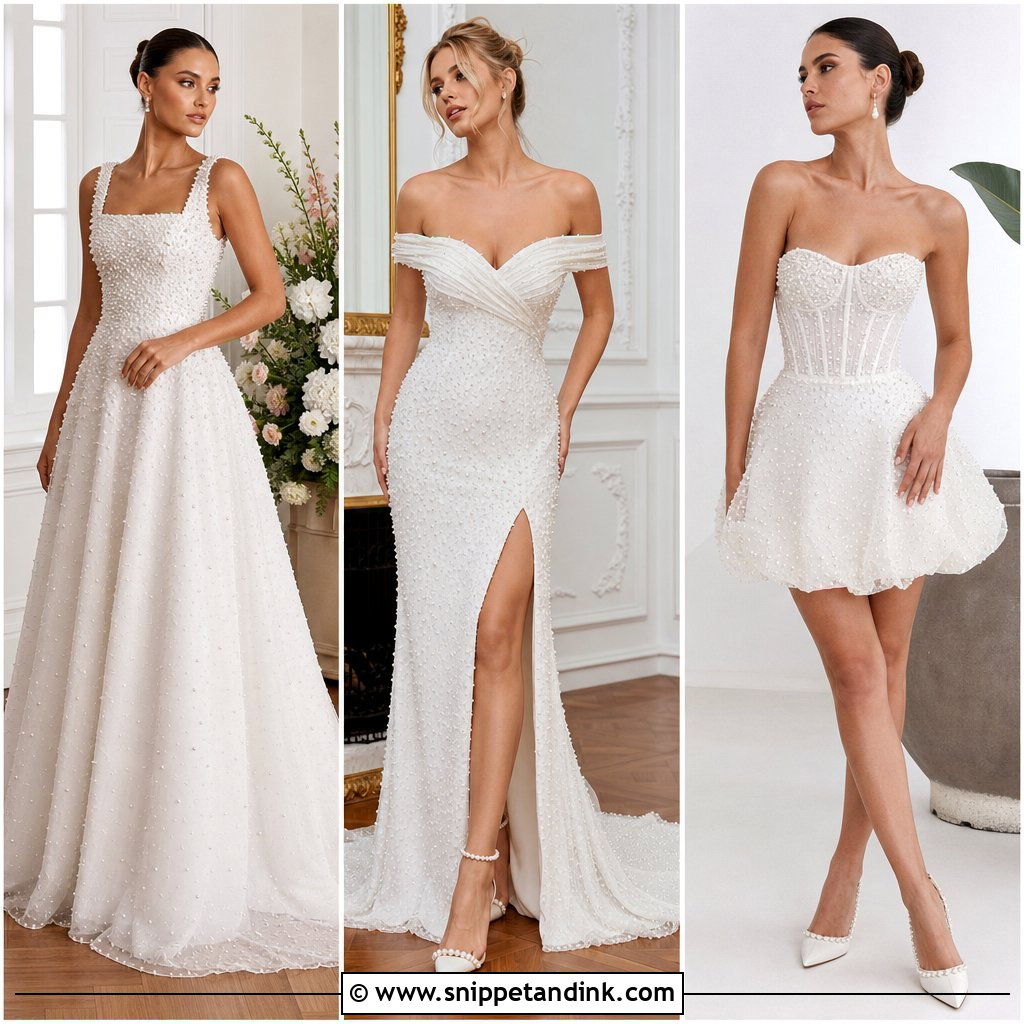
25. Tulle Skirt Wedding Dress
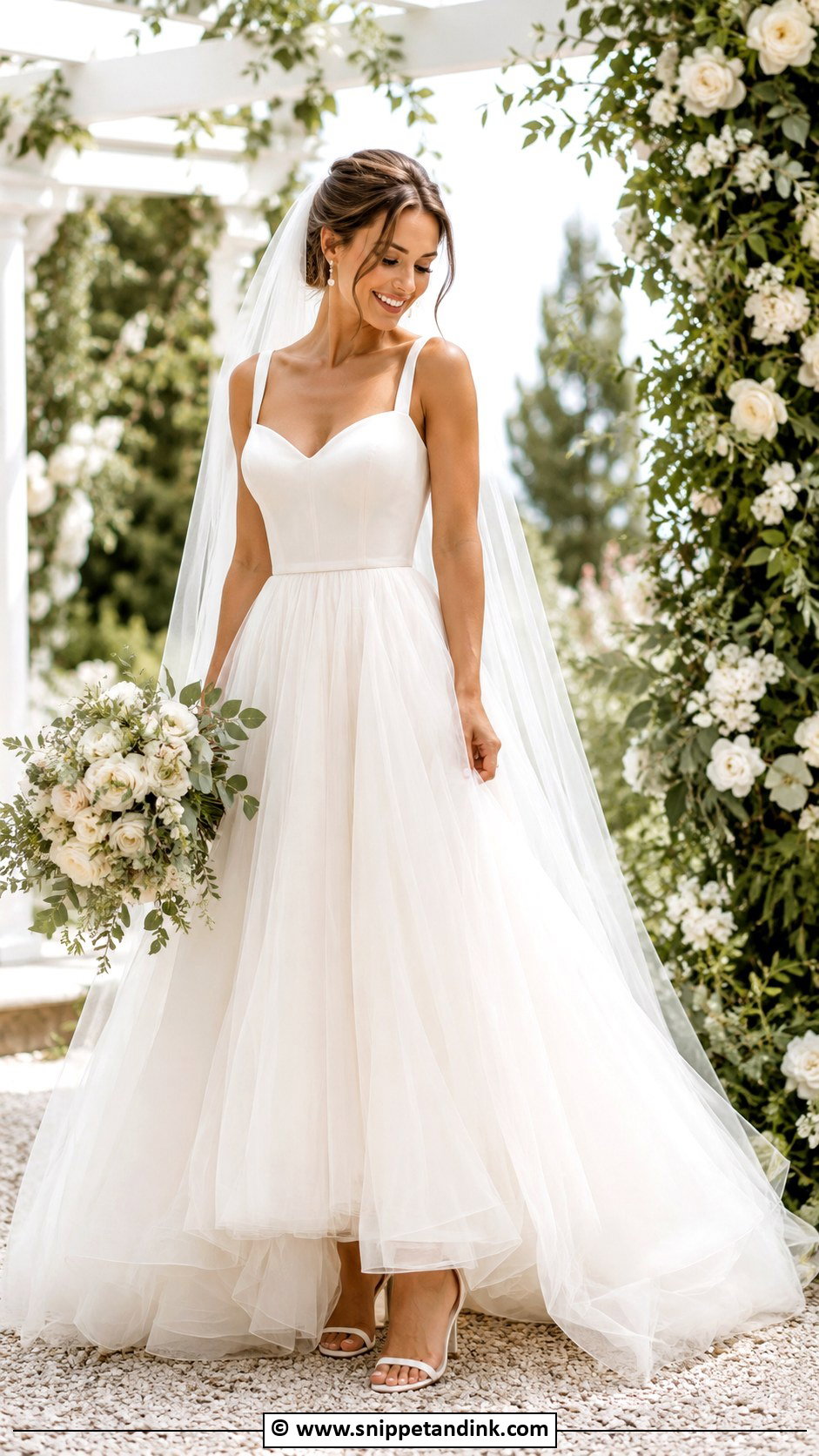
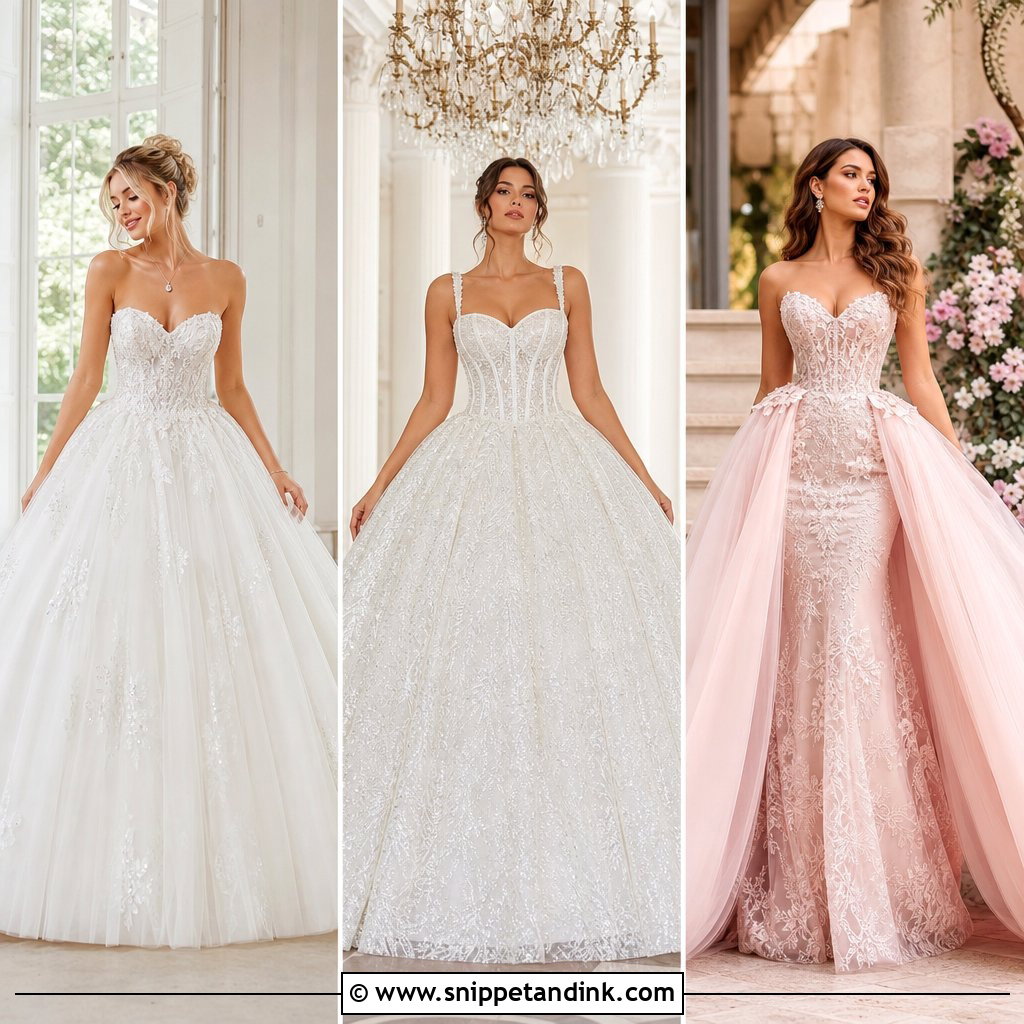
Tulle skirts give volume without heaviness and move with every step. A fitted bodice balances the softness. Plain tulle stays clean; subtle lace appliqué adds detail. To keep it classic, avoid layers of glitter tulle or oversized embellishment. Tulle snags on rough benches, bouquet wire and beaded bracelets, so I’d check where you’ll sit. Delicate heels, pearl earrings and a soft veil for gardens, ballrooms and outdoor portraits.
26. Simple Long Sleeve Wedding Dress
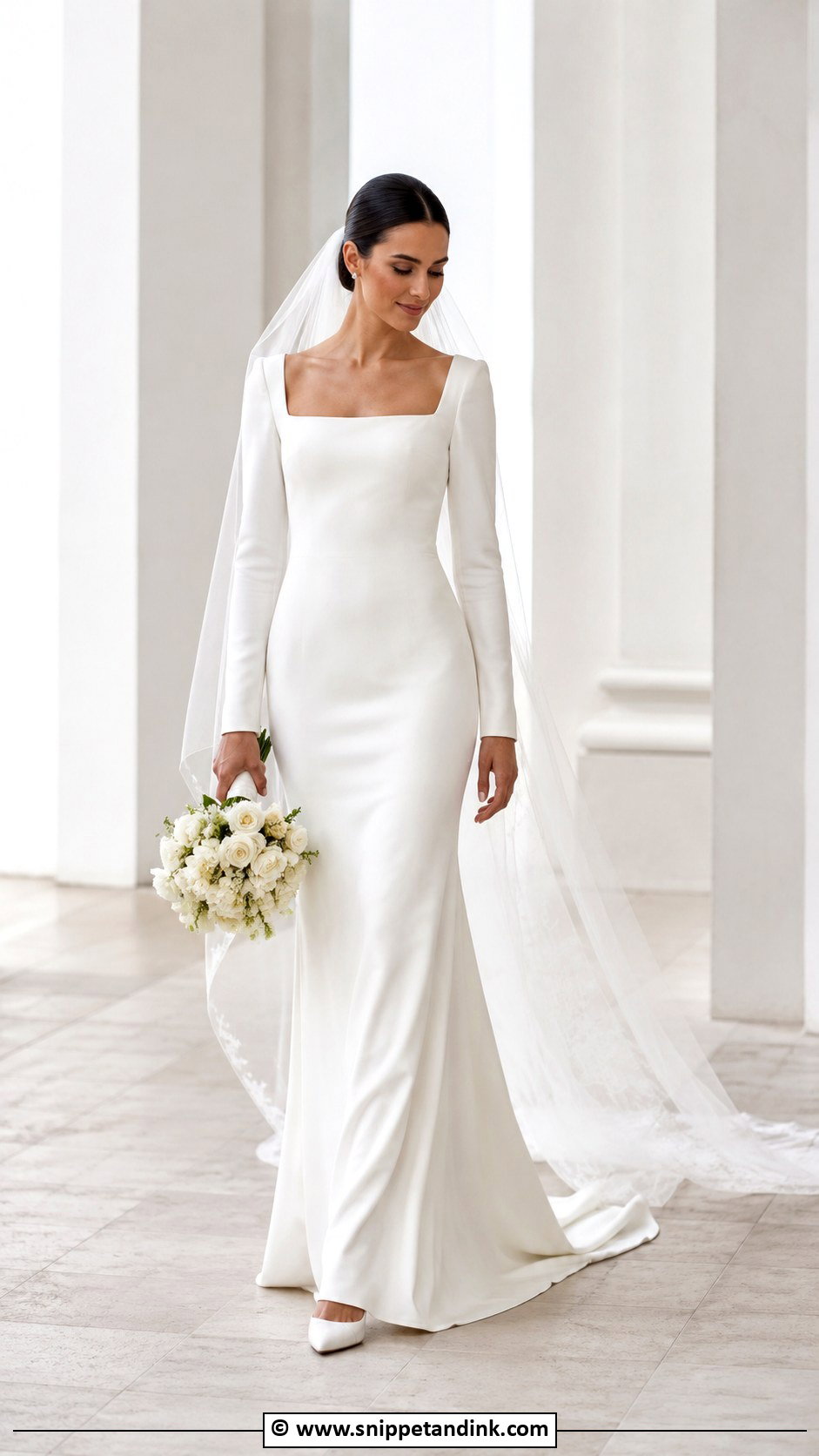
Plain long sleeves in crepe or satin give a smooth, grown-up line. Square, bateau and high necklines suit them best. With no decoration, fit and fabric quality are everything, especially at the shoulder seam, where an extra half inch looks sloppy. A long veil adds ceremony drama while the dress stays understated. Sleek bun, small earrings and pointed heels. Simplicity can be just as memorable as embellishment.
27. Embroidered Wedding Dress
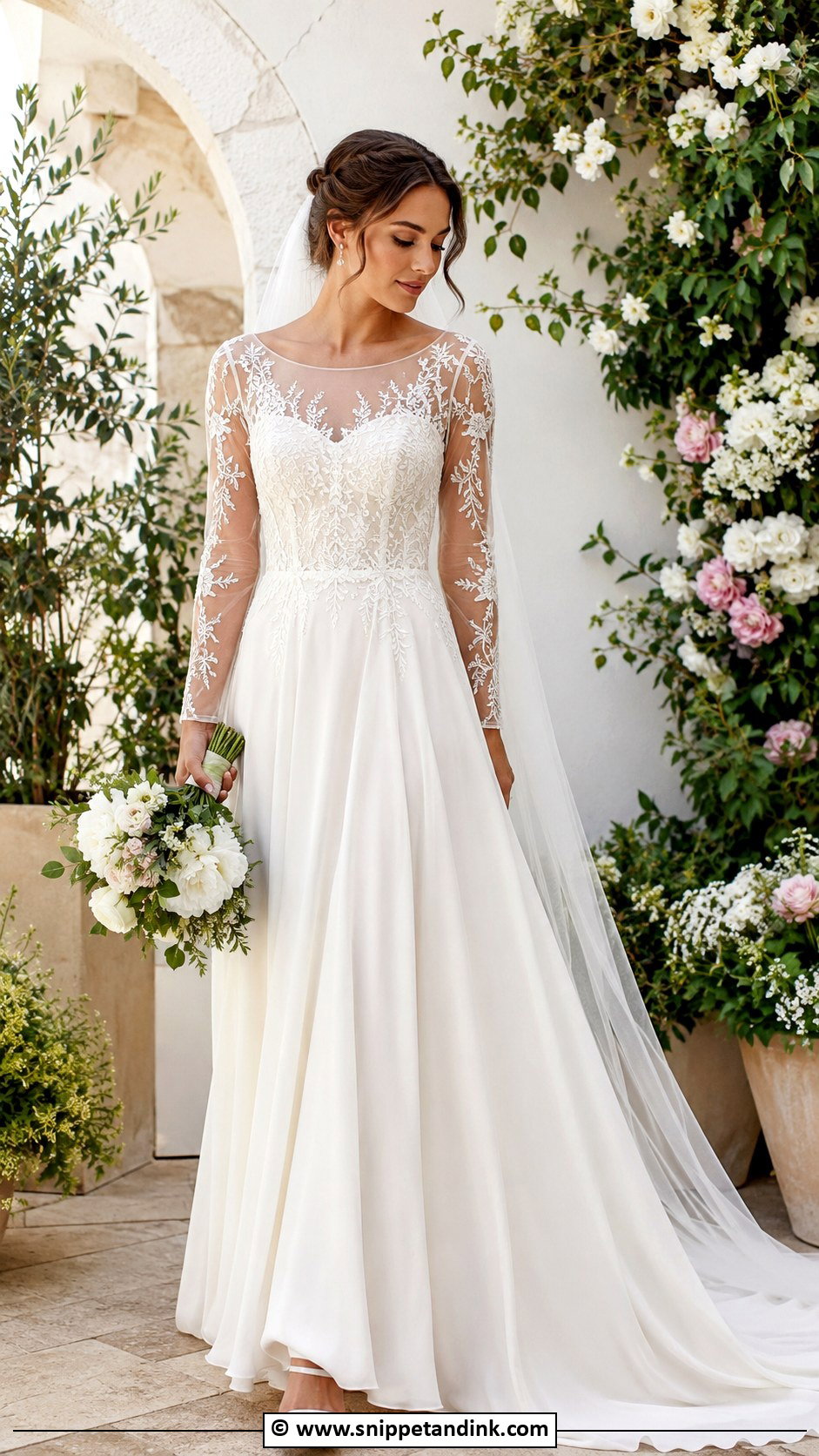
Embroidery adds detail in a softer, more artistic way than beading. Floral, vine or tonal stitching gives texture without heaviness. For a lasting look, choose thread that blends with the dress rather than strong contrast. Sheer embroidered sleeves, bodices or trains are especially fine. If the embroidery is rich, keep the veil plain. I’d check the reverse side at the bodice, since rough embroidery backs can scratch unless they’re lined. Simple earrings, soft hair and understated heels.
28. Drop Waist Wedding Dress
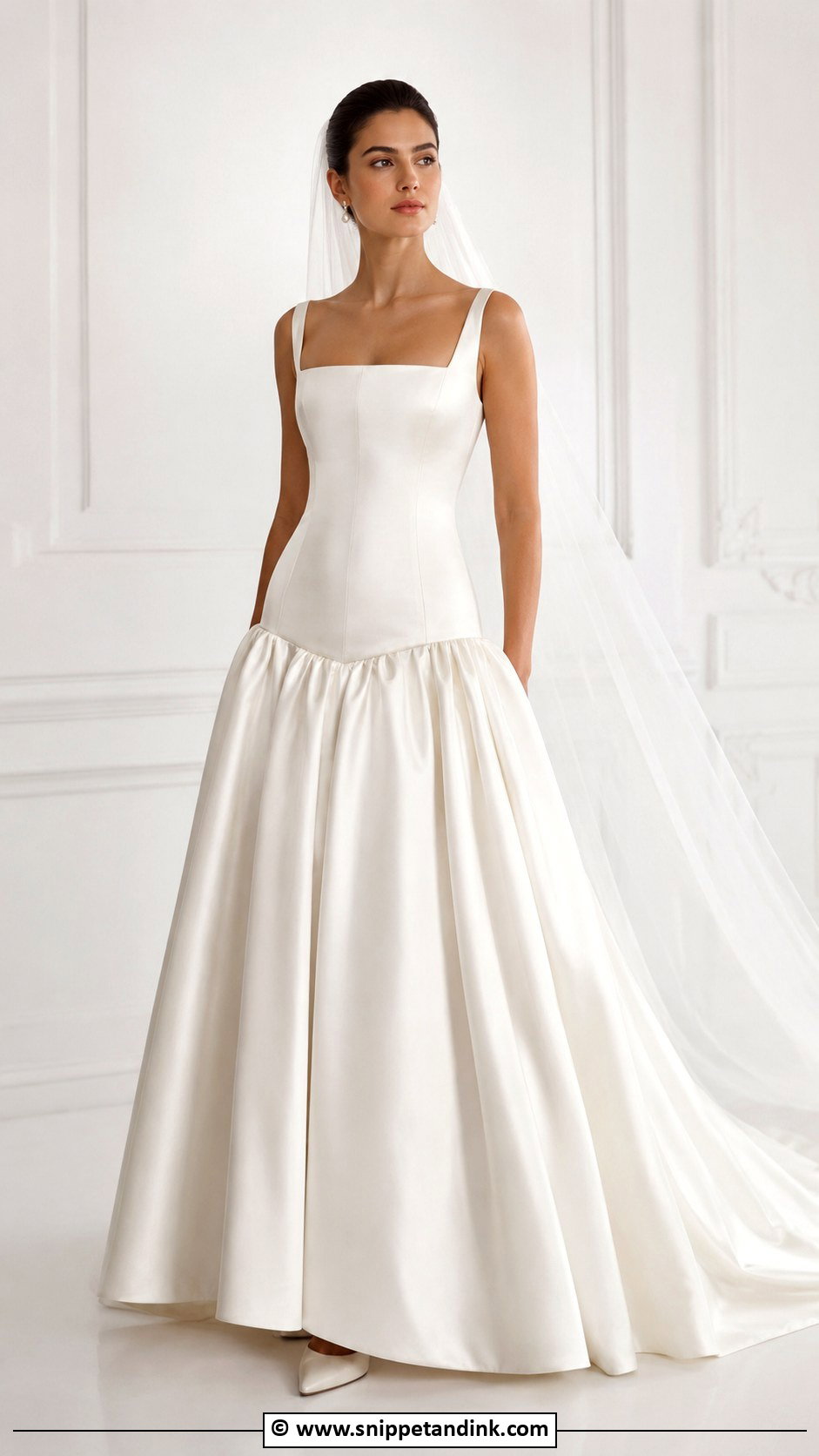
A drop waist wedding dress extends the bodice below the natural waist before the skirt begins, creating a long, sculpted line with a hint of vintage. Satin, lace and structured mikado suit it. A drop-waist ball gown is dramatic; a drop-waist A-line is softer. It flatters longer torsos most easily; on a shorter torso the seam needs placing carefully so the legs don’t look cut short. Simple veil, classic pumps and polished earrings.
29. Bridal Suit Wedding Look
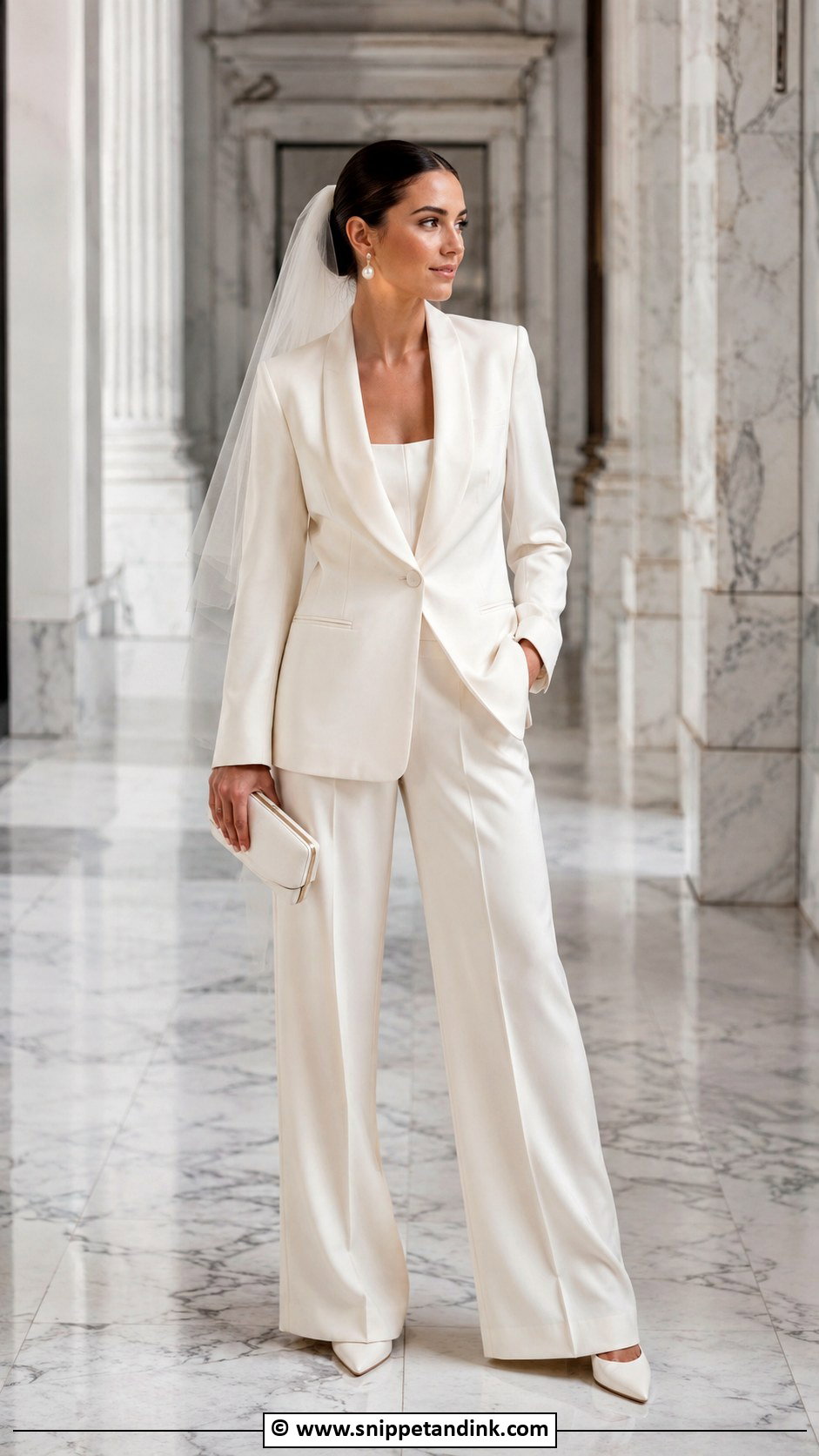
A bridal suit is an elegant alternative to a gown. A white or ivory tailored blazer with matching trousers looks sharp and modern. Fit is everything: the jacket shoulders should sit exactly at your shoulder edge, and trousers should break lightly on the shoe you’ll wear. Pointed heels, pearl earrings, a sleek clutch and a soft veil or hair bow if you want ceremony. It suits courthouses, city weddings, rehearsal dinners and second outfits, and it stays classic when details are kept minimal.
30. Wedding Dress With Cape
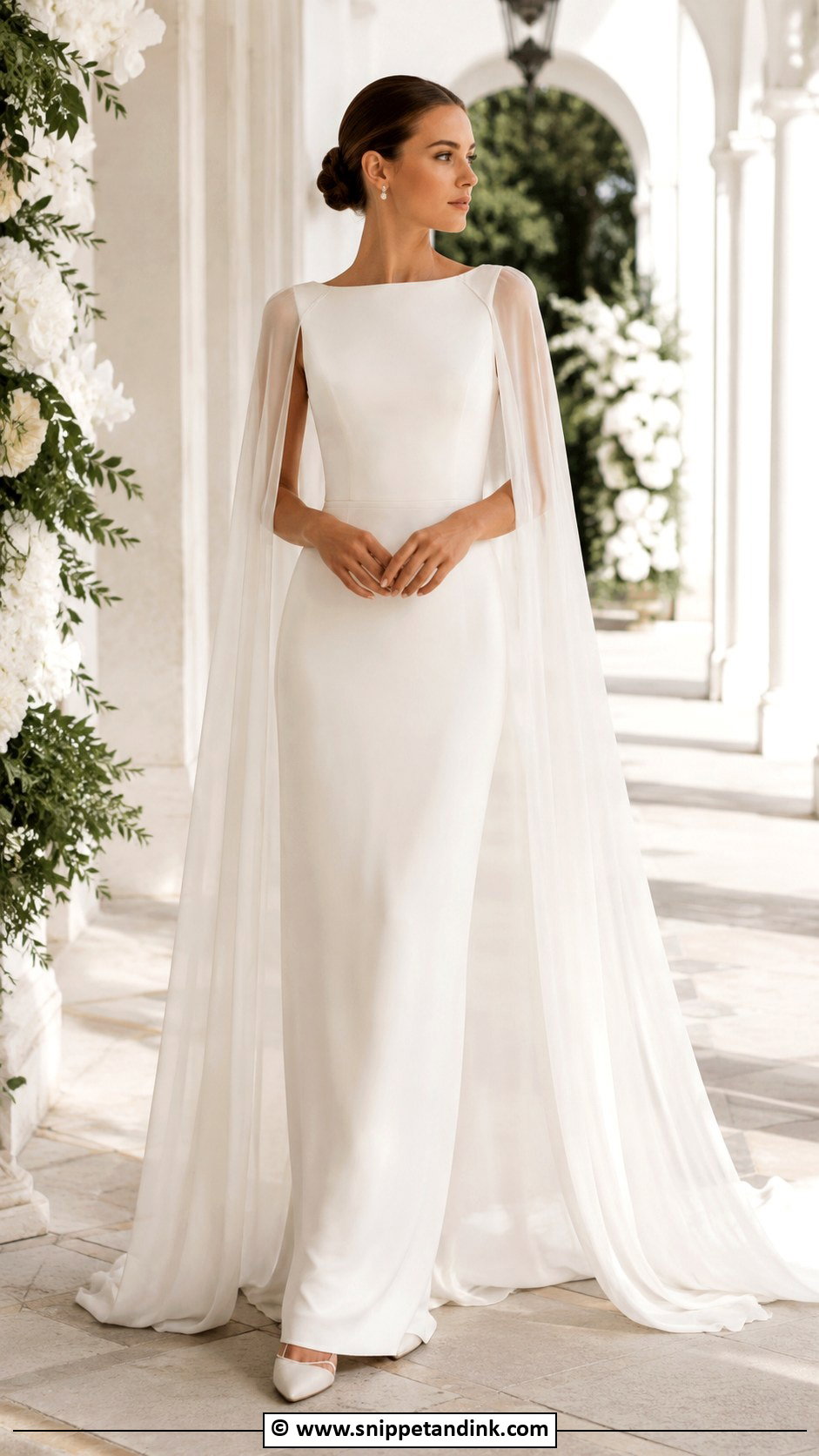
A cape adds movement and presence without embellishment. Sheer capes soften a fitted gown; satin capes add structure. It’s a good answer when you want coverage for the ceremony but a simpler dress underneath. Columns, sheaths and A-lines pair best. Skip a busy veil, since the cape already moves. I check how it fastens at the shoulders, because a heavy cape can drag a neckline backward. Small earrings, smooth hair and classic heels.
Ivory, Soft White or Champagne Against Your Skin
Classic gowns rarely come in one white. Most designers offer a few shades, and the right one depends on your skin, not on the trend. Bright optical white suits deeper skin tones and very fair cool-toned skin, but it can make warm or olive skin look sallow in photos.
Ivory is the most forgiving shade I know and flatters most complexions. Champagne and nude-lined ivory warm the skin and look rich in candlelight, though they can read slightly yellow under harsh daylight. Hold swatches against your face in daylight, not just under the shop’s spotlights, and take a phone photo with flash too, since that’s how half your reception pictures will be lit.
When to Start Shopping for a Classic Gown
Many bridal gowns are made to order, and production plus alterations often take somewhere around six to nine months in total, though it varies a lot by designer and season. That’s why I suggest starting to try on dresses roughly nine to twelve months out if you can. Sample-sale and off-the-rack dresses shorten this to the alteration time alone.
- Try a few silhouettes early, even ones you think you won’t like.
- Order once you’ve decided, and ask the shop for the expected delivery date in writing.
- Start fittings about two to three months before the wedding.
- Final fitting a couple of weeks out, with your shoes and underwear.
Fit, Fabric and One Good Detail
A dress that stays elegant over decades usually shares the same bones: a clean silhouette, good fabric, balanced detail and careful styling. Satin, lace, crepe, mikado, pearls, sleeves, a train or a tailored suit can all get there. Think about your venue, how much you’ll move, and how you’ll look in photos. Classic doesn’t have to mean plain; it means everything on the dress has a reason to be there.
You'll Like These Ideas:













Leave a Reply