
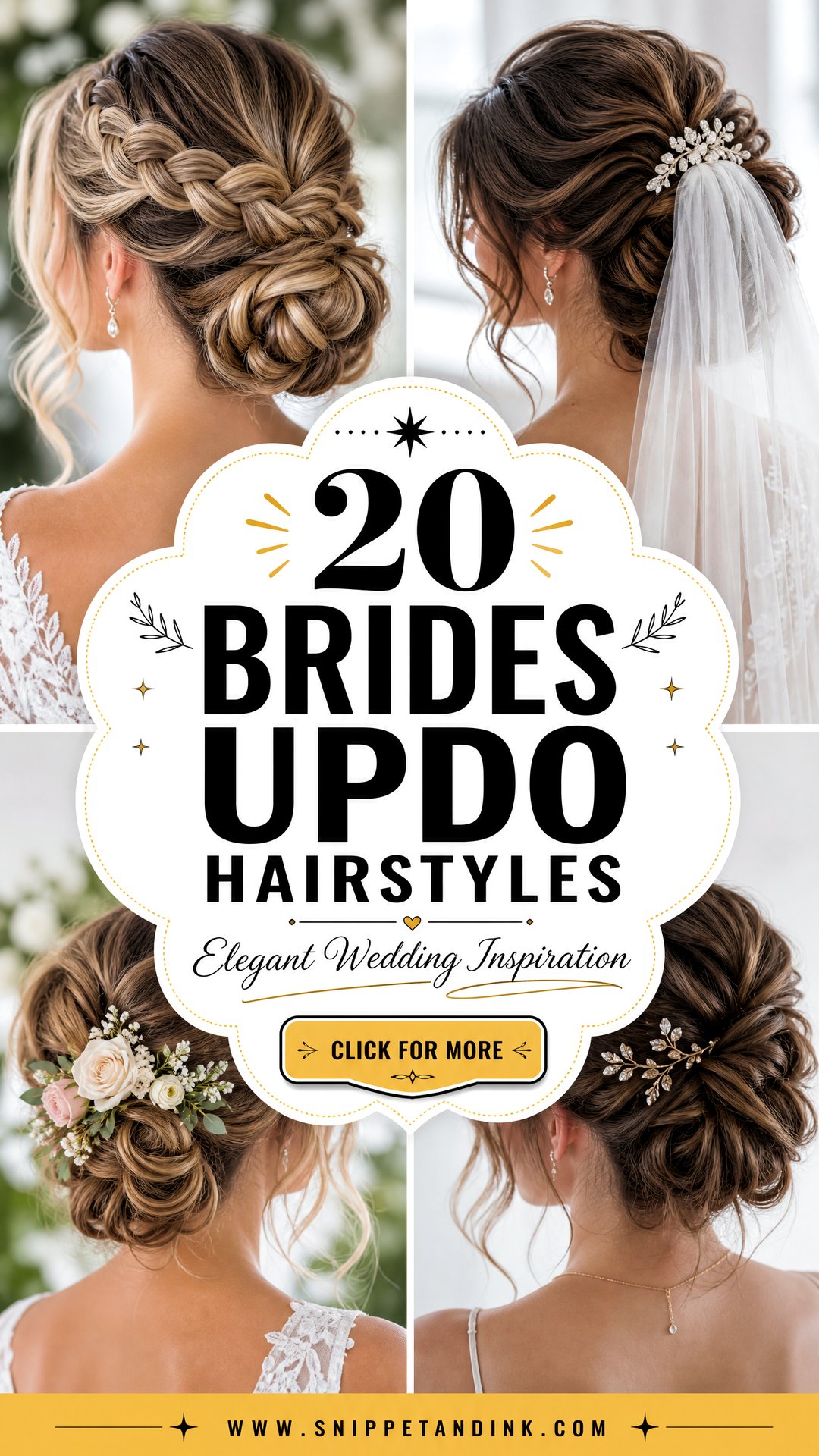
Most brides I style end up in an updo, and not because it’s traditional. Hair off the neck survives heat, hugs and dancing far better than hair worn down, and it leaves the neckline, veil and earrings clear. The updos that look right now aren’t stiff helmets. They have soft edges and some movement, but they’re built tight underneath. Below are twenty, from low buns and chignons to braided crowns, curly updos and sleek knots, with what each one asks of your hair. Save the ones you like for your trial, then let your stylist adjust the volume, part and face-framing to suit you.
Match the Updo to What Your Hair Can Hold
Inspiration photos usually show thick, long and often extended hair. The same shape on fine or very heavy hair behaves differently, so I start with density and texture and only then pick from the list.
Fine or thin hair
Braided and twisted updos hold best, because the plait adds bulk and grip. A textured low bun with backcombing at the root looks fuller than a sleek one, which can show the scalp through thin hair. A small padding piece hidden inside the bun gives it shape when the hair alone can’t.
Thick or heavy hair
Low placements are kinder. I split the hair into two or three anchored sections so no single spot carries the load. High buns are possible but can ache by evening, so try one for a full afternoon before choosing it.
Curly, coily or layered hair
Decide early whether you want the curl pattern on show or stretched smooth. A sleek style on curls needs a blow-dry the day before, and humidity will fight it all day. Heavily layered hair hides best in textured buns, twists and braids; a sleek chignon leaves short ends sticking out of the fold unless they’re tamed with a little gel.
1. Low Bun Bridal Updo
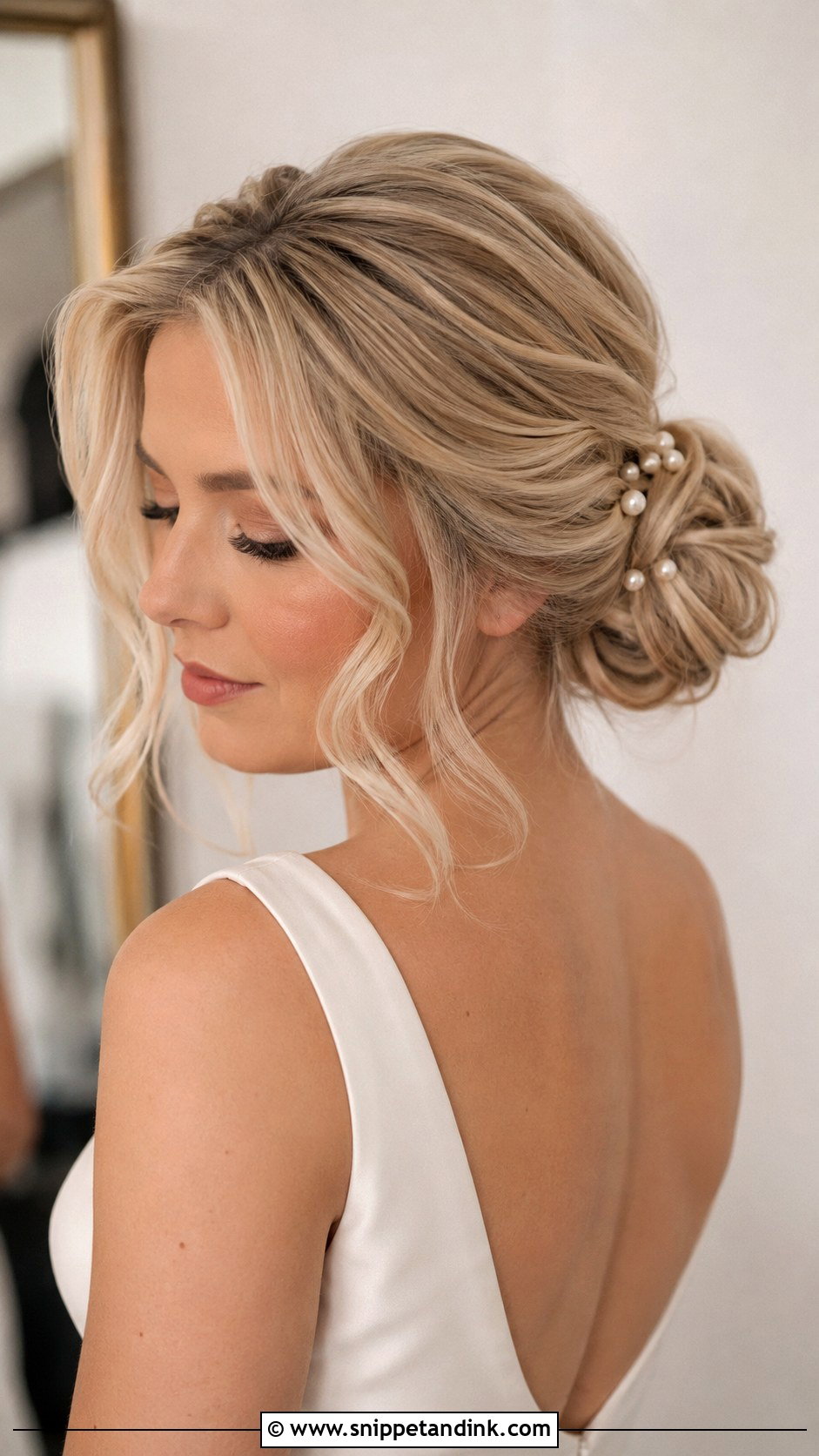
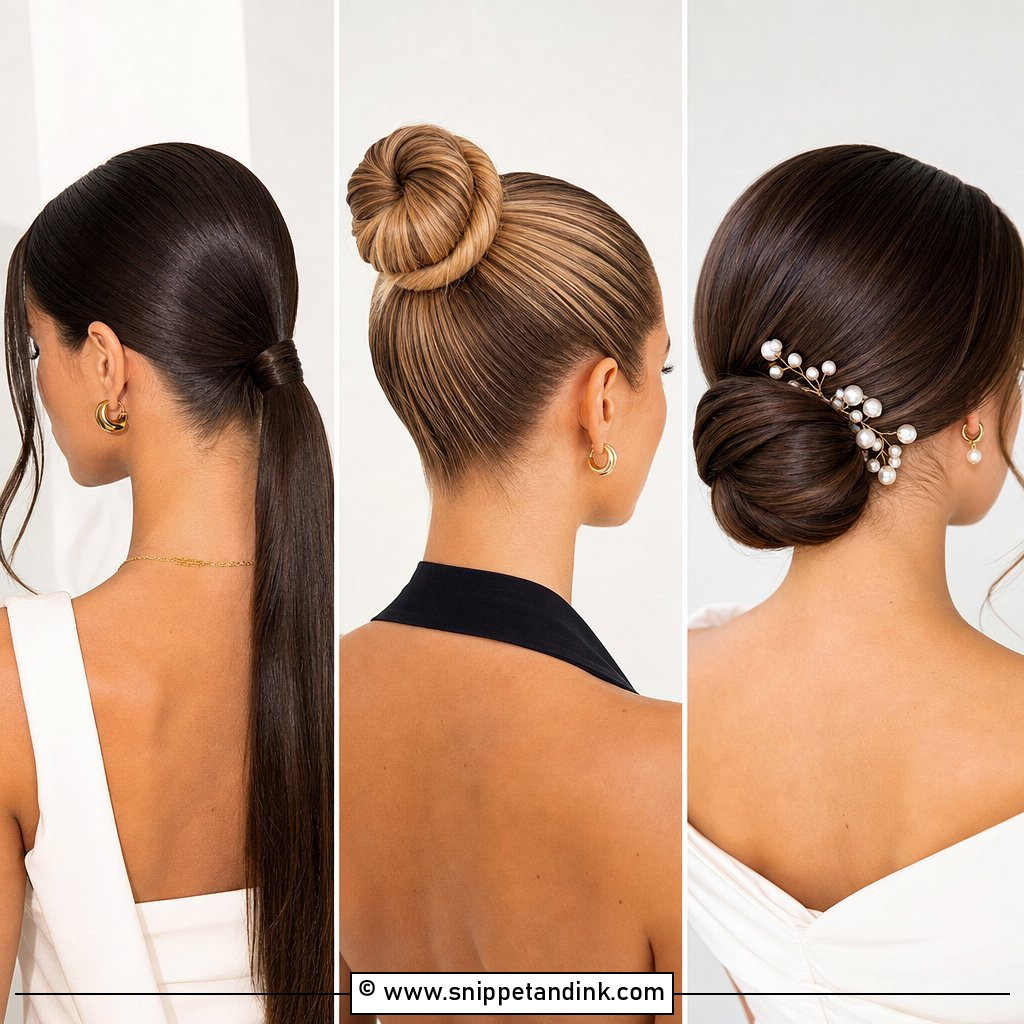
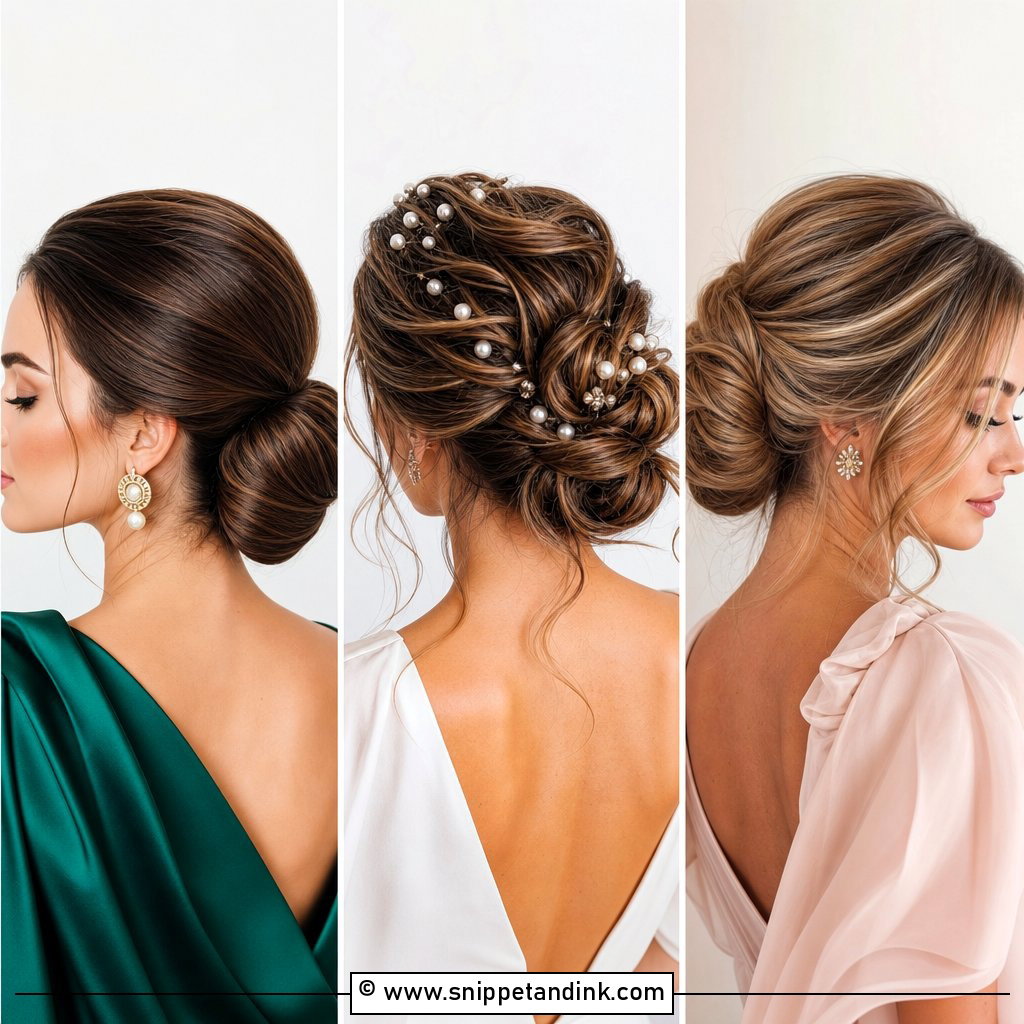
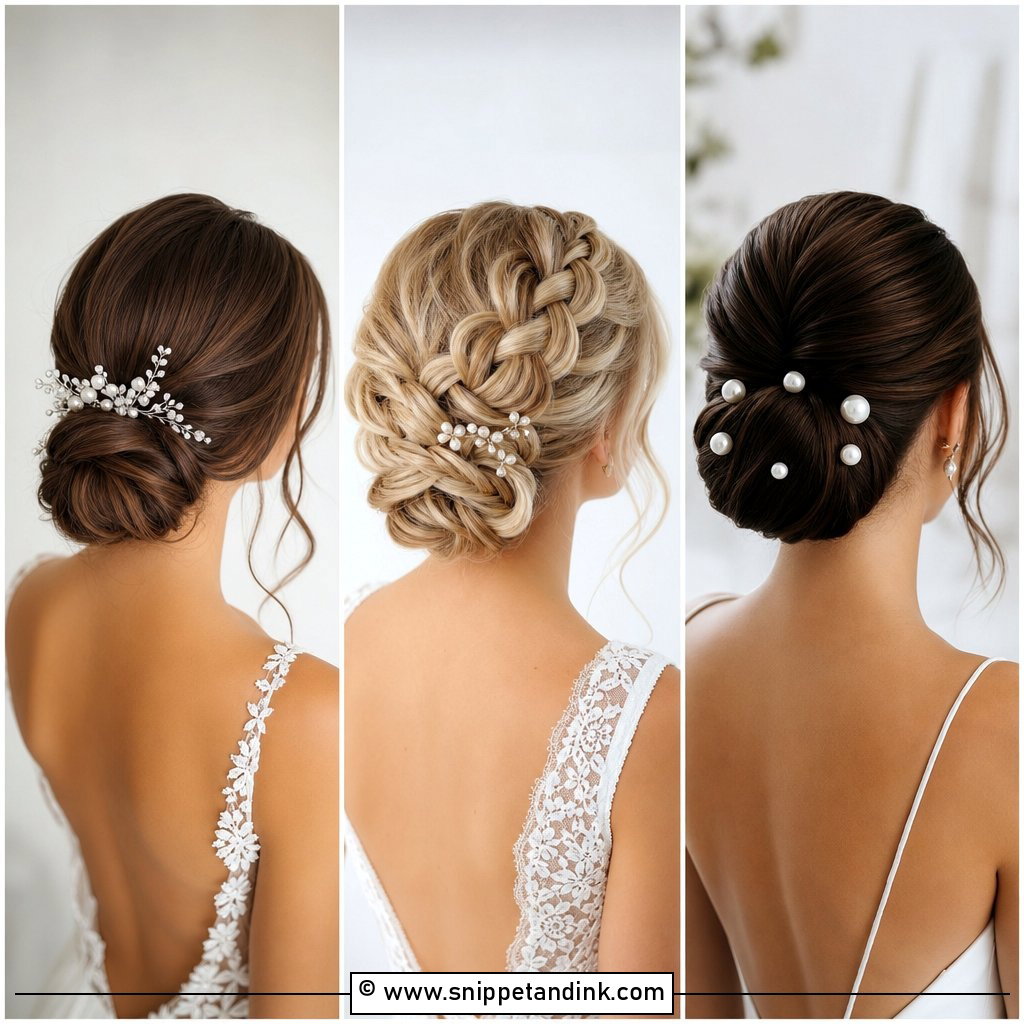
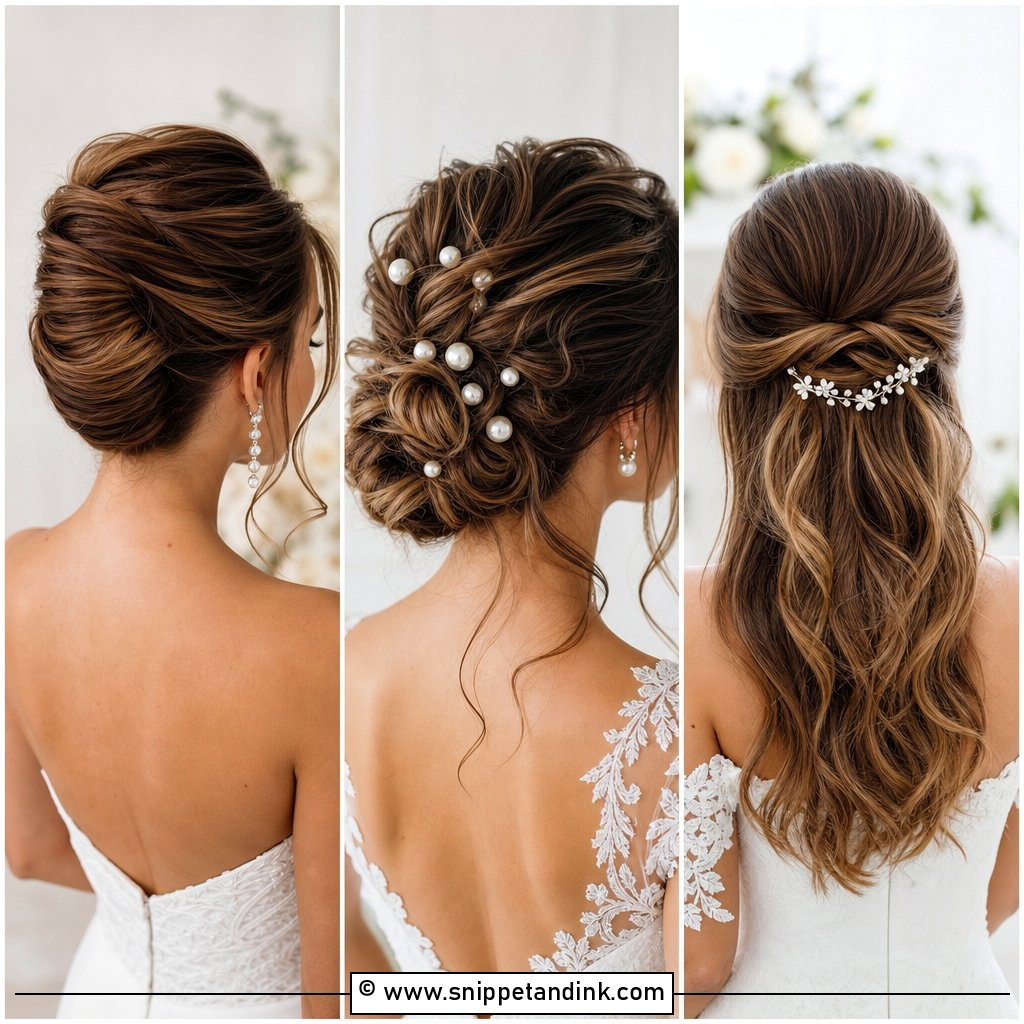
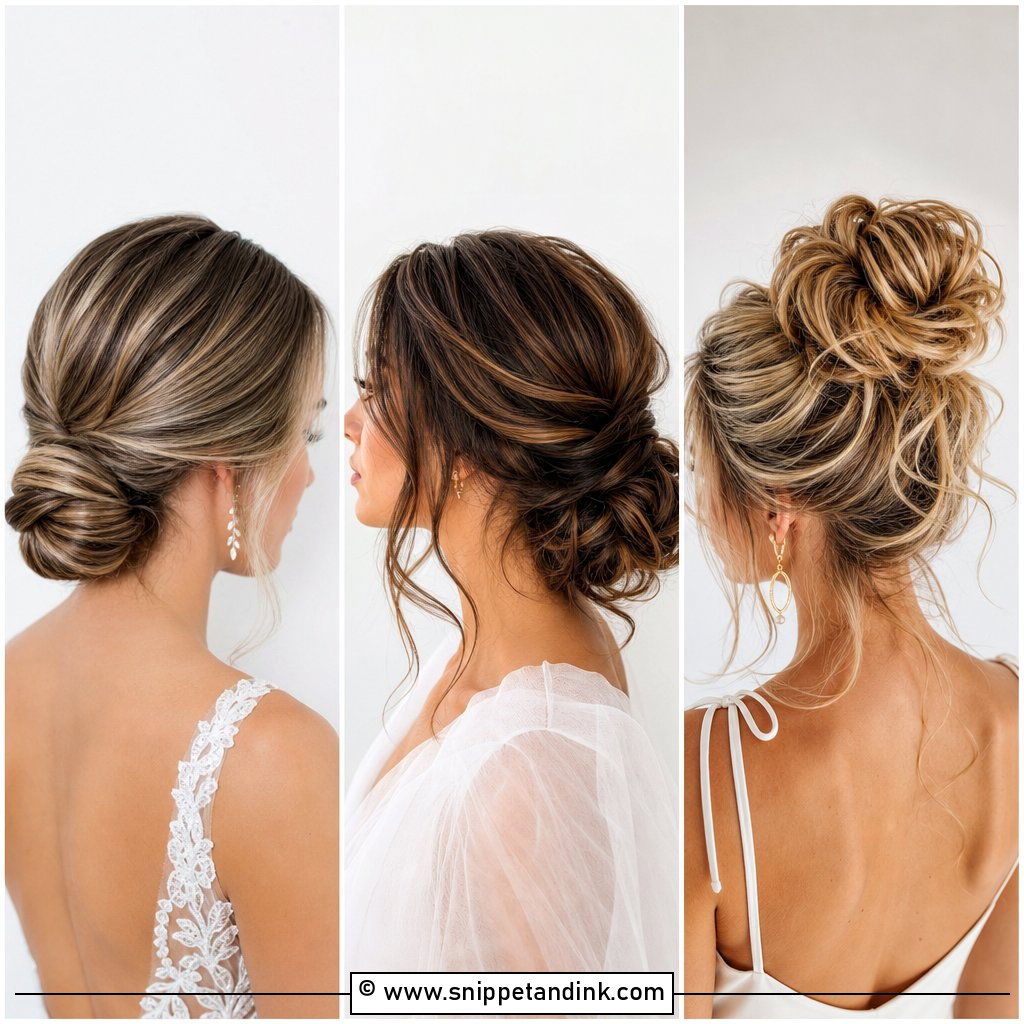
Low at the nape is where I put a bun when the day is long, because the weight rests on the neck instead of dragging at the crown. It leaves room above for a veil comb and shows off an open back or a detailed neckline. Smooth or softly textured, a low bun bridal updo is the shape many brides come back to after trying three others at their trial. Ask for a little root lift so it doesn’t look flat in profile, and check it in a hand mirror from behind. The back view is what guests look at through the whole ceremony.
2. Classic Chignon Bridal Updo
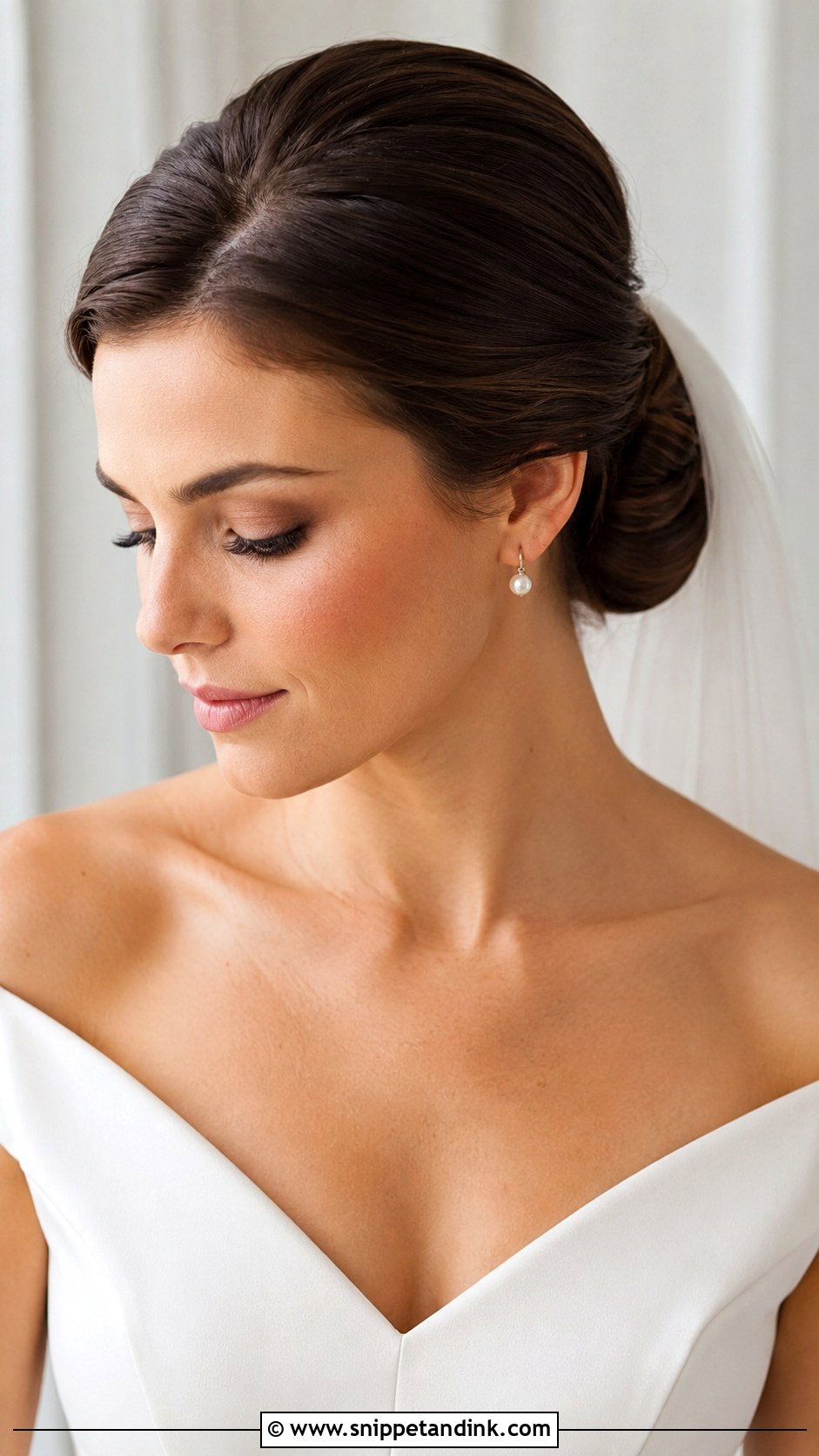
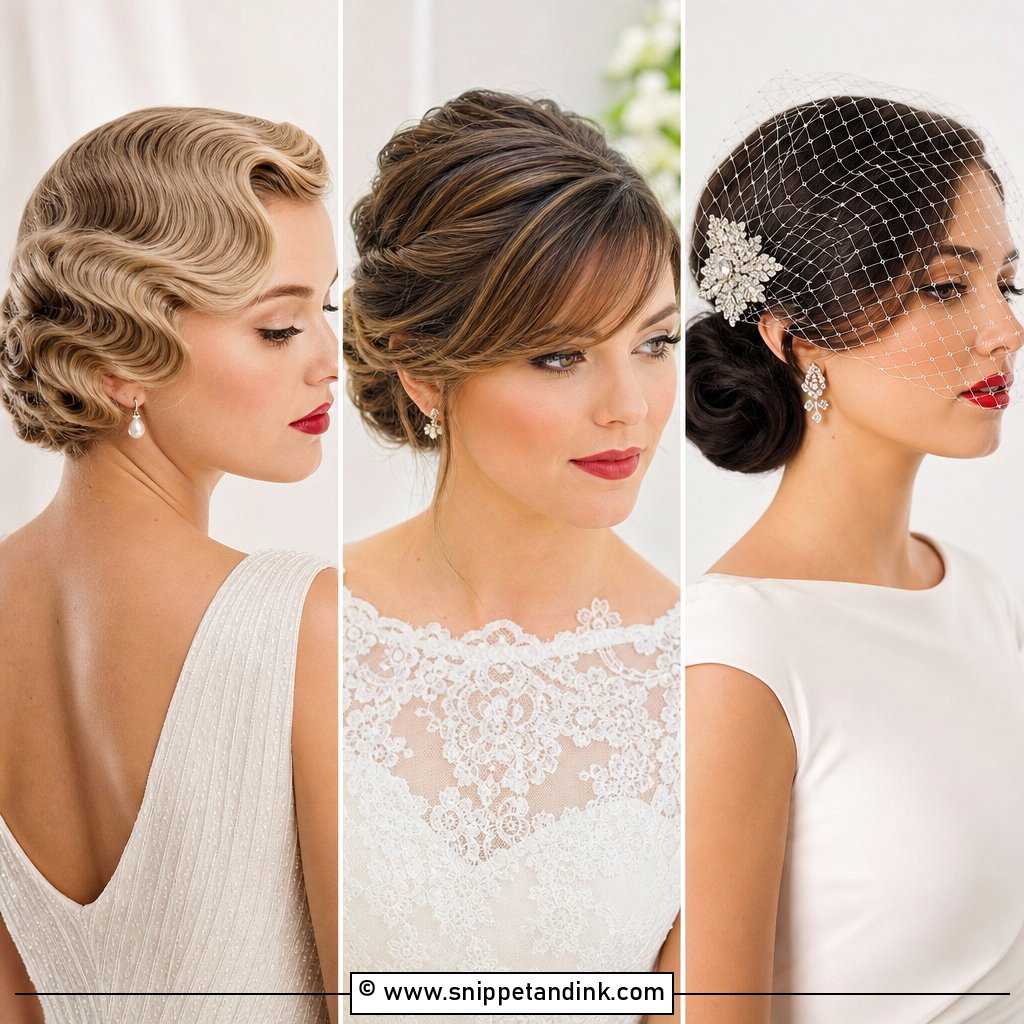
A chignon is a bun with manners: the hair is folded or tucked into a clean shape rather than wound round. It’s the updo I trust with satin gowns, pearl earrings and cathedral veils, and it looks as right in decades-old albums as in new ones. Wavy and curly hair can be smoothed into one without losing all of its softness. Keep the front simple, a clean centre or side part, and let the fold carry the look.
3. Messy Bun Bridal Updo
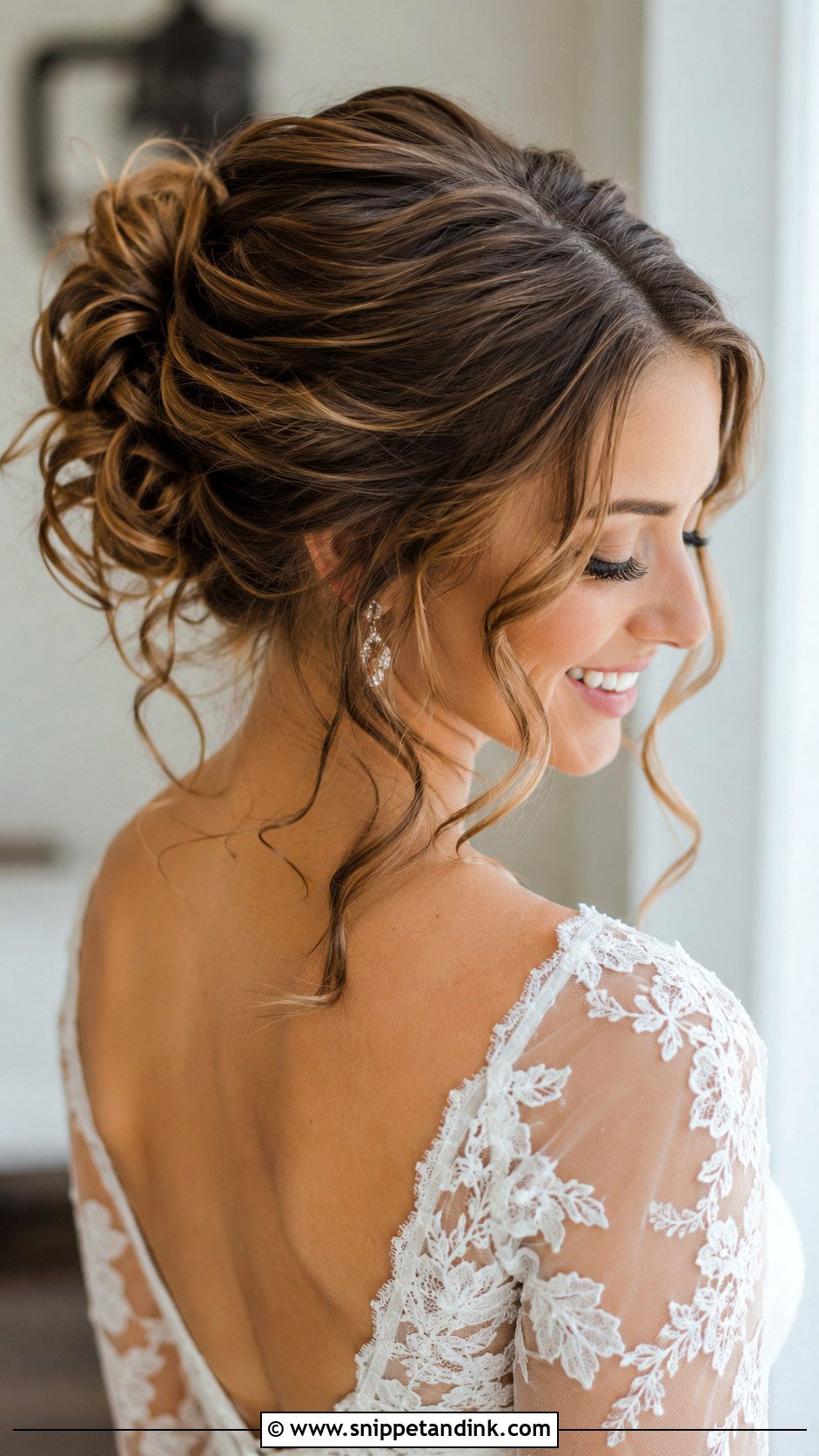
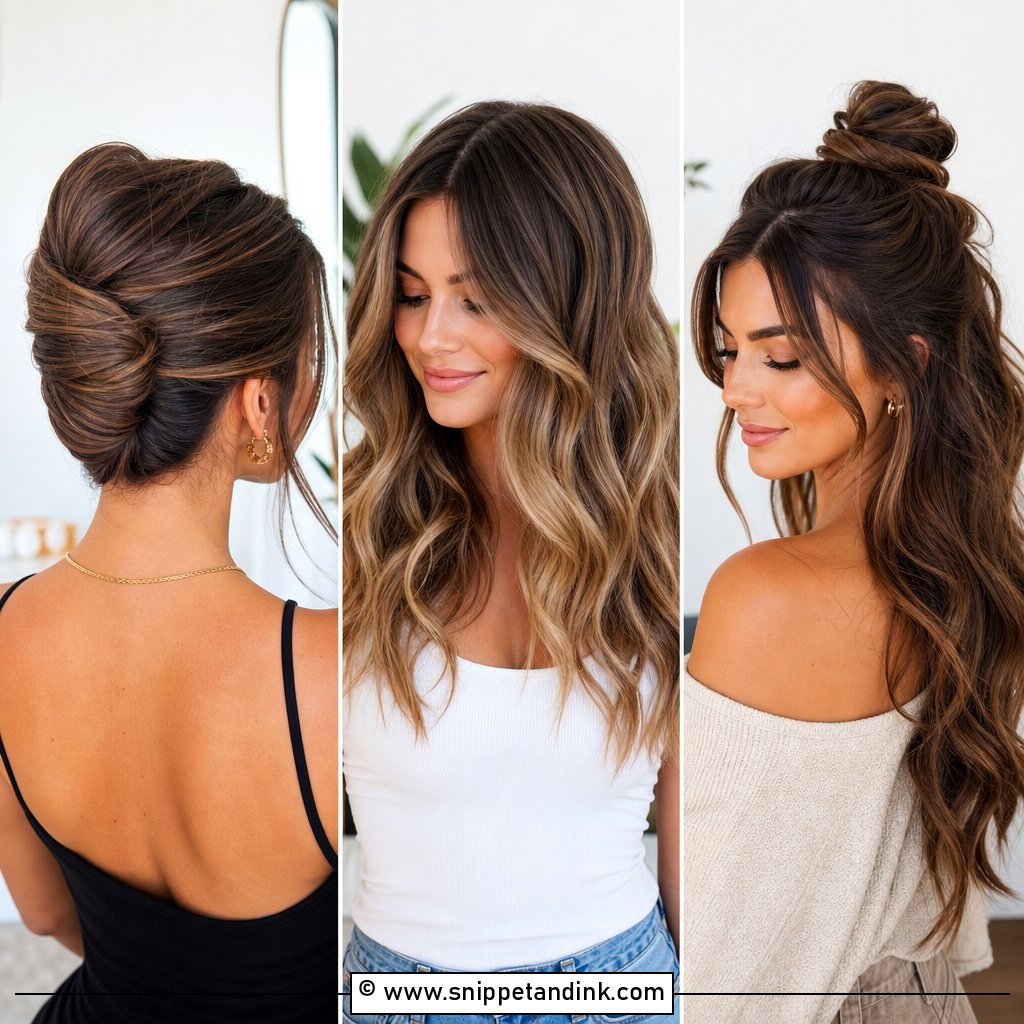
Messy on a wedding day is pinned more carefully than sleek. I curl the whole head first, build the bun from those curls, and only then pull out tendrils and loosen the surface, so the softness sits over a secure core. Layered hair suits it, since shorter pieces fold into the texture instead of poking out. Garden, outdoor and beach venues are its natural home. I finish with a flexible hold spray, because a stiff one turns the loose pieces crunchy and kills the movement.
4. Sleek Bridal Bun Updo
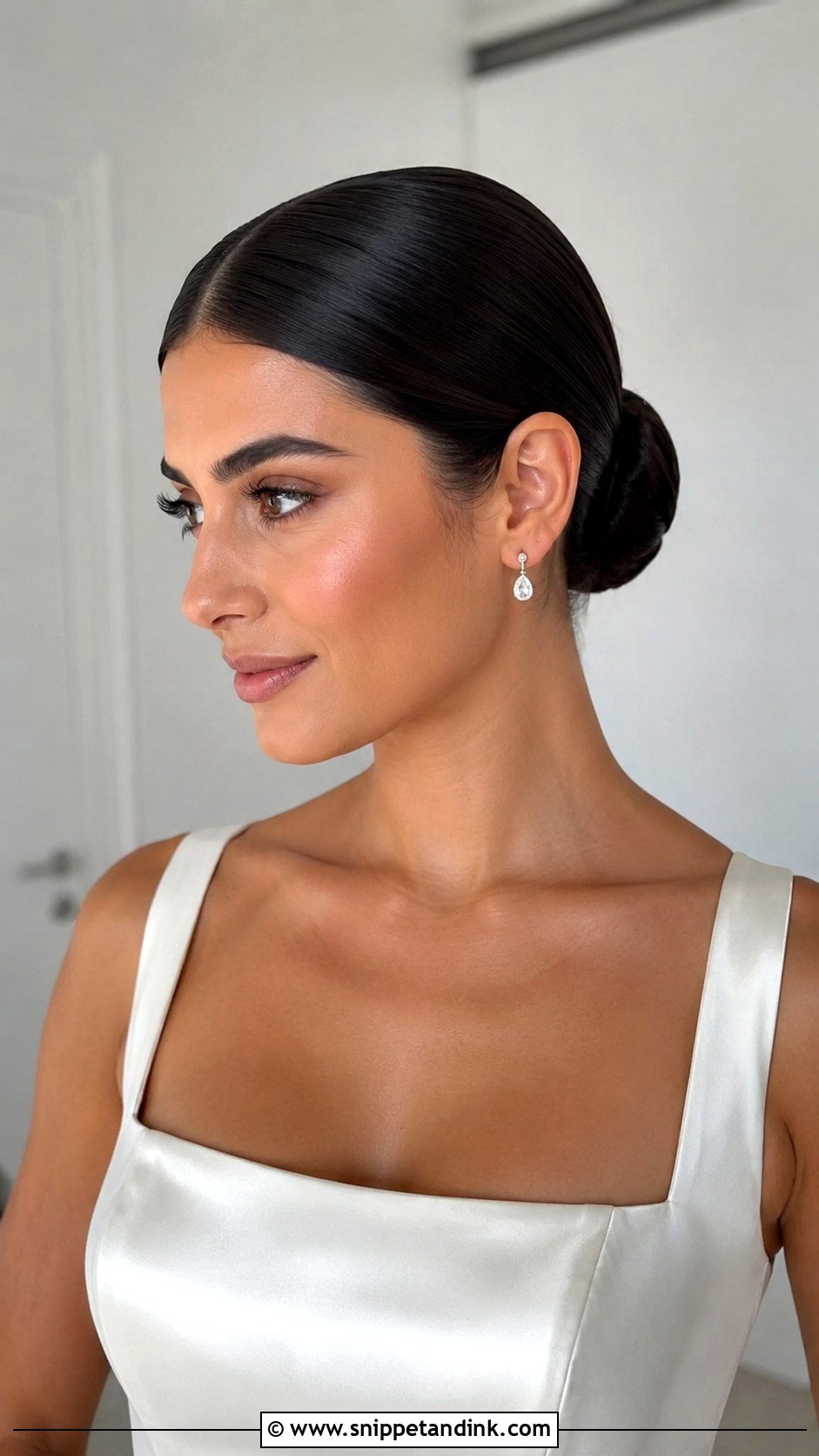
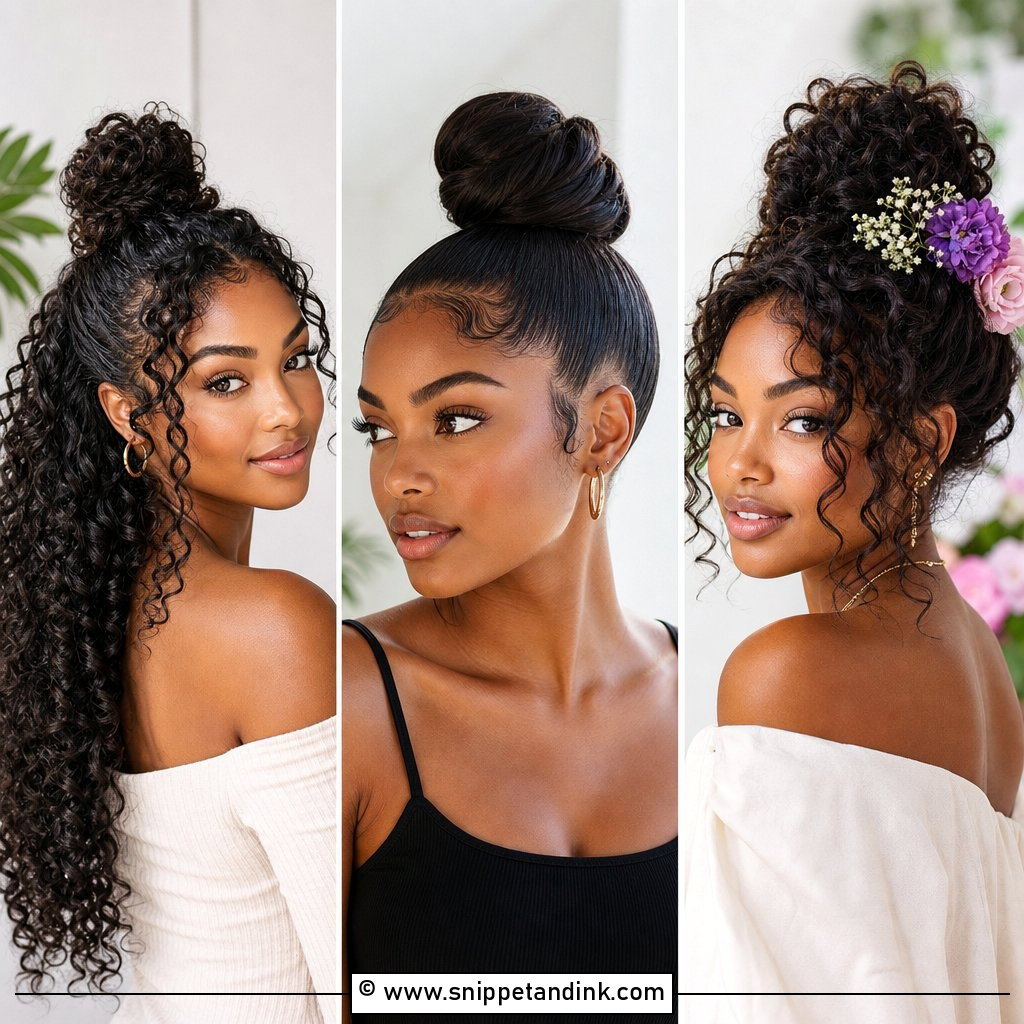
Sleek buns hide nothing. Every bump, frizz halo and wobbly part shows, especially in side-lit photos, so the prep takes longer than the bun. I blow-dry the hair smooth, brush it back with a boar-bristle brush and a little smoothing cream, then mist shine spray from well back so it never looks greasy. With the face fully open, makeup and bone structure carry the look, alongside a minimalist gown, a high neckline or dramatic earrings. Curly or coarse hair can wear it too, but it needs a full blow-dry the day before.
5. Braided Low Bun Bridal Updo
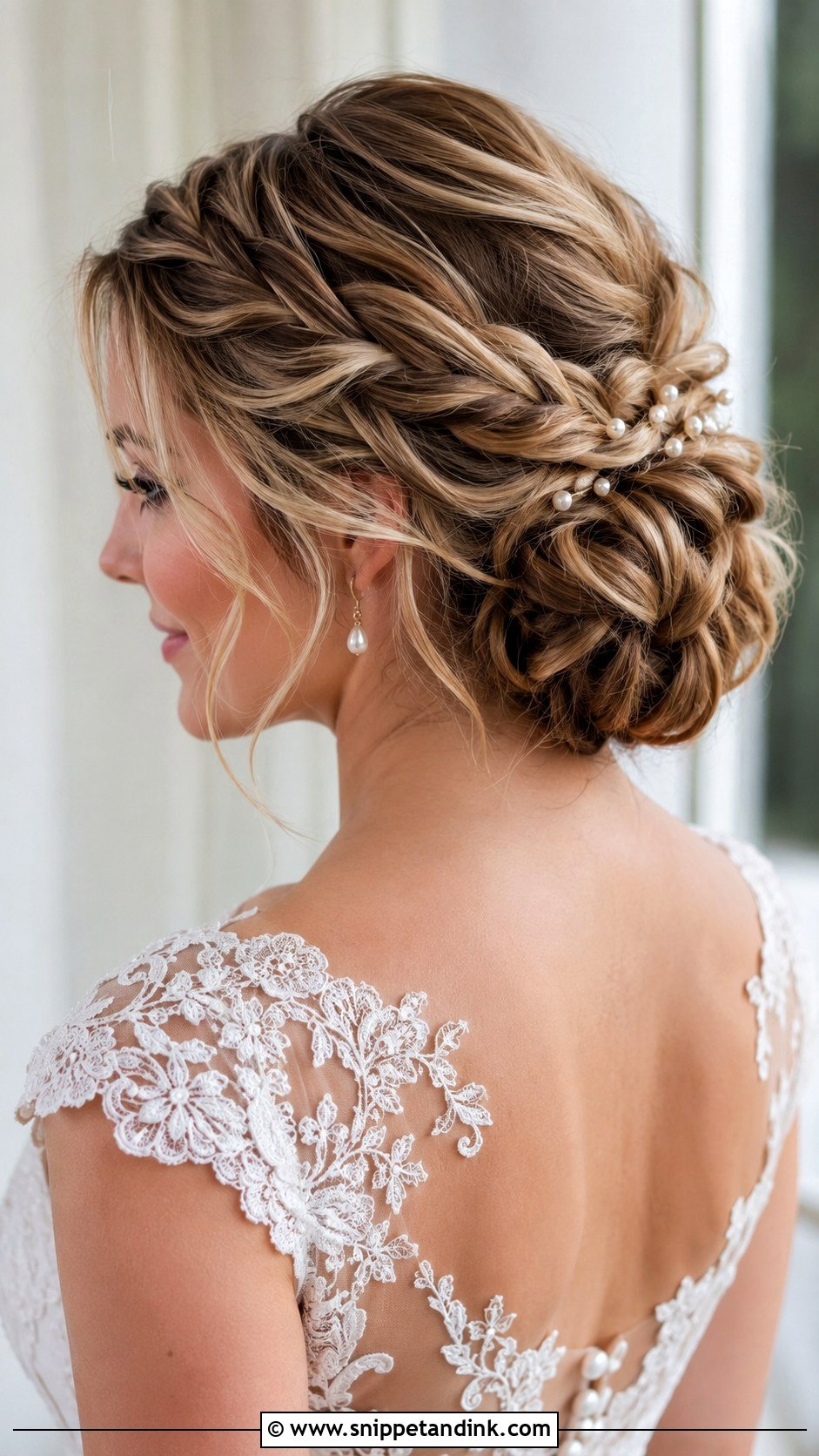
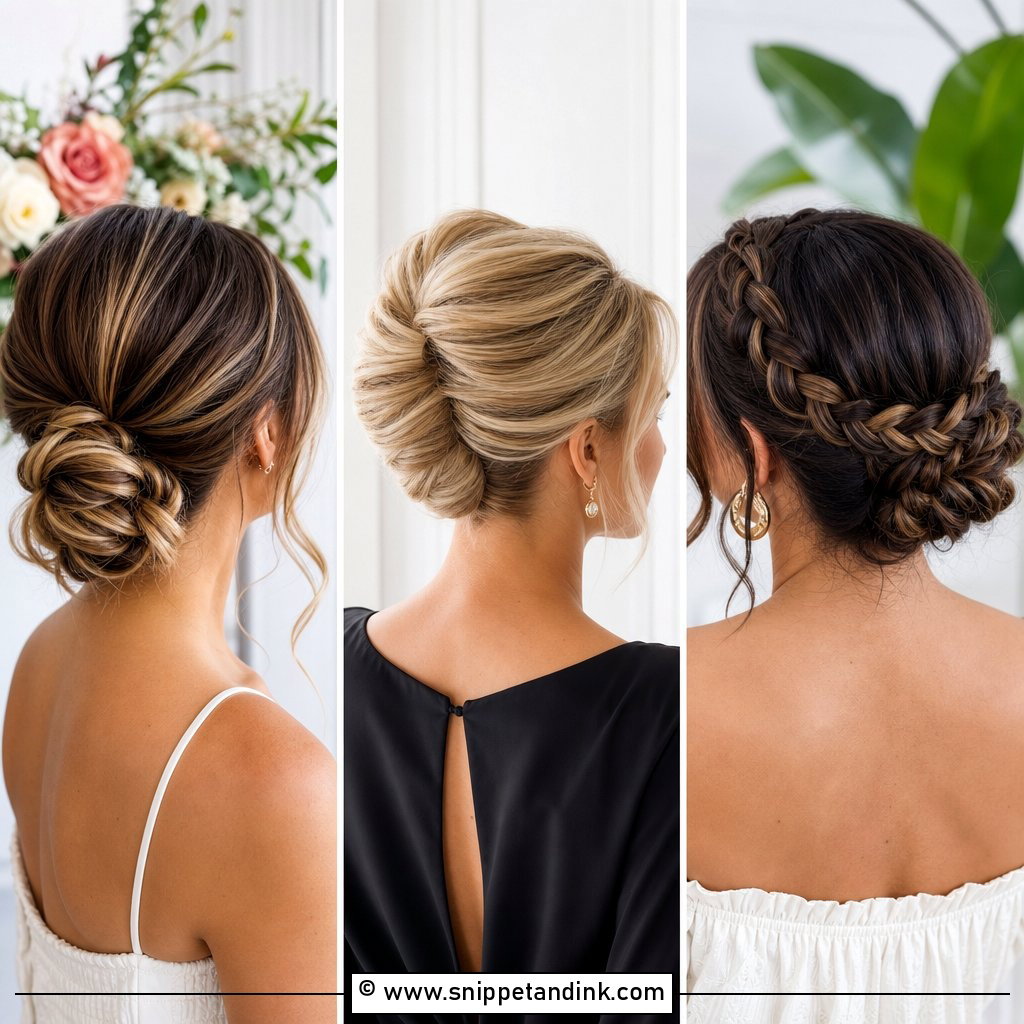
Braids woven into a low bun add grip as well as detail, which is why I use them on fine, slippery or freshly washed hair that won’t hold a plain bun. The braid can wrap the bun, cross the crown or run along one side. Keep it loose and pulled-out for a soft dress, or tighter and defined for something structured. A few pearl pins or small florals along it catch the eye in close-ups.
6. Curly Bridal Updo
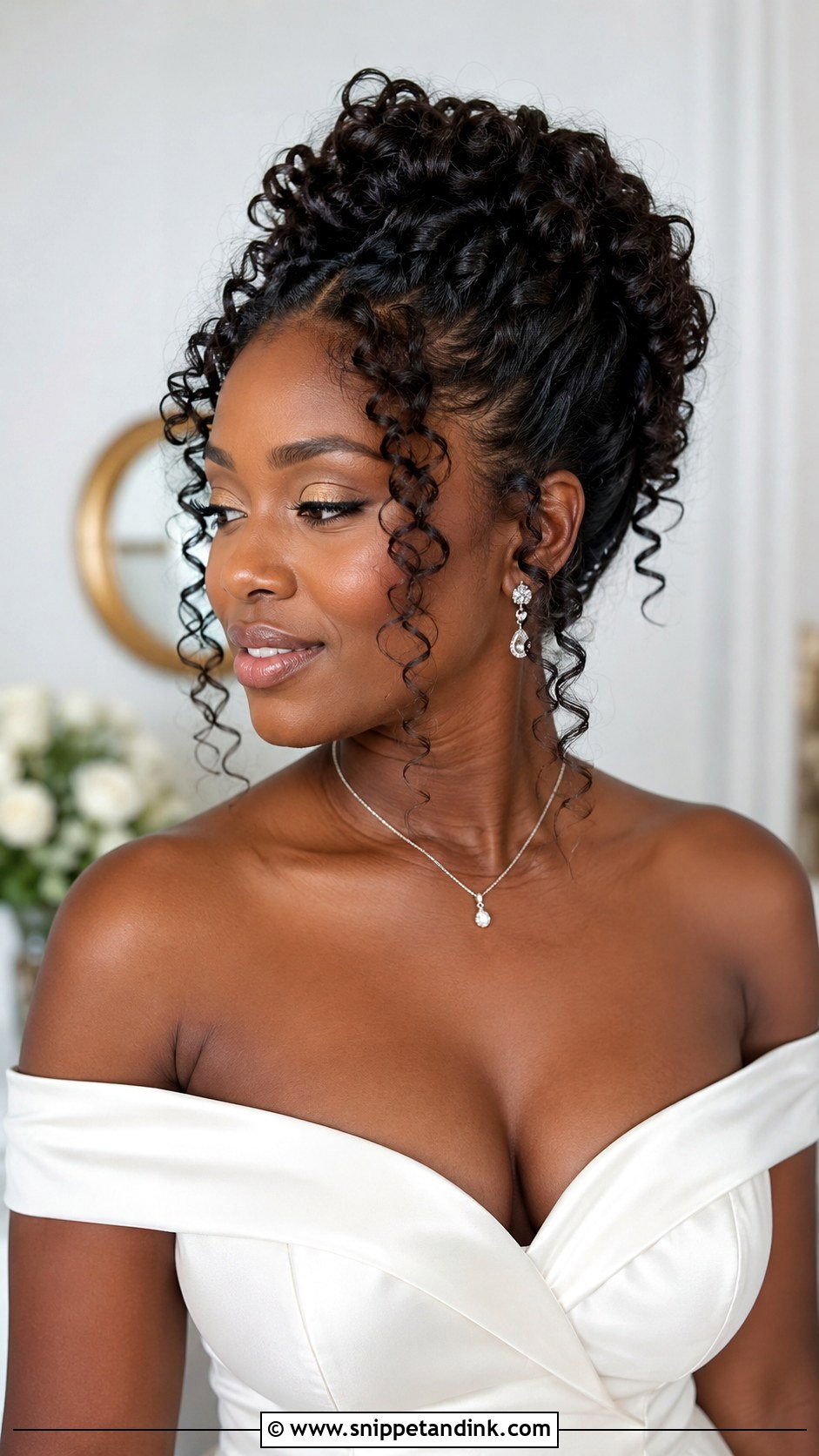
Curls should be lifted and pinned, not brushed out and hidden. I work with the curl pattern, stretching it only as much as the shape needs, and slide pins under the curl clumps so the texture stays visible on the surface. The updo can sit low, high or slightly off-centre depending on the veil and your face, with a few framing coils at the hairline. Moisture is half the job. Curls styled dry without a leave-in frizz within hours, so I start with damp, conditioned hair.
7. High Bun Bridal Updo
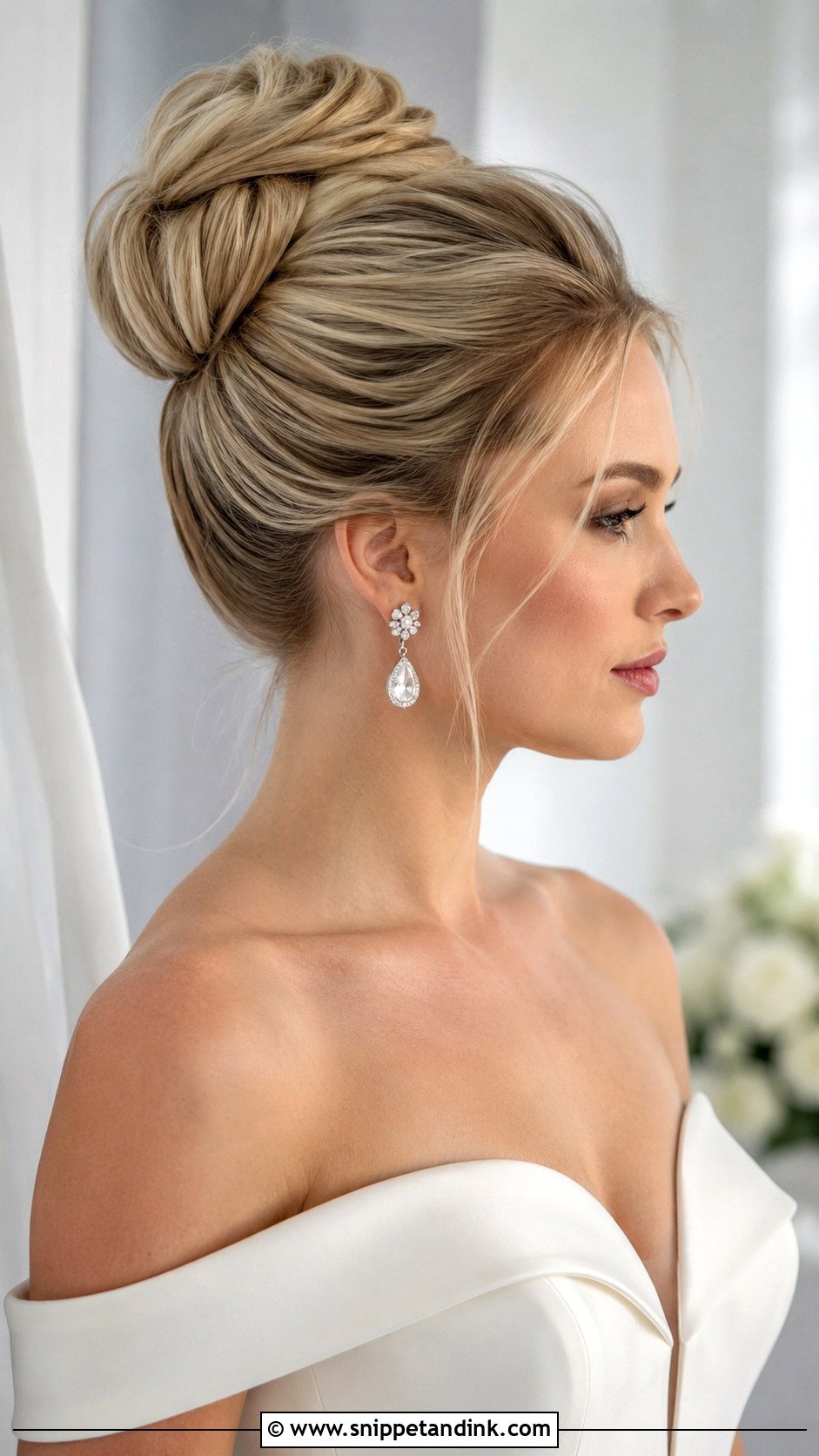
A high bun lengthens the neck and leaves the shoulders bare, so it sits naturally with ball gowns, fitted dresses, halter necklines and statement earrings. It can be sleek and sculpted or rounded and soft. Comfort is the catch. Thick or long hair piled at the crown is heavy, and a high bun pinned too tight gives some brides a headache by mid-afternoon. I split the weight into two sections pinned to each other instead of one ponytail carrying everything, and I’d ask any bride to wear it for the rest of her trial day before deciding.
8. Twisted Bridal Updo
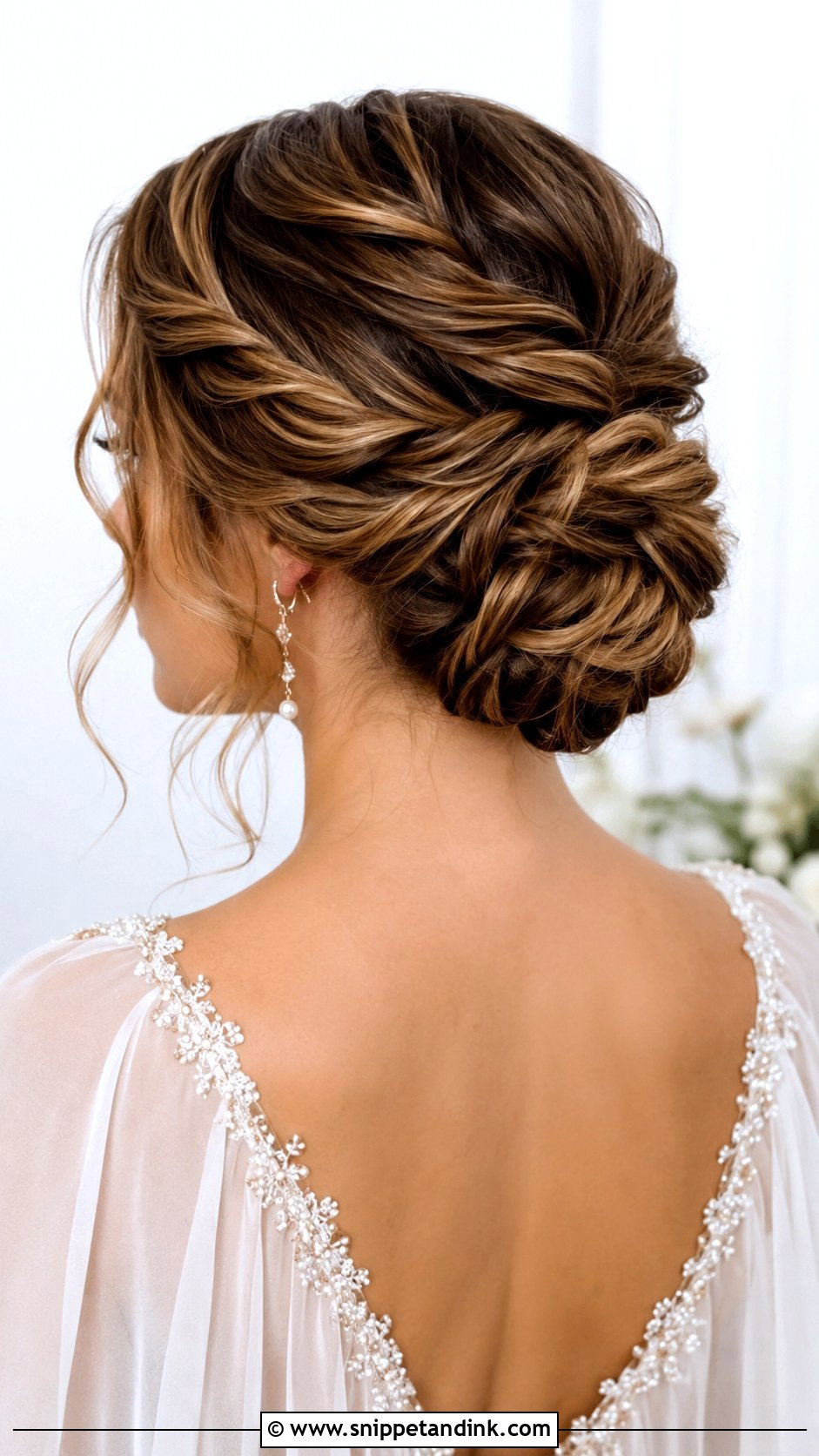
Twists roll, cross and pin where braids plait, giving a softer, smoother texture. They show colour well: on highlighted or balayage hair the lighter pieces trace every curve. I like twists for medium-length hair, because short layers tucked inside a twist look intentional instead of escaped. The shape can sit low at the nape or fill the back of the head, finished with a comb or a few pins on one side.
9. French Twist Bridal Updo
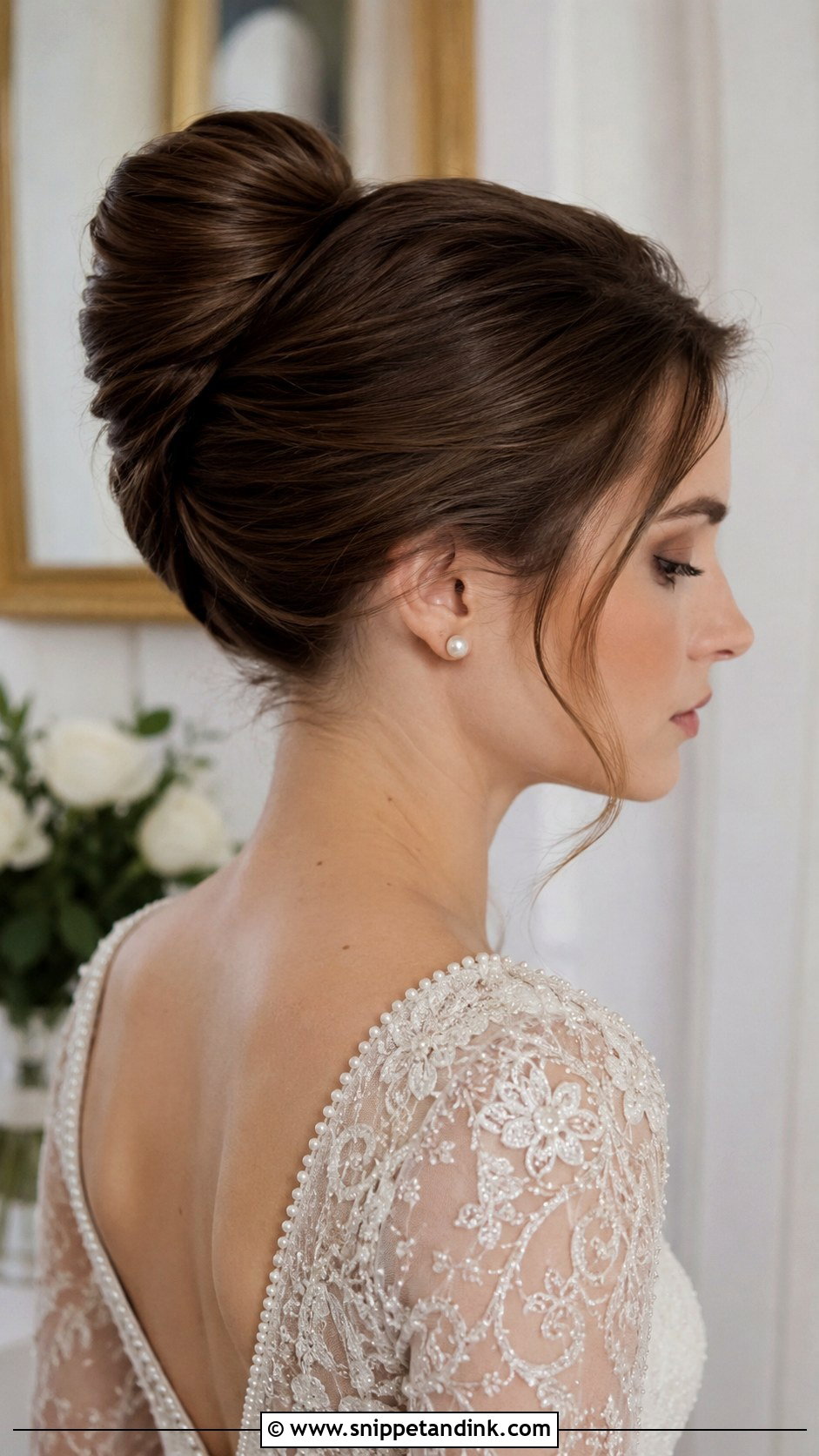
Sideways, then upward and in: the hair sweeps to one side and folds into a vertical roll that’s at its best in profile. Traditional versions are sleek, while the bridal ones I do now carry volume at the crown and a few loose pieces at the face. It goes with vintage-inspired gowns, bateau necklines, pearls and structured dresses, and keeps hair fully off the shoulders at a hot summer wedding. The seam needs crossed pins every few centimetres, or the roll loosens as you move.
10. Boho Bridal Updo
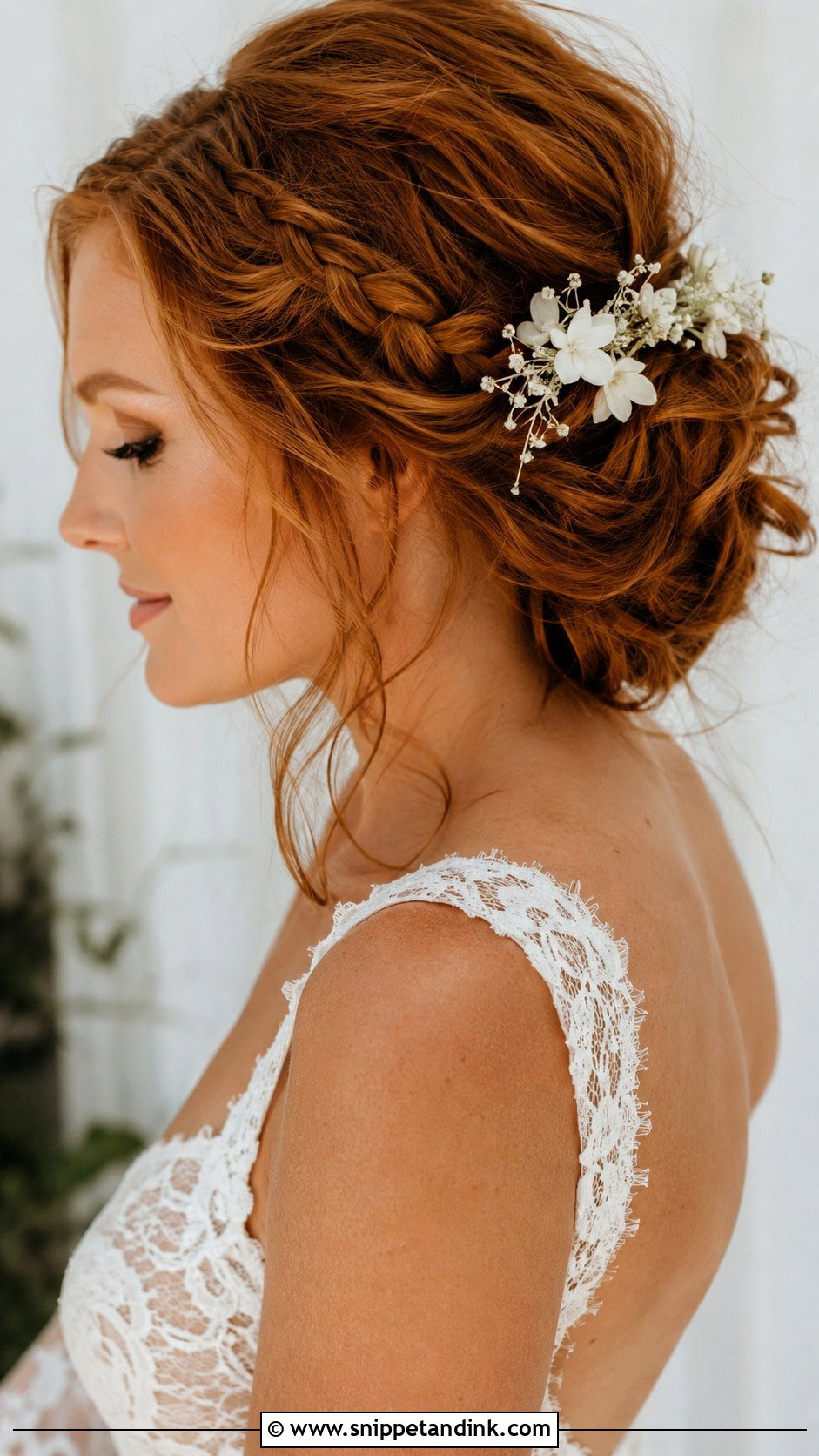
Boho updos look careless and are anything but. I wave the hair first, add a couple of small braids for structure, then pin sections loosely over a firm base, so the airy volume has something holding it from underneath. Lace dresses, meadow venues and floral hair accents suit it. The line between relaxed and untidy is control: if a piece falls, it should fall where I put it. Ask your stylist to show you which pieces are meant to move.
11. Side Bun Bridal Updo
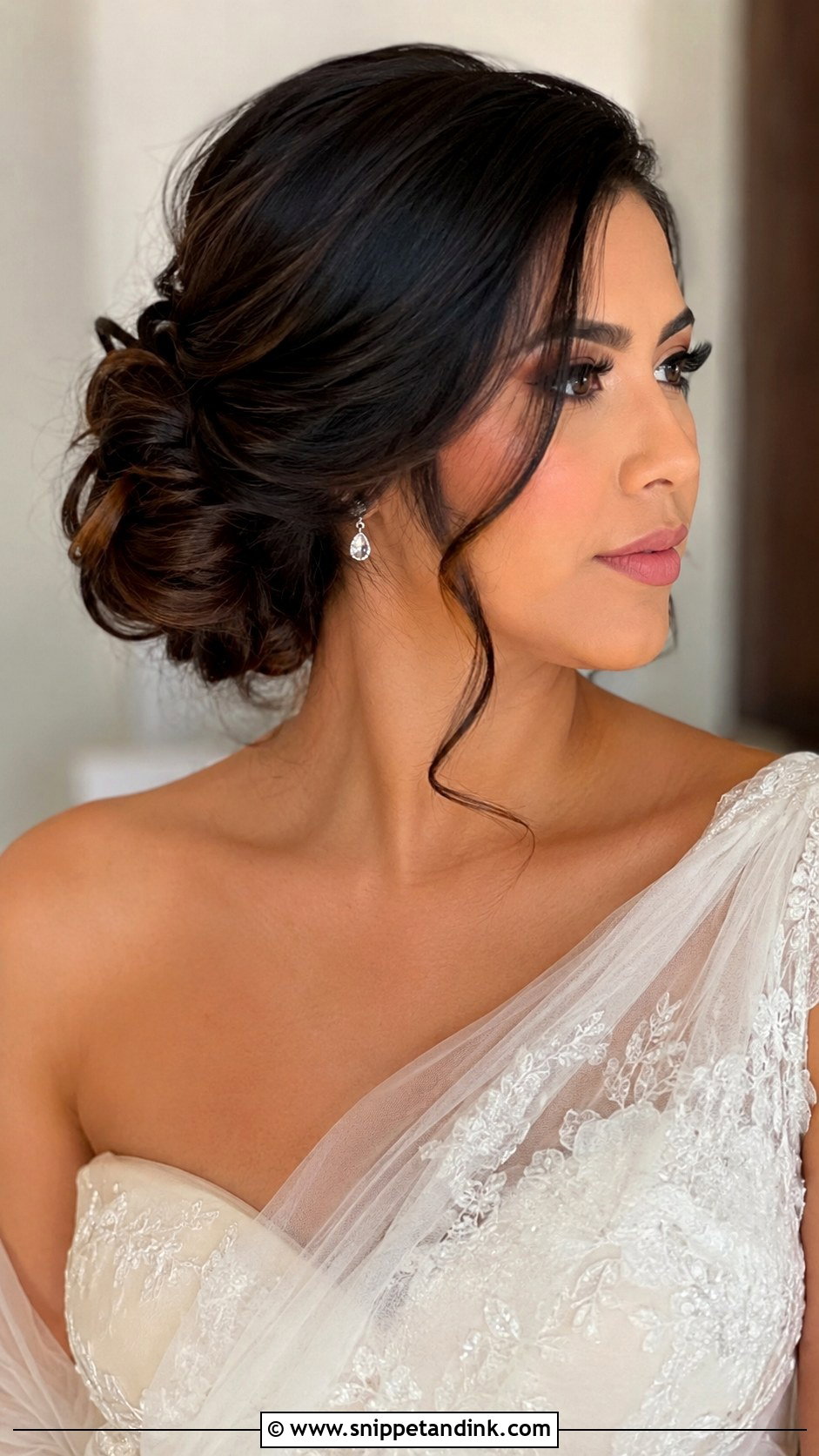
Setting a bun just off centre at the nape gives a soft angle that’s visible from the front. I place it on the opposite side to an asymmetric or one-shoulder neckline so the hair and the dress balance each other, and it pairs well with a side part or side-swept bangs. It can be smooth, curled, braided or textured. Watch the weight. A big bun on one side looks lopsided, so I keep it compact and leave a few face-framing pieces on the other side.
12. Bridal Updo With Veil
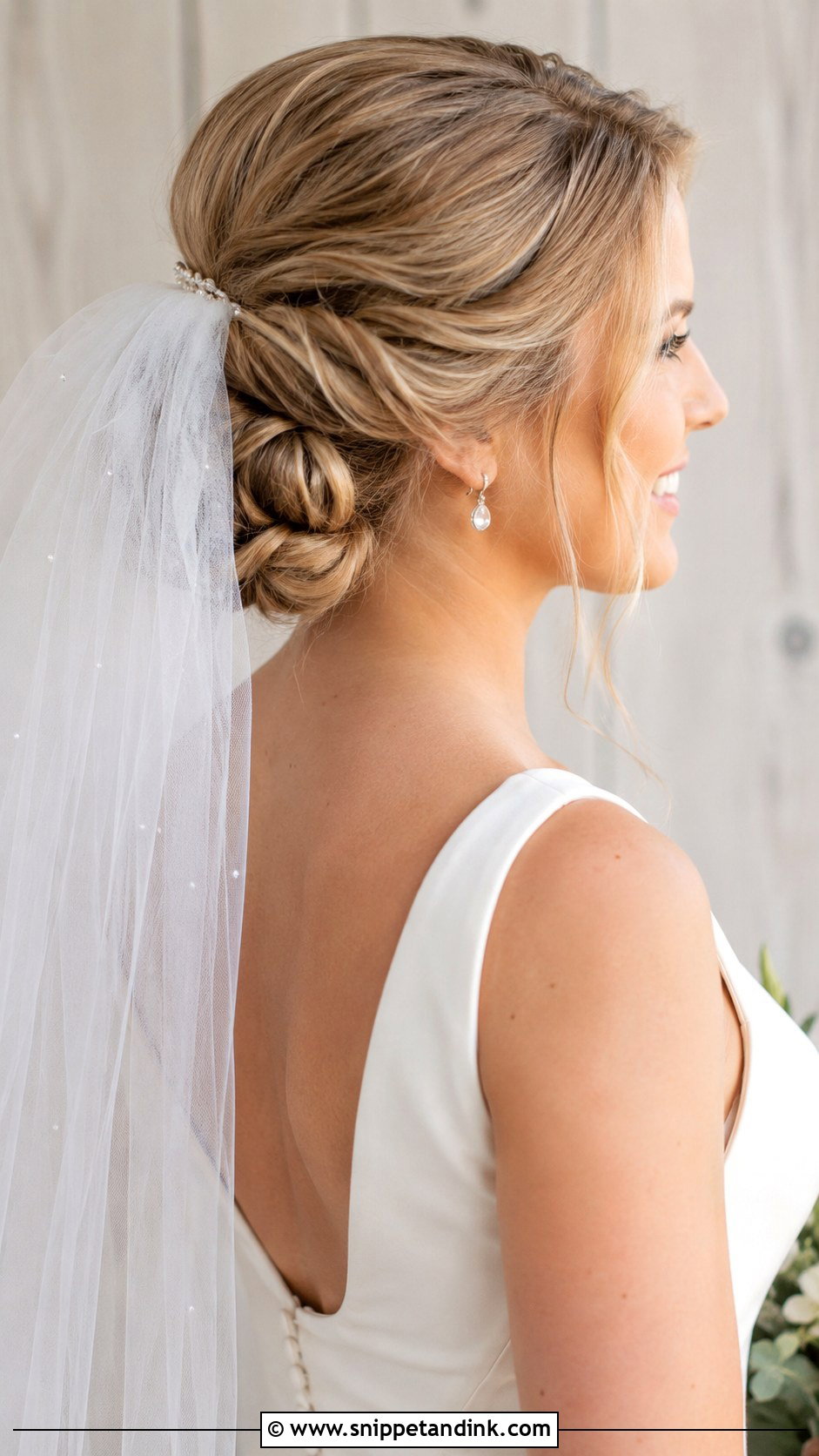
A veil comb needs something solid to bite. Low buns and chignons are the easiest bases, because the comb can go above the bun, under it or into its base, each giving a different drape. A higher updo works too if the veil sits behind it. The mistake I see is a comb jammed into soft texture, which flattens the shape and works loose during the ceremony. Bring your veil to the trial so your stylist can test the exact position, then look at the hair again with the veil out, since that’s how you’ll spend the reception.
13. Bridal Updo With Pearl Pins
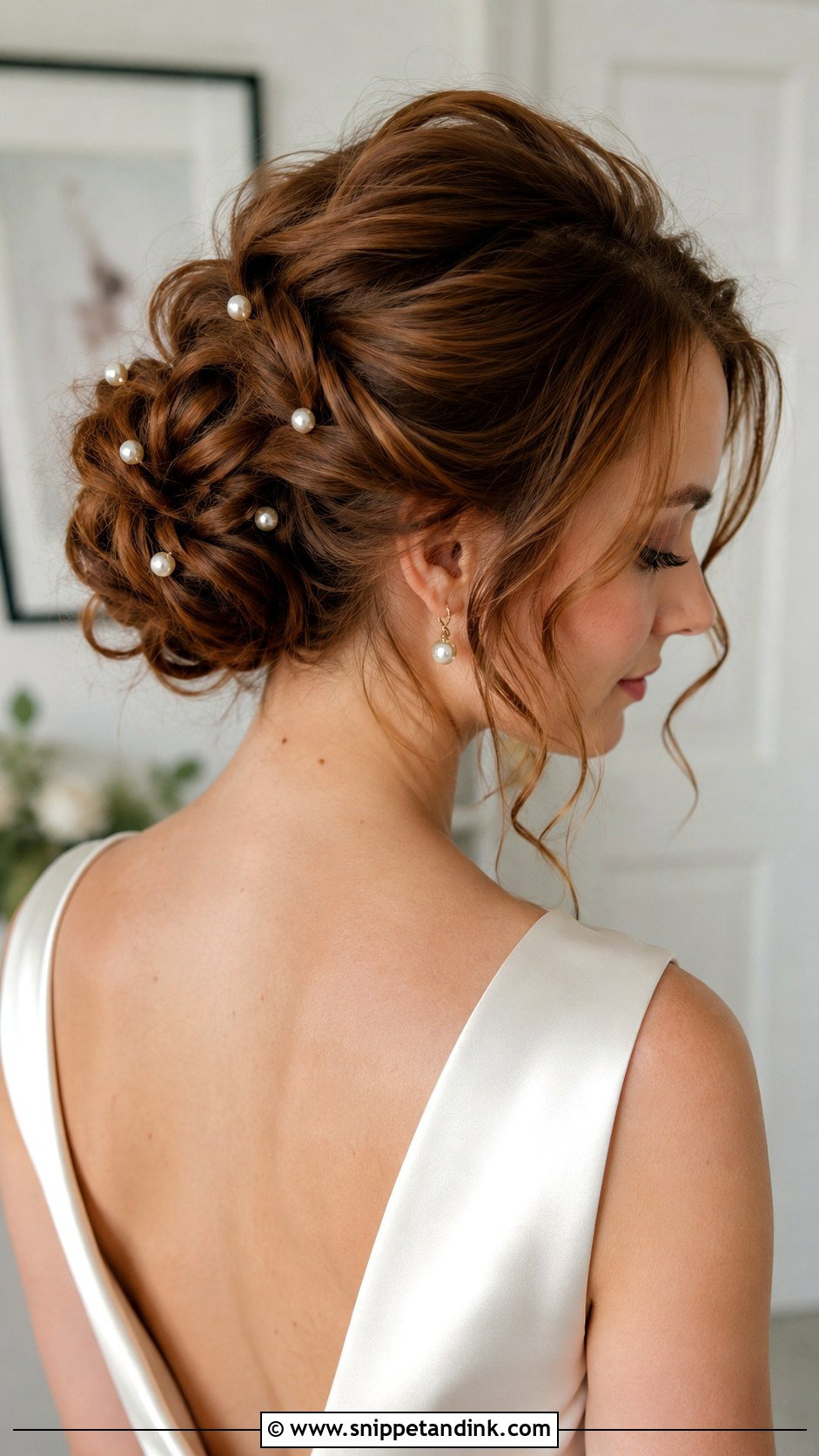
Pearl pins add light without covering the hair, scattered through a bun, along a twist or around a braid. Sleek chignons, textured buns, curly updos and softer styles all take them. Spacing is the skill. Too many look crowded, while a handful placed with intent look deliberate. Match the pearl size to your earrings and gown. Many decorative pins have straight, smooth prongs that slip, so I give each prong a slight bend before it goes in.
14. Bridal Updo With Flowers
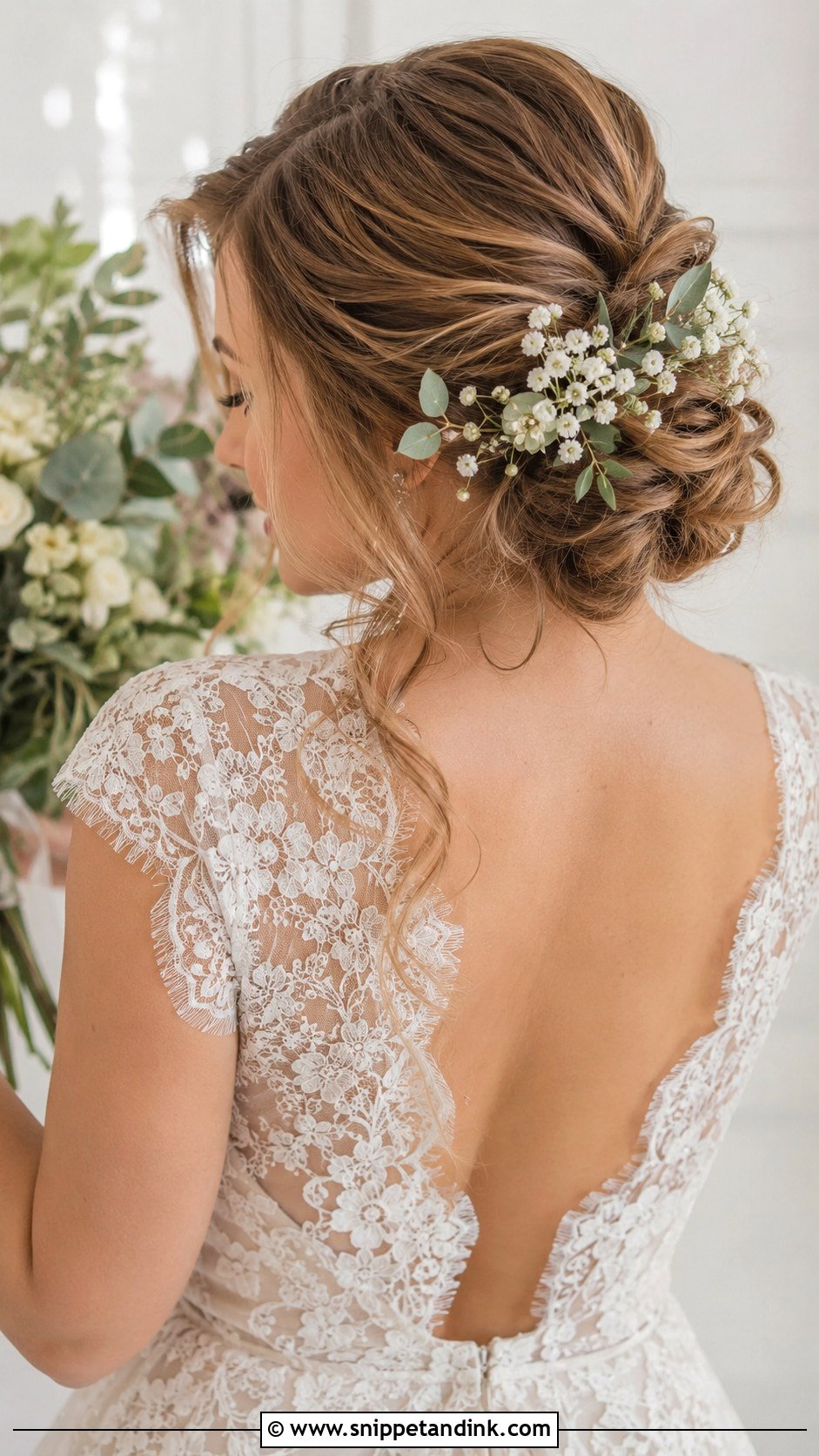
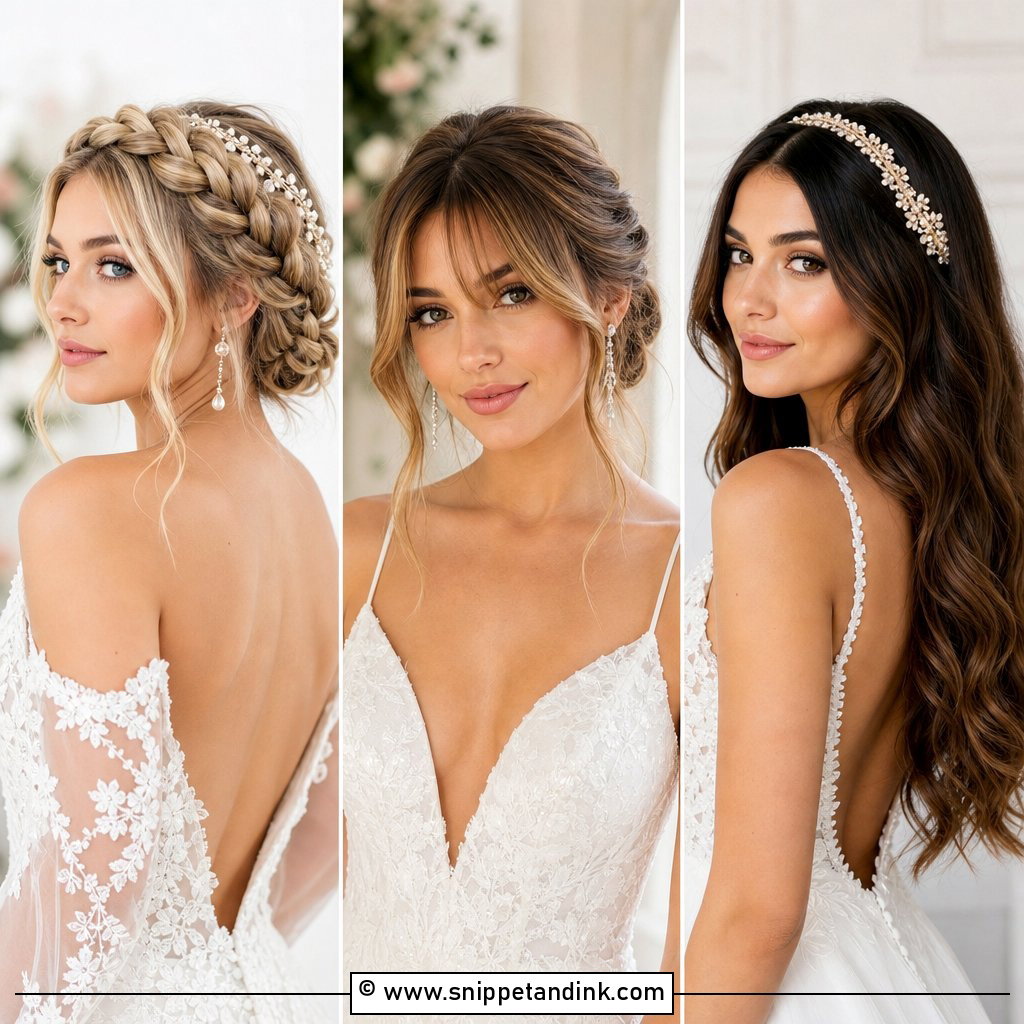
Flowers in an updo should sit in it, not on top of it. Small blooms tucked into a low bun, woven into a braid or placed down one side of a twist look natural at garden, spring and summer weddings, and tiny white blossoms, soft greenery and neutral accents are the easiest to wear. Out of water, fresh flowers wilt, so choose sturdy ones such as spray roses, waxflower or small orchids, and ask the florist to wire and tape them that morning. Fragile blooms like gardenias bruise brown at the edges almost as soon as they’re handled.
15. Bridal Updo With Face Framing Pieces
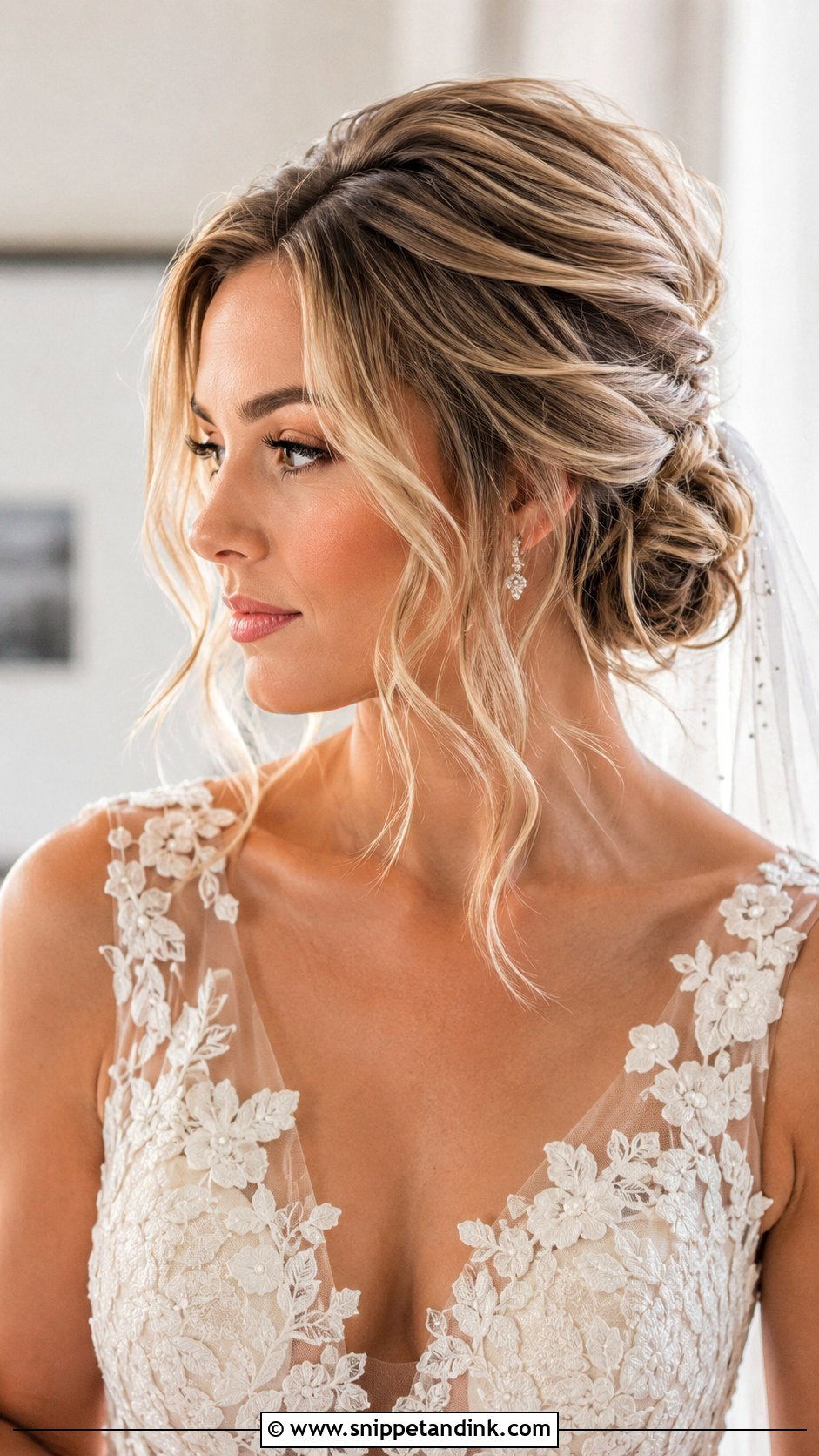
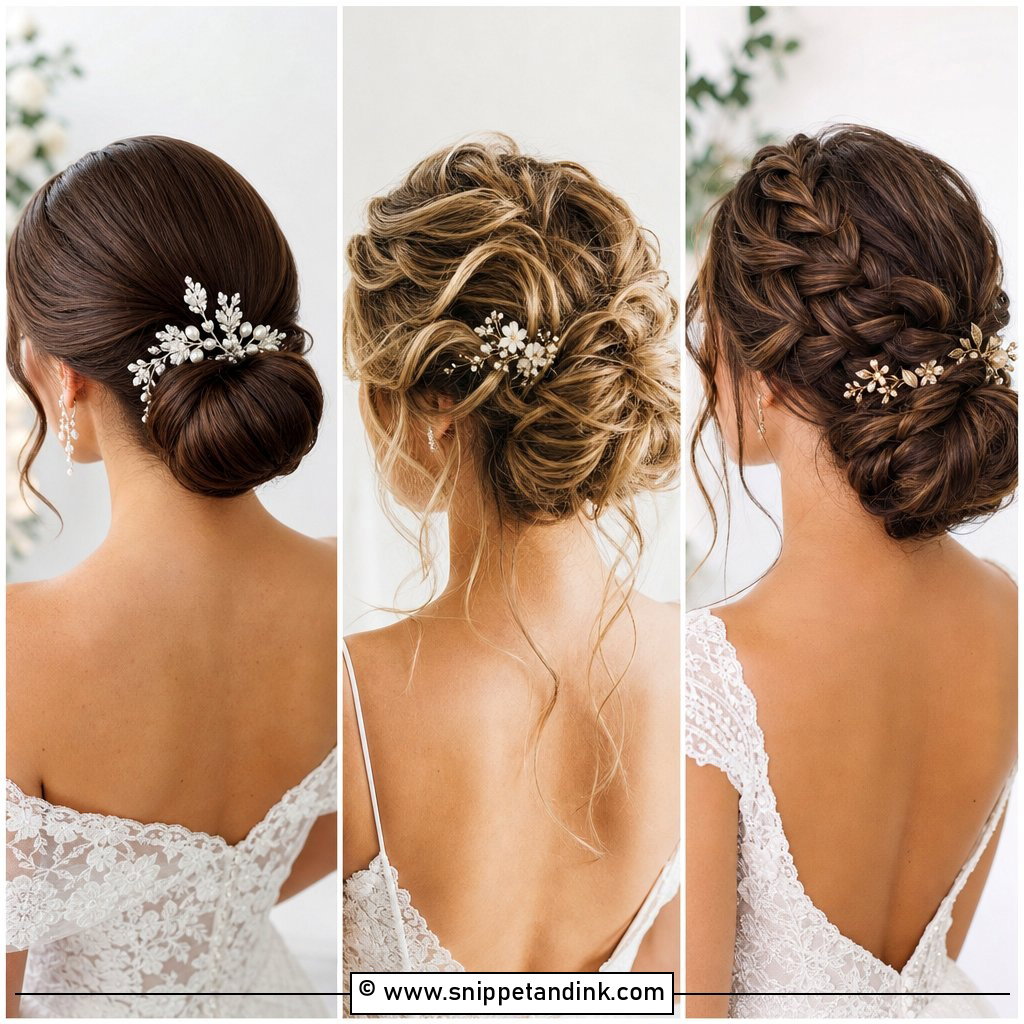
Face-framing pieces are what make an updo feel like you if you rarely wear your hair pulled back. They can lift the cheekbones and soften a strong jaw. They should be chosen, not left over: I separate them from the hairline deliberately, curl them in the same direction as the rest and set them so they blend. Ask for them a little longer than you think. Curled pieces shrink, and very short ones end up poking at your eyes all day.
16. Bridal Updo For Long Hair
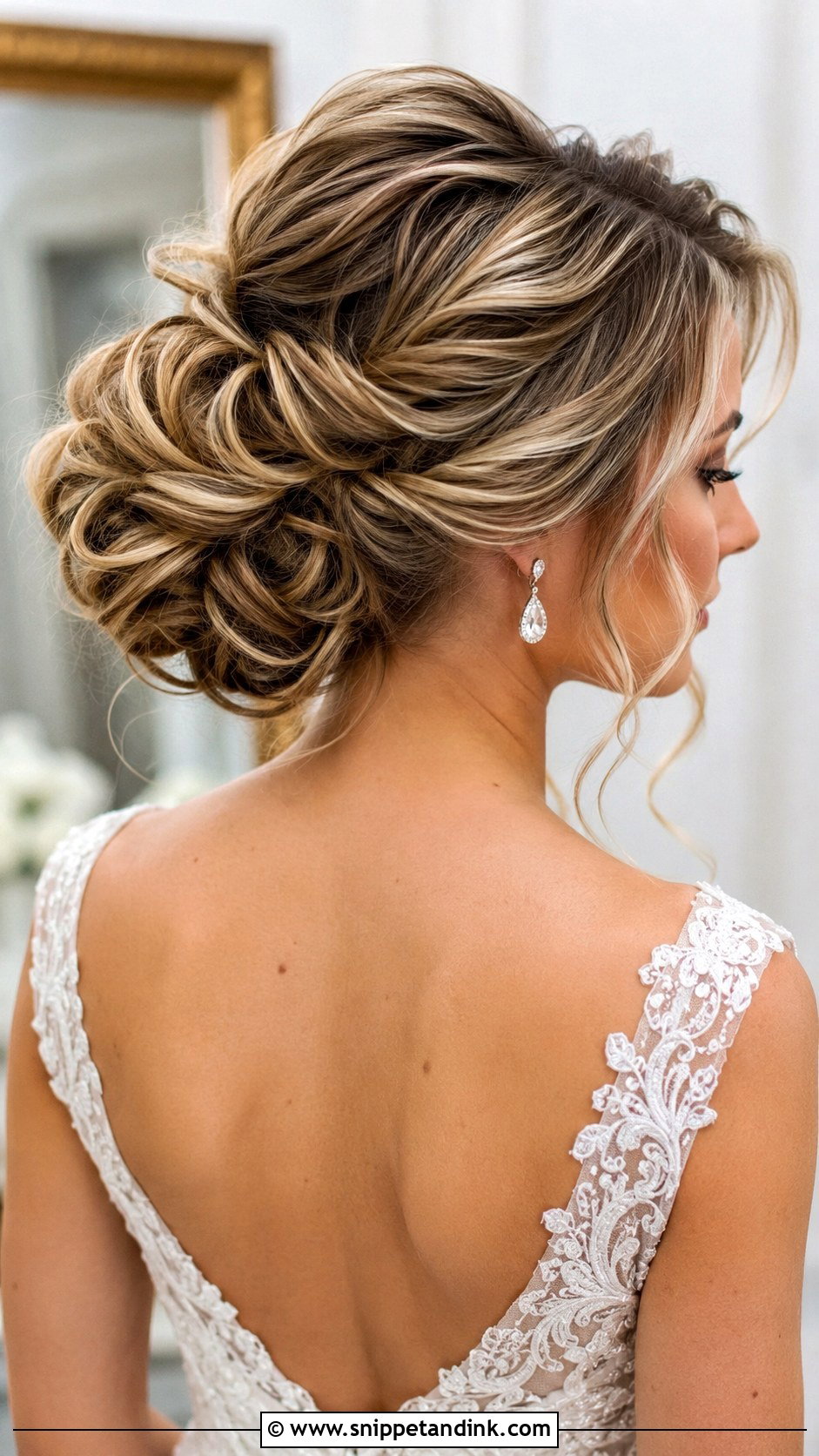
Long hair gives me the most to work with and the most to manage. It can become a low or high bun, a braided chignon, a twist or a full romantic arrangement, and highlights, curls and waves show off its dimension. Weight is the challenge. I build internal support, small anchored sections that the rest pins onto, so nothing drags on the scalp, and I place pins where they hold rather than where they hurt. Very thick hair should be tested for comfort at the trial before you settle on a shape.
17. Bridal Updo For Medium Hair
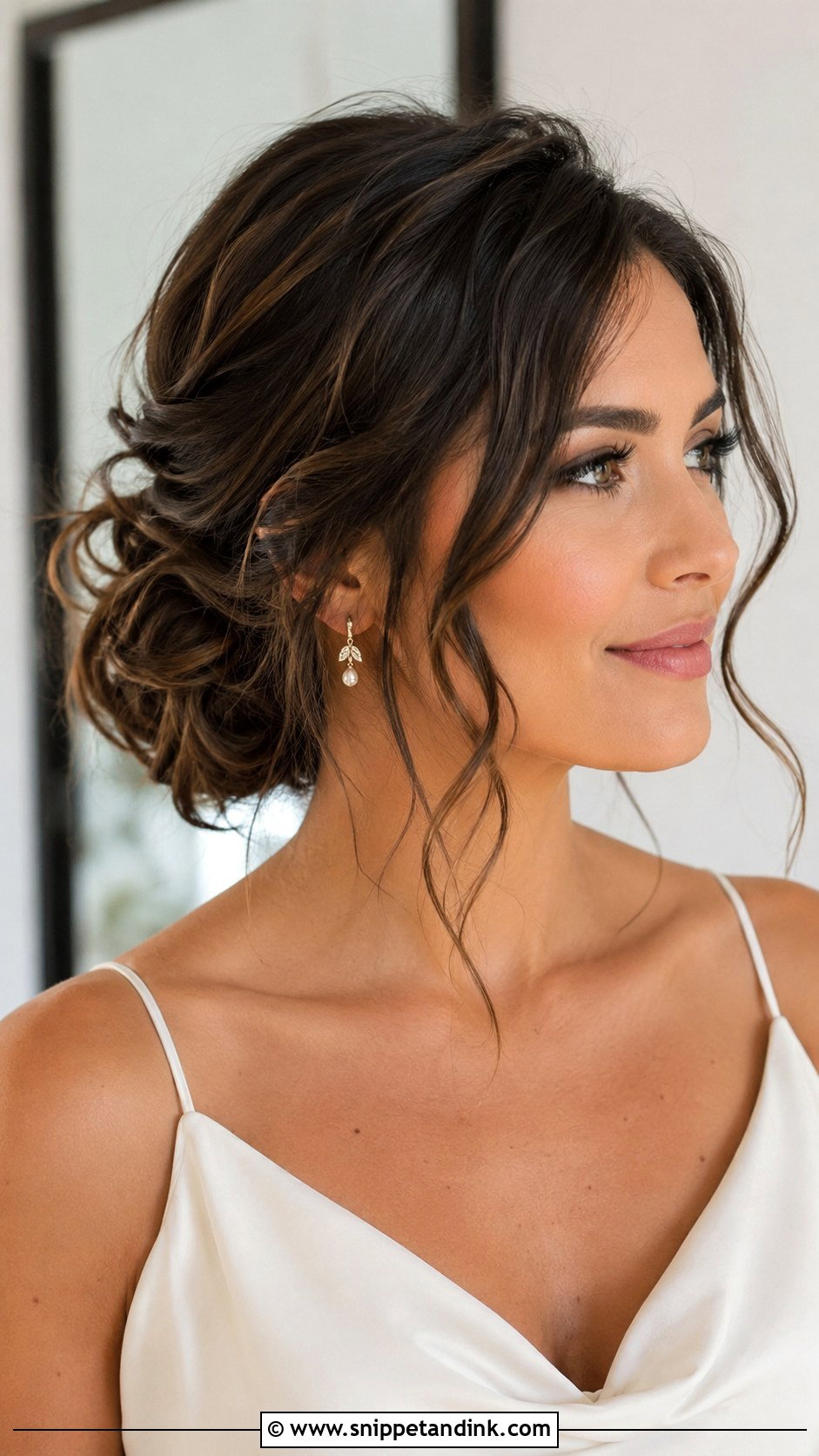
Collarbone to shoulder length suits low buns, tucked chignons, textured twists and soft braided updos. I create volume first with backcombing at the root and through the mid-lengths, then pin so the shape looks fuller than the hair alone would. Clip-in extensions add thickness if you’d like it, though most medium-length updos manage without them. Medium hair is lighter, so it’s often the most comfortable over a long day. A slightly textured finish lets shorter layers blend in.
18. Bridal Updo For Short Hair
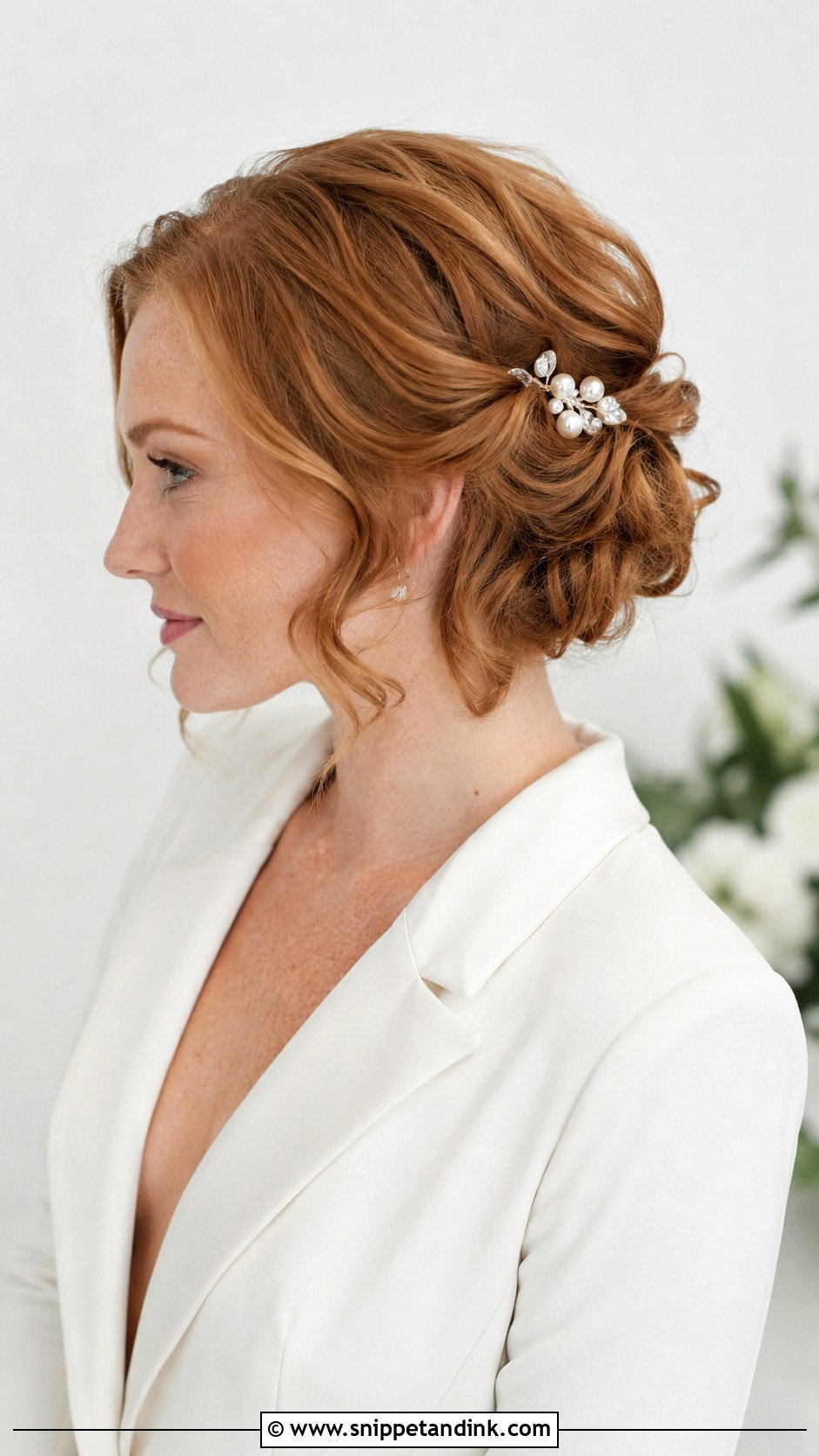
Bob-length or slightly shorter hair can still be curled, twisted, tucked and pinned into an updo; it will just be smaller than a long-hair bun. Texture is what makes it possible, so I spray it through before any pins go in. Accessories do more work on short hair, with pearl pins, a small comb, a fine headband or a veil completing the shape. Ask for a style that follows your haircut instead of fighting it.
19. Half Braided Bridal Updo
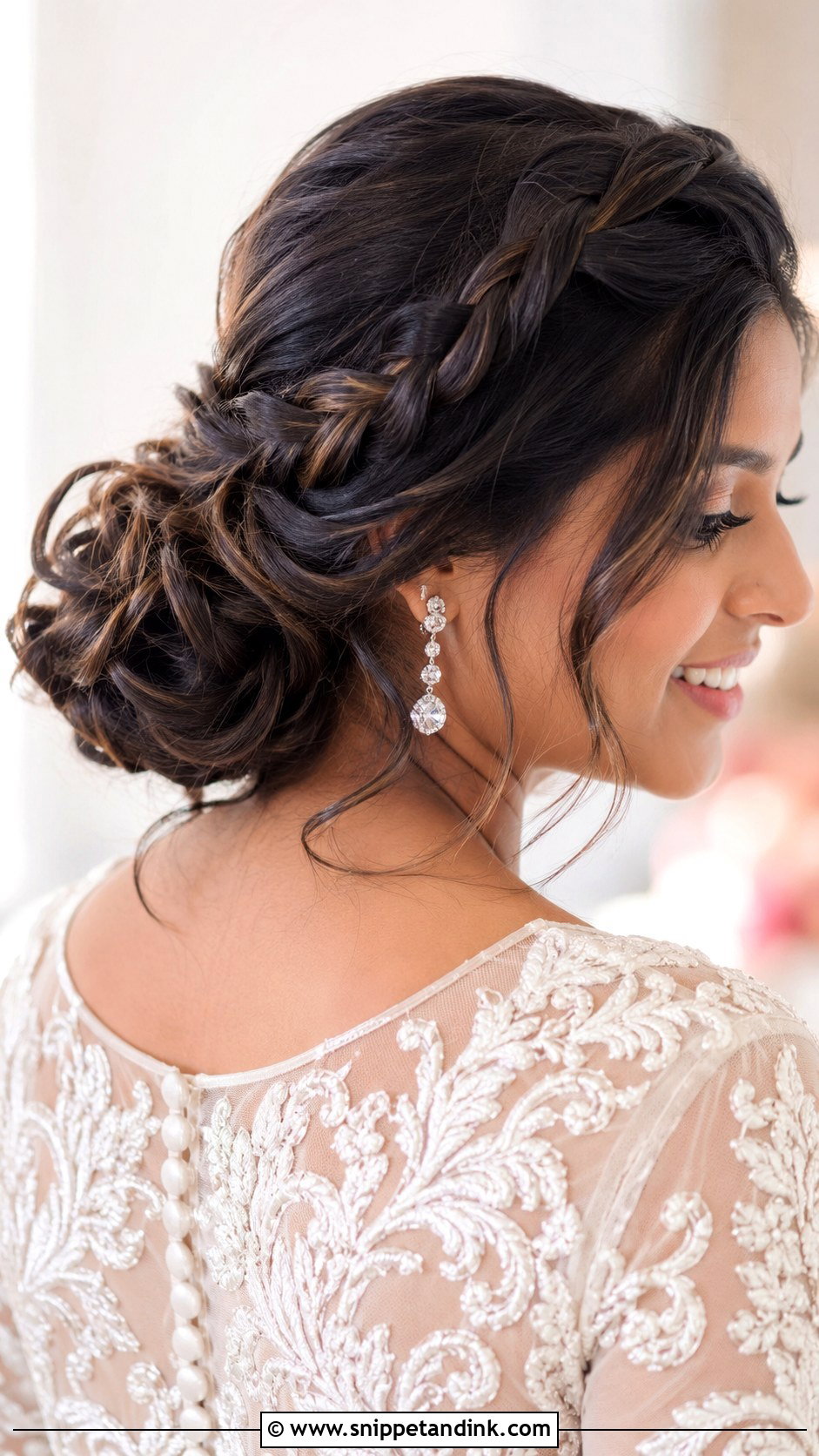
Half braided updos show detail from both the front and the back. The braid can start near the crown, wrap into the back or sweep across one side before joining a bun or twisted base, and highlighted hair shows its colour variation through the weave. I braid firmly first and loosen the loops afterwards, so the soft look sits on a braid that won’t slip. Make it polished for a classic wedding, or looser for a rustic or garden one.
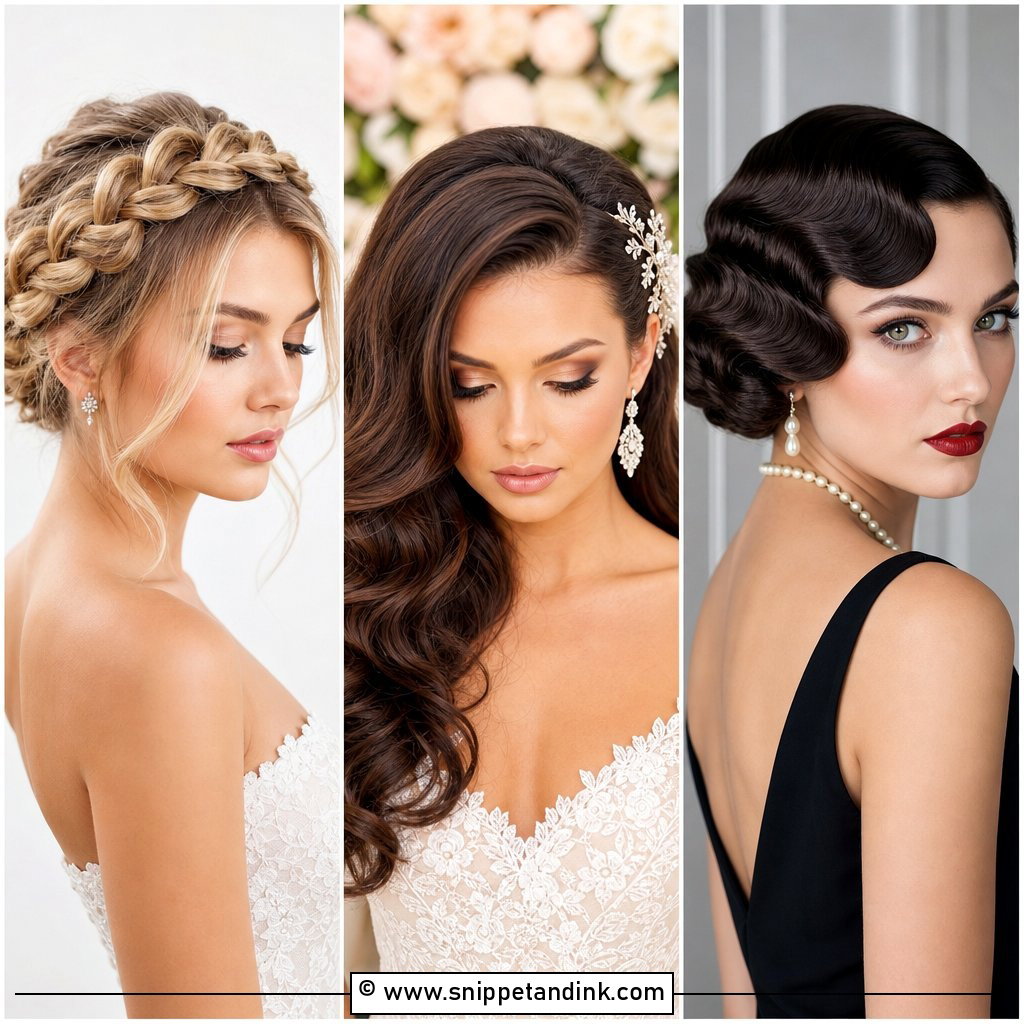

20. Sculpted Bridal Updo
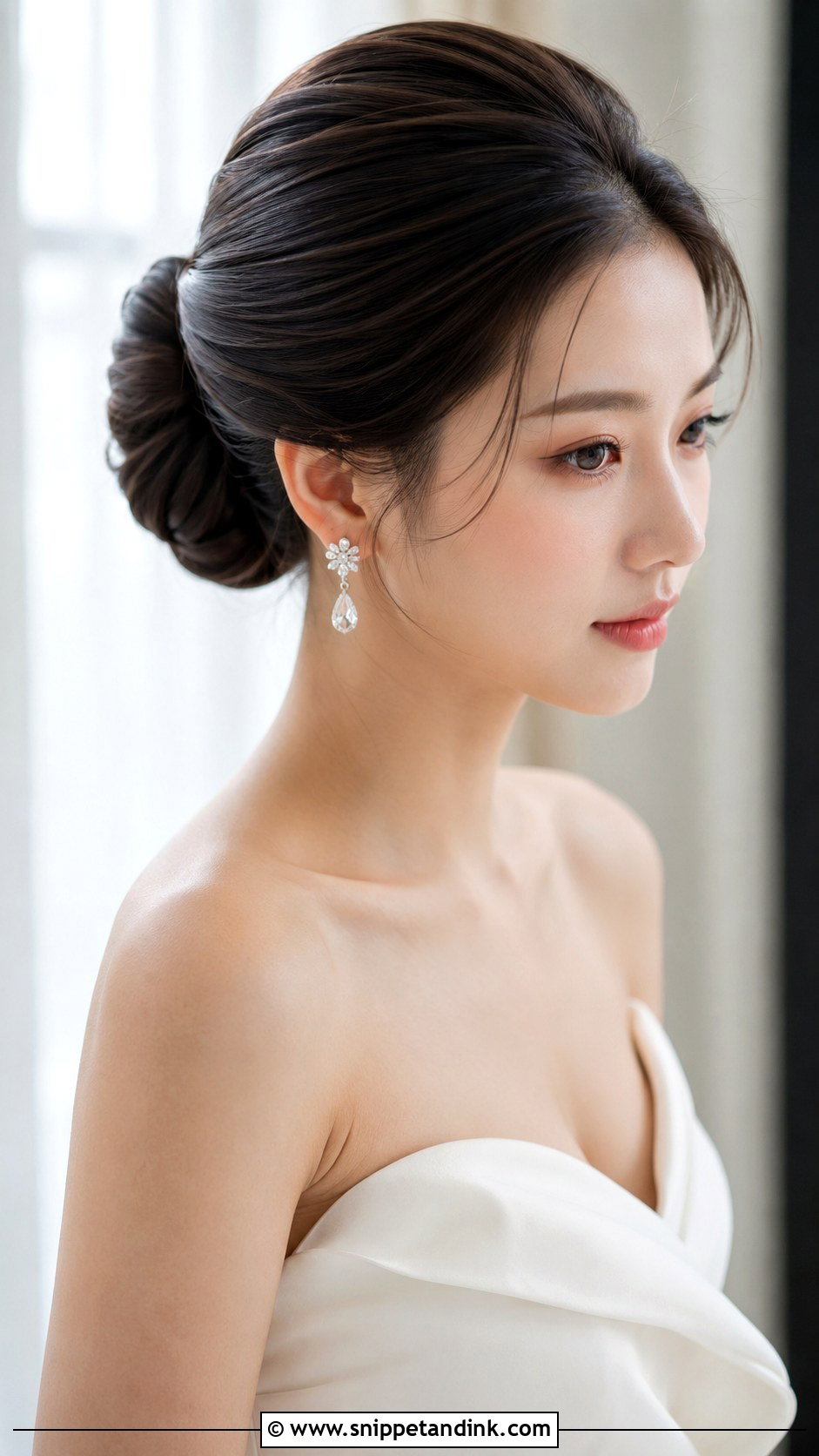
Sculpted updos are about shape and balance: curved sections smoothed into place, a defined bun, a modern twist with controlled volume. On a simple gown the hair becomes the design detail, which makes it right for black-tie ceremonies and formal venues. Precision is the whole job, so this is the updo I’d never rush. Bring reference photos to your trial, view it from every angle, and expect more time in the chair than a soft style needs.
An Updo Should Never Give You a Headache
Pins shouldn’t hurt. If something pinches or pulls at the trial, it will feel worse eight hours later, so say so straight away; a stylist can move one pin without touching the shape. The usual culprits are pins pushed straight into the scalp instead of slid along it, and a ponytail base pulled too tight before the bun goes on. Keep the trial style in until evening to find out where yours presses.
At the end of the night
Take the pins out slowly with your fingers, starting with accessories and the outer bun and working inward, and ask your stylist roughly how many went in so you know when you’re done. Don’t brush backcombed hair while it’s dry. Soak it with conditioner in the shower and work through from the ends with a wide-tooth comb. It’s the gentlest way to undo a full day of hold.
Your Neckline Is the Best Clue
An updo should make you look like yourself on your most photographed day, only more finished. A low bun reads soft, a sleek bun reads modern, and curly updos, braided buns, French twists and sculpted shapes each bring their own mood to the aisle. Start with the dress neckline and the veil, then think about your texture, venue and weather. Bring your accessories to the trial, take photos from every side, and go with the style that still feels secure when the night ends.
You'll Like These Ideas:


Leave a Reply