
Most vintage looks are built from one or two details lifted out of a particular decade: Art Deco beading, bias-cut 1930s satin, a 1950s tea-length skirt, Edwardian lace, a seventies sleeve, nineties minimalism. That’s the useful way to think about it. You’re not dressing as a person from 1952. You’re borrowing a neckline, a fabric or a button placket that still works now, then styling the rest of you as you are today. Get that balance right and it looks personal rather than costume. Below are thirty of those details, each with the shoes, veil and hair I’d put with it.
Which Decade Reads From Across the Room
A vintage dress tips into costume when every element points to the same year: the dress, the hair, the veil, the shoes, the lipstick. The rule I give brides is one strong period cue from head to toe, plus the dress. Everything else stays current.
Here’s the single cue I’d use for each era:
- 1920s: finger waves or a jewelled headband worn low on the forehead, never both
- 1930s: a long, simple veil and soft waves set close to the head
- 1950s: a birdcage veil, or pointed pumps with a visible ankle
- 1960s: volume at the crown and a short bow veil
- 1970s: a centre parting with loose hair and a few small flowers
- 1990s: a sleek low bun and almost no jewellery
Makeup is where most brides overdo it. A dramatic winged liner, a red lip and pin curls together can look like a theme party. Pick one, keep the skin modern and fresh, and the era still shows through.
1. Vintage Lace Bridal Dress With Long Sleeves
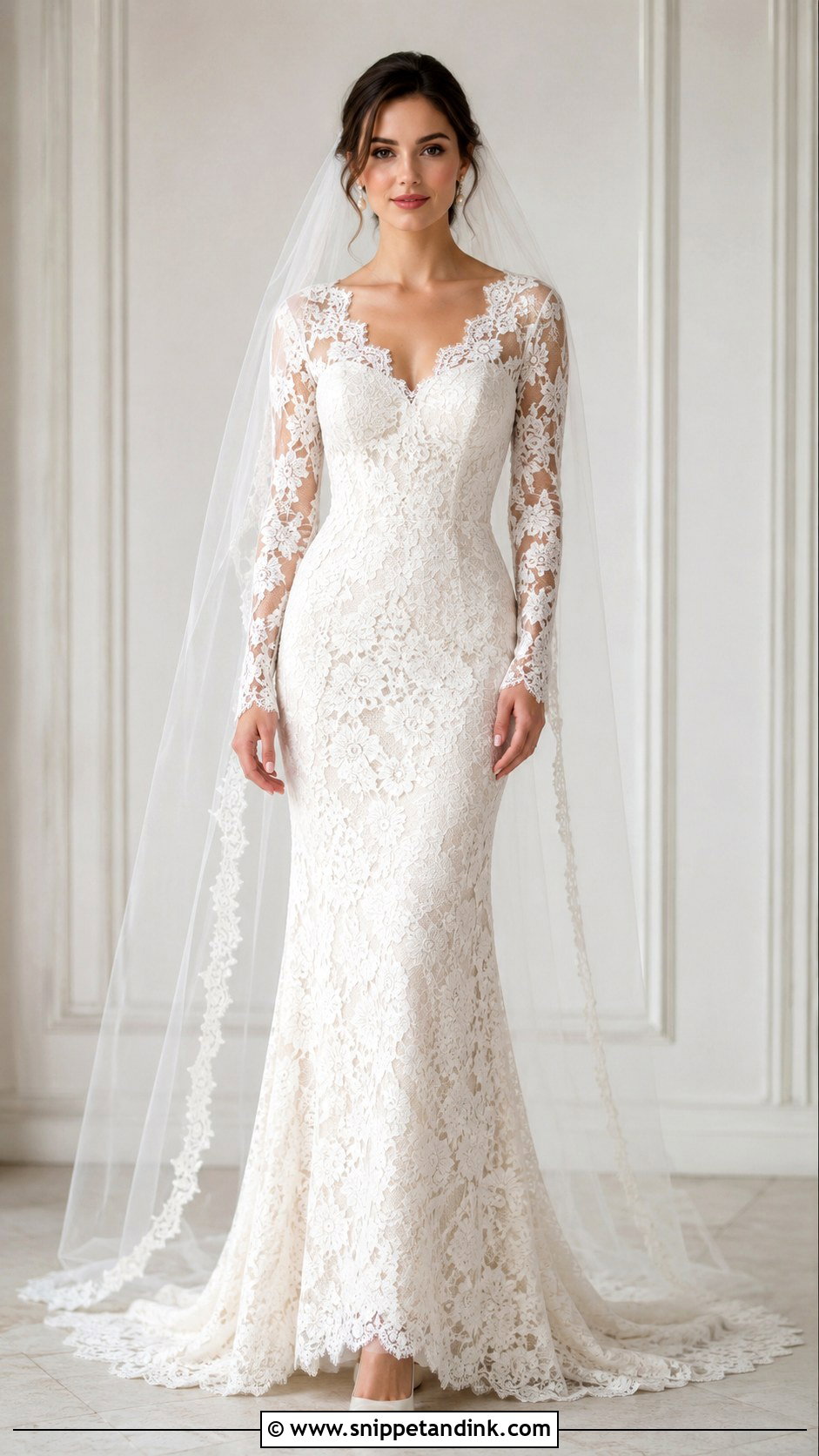
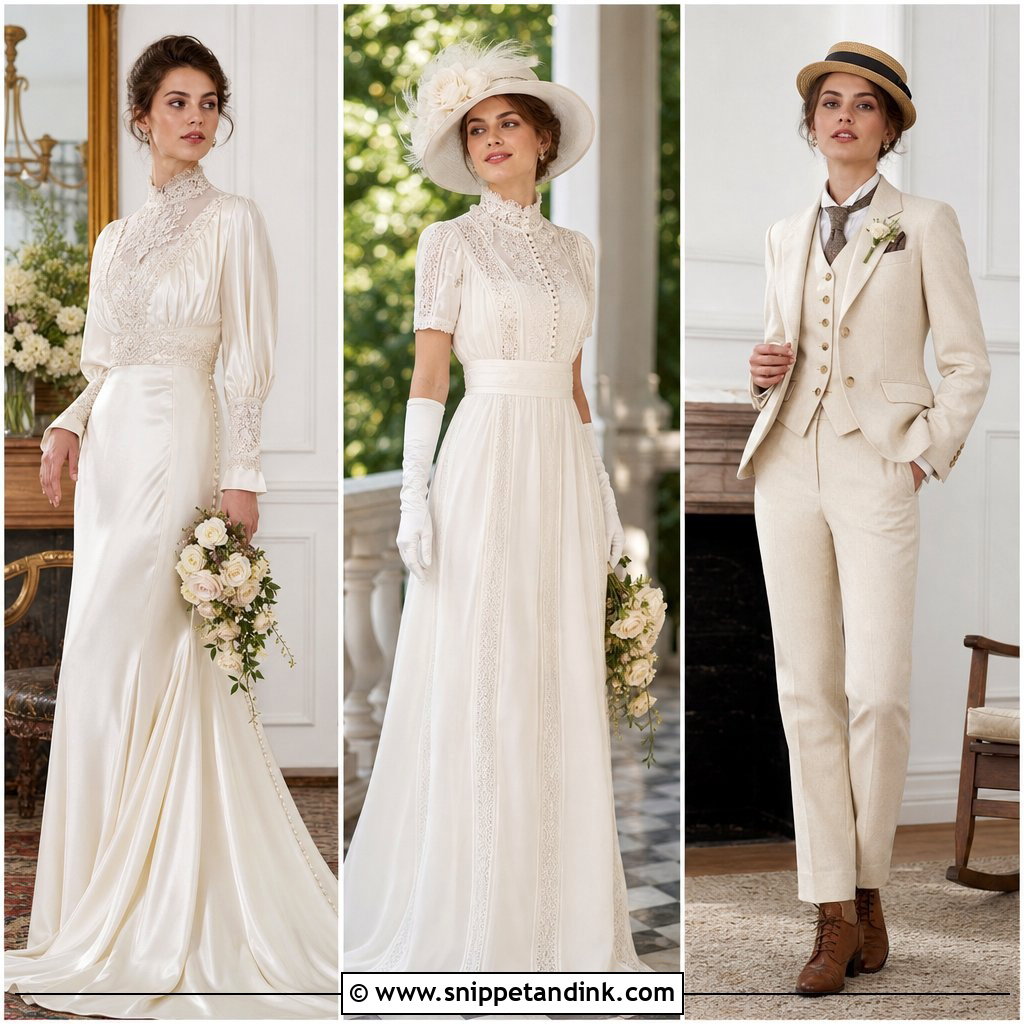
Long lace sleeves give coverage and romance at once. Look for floral lace with scalloped edges, covered buttons and a soft A-line or fit-and-flare shape. Sheer sleeves feel lighter; lined ones give more structure and are warmer for an autumn wedding. Pearl drop earrings, satin pumps and a low chignon keep it graceful, and a fingertip veil lets the lace remain the focus. When fitting lace sleeves, I always have the bride bend her elbow fully; lace has little stretch, and tight sleeves split at the seam.
2. 1950s Tea Length Bridal Dress
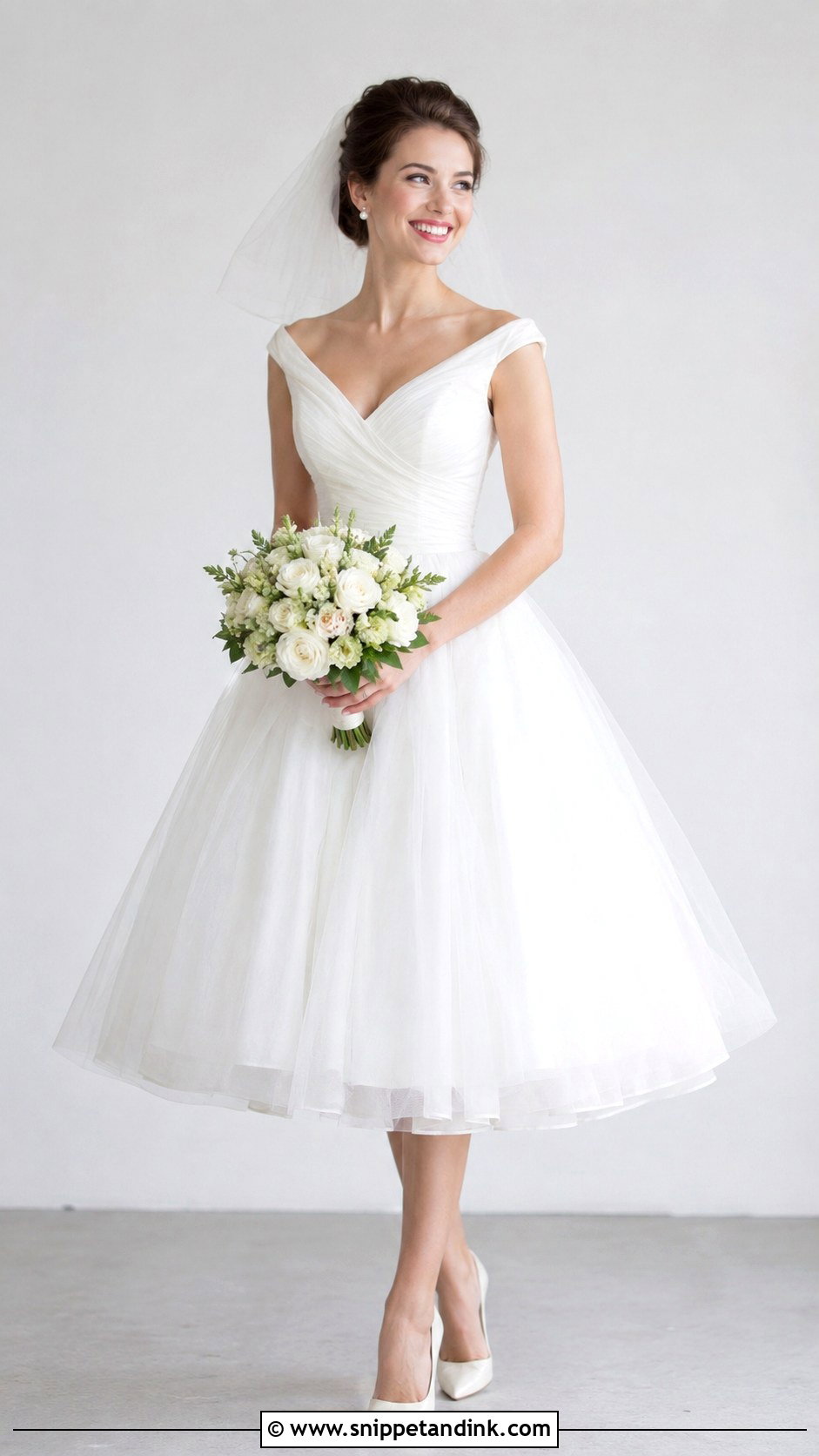
Fitted bodice, defined waist, full skirt, hem between knee and ankle: the 1950s tea length bridal dress is the easiest silhouette to dance in. Satin, tulle, organza or lace all suit it. Since the shoes show, they matter. Pointed pumps, pearl studs and a short or birdcage veil complete it. Get the hem length right at the fitting with your real shoes on; a few centimetres change the whole proportion. It’s a natural fit for courthouse weddings and daytime parties.
3. 1930s Satin Bridal Dress
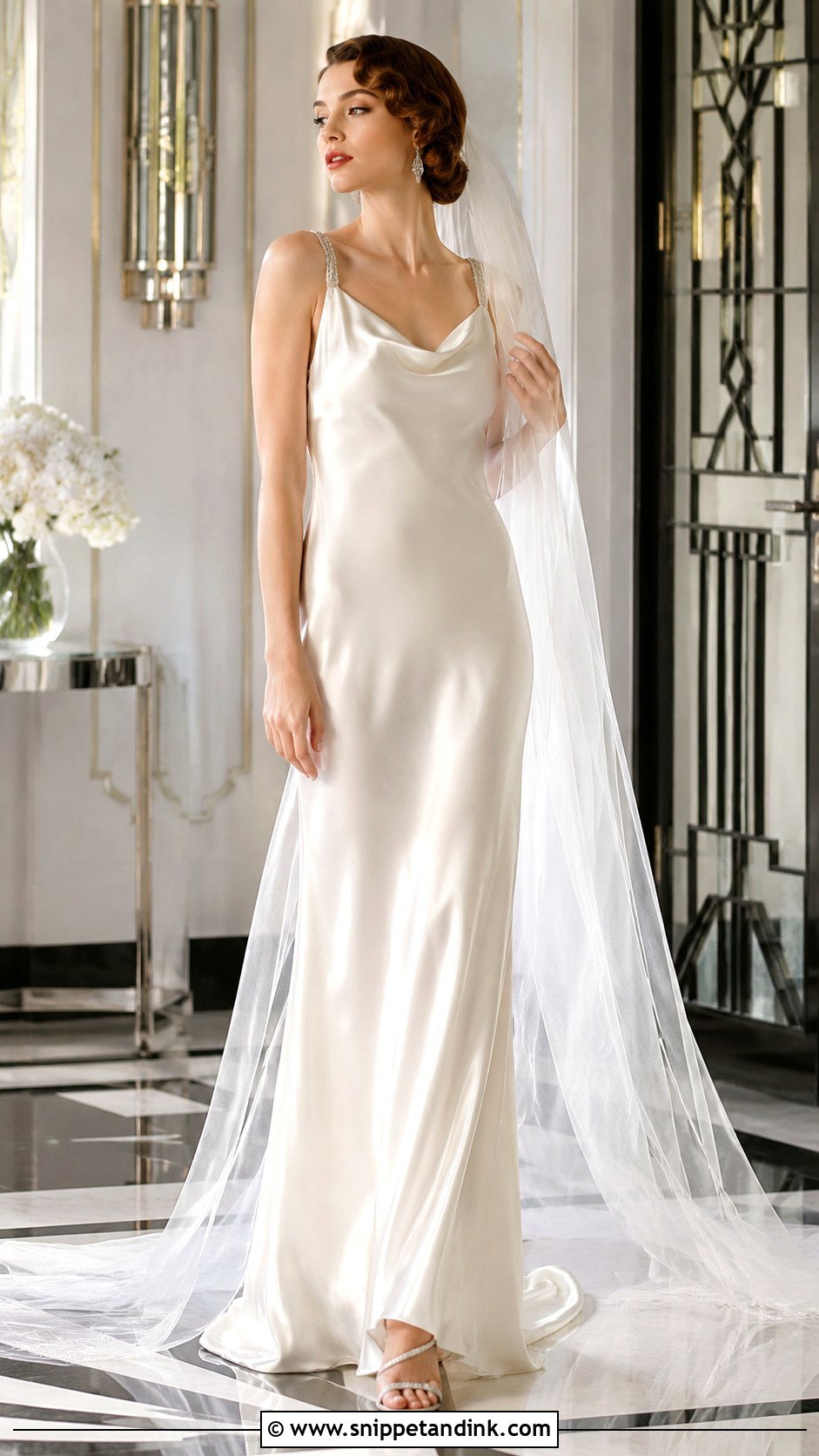
Bias cut is the whole secret. A 1930s satin bridal dress cut diagonally across the grain skims the body with a liquid shine that no other cut gets. Ivory silk satin or satin crepe looks most authentic. Delicate strappy heels, a long veil and crystal earrings suit it; keep hair smooth in soft waves or a low twist. Honest note: bias satin shows everything underneath and every bump in a poorly pressed seam, so this dress needs a skilled tailor and the right underwear.
4. Edwardian High Neck Bridal Dress
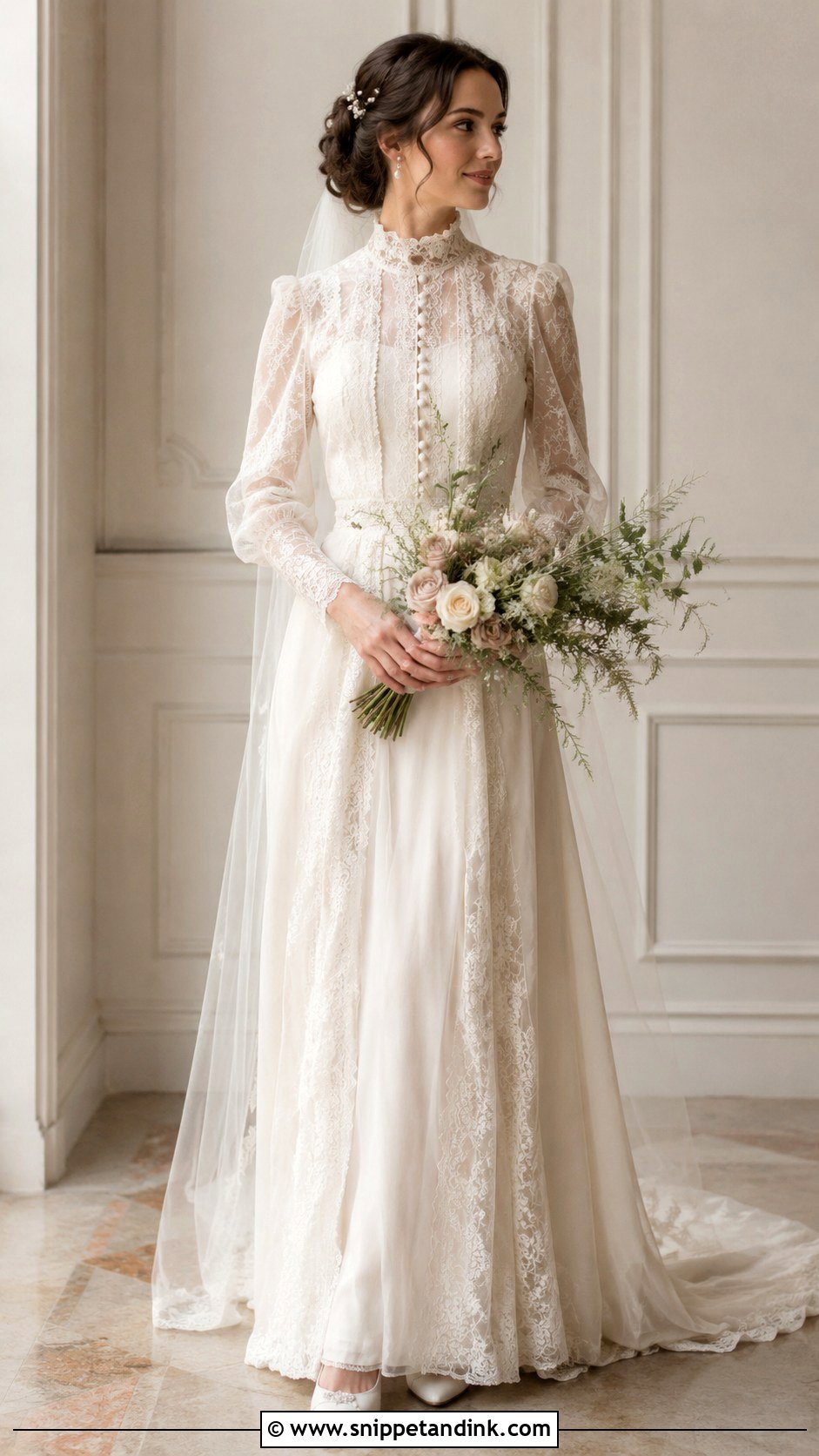
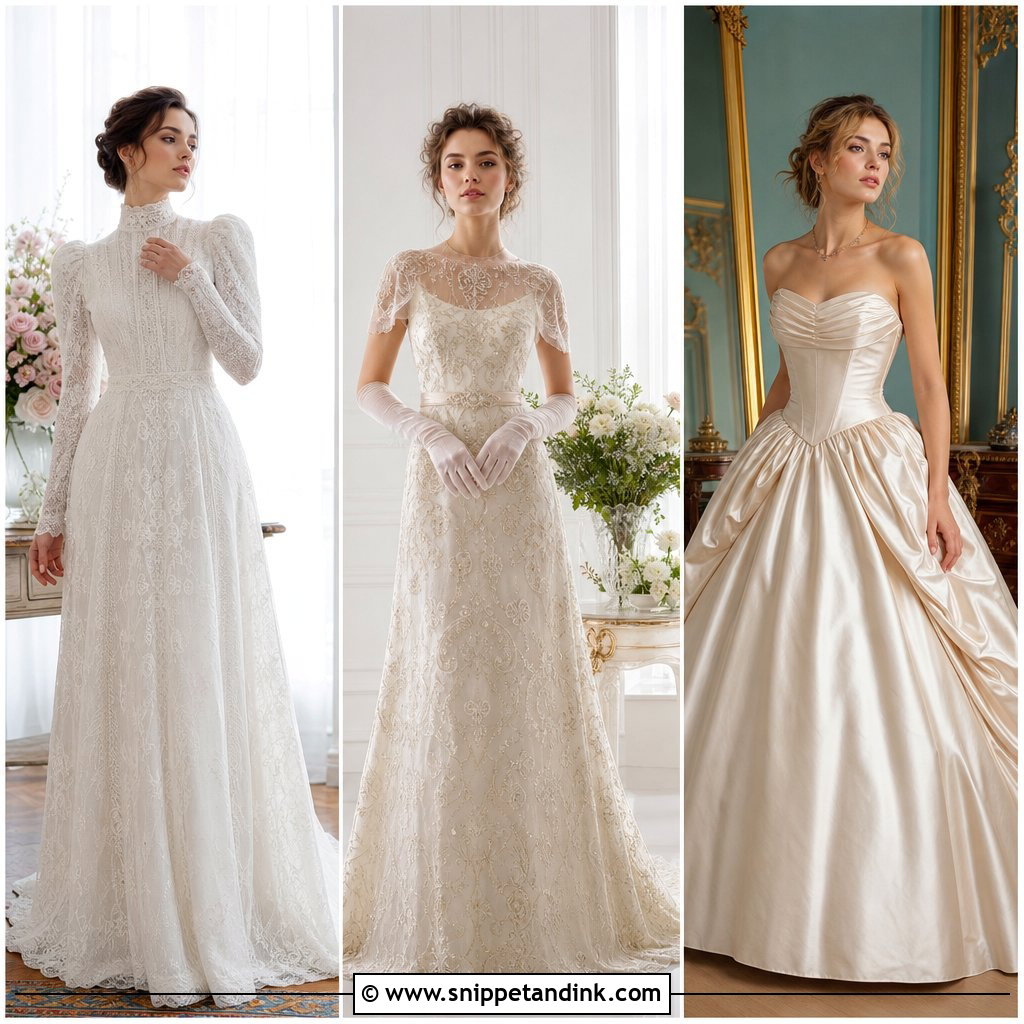
High neck, lace panels, tiny buttons, soft sleeves and a gently shaped skirt: an Edwardian high neck bridal dress feels refined rather than bold. Ivory or warm cream gives a more antique effect than bright white. Pearl hairpins, low satin heels and a simple veil set behind the crown complete it. With a neckline this high, I’d keep makeup clean and skip anything at the throat. The lace and collar carry the look on their own.
5. 1920s Beaded Bridal Dress
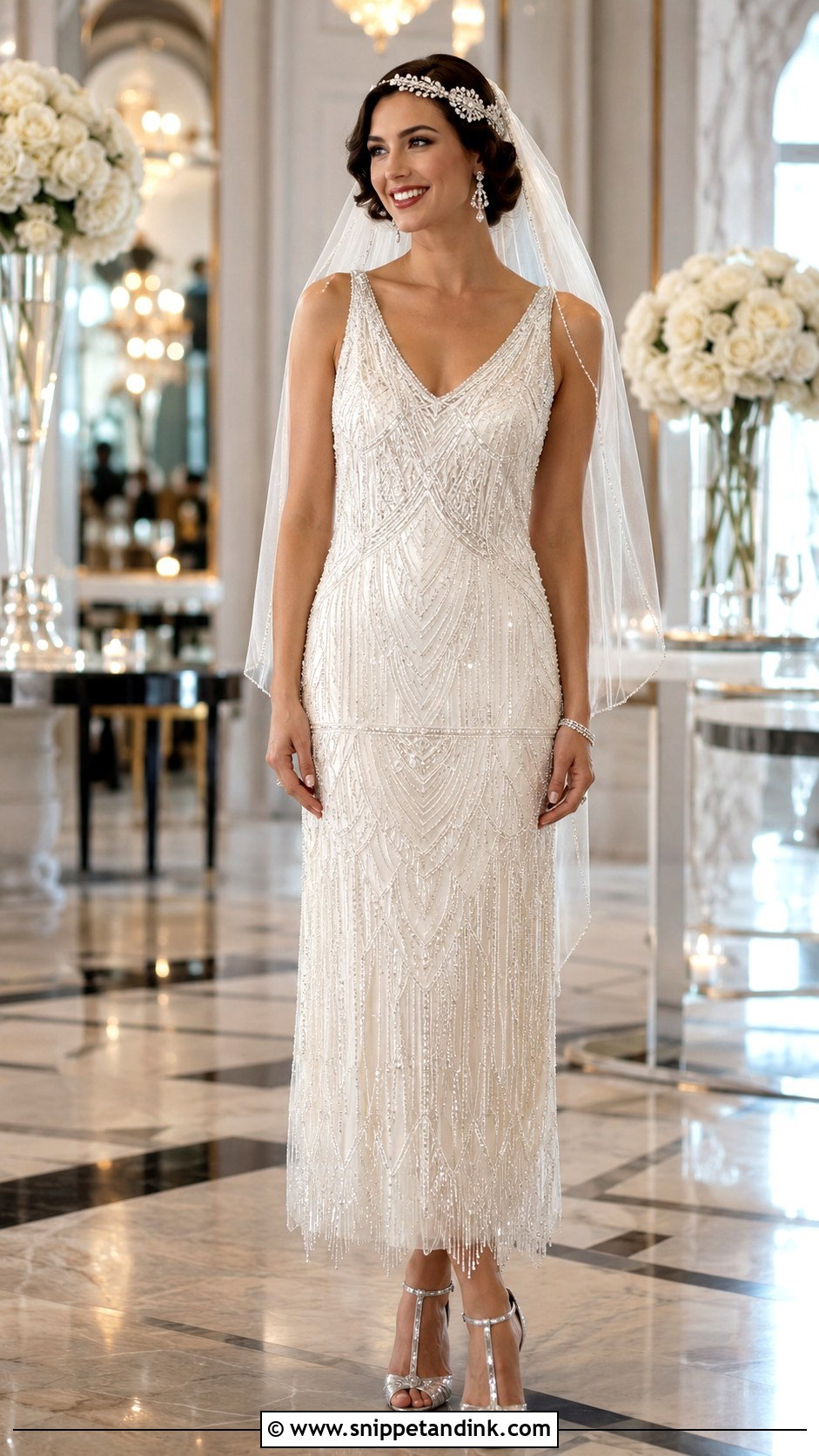
Geometric beadwork, a relaxed drop waist and a straight line define the twenties. Fringe or sequins add movement if you want more drama. Silver, ivory, champagne and pearl tones all suit it. Metallic heels, crystal earrings and either a sleek bob-like style or pinned waves complete the look, with a simple tulle veil to balance the shine. Beaded twenties dresses are heavy, and the weight pulls on the shoulders; I check the straps at the fitting and reinforce them if needed.
6. Vintage Drop Waist Bridal Dress
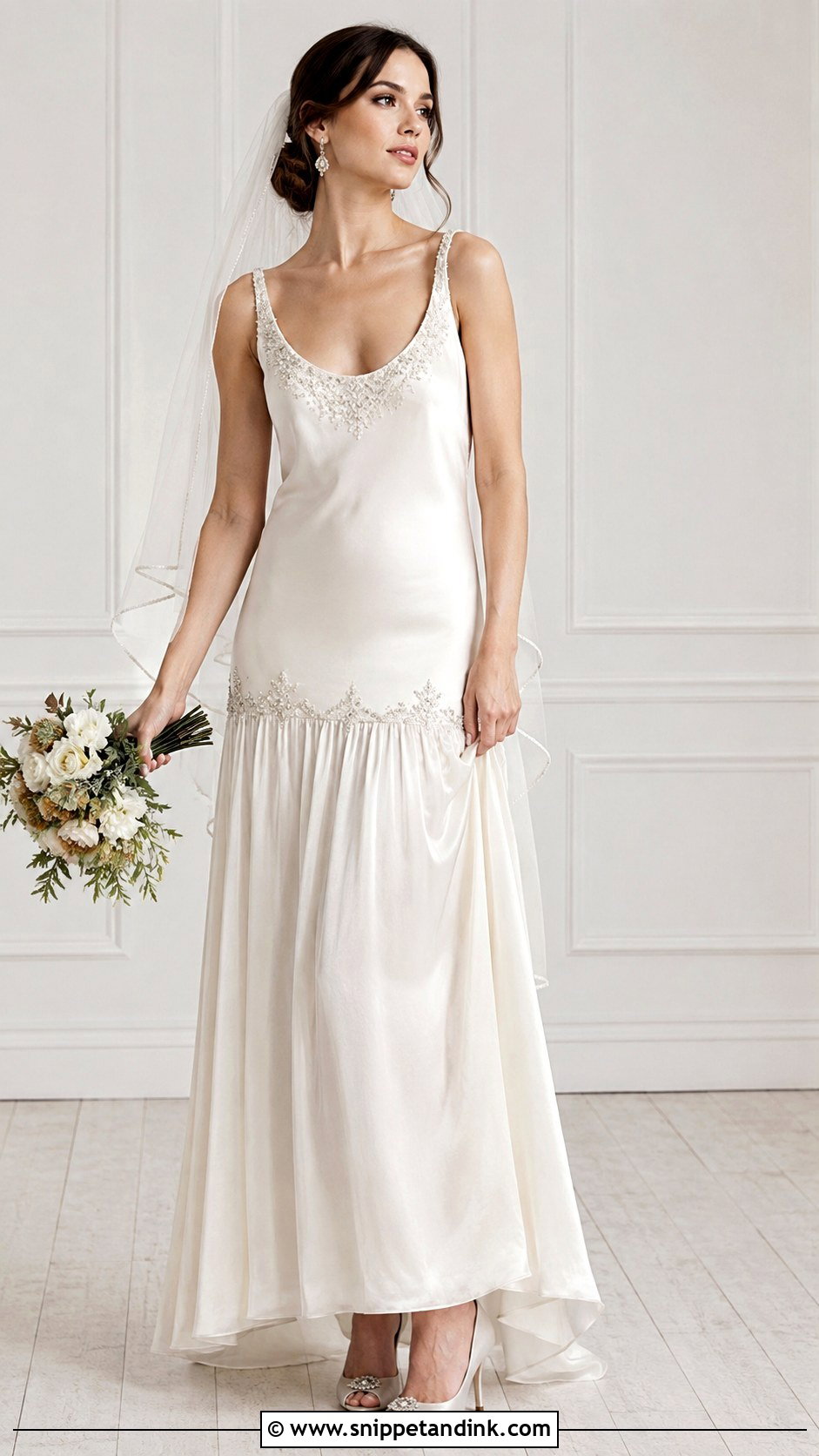
For a bride tired of fitted-waist gowns, a vintage drop waist bridal dress moves the seam to the hips and lengthens the torso. Satin makes it sleek, lace romantic, beading dramatic. Balance it with delicate heels, a slim veil and earrings that bring light to the face. Petite brides should choose a subtle drop; an extreme one shortens the legs. The seam position is worth getting right at the first fitting.
7. Vintage Bridal Dress With Puff Sleeves
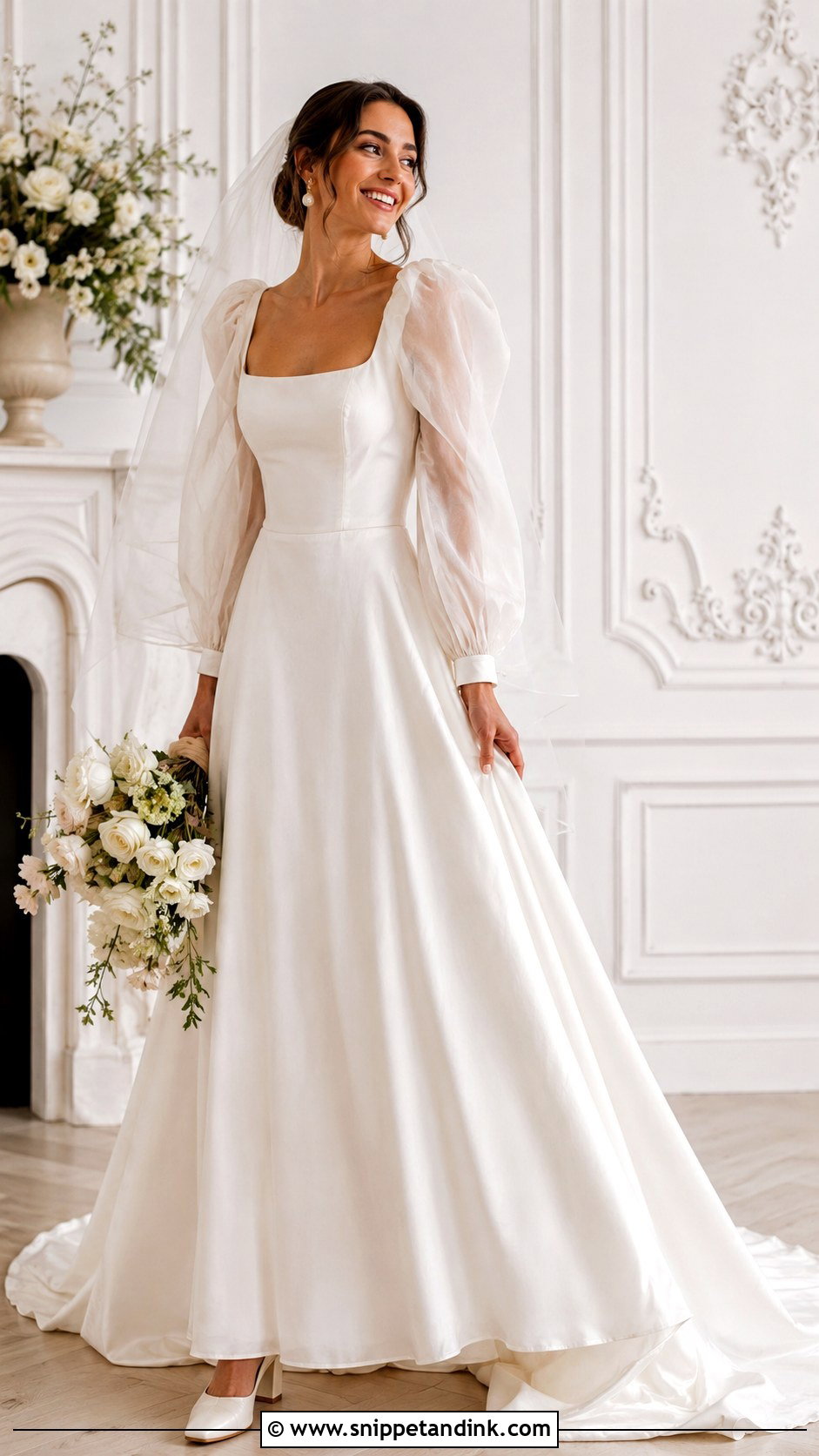
Depending on fabric and neckline, puff sleeves can read thirties, eighties or Victorian. For a modern version, I’d go sheer organza sleeves over a fitted bodice and a clean A-line skirt. Pearl earrings, satin block heels and a simple veil keep it balanced. Small puffs feel soft; fuller sleeves are a statement and call for minimal jewellery. If you have broad shoulders, ask for the puff to start slightly lower on the arm so it doesn’t widen the line.
8. Vintage Bridal Dress With Bishop Sleeves
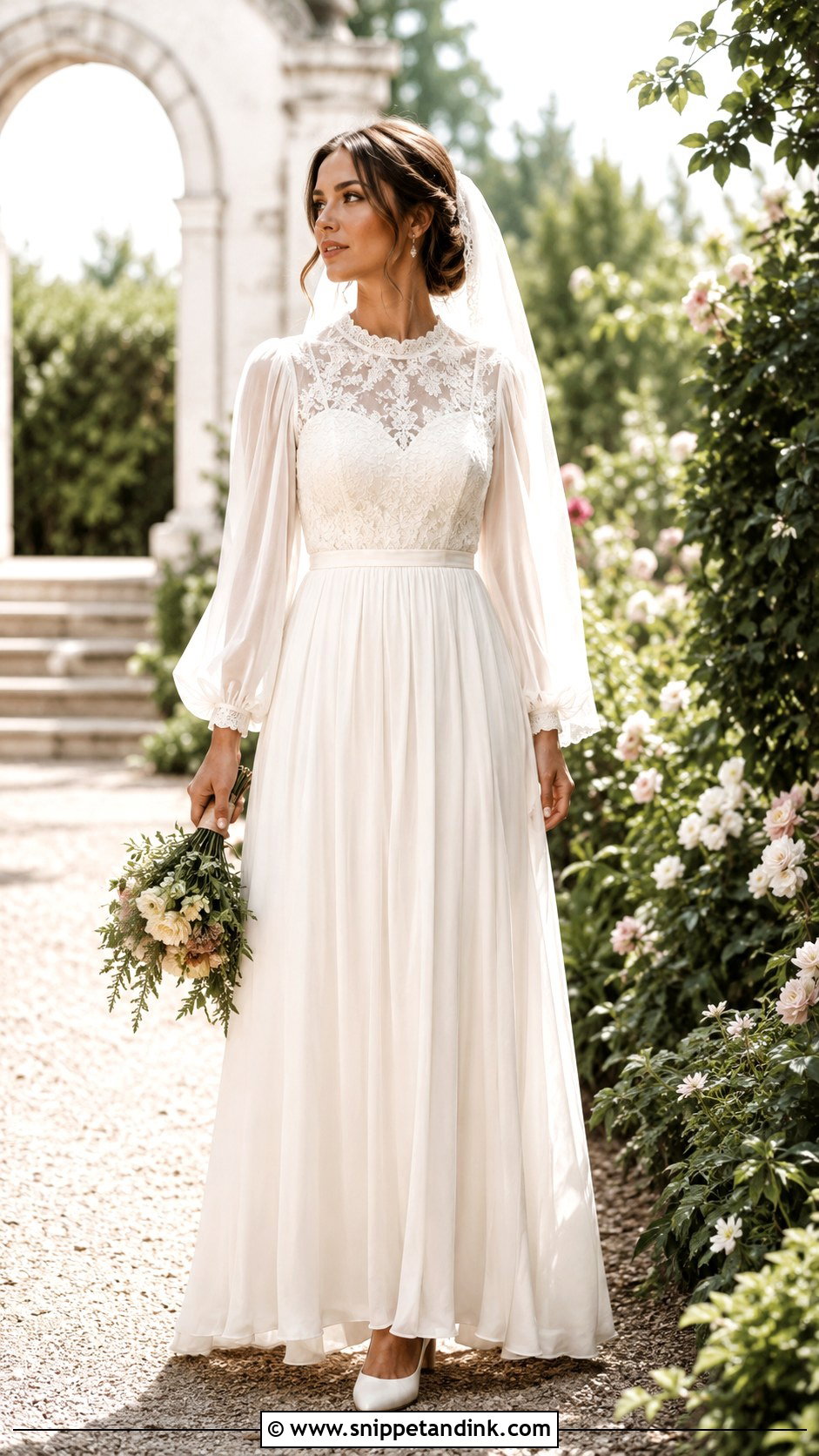
Bishop sleeves are loose through the arm and gathered at the wrist, so they move with every gesture. Chiffon, lace, organza or soft tulle drape best. Because the sleeves add volume, keep the bodice clean and the accessories light: simple heels, a delicate veil, small pearl or crystal earrings. They give arm coverage with no stiffness. The gathered cuff usually closes with small buttons, so allow time to fasten them, and leave the ring hand’s cuff loose enough to slide the ring on.
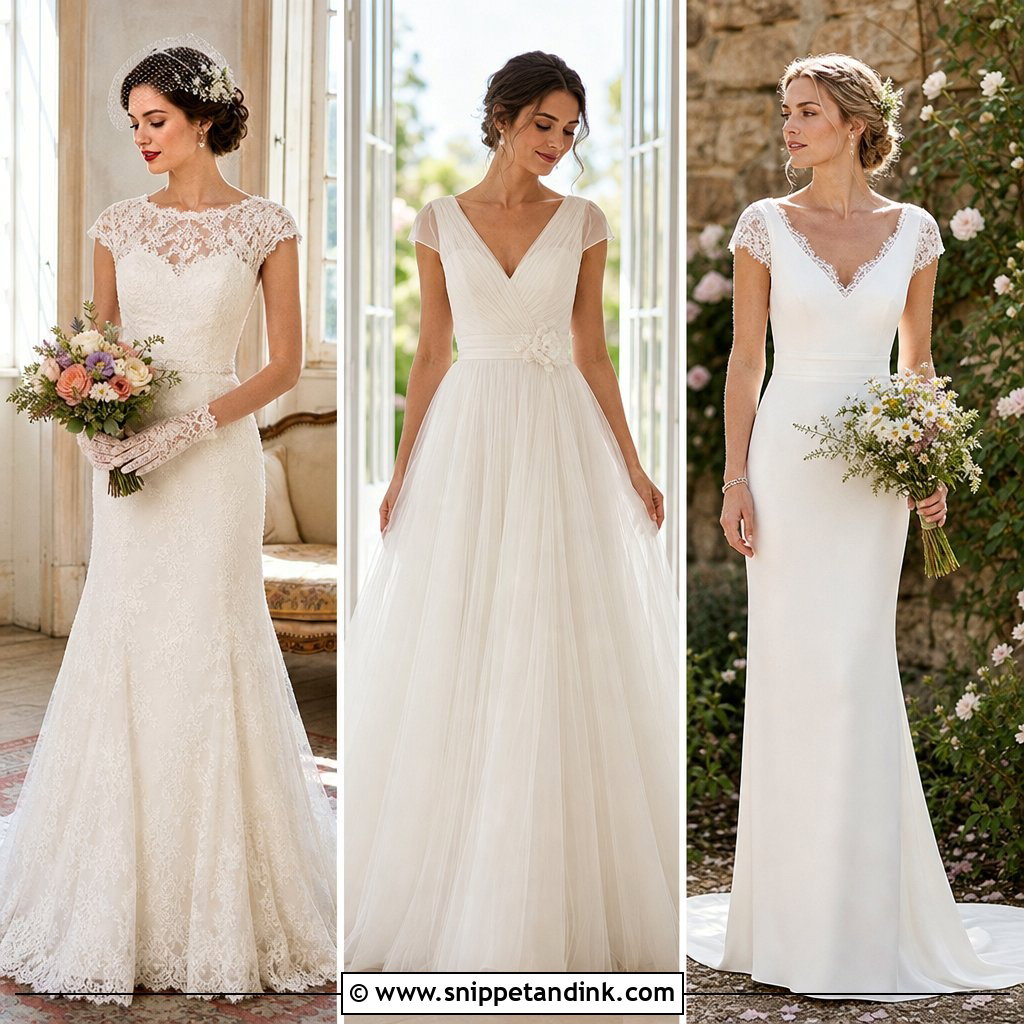
9. Vintage Bridal Dress With Cap Sleeves
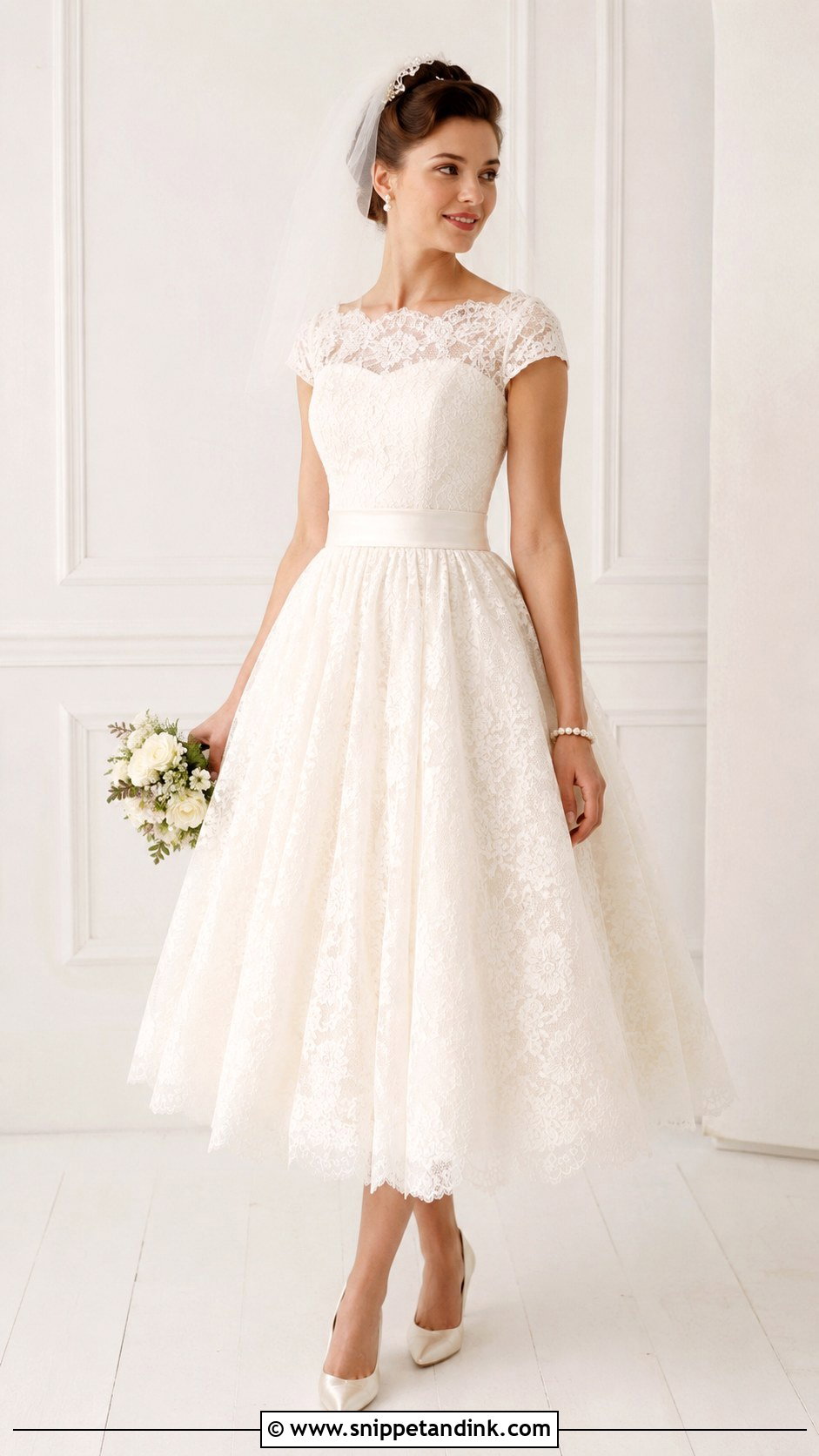
Cap sleeves cover just the top of the shoulder and feel airy. They suit tea-length dresses, lace gowns, satin A-lines and simple sheaths. Low satin heels, a pearl bracelet and a short veil make a classic outfit, and a bateau, sweetheart or soft V neckline keeps it simple. Spring and summer weddings suit them well. They’re a good choice for a bride who wants a vintage detail but doesn’t want long sleeves.
10. Vintage Bridal Dress With Bateau Neckline
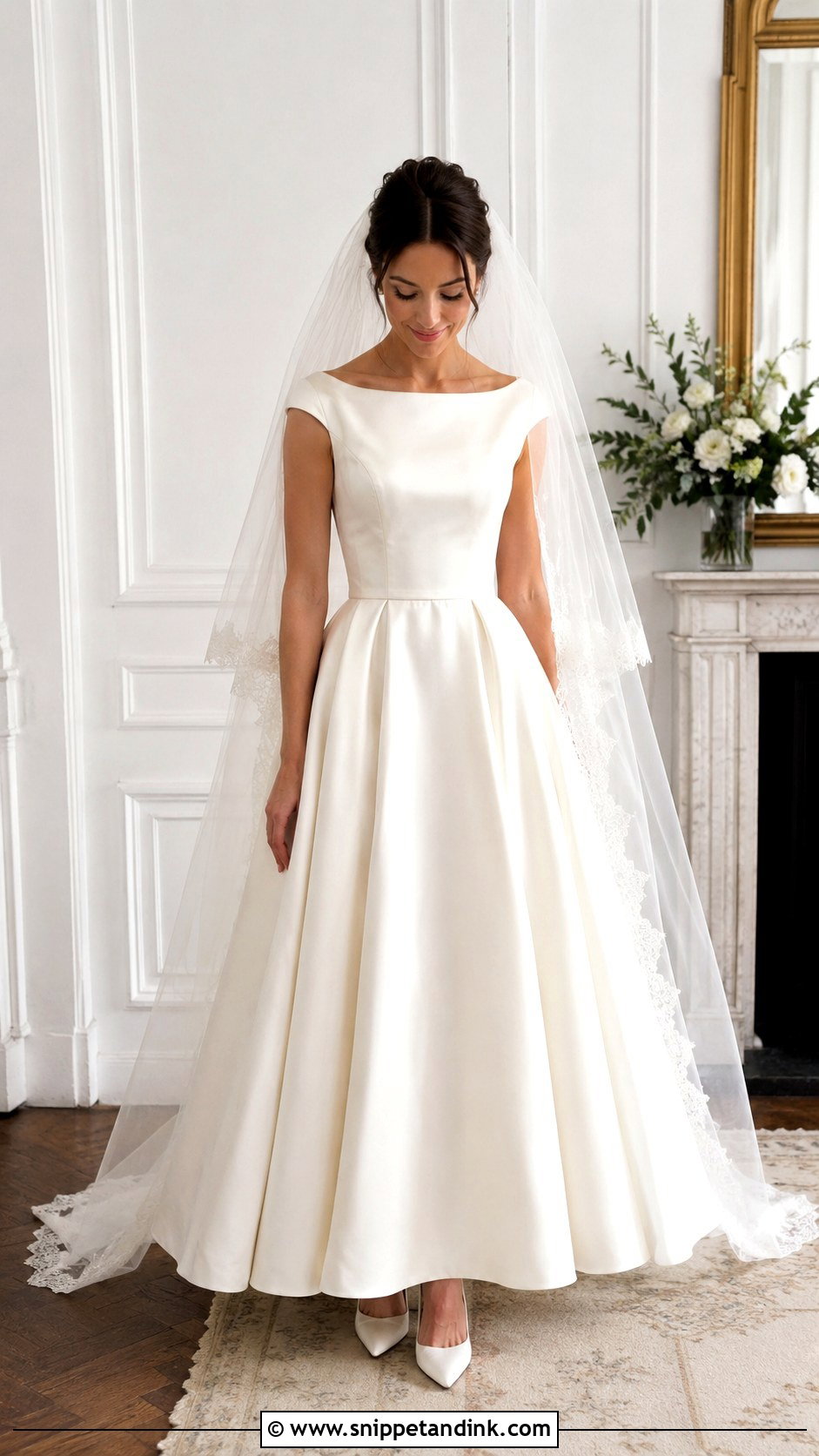
The bateau neckline runs wide and high across the collarbones, framing the face without any plunge. It belongs to mid-century bridal and looks best in fabrics with body: satin, mikado, lace or crepe. Pearl studs, a low bun, pointed pumps and a chapel veil complete it. Bateau necklines tend to slide off narrow shoulders, so I often add a small lingerie strap catch inside to keep it centred. Minimal jewellery lets the line do the work.
11. Vintage Bridal Dress With Peter Pan Collar
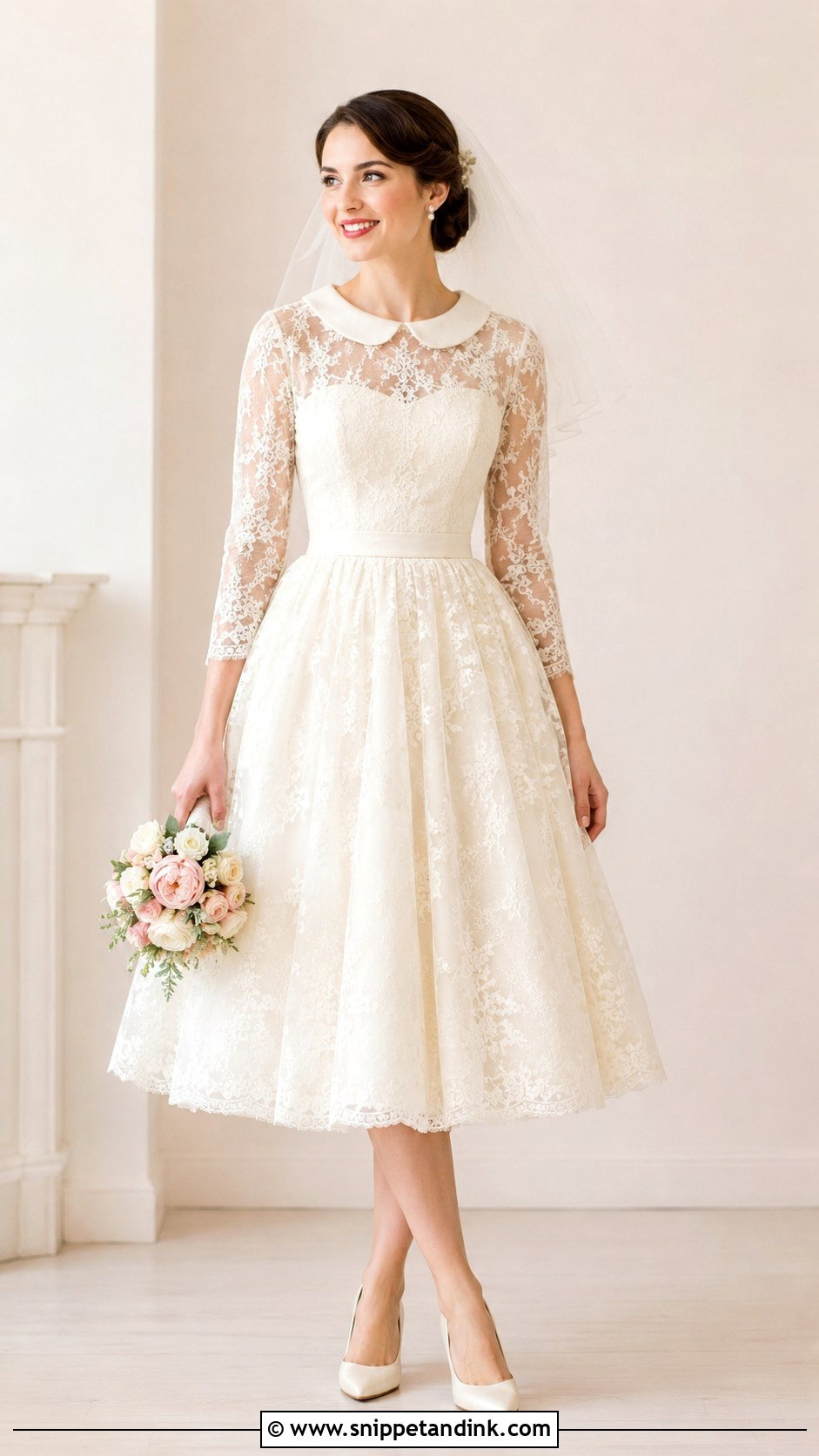
A rounded Peter Pan collar is sweet and retro, especially with lace, sheer sleeves or a tea-length skirt. The risk is looking childish, and fine fabric, a clean waistline and grown-up accessories prevent it. Satin pumps, pearl earrings and a neat bun work well, with a short or bow veil. Fit matters here: if the collar sits away from the neck, it looks borrowed. It suits smaller daytime ceremonies.
12. Vintage Bridal Dress With Bow Back
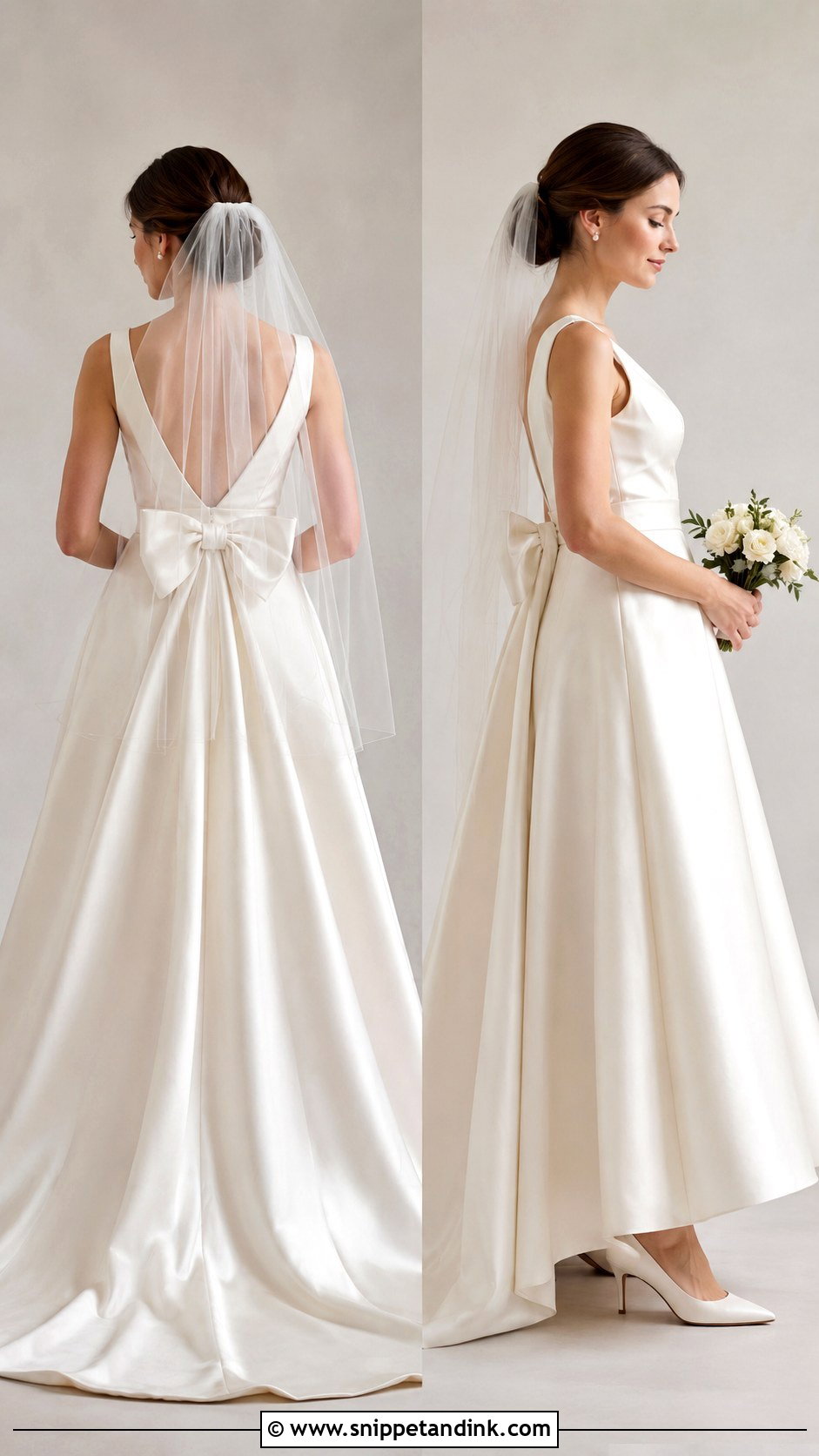
Guests spend most of the ceremony looking at your back. A bow there gives them something to see. Soft silk organza feels romantic; satin or mikado holds a sharper shape. It works on A-line, tea-length, column and ball gown cuts. Set the veil above or below the bow so it’s not hidden. A small bow at the waist is subtle; a long trailing bow is a statement. Ask whether the bow is sewn on or detachable. A removable one is handy for the reception.
13. Vintage Bridal Dress With Covered Buttons
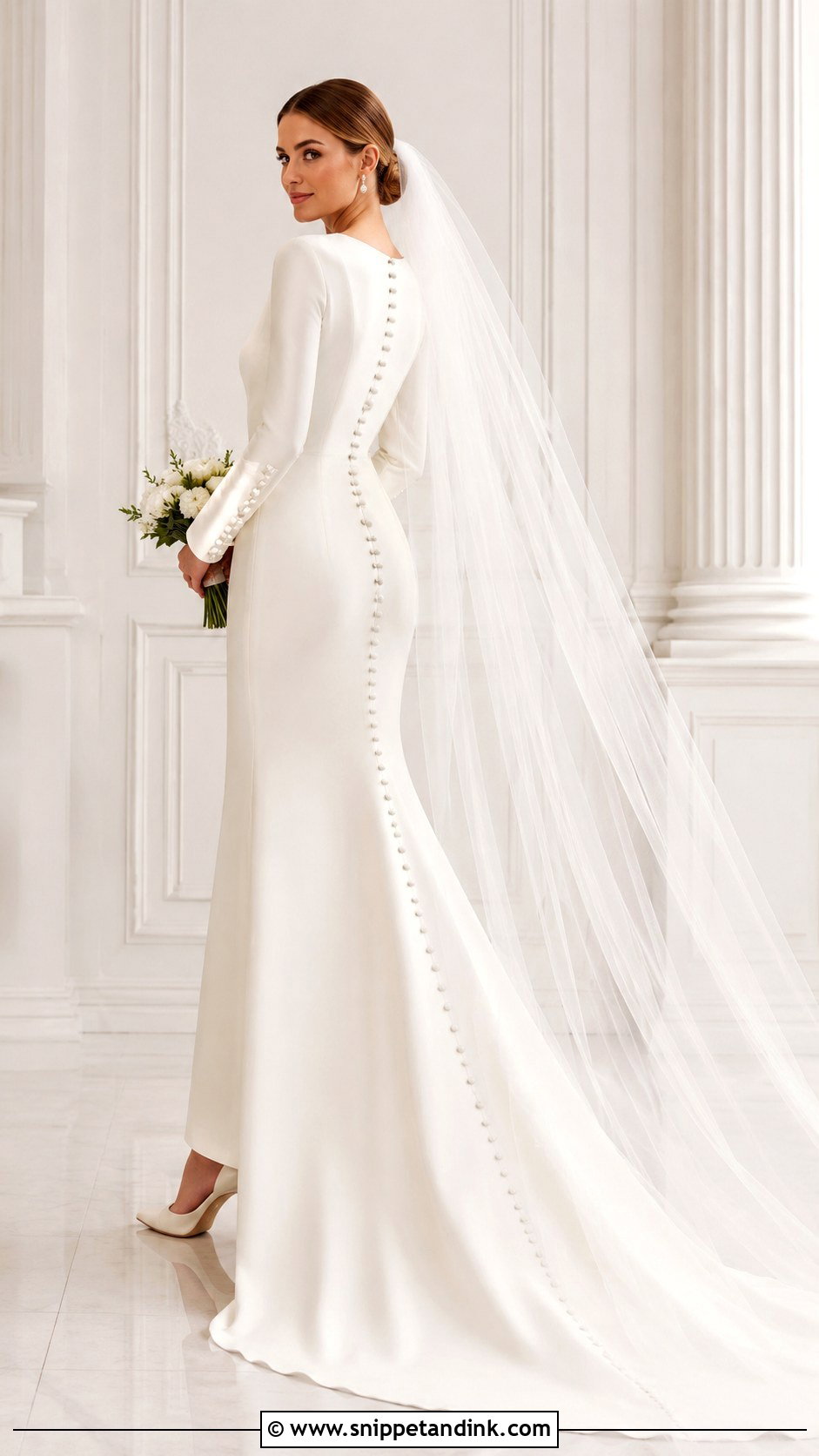
Covered buttons are quiet craftsmanship. Down the back, along the sleeves or through the bodice, they make a simple gown special. Lace, satin, crepe and tulle all take them. Elegant pumps, a long veil and delicate earrings are enough; nothing should compete with the buttons. A full row of loops takes a while to close, so give whoever is dressing you a crochet hook and ten spare minutes. Hidden under the buttons, a zip makes it faster and nobody will know.
14. Vintage Bridal Dress With Pearl Details
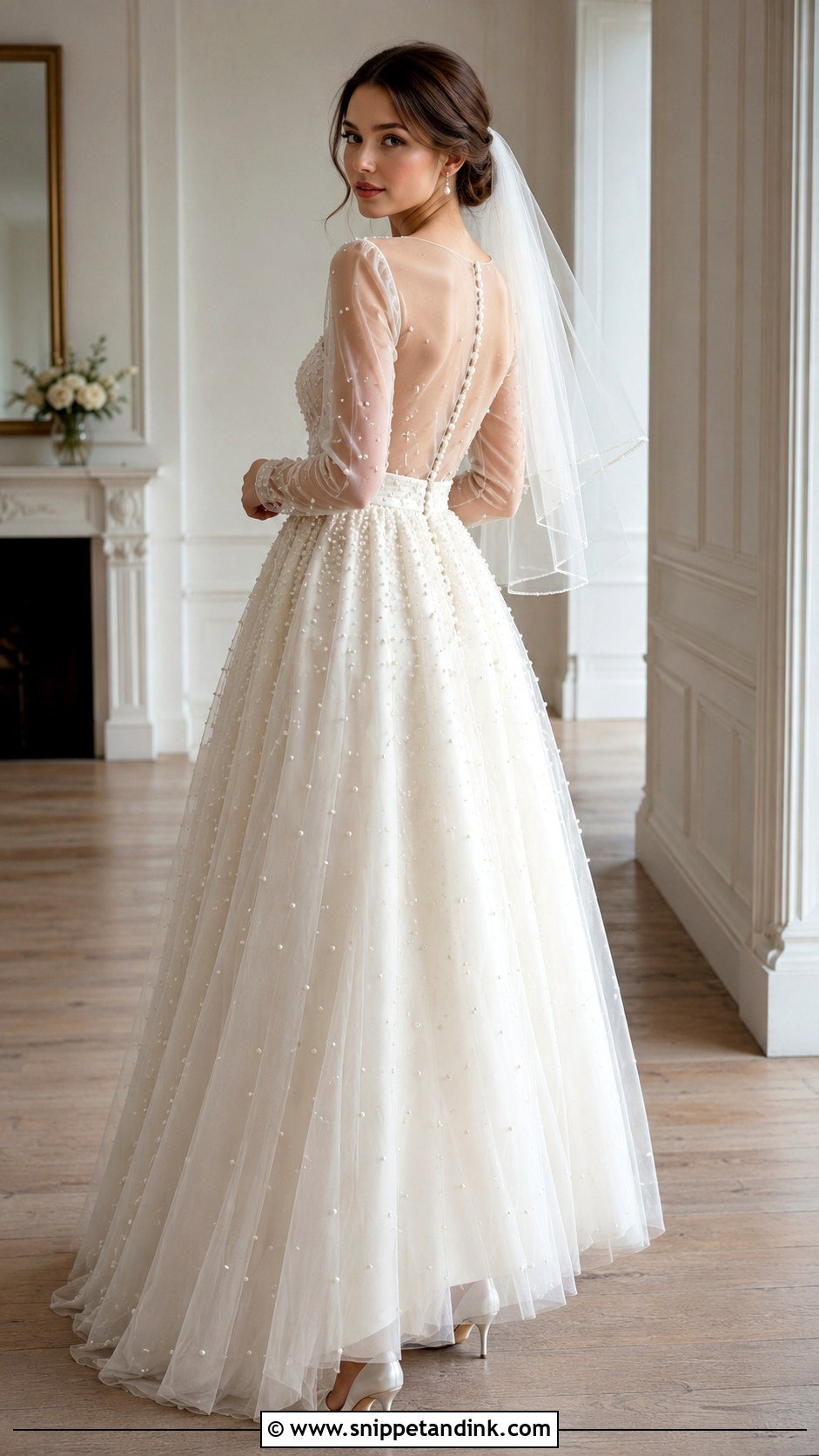
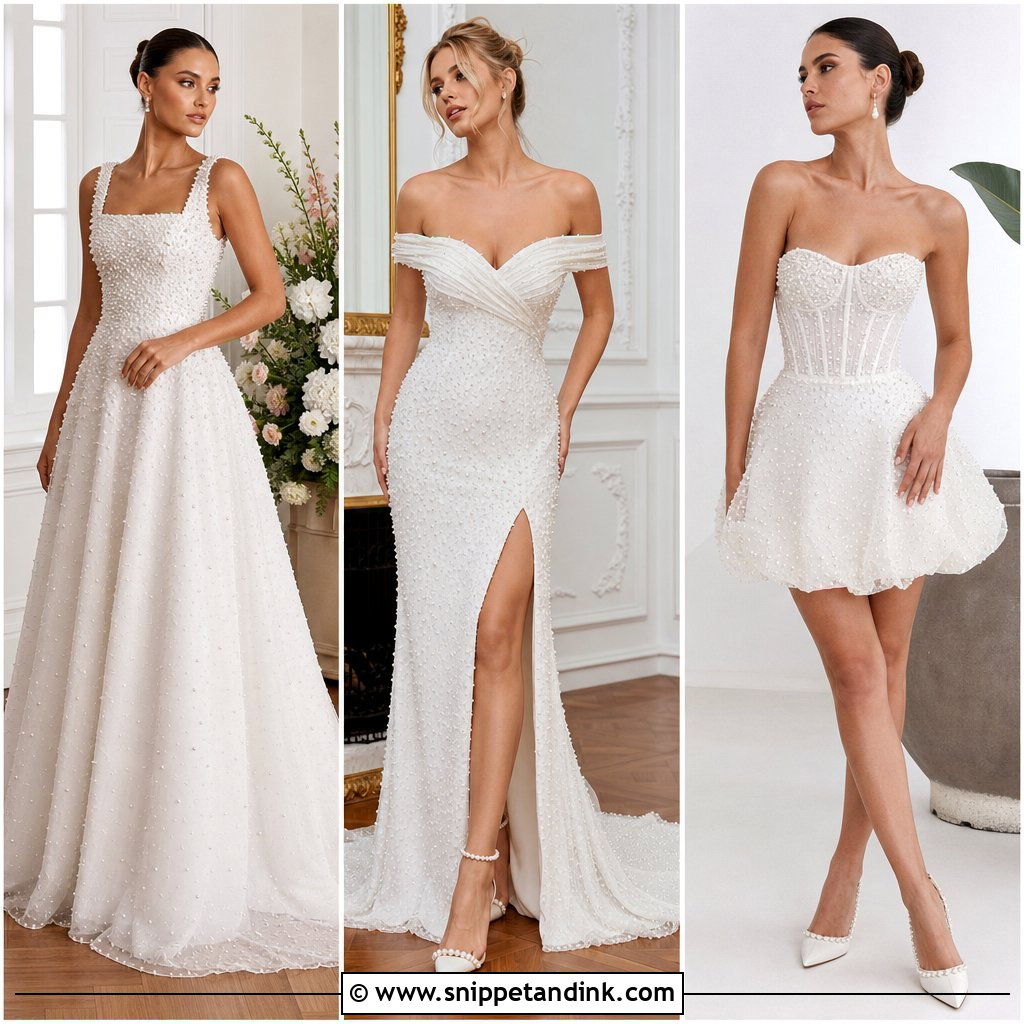
Pearls give a soft glow instead of sharp sparkle. They can scatter across the bodice, edge the sleeves or neckline, trim the veil or mark the waist. Pearl buttons are the subtlest version. Pearl earrings, satin heels and a smooth updo complete the outfit. Pearls go with lace, tulle, satin and crepe. I’d avoid also wearing a pearl necklace if the bodice is beaded; too many pearls in one place turn into a theme.

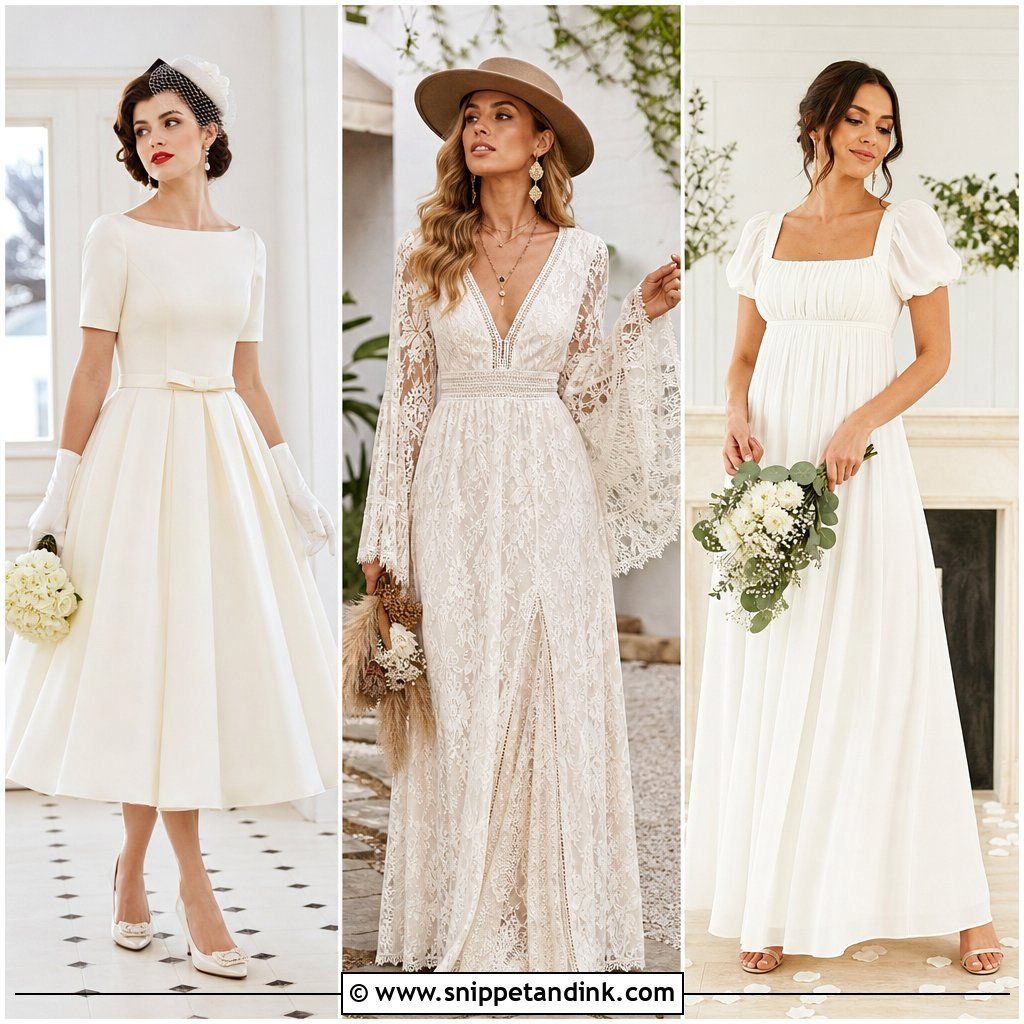
15. Vintage Bridal Dress With Art Deco Beading
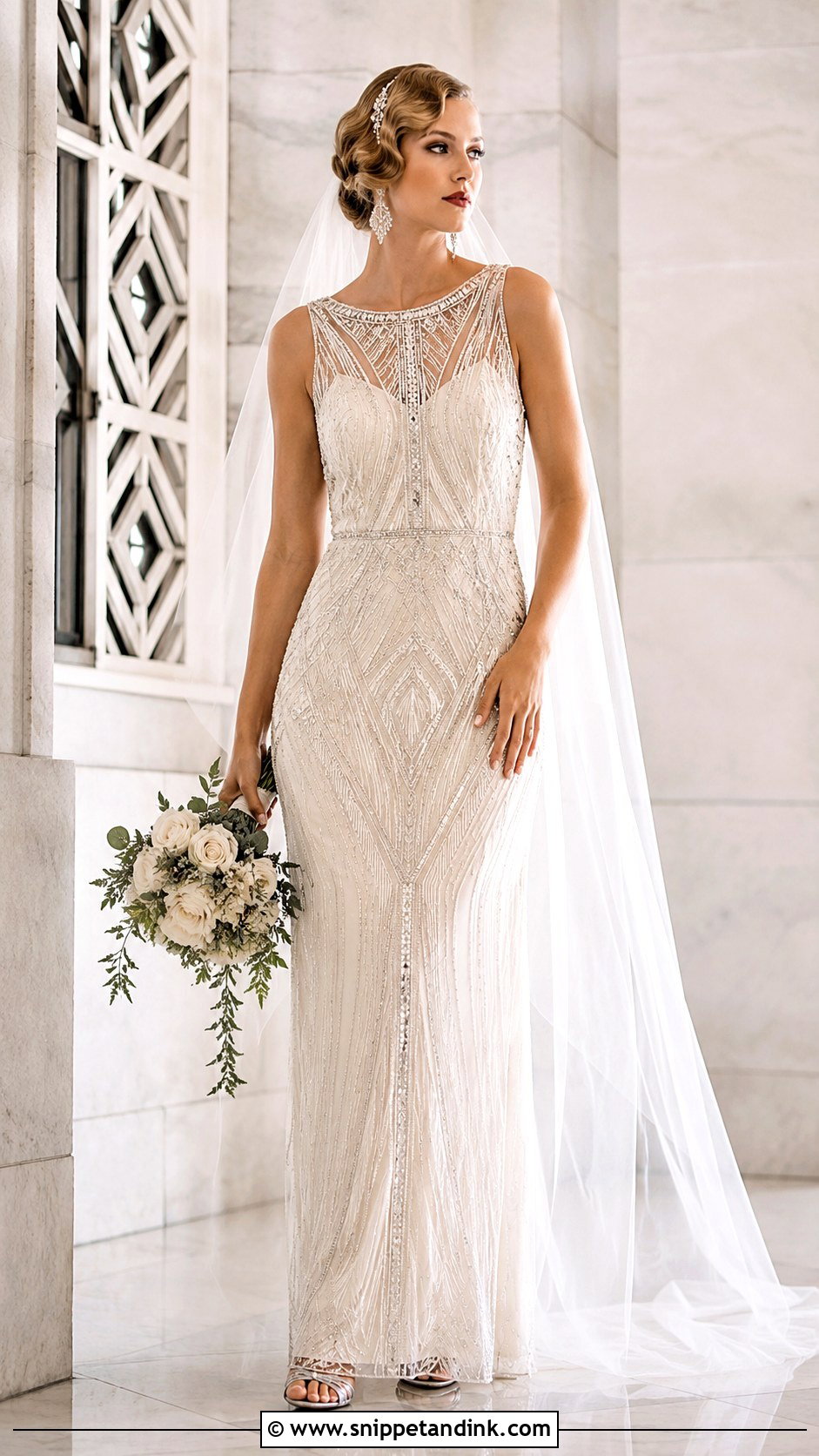
Linear beadwork, fan shapes and geometric lines on a slim or slightly relaxed silhouette: Art Deco beading is glamour without a big skirt. Ivory, silver, champagne and soft gold tones all suit it. Metallic heels, crystal earrings and a plain veil complete it. Keep the bouquet simple; the dress is already busy. Formal receptions, rooftops, museums and grand hotels suit it. The beading catches light as you move, so plan for evening photos.
16. Vintage Bridal Dress With Chantilly Lace
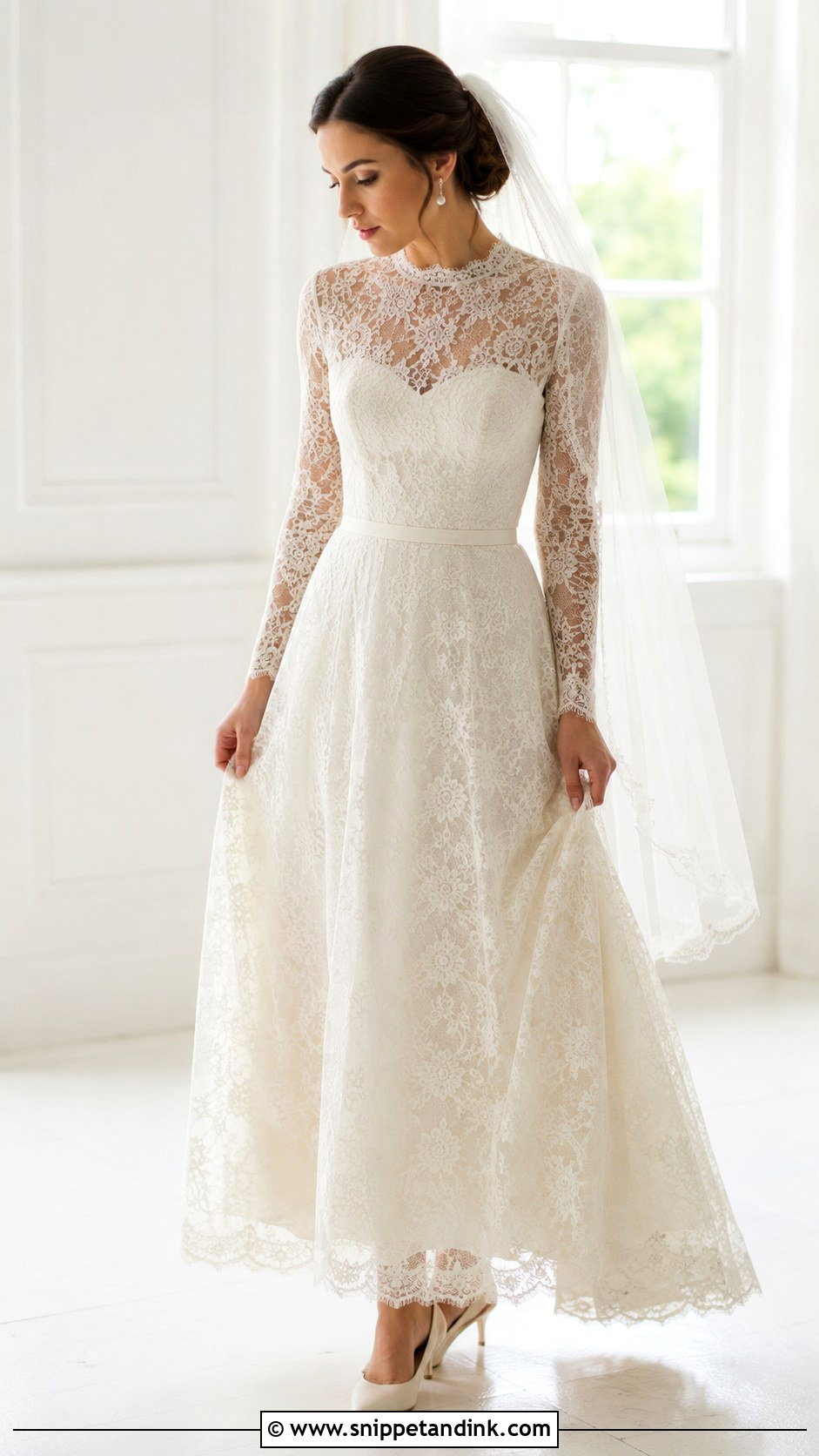
Chantilly lace is fine and light, with outlined motifs on a delicate net. It suits sleeves, overlays, bodices and soft skirts, and an A-line or sheath shape lets it look timeless. Nude or ivory heels, pearl earrings and a soft veil finish it. Chantilly snags easily on rings and bracelets, so I’d keep jewellery smooth. It works in any season, layered or sheer, and a clean lining keeps it modern.
17. Vintage Bridal Dress With Illusion Neckline
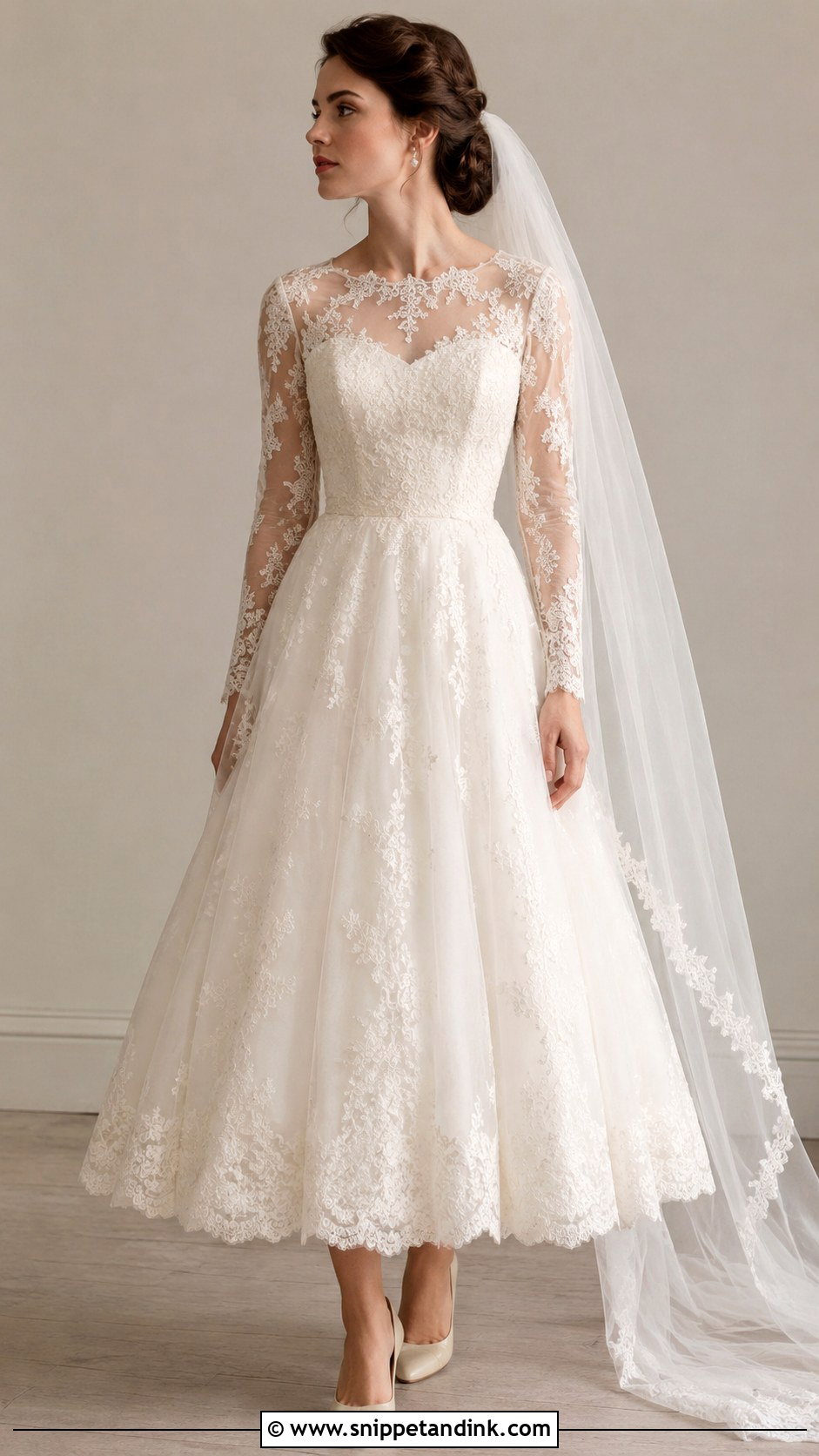
An illusion neckline runs sheer tulle or lace from the bodice up to the collarbone, often with embroidery, beading or appliqué, so the lace seems to sit directly on the skin. It suits long-sleeve gowns, A-lines and vintage ball gowns. Small earrings, soft heels and a veil that echoes the dress fabric complete it. The mesh should match your skin tone closely; a mismatch shows clearly in flash photos. Fresh makeup and light accessories keep the balance.
18. Vintage Bridal Dress With Square Neckline
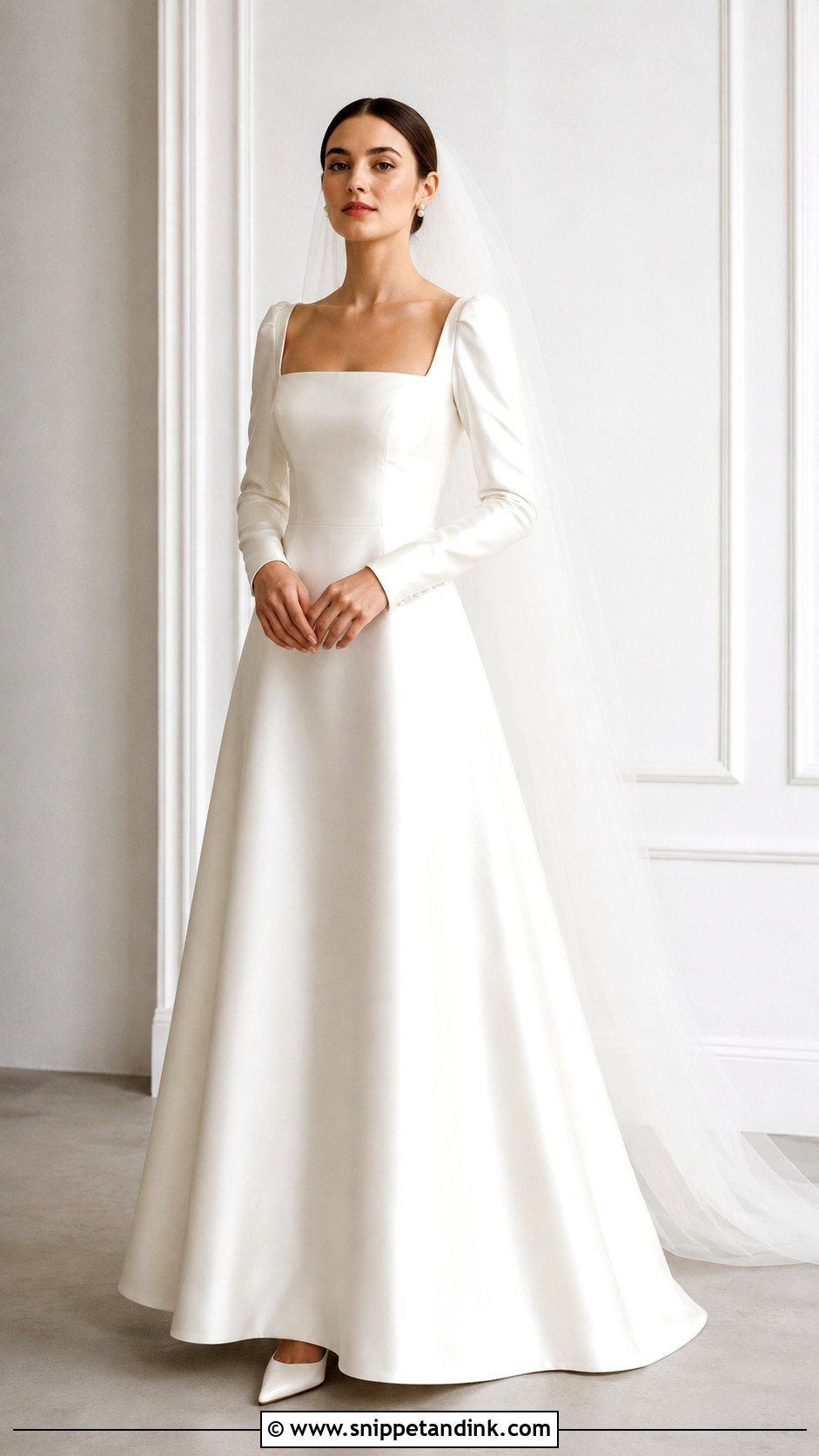
Square necklines go back to Regency gowns and forward to nineties minimalism. They frame the collarbone and suit long sleeves, puff sleeves, straps or a sleeveless bodice. Lace makes it romantic; satin or crepe makes it modern. Pearl studs, sleek pumps and a smooth veil complete it. Skip the necklace so the neckline stays crisp. The corners should sit flat; if they gape when you lean forward, ask the tailor to take in the neckline slightly.
19. Vintage Bridal Dress With Corset Bodice
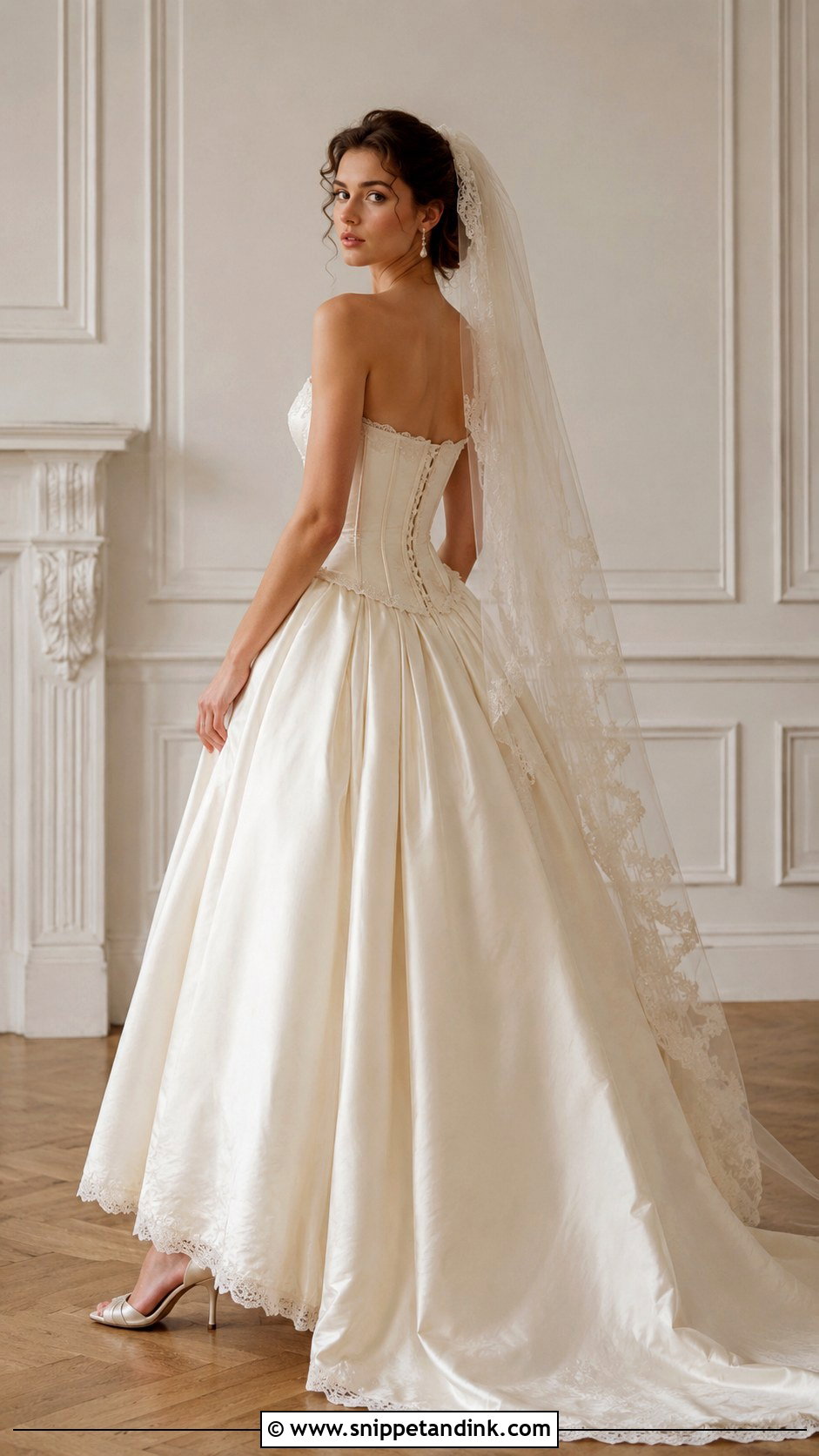
A corset bodice gives shape and support. Visible boning, lace-up detail or hidden structure under satin, lace or tulle all count. Full skirt for classic, slim skirt for modern. Satin heels, drop earrings and a soft veil complete it. Choose refined fabrics to avoid the costume look. A good corset should let you sit, eat and breathe fully; if you have to think about breathing, it’s too tight.



20. Vintage Bridal Dress With Full Tulle Skirt
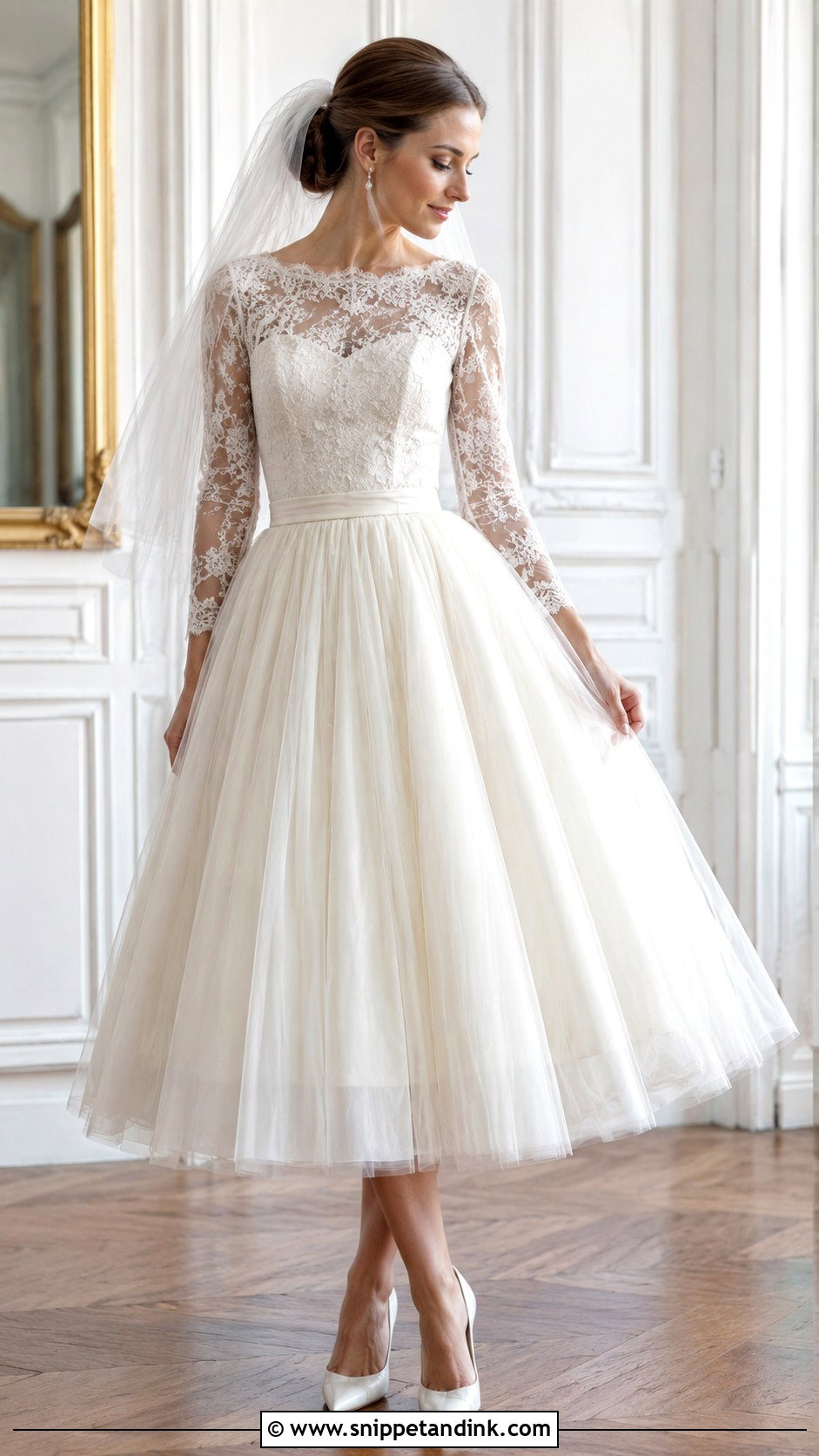
A full tulle skirt floats rather than weighs. It nods to mid-century or princess styles, and a fitted lace or satin bodice balances the volume. Pointed pumps, pearl earrings and a soft veil complete it. If you’re petite, choose fewer tulle layers and a clearly defined waist; the skirt should float, not swallow you. Tulle picks up everything from grass to rough floors, so a bustle point for the reception is worth asking for.
21. Vintage Bridal Dress With Satin Ball Gown
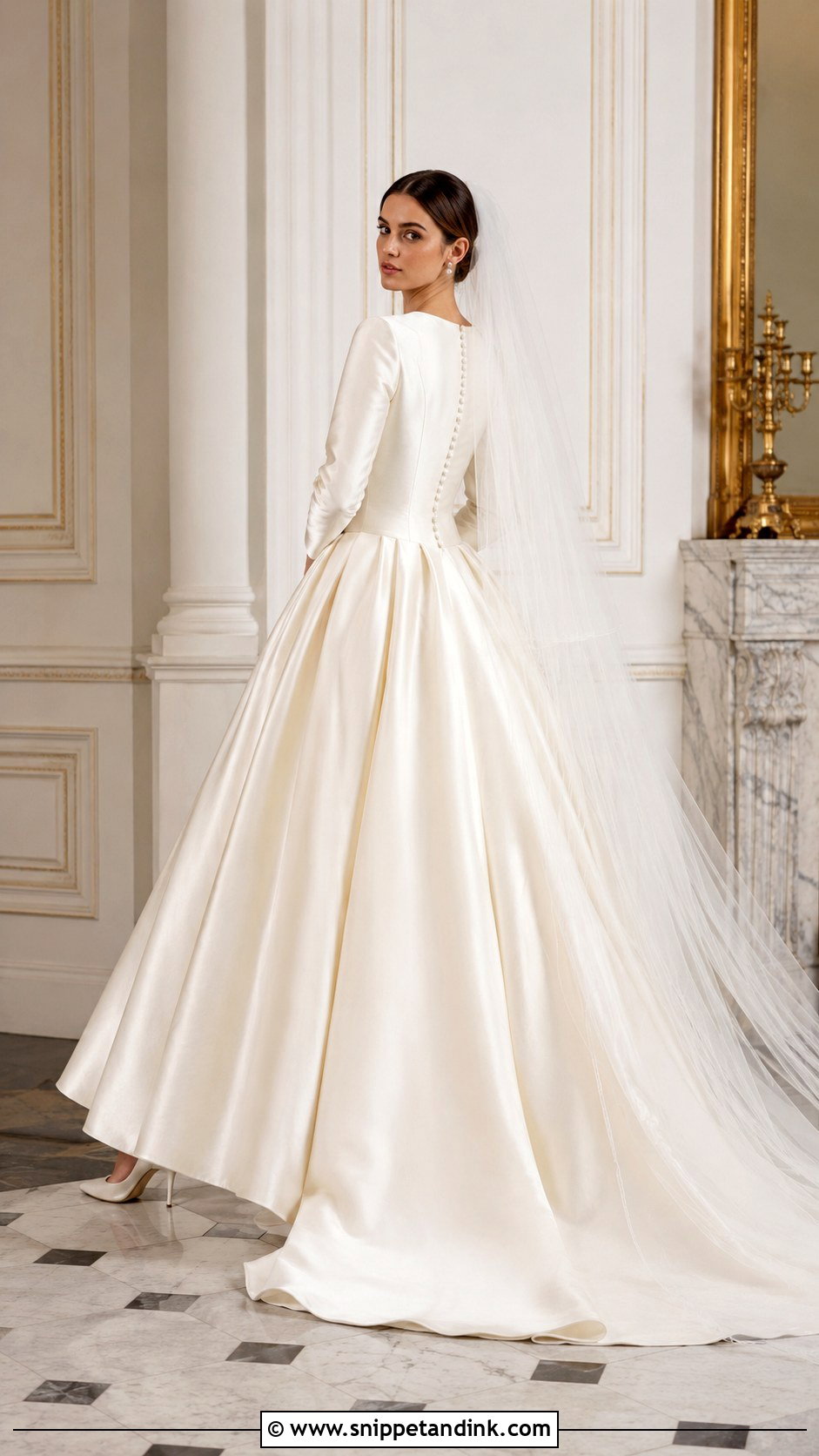
Smooth satin, a full skirt and a sheen that catches the light: the satin ball gown is grand and formal. Look for a basque waist, covered buttons, an off-shoulder neckline or a pleated skirt to add vintage character. Satin heels, pearl earrings and a long veil complete it, with refined jewellery and a neat hairstyle. A structured bouquet keeps it tidy. Heavy satin shows creases from the car, so I’d have someone ready with a handheld steamer at the venue.
22. Vintage Bridal Dress With Off Shoulder Neckline
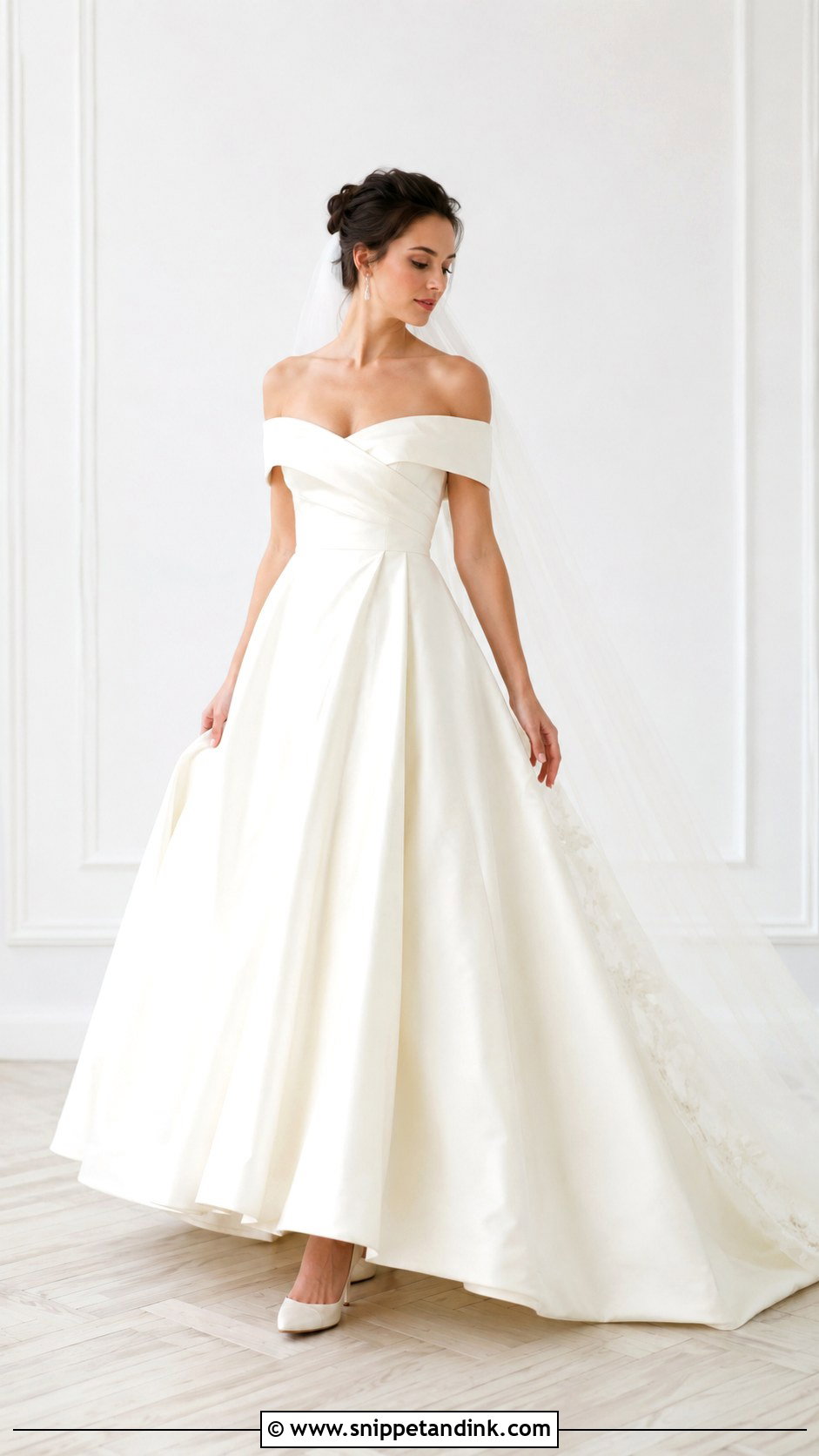
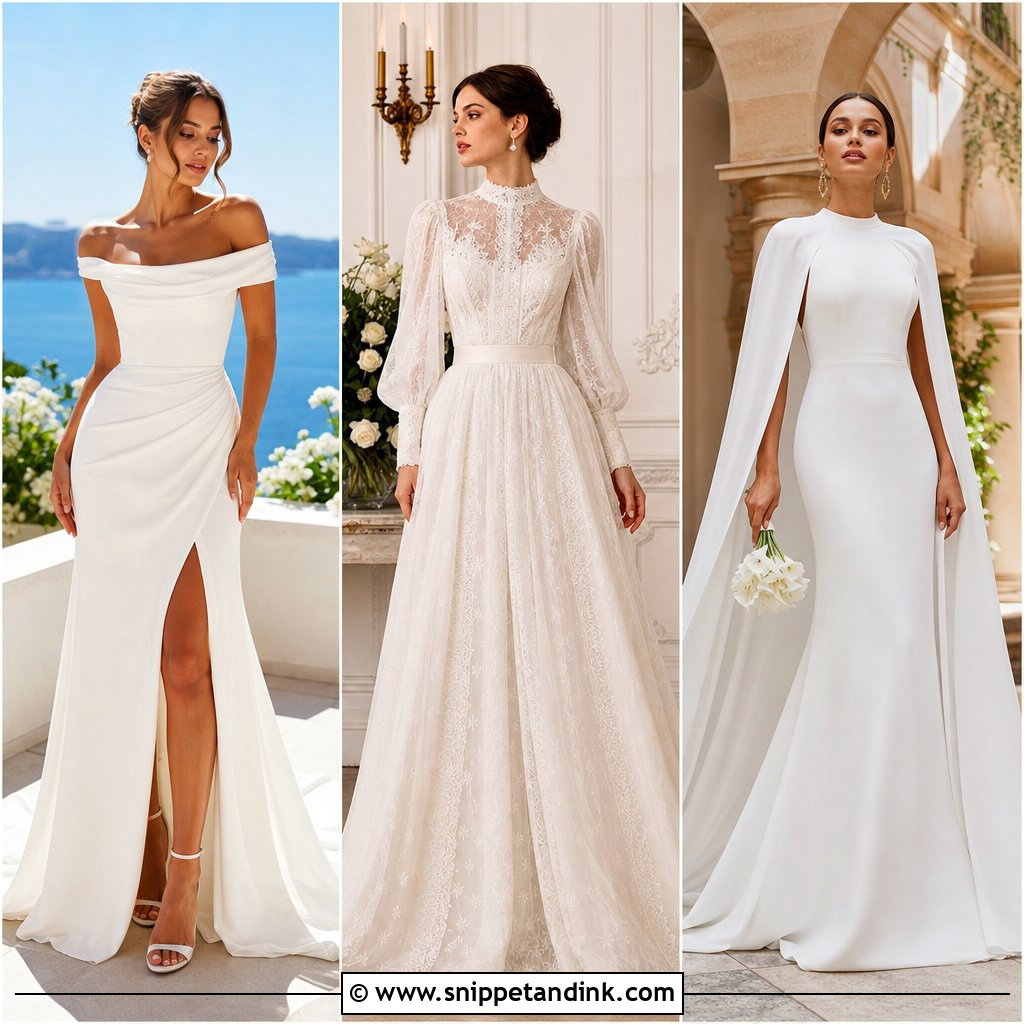
Off the shoulders, the neckline frames the collarbones with more structure than strapless. Satin, lace, tulle and mikado all suit it. Drop earrings, a smooth updo and classic heels complete it, with a long veil that doesn’t hide the neckline. A full skirt reads fifties; a fitted satin shape reads old Hollywood. The off-shoulder band needs to sit firmly; I test it by having the bride hug someone tall.
23. Vintage Bridal Dress With Low Back
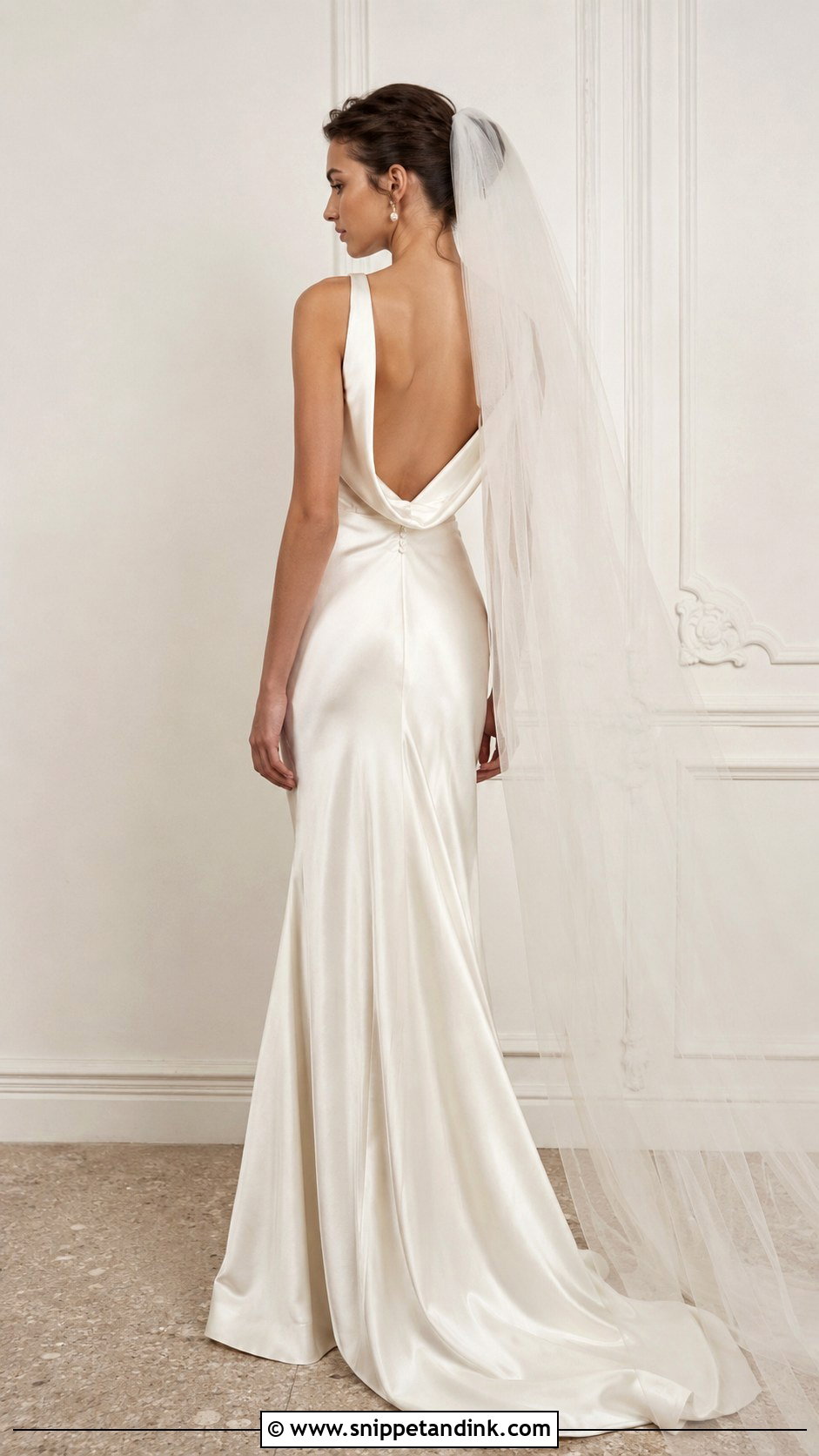
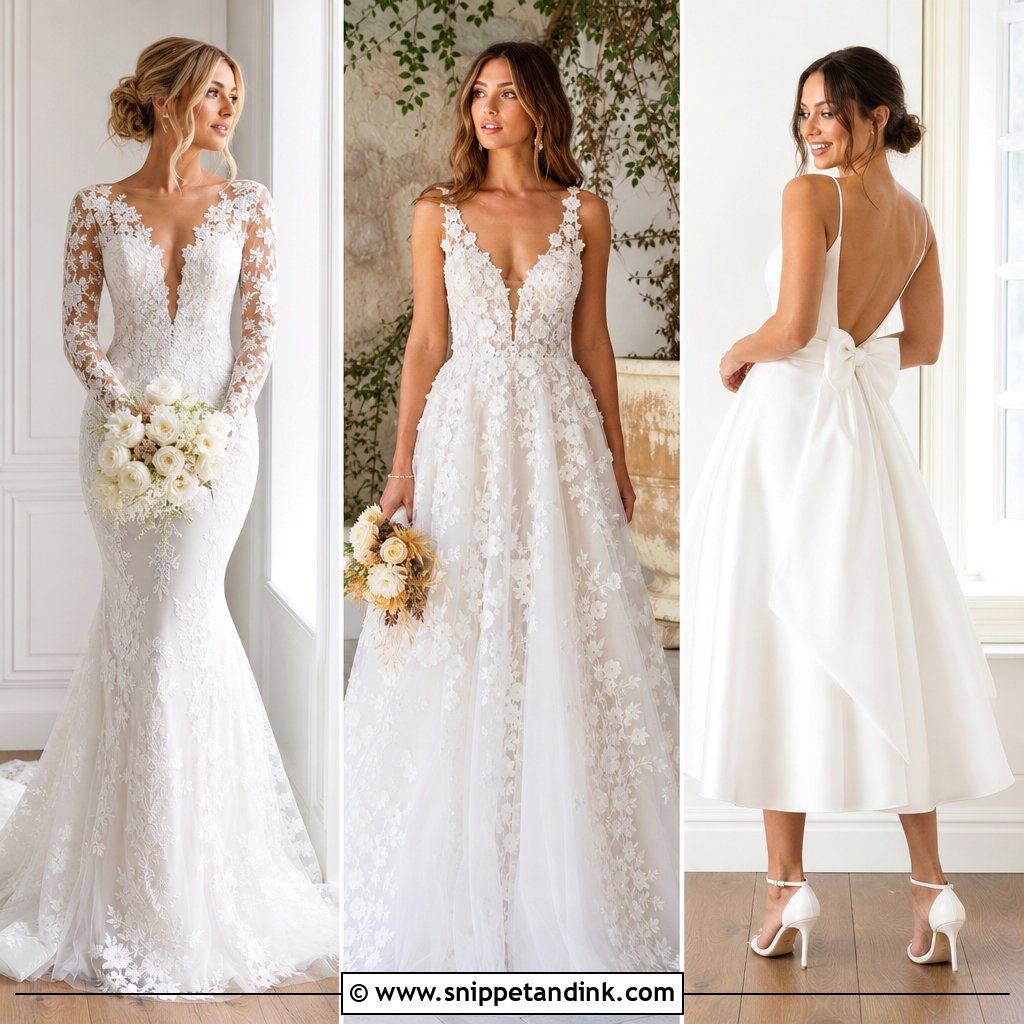
Modest in front, open at the back: a low back gives a simple gown a striking finish. It suits thirties satin, lace sheaths and sleek crepe. Delicate heels, a long veil and small earrings complete it; with back buttons, lace trim or drape, keep the accessories minimal. It feels light for warm seasons. The fit must hold at the shoulders and waist so the back lies smooth. Plan your bra solution early, as it changes how the dress fits.
24. Vintage Bridal Dress With Detachable Cape
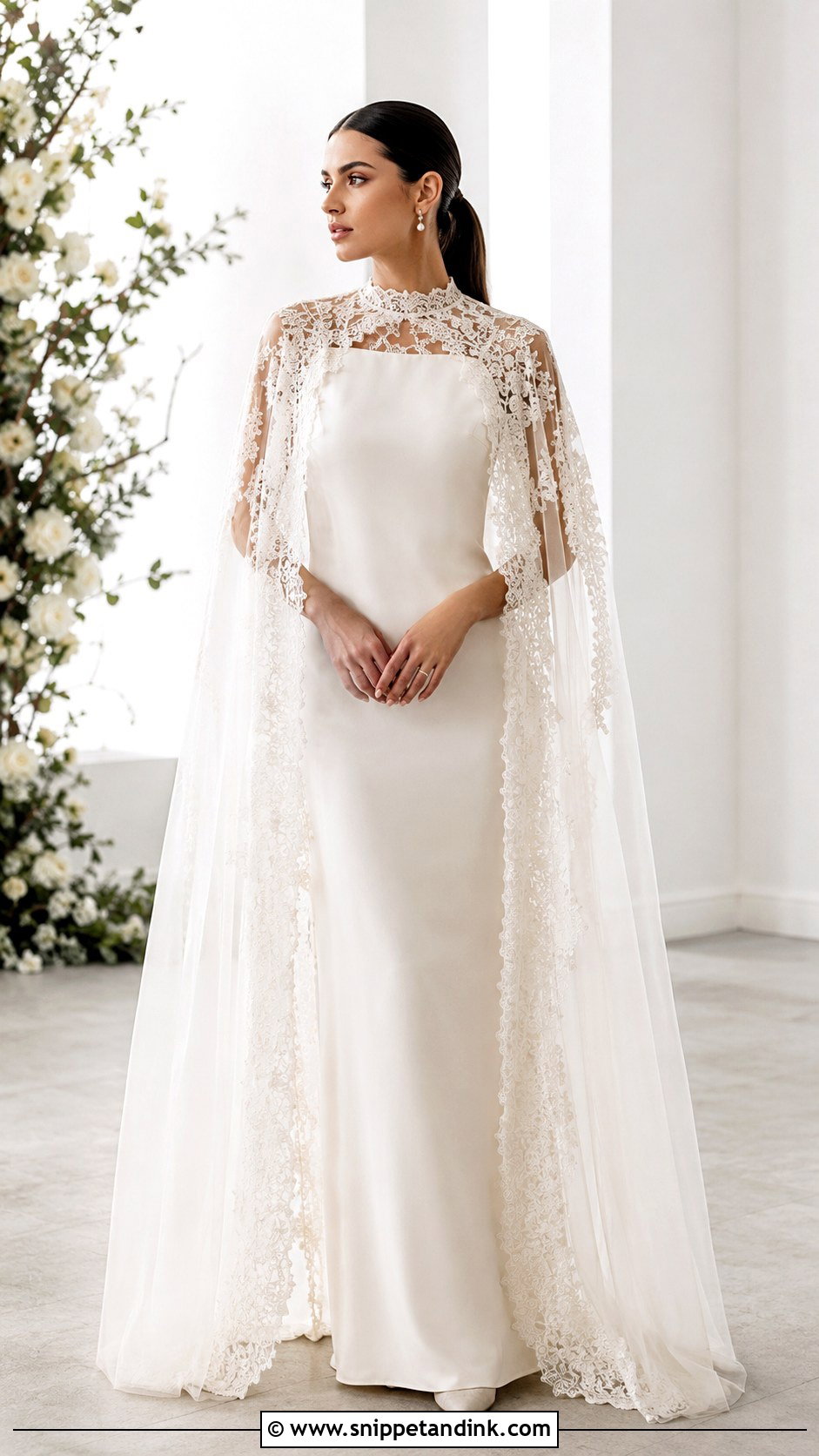
A detachable cape gives you two looks. Lace, tulle, chiffon and organza can feel regal, romantic or boho. Wear it for the ceremony and take it off for dancing. Simple heels, pearl earrings and a sleek hairstyle keep the cape the highlight. It suits sheath dresses, satin gowns and simple A-lines, and gives coverage without sleeves. Check how it attaches: buttons or hooks hold better than snaps when you hug.

25. Vintage Bridal Dress With Lace Jacket
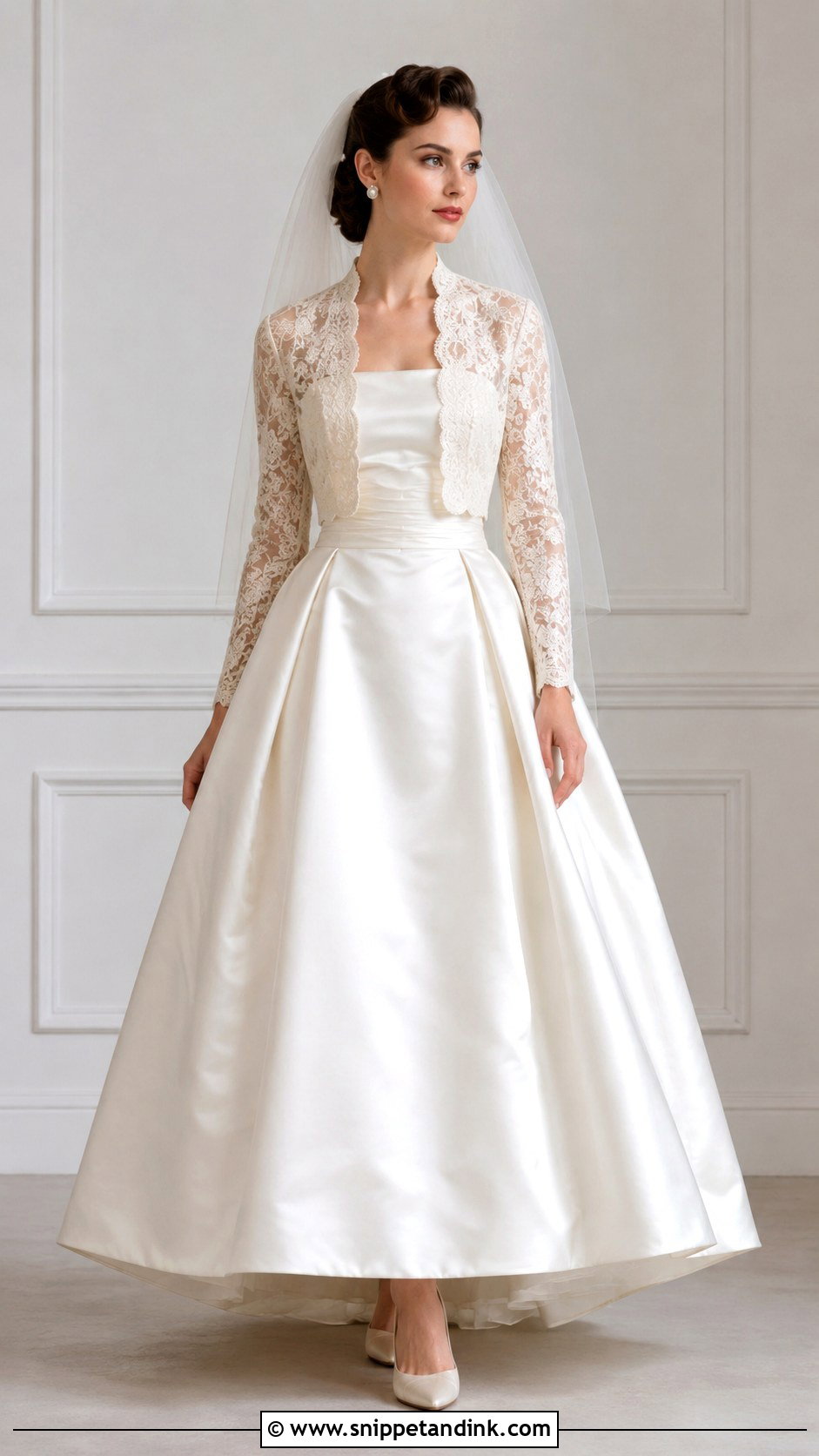
A lace jacket over a strapless, sleeveless or tea-length dress gives coverage for part of the day. A fitted jacket looks polished; a soft cropped one looks romantic. Satin heels, pearl earrings and a simple veil complete it. It’s practical for changing weather or a religious ceremony followed by a lively reception. The jacket’s lace should match or complement the dress, so ask for a swatch before ordering separately.
26. Vintage Bridal Dress With Slip Silhouette
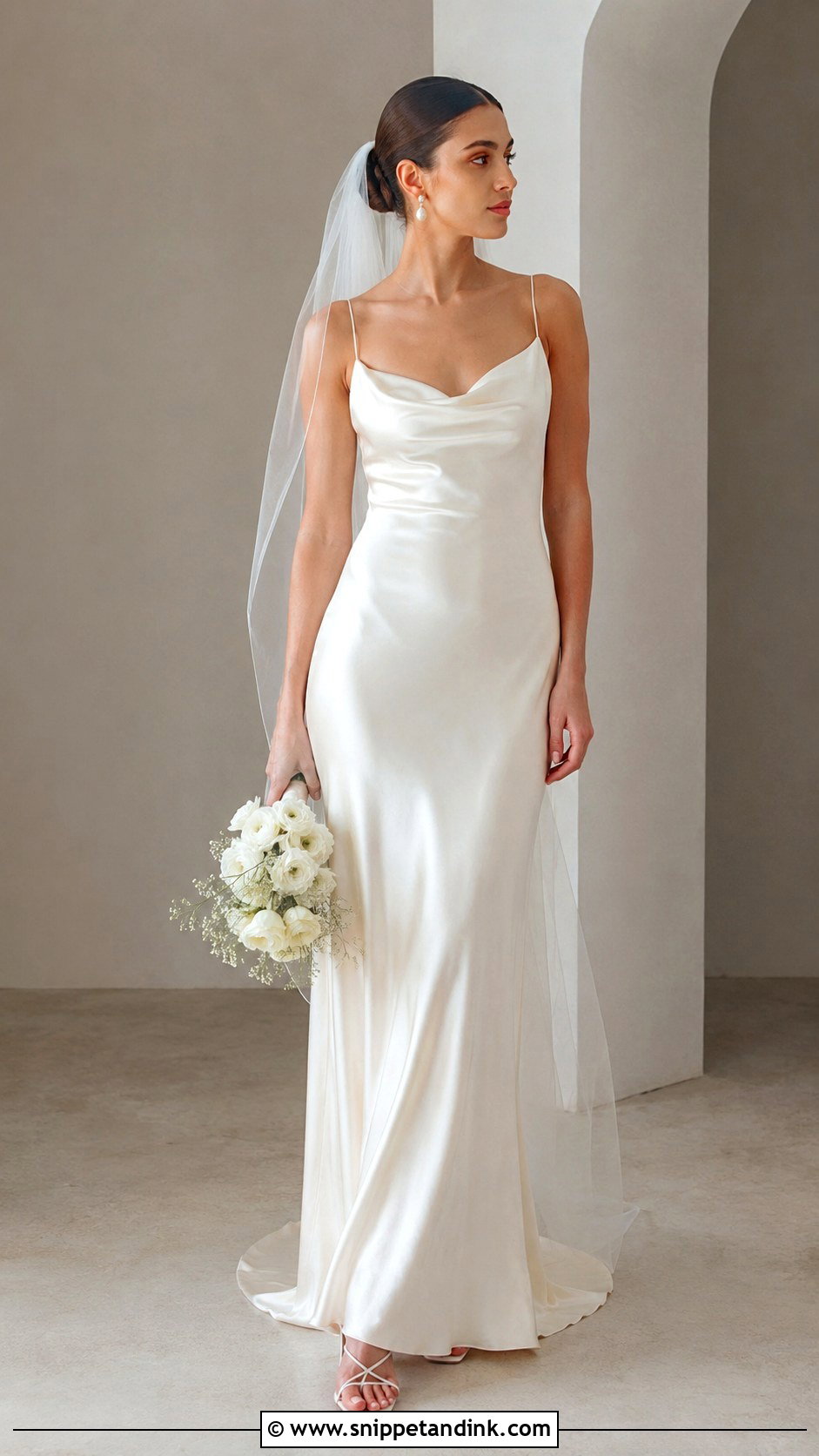
Thin straps, a soft drape and a body-skimming fit: the slip silhouette is inspired by both the thirties and the nineties. Satin, silk and crepe move best. Strappy heels, pearl or crystal earrings and a sheer veil complete it; add a lace bolero or long gloves for more vintage detail. Fit and fabric quality are everything here. Cheap satin shows every line and wrinkle, so this is the dress I’d spend more on fabric for.
27. Vintage Bridal Dress With Floral Embroidery
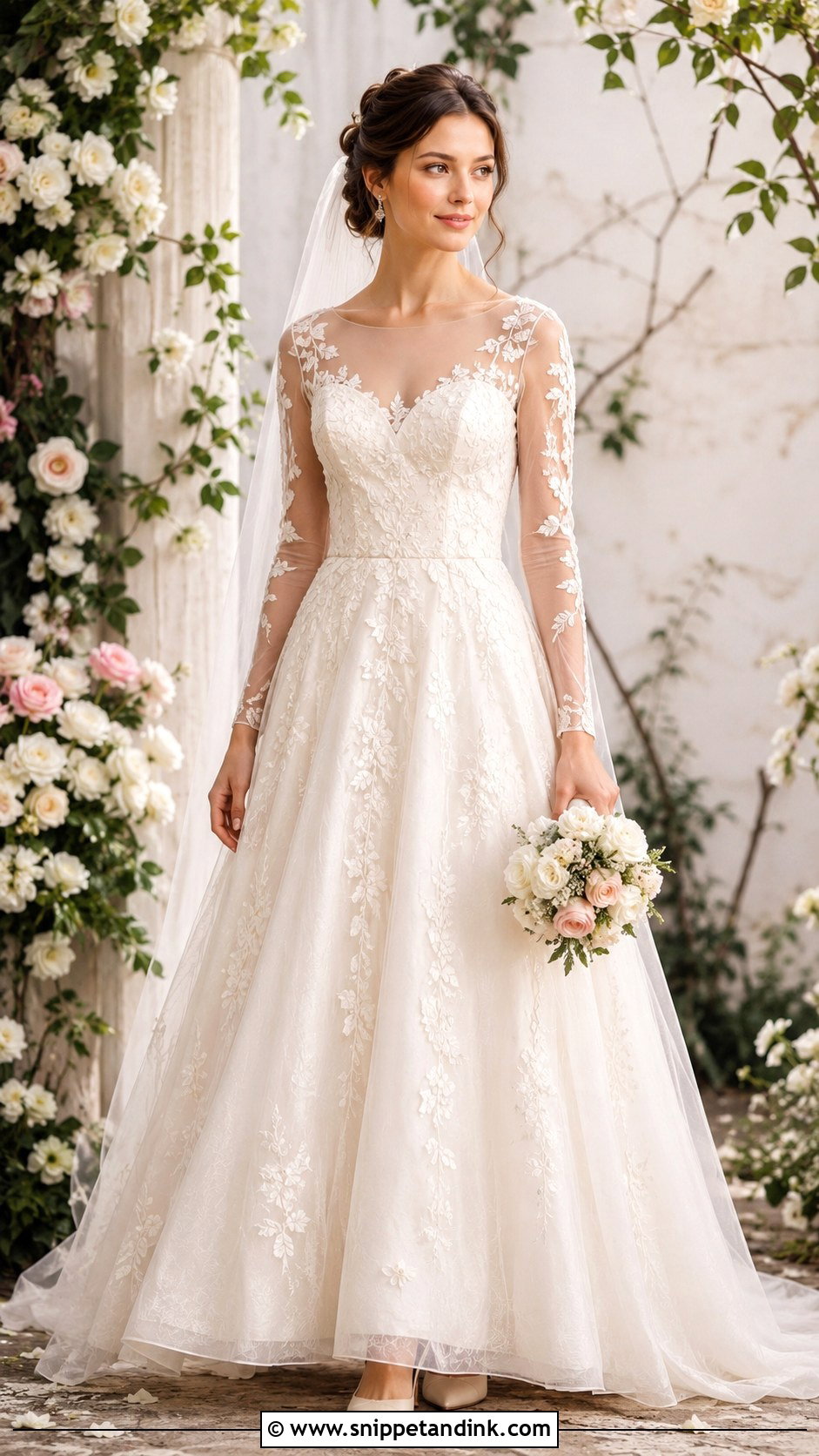
Embroidered flowers bring texture and a handmade feel, either quietly on the bodice or scattered across the skirt and sleeves. Ivory thread is classic; soft pastel thread gives a gentle antique effect. Simple heels, small earrings and a veil with little trim complete it. Keep the silhouette easy, A-line or sheath, so the embroidery stands out. Pastel embroidery photographs paler than it looks in person, so check it in daylight.
28. Vintage Bridal Dress With Ruffle Hem
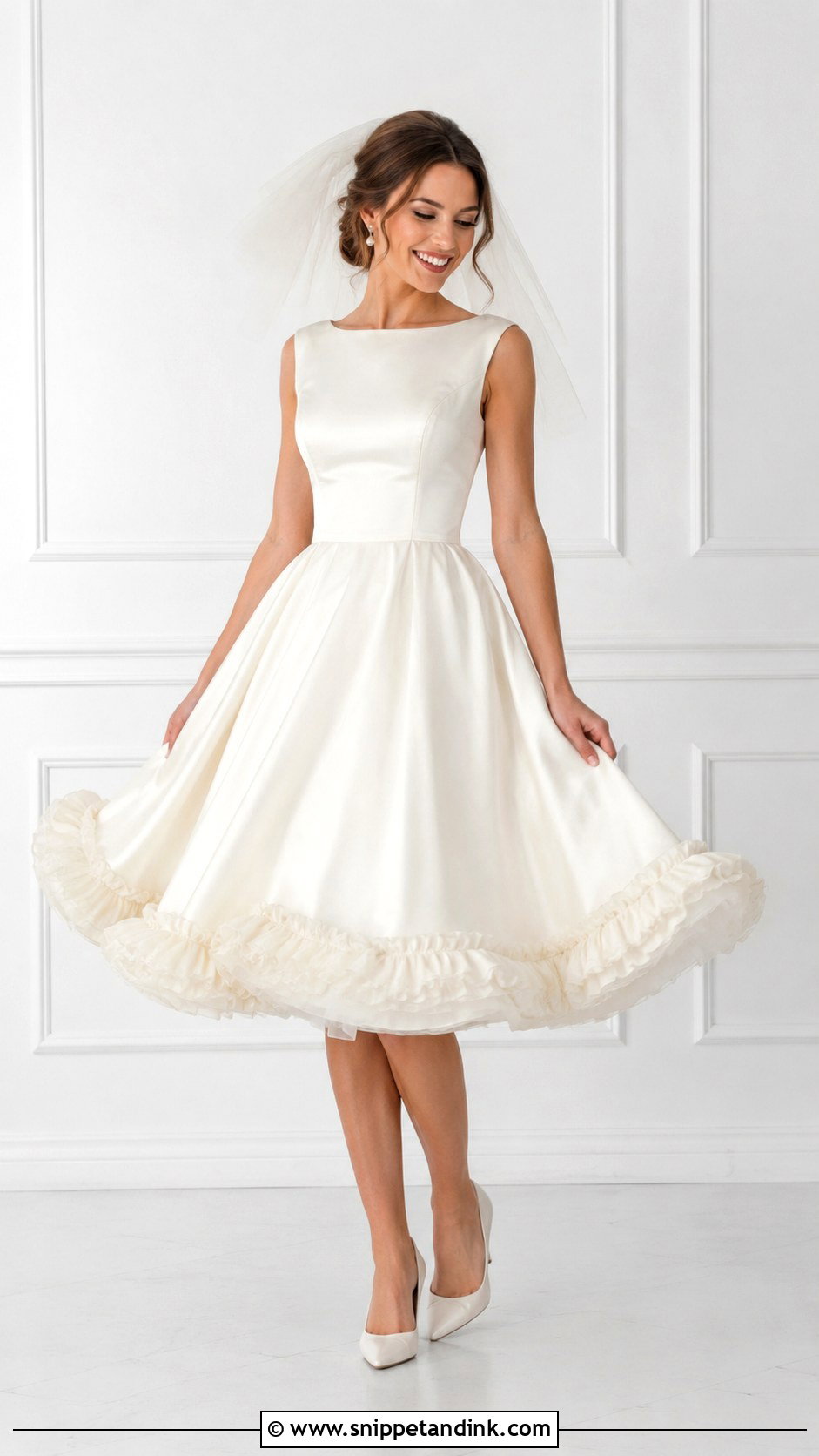
Delicate ruffles at the hem add movement without boldness. Tea-length skirts, layered tulle gowns and soft chiffon all take them. For a vintage feel, keep them small rather than tiered. Pointed heels, pearl earrings and a short or fingertip veil complete it, with a simple fitted bodice. The ruffle draws the eye down to your shoes, so choose a pair you love and can stand in for hours.
29. Vintage Bridal Dress With Champagne Color
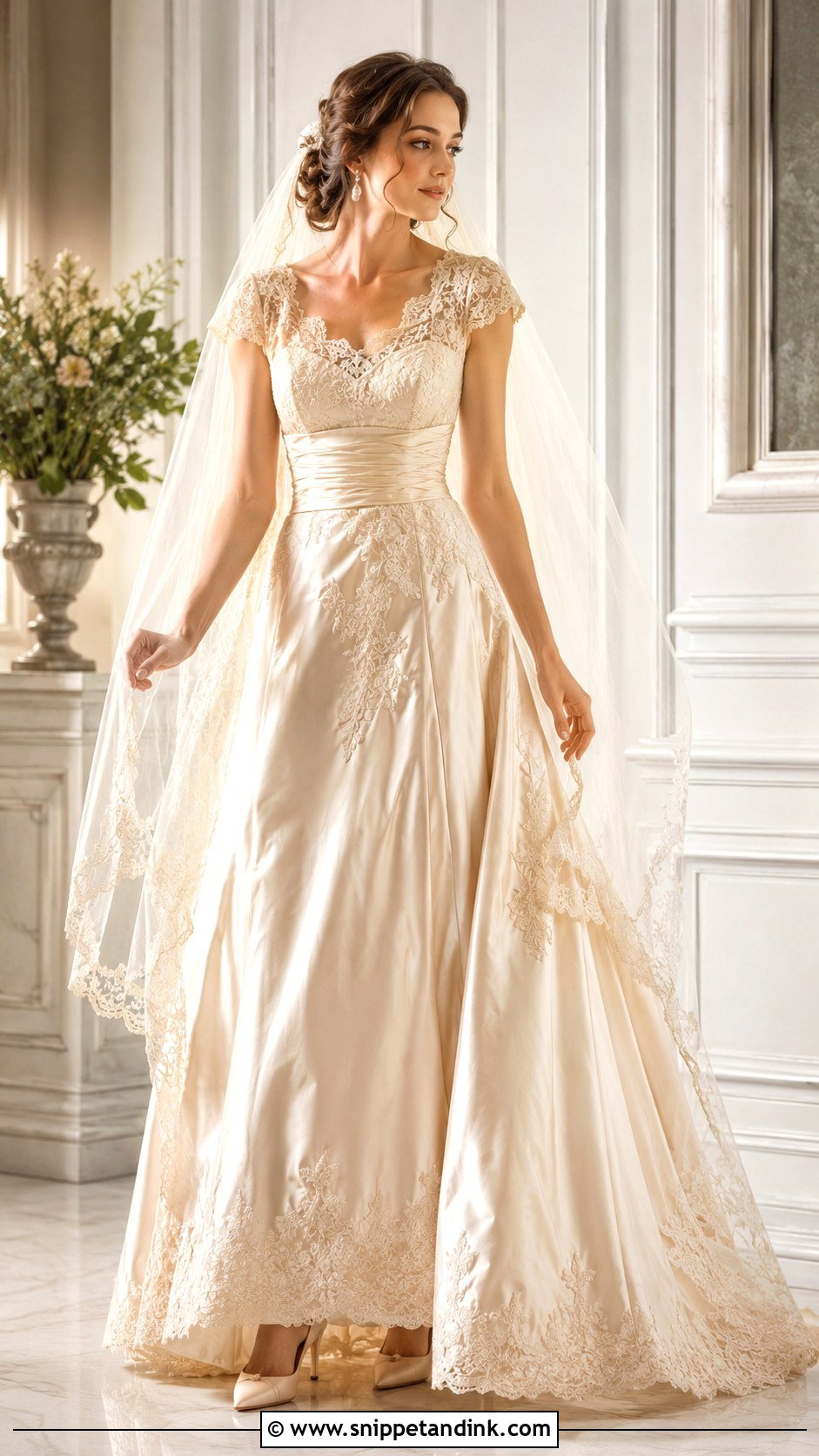
Champagne adds warmth and depth to satin, lace, tulle and beading without looking bright. Ivory or nude heels, pearl jewellery and a veil in the same warm shade complete it. Brides who feel washed out in pure white often light up in champagne. Keep makeup in rosy or neutral tones so everything ties together. Depending on the silhouette, champagne can lean old Hollywood, romantic or boho.
30. Vintage Bridal Dress With Short Veil
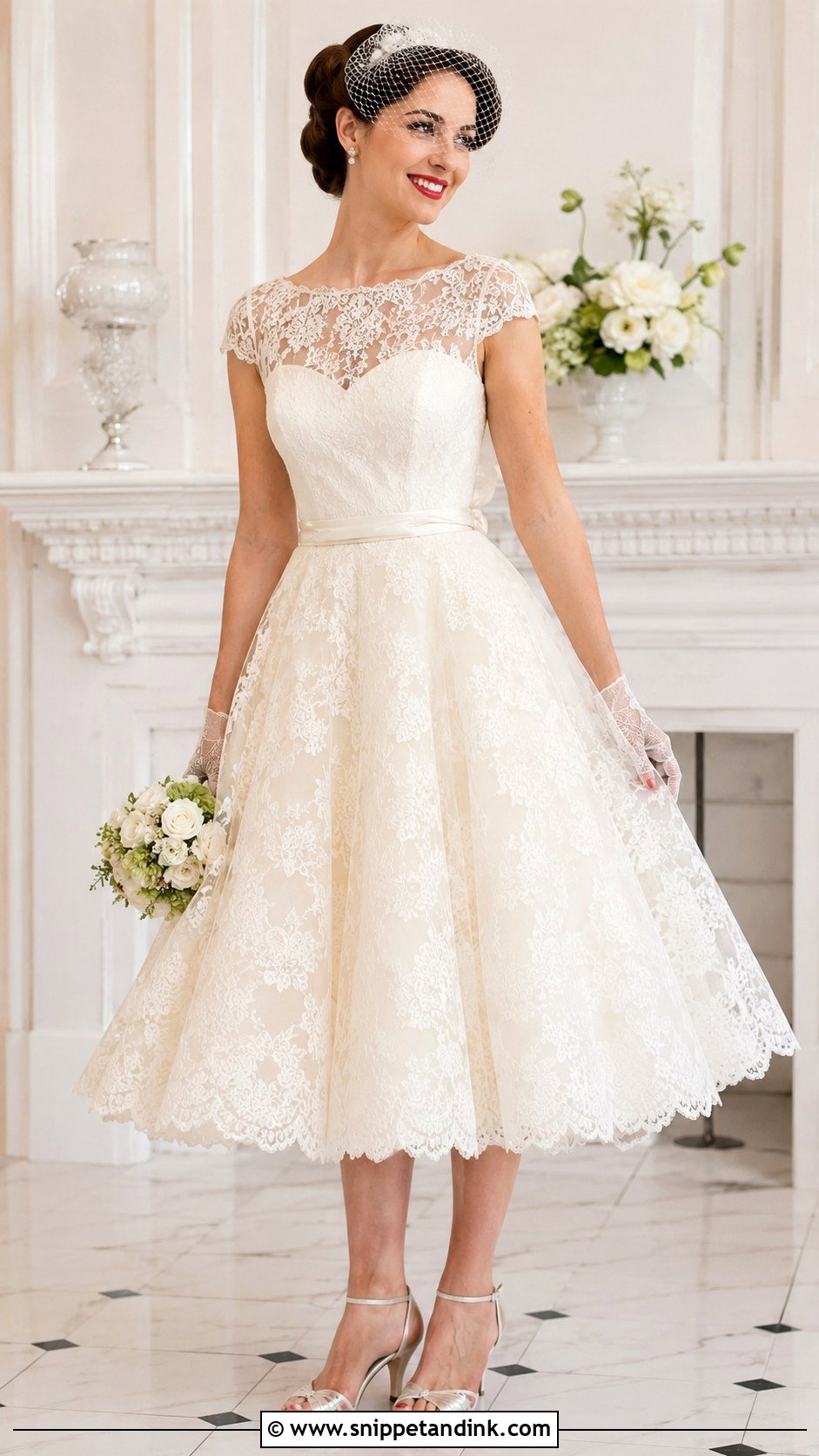
A short veil gives a dress clear vintage personality. A birdcage veil feels bold and fifties; a shoulder-length veil feels softer and traditional. Pearl earrings, elegant heels and neat hair complete it. Balance is the rule: a detailed veil needs a simpler gown, an ornate dress needs a clean veil. Birdcage veils are pinned close to the face, so plan the hairstyle with the veil at the trial, not on the morning.
Foundations That Make Old Silhouettes Behave
Vintage shapes were designed around the underwear of their time. Without the right foundation, a dress can look flat, lumpy or simply wrong, and no amount of tailoring fixes it. Bring your chosen underwear to every fitting, because it changes the measurements.
Bias satin and slips
Bias-cut satin shows every edge. Smooth, laser-cut underwear in a shade close to your skin, or a thin slip in the same fabric, is the usual answer. Avoid shapewear with a visible hem at the thigh.
Tea-length and full skirts
Mid-century skirts need a petticoat or crinoline for their shape. Check its length is a little shorter than the hem so it never peeks out when you sit.
Low backs and off-shoulder bodices
These usually need support built into the dress itself. Ask your tailor to sew cups and a waist stay into the bodice; adhesive bras alone often loosen during a long, warm day.
Shoes count too
Heel height decides where a hem falls and how a drop waist or bias skirt hangs. I won’t pin a final hem until the bride is standing in the exact shoes she’ll wear, and if she plans to switch to flats for dancing, we check the length in those as well so she isn’t stepping on the front of the skirt all night.
Borrow One Decade, Keep the Rest of You
The vintage look that works is the one that fits your personality, your venue and the way you want to move through the day. Some brides are drawn to lace sleeves and covered buttons; others to satin slips, tea-length skirts, Art Deco beading or champagne tones. The aim isn’t to copy the past. Borrow the details that mean something to you and style them freshly. Fit, fabric, shoes, veil and accessories turn a single period detail into a complete wedding outfit.
You'll Like These Ideas:








Leave a Reply