
When I put a bridal look together, the hair flower is often the last decision and the one that ties everything else together. Placed well, it frames the face, picks up the bouquet and gives a simple hairstyle a reason to exist. Placed badly, it fights the neckline or the veil. Some brides want a full crown over loose waves. Others want a sprig of baby’s breath in a braid, orchids at a polished bun or one rose behind the ear. I choose by the dress first, then the venue, season, hair texture and how much the bride will move. Each idea below comes with that styling logic attached.
Reading Your Neckline Before You Place a Single Flower
The neckline tells me where the eye already goes, and the hair flower should either sit away from it or echo it. A quick map I use with brides:
- Strapless and sweetheart: lots of bare skin, so hair down or half-up with flowers at the side softens the shoulders.
- High neck or halter: get the hair up and off the neck; flowers at a low bun or chignon keep the line clean.
- Open or low back: an updo shows the back off, with the flowers placed above it, never covering it.
- One-shoulder: asymmetry already exists, so a side-swept style or a single flower on the bare side balances it.
- V-neck: almost anything works; a long braid or loose waves repeat the vertical line.
Then check the detail. If the bodice is heavily beaded or embroidered, I keep hair flowers small and plain. If the dress is clean crepe or satin, the hair can be the place where the decoration lives.
1. Flower Crown Wedding Hair
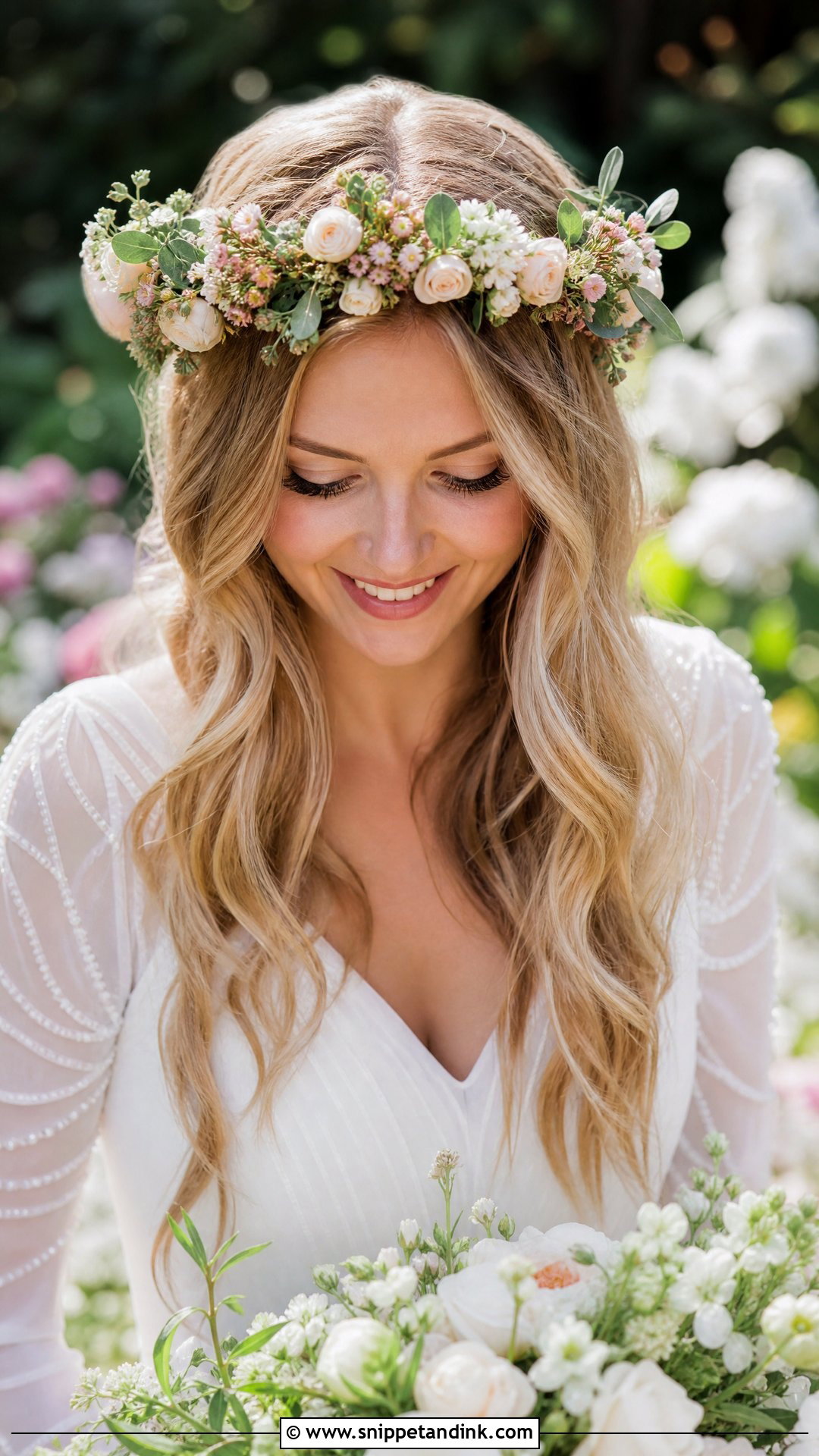
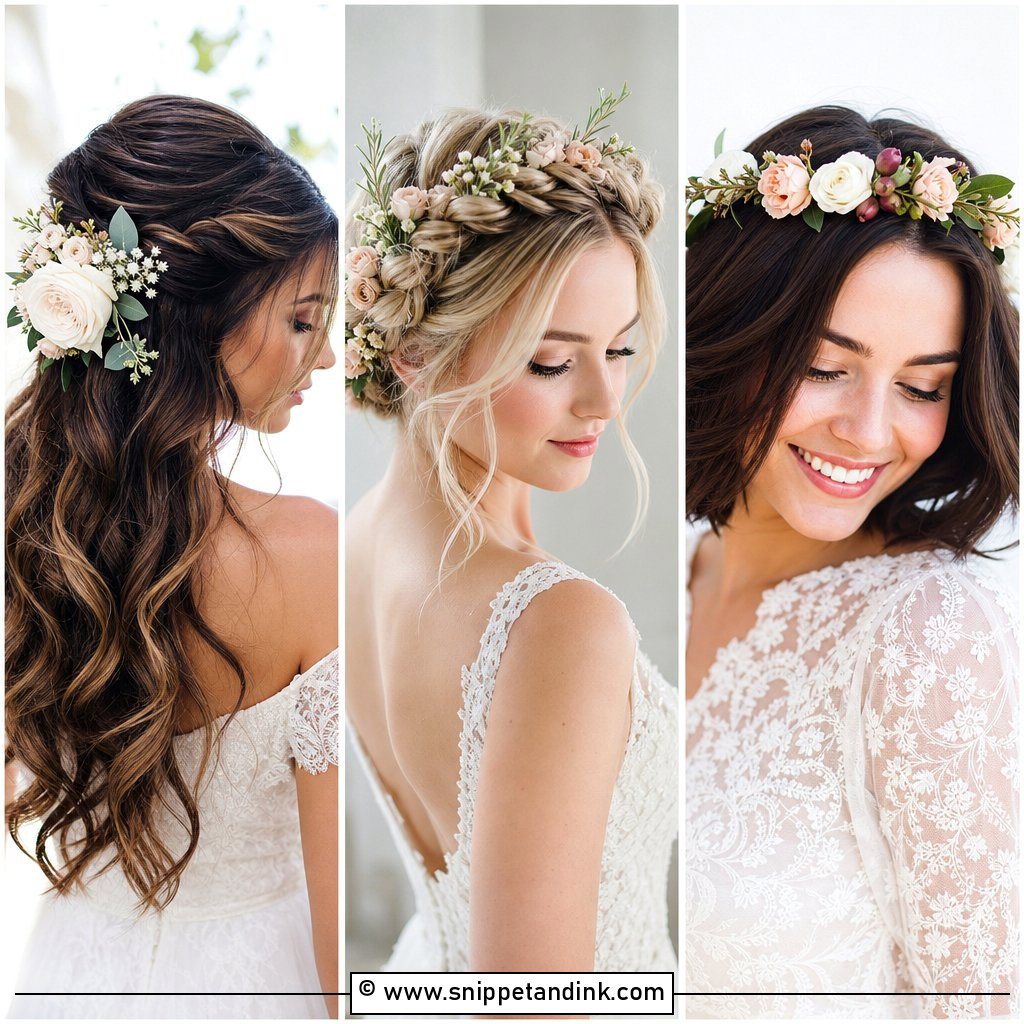
A crown is the most visible floral choice, so I weigh it against the whole outfit before anything else. Over loose waves, soft curls or long layers, it frames the face the way a picture frame does. Small blooms look current; large ones push the look toward a full garden wedding. Outdoors, choose flowers that cope with warmth and wind: spray roses, wax flowers, greenery or preserved stems. I keep the hair texture relaxed underneath, because a crown on very polished hair looks like it was dropped on afterwards, and I usually skip a statement necklace when one is worn.
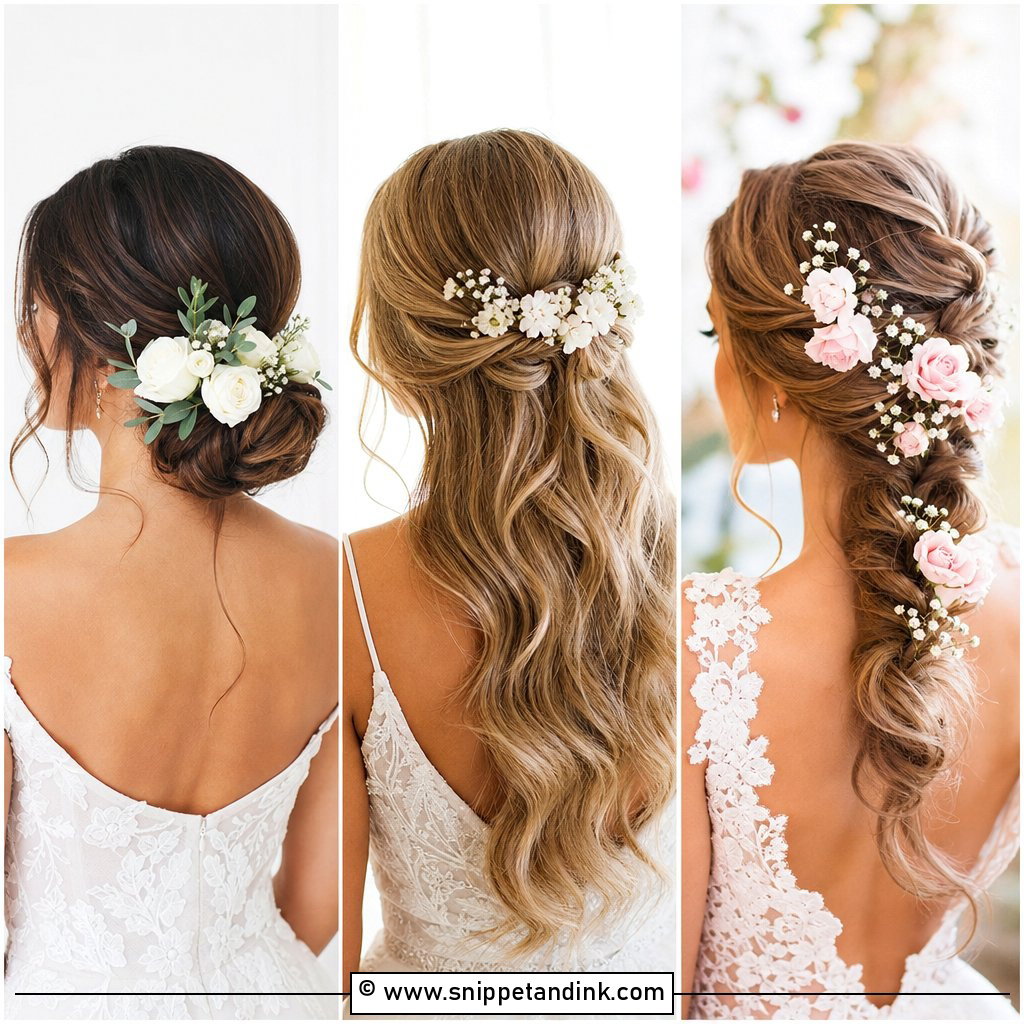
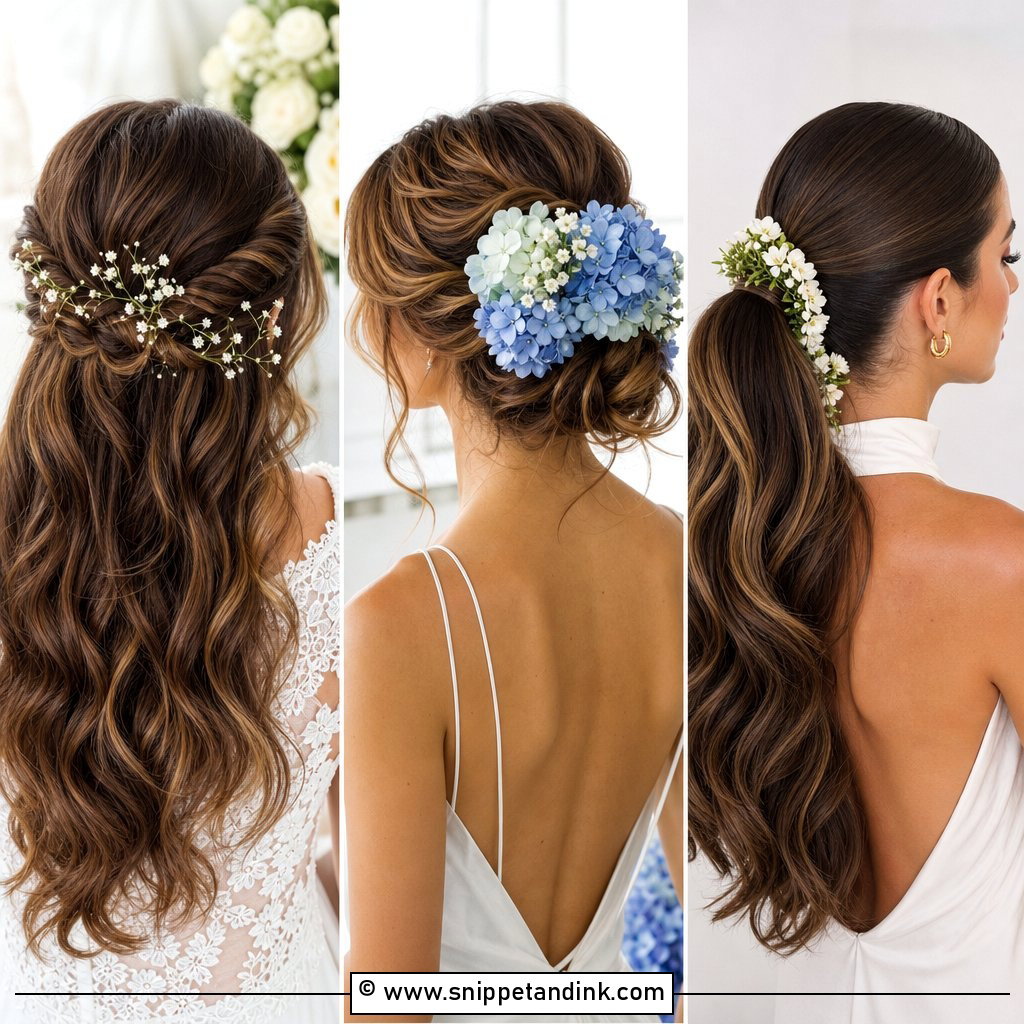
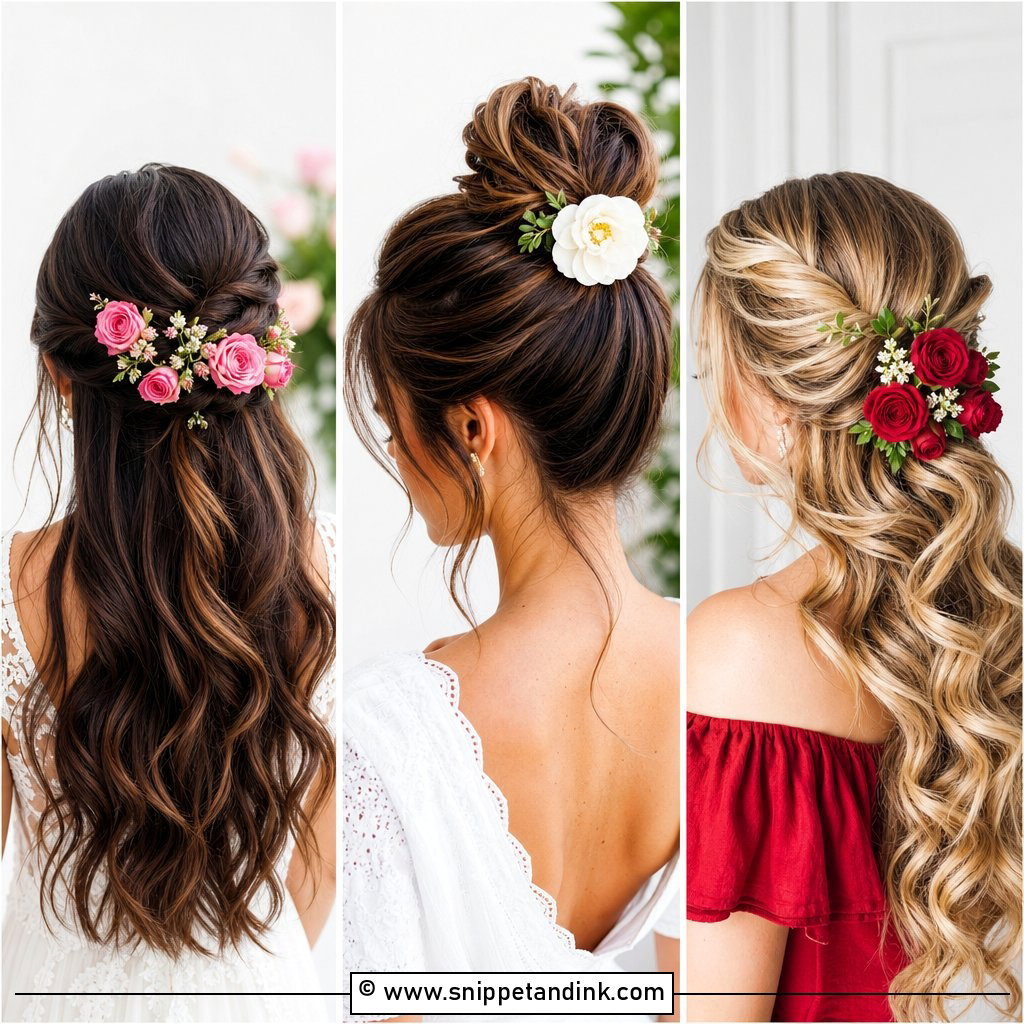
2. Half Up Wedding Hair With Flowers
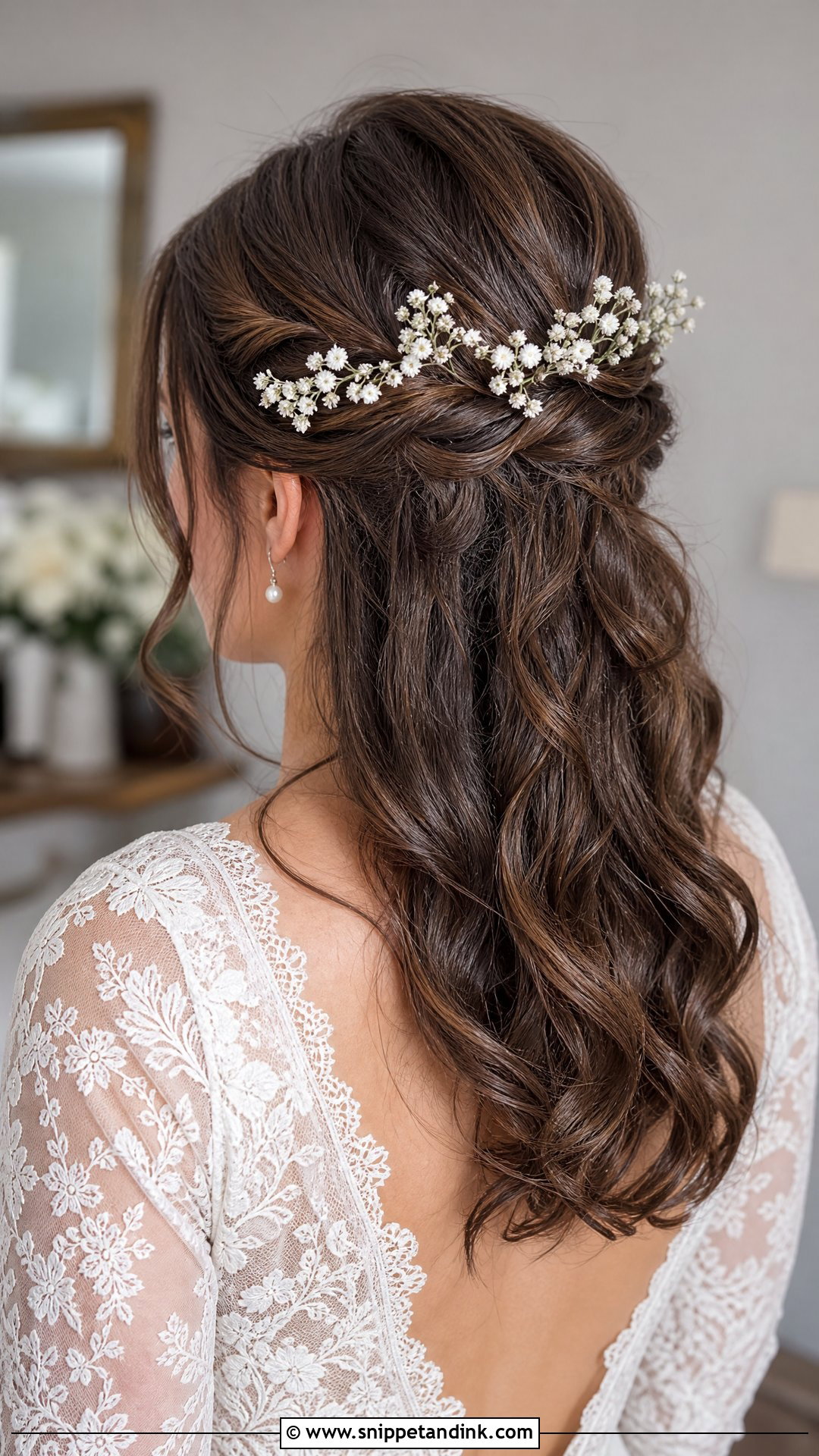
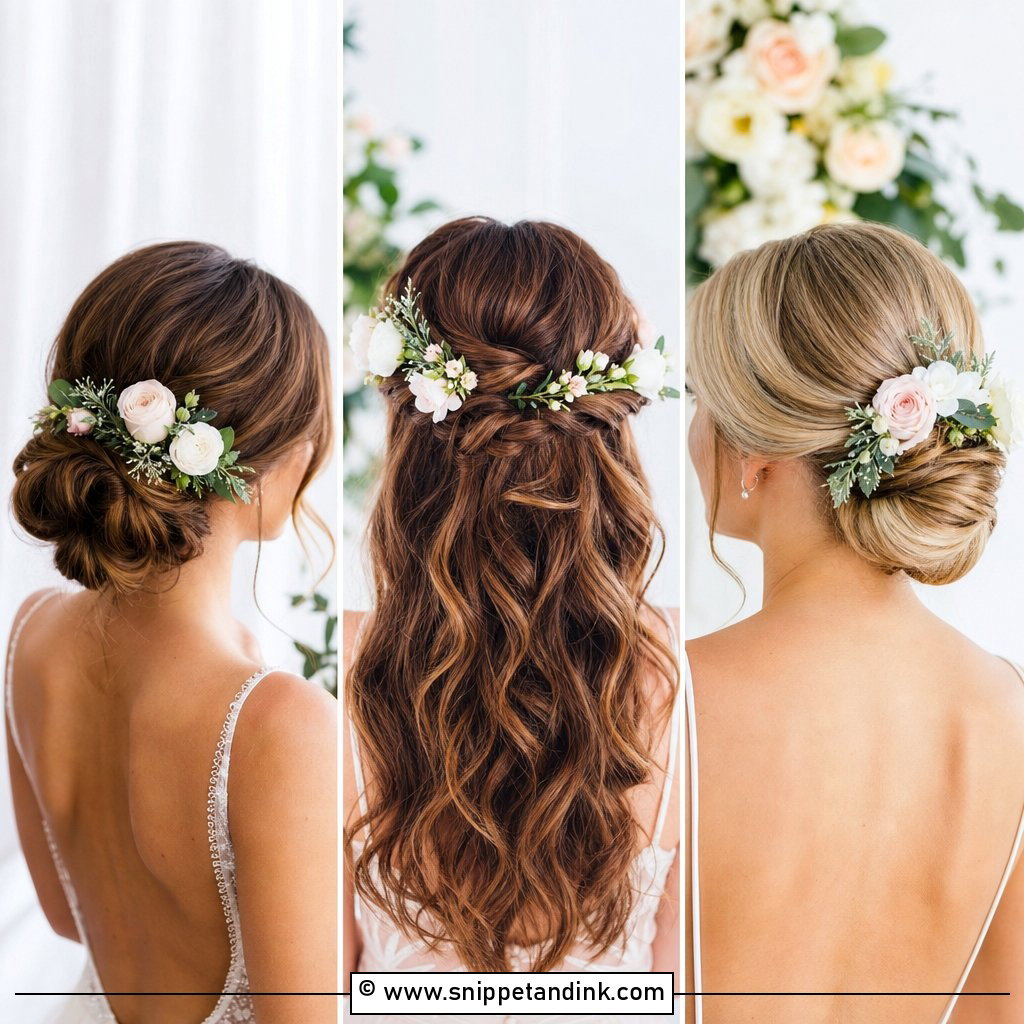
Half-up hair with flowers gives soft length below and a pinned section above, which is where the blooms sit. The top can be twisted, braided or pulled back loosely. Wavy hair holds the flowers best. Baby’s breath, mini roses, jasmine or tiny dried flowers keep it light. With a veil, the flowers can sit above or around the veil comb so the two layer neatly. From a styling point of view, I like it with off-the-shoulder and strapless dresses, where the loose lengths soften bare shoulders.
3. Low Bun Wedding Hair With Flowers
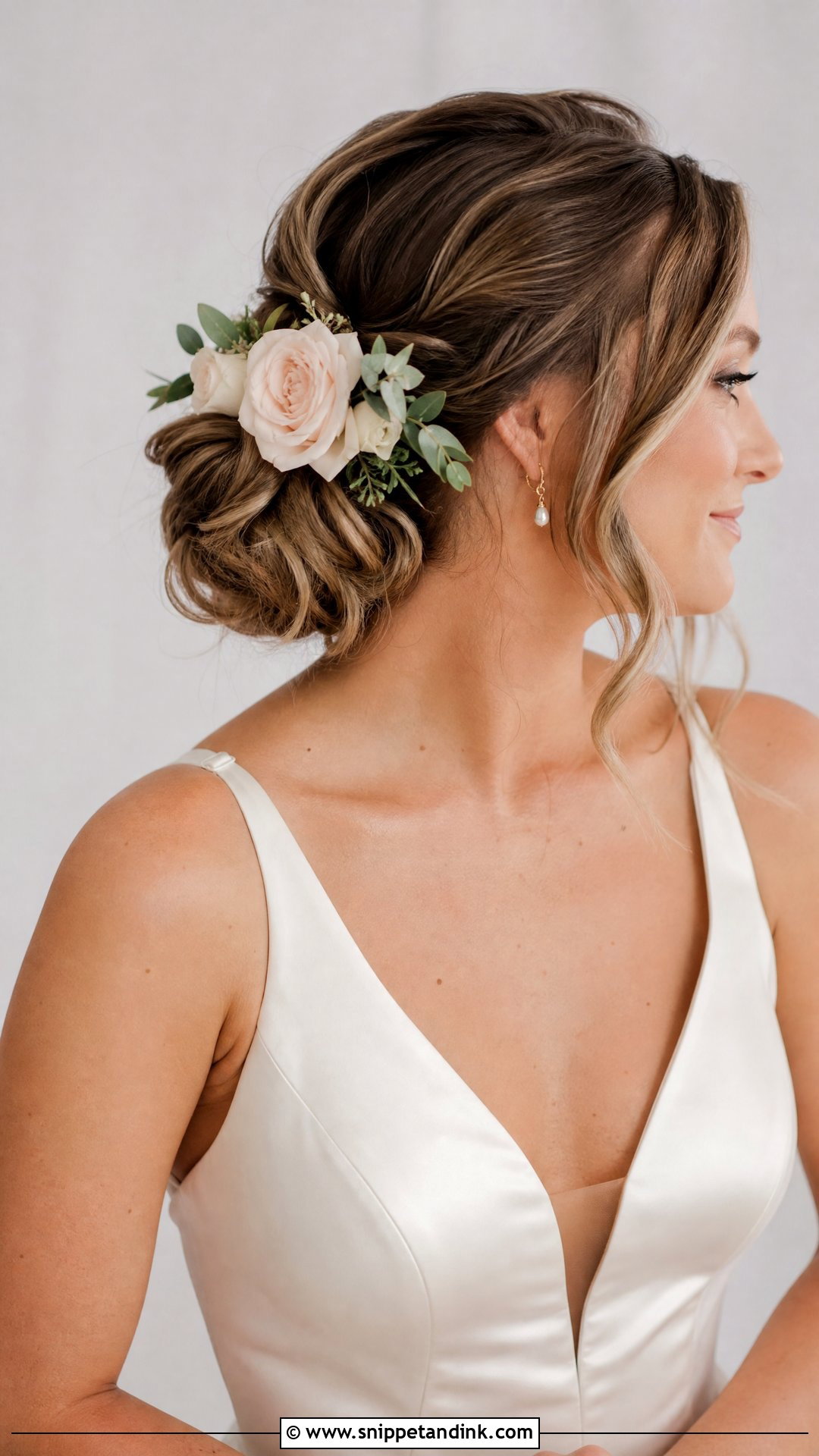
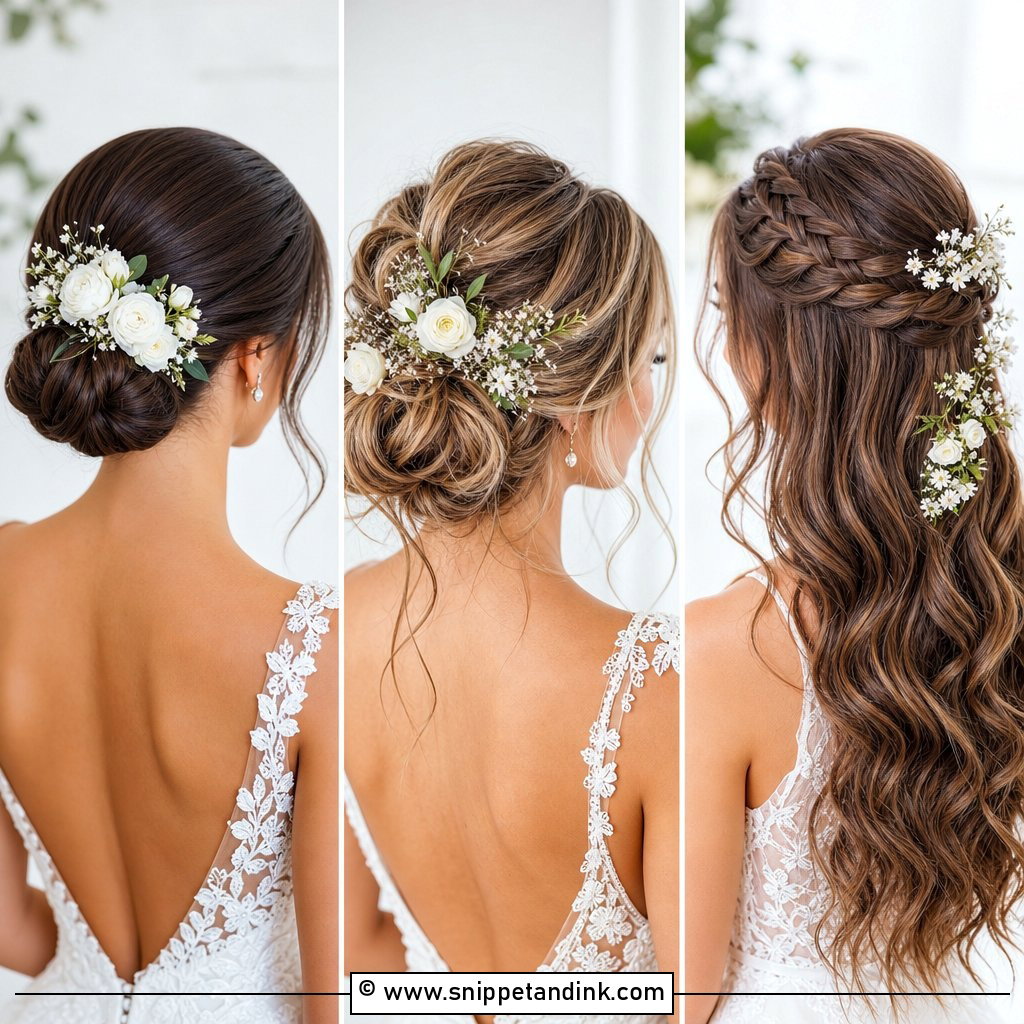
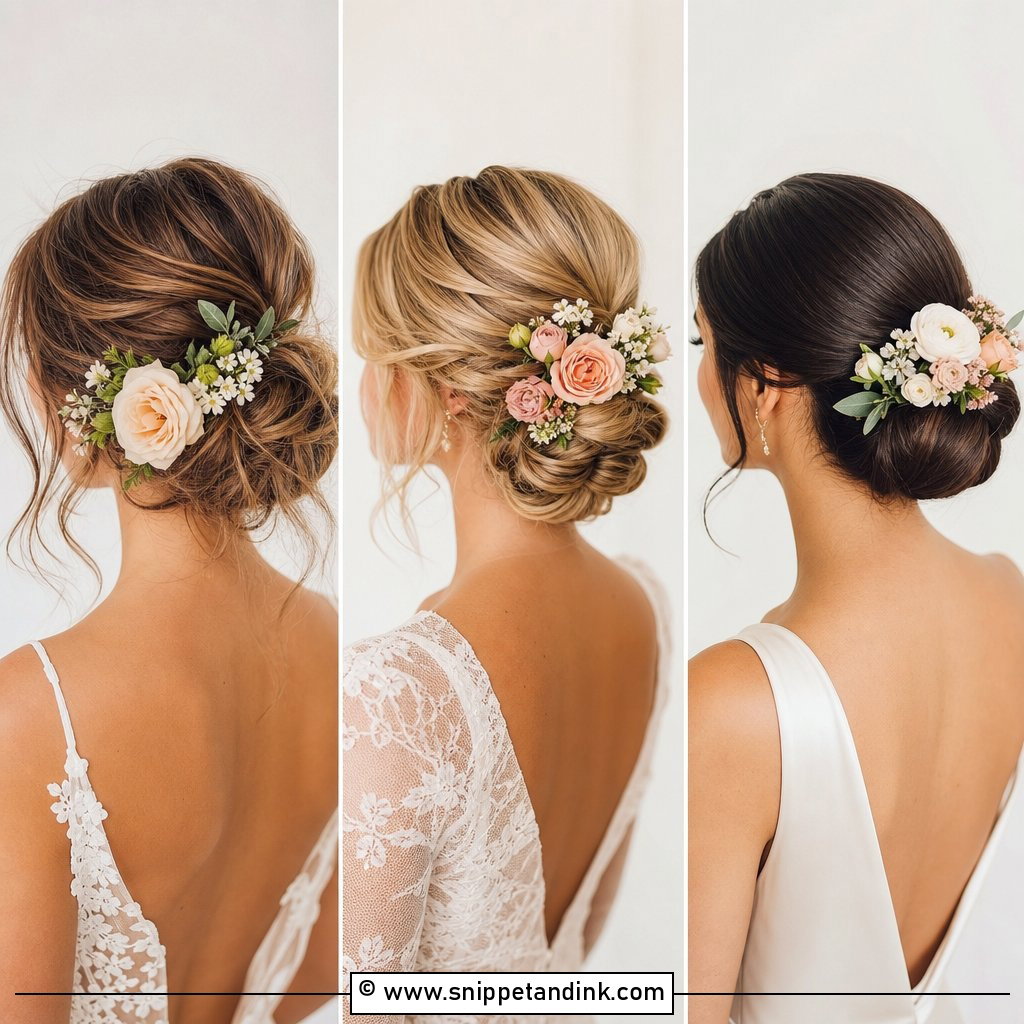
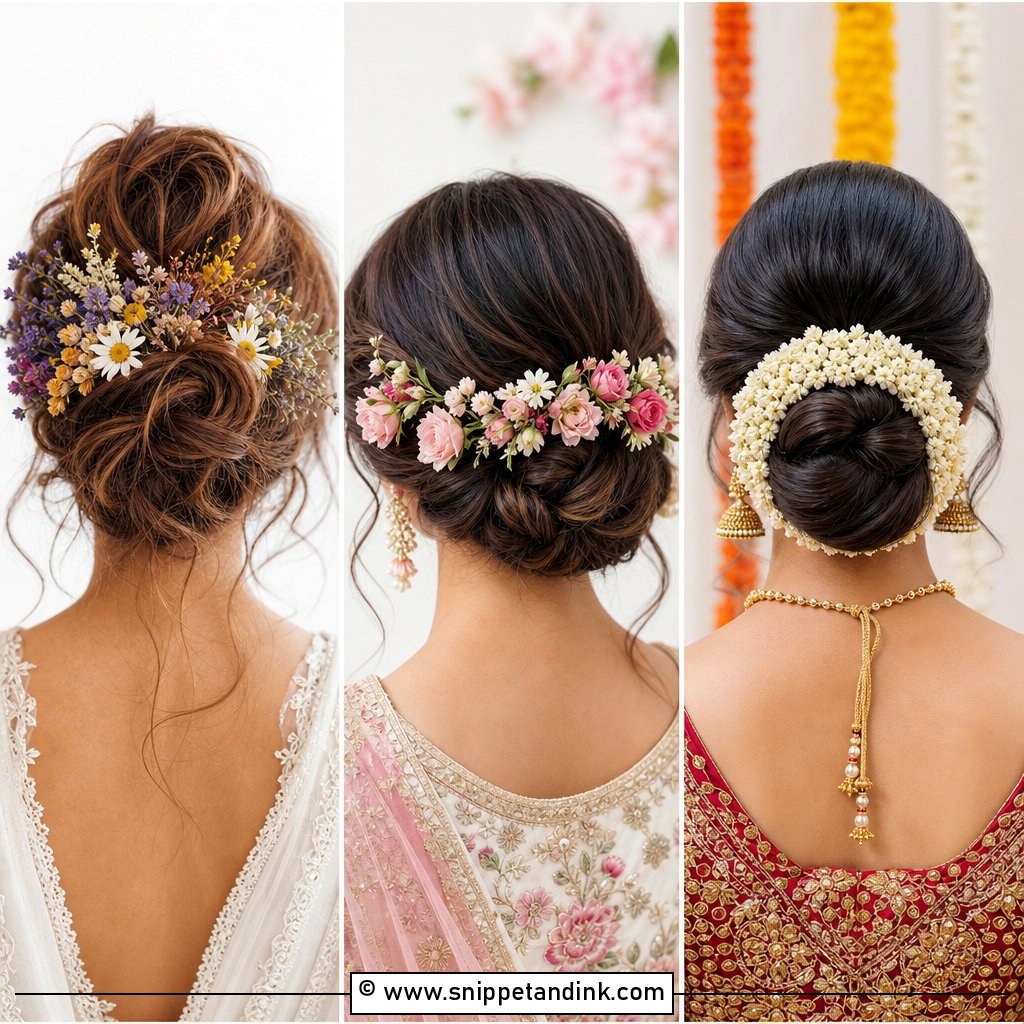
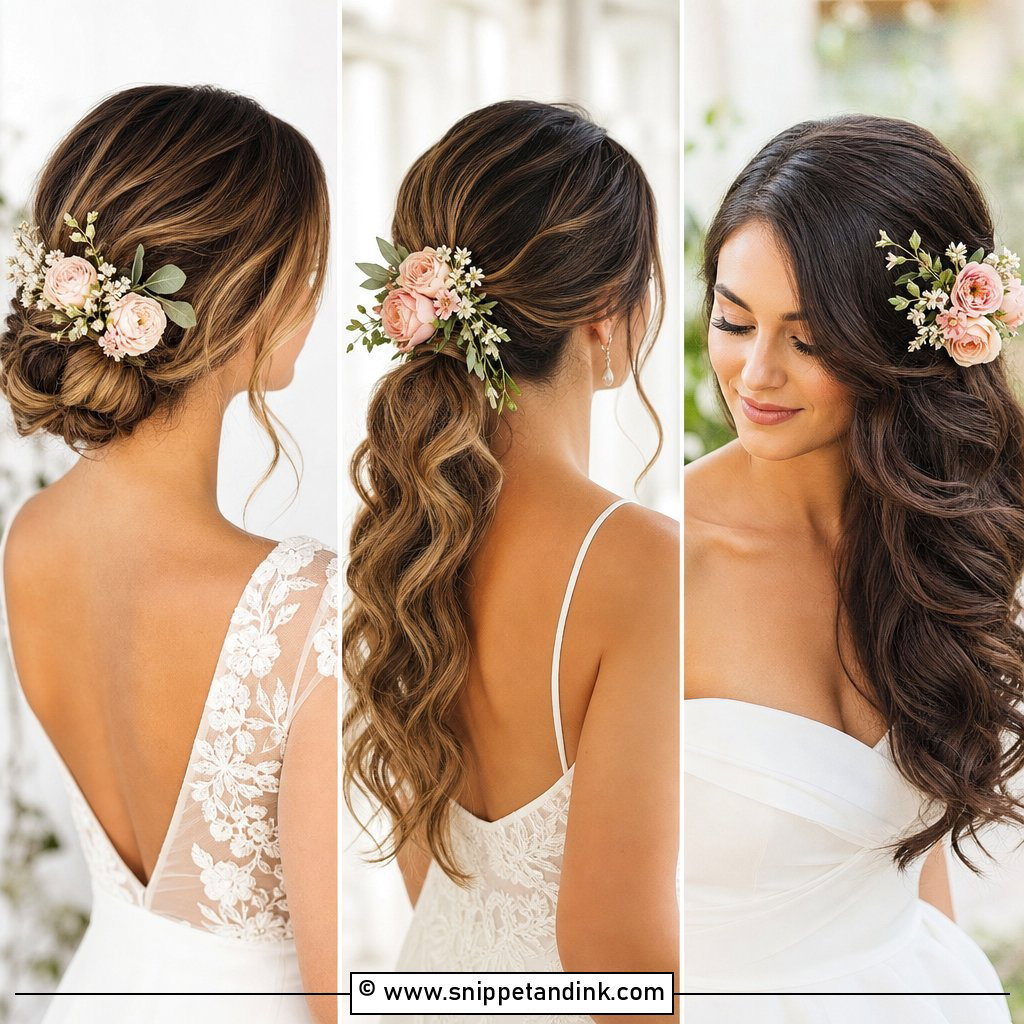
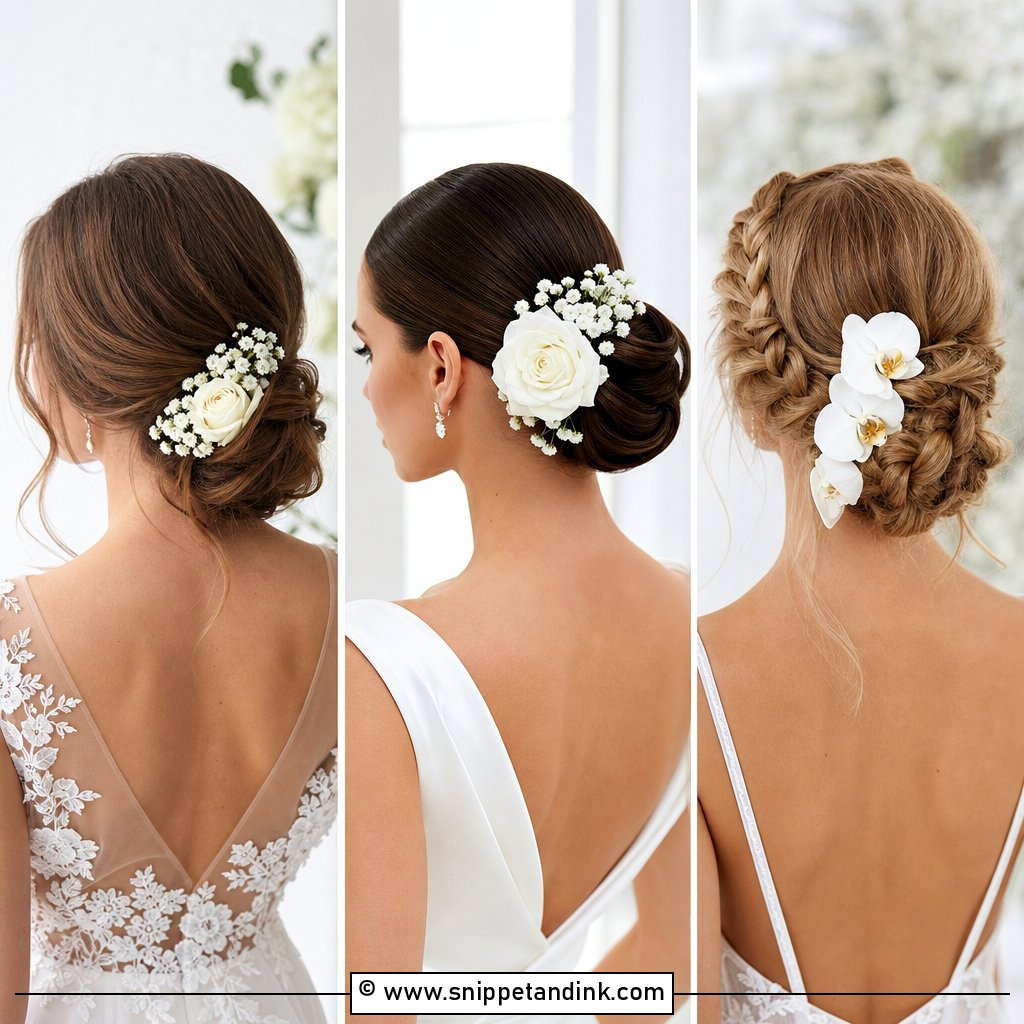
A low bun keeps the neck and shoulders clear, which is why I pair it with high necklines, open backs and anything with detail at the nape. It can be sleek, textured or slightly undone depending on how formal the dress is. Flowers go on one side, around the base or across the top. In warm weather, having hair off the neck makes a real difference to comfort by mid-afternoon. Roses, orchids, ranunculus and small greenery all suit it. Ask for the flowers to be pinned firmly; they will be in every portrait from behind.
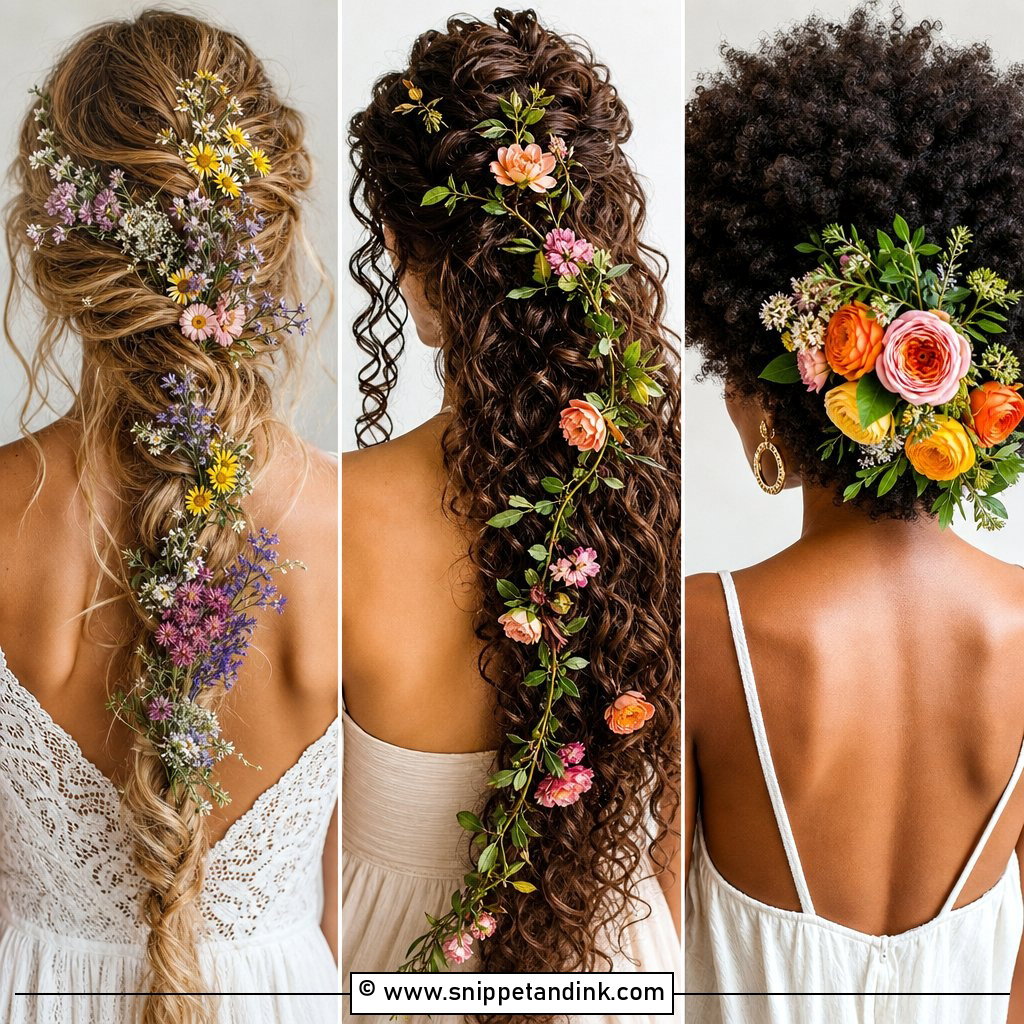
4. Braided Wedding Hair With Flowers
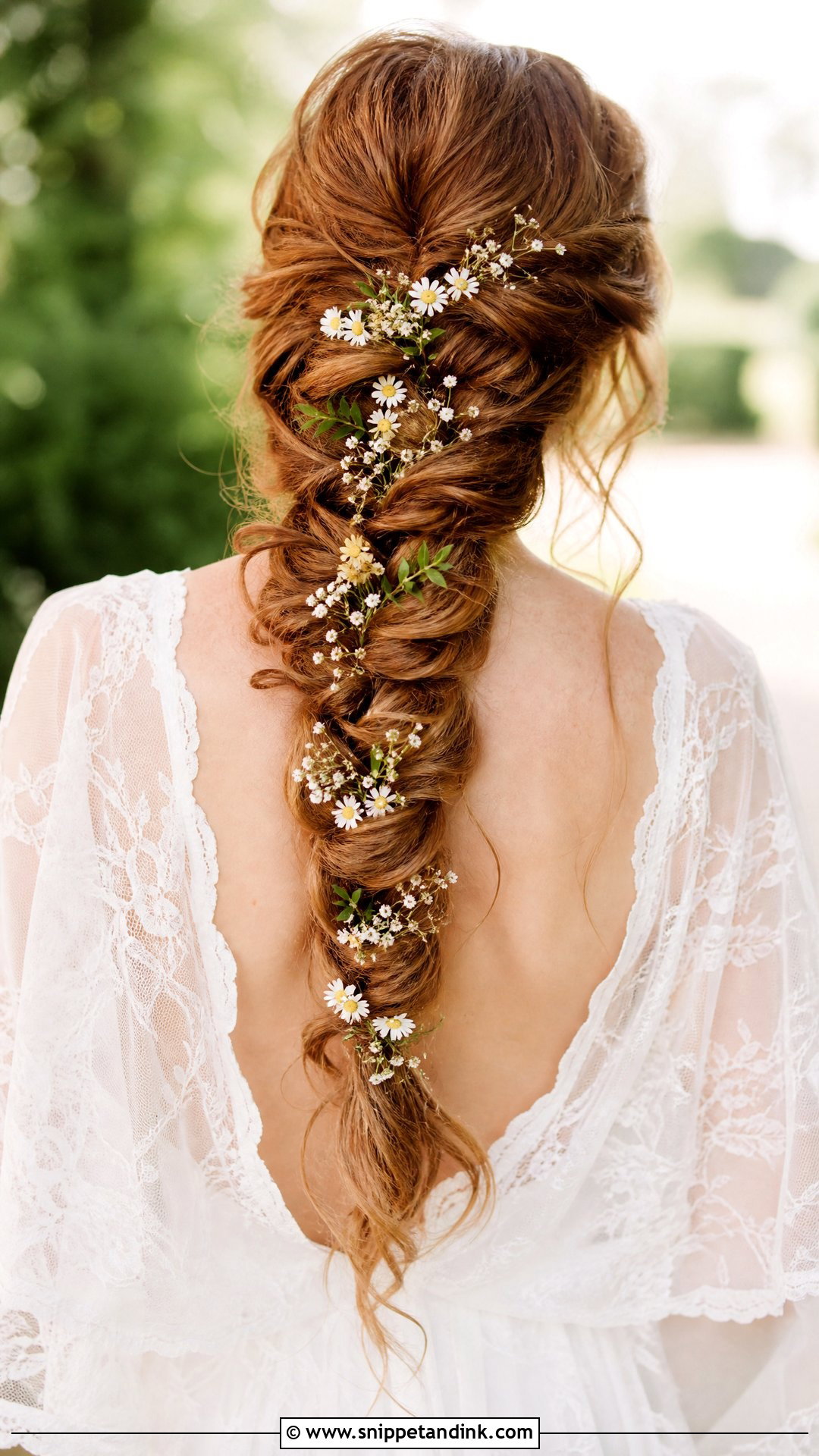
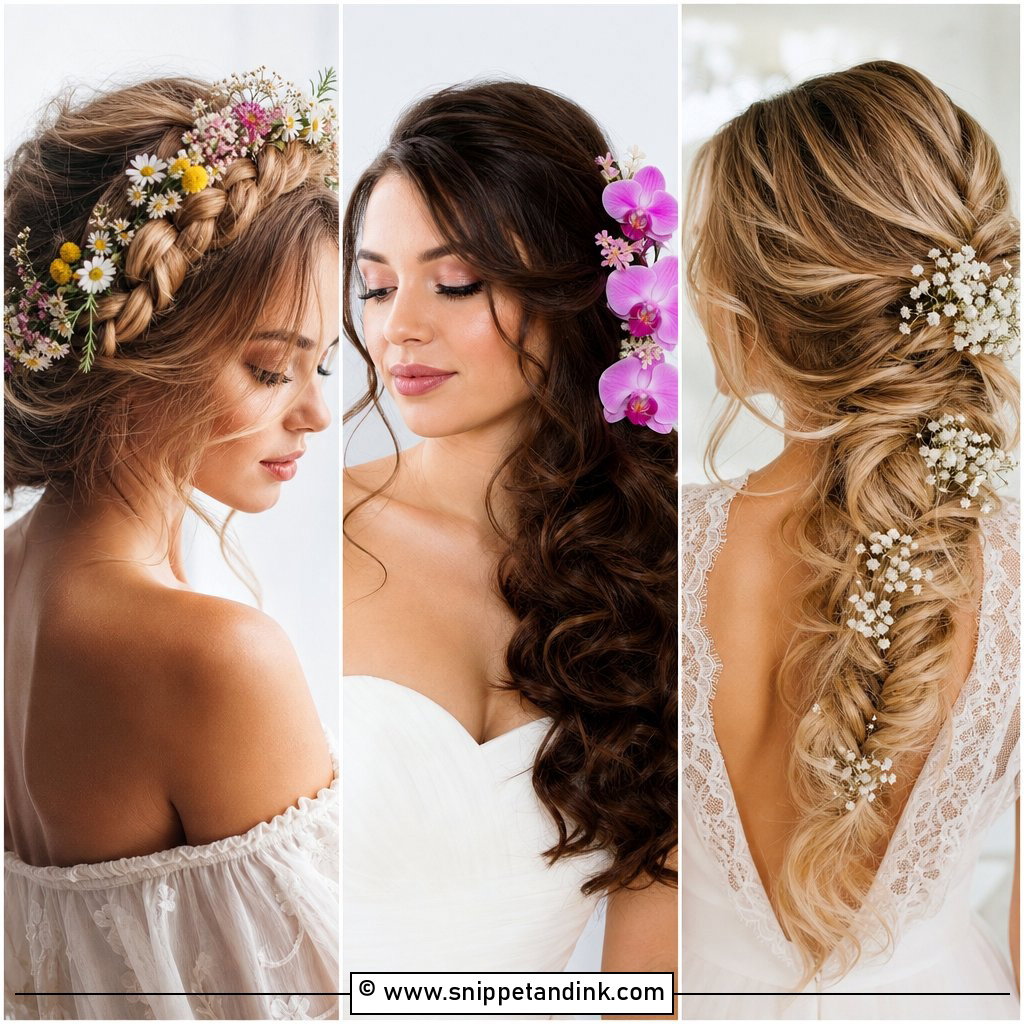
Braids add texture and detail without needing a pile of accessories. A loose side braid, crown braid, fishtail or long boho braid can all carry small flowers, scattered along the length or grouped where the braid begins. Thick and long hair benefits most, since the braid gives it structure. The flowers need to be light or the braid drags. Tiny daisies, baby’s breath, lavender and wax flowers keep it natural. I like a braid with lace and with sleeves, because the woven texture echoes the fabric.
5. Messy Bun Wedding Hair With Flowers
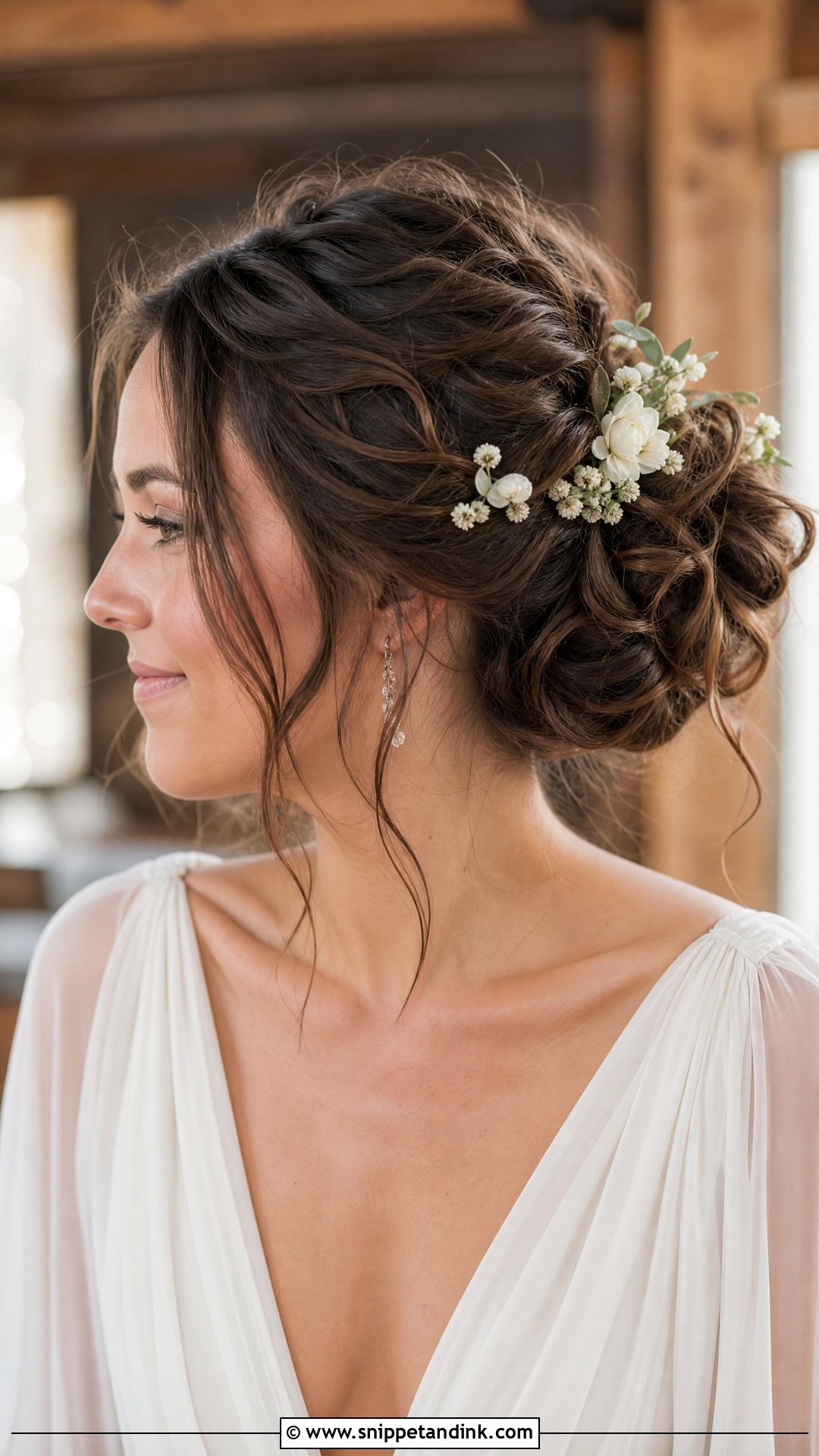
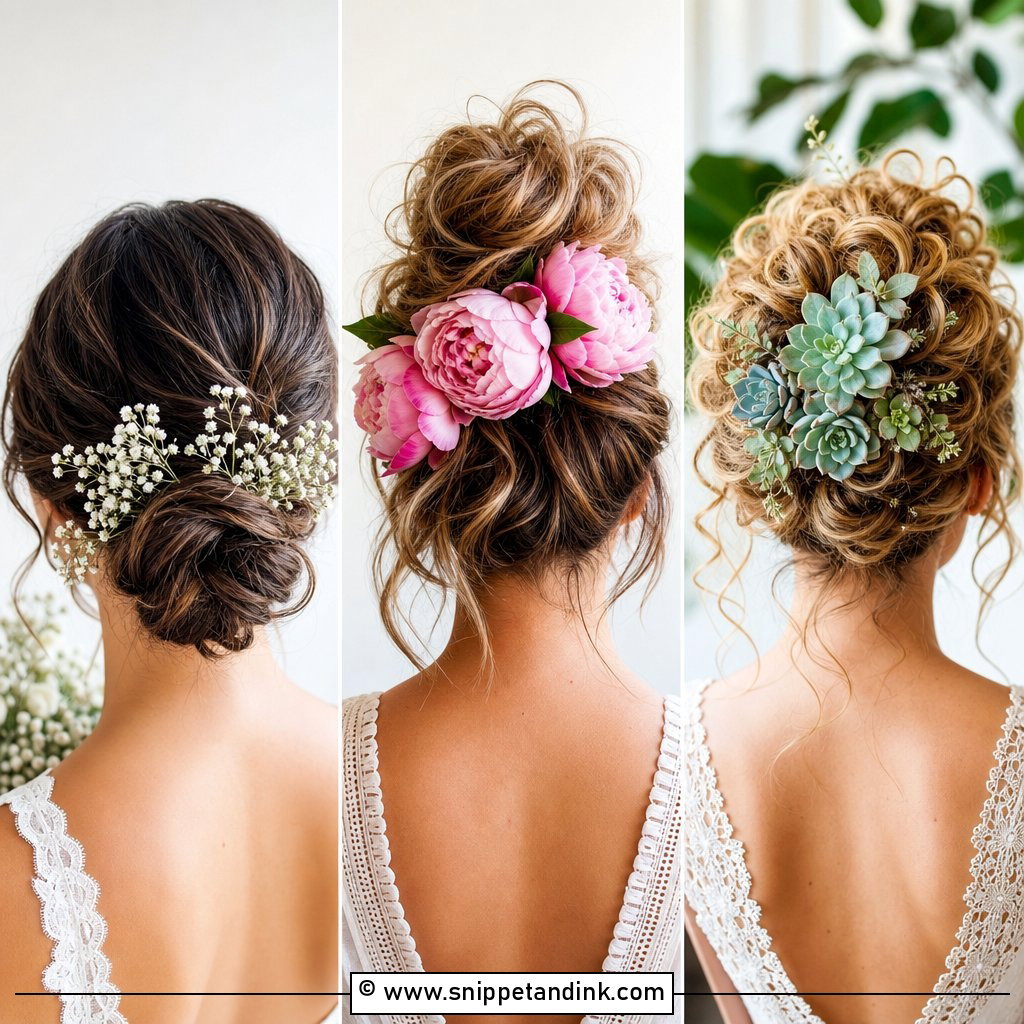
A messy bun needs to look relaxed, not careless, and that comes down to a firm hidden base with soft face-framing pieces and volume on top. Flowers go around the bun in a loose crescent or to one side. Rustic, beach and backyard weddings suit it. Medium to long hair with a little wave or curl gives it grip. I would not pair it with a structured satin ball gown; the contrast tends to make the hair look unfinished rather than intentional. Small blooms keep its shape airy.
6. Side Swept Wedding Hair With Flowers
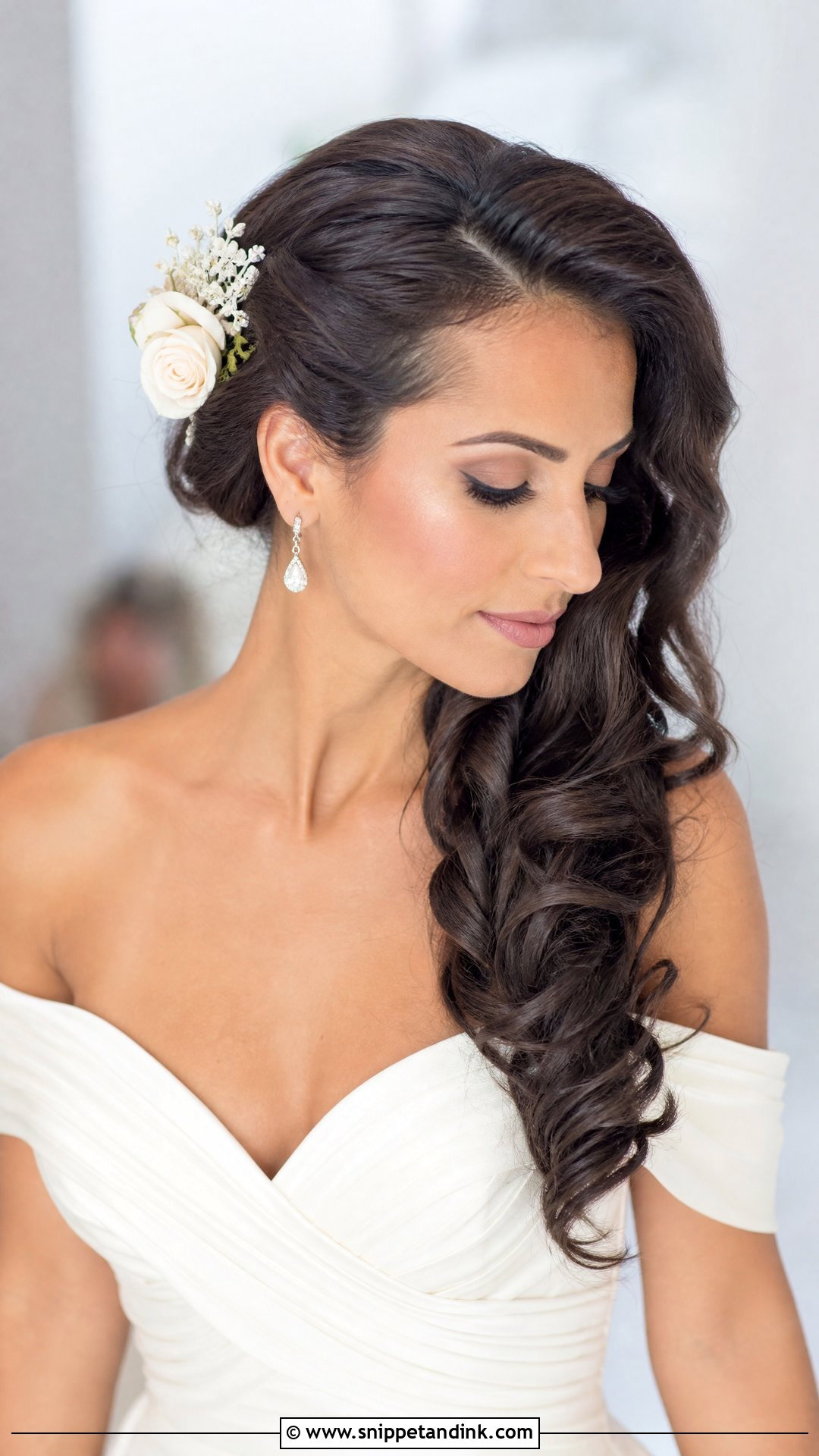
Sweeping the hair over one shoulder opens up the other side of the neck and puts the earrings and neckline on show. The curls are pinned at the back, and a floral comb or single flower sits on the opposite side to balance the weight. With a plain gown, one statement flower is enough; with a busy one, I add a few tiny blooms into the pinned section instead. Medium and long hair suit it. One-shoulder dresses need care here: sweep the hair toward the bare shoulder, not the strap.
7. Loose Curls Wedding Hair With Flowers
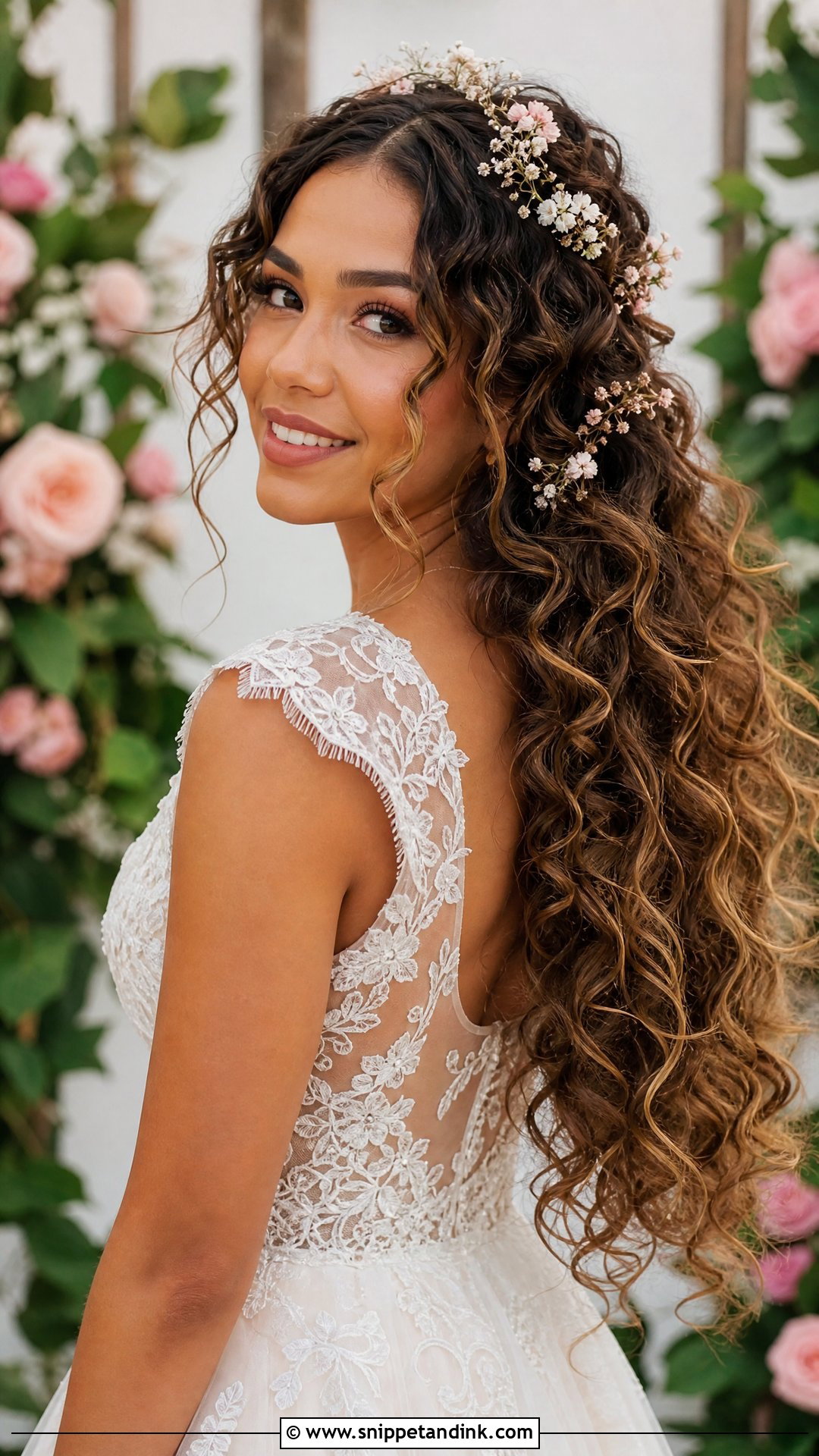
Loose curls give movement and shine, and the flowers can go behind one ear, into a small braid or through the curls themselves. Long layers create space for the blooms to sit naturally. Keep them light so they do not drag the curls flat. In heat, I suggest preserved flowers over fresh, since loose hair keeps hands and veils brushing past them all day. A flexible-hold spray keeps the curls soft to touch. This is the look I steer toward with slip dresses and minimal crepe.
8. Chignon Wedding Hair With Flowers
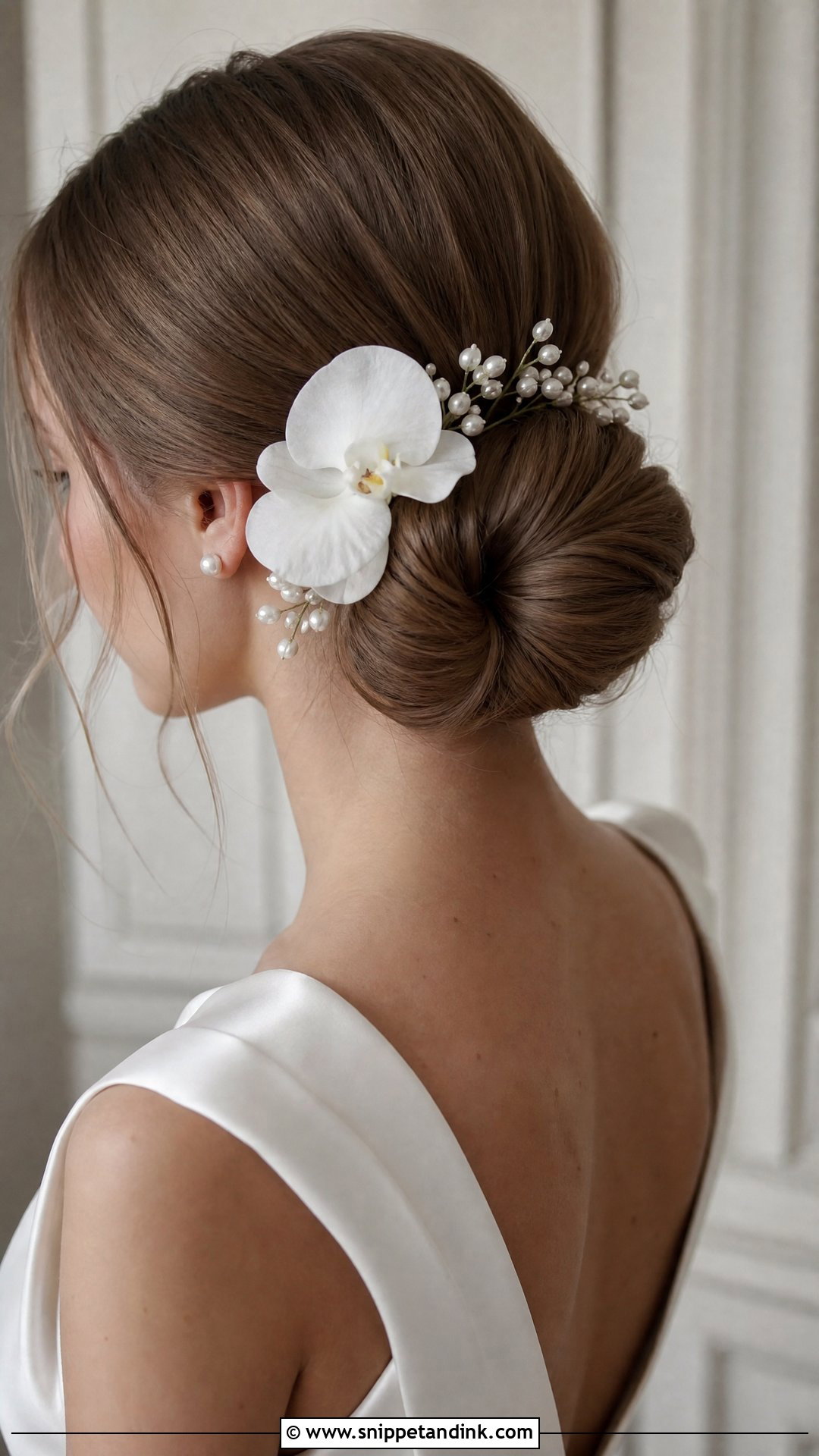
The chignon is my answer for formal ceremonies and for dresses where the back is the point. It sits low at the nape, clear of an open back, under a high neck or beneath a cathedral veil, and it pairs naturally with pearls. Flowers sit along one side or are tucked into the twist. White orchids, roses, stephanotis and small pearl-like buds keep it refined. For a modern feel, keep it smooth with a few soft pieces at the face; for a romantic one, add texture before pinning the shape.
9. Ponytail Wedding Hair With Flowers
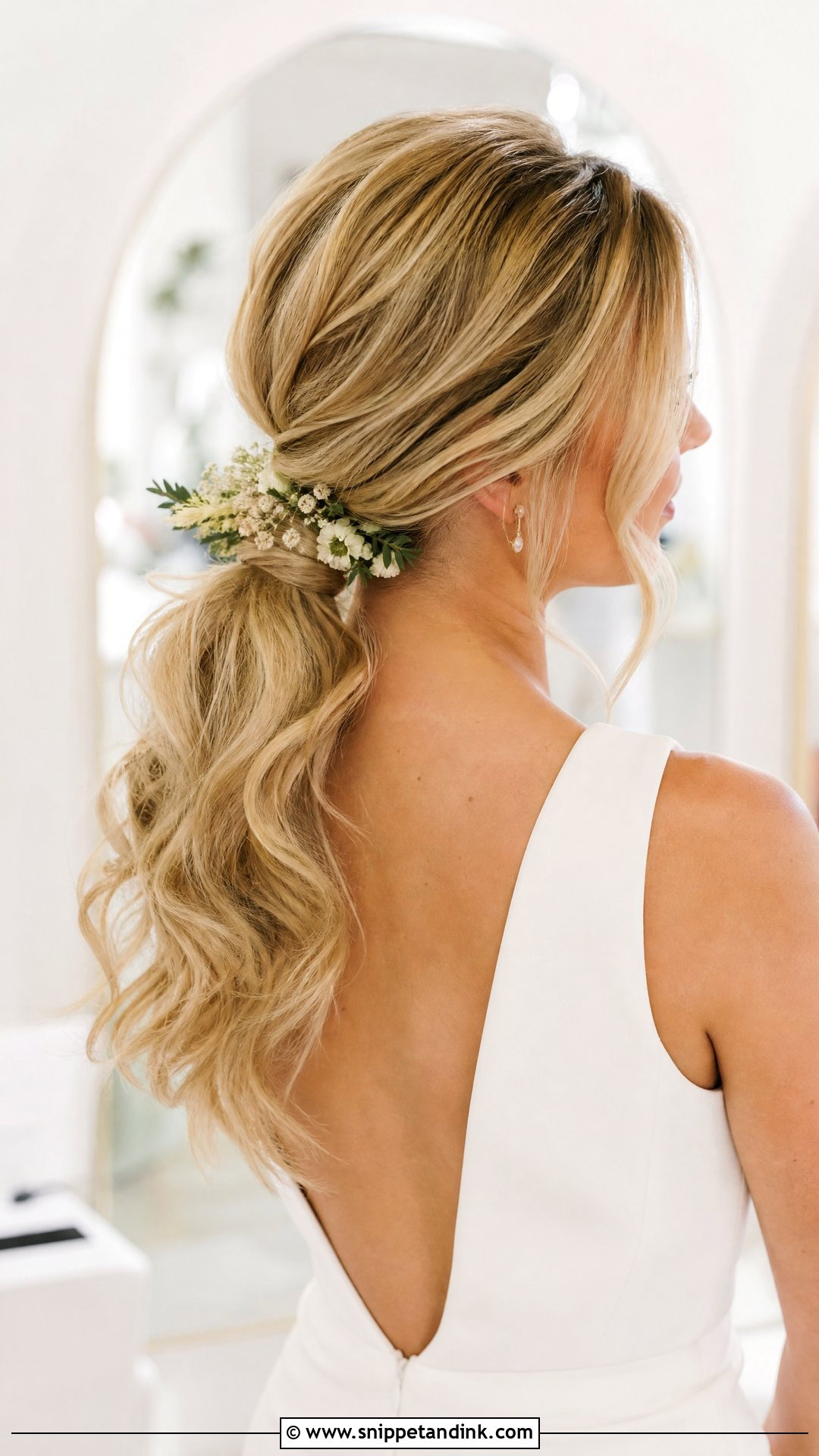
A bridal ponytail can be sleek and high, soft and low, or waved through the length. Flowers wrap the base or sit along a twisted section above it, so the detail is visible without hiding the shape. It feels secure for dancing while still moving. I often suggest it as an evening change from a ceremony updo. Match the flowers to the bouquet and keep everything else clean. High ponytails also lift the whole silhouette, which helps if the dress is long and full.
10. Short Wedding Hair With Flowers
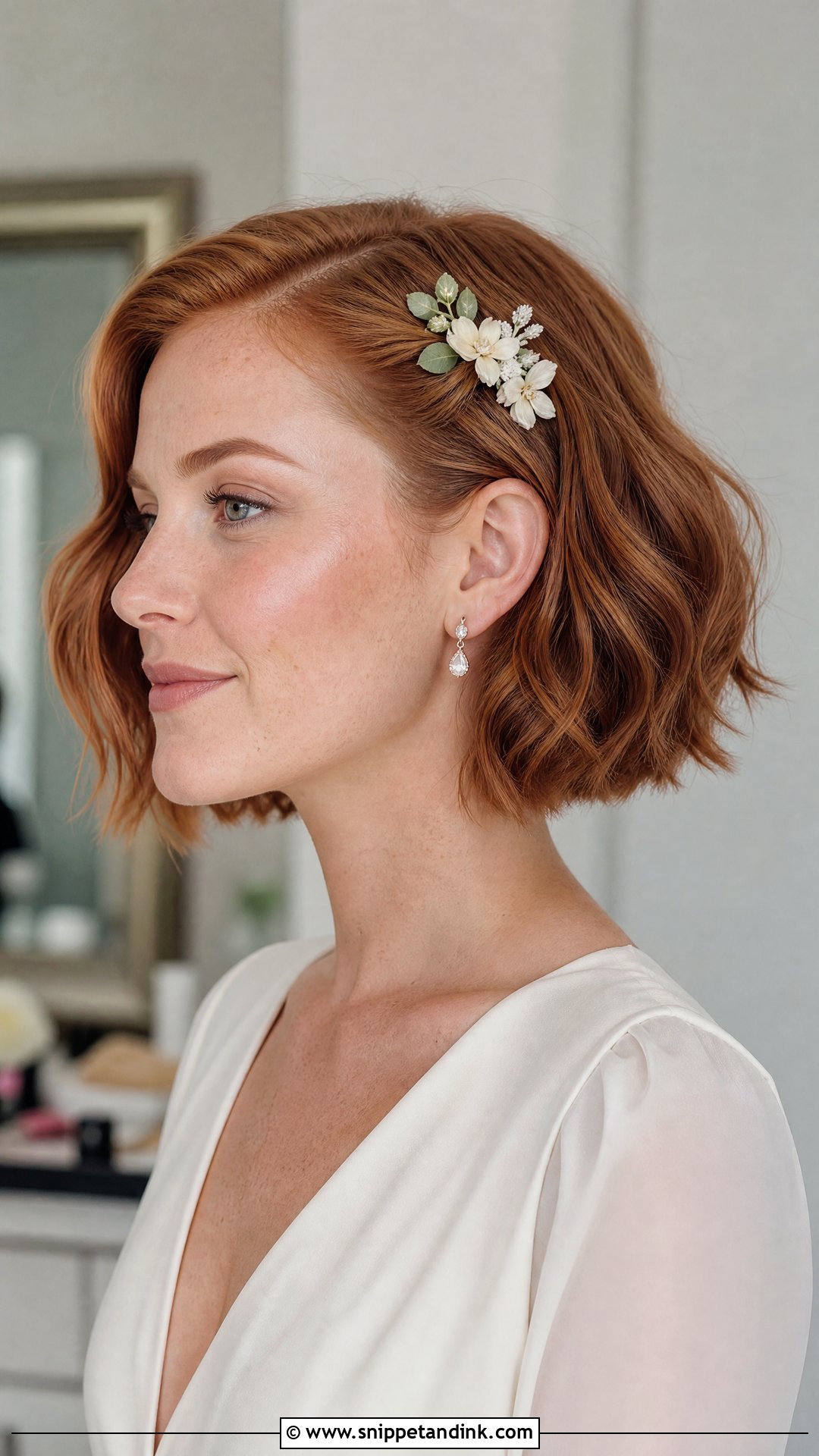
Short hair can carry flowers as well as long hair when the placement is thoughtful. A pixie, bob, or cropped cut can be waved, side-parted or lifted at the crown, then finished with a floral pin or a mini comb. There is less hair to hold weight, so smaller flowers are the rule. Baby’s breath, tiny rosebuds, wax flowers and dried florals add texture without crowding the cut. I keep them close to the part or temple, and with a short cut I often let the earrings do more of the work.
11. Baby Breath Wedding Hair
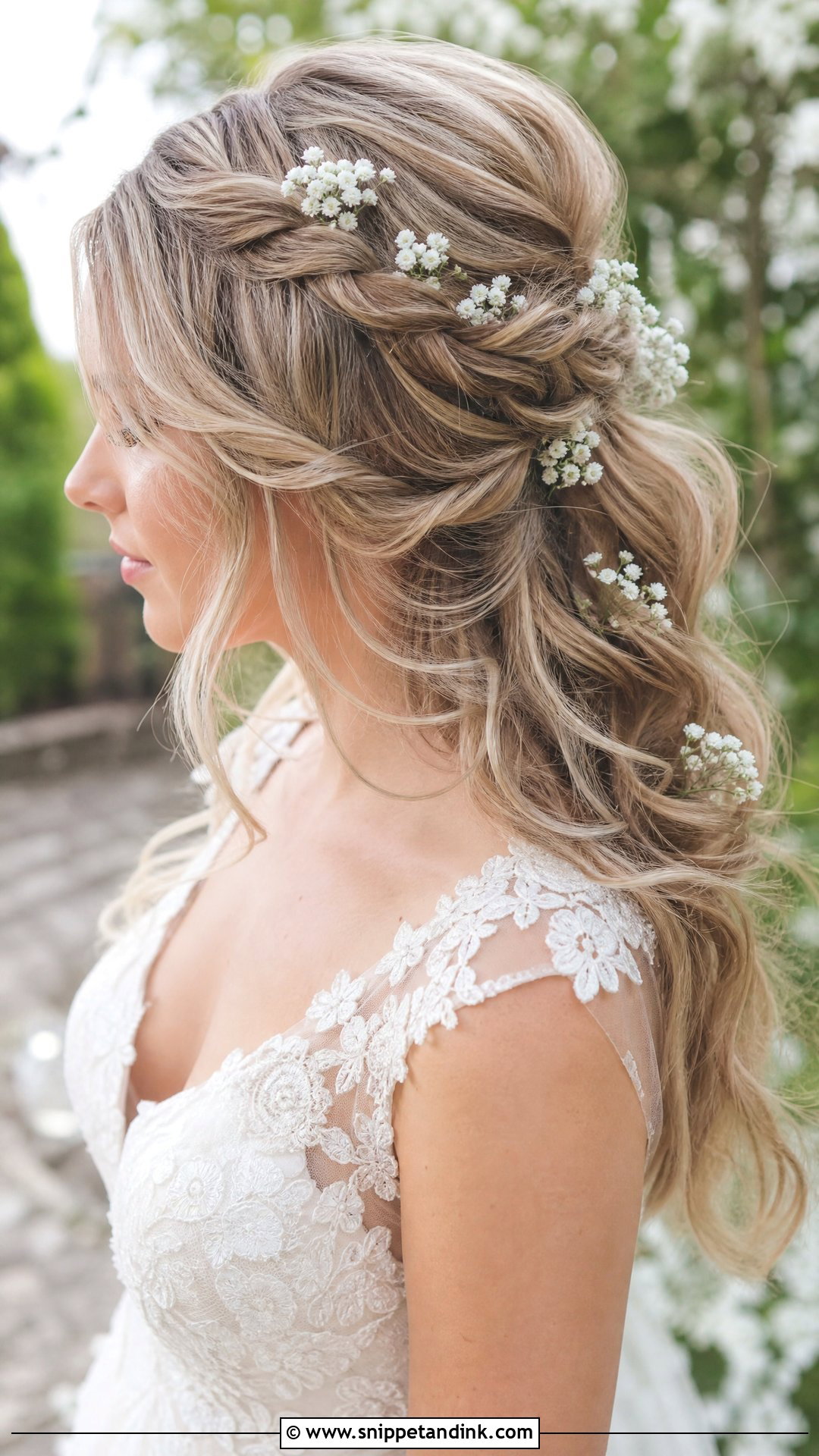
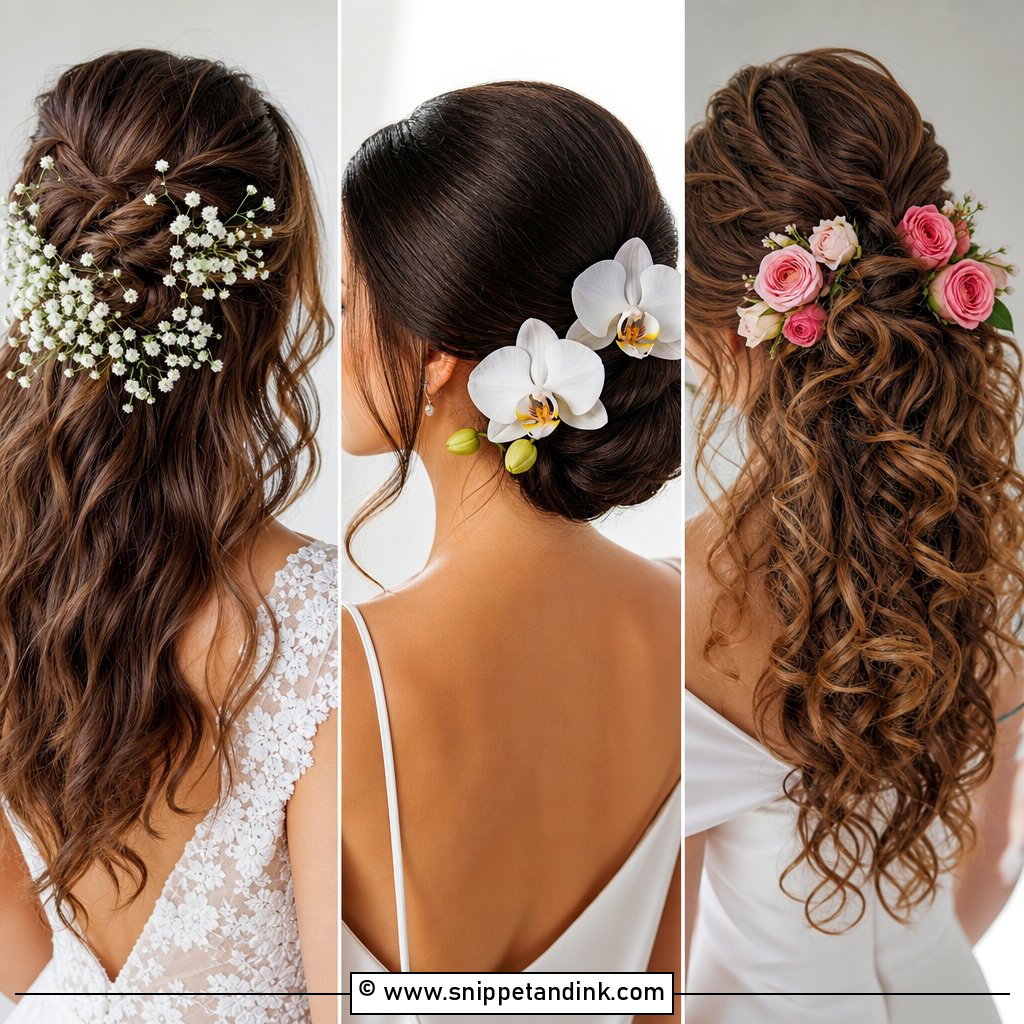
Baby breath wedding hair leaves a soft dotted effect that blends into almost any style: braids, buns, half-up shapes, crowns and loose curls. It sits with satin and with lace alike, which is why I reach for it when a bride is torn between dresses. Use small clusters, not bunches, so it stays light. Fresh or preserved both work; preserved stems hold up better if the day is long, and they do not carry the faint smell some people notice in fresh ones.
12. Rose Wedding Hair
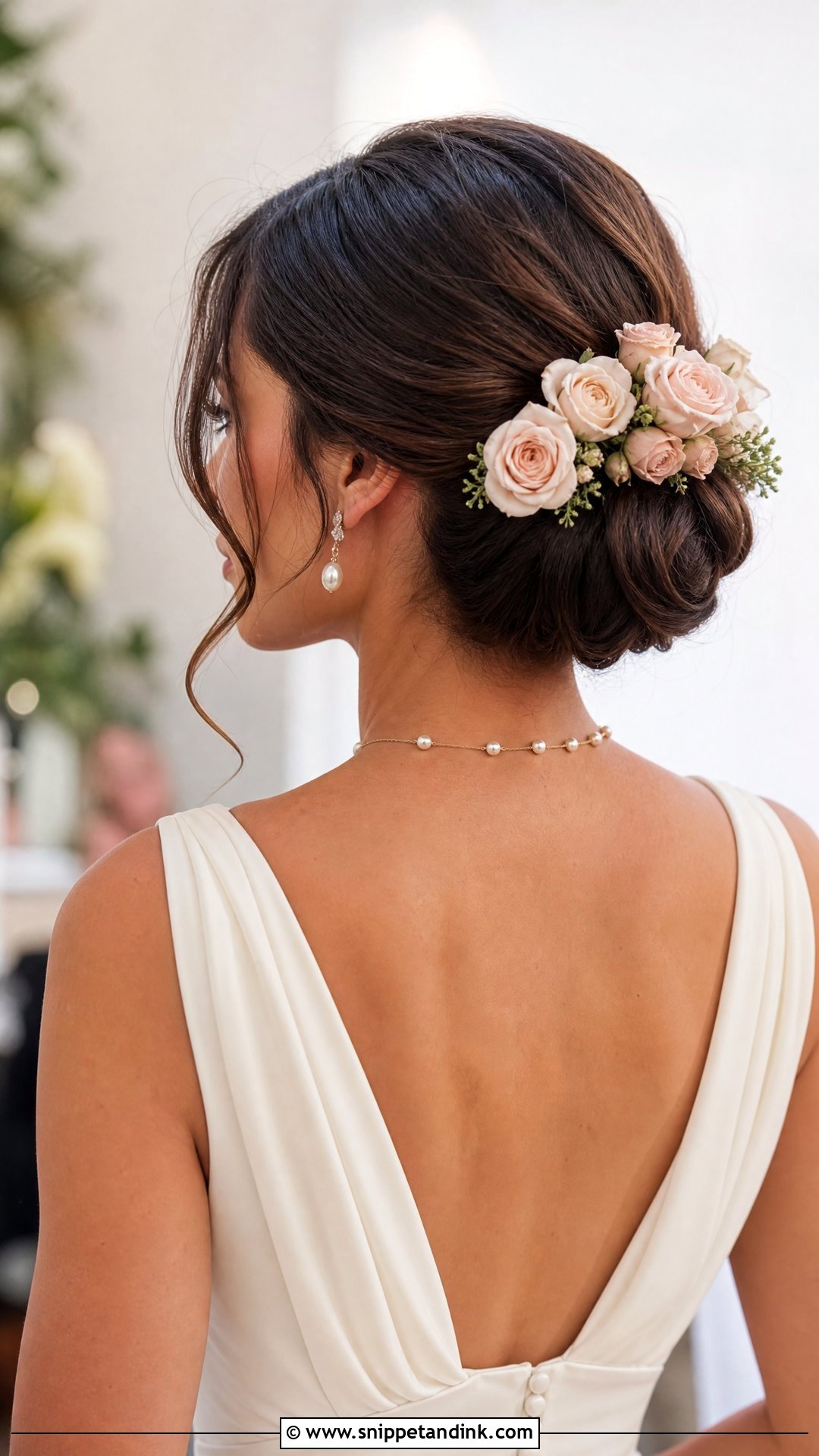
Roses suit most bouquets and most dresses. A single rose behind the ear looks simple; small spray roses tucked into a bun, braid or half-up style look gathered. White reads traditional, blush reads soft, and deeper shades warm up an autumn or evening wedding. Scale decides whether it works: a large rose on fine hair looks like it is about to fall, so I keep blooms smaller for finer textures. Gentle waves or a polished updo give roses the right setting.
13. Orchid Wedding Hair
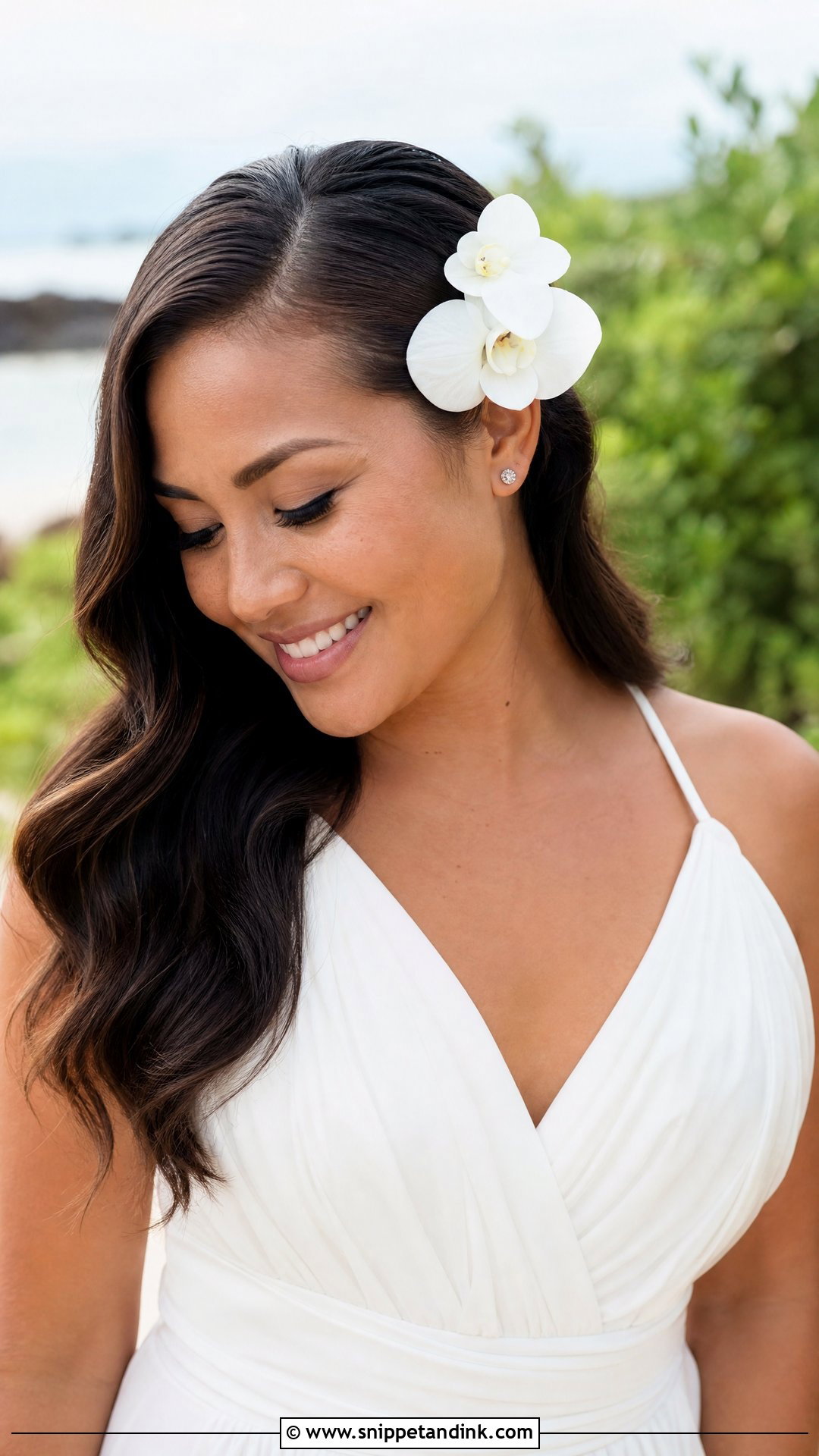
Orchids give a modern, slightly tropical note. Their clean outline stands out against sleek buns, side-swept waves and polished chignons, and a few white ones make a plain hairstyle look considered. Destination and beach weddings suit them, partly because they tolerate warmth. Place them on one side for a sculpted effect. Two or three blooms are plenty. I pair them with minimal jewellery, since the flower already carries the shape.
14. Wildflower Wedding Hair
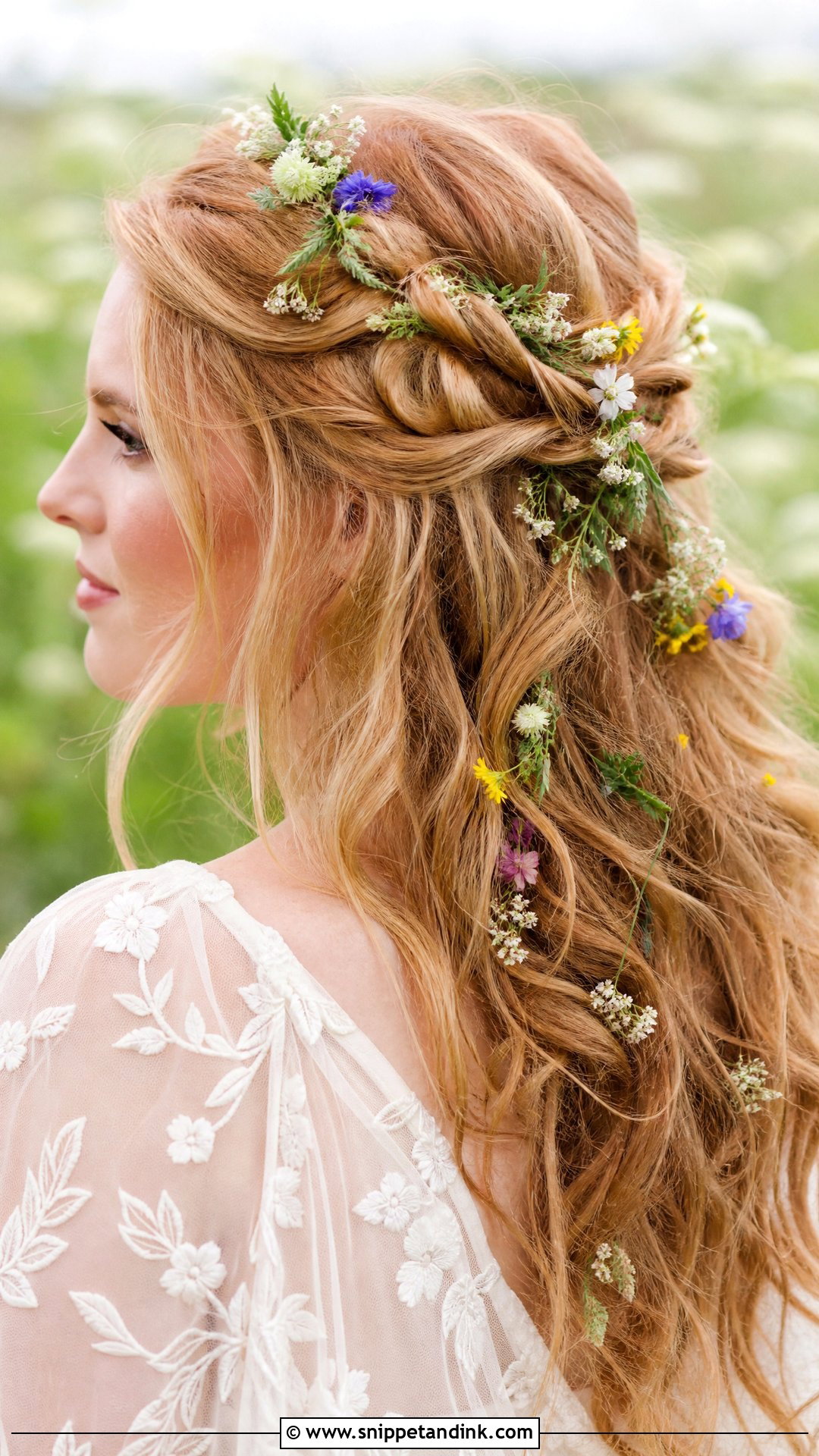
Wildflower wedding hair looks best slightly scattered, so it belongs on loose waves, textured braids, messy buns and half-up styles. Small daisies, lavender, chamomile, wax flowers and greenery make a meadow effect. Muted colours keep it romantic; brighter ones suit a joyful outdoor party. Uneven but balanced is the goal. I match the wildflower palette to the bridesmaids’ colours too, which ties the group photos together. Garden weddings, countryside venues and spring or summer dates suit it most.
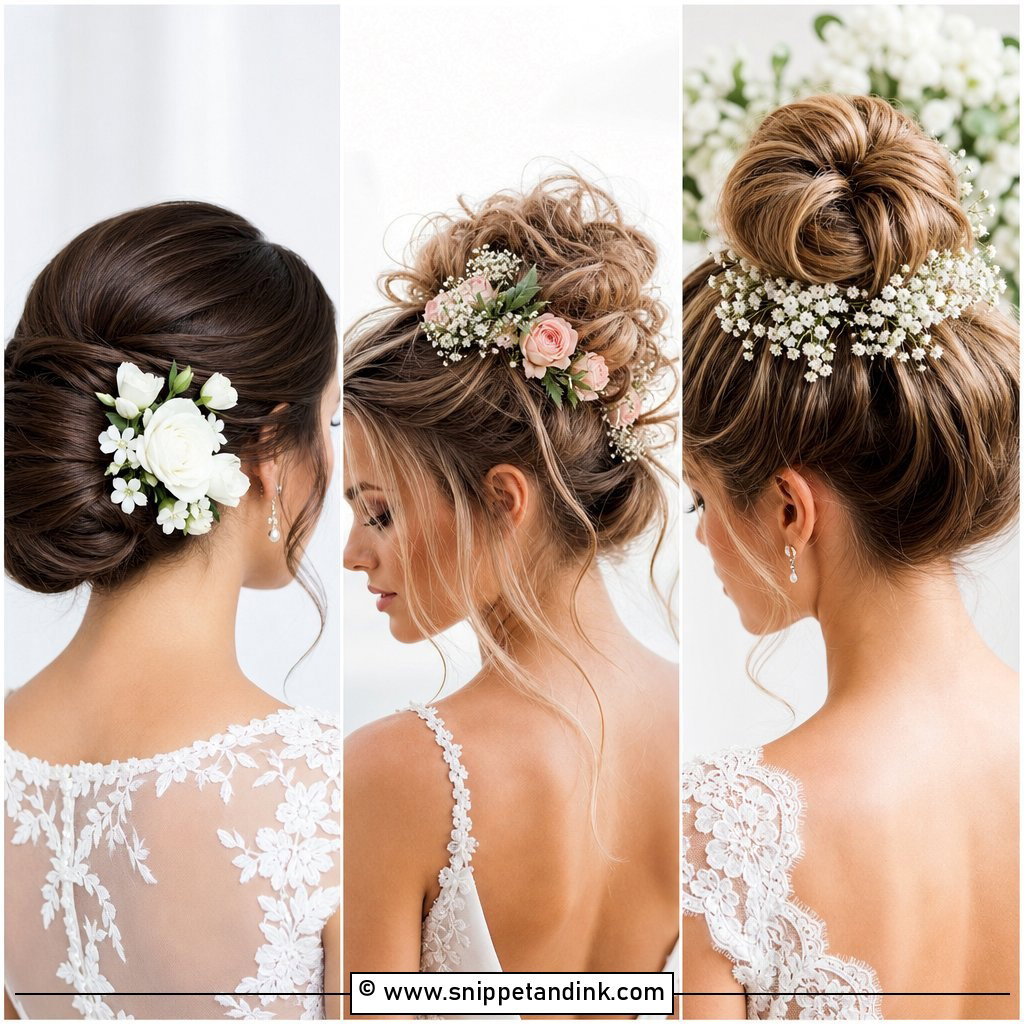
15. Floral Hair Comb Wedding Hair
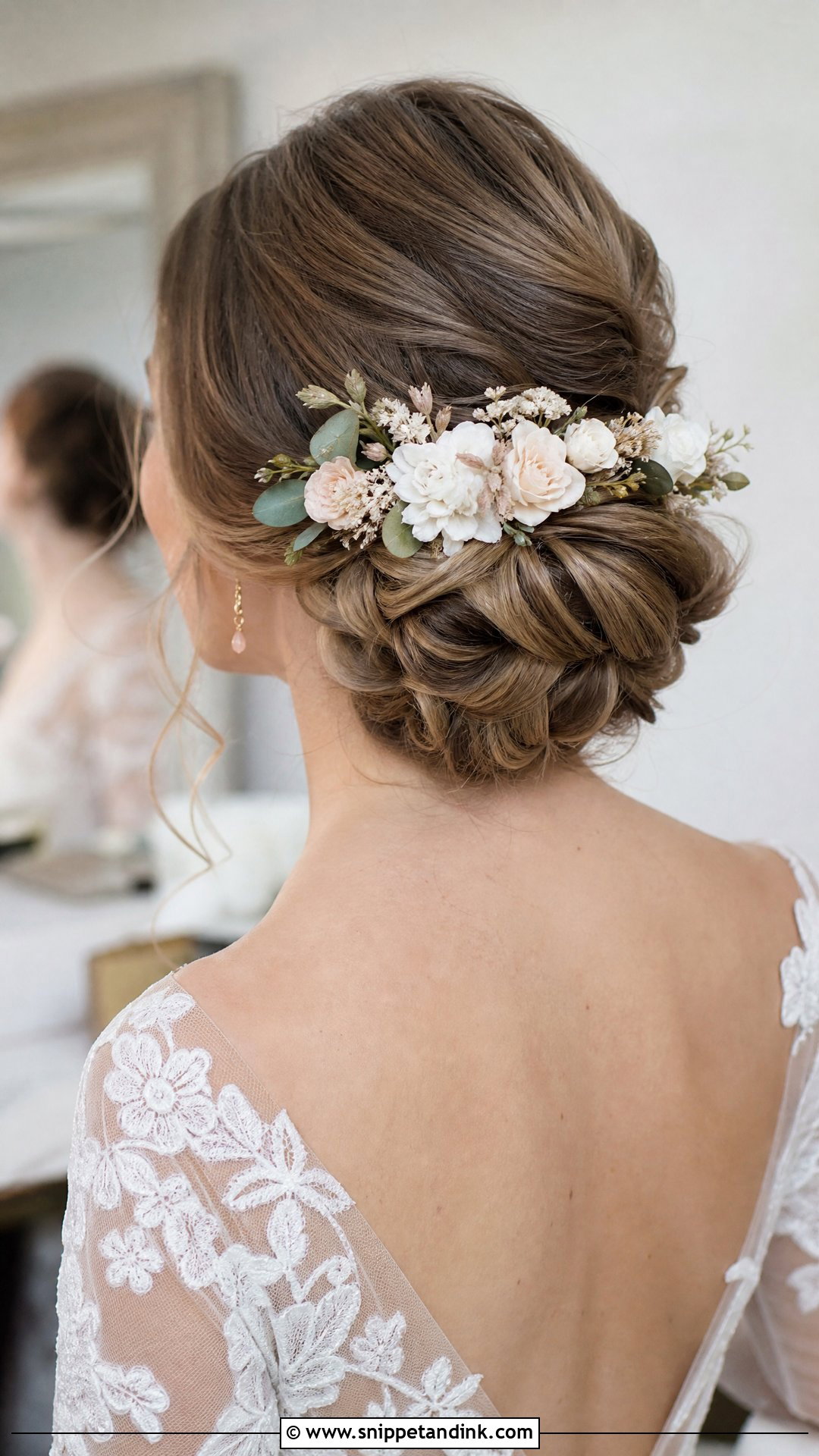
A floral comb is the reliable way to wear flowers. It sits above a bun, beside a chignon, into a half-up section or along the side of loose waves, and it gives the look of fresh flowers without pinning every stem separately. Combs come with fresh, dried, silk or preserved blooms. I size the comb to the hairstyle and to the veil: a large comb next to a heavily embroidered veil edge is one detail too many.
Bridesmaids and Flower Girls Can Wear Flowers Too
Hair flowers across the wedding party tie the photos together, but I keep a clear step down from the bride so she still stands out. If the bride wears a crown, bridesmaids might wear a single bloom or a small pin; if she wears one orchid, they might wear none and carry the colour in their bouquets instead.
Flower girls are the exception: a small, light crown suits them, but make it from silk or preserved stems with no wire ends exposed, and attach it with a soft elastic or a couple of clips. Young children pull at anything that pinches. Check for pollen allergies before anyone wears fresh flowers near their face.
A Second Flower for the Evening
Many brides change something between ceremony and reception: the veil comes out, the hair comes down or goes up, sometimes the dress changes. That is a natural moment to swap the hair flower too. Fresh flowers that looked perfect at two o’clock can be tired by nine, so I often plan a fresh piece for the ceremony and a silk or pearl one for the party.
Plan the swap with your stylist so the pins for the evening piece are already in place. Keep the second flower boxed, labelled and with whoever is helping you change, and the switch takes five minutes.
Let the Dress Set the Size of the Flower
Hair flowers come down to balance. They should support the hairstyle, suit the mood of the wedding and stay comfortable from the first photo to the last dance. With a detailed dress, go smaller or choose a simple floral comb. With a minimal gown, a crown, an orchid accent or a rose-filled bun can carry more. Think about the weather, how sturdy the flowers are and how they will be secured. A trial run lets you test the placement, weight and freshness, and seeing it with the dress on settles most doubts.
You'll Like These Ideas:


Leave a Reply