
Tamil weddings treat hair as part of the ritual, not just part of the outfit. The jasmine, the gold and the shape of the braid all carry meaning, and families often have firm ideas about what the muhurtham hair should look like. From the stylist’s chair, I see the same question every season: how traditional should I go, and what can I change for the reception? This list runs from the full poo jadai alangaram to open waves with a gajra, with notes on what each style takes to build and wear. Use it to decide which look belongs at which event.
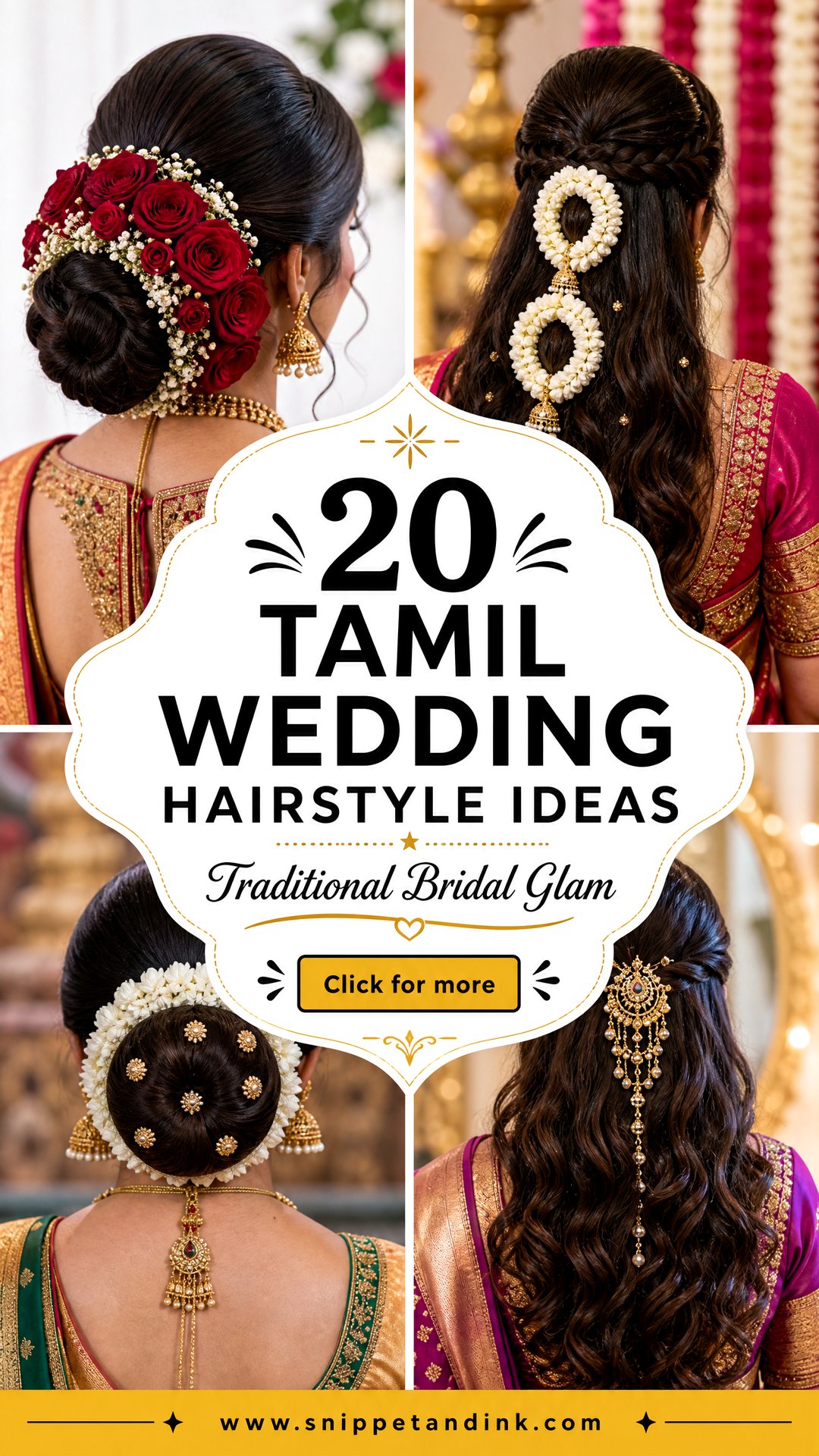
Malli, Mullai, Kanakambaram and Rose in the Hair
Most of these styles are built around flowers, and each one behaves differently in the hair. Knowing that before you order saves a lot of last-minute disappointment.
- Malli (Madurai jasmine): the classic choice, with plump buds and strong fragrance. Buds open through the day, so order them strung tight in the morning. They bruise if crushed and brown if they get too cold or wet.
- Mullai: a smaller, finer jasmine that looks more delicate on a slim braid or a small bun. It suits brides who find malli too heavy in scent.
- Kanakambaram: the orange firecracker flower. It has little scent but holds its color for many hours and survives heat far better than jasmine, which is why it’s often strung alongside it.
- Roses: the color accent. They’re the most fragile in a warm hall, so I use tight buds and add them last.
If you’re sensitive to strong scents, mention it early. A full jadai of malli sits right against your neck all morning, and some brides prefer a mullai or mixed braid simply to avoid a headache.
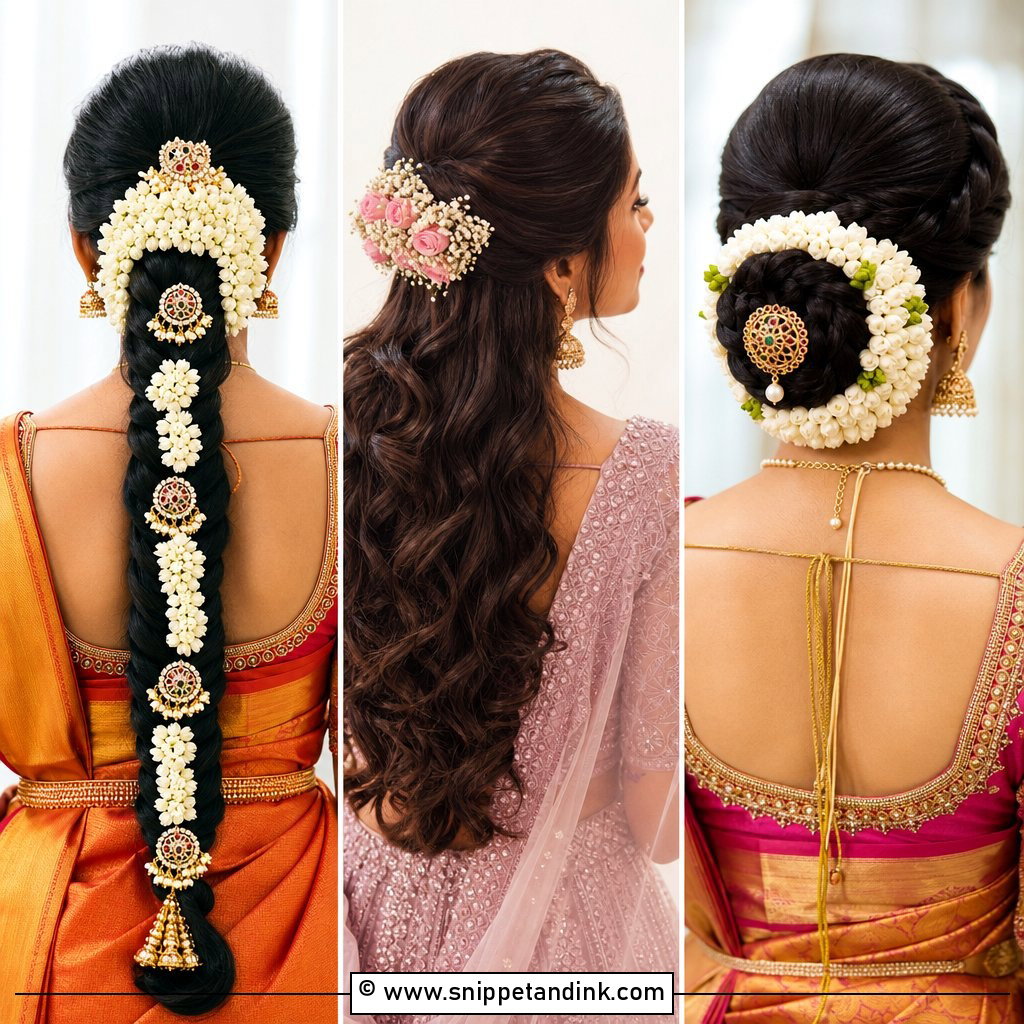
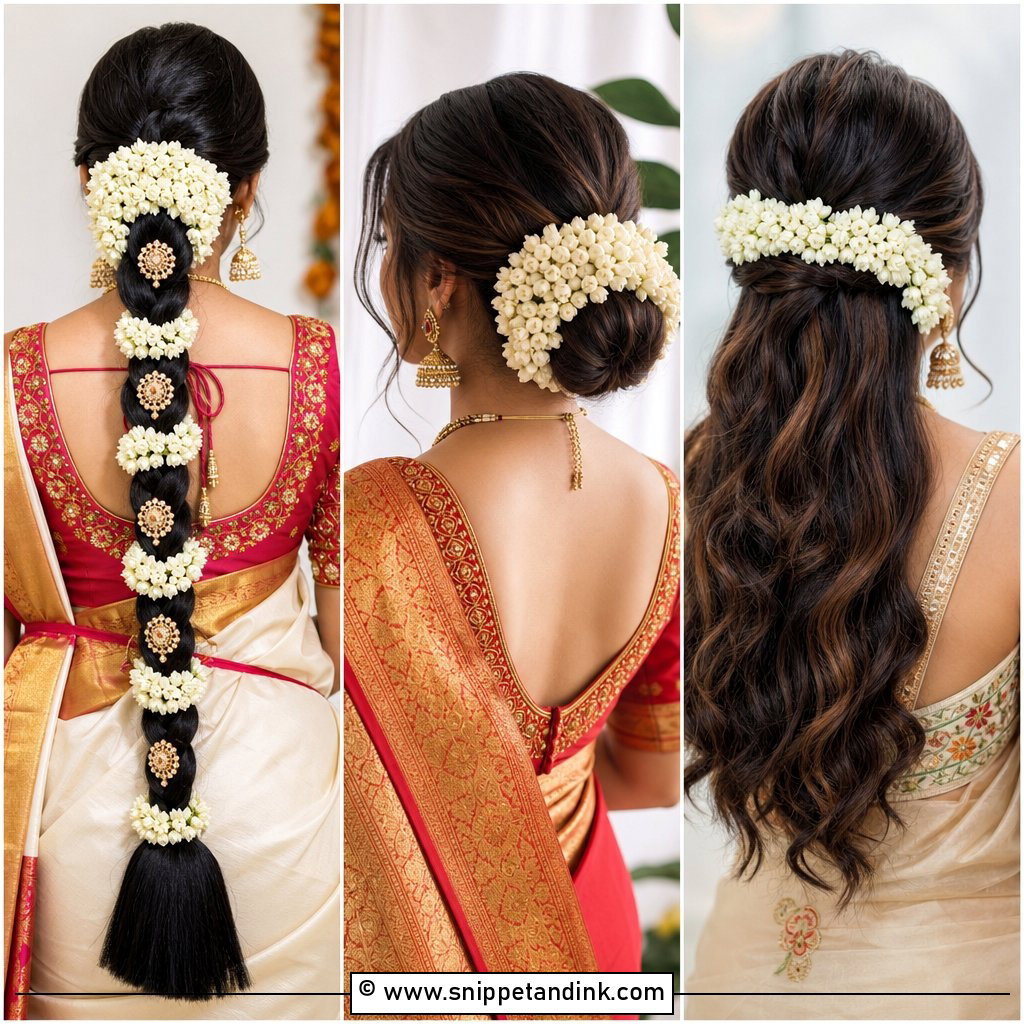
1. Traditional Poo Jadai Alangaram Braid
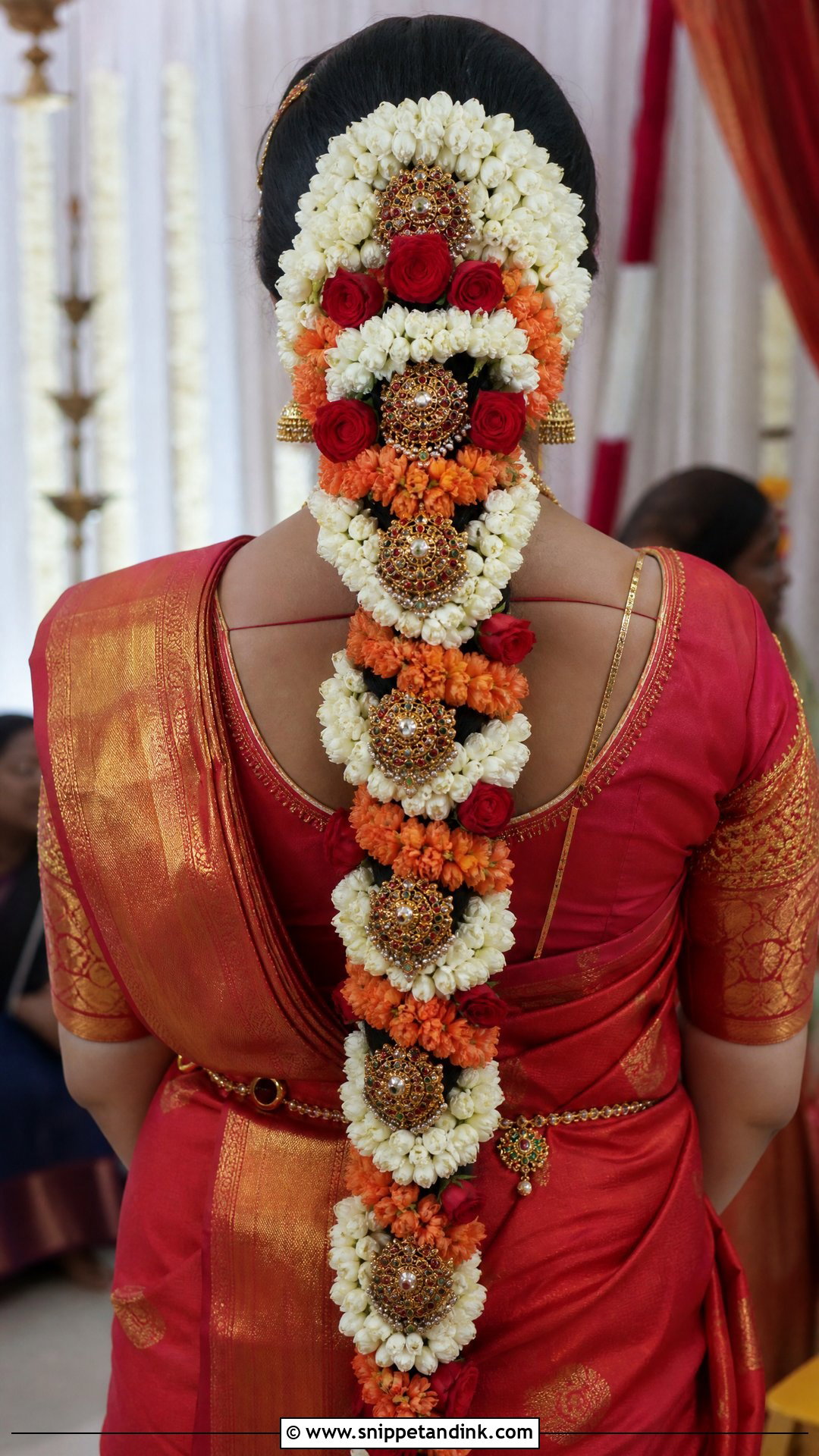
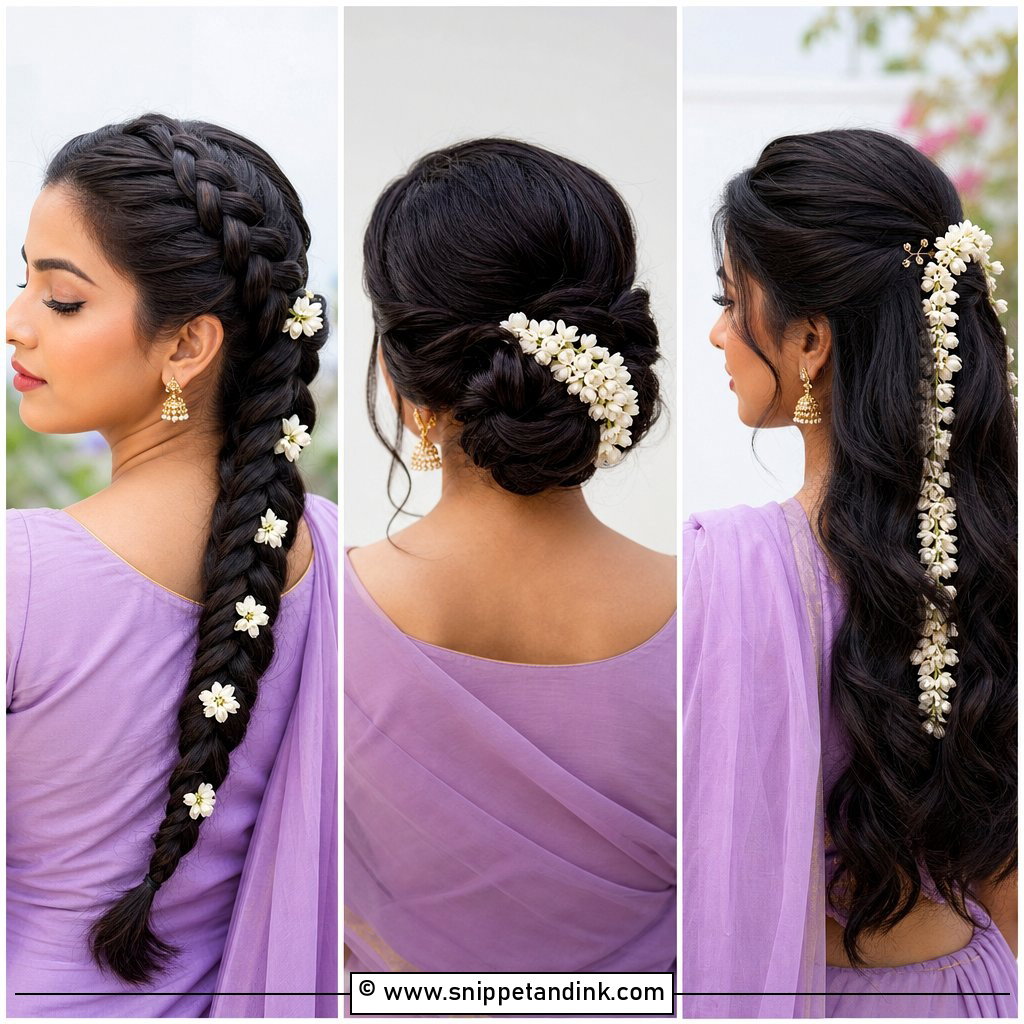
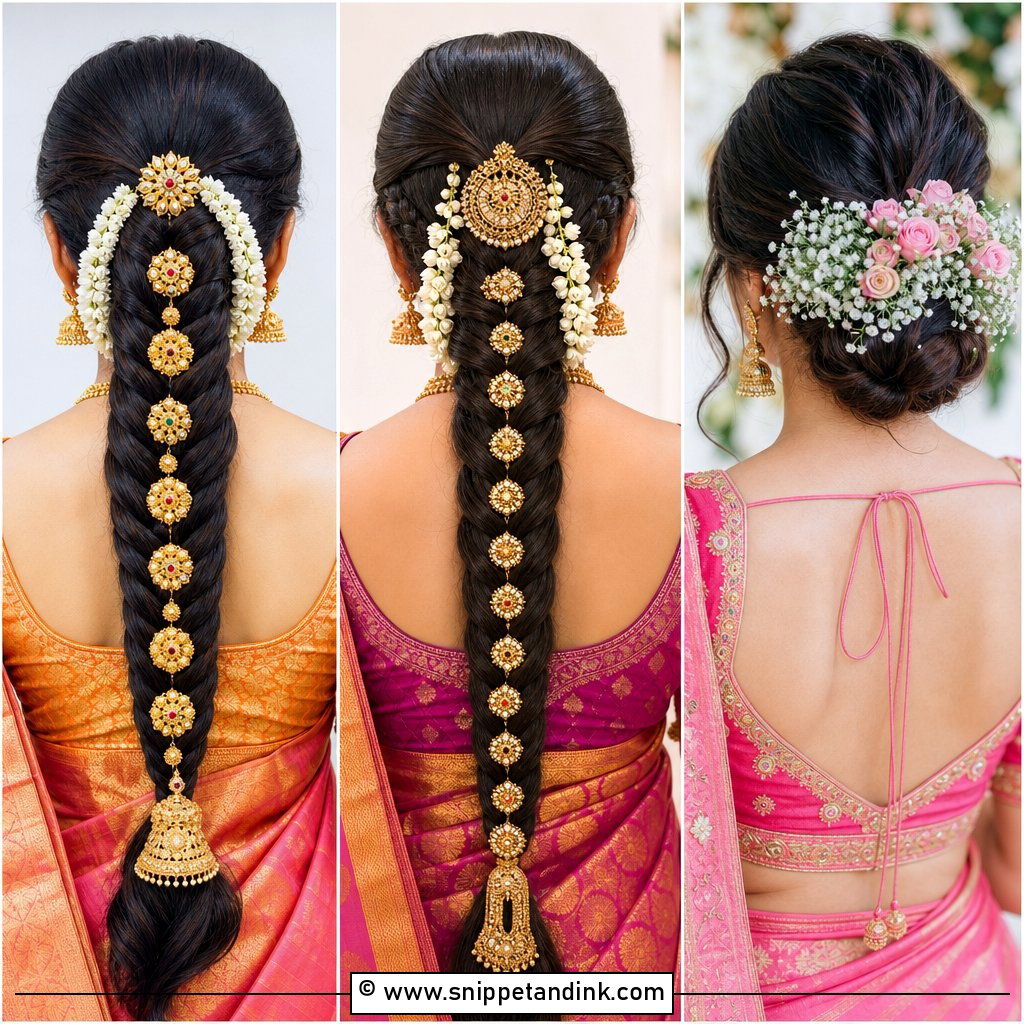
The poo jadai alangaram is the centerpiece of a classic Tamil bridal look: one long, thick braid decorated from crown to tip with jasmine, roses and kanakambaram. Poo simply means flower, and jadai is the braid. It’s the expected choice for temple weddings and the muhurtham, often weighted with golden billas or pearl strings as well. Expect weight. A fully dressed jadai can carry a surprising amount of flowers and metal, so I build it over a hair extension anchored at the crown and sew the flower strings on rather than pinning them. Done that way, it stays comfortable through the whole ceremony.
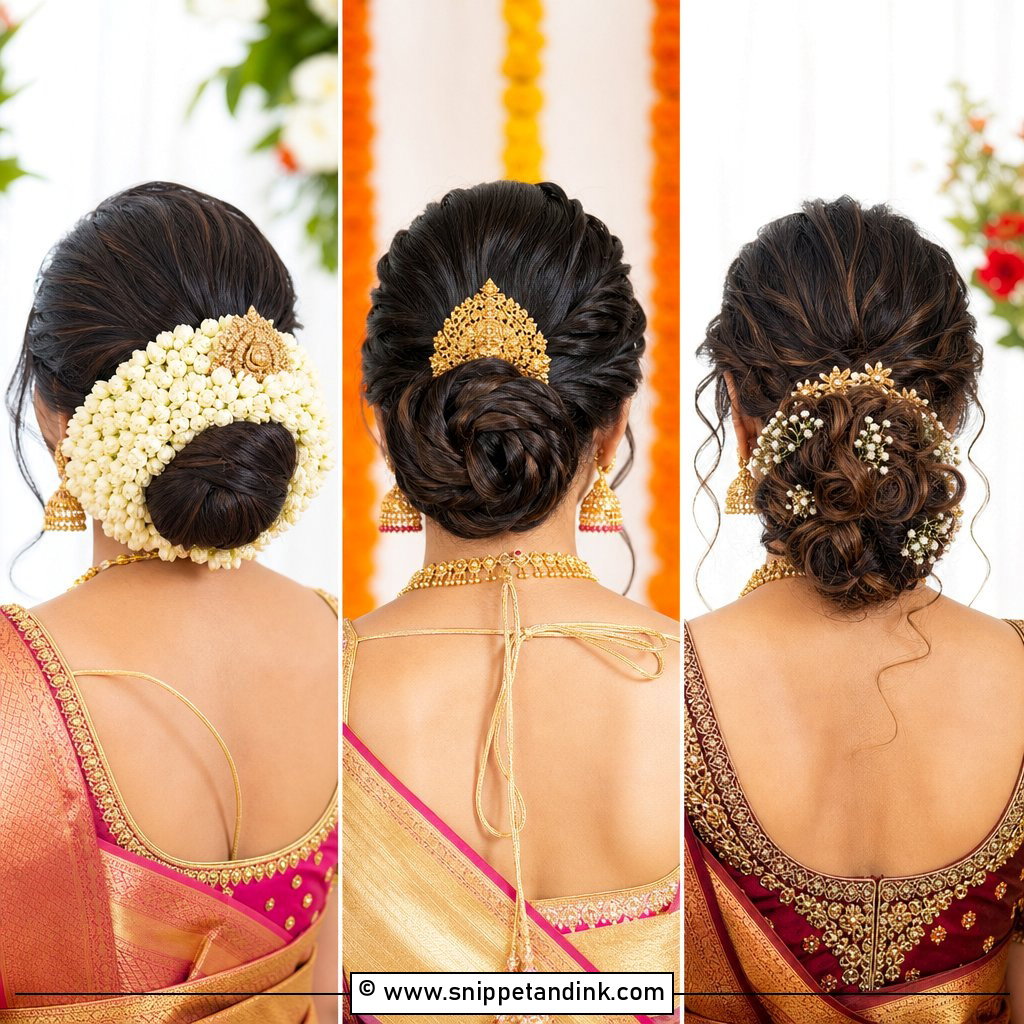
2. Jasmine Gajra Low Bun
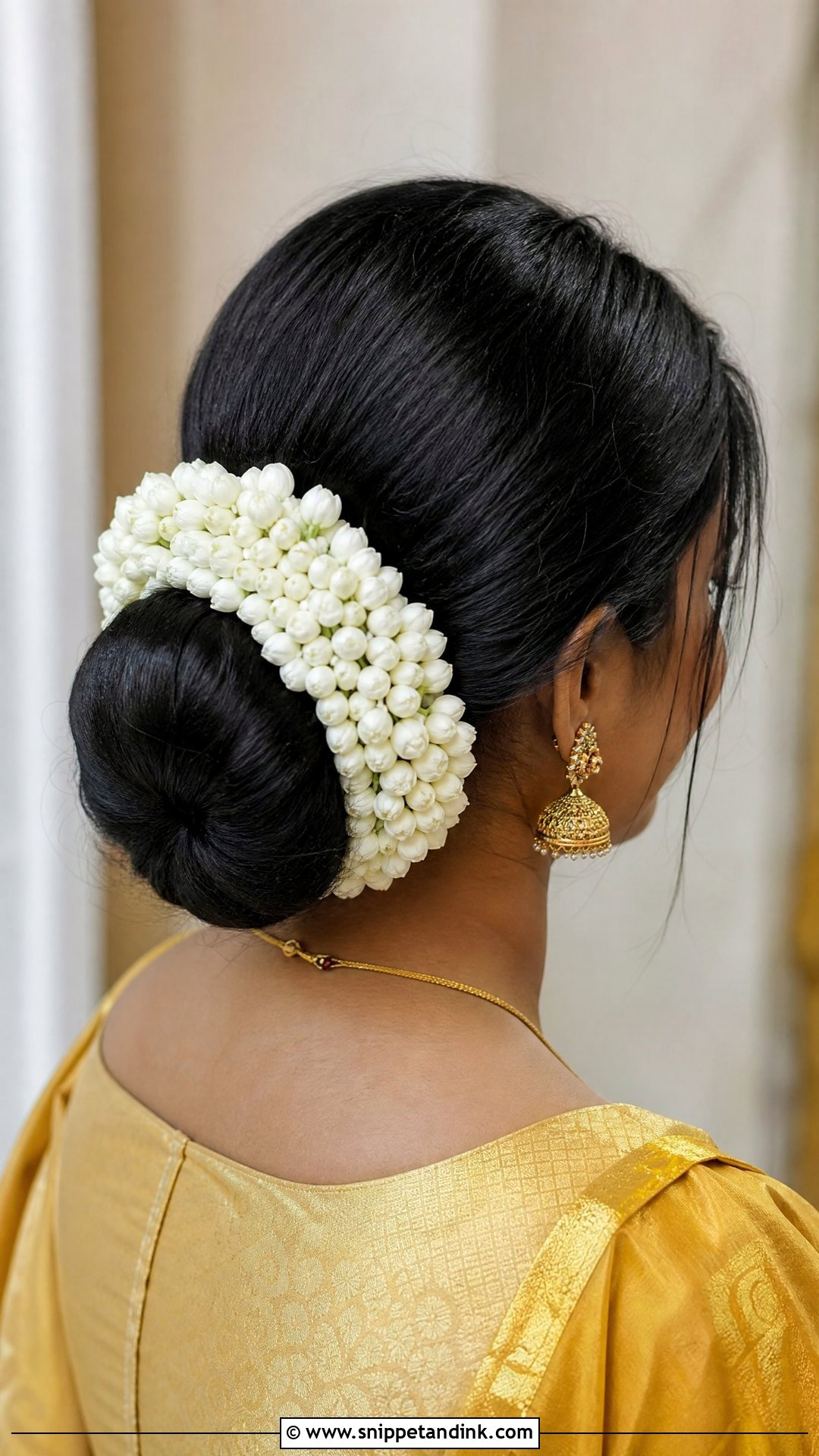
A jasmine gajra low bun is the quiet, polished alternative. Hair is gathered into a smooth round bun at the nape, then circled with a garland of fresh malli poo so the flowers form a neat ring. It sits well with a Kanjeevaram and temple jewelry, and it can stay on from the muhurtham into an evening reception. The shape depends on the base. I build the bun around a padding ring the same color as the hair, since a bun made from the hair alone often loses its round outline once a heavy gajra is wrapped around it.
3. Rose Adorned Floral Bun
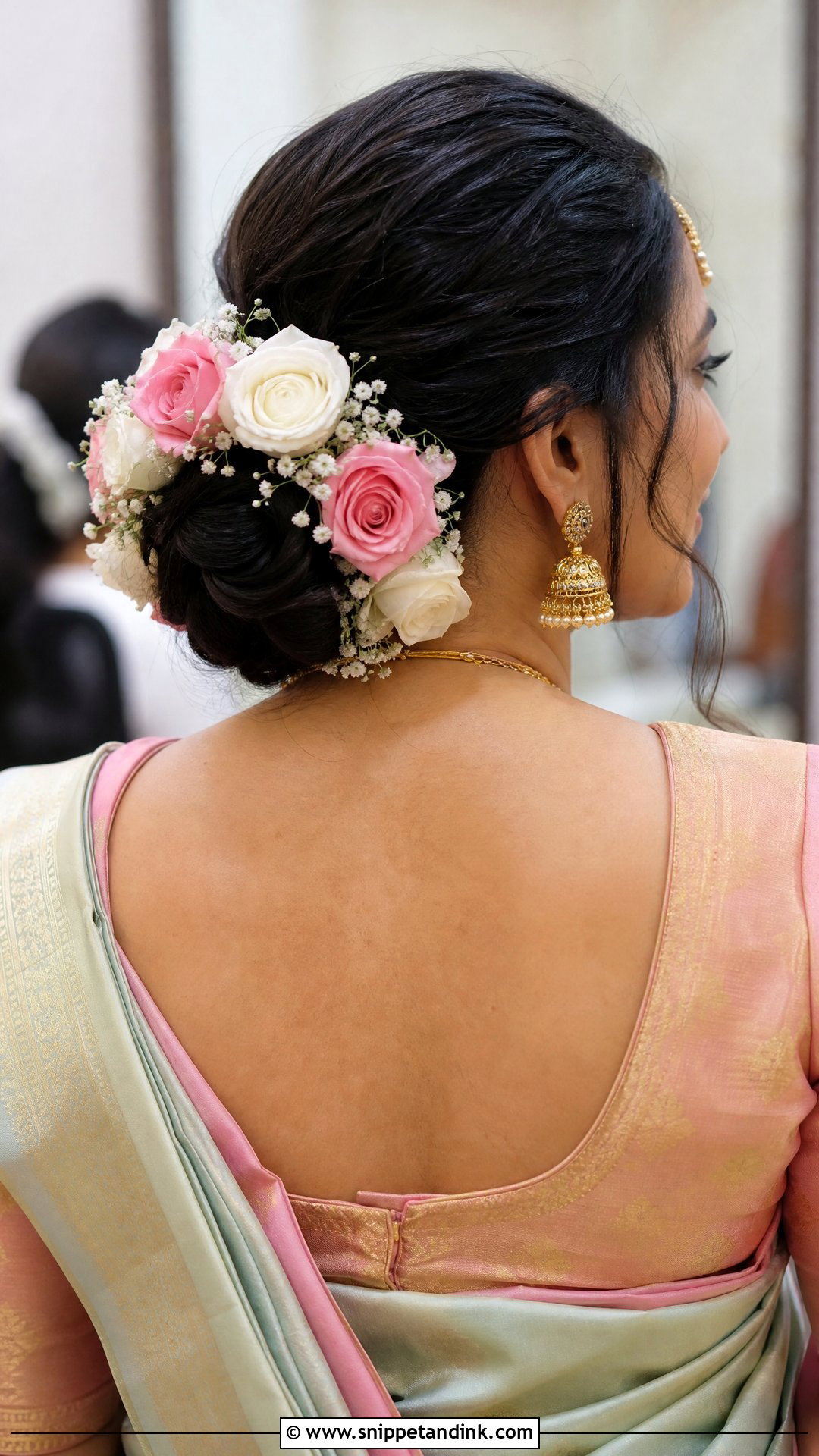
Roses bring color where jasmine brings fragrance. A neat bun at the back is tucked with fresh roses around its edge, in red, pink or white to match the saree. It feels a little more contemporary while staying South Indian, and I’d suggest it for engagement ceremonies and reception nights. Use buds just starting to open. Fully opened roses drop petals onto the blouse within a couple of hours, and in a warm hall they brown at the edges. Statement jhumkas and a maang tikka balance the color nicely.
4. Half Braid With Poo Chendu Rings
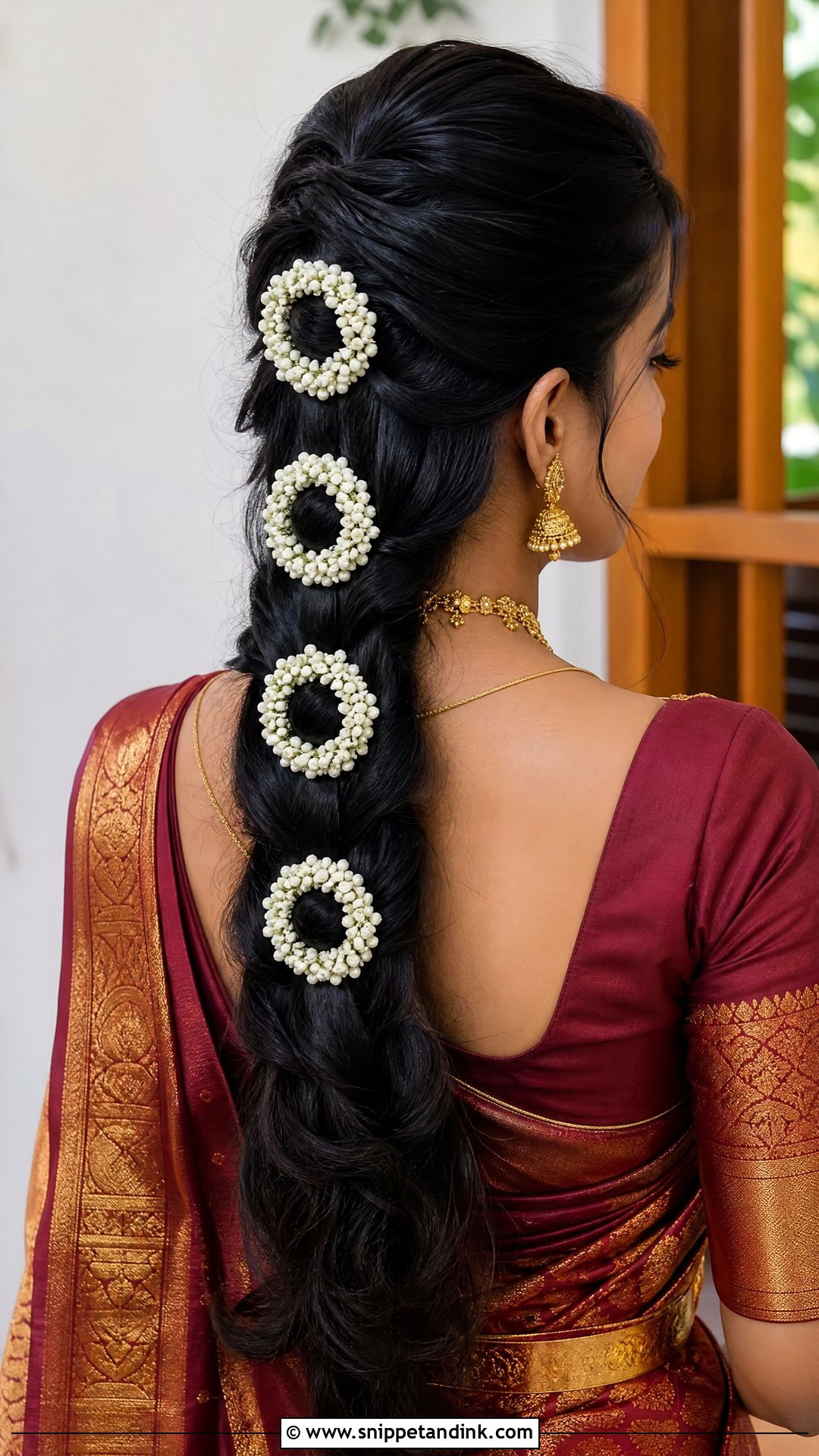
Poo chendu are small round flower rings spaced evenly down the braid instead of covering it completely. You get the traditional jadai outline with much less weight, which is why I steer brides with fine hair or sensitive scalps toward it. The spacing is what makes or breaks the look. I measure the braid and mark each ring’s position before attaching anything, because uneven gaps are very obvious from behind in ceremony photos. It’s a good middle path if a full floral braid feels too heavy for you.
5. Kondai Bun With Gold Pins
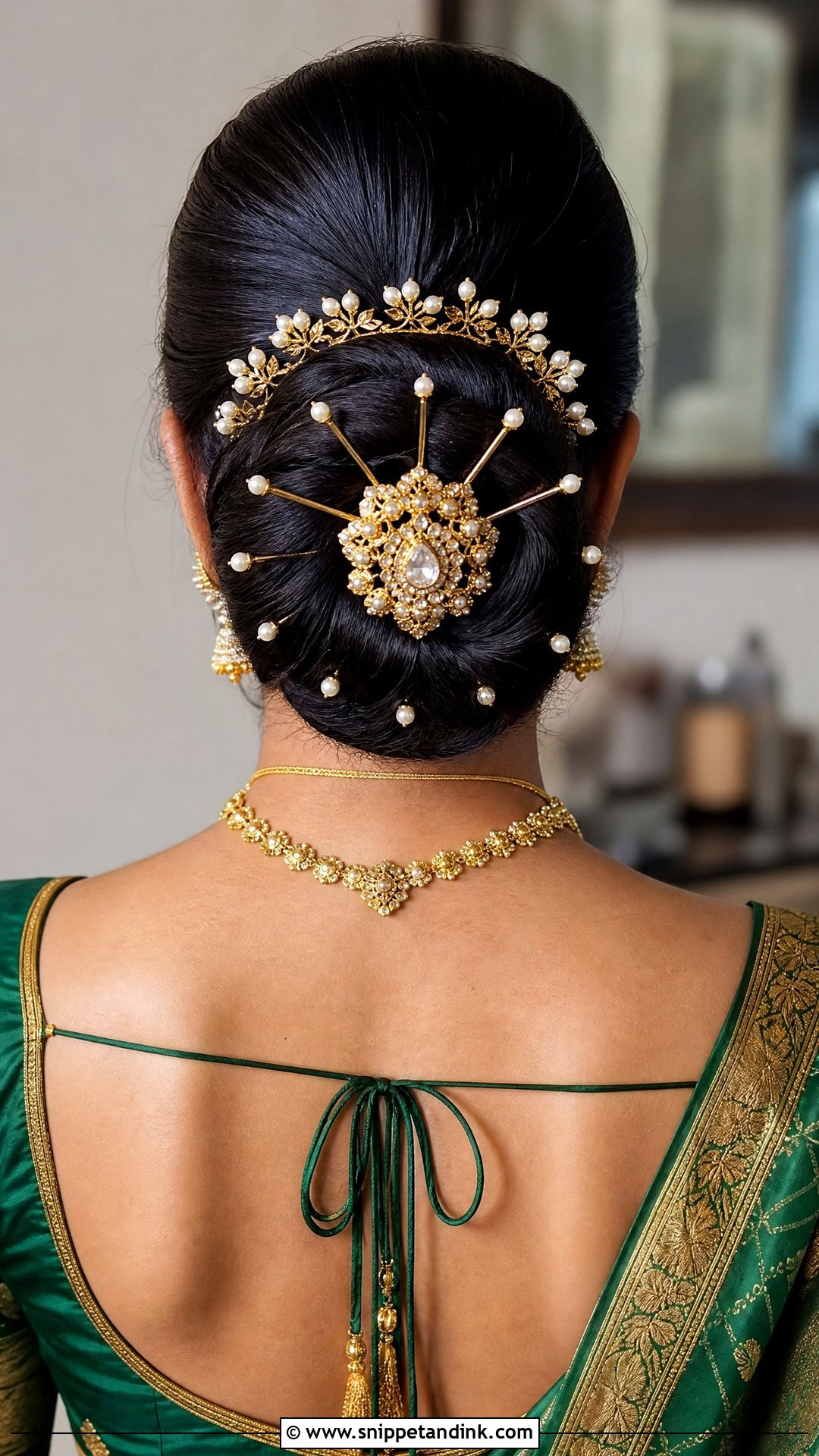
The kondai is a bun worn by brides across Tamil Nadu and Kerala, placed at the nape or higher near the crown. Its character comes from the decoration: gold pins, pearls or a brooch set at the center. The sculpted shape shows off temple jewelry and stays secure all day, so it’s a natural fit for the muhurtham. Placement changes the effect. A high kondai adds height and suits brides with a shorter neck, while a nape kondai is kinder under a heavy pallu that gets pinned over the shoulder. A few jasmine strands round it off.
6. Hybrid Braid With Gold Ornaments
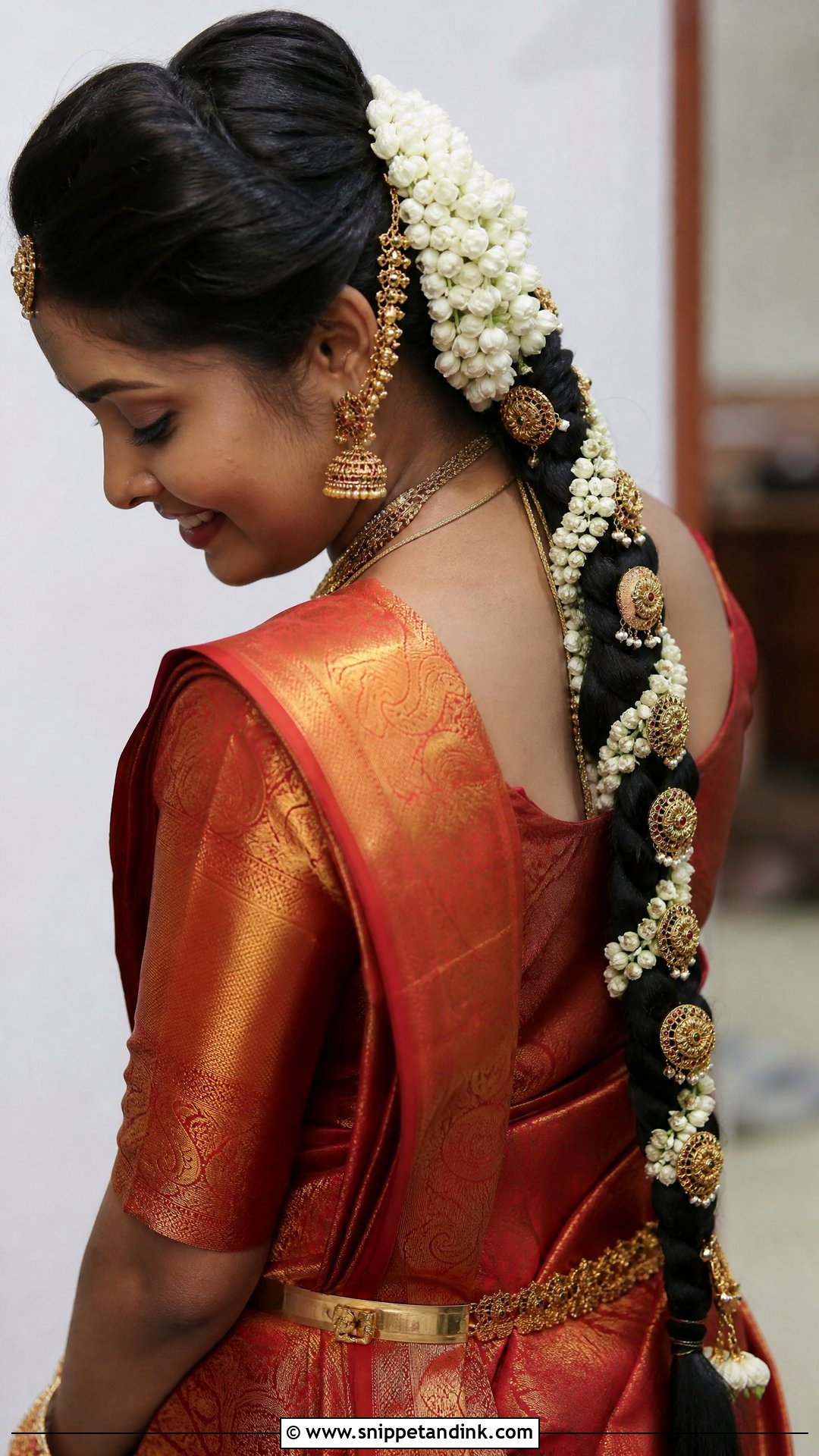
A hybrid braid mixes fresh flowers with gold ornaments along the same plait, with jasmine strands woven between jadai billas and pearl accents. It’s the richest look on this list, built for heavy Kanjeevaram silks and full temple sets. The gold catches light against dark hair and white flowers. Heirloom billas are often heavier and more fragile than new ones, and I attach them with thread rather than wire pins so the old fastenings aren’t strained. Bring every piece to the trial, not just the main ornament.
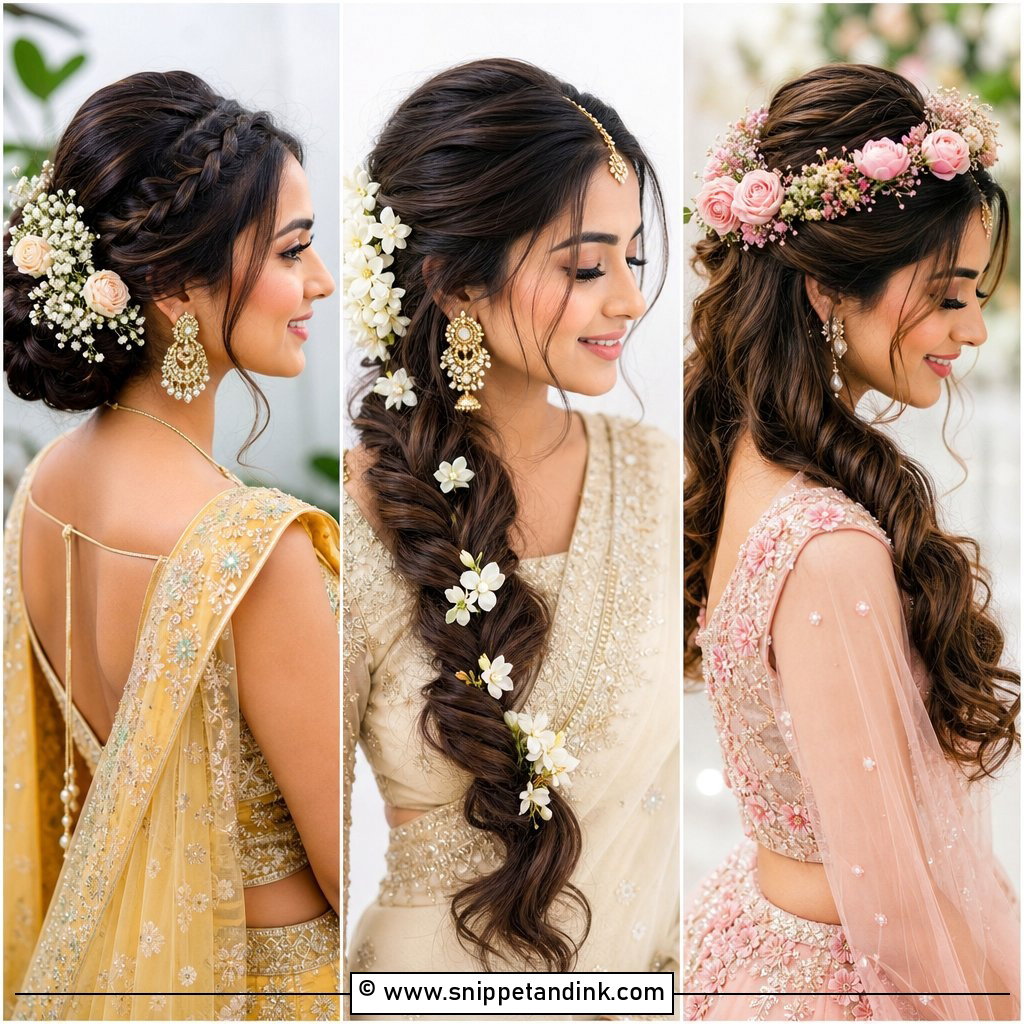
7. Side Swept Floral Braid
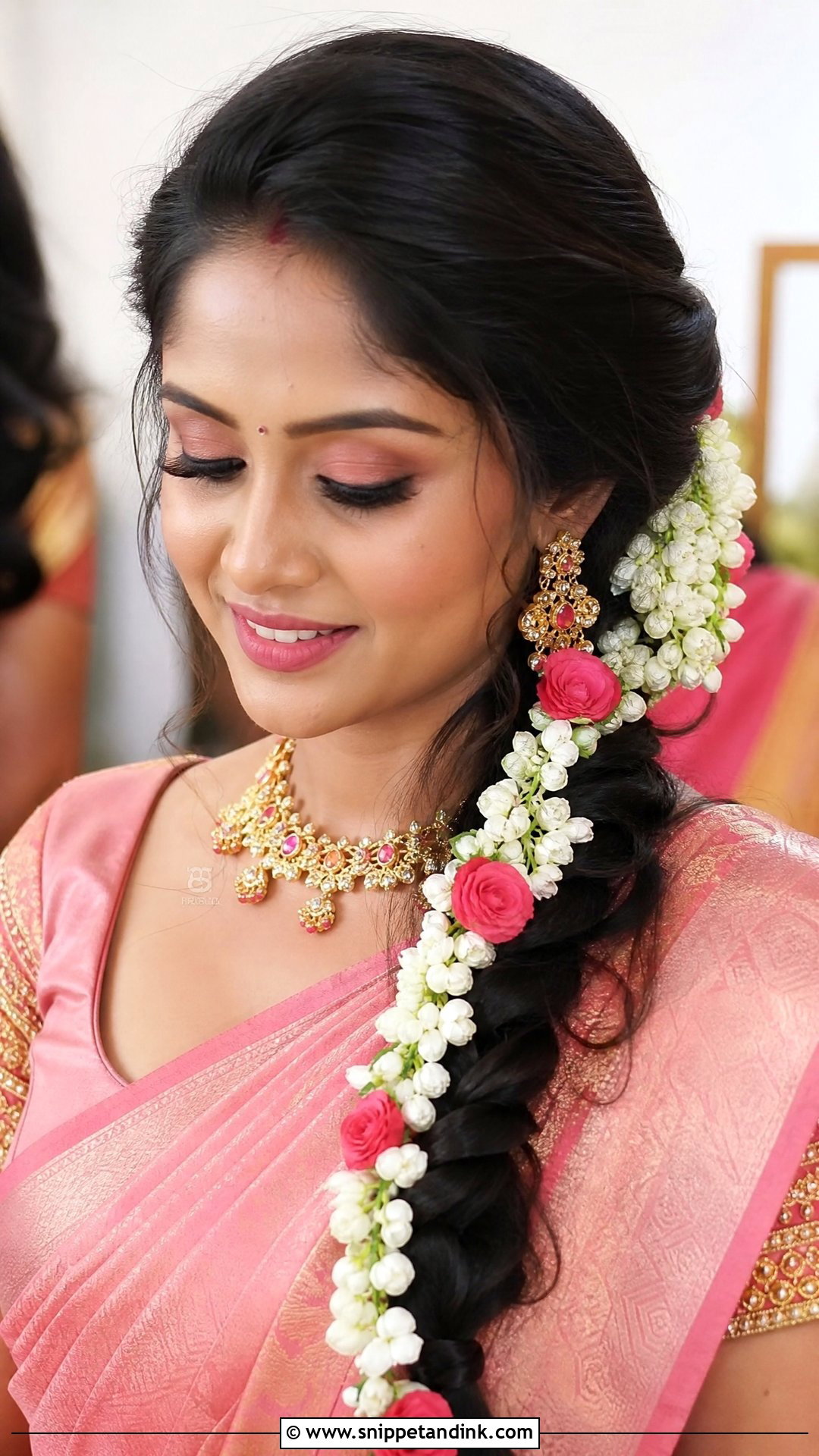
Pulling the braid over one shoulder softens the whole look and gives the photographer a clear view of the flowers in front-facing portraits. Jasmine or roses go along its length. It belongs at receptions, the sangeet and pre-wedding events more than the muhurtham. You can keep it loose and tousled or sleek. My one check is the pallu: if it’s pinned on the same shoulder, the braid and the drape fight for the same space, so I usually sweep the braid to the other side.
8. Loose Curls With Gajra Accent
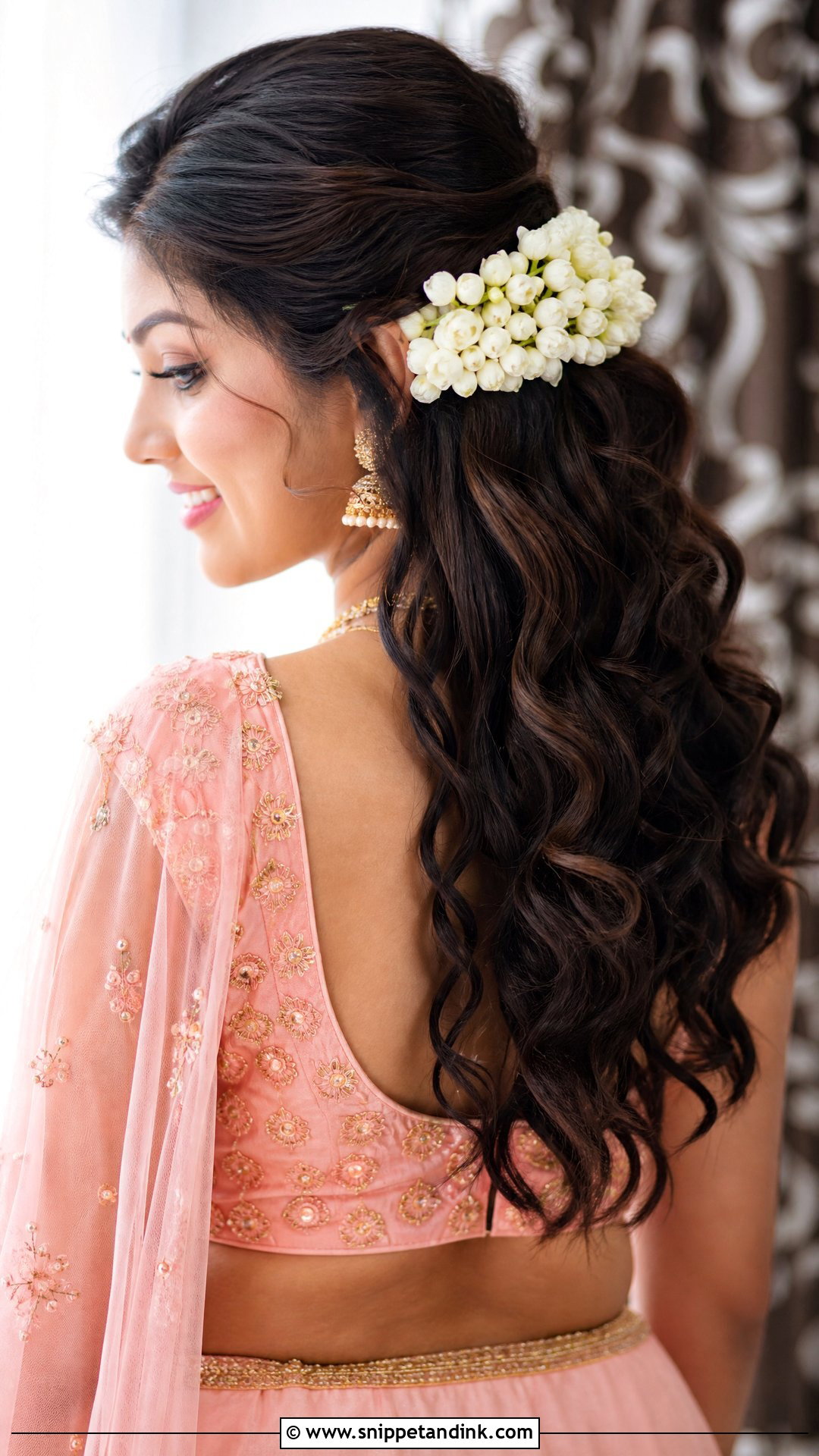
Loose curls with a gajra let you wear your hair open and still carry jasmine. The hair falls in soft waves while a string of jasmine wraps around a half-pinned section at the back. It’s a popular reception choice with a lightweight saree or lehenga. The gajra needs something firm to sit on, so I make a small hidden braid across the back of the head and pin the jasmine to that. Pinned straight into curls, it slides down and drags the waves flat.
9. Maang Tikka Low Bun With Baby’s Breath
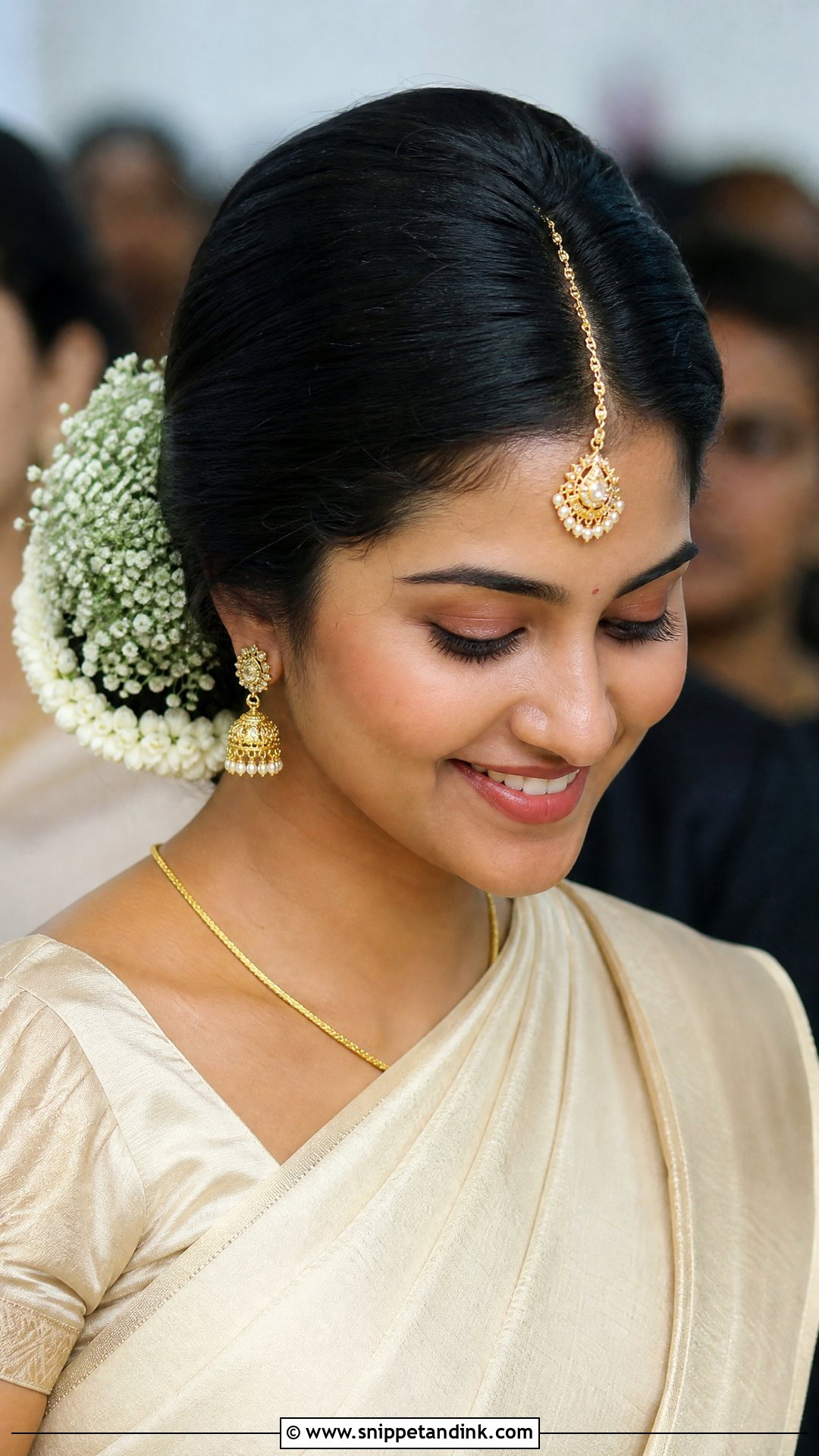
This style mixes structure with something airy: a low, detailed bun at the nape, volume teased at the crown, and a ring of gajra mixed with baby’s breath. A matching maang tikka draws attention to the face. The baby’s breath softens the jasmine and suits daytime ceremonies and outdoor weddings. Baby’s breath is sturdier than it looks, but it does go limp in strong sun, so I push short stems into the bun at an angle and keep a few spare sprigs for a quick refresh.
10. Pearl String Jadai Braid
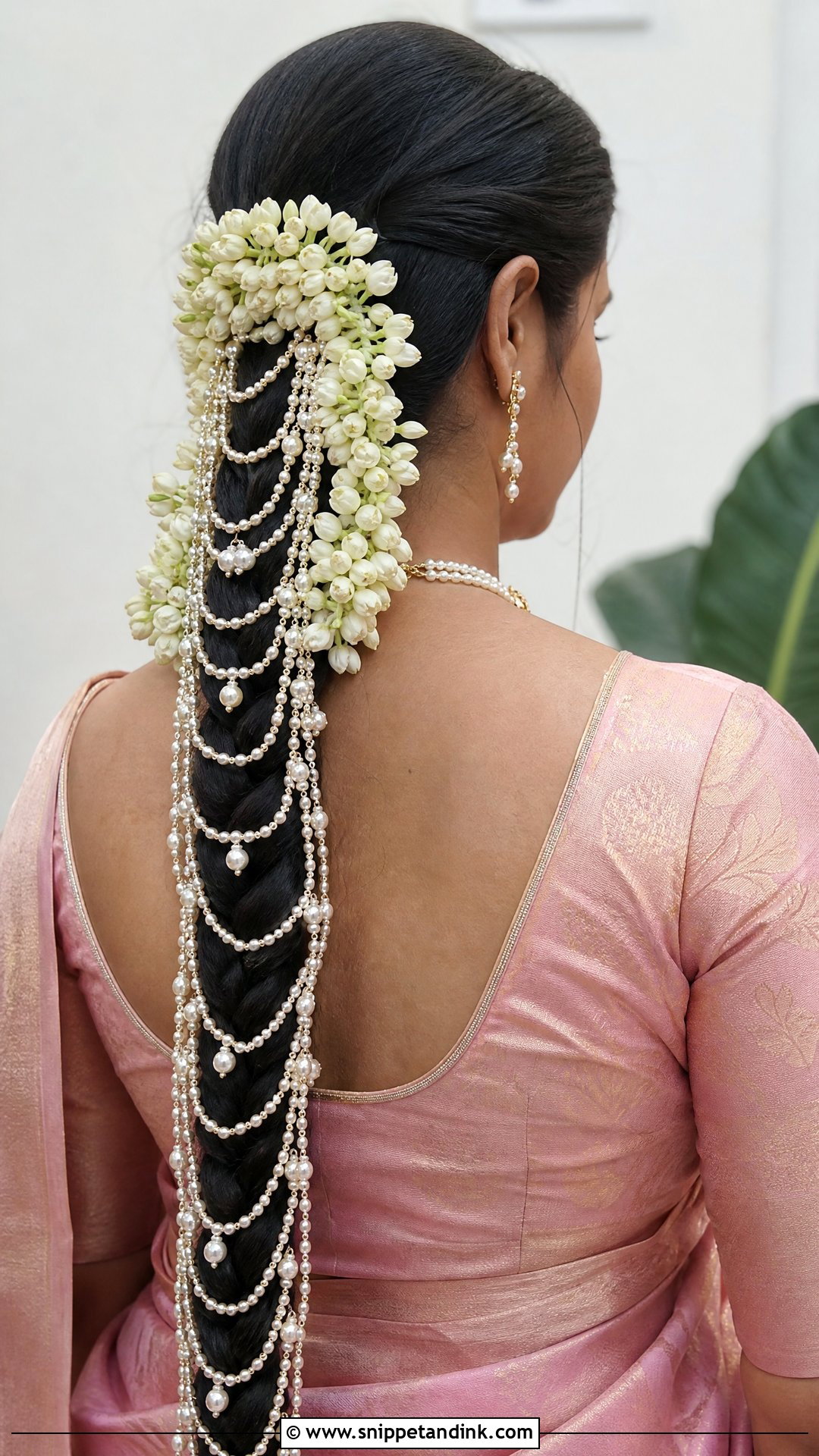
Pearl strings woven through the braid replace some or all of the flowers here. They drape along the length and catch light as you move, so the look feels luxurious without much weight. It pairs well with pearl jewelry and pastel silks, and a few jasmine buds add fragrance. Choose strings on a firm cord. Stretchy pearl strings sag out of the braid within hours, and a sagging strand looks untidy in photos taken from the side.
11. Floral Crown Bun For Reception
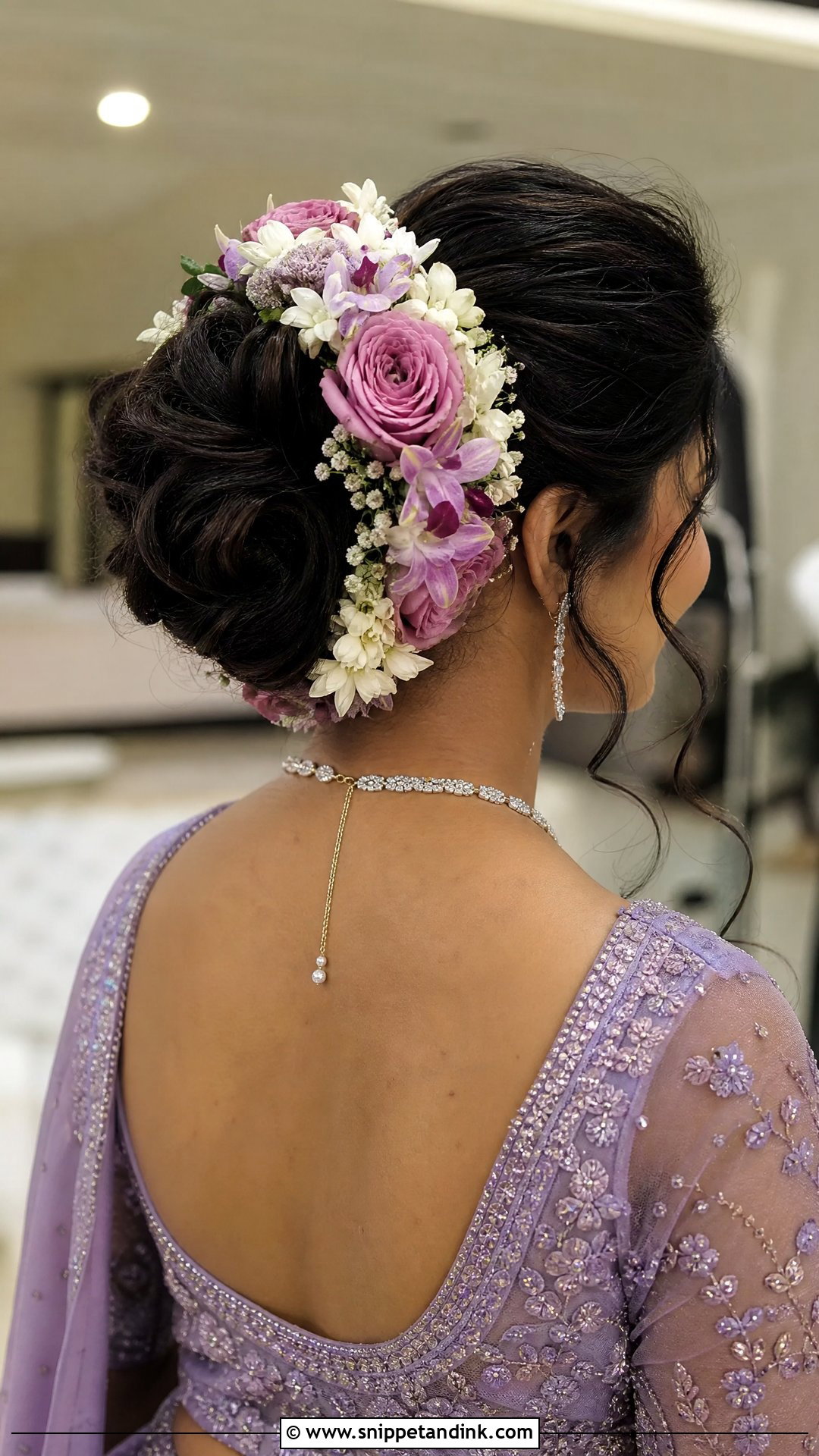
A floral crown bun puts flowers in a halo around the head while the bun sits at the back. Roses, orchids and jasmine combine well, and the crown frames the face like a natural tiara. I’d keep this for an evening reception with a lighter lehenga and contemporary jewelry. Orchids hold up far better than roses over a long night, so I use them as the backbone of the crown and add roses only as accents. A crown that wilts halfway through the reception is the most common complaint I hear about floral styles.
12. Twisted Updo With Temple Jewelry
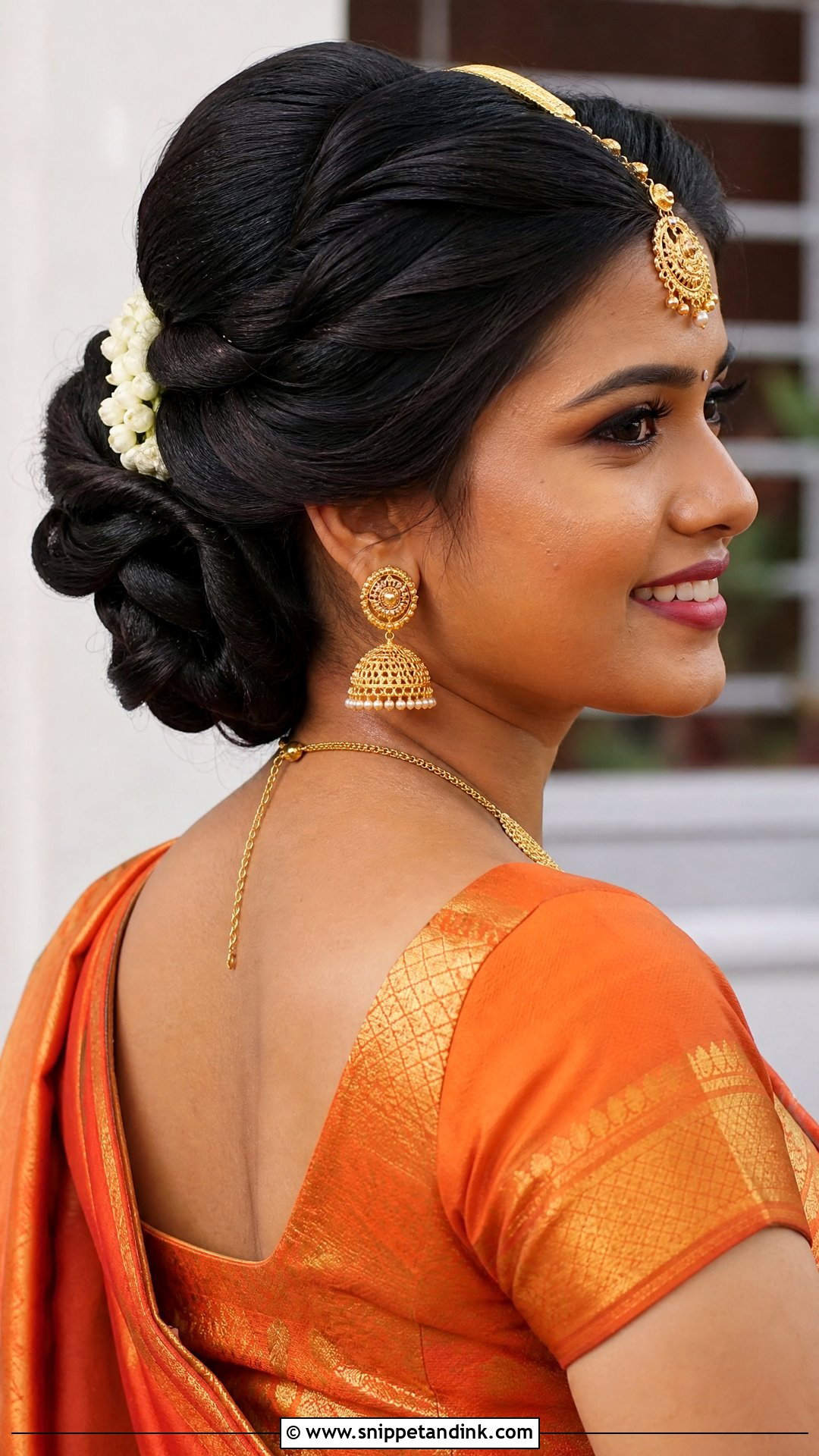
Twisted loops pinned at the back of the head give texture without flowers taking over, so gold jhumkas, the nethi chutti and the necklace stay in focus. Choose it when the jewelry should lead. Subtle jasmine or pearl accents are optional. Each twist gets two pins crossed over each other. That’s the detail that keeps it secure through long ceremonies, because a twisted updo held with single pins starts to unravel as soon as you bow for blessings.
13. Jasmine Garland Bun For Muhurtham
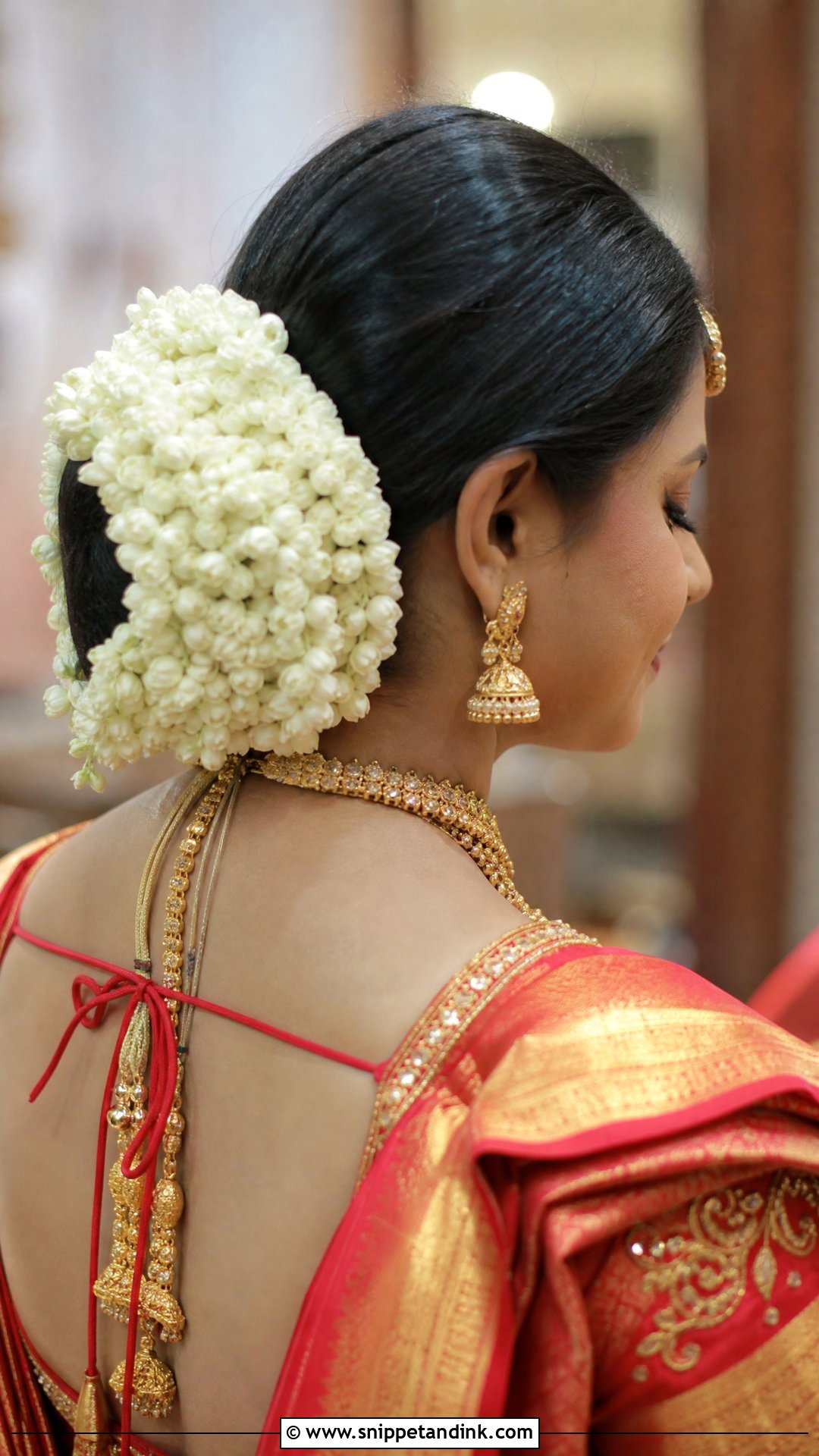
For the jasmine garland bun, a smooth bun is wrapped generously with thick strands of malli poo until the flowers form a full, fragrant halo. Against bright Kanjeevaram silk and heavy gold, the white contrast is classic, and for many families the jasmine stands for peace and harmony in the marriage. It suits indoor weddings and evening rituals. Dense jasmine is heavy, so I anchor the bun higher than a plain bun would sit and use extra pins at the base to keep the garland from dropping toward the neck.
14. Open Wavy Hair With Hair Jewelry
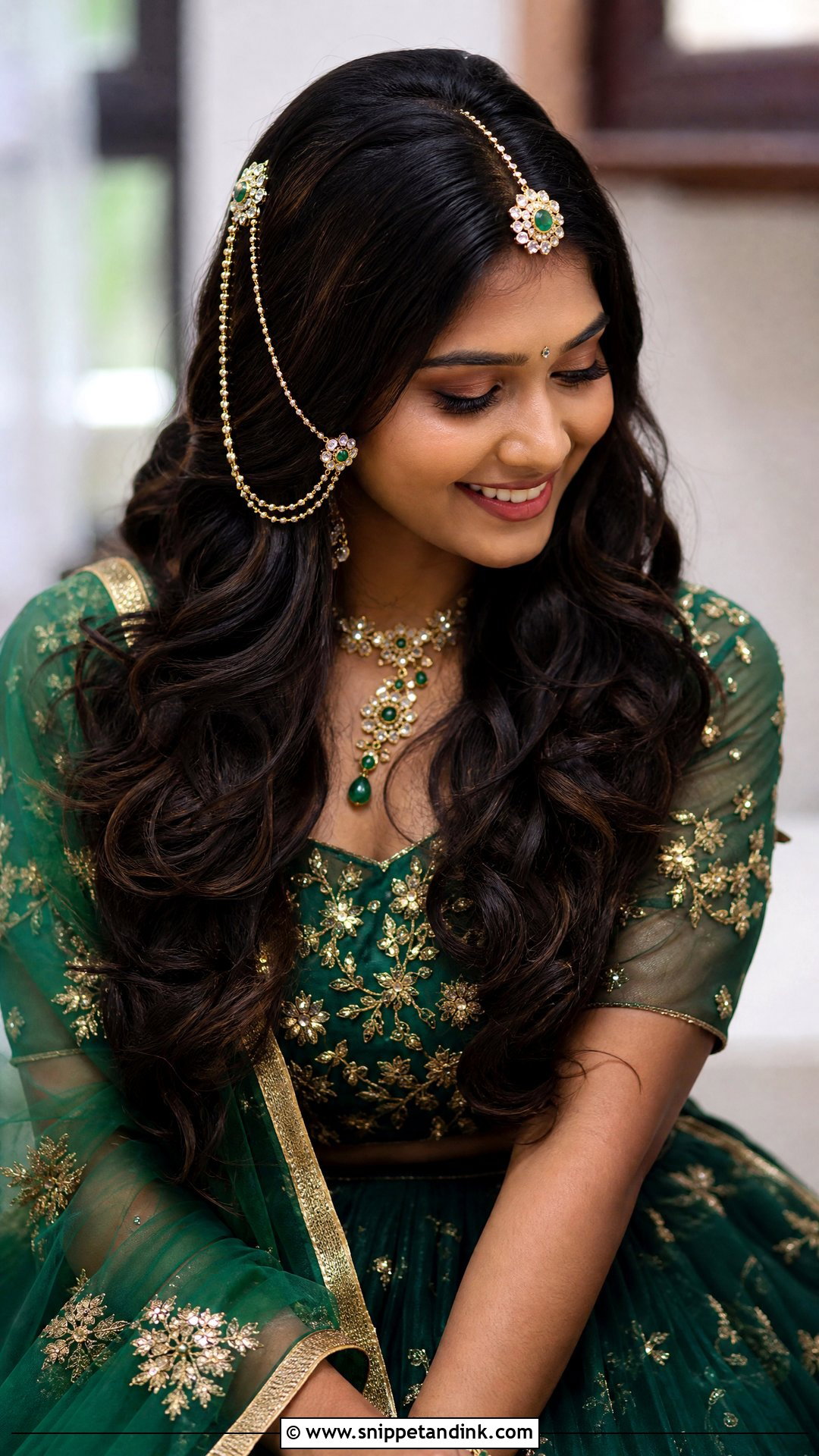
Open waves with delicate hair jewelry are what many brides choose once the ceremonies are done. Gold chains or jeweled clips add sparkle while the waves stay soft. It’s a clear break from braids and buns and suits a lehenga or gown at the reception. Hair jewelry on open hair needs anchoring underneath. I hide small pin bases under the top layer and hook the chain to those, otherwise it slides every time you turn your head. Under reception lighting, a little shine spray on the waves helps.
15. Marigold Braid For Haldi Ceremony
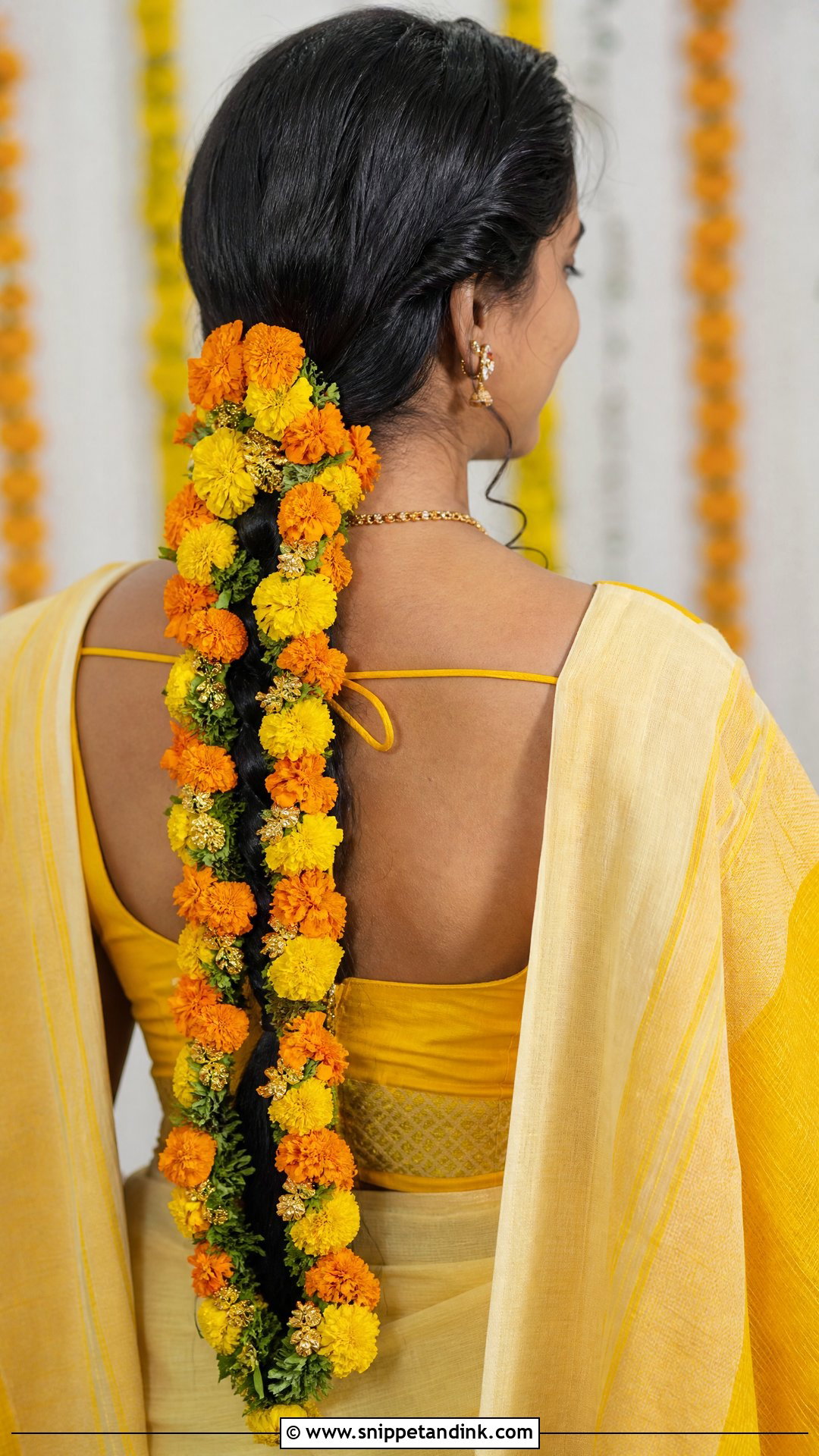
Bright orange and yellow marigolds woven through a thick braid bring color to the haldi or mehndi event. Marigolds are associated with happiness and good fortune, and they’re much hardier than jasmine, which makes them practical for an event full of turmeric paste and splashing. The braid is lighter and looser than the muhurtham version. It goes well with cotton or handloom sarees in matching shades. Plan to wash your hair straight after the haldi, since turmeric can tint lighter hair and leaves a residue on any hair.
16. Sleek Bun With Maang Tikka
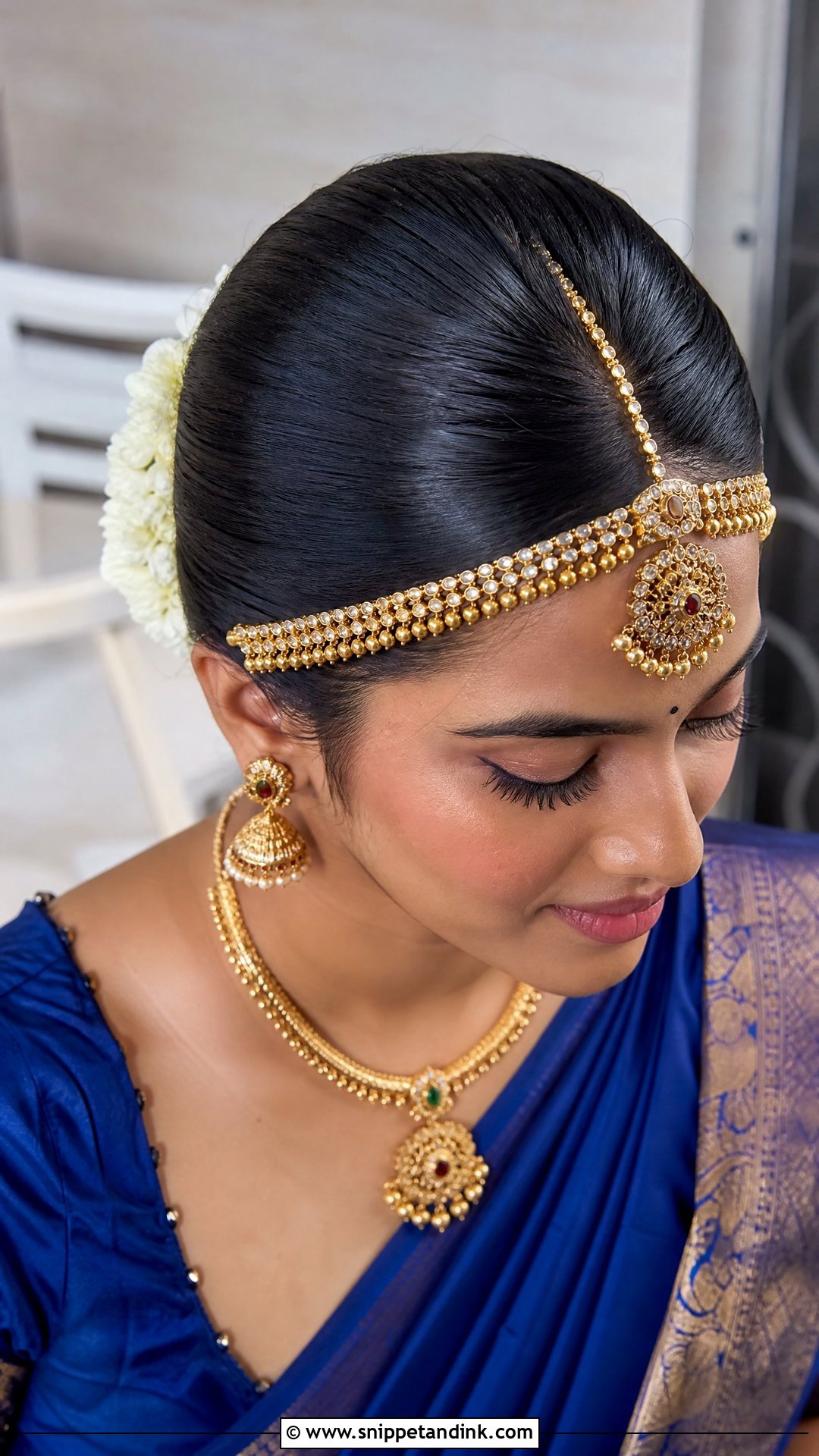
Pulled back smoothly into a tight, polished bun at the nape, this is the cleanest look here. A statement maang tikka or matha patti draws the eye to the forehead, and the jewelry and saree do the rest. A small gajra ring adds tradition if you want it. Sleek styles show every flyaway, so I smooth the hair with a light cream and a boar bristle brush and set it before the tikka goes on. If your hairline is thin at the temples, a center part this sleek will show it, and a soft side part may suit you better.
17. Fishtail Braid With Flowers
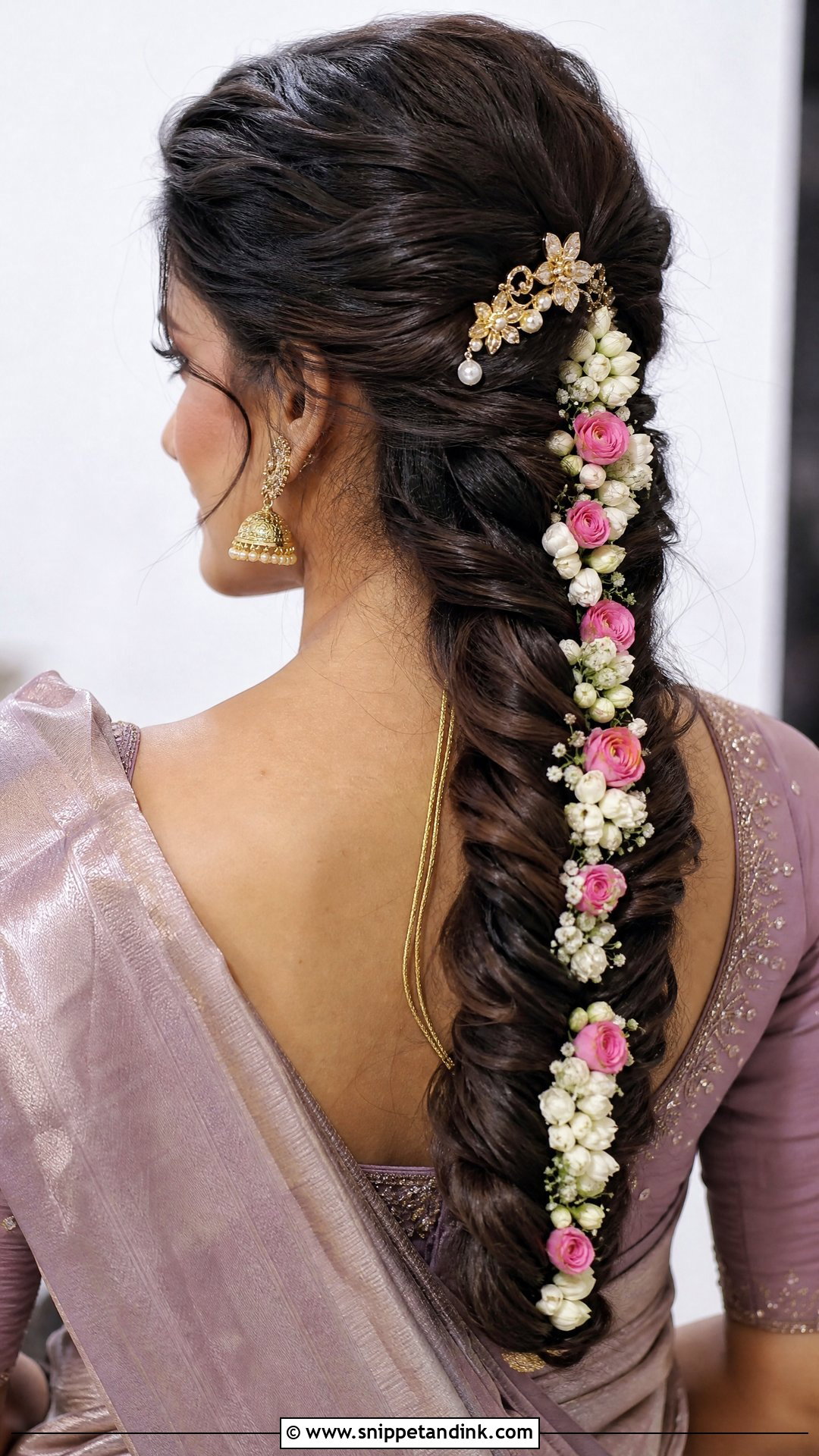
The fishtail creates a woven, basket-like pattern down the back, with jasmine, roses or small flowers tucked between the strands. It’s textured and modern while still being a braid. I’d use it for engagement ceremonies and receptions. You can keep it tight and neat or ease it out for a softer finish. It takes longer to braid than a three-strand plait on long hair, so it’s worth telling your stylist in advance to allow the extra time.
18. Half Up Half Down With Curls
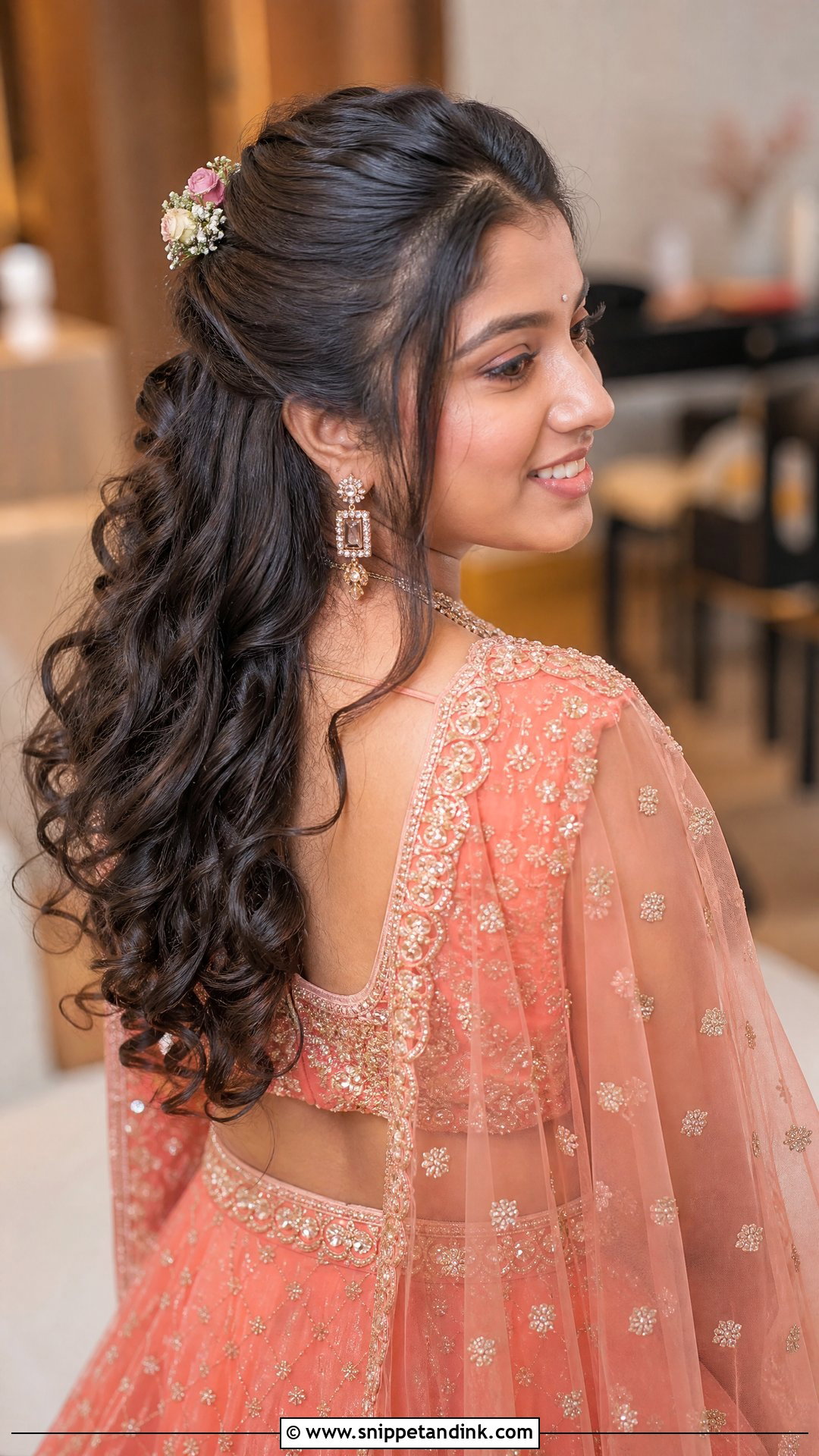
With the top section pinned back and curls falling over the shoulders, half up half down keeps hair off the face while still showing length. Curly tendrils at the front, plus a small floral accent or jeweled clip at the back, finish it. It works for receptions and the sangeet, with a saree or lehenga. If you can’t decide between an updo and open hair, it’s the honest compromise. Fine hair needs volume at the crown first, or the pinned section looks flat once the clip adds weight.
19. Braided Bun With Veni Decoration
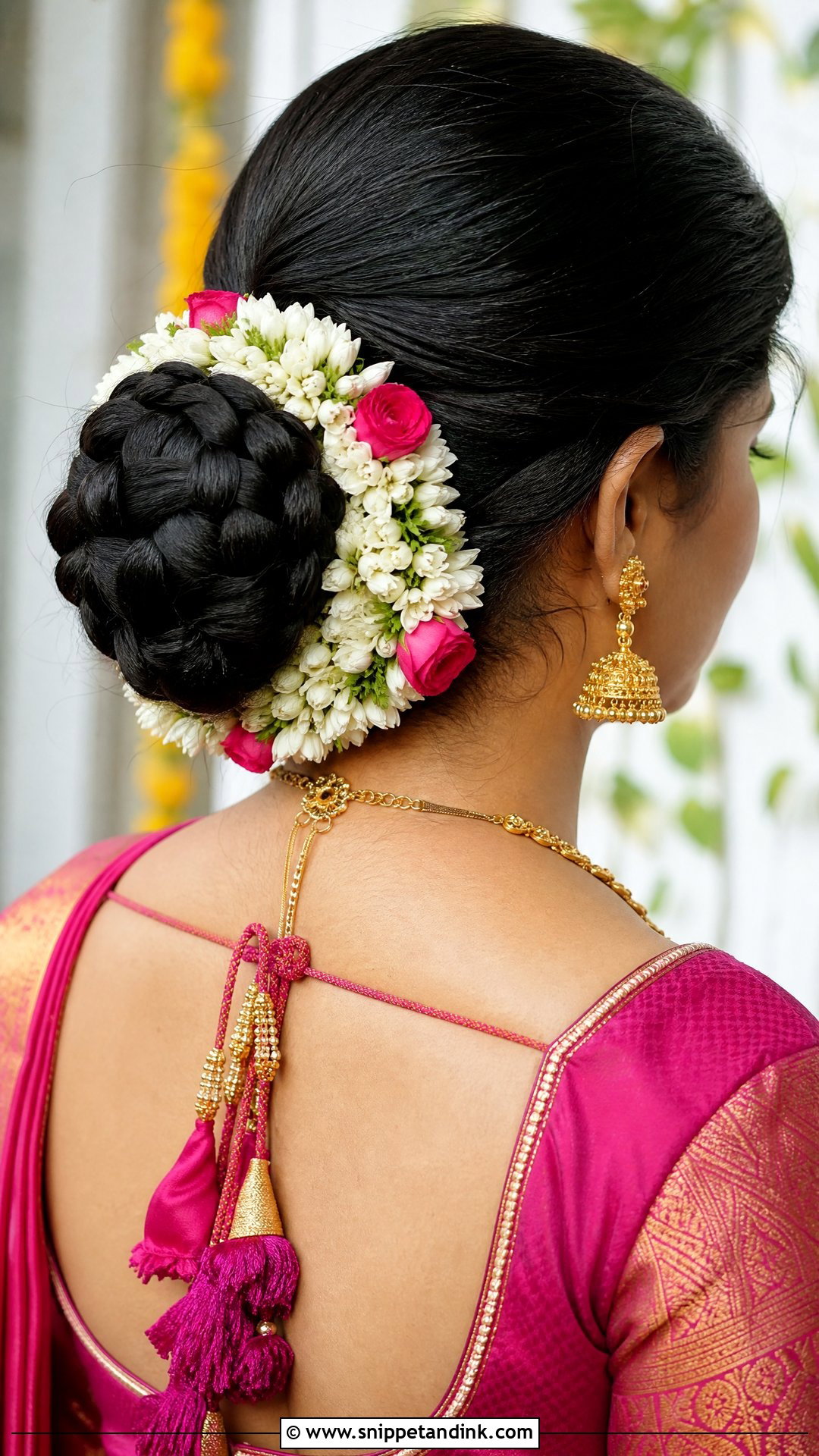
Braiding the hair before coiling it into a bun gives texture and a much firmer hold than a twisted bun. A veni of jasmine and roses decorates the base, adding fragrance and color. It suits the muhurtham and formal ceremonies, paired with temple jewelry. This is my usual answer for brides with slippery hair, since every section is locked into the braid before it’s coiled, and the veni has a textured surface to grip.
20. Soft Side Bun With Floral Accent
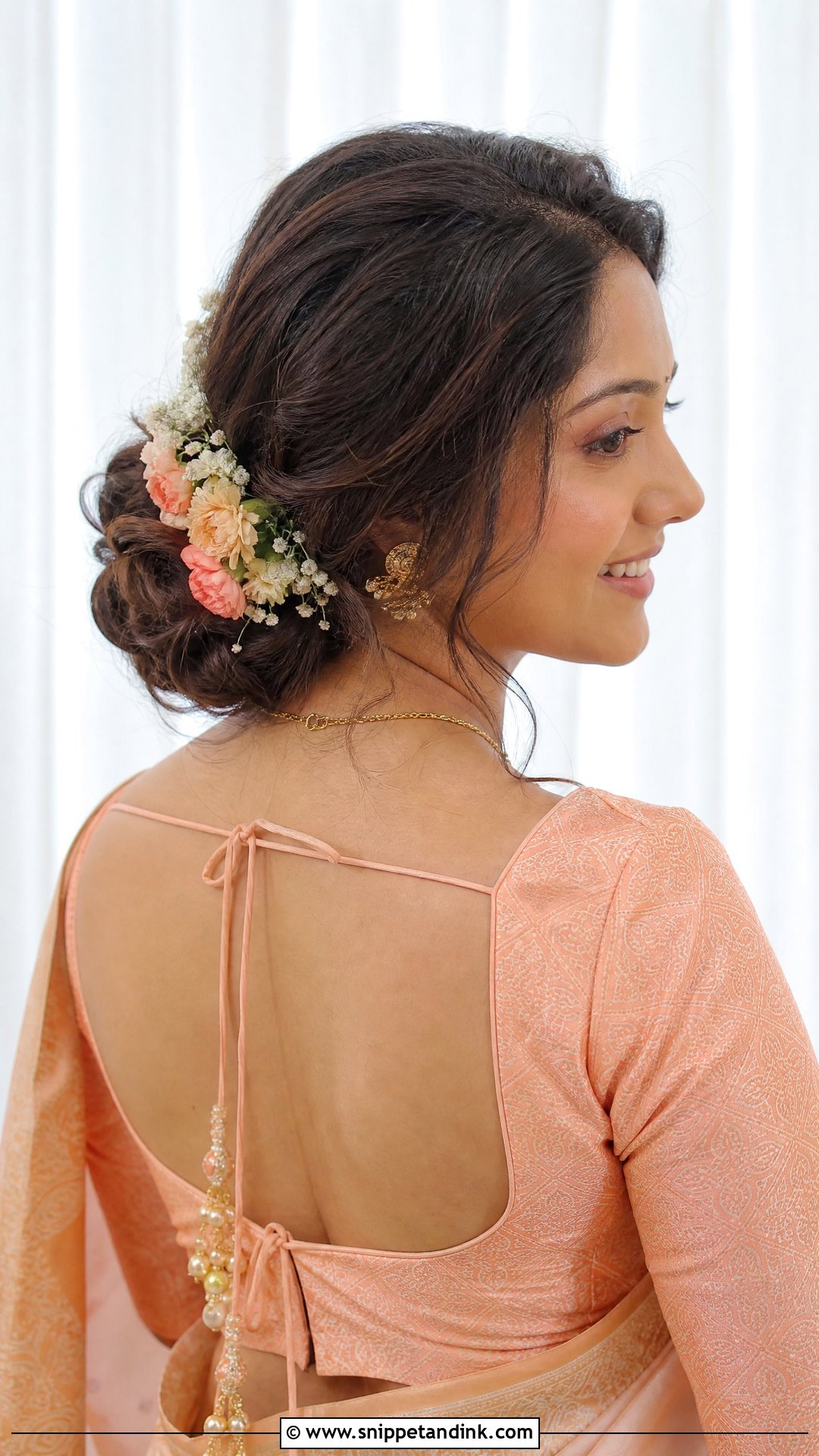
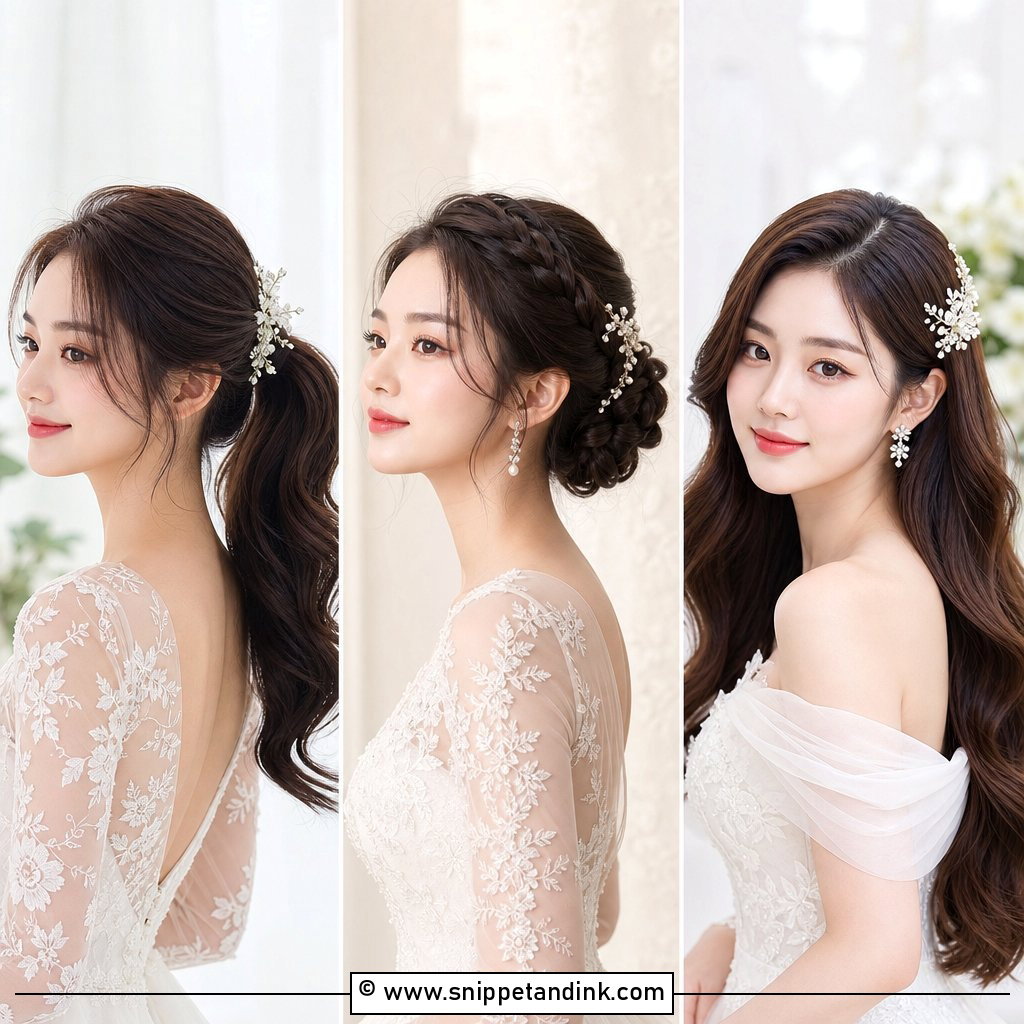
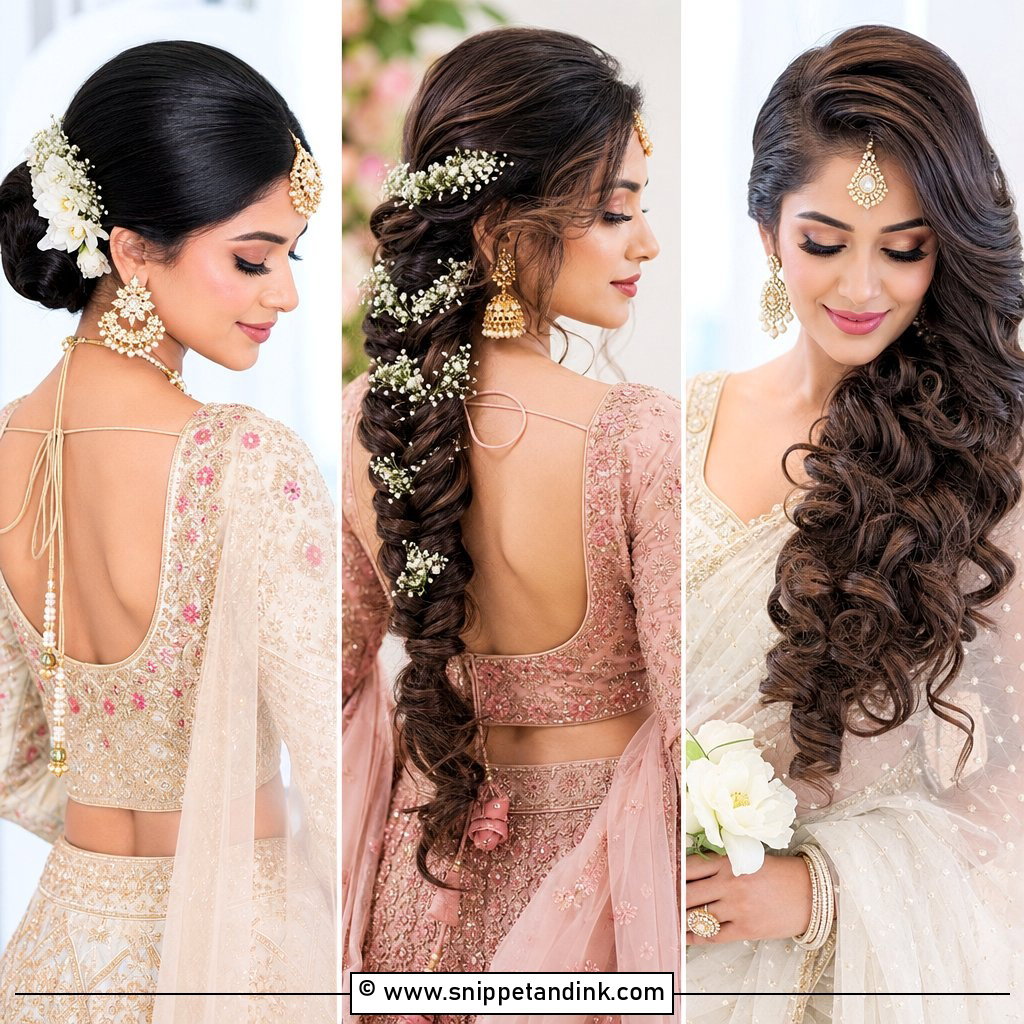
A loose bun set slightly to one side of the nape gives an asymmetric shape, with a cluster of fresh flowers at its edge. It’s relaxed and suits receptions, engagements and smaller ceremonies, especially with light jewelry and a pastel saree. A few face-framing tendrils soften it. Side buns look best in portraits taken from the flower side, so I ask which side you’ll mostly stand on for the couple’s photos before placing it.
Adjusting These Styles for Fine, Short or Very Thick Hair
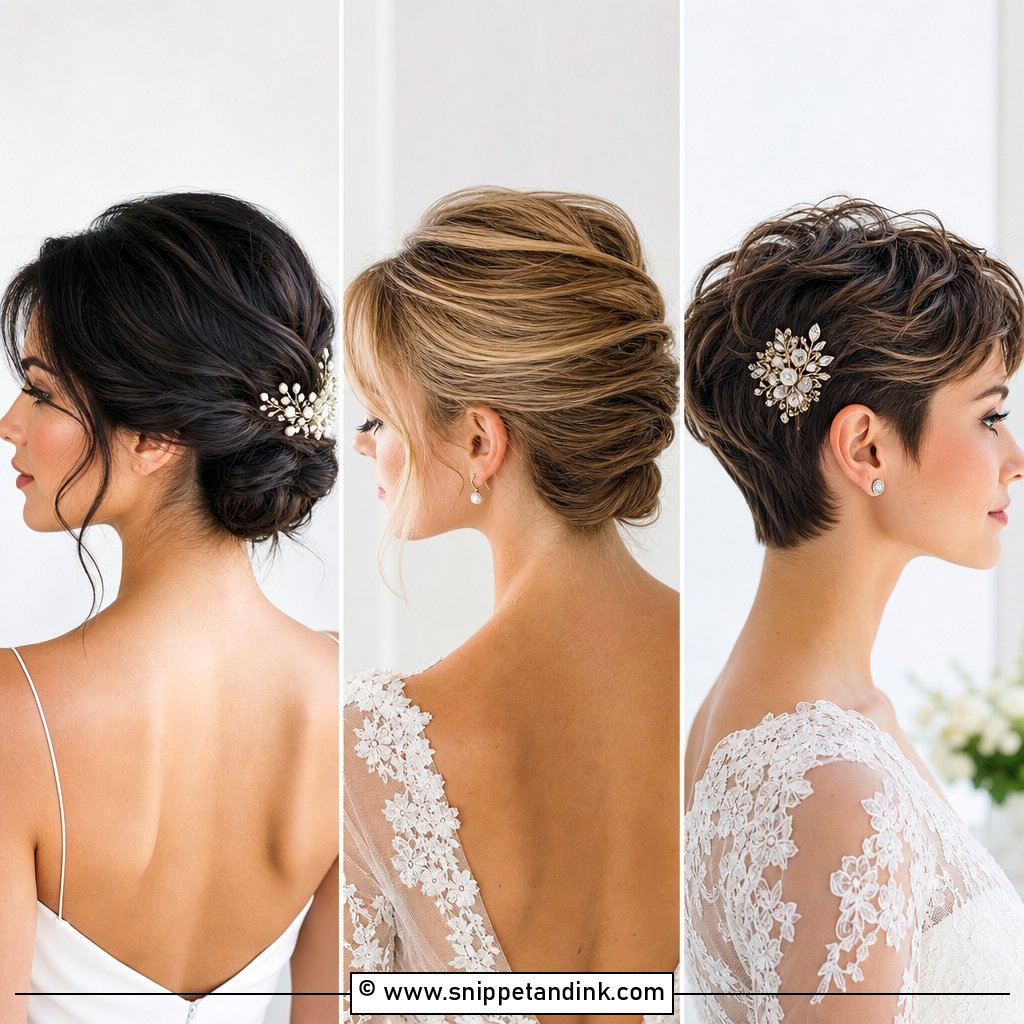
Inspiration photos usually show long, dense hair, and that’s not most brides. Every style above can be adapted, but the adjustments are different for each hair type.
Fine or thinning hair
Choose lighter decoration: poo chendu rings instead of a full floral braid, pearls instead of heavy billai. I add a clip-in extension for the braid and avoid a very sleek center part, which shows the scalp under flash.
Short hair
Shoulder-length hair can carry a kondai or low bun with padding. A long jadai needs a false braid attached at the crown, and it should be color-matched and trimmed at the trial, not on the morning.
Very thick or long hair
Heavy hair plus heavy flowers plus gold can strain the scalp. I thin out the bun’s interior or braid part of the hair underneath so the finished style is lighter than it looks. Ask for a style that sits low, near the nape, if you’re prone to headaches.
One Look for the Rituals, Another for the Party
From the fragrant poo jadai alangaram to open curls with a gajra, Tamil bridal hairstyles give you room to honor tradition and still look like yourself. I usually suggest planning the muhurtham hair around ritual and jewelry, and the reception hair around comfort and movement. Match each look to its ceremony, outfit and the hours you’ll wear it. Save the styles you like, show them to your stylist at the trial, and wear the version you can sit, bow and dance in.
You'll Like These Ideas:


Leave a Reply