
Real flowers in bridal hair are some of the most personal pieces I make, and some of the most fragile. The biggest bloom is rarely the right one. What works is a flower sized to the hairstyle and sturdy enough for the weather, the veil and the length of the day. Brides lately are asking for softer shapes: textured updos, half-up hair, a few blooms worked into a braid rather than a heavy crown. Roses tucked into a bun, baby’s breath through a braid and orchids placed in glossy waves all appear below, along with what each flower needs from me before it ever reaches your stylist.
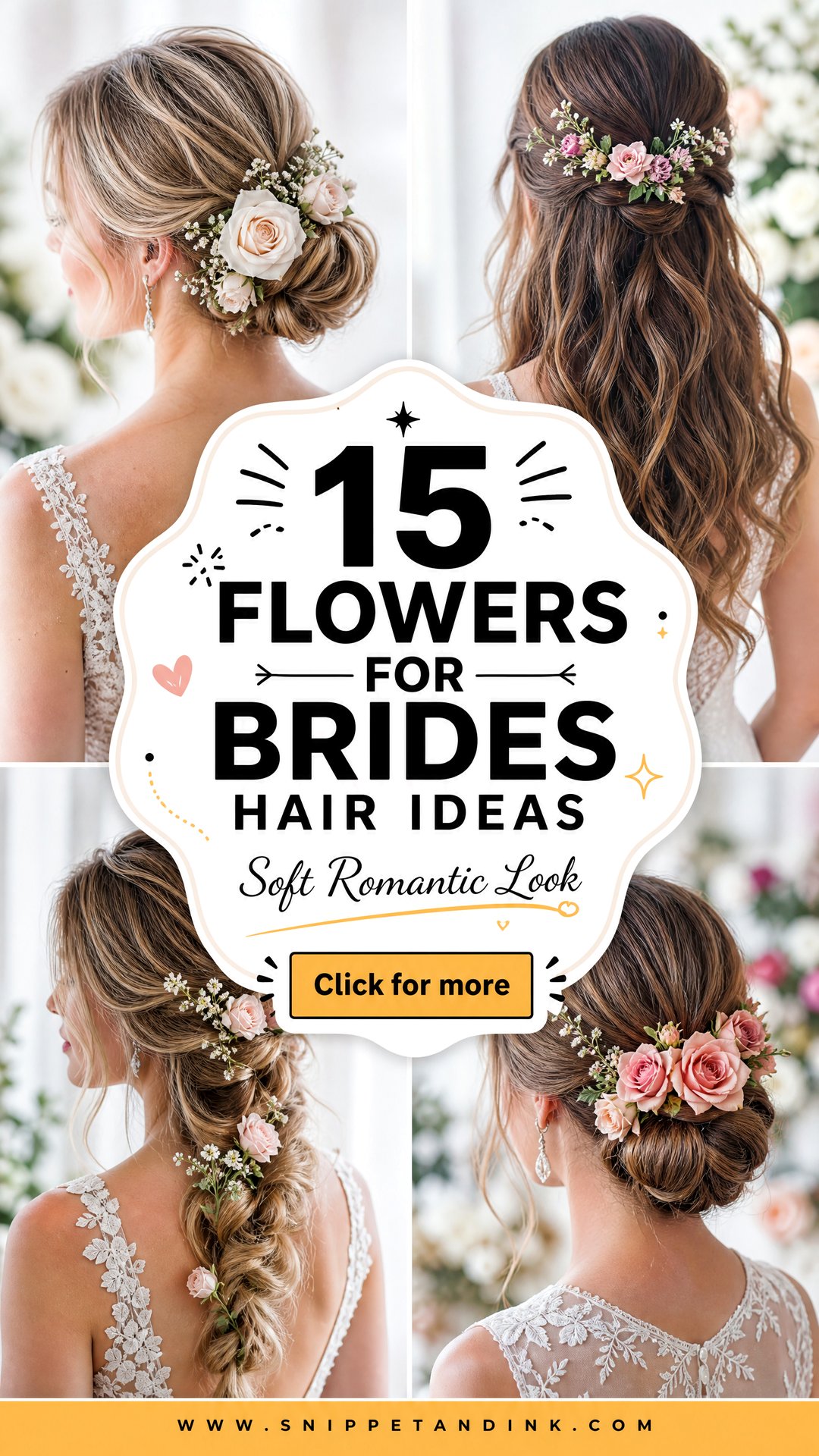
What Happens to a Bloom Before It Reaches Your Hair
A rose straight from a bucket cannot go into hair. The stem is too thick to hide, and without water it will droop long before the speeches. Here is roughly how I prepare hair flowers, so you know what to ask for.
- Condition overnight. Stems are cut and left in cool water so the petals are fully hydrated before they come out of water for the day.
- Cut short and wire. Each head gets a short stub and a thin wire through or around it, which gives the stylist a fine, pin-like stem.
- Tape over the wire. Floral tape seals the stem end, holds a little moisture and stops wire scratching the scalp.
- Pack cool and damp. The finished pieces travel in a box on damp tissue, kept somewhere cool but not near ice, which can mark petals.
I usually make hair pieces the day before or early on the morning, never a week ahead. If the hairstylist starts very early, I deliver a spare stem or two with the main piece, because one flower almost always gets bruised during pinning.
1. Flower Crown Bridal Hair
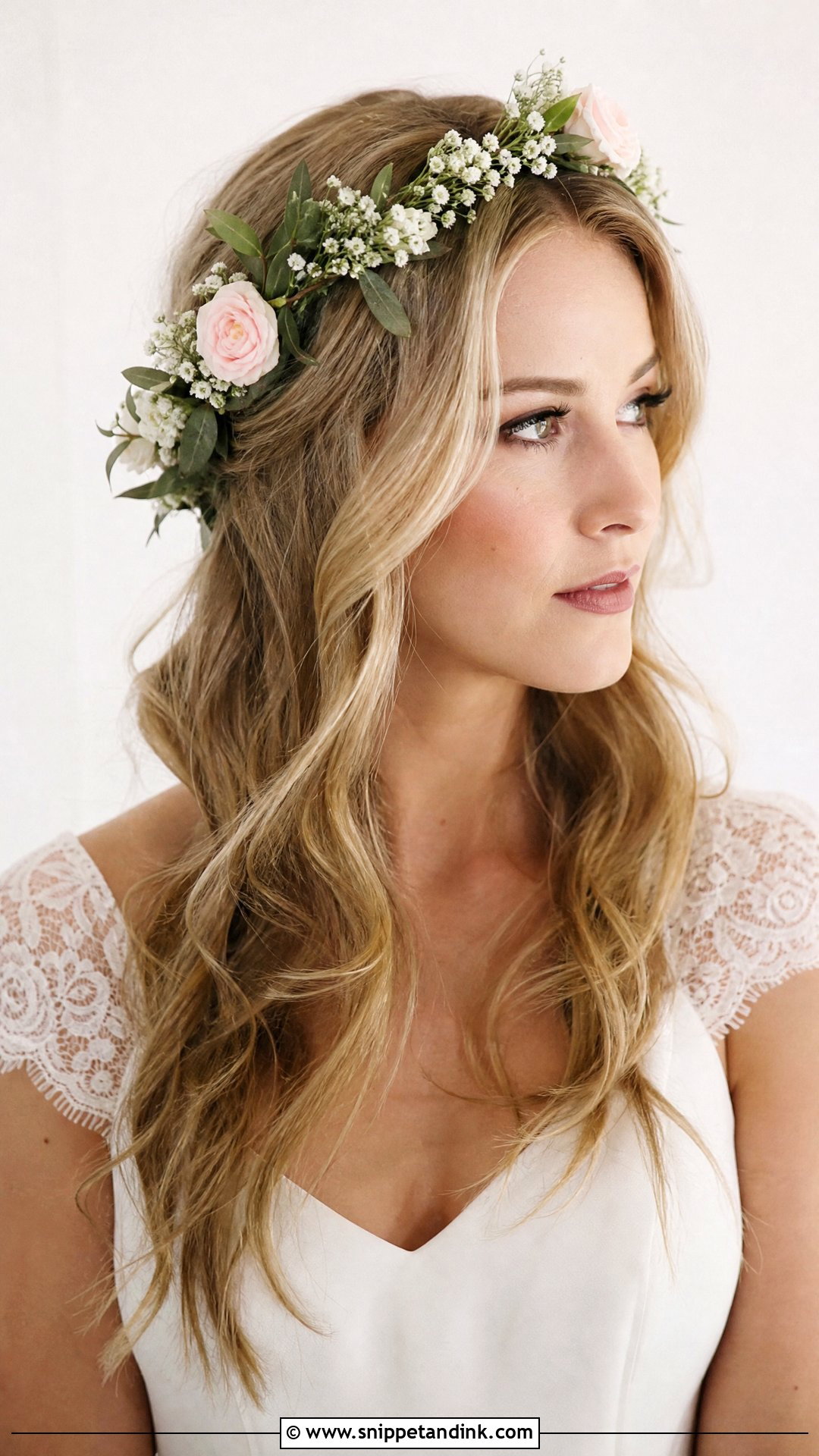
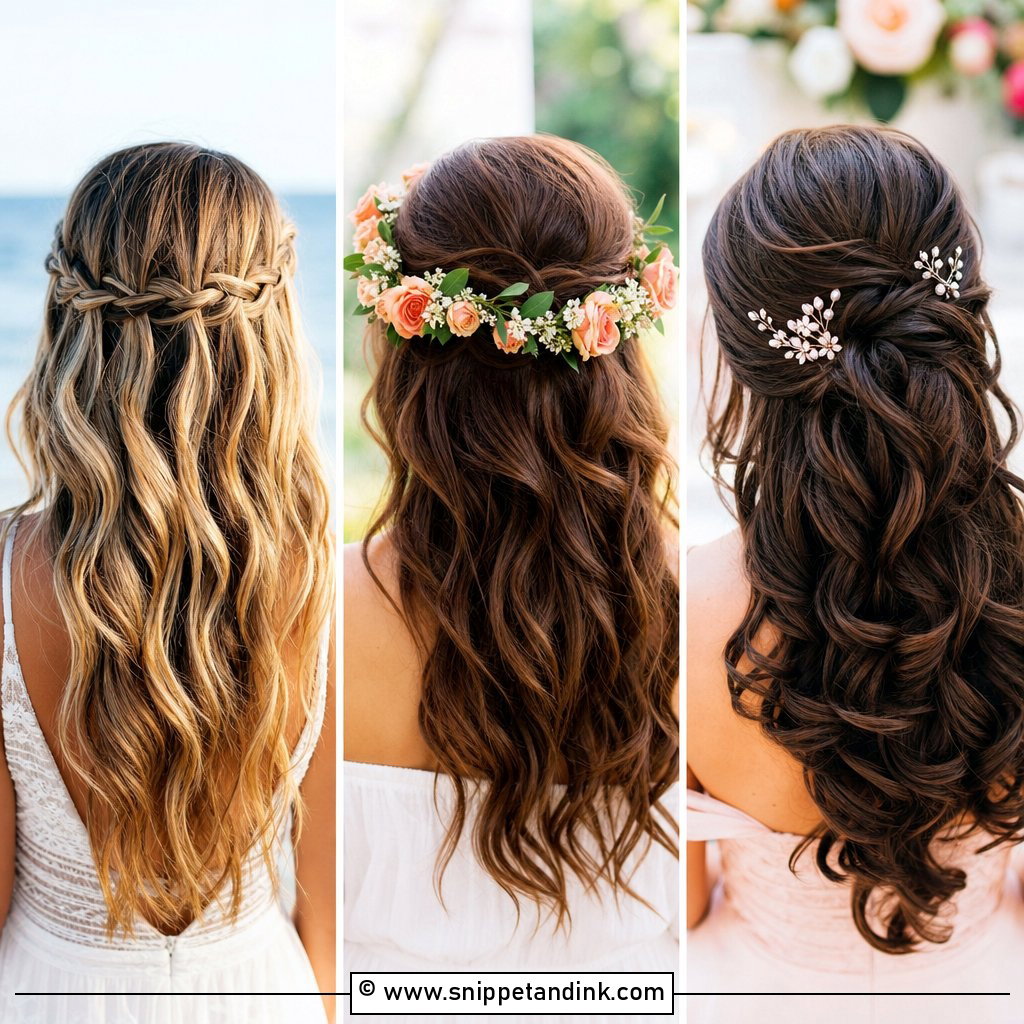
A crown is the most obvious floral hair piece and the one I build most carefully, because it sits on the head for hours with no water. It suits loose waves, soft curls, long layers and relaxed half-up shapes. For a garden wedding I keep the blooms small, baby’s breath, waxflower, spray roses or tiny daisies, so the crown frames the face. A plain dress can carry a fuller crown; lace, beading or sleeves call for something finer. I build on a thin bendable wire wrapped in tape, and I measure it around the head where it will actually sit, which is not the same as a hat size.
2. Low Bun With Flowers For Brides
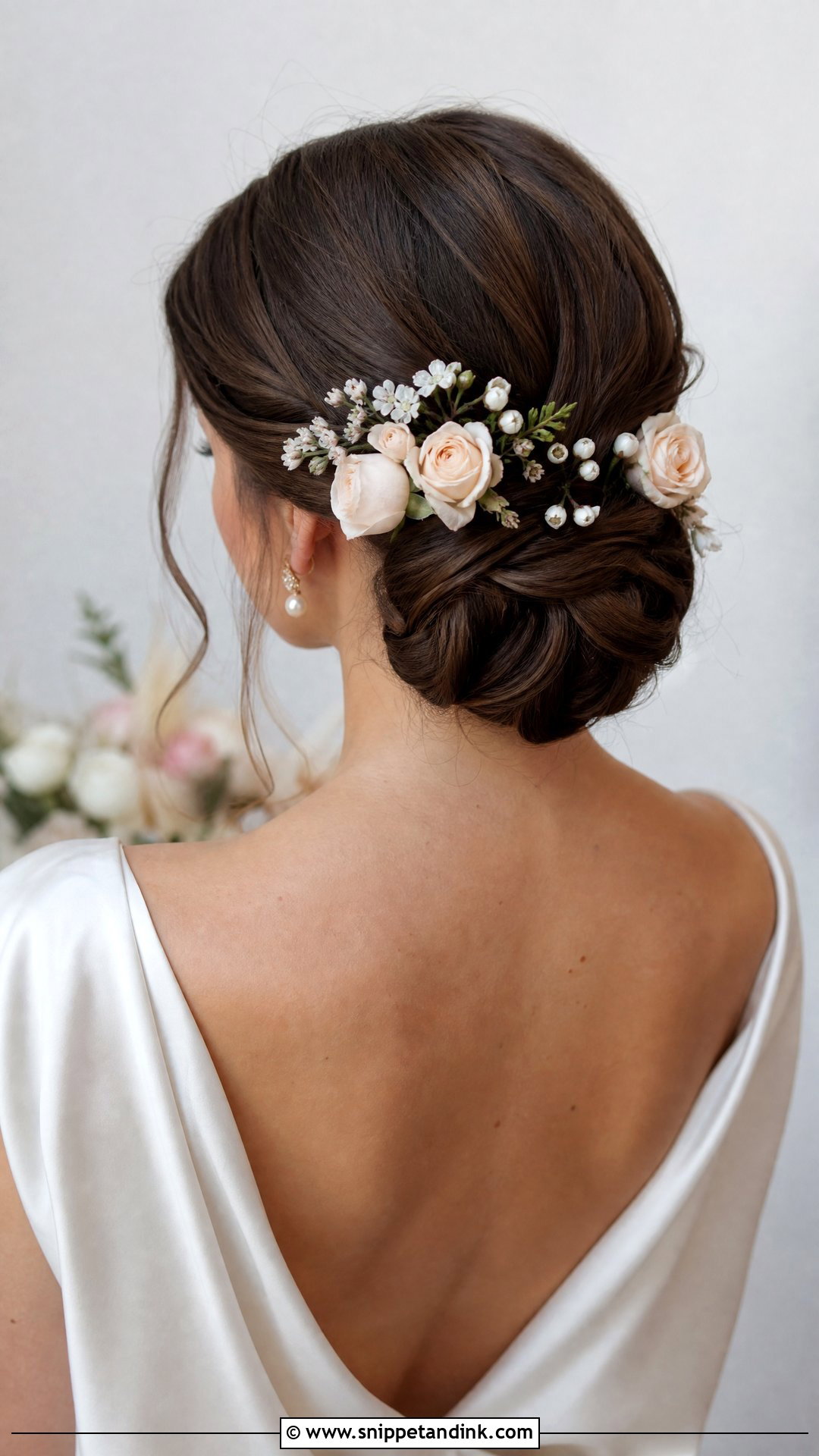
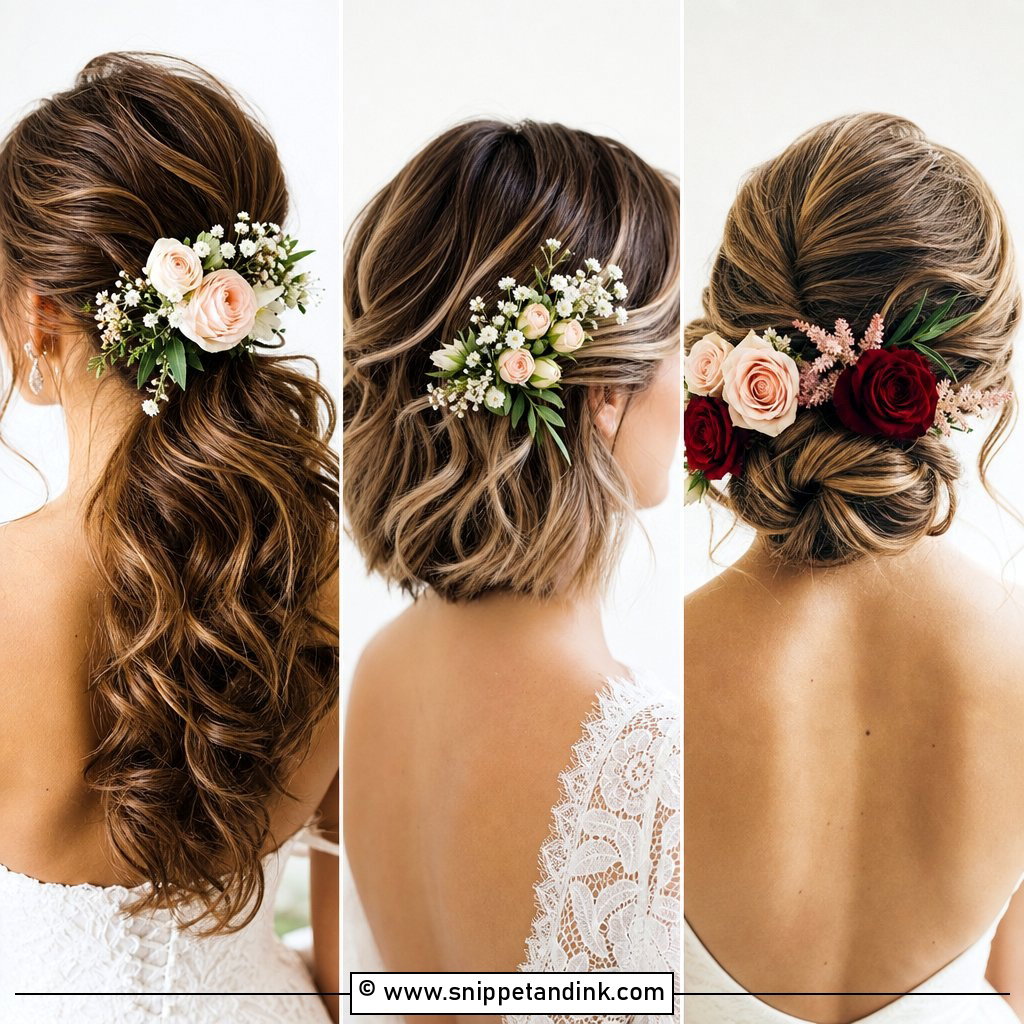
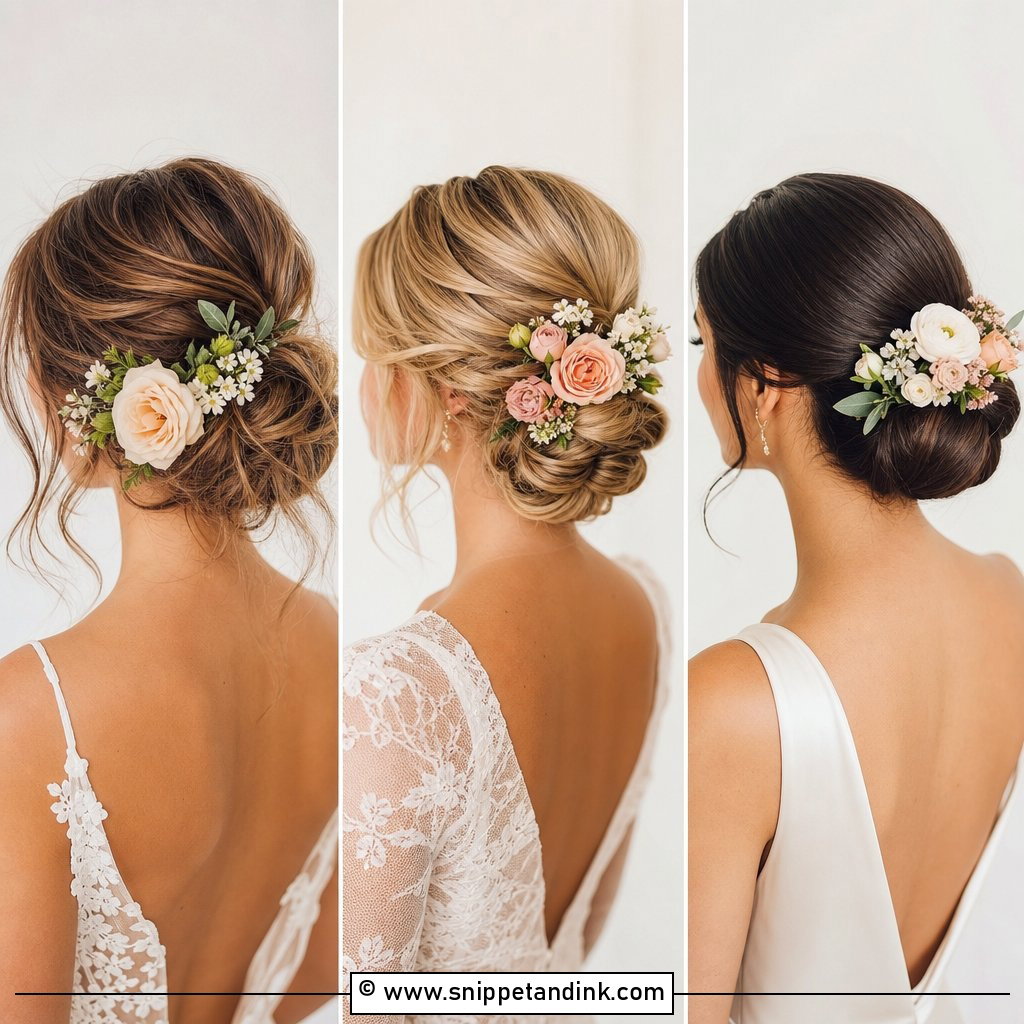
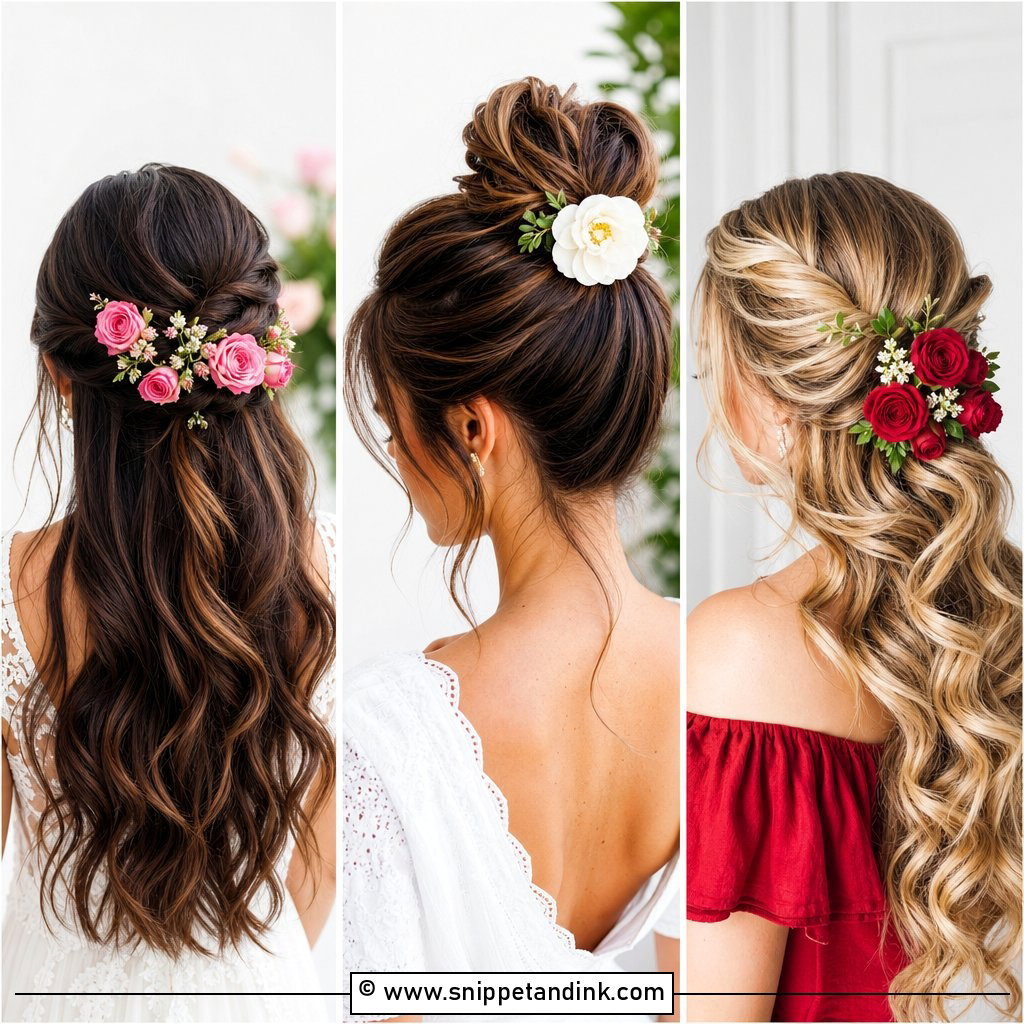
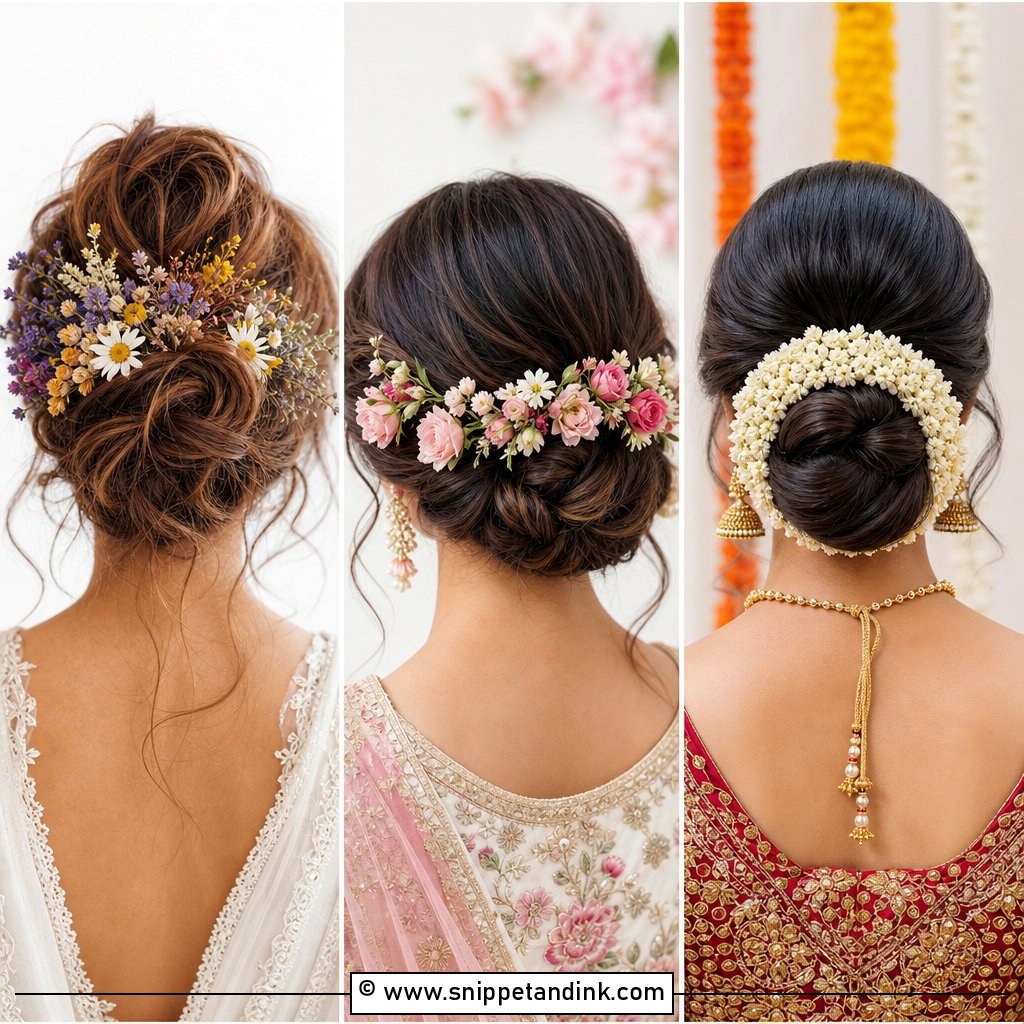
Flowers at a low bun sit at the nape, slightly off-centre or around a soft twist with loose pieces at the face. I tend to make a small cluster for one side of the bun, or a mini comb that tucks into the base, rather than ringing the whole bun, which can look like a wreath dropped on the back of the head. Roses, ranunculus, orchids and baby’s breath all hold up here. Because the bun is low, the flowers stay out of the veil’s way: they can sit above, beside or below the veil comb. Classic, outdoor and formal weddings all suit it.
3. Half Up Bridal Hair With Flowers
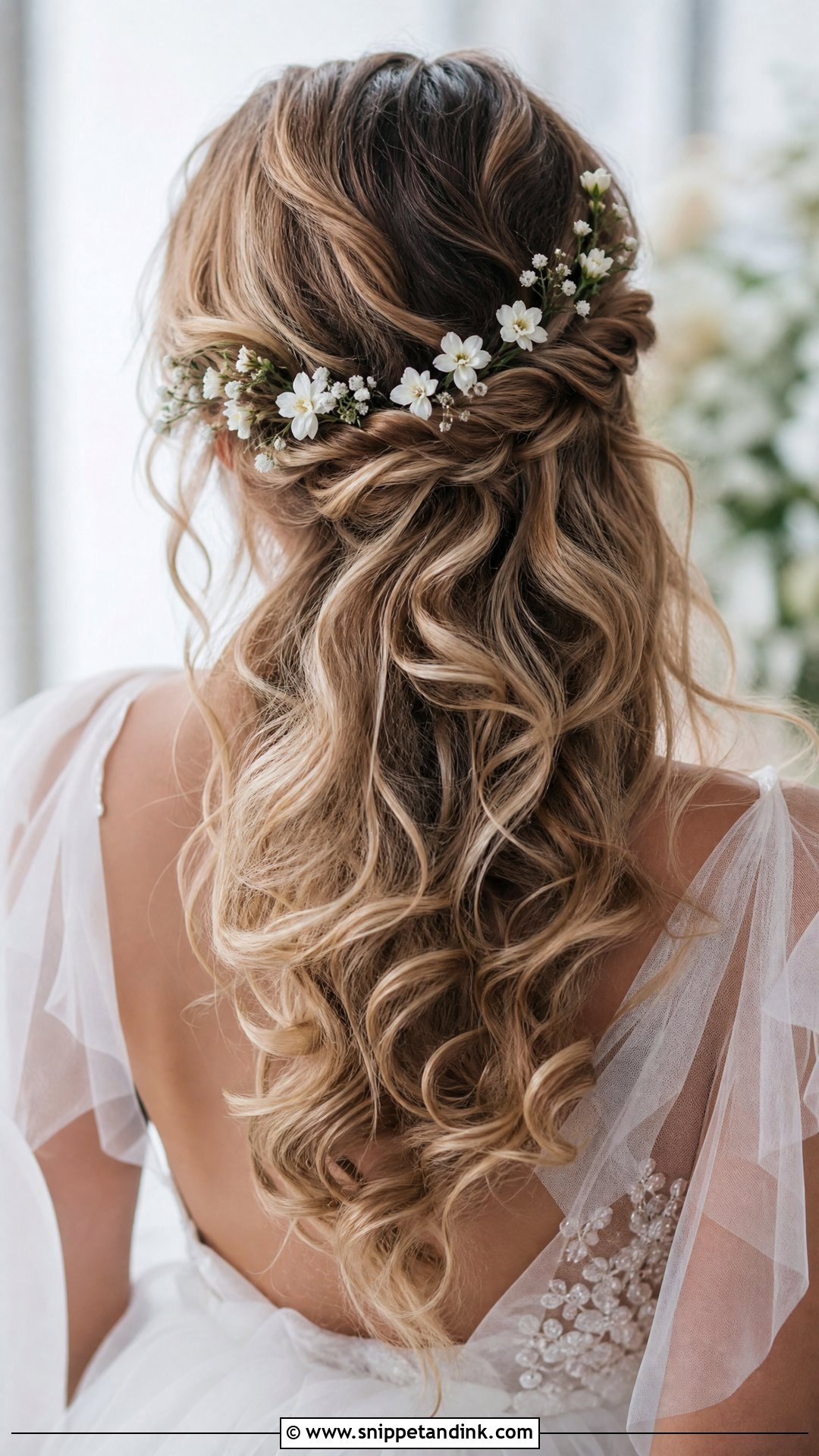
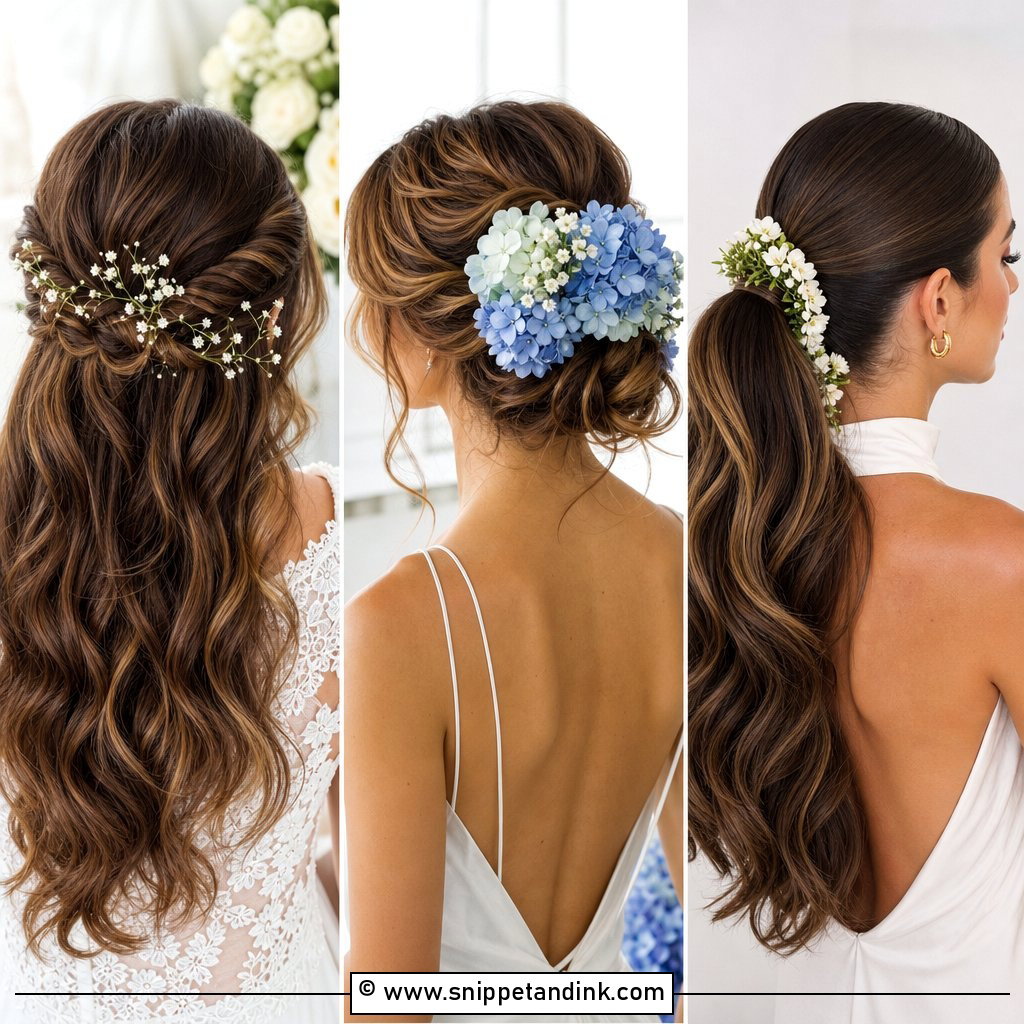
Half-up hair splits the job in two: the pinned top section holds the flowers, and the loose length keeps things soft. Medium to long hair with waves or curls carries it best. Small heads pinned across the twist, tucked into a braid or set where the section gathers at the back are easiest to secure. Mini roses, waxflower and baby’s breath last well here. Jasmine smells wonderful but browns quickly once handled, so I only use it if the ceremony is short or there is a backup sprig in the kit. With a veil, the flowers bridge the pinned crown and the loose hair below.
4. Bridal Braid With Flowers
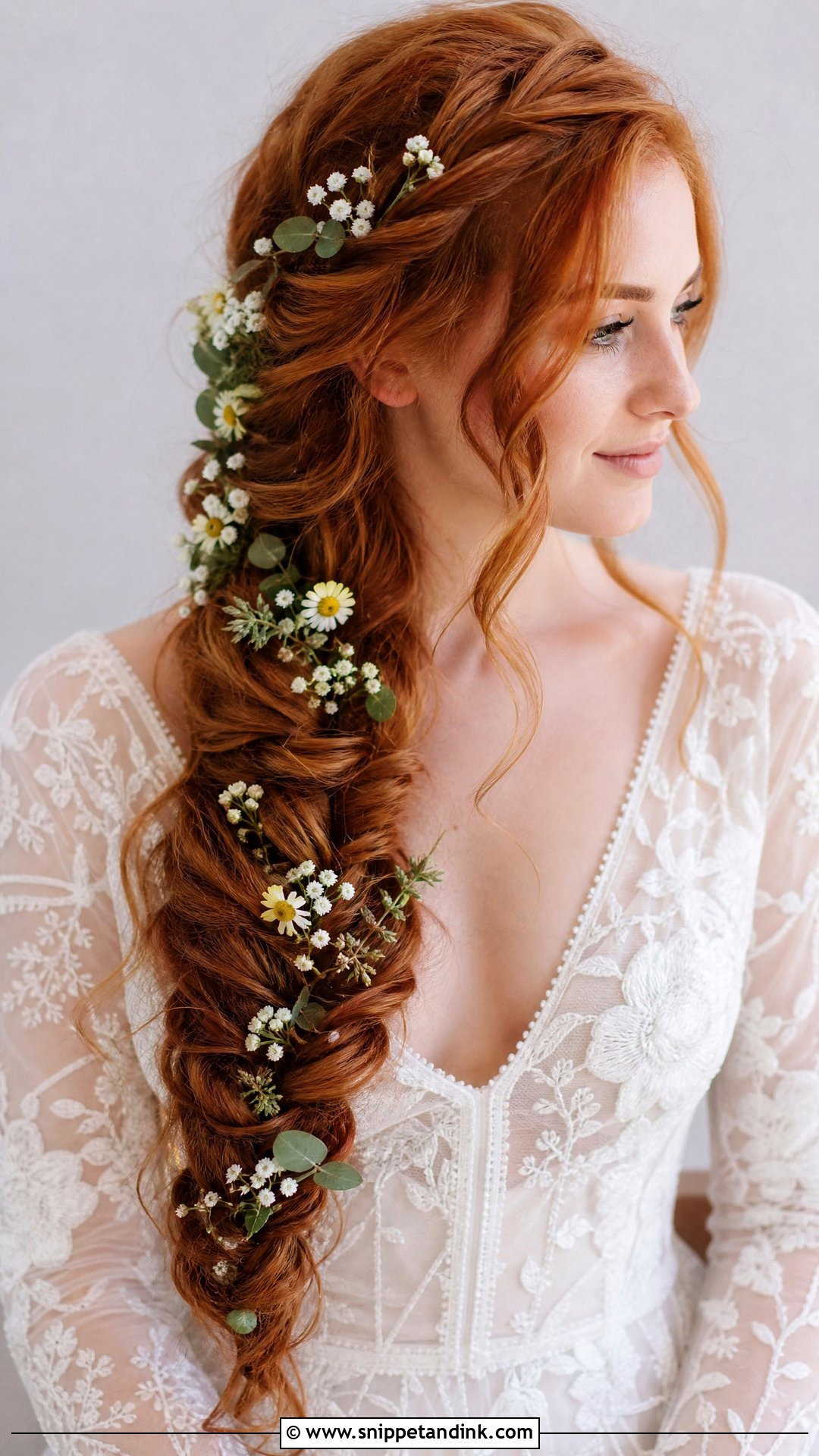
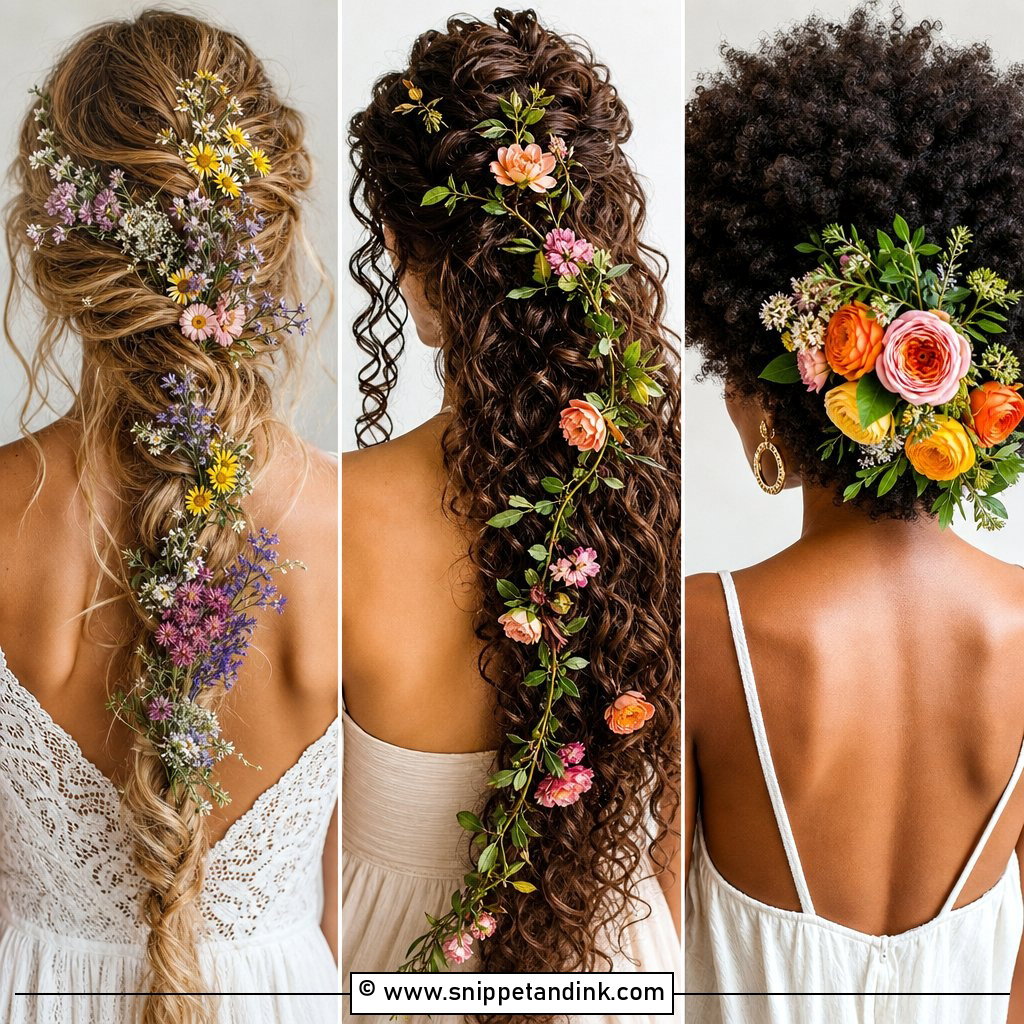
Braids give flowers a place to live. A loose side braid, fishtail, Dutch braid, crown braid or long braided ponytail can all take blooms, and I scatter them along the plait rather than packing one heavy cluster at the end, which pulls the braid crooked. Small heads are far easier to secure: baby’s breath, chamomile, lavender, waxflower and tiny orchids. I wire each one on a short stem so the stylist can slide it under a crossing. In heat, a braid keeps hair controlled while still moving.
5. Loose Waves With Flowers For Brides
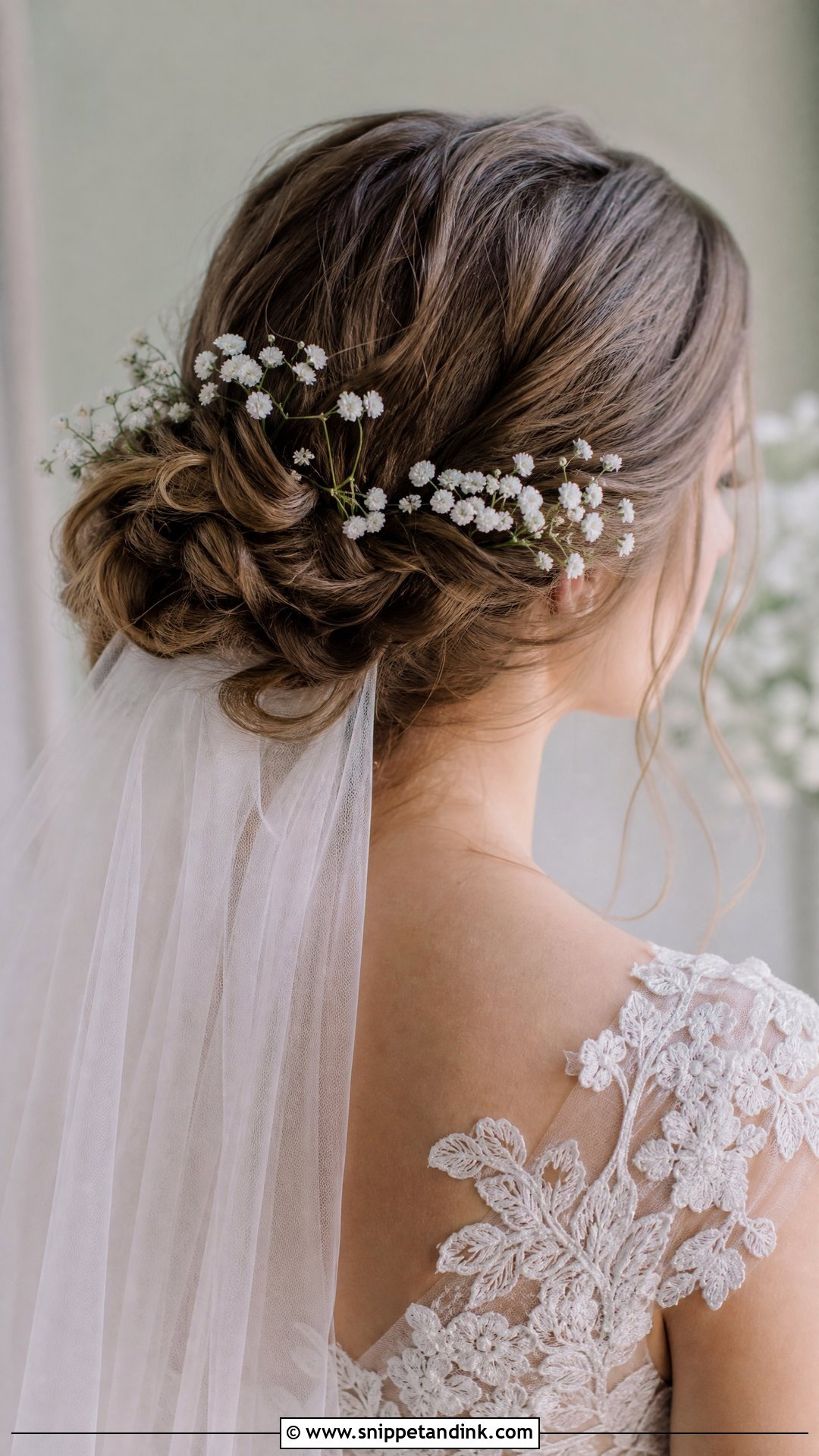
Hair worn loose with flowers looks relaxed, but it needs more planning than an updo because there is less to pin into. The safest spots are behind one ear, along a deep side part, or in a small hidden twist at the back. Orchids, roses and small wildflowers all suit it. I would steer you away from gardenias for this one: they bruise brown the moment a finger brushes them, and loose hair means hands near the flowers all day. On fine hair, ask for light texture and hidden pins. Beach weddings, garden ceremonies and slip dresses are its natural setting.
6. Bridal Updo With Fresh Flowers
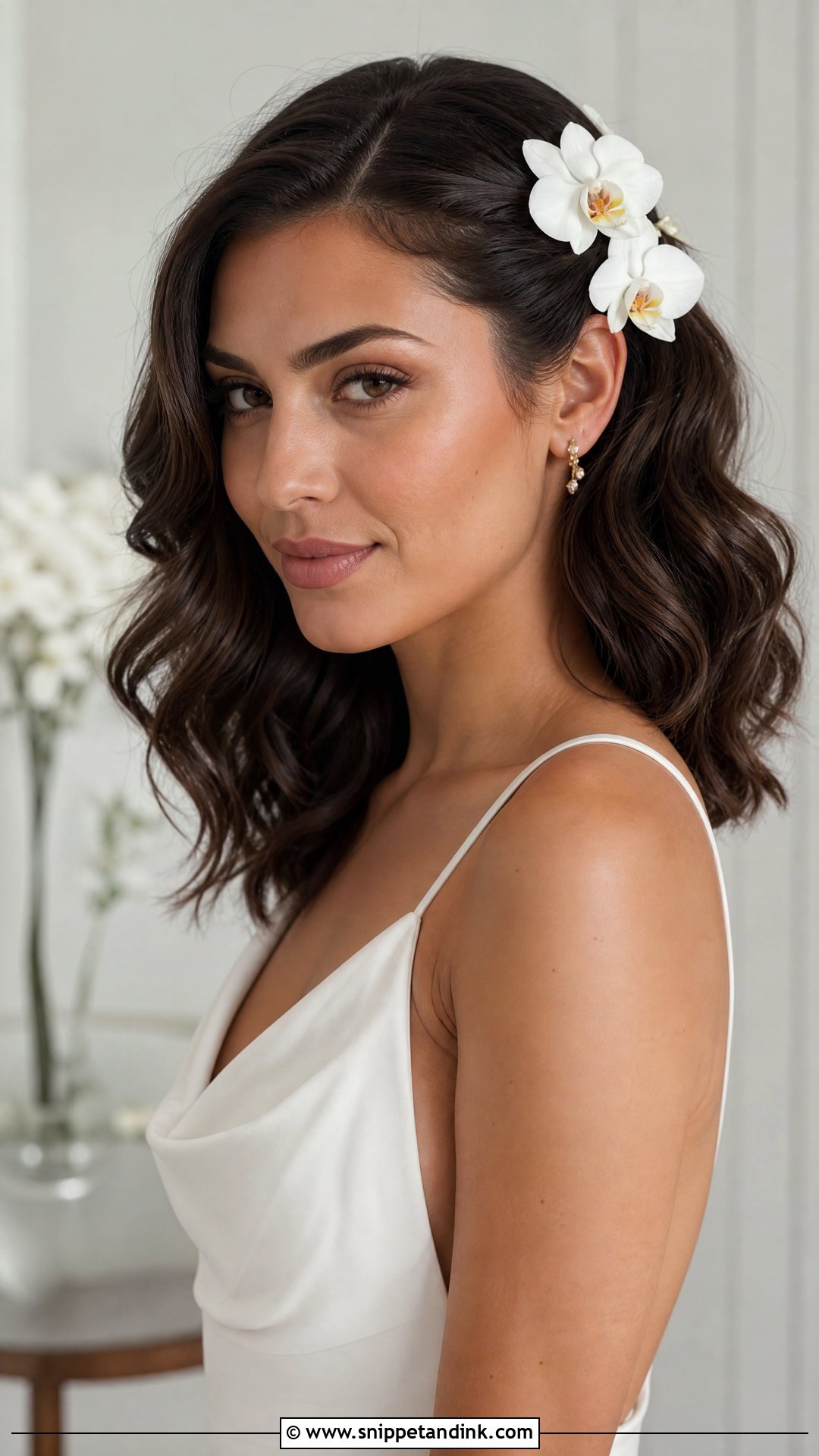
An updo gives fresh flowers the most support of any style, whether it is twisted, braided, messy, sleek or sculpted. The real question is which blooms survive the conditions. Outdoors or in summer, I lean on baby’s breath, spray roses, orchids and waxflower, which tolerate warmth and handling far better than thin-petalled flowers. I also keep the flowers close to the shape of the updo instead of letting stems stick out, because anything that protrudes gets knocked by hugs and veils. Tucked in tight, they stay put through photos and dancing.
7. Baby’s Breath Bridal Hair
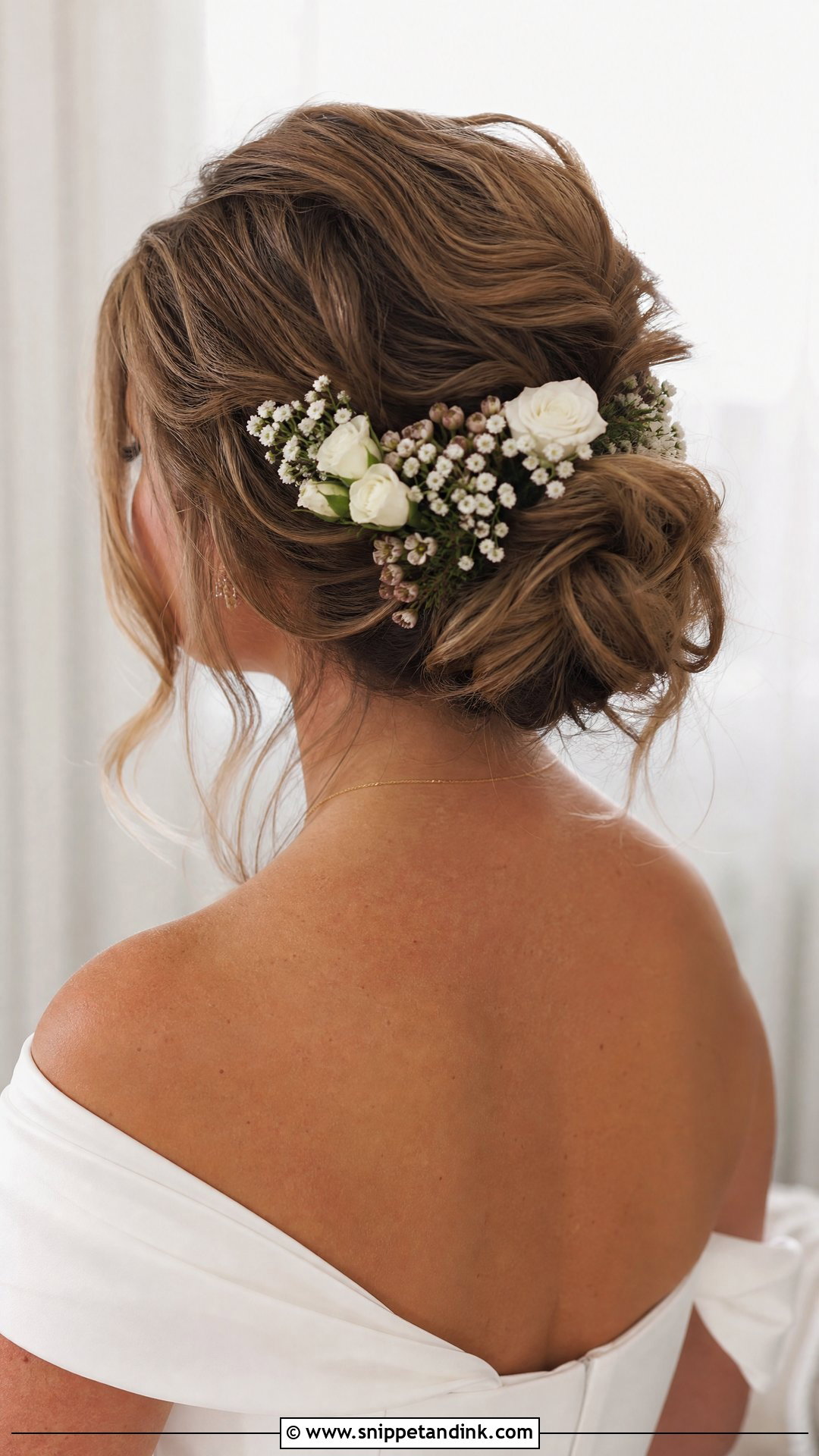
Baby’s breath earns its place because it is light, tough and almost impossible to clash with. It can be woven into braids, tucked around buns, sprinkled through curls or shaped into a fine crown, and its tiny heads add texture without taking attention from the face. It sits with lace, tulle and pearls. For a current look I use small clusters with space around them; covering the whole head can read as a costume. One honest note: up close, some people find its scent faintly sour, so I keep it away from brides who are sensitive to smells.
8. Rose Bridal Hair
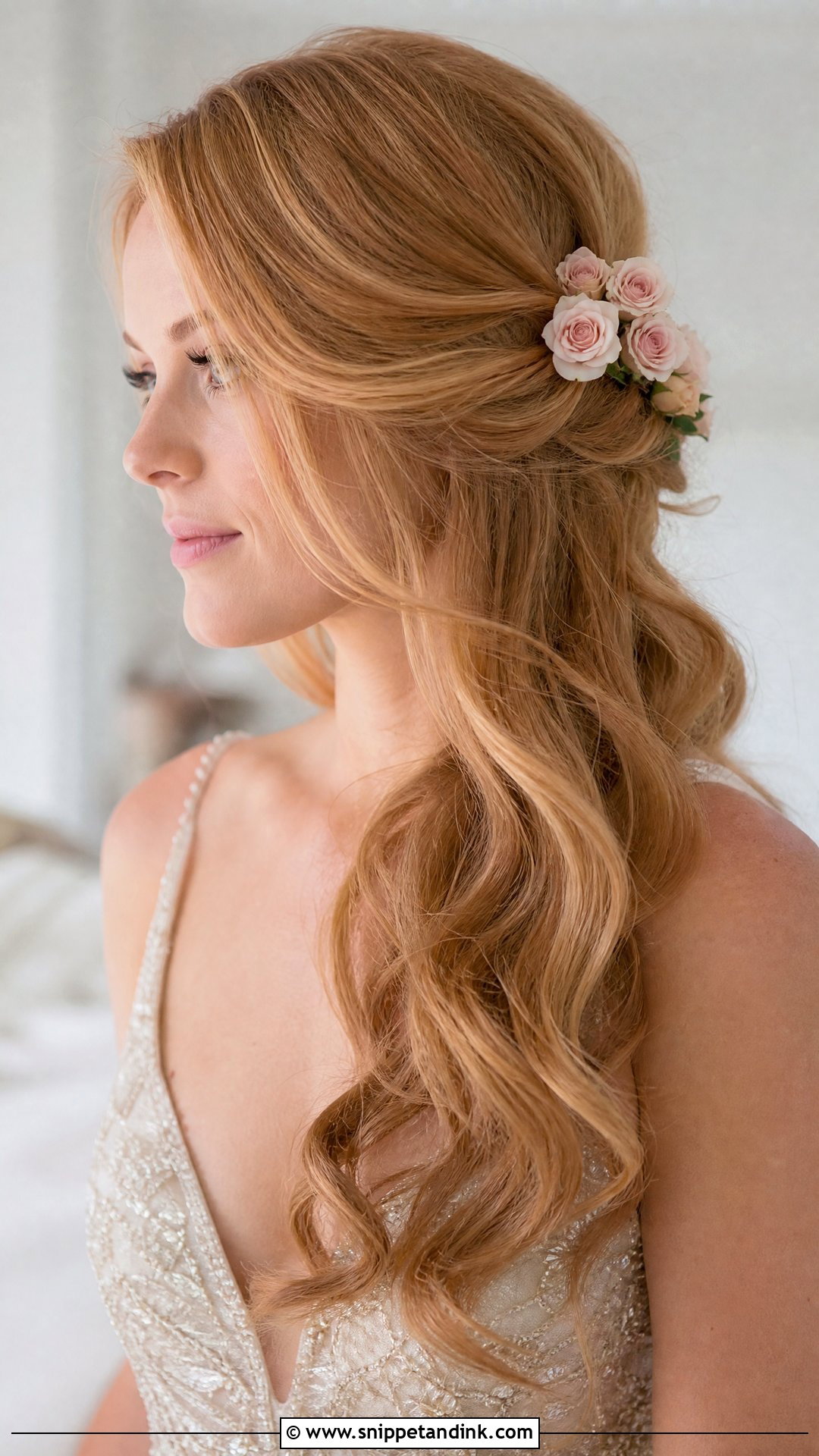
Roses are the most requested hair flower and the easiest to match to a bouquet. Full-size garden roses look dramatic but are heavy and drop petals once they open in the warmth, so for hair I almost always use spray roses: smaller, lighter and easier to pin. A single rose behind the ear reads simple; several small ones around a bun look gathered from a garden. White, blush, champagne, peach and muted pink stay bridal. Repeating a bouquet shade in the hair ties the two together, and roses sit in buns, waves, braids and half-up styles alike.
9. Orchid Bridal Hair
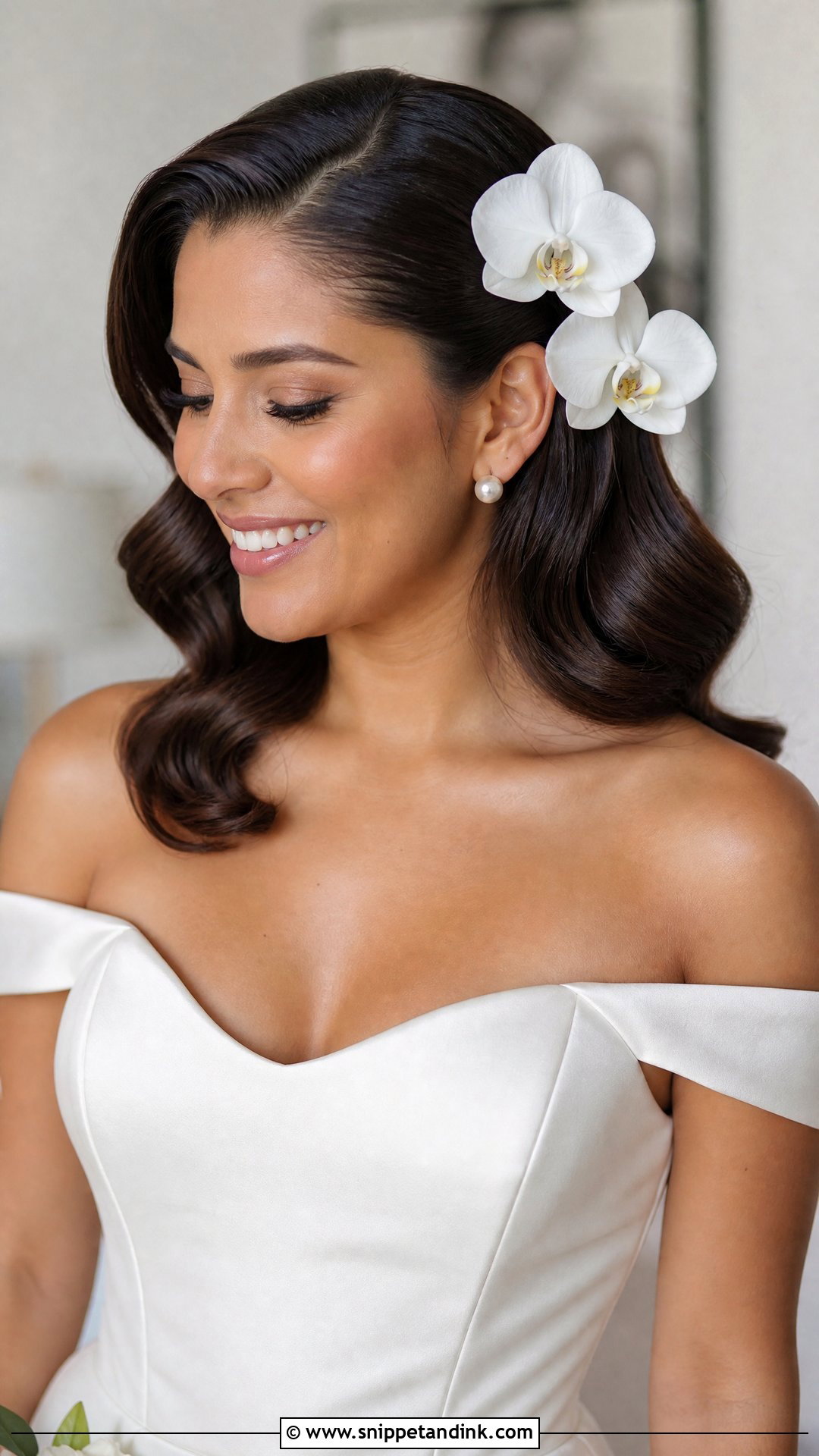
Orchids are my most reliable hair flower in hot weather. Their waxy petals hold up to warmth far better than most blooms, and their sculptural shape means two or three heads are enough. They sit naturally in sleek waves, polished buns and minimalist styles, or on one side of the head as a single clean accent. Smaller dendrobium orchids can run through a braid or into a low chignon. Destination and beach weddings use them often for exactly that heat tolerance. Because the flower already does the work, I suggest keeping the hair itself smooth and uncluttered.
10. Wildflower Bridal Hair
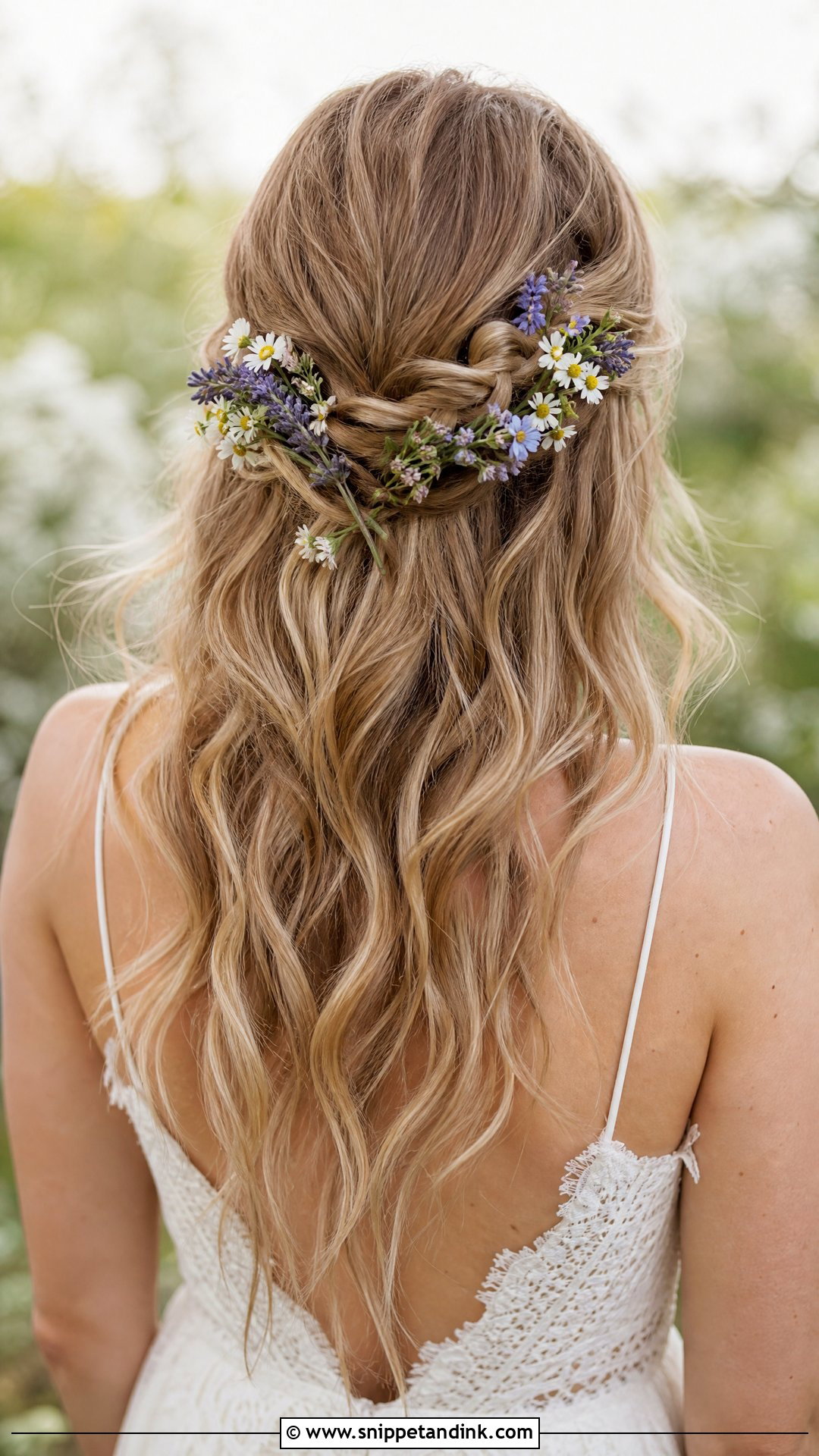
Wildflower bridal hair mixes small blooms of different shapes and tones instead of one matched variety: waxflower, chamomile, lavender, tiny daisies and soft greenery. It suits loose waves, soft braids, textured buns and outdoor ceremonies. The aim is gathered, not messy, so the stylist needs to place each stem with balance. Real field flowers are often weaker than florist-grown ones and wilt fast once cut, so I build wildflower pieces from sturdier lookalikes and condition them overnight. Meadow weddings, rustic venues and backyard ceremonies fit it well.
11. Floral Hair Comb For Brides
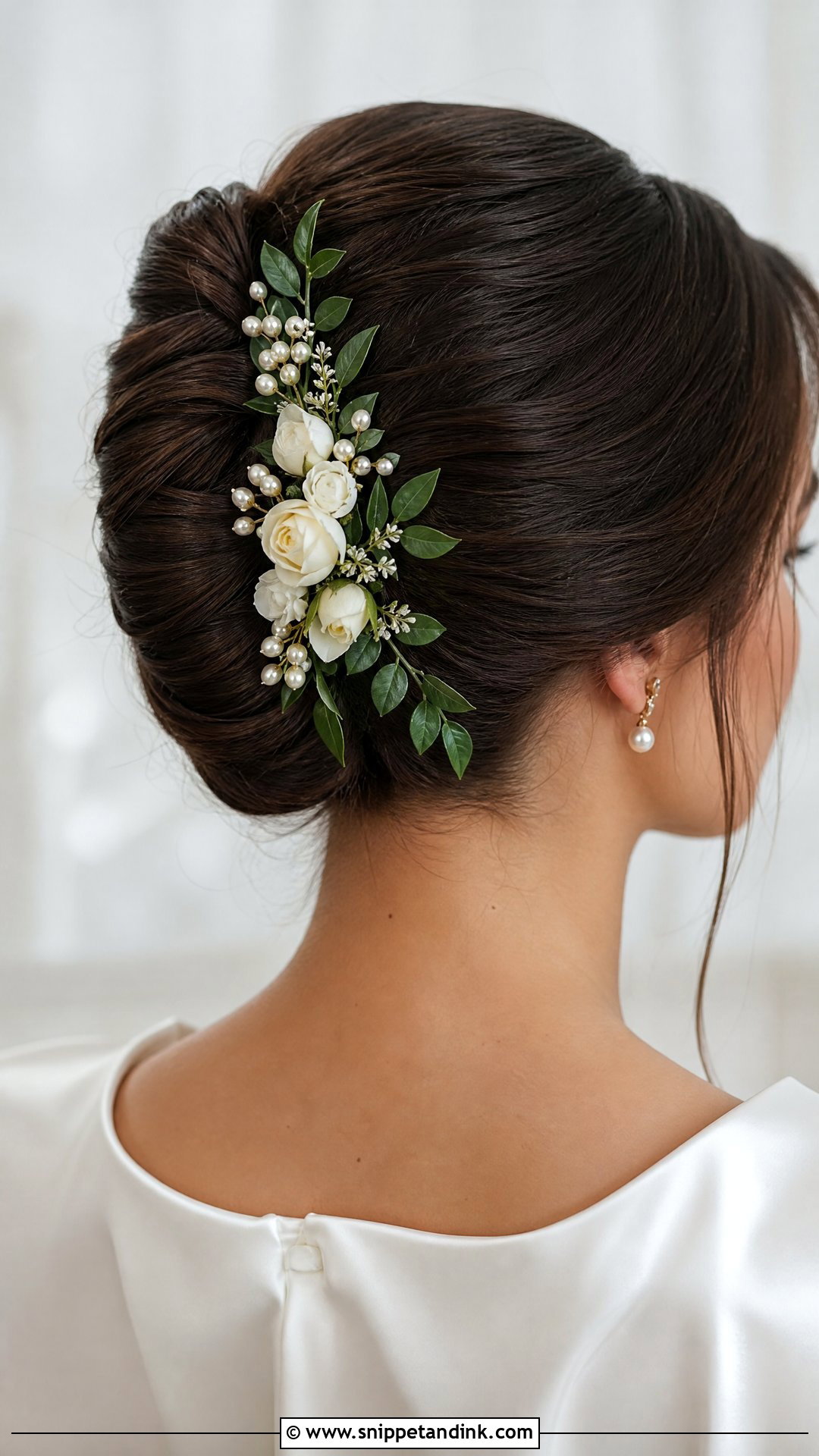
A floral comb saves the stylist from placing every stem on the wedding morning, because I build the arrangement onto the comb in advance. The flowers can be fresh, dried, silk or preserved. It slides into low buns, French twists, half-up hair and side-swept waves, and since the piece is already shaped, the stylist has more control over the final outline. I match the comb to the bouquet, the dress tone and the hair colour, since white blooms can disappear against very fair hair. Small combs stay delicate; a large one can replace a veil entirely.
12. Flower Bridal Ponytail
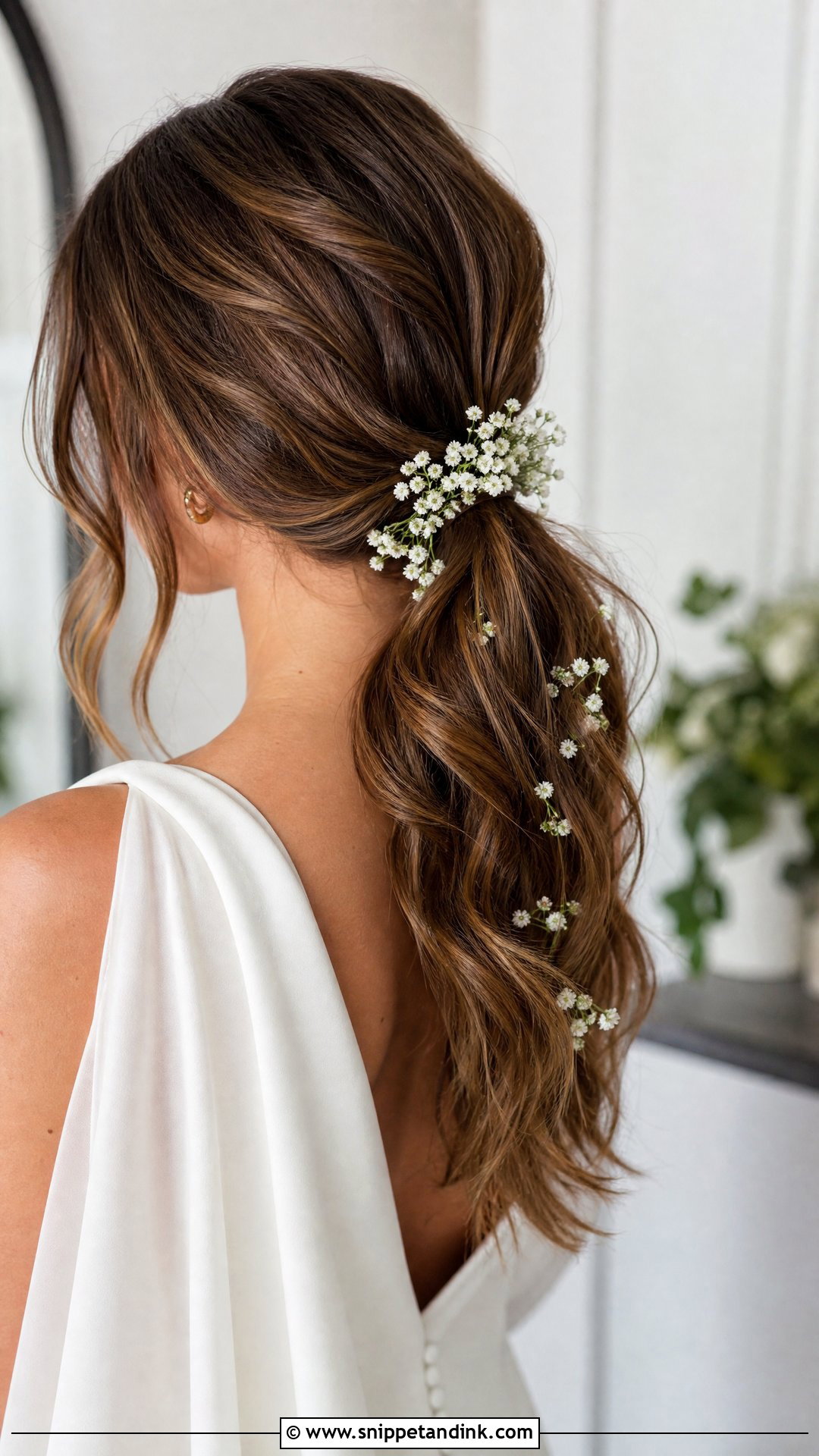
A ponytail with flowers can be low and soft, high and glamorous, or tied mid-height with waves down the back. Blooms wrap around the base, scatter along the length or sit in a braid within the tail. Long hair shows off best this way, with the face left open. It is a popular reception change from a ceremony bun. Weight matters more here than in any other style: a heavy cluster at the base drags a high ponytail down within an hour, so I use the lightest flowers I have and keep stems short.
13. Side Swept Bridal Hair With Flowers
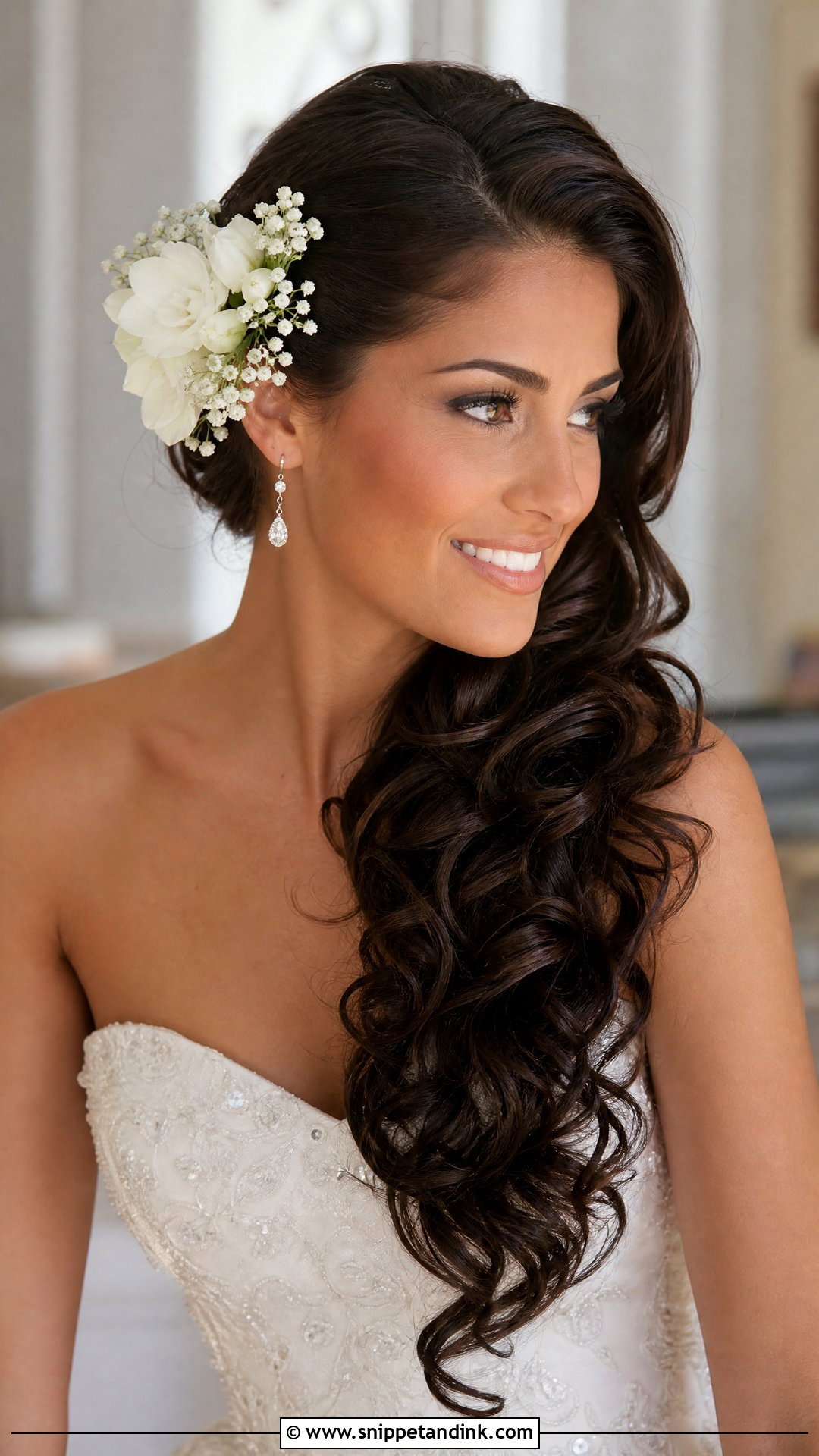
Side-swept hair is curled or waved, then pinned over one shoulder with the pins hidden underneath. Flowers can sit above the pinned side, behind the ear or along the back where everything is secured. Strapless, one-shoulder and sweetheart necklines suit it, as do soft veils. Roses, orchids and small pearl-like blooms all work. Here balance does the deciding: bold flowers need smooth waves around them, while tiny blooms can sit among more texture and volume. Because one side is exposed, I make sure every wire end is taped flat so nothing scratches the neck.
14. Floral Chignon For Brides
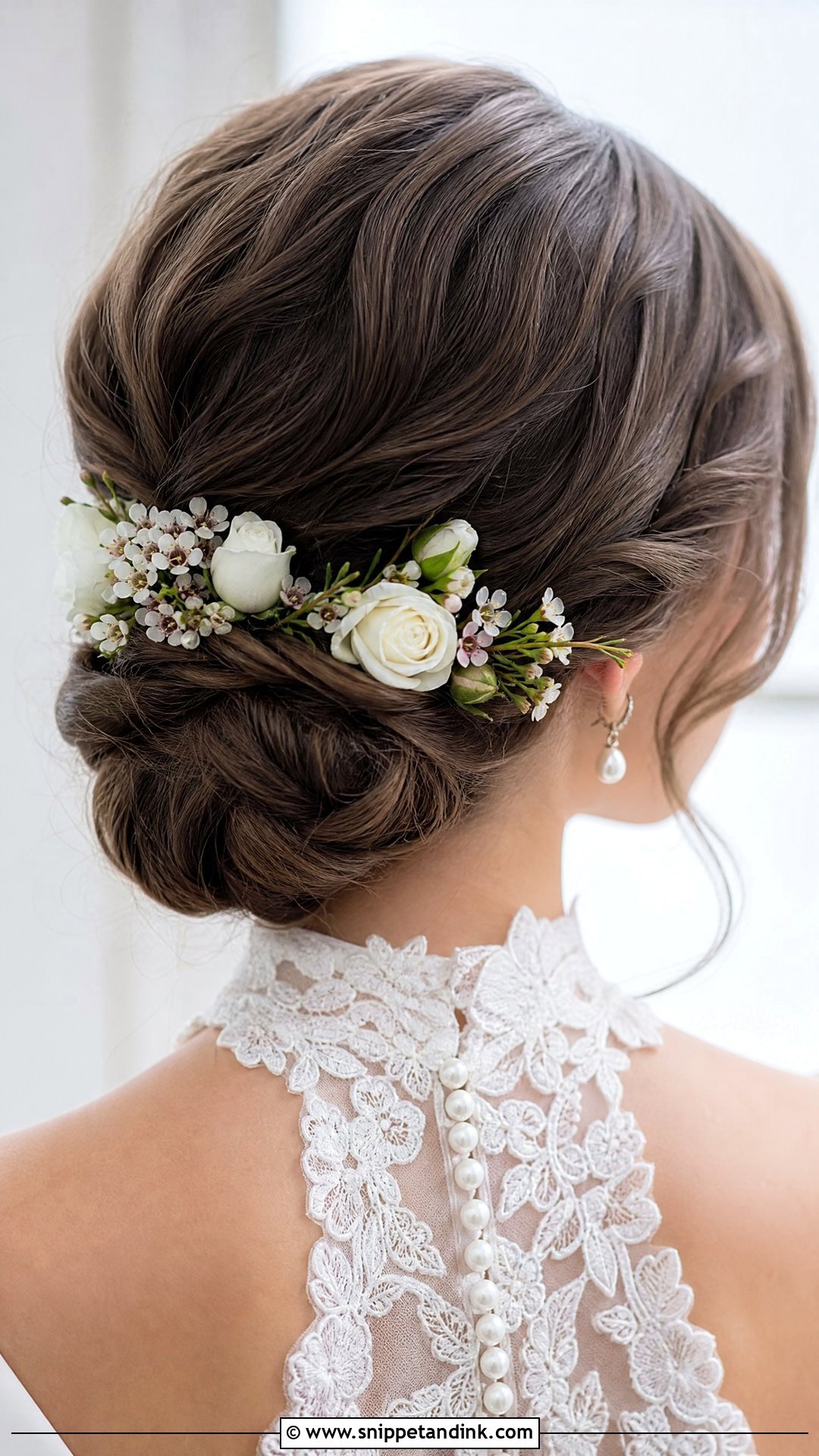
A chignon is the most secure base for fresh flowers, so I recommend it when the day is long and the dress is formal. It can be sleek and rounded, softly twisted, braided or slightly undone. I place the flowers around the curve of the bun or to one side, and I scale them to the chignon itself: tiny blooms on a small, neat bun; roses or orchids on a fuller one. It sits well with veils, earrings, high necklines and detailed backs, since the neck and shoulders stay clear.
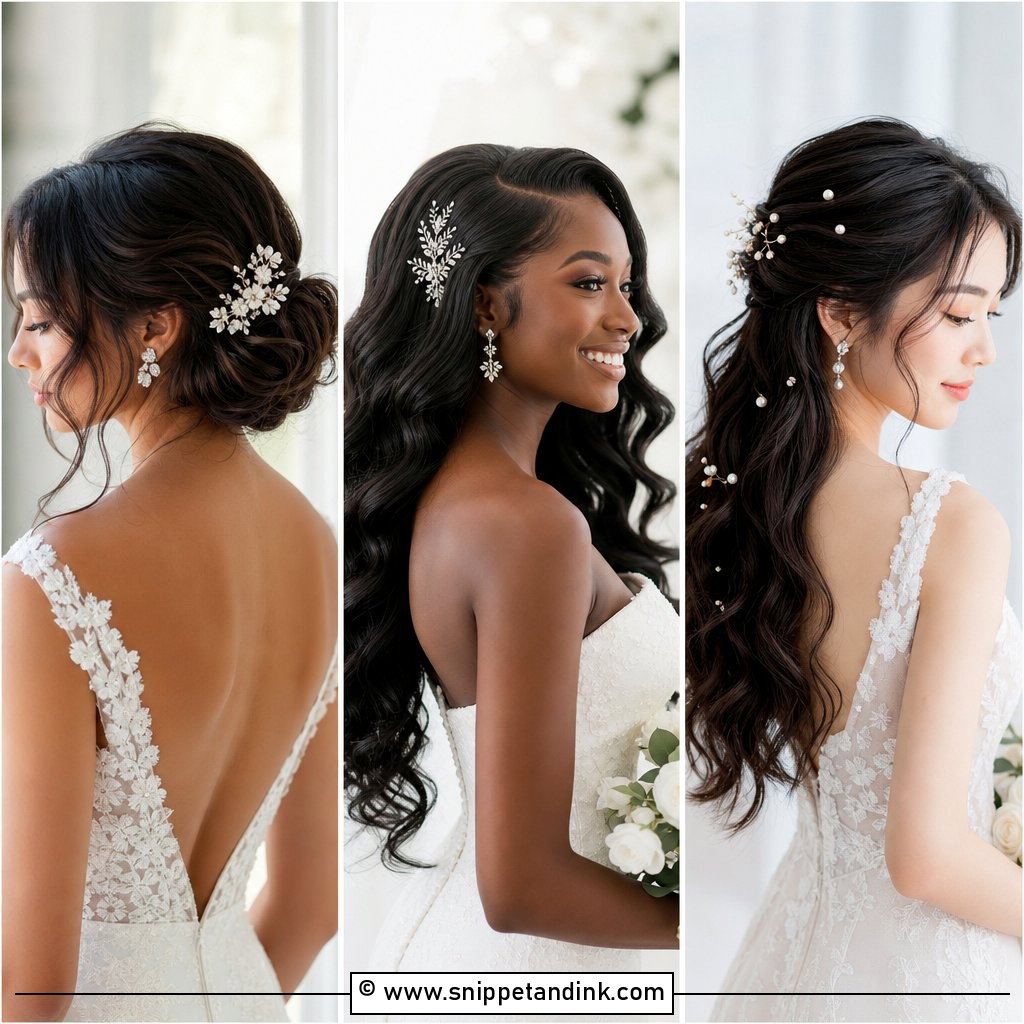
15. Curly Bridal Hair With Flowers
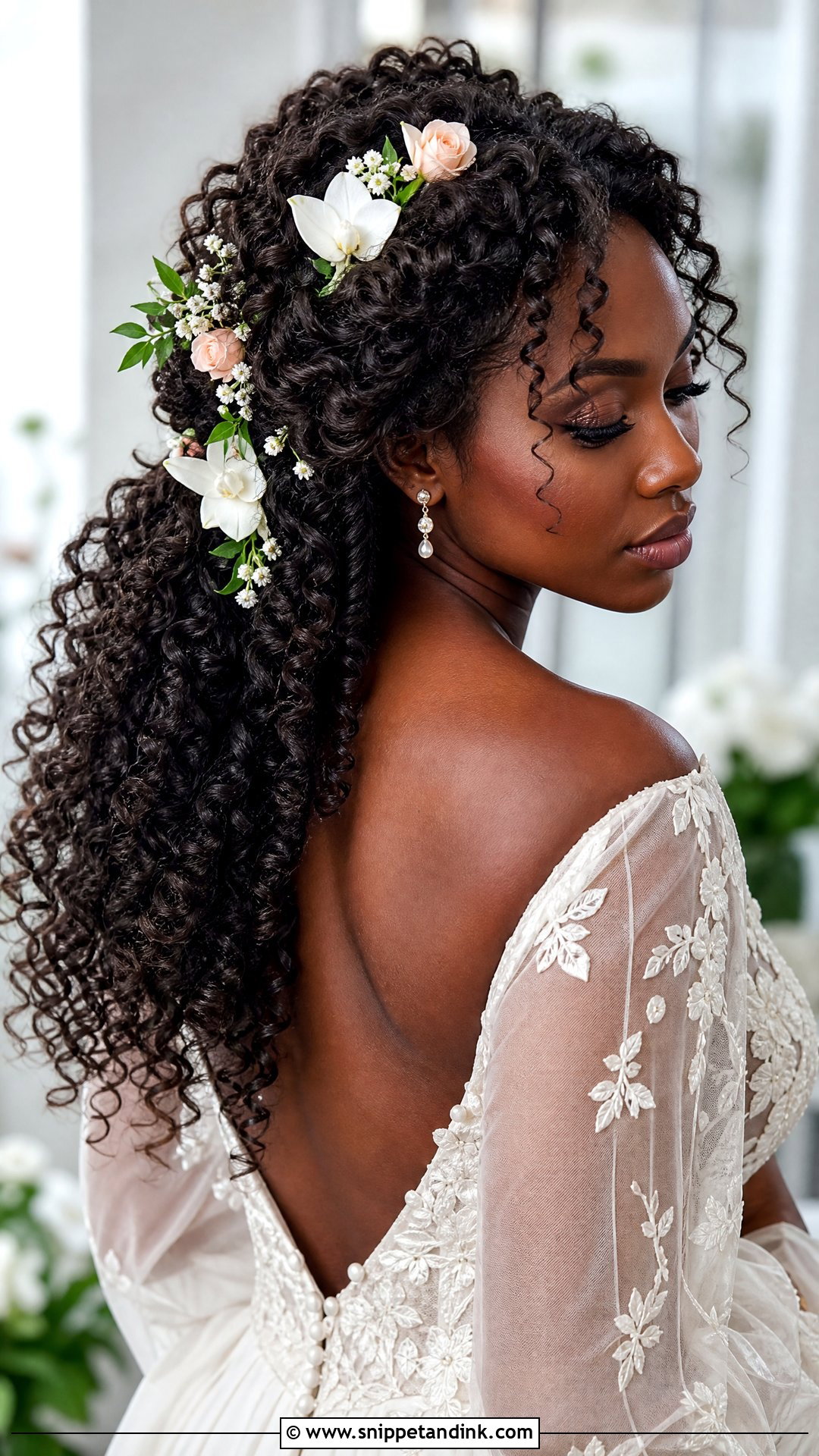
Curly hair holds flowers better than almost any other texture, as long as nothing flattens the curl pattern. I send small blooms for curly brides because they sit between curls without weighing them down: baby’s breath, mini orchids, tiny roses and soft greenery. Curls can be worn loose, half-up, in a curly bun or shaped into an updo. The stylist should define the curls first and add flowers last, where they stay visible from the front. Done that way, the flowers look like part of the hair’s natural shape.
Spring Ranunculus, Autumn Dahlias: Picking Hair Flowers by Season
Many flowers are available year-round now, but what is in season locally is usually fresher, sturdier and better value. A loose guide for hair pieces:
- Spring: ranunculus, sweet peas, lily of the valley and small tulips. Sweet peas and lily of the valley are delicate, so I save them for short ceremonies.
- Early summer: peonies are in demand, but they are heavy and shed; a single small bud works better than an open bloom.
- Late summer and autumn: small dahlias, cosmos, scabiosa and hypericum berries. Dahlias bruise easily, so they need gentle hands.
- Year-round: spray roses, orchids, waxflower and baby’s breath, the dependable backbone of most hair pieces.
Pollen, Scent and Sensitive Skin Right Next to Your Face
A hair flower sits closer to your nose and skin than anything else you wear. If you have hay fever, tell your florist, because heavily scented or pollen-rich flowers such as lilies and some wildflowers can set off sneezing within an hour. Lily pollen also stains ivory fabric. I remove anthers from any flower that has them before it goes near a bride.
Sensitive skin is worth mentioning too. Some stems and greenery release sap that can irritate a bare neck, so I seal every cut end with tape. If you are unsure, hold a sample against your inner wrist for an hour during your trial.
A Small Flower Placed Well Beats a Big One Placed Anywhere
Flowers in bridal hair can be classic, wild, minimal or full, and the right one depends on the hairstyle, your hair texture, the dress, the bouquet and how many hours the blooms must last. Small flowers are easier to secure. Big ones need clean, simple hair around them. Whatever you choose, introduce your florist and hairstylist early so stem length, size, colour and placement are agreed before the morning. Then the flowers stop being a worry and become part of the look.
You'll Like These Ideas:



Leave a Reply