
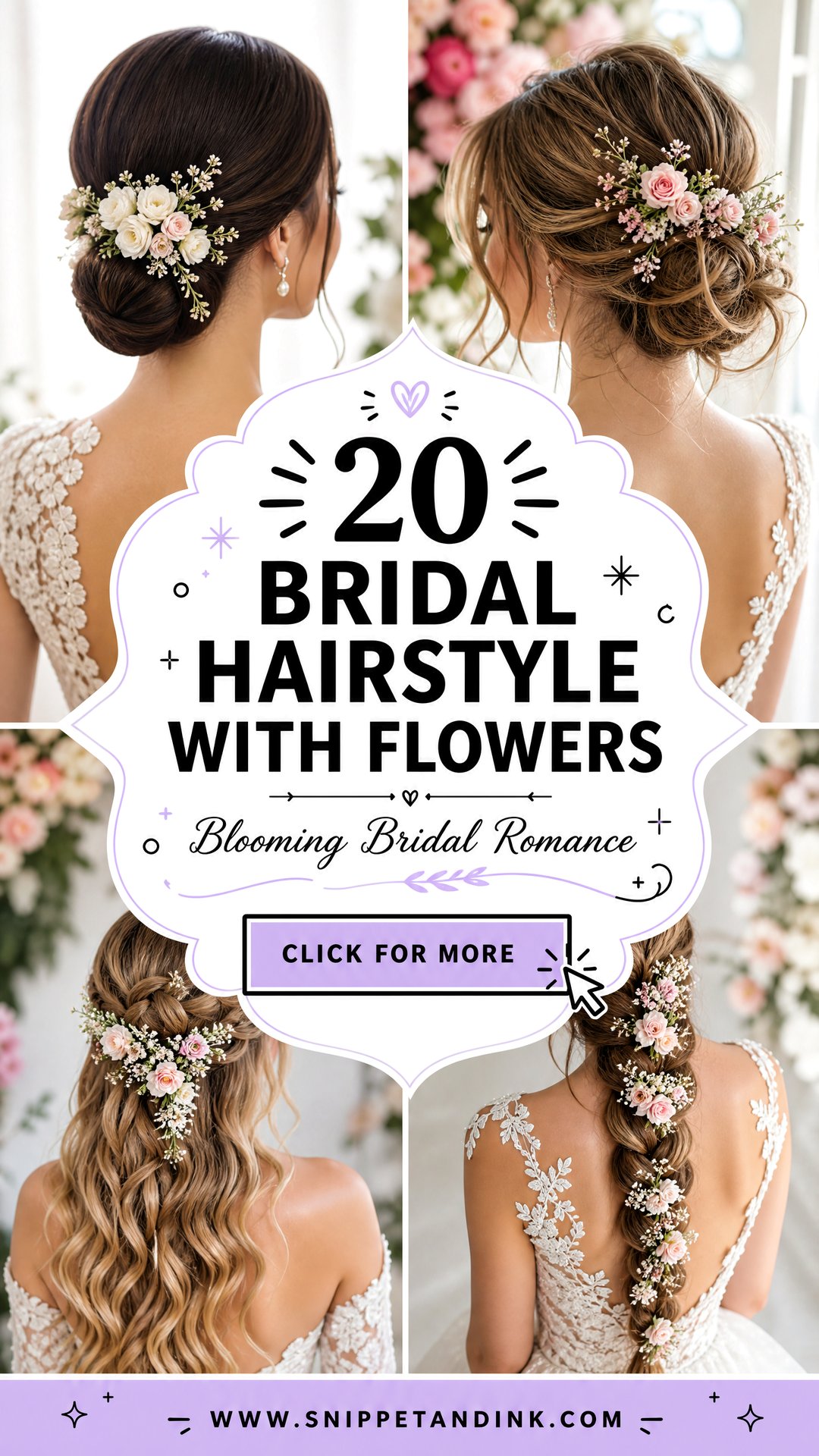
Flowers are the one hair accessory that changes during the day. They open, wilt, shed and bruise, and the hairstyle under them has to hold stems securely without crushing them. Done well, a few blooms soften an updo or turn a simple braid into wedding hair without any jewelry at all. The right choice depends on your dress, venue, texture and bouquet, and on the weather: fresh flowers look most natural, while silk flowers and floral pins handle heat, travel and long hours better. These 20 floral styles come with notes on where the flowers go and what keeps them there.
Which Blooms Last Out of Water, and Which Collapse
Hair flowers spend the day out of water, pressed against a warm head, often in sun. Some handle it well; others look tired before the speeches. When a bride brings me a picture full of hydrangeas or peonies, I gently steer her toward something sturdier for the hair and keep the delicate ones for the bouquet.
Reliable in hair
- Orchids, especially the smaller spray types. Firm petals, light and long-lasting.
- Spray roses and small garden roses, which are hardier than they look.
- Wax flower, baby’s breath and stephanotis, all classic for scattered pins.
- Dried and preserved flowers, which don’t wilt at all.
Risky for a long day
- Hydrangea, which drinks heavily and droops fast once cut off from water.
- Gardenias, which brown wherever they’re touched.
- Large peonies, which are heavy and drop petals as they open.
- Lilies, whose pollen stains skin, fabric and light hair.
Season changes the list too. A bloom that sails through a cool spring evening can wilt by mid-afternoon at a July garden ceremony, so if your date is hot, ask your florist which of her stems she’d trust out of water for six hours and build the hair around those.
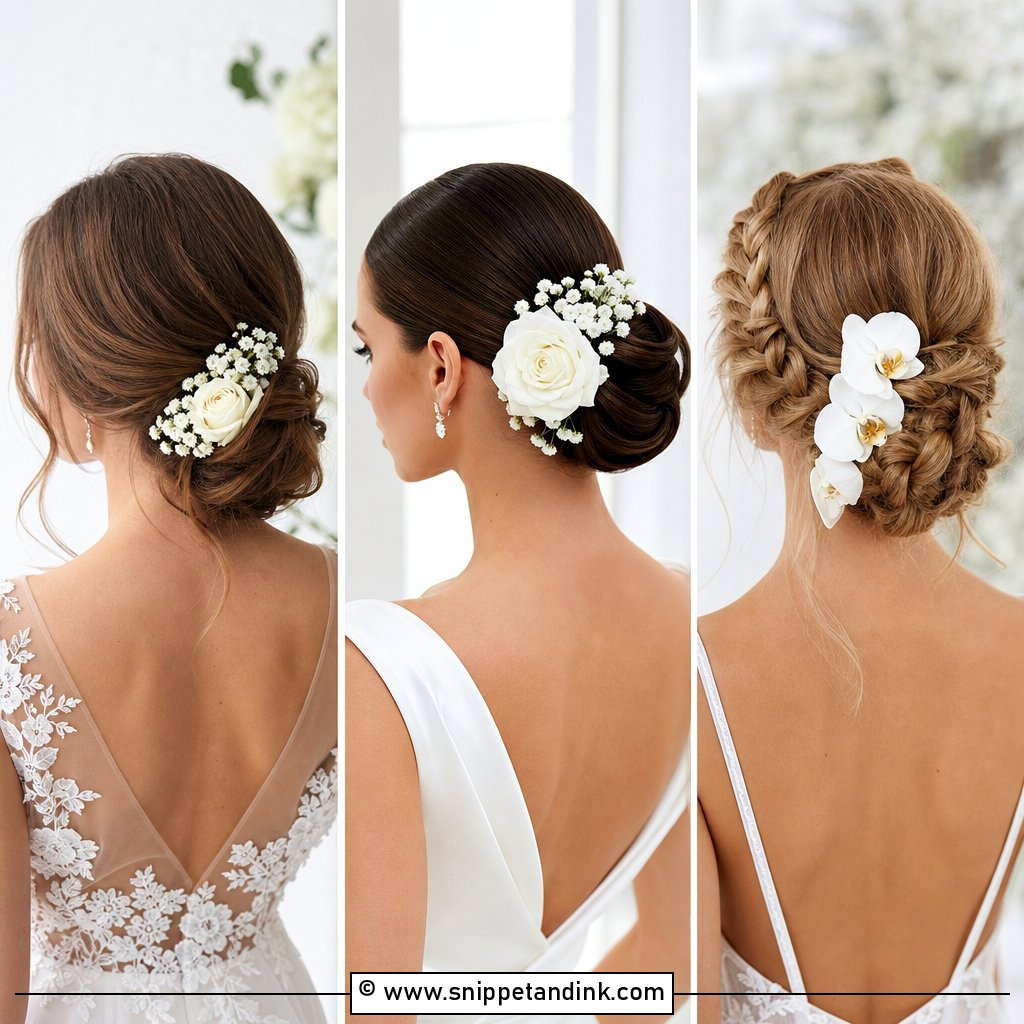
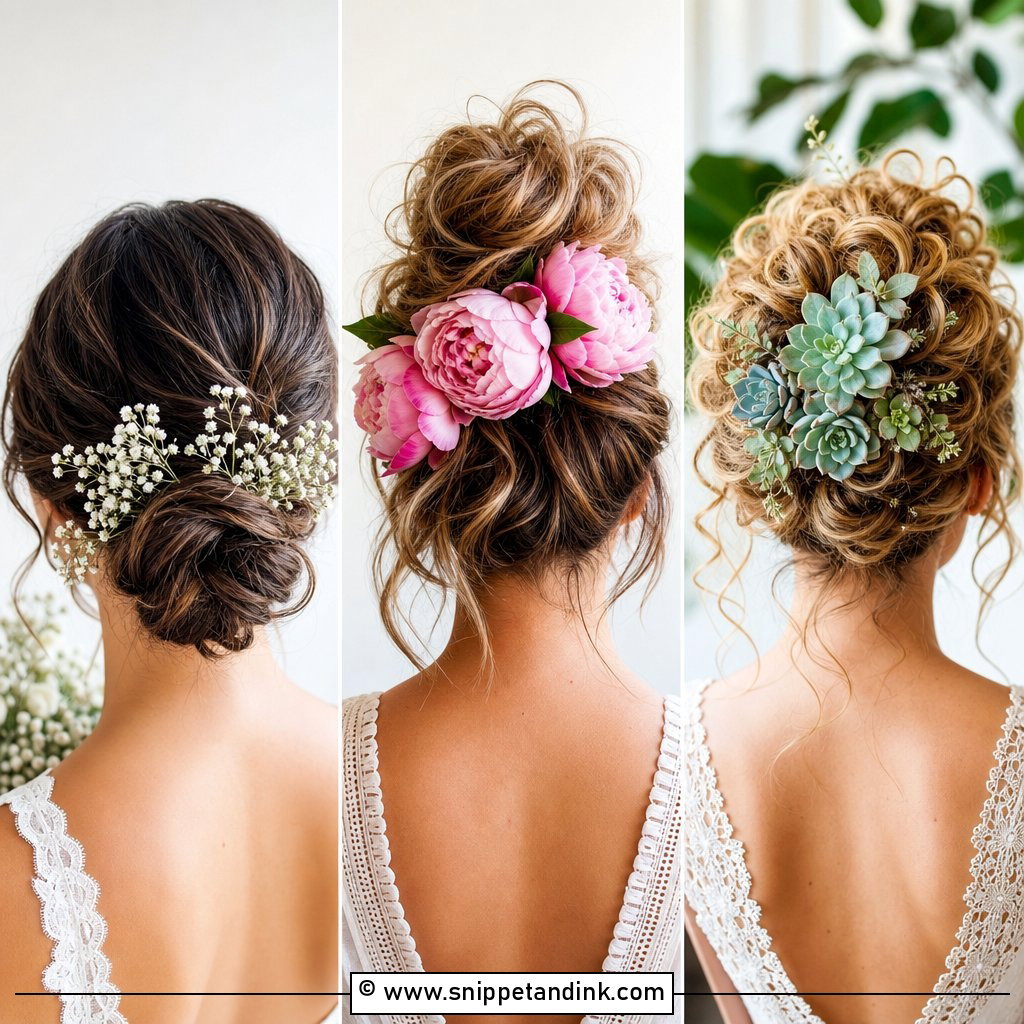
1. Bridal Low Bun With Flowers
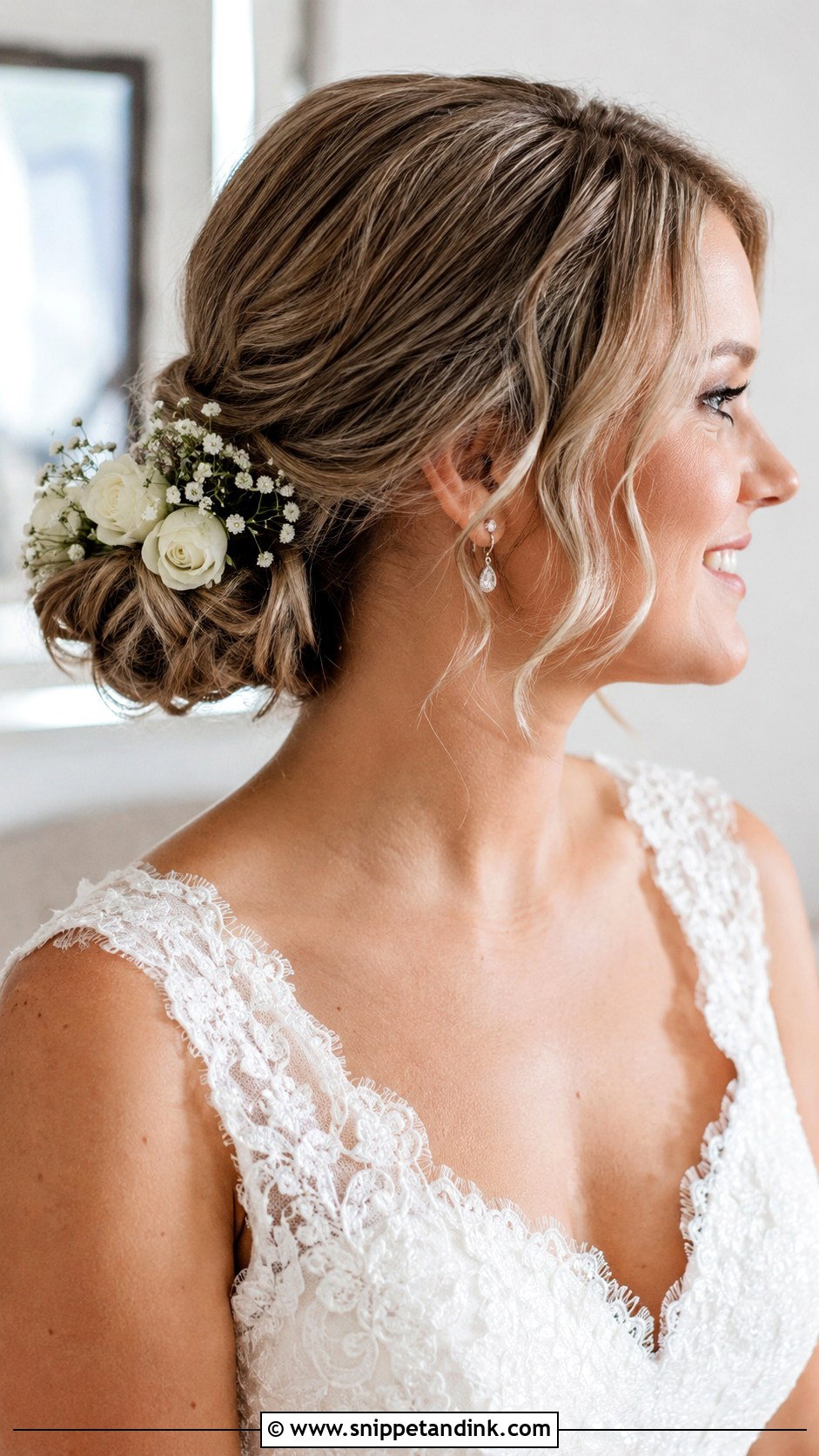
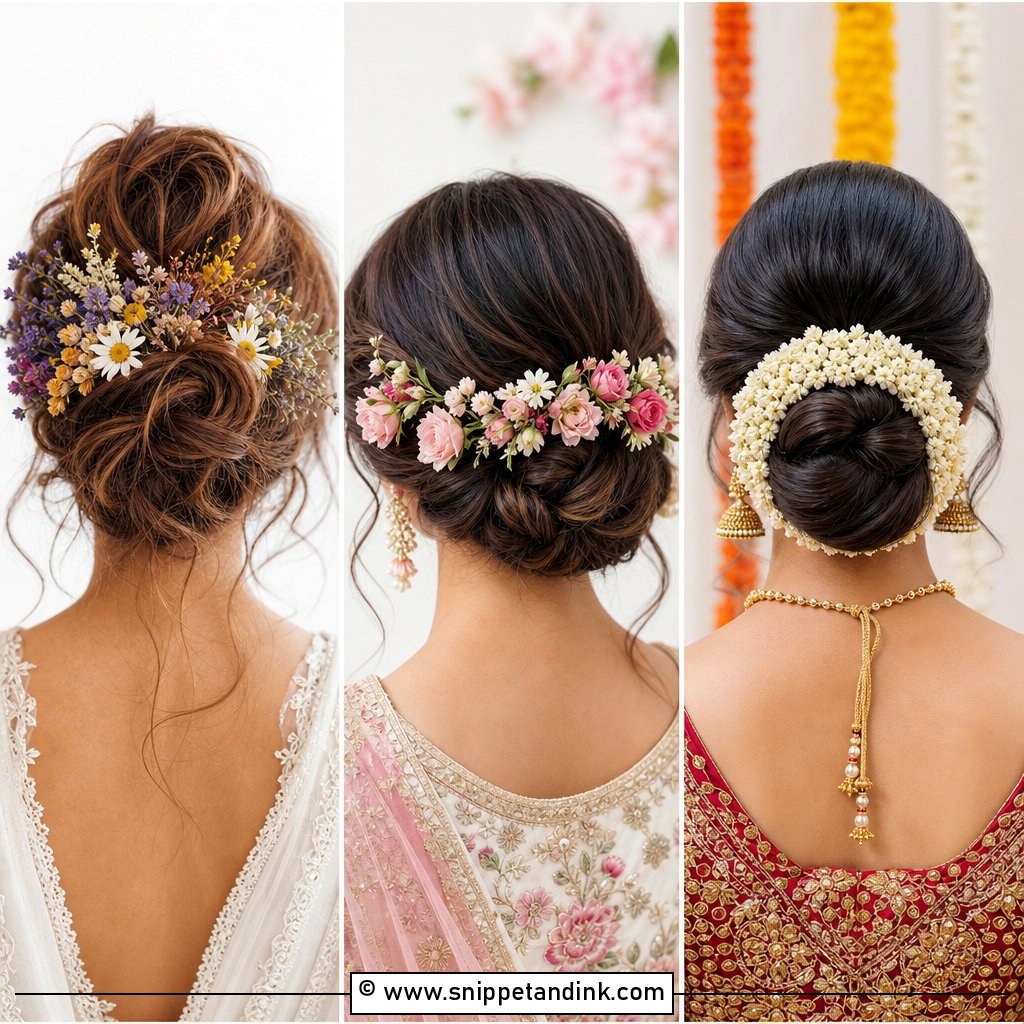
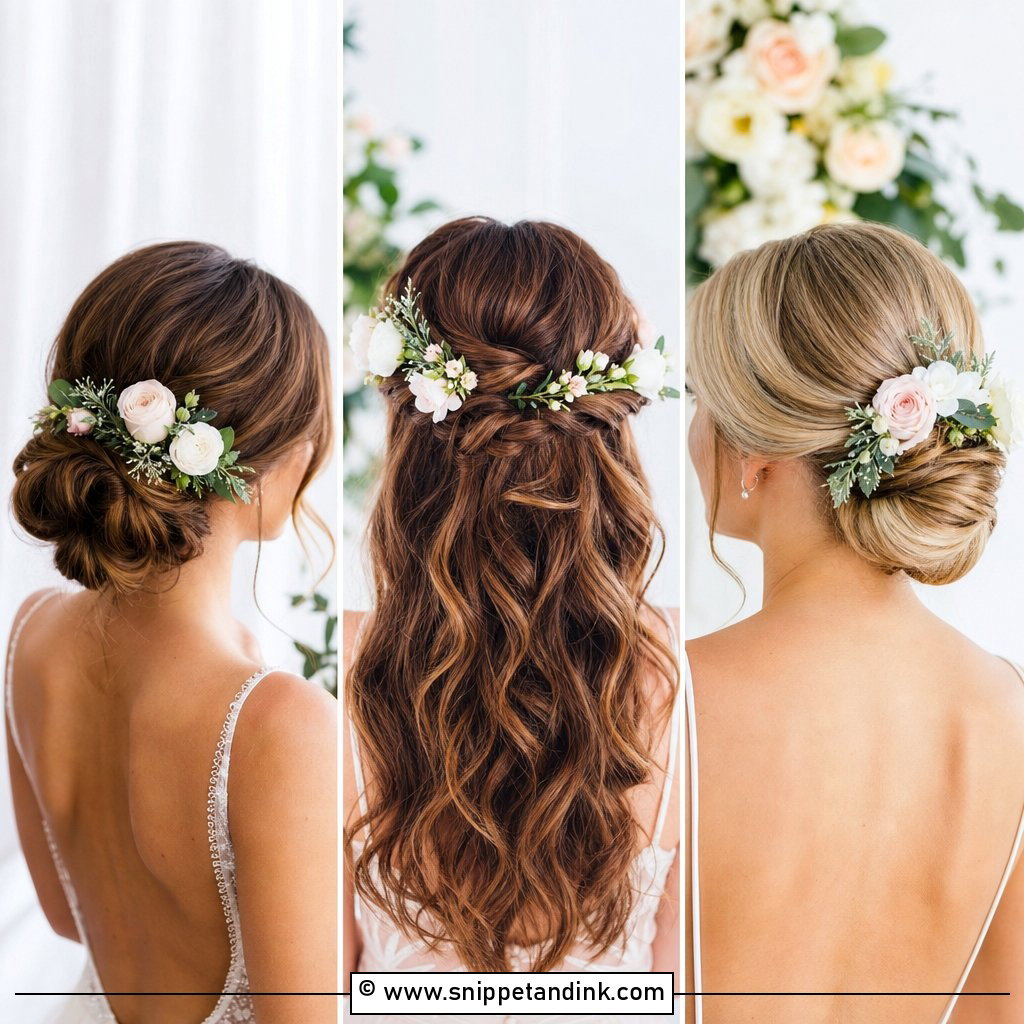
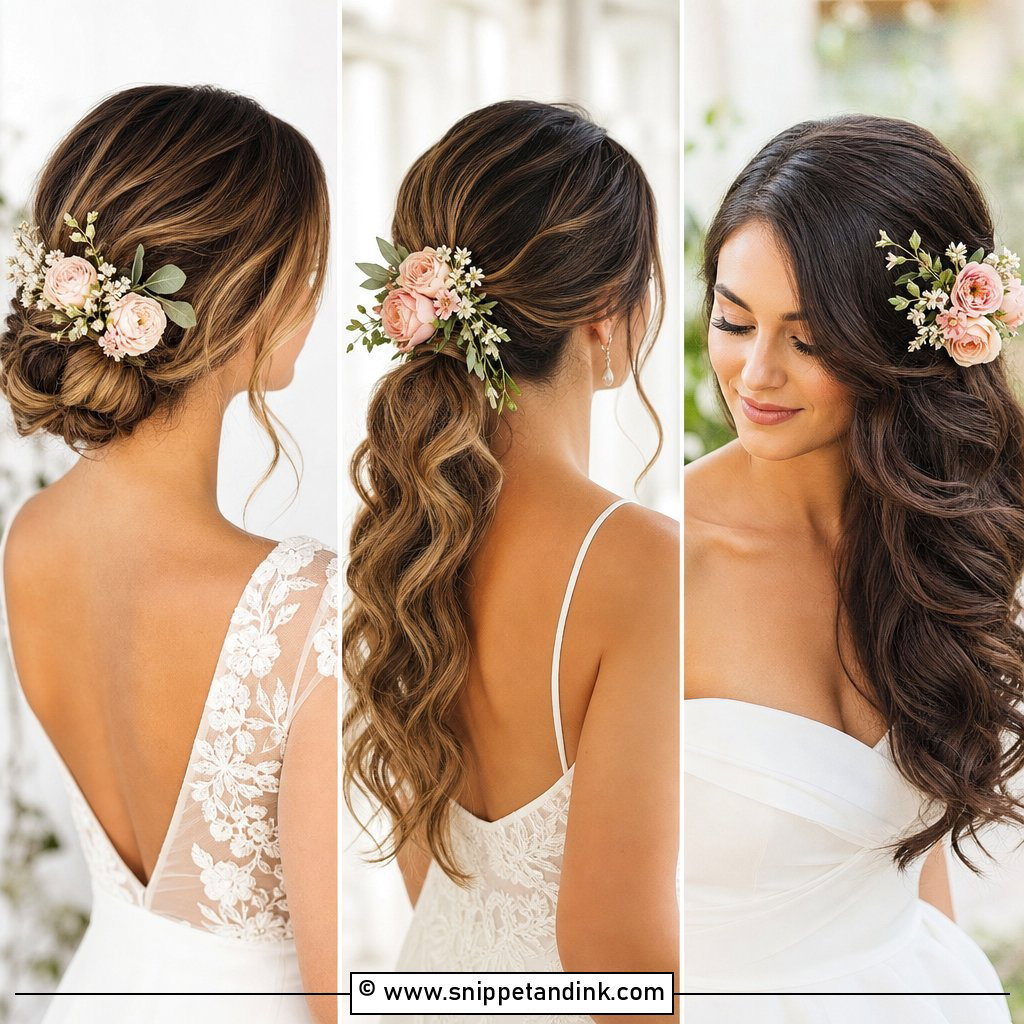
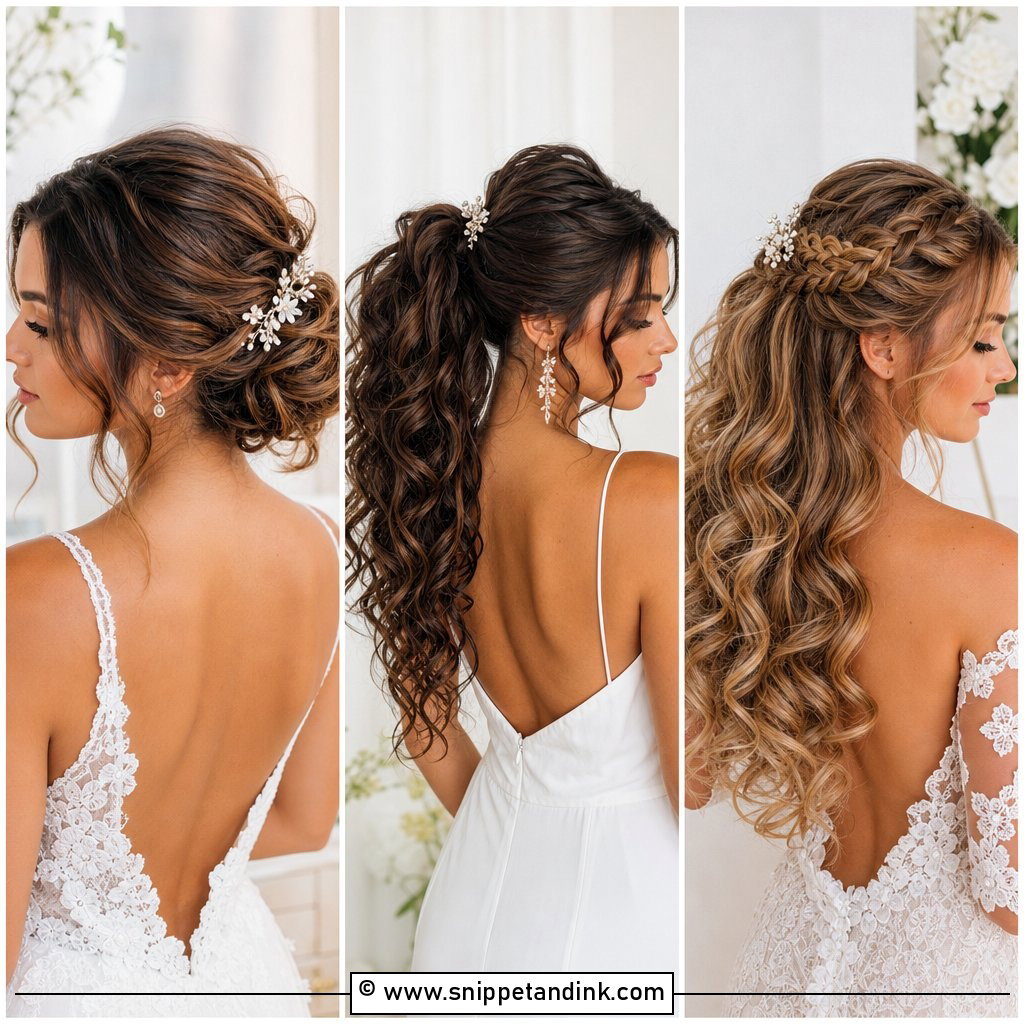
I build a low bun slightly textured on purpose when flowers are going in. A very tight, smooth bun has no gaps for stems, so the blooms end up perched on the surface and look stuck on. Small roses, baby’s breath, orchids or tiny garden blooms tuck around a softer bun and look like they grew there. It keeps hair secure, frames an open back or lace detail, and gives a veil comb a solid anchor below the flowers.
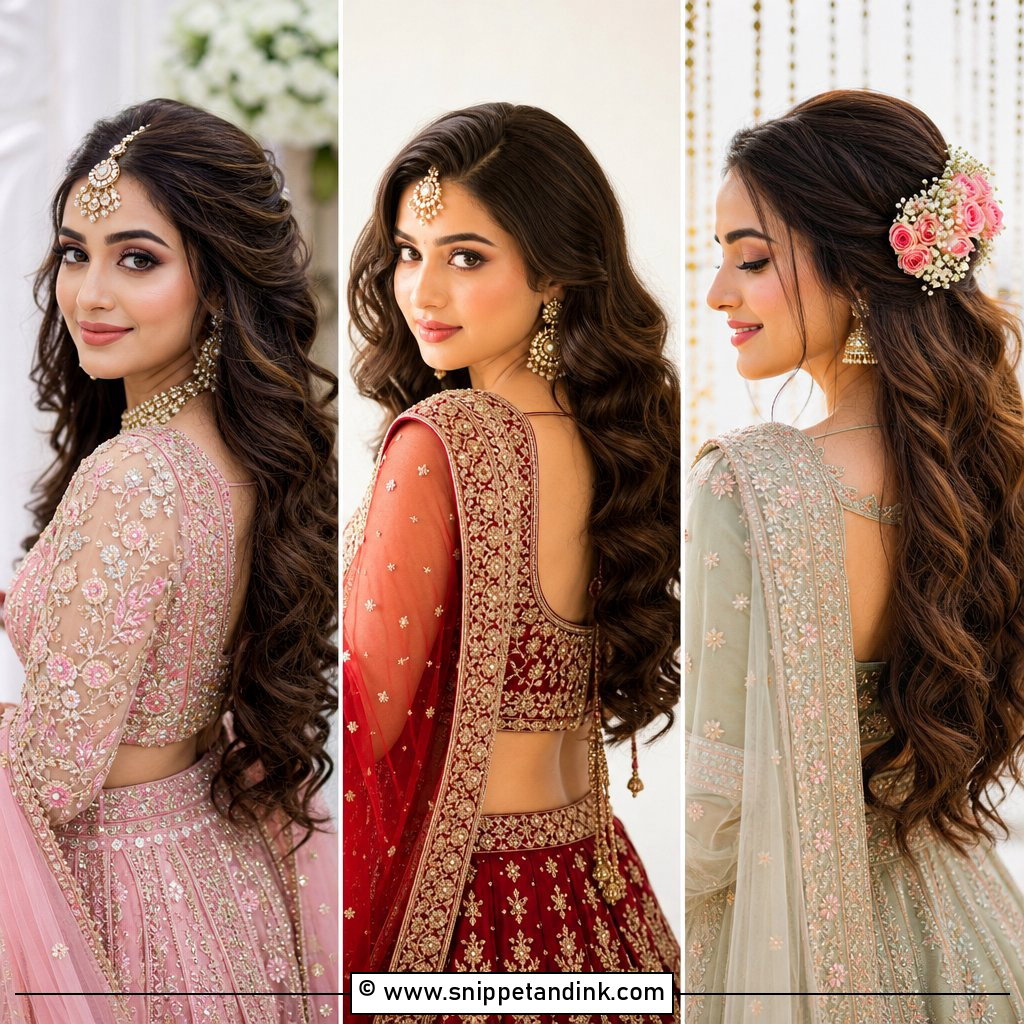
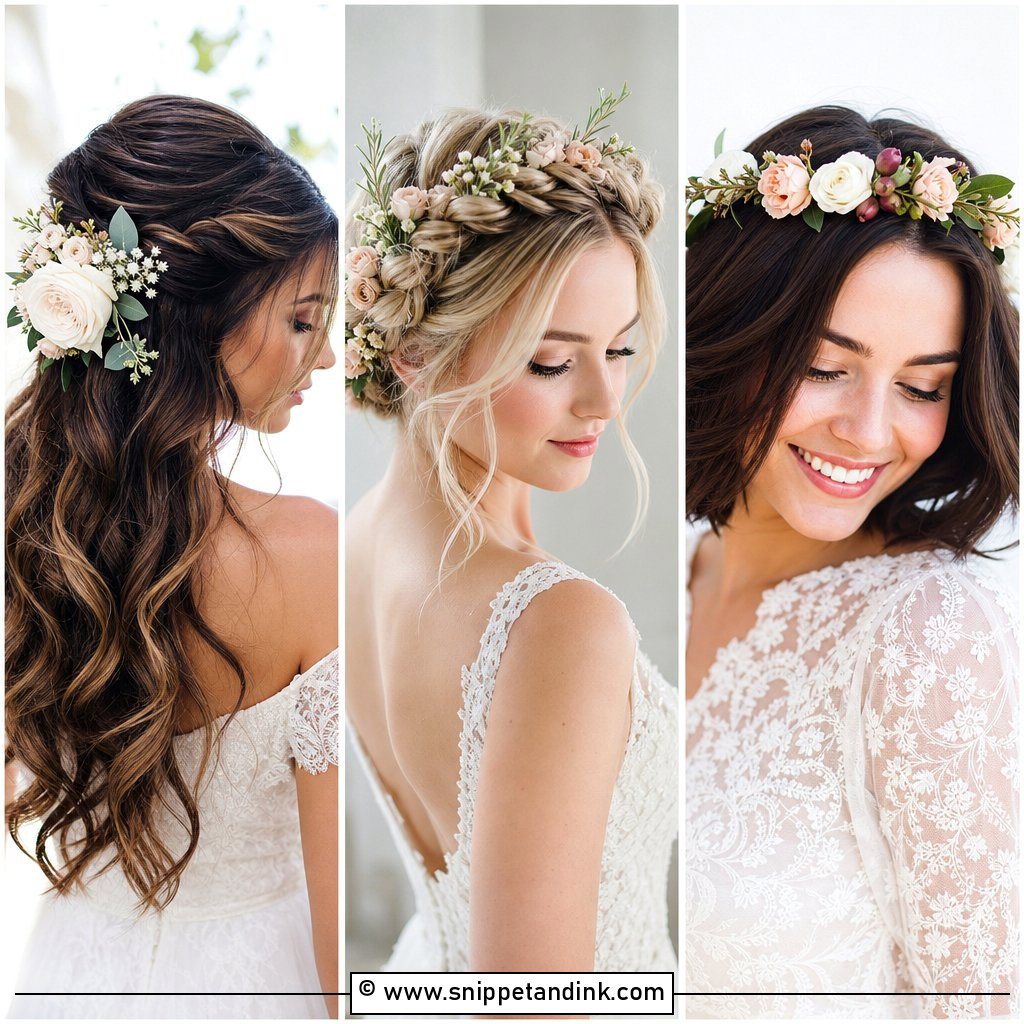
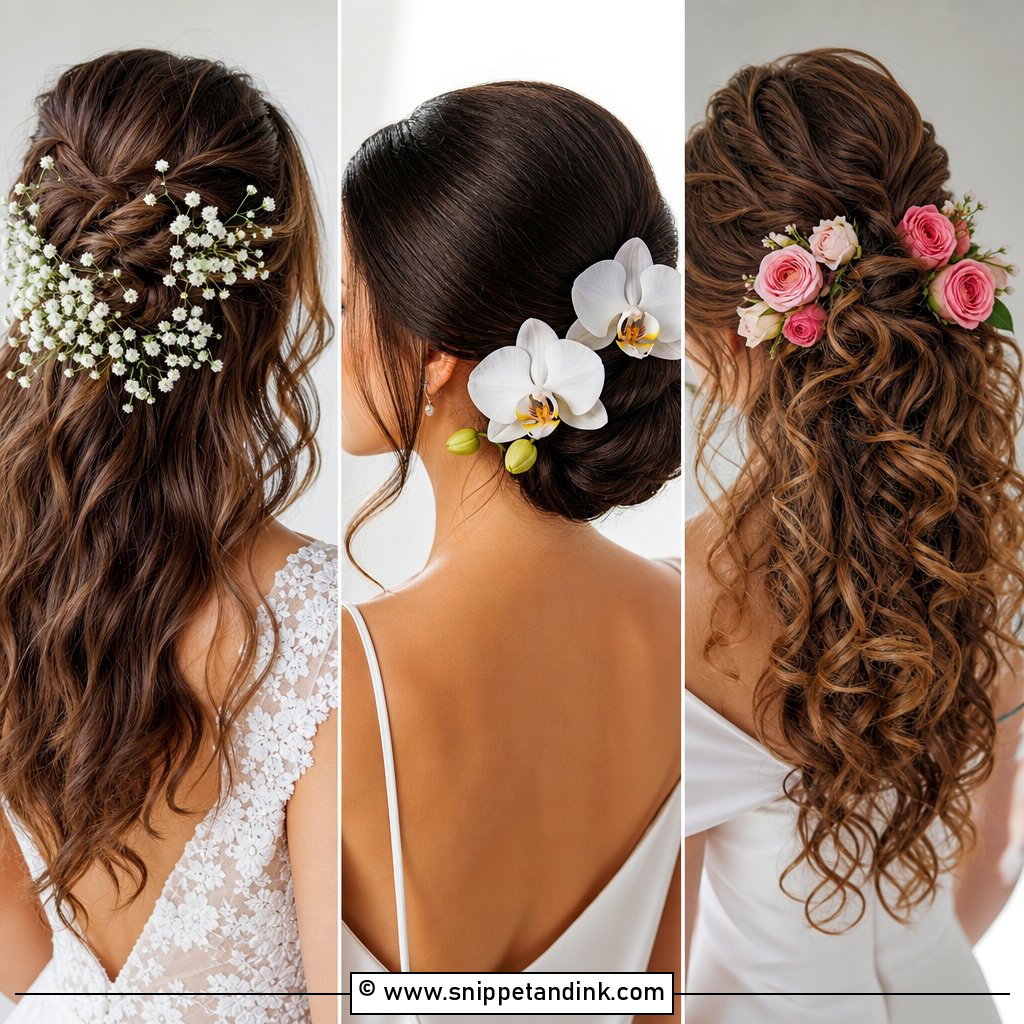
2. Bridal Half Up Hairstyle With Flowers
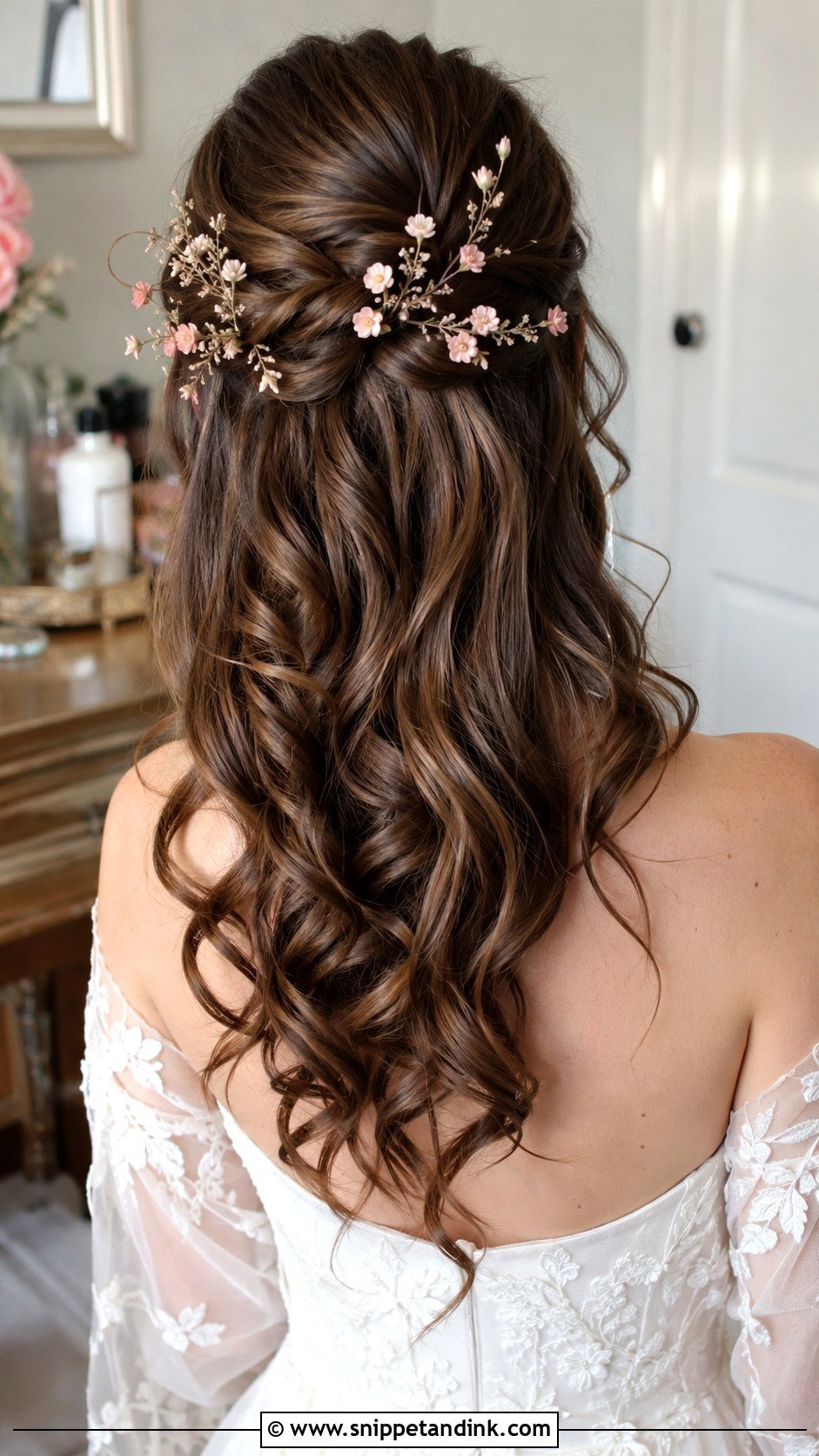
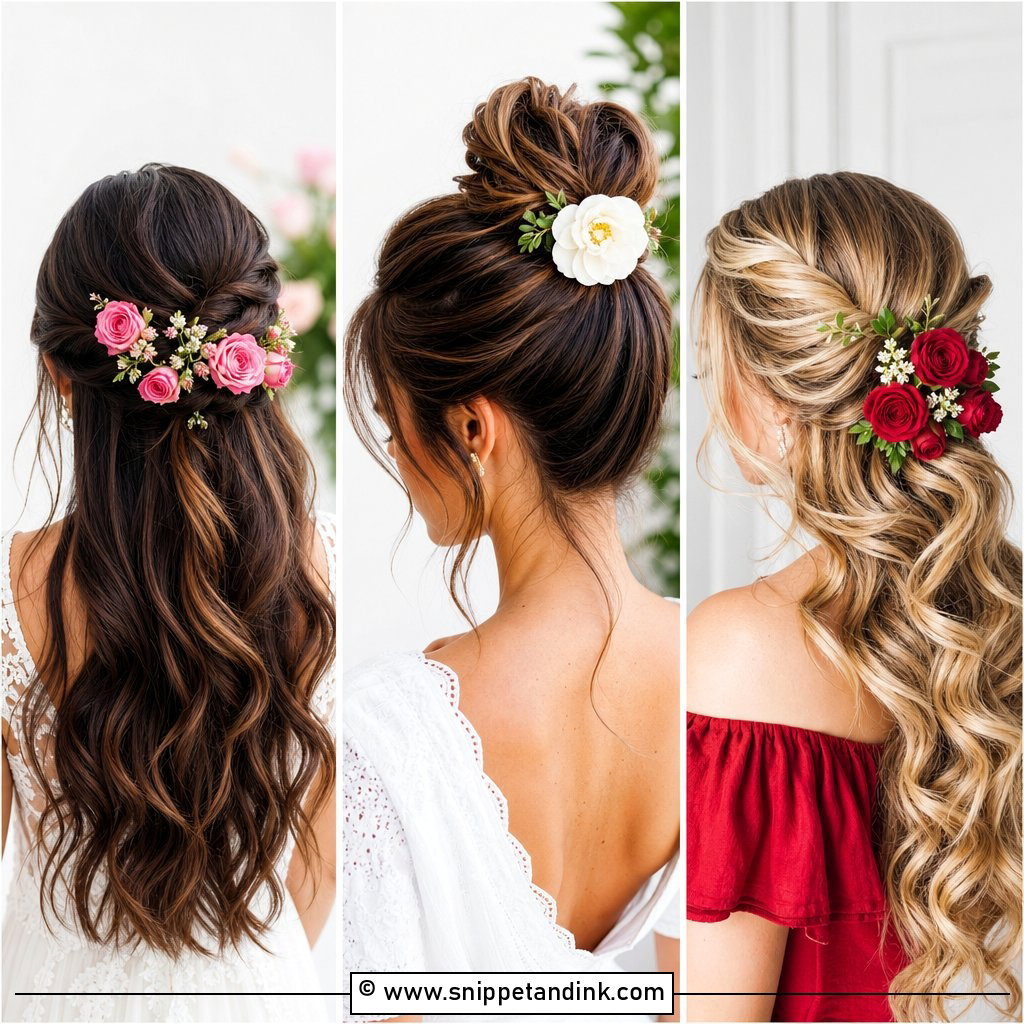
Hair down needs some structure to carry flowers, and half-up provides it. The crown is lifted and pinned, the rest falls in curls, waves or brushed-out texture, and the flowers go across the twist, along a small braid or into a floral comb at the back. That pinned section is the only place stems can really grip. Leave the front pieces soft so the face isn’t framed only by blooms.
3. Bridal Flower Crown Hairstyle
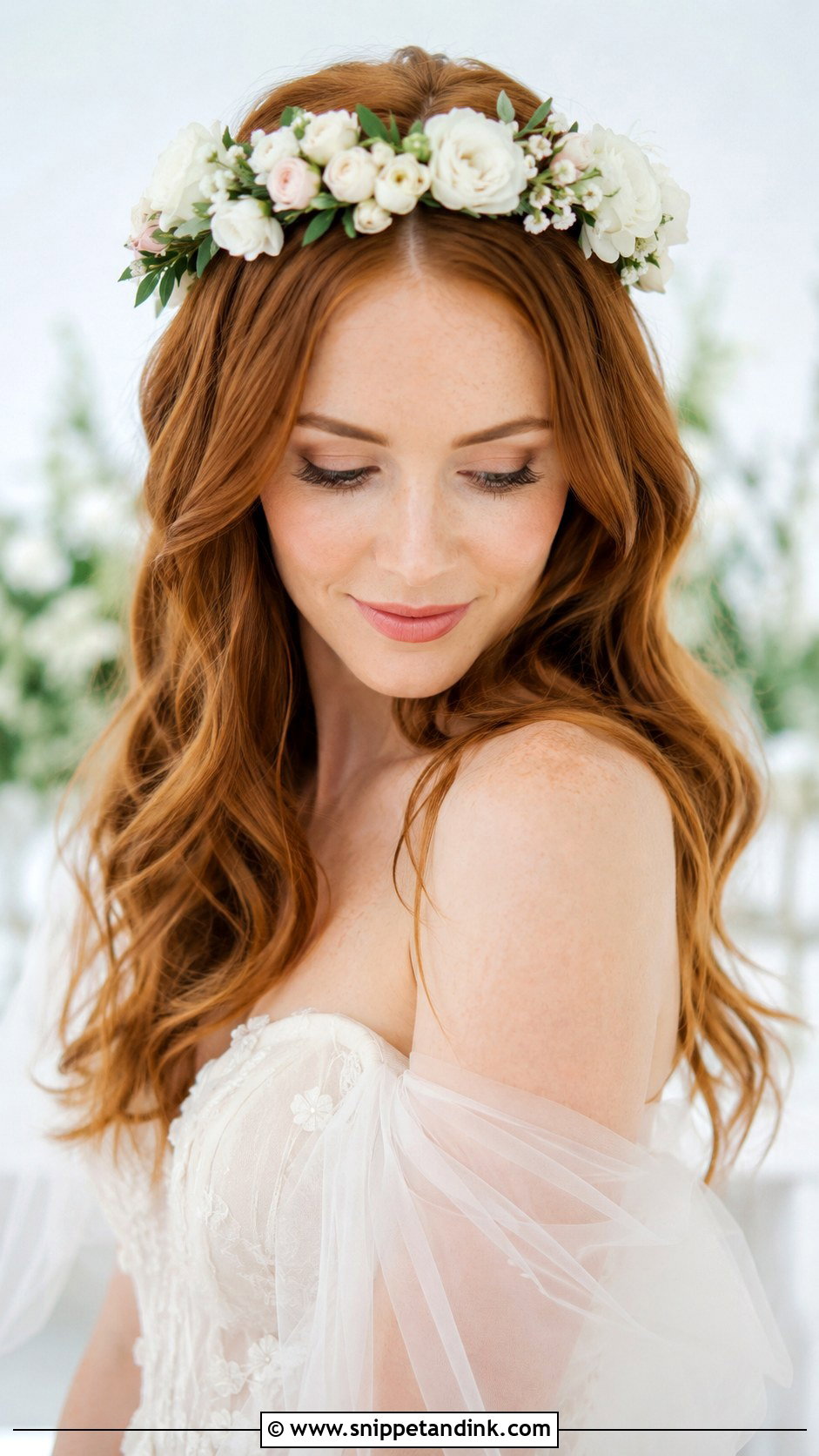
Scale is the decision that makes or breaks a flower crown. Tiny blooms read delicate and suit a smaller face or a detailed dress; large flowers read bolder but can swamp a petite bride. Loose waves, natural curls and soft braids keep the look relaxed, and a little volume at the roots stops the crown from sitting flat on the head. I’d keep the veil simple, or skip it, since a crown and a heavy veil fight for the same space. Garden, beach and outdoor weddings suit it.
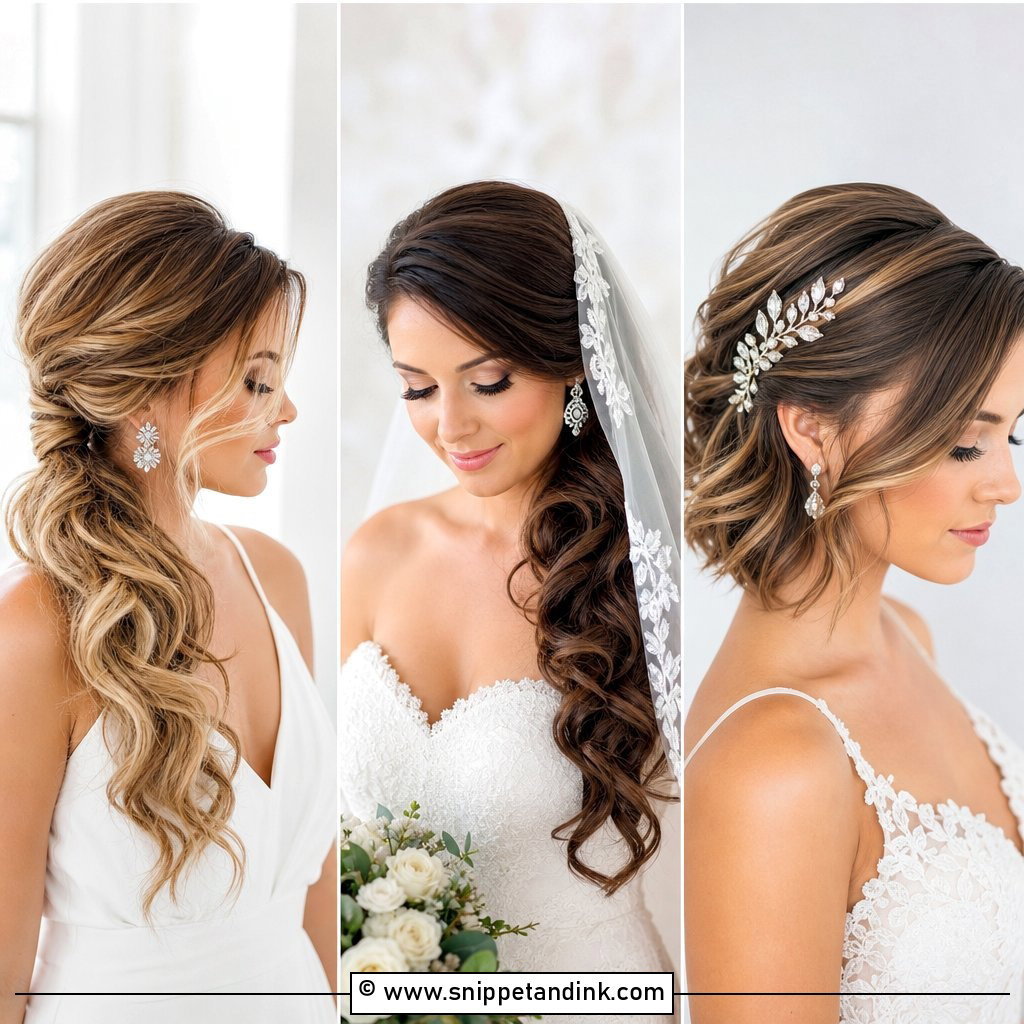
4. Bridal Loose Waves With Flowers
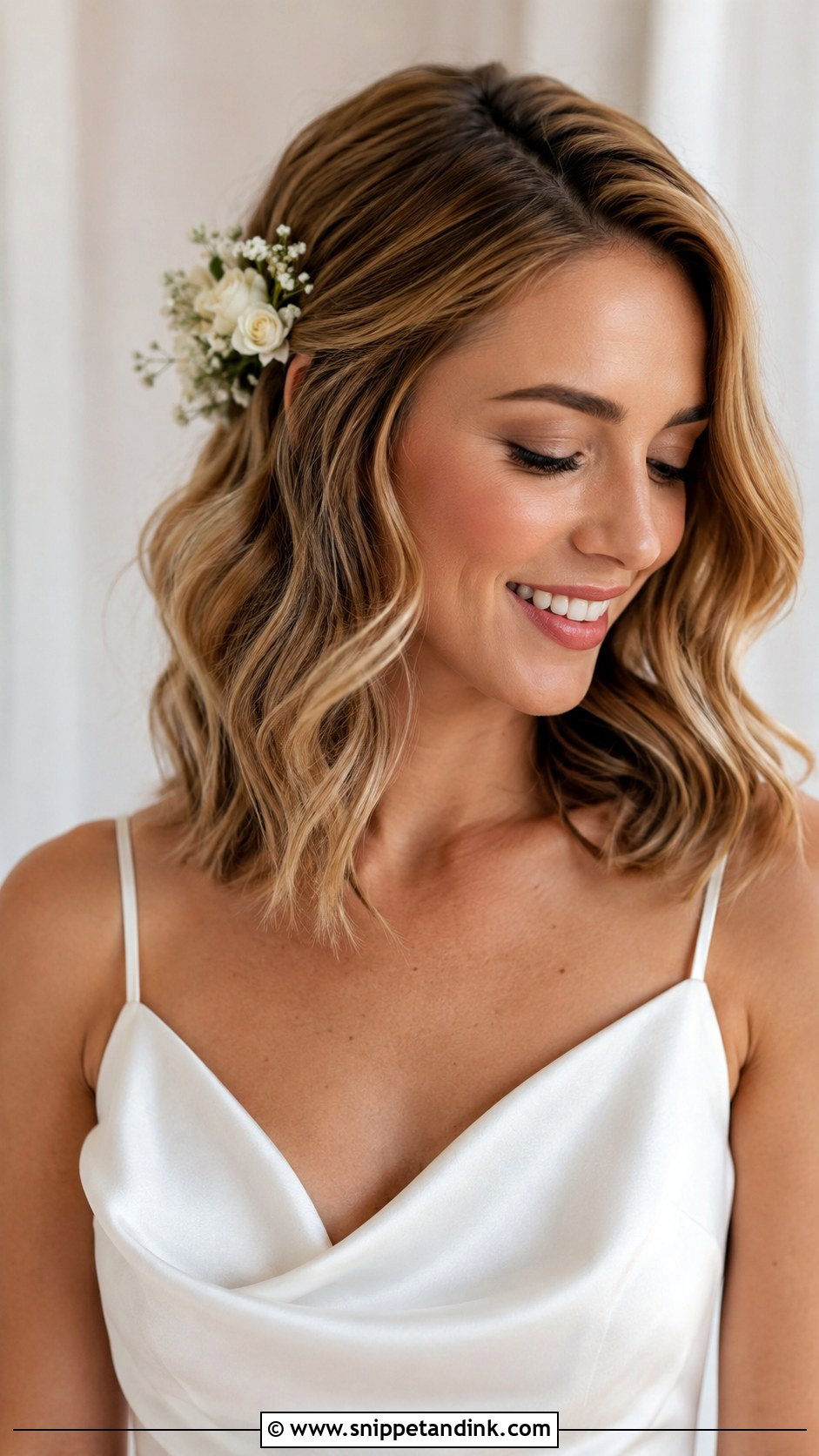
Waves on their own are too slippery to hold stems, which is why I prep them with a dry texture spray before any flower goes in. A small cluster behind one ear, or tiny floral pins scattered through the lengths, both work on long, medium and layered hair. Avoid flowers that wilt quickly here, because they sit against warm hair and neck all day. Keep the waves polished but not stiff.
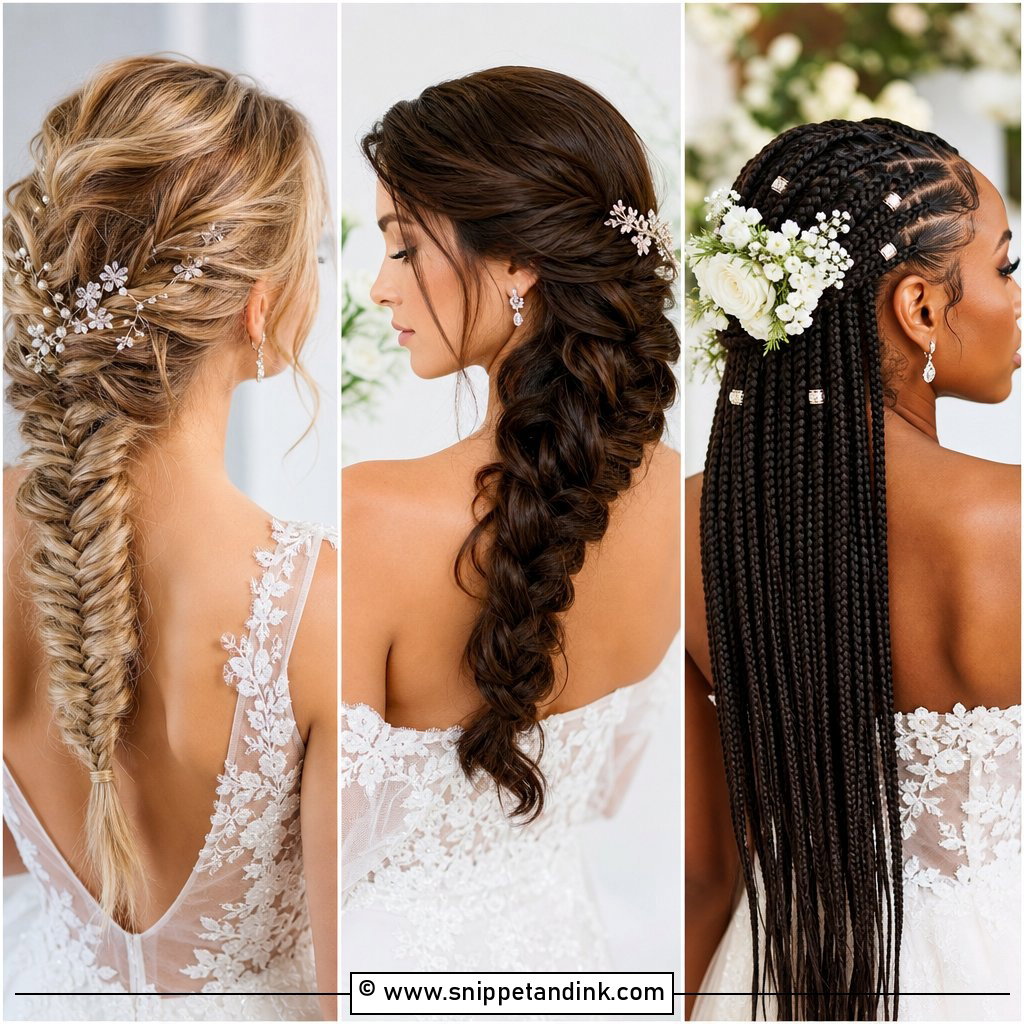
5. Bridal Braided Updo With Flowers
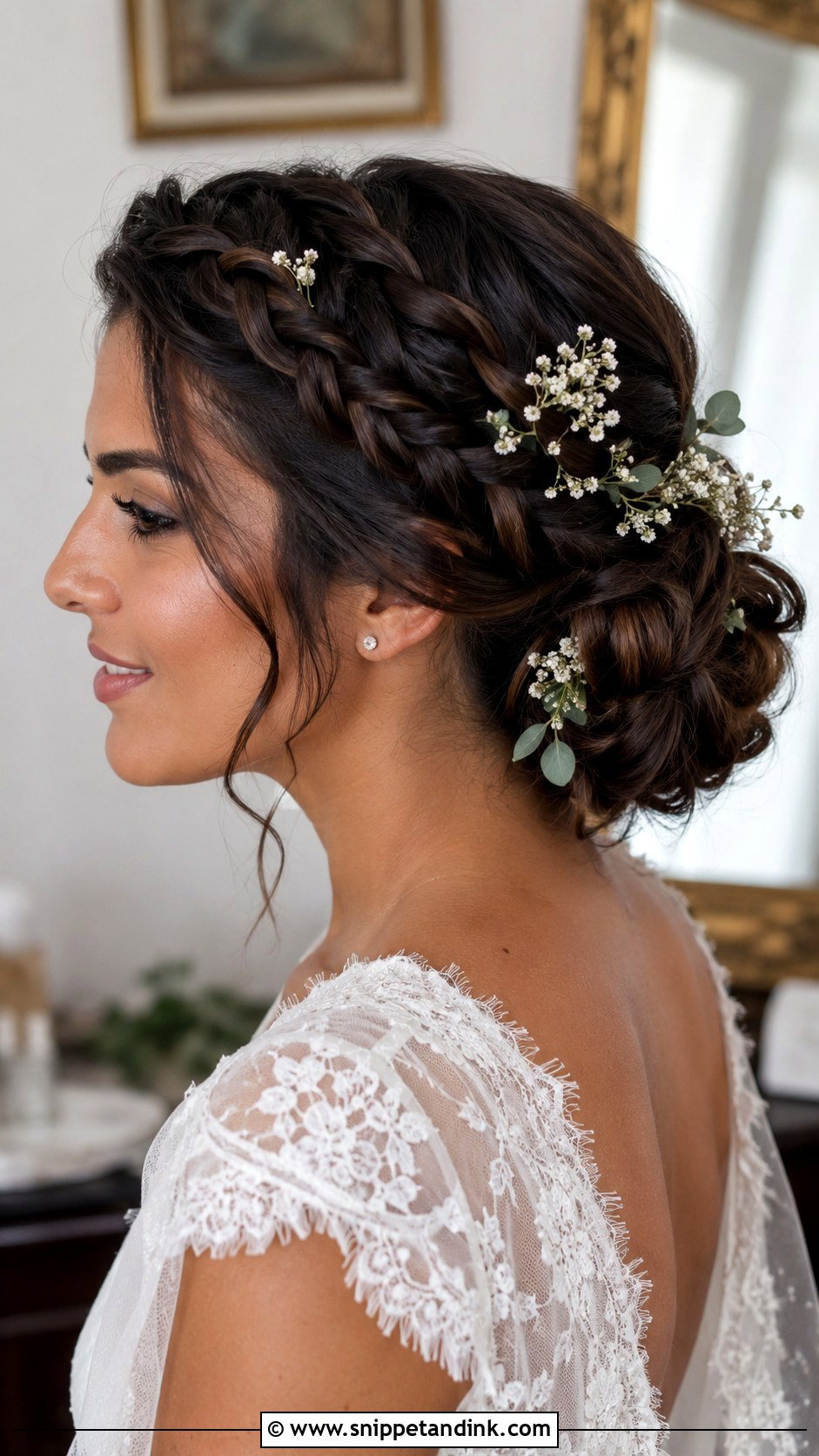
Braids are the most practical base for flowers: every crossing is a natural pocket for a stem. Braids can wrap into a low bun, cross the crown or blend into a tucked chignon, and the flowers should follow the braid’s path so the shape stays balanced. Thick hair especially benefits, since the braid controls the volume. Small flowers look refined; a bit of greenery makes it feel more garden.
6. Bridal Side Braid With Flowers
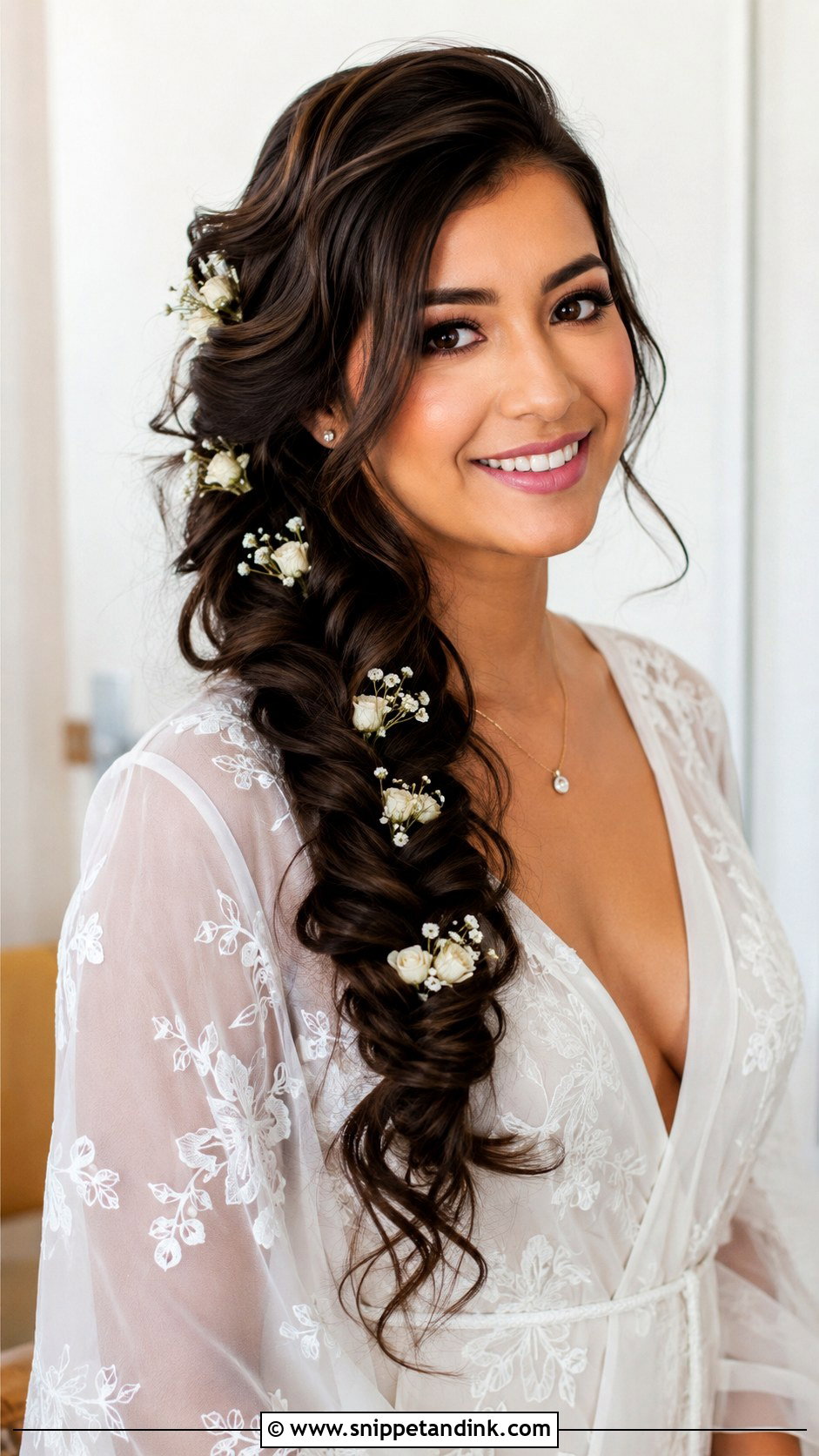
A side braid sits over one shoulder, which means the flowers are right next to the face and the dress strap. I keep the blooms small and flat-backed here, because a big flower against the collarbone gets crushed every time the bride hugs someone. Loose and textured, fishtail-inspired or classic three-strand all work, with curled face-framing pieces. It suits outdoor and destination weddings and simple necklines.
7. Bridal Chignon With Flowers
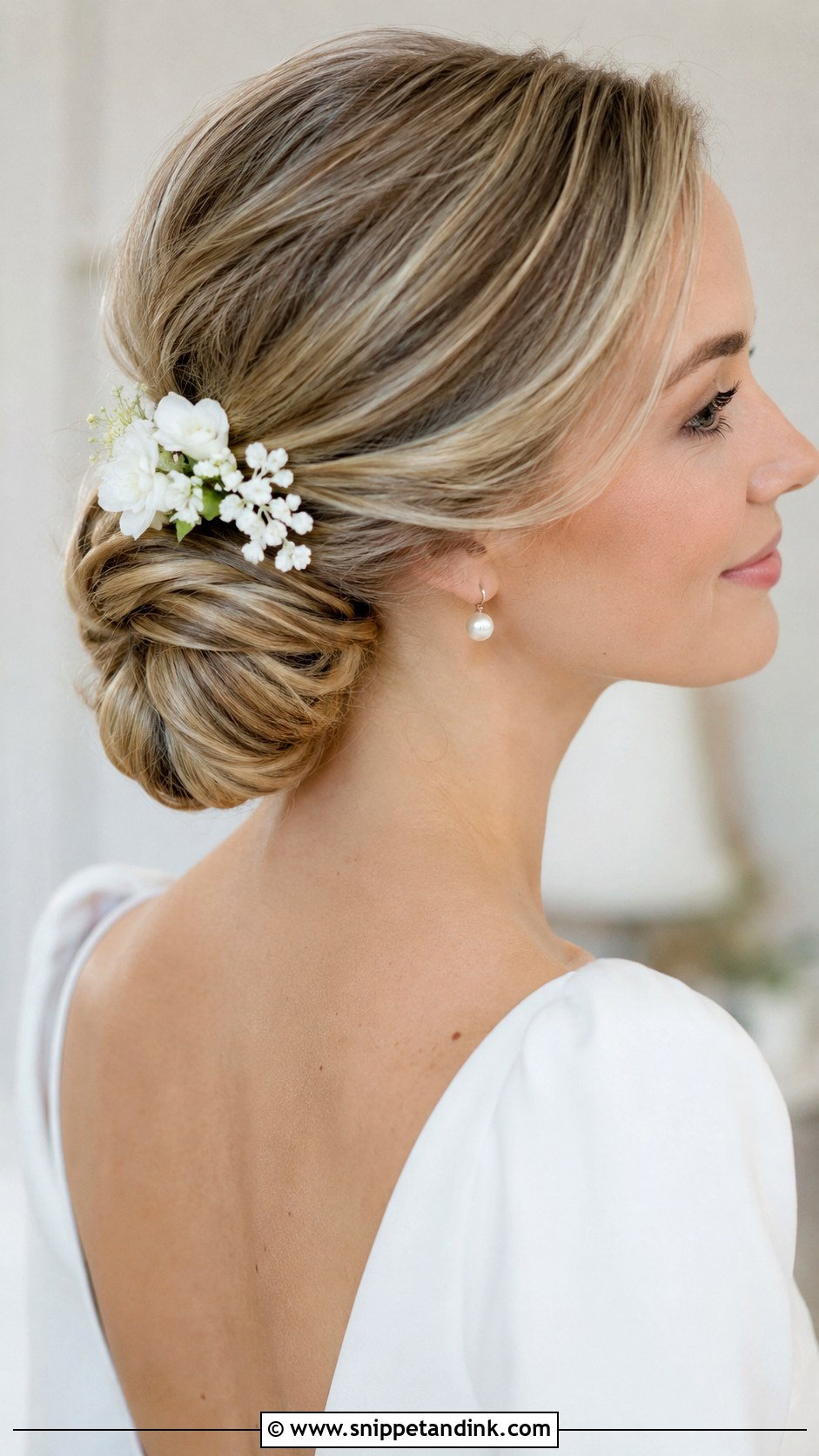
Classic and polished, a chignon can sit low at the nape, slightly to the side or centered. Flowers go into one side, around the base, or on a comb; I prefer the comb if you plan to take them out after dinner without undoing the hair. It’s a strong veil anchor too. It suits minimalist gowns and lace equally, with smooth bends at the front.
8. Bridal Ponytail With Flowers
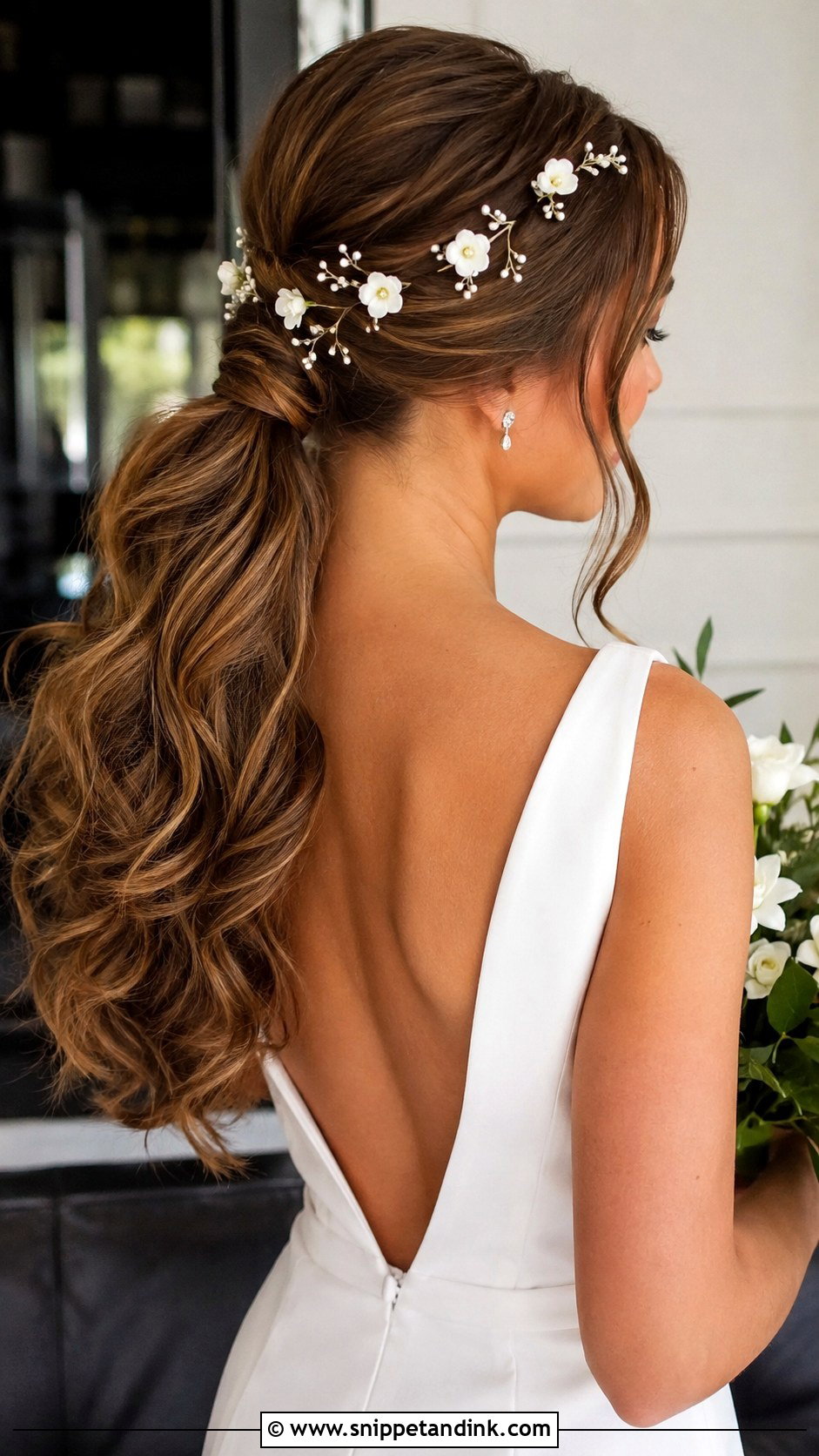
Ponytails are underrated for flowers. A high sleek pony, a low romantic one or a curled, voluminous version all give a firm elastic base where stems can be pinned around. A wrapped braid along the pony or a floral hair vine also works. Strapless dresses, square necklines and contemporary gowns suit it. Soft waves through the length stop the flowers from looking too formal.
9. Bridal Curly Hairstyle With Flowers
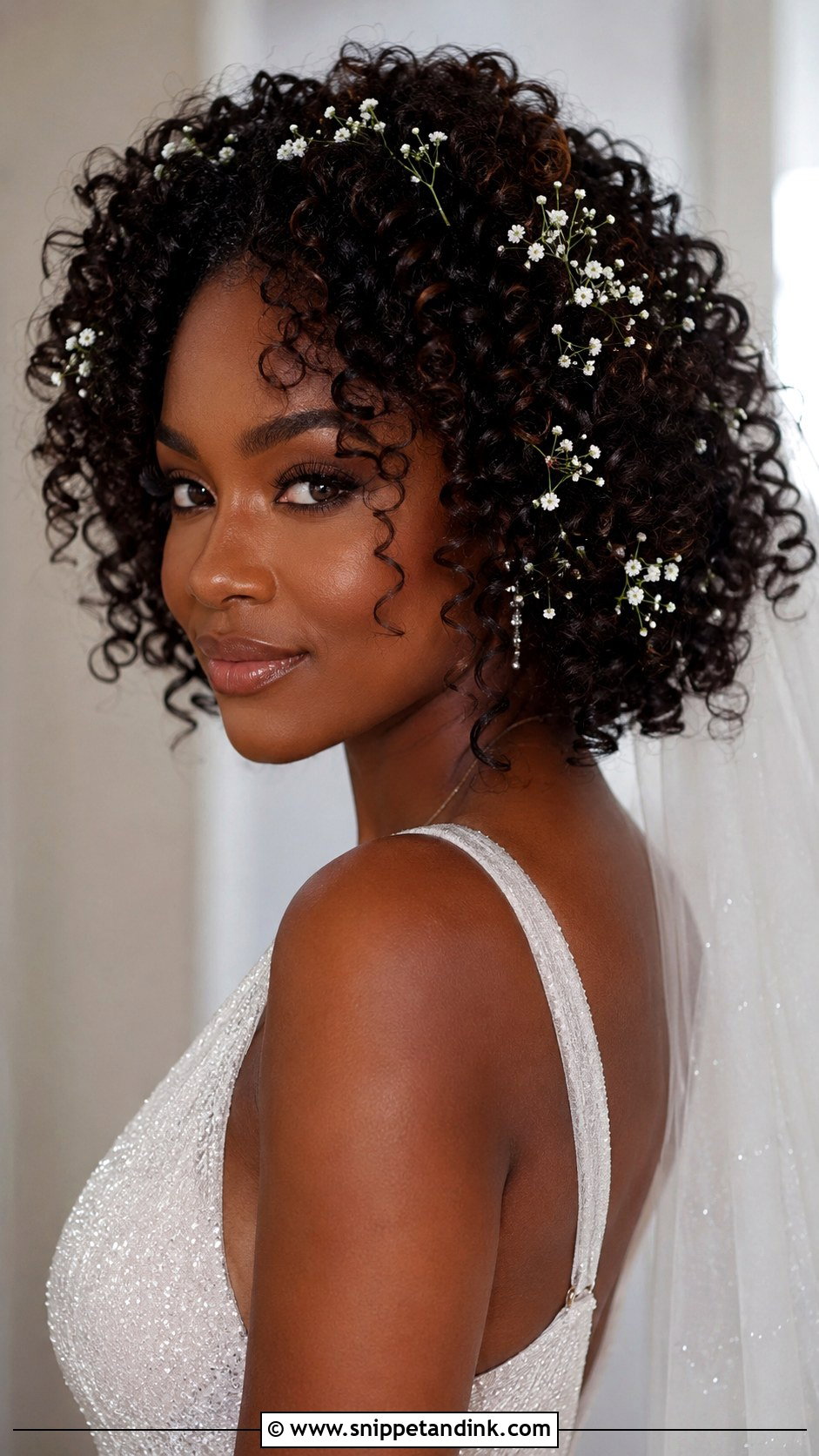
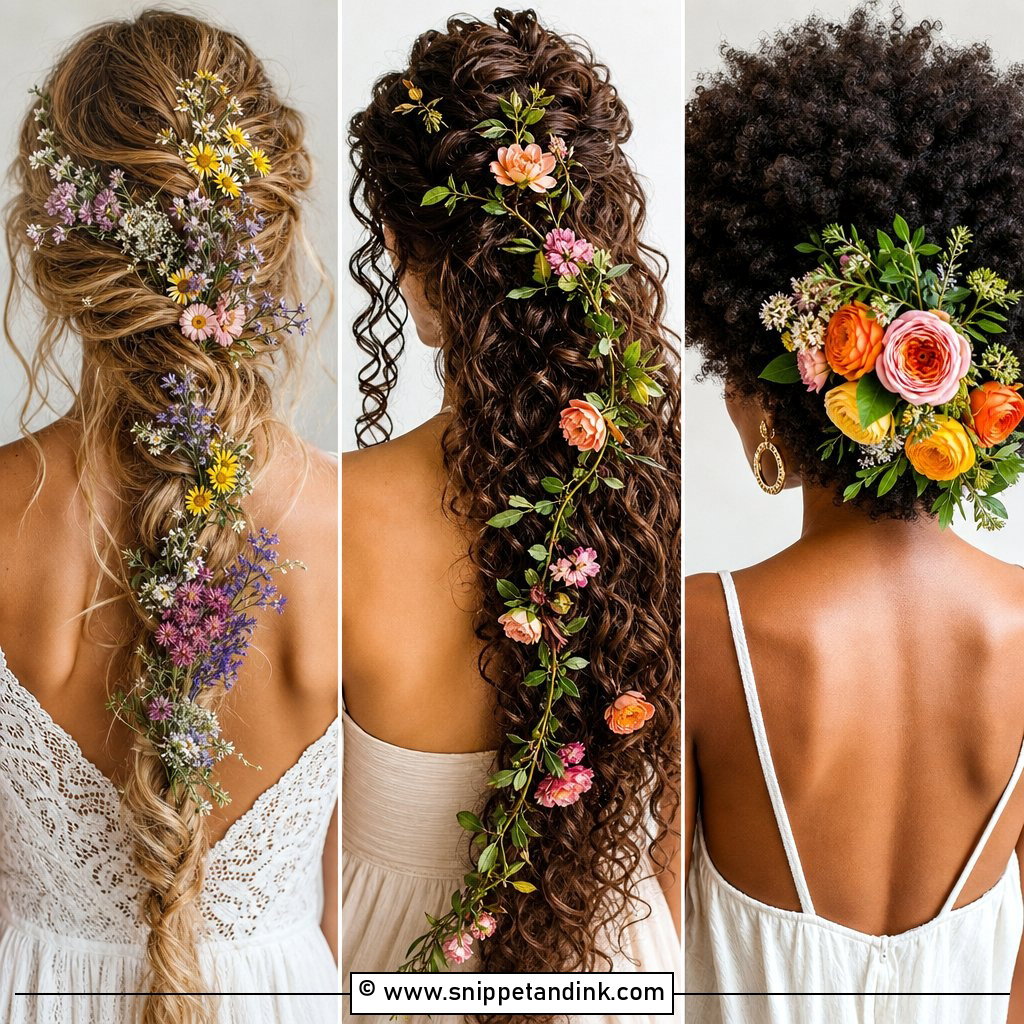
Curly and coily hair holds flowers better than almost any other texture, because the curls grip stems on their own. Soft curls, tight coils or defined ringlets all work, with a floral crown, a side cluster or scattered tiny blooms placed to follow the shape rather than hide it. Moisture, definition and hold come first so the curls stay fresh. Choose light flowers: anything heavy pressed into curls flattens the pattern underneath it, and that shows once the flower comes out.
10. Bridal Sleek Bun With Flowers
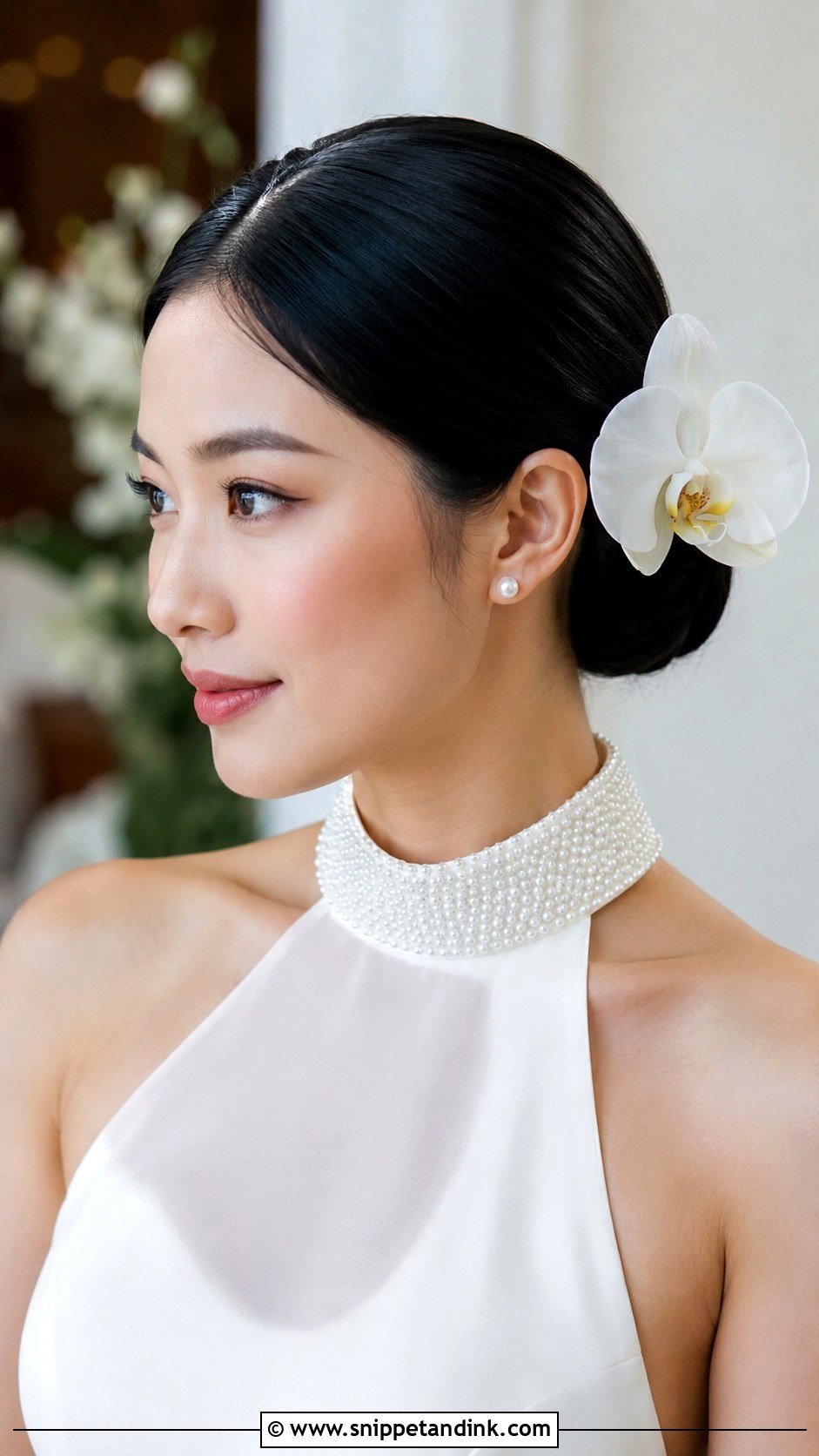
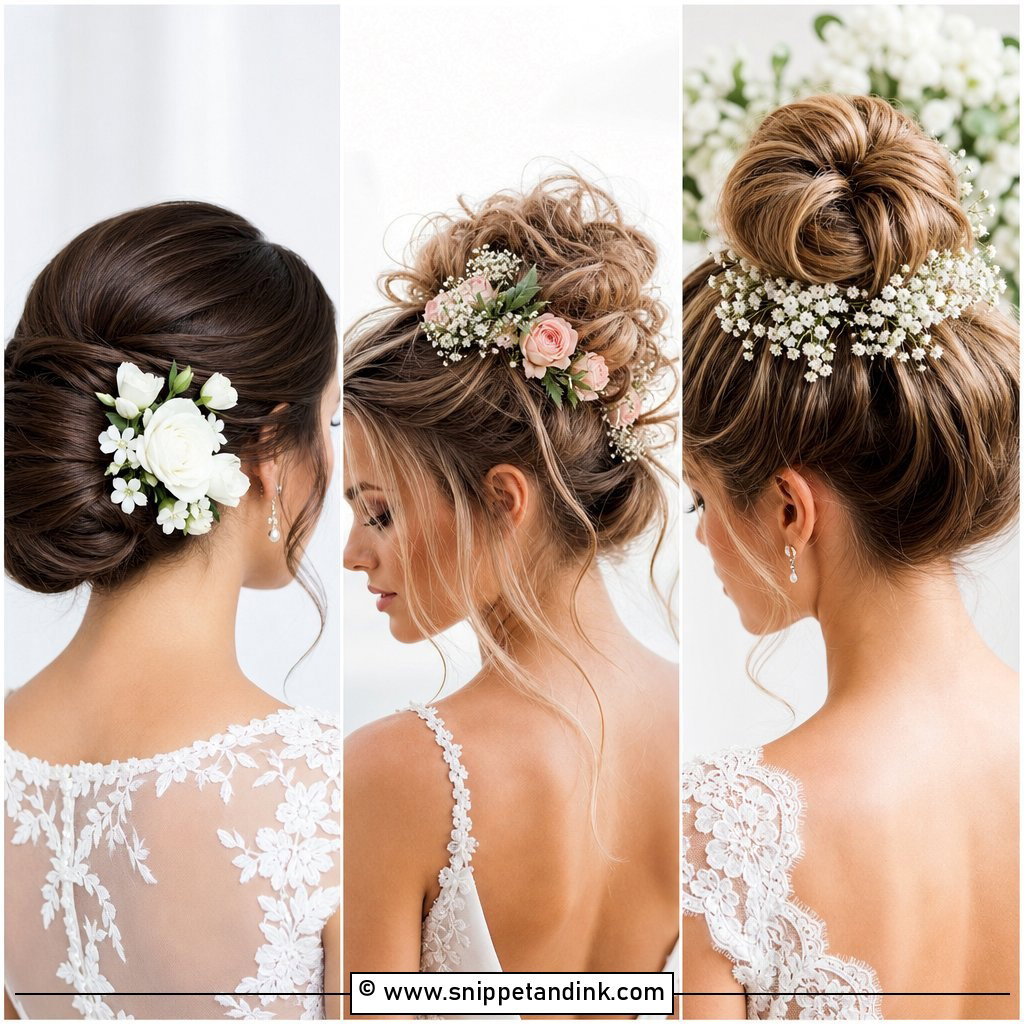
On a sleek bun, flowers do the softening. The smooth finish keeps attention on the face, earrings and neckline, and one orchid, a white rose or a small floral comb is enough. More than that and the clean lines get lost. It’s practical in warm weather since the hair stays off the neck. Because the surface is so smooth, I pin the flower on a wire or comb into the bun itself rather than into the slicked sides.
11. Bridal Messy Bun With Flowers
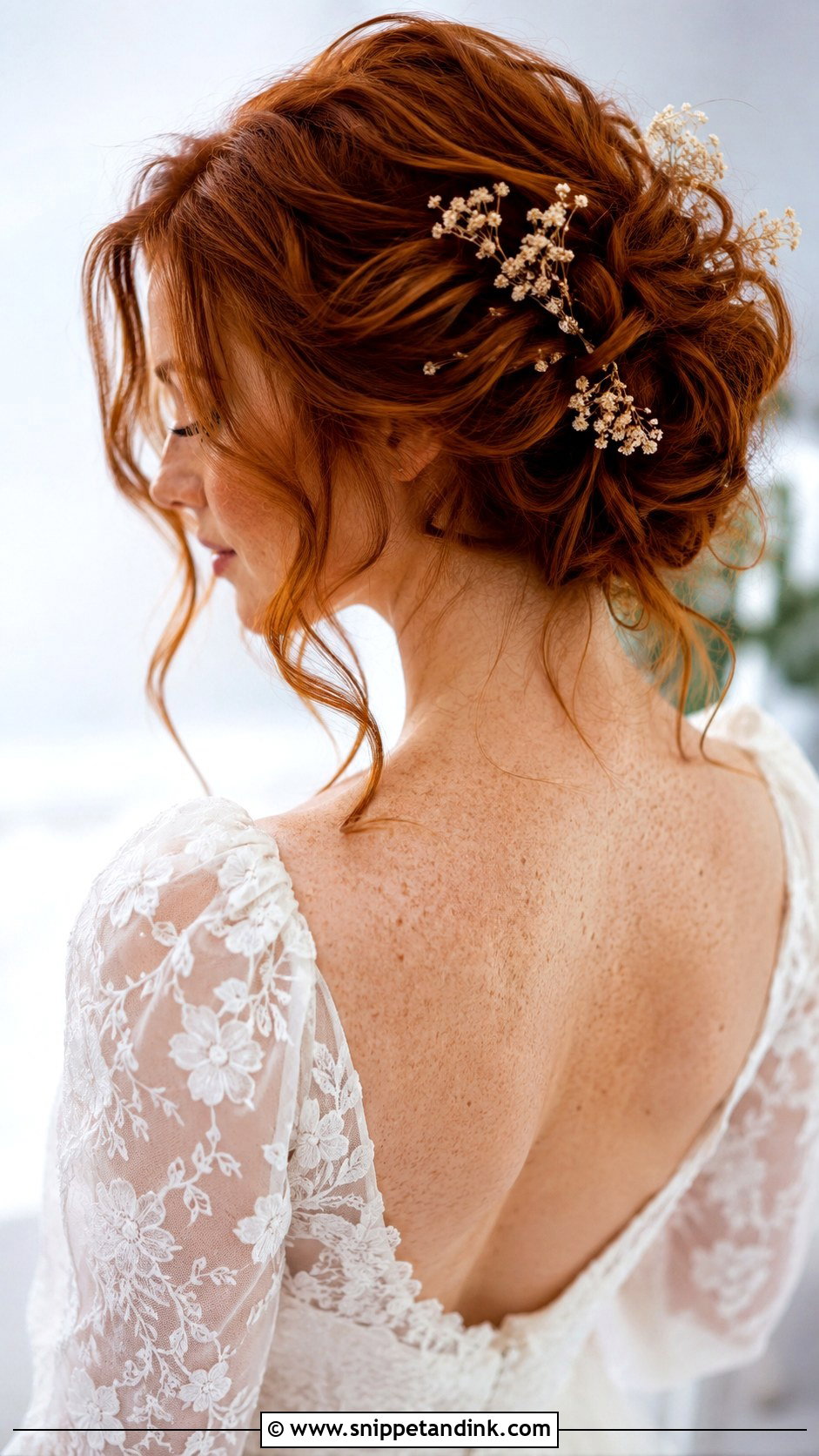
A messy bun takes more care than its name suggests. It should look loose, not unfinished, with pieces pulled gently around the face and flowers tucked into the textured sections. Baby’s breath, small roses, wax flowers and tiny dried blooms suit it well. Too many loose pieces at the neckline make it look like it’s falling down, so I keep the volume at the crown and the nape fairly clean.
12. Bridal Fishtail Braid With Flowers
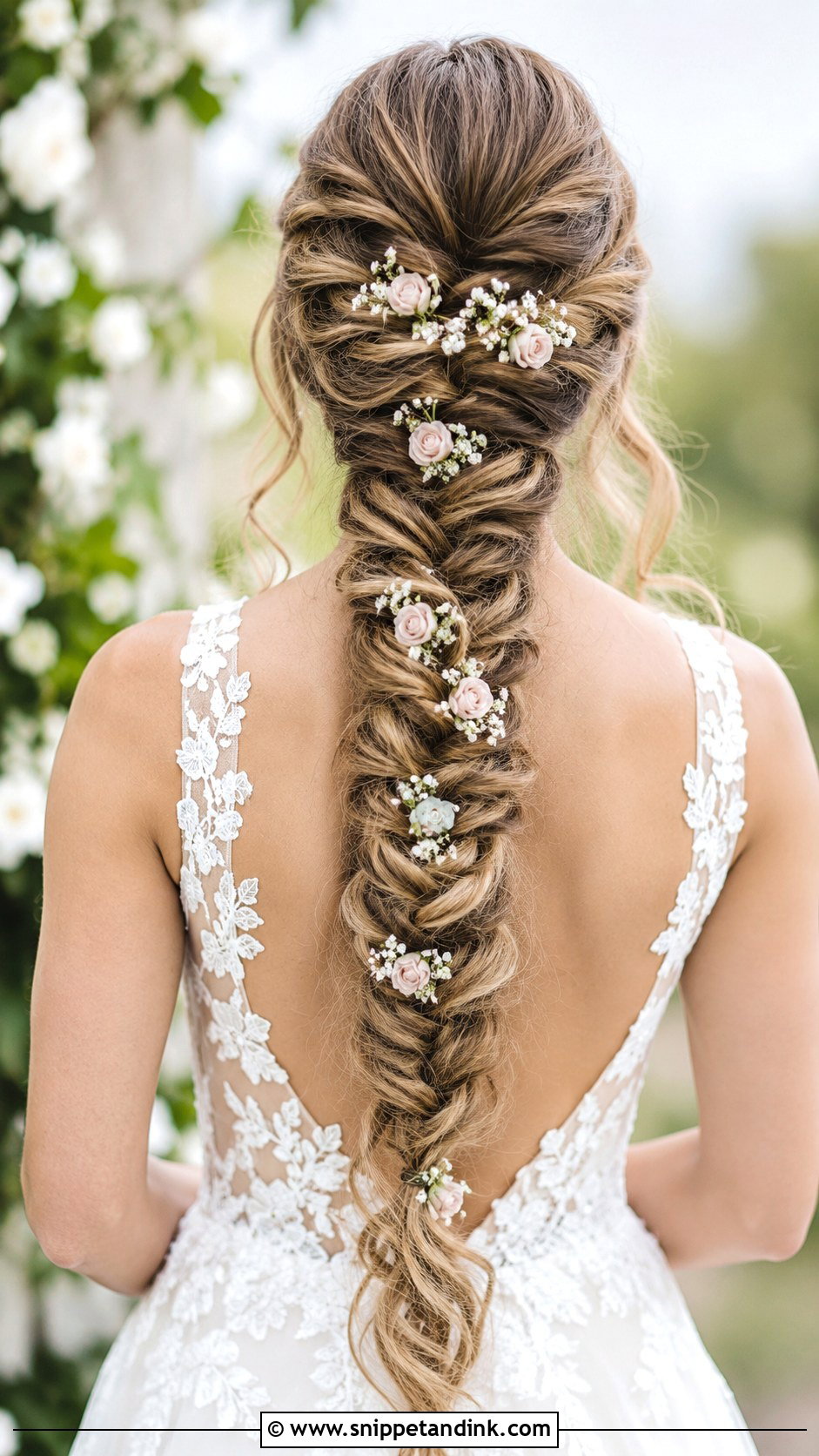
The tight weave of a fishtail leaves small gaps where flowers can sit without heavy pinning. Worn down the back, over one shoulder or blended into a half-up look, it needs medium to long hair and can be pulled apart for fullness. Small flowers keep the braid visible; big ones hide the pattern you spent half an hour on. Add soft curls at the face.
13. Bridal Short Hair With Flowers
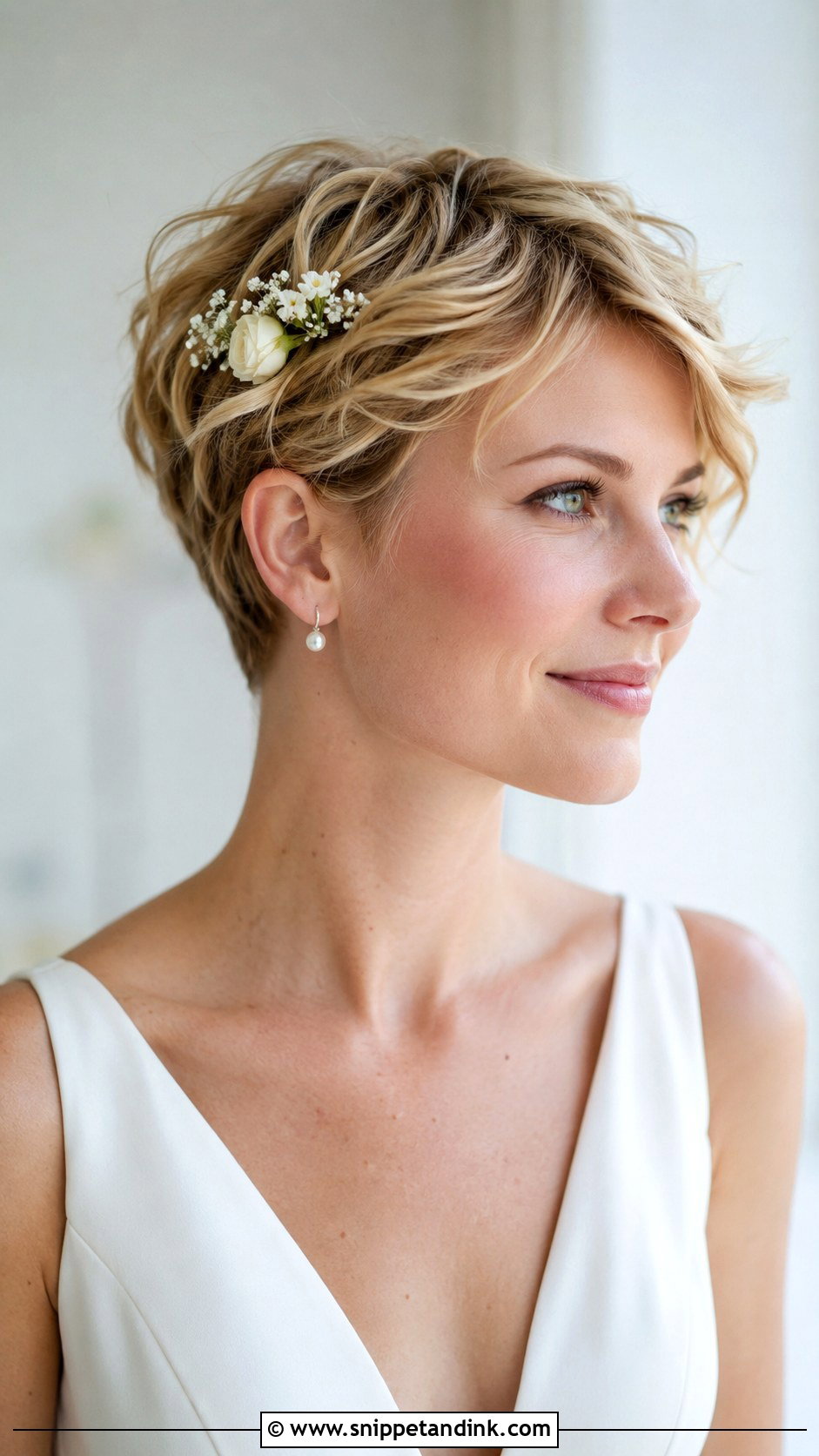
Short hair is where I’m most careful about scale. Pixies, bobs and short layers can carry floral pins, a small comb or a delicate crown, but large blooms overwhelm the face quickly. Soft waves, a side part or tucked-back pieces give enough base. Because there’s little length to anchor into, I use short bobby pins crossed in an X under each flower, close to the scalp.
14. Bridal Bob Hairstyle With Flowers
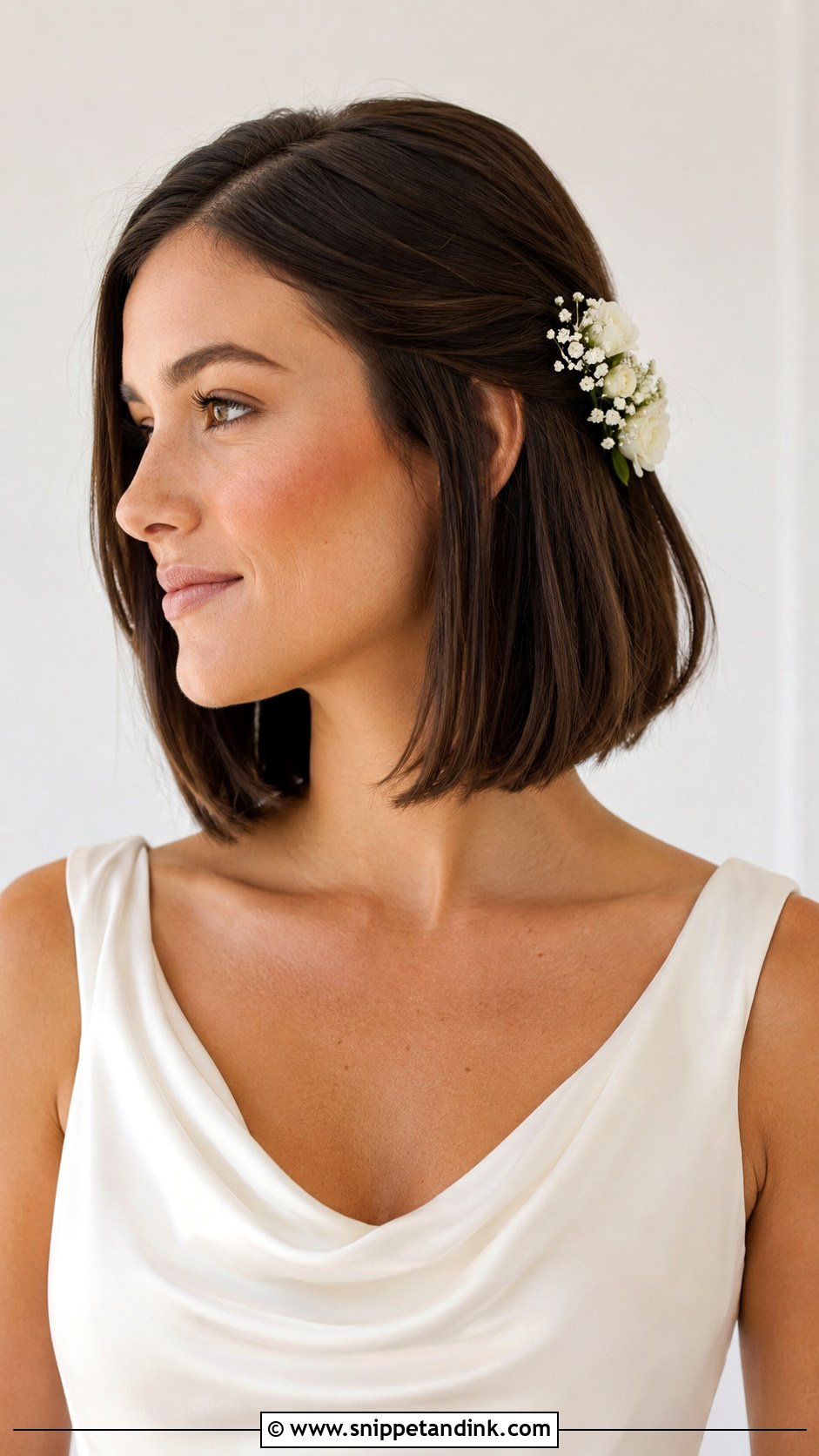
Sleek, wavy, chin-length or a little longer, a bob holds flowers best toward the side, where the hair is thickest. In a bridal bob hairstyle with flowers, a single side clip looks clean and tiny scattered pins look more romantic. Tucking one side behind the ear shows earrings and gives the flowers a defined spot. It suits courthouse weddings, garden ceremonies and simple gowns. Keep the ends smooth or softly waved.
15. Bridal Hollywood Waves With Flowers
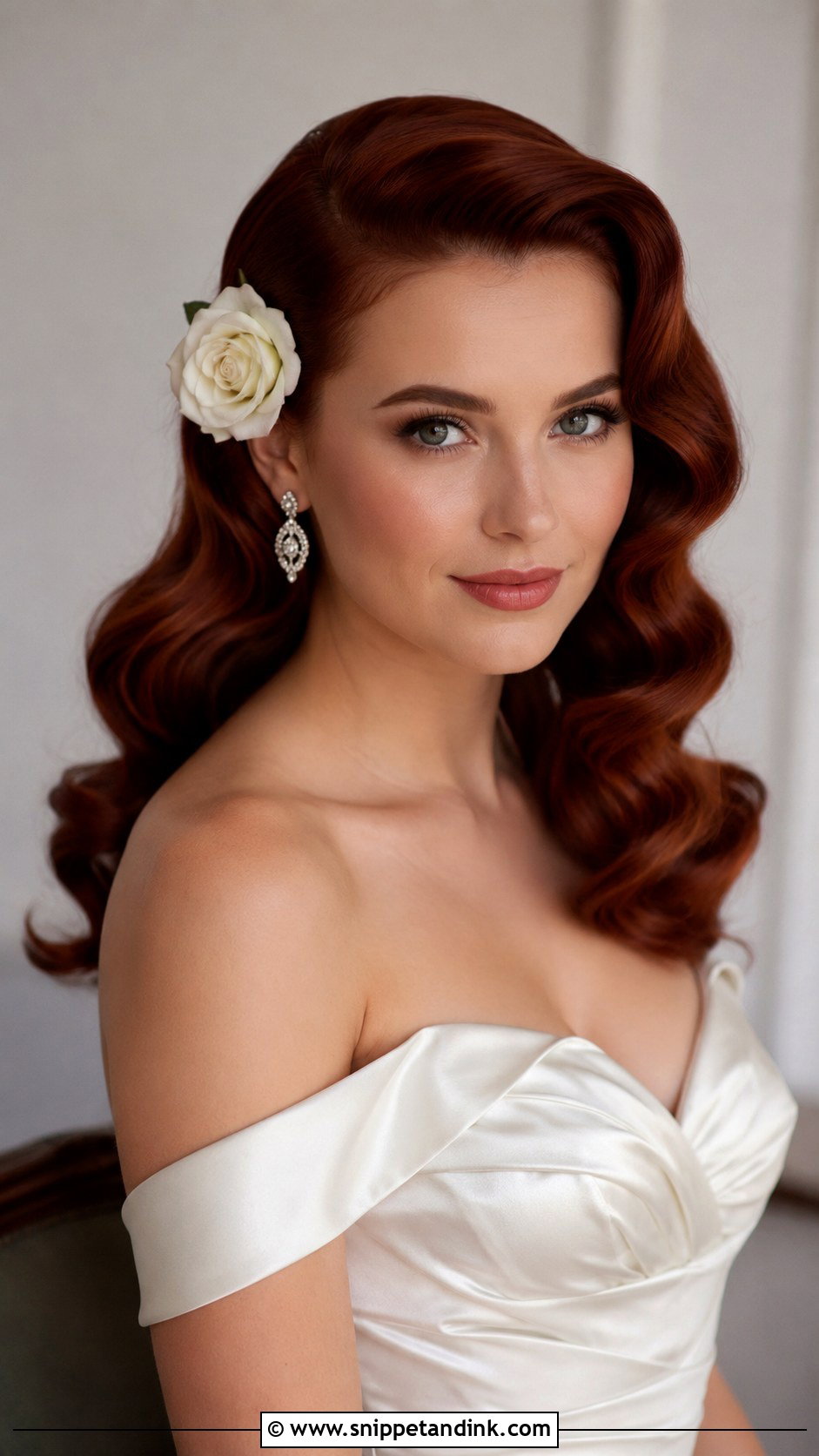
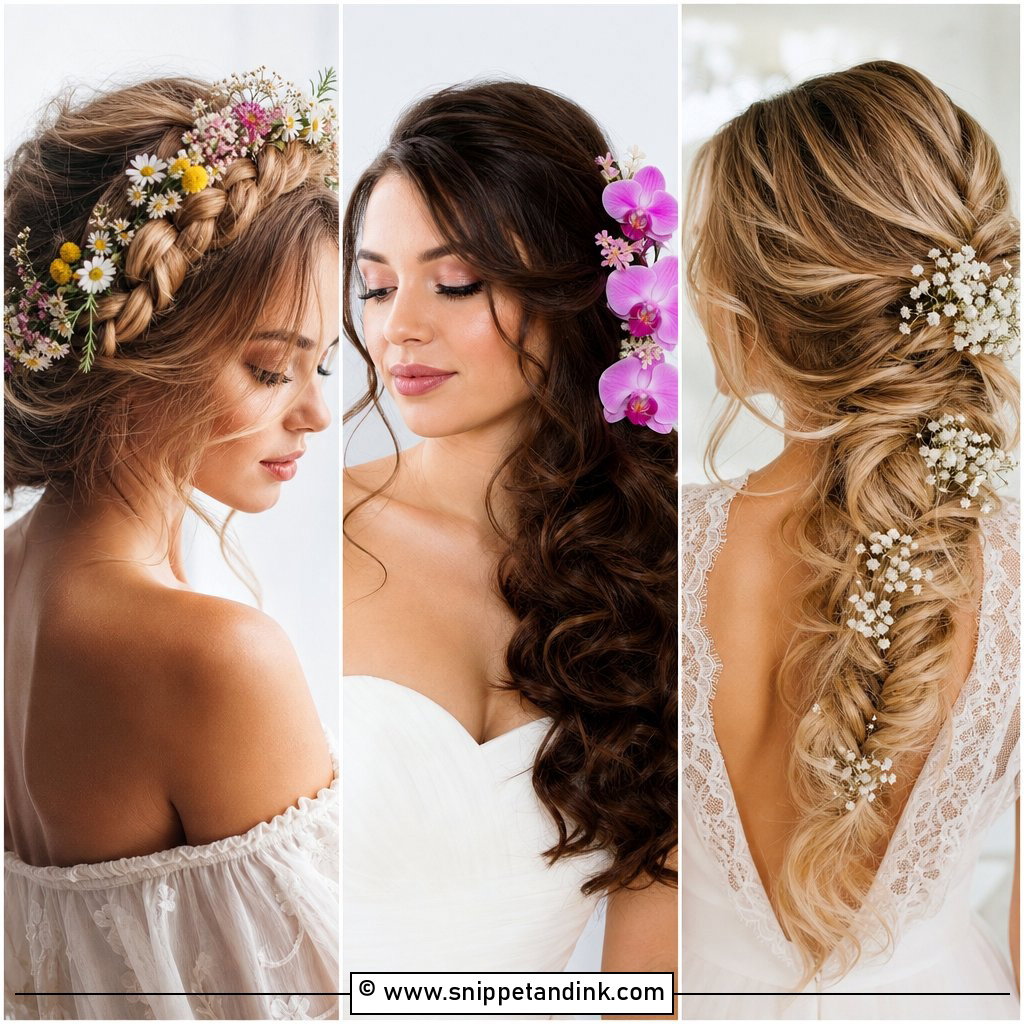
Hollywood waves have to stay visible, so the flowers go to one side, above the ear or toward the back. Smooth, shiny waves shaped in one direction carry the vintage feel; a single statement bloom or a small tight cluster works best with them. It suits satin, fitted gowns and off-the-shoulder dresses. Don’t pin flowers across the wave crest, as it breaks the pattern and the eye goes straight to the interruption.
16. Bridal High Bun With Flowers
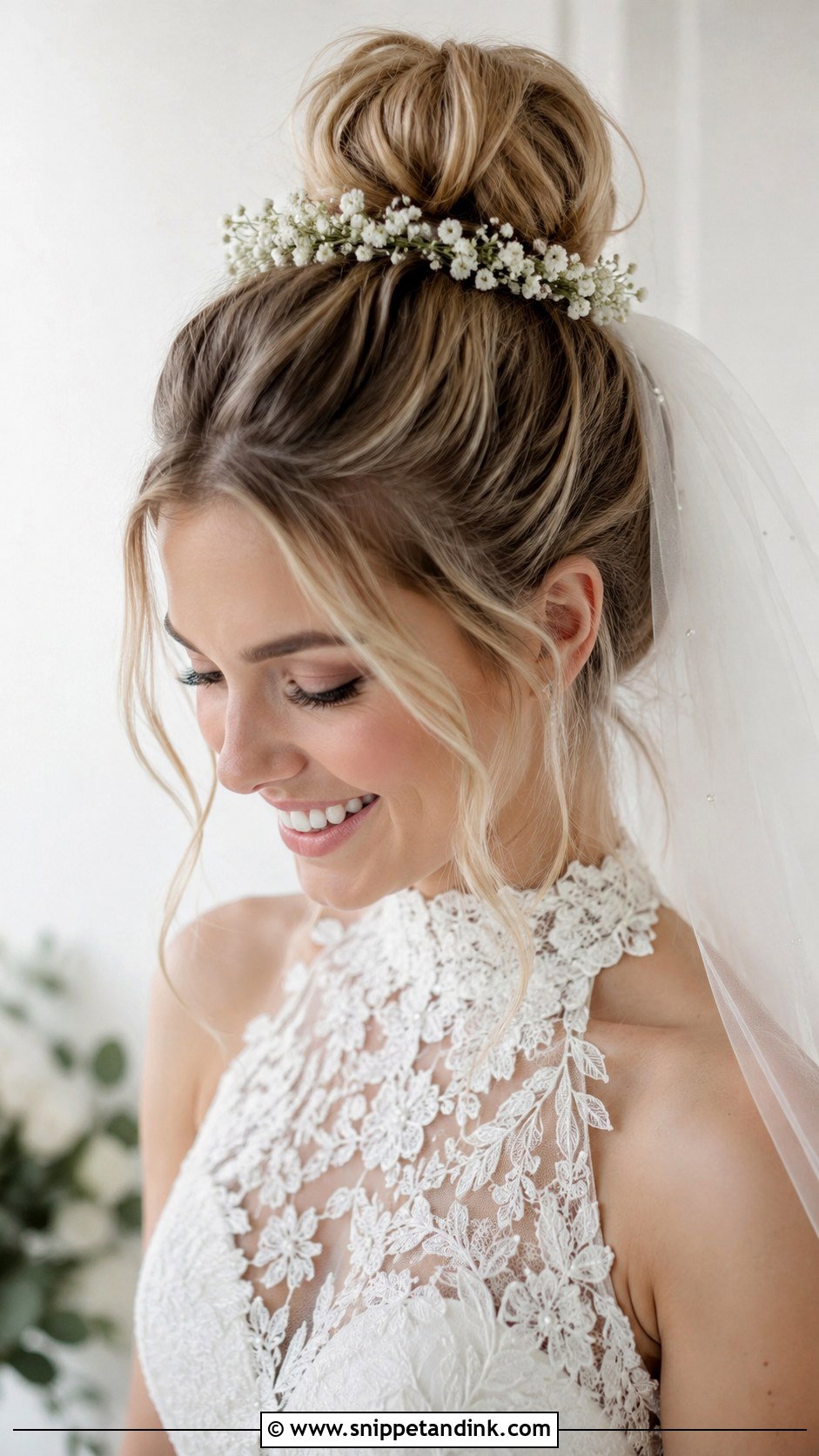
Lift from a high bun lengthens the neck and pairs well with high necklines, detailed bodices and statement earrings. Flowers can wrap the bun, sit at its base or go to one side. Wrapping the whole bun uses a lot of stems and adds weight at the top of the head, so in heat I’d go with a smaller cluster at the base. Keep the bun full rather than perfectly round, and add soft face-framing pieces to take the formality down.
17. Bridal Waterfall Braid With Flowers
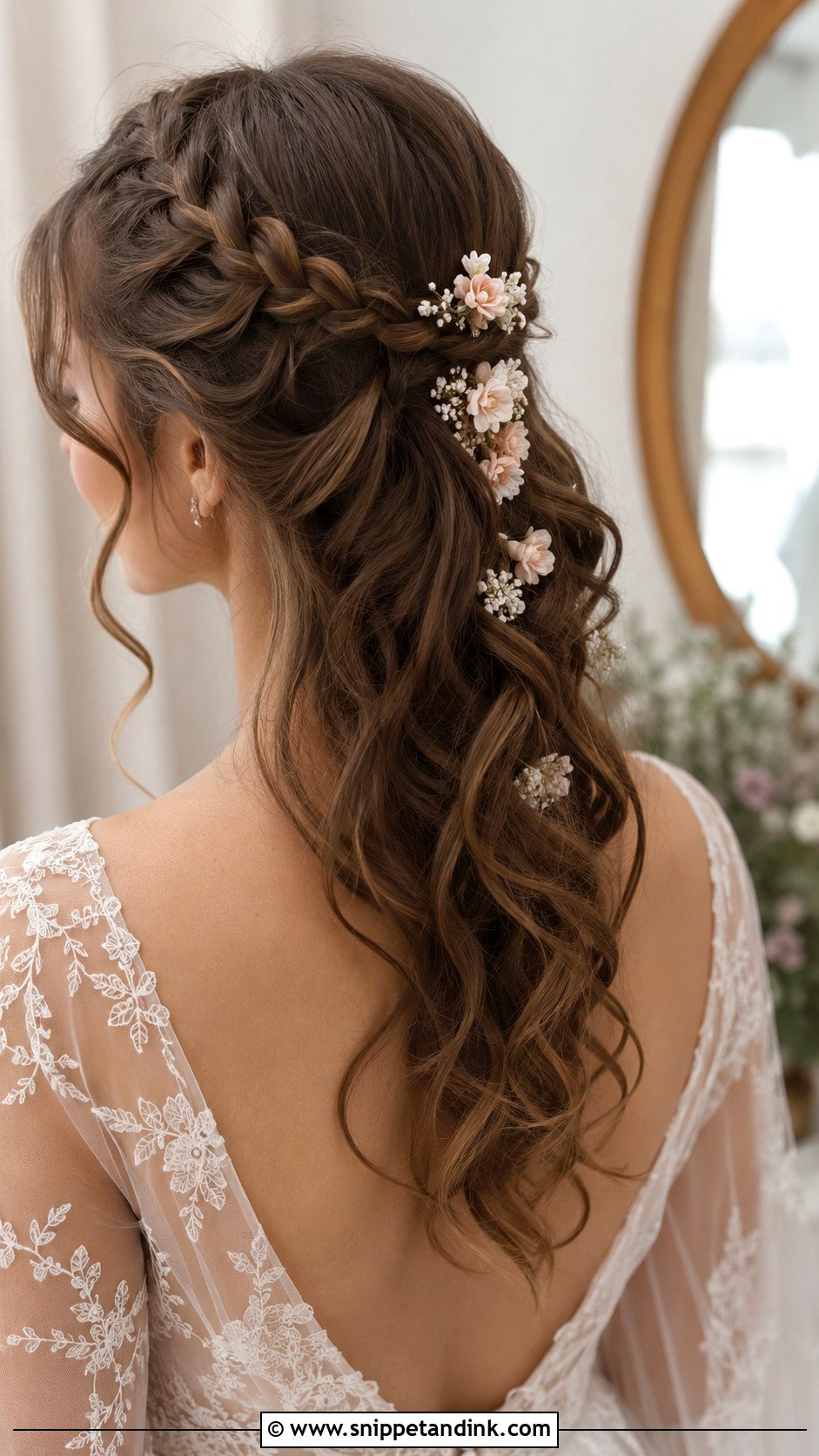
For a mostly-down style with detail, I like a bridal waterfall braid with flowers. The braid makes a soft, crown-like line while the loose lengths fall in curls or waves. Tiny flowers along the braid highlight it without weight. Medium to long hair gives the flowing sections room to show. I place the flowers on the upper edge of the braid, where they’re pinned against the head, rather than on the dropped strands, which swing and shed them.
18. Bridal French Twist With Flowers
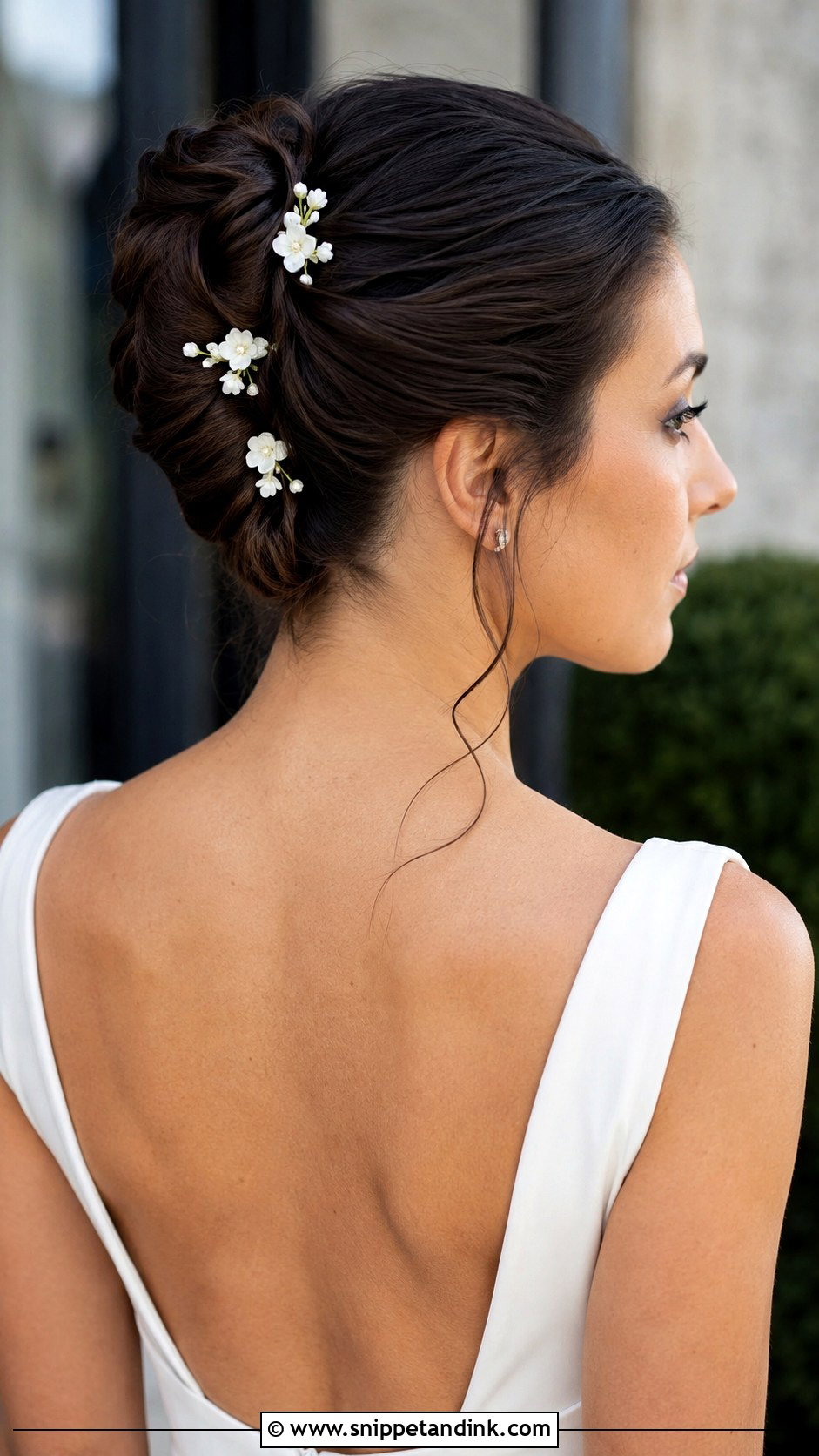
The seam of a French twist is a natural line for flowers, as is the top or the base. The vertical shape keeps hair off the face and secure, and it works with veils, pearl pins and sleek gowns. Flowers along the seam hide the pins too, which is a nice side benefit. A little texture through the crown makes it feel current instead of stiff.
19. Bridal Natural Hair Updo With Flowers
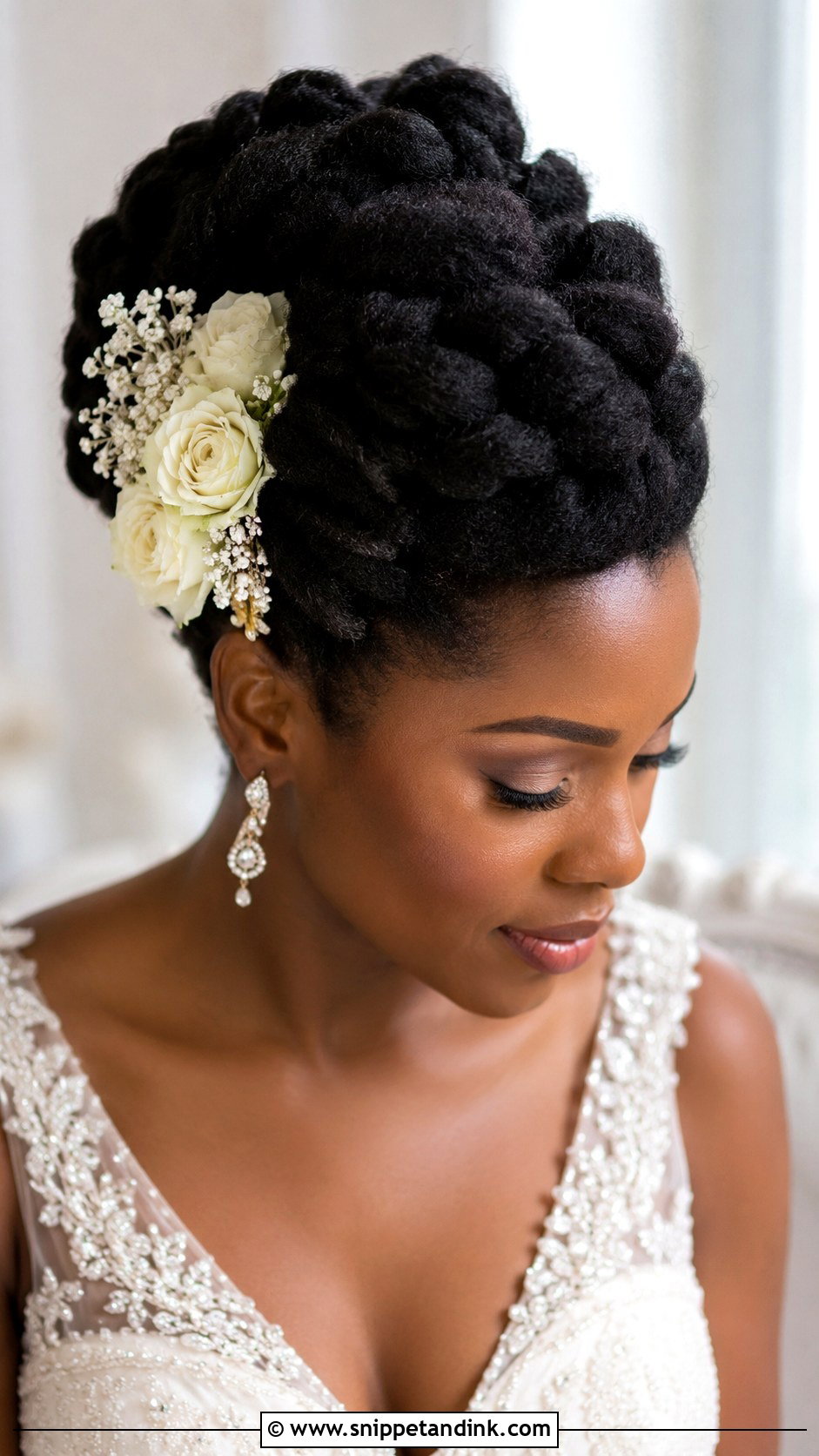
Natural hair can be shaped into a puff, bun, roll or sculpted updo, and flowers should support that shape rather than flatten it. Coils, curls, twists or stretched natural hair all suit florals, and a side cluster, a small crown or delicate pins can look striking. Moisture and hold matter first. I use flowers on pins or combs rather than wire pushed into the hair, so they come out without snagging coils at the end of the night.
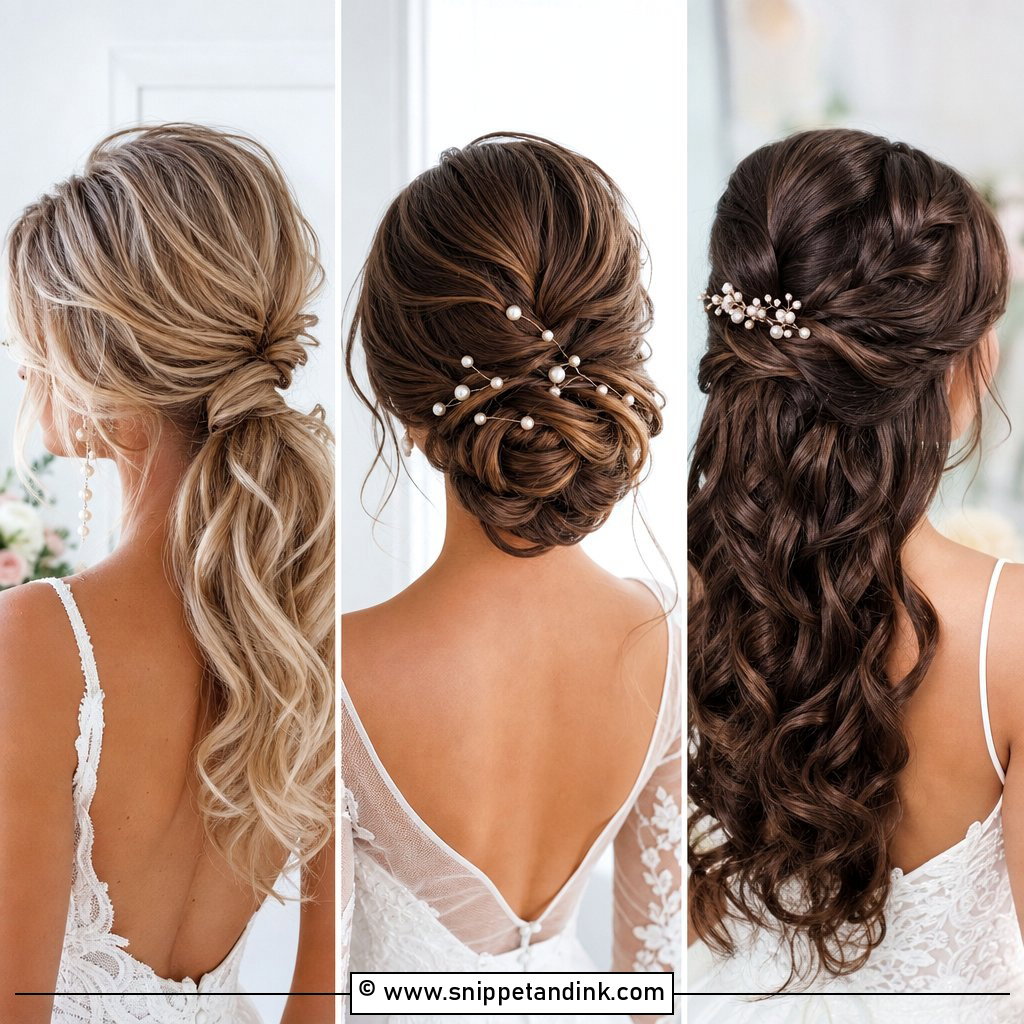
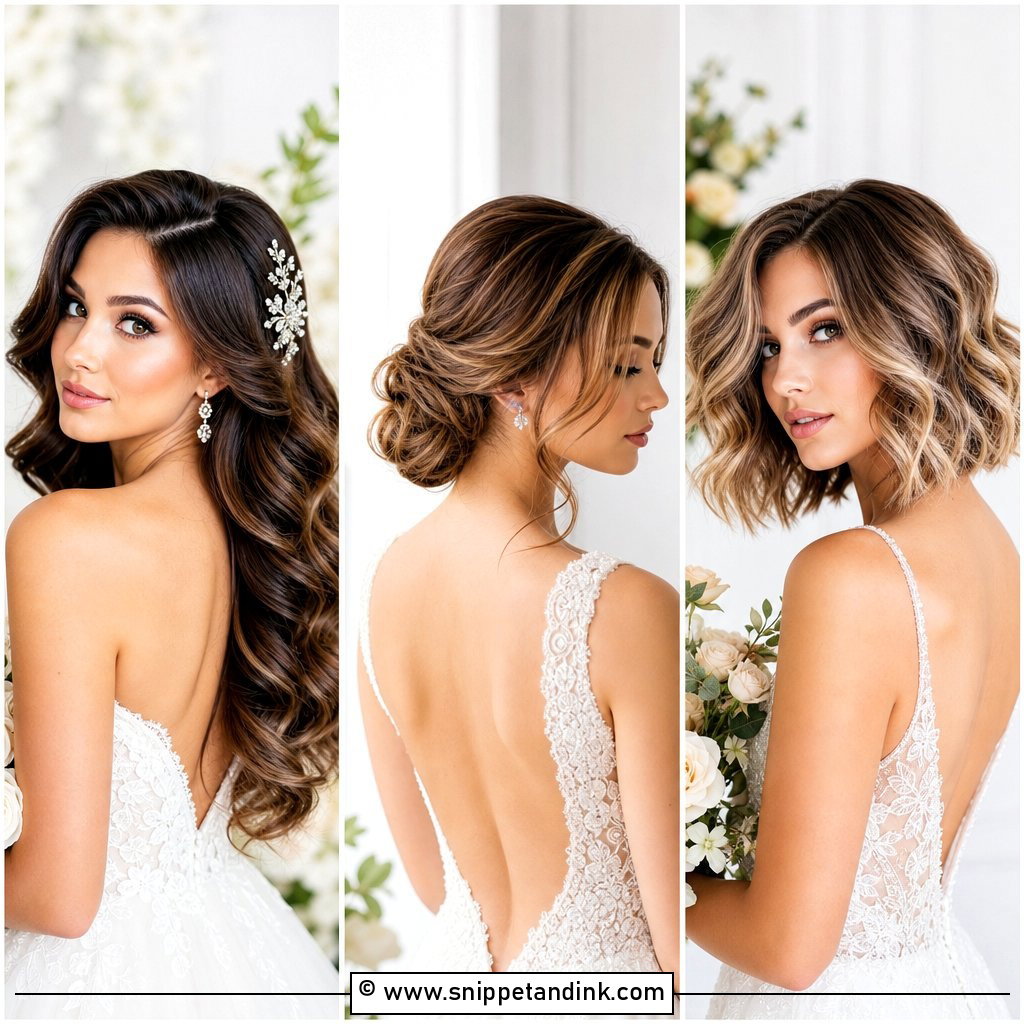
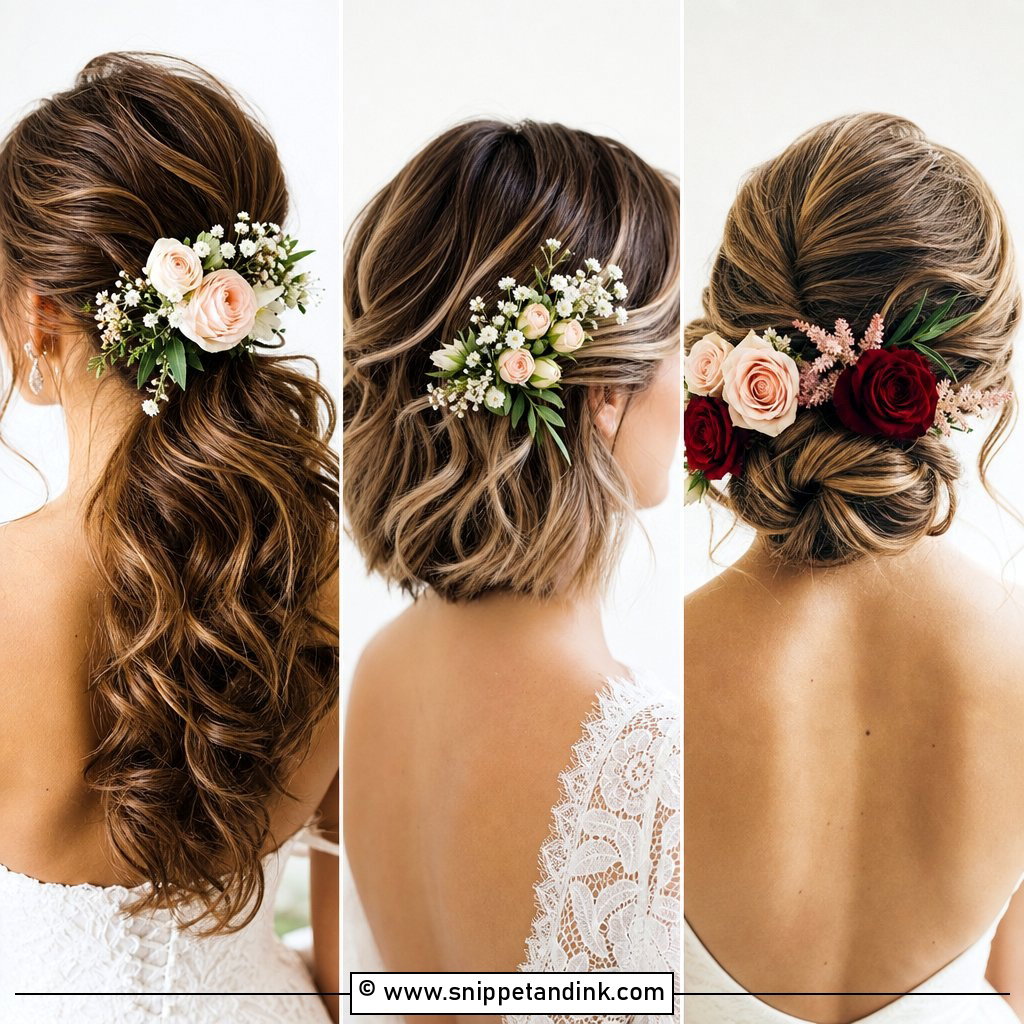
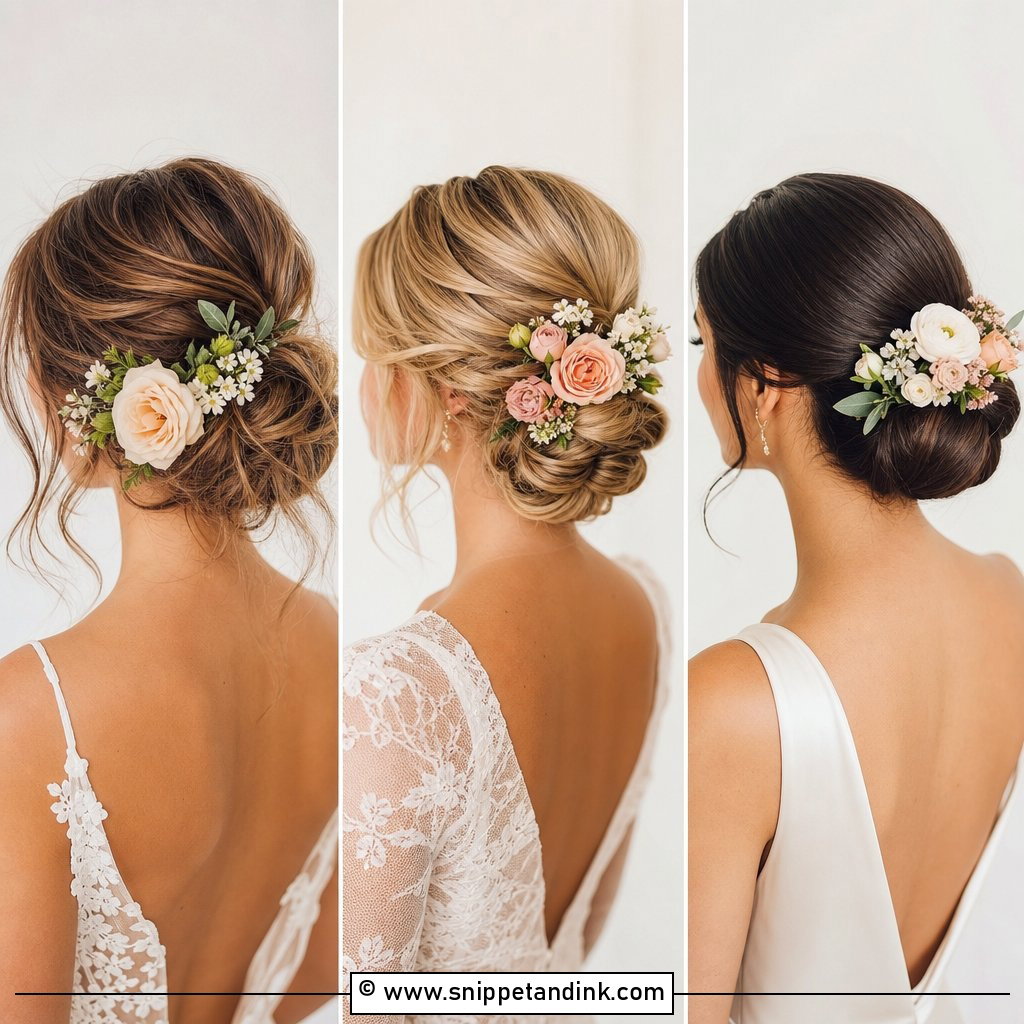
20. Bridal Long Braid With Flowers
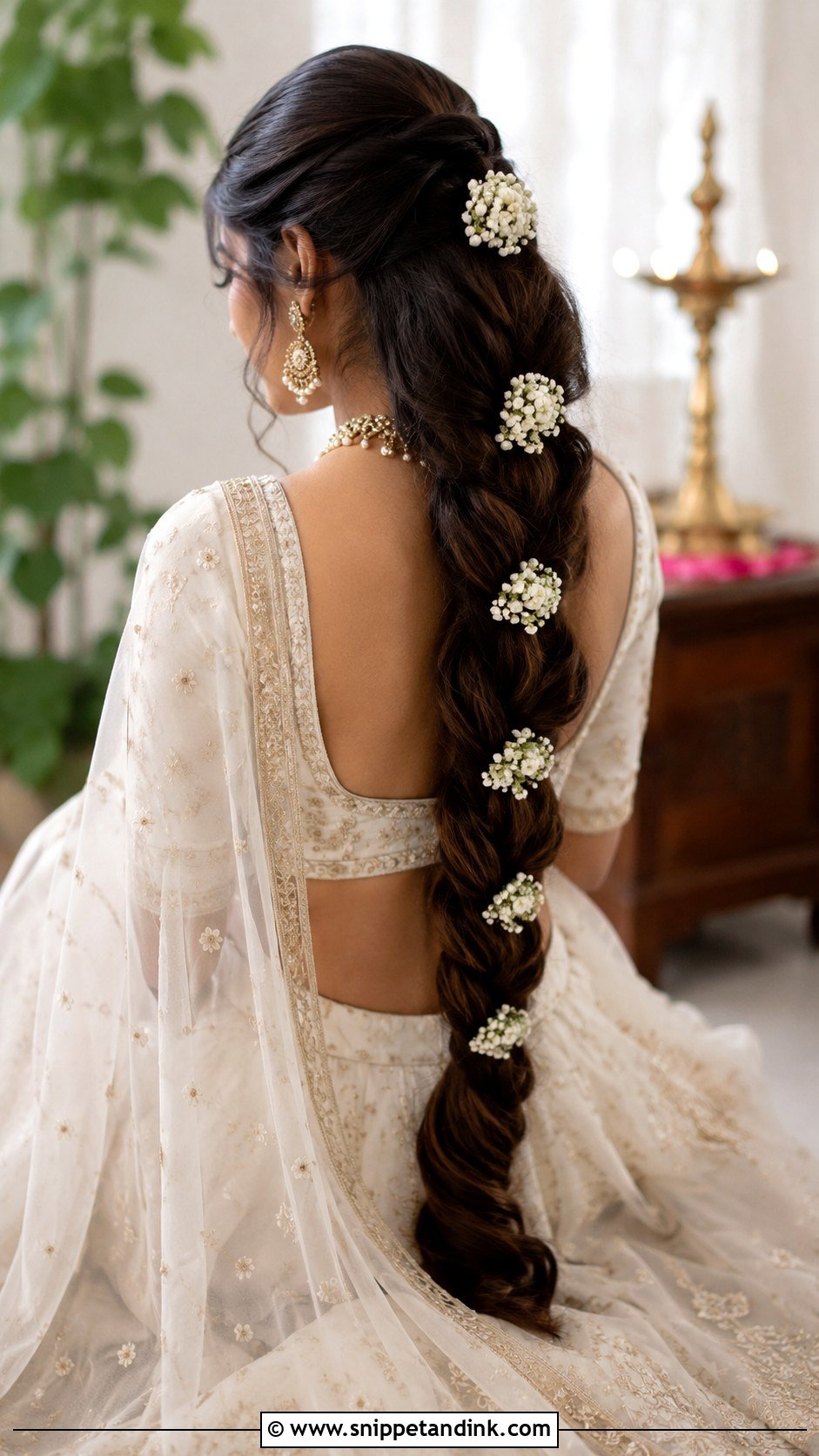
Long or extended hair can carry a braid that becomes part of the outfit, especially with a detailed back. The braid can be classic, Dutch, bubble-inspired or softly pulled apart. Flowers placed down its length make it feel finished. It suits traditional ceremonies and garden weddings. Use lightweight flowers; a long braid already pulls on the scalp, and a dozen heavy stems makes it ache by evening.
Getting the Stems From Florist to Stylist in Good Shape
The handover between florist and hairstylist is where hair flowers most often go wrong. Ask your florist specifically for hair pieces, prepared for hair: individual blooms wired and taped, or mounted on pins or combs, with a few spares. Loose cut stems arriving in a bucket can’t go straight into a hairstyle.
- Arrange for them to arrive when your hair is being finished, not hours earlier. Keep them cool and boxed until then.
- Tell your stylist how many pieces are coming so she can leave space in the design.
- Mention any allergies; strongly scented flowers right next to your face are hard to ignore for a whole day.
- Plan who removes them. Flowers on combs and pins come out in seconds before the dancing; flowers woven into braids take a stylist to undo.
If fresh flowers start drooping by the reception, take them out rather than trying to rescue them. A neat updo without flowers looks far better than one with tired petals.
A Few Well-Placed Stems Beat a Full Garden
Flowers in your hair should feel secure and connected to the bouquet and dress. A handful of well-chosen blooms can soften a bun, give waves a garden feel, or turn a braid into the focus of the look. Think about the venue, weather and how many hours they need to last. Fresh flowers look most alive, but silk flowers, dried blooms and floral pins hold up better in heat or on long days. Pick the hairstyle first, then let the flowers follow its shape.
You'll Like These Ideas:


Leave a Reply