
If someone asks me for wedding hair that will still be in place at midnight, a French braid is usually part of my answer. It can soften a polished updo, give loose waves a backbone, or turn a plain ponytail into something formal enough for a veil. It suits the bride, the bridesmaids, mothers of the bride and guests, because one technique stretches from neat to boho. The real reason I like it is staying power: every crossover locks the hair beside it, so a well-prepped braid survives heat, wind and a long reception better than curls on their own.
Chair Time for Braided Styles on the Morning
A single simple plait is quick. Most wedding braids are not. Once prep, curling, braiding, pancaking and pinning are added, a bridal braided updo often takes around an hour, and a full crown or double braid on thick hair can run longer. Bridesmaid styles are usually faster, but I’d still allow roughly half an hour to 45 minutes each; it varies with hair length and the stylist.
That adds up. A bride, five bridesmaids and a mother can fill most of a morning for one stylist, so ask whether they’ll bring an assistant. I put anyone wearing loose waves early in the order only if their curls are set to last, since braids hold better than curls over a long wait. The bride goes last, with a buffer before the dress goes on.
1. French Braid Wedding Updo
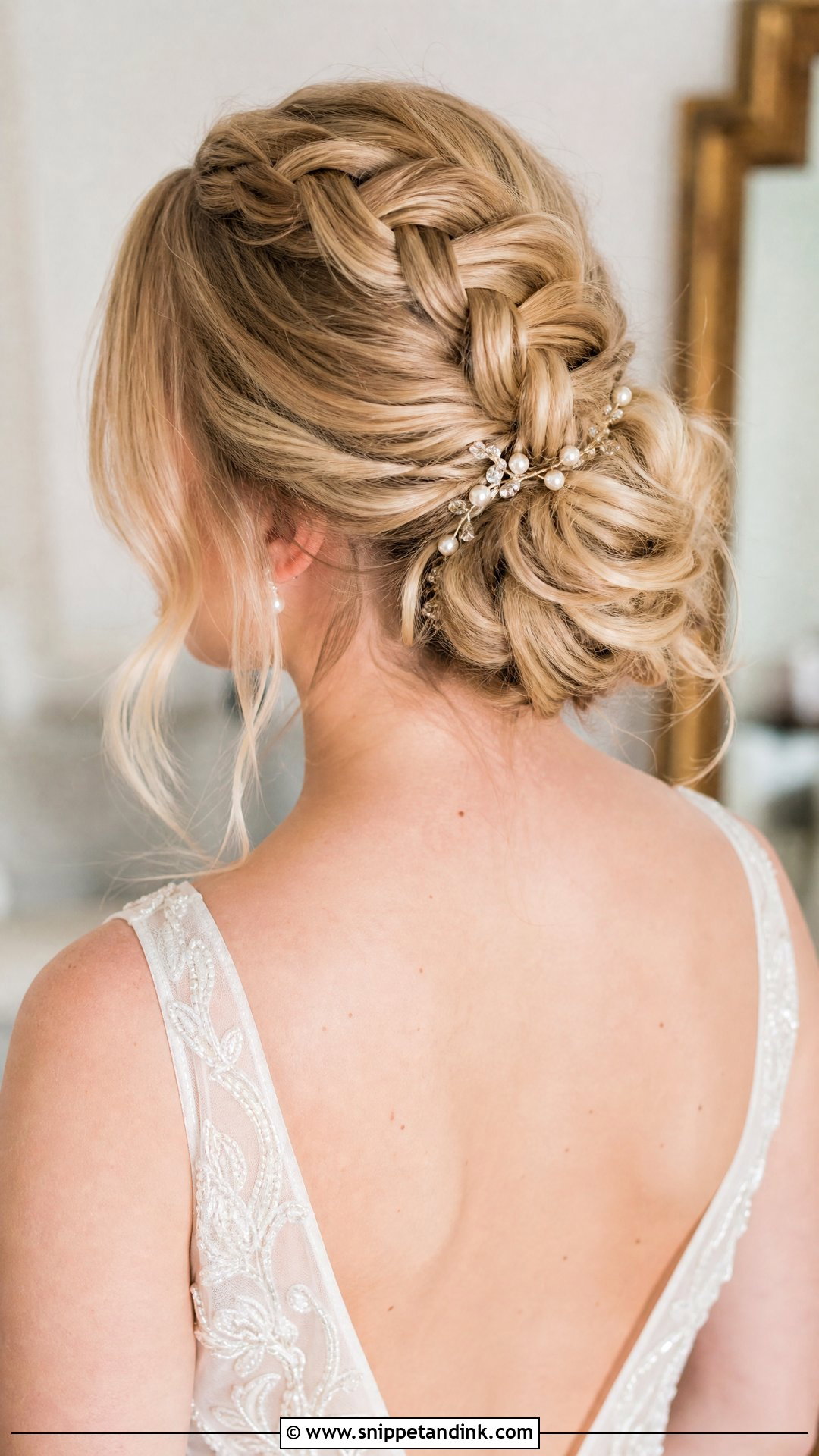
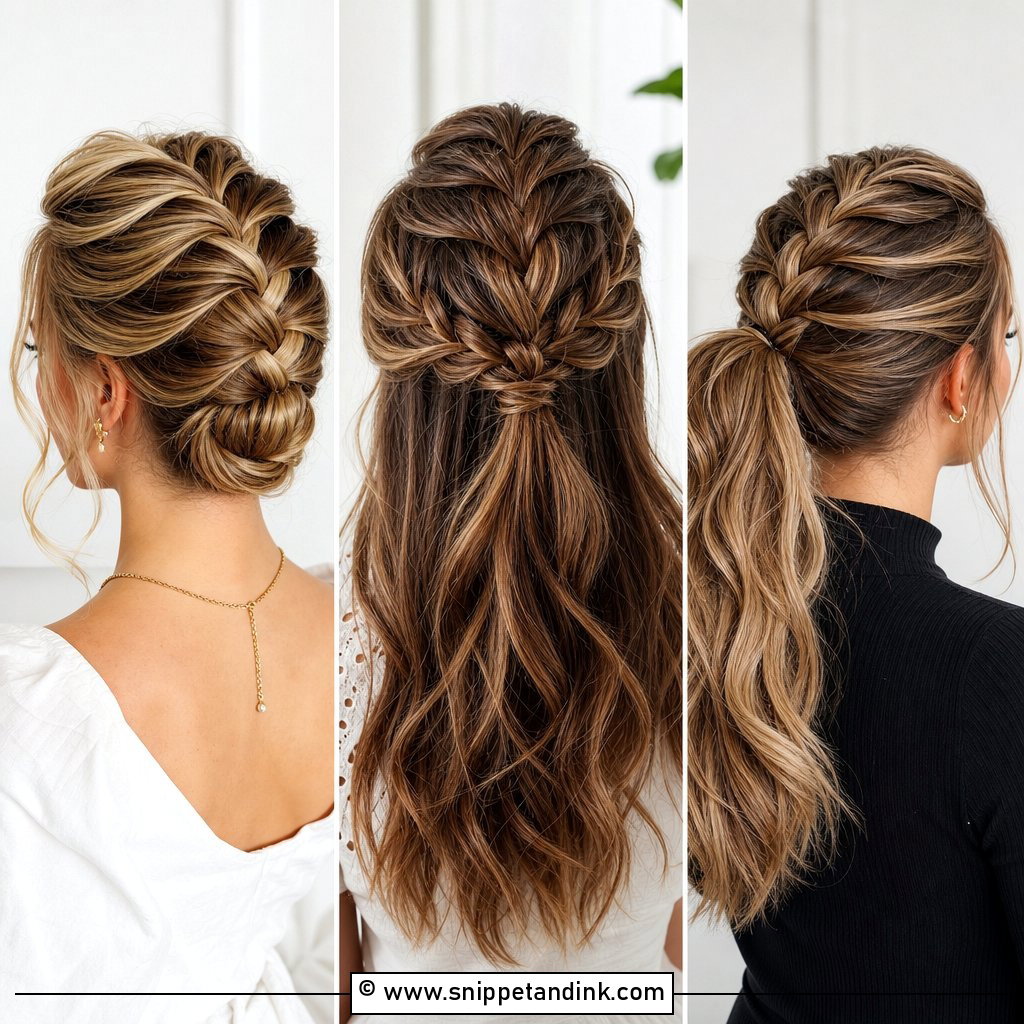
Lifted and secure without stiffness, this updo starts as a braid at the crown or along one side and wraps into a low bun or chignon at the nape. The face and shoulders stay clear, so lace, open backs and high necklines all get their moment. I add gentle volume at the crown before I braid, never after, because teasing over a finished braid roughs up the pattern. A few soft face-framing pieces and a crystal comb are enough decoration.
2. French Braid Half Up Wedding Hair
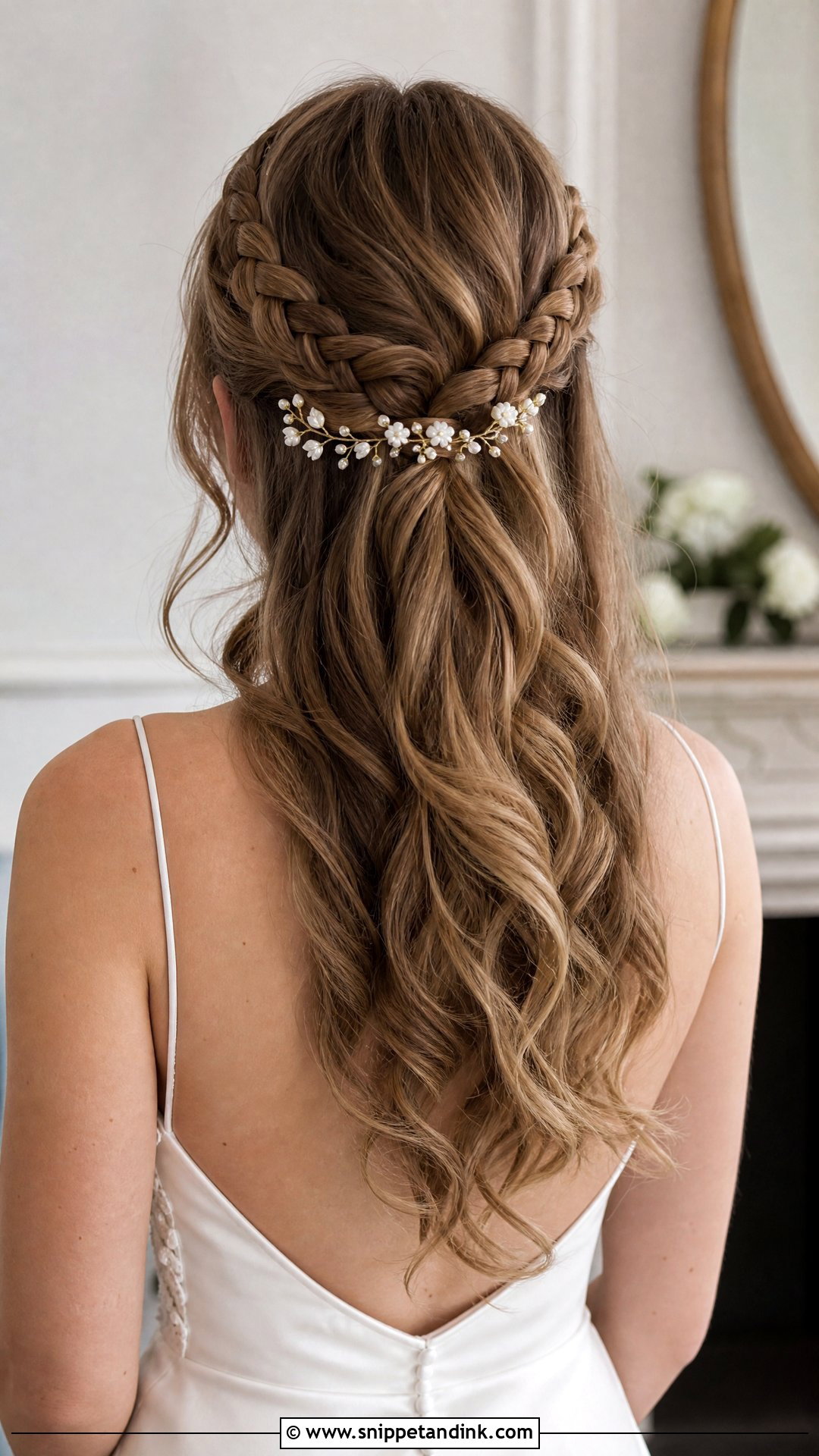
Half-up braiding is the compromise I suggest most often to brides who love their hair down but know loose hair gets in the way of vows and dancing. The braid can run across the back like a small crown, or two side braids can meet in the middle. Waves through the lengths add movement. My one caution: on very fine hair, the loose part can look thin next to the braided section, so I’d add a couple of clip-in wefts underneath.
3. Side French Braid Wedding Hair
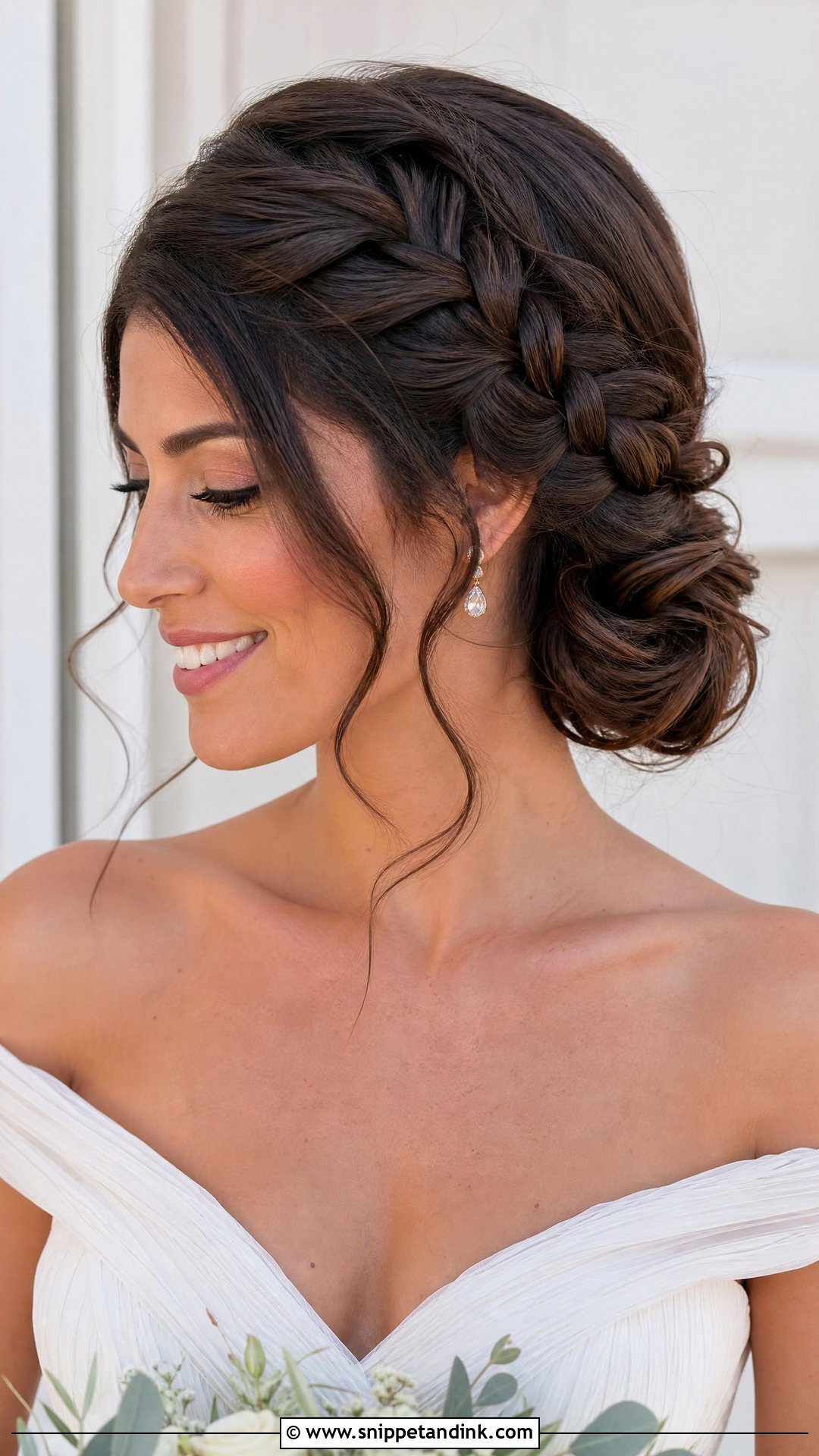
An asymmetrical neckline or a one-shoulder dress pairs naturally with a side braid, because the hair balances the line of the gown. The braid starts near the part and travels to a low side bun, a pony or a braid over the shoulder. Loosen it slightly for fullness. I tuck small pins under the curled ends so they don’t flip onto the dress strap. It stays controlled outdoors, which helps in wind.
4. French Braid Crown Wedding Hair
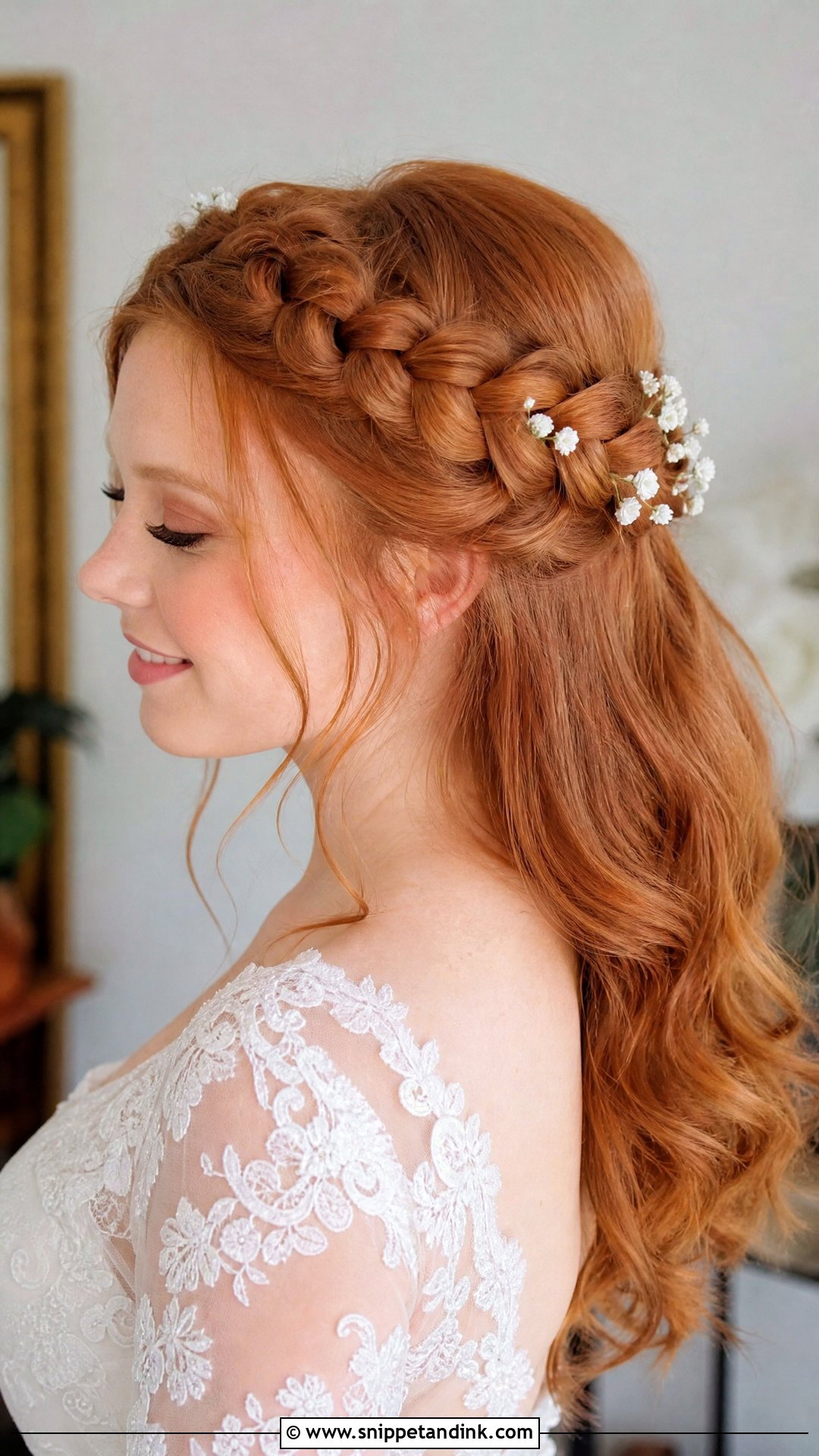
A braid wrapped like a halo frames the face and feels slightly regal. Wear it as a full crown updo or as a half crown with waves down the back, which suits gowns in lace or tulle particularly well. I pull the loops wider once it’s pinned so it looks fuller from the front. A thin veil tucks neatly underneath. Bear in mind a full crown needs real length; on shoulder-length hair I’d fake it with two shorter braids pinned to meet.
5. Double French Braid Wedding Hair
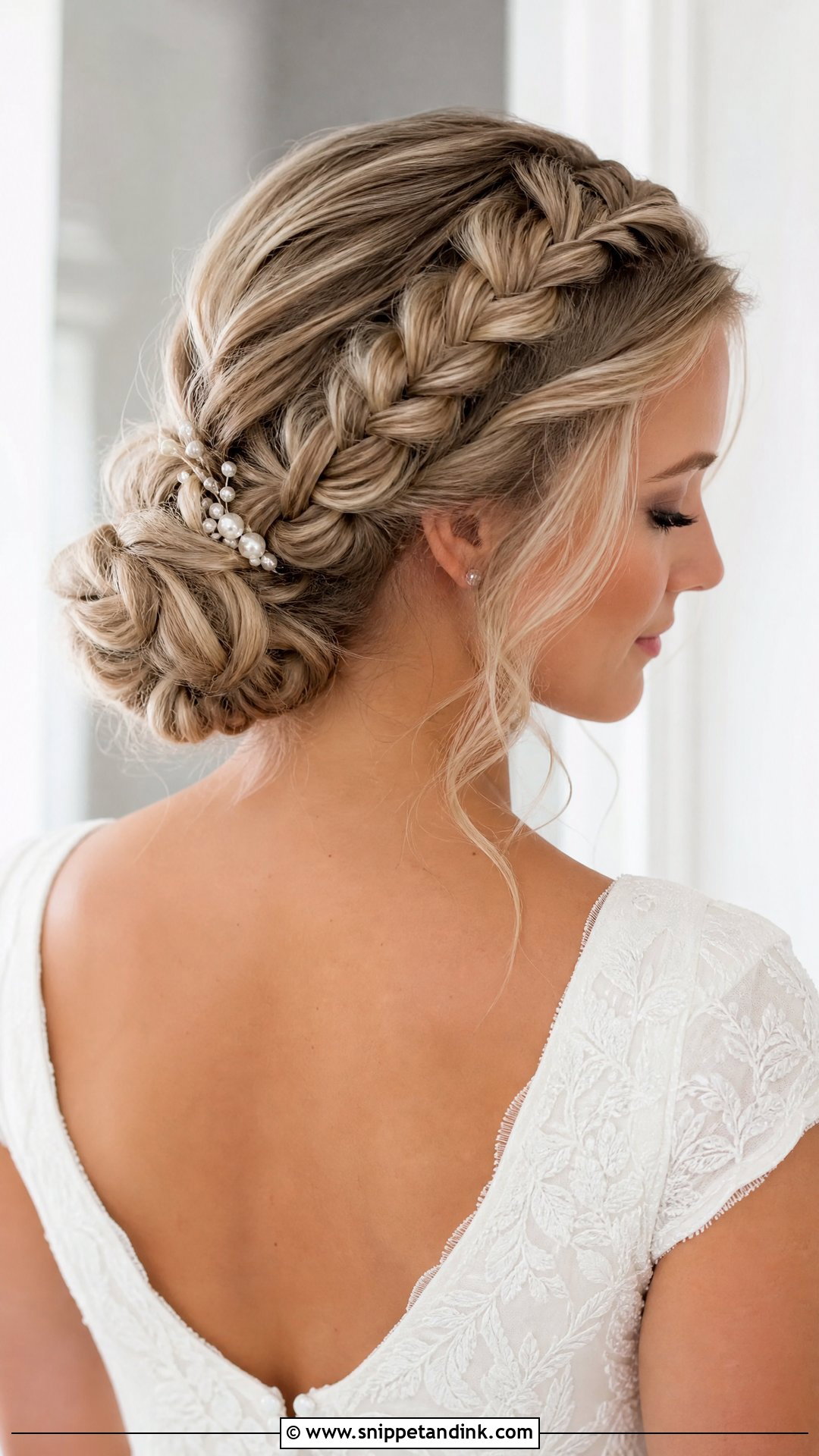
Thick hair is where double braids shine. Two braids from the front hairline split the weight, meet at a low bun, braided pony or twisted updo, and hold extremely well. They also make fine hair look fuller once the loops are gently expanded. The danger is a sporty look, so I keep the finish soft: loosened braids, curled tendrils at the cheeks, a few small pins along each plait.
6. French Braid Low Bun Wedding Hair
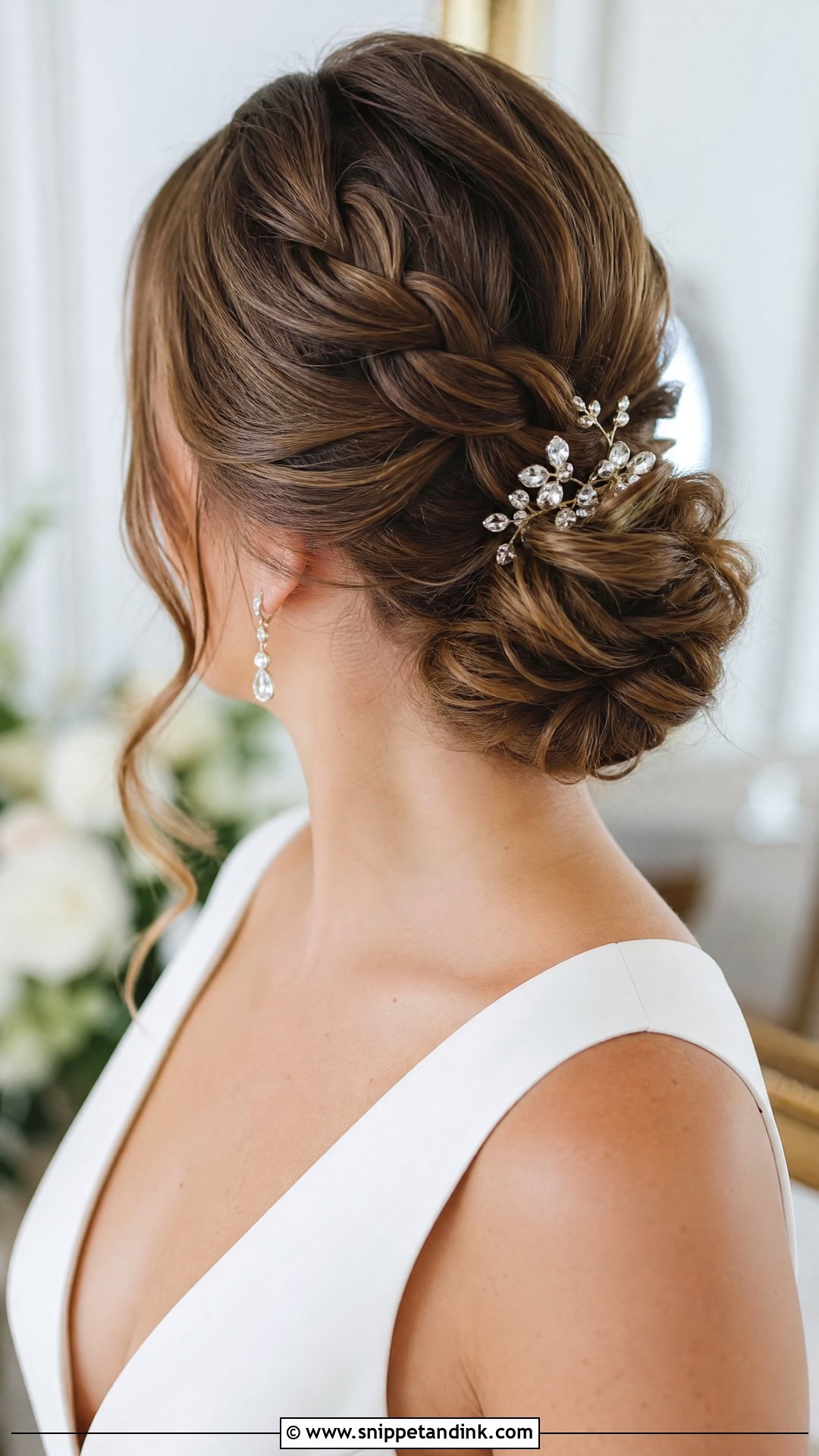
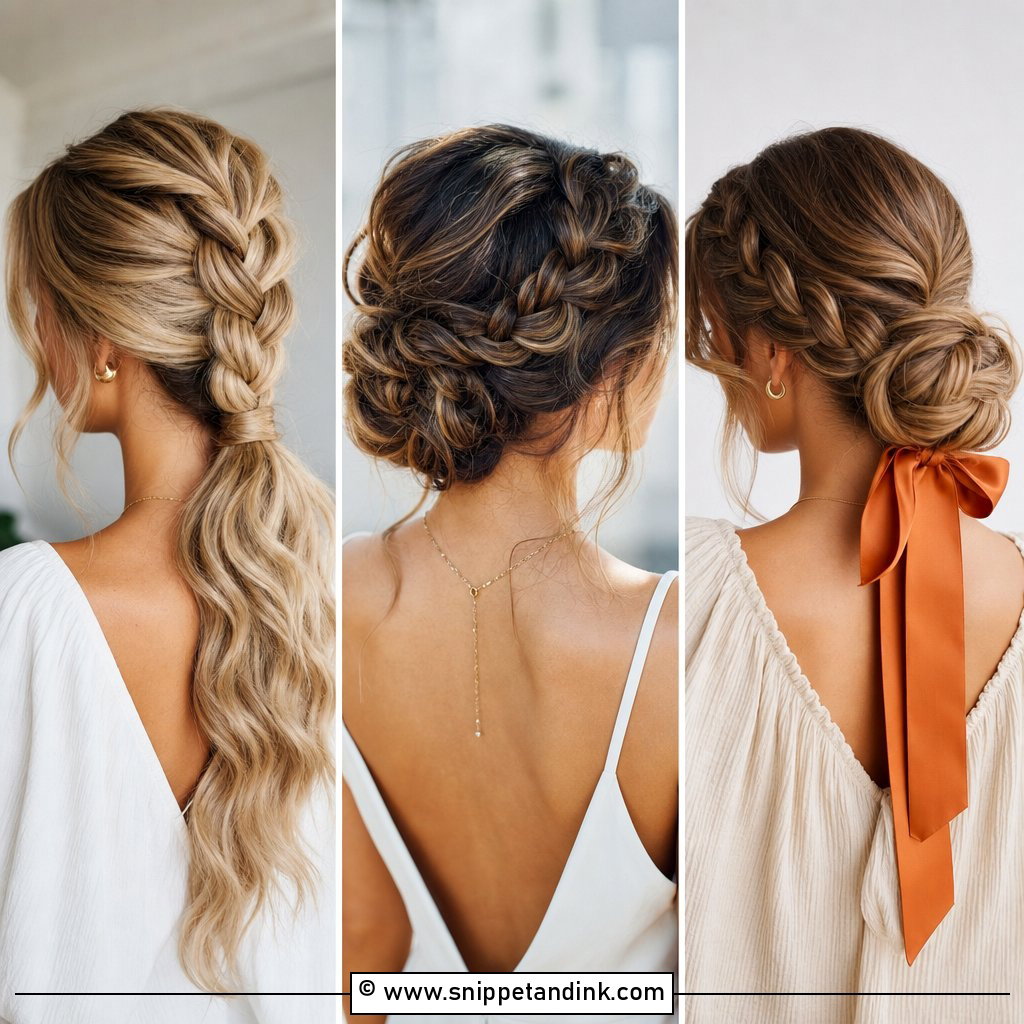
Few combinations are as dependable as a braid finished into a low bun. The braid adds texture through the crown or side; the bun gives a firm base that a veil comb can lock into. Church ceremonies, ballrooms and evening receptions all suit it. For a softer version I loosen the braid and leave the bun slightly undone; for a sleeker one I keep the braid clean and tuck every end inward.
7. French Braid Ponytail Wedding Hair
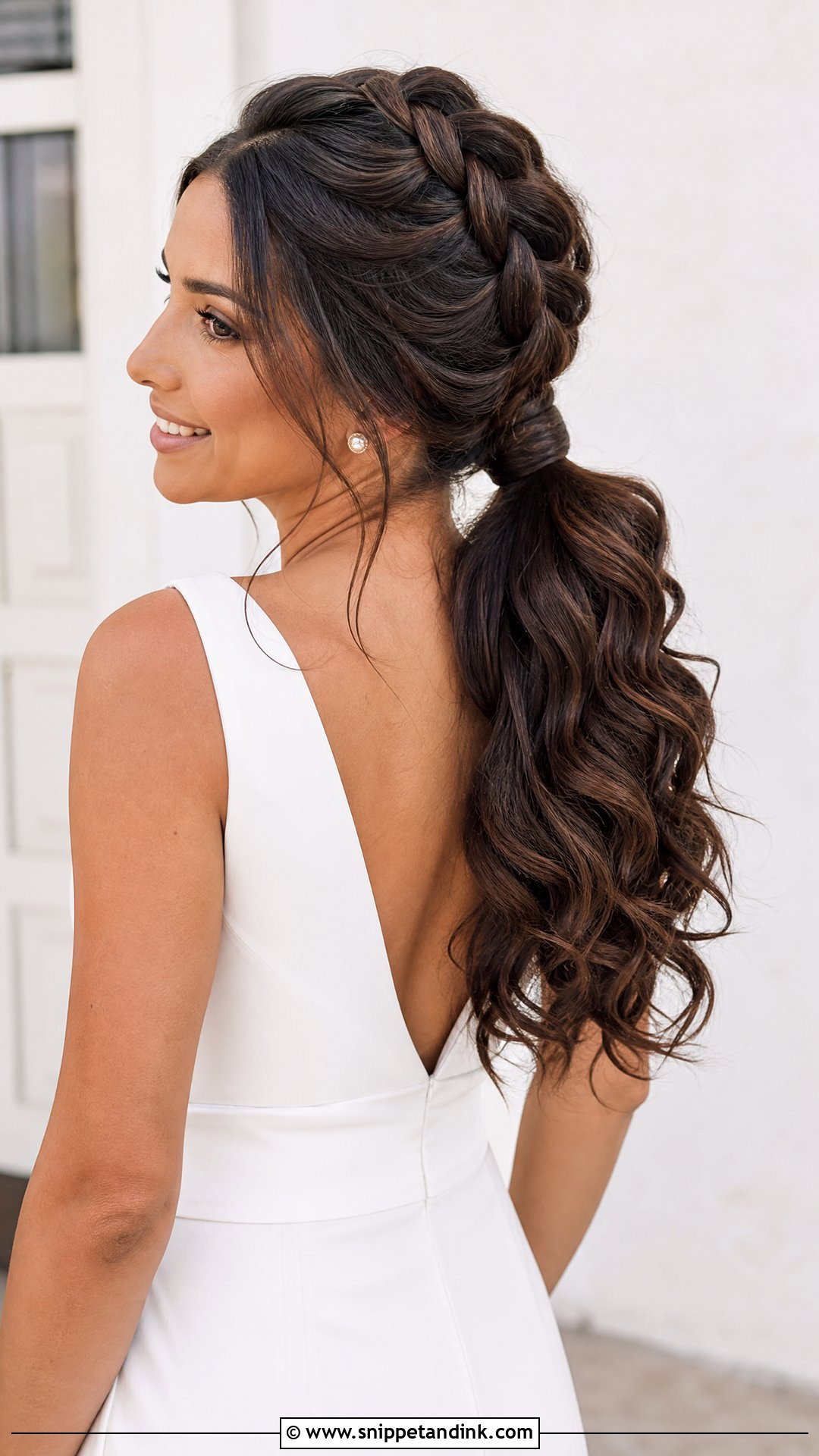
Comfort is the reason to pick a braided ponytail. The braid starts at the crown and runs into a high, mid or low pony depending on the dress. Low reads refined; high reads playful. I curl the length so it looks full in photos and wrap a small piece of hair round the elastic to hide it. Bridesmaids and guests love this one because there’s nothing pressing into the scalp after hours of wear.
8. Loose French Braid Wedding Hair
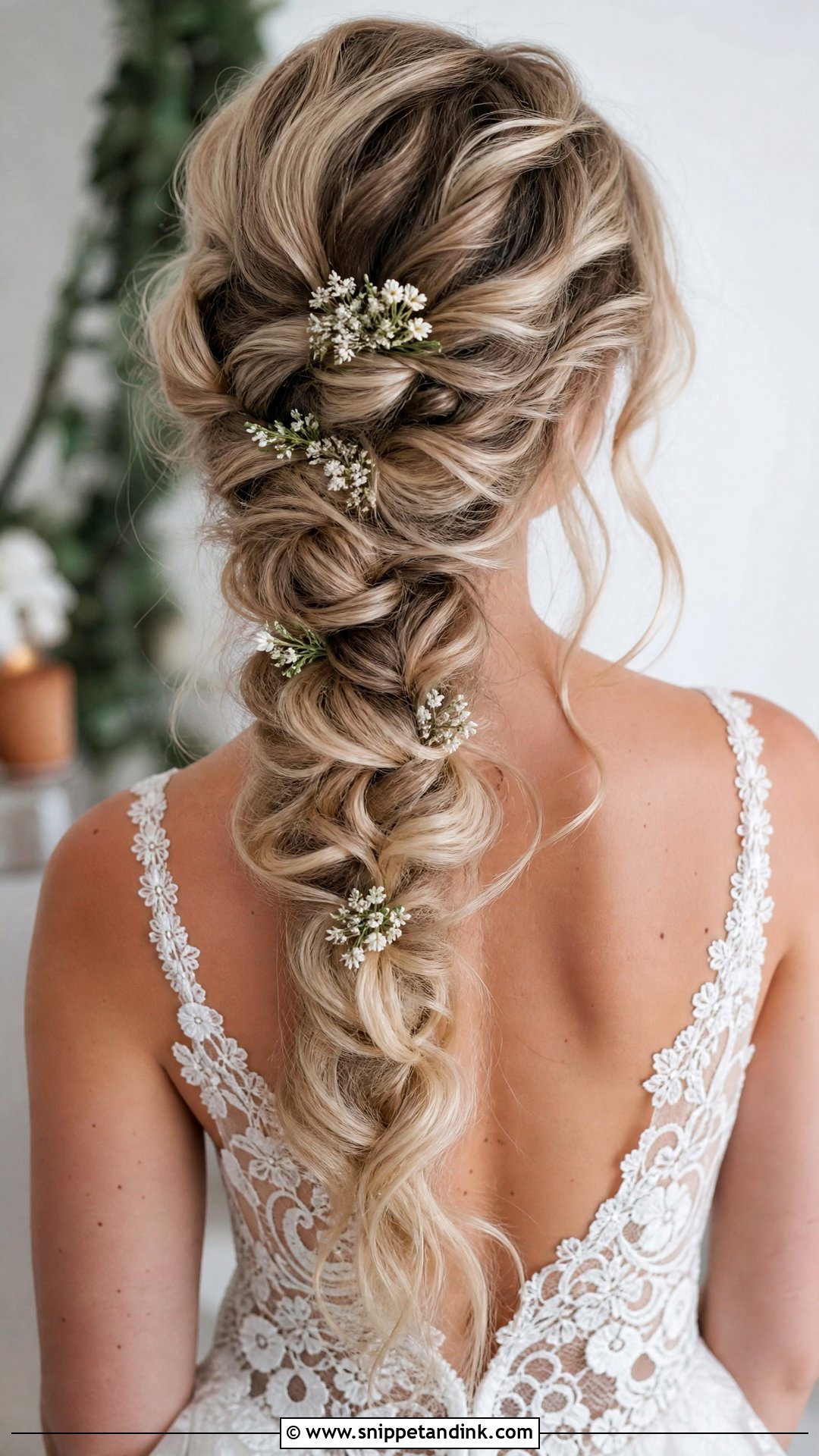
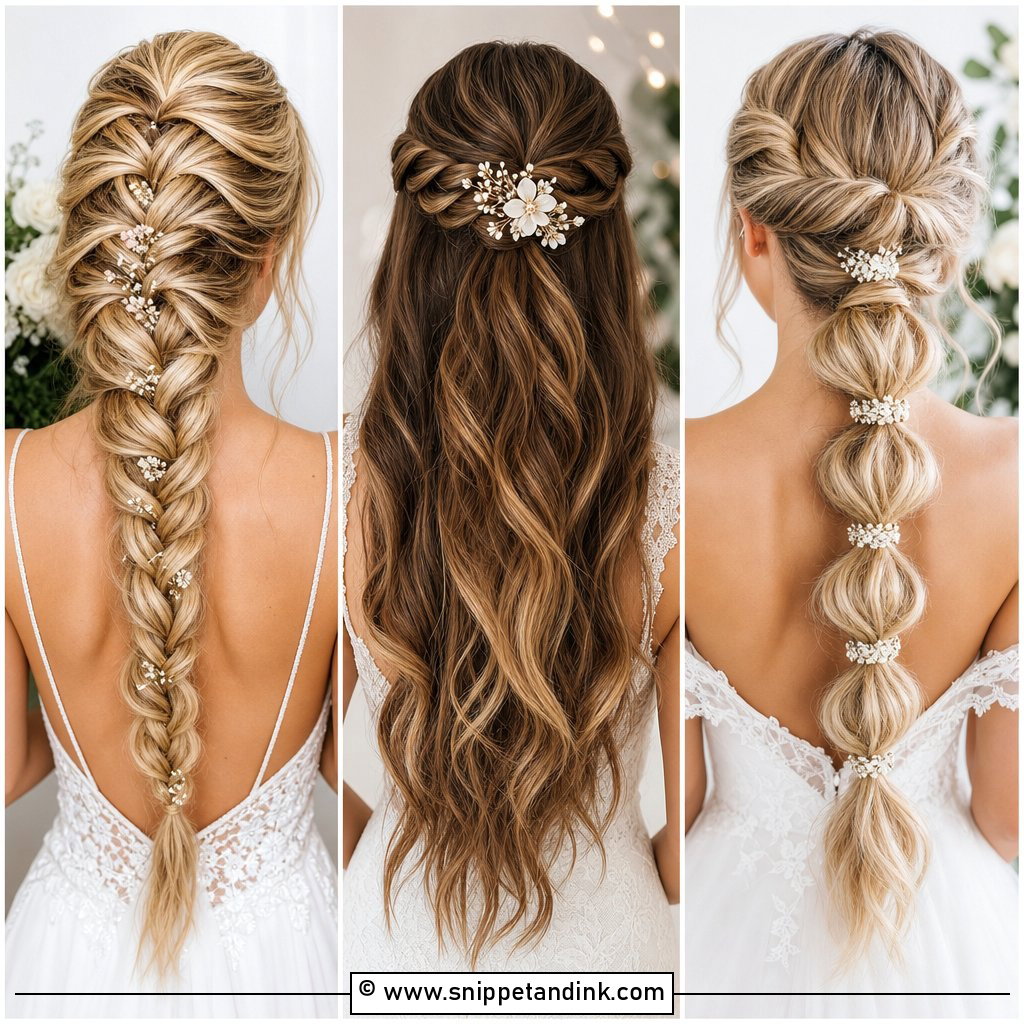
Loose braids look unplanned, which is exactly why they need the most planning. I braid with gentle tension, pull out sections for airy volume, and rely on texture spray, light backcombing and hidden pins so the softness doesn’t sink flat. Down the back, swept to one side, or blended into a low bun all work. Beaches, barns and boho dresses are its natural home. Tiny flowers or pearl pins can be threaded straight through the loops.
9. French Braid Chignon Wedding Hair
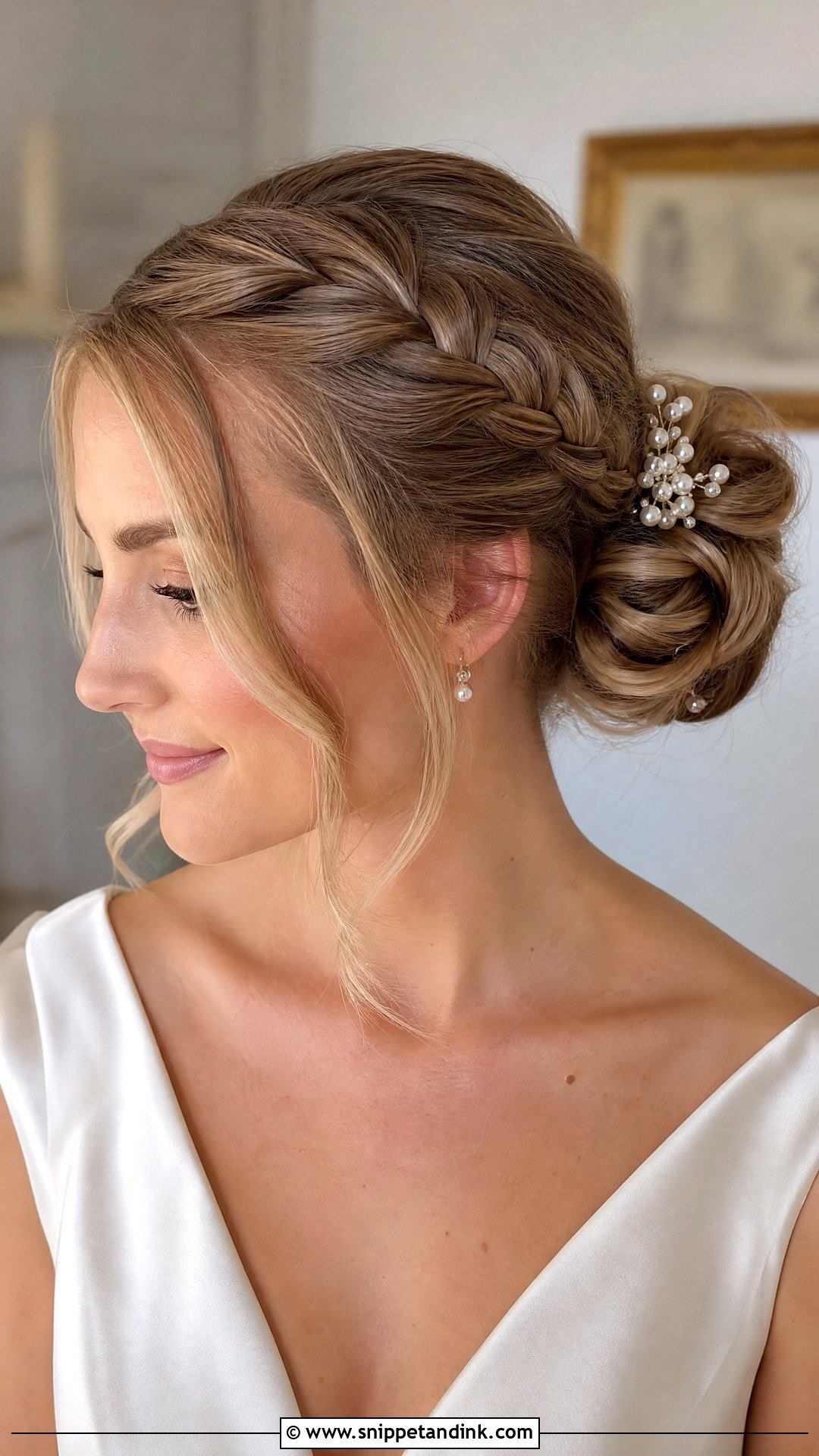
Braid and chignon together give interest at the crown and a smooth shape at the nape. Off-the-shoulder gowns suit it because the neckline stays visible, and a veil or comb anchors securely above the knot. I shape the chignon in curved sections that blend into the braid rather than a tight sleek bun, which can look severe next to braided texture. A middle part looks modern, a side part classic, and it’s a reliable pick for formal and semi-formal weddings alike.
10. French Braid With Curls Wedding Hair
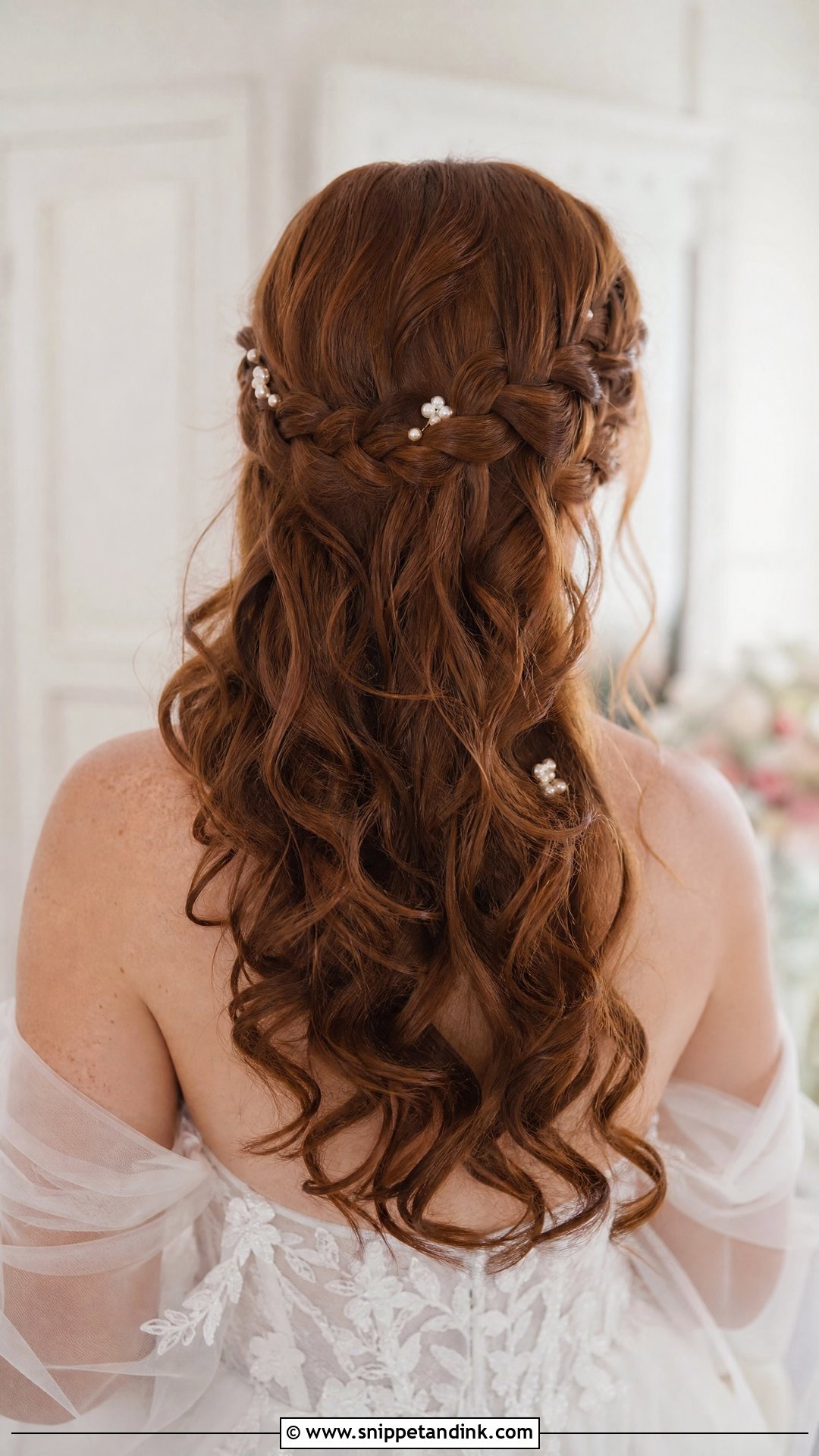
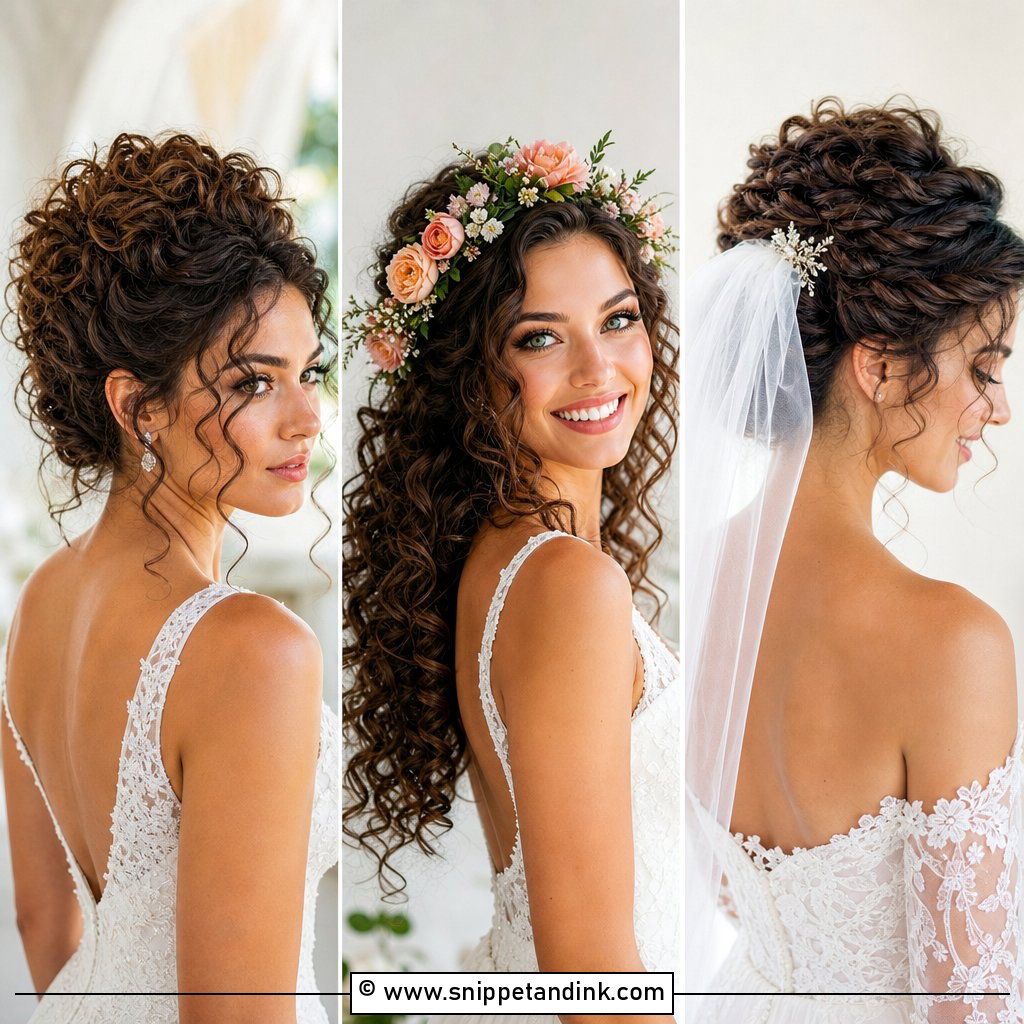
Curls plus a braid suit medium and long hair, with the braid across the crown or down one side and the rest falling in curls. Layered cuts benefit most, since the shorter pieces blend into the curl pattern rather than poking out of an updo. I set curls with a flexible spray so they stay touchable. One thing to plan for: curls relax over the day, so I curl slightly tighter than the look you want at the reception.
11. French Braid With Veil Wedding Hair
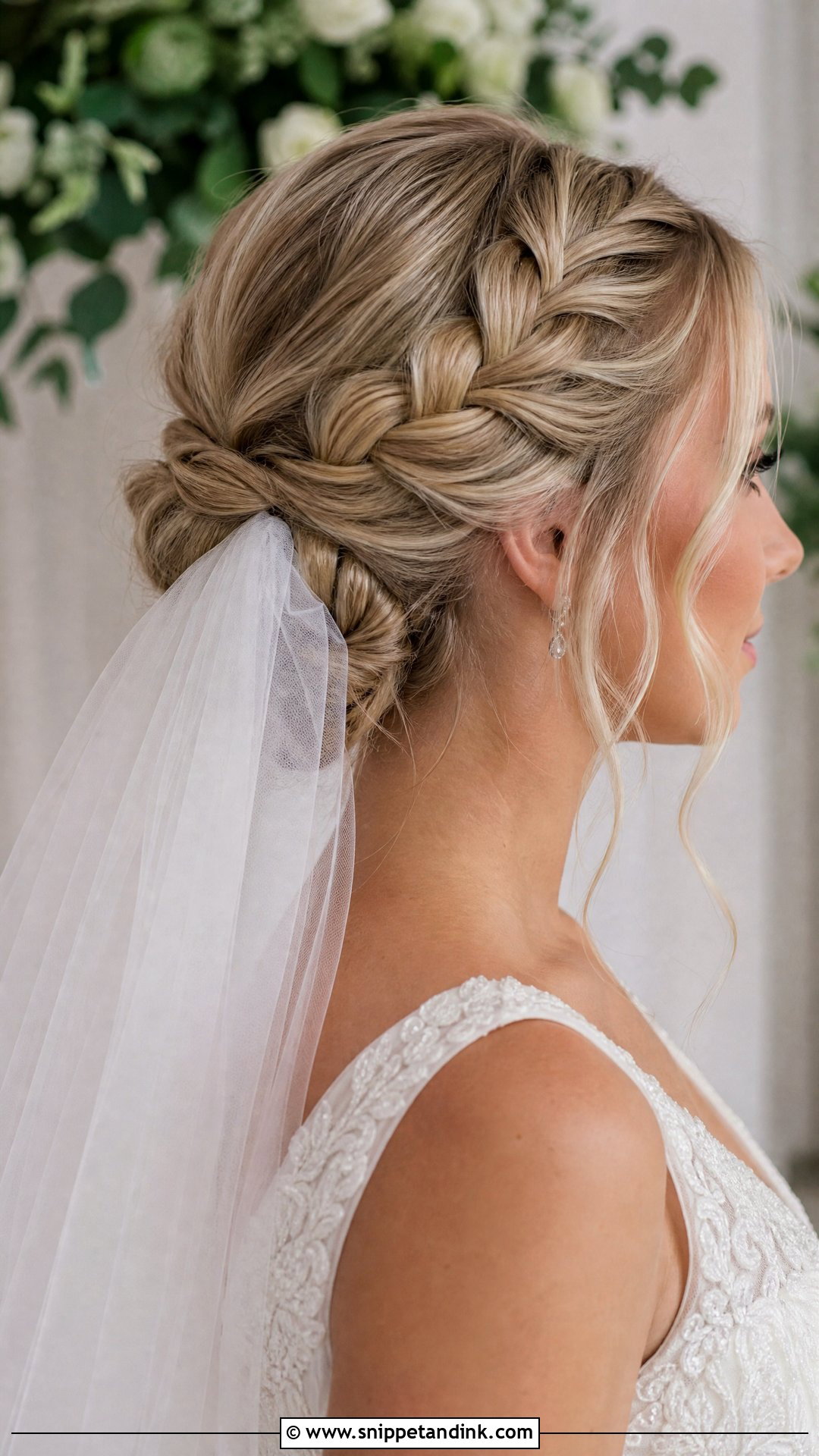
Tell me exactly where the veil will sit before the trial, because I build the braid around it. A low braided bun or chignon gives a stable anchor and keeps the hair visible once the veil is off. With hair down, a half-up braid can hold the comb just underneath the braided section, keeping the crown neat while waves fall freely. Planning the braid, pins and comb together is what stops a veil from dragging the whole style backward.
12. French Braid Bridesmaid Hair
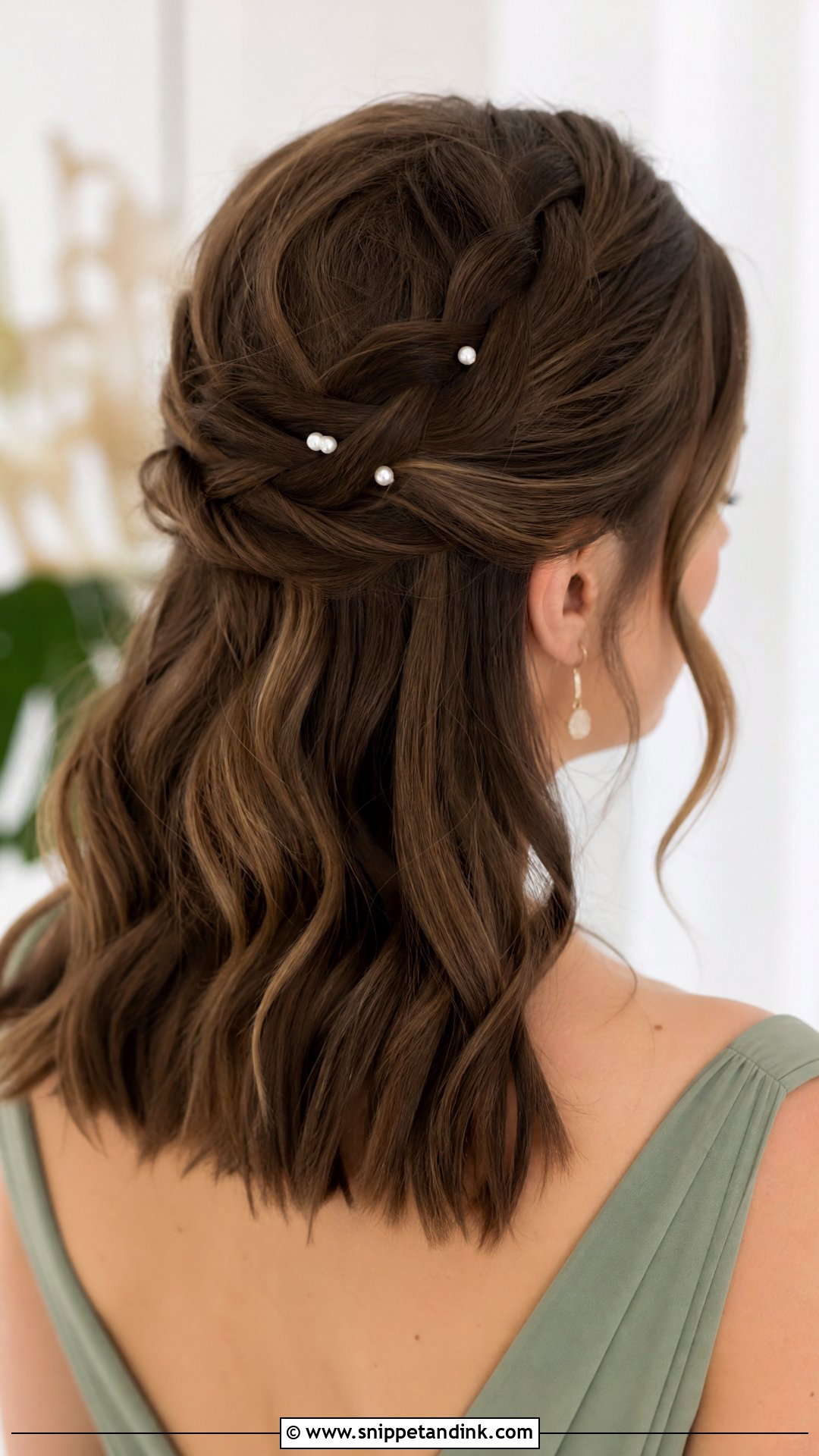
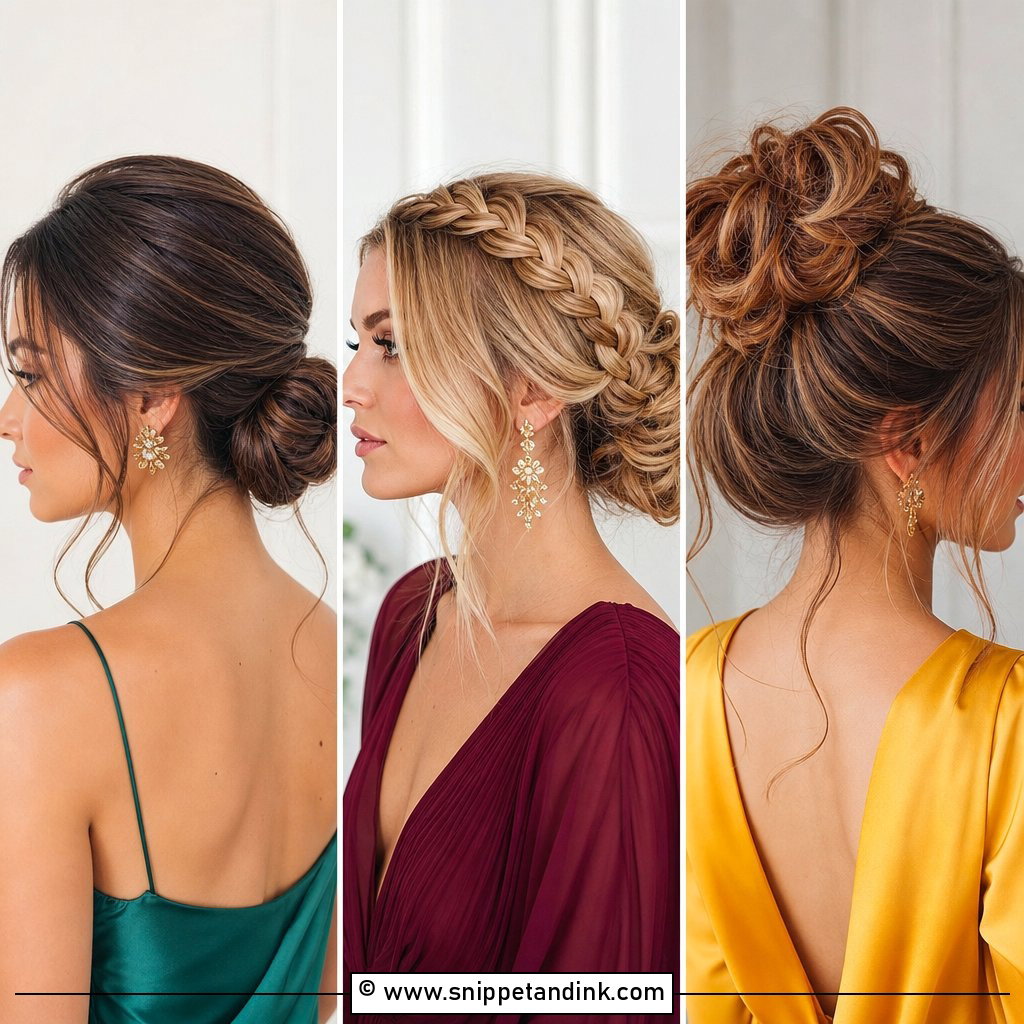
French braid bridesmaid hair coordinates a group without forcing everyone into the same style. One bridesmaid wears a braided half-up, another a low bun, another a braided ponytail, and the shared braid detail links them. It holds through getting-ready photos, outdoor ceremonies and hours of dancing. I keep accessories simple and the parting clean, so the bride’s hair remains the focus.
13. French Braid Wedding Hair For Long Hair
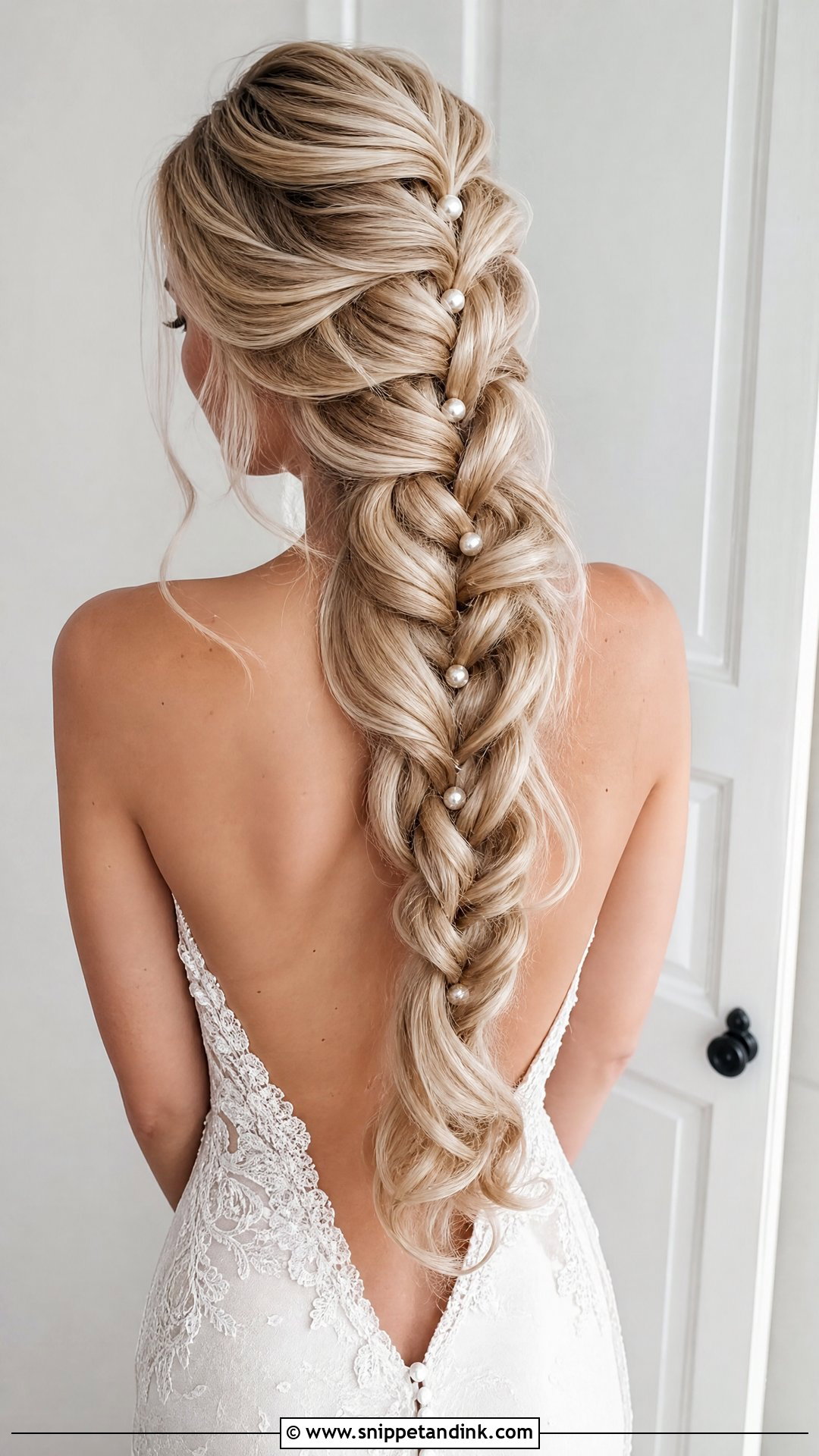
Long hair can carry a full braid down the back, a side braid over the shoulder or a crown blending into waves, and extensions add fullness if you want more. Weight is the issue I watch: a long, heavy braid pulls on its pins and can drop by evening, so I support it with hidden pins and grippy prep products from the start. I pull the braid slightly apart to show its shape, then curl the ends. A backless dress or long veil shows it off well.
14. French Braid Wedding Hair For Medium Hair
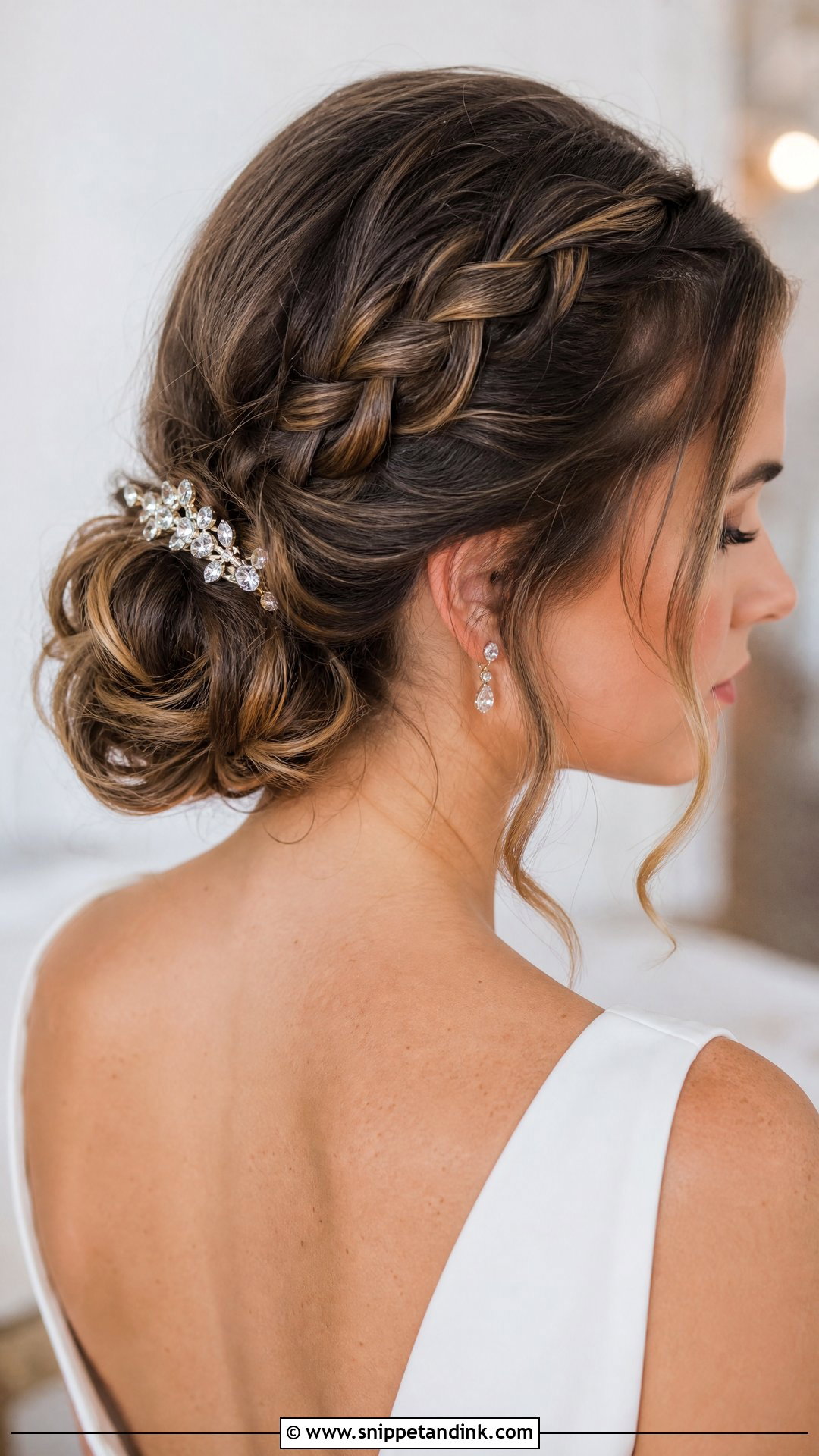
Medium hair is honestly easier for me to secure than long hair, because there’s less weight dragging on the pins. A side braid into a low bun, half-up with waves, or a crown-braid effect all work on shoulder to collarbone length. For more volume, I’d consider small padding, clip-in pieces or texture spray. Keep the braid slightly loose and the ends tucked neatly; it looks full without looking forced.
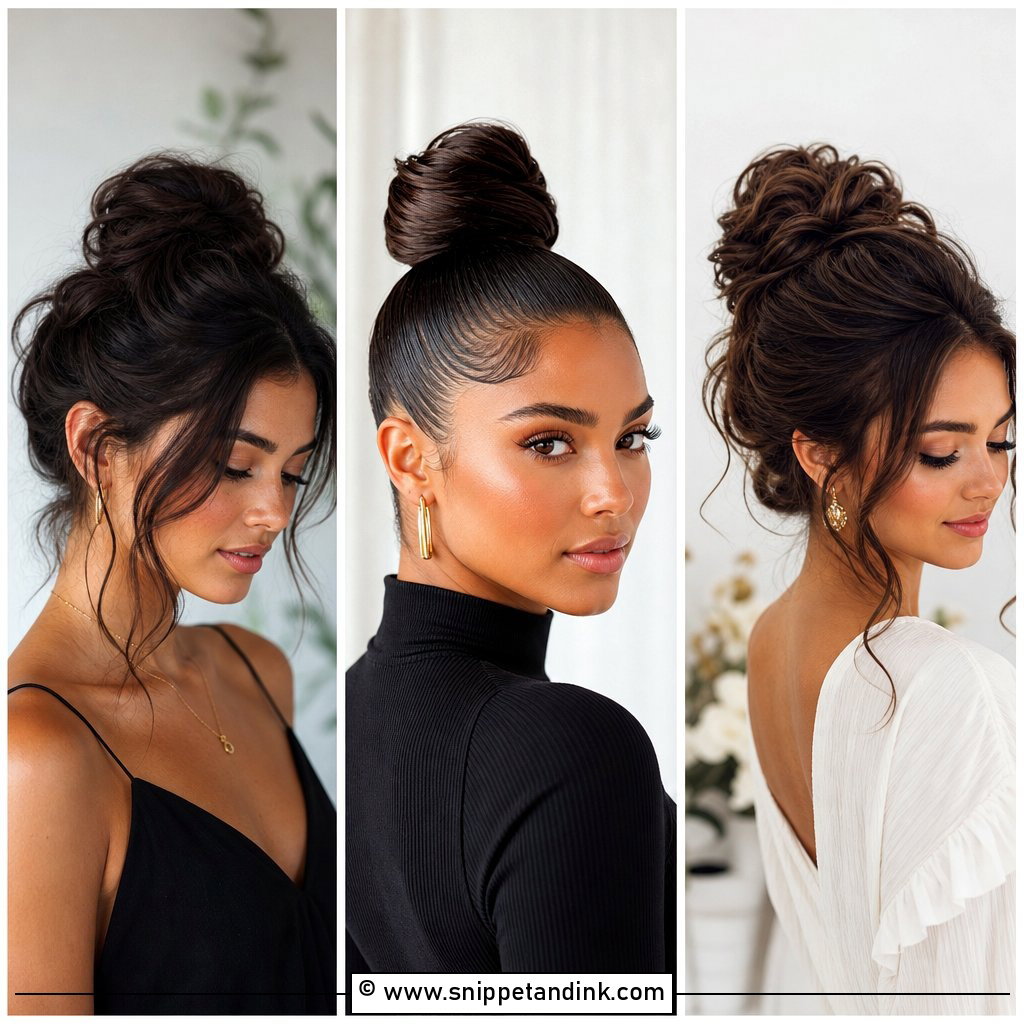
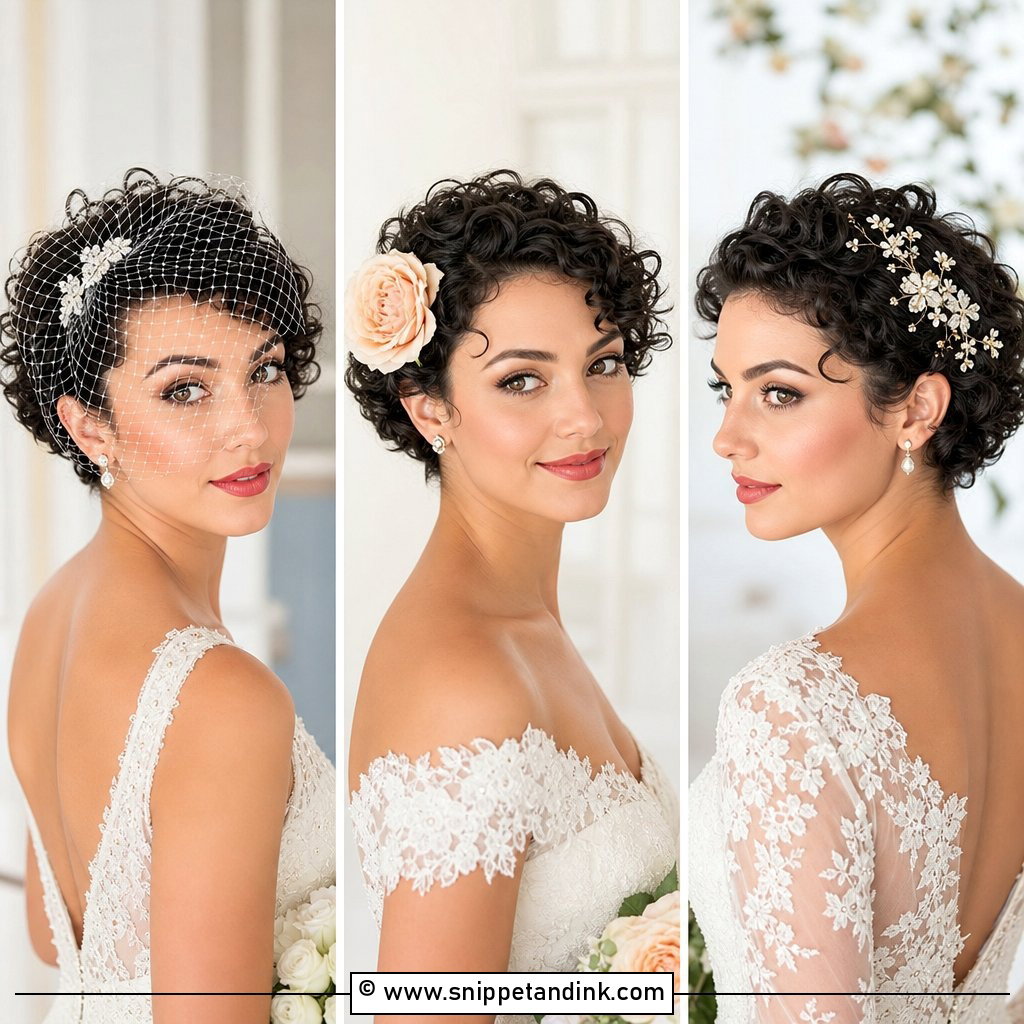
15. French Braid Wedding Hair For Short Hair
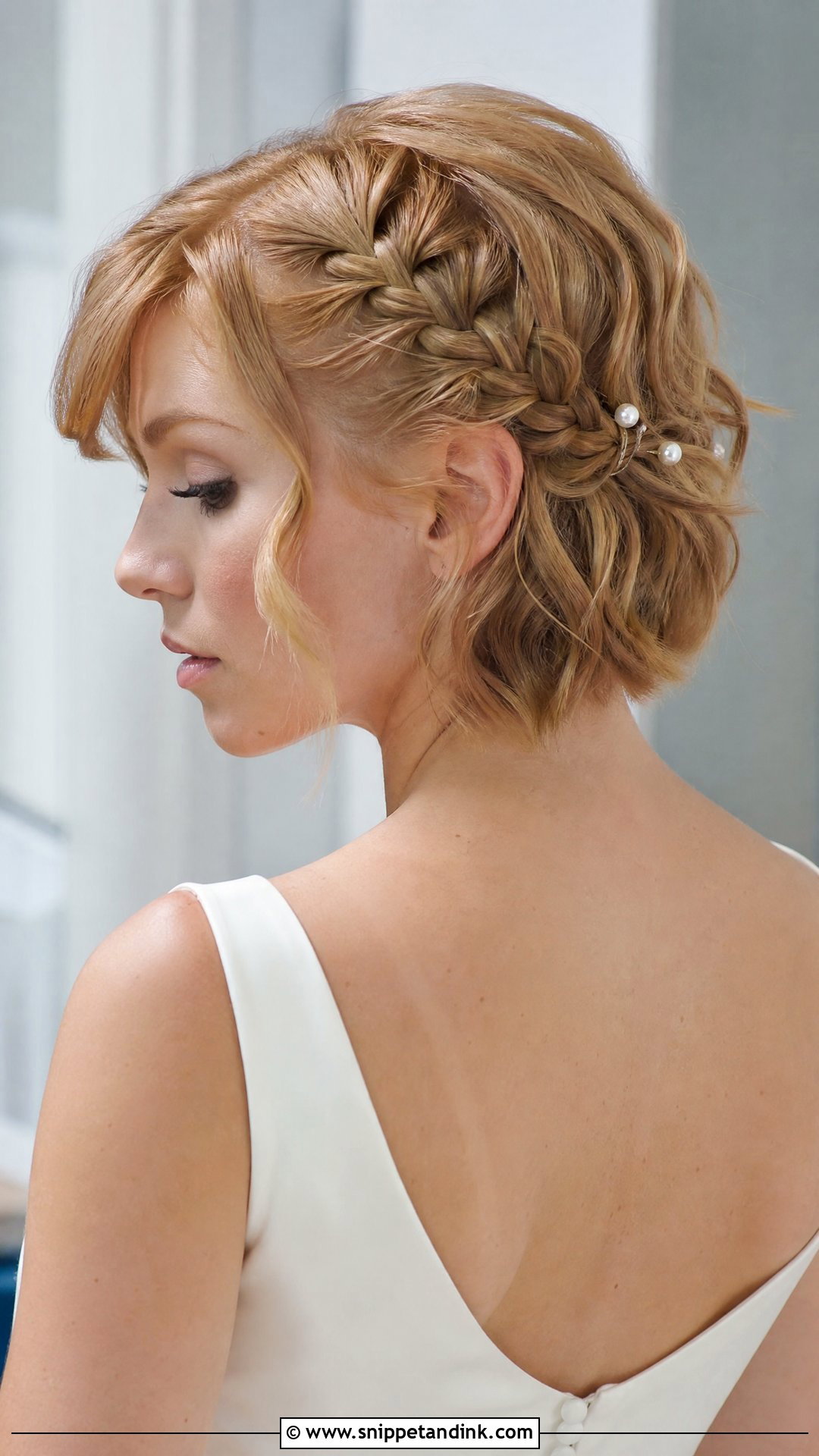
Short hair can still be braided. On chin-length, bob-length, or slightly longer hair, a small braid can run along the hairline, across one side or through the crown, with the rest waved, tucked or pinned into a mini updo. Texture spray before braiding is essential so the short ends grip instead of springing out. A slim comb or tiny pearl pins finish it while still letting the haircut show.
A Bridal Party Tied Together by One Braid
Braids make group coordination easy because the detail stays recognisable even when the overall styles differ. Nobody with a bob gets forced into an updo she can’t hold.
- Agree on one shared element, such as a braid starting on the left or tracing the hairline, and let each person finish it to suit her length.
- Give everyone the same small accessory: two pearl pins, a sprig of the bouquet greenery or a slim gold clip.
- Keep the bride’s braid the most detailed so she stands apart in group photos.
- On very short hair, one small braid along a temple still counts as part of the set.
Loosening the Braid After the Veil Comes Off
A braided style changes easily for the evening. Once the veil is out, a bridesmaid can ease the loops wider with her fingertips for a softer shape, or take down a low bun and let a braided crown sit over loose waves. It takes about ten minutes and looks intentional. At the trial, ask me which pins are structural and which can come out safely, so nothing collapses mid-change.
Why a Braid Outlasts Curls on a Long Day
French braids earn their popularity because they’re dependable. Placed and finished one way they look soft and boho; another way, sleek and formal. Updo, half-up, crown, ponytail, chignon or a small braid on short hair, the right version comes down to your dress, venue, length and comfort. Book a trial if it’s for the bride, bring photos from several angles, and pay attention to how it feels three hours later. Prepped and pinned properly, a braid that looks delicate will hold all day.
You'll Like These Ideas:


Leave a Reply