
Dressing Black brides, I spend less time on silhouette than people expect and more on the details that bridal shops often get wrong for deeper skin: the exact shade of white, the colour of illusion mesh, the undertone of a champagne. Get those right and almost any shape works. The dress is also only part of it. Neckline, fabric, veil, shoes, jewellery, bouquet and venue all have to agree. Below are the looks I suggest most often, from classic white satin to black lace, champagne tulle, jumpsuits, capes and reception changes, each with the fitting or styling note I’d give you in the salon.
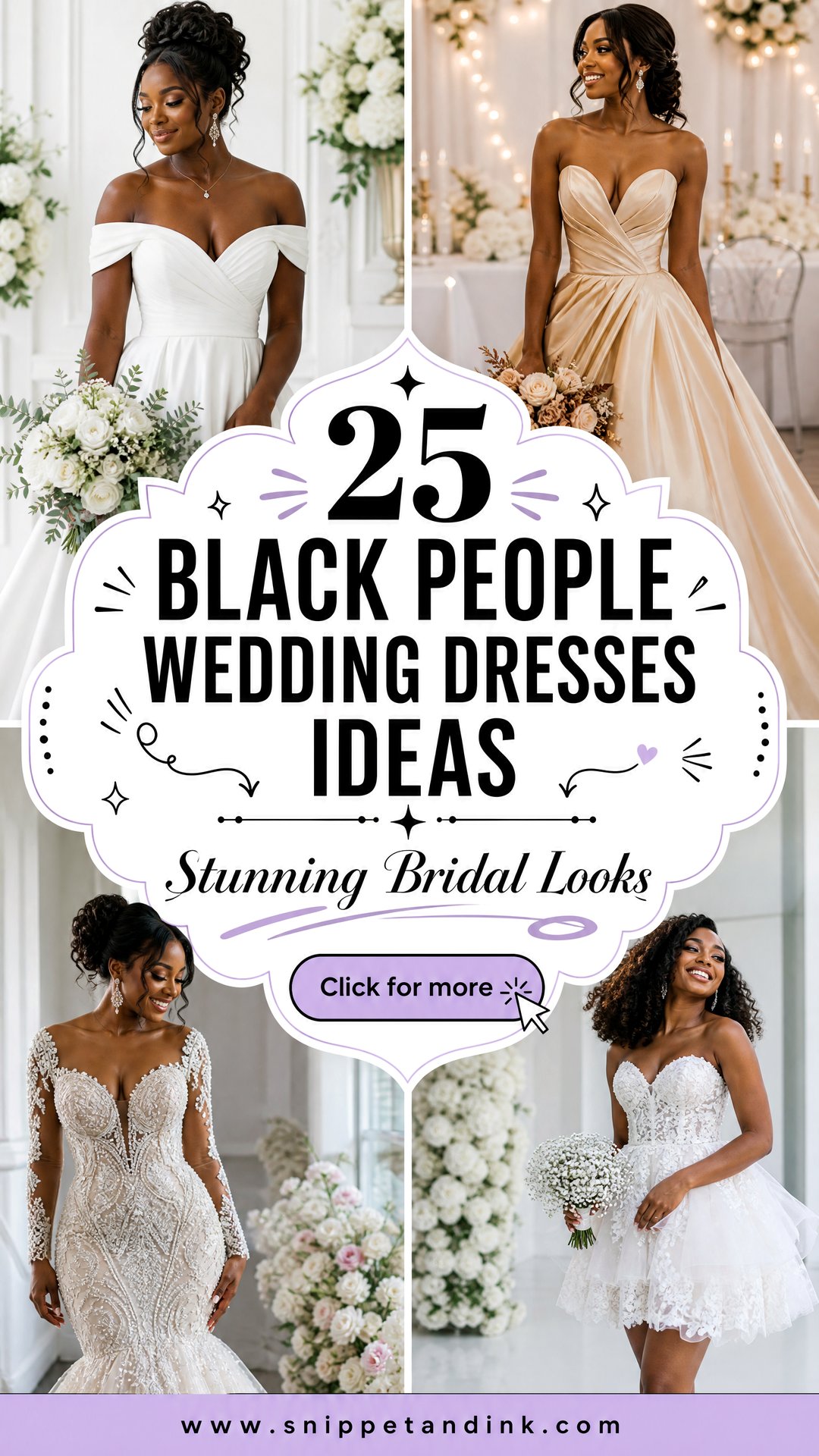
Testing Bridal White Against Deep and Brown Skin
Bridal white comes in many shades: optical or bright white, soft white, silk white, ivory, champagne and blush-toned versions. On deeper skin, the wrong white can make the face look dull or slightly grey in photos, and the wrong champagne can make skin look ashy. None of this shows under a salon’s warm spotlights.
- Ask for fabric swatches in at least two whites and hold them near your face by a window in daylight.
- Look at your inner wrist veins: greenish usually means warm undertones, which often glow next to ivory and champagne; bluish suggests cooler undertones that can carry brighter whites.
- Take phone photos with and without flash. Flash shows what the photographer’s camera will see.
- Bring the swatch to your makeup trial so your foundation and the dress are judged together.
Undertone isn’t destiny, and plenty of brides break the guideline beautifully. The test just tells you what you’re choosing.
1. White Satin Ball Gown Wedding Dress
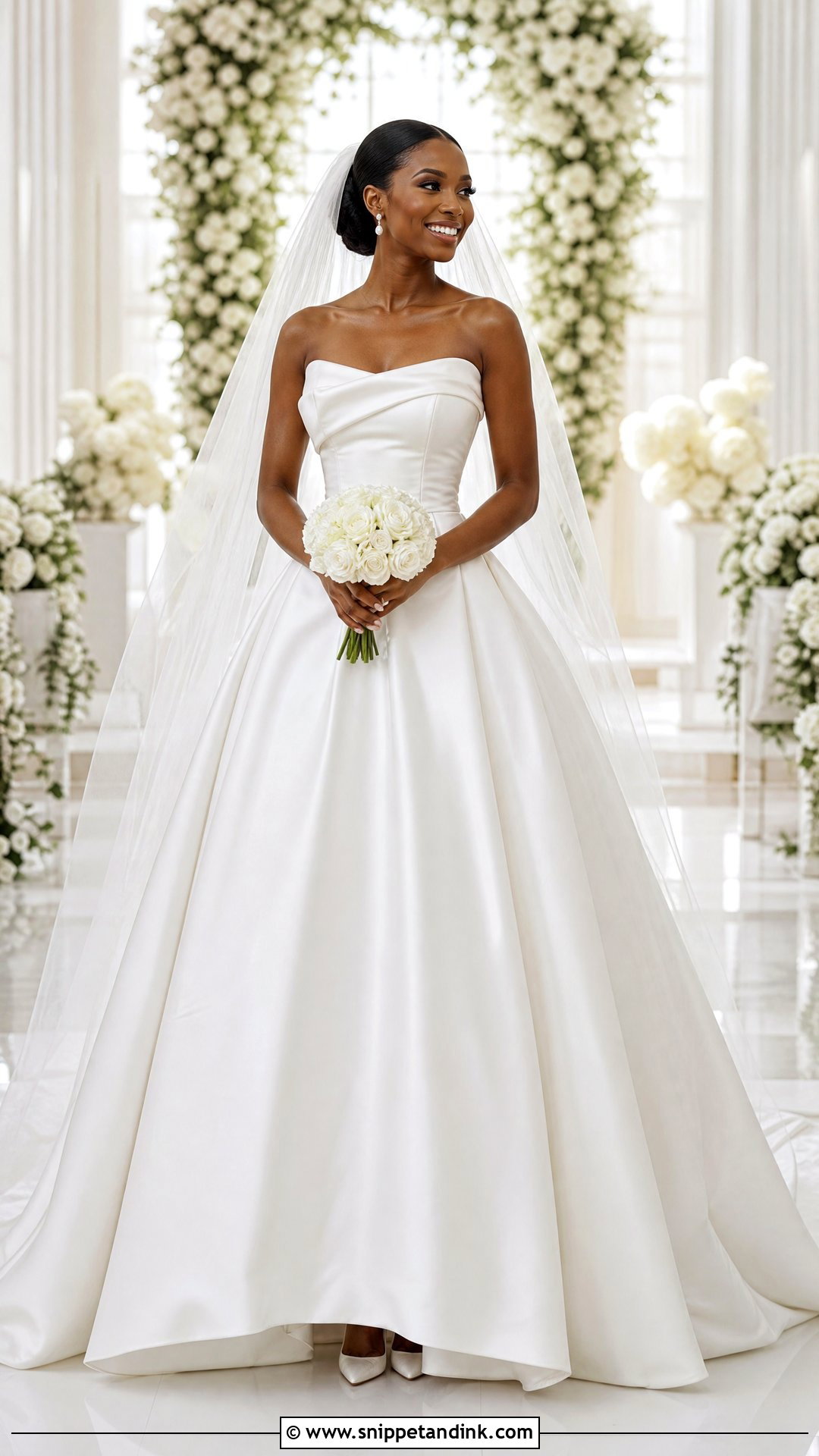
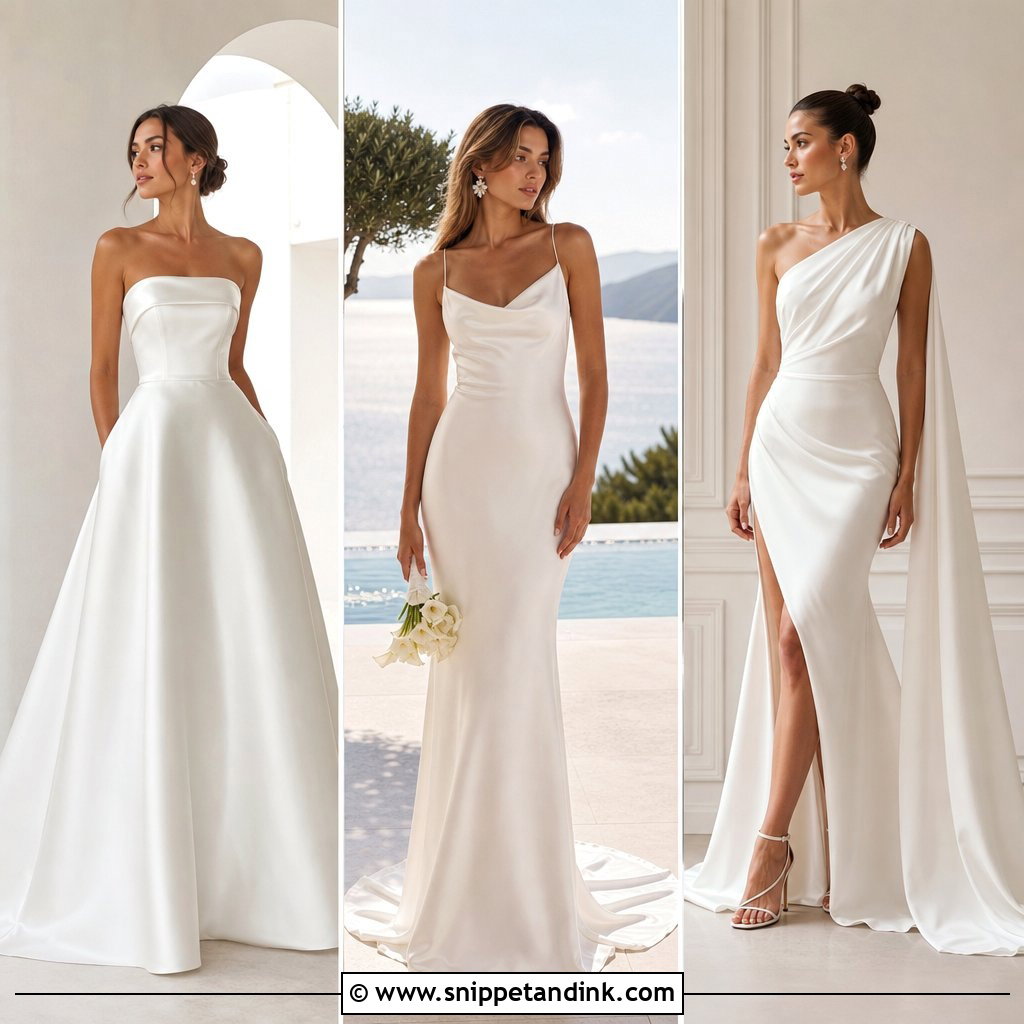
Satin ball gowns hold a soft glow that sits well against rich brown and deep skin; the sheen picks up warmth rather than washing it out. A structured bodice, full skirt and clean neckline make the classic shape. Pearl earrings, a slim tennis bracelet, pointed ivory heels and a cathedral veil keep it formal. I always check the white under daylight first: some satins are a cold optical white that can look grey beside warm skin, and a soft white or silk white is often kinder. Formal hotels, gardens and big celebrations suit it.
2. Lace Mermaid Wedding Dress
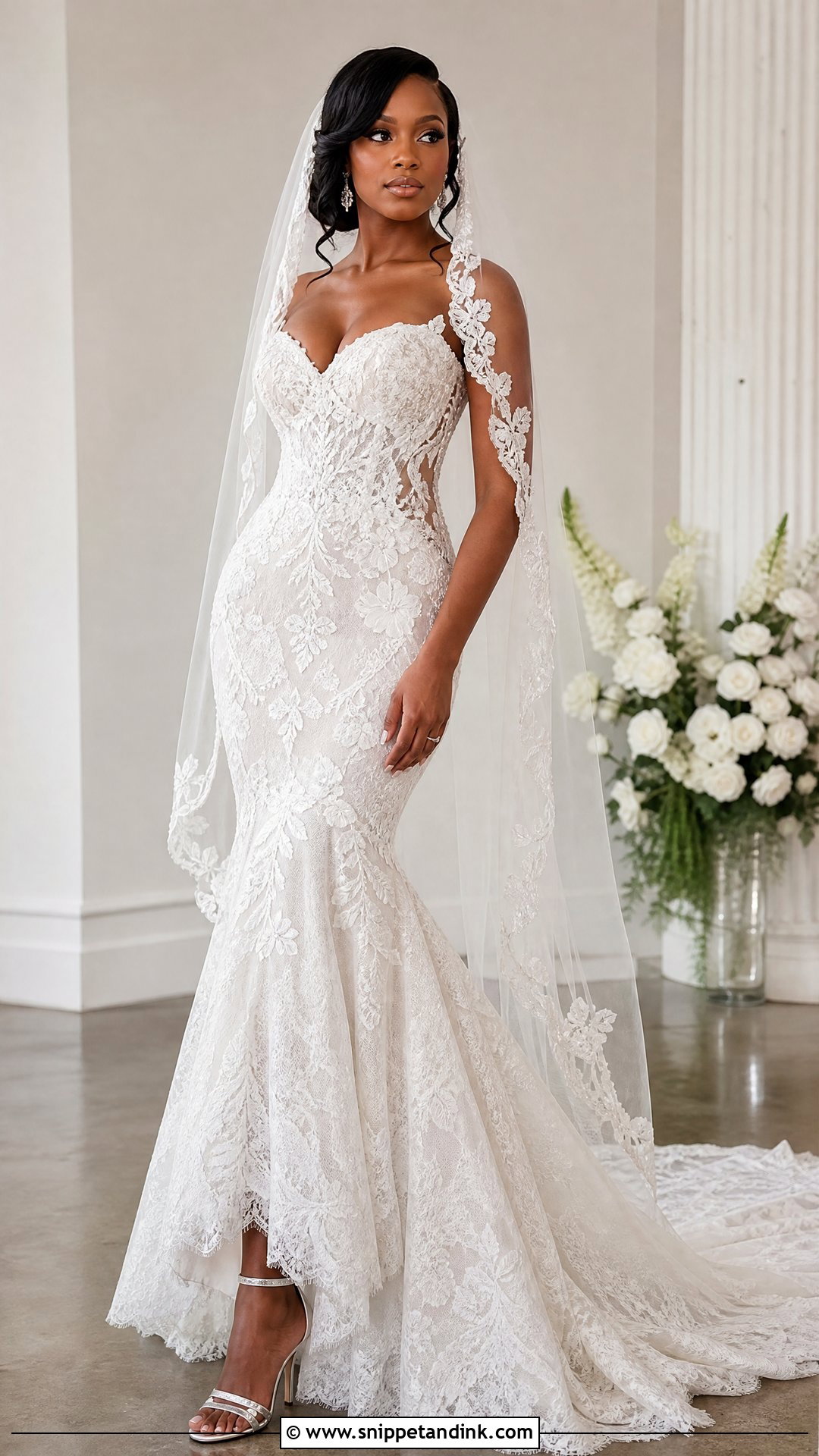
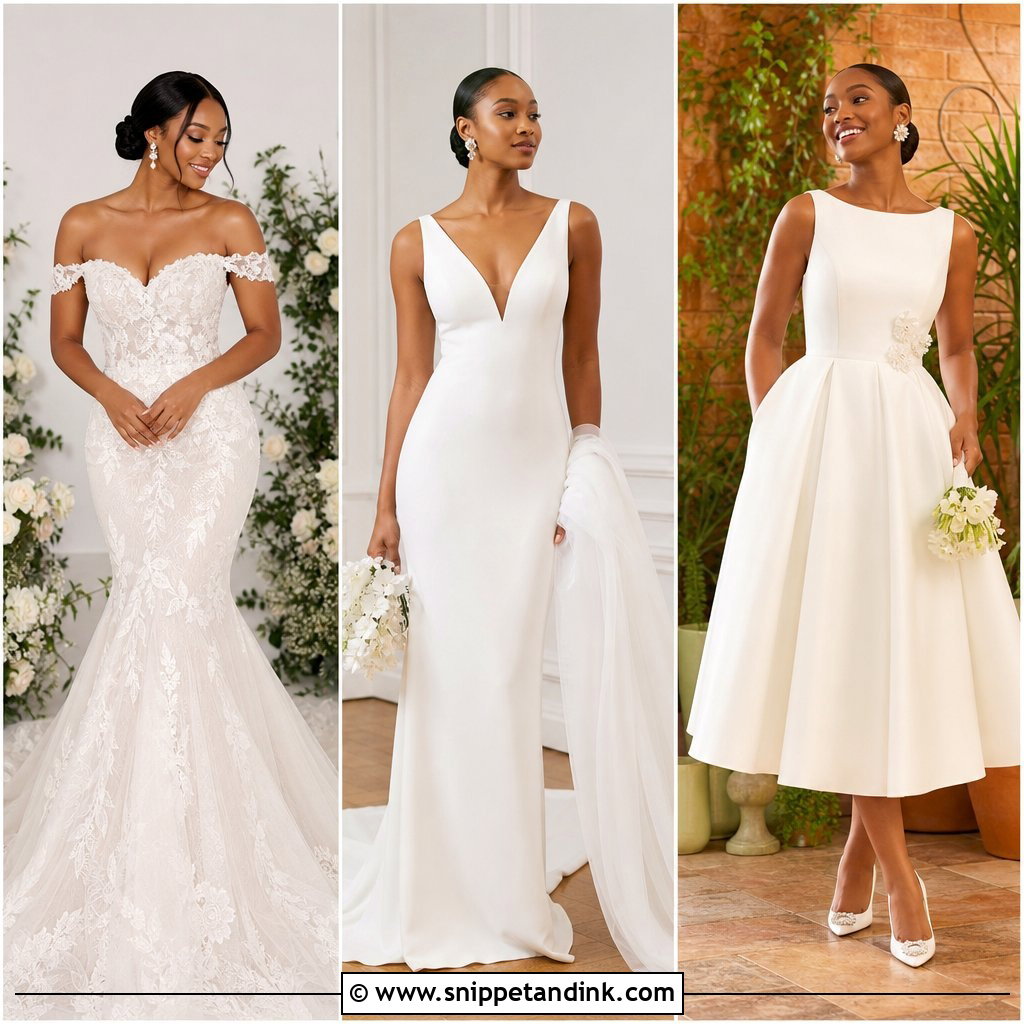
A lace mermaid wedding dress follows the body to the knee, then flares. It’s the shape I reach for when a bride wants to show her curves without anything stiff. Floral lace softens the line. The detail that makes or breaks it is the illusion mesh: if the neckline or back is sheer, the mesh needs to match your skin closely, or it reads as a pale panel in photos. Crystal drop earrings, strappy heels and a lace-edged veil complete it. Do a sitting test; mermaid skirts are tight at the knee.
3. Off Shoulder Wedding Dress
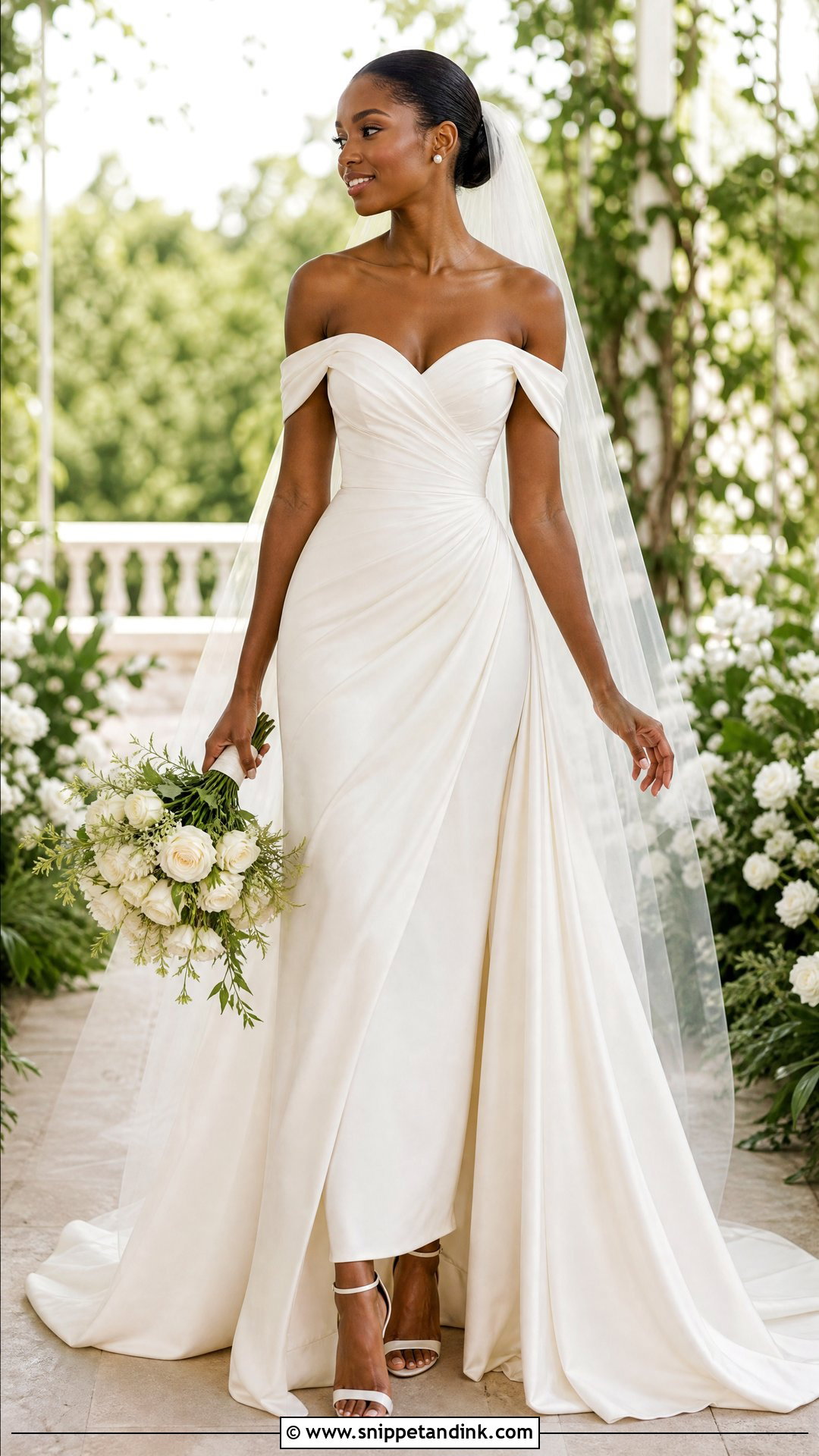
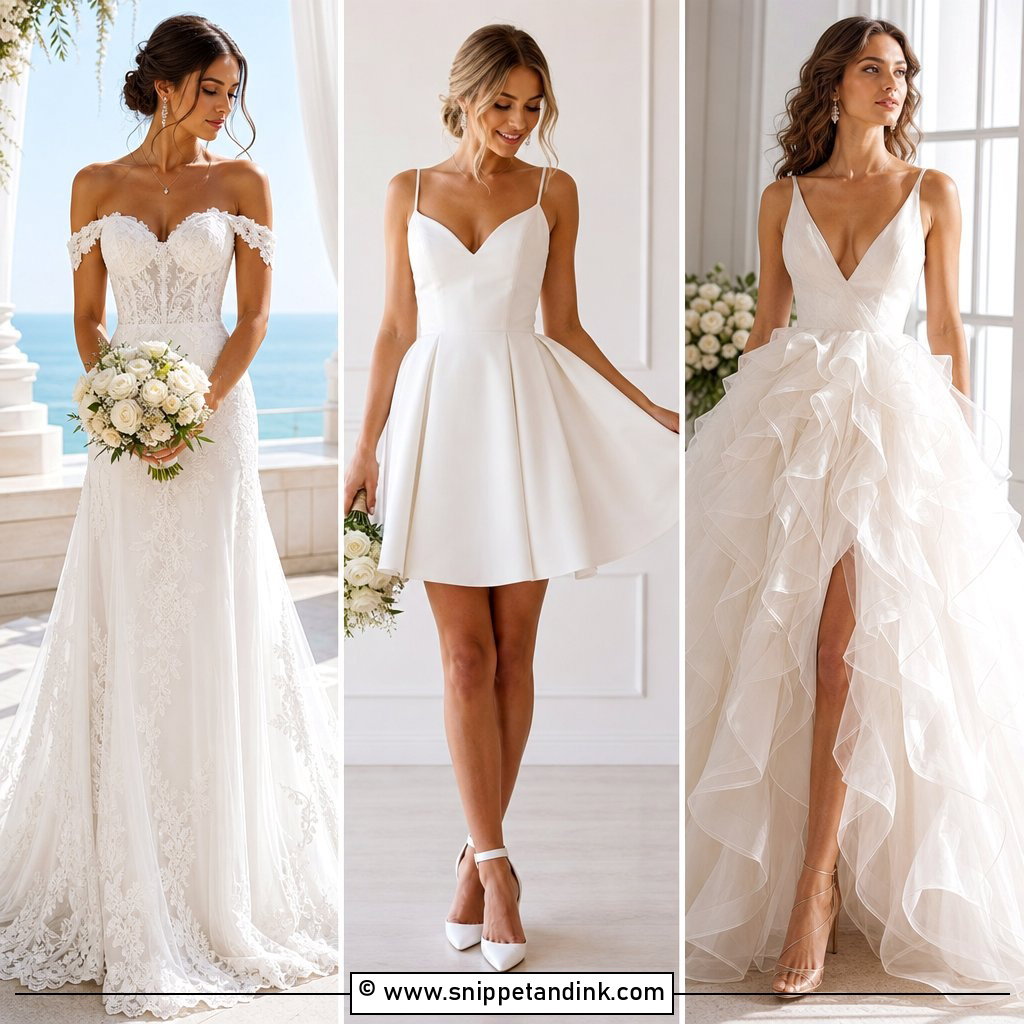
An off-shoulder neckline frames the collarbone and shoulders, and on deeper skin with a little body shimmer, that area catches light in a way photographers love. Satin, crepe, lace or mikado all hold it. A simple choker, pearl studs or small diamond earrings, a low updo so the neckline stays visible, a fingertip veil for balance. Block heels for comfort, pointed pumps for formality. My fitting check is always the grip band inside the bodice, because off-shoulder dresses ride up the moment you hug someone.
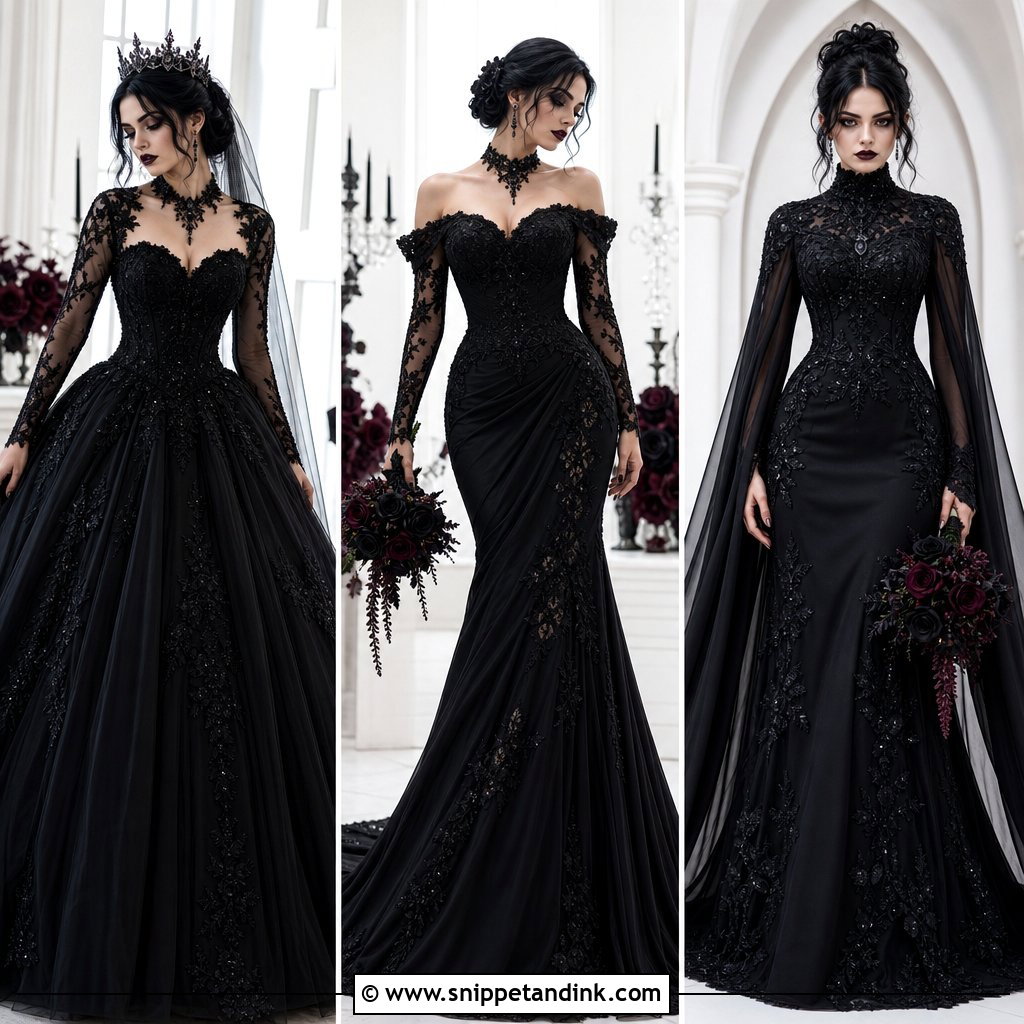
4. Black Lace Wedding Dress
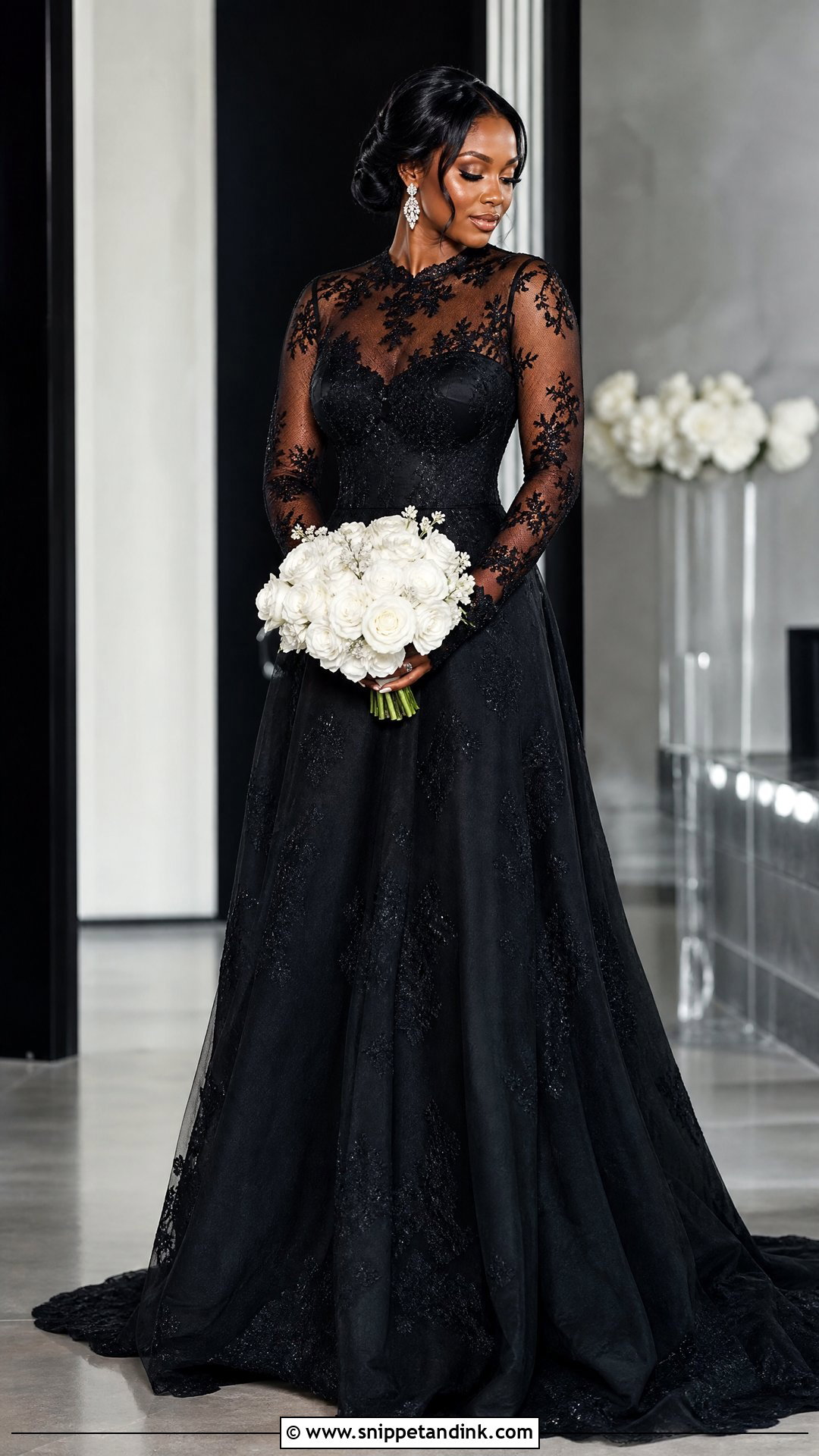
Black lace is the boldest option here, and I find it suits brides who already dress with confidence. Choose a fitted bodice, sheer sleeves or a full skirt with fine lace detail, and pair it with black satin heels, crystal earrings and a bouquet in white, cream or deep red. A black veil makes a dramatic entrance. On the face, I’d keep things luminous rather than dark: bronze or soft glam with highlight on the cheekbones, so the skin doesn’t disappear against black. Evening ceremonies and modern venues suit it best.
5. Champagne Wedding Dress
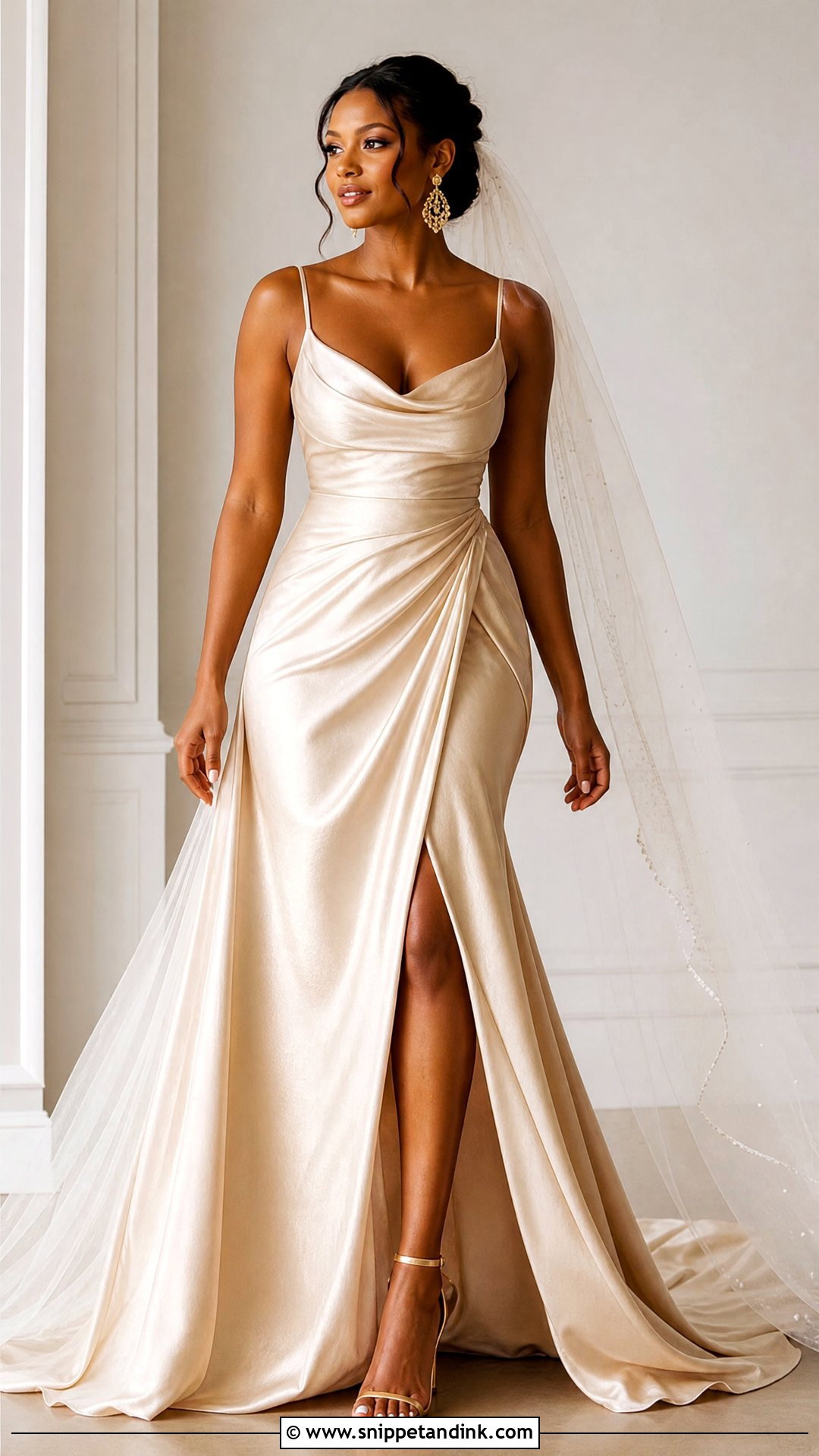
Champagne sits between ivory, gold and nude, and on many brown skin tones it gives a warmth bright white can’t. That said, champagne varies enormously, some lean pink, some grey, some gold, and the wrong one can make skin look ashy. I hold the swatch against the inner wrist and the face in daylight before ordering. Satin, tulle or beaded champagne depending on how much sparkle you want; gold earrings, metallic heels, a soft veil, bronze eyes and a glossy lip. Sunset weddings and ballrooms flatter it.
6. Long Sleeve Wedding Dress
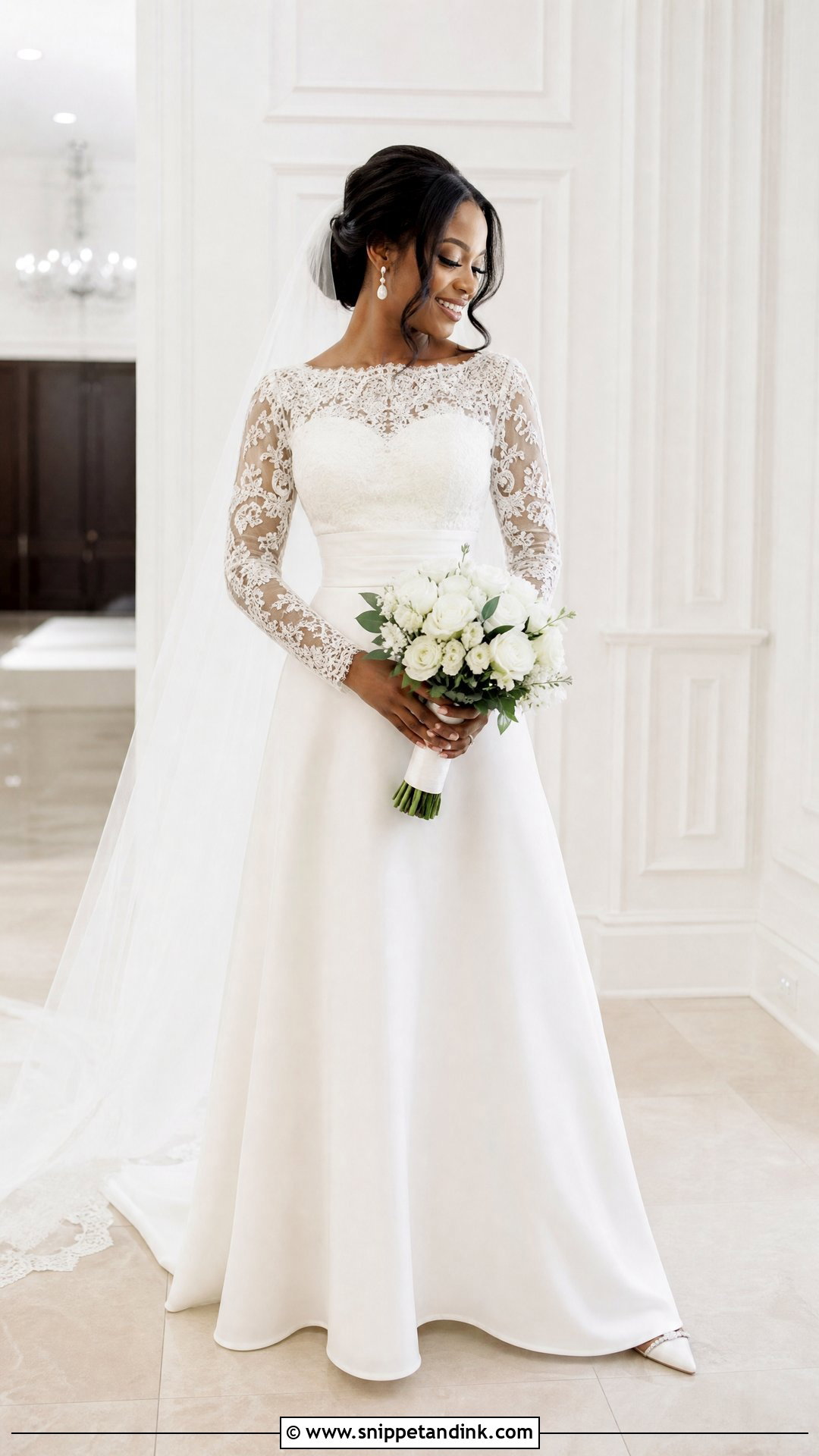
Long sleeves bring coverage and detail, and the fabric changes the mood: lace is romantic, satin formal, crepe modern, sheer mesh delicate. For Black brides, any sheer part of the sleeve needs illusion fabric close to your complexion; it’s the single most common fitting fix I request. Closed-toe heels, pearl earrings, a sleek veil, and a middle-part bun or soft curls. Make sure you can raise your arms fully at the fitting. Cooler seasons and formal weddings suit it.
7. Simple Crepe Wedding Dress
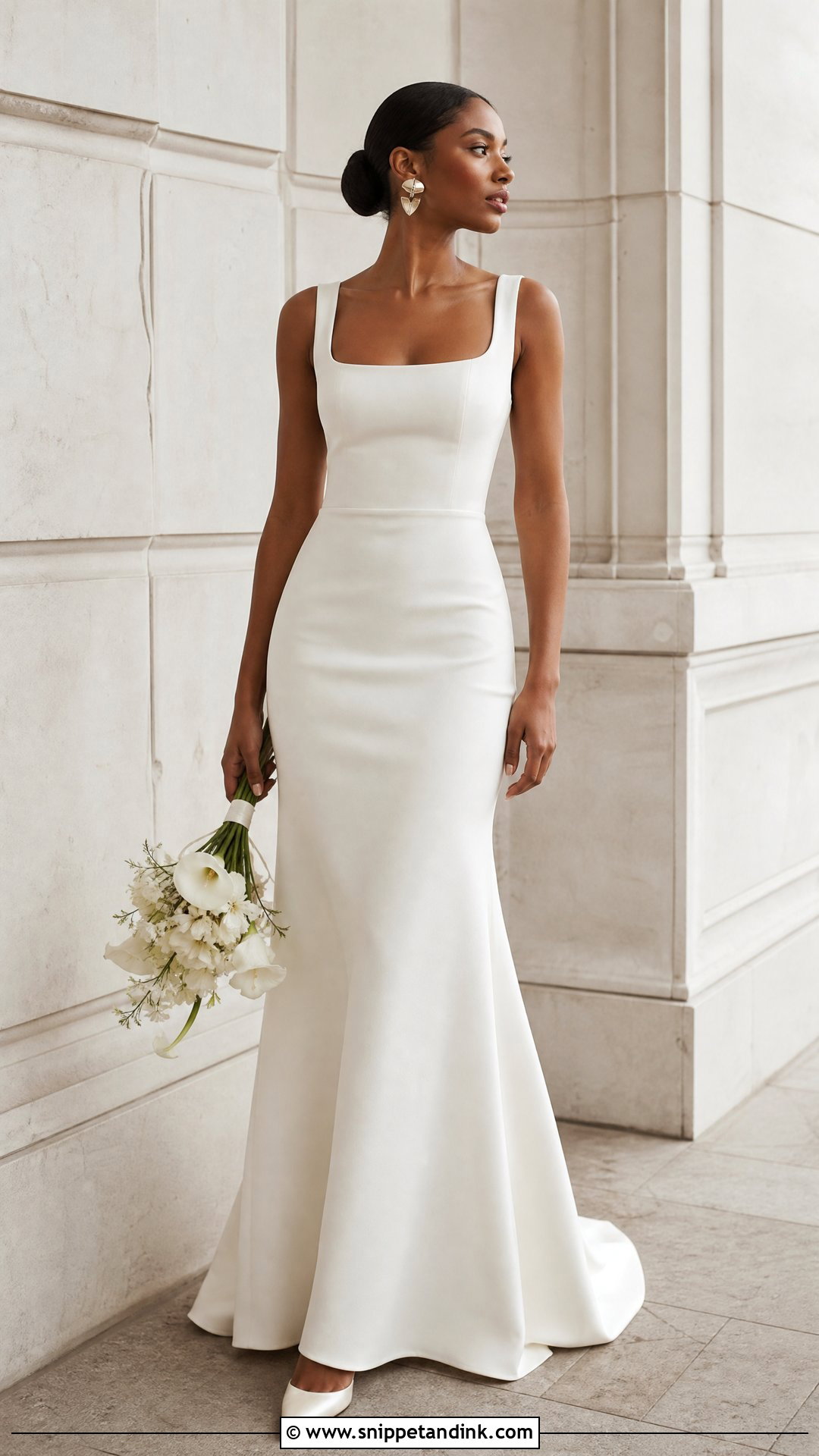
Crepe has very little shine and a lot of weight, so it skims the body and makes clean lines look deliberate. A square, bateau or deep V neckline keeps it fresh. Sculptural earrings, a neat bun, pointed heels and a simple bouquet. Because nothing hides a poor fit, I schedule an extra fitting for crepe gowns and pay close attention to the hem, waist and bust. Courthouse weddings, city venues and rooftops suit it. Crepe also creases less than satin, which helps on a long day.
8. Beaded Wedding Dress
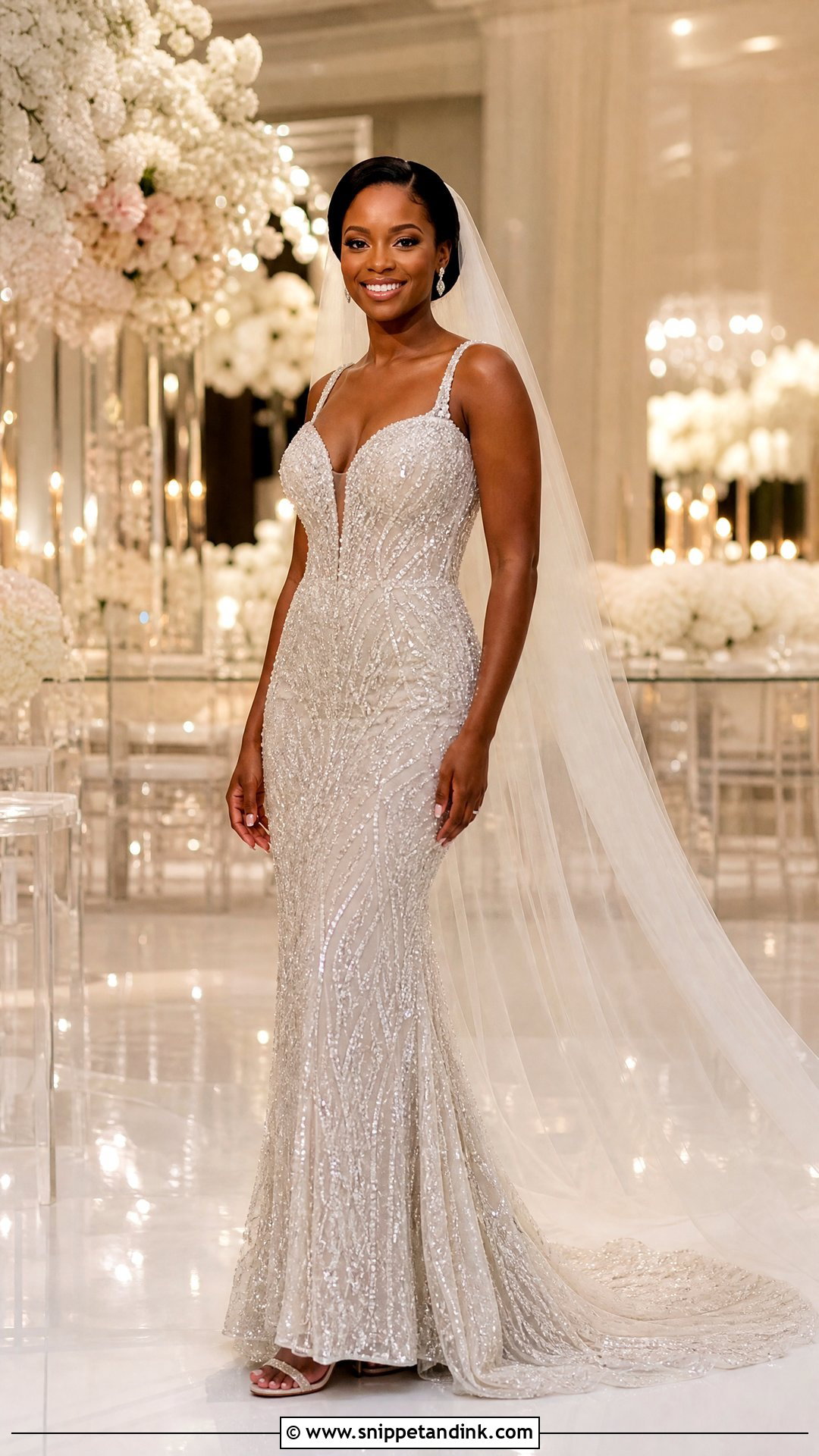
Beadwork catches light from every angle. It can be subtle and scattered or cover the whole gown. On deeper skin, silver, pearl, crystal and gold beading all stand out clearly; the choice depends on your undertone, warm skins often glow next to gold, cooler ones next to silver. Keep the rest quiet: clean heels, small earrings, a soft veil or none, sleek hair. Heavily beaded gowns get heavy, so walk and sit in it before you commit. Evening receptions and grand venues bring out the shine.
9. A Line Wedding Dress
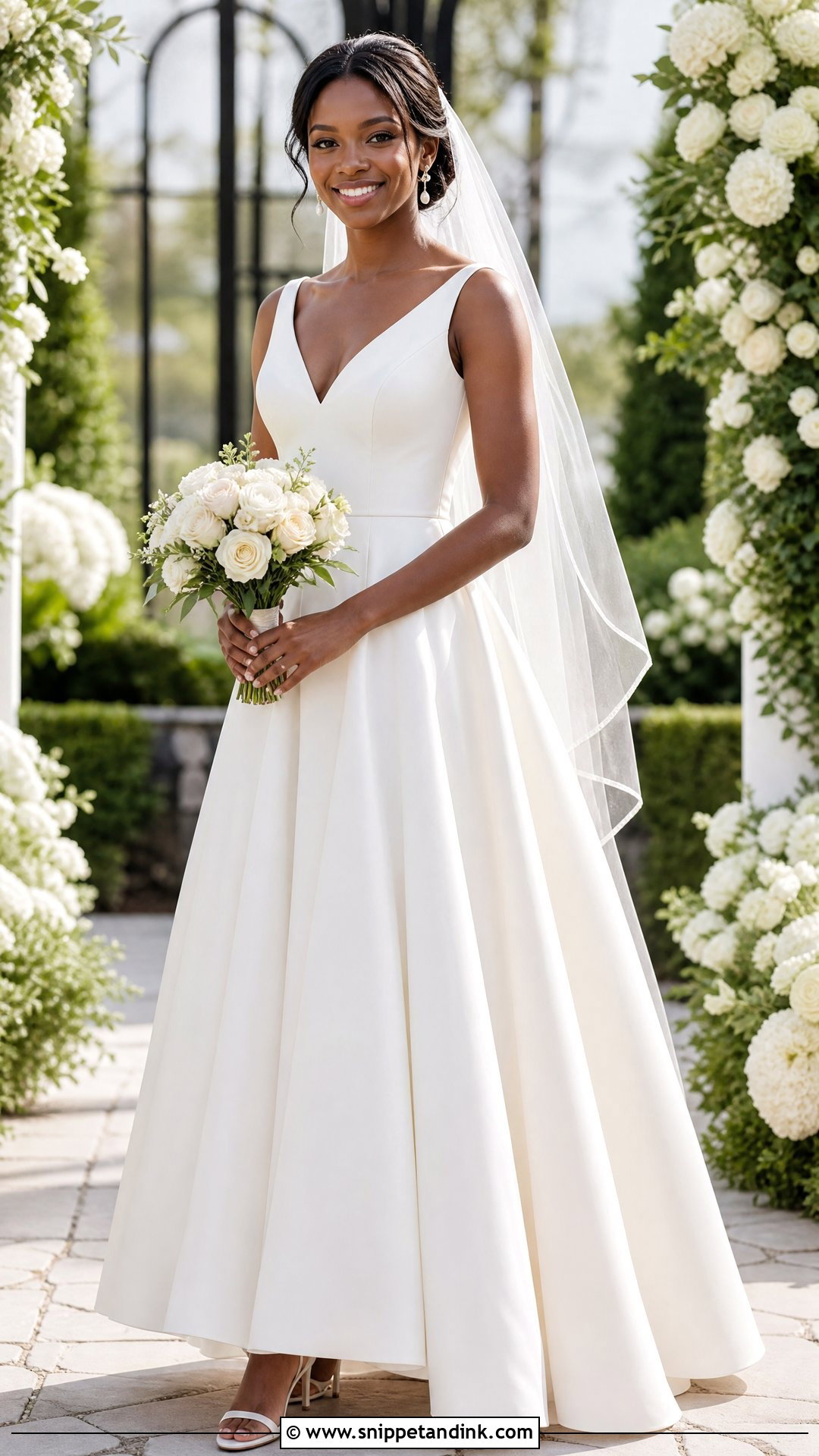
The A-line fits through the bodice and widens from the waist, which balances most figures without the weight of a full ball gown. It works in satin, tulle, organza, lace or mikado. A fingertip veil, pearl drop earrings and comfortable heels in the dress tone. Natural curls and soft glam make it personal. It’s the dress I suggest when a bride can’t decide, because it suits almost every venue from a garden to a formal hall, and it’s the easiest to alter.
10. Sheer Sleeve Wedding Dress
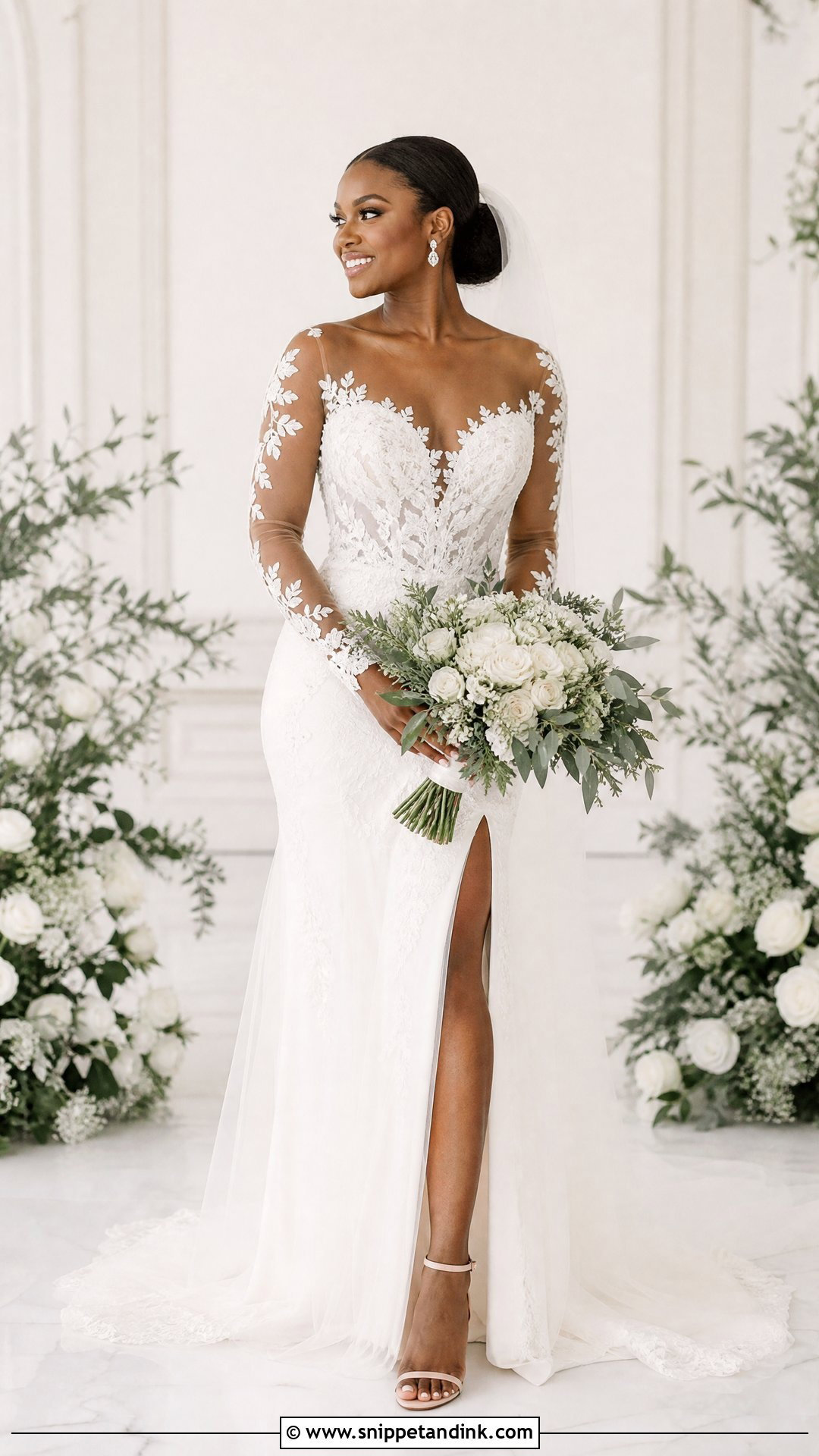
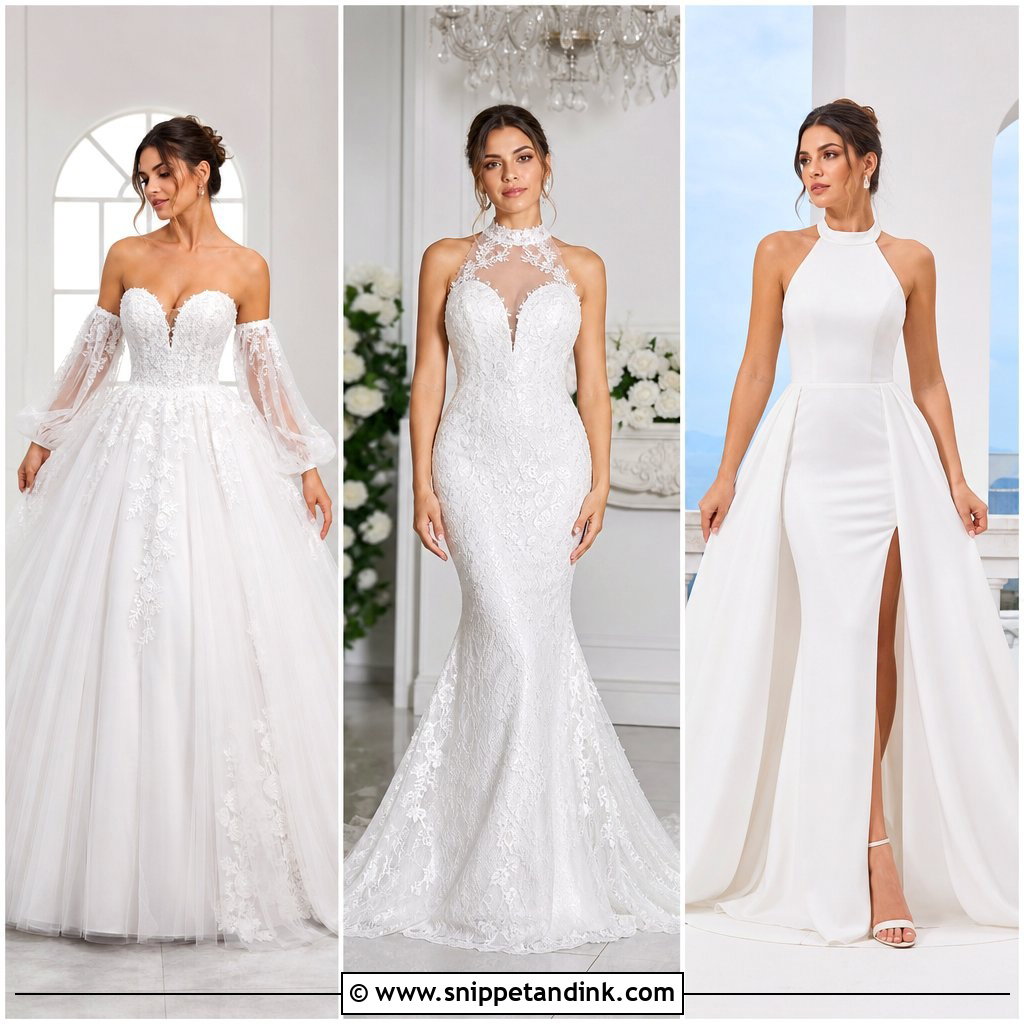
Sheer sleeves give coverage that still feels light, finished with lace appliqué, beads, pearls or plain mesh. The success of this dress depends on the mesh colour. Standard bridal illusion is often made in pale shades, and on deeper skin it shows up as a grey or beige film. Ask the designer or your tailor for deeper illusion shades or a custom lining, and request a swatch before they cut. Soft earrings, a clean veil and shoes matching the gown finish it.
11. Pearl Wedding Dress
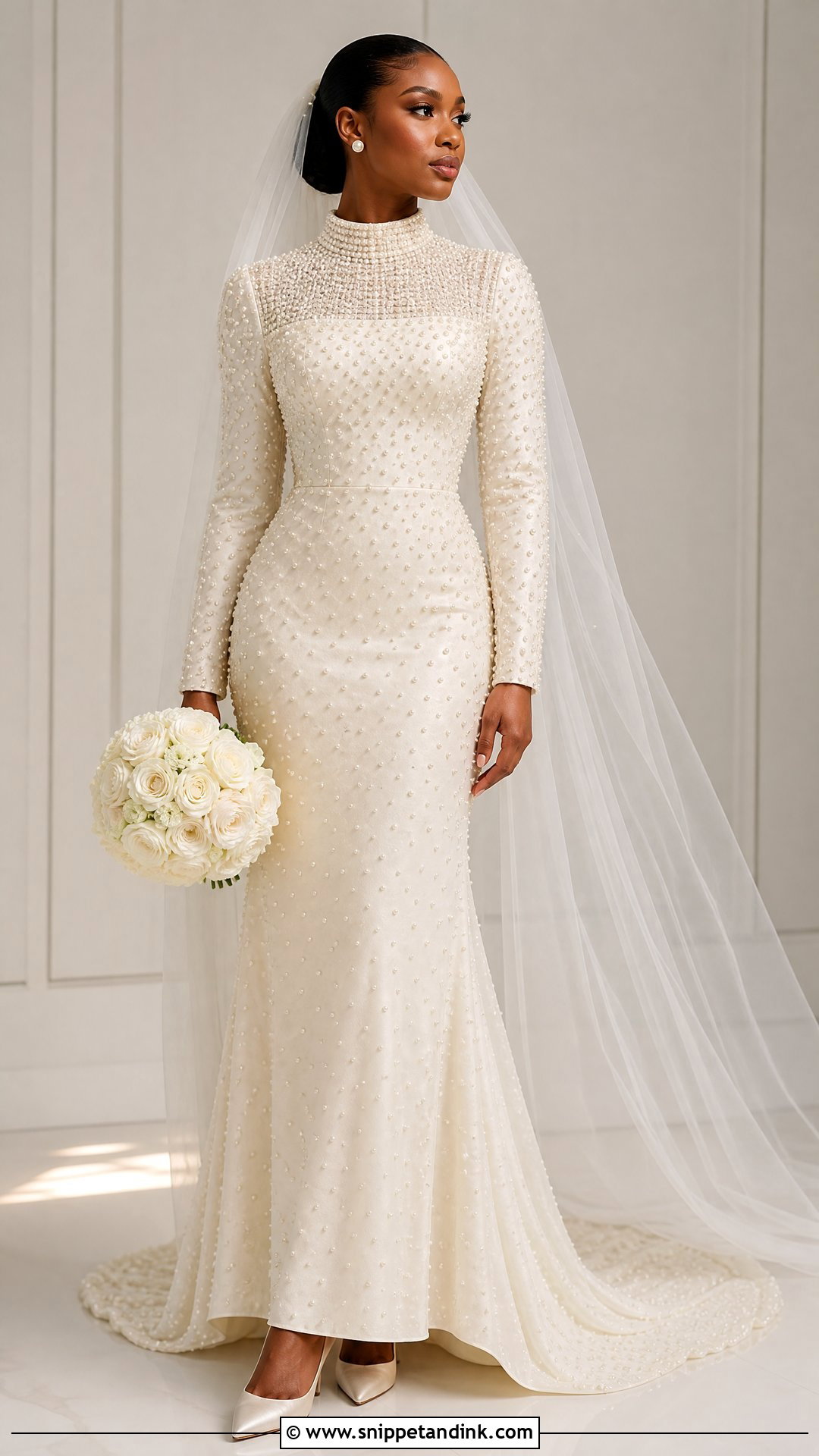
Pearls give a gown texture without harsh sparkle, across the bodice, sleeves, veil or skirt. They look good in close-up portraits and full-length shots alike. If the dress is heavily pearled, skip the necklace; pearl studs, satin pumps and a smooth veil are enough. A soft bun or polished ponytail keeps it modern. Ask how the pearls are attached: glued pearls can pop off during dancing, while hand-sewn ones hold, which is worth knowing before you pay for a heavily pearled gown.
12. Strapless Wedding Dress
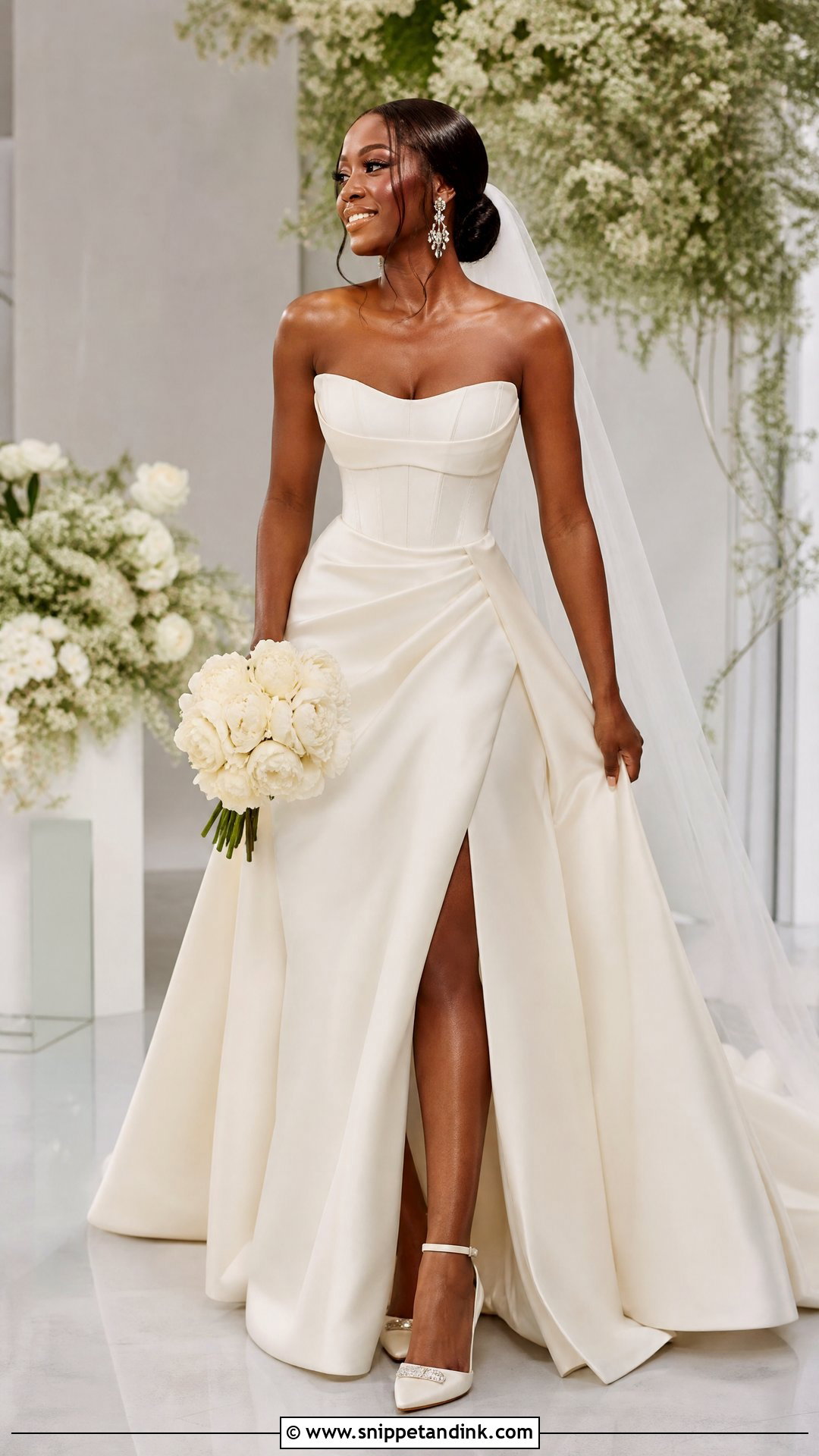
Strapless gowns put the focus on shoulders, neckline and face. Satin makes it glamorous, lace romantic, crepe modern. Support is everything: the bodice should hold without you hitching it up, and I test that by having the bride sit, walk and dance in the fitting room. Statement earrings, a smooth veil and elegant heels. A necklace can work, but most brides I dress look cleaner with the neckline left open. Warm-weather weddings and formal receptions suit it.
13. High Neck Wedding Dress
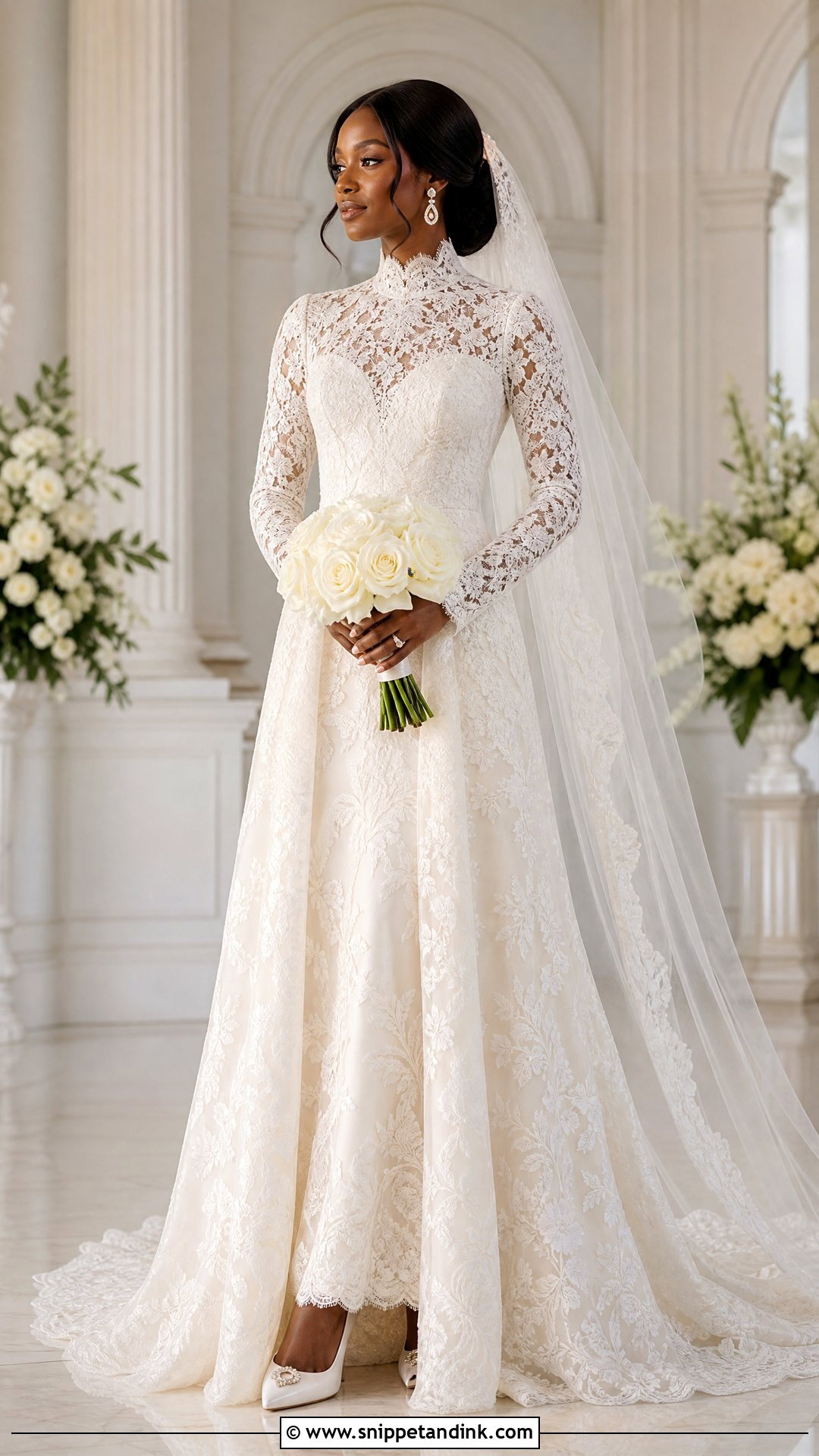
A high neck looks refined and fashion-led, especially balanced by an open back, a fitted waist or a flowing skirt. Lace versions are romantic; satin and crepe look sleek. With the neck covered, earrings take over: studs, drops or small hoops depending on the dress. A low bun, braided updo or sleek ponytail keeps the face open, which matters since a high neck can feel closed in photos otherwise. Pointed heels and a long veil complete a modest but very stylish look.
14. Two Piece Wedding Dress
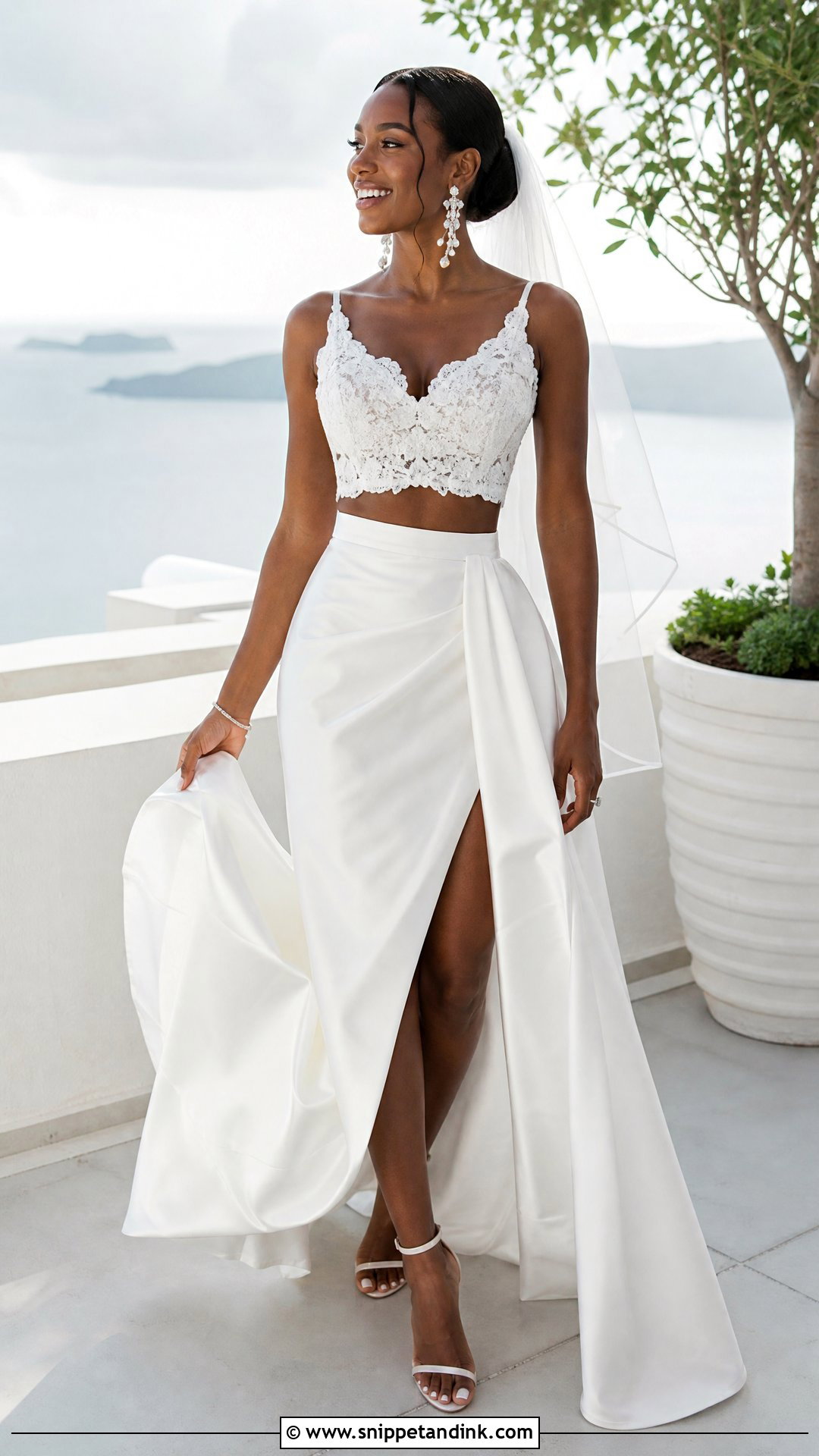
Two-piece bridal gives you more room to play with texture and proportion: a cropped lace top over a full skirt, a structured bodice with satin, or a long-sleeve top with a flowing bottom. The small band of skin between the pieces can look striking, but the join must look intentional, so I fit the top and skirt together, never separately. Statement earrings, strappy heels, a soft veil. Beach weddings, rooftops and destination celebrations suit it.

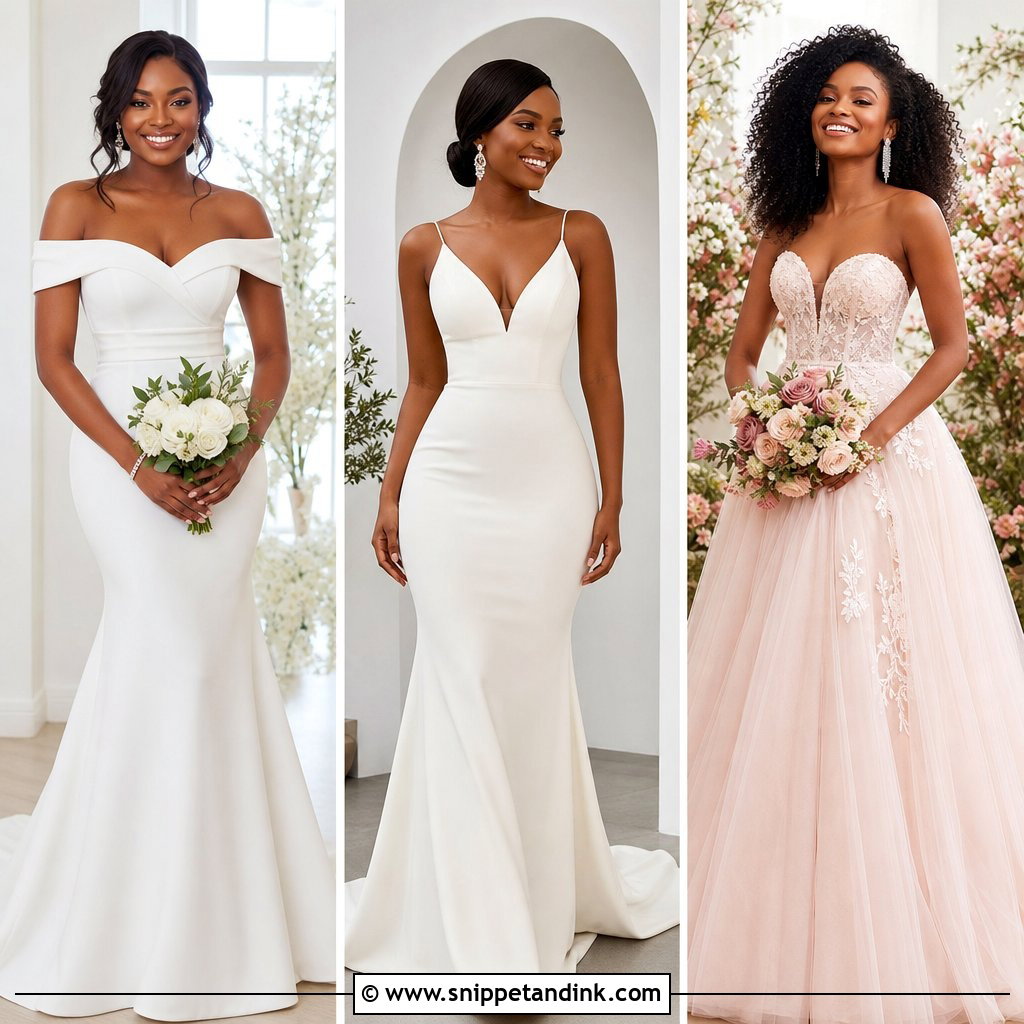

15. Wedding Dress With Cape
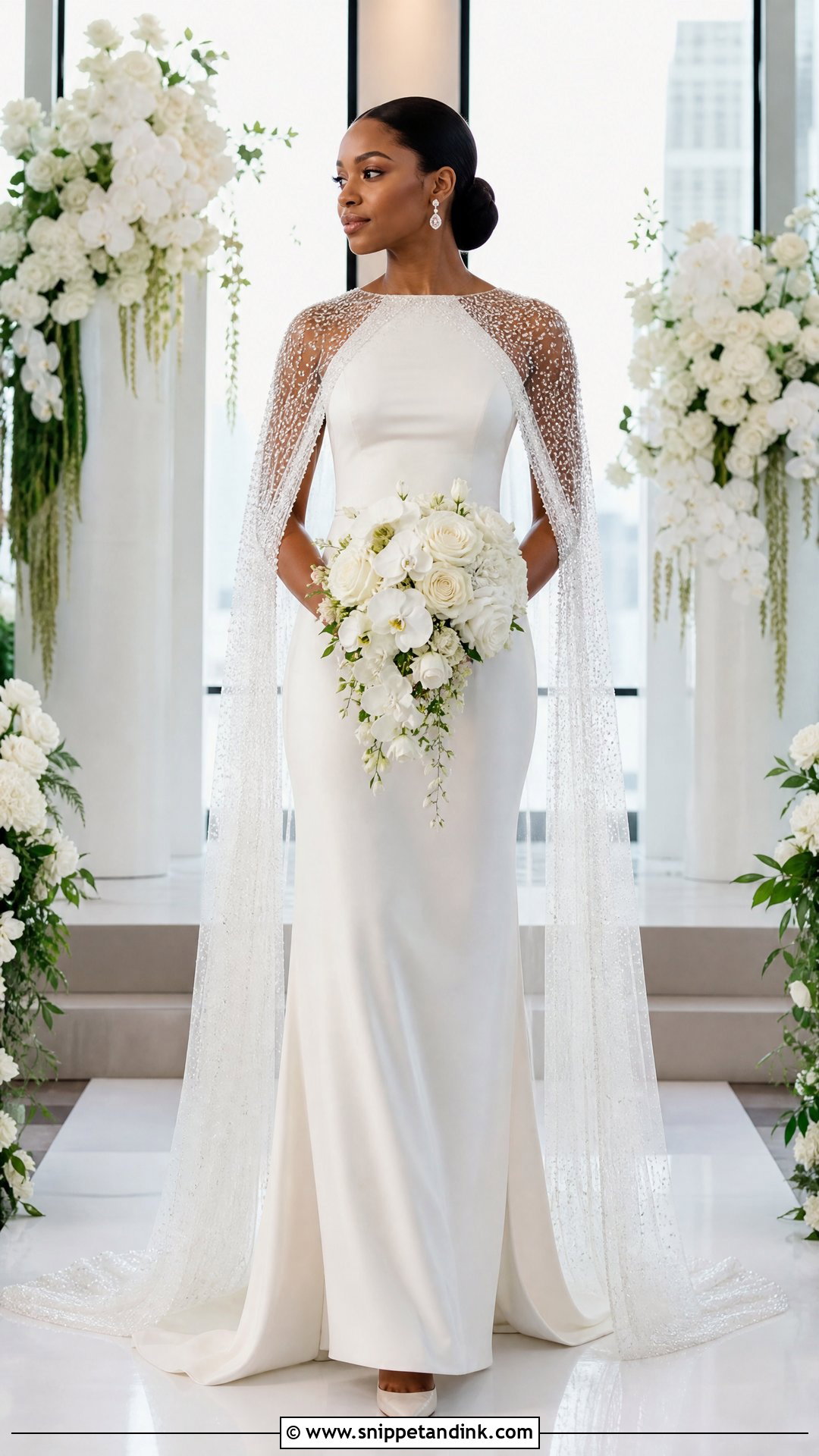
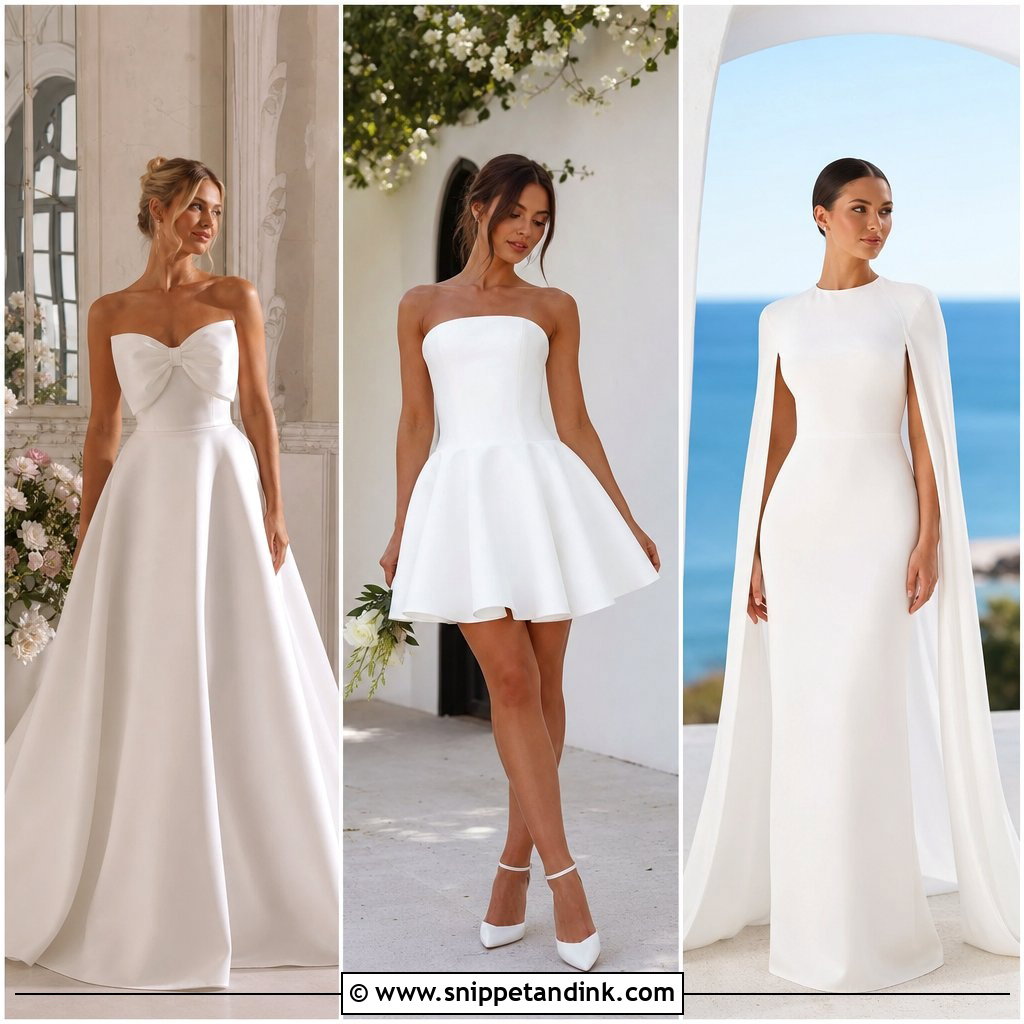
A cape replaces the veil with something that moves. It can be sheer, beaded, lace-trimmed or smooth crepe, and it creates a strong aisle moment and great portraits in wind. Keep the gown underneath simple so the look doesn’t get heavy. Clean earrings, sleek heels and a structured bouquet. Brides who want shoulder or arm coverage without sleeves often love it. Check how the cape attaches; a cape clipped only at the shoulders will drag the neckline back as you walk.
16. Wedding Jumpsuit
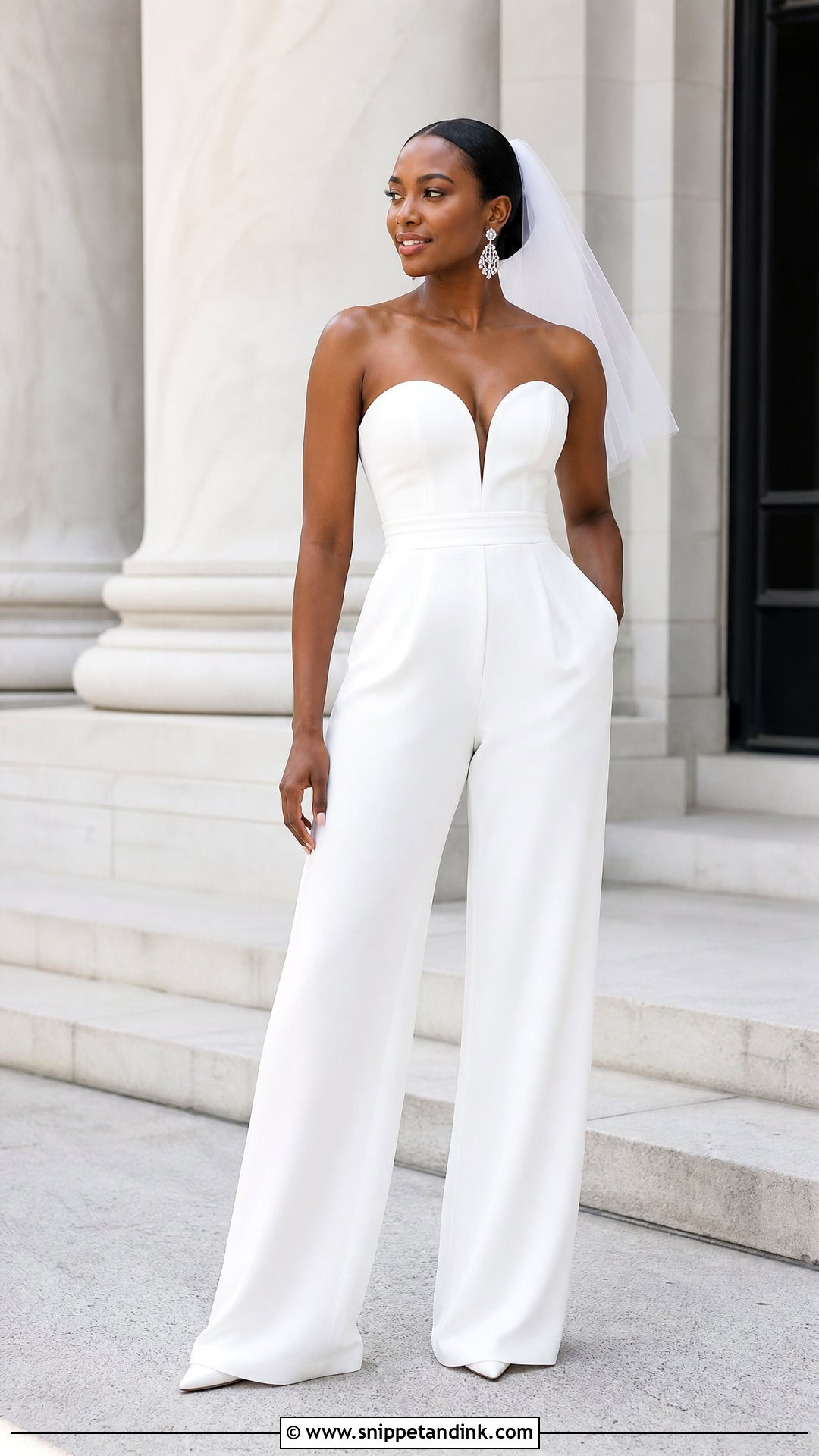
A jumpsuit gives comfort and movement for courthouse weddings, receptions, after-parties and intimate ceremonies. White, ivory or champagne with wide legs, a fitted waist and a structured bodice reads clearly as bridal. Pointed heels, statement earrings and a short veil or bridal headband make it special; a blazer or cape adds polish for the ceremony and comes off later. Hem the legs to the exact shoes you’ll wear, as wide legs that are too short look cropped and too long trip you.
17. Plus Size Wedding Dress
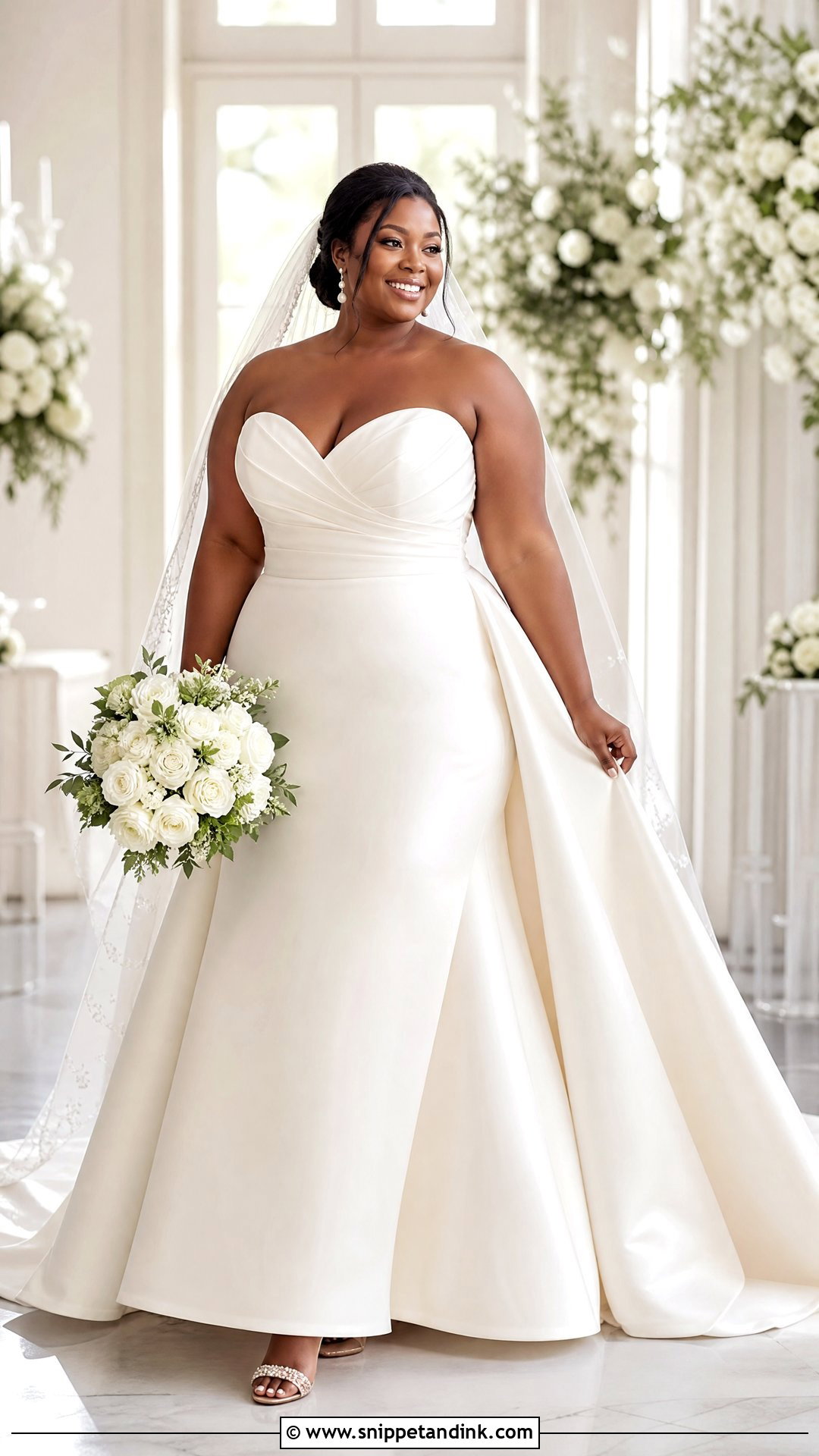
A plus size wedding dress should be built for your body, not designed to hide it. A structured A-line, corset bodice, fit-and-flare or soft ball gown can all work. What I focus on is construction: boning that supports without digging, fabric with some movement, and an undergarment plan settled before the first fitting. A sweetheart, off-shoulder or V neckline balances the figure and lifts attention to the face. Comfortable heels, a veil and jewellery that matches the dress detail complete it. You should be able to stand, walk and celebrate without adjusting.
18. Short Wedding Dress
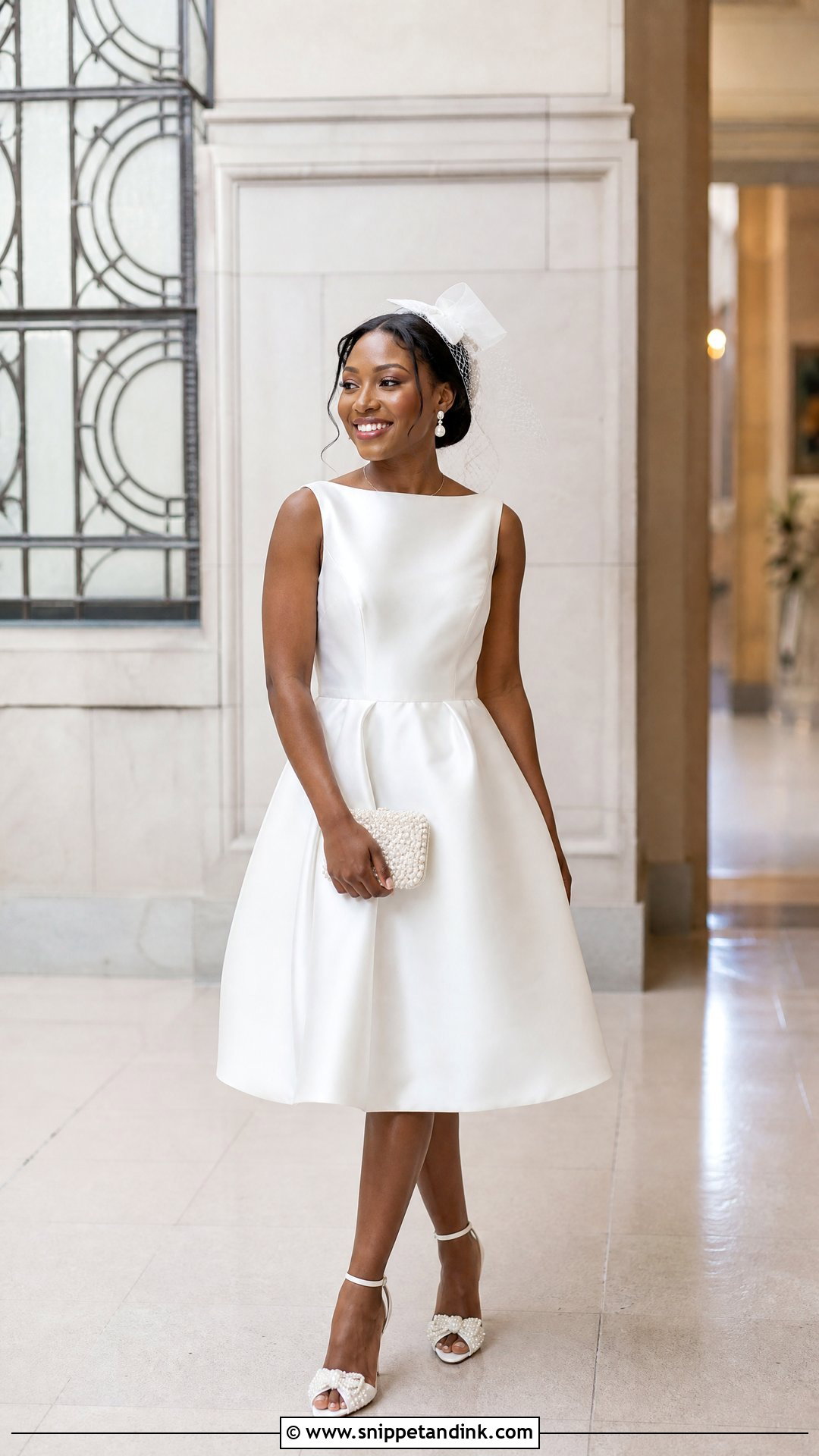
Short dresses suit courthouse ceremonies, reception changes, civil weddings and warm-weather celebrations. A mini, midi, or tea-length dress chosen for the formality of the day, statement heels, pearl earrings and a structured clutch. A birdcage veil, bow veil or sleek headband makes it read as bridal. Crisp white against deep skin is a striking contrast. Since the legs show, shoes and a good body moisturiser matter as much as the dress.
19. Tulle Wedding Dress
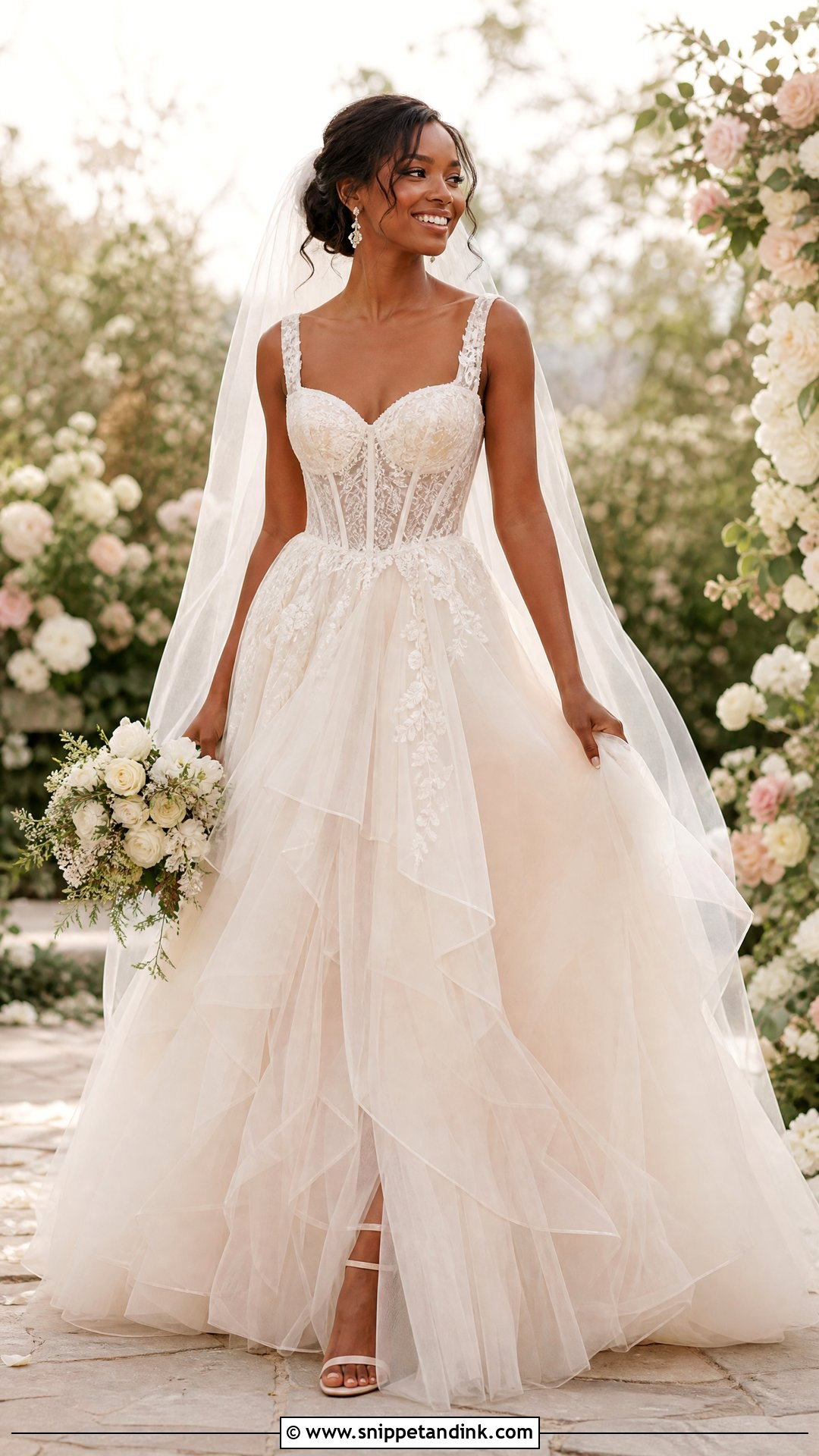
Tulle gives softness and volume, light and airy or layered for drama. A corset bodice, sweetheart neckline or floral appliqués keep it from feeling too sweet. Delicate earrings, soft heels and a veil that doesn’t fight the skirt. A natural hairstyle, soft waves or a loose updo all suit it, and textured hair against tulle looks lovely in photos. Tulle catches movement outdoors but snags on rough ground and jewellery clasps, so I keep bracelets simple.


20. Halter Wedding Dress
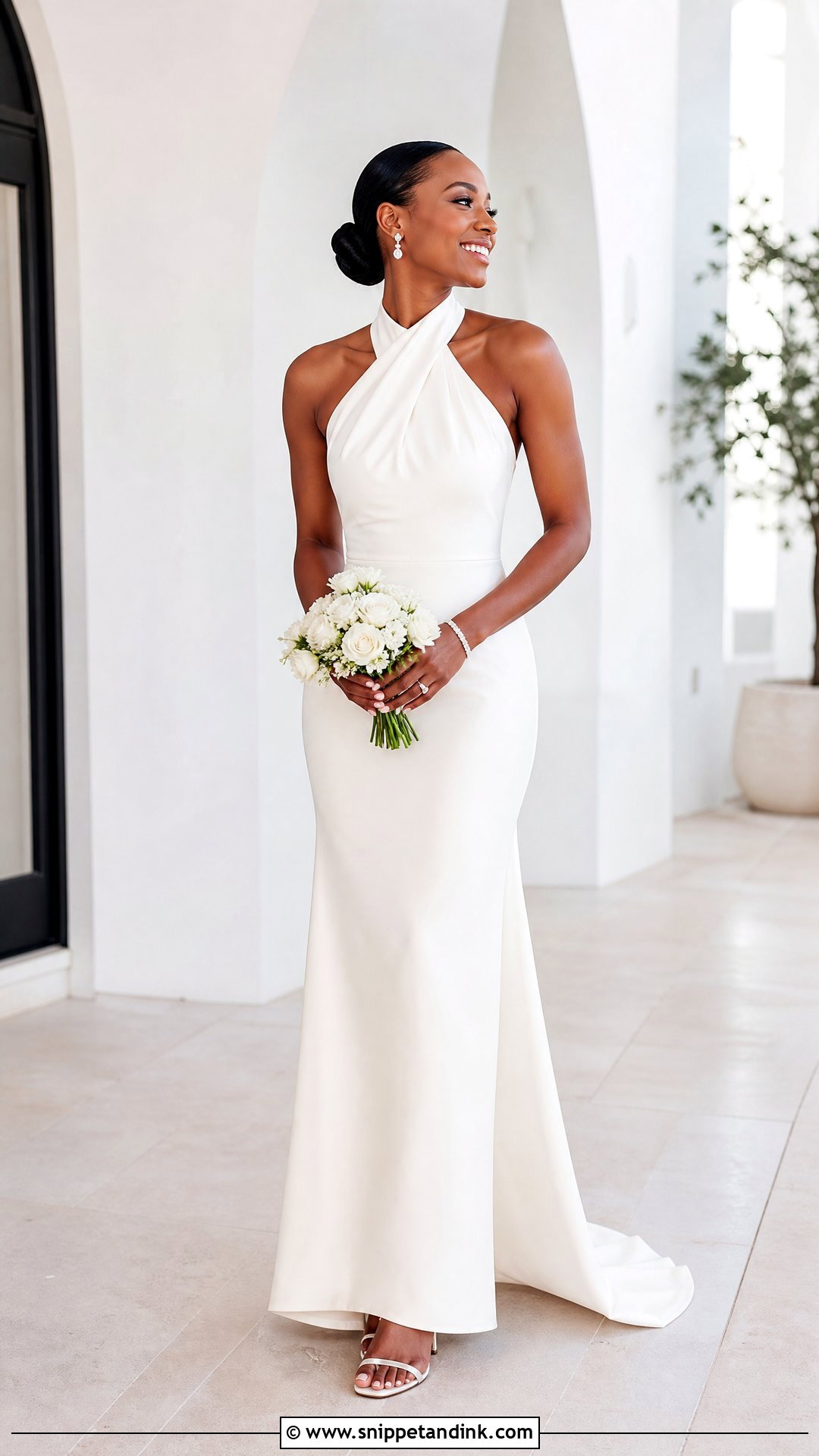
A halter frames the shoulders and pushes attention to the face. Satin makes it sleek, crepe relaxed, beading glamorous. It gives real support through the neckline, which brides with a fuller bust often appreciate. Skip the necklace; choose earrings. A low bun, sculpted ponytail or short natural cut keeps it clean. Slim heels, a simple bracelet and a small bouquet. Summer weddings and modern venues suit it.
21. Floral Applique Wedding Dress
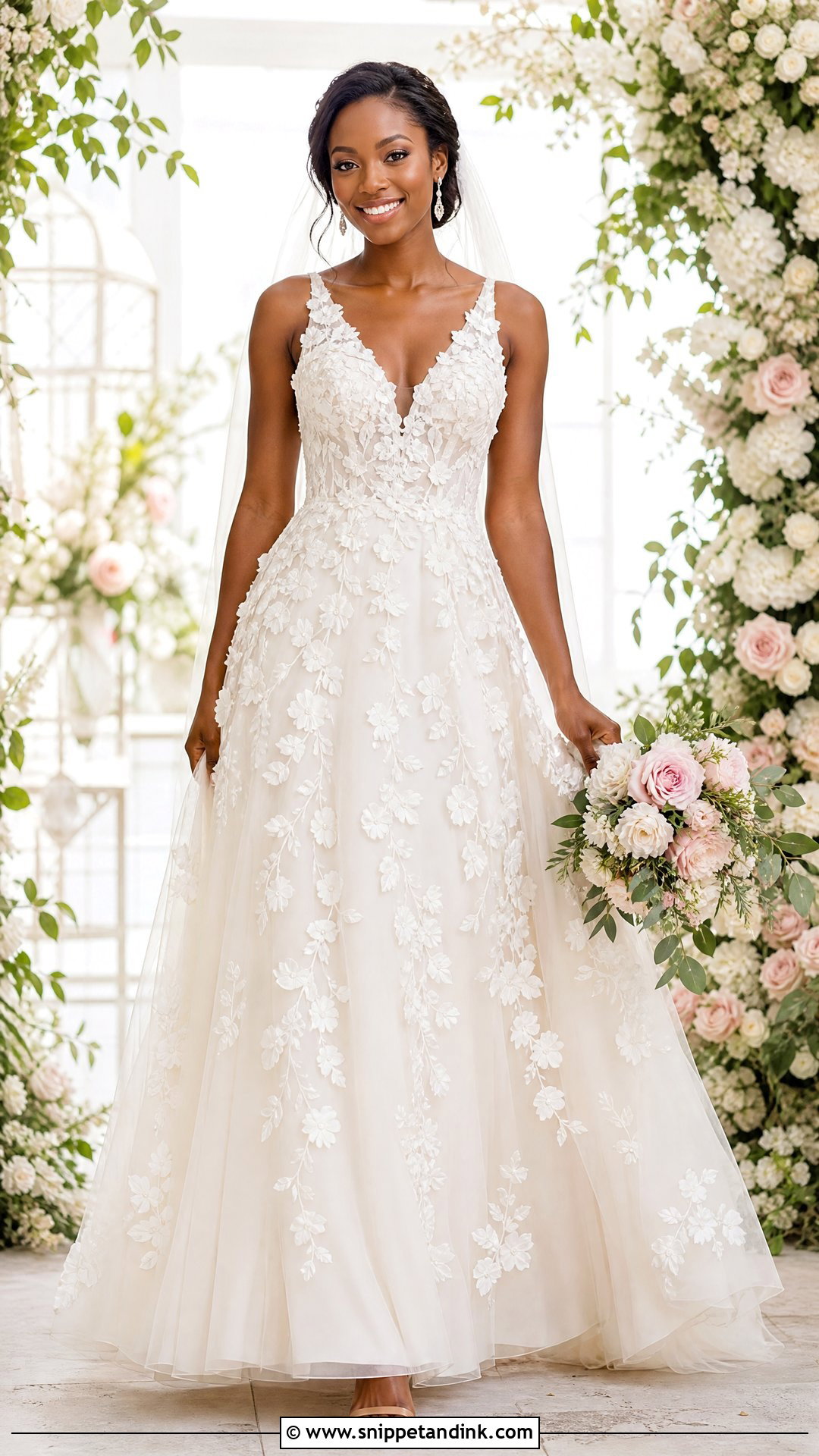
Dimensional flowers give a gown texture without relying on sparkle, across the bodice, sleeves, skirt or train. The colour of the appliqués matters as much as their shape: ivory, blush, champagne or soft white, chosen against your undertone, because a blush that looks fresh on the hanger can turn chalky against deeper skin. Delicate earrings, neutral heels and a simple veil keep the flowers as the focus. A bouquet with similar flower shapes ties it together for spring and garden weddings.
22. Corset Wedding Dress
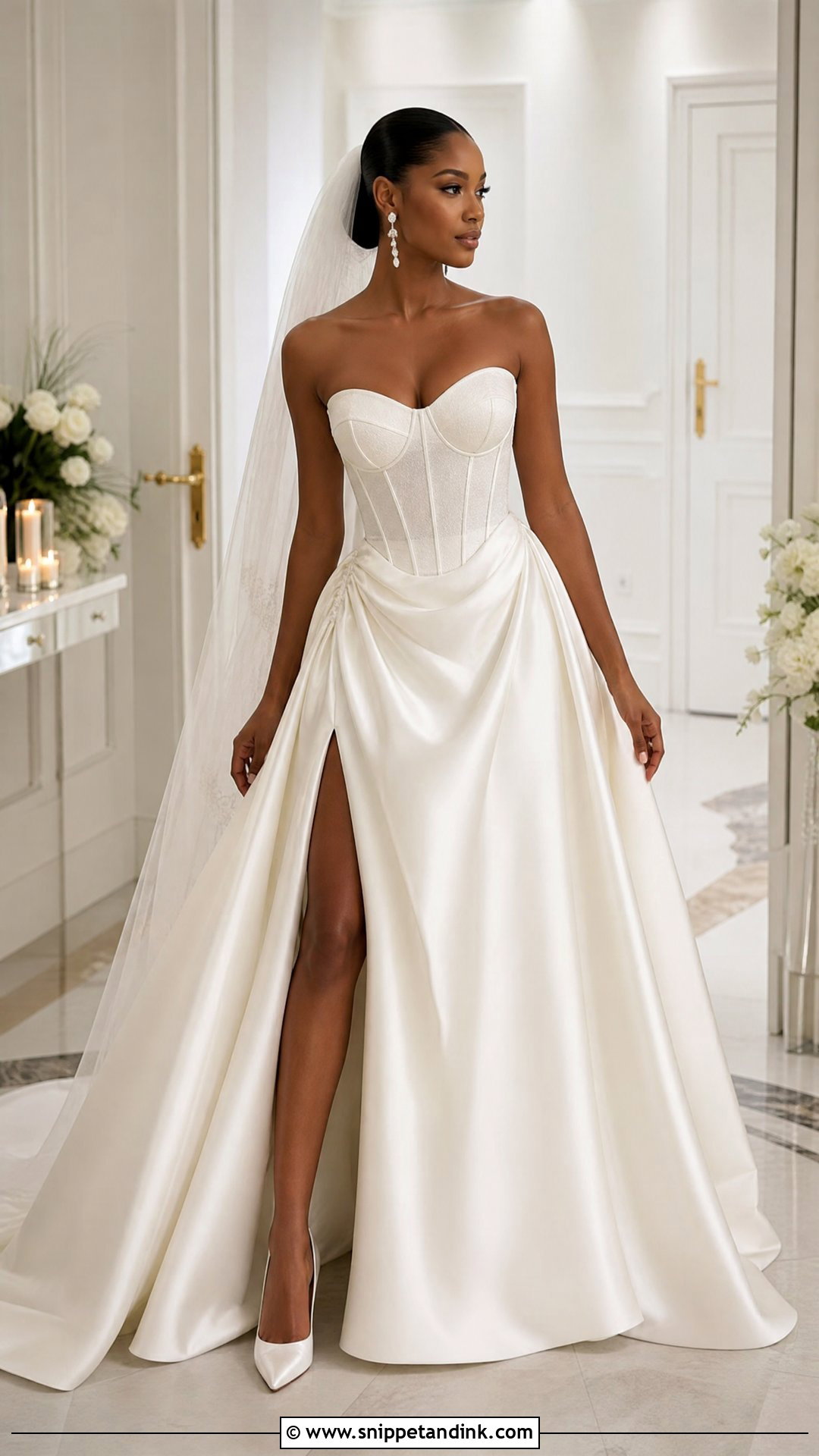
A corset wedding dress gives structure and a defined waist. Over a full satin skirt it feels regal; with lace or tulle it softens. Fit is personal here: the bodice should support without pinching, and I always ask brides to sit down and breathe deeply at the fitting, since a corset that feels fine standing can dig in when seated. Drop earrings, pointed heels and a veil in the gown’s mood, with soft glam and sculpted hair. It feels custom even off the rack.
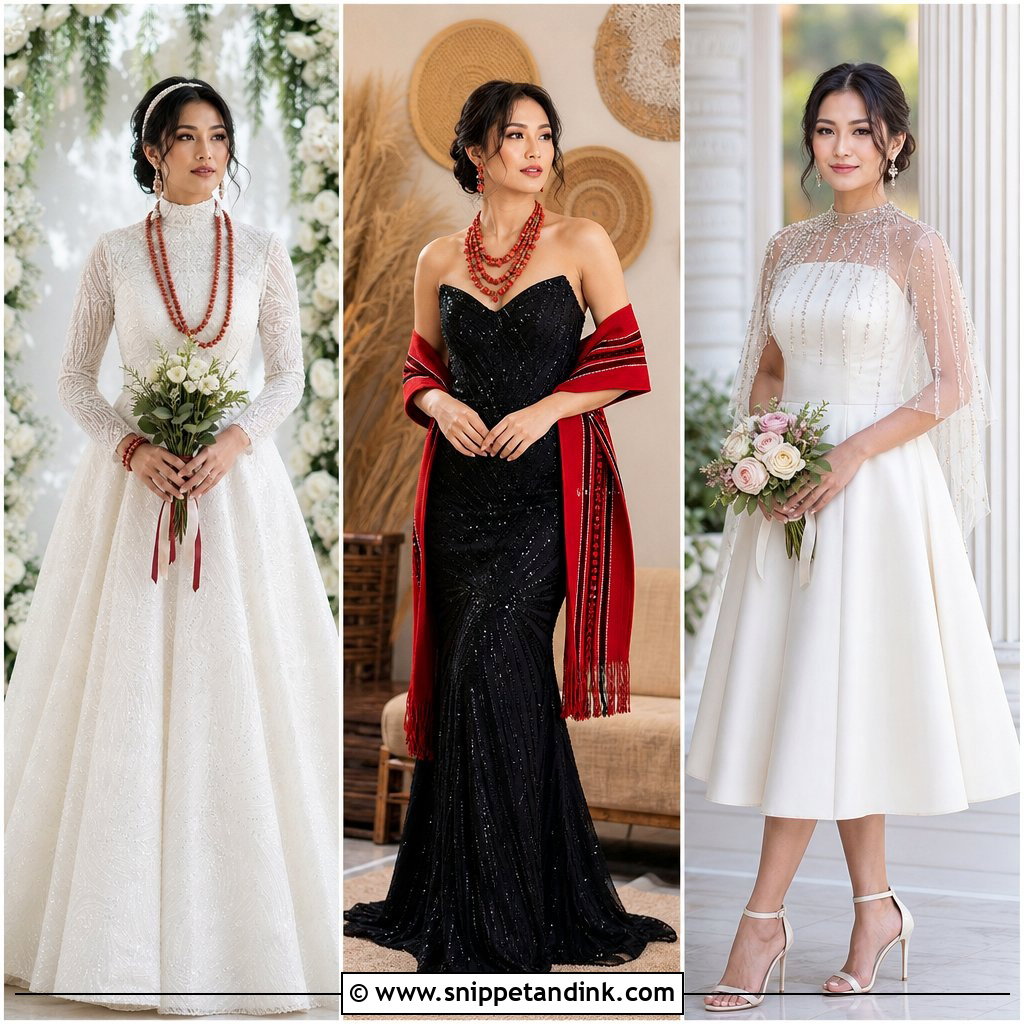
23. Black And White Wedding Dress
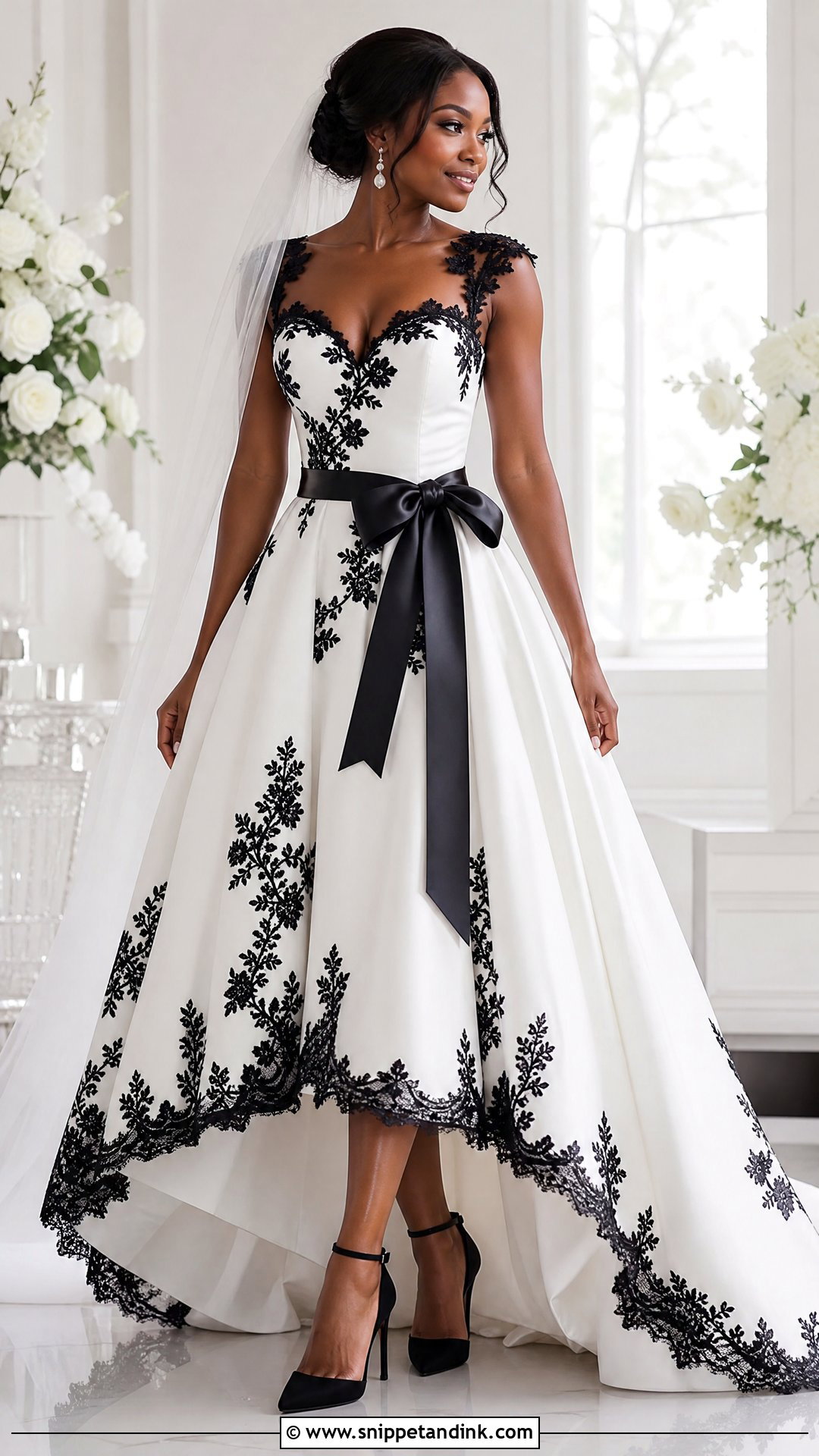
Black and white keeps a traditional base while adding contrast: a white bodice with a black bow, a black lace overlay, a black sash, or black floral details on a white skirt. Keep accessories simple so the contrast looks planned. Black heels, pearl earrings and a white bouquet tie it together; a white or ivory veil softens it. Modern weddings and evening ceremonies suit it, for a bride who wants something artistic without going fully black.
24. Reception Wedding Dress
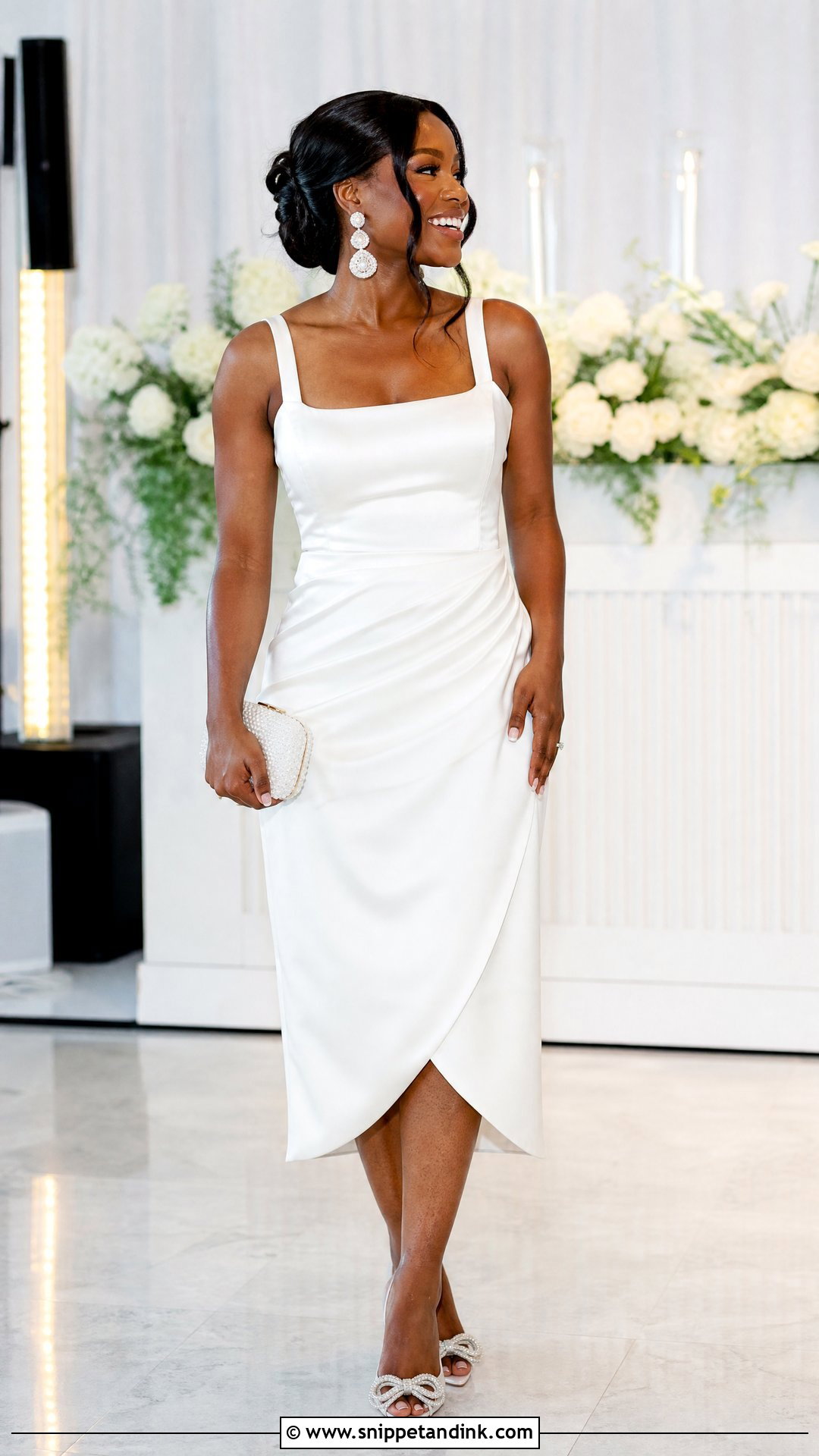
A reception dress lets you move freely after the ceremony: a satin slip, a short feather-trim dress, a beaded midi, or a fitted white gown with a small train. If the ceremony gown is dramatic, go lighter here. Fun heels, statement earrings, a smaller bouquet or clutch. Plan the change with your hairstylist; a big updo under a veil may need adjusting for a short dress. It’s also a chance to show another side of your style on the dance floor.
25. African Inspired Wedding Dress
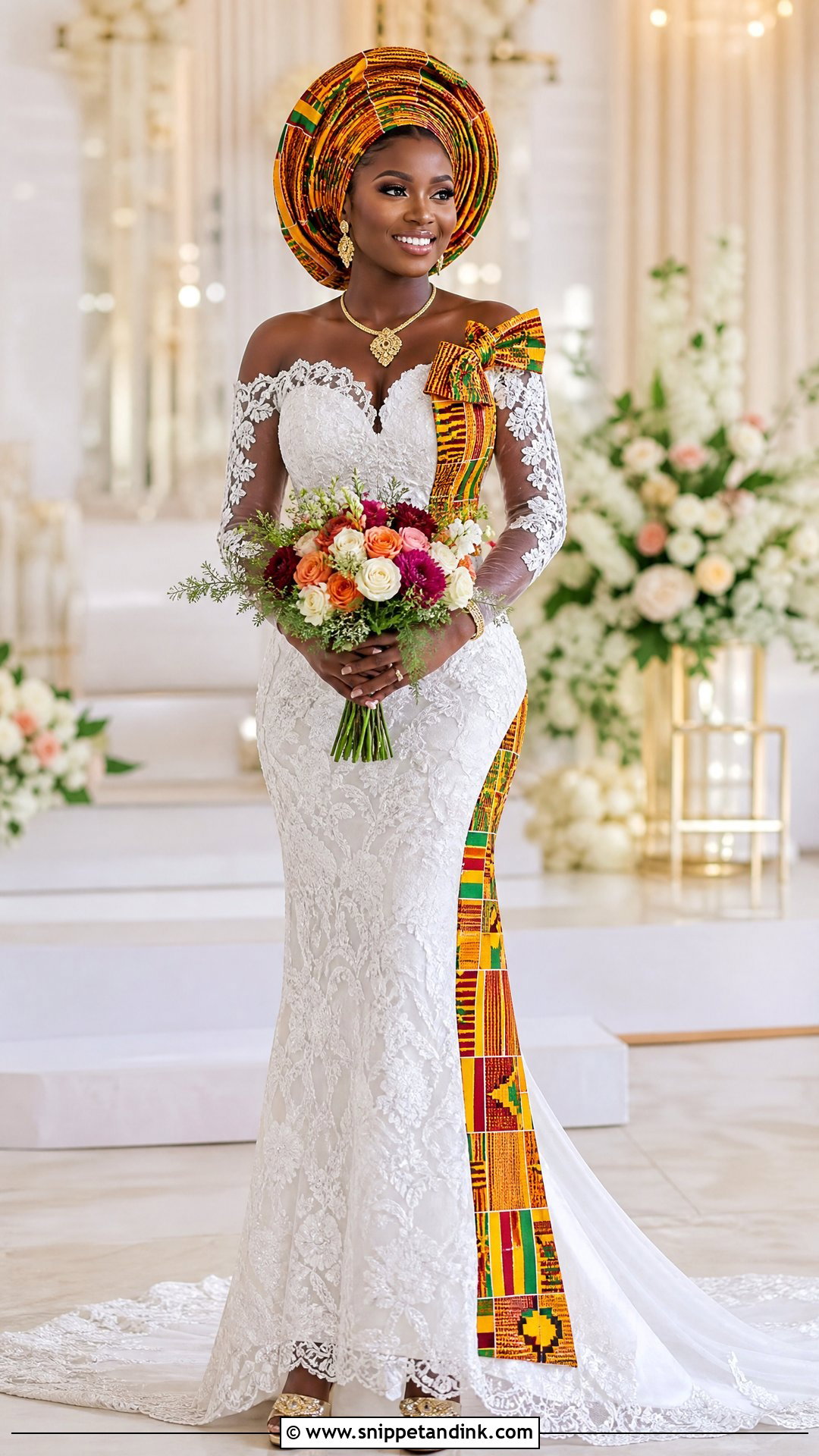
An African inspired wedding dress honours family and heritage while still reading as bridal: white lace with Ankara accents, kente details, aso oke fabric, beading, embroidery or a matching headwrap. The balance is where most of my work goes. One or two cultural details, done well, carry more meaning than five competing ones. Gold jewellery, coordinated heels and a bouquet in the same colour story. It suits traditional ceremonies and modern weddings with cultural elements, and tells a story your family will recognise.
Getting Illusion Mesh in Your Actual Skin Tone
Many bridal designers still cut sheer necklines, backs and sleeves in pale illusion mesh by default. On deeper skin, it shows as a visible beige panel. Some designers now offer deeper shades, and some will dye mesh to order, but that adds time, so raise it at the very first appointment.
- Ask which illusion shades the designer offers before you fall in love with a gown.
- Request a physical swatch and check it against your chest and arms in daylight.
- If the designer can’t help, a skilled seamstress can often replace the mesh during alterations.
- Bring bras, shapewear and cups in your own shade to every fitting so nothing pale peeks through.
Veils and Hair Accessories on Braids, Locs and Natural Volume
A veil comb is designed to grip into fine, straight hair. In braids, locs, a twist-out or a big natural puff, it can slide or pull at the edges. I work out the veil plan with the hairstylist before the trial. In protective styles, the stylist can build a small anchor point by braiding a secure section where the comb sits, or the veil can be sewn onto a loop or attached to a bun. Lighter, single-layer veils are easier on edges than heavy lace-trimmed cathedrals. Whatever you choose, wear it at the trial for at least an hour to know how it feels.
Shade, Fit and Heritage in One Bridal Look
The right dress matches your body, venue, culture and personality, and for many Black brides it also means insisting on the right shade of white and the right colour of mesh. Classic satin, black lace, champagne tulle, pearl beading or an African inspired gown can all be the one. Think of the dress, veil, shoes, jewellery, hair, makeup and comfort as a single look. When every piece supports the same mood, you look polished and you feel like yourself, which is what people remember.
You'll Like These Ideas:




Leave a Reply