
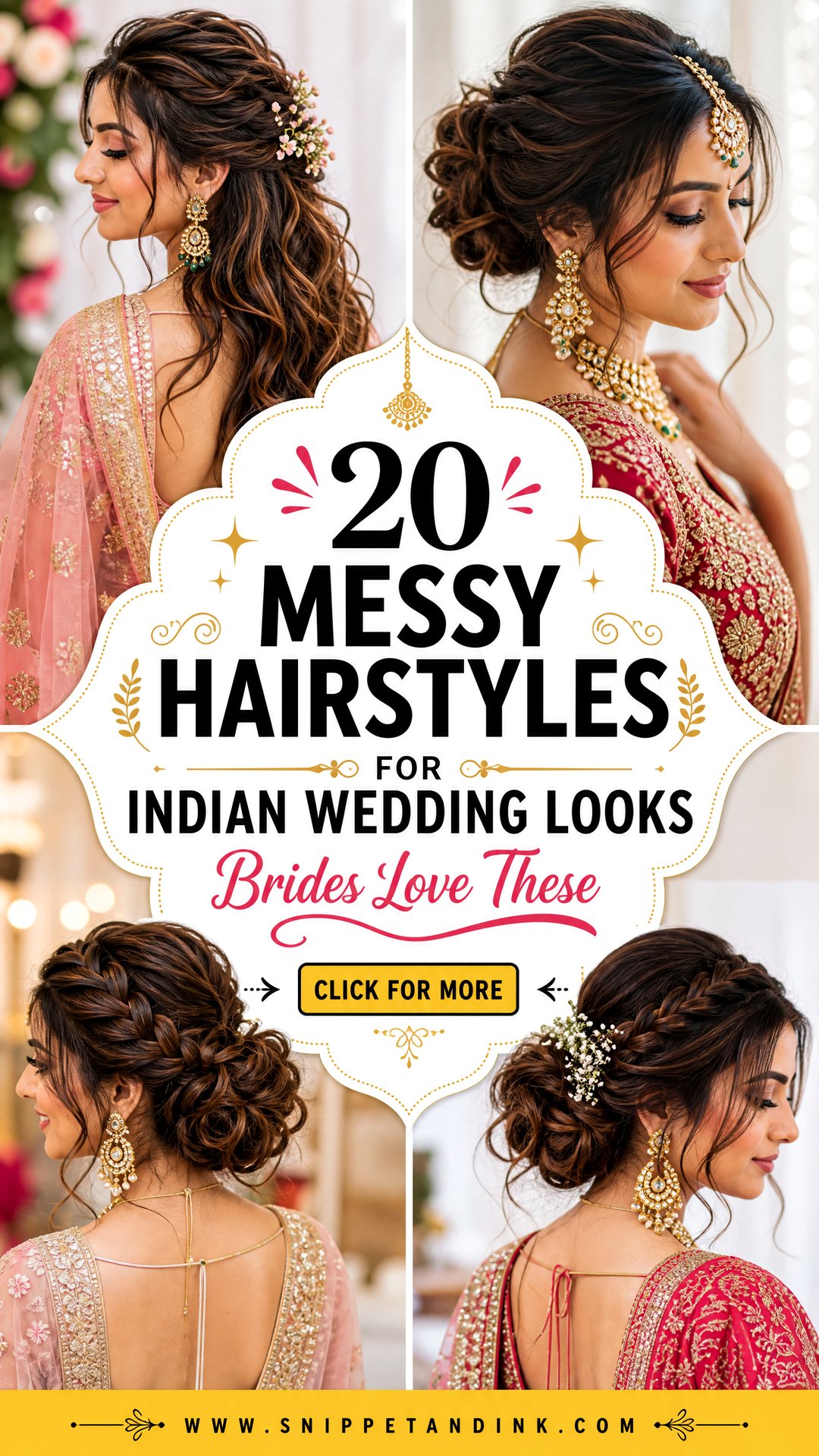
An Indian wedding asks more of a hairstyle than almost any other celebration. It has to carry jewelry, flowers and often a heavy dupatta, and it has to last through several functions, sometimes back to back. Messy styles cope with that better than sleek ones, because a few escaped strands after six hours of dancing look intended rather than ruined. They also suit a lehenga or saree without fighting the embroidery for attention. I’ve written these twenty for brides, bridesmaids and guests, with notes on what each one can hold and which function it suits.
Pinning a Heavy Dupatta Over a Loose Bun
Most bridal hair plans at Indian weddings forget the dupatta until the last minute. A heavily embroidered one draped over the head can weigh more than all your jewelry together, and it pulls backward on the bun the whole time you’re seated for the rituals.
I build the bun lower and firmer for a bride who’ll wear her dupatta on her head, and I braid a small anchor section near the crown. The dupatta is then pinned into that braid with U-pins rather than into the loose texture, which would slip. Bring your actual dupatta to the trial. A light chiffon and a heavy velvet need different anchoring, and you only find out when it’s on.
- Set the tikka, then the bun, then flowers, then the dupatta.
- Ask for pin placements that won’t sit under the dupatta border, where they press.
- Have a family member who knows where the pins are for when the dupatta comes off.
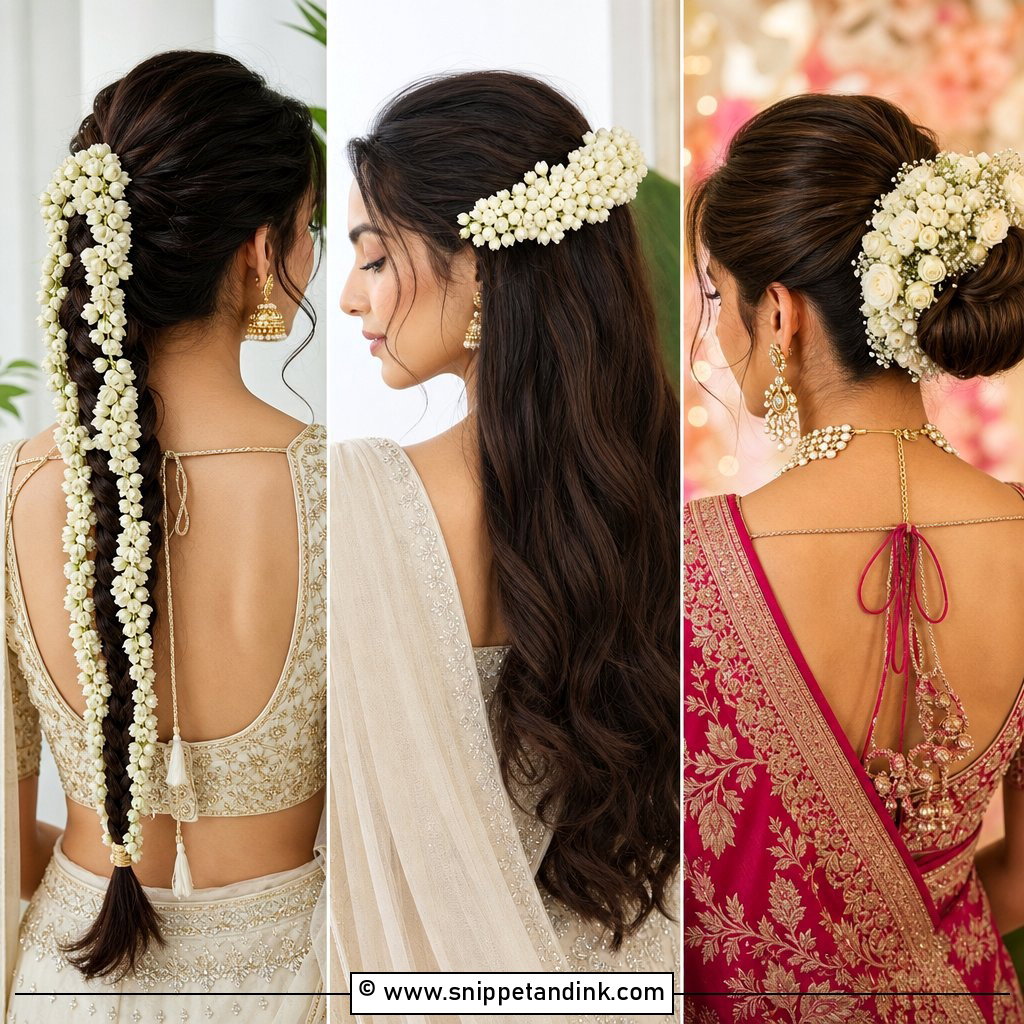
1. Messy Low Bun With Gajra
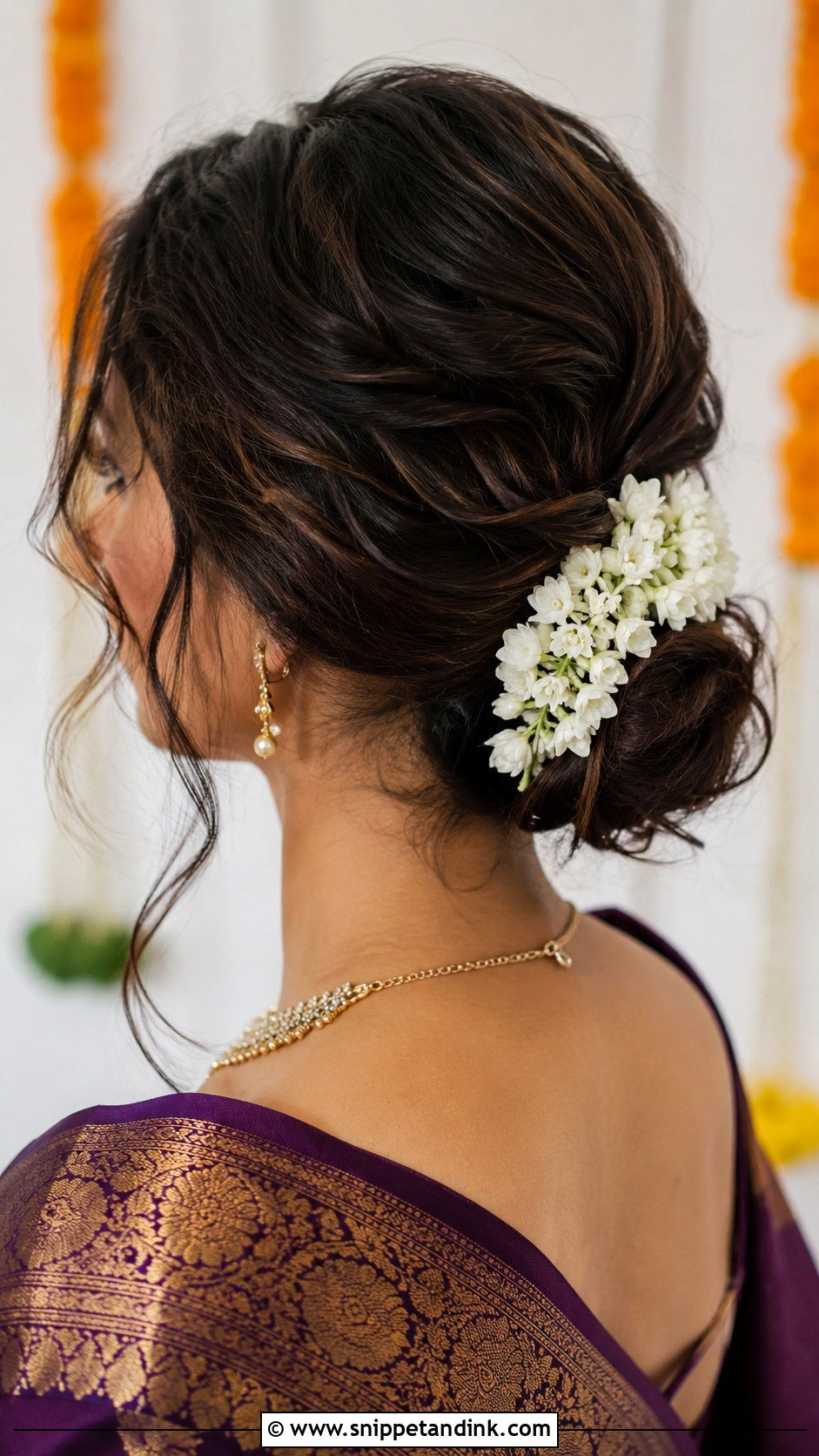
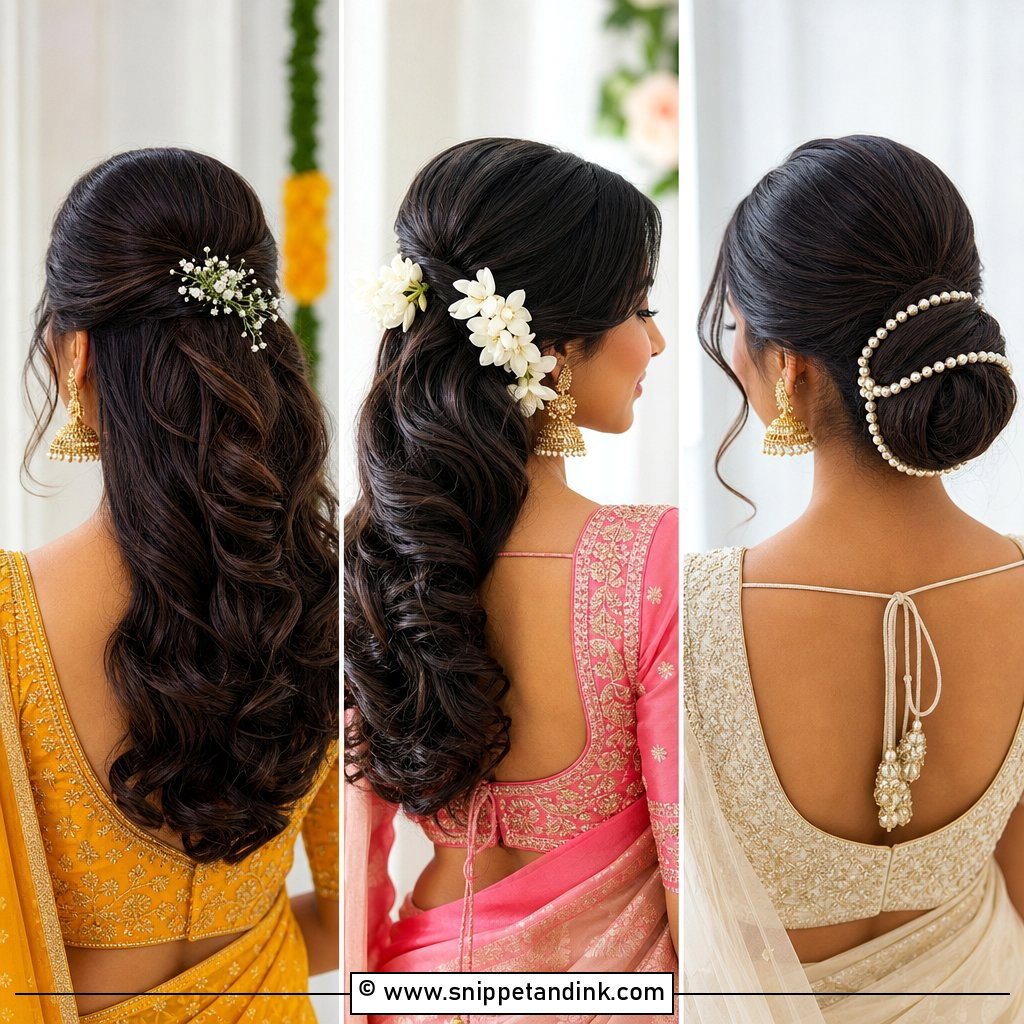
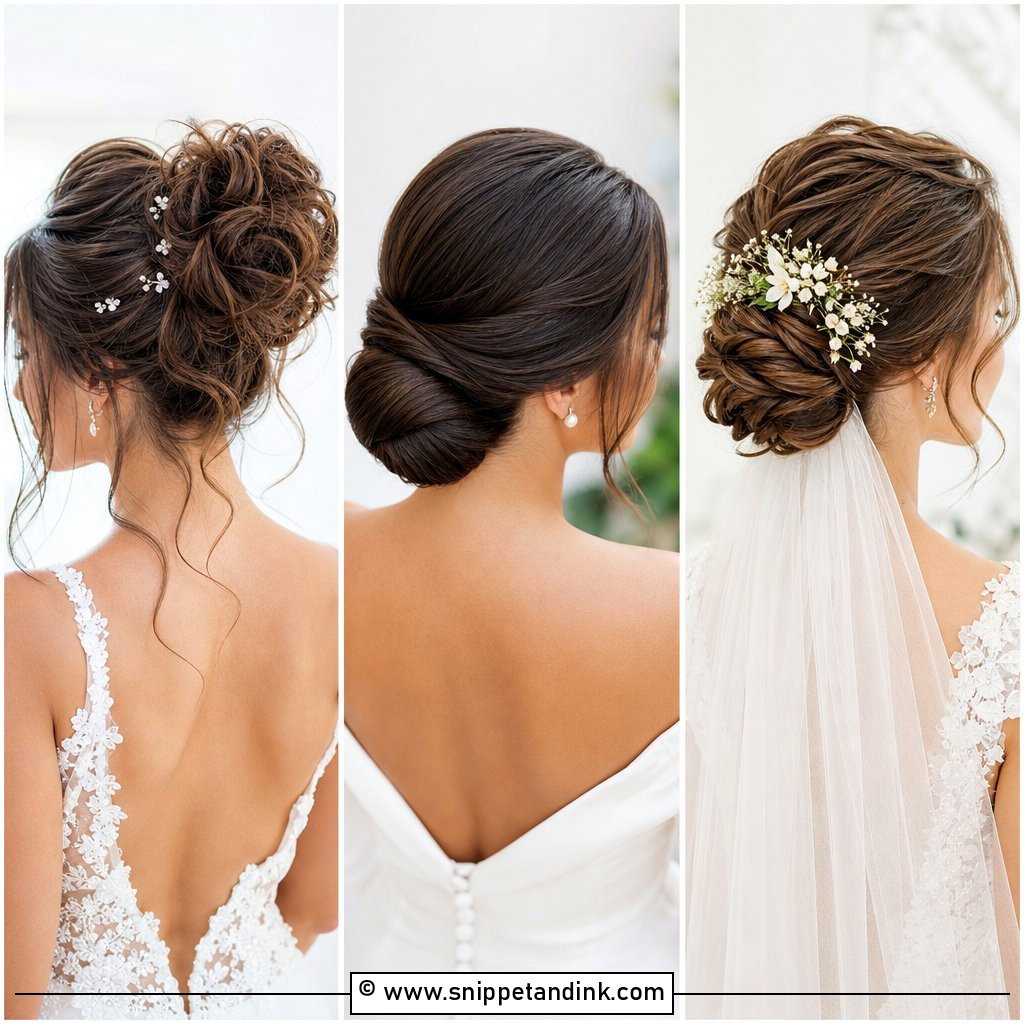
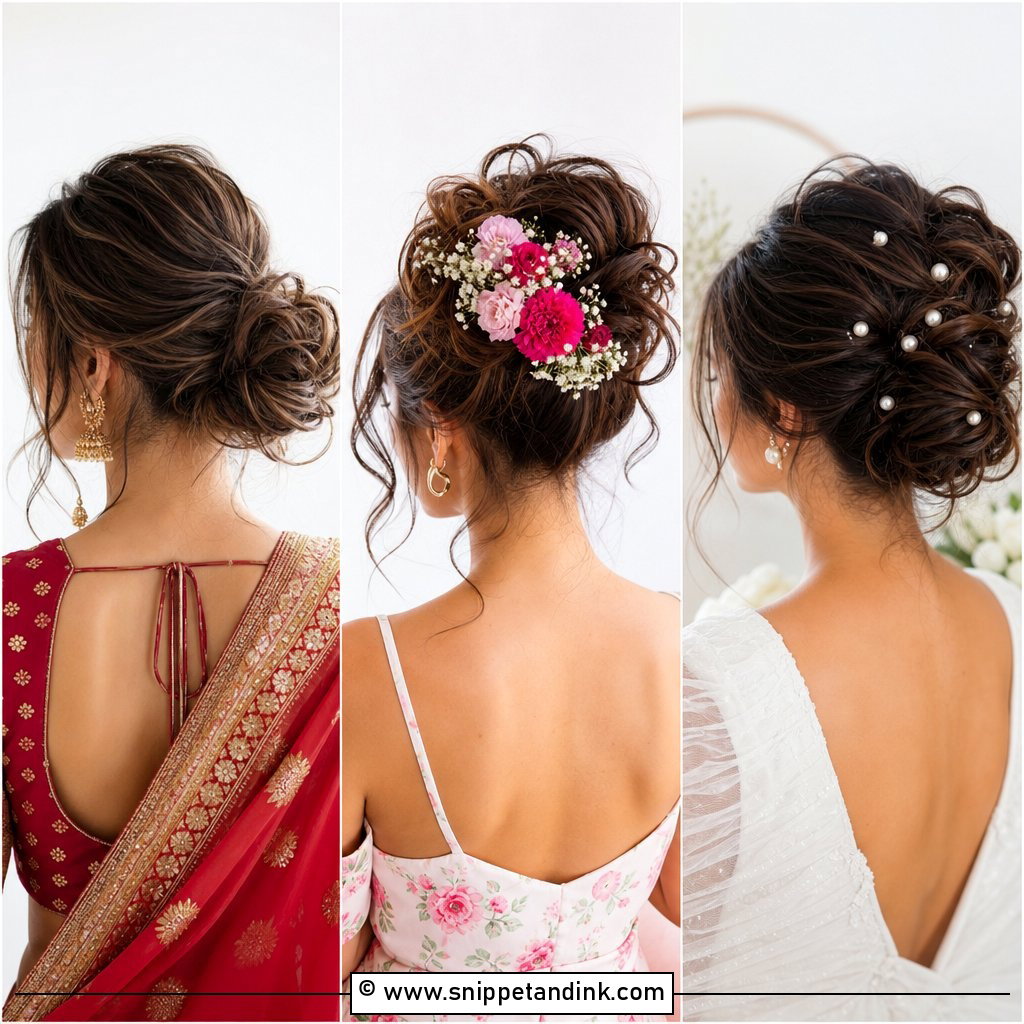
The low bun wrapped in fragrant jasmine flowers is the style I’m asked for most at Indian weddings, and with reason. I put loose waves in first so the bun has texture, twist it low, and leave a few strands at the face. The bun has to be firm before the gajra goes on, since jasmine strings are heavier than they look and will drag a soft knot sideways. A silk saree or a heavy lehenga both suit it, and it’s as sensible for guests as for the bride.
2. Messy Side Bun With Flowers
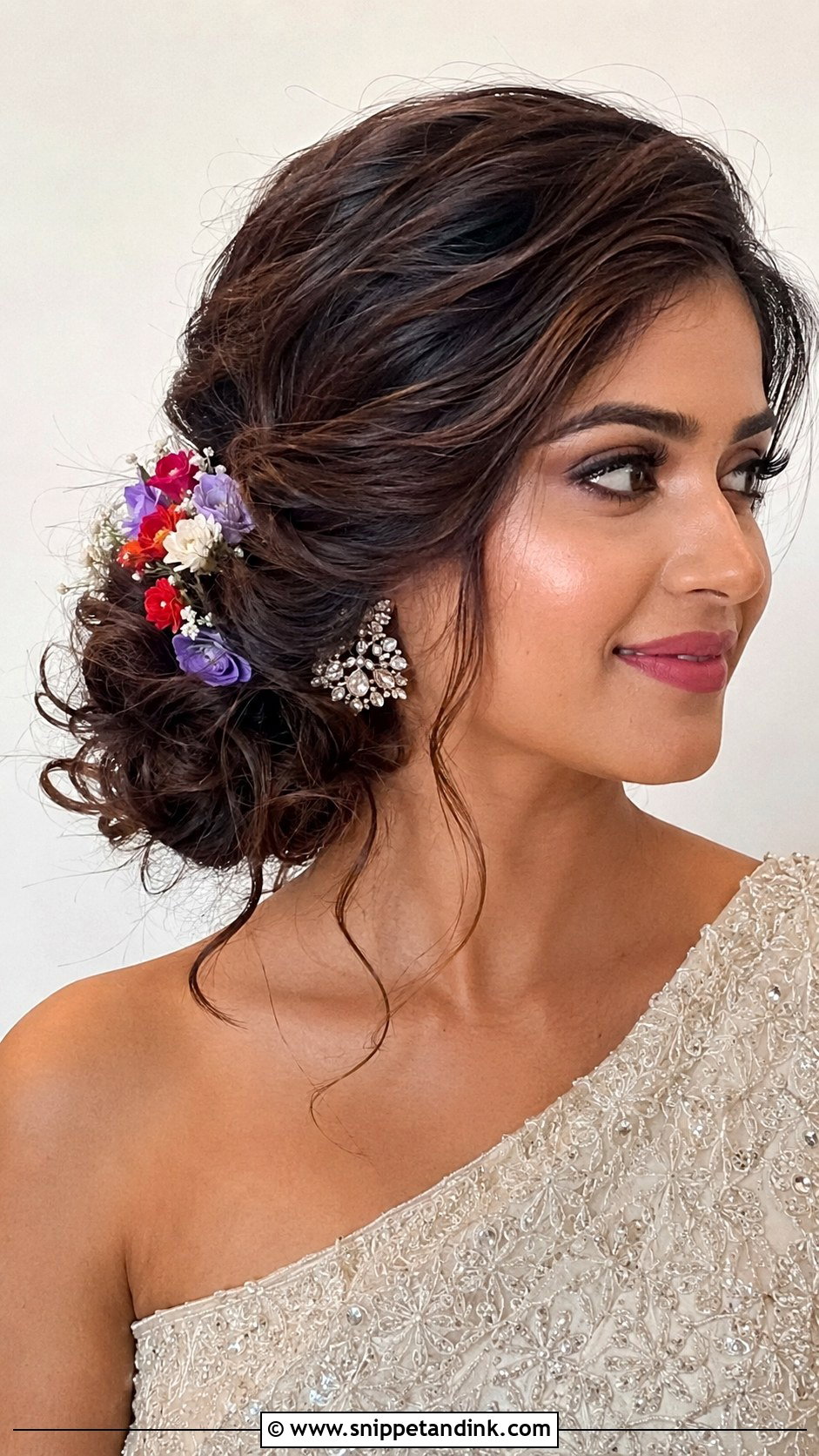
Sweeping the whole bun to one side near the ear is a more dramatic shape, and it’s built on curls set first and cooled. I anchor the bun behind the ear with crossed pins, then tuck small blooms or buds along its edge. It looks right with one-shoulder blouses and big earrings, as long as the earring sits on the open side. I’d keep it for sangeet nights and receptions rather than the pheras, where a dupatta usually covers the head and would crush a side bun.
3. Messy Braided Bun
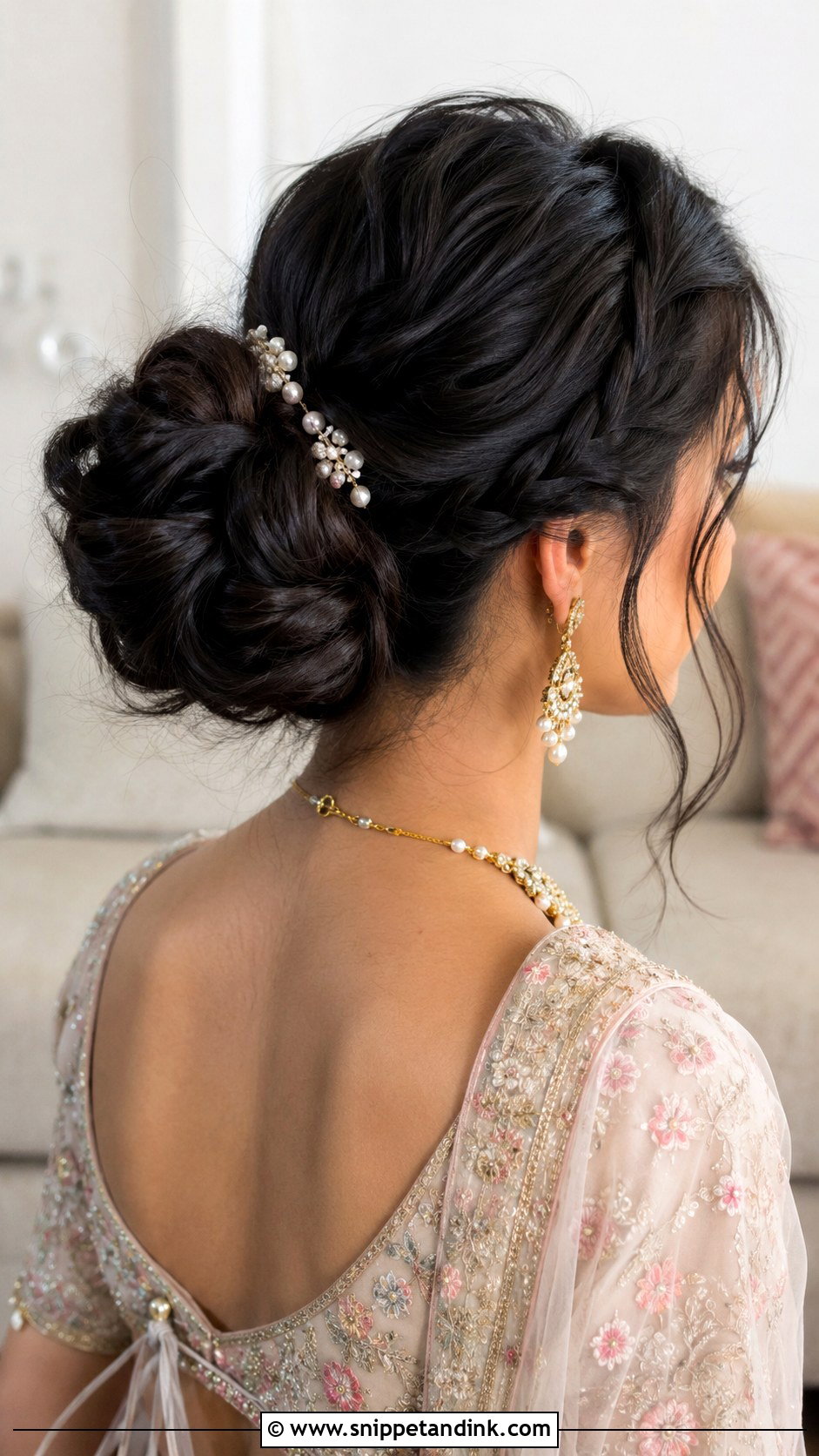
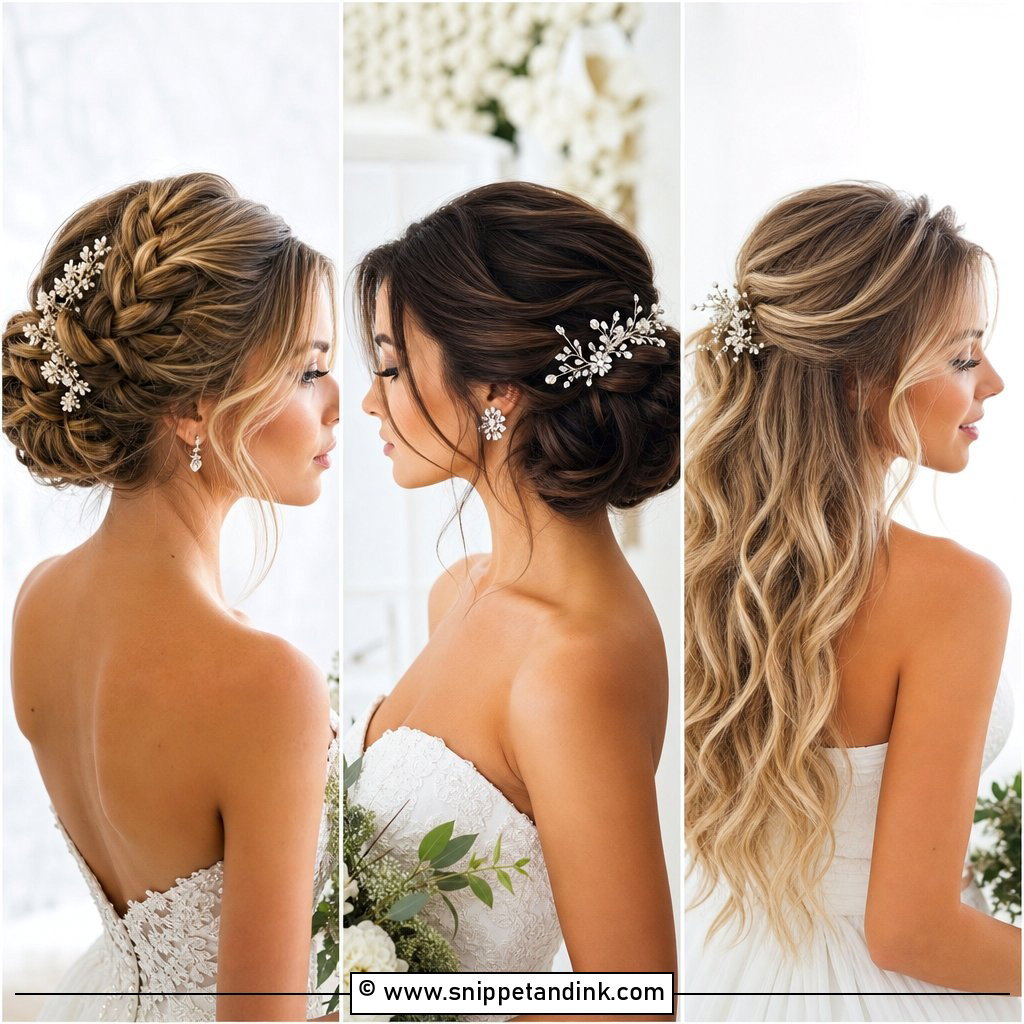
A braid coiled into a bun is one of the strongest bases I can give someone who will be dancing for hours. The braid is plaited firm first and only loosened once the bun is pinned, so it keeps its grip. Pearl pins and small flowers slide into the braid without extra clips. Medium to long hair suits it, and it copes well with long mehendi sittings where you’re leaning back against cushions.
4. Messy Half-Up Half-Down
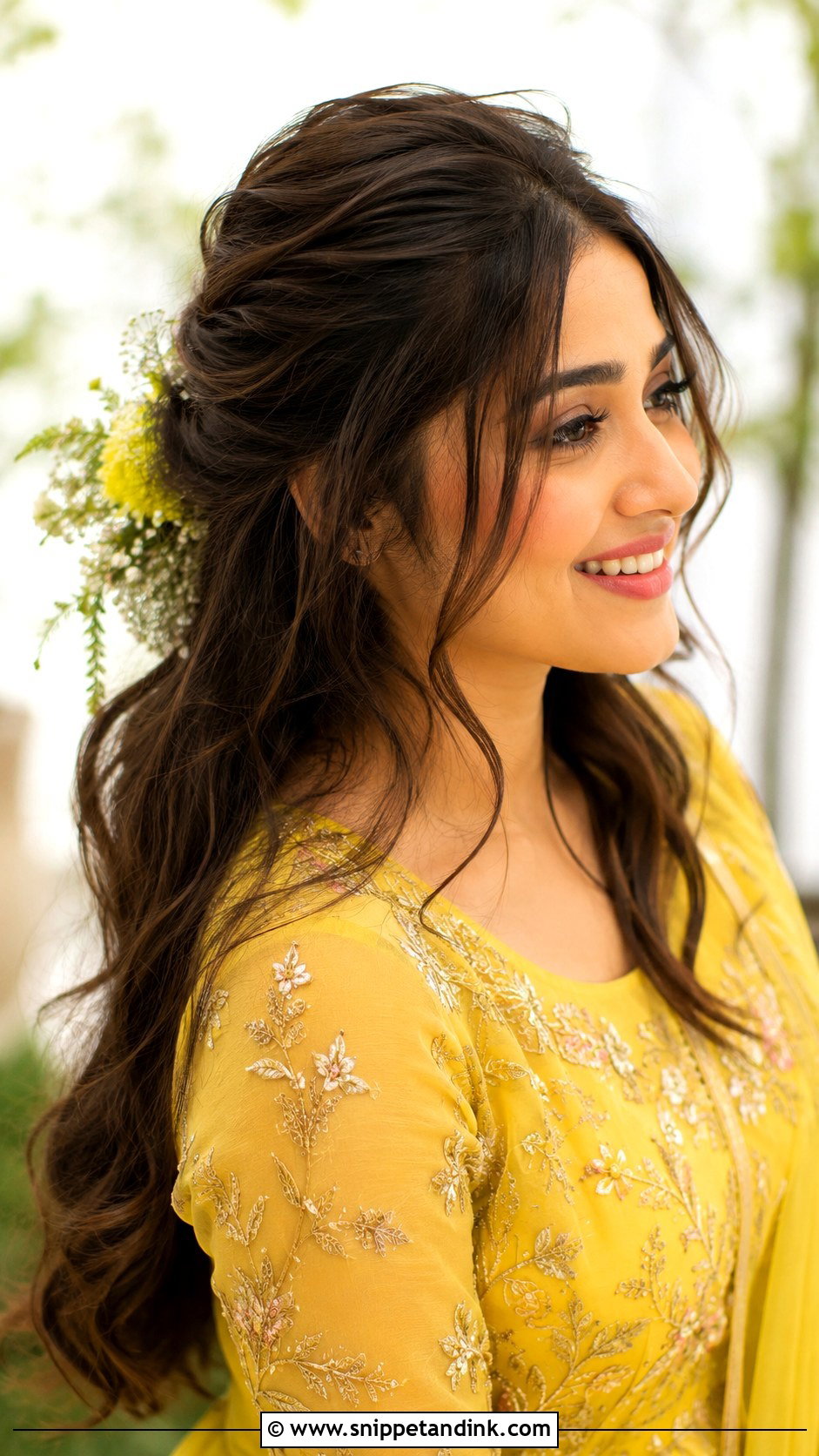
Half up, half down keeps hair off your face for haldi and mehendi while still showing length. The top section is secured loosely with some lift at the crown, and the rest falls in waves. One warning for haldi: the paste gets into open hair easily, so I’d pin the lengths higher on that day or plan to wash it out afterwards. A small flower clip or a hair vine at the back finishes it. Very short hair won’t have enough below to make the half-down part read.
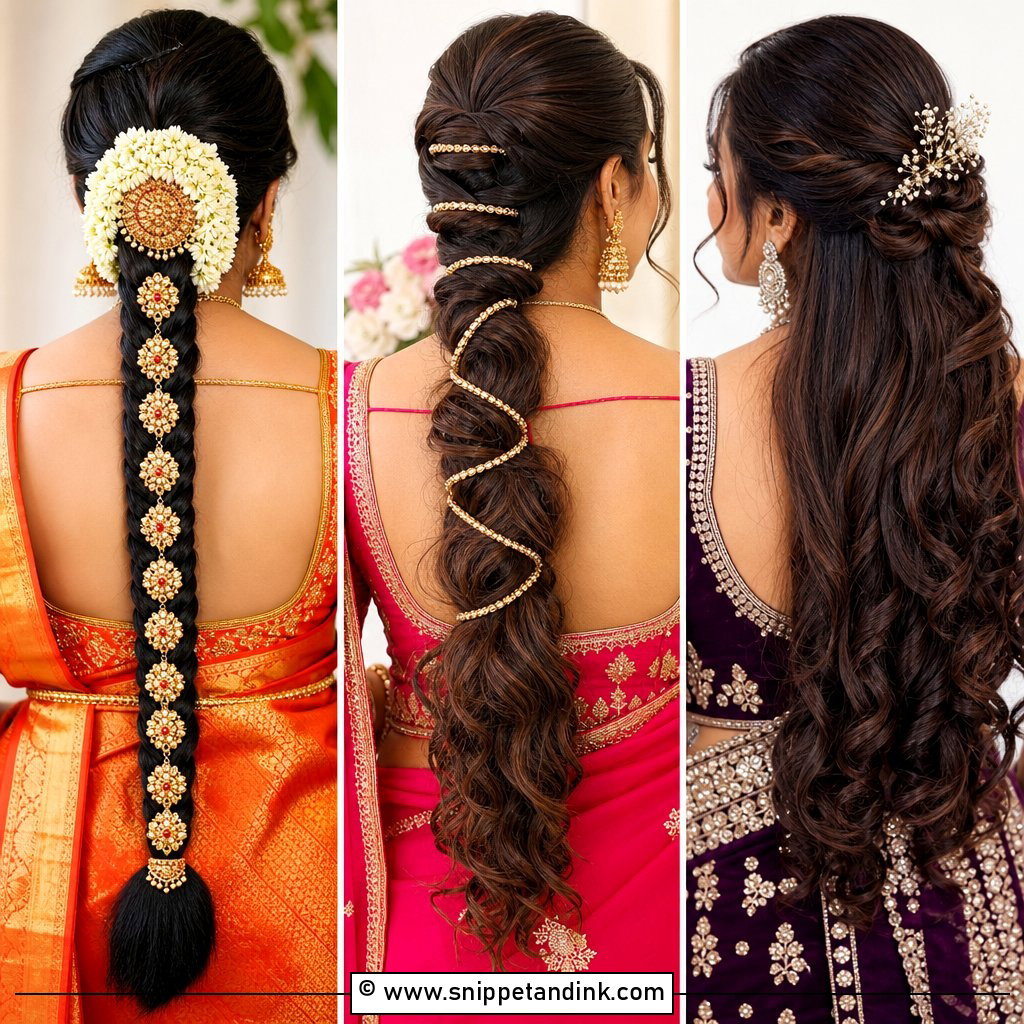
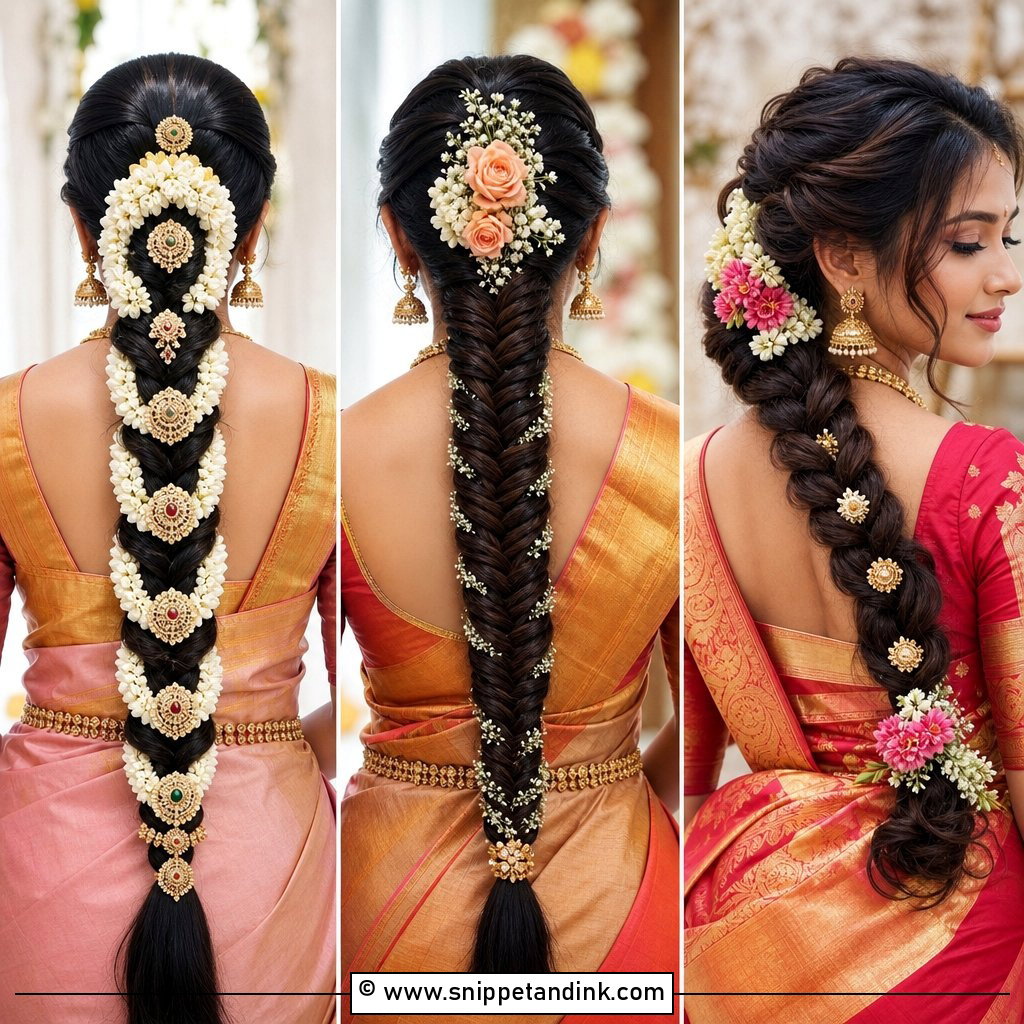
5. Messy Fishtail Braid
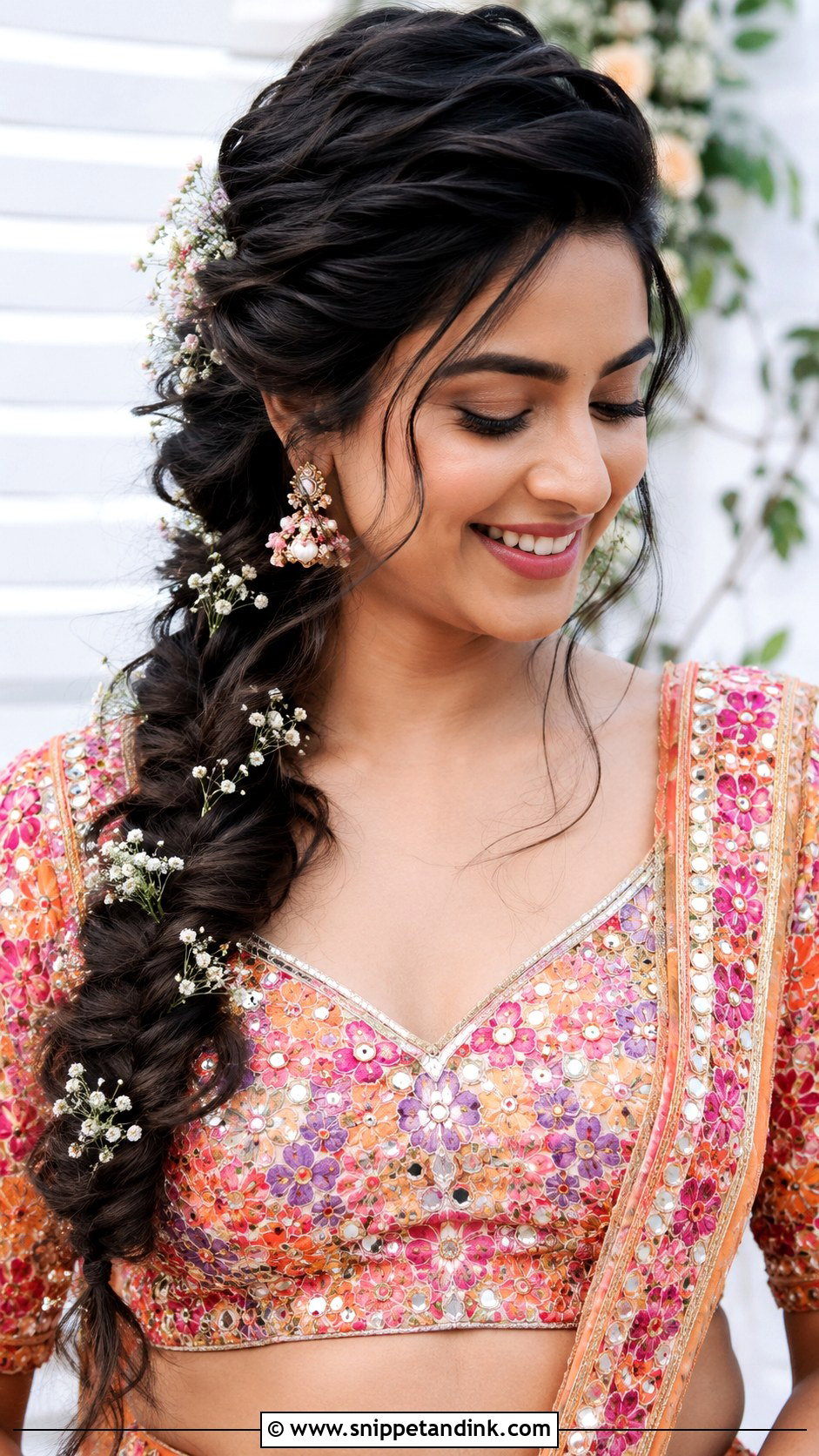
A fishtail looks complicated but it’s two strands crossing over and over, so it’s quicker than people think. I braid it tightly, then pull the edges outward to widen it, starting from the bottom so the top stays secure. Tiny flowers or a string of pearls can be threaded along it. It needs long hair to look full, and it’s at its best for sangeet evenings and outdoor functions.
6. Messy Bun With Maang Tikka
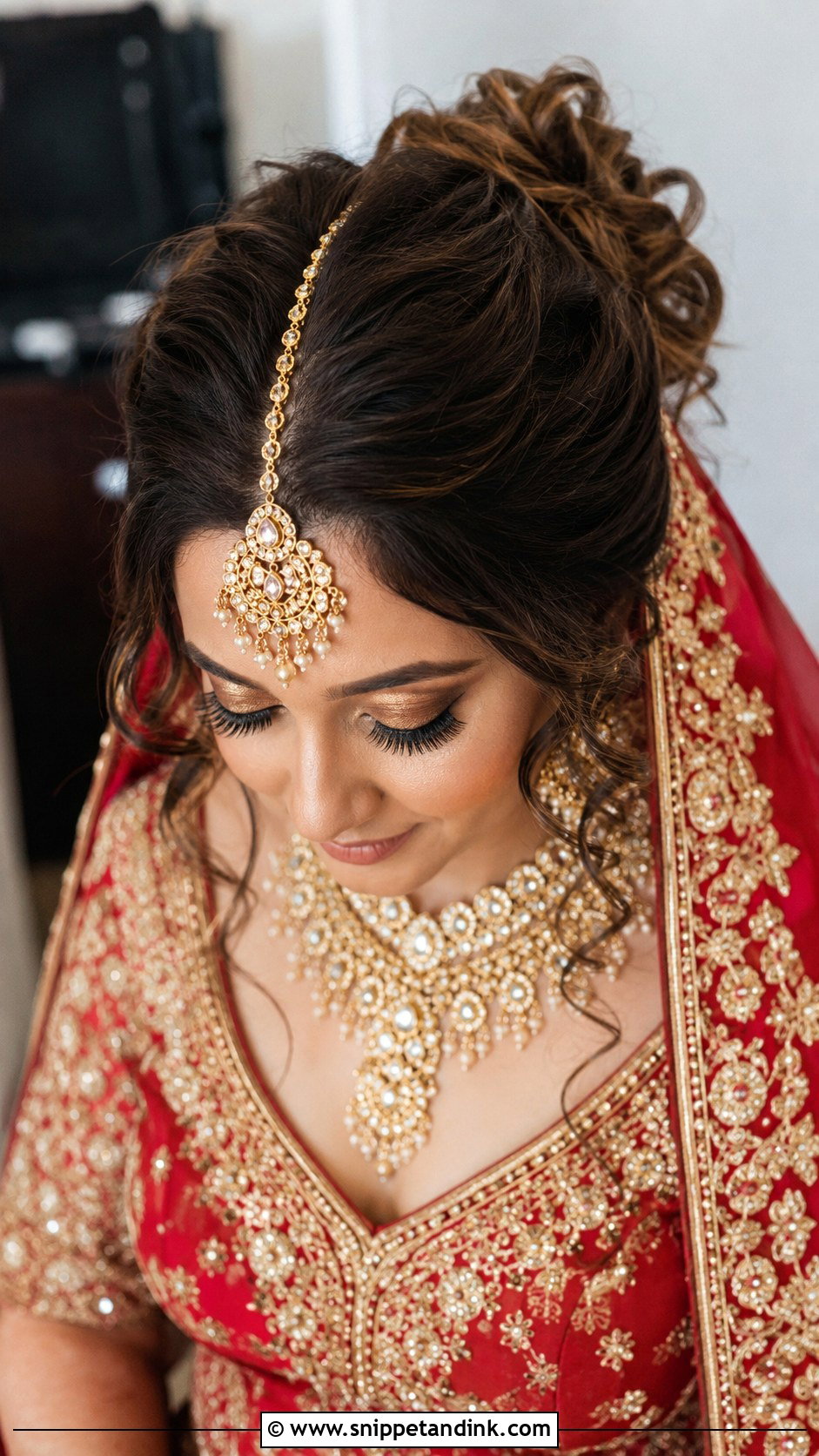
A maang tikka turns a loose bun into something clearly bridal. The order matters here: I set the tikka hook into the crown and centre the chain along the part before I shape the bun, because building the bun first pulls the hair back and drags the pendant off-centre. The bun can sit at the back or slightly to the side, with curls left loose at the face. The contrast of soft hair and a statement maang tikka works well for weddings and engagements, especially with heavy lehengas and gold jewelry.
7. Messy Floral Crown Updo
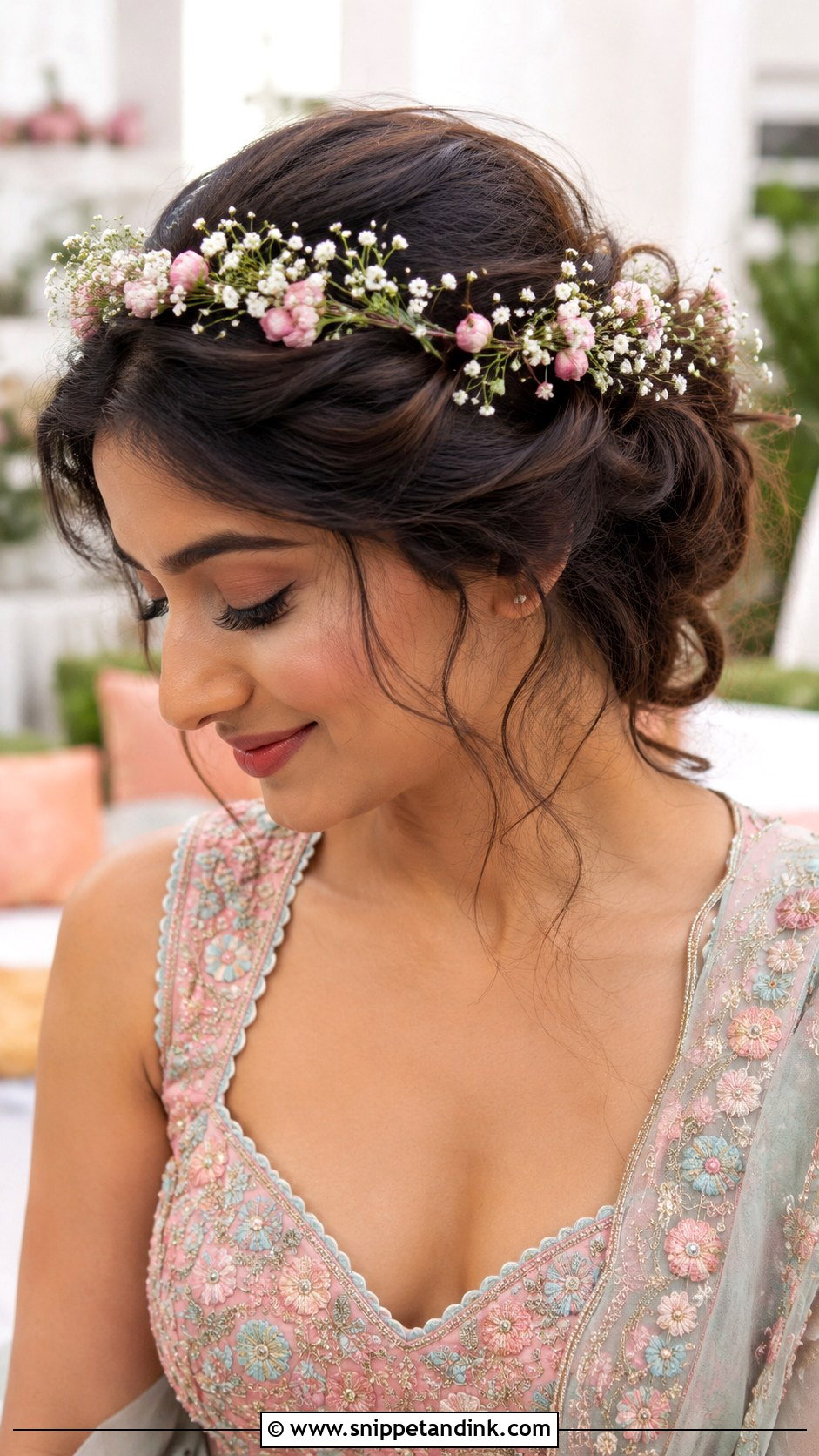
A ring of fresh flowers around the crown, with a loose bun or twist behind, gives a gentler, daytime feel. The crown needs its own anchor, so I pin small sections around the head before attaching the flowers, rather than relying on the flowers to grip loose hair. Small, sturdy blooms survive heat better than delicate petals. Pastel lehengas and flowy fabrics suit it, and it fits the joyful tone of haldi and mehendi.
8. Messy Curls Left Open
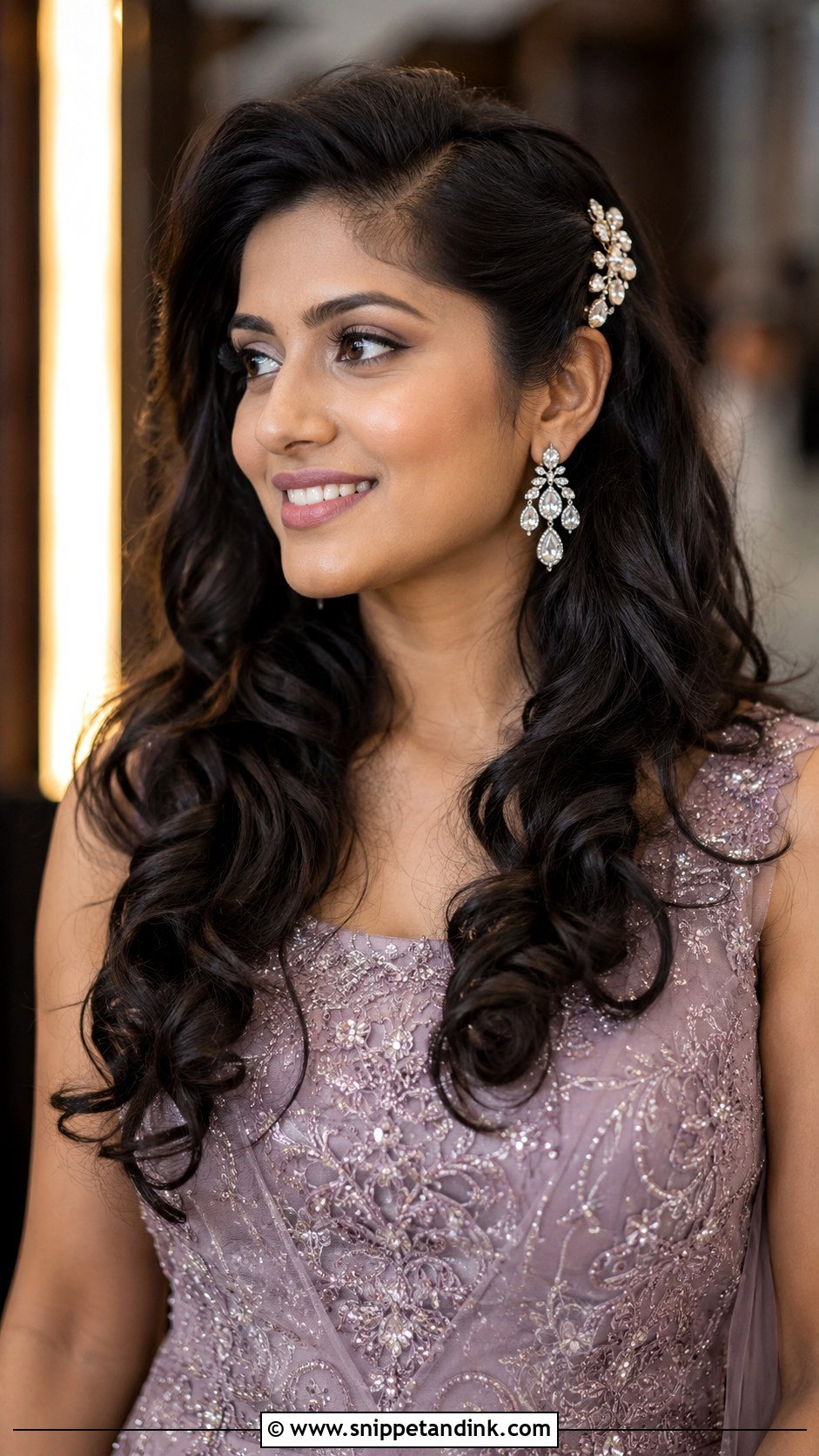
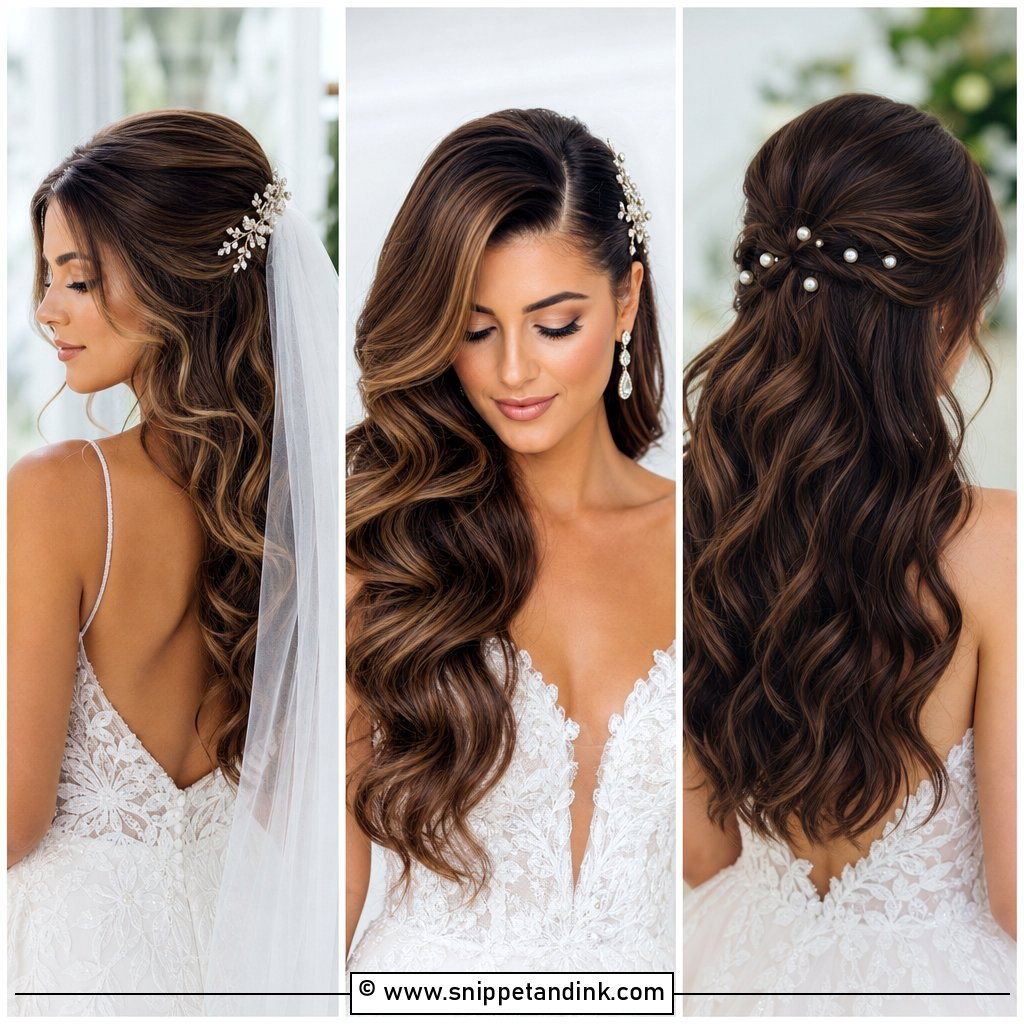
Open curls are simple, and that’s their appeal for a reception or sangeet. I set them with a wand, let them cool, then break them up with fingers rather than a brush, which flattens them. A deep side part adds weight to one side, and a jewelled clip can hold the other side back if you’d like hair off your face. Indian weddings are often hot and humid, and curls worn down soften quickly in that air, so I’d use a strong-hold spray and expect them to relax by late evening.
9. Messy Bun With Pearl Pins
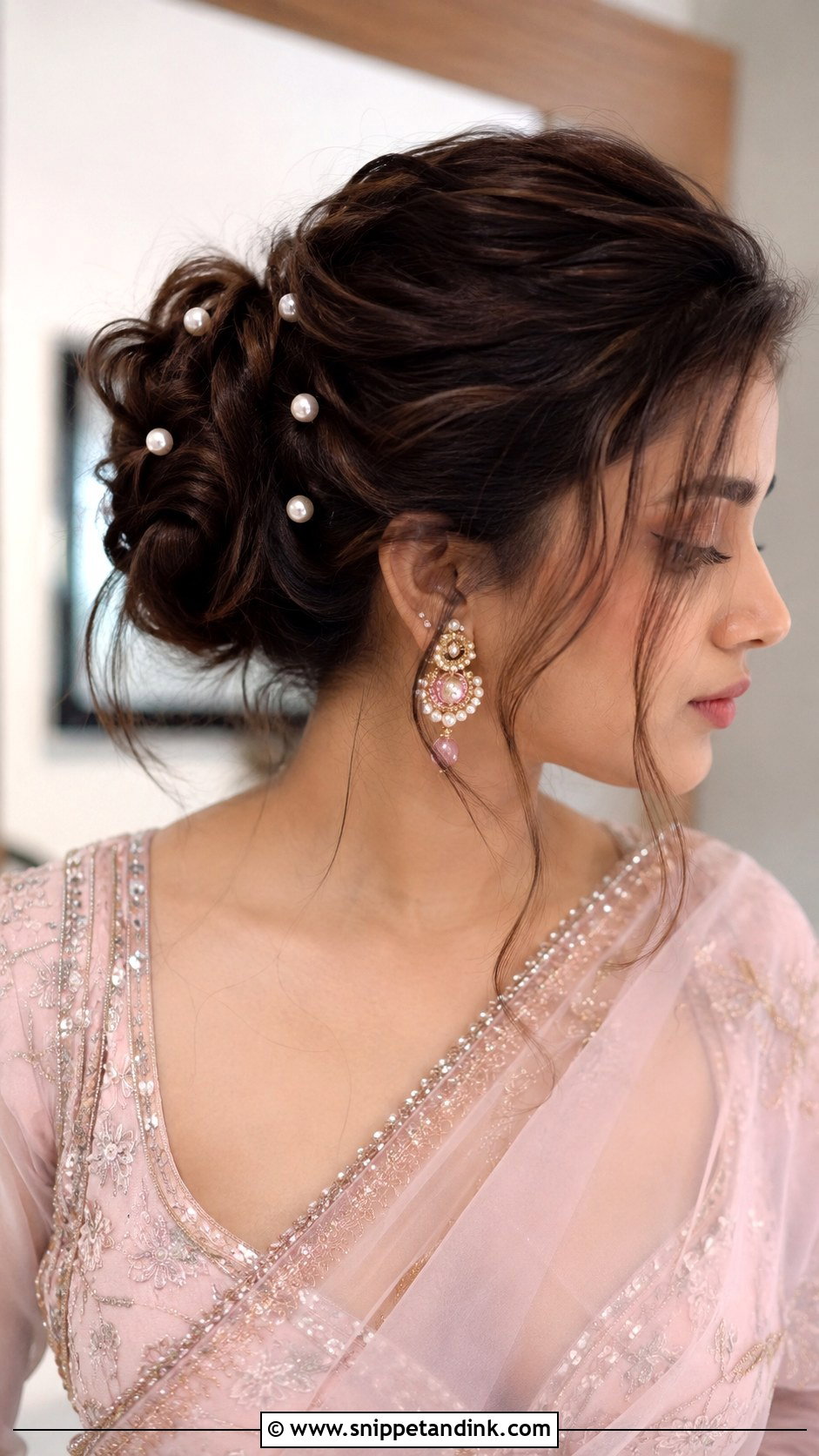
Pearl pins scattered through a soft bun suit anyone who prefers restraint to sparkle. I place them in a loose diagonal rather than a straight line, and push each one in against the direction of the hair so it locks. A few loose strands at the face keep it soft. It looks right with ivory, blush and pastel outfits, and it’s light enough to wear through a long ceremony without a headache.
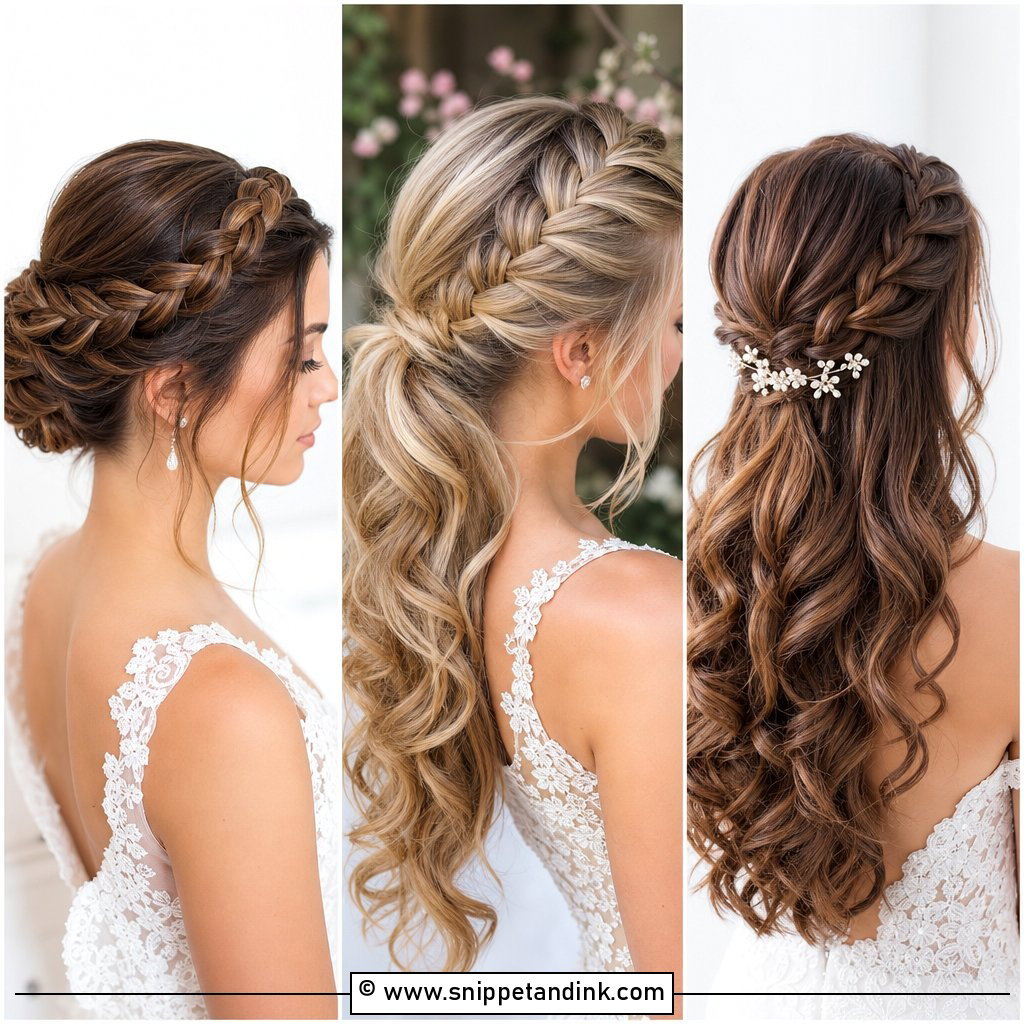
10. Messy Dutch Braid Updo
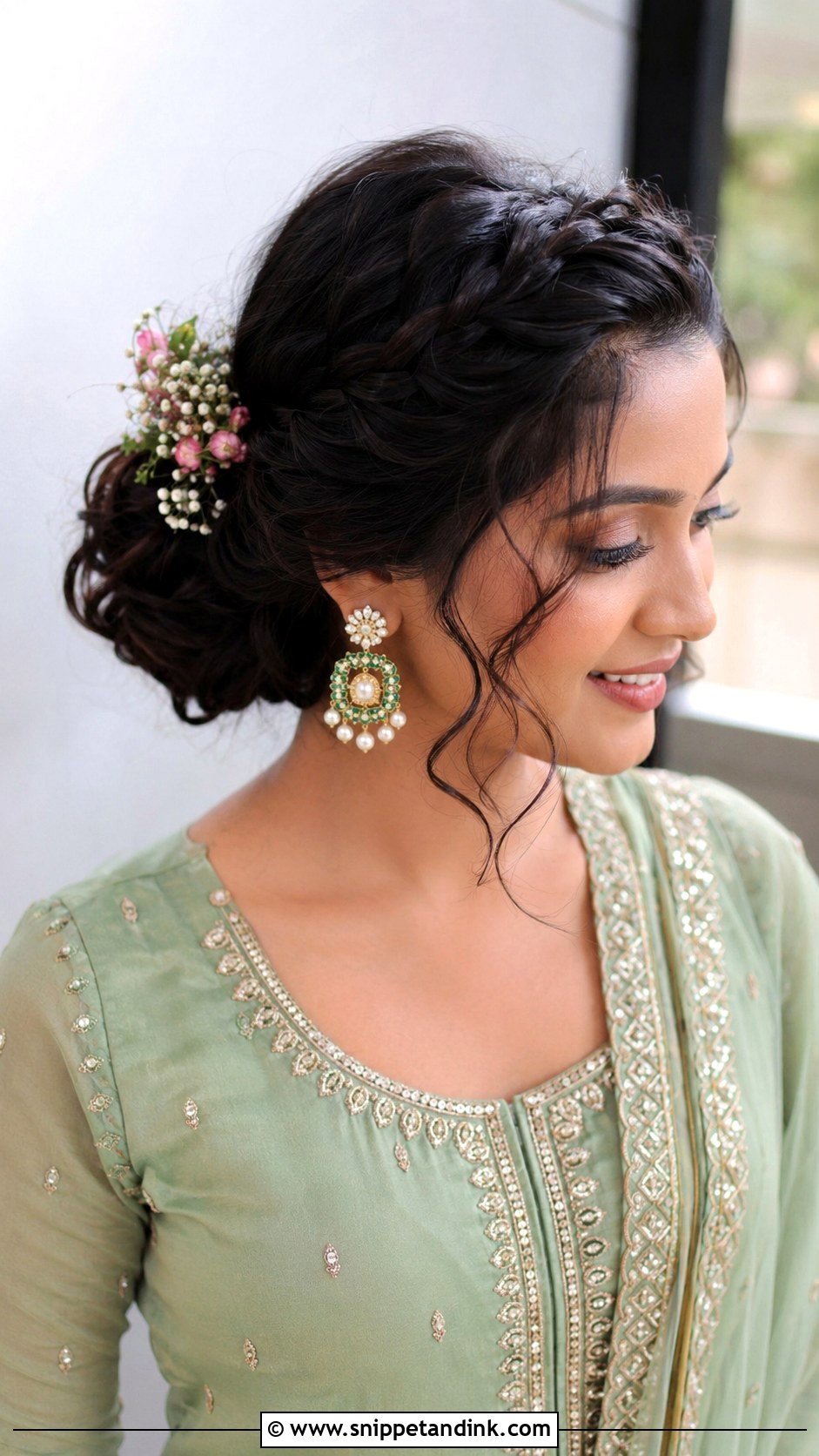
A Dutch braid is braided underhand, so the plait sits raised on top of the hair rather than tucked in. That raised edge is what makes it read from across a room. I start at the hairline, pin the braid up into a coil at the back, then widen its edges. It keeps hair secure for dancing and suits mehendi and outdoor functions, best on medium to long hair.
11. Messy Twisted Updo
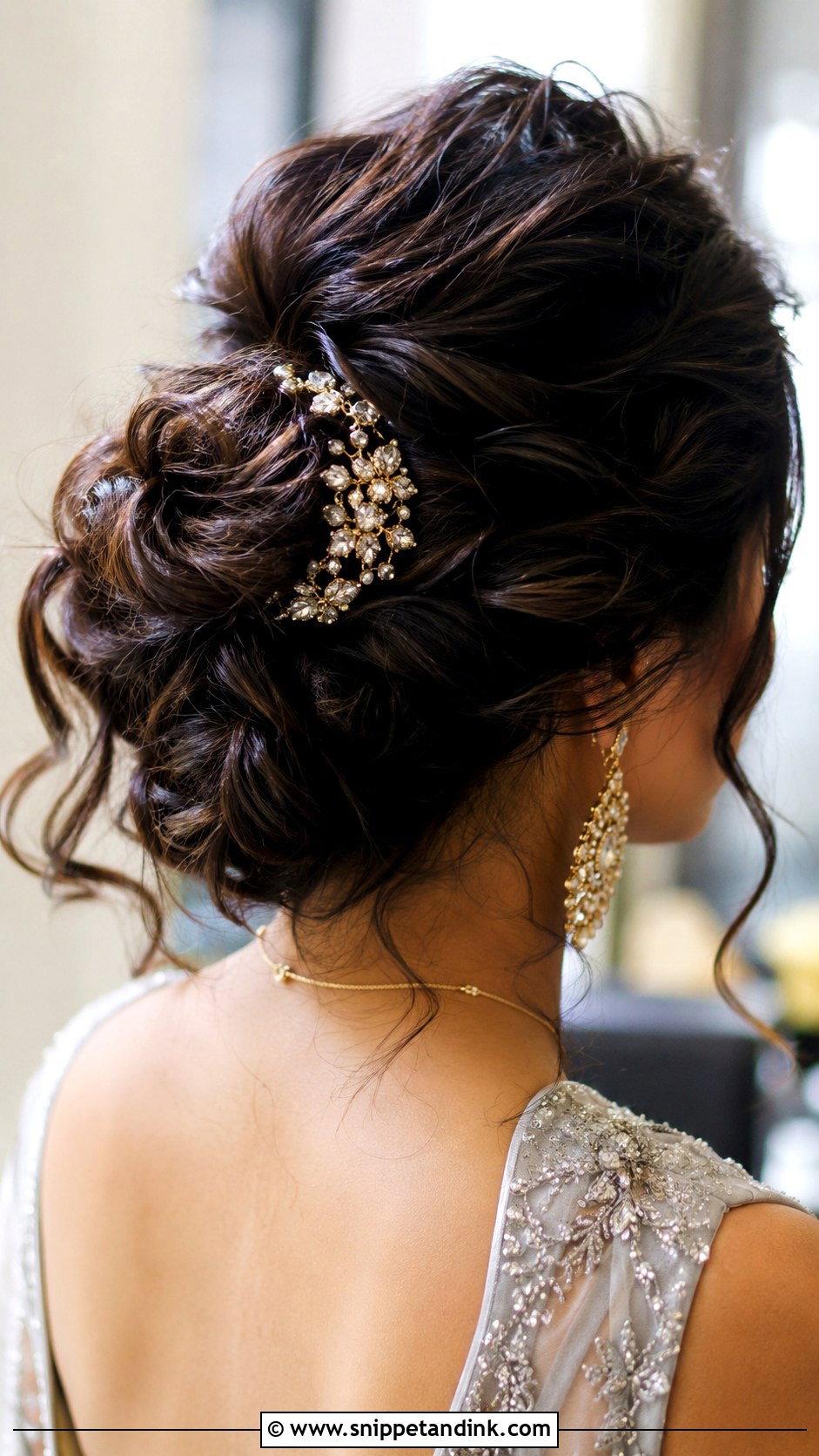
Small twists pinned up loosely build volume without teasing everything into a knot. Each twist is pinned on its own, which means I can lift or soften sections later without the whole updo shifting. It doesn’t need to be neat; slightly uneven twists look better than perfect ones. A decorative comb or fresh flowers finish it, and it holds its shape for an evening ceremony or reception.
12. Messy Bun With Curtain Bangs
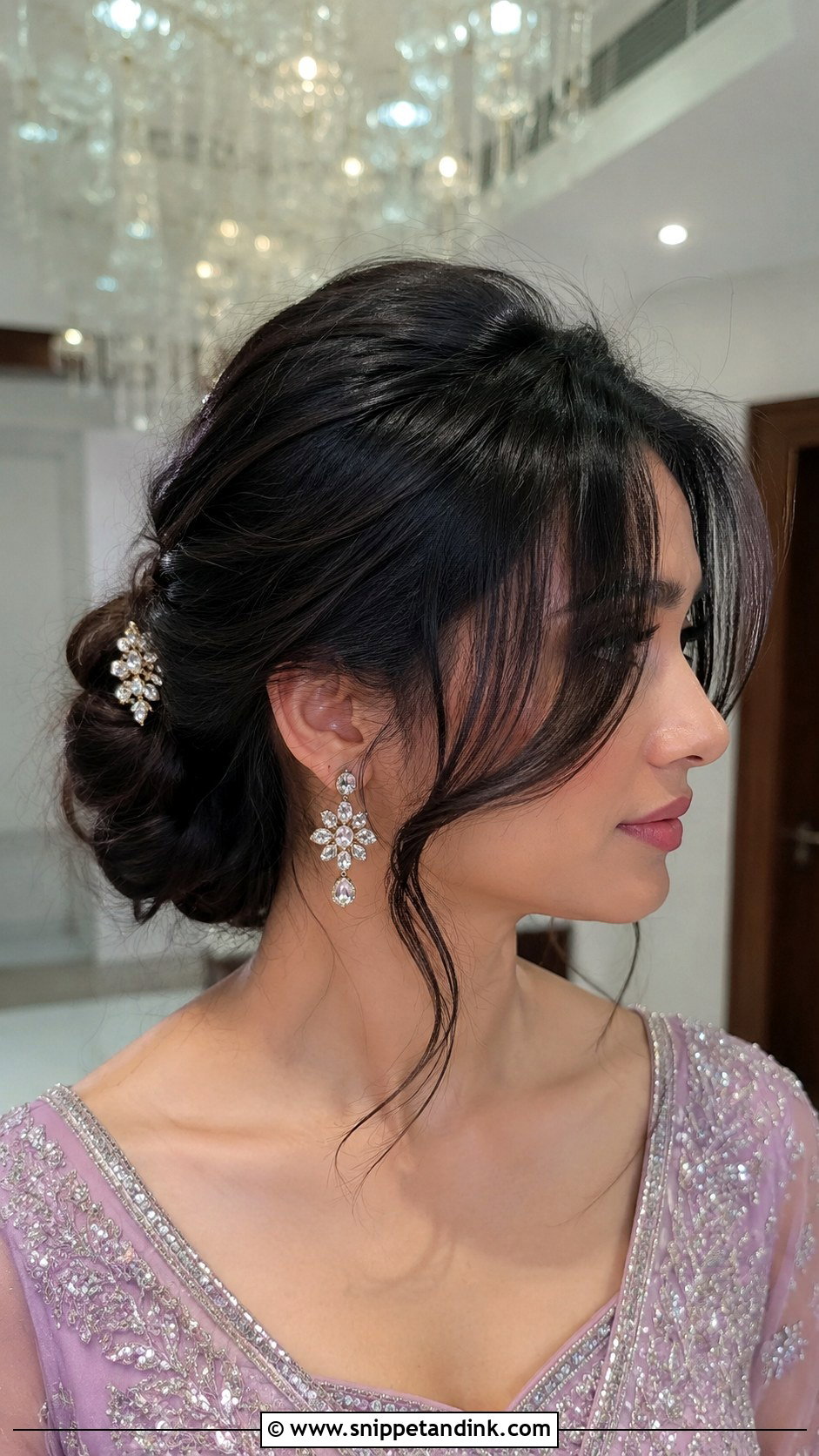
Curtain bangs soften a messy bun and frame the face without hiding it. I curl the bangs away from the face and blend them into the waves at the side, then gather the rest into a relaxed bun. If your bangs are freshly cut and still short, they can spring up rather than sweep, so I’d test them at a trial. It suits sangeet and engagement functions, and anyone with shorter face-framing layers already.
13. Messy Boho Waves With Hair Vine
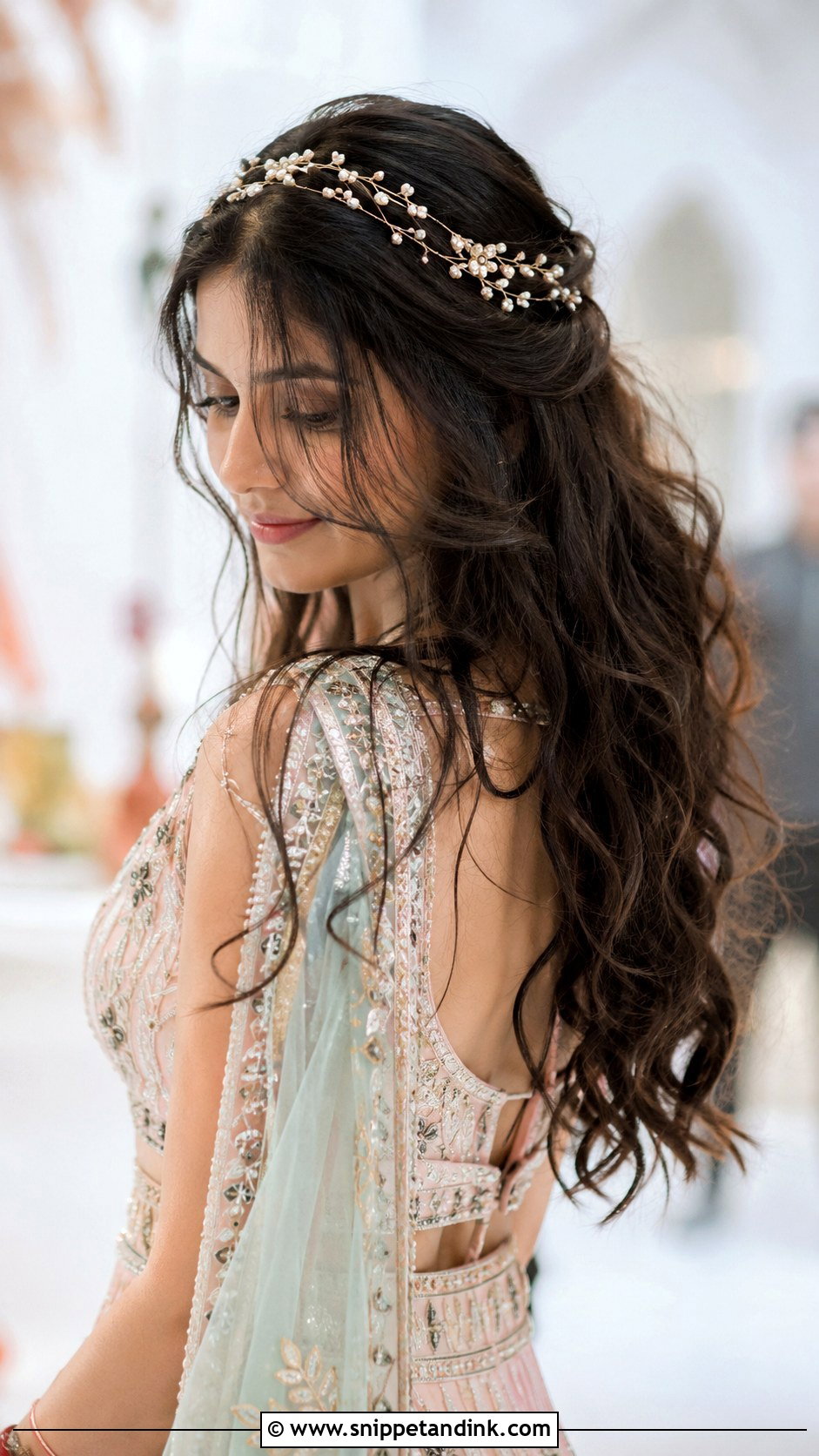
Boho waves with a thin hair vine woven through look light and festive. The vine isn’t just decoration; I pin it along one side so it holds the front pieces back and keeps them from blowing into lip colour. Waves are set and tousled with fingers. Flowy lehengas and pastel sarees suit it, and it fits relaxed daytime functions like mehendi and haldi.
14. Messy French Braid
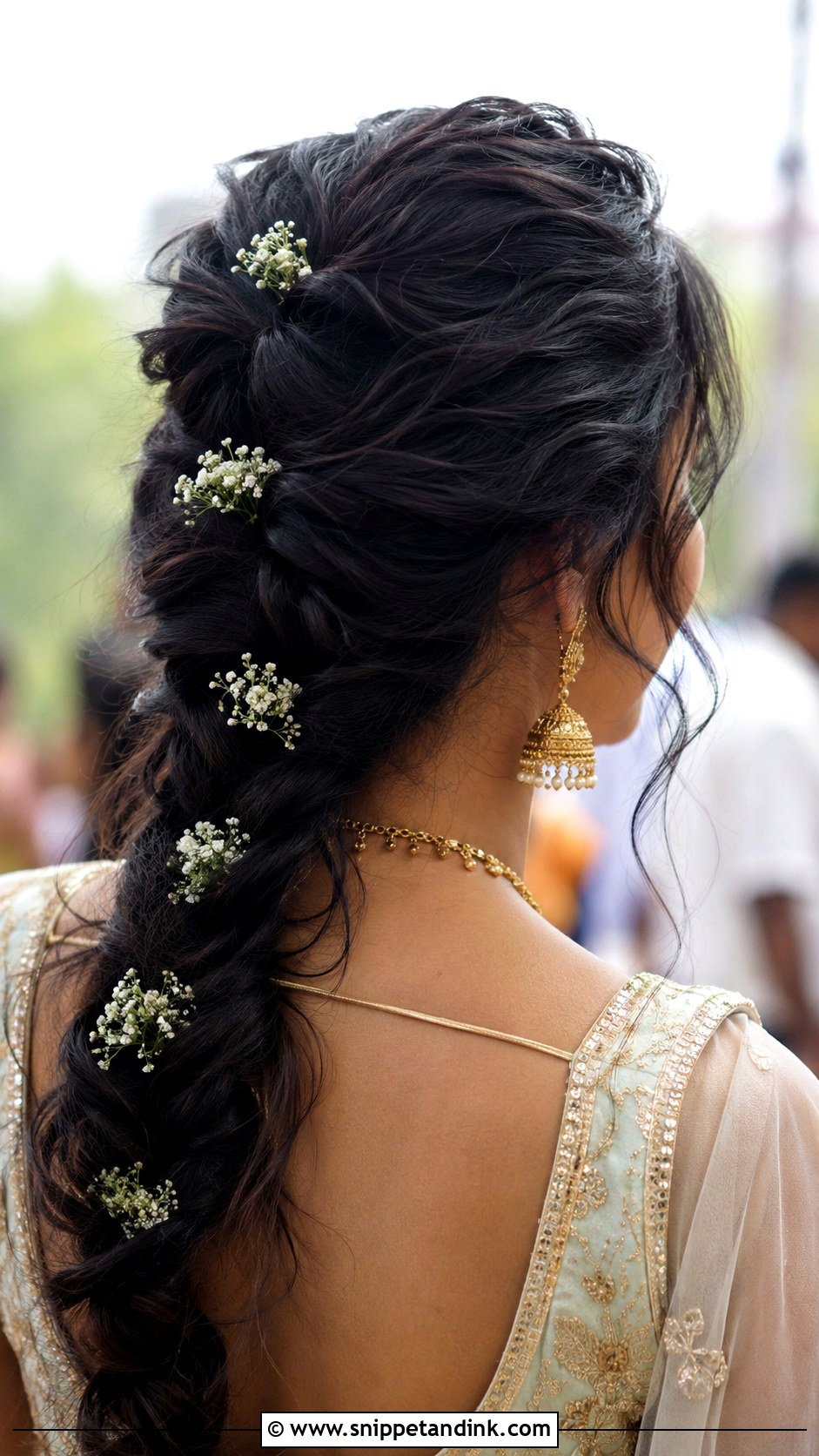
A French braid from crown to nape keeps everything tidy while still feeling soft once the strands are loosened. It’s the style I’d suggest to guests doing their own hair, since it’s easy to learn and hard to get wrong. Tiny flowers or pearl pins along the braid finish it. Medium to long hair suits it, and it lasts through daytime functions and long ceremonies.
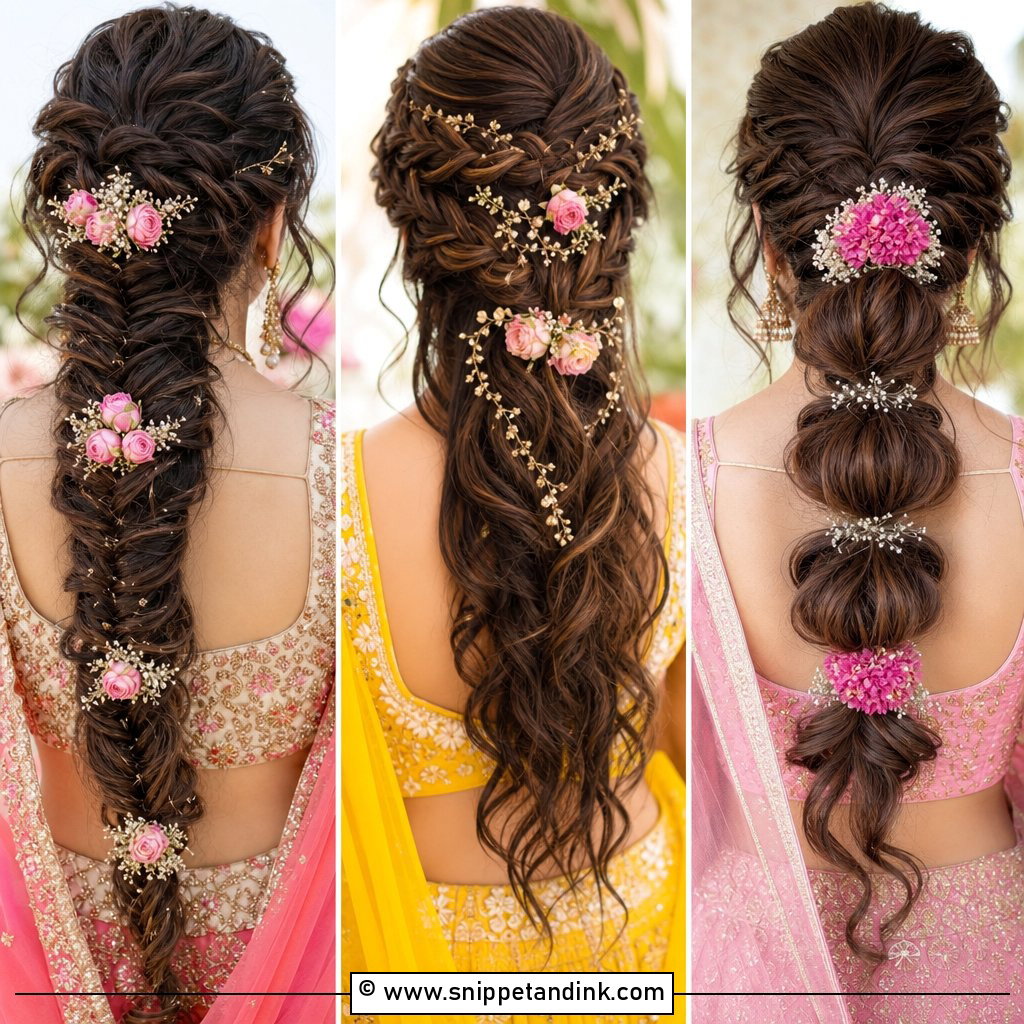
15. Messy Low Ponytail
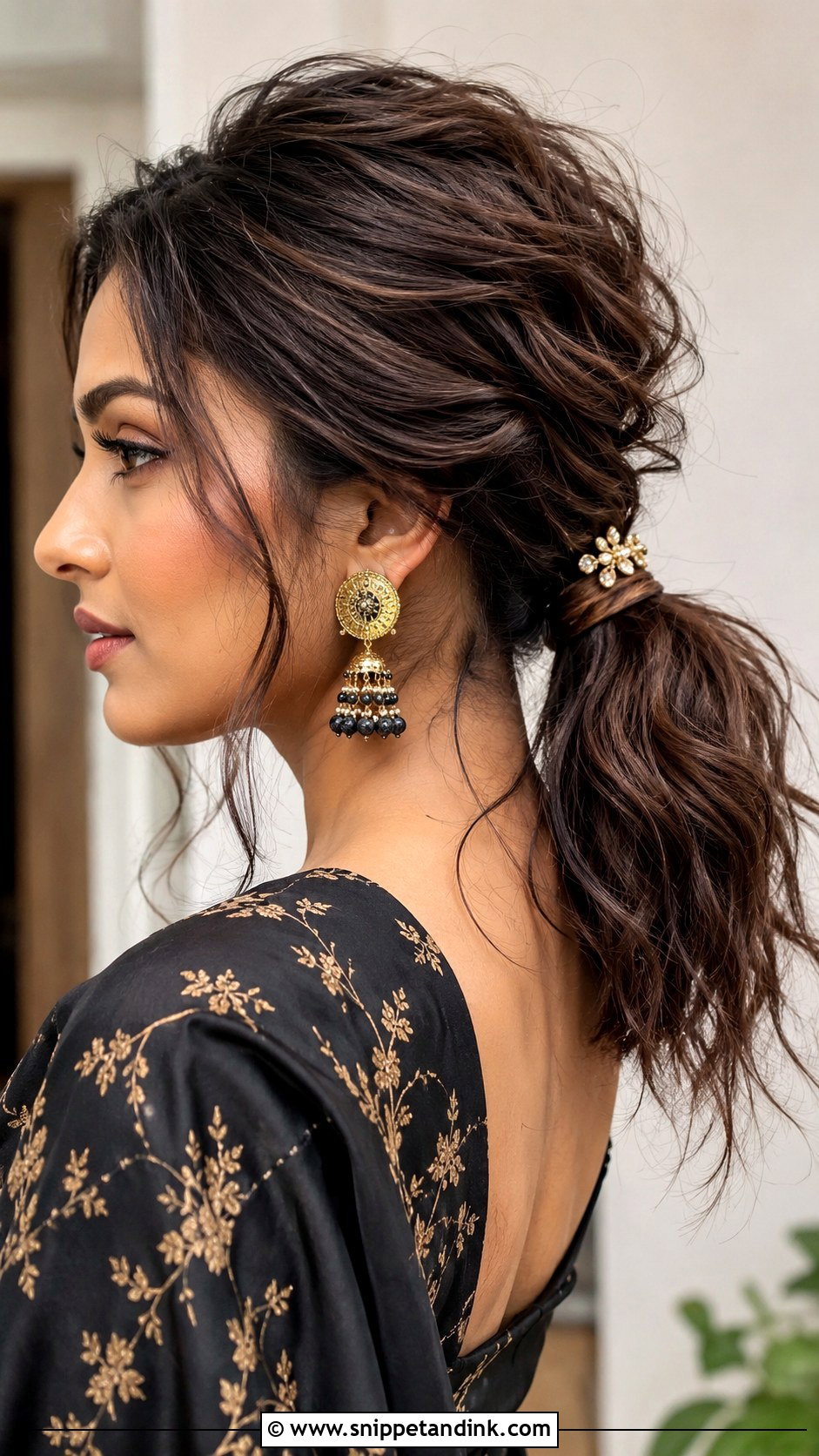
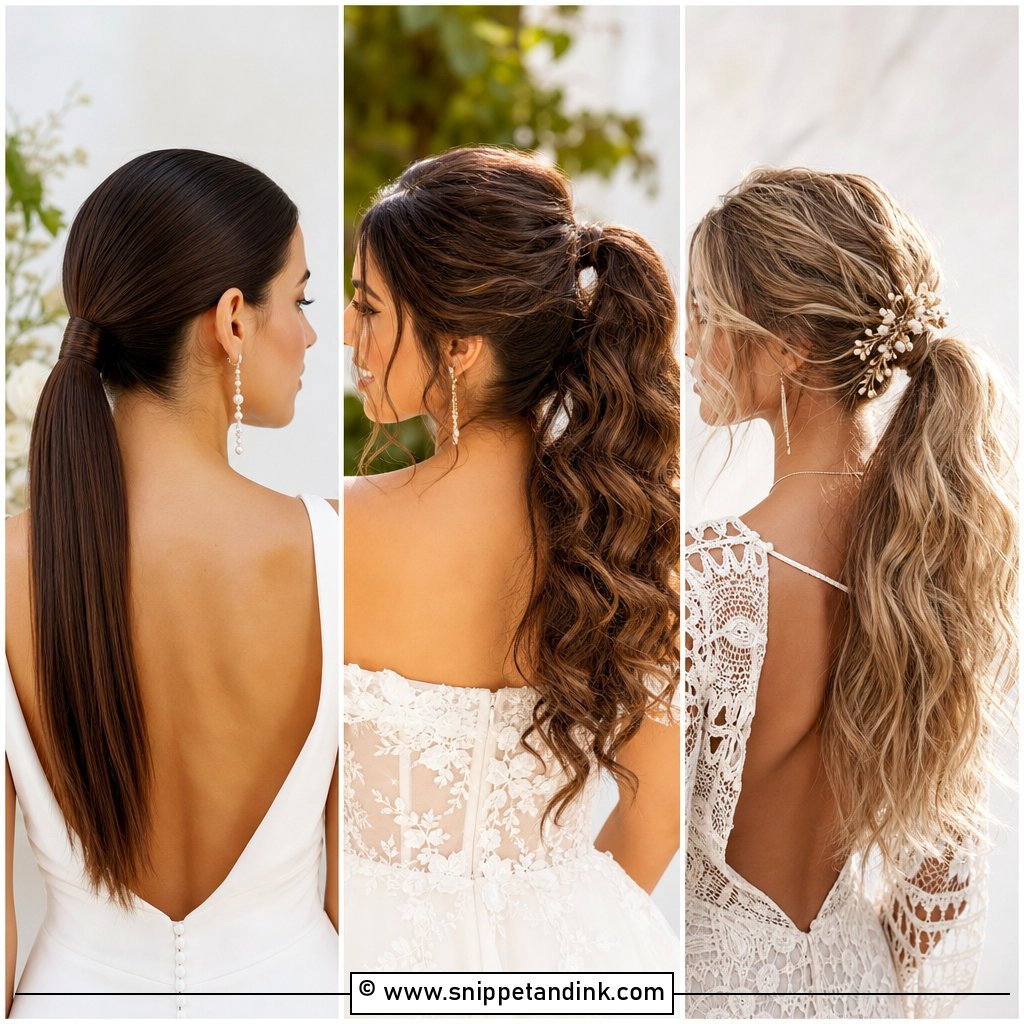
A low ponytail can look polished with the right texture. I tease the crown slightly, gather the hair low, and wrap a section around the band to hide it. Soft waves through the length stop it looking flat. It suits contemporary fusion outfits and statement earrings, and it’s my pick for anyone who wants a reception style they won’t think about once it’s done.
16. Messy Bun With Flowers and Leaves
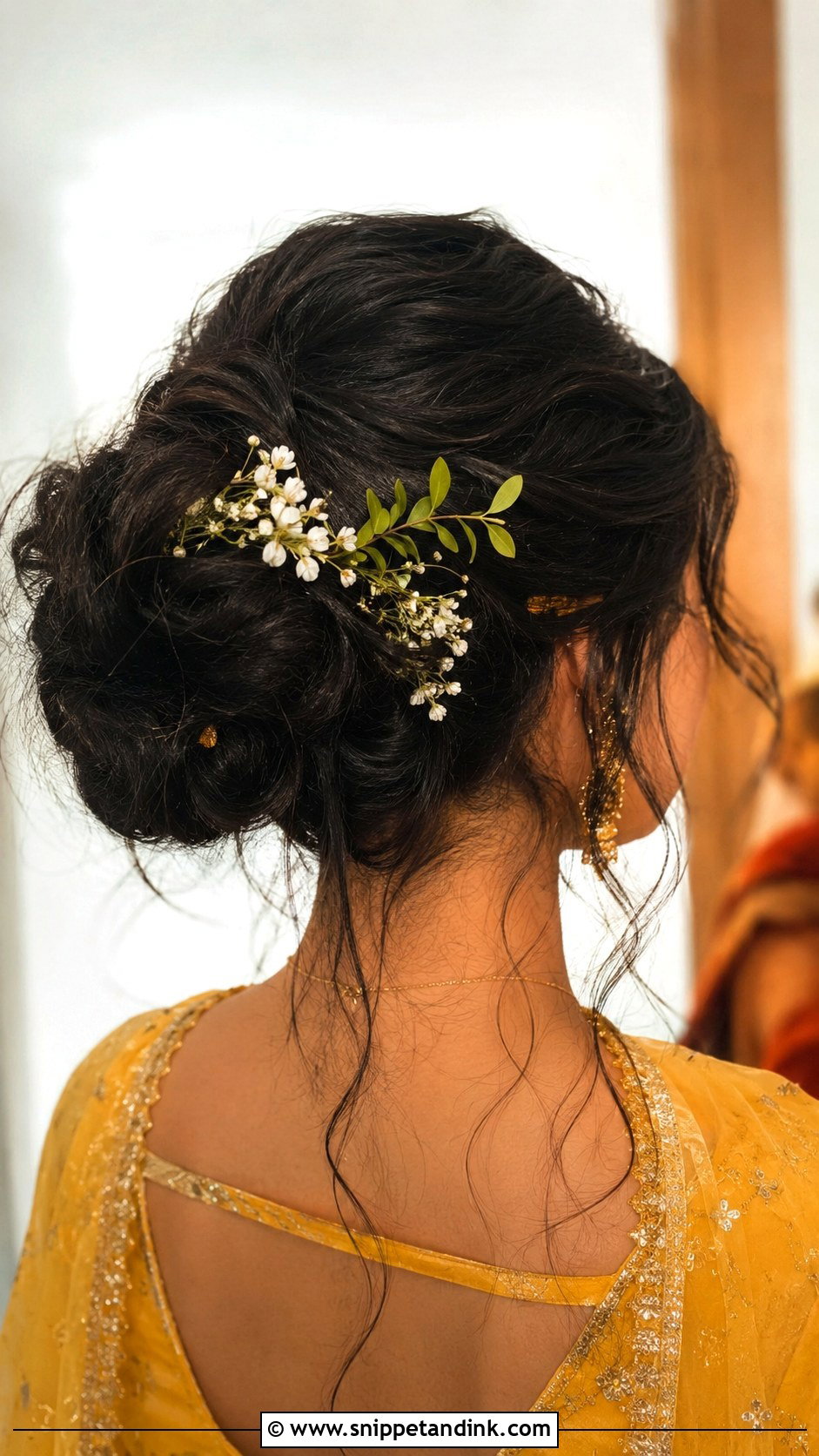
Mixing flowers and greenery in a bun gives an earthy look that suits daytime functions. I build the bun first and tuck short sprigs of leaves around it, then add small flowers between them. Greenery wilts slower than many flowers, so it often keeps the look fresh longer. Haldi and mehendi suit it well, and it pairs nicely with yellow, green, and pastel outfits.
17. Messy Side Swept Waves
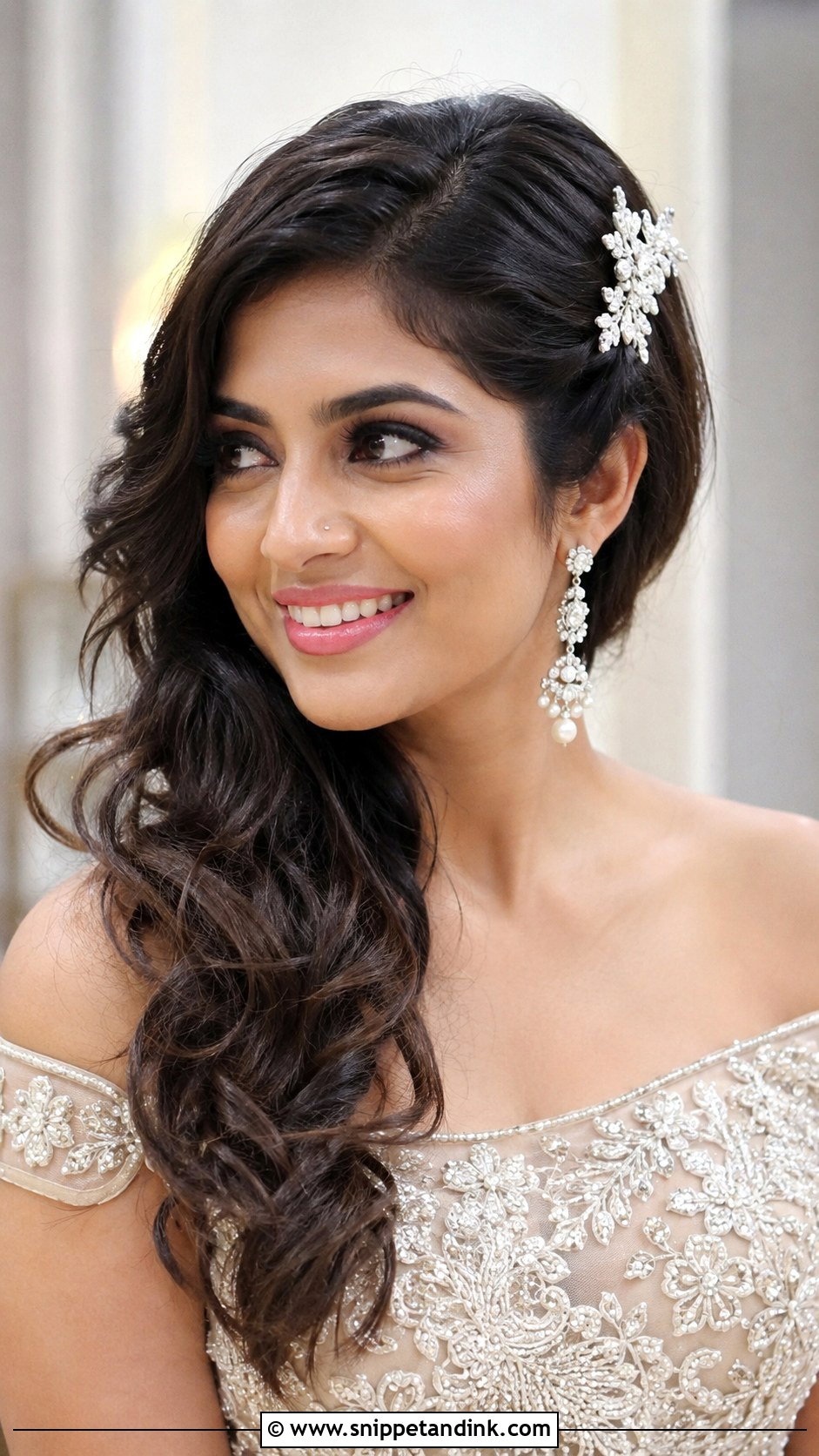
Waves swept to one shoulder give an old-Hollywood shape with an Indian outfit. The opposite side is pinned behind the ear with a jewelled clip or small flowers, which also shows off earrings. I curl the waves in one direction toward the shoulder so they fall together. It suits evening functions and reception parties, works on medium to long hair, and pairs well with off-shoulder blouses.
18. Messy Bun With Braided Crown
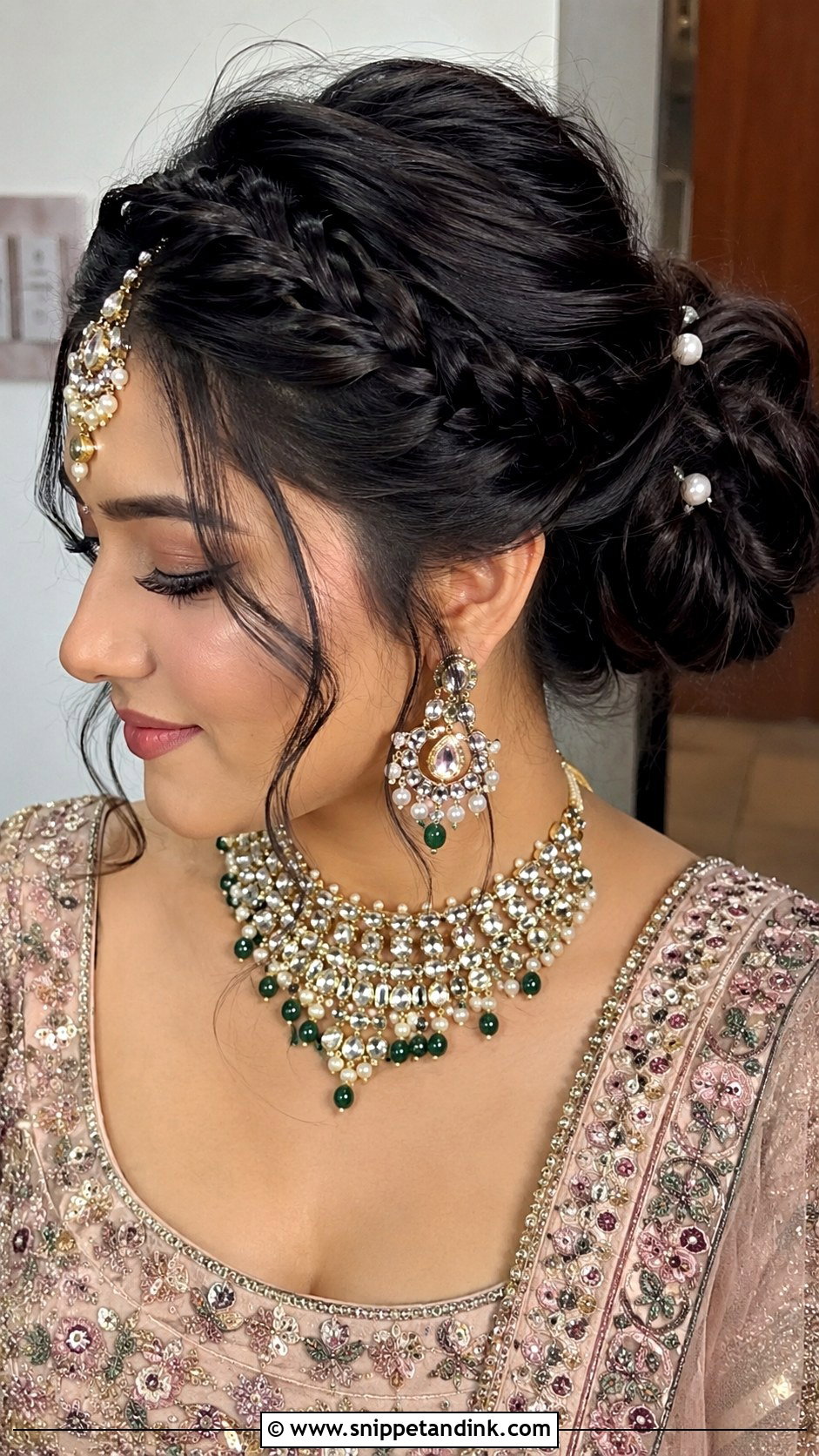
A braided crown across the top of the head with a soft bun behind adds a regal detail. I braid the crown firmly and pin it every few centimetres, then gather the rest into a bun at the back before loosening the braid. Small flowers or pearls slot along it. It suits weddings and engagement functions, on long hair, and holds a tikka chain well if the part is centred.
19. Messy Top Knot
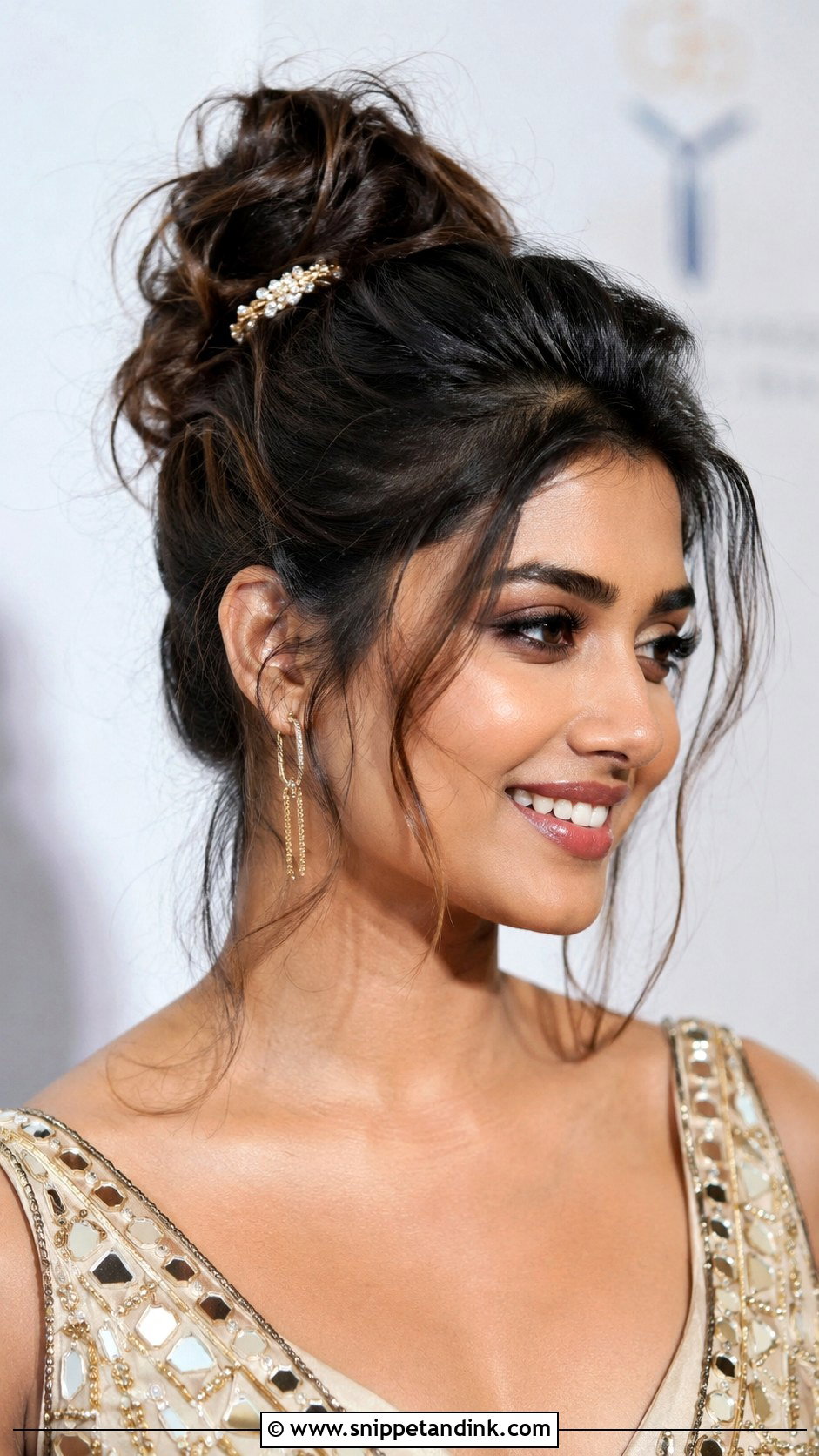
A high top knot is the most modern option here, and it suits fusion weddings and cocktail functions. I build it on a teased crown base so it doesn’t roll backwards, and pull a few strands out at the front. It shows off the neck and earrings. It’s a poor match for a heavy dupatta draped over the head, which crushes the knot, so I’d keep it for Indo-Western outfits and gowns.
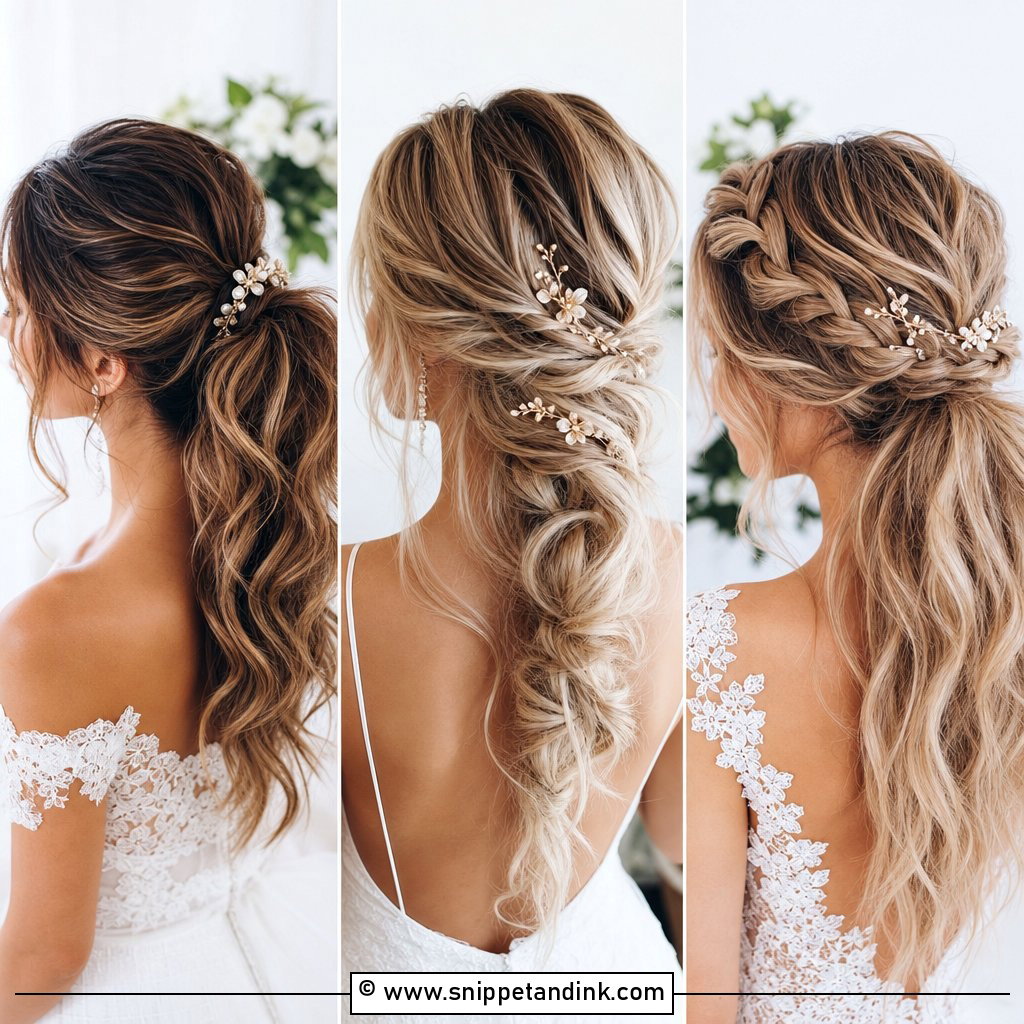
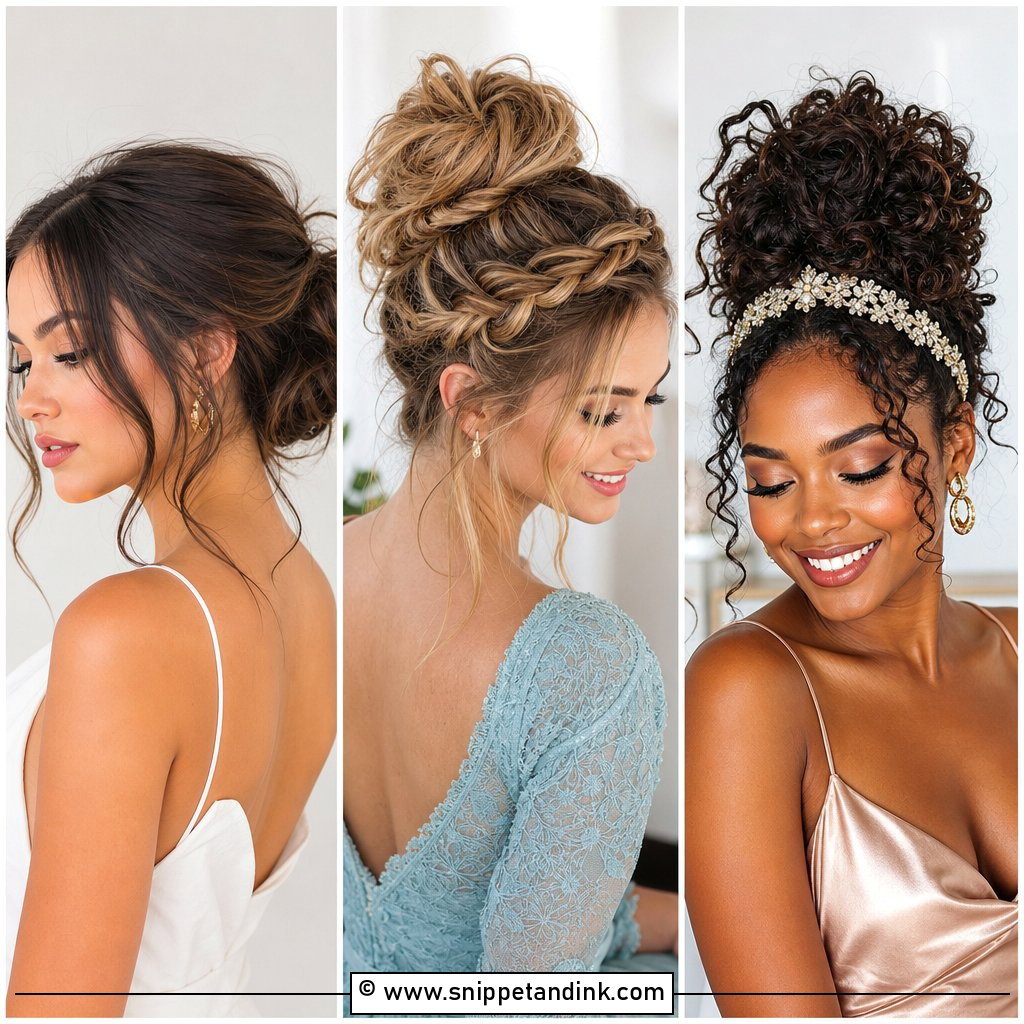
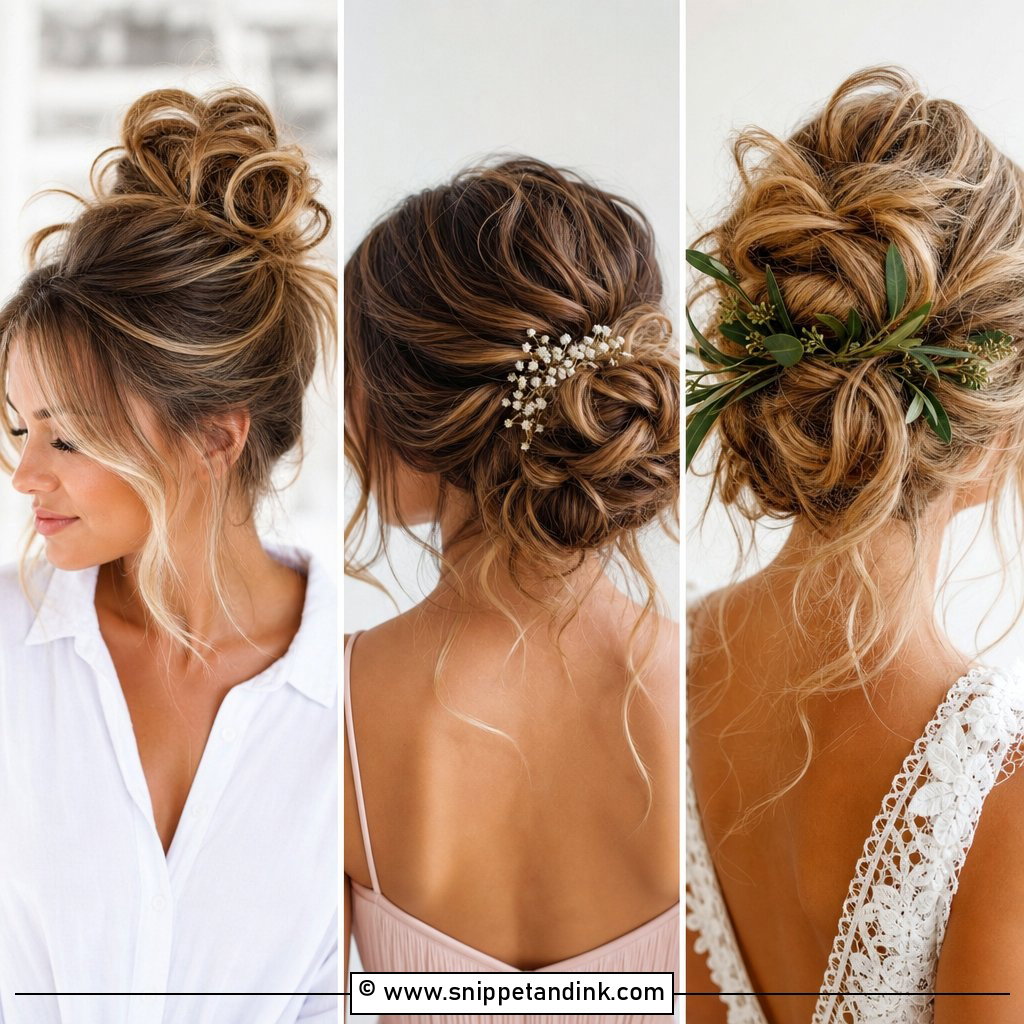
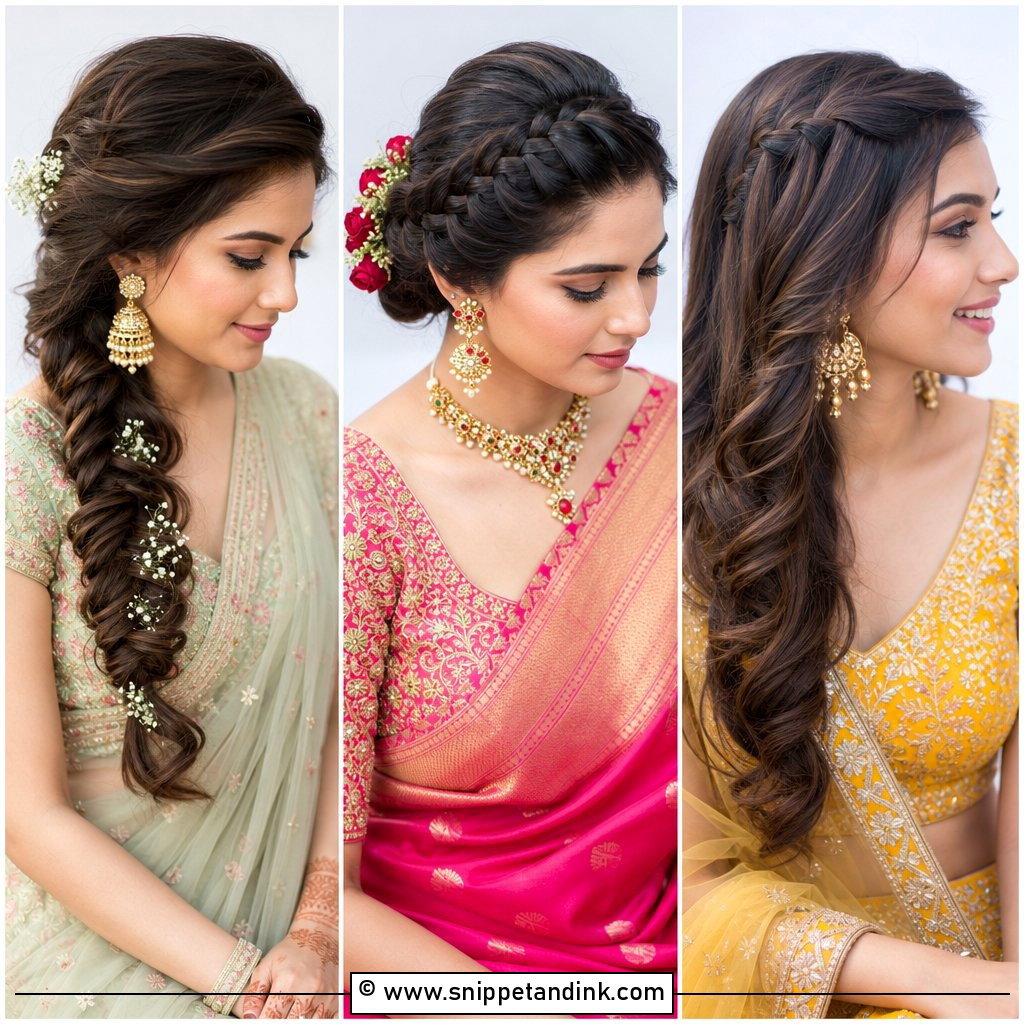
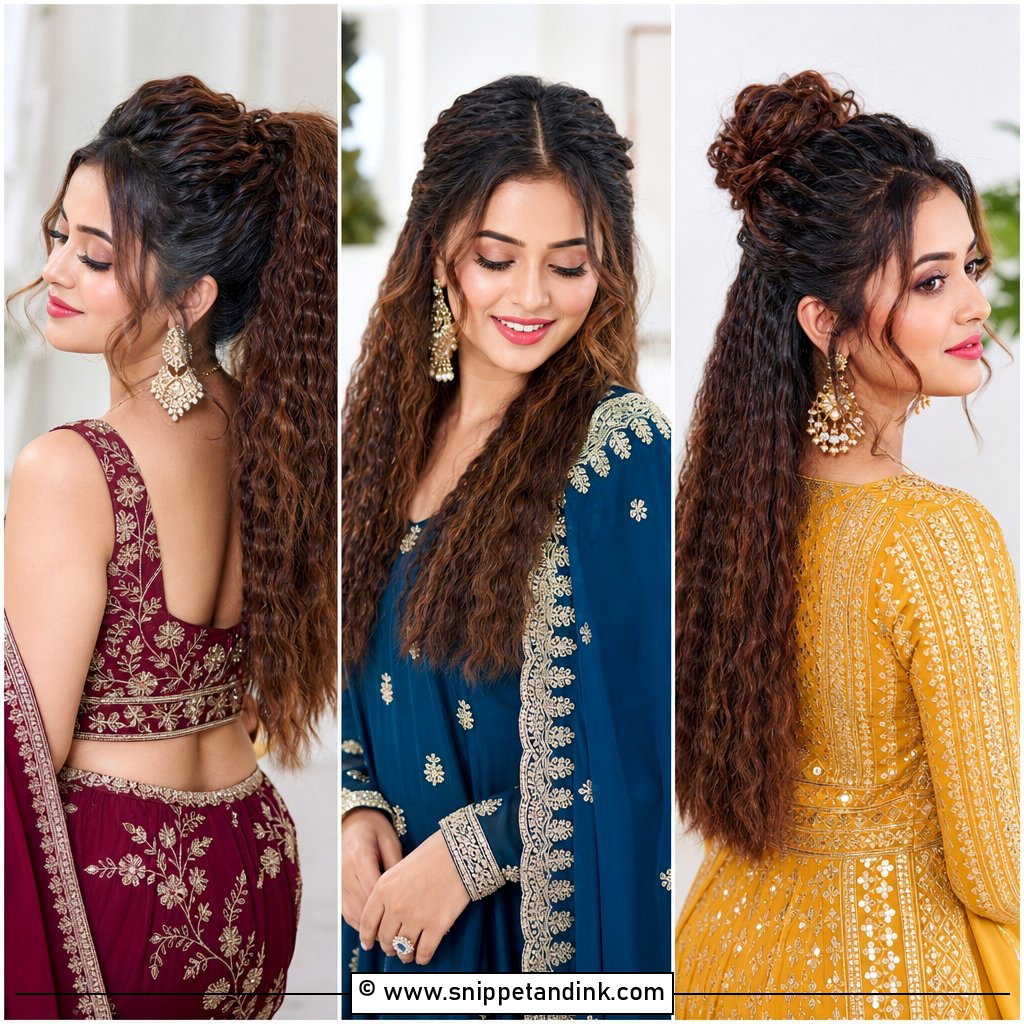
20. Messy Bun With Maang Tikka and Gajra
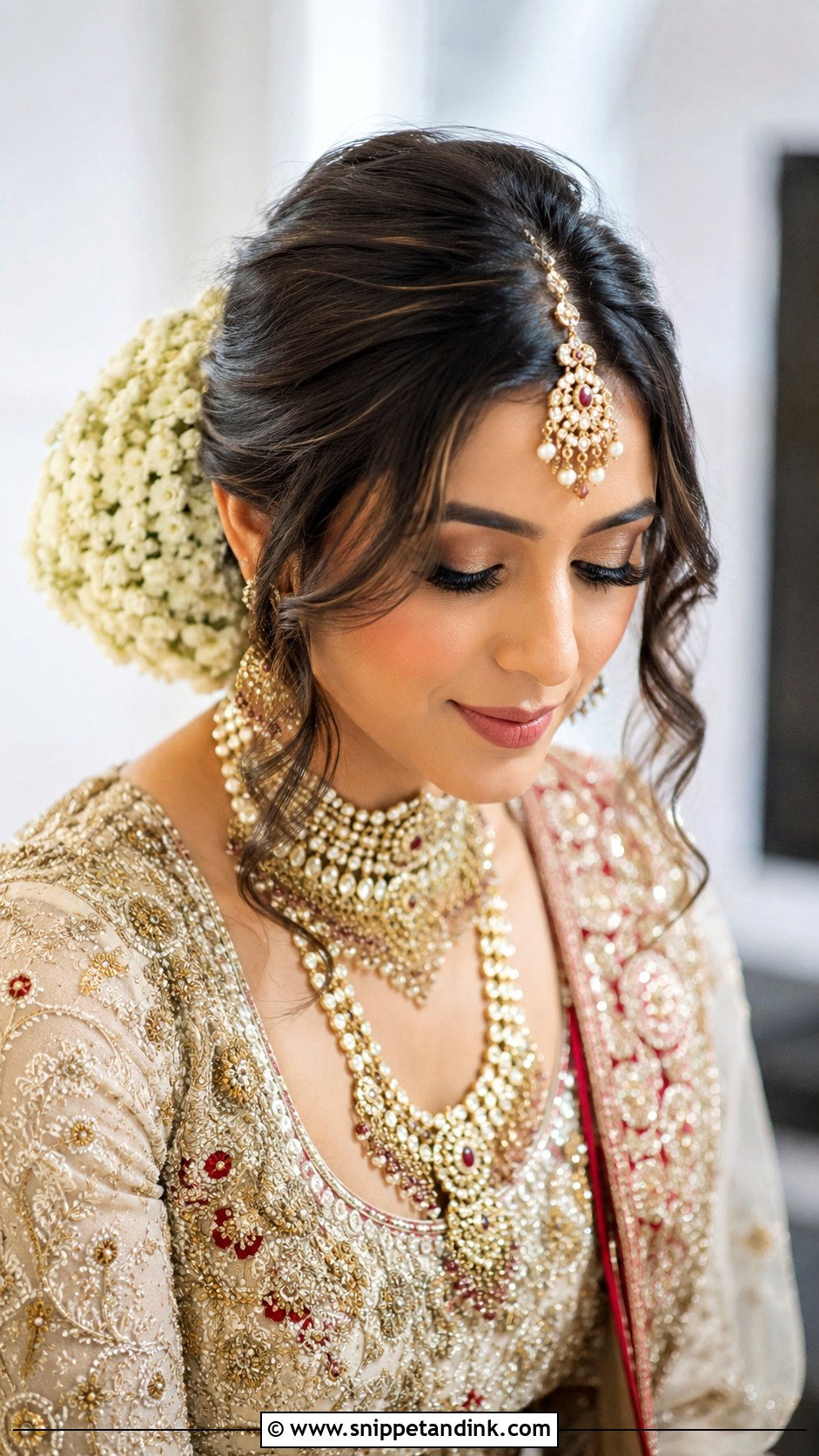
The traditional bridal pairing is a low bun with both a maang tikka and a gajra. I set the tikka first, build a firm low bun, then wrap the jasmine and pin the dupatta last, so nothing pulls against anything else. A few curls stay loose at the face. It suits the main ceremony with heavy lehengas and gold jewelry, and it carries fragrance and sparkle in one style.
Fresh Jasmine Wilts Fast, So Time the Gajra
Jasmine smells wonderful and browns quickly in heat. I ask for gajras to arrive the morning of the function, wrapped in a damp cloth and kept somewhere cool until I’m ready to attach them. I pin them through the thread with U-pins rather than wrapping them tightly, which bruises the buds. A light mist of water before you walk out helps them last a little longer.
Haldi Paste, Sangeet Dancing, Then the Pheras
Each function asks something different of your hair, and you rarely need to repeat a look.
- Haldi: wear hair pinned up and high, or plan to wash it afterwards, because turmeric paste gets everywhere.
- Mehendi: you’ll sit for hours, often leaning back, so a braid or low bun is more comfortable than a high knot.
- Sangeet: open curls or a side bun are fine here, as long as they’re sprayed to handle dancing.
- Wedding: the firm low bun with tikka, gajra and dupatta anchoring.
- Reception: a softer style, often a ponytail or waves, once the heavy jewelry comes off.
If functions run back to back, I’d keep second-day hair rather than washing between them. Slightly used hair grips pins better, and it saves an hour of drying time you probably don’t have.
Plan Around the Heaviest Piece You’ll Wear
A messy style is forgiving, which is exactly what a long Indian wedding needs. Plan the hair around the heaviest thing it has to carry, whether a dupatta, tikka or gajra, and test that combination at a trial. Choose something you can dance in, add your flowers or jewels, and enjoy the celebration.
You'll Like These Ideas:


Leave a Reply