
A French braid is one of the most secure things I can put in a bride’s hair. Because every section is anchored to the scalp as it goes, the style holds through a veil, a hug line and a dance floor far better than loose curls alone. It also frames the face without hiding it. The twenty looks below cover polished updos, loose side braids, crowns and whimsical halo braids, with notes on which hair lengths and textures each one actually needs. Bring the ones you like to your trial and we can test them on your real hair.
Giving Silky Hair Enough Grip to Braid
A French braid is only as strong as the hair it’s made from. Freshly washed, conditioned hair is slippery, and plaits made on it tend to loosen within a few hours. I ask brides to wash the day before the wedding, not the morning of, and skip heavy conditioner on the lengths.
- Texture spray or a light dry shampoo at the roots gives each section something to hold.
- Heavily layered hair needs a few extra pins along the braid, since short layers slip out of the sections.
- Curly and coily hair braids best when stretched first, by blow-drying or a band set, so the braid doesn’t shrink unevenly.
- Hair past the shoulders handles any style here. Shorter cuts suit braids that run along the scalp and finish in a pinned bun.
Extensions are worth discussing early. Clip-ins add thickness to a braid, but they need to be in at the trial so we can test how they sit and where the clips hide.
1. French Braid Updo for Long Hair
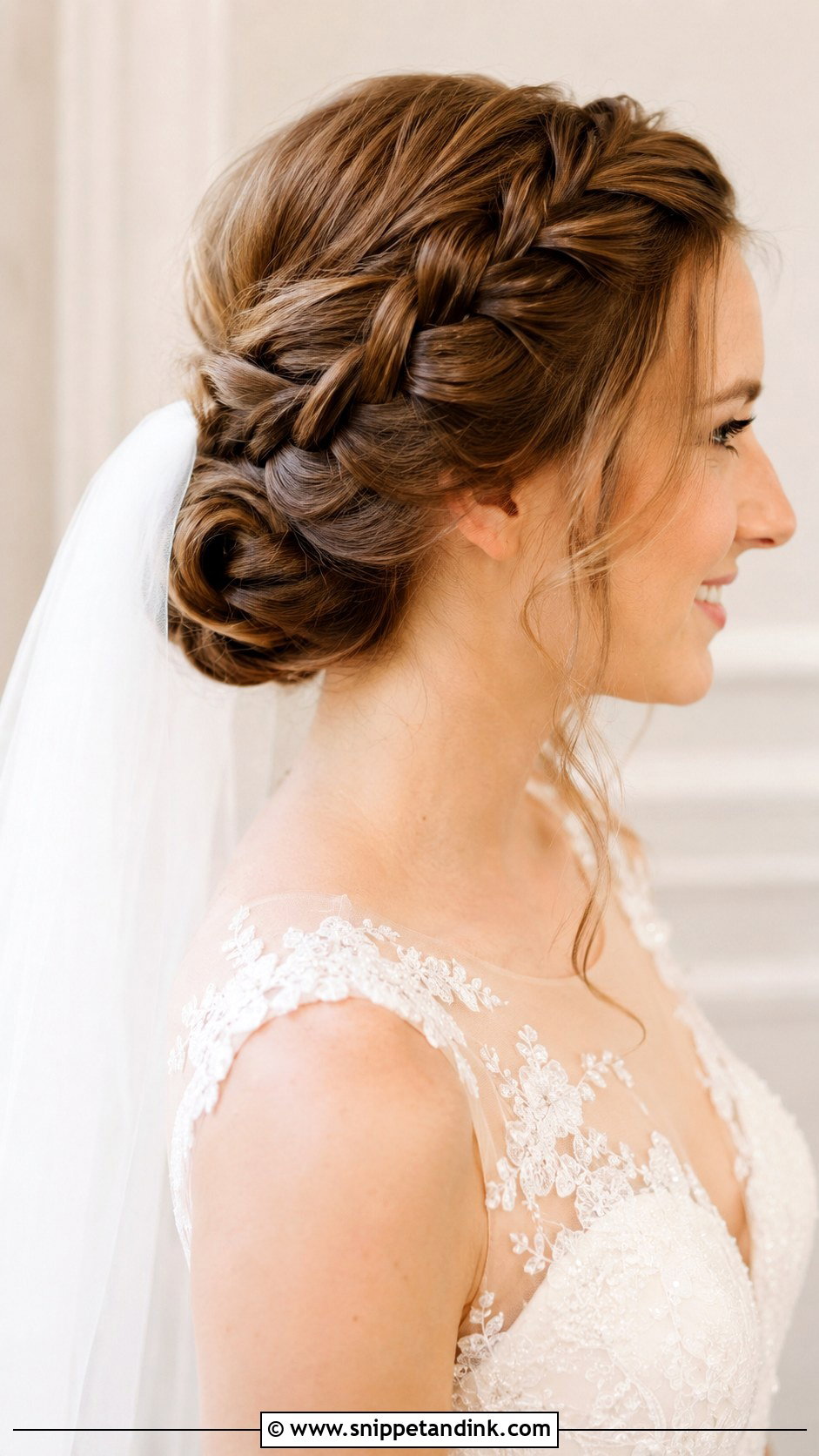
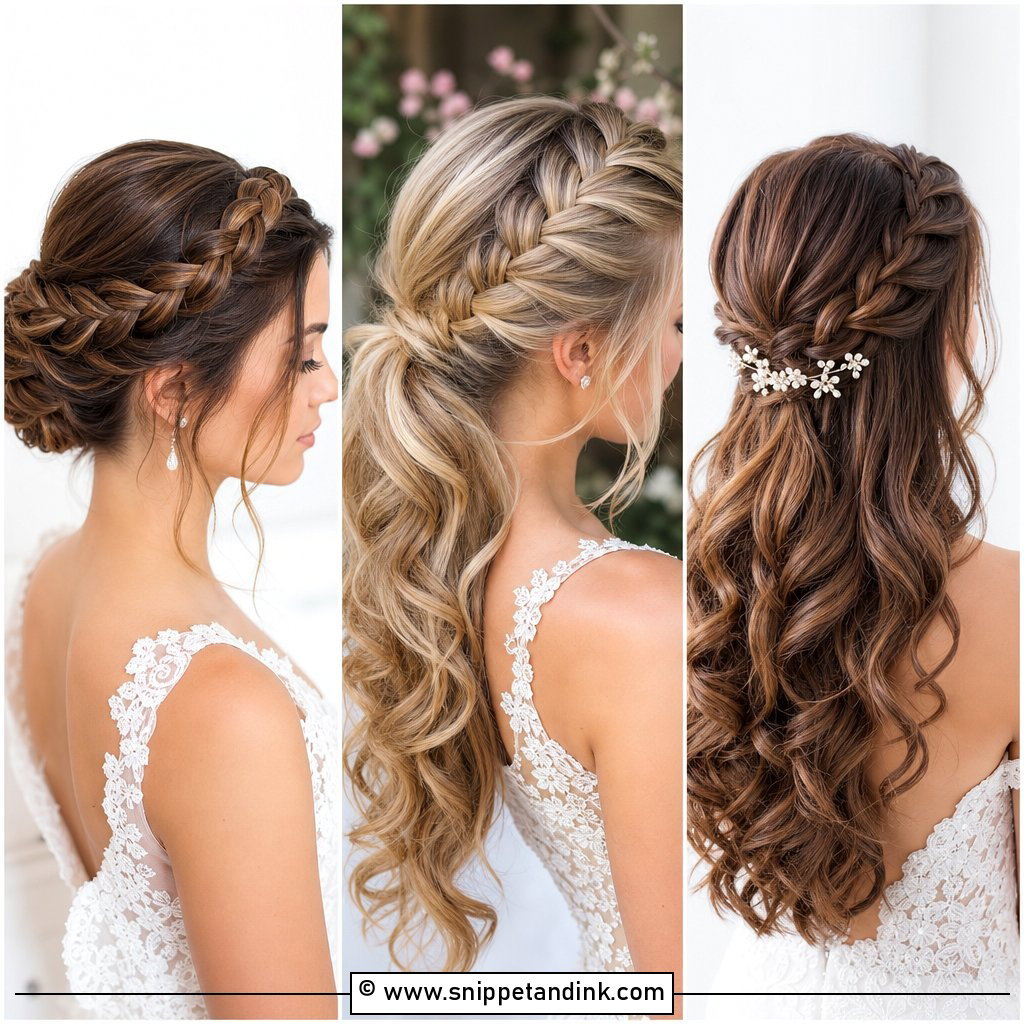
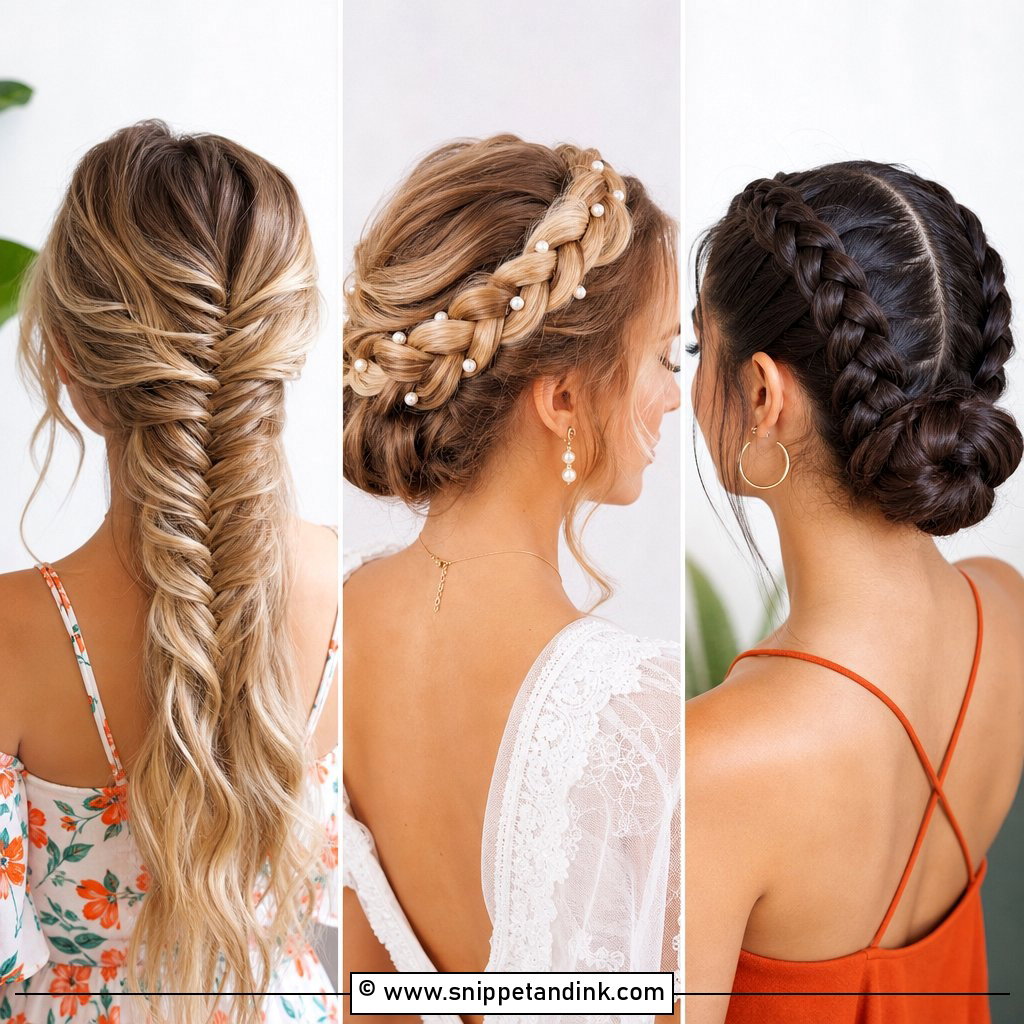
This is the braid I’d book for a long-haired bride who wants every strand in place at 11 p.m. The braid starts at the crown, travels down the back of the head and tucks into a low bun or rolled chignon, so the length is used up rather than left to frizz. Long, heavy hair is the reason it works and also the risk: a big bun can drag, so I anchor it with crossed pins into the braid itself, not just into loose hair. A few soft pieces at the face keep it from looking severe. It sits comfortably under a veil or alongside fresh flowers, and the back view is as finished as the front.
2. Loose French Side Braid
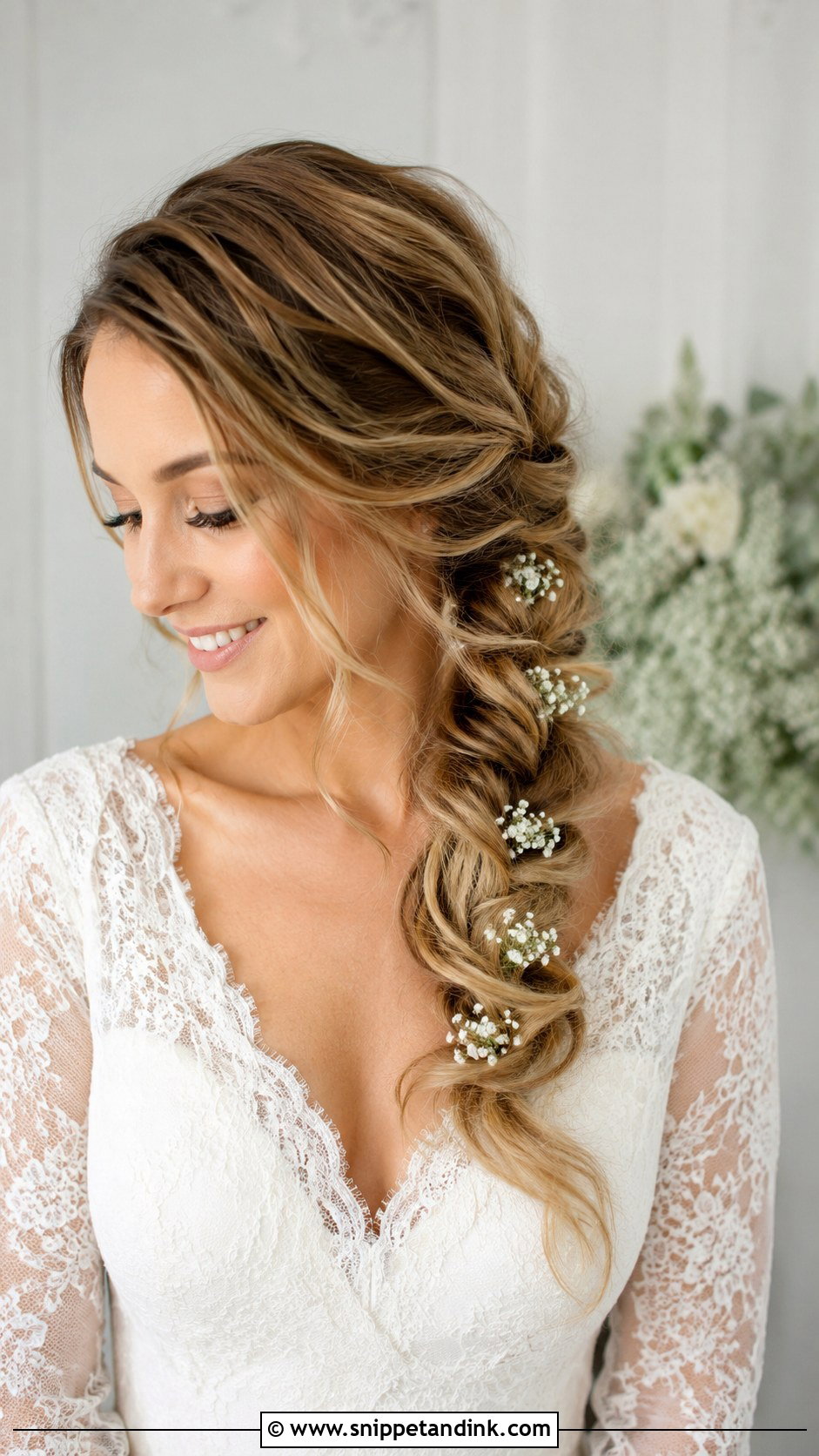
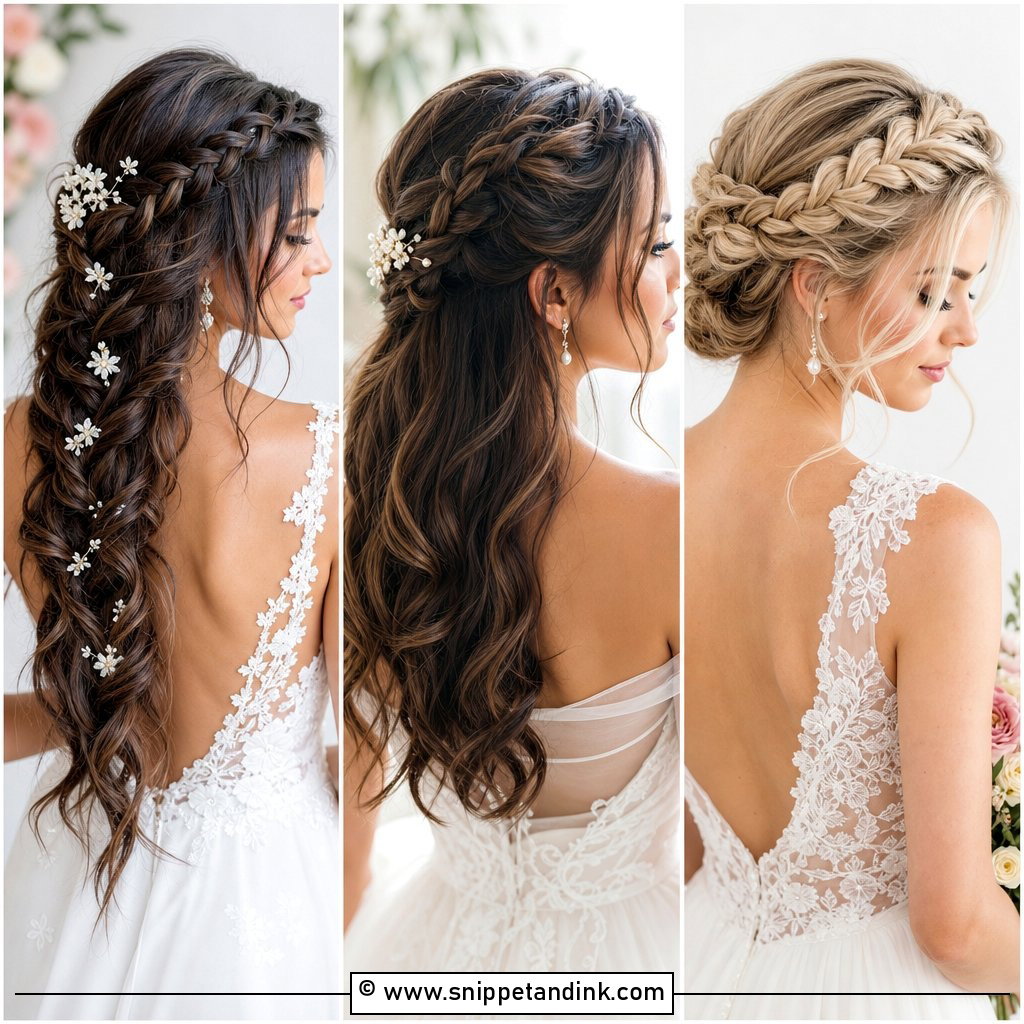
Starting near the temple and running diagonally to one shoulder, this side braid gives soft texture without a full updo. The airy look comes from gently pulling each loop wider once the braid is secured, and that step needs care. Pull too much on fine hair and the braid loses its shape by the reception. I set it with a light spray first, then loosen from the bottom up. Garden ceremonies suit it, with a few face-framing tendrils left out and some baby’s breath tucked into the plait, which is one of the few small flowers that stays fresh for hours out of water. It needs at least medium length to reach the shoulder.
3. French Braid Halo Crown
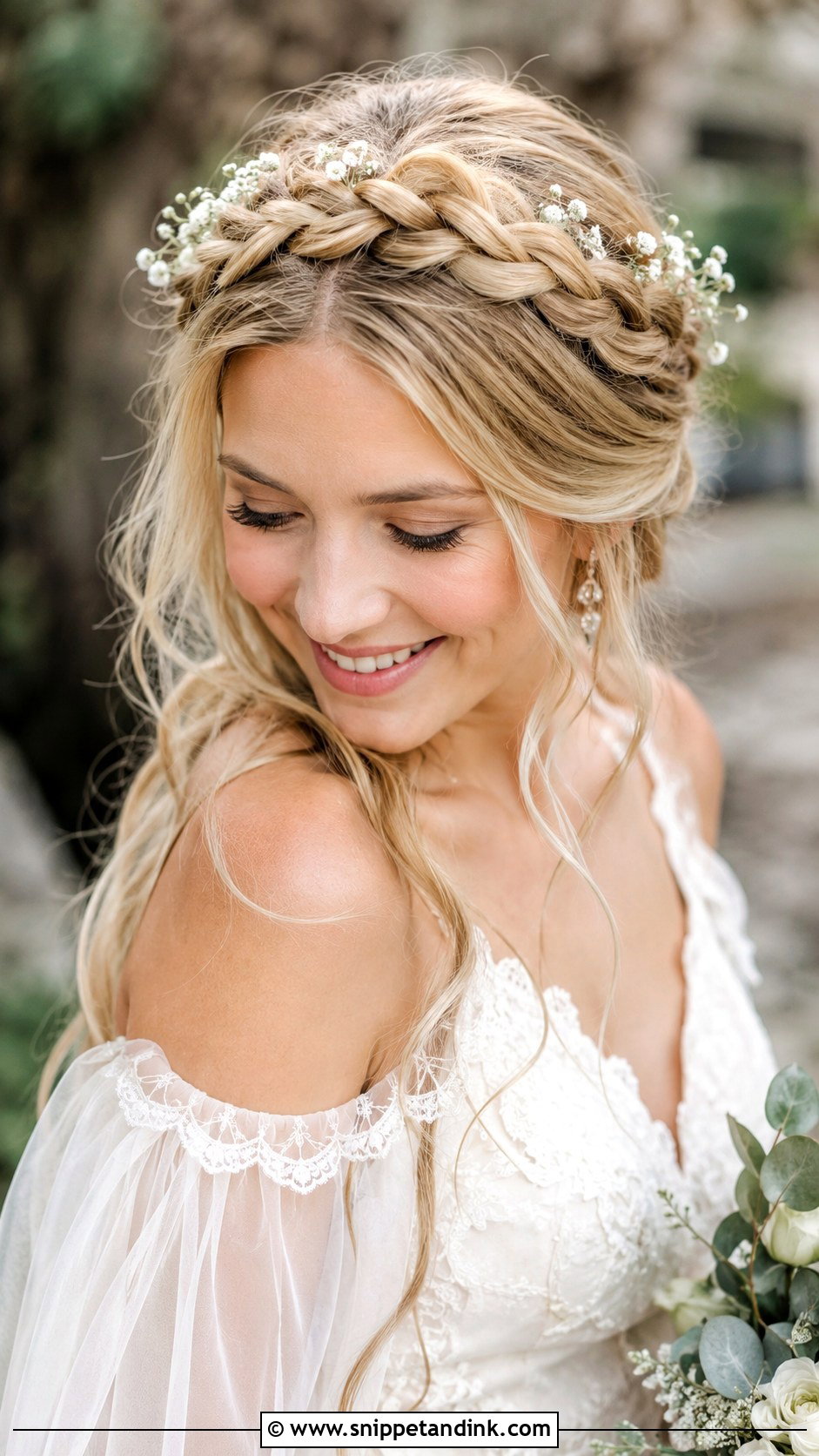
Wrapped all the way around the head, a halo braid works like a crown made from your own hair. It suits boho and garden weddings, and it keeps hair off the neck, which matters at a warm outdoor ceremony. The honest limit is length: to circle the whole head you usually need hair well past the shoulders, or a clip-in piece to finish the loop. Flowers can sit along the braid, and the halo can sit above loose waves or close up into a full updo for a soft, goddess-inspired bridal look.
4. Half-Up French Braid
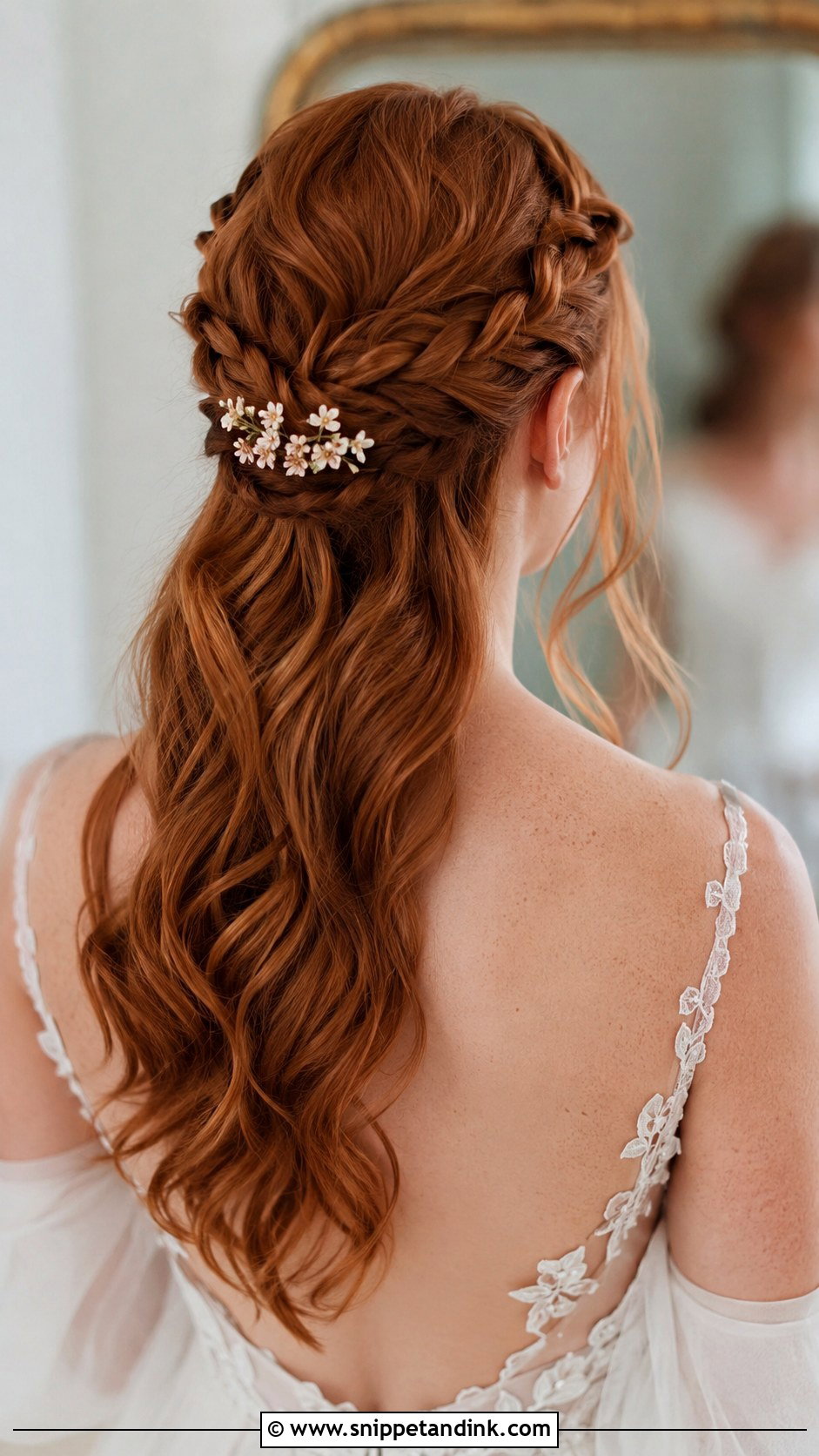
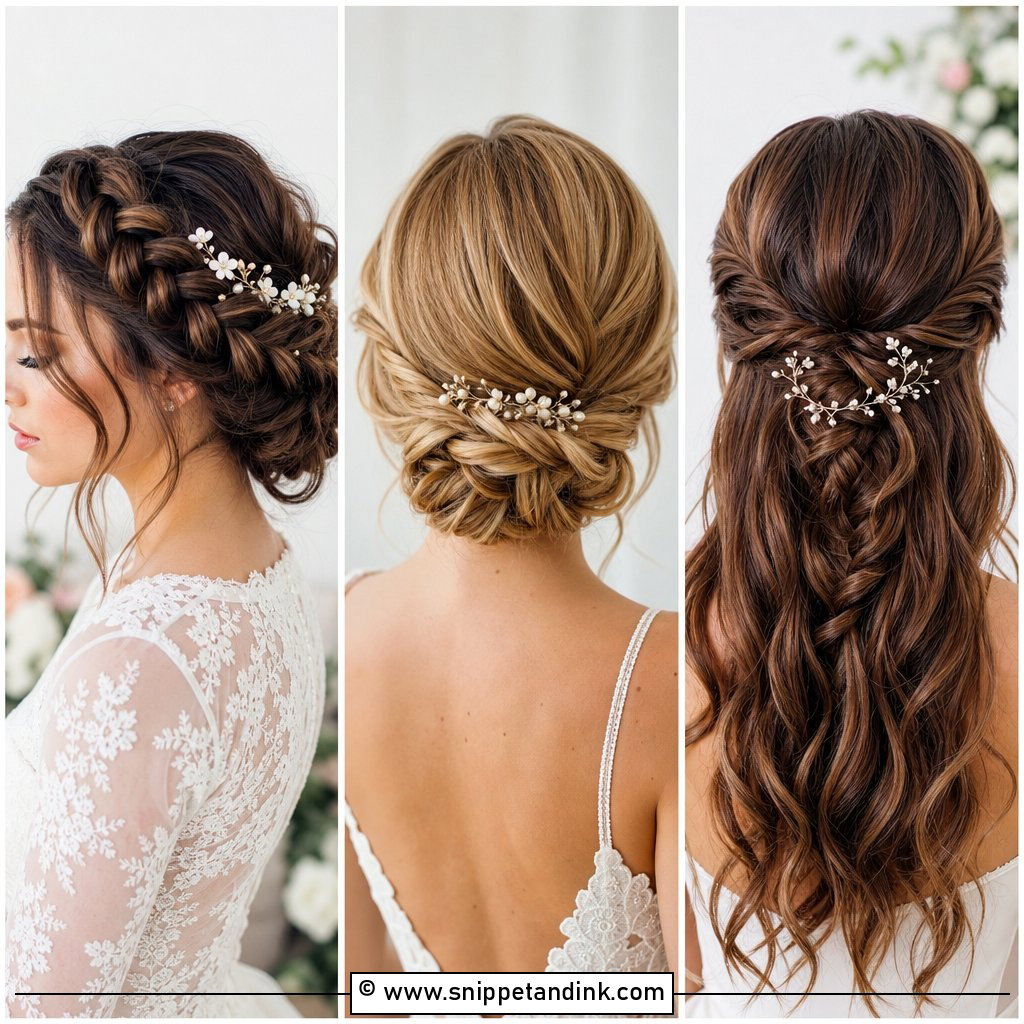
Half-up is the answer for a bride who wants her length on show but her face clear. The braid starts at the crown and pulls the top section back, while the rest falls in waves or straight. What I watch for is weight. On very long, heavy hair the loose lengths can tug the braid downward through the day, so I secure the meeting point with a small elastic hidden under a decorative clip or a few flowers. It suits most themes and sits under a veil without any fuss.
5. French Braid Low Bun
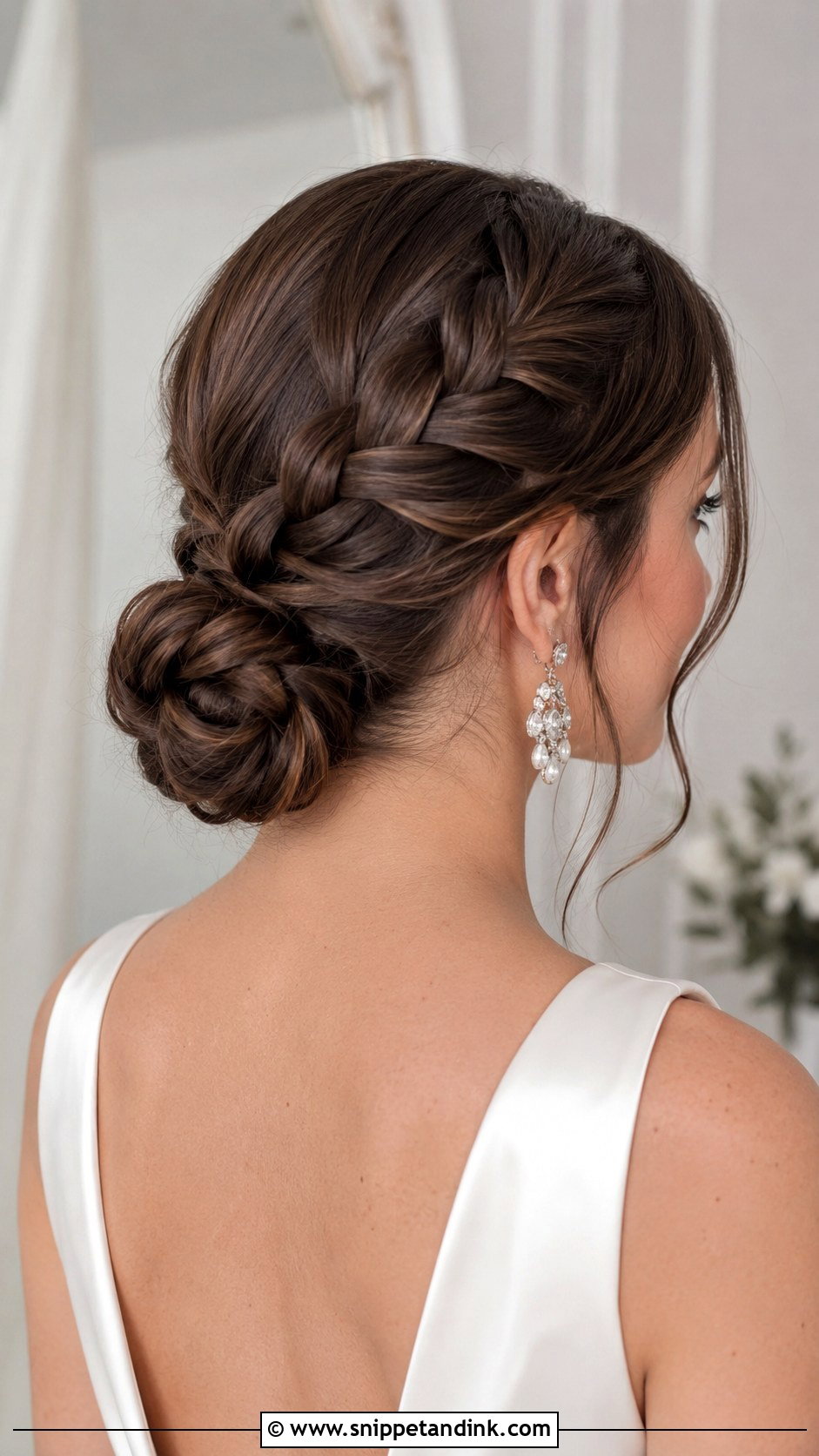
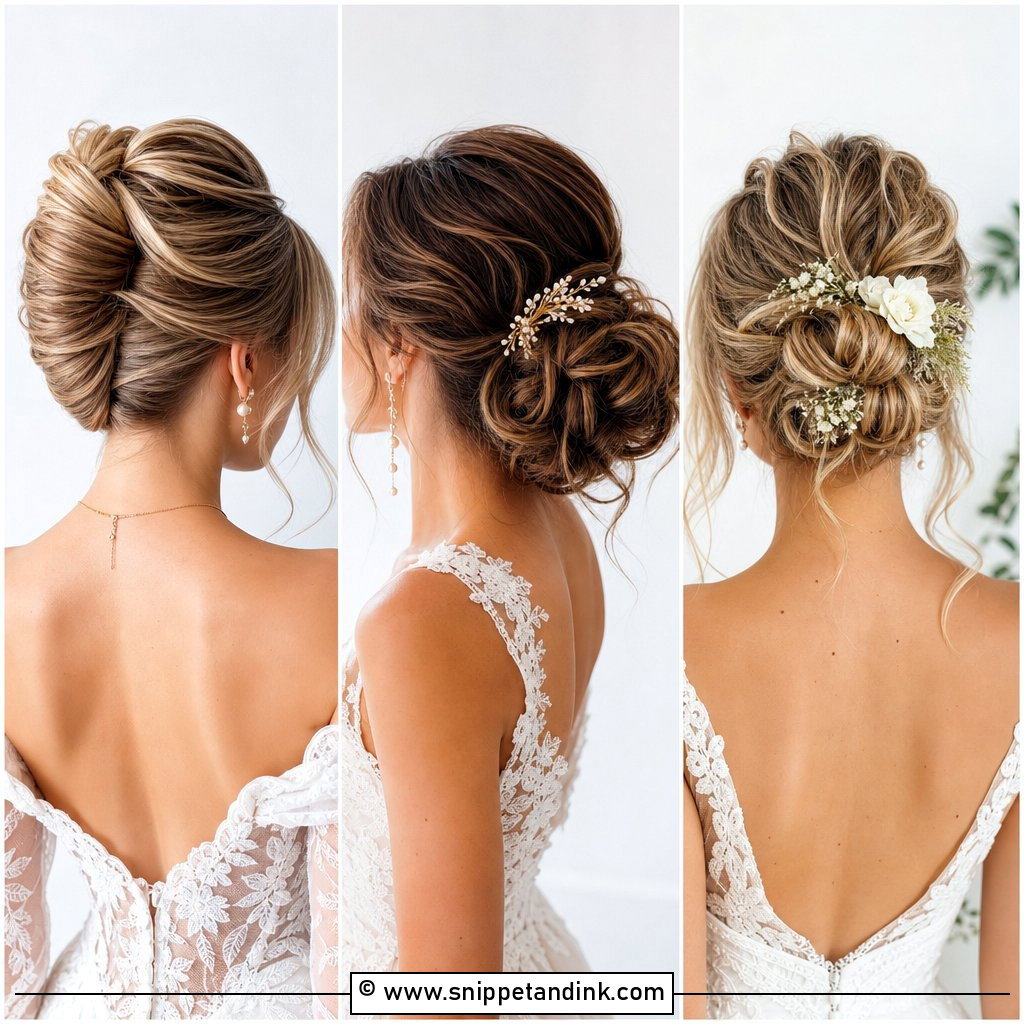
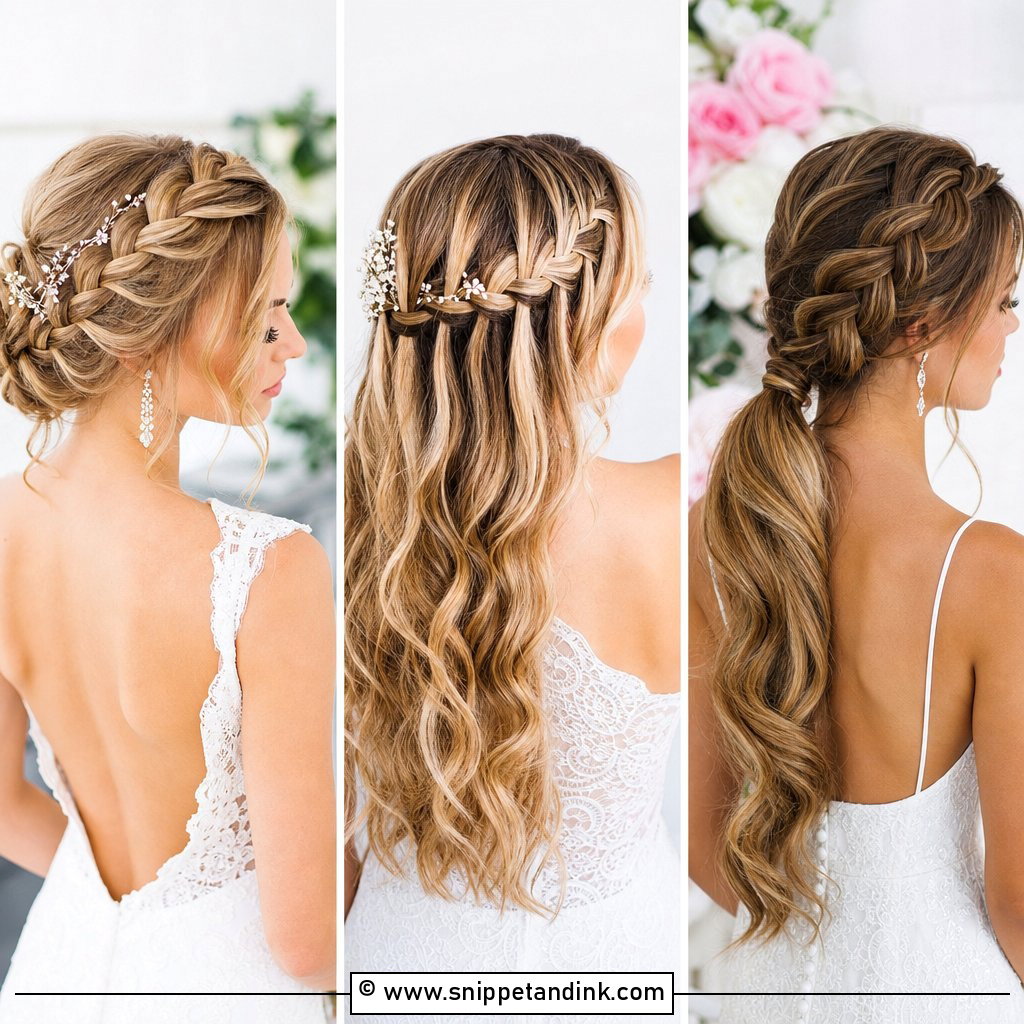
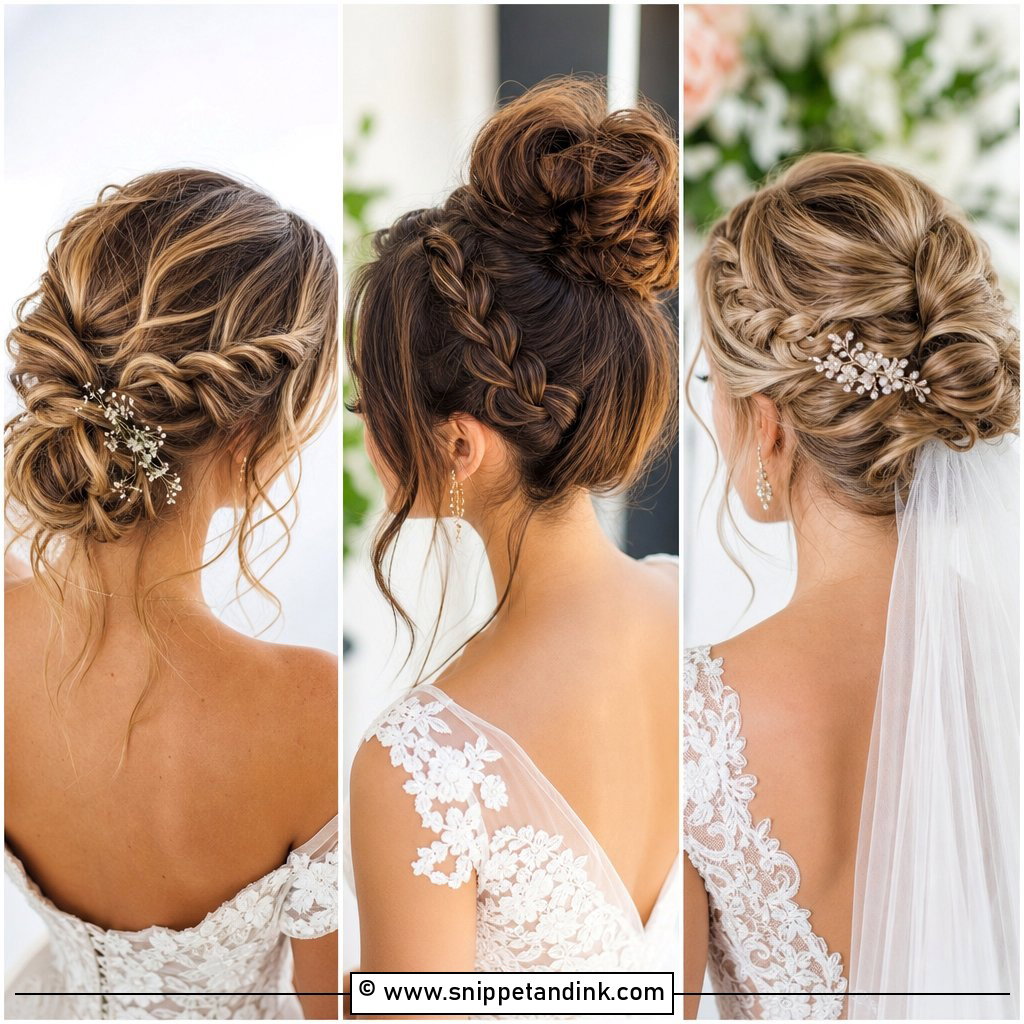
A French braid sweeping back into a smooth bun at the nape is the classic I recommend most often for formal or traditional weddings. The braid gives texture, the bun keeps the outline clean, and a couple of loose tendrils near the ears soften the whole thing. A low bun also leaves the ideal anchor point for a veil comb just above it. I’d skip it only if your hair barely reaches the collar, since a tiny bun at the nape can look like a stub; a padded bun form fixes that if you love the shape.
6. Dutch Braid Wedding Updo
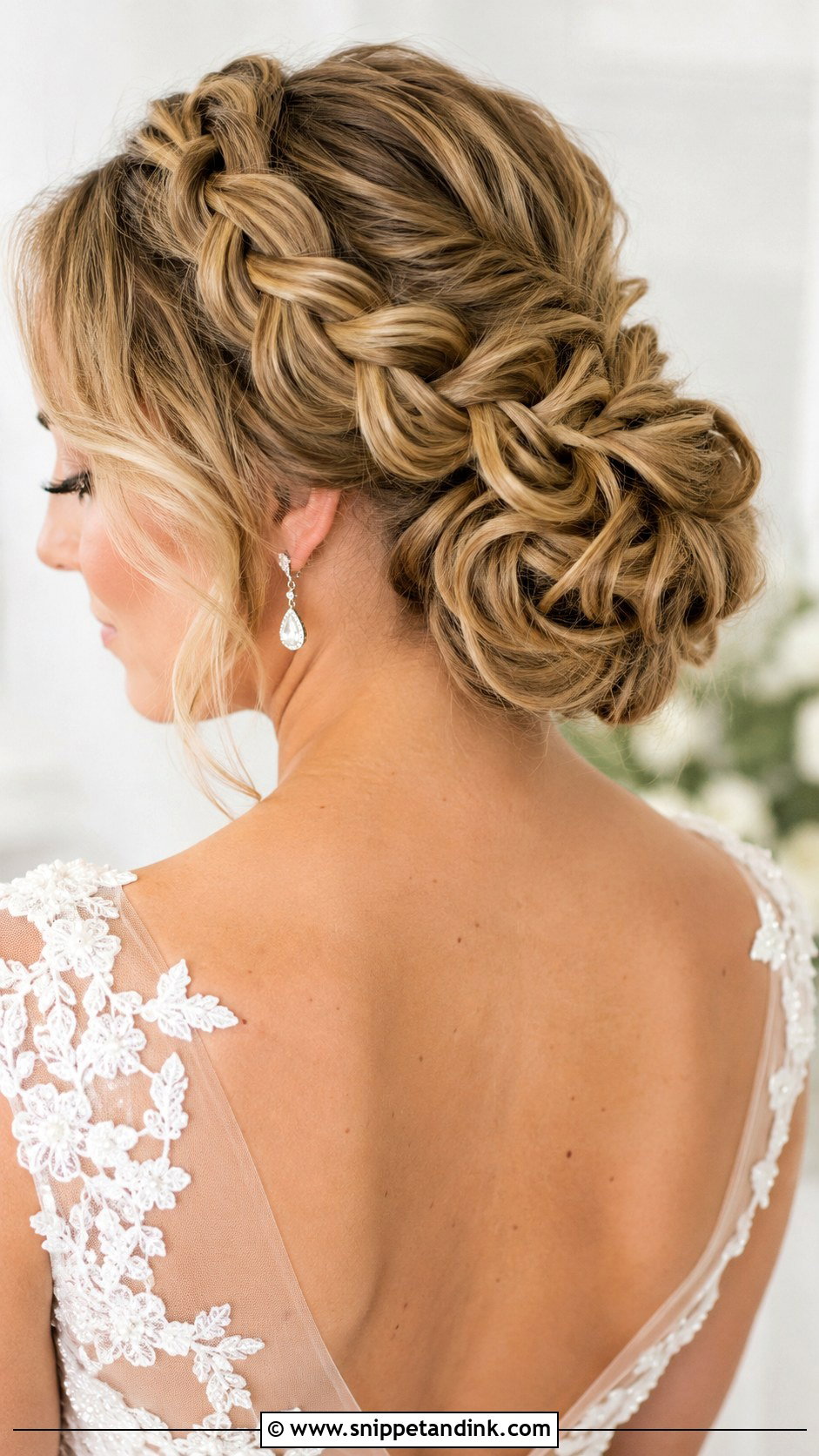
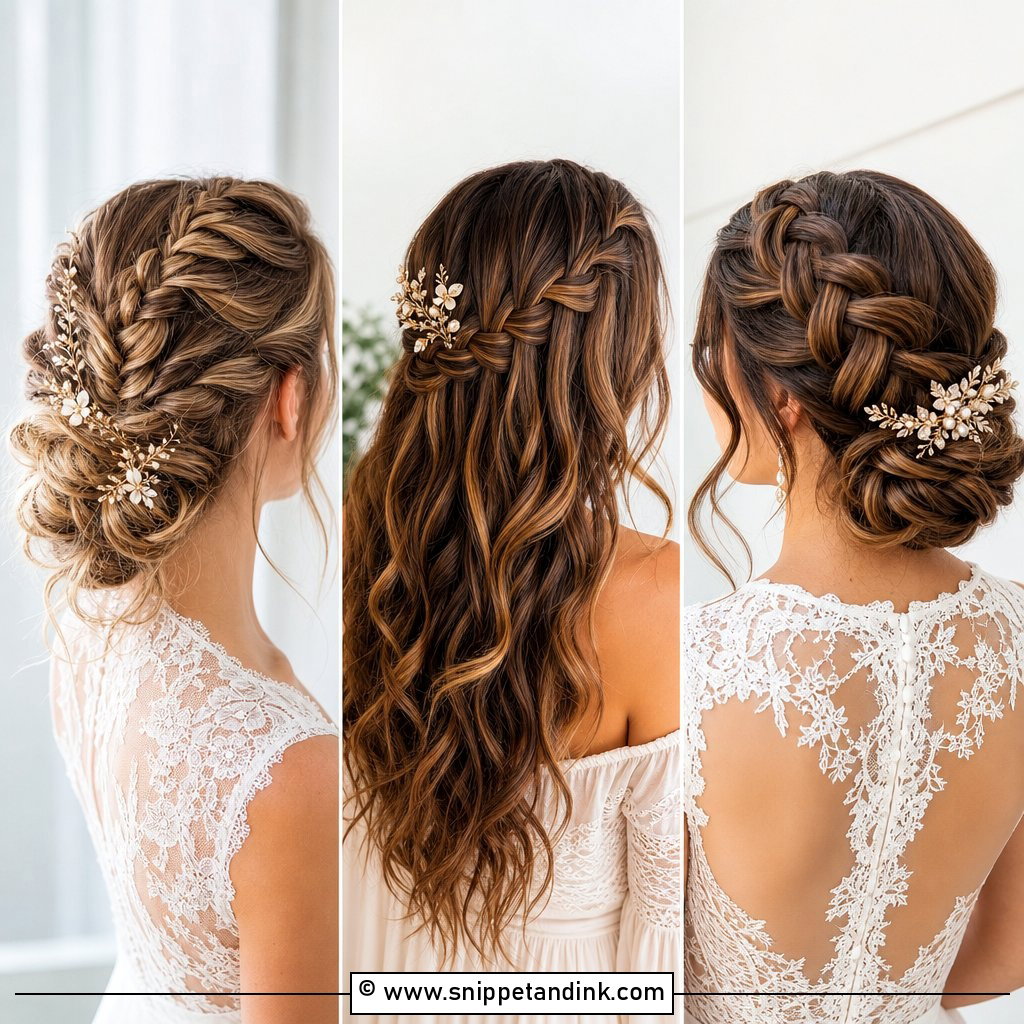
A Dutch braid is a French braid turned inside out: strands cross under instead of over, so the plait sits raised on top of the hair rather than lying flat. That depth catches light in photos and shows up from the back of a ceremony. It also holds especially well on textured, curly and coily hair, which grips itself. The braid can coil into a bun at the back or wrap into a knot, sleek or tousled. A Dutch braid updo is my pick for anyone whose regular French braids seem to disappear into their hair.
7. French Braid Ponytail
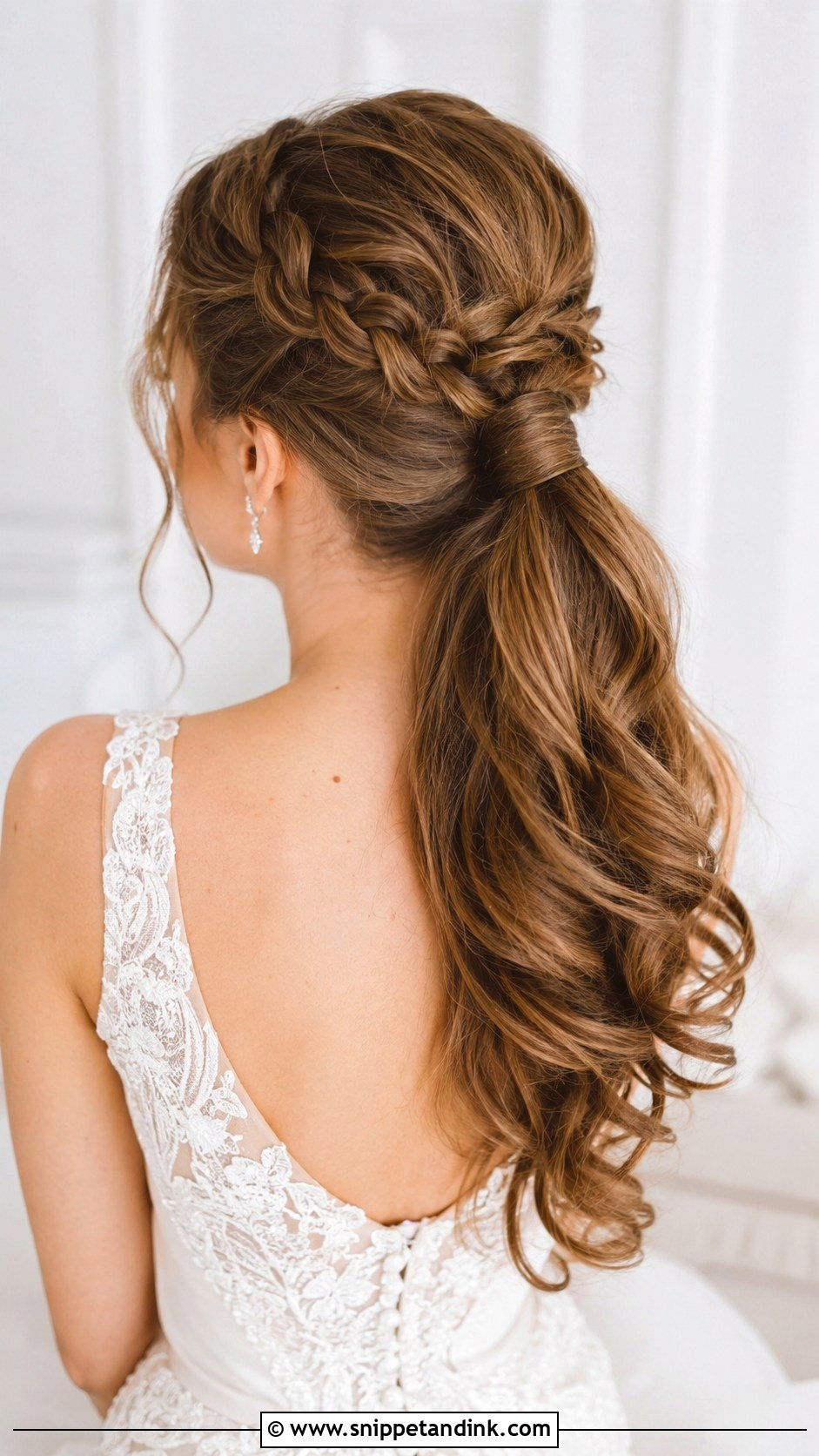
Ponytails get dismissed as casual, but a braided one is one of the sturdiest dance-floor styles there is. The braid runs from the crown down to the nape and then releases into a ponytail, sleek or curled. To hide the elastic, I wrap a small section of hair around the base and pin it underneath. Placement changes the mood: a high pony reads youthful and sporty, a low one quieter and more formal. Very fine or thin hair can look sparse at the tail, and a clip-in ponytail matched to your color solves that neatly.
8. Boho French Braid With Flowers
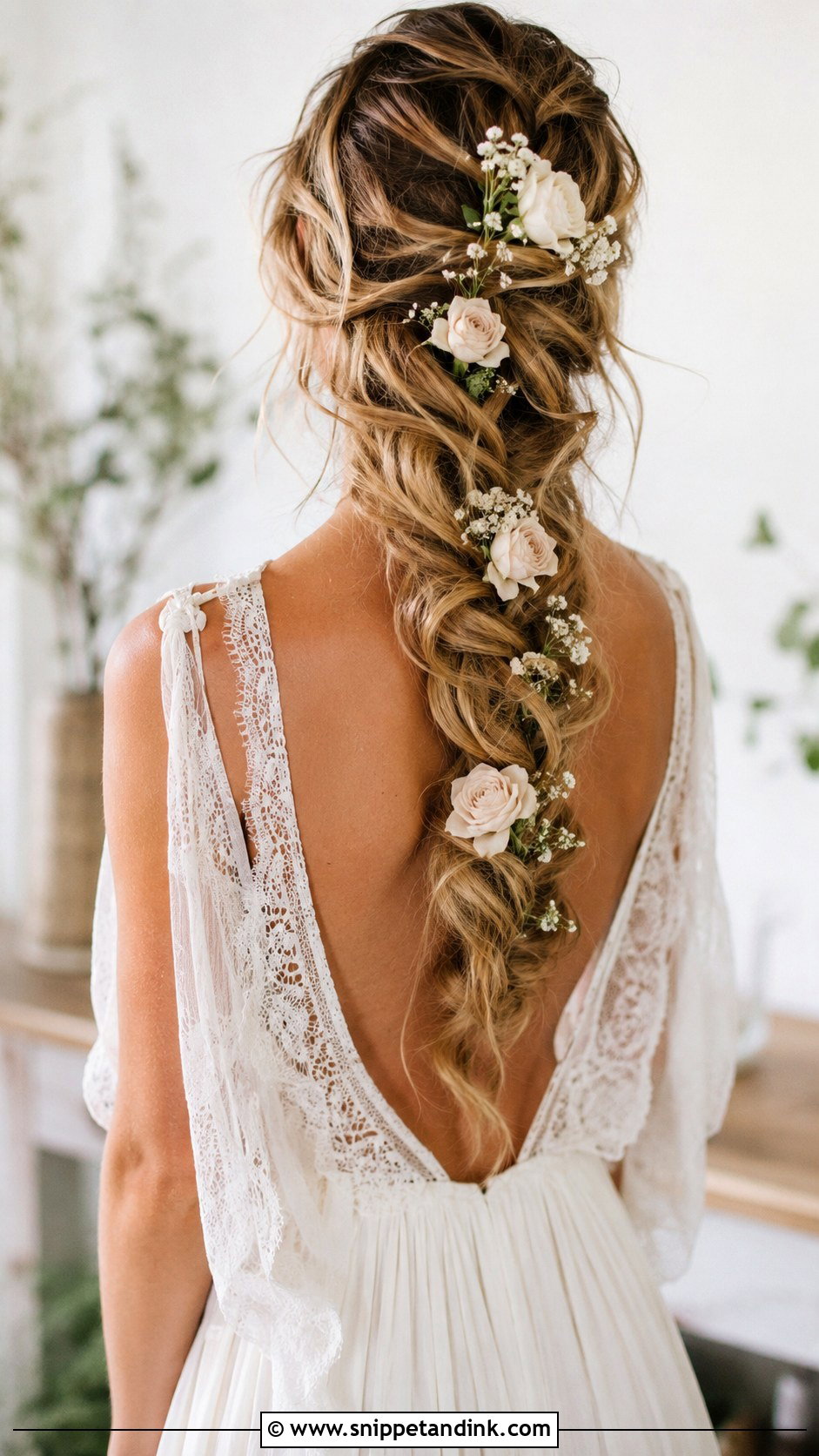
Fresh flowers and a loose braid are the classic garden pairing, with petals woven throughout an undone, pulled-apart plait. Which flowers you choose matters more than people think. Spray roses, baby’s breath and waxflower last for hours out of water, while delicate wildflowers and gardenias can wilt or brown before the reception. I ask the florist to condition and wire the stems, then pin them into the braid rather than threading them loose. Rustic, outdoor and bohemian weddings suit it best, especially with a flowing gown.
9. Double French Braid Updo
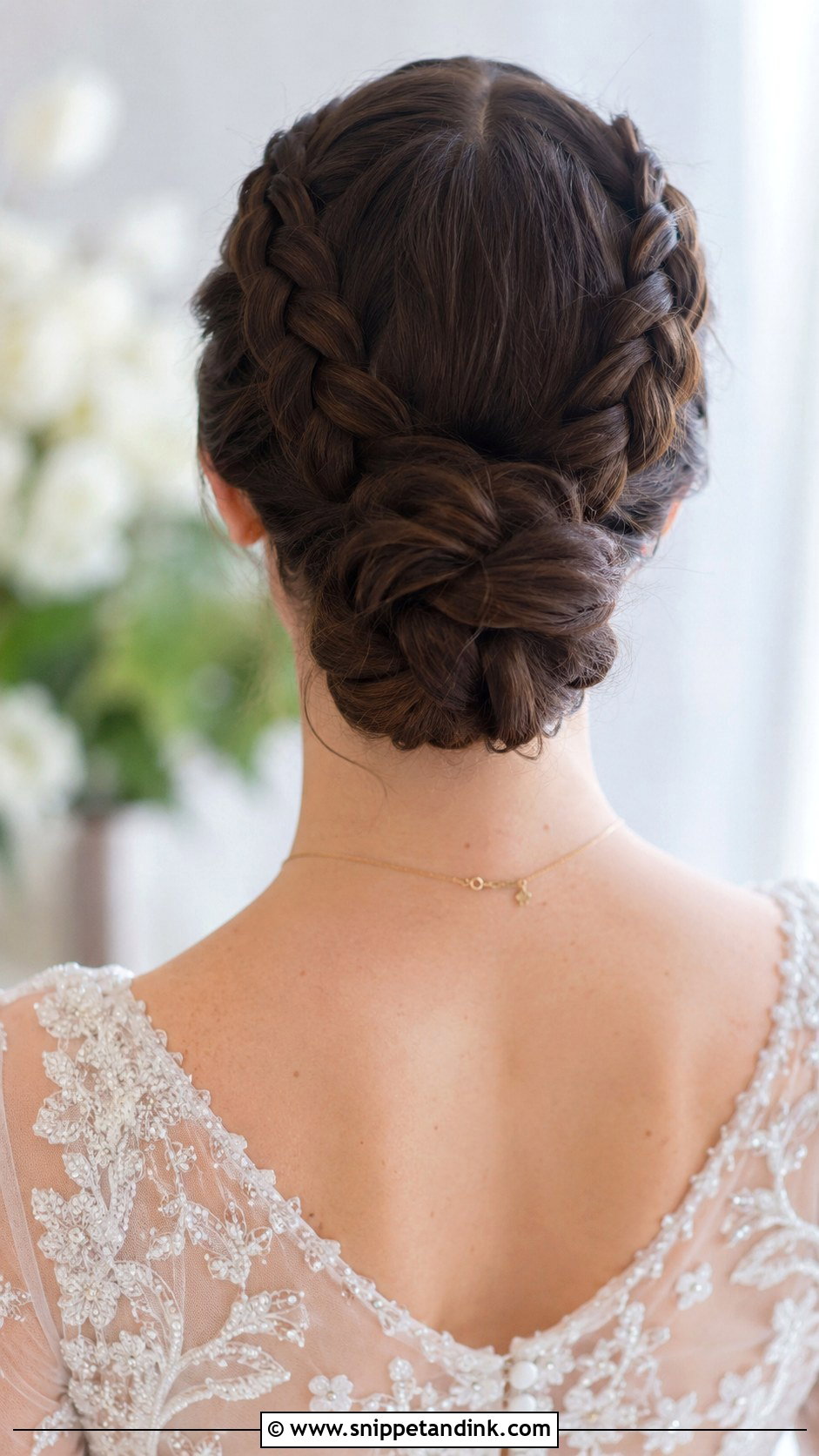
Two braids running along the scalp and meeting at the back give symmetry that a single braid can’t. The double French braid updo then twists into a bun or knots at the nape. Getting the parting dead center is the fiddly part, and I check it in a hand mirror from behind, because a slightly off part is very visible in back-of-dress photos. It suits thick hair best; on fine hair two braids split the volume and each one can look thin. Modern and traditional themes both carry it.
10. French Braid Crown With Veil
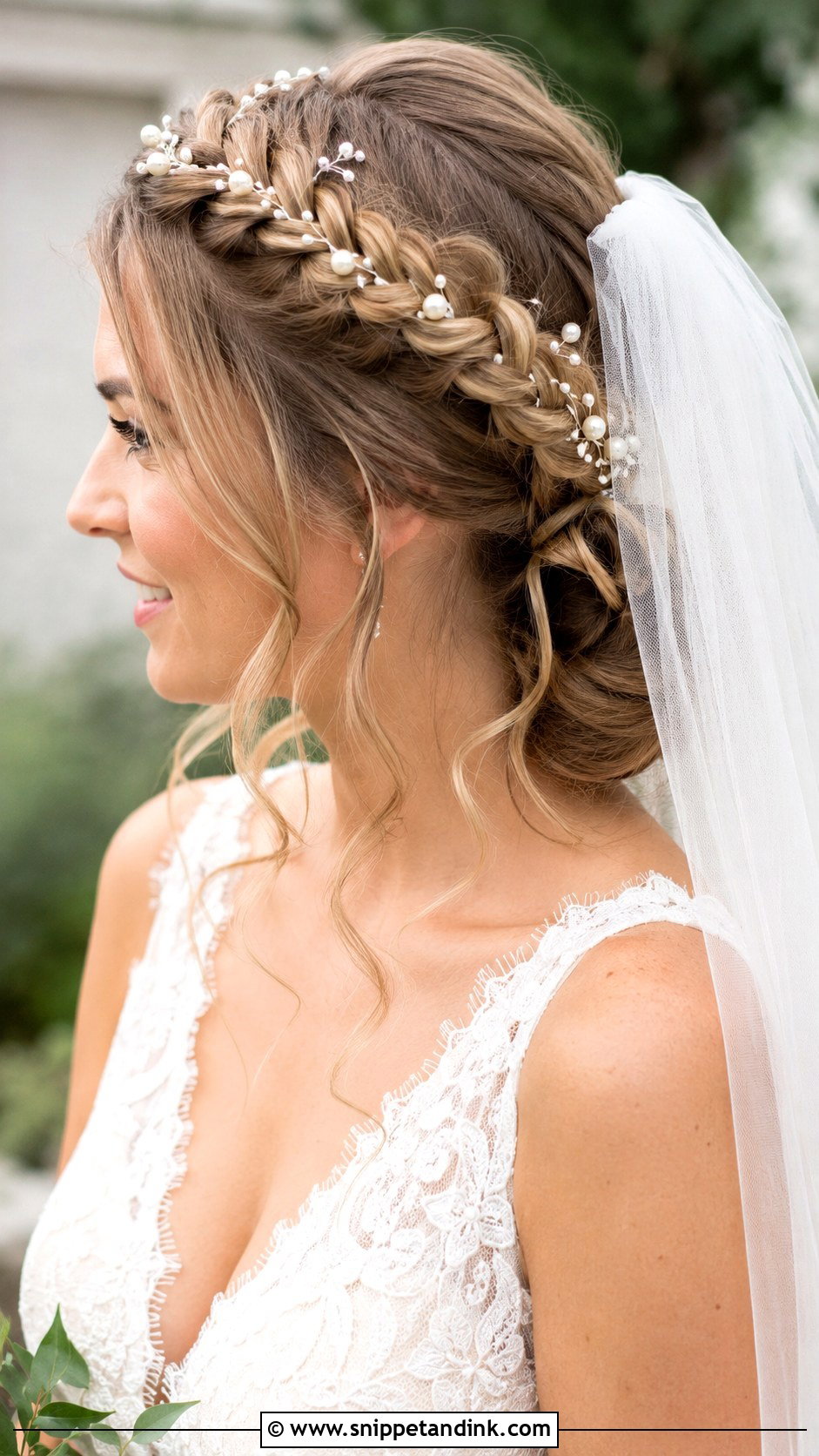
A braided crown is a sturdy base for a veil, and that’s the main reason I suggest it. The braid circles the head, and I slide the veil comb in underneath it so the braid takes the weight instead of loose hair. When the veil comes off for the reception, the crown is still a complete hairstyle, so you get a second look without a restyle. Small pearl or crystal pins along the braid add a little sparkle. Check the veil with the braid at your trial, since a heavy cathedral veil may need extra pins to hold.
11. Messy French Braid for Long Hair
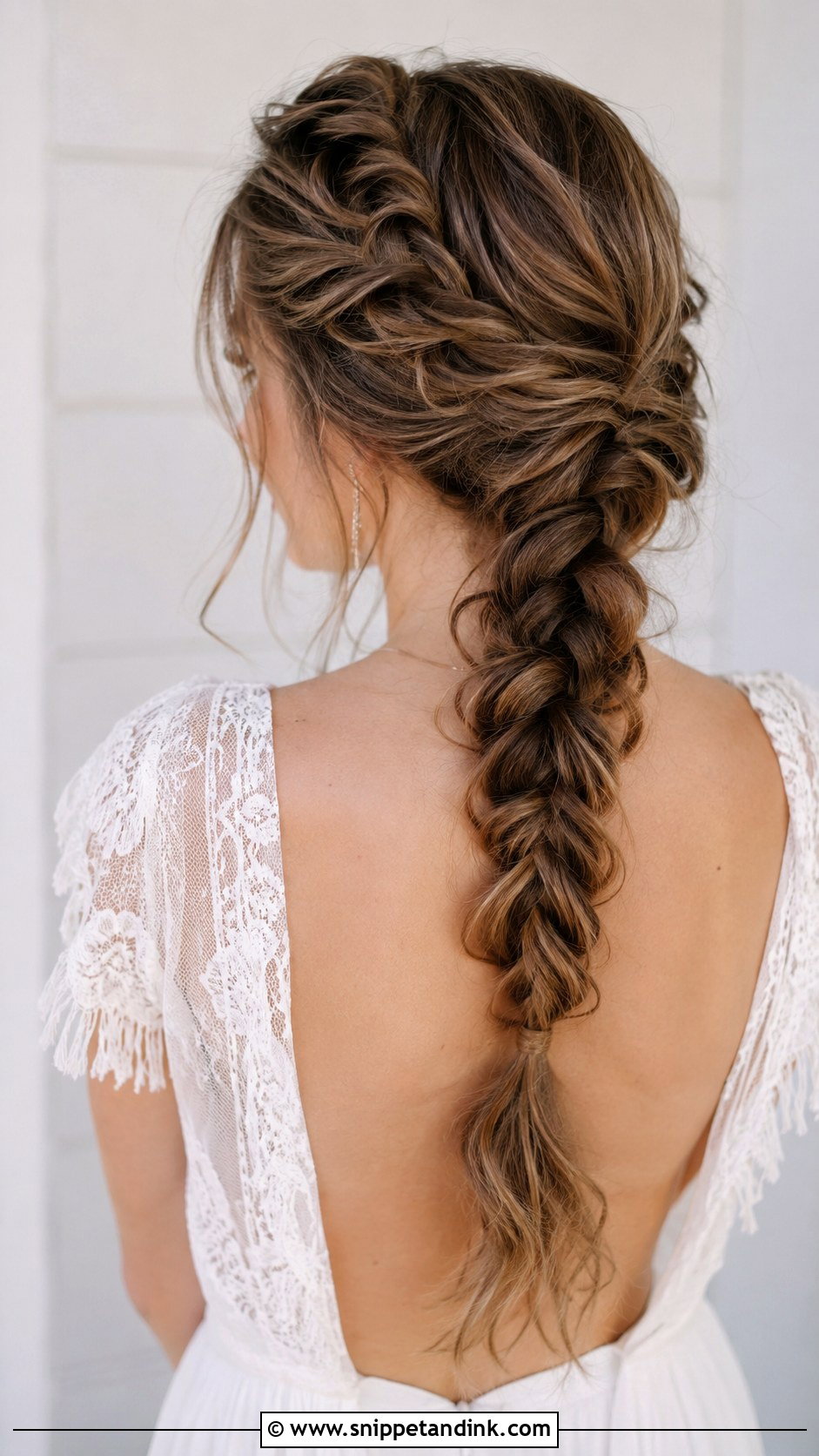
Undone braids look easy, but they’re one of the harder styles to get right for a wedding. The messy feel comes from loose strands, soft volume and a plait pulled wide, and on long hair it can relax too far by the evening. I build it on second-day hair with a texture spray, braid it firmly, then pull it apart deliberately rather than braiding loosely from the start. Plenty of face-framing pieces finish it. Casual, outdoor and boho weddings are its home; at a black-tie ballroom it can read unfinished.
12. French Braid Fishtail Combo
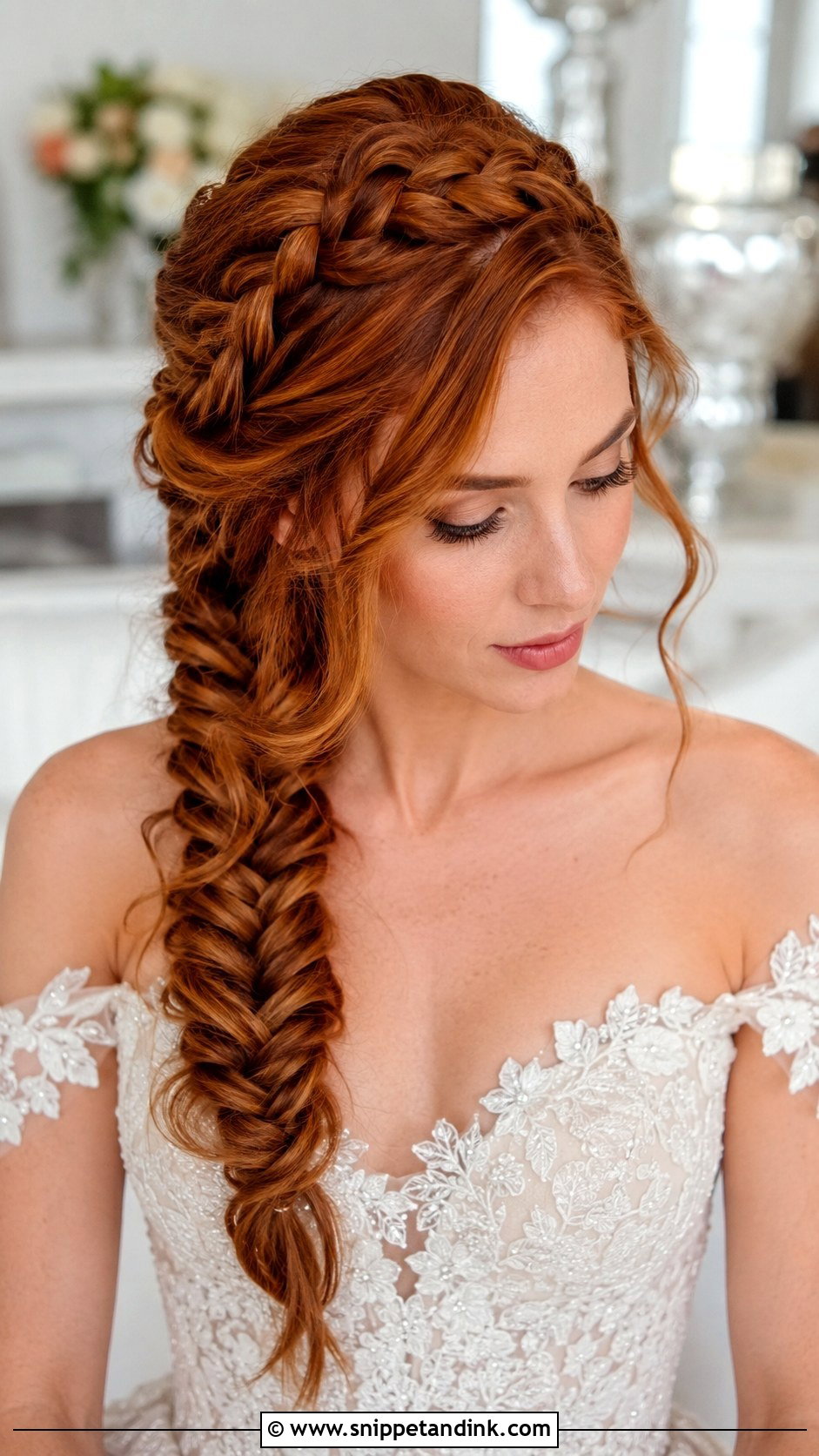
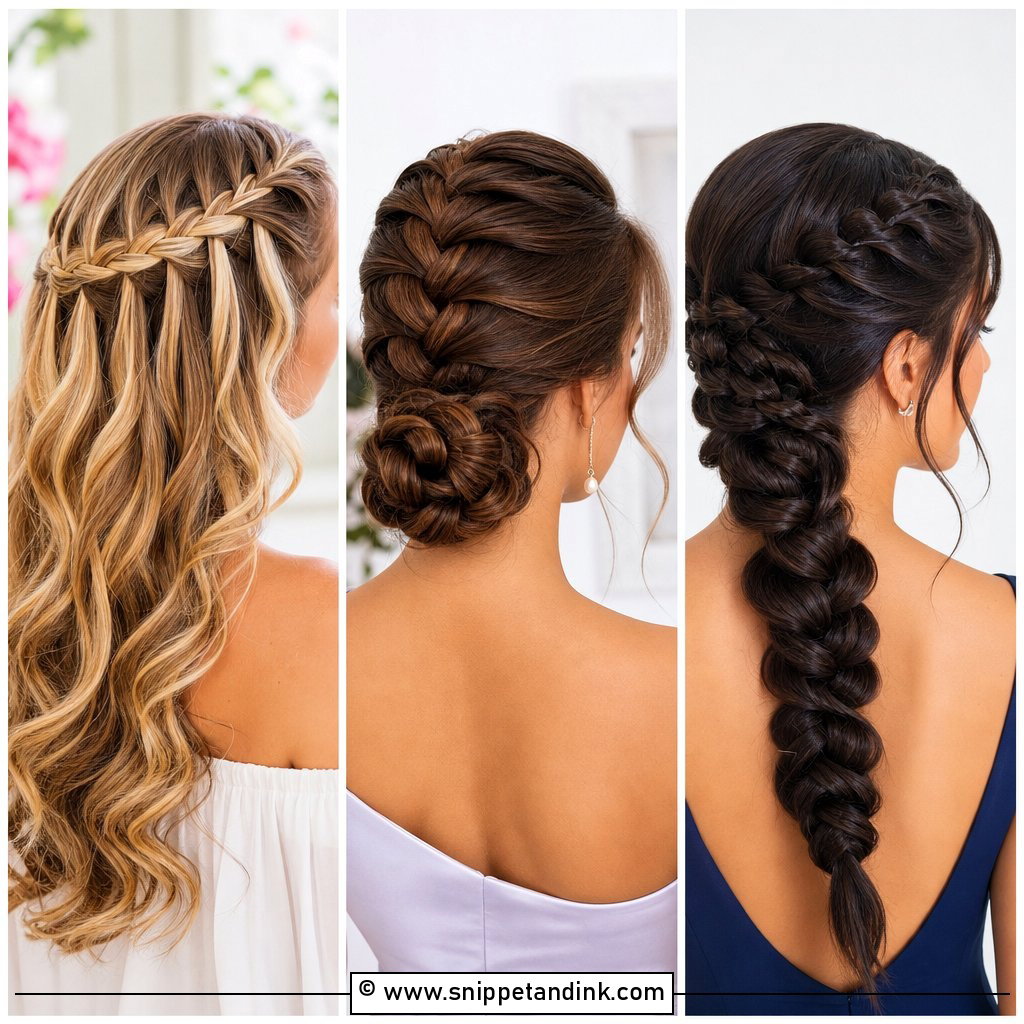
This combo starts as a French braid near the scalp and switches to a fishtail once it leaves the head. The French section is what holds everything in place, while the fishtail gives a finer woven texture in the lengths. Fishtails take longer to plait and need hair of fairly even length, because heavy layers pop out of the narrow sections. Pulled apart gently and draped over one shoulder, it works with a sleek gown or a boho dress. It’s worth practicing at the trial, since the changeover point needs to sit where the braid will show.
13. French Braid Bun for Short Hair
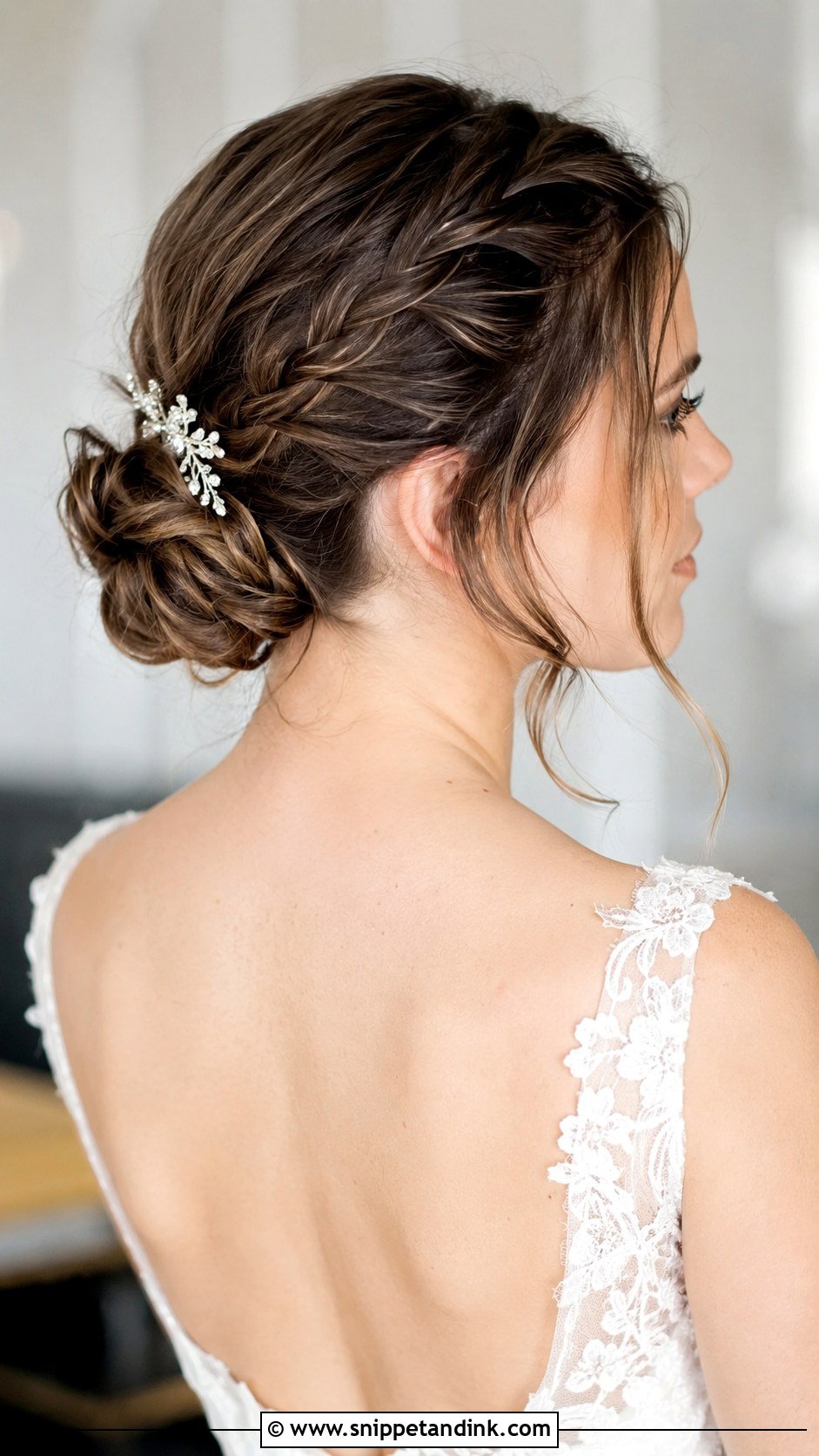
Short hair can absolutely be braided, as long as the expectations match the length. On a bob or lob, I run a slim braid along the scalp and tuck it into a small low or mid bun, pinned tightly because short ends want to spring loose. Layers shorter than the braid will poke out, and a few wispy pieces at the face turn that into softness rather than a problem. A small sparkly pin or a single flower finishes it. For a fuller bun, a few clip-in wefts placed underneath give the braid more to hold.
14. Cascading French Braid Half-Up
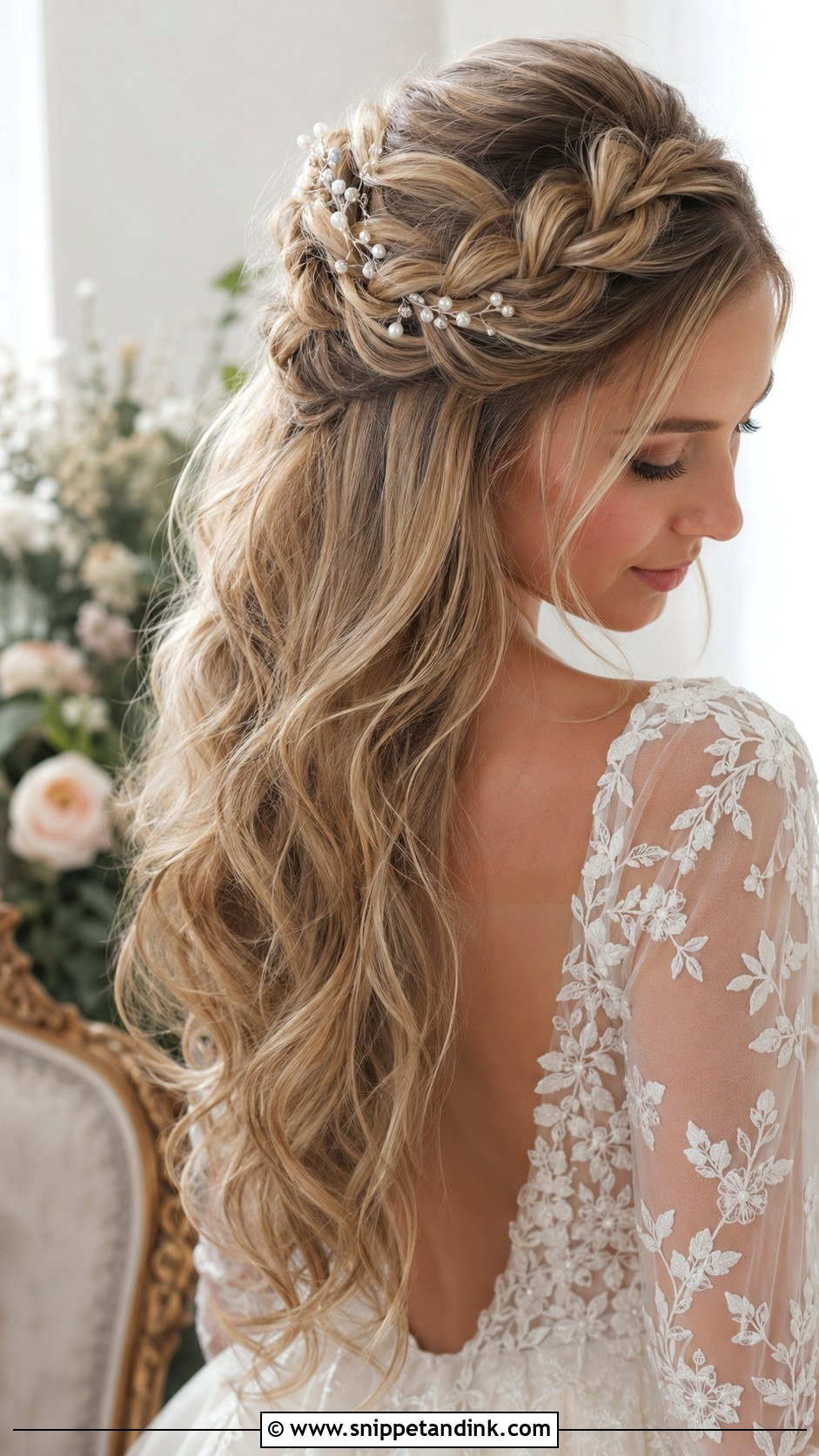
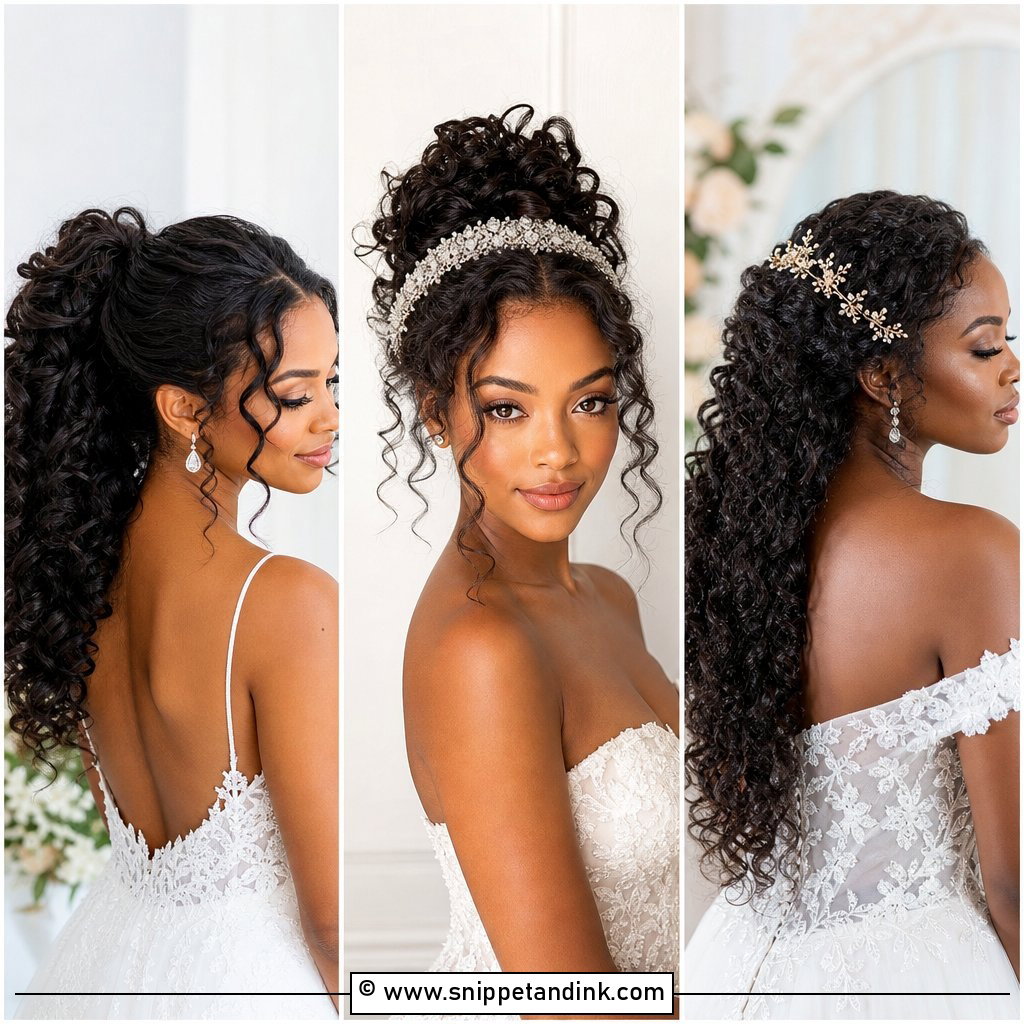
Here the braid weaves across the crown and the rest tumbles down in curls, so it’s all about movement. The braid keeps hair off the face while the length stays on show. Curls are the weak point in humid weather, so I set them with a hot tool, let them cool fully in pin curls, and only then brush them out. Tiny flowers or pearls along the braid add a little detail. It suits garden and outdoor weddings, though in a breezy spot the loose lengths will move a lot in photos.
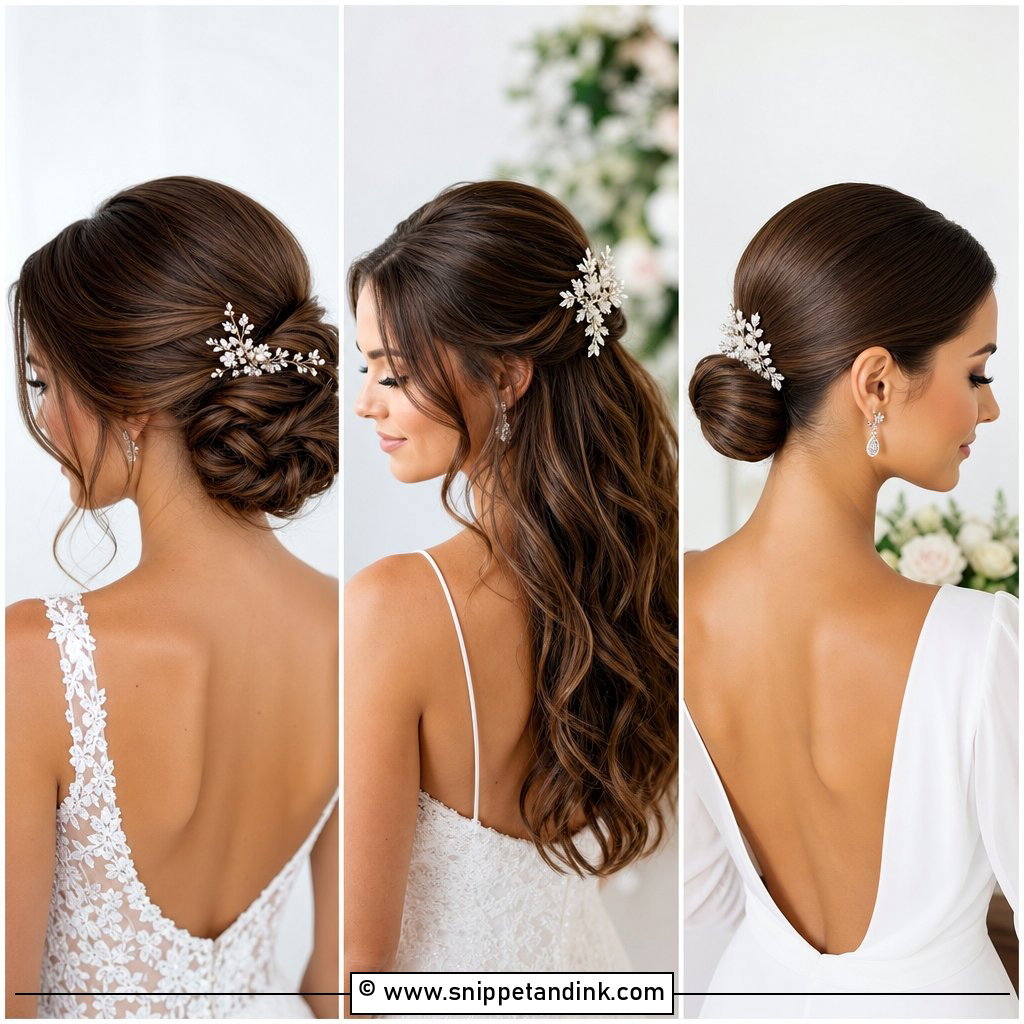
15. French Braid With Hair Accessories
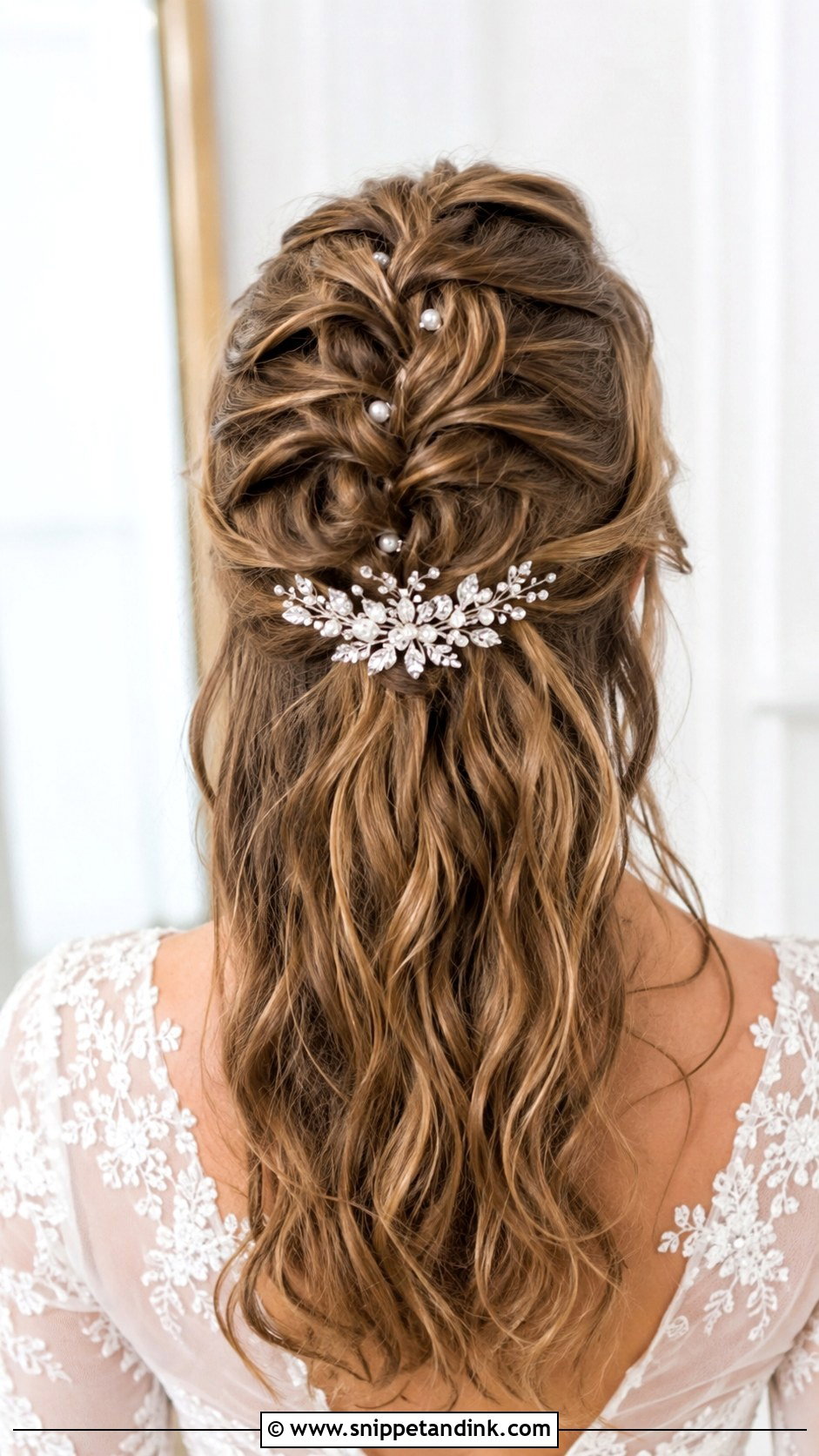
A braid gives accessories something solid to hold on to, which is why it’s my favorite base for them. Pearl pins, crystal combs, a ribbon or fresh flowers all slide into the plait and stay there far better than they would in loose curls. One statement piece looks cleaner than a scattering of small ones, unless the small ones are spaced evenly along the braid. Bring your actual accessories to the trial; weight and comb size change where they can sit. The idea works for updos, side braids and half-up styles alike.
16. Braided Chignon Updo
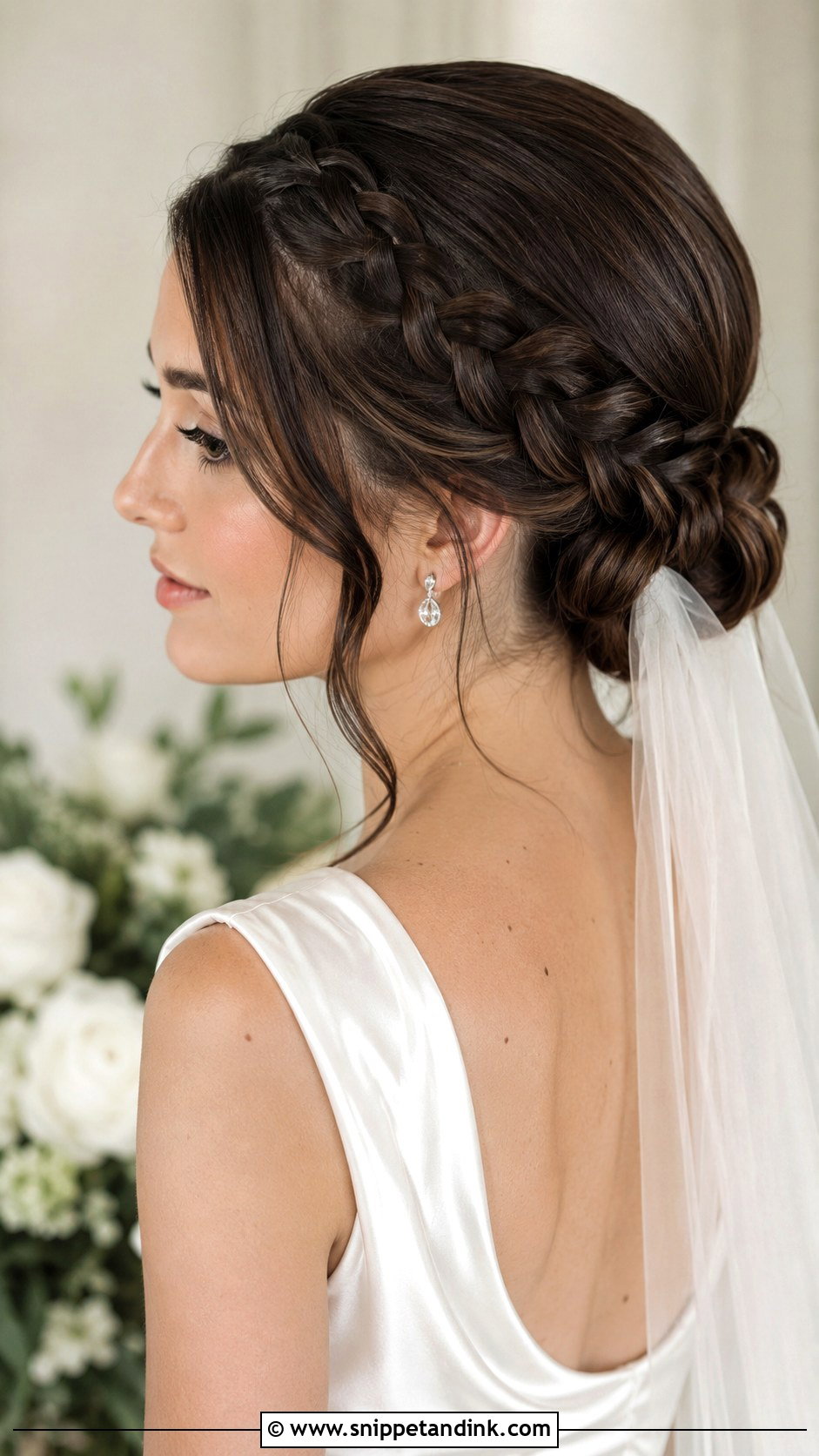
A braided chignon pairs a French braid with a low, looped knot, and it’s the style I’d choose for a formal ballroom or cathedral wedding. The braid adds texture while the chignon stays sleek and secure. Soft pieces near the face keep it from feeling strict. It sits well under a veil or tiara and next to statement earrings, and because the shape is tight to the head, it holds up through a long day of hugs and dancing. For hair that is very silky, I’d add a little texture spray at the roots first so the knot doesn’t slide.
17. Side-Swept French Braid
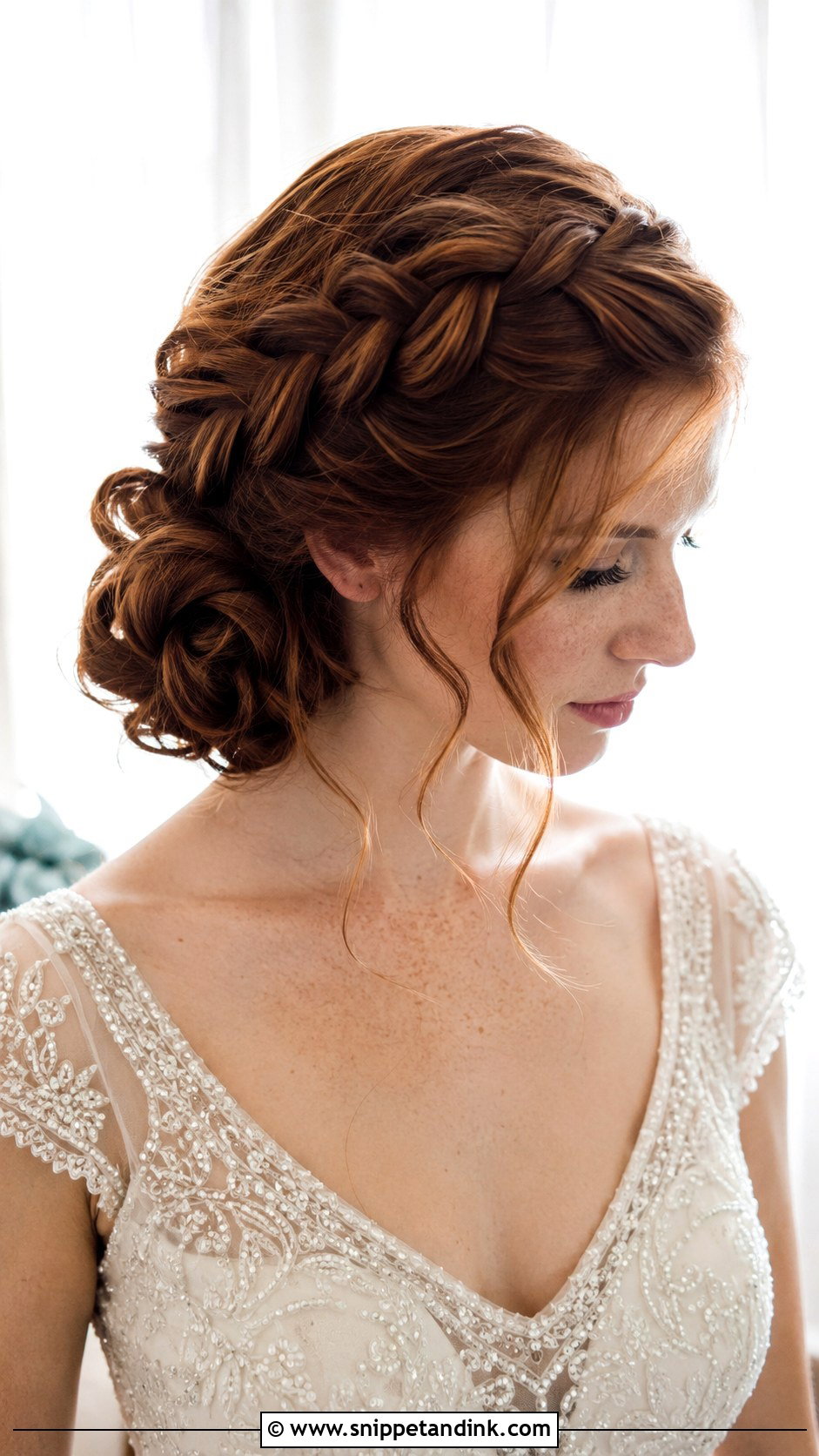
Sweeping everything to one side with a French braid guiding the direction gives a slightly vintage glamour. The braid can flow into loose waves or end in a low side bun. Decide the side before the day. I usually sweep it away from where your partner will stand at the altar, so your face stays open to them in the ceremony photos, unless your favorite profile is on the other side. A flower or jeweled clip where the braid begins draws the eye. Side styles show best in profile, and they leave one ear and earring fully on display.
18. French Braid Crown for Boho Brides
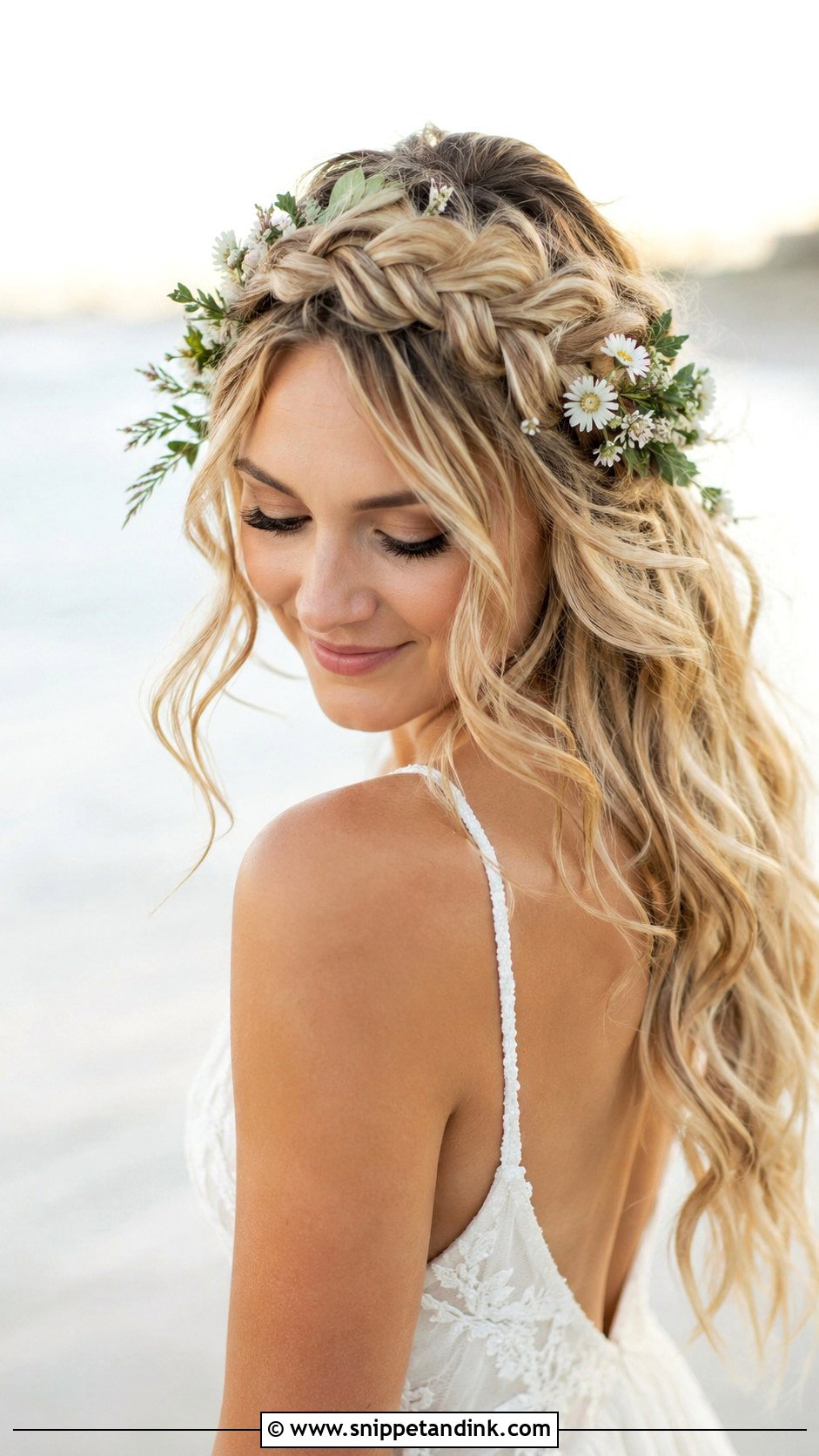
A loose boho crown wraps a soft braid around the head like a wreath. Wildflowers or greenery tucked in finish it, and pulling the strands slightly loose keeps it relaxed. Because the hair is off the neck, it’s comfortable at a warm outdoor ceremony. My caution here is tension: braids wrapped tightly around the hairline for twelve hours can cause headaches, so I keep the grip firm at the scalp but never pulled tight at the temples. Anyone drawn to bohemian style usually finds this the easiest crown to wear all day.
19. Sleek French Braid Updo
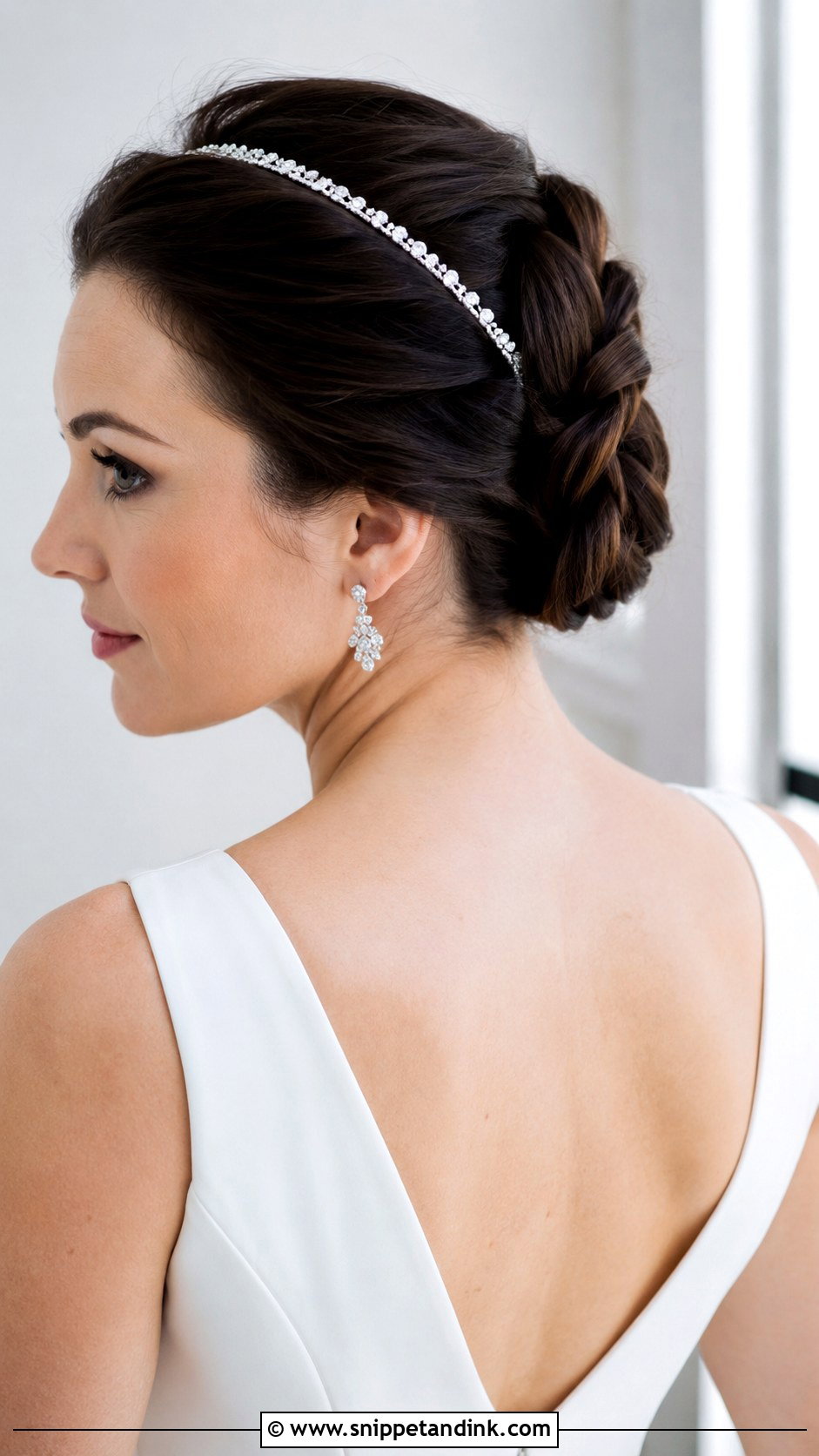
Sleek braids show the pattern of the plait more clearly than any messy version. Every strand is smoothed into a clean, structured braid and gathered into a tidy updo. The finish depends on preparation: I blow-dry the hair straight first, then braid with a smoothing cream so flyaways stay down. Minimalist gowns and bold jewelry pair well with it, and a thin jeweled headband adds a touch of glamour. It’s unforgiving of frizz, so on naturally curly hair in humid weather I’d suggest a softer version.
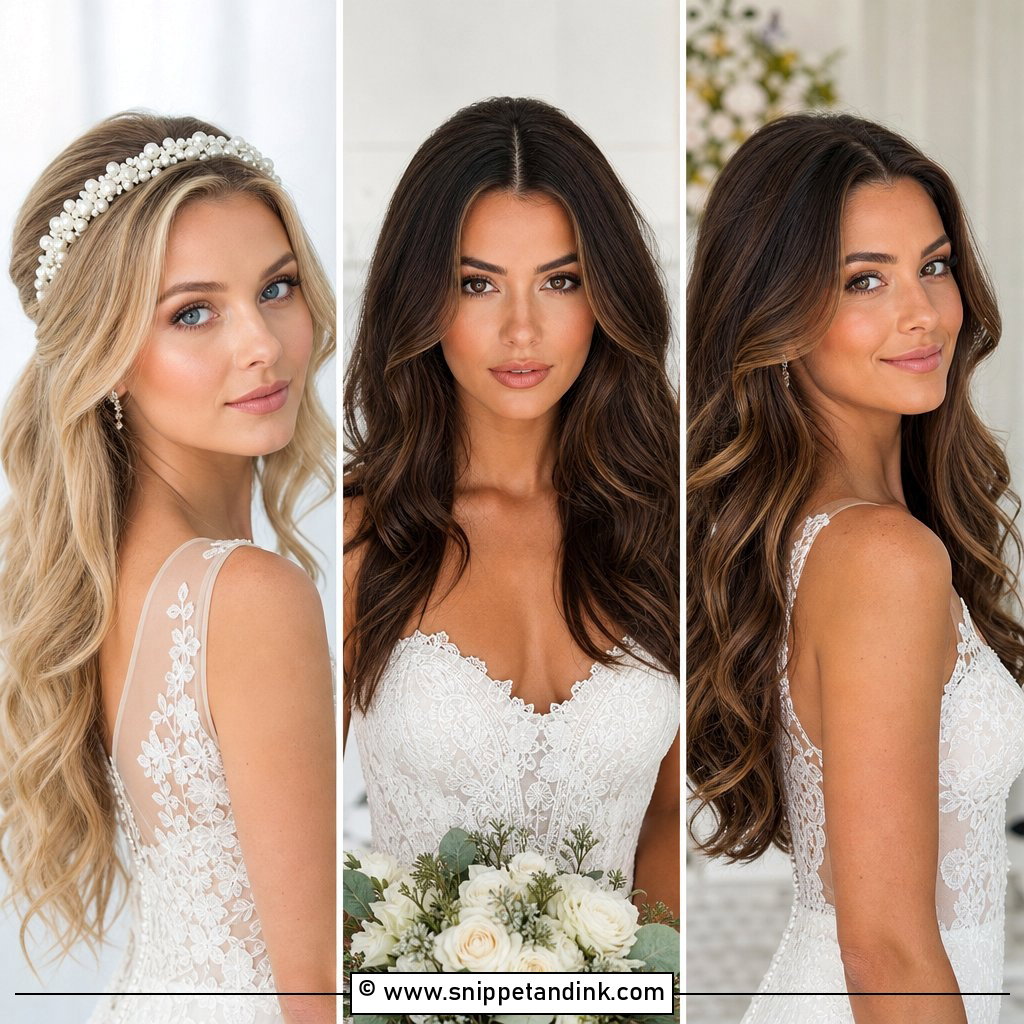
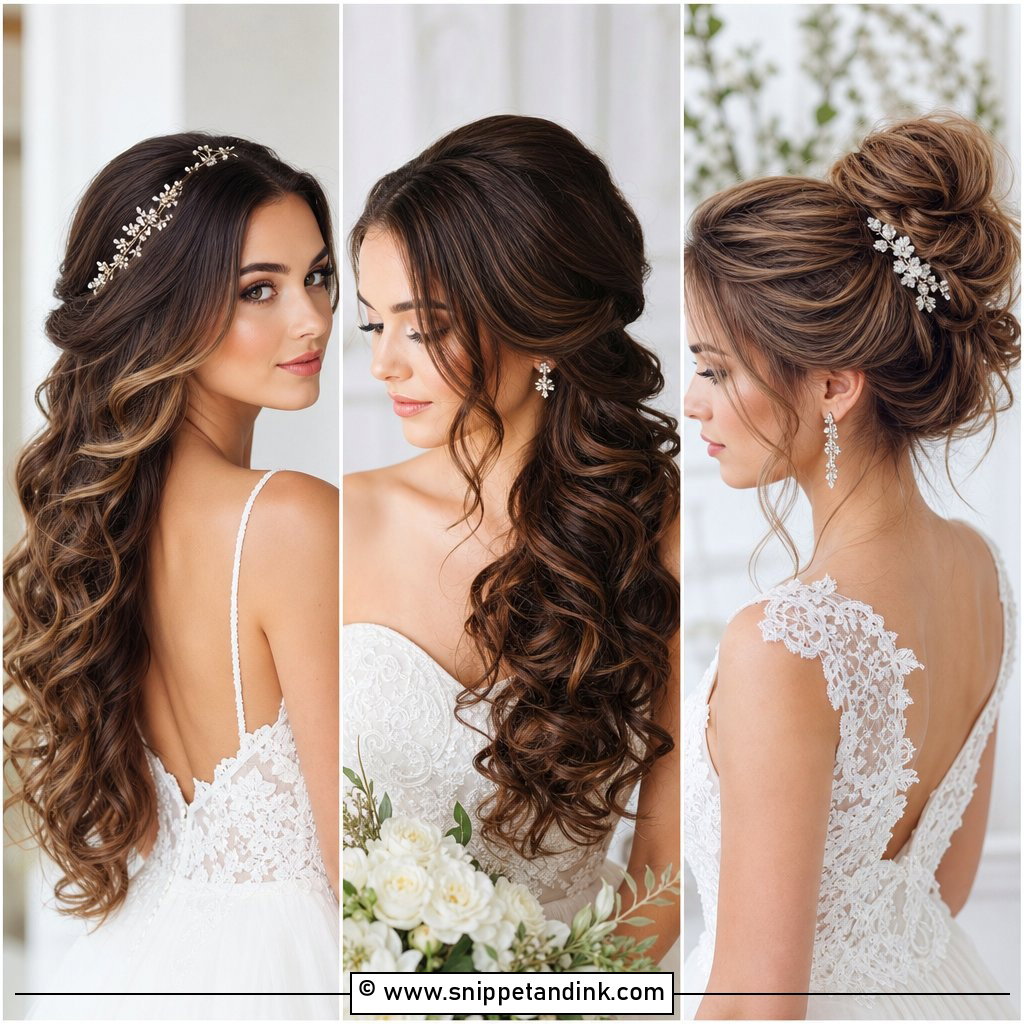
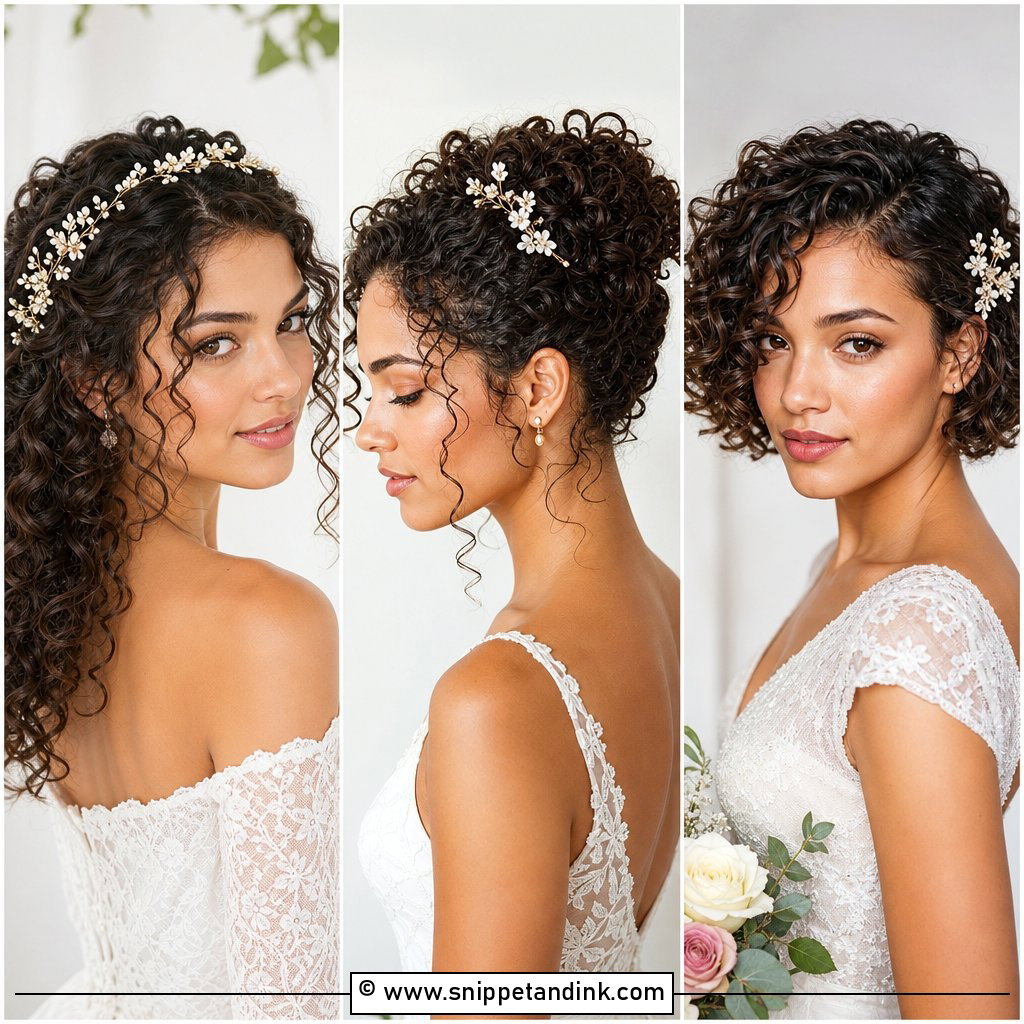
20. French Braid With Loose Curls
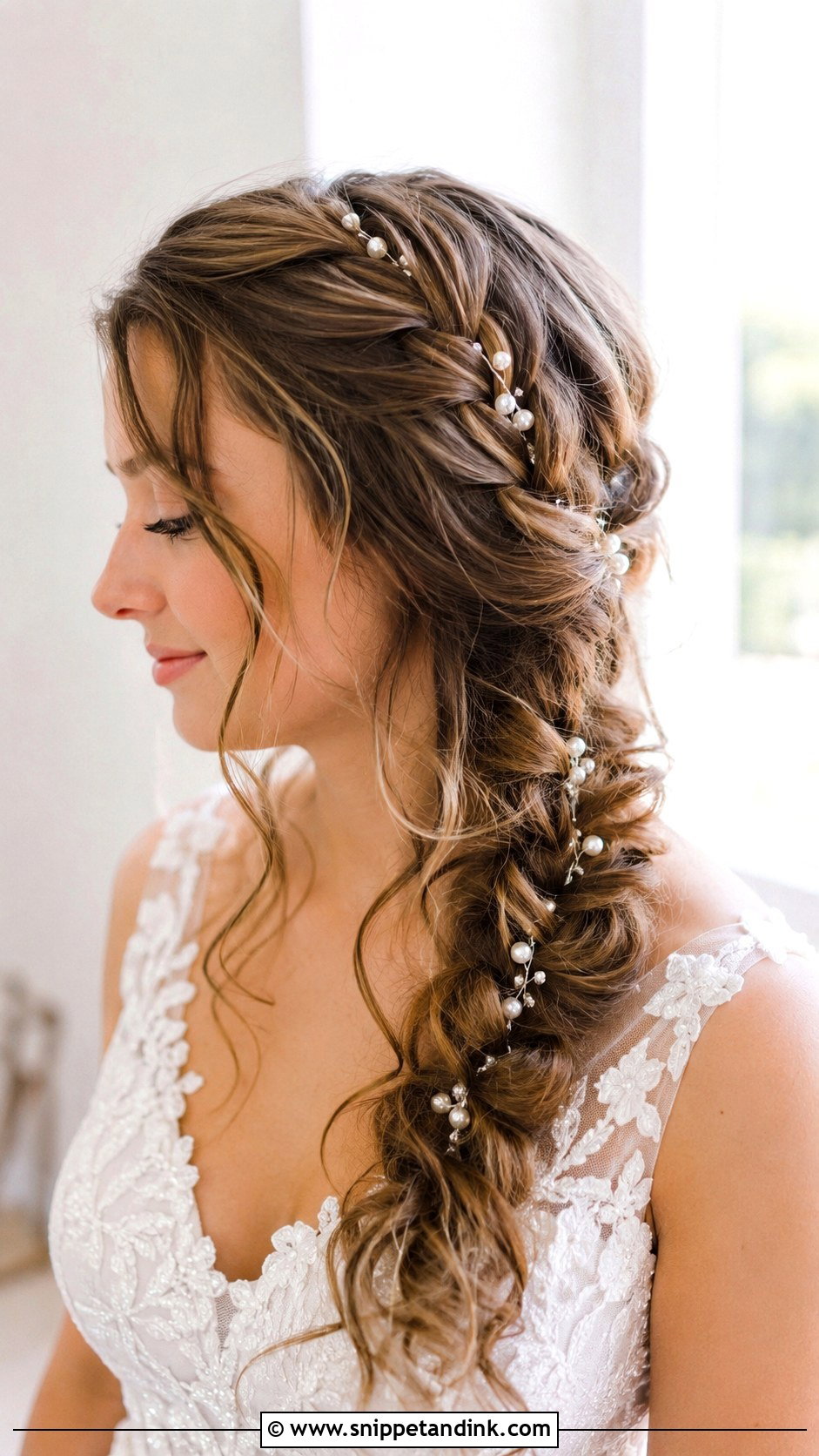
Curls with a braid on top or at the side give volume and structure in one style. The braid holds the front, the curls give movement below. This works for formal and outdoor weddings, with a few tendrils at the face and small flowers or pearls along the plait. The trade-off is that curls drop faster than braids, especially on fine hair, so the bottom half of the look will relax over the evening. A light touch-up with a curling wand before the reception keeps it fresh.
How a Braid Changes Between the Aisle and the Last Dance
Braids hold better than almost any other style, but they still relax. Knowing how that happens helps you choose a look you’ll be happy with in your evening photos as well as your ceremony ones.
Pulled-apart loops only get looser
That soft, wide look comes from pancaking, which means gently tugging the edges of each loop outward. Once a loop is pulled, there’s no tightening it again without rebraiding. I finish this step at the end of the session and stop sooner than looks perfect in the mirror, because the braid will widen a little more on its own.
Pins work hardest where the weight sits
Buns, crowns and veil combs pull downward all day. I pin them into the braid itself, crossing pins in an X, rather than into loose hair underneath. If you’re doing your own braid or a friend is, use matte pins in your hair color and test with the real veil.
A small kit covers most problems
Keep a few spare pins, a clear elastic and a travel hairspray with whoever is holding your phone. A loose strand can be tucked back into the braid in a minute, and that’s usually all the repair a French braid ever needs.
Bring Your Favorite Braid to the Trial
Every one of these styles has a version that suits your length, texture and dress. A sleek updo, a loose side braid and a halo crown all start from the same simple technique, and the difference comes down to how tightly I braid, where the plait sits and what it has to support. Bring two or three favorites to your trial, along with the veil and accessories you plan to wear. Seeing the braid on your own hair is the quickest way to know which one will still look right on your wedding day.
You'll Like These Ideas:


Leave a Reply