
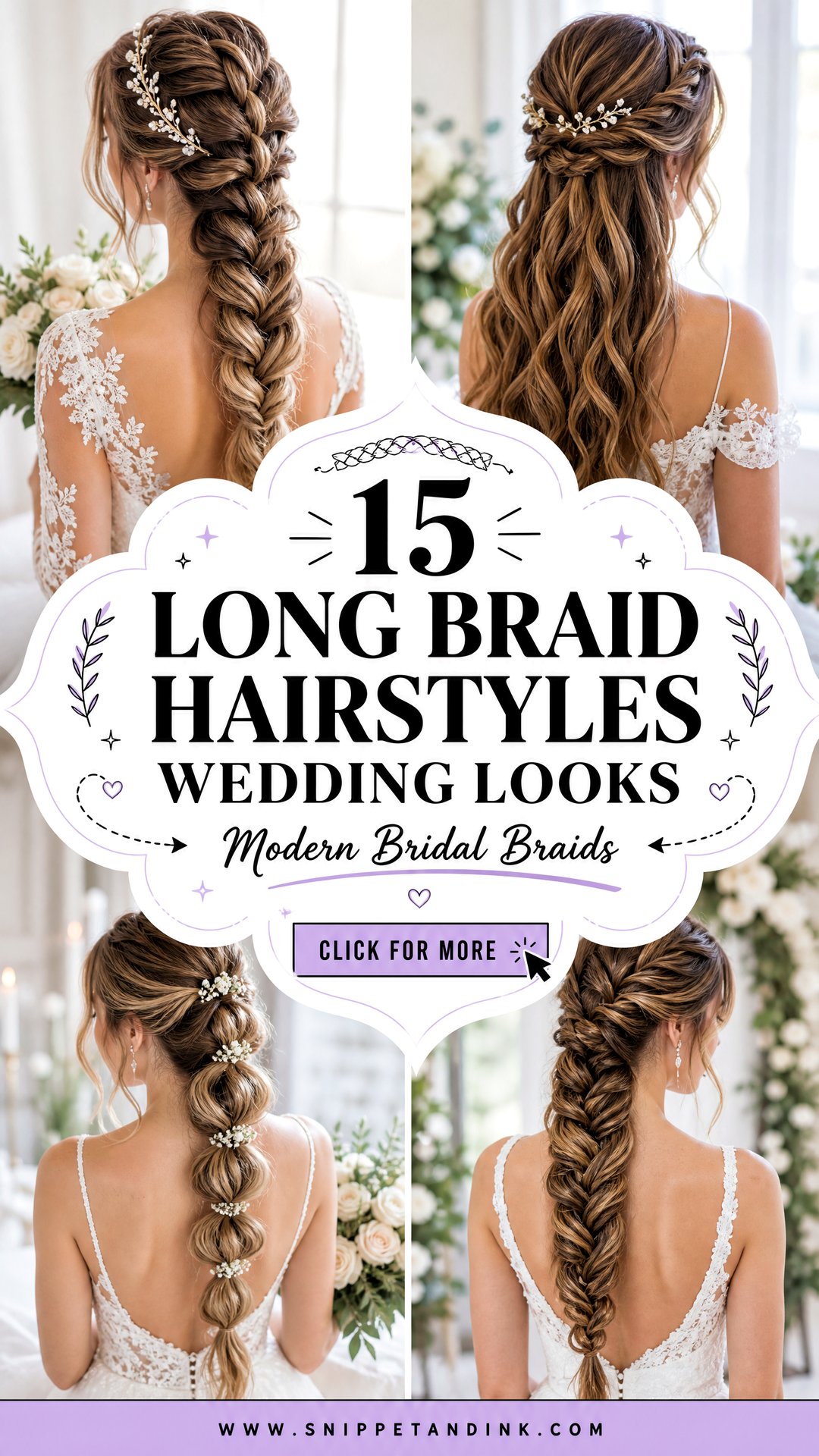
Long hair and a braid get along well on a wedding day. The plait keeps the length under control, it shows off shine and colour, and it gives a veil or flowers something solid to grip. What most brides don’t expect is how much the finish depends on prep rather than on the braid itself. When I braid long hair for a ceremony, the real work happens before the first cross: a smoothing pass, a light texture spray so the strands don’t slide, and a decision about where the weight will sit on the head for the next ten hours. Below are fifteen braids I’d genuinely put on a bride, with notes on who each one suits and where it tends to go wrong.
Prepping Slippery Long Hair So the Braid Actually Grips
Freshly washed hair is the hardest to braid. It’s silky, the sections slide past each other, and the plait loosens before the ceremony starts. I ask brides to wash the evening before, not the morning of, and to skip heavy conditioner on the lengths. A day of natural oil gives the hair just enough grip.
On the day, my order is always the same: blow-dry smooth, mist a dry texture spray through the mid-lengths, then braid. If I plan curls as well, I curl first and braid second, since heat on a finished braid flattens the pattern.
- Very straight hair: a light dry shampoo at the roots adds the grip that helps a Dutch or French braid stay tight at the crown.
- Coily or curly hair: braid on stretched hair, and use a leave-in cream rather than a spray so the strands stay soft and don’t frizz.
- Coloured or highlighted hair: lighter strands show every loosened loop, which suits fishtails and mermaid braids especially well.
Extensions, Tension and How Heavy a Finished Braid Gets
Long hair already weighs more than most people realise, and a dressed braid adds pins, flowers and sometimes clip-in wefts. I check two things at every trial. First, whether the bride can turn her head fully without feeling a pull at the nape. Second, whether the braid’s anchor sits on a strong part of the scalp, usually the occipital bone at the back, rather than on the fragile hairline.
Clip-in extensions are the easiest way to add density for a mermaid or fishtail, and I’d colour-match them in daylight, not under salon lights. Bring them to the trial so they can be blended and trimmed to your length. Sew-in or tape extensions should go in at least a week ahead so the scalp has settled.
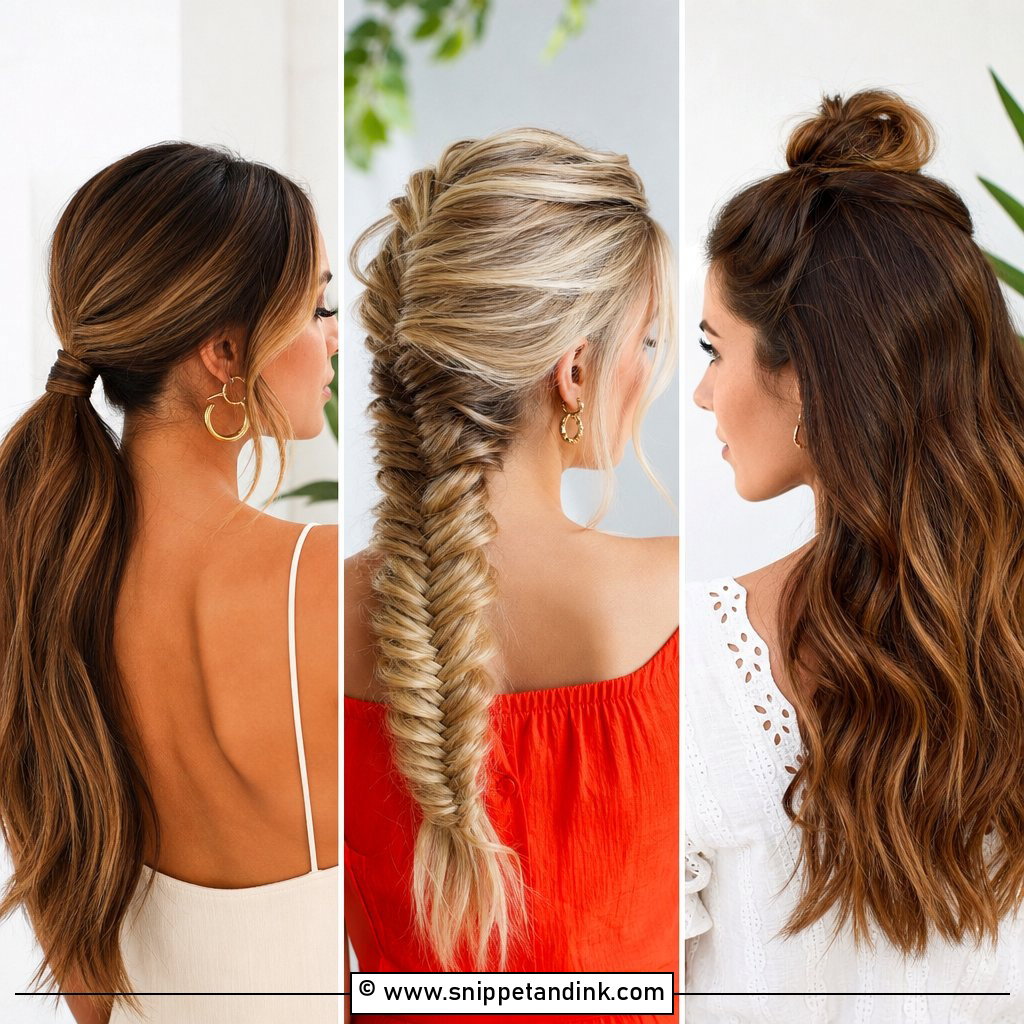
1. Long Fishtail Braid Wedding Hair
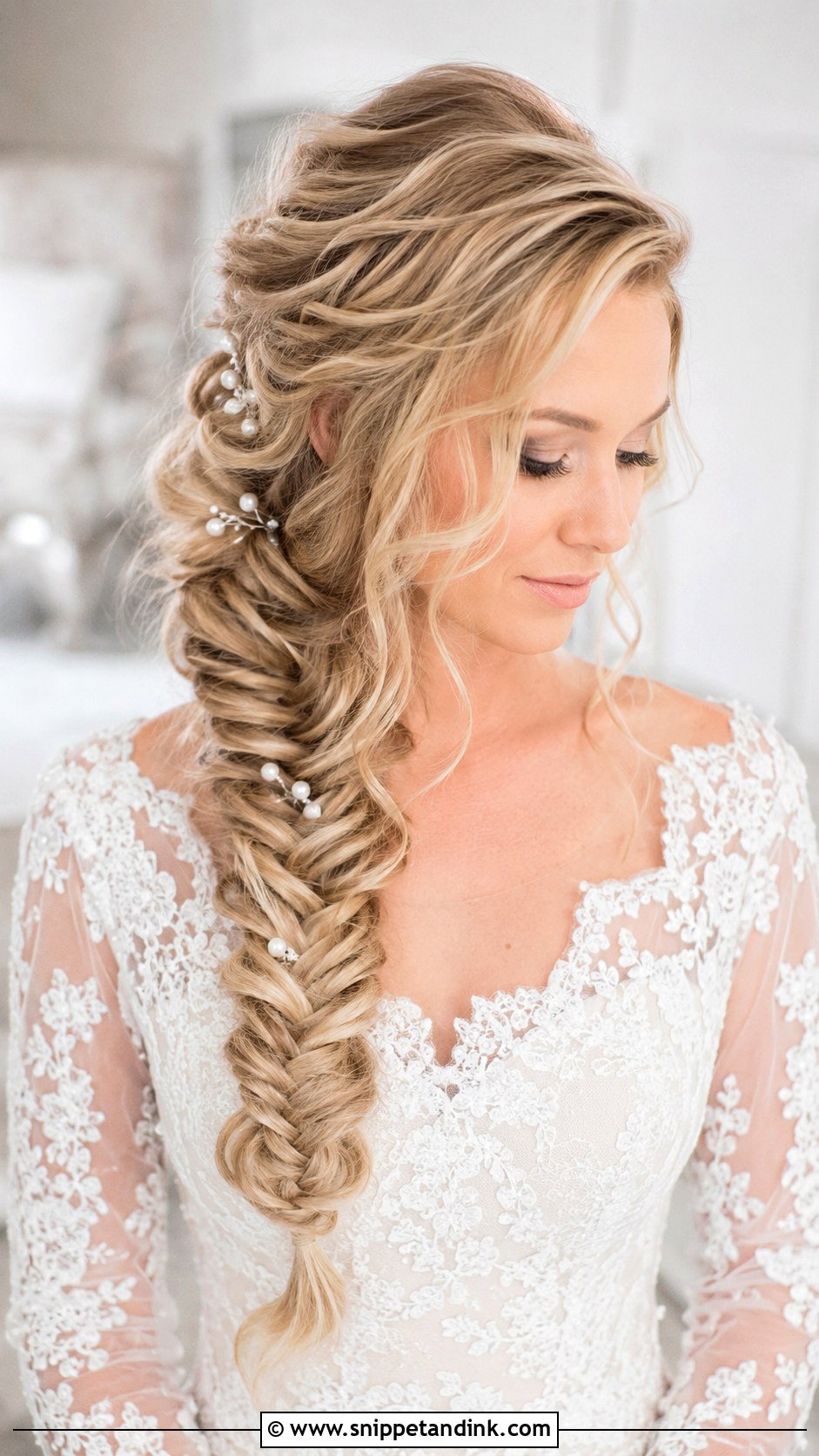
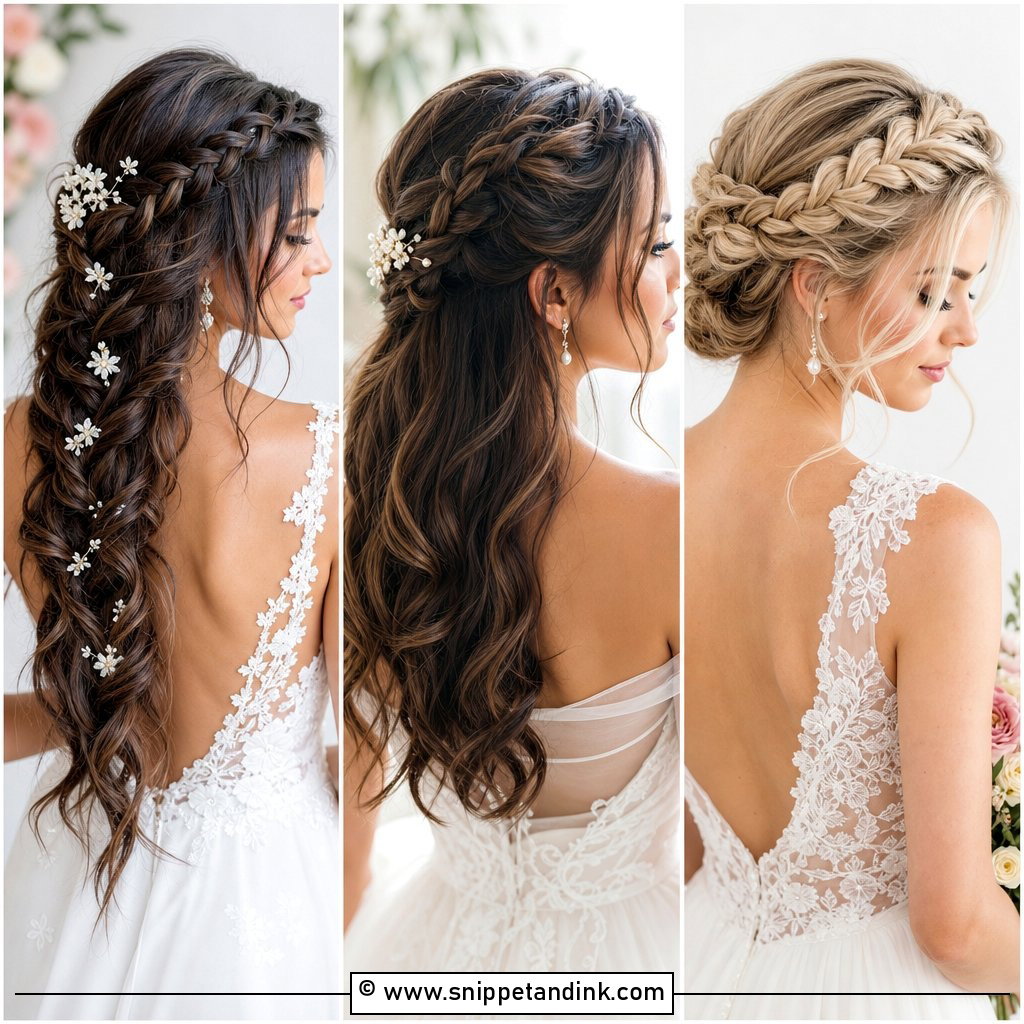
The fishtail looks intricate, yet it’s one of the gentlest braids on the scalp because it only uses two sections. I keep the pieces I take from each side small, about the width of a pencil, so the pattern reads clearly in photos. Once it’s tied off, I pancake it from the bottom up; starting at the top makes the whole braid slip downward. Layered hair benefits most, since the fine weave catches shorter ends that would poke out of a chunky three-strand. A slim hair vine sits well along it when the dress is plain.
2. Long Dutch Braid Wedding Hair
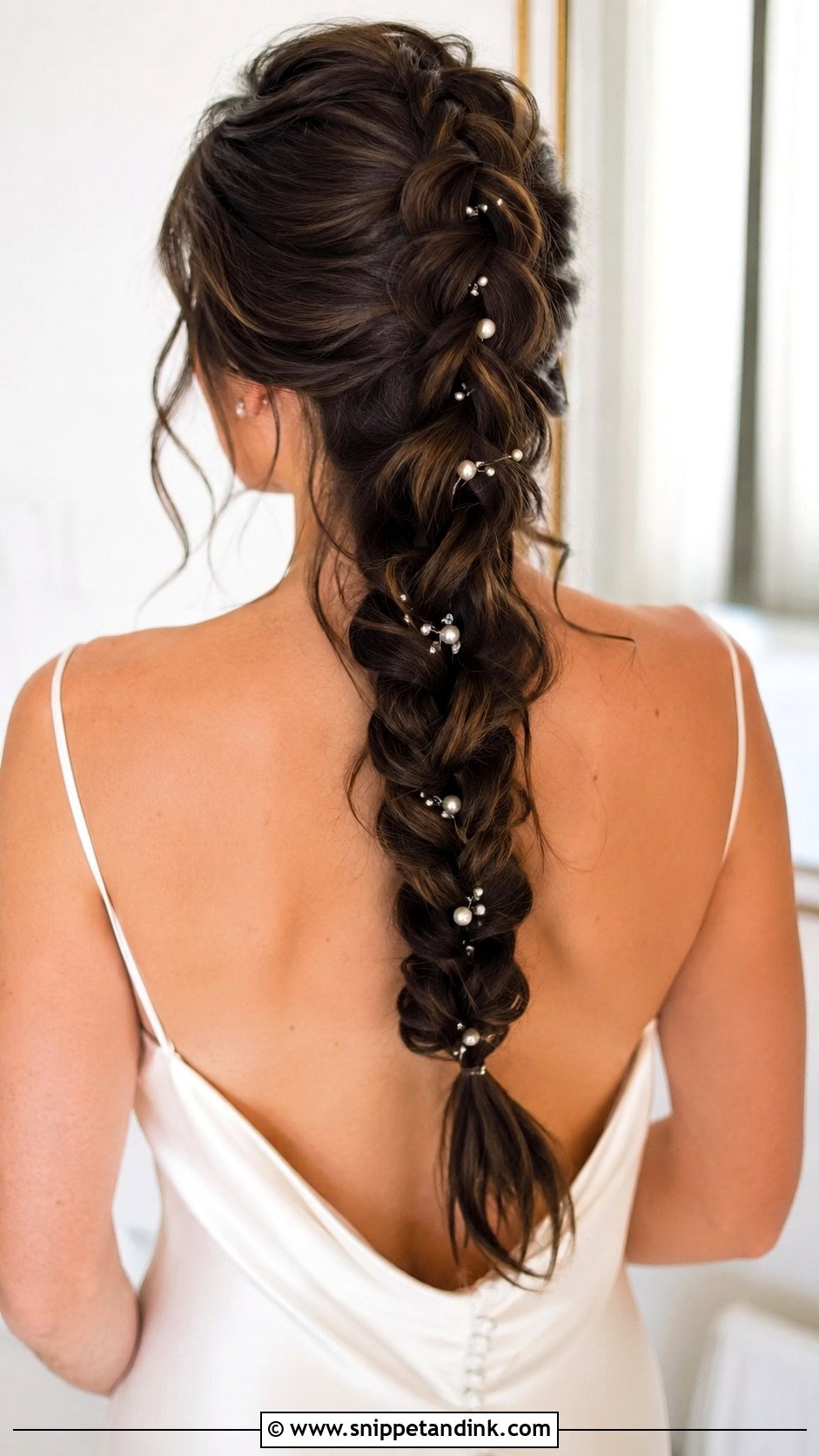
Because the strands cross under rather than over, a long Dutch braid stands up off the head, and that raised ridge is what a camera picks up from across a garden. It’s my pick for outdoor ceremonies with wind, as the hair is anchored all the way down the scalp. The risk is that it reads athletic. I avoid that by leaving two curled tendrils at the temples and loosening only the outer loops, never the centre spine, which is what keeps it secure.
3. Long French Braid Wedding Hair
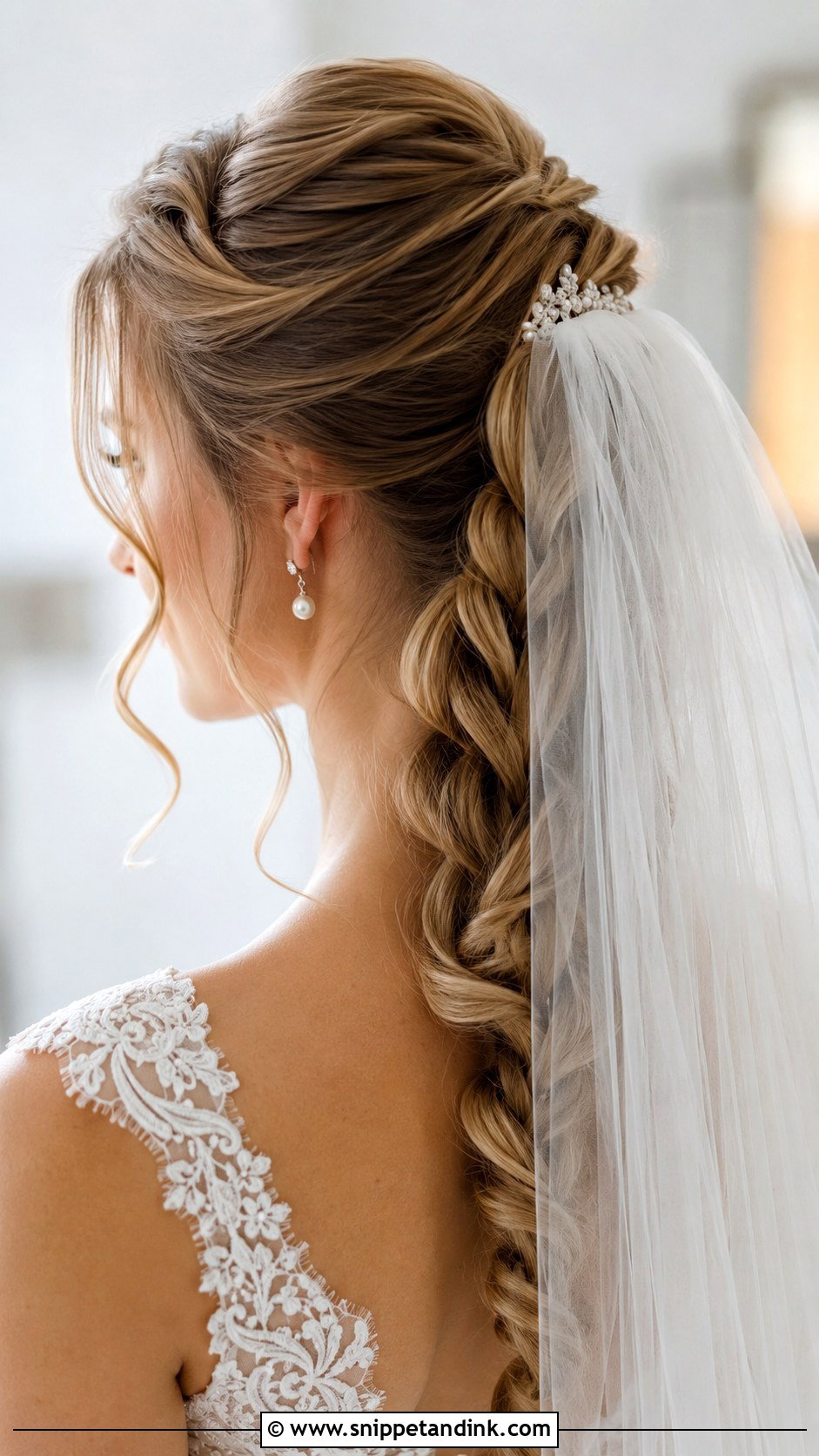
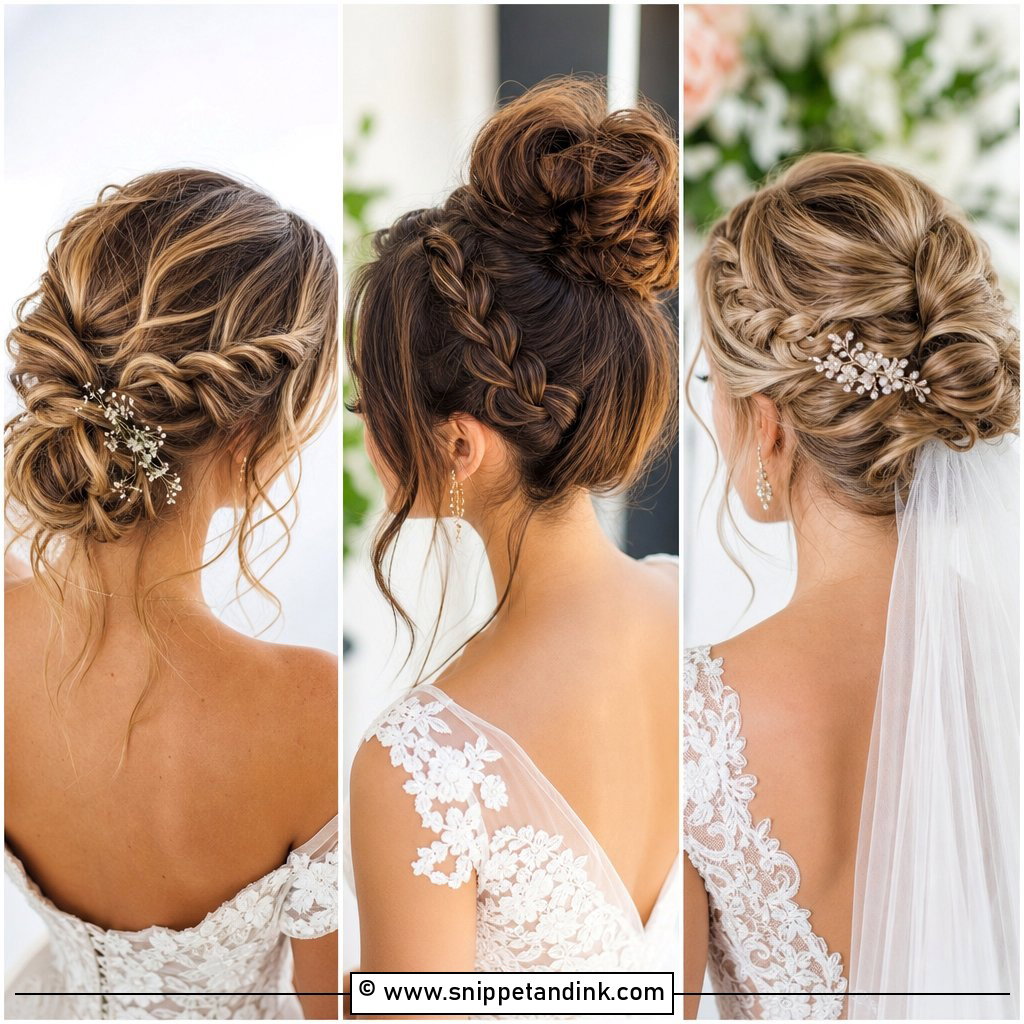
A French braid gathers hair flat against the scalp, so on fine hair the crown can look a little thin from the side. I tease the first two inches at the roots before I start and keep the top section slightly loose, which gives height without a visible bump. The firm upper half is also the best place I know to anchor a veil comb: slide it into the braid itself rather than into loose hair and it won’t drag. If density is the worry, two or three clip-in wefts hidden under the braid fill it out.
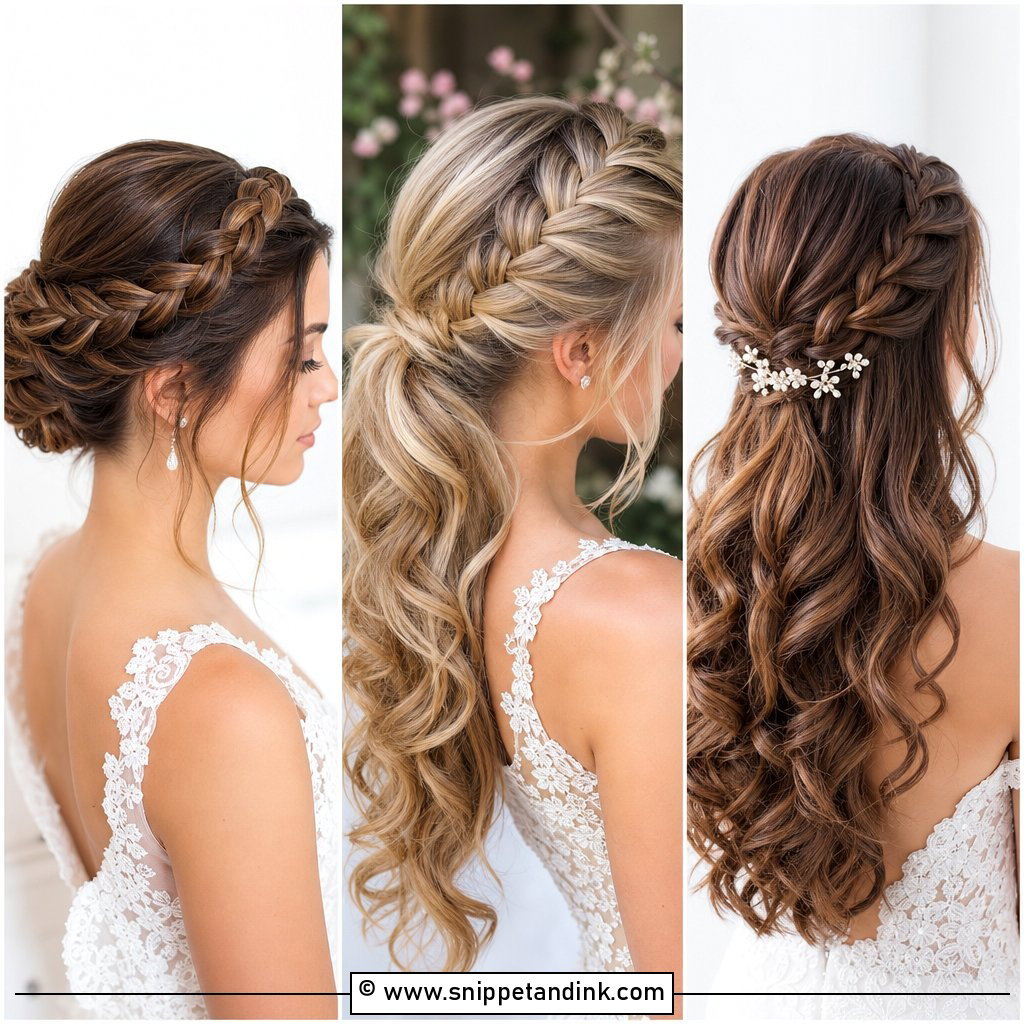
4. Long Side Braid Wedding Hair
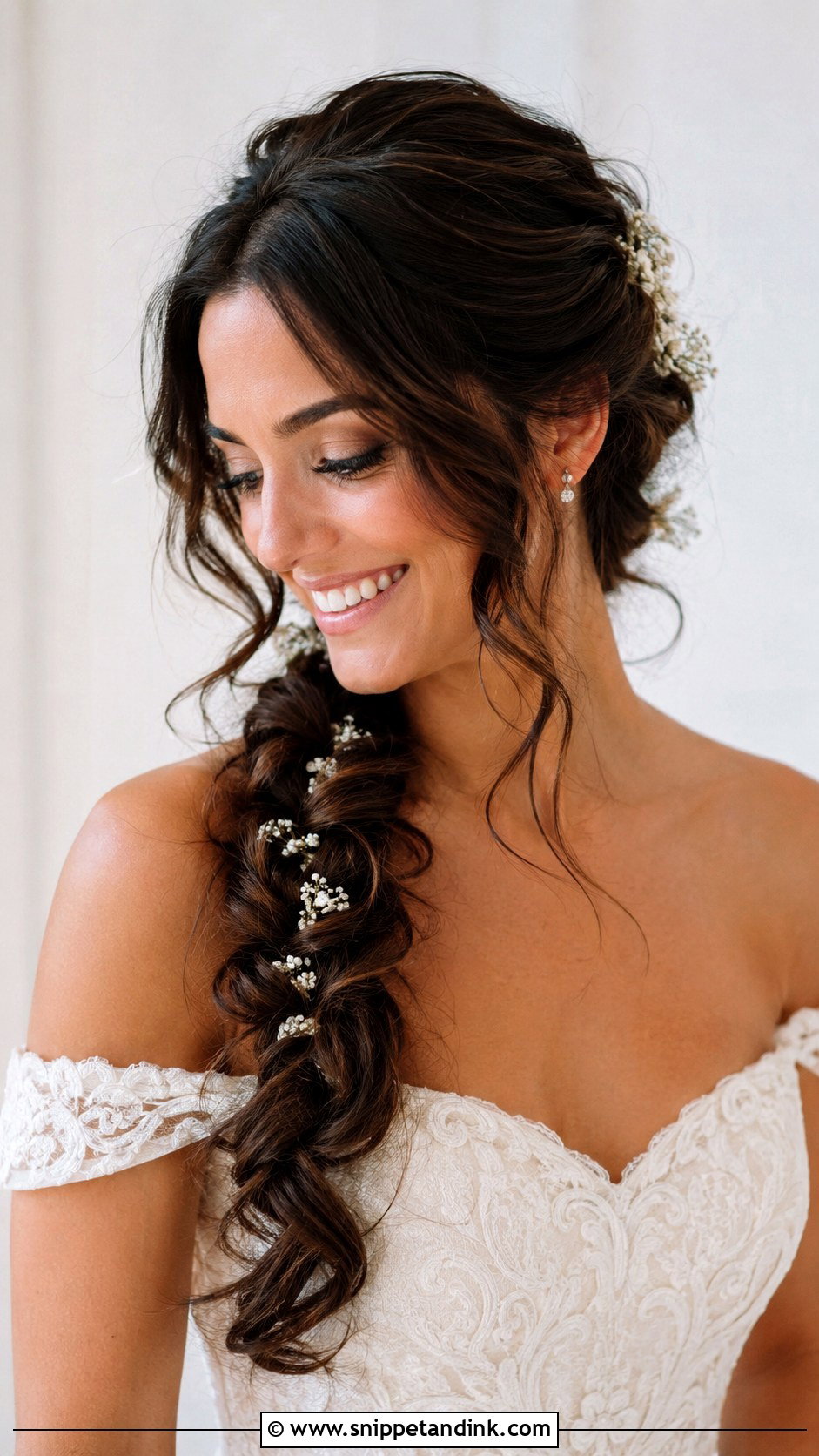
Swept over one shoulder, a side braid puts all the texture where the guests and the camera are looking. It sits best with off-the-shoulder and one-shoulder necklines, where it fills the bare side. On a high neckline I’d steer you away from it, because the braid fights the fabric and gets crushed against the chest. Build lift at the crown first, then decide on the weave; fishtail, rope and three-strand all work here.
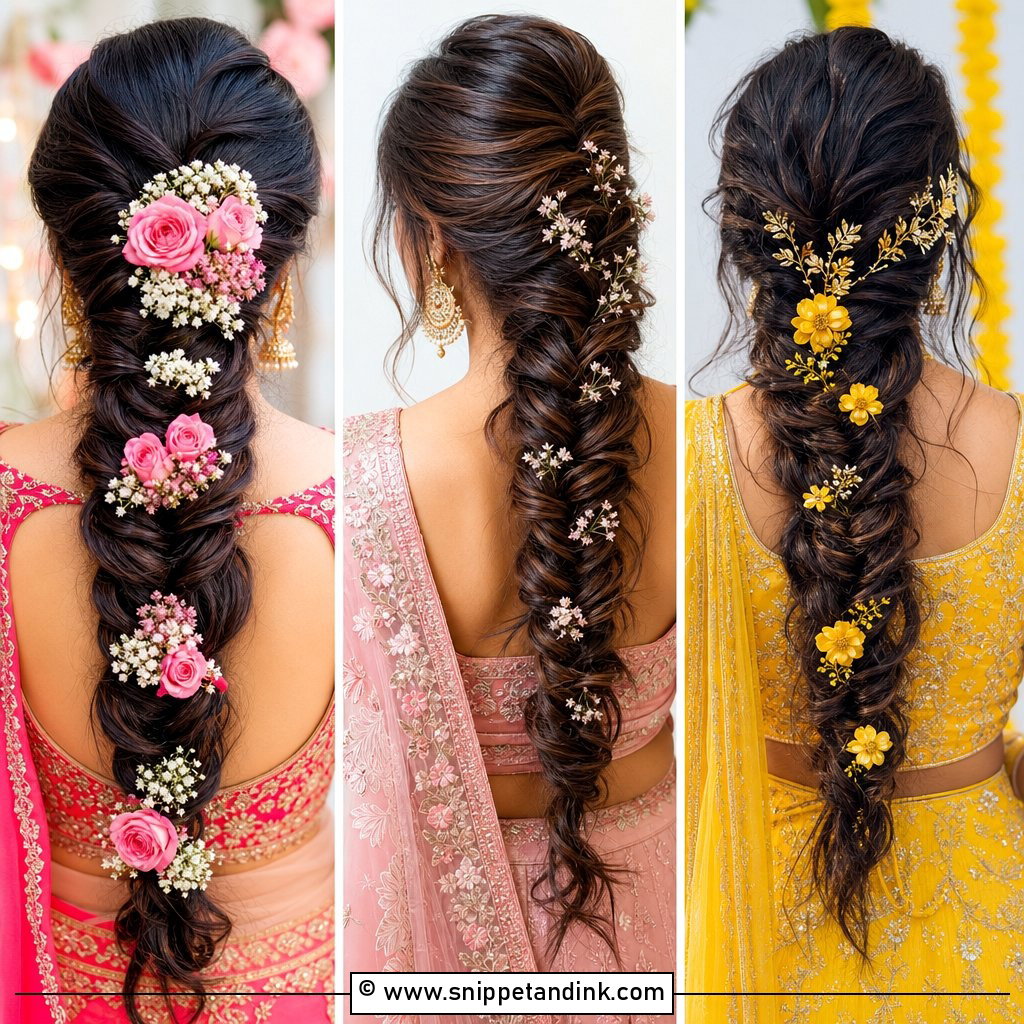
5. Long Boho Braid Wedding Hair
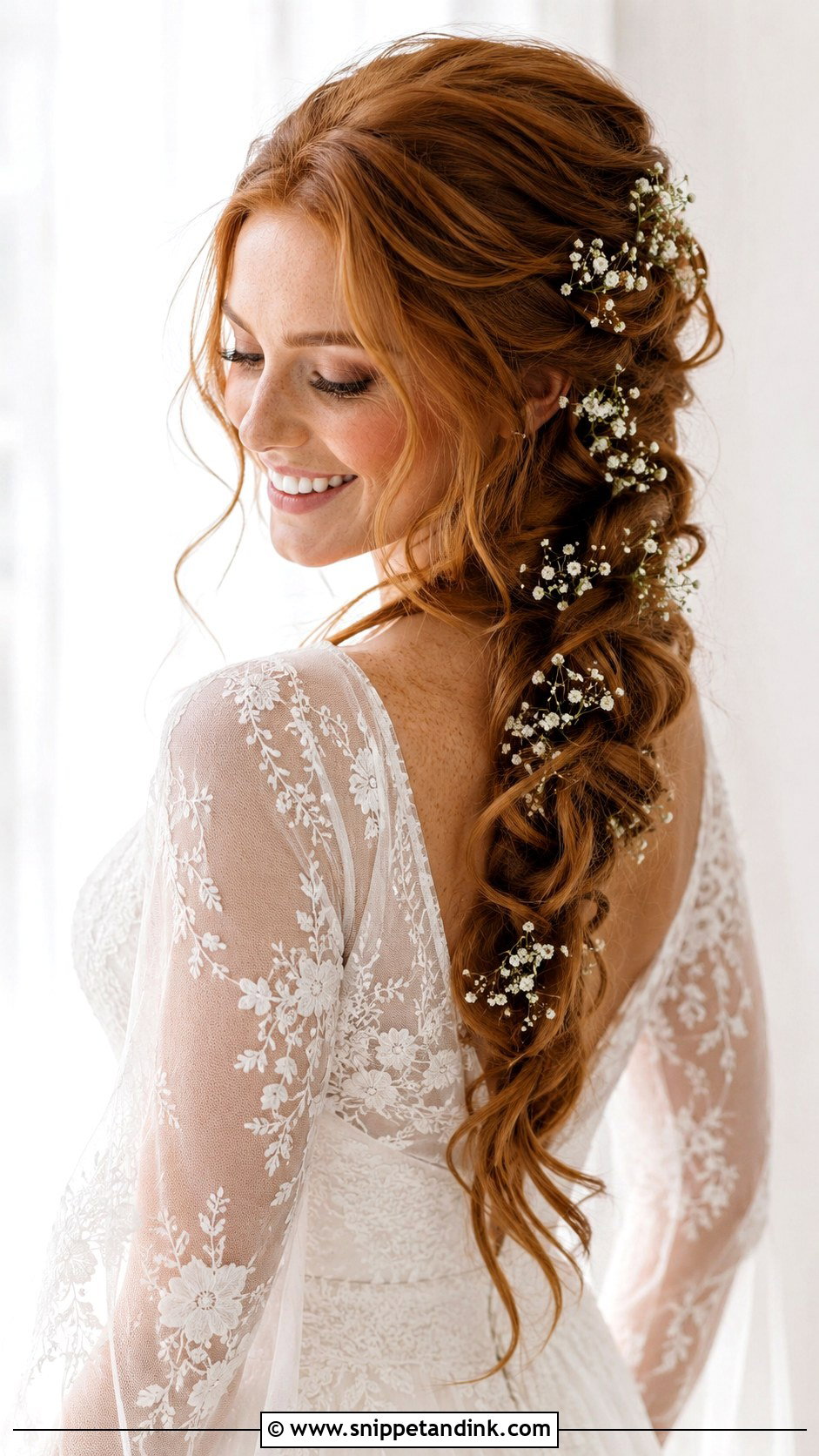
Boho braids only look undone. Underneath, I usually place a dozen hidden bobby pins and a flexible hairspray, because a loose braid with nothing holding it collapses by the speeches. Baby’s breath and small clips suit garden and beach venues, though I’d skip fresh flowers on a hot beach since they wilt within a couple of hours. Widen the braid and let it melt into waves at the ends so there’s no hard stopping point.
6. Long Waterfall Braid Wedding Hair
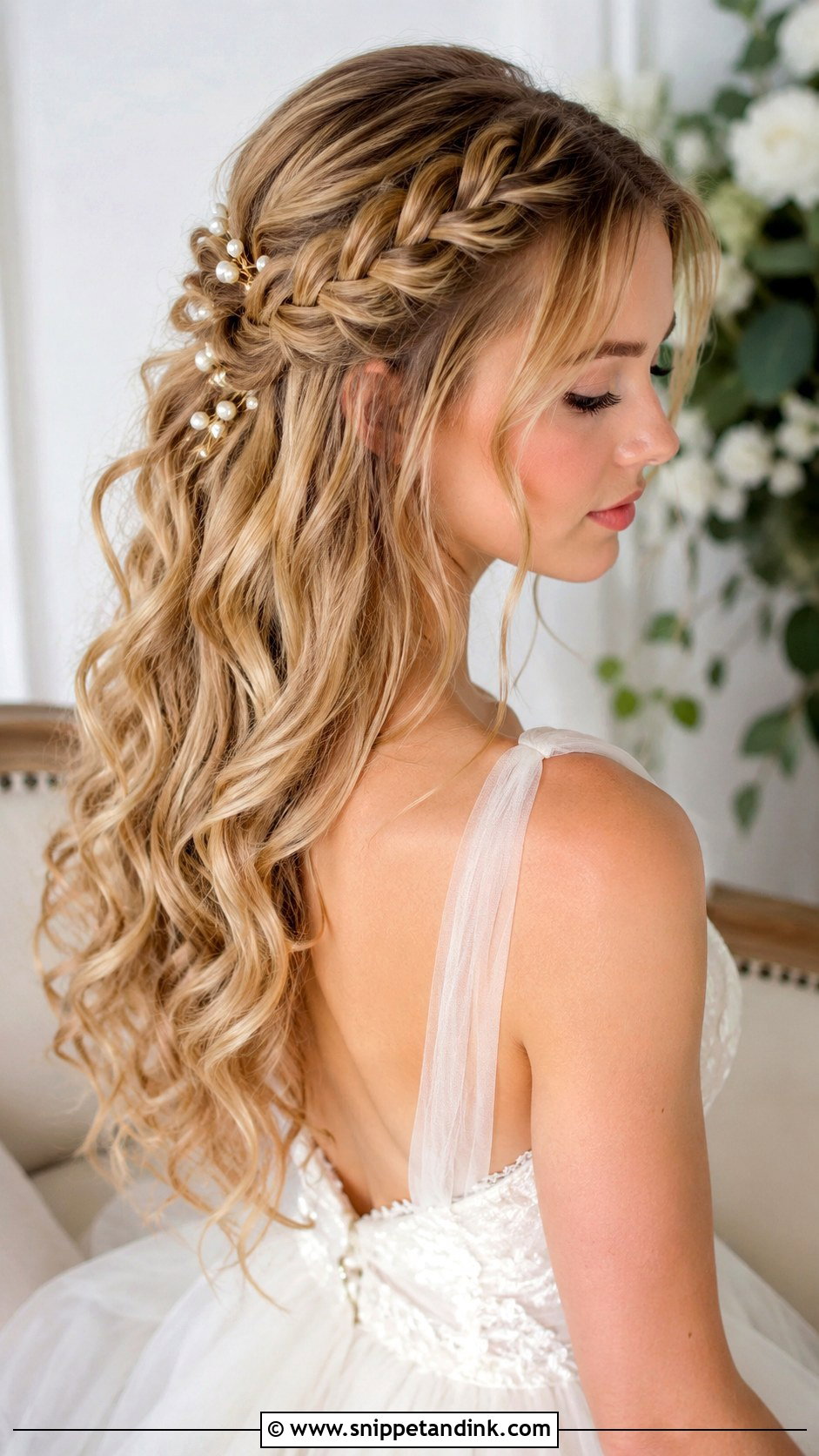
The waterfall trick depends on the hair having some bend, because straight strands drop through the braid and disappear. I curl the whole head first with a medium barrel and let the curls cool fully before braiding across the crown. Then each dropped piece shows as a ribbon. Place the veil below the braid, not through it, or the comb will pull the dropped strands out of line. A light, brushable spray keeps the waves soft to touch.
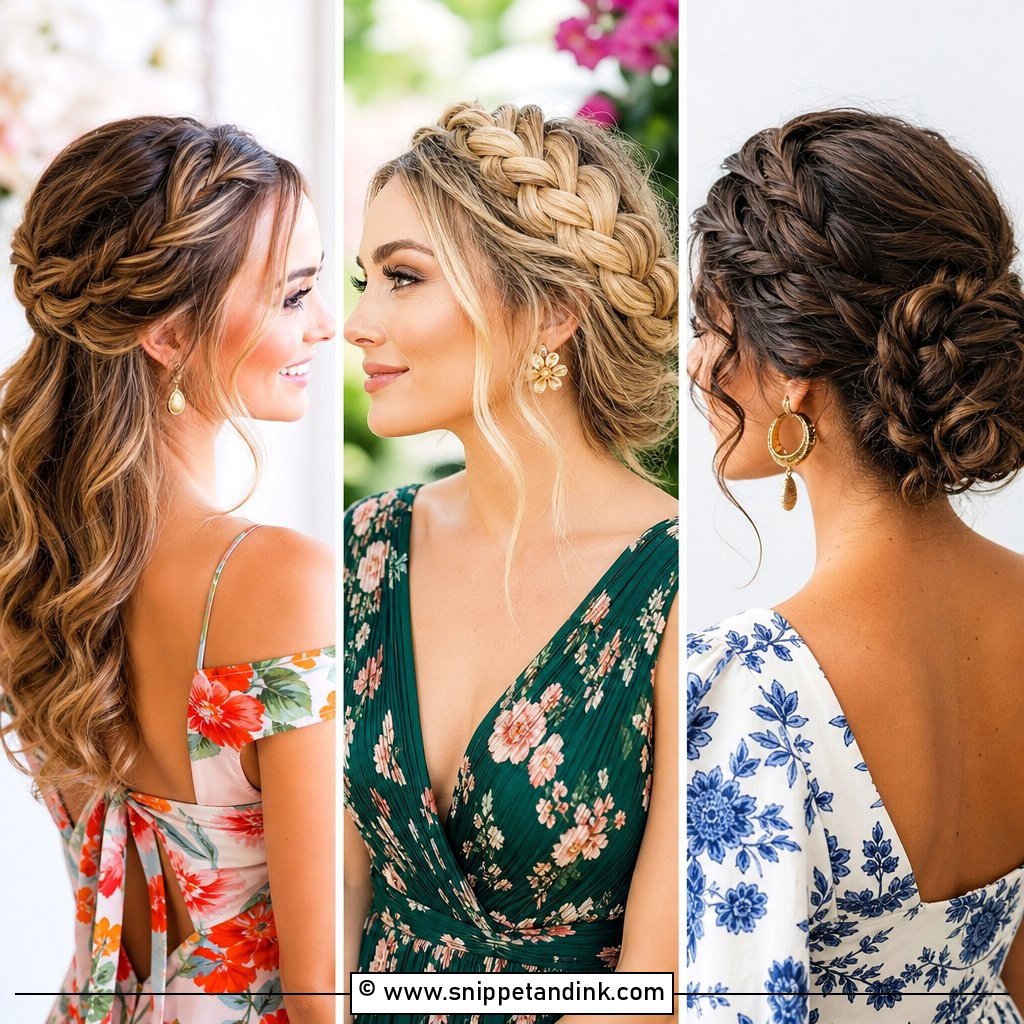
7. Long Crown Braid Wedding Hair
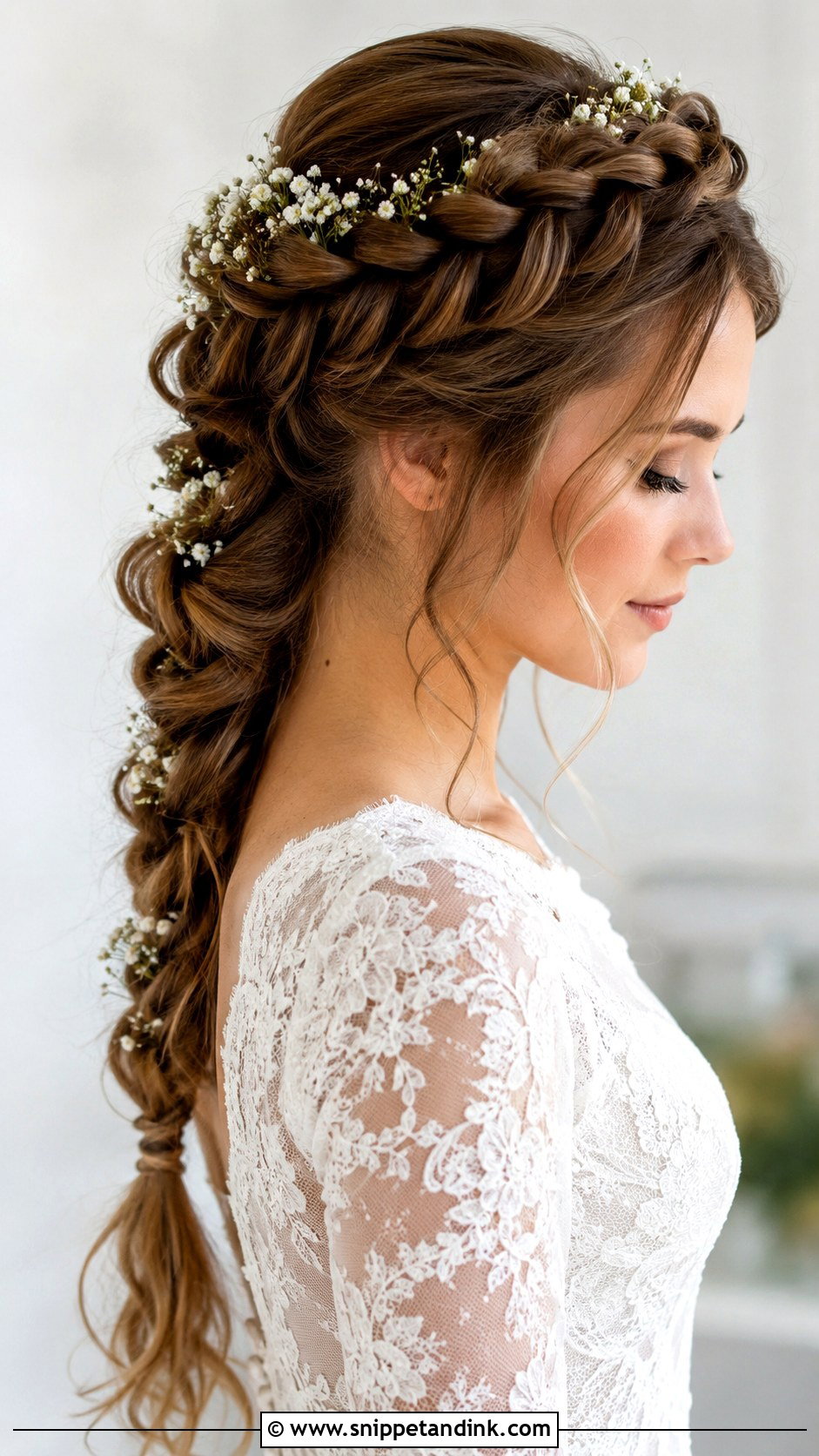
A crown braid wraps the head like a halo and takes every strand off the face and neck, which matters more than people think during a long ceremony in July heat. With long hair I often braid two sections and wrap them in opposite directions, so the join hides behind the ear. It is heavier than it looks, though. If you get tension headaches, ask for it to be pinned with U-pins rather than a tight elastic base. Small pearl accents or a few blooms make it look bridal rather than practical.
8. Long Half Up Braid Wedding Hair
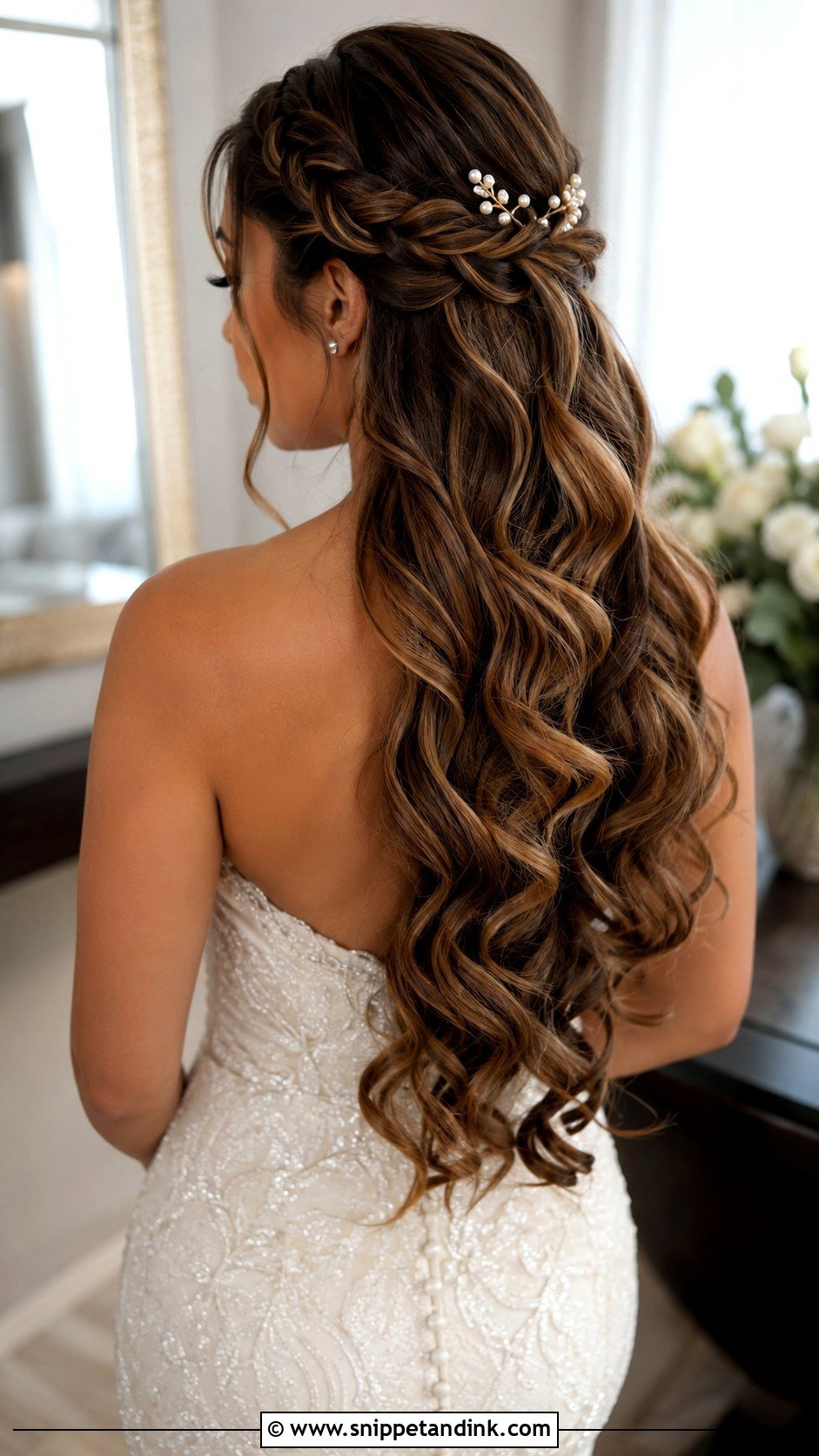
Half up with a braid is the style I recommend most to brides wearing a veil and wanting their length on show. The braided top gives a firm shelf for the comb, and the curls below keep moving. My one rule: blend the end of the braid into the curls by curling it with the rest, so you never see a small tail sticking out halfway down. Most neckline shapes sit comfortably with it.
9. Long Braided Ponytail Wedding Hair
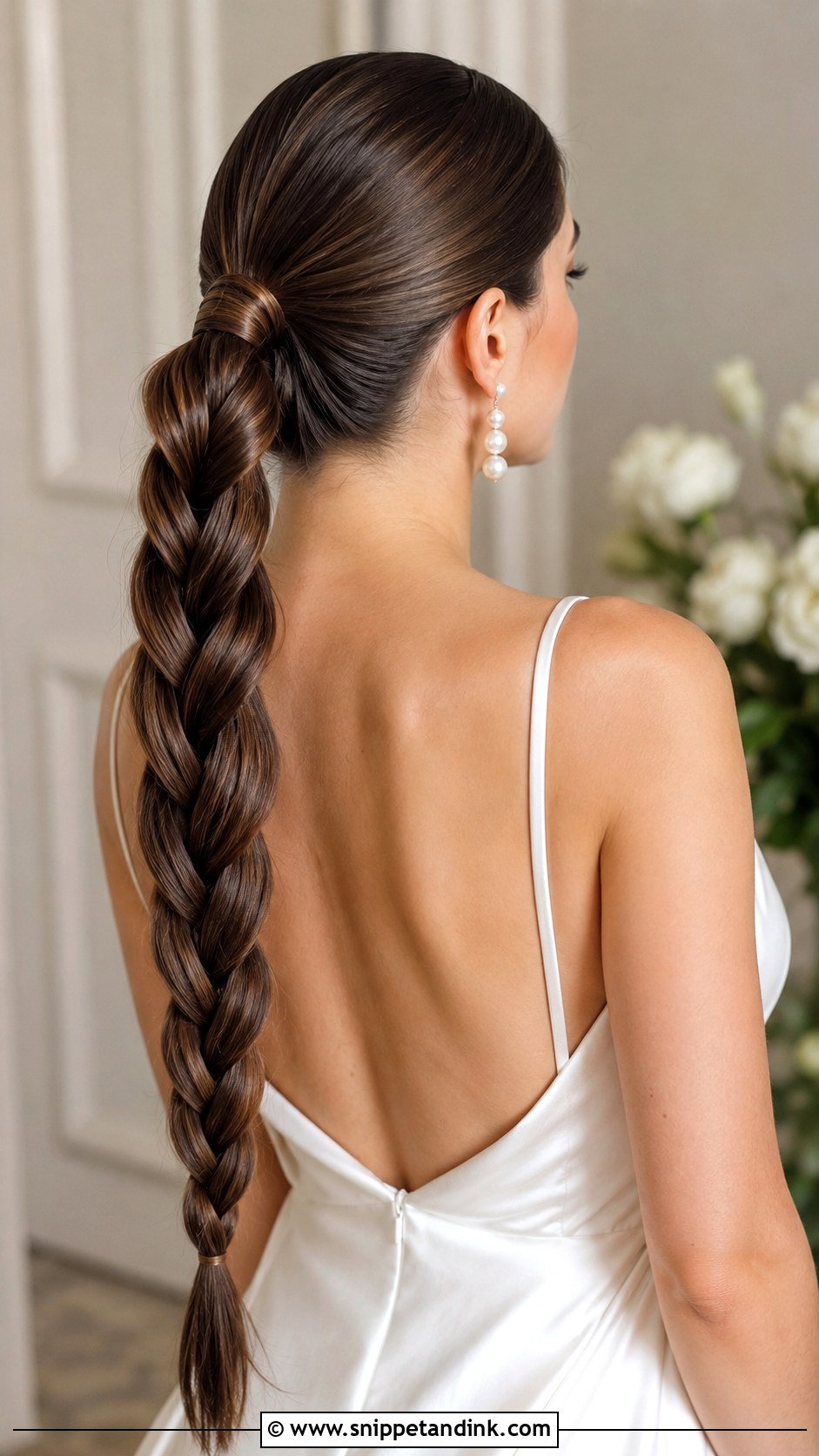
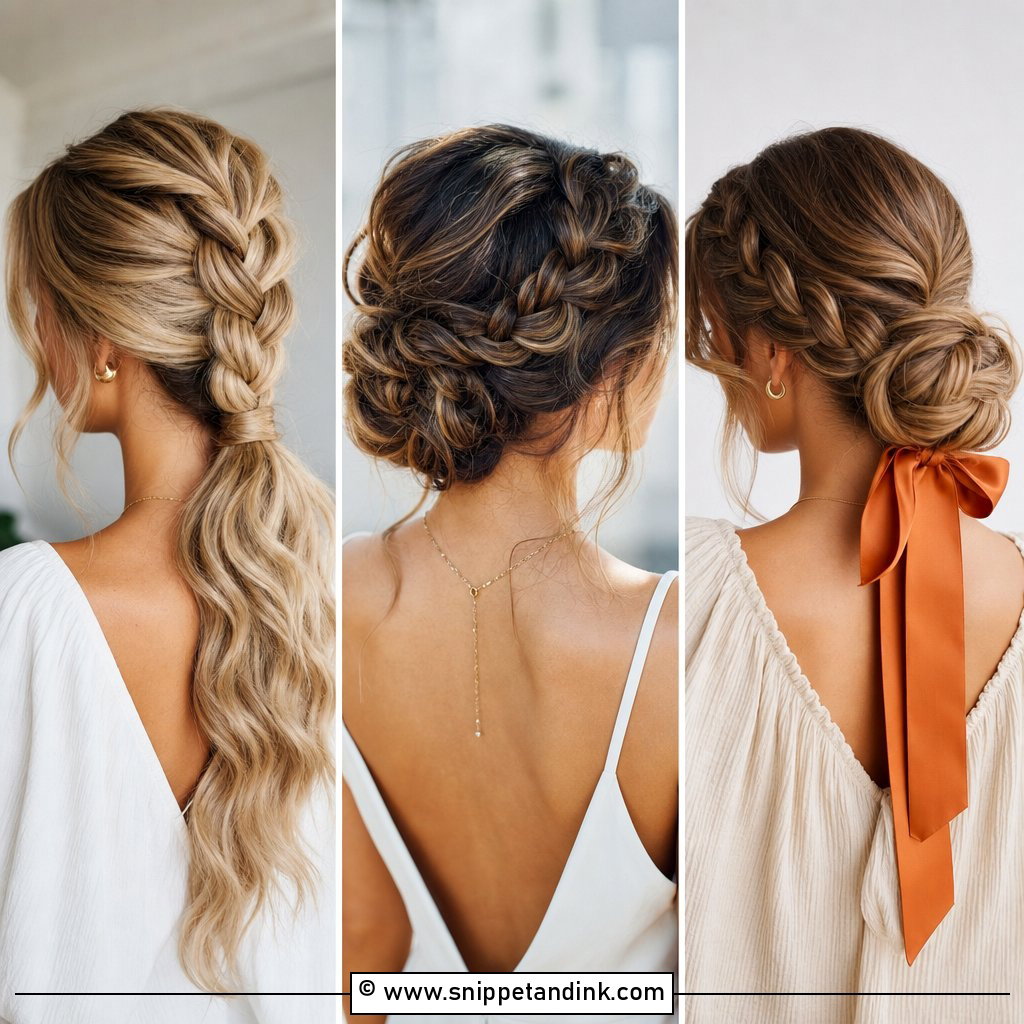
The braided ponytail is cleaner than most styles here and it wears well into a late night. Height changes the mood: high reads bold, mid-height is balanced, and low sits easily under a veil. I wrap a strand around the base to hide the elastic, then braid and gently expand it for width. With very long, heavy hair, a high pony can pull at the scalp after a few hours, so I’d test it at the trial for at least an afternoon. A shine spray at the end stops it reading dry in flash photos.
10. Long Bubble Braid Wedding Hair
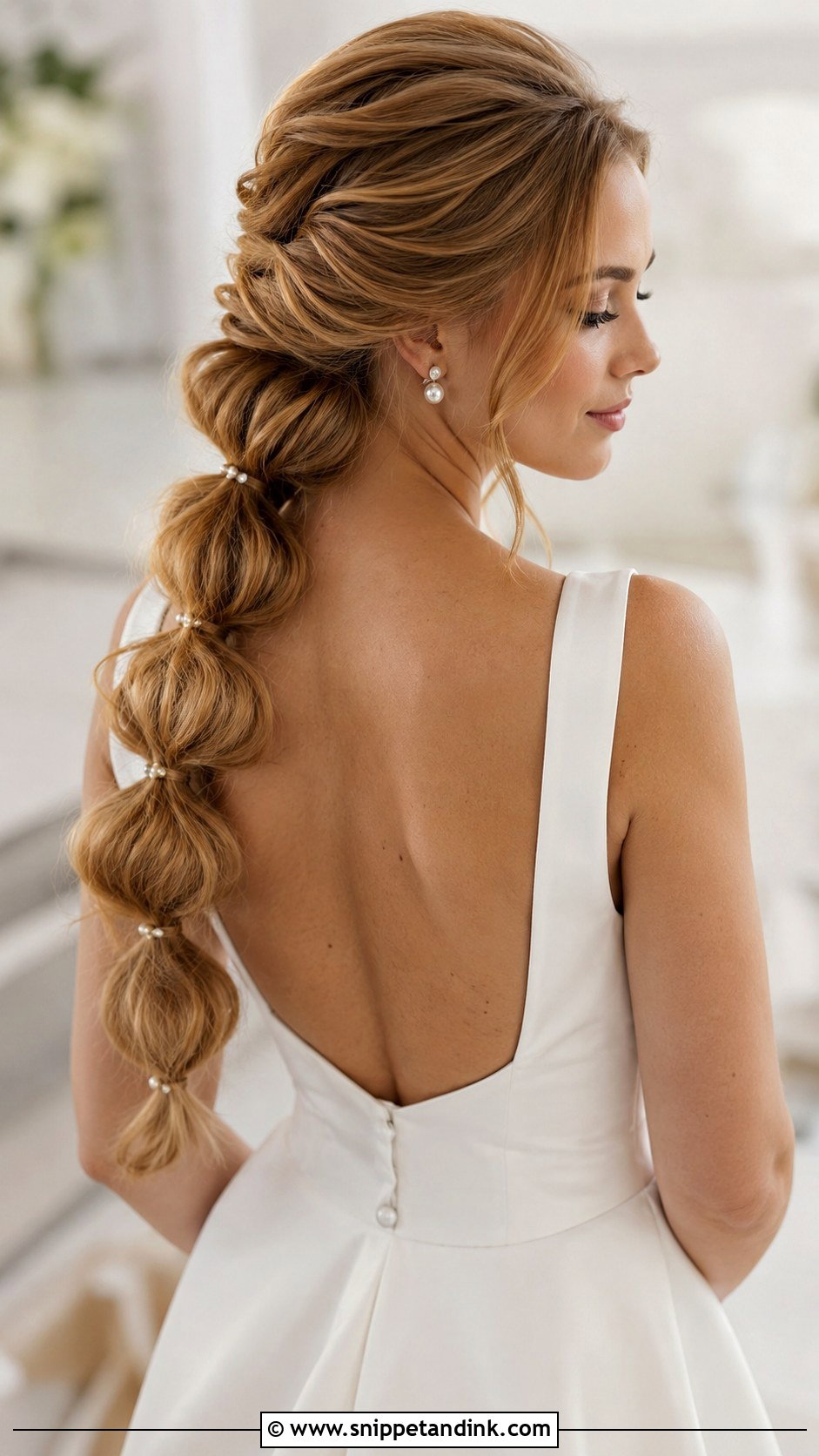
Bubble braids aren’t woven at all; they’re sections tied with small elastics and pulled out into rounded shapes. That makes them quick and tidy, and length is what makes the bubbles look proportioned. The elastics are the weak point visually, so I cover each one with a pearl band or a thin satin wrap. Clear elastics snap more easily than you’d think, so I double them on very thick hair.
11. Long Rope Braid Wedding Hair
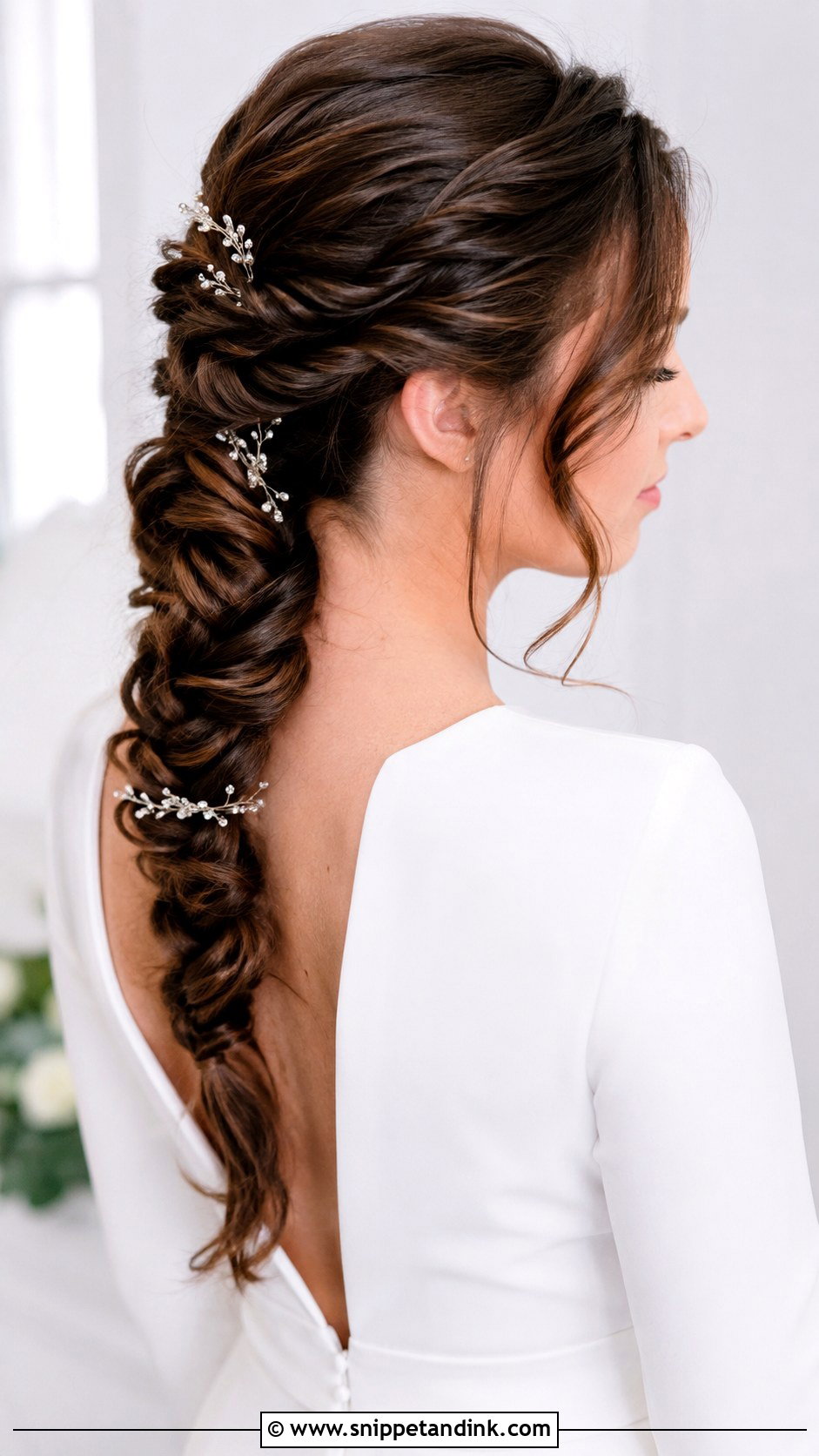
A rope braid is two twisted sections wound around each other, which gives a clean spiral rather than a weave. Twist each strand in the same direction and wrap them in the opposite one, or the rope unwinds within the hour. That’s the mistake I see most in at-home attempts. A long rope braid shows best on smooth hair, where the shine runs along the twist. A few pins along the spiral are plenty.
12. Long Mermaid Braid Wedding Hair
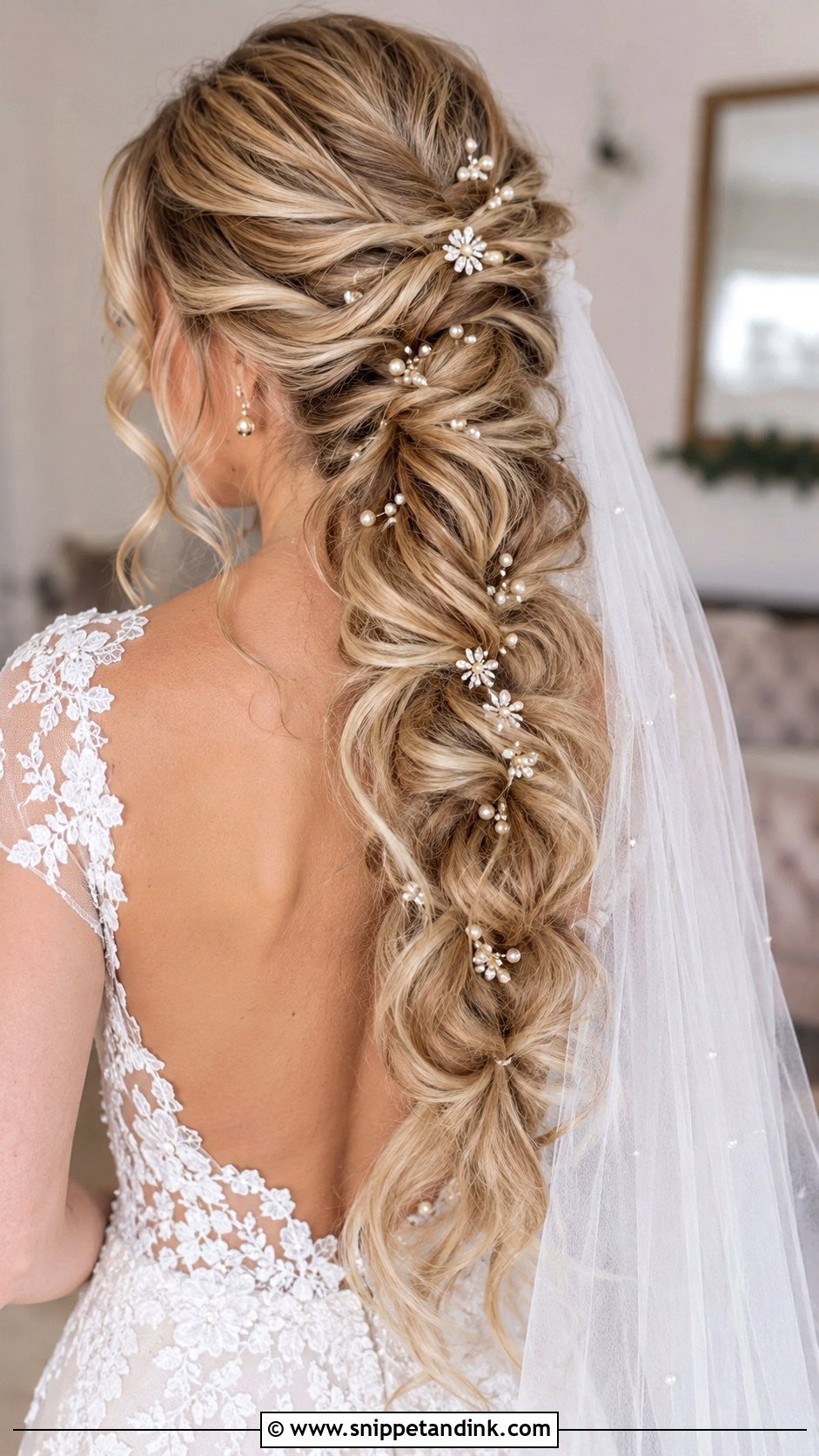
The mermaid braid is all volume: wide, loose sections pulled apart until the braid seems to melt into waves. It needs thick hair or extensions; on fine hair the pulling leaves gaps you can see through. I build it from a loose base braid and then add pulled-out texture, never the other way round. It’s a back-view style, so think about where the photographer stands at the ceremony. Floral clips or gold pins woven in add detail.
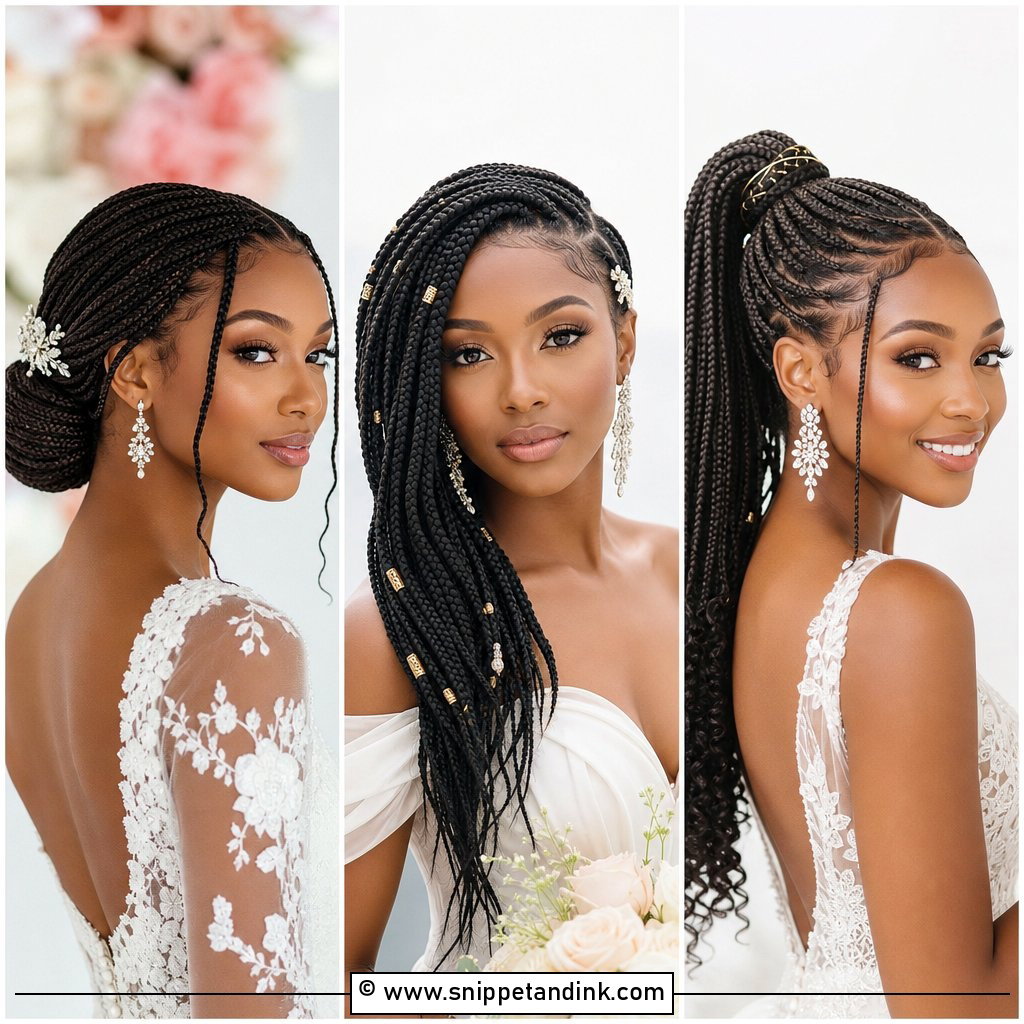
13. Long Box Braids Wedding Hair
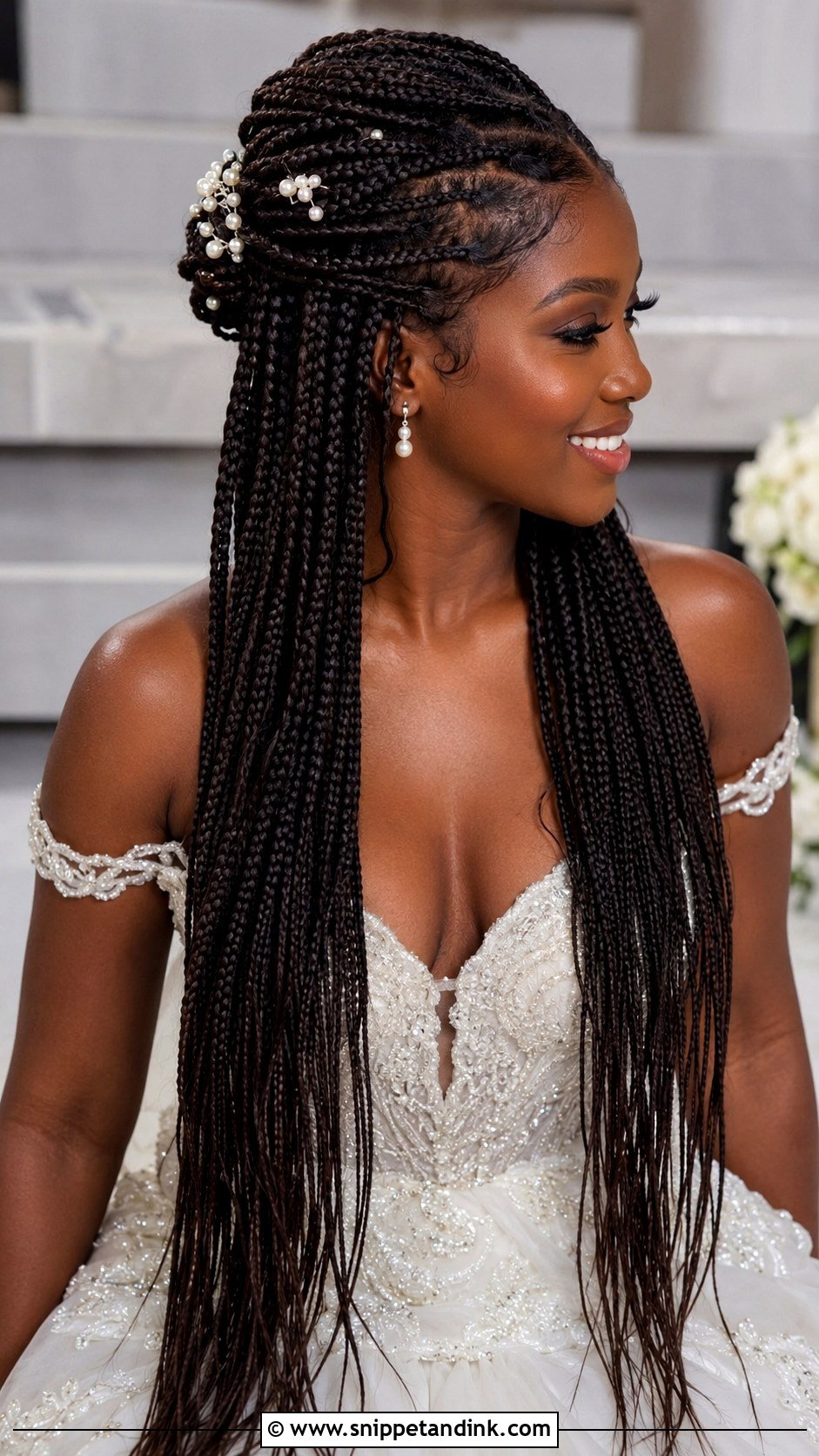
Long box braids are the most versatile option on this list: you can wear them down, swept aside, in a low braided pony or half up across several events. I’d get them installed about a week before the wedding, so the parts look crisp but the tension on the scalp has eased. Keep the braids moisturised and the edges laid lightly; heavy gel flakes white by evening. Cuffs, clear beads and pearl pins work, but go easy on the total weight added to the ends.
14. Long Cornrow Braid Wedding Hair
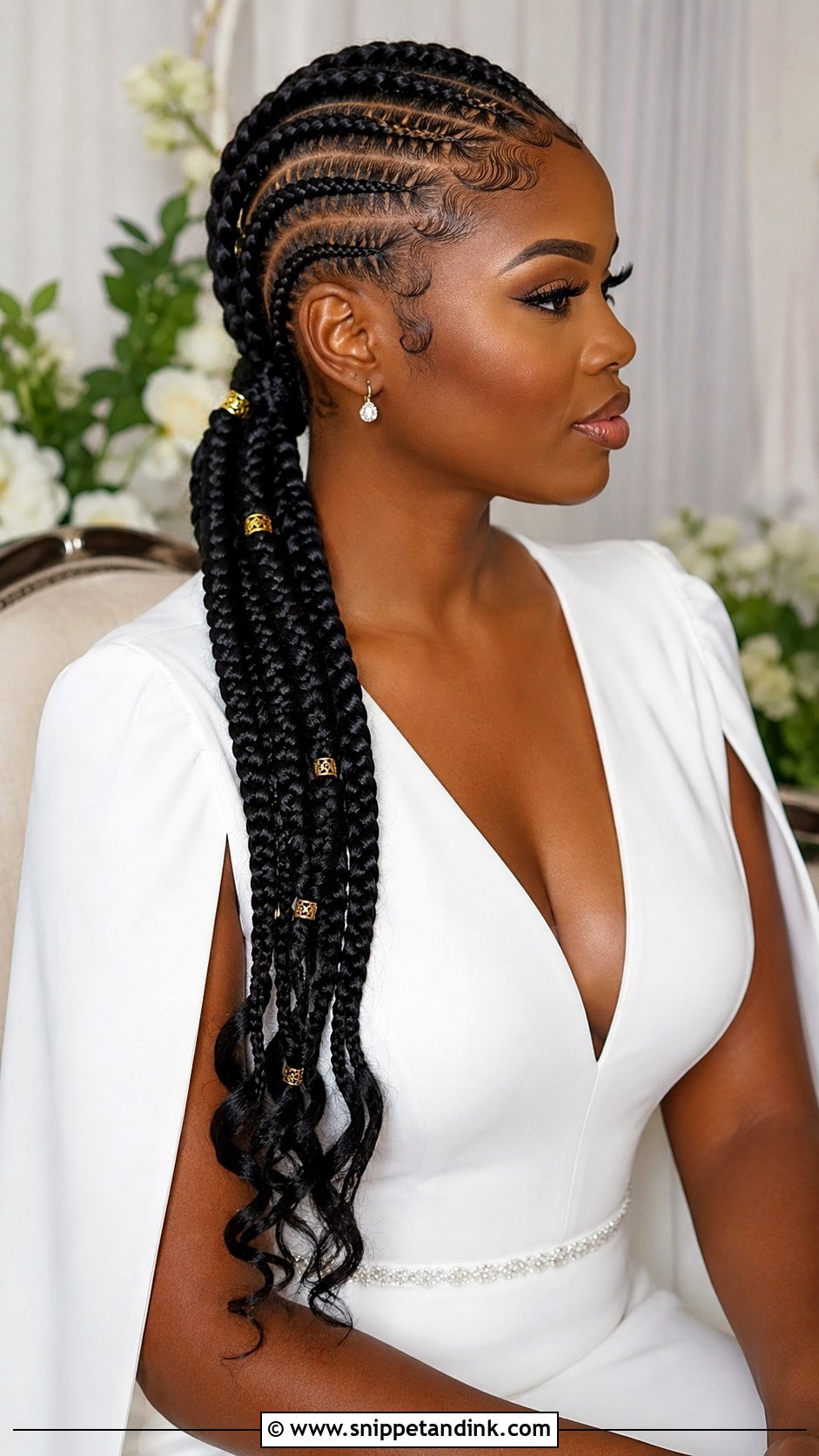
Long cornrow braid wedding hair gives a crisp hairline and a hold that lasts through a full day of dancing. The braids can run straight back, curve in a pattern or feed into one long plait. Veils and cuffs work when the stylist plans their placement before braiding, so the comb has a firm row to grip. Tension is the thing I’d question: if a braid hurts when it’s done, it’s too tight and should be redone, because pulling around the edges can cause lasting damage.
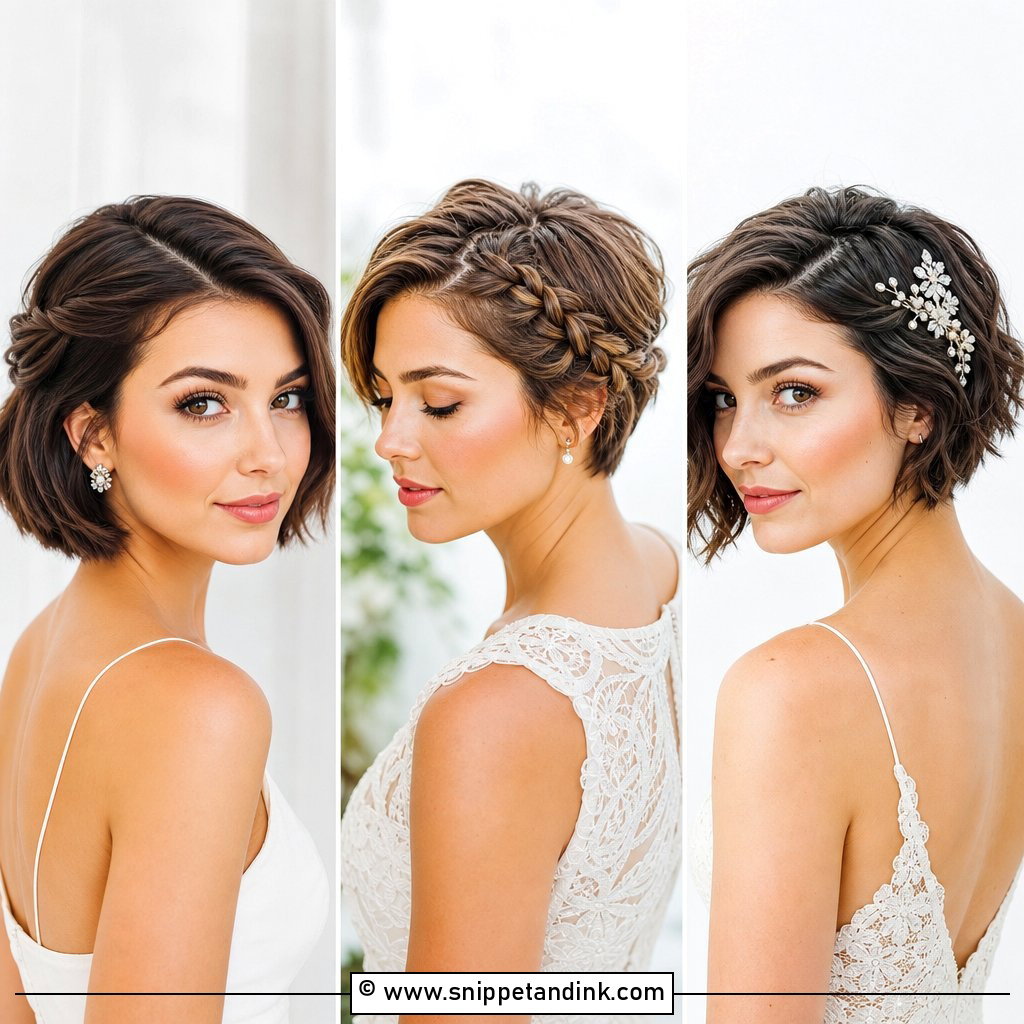
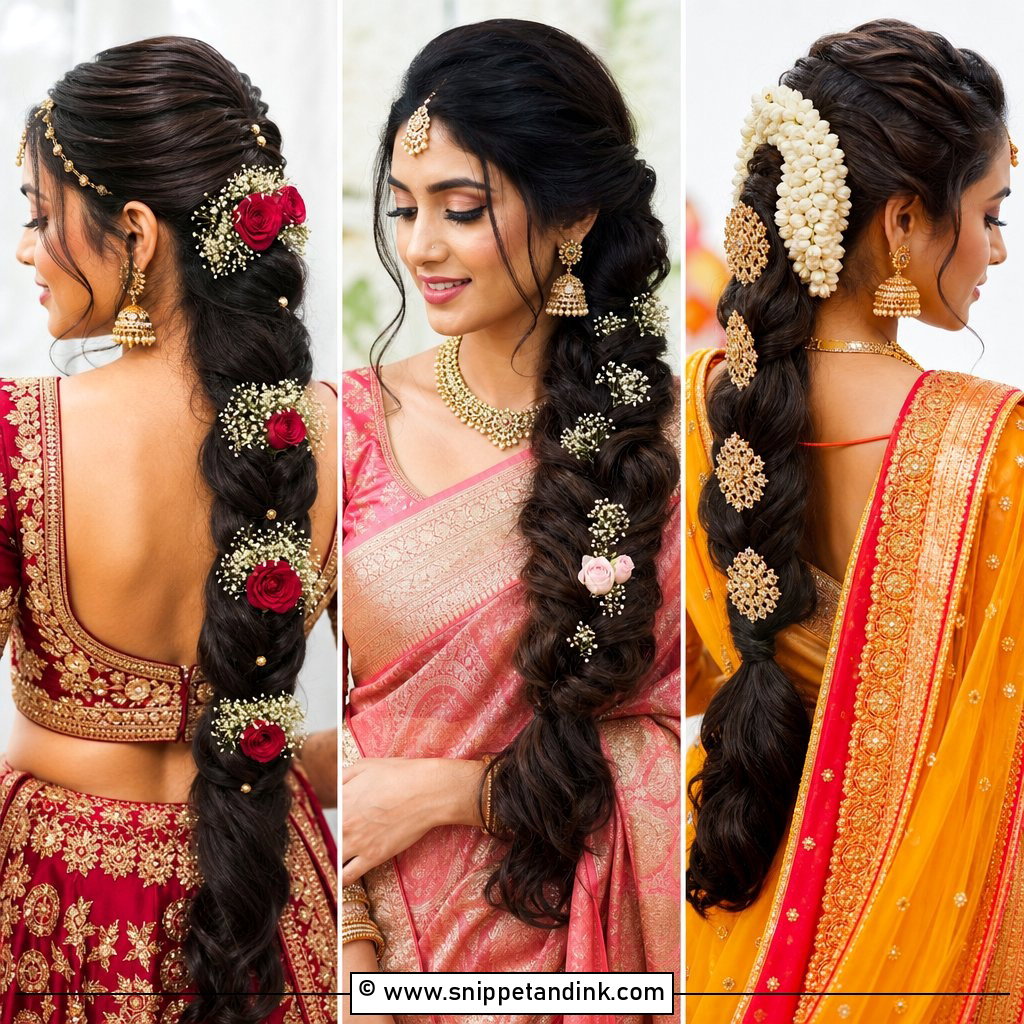
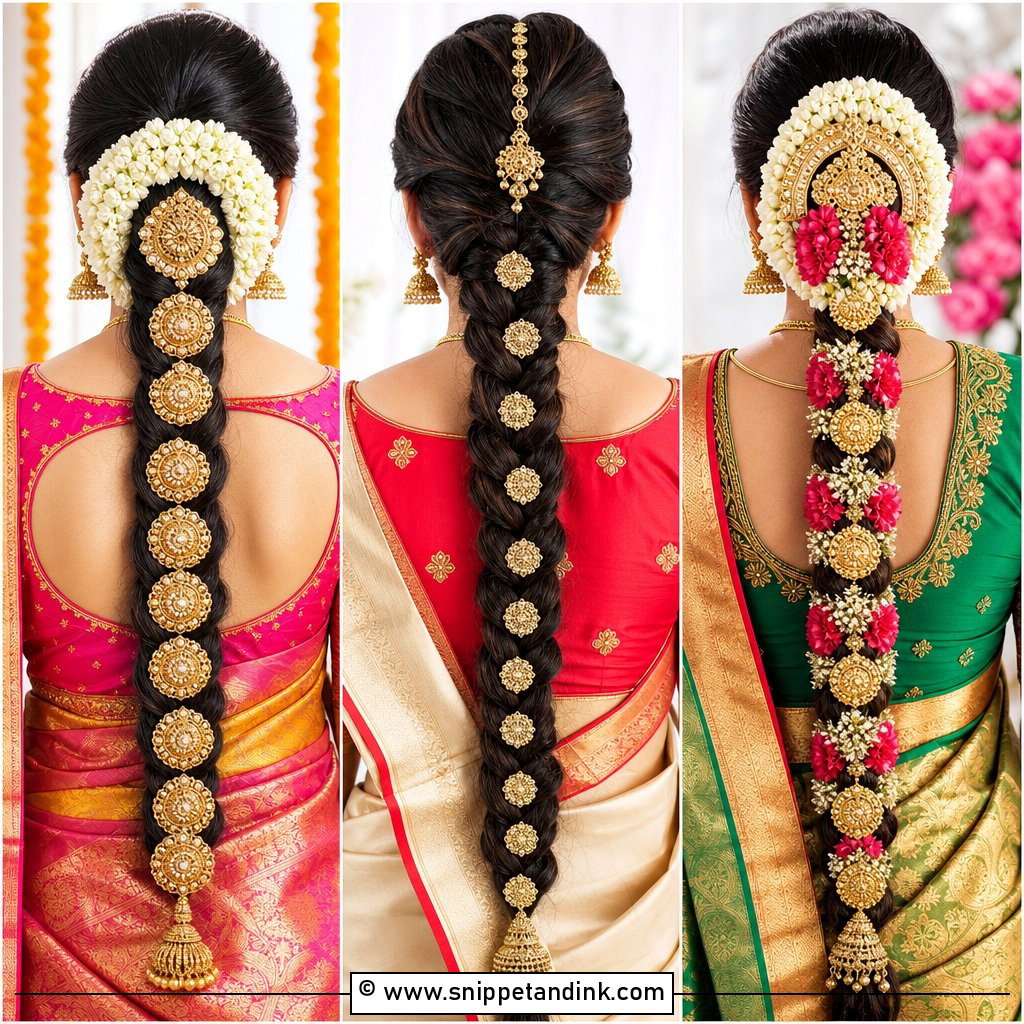
15. Long Indian Bridal Braid Wedding Hair
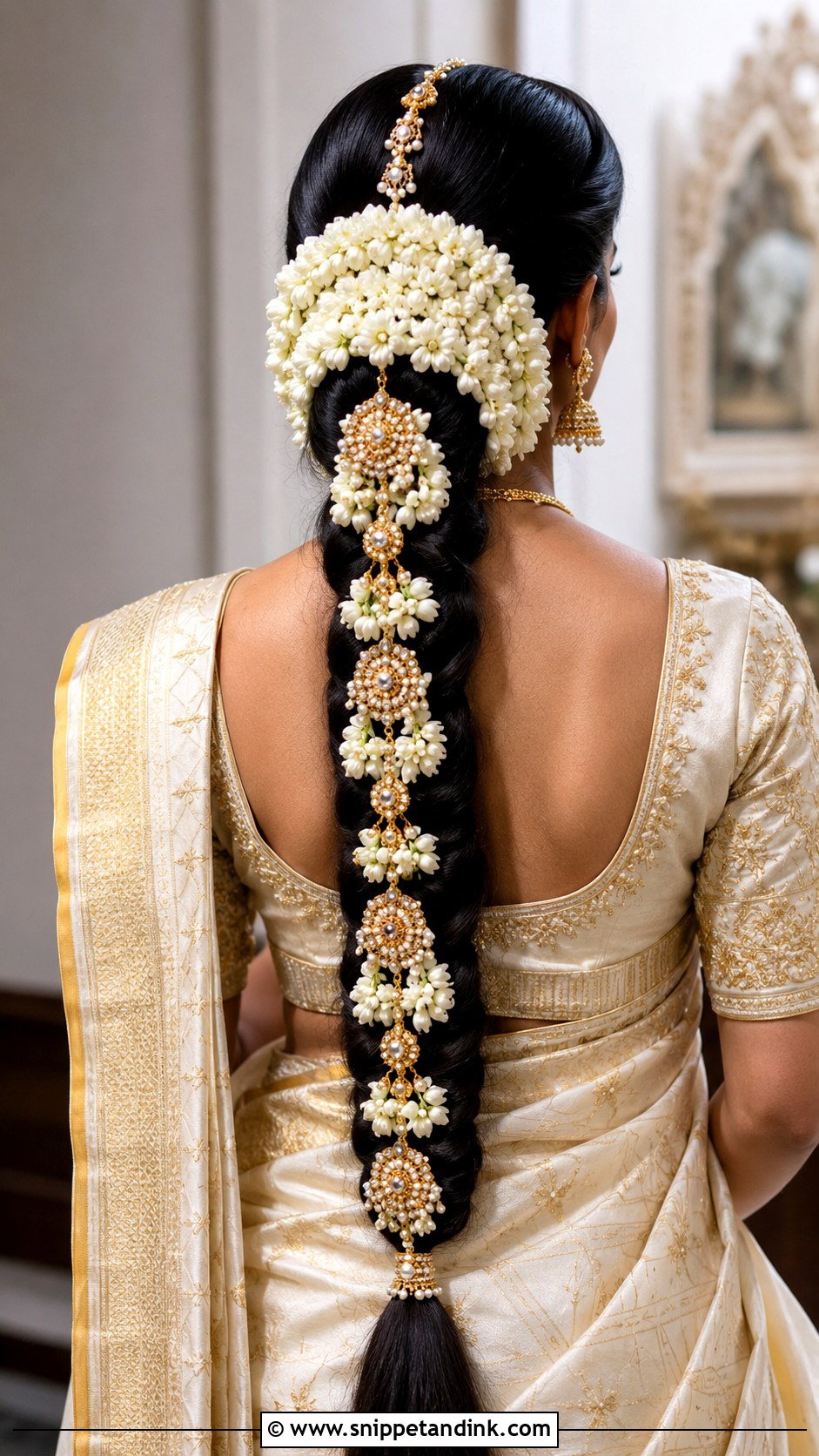
The traditional Indian bridal braid, or choti, is usually lengthened with a hair extension and dressed with a paranda, jasmine strings, gold ornaments and jeweled pins. It needs to carry a lot of weight, so I build it on a firm base and stitch the jasmine on rather than pinning it. The crown can be sleek with a centre part or lifted, depending on the maang tikka and dupatta. Try it at the trial for comfort: a fully dressed choti swinging against the back for hours is heavier than most brides expect.
Pancaking a Braid Without It Coming Apart by the First Dance
Pulling a braid wider is what makes it photograph full, and it’s also where most braids get ruined. I hold the braid at the bottom, then pinch only the outer edge of each loop, working upward. If you tug the centre, the structure loosens and the whole thing slides. Once it’s widened, I set it with a quick mist of spray and slip a few bobby pins inside the braid, angled upward, where nobody will see them.
A small repair kit for the day
- Six or eight bobby pins matched to your hair colour, plus two clear elastics.
- A travel hairspray for flyaways after hugs and the veil coming off.
- A tail comb, so a bridesmaid can tuck stray ends back into the weave without undoing it.
If a section does fall, don’t pull the braid out. Twist the loose strand, pin it into the nearest loop and spray. In most photos that fix is invisible, and it keeps the shape you approved at the trial.
Your Texture Picks the Braid Before Your Mood Board Does
Every one of these braids can work, but your hair decides which ones will last. Fine hair needs texture spray and support; thick hair needs bigger sections and stronger pins. Fishtails and side braids read soft, while Dutch and French braids give structure, and box braids, cornrows and the choti carry their own cultural weight. Long braid wedding hairstyles are worth browsing widely; then bring two or three to your trial along with your veil and accessories, and wear the result for a few hours before you decide.
You'll Like These Ideas:


Leave a Reply