
A flower veni is the part of Indian bridal hair I plan around, especially for South Indian brides, because it decides how the braid or bun underneath has to be built. Jasmine, roses and marigolds each carry meaning, from purity to prosperity, but they also behave very differently once they are pinned into hair and worn through hours of rituals. Below are twenty veni styles, from a single gajra strand to a full floral jadai, with notes on how each one sits, how heavy it gets and who it suits.
How a Veni Is Anchored So It Doesn’t Pull Your Braid Down
Fresh flowers are heavier than they look. A long jasmine strand is light, but a full jadai with roses, marigolds and gold pieces can drag on the scalp within an hour if it is only clipped onto the hair. So before any flower goes in, I build a base: a firm bun or a tight section at the crown, secured with crossed bobby pins, that takes the weight instead of your hair roots.
- Fine or thin hair: I add a padded bun base or a matching hair extension so there is enough body for pins to grip.
- Short or shoulder-length hair: a false braid in your shade carries the veni, and your own hair is blended in at the top.
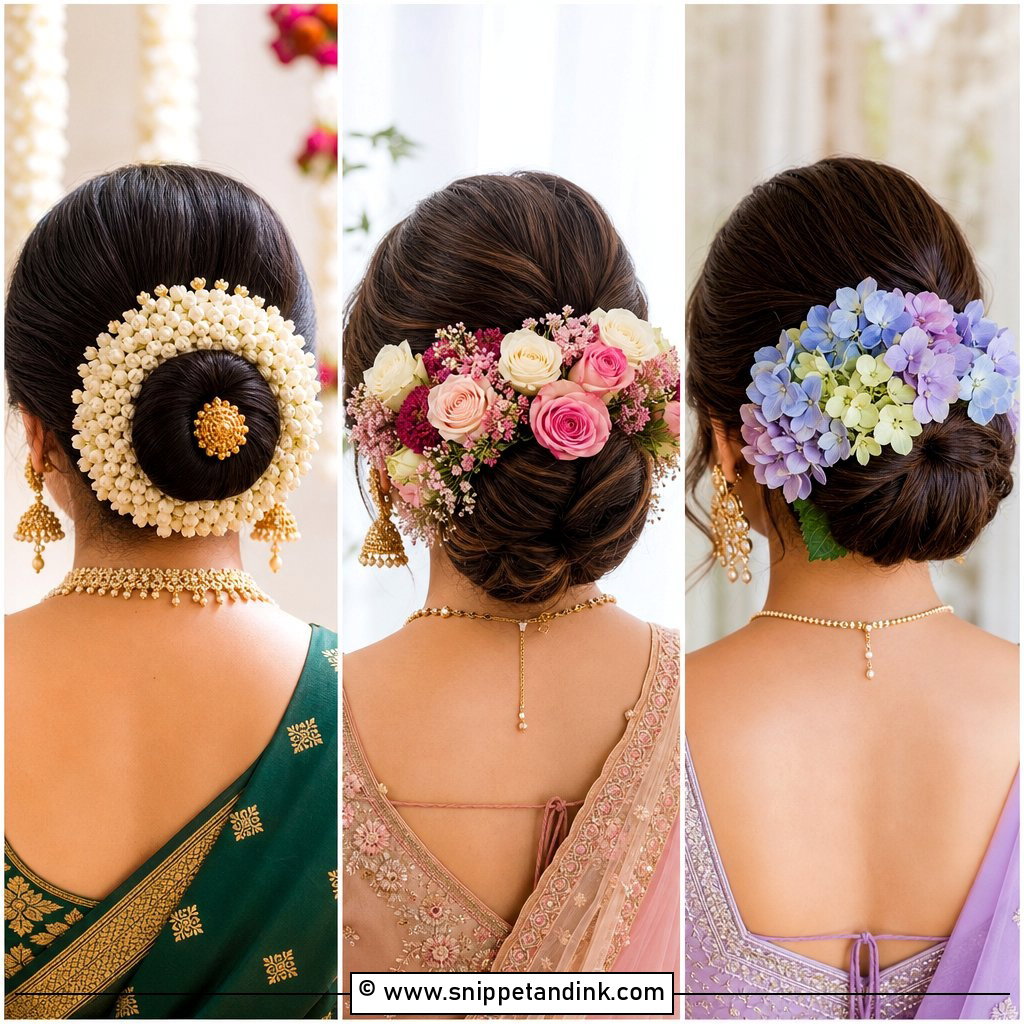
- Very thick hair: the braid can carry weight on its own, but I thin out the inner sections so the flowers sit flat instead of riding on top.
- Sensitive scalp: choose jasmine or orchids over a dense marigold or rose veni, and keep the anchor points spread out.
The flowers themselves are then stitched or pinned to that base every few inches. If you feel a pulling headache during the trial, say so. That is the one thing that will not get better as the day goes on.
1. Jasmine Veni Braid for South Indian Brides
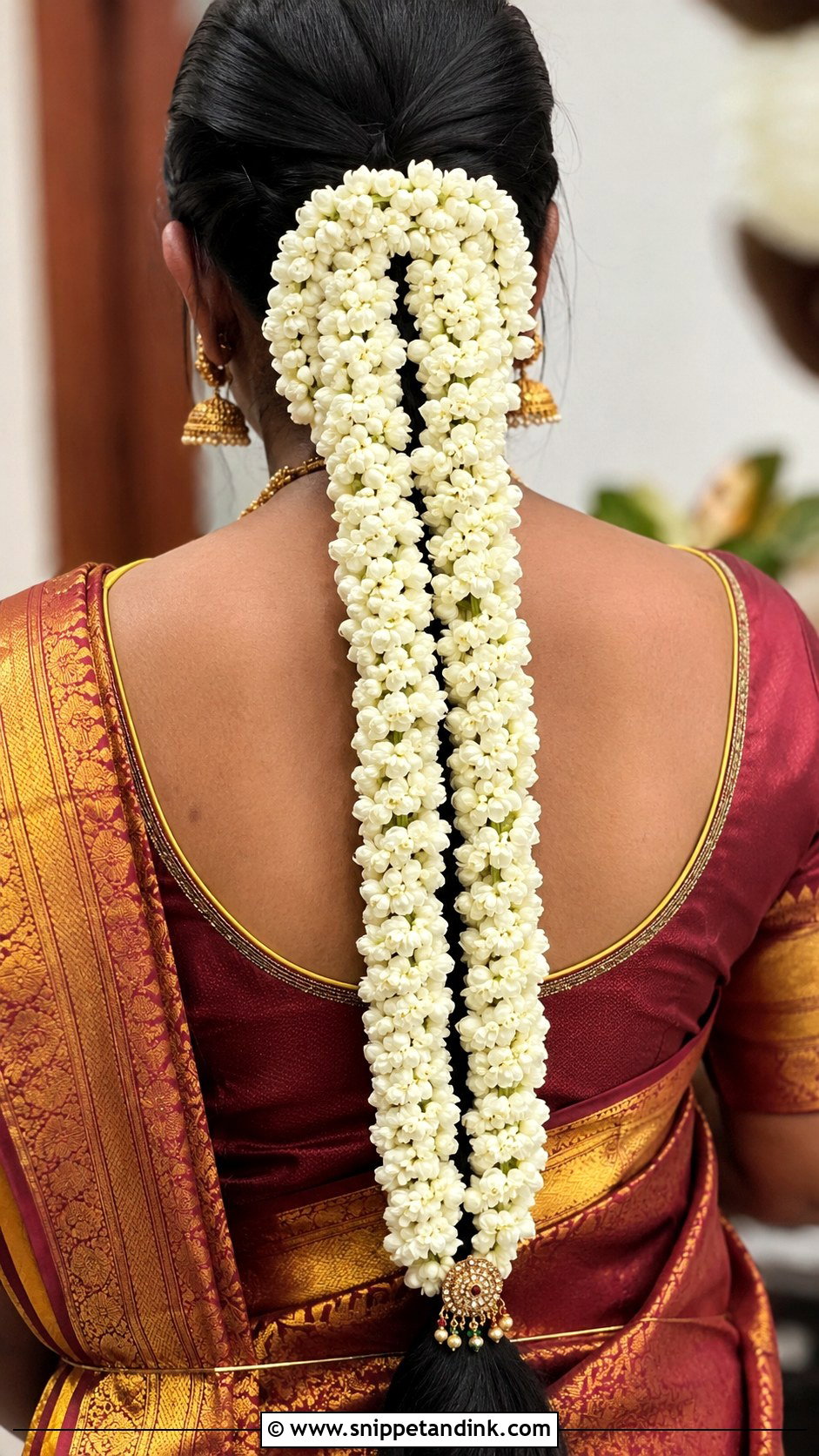
Few looks feel as settled and classic as a long braid wrapped in fresh jasmine. The tiny mogra buds are strung tightly and run along the plait, and the scent carries every time the bride turns her head. When I fix one, I stitch the strand to the braid with matching thread every few inches rather than relying on pins alone, because pins slide out of a smooth plait once the bride starts bending for rituals. A single strand reads delicate; a double strand gives fuller coverage and pairs well with a silk saree and temple jewelry.
2. Rose and Jasmine Combination Veni
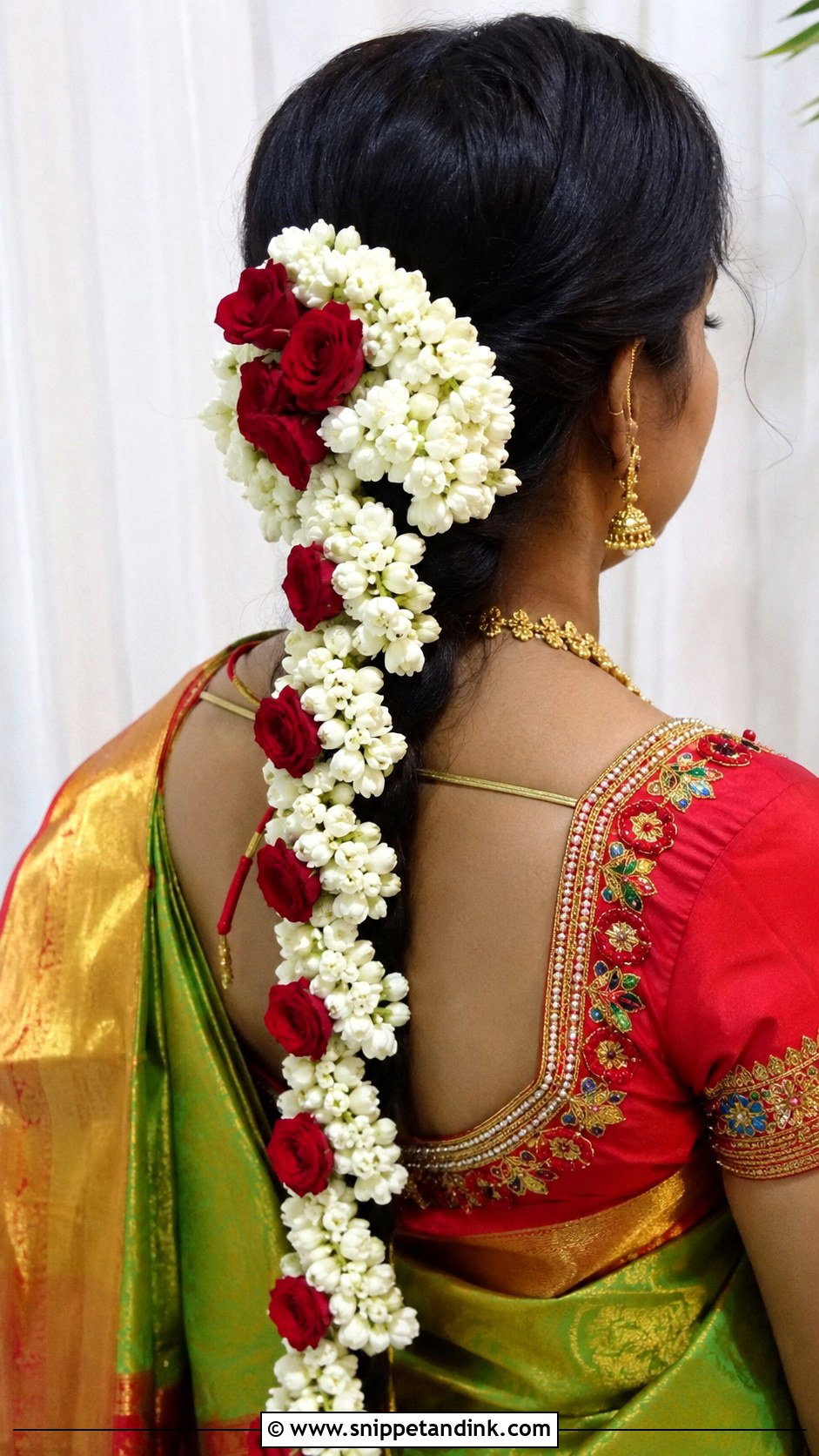
White jasmine next to red roses gives the most contrast of any veni here. I usually set the roses as a circle around the bun and let the jasmine run below it, since a rose is heavy enough to tip if it sits on the narrow tail of a plait. Ask your florist to wire each rose stem short. Long stems poke into the scalp by the second hour, and that is the complaint I hear most at touch-ups. With a bright Kanjeevaram and gold jewelry, this one holds its own.
3. Marigold Veni for a Bright Bridal Look
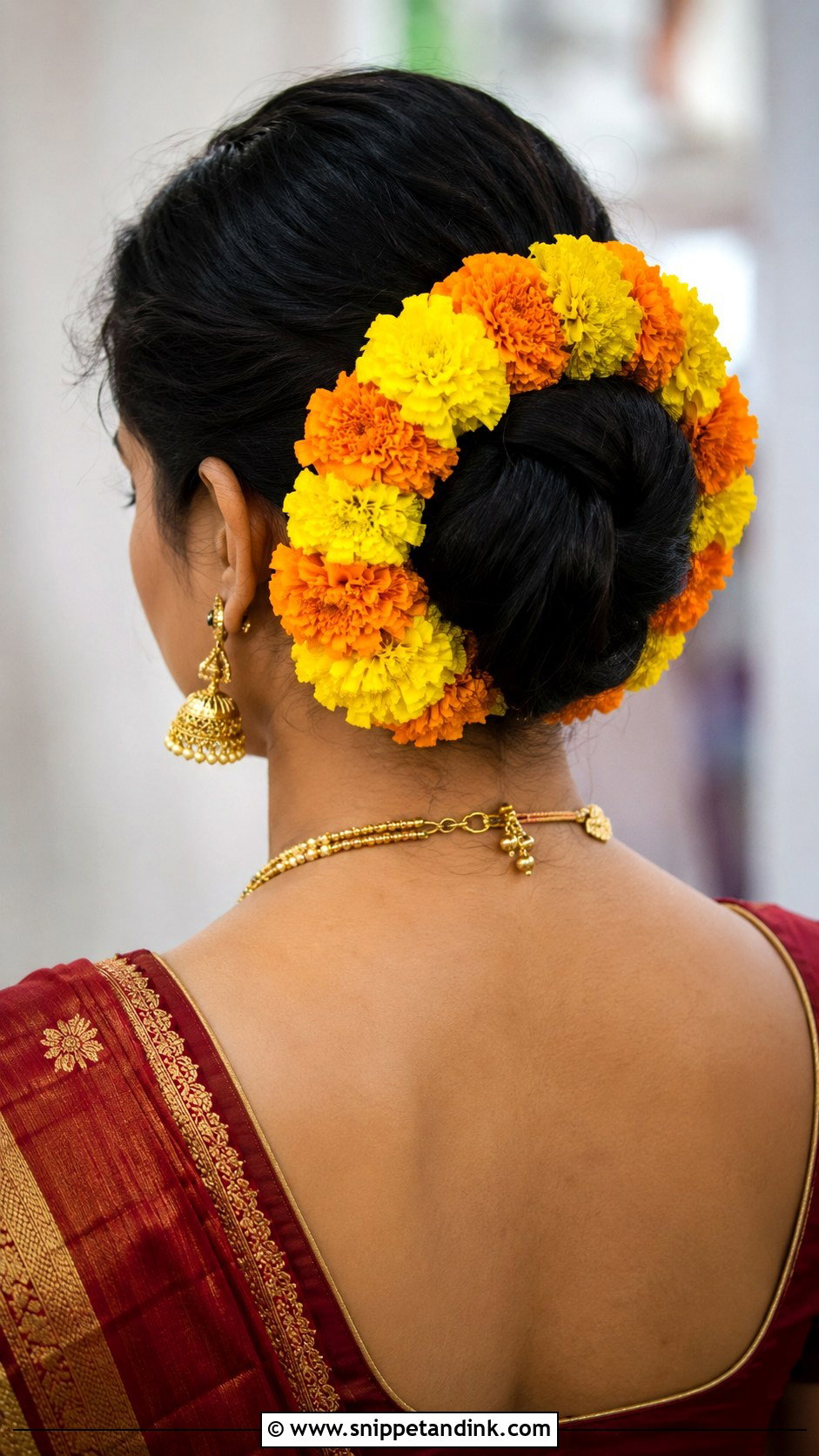
Marigolds are the workhorse of bridal flowers. They are sturdy, they don’t brown at the edges the way jasmine does in heat, and their yellow and orange tones stand for light and prosperity. I like them wrapped around a low bun or run down a thick braid for a long ceremony. One caution: a full marigold veni is noticeably heavier than jasmine, so on fine hair I build the bun on a padded base so the weight has something to grip. Red, maroon and green sarees sit well with that warm orange.
4. Rosebud Veni for a Youthful Bridal Style
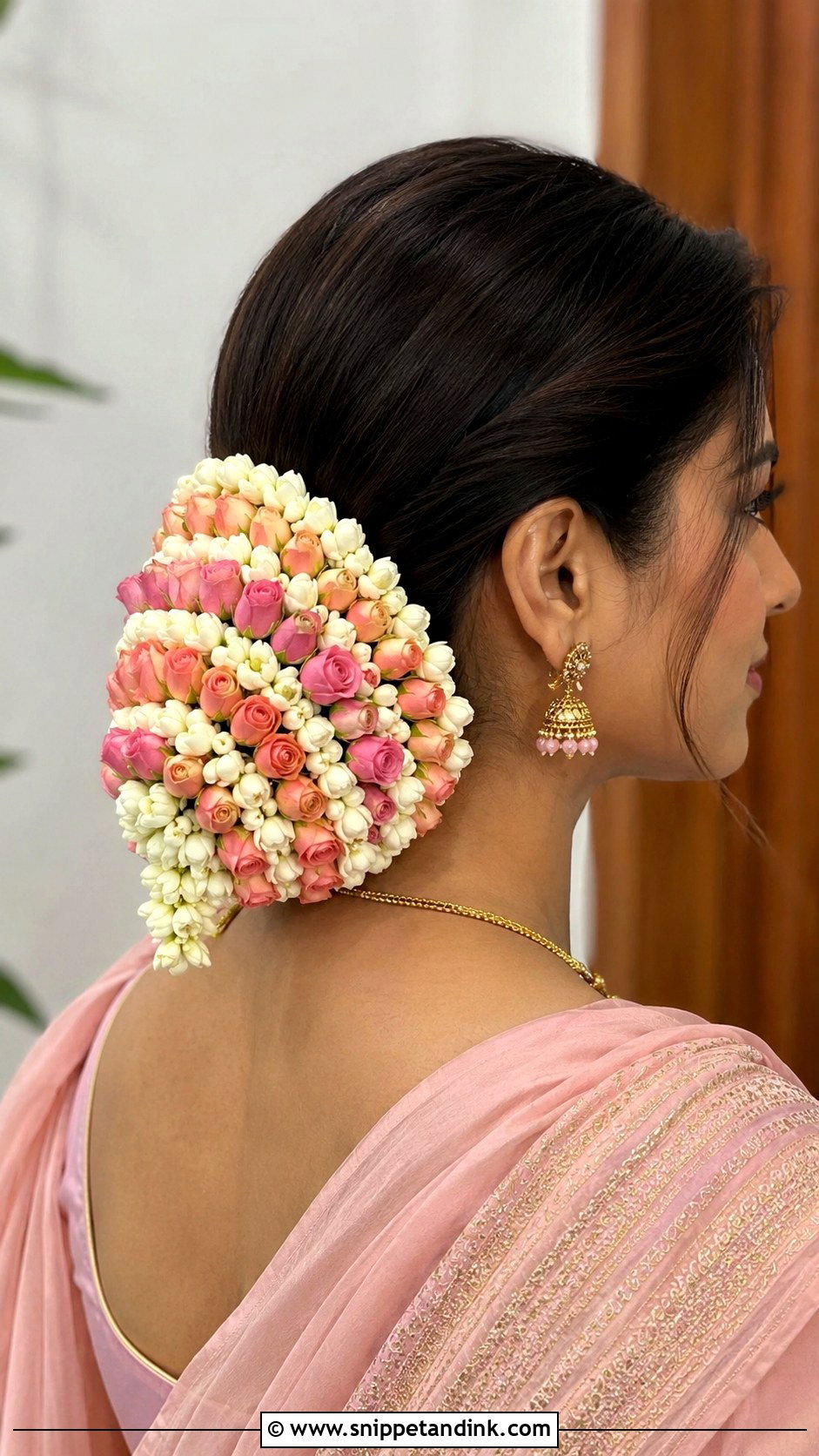
Closed rosebuds give a smaller, neater shape than open blooms. They are arranged in graduated loops, often circling a bun, in shades from scarlet to peach. Buds also last longer than open roses because the petals are still tight, which makes them my pick for a day that starts before sunrise. Mixed with white jasmine they look sweet without crowding the face, and the soft scale suits pastel sarees and lehengas.
5. Mixed Floral Veni for Modern Brides
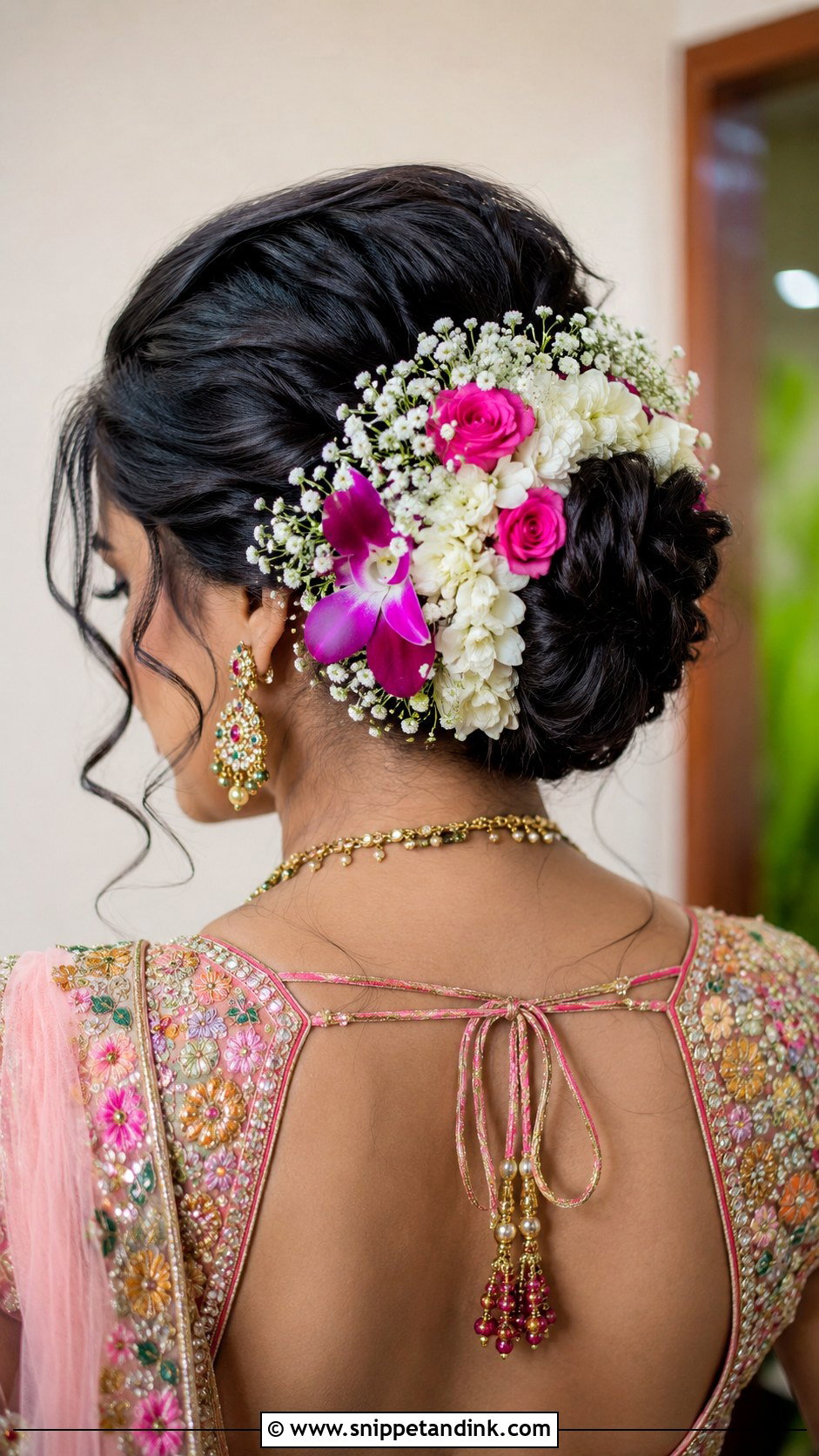
A mixed veni puts jasmine, roses, orchids and baby’s breath into one arrangement, and it is the easiest style to match to an outfit because you can pull colors straight from the border of your saree or lehenga. The risk is clutter. When I brief a florist for one, I ask for one dominant flower and two supporting ones, otherwise the shapes fight each other and the photo just reads as a blur of color. Done with restraint, it can wrap a bun or travel down a braid.
6. Lotus Veni for a Divine Bridal Look
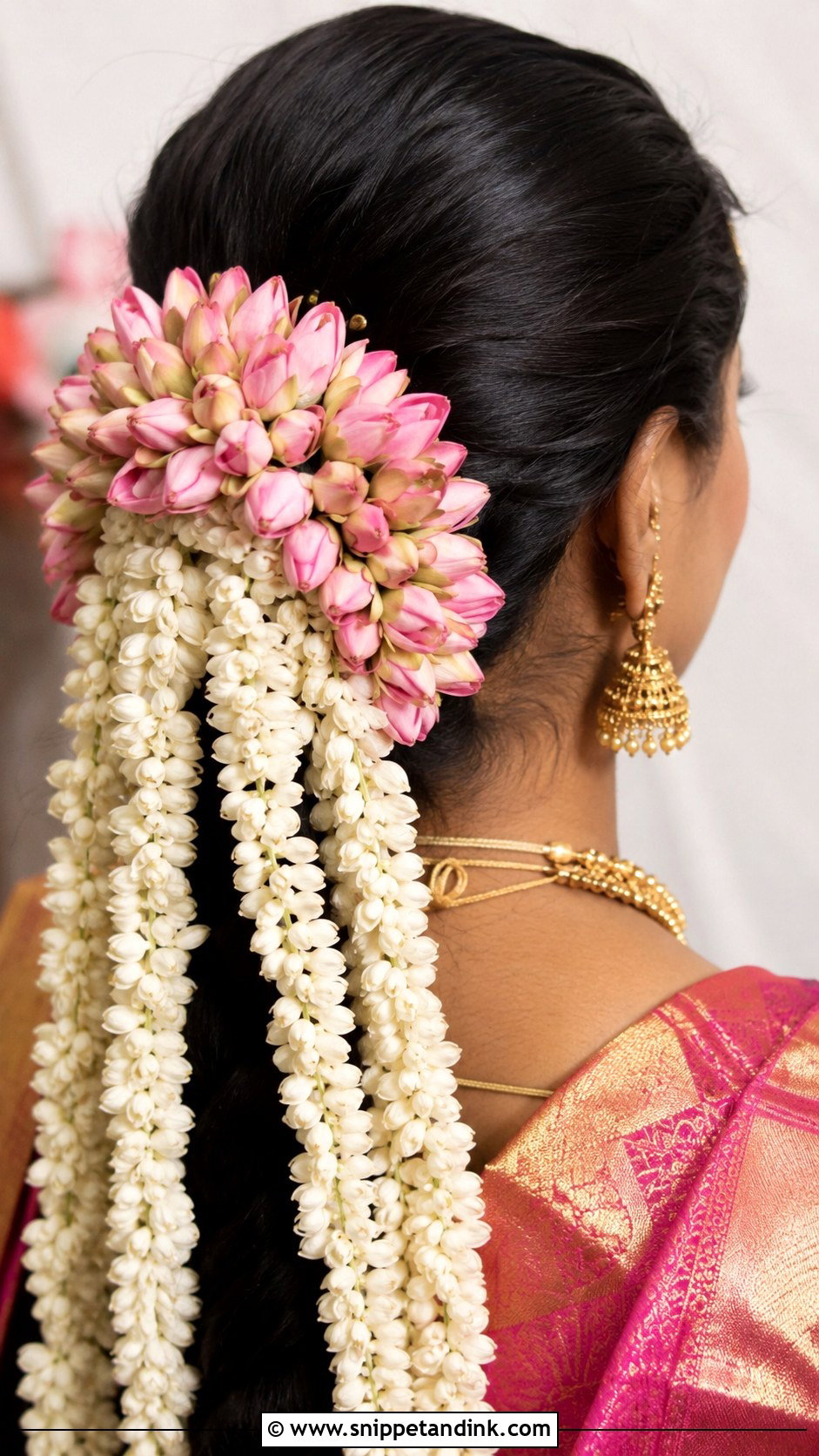
The lotus carries deep spiritual meaning in Indian tradition, standing for purity and beauty rising from within. A full lotus bloom is far too large and too heavy for hair, so what you see in bridal work is a smaller lotus-inspired arrangement, often loose petals or a single small flower set at the top of the bun. I pair it with jasmine strands to carry the length. The soft pink and white tones work best with a silk saree and plain gold, where the flower can be the one unusual note.
7. Orchid Veni for a Bold Bridal Statement
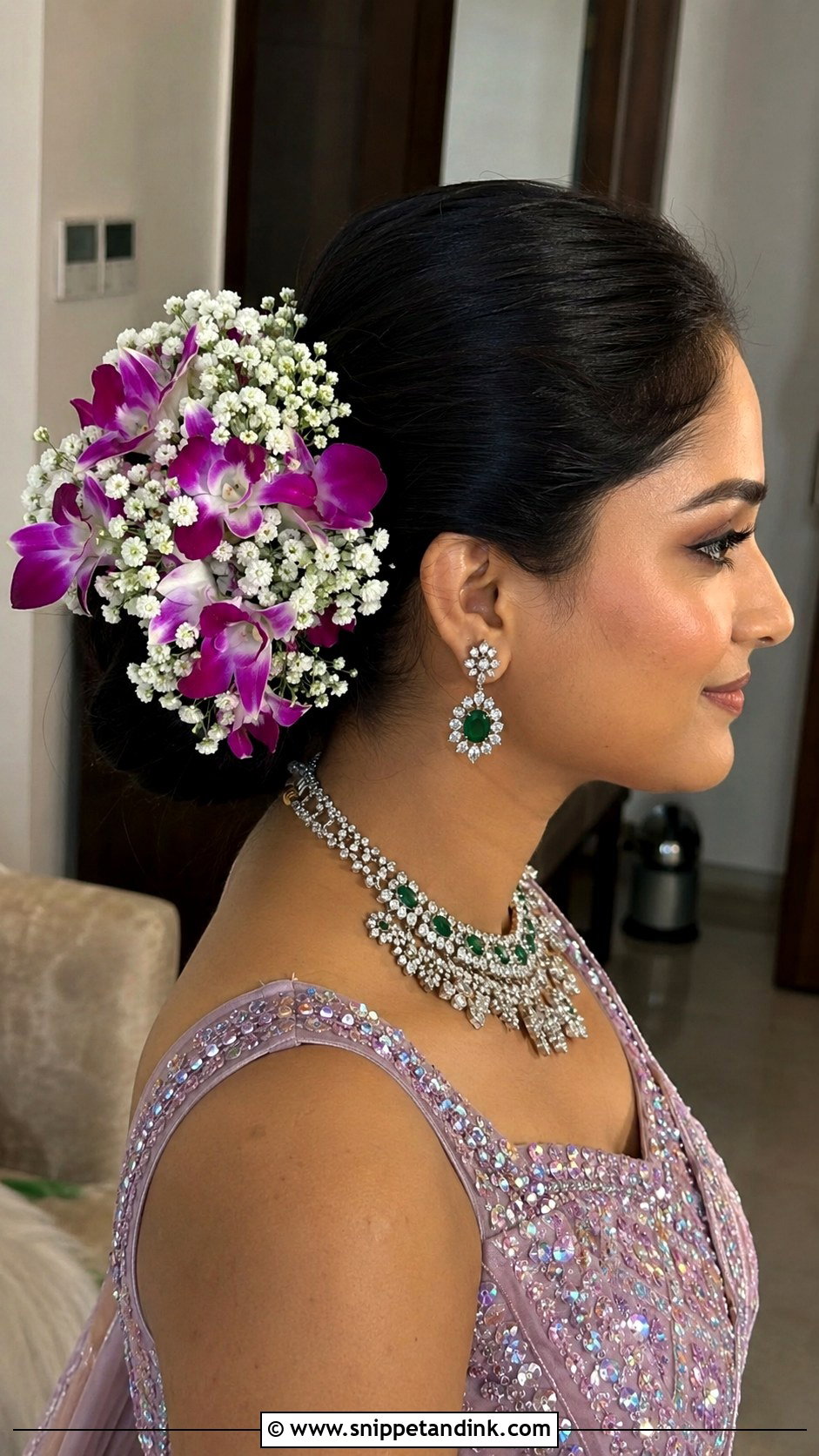
Orchids are the choice I suggest when a bride wants color that stays put. Unlike jasmine, they hold for many hours without wilting, and they come in purple, white, pink and blue. Their flat, open shape sits well on the side of a bun or along a braid, and a little baby’s breath softens the outline. I find them most at home at a reception, with a contemporary lehenga or a bold saree, where the evening light catches their waxy petals.
8. Jasmine Veni Around a Low Bun
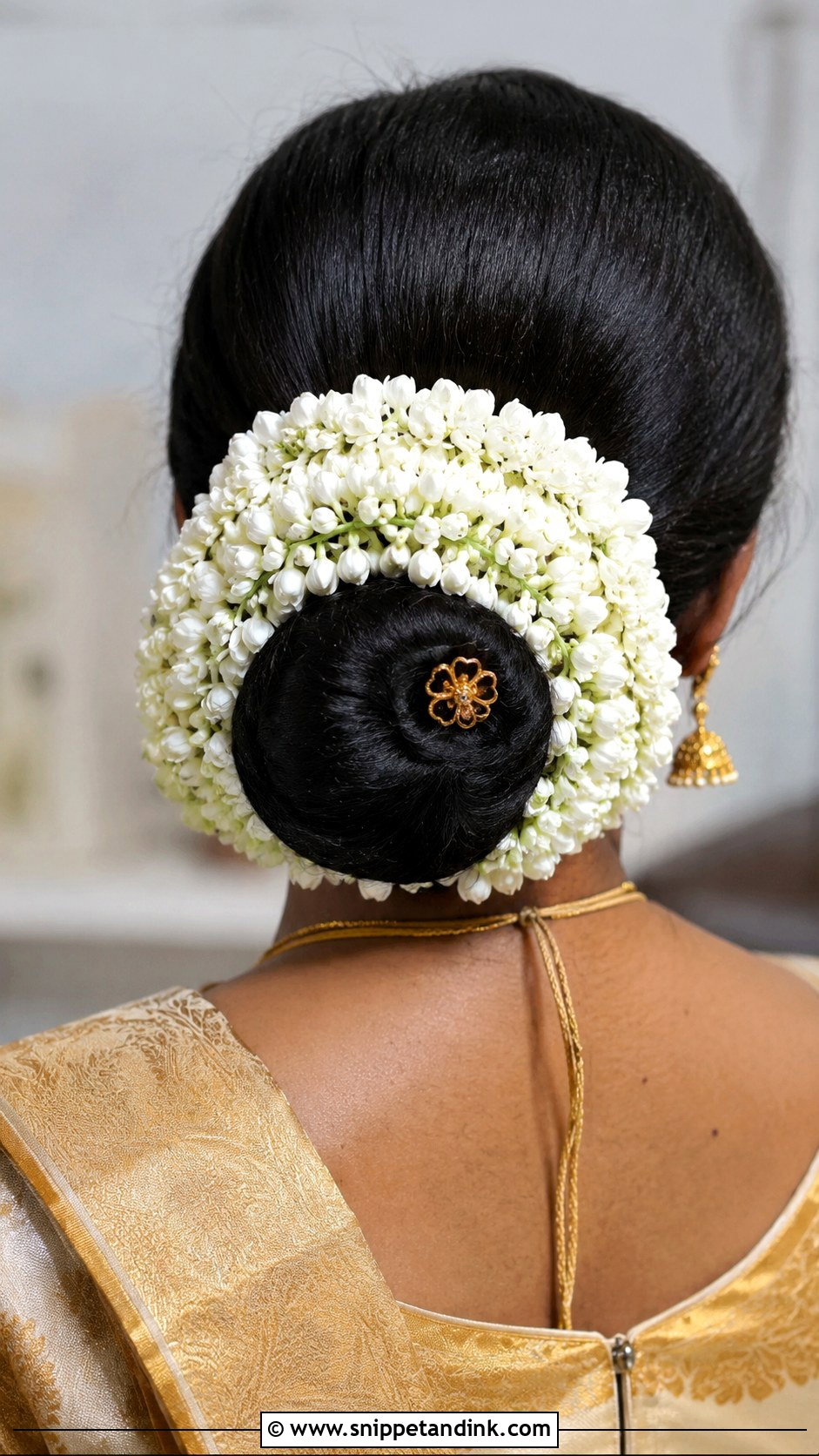
A low bun wrapped in jasmine is what I recommend for brides sitting through long rituals, because nothing hangs down to get crushed against a chair back. The strands circle the bun in layers and a gold pin or brooch finishes the center. Build the bun slightly firmer than you think you need. Jasmine strands are pinned into the bun itself, and a soft bun loosens under that extra weight by mid-afternoon.
9. Veni Jadai with Temple Jewelry
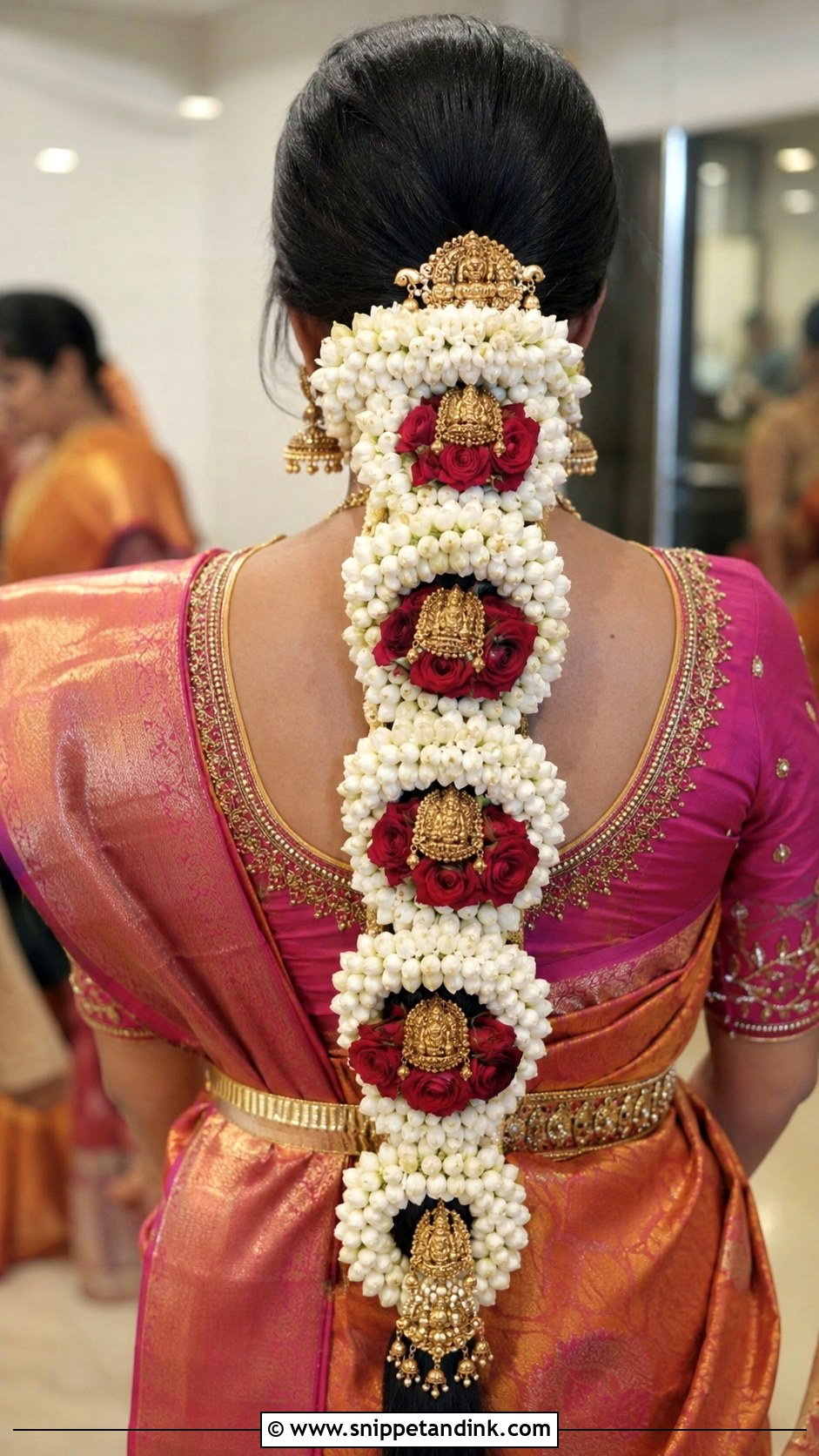
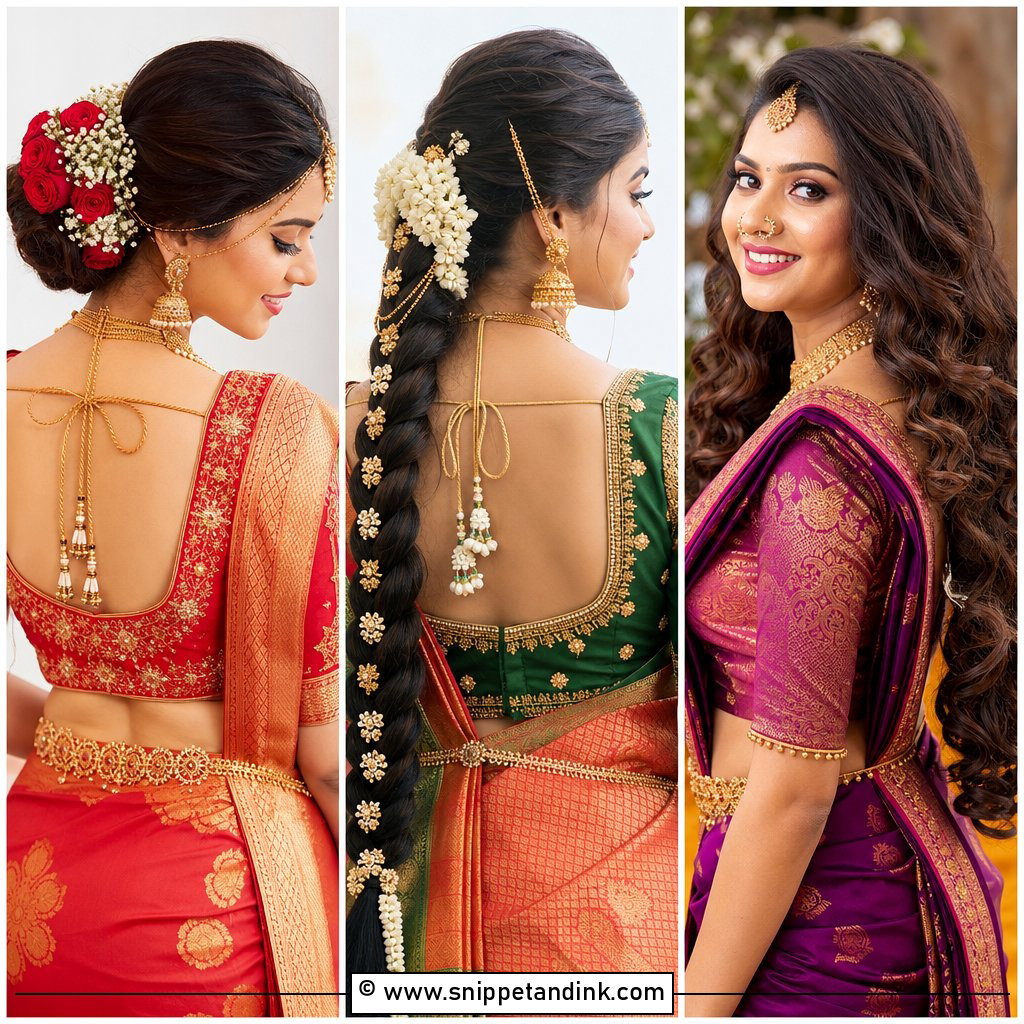
The veni jadai is the grand braid adornment of South Indian weddings, pairing fresh flowers with temple jewelry pieces along the full length of the plait. Gold ornaments sit in sequence down the braid, framed by jasmine and roses. This is the heaviest look on the list, and I always tell brides to expect it. I anchor the jadai to a base at the crown and often add a matching hair extension so the braid reaches the right length and takes some of the strain off her own hair. With a bright Kanjeevaram and a full bridal set, it is the most traditional look here.
10. Baby’s Breath Veni for a Soft Bridal Look
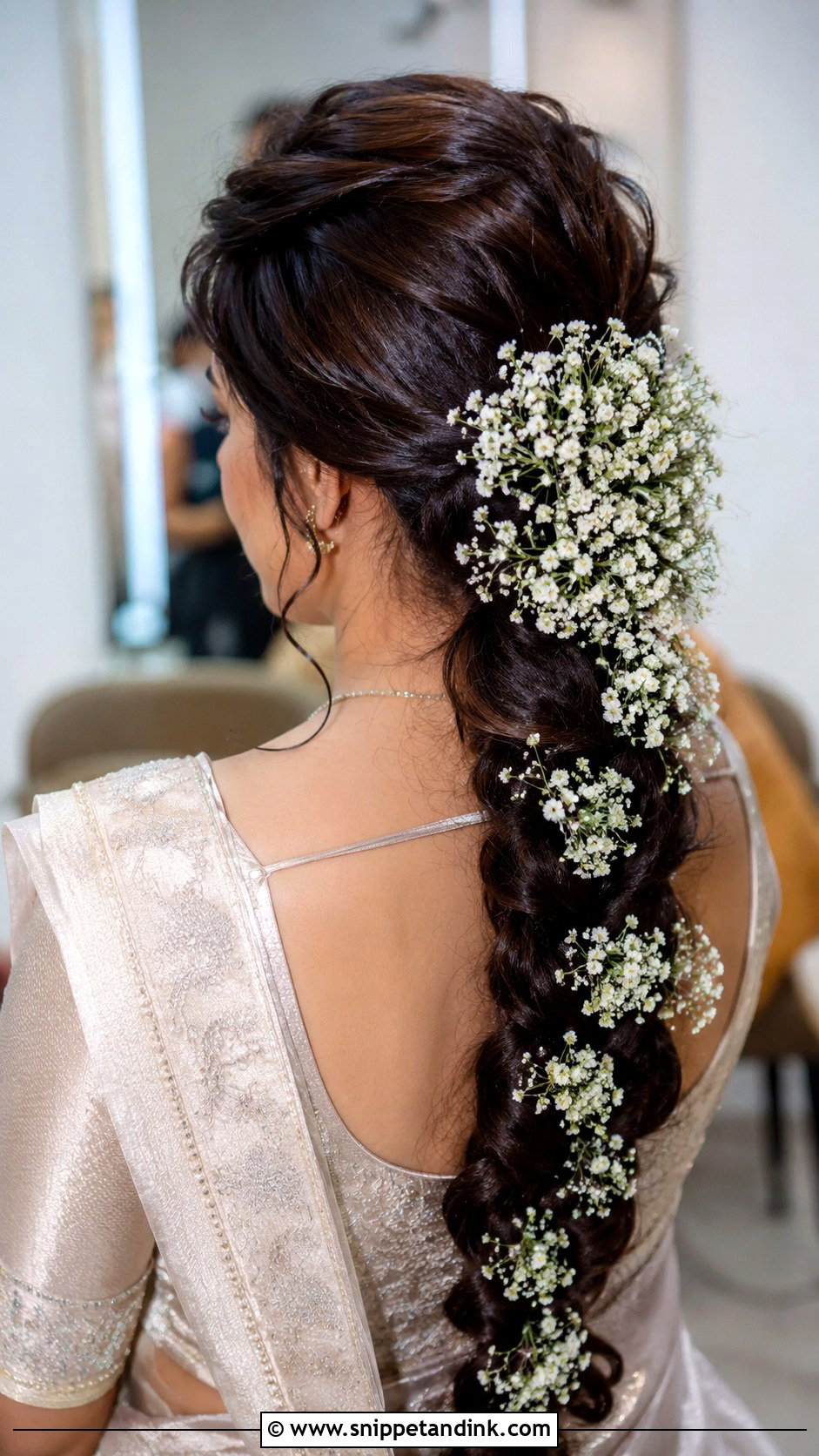
Baby’s breath gives an airy, cloud-like edge to a braid or bun. It works alone or tucked between roses and orchids, and it suits pastel and ivory sarees especially well. Two honest notes from the chair: the cut stems have a faint smell some people dislike up close, so smell a sprig before you commit, and the dried stalks can snag fine hair when the style comes out. I loosen it slowly at the end of the night rather than pulling.
11. Crescent Moon Veni for the Bun
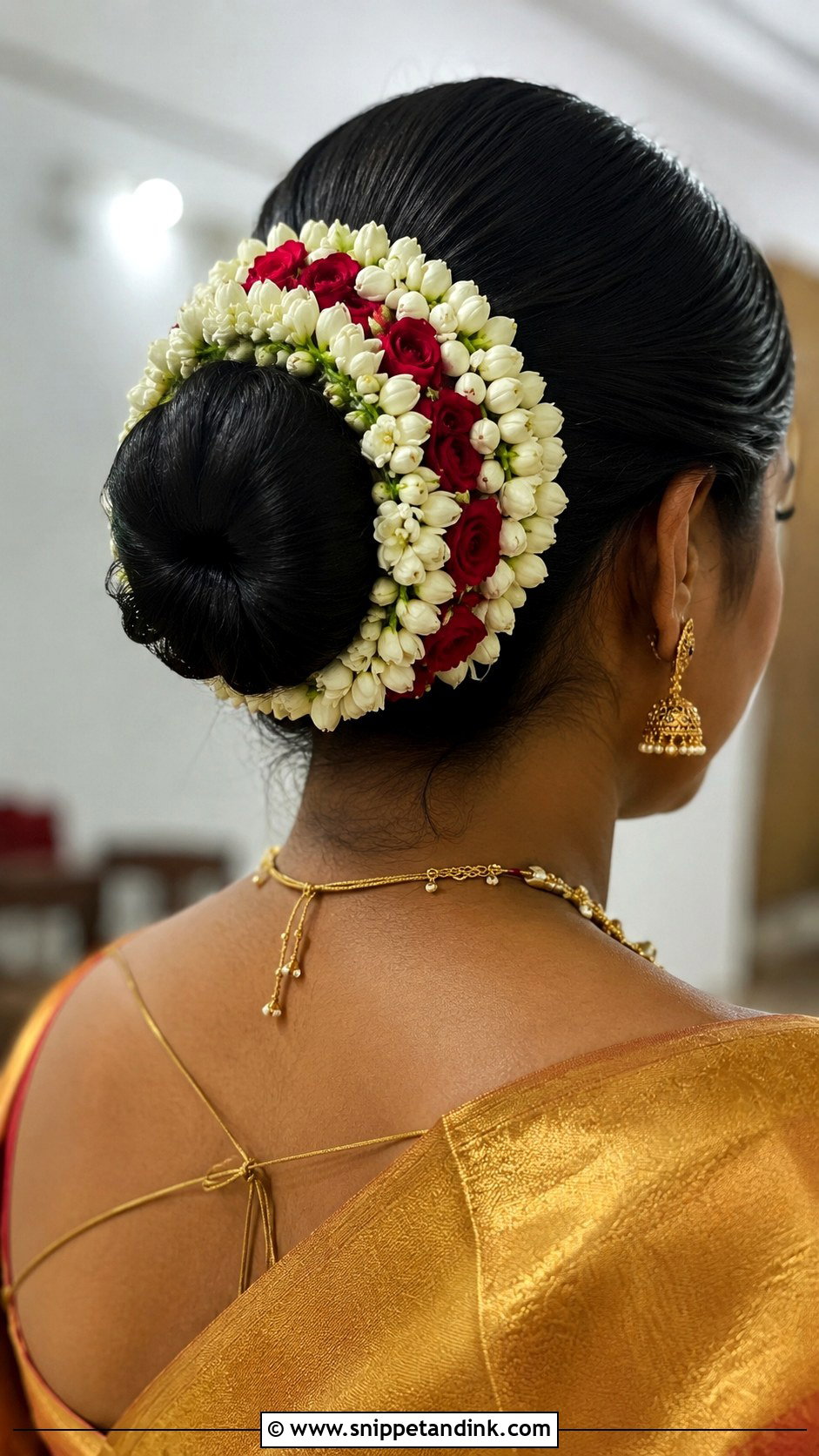
The crescent moon veni is a pre-shaped piece, a half-moon of tightly woven jasmine and roses that curves around the lower edge of the bun. Because the shape is fixed, the bun has to be sized to it. I ask the florist for the measurement before the day and build the bun to fit, otherwise the crescent either gapes or overlaps. Colored flowers along the edges add depth, and it sits neatly with a silk saree and traditional jewelry.
12. Pink and White Veni for Reception Brides
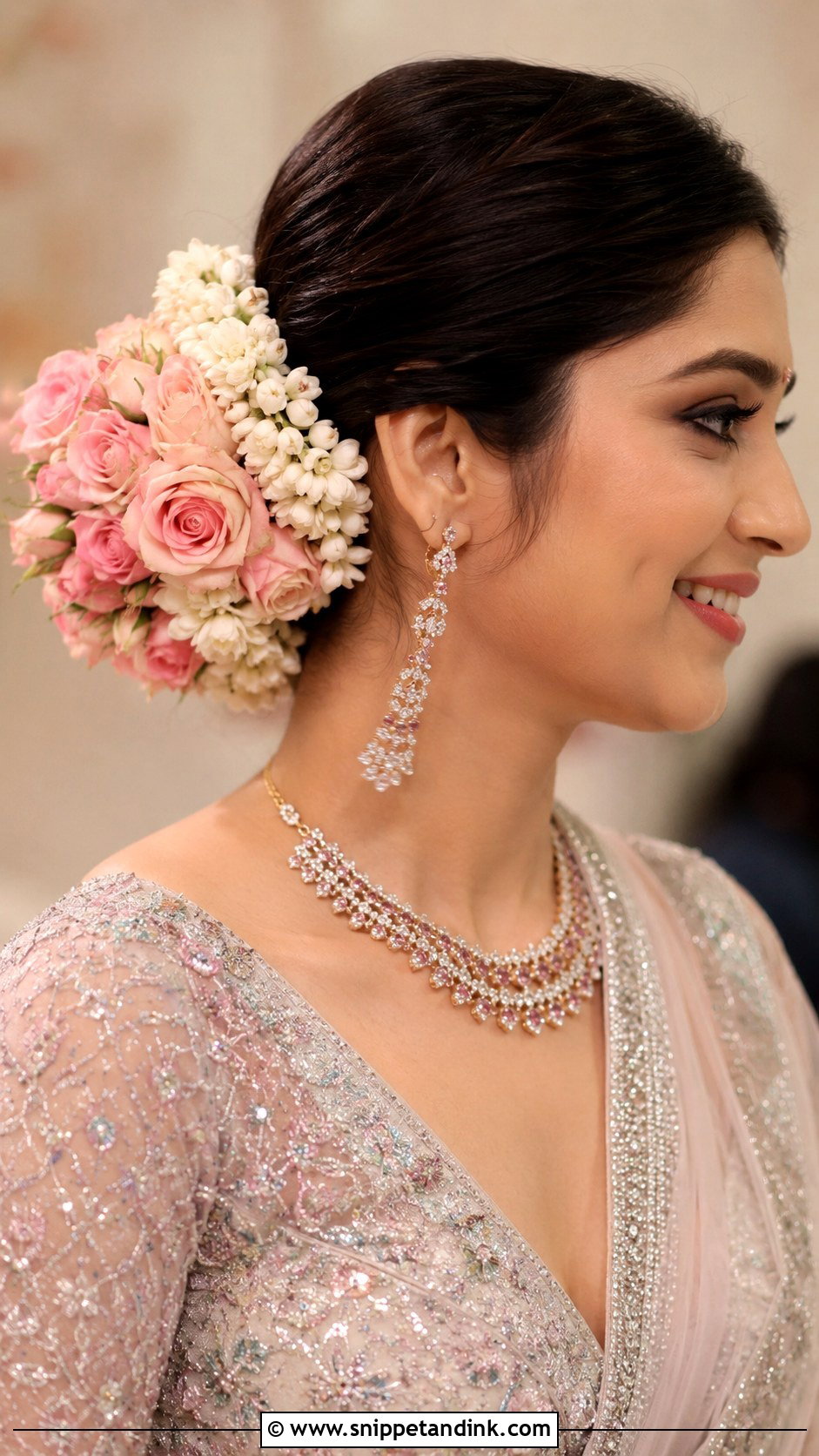
Pink roses with white jasmine or baby’s breath make a softer palette for the evening reception. Under warm reception lighting, pale pink can wash out next to white, so I lean toward a deeper rose pink if the bride is fair or the lehenga is pastel. This veni wraps a sleek bun or a loose braid, and the gentle colors work with shimmery lehengas and gowns.
13. Full Braid Veni with Cascading Flowers
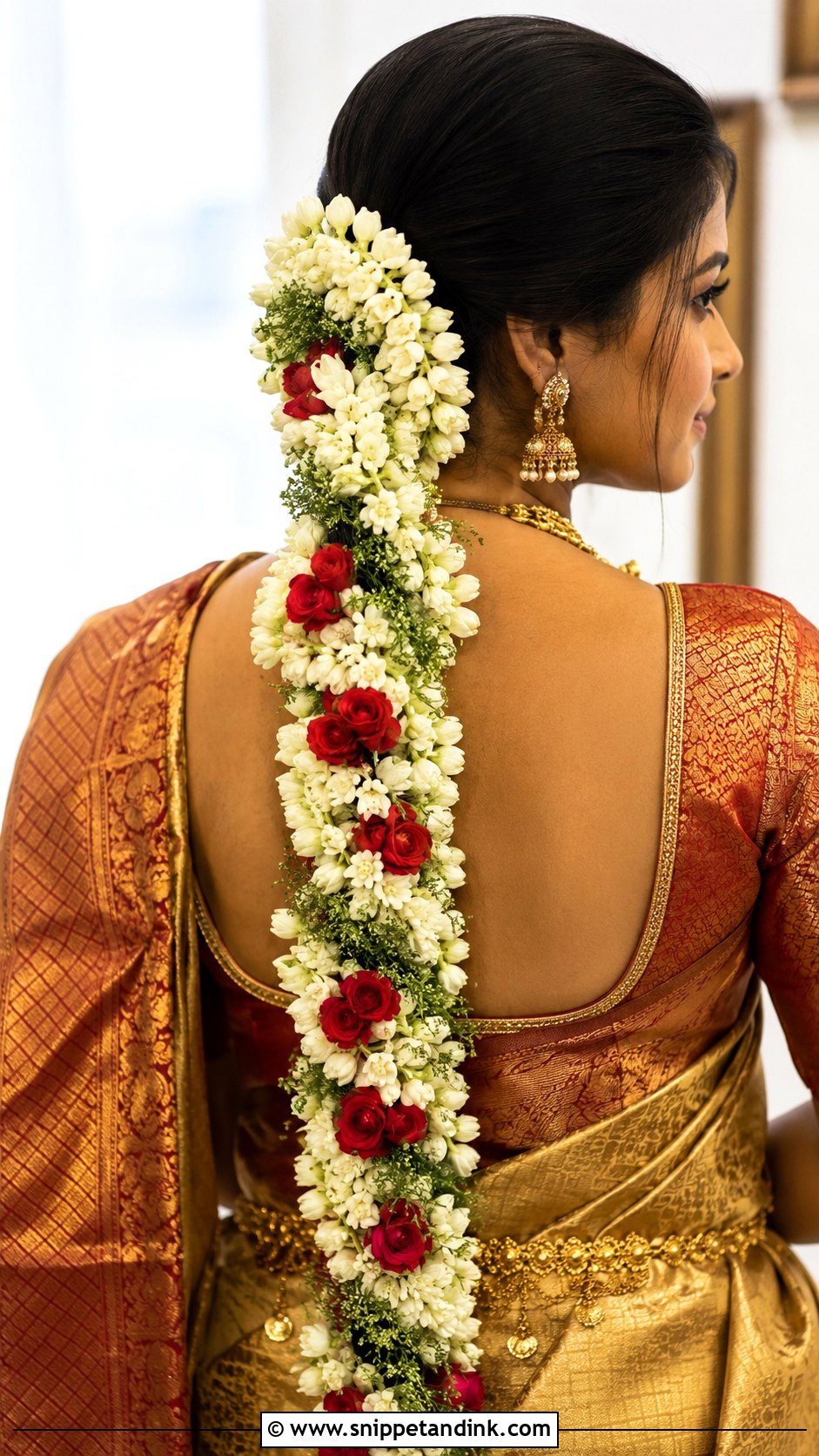
A full braid covered in flowers runs from the crown to the very end of the plait, with jasmine, roses and greenery layered all the way down. It sways when you walk, which is part of the appeal. It also swings into things. I warn brides that sitting back against a mandap chair will crush the flowers along the spine of the braid, so I either bring the braid forward over one shoulder for seated rituals or plan on a florist touch-up. It suits a grand Kanjeevaram and heavy jewelry.
14. Half Up Veni for a Modern Bride
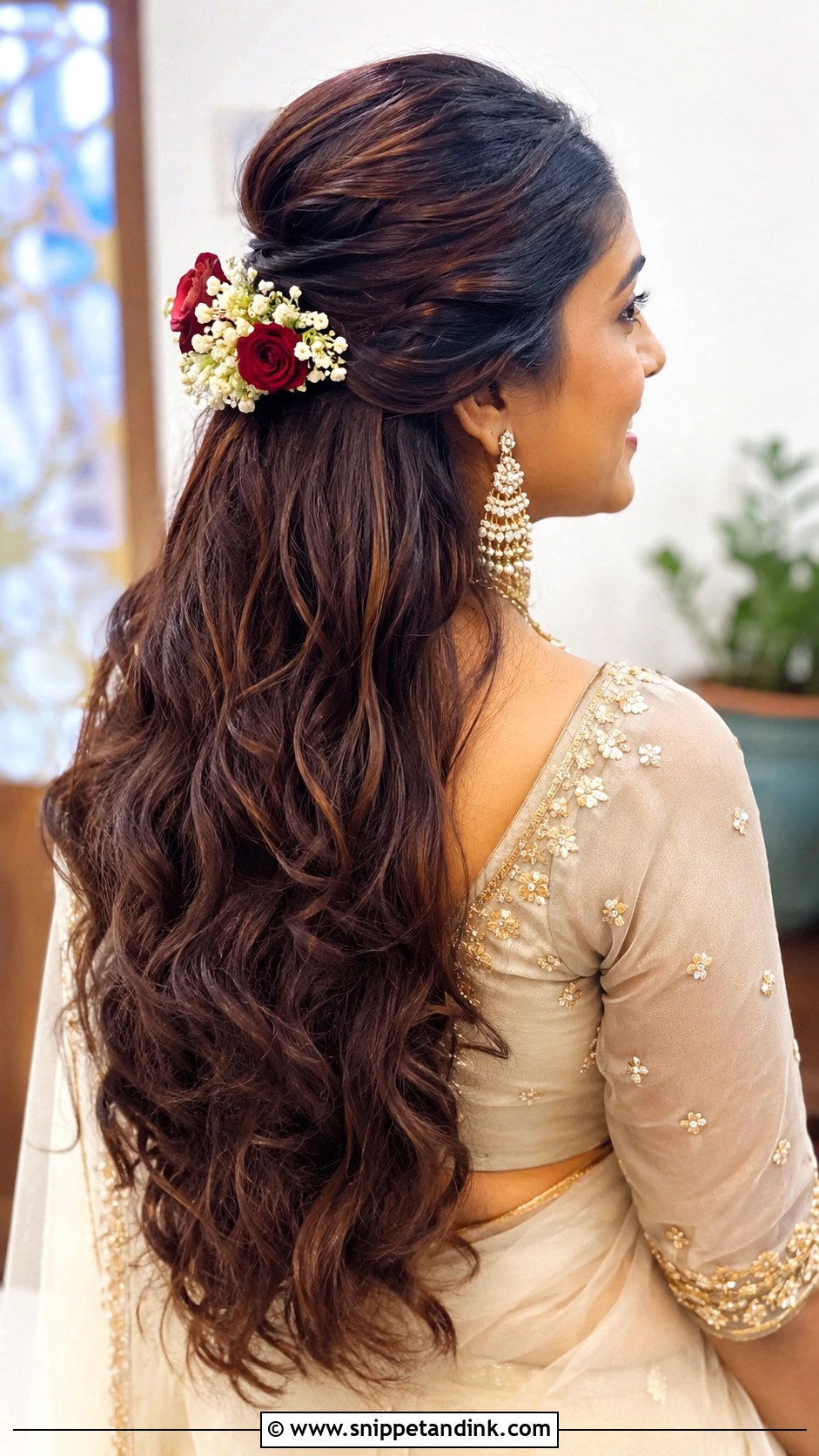
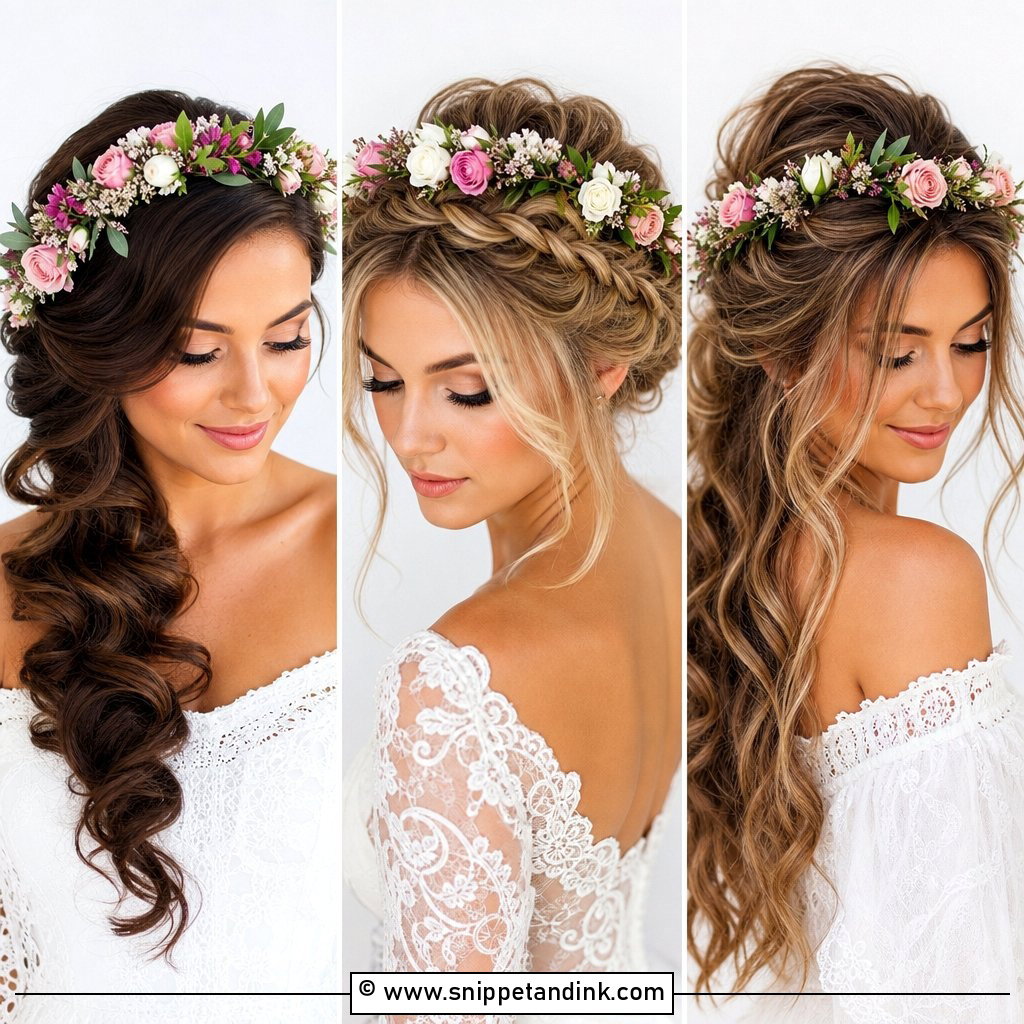
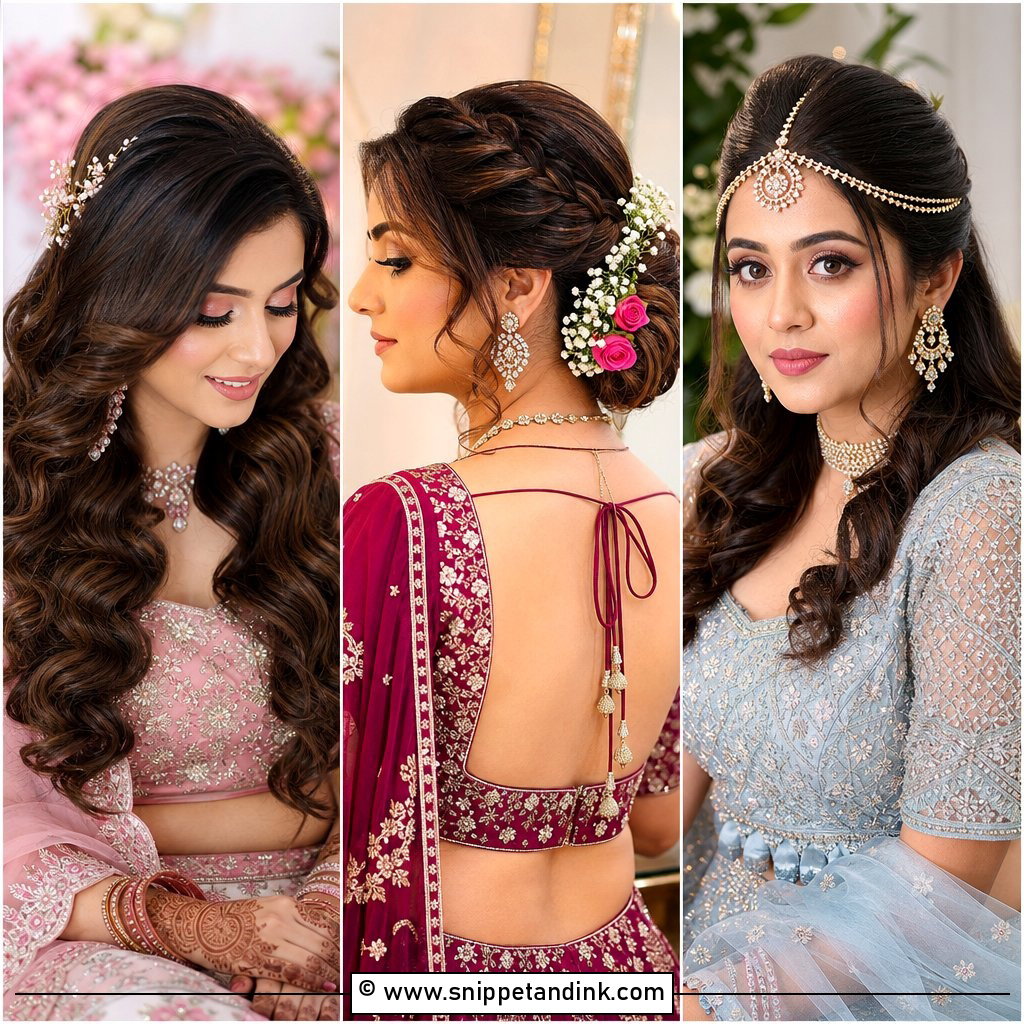
Not every bride wants all her hair tied up. In a half up veni, the top section is gathered and the flowers sit where it is pinned, while curls fall loose below. I set the curls the night before or early in the morning and pin them in sections to cool, because loose waves under flowers drop fastest in a humid venue. It suits engagements and receptions, with either a saree or an indo-western outfit.
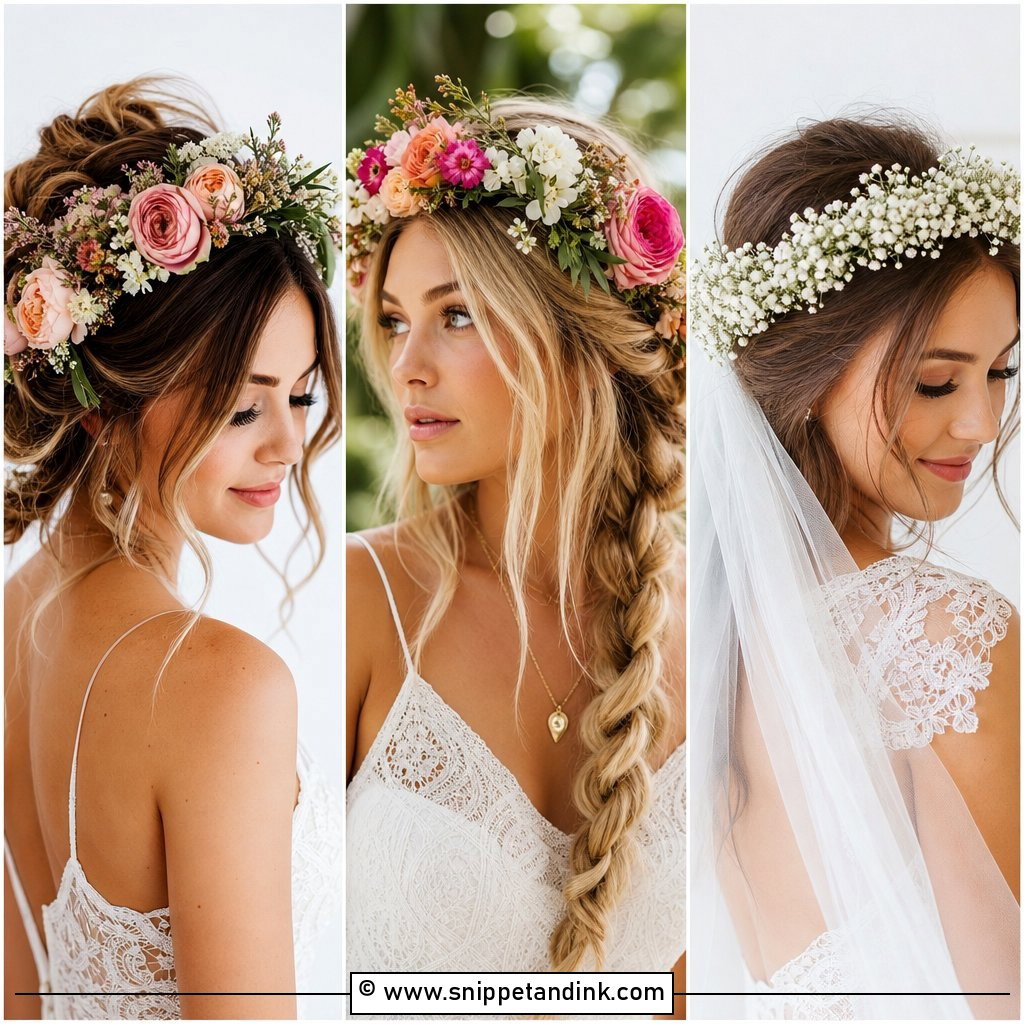
15. Chrysanthemum Veni for a Festive Look
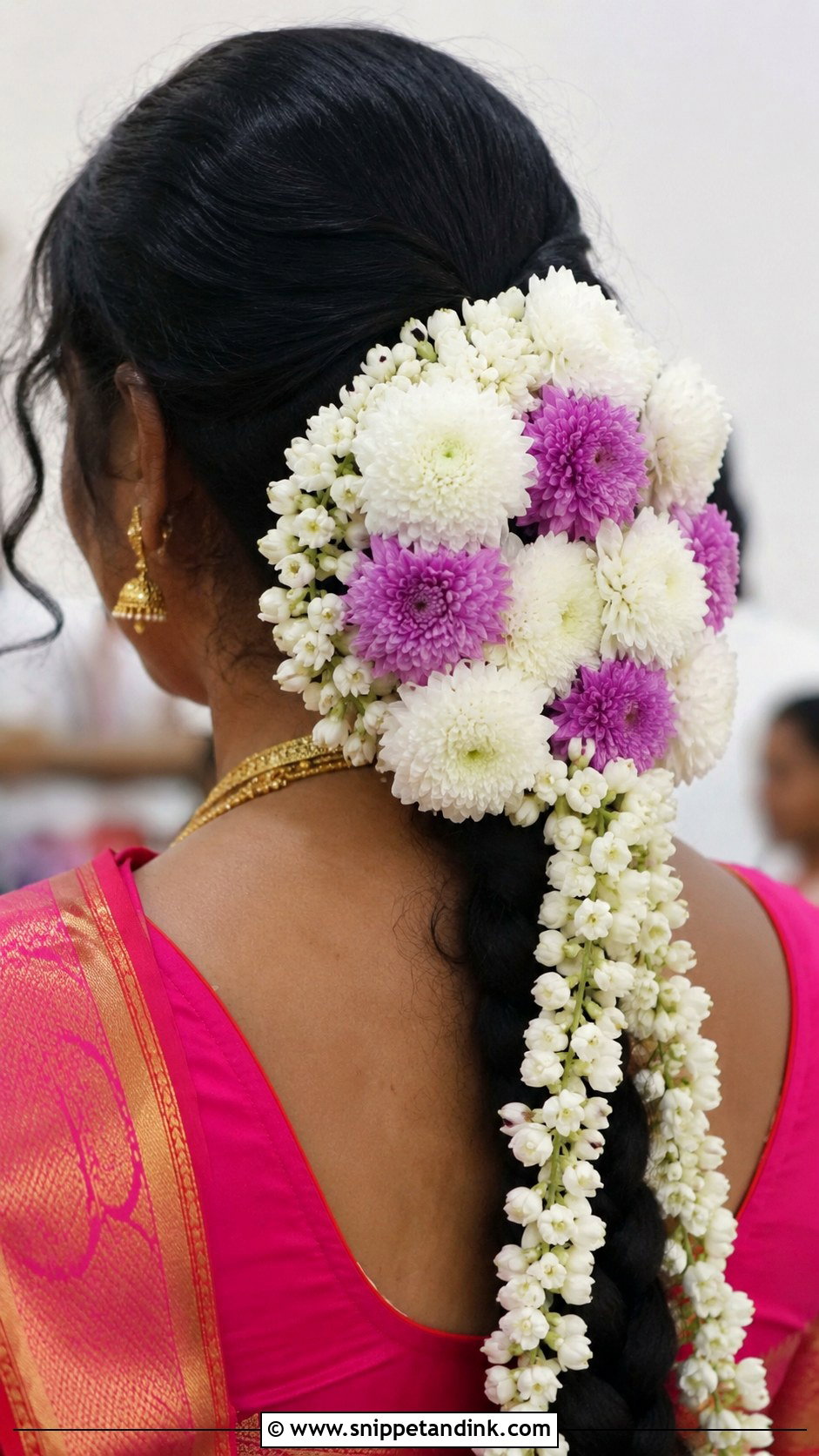
Chrysanthemums are round, many-petaled flowers in white, yellow and soft purple, and they hold their shape through long celebrations nearly as well as marigolds. A chrysanthemum veni wraps a bun or a thick braid and adds real volume. Their scent is grassy rather than sweet, so I tuck in jasmine if the bride wants fragrance near her face. They look cheerful with bright traditional sarees.
16. Double Strand Jasmine Veni
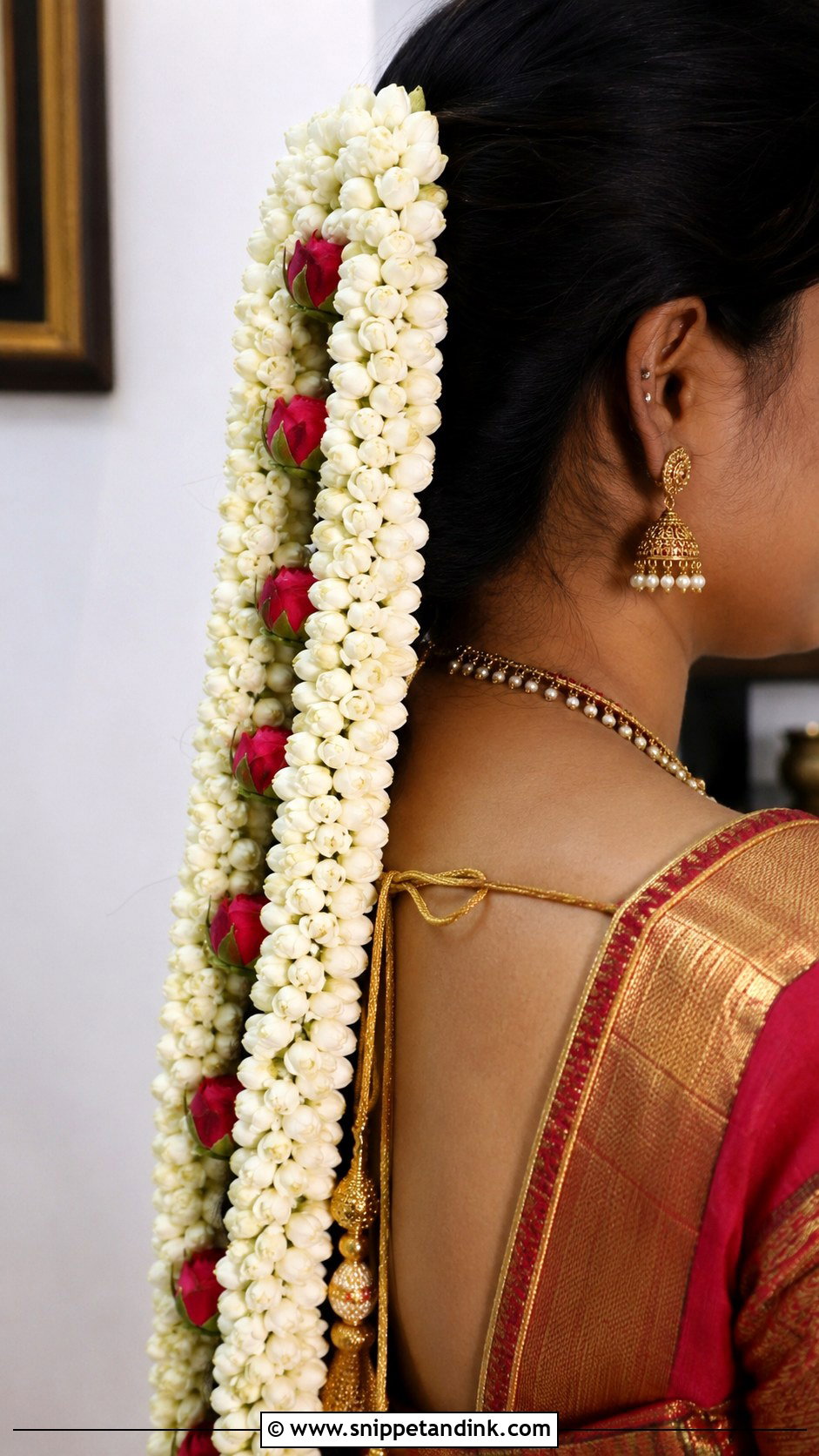
The double strand jasmine veni runs two parallel strings of mogra along the braid or bun for richer coverage and a stronger scent. Rosebuds tucked between the strands add a hint of color. The strands need to be the same tightness and length, or one sags and the symmetry is lost in photos. I pin them in matching pairs, working down from the top, before stitching the ends. It pairs naturally with silk sarees and temple jewelry.
17. Colorful Floral Veni for Haldi and Mehndi
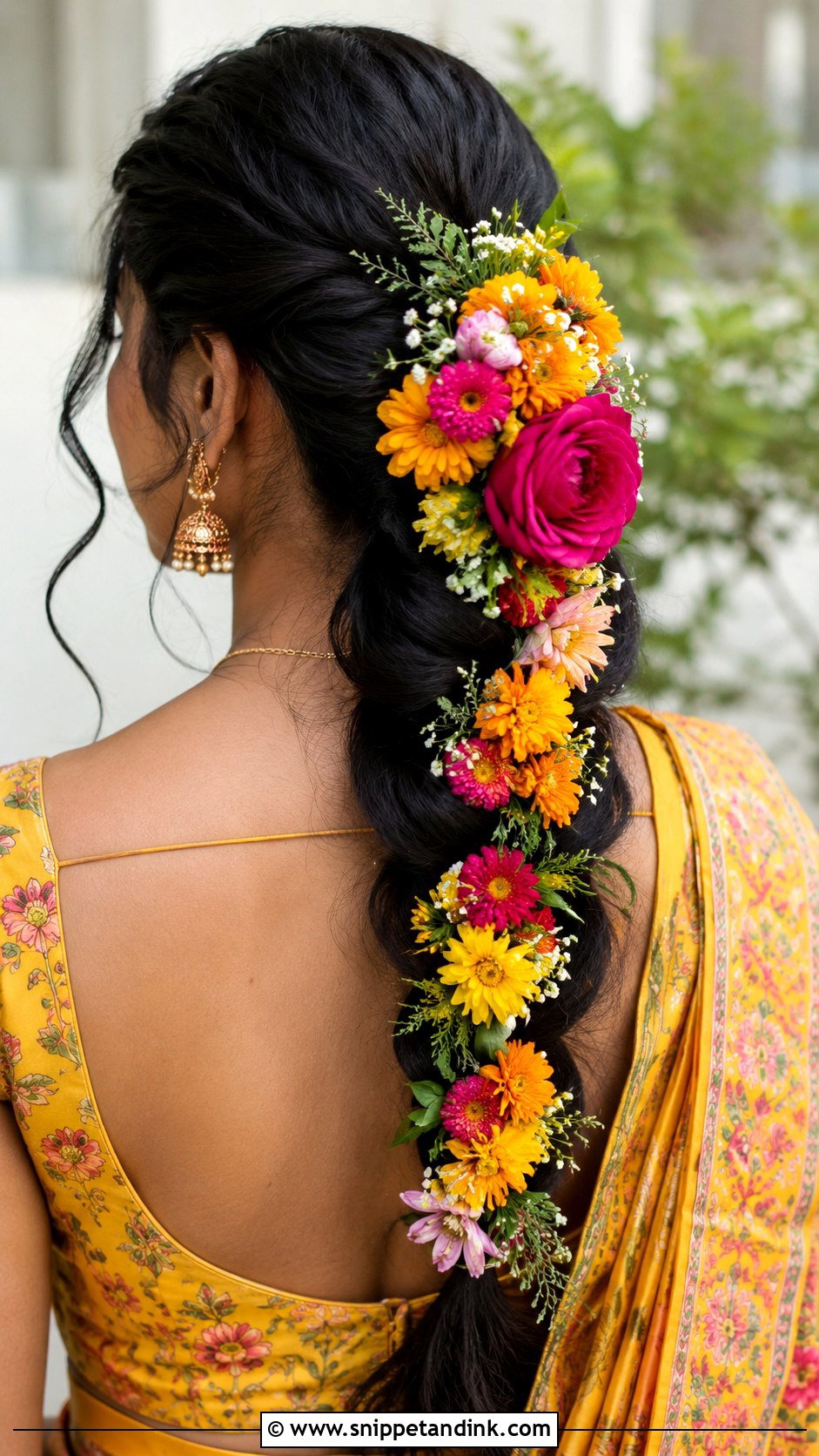
Pre-wedding events are where I let brides play. A colorful veni mixes marigolds, roses and other bright blooms to match the mood of haldi and mehndi. For haldi in particular, use flowers you won’t mind staining yellow, and skip anything white near the face. A braid or a relaxed bun both work, with bright, casual ethnic outfits, and these colors come alive in outdoor daylight.
18. Veni with Gold Hair Accessories
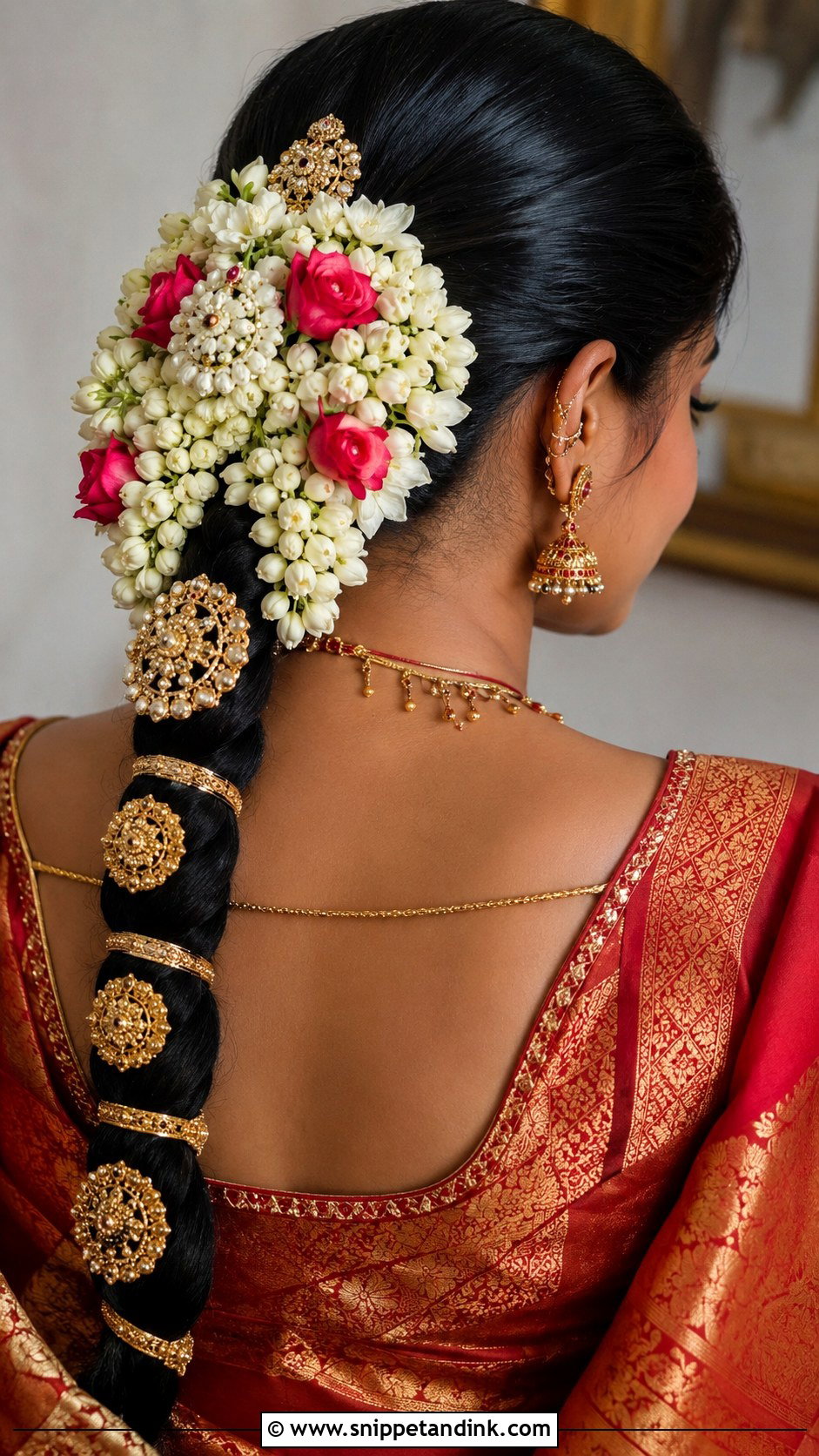
Gold pins, jada billalu and brooches set between flowers turn a veni into something regal. The metal catches light that the flowers alone don’t, and the two together give a rich, layered finish. The practical point is weight distribution. Each gold piece needs its own anchor pin into the braid, not just into the flowers, or it slides down as the jasmine softens. It belongs with heavy bridal sarees and full jewelry sets.
19. Rose Petal Veni for a Romantic Bride
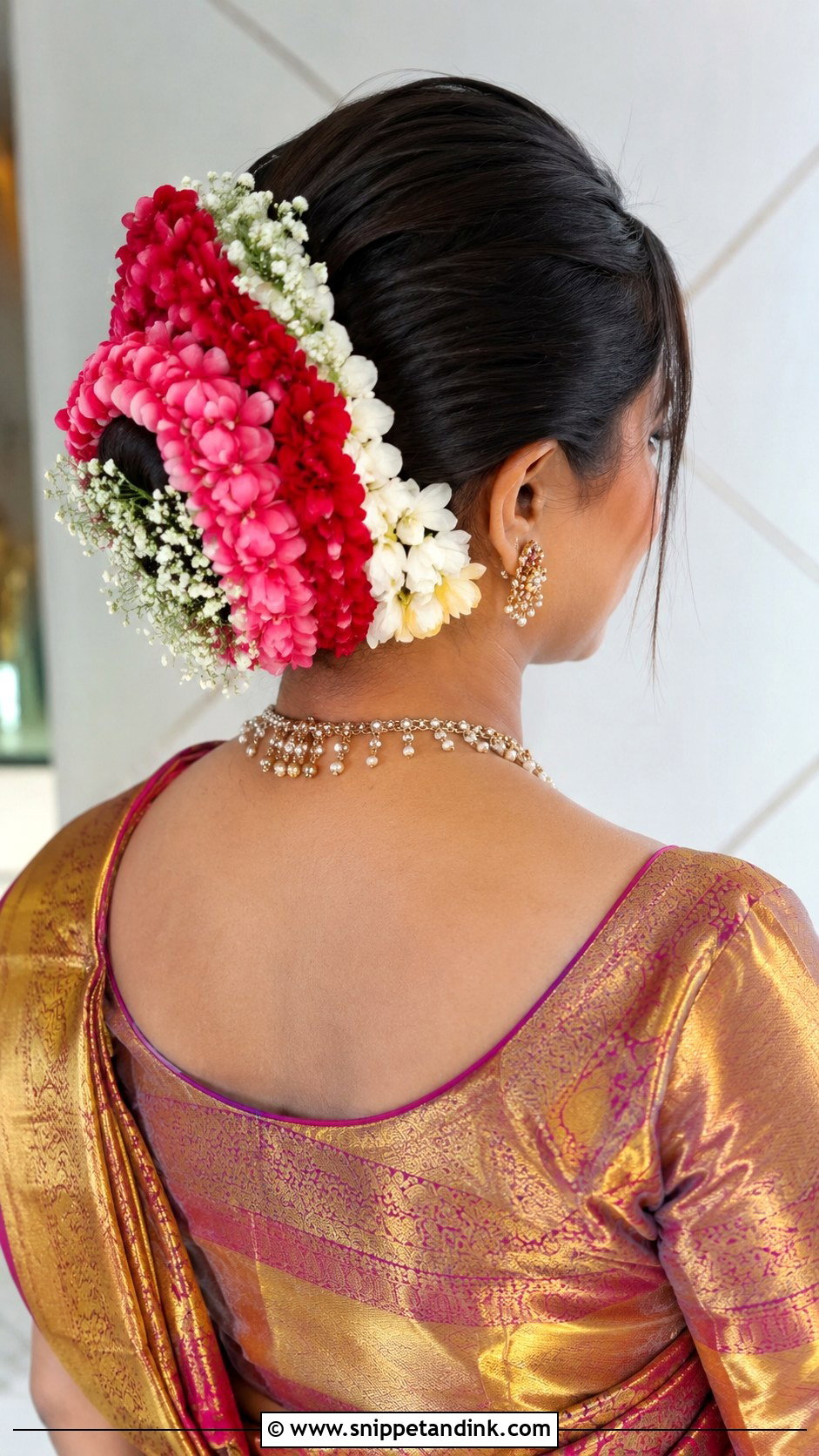
A rose petal veni uses arranged petals instead of whole flowers, laid in patterns in red, pink or peach for a velvety texture. Petals are the most fragile choice on this list. They bruise at the edges where they are handled and brown in heat faster than whole blooms, so I only recommend this one for a short event or a cool, indoor venue. Blended with jasmine strands for contrast, it wraps a bun or braid and suits silk and shimmery outfits.
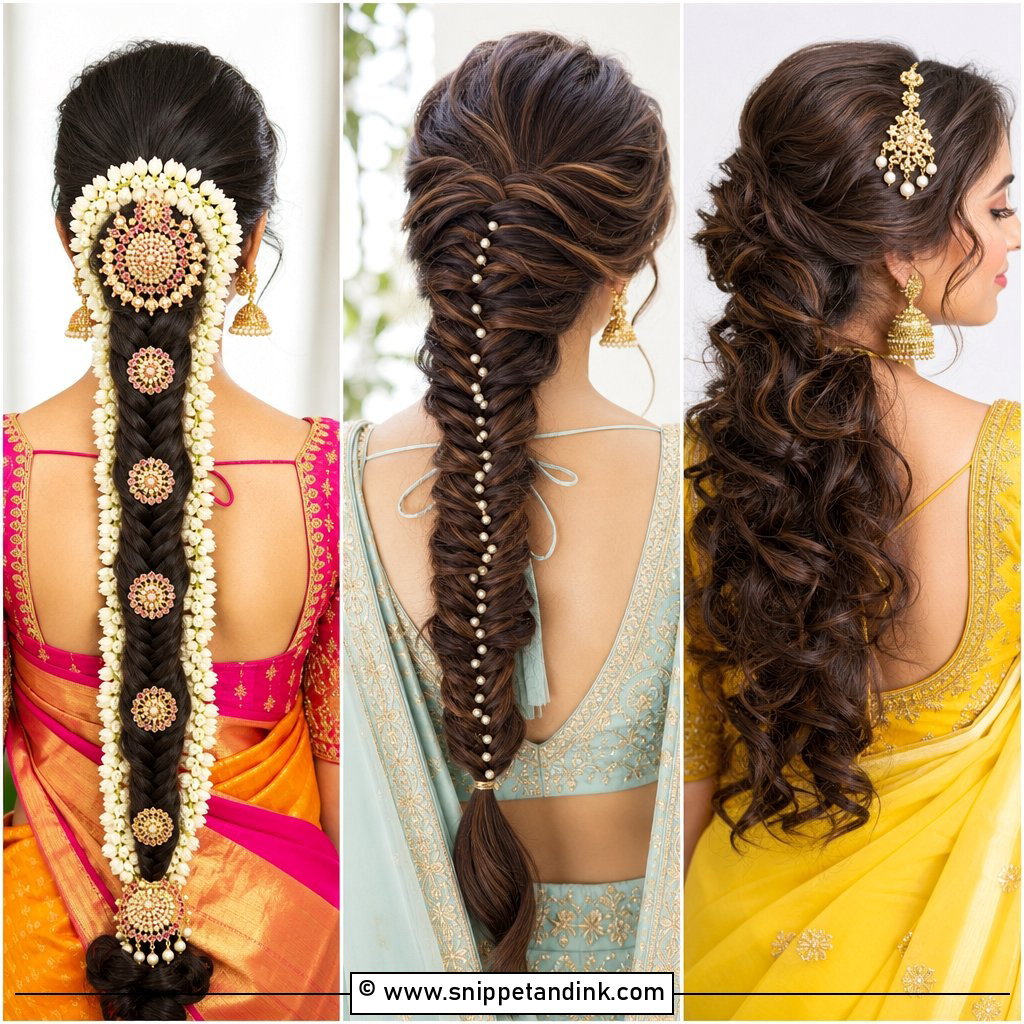

20. Grand Mixed Veni for the Main Wedding Day
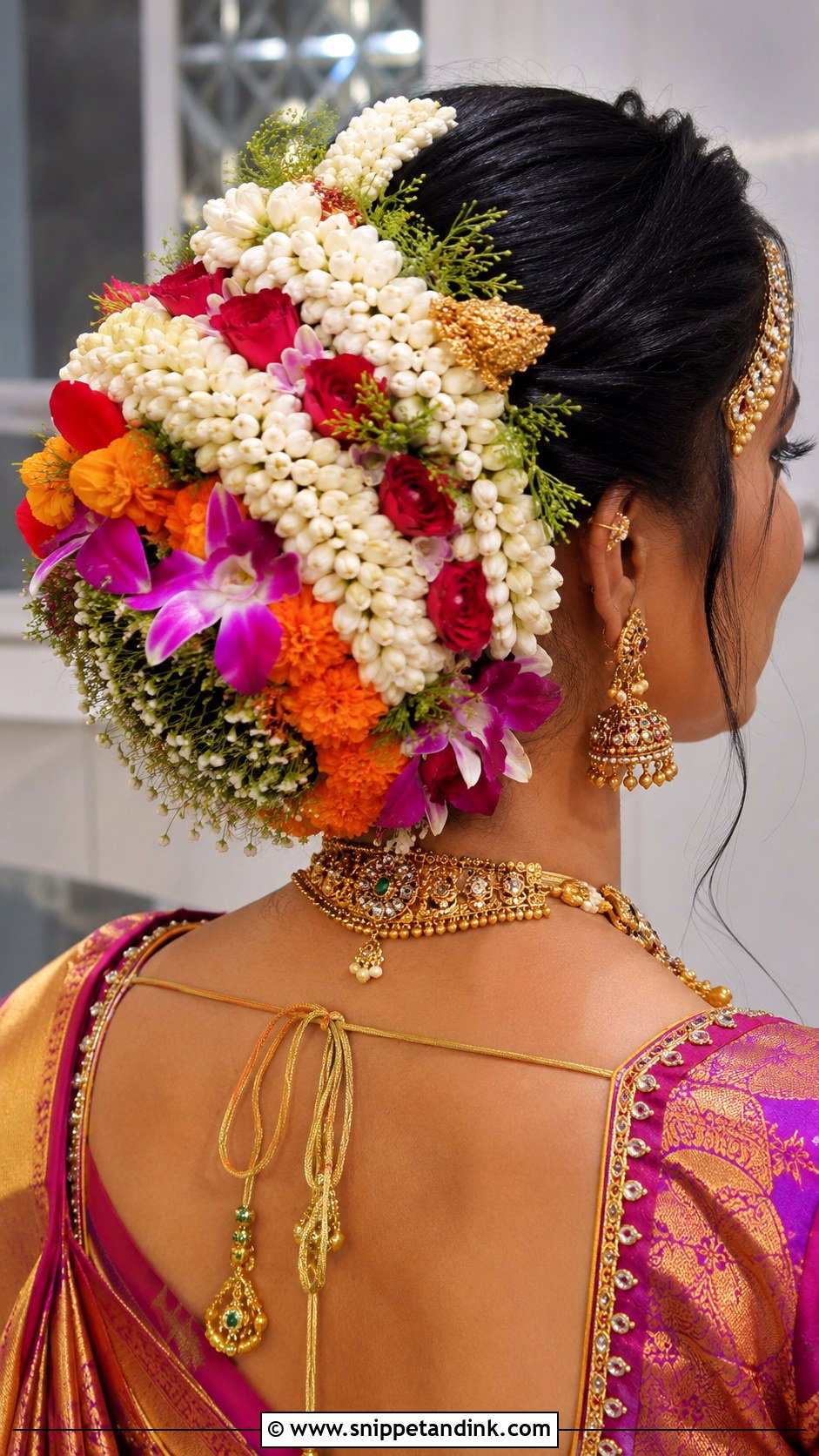
For the main wedding day, the grandest veni brings together jasmine, roses, marigolds, orchids and greenery in full layers that cover the braid or bun entirely. Each flower carries its own meaning, from purity to prosperity and blessing. This is the look I plan the most carefully, because every added layer adds weight and heat close to the scalp. Ask yourself honestly whether you can wear it for six or eight hours of ceremonies. If the answer is yes, it is the most complete expression of traditional South Indian bridal hair, and it suits a grand Kanjeevaram with full jewelry.
Jasmine Opens on Its Own Clock
Jasmine is sold as buds, and the buds open over the following hours, with most of the fragrance arriving as they do. That timing matters. If the strands arrive too early, they are fully open and starting to brown by the time you walk in. Too late, and they are still tight green-white buds with very little scent.
I ask florists to deliver jasmine the morning of the wedding where possible. If it has to come the night before, it goes into the fridge wrapped loosely in a damp cotton cloth inside a closed box, never straight onto ice or in a sealed plastic bag where it sweats. A light mist of water just before it goes into the hair perks the buds up.
Which flowers hold, and which need a backup
- Marigolds, chrysanthemums and orchids hold their shape well through a long day.
- Rosebuds outlast open roses; loose petals bruise first.
- Jasmine browns fastest in heat and direct sun, so an outdoor afternoon ceremony needs a spare strand.
- Keep a small box of spare flowers, a few pins and matching thread with whoever is minding your bag.
For a wedding with a morning ceremony and an evening reception, I usually plan two separate venis. Changing the flowers takes about twenty minutes and gives you fresh scent and a new look for the second half of the day.
Matching the Veni to Your Hair and Your Hours
A veni is never only decoration for an Indian bride. It carries fragrance and tradition, and it also shapes how your hair has to be built that morning. Jasmine gives scent and meaning, marigolds and orchids give staying power, and gold accessories add grandeur. Start from your outfit and the length of your ceremonies, be honest about how much weight you can wear, and let your stylist and florist work from the same plan.
You'll Like These Ideas:




Leave a Reply