
Mogra coiled round a low bun, a fishtail threaded with pearls, open curls swinging at the reception: Indian bridal hair has to work harder than most wedding hair. It carries a dupatta that pulls on every pin, a maang tikka hooked into the parting, and fresh flowers that begin to wilt the moment they go in. When I plan a bride’s looks, I think about function before fashion: what has to stay put through the pheras, and where she can afford something looser. Here are 20 styles worth considering for mehendi and haldi through to the reception, with notes on how each one actually holds up.
Anchoring a Heavy Dupatta Without Losing the Bun
Most of the hair trouble I see at Indian weddings comes from the dupatta, not the hairstyle. A bridal dupatta with heavy borders pulls down and back all evening, and if it’s pinned only into the surface of a bun, it drags the bun along with it. This is how I set it up:
- Build the style on a firm base. A tight hidden ponytail or a small braided anchor gives the dupatta pins something to bite into.
- Cross U-pins or large bobby pins in an X instead of using single straight pins. Crossed pins hold far more weight.
- Pin the dupatta at the crown and again just behind each ear, so the weight is shared instead of hanging from one point.
- Settle the drape before the trial. A dupatta worn over the head and one resting only on the shoulders need different bun heights.
If you’re changing dupattas between ceremonies, ask your stylist to stay for the change. Pulling pins out and pushing them back in a hurry is how buns collapse halfway through the night.
1. Floral Bun With Mogra Flowers
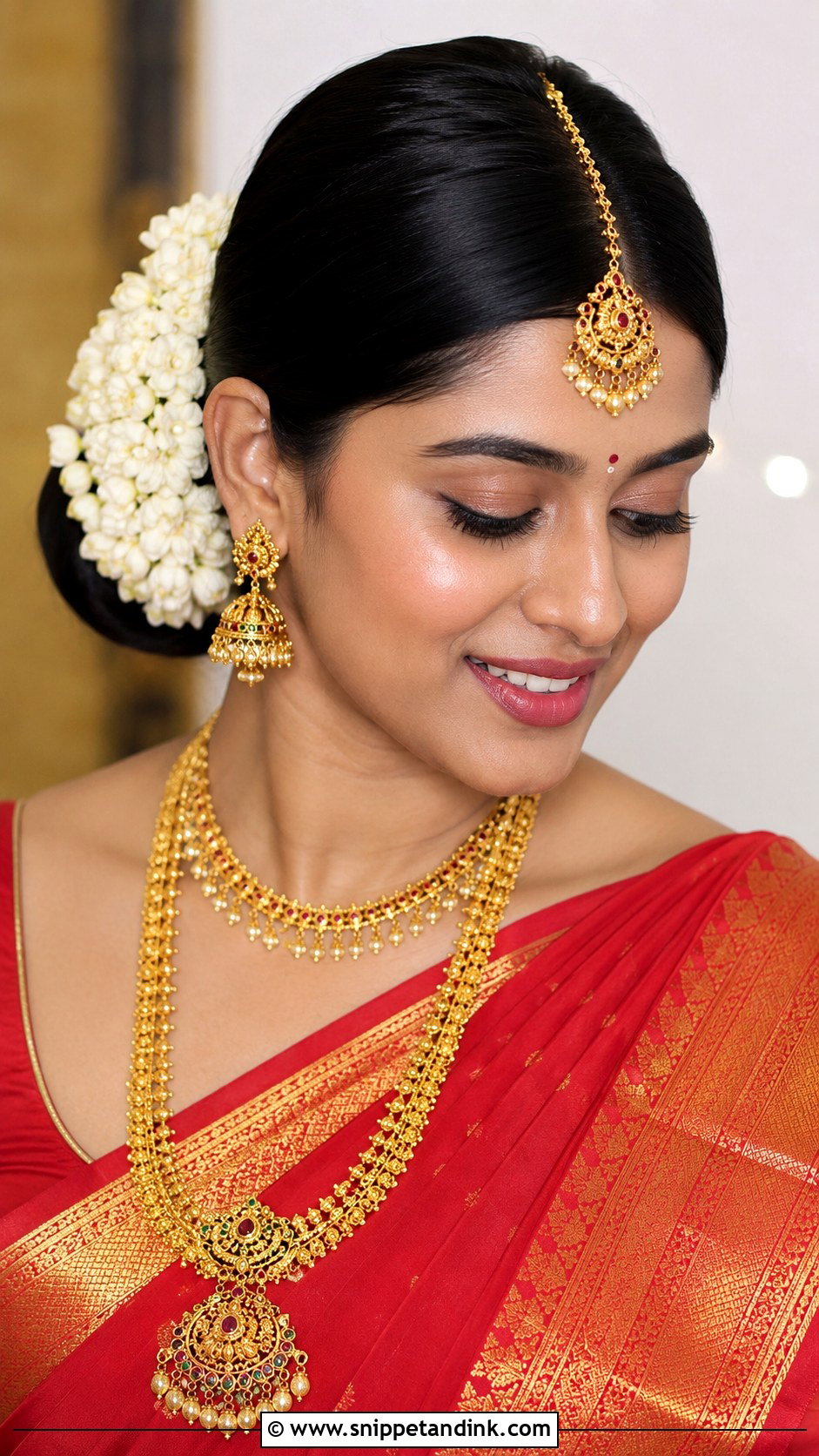
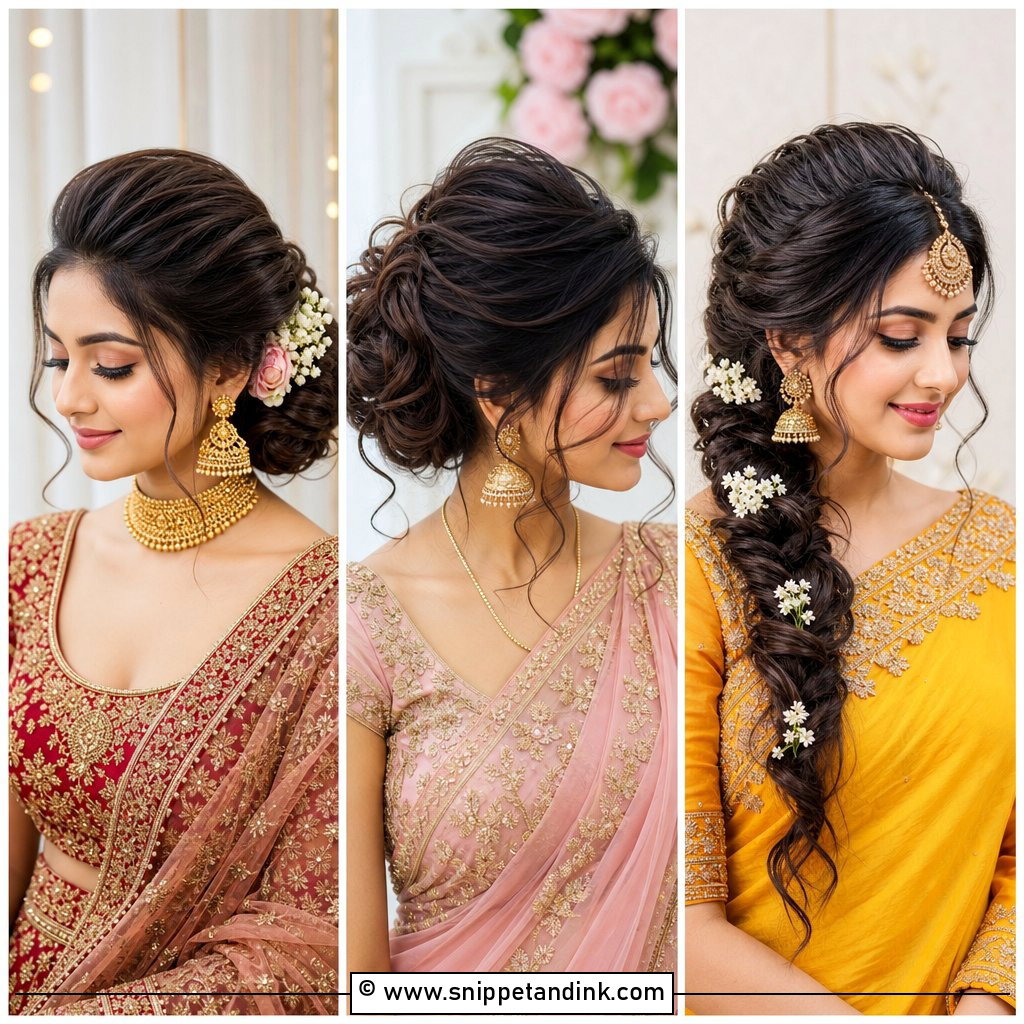
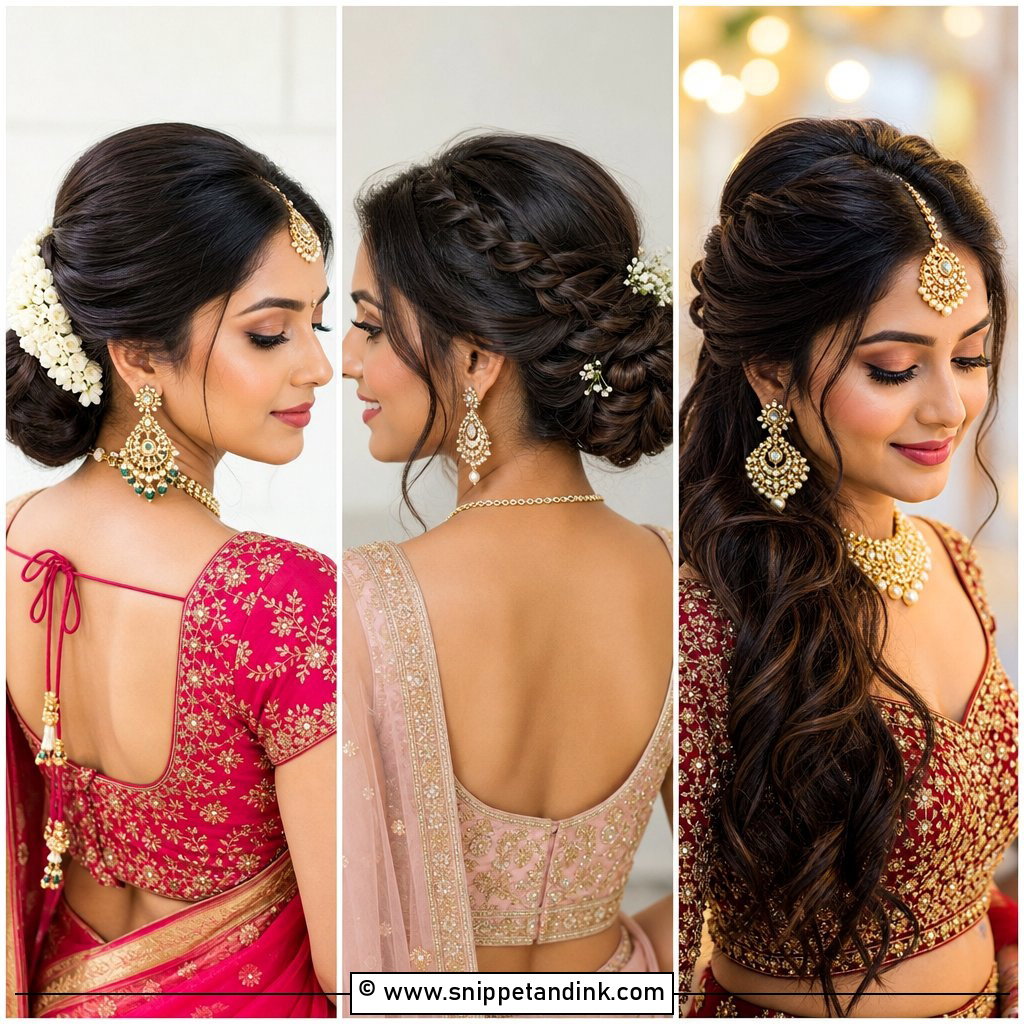
A low bun wrapped in fresh mogra is the look most grandmothers picture, and it earns its place at the ceremony. The hair is coiled smooth at the nape and the jasmine strings are wound round it, so the bun itself has to be firm. I build it over a padded donut or a little backcombing, because flowers pinned into soft hair slide down within the hour. A central parting leaves room for sindoor and the maang tikka chain, and with a Kanjeevaram and temple jewelry very little else is needed. If your hair is fine and shoulder length, ask for a filler bun so the mogra has something solid to grip.
2. Fishtail Braid With Pearls
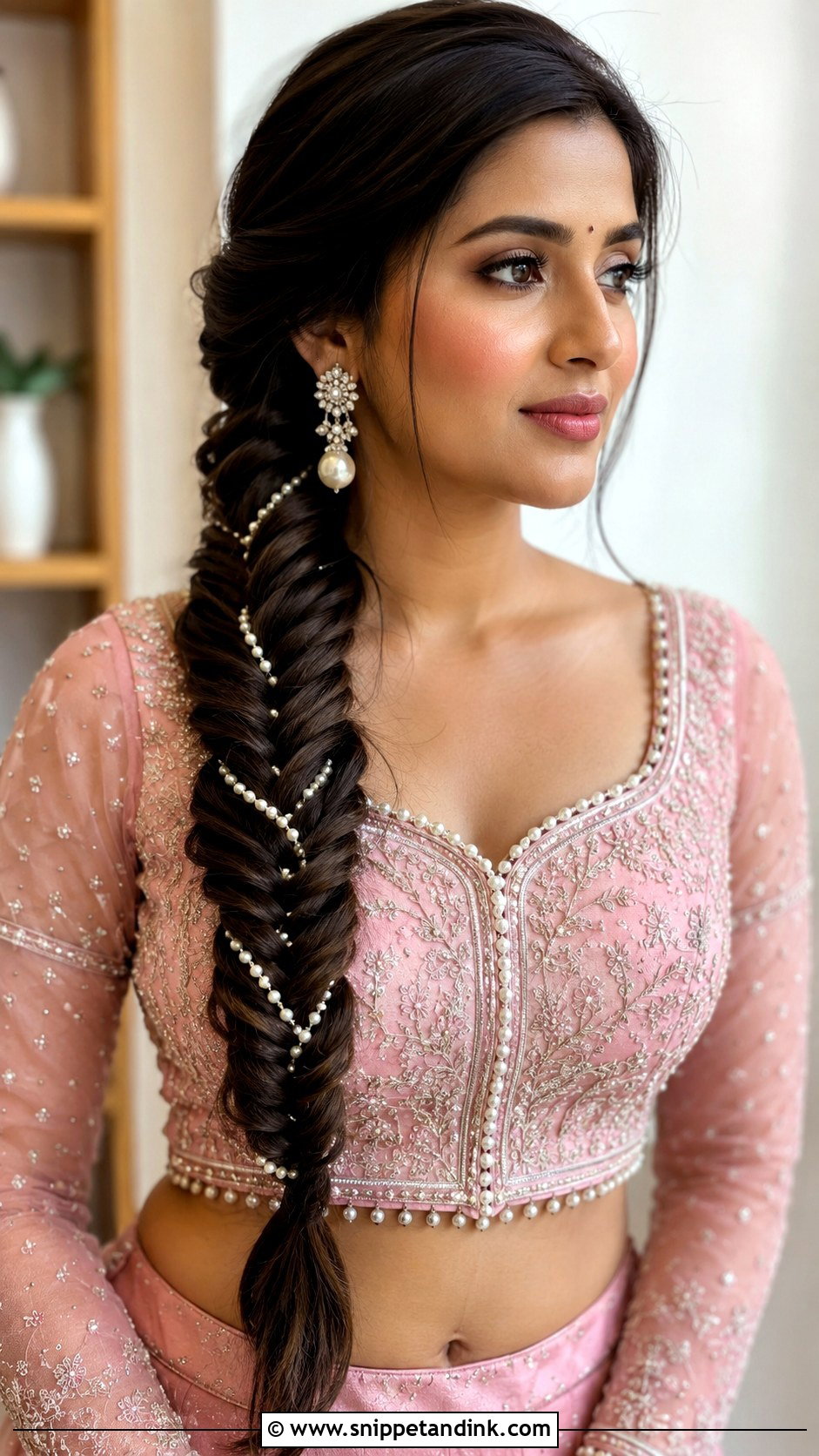
A fishtail takes longer than a three-strand braid because it splits the hair in two and crosses tiny sections back and forth, but that fine herringbone is exactly what makes pearl strings show. I thread the pearls in after the braid is finished, tucking each strand under a cross so it can’t slip when the dupatta brushes past. Pancaking the edges gives a fuller shape. On very silky hair I texturize first, or the braid flattens back within the evening. Long hair helps here; clip-in extensions matched to your shade fill the gap if yours stops at the shoulder blades.
3. Side Bun With Maang Tikka
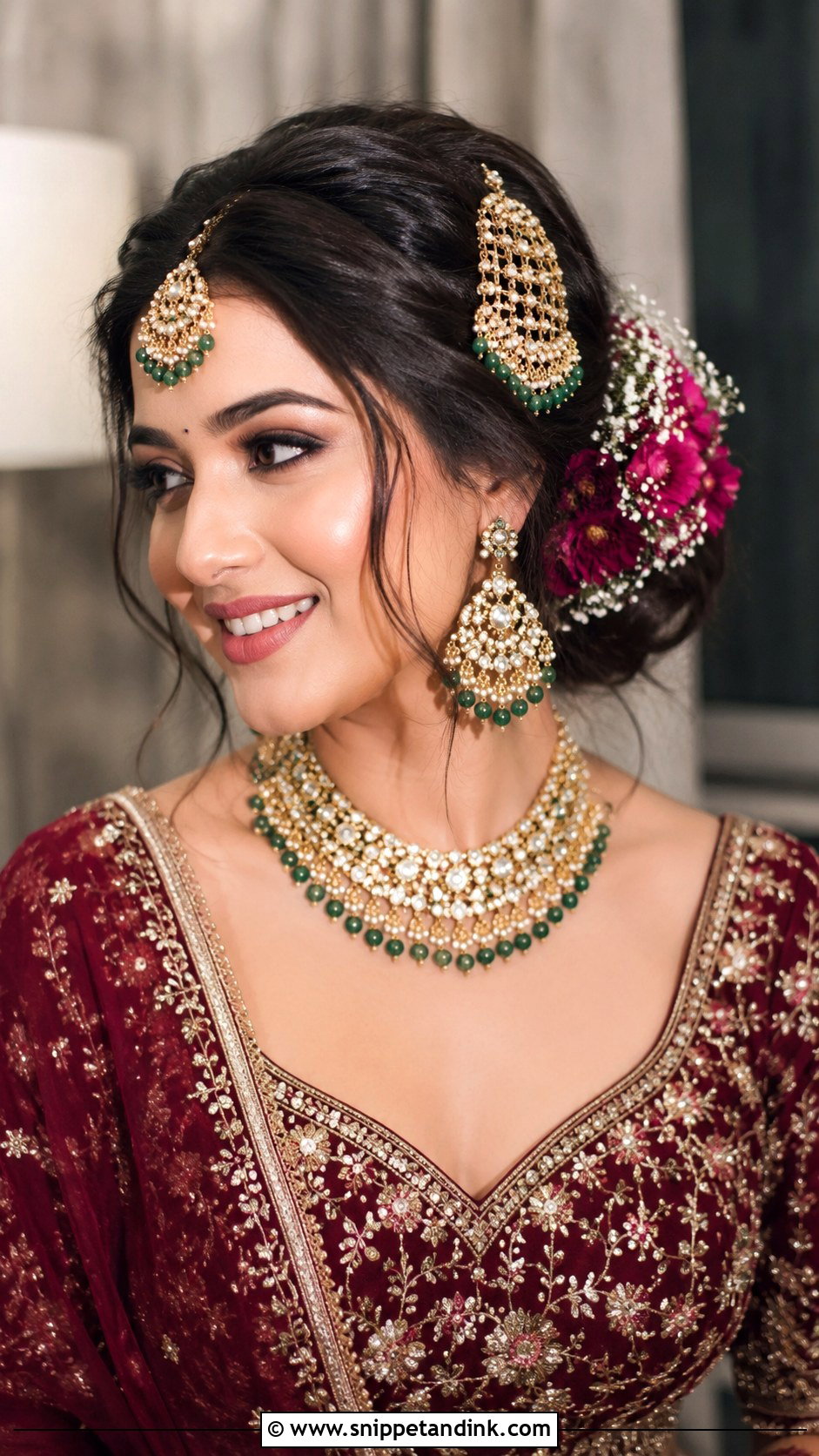
Sitting low behind one ear rather than at the crown, a side bun tilts the whole silhouette and leaves the opposite earring on full view. Pairing it with a maang tikka or jhoomar on the same side balances the weight visually. The practical catch is that the bun sits right where a dupatta wants to rest, so I place it slightly behind the ear line and anchor it with crossed U-pins into a hidden ponytail base. A gajra wrapped round it works well. It flatters round and oval faces, and I save it for the engagement or reception, when the dupatta is lighter.
4. Open Hollywood Waves
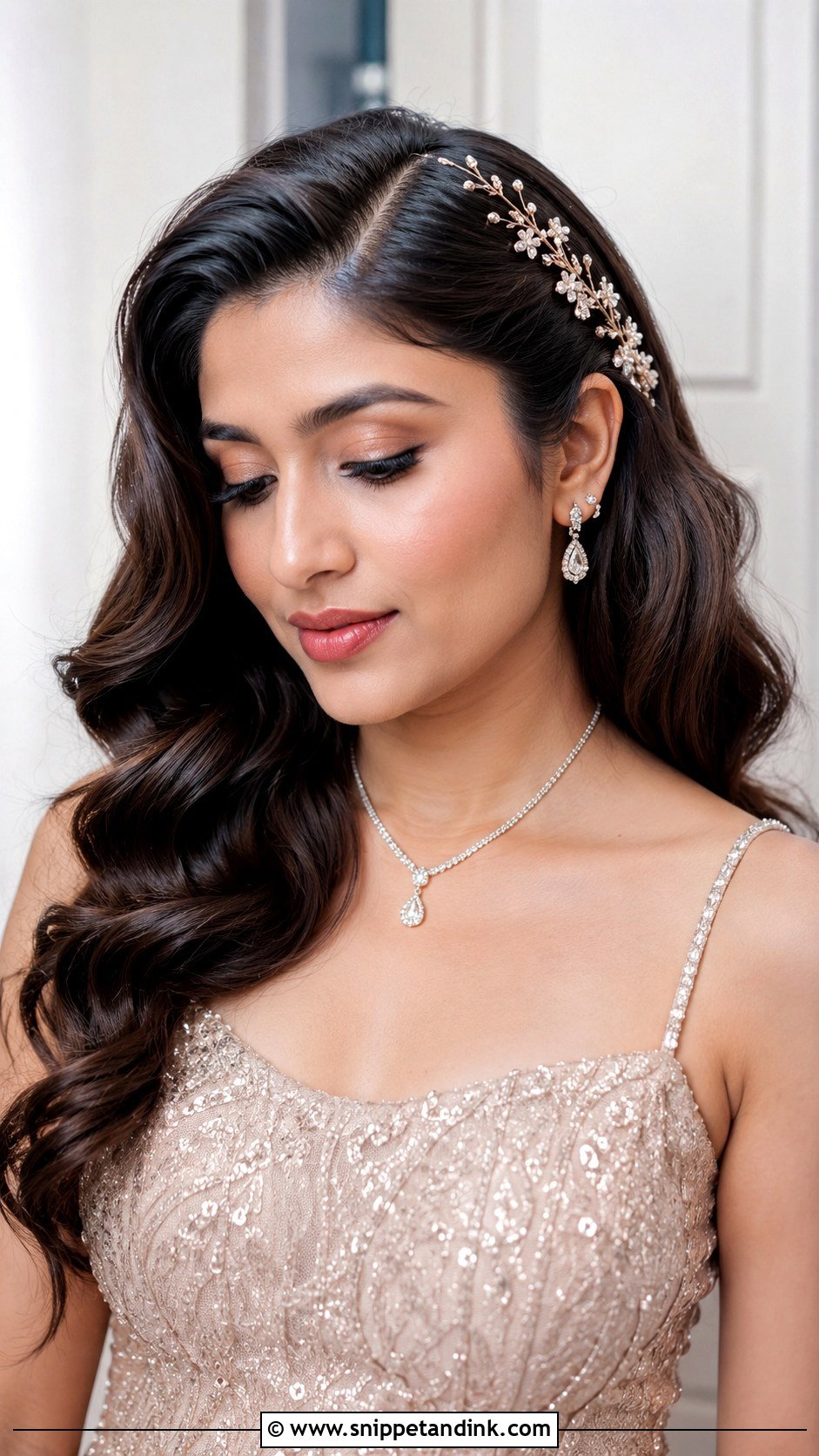
Hollywood waves are curls brushed out in one direction so they fall in a single S pattern. That uniformity is the hard part on thick, heavy hair: I curl in small sections, pin each curl to cool, and only brush out once everything has set, otherwise the waves drop before dinner. A deep side parting gives lift at the root. They suit Indo-Western gowns and lighter reception lehengas, and a thin hair vine is about all the accessory they need. At a humid outdoor destination, be prepared for them to relax into looser waves by late evening.
5. Braided Bun With Kundan Pins
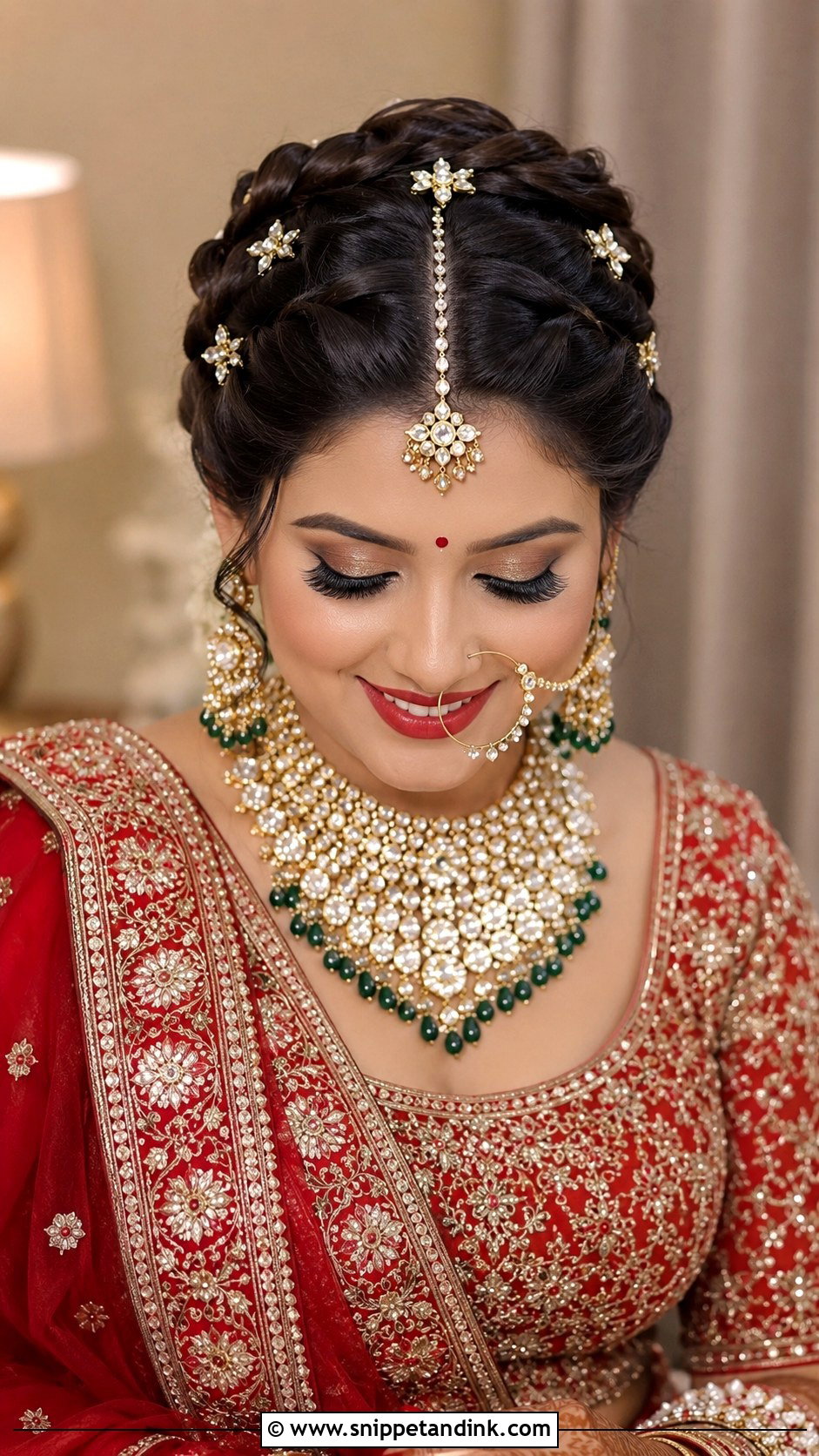
This one starts as a braid, sometimes two, coiled into a structured bun with Kundan or polki pins tucked between the twists. Braiding first is what makes it reliable: the plait gives the pins something to grip, so the bun holds through hours of rituals. The central parting keeps space for the maang tikka and sindoor. I lay the pins out on a tray at the trial and place them only once the bride is fully dressed, because a heavy necklace and dupatta change how much sparkle the back of the head really needs. Overdo it and the bun starts to look like a jewelry display.
6. Half-Up Half-Down With Curls
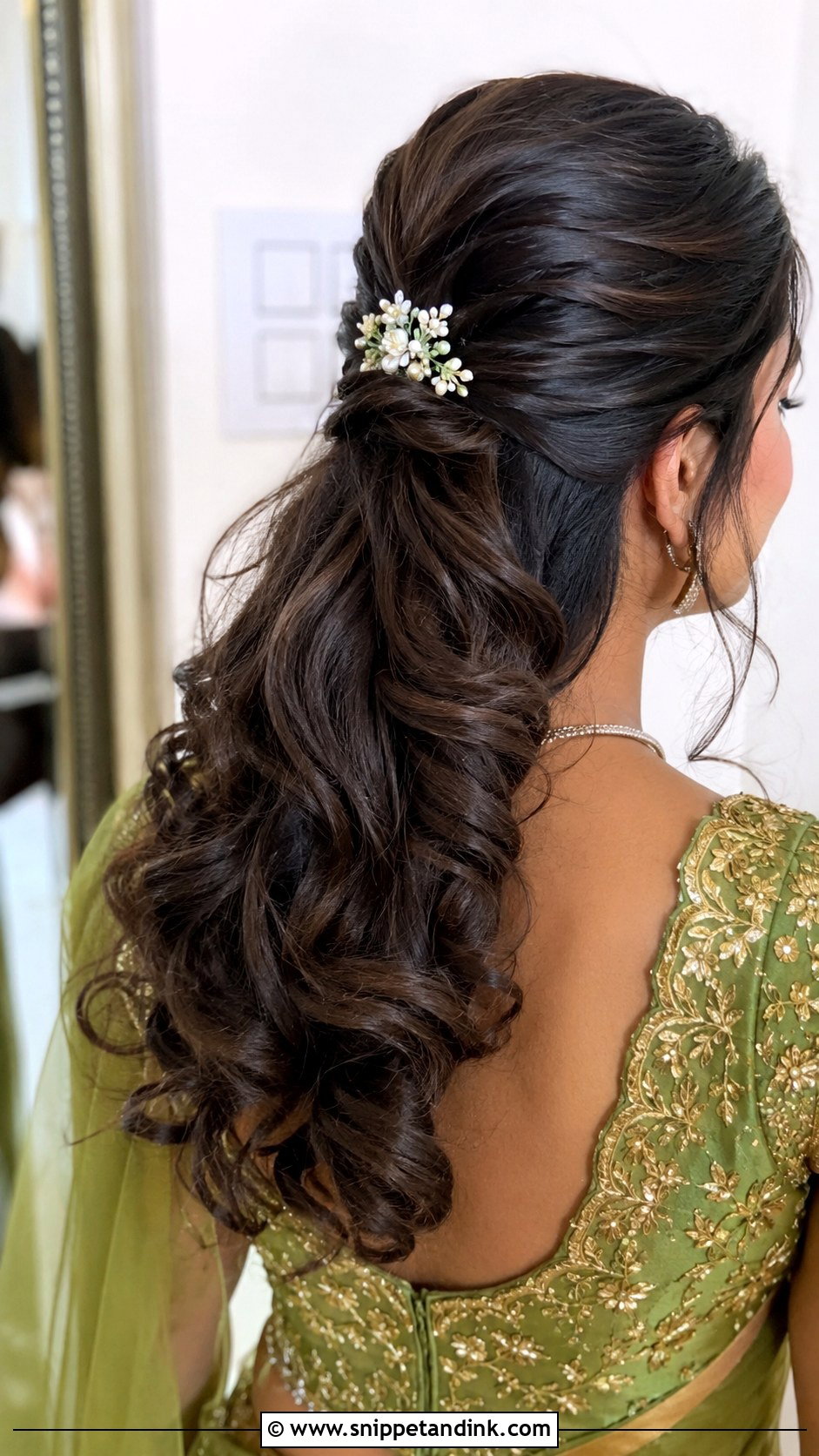
Can’t commit to an updo? Half-up curls give you a clear face with your length still on show. The crown section is pinned back and the lower lengths are curled loose. I like it for mehendi and sangeet, though open curls and wet mehendi paste don’t mix, so keep the hair clipped well away while your hands are being done or the ends pick up stain. I secure the top section with a small hidden elastic before pinning, since bobby pins alone tend to loosen once the dancing starts.
7. Sleek Glass Hair Ponytail
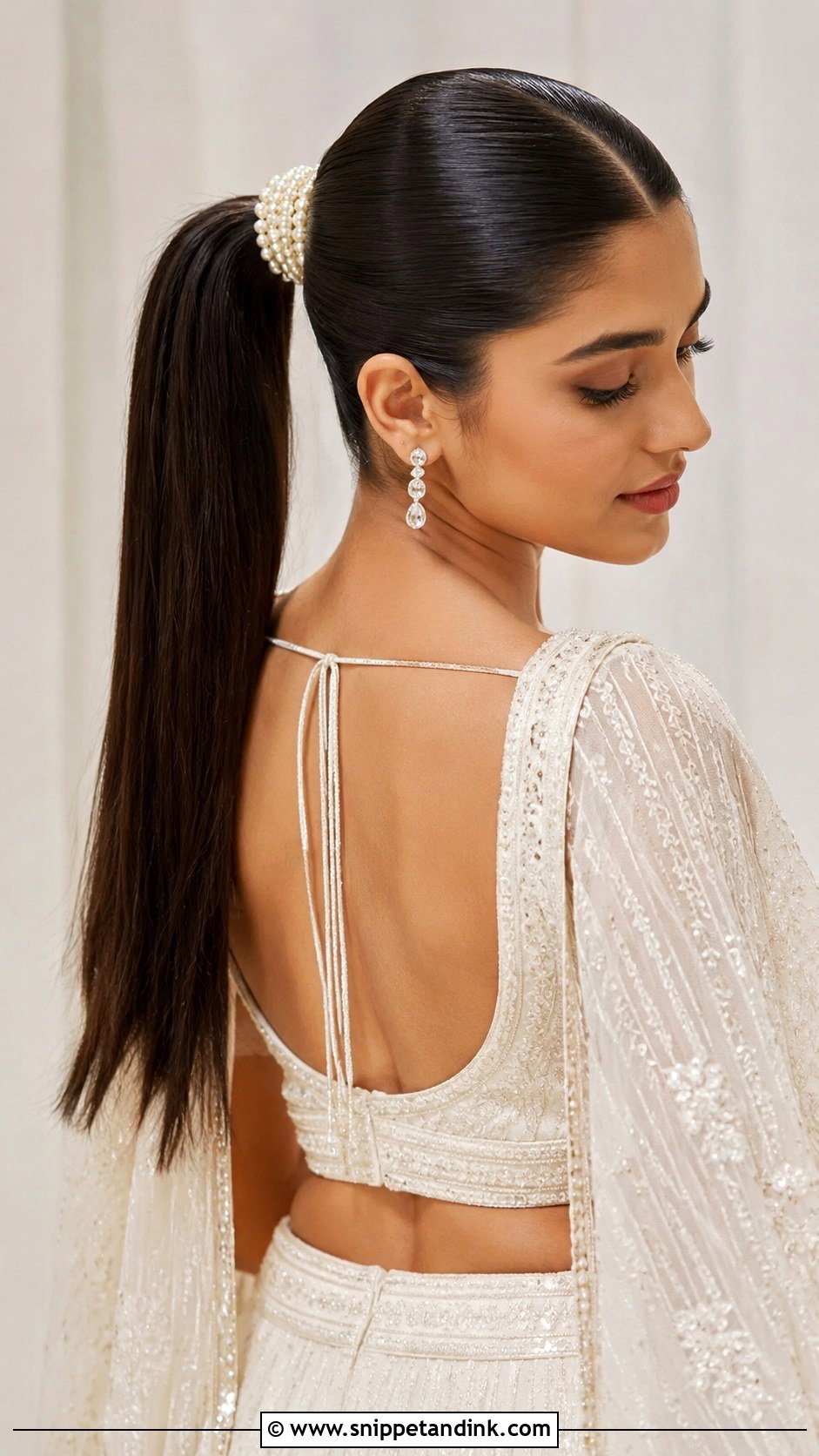
The glass-hair ponytail looks simple and is anything but. That mirror finish comes from a smooth blow-dry, flat ironing in thin sections and a light shine product, and every flyaway shows up in close-up photographs. A sharp centre part keeps it modern against heavy embroidery. I wrap the base with a strand of hair or a pearl cuff to hide the elastic, and clip-in ponytail extensions add length where it’s needed. I’d steer you away from it if your hair is very curly and the wedding is outdoors in heat, because frizz returns at the hairline long before the evening ends.
8. Kondai Bun With Jasmine
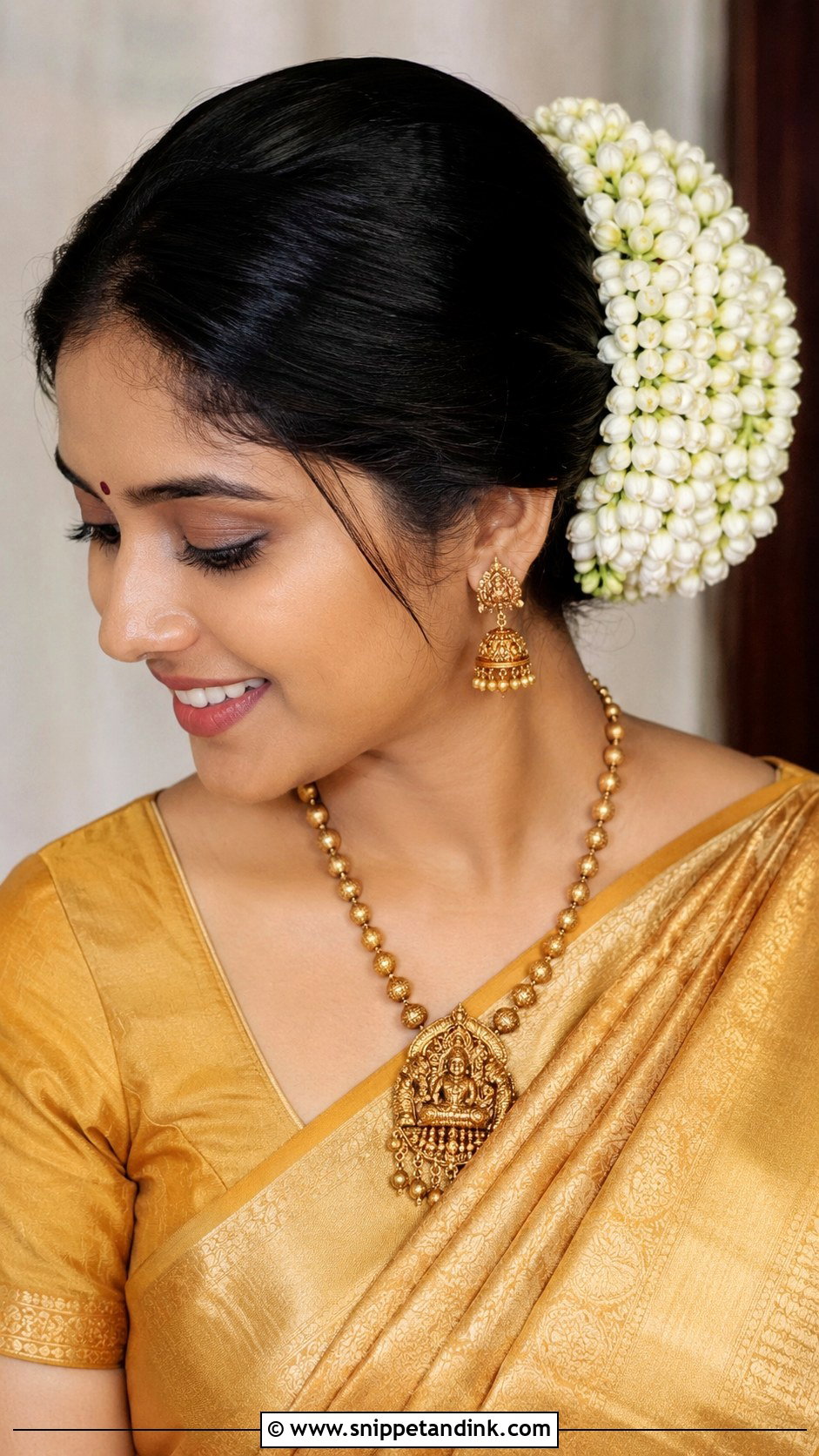
The South Indian Kondai bun is built for jasmine. It sits at the back of the head, often over a hair filler, and the flowers are layered round it in rings until it becomes a full white halo against dark hair. The real work is in the base. Jasmine strings are heavier than they look, so the bun needs a firm foundation and plenty of pins hidden underneath. Gold temple jewelry and a Kanjeevaram saree complete it. Wrap the flowers as late as you can, because jasmine browns at the edges within a few hours of heat.
9. Dutch Braid Crown
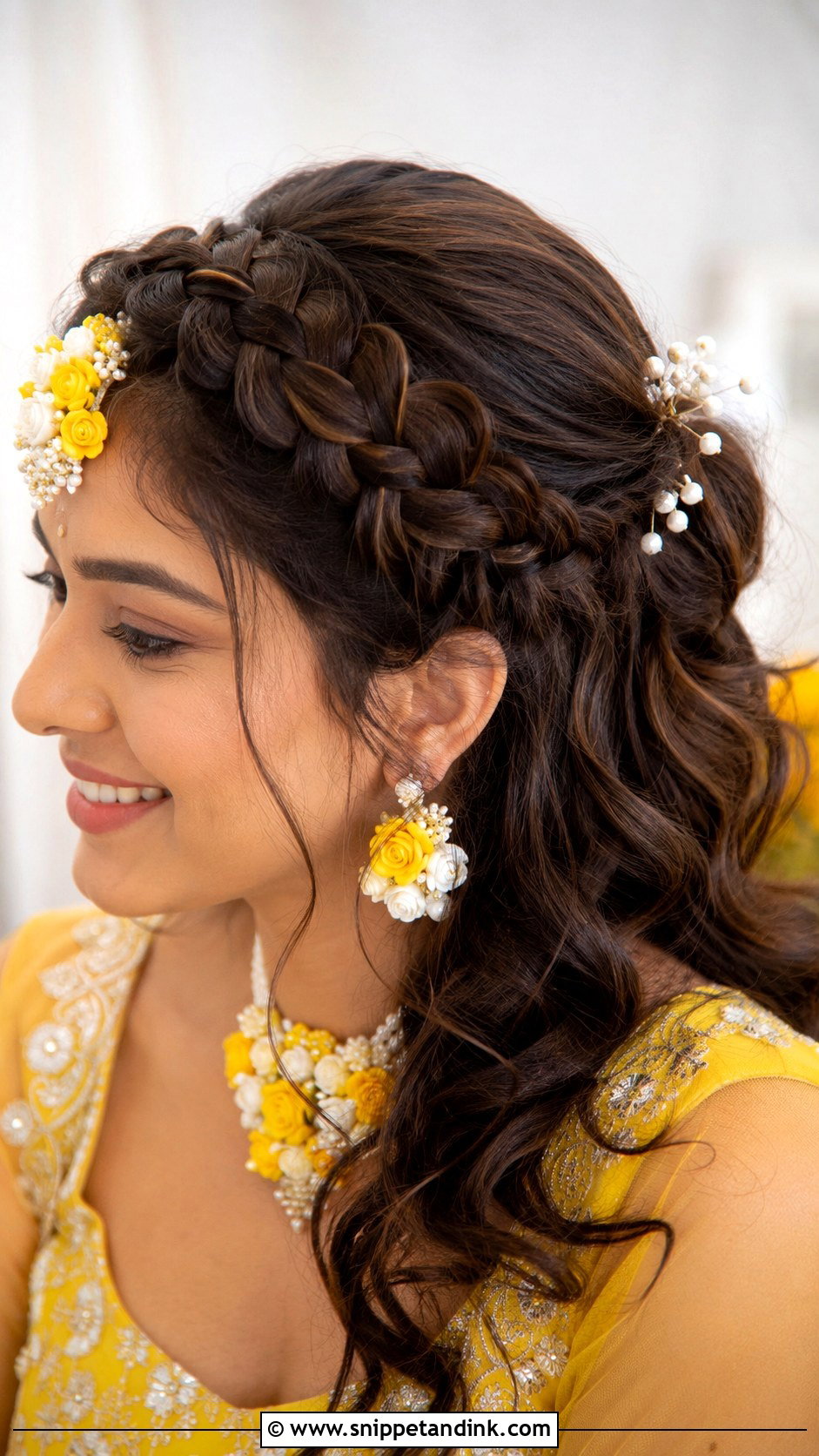
A Dutch braid crosses strands under rather than over, so the plait sits raised on top of the hair instead of lying flat. Wrapped round the head, it makes a crown that keeps everything off your face at mehendi and haldi, when you’re sitting still for hours or having turmeric smeared on you. The back can stay open in waves or tuck into a bun. Short layers poke out of a crown braid, so if you’ve had a layered cut recently, expect a few wisps and a little extra product along the hairline.
10. Low Bun With Baby’s Breath
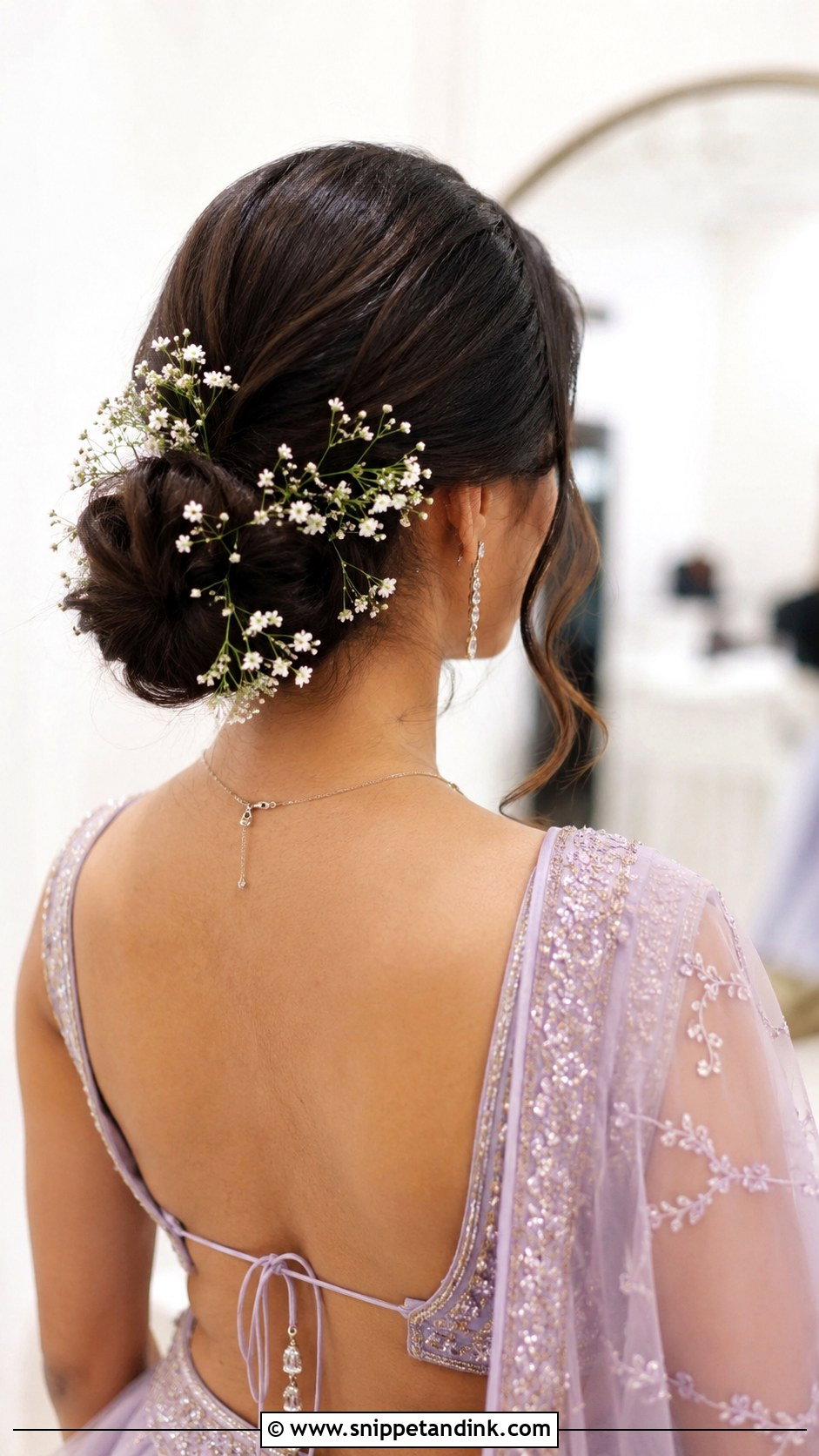
Baby’s breath is light, inexpensive and far more forgiving than jasmine, which is why I reach for it on daytime functions. Small sprigs are scattered through a smooth low bun, sometimes with lavender or a touch of greenery for a softer palette. It weighs much less than a heavy gajra and sits nicely with pastel lehengas and fine jewelry. One thing to know: baby’s breath has a faintly sour smell up close that some brides notice, so sniff a bunch before you commit.
11. Curly Back Bun
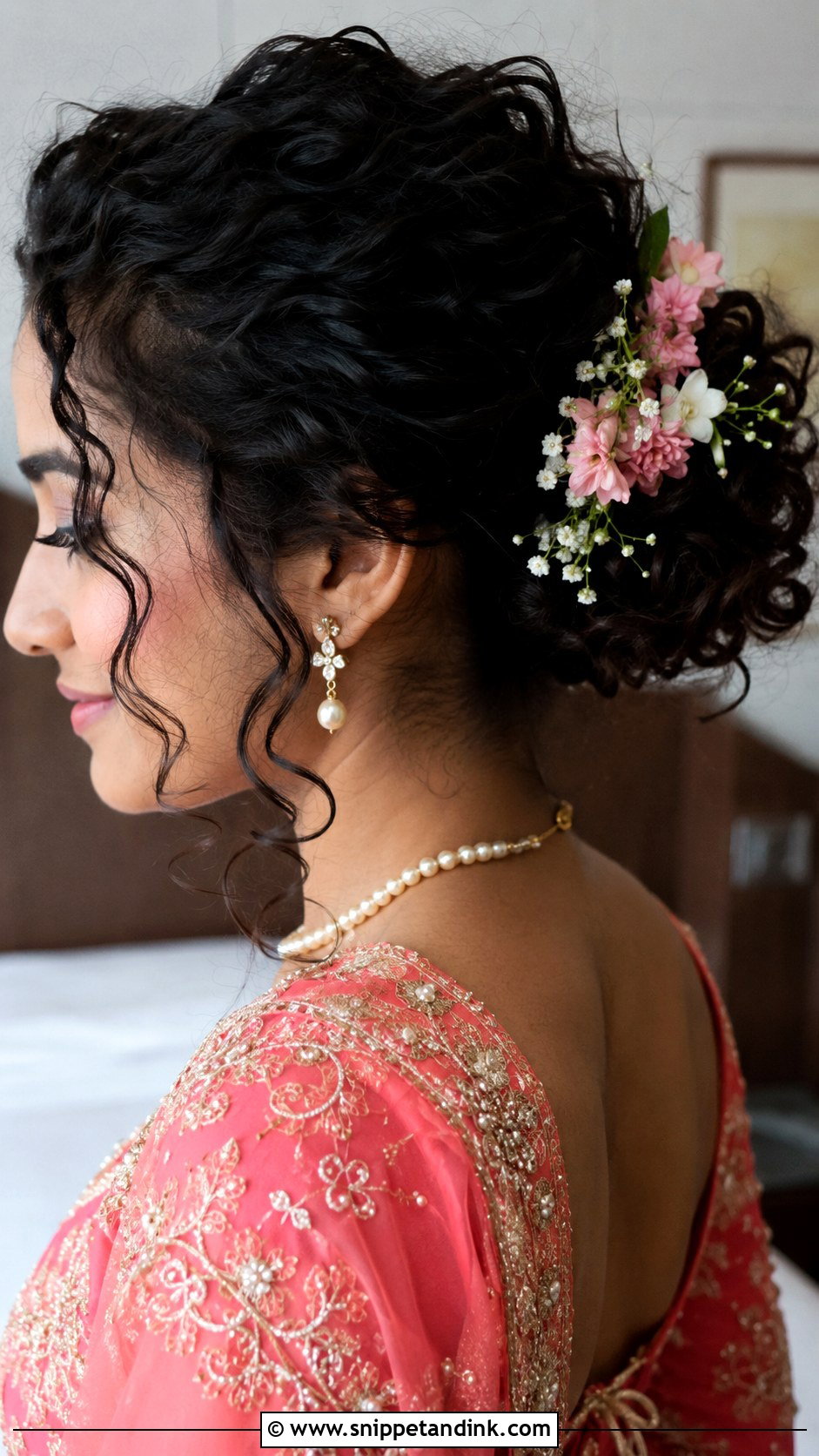
With naturally curly hair, I’d rather work with the texture than straighten it into submission. The curls are gathered loosely at the back and pinned in clusters, so the bun stays round and full instead of flattened, and a few face-framing pieces are left out to soften it. Prep matters more than the styling: a leave-in and curl cream applied while the hair is damp, never a dry brush, which turns curls to frizz in seconds. Flowers, pearl pins or a thin vine settle easily into the texture, and the style carries from mehendi right through to the reception.
12. Side-Swept Open Curls
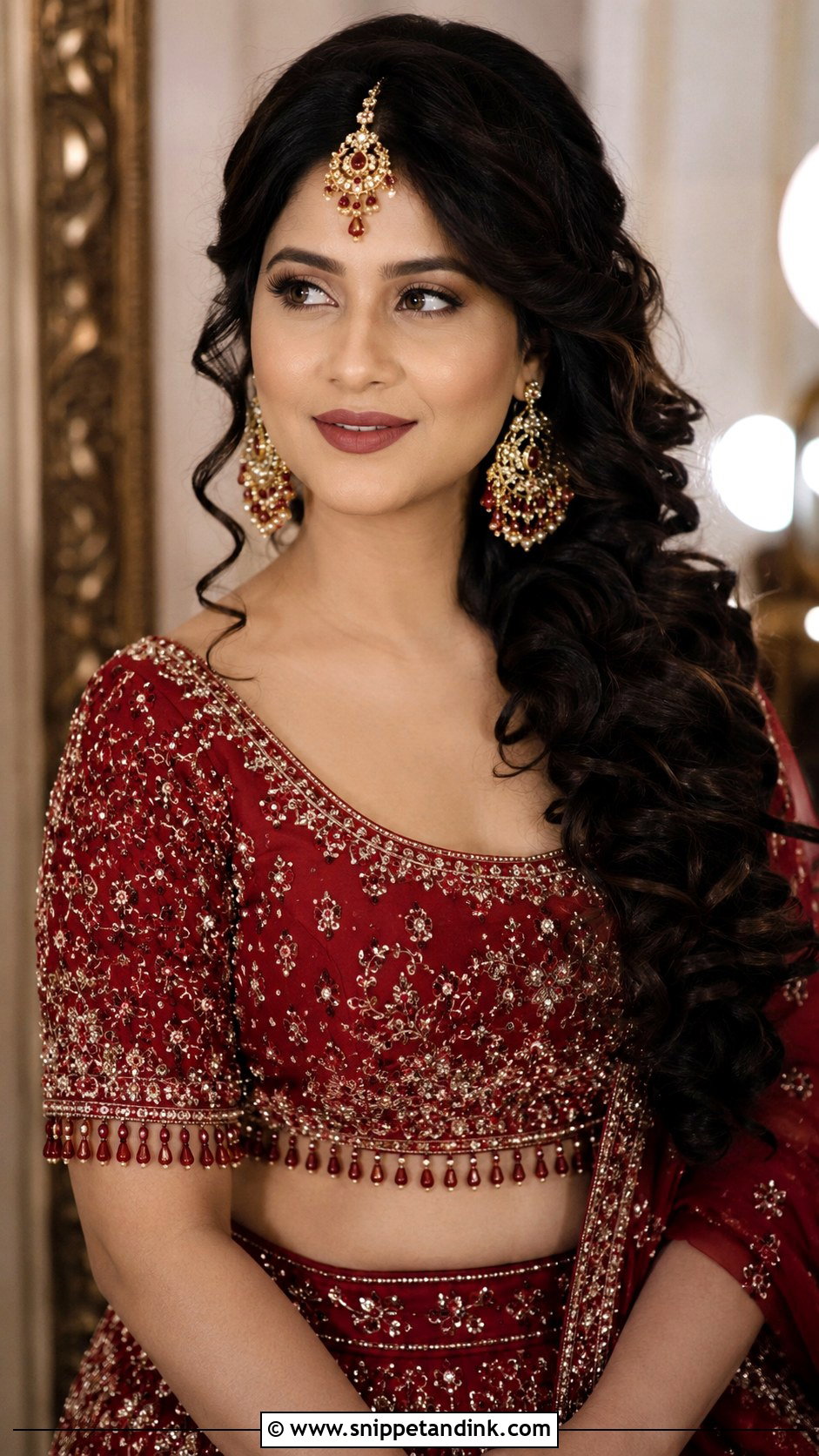
Sweeping every curl over one shoulder gives the reception a bit of drama and puts the earring on the bare side on show. Tight curls last longer than loose ones, so I set them tighter than the final look and let them relax over the first hour. A deep side part adds lift at the crown. Hidden crossed pins behind the ear stop the weight sliding back to the centre, which is what usually happens once you start hugging relatives. A small maang tikka or a few flowers near the parting finishes it.
13. French Braid Into Bun
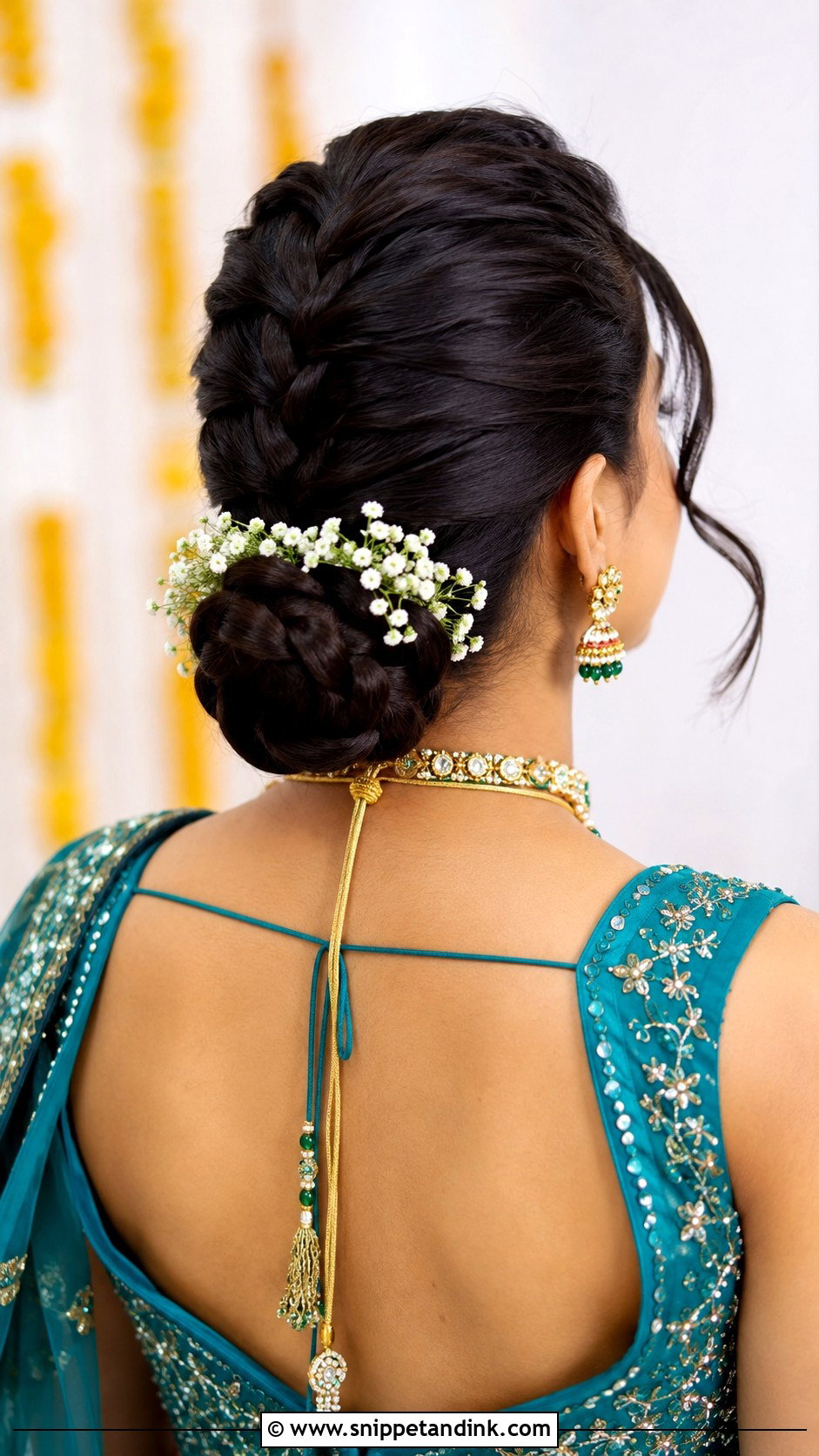
A French braid that starts at the crown and travels down into a coiled bun at the nape gives you detail from the front and a tidy finish at the back. Because the braid locks the hair in place from the top, this is one of the most secure styles here, and I’d trust it under a heavy dupatta for a long ceremony. Small flowers, pearls or Kundan pins can be placed along the braid. On fine hair I gently pull out the outer loops so the plait still reads from across the room.
14. Voluminous Power Bun
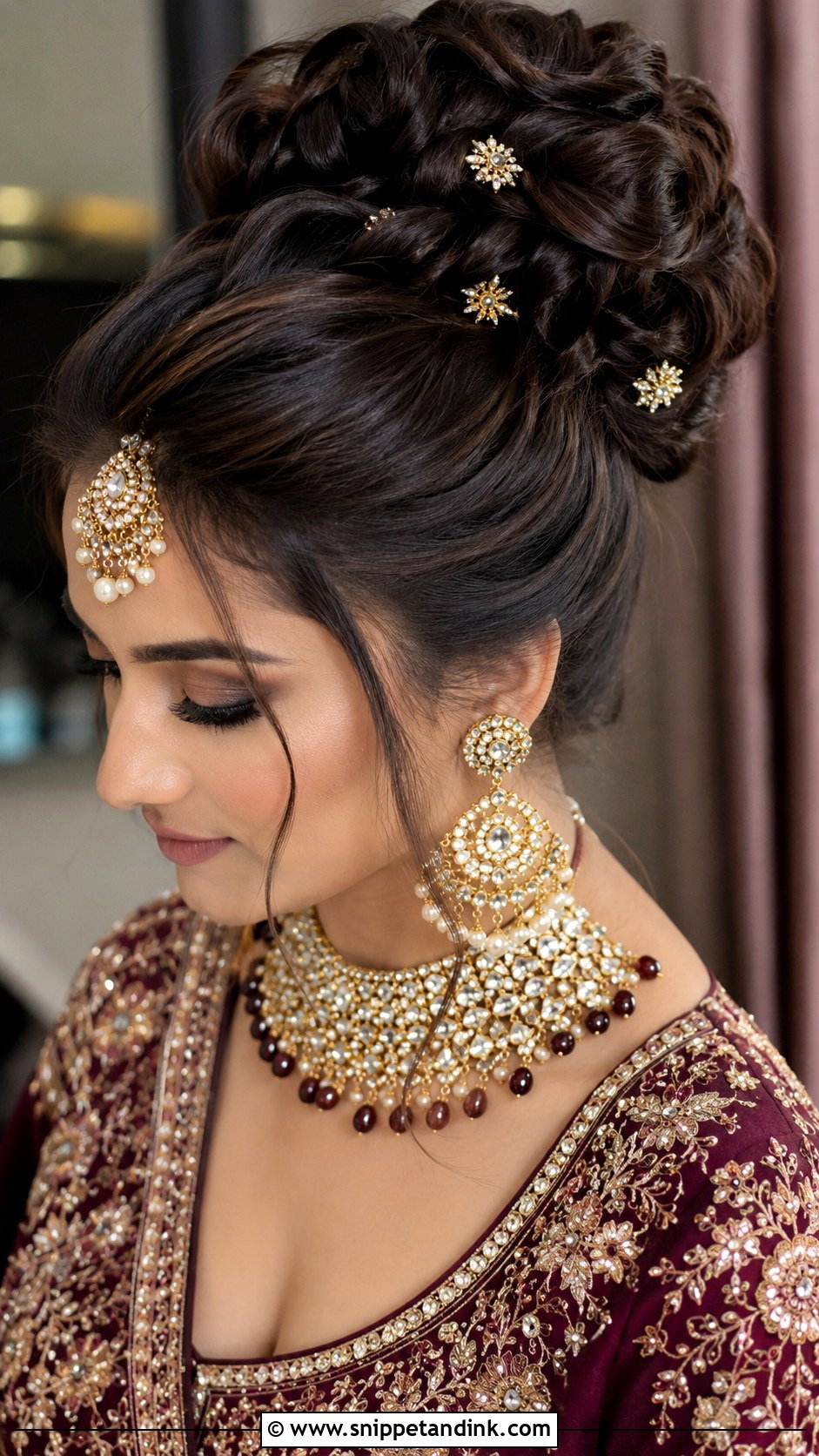
The power bun is all about height: a high, full base with twisted coils, puffed crown sections and braided detail layered through it. It holds its own against heavy bridal jewelry and a grand lehenga, which is why it belongs at the main ceremony. The trade-off is weight and time. Most hair needs a filler or extensions to reach that size, it takes longer in the chair, and a tall bun can fight a dupatta draped over the head. Tell your stylist exactly how the dupatta will be worn before she decides how high to go.
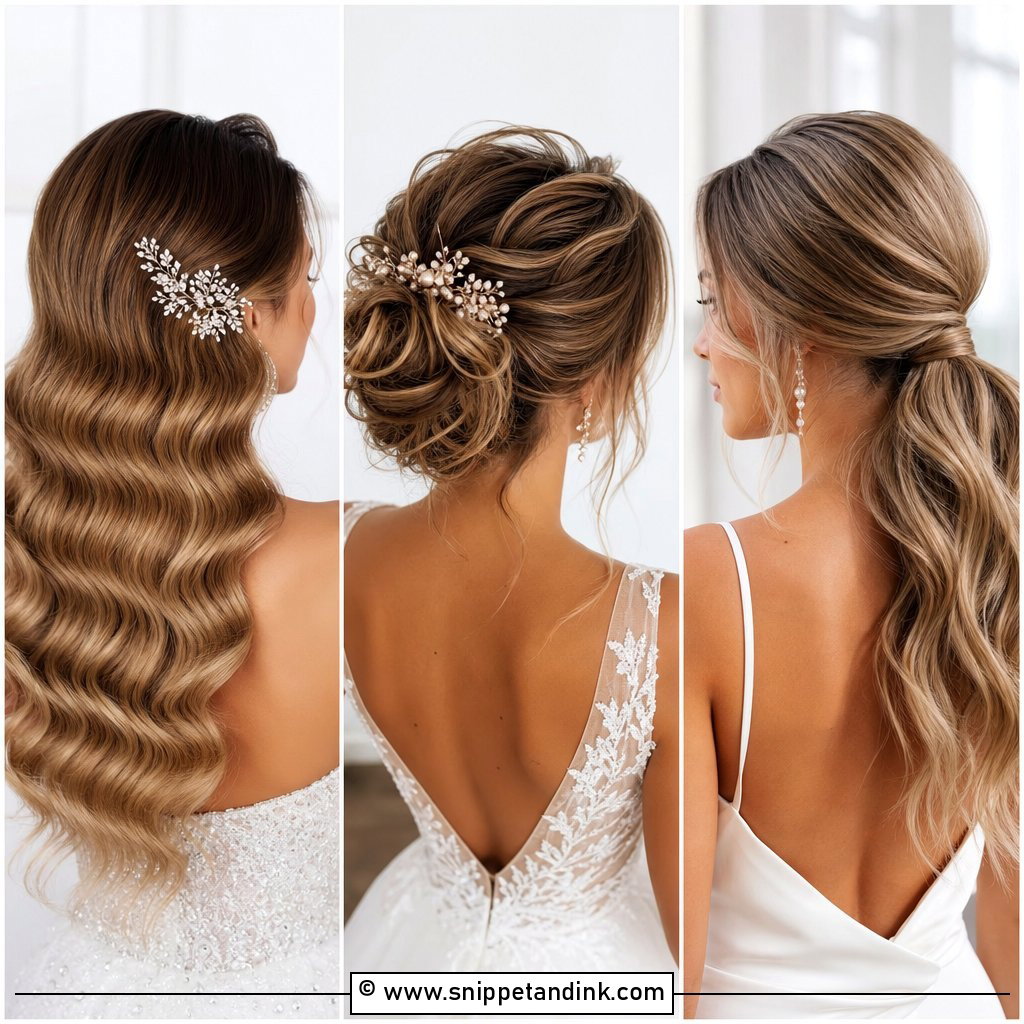
15. Rose Twist Hairstyle
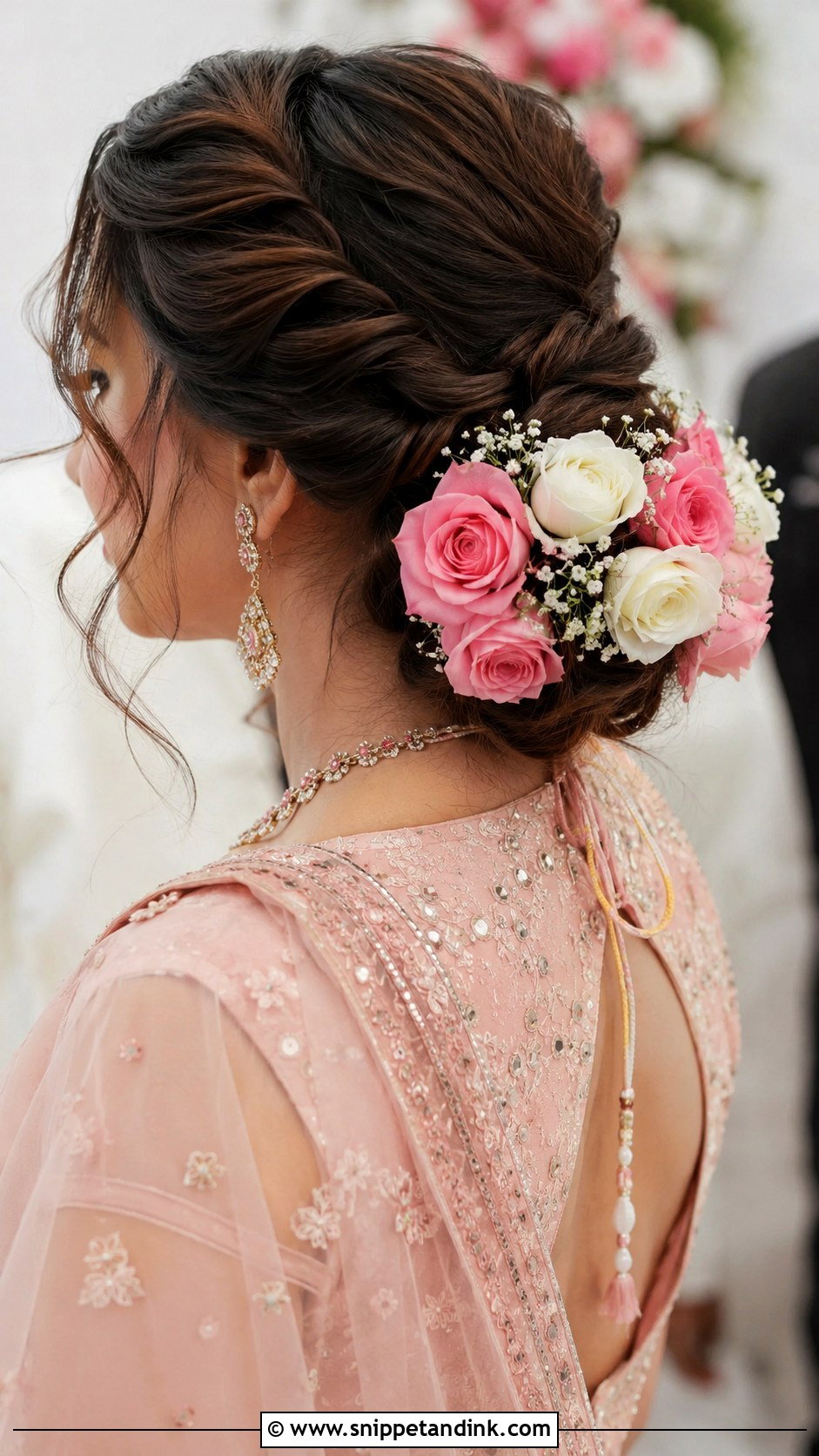
Rose clusters are tucked into twisted sections, either along a low bun or across a half-up style. Soft pink and ivory read well against dark hair in photographs and suit pastel outfits. I wire the roses or pin them through the base of the flower head, because a bare stem will work its way out of a twist. Roses cope with warmth better than jasmine, but full blooms are heavier than they look, so I keep the largest ones close to the base of the bun where the pins are strongest.
16. Braided Mohawk Into Side Bun
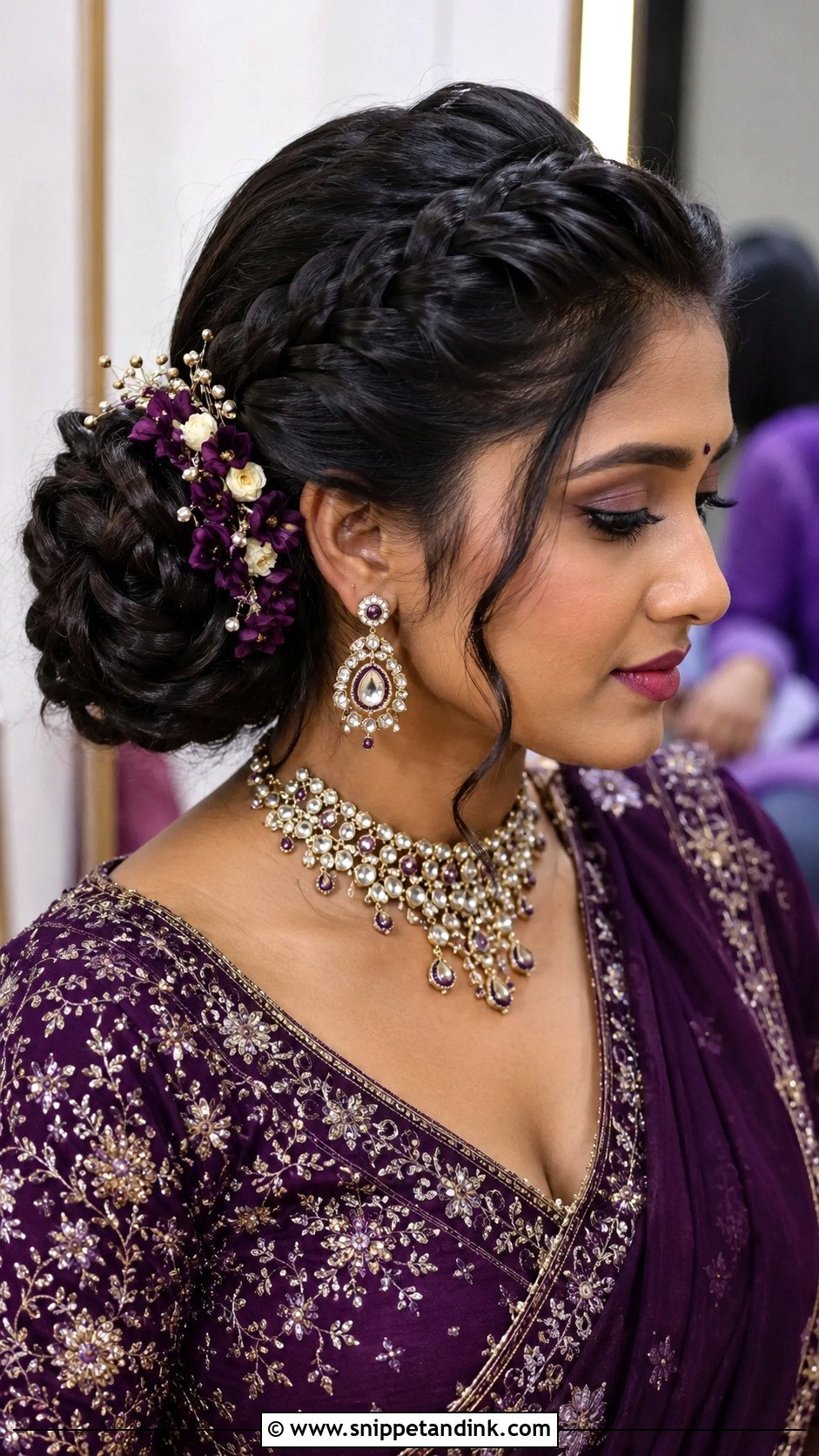
Here a puffed braid runs down the centre of the head and sweeps into a bun on one side, which suits the bride who wants some edge at the reception. To stand that tall, the braid needs a teased base underneath, so it isn’t kind to very fine hair unless extensions are added. Floral pieces and decorative pins sit well along the side. Ask to see the back in a hand mirror at your trial: the drama is all behind you, and that’s the view guests get on the dance floor.
17. Loose Beachy Waves
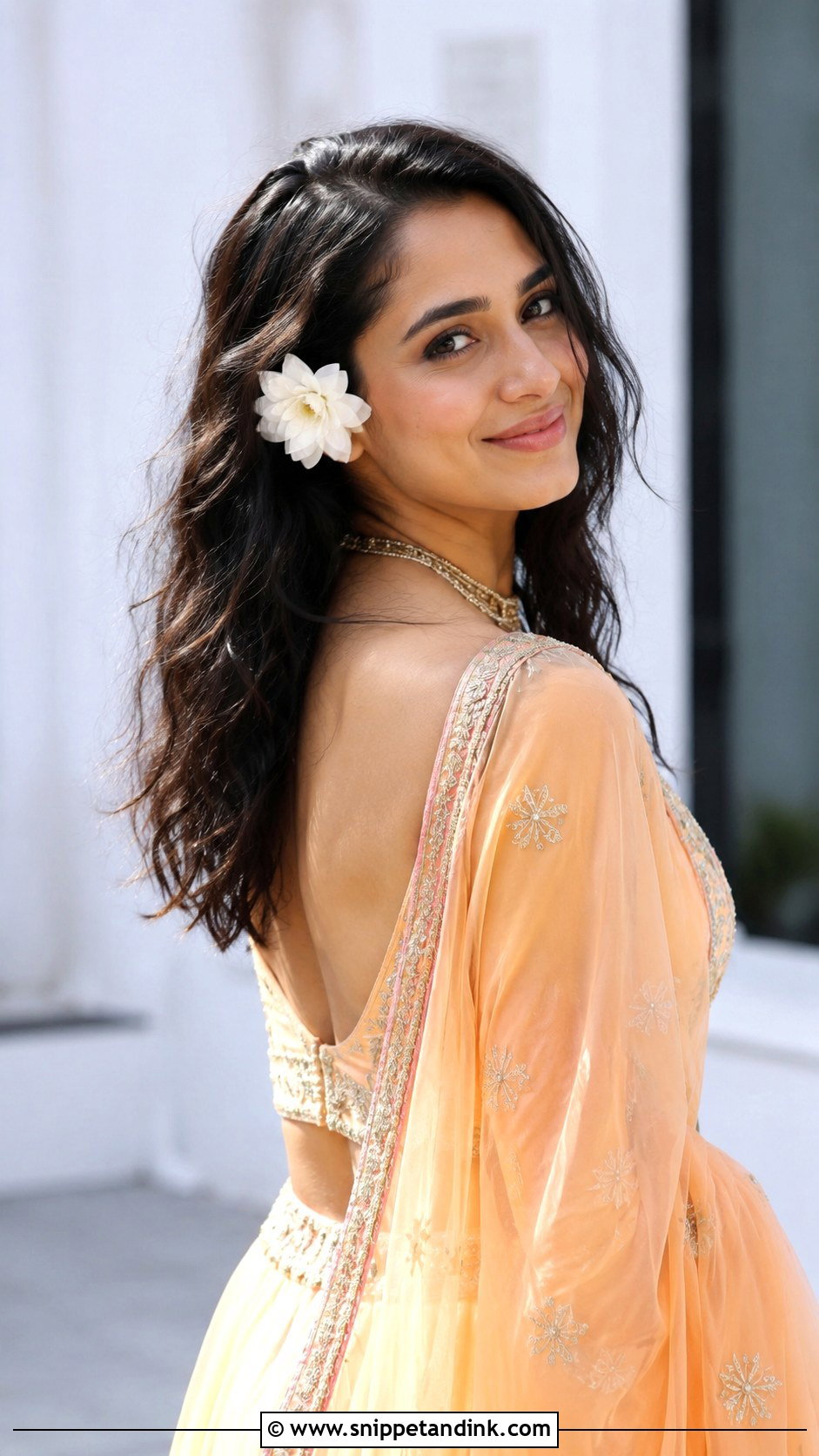
Beach waves are looser and messier than Hollywood waves, made with a twisting flat iron or a large wand and then broken up with fingers. They suit destination weddings and haldi-day celebrations, when things get messy and a polished set would be wasted. Flowy lehengas and Indo-Western outfits both work, with a hair vine or a single flower behind one ear. Skip oil-heavy serums before haldi; turmeric paste clings to oily lengths and can tint lighter or highlighted hair.
18. Pearl-Lined Braid
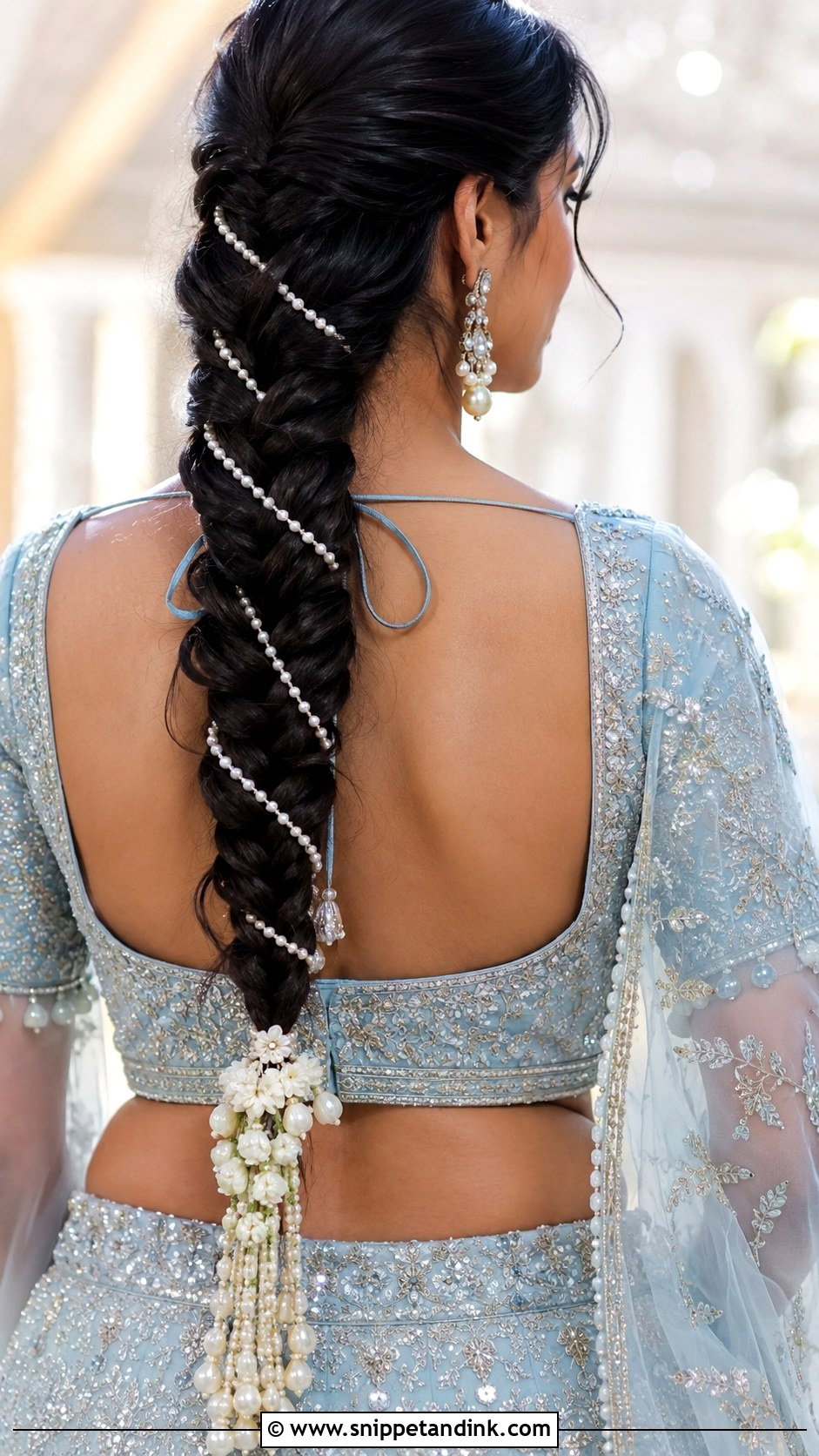
Threading pearl strings along a braid is one of the easiest ways to add sparkle that goes with almost any outfit colour. The braid can be a classic three-strand or a textured fishtail, finished with a pearl or floral tassel. Pearls sit quietly beside heavy jewelry instead of competing with it. Ask for strings on flexible thread or fine wire rather than rigid strands, so the braid still moves when you turn your head. I’d keep this for the sangeet or reception.
19. Gajra Wrapped Ponytail
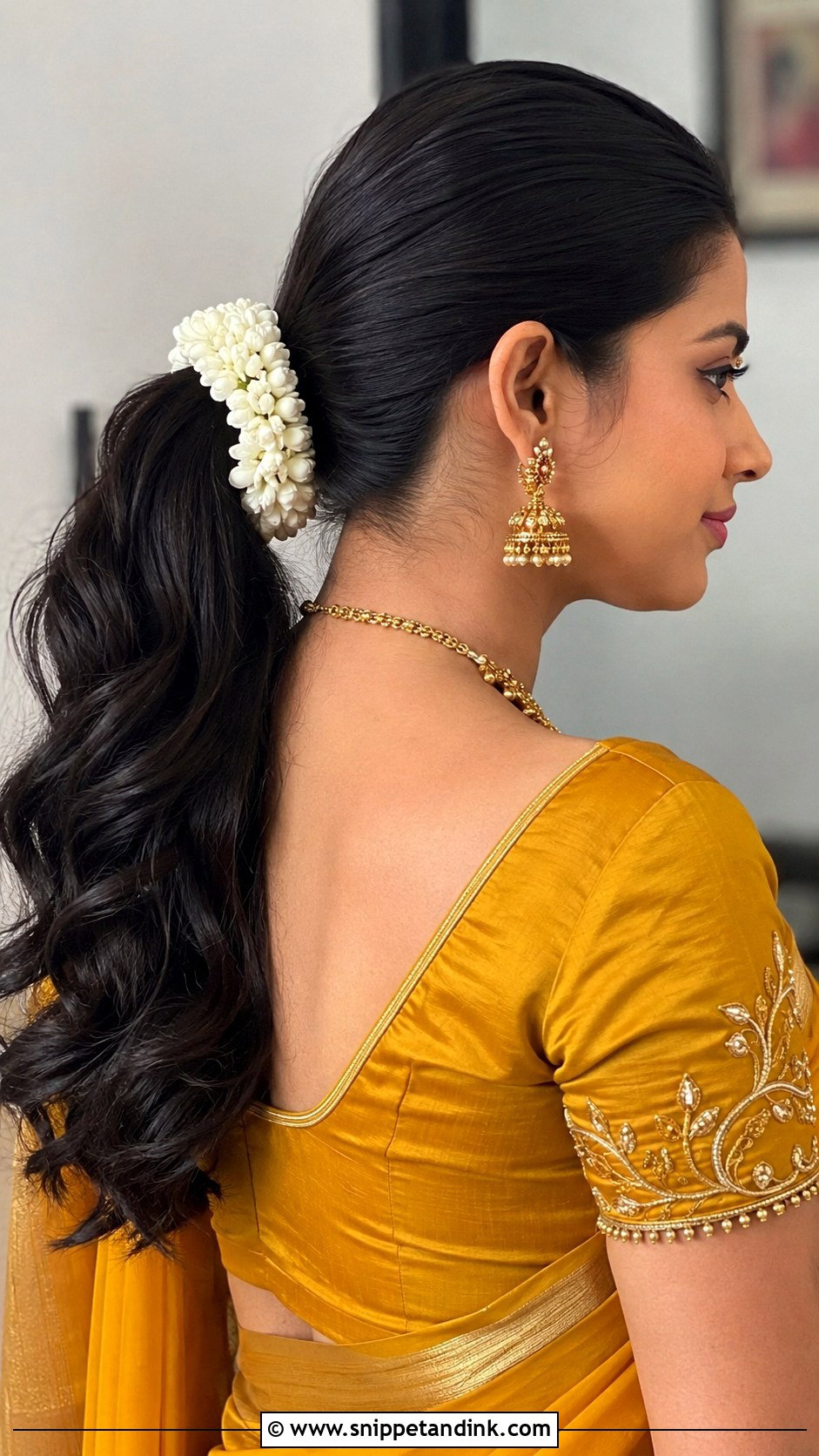
Want jasmine without the traditional bun? Gather the hair into a sleek ponytail and wind the gajra round the base, leaving the tail smooth or softly waved. It works with sarees and lehengas alike. The base is where it fails if anything does: I secure the pony with an elastic and then push a few pins into it at angles, so the weight of the gajra doesn’t drag it down by the afternoon.
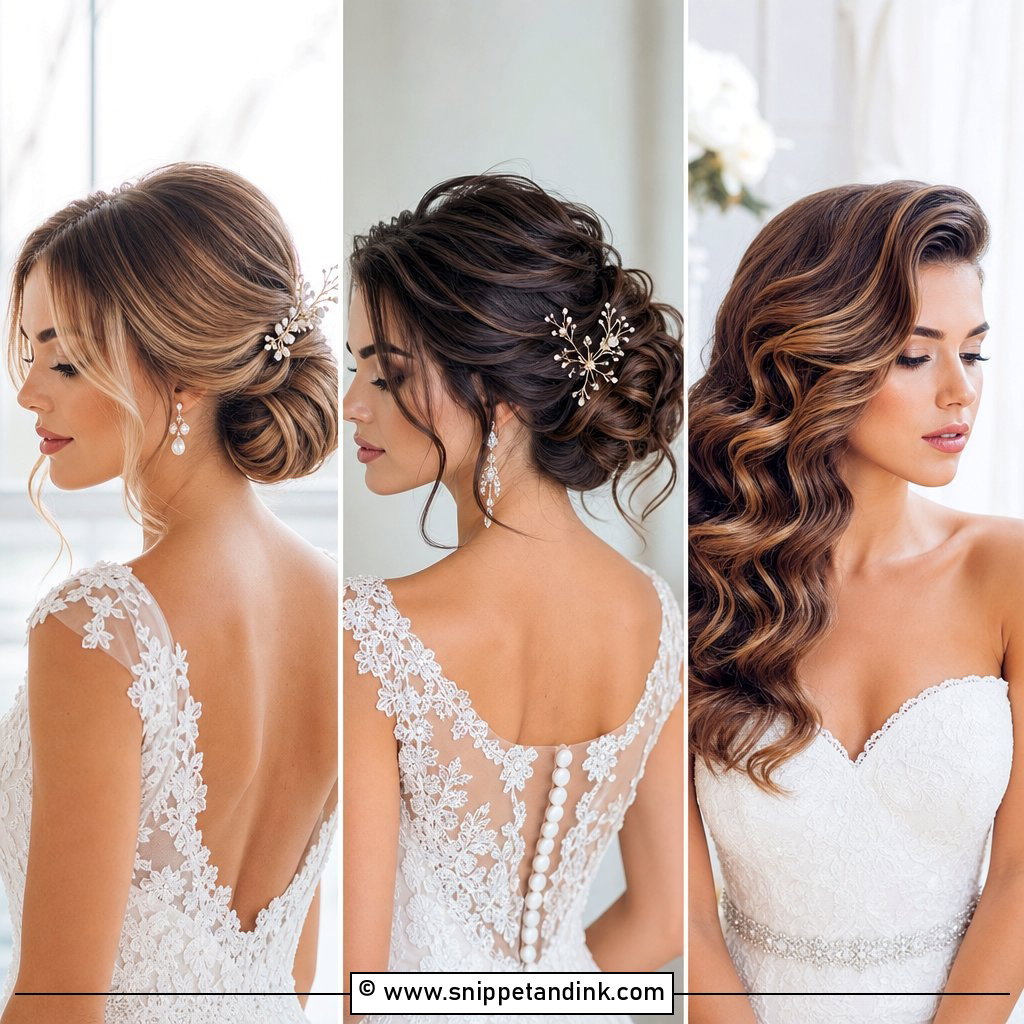
20. Twisted Crown With Open Hair
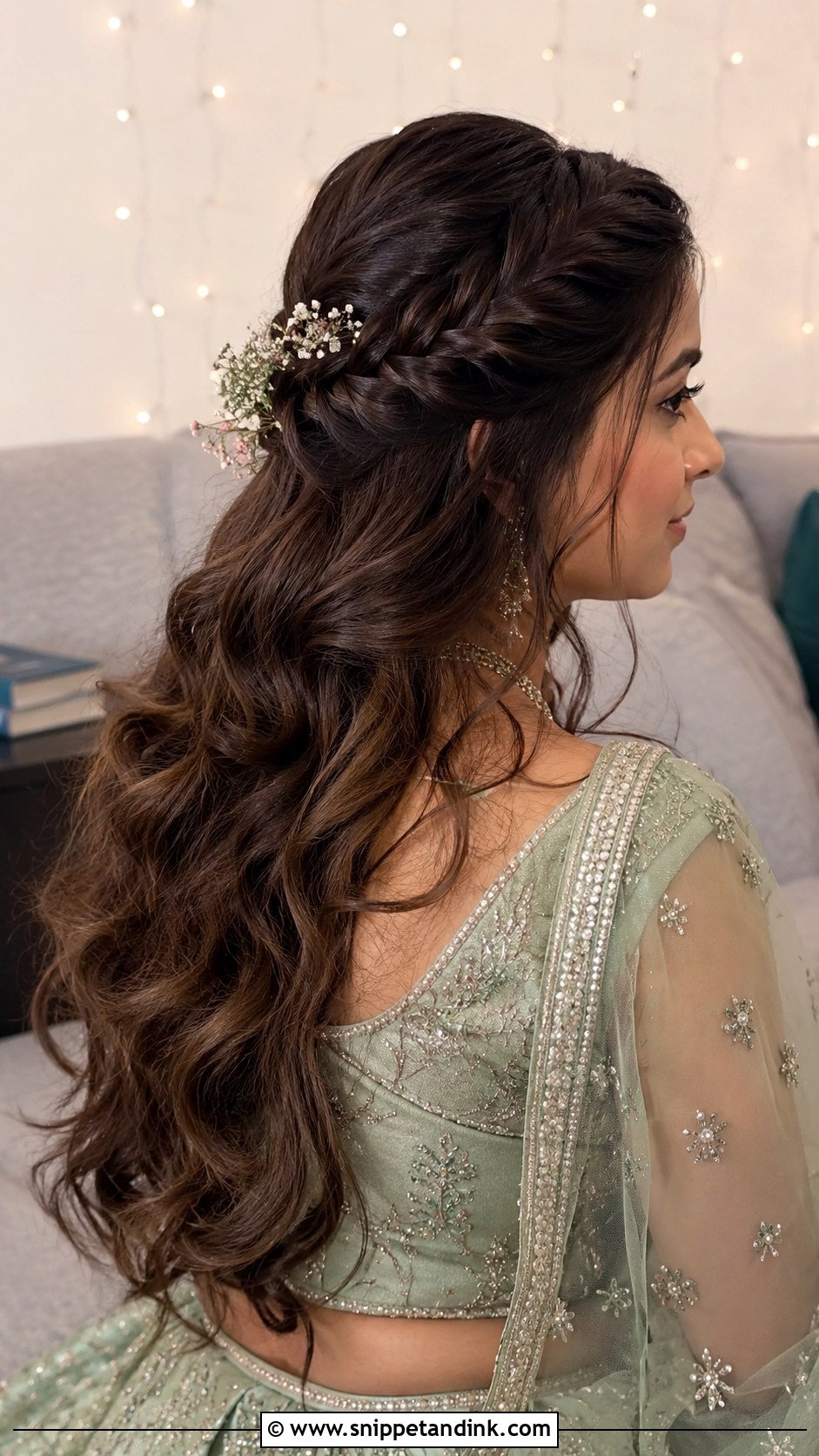
Two twisted sections are taken from each side and meet at the back, with the rest of the hair left open below. It keeps hair off your face while showing off your length, and small flowers or pearl pins tuck neatly into the twists. I like it for mehendi, haldi and the engagement because it’s light and quick to redo. Twists loosen faster than braids, so I pin each one at two points and set it with a flexible spray rather than trusting a single pin where they meet.
Jasmine Browns Faster Than Anyone Warns You
Fresh mogra and jasmine are the most traditional choice and also the most fragile. The buds open and brown at the edges as soon as they warm up, and a crowded mandap under lights speeds that along.
What I ask the florist for
- Tight buds rather than open flowers, delivered the morning of the ceremony, so they open slowly through the day instead of peaking too early.
- Strings kept wrapped in a damp cloth or a cool box until the last moment, never in direct sun or a closed car.
- A spare string or two, so a section that browns or snaps can be swapped in a few minutes.
Jasmine is also strongly scented in a closed room. If heavy fragrance gives you headaches, wear a short string at your trial first, or mix in baby’s breath or roses to soften it.
Five Functions, One Head of Hair
Mehendi, haldi, sangeet, the ceremony and a reception add up to several days of heat styling and tight pinning in a row. By the reception, plenty of brides have a tender scalp and hair that refuses to hold a curl.
I plan the sequence around that. Put the looser, low-heat styles like a twisted crown, beachy waves or a simple braid on the early days, and save the tight structure and the most heat for the ceremony. Between functions, take every pin out at night and sleep with a loose braid on a silk or satin pillowcase. A deep conditioning treatment a week or so before the first function helps. A brand new colour or chemical straightening in the final two weeks doesn’t, because freshly processed hair can behave unpredictably under heavy styling.
A Bun for the Pheras, Something Looser for Later
Hair holds the whole outfit together, so it deserves the same thought as the lehenga and jewelry. The plan that works best is a simple one: save the most secure, structured style, such as a mogra bun, a Kondai or a braided bun, for the ceremony when the dupatta is heaviest, and let open waves or a ponytail take over at the sangeet and reception. Bring your shortlist, your dupatta and your maang tikka to the trial, and test the heaviest outfit there rather than the lightest.
You'll Like These Ideas:



Leave a Reply