
Korean brides often wear two or three looks in one day: a white gown for the ceremony, a hanbok for the pyebaek with family, perhaps a lighter change for the reception. That gives you room to mix heritage and modern bridal style rather than choosing one. The vocabulary helps when you shop. The chima is the wrap skirt, tied high above the bust; the jeogori is the short jacket with its ribbon tie, the goreum; the norigae is the tasseled ornament that hangs from it. Below are the full range of looks, from traditional hanbok to fusion gowns, with what I’d watch for in each.
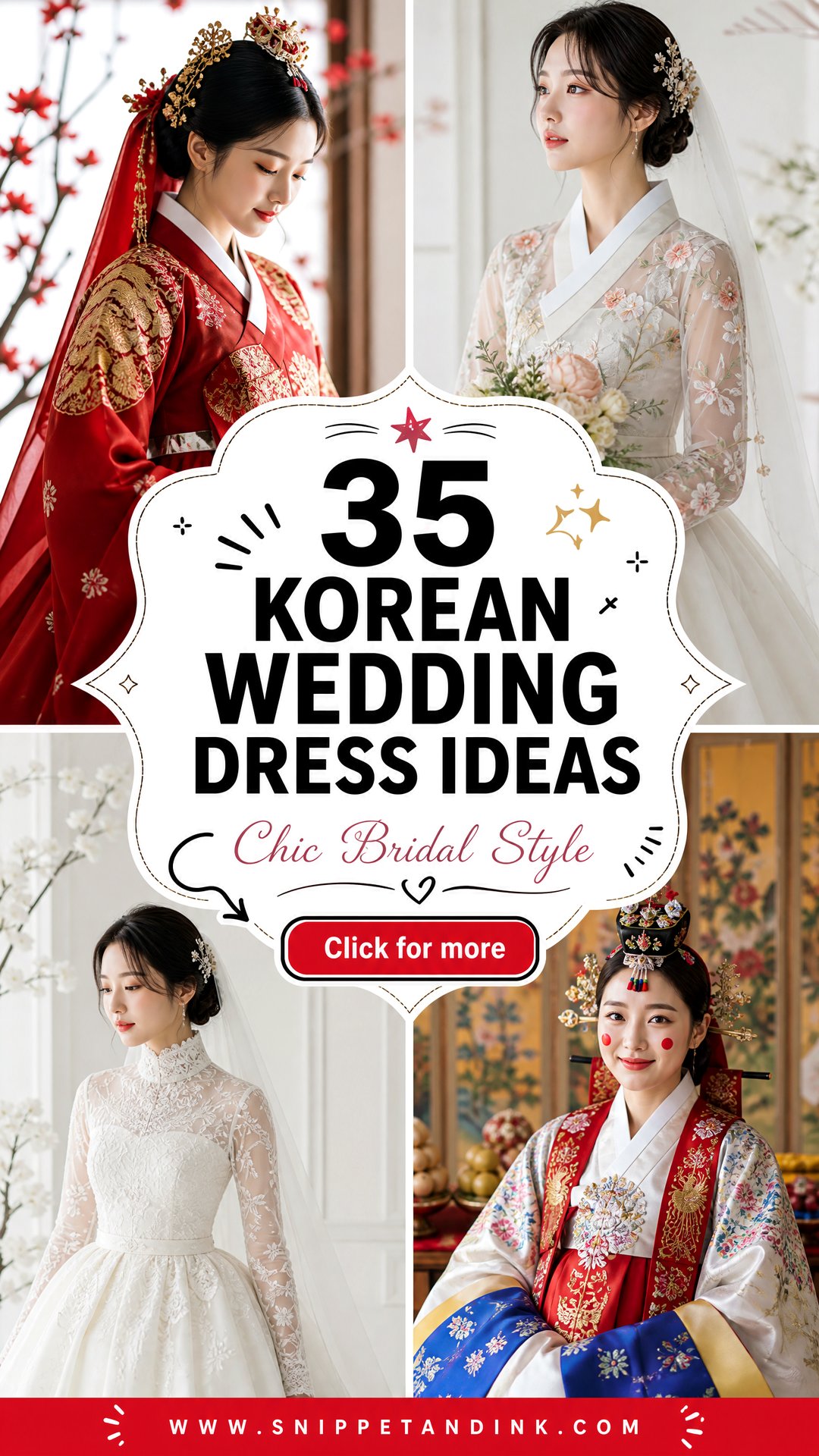
Renting or Commissioning a Hanbok, and When to Start
Not every bride buys her wedding hanbok. Many rent one for the pyebaek, often from the same studio that provides the ceremonial robe and headpiece, and that’s a sensible choice for an outfit worn for an hour. A custom hanbok, on the other hand, is something you’ll keep, and it needs time.
- Rental: book a fitting a month or two ahead, and confirm alterations are allowed
- Custom: allow two to three months, longer in the spring and autumn wedding seasons
- Bring the shoes and undergarments you’ll wear to every fitting
- Ask for the goreum to be tied for you at the final fitting and photograph the knot
I also ask brides to coordinate with both mothers early. Mothers traditionally wear hanbok too, and by convention the bride’s mother often wears pink tones and the groom’s mother blue. Choosing your colors with theirs in mind keeps the family portraits balanced.
1. Traditional Korean Wedding Hanbok
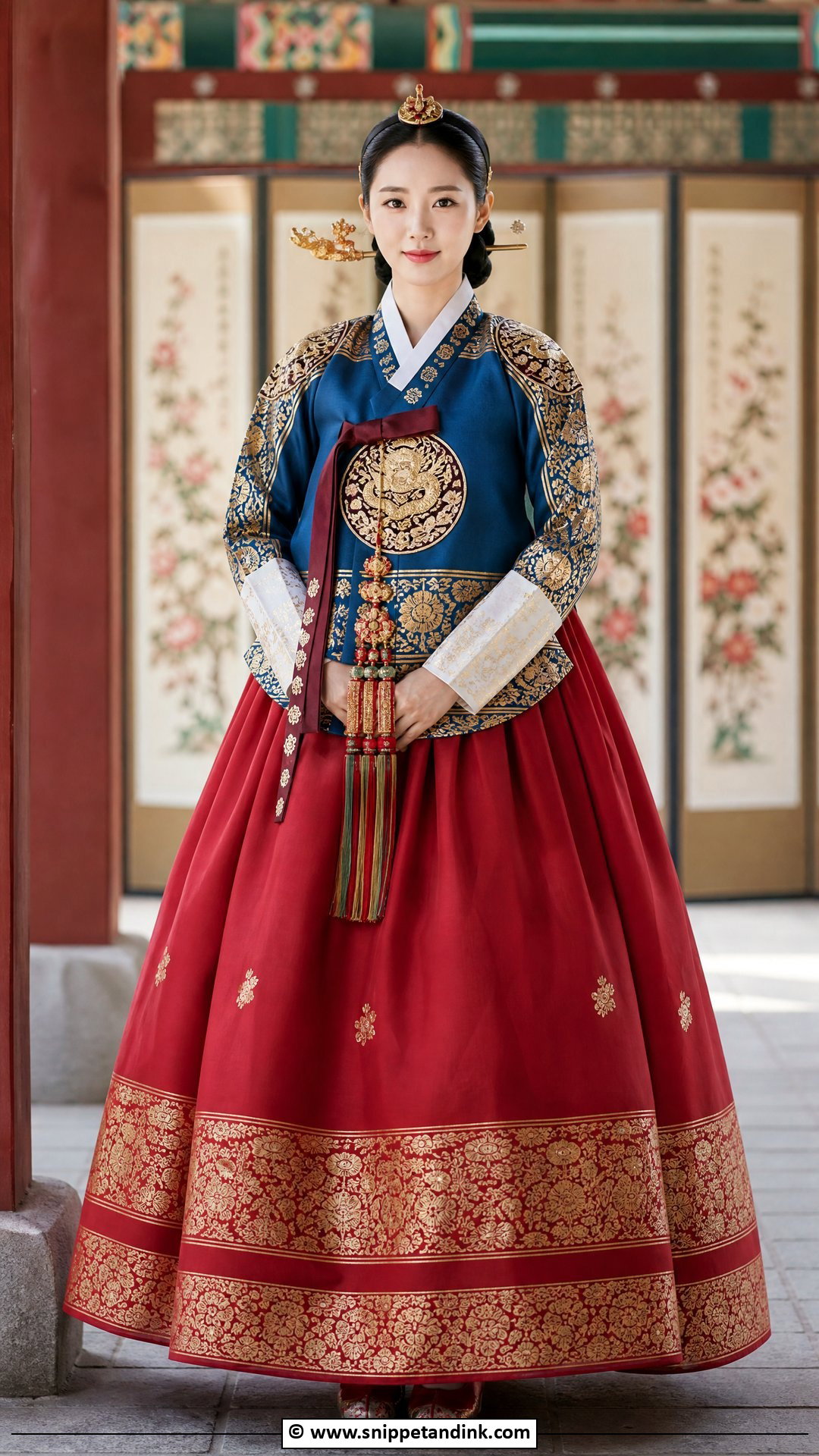
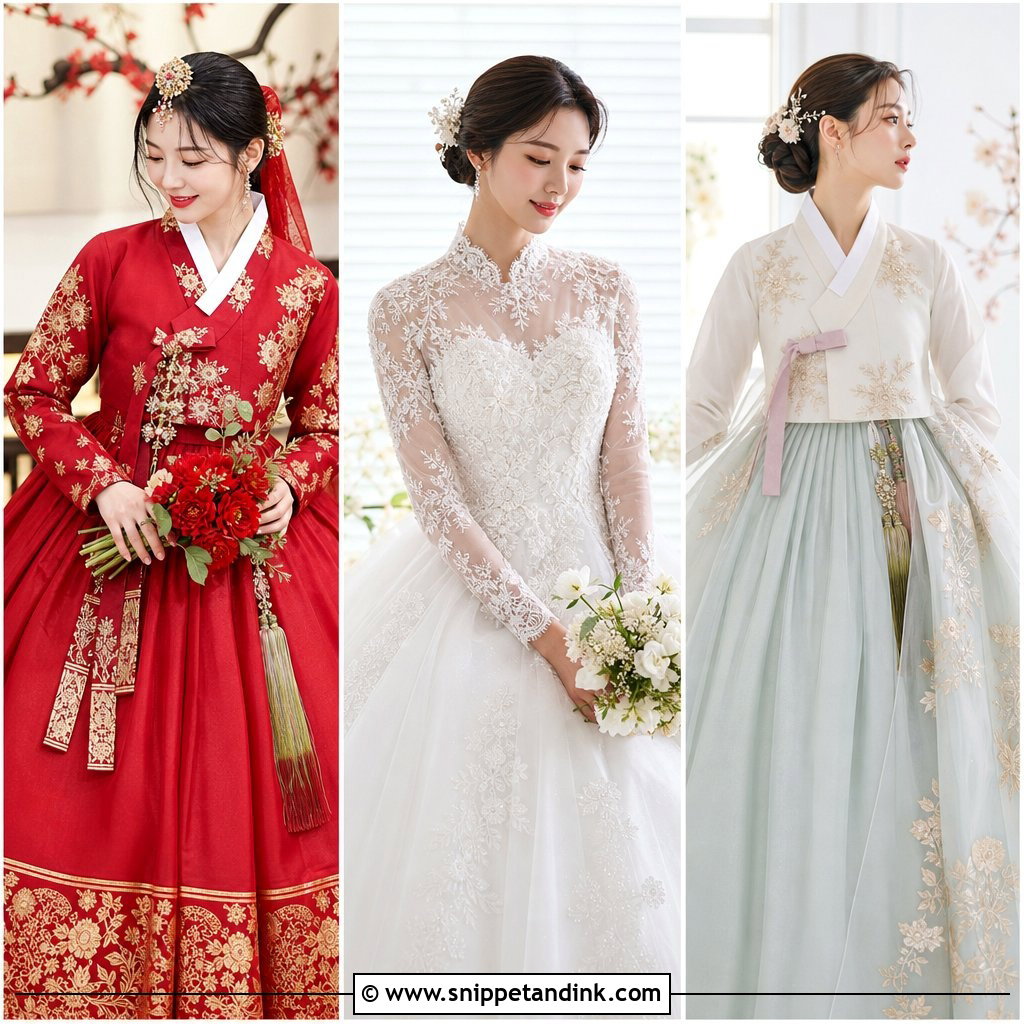
For a traditional ceremony, the hanbok itself carries the meaning: a full chima, a short jeogori, a norigae, a binyeo hairpin through a low bun and embroidered shoes. Red, blue, pink and gold set the formal mood. I’d steer you toward silk with a soft sheen over a heavily embellished version, because the shape of the jacket and the line of the collar are the real beauty here and too much decoration hides them. Keep the bun low and neat so the neckline shows.
2. Modern Korean Hanbok Wedding Dress
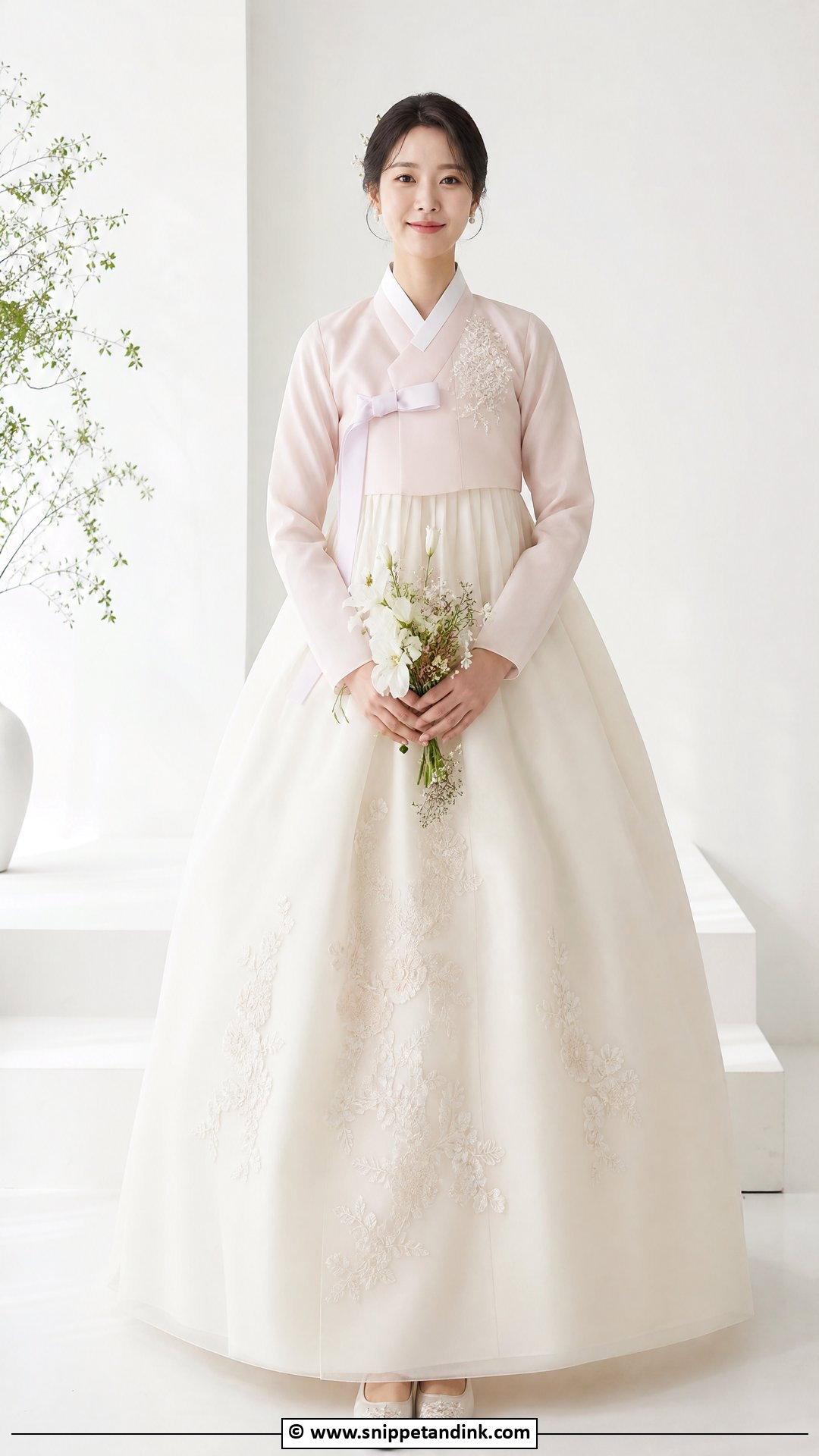
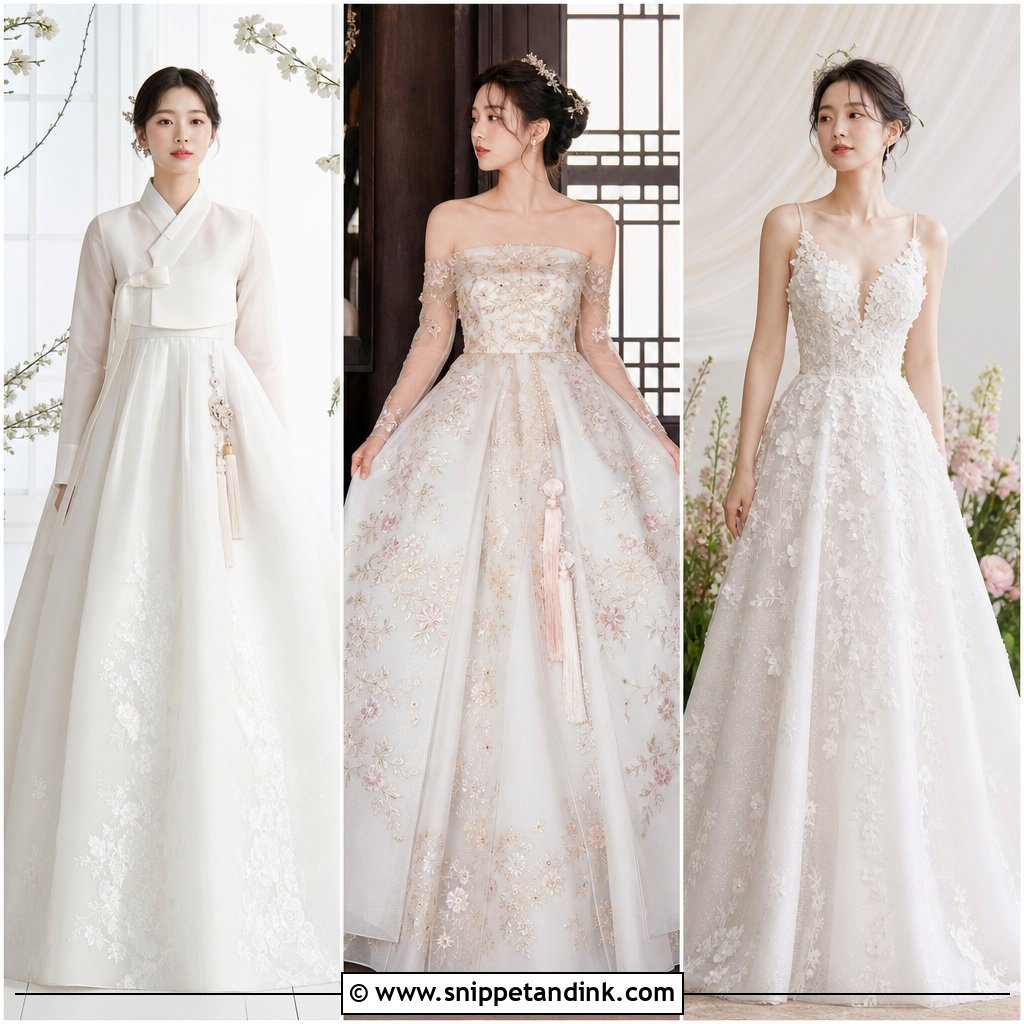
Modern hanbok keeps the structure and lightens everything else: softer fabrics, quieter colors, fewer details. An ivory or blush chima with a cropped jeogori, delicate embroidery and simple pearls looks elegant rather than costume. Many brides wear this version for a tea ceremony, an intimate wedding or a reception change. Embroidered flats or low block heels make sense, since the chima’s length can catch a narrow heel. Natural makeup and a small clutch finish it.
3. White Korean Hanbok Wedding Dress
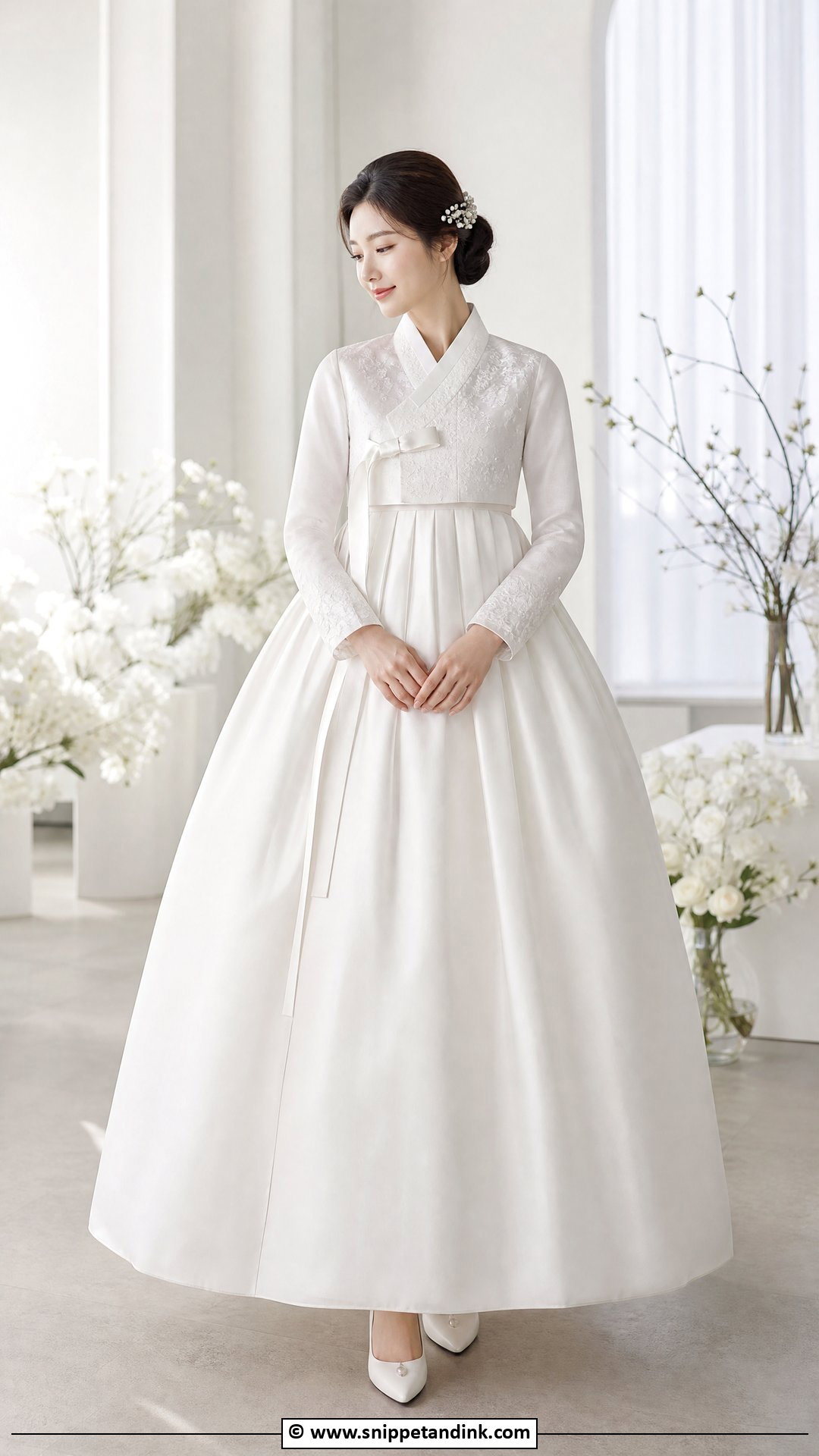
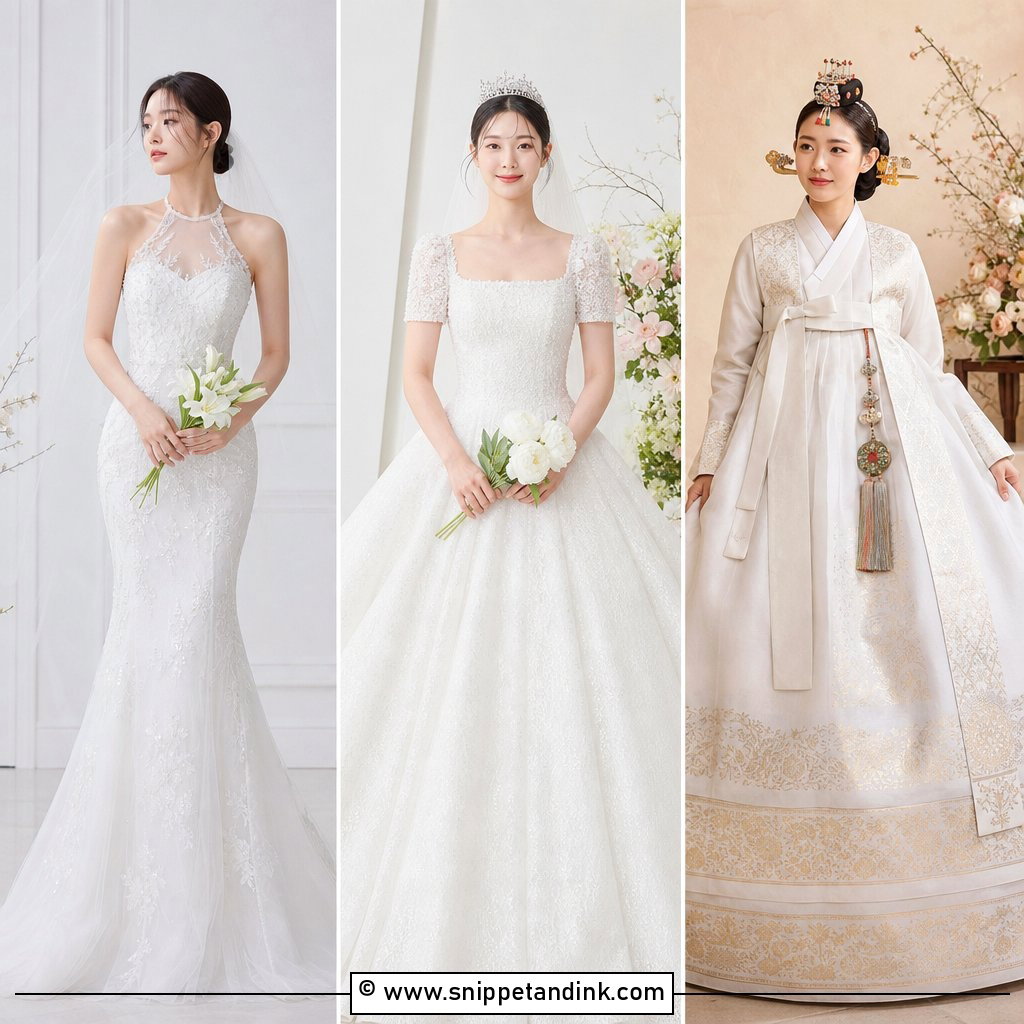
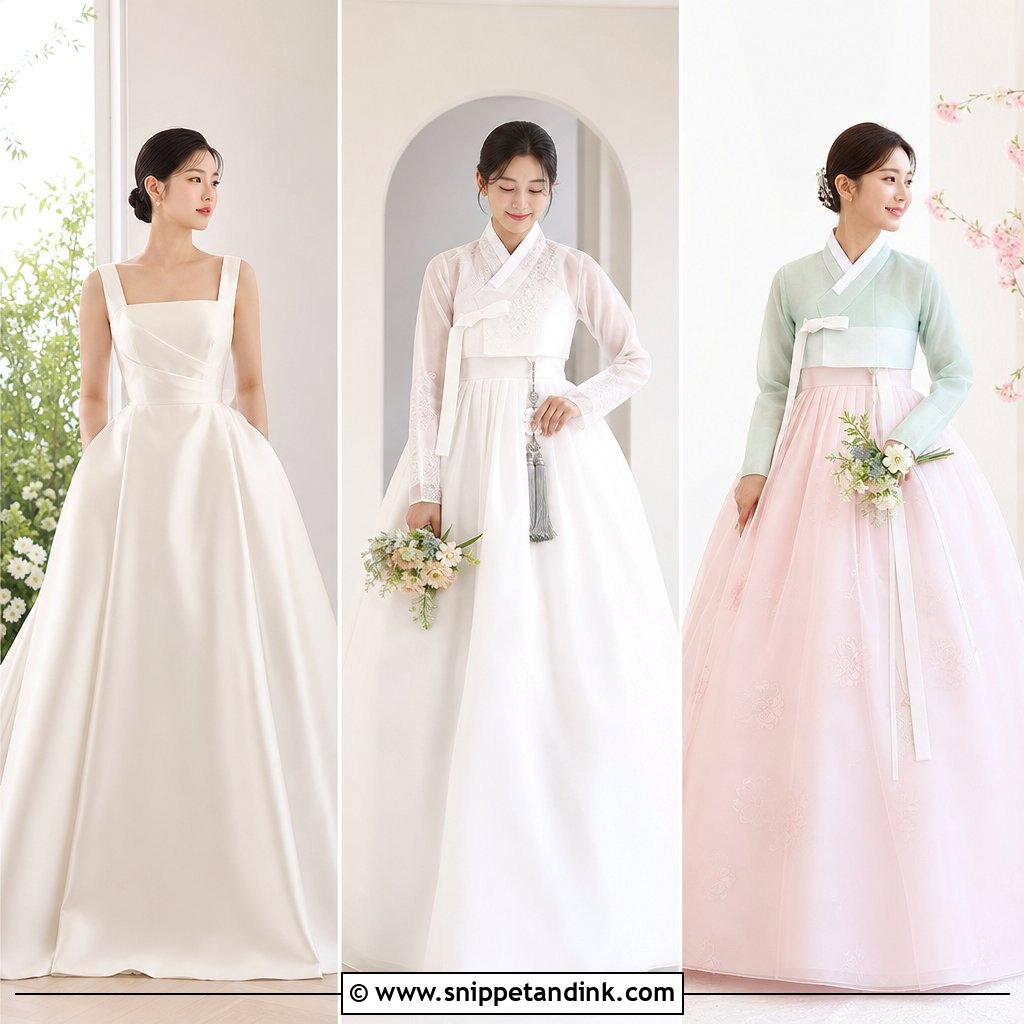
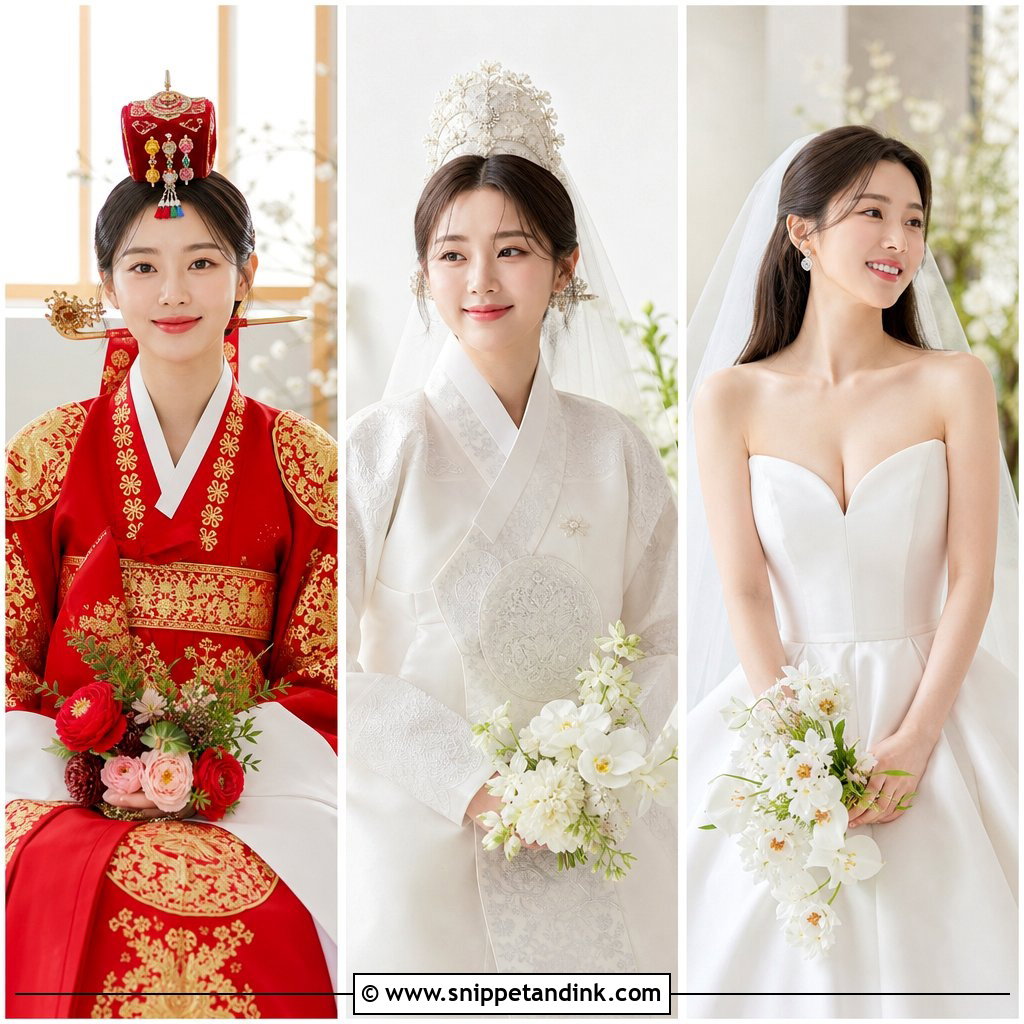
White hanbok swaps the ceremonial colors for ivory, pearl or cream from collar to hem. The chima can be full and flowing, and the jeogori can carry tonal embroidery, sheer sleeves or a satin goreum. I like it in minimalist venues, where the shape alone looks special. Silk shades of white vary a lot, so check the jacket and skirt together in daylight before buying; a cool white next to a warm ivory looks like a mistake. Pearl earrings, a clean updo and white embroidered shoes complete it.
4. Red Korean Wedding Hanbok
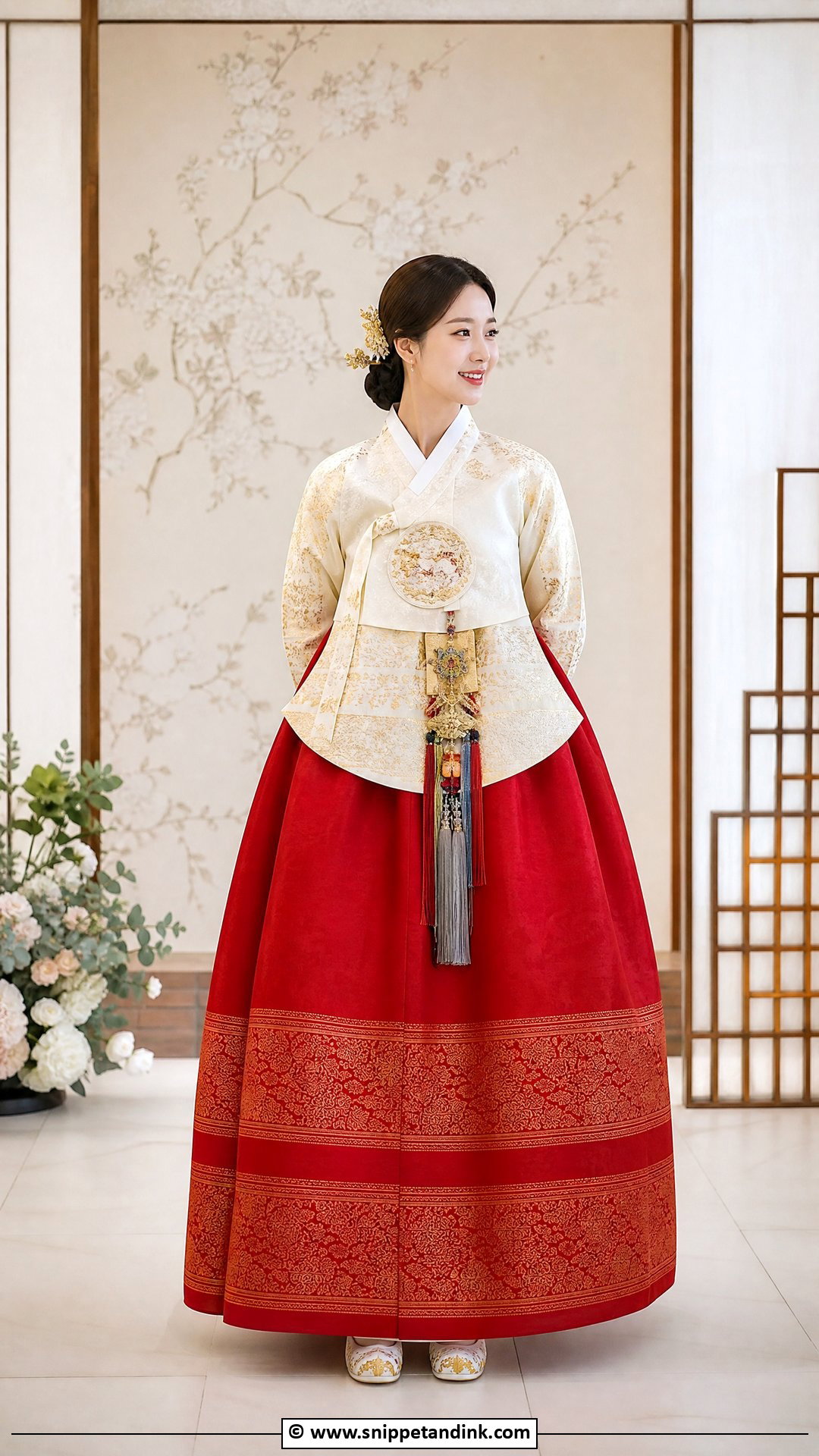
Red has long been linked with celebration and good fortune, and a red chima under a gold, ivory or deep blue jeogori looks properly formal. Bright scarlet can overwhelm some complexions in close-up, so I often suggest a muted rose-red or cranberry. Gold embroidery, a delicate norigae and refined hair ornaments balance it. Keep makeup polished with a soft lip tint and defined eyes; a strong red lip on top of a red skirt is usually too much.
5. Pink Korean Wedding Hanbok
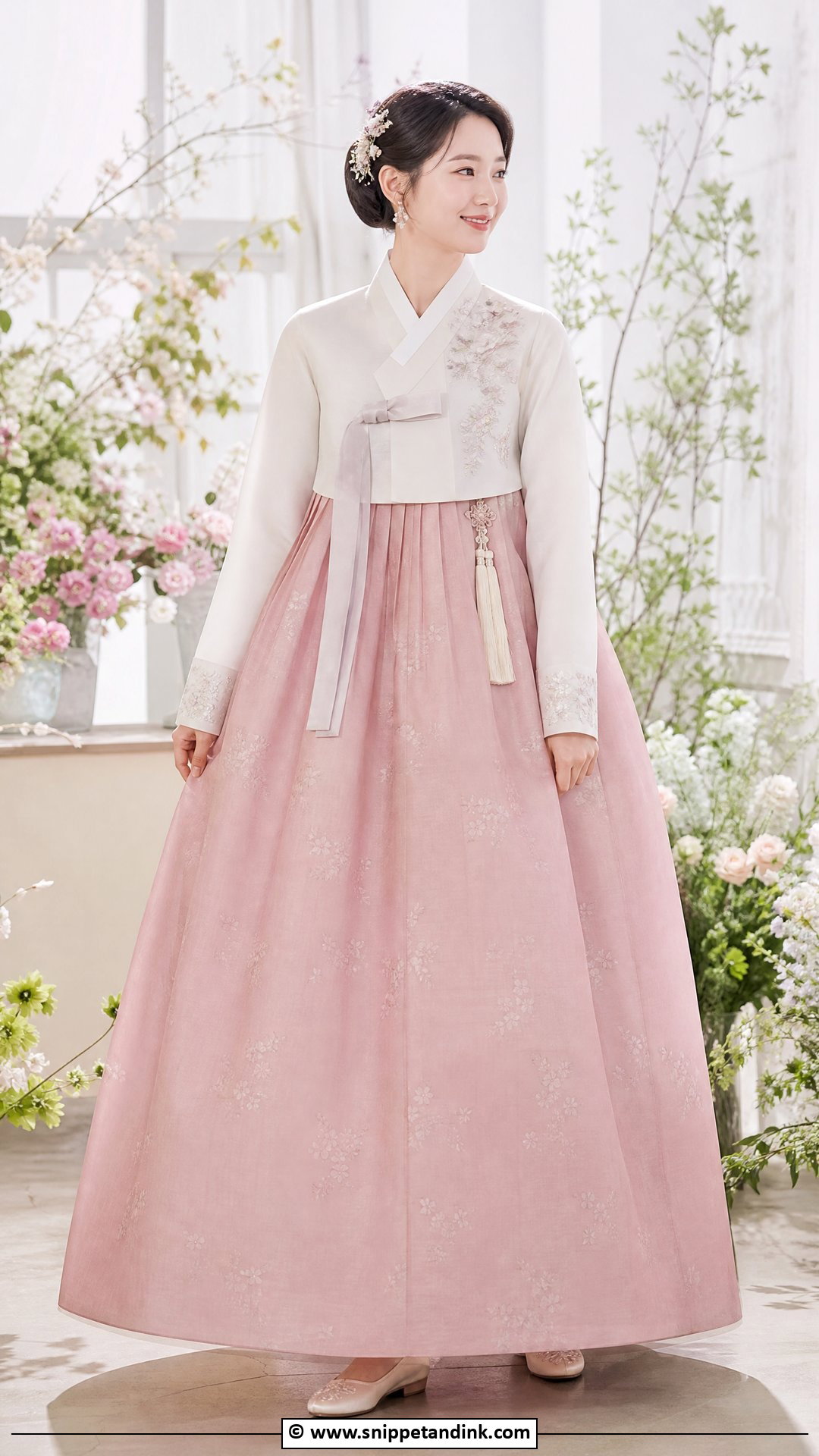
Pink hanbok is soft and easy to wear. Blush, dusty rose, peach-pink and petal tones suit most skin, and an ivory or champagne jeogori keeps the overall look light. Floral embroidery on the sleeves or hem adds detail without weight. Pearl drops, satin flats and a small floral hairpiece complete it. It’s a natural second look after the main ceremony, and many brides wear it for spring portraits outdoors.
6. Blue Korean Wedding Hanbok
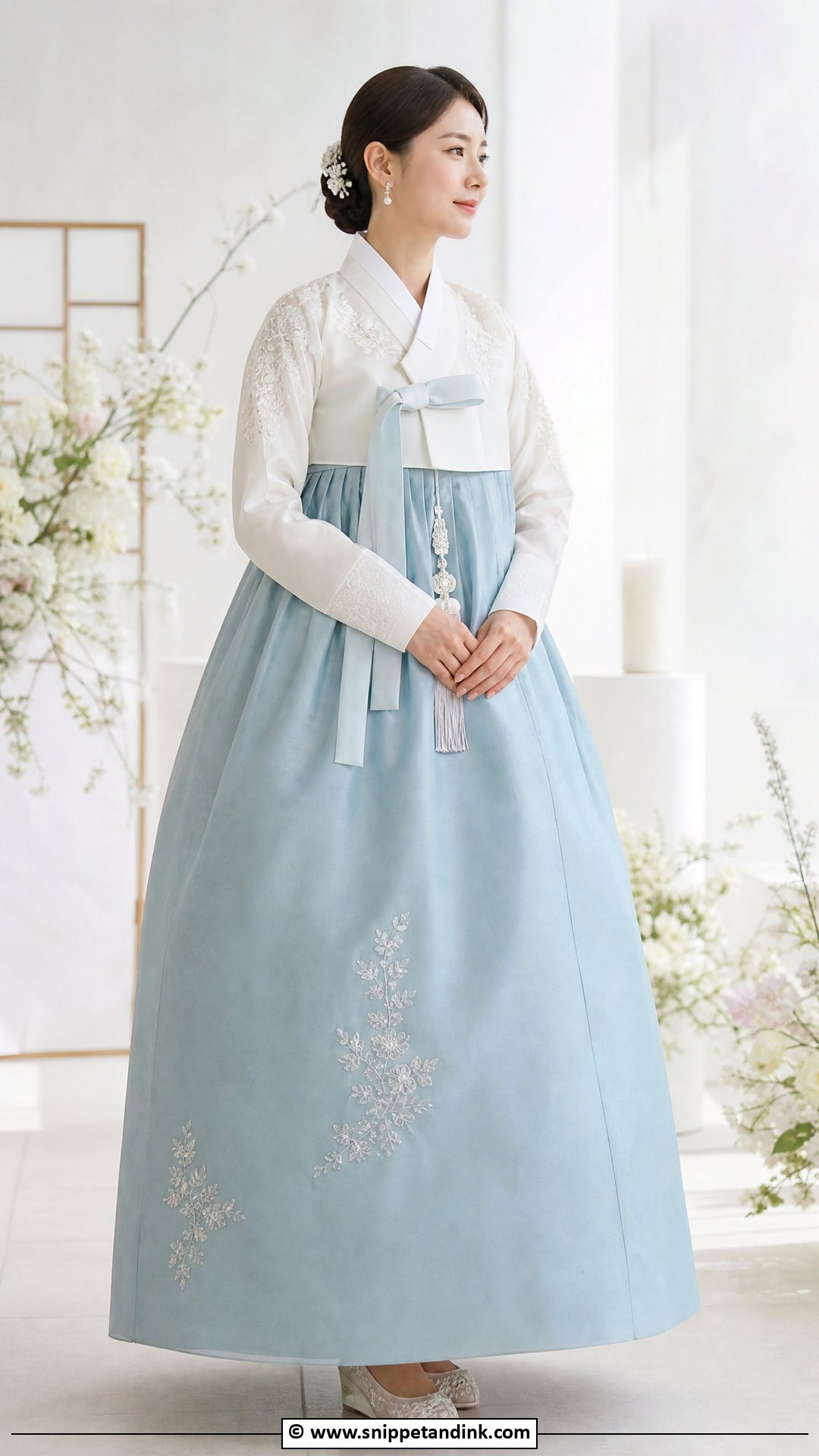
Blue gives you color without red or pink, and the shade changes the mood completely. Pale blue with an ivory jeogori feels fresh; navy with gold embroidery looks formal. Blue sits well with silver hairpins, pearls and embroidered shoes. Keep patterns to one, because several blues with different motifs fight in photos. It’s a calm, flattering choice for a pyebaek, portraits or a cultural reception.
7. Gold Korean Wedding Hanbok
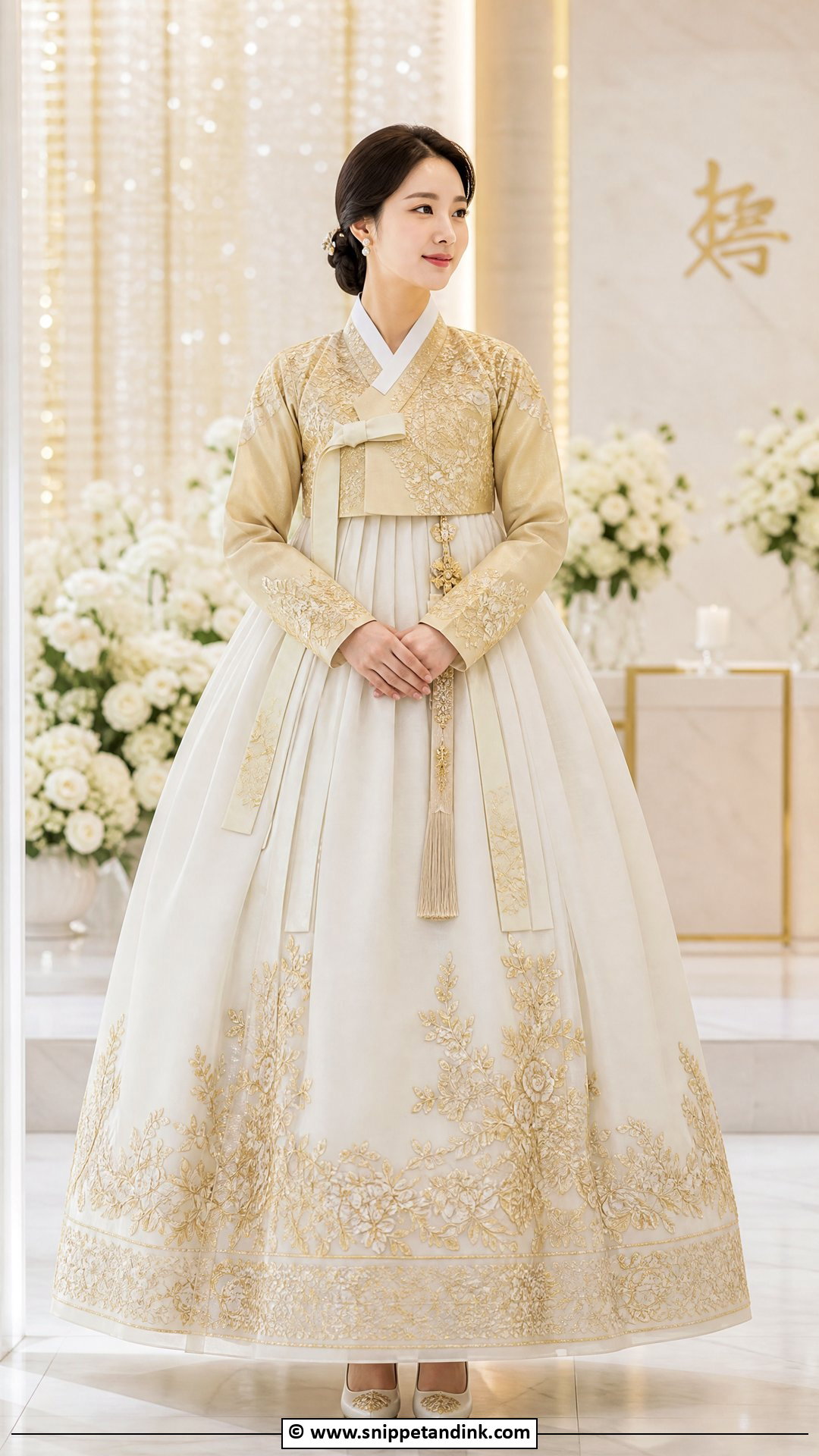
Gold works best as an accent rather than an entire outfit. Champagne, antique gold or soft metallic jacquard on the jeogori, paired with an ivory, red or deep green chima, looks polished and ceremonial. Very shiny gold can flare white under studio lights, so I check fabric samples with a phone flash before committing. A traditional norigae, pearl earrings and embroidered shoes are enough; keep hair simple and makeup fresh for a formal indoor wedding or evening reception.
8. Ivory Korean Wedding Dress With Hanbok Jacket
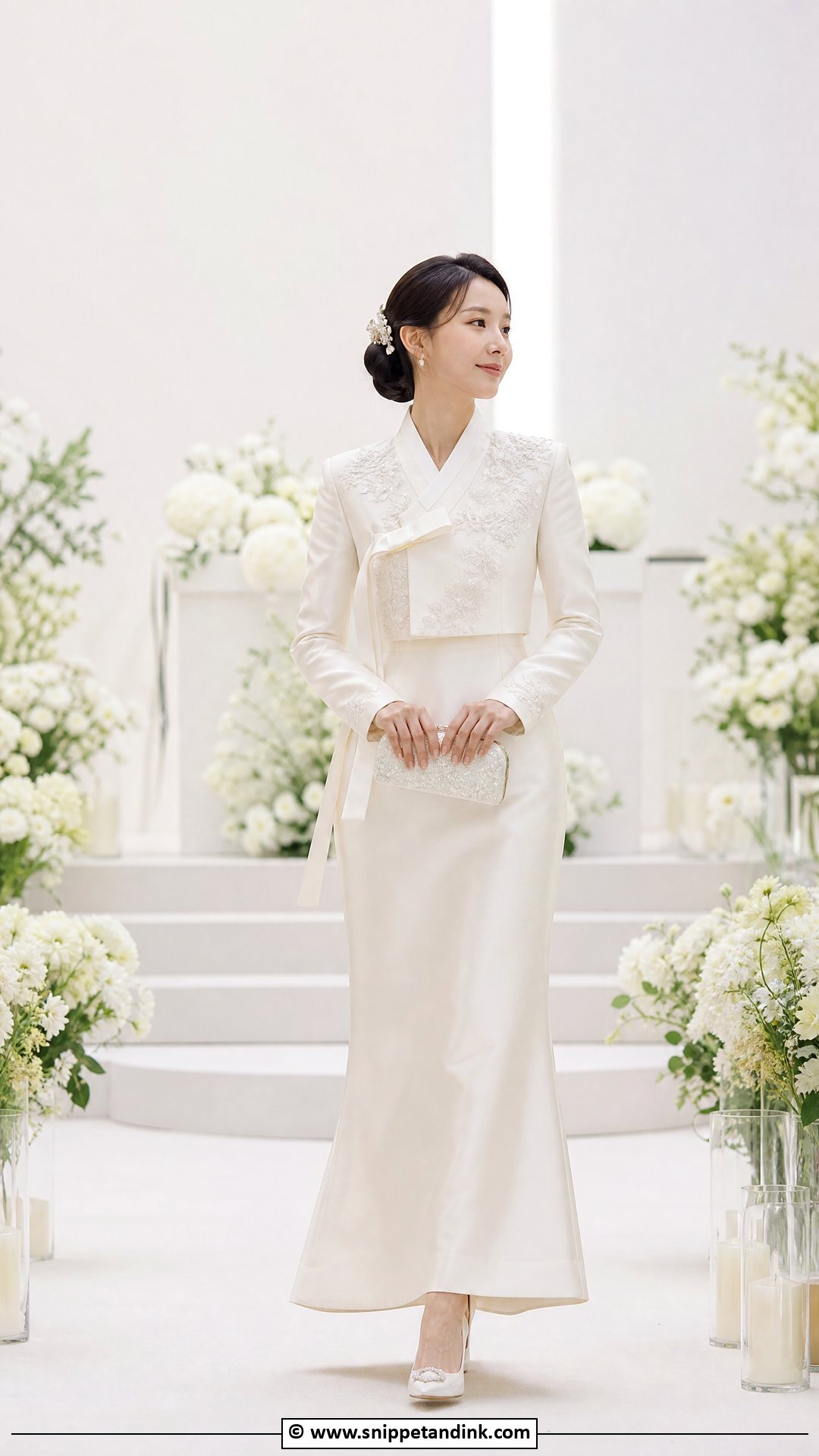
A cropped jeogori-style jacket over an ivory gown is my favorite way to blend Western and Korean influences in a single outfit. The base can be a slim satin gown, an A-line dress or a soft tulle skirt. The jacket adds structure and meaning without hiding the bridal silhouette, and it can come off for the reception. Tonal embroidery, silk ties or fine piping keep it subtle. Have the jacket made after the gown’s final fitting, so the waist and sleeves sit in the right place.
9. Korean Wedding Dress With Jeogori Top
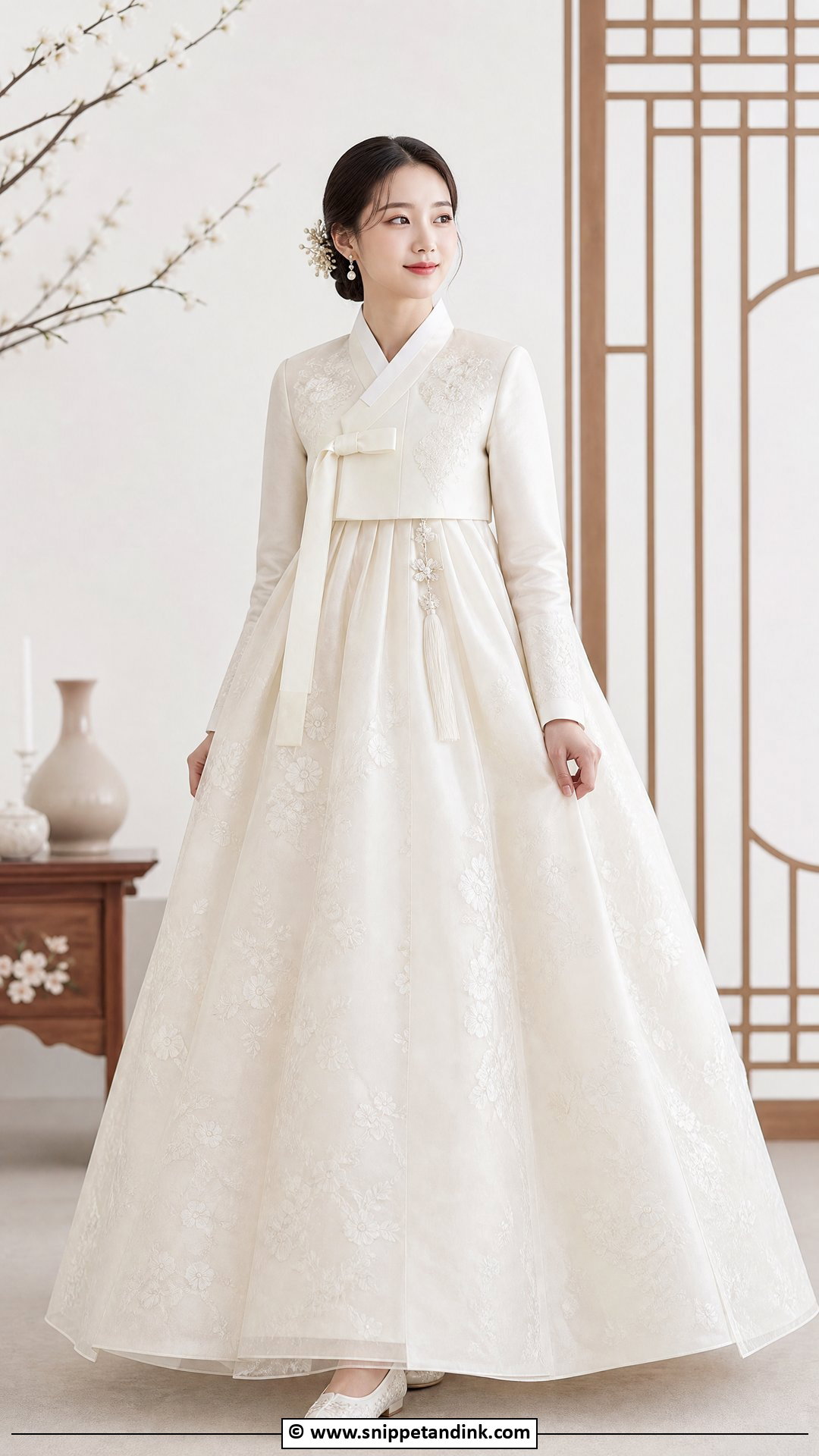
A jeogori top links any dress to hanbok design. It can be cropped, fitted or slightly relaxed. Over a full skirt it reads traditional; over a sleek skirt it reads contemporary. Silk, organza or satin keep it polished. The ribbon tie at the front is the recognizable detail, so I make sure it’s tied properly by someone who knows how: a goreum tied loosely or with uneven loops is the first thing a Korean grandmother will notice. Neat hair and simple jewelry finish it.
10. Korean Wedding Dress With Chima Skirt
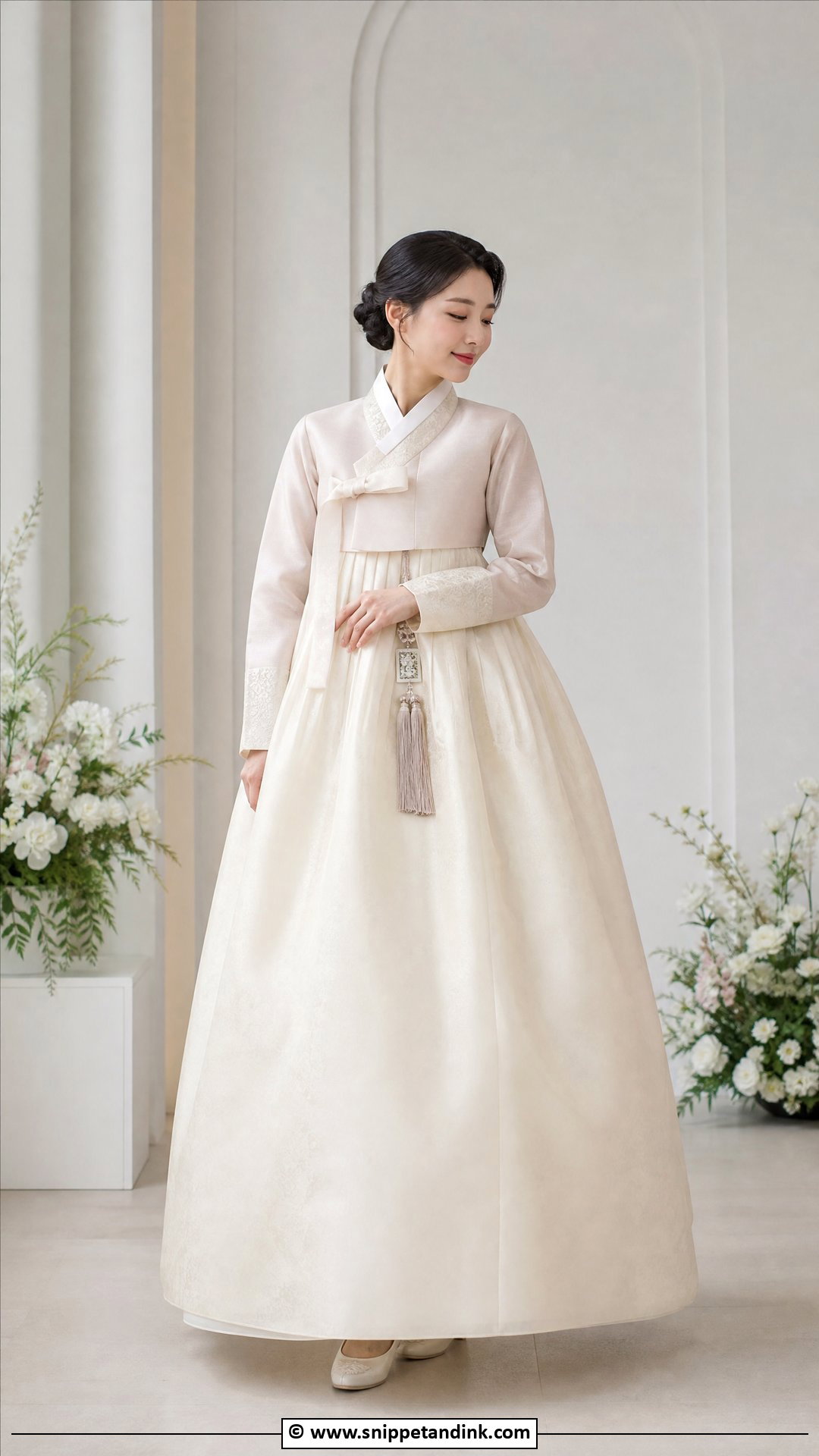
The chima is tied high above the bust, so the skirt falls straight from the chest and hides the waist entirely. That’s why it’s comfortable and flattering on so many builds. In ivory, blush, powder blue or pale gold, paired with a simple jeogori or structured bodice, it gives coverage and graceful movement in walking photos. Practice walking in it before the day; the trick is to hold a little of the skirt at the front so you don’t step on the hem. Embroidered flats or satin heels suit it.
11. Korean Wedding Dress With Norigae Accessory
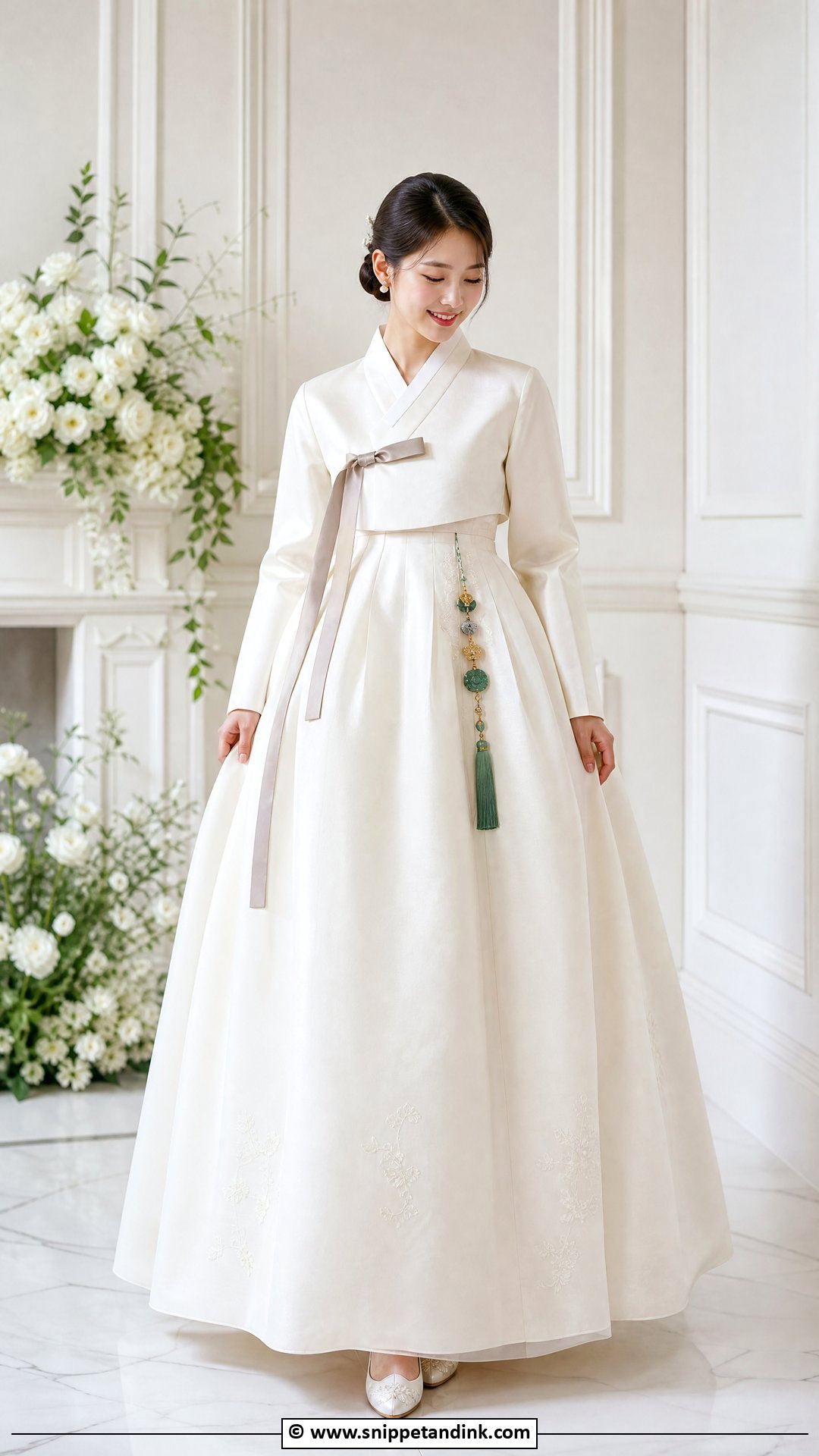
A norigae is a decorative ornament, usually knotted cord, beads or a carved charm finished with a long tassel, that hangs from the jeogori ribbon or the skirt. It completes a simple hanbok or a fusion gown in one step. Gold, jade, ivory or soft red tie it to your palette. On a heavily embroidered outfit, I’d pick a small one; on a minimal outfit, a larger, detailed norigae can become the focal point. Check how it’s attached, since a heavy ornament can drag a delicate silk ribbon out of shape.
12. Korean Wedding Dress With Embroidered Sleeves
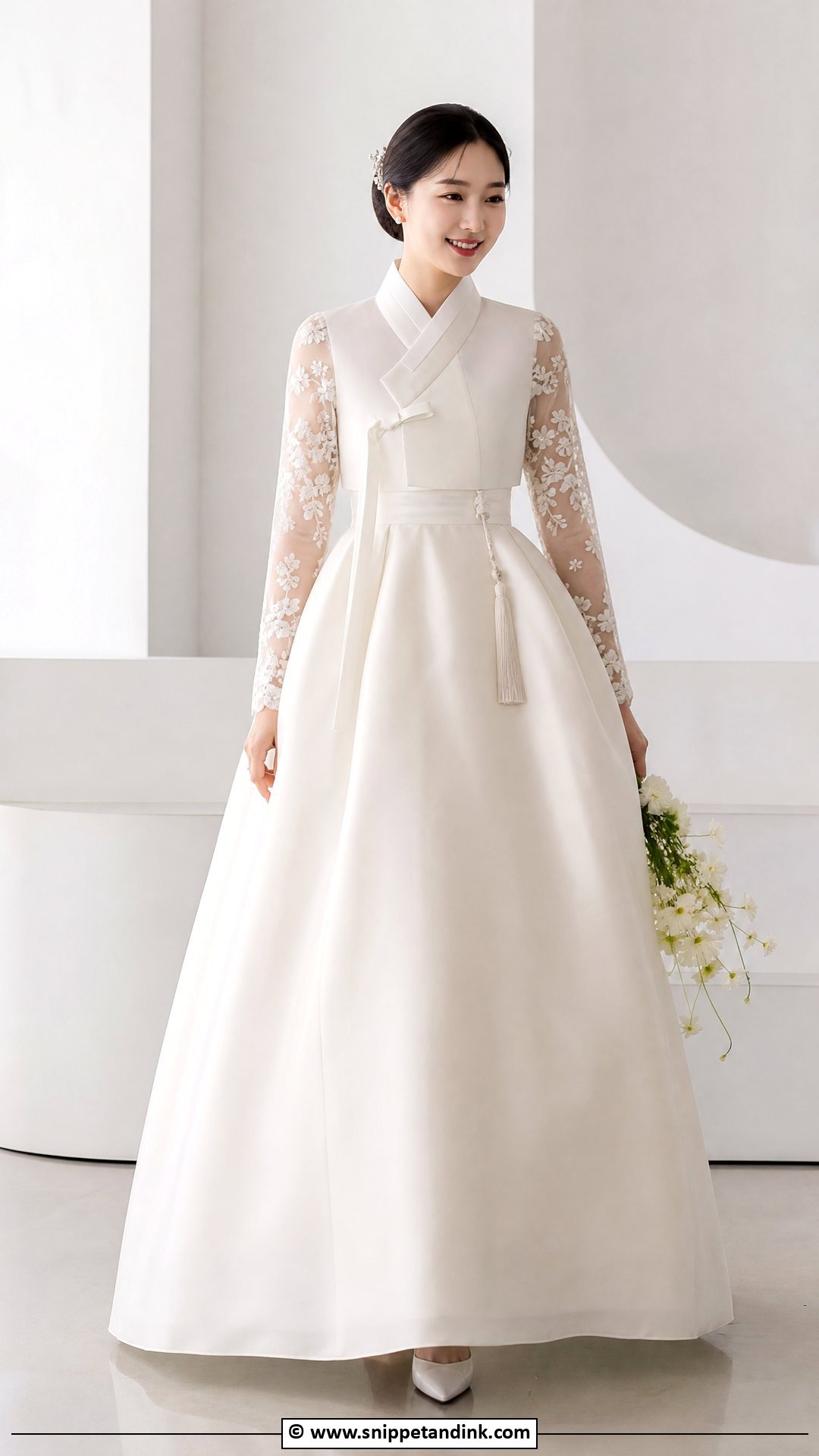
Embroidered sleeves bring detail to the part of the outfit that shows most in close-up photos: arms, hands and bouquet. Flowers, vines, cranes and butterflies are traditional motifs. Sheer organza sleeves feel light; satin sleeves look more formal. Pair them with a clean chima or a smooth A-line skirt so the embroidery stands alone, and keep jewelry to pearl studs or small drops. Check the inside of embroidered sleeves for scratchy backing before buying.
13. Korean Wedding Dress With Floral Embroidery
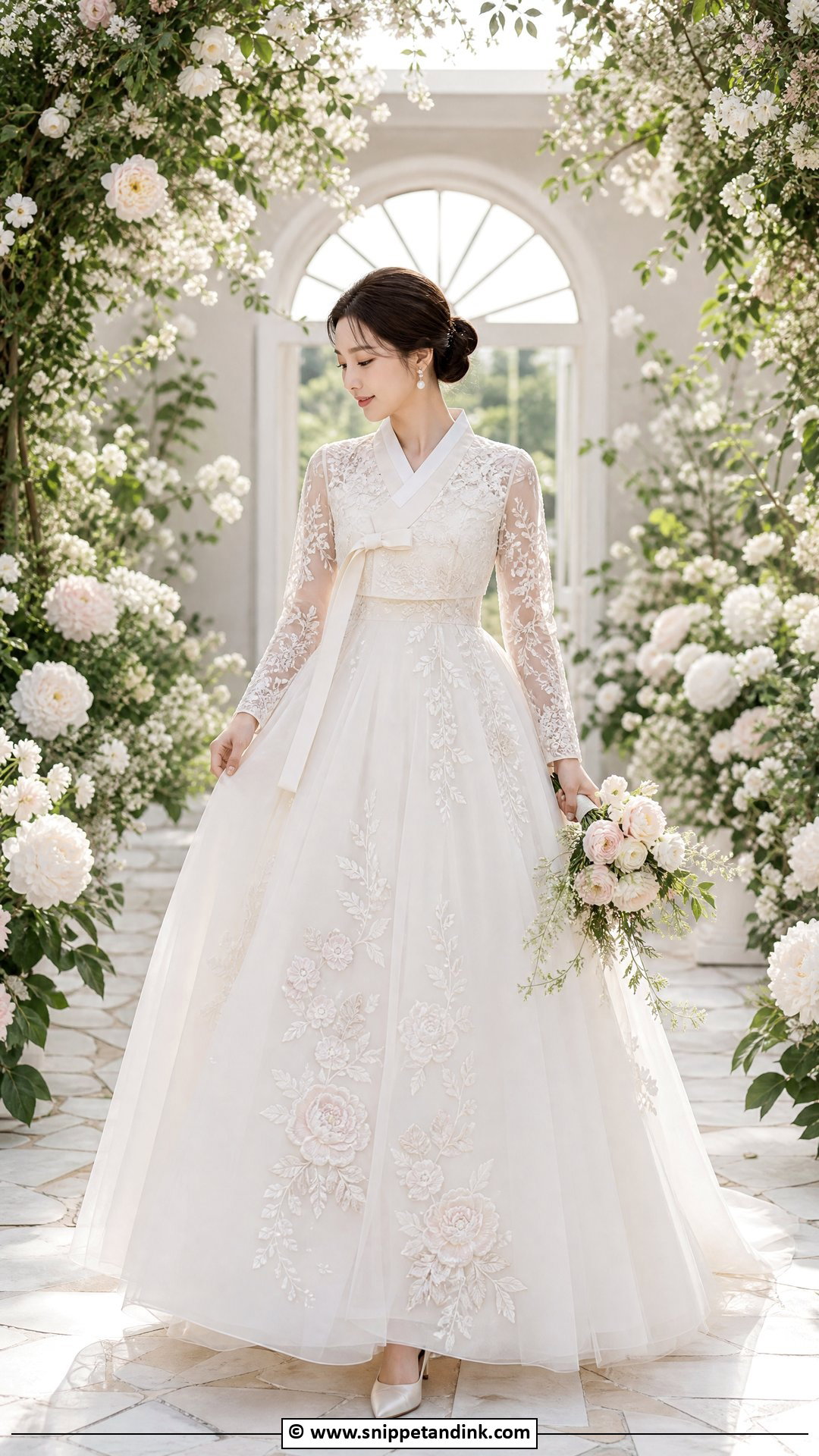
Peonies, plum blossoms, lotus flowers and cherry blossoms are the floral motifs I see most in Korean bridal wear, each carrying its own meaning of prosperity, resilience or purity. Tone-on-tone embroidery on ivory looks modern; pink, red, green or gold threads look traditional. Embroidery can sit on the bodice, sleeves, hem or jacket. A simple veil or a single hairpin keeps the flowers visible. It suits a garden wedding or portrait session especially well.
14. Korean Wedding Dress With Pearl Details
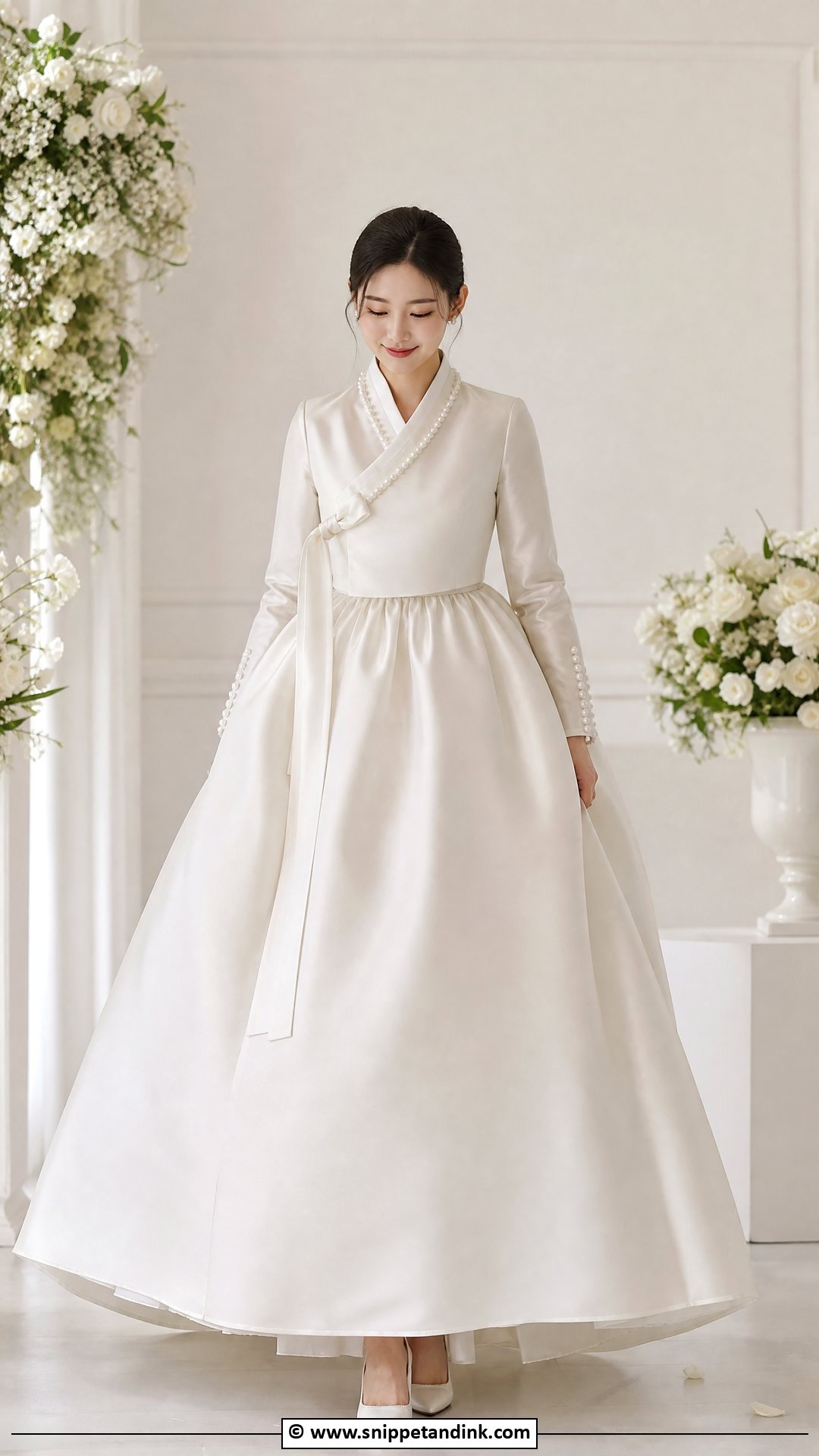
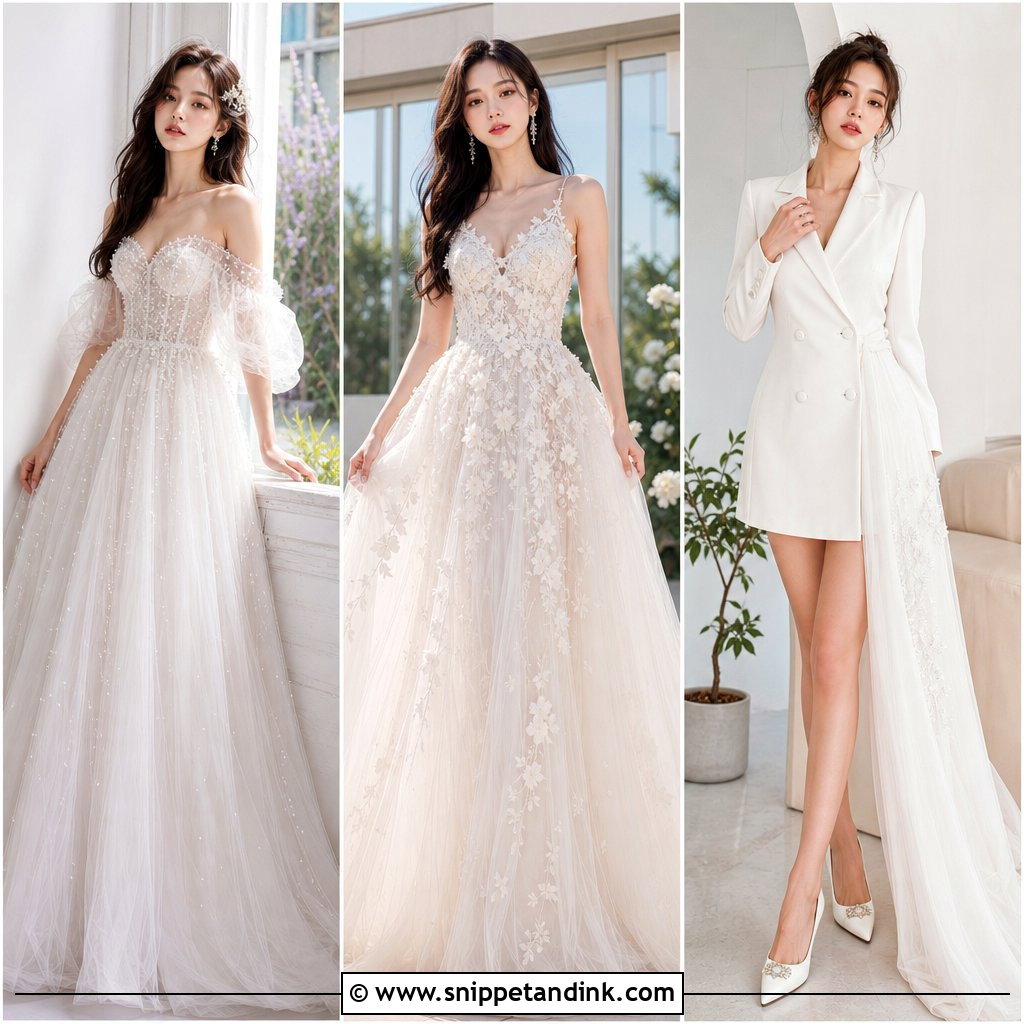
Pearls add shine without flash, which is why they sit so naturally on both gowns and hanbok-inspired pieces. Pearl buttons on a jeogori, pearl trim on the collar, pearls scattered on sheer sleeves or a pearl-studded veil all work. Pick one or two, and keep the rest of the outfit smooth. Ivory satin, soft tulle and silk organza pair best with them. Hand-sewn pearls can come loose, so I check stitching at the final fitting and keep a few spares in the emergency kit.
15. Korean Wedding Dress With Lace Overlay
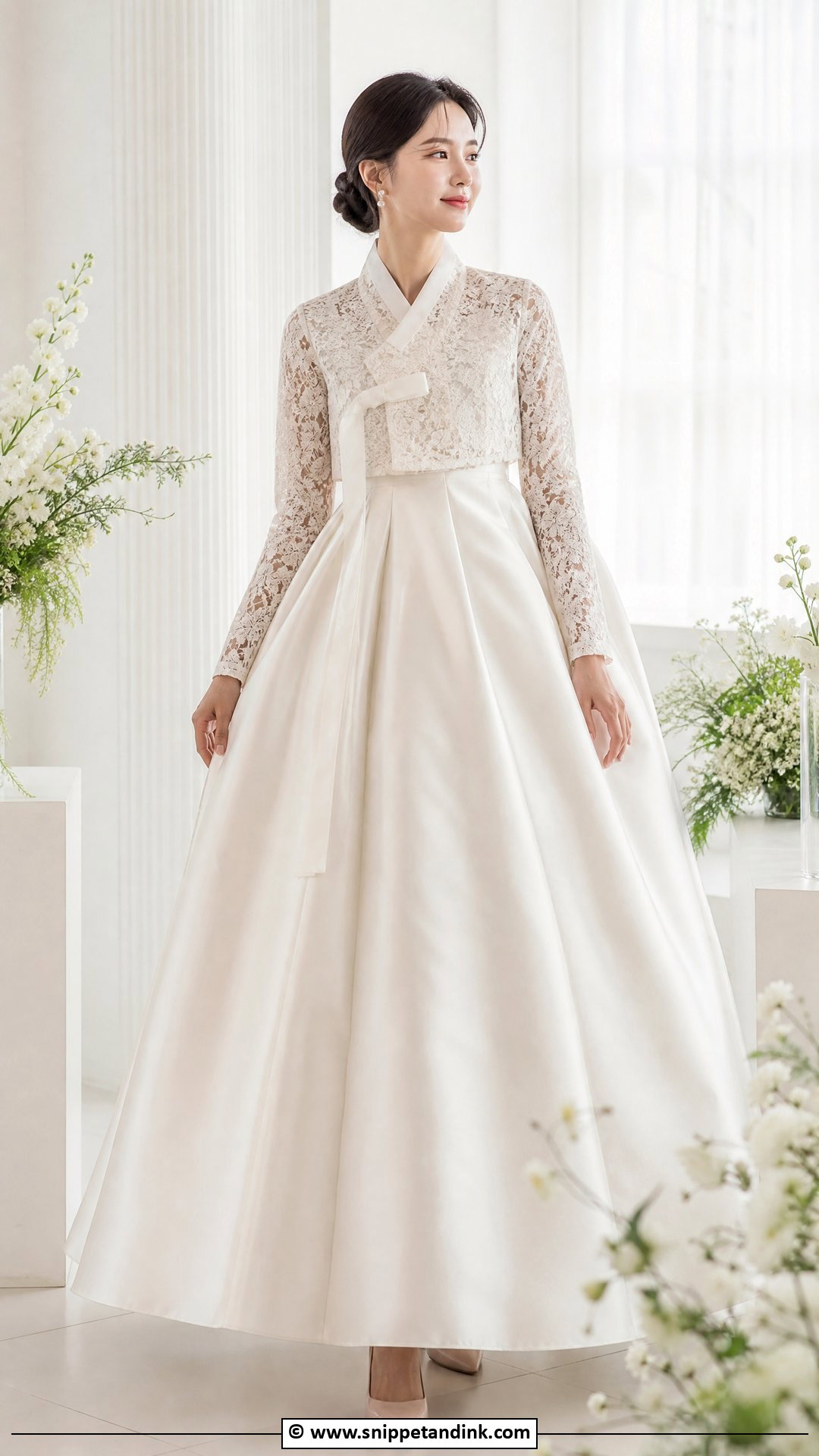
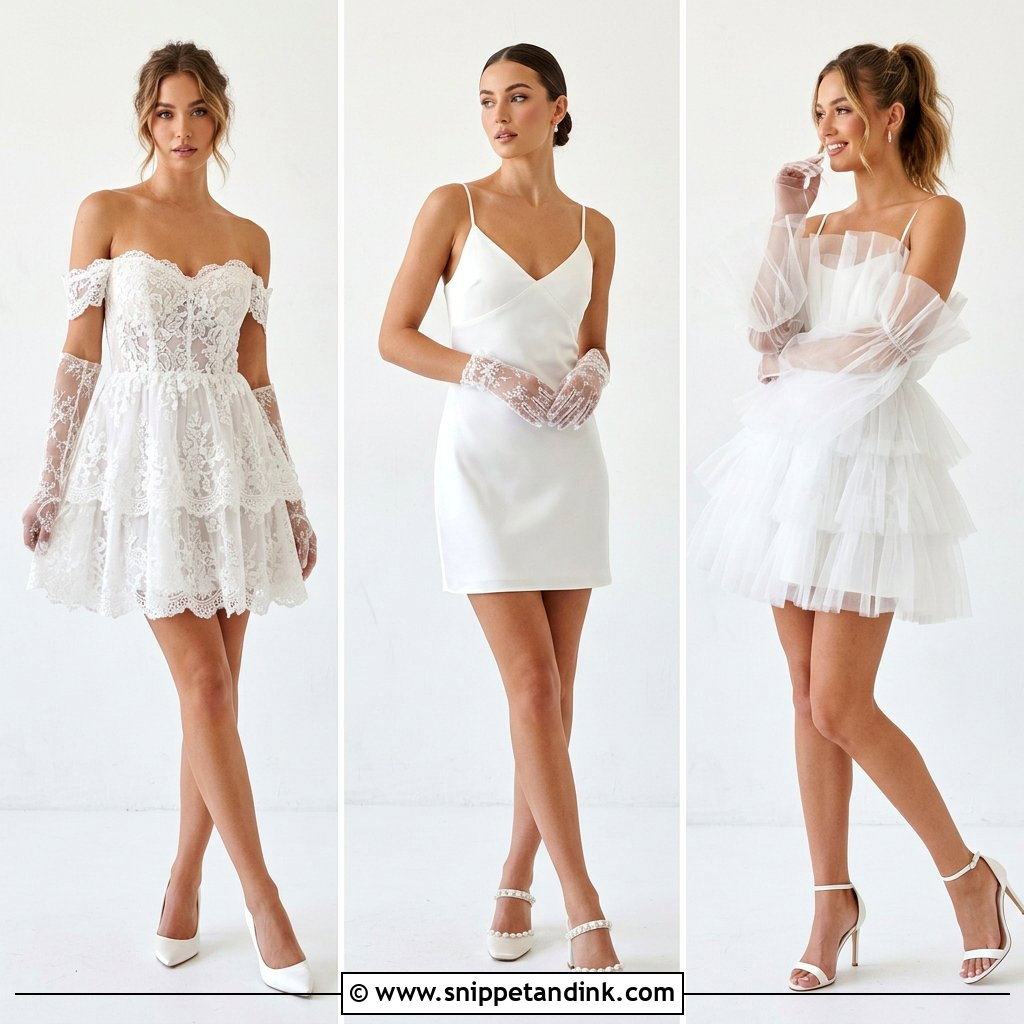
Lace softens the strict lines of a hanbok jacket, and fine floral lace looks more refined than heavy patterns. It can add texture to a chima, become a cropped jeogori over a satin skirt, or float over a simple gown. Ivory, cream and soft blush are the easiest shades. Heavy lace makes a jeogori stiff and bulky, so the lighter the better. Pearl earrings, nude or ivory heels and a small hair comb keep it subtle.
16. Korean Wedding Dress With Satin Skirt
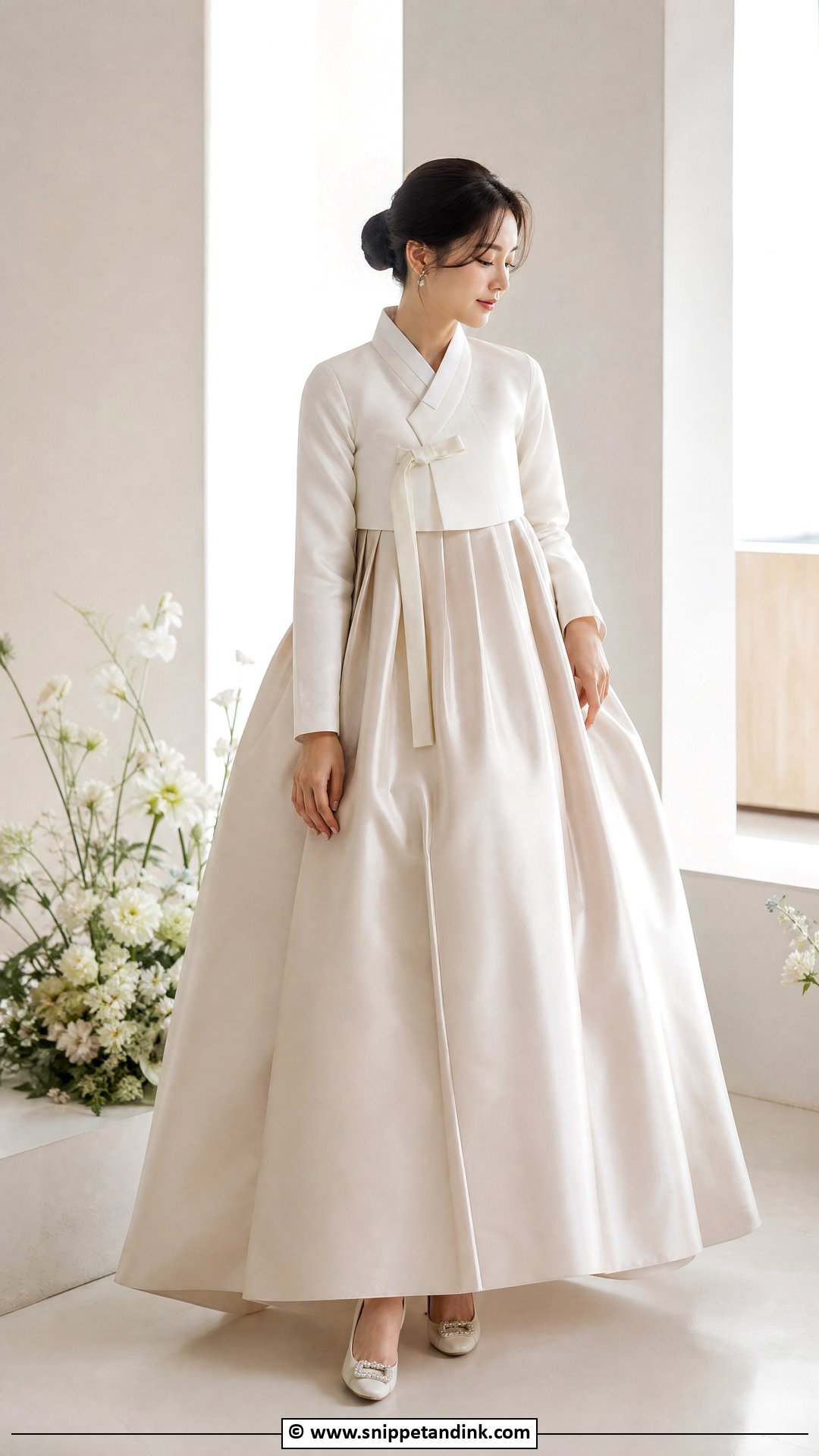
Satin glows in photos and gives a clean base for hanbok-style details. A full satin chima with a structured jeogori is traditional; a slim satin skirt with a cropped jacket is fusion. Ivory, champagne, blush and pale blue all suit it. Satin shows every crease and every water mark, so steam it on the morning and keep drinks well away. Pearl heels, a sleek bun and a simple bouquet are enough.
17. Korean Wedding Dress With Organza Layers
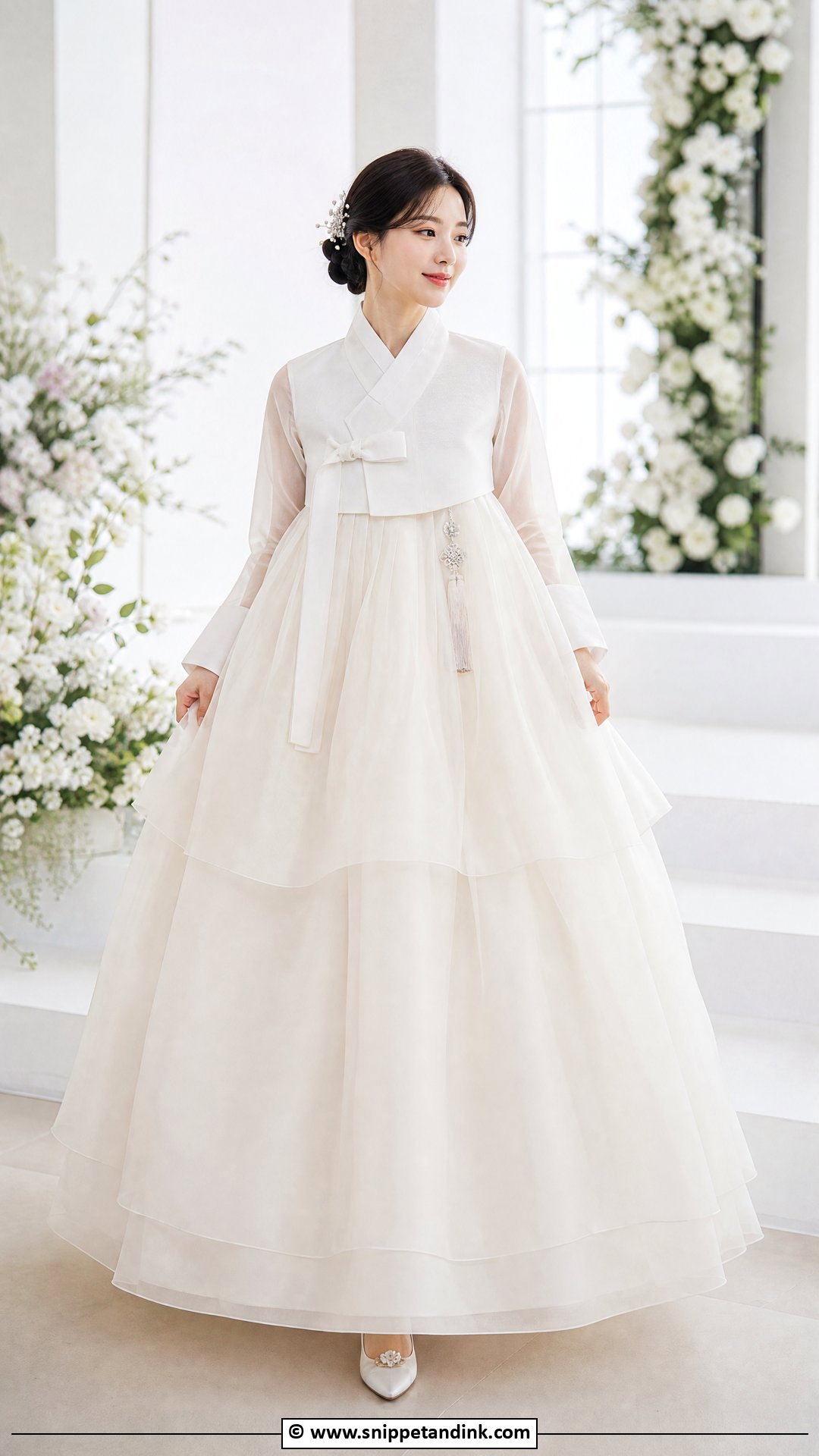
Organza gives volume without weight, which makes it ideal for a full chima, sheer sleeves or a layered overskirt. An ivory organza skirt with a silk jeogori looks dreamy but polished; pastel organza adds a hint of color. It holds its shape well in full-length photos. Organza is also scratchy against bare skin and creases sharply, so I’d want a soft lining underneath. A small hairpin, pearl earrings and satin shoes keep it delicate for spring or summer.
18. Korean Wedding Dress With Tulle Skirt
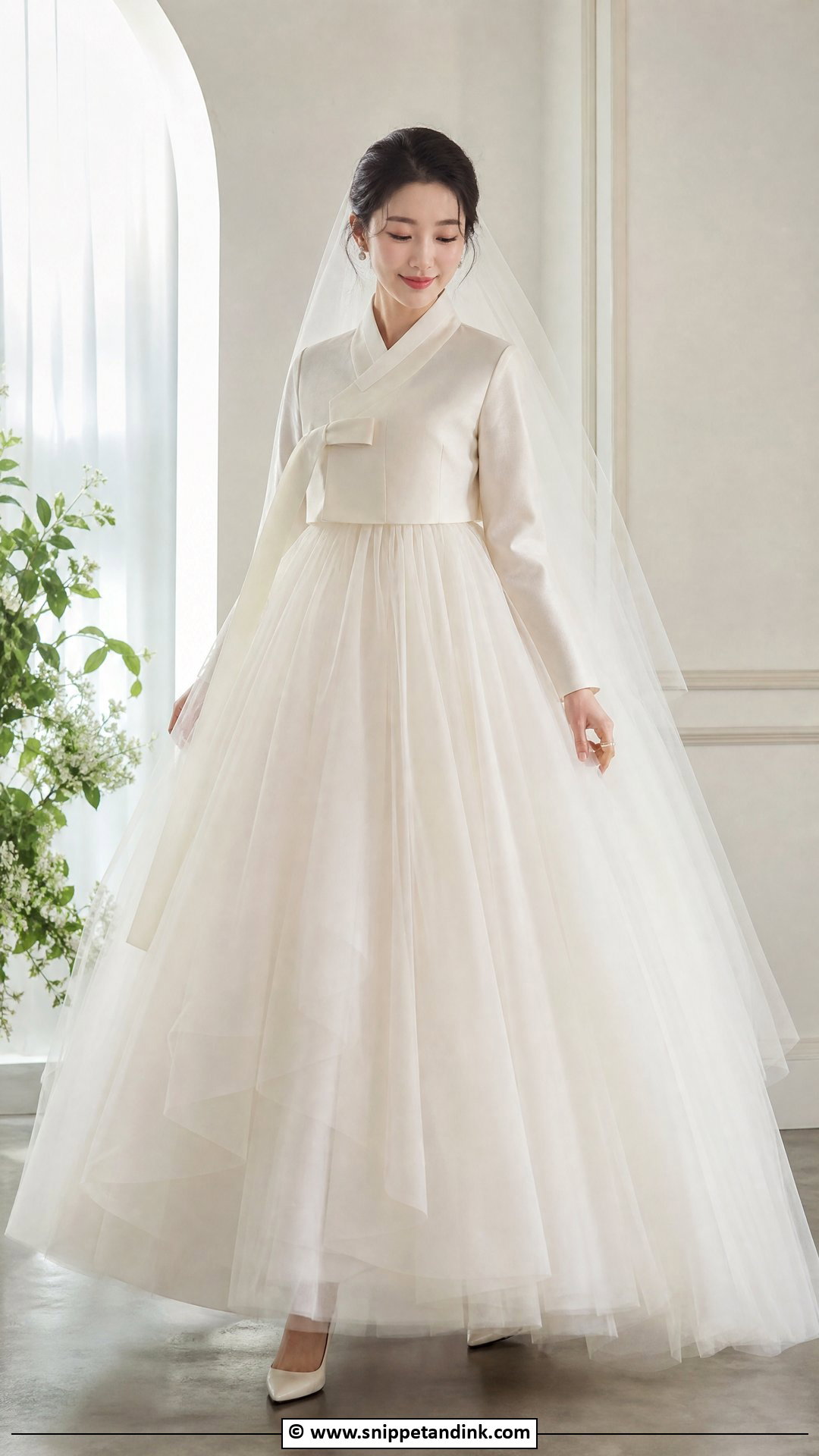
Tulle gives the princess volume without the weight of satin layers. Pair a layered tulle skirt with a jeogori-style top or a bodice with hanbok ribbon details. Ivory looks classic; blush or powder blue softens it. Tulle snags on rough surfaces, jewelry and the groom’s cufflinks, so watch for that during photos. Simple heels, pearl jewelry and a clean veil complete it.
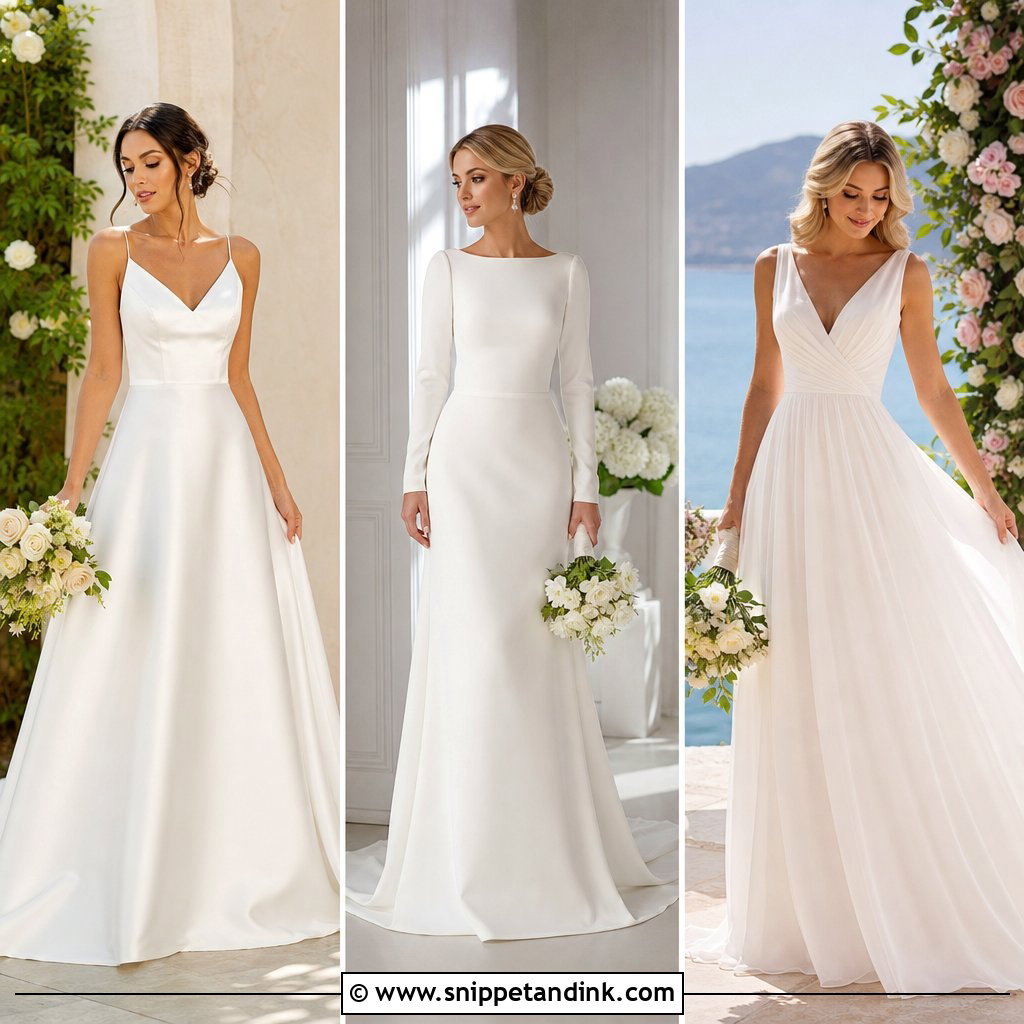
19. Korean Wedding Dress With High Neckline
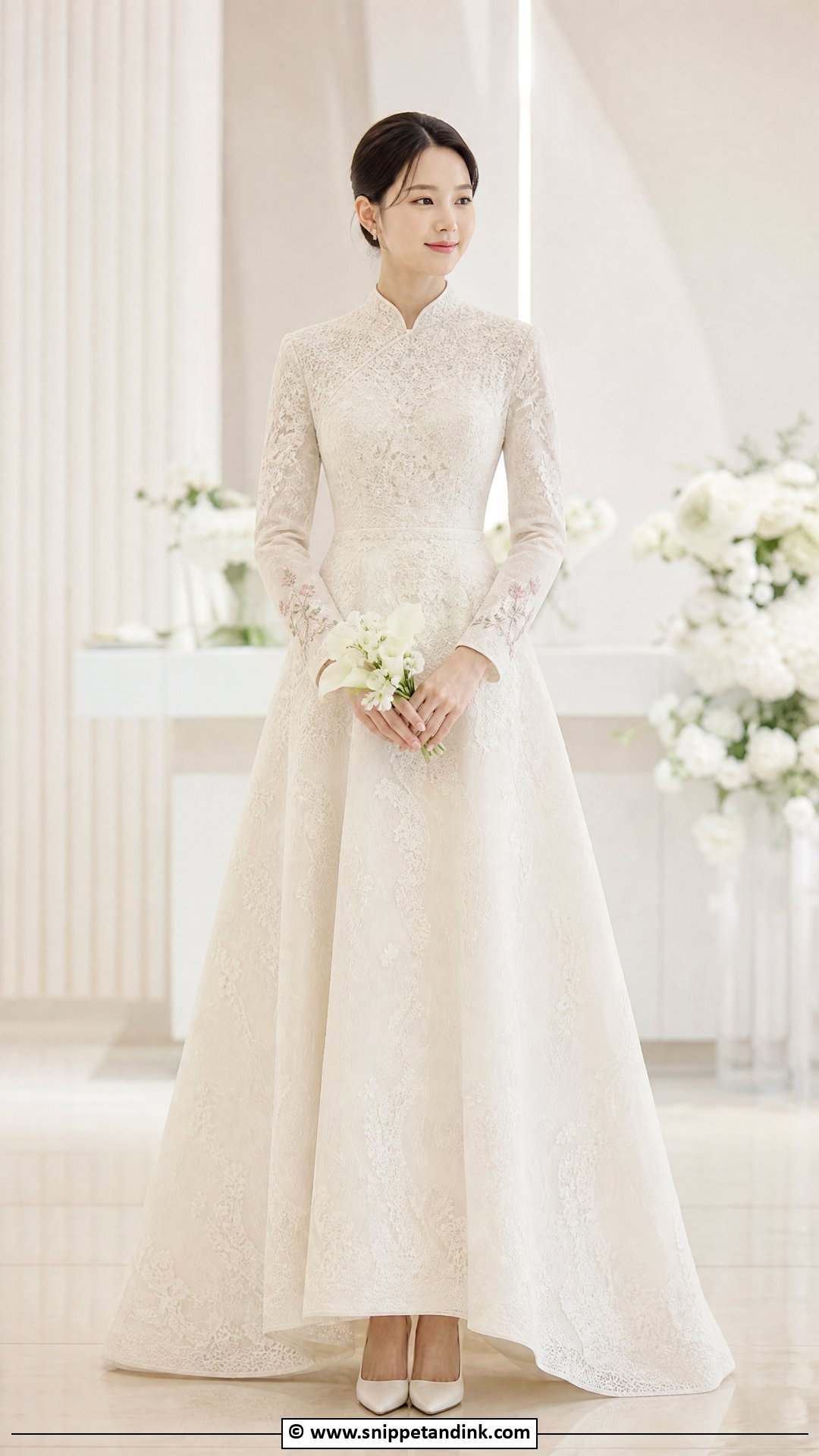
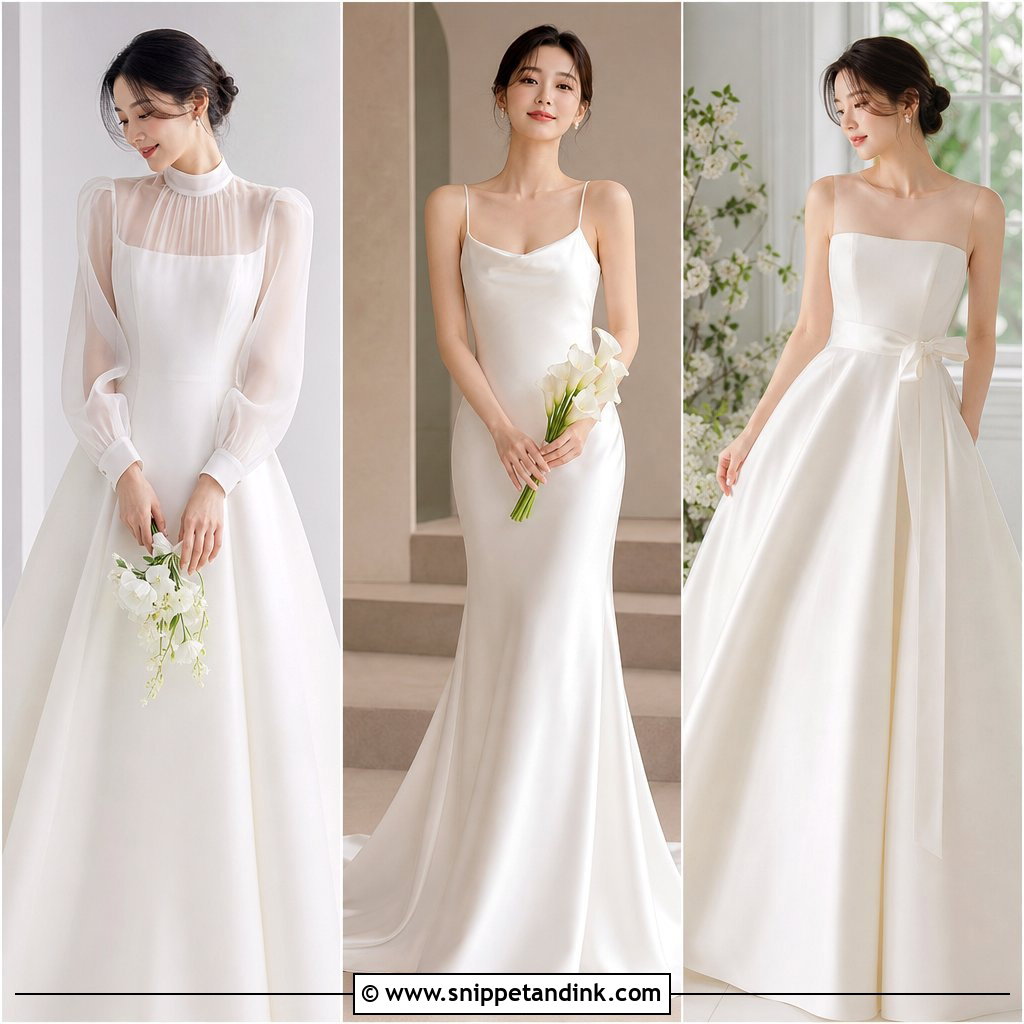
Covered necklines echo the modest lines of traditional Korean clothing, which is why a high collar pairs so naturally with Korean-inspired sleeve embroidery or a soft ribbon detail. Lace, satin or crepe all work. A fitted bodice with an A-line skirt balances the high neck; a full chima-style skirt feels more traditional. An updo keeps the collar visible. I’d check the collar height while seated, since a tall collar can push into the chin when you look down.

20. Korean Wedding Dress With Square Neckline
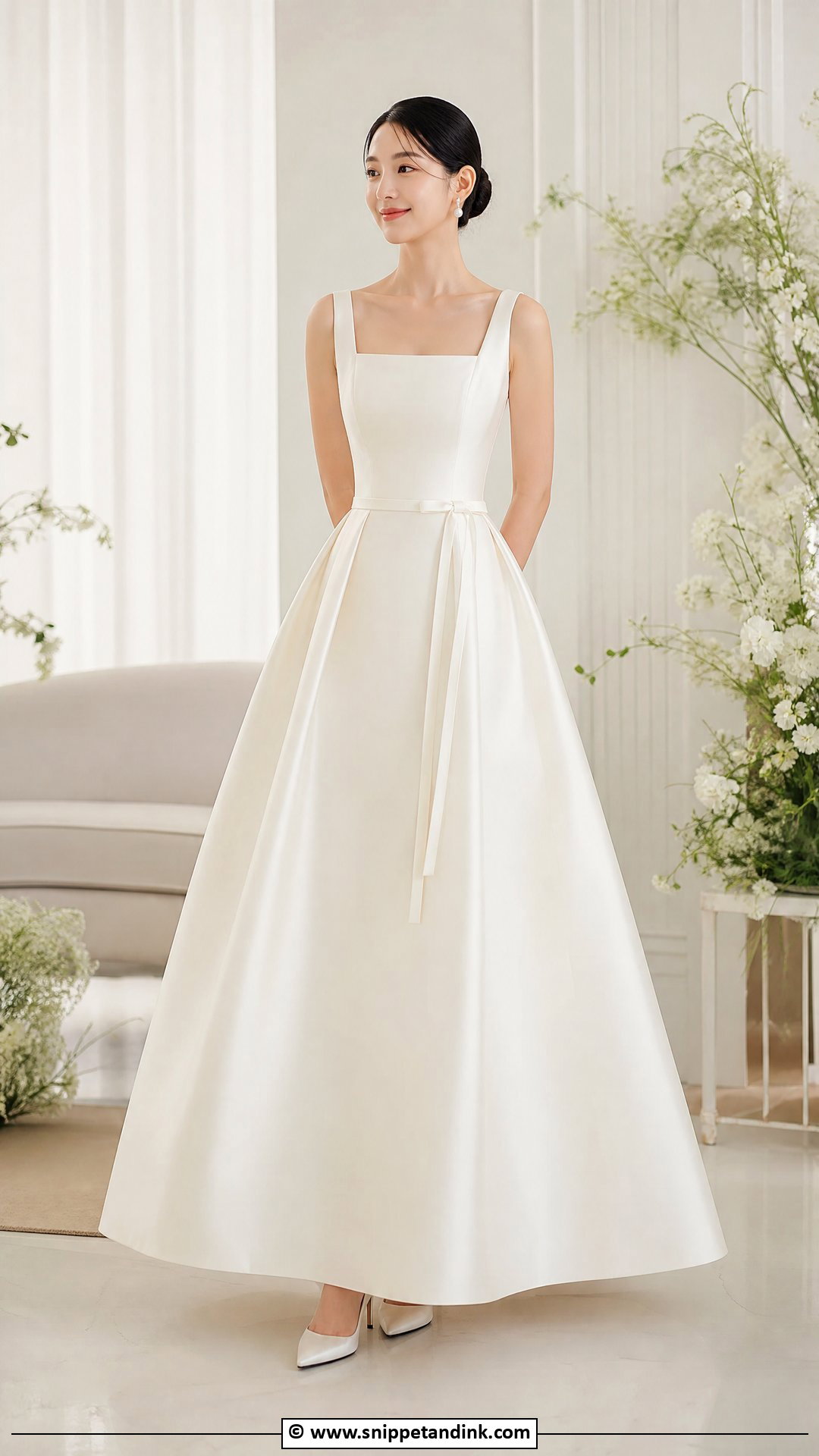
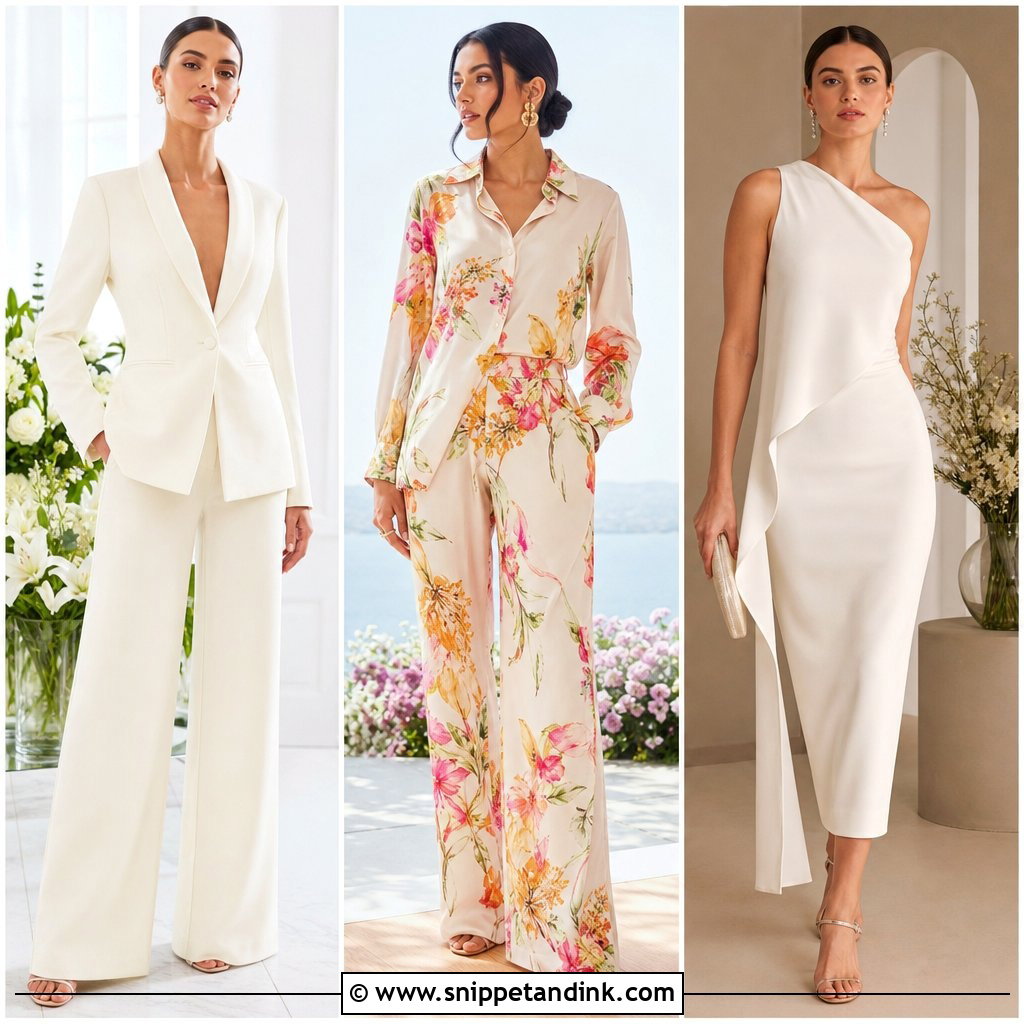
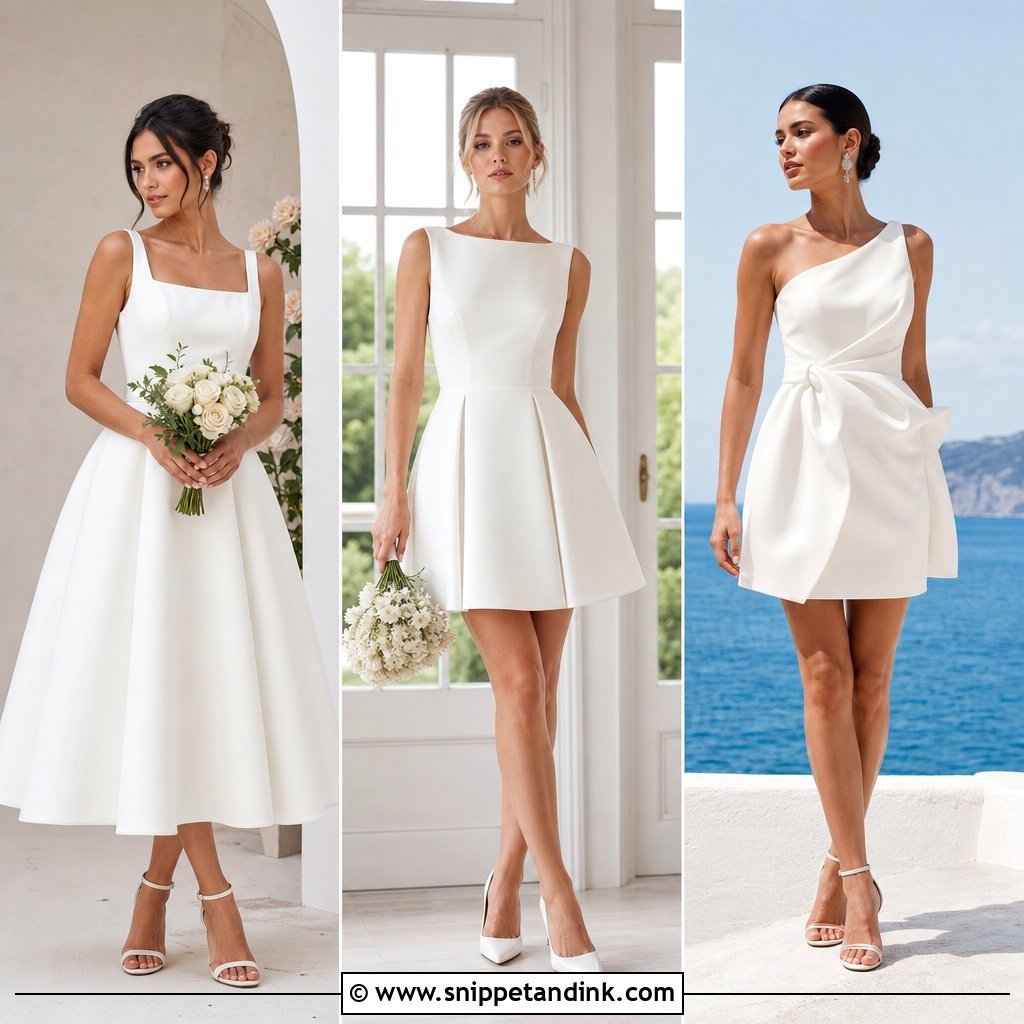
A square neckline frames the collarbone cleanly and works well with Korean-inspired additions: a full chima-style skirt, embroidered sleeves or a cropped hanbok jacket over it. Satin, mikado and structured crepe keep the lines crisp; soft fabrics let the square sag. Keep jewelry small, such as pearl earrings or a delicate pendant, and choose a soft bun or half-up style for balance.
21. Korean Wedding Dress With Long Sleeves
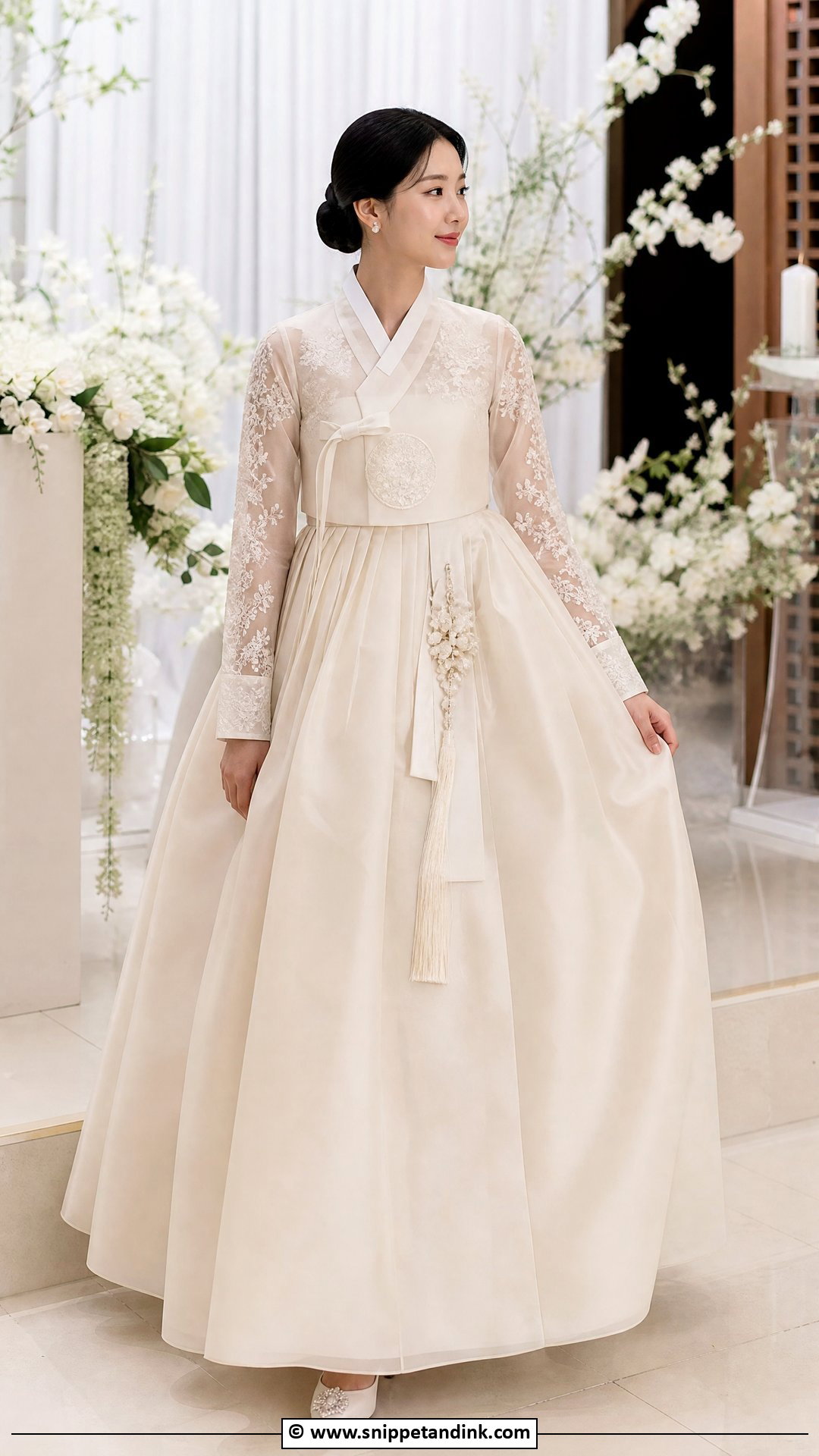
Long sleeves work year-round when the fabric matches the season: sheer organza or lace in summer, satin in winter. For a Korean feel, look for soft volume, floral stitching or jeogori-style cuffs. Keep the skirt smooth so the outfit isn’t too busy. I always check that long sleeves let the bride lift her arms and hold a bouquet comfortably, because a tight armhole pulls the entire bodice up. Pearl earrings, a low bun and pointed satin shoes finish it.
22. Korean Wedding Dress With Short Jeogori Jacket
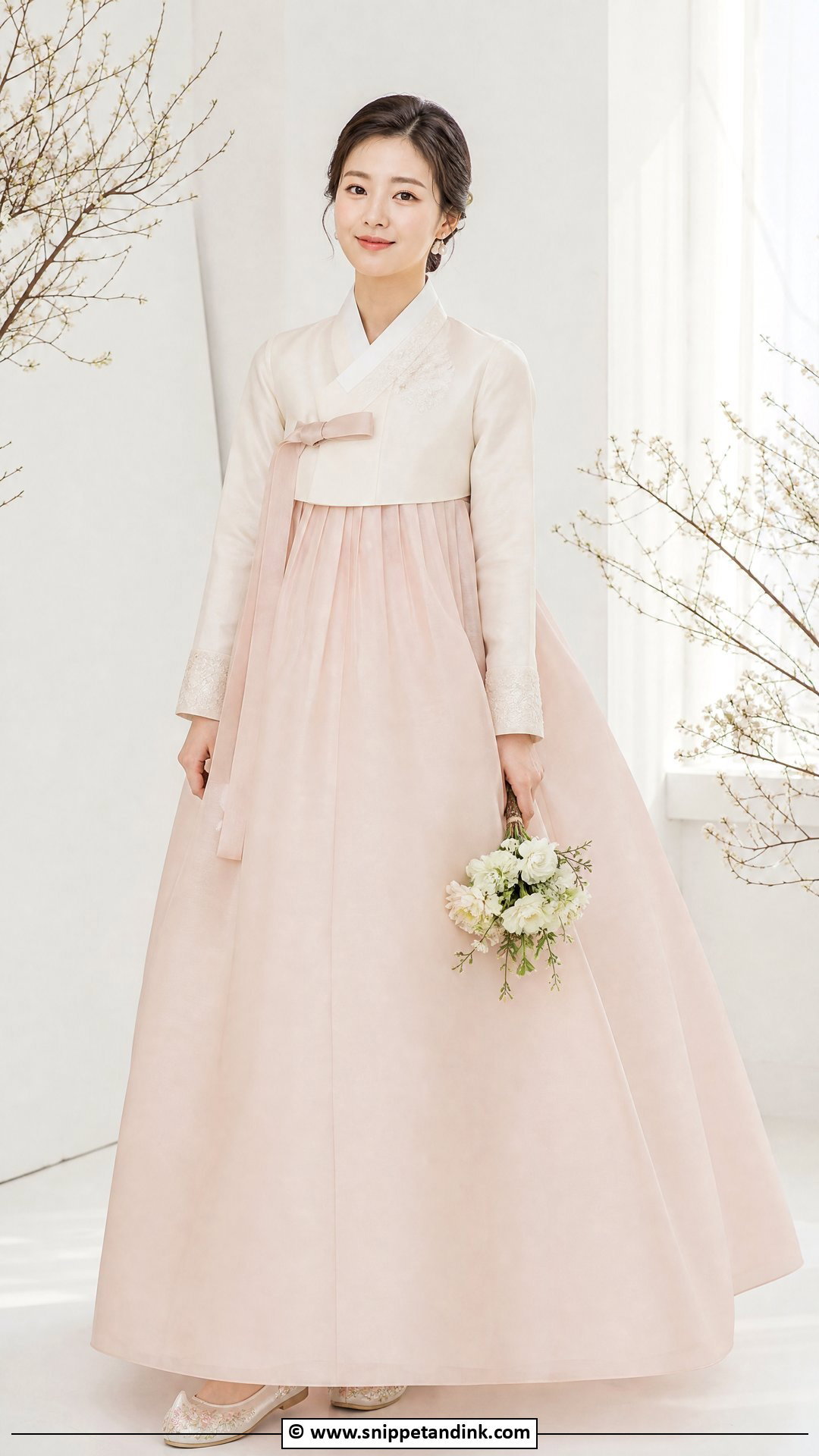
A short jeogori sits above the natural waist, so the skirt beneath looks longer and fuller. This is the traditional hanbok proportion and it flatters most heights. An ivory, blush or pastel jacket over a flowing chima, with a contrasting goreum or subtle tonal embroidery, works for portraits, ceremonies and reception changes. Embroidered flats or low heels keep it comfortable for a long day.
23. Korean Wedding Dress With Sheer Hanbok Jacket
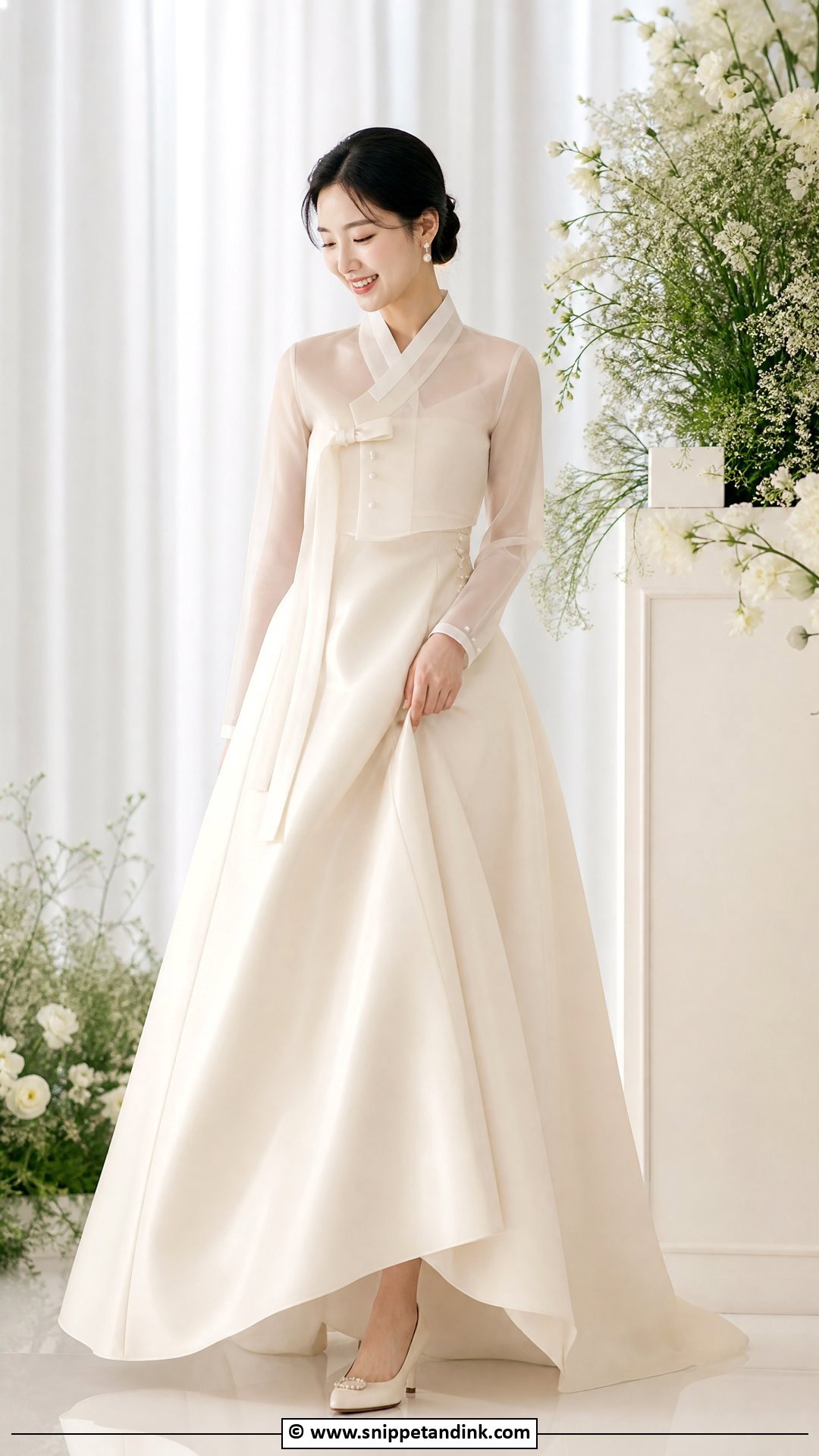
A sheer jacket in organza, chiffon or fine mesh adds a soft glow over a satin gown, tulle skirt or slip dress without hiding it. Embroidered edges, pearl buttons or a light ribbon tie add detail. Many brides wear it for the ceremony or photos, then take it off for dancing. Fine mesh shows every pull and loose thread, so I’d hand it to whoever is helping you dress rather than pulling it on yourself. Soft makeup, pearl earrings and a neat updo keep it airy.
24. Korean Wedding Dress With Bow Tie Detail
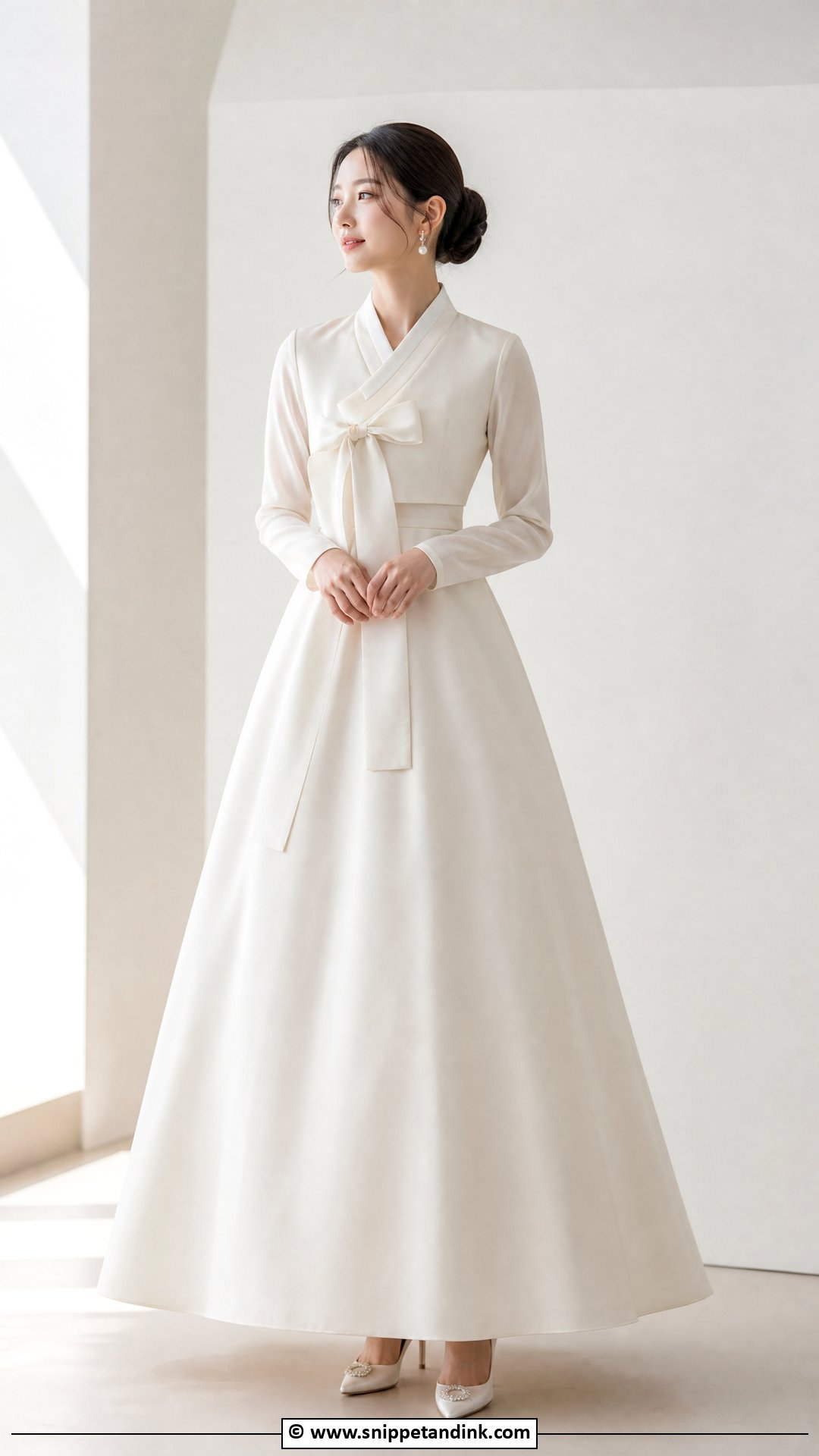
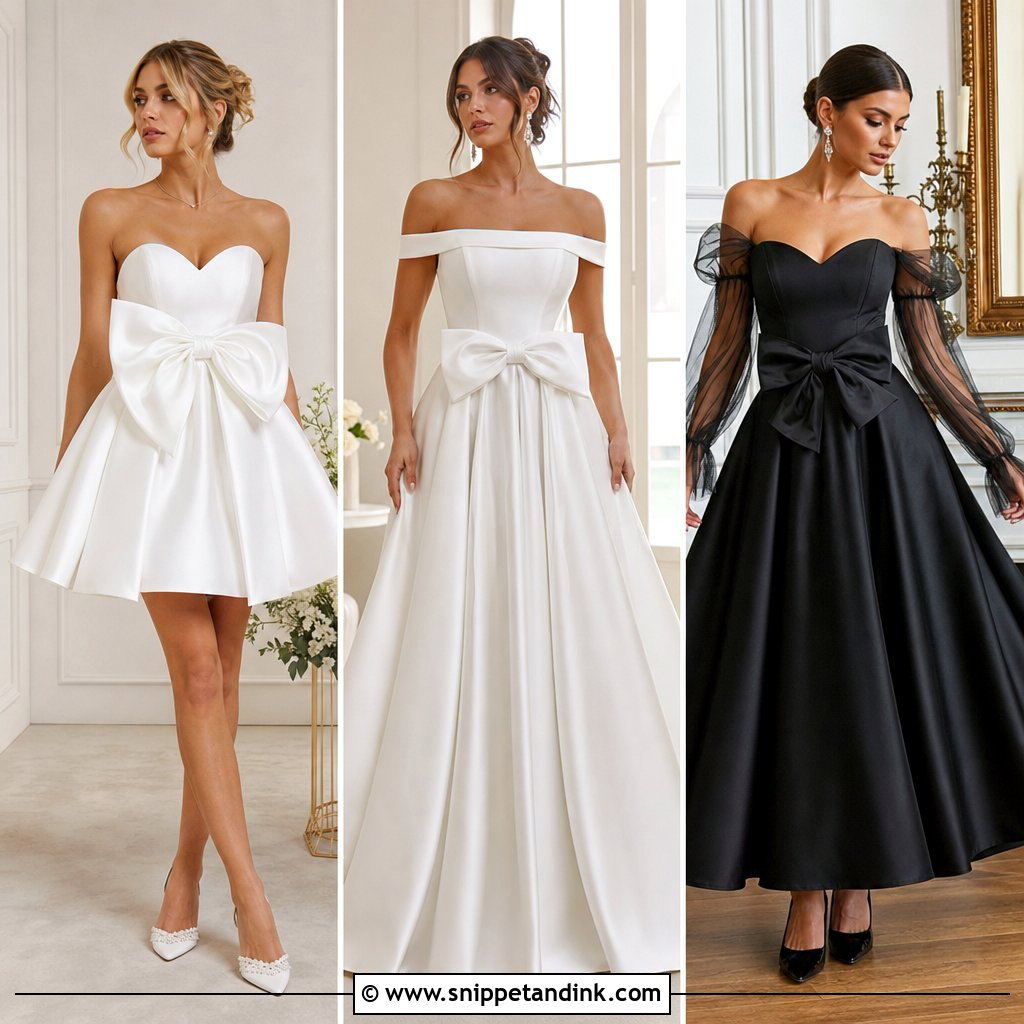
The goreum, the hanbok’s ribbon closure, is what a bow detail references. It can sit at the front of a jeogori top, at the waist or at the back of a modern gown. Ivory or champagne silk keeps it subtle; red, blue or gold ribbon feels more traditional. Keep the rest of the dress simple so the bow reads deliberate. Silk ribbon creases at the knot, so I have it steamed and retied right before photos. Pearl earrings, satin heels and smooth hair finish it.
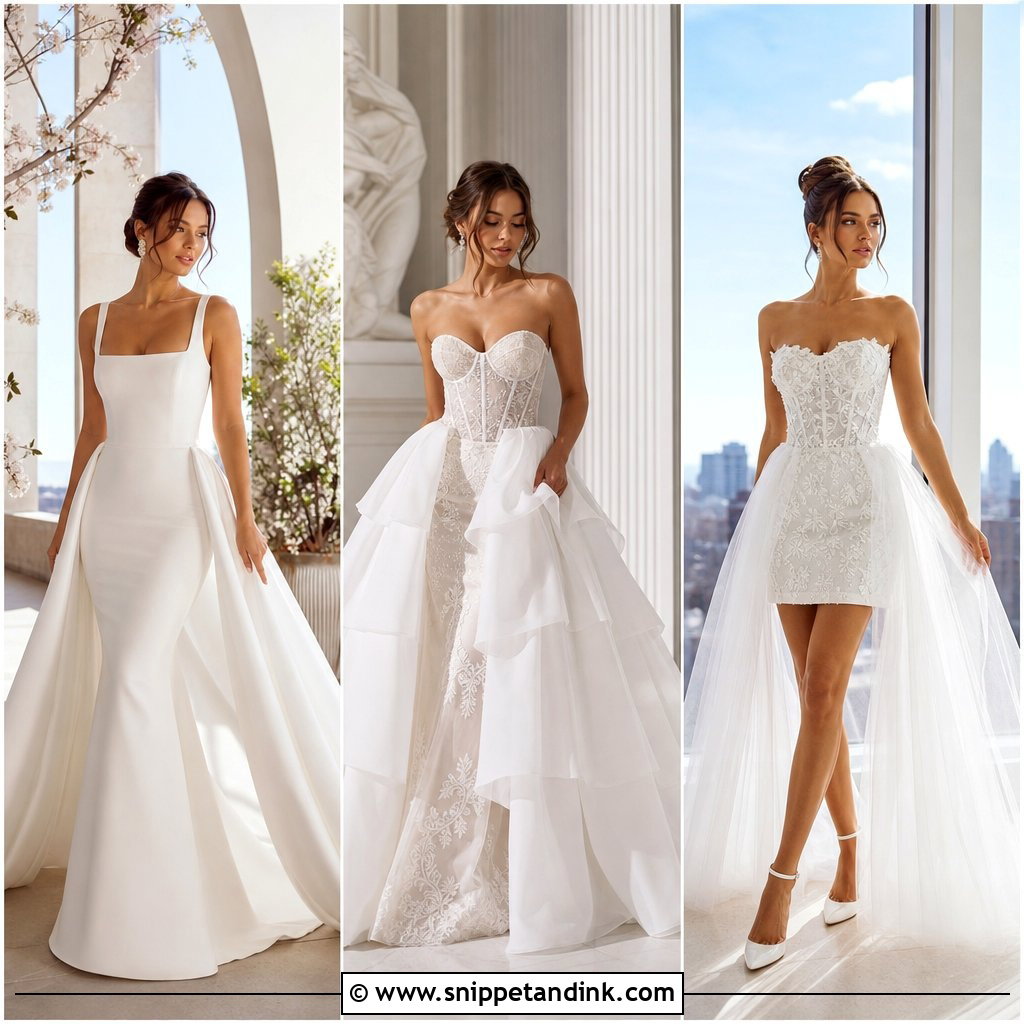
25. Korean Wedding Dress With Palace Inspired Embroidery
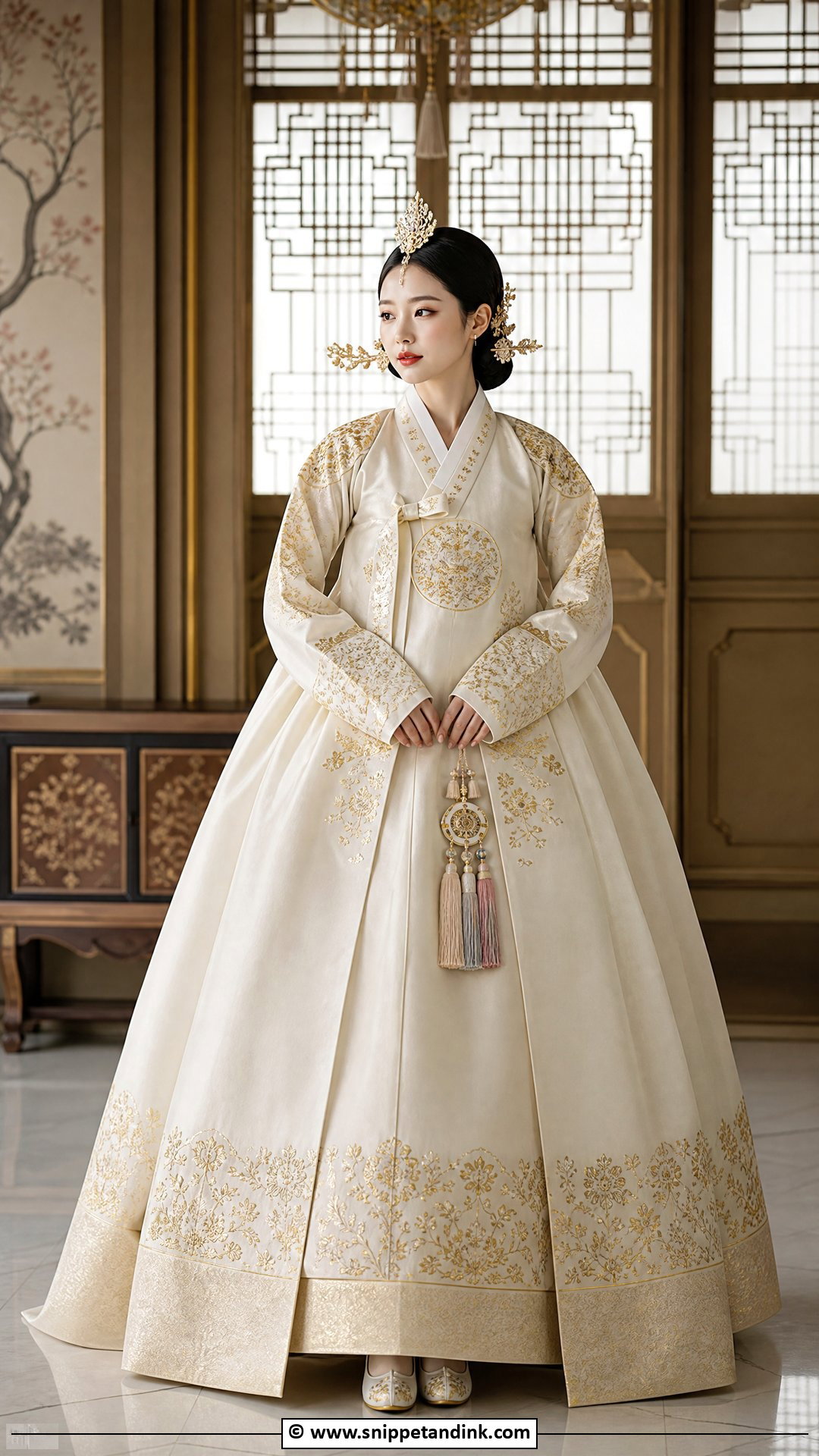
Gold thread, clouds, birds and floral patterns on sleeves, bodice, jacket or hem give palace inspired embroidery its regal, formal mood. Choose a structured hanbok silhouette or a modern gown with embroidered panels. With this much detail, I’d keep the palette controlled: ivory, red, navy, gold or soft pink, no more than two together. A sleek bun, an ornate hairpin and embroidered shoes finish it for formal portraits and heritage-focused celebrations.
26. Korean Wedding Dress With Minimalist Silk Gown
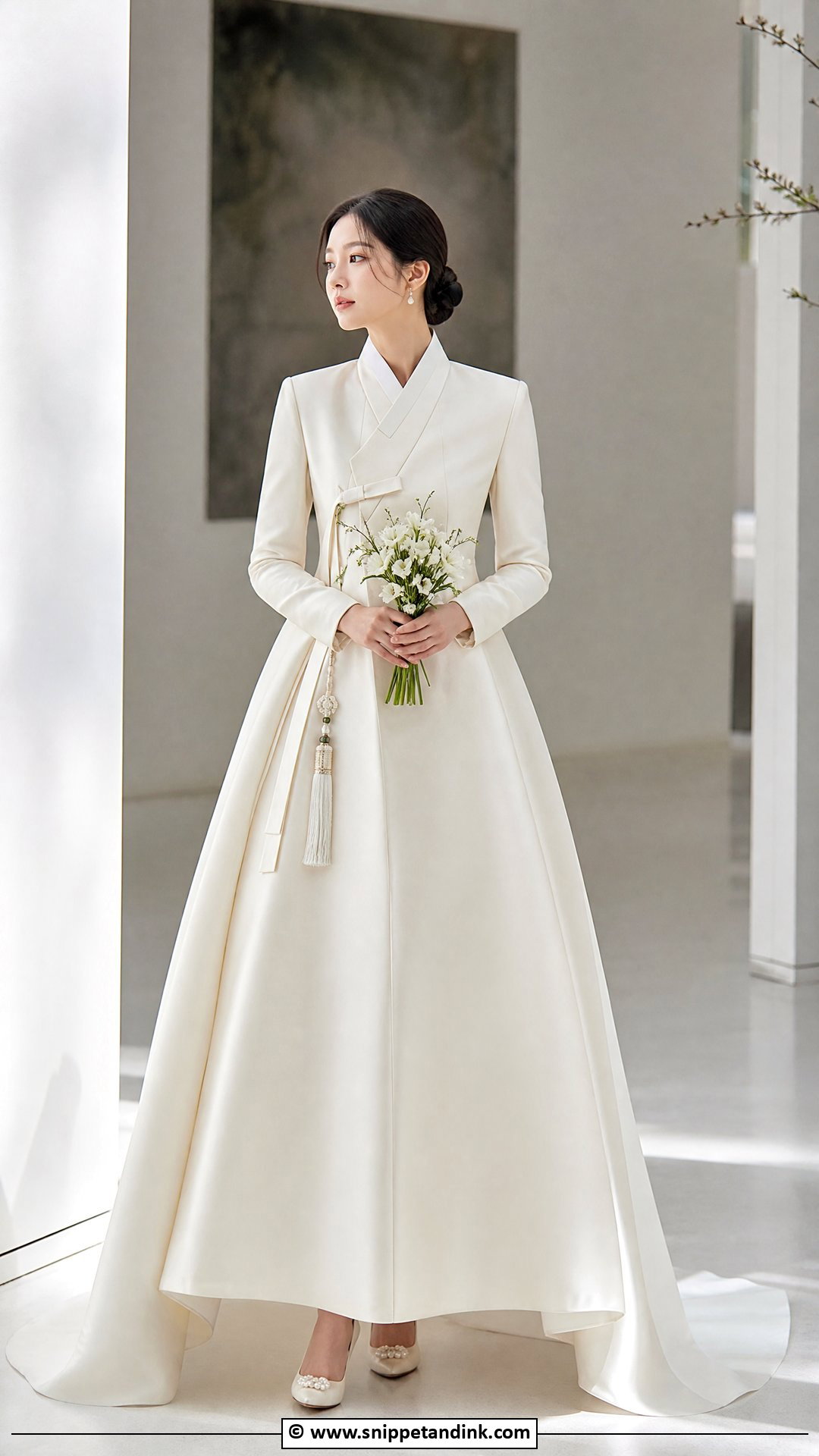
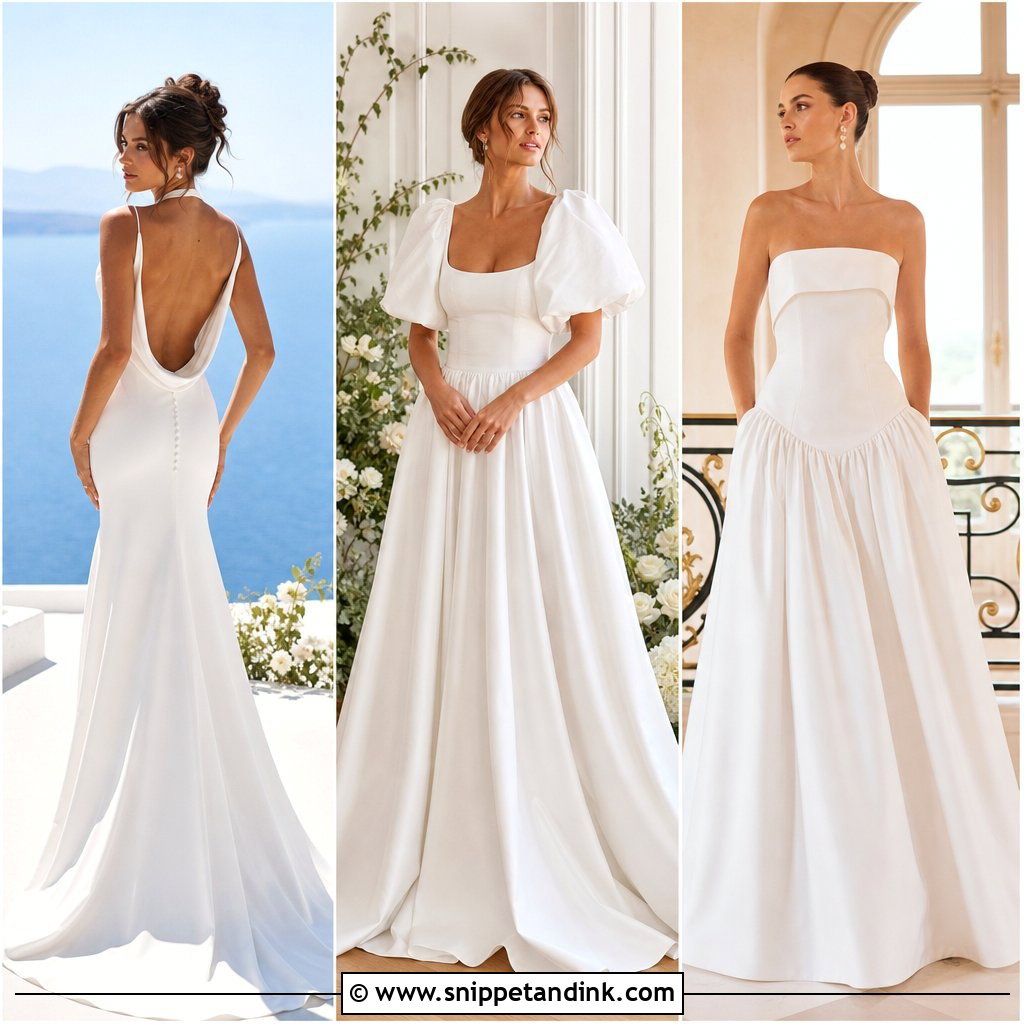
Quiet elegance in silk depends entirely on fabric and fit. A minimalist gown can still show Korean influence through a subtle jeogori neckline, a soft ribbon tie or a removable hanbok-style wrap. Ivory silk, pearl-white satin or cream charmeuse all look refined. Charmeuse is unforgiving: it shows every seam and undergarment line, so I’d do the final fitting with the exact underwear you’ll wear. A small norigae at the waist, low pearl heels and understated earrings finish it.
27. Korean Wedding Dress With A Line Skirt
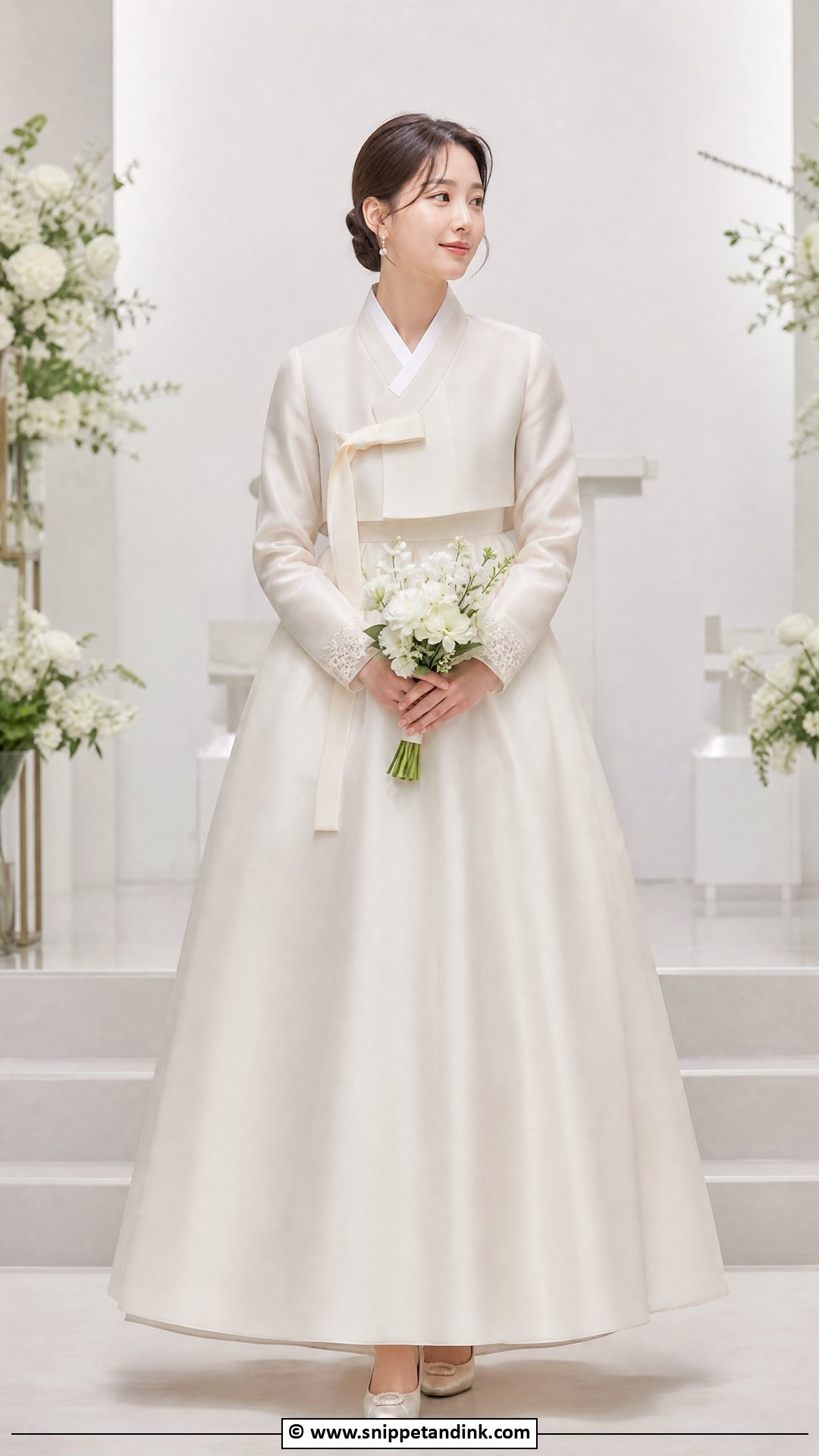
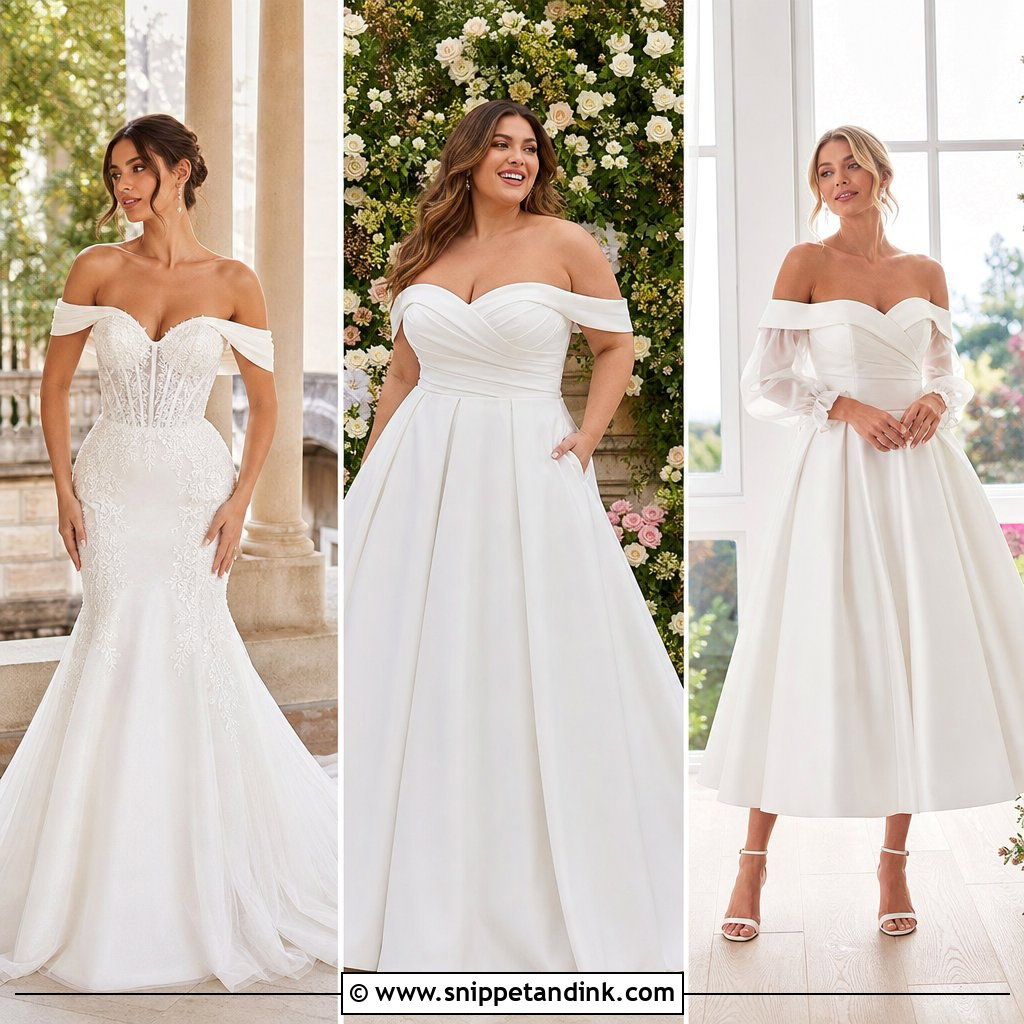
An A-line skirt is the easiest silhouette to walk, sit and dance in, and it suits almost every venue. Add a jeogori-style top, a ribbon tie, embroidered sleeves or hanbok-inspired fabric to give it a Korean character. Ivory, blush and pale gold suit it. It gives structure without the weight of a full ball gown, which matters on a long day with several changes. Pearl earrings, a soft veil and comfortable heels complete it.
28. Korean Wedding Dress With Ball Gown Skirt
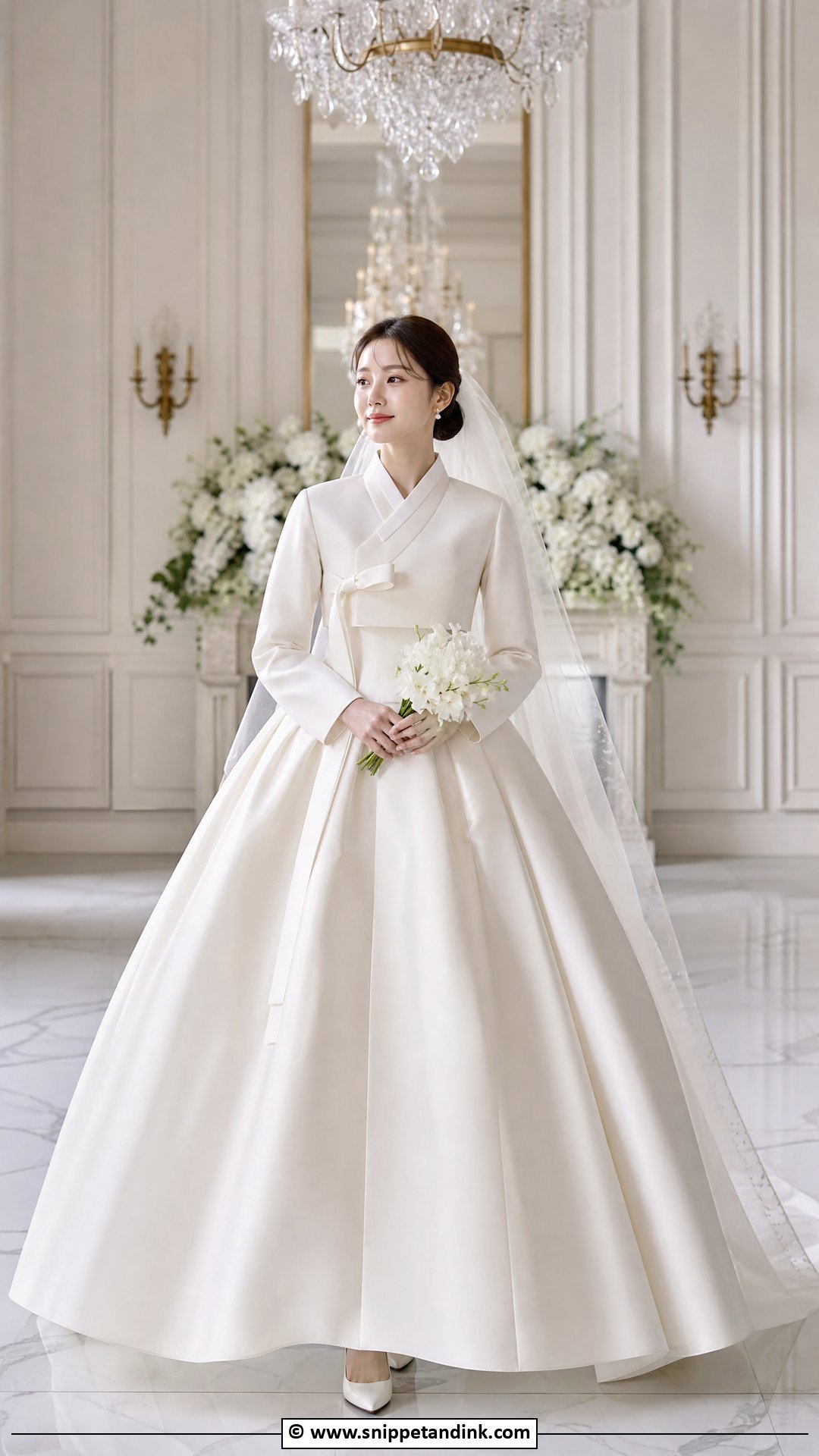
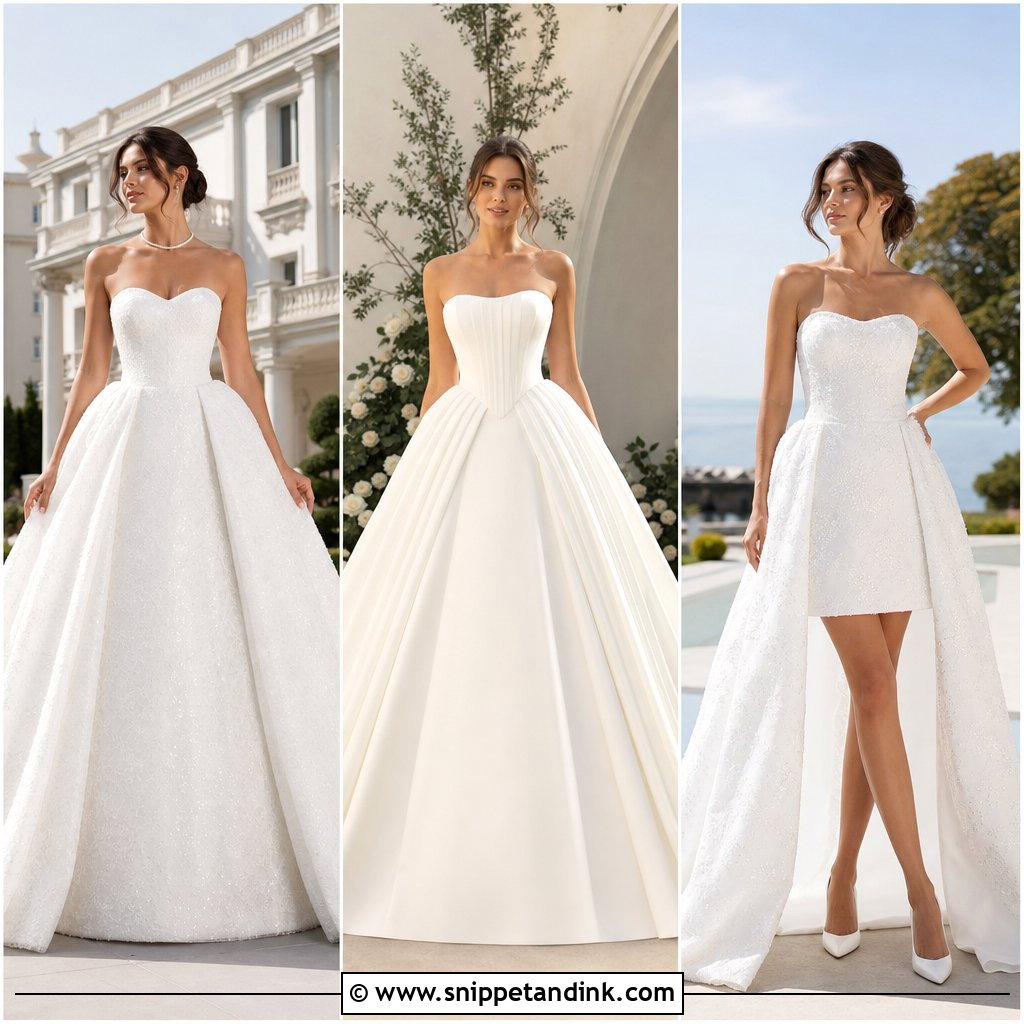
A full ball gown skirt echoes the volume of a traditional chima in Western form. Satin and mikado hold a firm shape; tulle and organza feel softer. A fitted bodice with a hanbok-inspired jacket or ribbon detail keeps the Korean link. It makes a big entrance at a grand venue or formal reception, but it’s harder to manage in a crowded room or a small car, so plan your transport. Pearl earrings, a clean veil and classic heels are enough.
29. Korean Wedding Dress With Mermaid Silhouette
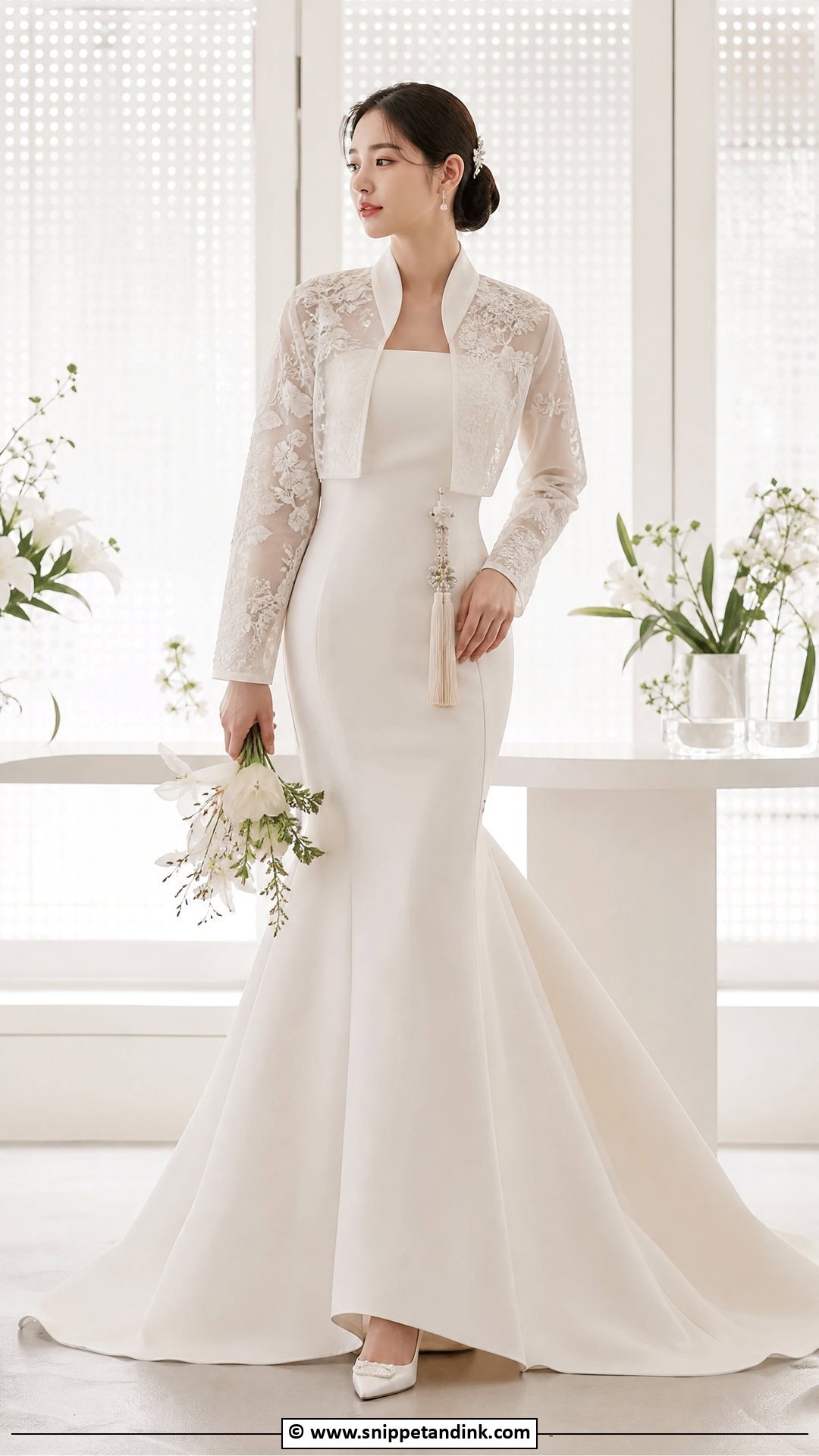
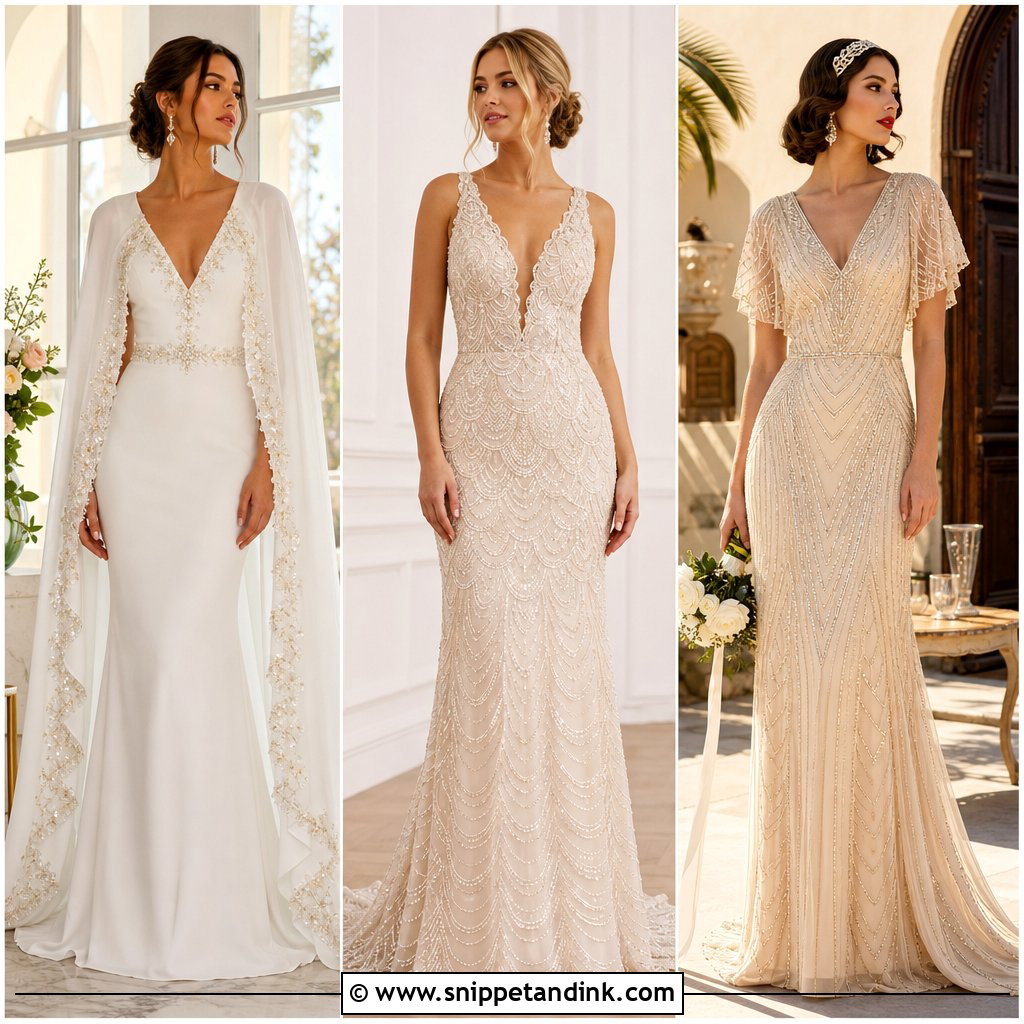
A mermaid shape is the most Western option here, and it can still carry Korean detail: a jeogori-style neckline, embroidered sleeves, ribbon trim or a removable hanbok jacket. Satin or crepe keeps it sleek; lace softens it. Because it’s fitted to the knee, sit, walk and climb a step at the fitting. If you can’t, ask for a little more ease, especially if you’ll be kneeling for a pyebaek in a different outfit later. Pointed heels, drop earrings and a low bun finish it.
30. Korean Wedding Dress With Two Piece Set
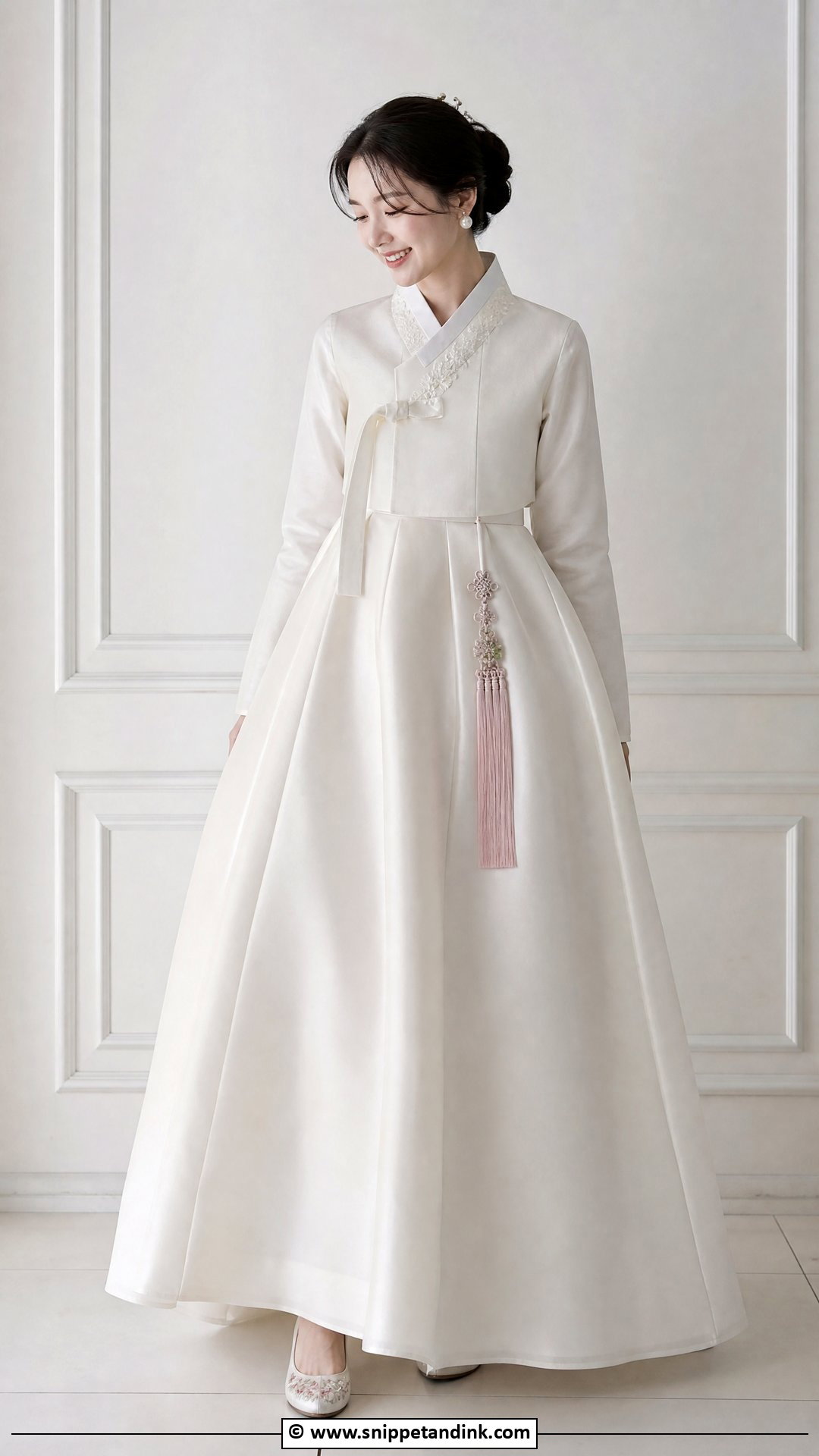
Separates let you fit the top and bottom independently, which helps if your measurements don’t match standard sizes. The top can be a cropped jeogori, structured blouse or embroidered jacket; the bottom a full chima, A-line satin skirt or soft tulle. Swap one piece to change the look between ceremony and reception. Matching tones look clean; a pastel top over an ivory skirt adds contrast. Pearl earrings, bridal flats and a simple hair accessory keep it balanced.
31. Korean Wedding Dress With Cape Overlay
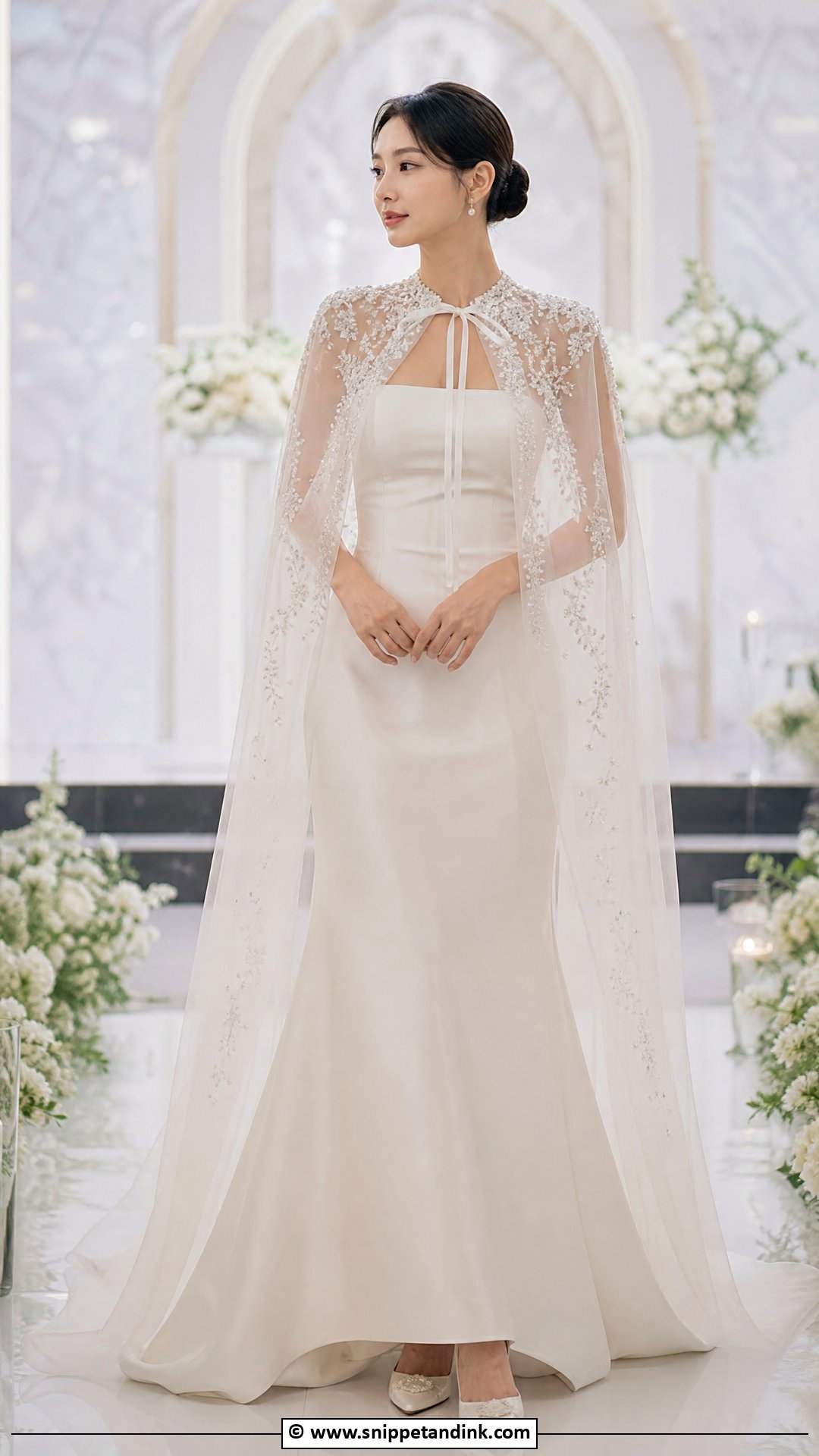
A cape gives drama without a long veil. Sheer organza, embroidered tulle or soft chiffon layers over a minimalist gown, hanbok-inspired dress or satin skirt. Floral embroidery, a ribbon closure or traditional patterning along the edges adds a Korean touch. It gives coverage for the ceremony and comes off for a lighter look later. I’d fix the cape to the dress at the shoulder with small hidden snaps, so it doesn’t slide back when you hug guests. Simple heels, a sleek bun and pearl earrings finish it.
32. Korean Wedding Dress With Detachable Overskirt
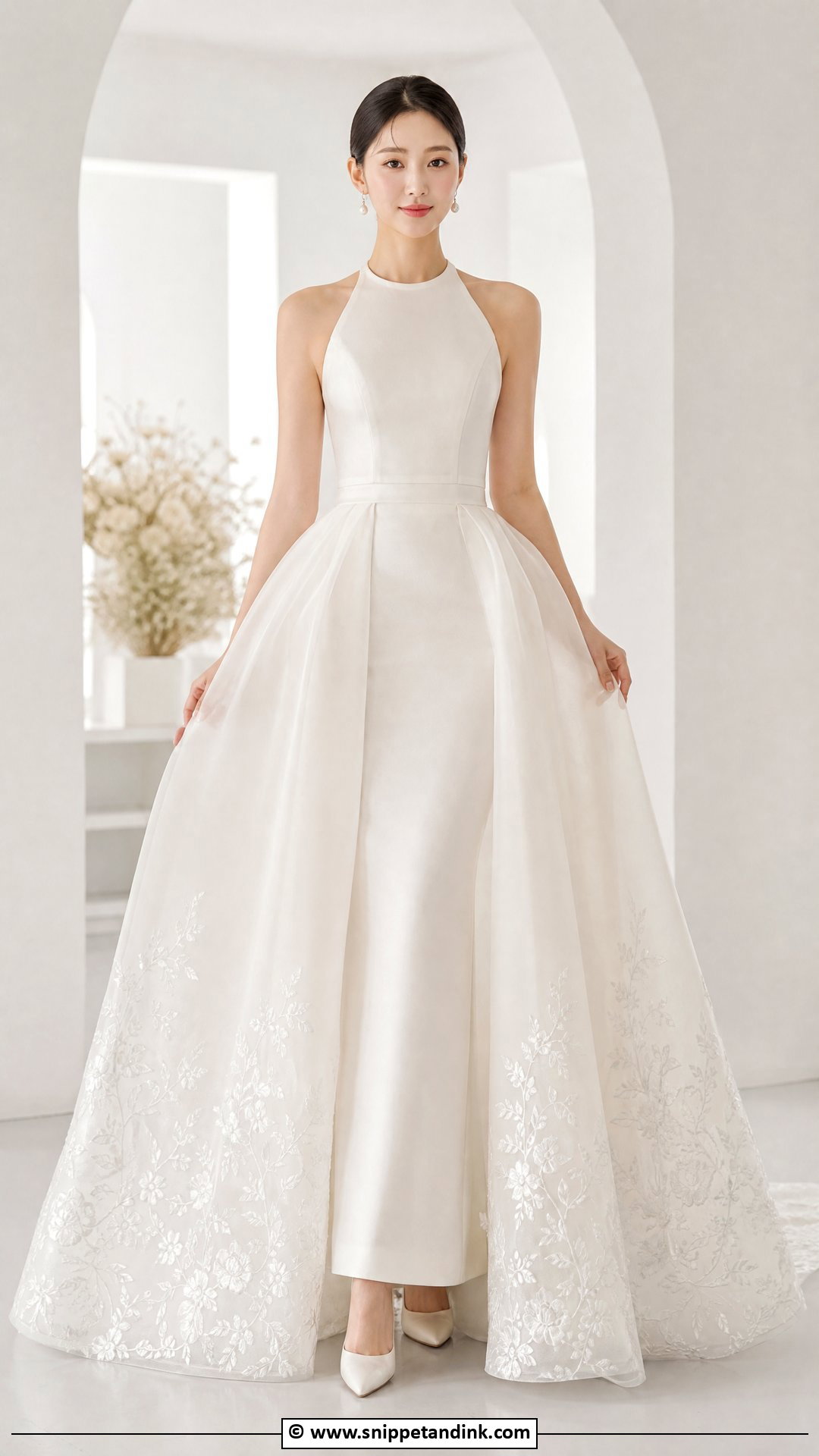
With a detachable overskirt, you get a full chima-inspired shape for the ceremony and a slimmer gown underneath for the reception. Satin, organza or tulle overskirts can carry embroidery along the hem. Keep the base dress simple so both versions look intentional. Practice taking the overskirt off with whoever will help you; hidden hooks or buttons at the back are hard to find in a hurry. A small norigae, pearl earrings and comfortable heels complete it.
33. Korean Wedding Dress With Pastel Color Palette
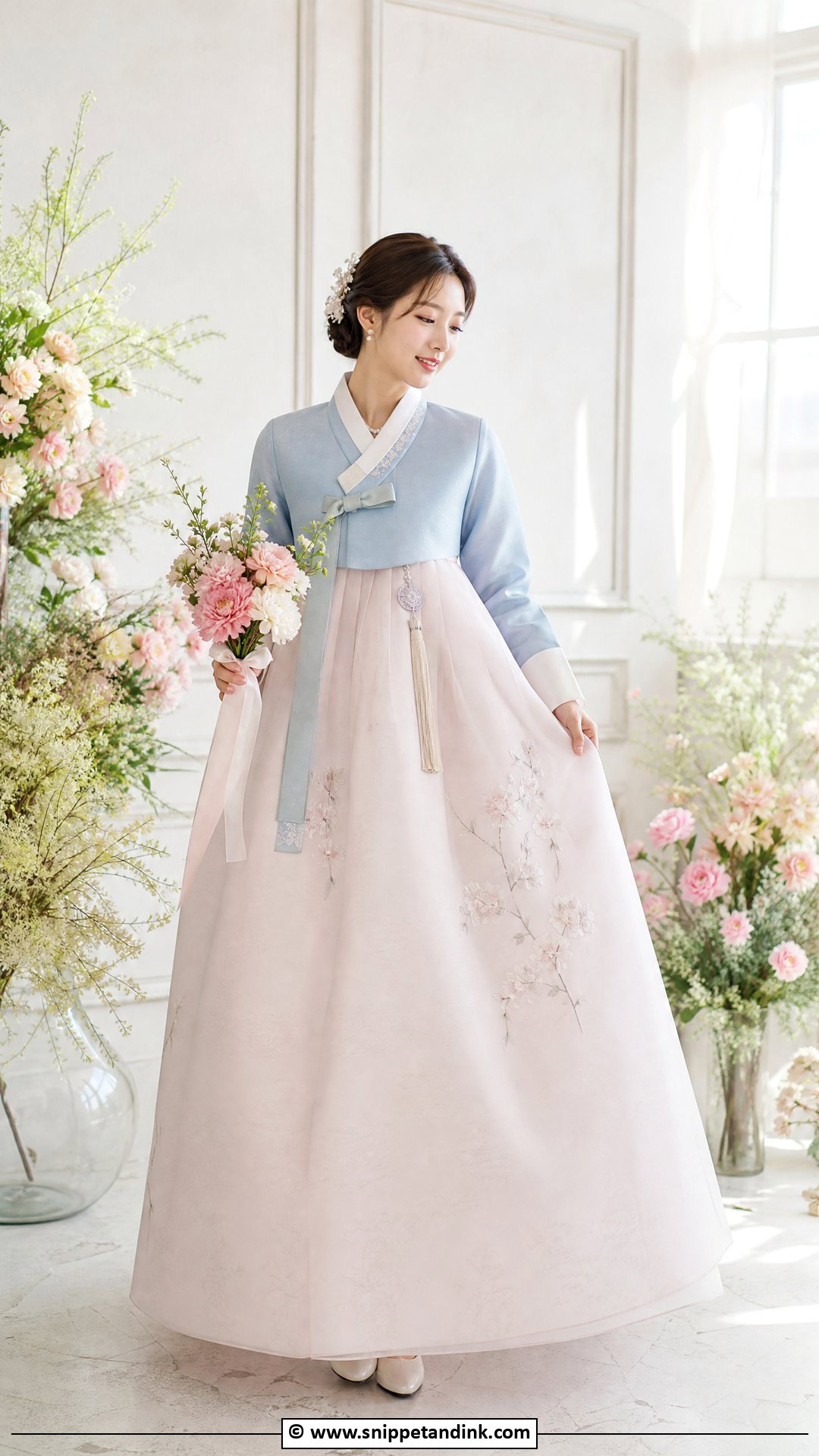
Pale pink, powder blue, lavender, mint, buttercream and champagne all suit hanbok-inspired bridal looks, especially on flowing chimas, sheer jackets and embroidered sleeves. To keep it bridal, I’d use ivory as the base and bring pastels in through the jacket, ribbon or one skirt layer. Pearl jewelry and satin shoes polish it. Some pastels go grey under warm indoor lighting, so test the fabric in the venue’s light if you can.
34. Korean Wedding Dress With Reception Change Outfit
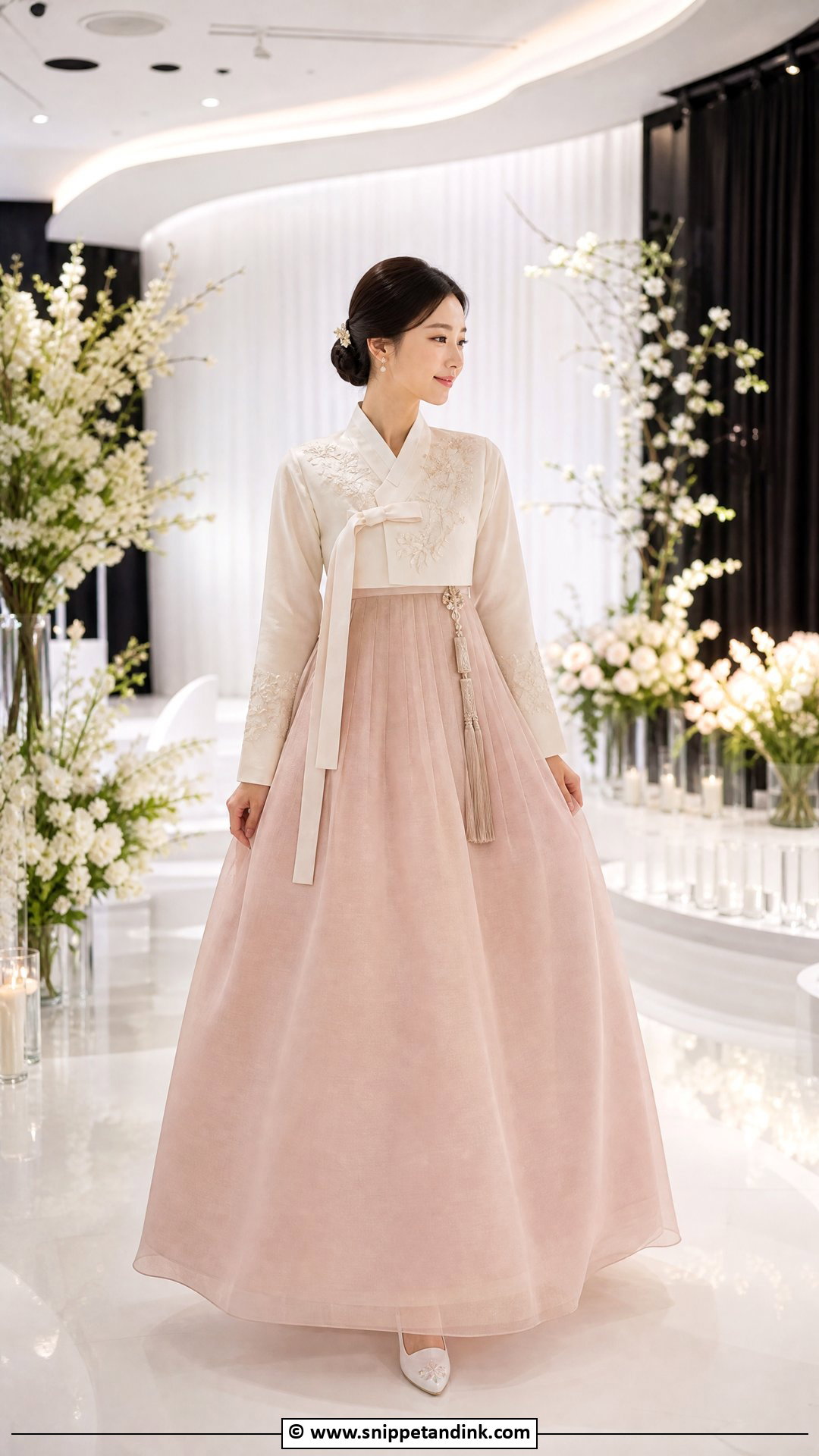
Many Korean brides wear a gown for the ceremony and change into hanbok or a fusion dress for family photos and the reception. A light chima, a short jeogori and comfortable shoes make it easier to walk, greet guests and eat. Choose a color that contrasts with the main gown: blush, blue, red or gold. Keep accessories secure and simple so the change takes minutes, and give whoever helps you a list of what goes on in which order. It also gives your album more variety.
35. Korean Wedding Dress With Pyebaek Outfit
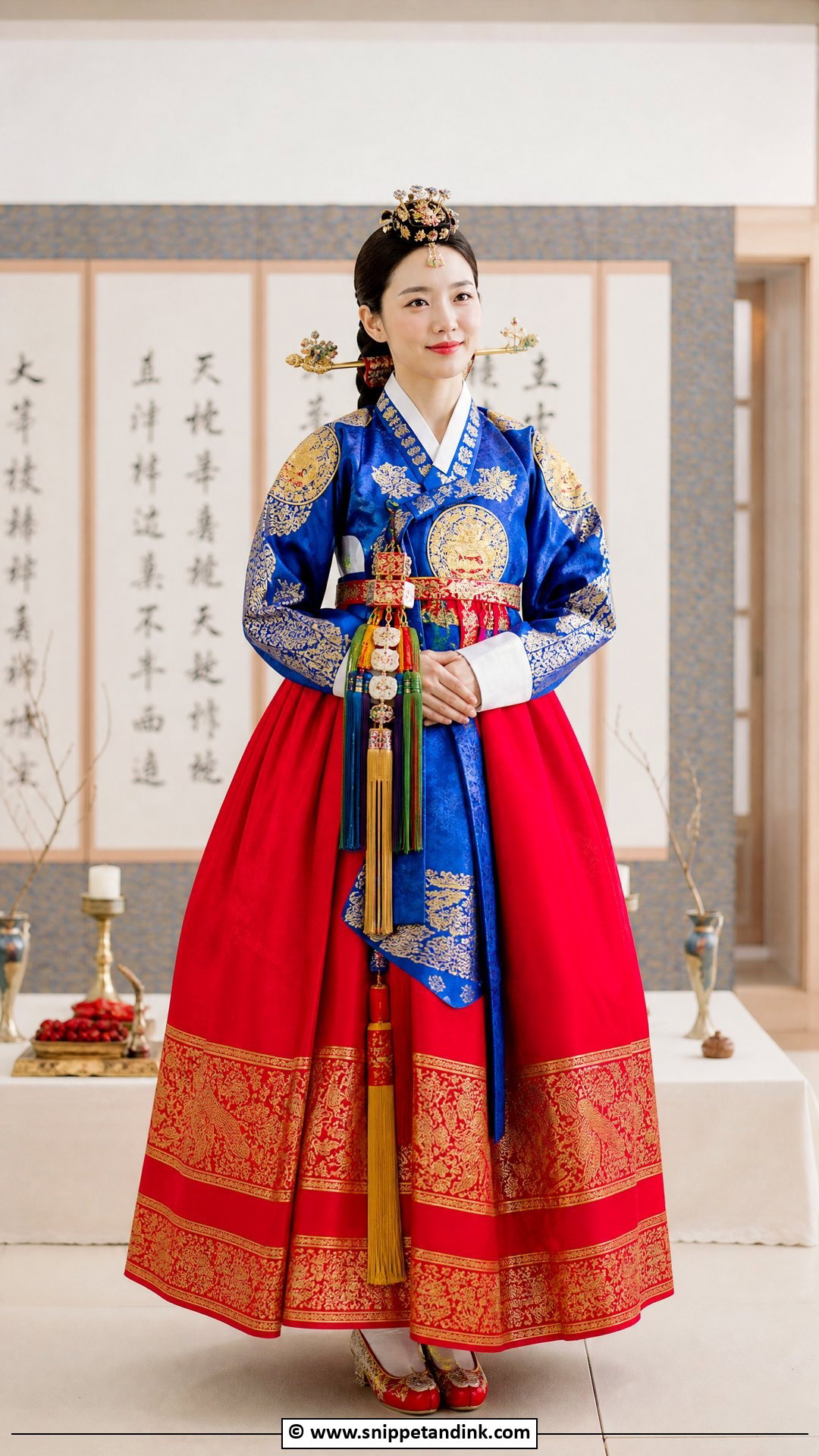
Pyebaek is the traditional family ceremony after the wedding, where the couple bows to the groom’s parents and elders, offers dates and chestnuts and receives blessings. Brides usually wear a formal hanbok in rich colors: a red or pink chima with a blue, green or gold jeogori is classic. Many add a ceremonial robe over the hanbok for the bows. The ceremony involves a deep, kneeling bow, so comfortable embroidered shoes and a secure, low hairstyle matter. It’s an outfit that carries family meaning far beyond the photos.
What the Pyebaek Asks of Your Outfit
The pyebaek is short, but it’s physical. You’ll kneel, bow deeply and rise again several times, sometimes holding the skirt open at the end to catch dates and chestnuts thrown by the elders, a wish for children.
Ceremonial robe and headpiece
Many brides wear a wonsam or hwarot, a long embroidered ceremonial robe, over the hanbok, with a small jeweled crown called a jokduri and red dots painted on the cheeks and forehead. The robe’s long sleeves often end in white cloth panels that cover the hands during the bow. If you’re renting these, try them on with your hanbok and hair, since the crown sits on top of the bun and needs to be pinned firmly.
Practice the bow
I suggest practicing the full bow at home in the chima and shoes you’ll wear. Most brides have an attendant to help them down and up again, and it’s worth agreeing in advance how she’ll support you, so the skirt doesn’t catch under a knee and the crown stays straight.
Putting a silk hanbok away
If you own your hanbok, have it dry cleaned by someone used to silk, never ironed directly, and stored folded along its original lines in breathable cotton rather than plastic. Untie the goreum before storing, because a ribbon left knotted for months keeps the crease for good.
Hanbok, Gown or Both in One Day
There isn’t one Korean bridal look. A traditional hanbok, a modern white hanbok, a fusion gown and a reception change can all sit comfortably in the same day. Think about fabric, comfort, the meaning of each color and where each outfit will be worn. Ivory silk, pearls and lace give a classic feel; a chima, jeogori, norigae, embroidery or a pyebaek hanbok bring stronger heritage. The right choice is the one that fits your family, your taste and lets you move, bow and celebrate with ease.
You'll Like These Ideas:


Leave a Reply