
Clean bridal hair starts with what you leave out. No heavy teasing, no oversized accessories, no twists stacked on twists: just a smooth bun, a simple ponytail, neat waves or your own texture, shaped so it balances your face. In my experience these looks also suit more dresses than anything ornate, from silk gowns and courthouse dresses to garden ceremonies with a veil or bare shoulders. Long or short, curly or straight, fine or thick, there’s a version below for you, and I’ve noted what each one needs from your hair.
Why Sleek Styles Start to Ache by Dinner
Minimal styles often feel worse than big ones by evening, which surprises a lot of brides. A sleek bun or high ponytail relies on tension to stay smooth, and a steady pull on the scalp for ten hours leaves the roots aching and, for some people, brings on a headache.
How I take the pull out
- Smooth with product, not force. A smoothing cream and a good brush get hair flat without dragging it tight.
- Two moderate elastics instead of one cranked as tight as it goes, so the load is shared.
- Fewer pins, slid along the scalp rather than jammed in, and only where they actually carry weight.
- A trial worn for at least four hours. If your scalp is sore by then, it will be worse on the day.
Tender scalps, recently installed extensions and fine, fragile hairlines all need a gentler version. A low ponytail or a loose chignon gives the same clean outline with far less strain.
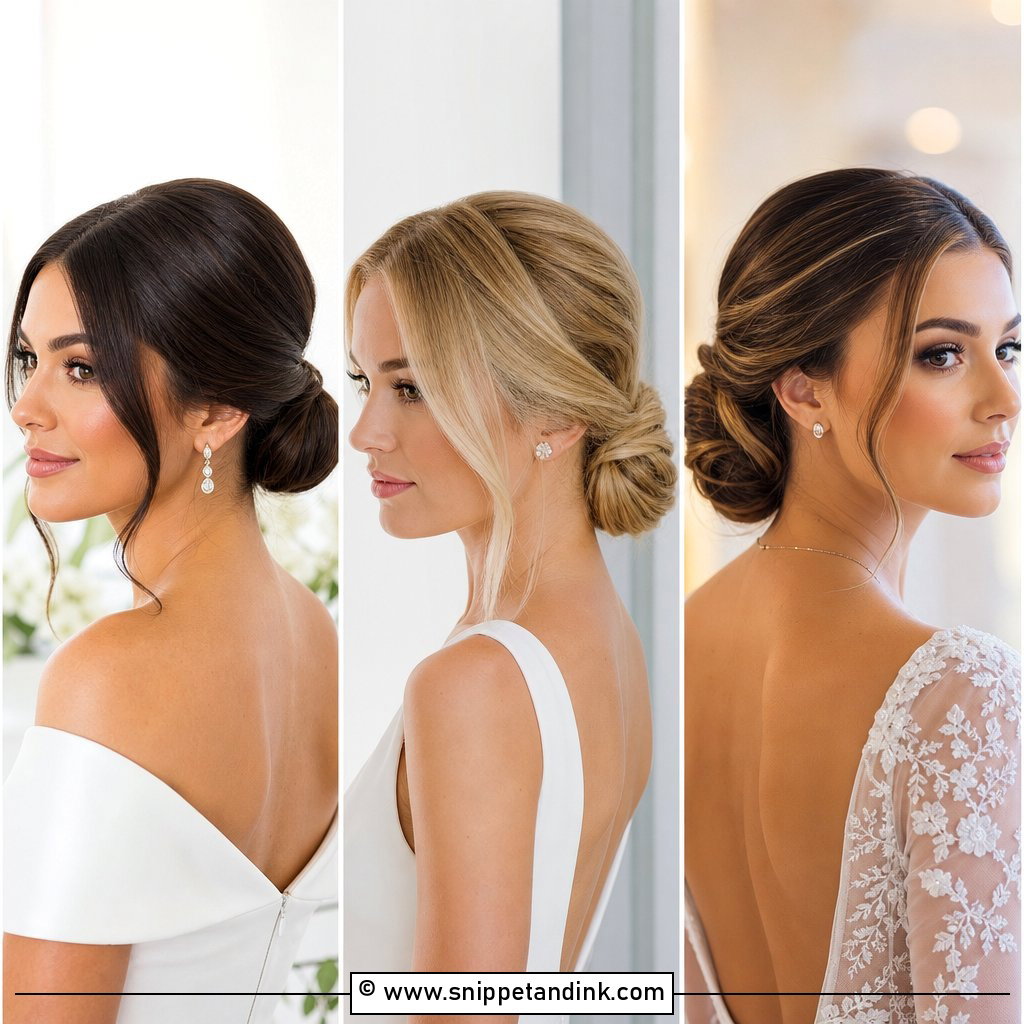
1. Sleek Low Bun Wedding Hair
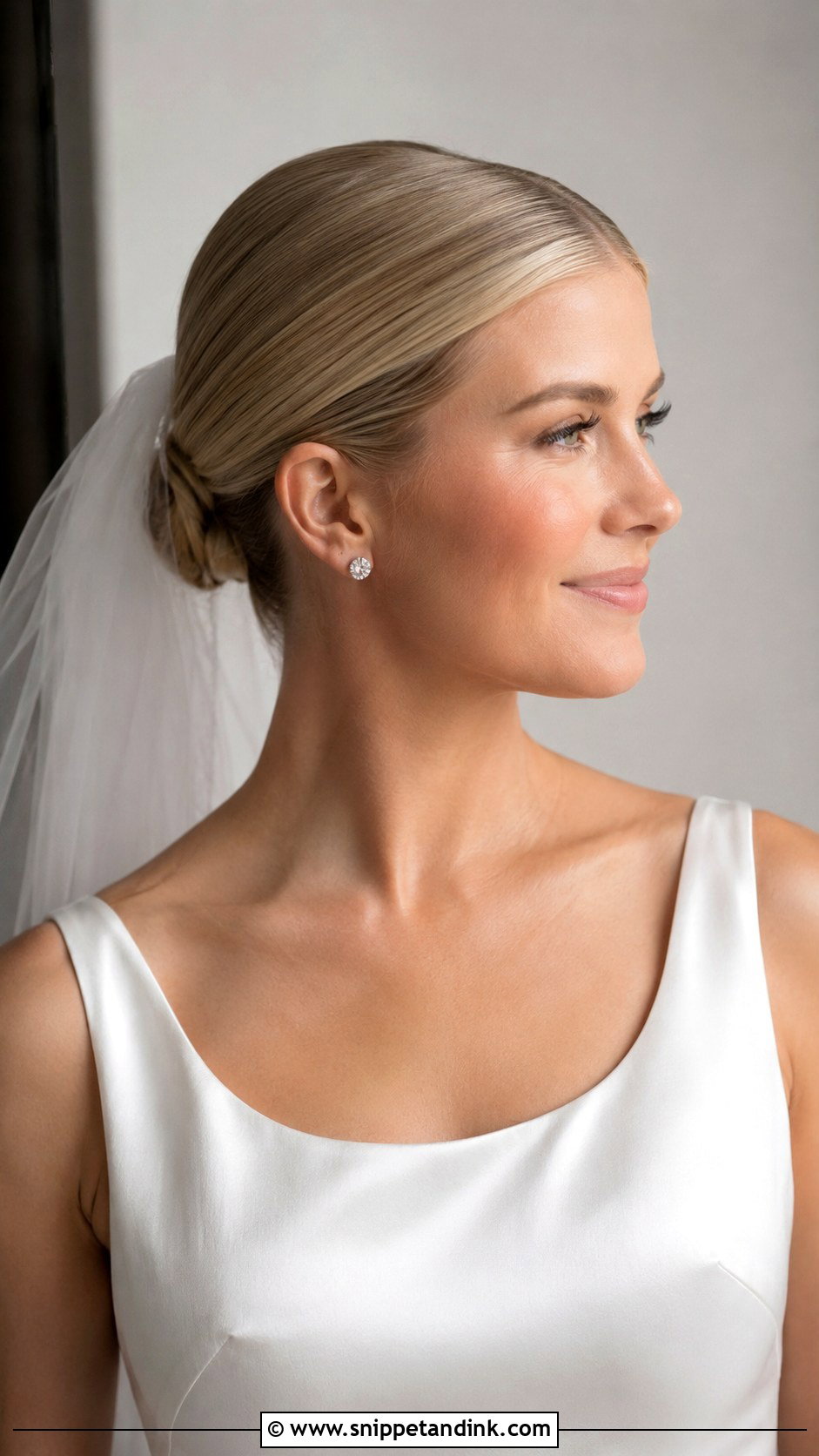
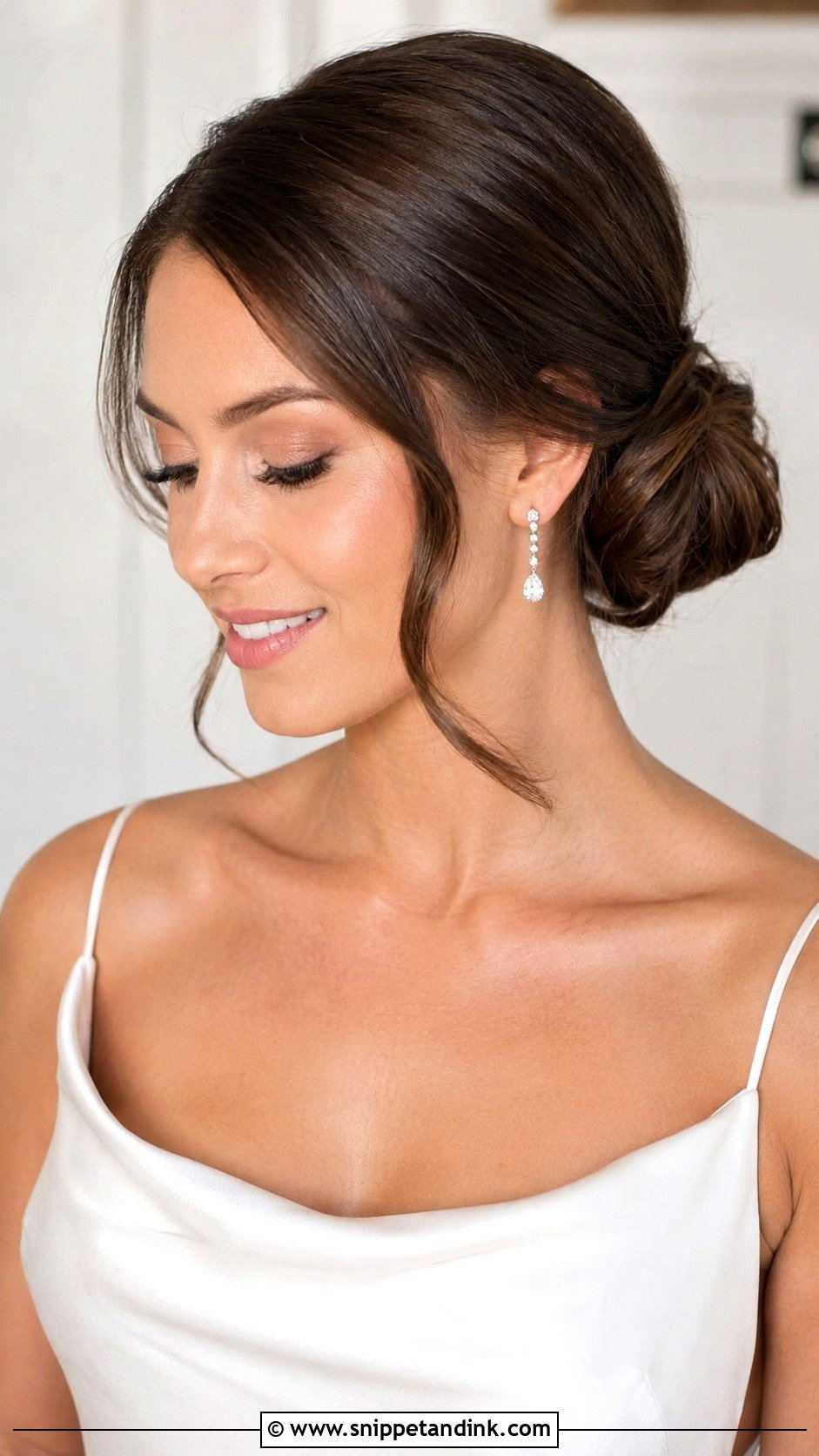
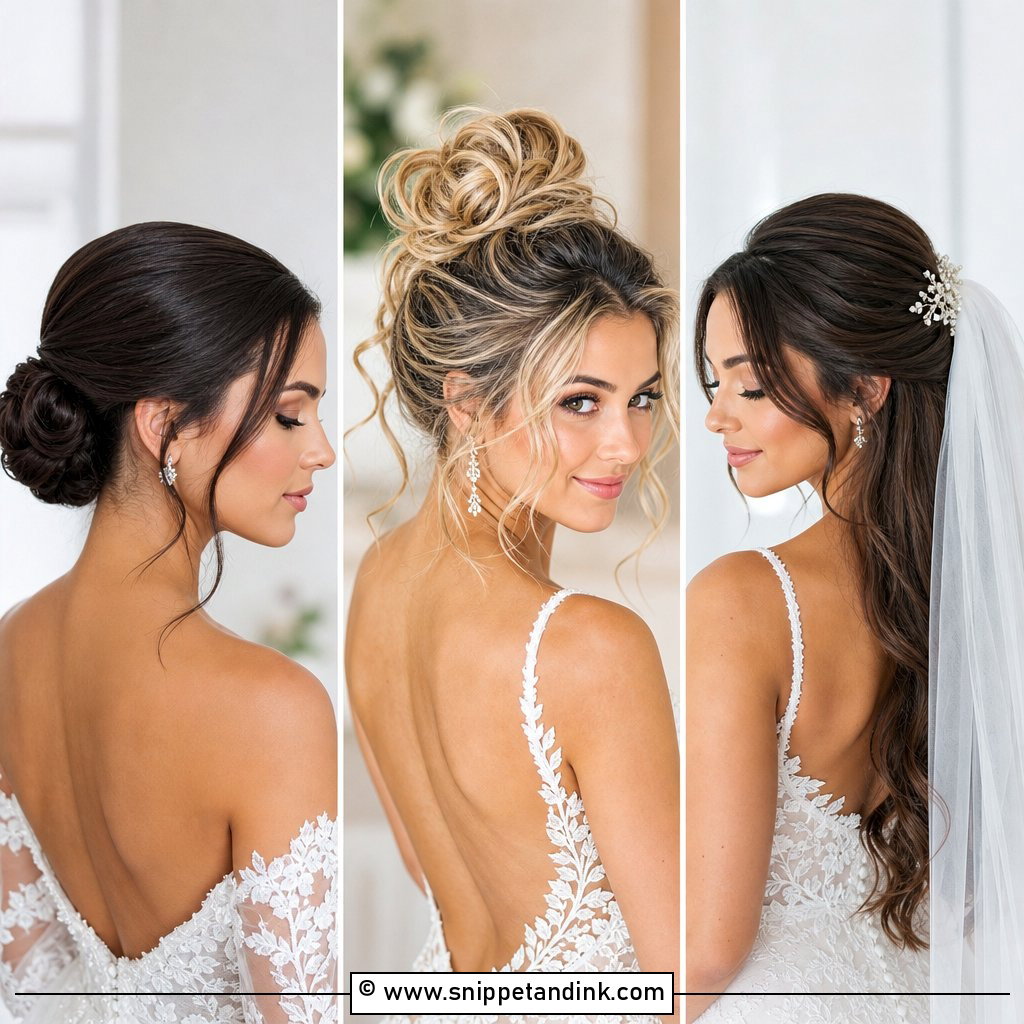
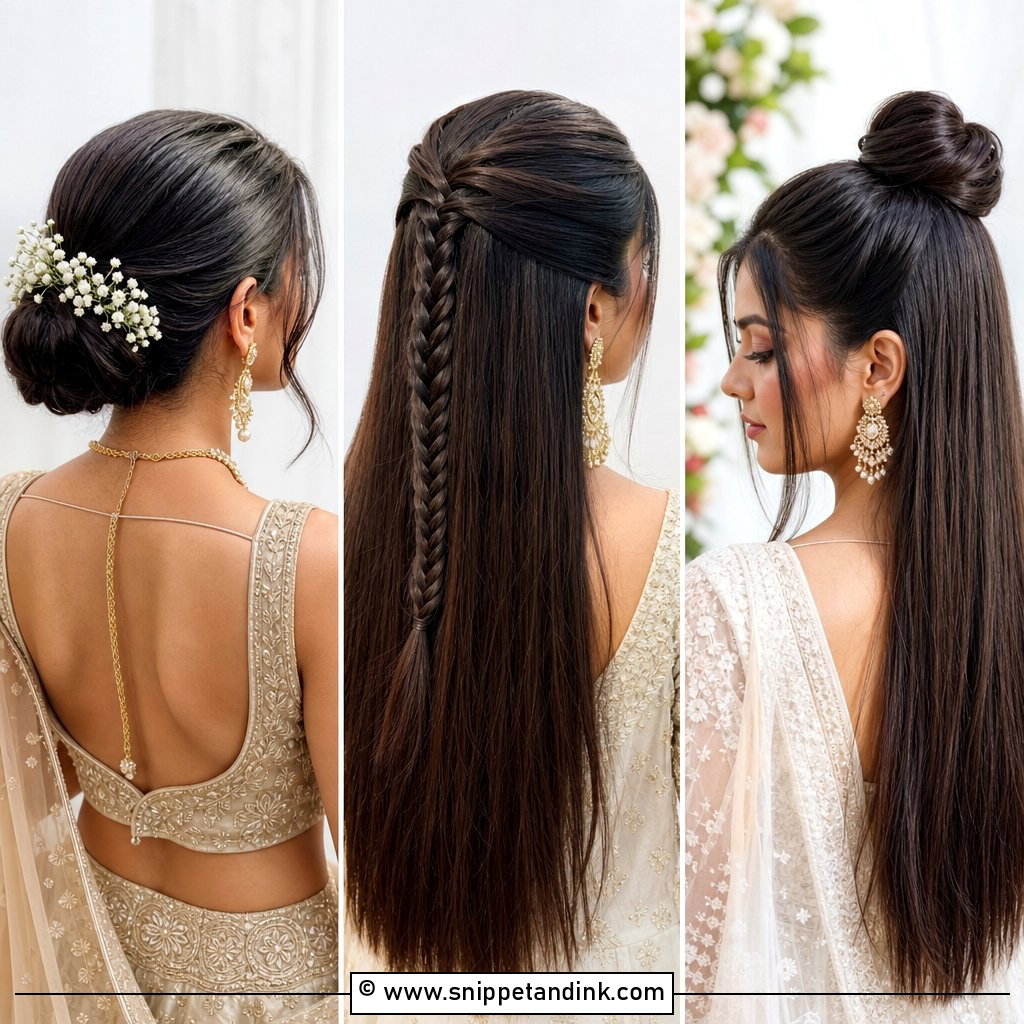
The appeal of a sleek low bun is that it gets out of the way, so your face, neckline and dress details take the attention. My worry with it is always the nape. Short hairs there escape by the end of the night, so I smooth them with a little gel and a crossed pin before building the bun. Center part for modern, soft side part for romantic. Veils, high necks and square necklines all sit well with it. Ask for strong hold that still moves when you touch it; a crunchy shell cracks and flakes by the dancing.
2. Center Part Chignon Wedding Hair
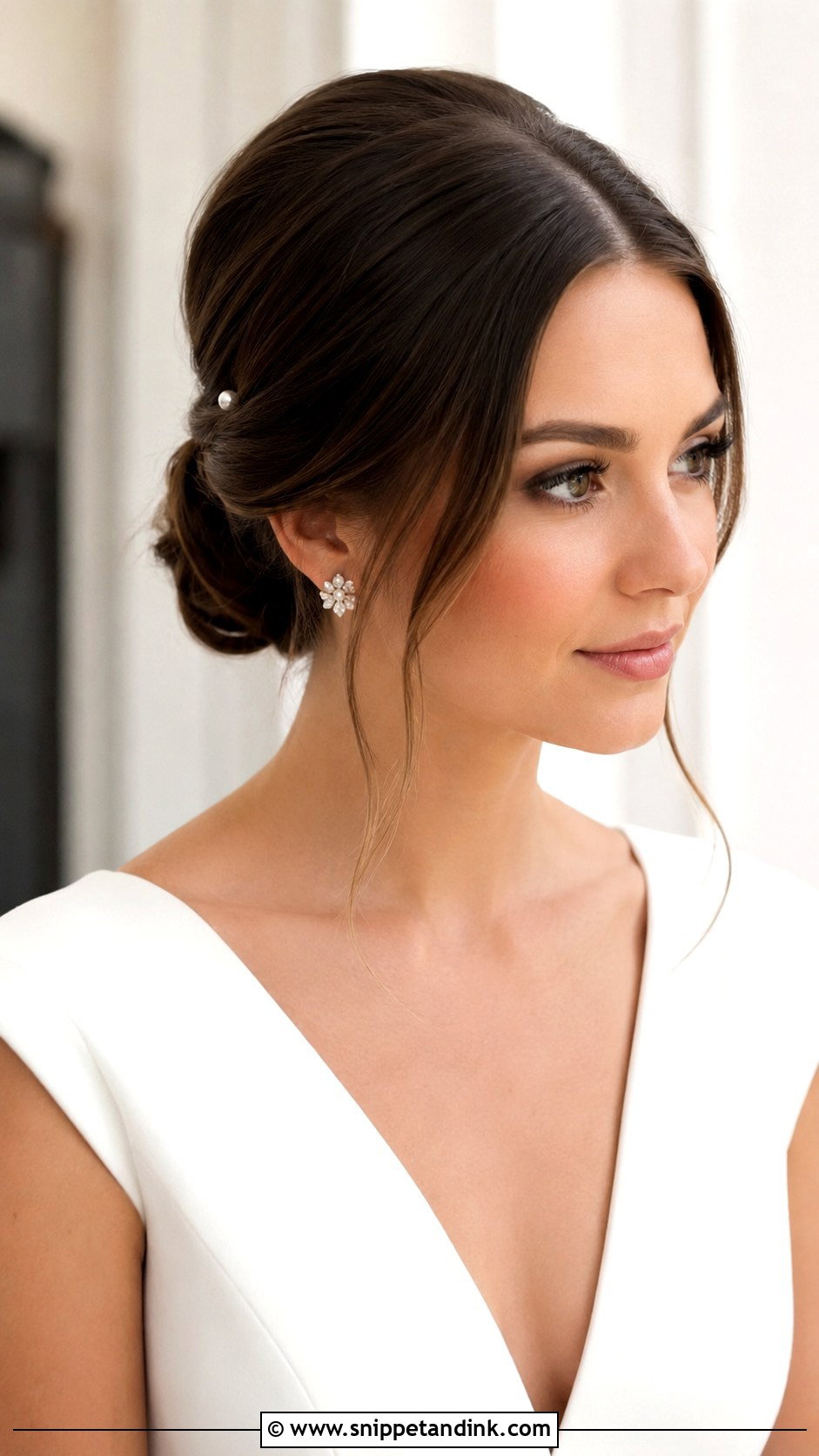
A center part with a tucked chignon looks quietly expensive, and it’s one of the more forgiving shapes on oval, heart, and round faces because symmetry does the flattering without extra volume. The part has to be truly straight, which I check by standing behind and above the bride, never in the mirror. Medium to long hair tucks best. Curve the front pieces slightly toward the cheeks for softness, and stop at one accessory: a pearl pin, a thin veil comb, or none.
3. Soft Low Ponytail Wedding Hair
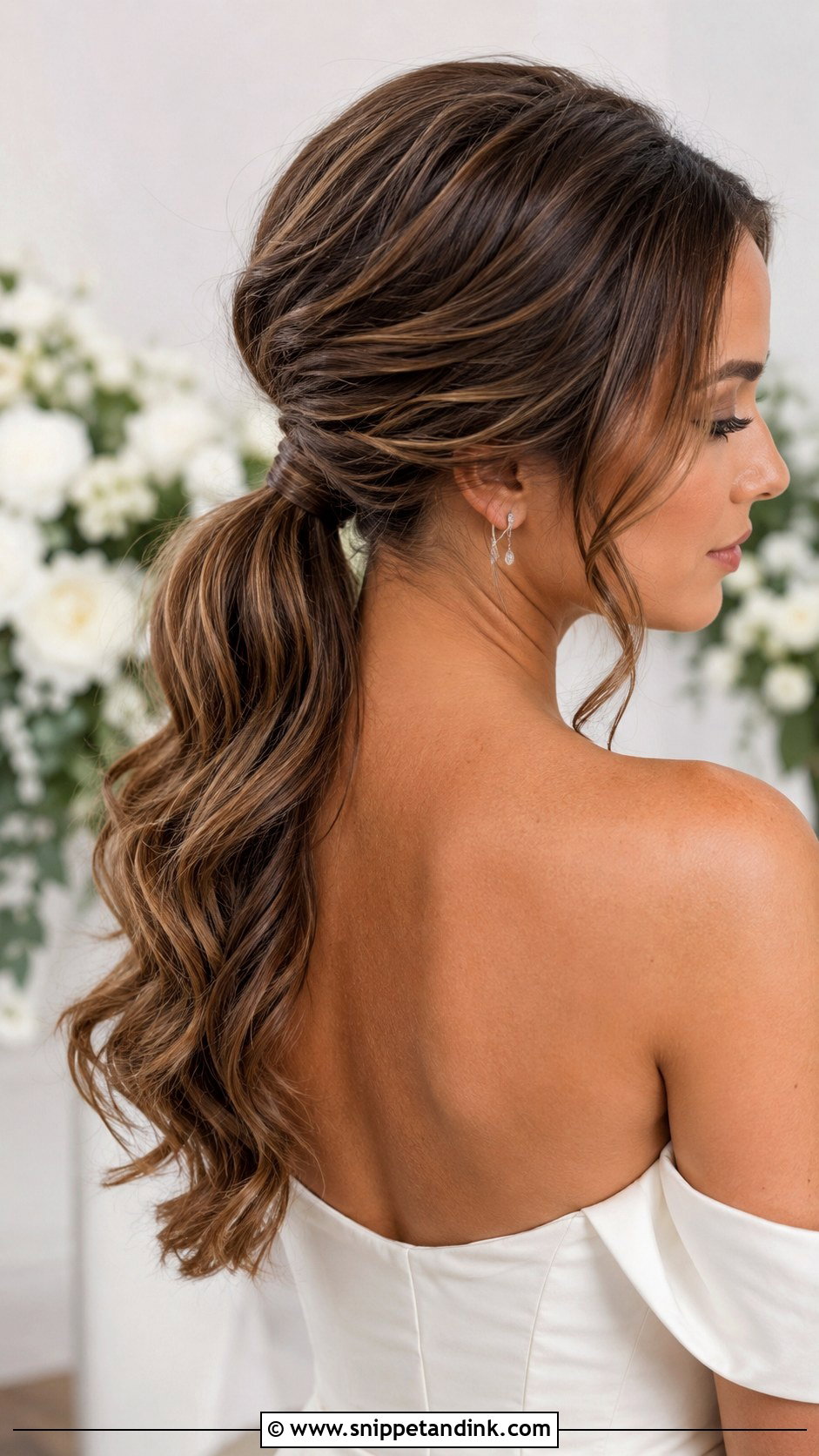
Comfort is why so many brides land here. It’s off the face, yet nothing presses into your scalp the way a heavy bun can after hours. I hide the elastic under a wrapped section and run light waves through the ends so it doesn’t look like gym hair. Open-back gowns are its best partner, since the ponytail draws a line straight down the spine. Off-shoulder and plain satin silhouettes suit it too.
4. Sleek High Ponytail Wedding Hair
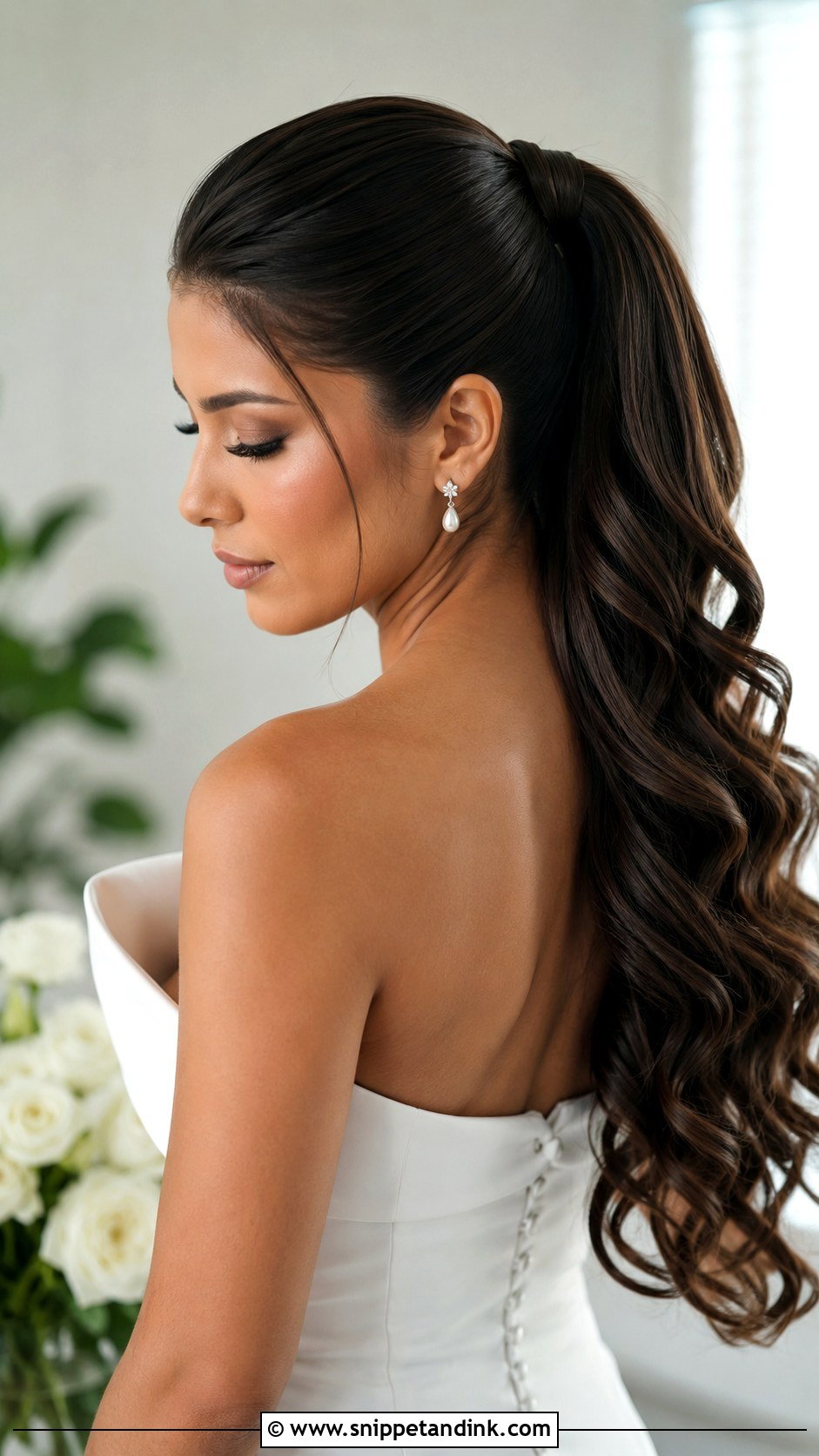
Placement is everything with a high ponytail. Too low and it reads casual; right at the crown line, it lifts the face and shows off the cheekbones. I find that spot by tilting the bride’s head back slightly and brushing everything up before securing it, which keeps the nape tight once she straightens. The top should be glossy, the tail straight, waved or curled at the ends, and the base wrapped. Fine hair benefits from a clip-in ponytail piece for fullness. One catch: a high pony fights most veil combs, so a short veil set below it, or wearing it only for the reception, tends to work better.
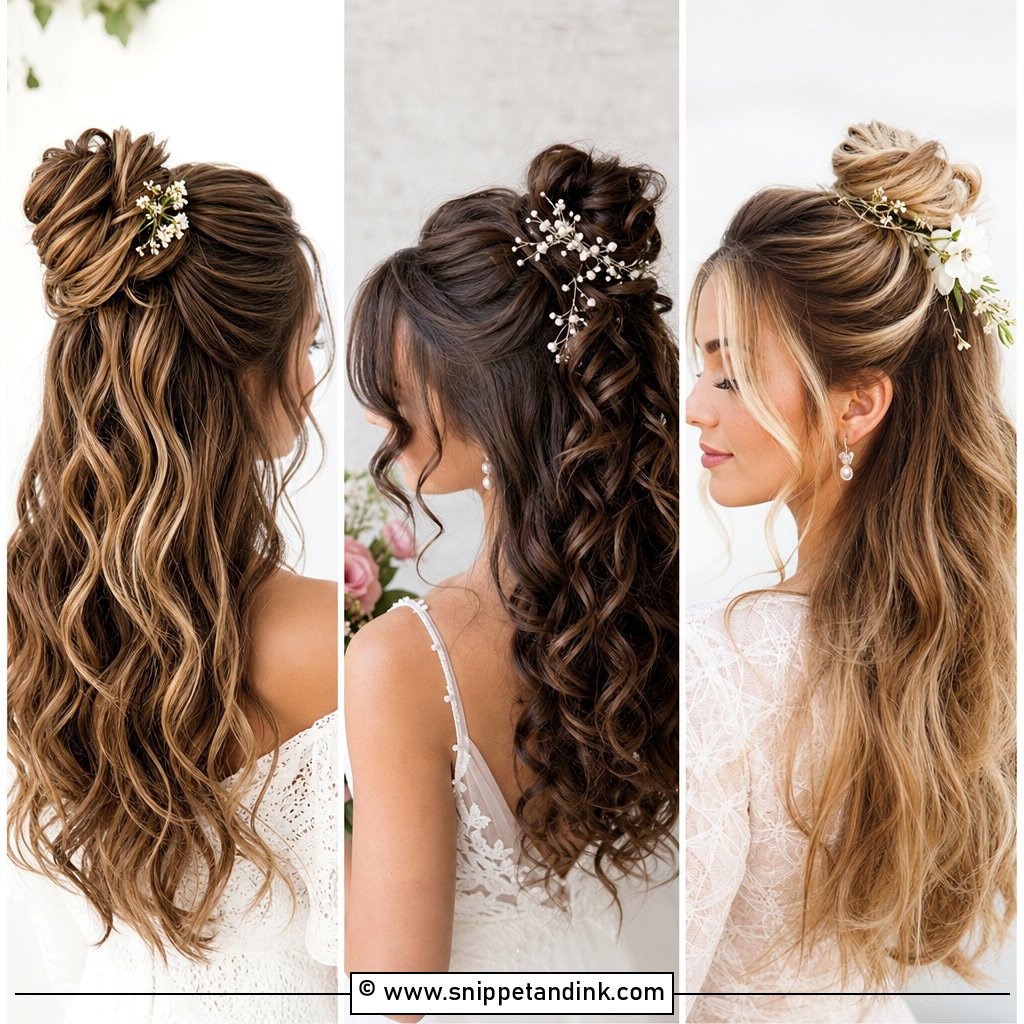
5. Half Up Wedding Hair
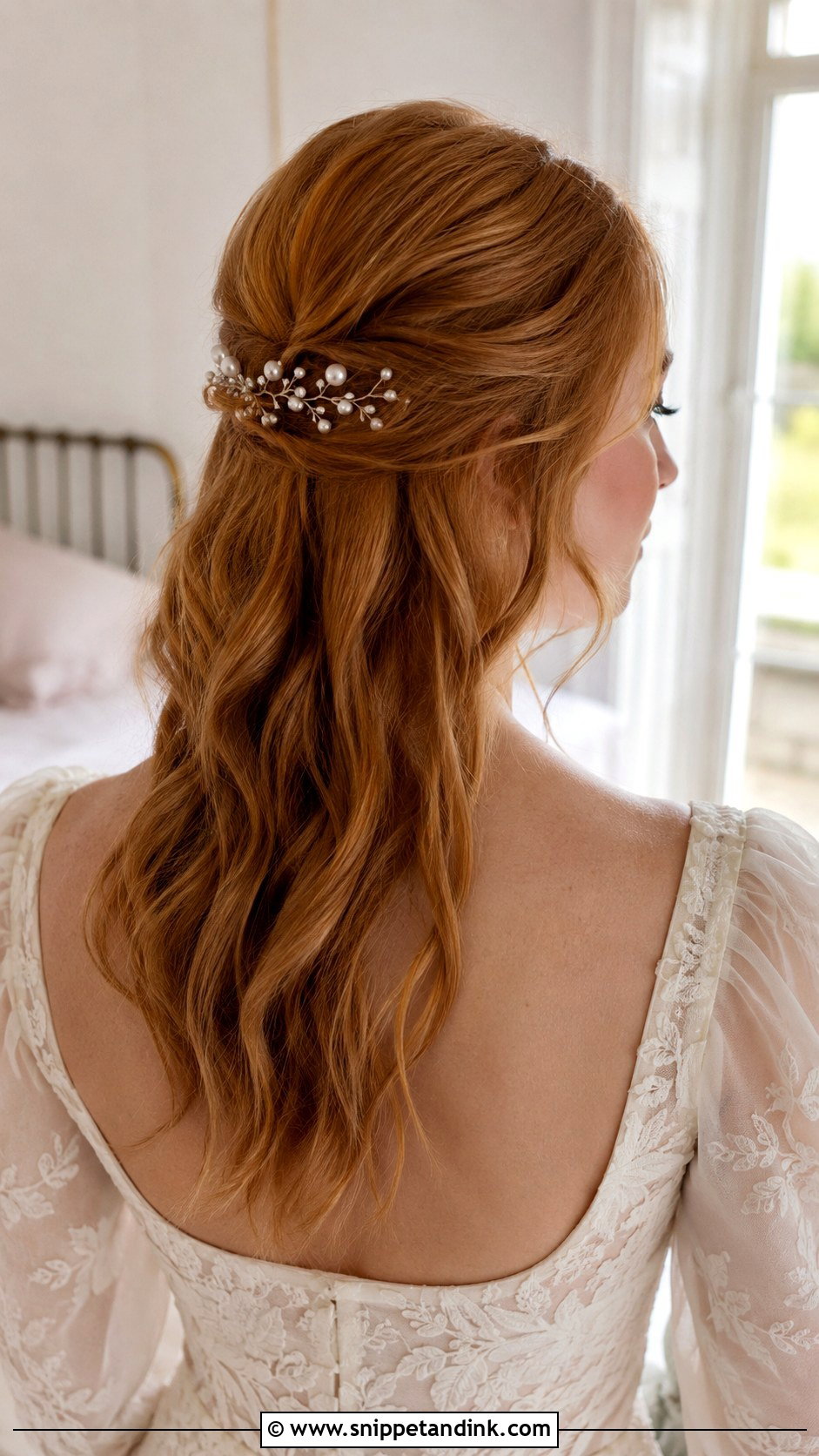
This middle ground suits brides who feel exposed in a full updo but want more control than loose hair gives. The top section comes back gently, and the rest stays down in smooth waves or natural texture. For the minimal version I skip twists and big accessories: clean crown, soft part, pinned section low and flat. The pinned section is where the style lives or dies, so I secure it with crossed pins under the elastic rather than trusting one barrette. Veils, small pearl combs and fine pins all hold well in it.
6. Straight Down Wedding Hair
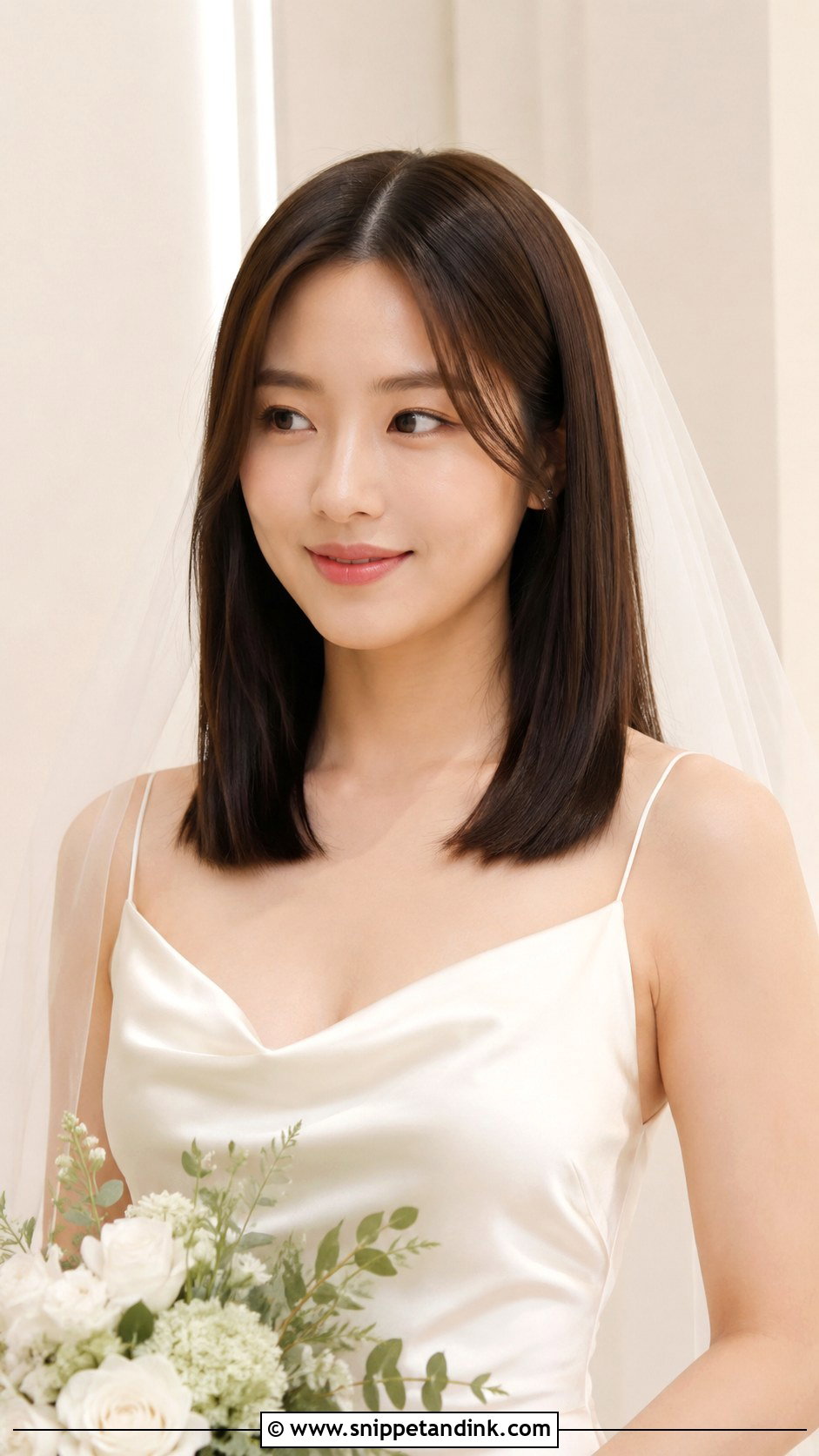
Straight hair worn down isn’t flat hair. What makes it bridal is shine, healthy ends, a clean part and a soft bend at the bottom that frames the face. If your hair is naturally straight, this is the look that will feel most like you, and that counts for a lot on a long day. Slip dresses, courthouse gowns and statement earrings all suit it. I put an anti-frizz product on damp hair and finish with only a light spray; anything heavier makes straight hair separate into strings by evening.
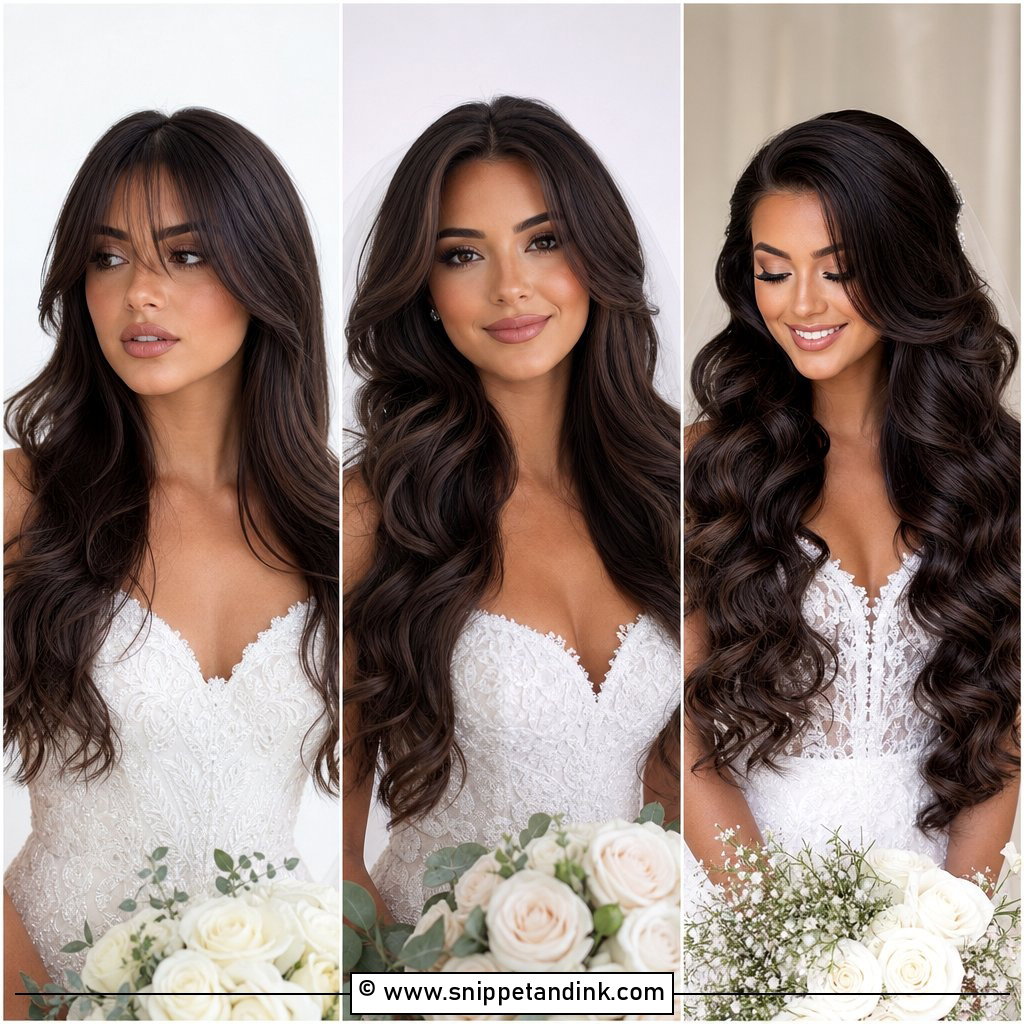
7. Soft Waves Wedding Hair
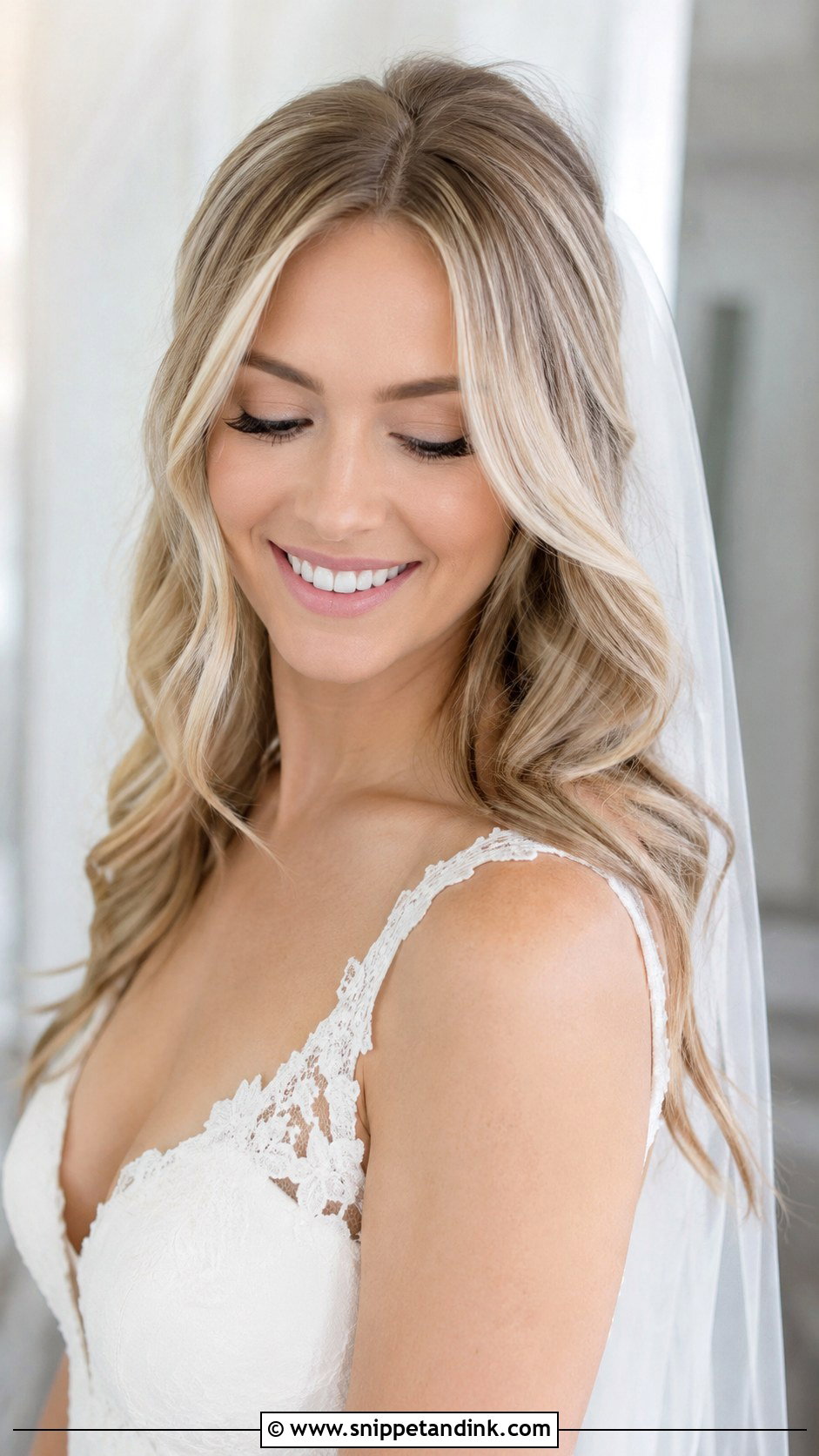
Waves stay minimal when they’re controlled, not overly beachy. I keep them loose and brushed out, and I’d rather they look slightly too smooth at two in the afternoon than frizzy at nine at night. Long, medium and layered cuts all hold the movement, and mousse or texture spray before curling gives them grip. A simple veil, pearl earrings and a gown with clean lines keep the whole picture quiet.
8. Hollywood Waves Wedding Hair
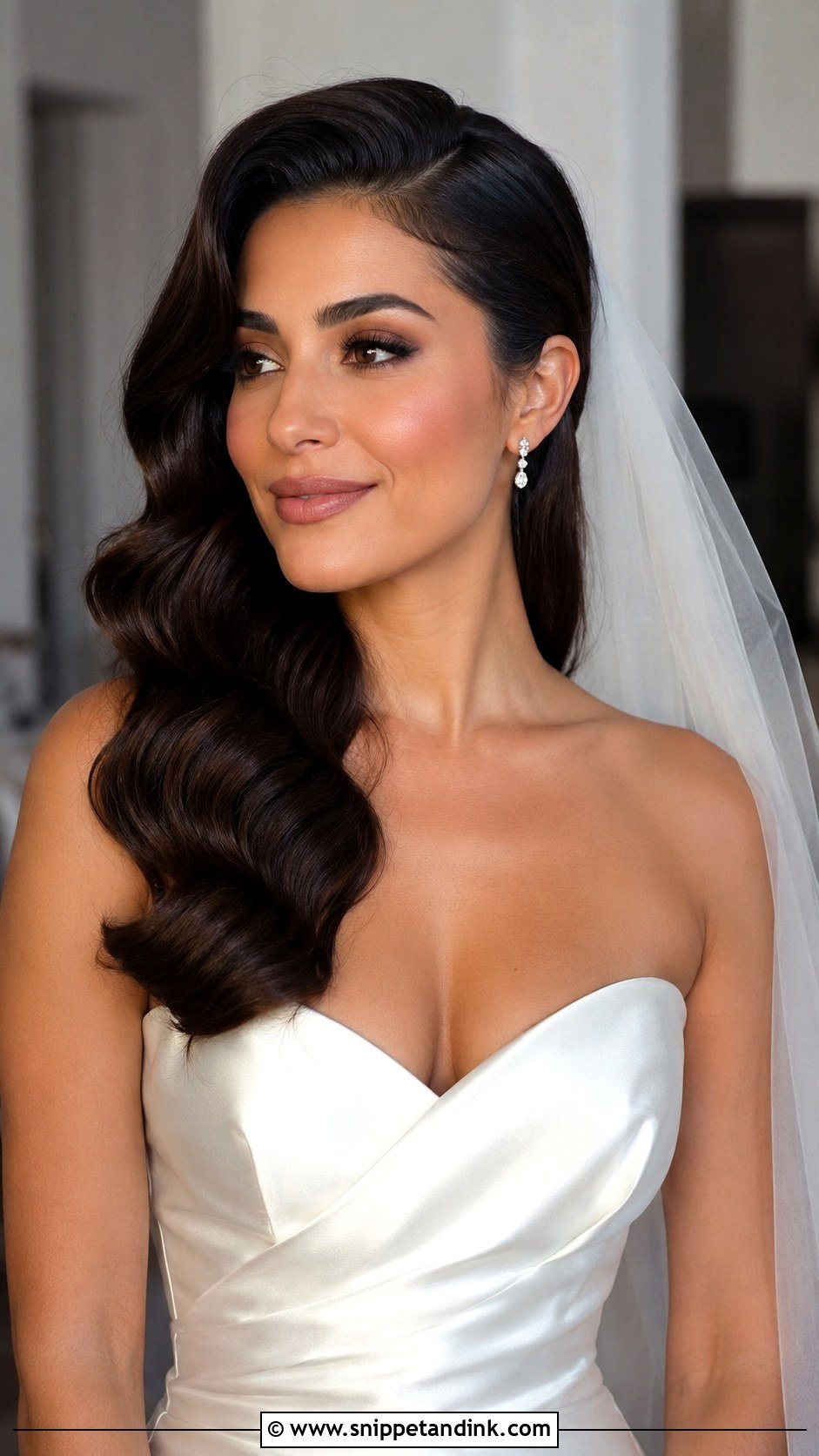
Hollywood waves sit at the polished end of minimal: uniform, glossy and usually set from a deep side part. The technique is all in direction. Every curl goes the same way, then I brush them into one connected S-shape and press the ridges with clips while the spray sets, which makes them sturdier than they look. Strapless gowns, satin and simple column silhouettes suit them. Keep the crown low and the shine soft so it reads modern rather than costume.
9. Minimalist French Twist Wedding Hair
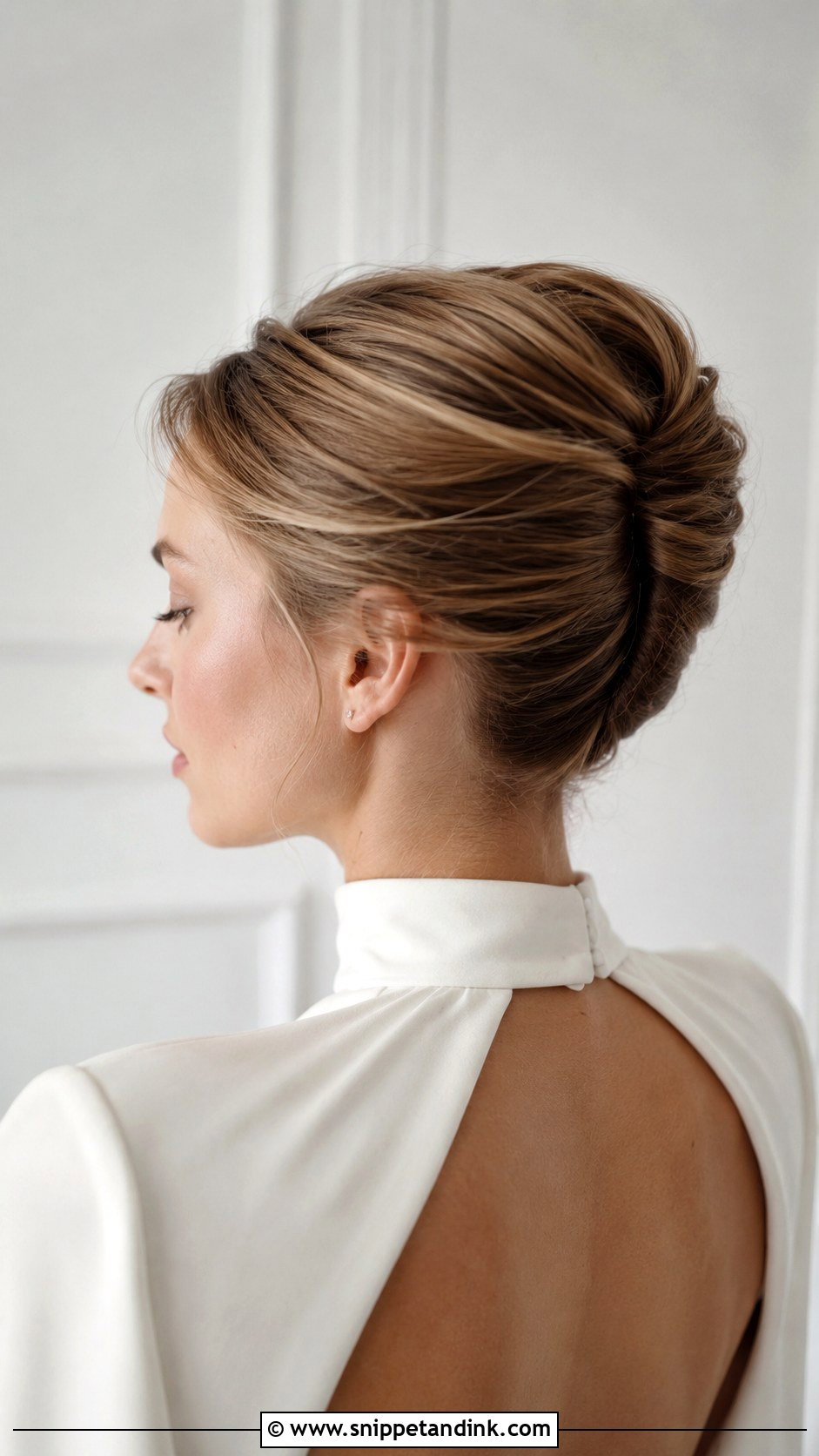
My modern French twist is softer at the front than the formal kind: a smooth side part or relaxed face framing, then the hair swept up into a clean vertical roll. Medium and long hair have enough length to fold. Hidden pins along the seam do the holding, and if I can see a pin, I’ve placed it wrong. Open backs and high necklines show off that vertical line from behind. Tiny accessories or none, so the twist stays the detail.
10. Clean Top Knot Wedding Hair
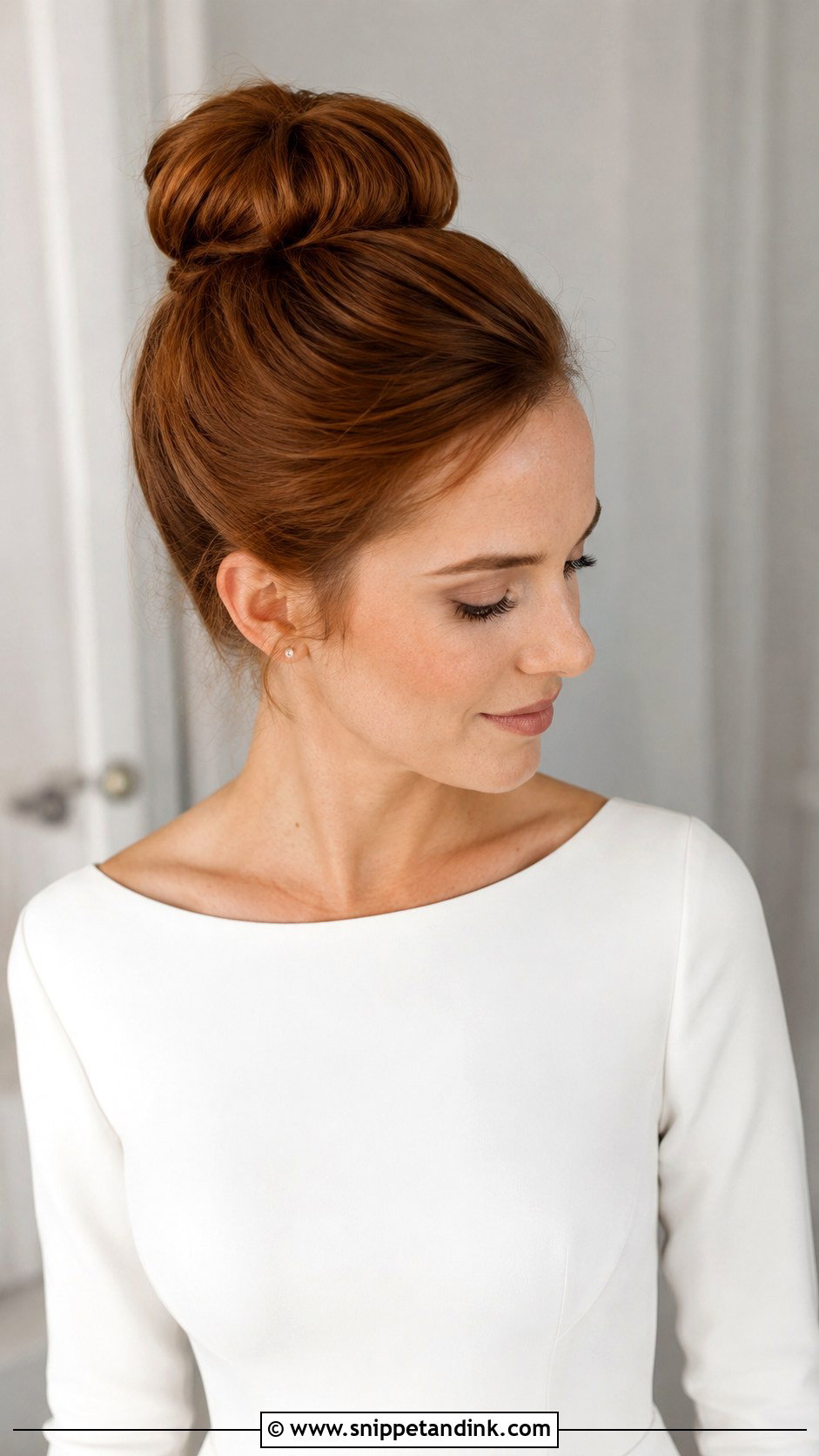
A top knot gives height and a completely clear neckline. Because it adds vertical length, it balances rounder faces and keeps longer ones in proportion if it isn’t set too high. Smooth sides are essential, since any bump at the crown shows from the back. The knot can be round, twisted or softly looped. With a long veil, I place the comb under the knot rather than in front of it so the tulle falls from behind. On very fine hair a top knot can look small, and a bun filler solves that.
11. Low Braided Bun Wedding Hair
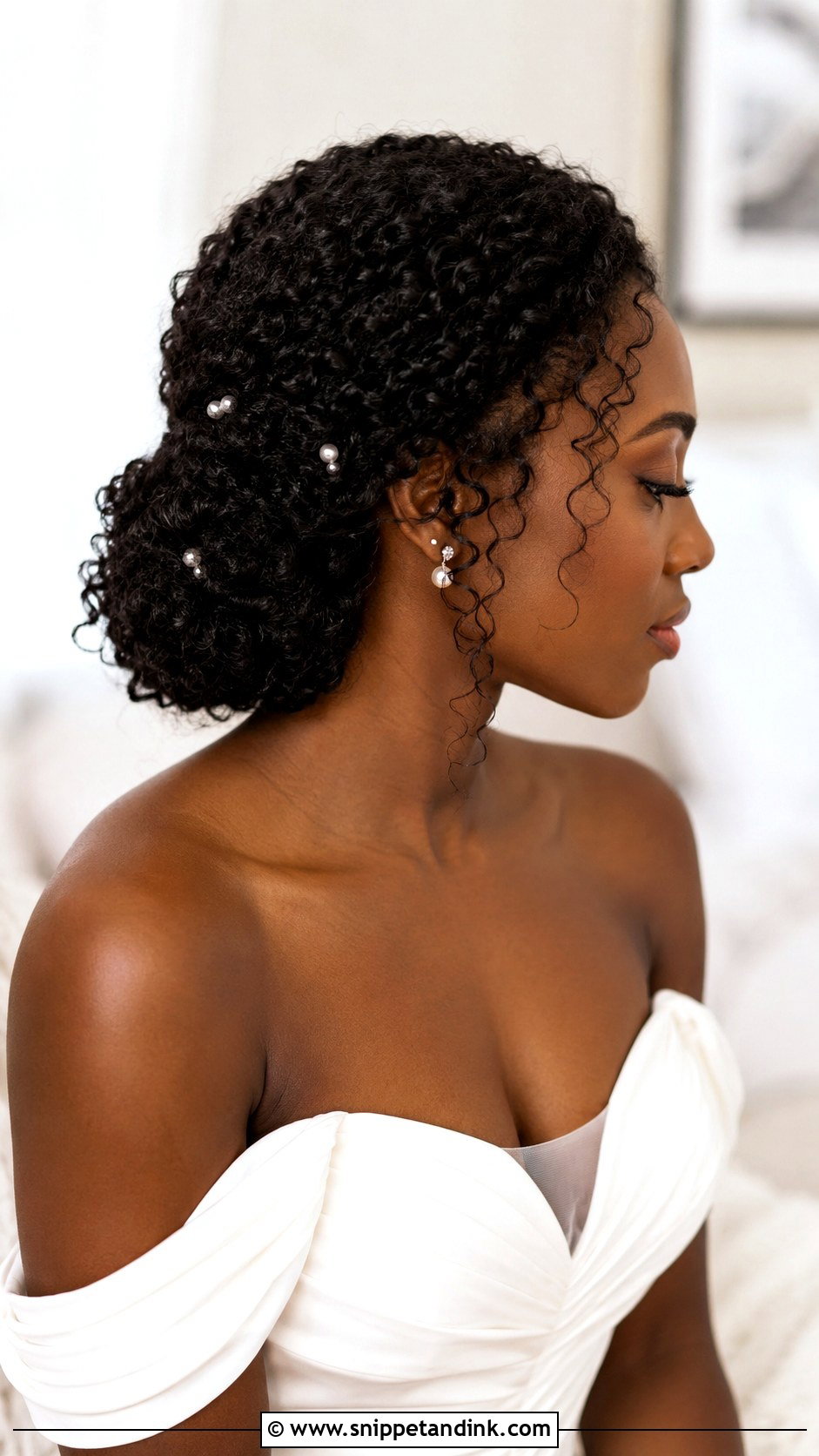
A braid inside a low bun adds texture without breaking the minimal mood, as long as it’s a small, flat braid and not a chunky one. Weave it through the bun, wrap it around the base or tuck it in. For thick hair it’s genuinely useful: braiding compresses the bulk so the bun ends up a sensible size. It also stands up to wind at outdoor weddings. Keep the front smooth with a middle part, side part or soft framing, and finish with a tiny pin or a simple veil comb.
12. Side Part Low Bun Wedding Hair
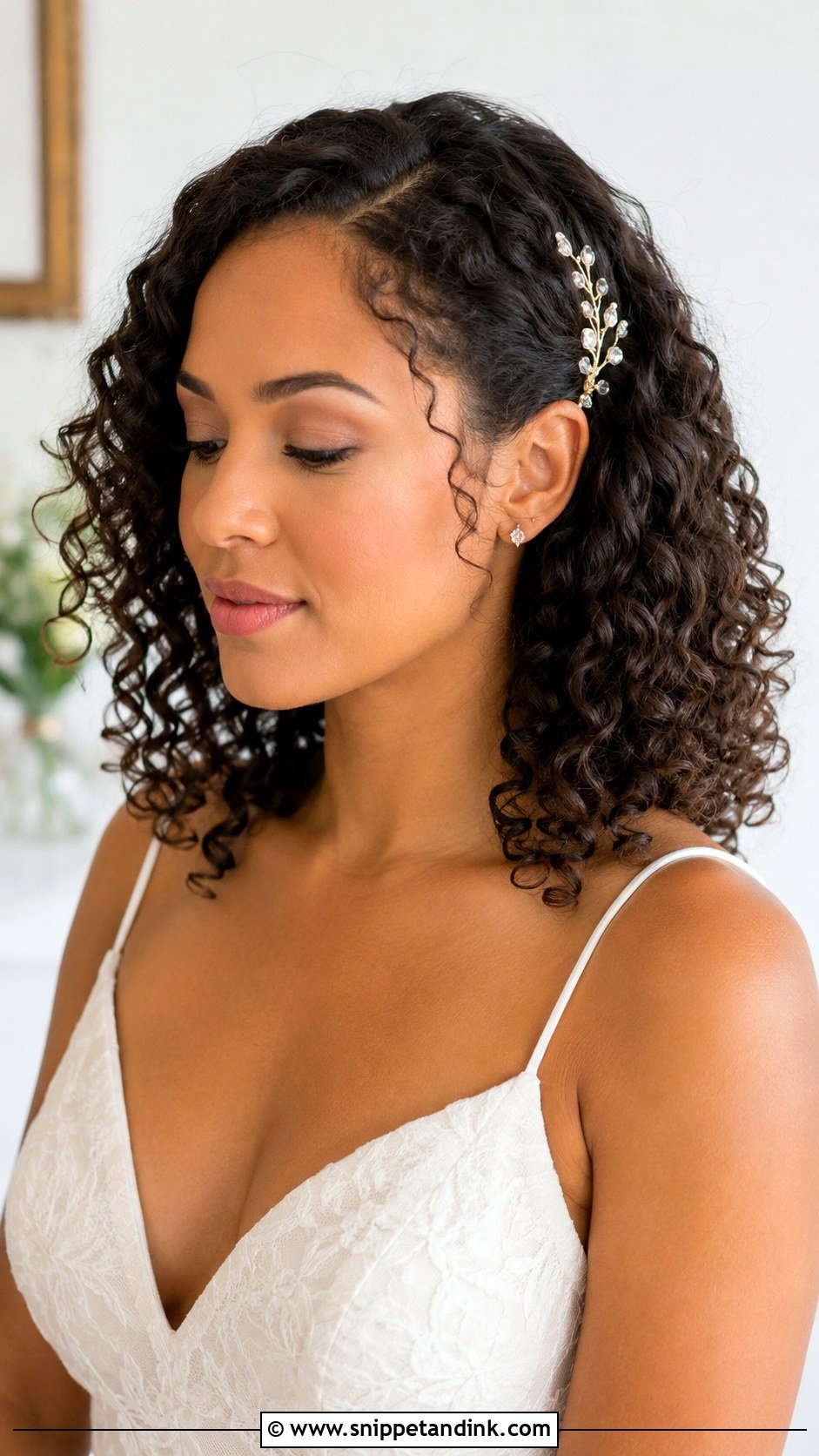
If a center part looks too severe on you, moving it to the side is the smallest change with the biggest payoff. It puts movement around the face and softens the sleekness. The bun stays low at the nape, smooth, tucked or lightly twisted. A side part can also balance asymmetric dress details; with a one-shoulder neckline, I usually sweep the hair toward the bare shoulder. Drop earrings show well. Ask for a little softness at the hairline so nothing looks dragged back.
13. Curly Low Bun Wedding Hair
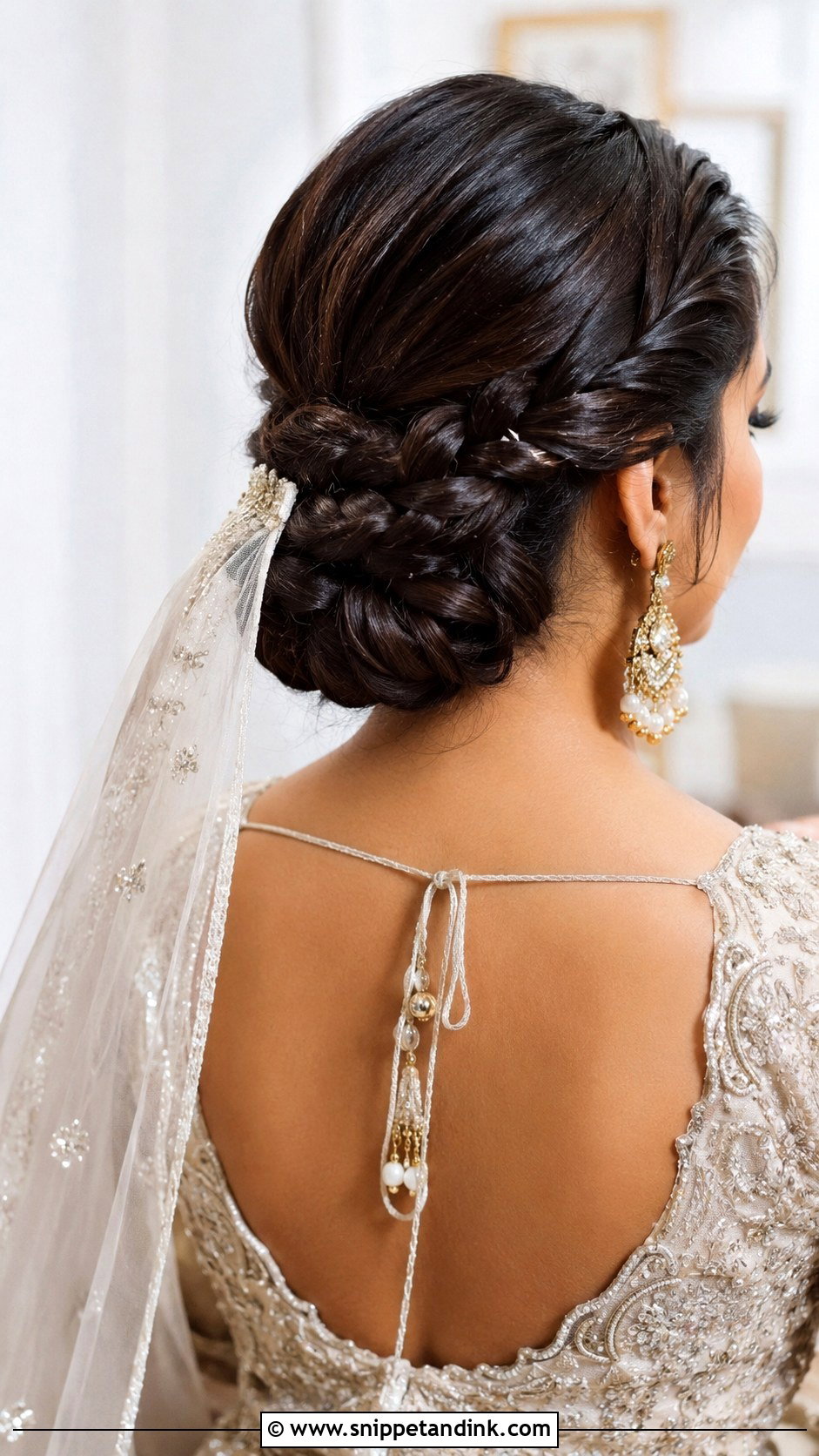
A curly bun should keep the curls, not flatten them into a sleek shape. I gather the hair gently, often with a soft scrunchie or pins rather than a tight elastic, so the pattern stays visible inside the bun. The front can be smoothed, parted or left with a few curls around the face. Hydration in the days before matters more than anything I do on the morning, because defined, shiny curls are what make the bun look intentional instead of frizzy. Simple gowns, pearl pins and soft veils sit well with it.
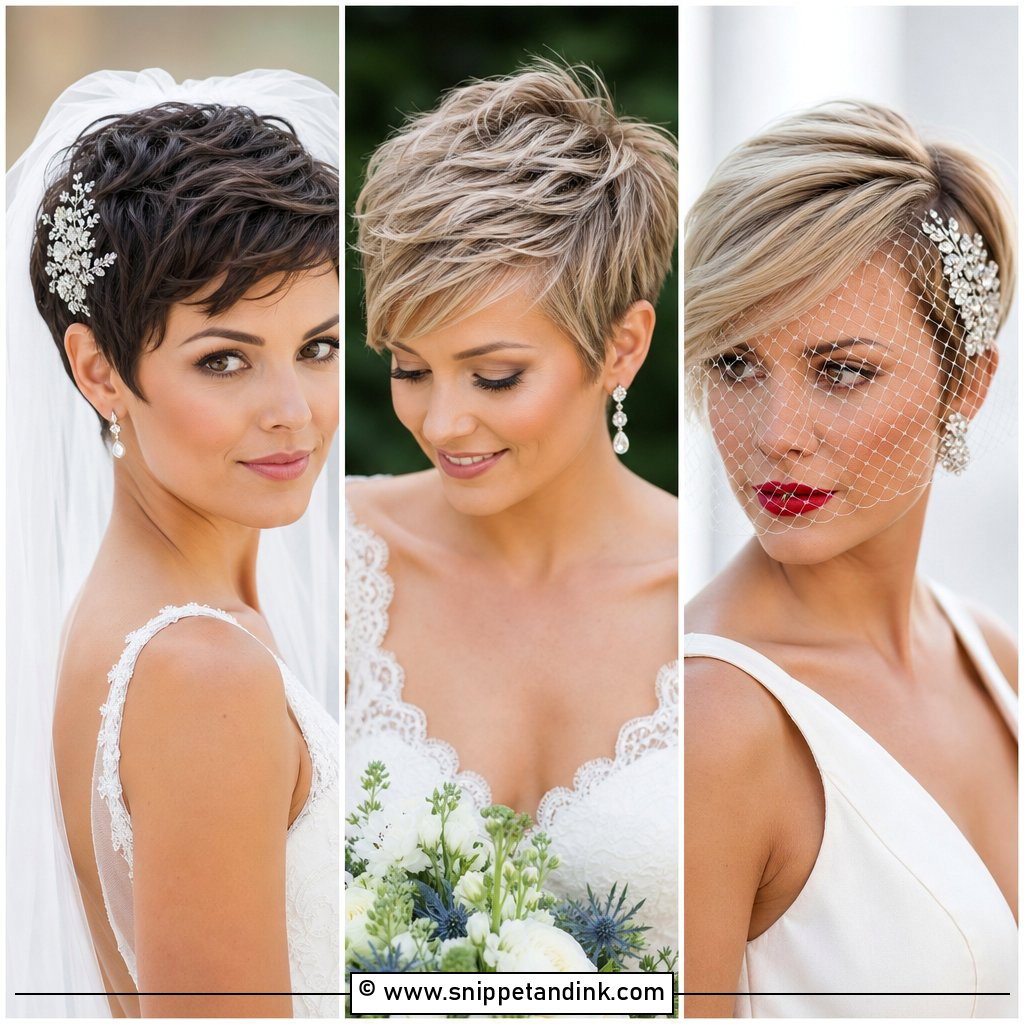
14. Short Bob Wedding Hair
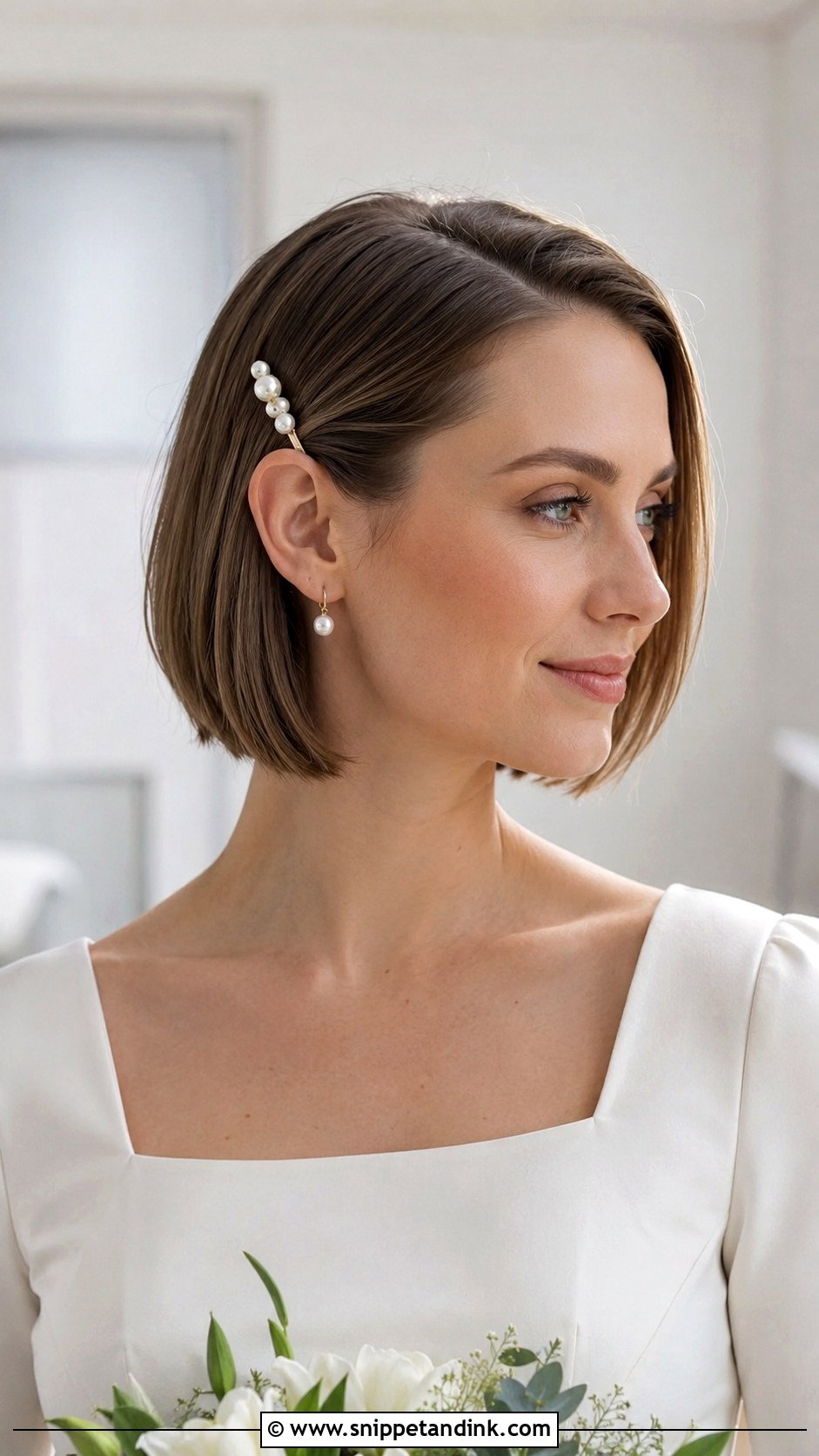
With a bob, the cut does the styling, so the trim is the appointment that matters. I’d book it a week or two before so the ends sit neatly without looking freshly chopped. A smooth bob with a clean part looks modern; a softly waved one reads more romantic. Small pieces scale nicely to short hair: birdcage veils, simple clips and pearl pins. No extensions, no updo, nothing between the face and the dress.
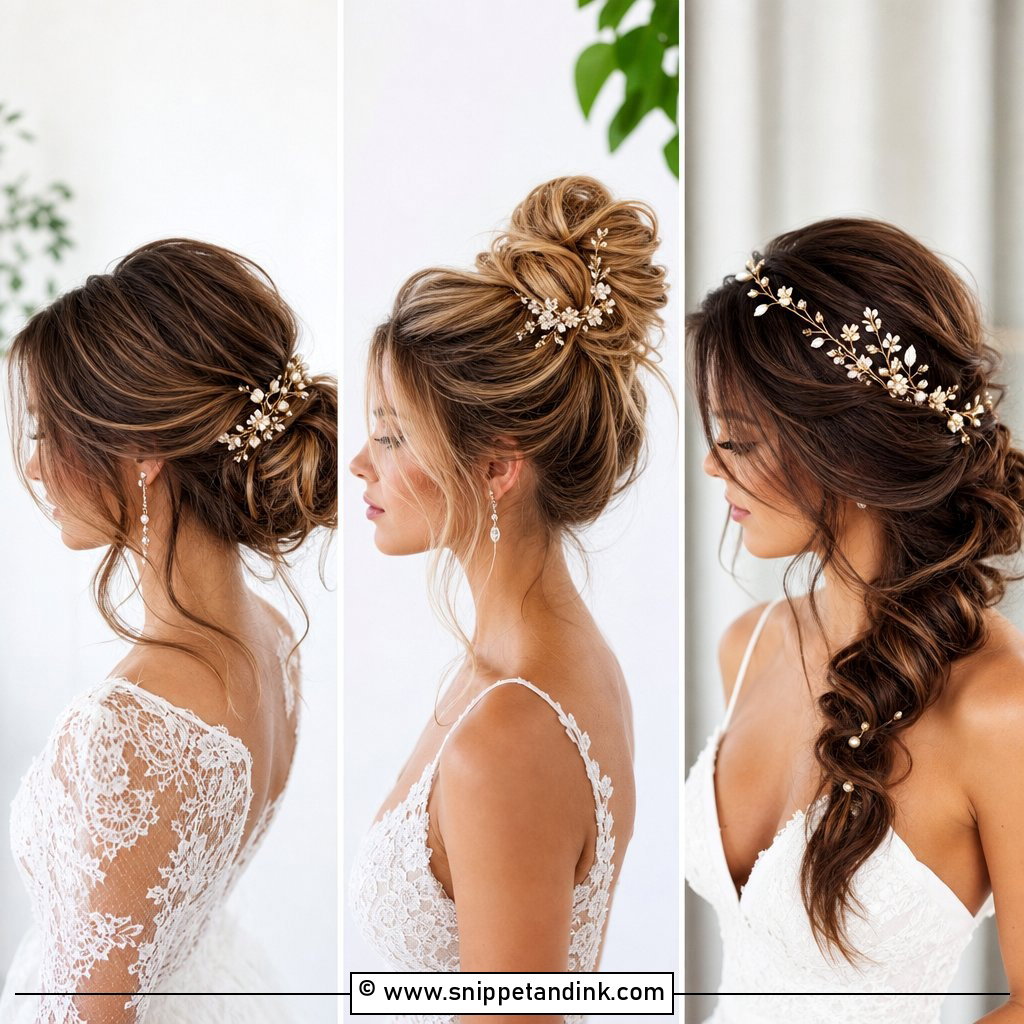
15. Natural Texture Wedding Hair
Natural texture can be worn down, half up or softly pinned back depending on your curl pattern and neckline. The aim is definition and healthy shine, not forcing the hair into a texture it doesn’t have, and a clean part, neat edges or a few hidden pins are enough to make it bridal. That holds for waves, curls, coils and textured hair at every length. The practical part is timing. Plan wash day so the hair is fully dry and settled, because hair still damp at the root will shrink and change shape during the ceremony.
Could a Friend Do These at Home?
Some of these are realistic for a confident friend, or for you, especially for a small ceremony. Others really do need trained hands, mostly because of how they’re anchored rather than how they look.
Manageable with practice
- The soft low ponytail with a wrapped base.
- Straight hair worn down, if you already own a good flat iron.
- A simple half-up held with crossed pins and a barrette.
- A sleek low bun, if you’ve built one before and know your hair holds pins.
Worth handing to a stylist
- Hollywood waves, which depend on setting and brushing technique.
- The French twist, where pin balance decides whether it lasts.
- A curly bun on a tight morning schedule, when there’s no time to redo it.
If you’re doing it yourself, rehearse twice, timed, wearing the outfit, and ask someone to photograph the back from a few steps away. The back is what guests watch during the ceremony, and it’s the part you can’t check properly in a mirror on the morning.
Your Hair, Edited Down to What Matters
Clean bridal hair doesn’t need complicated work to be memorable. A smooth bun, a soft ponytail, polished waves, a tidy twist or natural texture can hold its own beside any detailed updo. What decides it is your dress, venue, hair type, face shape and how comfortable you want to feel at midnight. Bring clear photos to your trial, then listen when your stylist tells you something won’t hold in your hair. The right style stays put, photographs cleanly and lets you stop thinking about it.
You'll Like These Ideas:


Leave a Reply