
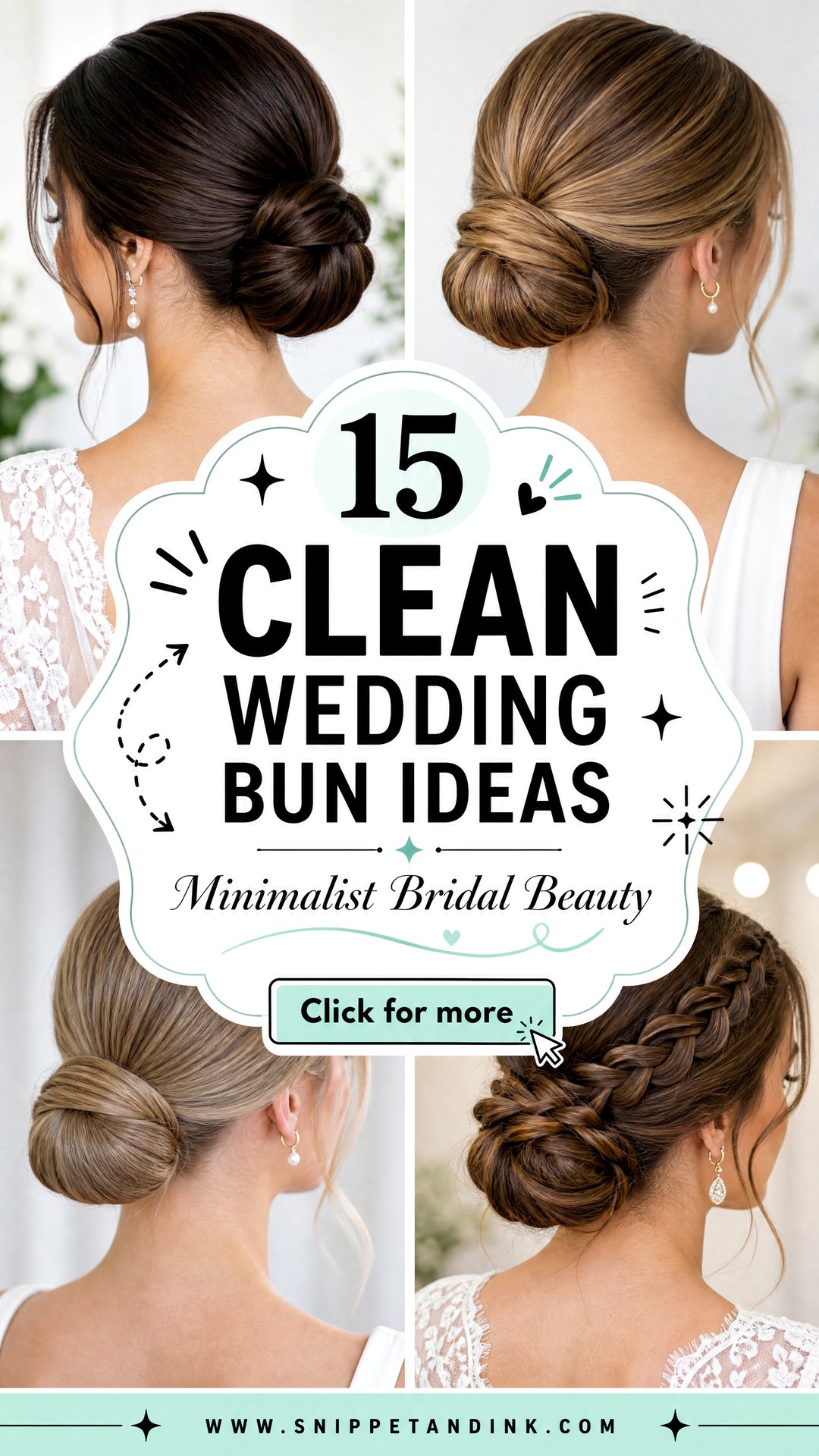
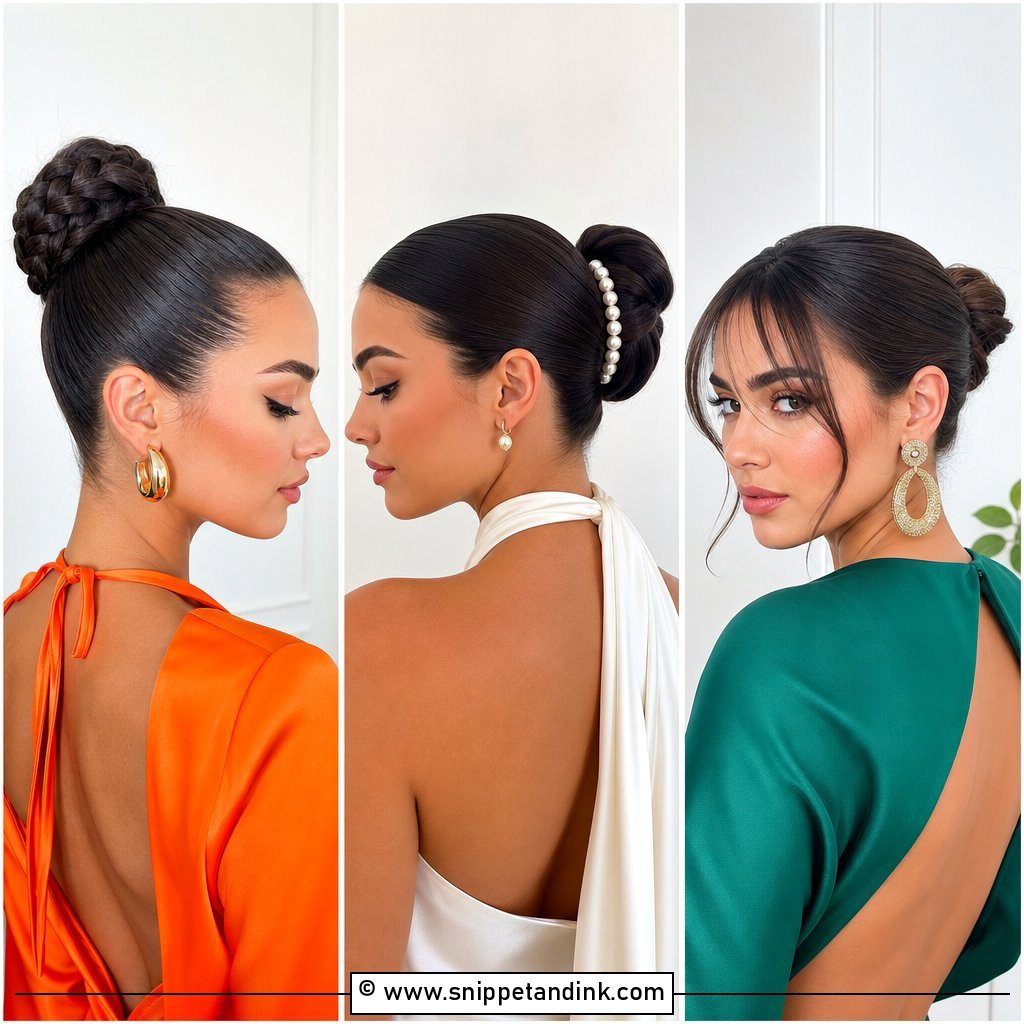
Minimalist brides ask me for clean buns more than anything else, and I understand why. A good one is smooth without being stiff and structured without looking severe, and it lasts through the ceremony, the heat and the dancing. Low, middle-parted, chignon or high ballerina, the clean bun family sits naturally with veils, earrings, high necklines, strapless gowns and plain dresses. The catch is that simplicity hides nothing. Every idea below depends on prep and pinning more than on the shape itself.
Sleek Starts With the Blow-Dry, Not the Brush
A clean bun is only as smooth as the hair going into it. Most of the shine in these photos comes from prep done before a single pin goes in, and that prep starts the day before.
- Wash the night before if your hair isn’t very oily. Day-old hair grips pins better and is less flyaway than freshly washed hair.
- Keep conditioner off the roots. Heavy conditioner or oil at the scalp makes the crown slippery, and pins slide straight out.
- Blow-dry smooth, all the way. Damp roots frizz as soon as they dry under the style. I dry with a paddle or round brush in the direction the hair will be pulled.
- Skip serums on the day. A drop of shine product goes on at the end, over the finished style, not underneath it.
If you have naturally curly or coily hair and want a smooth bun, talk to your stylist weeks ahead about whether a silk press or a smoothing blow-dry is worth the time, and test it at the trial. Humidity will push curls back toward their natural pattern, so the plan should include how the bun looks if that happens.
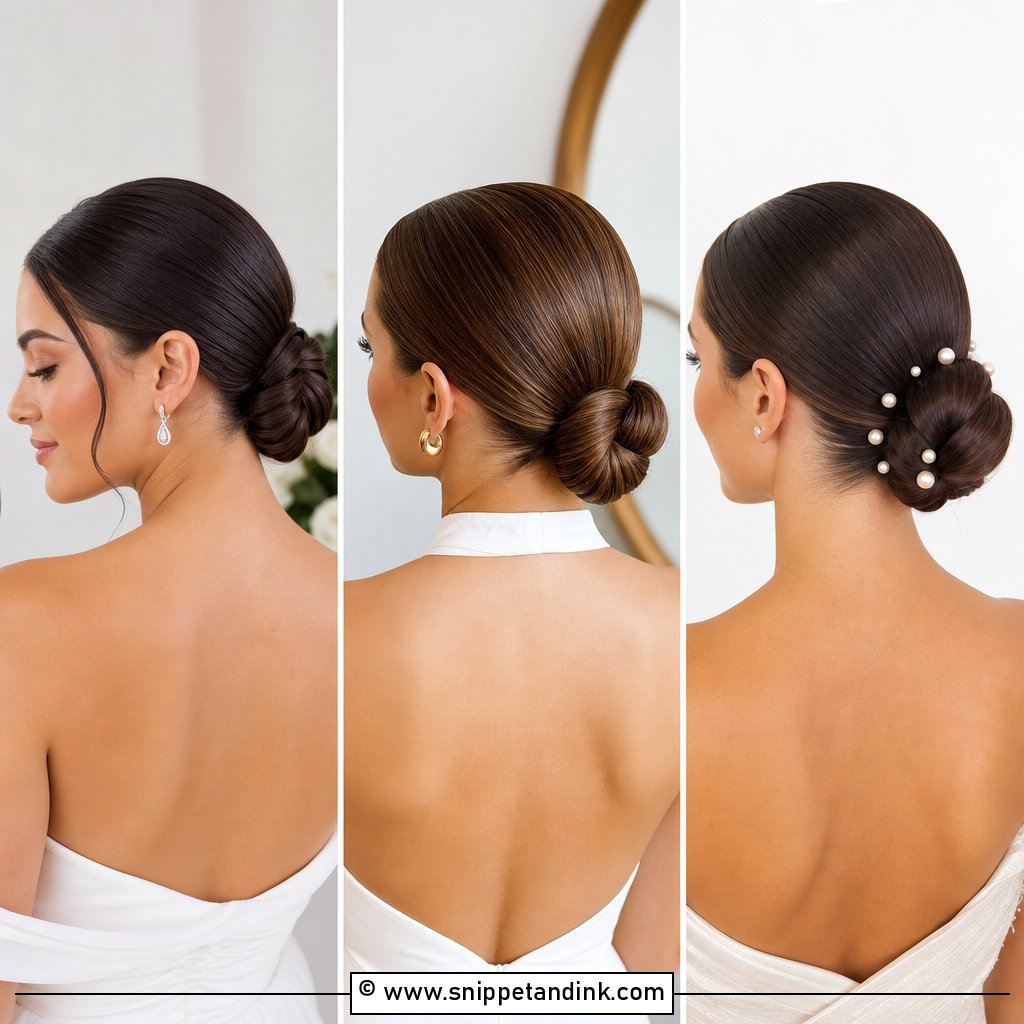
1. Clean Wedding Low Bun
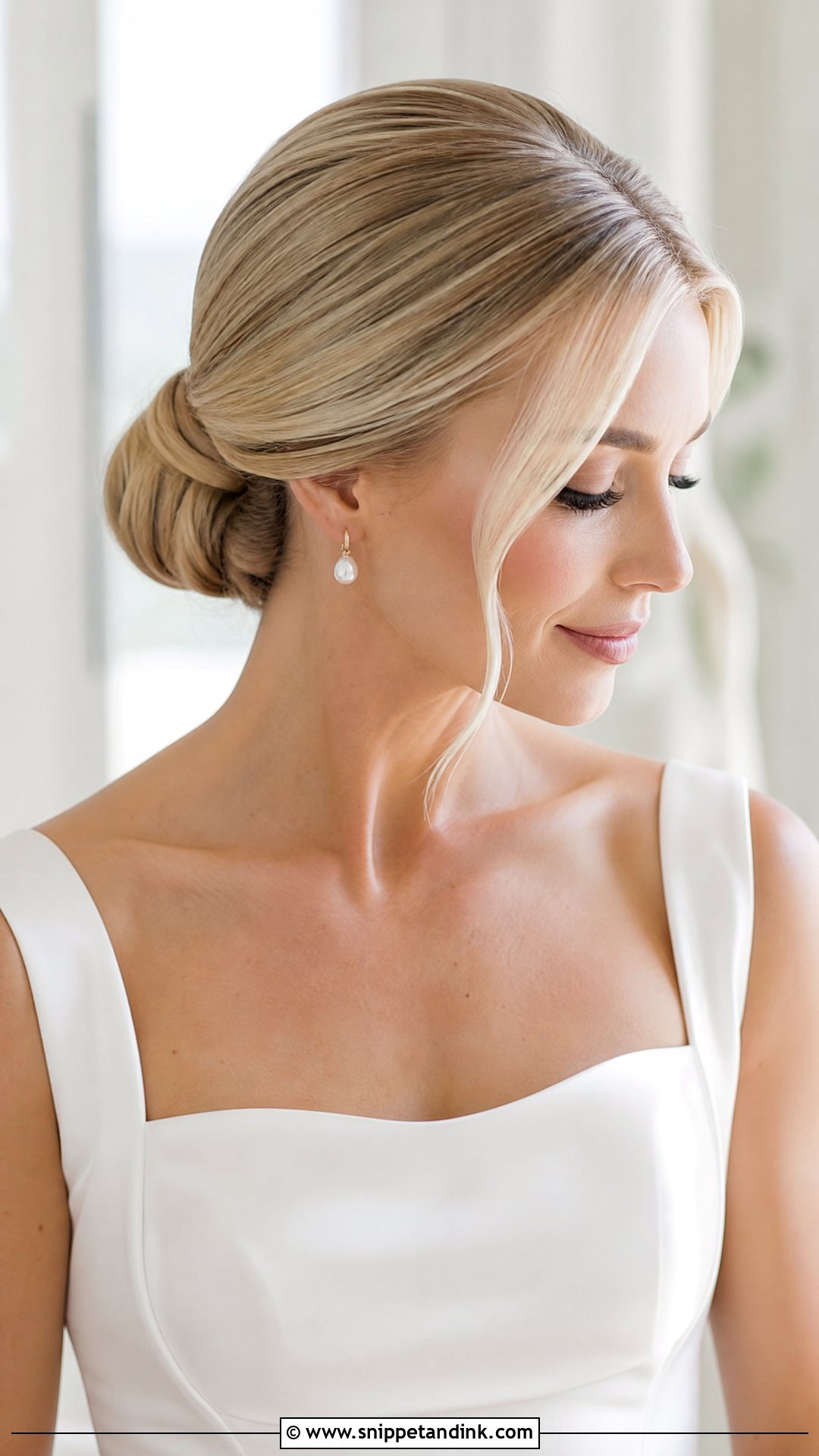
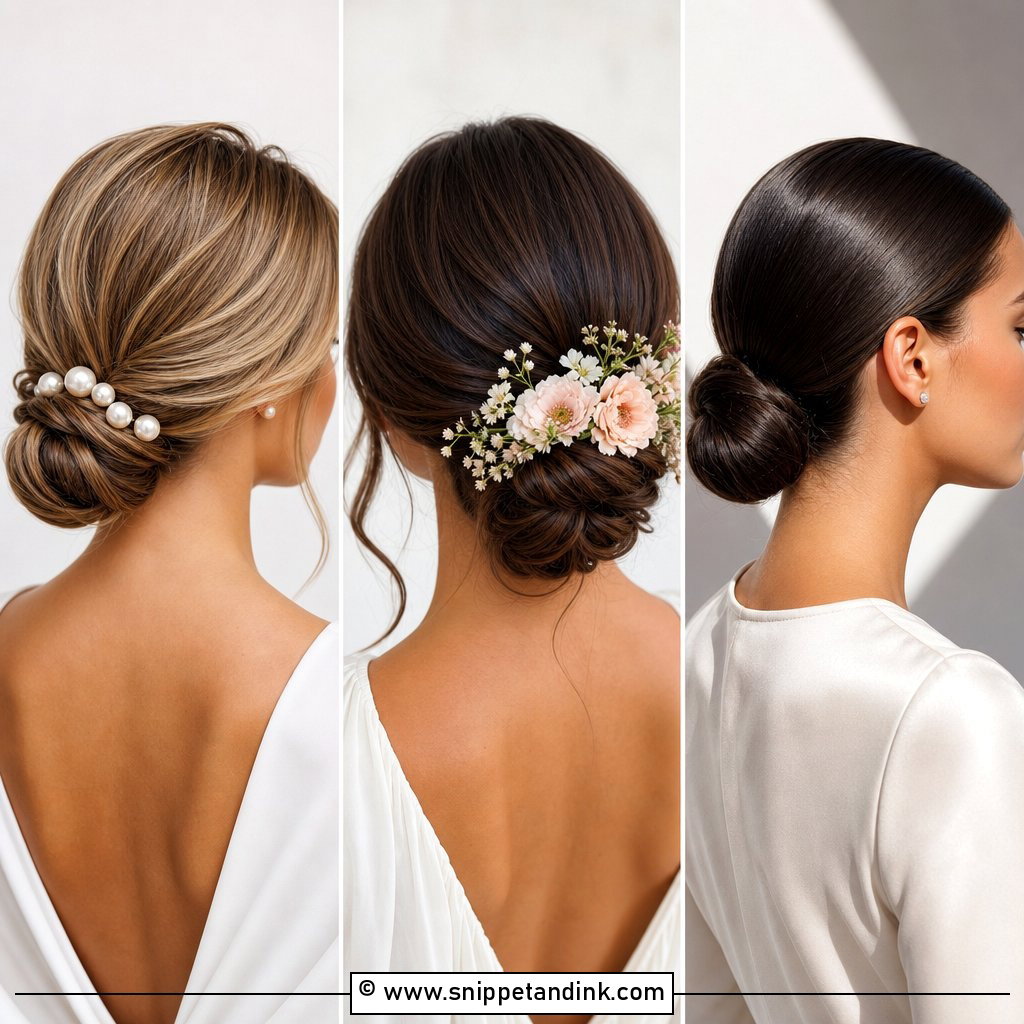
Sitting at the nape, a low bun leaves the face, neck and dress details completely clear, which is exactly what a plain satin gown or a long veil needs. I aim for shine that looks like healthy hair, not wet hair, so I use a light smoothing cream and skip the gel. Fine hair gets a small padding piece underneath for fullness. Thick hair goes the other way: I wrap it tighter and sometimes thin out the inner section, otherwise the bun ends up wider than the head.
2. Sleek Wedding Bun With Middle Part
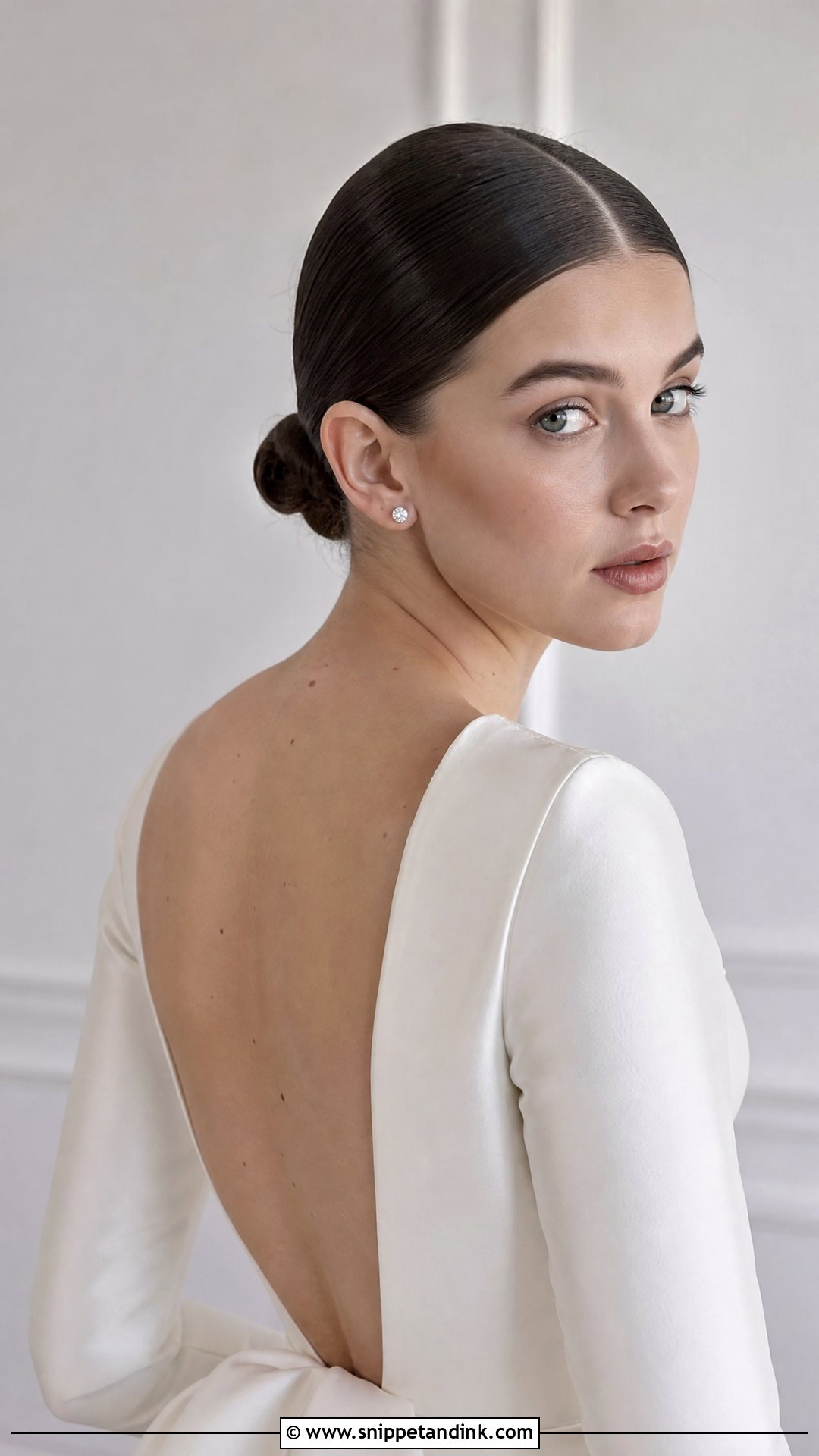
The middle part does half the work here. It gives a symmetrical frame that suits sculpted makeup and dresses with strong lines. Sharp, yes, but not scraped: if the sides are pulled too tight against the scalp, the hairline looks thin and the style starts to hurt within a couple of hours. I keep the bun low or mid-height so it reads refined from the front. This is the version to choose if your veil or earrings are meant to be the statement.
3. Clean Wedding Bun With Side Part
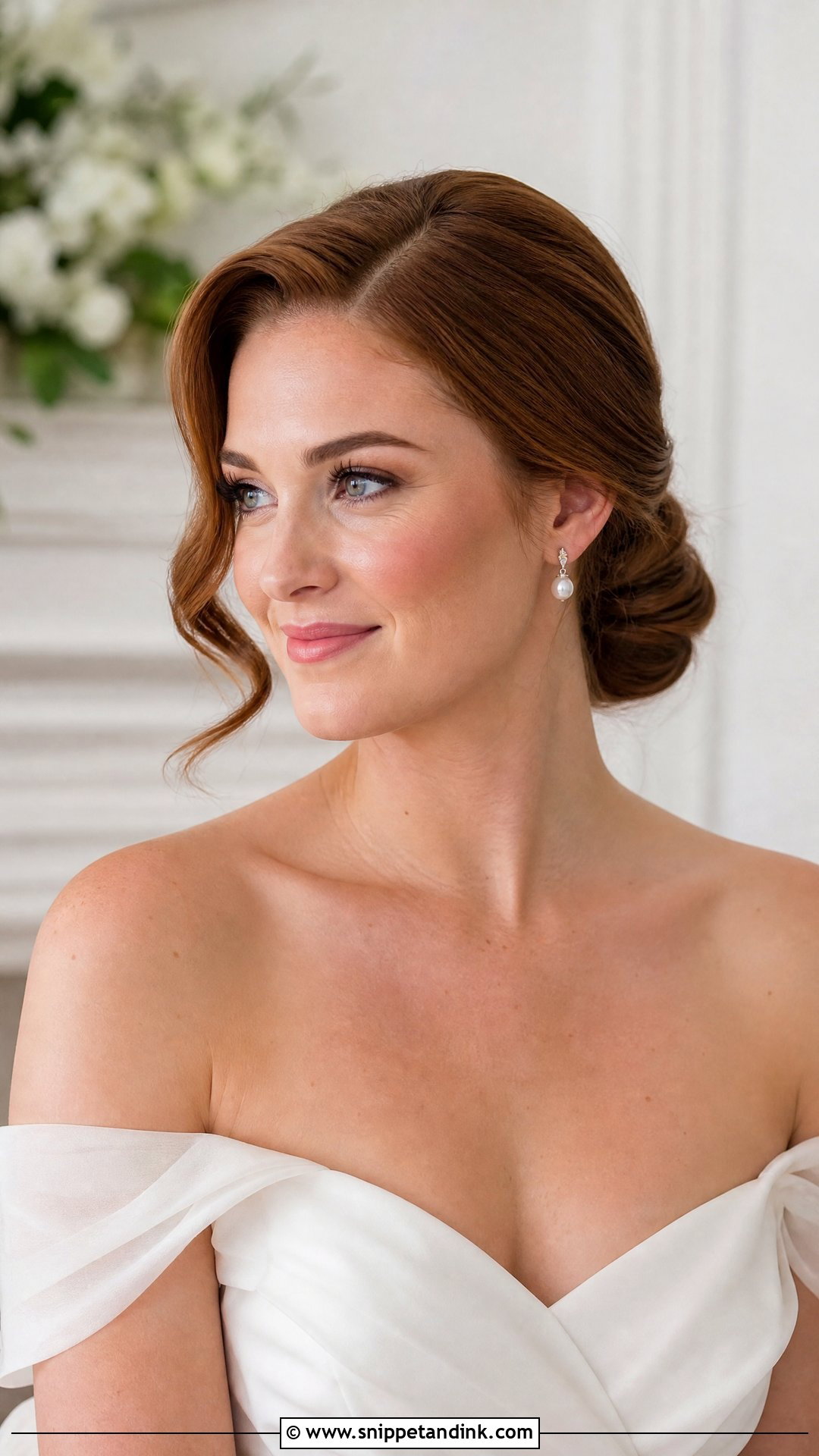
Shifting the part to one side immediately softens a clean bun. The extra height on the heavier side can balance round, square, and heart-shaped faces, and it suits vintage gowns and off-shoulder necklines. I leave the front just slightly relaxed rather than brushed tight, which keeps it romantic. The bun can be a compact twist or wrap. Pins or a crystal slide look best on the heavy side, where the hair naturally has more volume to hold them.
4. Smooth Wedding Chignon
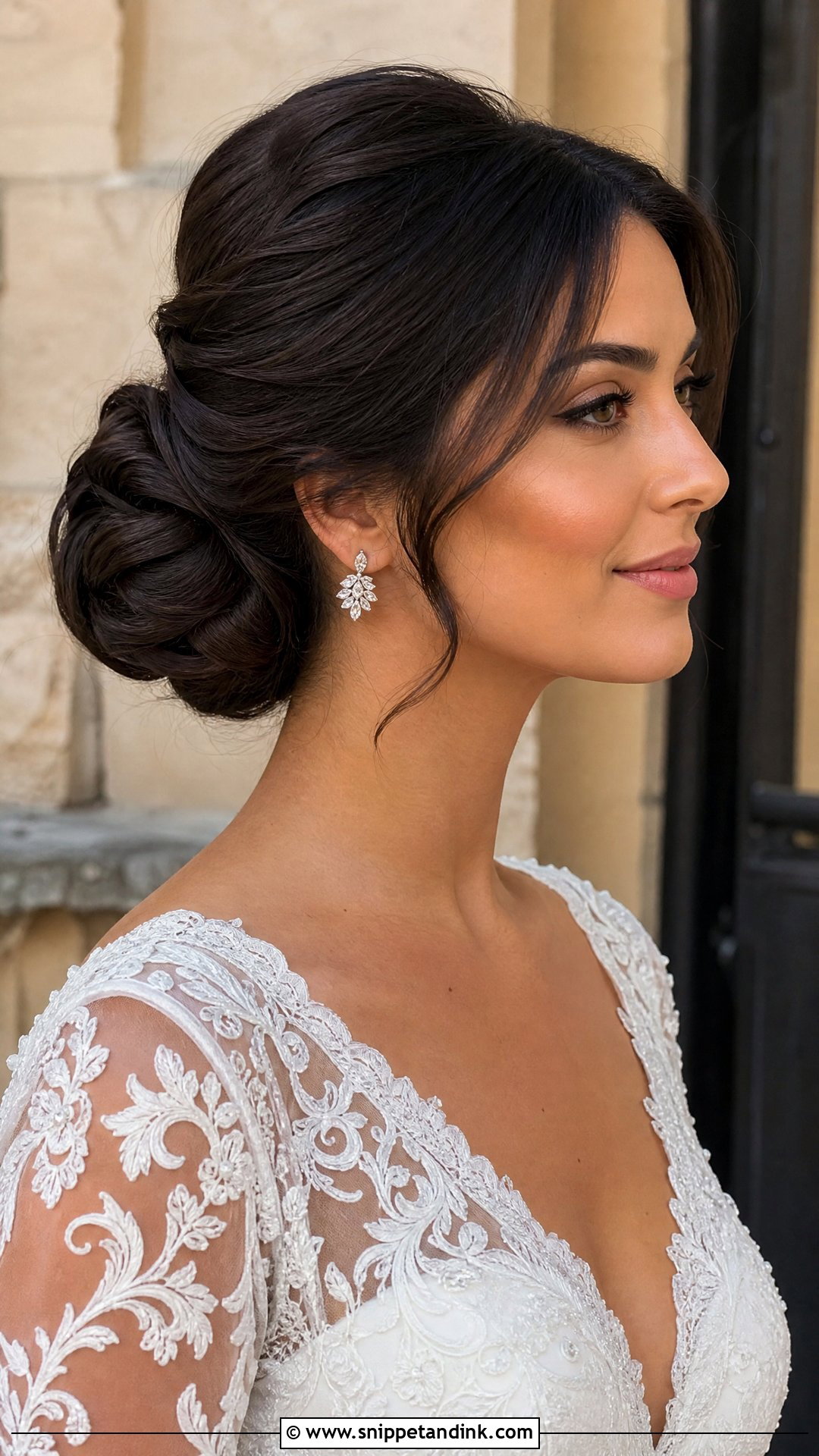
I’d call the chignon the safest clean bun on the list. Tucked, rolled or folded at the nape into a soft oval, it doesn’t date and it carries a veil, comb or plain barrette equally well. What makes it look expensive is controlled volume at the crown and a glossy finish through the sides. Too much height and it turns retro; none at all and the head looks flat in profile. It’s formal, but calm.
5. Clean Wedding Ballerina Bun
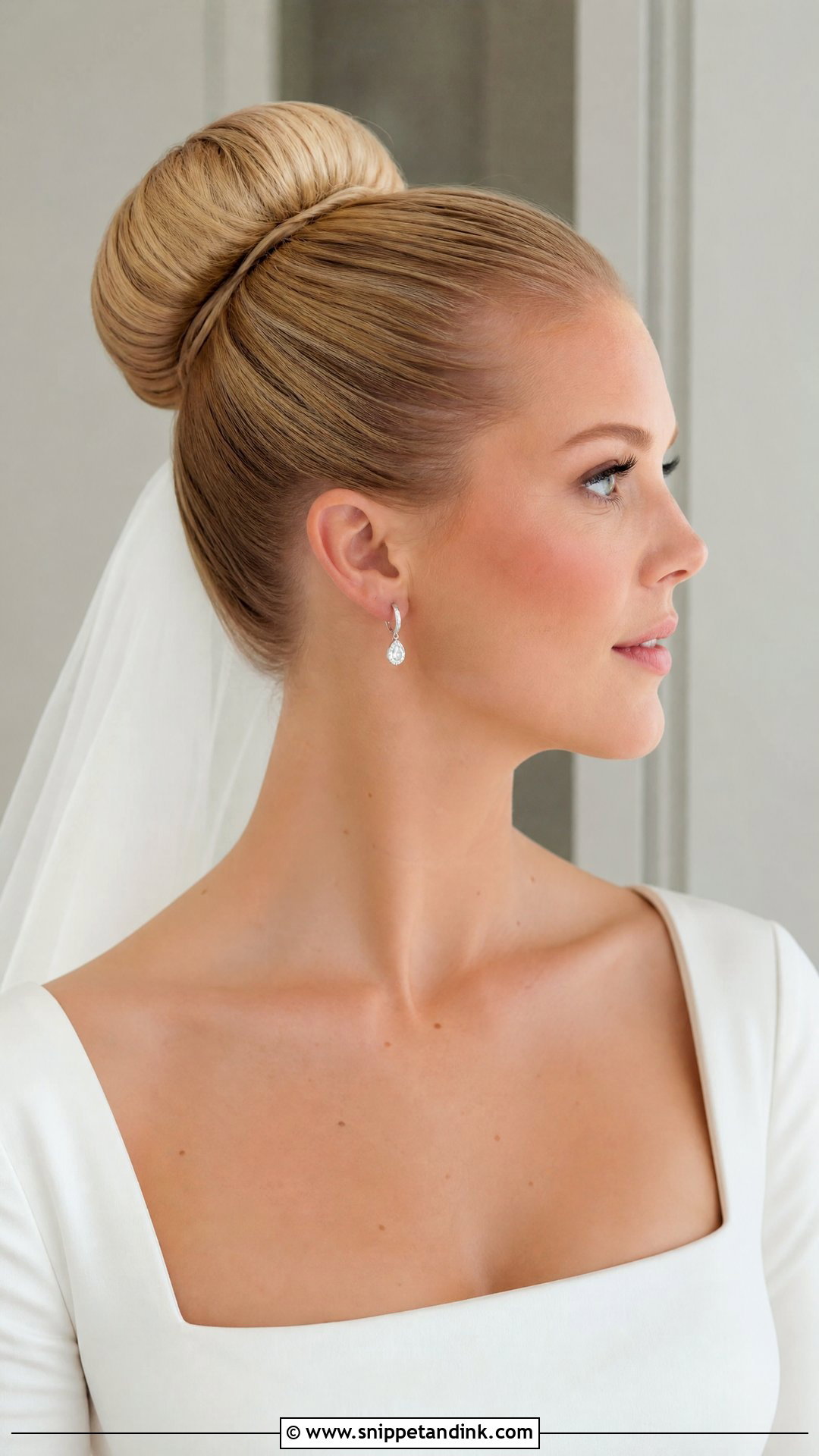
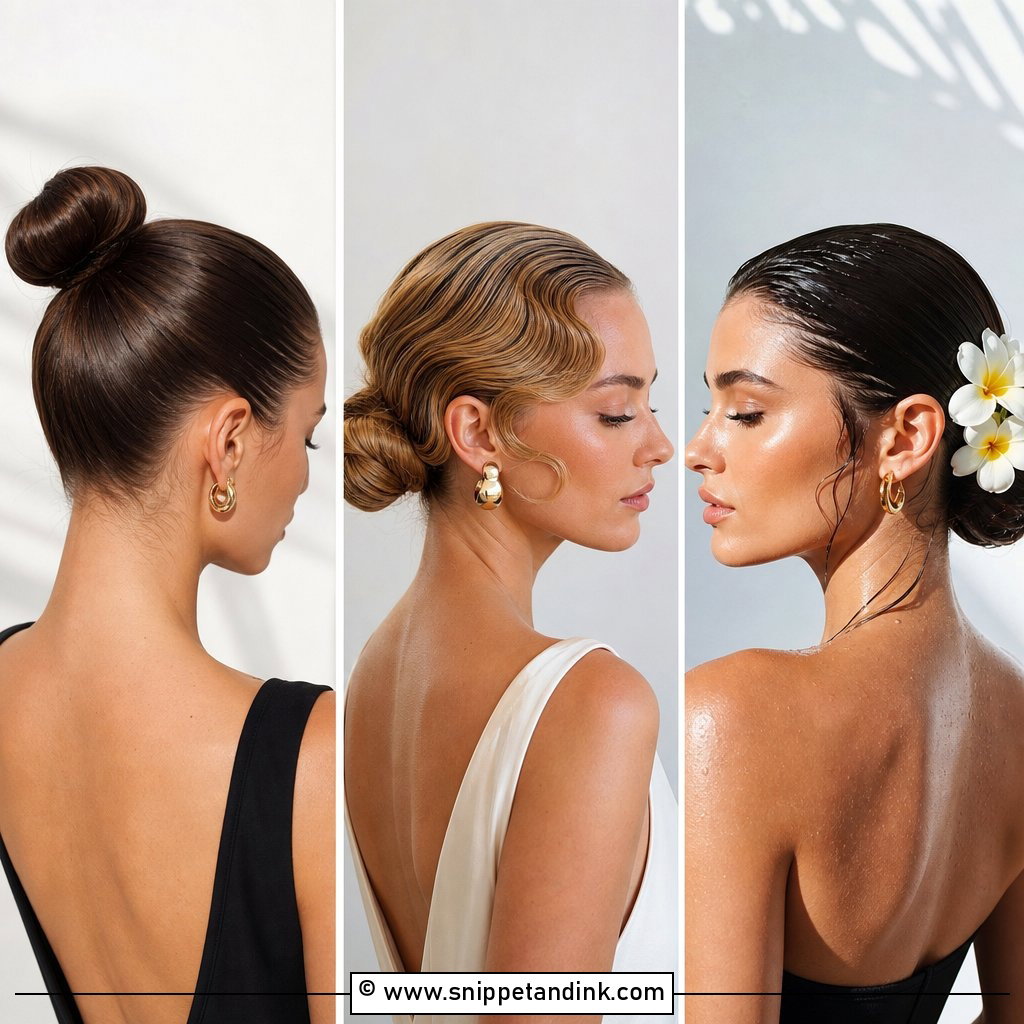
A clean wedding ballerina bun lifts the whole silhouette and puts the focus on your neck and shoulders. Depending on your face shape and veil, it can sit right on the crown or slightly further back. High necks, strapless bodices and square necklines all suit it. A real dance bun is wound very tight, and that tension hurts after a few hours, so I build the bridal version a little softer and rounder. Keep it proportionate to your head; oversized buns look like a doughnut was added.
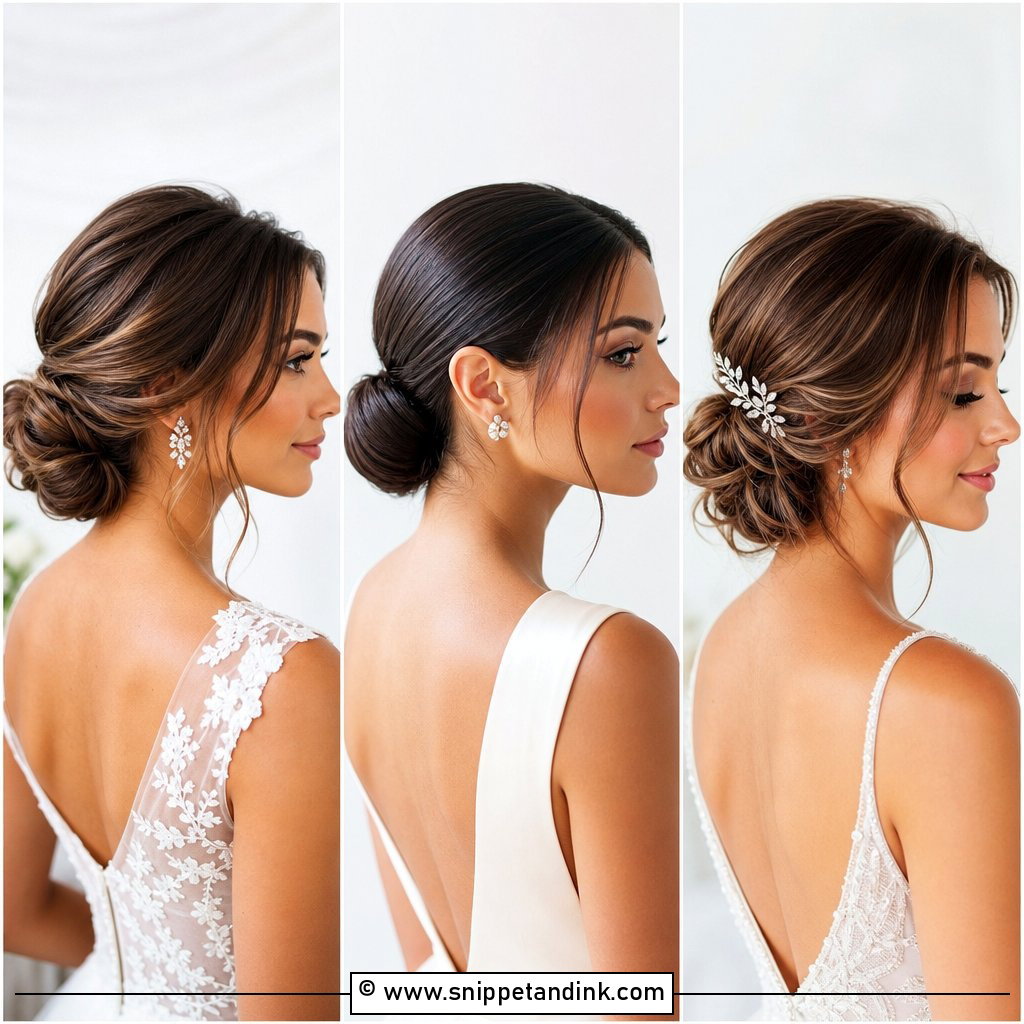
6. Low Wedding Bun With Face Framing Pieces
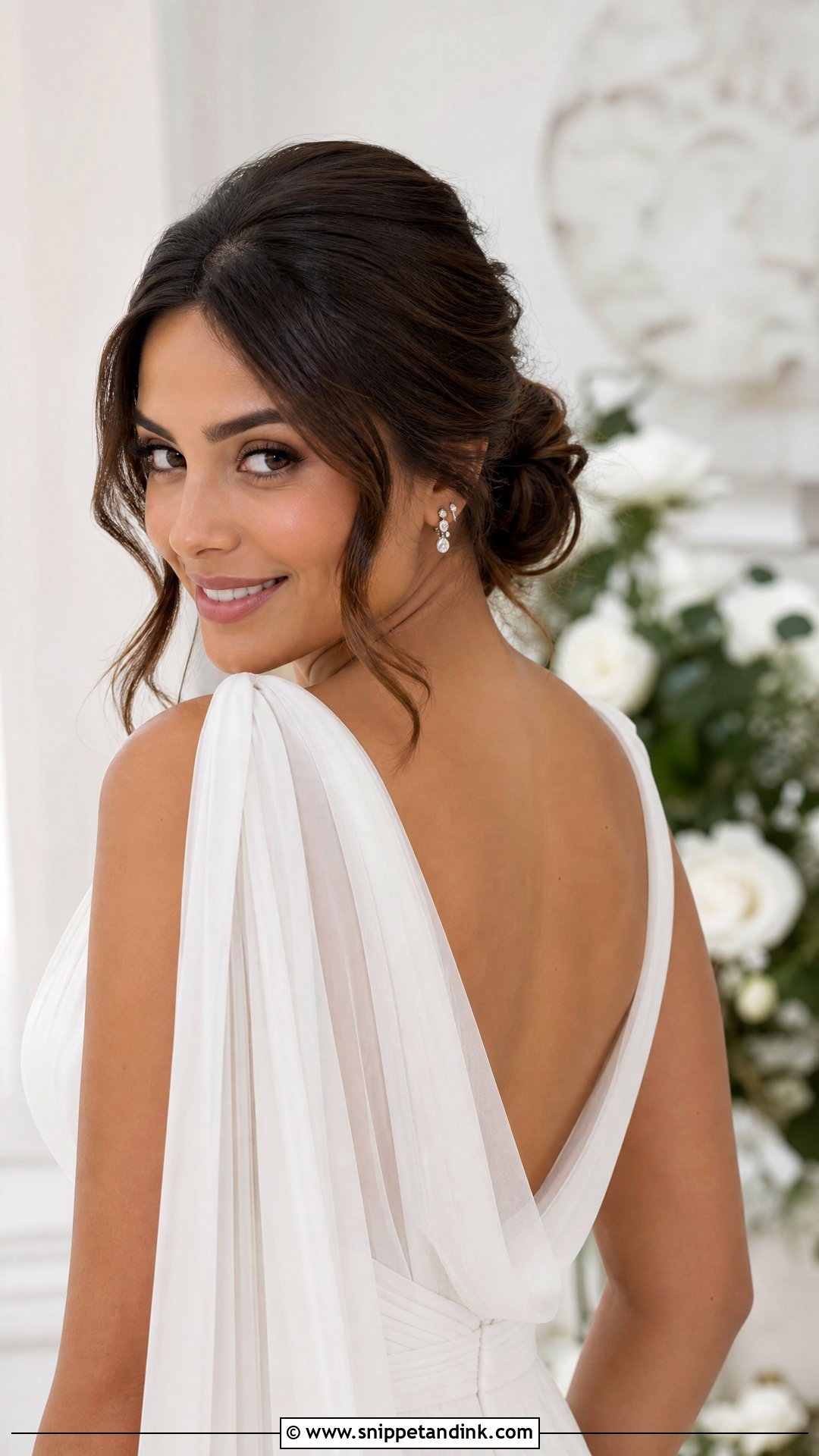
Leaving a few strands out is my usual fix for brides who feel exposed with everything pulled back. The bun stays smooth and secure at the nape while two or three shaped pieces brighten the cheeks and jawline. Fewer is better. Wisps everywhere just look like the style is falling apart. I curl each piece separately and brush it out so it moves in a breeze without frizzing, which matters most at outdoor ceremonies.
7. Clean Wedding Bun With Veil
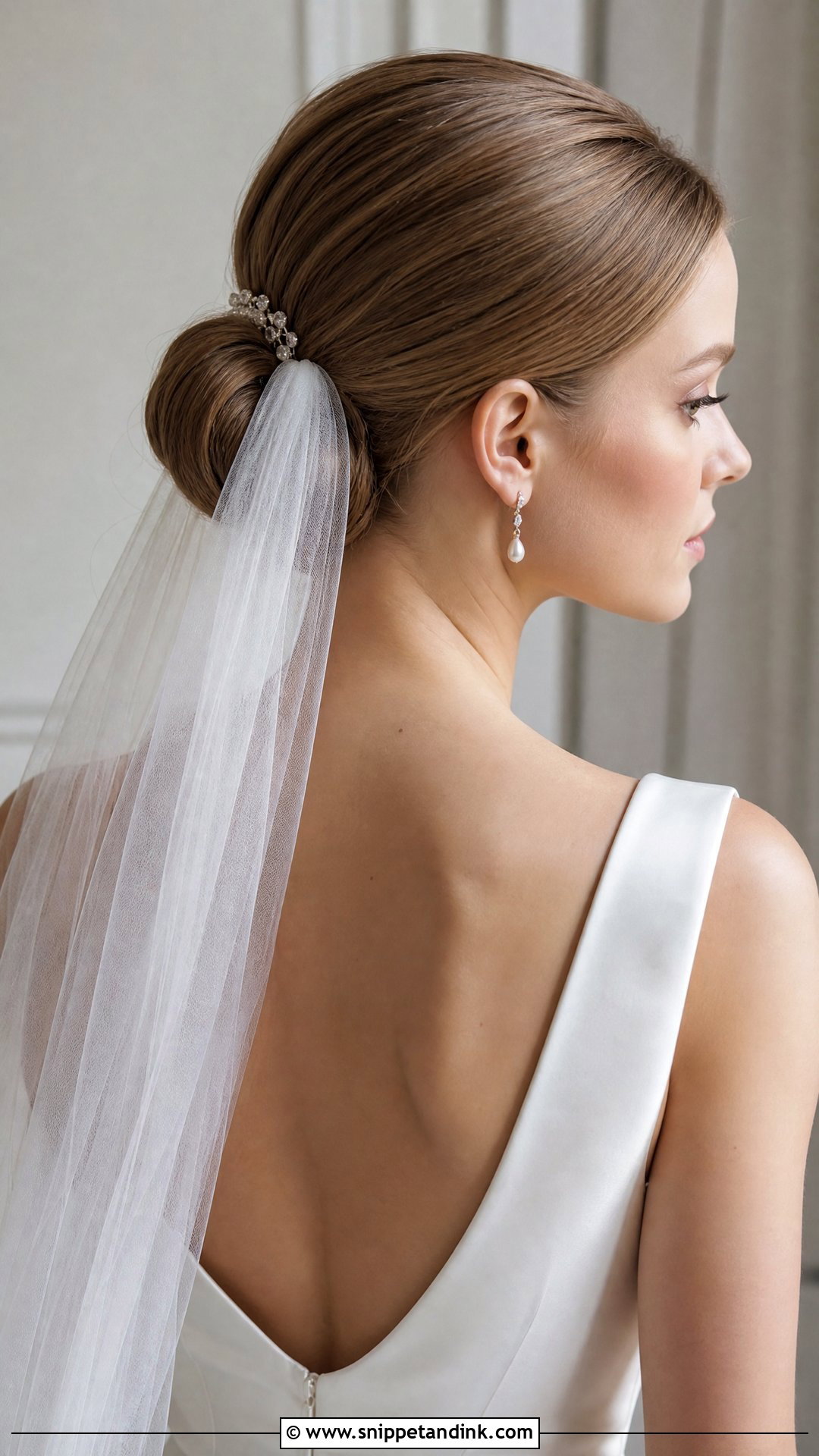
Think about the veil before choosing your bun height. A low bun gives the comb a firm anchor; a mid-height bun pushes the veil up slightly for a more formal fall. The back of your head is what guests watch for the whole ceremony, so smooth sides and pins tucked underneath really count here. If the veil comes off for the reception, ask your stylist to check the bun from behind once it’s removed. Combs can leave a small dent or loose patch that takes thirty seconds to fix if someone knows to look.
8. Clean Wedding Bun With Pearl Pins
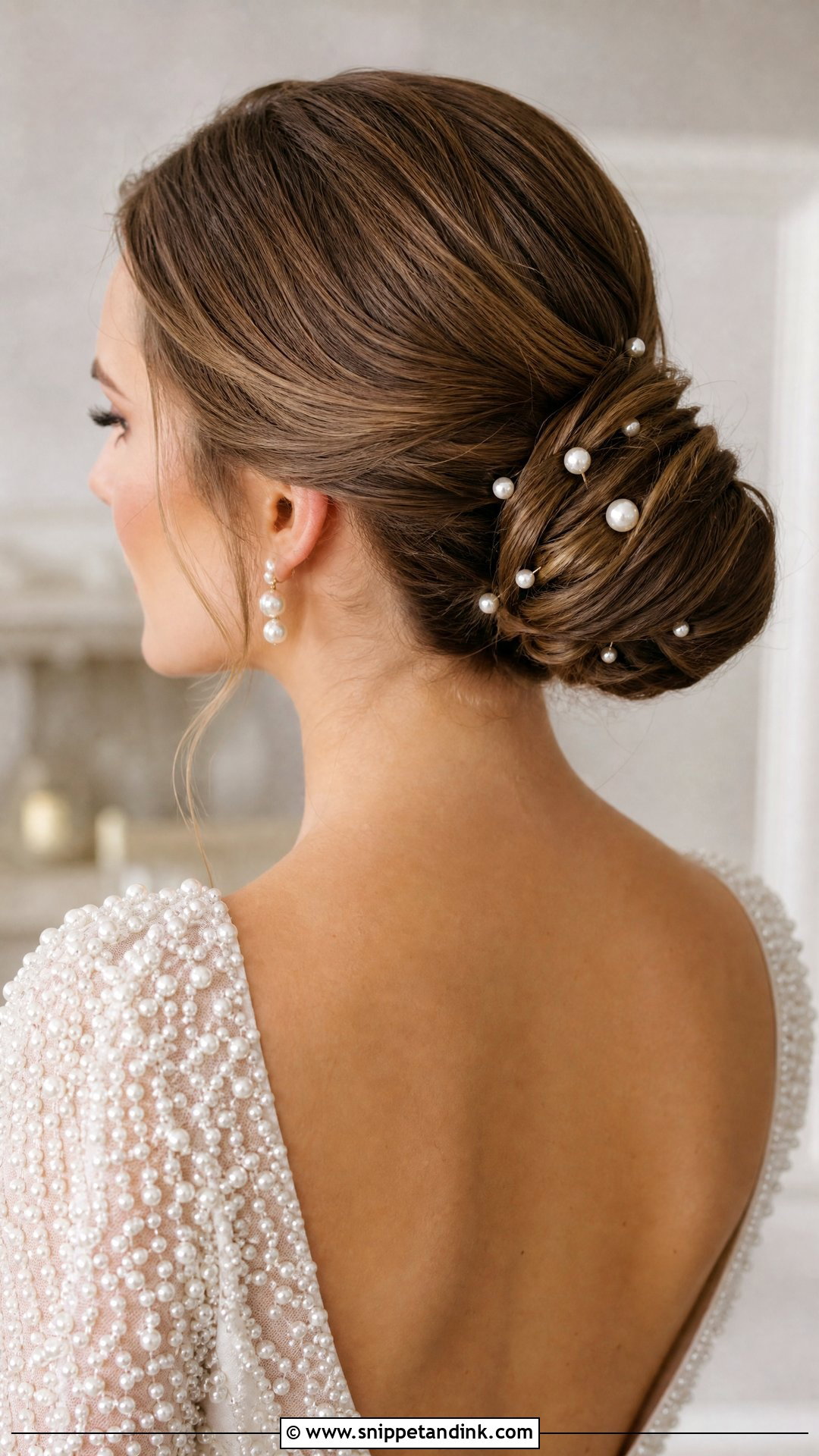
Pearls look refined on a smooth bun and busy on a messy one, so this is a good accessory for the clean-bun bride. Scatter a few lightly around the bun or group three to five on one side as a focal point. Satin, lace, pearl earrings and classic makeup all suit it. It’s also a quiet alternative if a tiara, big comb or dramatic headpiece feels like too much. I push each pin in at an angle toward the bun so the pearls sit flush instead of sticking out.
9. Clean Wedding Bun For Long Hair
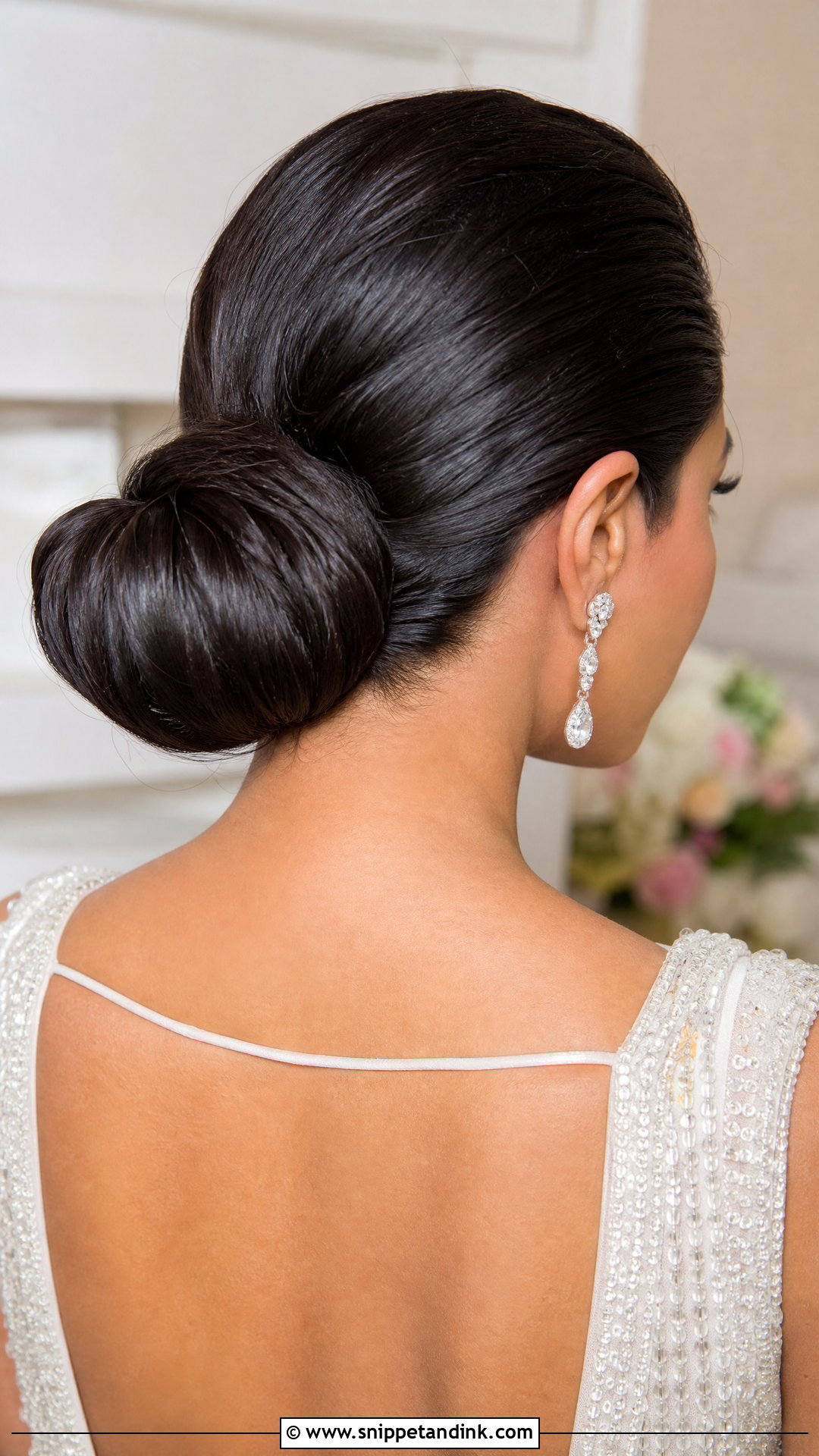
Long hair gives you a full bun without any padding, but the weight is real. A wrapped bun, twisted chignon or smooth low knot all show off thickness, as long as the inner structure is solid. I often braid the inner section first and wrap the rest around it, because a braid gives the pins something to bite into. Spreading the hair across several anchor points rather than one tight elastic is what keeps it from dragging on your scalp by evening.
10. Clean Wedding Bun For Medium Hair
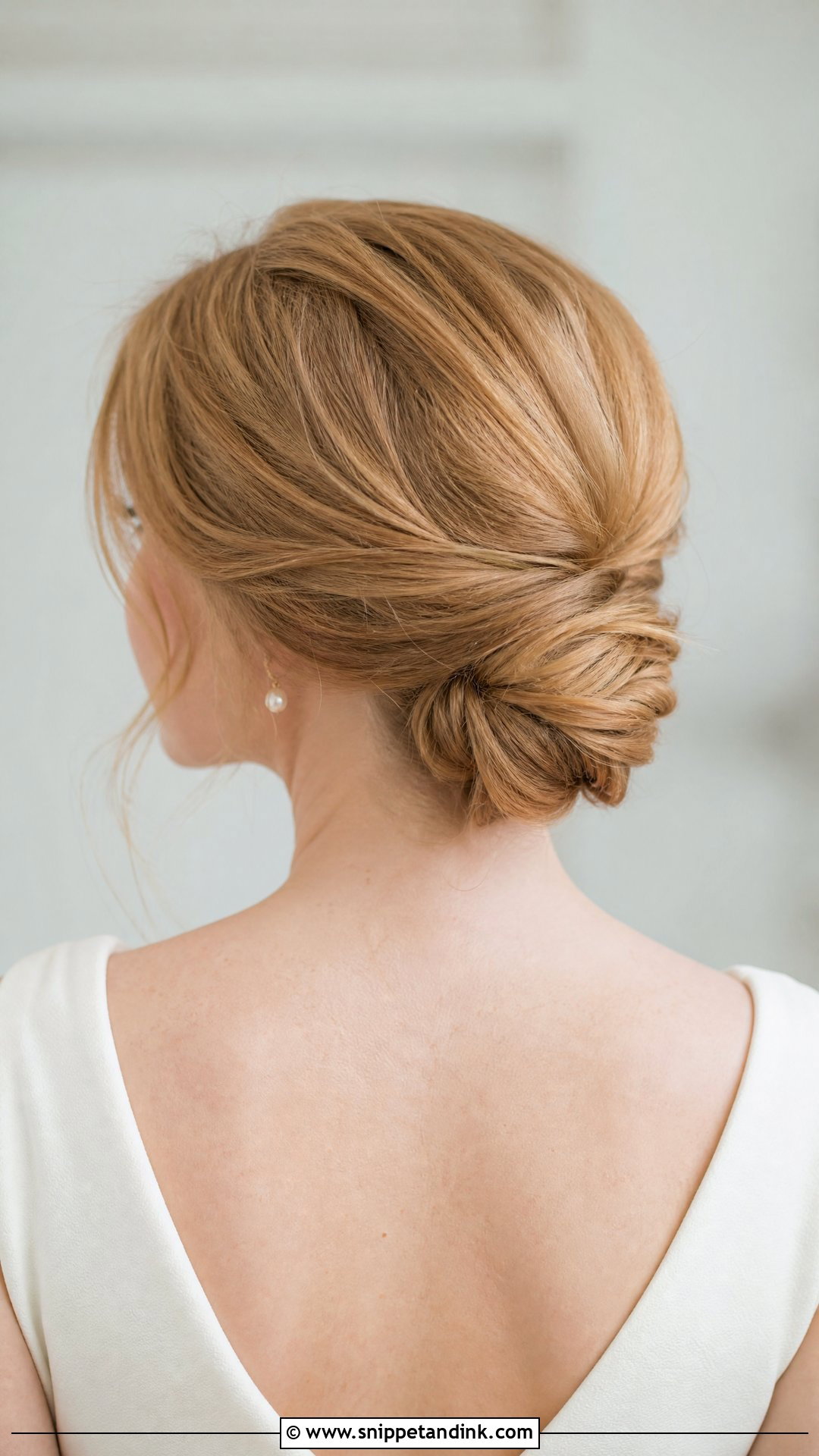
Collarbone to shoulder length is honestly the easiest hair to put in a clean bun. There’s enough to make a compact knot at the nape, not so much that it gets heavy. A low chignon or tucked bun can look surprisingly full without extensions, especially with a bit of lift at the crown. Shorter layers at the nape are the one thing to watch, so I prep with texture spray and pin them in before smoothing over.
11. Clean Wedding Bun For Thin Hair
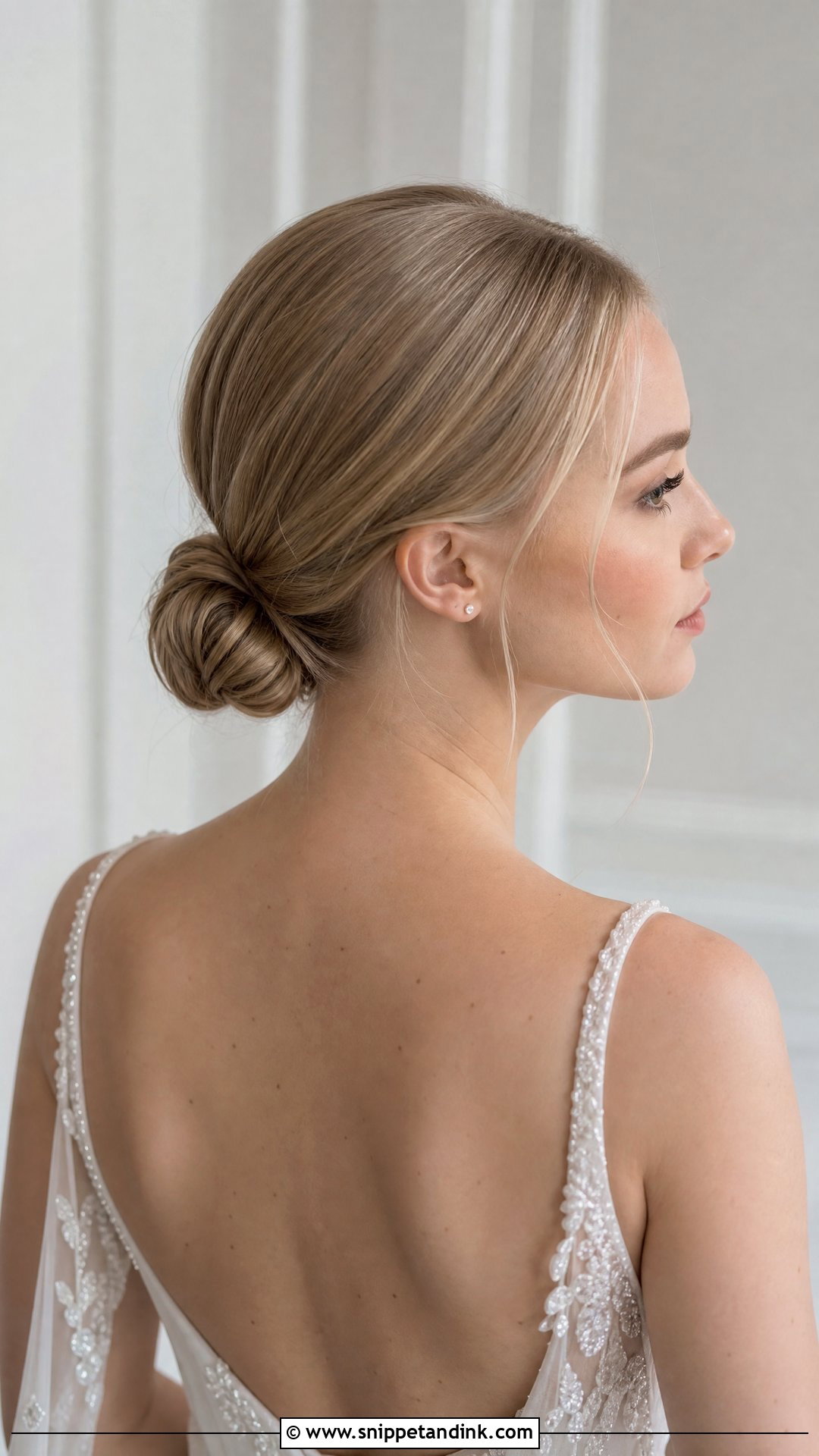
With thin hair, I put shape and shine ahead of size. A small bun form, a single clip-in weft or a padding in your shade makes the bun look fuller without the heavy backcombing that tangles and breaks fine hair. The front can be sleek with a middle or side part. I’d keep loose pieces to a minimum, because they show scalp in flash photos. Go for a modest bun; an oversized one on fine hair looks like what it is, padding.
12. Clean Wedding Bun For Curly Hair
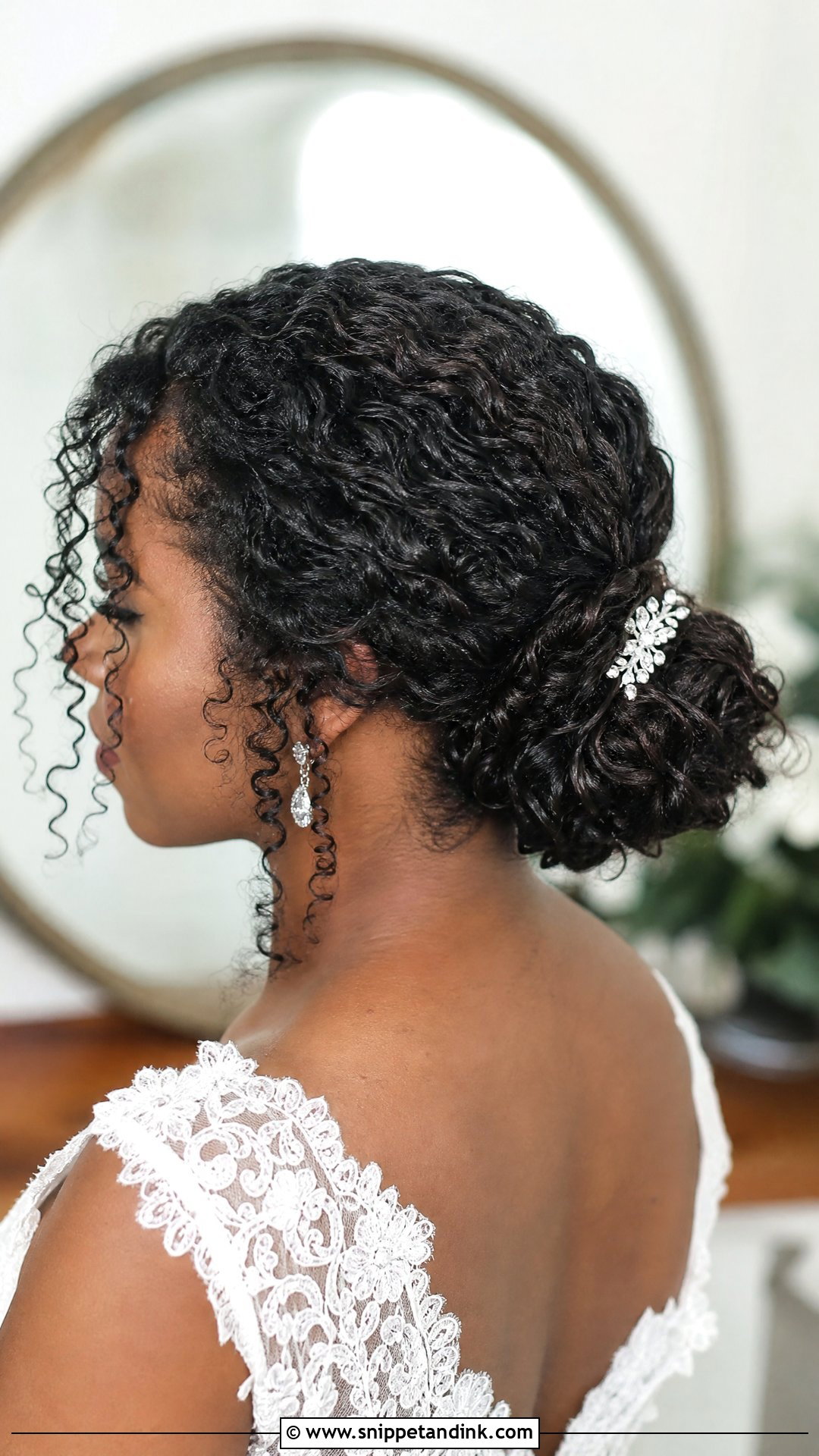
Curly hair doesn’t have to be flattened to look clean. I either smooth the crown lightly or guide the curls back with their definition intact, and then build the bun out of curl groups so it has soft structure. Moisture is what holds it together: hydrated curls clump and stay put, while dry ones frizz once the room fills up. A good curl cream, strong but flexible pins, and any face-framing curls placed one by one keep the overall shape neat.
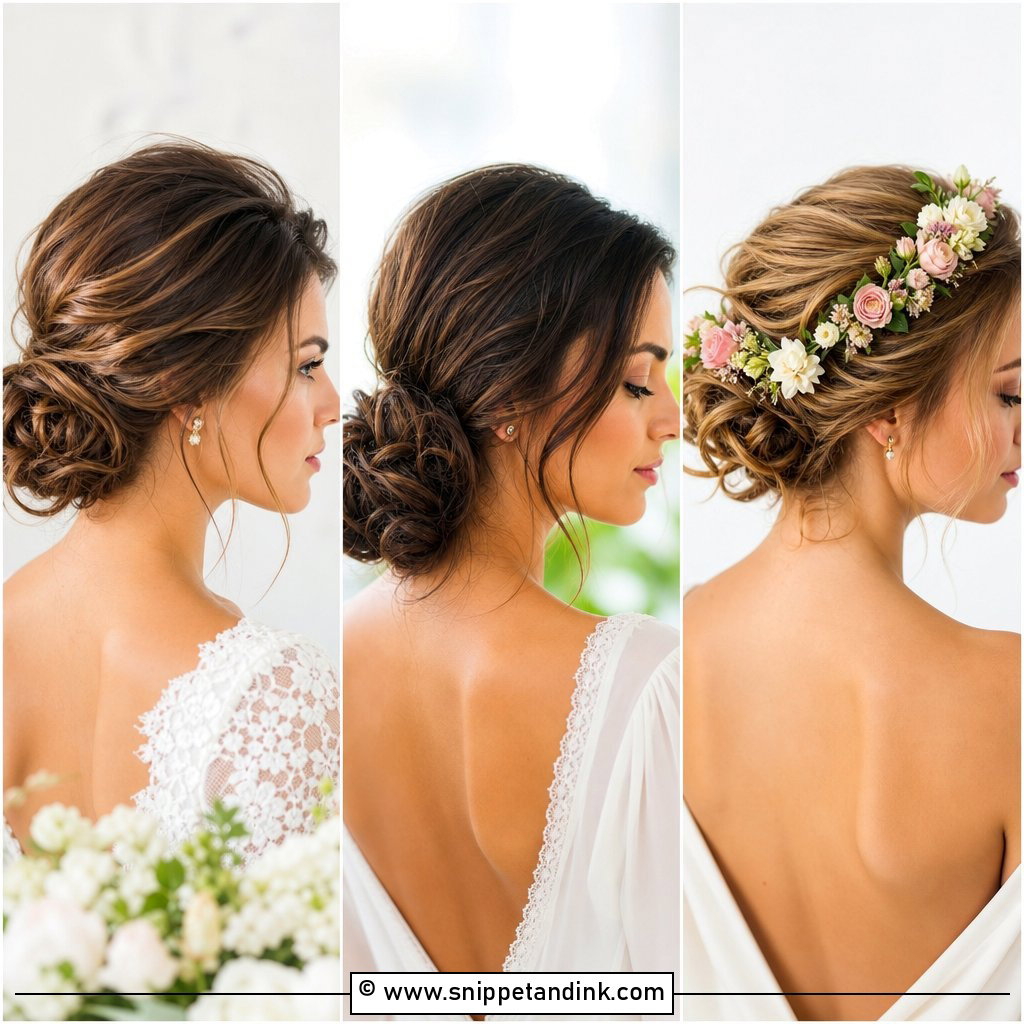
13. Clean Wedding Bun With Braids
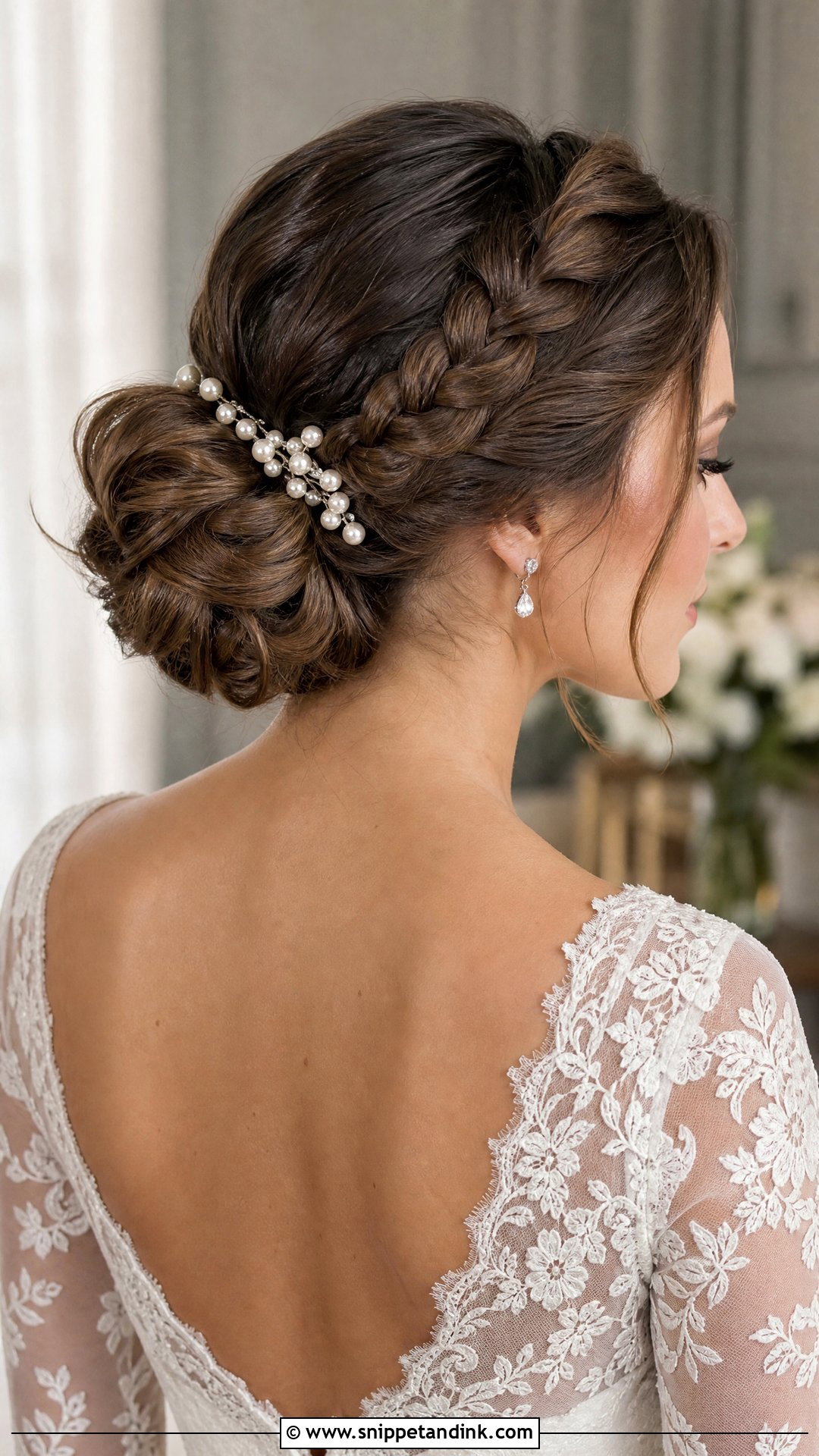
A braid adds detail and grip at the same time. It can wrap into the bun, run along one side or form a neat braided base at the back. For the clean version, I keep sections even and the plait smooth rather than pancaked. Braids are my preference for brides with slippery or heavily layered hair, because the weave locks short ends in where a smooth wrap would let them escape. Lace gowns, garden ceremonies and pearl accessories all suit it.
14. Clean Wedding Bun With Hair Comb
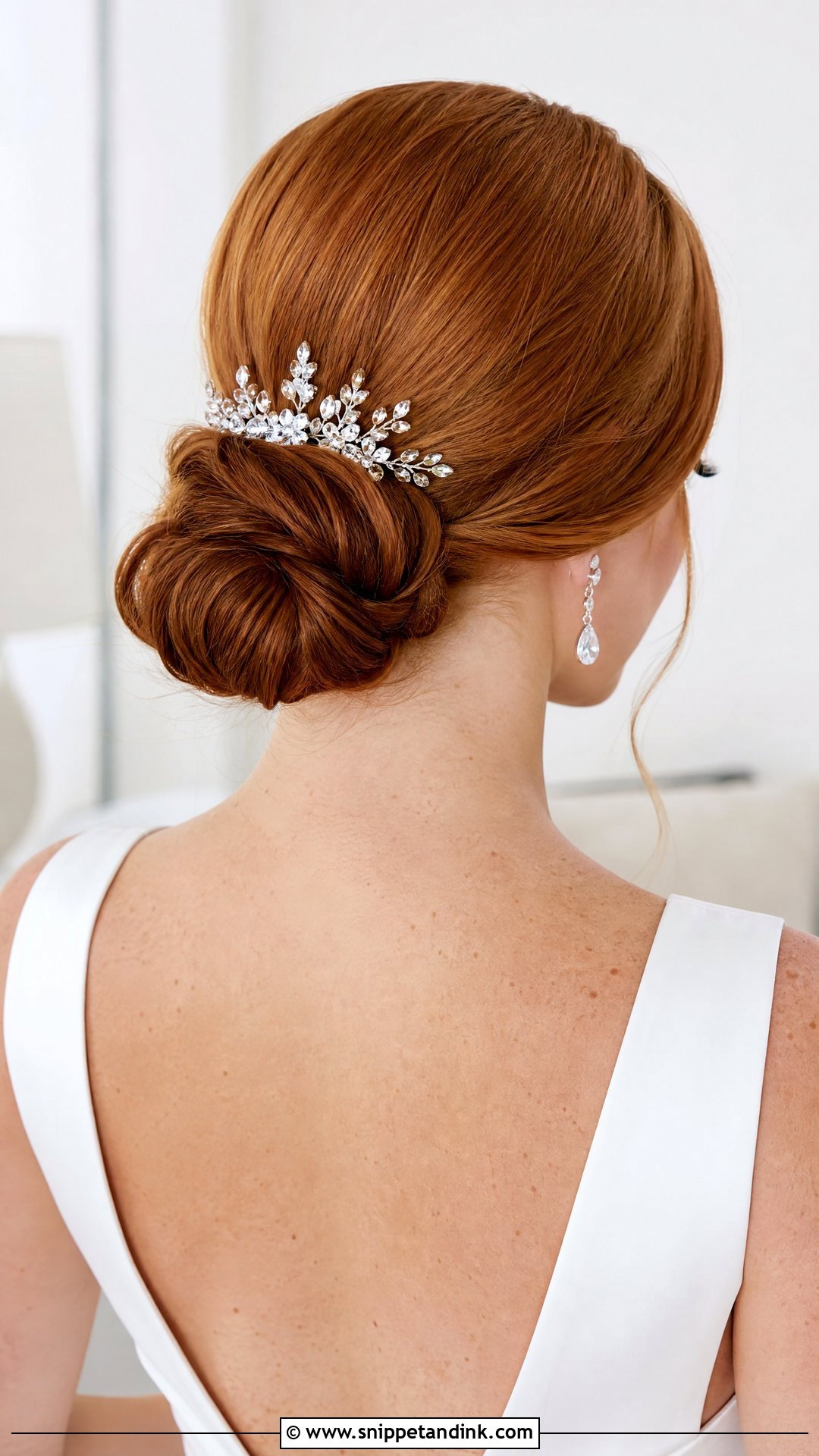
One comb on a smooth bun is about as minimalist as bridal accessories get. It can sit above the bun, to one side or tucked underneath, depending on where the veil goes. The plain surface makes crystals, pearls or floral metalwork look deliberate, and nothing else needs adding. Heavier combs can slide on silky hair, so I lock them in with two crossed bobby pins hidden under the teeth. It moves from ceremony to reception without any restyling.
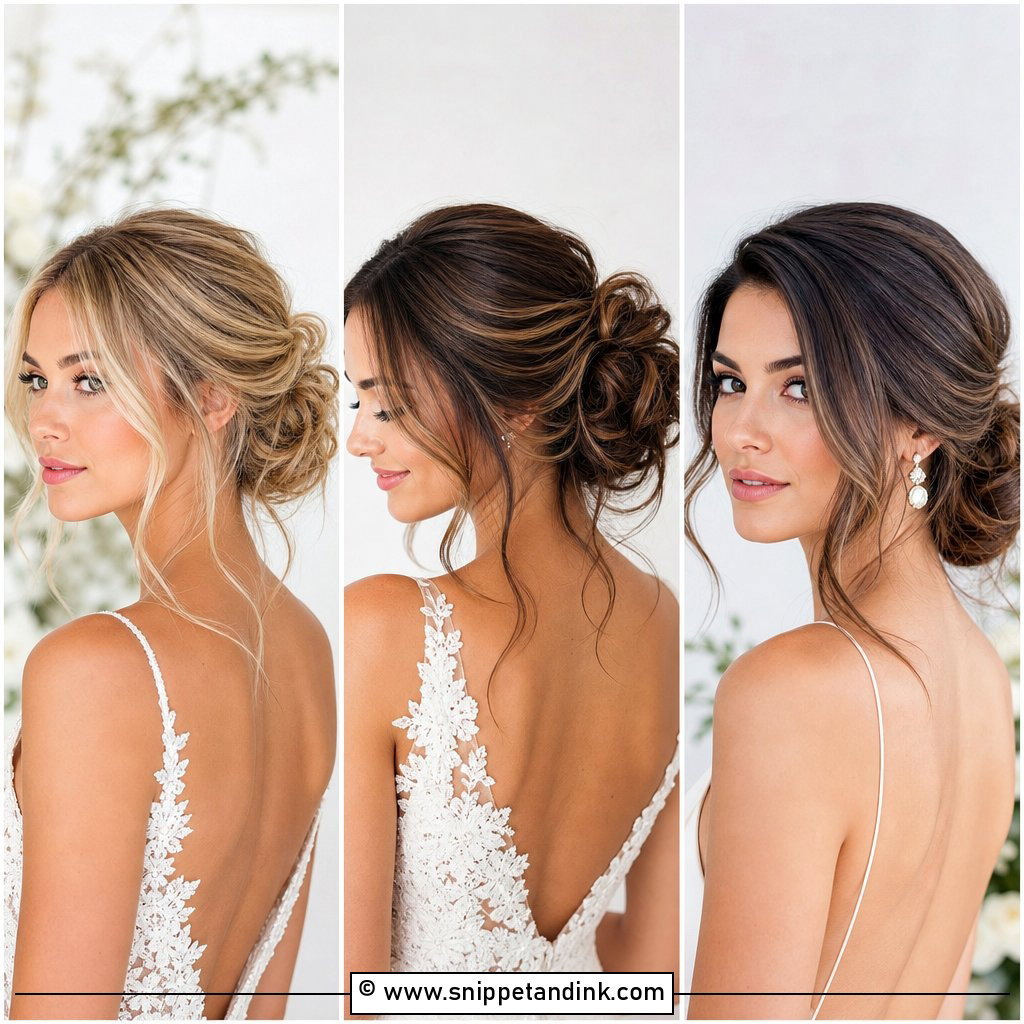
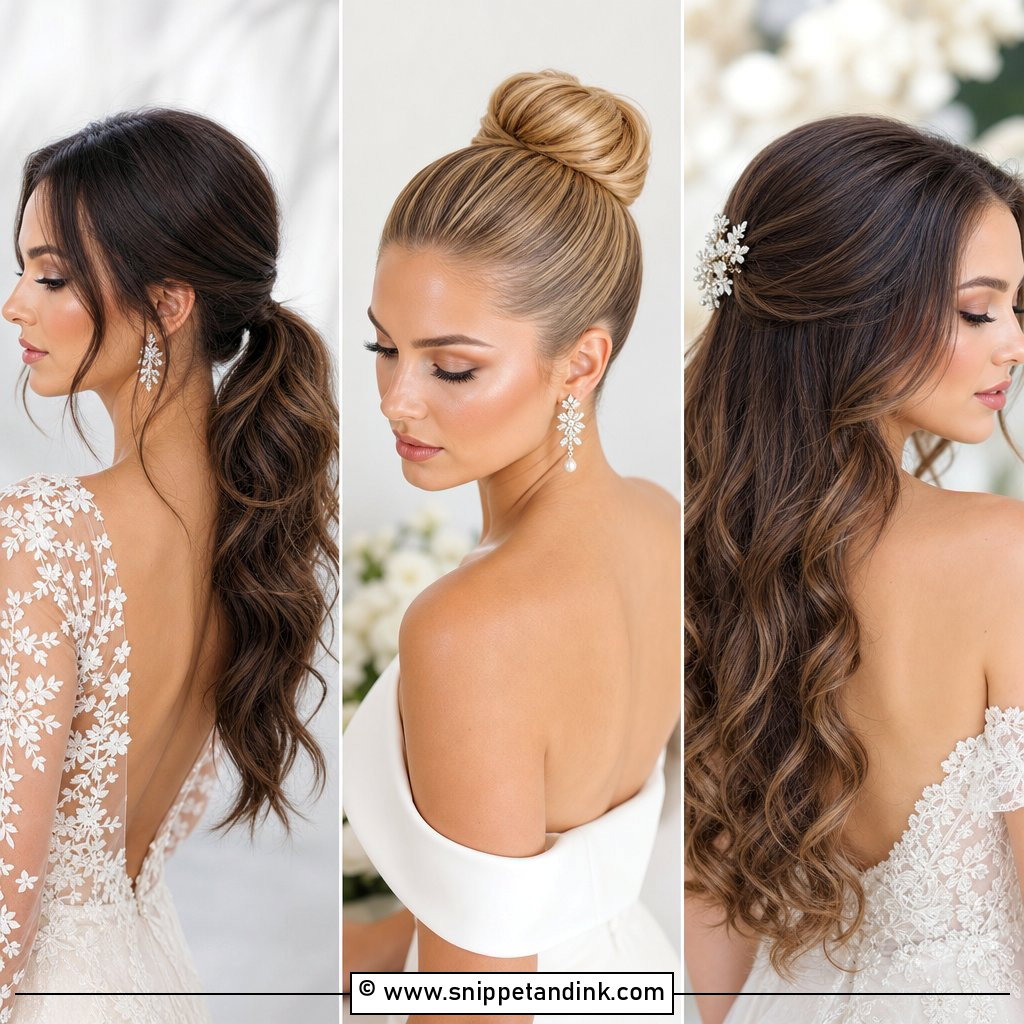
15. Clean Wedding High Bun
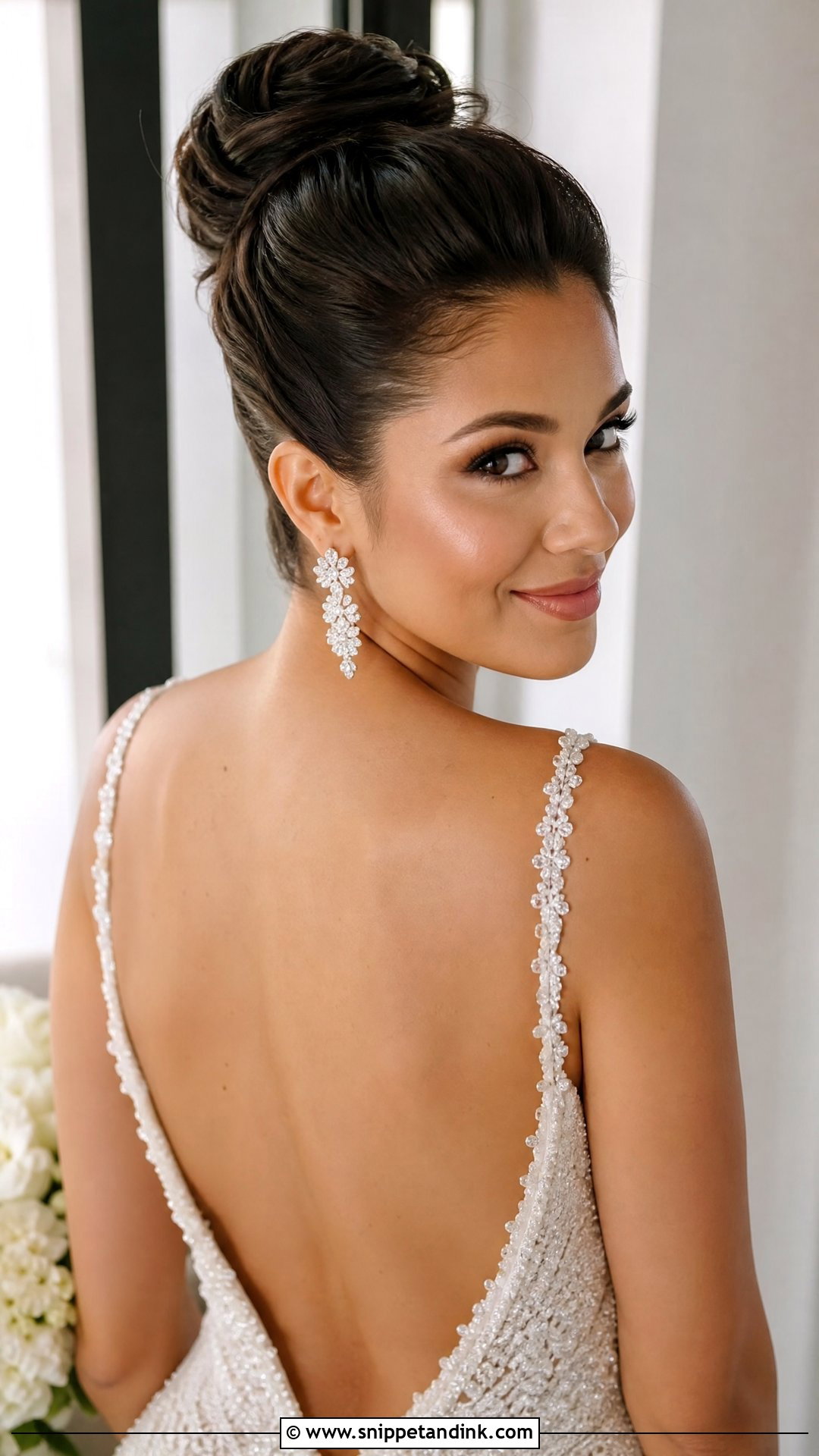
Height is what this bun is about. It shows off statement earrings, open necklines and dramatic backs, and on a hot day it keeps every strand off your neck. Placement makes the difference between bridal and gym: too far forward on the head and it reads like a casual top knot. I set it at or just behind the crown, with smooth sides and a controlled base. Ask for a soft, round bun rather than a tight twist if you want it gentler.
Taking a Tight Bun Down Without Snapping Your Hair
Nobody thinks about the end of the night until they’re pulling pins out at one in the morning. Rush it and you’ll lose more hair than you’d like, especially if it was teased or sprayed heavily.
- Count the pins at your trial, or at least ask roughly how many went in, so you know when you’ve found them all.
- Pull pins out in the direction they went in. Yanking them sideways catches strands.
- Leave elastics until last and cut them if they’re tangled rather than dragging them out.
- Don’t brush teased hair while it’s dry. Work a conditioner or detangler through, then comb from the ends upward.
If the bun gives you a tension headache during the day, it was pinned too tight, and it’s fine to ask a bridesmaid to slip out one or two pins at the base. Relief is usually instant, and a well-built bun won’t fall apart from losing a couple of anchors.
Does It Still Feel Comfortable After an Hour?
A clean bun can be sleek, soft, classic or modern depending on the part, the height, the accessory and your texture. What decides whether it’s right for you is your neckline, your veil and how your own hair behaves, so bring clear photos to the trial and test your accessories in place. Check it from the front, both sides and the back. Then wear it for a while before you leave the chair. It should feel secure without pulling, and if it’s aching at hour one, it will be unbearable by the speeches.
You'll Like These Ideas:


Leave a Reply