
Simple wedding dresses are harder to get right than ornate ones. With no lace or beading to draw the eye, the fabric, the fit and the neckline carry everything, and a slightly loose waist or a puckered seam shows from across the room. That is also what makes them so good when they’re right. The gowns below stick to clean satin, crepe, silk slips, sculptural strapless shapes, A-lines, minis and tailored separates, and they suit anywhere from a courthouse to a ballroom. For each one I’ve noted what I look at first when a bride tries it on, and which accessories stop it looking unfinished.
Plain Fabric Hides Nothing, So Shop With Your Hands
On a decorated gown, lace and beading cover small faults. On a minimalist dress the fabric is the decoration, so I spend the first ten minutes of an appointment handling it before a bride steps into anything.
Three quick tests in the shop
- Hold a single layer up to the light. If you can see your fingers through a white skirt, it will turn see-through in outdoor photos unless it’s lined.
- Crush a corner in your fist for five seconds. Crepe and mikado bounce back; thin satin and silk keep the crease, which tells you exactly how your lap will look after the car ride.
- Look along the side seams under a bright light. Puckered or wavy seams are hard to correct later and show clearly on a plain bodice.
Matching the fabric to the day
Mikado and heavier satin hold a sculpted shape and suit cooler, formal venues. Crepe skims and moves, and it’s forgiving over a long day. Silk charmeuse and other slip fabrics feel wonderful but cling and show water marks, so they sit better at a small warm-weather wedding than at a crowded reception with drinks going round.
Bring the underwear and shoes you plan to wear to every appointment. A plain dress shows a bra line or a strap mark in a way lace never would.
1. Silk Slip Minimalist Wedding Dress
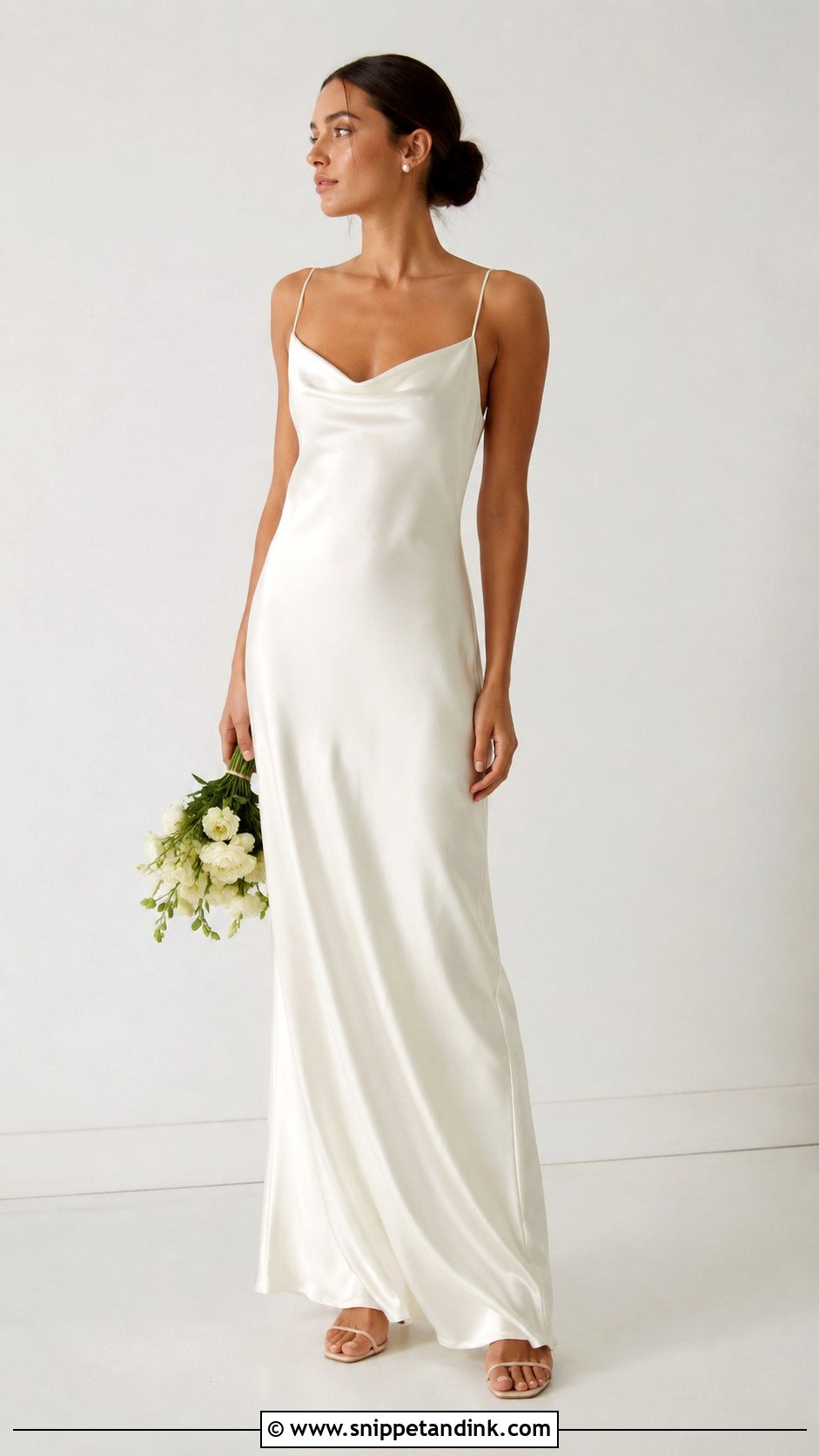
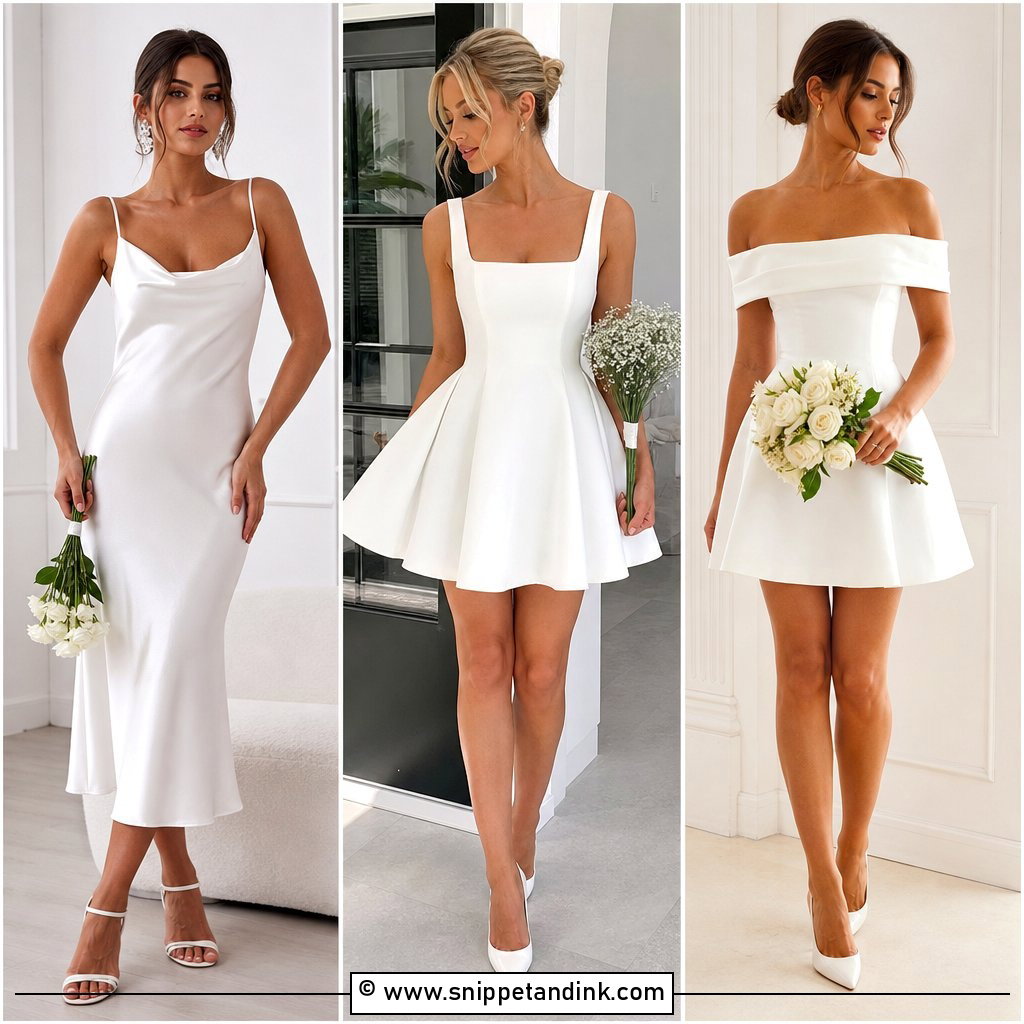
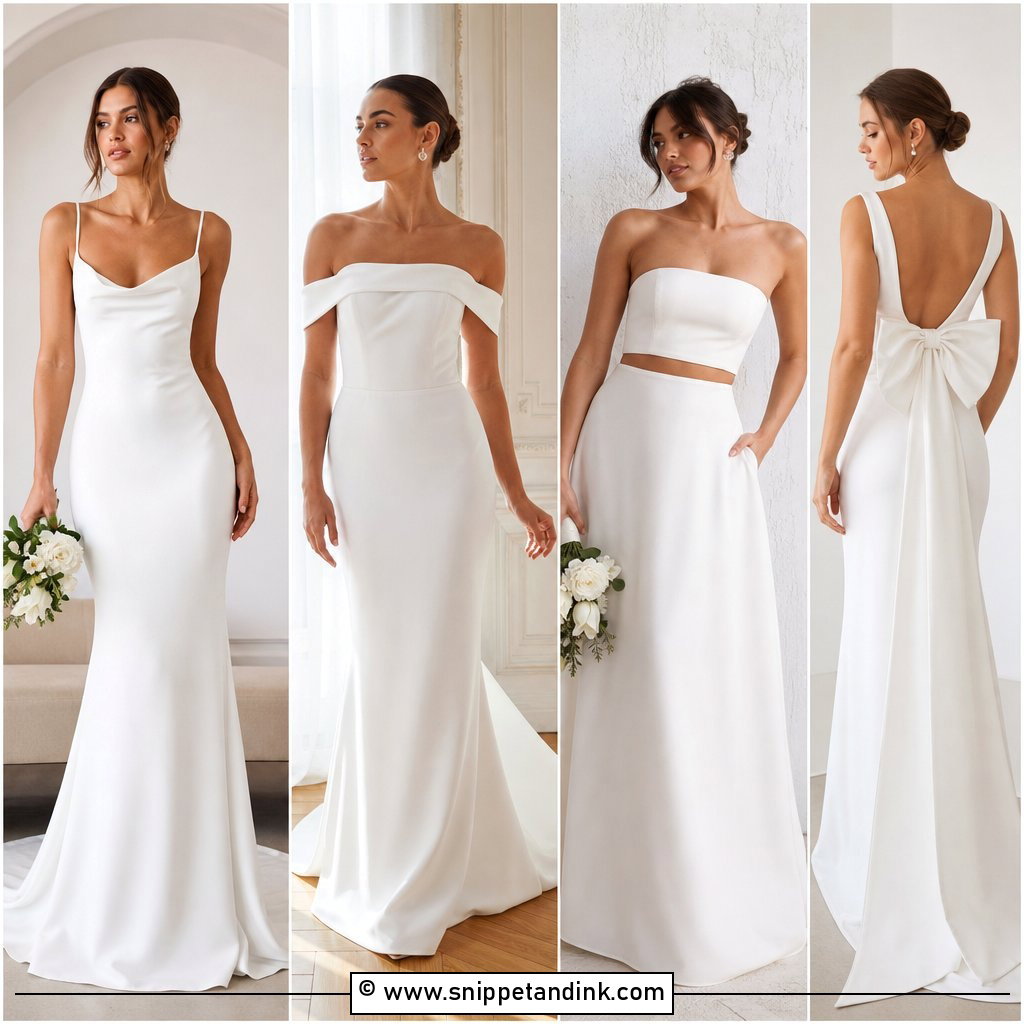
Bias cut is what makes a slip dress move, and it’s also what makes it unforgiving. Cut on the diagonal, silk stretches over the body and clings wherever it touches, so I always fit a slip a touch looser than a bride expects. A cowl neck, thin straps and a clean back give the shape, and underneath you need nude underwear without a single line. Barely there heels, pearl studs and a low bun keep it soft, with a sheer fingertip veil or a silk scarf veil for the ceremony. Rooftops, beaches and city weddings suit it; a cold stone church does not.
2. Strapless Satin Minimalist Wedding Dress
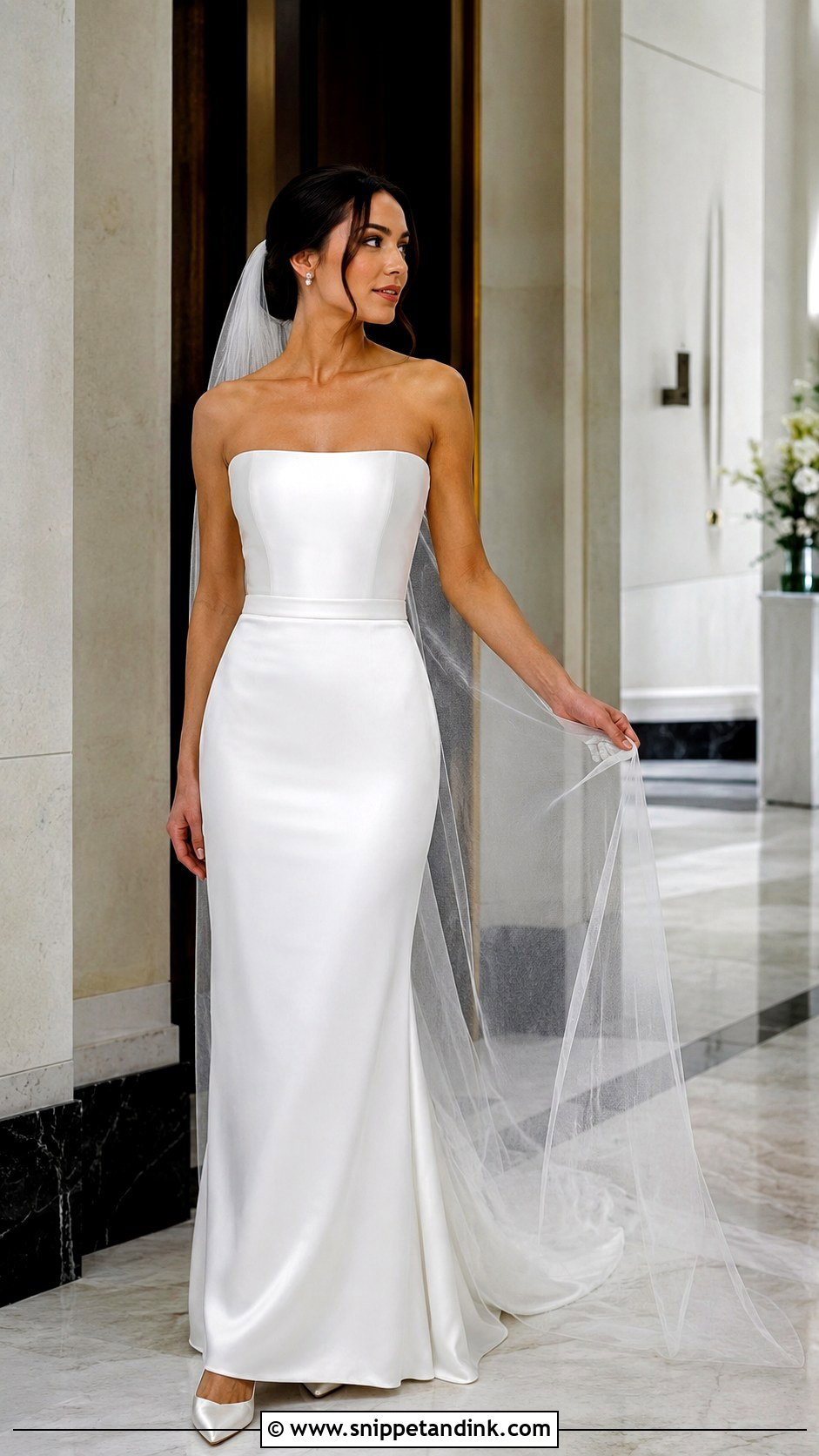
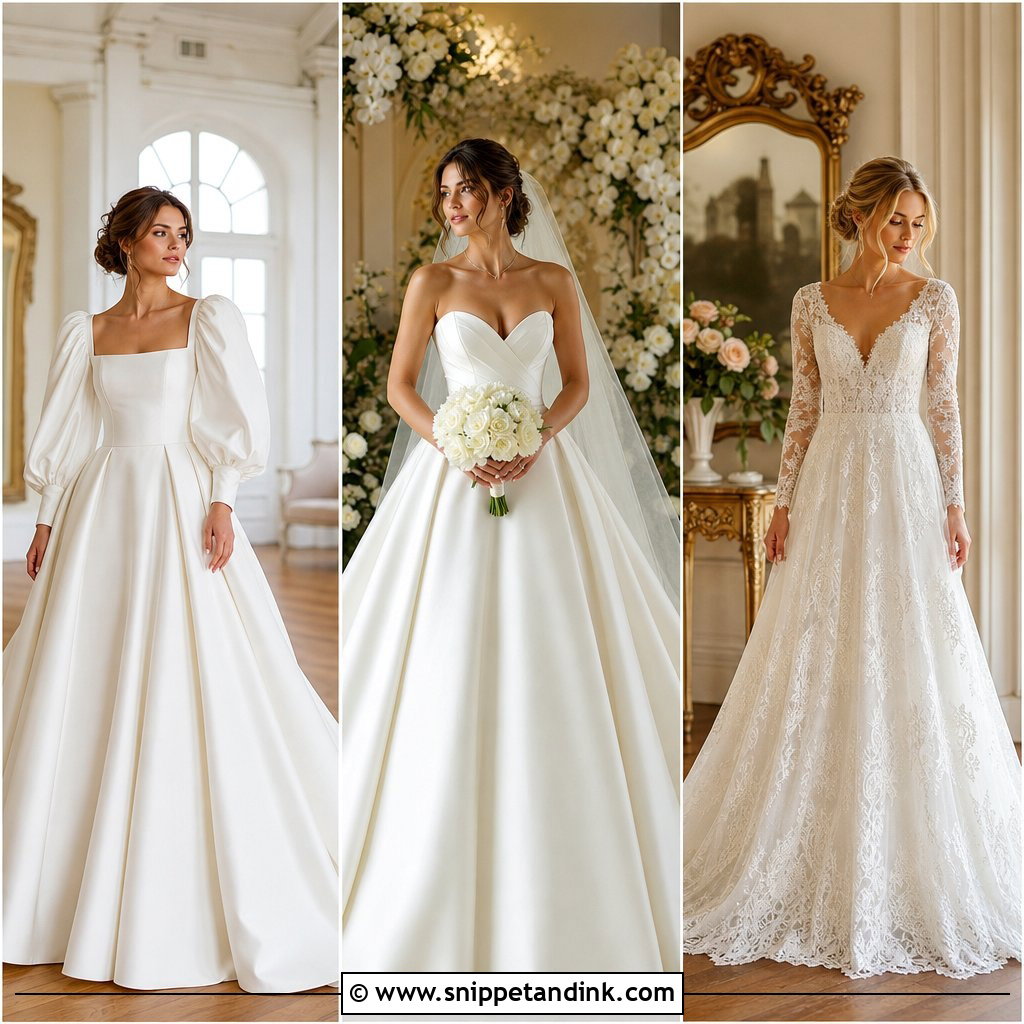
Satin on a strapless bodice only looks sculpted when there’s a proper corset structure inside it. Lift your arms and sit down at the fitting. If the neckline gapes or drops, it needs taking in before anything else is touched. A straight or slightly flared skirt keeps it from turning princess. Pointed satin heels, a smooth chignon and small diamond or crystal studs are the right weight of accessory, and a long plain veil adds drama without decoration. Ballrooms, museums and evening receptions show it off.
3. Crepe Fit And Flare Minimalist Wedding Dress
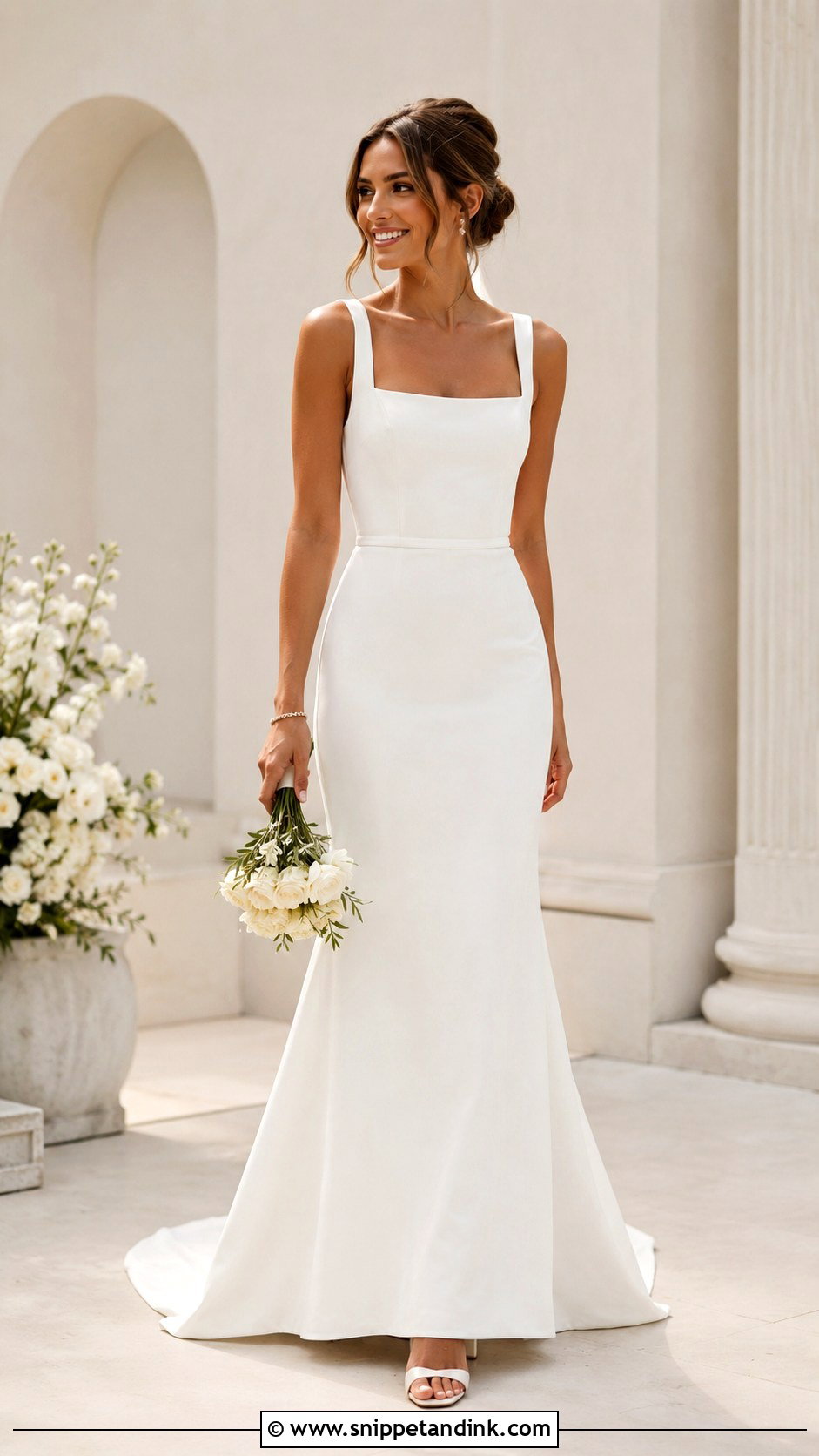
Crepe has a matte, slightly pebbly surface, and its weight decides whether a fit and flare hangs well. A heavy crepe smooths over the hips; a thin one shows every line underneath, so feel the fabric between your fingers in the shop. If you plan to dance, the flare should start at or just above the knee. A square neckline, thin straps or a low back keep the plain design interesting. Block heels, a slim bracelet and a small bouquet of one or two flower types are enough.
4. Square Neck Minimalist Wedding Dress
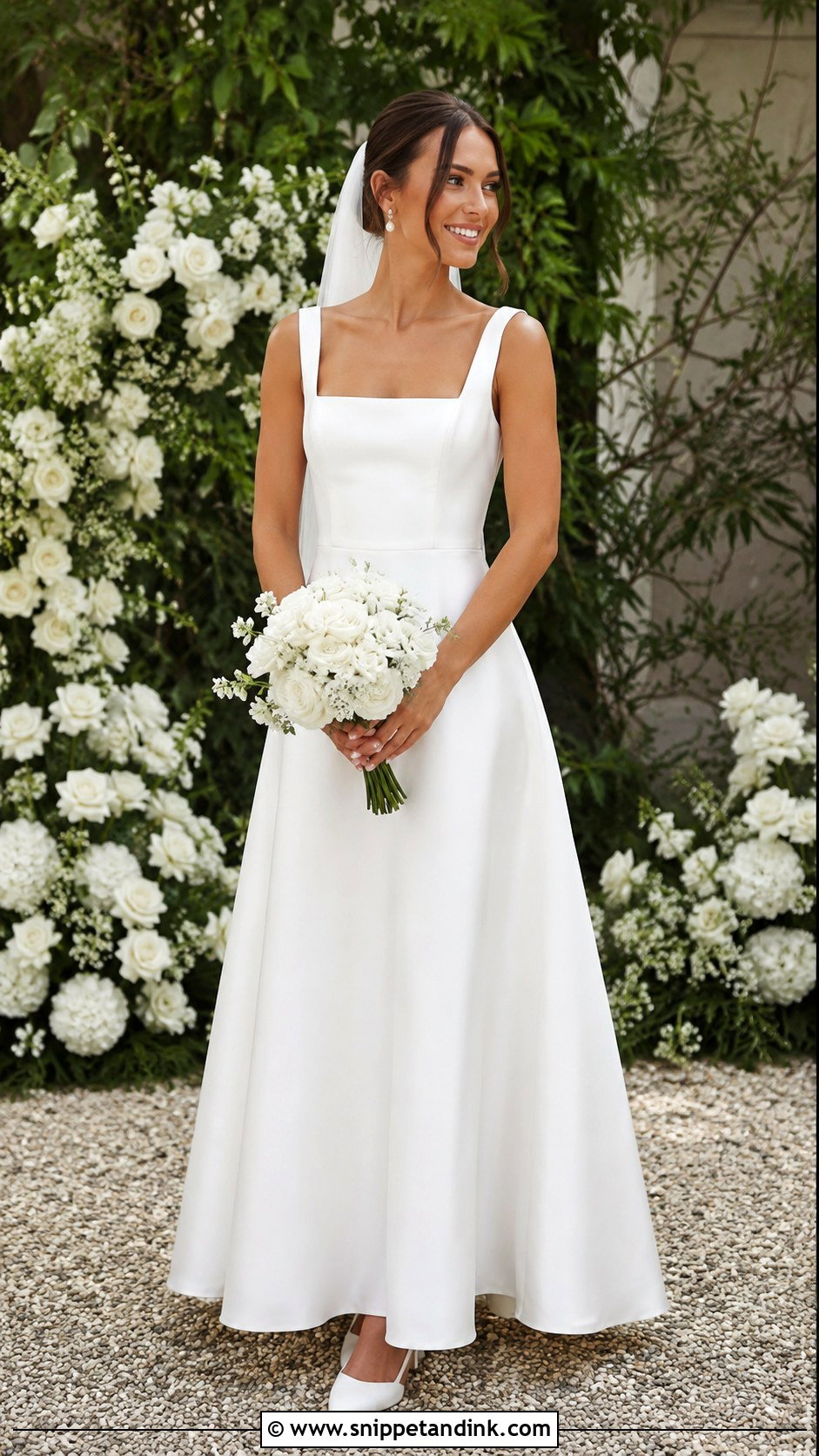
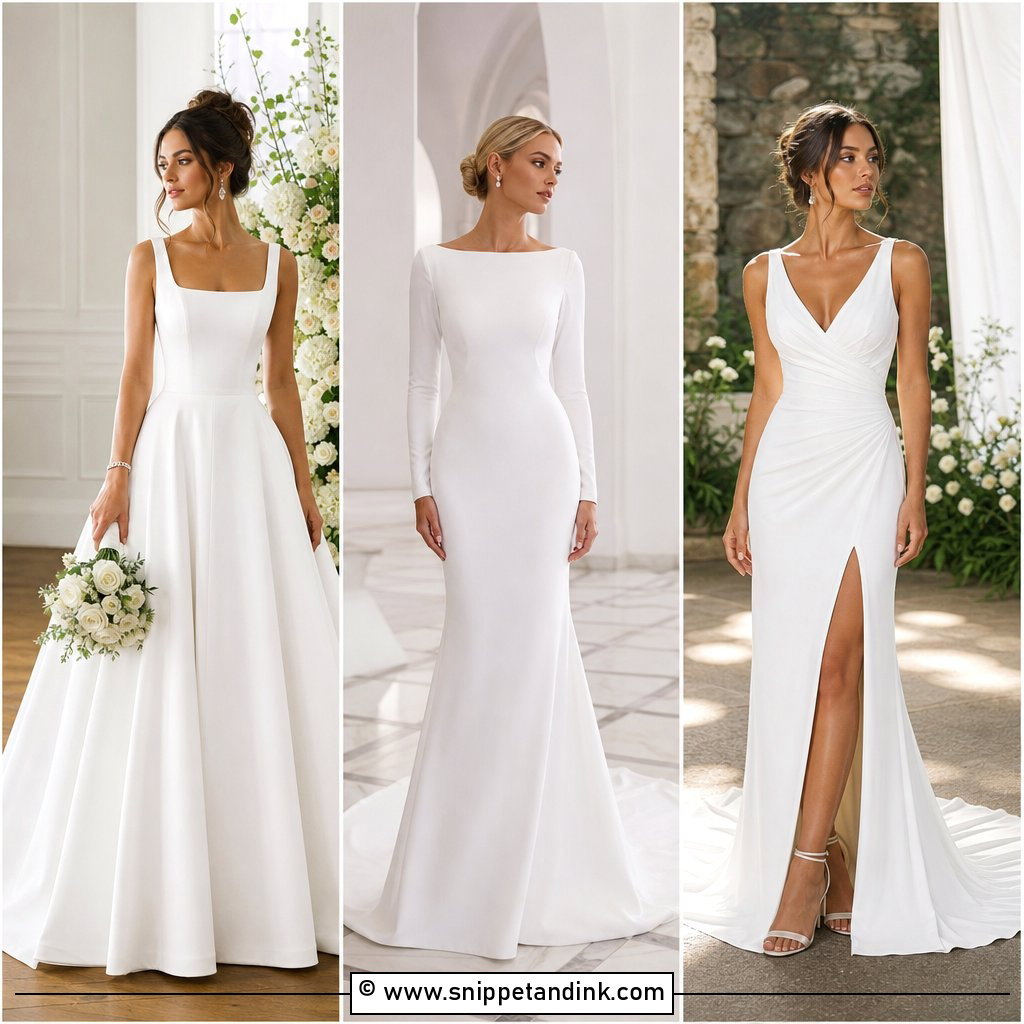
A square neckline has to sit perfectly flat, and the corners are where it fails. On a soft fabric they cave inward by the afternoon, which is why I prefer it on mikado, satin or a firm crepe with thicker straps. Below it, a column, an A-line or a soft fit and flare all work. Style it with a centre-part bun, pearl drop earrings and slingback heels. A short veil keeps the attention on your face and that clean straight line.
5. High Neck Minimalist Wedding Dress
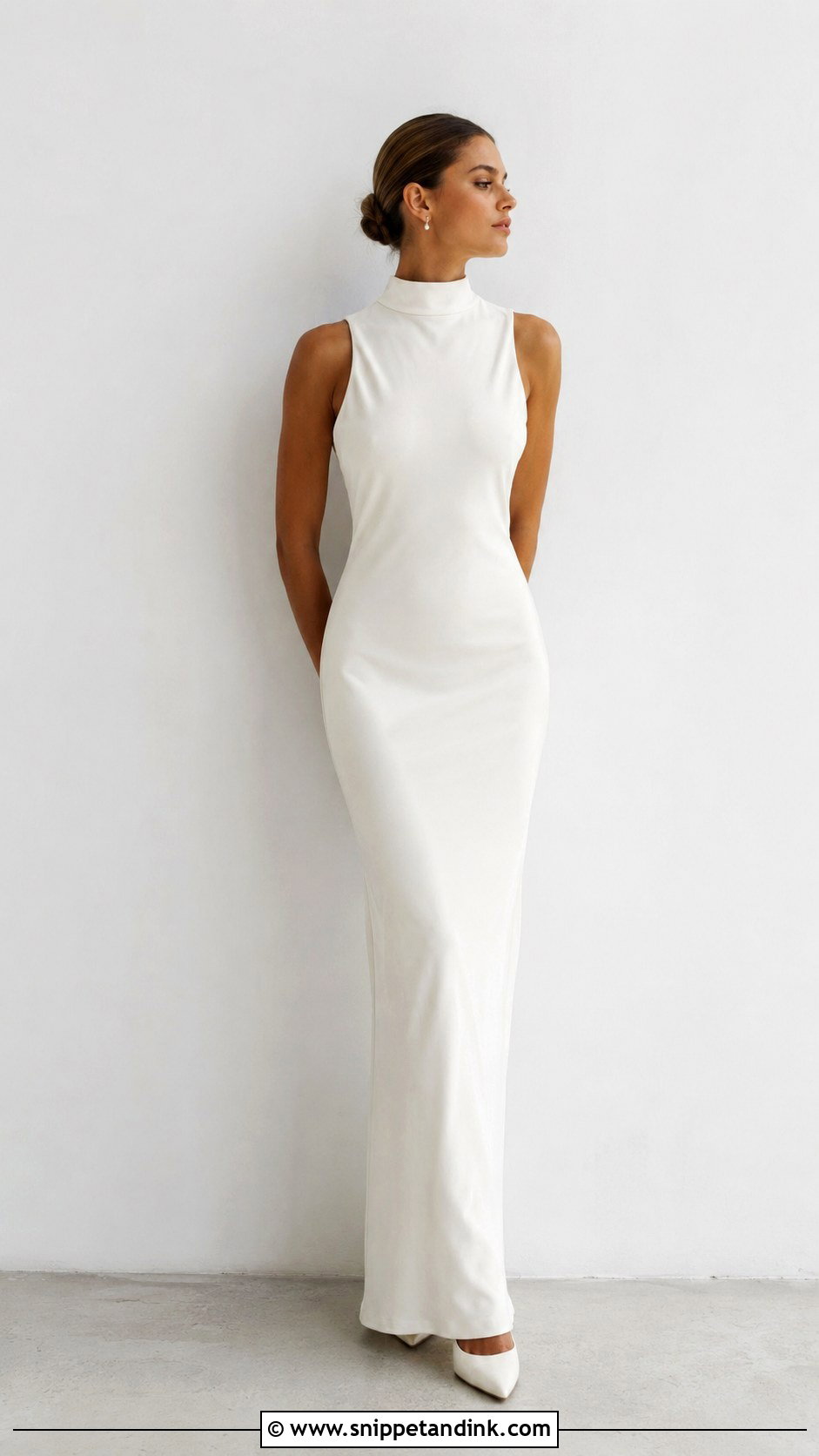
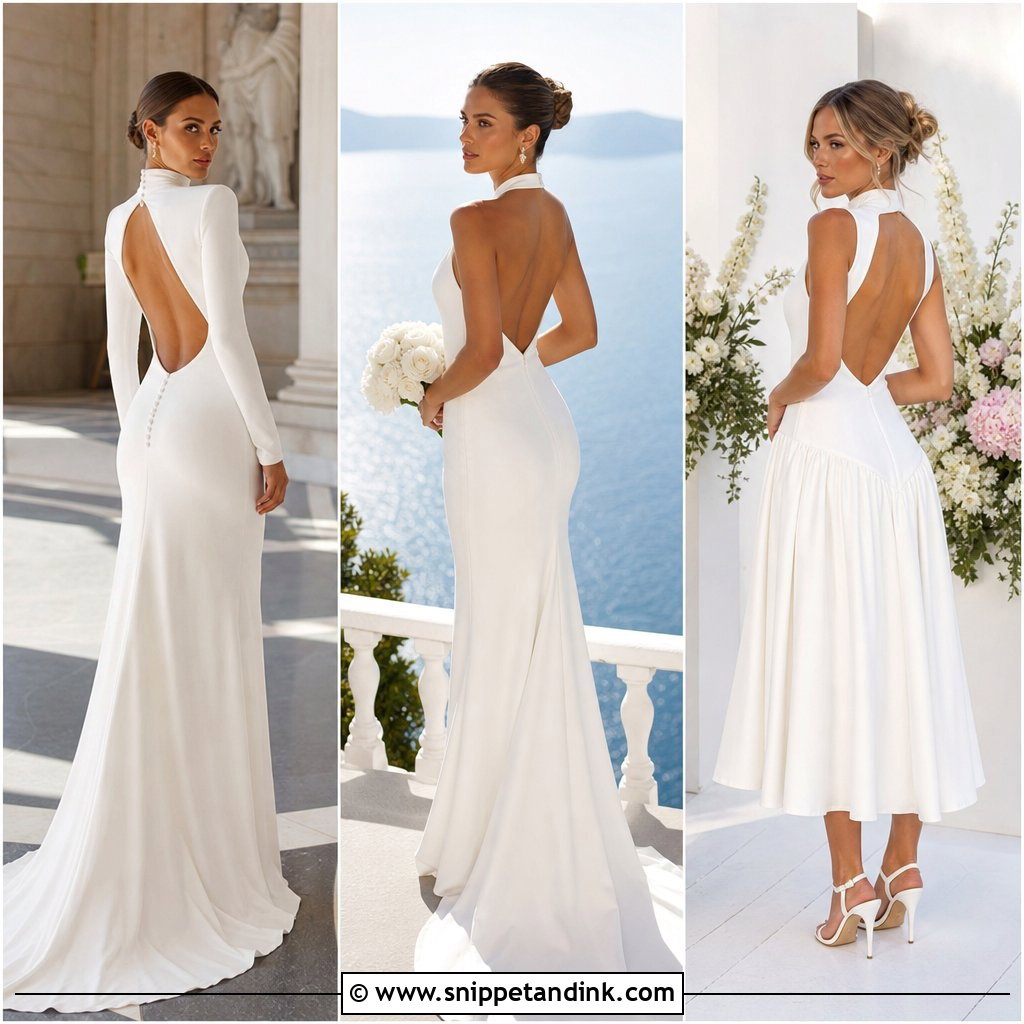
High necks look sleek in a picture and feel warm in real life. Sleeveless versions are fine for summer; with long sleeves I’d keep it to autumn, winter or a well air-conditioned venue. Look for smooth fabric and clean seams on a fitted or column shape, and make sure the collar leaves room for a finger at the throat, because you’ll laugh, swallow and probably cry in it. Skip the necklace. Small earrings, pointed pumps or sleek sandals and a low bun keep nothing in front of the neckline.
6. Long Sleeve Minimalist Wedding Dress
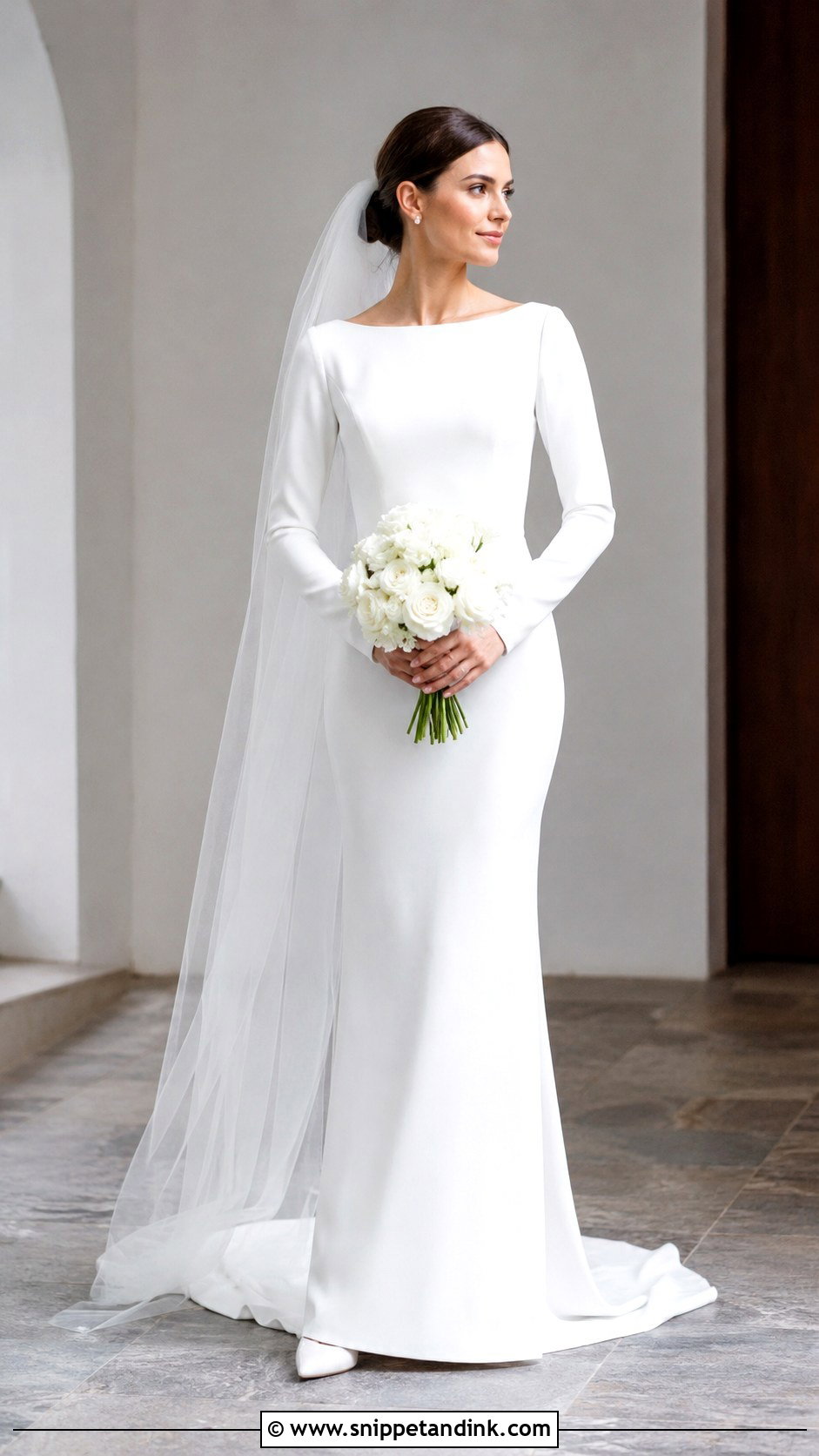
A long sleeve minimalist wedding dress only looks heavy when the fabric is wrong. Stretch crepe, matte satin or silk wool keep the sleeves sharp, and a bateau, scoop or square neckline balances the covered arms. I ask brides to hug me at the fitting: if the back seam strains, the sleeve head needs more room. A low bun, small pearl earrings and a plain veil soften it, and a pointed toe lengthens a fitted line. Autumn, winter and evening weddings are its season.
7. Minimalist A Line Wedding Dress
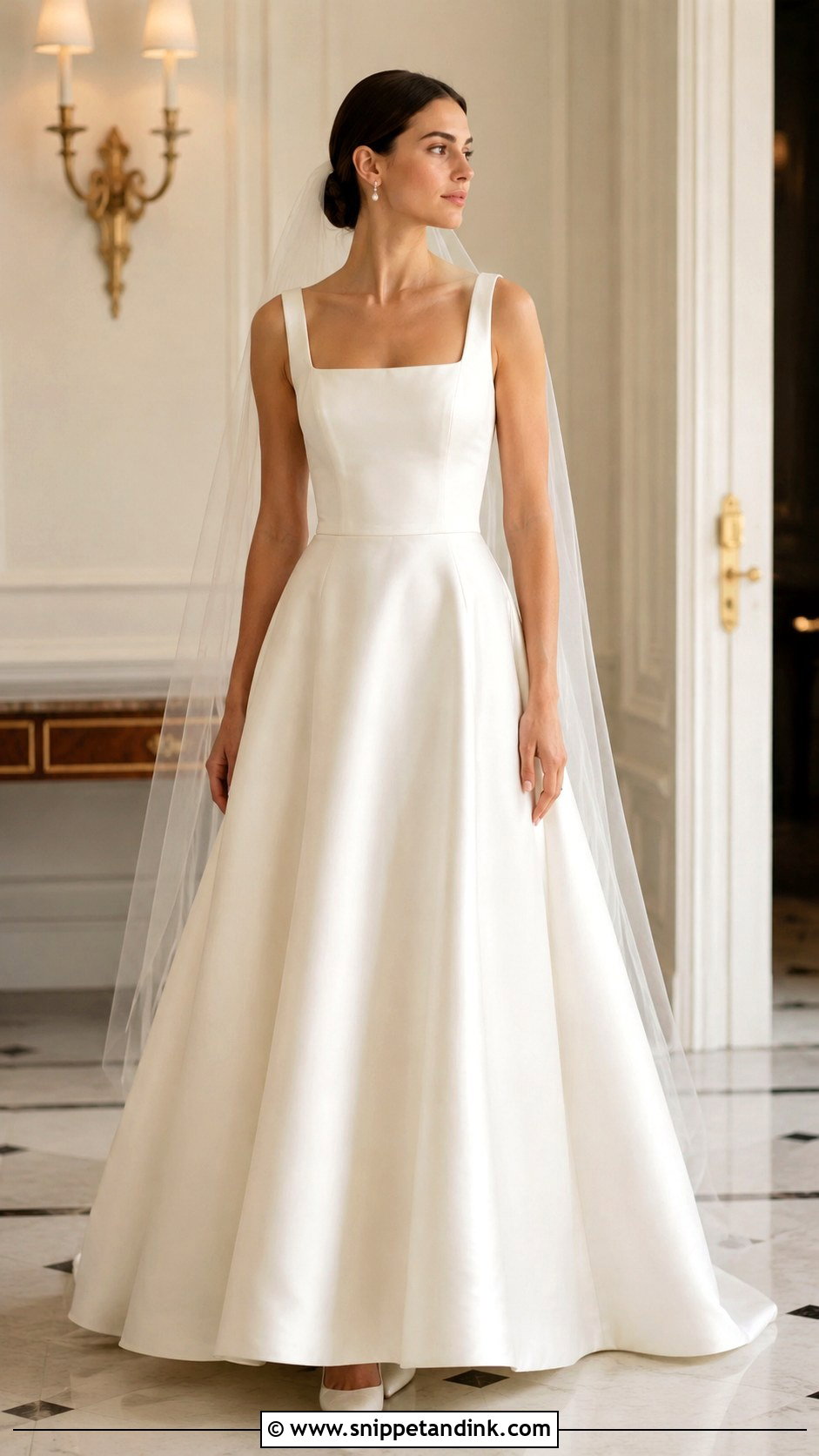
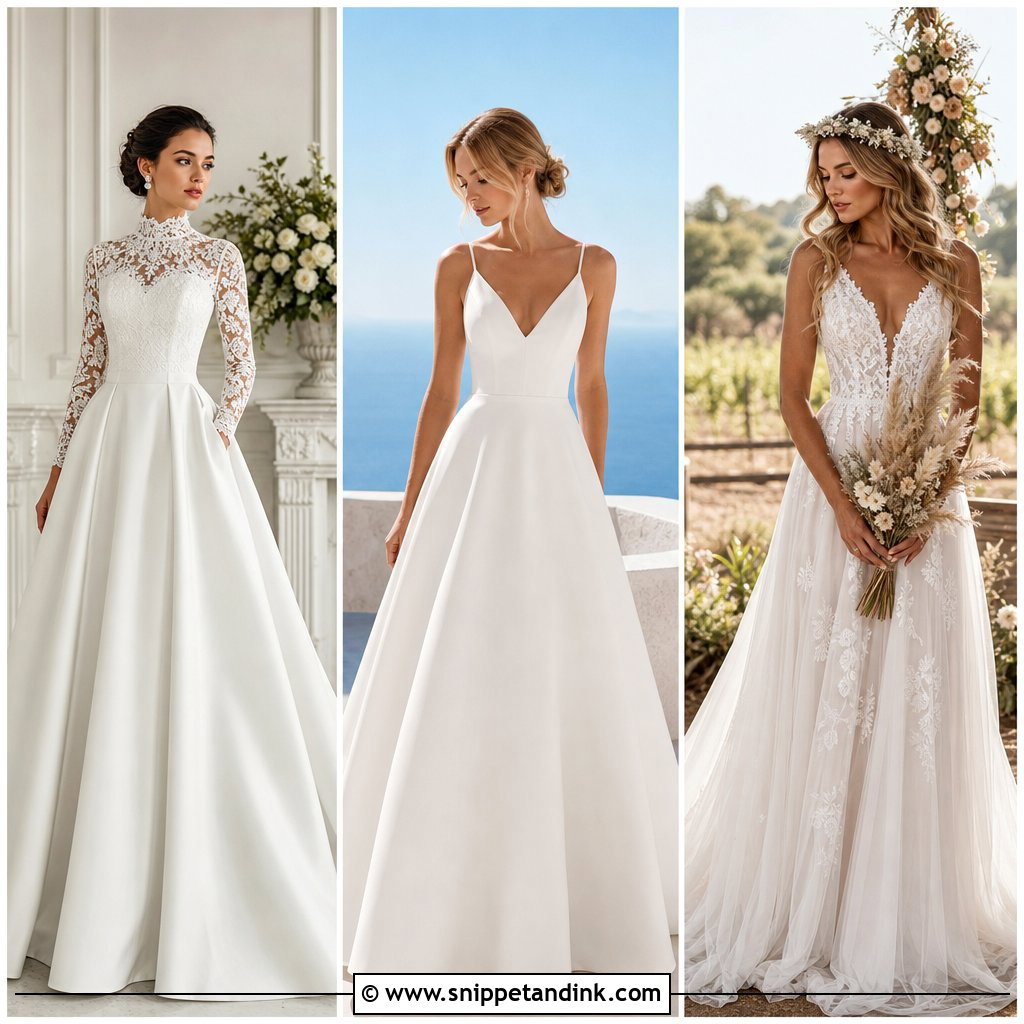
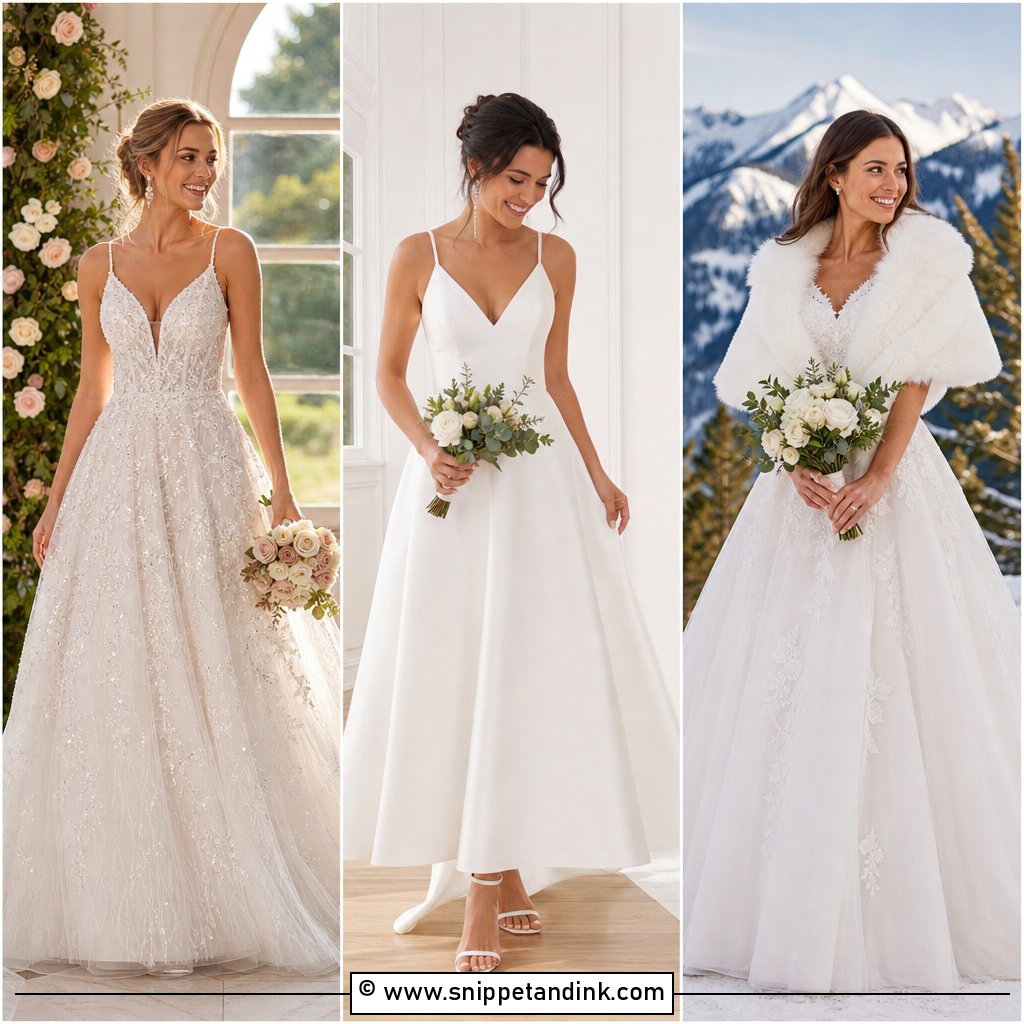
The A-line is the shape I’d put most brides in first, simply because it forgives so much. The bodice fits close, then the skirt widens gradually from the waist, which balances wider and narrower hips alike. Clean satin, mikado or crepe keep it polished, under a strapless, square or V-neck bodice. Pair it with classic pumps, a smooth veil and simple jewelry, or look for pockets if you’d like something more modern. Gardens, hotels and traditional receptions all suit it.
8. Minimalist Ball Gown Wedding Dress
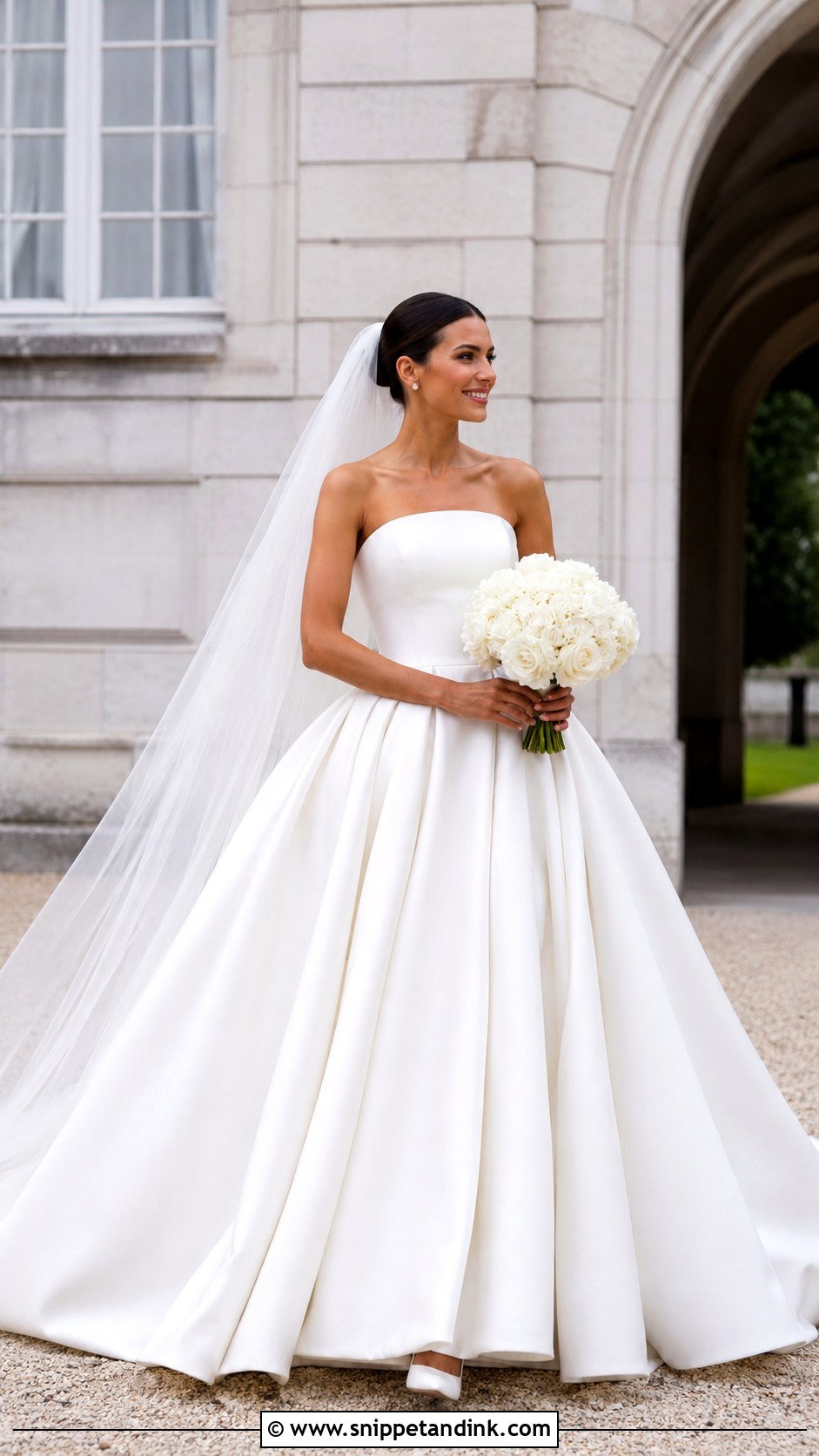
Volume without sparkle relies entirely on fabric weight. A plain satin or mikado ball gown needs enough body, and a proper petticoat, to hold its shape all day, and the front hem should just clear the floor in your shoes or you’ll tread on it going up stairs. A strapless or square bodice keeps the top balanced against the skirt. A long veil, pearl studs and classic heels are all it needs. Large venues and estates give that skirt the room it wants.
9. Minimalist Column Wedding Dress
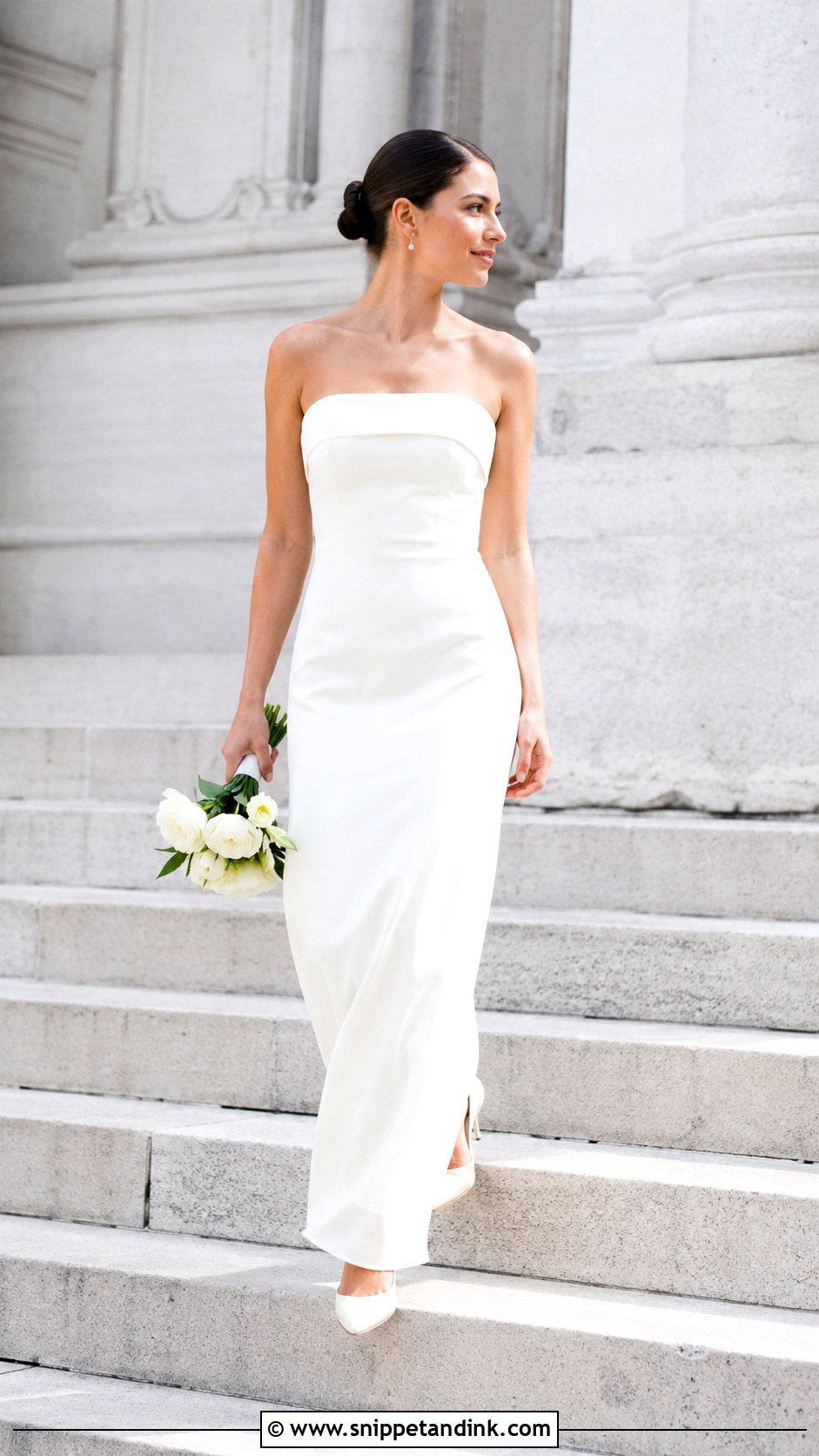
A minimalist column wedding dress falls straight down the body with almost no flare, and that long line is the entire point. Crepe, satin, silk or a structured jersey all carry it, with a strapless, halter, square or high neck. This is the dress where I’m strictest about hem length. It should just touch the top of your shoe; a column that pools or floats an inch too high breaks the line. Check you can climb a step in it, too. Slim heels, a small clutch for later and a sleek bun finish it for city halls and rooftops.
10. Backless Minimalist Wedding Dress
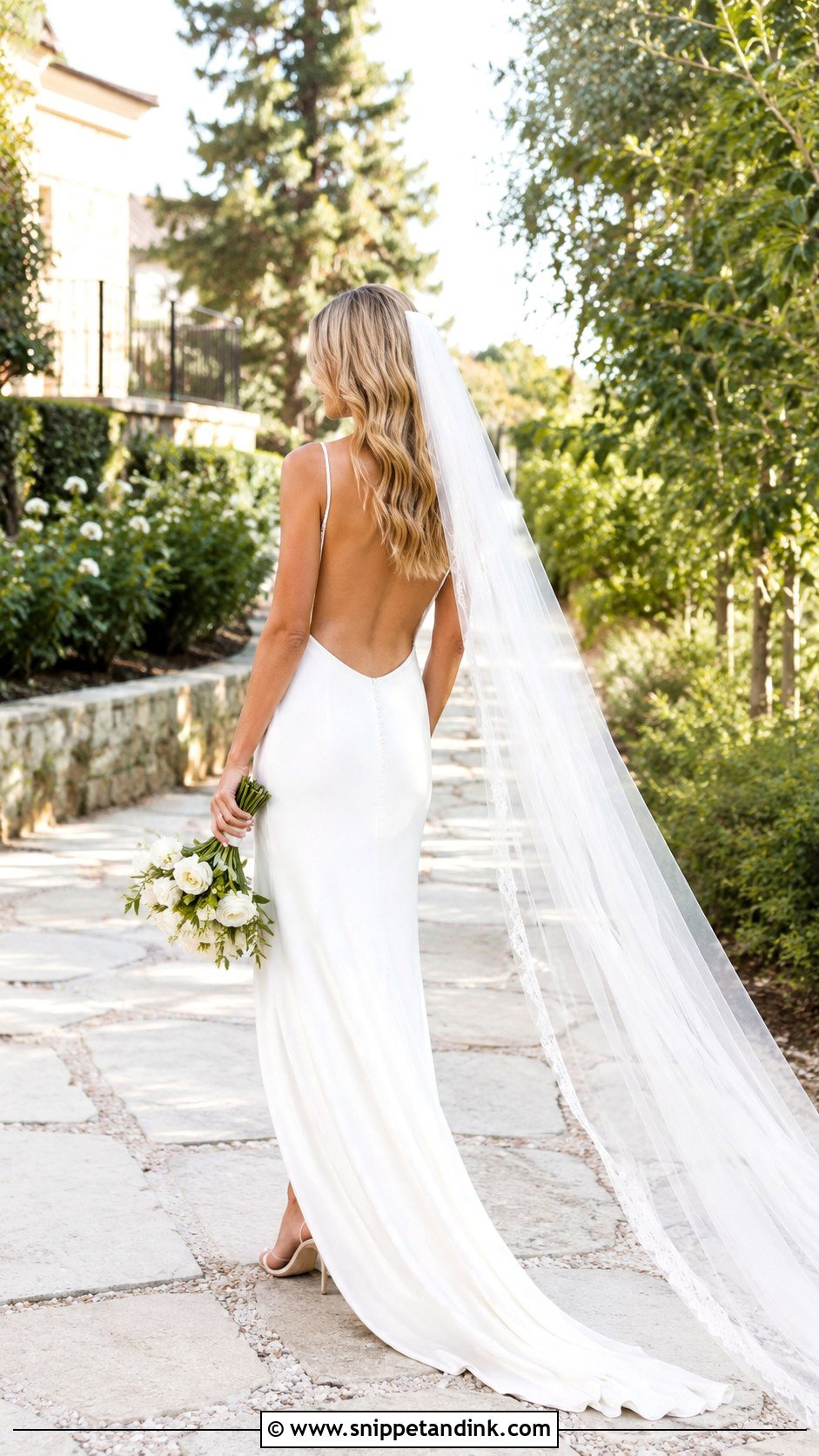
An open back is really about the support you can’t see. A backless minimalist wedding dress stays up through a well-fitted front bodice, often with built-in cups, so try it with your arms moving rather than standing still for the mirror. From the front it looks plain, and the back is the surprise as you walk the aisle. Slip, column and fit and flare shapes all suit it, finished with delicate straps, a cowl or a line of buttons at the lower spine. A sheer veil shows the back through it. Keep earrings small and hair in soft waves.
11. Minimalist Halter Wedding Dress
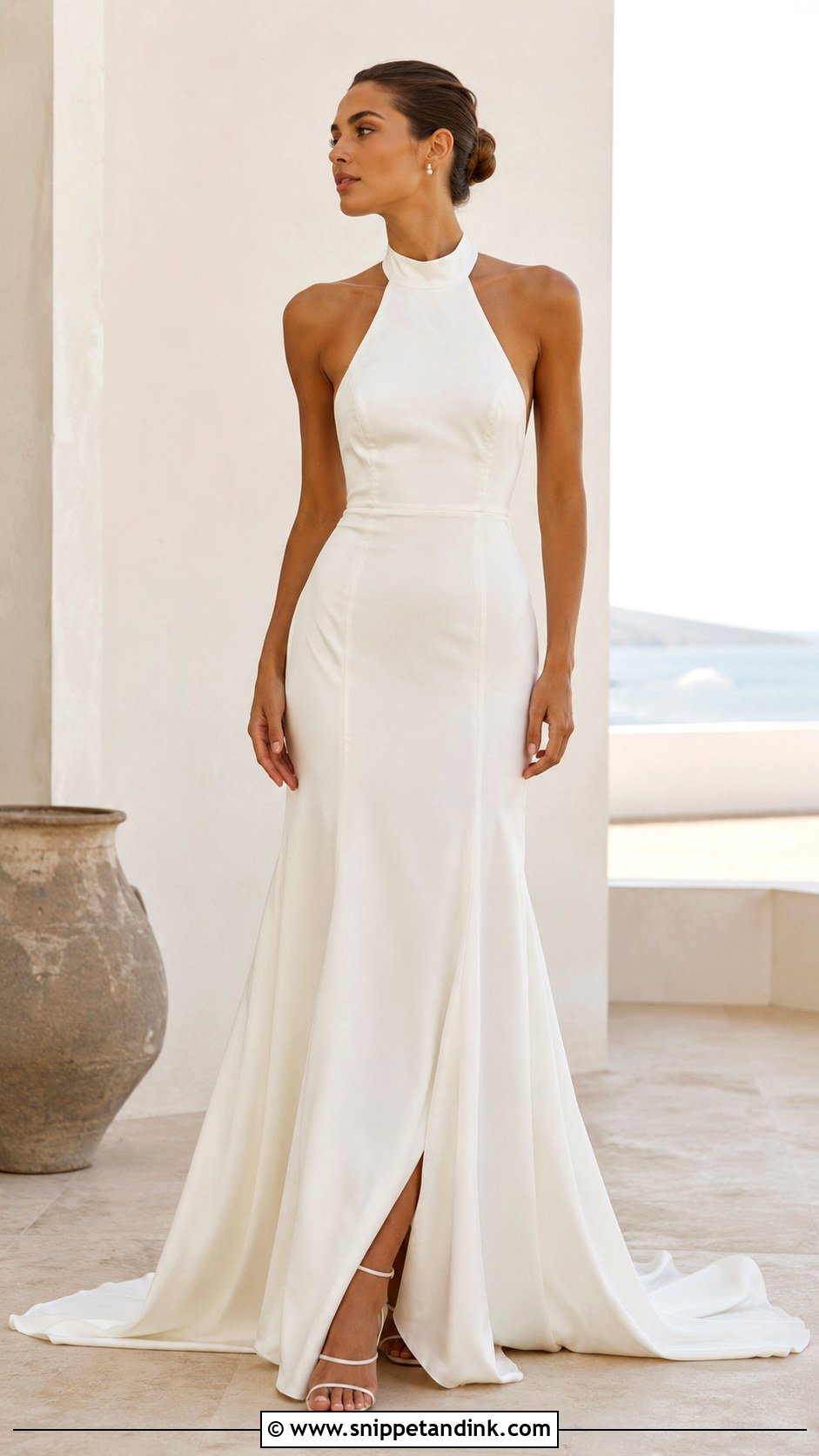
A high halter reads sophisticated; a plunging one reads relaxed and beachy. Either way, check where the weight hangs. On a heavy silk or satin bodice, a thin tie at the nape pulls on your neck by evening, so a hook closure or wider neckband is kinder. Silk, crepe or satin with a fitted bodice works best. Leave off the necklace and let earrings frame the face, with strappy heels or pointed pumps. Resort and contemporary city weddings suit it.
12. Minimalist Off Shoulder Wedding Dress
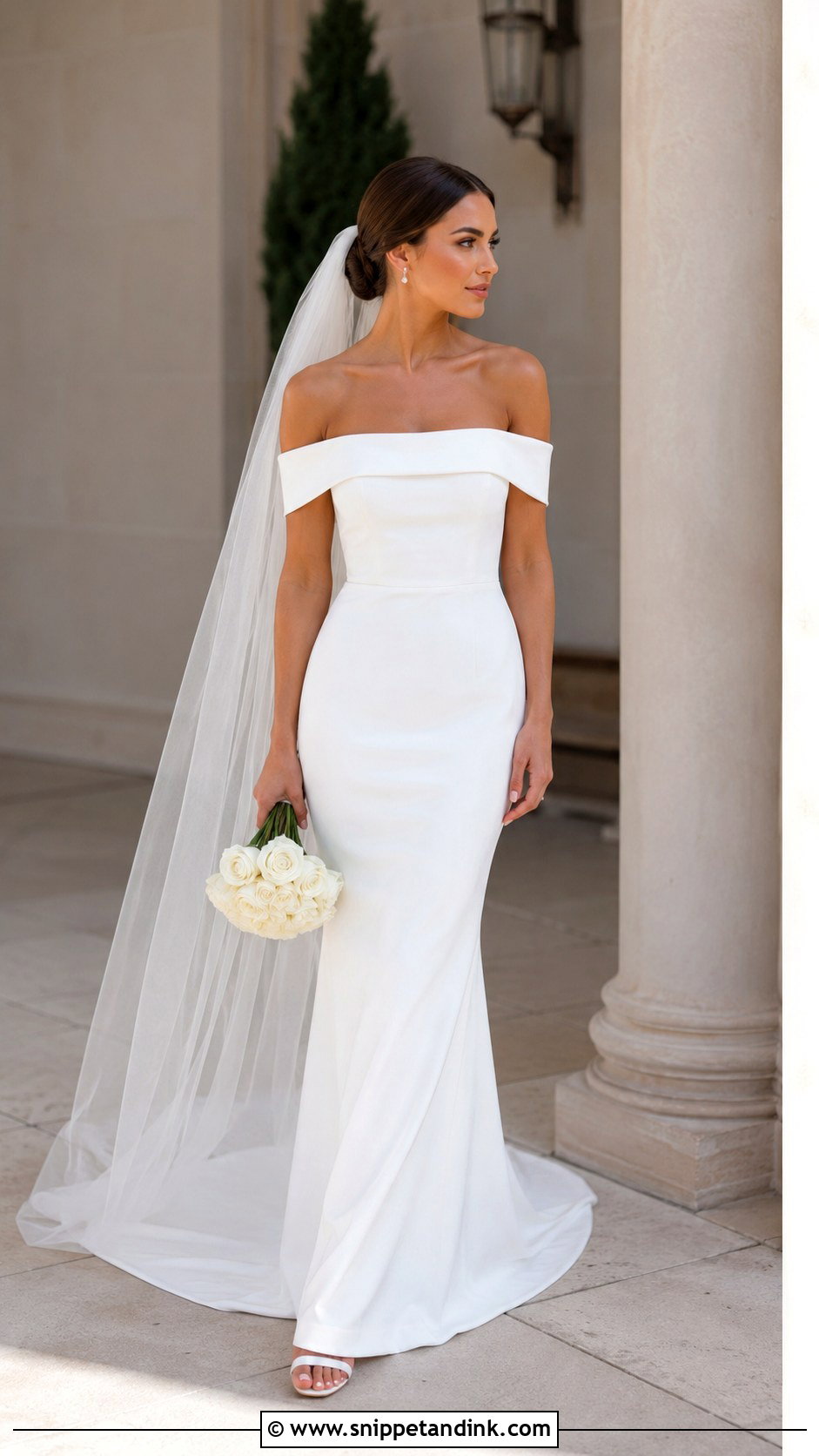
To keep an off-shoulder neckline modern, leave the lace and ruffles out and let smooth fabric carry it. A fitted crepe gown, satin column or structured A-line all work. The band has to grip the arm without biting, so raise your arms at the fitting and watch it. A low bun, delicate earrings and clean heels are enough, with a plain veil placed at the crown. Bare shoulders do get cold, so bring a wrap to a spring garden ceremony.
13. Minimalist One Shoulder Wedding Dress
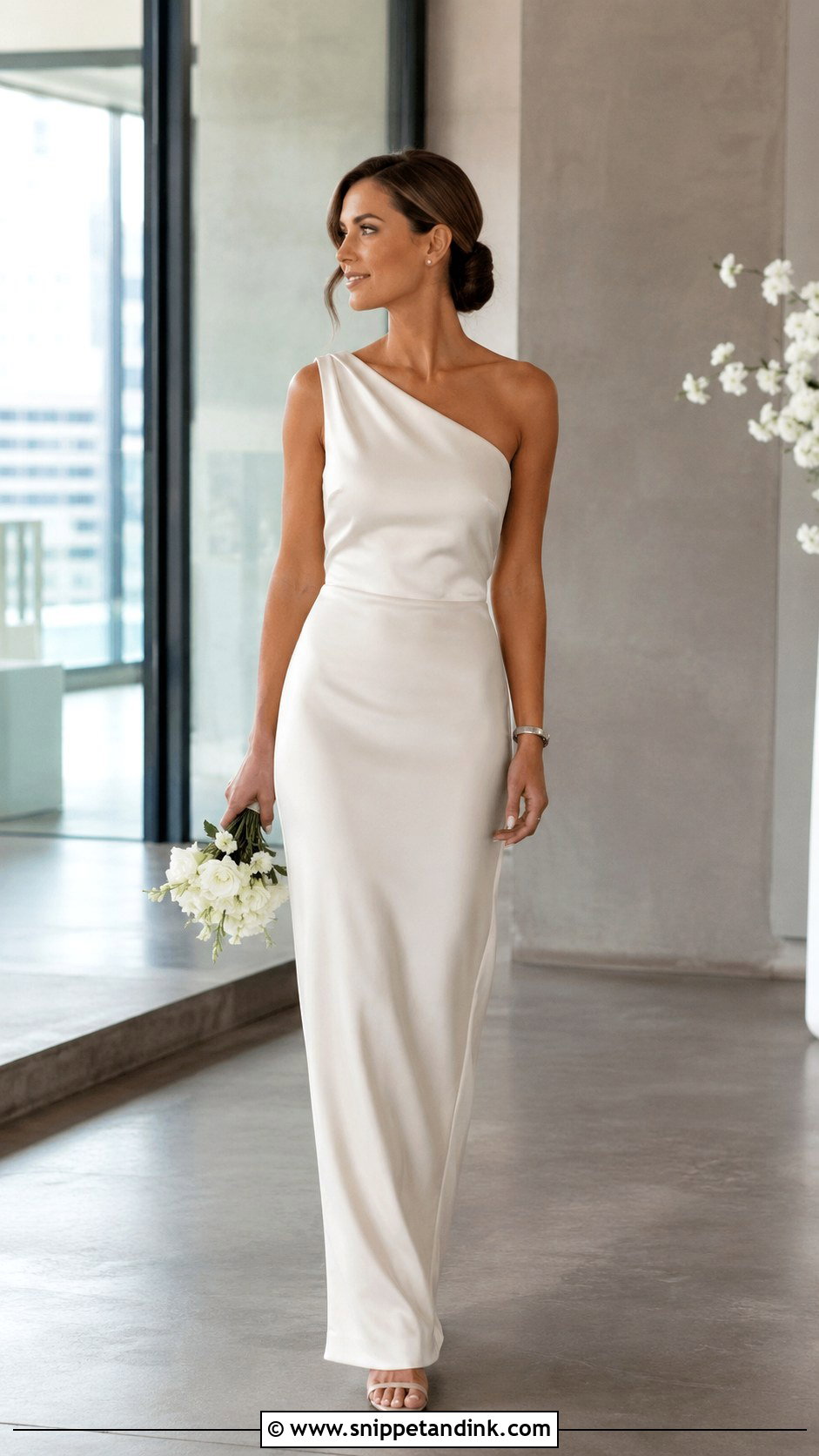
One shoulder sounds simple, but a single strap is doing the work of two. I check for internal boning or a waist stay so the bare side doesn’t slide when someone hugs you. A smooth column, soft satin or draped crepe keeps the asymmetry clean. Choose one piece of jewelry, a bracelet or small earrings, never a big pair plus a necklace. A sleek bun or side part shows the neckline, and slim heels with a small bouquet round it off for coastal and evening receptions.
14. Minimalist V Neck Wedding Dress
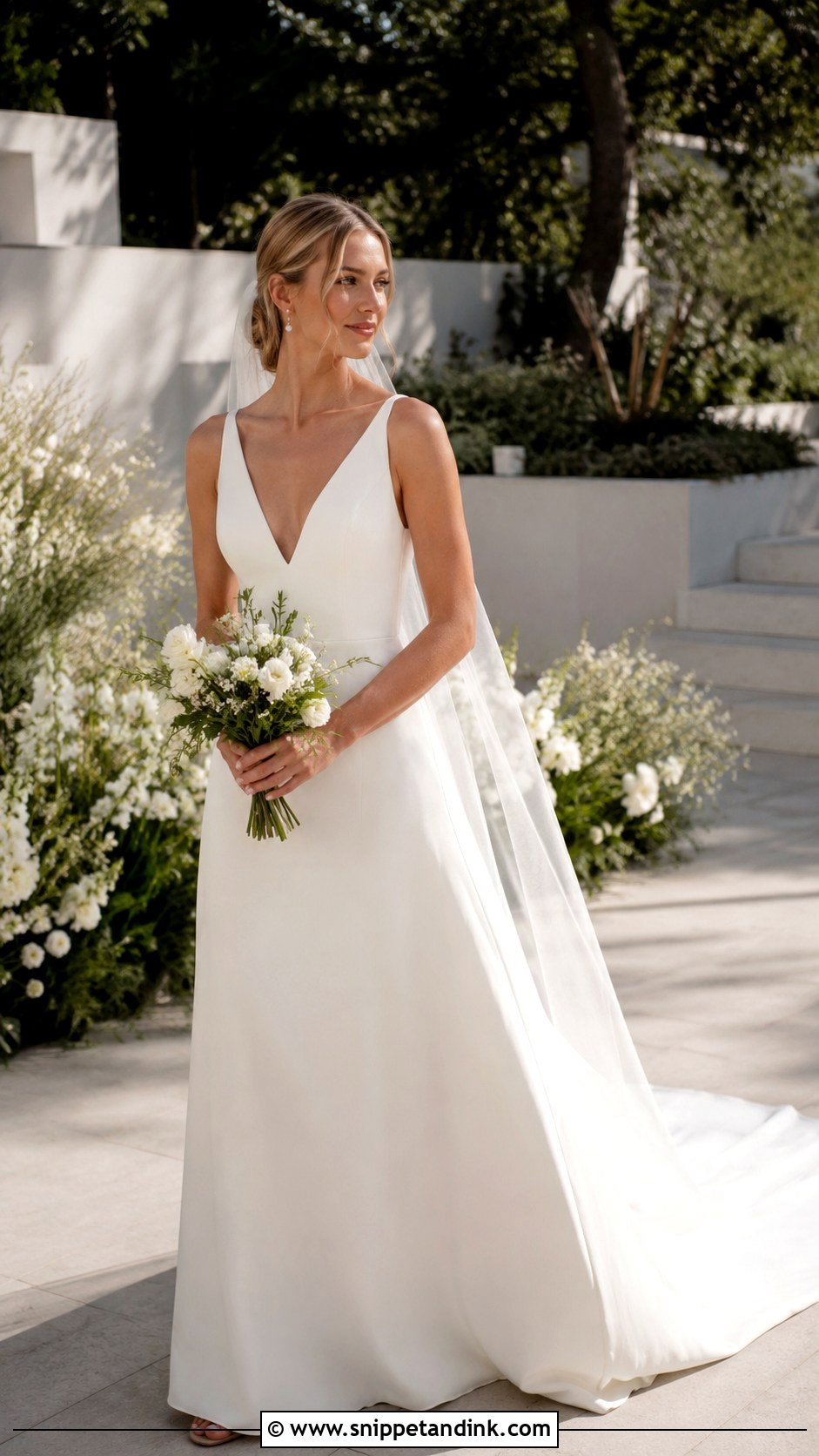
A V neck flatters most bust sizes when the fit is right, and the depth sets the mood. A shallow V feels traditional; a deeper one looks modern but needs fashion tape or built-in cups so it stays put when you lean over to sign the register. Satin, crepe or silk keep it clean, over an A-line, column or fit and flare skirt. Delicate drop earrings, simple sandals and an untrimmed veil are enough, and a tailored cape adds coverage for a religious ceremony.
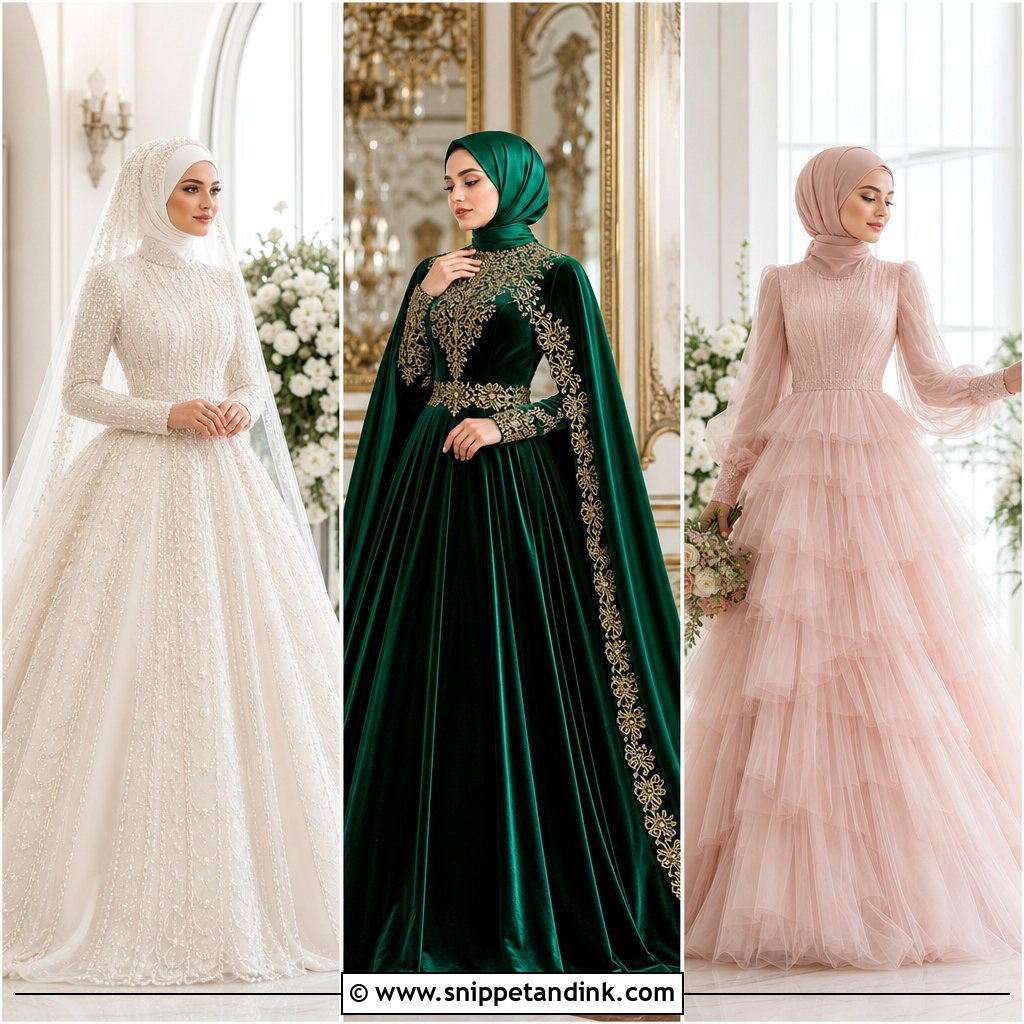
15. Minimalist Boat Neck Wedding Dress
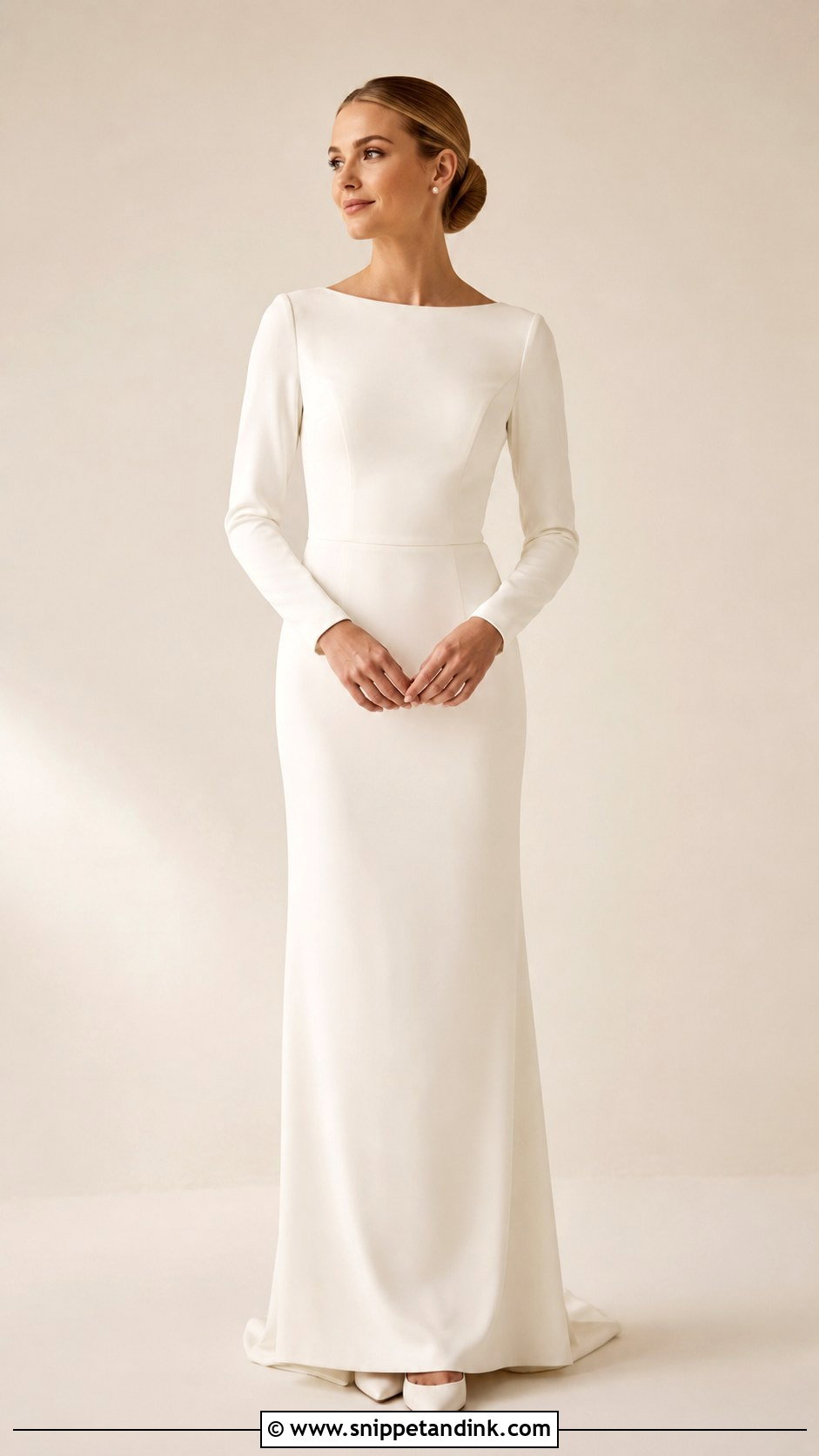
Boat necks run almost straight across from shoulder to shoulder near the collarbone, which widens the shoulders and lengthens the neck. That helps on narrow shoulders and does less for a broad frame. It pairs with long sleeves, cap sleeves or a sleeveless column. Matte fabric looks modern, while satin gives a softer glow. Pearl studs, a smooth updo and closed-toe heels keep it neat for classic ceremonies and formal receptions.
16. Minimalist Midi Wedding Dress
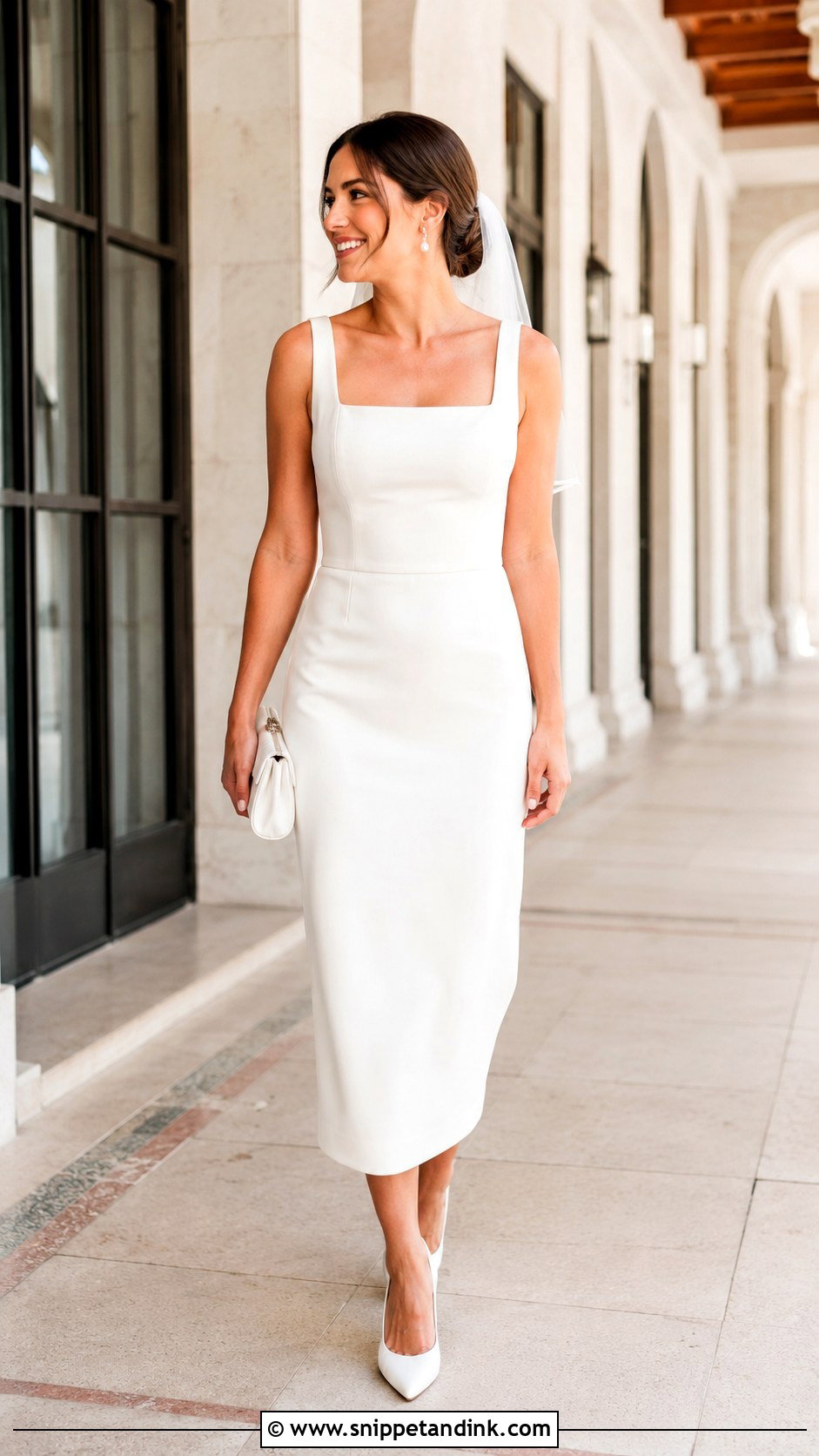
With a minimalist midi wedding dress, the shoes become part of the outfit, because the hem stops between knee and ankle and everyone sees them. Spend there. Pointed pumps, slingbacks or ankle-strap sandals all work, though an ankle strap can shorten the leg when the hem falls mid-calf. Strapless, square neck and long sleeve midis all stay clean. A short veil, pearl studs or a satin headband finishes it for courthouse weddings and brunch receptions.
17. Minimalist Mini Wedding Dress
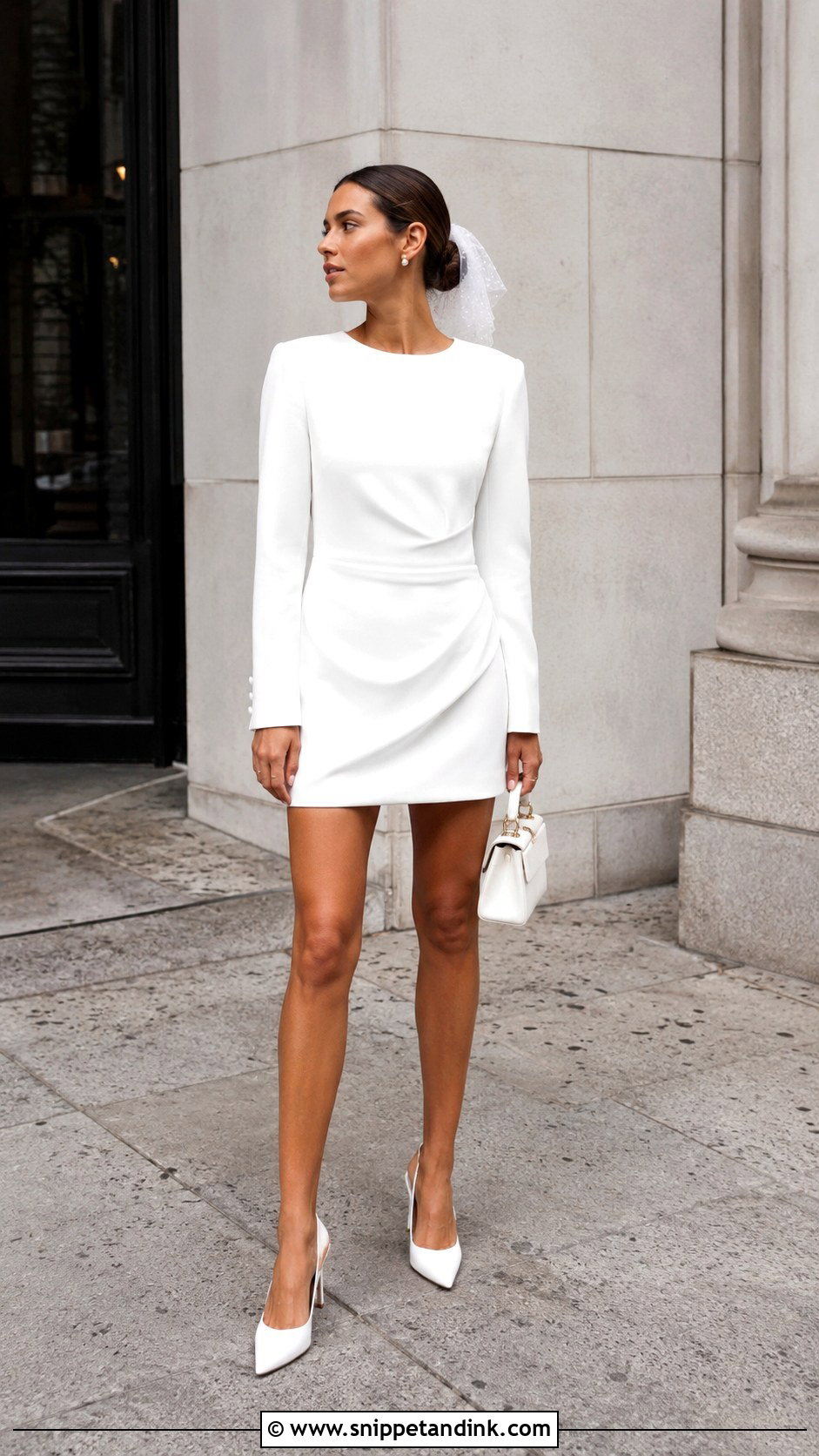
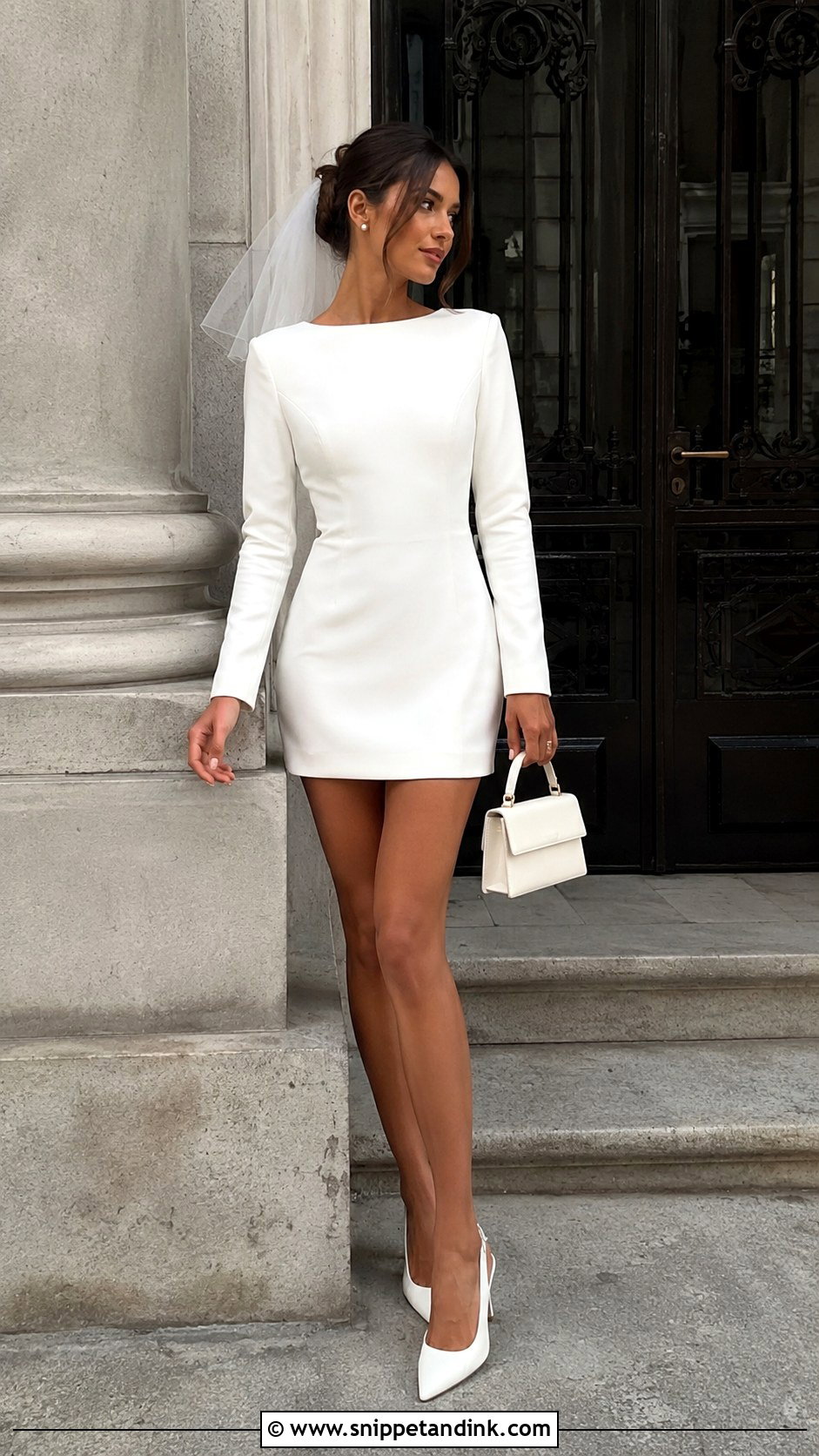
A minimalist mini wedding dress needs a structured, deliberate silhouette, or the short length starts to look like a party outfit. A shift, a tailored blazer dress, a strapless mini or a long sleeve crepe mini all hold that line. Sheer tights help in winter. Slingback pumps and a small veil or hair bow carry the bridal signal, and the jewelry should stay minimal. Of everything here, it’s the most practical for dancing and reception changes.
18. Minimalist Tea Length Wedding Dress
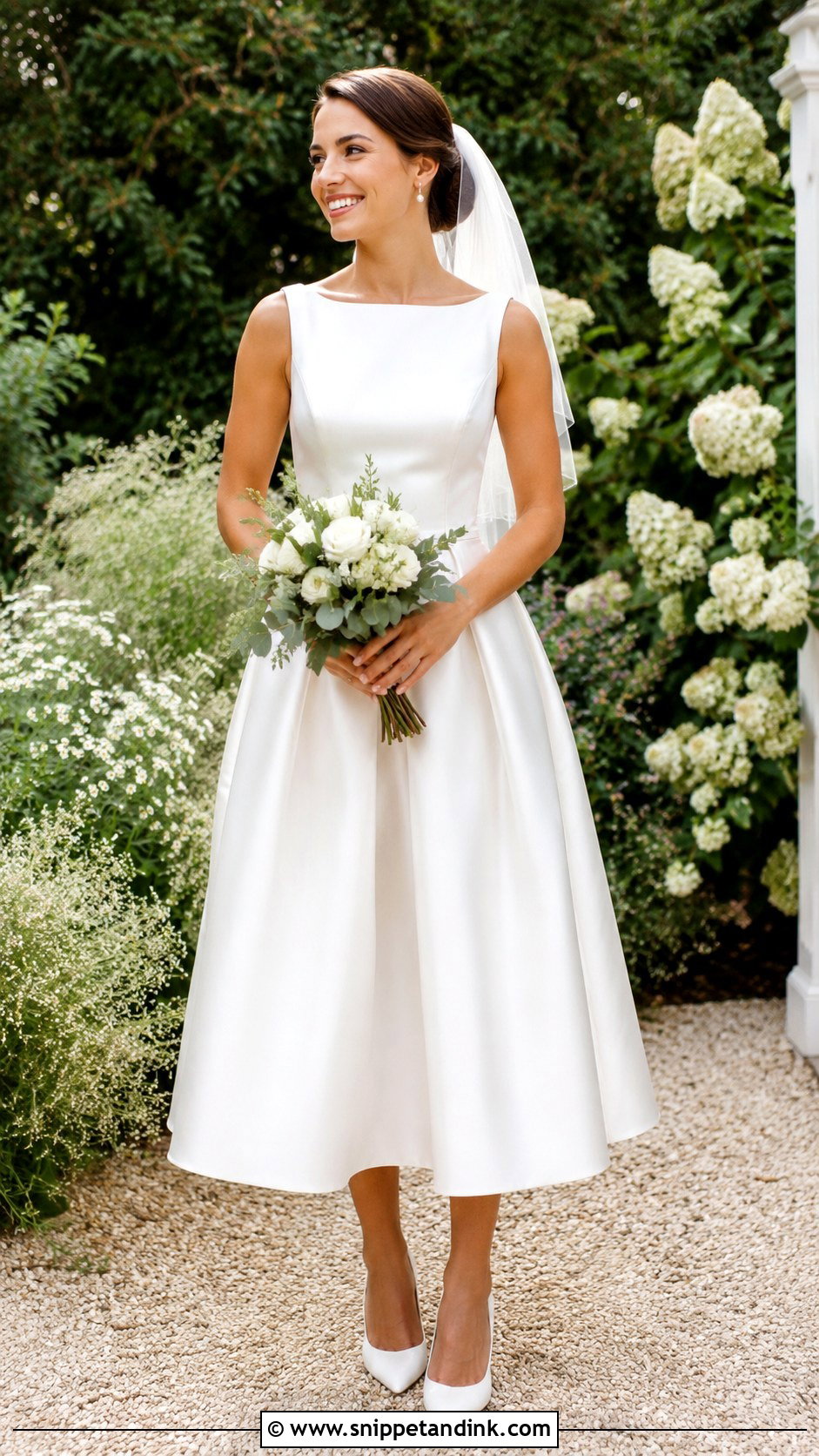
Tea length lands below the knee and above the ankle, and it’s the most comfortable of the longer lengths I fit. It wants a fabric with body, plain satin, taffeta or mikado, so the flared skirt holds out instead of hanging limp. A square neck, strapless or bateau bodice keeps it refined. Pointed pumps, a short veil and pearl earrings suit it. You’ll never need to bustle a train, which makes it easy for daytime civil ceremonies and garden receptions.
19. Minimalist Wedding Dress With Cape
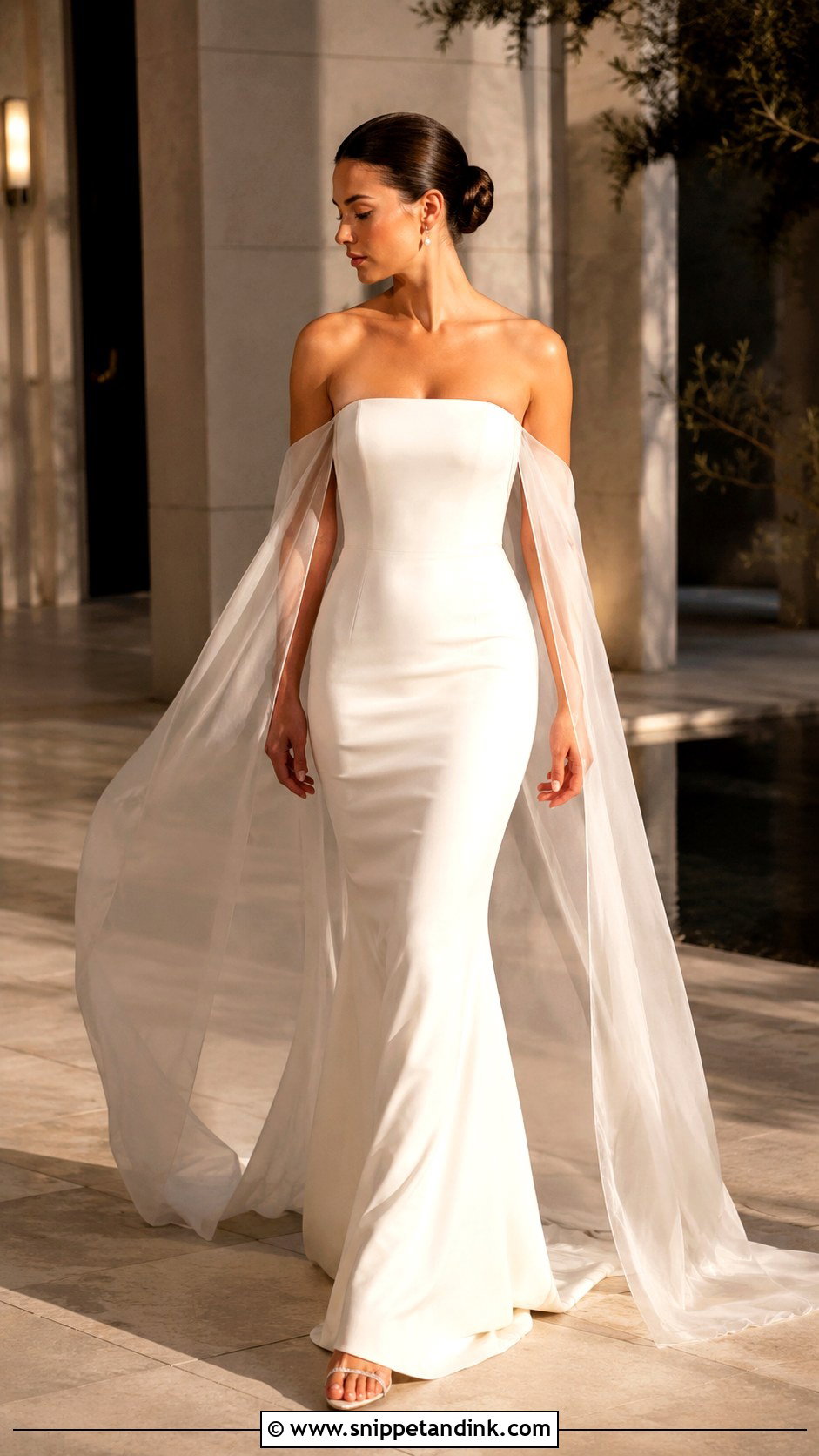
A cape gives you all the movement of a veil down the aisle, so most brides don’t need both. Sheer chiffon suits summer; crepe or satin adds warmth and weight later in the year. It sits well over a strapless column, a slip or a fitted crepe gown. Ask whether it detaches, because a long cape is lovely walking in and gets trodden on at the reception. Keep shoes and jewelry quiet, with a sleek bun or soft waves, for modern venues and evening weddings.
20. Minimalist Wedding Dress With Bow
Placement is everything with a bow on a plain gown; it should look sculpted, not fussy. A back bow on a column, a shoulder bow on a strapless dress or a waist bow on an A-line each gives one clear focal point. Stiff, smooth fabric keeps the loops crisp, and soft fabric droops by lunchtime. With a back bow, skip the long veil or choose one that falls clear of it. Small earrings and plain heels are enough at a garden, hotel or estate wedding.
21. Minimalist Wedding Dress With Pockets
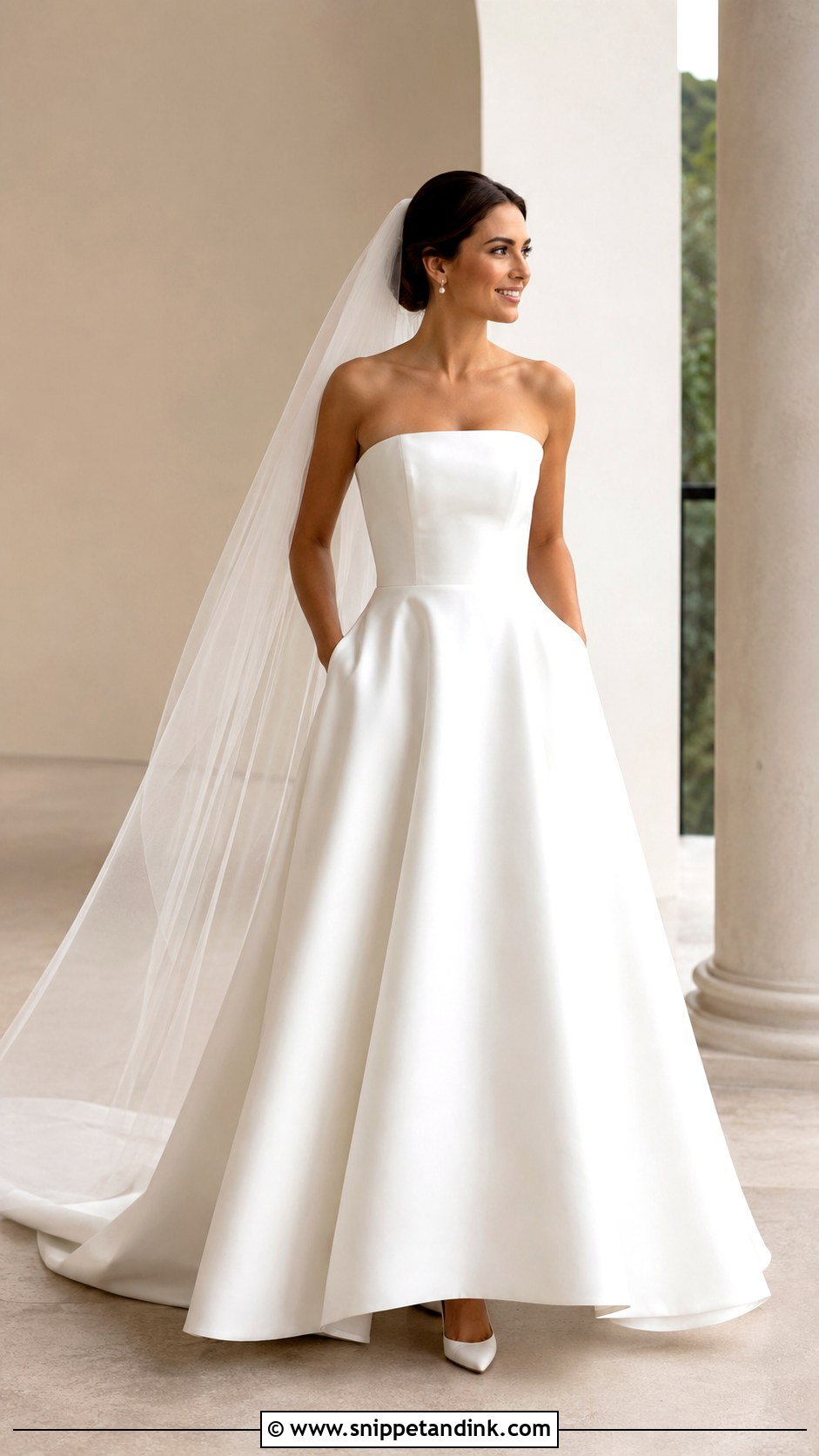
Pockets need a skirt with enough body to hide them, so a structured A-line, ball gown or midi rather than a slinky column; in a slip dress they bulge the moment you put anything in them. Plain satin, mikado or taffeta keeps the line crisp. They relax portraits, since you can stand with a hand tucked in, and they hold lip balm and tissues through the vows. Simple heels, a clean veil and understated jewelry finish it. With a full skirt, keep the bodice sleek.
22. Minimalist Wedding Dress With Slit
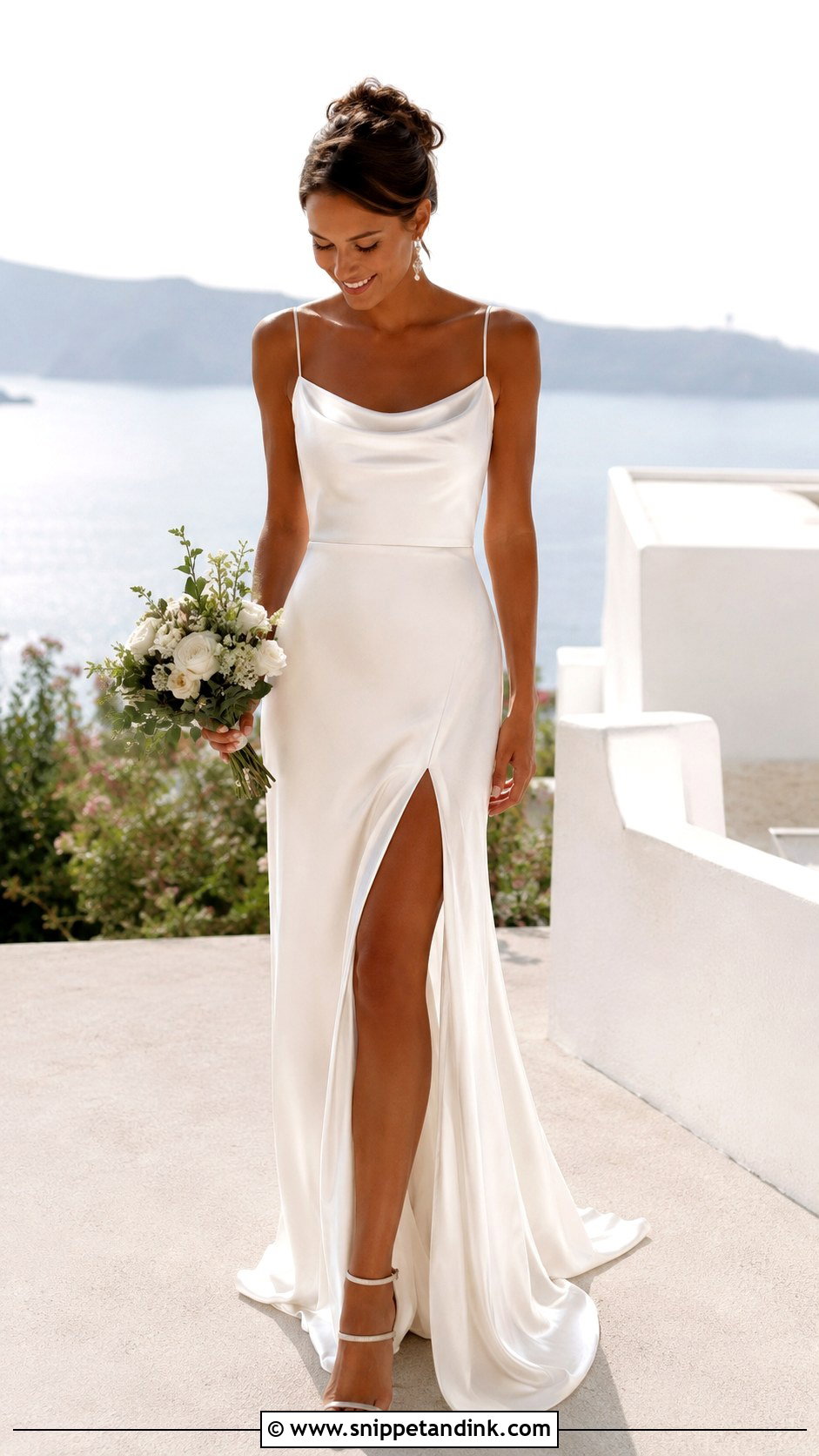
Before committing to a slit, I sit the bride down and then have her climb a step. A slit that looks right standing can open far higher when you sit, so the height is best pinned at a fitting rather than ordered straight off the sample. A satin column, crepe sheath or simple A-line all carry it. With the leg on show, pick heels you’re happy to have photographed. Keep the neckline clean and the jewelry light, veil or not. Warm-weather and coastal weddings suit it.
23. Minimalist Courthouse Wedding Dress
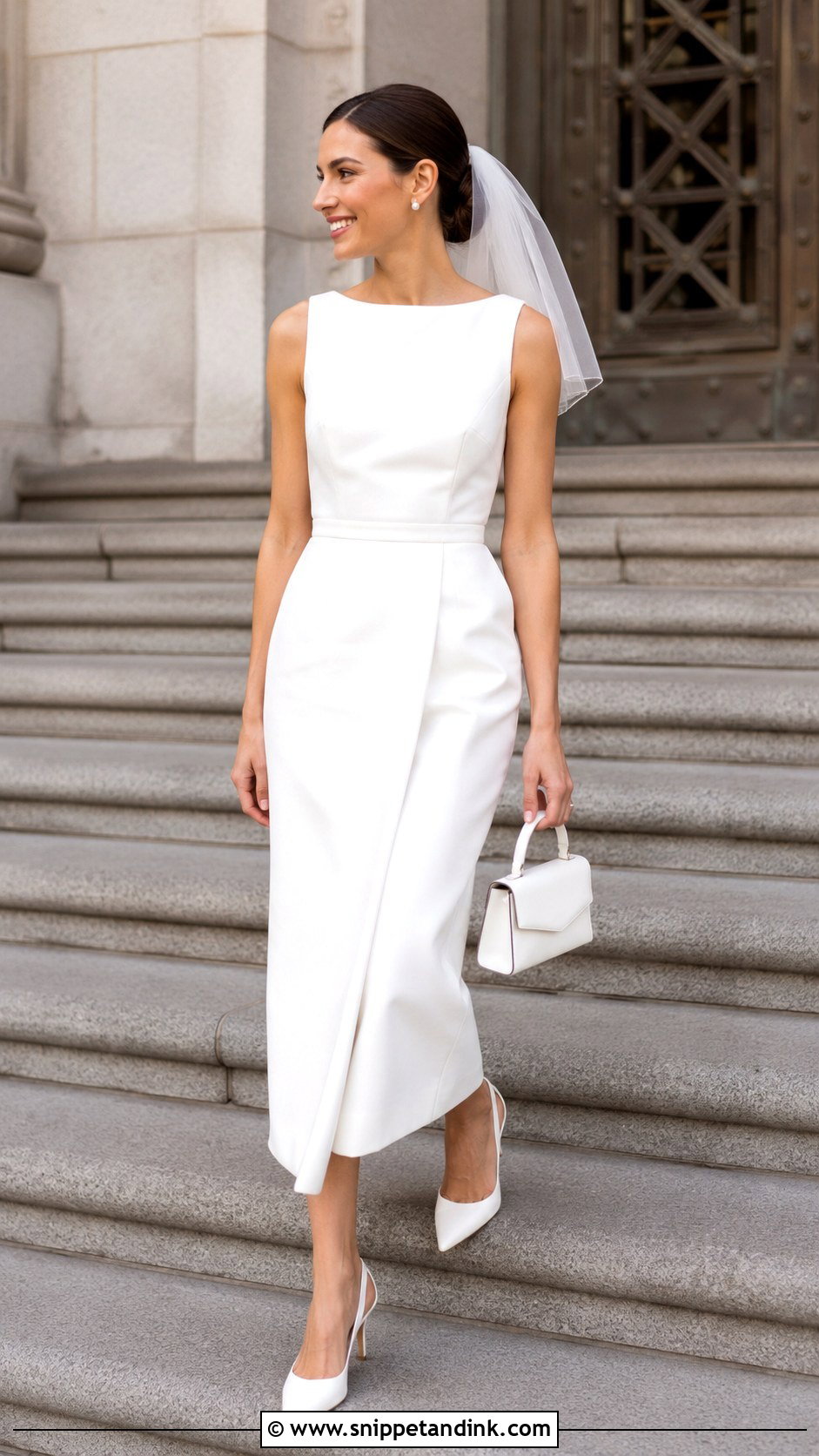
Courthouse dresses get worn in small rooms, under office lighting and on city steps, so I look for clean lines and a fabric that won’t crease badly in a taxi. A midi, tailored mini, simple column or sleek long sleeve dress all work, depending on how formal the day is. Slingback heels, a small structured bag and simple earrings keep it tidy, and a short veil, hair bow or pillbox-style piece adds the bridal note. It’s also a dress you can wear again for an anniversary dinner.
24. Minimalist Beach Wedding Dress
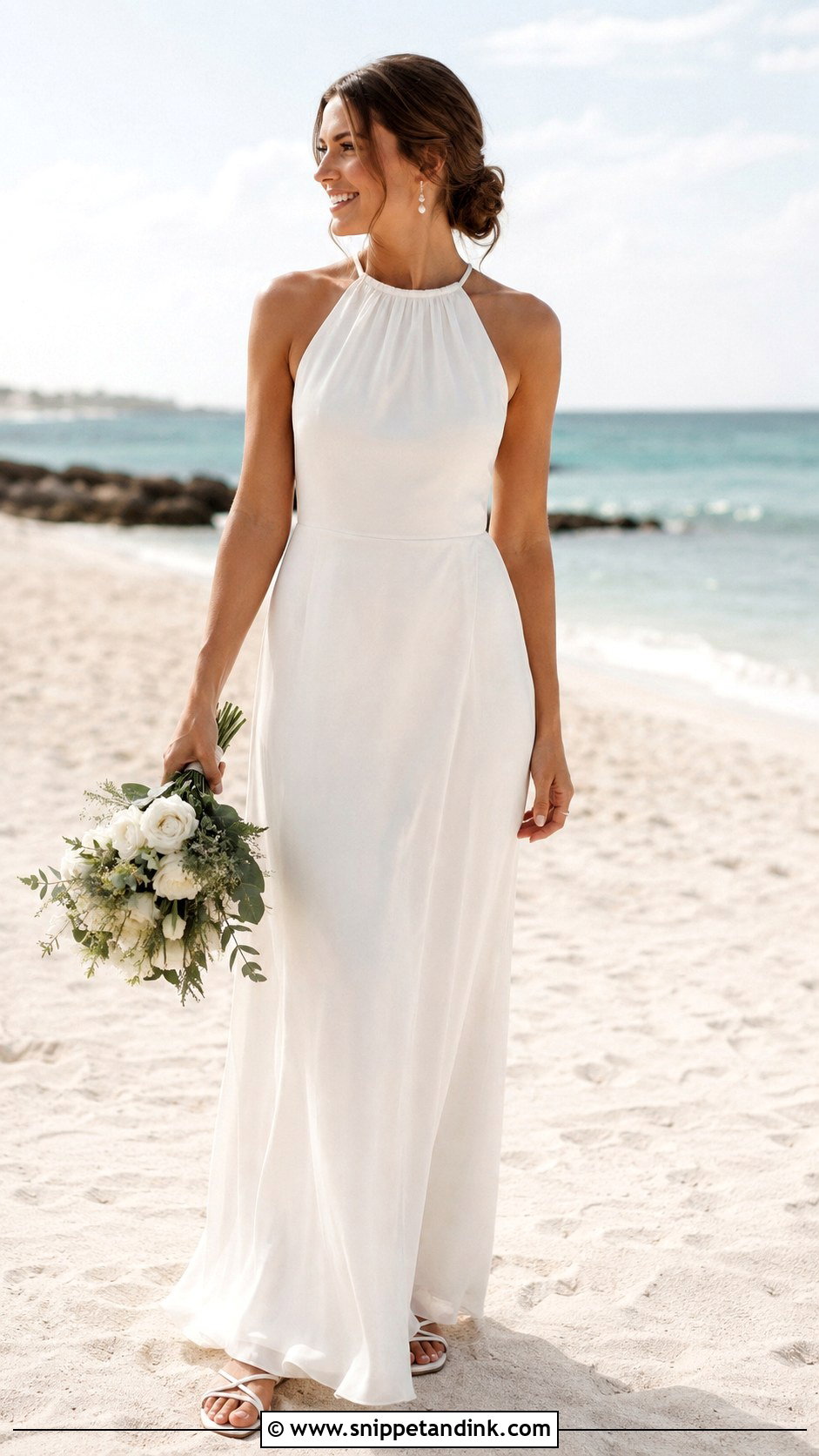
Sand and wind decide what works by the sea. A minimalist beach wedding dress should be light and breathable: a silk slip, soft chiffon column, simple halter or relaxed crepe. Trains drag sand with them, and stiff fabrics fight the breeze. Wear flat sandals, low block heels or barefoot sandals, depending on the ground. Keep jewelry delicate and secured, and check earring backs. A low bun or a single pin holds up in wind far better than loose waves.

25. Minimalist Two Piece Wedding Dress
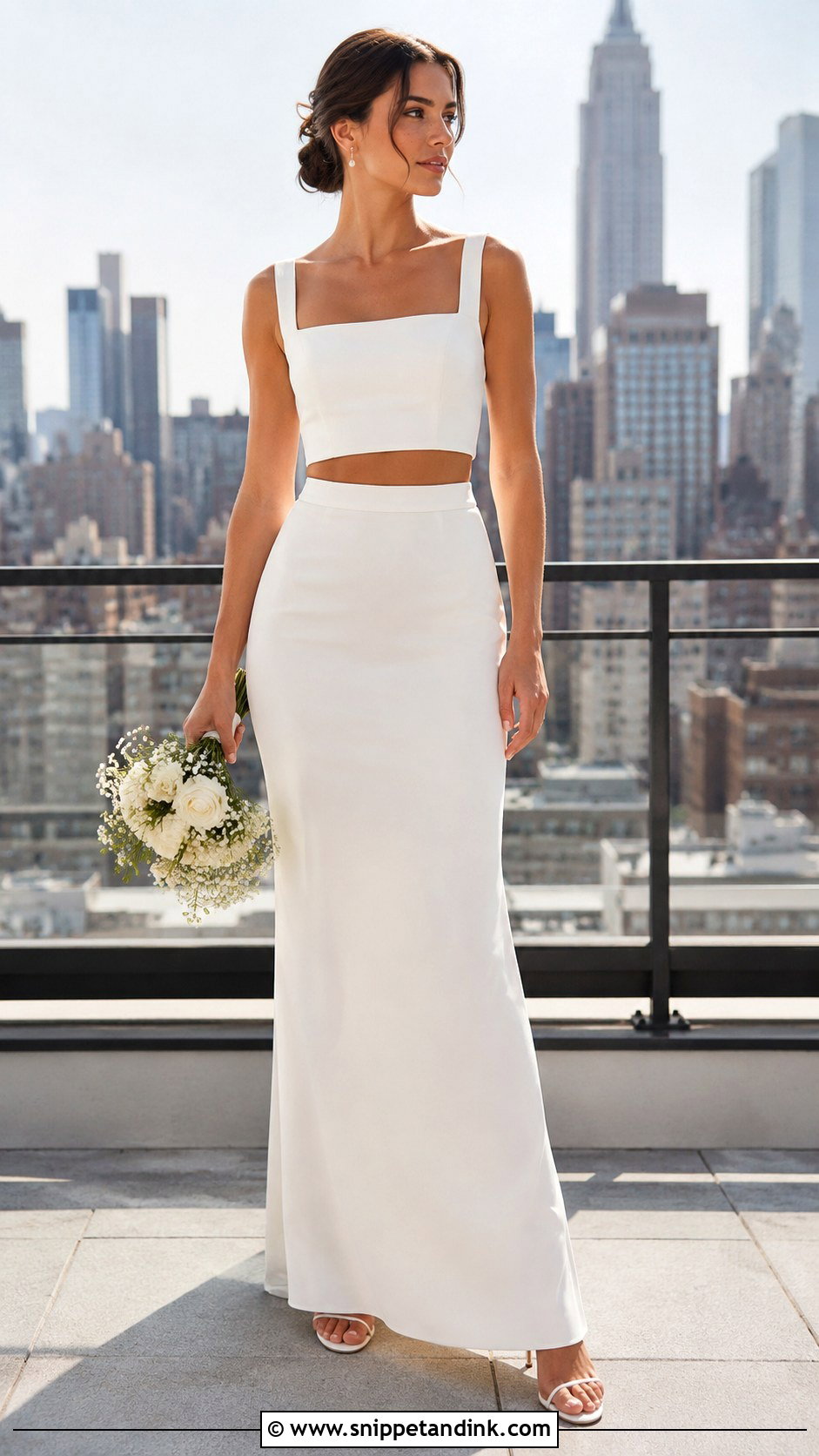
Separates let you fit each piece on its own, a real help if your top and bottom half are different sizes. A structured crop top with a high-waisted skirt looks elegant when the proportions balance; for more coverage, try a long sleeve top over a satin column skirt or a square neck bodice over an A-line. Buy both pieces in the same fabric from the same maker if you can, because two whites from different batches rarely match in daylight. Sleek heels, small earrings and a simple veil, or none, finish it.
A Fitting Calendar for a Dress With No Decoration
Brides often assume a minimalist gown needs less work. In my experience the opposite is true: clean lines usually need more tailoring, because there’s nothing to hide a loose seam. Give yourself time.
- Order a made-to-order gown roughly six to nine months ahead. Production times vary a lot between designers, so ask the shop for theirs in writing.
- Book the first alteration fitting about two to three months before the wedding, wearing your actual shoes and underwear.
- Expect a second fitting a few weeks later to settle the hem and the bodice.
- Hold the final fitting one to two weeks out, once your weight is steady, and bring whoever will button or bustle you on the day.
- Collect the dress pressed and hang it high in its bag, so the hem never rests on the floor.
Buying off the rack or online only removes the production wait; the fittings still matter. On the morning itself, keep a small kit nearby: a white chalk stick for marks, clear fashion tape and a few safety pins close to the dress colour.
Is a Plain Dress Ever Too Plain?
A plain wedding dress isn’t plain when the fabric, fit and neckline are right; it simply leaves room for you. Spend your budget on tailoring before trimmings, and pick accessories that support the dress instead of competing with it: one veil, one pair of good shoes, one piece of jewelry worth looking at. Silk slip, structured satin, clean A-line, mini or two-piece, the simplest version you love tends to be the one that still looks right in your photos years later.
You'll Like These Ideas:









Leave a Reply