
A column gown falls in a straight line from bust to hem, close to the body but not tight like a mermaid, and that simplicity is exactly why it’s so hard to get right. There’s no skirt to hide a poor fit. I love it for city weddings, beaches, courthouse vows and sleek evening receptions, and it changes character completely with fabric: minimalist in crepe, romantic in lace, glamorous with pearls, or fashion-led with detachable sleeves and a big veil. Here are twenty-five versions, with what I look for at the fitting for each.

Walk, Sit and Take the Stairs Before You Say Yes
Columns look calm on a hanger and in a still mirror. The real test is movement, because a straight skirt limits your stride more than an A-line does. At every column fitting I ask the bride to do four things, and I’d suggest you do the same in the shop.
- Walk at your normal pace across the room. If you’re taking small shuffling steps, the skirt needs a slit, a kick pleat at the back, or a slightly wider hem.
- Sit fully down on a chair, then stand without using your hands. Watch for pulling across the hips and the fabric riding up.
- Climb a few steps. Aisles, altars and courthouse entrances often have them, and a narrow column catches the toe of your shoe.
- Lift both arms above your shoulders, as you would for a hug or a first dance.
None of these problems means the dress is wrong. A seamstress can open a side seam into a discreet slit or add a pleat, but it’s much easier to plan that at the first fitting than to discover it on the morning.
1. Minimalist Crepe Column Wedding Dress

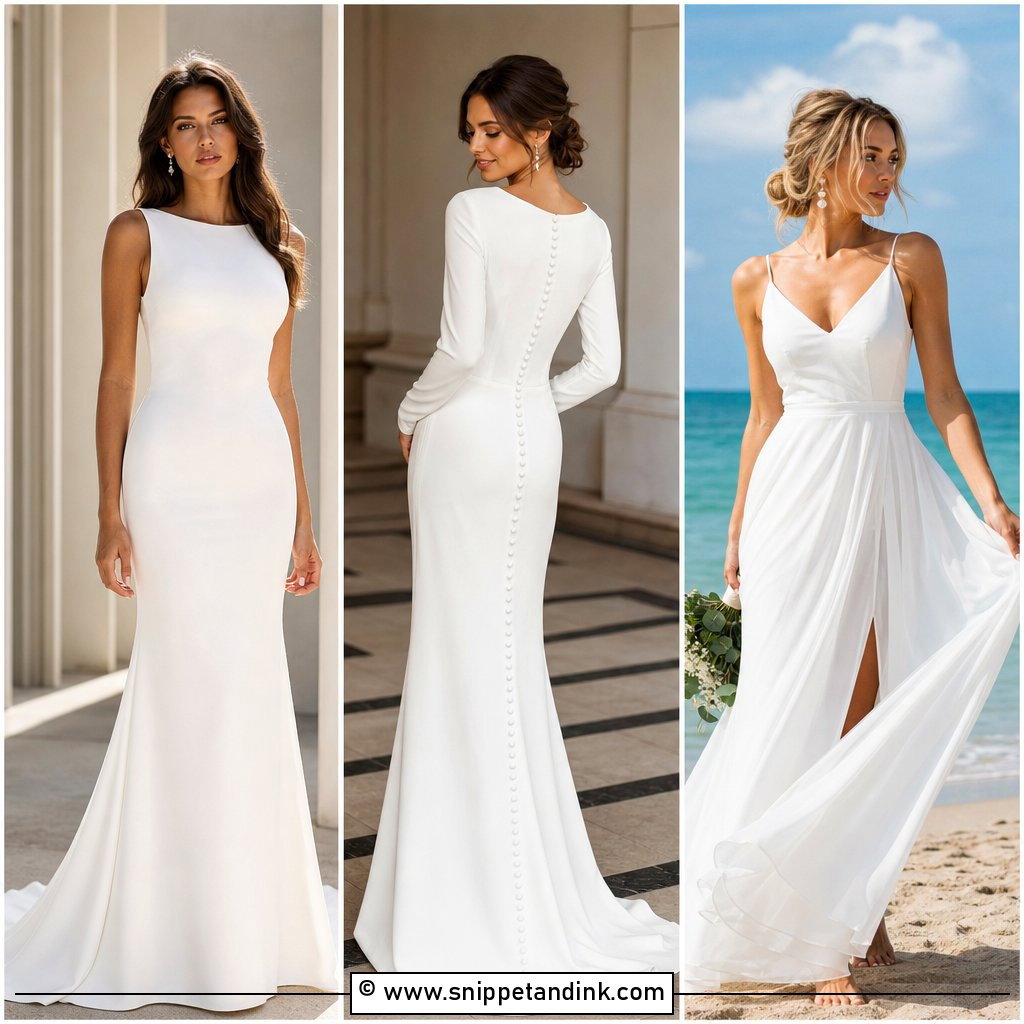
Good crepe has enough body to skim rather than cling, which is the whole secret of this dress. I press my hand flat on the fabric at a fitting; if it shows every seam of the underwear, it’s too thin. Pointed satin pumps, pearl studs and a low chignon suit it, and a long veil brings the ceremony drama the dress deliberately leaves out. Soft white or ivory reads classic, while a warm champagne crepe is kinder to fair skin. Galleries, modern hotels, courthouses and restaurant weddings are its home.
2. Satin Column Wedding Dress

Satin turns a column into something luminous, and it’s at its best under indoor or evening light. It also shows everything: creases from sitting, pulling at the hips, and any shapewear edge. I always have brides sit down in a satin column before we finalize alterations. Simple strappy heels, a fine tennis bracelet and a smooth veil or clean hair bow keep it balanced, and a cowl or bateau neckline gives interest without embellishment. Black-tie, rooftops and formal venues suit it.
3. Lace Column Wedding Dress

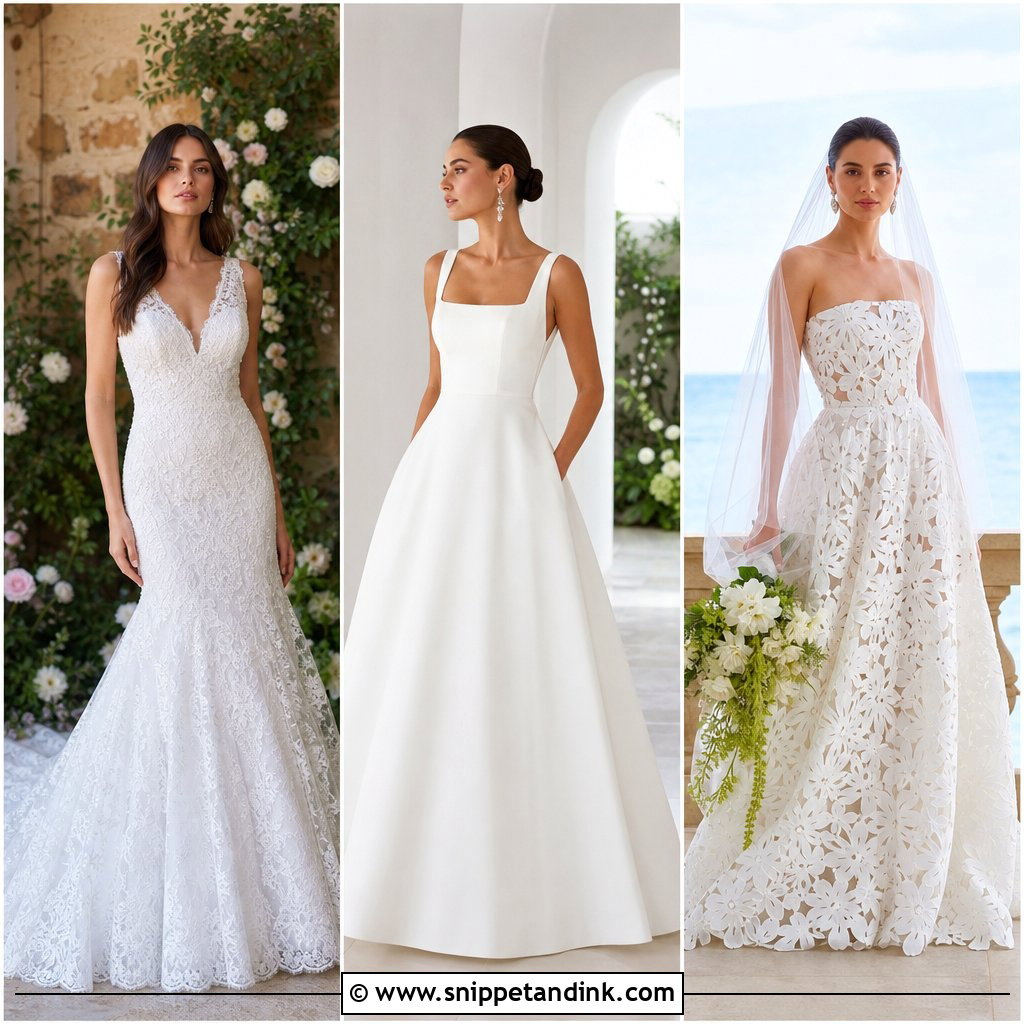
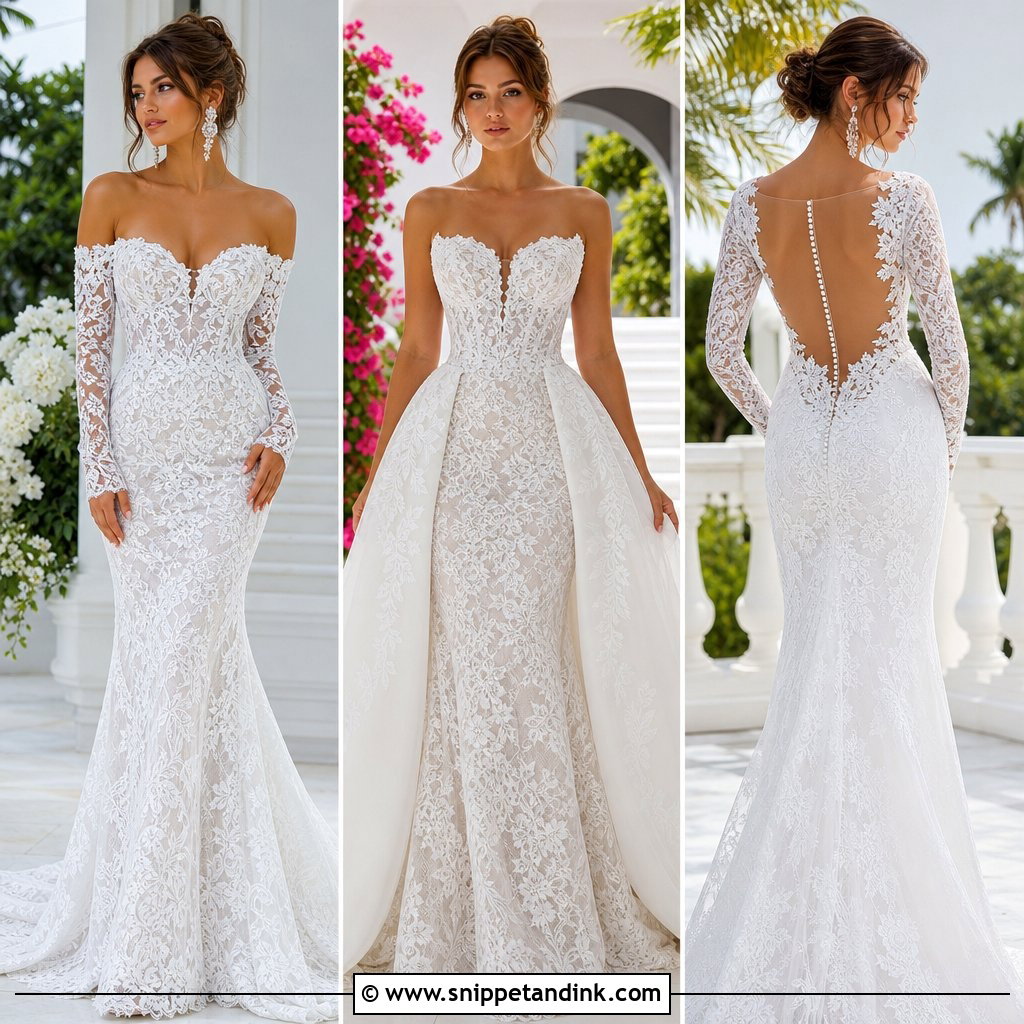
Lace gives a column texture without adding volume. The pattern sets the mood: open floral lace feels vintage or garden, while a tighter geometric lace looks more modern. I usually suggest a nude or ivory lining under it so the pattern stands out in photos rather than disappearing into skin. Block-heel sandals help on lawns, and pearl drop earrings with a lace-edged sheer veil tie it together. It’s comfortable in warm weather, which matters at estate and coastal weddings.
4. Strapless Column Wedding Dress

Strapless columns live or die on the bodice. Before anything else I check internal support: light boning, a waist stay, and a grip that holds when you lift your arms to hug someone. If you find yourself hitching it up in the mirror, it needs taking in. Once it’s secure, sculptural earrings, pointed heels and a chapel veil finish it. Satin or crepe makes it sleek, beaded fabric softer, and it frames the shoulders, collarbone and bouquet well.
5. Square Neck Column Wedding Dress

Square necklines give the upper body a clear frame, and they work with thin or wide straps. They also make a necklace easy: a pearl pendant sits neatly inside the square, or you skip it and wear studs. I like slingback heels, a low bun and a smooth fingertip veil with it. In crepe it’s clean and modern; in satin, a little more formal for evening. One thing I watch is strap width on broader shoulders, where a slightly wider strap balances the neckline better than a skinny one.
6. High Neck Column Wedding Dress

A high neck lengthens the line of a column, especially with a sleek updo that shows the neck. Crepe makes it architectural, lace makes it softer. Keep jewelry tiny, maybe pearl studs and a narrow bracelet, because there’s no neckline space for anything else. Brides with a short neck or a full bust should try it before ruling it in, since it can make the torso look heavier. Paired with an open back, it gives modest coverage at the front and a strong exit.
7. Off Shoulder Column Wedding Dress

Off-the-shoulder necklines drape across the upper arms, so the fabric matters. Soft crepe or satin folds gently; stiff fabric tends to stand away from the arm. I ask brides to raise their arms and hug me at the fitting, because this neckline either stays put or creeps up, and hidden straps or internal boning fix most of the creeping. Drop earrings, a simple veil and heeled sandals suit it at ballrooms, gardens and coastal venues.
8. Long Sleeve Column Wedding Dress

Long sleeves suit cool weather and formal venues, and they come fitted, sheer in lace or softly draped. Check the armhole: a high, close armhole lets you lift your arms, while a low one drags the whole bodice up when you reach for your partner’s hand. With sleeves already covering a lot, I keep accessories quiet: pearl earrings, a clean heel and a smooth veil that doesn’t fight the sleeve detail. Fall and winter weddings and candlelit receptions are where it shines.
9. Spaghetti Strap Column Wedding Dress

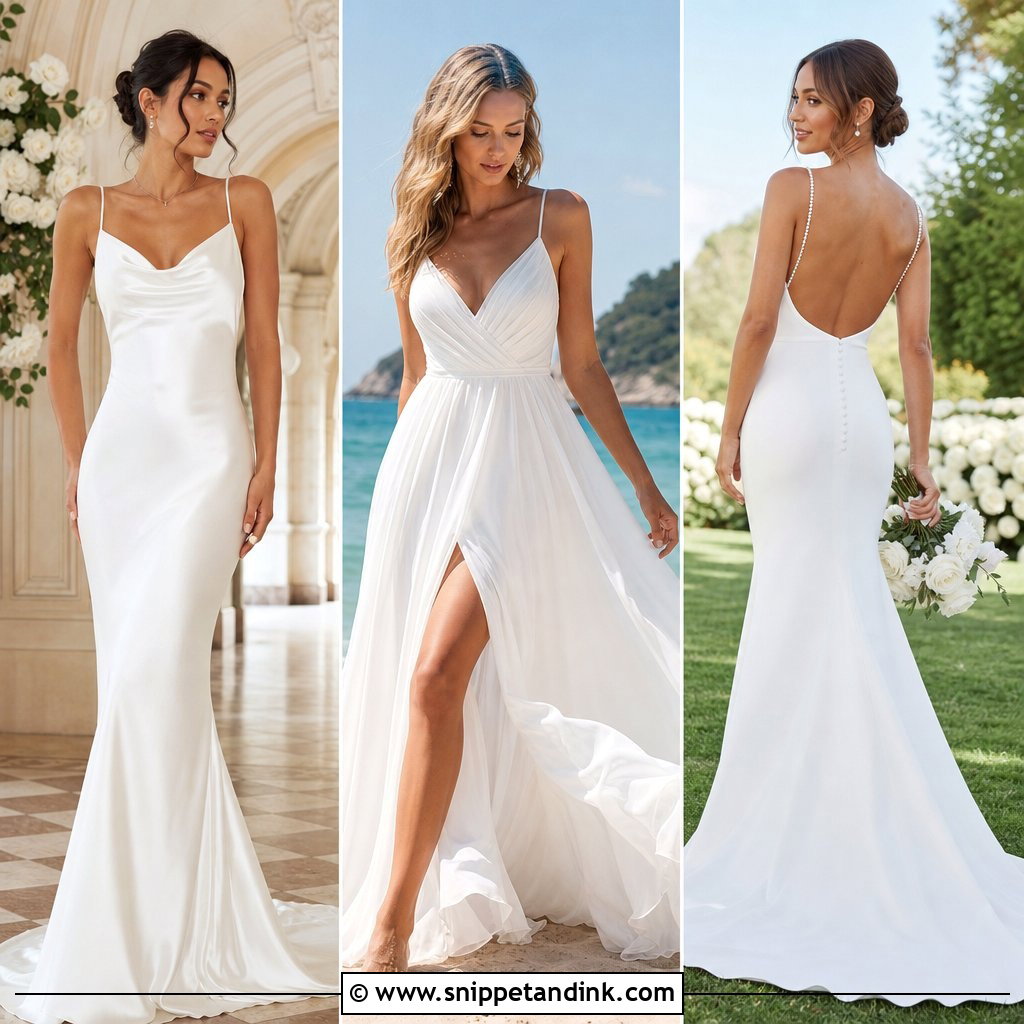
A spaghetti strap column wedding dress is light and relaxed, especially in satin, silk, crepe or slip cuts. It’s made for warm weddings: beaches, rooftops and destination celebrations. Barely-there sandals, soft waves and delicate earrings keep it easy, and if the dress is very plain, a statement veil or pearl pins make it feel ceremonial. Thin straps don’t carry much weight, so I’m wary of this cut on a fuller bust unless there’s support built into the bodice.
10. Beaded Column Wedding Dress

Beading gives a column sparkle without needing a princess skirt. Allover pearl beading, crystal lines and Art Deco patterns each set a different mood, from modern to vintage. The practical concern is weight: a fully beaded gown pulls down on the shoulders and can stretch the seams over a long day, so I check the fit through the shoulders and waist with the bride standing for a while. Simple heels, a small reception clutch and understated earrings let it lead at evening and ballroom weddings.
11. Pearl Column Wedding Dress

Pearls can be scattered across sheer sleeves, placed along the neckline or worked over the whole gown. They give detail without hard sparkle, and in bright natural light they add dimension that crystals don’t. Pearl earrings, satin heels and a clean veil keep it cohesive. I’d keep the bouquet simple here. Sewn-on pearls also catch on lace veils, so I check where the veil edge lands before the day. Indoor ceremonies, gardens and refined coastal weddings suit it.
12. Floral Applique Column Wedding Dress

Floral appliques add dimension to a flat silhouette, placed over the bodice, scattered down the skirt or layered on sheer sleeves. Oversized flowers on a simple base feel modern; small tonal flowers that blend into the fabric feel classic. Soft block heels, floral hair pins and a sheer veil continue the garden mood. My one caution: appliques at the hip draw the eye there, so I place them thoughtfully during alterations. Spring and botanical venues are natural settings.
13. Backless Column Wedding Dress

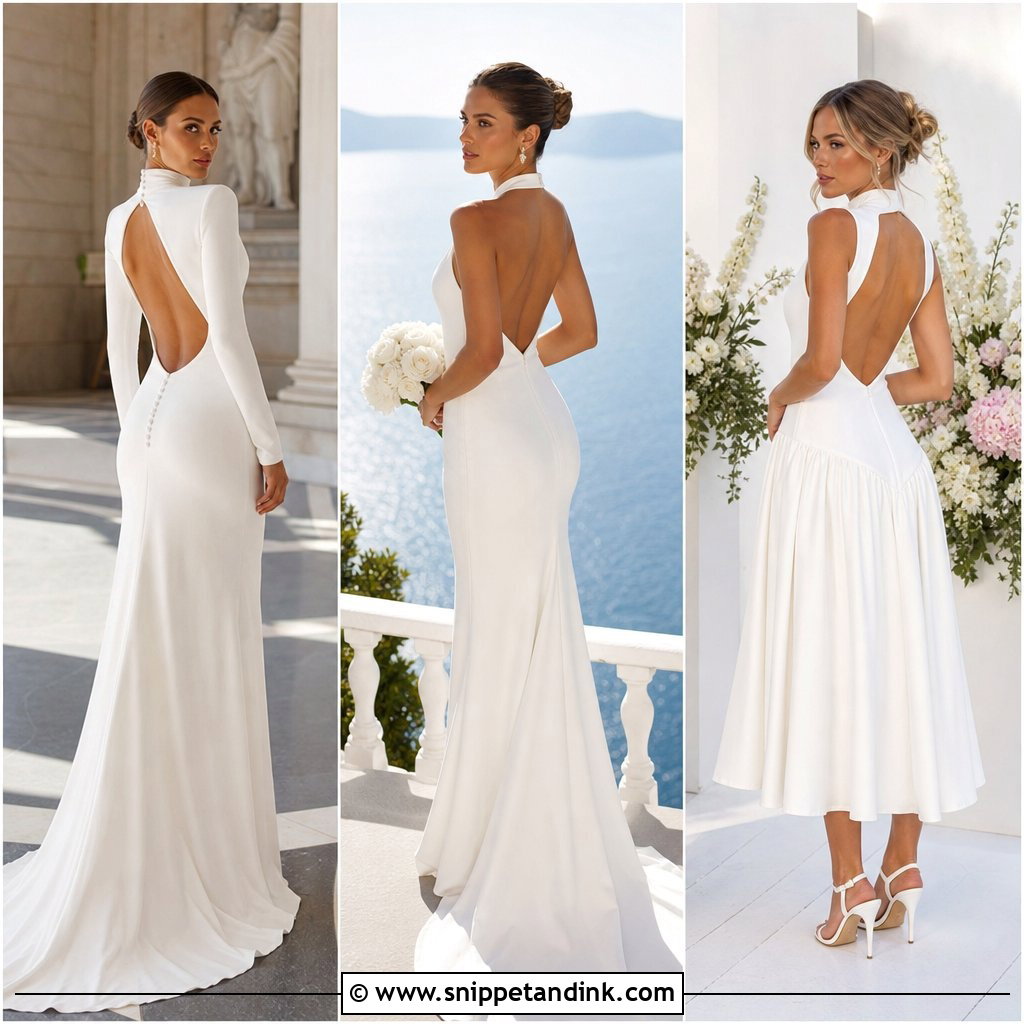
From the front, a backless column can look plain. Then you turn around. Tailoring is everything here, along with secure straps and either built-in cups or adhesive support, since most bras are out. A low bun or back-drop necklace keeps the back visible. Satin is glamorous, crepe more minimal. I tell brides to wear the long veil for the ceremony and take it off for the reception so the back actually gets seen at rooftop and destination weddings.
14. Low Back Column Wedding Dress

A low back gives you some of that drama with more support than a fully open one. The dip can be a soft V, a scoop or a square. With a fitted bodice and smooth skirt, it’s a graceful view during the ceremony, when guests mostly see your back. Covered buttons down the back seam add detail. A sheer veil, delicate earrings and simple heels suit it. Measure how low it really sits against your usual bra line before ordering, because that decides what underwear you’ll need.
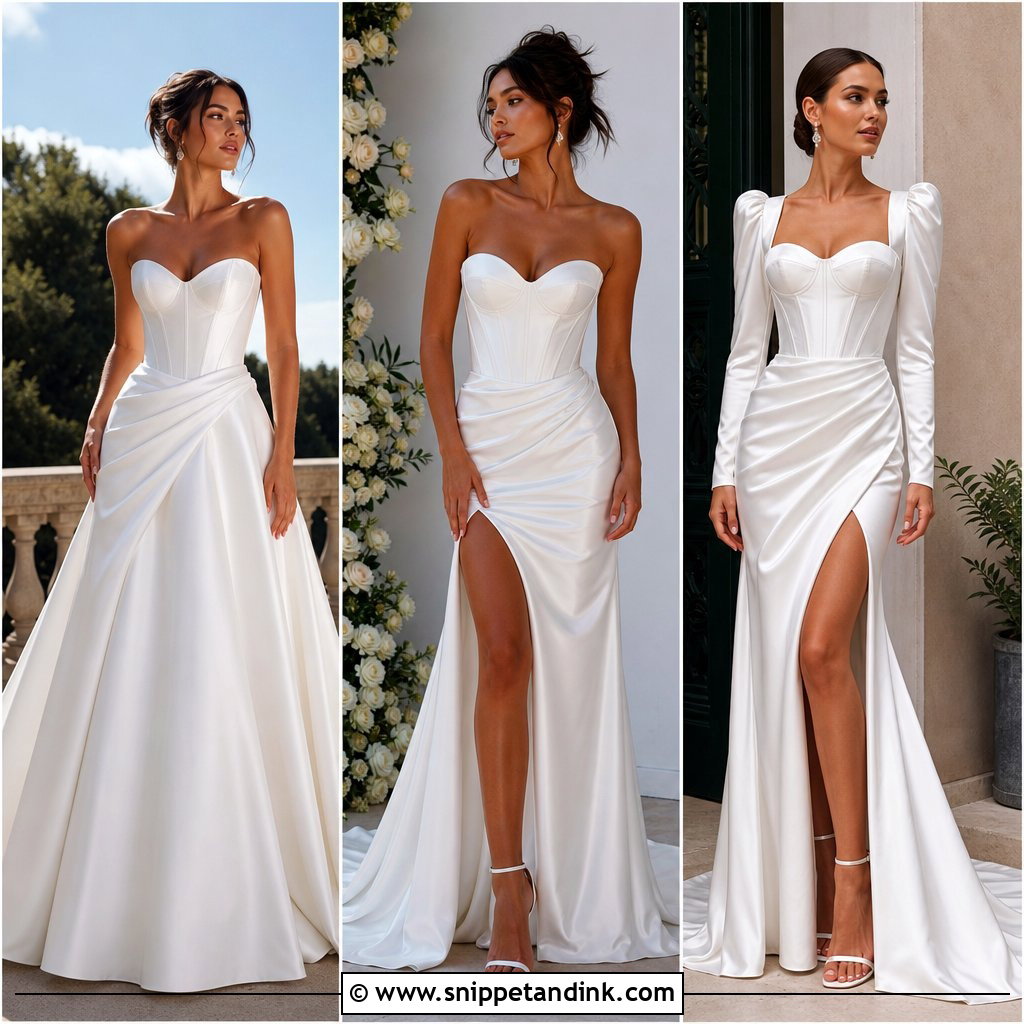
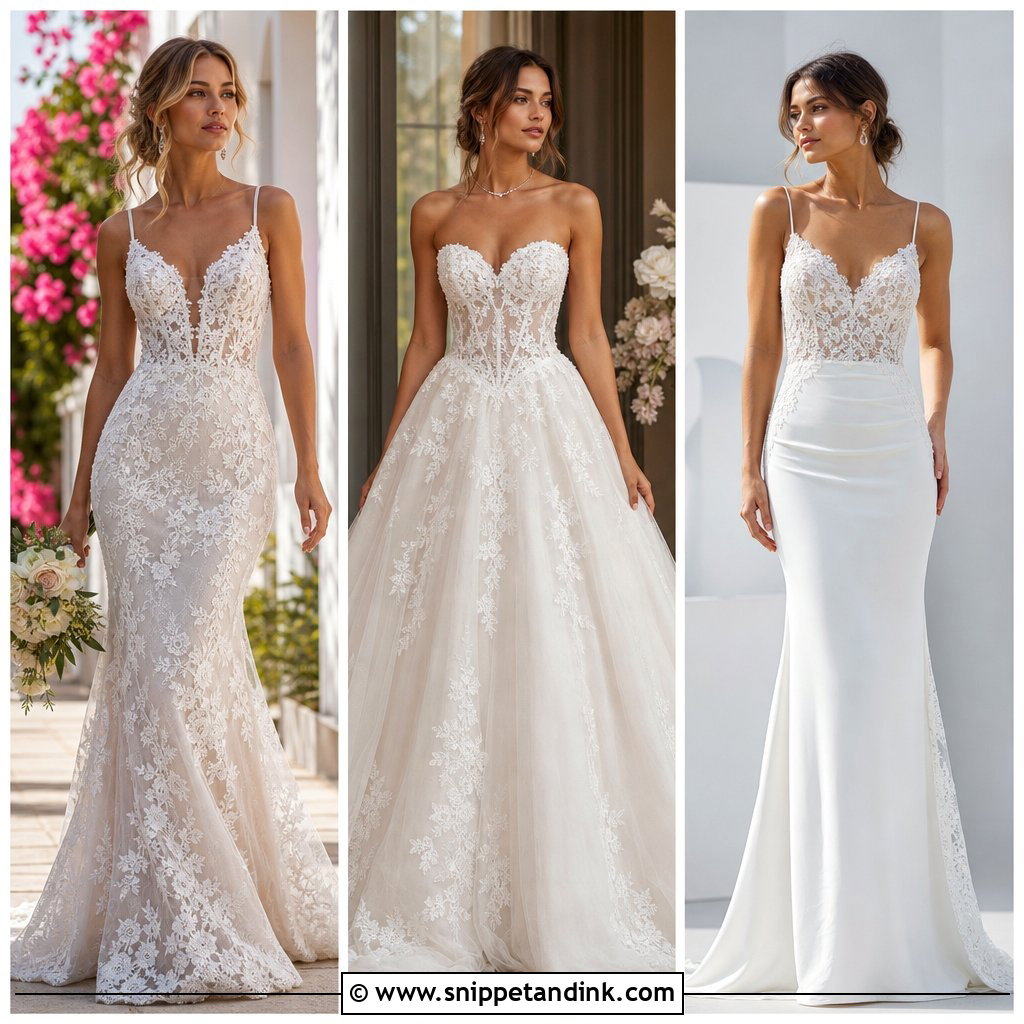
15. Plunging Neck Column Wedding Dress

A plunge is about proportion. A deep neckline looks deliberate when the skirt is straight, the fabric clean and the accessories minimal, which is why it pairs so well with a column. Illusion mesh or careful structure keeps it secure, and I always add fashion tape at the final fitting. Sleek heels, small earrings and a simple veil suit it. For a ceremony that needs more coverage, a tailored cape, sheer topper or detachable scarf detail can come off for the party.
16. Cape Column Wedding Dress

A cape gives you drama without any skirt volume. Sheer capes feel romantic, crepe capes look structured, lace capes feel soft. Cape length matters more than people think: one that ends at the hem can tangle in your heels on stairs, so I often suggest one that stops a little higher or is attached at the shoulder seam rather than the neck. Pointed heels, simple earrings and a clean hairstyle let it fall properly. Take it off for the reception.
17. Detachable Train Column Wedding Dress

A detachable train column wedding dress gives you two looks in one: length and ceremony drama first, then a sleek gown you can dance in. Ask how the train attaches. Hidden hooks or snaps at the waist are cleaner than buttons, and someone in your party should practice removing it before the day. Classic heels, a long veil and refined jewelry suit it. Satin or crepe bases age well, and it’s a sensible choice for long aisles and formal venues.
18. Overskirt Column Wedding Dress

If you can’t decide between slim and full, an overskirt settles it. Tulle gives softness, satin gives structure, organza gives light movement, and the fitted column underneath becomes your reception look. Match the veil to the scale of the overskirt, not the column. Overskirts usually fasten at the waist with hooks or a hidden zip, and I check that the closure lies flat under the overskirt’s waistband. It also means more photo options for the same budget.
19. Bow Column Wedding Dress

Bows bring personality to a clean shape, at the back, shoulder, waist or neckline. A large back bow is playful; a small waist bow is subtle. Satin heels, pearl earrings and a neat bun or soft waves go well with it, and a simple bouquet keeps the bow as the focal point. Large bows need internal stiffening or they flop by the evening, so I check what’s inside one before trusting it. Garden weddings and city ceremonies suit this look.
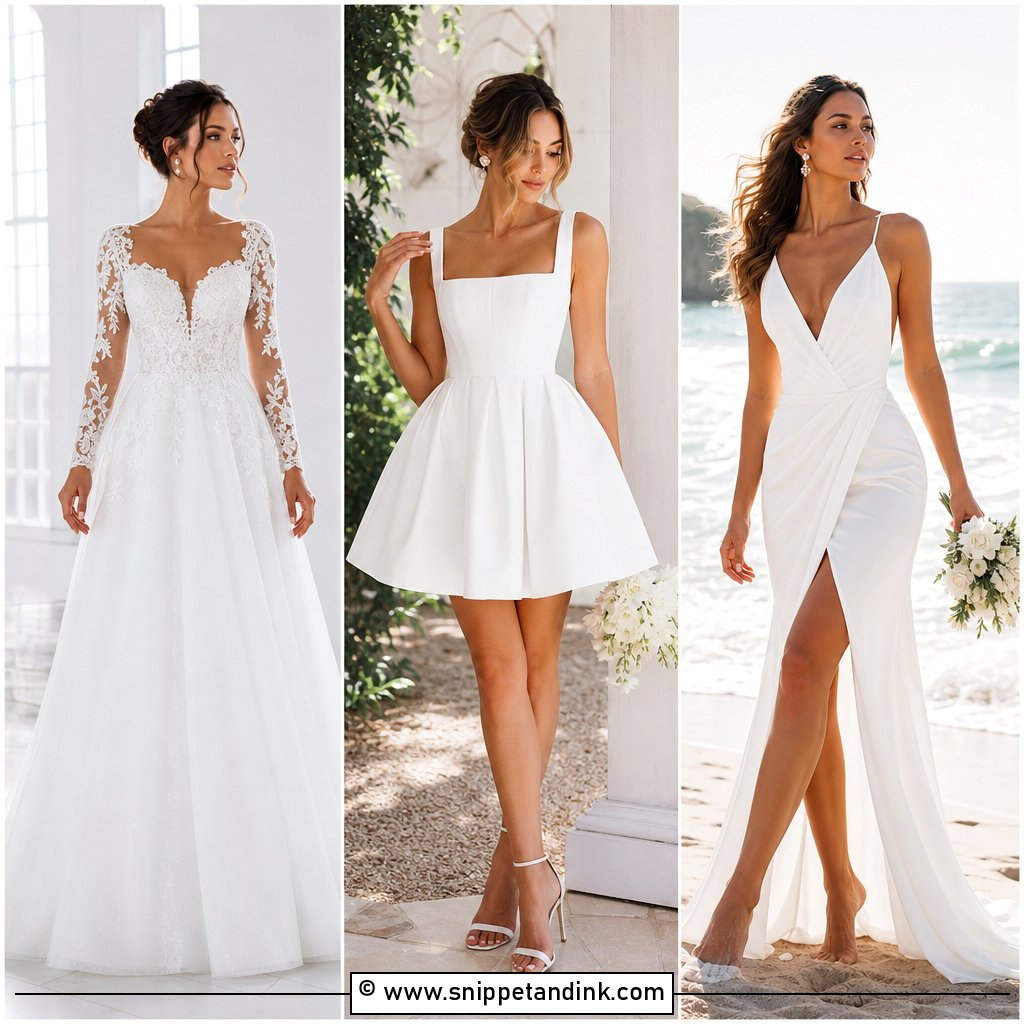
20. Feather Trim Column Wedding Dress

Feathers at the neckline, cuffs, hem or on detachable sleeves bring movement and a party feel. Soft white or ivory feathers on a plain column keep it bridal. Pointed heels, small crystal earrings and smooth hair finish it. Feather trim sheds a little and catches on lipstick and makeup, so I keep it away from the face when the bride is getting ready and steam it gently, never close. Evening weddings and rooftop receptions are where it belongs.
21. Slip Column Wedding Dress

A slip column is fluid, with thin straps and a drape that skims the body. It only works in good fabric, silk, satin or a heavy crepe blend, because thin slip fabric shows every line underneath. Strappy sandals, delicate earrings and a sheer veil suit the ceremony, and a tailored wrap or cropped jacket helps in cooler weather. Beach and courthouse weddings, destination vows and small receptions suit it. With so little to the dress, your hair, makeup and flowers do more of the talking.
22. Courthouse Column Wedding Dress

A courthouse column wedding dress has to handle steps, queues and city walking, so comfort comes first. Midi or floor-length crepe, satin or tailored fabric all work. I pair it with slingback heels, a small structured bag, pearl earrings and a short veil or bow. A cropped blazer looks sharp for arrival photos and comes off for the ceremony. Midi lengths are easier on steps, and the dress carries straight on to lunch, dinner or a small reception.
23. Beach Column Wedding Dress

A beach column wedding dress needs to breathe and move with the wind: soft crepe, chiffon, silk or lightweight lace. Spaghetti strap, halter or low back designs suit the heat. Flat sandals, pearl studs, loose waves and a short or weighted veil hold up best against the breeze. Skip a long train if you’ll be walking on sand; it collects sand and drags. Coastal resorts and seaside elopements suit this pared-back look.
24. Winter Column Wedding Dress

A winter column wedding dress should feel warm without losing its clean line. Long sleeves, heavier crepe, satin or a high neck give seasonal coverage. Closed-toe heels, pearl earrings and a faux fur wrap, tailored cape or bridal coat handle outdoor photos. Make sure the coat is long enough to cover the hem, or the column looks cut off in photos. Subtle crystal buttons or beaded cuffs add sparkle for city venues, lodges and candlelit receptions.
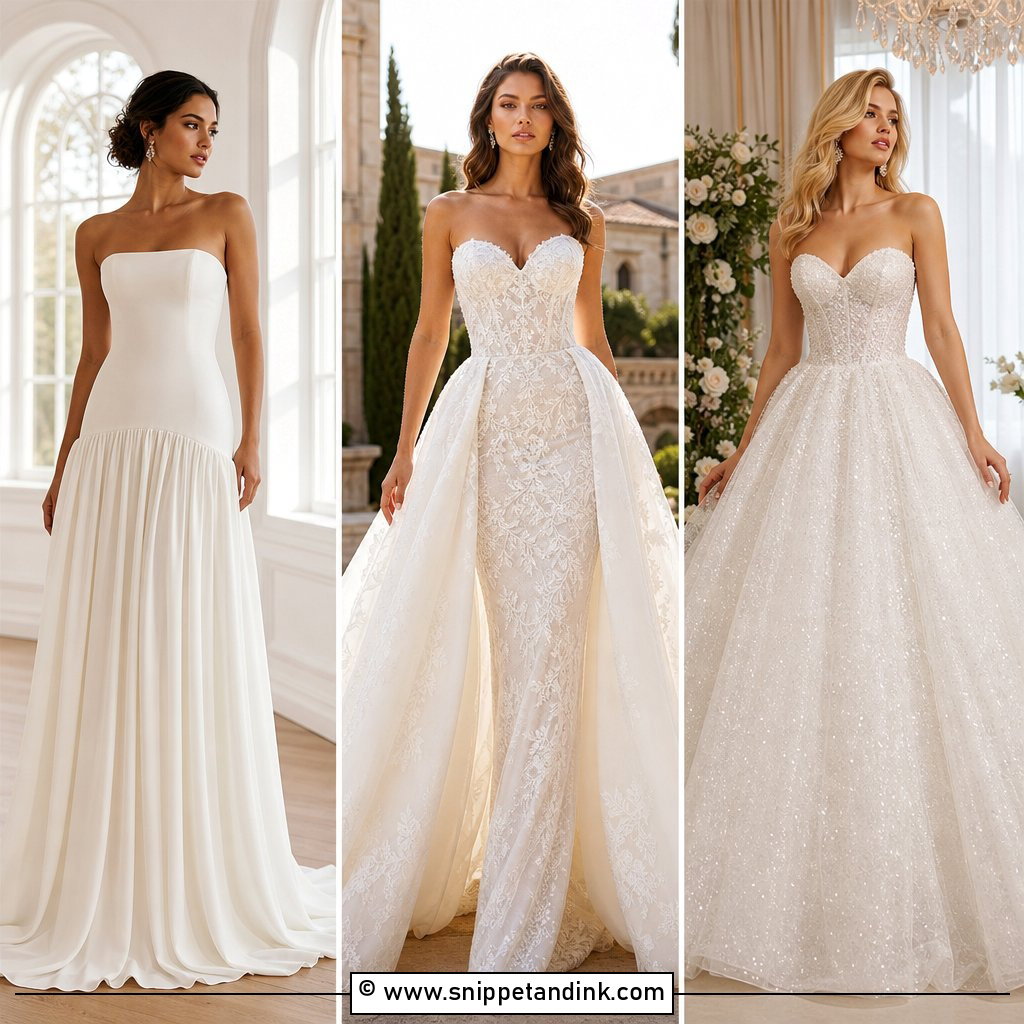
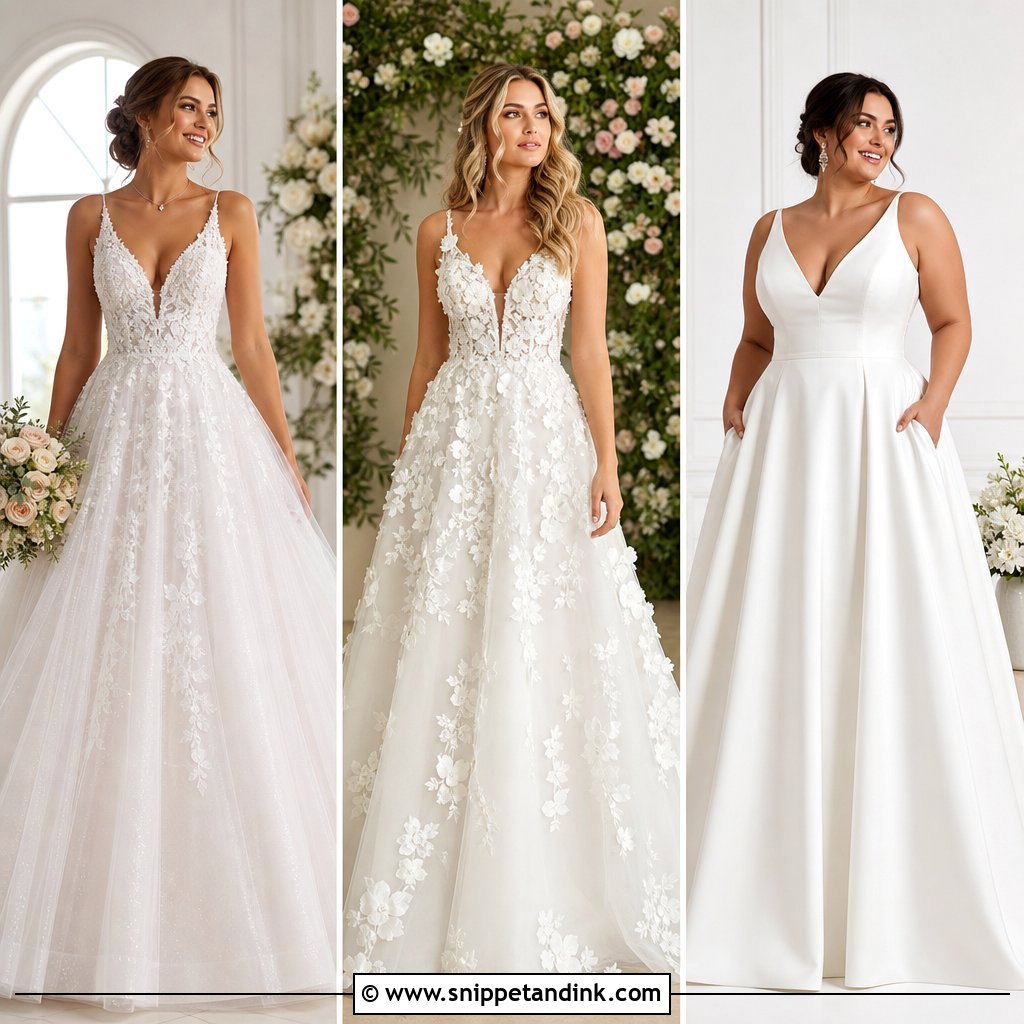
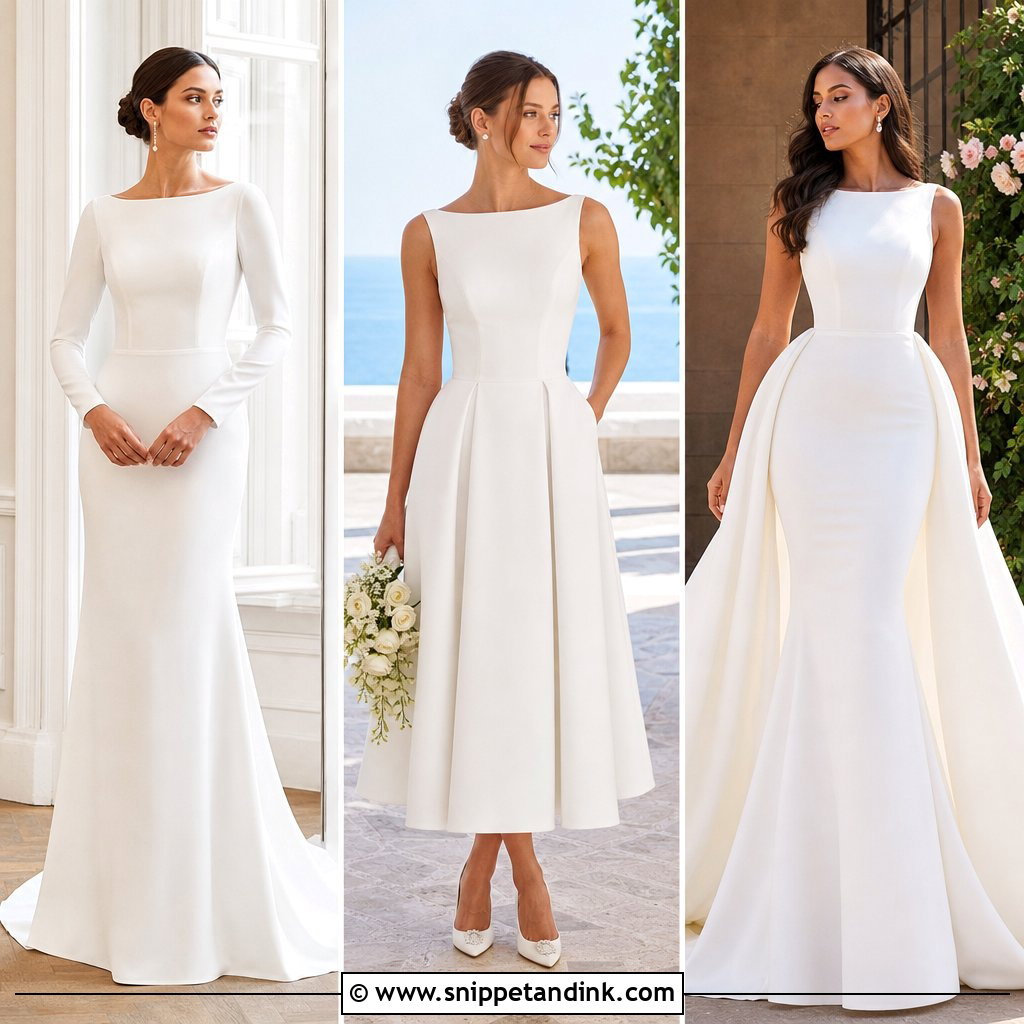
25. Plus Size Column Wedding Dress

Plus size column gowns are all about construction. I look for supportive internal structure, smooth lining, seams placed to shape rather than flatten, and fabric that skims instead of pulling across the hips. Crepe, stretch satin and structured lace all work. Square, off-shoulder and V-necklines balance the shape, and comfortable block heels, statement earrings and a venue-appropriate veil finish it. Plan for more than one alteration fitting; a column must feel secure when you sit, walk and dance.
What a Column Reveals That a Ball Gown Hides
With no full skirt, everything under a column shows: underwear lines, the edge of shapewear, and any gap where a bodice doesn’t sit flat. I bring smooth, no-show underwear and a nude, laser-cut shapewear option to fittings so we’re tailoring to what you’ll actually wear. Buy those pieces before your first fitting, not after, because changing them later changes the fit.
Hem length is the other detail I’m strict about. A column should skim the floor in your wedding shoes, which means bringing those exact shoes to every fitting. Even a small change in heel height leaves the hem either dragging or hovering. For a midi courthouse dress, the hem should hit the narrowest part of the calf.
Keeping the line clean all day
Satin and silk columns crease across the lap at dinner. A quick steam before the reception entrance resets them, so ask your planner or a bridesmaid to have a handheld steamer ready. Crepe recovers on its own much better, which is one more reason I steer brides with long receptions toward it.
Fit Is the Whole Story With a Straight Silhouette
A column gown can be minimal, romantic, glamorous or relaxed depending on neckline, fabric and styling, and it changes more easily than any other shape with a veil, cape, overskirt, bow or detachable train. Satin, crepe, lace, pearls, sleeves or a simple slip can all work. What never changes is that the straight line shows the fit. Get the tailoring right first, then add the details that make the gown yours.
You'll Like These Ideas:


Leave a Reply