
Clean bridal hair looks easy and is anything but. A smooth bun or a glassy lob has nowhere to hide a bump, a visible pin or a frizzy hairline, so the prep and the finishing take longer than they do for a loose, textured style. What you get in return is hair that keeps its shape through the hug line and still looks current when you open the album in twenty years. These styles sit well with veils, pearl pins, slip dresses, lace sleeves and modern courthouse looks. Below are the twenty I’d show a bride who wants polished rather than plain, with notes on how each one actually behaves on the day.
Prepping Hair So a Smooth Style Doesn’t Turn Greasy or Fuzzy
Sleek styles fail at the prep stage far more often than in the chair. When I see a smooth bun go wrong, the cause is usually hair that was either too clean and slippery or loaded with conditioner and dry shampoo until it looked flat and dull under the lights.
- Wash the night before or the morning of, depending on your hair. Fine hair that gets oily quickly does best washed on the morning; thick or coarse hair usually grips better washed the night before.
- Skip heavy masks and oils for two days. They make the hairline shiny in the wrong way and stop pins from biting.
- Arrive with hair fully dry. I can’t build a clean shape on damp roots, and drying it in the chair eats into the time meant for detail work.
- Tell your stylist about any keratin or smoothing treatment. Treated hair is easier to smooth but much harder to hold in a set wave.
Colour timing matters with these styles too. A slicked-back look shows every millimetre of root, so book root colour about a week out and let the scalp calm down before the day.
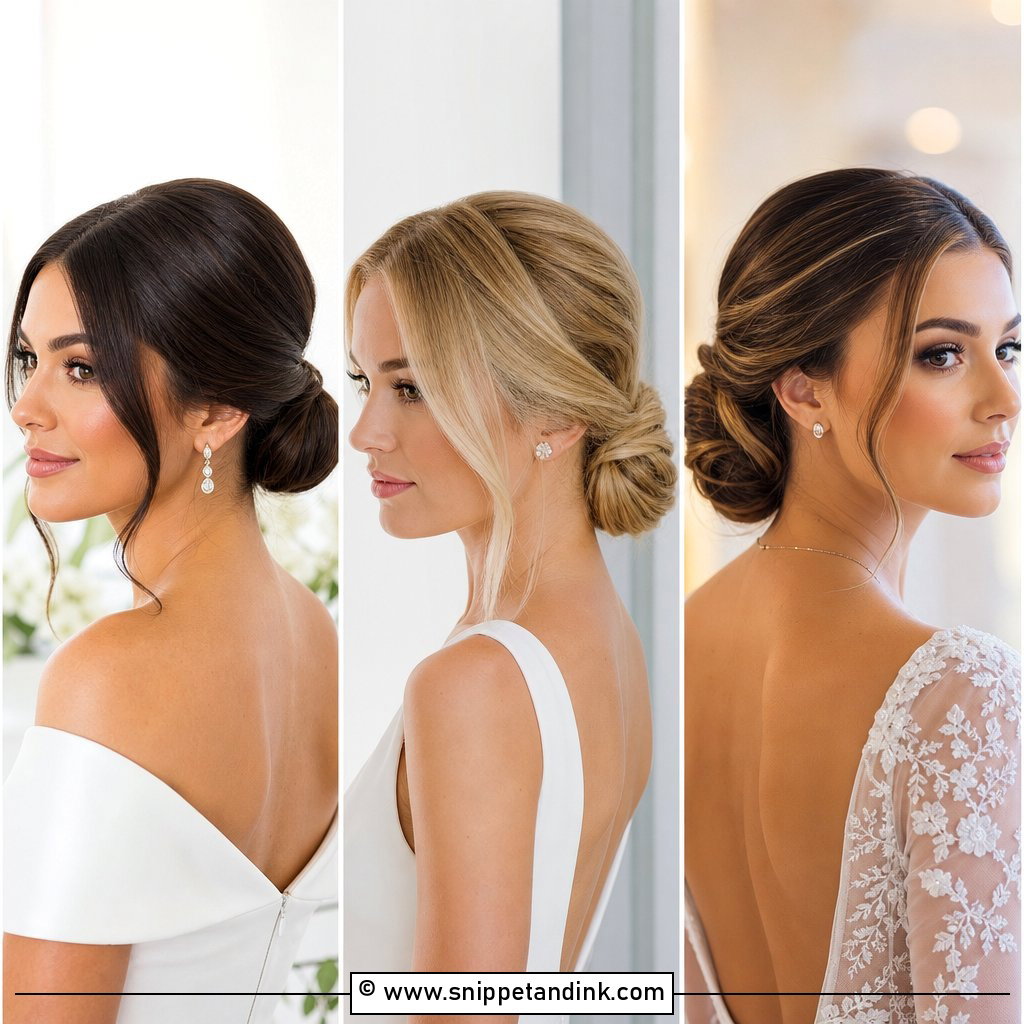
1. Sleek Low Bun Bridal Hair
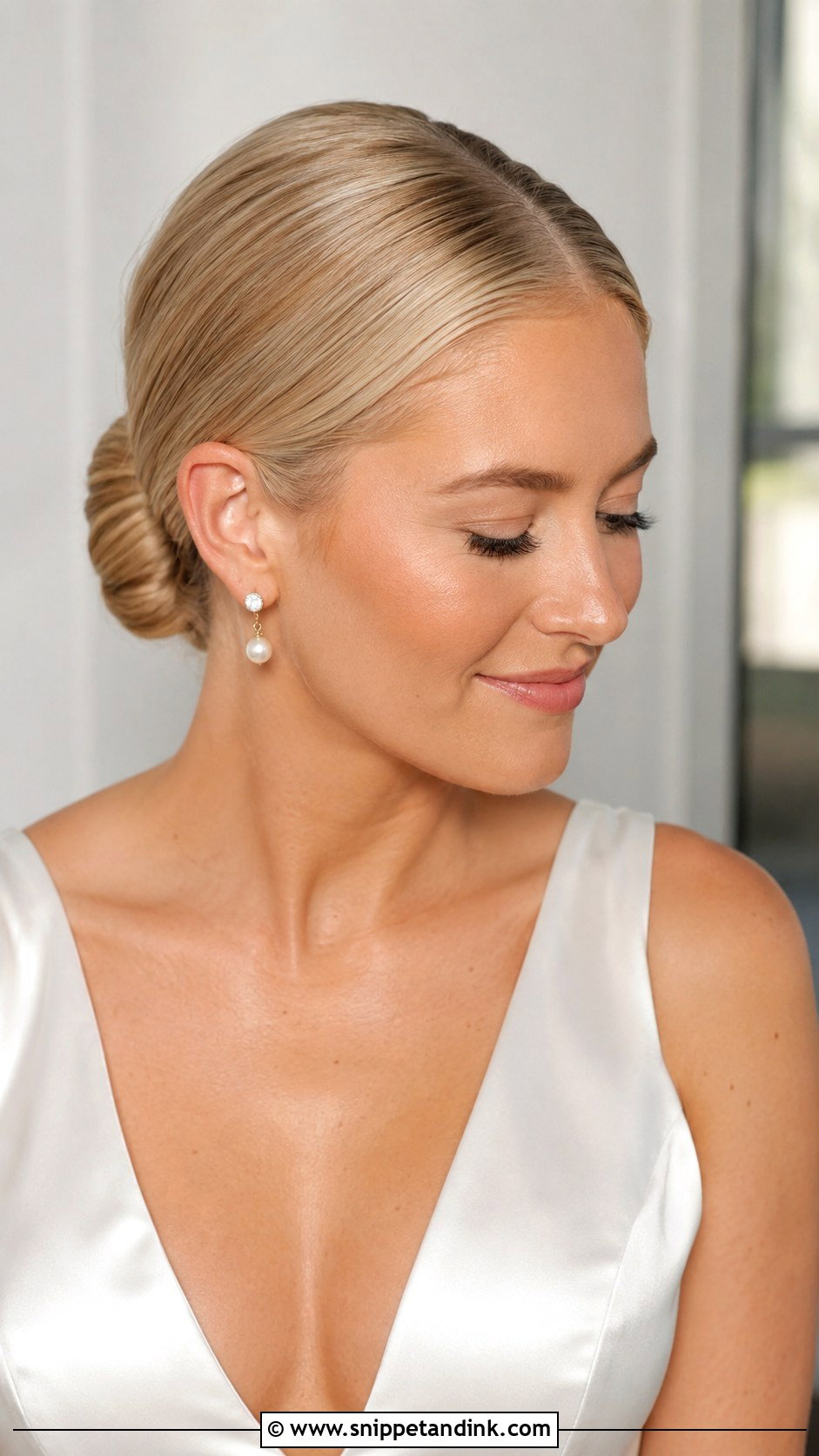
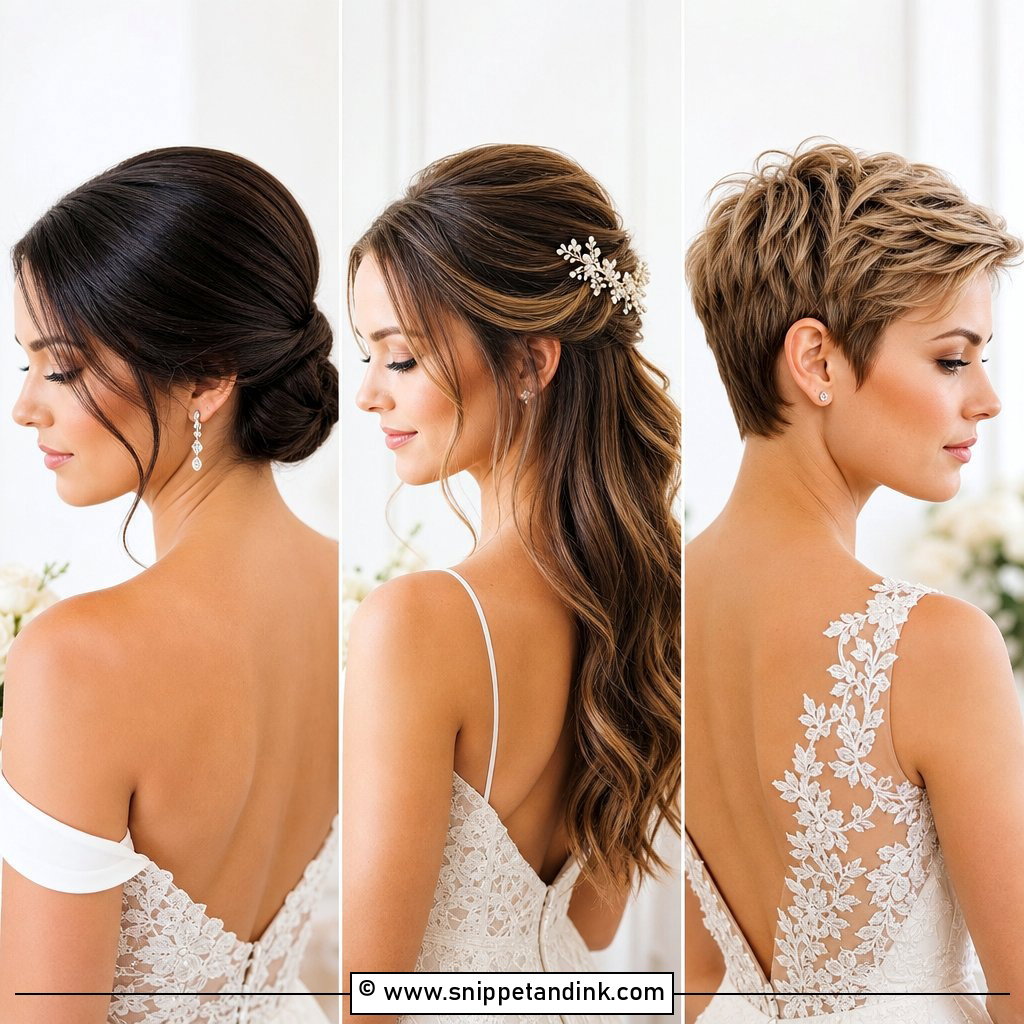
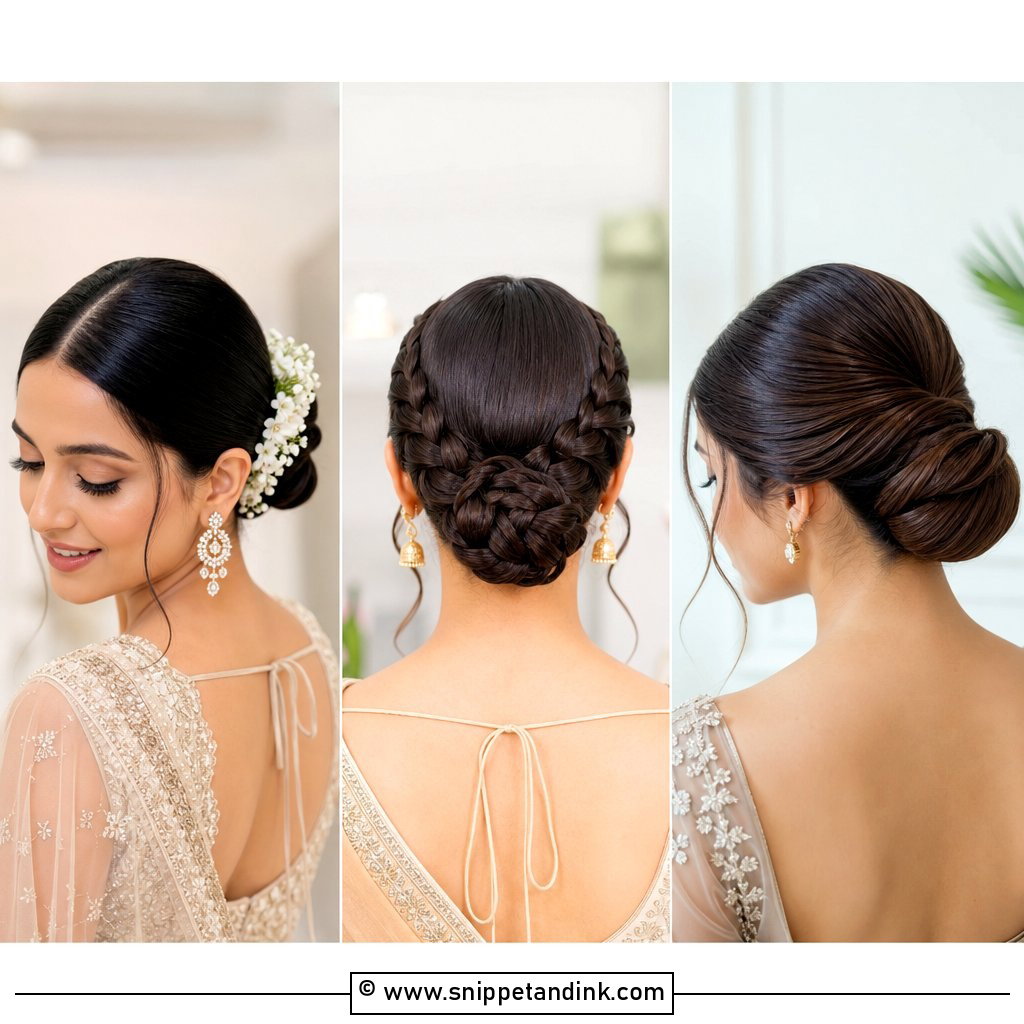
A sleek low bun keeps every eye on your face, neckline and dress, and it is the style I trust most to look the same at midnight as it did at noon. I smooth the hair back to the nape, secure the base with a hidden elastic, then wrap and pin the bun so the pins cross into the base rather than just into the bun itself. That crossing is what stops it sagging during dancing. It suits high necks, strapless dresses and pearl earrings equally. Tell your stylist if tight styles give you a headache, because a bun pulled too hard at 9am becomes a migraine by the speeches. A center part reads modern; no part reads classic.
2. Middle Part Low Chignon Bridal Hair
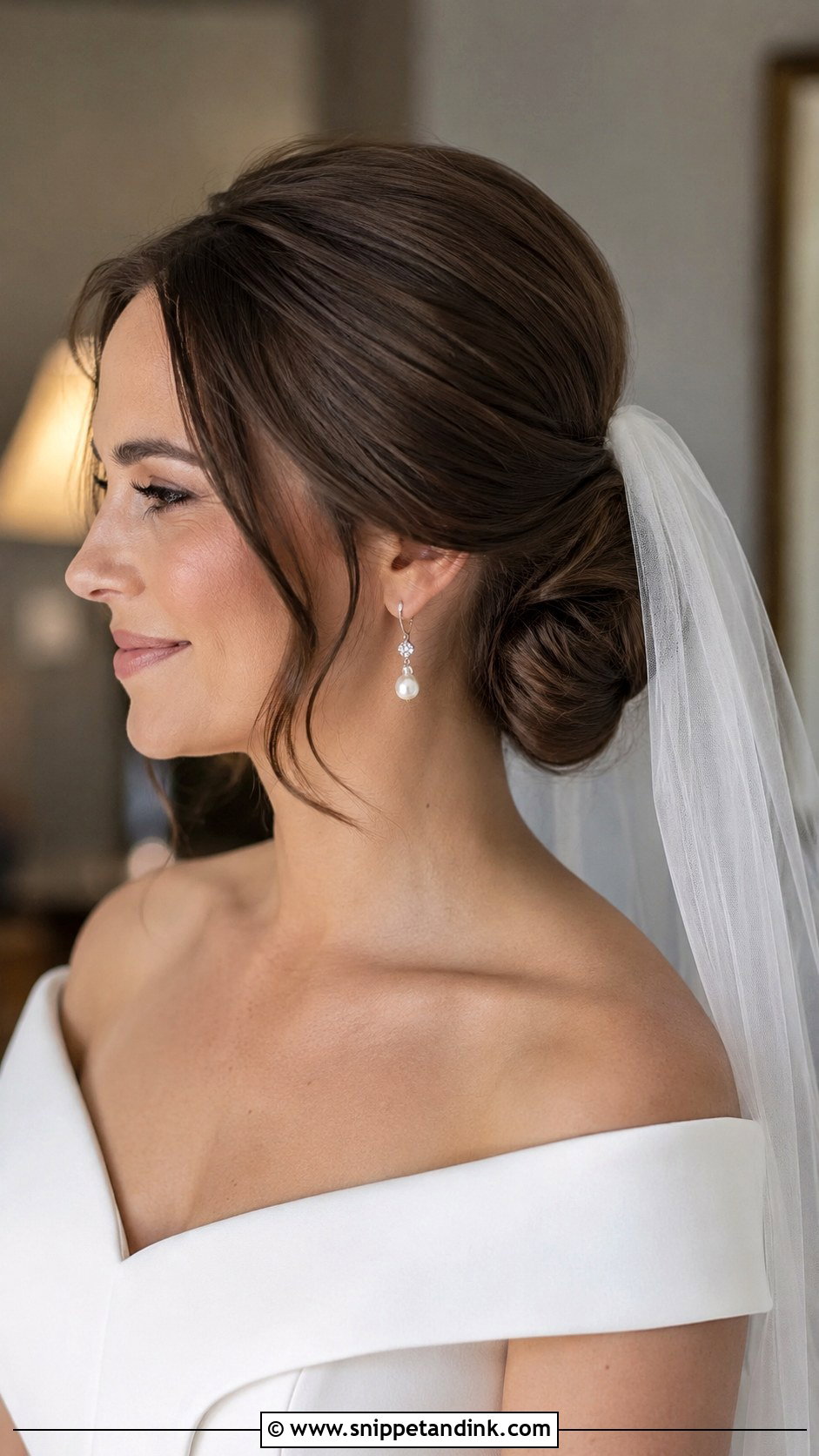
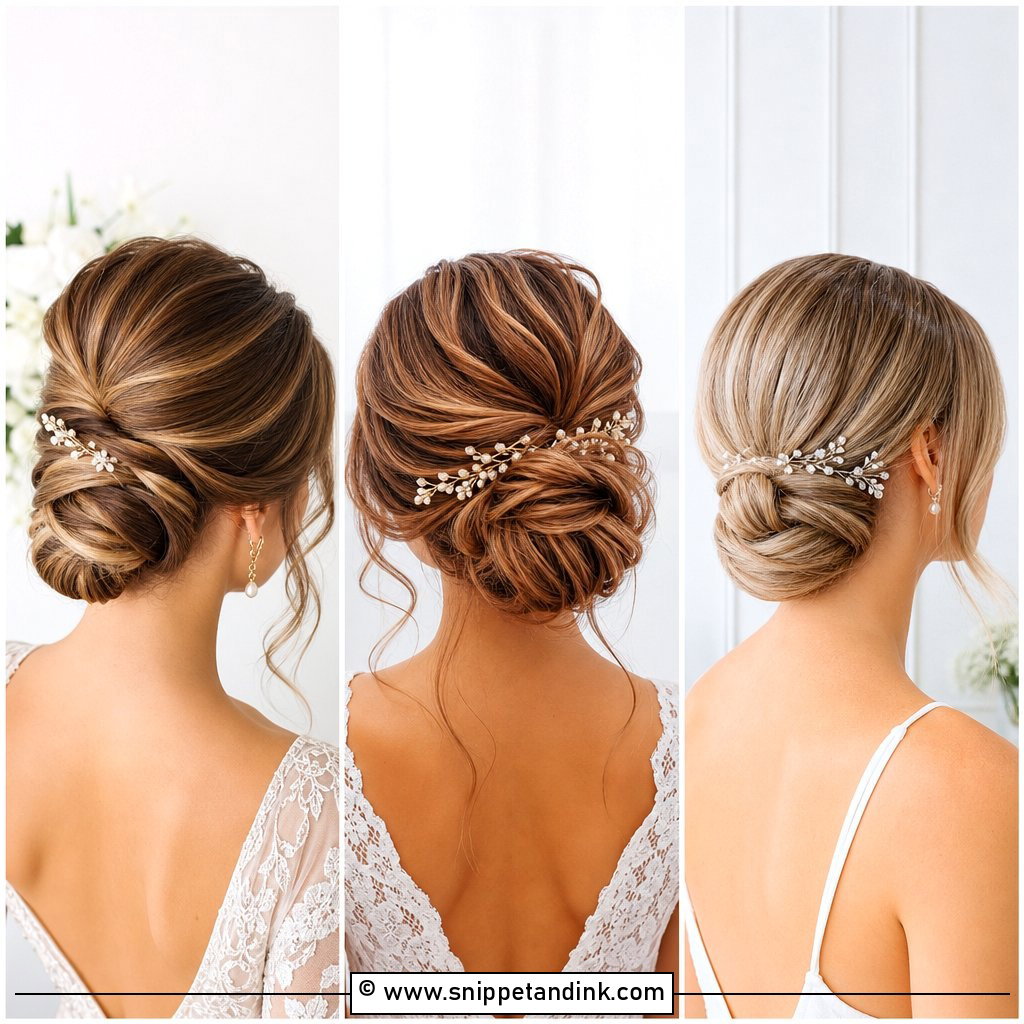
The middle part chignon softens a strict bun by splitting the weight evenly around the face. Before I commit to it at a trial, I check where the client’s natural part sits, because forcing a center part against a strong cowlick leaves a ridge that springs up by mid-afternoon. I keep a whisper of lift at the crown so the head doesn’t look flat in profile shots. Square necklines, long sleeves and sheer veils all work with it, and it carries a few pearl pins well if you want detail.
3. Side Part Low Bun Bridal Hair
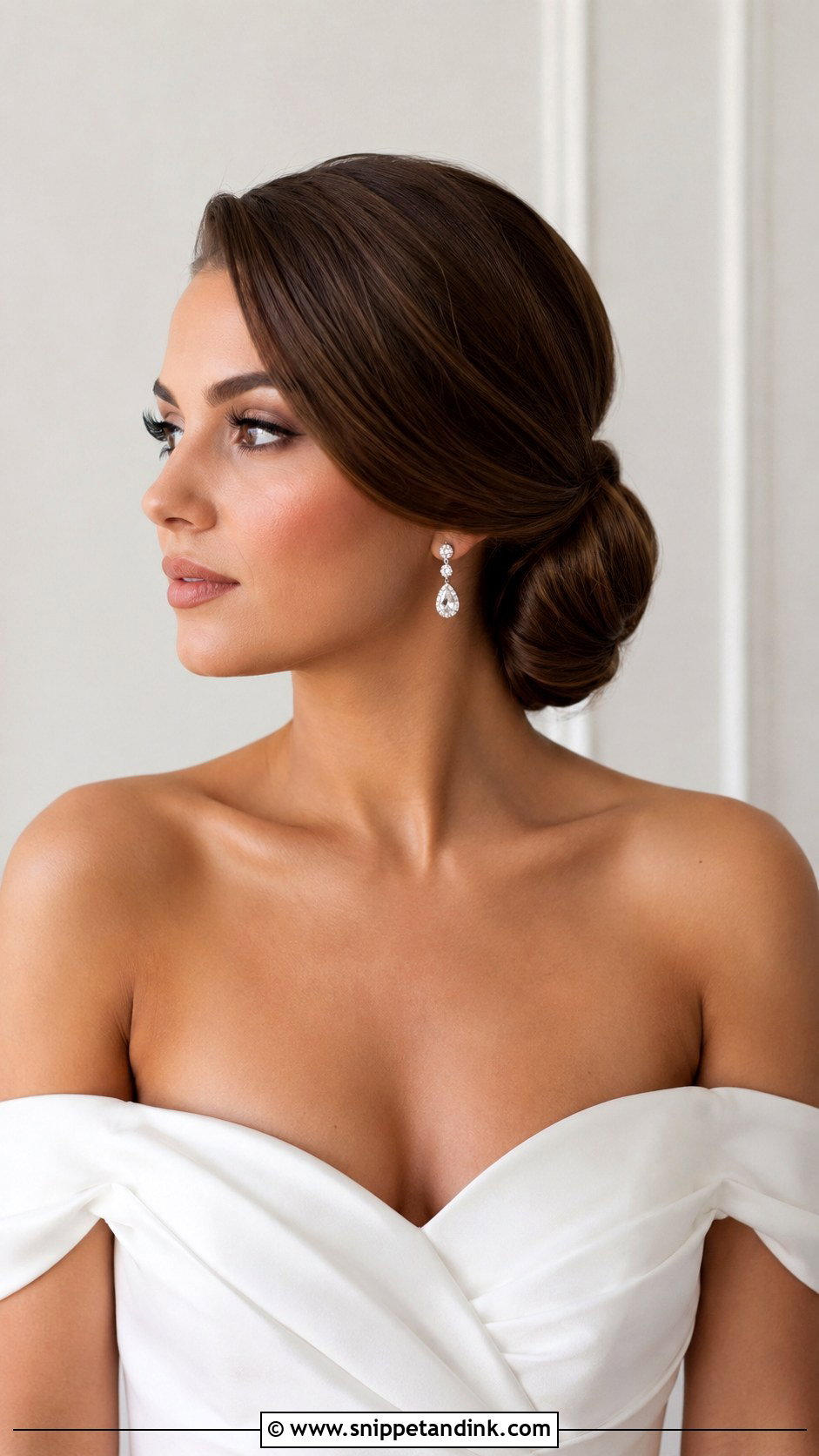
Moving the part to the side puts a gentle sweep across the forehead, which breaks up a round or square face better than a center line does. The bun can be wrapped tight or left slightly fuller. My one caution: a deep side part leaves more weight on one side, so I add an extra pin or two on the heavy side, otherwise the sweep slides forward and the bun shifts off center over the day. Drop earrings and off-the-shoulder gowns show it off well, and the smooth hairline and glossy finish are what keep it from looking like an everyday office bun.
4. Clean French Twist Bridal Hair
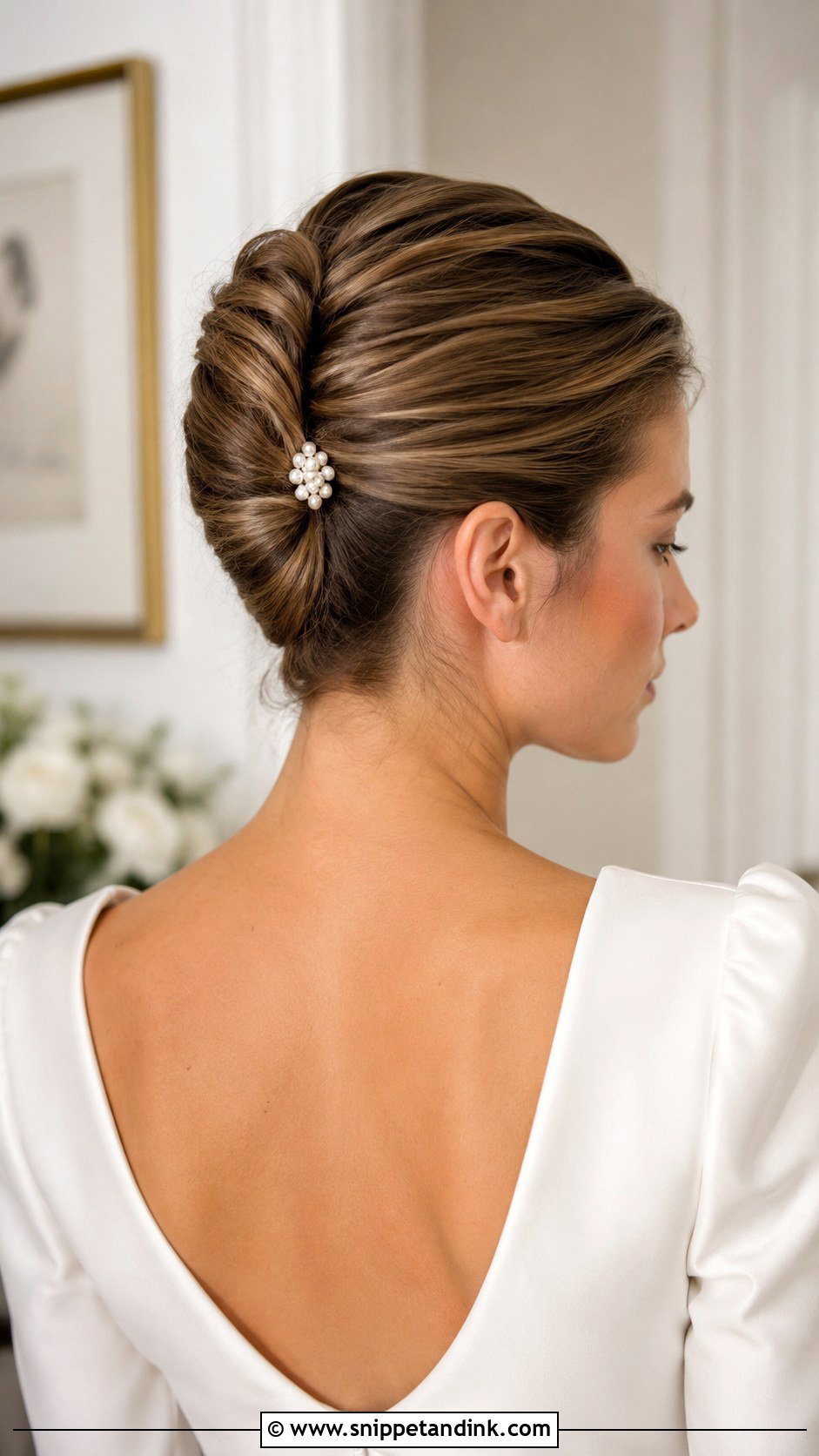
The French twist gives height and a long clean line down the back of the neck, which is why it pairs so naturally with bateau necklines and structured gowns. It is also the updo I find least forgiving on very fine or slippery hair. If the hair won’t grip, I backcomb the inside of the roll lightly and lock it with a row of overlapping pins up the seam. Hair that is freshly washed and silky often needs a day of second-day grip first. A single comb or a veil tucked beneath the roll is all the decoration it needs.
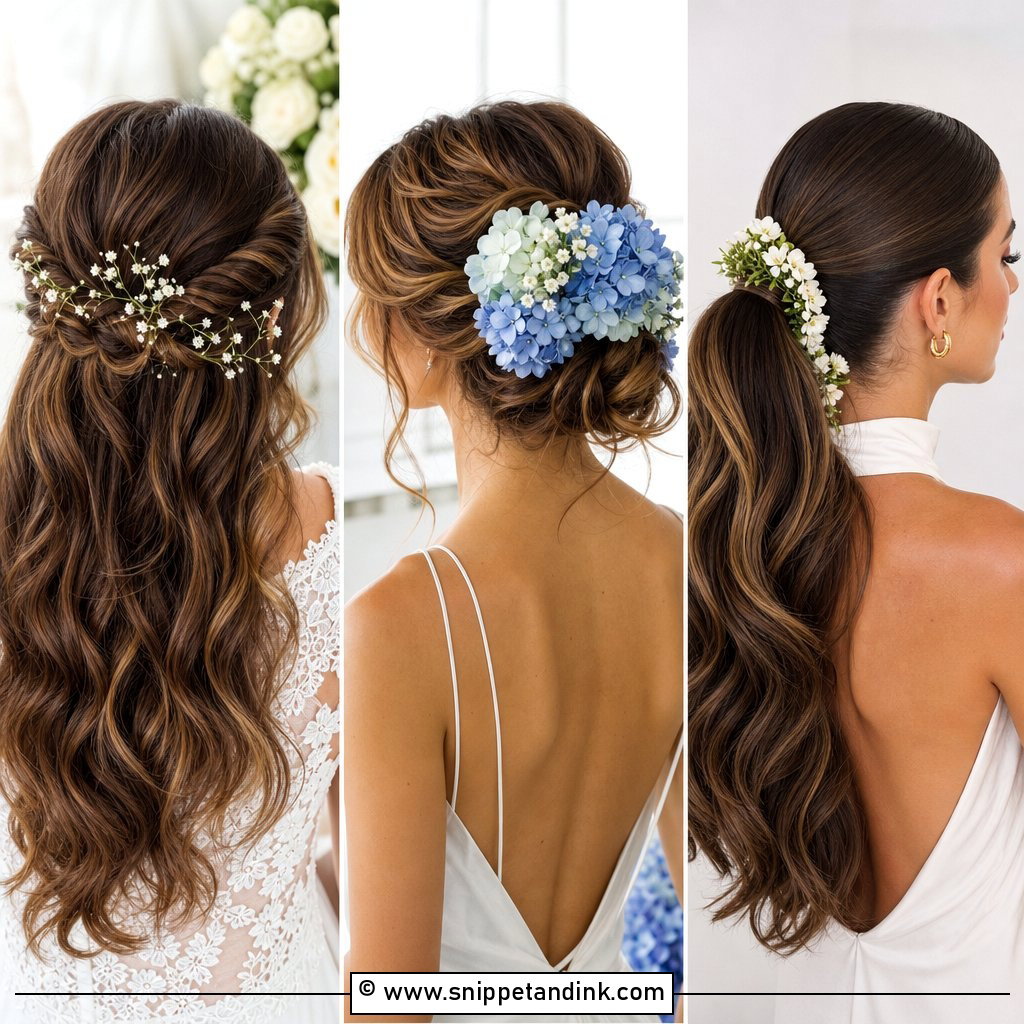
5. Smooth Bridal Ponytail
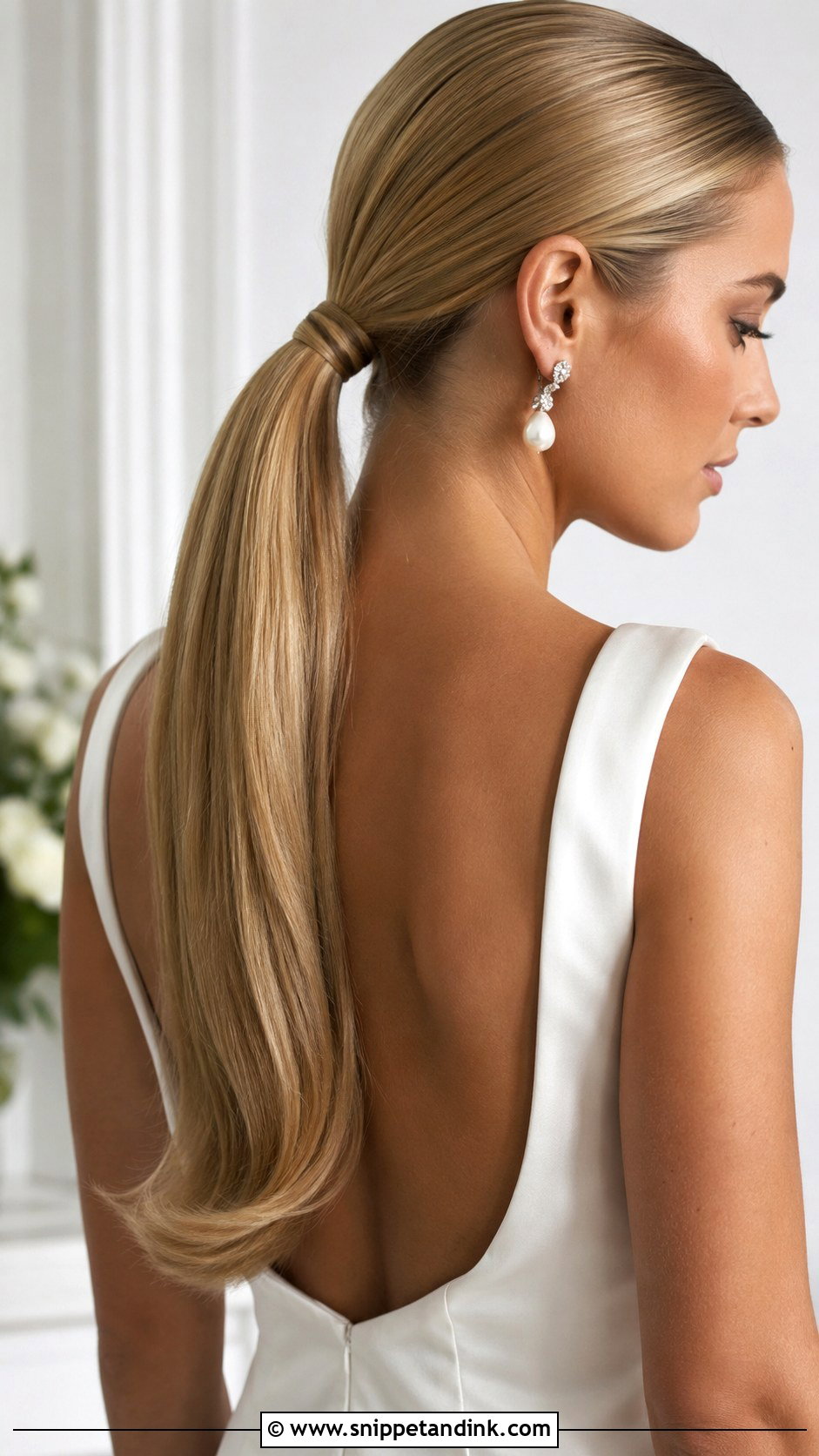
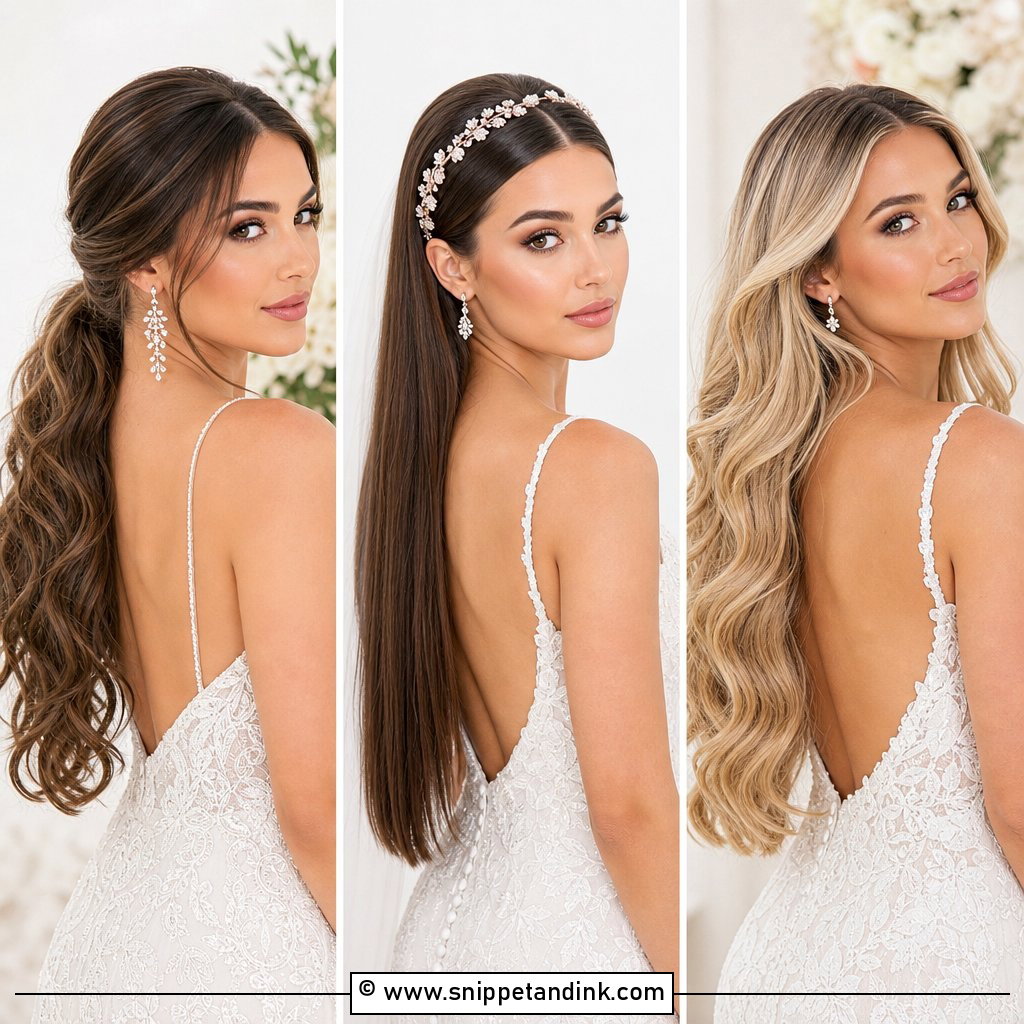
A smooth ponytail gives you the tidiness of an updo with length swinging down your back. The details decide whether it looks bridal or gym-ready: a crown with no bumps, a base wrapped in its own hair, and ends polished with a slight bend. I set the tie slightly lower than you think for a wedding, because a high pony pulls on the scalp after several hours and can drag against a veil comb. It suits courthouse weddings and works as a reception change after a fuller ceremony style.
6. Low Bridal Ponytail With Waves
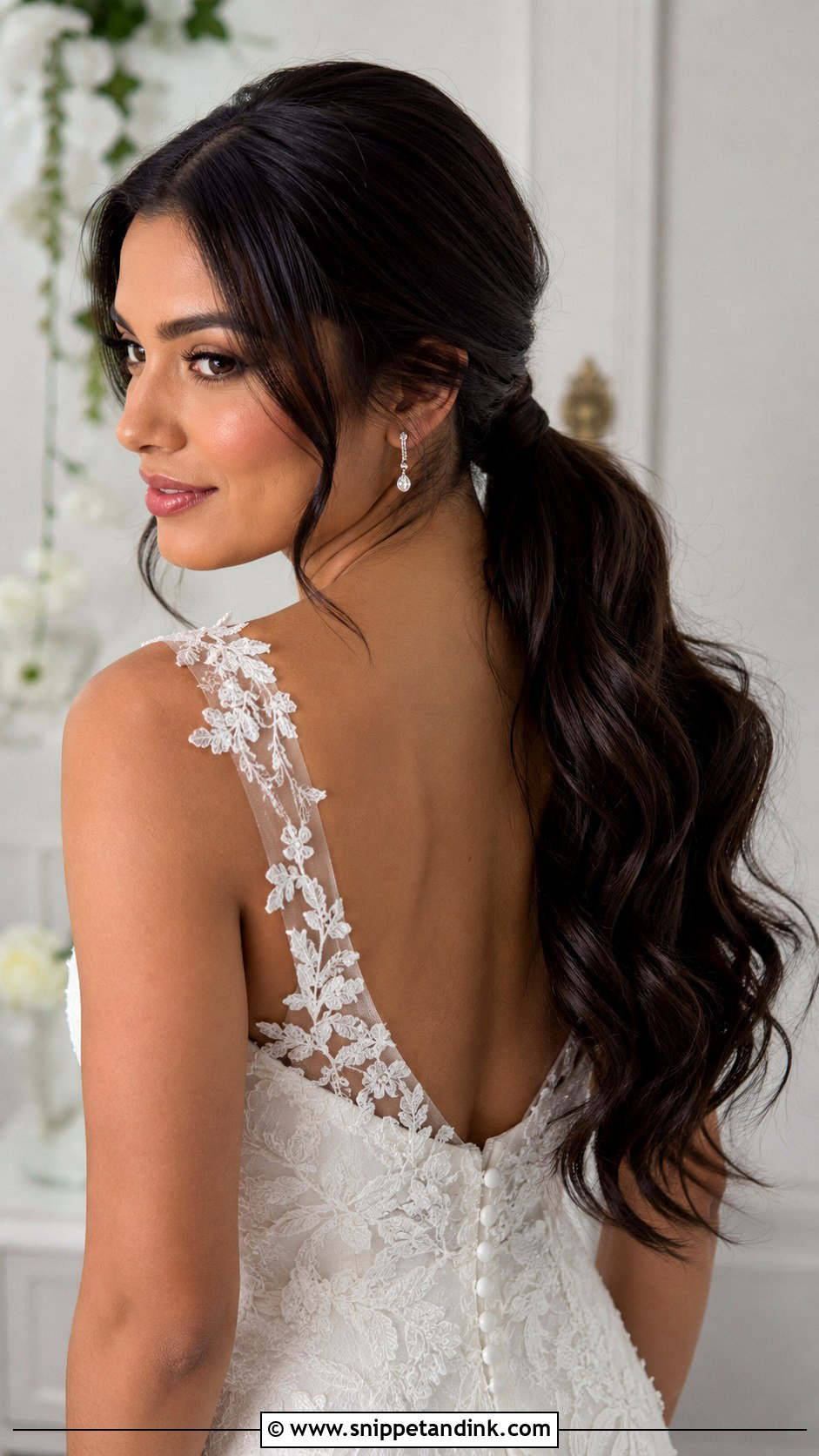
Gathered at the nape with waves through the length, this pony keeps hair off your face while still giving movement in photos. The waves need a proper set: I curl, pin each curl to cool, then brush them out, because waves that are brushed while warm drop within an hour. Medium to long hair suits it best, and it sits well against lace, crepe, or satin dresses. Ask for the base wrapped with a strand of hair, and keep any face-framing pieces lightly curled rather than poker straight.
7. Half Up Half Down Bridal Hair
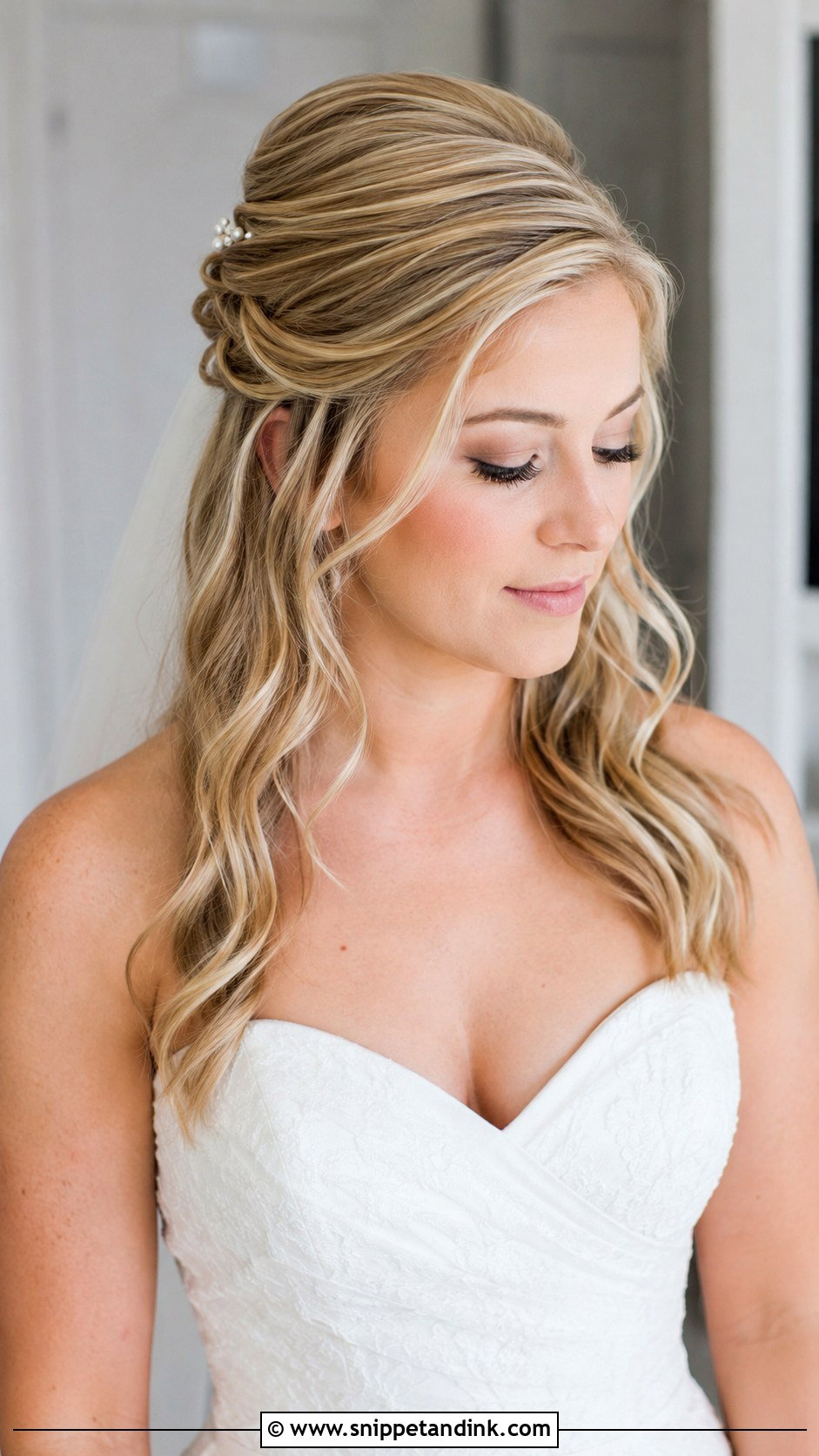
Half up half down is popular because you keep length without hair blowing across your mouth in every candid. In the clean version the crown is smooth, pins are invisible and the waves are brushed into one shape. The top section also gives a veil comb something solid to bite into, which loose hair cannot do. Where I hesitate is very thick, heavy hair in a hot venue: the weight underneath tends to flatten the waves by late afternoon, so I’d plan a light reset or a switch to a low pony for the reception.
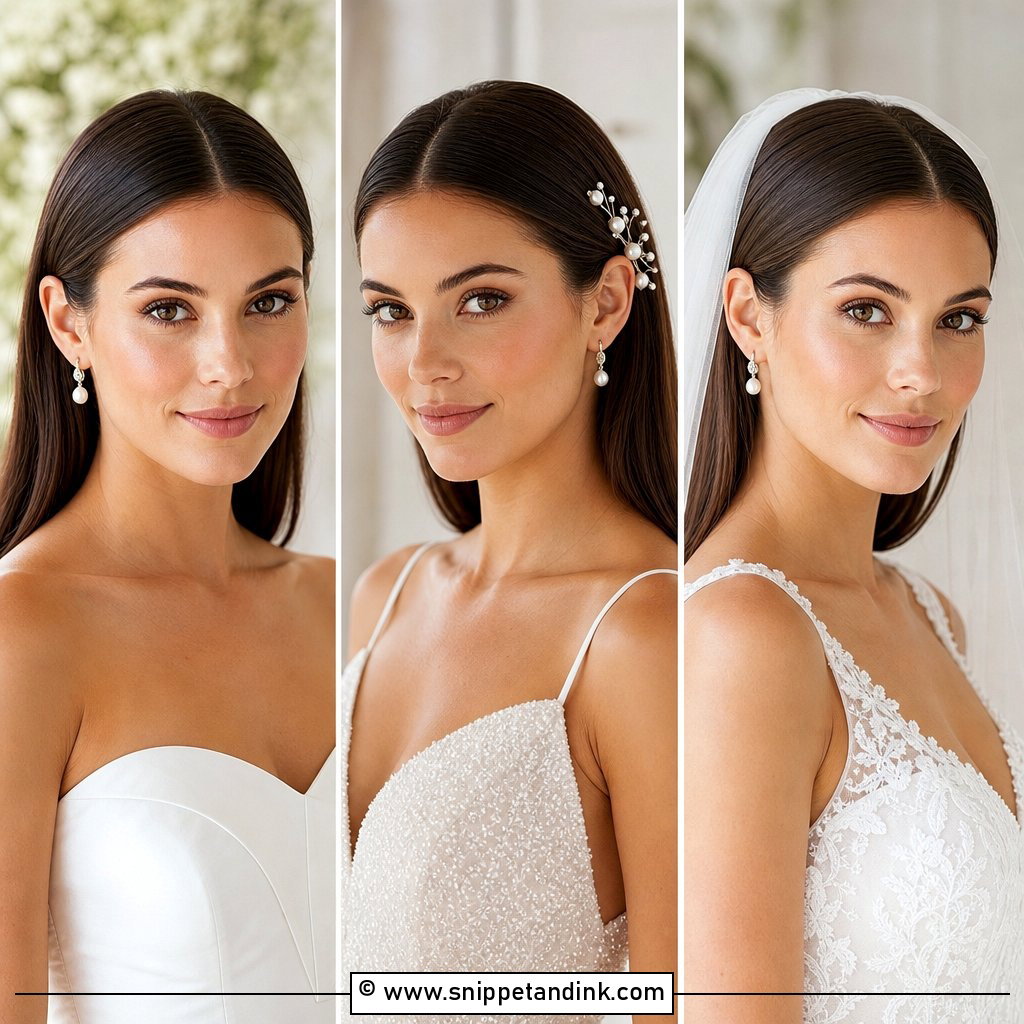
8. Sleek Half Up Bridal Hair
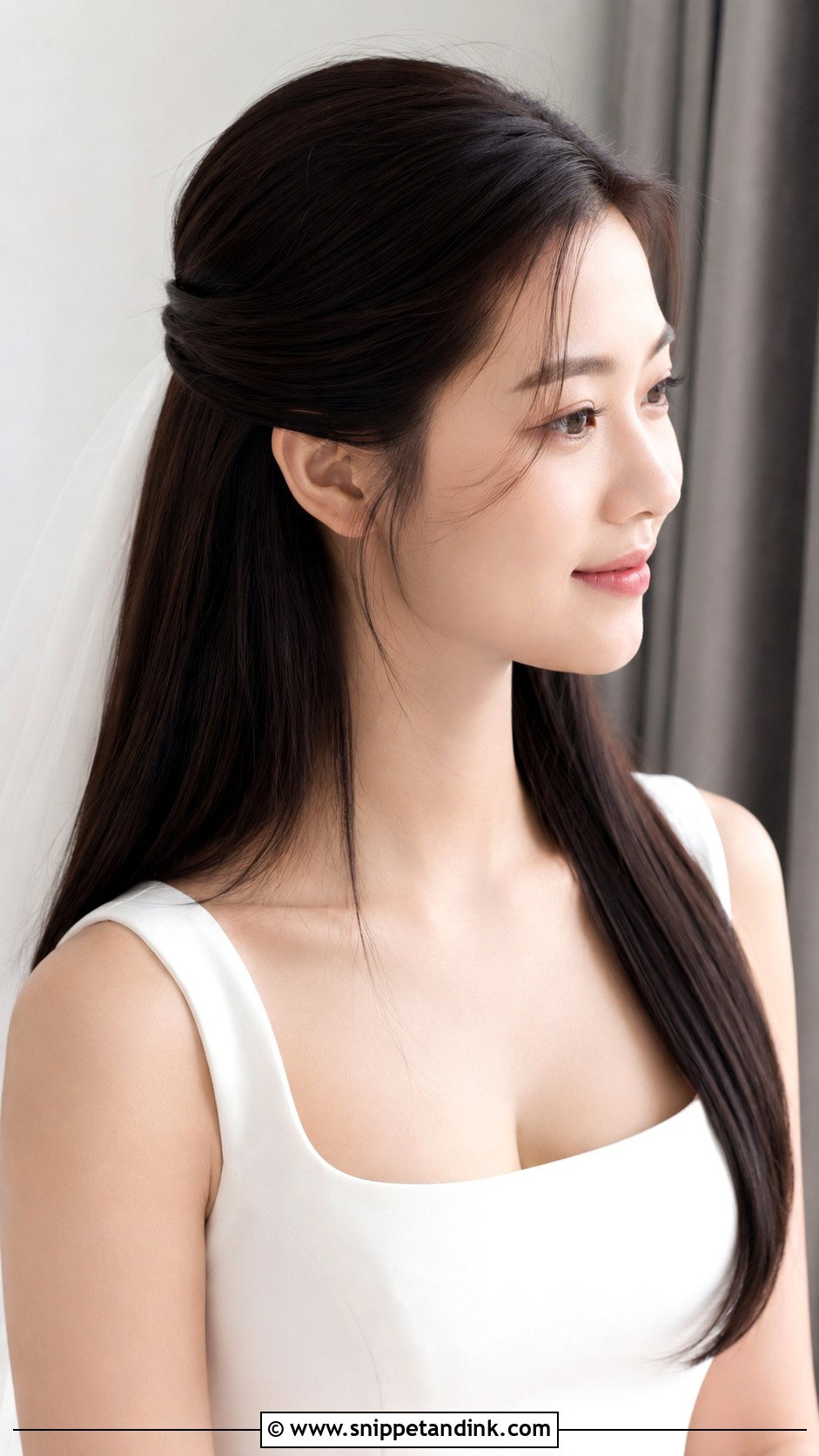
Sleek half up is the more modern cousin: the top is smoothed back without any teased bump, often with a small wrapped section hiding the anchor. The length below can be straight, bent or waved. It reads very sharp with minimalist gowns and fresh makeup. The trap I see most is too much smoothing product at the root, which makes the crown look damp under flash. I’d rather use a light cream and finish with a fine shine mist held well back from the head.
9. Soft Waves Bridal Hair
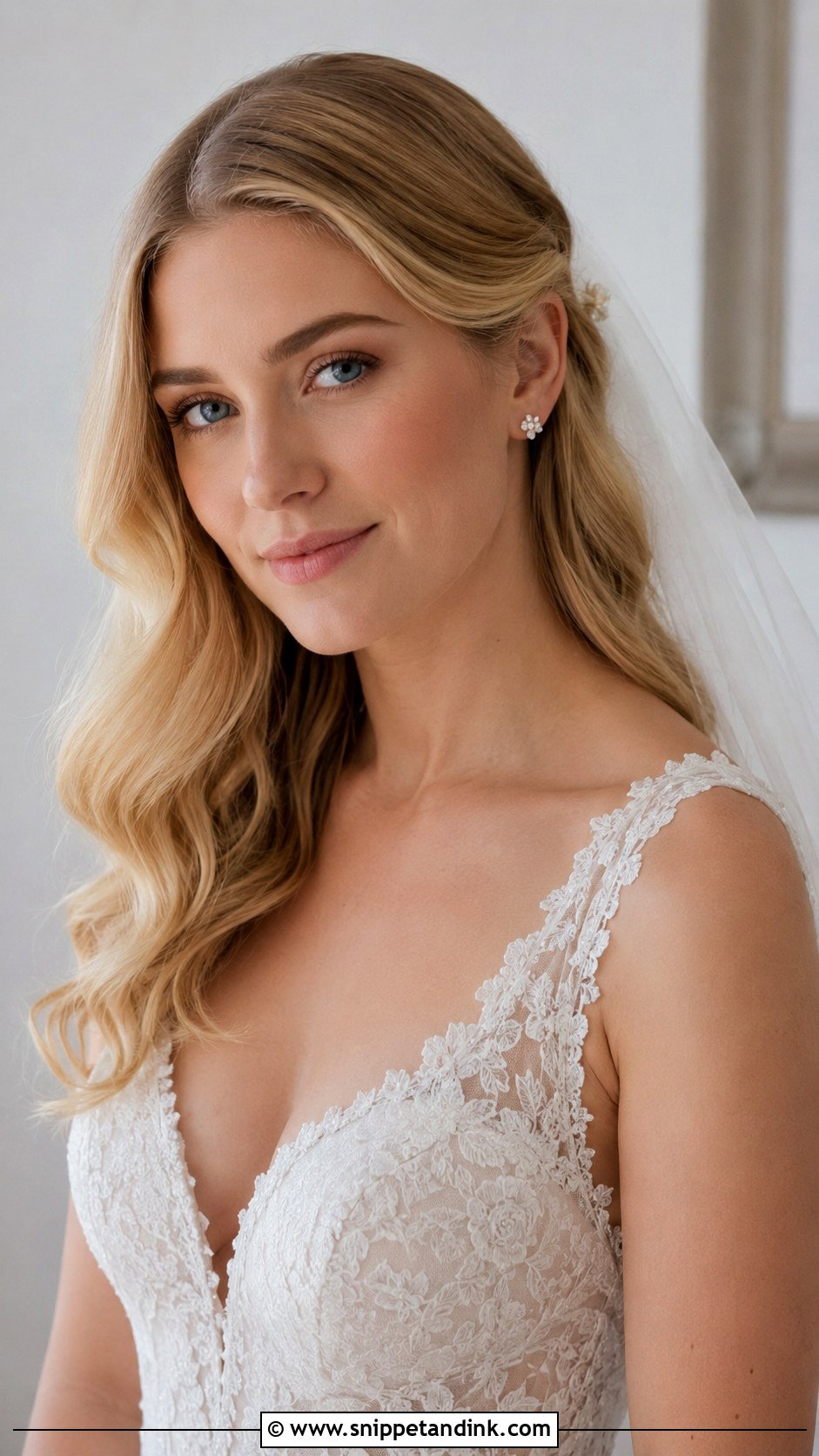
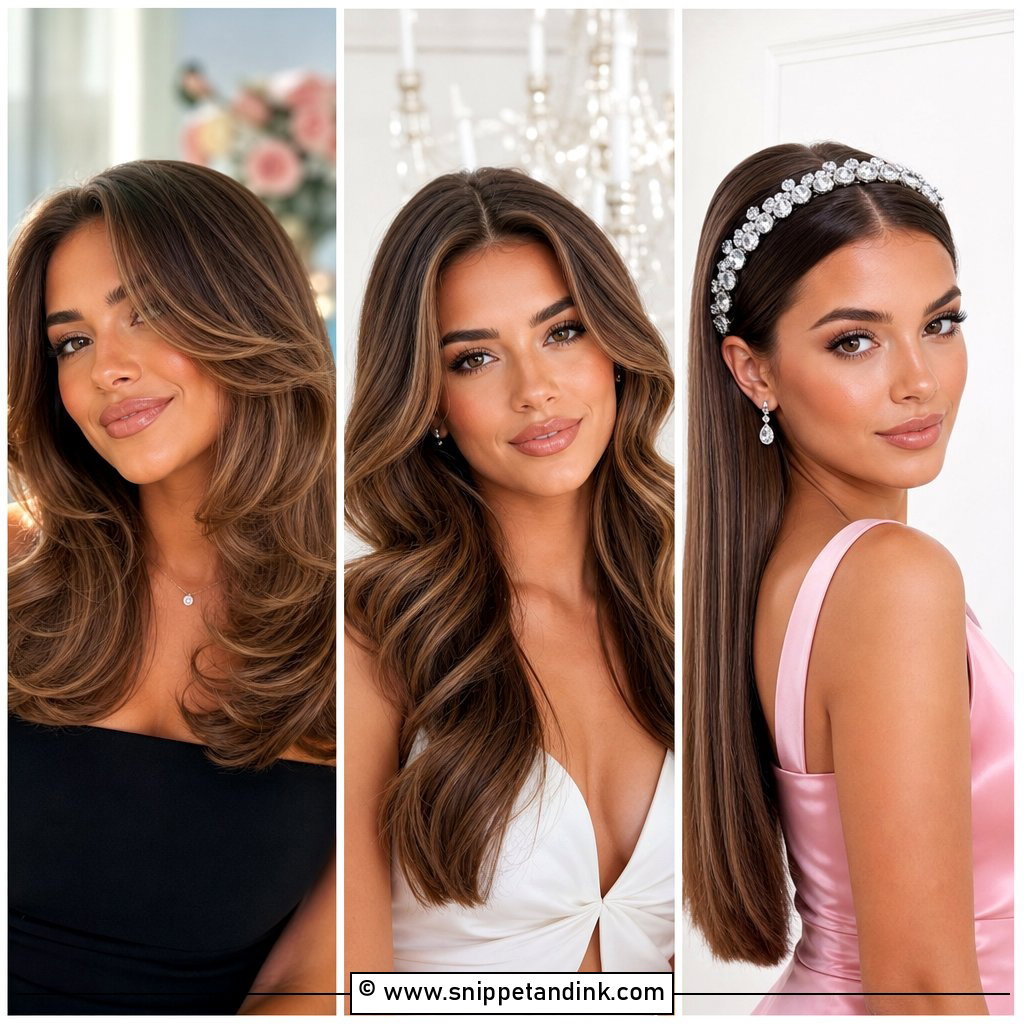
Soft waves only look clean when they run in one direction and are brushed into ribbons rather than left as separate ringlets. That is the difference between bridal waves and beach texture. I curl every section away from the face so the pattern opens up the cheekbones, then pin and cool before brushing. Long, medium and layered cuts all hold it, and it takes a veil, a floral comb or pearl clips without fuss. Tucking one side behind the ear is a small move that makes the whole style look more finished.
10. Hollywood Waves Bridal Hair
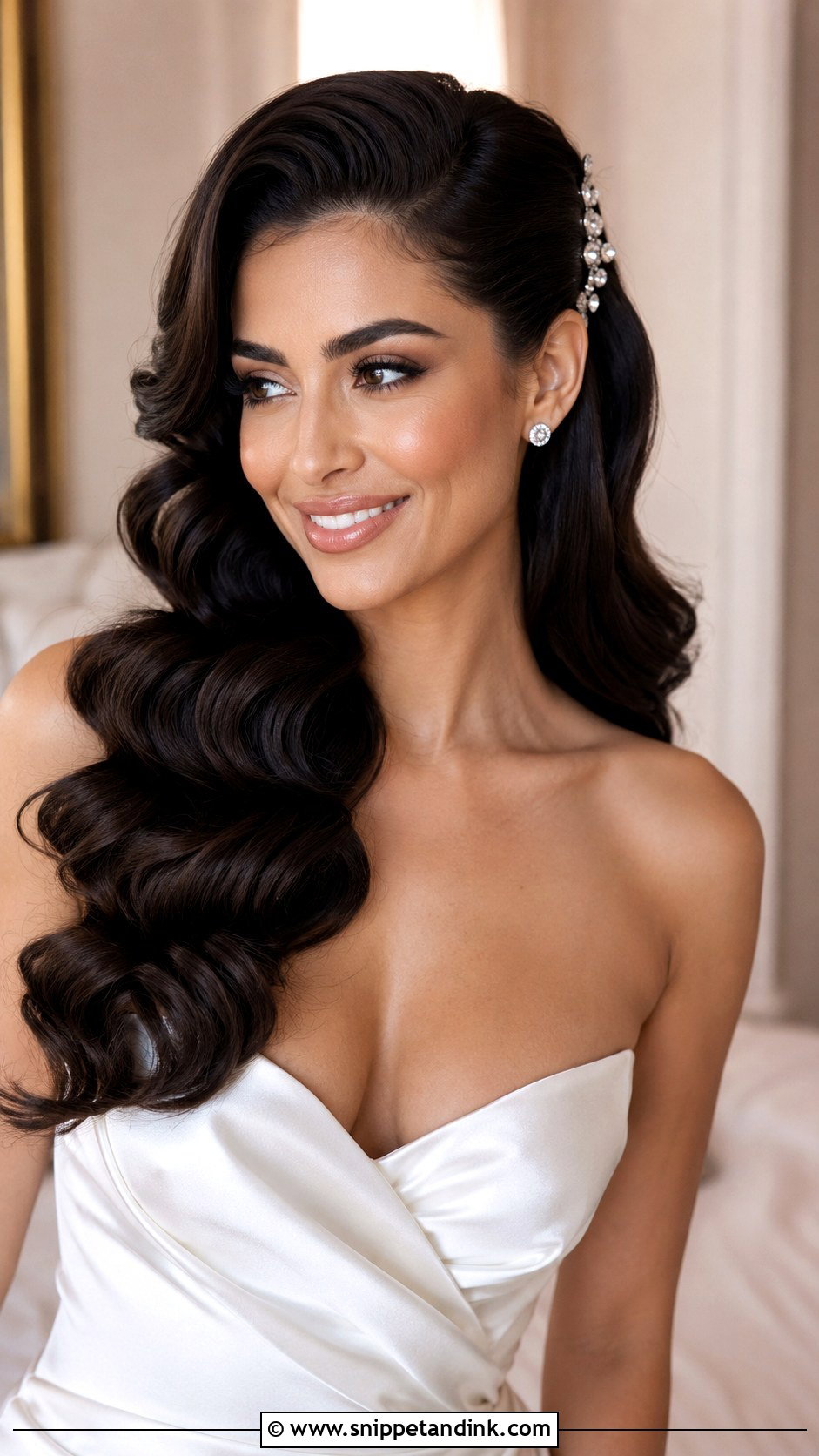
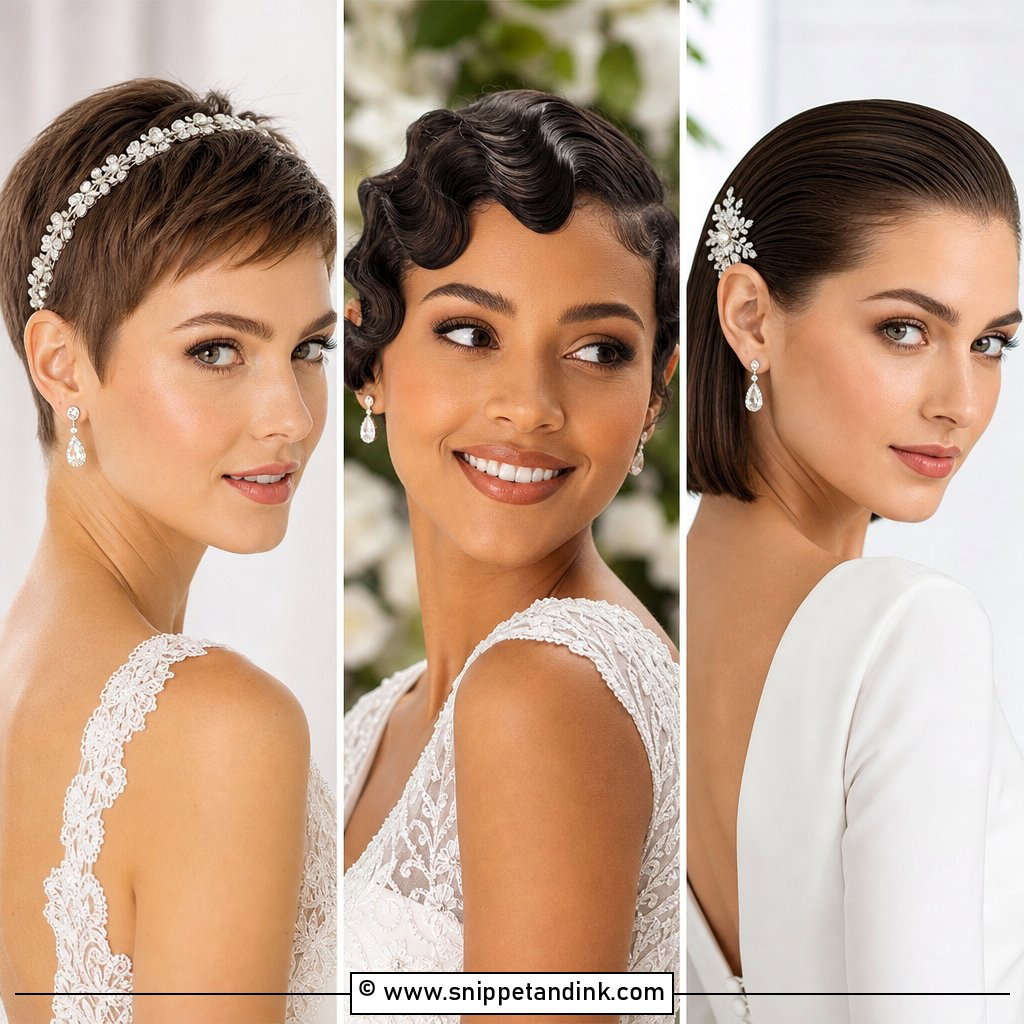
Hollywood waves are the most formal way to wear hair down. Each wave is set, then brushed into an S pattern and pressed with clips so the crests line up, which gives that glossy, liquid finish under portrait lighting. It takes a deep side part, a strong set and patience; rushed Hollywood waves just look like big curls. One-shoulder gowns, strapless dresses and classic veils suit it. I’d keep accessories to almost nothing, since the wave itself is the detail.
11. Straight Bridal Hair
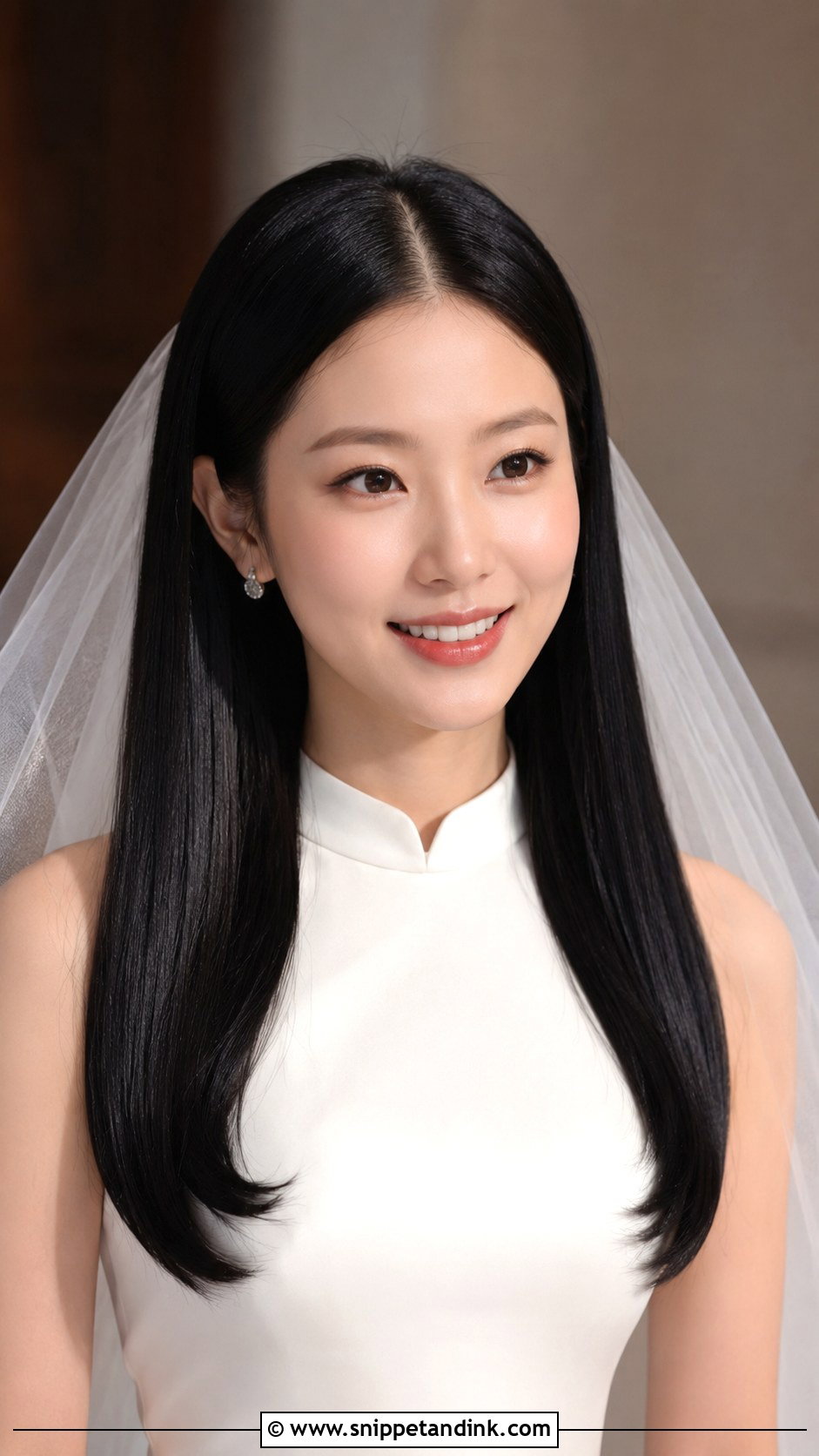
Straight hair at a wedding needs more work than straight hair on a Tuesday. I blow it out with a round brush for body at the root, flat iron in thin sections, then bevel the ends under slightly so it doesn’t hang like a sheet. Too much serum is the usual mistake; under flash it reads as oily rather than shiny. A center part feels modern, a side part softer. It looks sharp with sleek gowns and square necklines, and a veil can sit at the crown or slip in just behind the ears.
12. Clean Bridal Bob
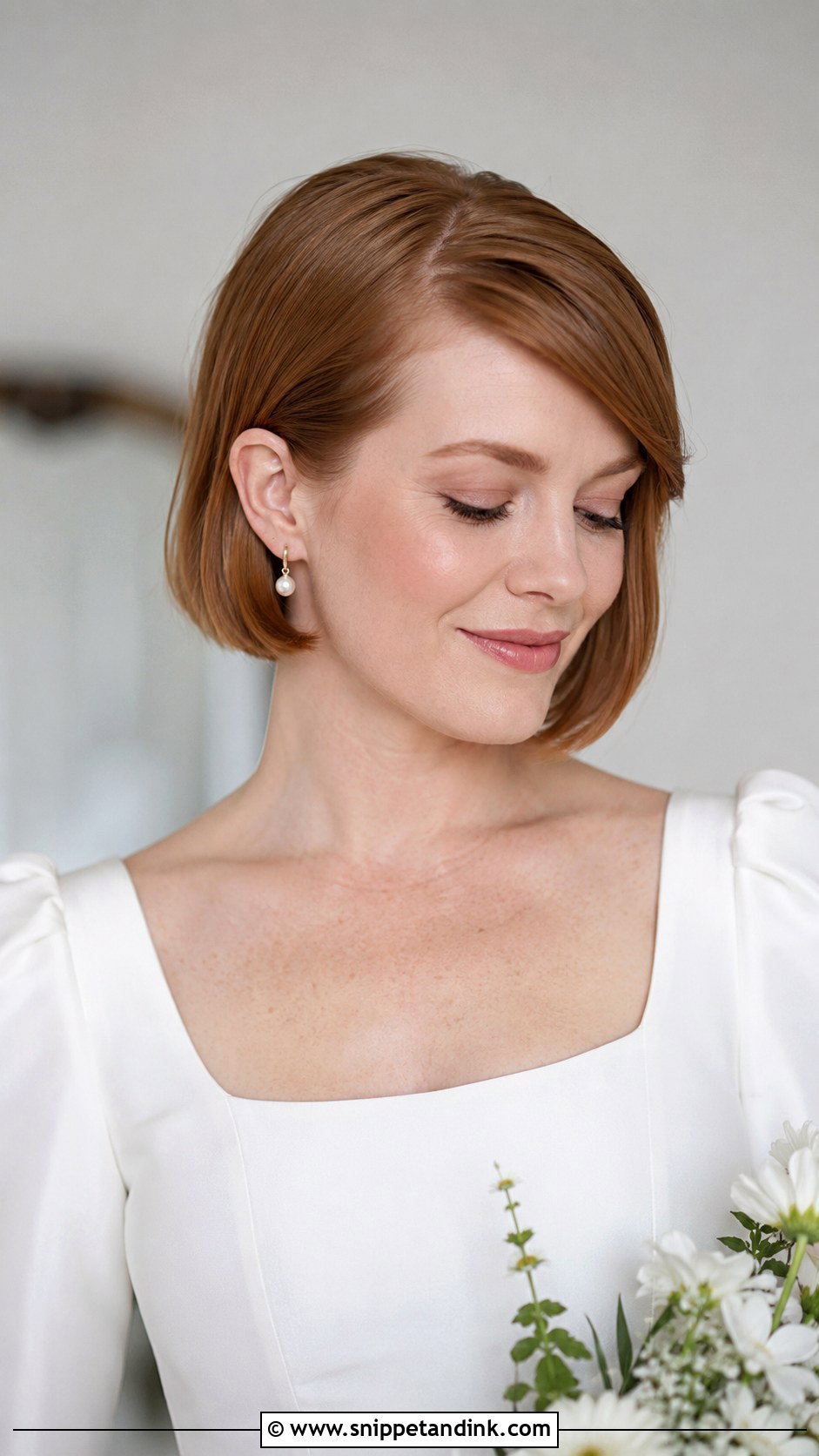
Short hair can be every bit as formal as long hair, and with a bob the cut itself does the talking, so get it trimmed about a week before the wedding rather than the day before, which gives sharp new edges time to settle. Tucking one side behind the ear shows off an earring and opens the face. I smooth the shape with a paddle brush and a little flat iron work at the ends, never a full curl, because curled bobs can go round and helmet-like. Simple veils, pearl headbands and structured gowns all sit comfortably with it.
13. Sleek Bridal Lob
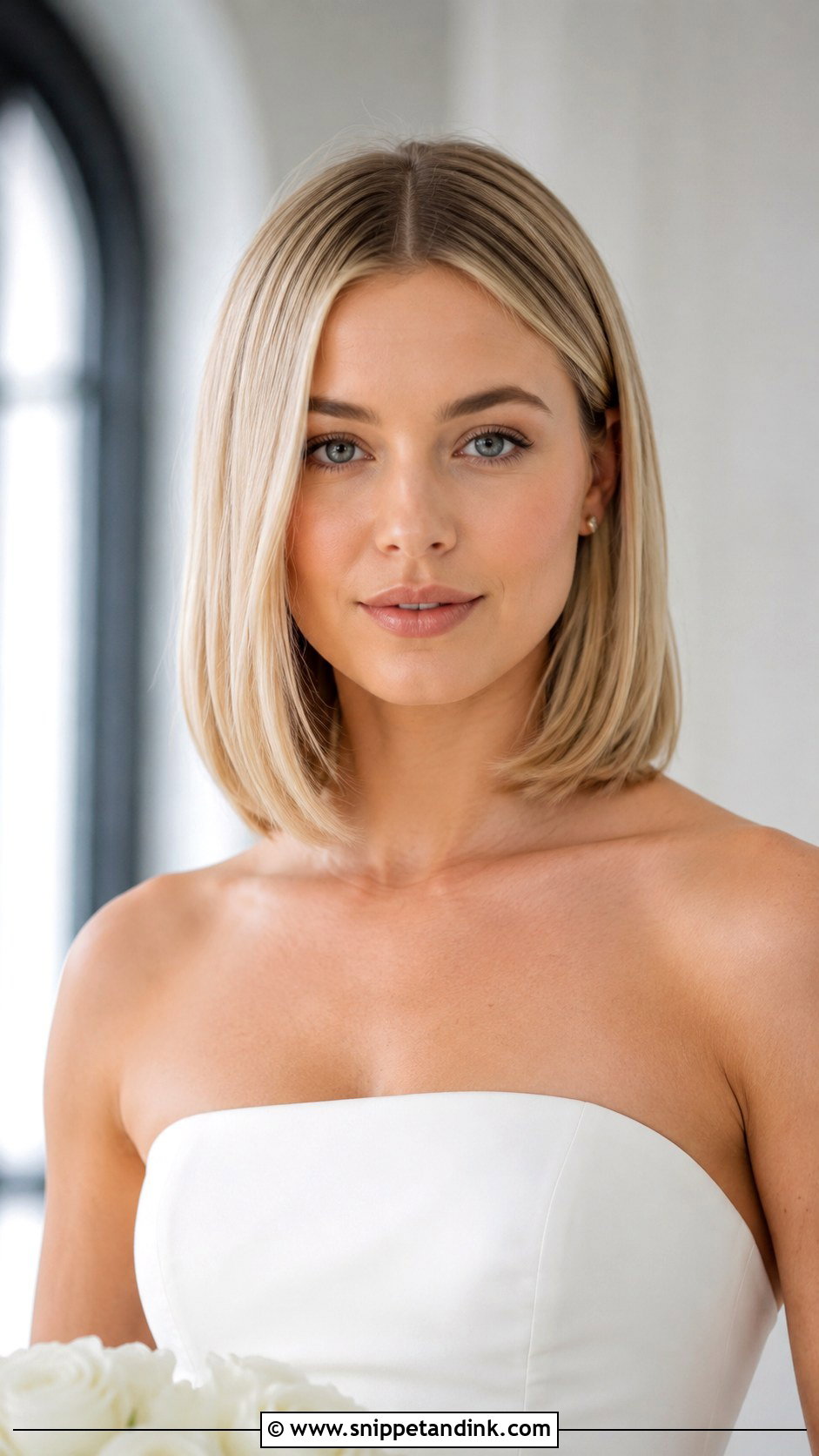
A lob falling between collarbone and shoulder is easy to wear down and still look intentional. The one thing I check first is how the ends sit on the dress: hair that lands exactly on a strapless neckline flips outward every time you turn your head. If that happens at the trial, I bevel the ends under or tuck the sides to clear the edge. Straight or softly waved both work, and a center part keeps it current. Strapless gowns, high necks and statement earrings show it well.
14. Bridal Bun With Face Framing Pieces
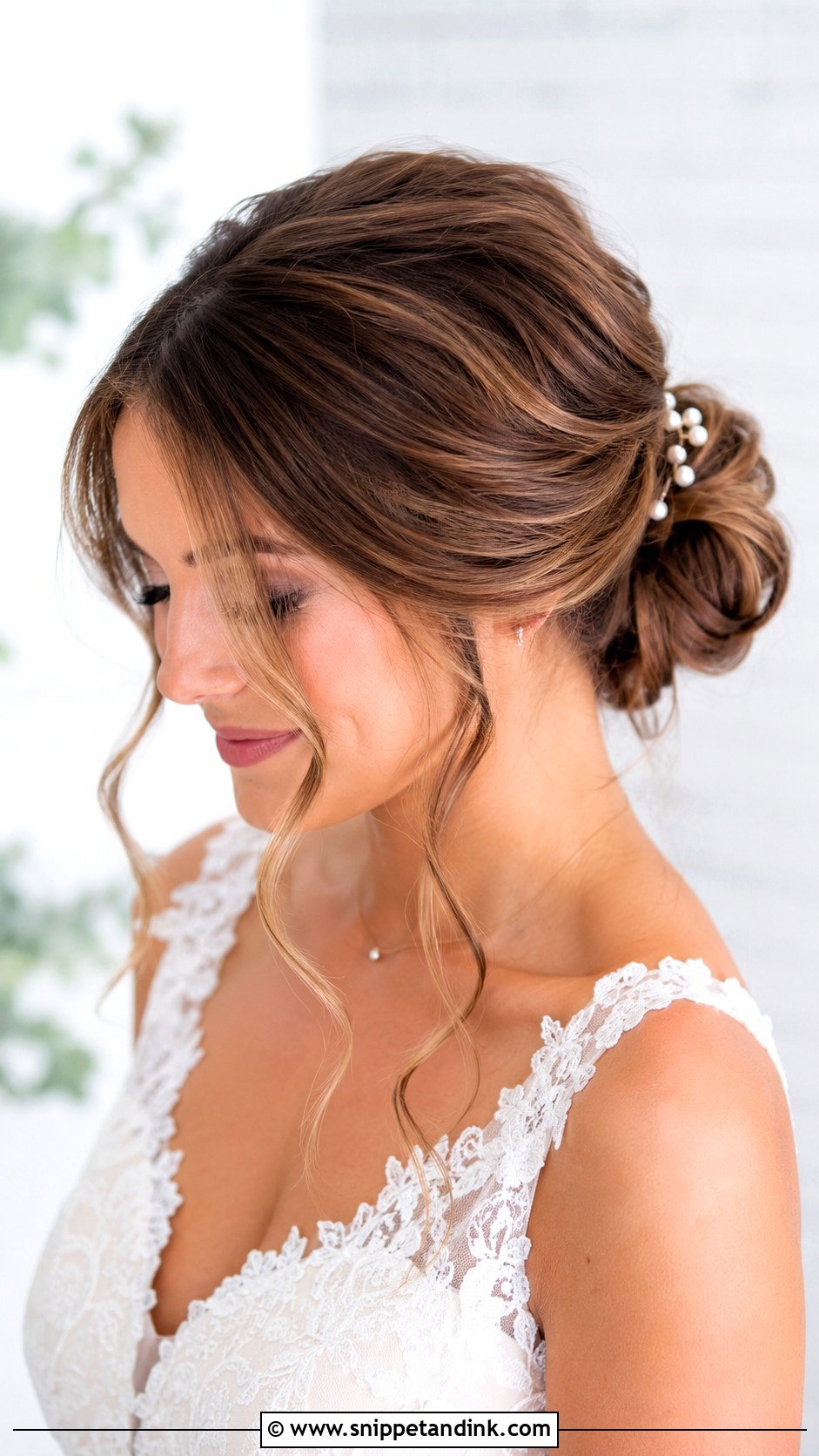
Leaving a few pieces out around the face is my usual answer for brides who feel exposed with everything pulled back. The bun stays secure; the pieces just soften the hairline. I cut down how many I leave out compared with what most people imagine, usually two light sections at the temples, curled away from the face. Too many and they stick to lip gloss and tickle the eyes all day. It sits comfortably under a veil and with lace gowns, and the bun height can follow your neckline.
15. Textured Low Bun Bridal Hair
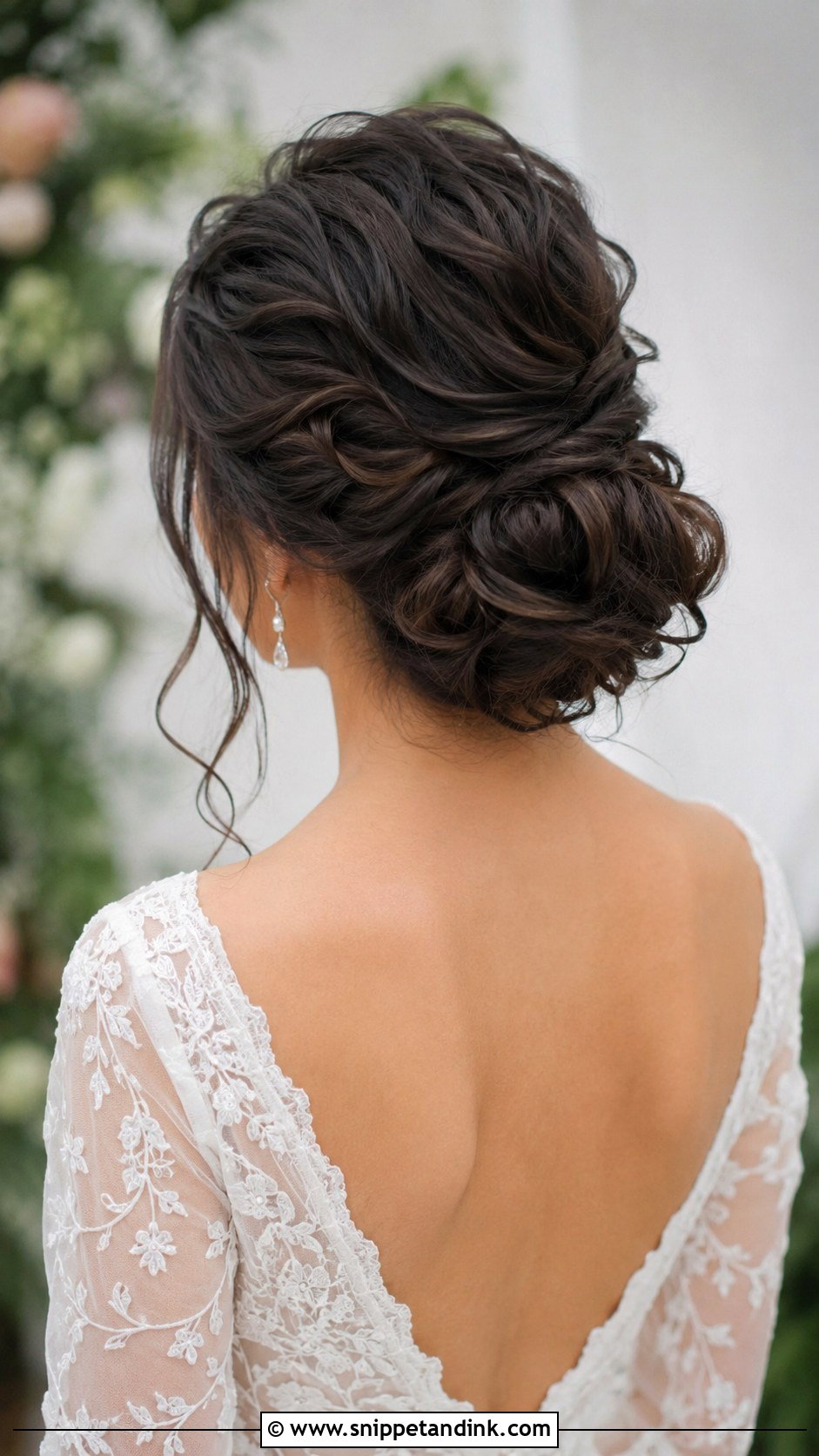
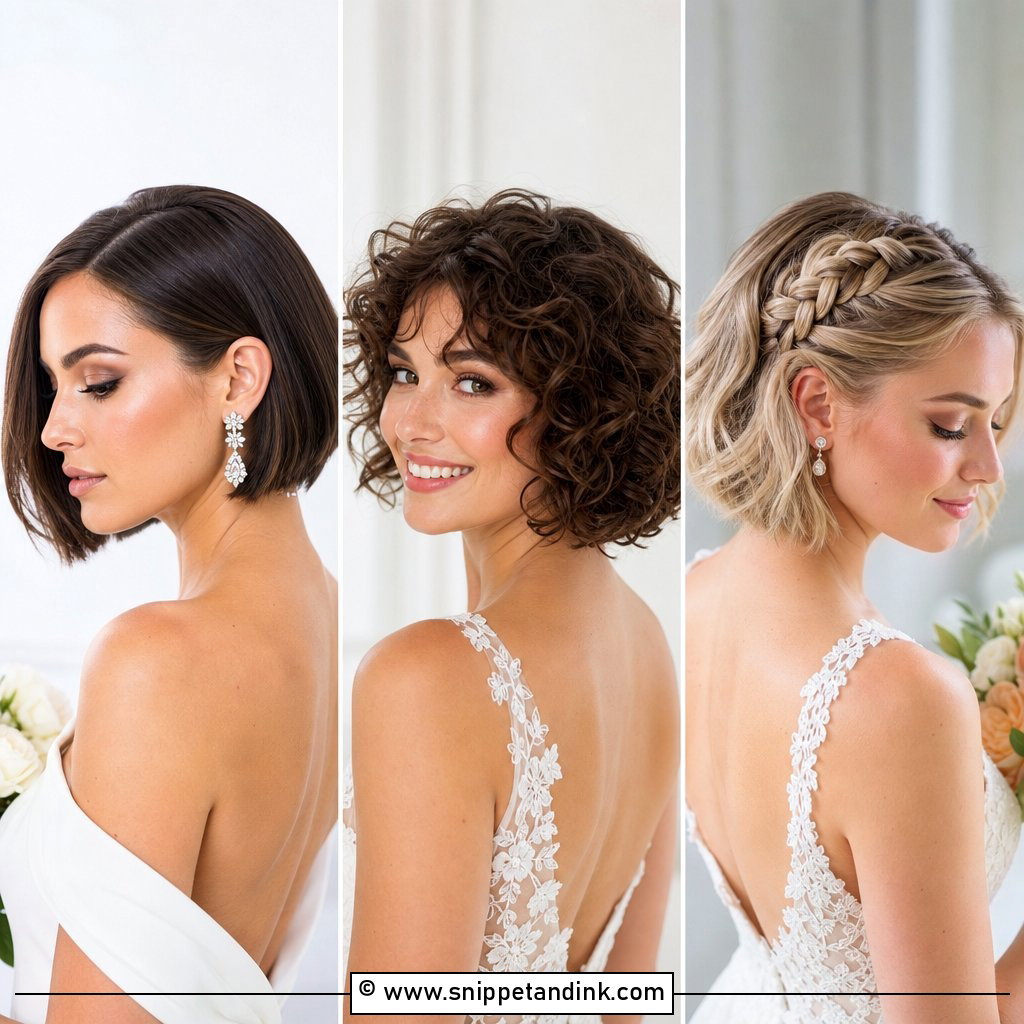
A textured low bun sits between slick and undone: the shape is controlled, but you can see the twists and folds inside it. It is often the better choice for naturally wavy or coarse hair, which fights a glassy finish and frizzes the moment humidity rises. Garden ceremonies and floaty dresses suit it. I build the texture with a dry texture spray before twisting, not after, so it looks soft without coming apart. A handful of pearl pins finishes it without making it fussy.
16. Braided Low Bun Bridal Hair
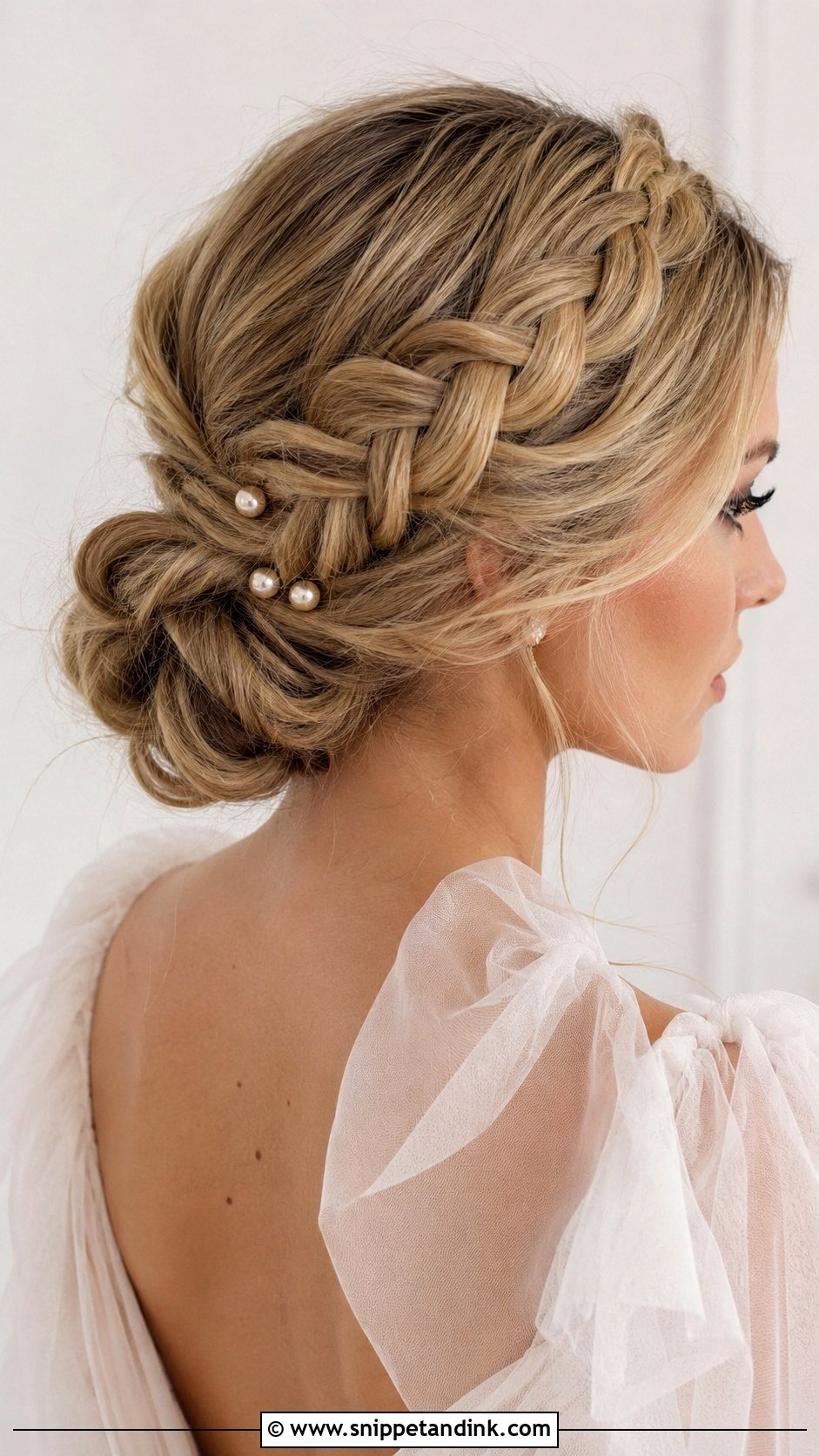
Working a braid into a low bun adds detail without turning the style busy. The braid can wrap the bun, run across one side or melt into the back. I keep it fairly tight and only gently loosen the outer loops, because a heavily pancaked braid collapses after a few hours of veil weight and hugging. Braided buns are some of the most durable styles I do, which makes them worth considering for long outdoor days. They take floral pins and veils easily.
17. Clean Bridal Top Knot
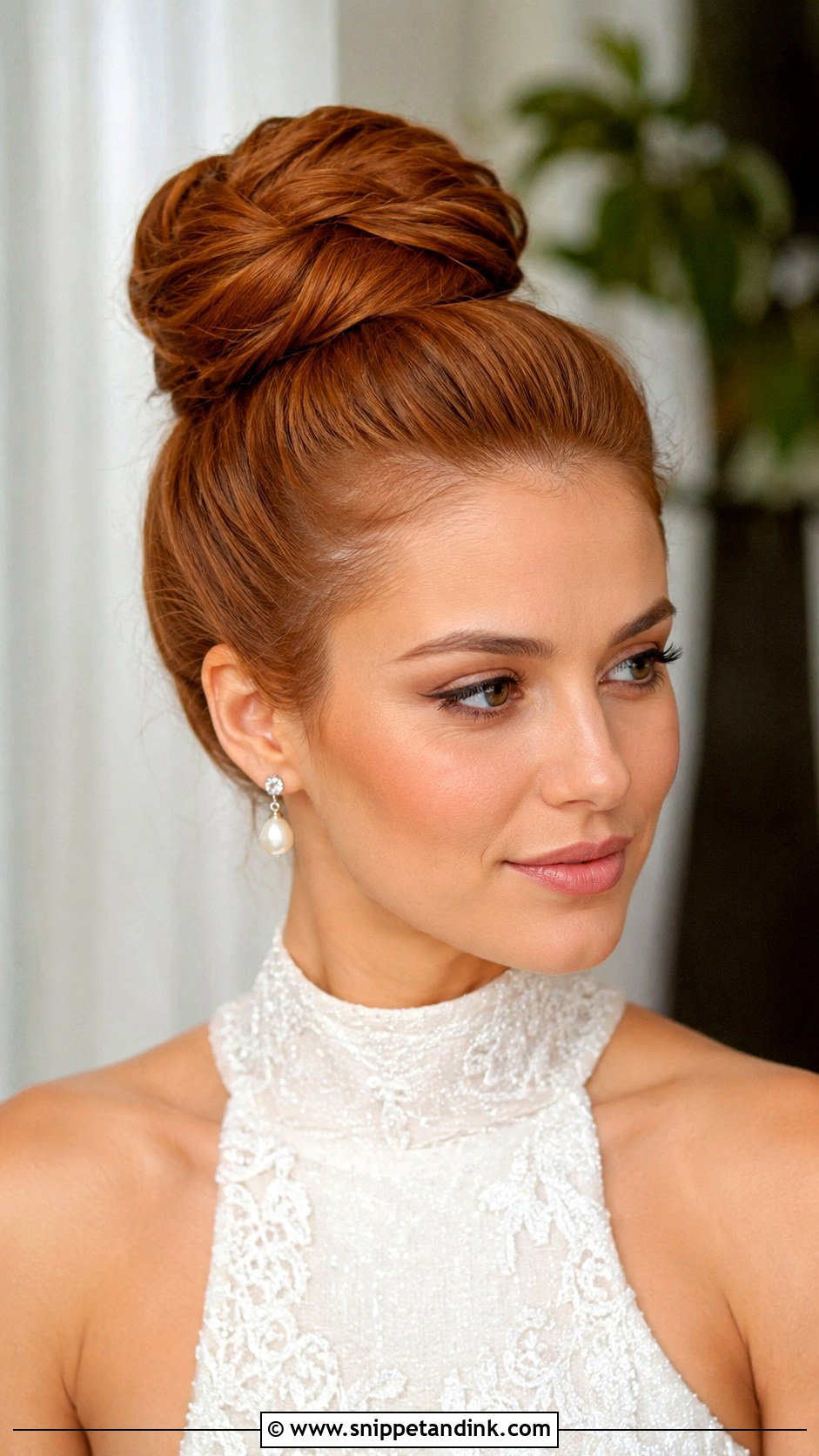
A top knot lifts the eye up, lengthens the neck and gives a fashion edge to high necks, open backs and bold earrings. It keeps hair completely off a hot neck, which brides at summer weddings appreciate by the third hour. The knot needs to look full, so on thinner hair I build it around a small hidden donut or a padding of backcombed hair. Height also changes where a veil can go: it usually has to sit beneath the knot, so check that your veil comb works there before the day.
18. Minimal Bridal Bun With Pearls
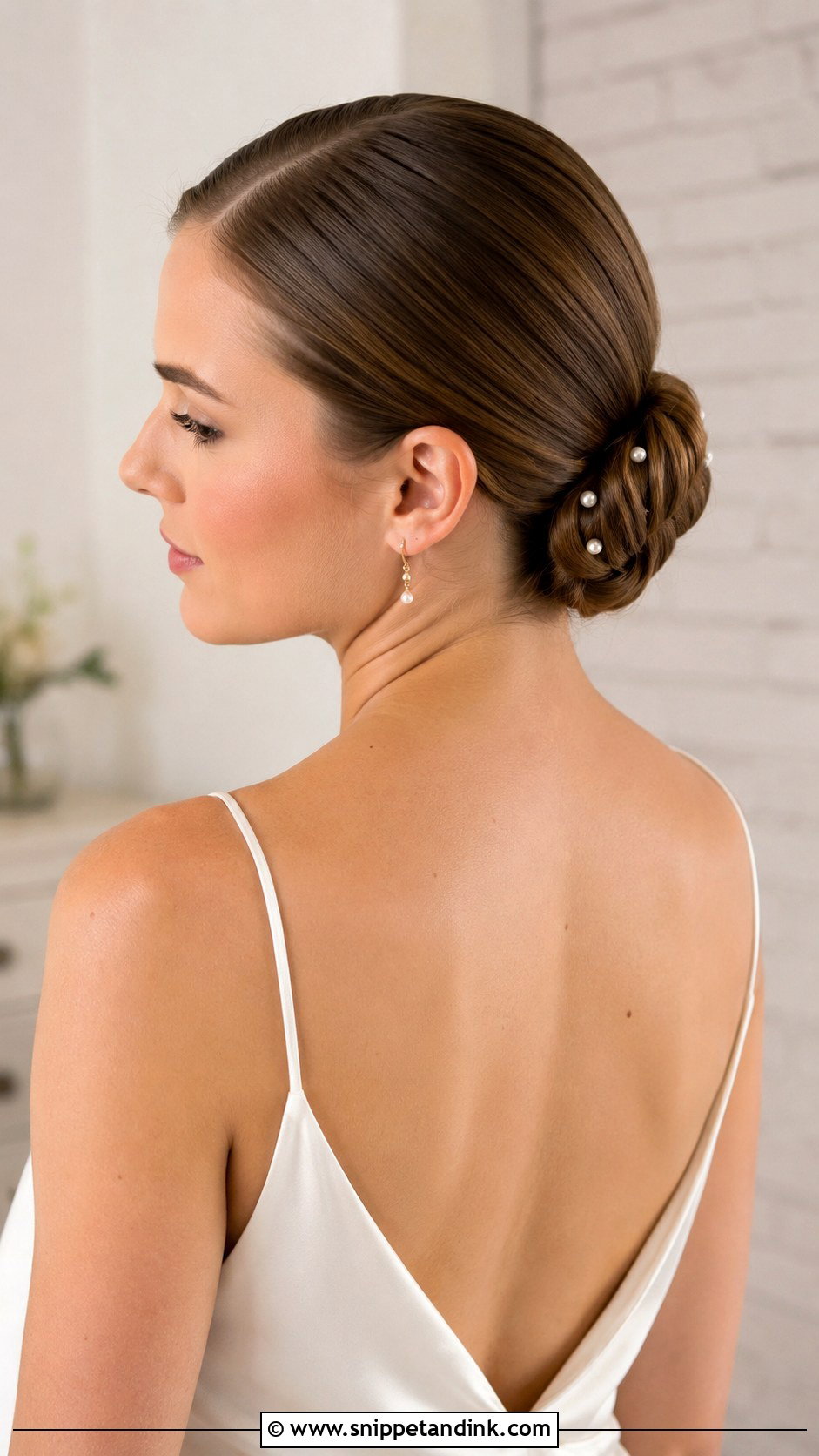
A bun with a few pearl pins gives you detail without the weight of a crown or large comb. The bun can be sleek, twisted or rounded. Pearls work against satin, lace, tulle and classic veils. My placement rule is to space them unevenly, slightly more on the side the camera will see first, and to slide each pin in against the direction of the bun’s wrap so it grips instead of working loose. Five or six pearls usually say more than fifteen.
19. Bridal Hair With Veil
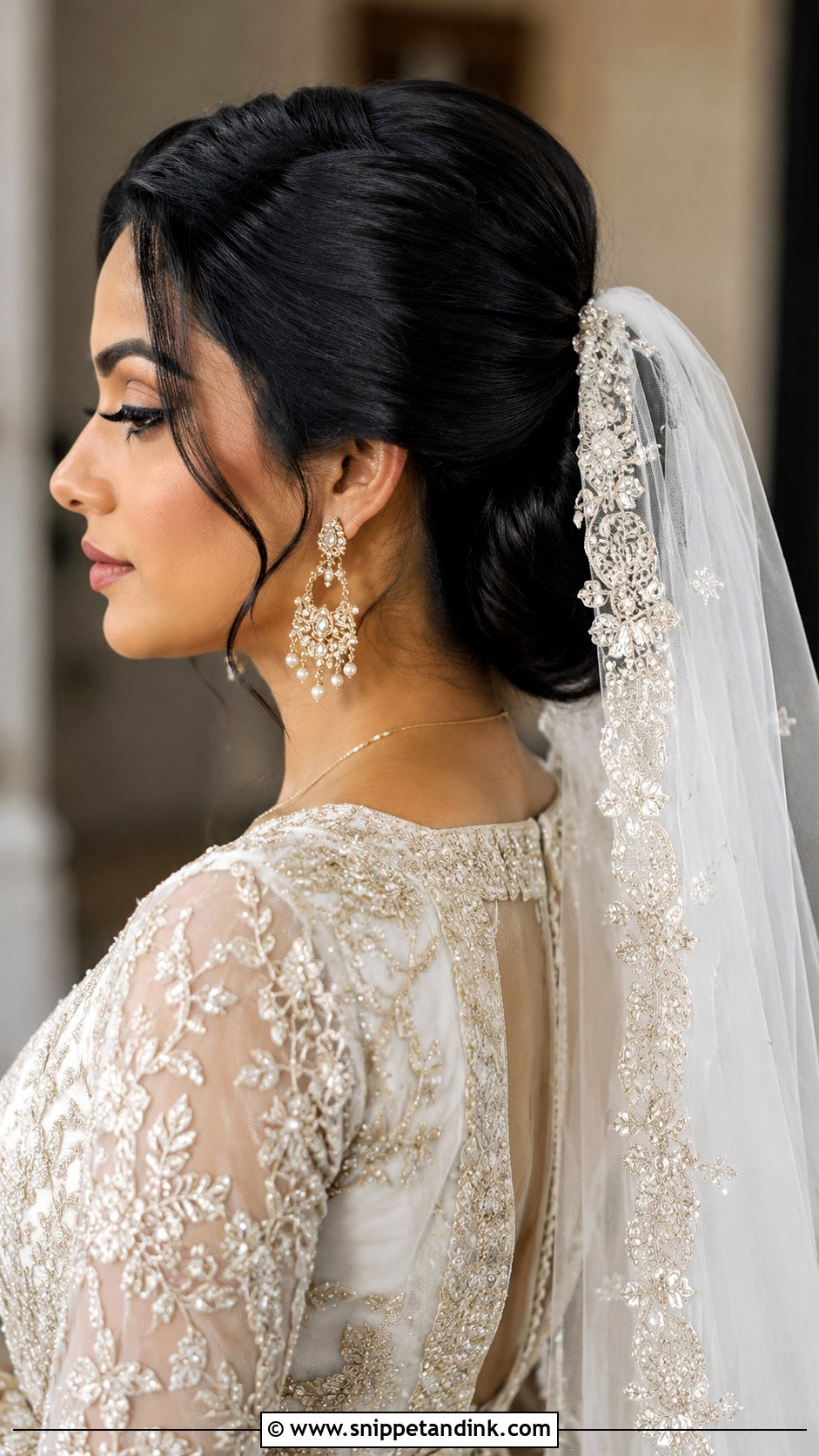
The real test of veil hair is how it looks after the veil comes off, because you’ll wear it bare for most of the reception. Clean styles help: low buns, chignons, half up hair and smooth waves all give the comb a firm base. Placement changes the mood. A veil above the bun feels traditional, one tucked under it feels sleek and modern. I anchor the comb with two crossed bobby pins on each side and show the bride or a bridesmaid how to remove it without dragging the style apart.
20. Courthouse Bridal Hair
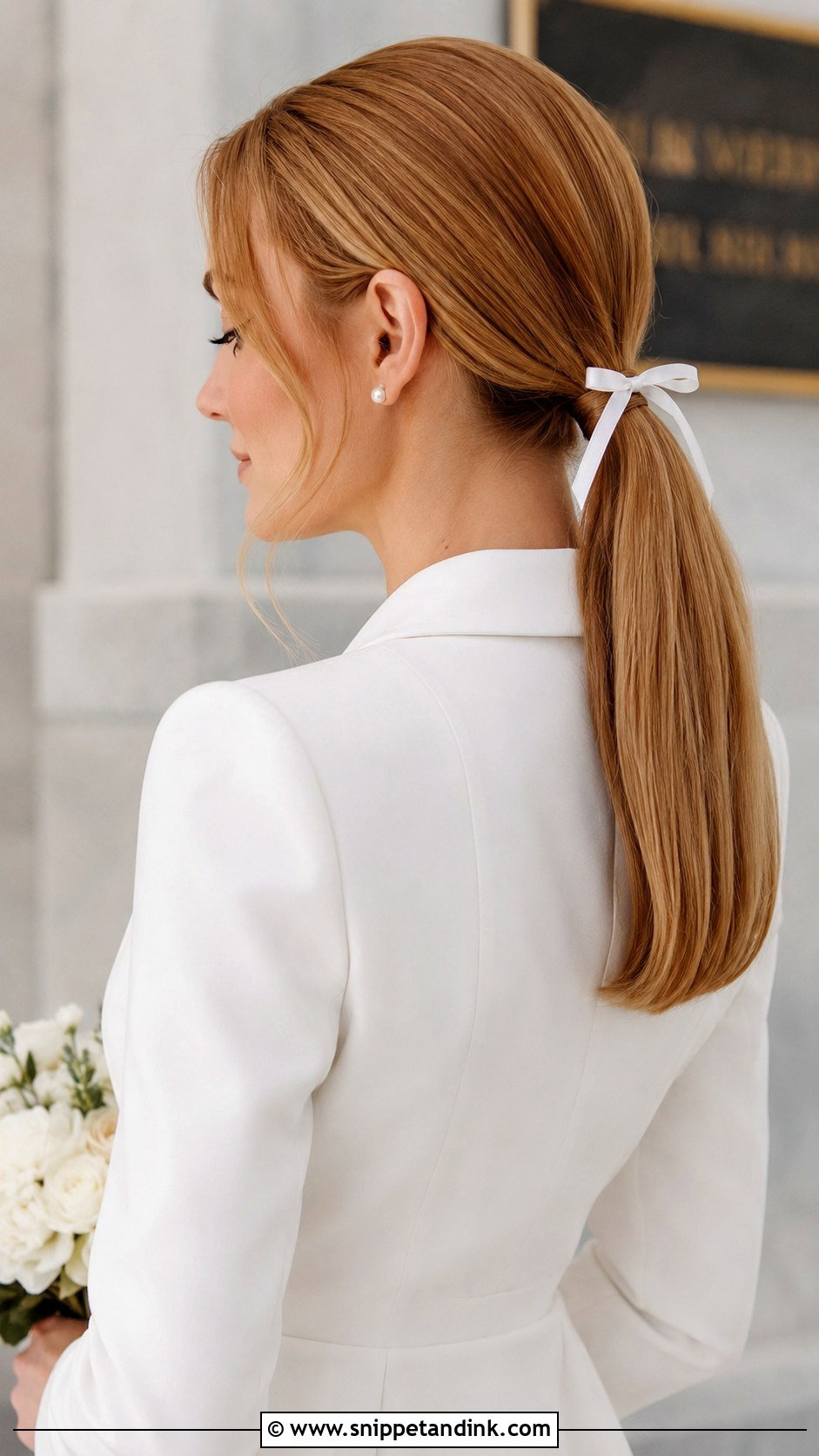
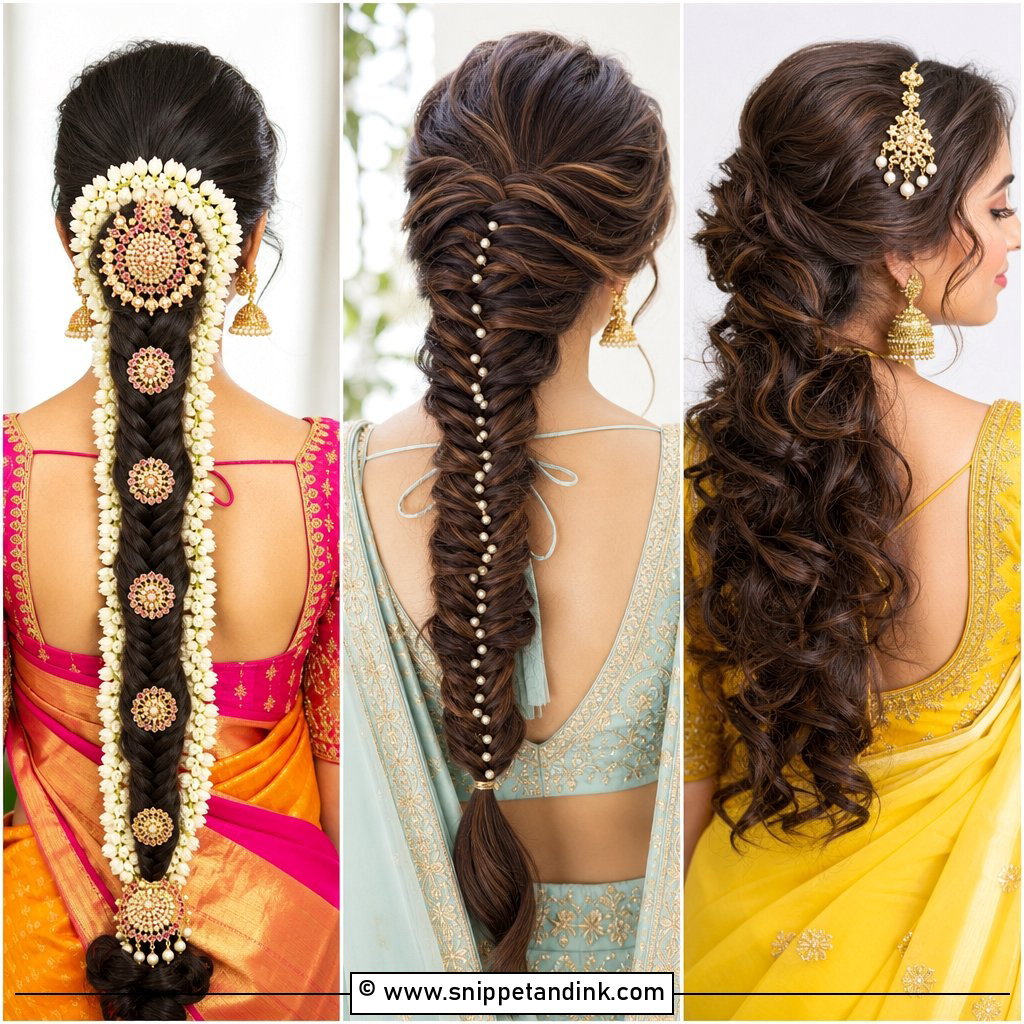
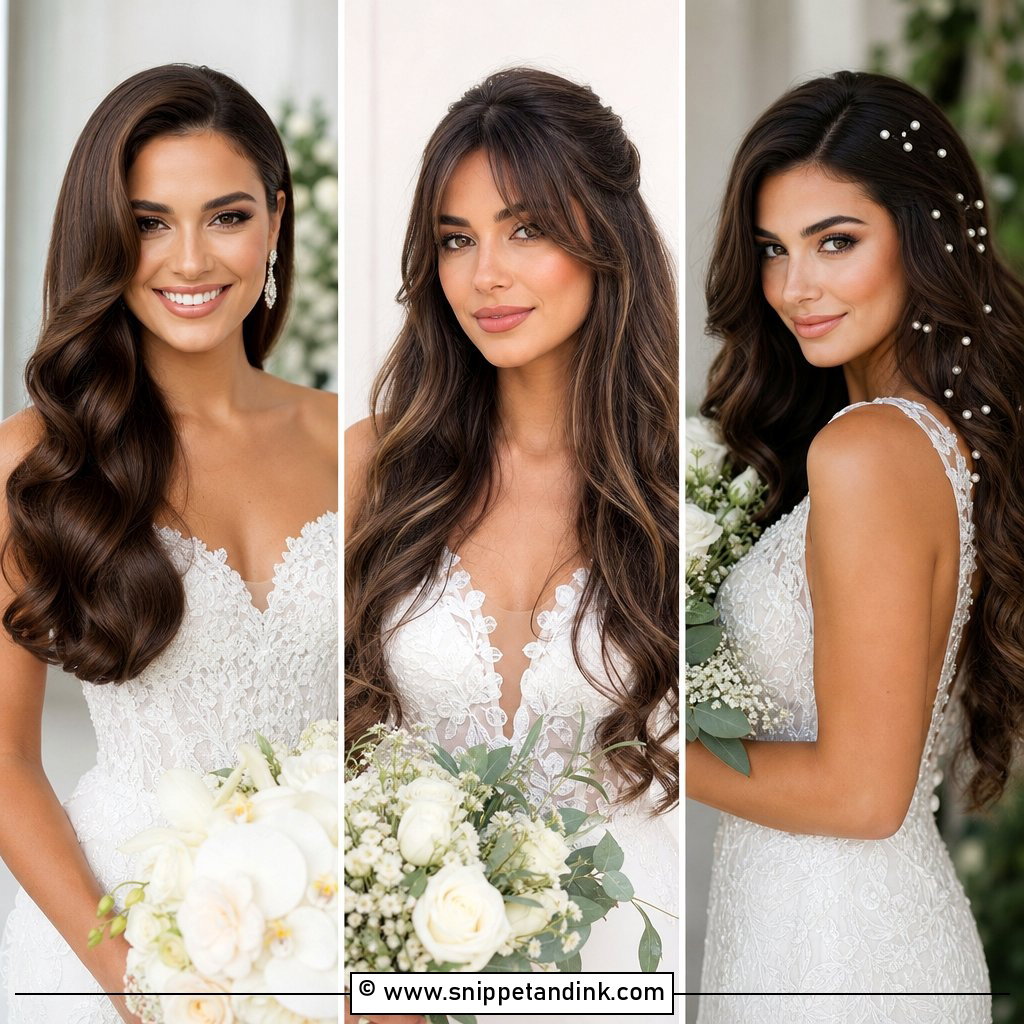
For a civil ceremony I keep the hair as relaxed as the outfit. A sleek bun, soft pony, clean bob or smooth waves all fit, and the choice comes down to what you’re wearing, whether that is a blazer dress, slip dress, tailored suit or a simple white gown. Courthouse days often include a walk outside and a restaurant lunch, so I lean toward styles that survive a breeze without a veil to hold them down. A small bow or a short veil adds enough bridal signal.
Slick Styles Show Every Part Line, Root and Baby Hair
Textured hair hides small flaws; smooth hair puts them on display. Before I choose between a slick and a soft finish, I look at three things on the client’s head rather than in the inspiration photo.
The hairline
Short regrowth around the temples, from postpartum shedding or old breakage, stands straight up in a sleek style no matter how much gel goes on. In that case I’d soften the front with a gentle sweep rather than fight it.
Part and cowlicks
A cowlick at the crown or hairline decides where the part can live. I’ll test the part you want, but if the hair keeps springing back, it will do the same at the reception.
Scalp visibility
On fine or thinning hair, very tight smoothing exposes the scalp in flash photos. A lightly textured finish, or a slightly offset part, gives better coverage without losing the clean outline.
What a Clean Style Needs From Hour Six Onward
Even a well pinned style picks up flyaways from hugs, veil removal and sweat on the dance floor. I give every bride the same short kit to hand to a bridesmaid: a few matching bobby pins, a travel hairspray, a clean spoolie or toothbrush for smoothing flyaways with a little spray on it, and a small elastic. Smooth styles are the easiest to rescue, since nobody expects them to be soft and loose, so two minutes before the evening portraits brings them back to how they looked at the ceremony.
Simple Hair Takes the Most Planning
Pared-back hair lets the dress, your face and the small details carry the day, but it only works when the base is right. At your trial, bring photos and also tell your stylist about your neckline, veil placement, the forecast, your texture and how much tension your scalp tolerates. Take a selfie from the back and the side before you leave, and wear the style for a few hours afterwards. If it still feels comfortable and looks neat by evening, you have your wedding hair.
You'll Like These Ideas:


Leave a Reply