
Natural hair has to do more work on a wedding day than almost any other texture. It gets hugged, rained on, cried into, danced in, and photographed from every side, and it shrinks the moment it meets damp air. That’s why I plan natural bridal styles around how the hair behaves, not only how it looks in a reference photo. Coils, curls, twists, braids, locs and afros can all read formal with the right set and the right anchor points. Below are the styles I reach for most, with the details I’d want any bride to know before she books her trial.
A Ten Week Calendar for Coily Bridal Hair
Most of what makes natural bridal hair work happens before I touch it on the morning. The schedule below is the one I give brides with coily and kinky textures. Adjust it if you know your hair needs longer to dry.
- Eight to ten weeks out: book the trial and wear your planned accessories to it.
- Four weeks out: trim or taper, so ends and lines have time to soften.
- One week out: a deep conditioning treatment, then leave the hair alone. No new products.
- Two nights out: wash, stretch and set any twist-out, braid-out or knots.
- The night before: wrap or bonnet the set and sleep on satin.
- The morning: only refine, shape and pin. Fresh washing on the day leaves no time to dry.
If you’re having extensions or added hair installed for a puff or braided style, fit that in a few days ahead so any tenderness at the scalp has eased before the ceremony.
1. Natural Hair Bridal Updo
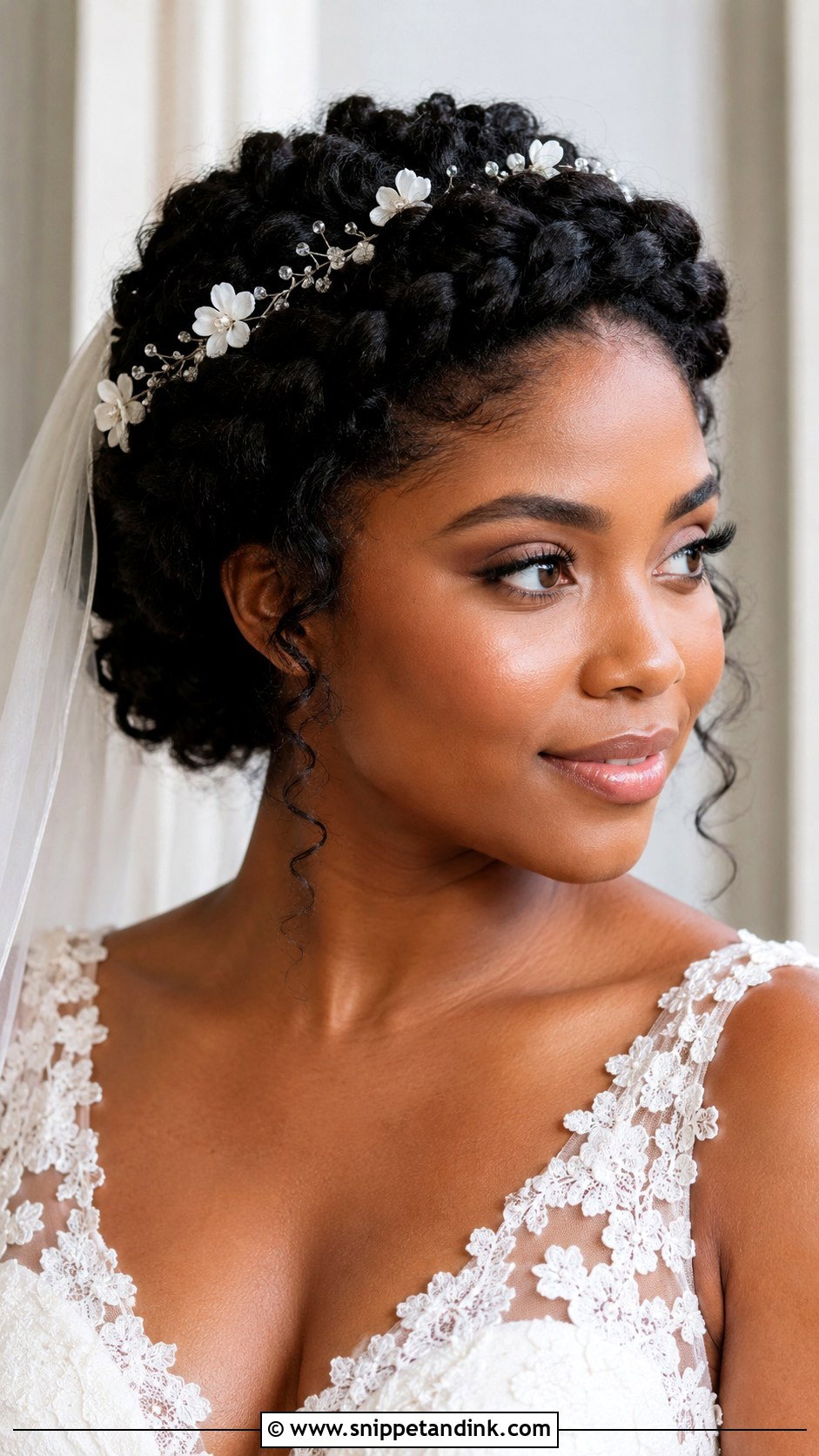
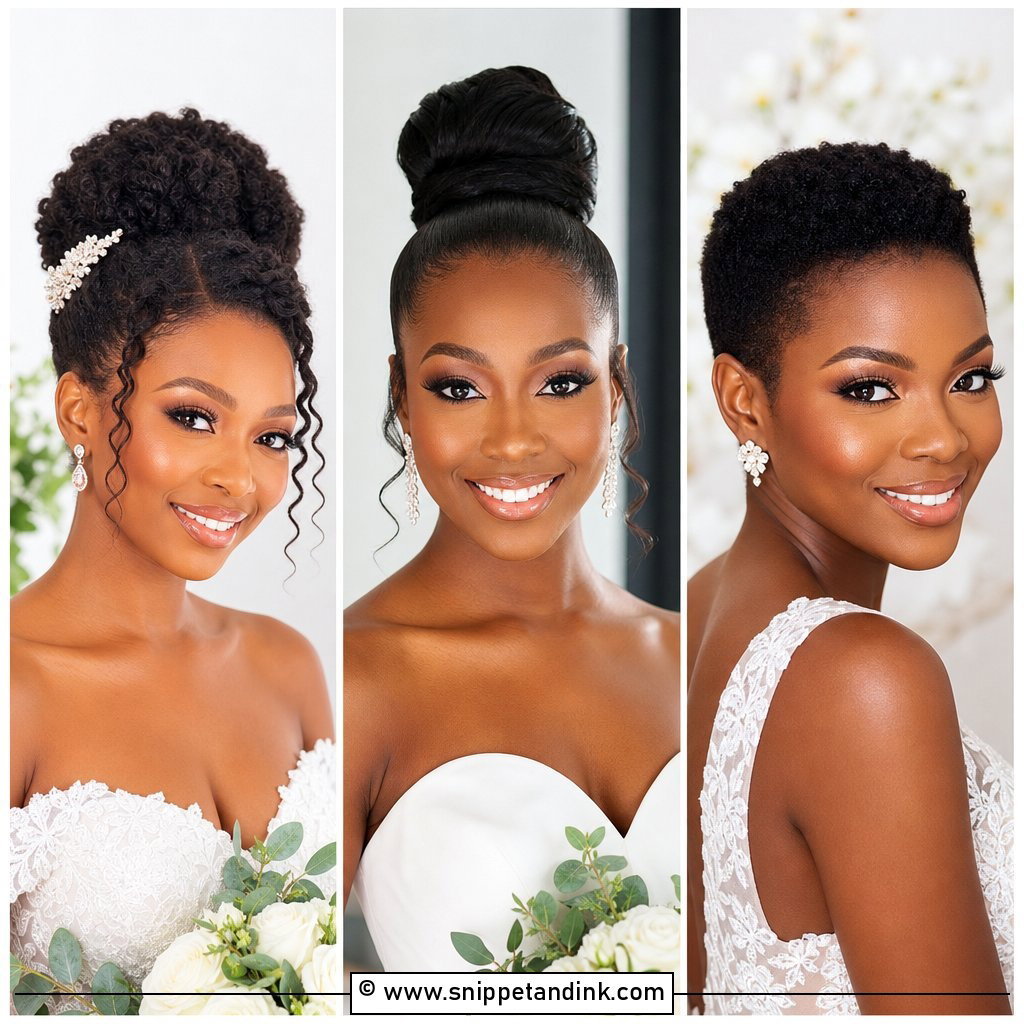
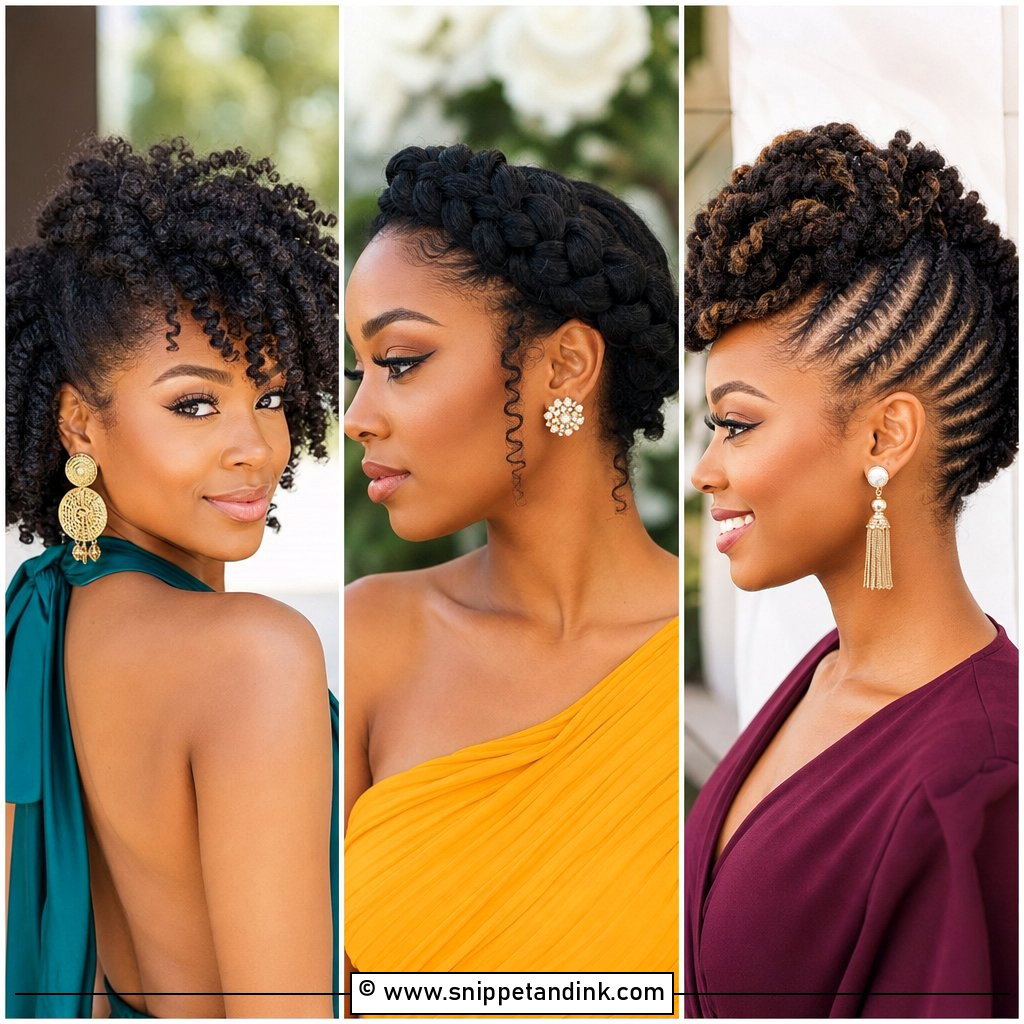
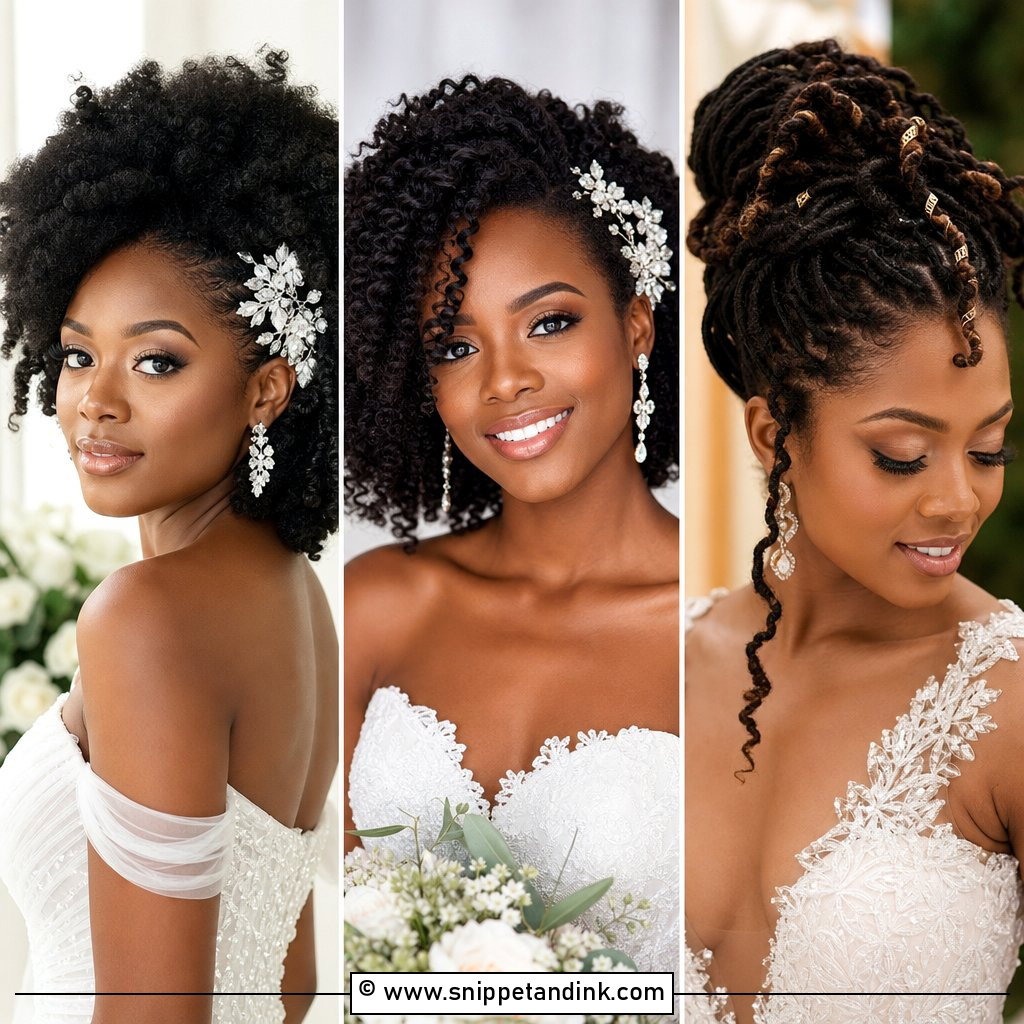
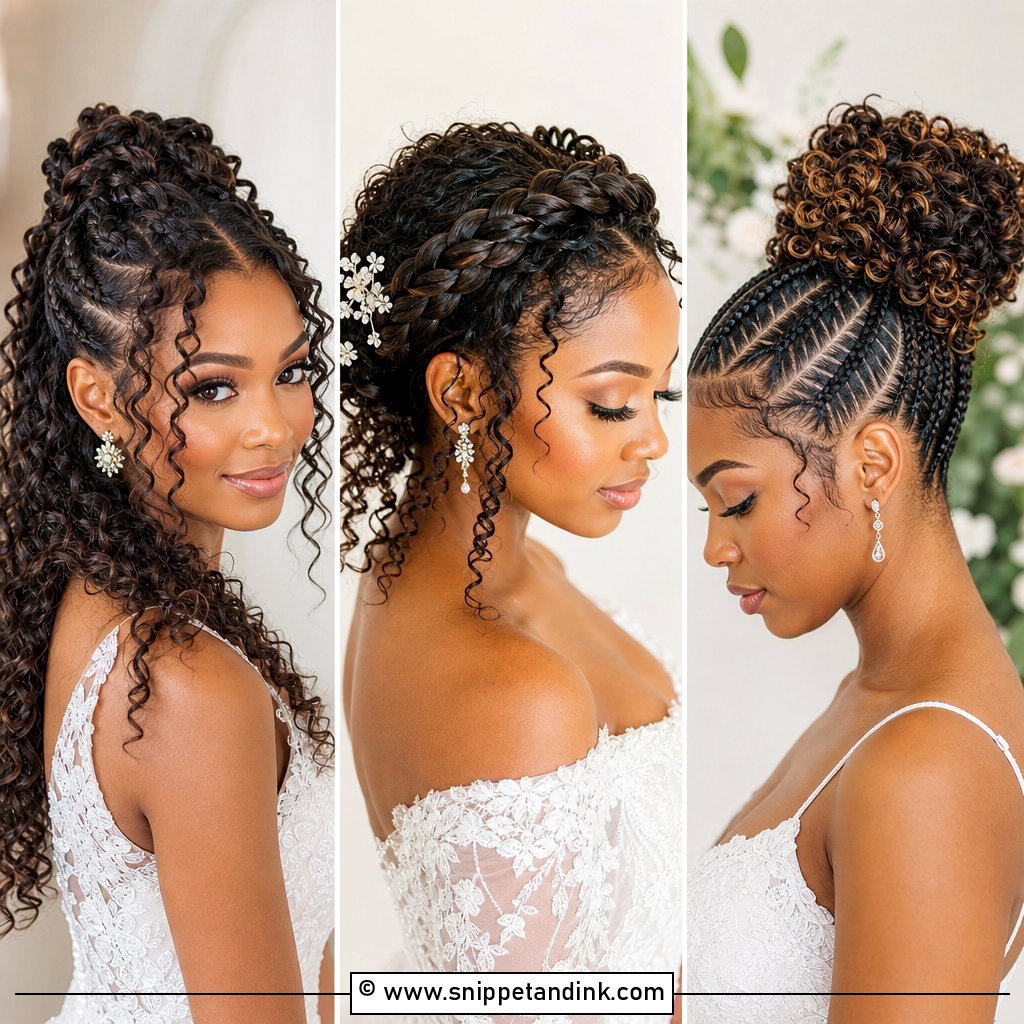
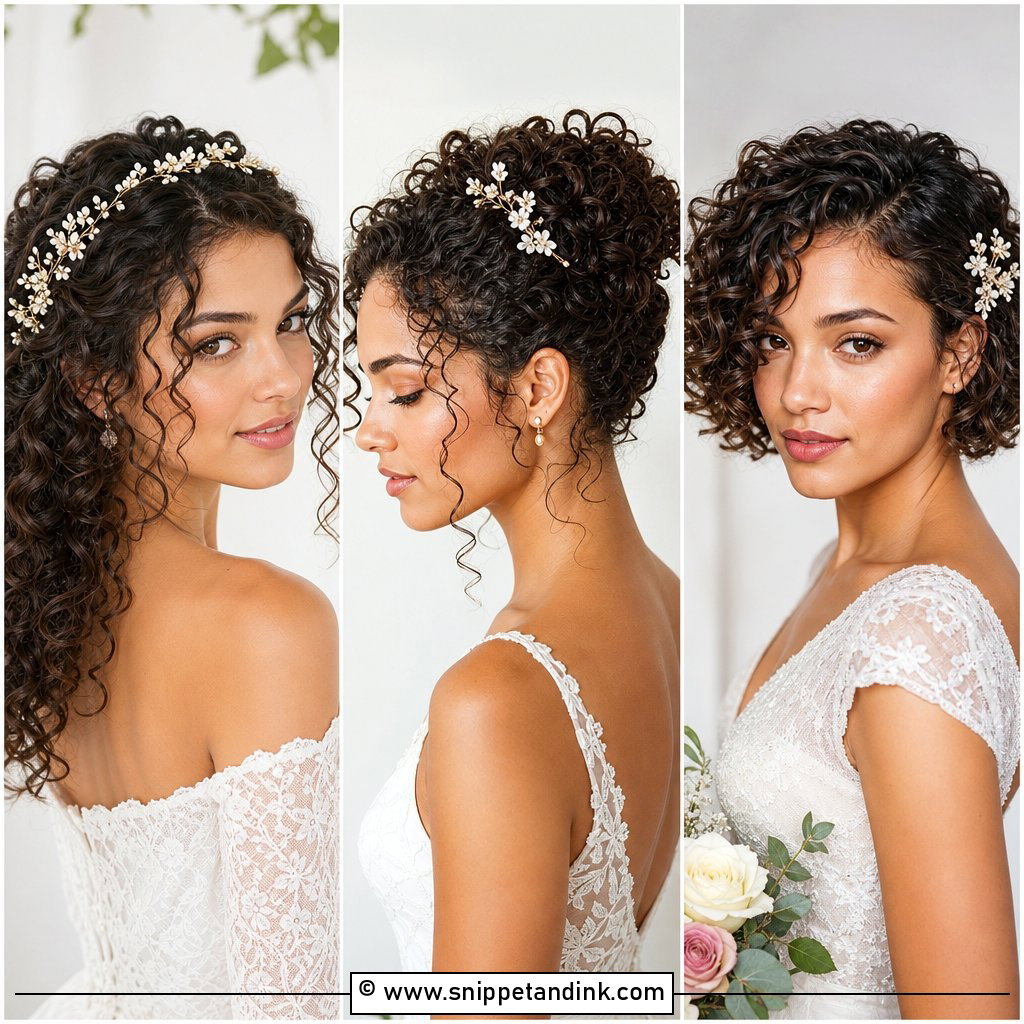
An updo clears the stage for your face, neckline and jewelry, and on natural hair it’s one of the most weatherproof choices you can make. I can build it from stretched curls, a twist-out, a braid-out or blown-out hair. Each gives a different surface. Blown-out hair looks sleekest but reverts fastest in humidity, so for an outdoor summer wedding I’d rather work from a stretched twist-out that can tolerate a little puffing. Height is decided by the veil and neckline. Soft curls at the hairline or extra volume at the crown keep it from feeling severe, and pins, pearls or a small comb add the bridal detail.
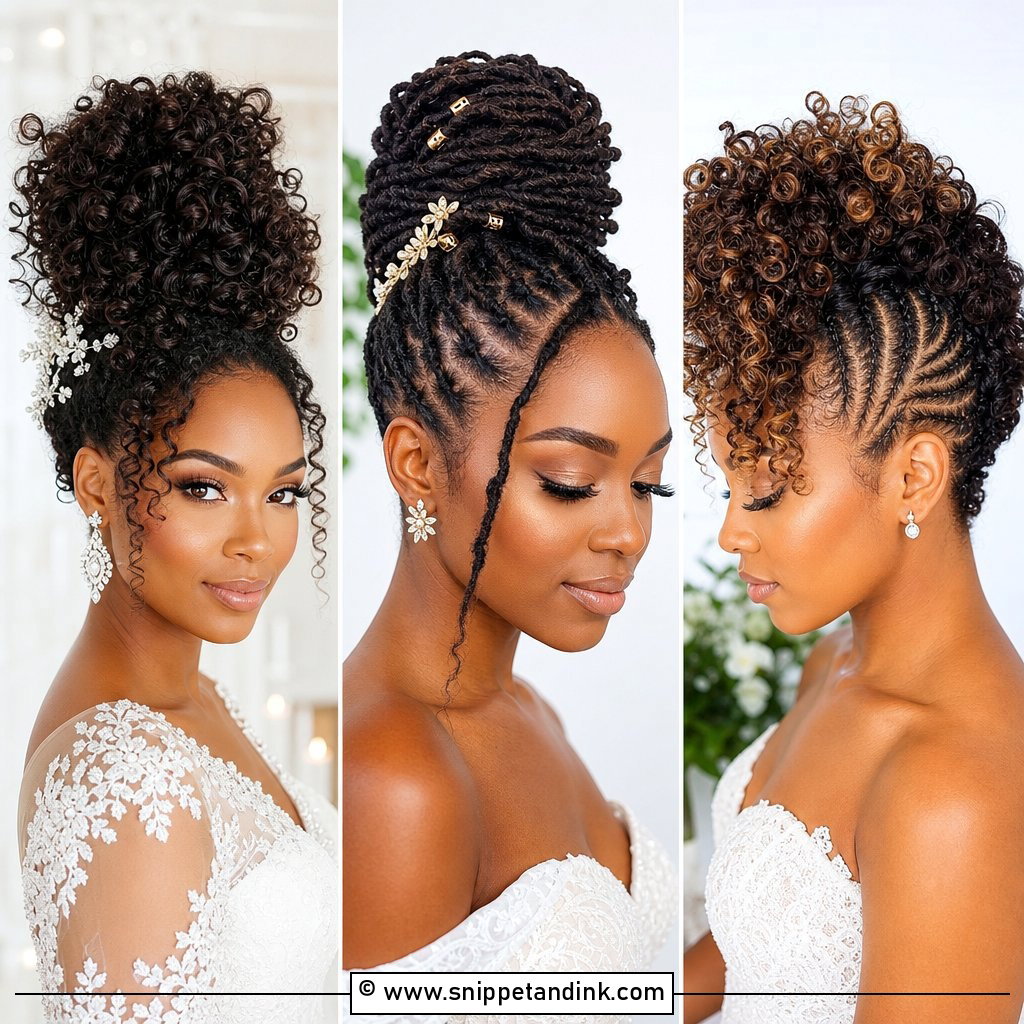
2. Natural Hair Bridal High Puff
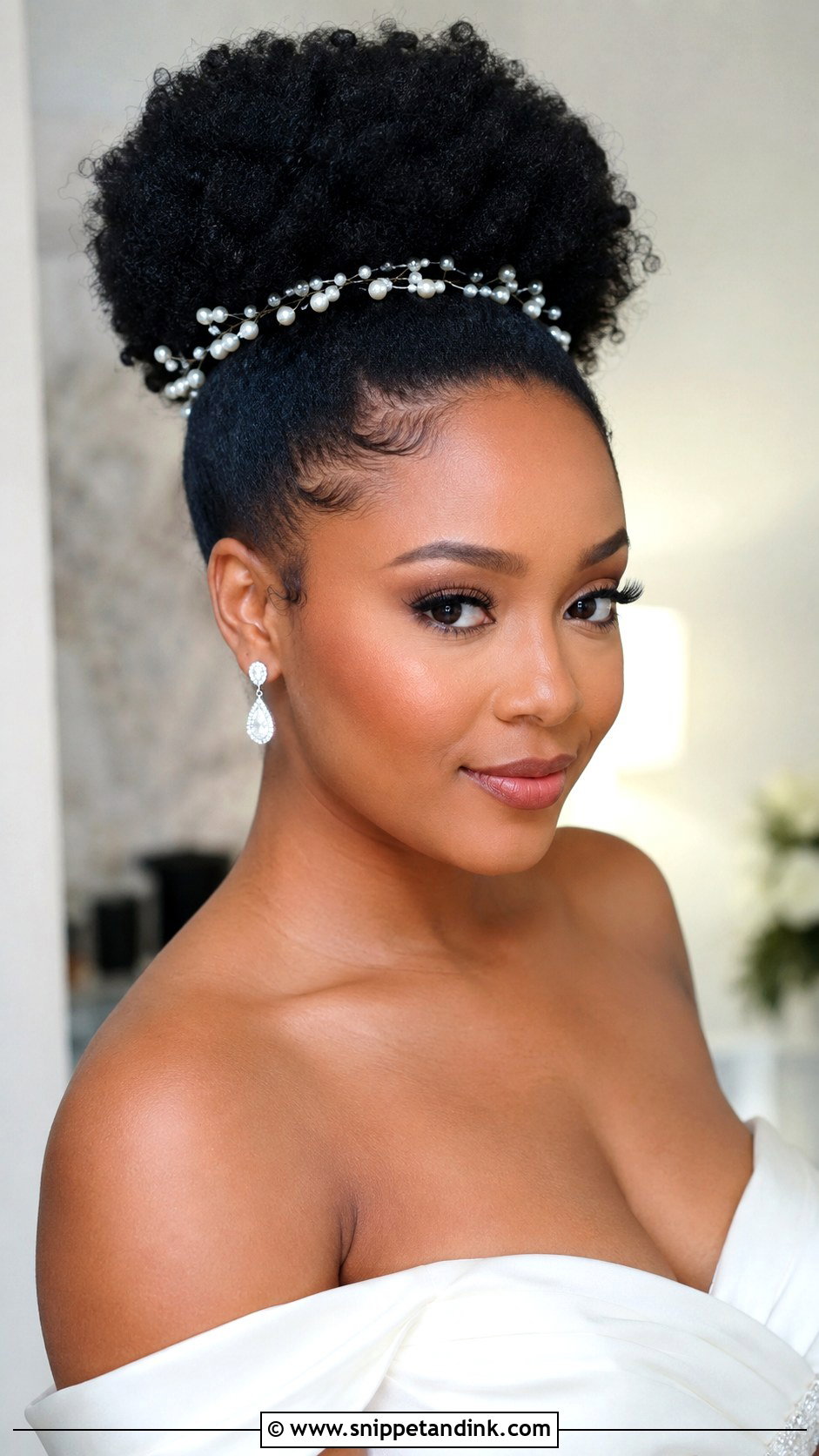
The high puff is pure joy when it’s done well. The base can be sleek, brushed or finished with laid edges, while the puff itself stays full and round. If your hair is shorter or your density is lower than you’d like, matching textured hair can be added to give it real fullness. What I check first is the band: a thin elastic cuts into the hairline after a few hours, so I use a wide, soft band or a drawstring piece that matches your texture. Big earrings and an off-shoulder neckline suit the height, and a simple veil sits neatly behind the crown.
3. Natural Hair Bridal Low Bun
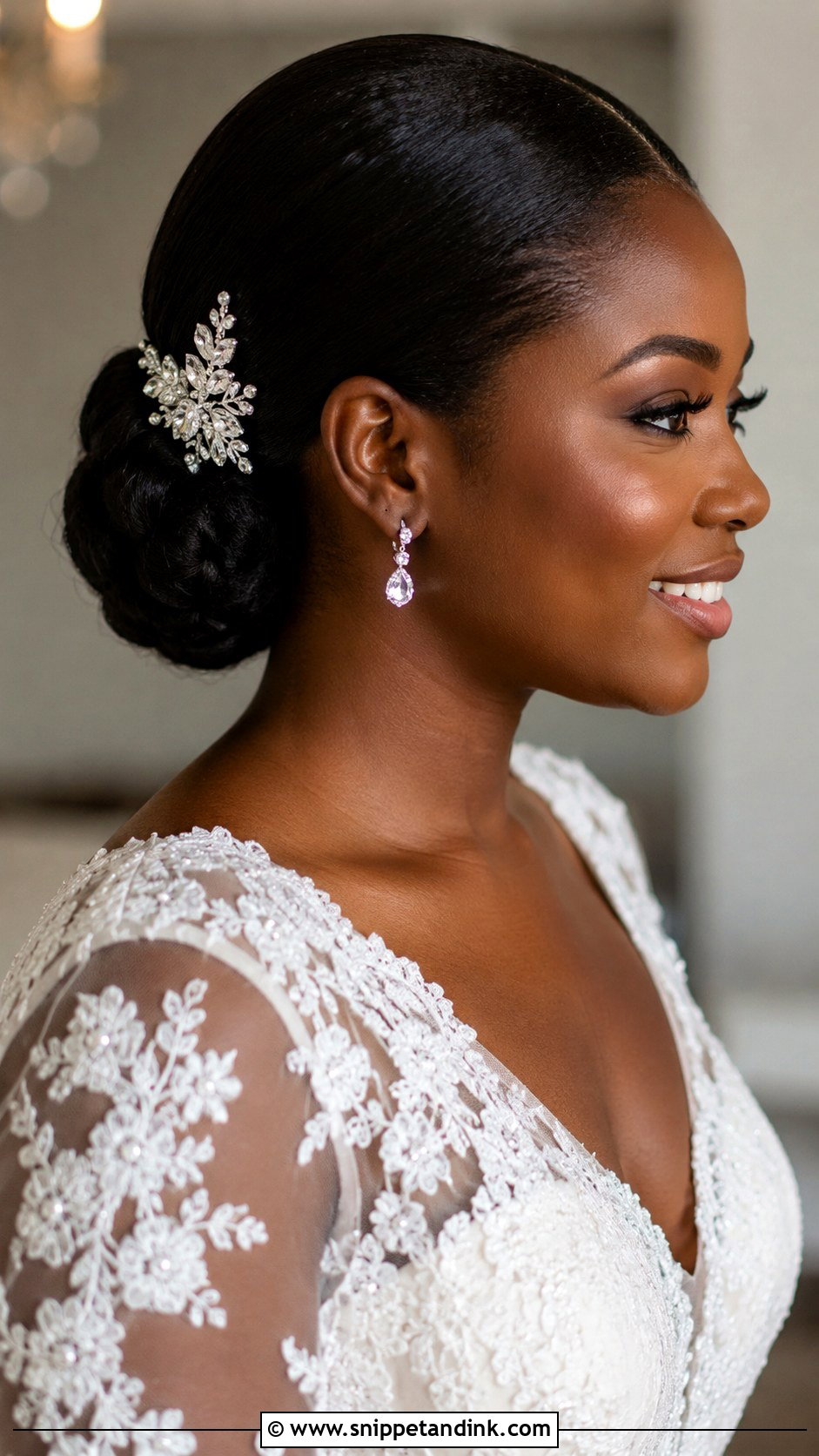
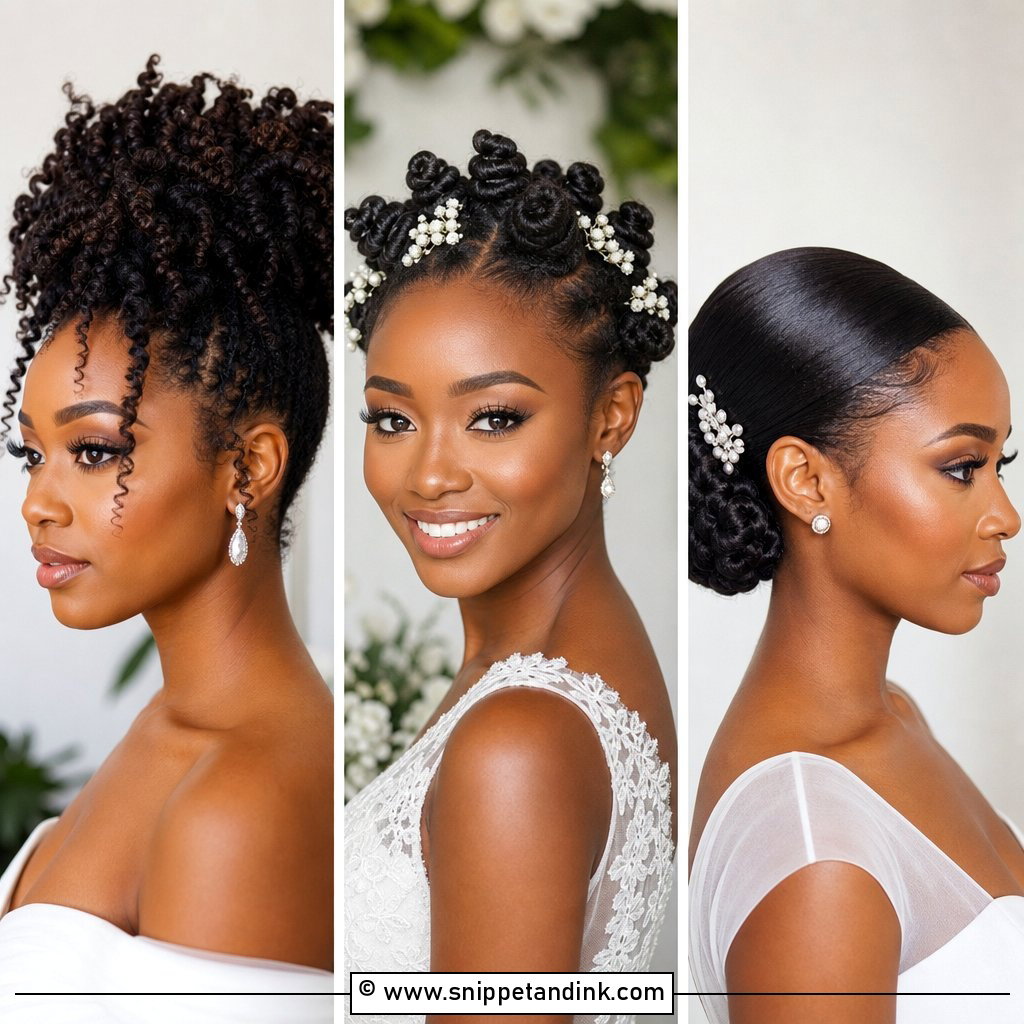
Low buns are my quiet favourite for long ceremonies. The weight rests at the nape, so there’s no pull on the scalp, and the shape gives a veil comb something firm to hold. I can build the bun from twists, curls, braids or stretched hair, depending on your density. A middle part looks sleek and current; a side part softens a strong brow. If you’ll be sitting against a high-backed chair for dinner, keep the bun slightly flatter so it doesn’t get pushed out of shape.
4. Natural Hair Bridal Twist Out
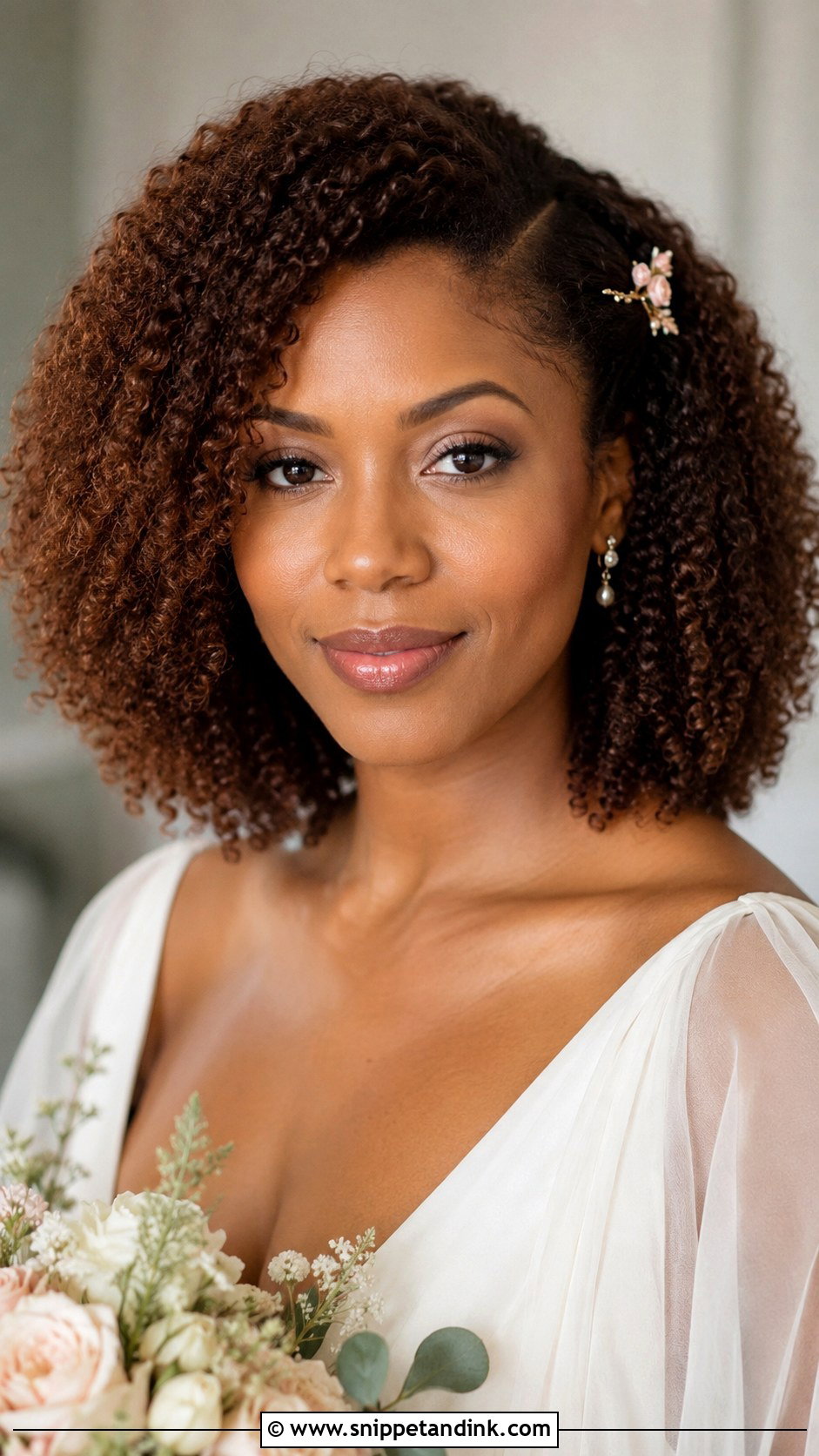
A twist-out lives or dies on timing. Set too late and the twists are still damp inside on the morning; unravelled too early and the definition has dropped by the vows. I prefer the hair twisted on stretched, moisturised hair two nights out, left to dry fully, then separated on the morning with oiled fingertips. Done that way it gives soft, defined movement with no heat at all. I shape the silhouette last: round, side-parted or with face-framing layers. A pearl comb, small flowers or a veil tucked behind the crown is plenty.
5. Natural Hair Bridal Bantu Knot Updo
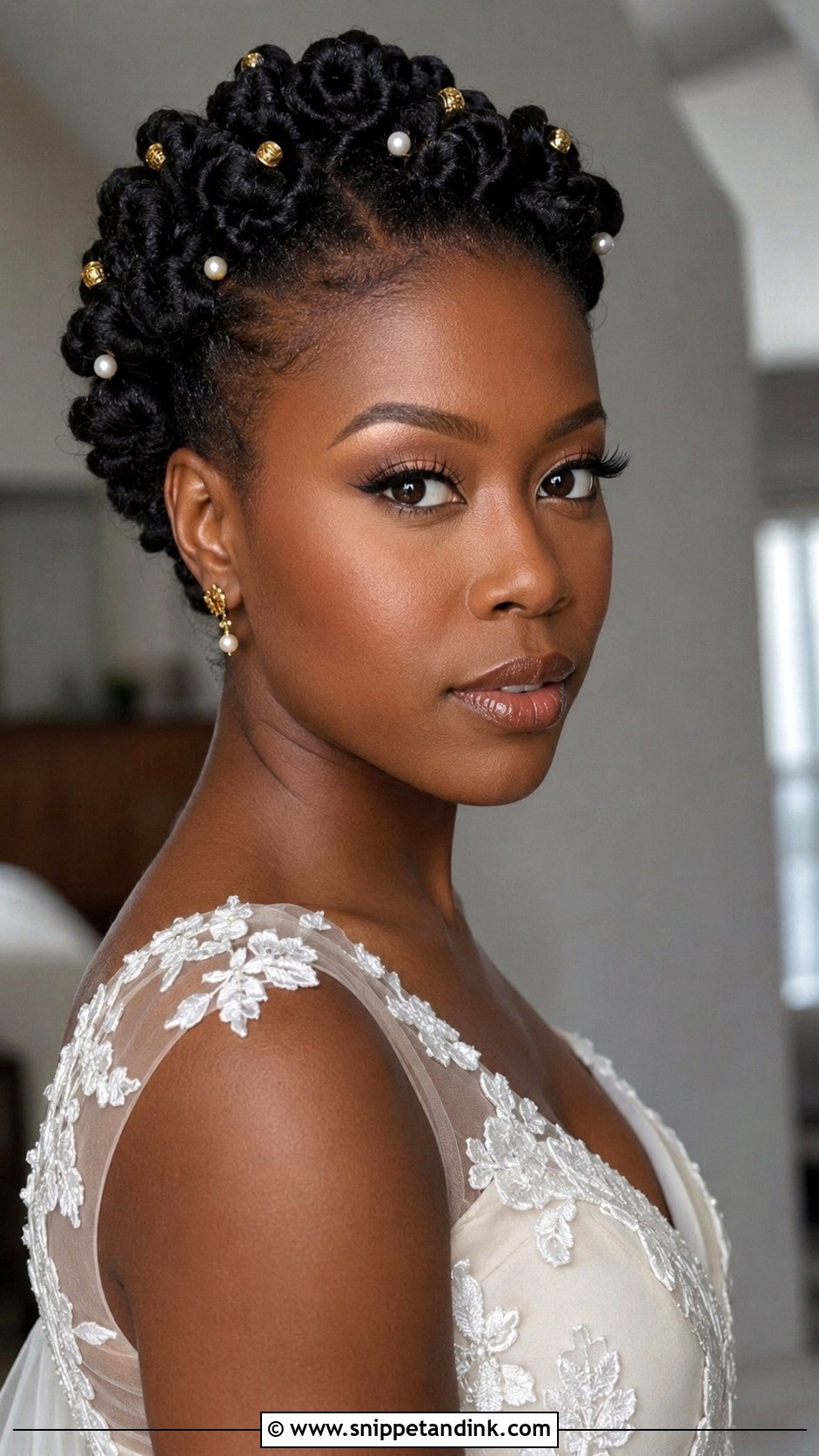
A natural hair bridal Bantu knot updo is sculptural, and it’s one of the sturdiest styles on this list. Each knot is wound tight on itself, so nothing collapses during dancing or windy outdoor portraits. The knots can form a crown, cluster at the top or sit in an even pattern across the head. Parting is where the skill shows. Uneven sections make uneven knots, so I map the parts before anything is twisted. Against a simple gown it becomes the main detail. Gold cuffs, pearl pins or tiny floral accents soften it for a wedding.
6. Natural Hair Bridal Halo Braid
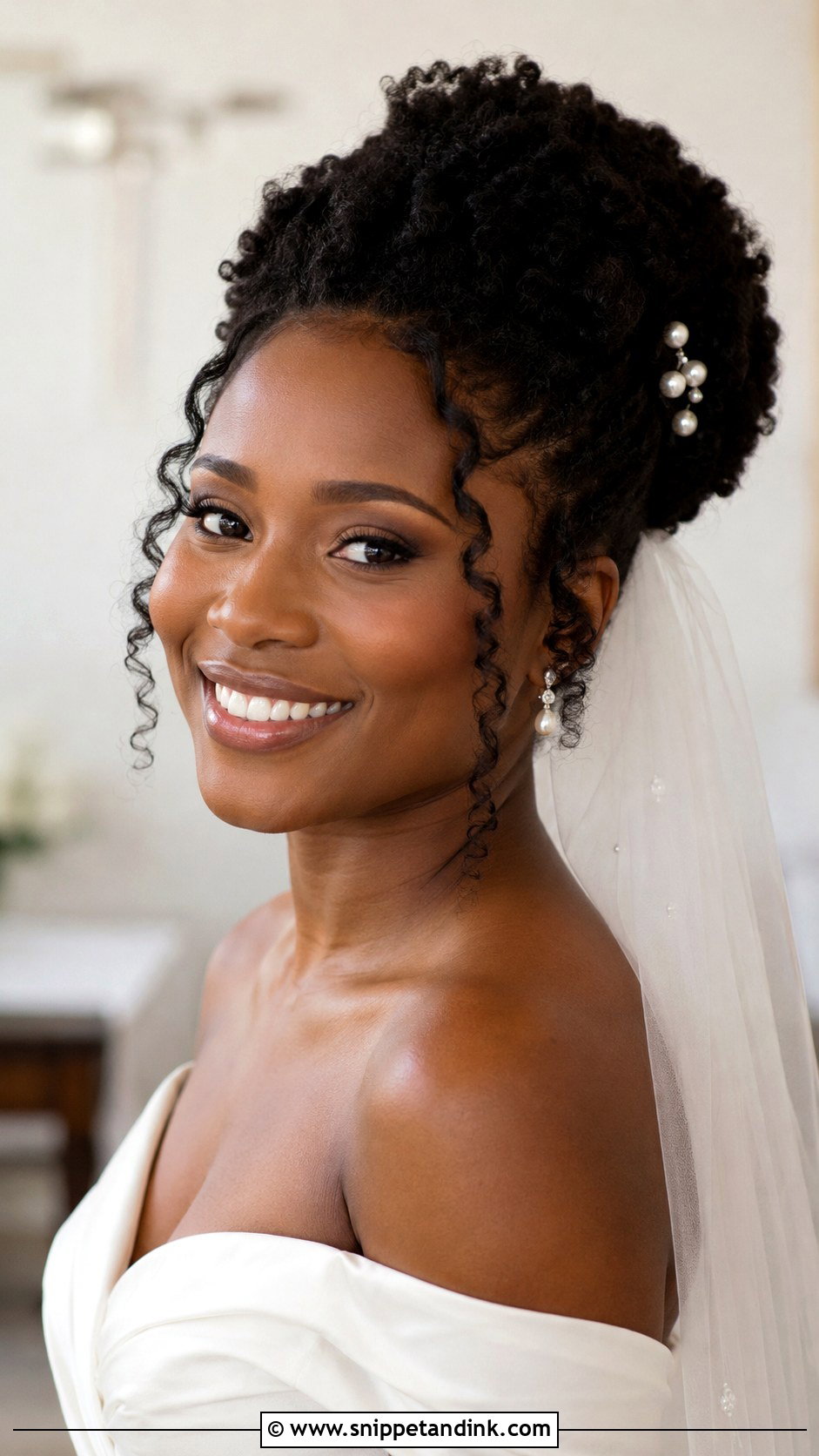
Halo braids sit around the head like a crown and keep everything off the face. I braid them either from your own hair or with added textured hair when the length won’t reach all the way round, and I always pin the braid ends under the start point so the join disappears. A smooth halo looks formal; a chunkier one with a few curls out at the temples looks softer. Your makeup, earrings and neckline stay visible all day. One caution: if the braid is set too tight on the hairline, it can be sore by evening, so speak up during the trial.
7. Natural Hair Bridal Flat Twist Updo
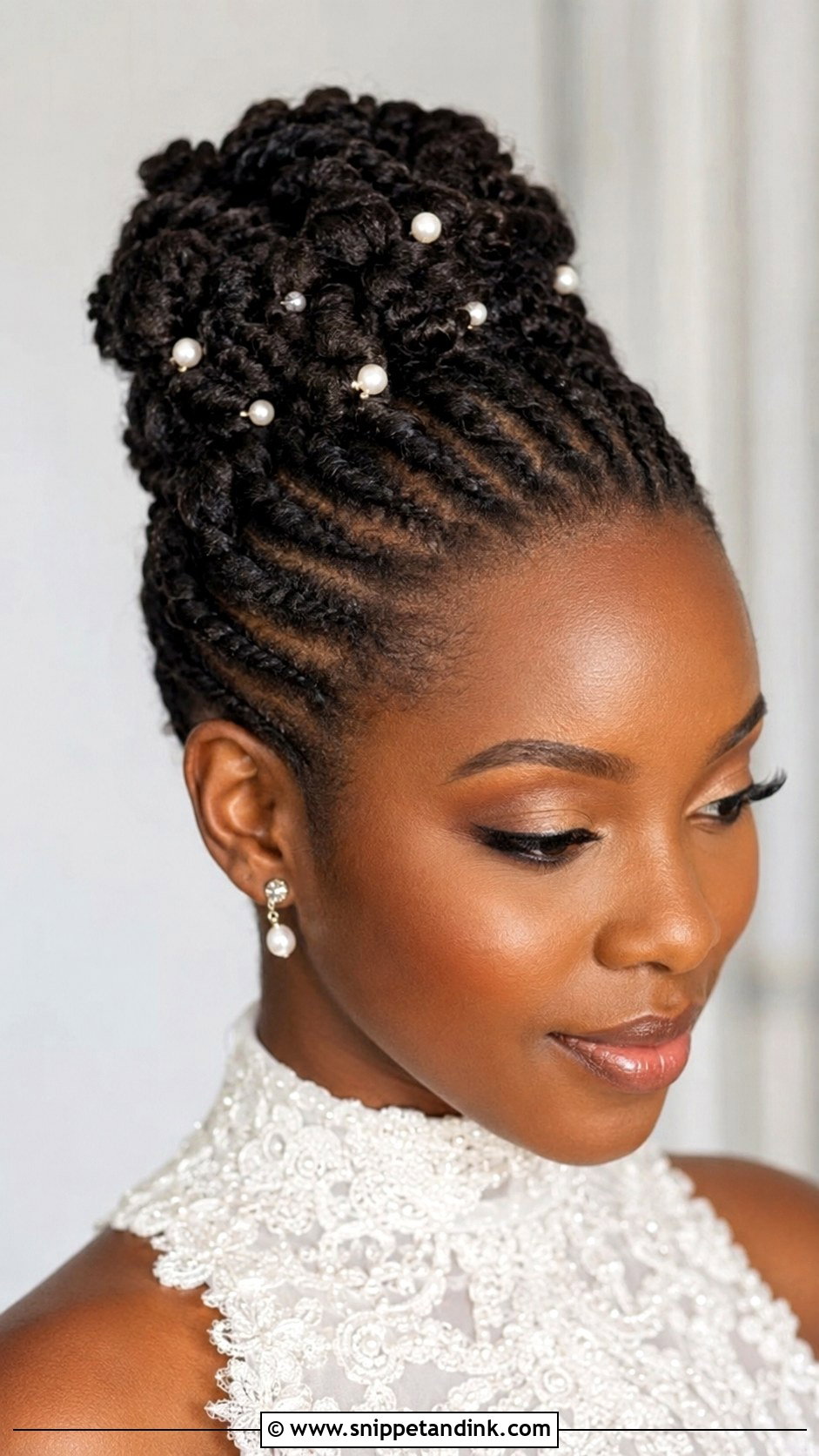
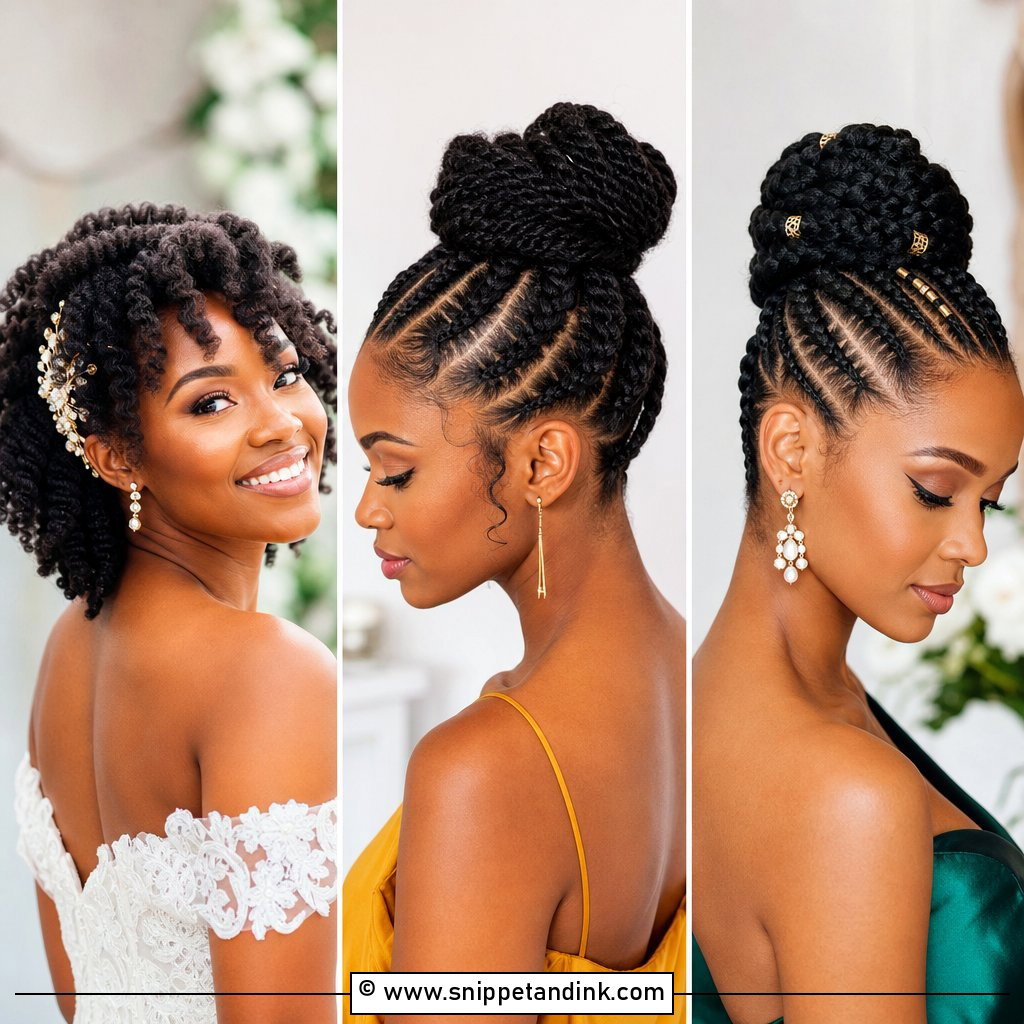
Flat twists give clean lines without the tension of cornrows. They can travel toward the crown, sweep to one side or finish in a low bun at the back, which makes it easy to suit different face shapes and necklines. Because the hair is tucked and controlled, frizz stays low even in humid weather. I suggest it to brides who want detail but no loose hair at all. Pearl pins, a crystal comb or small blossoms placed along the twists let the pattern show through.
8. Natural Hair Bridal Frohawk
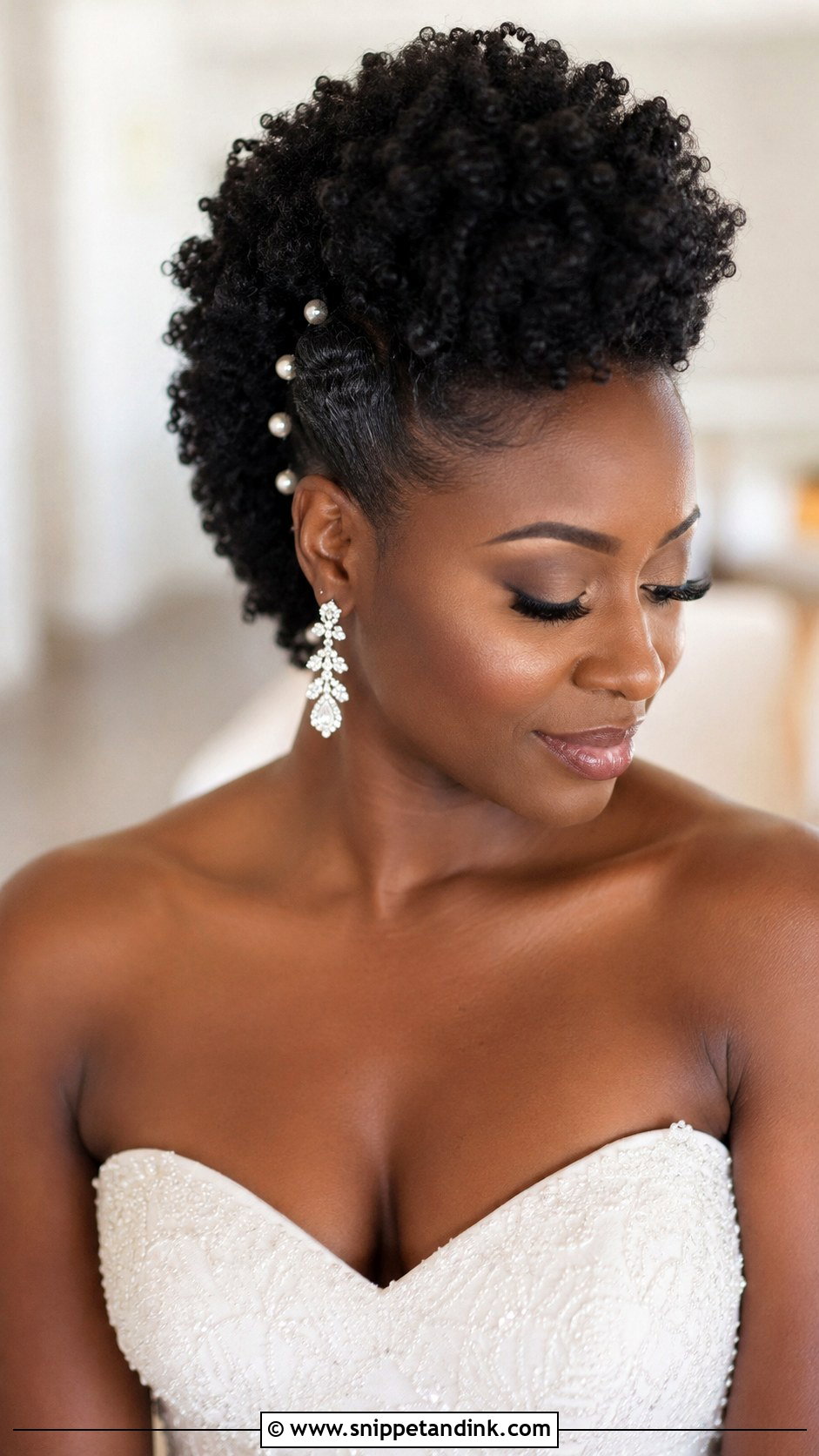
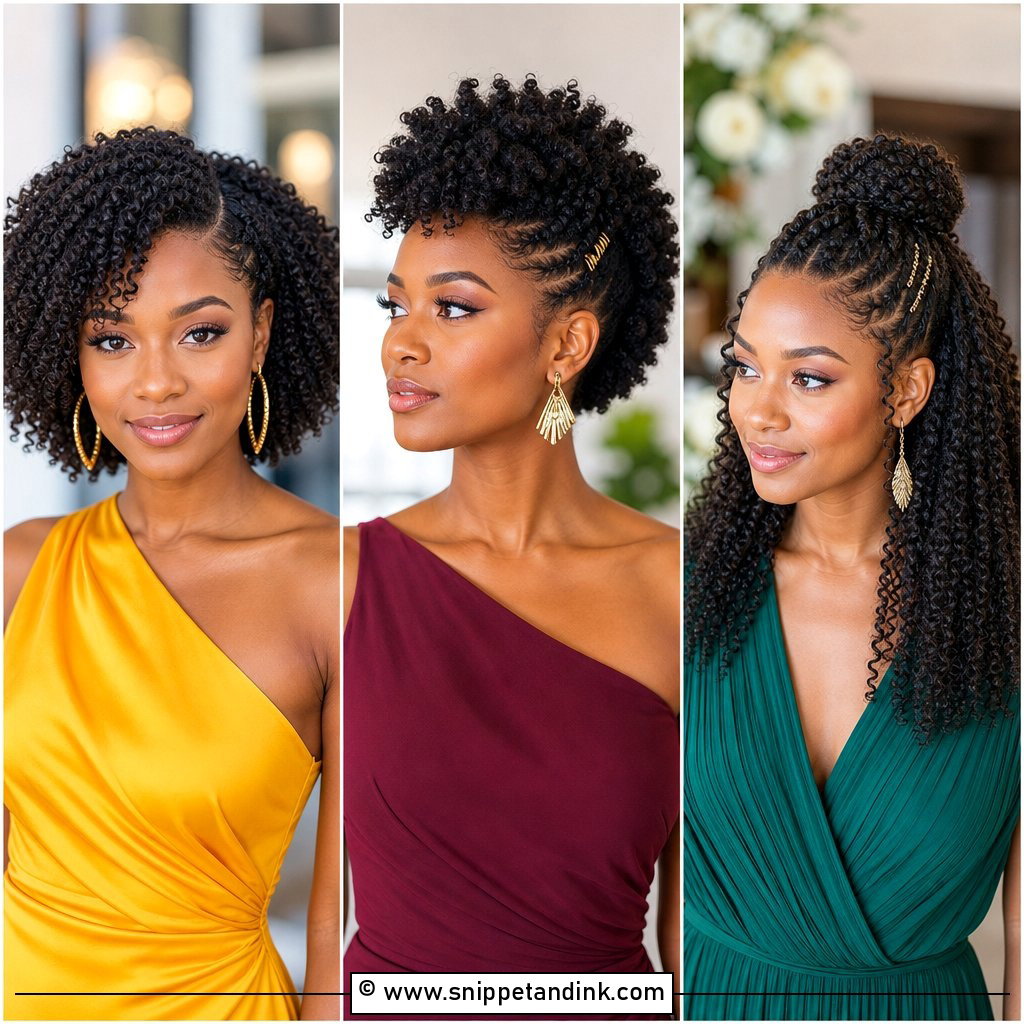
A natural hair bridal frohawk is for the bride who wants height and attitude. The sides are pinned, twisted, braided or smoothed upward while the centre stays full with curls, coils or a twist-out. I build the sides first and make them tight enough to hold the centre’s weight, since a loose side lets the whole shape drift by the reception. It lifts hair off the shoulders, so it suits strapless gowns, high necklines and bold earrings. Pins along the sides read edgy; flowers through the centre read romantic.
9. Natural Hair Bridal Wash And Go
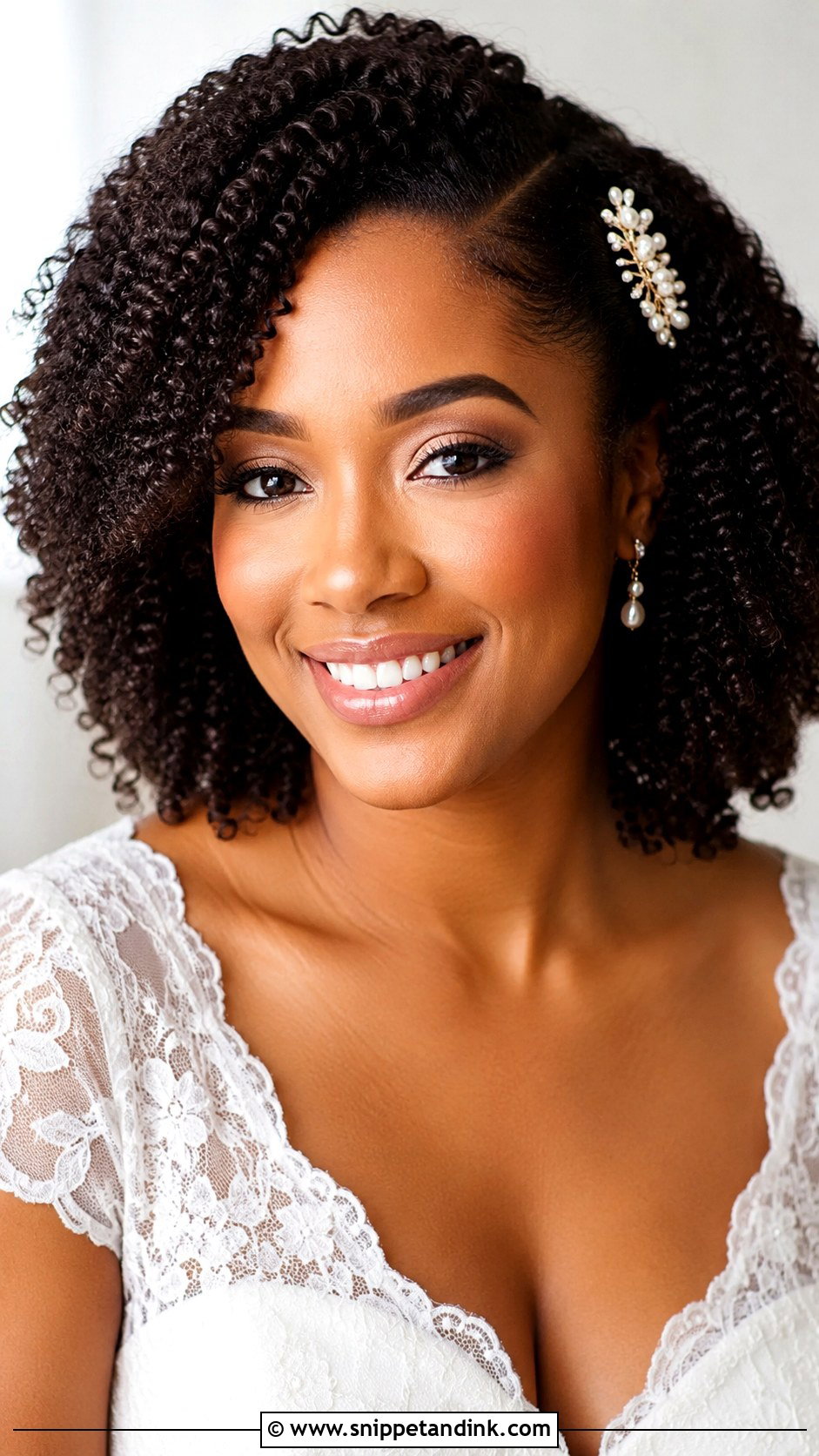
A natural hair bridal wash and go is the most honest version of your curls, and the least forgiving. It depends entirely on hydration and the product you already trust. I’d book a trim a few weeks ahead so the shape has time to settle, then do the wash and go the night before or very early on the morning so it’s fully dry before you dress. Wear it with a side part, no part, or pinned on one side with a bridal clip. If rain is forecast, have a pineapple scrunchie and a clip on hand, because this style shrinks first.
10. Natural Hair Bridal Half Up Half Down
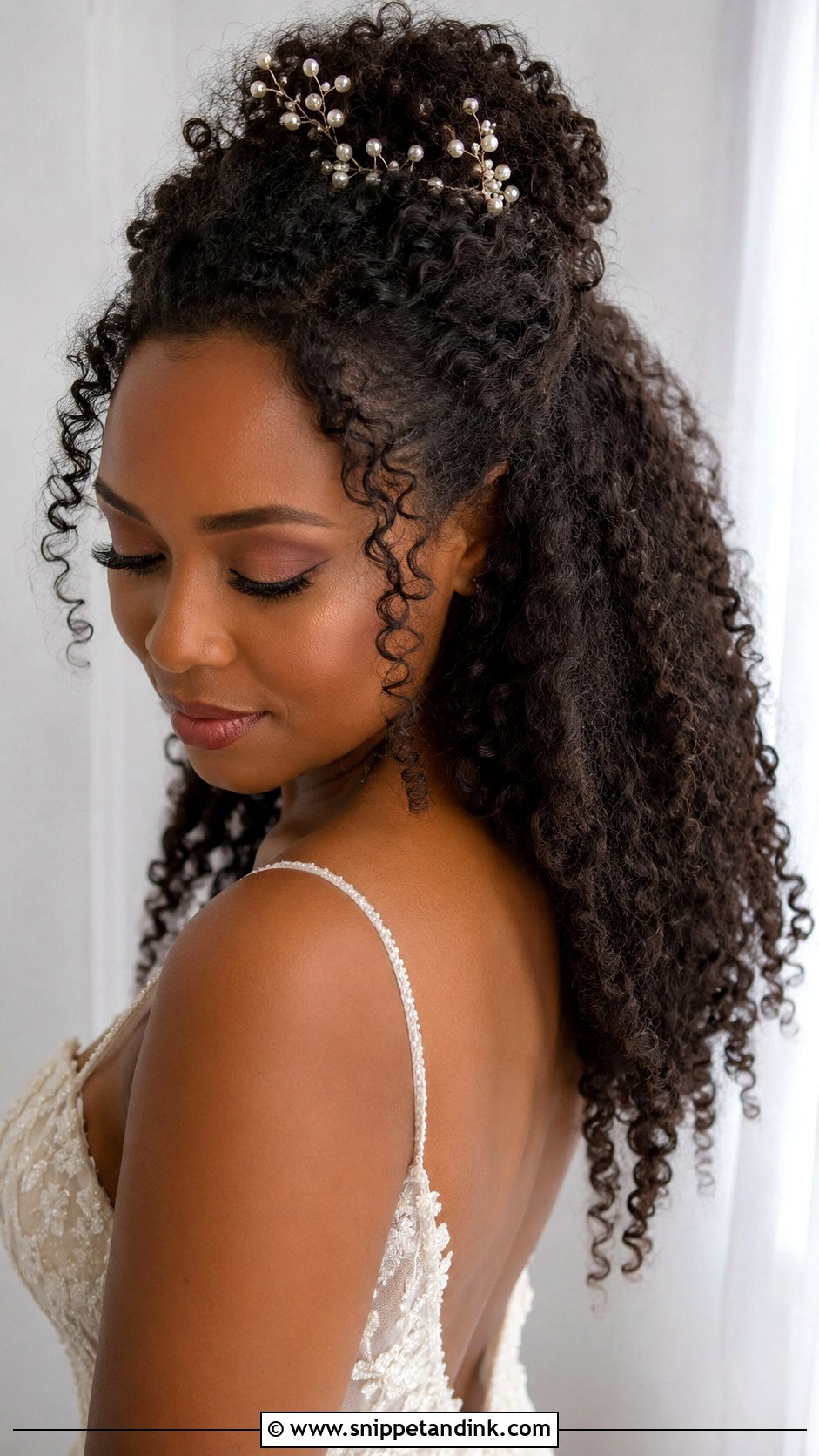
Half up, half down suits brides who want volume at the crown and movement below it. The top can be twisted, braided, puffed or pinned into a small bun, and the back shows length, curls or stretched texture. I keep the top section smaller than most people expect. A big top section pulls the length up and makes the back look thin. A veil can tuck just below the pinned part, and decorative pins can run along the sides.
11. Natural Hair Bridal Crown Twist
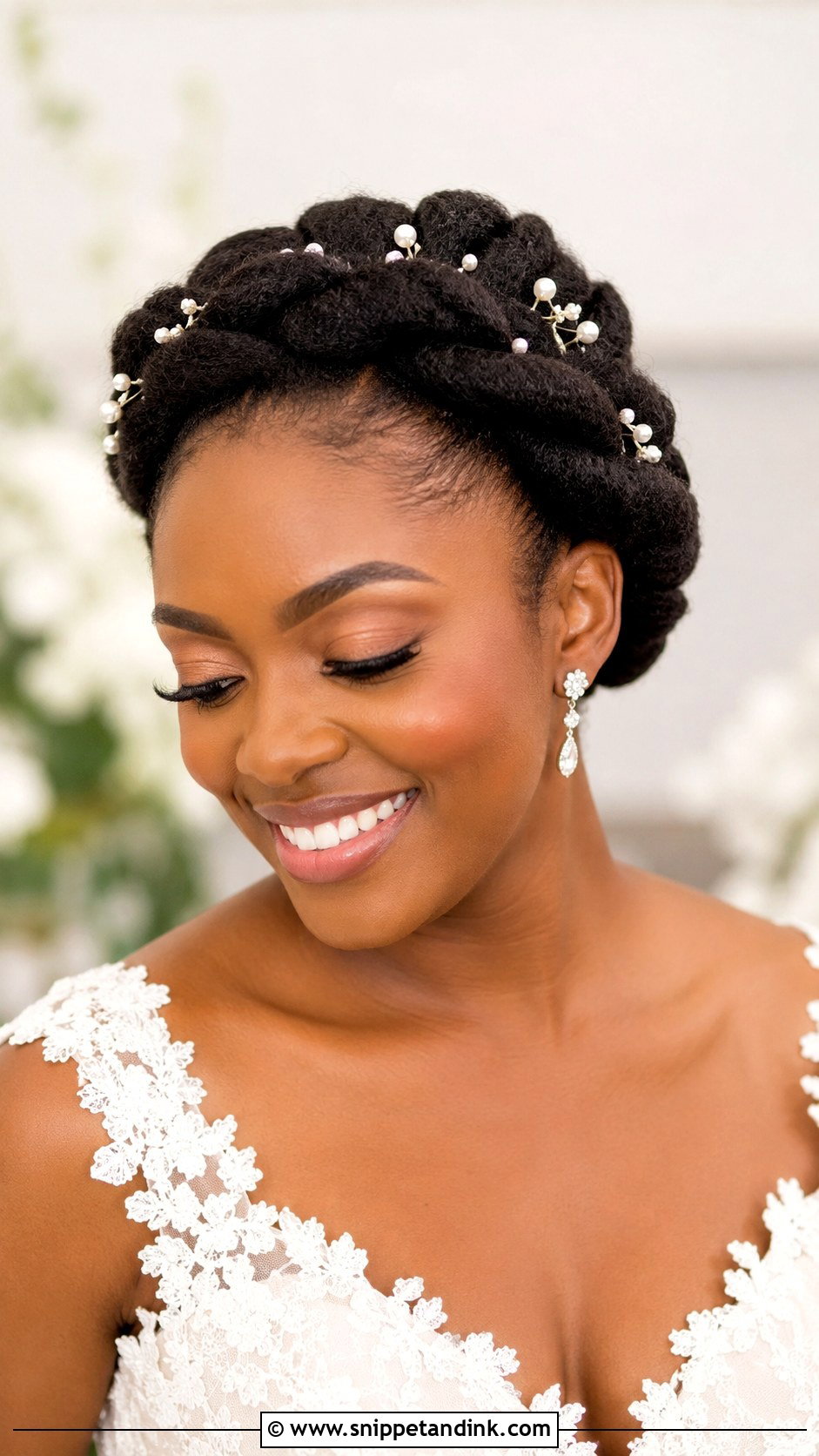
Instead of one big braid, a crown twist rolls the hair around the head to create a rounded frame. It can be smooth or fuller with stretched texture. Twists are kinder than braids to fragile ends because there’s less friction, which is why I often suggest this for brides growing out heat damage. Drop earrings and lace gowns sit well with it. Tiny pearls, gold pins or fresh flowers slide easily between the twisted sections.
12. Natural Hair Bridal Loc Updo
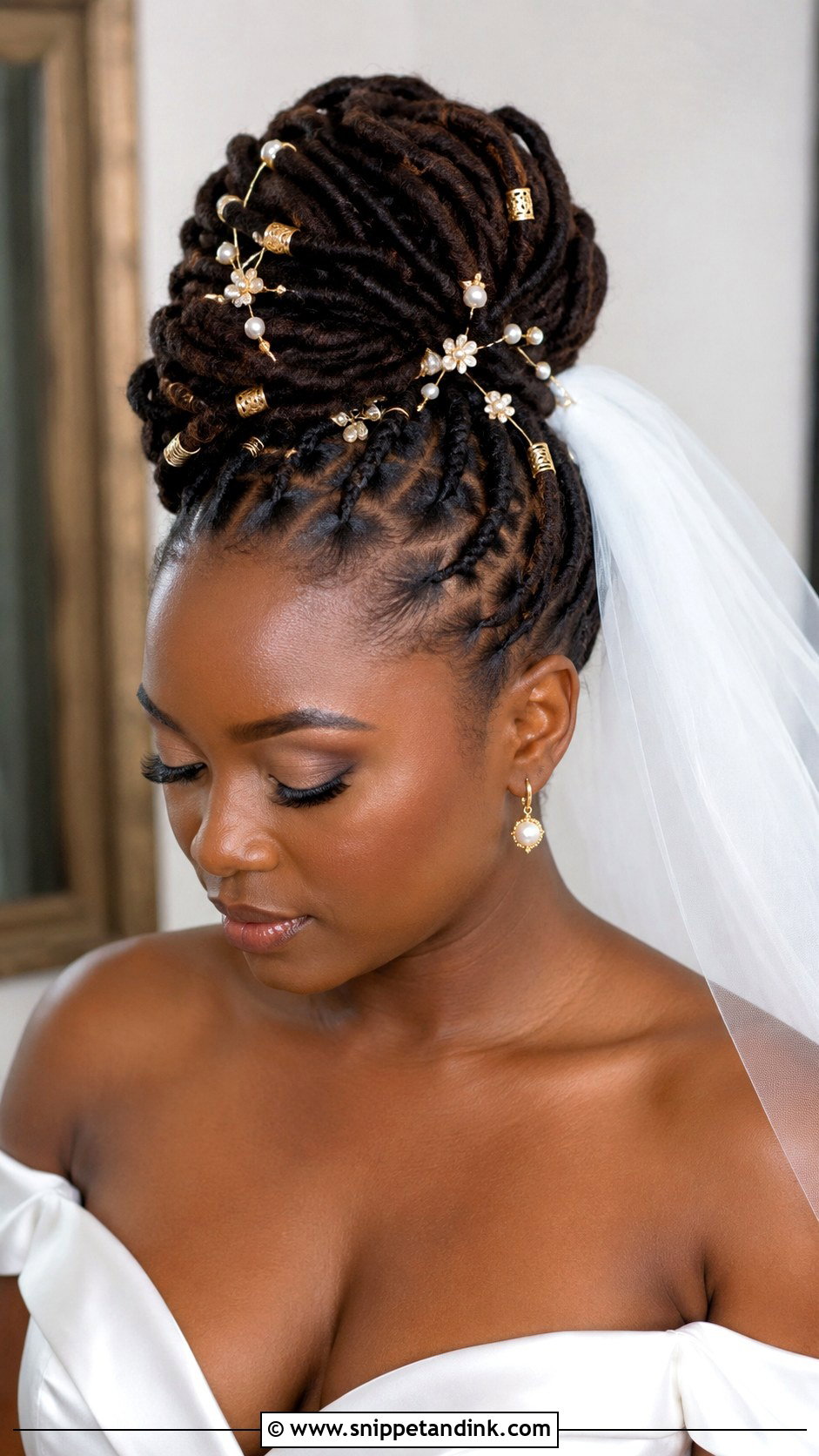
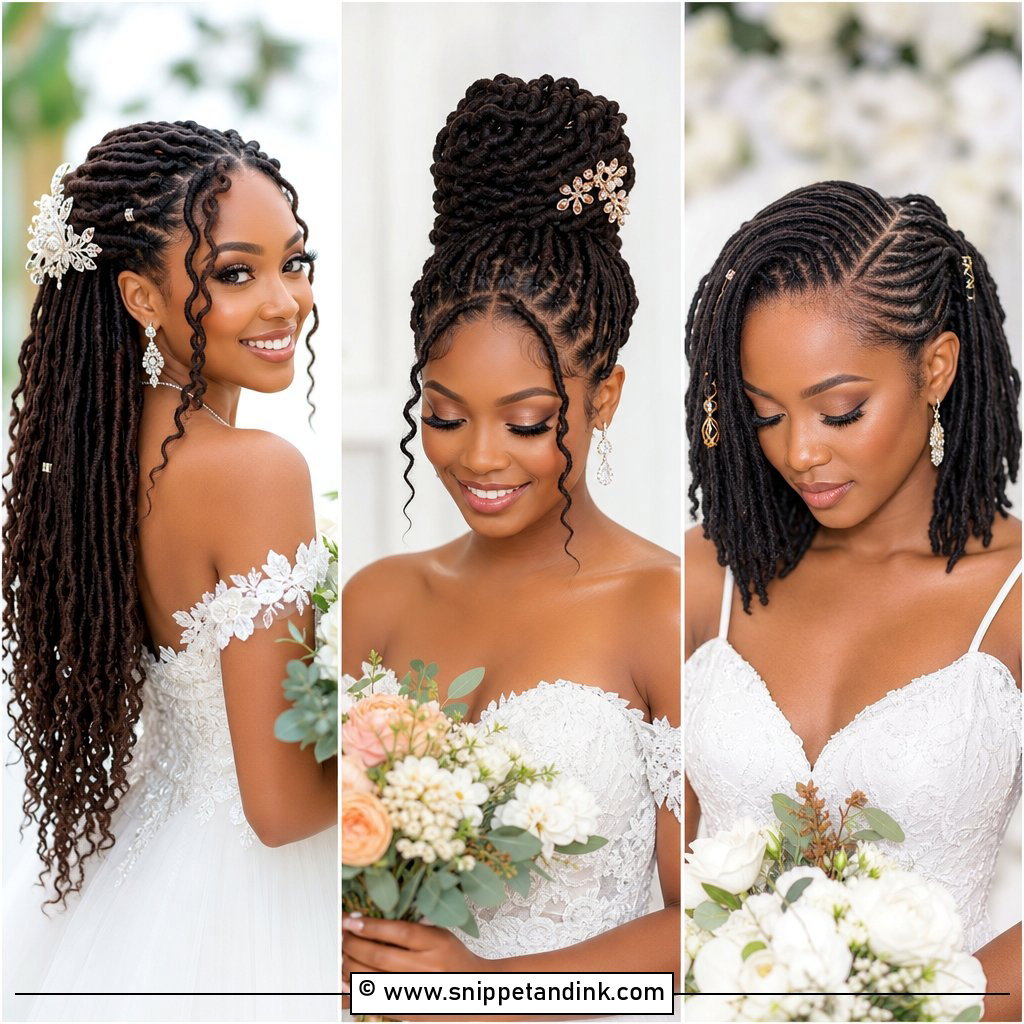
A natural hair bridal loc updo depends on your loc length, thickness and how heavy they are when gathered. Longer locs can be wrapped into a high bun, rolled into a low chignon, shaped into petals or pinned into a crown; shorter locs still take pins, cuffs and soft accessories well. Weight is the real issue. A full head of long locs in a high bun can strain the scalp, so I usually set them lower or split the weight into two sections. Locs hold shape well and rarely need touch-ups. Pearl pins, gold cuffs or a veil at the back finish it.
13. Natural Hair Bridal Braided Bun
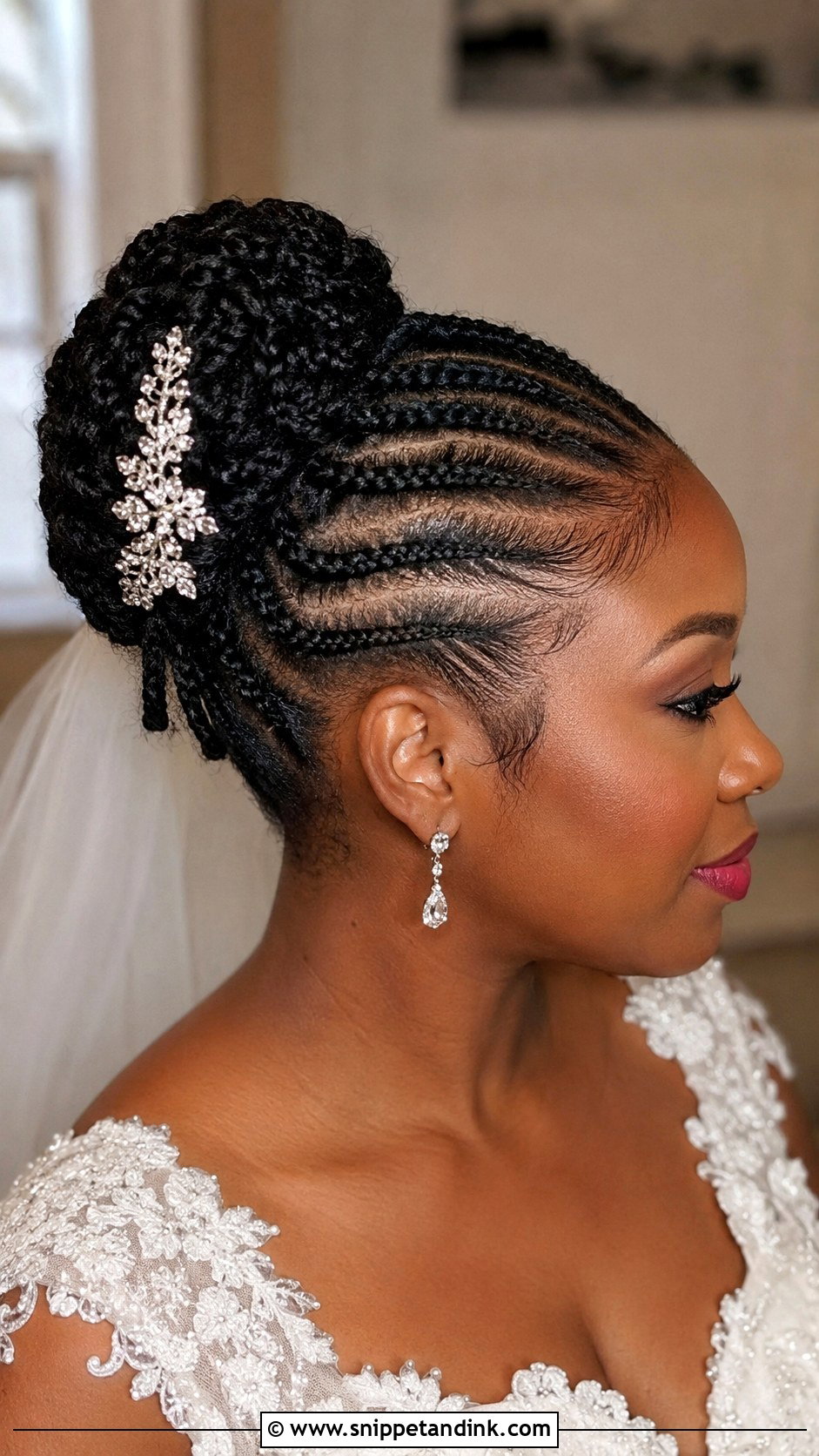
Braided buns are almost unshakeable. The hair is braided toward the centre or styled into cornrows, then gathered into a large textured bun. Pins and combs slide into the braids and stay put, which makes accessorising easy. It holds through the ceremony, the reception and the next day’s brunch photos, and it suits a classic gown, a suit or a traditional outfit. I install cornrows the day before only if you can sleep on them comfortably. For a softer finish, leave a few curly pieces at the face or build a fuller bun with textured extensions.
14. Natural Hair Bridal Tapered Afro
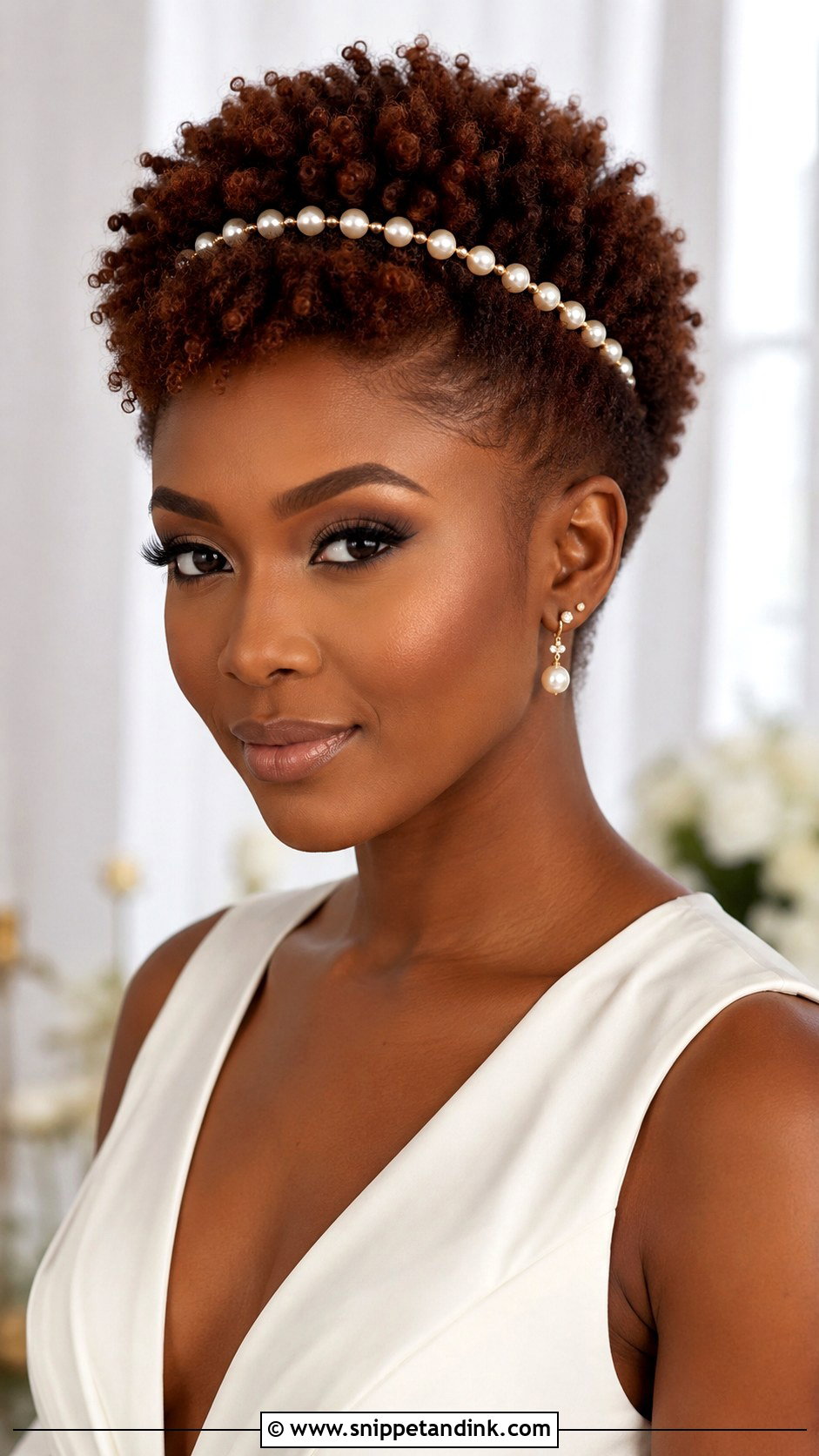
A natural hair bridal tapered afro is the short-hair bride’s best friend. The top is fuller and the sides shorter, which gives a clean profile and frames the face. It doesn’t need much to look bridal: defined curls, a fresh lineup, a little shine and one good accessory. Book the barber or stylist for the taper three to five days before the wedding, so the lines look sharp but not freshly raw. A pearl headband, floral clip, birdcage veil or sculptural earrings complete it, and it’s cool in hot weather.
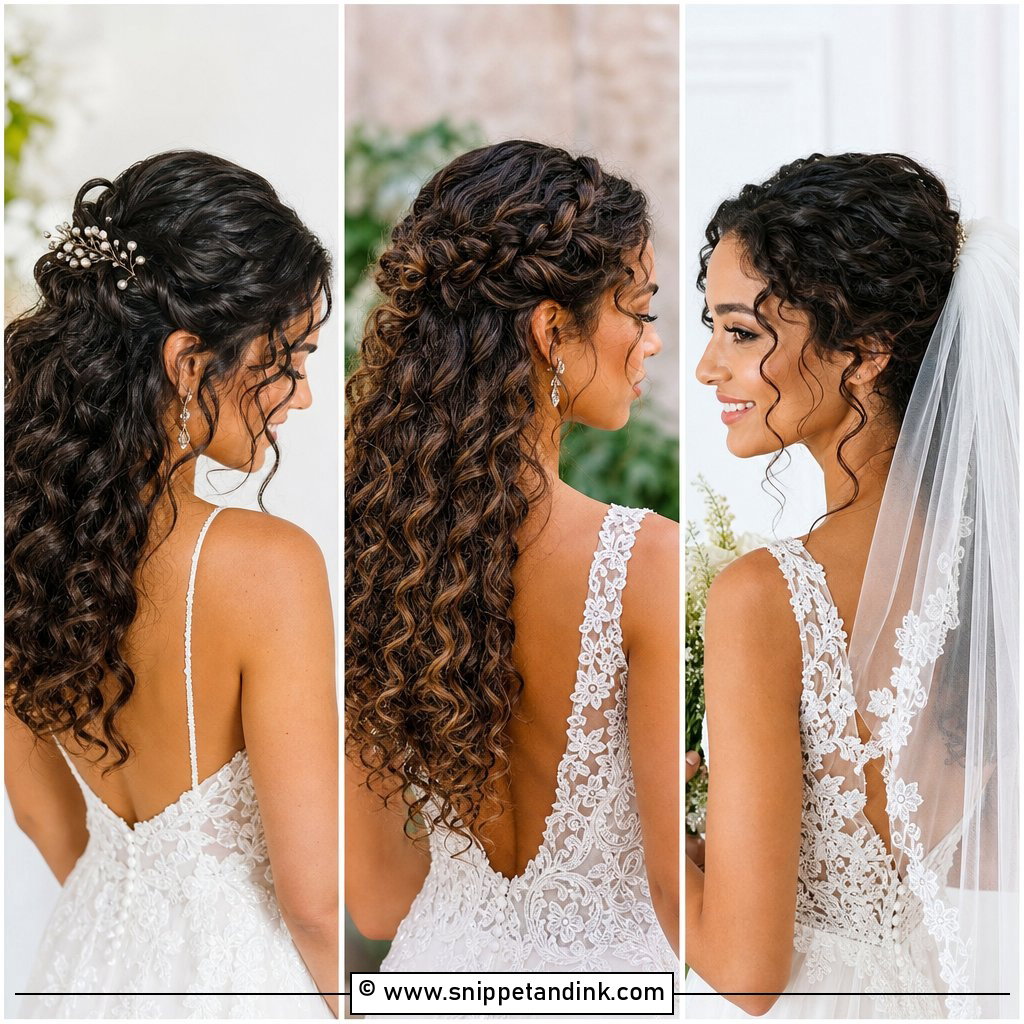
15. Natural Hair Bridal Side Swept Curls
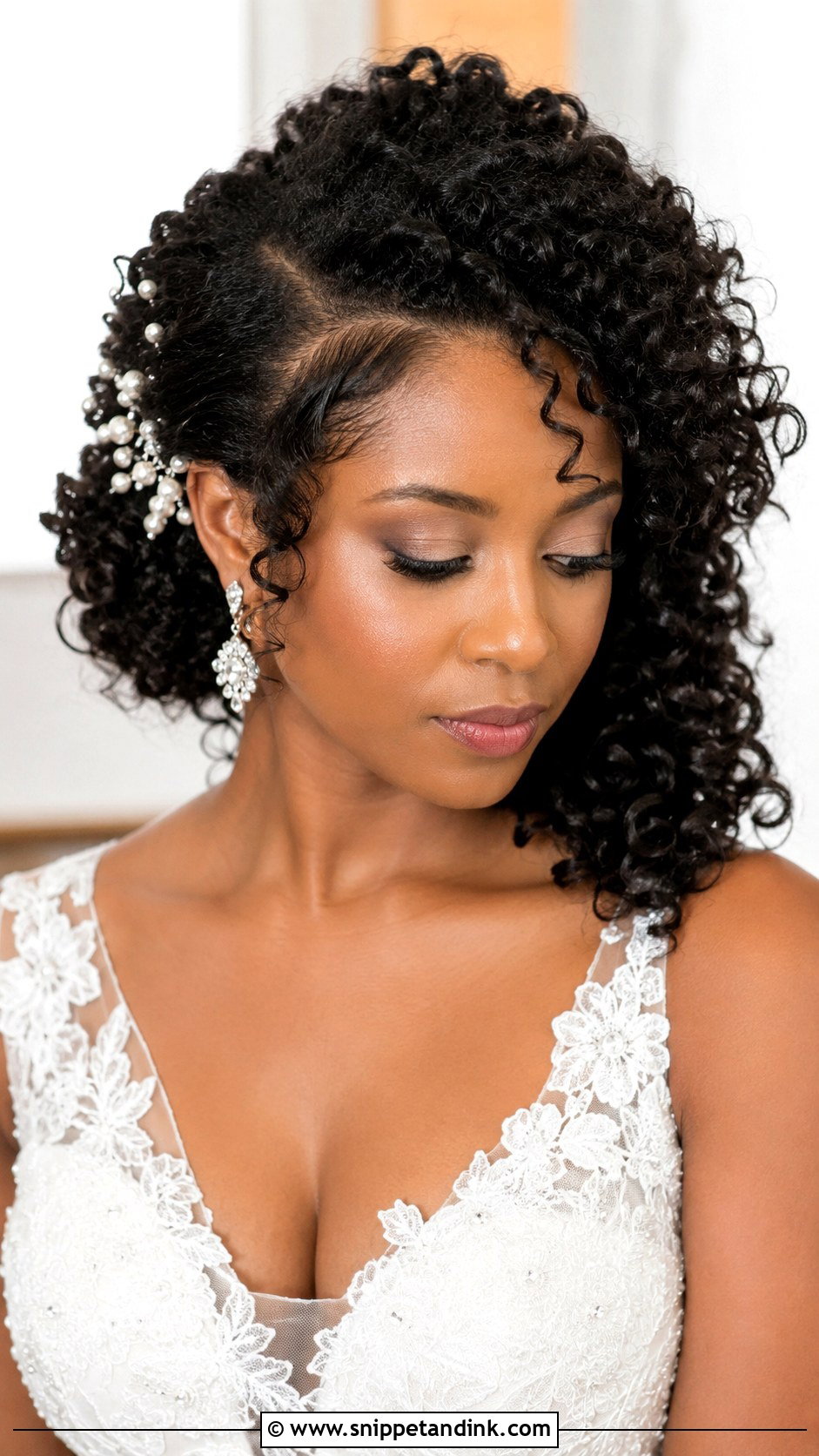
Side-swept curls can be set with twists, flexi rods, perm rods or a defined wash and go, then pinned gently to one side. The sweep opens up one side of the face for earrings or a detailed neckline. The pins on the anchored side do all the work, so I place them in a crossed pattern behind the ear before moving the curls over. It gives brides who want hair down a bit more control. A side comb, pearl pins or small flowers hold the sweep in place.
Will a Veil Stay Put in Coils?
It can, but a standard veil comb isn’t designed for coily hair. The teeth slide on stretched hair and catch on tight coils. I sew or pin the comb onto a small braid, flat twist or bun that I build for exactly that purpose, then lock it with two crossed bobby pins. For puffs and afros, the veil goes behind the shape, never on top, or it crushes the volume.
Tulle also snags on textured hair when you turn your head. A veil with a cut edge, rather than a beaded or lace edge, catches less. If you love lace, keep it below shoulder height so it brushes your back instead of your curls.
Shrinkage on a Humid or Rainy Day
Every stretched style shrinks once moisture gets in, and I’d rather you expect it than panic. Updos, knots, twists and braided buns barely change. Twist-outs and blown-out hair can lose length and puff out within an hour outdoors. A light seal of oil or butter over the set slows it, but nothing stops it fully. If your venue is near water or the forecast looks damp, choose a style that will still look intended when it shrinks, and keep a satin scarf in the car for the drive between ceremony and reception.
Texture That Holds From Vows to Last Dance
Natural hair can look every bit as formal as any traditional bridal style. What matters is matching the style to your texture, dress, venue and comfort. Book a trial, especially if you’re wearing a veil or heavy accessories, and bring photos of your hair stretched, shrunken and on day two so your stylist understands its shrinkage and density. Plan your wash day, stretching method and moisture routine before the wedding week. From a puff, updo, twist out, loc style, bun or afro, your natural hair can look fully bridal on its own terms.
You'll Like These Ideas:



Leave a Reply