
Natural hair doesn’t need to be tamed for a wedding; it needs a plan. Most of my work with textured brides happens weeks before the day, choosing a style that suits the hair’s density, the weather and the veil, then building it so it lasts from the first look to the last song. Below are thirty looks I’d happily put on a bride, from braided updos and loc knots to a full afro worn exactly as it grows, with notes on which textures and lengths each one really suits and where it tends to struggle.
Planning the Last Six Weeks Around Shrinkage and Moisture
Coily hair can look very different from one day to the next depending on moisture and weather, so I plan wedding hair backward from the date. A good test of any natural style is how it looks on day two, because that tells you how it will look at eleven at night.
- Six to eight weeks out: book your trial and bring your veil, headpiece and a photo of your neckline. Ask your stylist to style on your hair as it is now, not on stretched hair you won’t have on the day.
- Three to four weeks out: get any trim or shape-up, so ends settle and a fresh line doesn’t look harsh in photos.
- One to two weeks out: install braids, twists or a loc retwist, so tension at the scalp eases before the day.
- The week of: deep condition once, skip new products, and sleep on satin every night.
- The night before: set twist-outs, Bantu knots or rods, and let them dry fully before you take them down.
Shrinkage is the thing brides underestimate most. Type 4 hair can look much shorter when it’s curled than when it’s stretched, so a style that needs shoulder length may not work on hair that only reaches that length when blown out. Measure your length when your hair is in its natural, unstretched state.
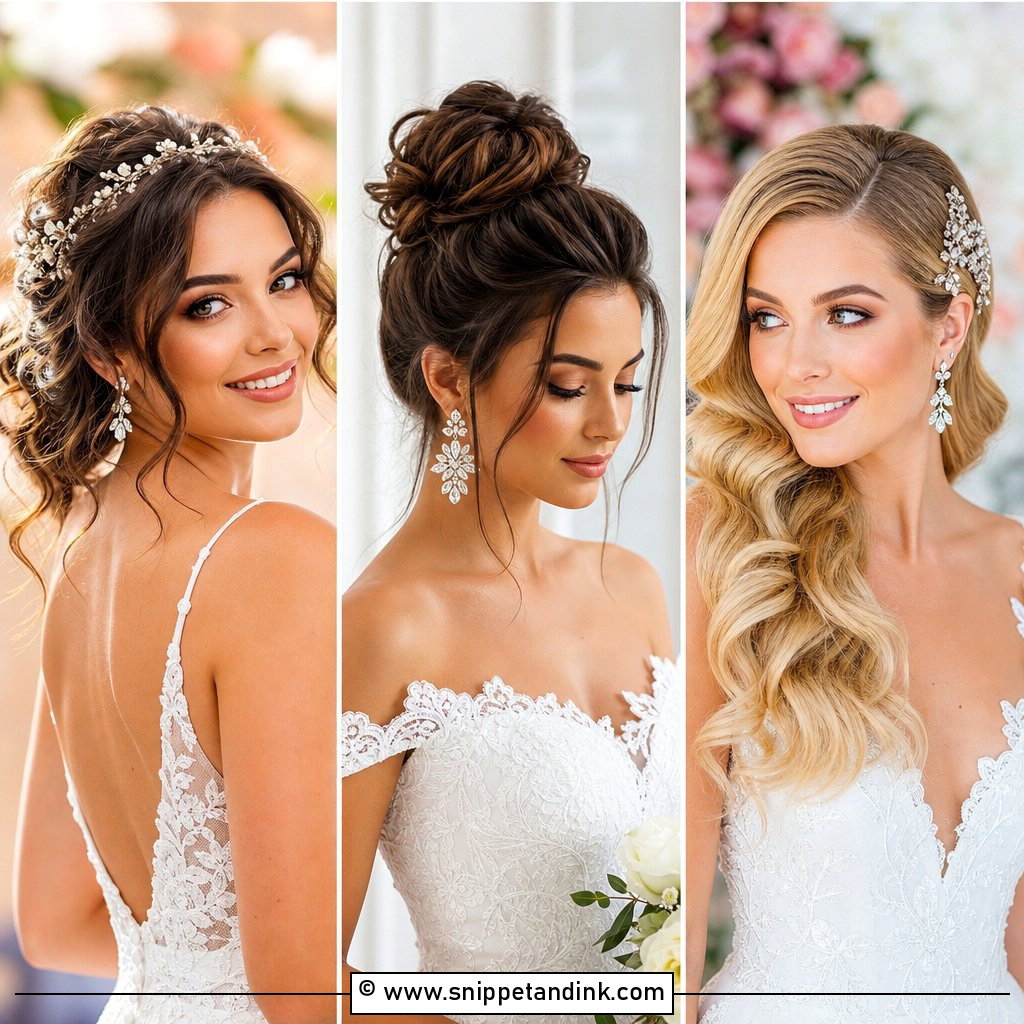
1. Curly High Bun Wedding Updo
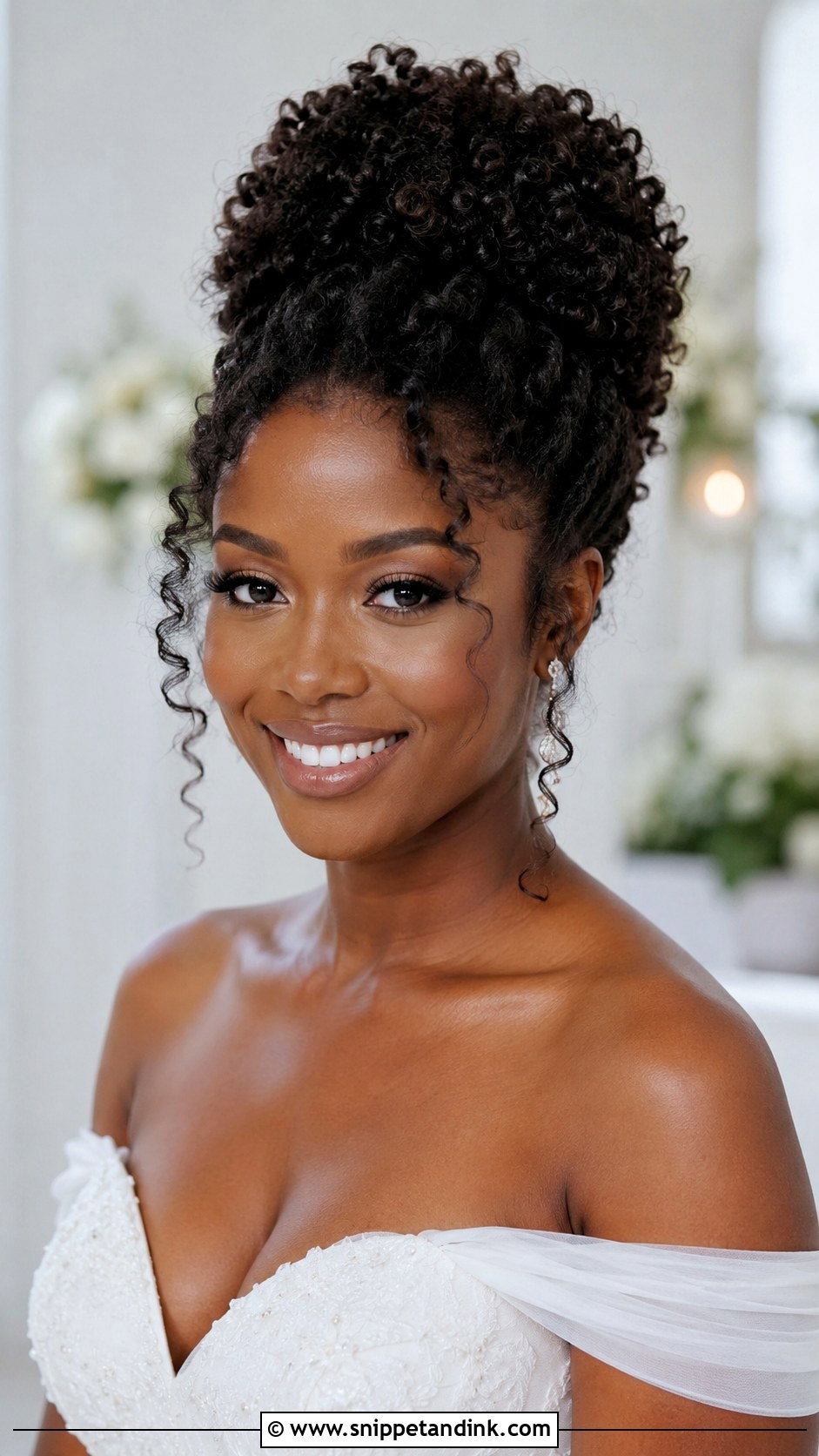
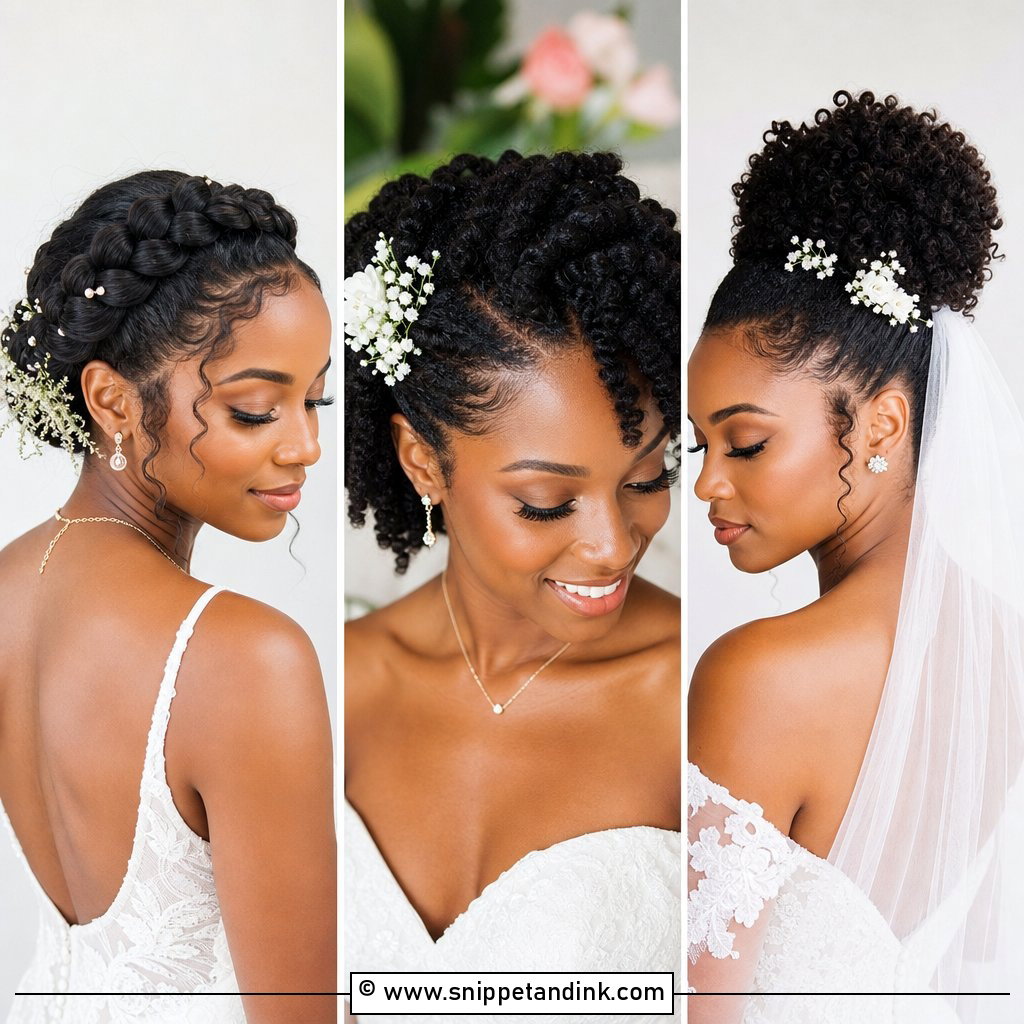
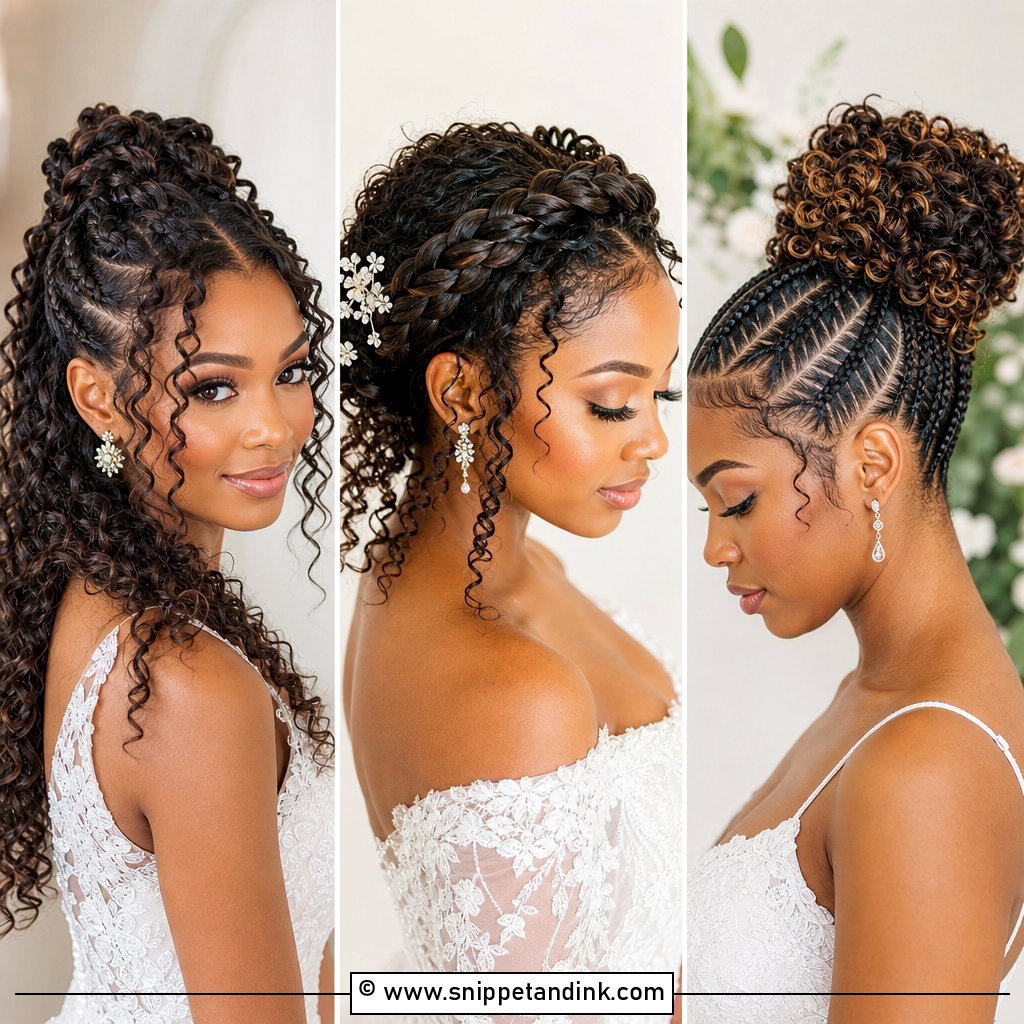
A high bun shows off the neck and earrings, and on coily hair it gives you height without any padding. The thing I watch is weight: a full bun of thick type 4 hair sitting on the crown can pull by the evening, so I anchor it with a few open U-pins pushed against the scalp rather than relying on one elastic. Leave out two or three coils at the temples and define them with a little gel so they don’t puff away by the reception.
2. Flat Twist Bun for Brides
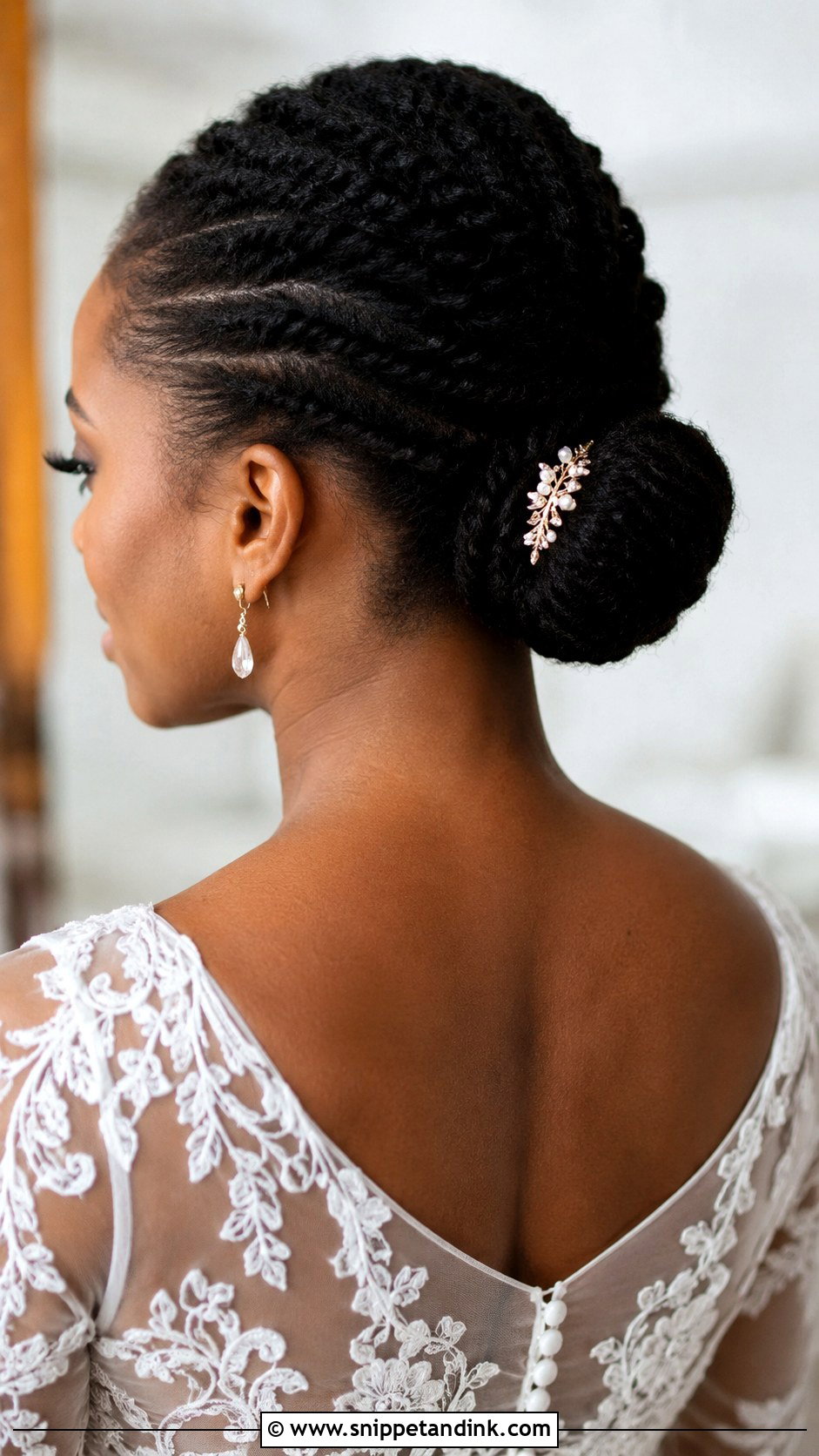
Flat twists are the style I suggest most often to brides doing their own hair, because the technique is forgiving and the result is humidity-proof. Twist on stretched, lightly moisturised hair so the lines stay crisp, and finish them toward the nape so a veil comb has something solid to grip. A delicate gold cuff slipped onto one twist near the bun looks deliberate rather than added on. Do the parting in a mirror with good side light; uneven parts are the first thing a close-up shows.
3. Half-Up Half-Down Curly Style
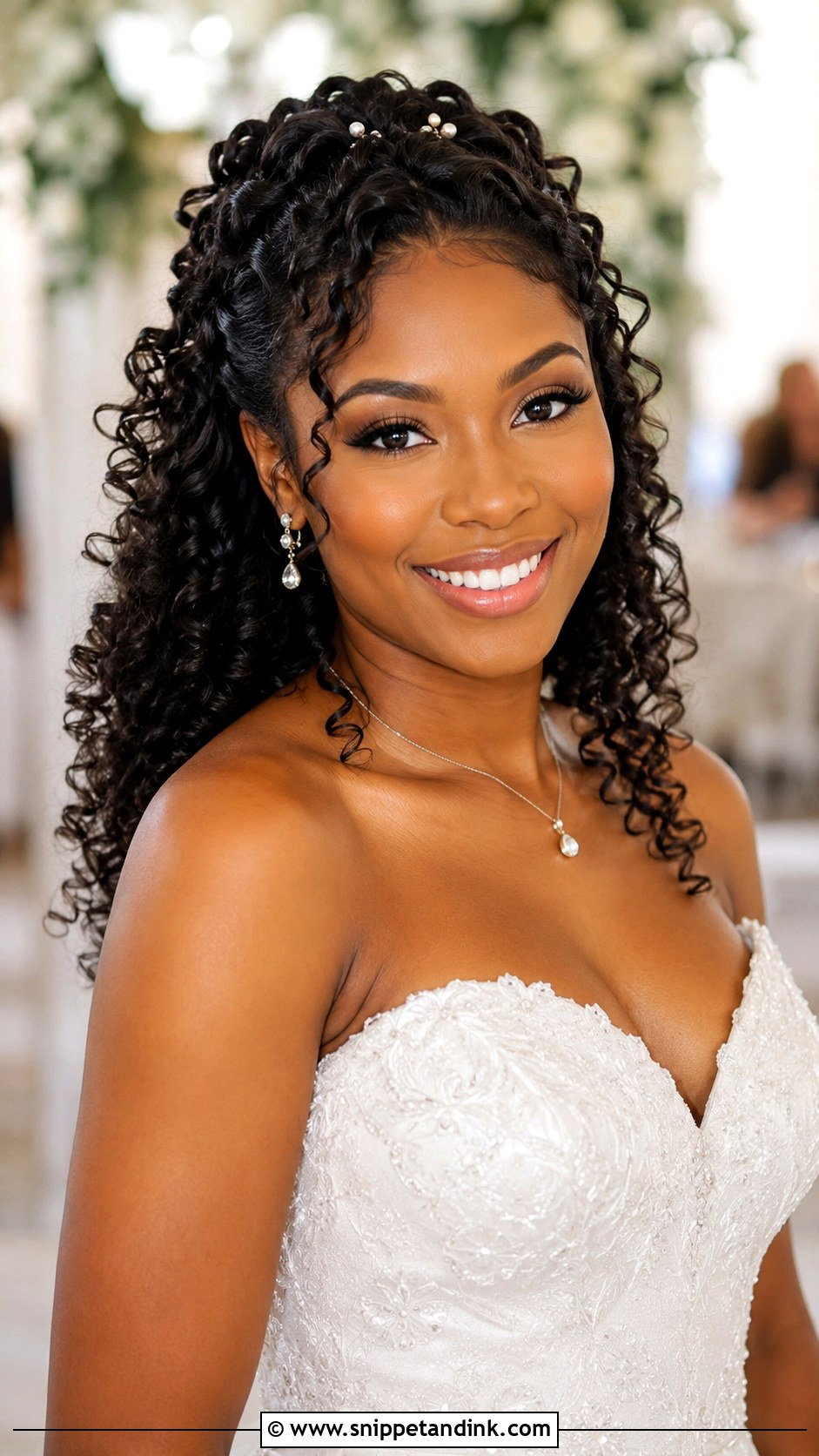
Half-up, half-down is a good compromise when you love your length but don’t want curls in your lipstick. On type 4 hair the top section can lift away from the pins as it dries and expands, so I set it with a small flat twist or braid at the crown and pin into that rather than into loose hair. Keep the lower curls moisturised and hands-off once they’re defined; the more they’re touched during the day, the more they frizz.
4. Halo Braid Wedding Crown
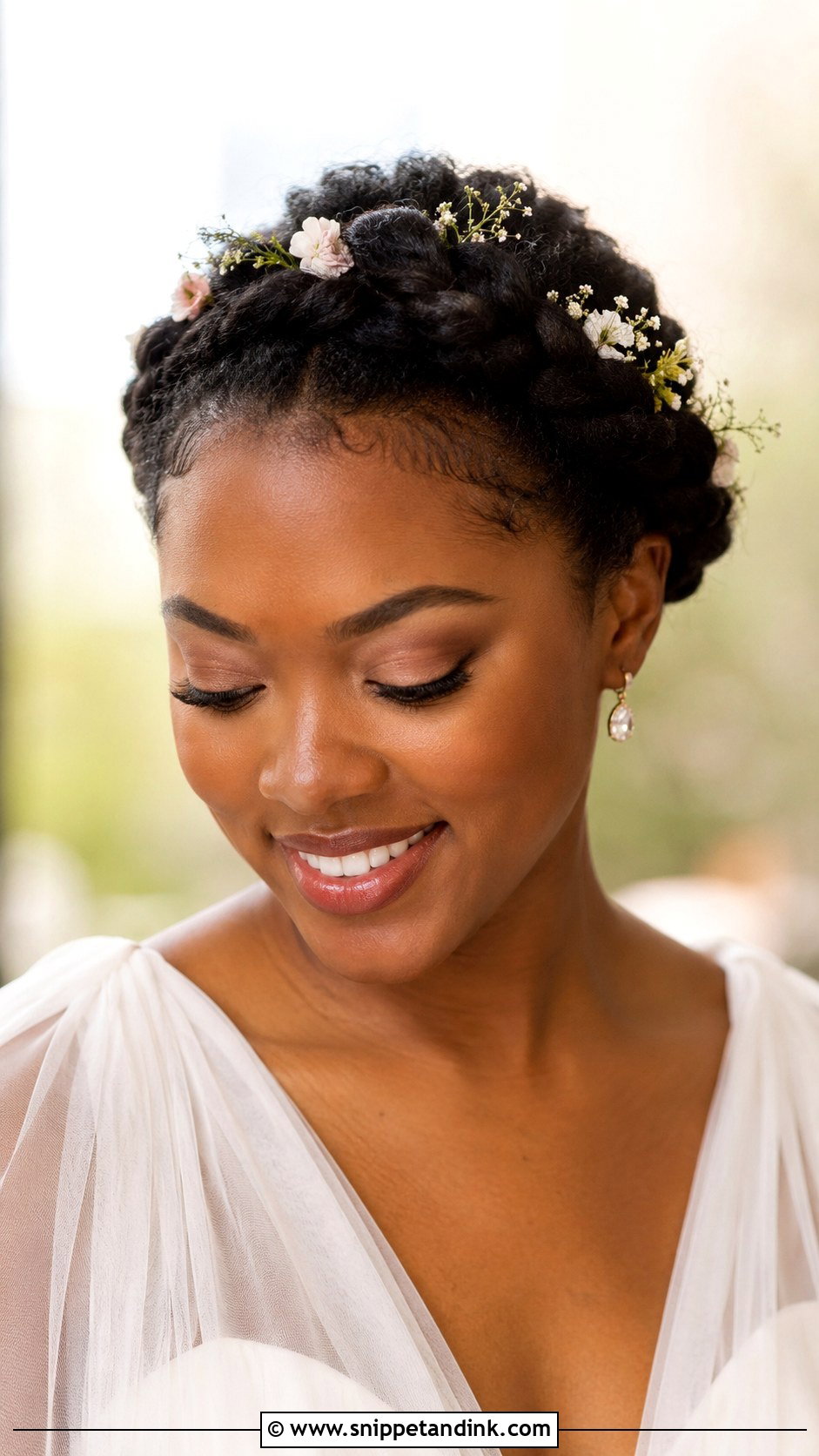
A halo braid wraps the whole head and stays put through hugs, veils and a long reception. It needs some length, roughly shoulder length when stretched, otherwise the braid gets thin at the back where it has to bridge the nape. On shorter or finer hair I add a matching braiding extension so the band stays even all the way round. Small pearls tucked into the plaits catch light without adding weight.
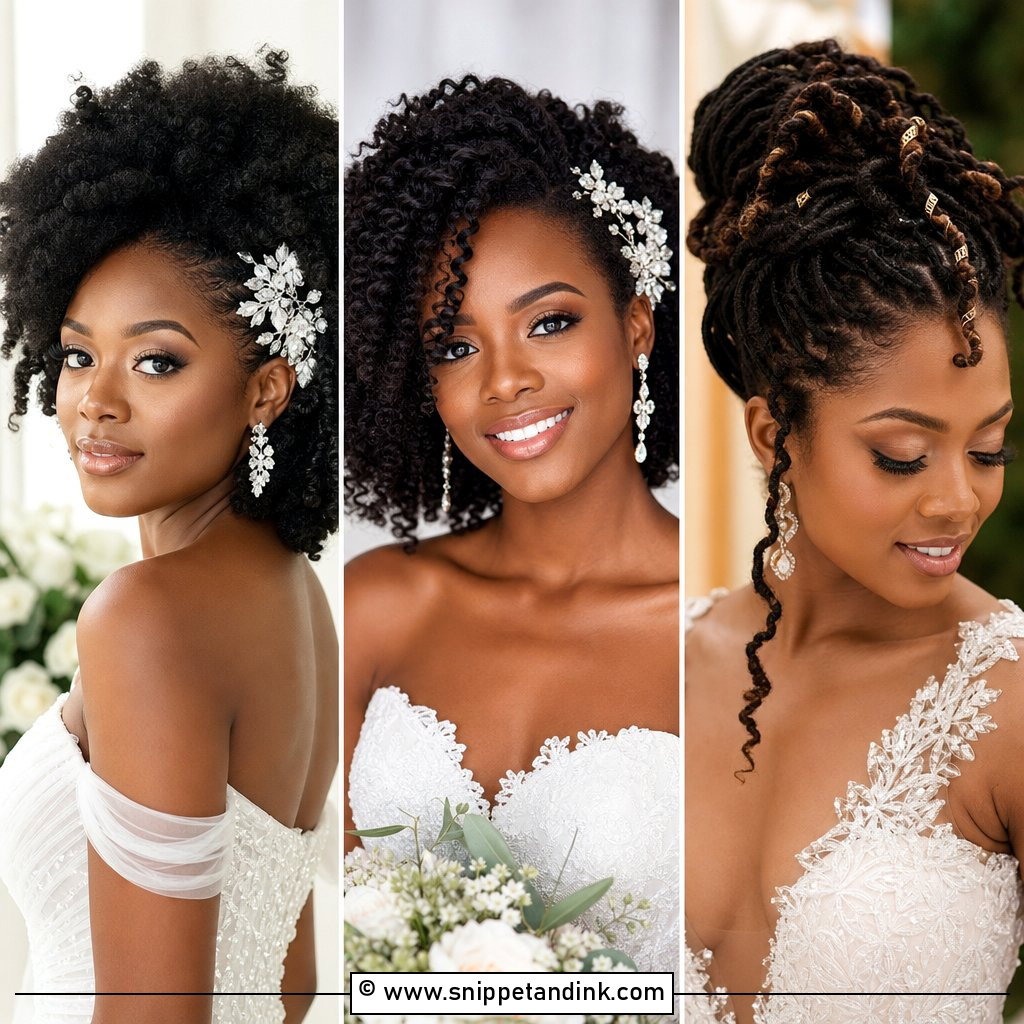
5. Voluminous Afro Bridal Look
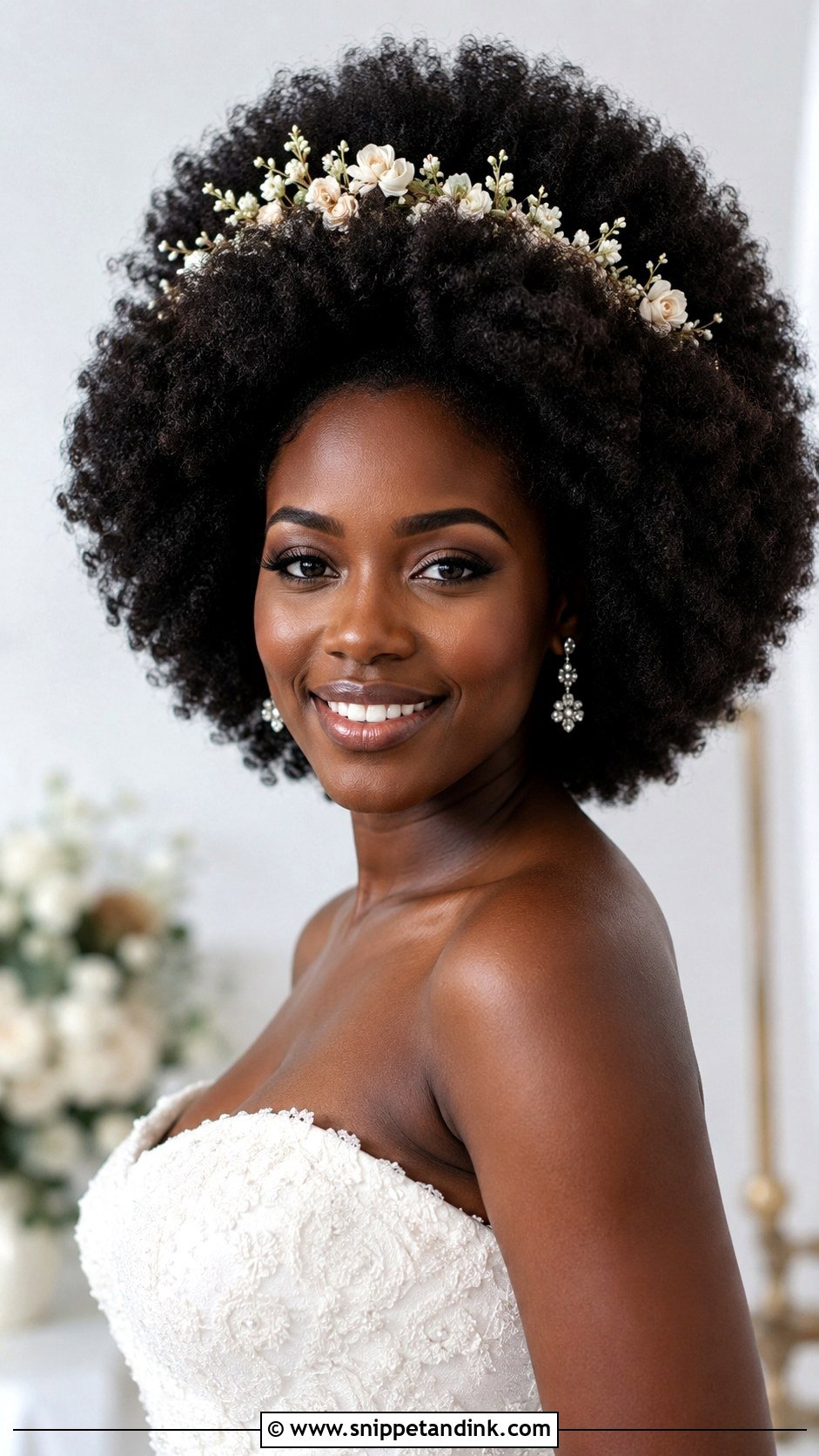
A full afro is the most honest bridal style there is, and it’s one I love doing. A voluminous afro gets its round shape from a stretched base, so I’d do a twist-out or braid-out two nights before, then pick it out at the root on the morning rather than through the ends. Humidity will grow it a little more, which on an afro is rarely a problem. A floral crown or hair vine sits on top easily, but pin it at the sides or it will ride up as the hair expands.
6. Twist-Out Wedding Hairstyle
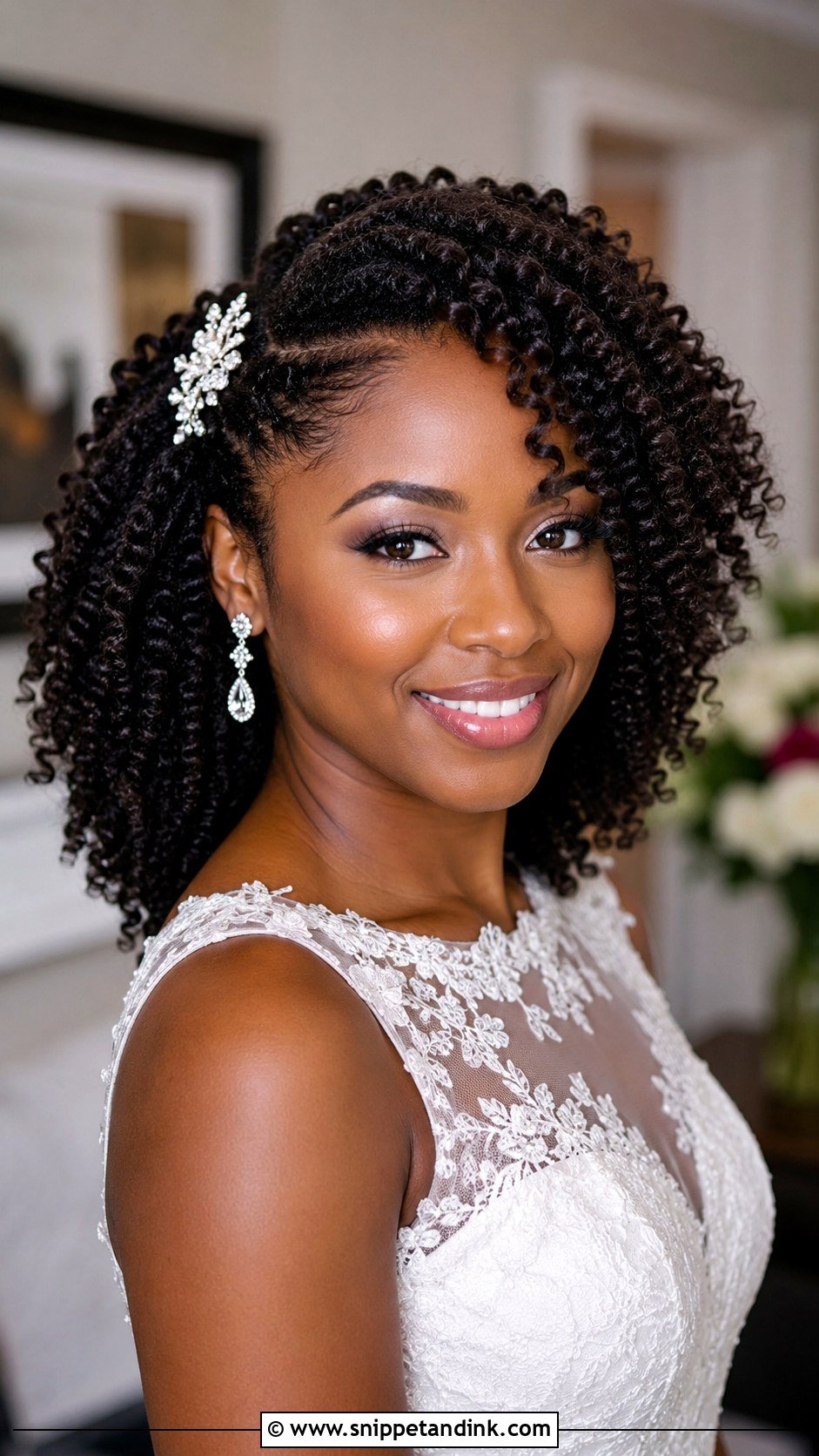
A twist-out gives definition without heat, but it is the style most affected by the weather. I’d set it the night before on damp hair with a cream and a light-hold gel, let it dry completely under a satin scarf, and only separate it once you’re dressed. Separating too early or too much is what turns crisp curls into frizz by the photos. In heavy humidity I’d push a bride toward pulling half of it back, so there’s less loose hair to swell.
7. Low Bun With Curly Tendrils
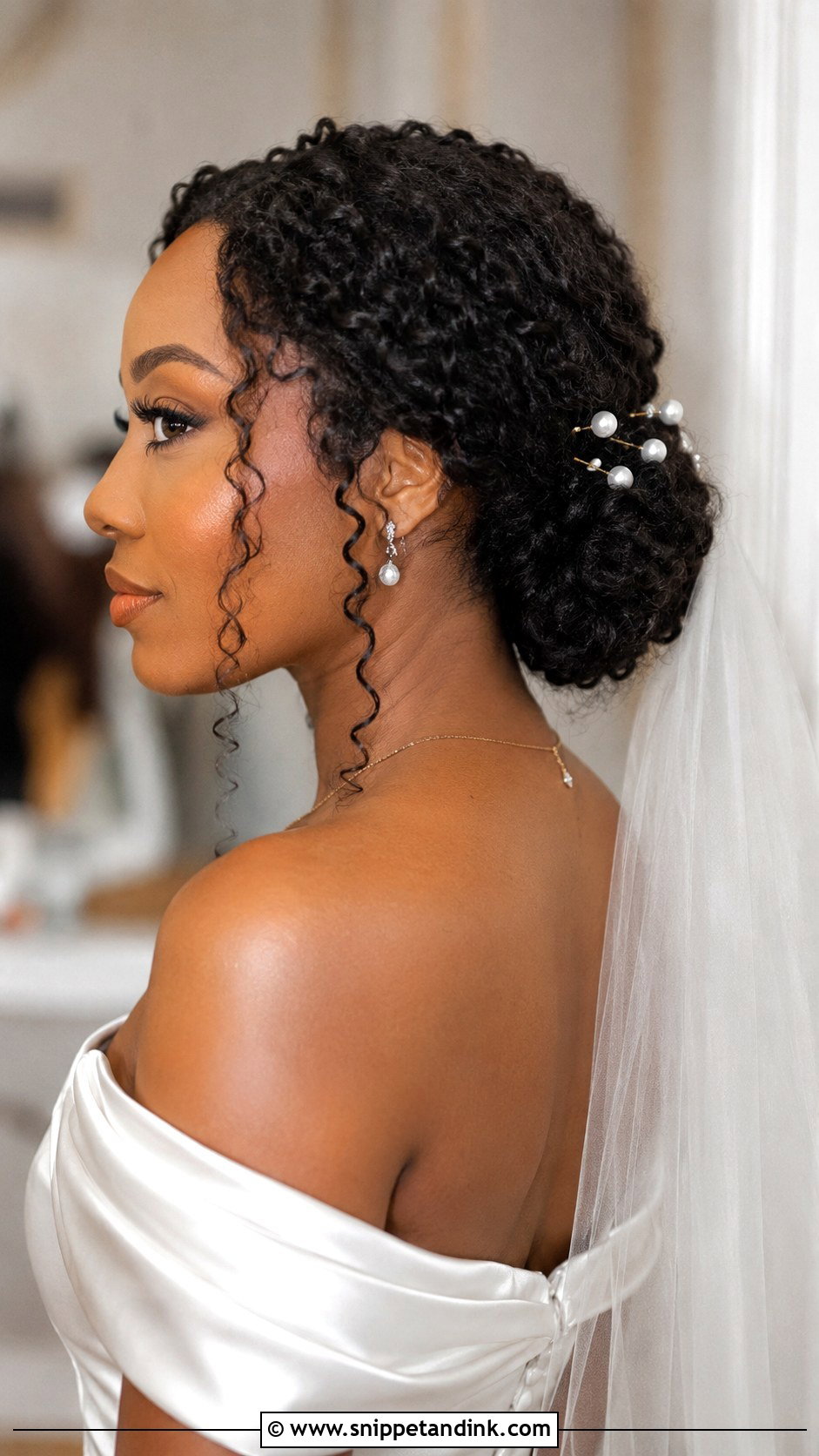
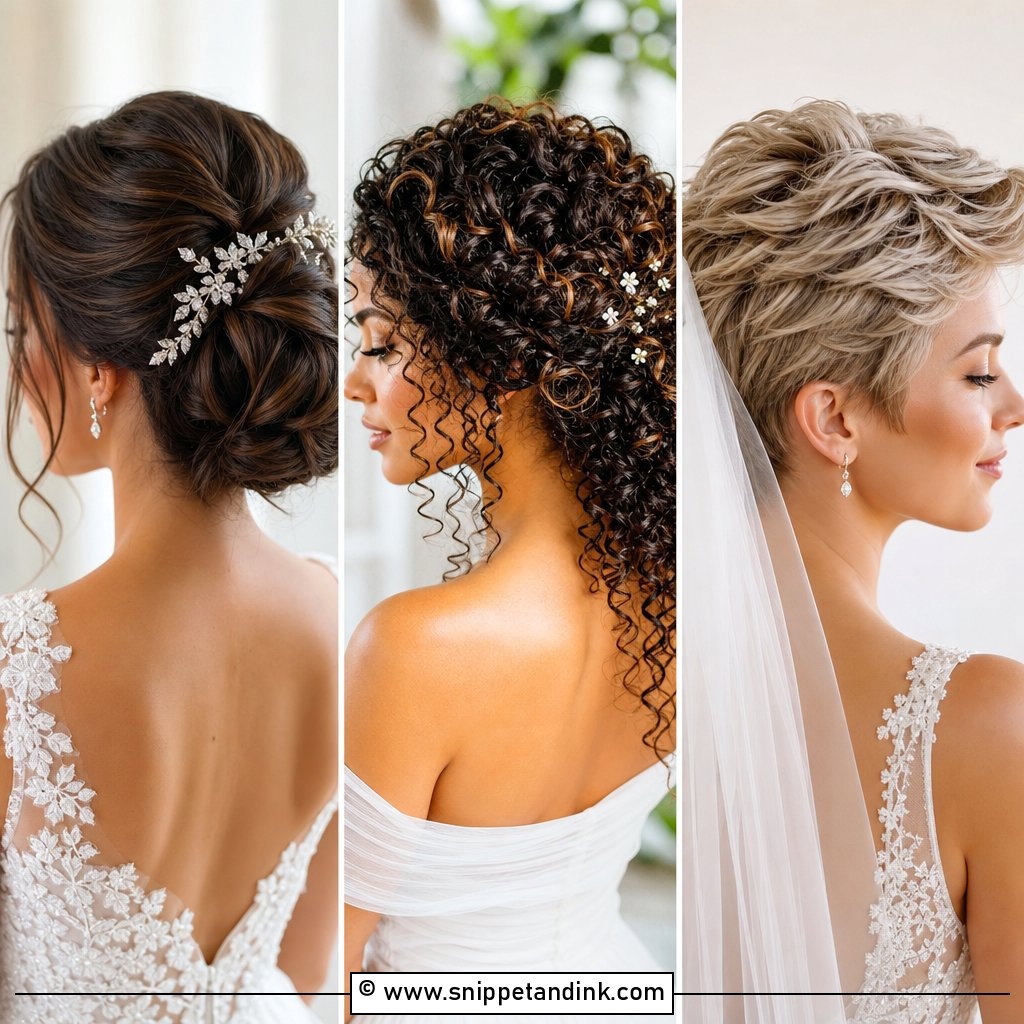
A low bun is the safest base I know for a long veil, because the comb slides in just above it and nothing sits on the crown. On coily hair I build it over a small braid or a sock-bun base so the shape stays round instead of flattening as the day goes on. The loose tendrils at the front need their own definition, a twist set the night before, or they’ll look unfinished next to the smooth bun.
8. Cornrow Bridal Updo
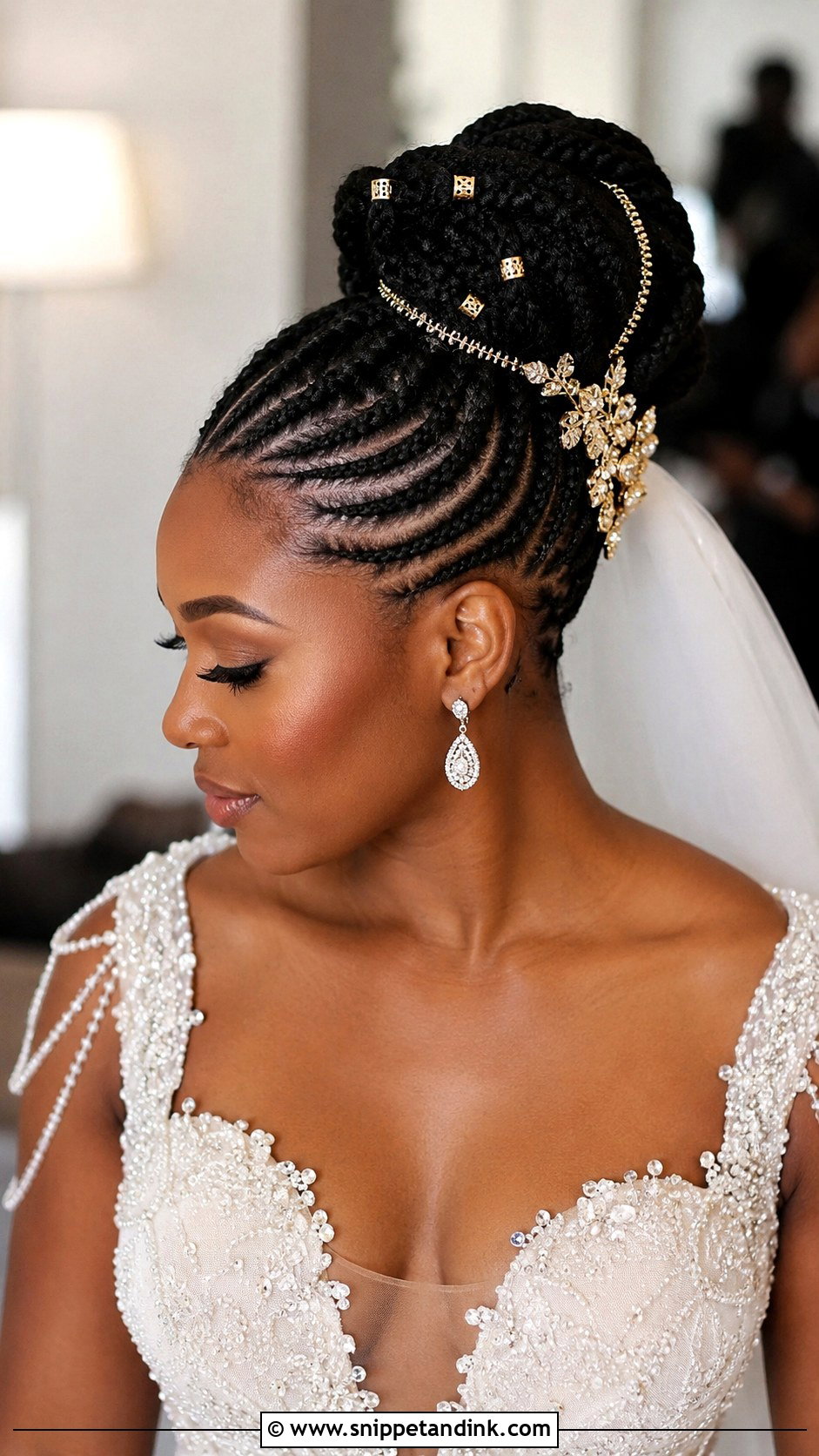
Cornrows leading into a bun are one of the most durable bridal styles you can wear: no flyaways, no drop, nothing to fix between the ceremony and the dancing. The part that takes planning is timing, since fresh cornrows can feel tight and the scalp needs a few days to settle, so I’d install them about a week before. Ask your braider for a tension that is snug but not pulling at the edges. Cornrow updos also take gold cuffs and beads well, slipped on during the install rather than on the morning.
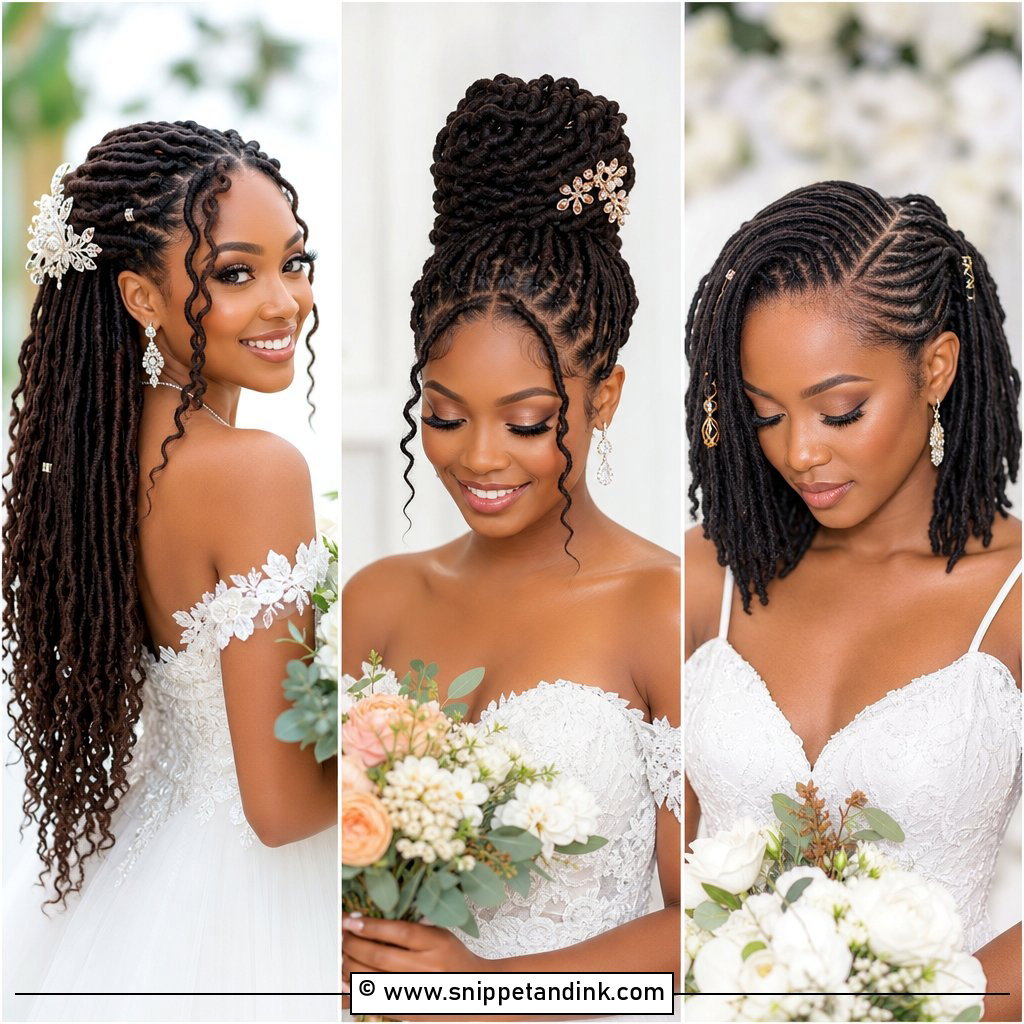
9. Loc Updo for Brides
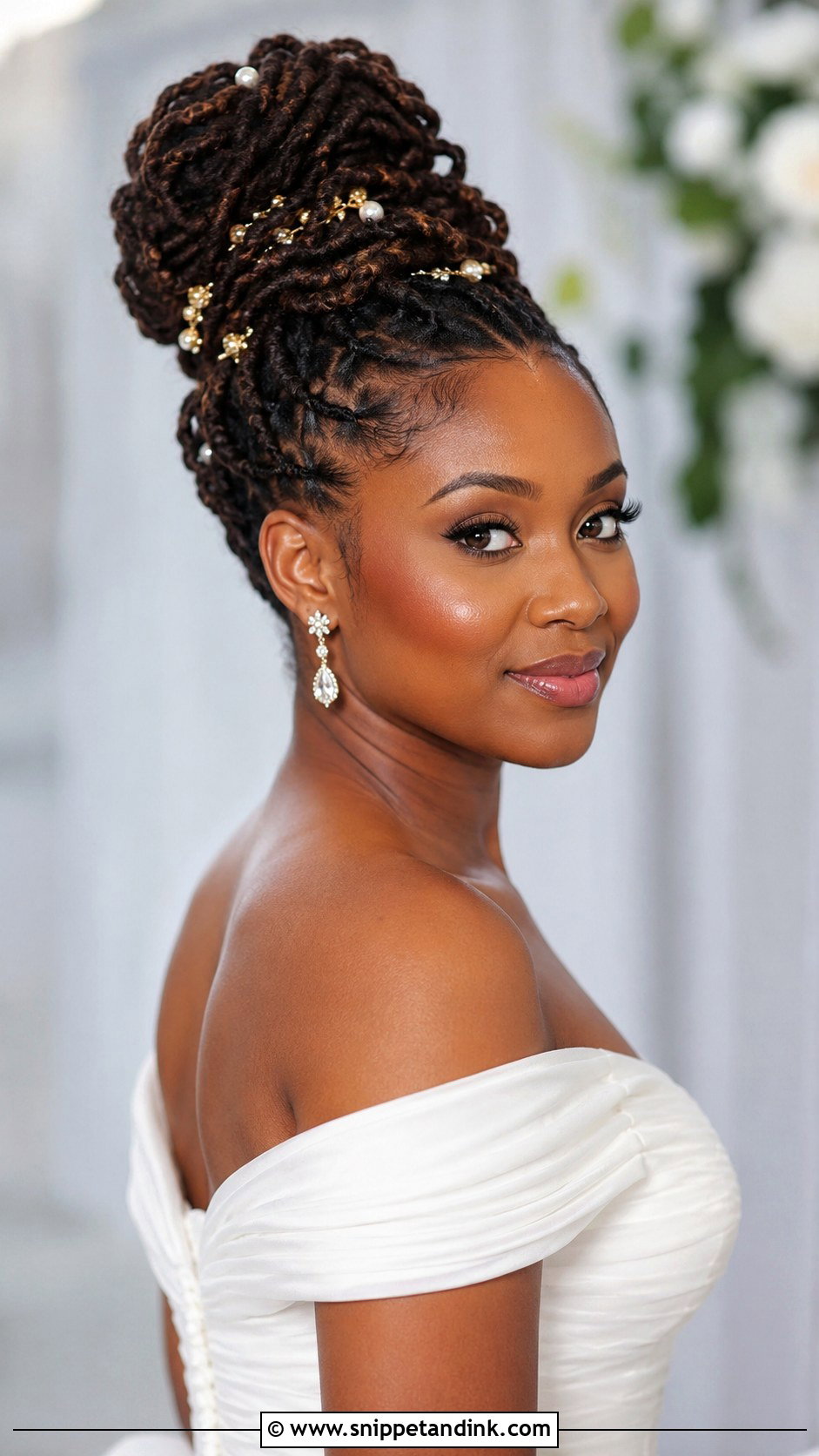
Locs give you a ready-made texture that never drops, so the work is about shape and weight. Long, mature locs can be heavy once they’re gathered, and I’d rather build a low knot or a loose wrap than a tight high bun that pulls at the roots all evening. A retwist about a week before the wedding lets new growth settle so the parts look neat but not raw. Gold cuffs and pearls slide onto individual locs and stay put without any glue.
10. Curly Side-Swept Wedding Style
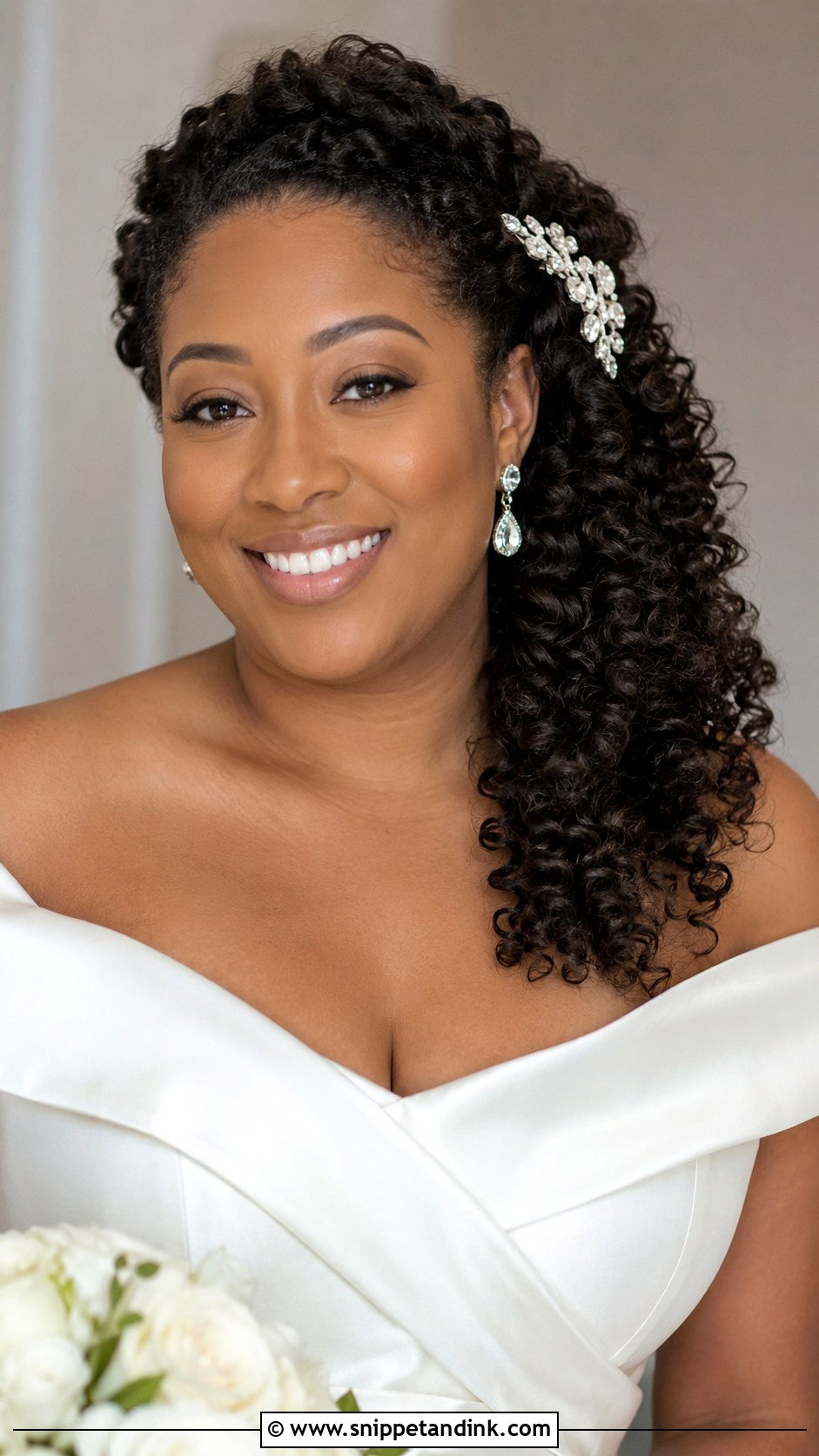
A side-swept style gathers your curls over one shoulder and leaves the other side of the neck bare. The weak point is the pinned side, which on dense hair wants to push back out, so I secure it with a short flat twist behind the ear before pinning a jeweled clip over the top. Do a quick test in your actual gown: off-shoulder and one-shoulder necklines suit this, but a high neckline can crowd the curls and flatten them.
11. Bantu Knot Inspired Bridal Look
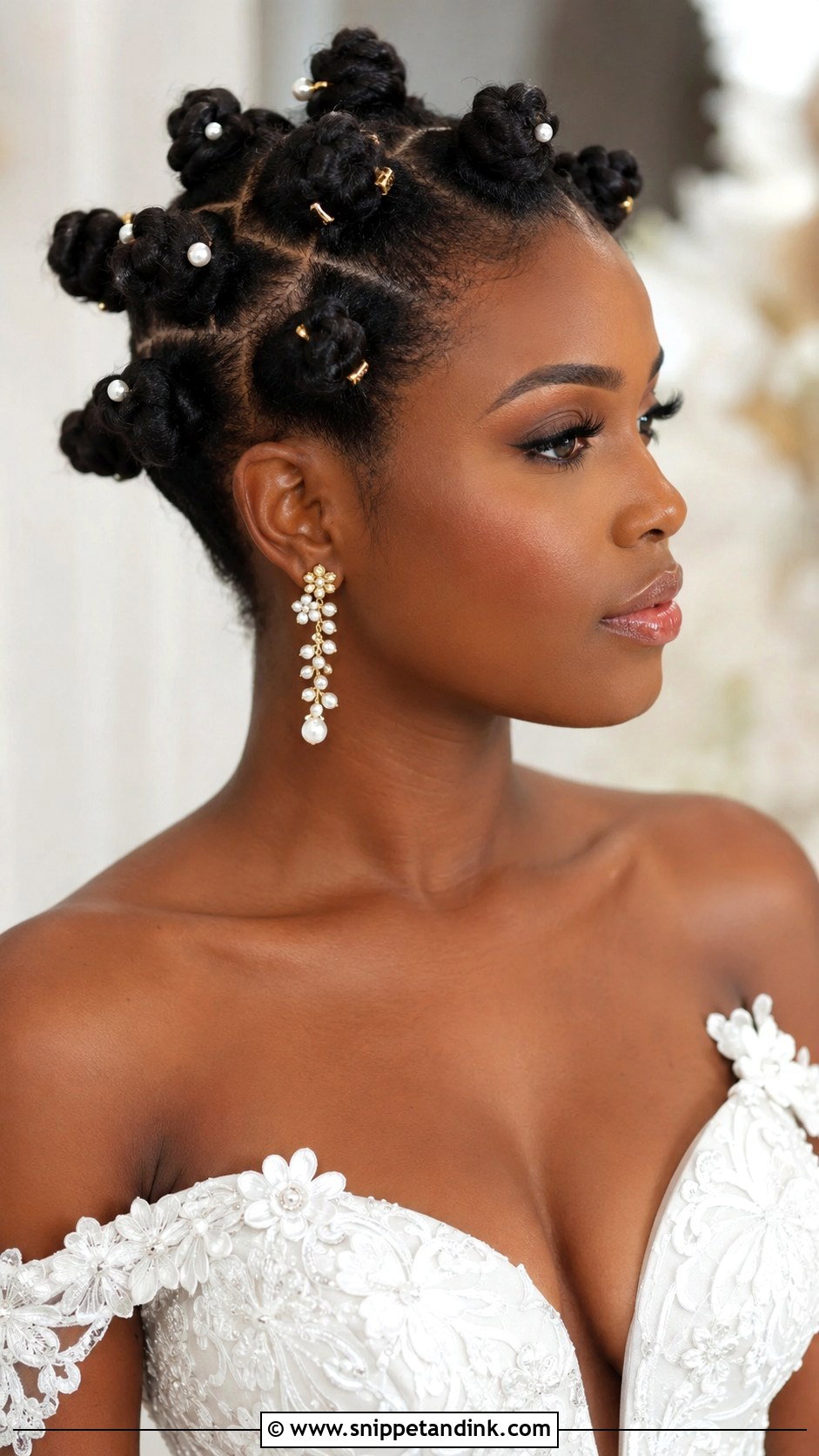
Bantu knots work two ways for a wedding, worn as sculpted knots or unravelled into a knot-out. Worn as knots, they need clean parting and sit best on type 4 hair, which holds the coil without slipping. As a knot-out, set them on almost-dry hair the night before and unravel only once they’re completely dry, otherwise the curls lose their shape. Small pearl pins in the centre of each knot are enough decoration.
12. Floral Crown With Natural Curls
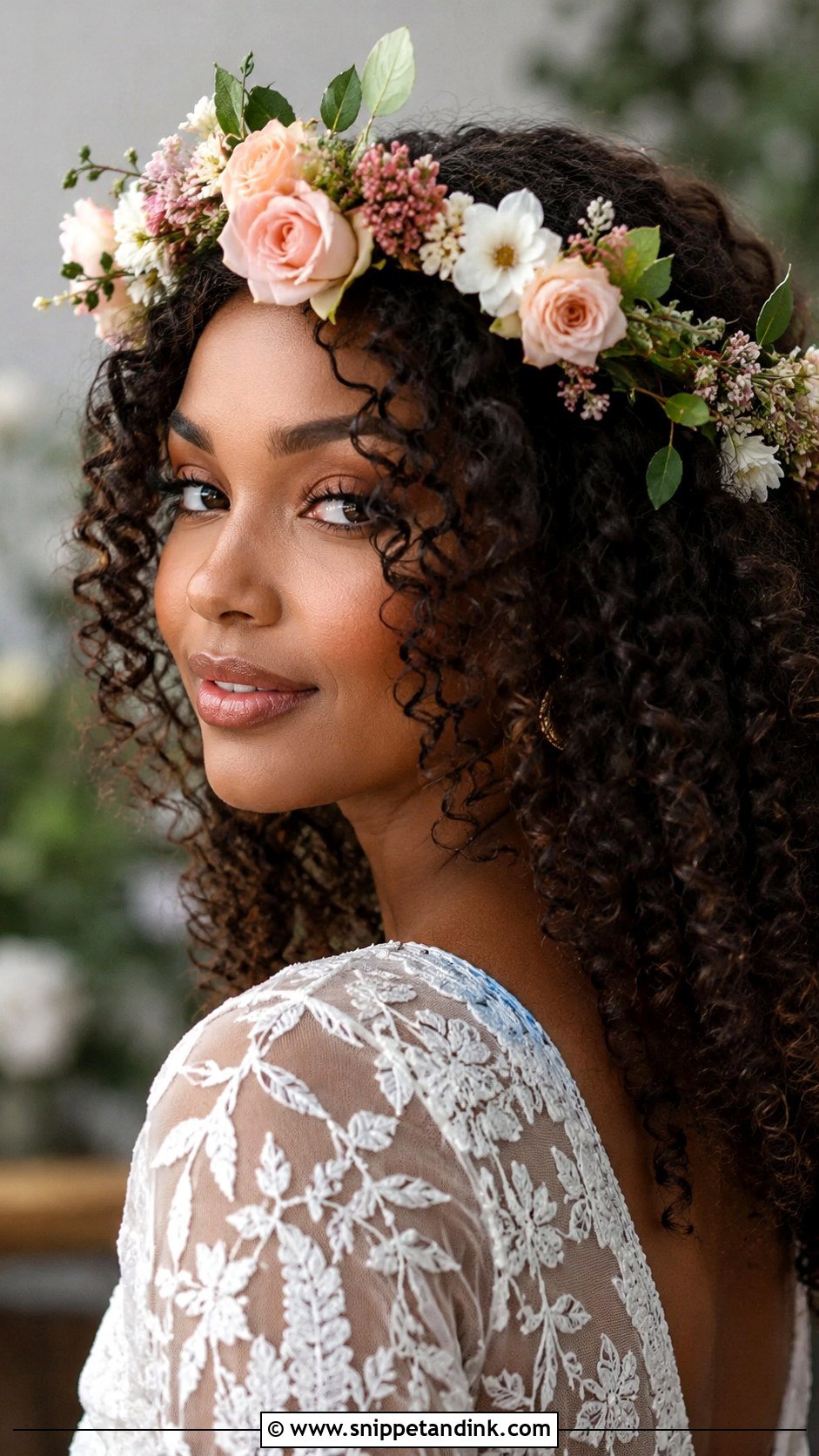
Fresh flowers on natural curls bring colour close to your face, but blooms need careful choosing. Soft petals like garden roses bruise and wilt against warm hair within a few hours, so I ask florists for sturdy flowers such as spray roses, waxflower or orchids for anything worn on the head. Matching your bouquet keeps things tied together. Have the crown wired onto a comb or pinned in at four points so the curls underneath can still move.
13. Sleek Braided Bun Updo
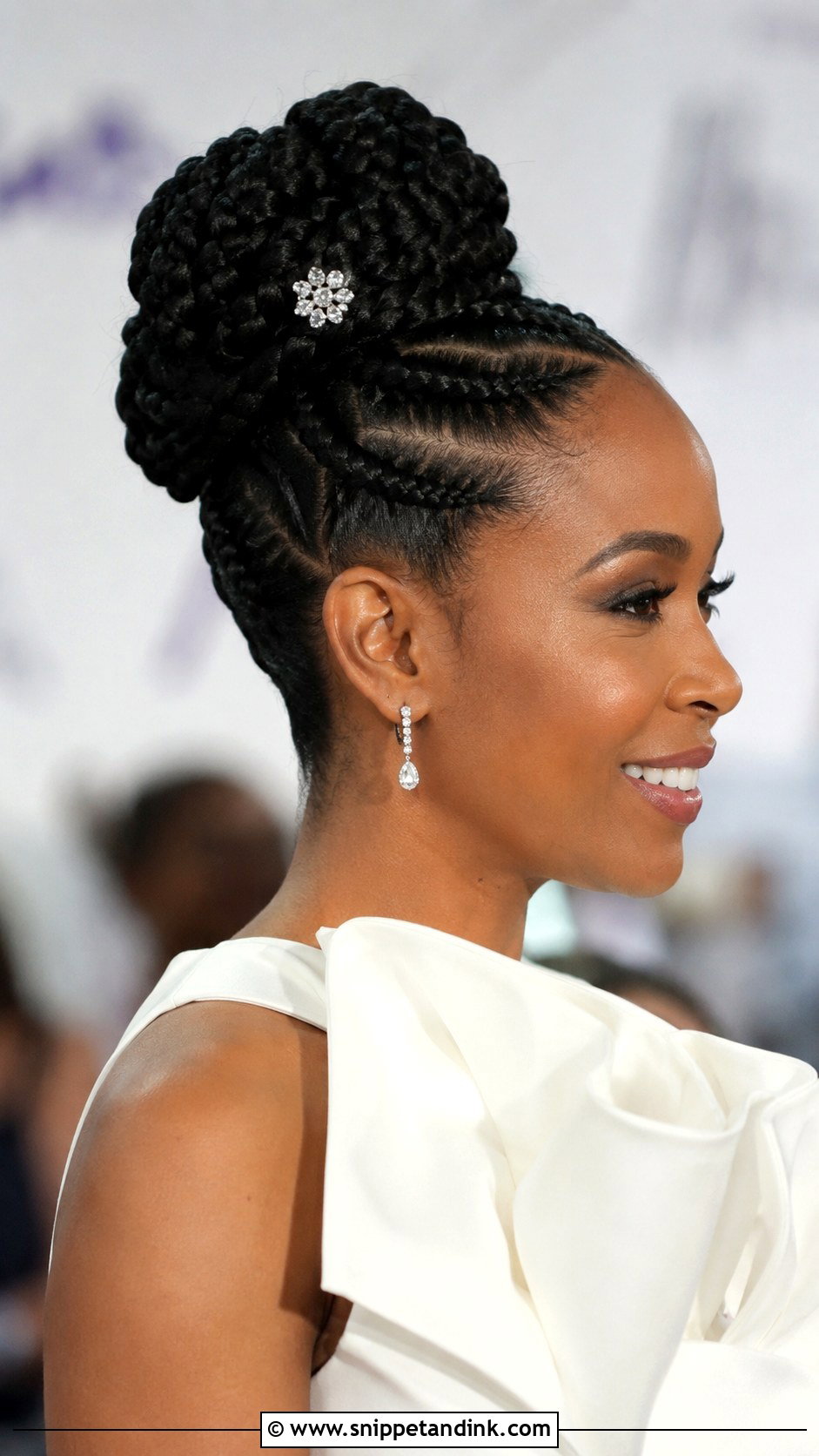
A sleek braided bun is about precision. The braids need stretched hair and clean, straight parts, and the bun should be pinned flat to the head so it reads as one shape under a veil. Edge control laid in thin layers holds better than one heavy coat, which can flake white under a camera flash. A single pearl or crystal pin near the bun is plenty; this style looks sharper with less.
14. Curly Ponytail Wedding Style
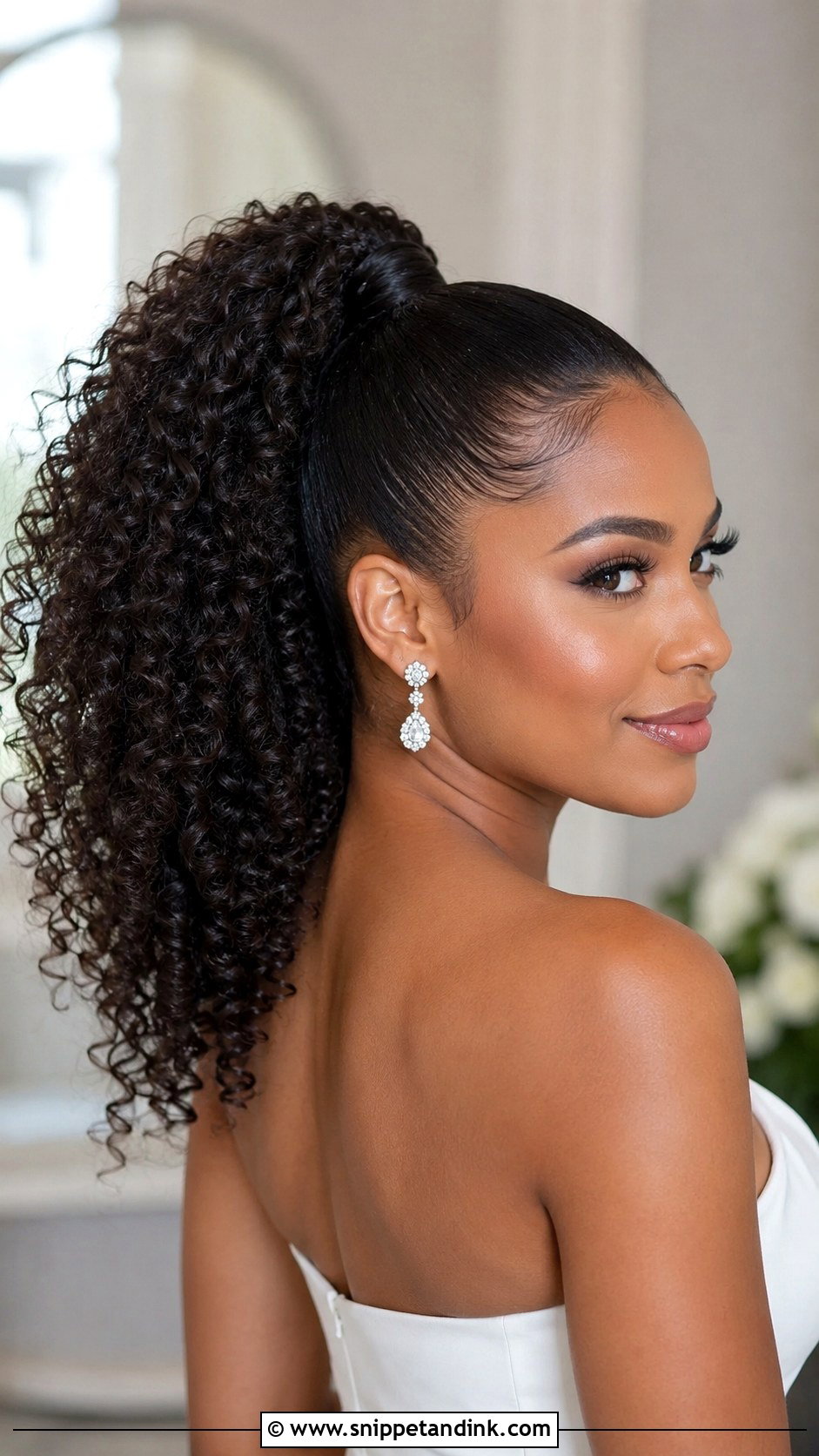
A curly ponytail is fast, and that matters on mornings with a big bridal party. Wrap a section of hair around the base to hide the elastic, then pin it underneath. On thick coily hair I’d use two elastics, one at the base and a second just below, so the ponytail doesn’t sag after a few hours of dancing. A high pony suits a strong jawline, while a low one sits more comfortably against a chair back during the meal.
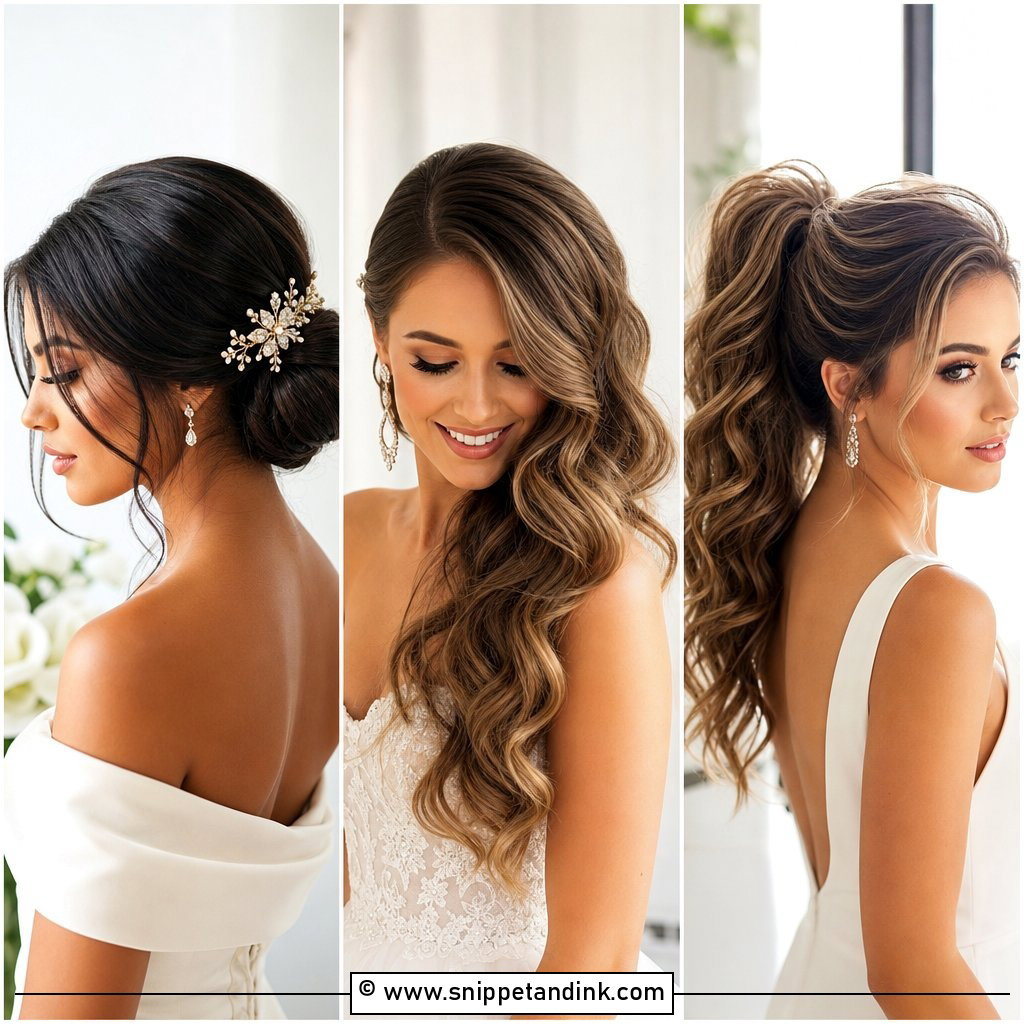
15. Twisted Halo With Curls
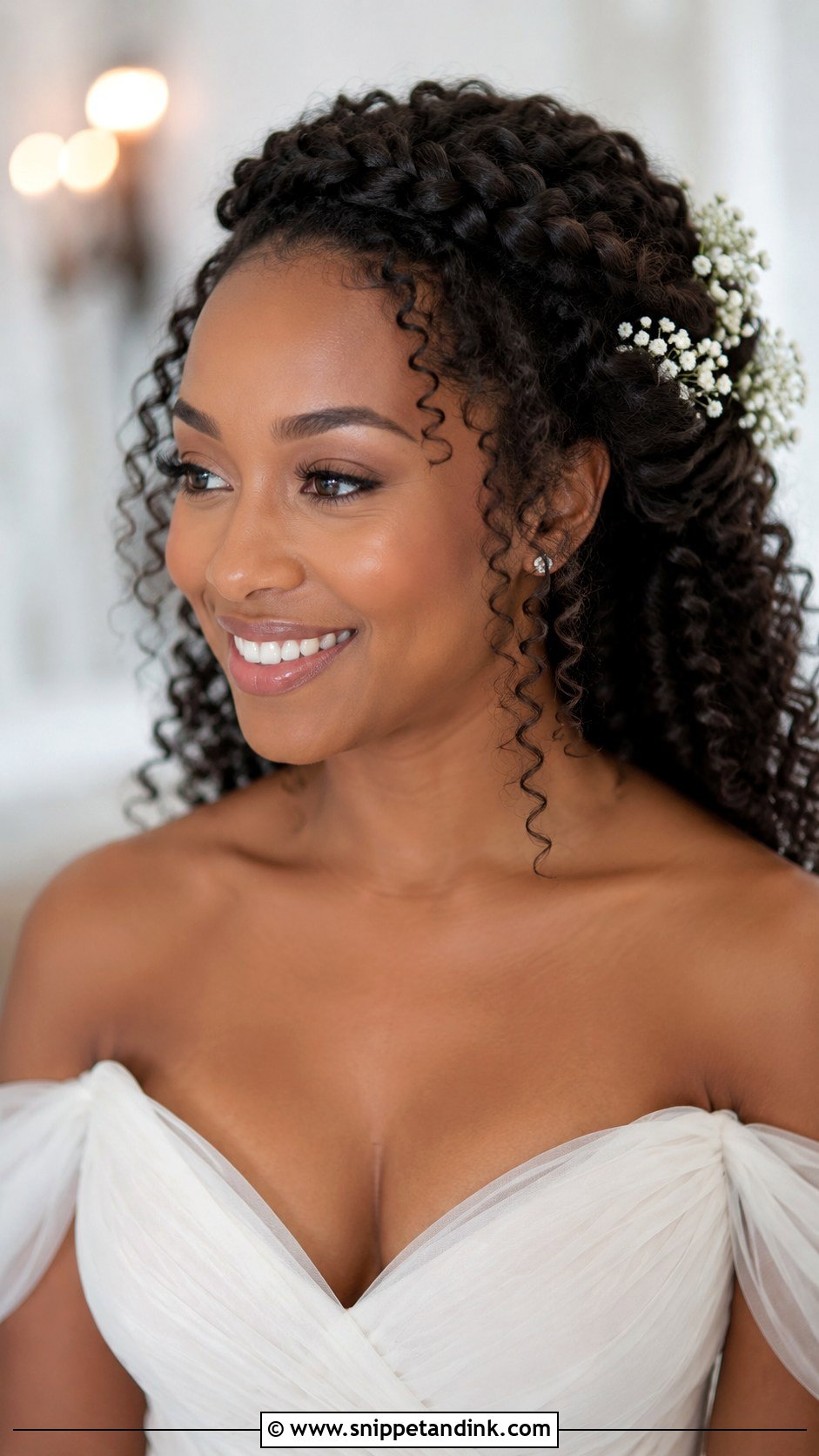
A twisted halo with curls below gives some structure around the face and still shows your length. I twist the halo on slightly stretched hair and pin it every couple of inches, since a twist can loosen as the hair swells through the day. Below it, leave the curls alone once they’re set. Small blooms or jeweled pins along the twist sit neatly and hide the pins.
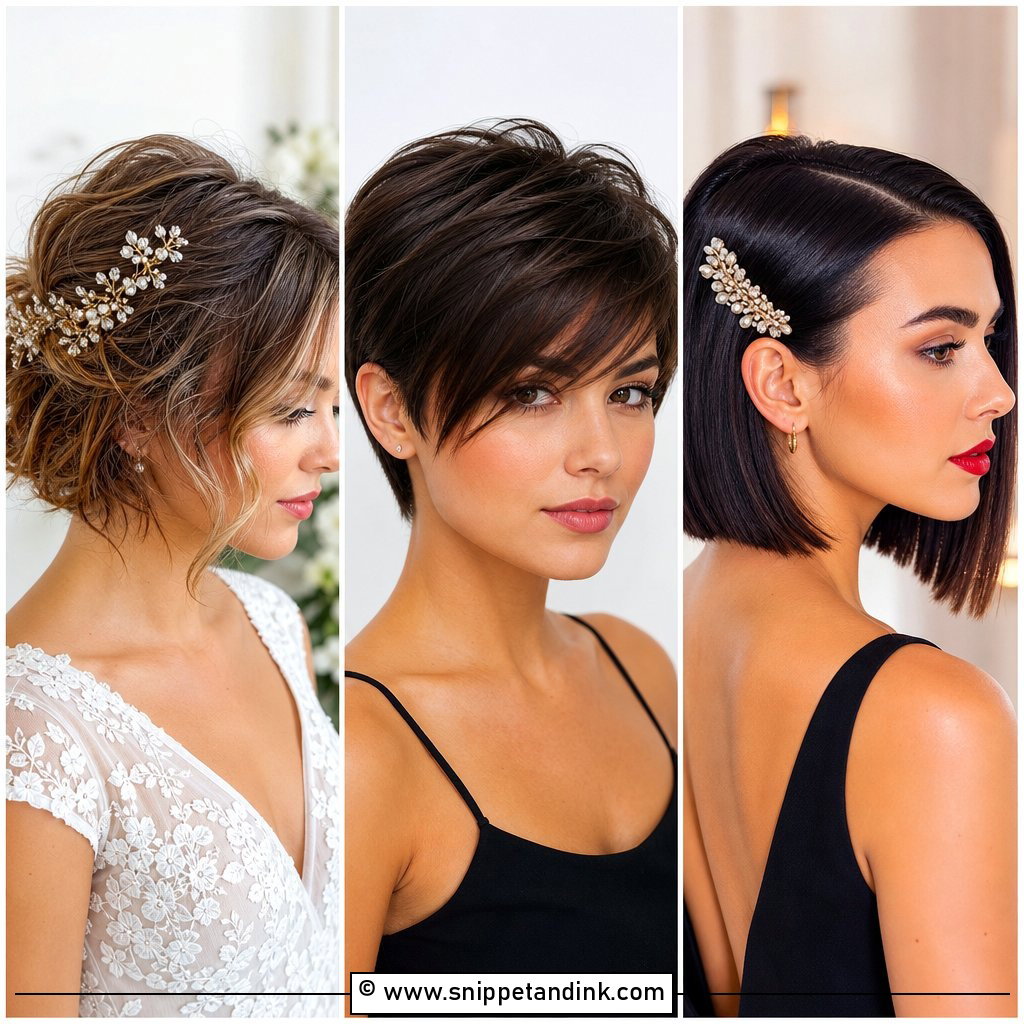
16. Short Natural Hair Bridal Look
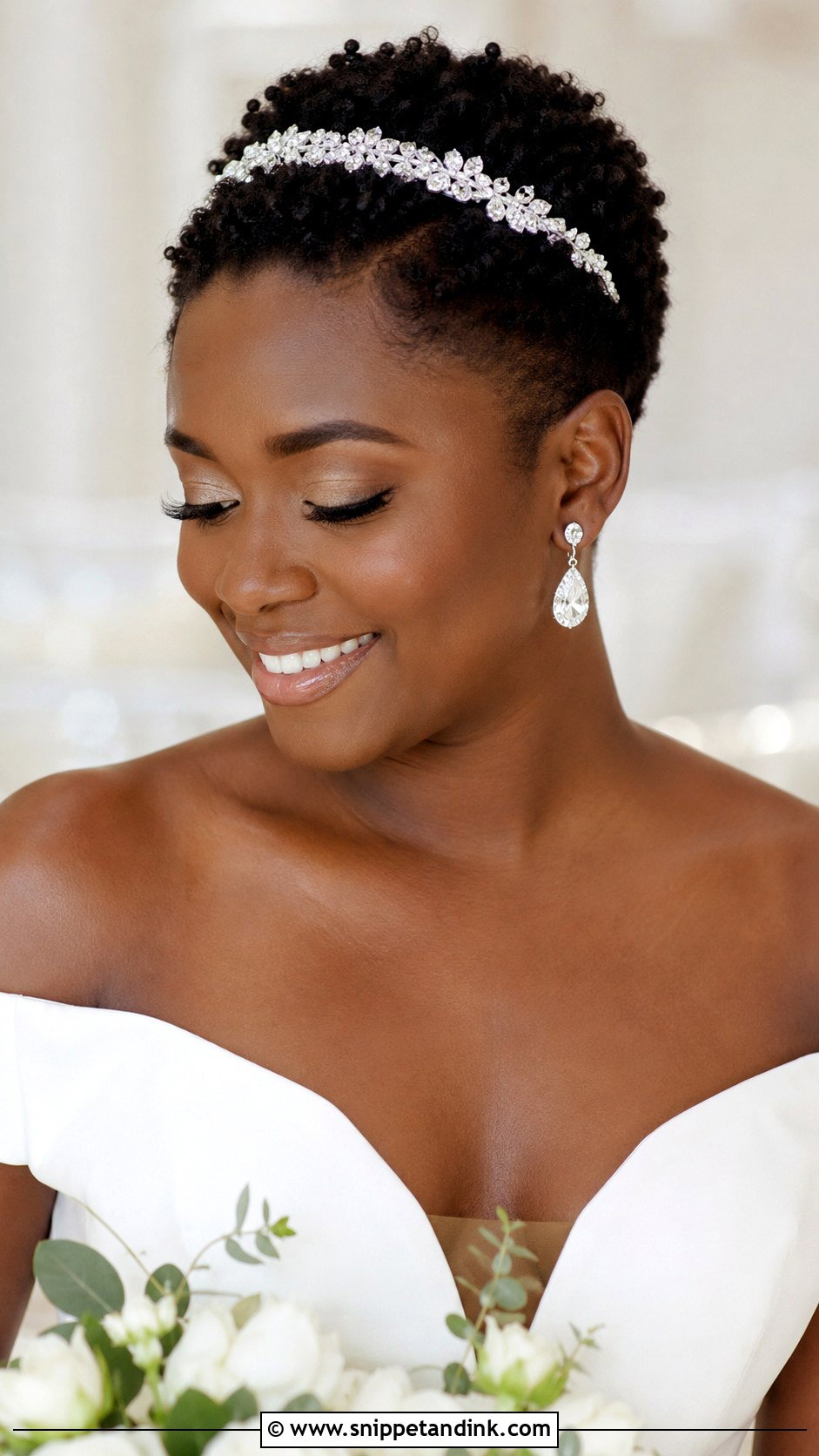
Short natural hair is wonderful on a bride and asks for the least maintenance on the day. With a TWA or a tapered cut, get your shape-up or trim about a week before so the edges look fresh but not freshly cut in photos. Define your curls with a cream and gel, or pick it out for a rounder shape. A jeweled comb or a stiff headband works better than a veil comb, which has very little hair to grip, so if you want a veil, choose one sewn onto a band or clip.
17. Goddess Braids Updo for Weddings
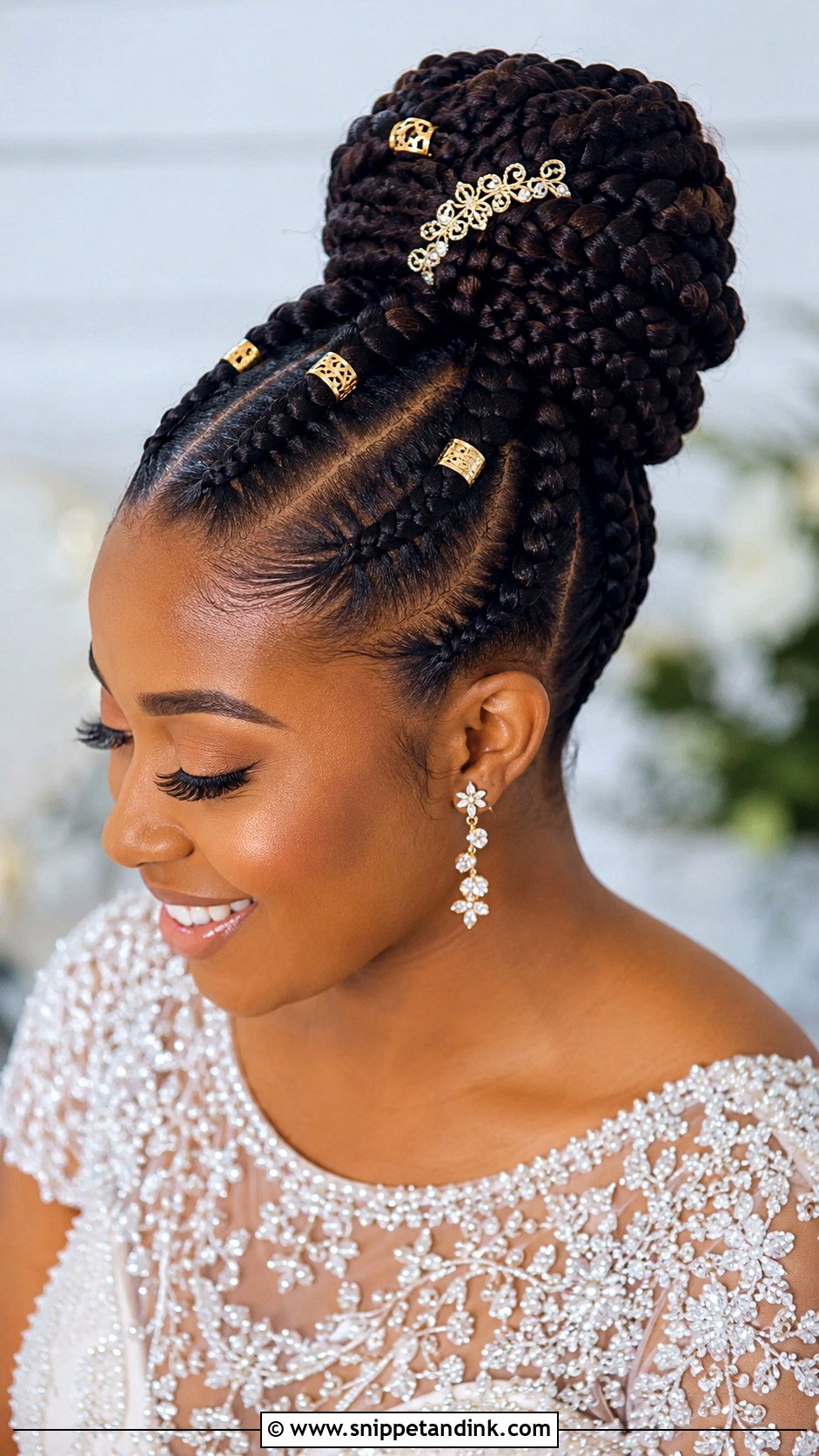
Goddess braids are thicker and faster to install than small cornrows, and the bigger pattern reads clearly from across the room. They’re a true protective style, which suits brides who want to stop thinking about their hair for the week of the wedding. I’d keep the number of braids modest so the updo doesn’t become too heavy at the back. Gold cuffs are easiest to add when the braids are being installed.
18. Curly Updo With Face-Framing Pieces
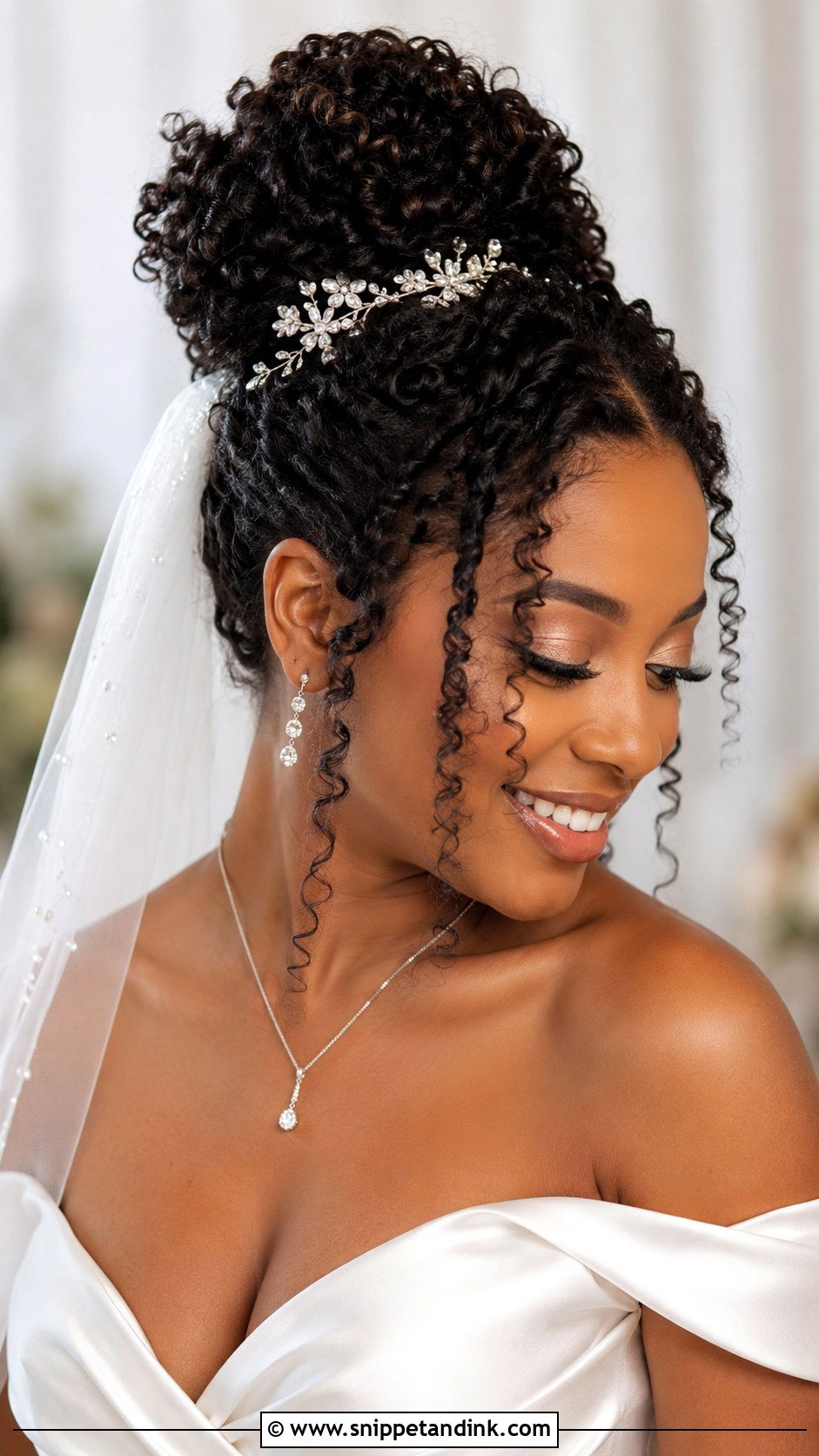
A curly updo with face-framing pieces is the style I’d pick for a bride who isn’t sure about having hair pulled fully off her face. The face pieces are what make or break it: cut or pick out too many and it looks unfinished, so I leave two or three on each side and define them separately. Pin the updo slightly lower than you think, so a veil or headpiece has room above it.
19. Fulani Braids Bridal Style
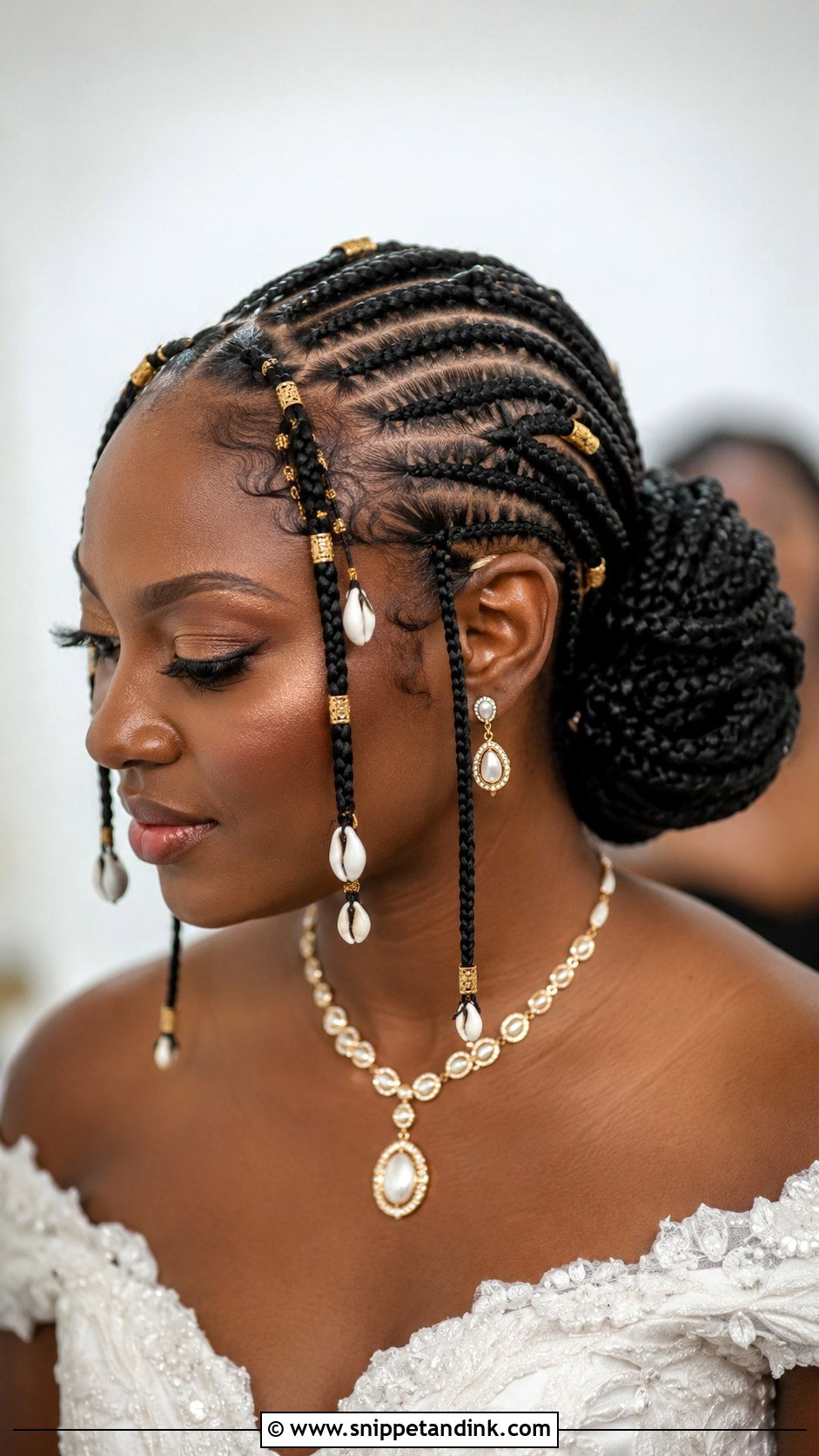
Fulani braids combine intricate cornrows with beads and cuffs, and for many brides they carry family and cultural meaning. The style usually takes several hours to install, so book it a few days ahead, never the morning of. Beads add weight at the ends; if you plan to wear the braids hanging, check that they don’t tug at your edges after a full day. Cowrie shells and gold accents are best chosen with your braider so they’re spaced evenly.
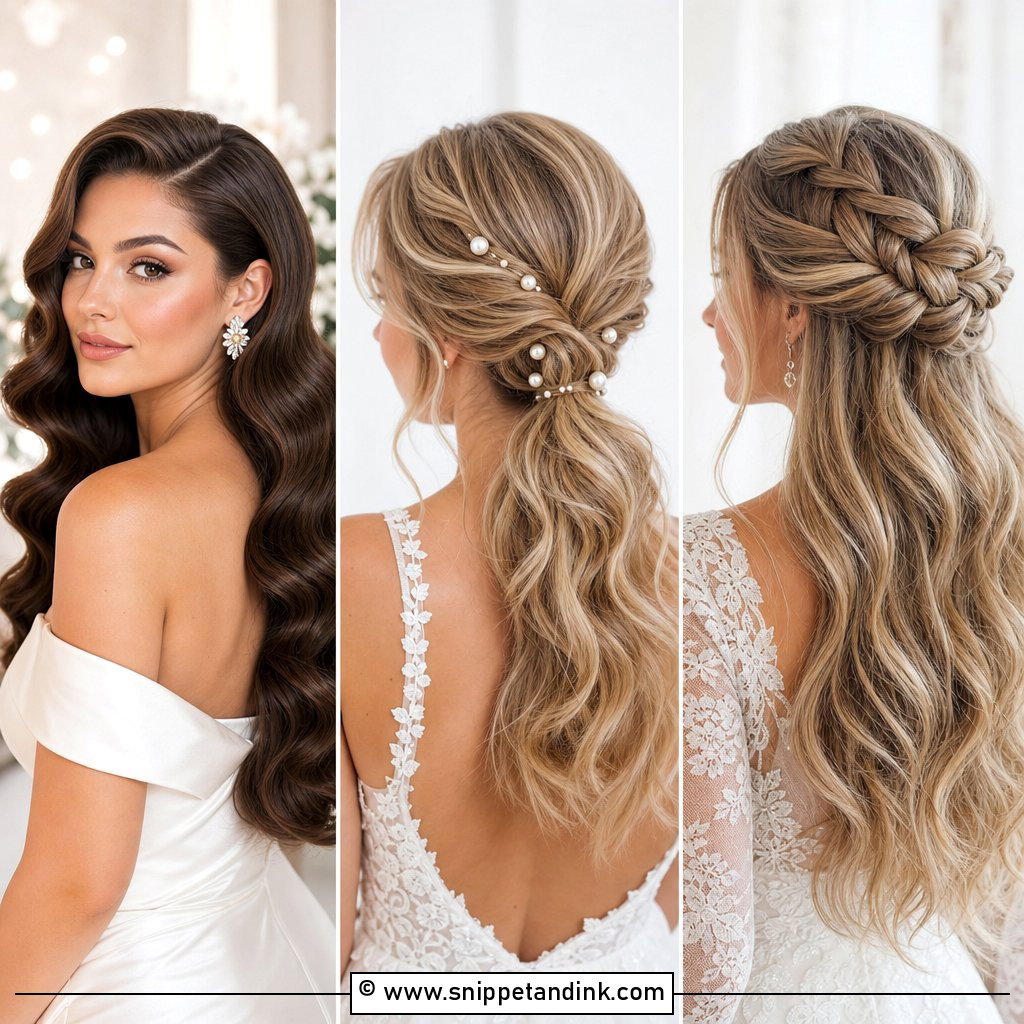
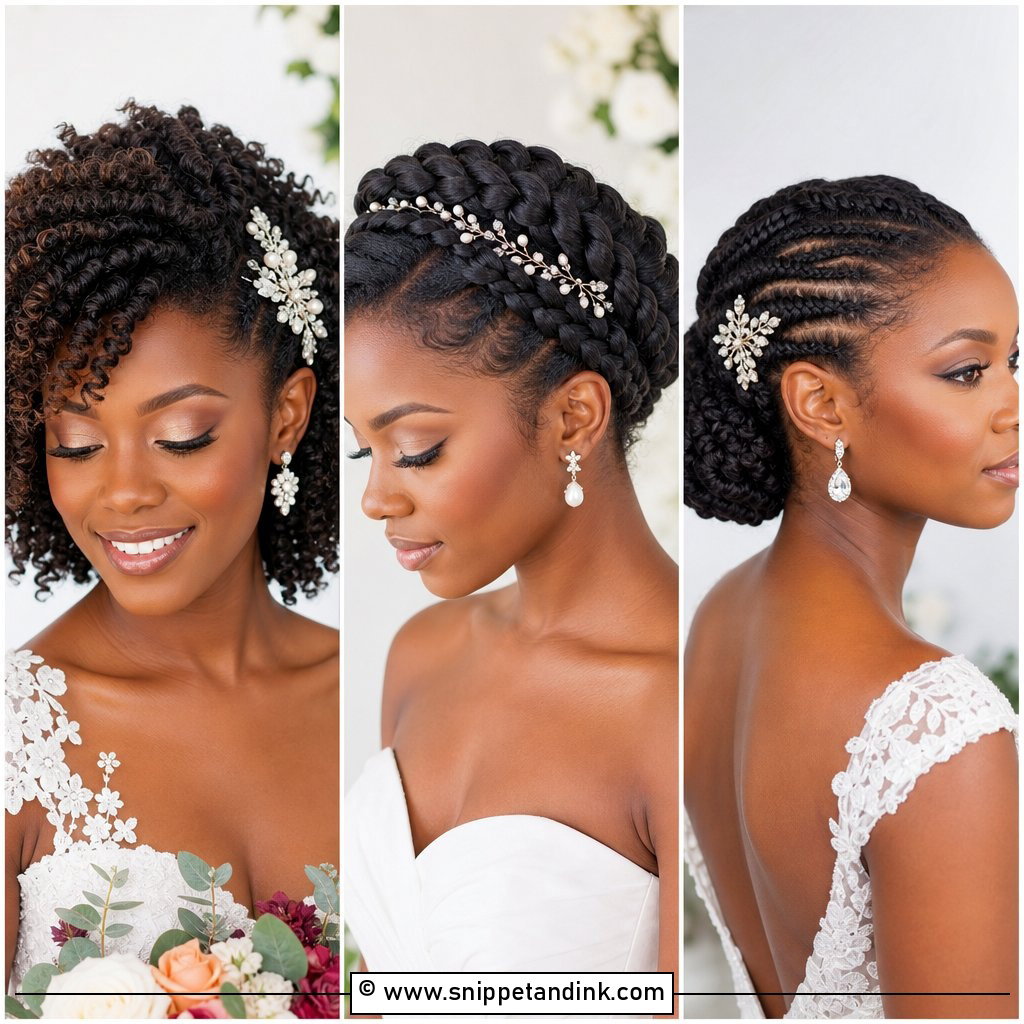
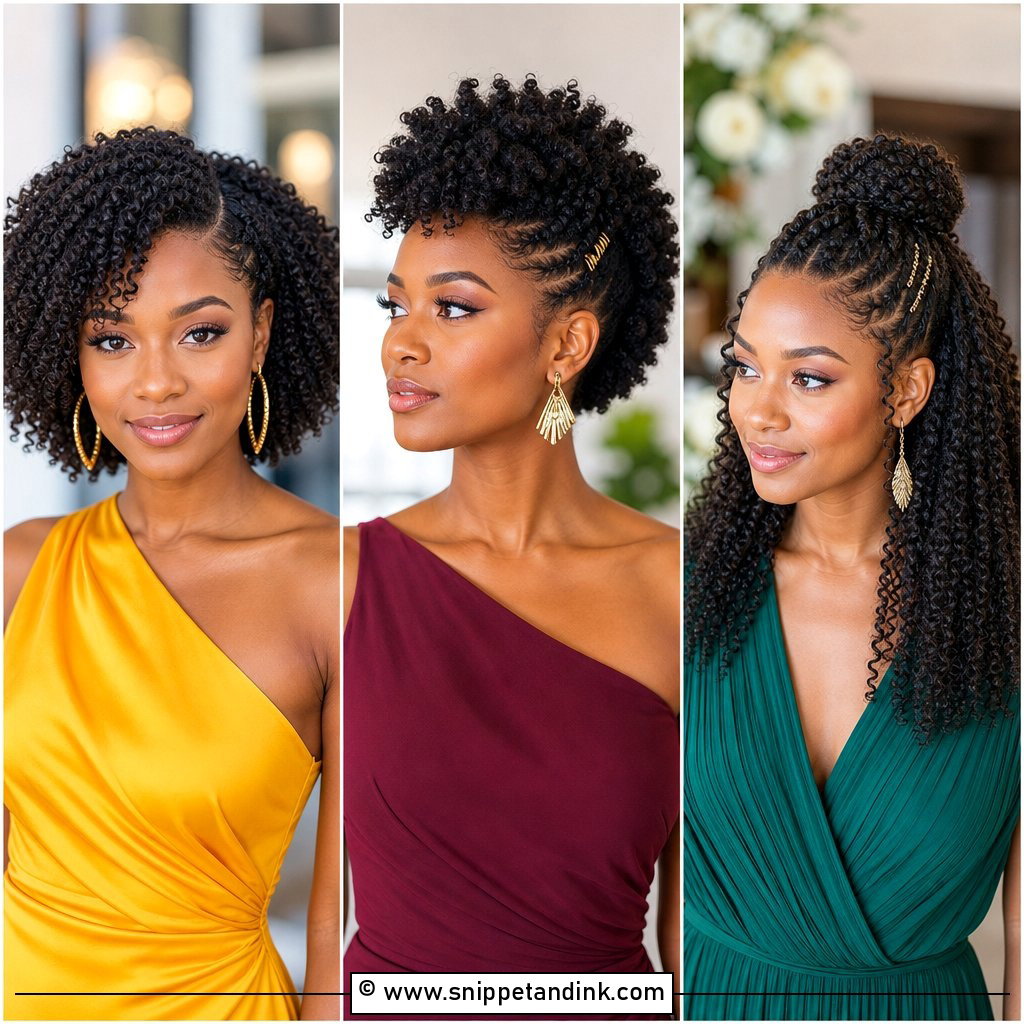
20. Big Curly Hair Down With Veil
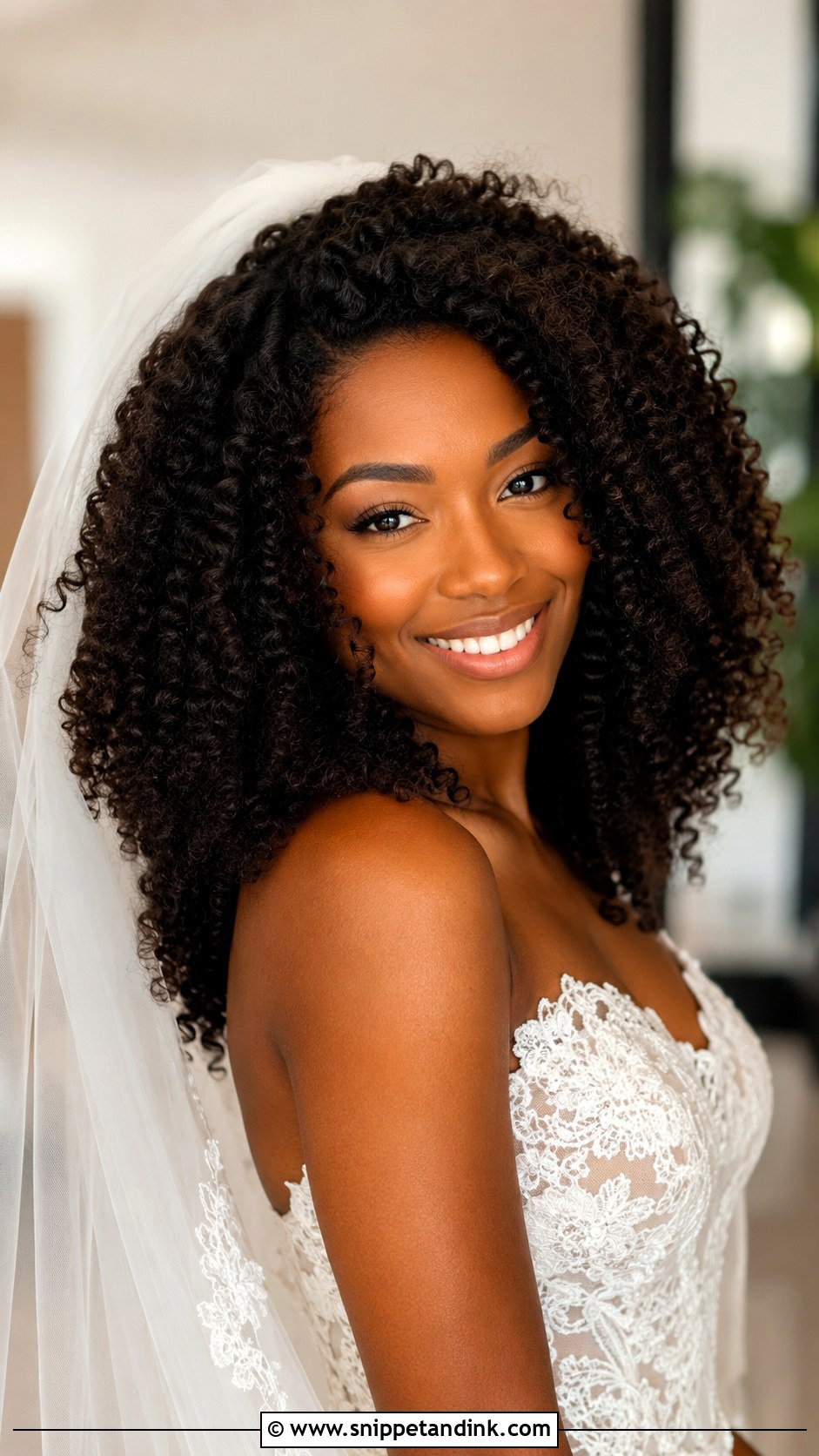
Big curly hair worn down with a veil is simple in spirit, but the veil is what needs thought. A comb pushed into loose curls tends to slide out as the hair moves, so I make a small hidden braid or crossed pins at the crown and slide the comb into that. Position the veil a little behind the crown so it falls over the curls instead of flattening them at the top.
21. Curly Faux Hawk Wedding Look
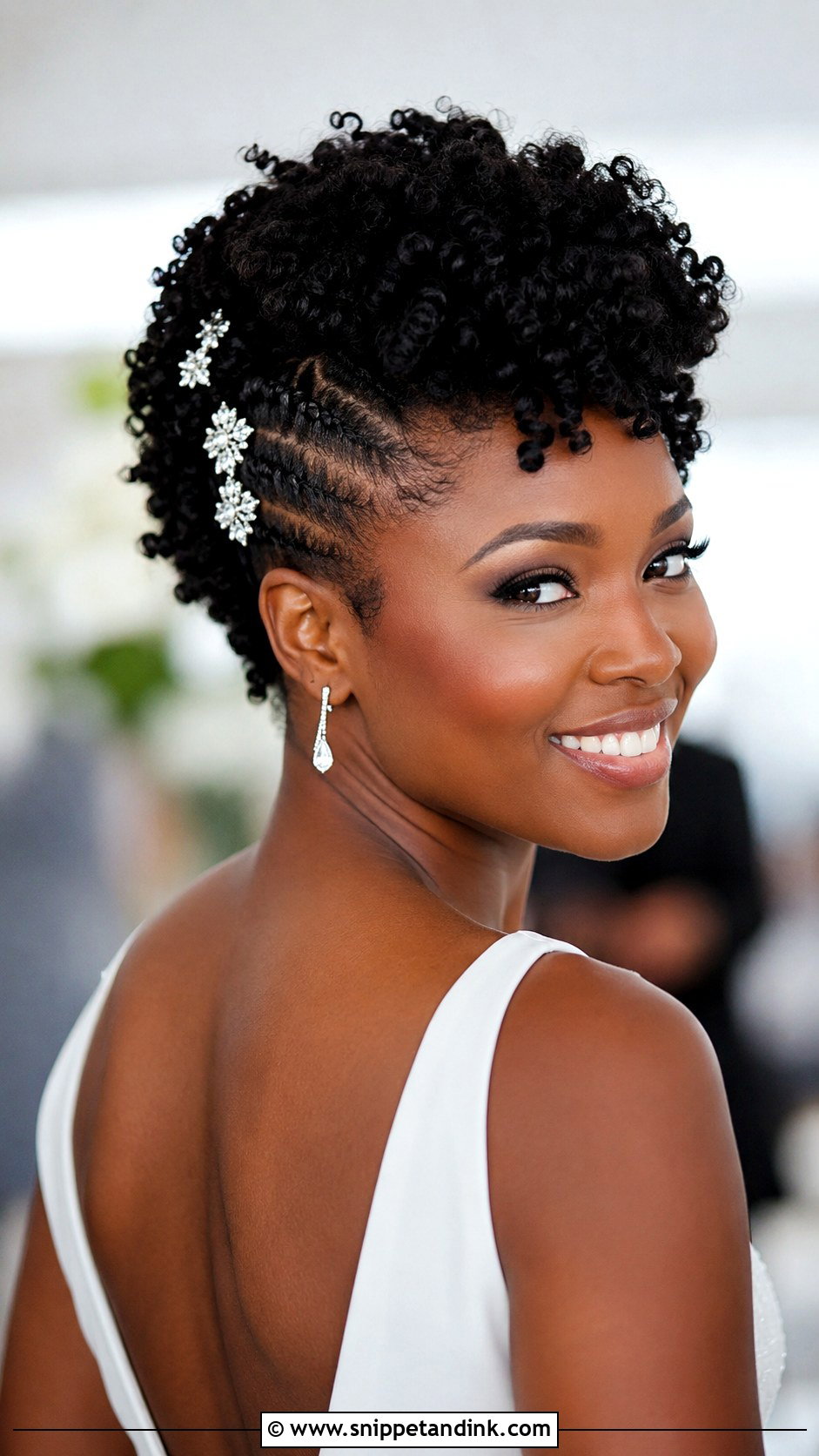
A curly faux hawk pins the sides up and leaves a textured ridge through the centre. It needs density on top and does best on type 4 hair, where the curls stand up without help. I secure each side with flat twists or cornrows before adding jeweled pins, since pins alone in coily hair can loosen and slide. It suits a fitted, minimal gown, where the hair carries most of the drama.
22. Pinned Curls Vintage Bridal Style
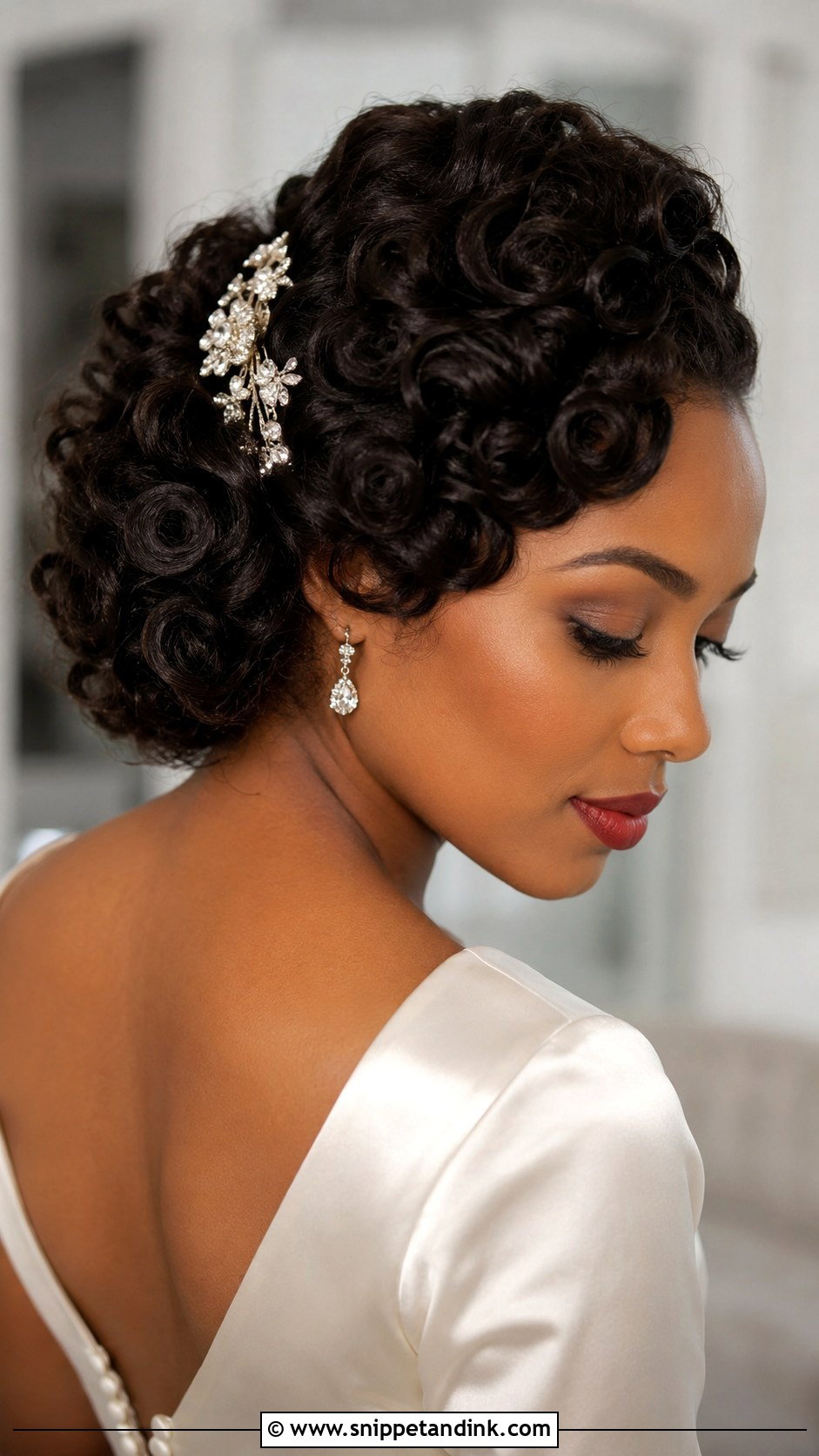
Pinned curls give you a vintage shape built on stretched natural hair. I’d set the curls with rods or flexi-rods the night before, then sculpt and pin them on the morning, because pin curls done on the day rarely hold on textured hair. A birdcage veil or jeweled clip at one side fits the era. In high humidity this shape reverts quickly, so it’s better kept for indoor or cooler weddings.
23. Curly Updo With Gold Accents
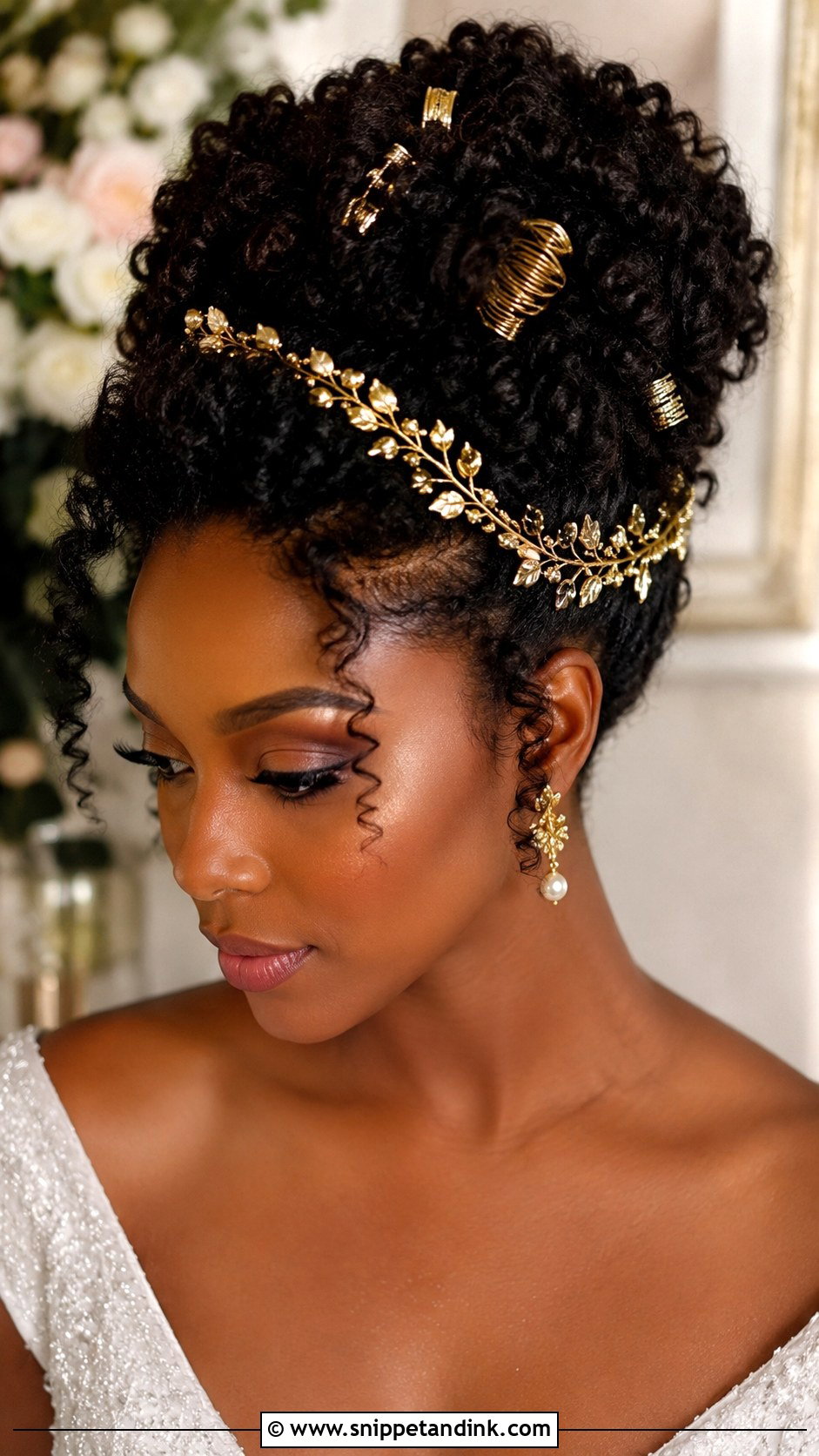
Gold pins, cuffs and vines can turn a plain curly updo into the most personal part of your look. Gold flatters warm and deep skin tones especially well, and it photographs more warmly than silver under evening light. I place accents where the eye naturally goes, near the temple or along one side of the bun, rather than scattering them evenly, which can look busy. Push each pin in against the direction of the curl so it locks.
24. Two-Strand Twist Bridal Updo
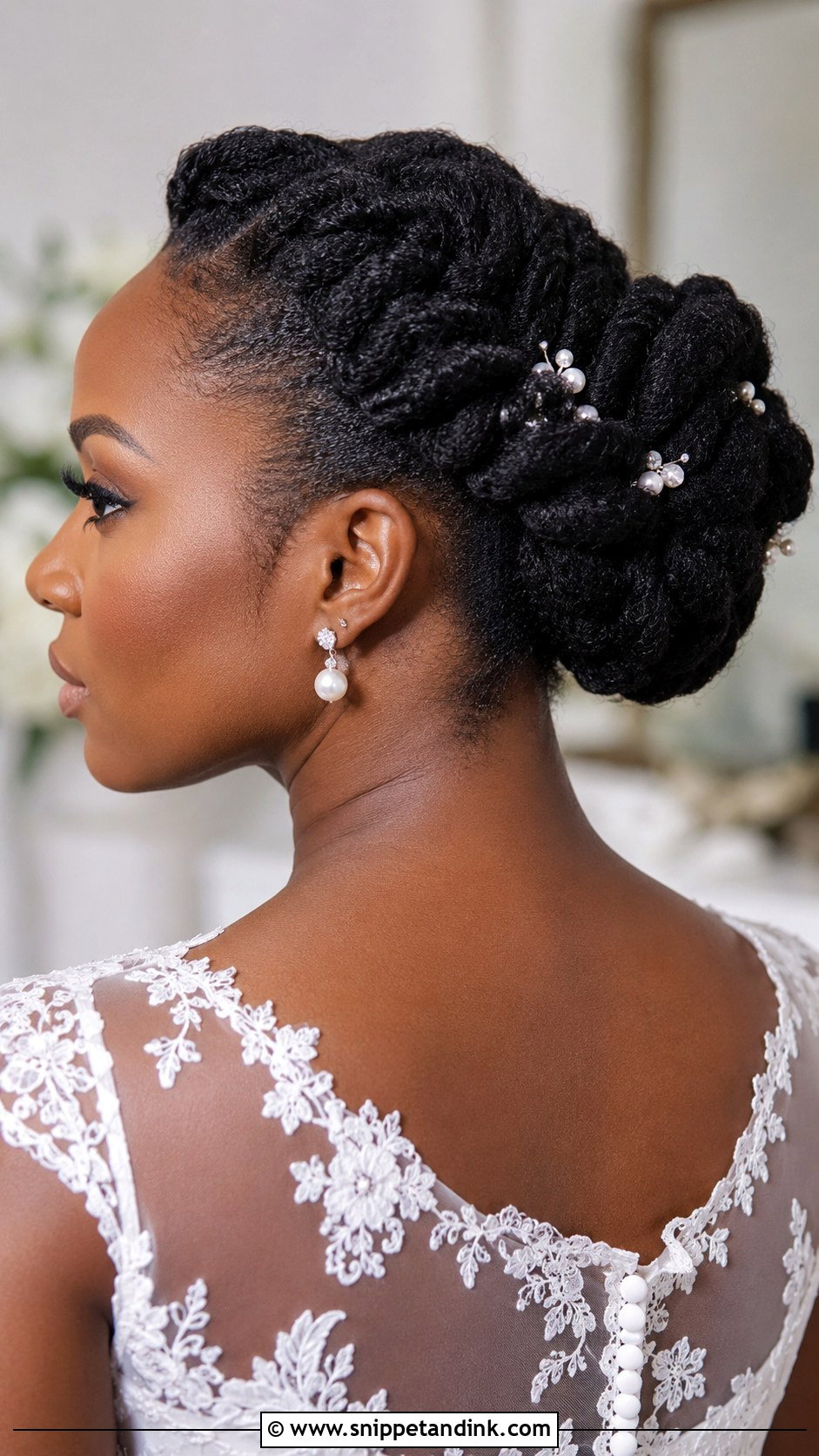
Two-strand twists gathered into an updo hold their definition for days and need almost nothing on the wedding morning. Install them three to five days before so they relax slightly, then pin them up with open U-pins that won’t snag. Pearls slipped between twists add detail without pulling. The only real risk is a dry scalp under the updo, so a light oil the night before helps.
25. Curly Hair With Headband Wedding Look
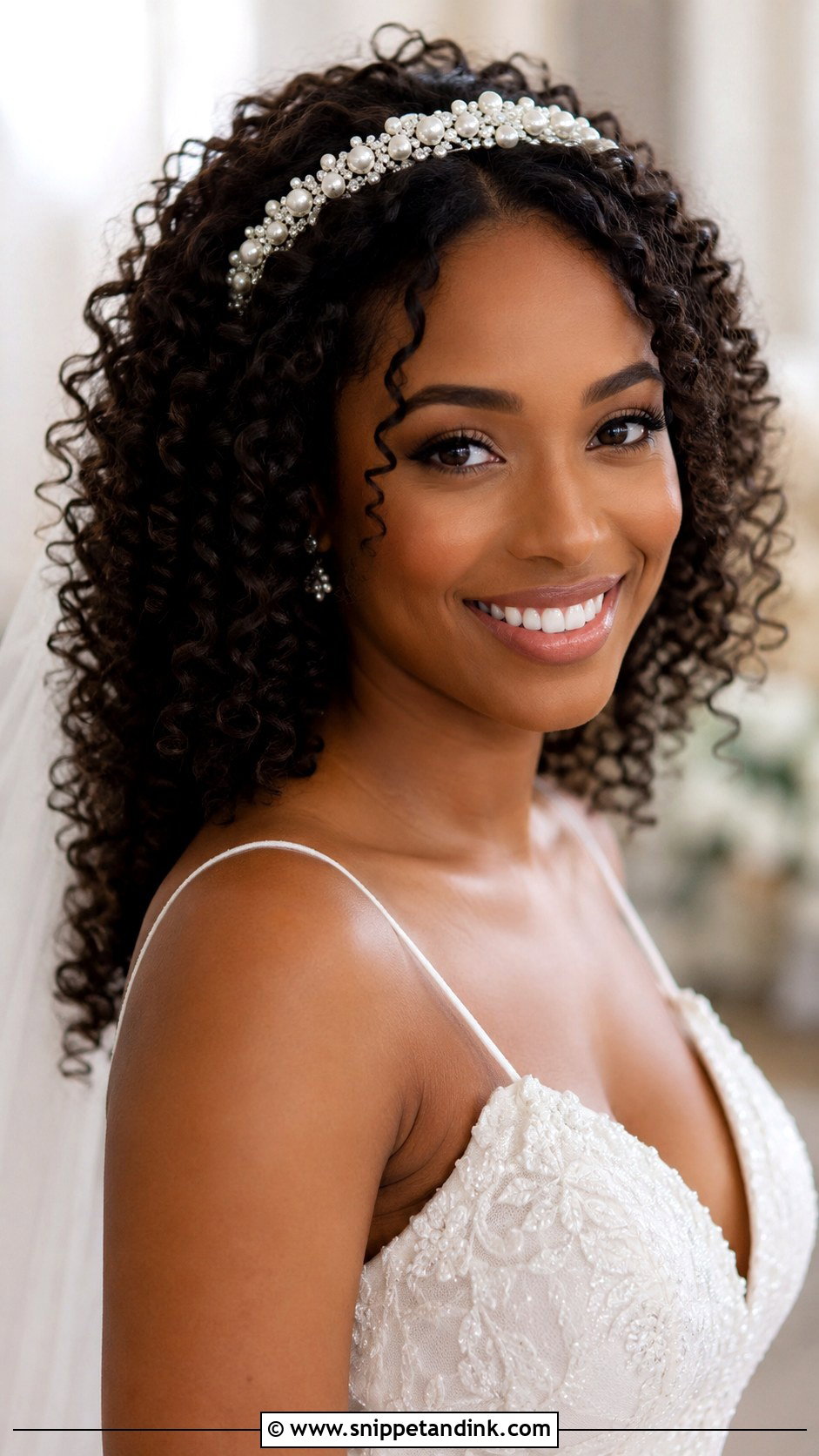
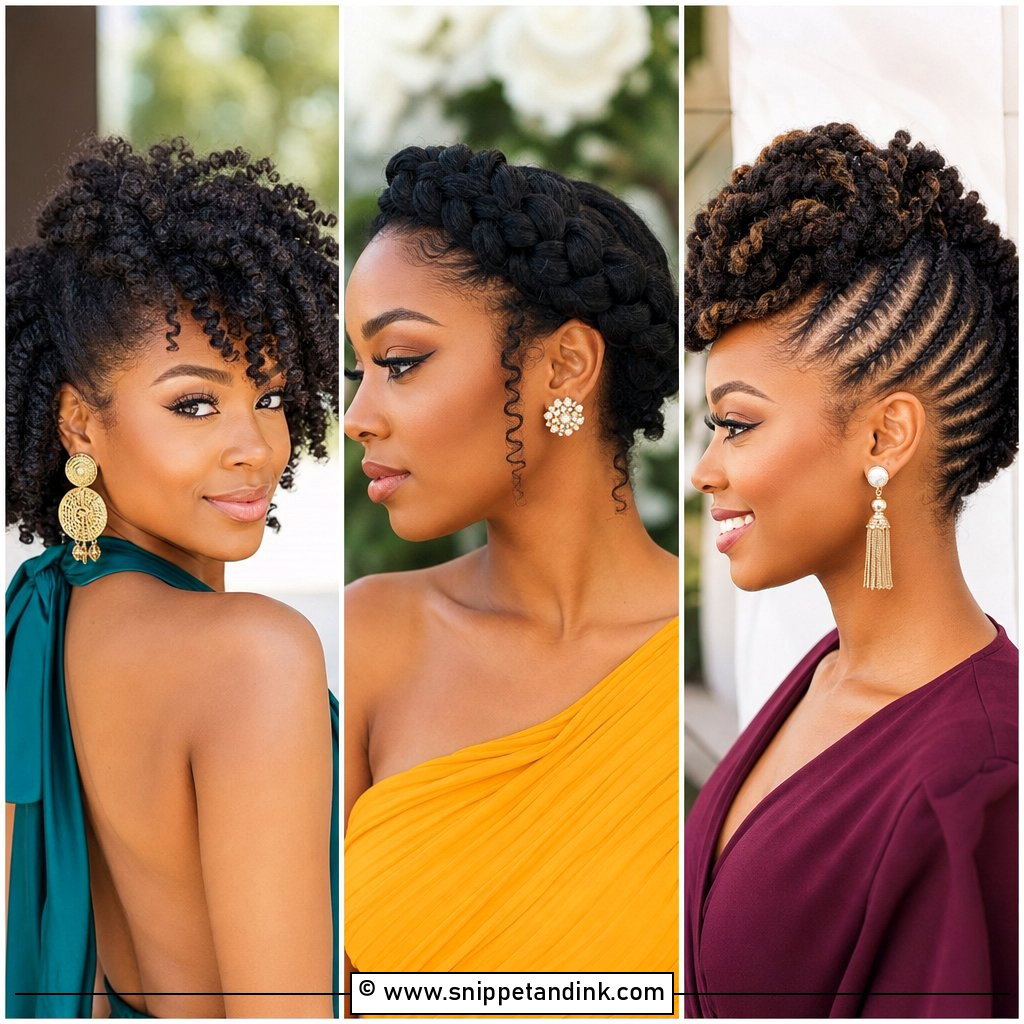
A headband is the easiest accessory for natural curls and the one I trust most on hair that expands. It stays in place where a comb would slip, and it keeps curls off your face without pins. Choose one with a little flex, since a rigid band pressed onto dense hair can cause headaches by the evening. Try it on with the hair styled, not before, so the fit allows for the volume.
26. Curly Mohawk Updo for Brides
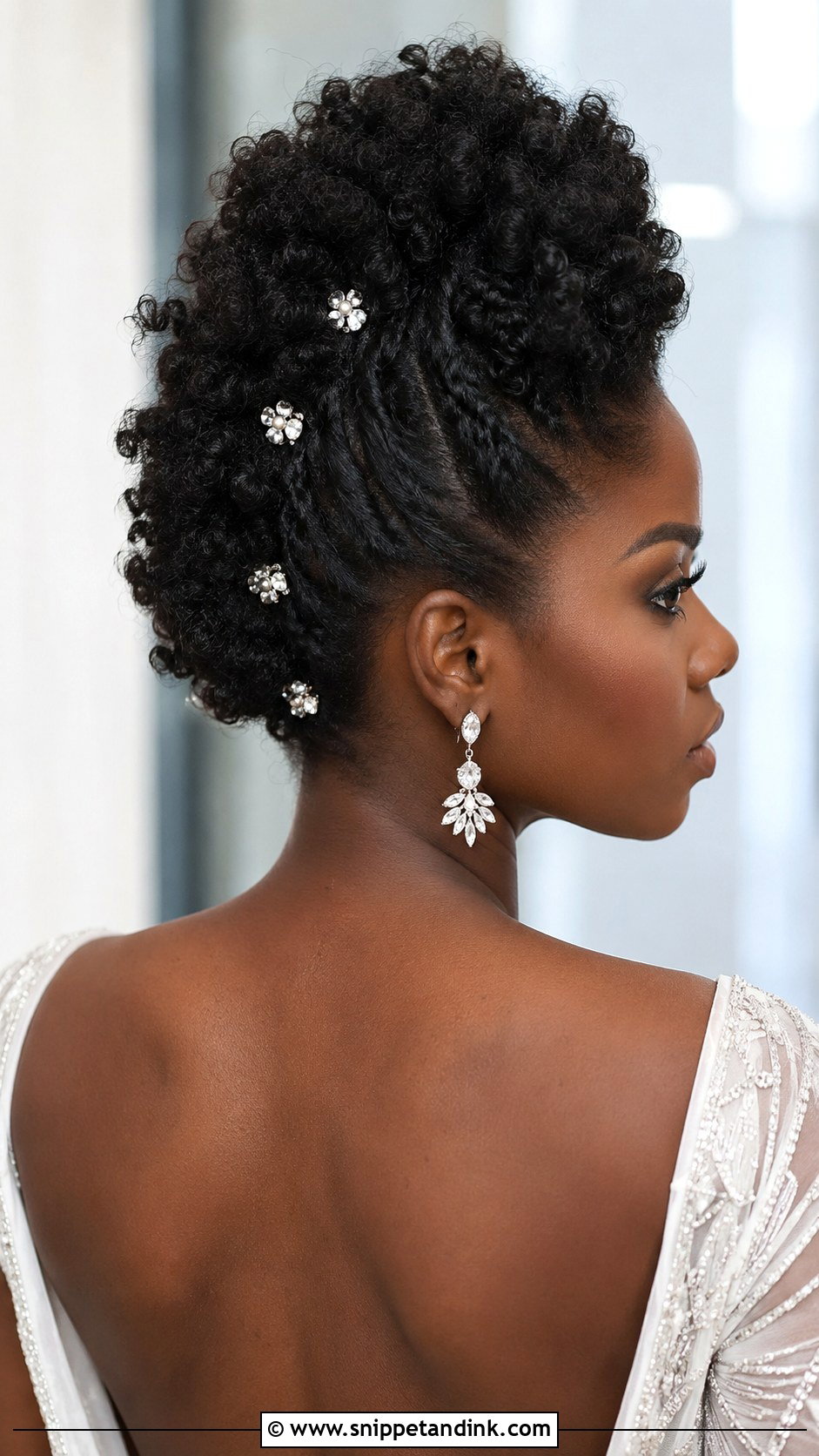
A curly mohawk sweeps the sides up into a textured ridge down the centre. It is bolder than the faux hawk and works best on dense type 4 hair. The sides need to be secured with cornrows or flat twists so the shape lasts; pins alone won’t hold against thick curls for a full day. Jeweled pins or a few small flowers along the sides soften it if you want a gentler finish.
27. Wavy Natural Hair With Side Part
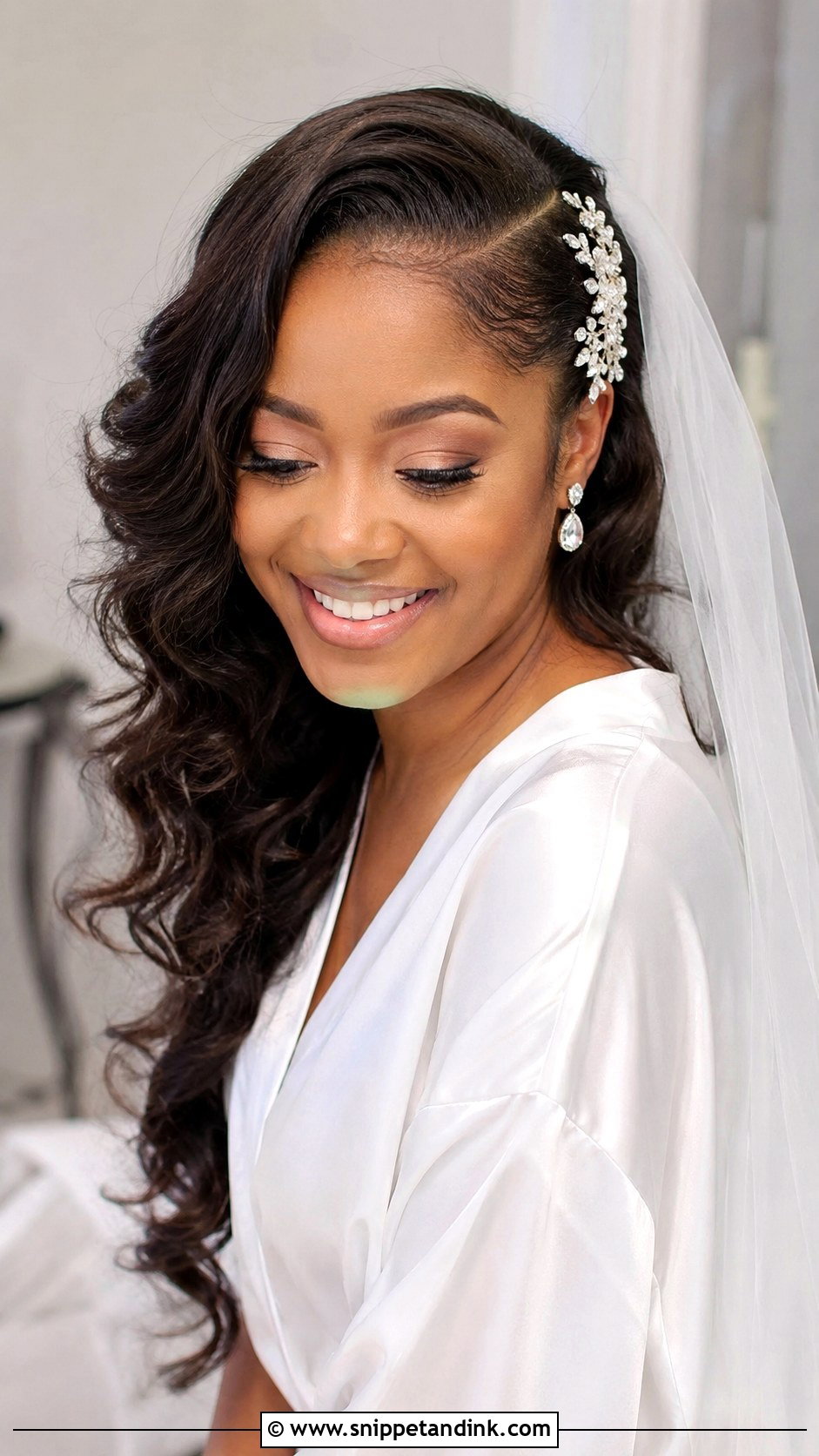
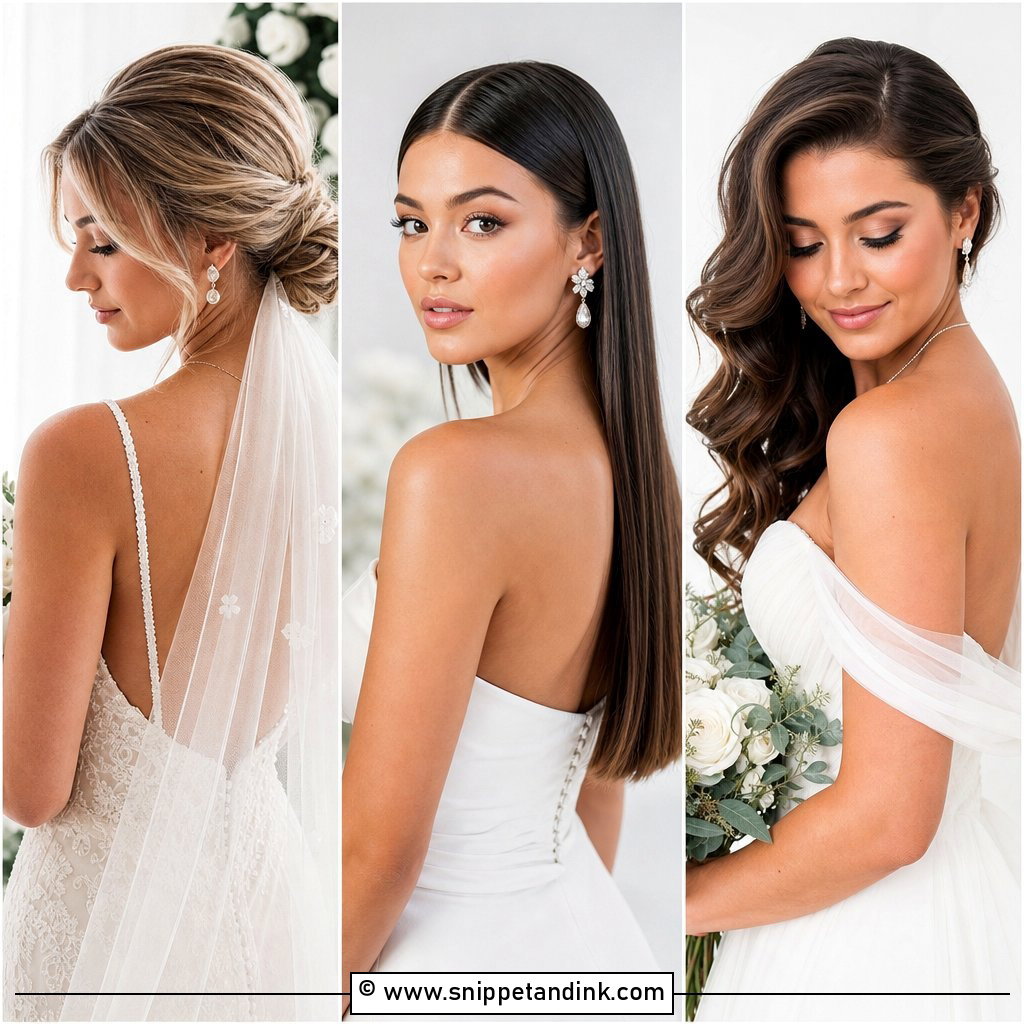
Soft waves with a deep side part come from stretched natural hair, usually a silk press or a roller set. I’ll be honest about humidity: a silk press can revert within an hour in damp air, so this style is safest indoors or in dry weather. If you choose heat, have it done no more than a day before and sleep in a satin wrap. A jeweled clip near the part gives the eye a focal point.
28. Braided Crown With Curly Bun
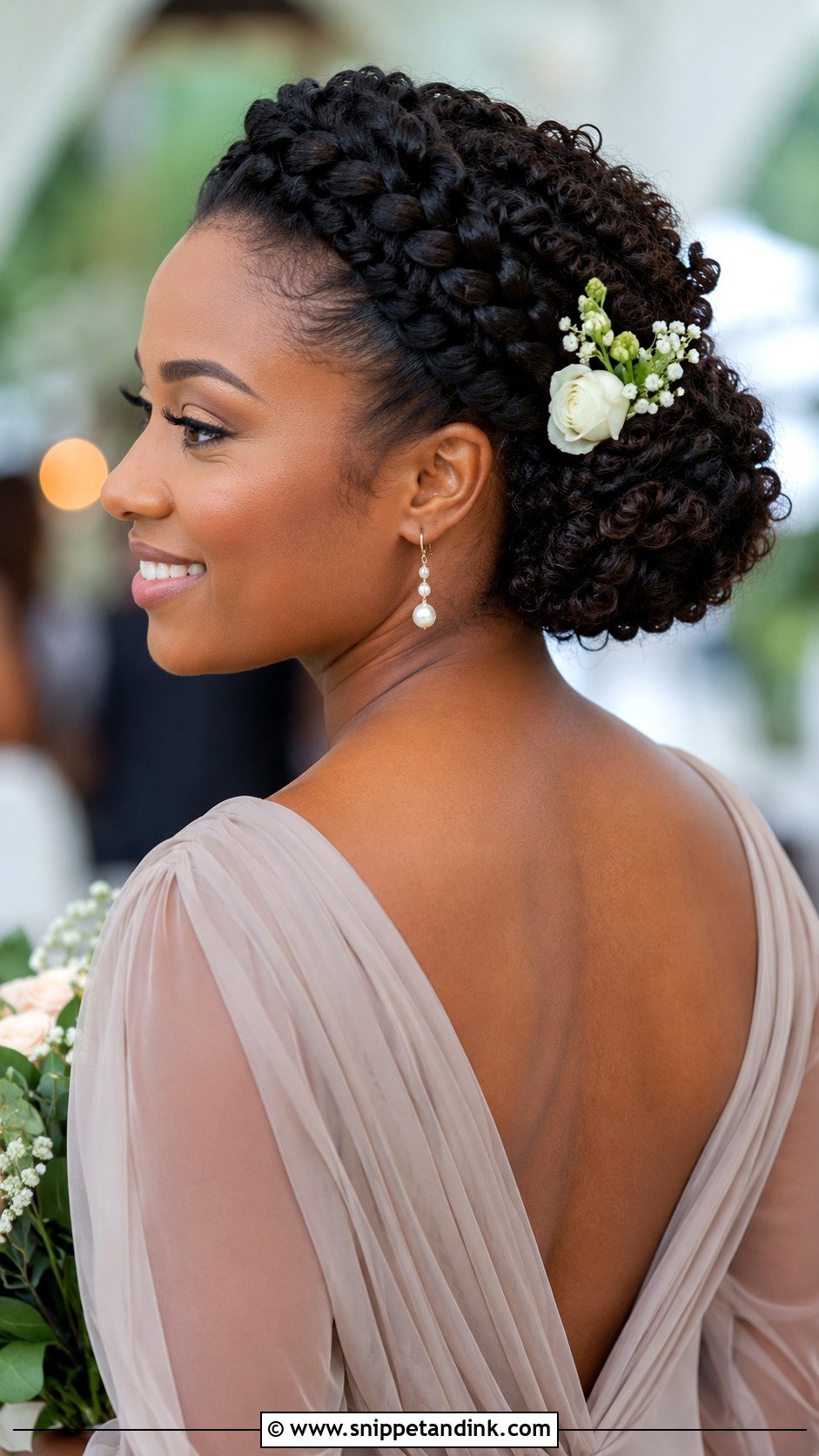
A braided crown with a curly bun mixes structure and texture. The crown keeps your edges neat and holds everything off your face, while the bun at the back stays soft. I build the crown first and pin it tightly, then shape the bun loosely around it, so the soft part can expand without loosening the braid. Flowers or pearls tucked along the braid hide the pins.
29. Curly Lob Wedding Hairstyle
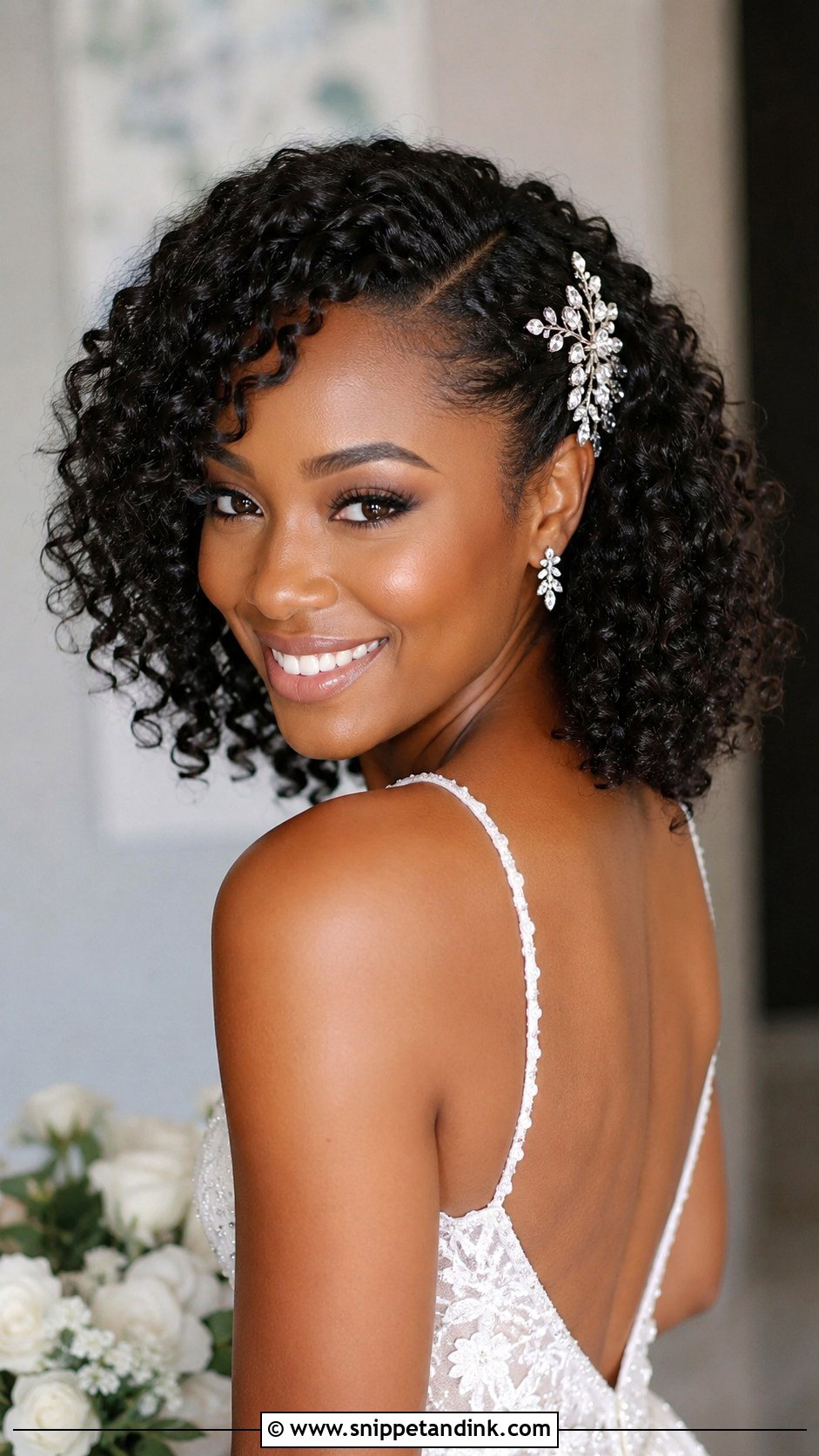
A curly lob is one of the easiest lengths to style for a wedding. It shows off the curl pattern without the weight of long hair, and it makes earrings and a neckline easy to see. Get your trim a couple of weeks before so the ends settle and the shape looks natural. Pin back one side with a jeweled clip if you want your face fully visible during the vows.
30. Curly Updo With Cathedral Veil
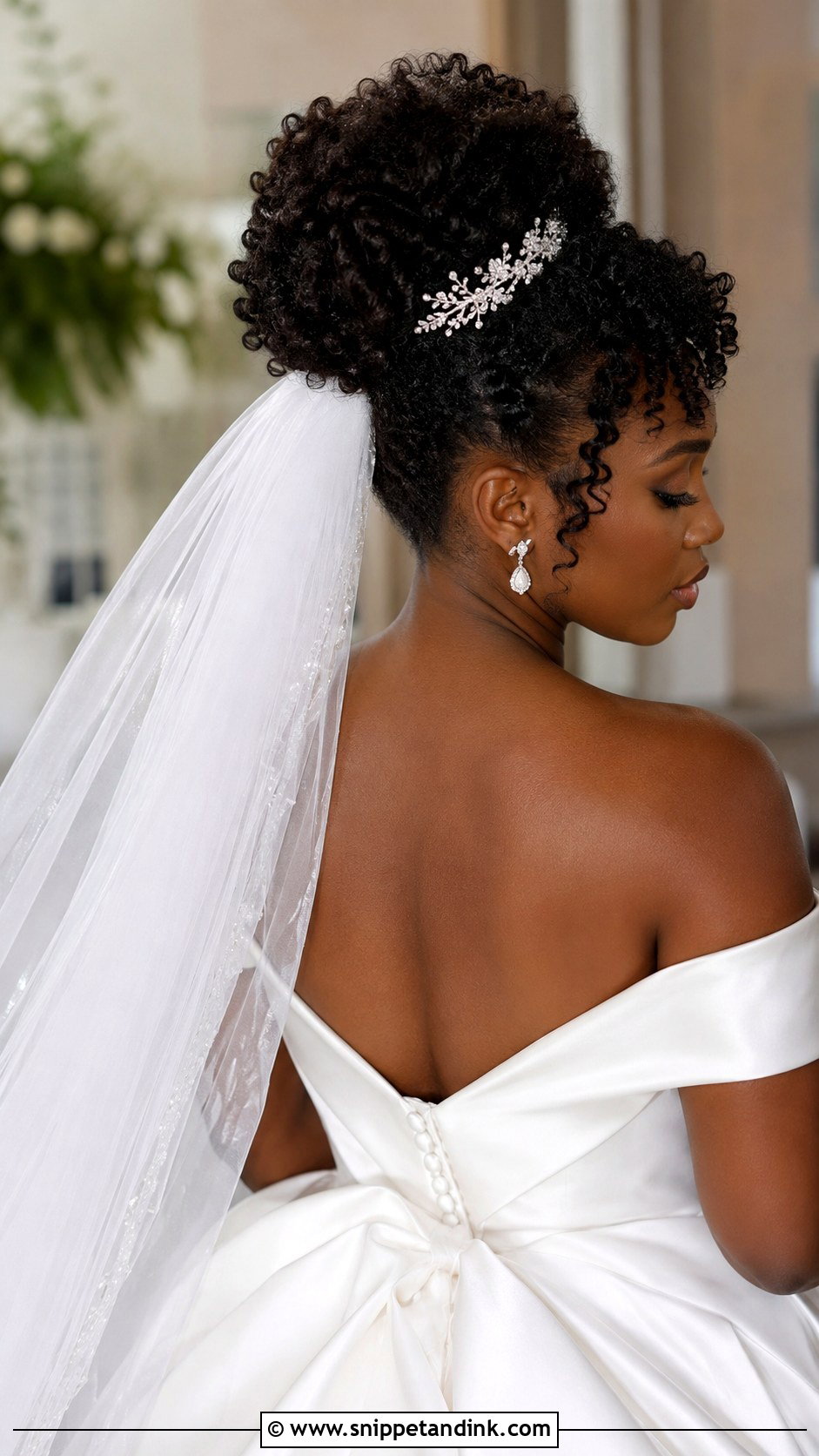
A curly updo under a cathedral veil gives you the full length of fabric trailing behind you. The veil is heavy, so the comb must sit in a firm anchor below the updo, and I usually add two crossed bobby pins on each side of the comb. Test walking and turning with the veil during your trial; a heavy veil pulling backward is the most common reason an updo shifts during the ceremony.
Humidity, Veils and Dancing Are the Real Tests
Most natural styles fail in one of three ways: they swell in humidity, they shift under a veil, or the edges sweat out during the dancing. Each one can be planned for.
In damp or tropical weather
Braids, twists, locs and cornrows don’t revert, which makes them the safest choice for a beach wedding or a humid summer. Stretched styles and silk presses need a dry indoor setting. Choose a gel with real hold for defined curls, and avoid heavy creams alone, which let curls swell into frizz.
Under a veil
A veil comb needs something firm to grip. I make a small hidden braid or crossed pins where the comb will sit, which stops it from sliding through loose curls. Practise taking the veil off at your trial, so whoever helps you on the day knows where the pins are.
Through the reception
Edges laid with heavy gel can sweat out and look shiny after a lot of dancing. Lay them with thin layers and a soft brush, and give a bridesmaid a small kit with edge control, a silk scarf, a few matching pins and a spray bottle of water. A light mist and a gentle reshape fixes most frizz at the halfway point.
Questions That Reveal a Stylist Who Knows Coily Hair
Not every bridal stylist works with textured hair every week, and it shows in the details. Before you book, ask to see photos of natural styles they’ve done on hair like yours, not just on looser curls.
- Do you work on my hair as it is, or do you need it stretched first?
- Which products do you use for hold, and will they flake under a flash?
- How do you anchor a veil comb in coily hair?
- How much time do you need with me on the morning, and do you style the bridal party too?
If a stylist suggests straightening your hair when you’ve asked for a natural style, that usually means they’re not comfortable with your texture. You want someone who sees your coils as the starting point, not something to fix.
Your Texture Is the Plan, Not the Problem
Every one of these styles starts with healthy, moisturised hair and a test run. Pick the shape that suits your density and length, then let the weather and your veil decide the details. Accessories like gold pins, flowers and headbands work best when they’re tested with the finished style. Wear your texture the way you love it most.
You'll Like These Ideas:


Leave a Reply