
Wedding hair has to look right in photos, but for Black brides it also has to respect the hair itself: no edges pulled raw by a tight install, no silk press reverting in the first hour outside. That might mean soft coils, a silk press, sculpted locs, a braided crown, a natural updo or protective looks that last from the ceremony to the final dance. Before you choose from the twenty below, think about your neckline, where you like your part, your curl pattern and your venue’s weather. I’ve added notes on tension, timing and hold to each one, because those are the things that decide how the style feels at hour ten.
Counting Back From the Wedding for Braids, Locs and Presses
Textured hair styles have their own clocks, and getting the timing wrong is the most common cause of a sore scalp or a frizzy press on the day. These are the windows I work to, though your own stylist may adjust them for your hair.
- Braid or twist installs: about one to two weeks before, so roots have relaxed but parts still look crisp.
- Loc retwist: a week or two out, never the day before, so any tenderness has gone.
- Silk press: one to two days before, then wrapped nightly and refreshed with curls on the morning.
- Trim and deep condition: a few weeks ahead for the trim, the final week for moisture.
- Twist or braid-out set: the night before, with enough time to dry completely.
Avoid trying a new relaxer, colour or install style in the final month. Your scalp needs time to react, and if something irritates, you want that discovered at the trial, not at the altar.
1. Bridal Natural Hair Updo
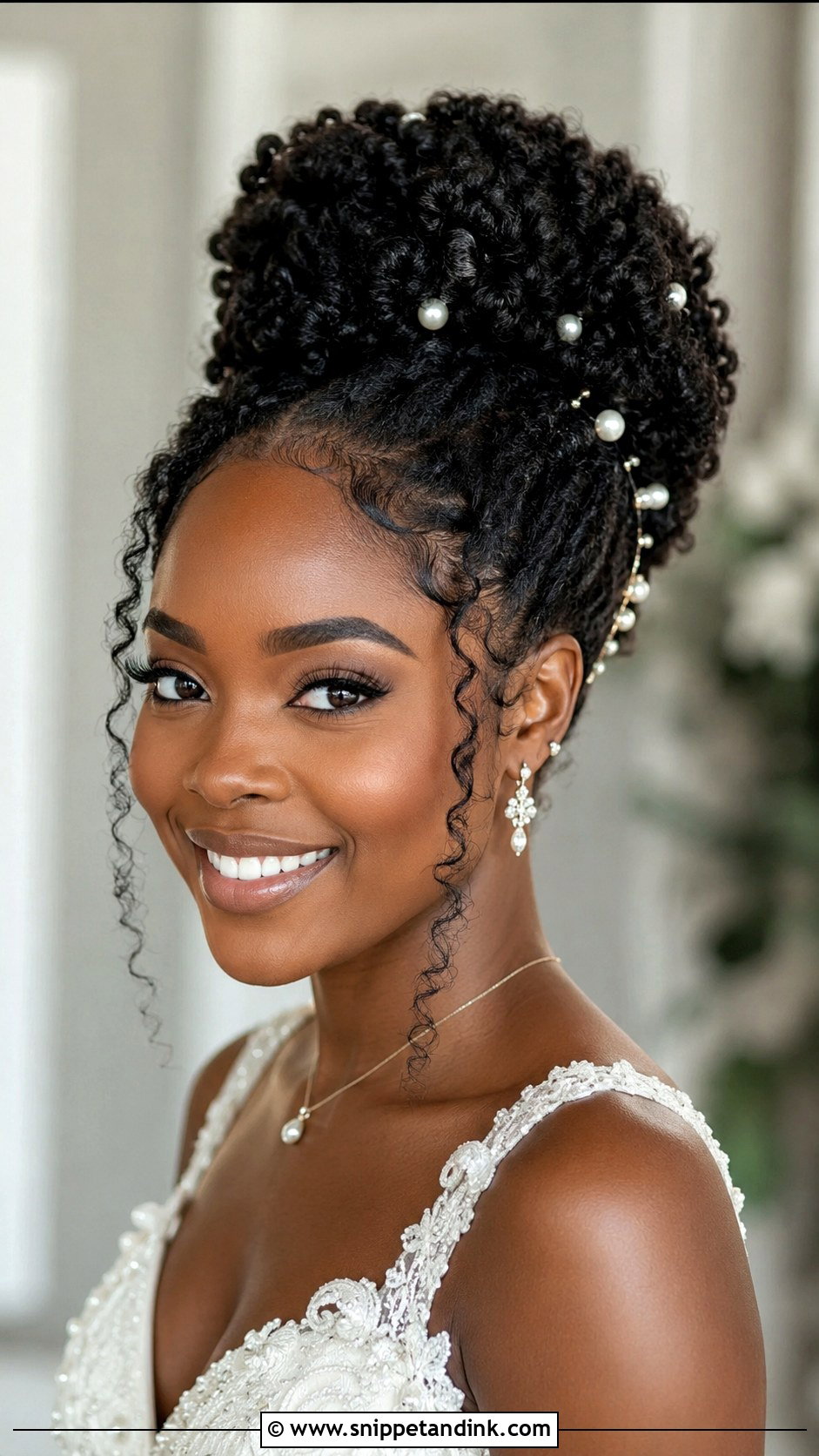
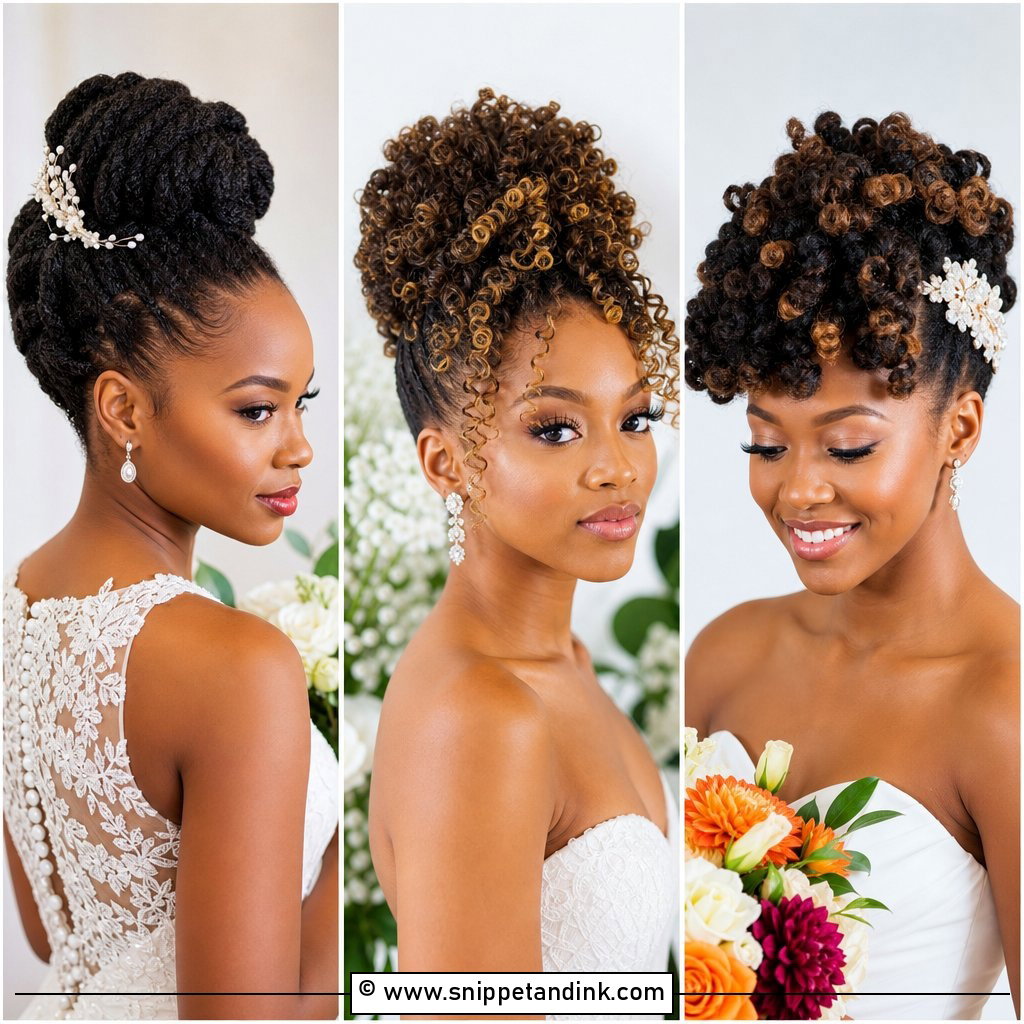
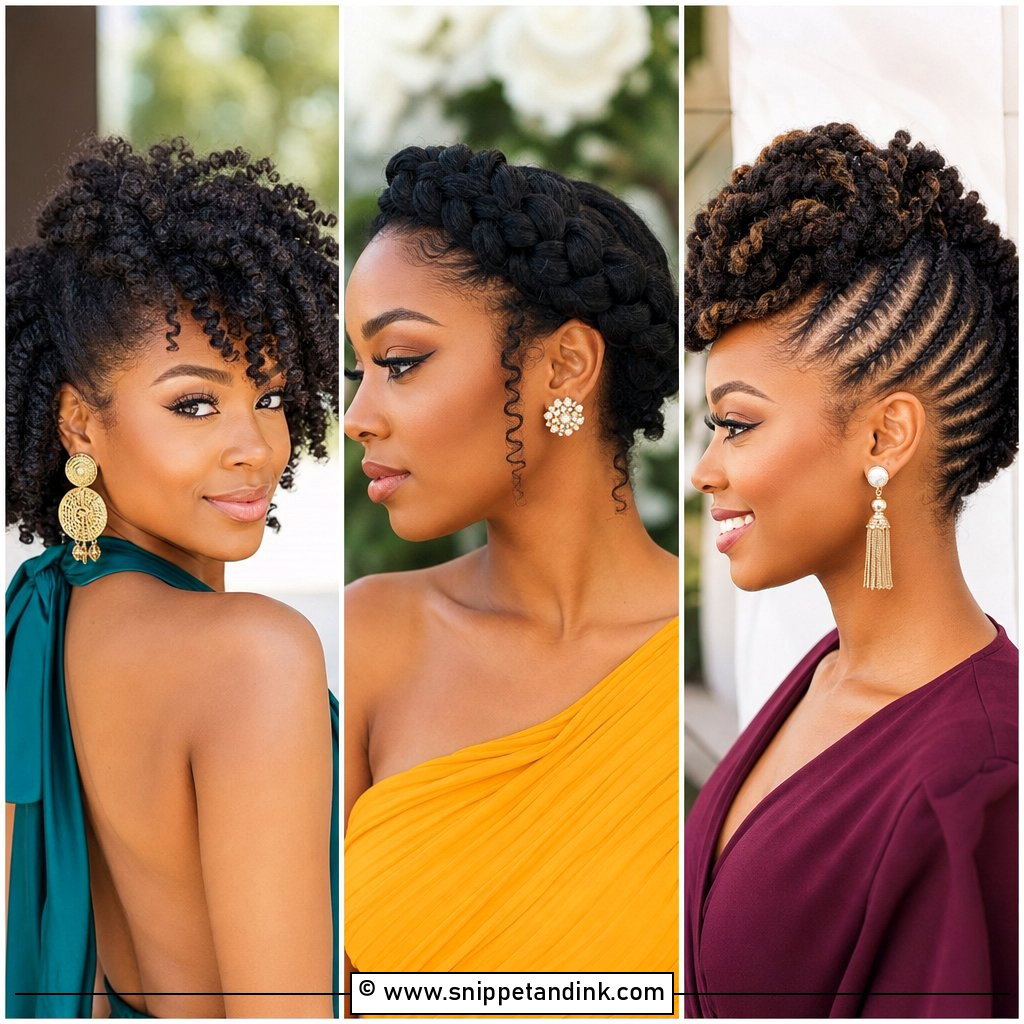
A natural updo shows your real texture while giving you a classic bridal shape, gathered high or mid-level into a soft crown of coils, curls or stretched volume. Stretching the hair first, with a blow-out on low heat or a banding set the night before, makes it far easier to shape without pulling. I ask for gentle hold rather than a hard gel at the hairline, so the edges look defined but the scalp isn’t tight by the reception. It keeps the neck cool for warm weddings, and a veil tucks in underneath without much fuss.
2. Bridal Low Bun Black Hair
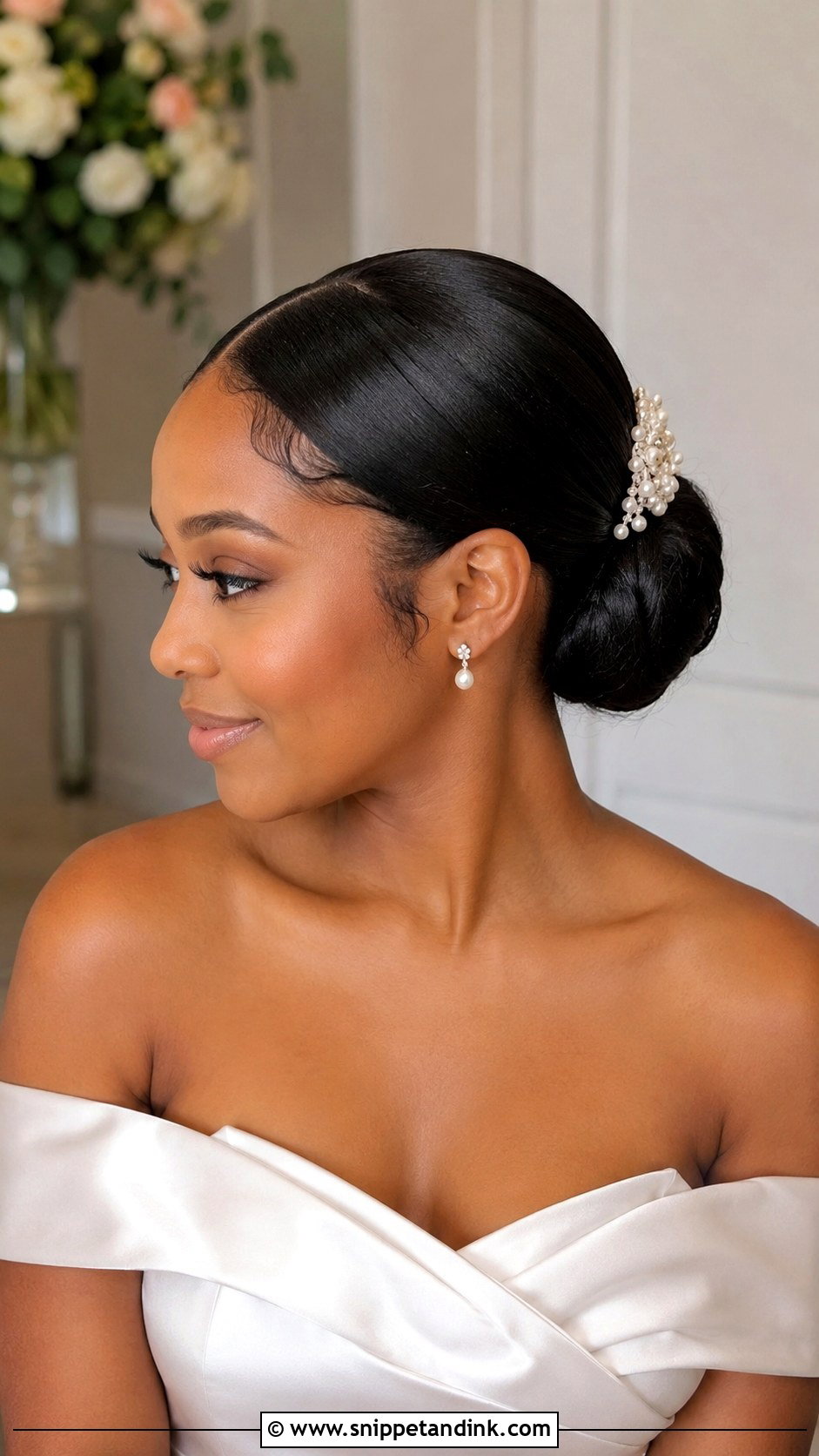
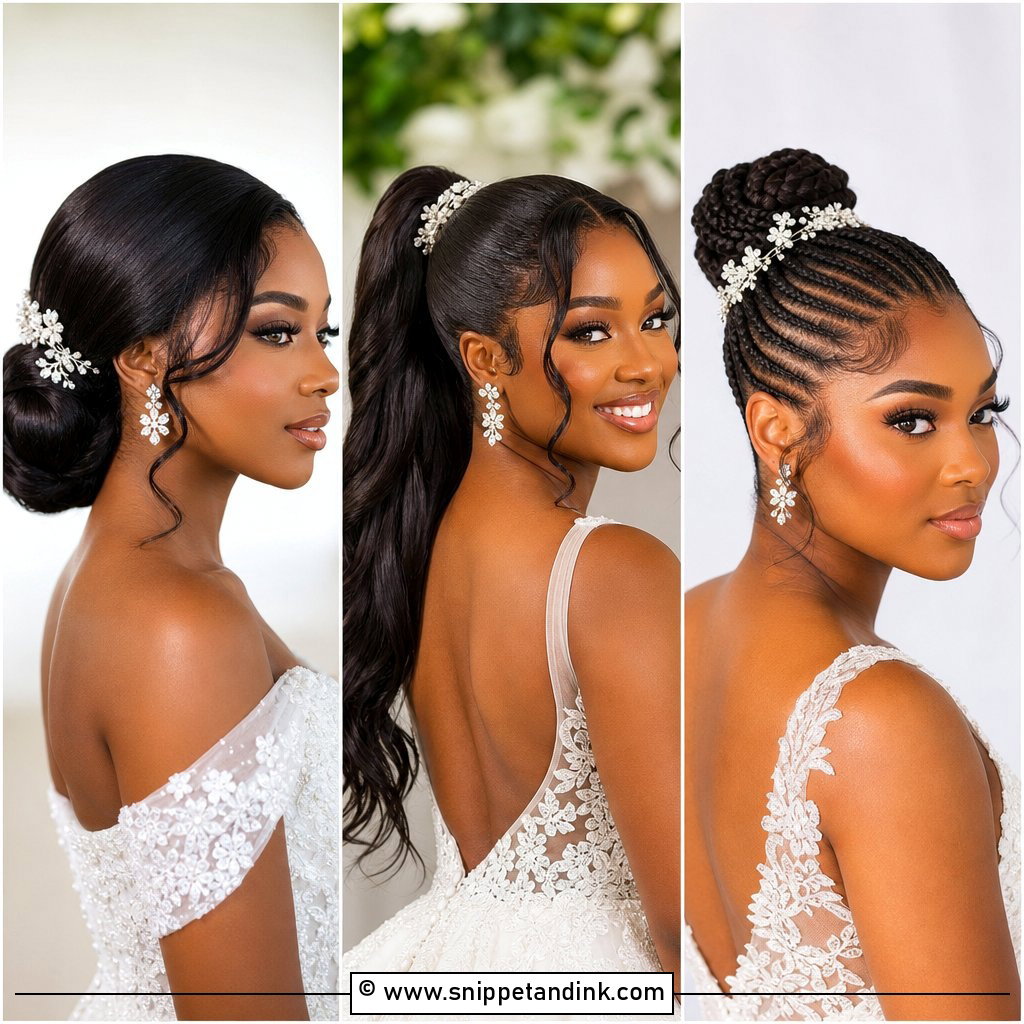
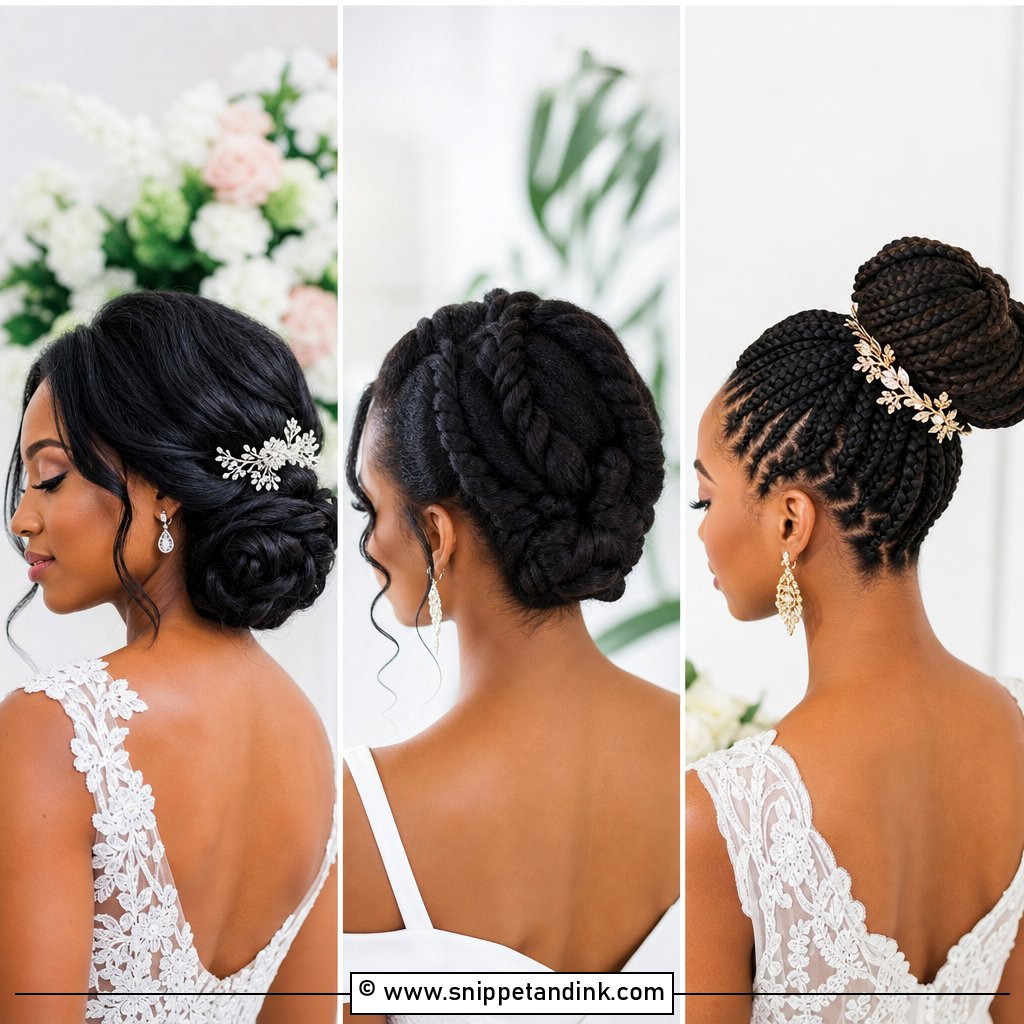
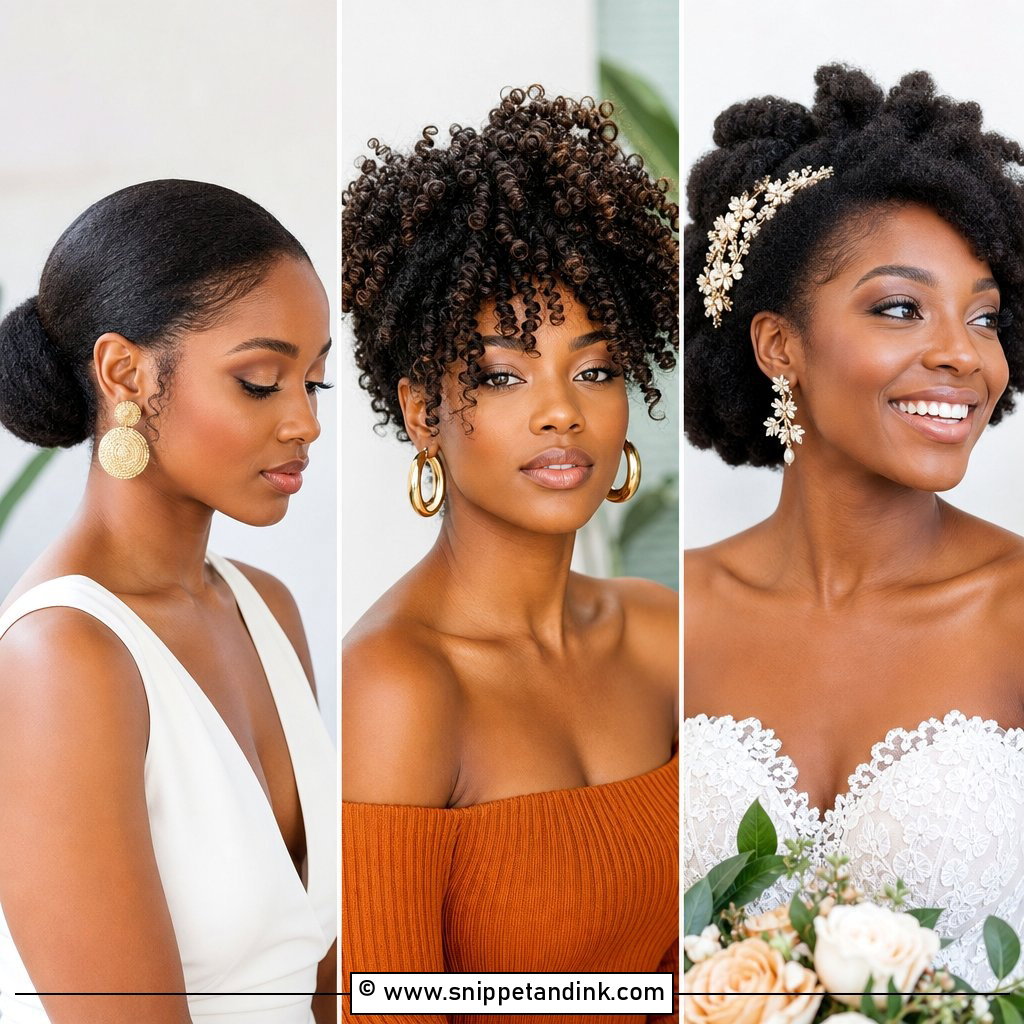
A low bun sits at the nape and suits nearly any neckline, from strapless to high collar, which makes it a safe call when the dress isn’t fully decided. It can be sleek, twisted, braided or textured. The bun is often built with added hair for fullness, and I match its texture to yours, since a silky bun on a coily base looks stuck on. Smooth the crown with a soft brush and a light edge product, then add pearl pins or a thin braid wrapped around the base.
3. Bridal High Bun Black Hair
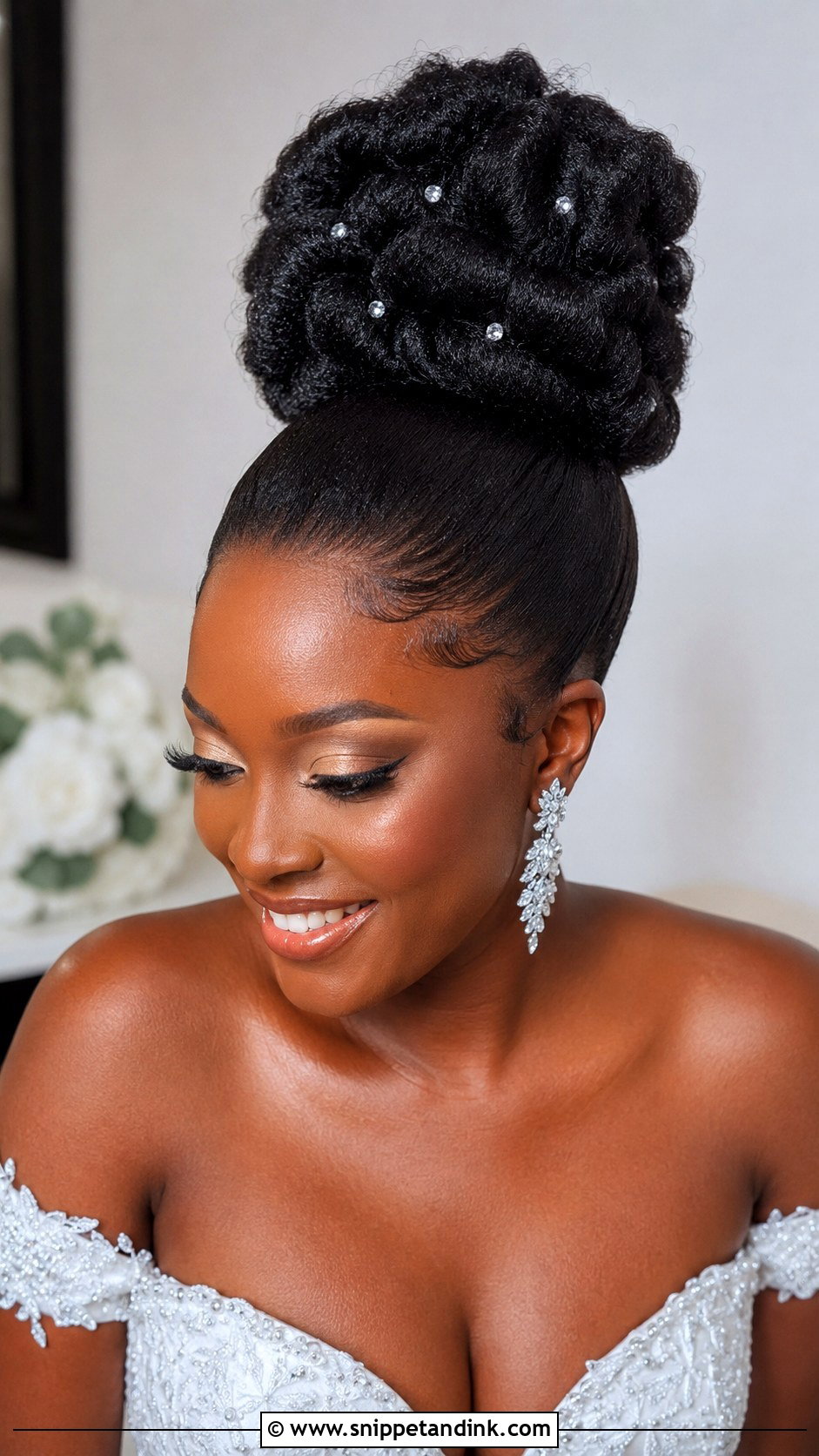
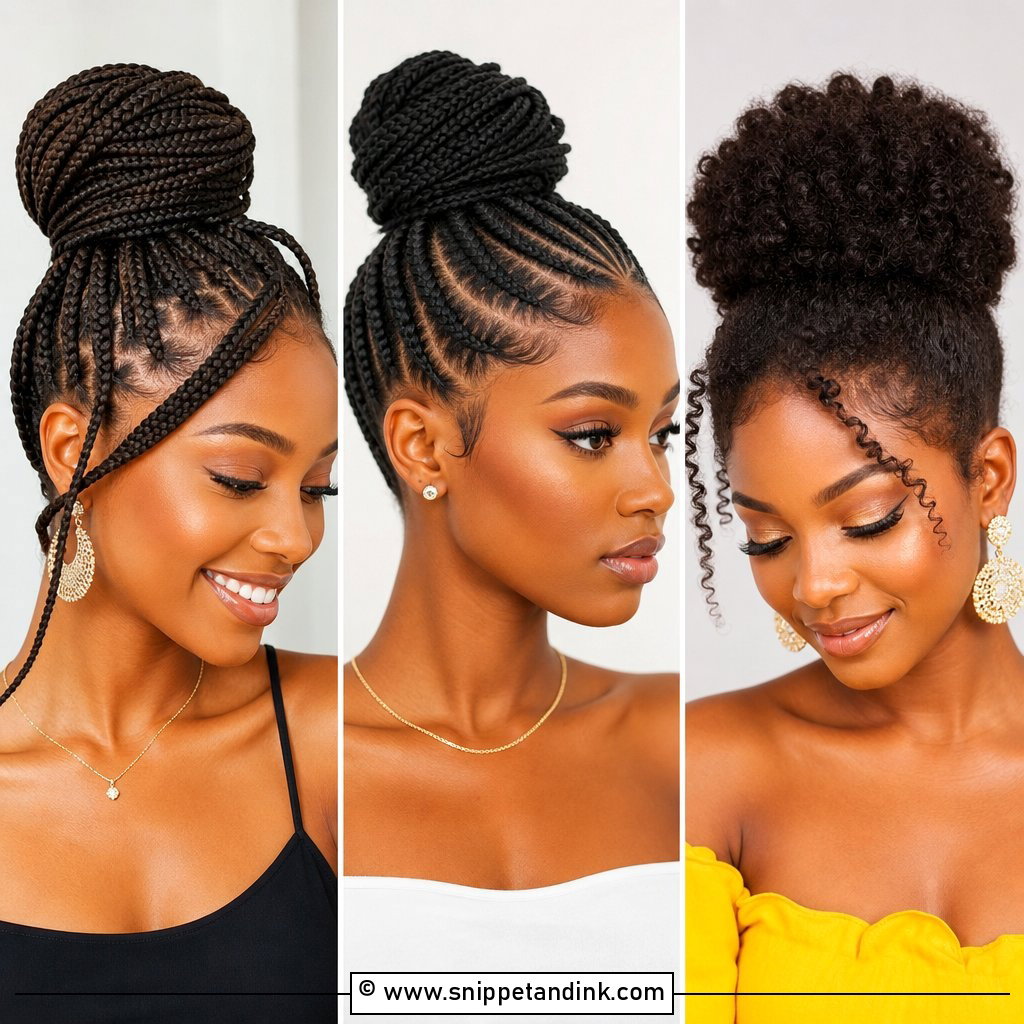
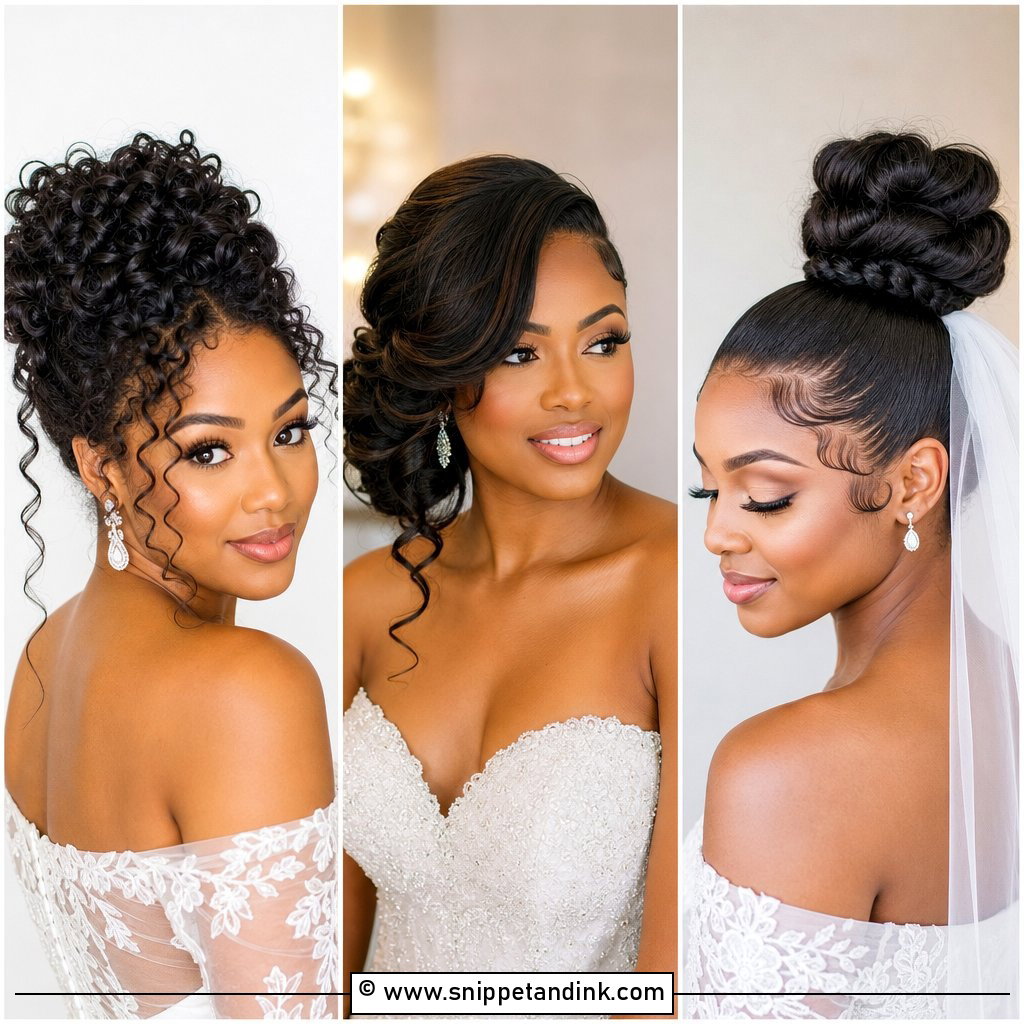
A high bun at the crown adds height, lengthens the neck and gives room for statement earrings or an off-shoulder bodice. The base can be sleek with a full textured bun on top, or braided into a sculptural shape. The common mistake is pulling it too tight to make it stand up. That tension is what causes headaches and, done often, damages the hairline. I’d rather build height with a donut or padding under the bun than with force. A tiara or veil sits well just in front of it.
4. Bridal Braided Updo Black Hair
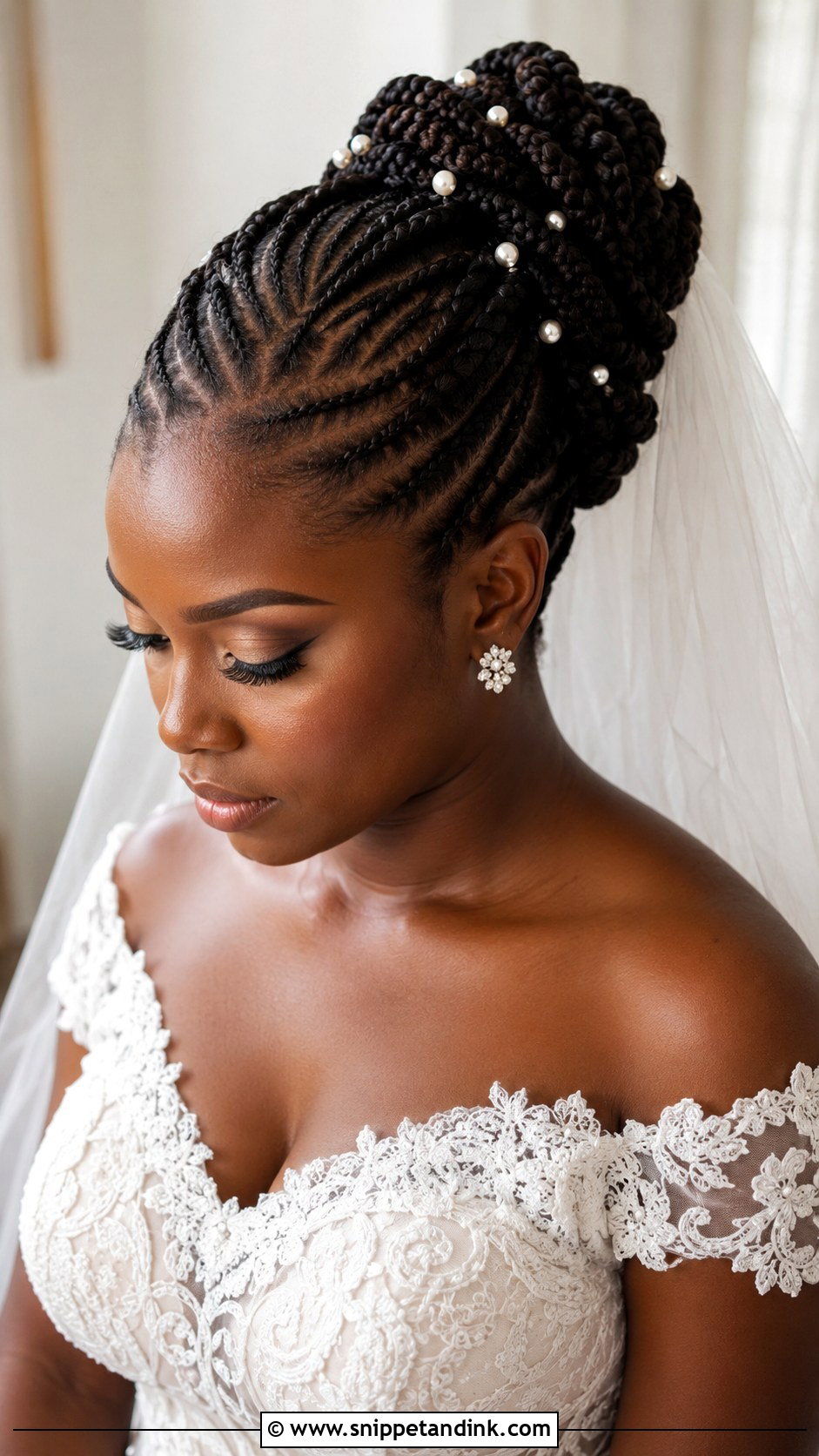
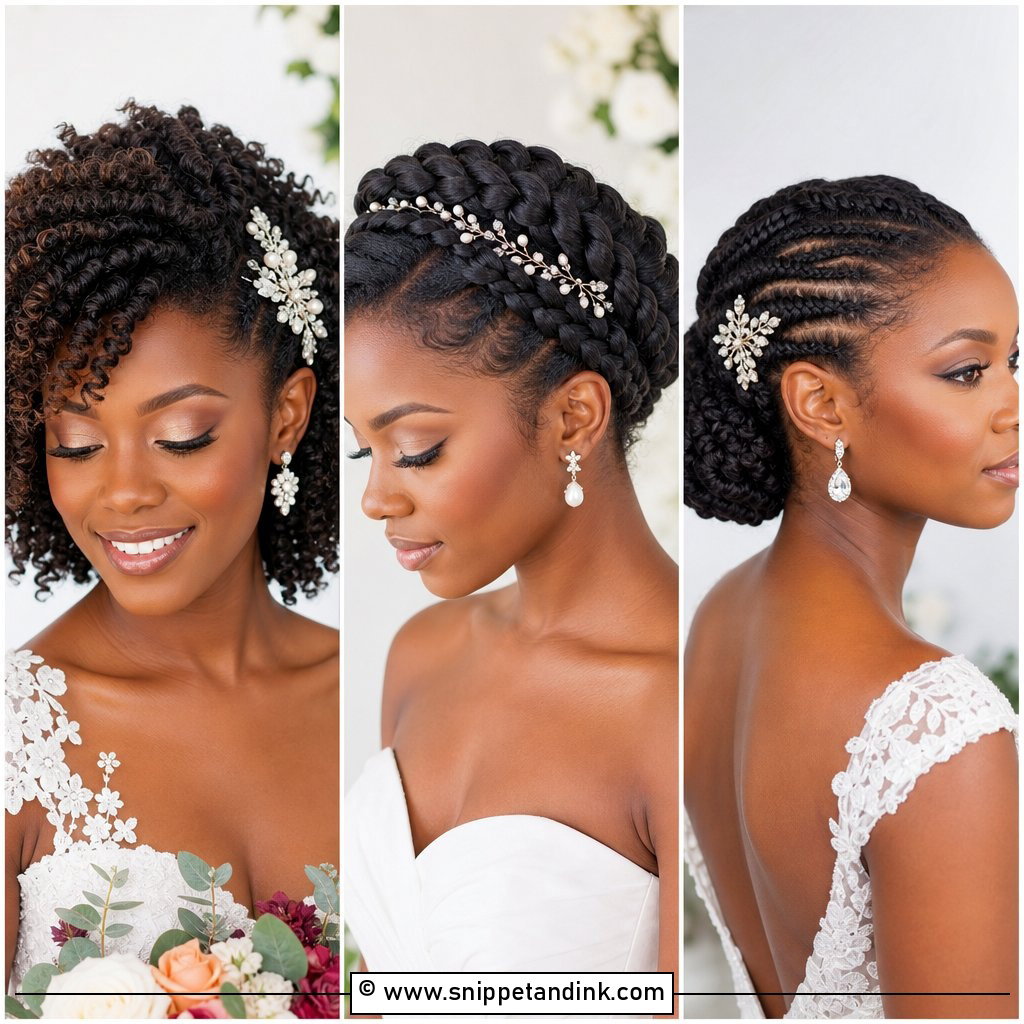
A braided updo gives detail, structure and real staying power, and braids swept into a bun, twisted into a crown or arranged into a sculpted shape photograph well with very few accessories. It’s also protective, so there’s little manipulation on the wedding morning. The one thing I insist on is a gentle install. If a braid is lifting a bump of skin at the hairline or you can’t move your eyebrows comfortably, it’s too tight, and that tension won’t feel better in heels at the reception. Gold cuffs and pearl pins add a bridal touch.
5. Bridal Knotless Braids Updo
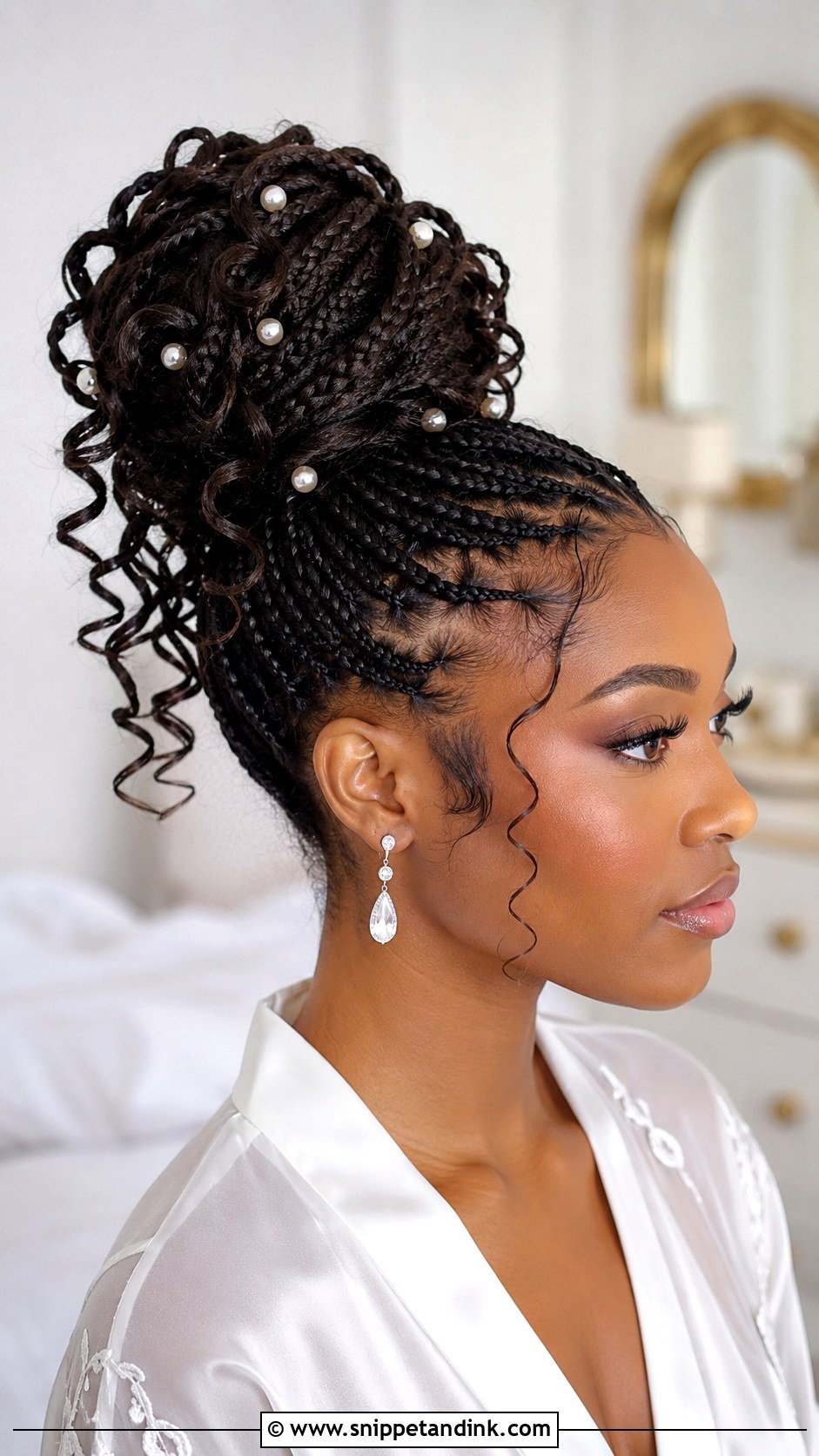
Knotless braids start with your own hair and feed extension hair in gradually, so they lay flatter at the scalp and put less weight on each root than a traditional box braid. That flatness lets them fold into buns, crowns or tucked shapes without bulk. I’d schedule the install about a week or two before the wedding, so the roots have relaxed but still look fresh. Small pearls, clear beads or fine hair jewellery finish it. For a destination wedding, a satin scarf at night keeps the parts neat for days.
6. Bridal Goddess Braids Black Hair
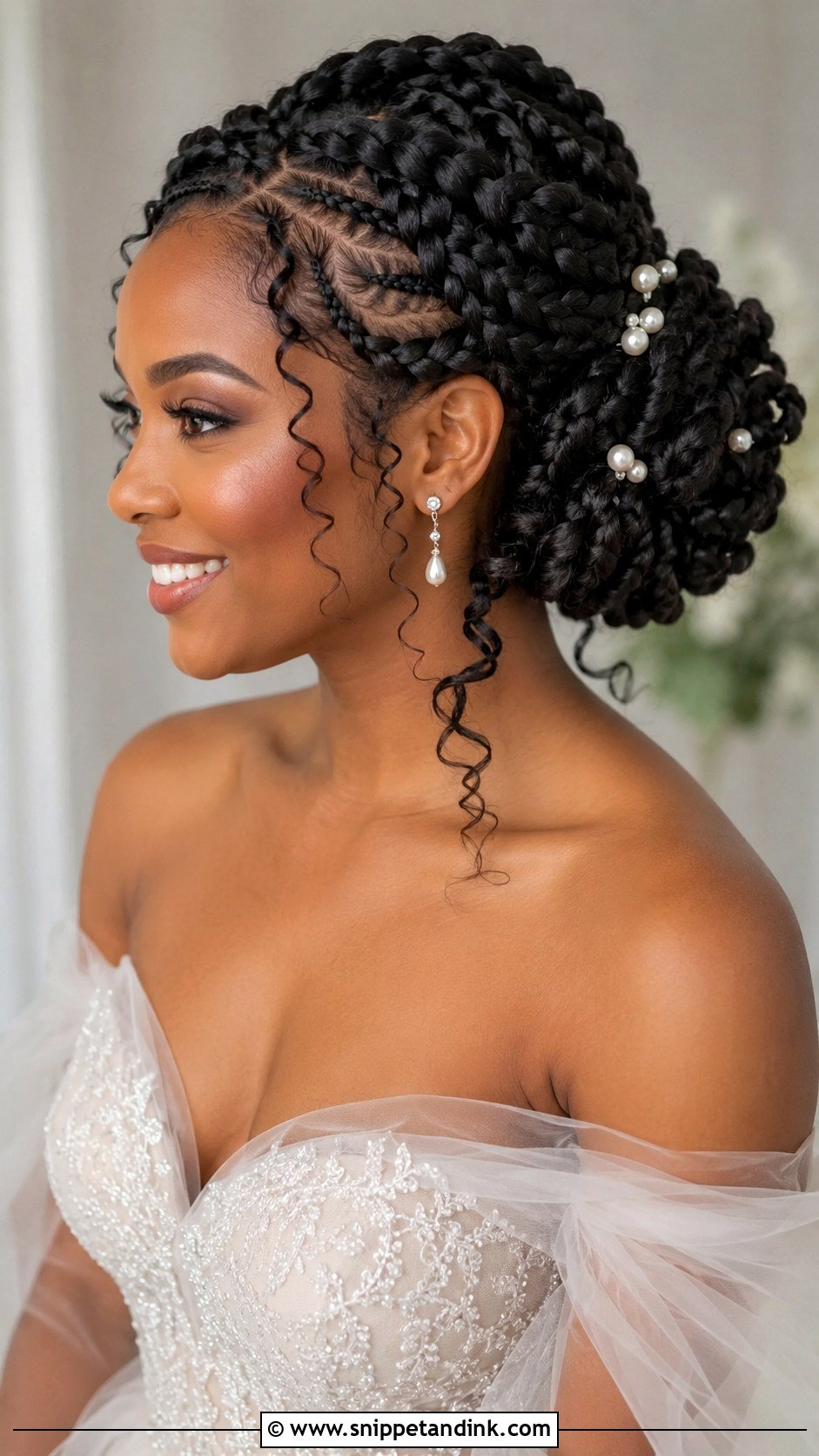
Goddess braids combine larger braids with loose curly pieces, either framing the face or flowing through the braid pattern, so the look feels lighter and less formal. They can be styled into a crown, a low bun, a side braid or a half-up shape. Those loose curls are the part that needs looking after. They tangle and frizz faster than the braids, so I ask for human or quality curly hair for the loose pieces and keep a light leave-in spray in the kit for the day. Smooth parting and a few pearl pins make the pattern stand out.
7. Bridal Cornrow Bun
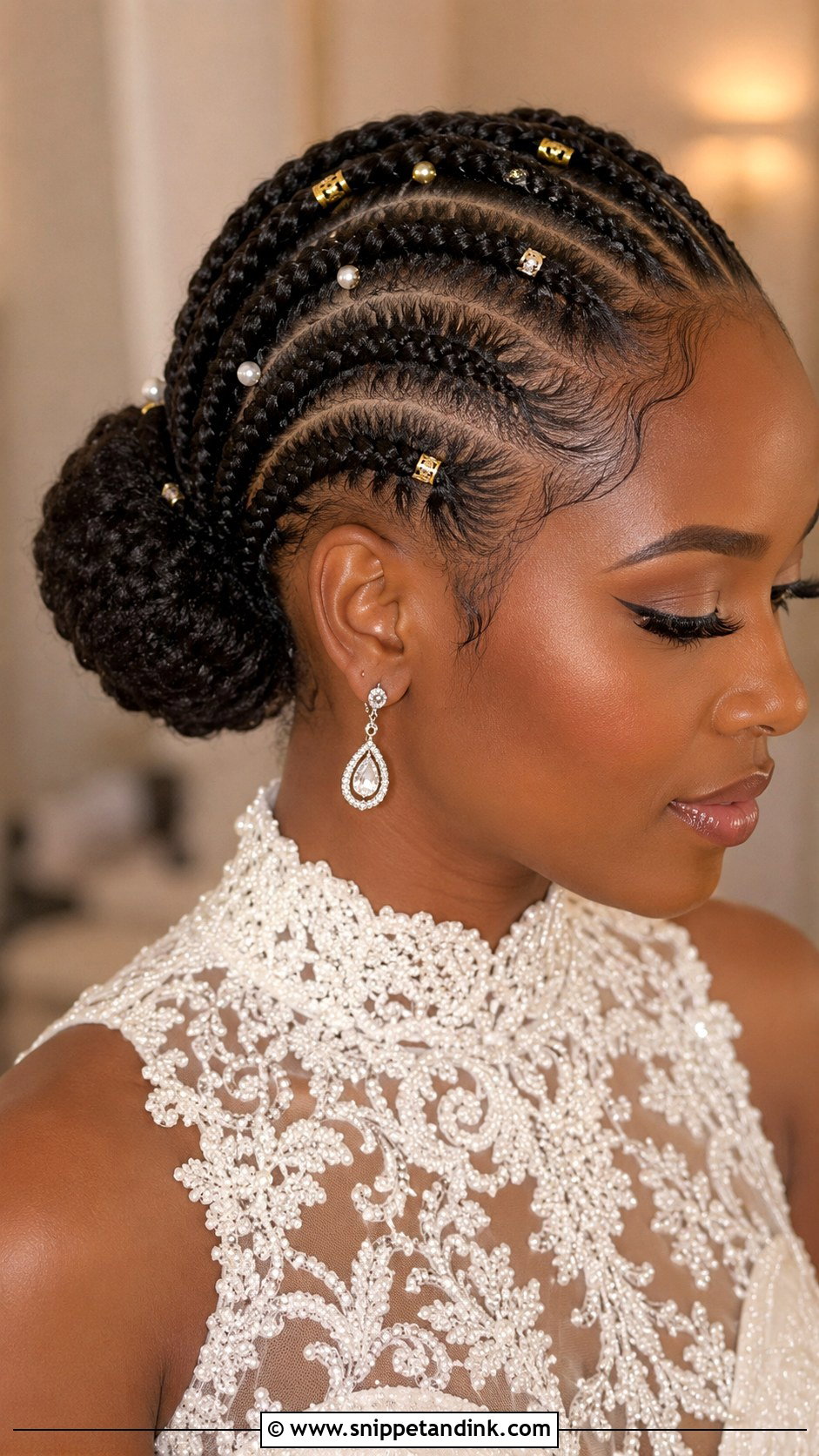
A bridal cornrow bun is neat, secure and holds through a full day of hugs, photos and dancing. Cornrows can run straight back, curve into a pattern or start from a side part before gathering into a bun that’s braided, twisted or built with added hair. Curved designs need careful planning around the veil comb, since a comb pushed across a cornrow sits unevenly. I usually place the veil under the bun instead. Keep accessories simple: pearl pins or gold cuffs.
8. Bridal Crown Braid Black Hair
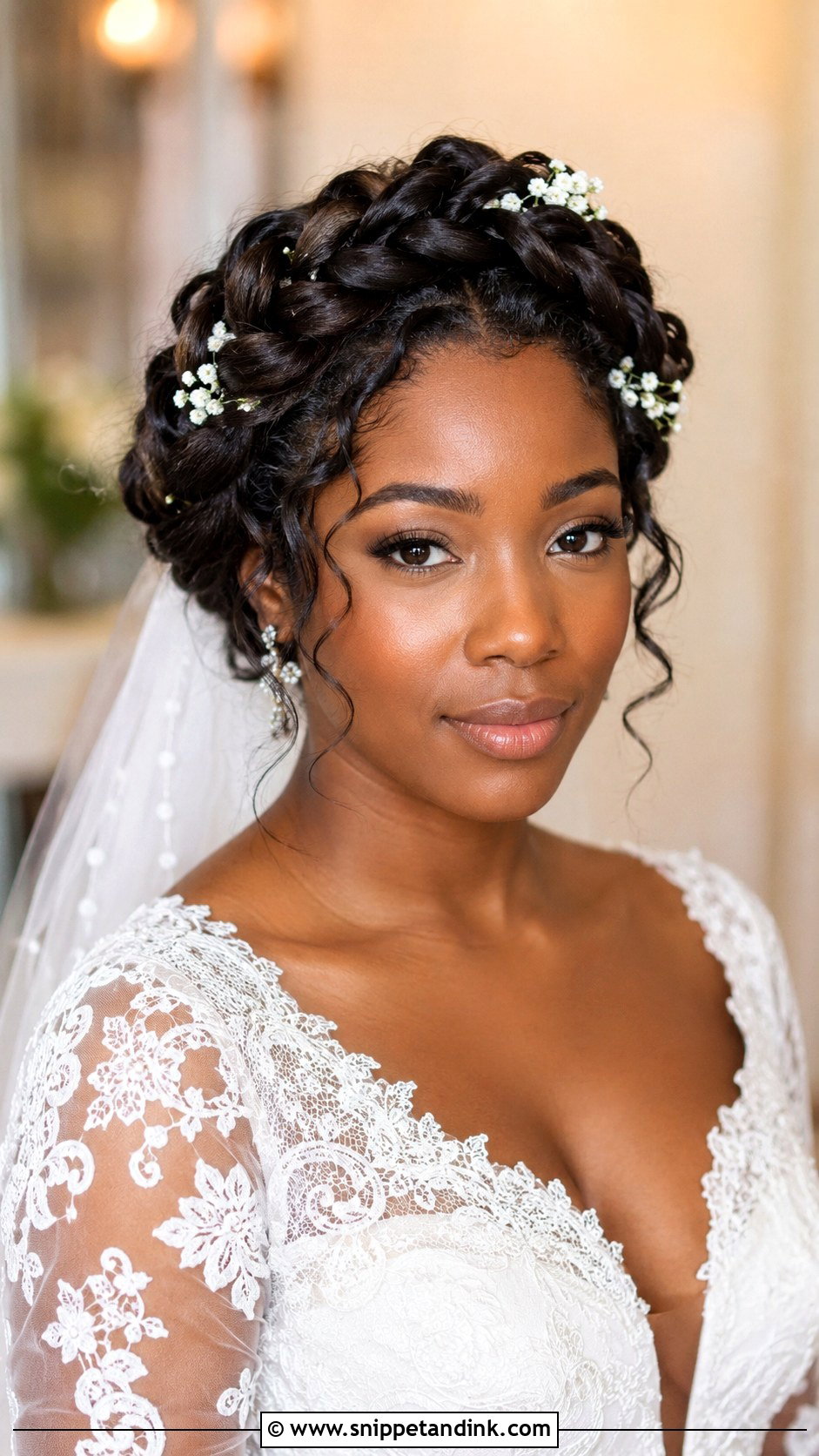
A crown braid wraps around the head like a halo and frames the face without feeling overdone. It works on natural hair, stretched hair, braiding extensions or a textured blowout. I pancake the braid slightly, gently pulling the outer loops wider, so it reads full rather than tight and flat in photos. Leave the edges soft and add a few face-framing curls. Veils, floral pins or a line of pearls along the braid all suit it.
9. Bridal Flat Twist Updo
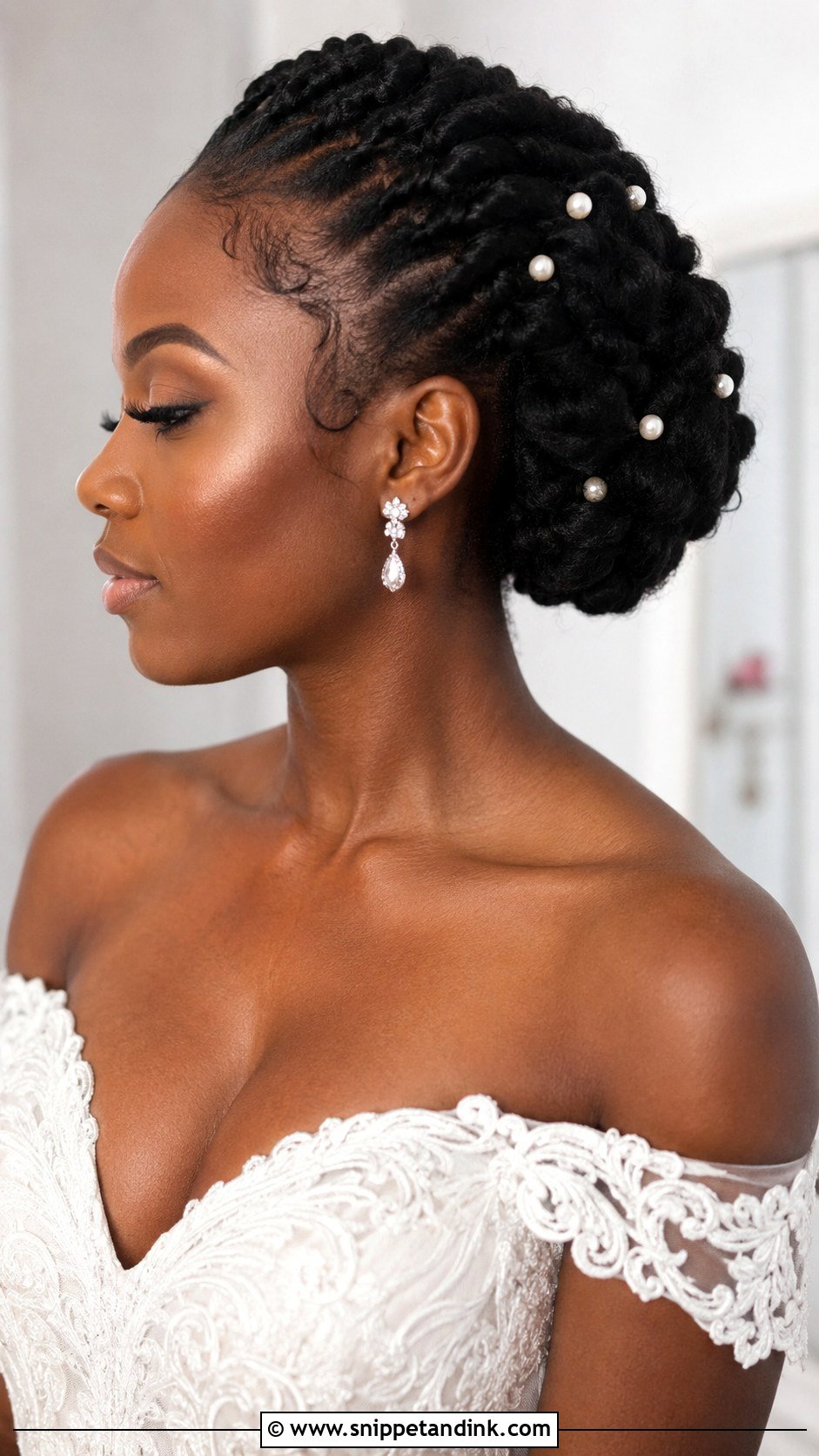
Flat twists moving upward, sideways or in a curved design, finished in a bun, puff or tucked roll, give natural hair a custom wedding shape. Twisting puts less tension on the scalp than tight braiding, so I suggest this for brides with sensitive or thinning edges. Clean parting is what makes it look refined. I part with the tail of a comb and a little gel only along the part line, keeping the rest soft. Tiny pearls, gold pins or a simple veil finish it.
10. Bridal Twist Out Black Hair
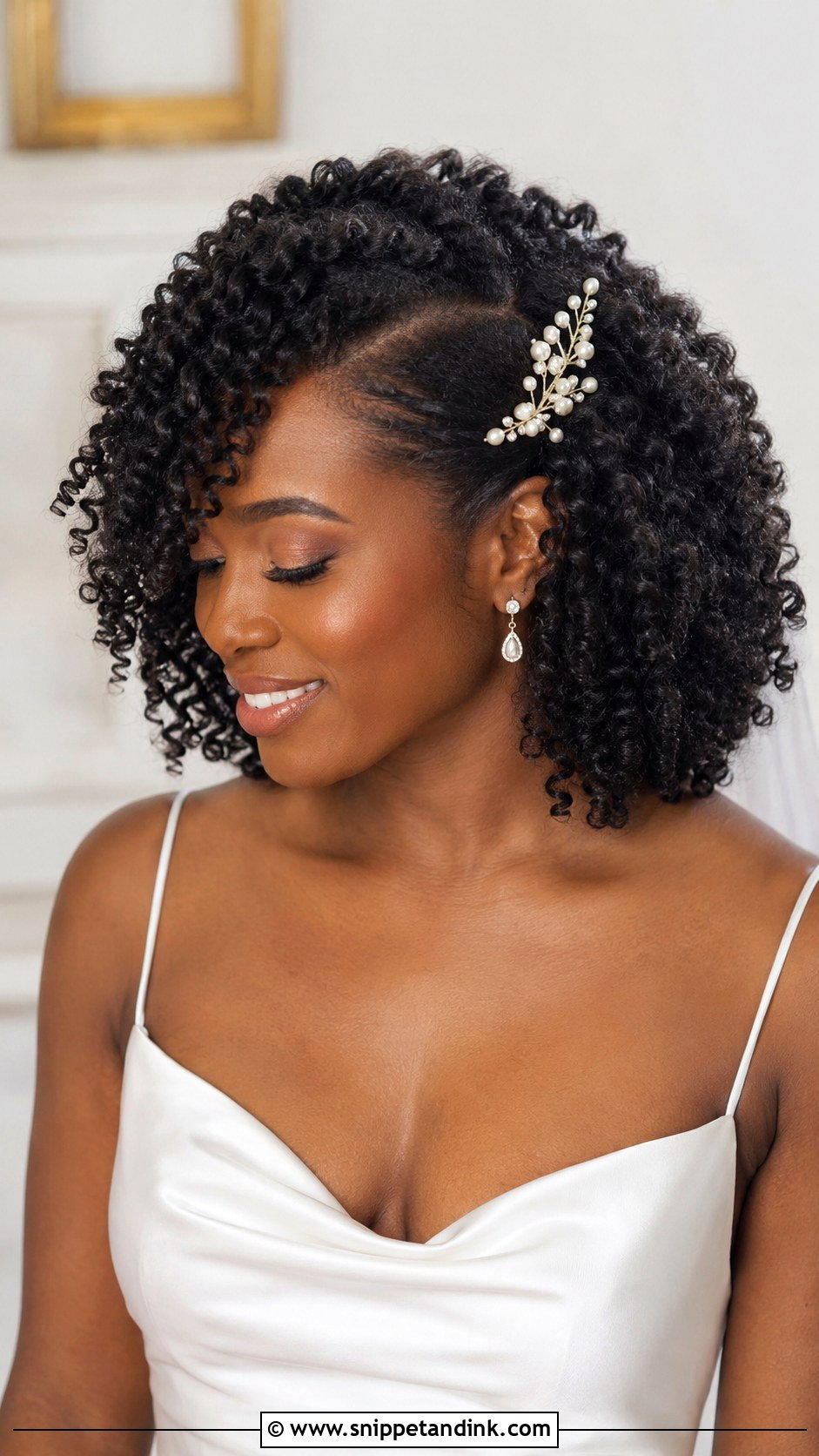
A twist out gives defined curls with natural volume and no heat. The hair is set in twists, usually the night before, then unravelled and separated on the morning. Timing is everything: twists unravelled while still damp turn frizzy, so they need to be fully dry, which can take longer than you expect on thick hair. Separate with oiled fingertips rather than a comb. Humidity will expand the curls through the day, which is fine if you plan for a slightly bigger shape by evening.
11. Bridal Afro Black Hair
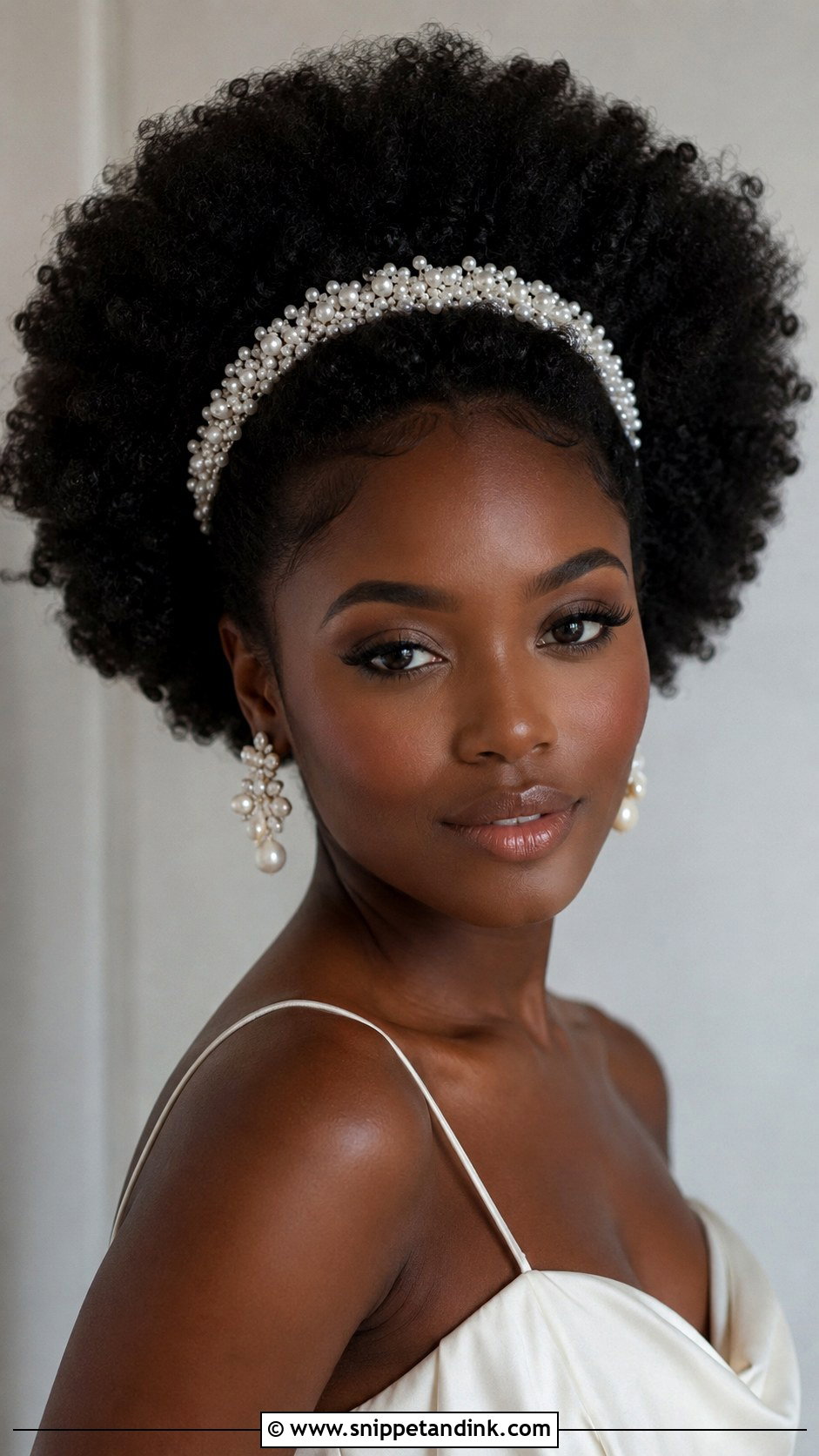
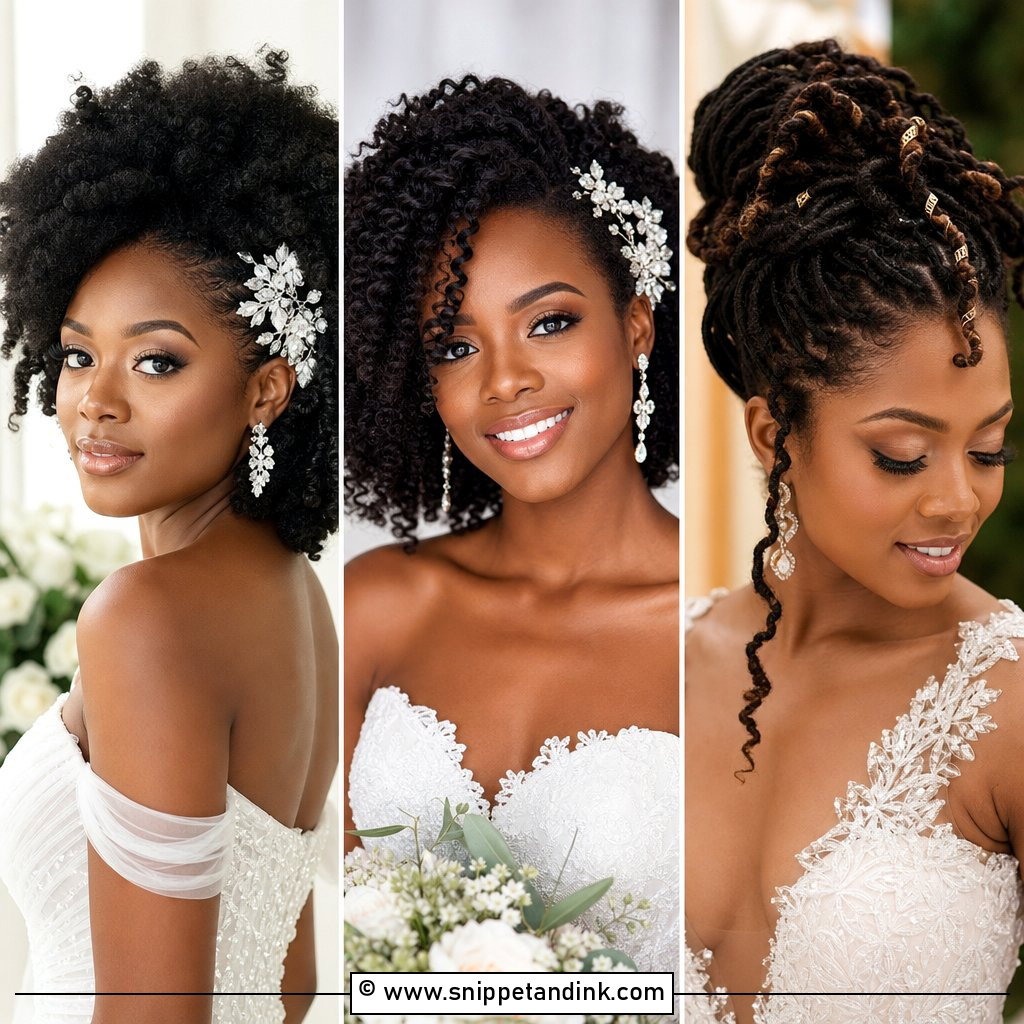
An afro lets your natural volume be the main feature, and it’s one of the most personal choices in this list. The shape can be rounded, picked out or pinned on one side for balance. I shape it with a pick and, where needed, shears, a few weeks before so the outline is even in photos, then refine it on the morning. Accessories should support the shape rather than flatten it: a pearl pin, a thin headband or a flower tucked to one side, with any veil placed behind the crown.
12. Bridal TWA Black Hair
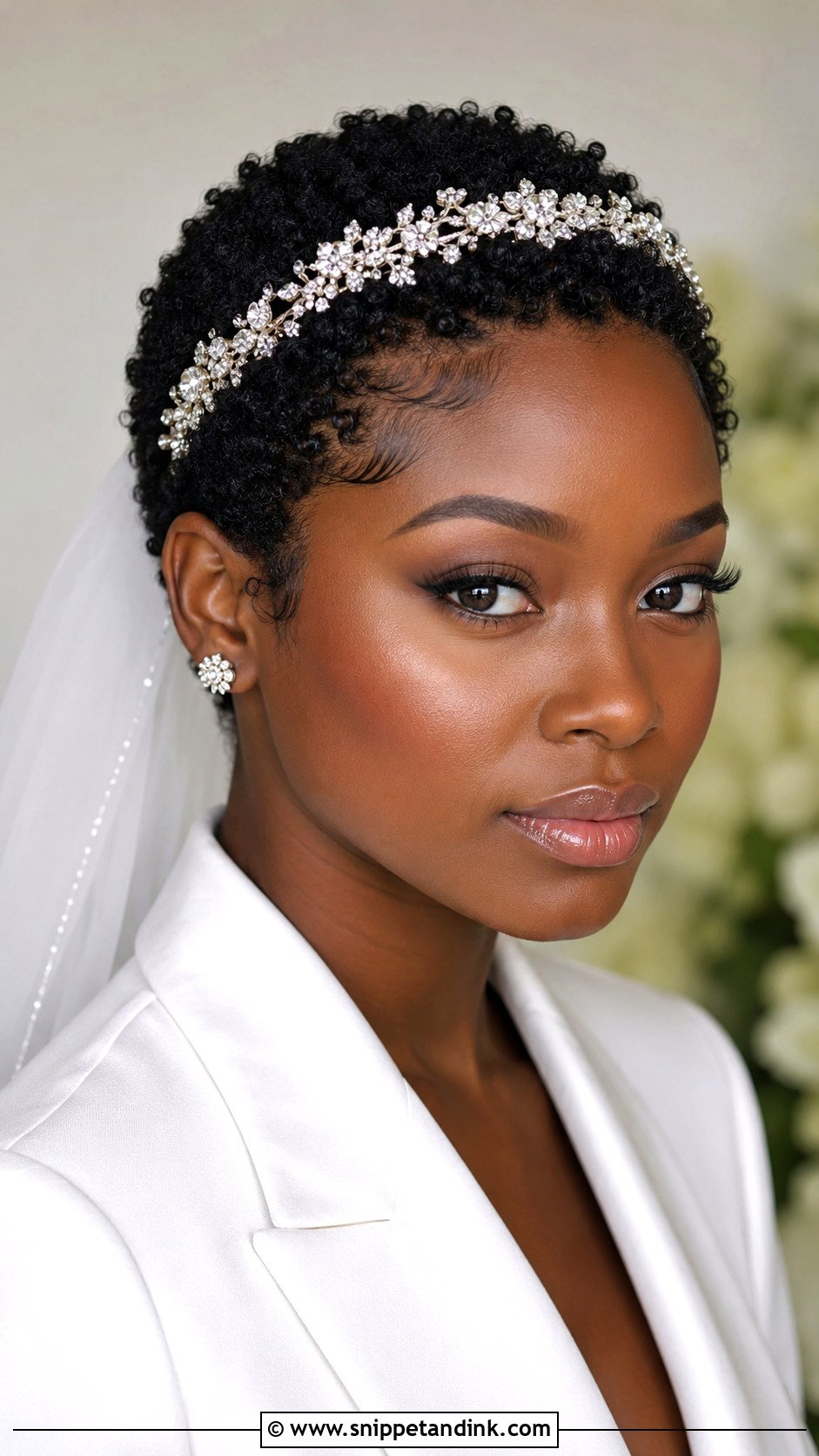
A TWA, a short natural cut, can be as elegant as any long style. It can be defined into soft coils, brushed smooth or set in finger waves for a vintage feel. Because so much of your face and neck shows, makeup, jewellery and the dress neckline all carry more weight. Moisture is the real prep: deep condition in the week before so the coils look glossy rather than dry under flash. A birdcage veil or a jewelled headband suits the short length.
13. Bridal Loc Updo
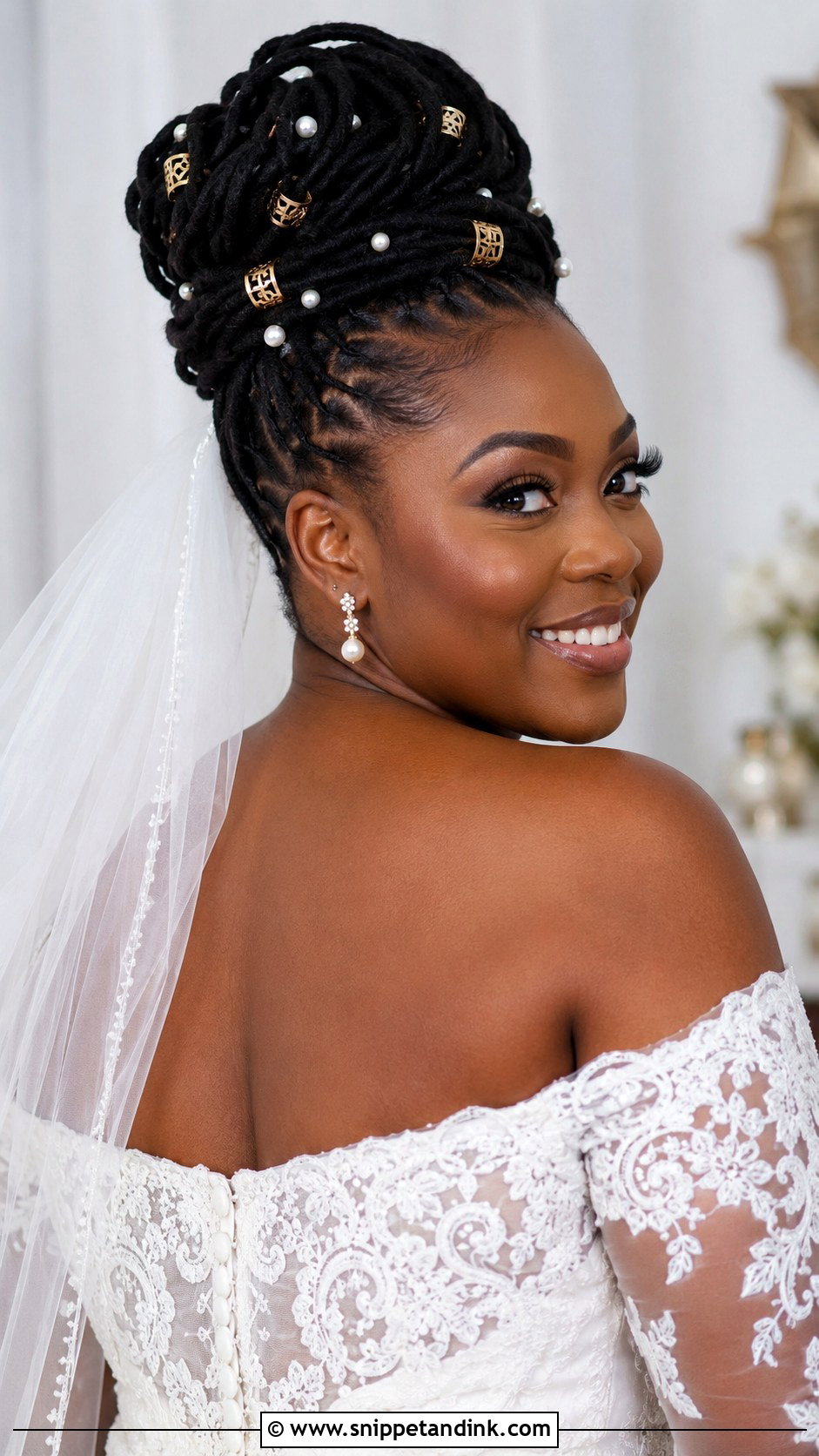
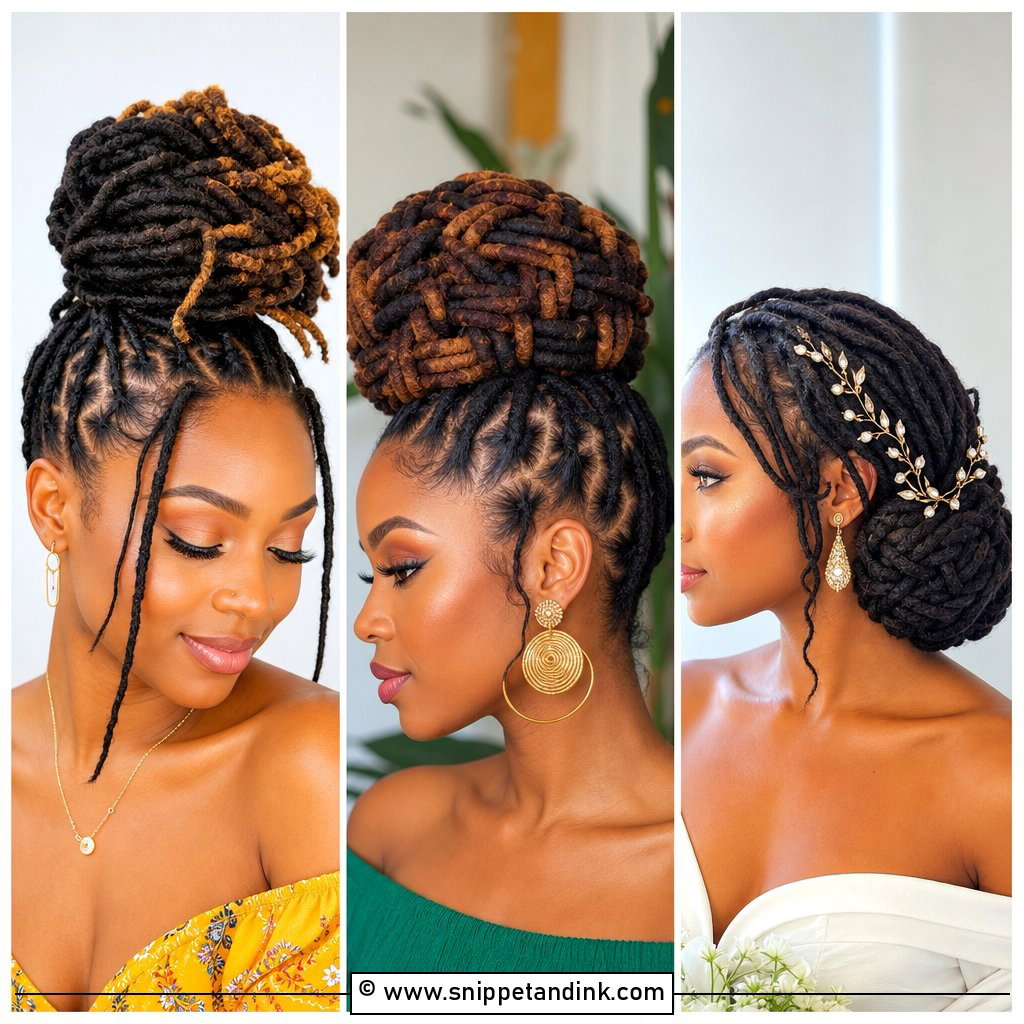
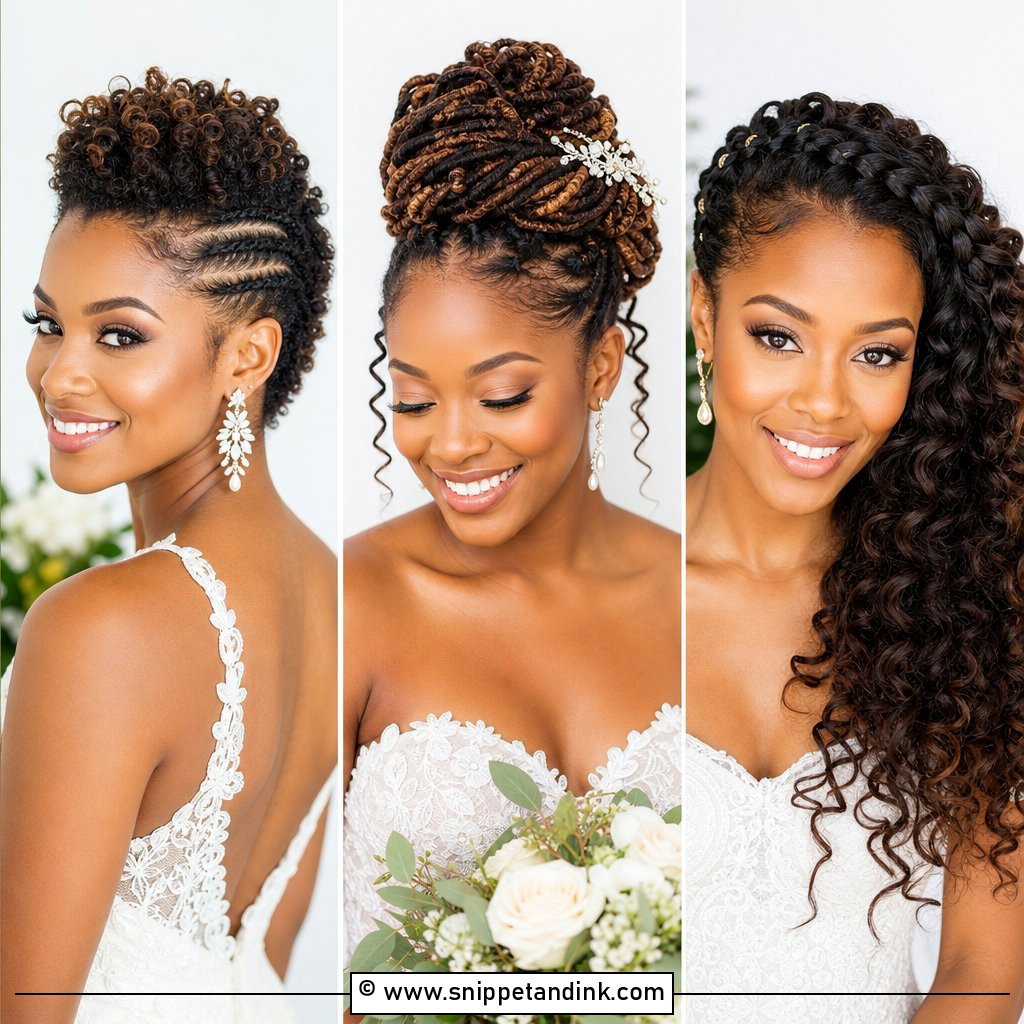
A bridal loc updo brings texture and meaning, with locs wrapped into a high bun, folded into a low roll or pinned into a sculpted shape. Long locs are heavy, and that weight pulls on the hairline when everything is gathered at one point. I spread it by anchoring sections separately with large U-pins instead of putting all the hair into one tight elastic. Gold cuffs, pearls, shells or crystal pins all work. Have your retwist done a week or two before, not the day before, so the roots aren’t sore.
14. Bridal Soft Locs Black Hair
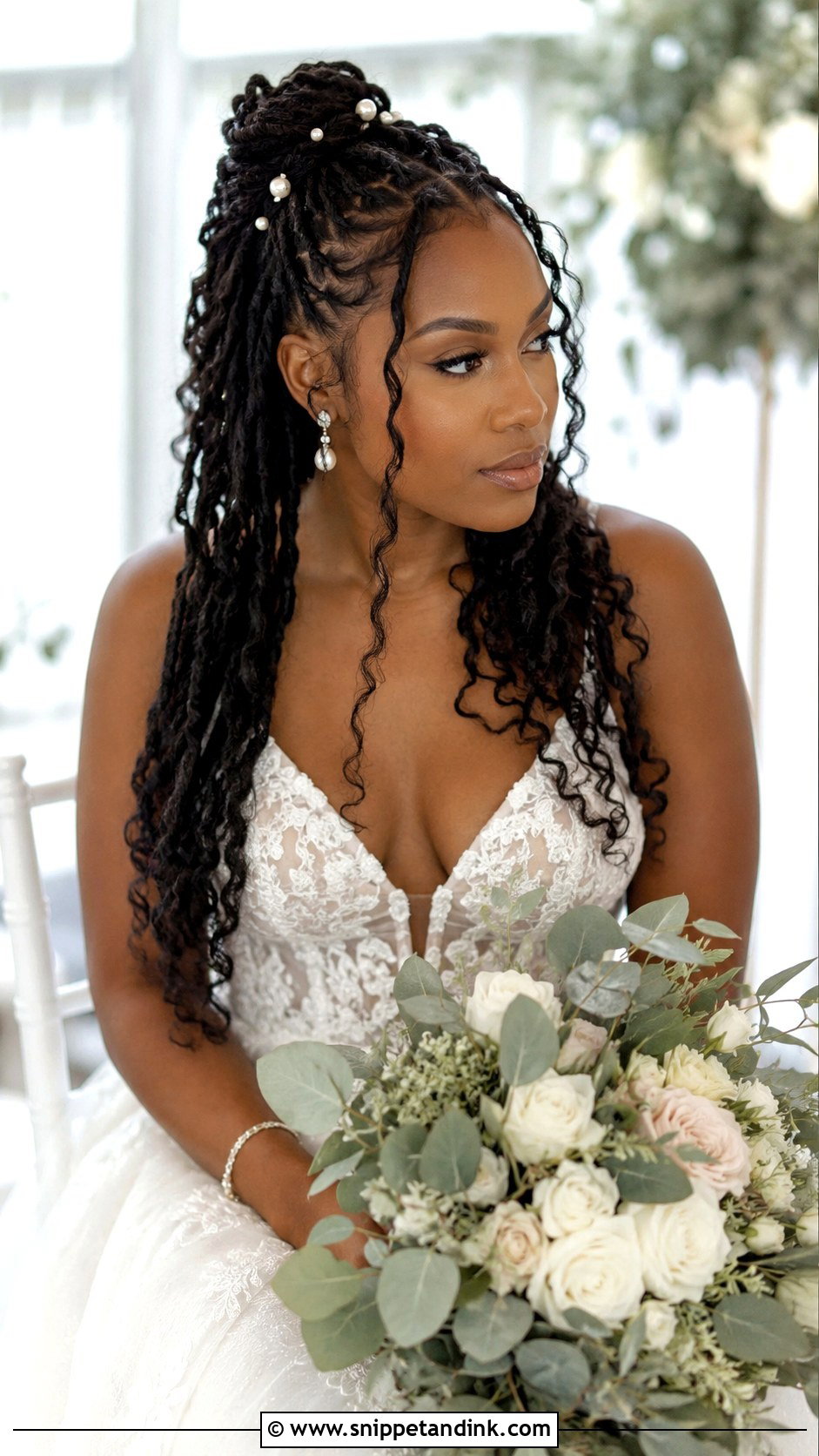
Soft locs are lighter and bend more easily than many traditional faux loc installs, so they move into a half-up bun, a low ponytail, a side sweep or a loose flowing shape. Curling the ends with flexi-rods or a light dip in hot water softens them for a bridal finish. Watch the weight on longer installs. The longer they are, the more they pull when pinned up, so a half-up style is often kinder than a full updo. Pearl pins, gold string or a fine comb finish it without crowding.
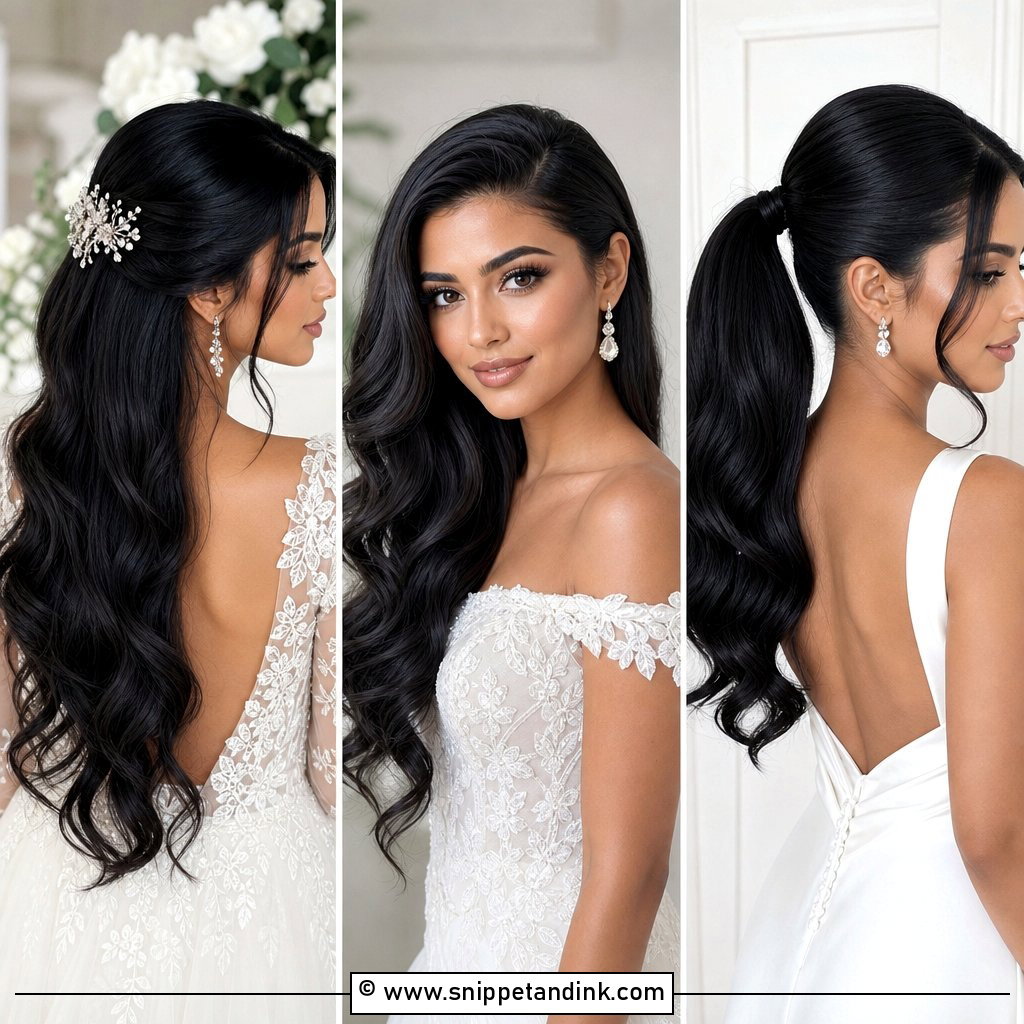
15. Bridal Sisterlocks Updo
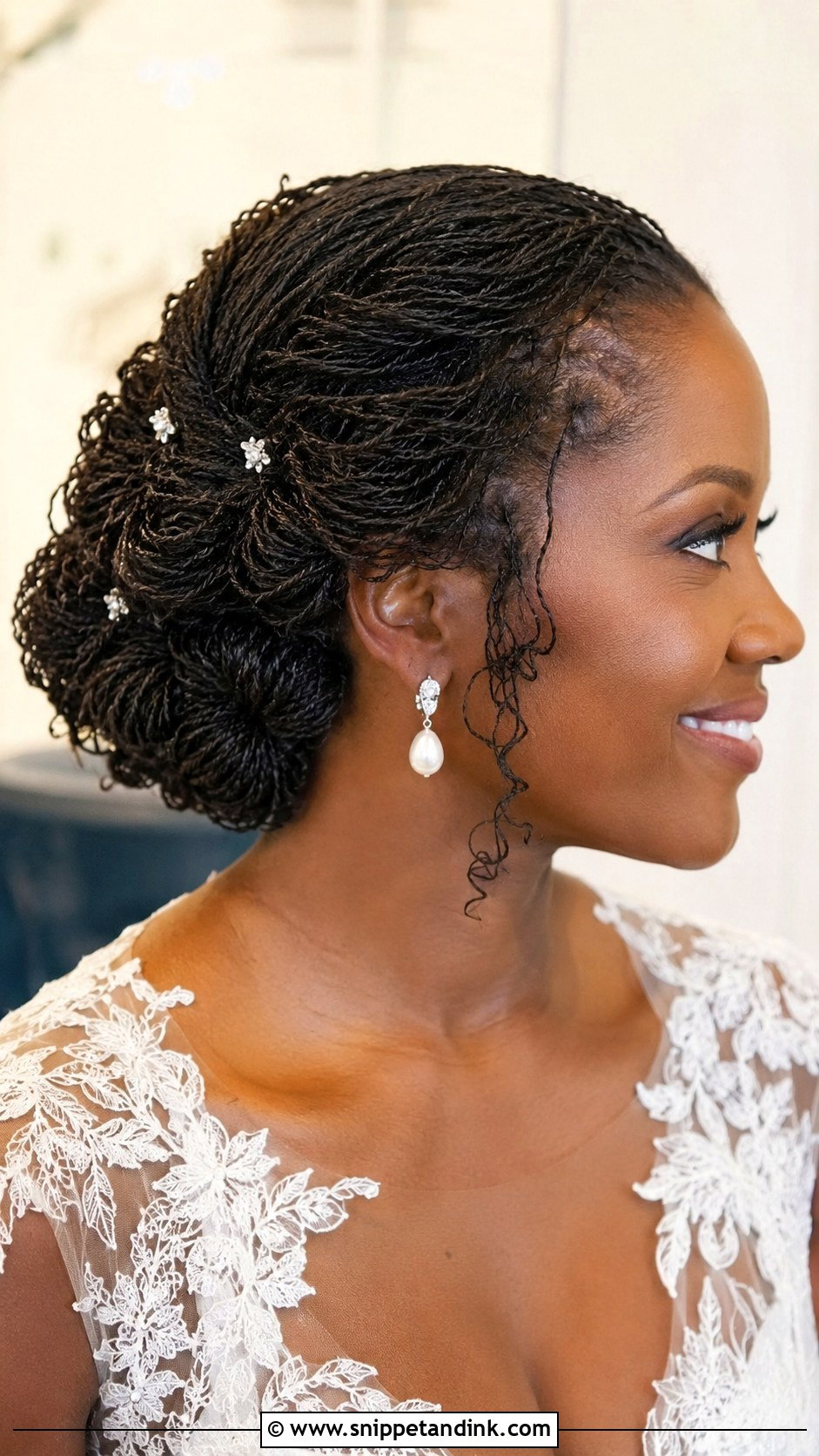
A bridal Sisterlocks updo can carry more intricate detail than larger locs, because the small locs fold into buns, rolls, crowns or curled shapes with fine movement. I’d talk with your loctician before booking a stylist who doesn’t know them, since Sisterlocks have their own maintenance and shouldn’t be forced into tight shapes. Setting the locs on rods a day before gives the updo gentle volume. Small pearl pins or crystal accents suit the delicate pattern far better than large pieces.
16. Bridal Half Up Half Down Black Hair
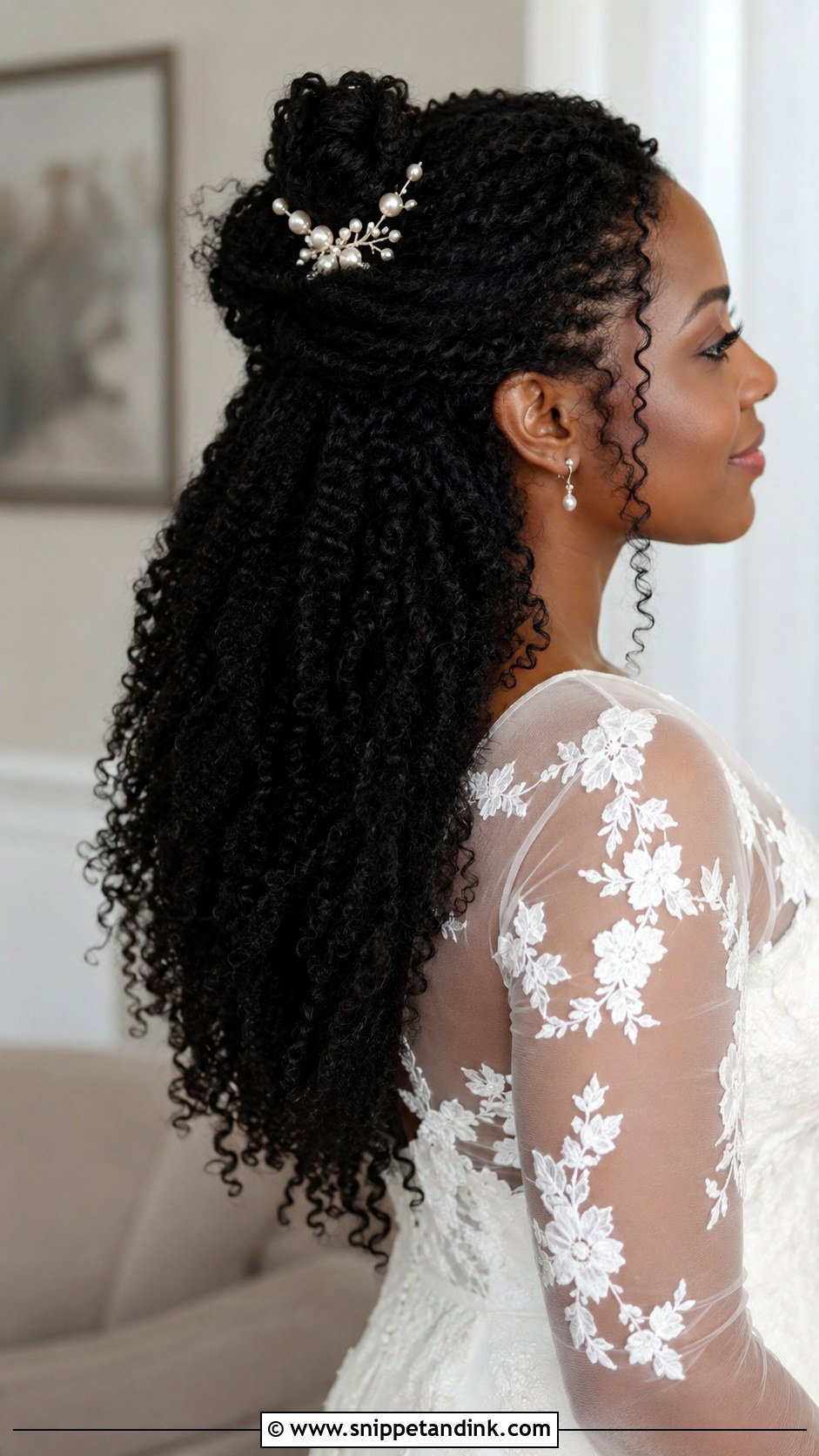
Half up, half down gives you length and a lifted crown at once. The top can be twisted, braided, pinned or formed into a small bun, while the rest falls in curls, coils, braids or locs. It’s the style I suggest when a bride wants her hair down but has a lot of length that would otherwise fall into her face during the vows. The top section must be truly secure, because it holds any veil or tiara. Face-framing curls soften it.
17. Bridal Side Swept Curls Black Hair
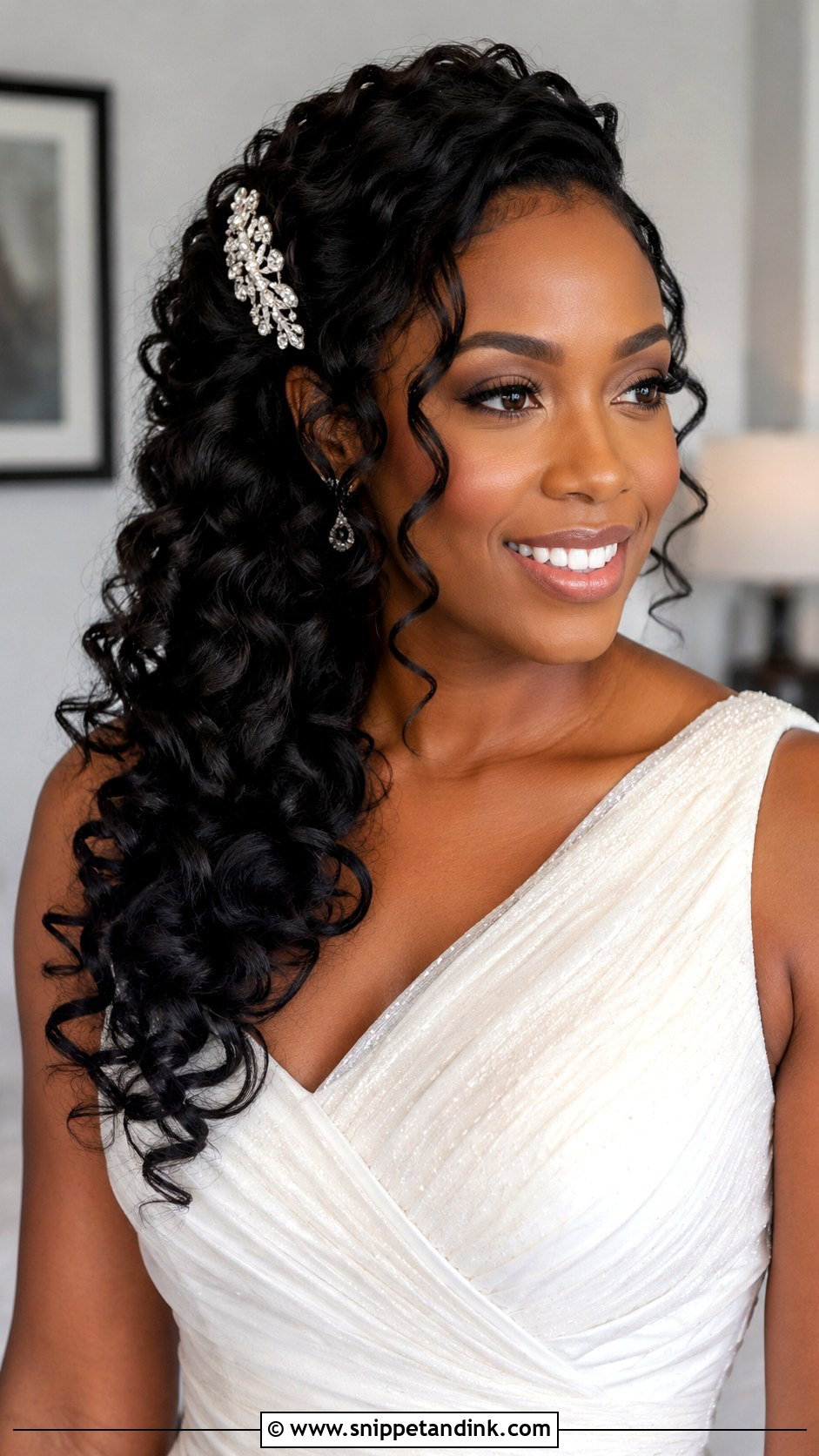
Side-swept curls fall over one shoulder while the other side is smoothed or pinned, which suits one-shoulder dresses and dramatic earrings. It works on natural curls, wand curls, flexi-rod sets, crochet curls or a silk press with curls. The pinned side is where comfort goes wrong. I use flat cornrows or a couple of small twists underneath as a base, then pin into those rather than into loose hair, so it holds without dragging at the temple. A jewelled comb covers the pins.
18. Bridal Sleek Ponytail Black Hair
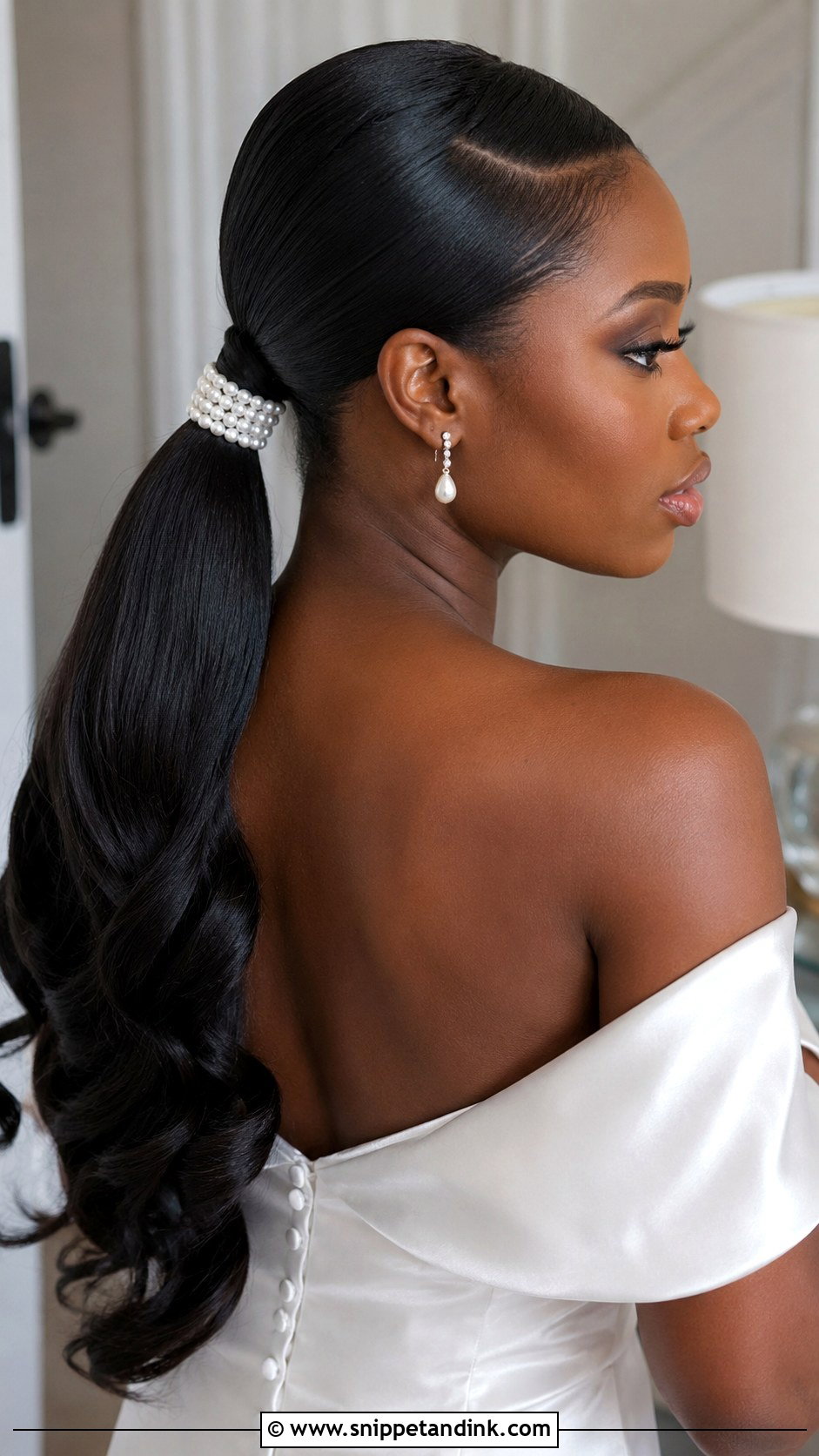
A sleek ponytail is modern and clean, set high, mid or low and finished with curls, waves, braids or a long straight length. Keeping the base smooth on textured hair takes an edge product and a soft boar bristle brush, then a wrap at the base to cover the elastic. Choose a hold product that dries flexible, since some gels flake white by the afternoon and show up in close-up photos. A crystal cuff or pearl pins make it bridal, and it keeps hair off freshly applied makeup.
19. Bridal Finger Waves Black Hair
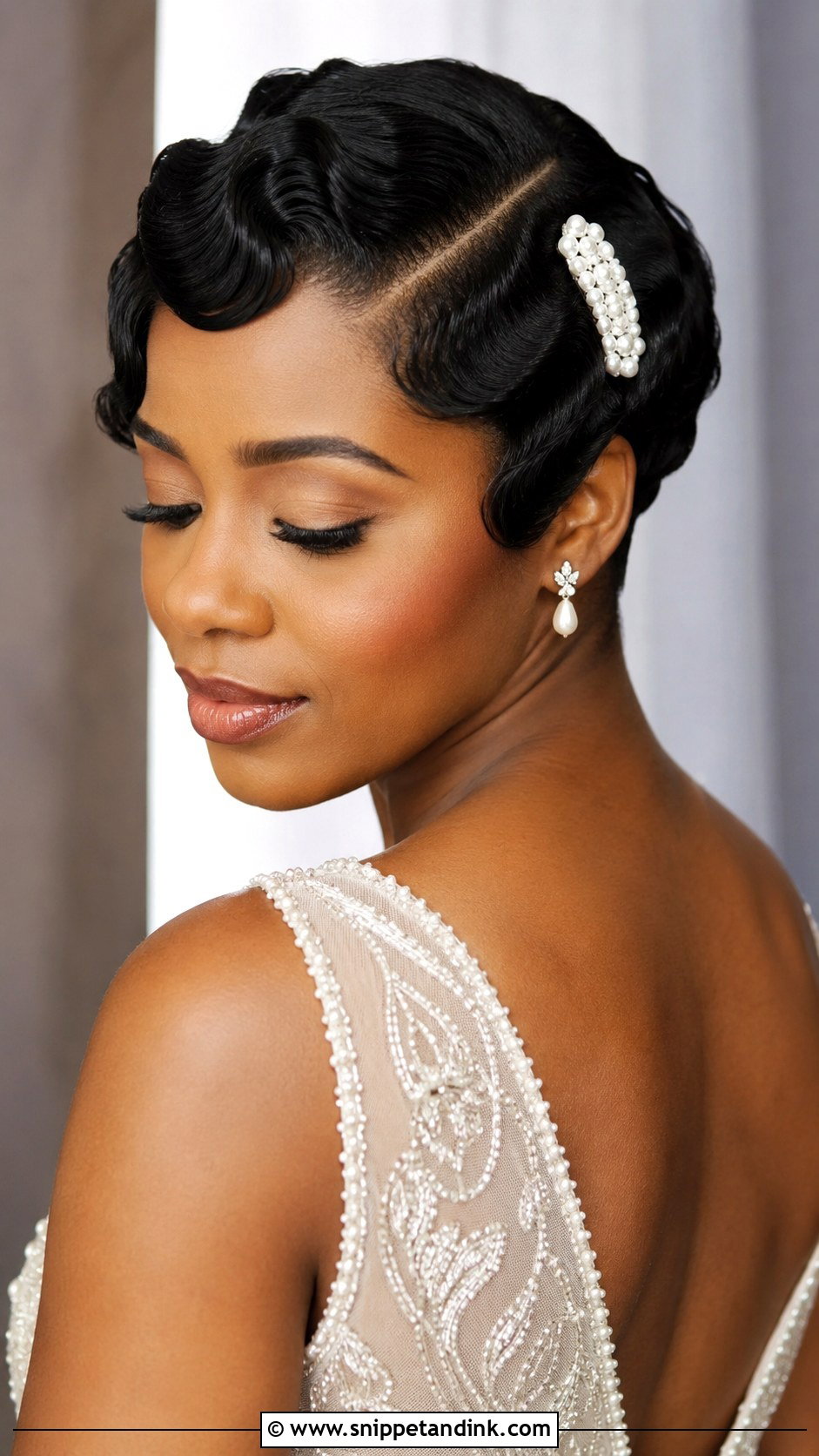
Finger waves give short hair, relaxed hair, pixie cuts and cropped natural hair a sculpted vintage finish. The pattern is molded wet with setting lotion and left to dry under a hood, so allow real time in the schedule; rushed finger waves lose their ridges. I place the deepest wave where it flatters the face shape instead of copying a photo exactly. Pearl earrings, a simple gown and a birdcage veil suit the look.
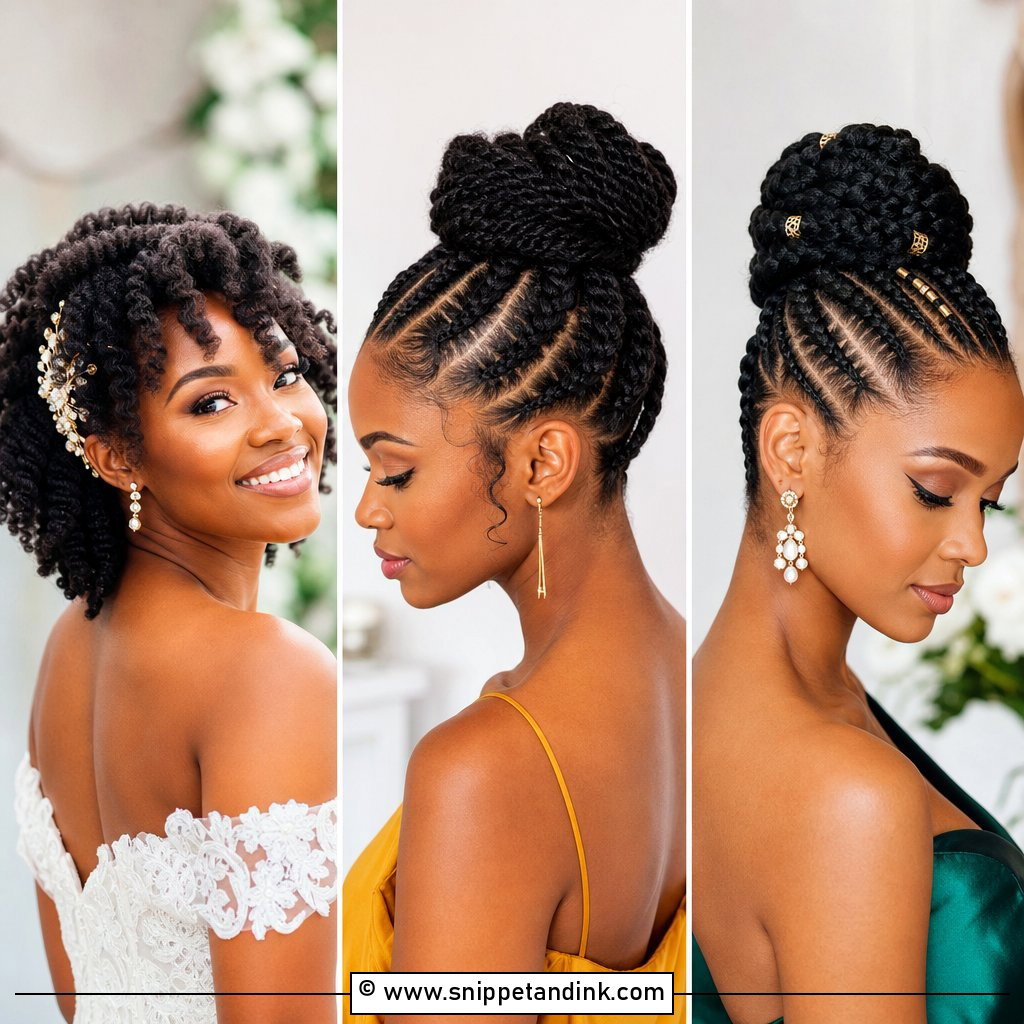
20. Bridal Silk Press Curls Black Hair
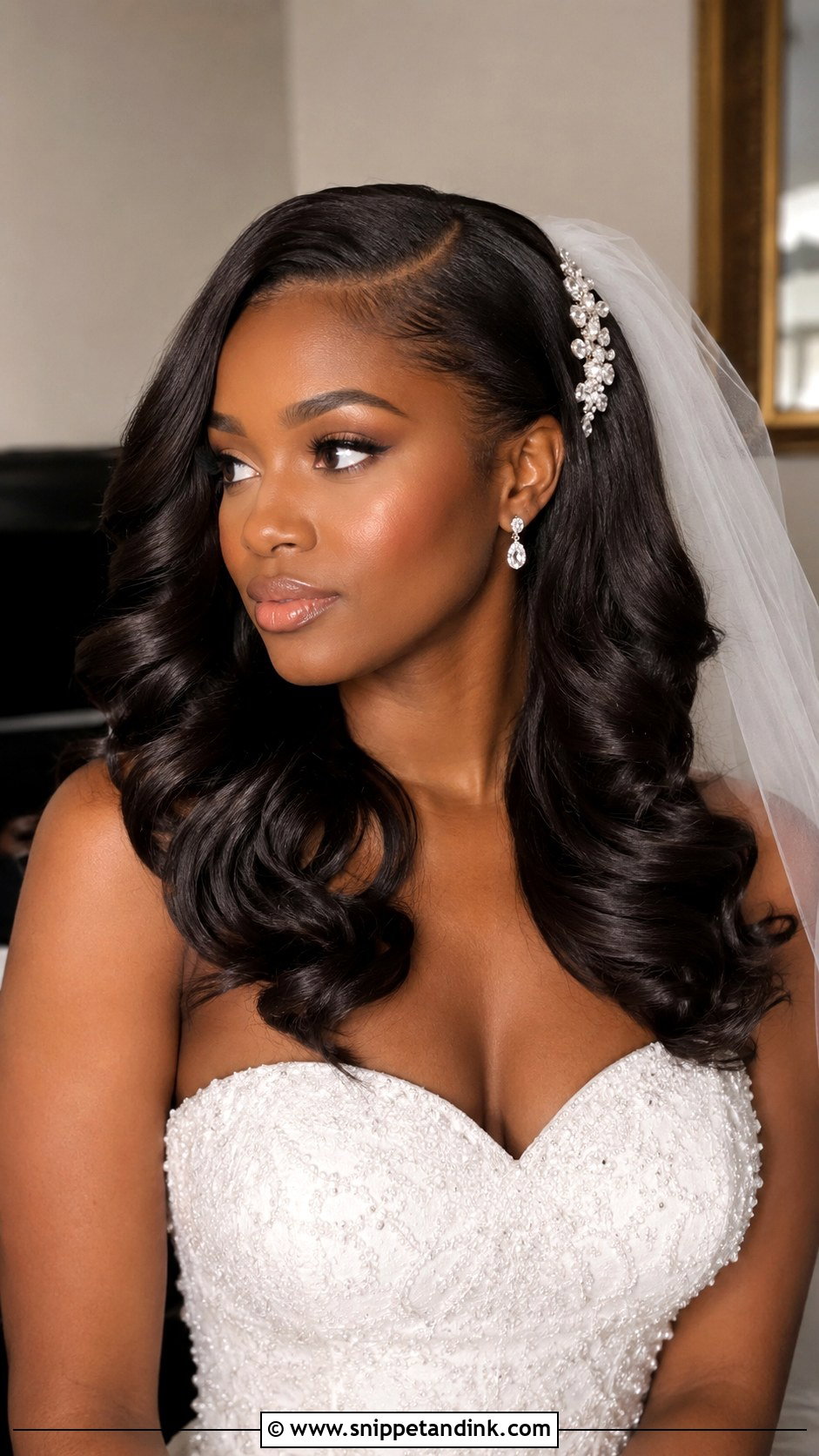
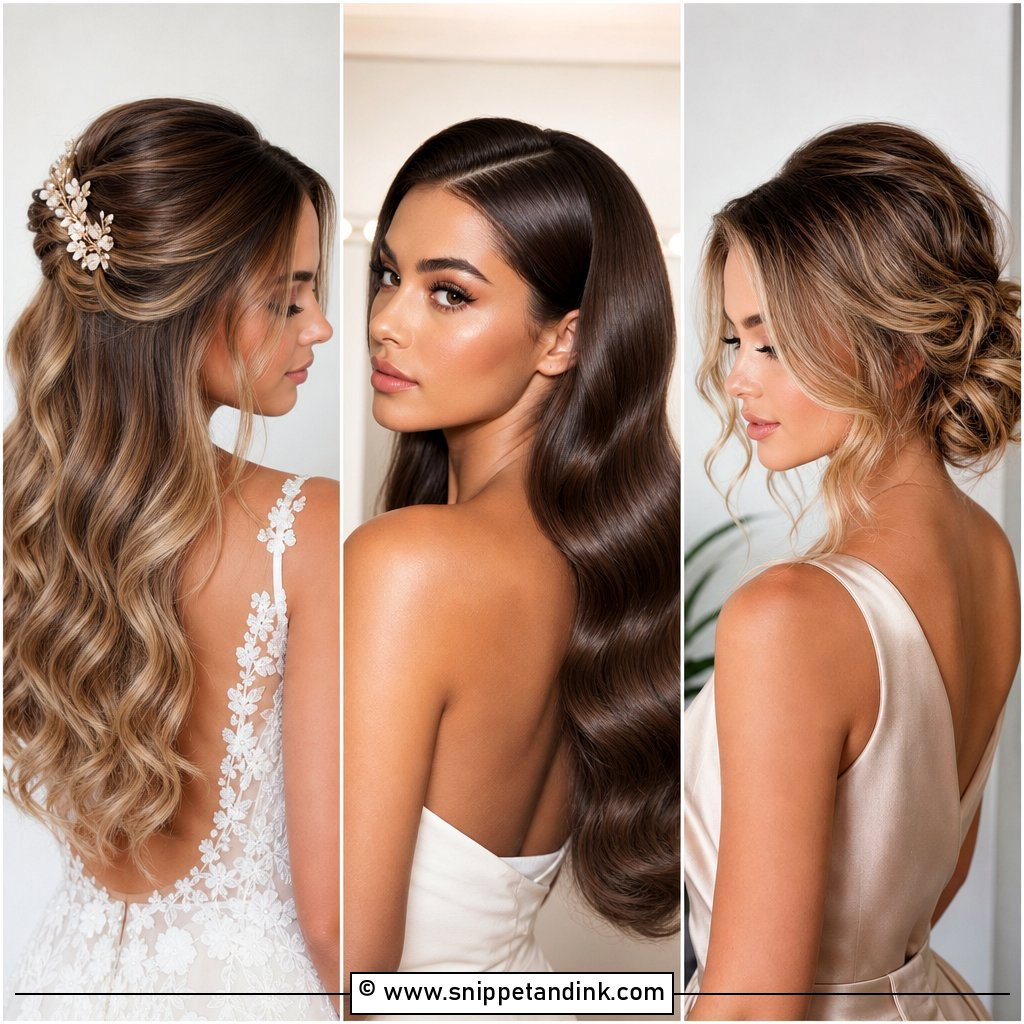
A silk press with curls gives smooth movement and shine, pressed straight and then curled into loose waves, full barrel curls or brushed-out glam. It’s the most humidity-sensitive style here. Moisture in the air makes pressed hair revert toward its natural texture, so I’d reserve it for indoor or cooler-weather weddings. Have the press done a day or two before, keep it wrapped at night, then curl on the morning with heat protection and an anti-humidity spray. Don’t plan a steamy hotel shower before the ceremony.
Is It Too Tight? What I Check at a Textured Hair Trial
A trial is where tension problems show up while there’s still time to fix them. I ask the bride to look up, down and side to side, smile widely and turn her head quickly. Any pulling at the temples or behind the ears means a section needs loosening.
- Pins: large U-pins hold coils and locs better than bobby pins, which can snag.
- Veil weight: a long veil hung from heavy locs or braids adds pull. A lighter tulle or a separate comb anchored lower helps.
- Edges: product should define them, never be used to glue down hair that’s been pulled too hard.
- Scalp: redness, itching or small bumps after an install are a signal to loosen, not to wait out.
The Night Before and the Pouch for the Day
Sleep on a satin pillowcase or in a satin bonnet, with longer curls pineappled loosely on top of the head. Pressed hair gets wrapped. In the morning, the only hands in your hair should be your stylist’s.
For the day itself, give a bridesmaid a soft edge brush, a little edge product, a curl refresher spray, spare U-pins in your colour and a satin scarf for any car journey between venues. That small bag handles almost every touch-up a textured style needs.
Your Texture, Your Tension Limit, Your Call
Braided updo, afro, sleek ponytail, loc bun, twist out or silk press: each one can be the right bridal look, as long as it suits your dress, your texture and the conditions on the day. Book a trial with a stylist experienced in your hair type, bring your inspiration photos, and speak up about tension and comfort. Ask about humidity, veil placement and how long the style needs to last. The goal is hair that looks finished in the first photo and still feels comfortable at the last dance.
You'll Like These Ideas:


Leave a Reply