
Locs give a bridal stylist something most hair doesn’t: built-in texture and a shape that holds once it’s pinned. What they also bring is weight, and that changes how I plan every style. I start with the neckline and the veil, then think about how much the locs weigh and how long the bride will be wearing them. The requests I see most are high buns, petal buns, half-up locs, curled ends, braided crowns and low chignons, often finished with pearls or flowers. Here are fifteen of them, with notes on how each one is built and who it suits.
A Retwist, Wash and Set Calendar for Wedding Locs
Timing is where loc brides most often get caught out. A retwist done the day before leaves the scalp tender and the roots tight, which makes an updo painful. I’d rather see it done one to two weeks out, so the new growth looks tidy but has settled.
- Two weeks out: retwist or interlock, and do a trial of the actual style.
- Three or four days out: wash and condition. Locs hold water for a long time, so they need to dry completely, deep inside, before they’re pinned up or wrapped.
- Two nights out: set any curls on rods or pipe cleaners if your locs are long and take time to dry.
- The night before: sleep in a silk or satin bonnet, or a scarf, to keep the set and the roots smooth.
- The morning: styling, pinning and accessories only. No washing.
Damp locs packed into a tight bun under a veil can start to smell musty by evening, so if you’re short on drying time, dry them under a hooded dryer rather than hoping they’ll air-dry overnight.
1. Wedding Loc Updo
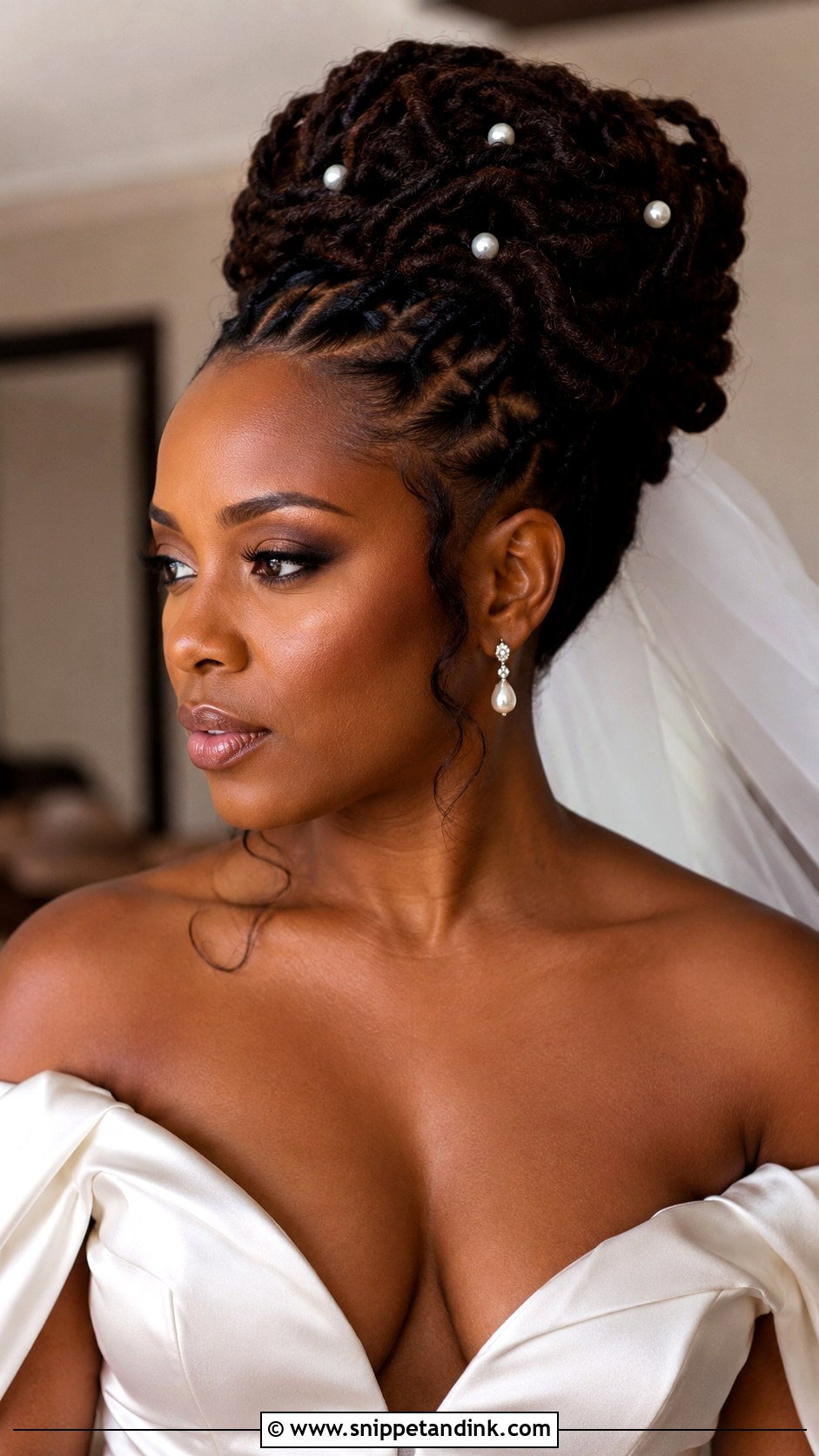
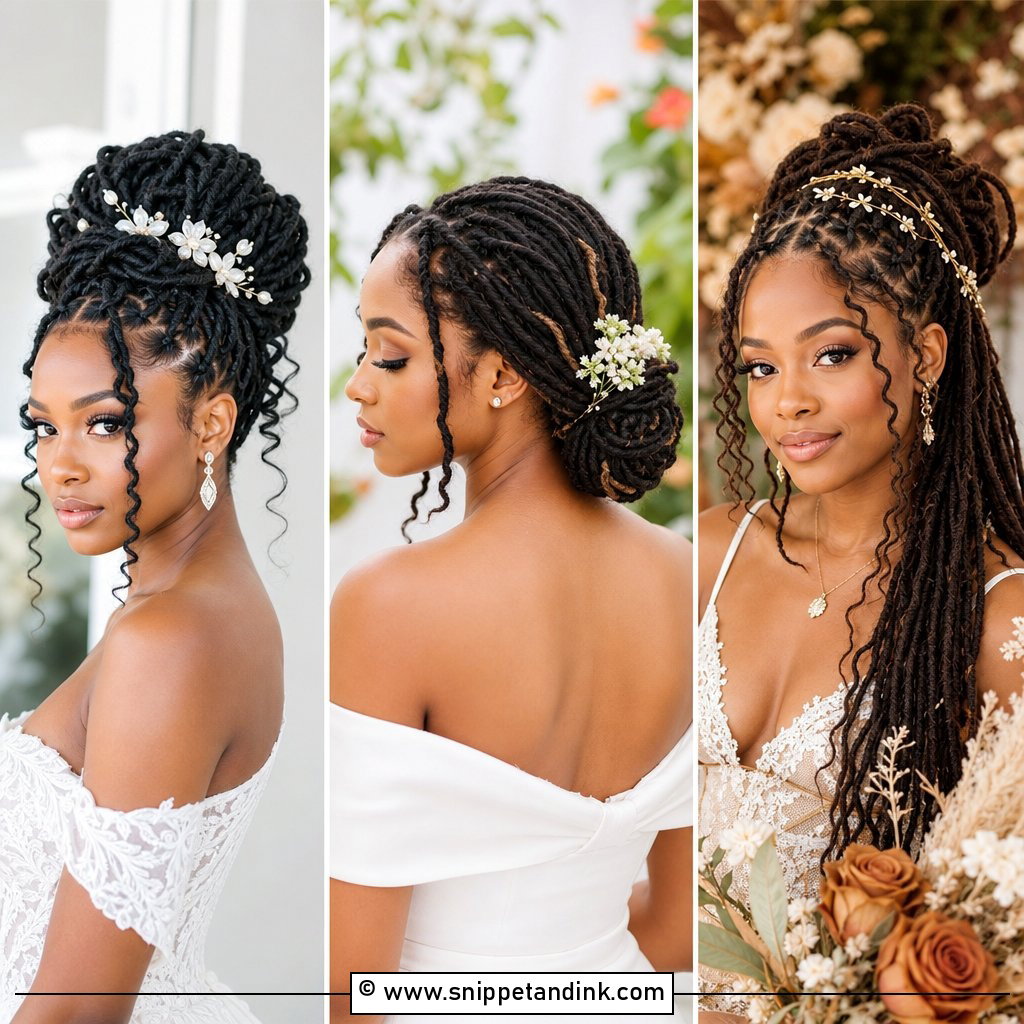
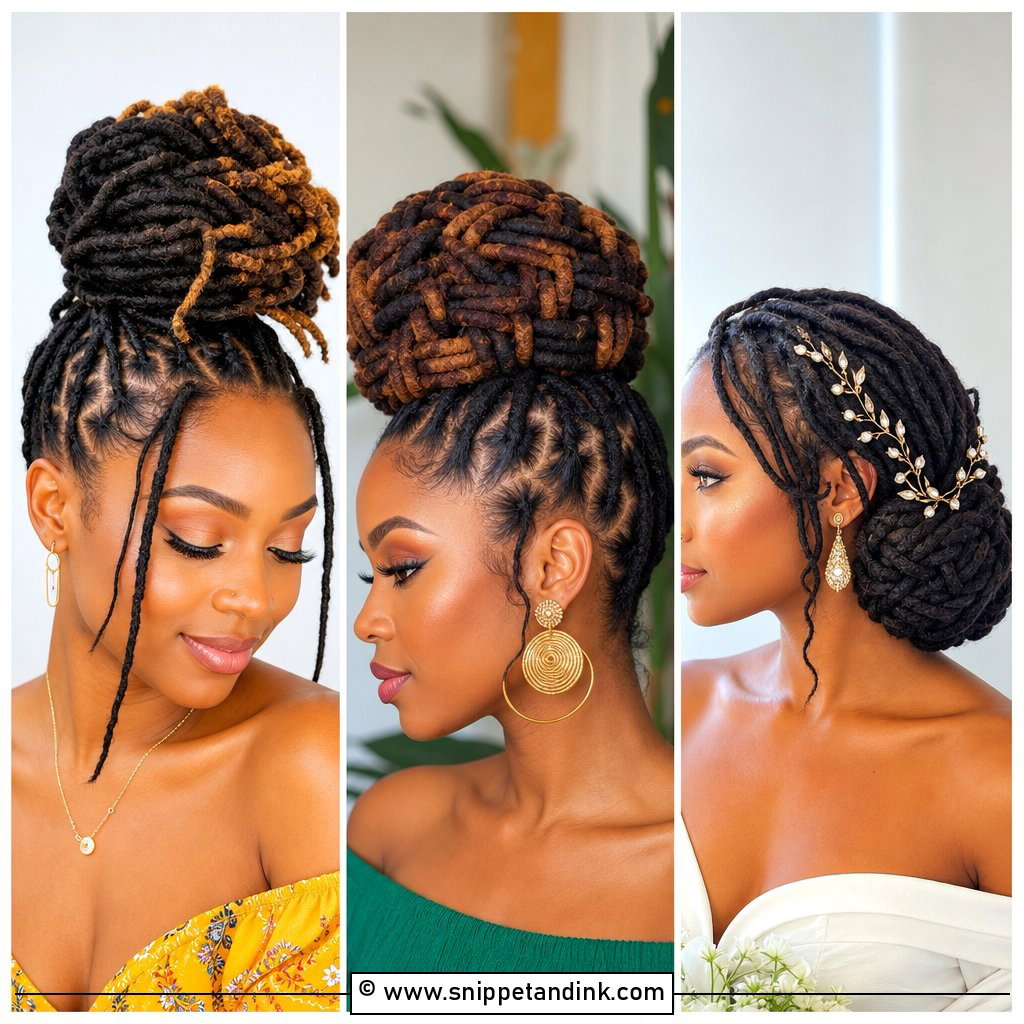
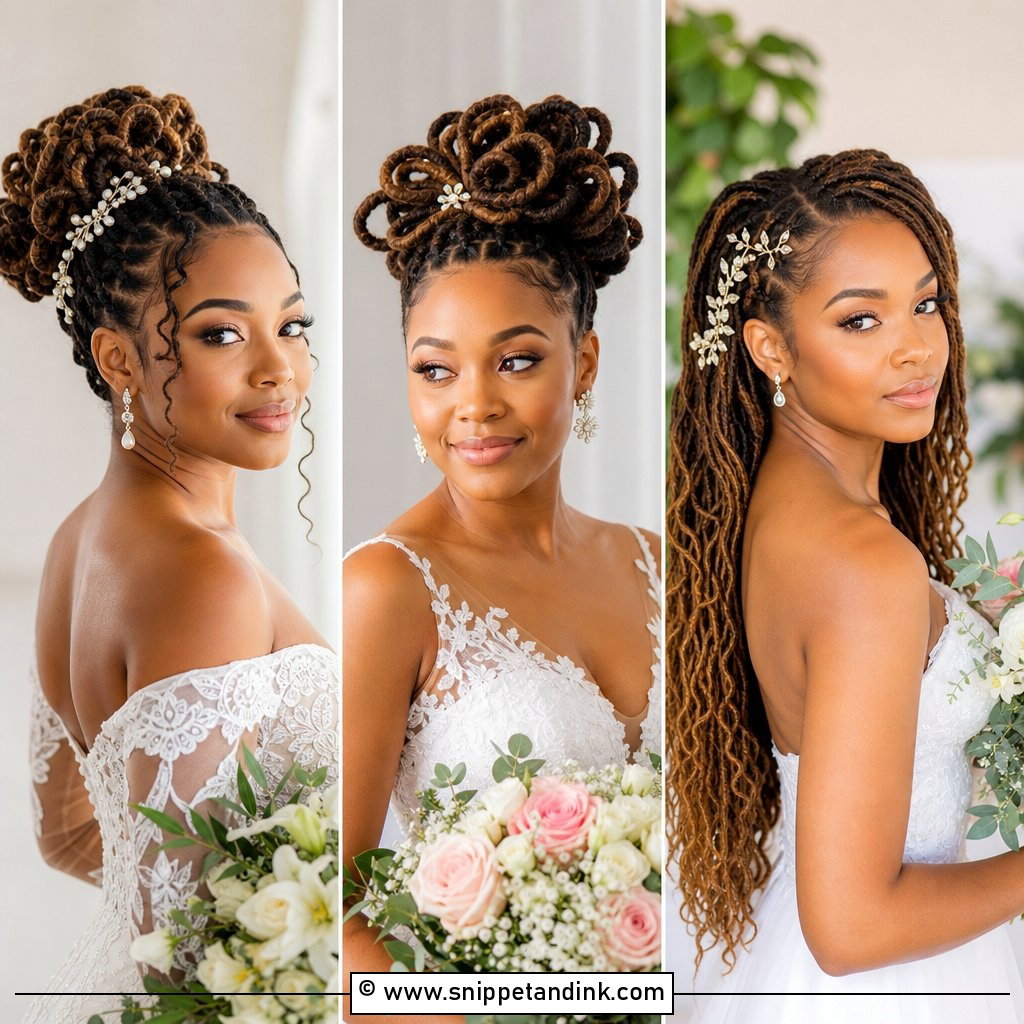
A wedding loc updo is the one I trust most for a long day, because once the locs are secured in a sculpted shape they don’t drop the way curled loose hair does. I build it in two or three sections rather than gathering everything at once, so the weight is shared across the scalp instead of hanging from one point. It suits veils, statement earrings and high or detailed necklines. Medium to long locs give fullness without added pieces. Leave a loc or two at the front if a fully smooth hairline feels too severe on you.
2. Half Up Half Down Wedding Locs
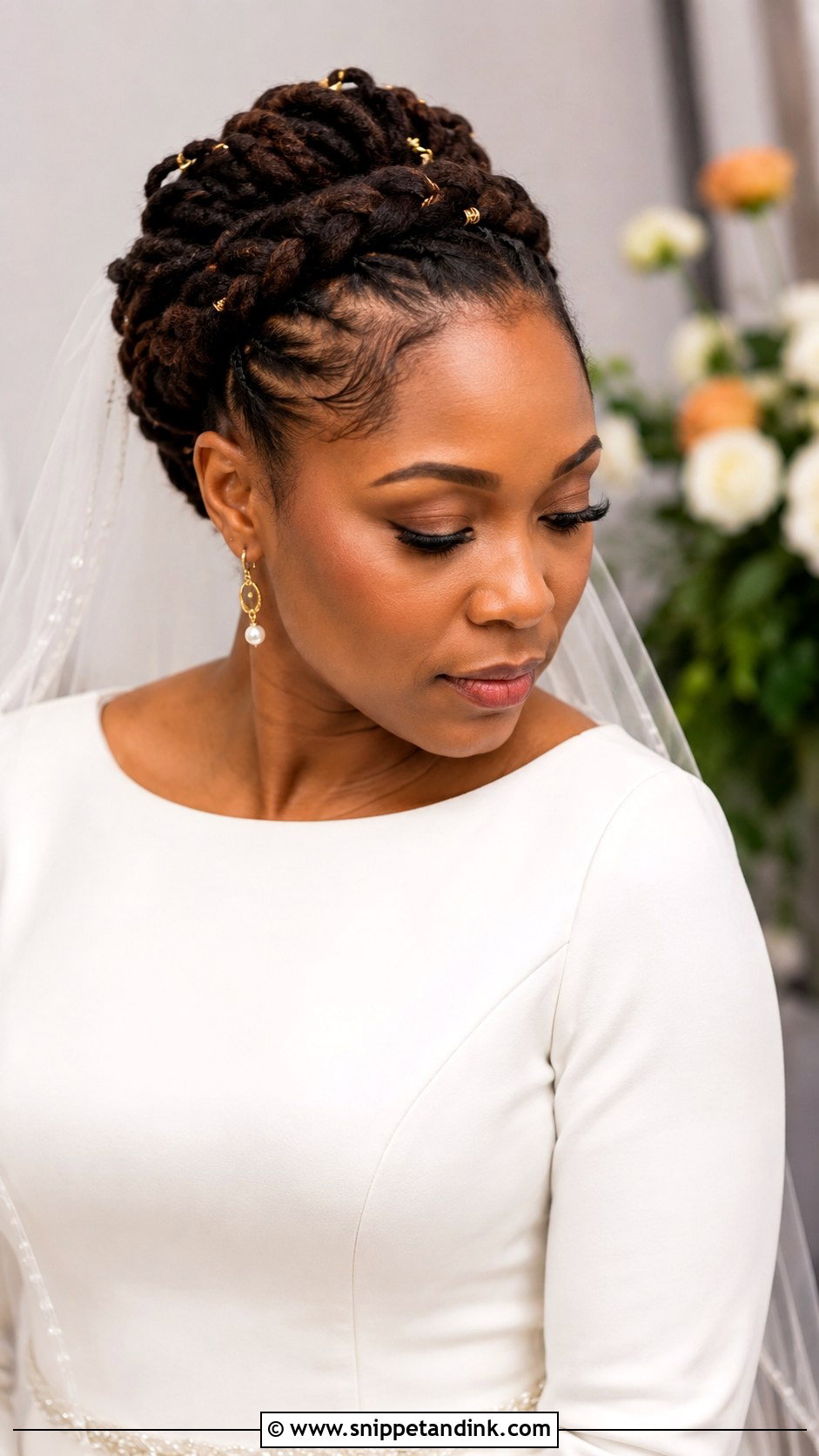
If you wear your locs down most days, this is often the style where you’ll still recognise yourself in the photos. I twist or pin the top section into a small knot or crown and let the rest fall. The lifted part takes weight off the face, which helps on a hot afternoon. Curled ends soften it, and one or two loc cuffs add shine. Check that the lifted section sits high enough to anchor a veil comb if you’re wearing one.
3. Bridal Loc Bun
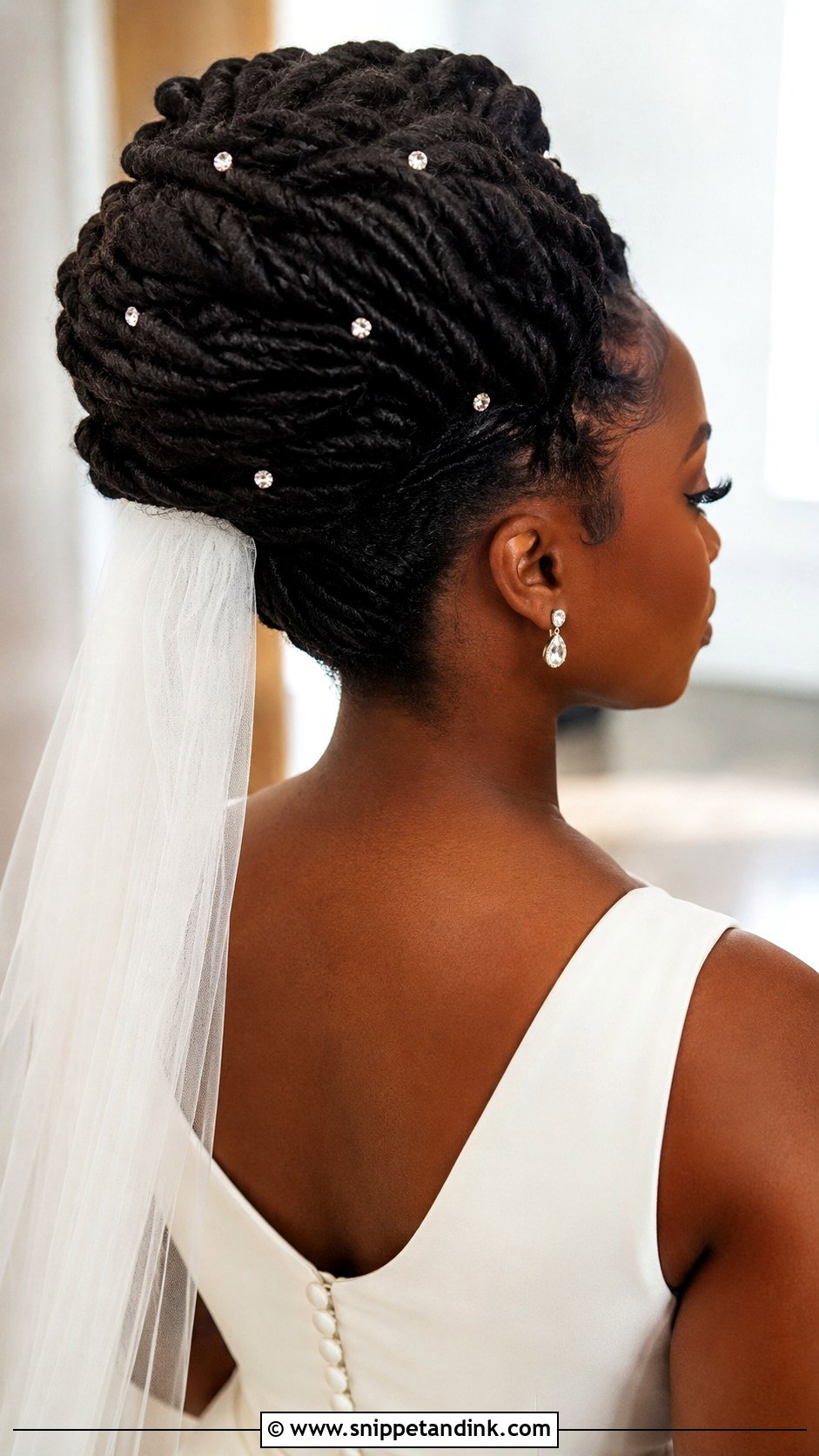
A plain bun sounds basic, but with locs the texture does the decorating. Where it sits changes everything: high reads formal, low reads classic, and centred at the back balances a strapless dress. In warm weather I lean toward this one because it keeps the weight off the neck. Wrapped tightly it looks sleek; loosened, it looks fuller. Decide on veil placement before the bun is built, since a comb tucked under a finished bun rarely sits straight.
4. Loc Petal Bun Wedding Hair
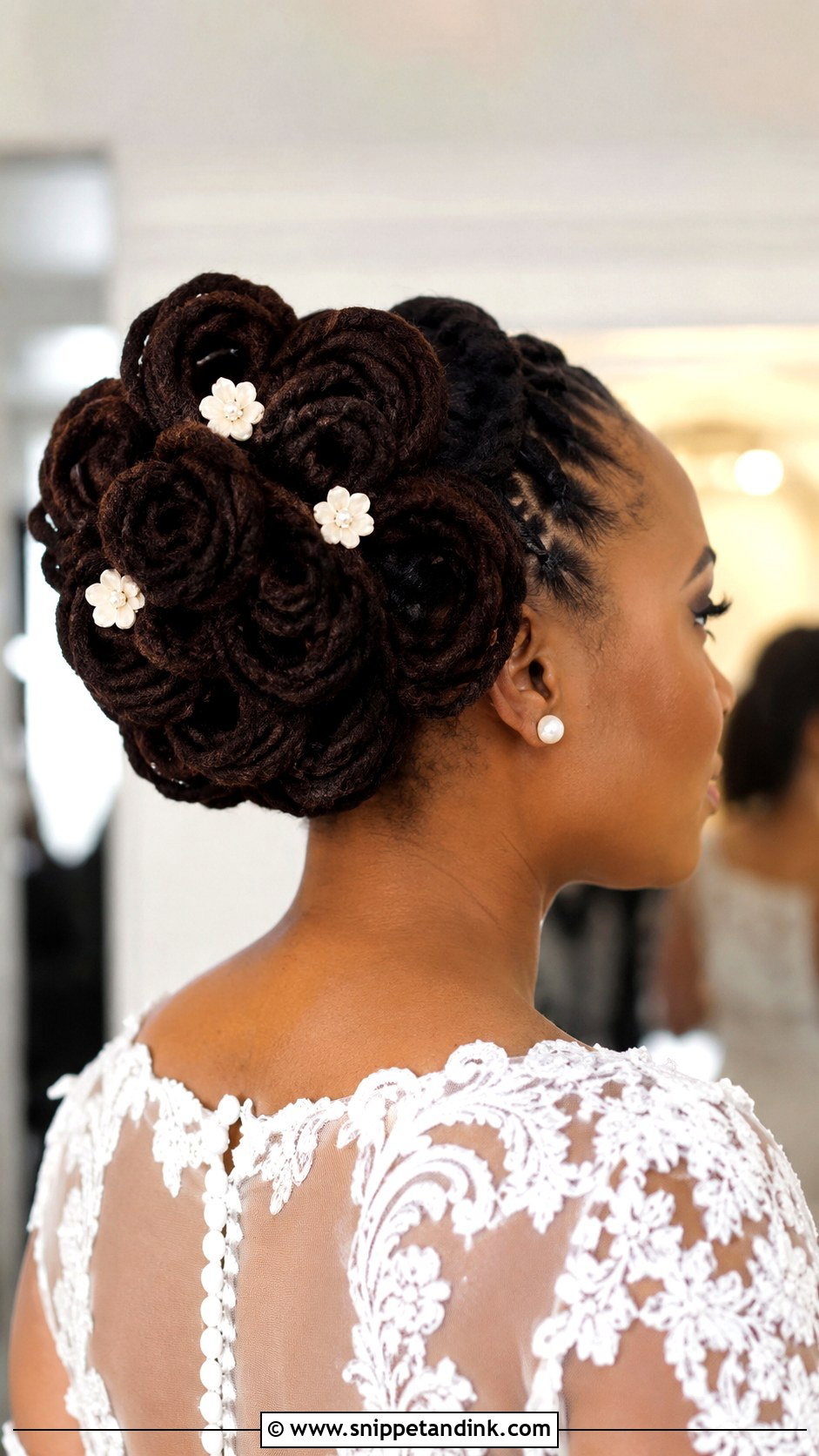
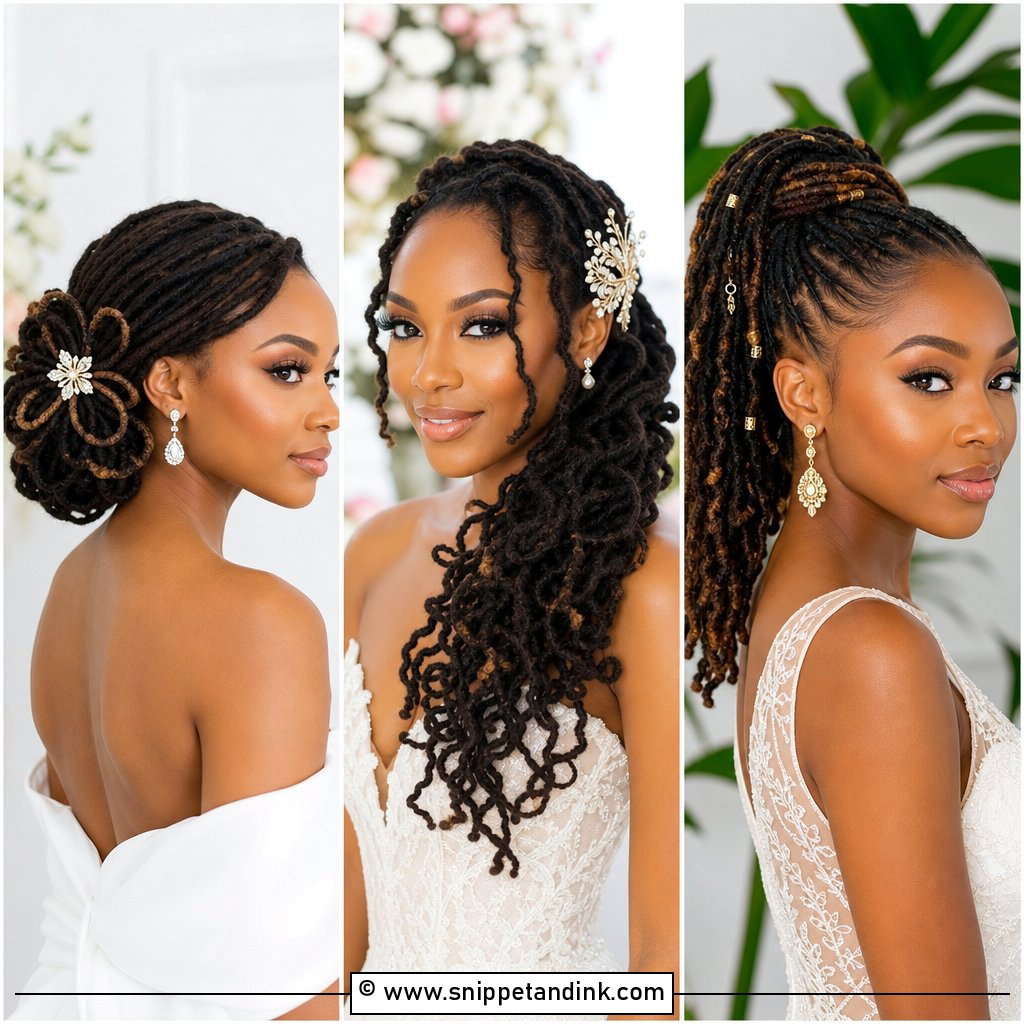
Loc petal bun wedding hair is built by looping individual locs into rounded petals around a centre point, so the shape looks floral without needing a single flower. It takes longer than a regular bun, and it needs medium or long locs; shorter ones won’t loop far enough to make a full petal. I pin each loop at its base, not at the tip, so the petal keeps its curve. Neat edges and a few small pearls are enough.
5. Wedding Locs With Curls
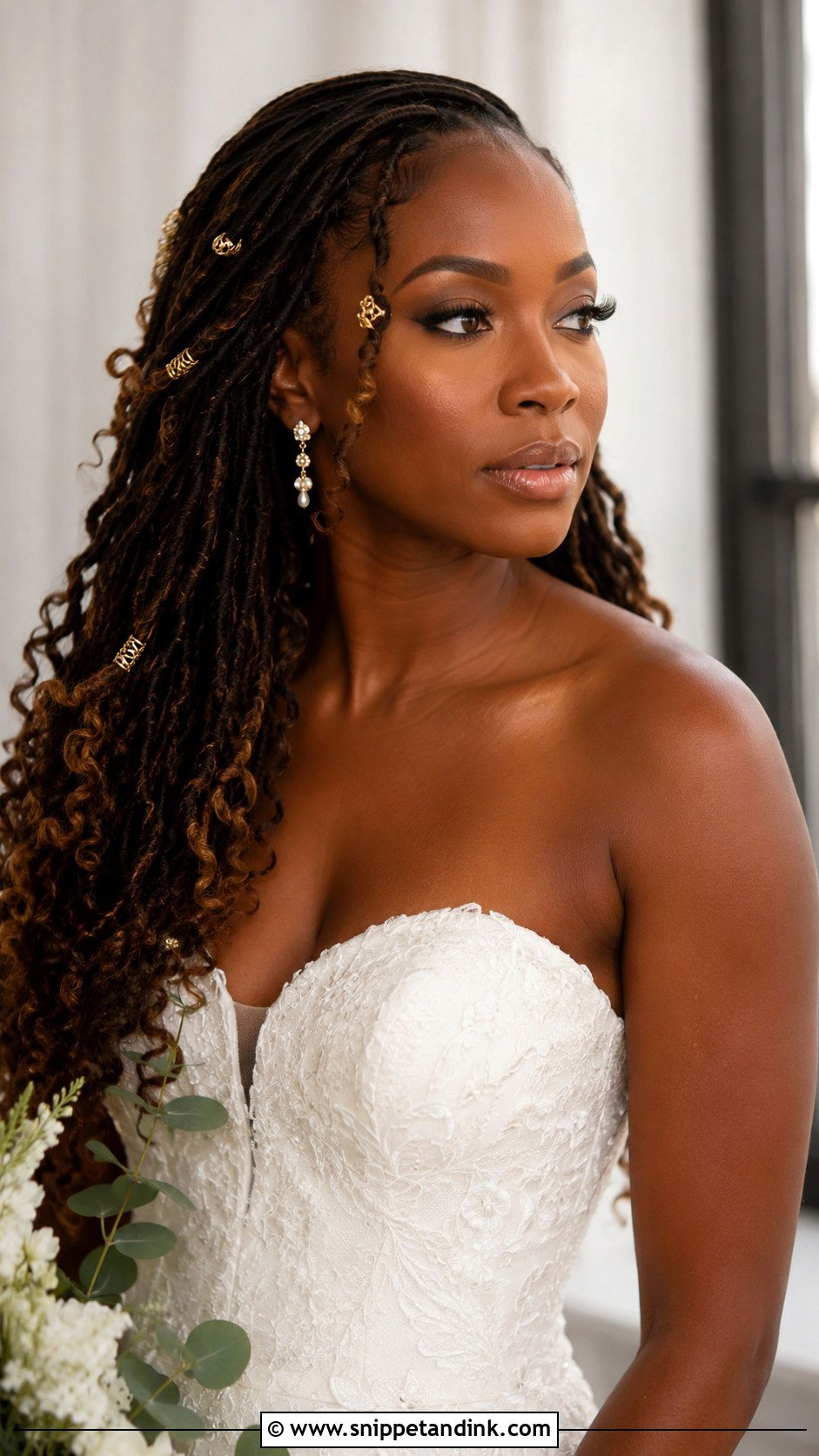
Locs don’t curl with an iron the way loose hair does, and I don’t recommend direct heat on them. The curl comes from setting: damp locs wrapped on flexi rods, perm rods or pipe cleaners and left to dry fully, usually overnight. That set lasts for days, which makes it far more reliable than a heat curl. Curl the ends only, or the full length, or just the pieces around the face. It’s a good match for strapless and off-shoulder gowns, where the texture fills in around the collarbones. Keep the crown smooth so the curls read as intentional.
6. Loc Chignon Wedding Hair
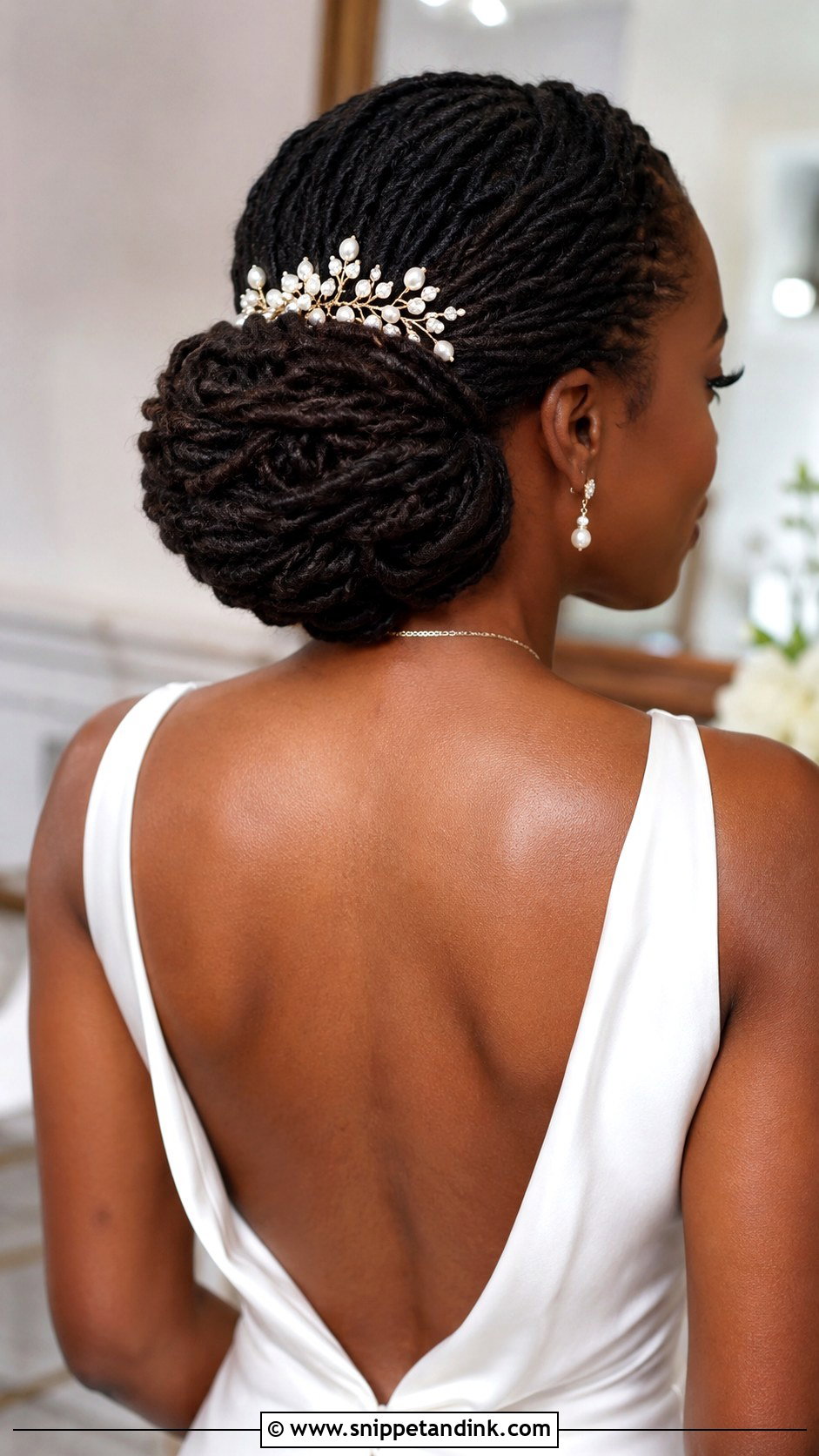
The chignon sits low at the nape, and it’s my usual suggestion for a courthouse ceremony or a garden wedding where the bride wants something calm. Locs can be rolled, tucked or twisted into it, and the texture fills the shape on its own. Because it’s low, the weight rests close to the neck rather than pulling at the crown, so it’s comfortable for long receptions. Combs and vines sit above it neatly, and it works with a middle, side or swept-back front.
7. Side Swept Wedding Locs
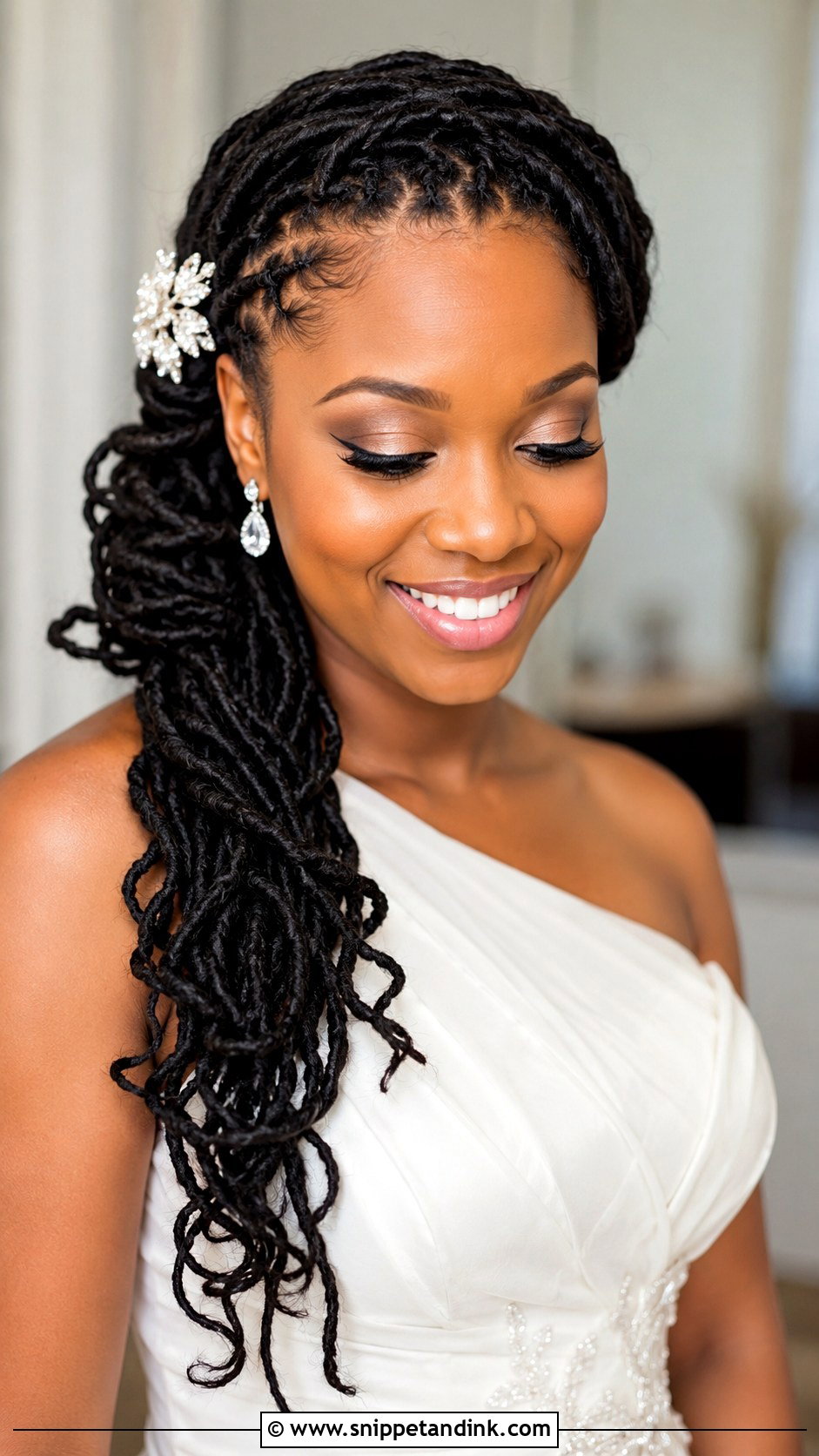
Sweeping all the locs over one shoulder looks dramatic, but it also puts the full weight on one side of the head. I anchor the sweep with a hidden flat twist or a row of pins behind the ear so the pull is spread out. It frames the face well in portraits and suits one-shoulder dresses, sweetheart necklines and detailed sleeves. Put the sweep on the side away from your partner at the altar, so your face stays open to the camera and to them.
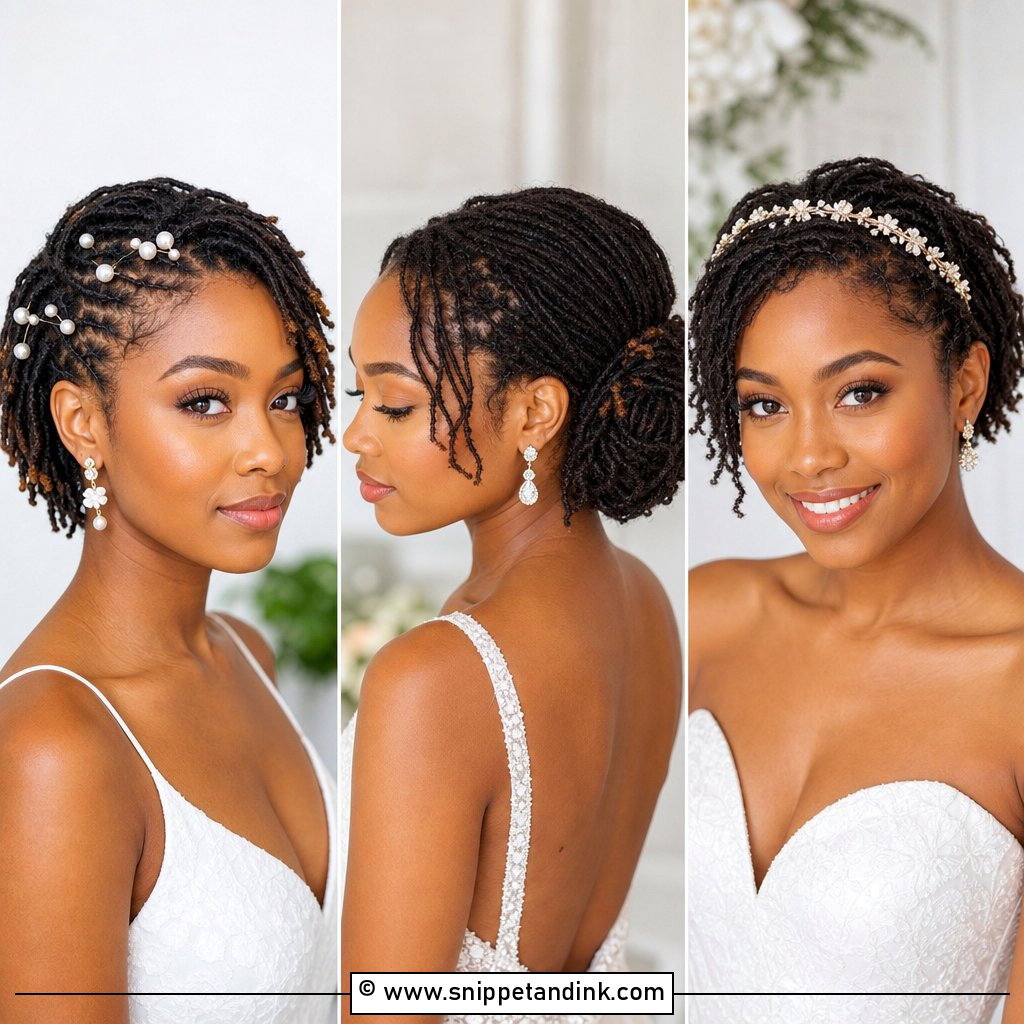
8. Wedding Locs With Pearls
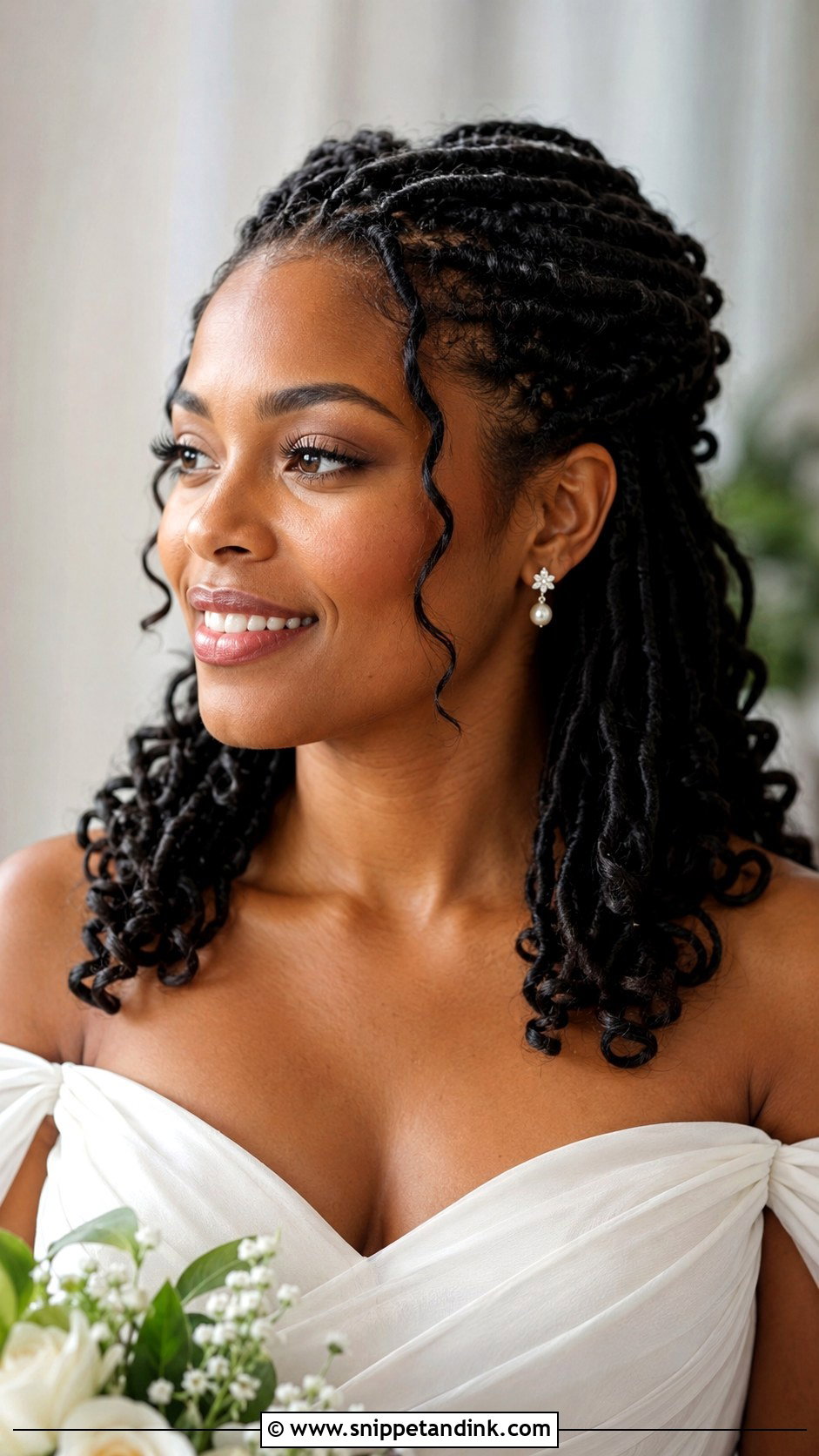
Pearls take a loc style from everyday to bridal faster than anything else. They can be scattered through loose locs, set along a crown braid or tucked around a bun. Spacing matters more than quantity; I place them where they’ll show from the side and back, not packed along the parting. Slip-on pearl beads and cuffs grip locs better than standard pearl bobby pins, which tend to slide. White and ivory match most gowns, and gold settings warm up darker loc colours.
9. Wedding Locs With Flowers
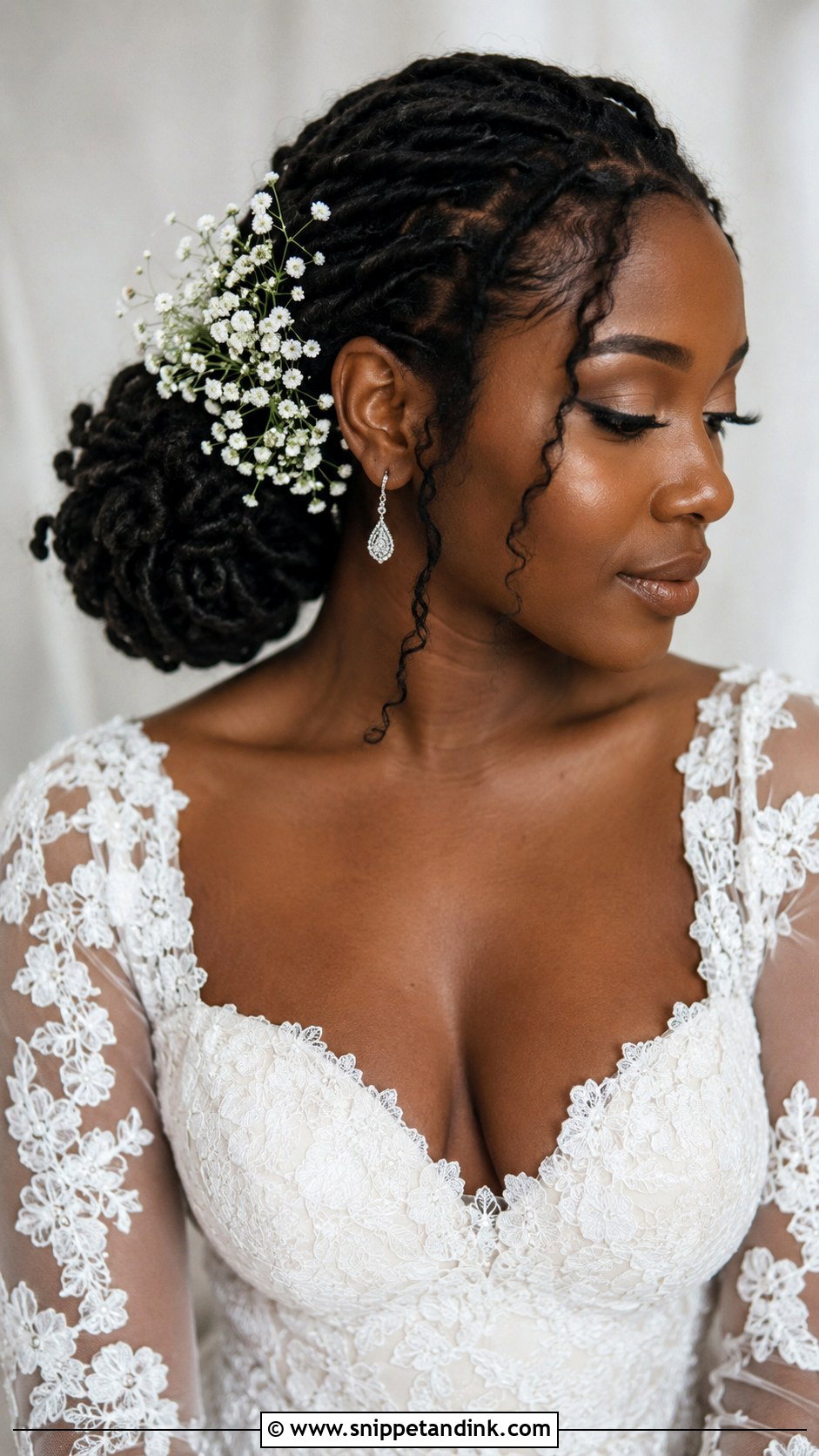
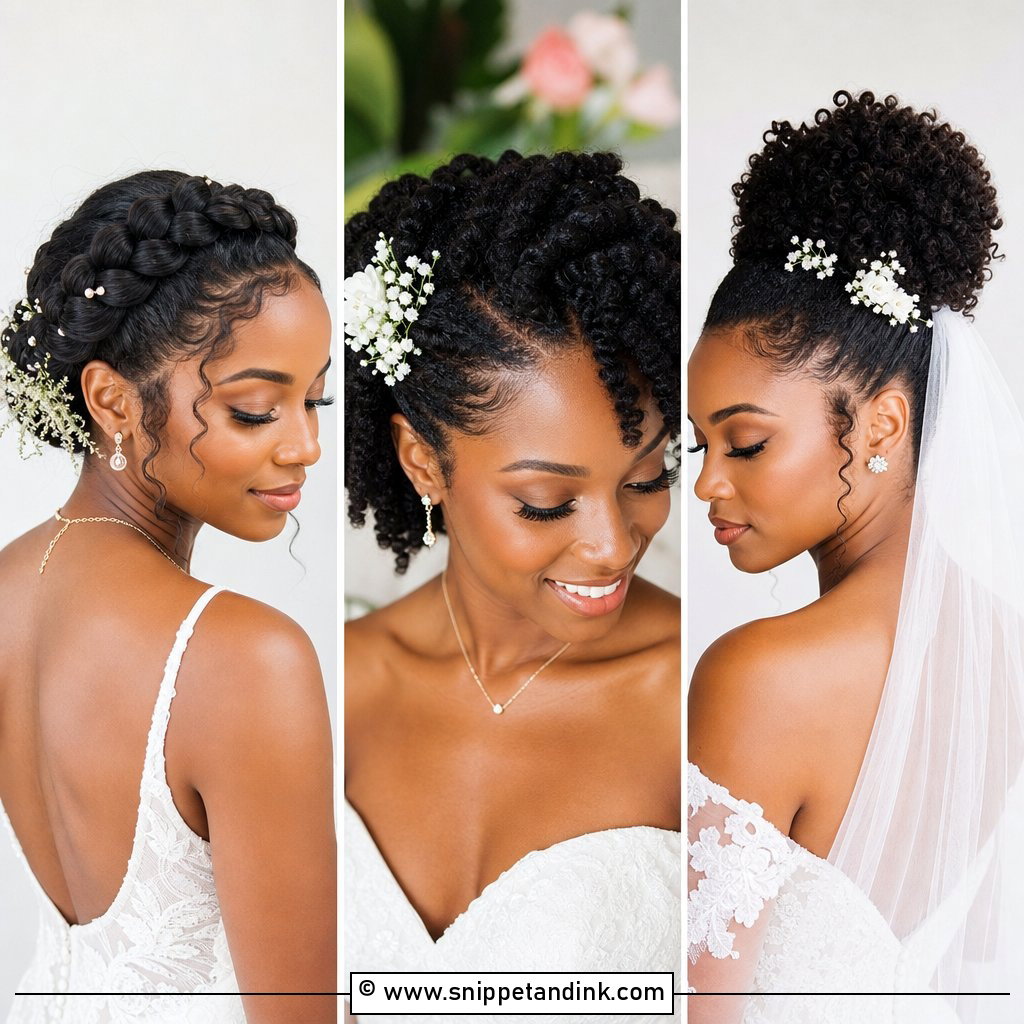
Small blooms work well woven into an updo, pinned beside a chignon or spaced through half-up locs. Fresh flowers wilt in direct sun, so for outdoor summer ceremonies I usually suggest silk or a hardy bloom the florist can wire short. Match them to the bouquet so the two read as one look. Flowers are also an easy way to coordinate bridesmaids with different loc lengths without making everyone wear the same style.
10. Braided Loc Crown Wedding Hair
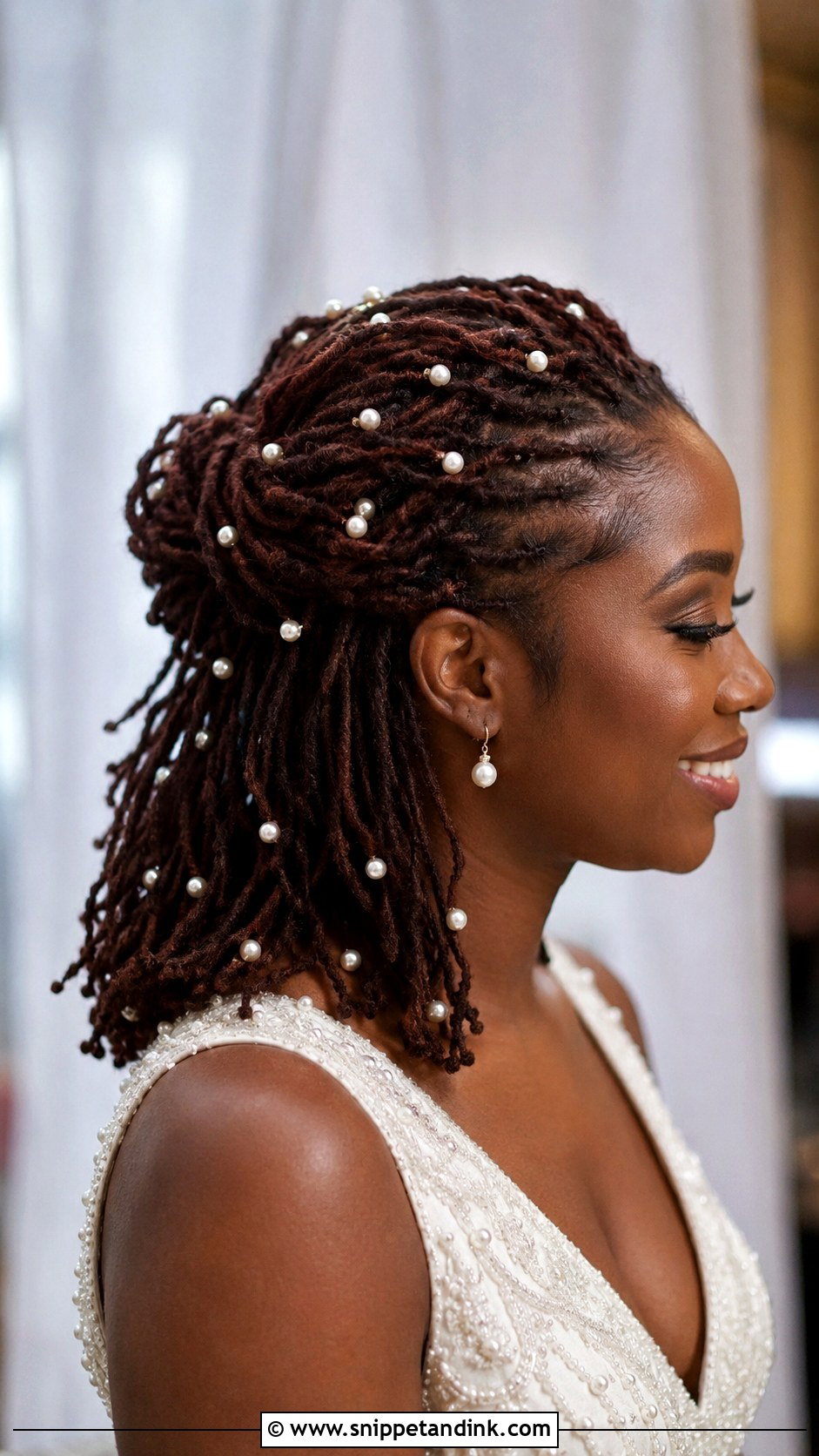
A braided loc crown wedding hairstyle circles the head like a tiara and keeps the face fully open. I braid or twist the locs in two halves and meet them at the back, pinning every few inches, because one long braid wrapped around the head can slip down at the back by evening. A veil goes behind the crown, and small pins can trace the braid. Leave a loc at each temple if fully swept back feels too strict.
11. High Bun Wedding Locs
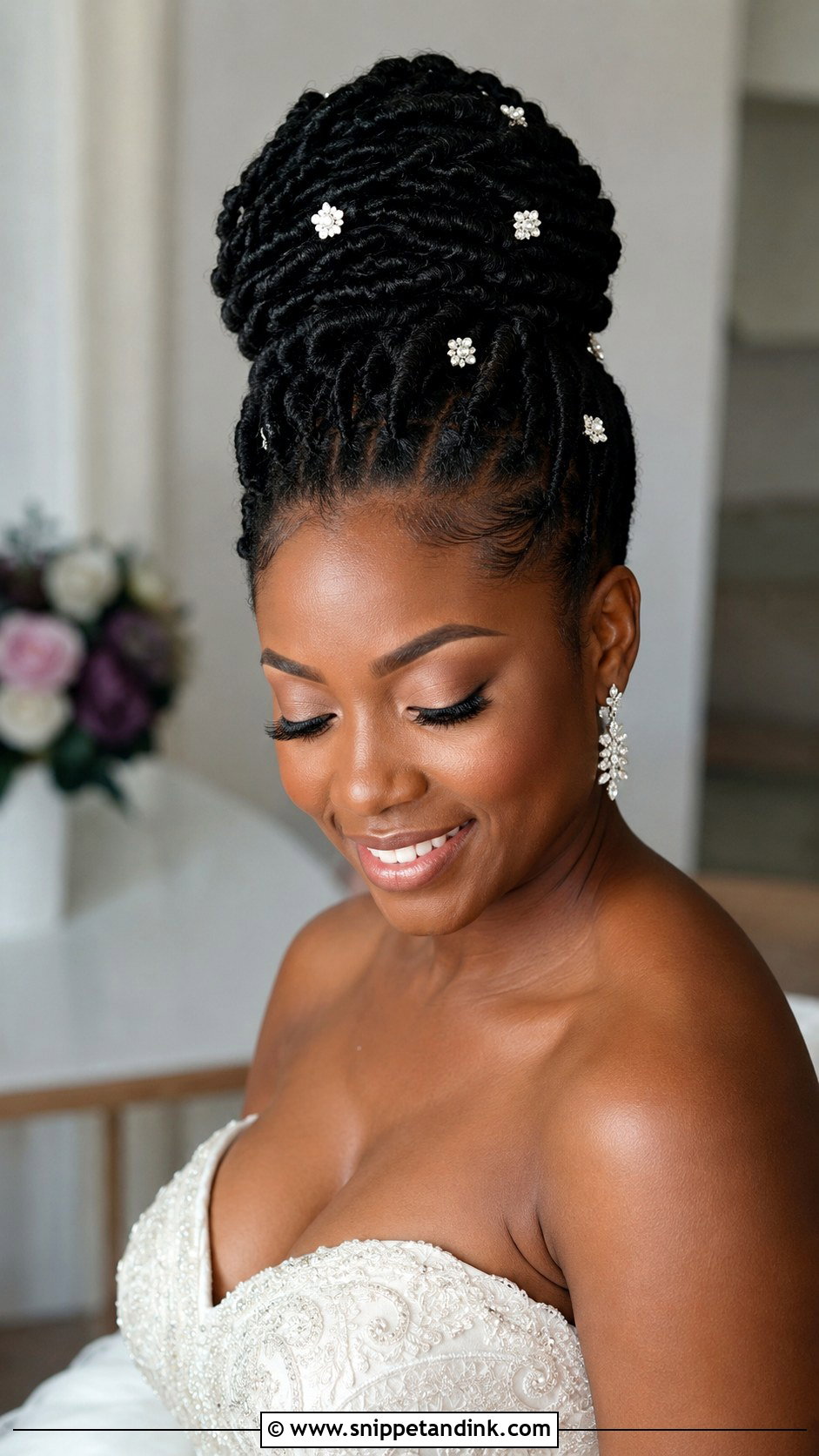
Height lengthens the neck and shows off earrings, and locs make a full, rounded high bun with very little padding. This is also the style where weight becomes a real issue: long, thick locs piled at the crown can cause a headache by mid-afternoon. I usually split the locs and pin half underneath as a base so the bun sits on top rather than hanging from a single tie. It’s a strong match for strapless and halter gowns. Crystal pins or a simple veil are enough.
12. Low Bun Wedding Locs
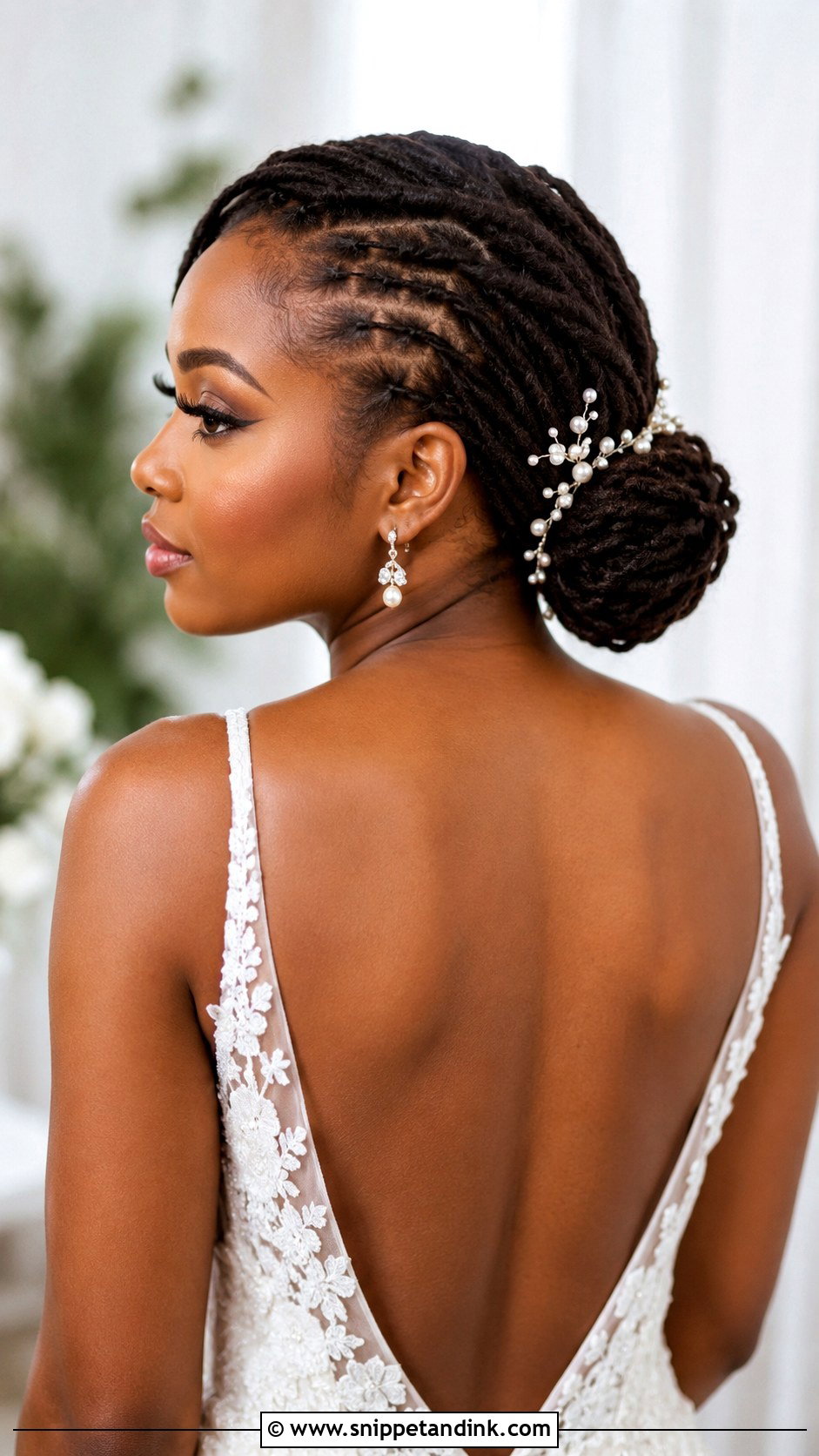
A low bun is my first suggestion for a bride who has never worn her locs up for a full day. The weight sits at the nape, so there’s no pull at the hairline, and it stays put. Veils and combs slot in above it easily, and it suits an open back. A side part softens it; a centre part tightens it. Pearl pins around the bun or a small cluster of flowers finish it.
13. Short Loc Wedding Hair
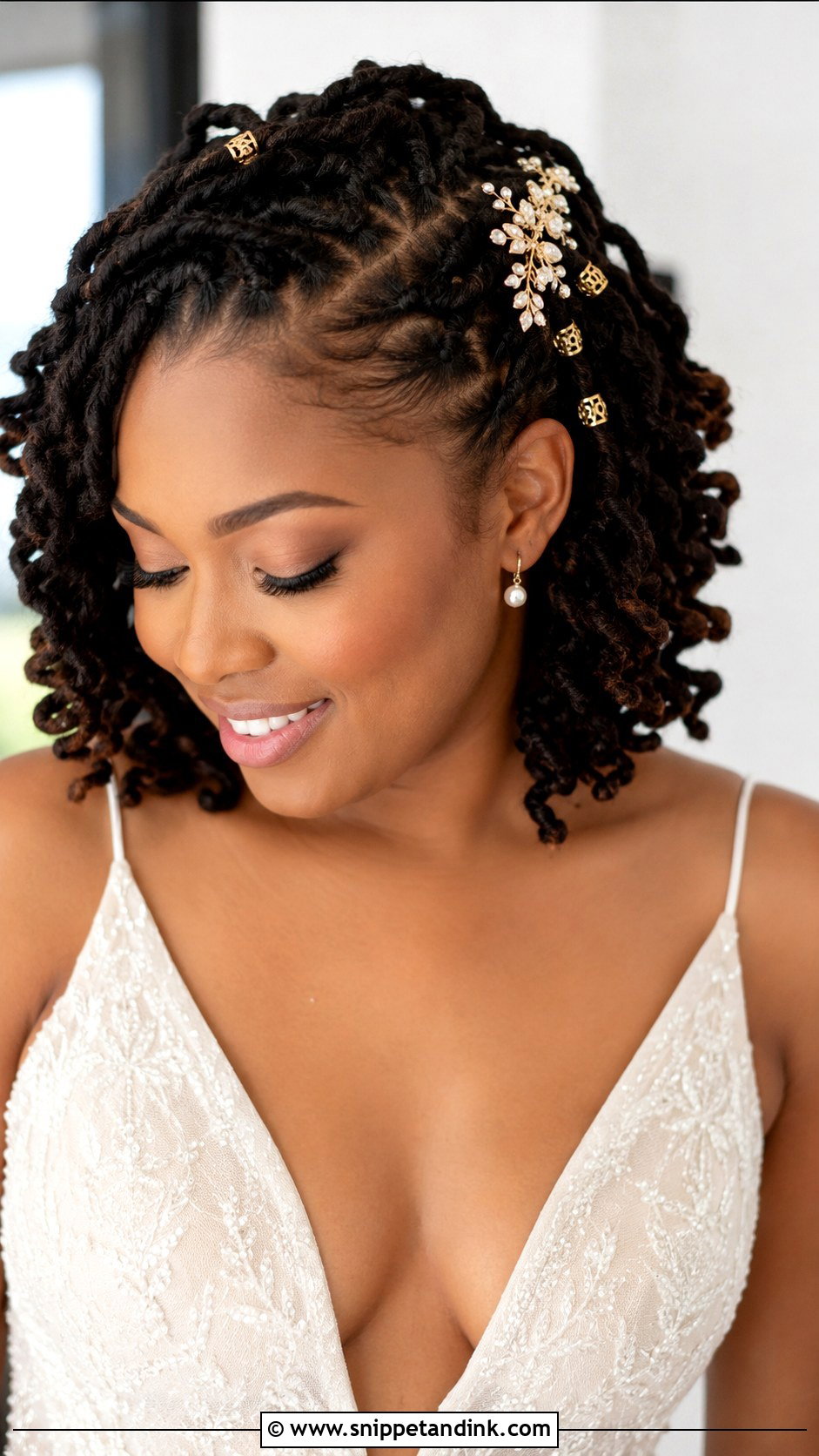
Short loc wedding hair doesn’t need to pretend to be long. A good shape, a clean part and fresh edges matter more than length. Short locs can be set into curls, pinned to one side or gathered into a small crown updo, and starter locs may need a gentle gel to keep them neat. A headband or a veil comb adds bridal detail without weight. Bob-length and shoulder-skimming locs both take a side sweep well.
14. Microlocs Wedding Hair
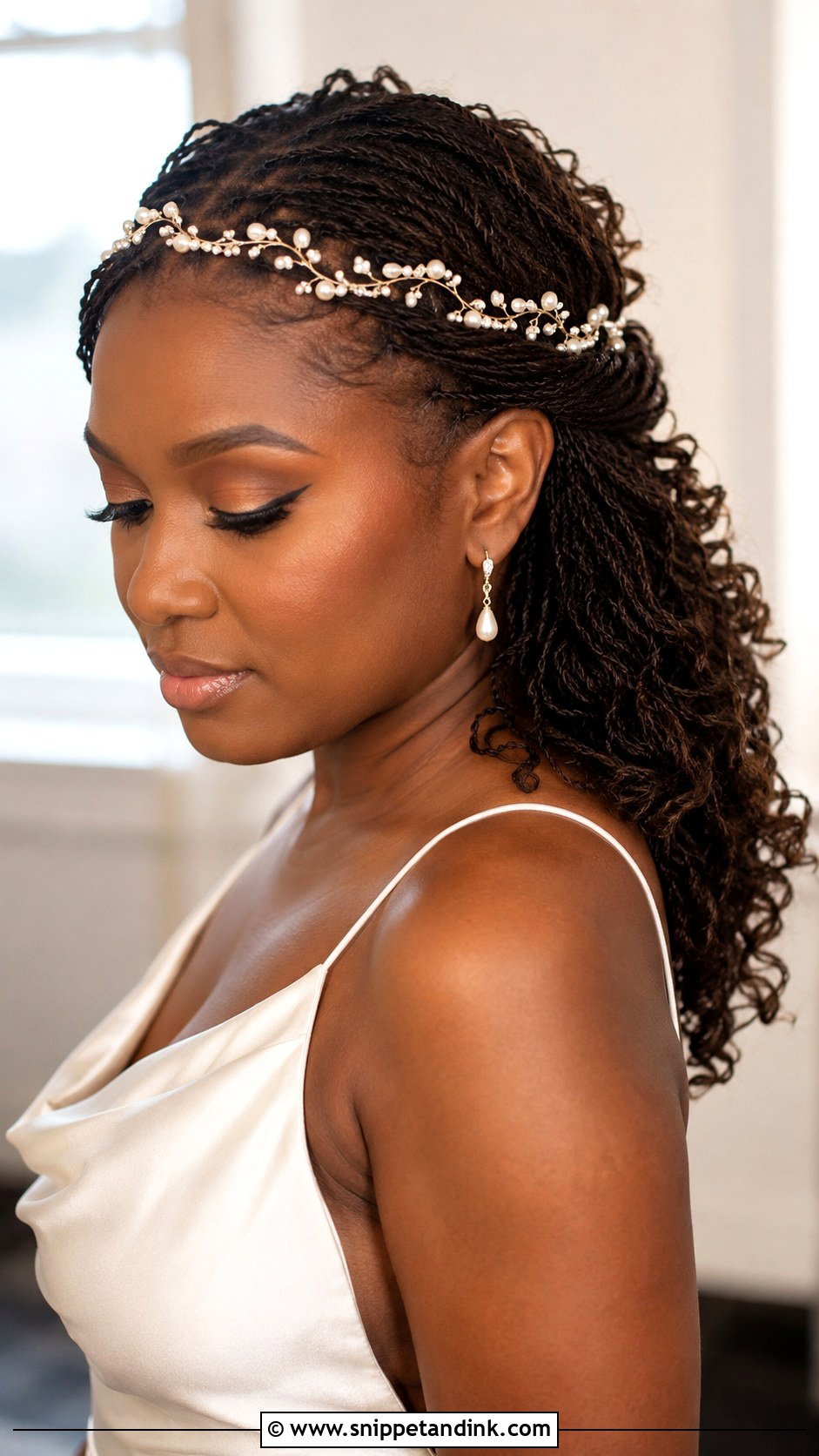
Microlocs wedding hair behaves closer to loose hair than any other loc type. There are hundreds of small locs, so they can be set into curls, pinned into detailed updos or left flowing, and they hold fine detail like a woven braid. Because each loc is light, they also sit more comfortably in a high style. Delicate accessories suit them best; heavy cuffs get lost or drag. The downside is time: setting a full head of microlocs on rods takes hours, so plan the set for the night before.
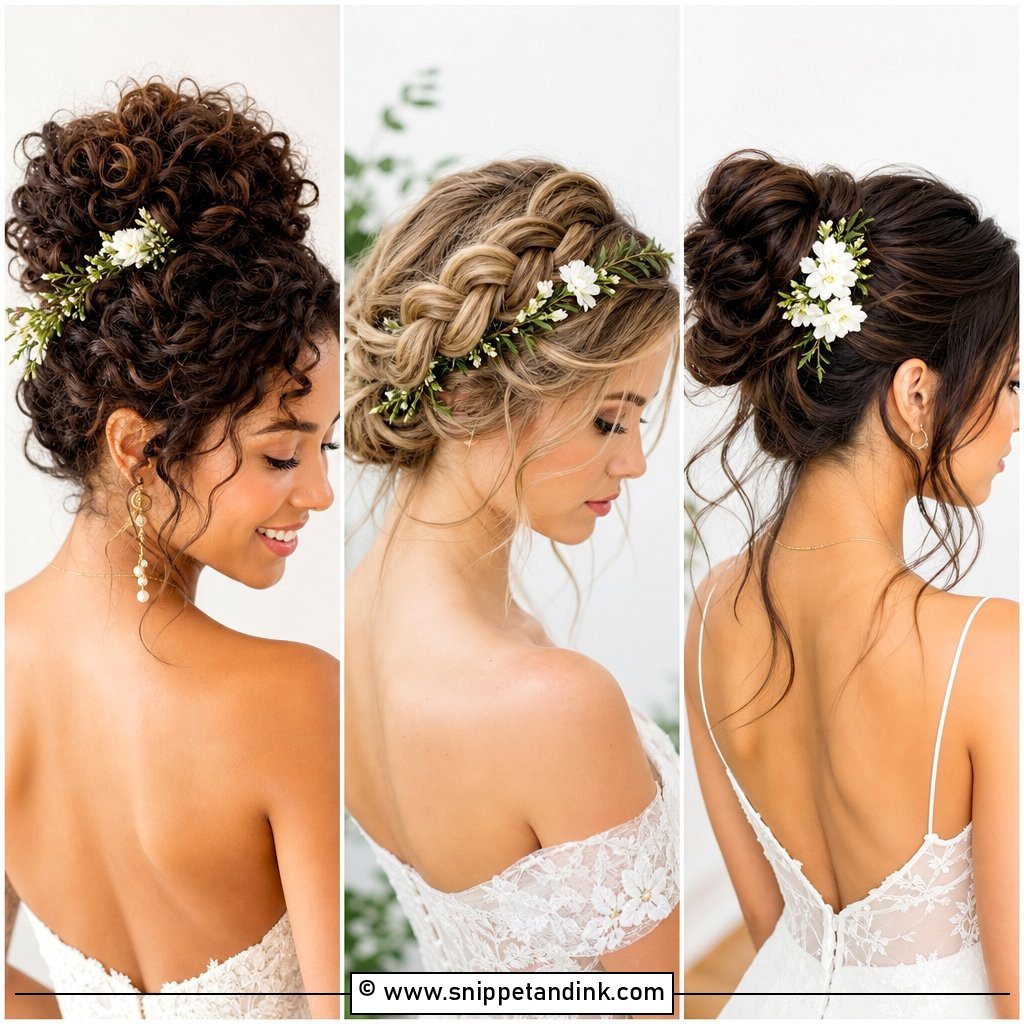
15. Faux Locs Wedding Hair
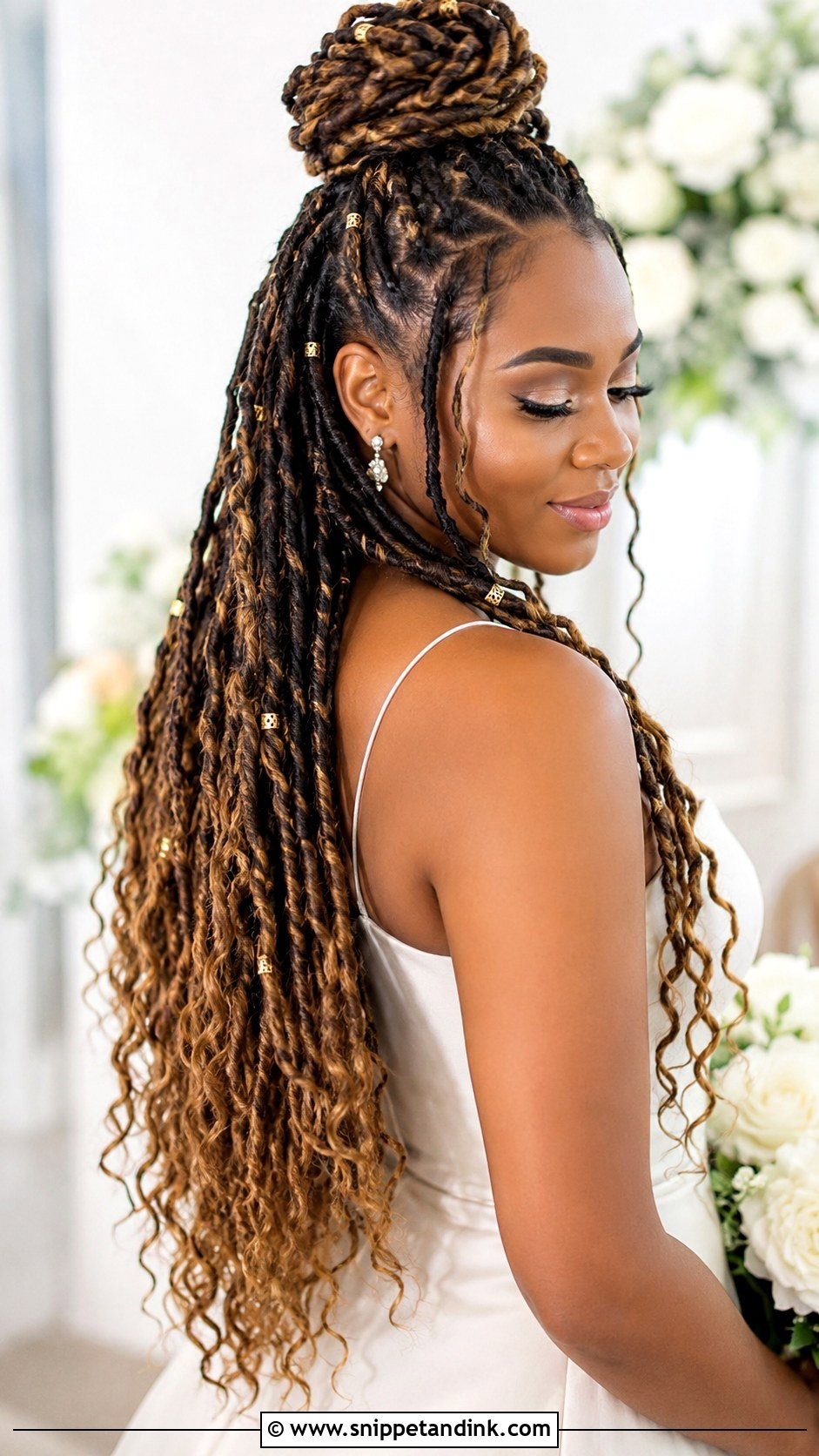
Faux locs are a good option for brides or guests who want length and fullness for one event, or a temporary protective style before and after the wedding. The extra length can go into a high bun, a crown or a long curled finish. The main thing I’d watch is weight. A full head of long faux locs is heavy, and an updo made with them can pull at the edges, so ask for a lighter install if you plan to wear them up. Have them put in about a week ahead so the roots can relax before the day.
How Heavy Locs Feel Eight Hours Into an Updo
Long, mature locs can weigh far more than loose hair of the same length, and an updo stacks all of that weight on a few points of the scalp. At a trial I ask the bride to keep the style in for the rest of the day and tell me where it aches. Tension at the hairline matters beyond comfort, because repeated pulling there is how edges thin over time.
To spread the load I use large U-shaped hairpins rather than lots of bobby pins, which can snag and catch on loc fibres. I build the base from the locs themselves, crossing them under the bun instead of hanging everything from one elastic. If a style still pulls, a lower placement usually fixes it.
Veils, cuffs and taking it all down
A veil comb slides out of smooth locs unless it has a pinned base to grip, so I make a small anchor under where the comb will sit. Loc cuffs should be opened and closed by hand, never forced, and they come off before the pins do. At the end of the night, remove the pins one at a time in reverse order and separate the locs gently with your fingers. A loose wrap under a satin scarf lets the scalp rest after a long day of tension.
Let the Loc Pattern Do the Decorating
Locs already carry the texture other brides pay to have built in, so the styling is mostly about shape and weight. Updos and buns give structure; half-up looks, curled ends and side sweeps give movement. Pearls, flowers and cuffs make even the plainest bun bridal. Book a trial with the same set and accessories you’ll wear, keep the style in for several hours to test comfort, and photograph it from the back and side before you decide.
You'll Like These Ideas:


Leave a Reply