
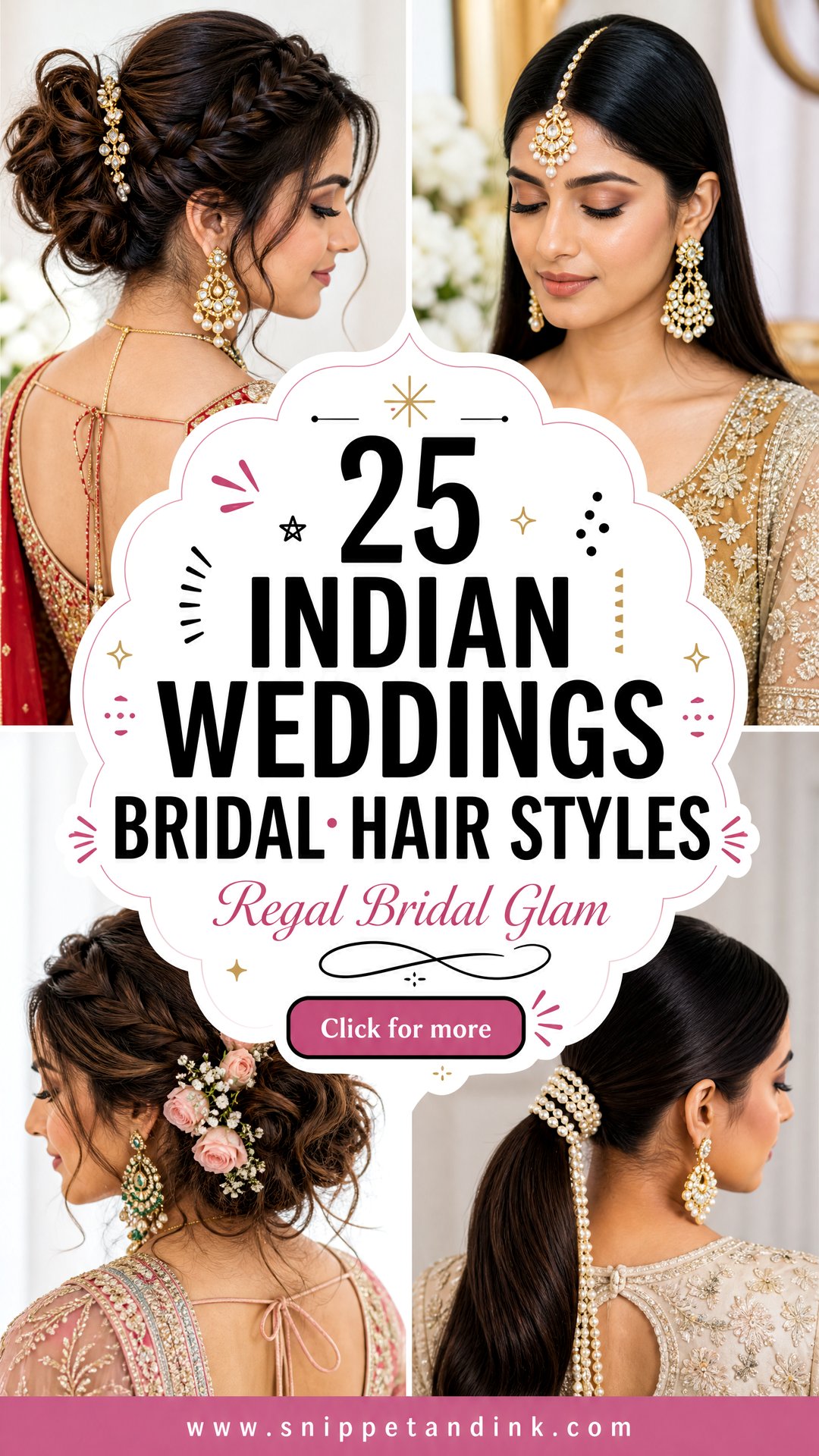
Bridal hair at an Indian wedding carries more than any other part of the look: a tikka or matha patti, fresh flowers, sometimes a jhoomar, and nearly always a dupatta pinned over the top for hours. The style has to hold all that and still suit the outfit and the face. This roundup covers the looks I’m asked for most, from gajra buns and fishtail braids to Hollywood waves and floral updos, plus a few that work just as well for sisters and guests. With each one I’ve noted what it needs underneath, which hair types it suits and which ceremony it’s best kept for.
Padding, Extensions and Fresh Jasmine: What Holds a Bridal Bun Up
Very few of the full, round bridal buns you see in photos are made of the bride’s own hair alone. Most have a hidden base: a mesh donut, a soft hair padding or a few clip-in wefts, wrapped in her own lengths so nothing shows. That base gives the size, and it gives a solid surface to pin flowers and jewelry into.
Fine or shoulder-length hair benefits most from padding. Thick, long hair often doesn’t need it, but it can feel heavy by the evening, so I split it into two or three sections and pin each separately rather than twisting it all into one knot. Matching the padding or extensions to your hair color is important; a slightly different shade looks fine in person but shows clearly under flash.
Bring these to your trial
- The actual maang tikka, matha patti or jhoomar, not a photo of it
- Your dupatta, so I can test how and where it will be pinned
- Any extensions you plan to use, so I can check the color match in daylight
- A photo of the outfit’s back, since that decides how the bun is placed
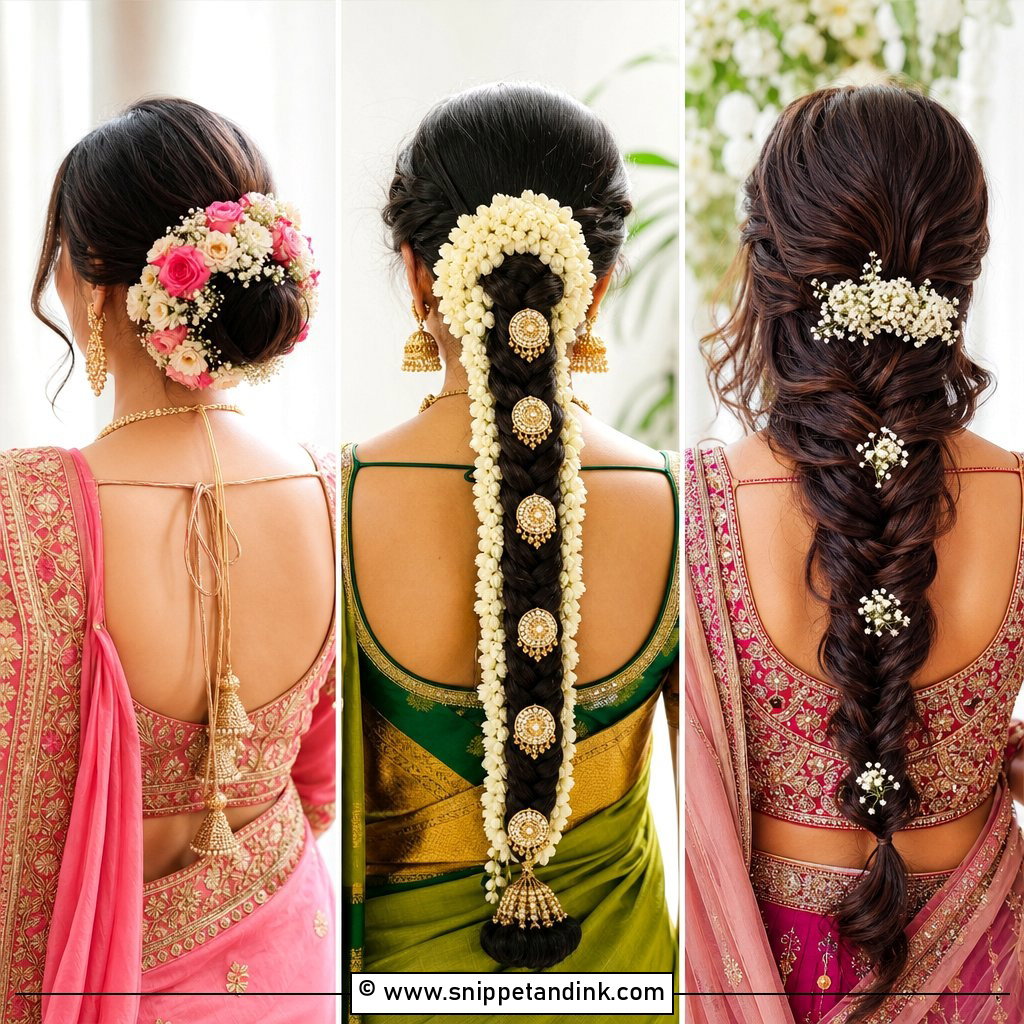
1. Gajra Bun With Fresh Jasmine Flowers
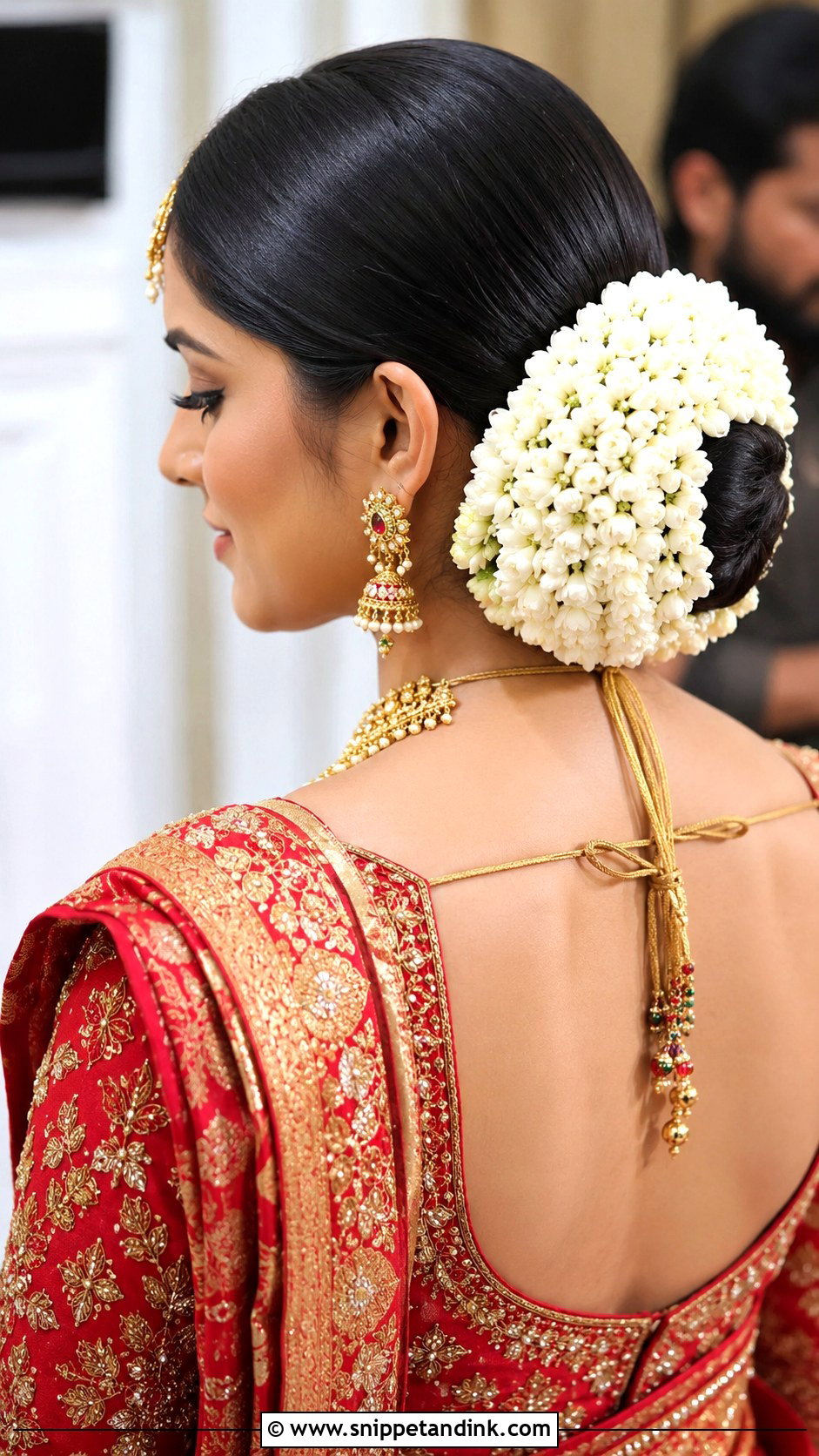
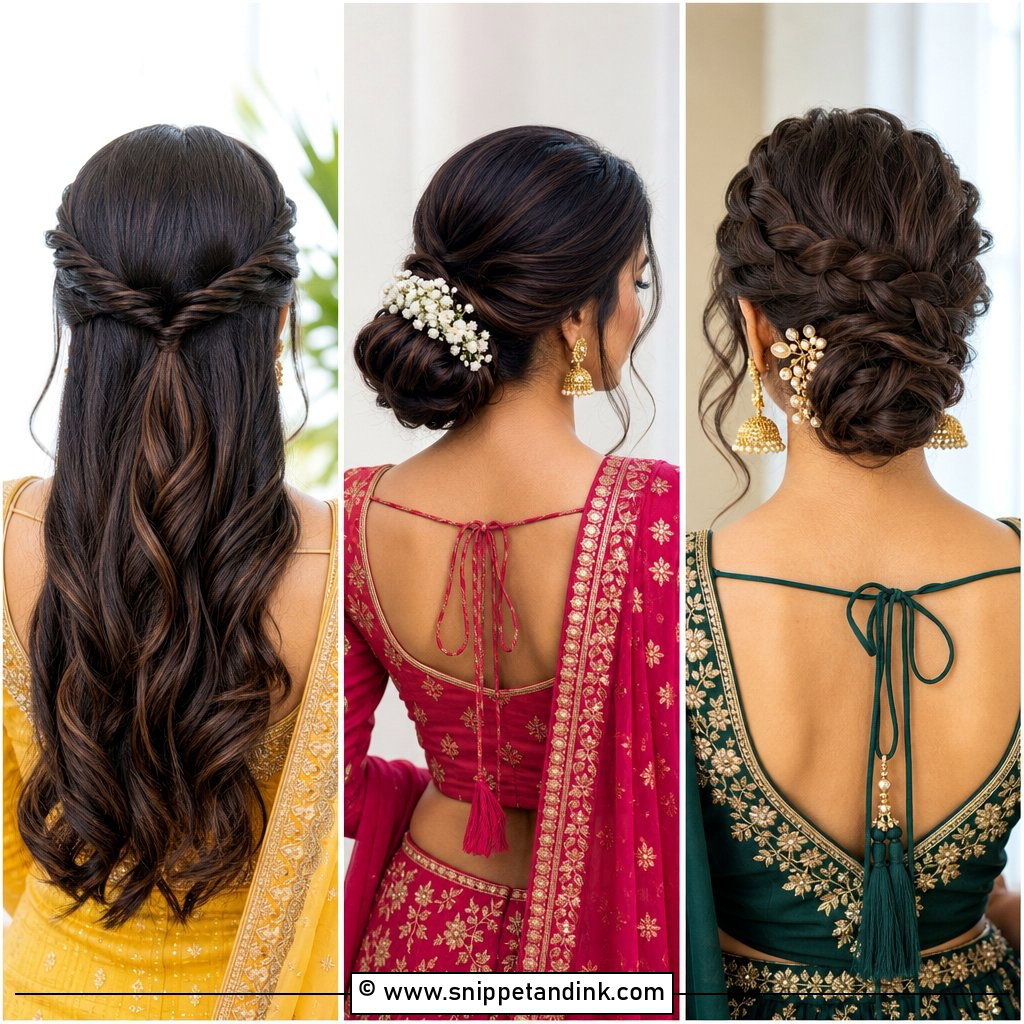
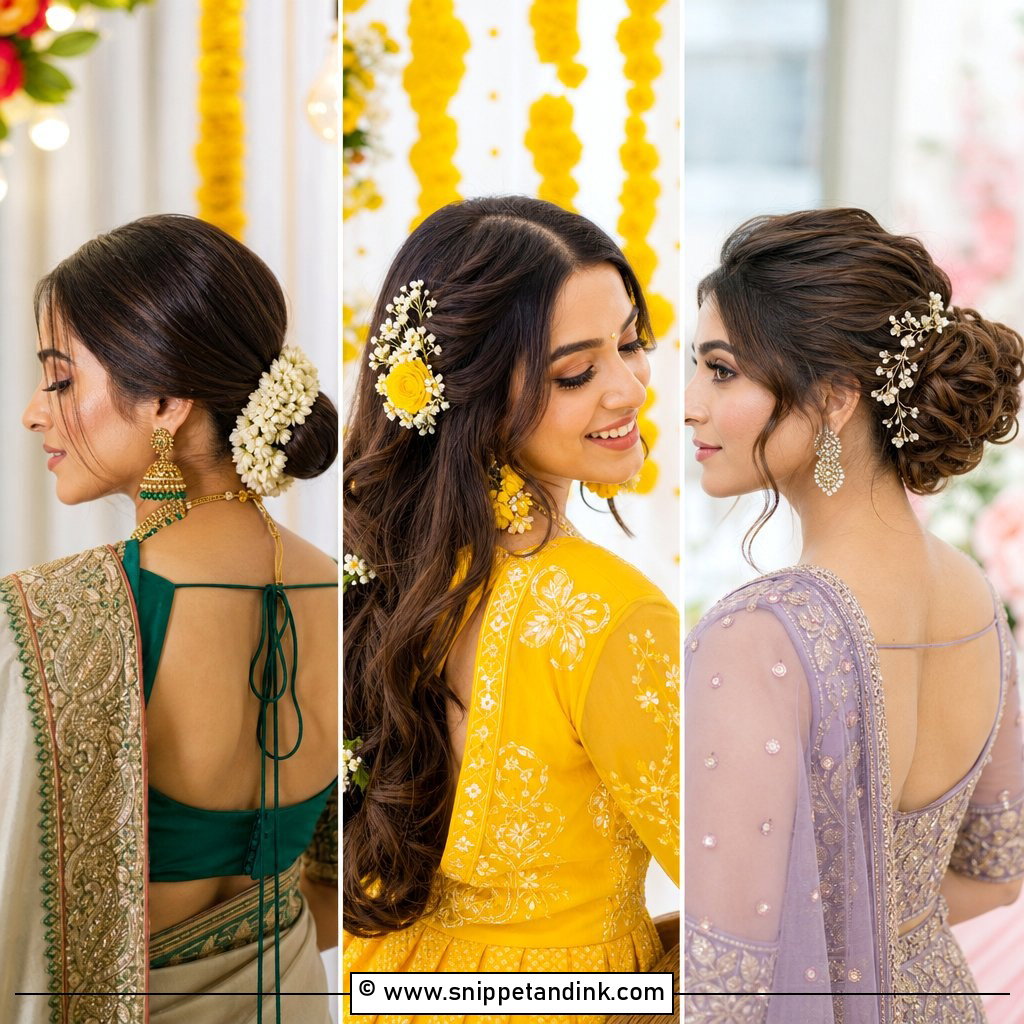
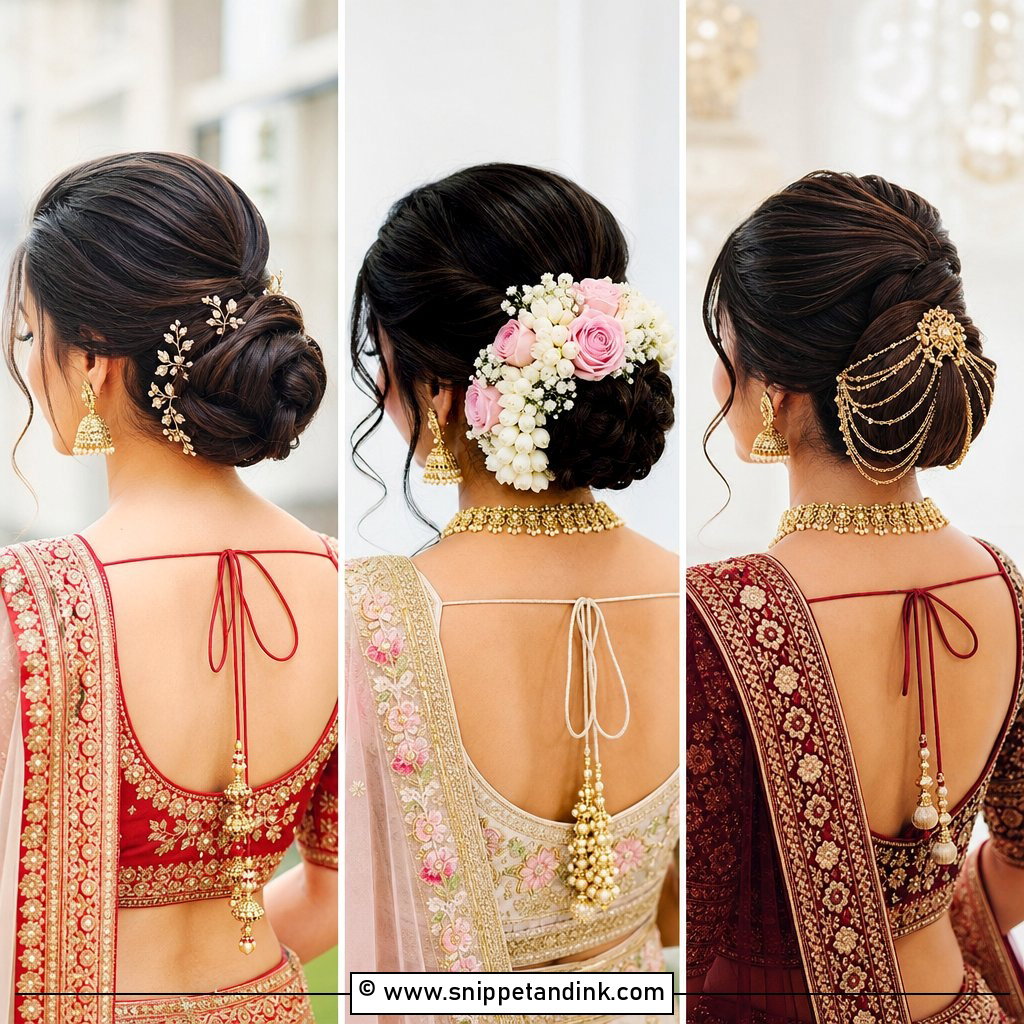
The gajra bun is the style I’ve pinned more often than any other. A sleek low bun gets wrapped with a string of fresh jasmine, and the white flowers sit sharply against dark hair. It’s especially traditional for South Indian brides with silk sarees, though it suits a lehenga just as well. I wrap the gajra in a spiral and pin it every couple of inches; pinned only at the ends, it slides down the bun as soon as you sit. Keep the bun tight for a classic finish or loosen it slightly for more shape, and let a maang tikka complete it.
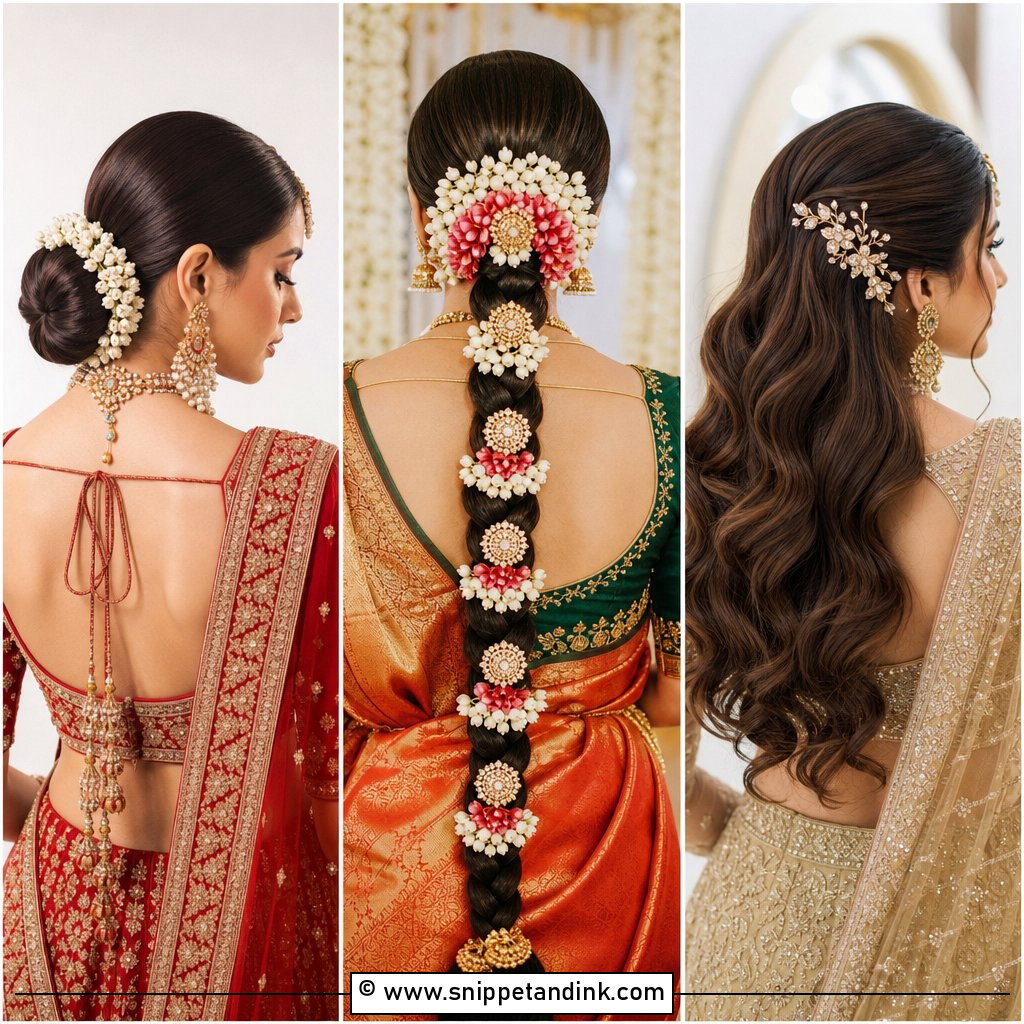
2. Rani Jhoomar Braid With Hair Jewelry
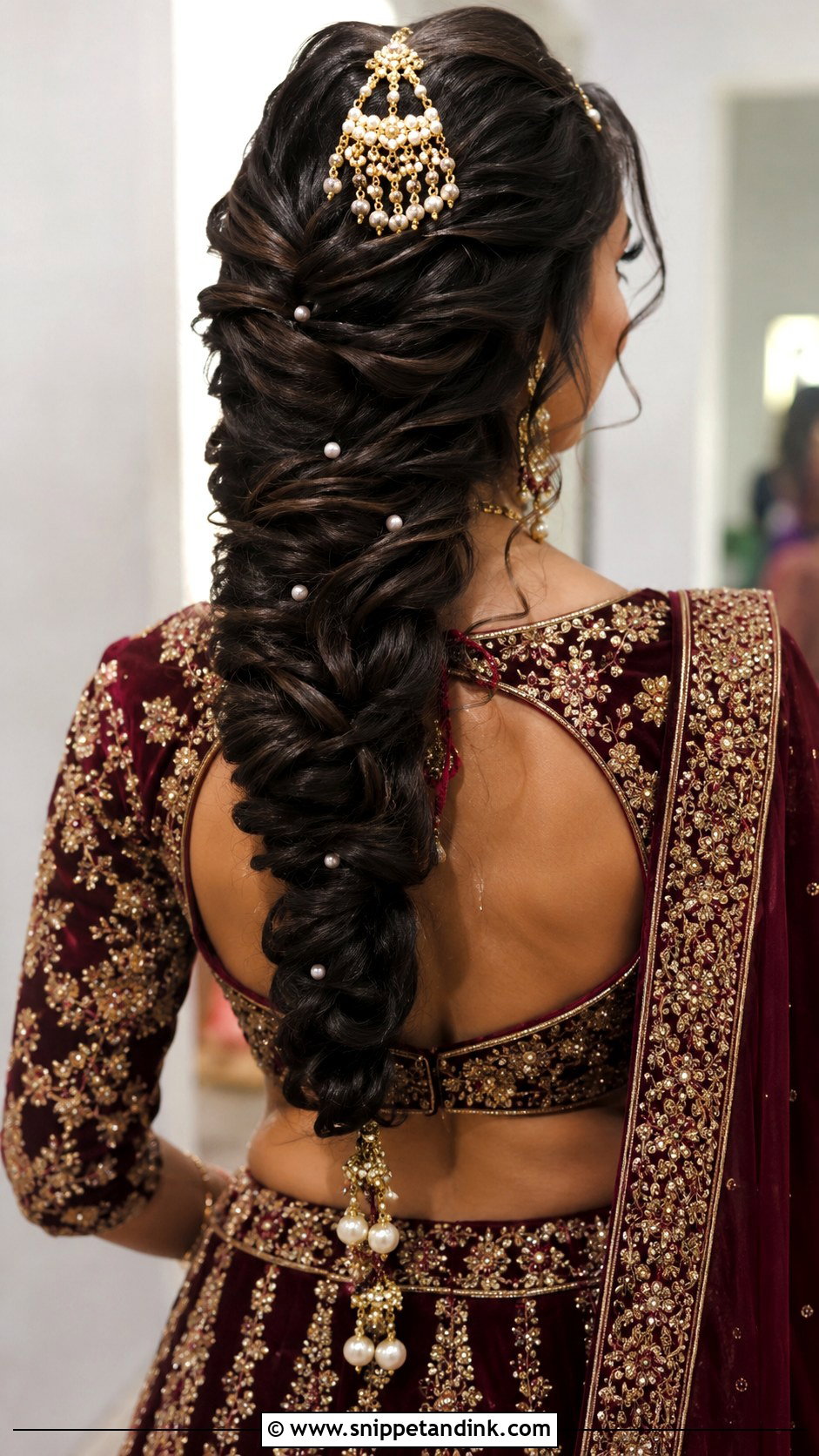
The Rani Jhoomar braid is a long, thick braid running from the crown down the back, with a jhoomar or statement hair jewel at the top. Gold accents and small pearls threaded through the plaits make it ornate enough for a heavily embroidered lehenga. Most brides don’t have the natural thickness for the volume you see in photos, so I braid in clip-in extensions or a pre-made paranda. The jhoomar sits on the side of the head and is heavy, so I anchor it to a small crossed-pin base, not to the braid itself.
3. Low Bun With Middle Parting
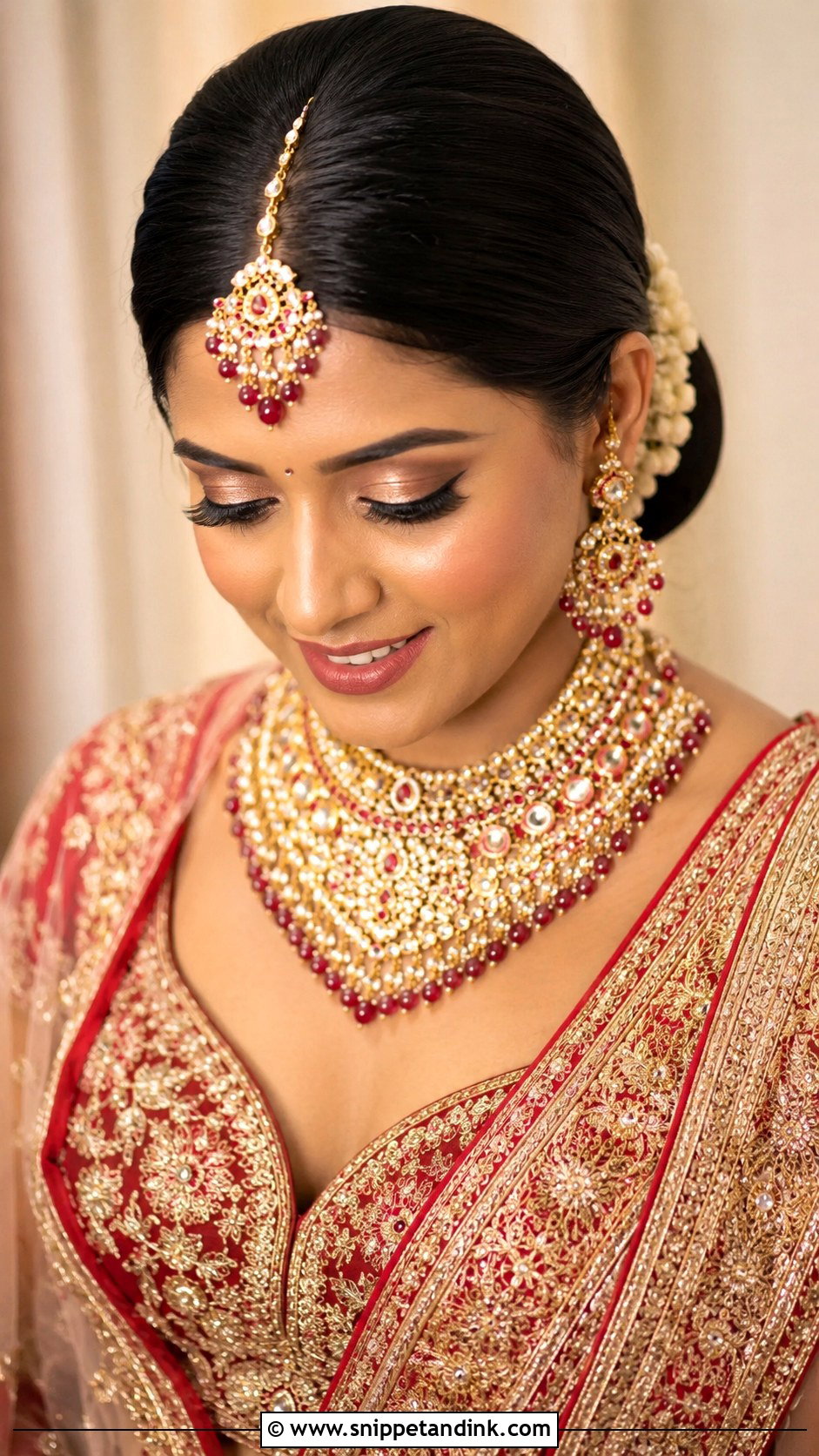
A low bun with a clean middle parting is quiet, symmetrical and very adaptable. The center part gives a straight line for a maang tikka or matha patti to follow, and the bun can take flowers, pearls or gold pins. It suits most face shapes; for a very round face I lift the crown slightly so the head isn’t flat on top. Low buns also sit neatly under a dupatta, which is why I recommend them for long ceremonies where your head will be covered.
4. Fishtail Braid With Gajra
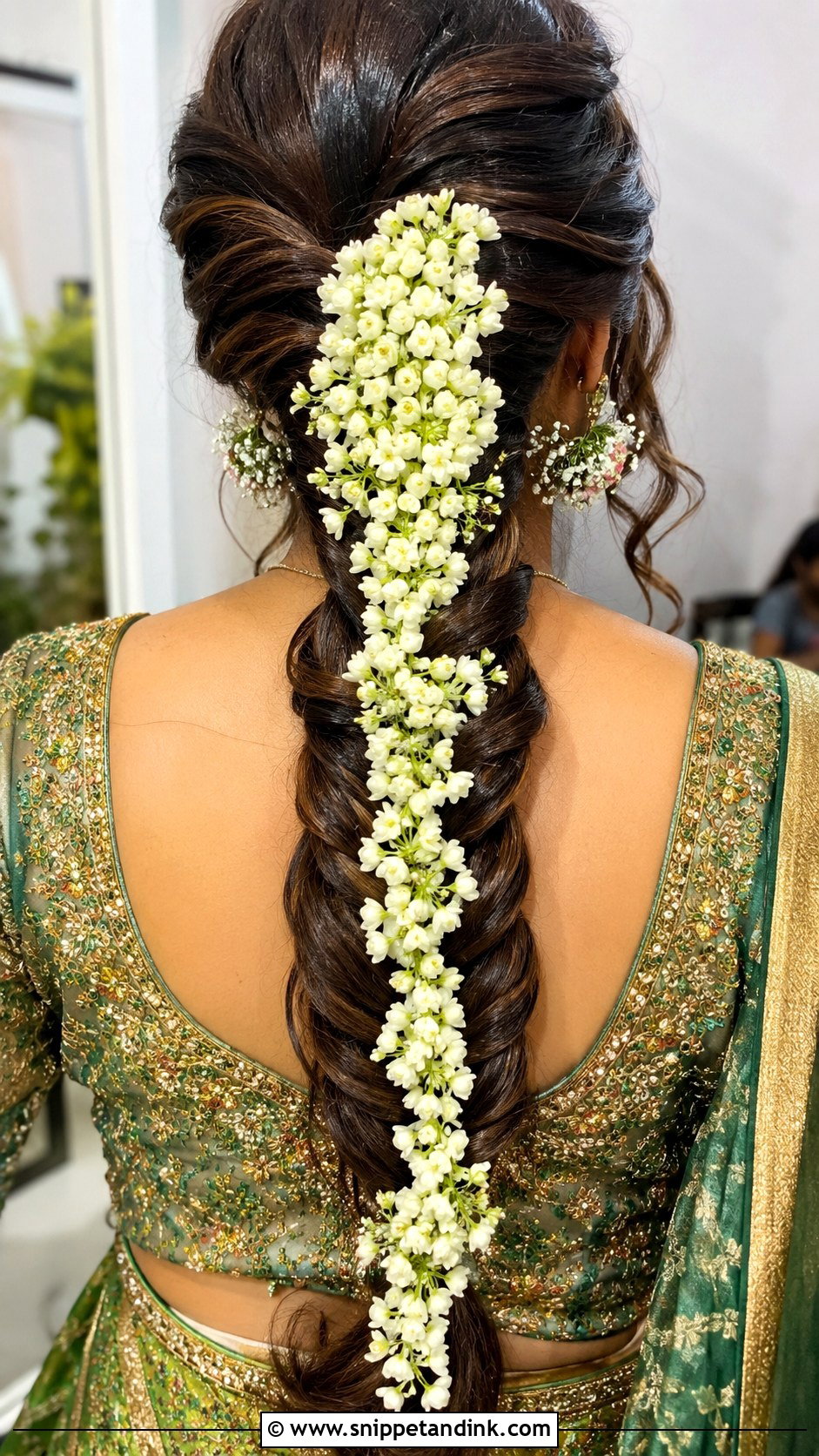
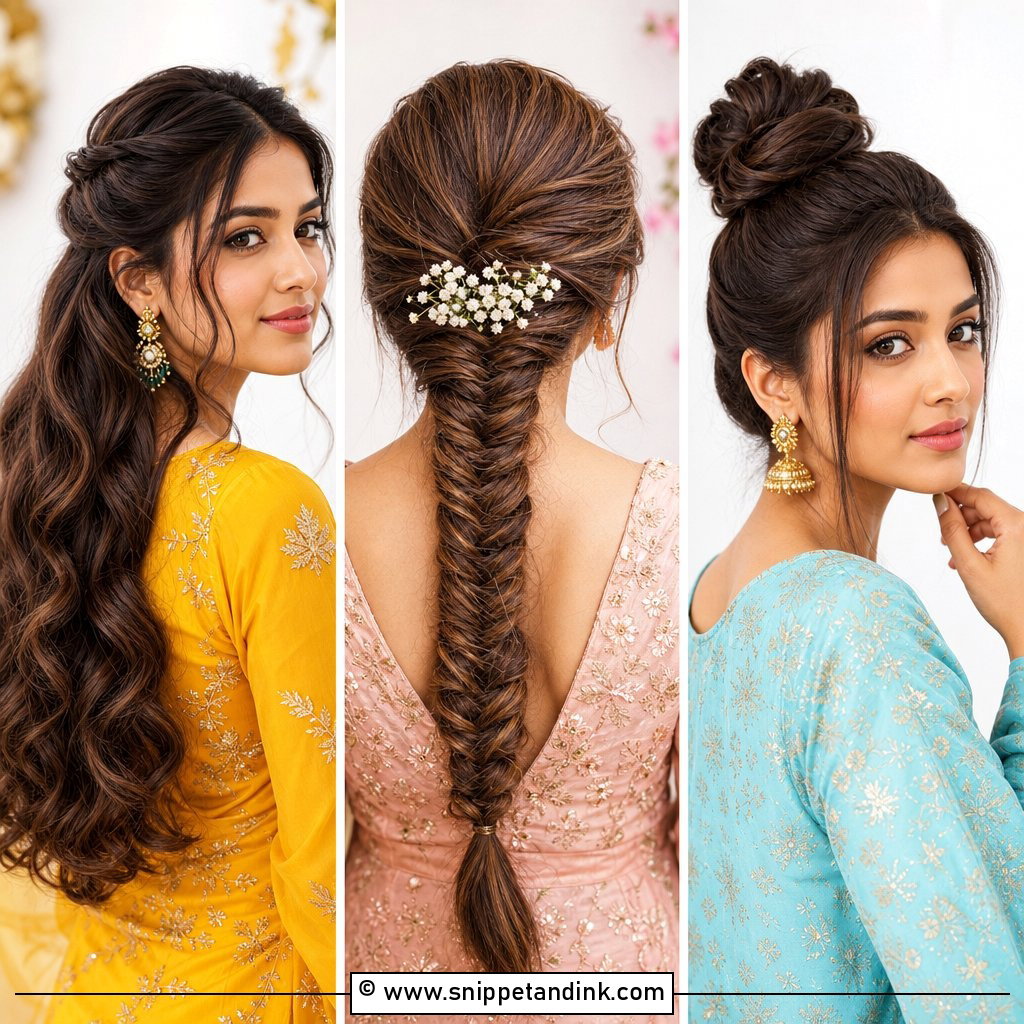
For Mehendi and Sangeet ceremonies, a fishtail braid is my favorite way to keep hair tidy without looking formal. The weave is made of many small crossings, so it shows texture from a distance. I run a long gajra down its length or tuck small flowers and pearls along the weave. Kept tight it looks neat; pulled loose it turns relaxed. A practical bonus for the mehndi: the braid holds all your hair behind the shoulders while your hands are covered in paste and you can’t touch anything.
5. Messy Bun With Side Braid
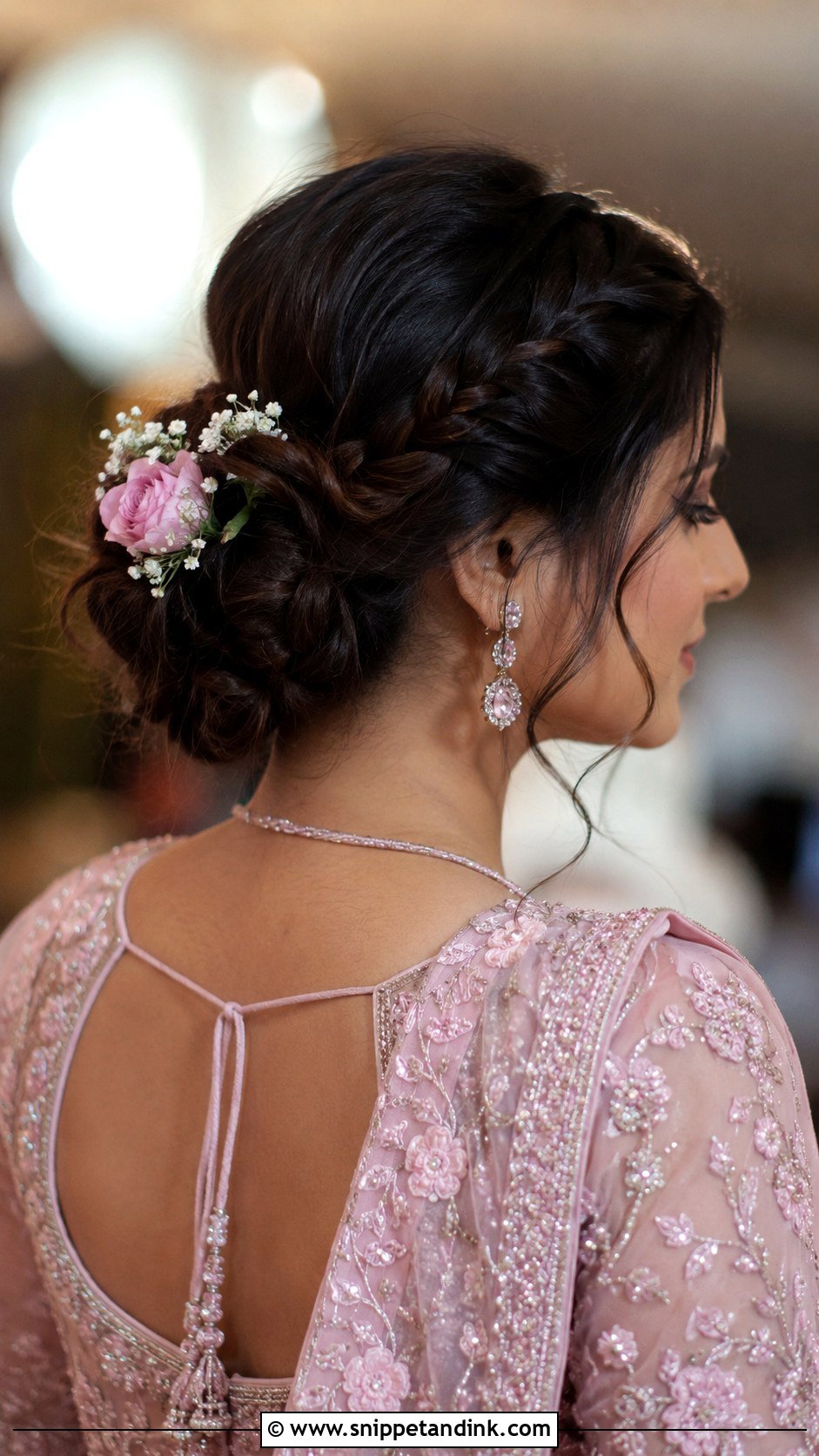
A messy bun at the nape with a side braid looks relaxed but takes real control to build, because messy has to look deliberate. I set the hair with a little texture first, form a loose low bun, run a thin braid along one side into it, then pull out a few face-framing strands. Flowers or pearls tucked in finish it. It sits naturally with Indo-Western and traditional outfits and suits destination or smaller celebrations. On very silky hair it collapses within hours without that texture prep, so this is not a style to attempt on freshly washed hair.
6. Hollywood Waves For Open Hair
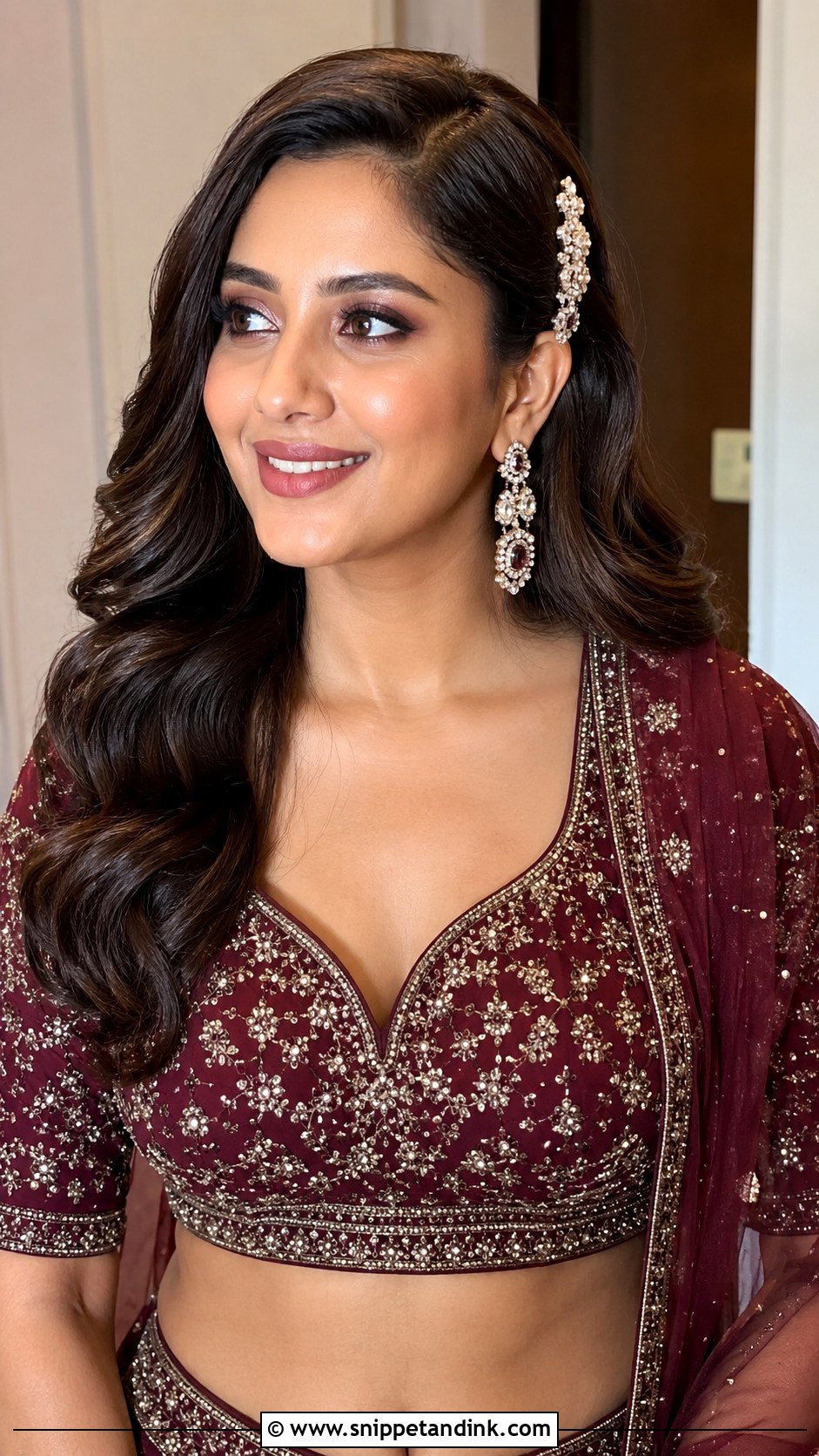
Hollywood waves are a single smooth, S-shaped wave pattern over the shoulders, which is different from a head of loose curls. I curl every section in the same direction, let them cool fully, then brush them together so they merge into one wave. They suit receptions and cocktail events with modern lehengas or gowns, and they show off length and shine. A clip or slim tiara adds sparkle. These waves are the least forgiving in humidity; once they frizz, the defined line goes, so I keep this one for air-conditioned evening events.
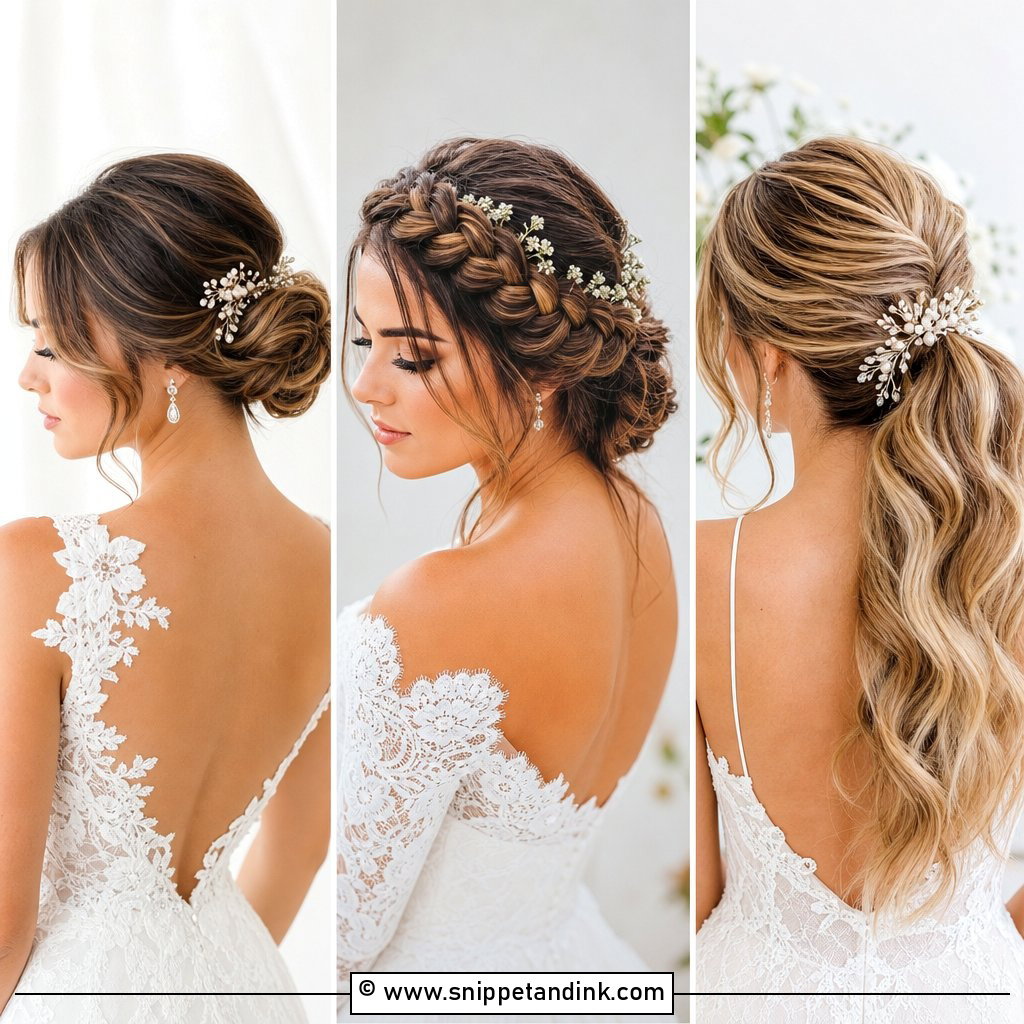
7. Braided Crown With Low Bun
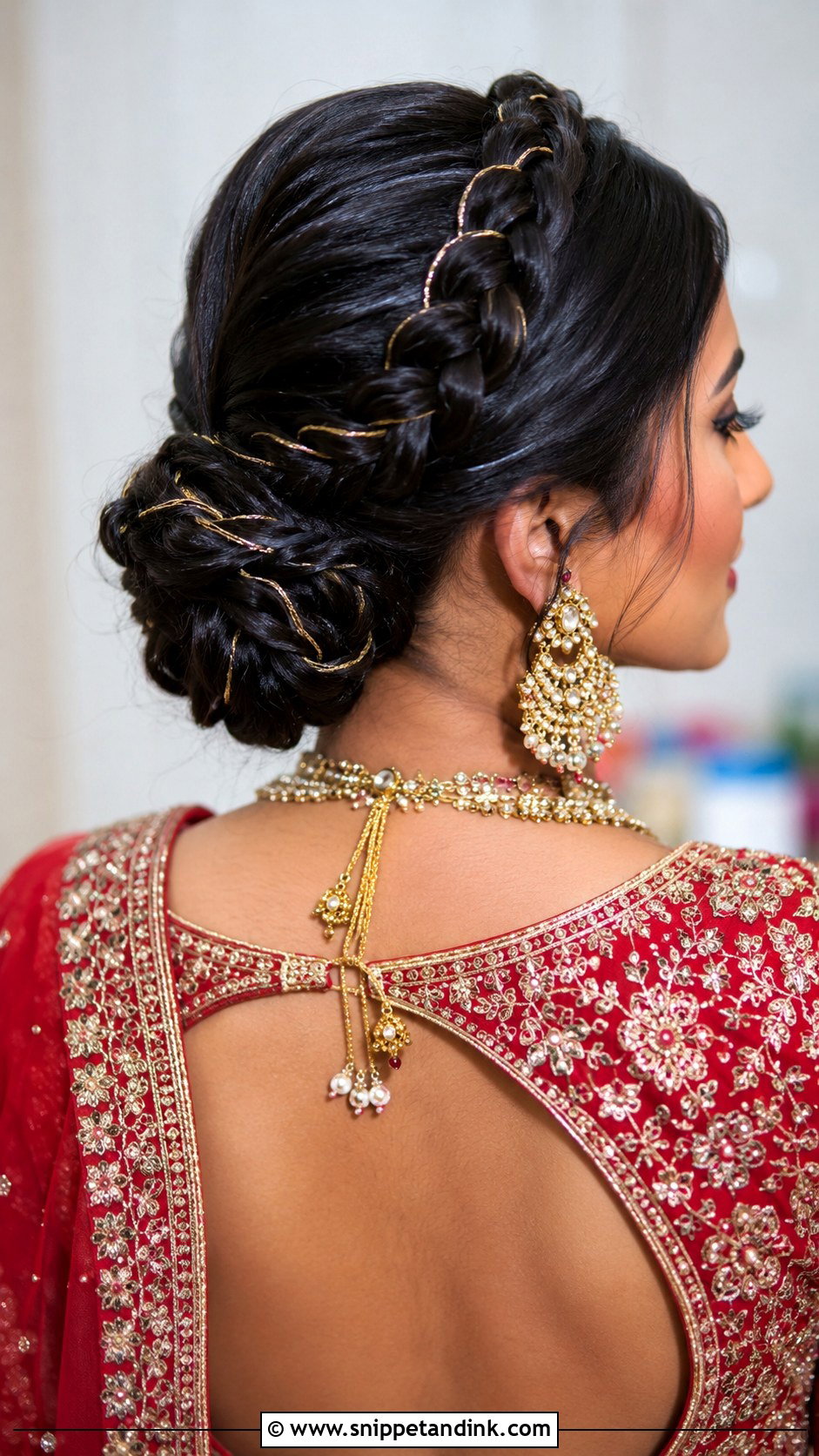
A braided crown wrapping into a low bun is an elaborate, secure choice for traditional ceremonies. The braid circles the head like a halo and finishes at the nape. Flowers or gold thread woven through it add detail. It holds well during long rituals because the braid takes much of the weight that would otherwise drag on the bun. With heavy jewelry and an ornate lehenga it adds height without fuss. Short layers around the face tend to poke out of crown braids, so I use a little paste to smooth them in.
8. Half-Up Half-Down With Curls
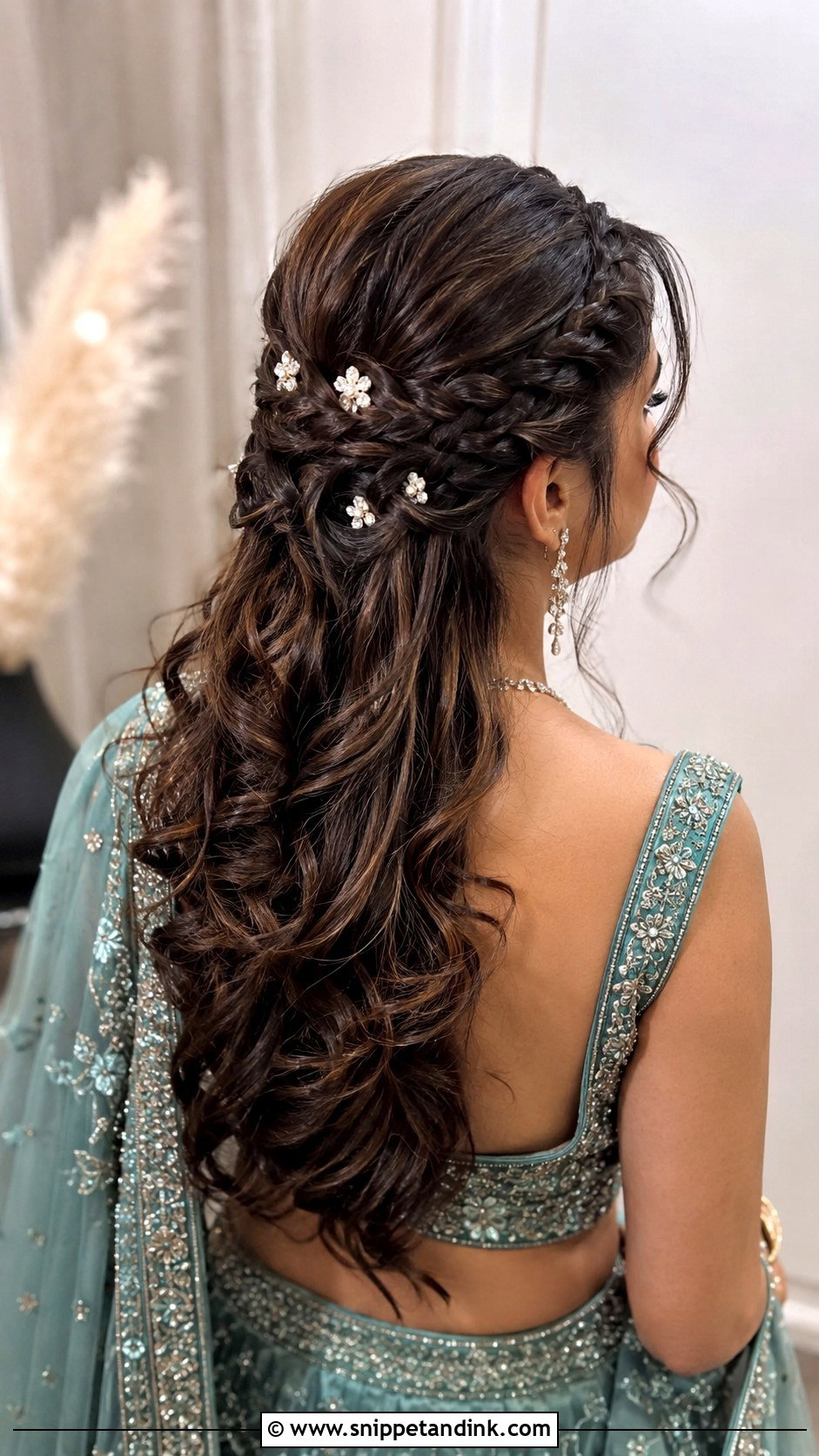
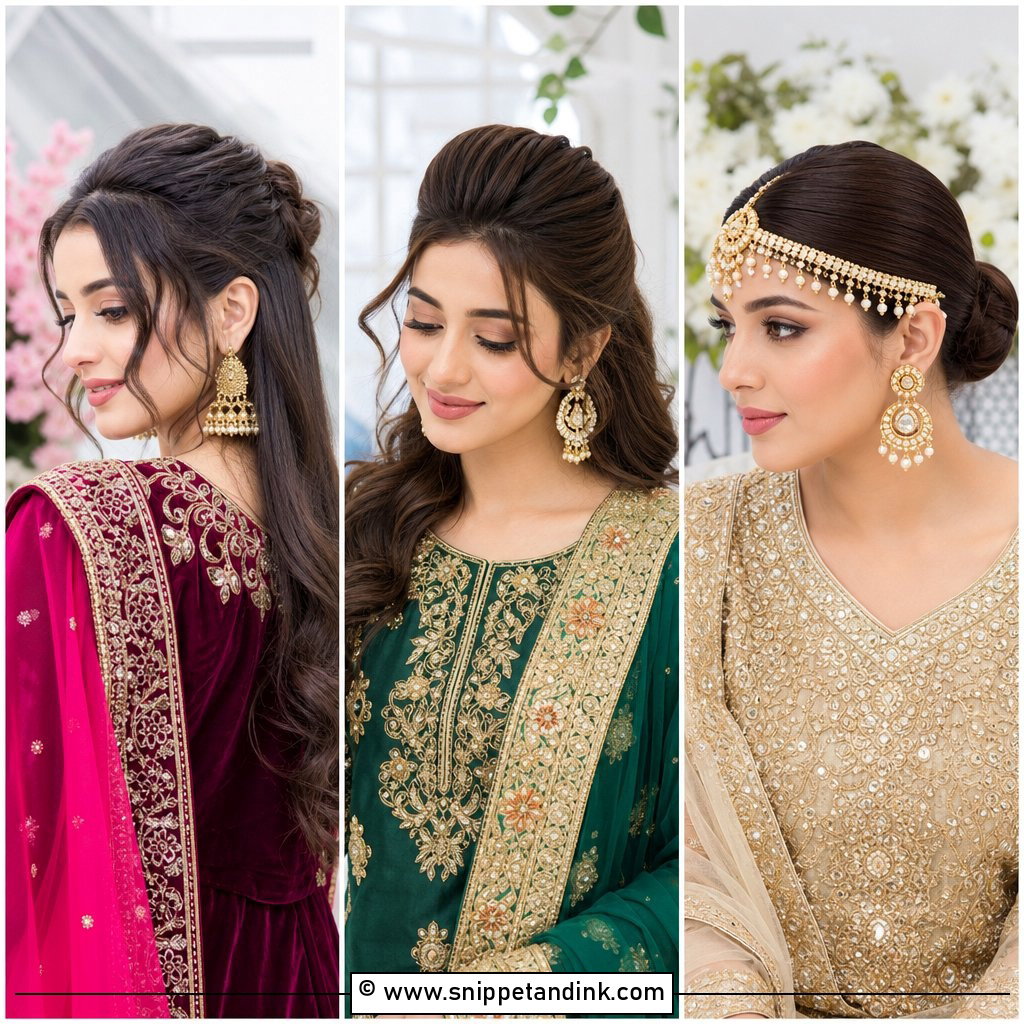
Half-up, half-down solves the updo-or-open question. The top section is pinned back or braided and the lower half falls in soft curls. It suits most face shapes and many hair lengths, from shoulder-length upward. Flowers or jeweled pins at the crown cover the join. I’d choose it for engagements, receptions or sangeet nights. The pinned crown also gives a dupatta something firm to hold onto, which makes it more practical than fully loose hair when your head will be covered.
9. Floral Bun With Roses And Baby’s Breath
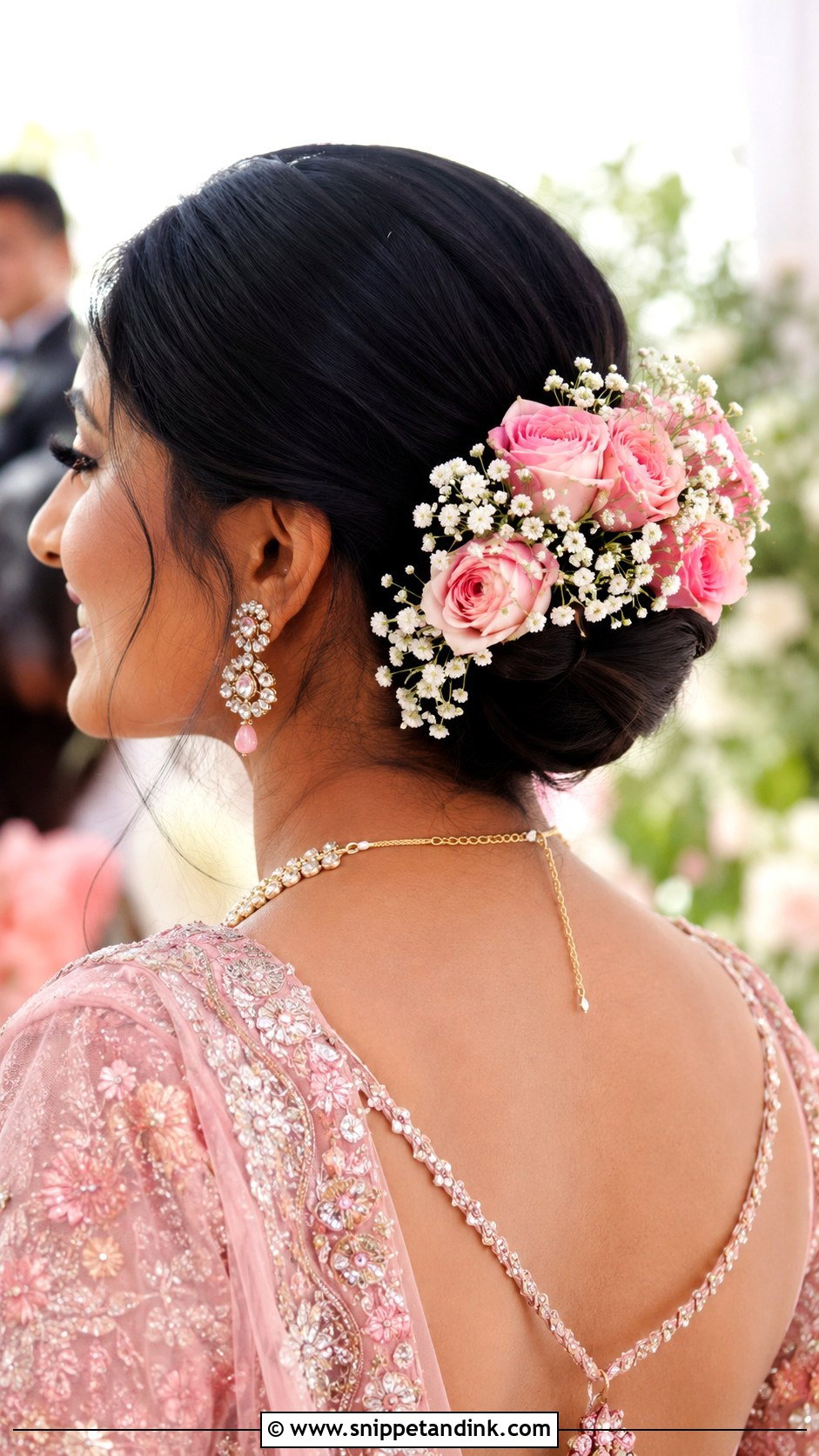
A bun covered in roses and baby’s breath turns into a small garden at the back of the head. Pink or red roses add color while baby’s breath fills gaps with fine texture. It suits pastel and traditional outfits at daytime weddings and haldi. Match the rose color to a thread in your outfit rather than the main fabric. Fresh flowers droop in heat, so I ask the florist to keep the stems in water until the last moment, and I pin roses with their heads tilted down slightly so they don’t flop forward.
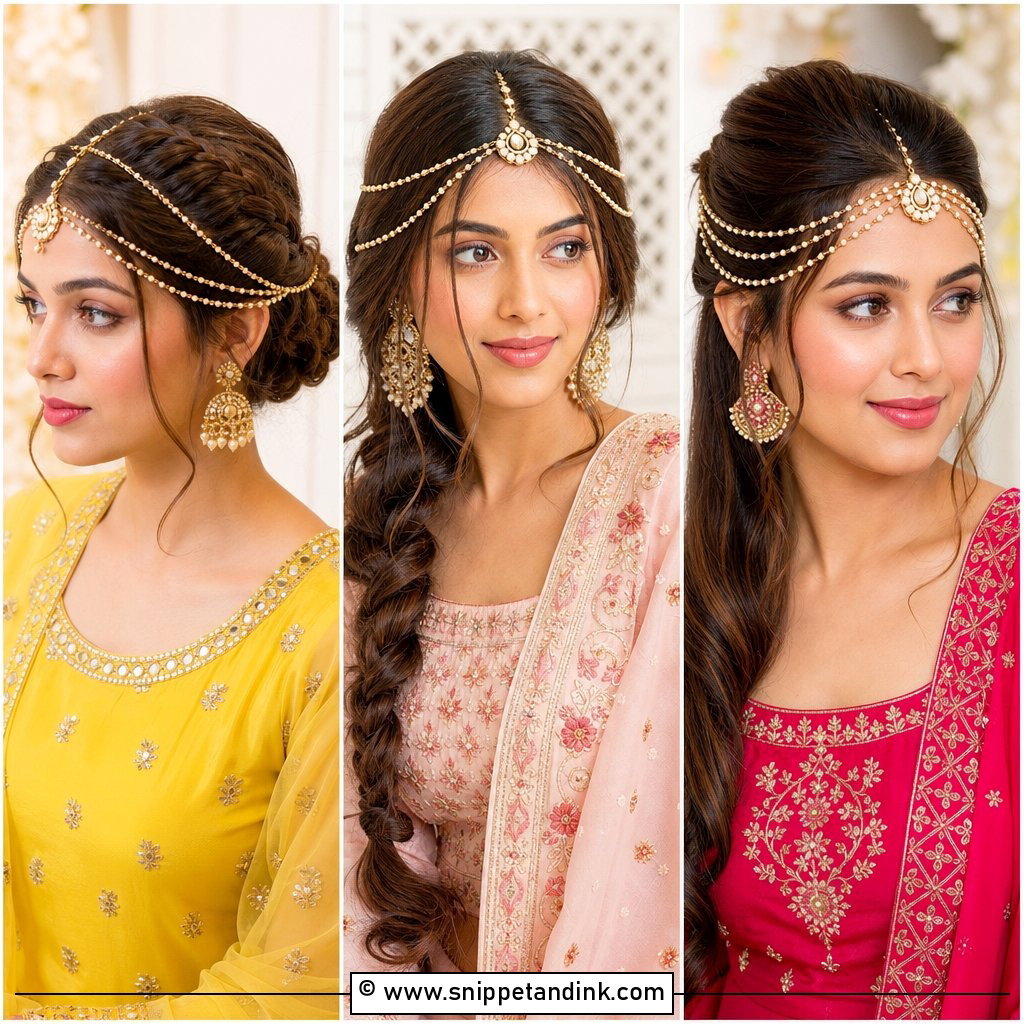
10. Sleek Straight Hair With Maang Tikka
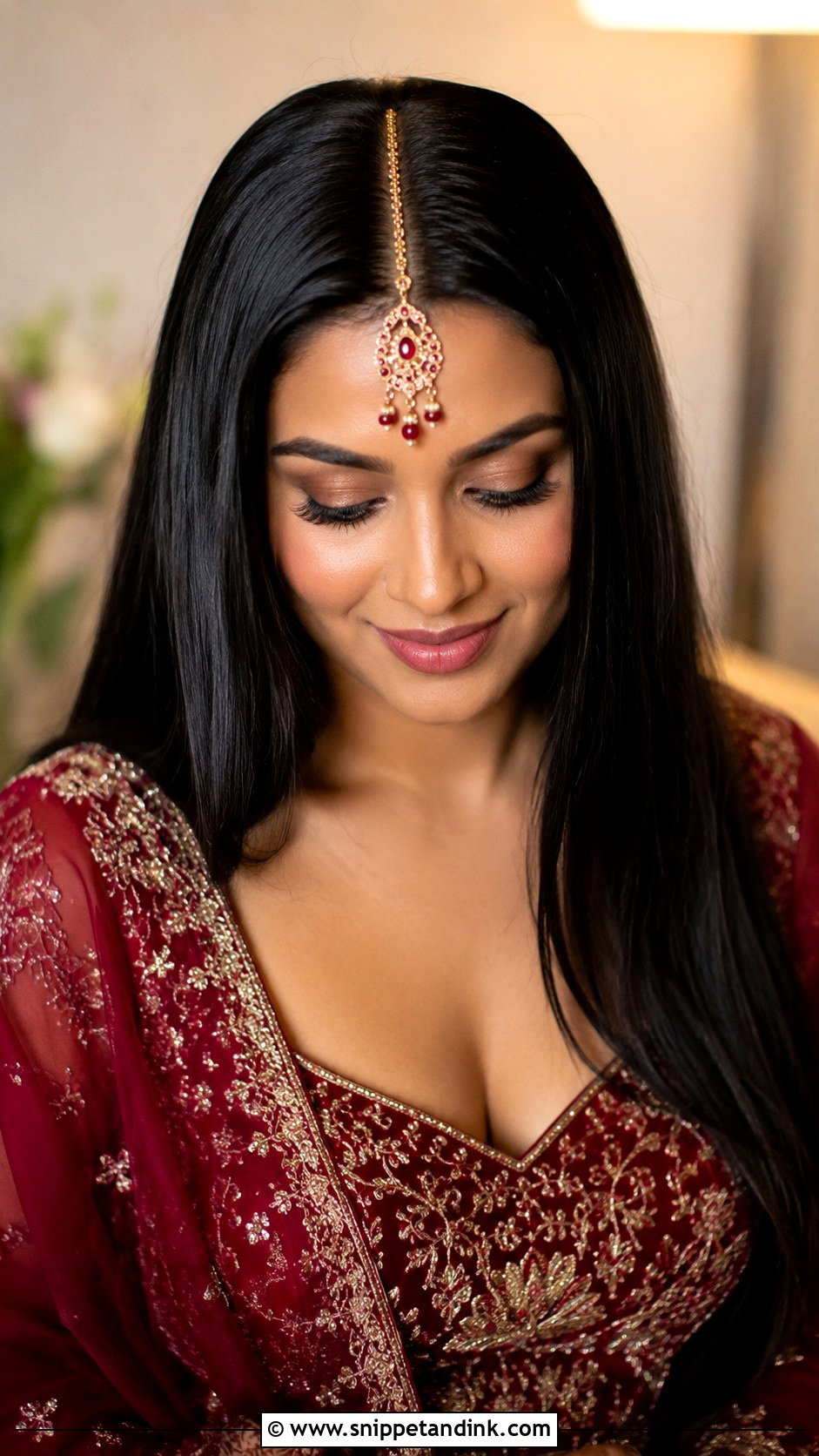
Sleek straight hair lets the jewelry carry the look. I flat-iron in small sections for a glassy finish, then part it in the center so a maang tikka sits exactly on the line. It pairs with heavy and light outfits alike and suits a bride who prefers a modern, minimal finish. The style that looks simplest is actually the hardest to maintain: humidity puffs out the crown within an hour, so I finish with an anti-humidity spray and send the bride off with a small smoothing balm in her clutch.
11. Dutch Braid With Pearls
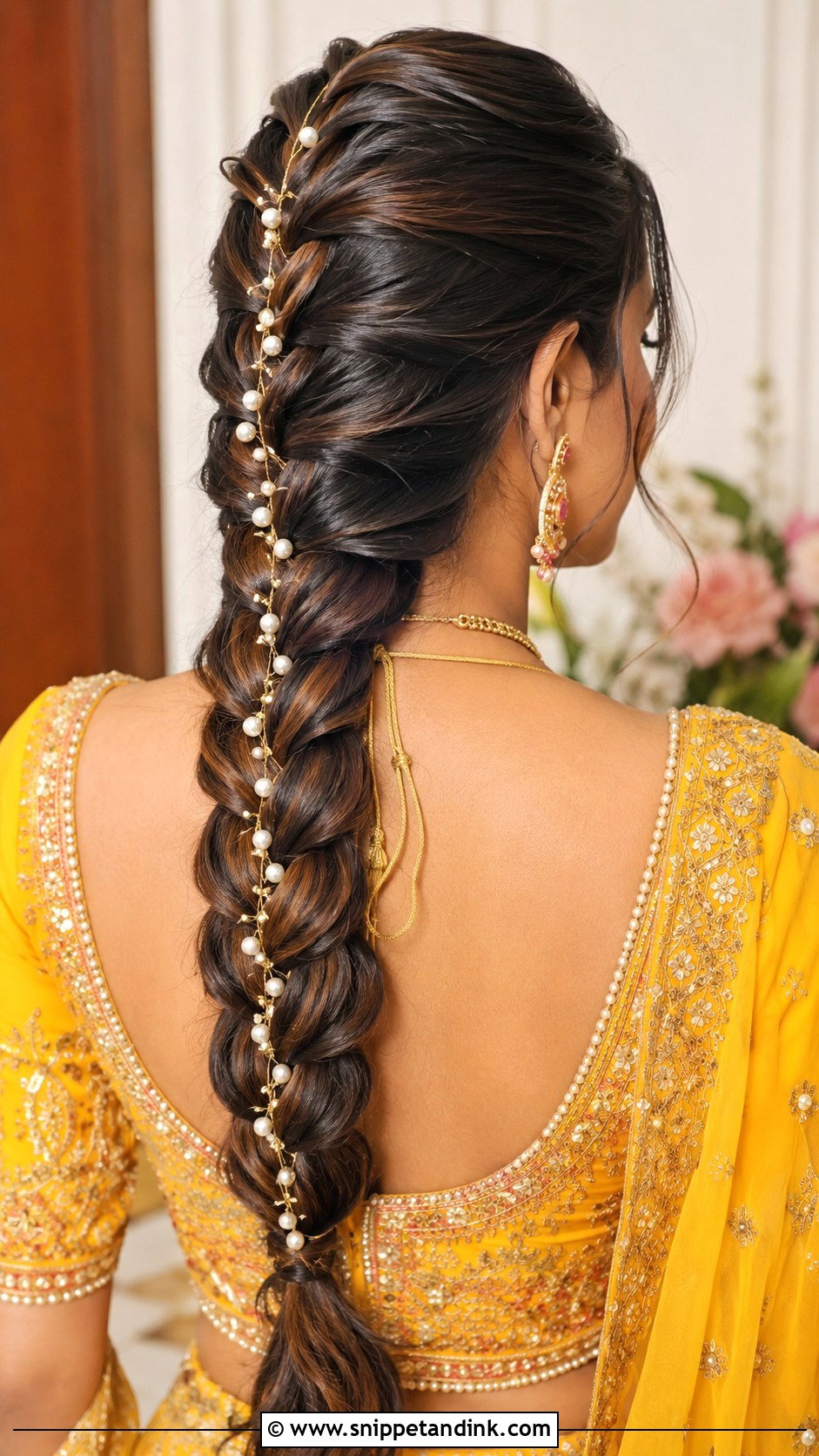
A Dutch braid is an inside-out braid, so the plaits stand up from the head instead of lying flat. Pearls or gold threads woven through it give a raised, ornate effect. It suits mehendi and sangeet functions and can be worn as one statement braid or finished into a bun. I thread pearls in on fine wire so they don’t slide down the plaits. The braid holds well during hours of dancing, and I pull the edges out slightly once it’s done so it photographs wider and fuller.
12. Side Swept Curls With Flower Accent
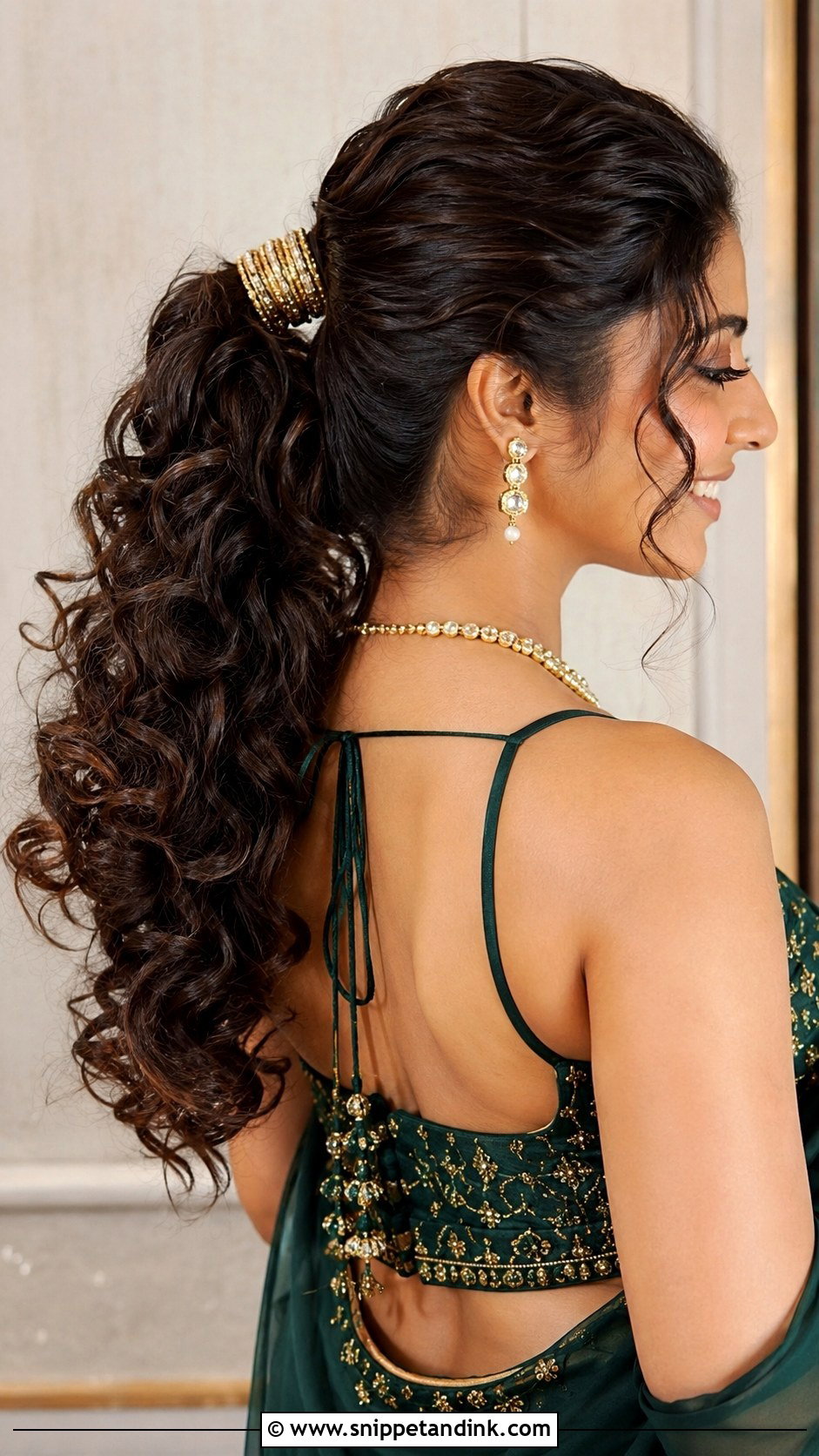
Curls gathered over one shoulder show off the neckline and the earring on the open side. A single large flower or a small cluster behind the ear finishes the asymmetry. Receptions and cocktail celebrations suit it best. I secure the side that’s swept back with crossed bobby pins behind the ear; without them, the curls creep back to the center within an hour. Thick, long hair makes the most of this look, while very fine hair may need clip-ins to hold the volume on one side.
13. Bridal Bun With Matha Patti
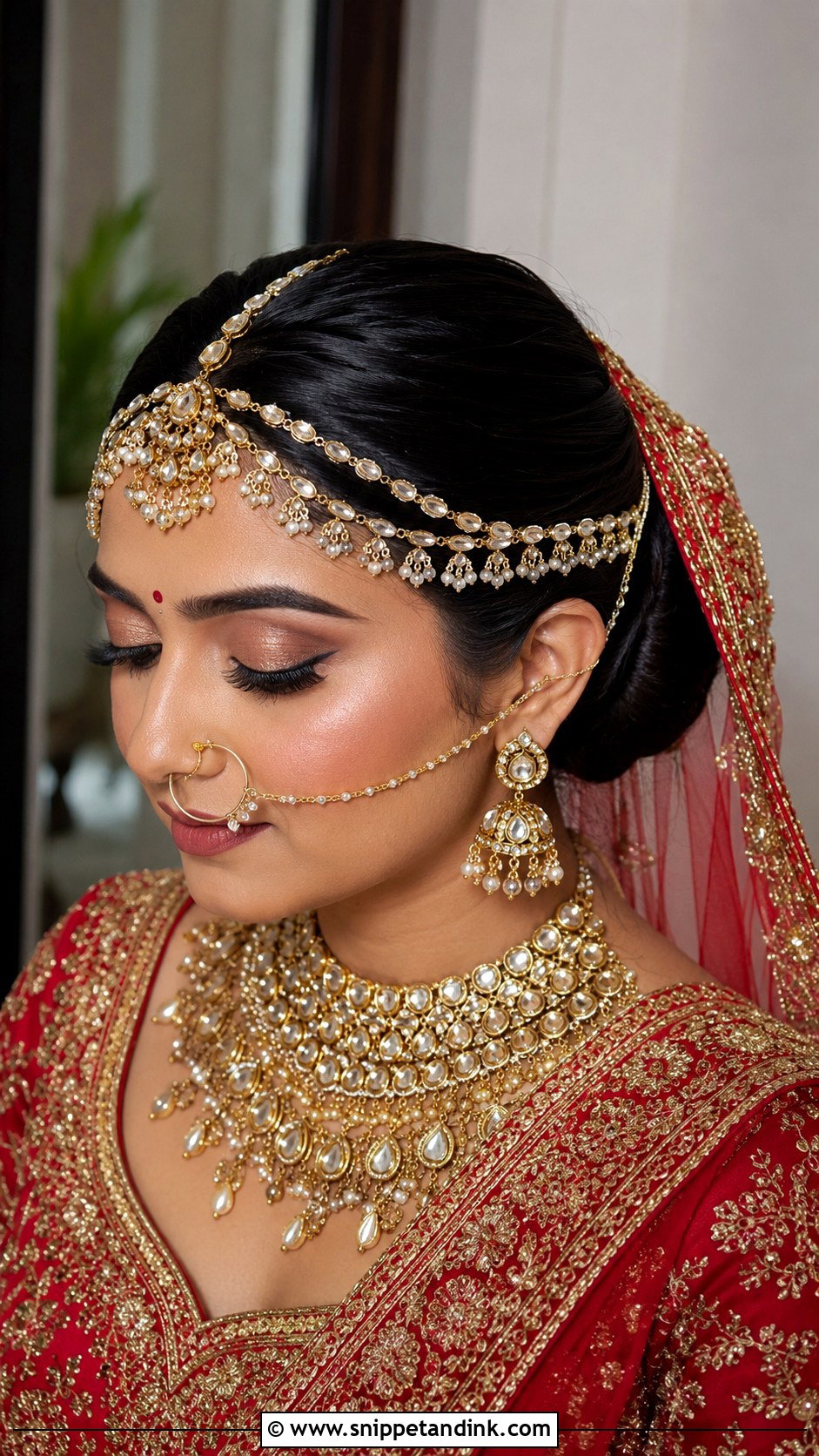
A classic bun with a stunning matha patti is the look many North Indian brides picture first. The matha patti drapes across the forehead and down the parting, while the bun stays structured at the nape or crown. Flowers, pearls or gold accents decorate it. The piece needs a firm parting to sit on, so I set the parting before anything else and pin the side chains into the bun itself, which spreads the weight evenly and stops it pulling at the temples.
14. Loose Braided Updo With Flowers
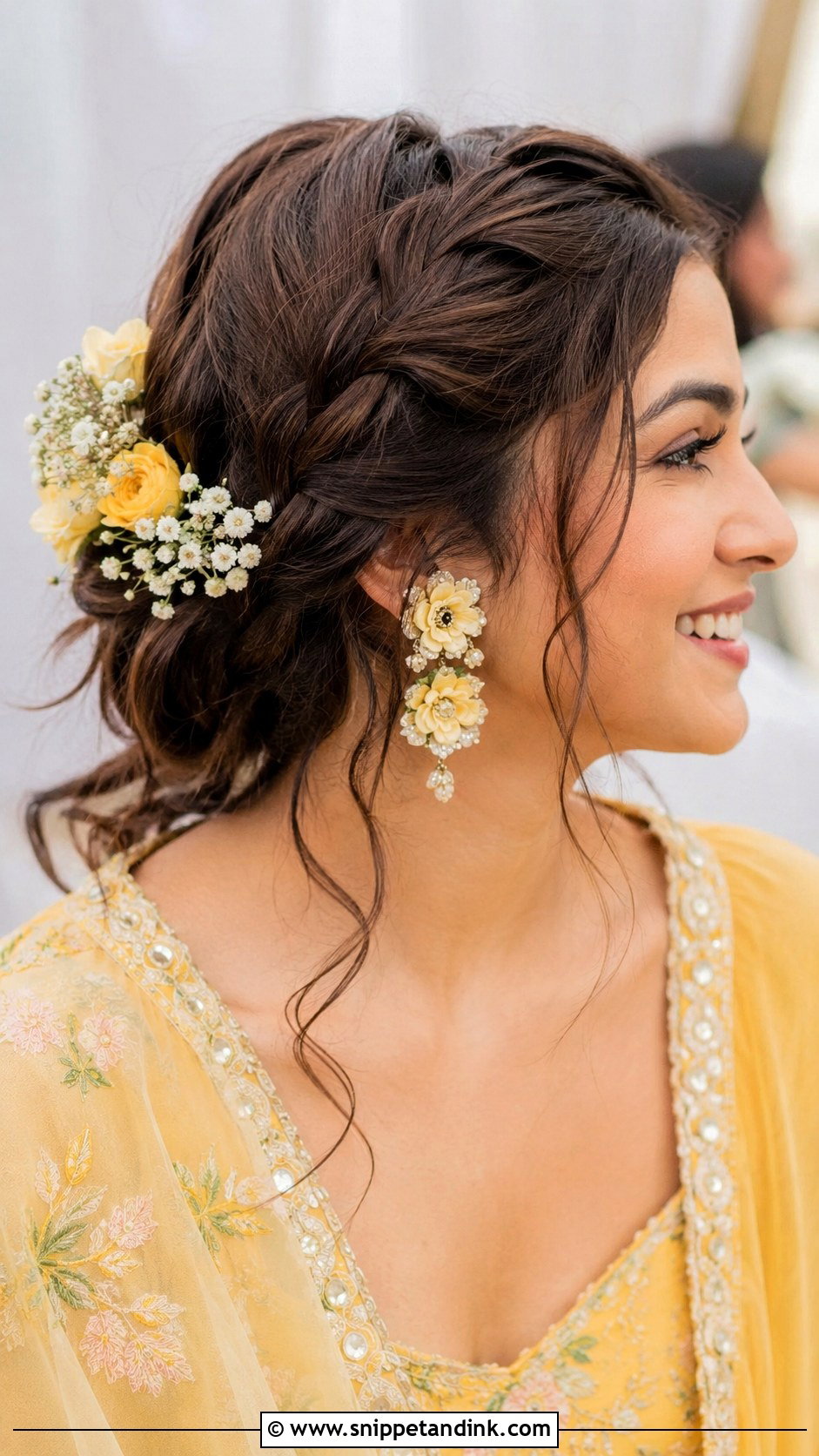
A loose braided updo gathers several soft braids into a textured, voluminous shape, with fresh flowers tucked through it. The undone finish feels young and relaxed, and it pairs with flowy lehengas and pastel outfits. It’s at its best for haldi, mehendi and daytime functions. Baby’s breath or roses give it a garden finish. Though it looks loose, it’s held by many small pins under the surface; if a section starts falling out, a bridesmaid can usually tuck it back without unpicking the rest.
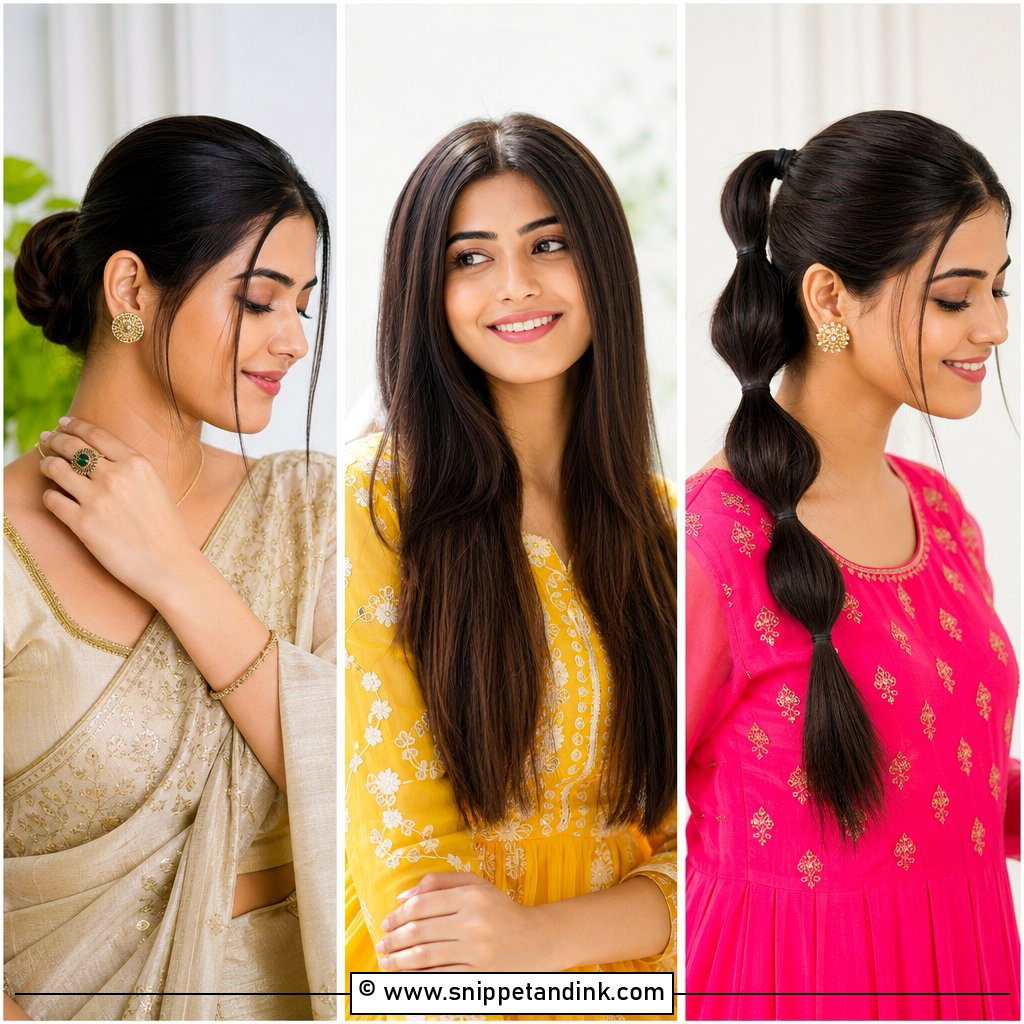
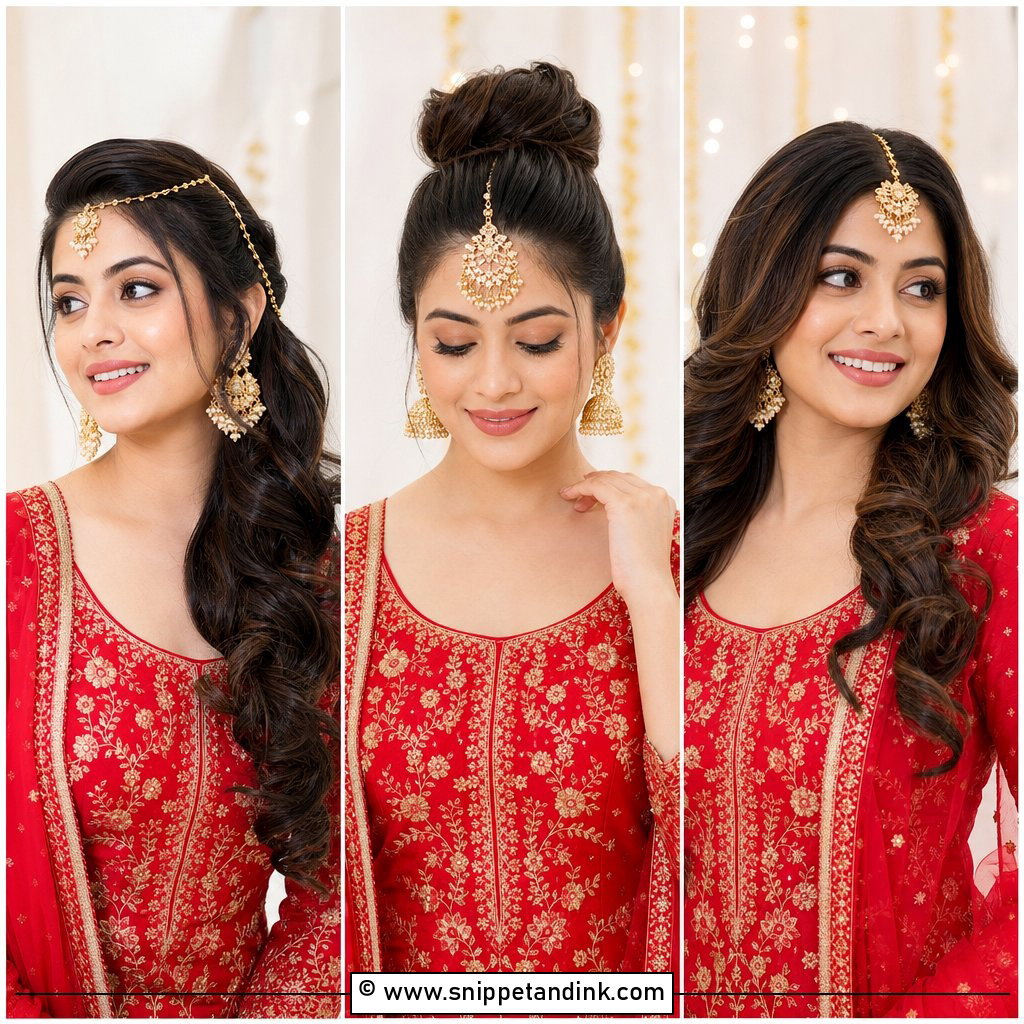
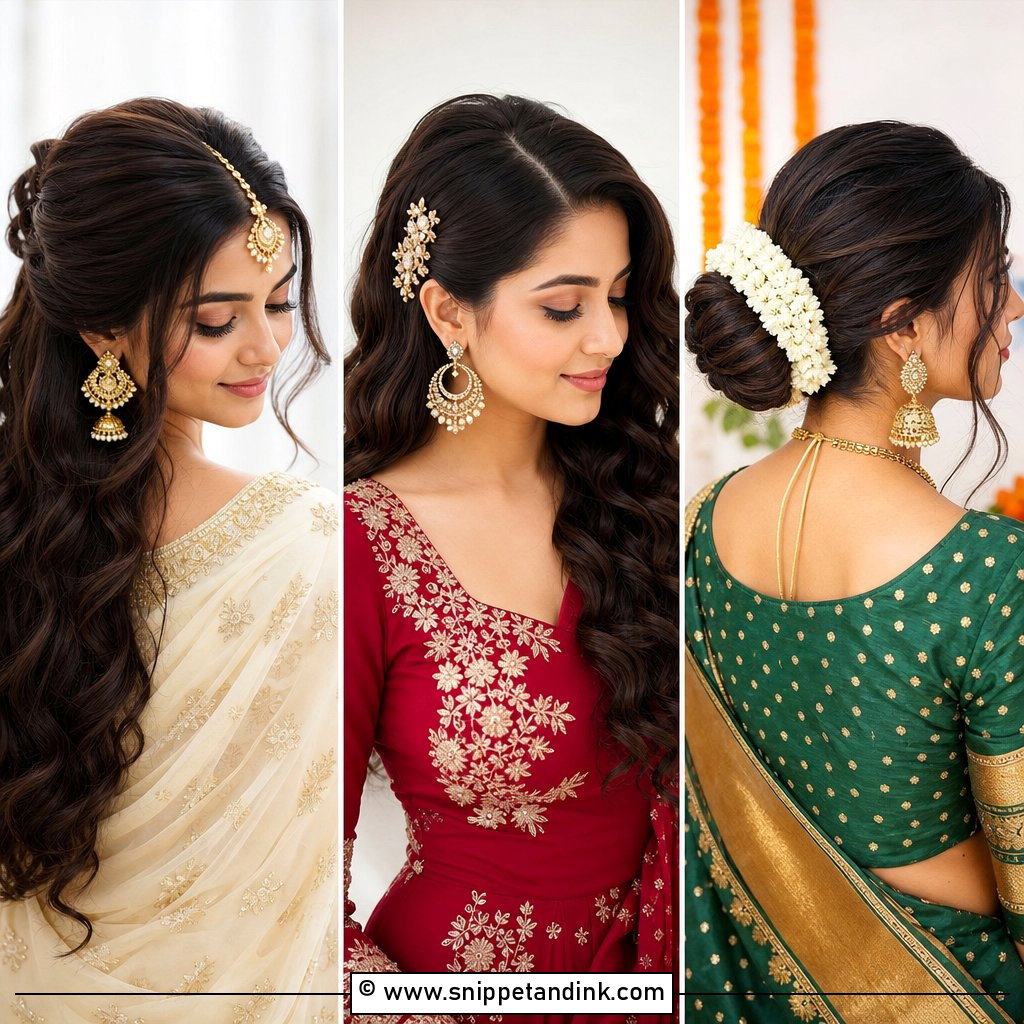
15. Curly Ponytail With Gold Accessories
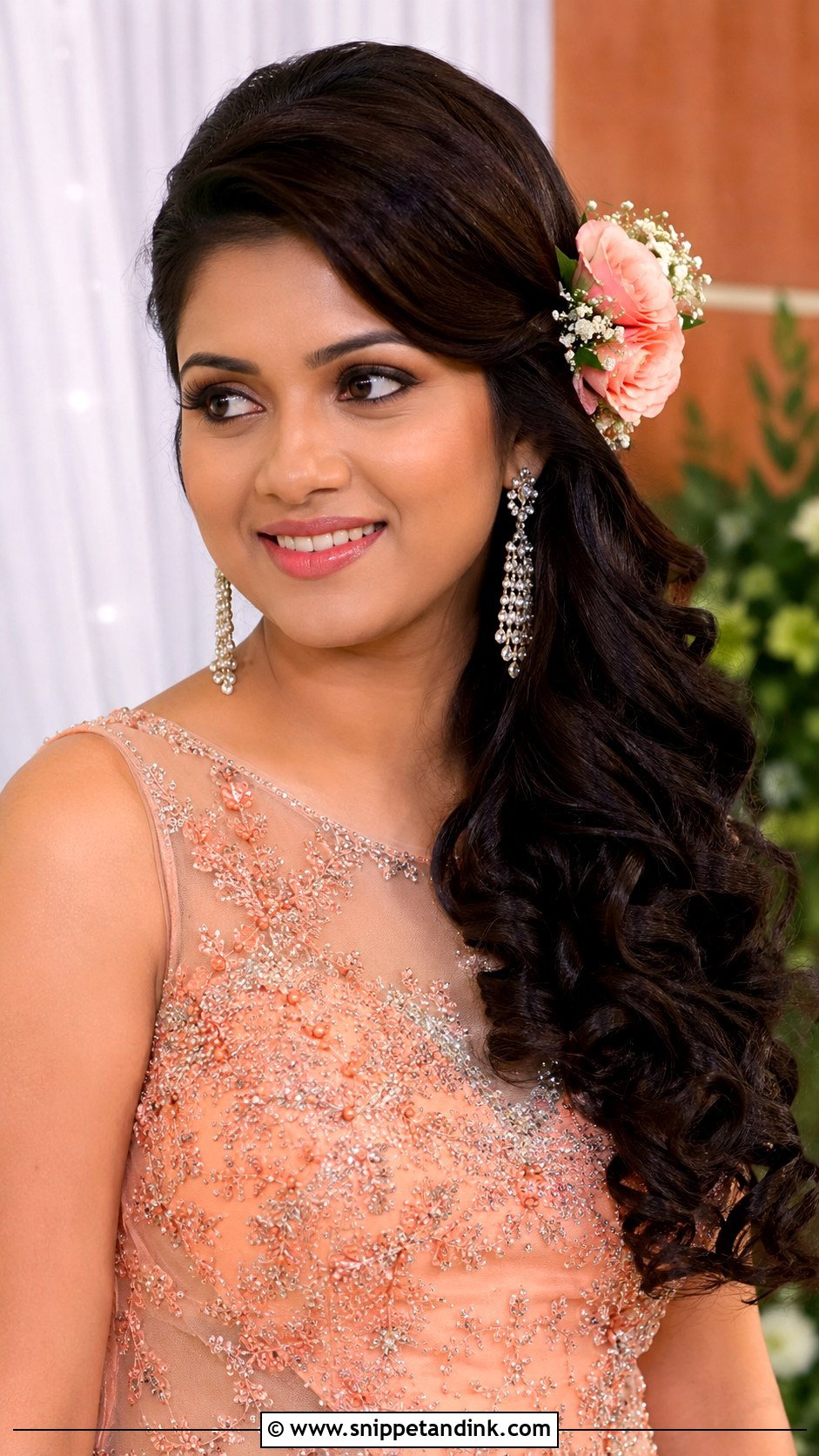
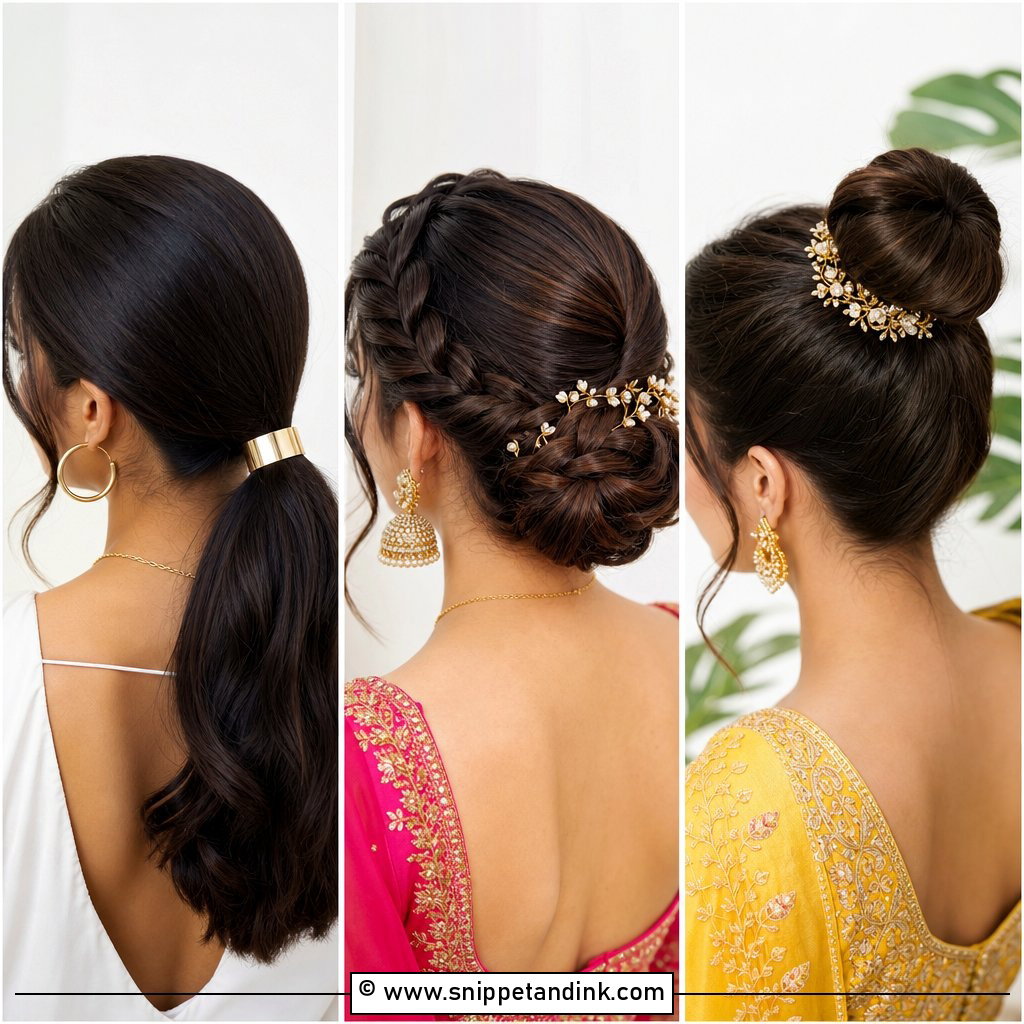
A curly ponytail is the modern answer for a bride who wants movement without loose hair on her neck. High or low, I wrap the base with a small braid or a gold cuff to cover the elastic. The curls bounce through the evening, and the look works with Indo-Western outfits and contemporary lehengas at the reception or sangeet. A ponytail is only as good as its anchor: I use two elastics, one for the base and one just below it, so the weight of curls doesn’t drag the ponytail lower by midnight.
16. Vintage Bun With Hair Brooch
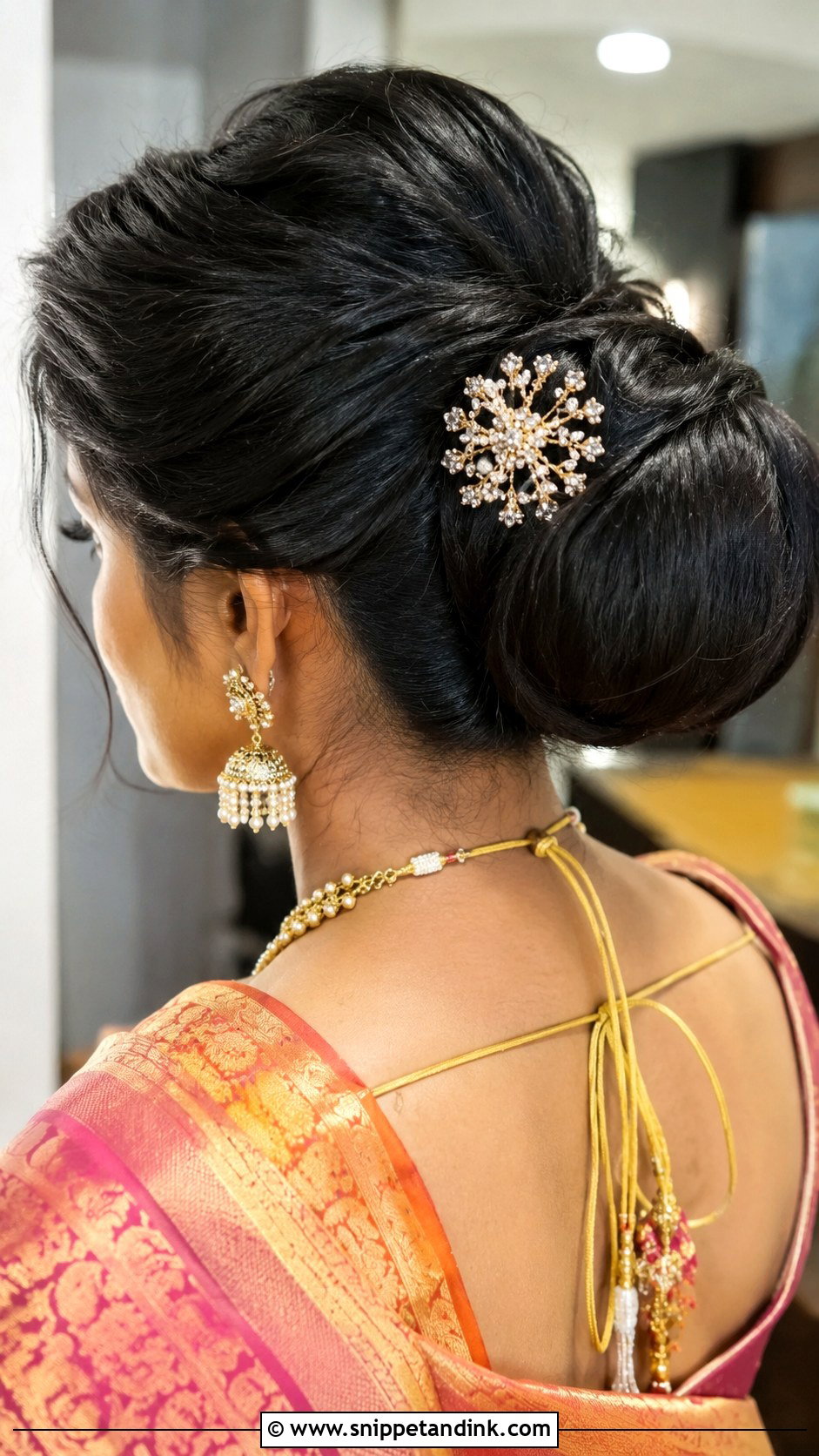
A vintage-style bun is structured and full, with a jeweled brooch as its focal point. The shape usually comes from a hidden padding or donut, wrapped in the bride’s own hair. It suits traditional silk sarees and ornate lehengas, and the brooch can match the main jewelry set. It holds firmly through ceremonies and dancing. The padding has to match your hair color closely; any gap where the donut shows looks obvious in a close-up, so I always check the back under bright light before you leave the chair.
17. Open Beach Waves For Destination Wedding
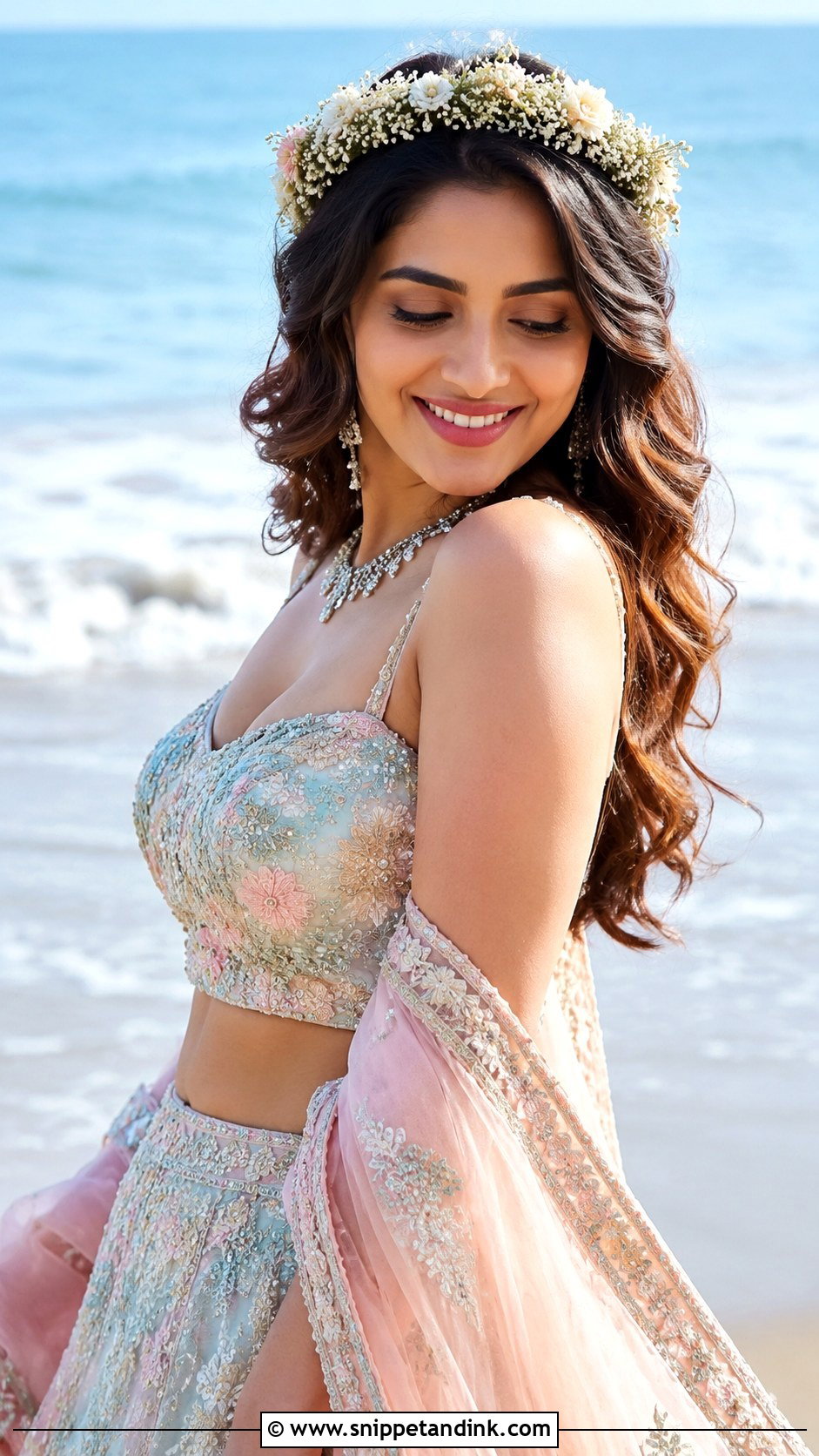
Loose beach waves suit a destination celebration where a structured style would look stiff. I use a flat iron or large barrel for bends rather than curls, then brush them out. A light floral crown or a few clips add a bridal touch. They go well with light lehengas and flowy gowns at haldi or a seaside reception. Sea air is humid and salty, and that’s honestly good for this texture, but wind isn’t. I add a couple of hidden pins to stop the front from blowing across your face in photos.
18. Maang Tikka Bun With Veil
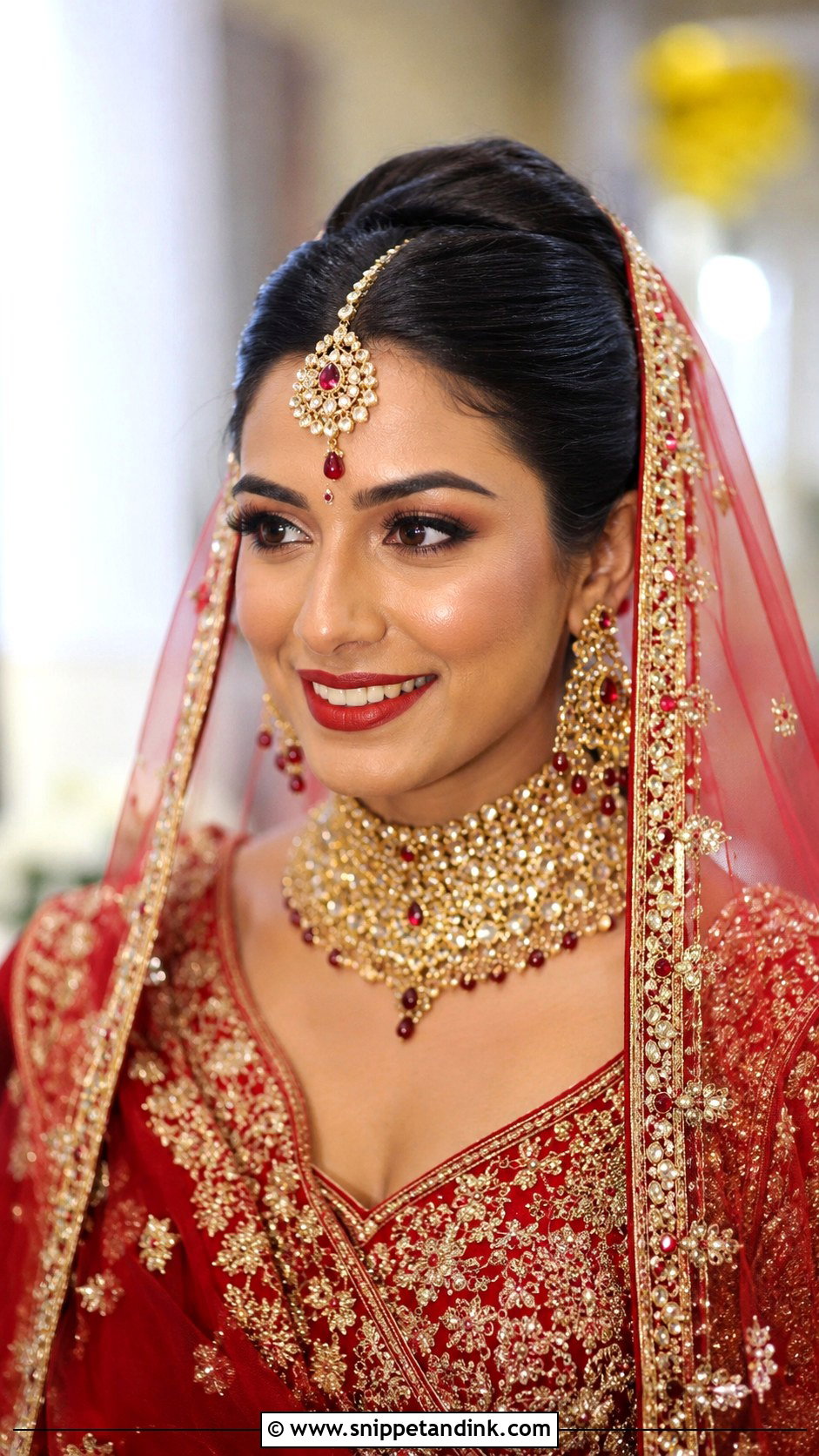
A structured bun with a maang tikka and veil mixes a Western veil with Indian jewelry. The bun anchors both: the veil comb slides in just above it, and the tikka sits at the parting. It suits grand ceremonies, and the veil adds movement as you walk. Choose an embellished or sheer veil to match the outfit. A long veil pulls backward, so I place the comb on a crossed-pin base above the bun rather than into the bun itself, otherwise the bun loosens with every step.
19. Twisted Bun With Pearl Strings
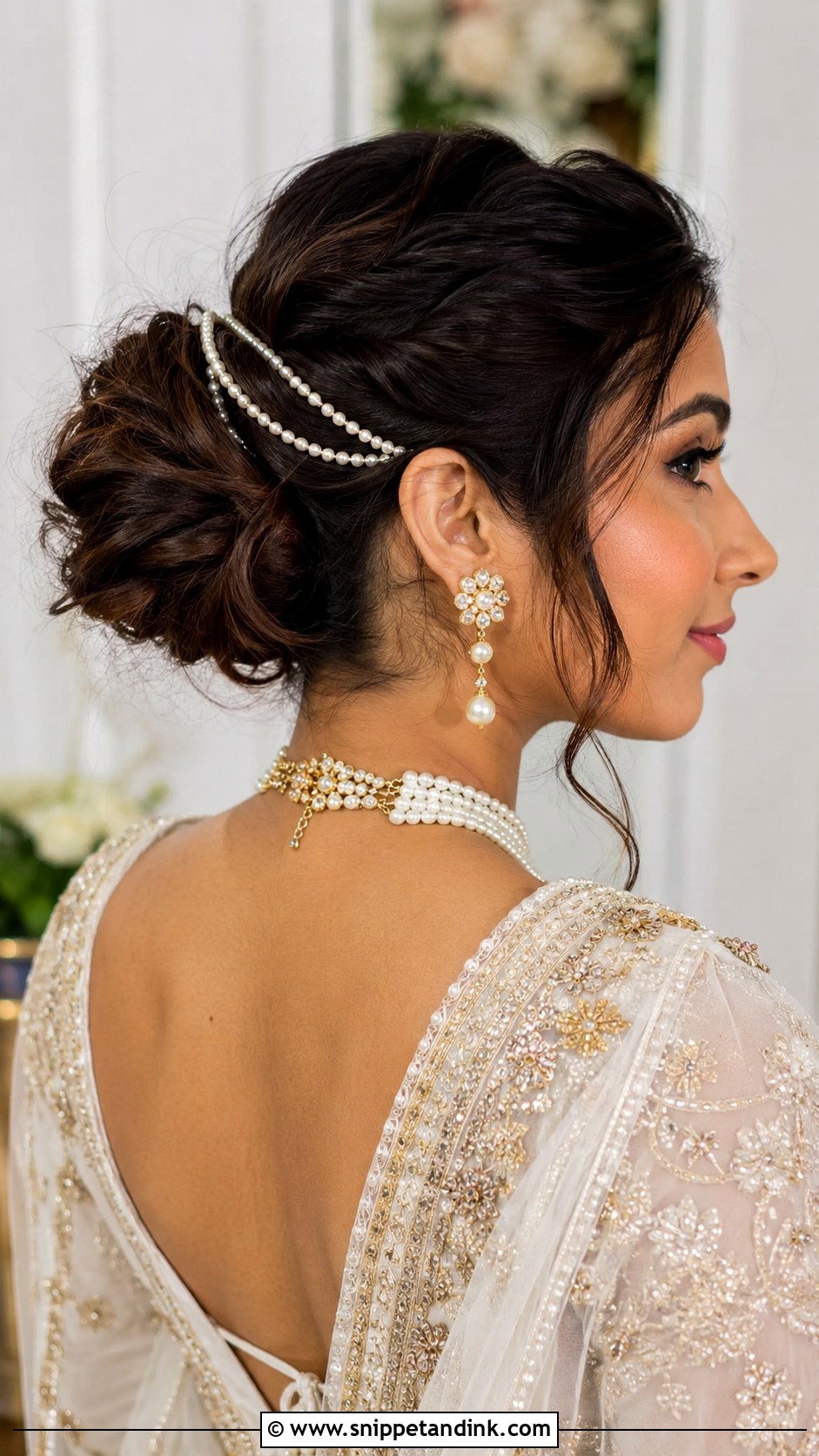
Twisted sections gathered into a bun, wrapped with pearl strings, look intricate from any angle. The twists create texture without the time a full braid takes. It suits traditional and contemporary outfits alike and can be sleek or a little fuller. Pearl strings need to be fastened at both ends and once in the middle, otherwise they slip off the bun as you turn your head. I’d suggest it for a bride who wants detail at the back without heavy hair jewelry.
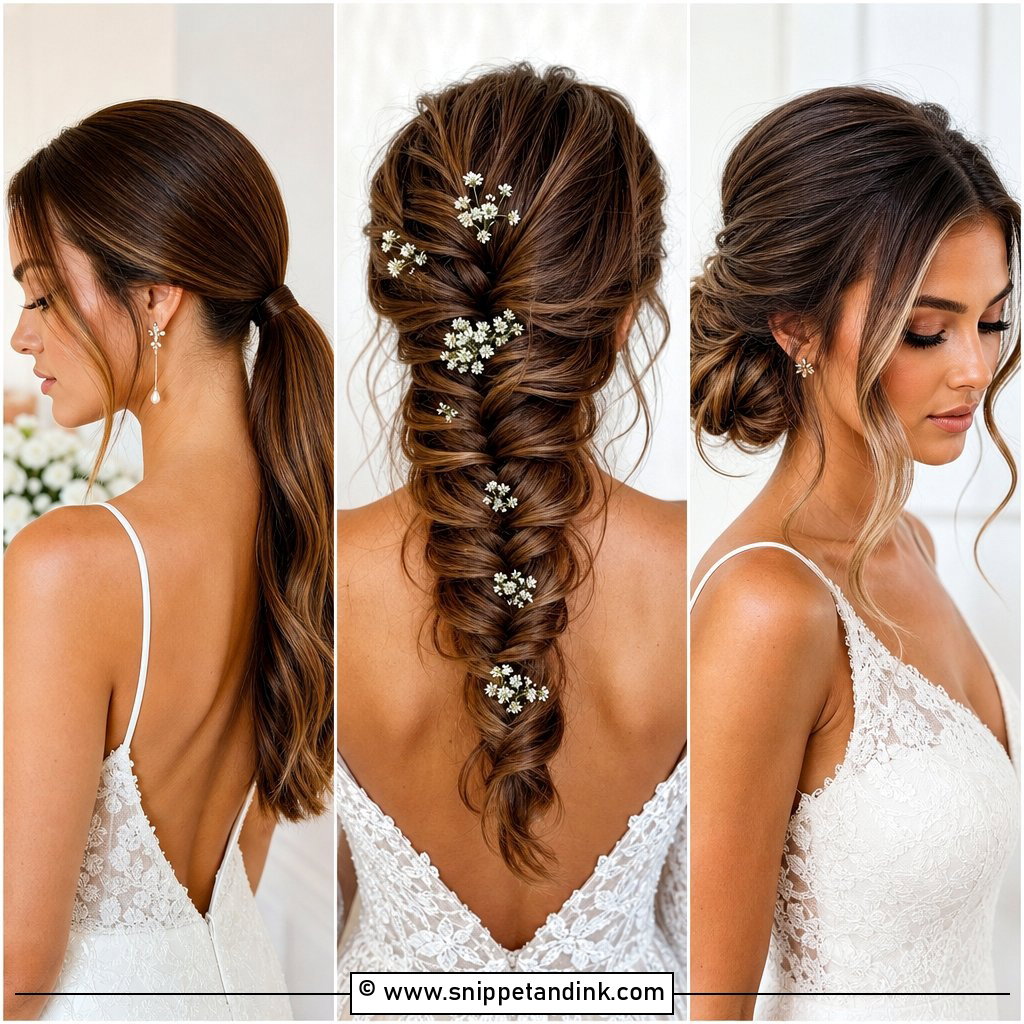


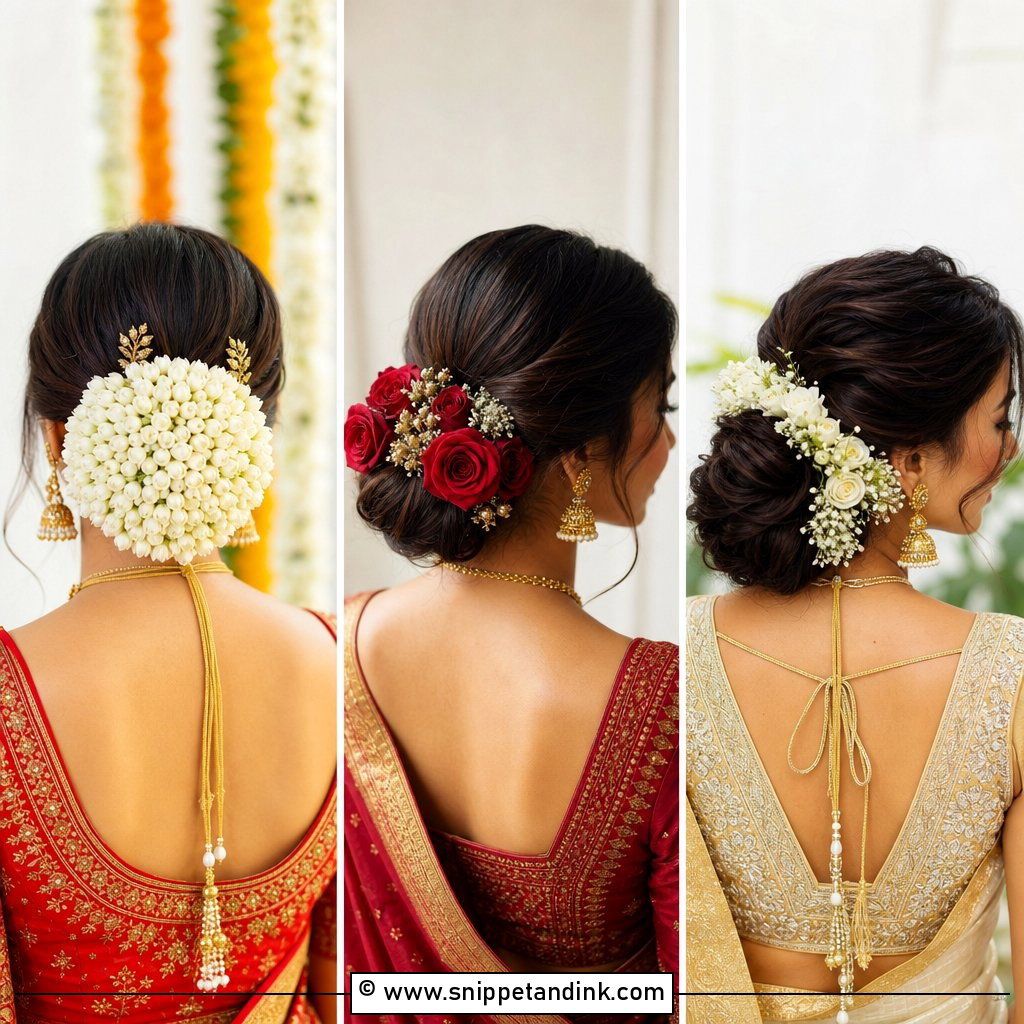

20. Floral Crown With Open Hair
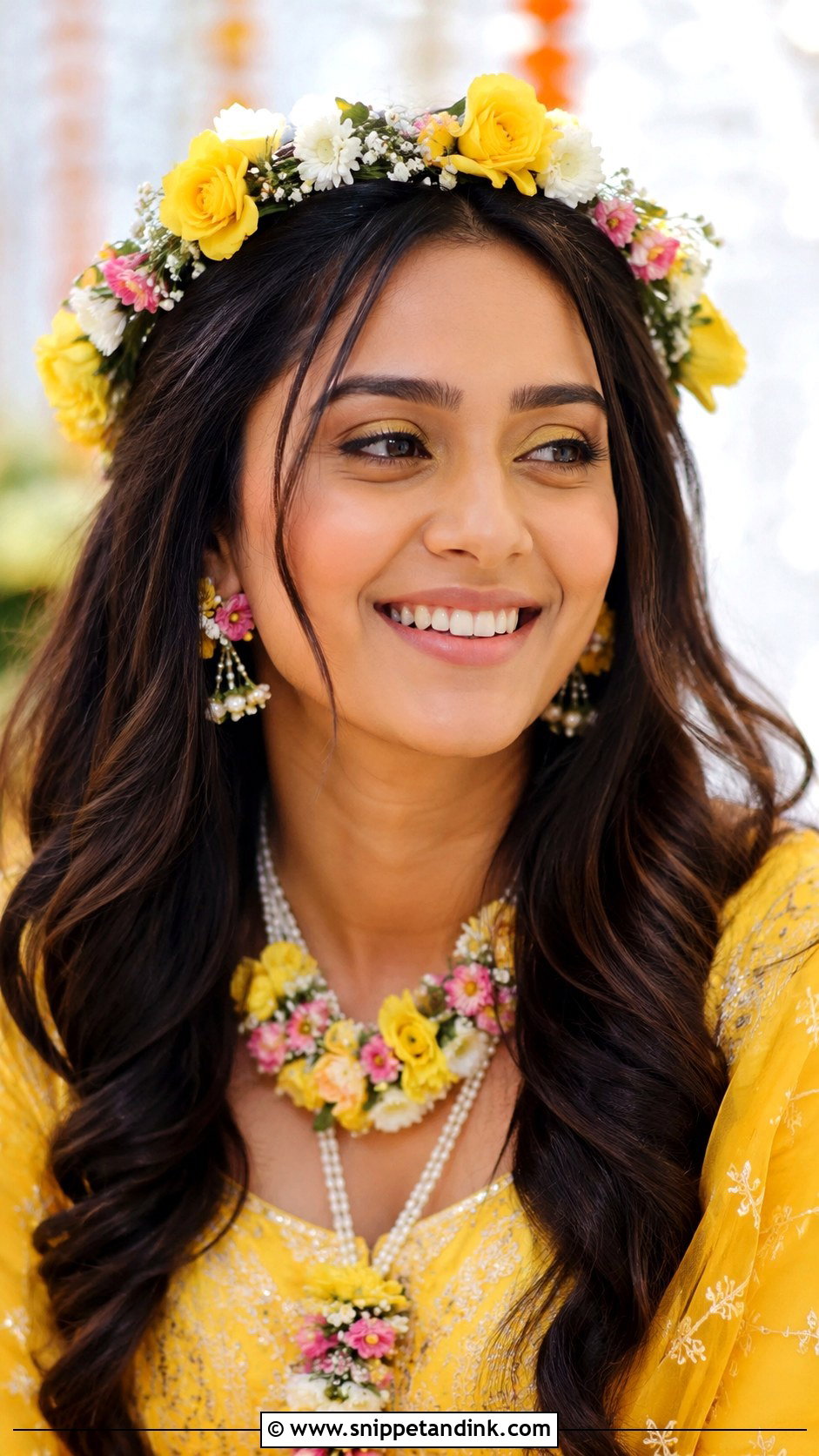
A halo of fresh flowers over loose hair gives a light, whimsical bridal look, mostly for haldi and mehendi. I match the flowers to the outfit’s colors and set the crown slightly back from the hairline so it doesn’t sit like a headband. It looks best in natural light. Fresh crowns wilt faster than most people expect in direct sun, so I ask florists to use hardy blooms and keep the crown in a cool place until right before you put it on.
21. Wrapped Braid With Maang Tikka
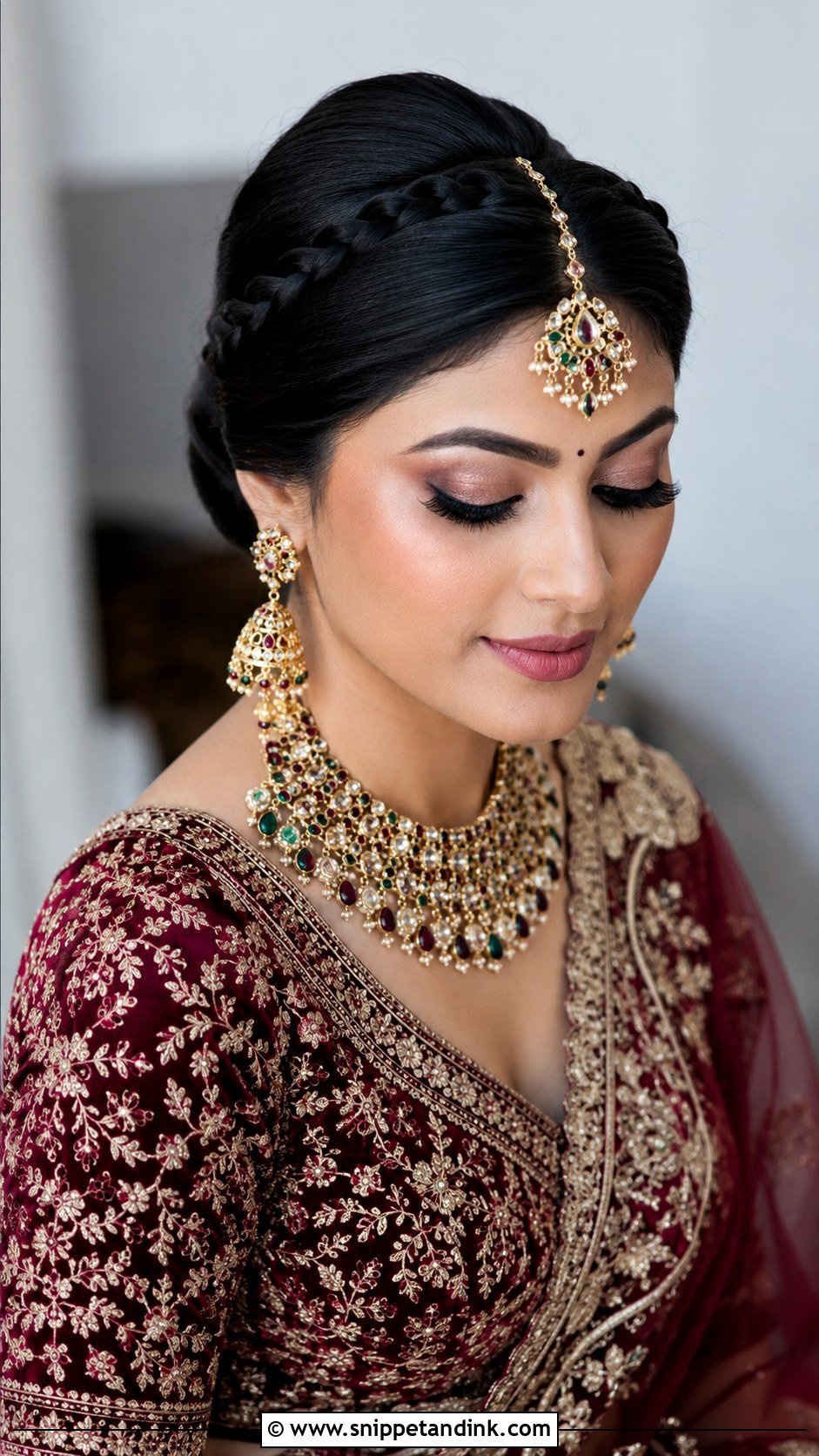
A wrapped braid circles the head and gathers at the back, giving a clean, structured alternative to a standard updo. A maang tikka at the parting adds traditional sparkle, and flowers or pearls along the braid give detail. It pairs with heavy jewelry and ornate outfits and stays secure through long celebrations. Because the braid lies close to the scalp, it handles the weight of a dupatta well. It suits medium-to-long hair; shorter lengths can’t reach around the head.
22. Bouffant Bun With Curls
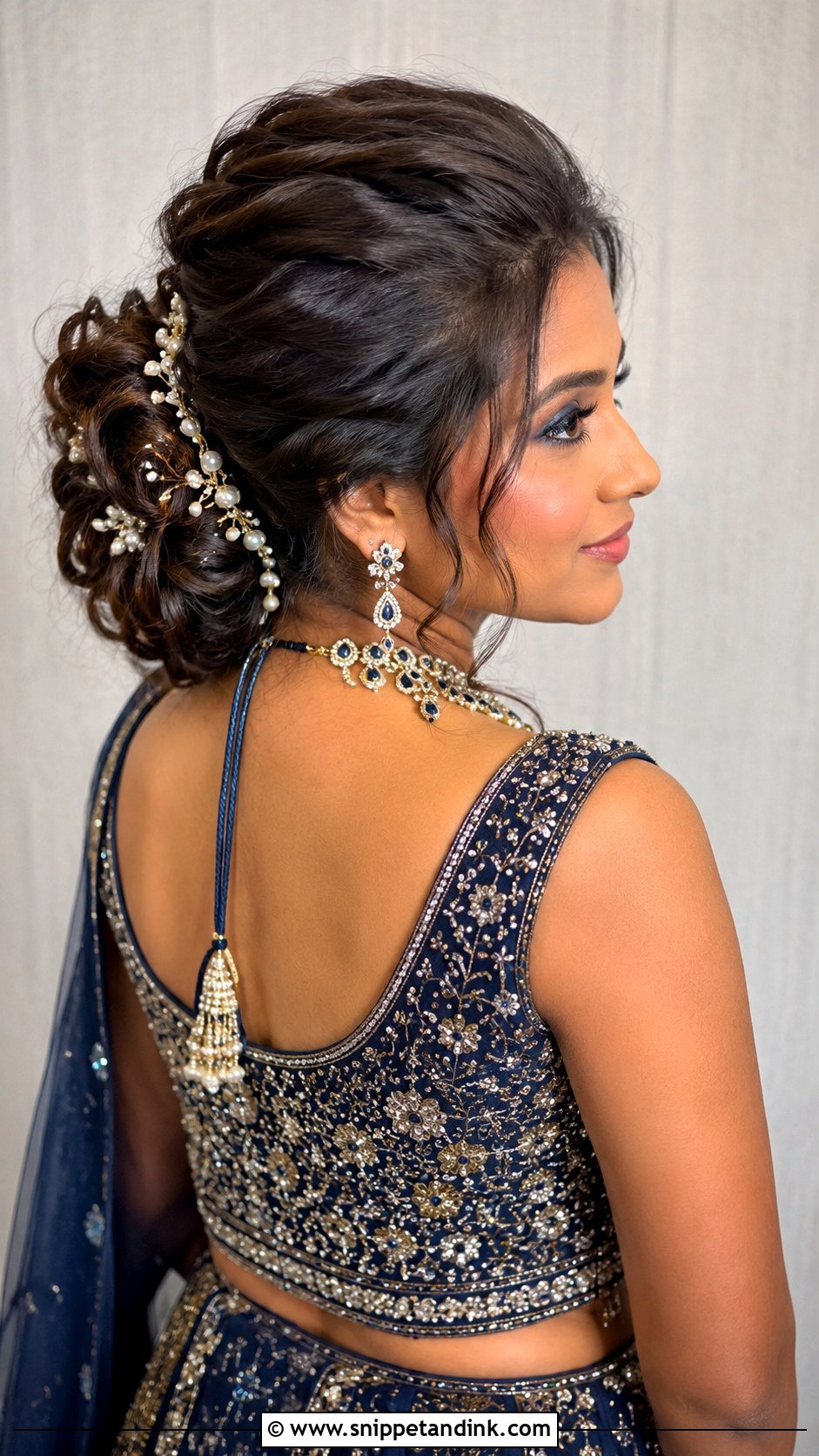
The bouffant bun lifts the crown with a teased base and flows back into a curled bun. The height balances heavy jewelry and grand outfits for receptions and big ceremonies, and flowers, pearls or pins add sparkle. Getting the lift right is a matter of proportion: on a petite bride with a long face, a very high bouffant looks top-heavy, so I keep the height to a couple of fingers. I tease at the root, smooth the top layer over it and set it before building the bun so the lift lasts.
23. Soft Updo With Baby’s Breath
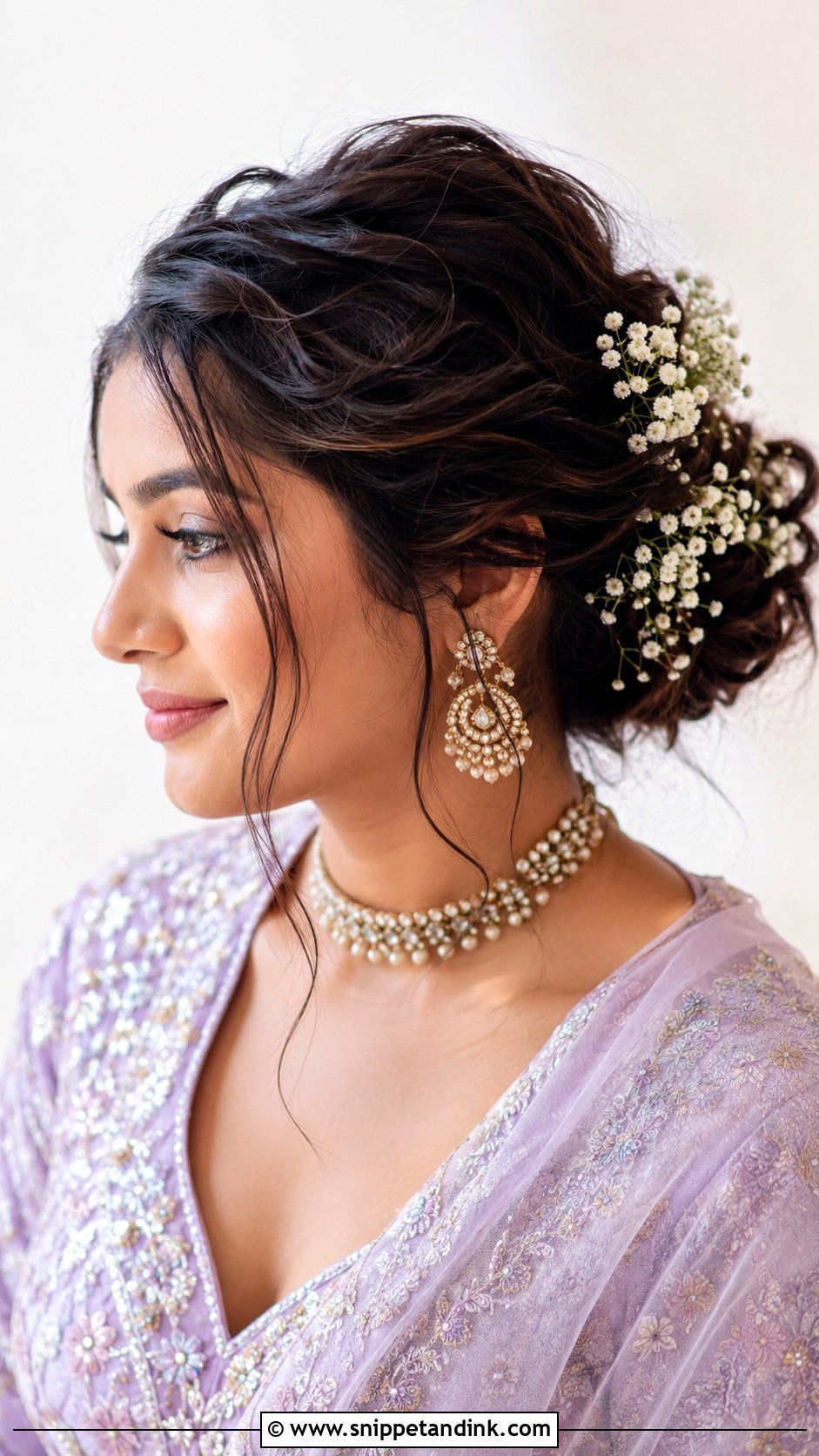
A soft, slightly textured updo scattered with baby’s breath feels airy and suits pastel or lightweight outfits at daytime and outdoor celebrations. A few loose strands framing the face soften the shape. I prefer this for a bride with medium-length hair, because the texture hides the shorter pieces that won’t reach a sleek bun. Baby’s breath browns at the edges after several hours in heat, so I keep a few spare sprigs with a bridesmaid for touch-ups.
24. Sleek Low Ponytail With Pearls
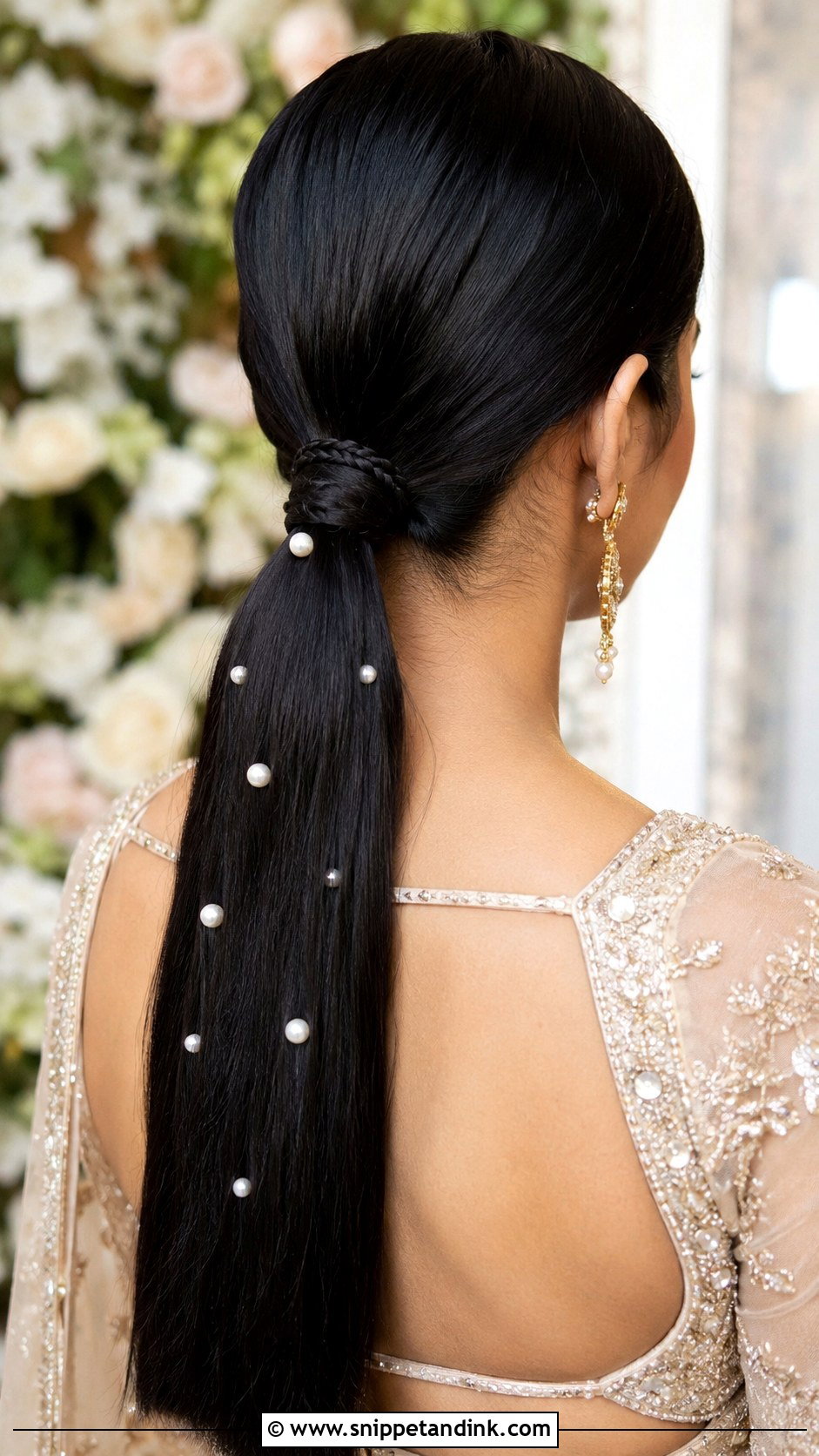
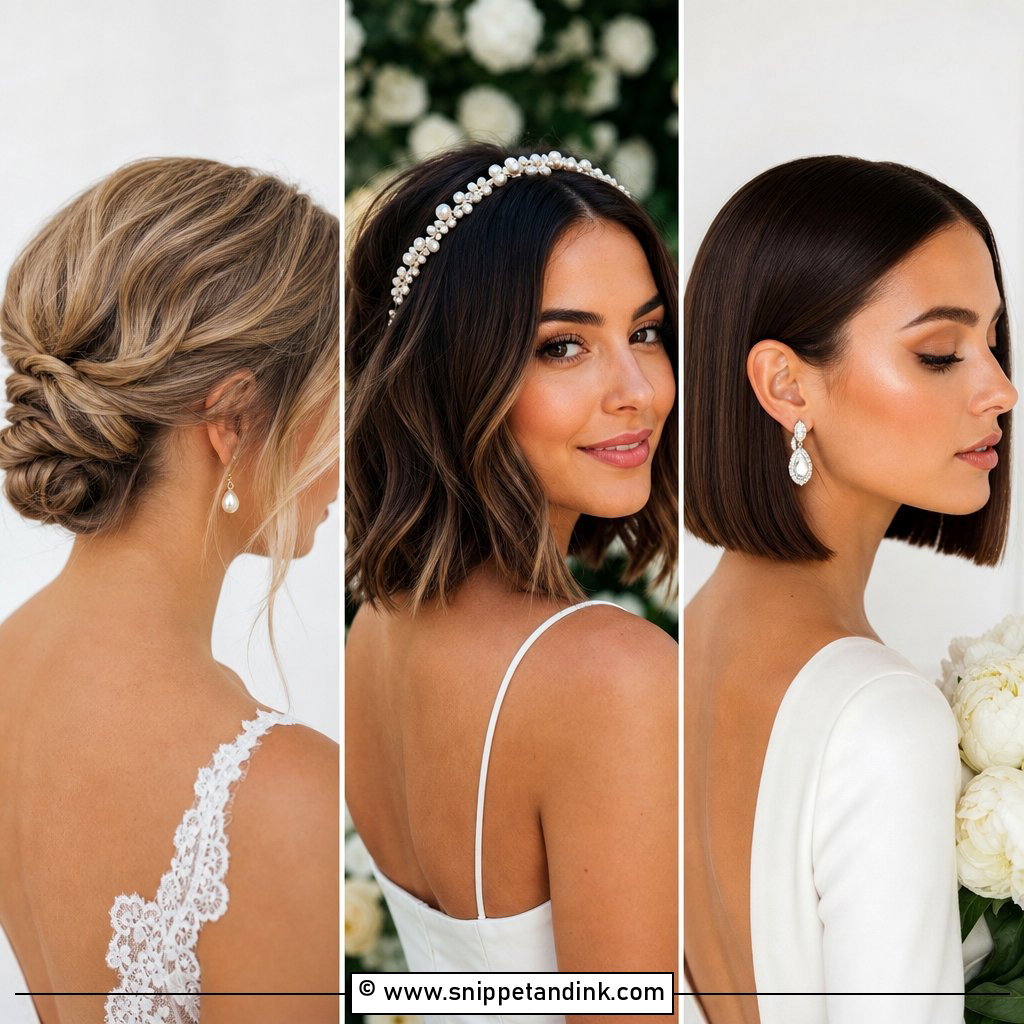
A sleek low ponytail at the nape is the most minimal choice here. Pearls woven along the length add a little luxury, and a wrapped braid or ribbon hides the elastic. It pairs with Indo-Western outfits and modern lehengas. Sleekness depends on prep: I blow-dry the hair straight first and smooth the ponytail area with a fine-toothed comb and gel. Flyaways show clearly in close-up photos of a sleek pony, so I check the nape twice before you leave.
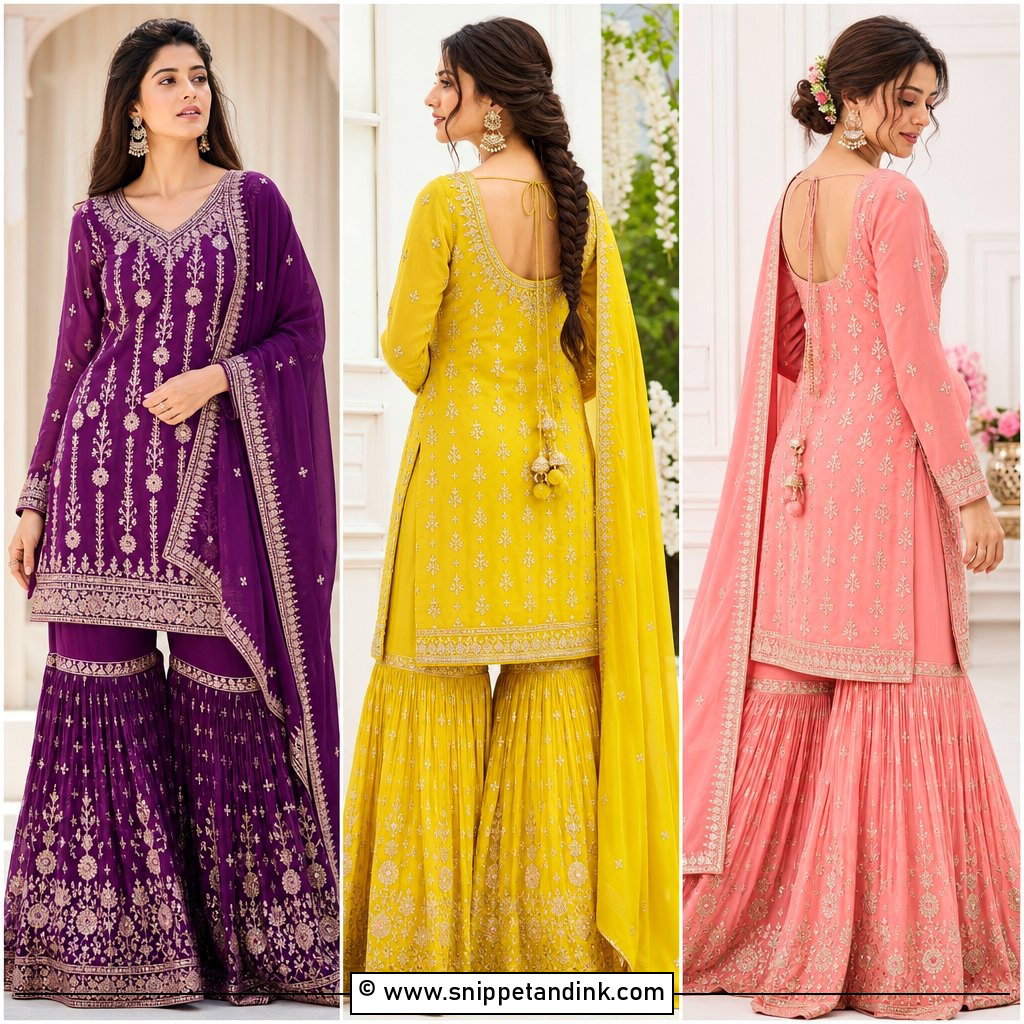
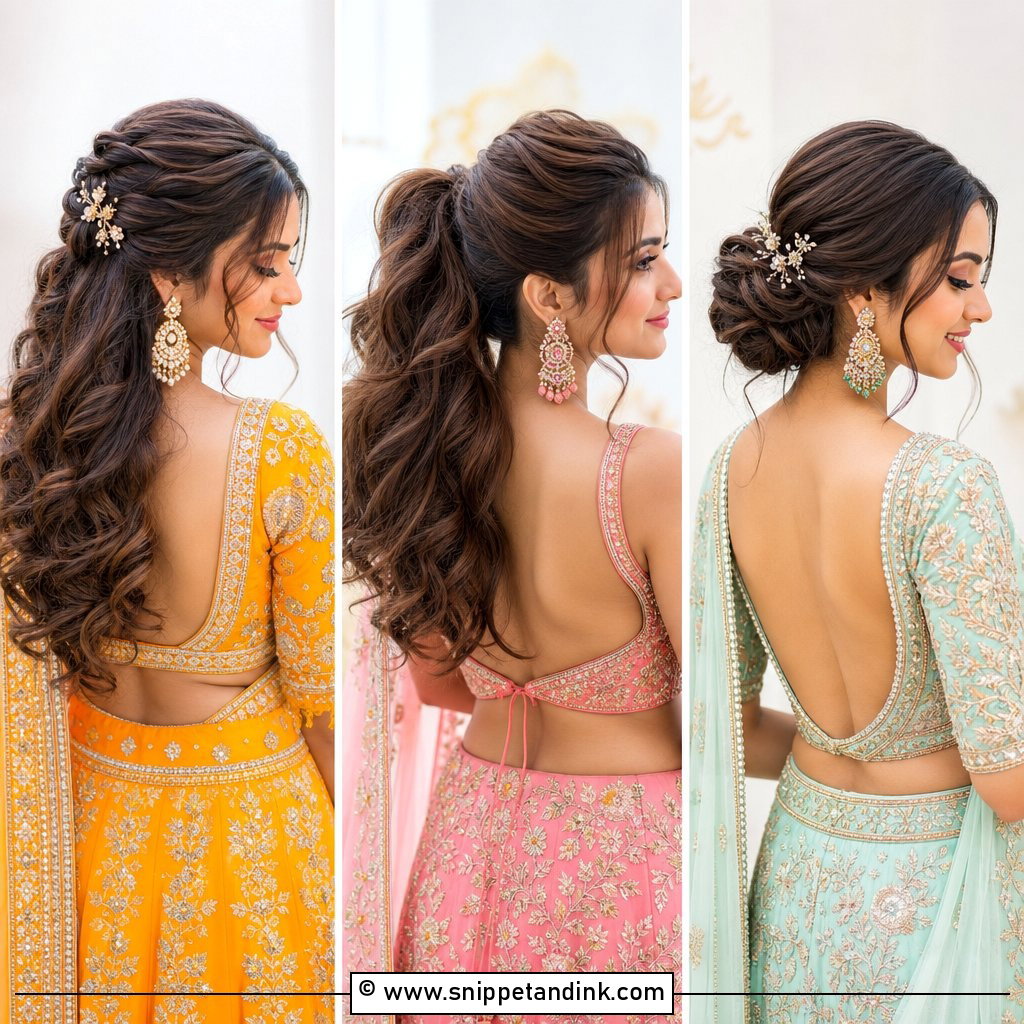

25. Layered Curls With Side Flowers
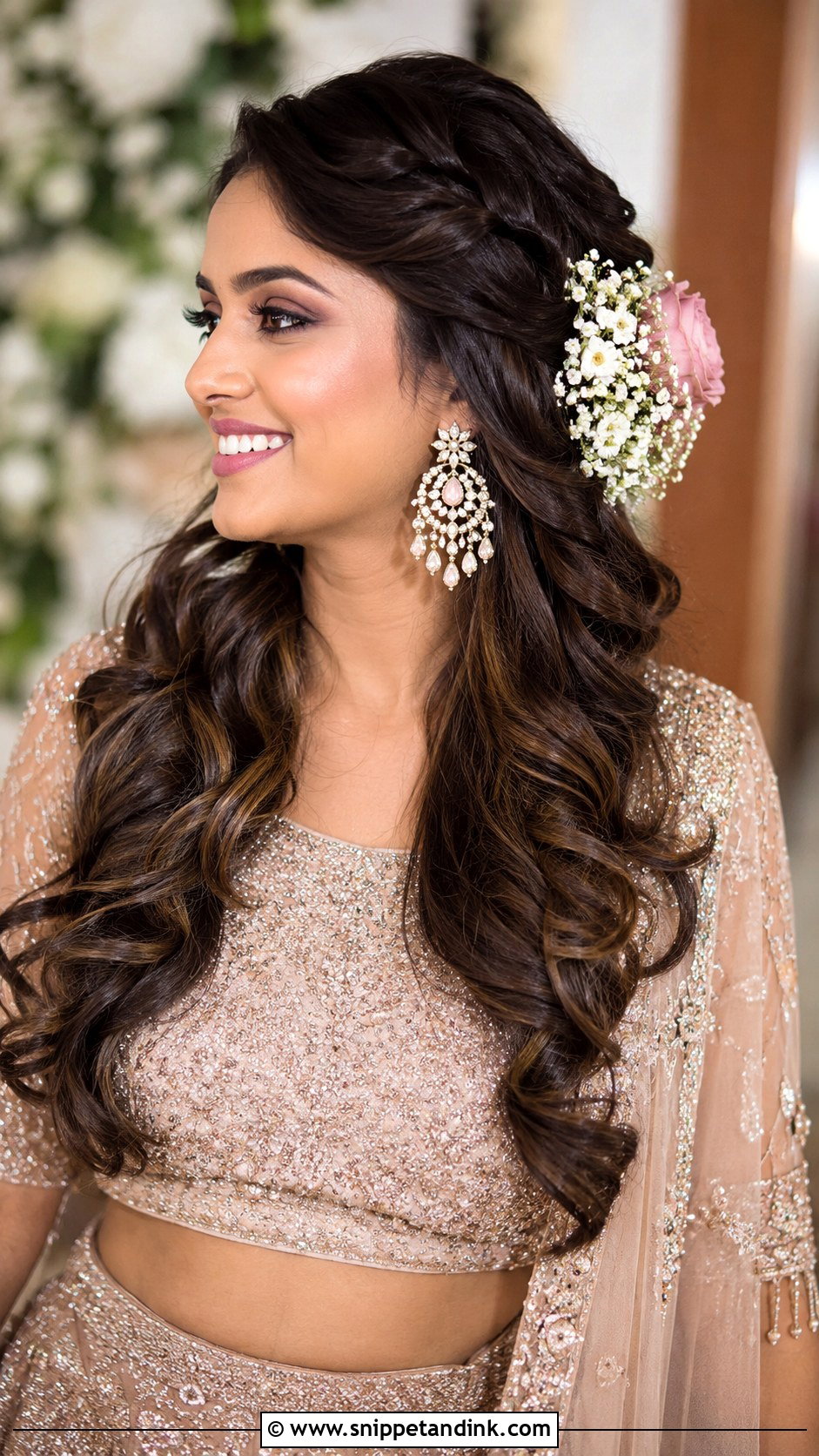
Layered hair curls into bouncy, stacked waves, since the different lengths sit on top of each other instead of lying flat. A cluster of flowers on one side adds color. I’d keep this for sangeet nights and cocktail parties with flowy lehengas or reception gowns. If you’re planning layers for the wedding, have them cut about four weeks ahead so they’ve settled. Curls on layered hair tend to fall faster at the shorter lengths, so I set those pieces with a slightly smaller barrel.
Headaches by the Pheras? Weight, Pins and Taking It All Down
A bride wearing a heavy bun, jewelry and dupatta for many hours is carrying real weight on her scalp, and a dull headache by the end of the ceremony is common. The cause is usually tension in one spot: a tight elastic, a single pin holding a heavy piece, or a bun placed too high. I spread the load with crossed pins across the head and keep heavy pieces close to the nape where the neck supports them.
Tell your stylist during the trial if anything pinches. A pin that’s uncomfortable for ten minutes will be painful after six hours, and it takes seconds to move at the trial.
Removing it at the end of the night
- Take off the jewelry and dupatta first, unhooking rather than pulling.
- Remove the pins in reverse order, feeling for each one. Bridal styles can hold a surprising number.
- Work a little oil or conditioner through any teased sections before brushing.
- Detangle from the ends upward with a wide-tooth comb. Brushing teased roots from the top tears hair.
Plan the Jewelry First, Then the Hairstyle
From gajra buns and Rani Jhoomar braids to Hollywood waves and floral crowns, there’s a style here for each ceremony. My advice is to work backward from what the hair has to carry: the tikka, the matha patti, the dupatta and the flowers decide the structure, and the face shape and outfit decide the details. Mixing tradition with a modern touch works well across a multi-day wedding. Take your favorite photos, plus your actual jewelry and dupatta, to your trial, and plan each event’s look so your hair has a day to recover in between.
You'll Like These Ideas:




Leave a Reply