
Coily and kinky hair gives a bride more shapes to work with than almost any other texture, because it holds a sculpted form without heat and keeps volume that straighter hair has to be teased into. The goal on a wedding day is never to hide that texture. It’s to set it so it lasts through the ceremony, the hugs and the dance floor and still looks like your hair. Below are twenty styles I’d happily put on a bride, from twist outs and Bantu knots to loc updos and a fresh TWA, with notes on which lengths, veils and climates each one handles. Take the ones you save to your trial so we can test them on your actual curl pattern.
Setting Coily Hair Days Ahead, Not on the Morning
Most of the styles below are set, not just styled. A twist out, knot-out, rod set or finger coils all need hair that dries completely in the shape you want, and on dense coily hair that can take a whole night. Trying to do it on the wedding morning is the most common reason a natural bridal look comes out frizzy or half-defined. This is the schedule I work to.
- About two weeks out: deep condition, and get a light dusting if your ends are rough. A full shape cut on a TWA or afro goes closer to the day, roughly a week before.
- One to two weeks out: retwist locs or Sisterlocks so the roots relax and the scalp isn’t tender.
- Two days before: wash, condition and stretch the hair. For a twist out or knot-out, install the twists or knots now.
- The night before: sleep on satin with the set still in. Don’t take it down early to check it.
- Wedding morning: take down, separate, shape and pin. This is far quicker than starting from wet hair.
A wash and go is the exception, because it can’t be set in advance. If that’s your style, I put it first on the morning schedule so it has hours to dry before the dress, and I’d want your trial to show how long your hair really takes.
If the style uses added hair
For a halo braid or a cornrow updo finished with a fuller bun, buy the extension hair early and match it to your curl pattern and colour. Kinky or coily textured braiding hair blends into natural hair; silky hair stands out against it. Have it installed one or two days ahead, not a week, so the style still looks crisp in photos.
1. Black Natural Hair Wedding Updo
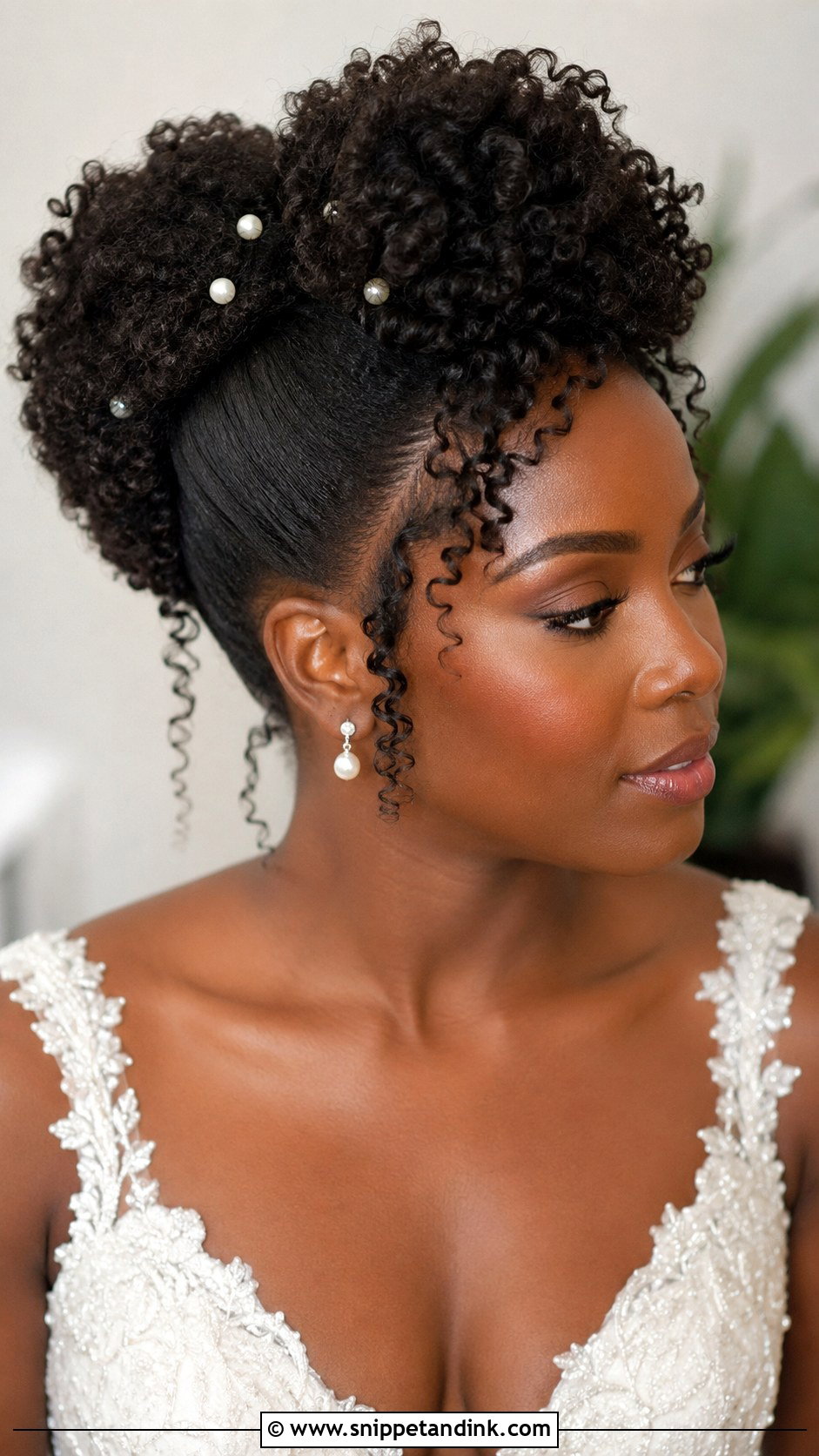
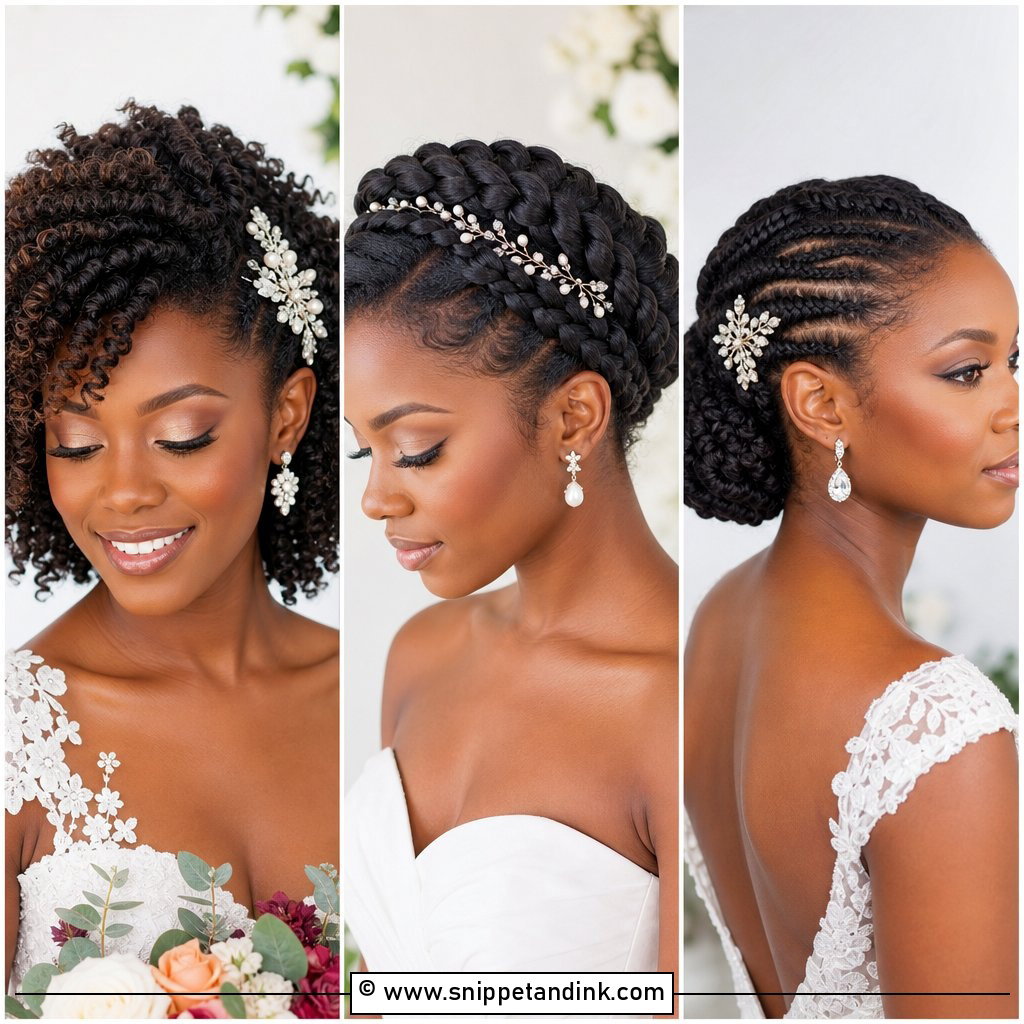
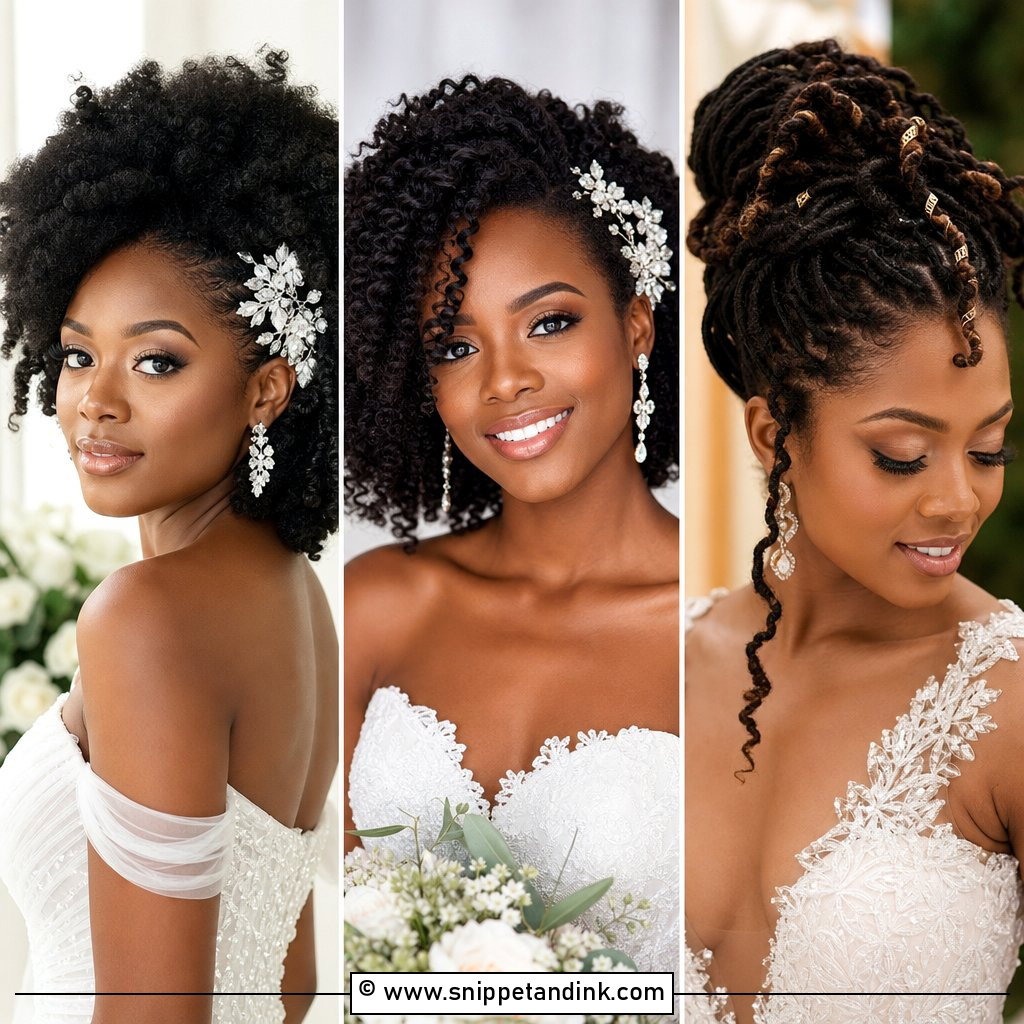
An updo on natural hair stays up because the texture grips the pins, which is a real advantage over silky hair. I usually build it on stretched hair, banded or blown out on low heat the night before, because fully shrunk coils make the shape smaller and harder to balance. Flat twists or pinned curls at the back give the pins something to lock into. Open necklines and strapless gowns suit it since the shoulders and earrings stay visible. Ask for a little height at the crown and smooth sides, then check the back in a hand mirror, because that’s the view guests look at during the vows. A few pearl pins or one gold cuff is enough decoration.
2. Black Natural Hair Bridal Bun
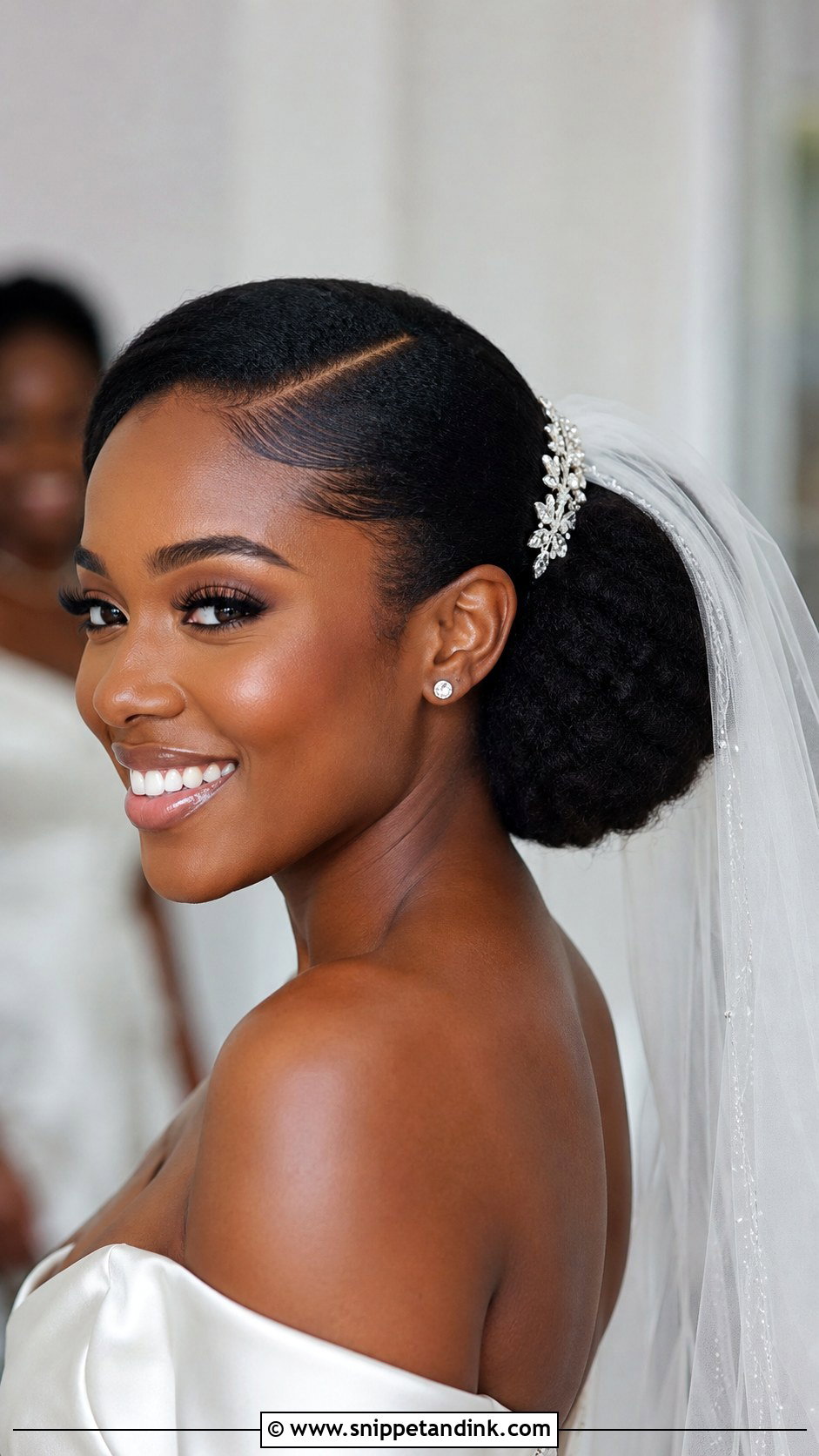
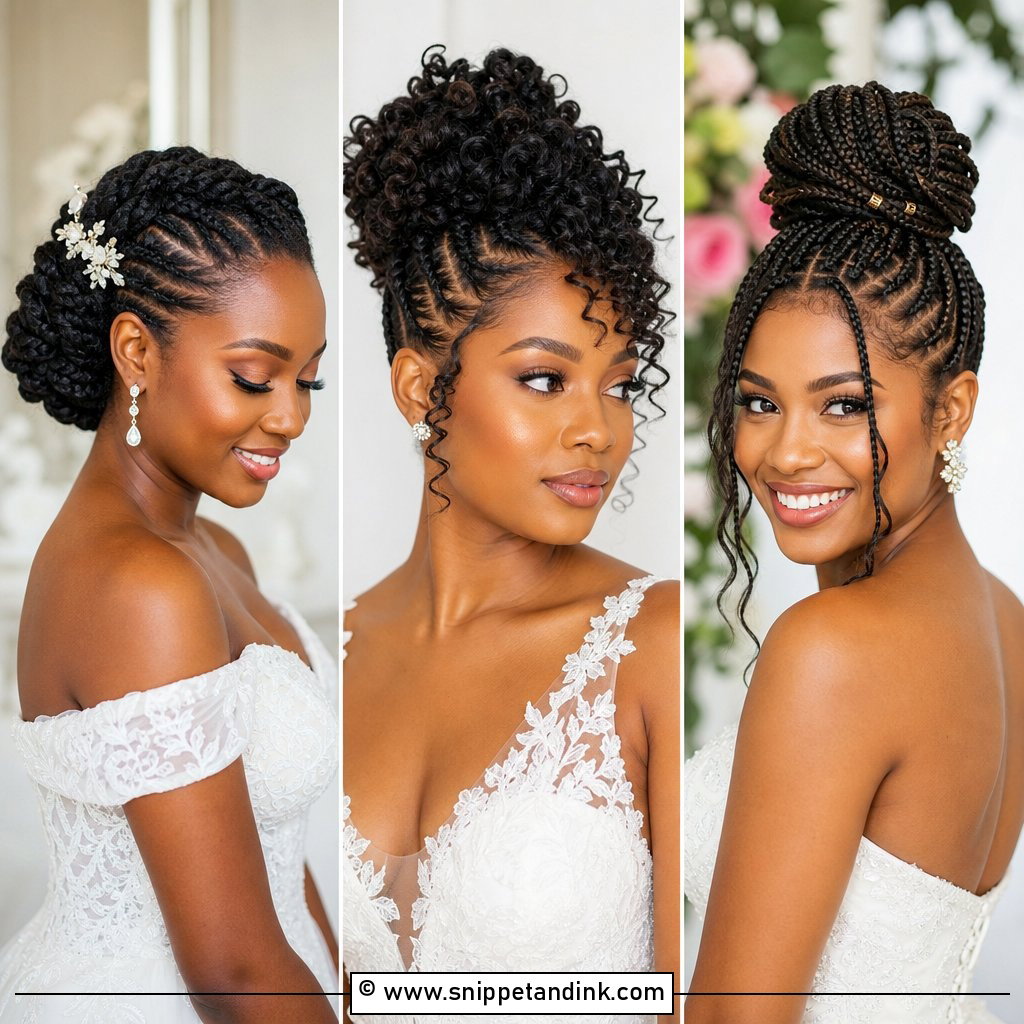
I like a bun on natural hair because it’s the easiest base for anything you want to attach later. Set it low at the nape for a long veil, at the crown for height, or slightly off-centre if a perfectly symmetrical bun feels stiff on you. The front can be stretched and brushed back while the bun keeps its coil, so it reads polished without flattening your texture. Dense hair needs fewer pins than you’d expect, but they have to be long, strong ones crossed in an X. Set that way, it survives hugging relatives and hours of photos.
3. Black Natural Hair Twist Out Wedding Hair
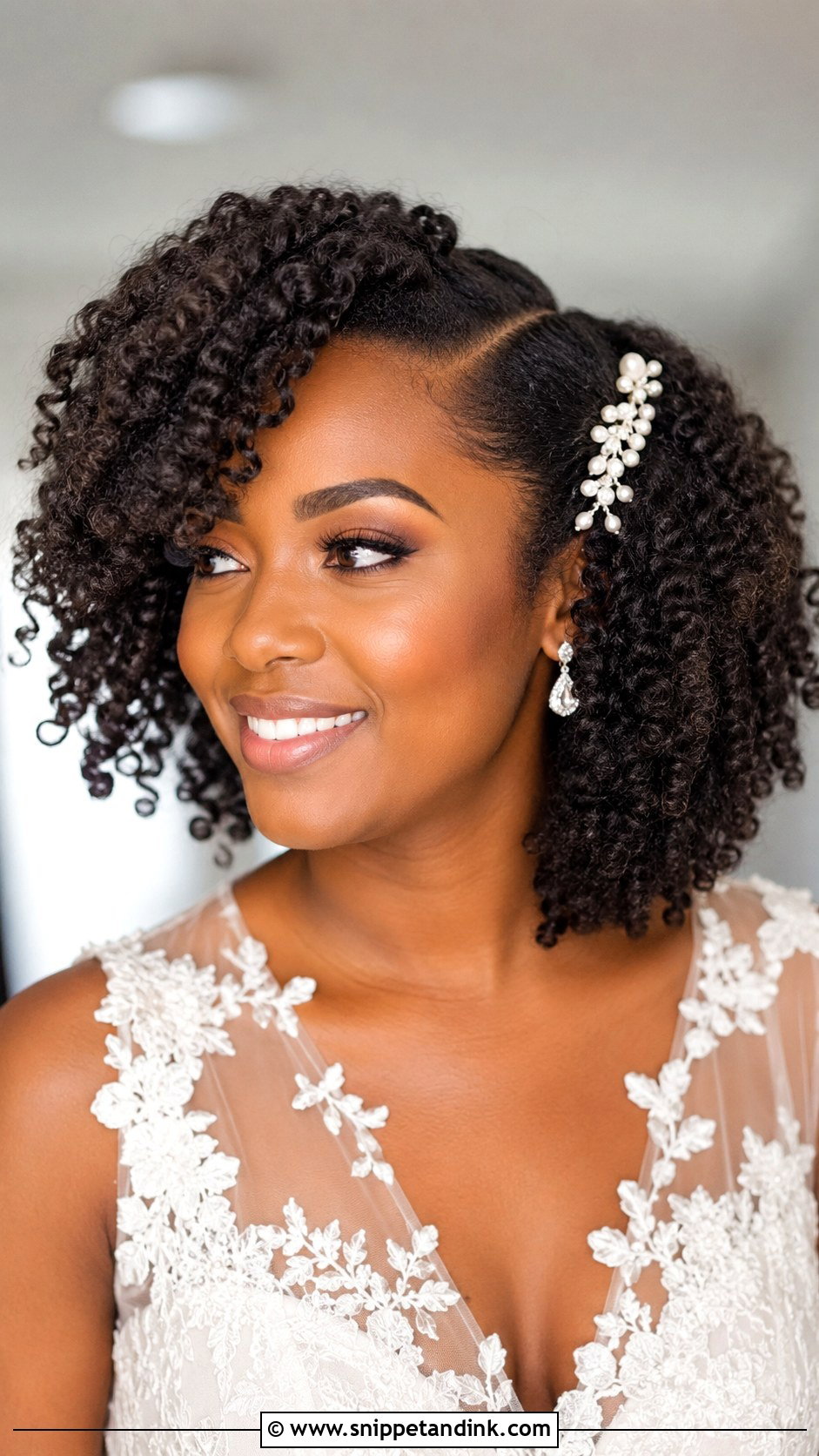
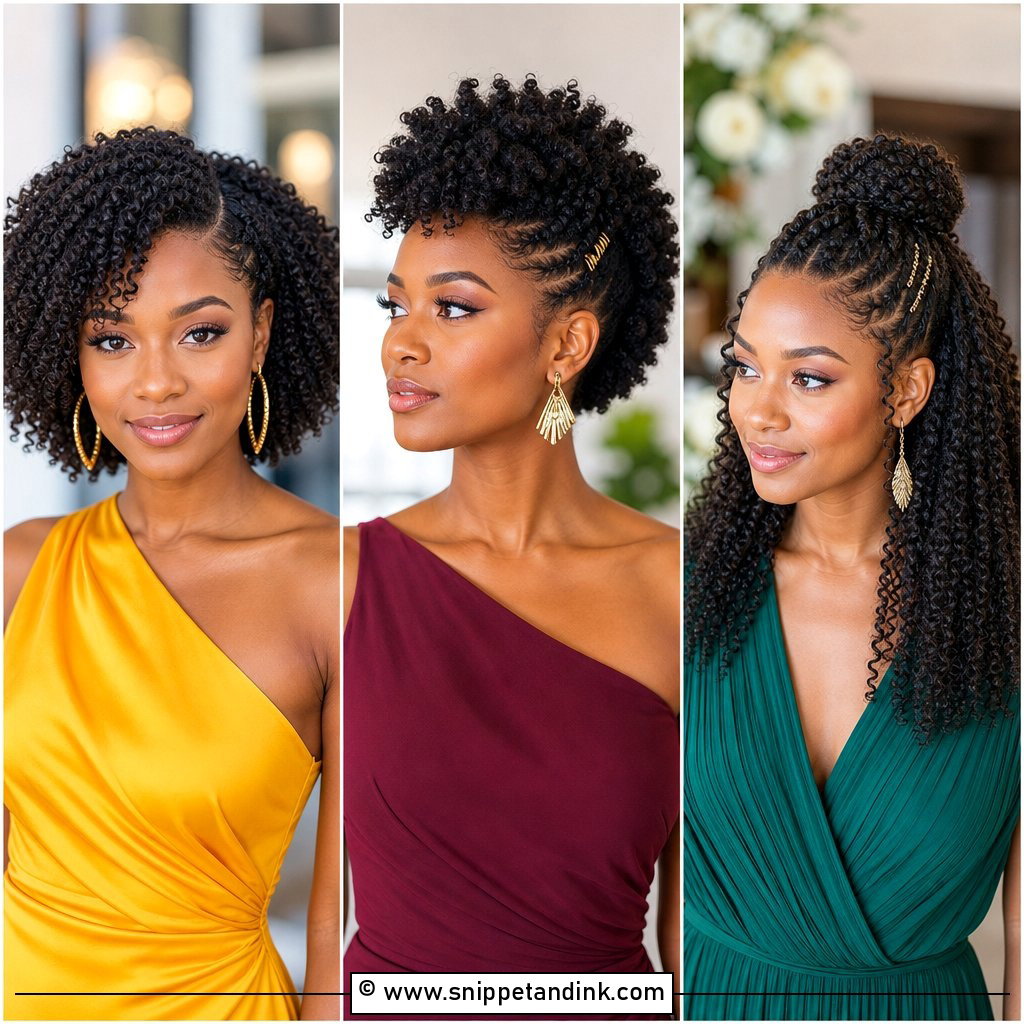
A twist out is the bridal version of how many naturals already wear their hair, and that familiarity is its appeal. The risk is timing. Twists need to go in on moisturized hair with a defining cream or mousse and dry completely, ideally overnight, because separating them even slightly damp gives you frizz instead of definition. I separate with oiled fingertips and stop earlier than feels right; over-fluffing is what kills definition by the reception. Shape the finished hair into a rounded silhouette, then add a side part or a comb on one side. A plain gown suits it, since the texture does the decorating.
4. Black Natural Hair Bantu Knot Wedding Hair
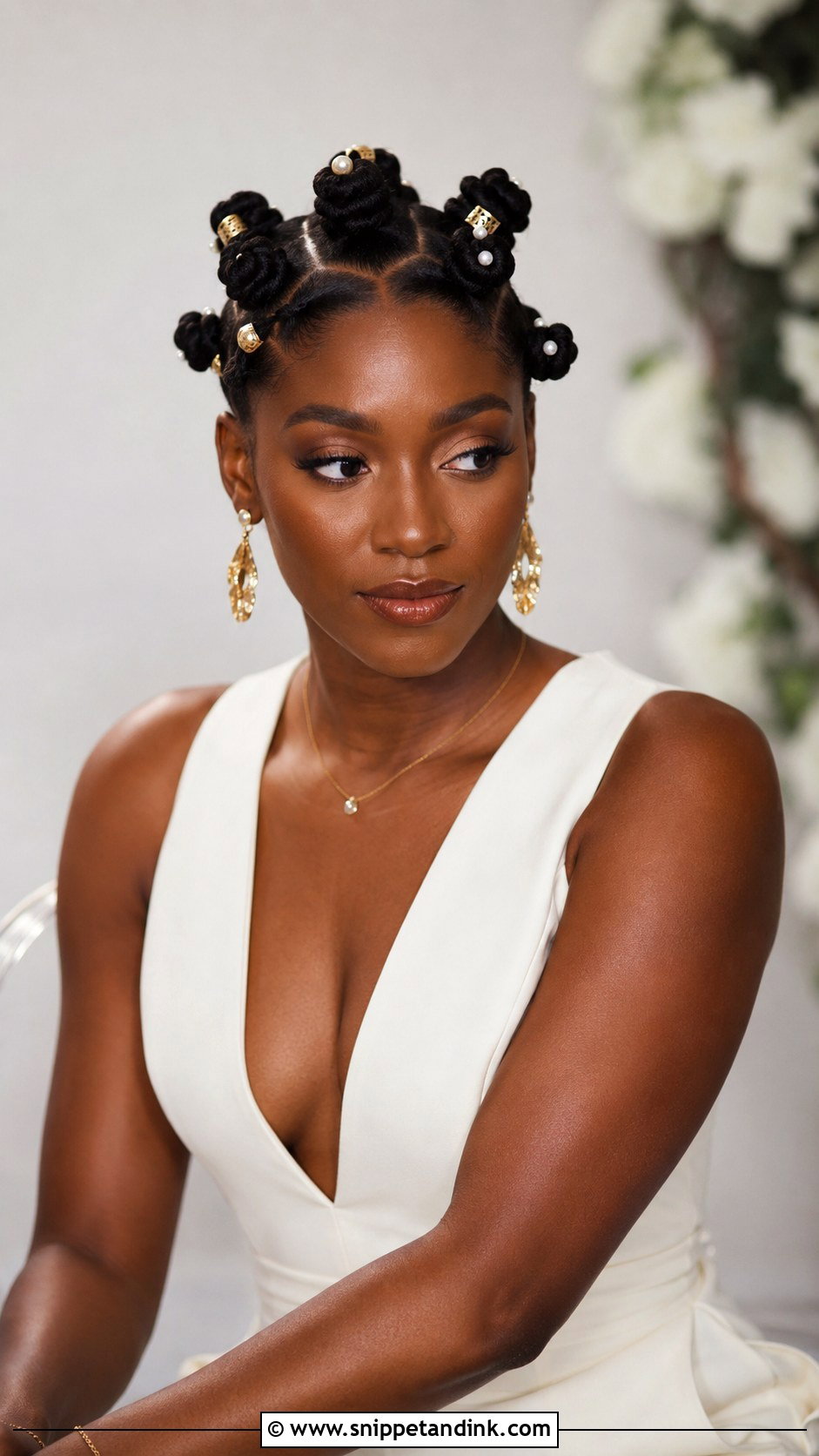
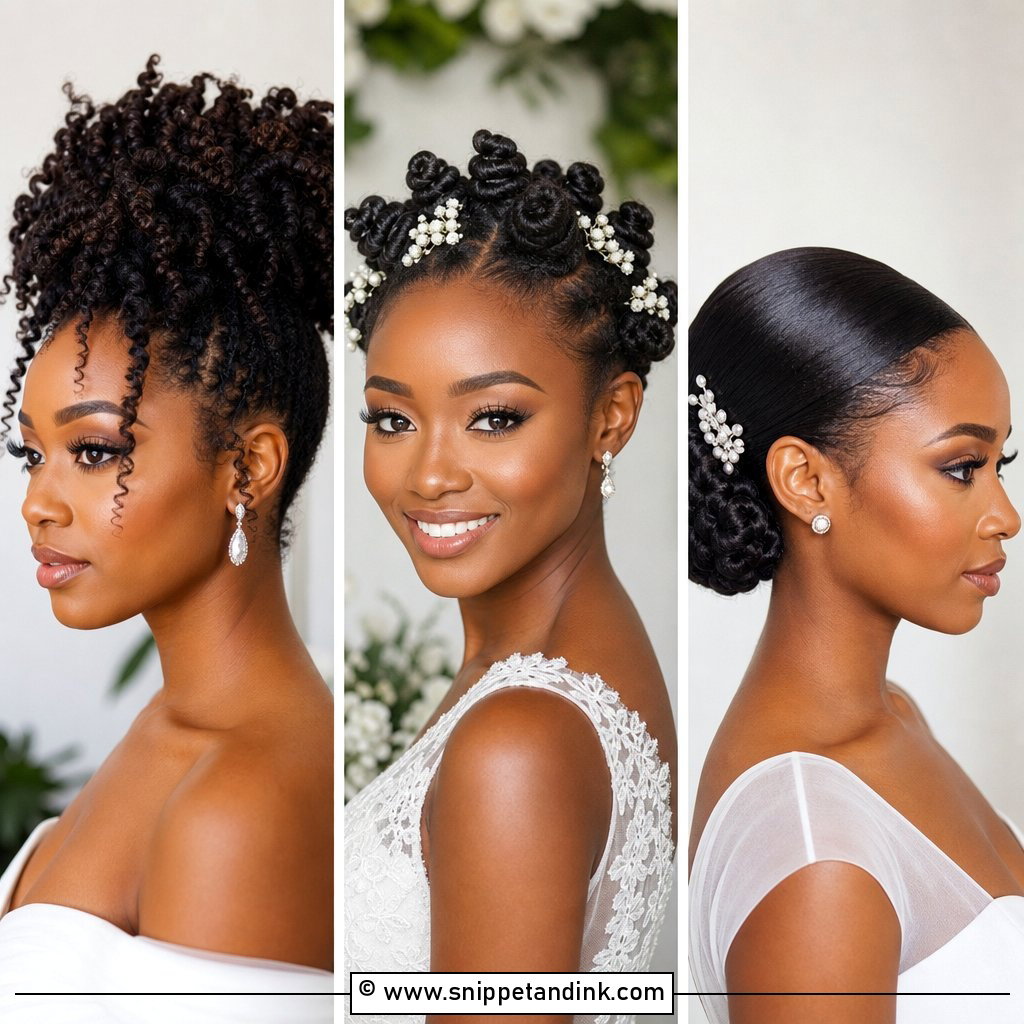
Bantu knot wedding hair carries real heritage, and it reads as sculpture in photos. Wear the knots as the finished style in clean rows or a looser pattern, or use them as a set and unravel them into a knot-out. If the knots are the final look, the parting does most of the work. I measure sections so the knots come out close in size, because one oversized knot is what the eye finds first in a close-up. Wrap each knot firmly enough to hold without dragging the root at the hairline. Gold cuffs or a couple of pearl pins finish it.
5. Black Natural Hair Flat Twist Updo
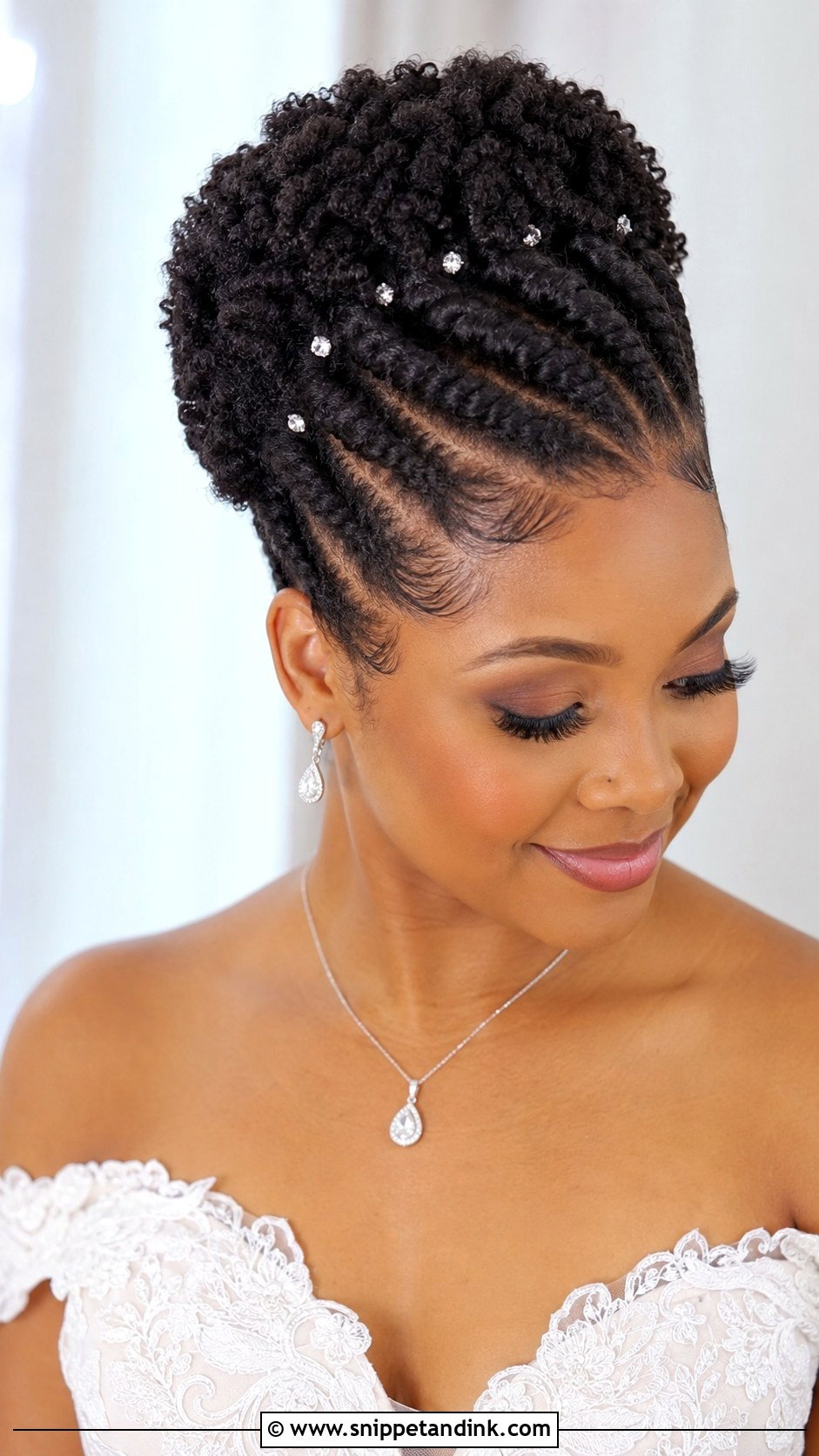
Flat twists keep the ends protected and tucked away, which is why I reach for them when a bride has a long day ahead and fragile ends. The twists can travel up into a curly crown, curve into a side bun or wrap into a low tuck. Medium to long hair manages it alone; shorter hair usually needs some added textured hair to give the updo body. Every line of a flat twist shows in close-ups, so the parts have to be clean. Keep the edges soft rather than glued flat, and pick accessories that follow the direction of the twists instead of sitting across them.
6. Black Natural Hair Halo Braid
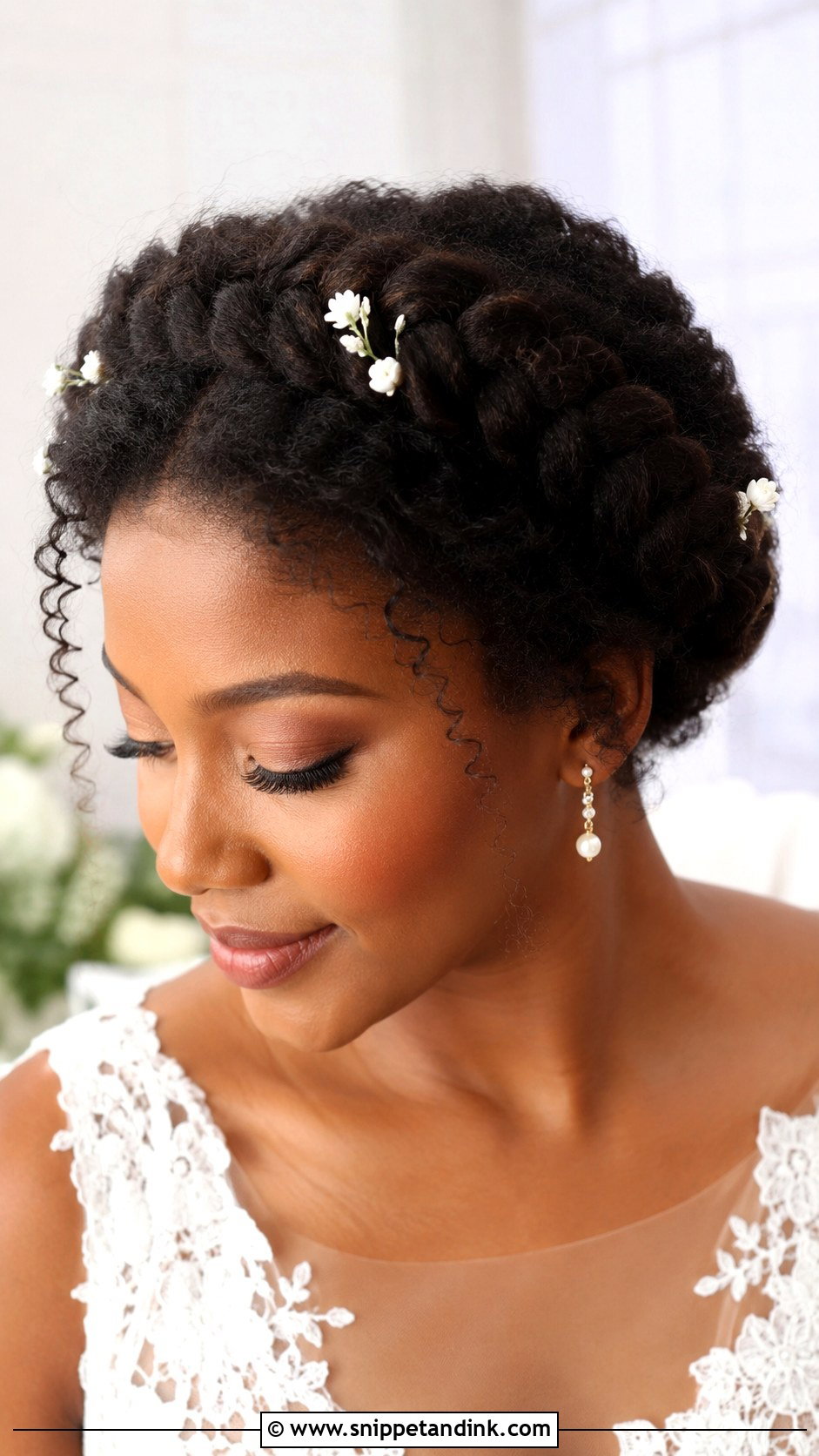
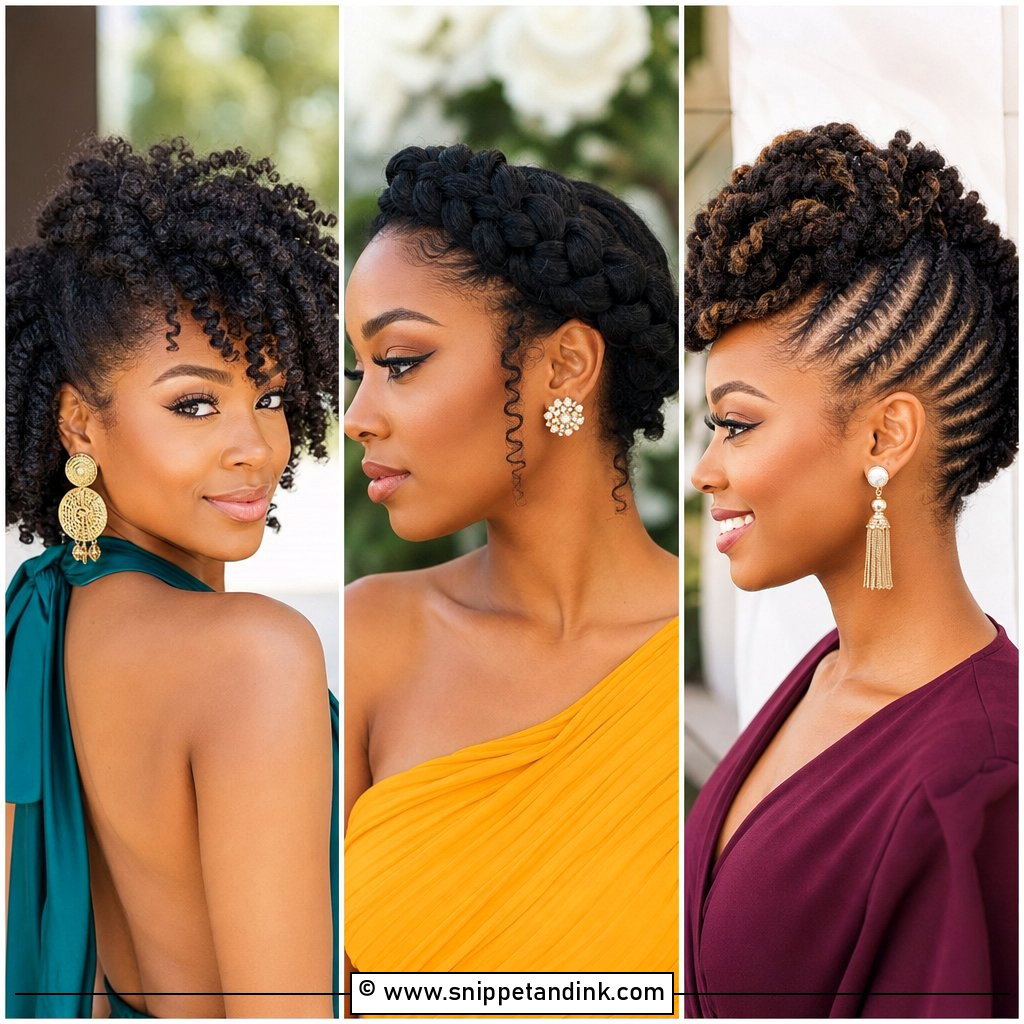
A halo braid wraps around the head, getting hair off the neck while still framing the face. Shorter natural hair rarely has the length to go all the way round, so I often feed in textured extension hair matched to your curl, which also gives the braid more width. Leave a few small curls loose at the temples to soften it. The veil comb slides under the braid at the back, where the braid itself holds it. Outdoors this is one of the steadiest shapes on the list, because wind has almost nothing loose to catch.
7. Black Natural Hair High Puff Wedding Hair
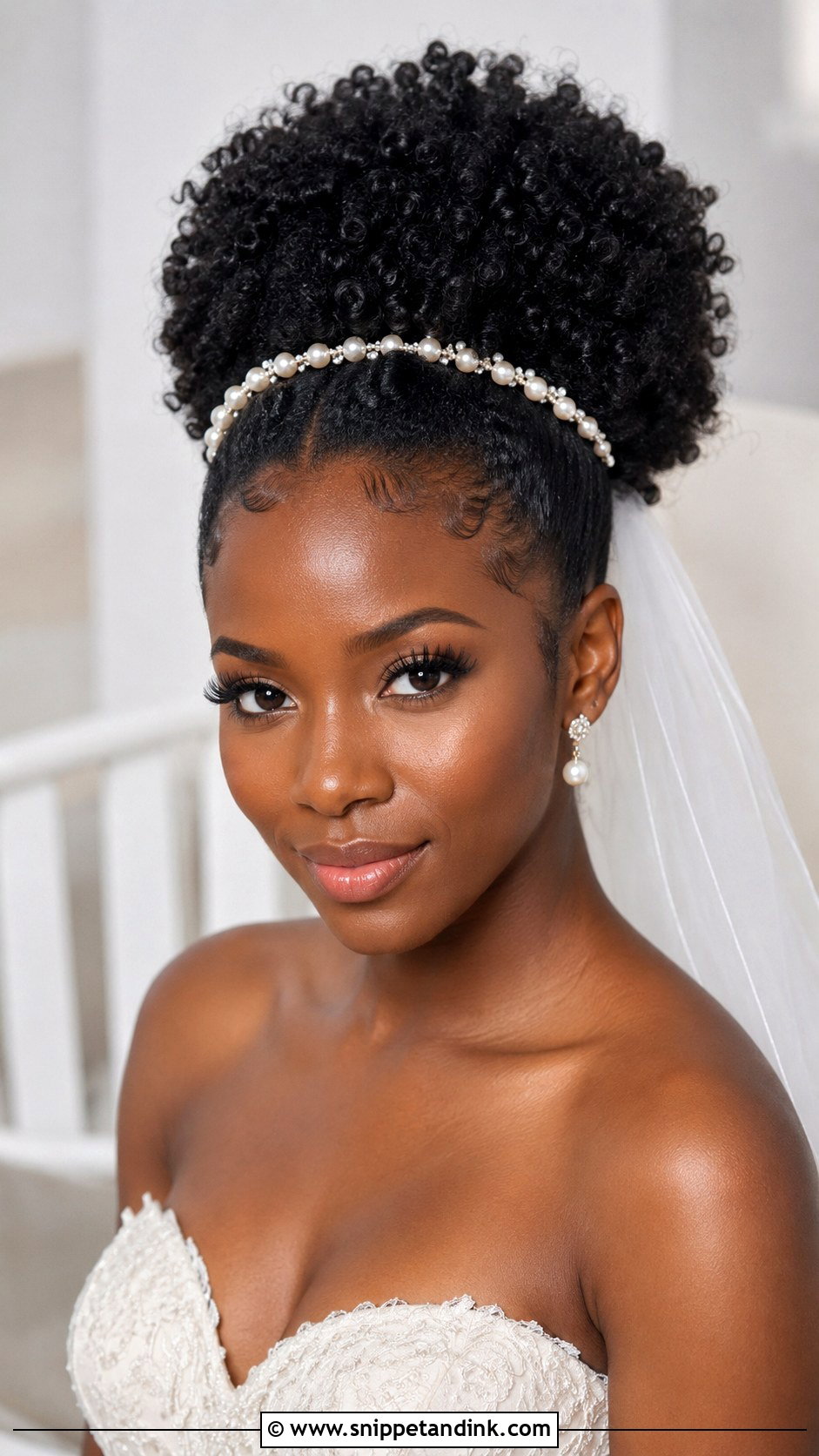
A high puff wedding look is cheerful and shows off your volume while keeping the base smooth. What separates a bridal puff from an everyday one is the shaping. I define the curls first, fluff the crown evenly and smooth the perimeter with a soft-hold gel, using a stretchy wrap or satin-lined band instead of an elastic that snags. A headband or slim tiara in front of the puff dresses it up right away. It needs medium to long curls; very short hair won’t gather high enough without a clip-in puff, which is a fine option if it matches your texture.
8. Black Natural Hair Low Puff Wedding Hair
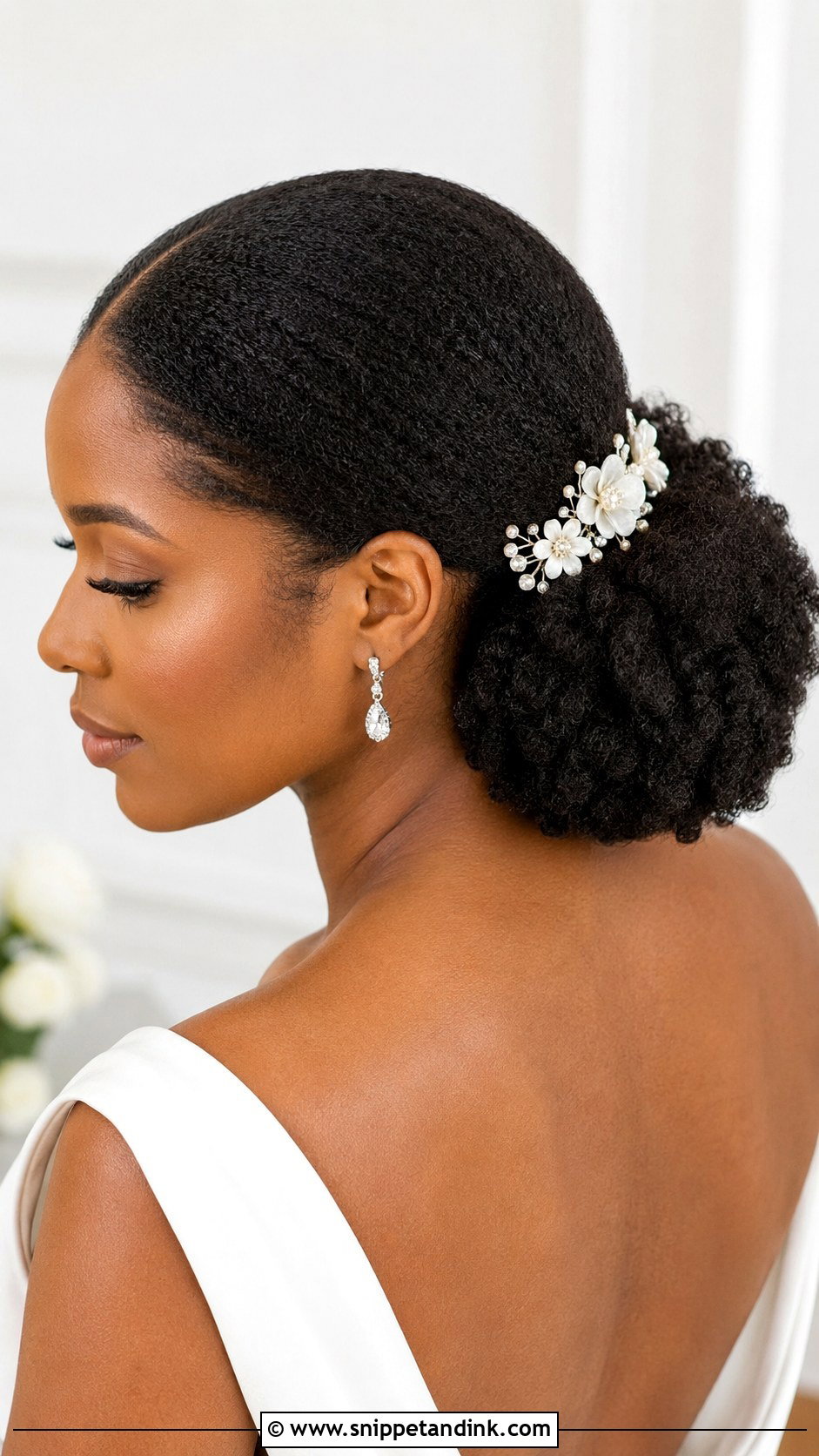
Gathered at the nape, a low puff is quieter than the high version and leaves room for a veil above it. It sits well with a backless gown because it doesn’t block the line of the spine. The puff itself can be round, stretched or defined with coils. The front matters more than people expect: settle on a middle part, side part or brushed-back finish at the trial and stick with it, because switching on the morning means re-wetting and re-smoothing. A floral comb or pearl pins at the base hide the band.
9. Black Natural Hair Frohawk Wedding Hair
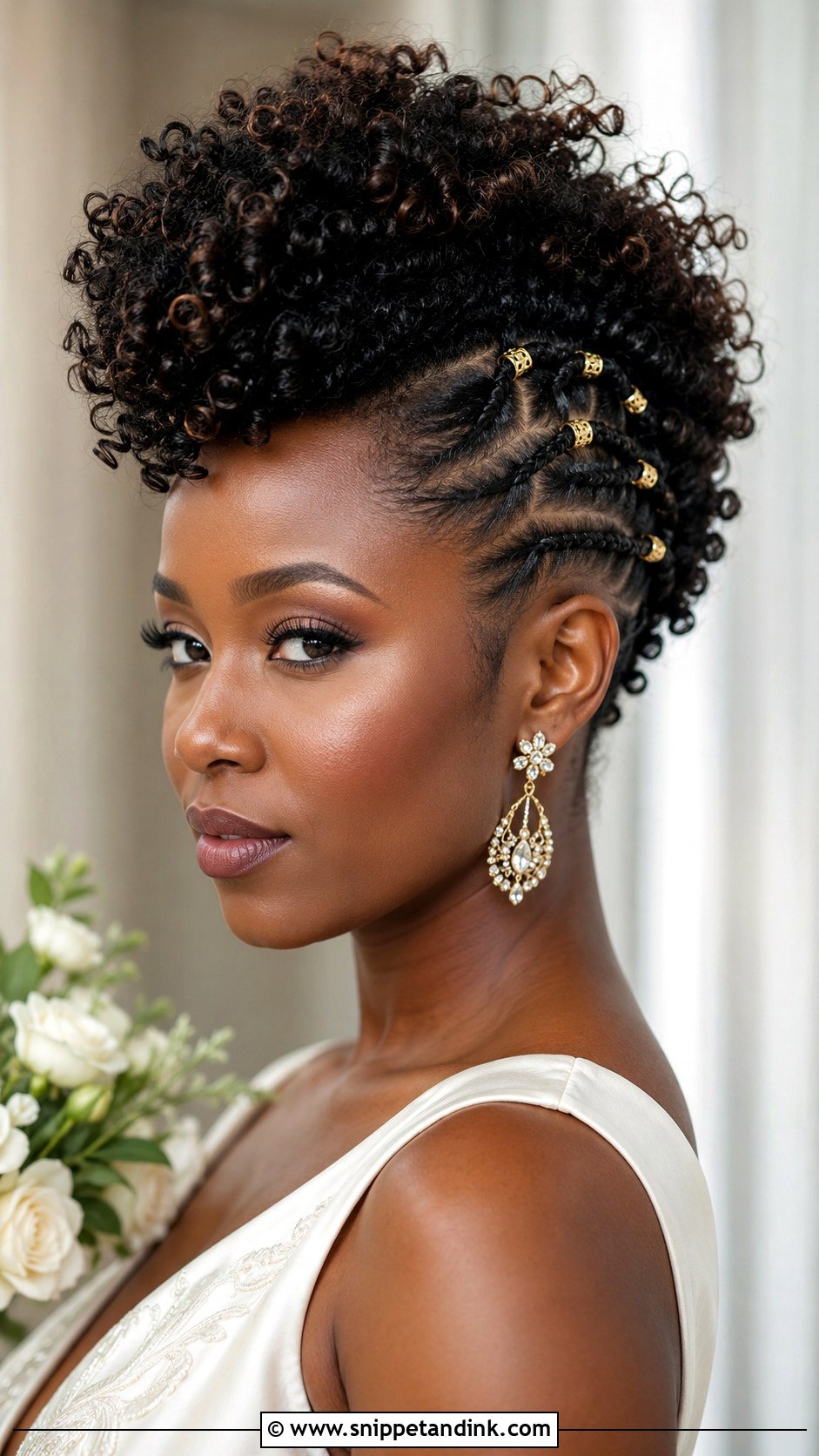
A frohawk lifts your volume into a ridge down the centre and gives you a strong profile in photos. The sides are pinned, cornrowed or flat twisted upward while the middle stays full. Before anything else I map the centre section from front to back, because if it’s wider at the crown than at the hairline the shape looks lopsided from the side. It reads modern rather than formal, so it sits better with a sleek jumpsuit or minimal gown than with a ballgown. Gold cuffs along the side twists add sparkle without softening the line.
10. Black Natural Hair Afro Wedding Hair
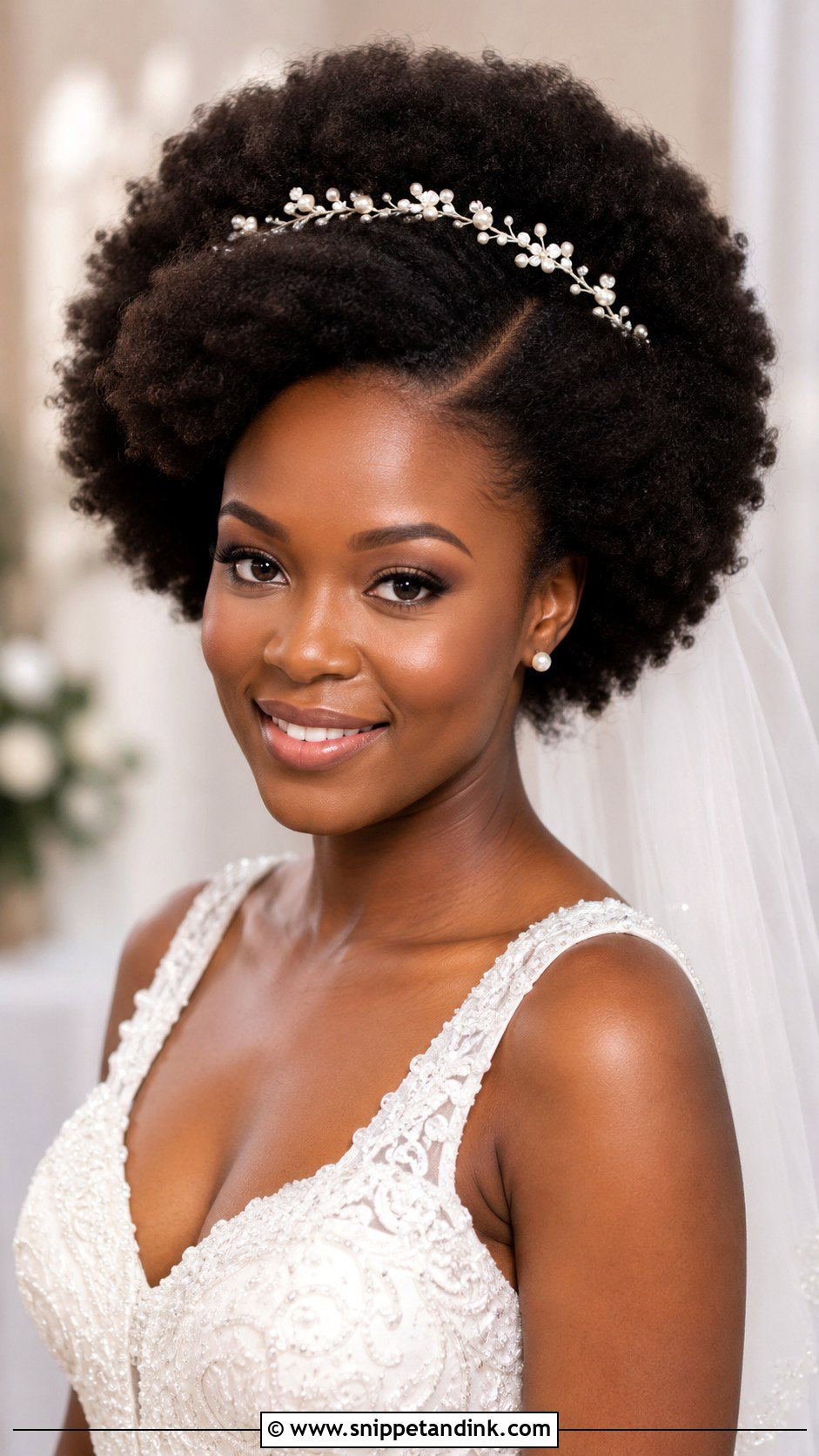
Wearing a full afro on your wedding day is a deeply personal choice, and it deserves real shaping. I pick it out from the root, trim uneven spots so the silhouette is even from every side, and moisturize so it doesn’t look dull under flash. Round and full, tapered at the nape, or with a soft side part all work. A veil comb at the crown sinks straight into dense hair and holds; a headband or a few fresh flowers are softer options. Don’t try to control every coil. Make the overall shape intentional and let the individual curls do what they do.
11. Black Natural Hair Wash And Go Wedding Hair
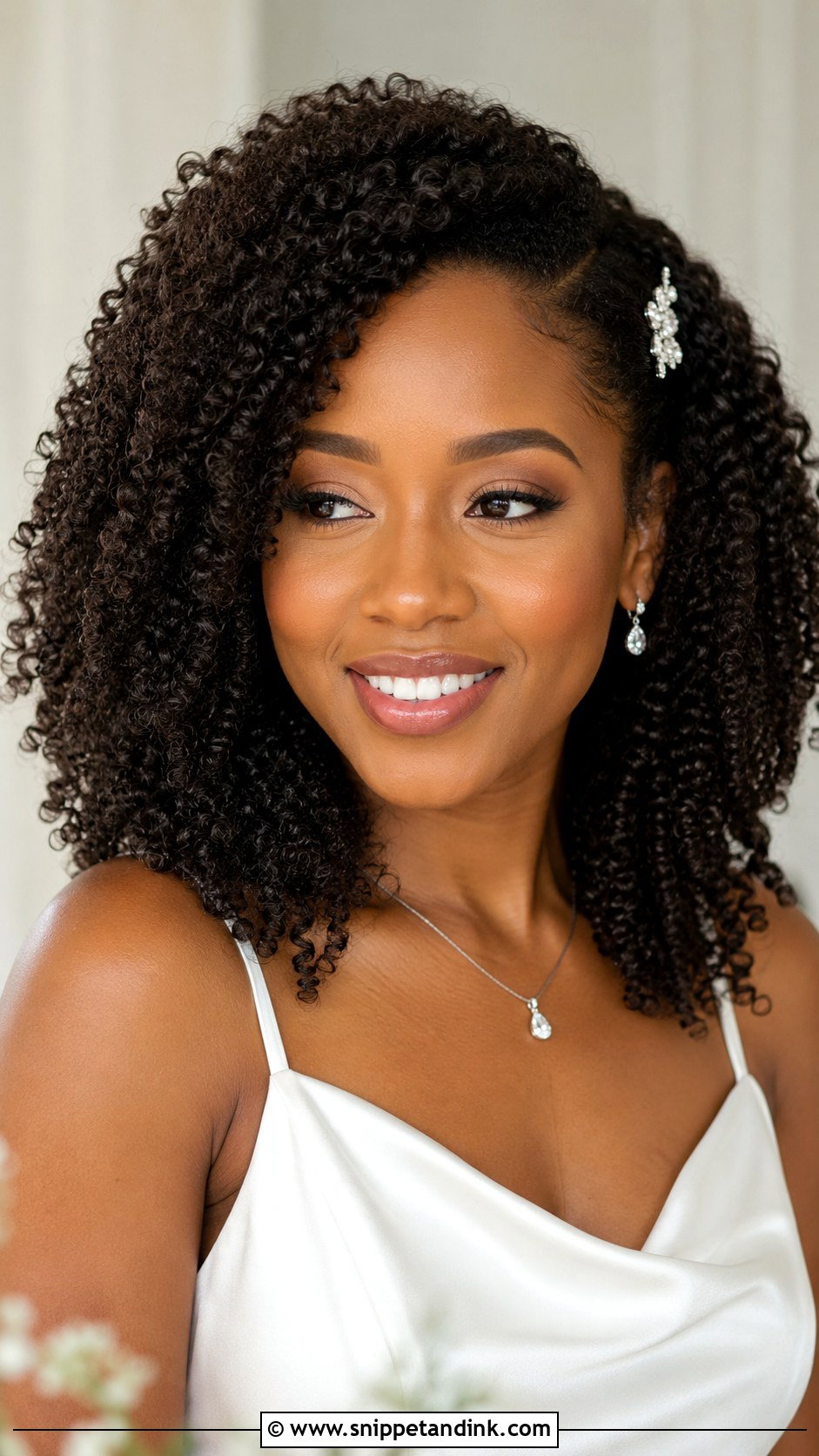
A wash and go looks low-effort and is anything but on a wedding morning. The definition depends on product applied to soaking wet hair that then dries fully without being touched, which on thick hair can take hours under a hooded dryer and longer in the air. That’s why I never schedule it as the last thing before the dress. Curls should be hydrated and separated so the finish reads polished, not rushed. Wear it with a side part or pin the front back with hidden pins, and keep the accessories minimal, since the definition is the whole point.
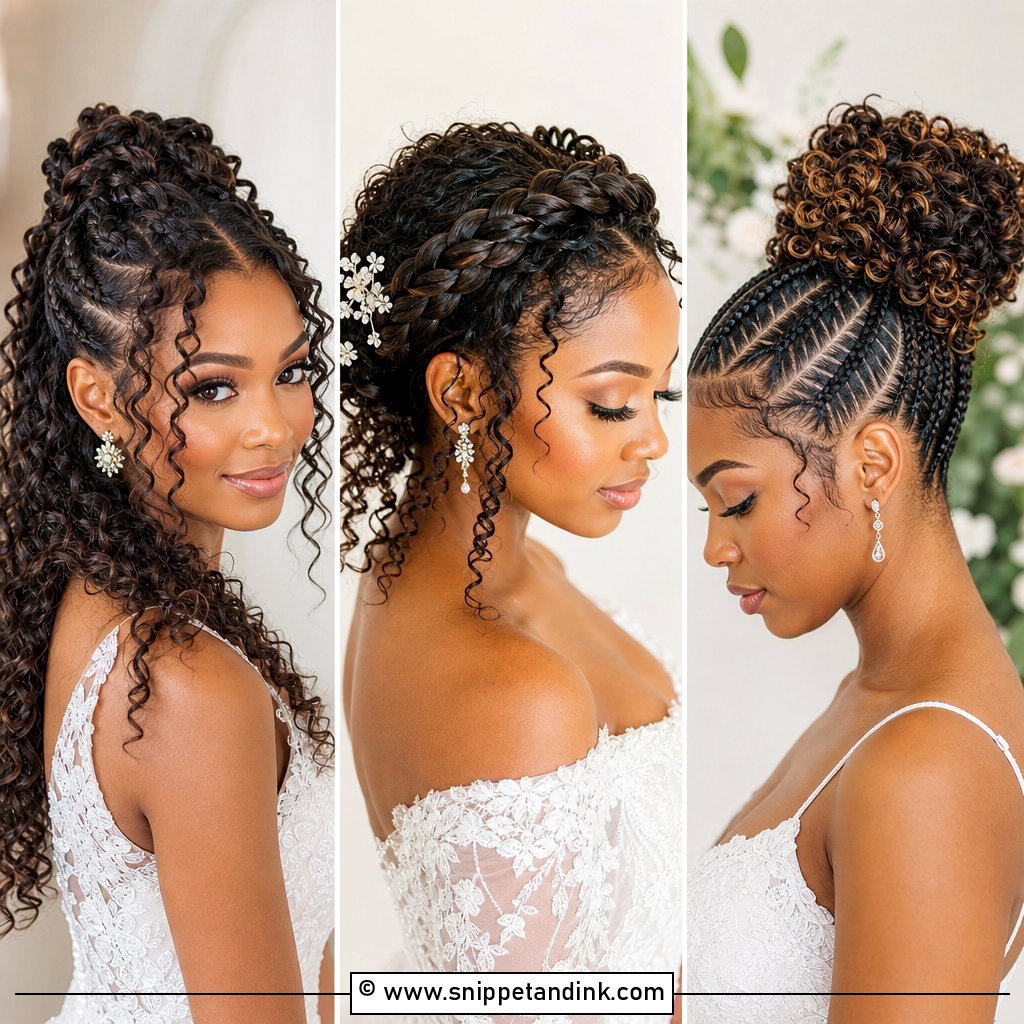
12. Black Natural Hair Half Up Half Down Wedding Hair
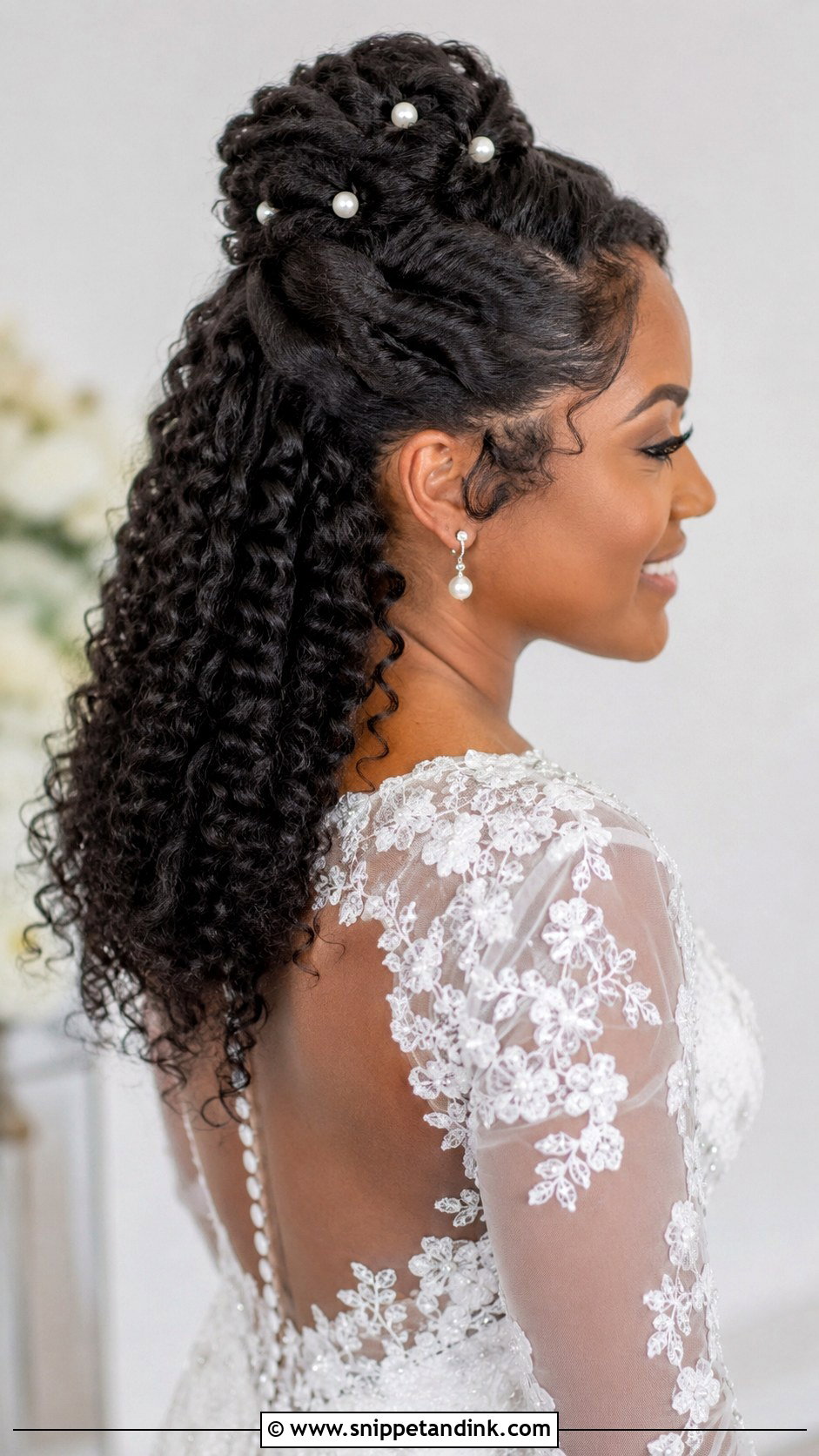
Half up keeps hair around your shoulders while the top section stays off your face. The top can be twisted, braided, pinned or gathered into a small bun. The part that tends to let you down is the loose section: coils shrink as the day warms, and by evening the bottom can sit noticeably shorter than it did at the ceremony. I stretch the loose hair a little more than you’d normally wear it to allow for that. A comb or small floral piece where the two sections meet covers the join.
13. Black Natural Hair Cornrow Updo
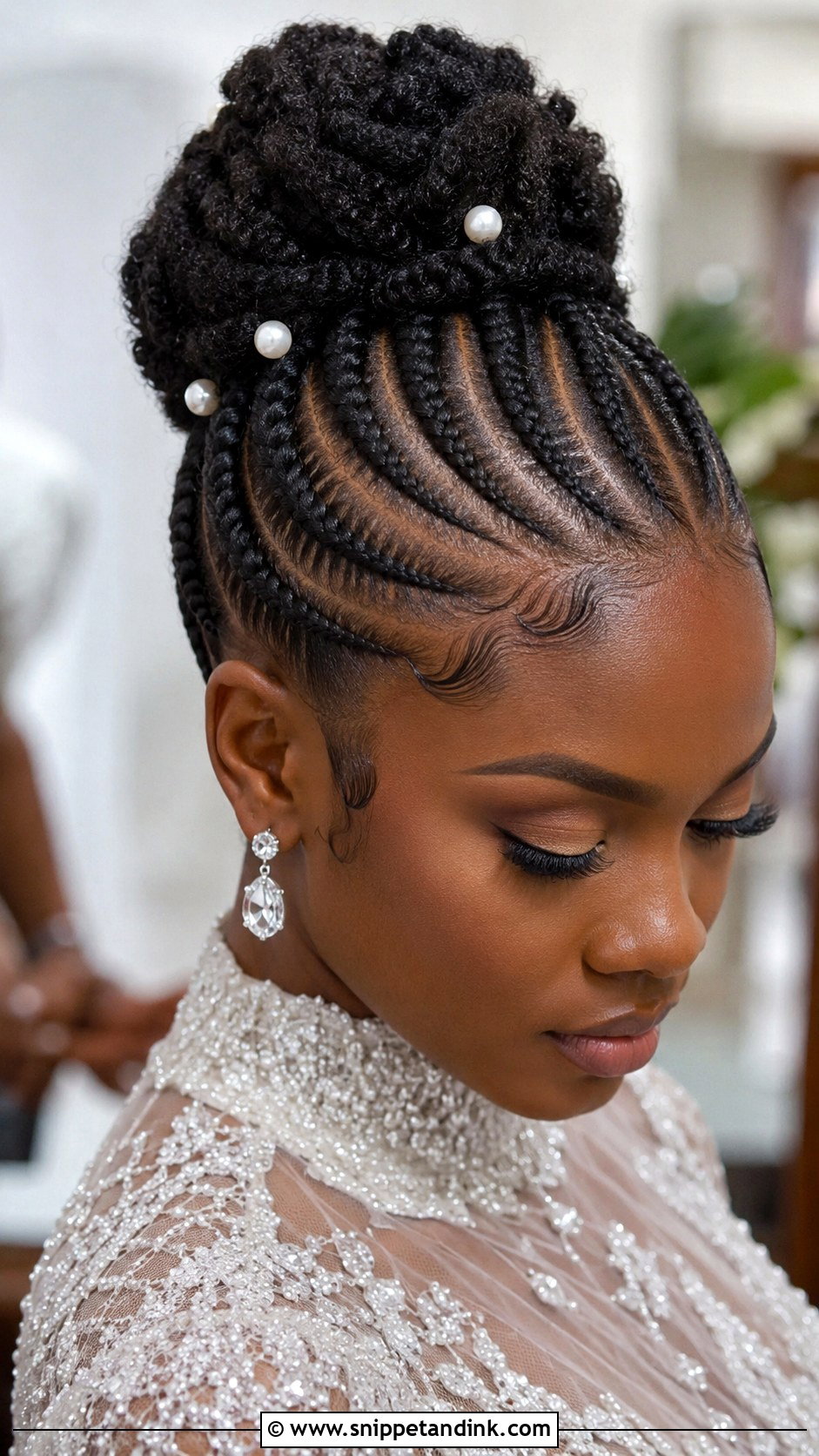
A cornrow updo is the longest-lasting style here; set properly it stays neat through the ceremony, the reception and the photos afterwards. The rows can run straight back, curve into a pattern or feed into a textured bun at the crown or nape. For a softer finish I’d ask for medium cornrows and a full natural bun rather than tiny tight braids, which take hours and pull at the hairline. Have them done a day or two ahead so any tenderness settles. And if it hurts while being braided, say so then. Tight braids don’t loosen into comfort; they just raise tension bumps.
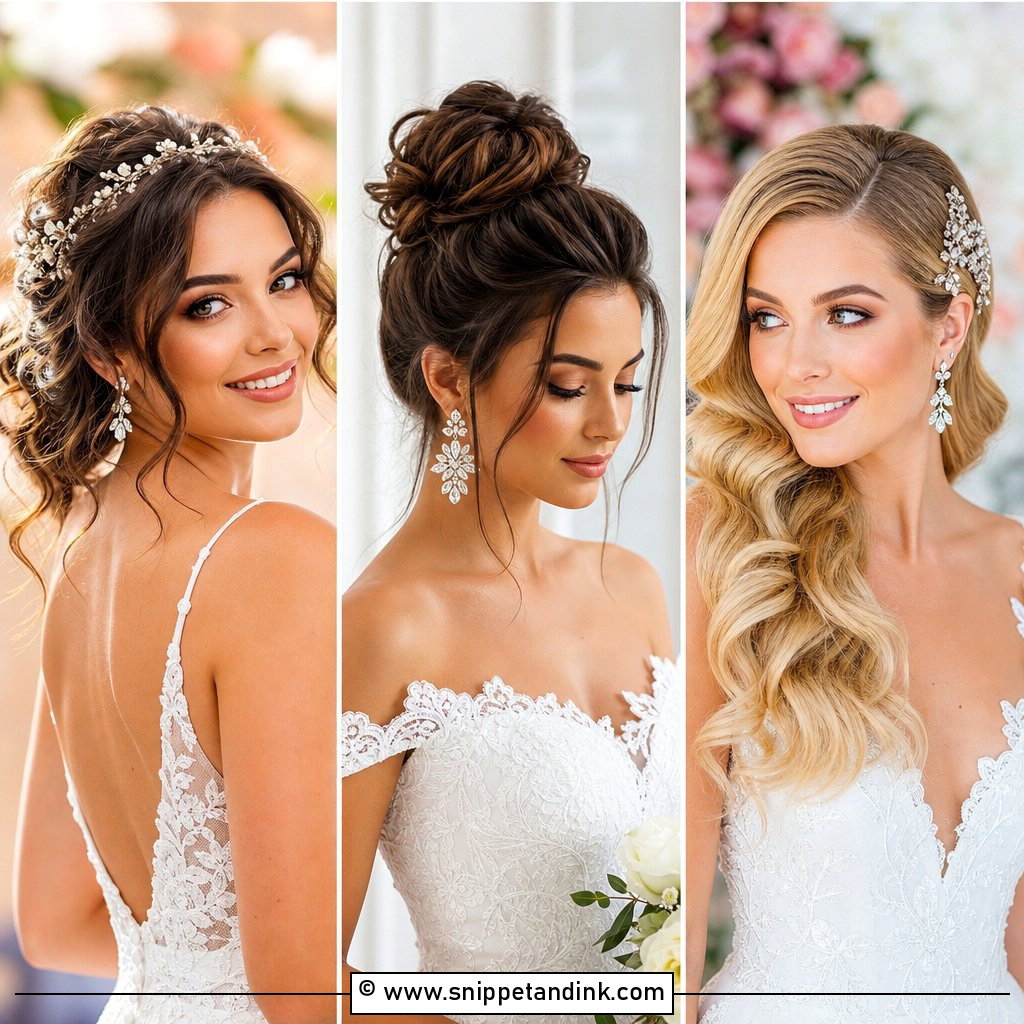
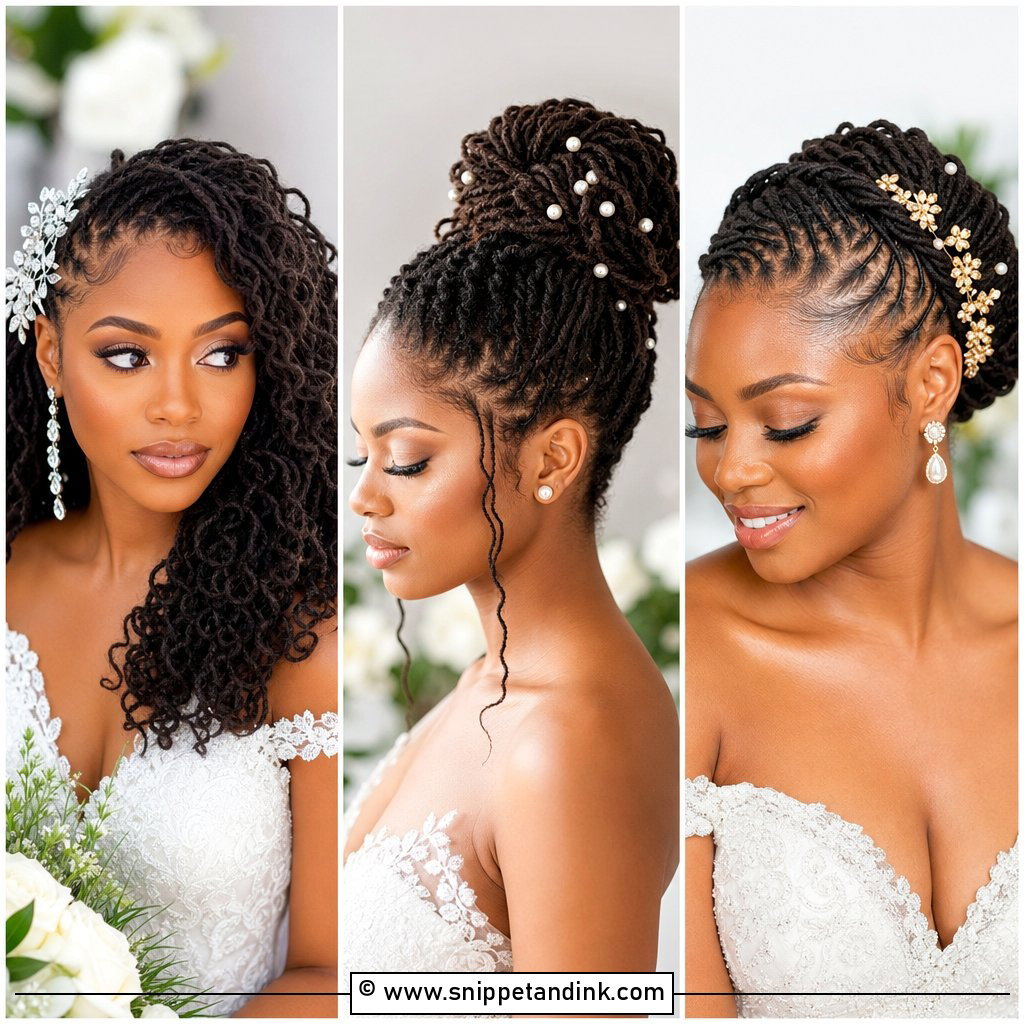
14. Black Natural Hair Loc Wedding Updo
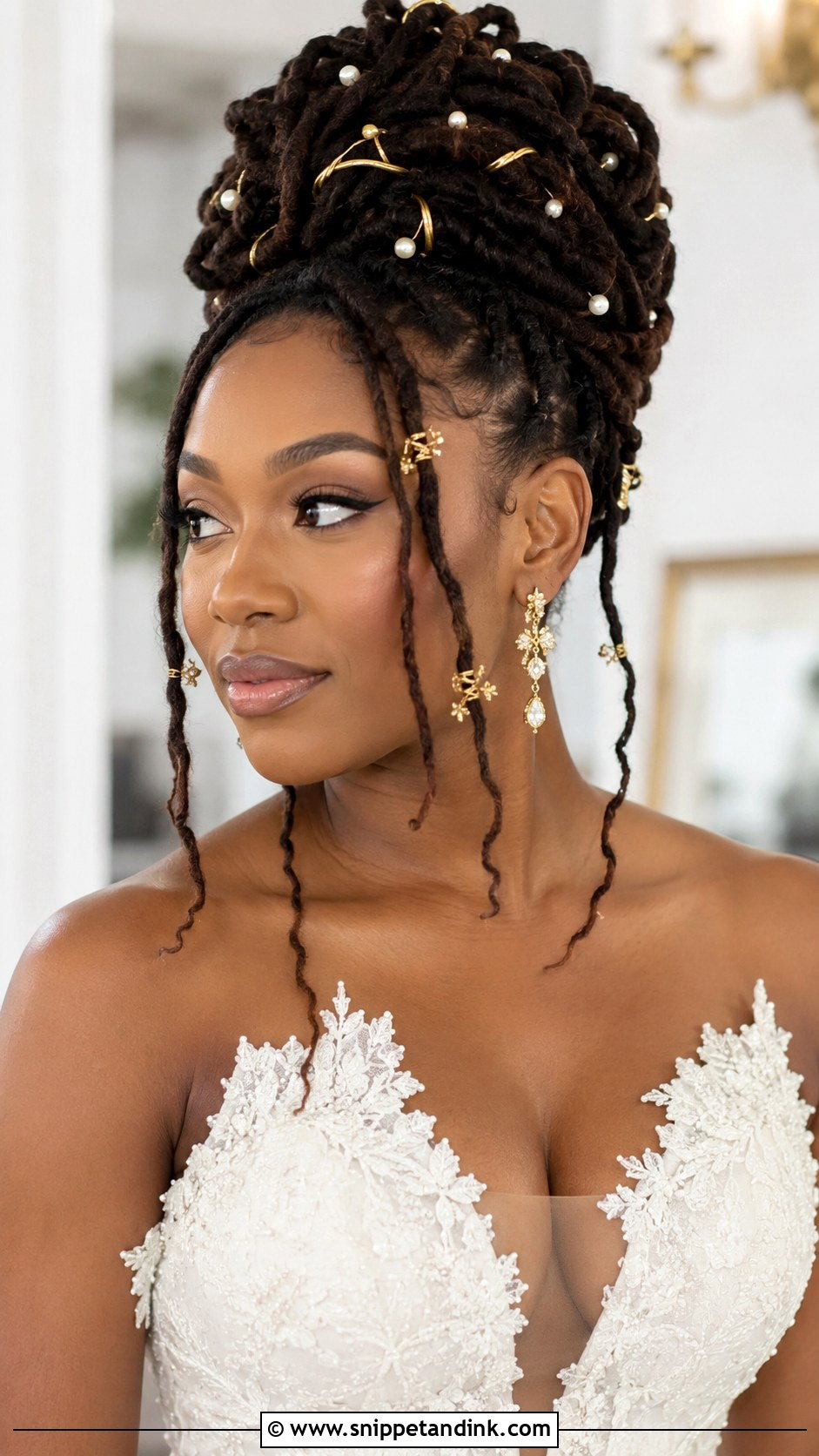
A loc wedding updo has weight and structure that loose hair can’t give you. Locs can wrap into a crown, pin into a high bun, coil into a low chignon or sweep to one side, from shoulder length to very long. Heavy locs need support, so I pin through the loc rather than just around it, and for a high bun I spread the weight across several anchor points so it doesn’t drag at the scalp. They hold gold wire and floral pins well. If you’re due a retwist, book it a week or two before the wedding so the roots aren’t fresh and tight on the day.
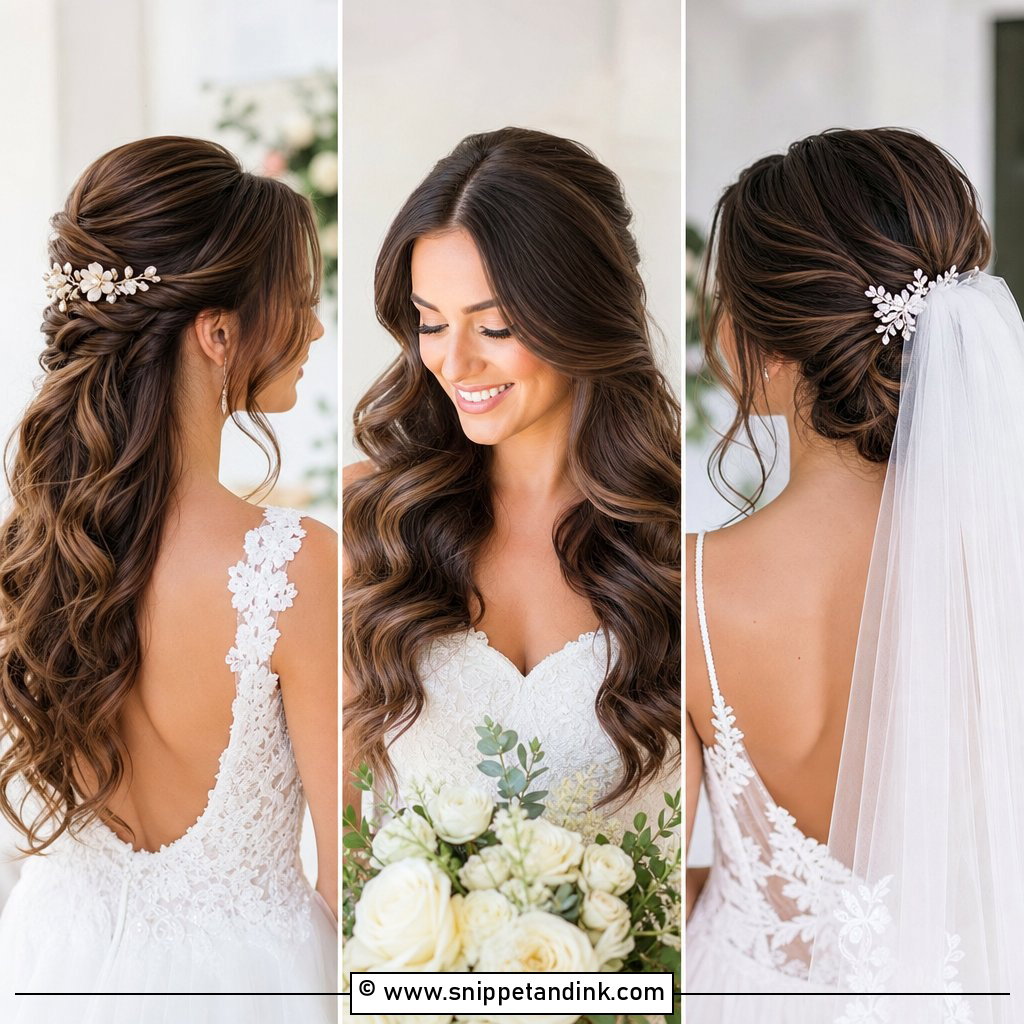
15. Black Natural Hair Sisterlocks Wedding Hair
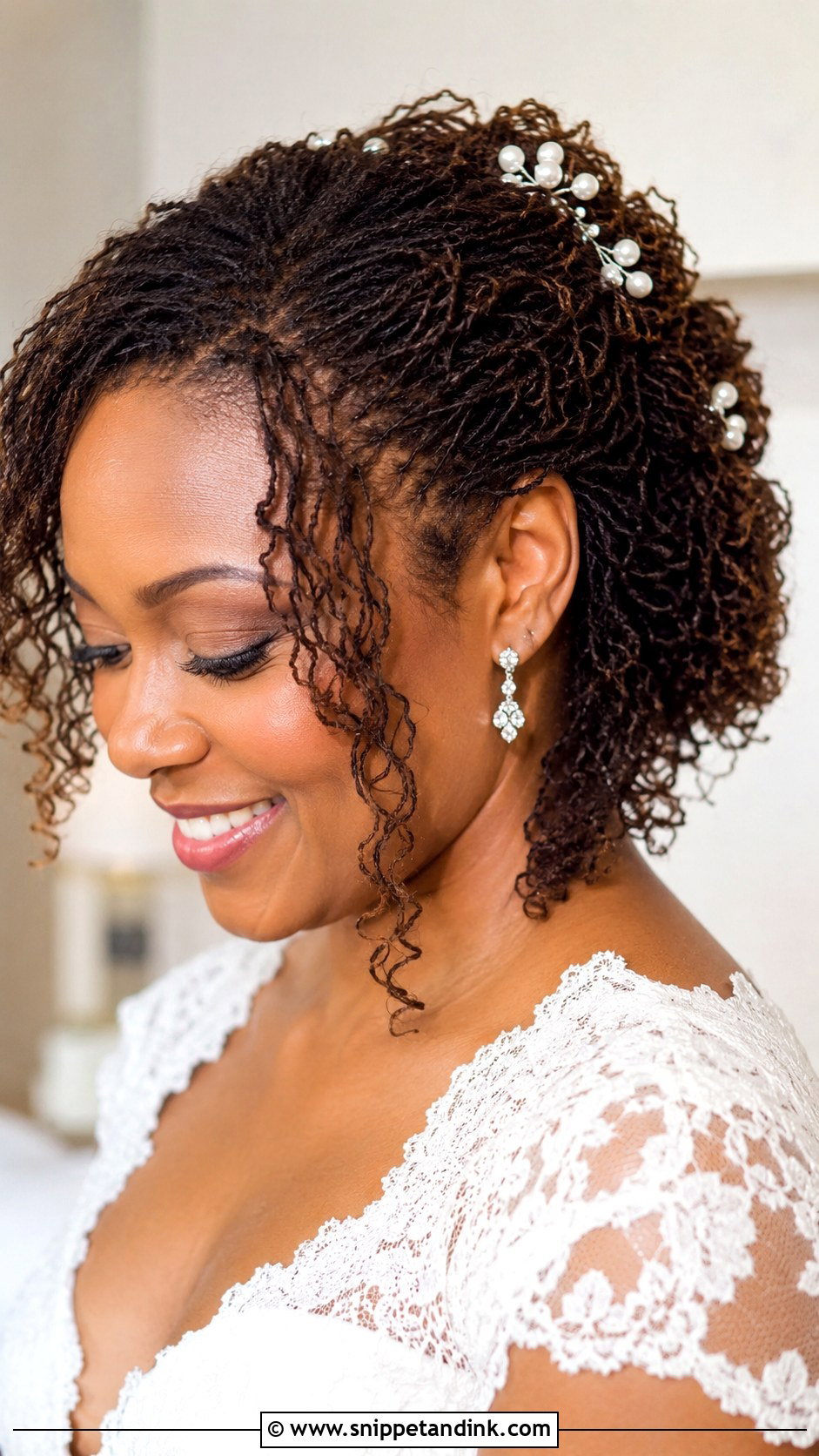
Sisterlocks are fine enough to move almost like loose hair, which opens up more shapes than traditional locs: a soft updo, a curled bob, half up or a low twisted bun. Because they’re light, they take a curl from rods or pipe cleaners set the night before, and that curl lasts longer than it would on loose hair. I keep heavy products off them, since buildup shows on small locs. Pearls, crystal pins or a slim hair vine suit the scale of the pattern; anything chunky swamps it.
16. Black Natural Hair TWA Wedding Hair
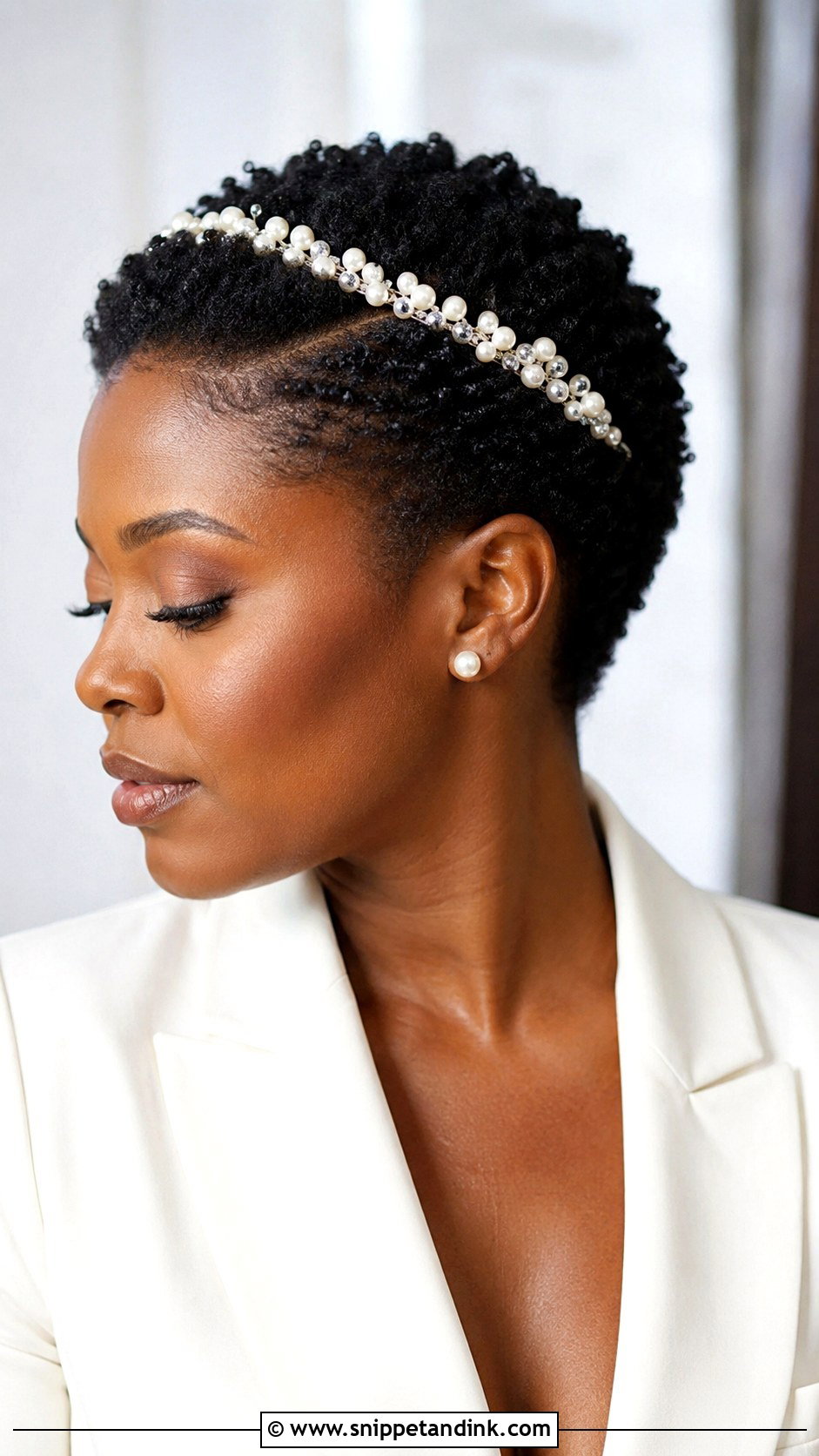
Short natural hair is every bit as bridal as long curls. It just relies on shape and finish. Get the trim about a week before so the edges look crisp but not freshly clipped. Curl cream, mousse or a curl sponge brings up the texture, and you can add a side part, finger coils or soft waves. A birdcage veil or pearl headband sits well on short hair because there’s no bulk competing with it. Of everything here, a TWA asks the least of your morning, which counts for a lot.
17. Black Natural Hair Finger Coil Wedding Hair
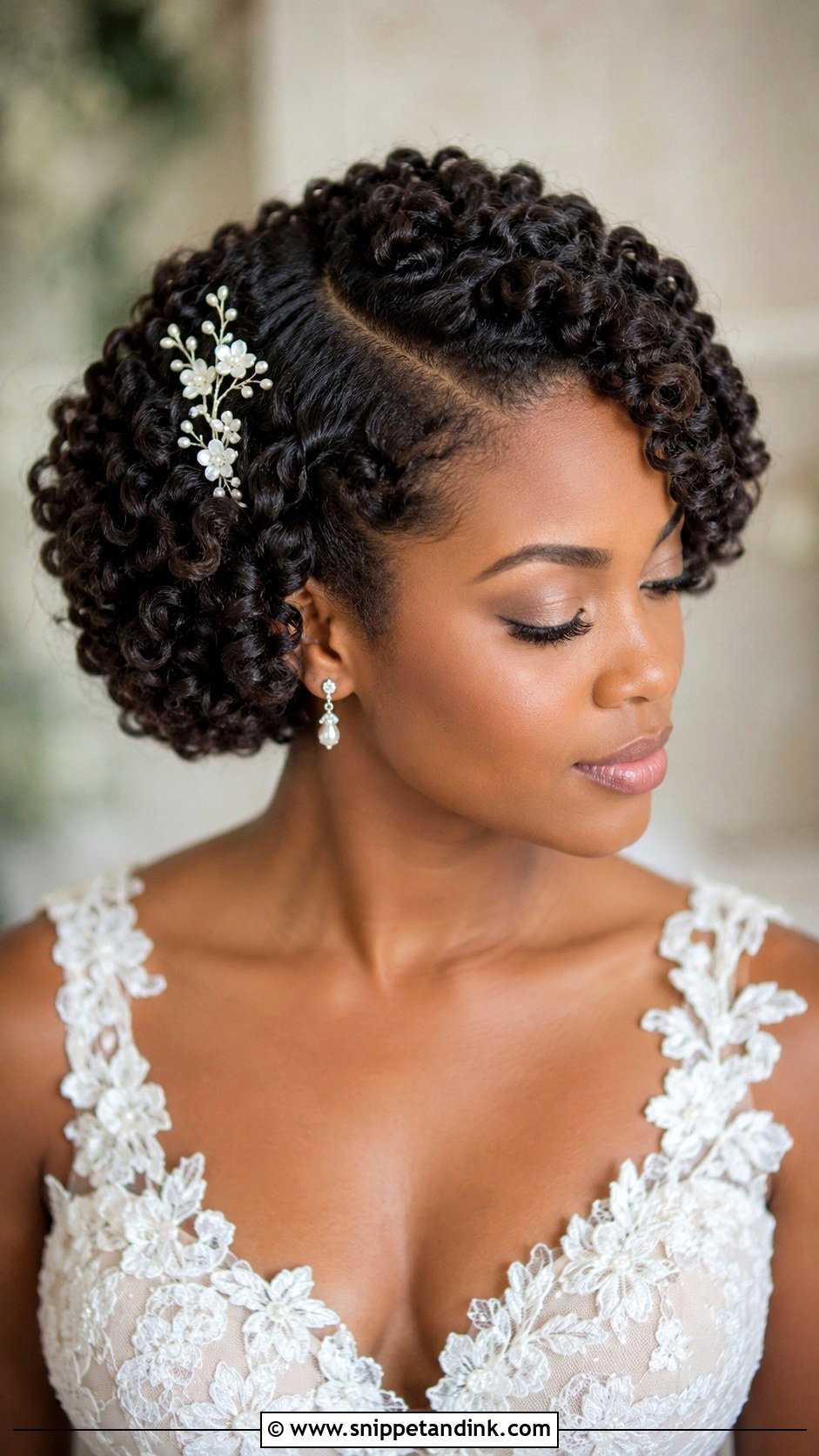
Finger coils give short to medium hair a defined, shiny finish with no heat at all. I wind each section around a finger with gel or curl cream on damp hair, then leave them alone until they’re completely dry. They should be close in size so the head looks finished, but not so uniform they look like a wig. Wear them rounded, side-parted or pinned slightly back from the face, with a pearl clip or small floral comb on one side. Wrapped in satin at night, they can carry on well past the wedding.
18. Black Natural Hair Braided Crown
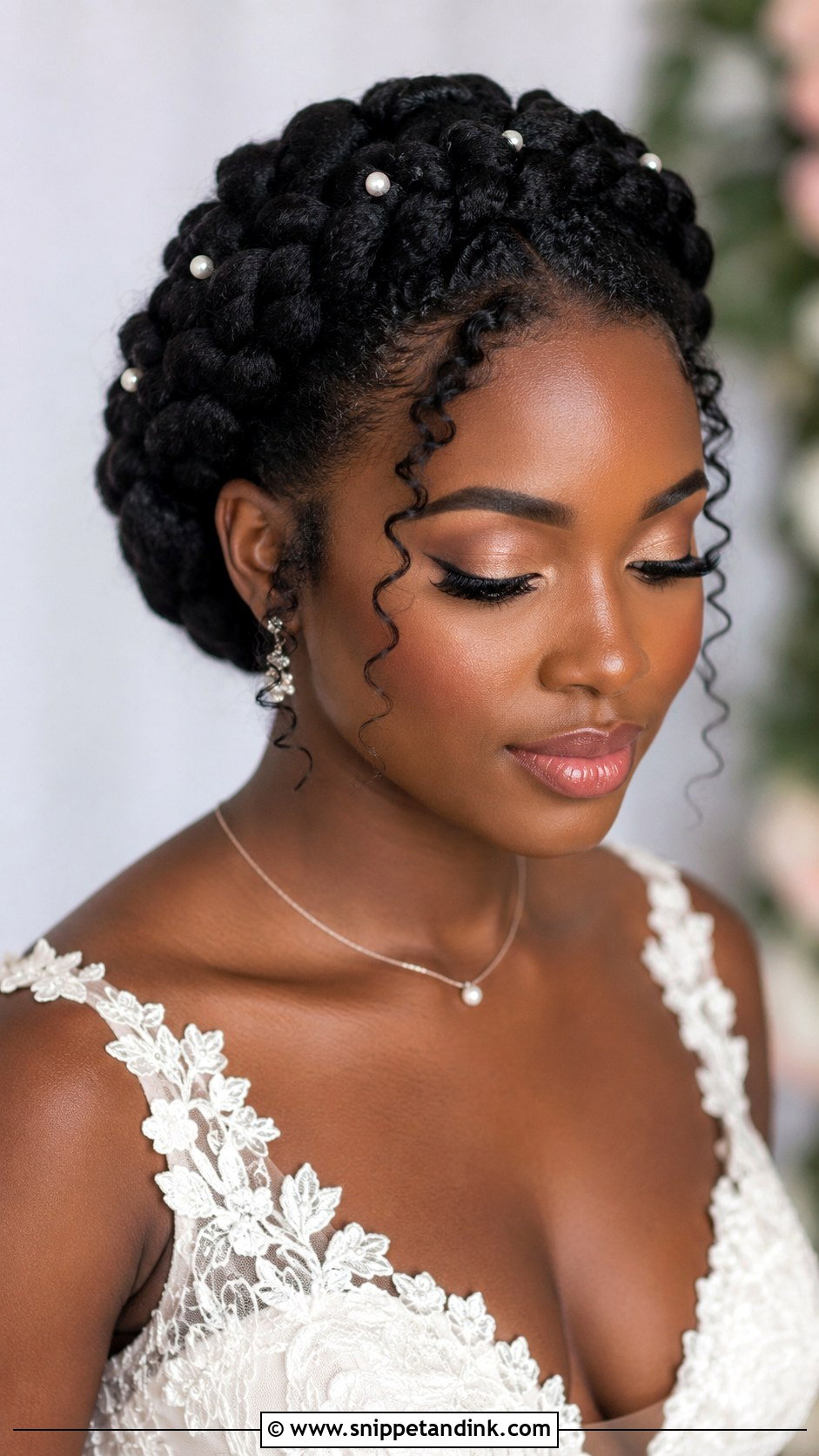
A braided crown can wrap like a halo, sit higher near the crown, or blend into a low bun at the back. On natural hair I make the braid wider and looser than I would on fine hair, so it shows texture instead of lying flat. It frames the face and gives a veil comb a firm place to sit at the back. Small pearls, gold accents or a little baby’s breath are enough. One warning: keep the tension off the edges and temples. A crown braided too tight shows up as sore bumps by the end of the night.
19. Black Natural Hair Curly Updo
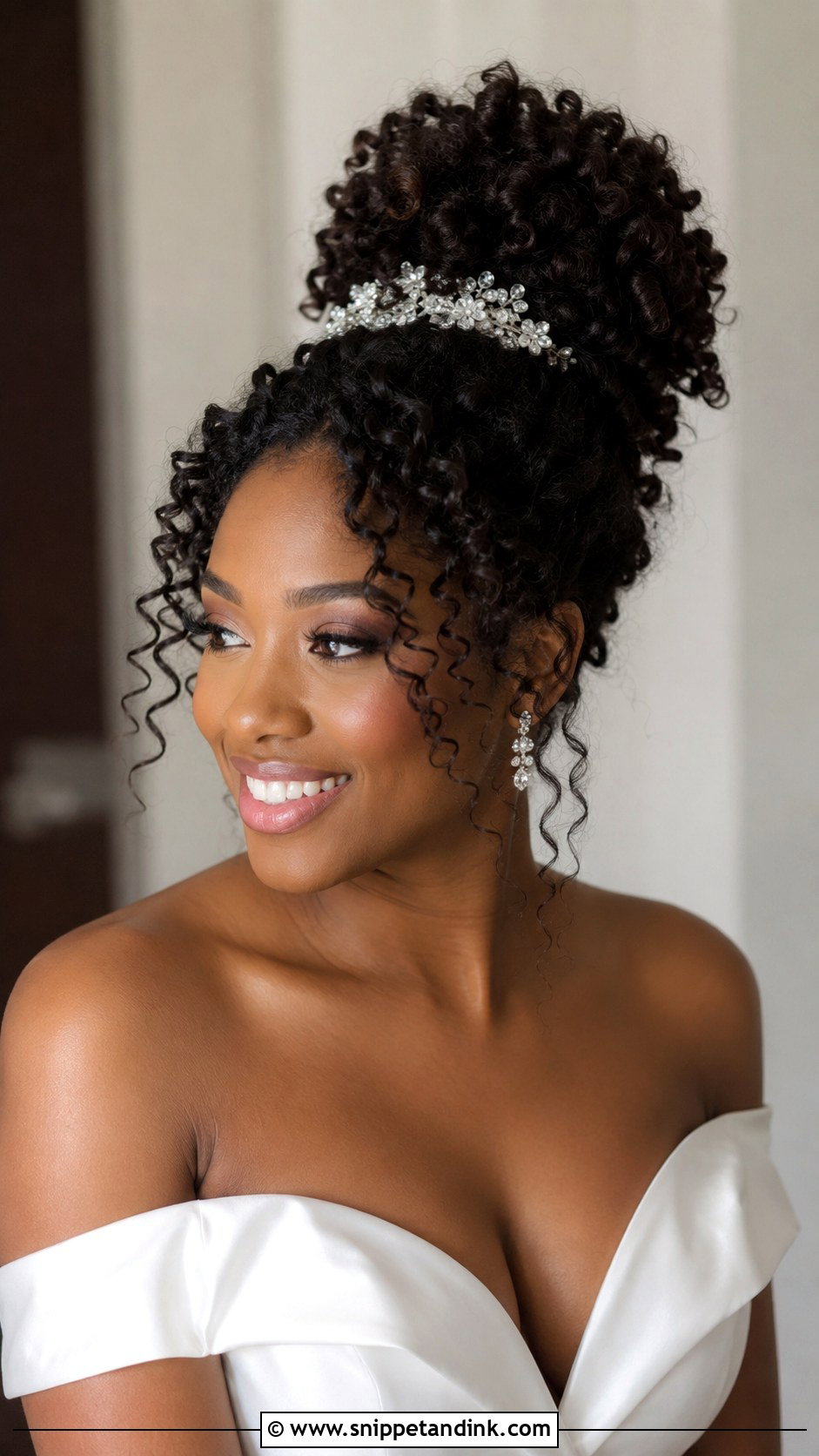
A curly updo keeps your face open while still showing texture, and it can start from a twist-out, rod set, braid-out or your own curl. Pin the curls loosely at the crown, tuck them low or sweep them to one side. I prefer hair that was set a day or two ahead, because second-day curls have more grip than freshly washed ones and take pins better. Leave a few curls loose at the front if you want it softer. A simple veil or crystal comb finishes it without fighting the curl pattern.
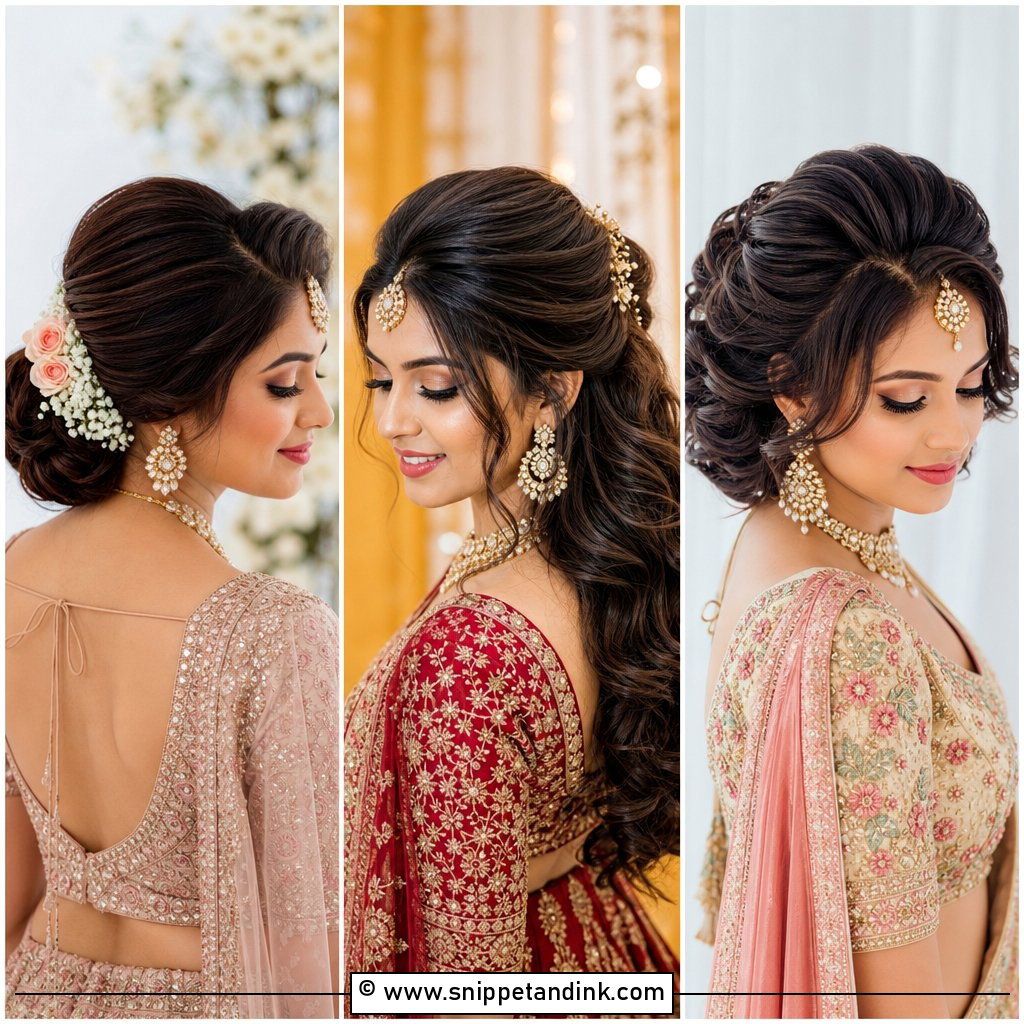
20. Black Natural Hair Side Swept Wedding Hair
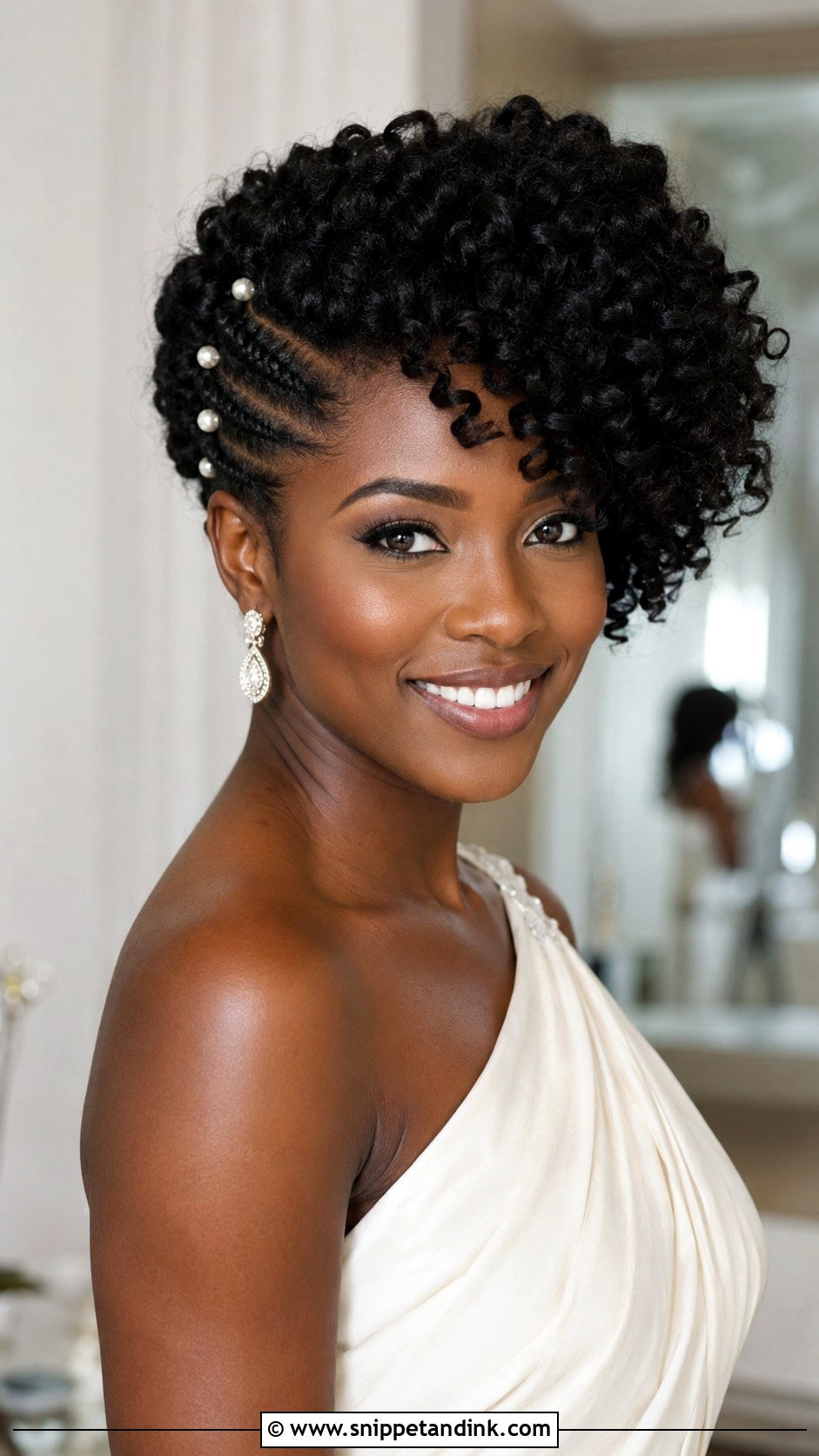
Sweeping natural hair to one side gives you drama without a full updo and without straightening anything. One side is pinned, braided or flat twisted close to the head for hold, and the fuller side stays defined. I build the anchor side first and test it by asking you to turn your head quickly, since that side carries all the tension. It pairs well with one-shoulder gowns and big earrings on the open side. Hidden pins and a flexible spray keep the sweep secure while still letting it move.
Where a Veil Comb Sits in Coily Hair
Dense natural hair grips a veil better than straight hair does, but a comb pushed into loose coils will still drift as your hair moves. I always give it something solid to hold. Under a bun or puff, that’s the base itself. On a twist out or afro, I make a small hidden flat twist or a short cornrowed strip exactly where the comb will go, then slide the comb in against that anchor so the teeth lock.
A long cathedral veil is heavy enough to tip a high puff backward, so for that length I’d pair a low bun, low puff or updo with the comb tucked beneath it. A birdcage or short blusher is much lighter and suits a TWA or finger coils, held with two crossed pins on each side. Practise taking it out at your trial. You’ll want it off for the reception without lifting half the style along with it.
A Satin Scarf Belongs in the Getting-Ready Bag
Coily hair changes through the day as it takes on moisture and shrinks. Instead of a big kit, I’d hand whoever is looking after you a small bag with the few things that genuinely fix natural hair mid-event:
- A satin scarf to tie over your hair in the car between ceremony and reception, especially for a twist out or wash and go
- A small spray bottle of water with a little leave-in to wake up curls that have been leaned on
- Spare long bobby pins in your hair colour
- A wide-tooth pick for lifting the crown of a puff or afro after hugs
- An edge brush and a tiny amount of edge control, used sparingly because heavy layers can flake white under flash
For a wedding that runs over two or three days, a twist out or finger coils can carry into the next day if you pineapple the hair under a bonnet at night. Locs and cornrow updos just need a scarf. Don’t re-wet a set style between events unless there’s time to dry it properly again.
Your Own Texture, Done Well
Natural hair gives you options from a sculpted Bantu knot set to a soft wash and go, and there’s no single right answer. Weigh your texture, how comfortable you feel, your dress and accessories, and the real conditions of the day: heat, humidity, where the veil sits and how many hours the style has to last. Book a trial if you can and bring photos of the front, side and back. Whatever you choose, I’d always rather see your own texture done well than a style that fights it.
You'll Like These Ideas:


Leave a Reply