
The most complicated style is rarely the right one for a bride with natural hair. The right one supports your texture, suits your dress, holds through hours of photos, and still feels like you when you take the pins out. Black brides have a wide range to work with: shaped afros and twist-outs, braided crowns, low buns, loc updos and puffs dressed with flowers. Under each look below I’ve added what I check before I start and where it tends to struggle, so you can go into your consultation knowing what to ask for.
A Portfolio Full of Coils Matters More Than Reviews
Plenty of bridal stylists are brilliant with straight or wavy hair and far less confident with tight coils. Before you book, look at their recent work and count how many Black brides with natural hair appear in it. Glowing reviews from straight-haired clients won’t tell you how they handle shrinkage, density or delicate edges.
Questions I’d want a bride to ask
- Do you style type 4 hair without heat, or will you want to blow it out first?
- How do you anchor a veil comb in coily hair?
- Will you install extensions or added hair, or should I book a braider separately?
- How long do you need per head for a style like this on the morning?
If the answers are vague, or the plan starts with straightening your hair when you didn’t ask for that, keep looking. The trial should leave your edges and scalp feeling fine, not sore.
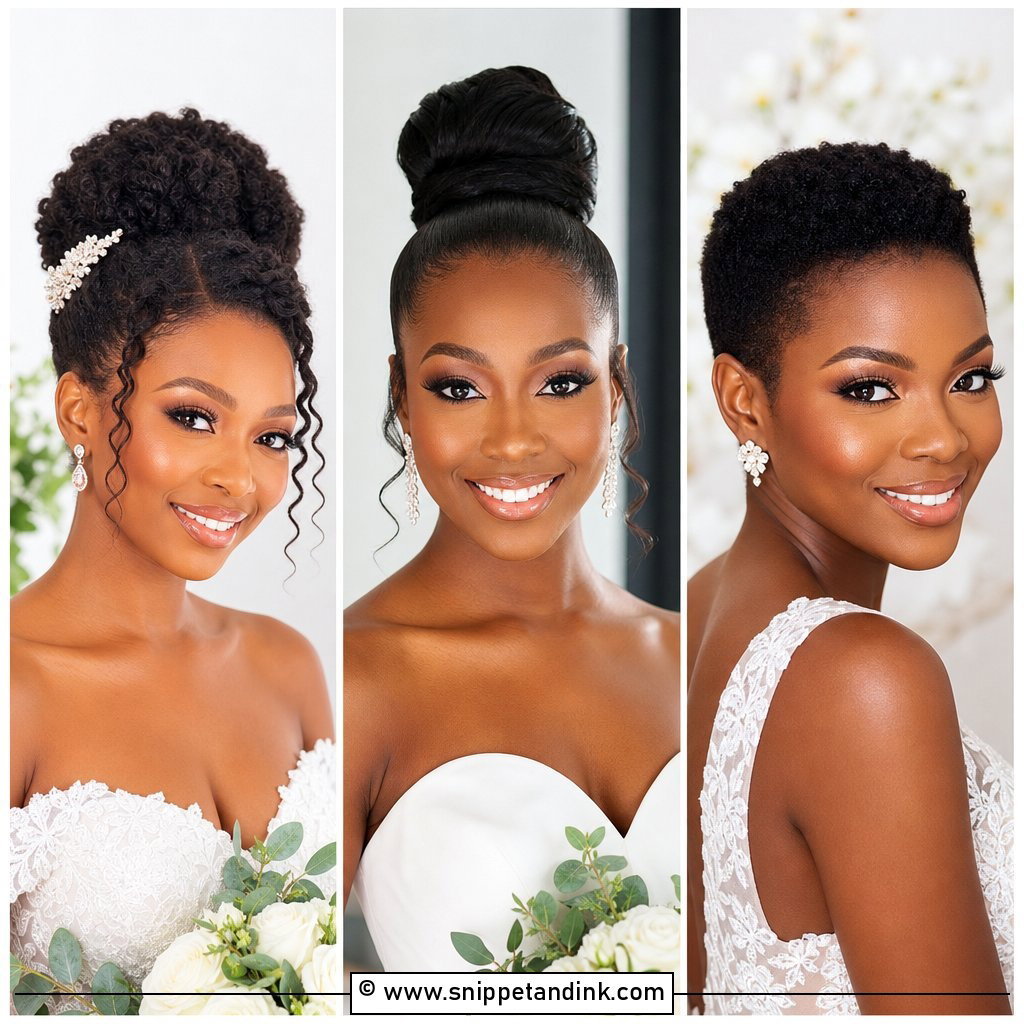
1. Natural Afro Wedding Hair
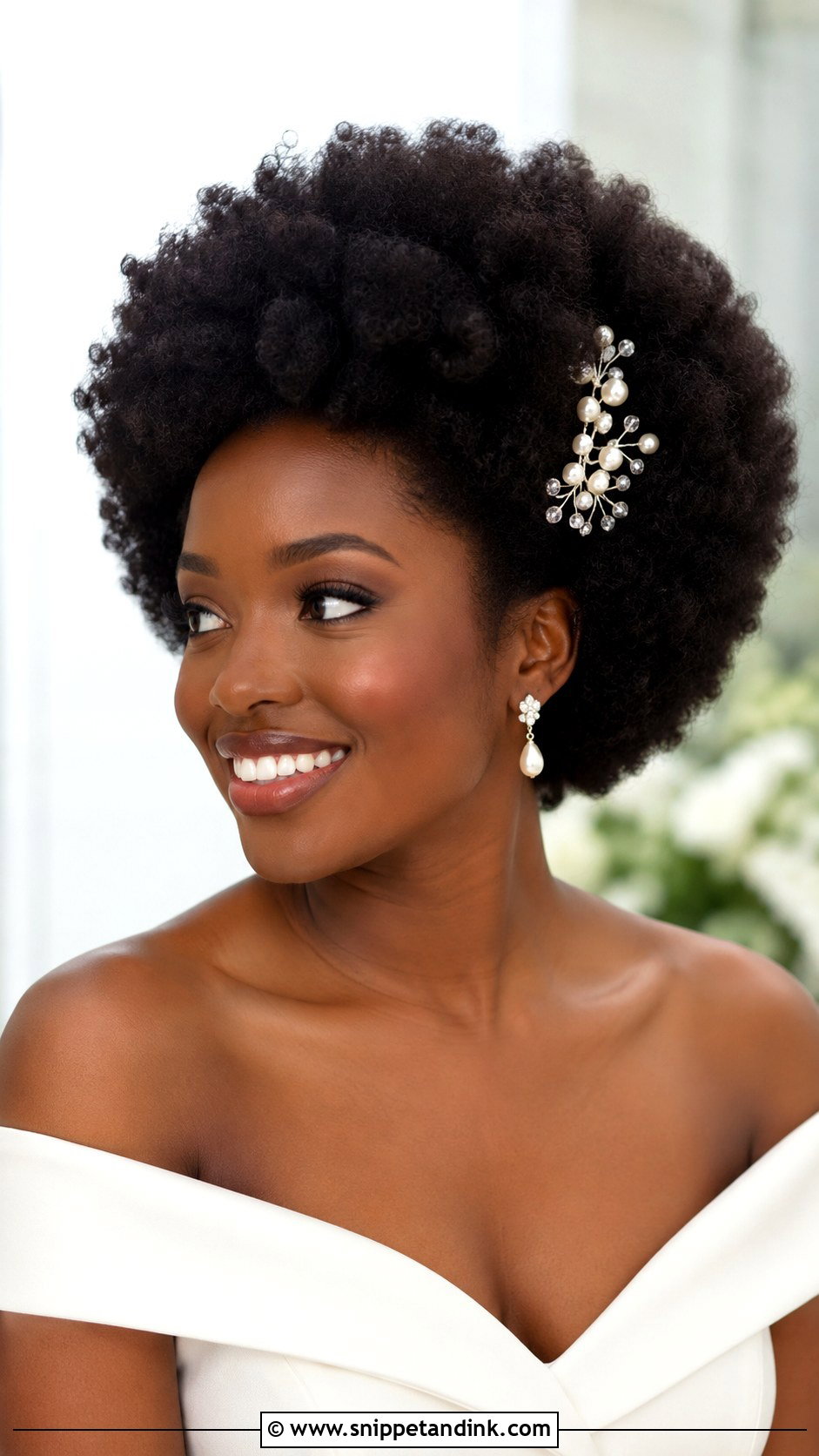
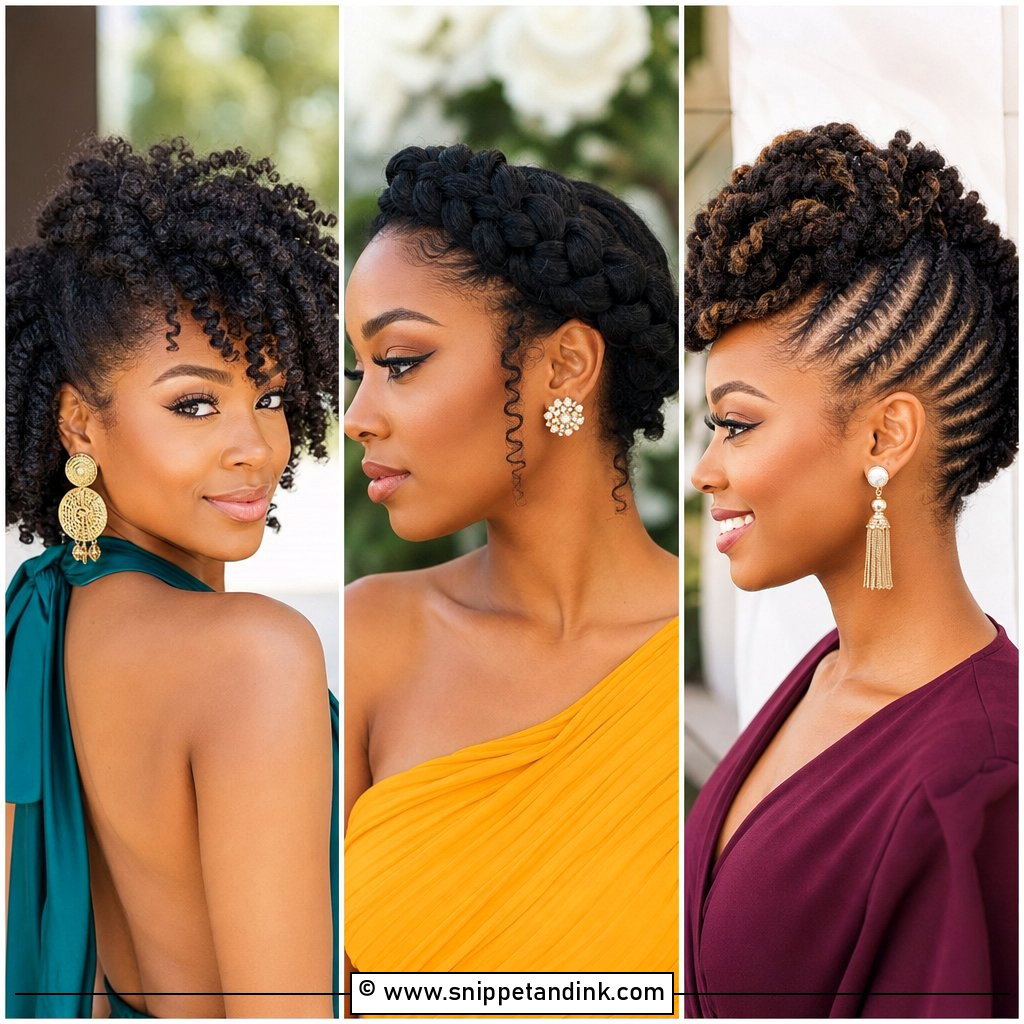
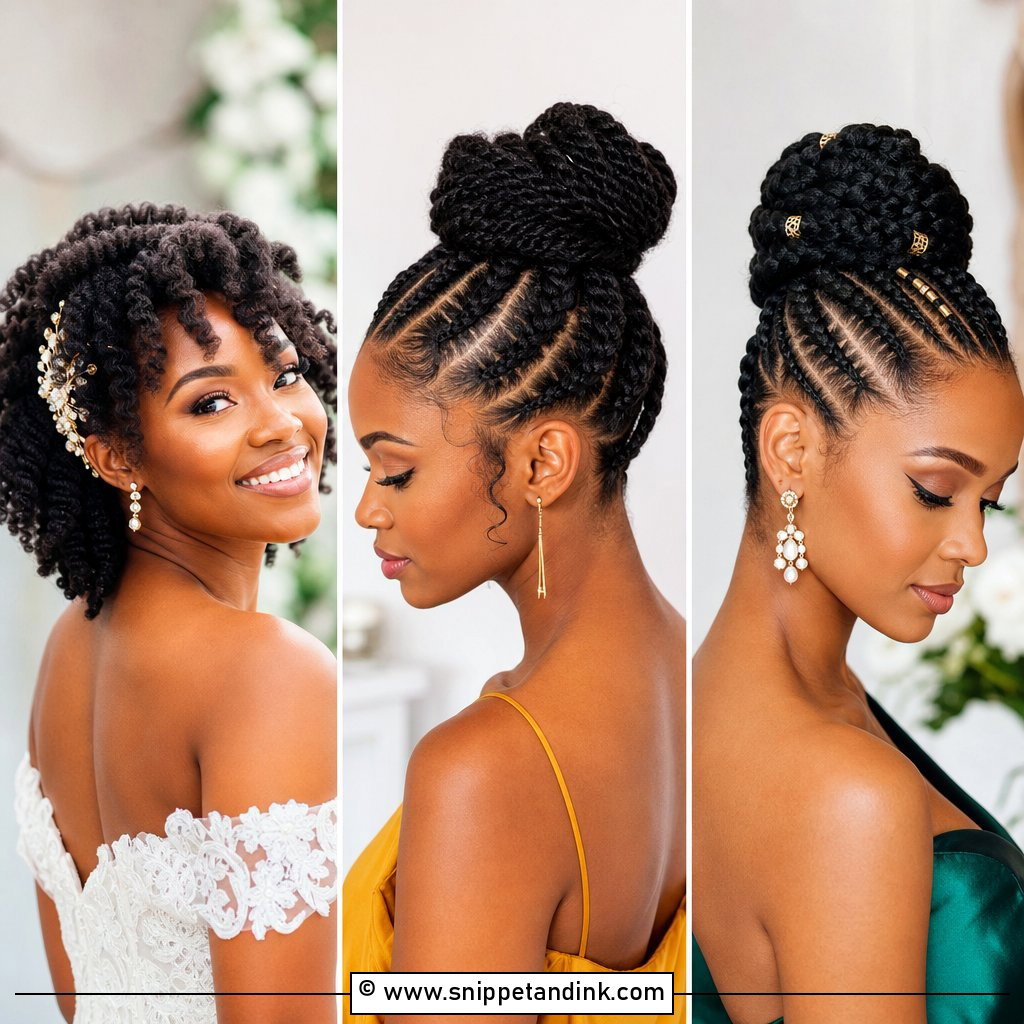
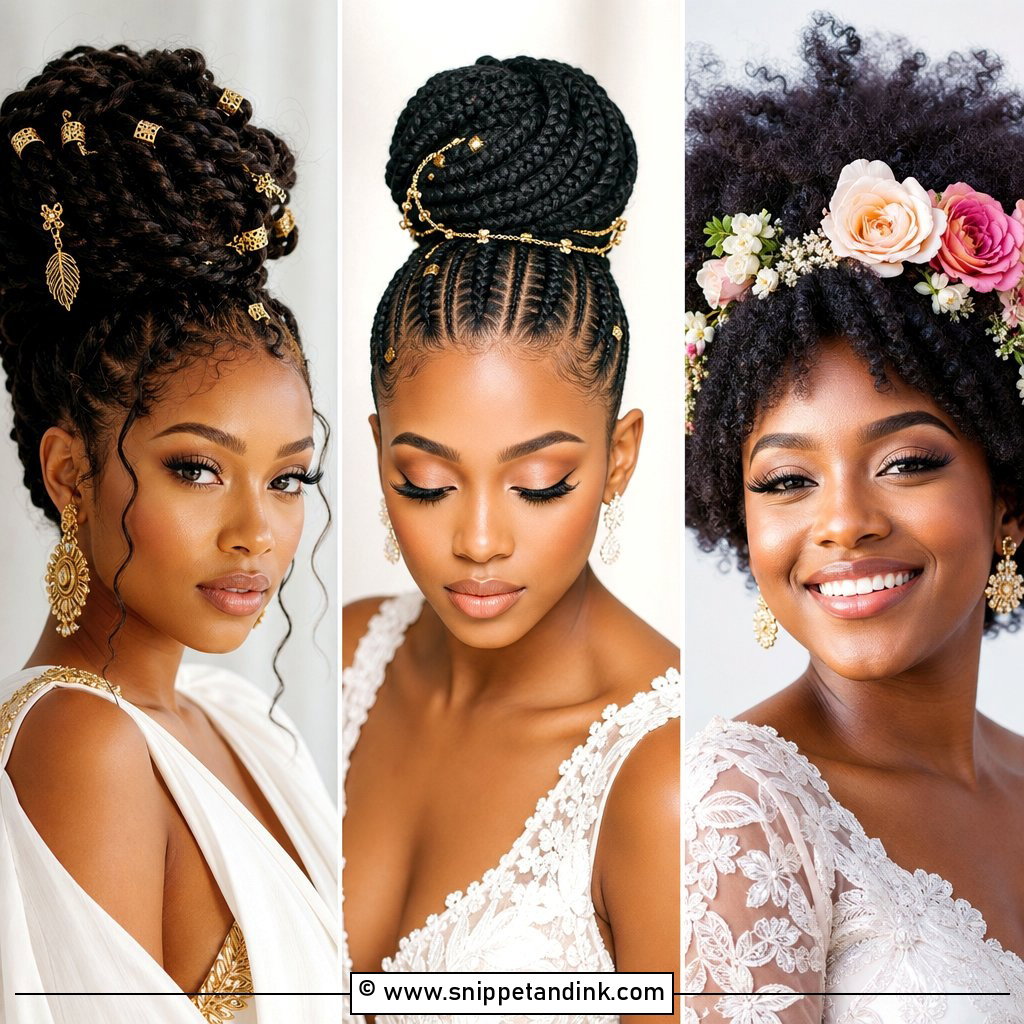
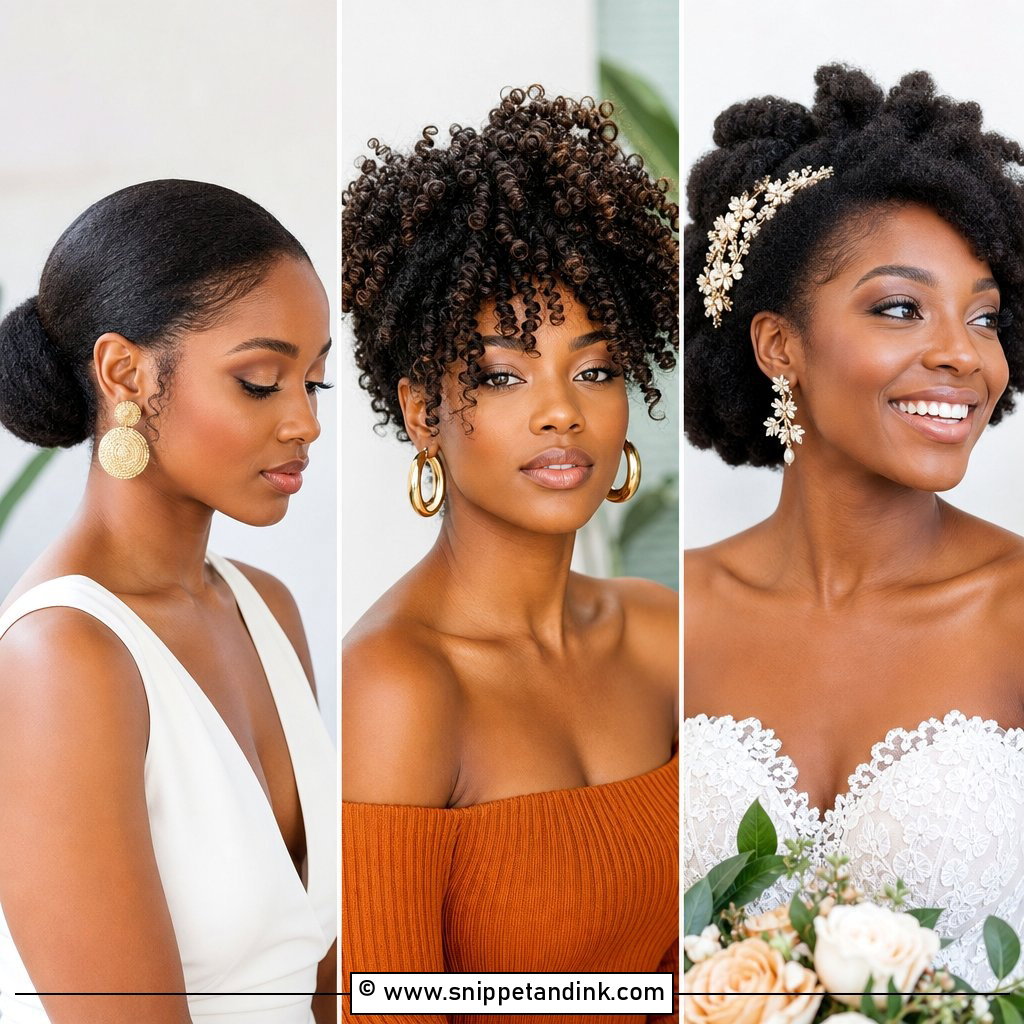
A natural afro wedding hair look puts your texture first. Shape decides the effect: rounded, tapered, heart-shaped or softly stretched, depending on your length and density. I build the base the day before with a twist-out or a defined wash and go, because picking out fresh, unset hair on the morning creates fuzz rather than fullness. A simple veil, pearl pins, floral clips or a headband near the crown are all it needs. A crisp hairline and soft makeup let the shape do the talking.
2. Natural Hair Wedding Updo
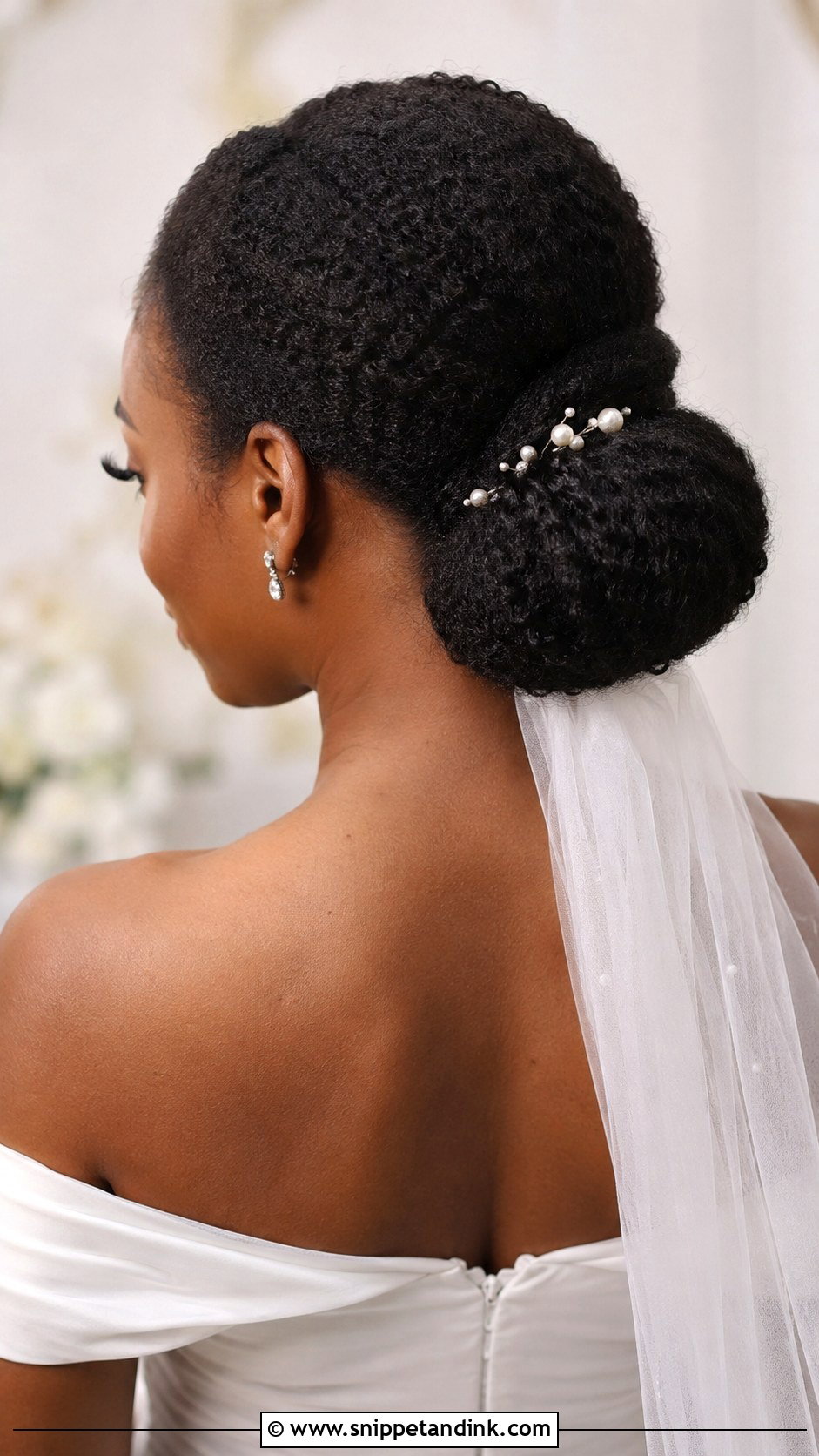
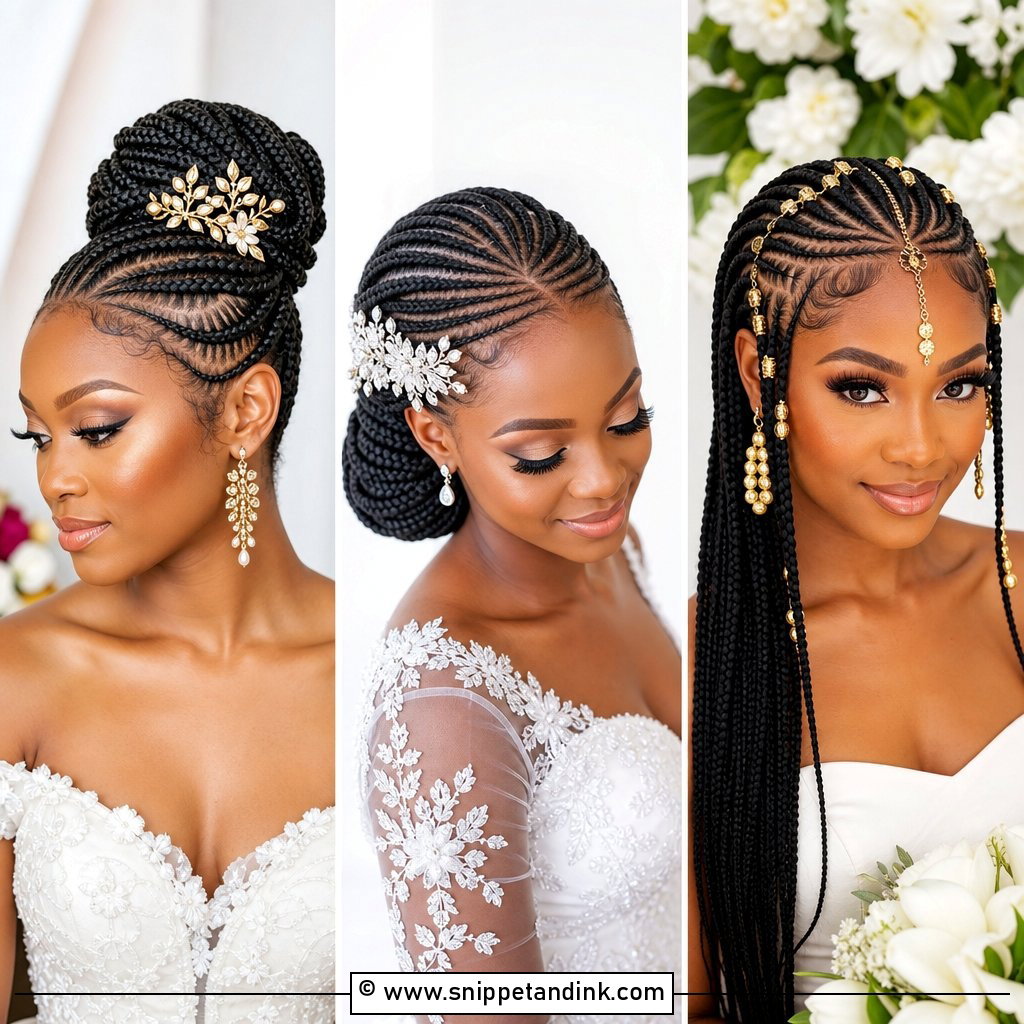
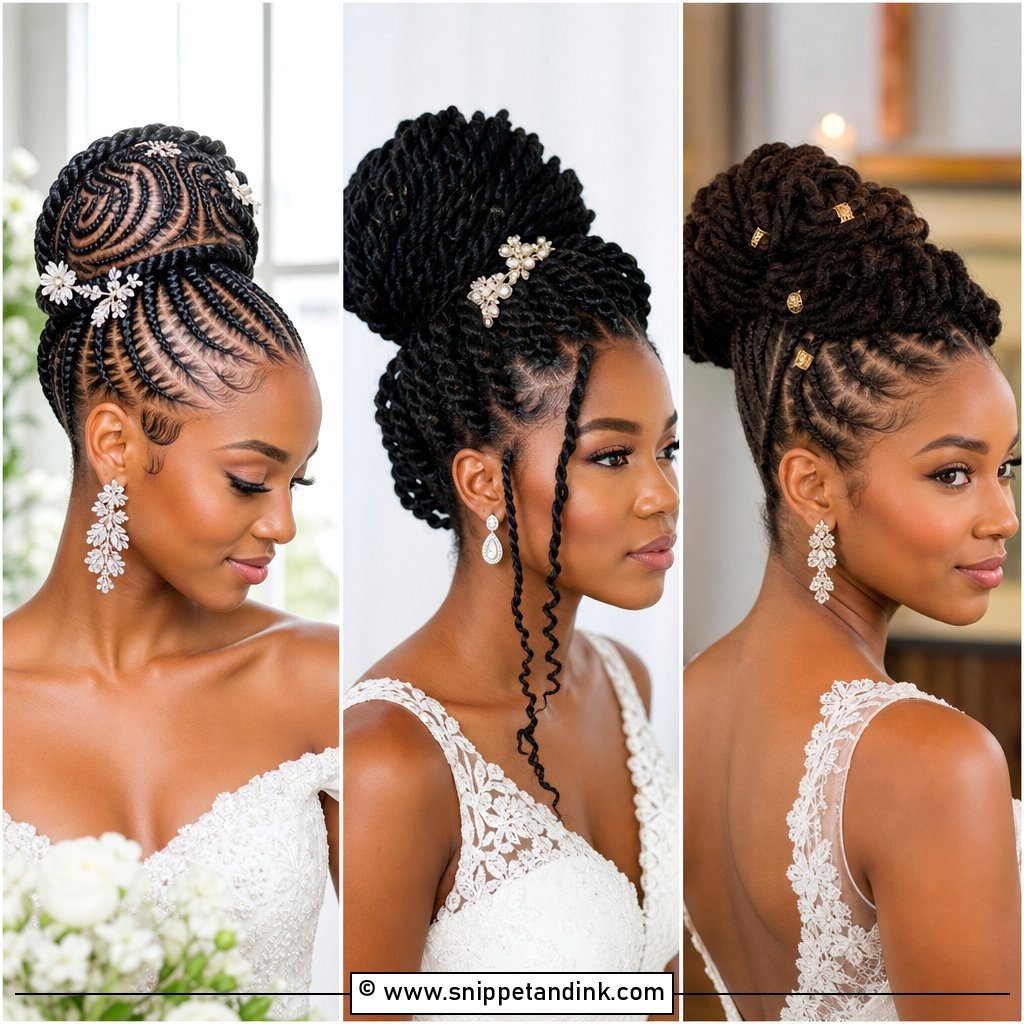
Updos lift the hair off your shoulders, which matters with a high neckline, an open back or heavy earrings. I build them from flat twists, tucked curls, rolled sections or pinned coils, and which one I choose depends on your density. Very thick hair gets split into sections pinned separately, so no single anchor carries all the weight. Done that way it holds through a long ceremony and reception without headaches. Pearl pins, gold cuffs or tiny flowers add detail.
3. Twist Out Wedding Hair
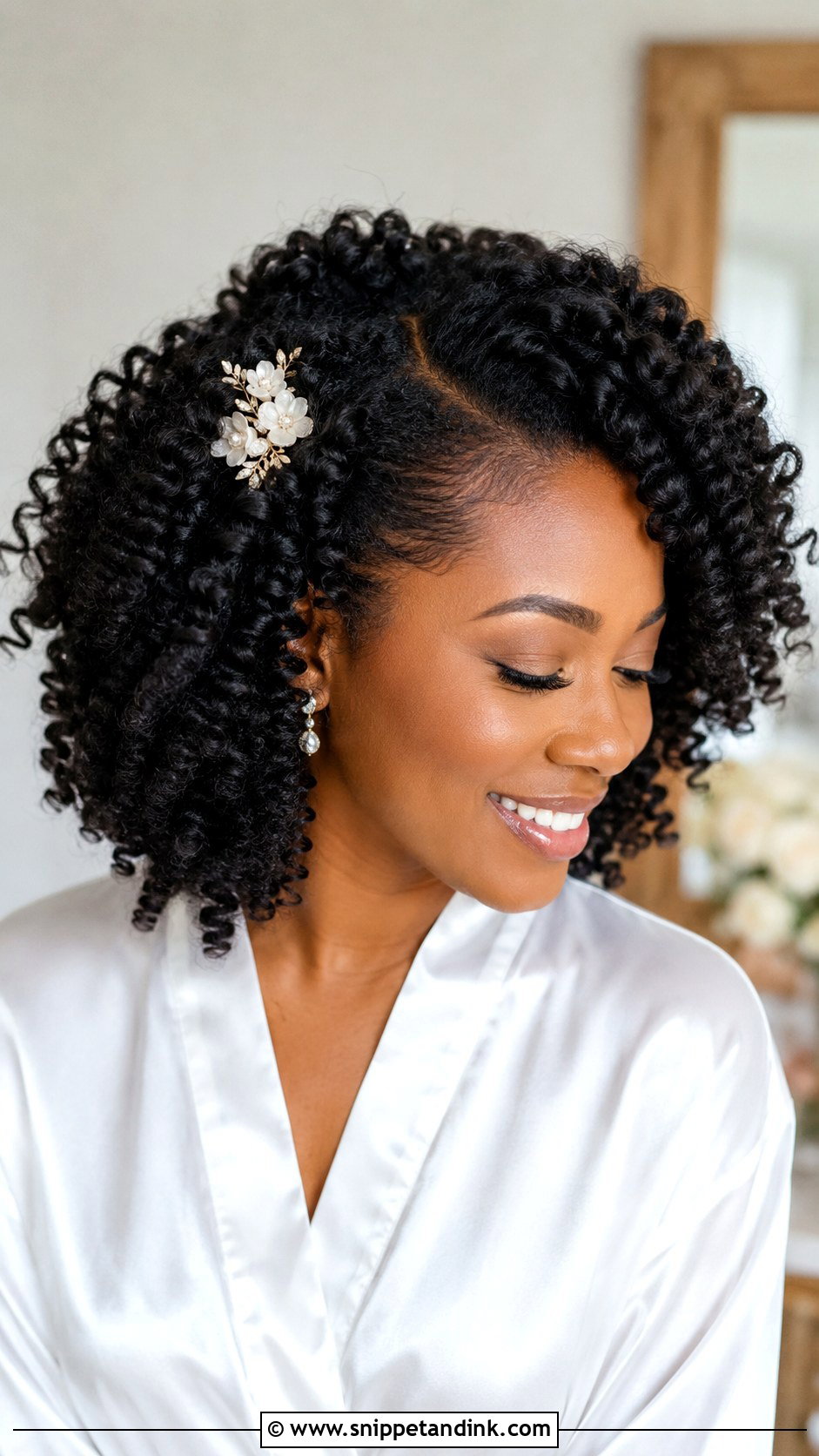
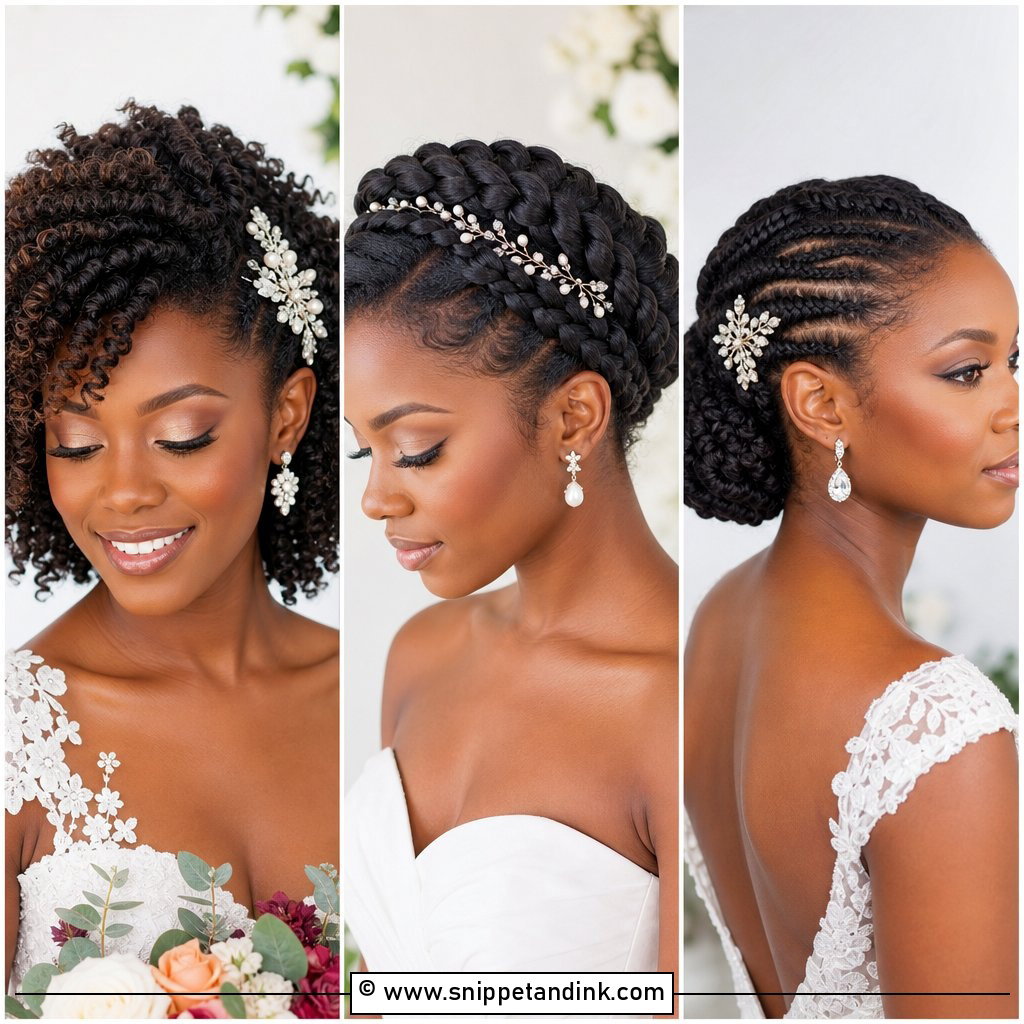
Twist-outs depend on what happens the week before. Deep condition, moisturise, and give the set long enough to dry completely, because a damp twist unravelled on the morning frizzes almost immediately. Smaller twists give definition; larger ones give volume. On the day, wear it down, shape it to one side or pin it lightly at the crown. A crystal comb, a veil or a few floral pins finish it.
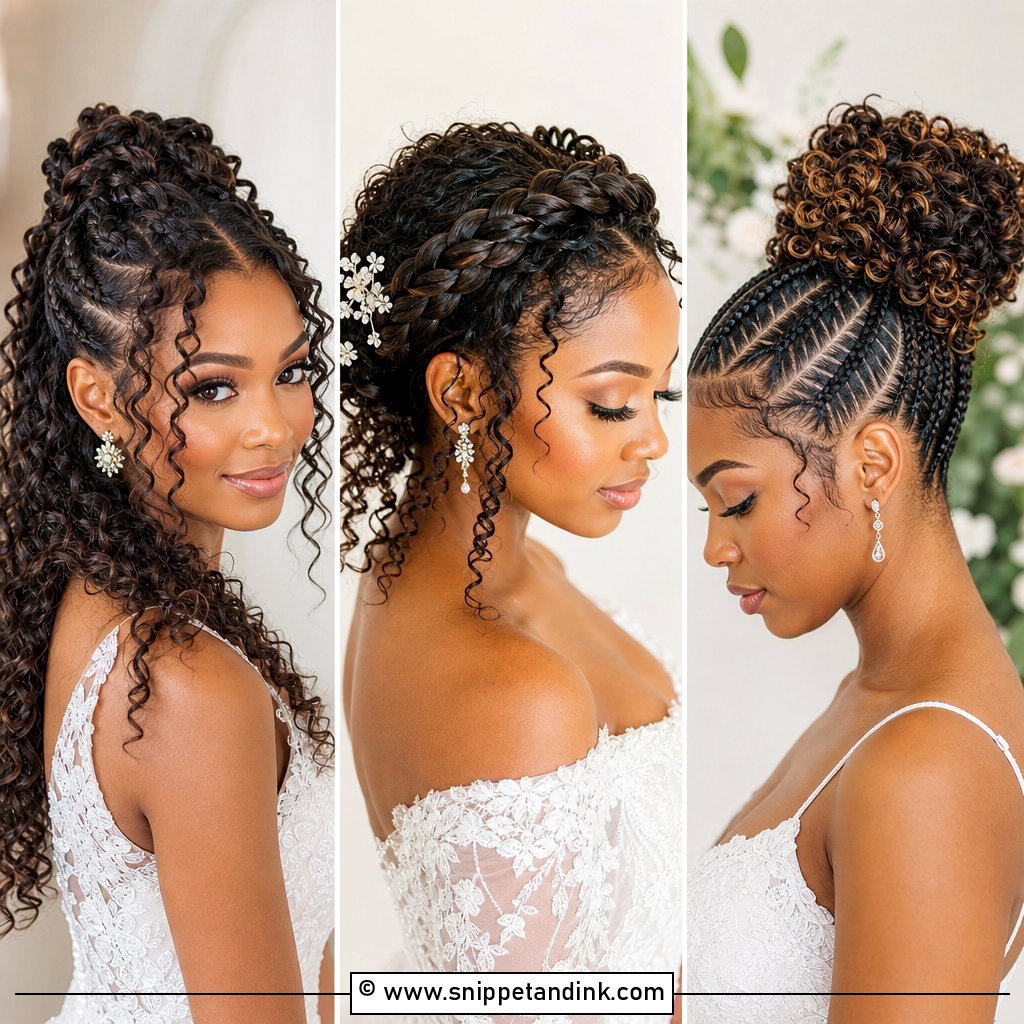
4. Braid Crown Wedding Hair
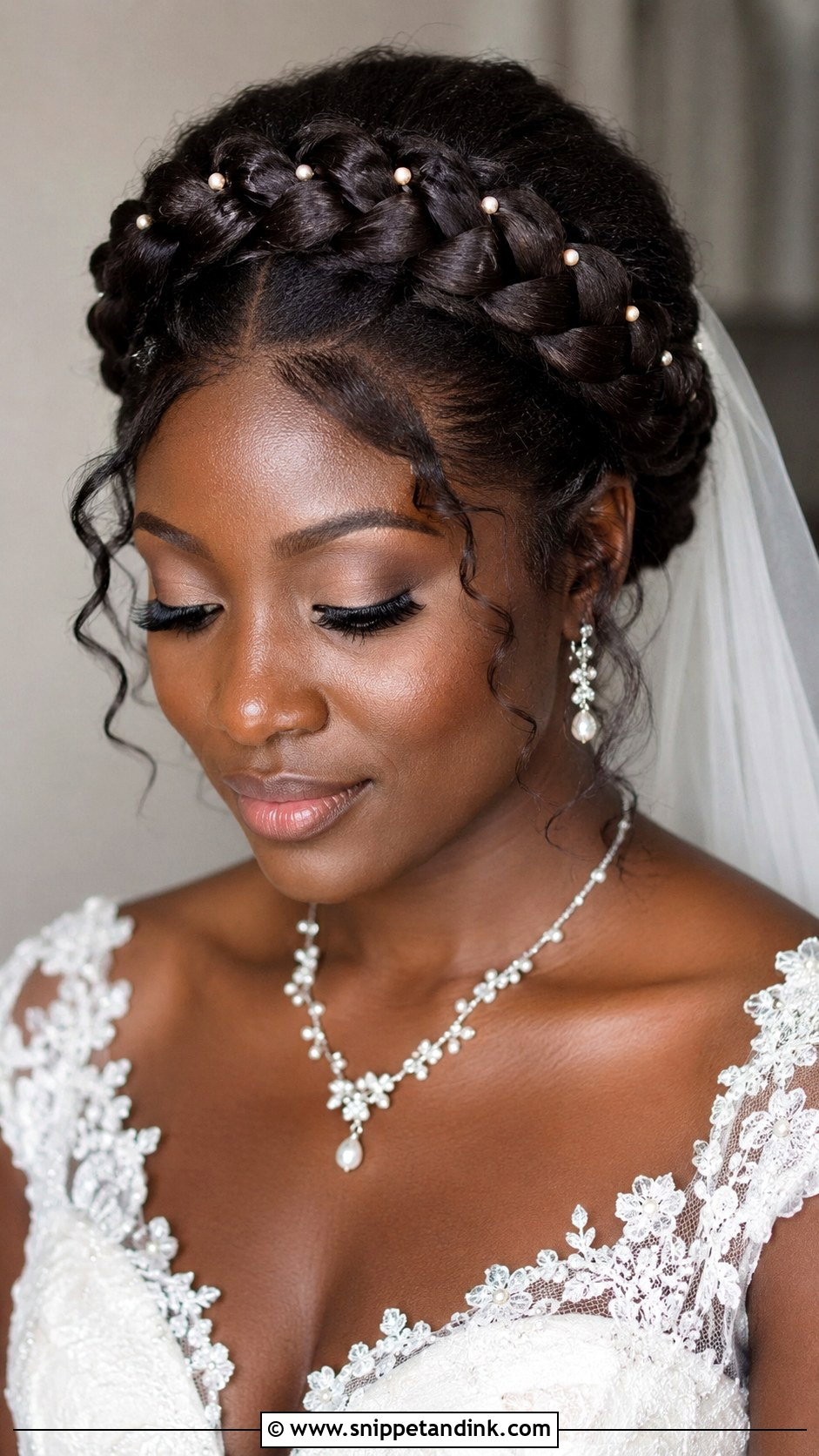
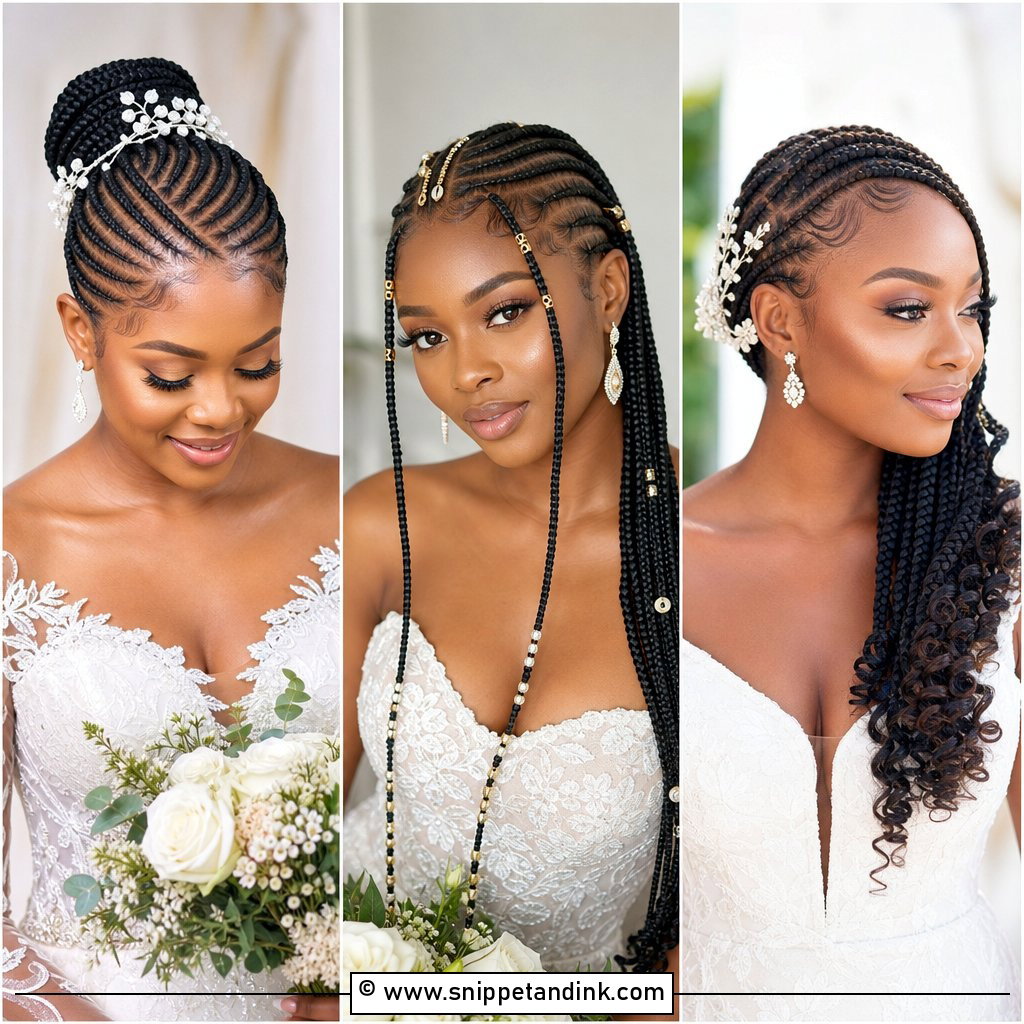
A braid crown wrapped around the head frames the face from every angle and keeps the hair protected. It can be made from your own hair, added braiding hair, or a blend for fullness. If your hair is shorter at the nape, added hair helps the braid travel all the way round without thinning out at the back. A veil goes behind the braid, and floral pieces tuck along it. A few curled tendrils at the temples soften the shape.
5. Low Bun Natural Wedding Hair
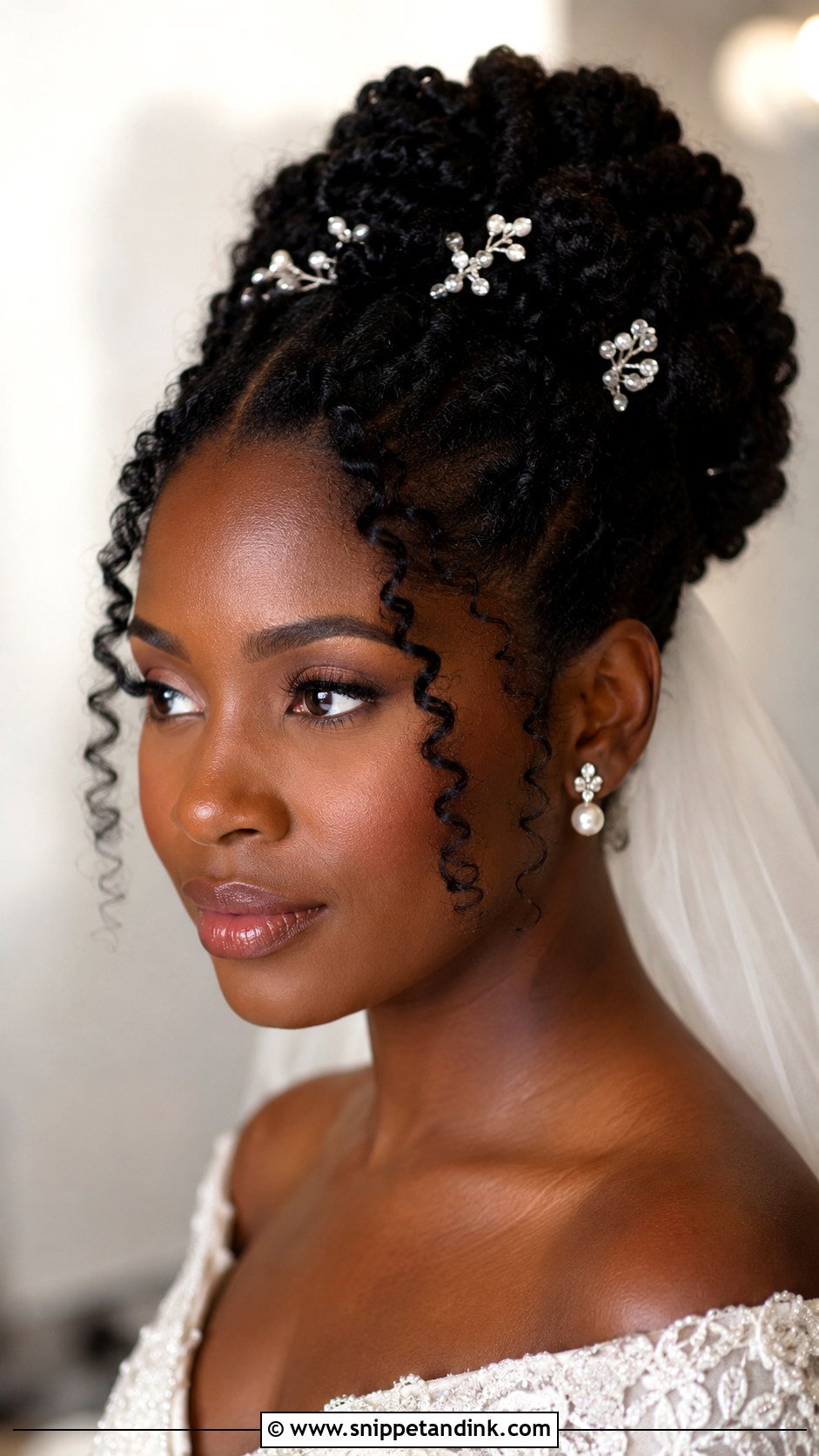
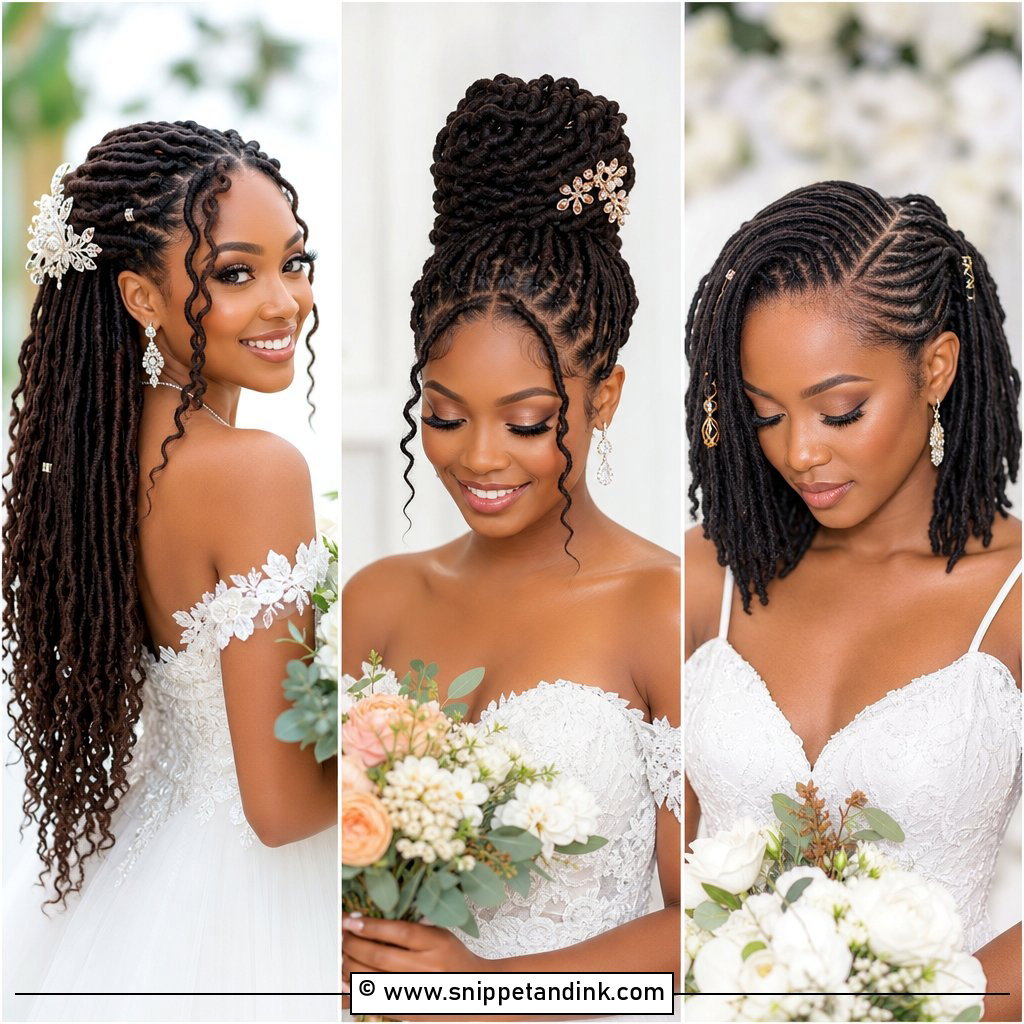
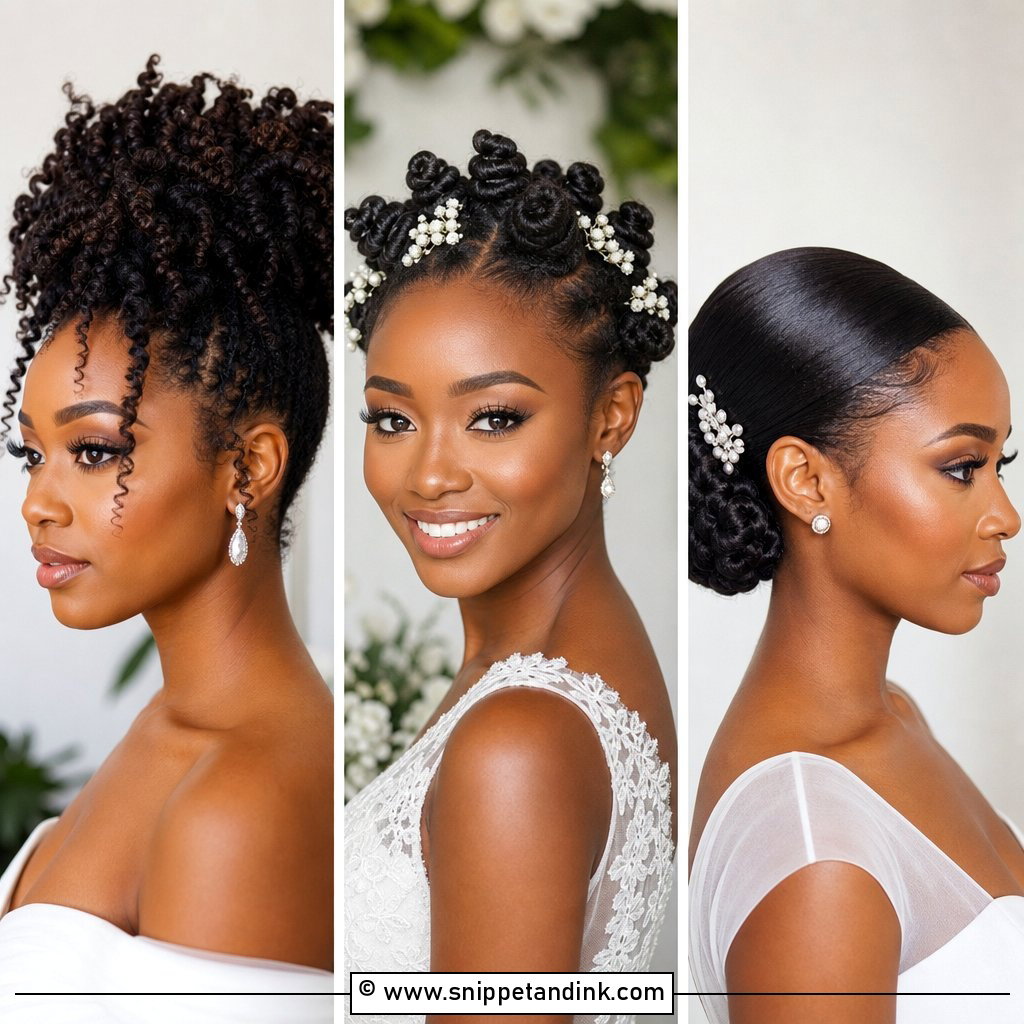
Low buns sit at the nape, slightly off to one side, or centred on a smooth twisted base. Natural texture can be tucked into the bun, shaped into coils, or braided first for detail. It holds a veil or tiara better than almost anything else. My advice for outdoor ceremonies: keep the bun controlled but don’t scrape the edges back hard, as tension at the hairline gets uncomfortable after a few hours in the heat. Moisturised, soft edges look cleaner in close-ups anyway.
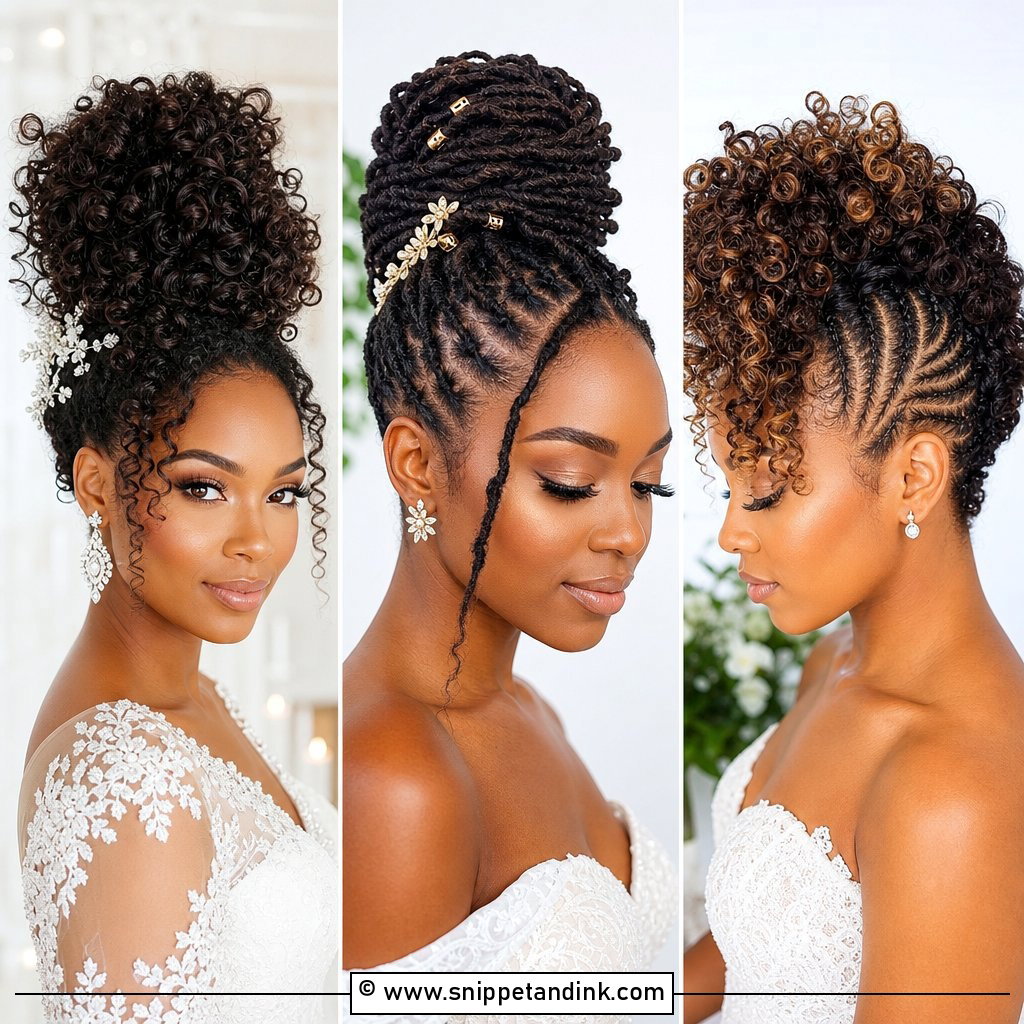
6. High Puff Wedding Hair
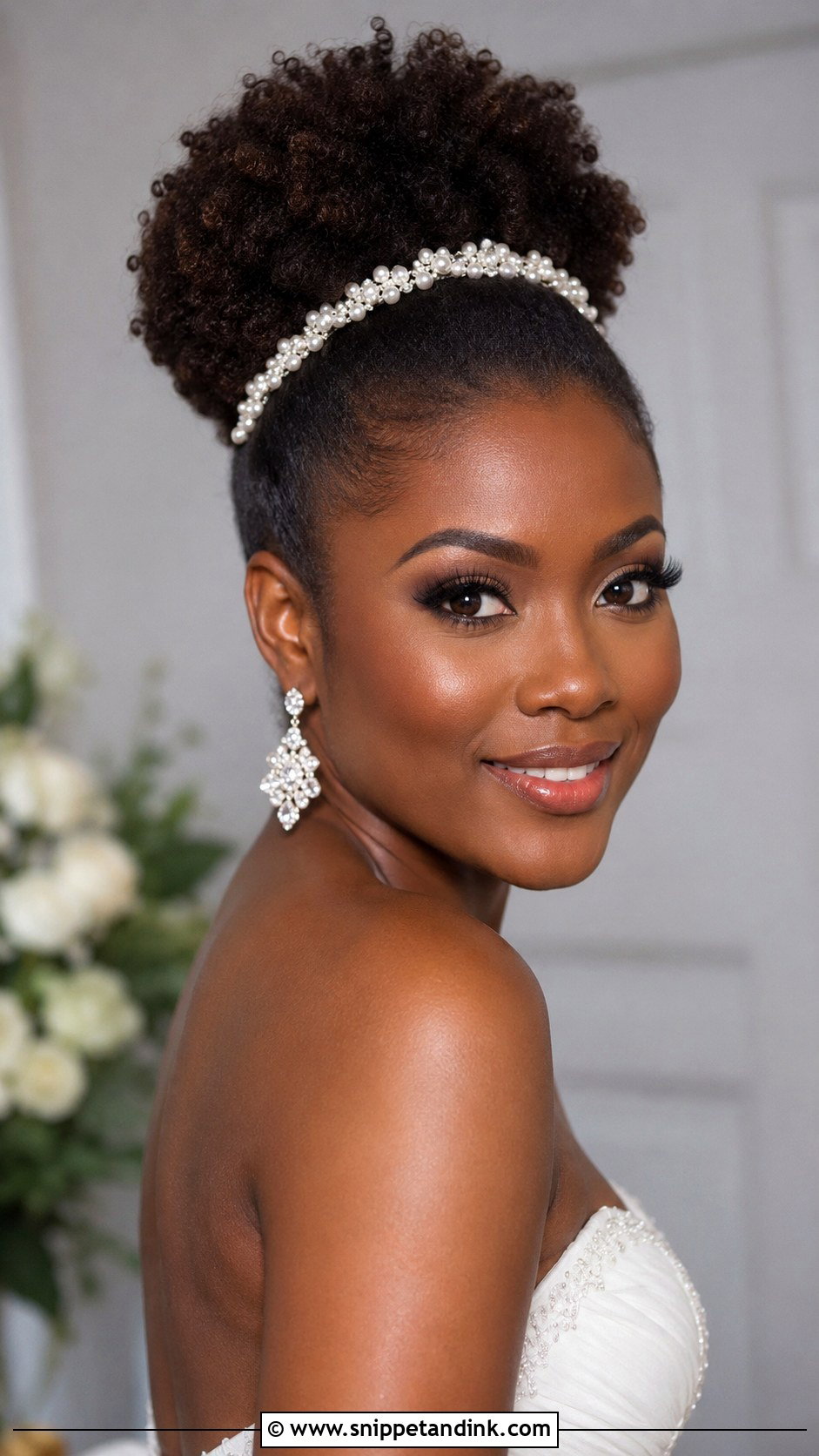
A high puff suits medium to long natural hair and puts the face, neckline and shoulders on show. Sleek at the base with defined curls on top reads more formal; a softer, cloud-like texture reads playful. The weak point is the hairline under the band, so I use a wide, soft tie and never pull it tight. With a strapless or sweetheart neckline and bold earrings, it needs only a few bridal pins or a slim headband.
7. Flat Twist Wedding Updo
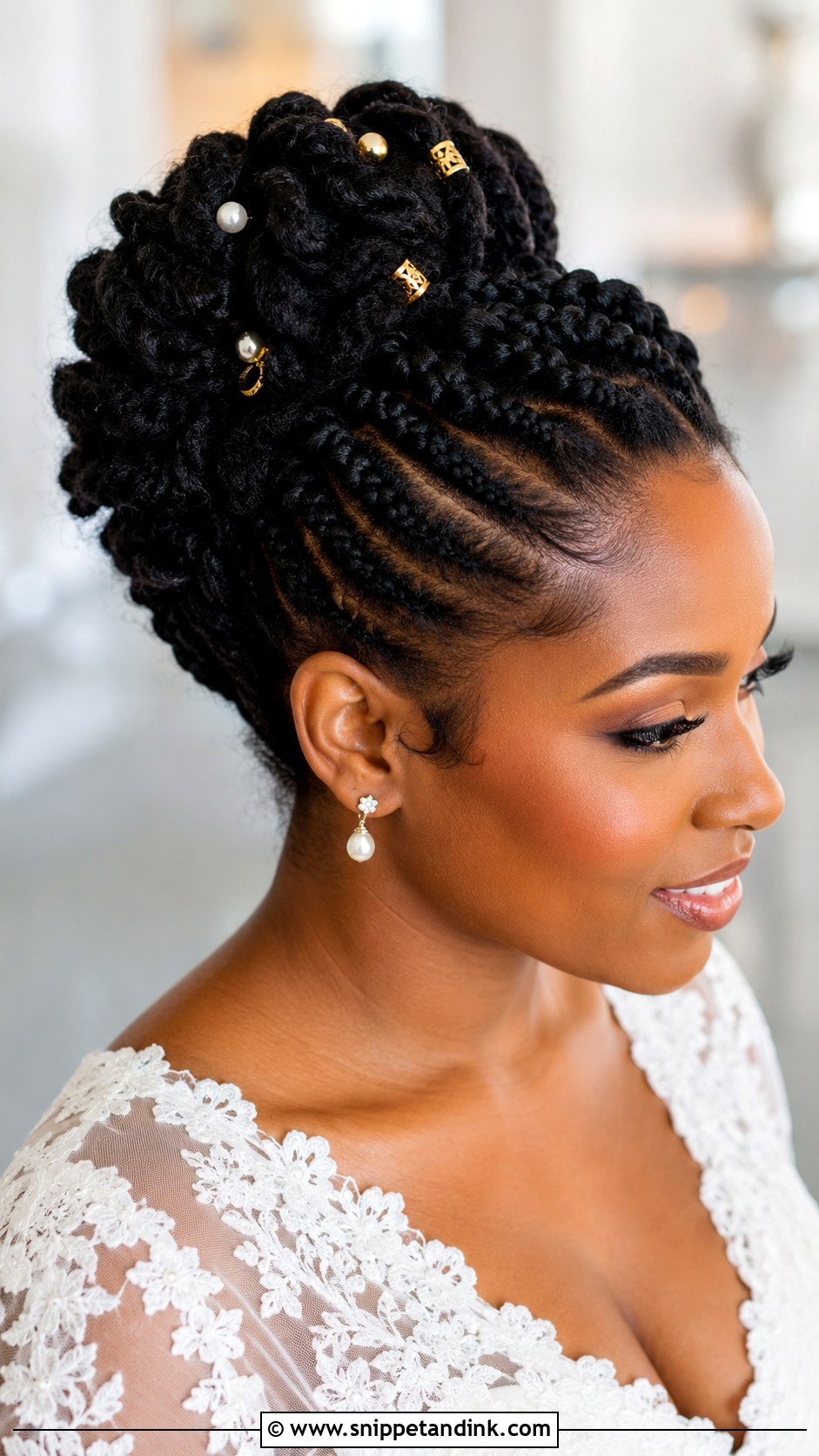
Flat twist updos give detail and protection together. The twists can move upward into a bun, sweep to one side or wrap around the crown. On type 4 hair they keep the texture stretched and secure while still looking natural, and in humid weather they hardly move. I’d do them the evening before only if you can sleep in a satin scarf without crushing them. Small gold cuffs, pearl pins or a comb at the back add the bridal touch.
8. Loc Wedding Updo
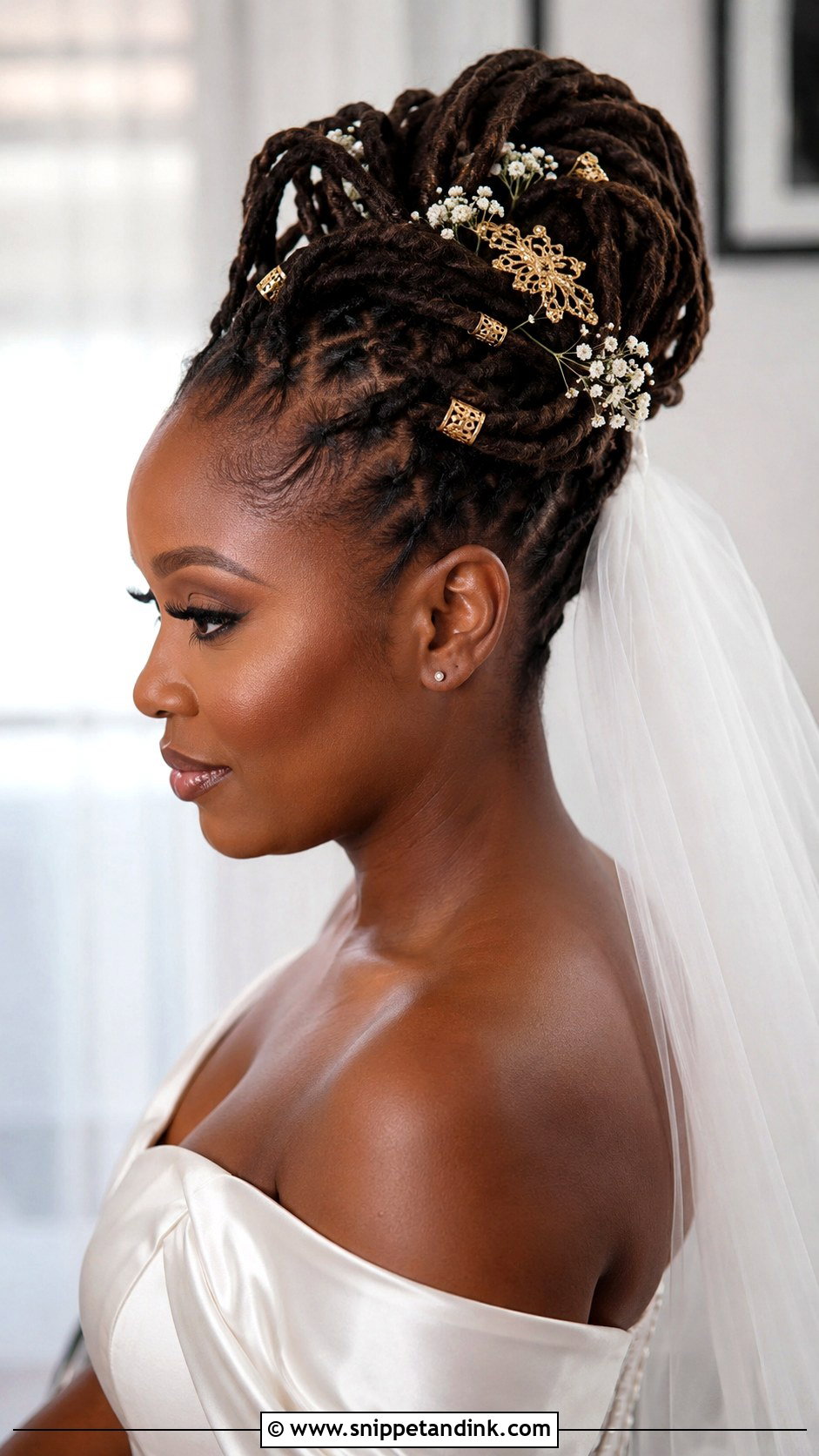
A loc wedding updo can be rolled, pinned, twisted or stacked into a high bun, low chignon or crown. Short, medium and long locs all work with the right placement. Long, mature locs are heavy, so I often split them into two anchored sections rather than one high bun that tugs at the scalp. Fresh flowers, gold cuffs, pearl pins or a veil all sit securely within the locs. For a bride who wears locs every day, it keeps her looking entirely like herself.
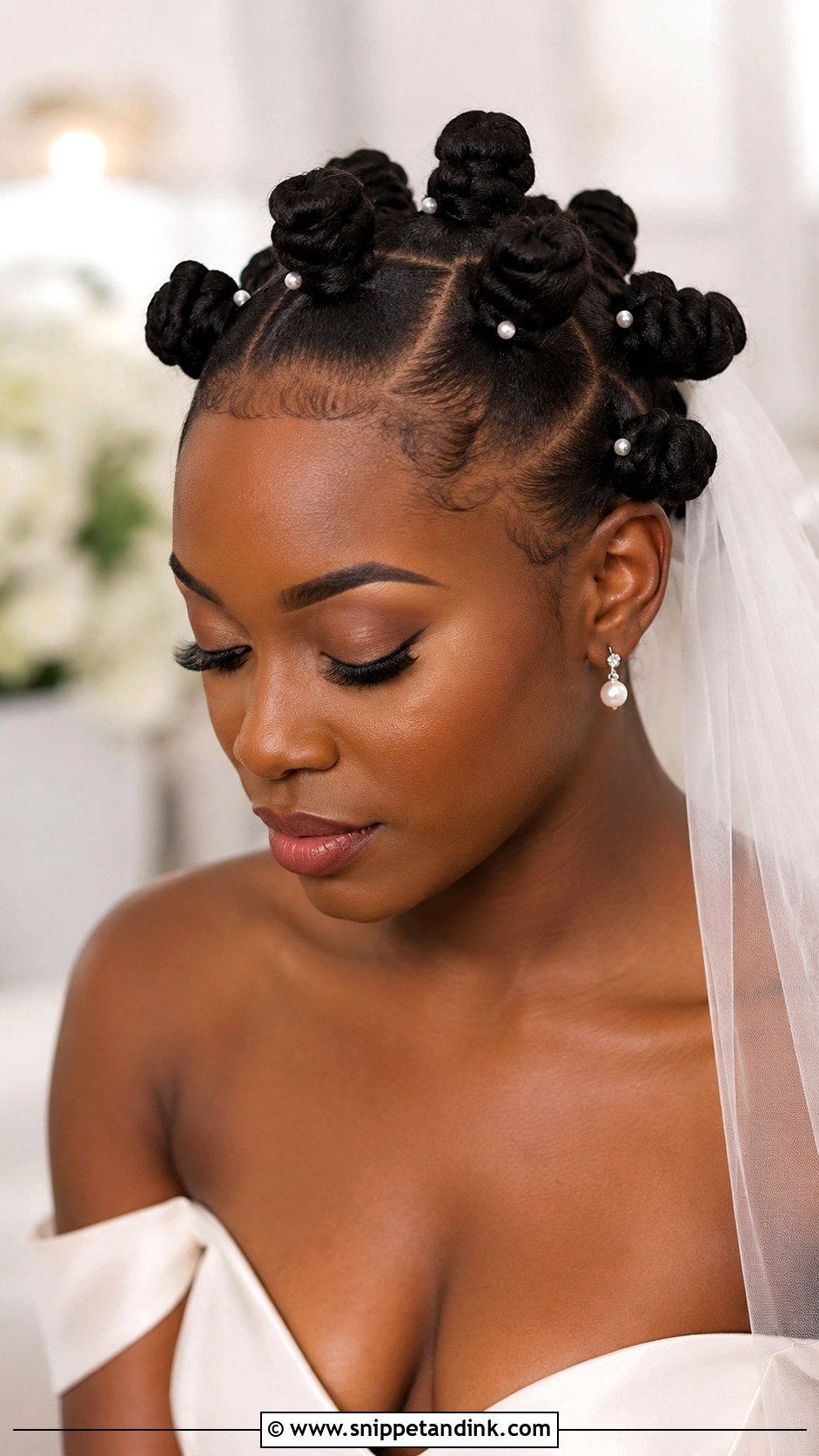
9. Bantu Knot Wedding Hair
Bantu knot wedding hair is sculptural and deeply rooted in tradition. The knots can sit evenly across the head, form a crown, or pair with defined curls at the back for a softer version. Parting is the whole game. Uneven sections give uneven knots, and that shows instantly in an overhead shot. Once secured, the knots won’t fall flat. Pearl pins at the base of each knot, tiny florals or gold cuffs make it formal.
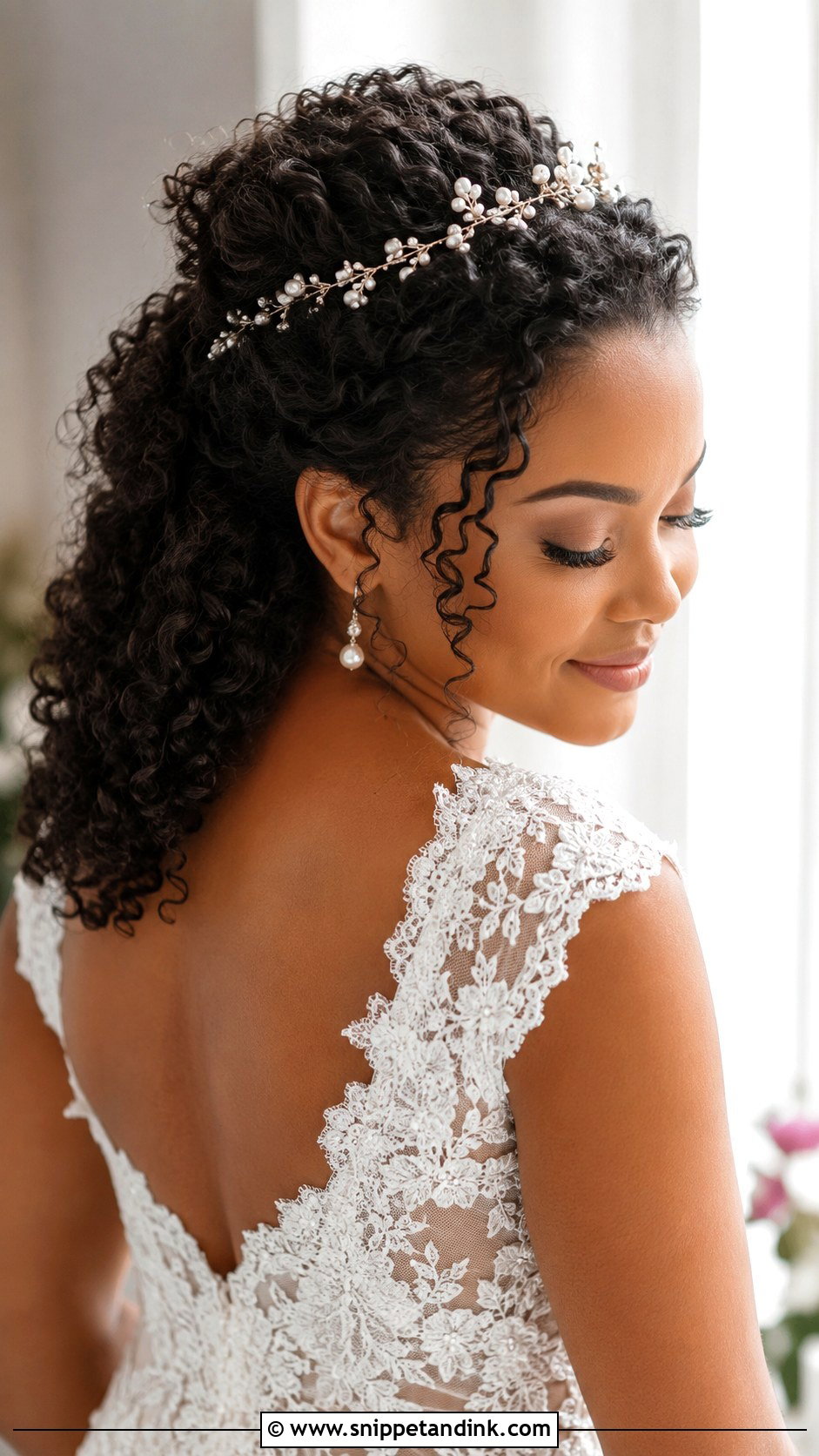
10. Half Up Natural Wedding Hair
Half up opens the face and keeps softness at the shoulders. The top section is lifted or pinned, and the back shows curls, coils or a twist-out. A veil, hair vine, pearl clips or a floral comb attach easily where the two halves meet. Medium to long hair gets the most from it. I give the crown gentle height and keep the curl pattern defined below, or the lower half can look flat next to a lifted top.
11. Cornrow Bun Wedding Hair
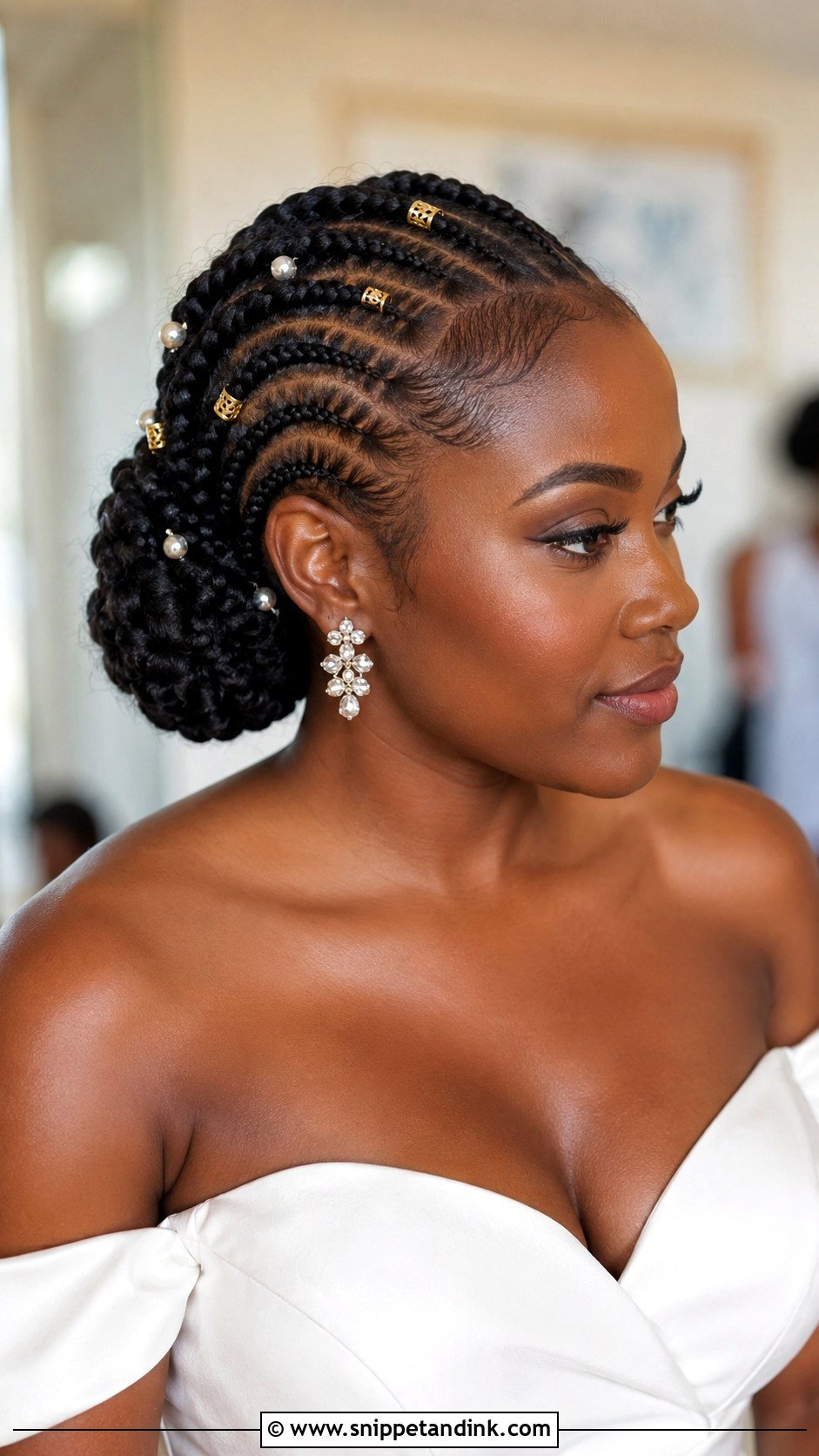
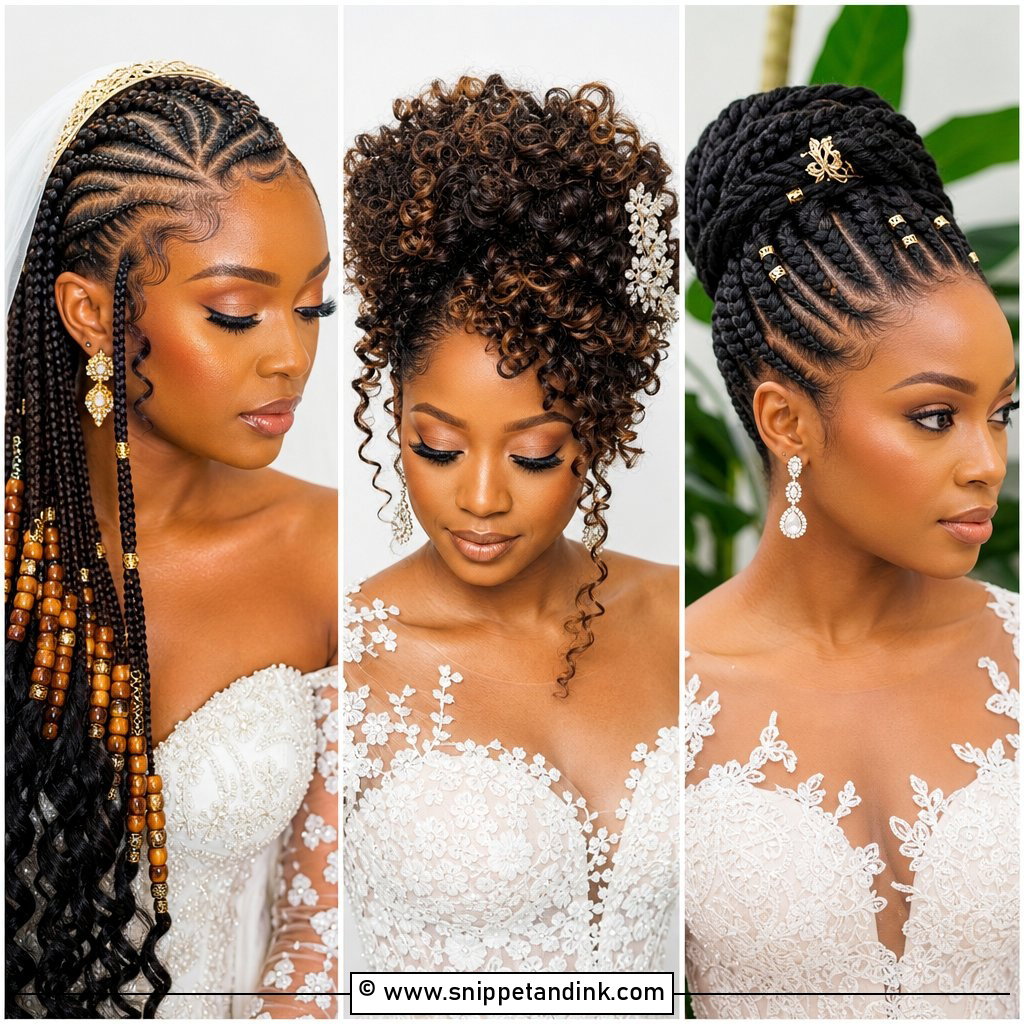
Cornrow buns are one of the most secure bridal styles there is. The rows can run straight back, curve into a pattern or carry side details before gathering into a bun that’s braided, twisted or shaped with natural curls. Book the cornrows a day or two ahead, not the morning of, so any scalp tenderness settles before you’re smiling for photos. Pearl pins, gold cuffs or a soft veil at the back are enough. It ties beautifully to textured hair traditions.
12. Twa Wedding Hair
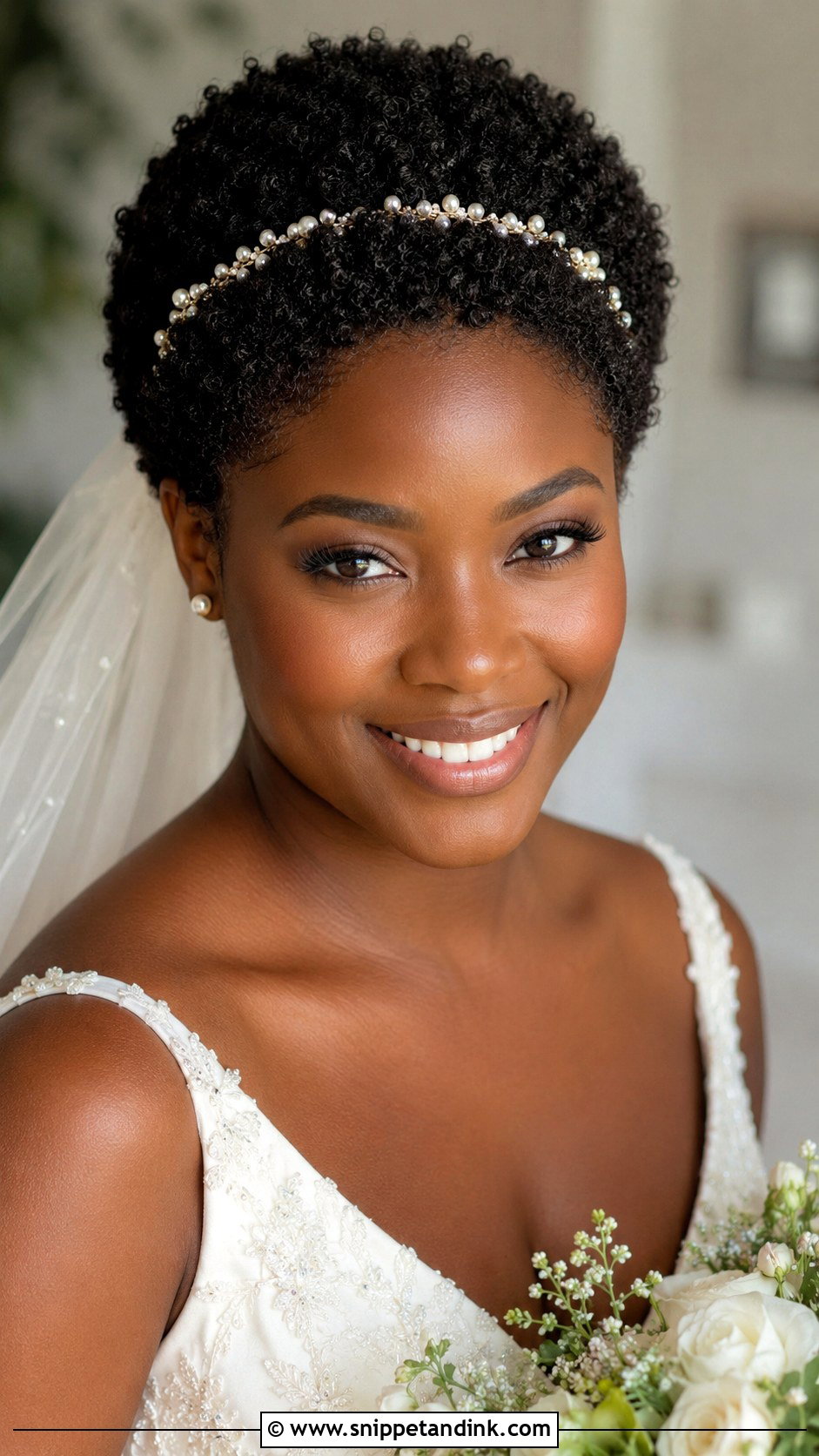
Short natural hair can be every bit as bridal as long hair. A teeny weeny afro can be shaped, defined, finger-coiled or softly picked for fullness, and the clean outline puts the focus on your face, dress and accessories. Book any shape-up a few days before, not the day before, so edges look sharp without irritation. A pearl headband, crystal comb, floral crown or simple veil transforms it. Low maintenance and confident.
13. Finger Coil Wedding Hair
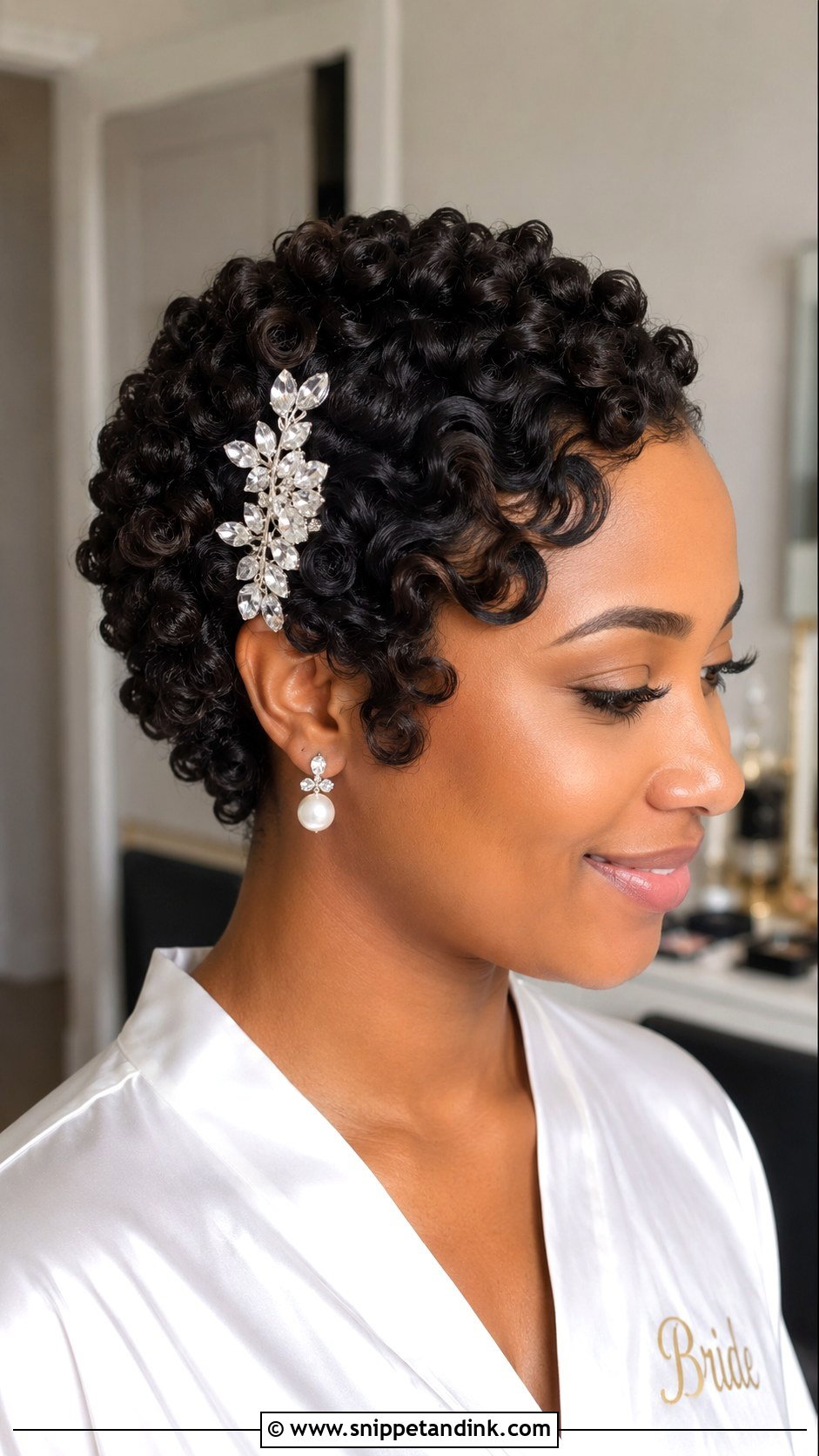
Finger coil wedding hair gives defined, glossy curls that look neat in close-ups. It suits short to medium natural hair when you want definition without an updo. Each coil is wrapped around a finger with a gel or custard, so it takes time: budget a couple of hours on a full head, and do it the evening before so the coils can dry and set. Shape them round, side-parted, tapered or into a soft crown. A small comb, pearl pins or florals near one side add detail.
14. Curly Frohawk Wedding Hair
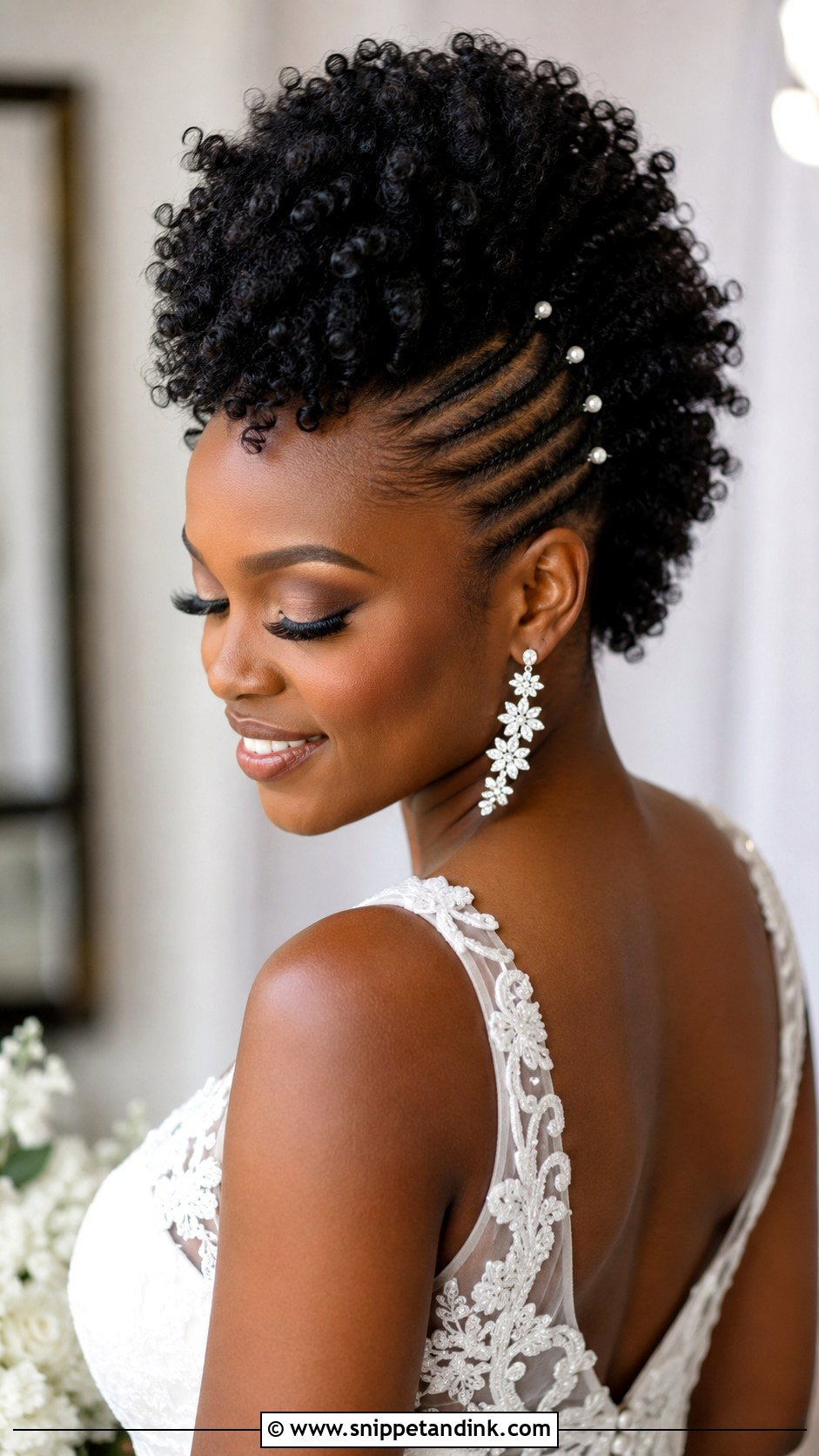
A frohawk adds height and drama. The sides are flat twisted, braided or pinned upward while the centre shows curls or coils from front to back. The vertical line lengthens the face and gives a strong profile in photos. Pins along the sides need to be hidden, so I angle them into the base of the centre section. Statement earrings and a simple gown suit it. Pearls, gold pins or tiny flowers along the sides soften the edge.
15. Natural Hair Wedding Ponytail
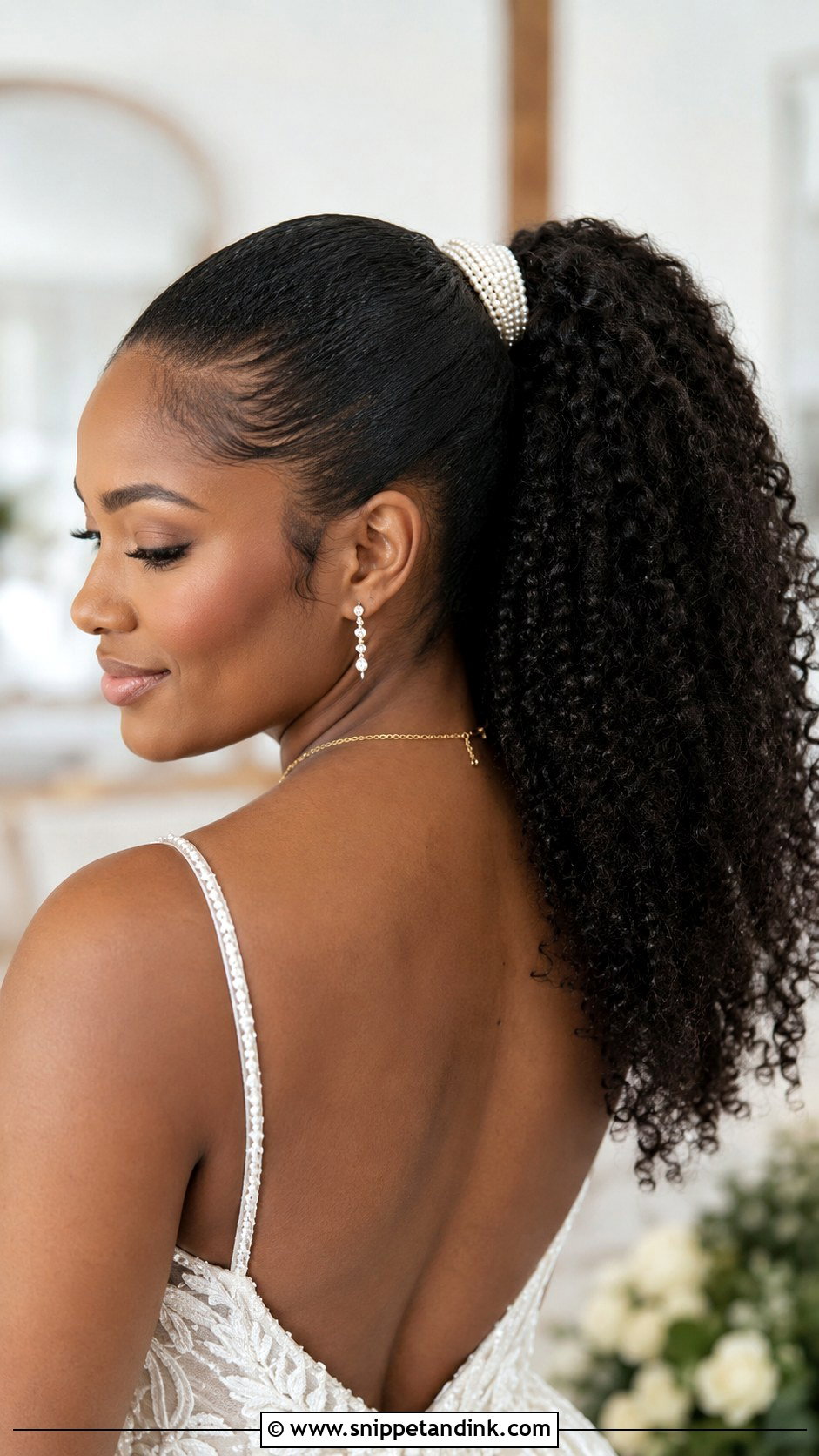
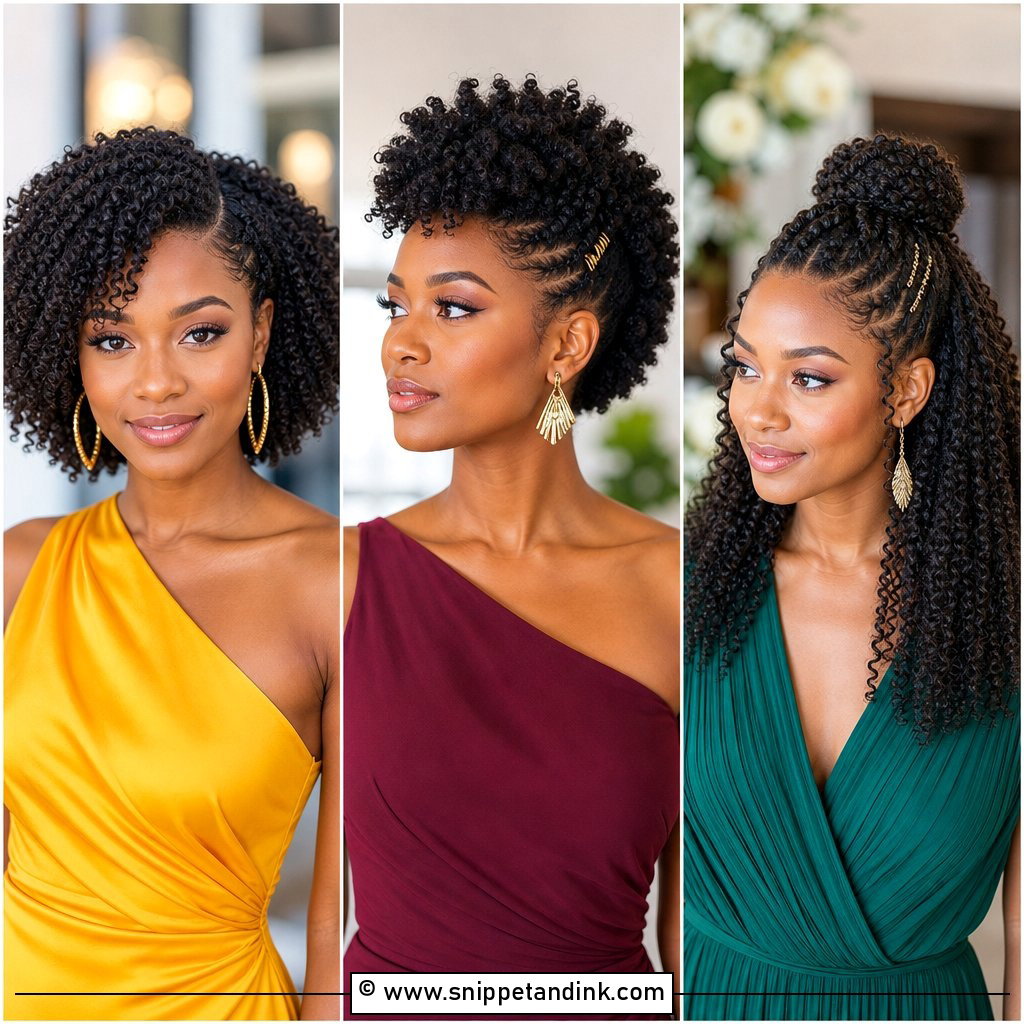
Ponytails are graceful and easy to dress. The base is smoothed into a high, mid or low position, and the ends stay curly, coily, twisted or braided. Fullness at the ends matters most, so if your own length is short, matching textured hair can be added. A veil, pearl wrap, floral clip or jeweled cuff covers the band. Low feels classic; high feels lifted and current. It also stays off your face through a long reception.
Under a Gele, Then Out for the Reception
Many couples hold a traditional ceremony alongside the white wedding, and a gele or headwrap changes the hair plan. A gele is tied firmly and builds height on its own, so a puff, frohawk or high bun underneath gets flattened and pushes the wrap off balance.
The best base is low and flat: cornrows, flat twists, or a small bun pinned at the nape. That gives the gele something stable to grip and leaves you with a neat style when it comes off. If you’re changing from a gele to a veil on the same day, plan a style that works for both, such as cornrows finished into a low bun, and keep edge control and a soft brush in your bag for the switch.
Let the person tying the gele know about any added hair or pins, so they don’t wrap over a pin that ends up digging in by the second hour.
Walk In Looking Like You, Only More So
There’s no single right shape, length or finish for natural bridal hair. Styles can be soft, sculpted, protective, minimal or full glam, as long as they work with your texture. Think about your neckline, where the veil goes, the weather, how long the ceremony runs and how much touch-up time you want. A trial shows you how the style photographs and how it feels after a few hours. Then pick the look that lets you walk in grounded and completely yourself.
You'll Like These Ideas:


Leave a Reply