
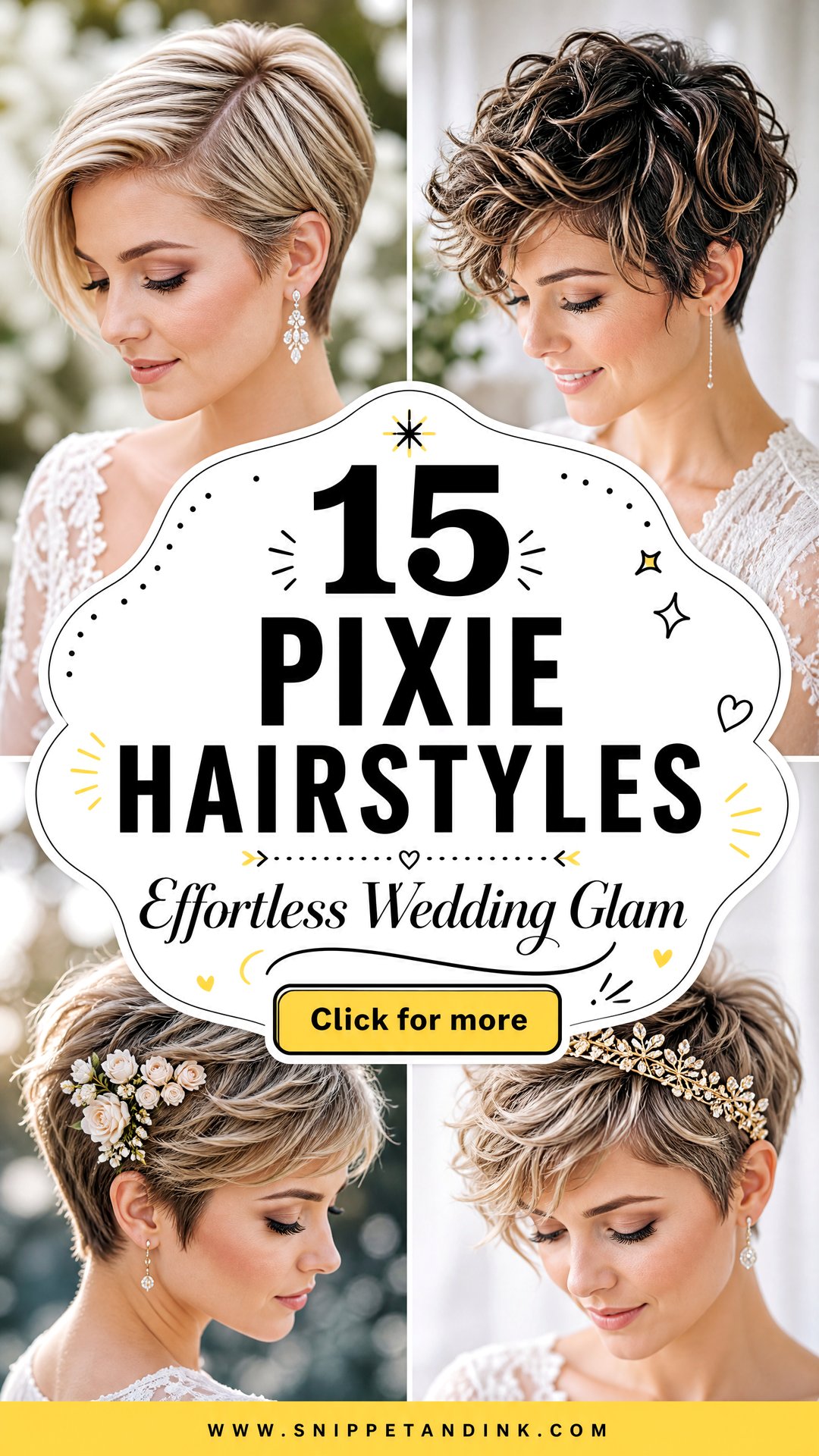
Short hair is quicker to style on a wedding morning than almost anything else I do, and it’s often the look that dates least in the photos. There are no extensions, no hour of pinning, and no updo pulling at the scalp by dinner. What a pixie does demand is precision: the shine level, the direction of the part, how much lift sits at the crown. Get those right for the outfit and the venue, and short hair looks every bit as considered as a long bridal style. That goes for brides, and just as much for bridesmaids, mothers and guests wearing short cuts.
Your Regular Barber May Be the Right Person
Many bridal hair teams are built around updos and long-hair sets. That’s fine, but styling a pixie well has more to do with knowing how short hair is cut than how it’s pinned. The person who cuts your pixie every month knows your cowlicks, which way your crown grows and how your hair reacts to product. Ask whether they’ll style on the morning, or at least do the final trim and walk your bridal stylist through how your hair behaves.
If you do hire a separate stylist, look for real short-hair work in their portfolio, not just long styles. A few practical details help too:
- A pixie usually takes twenty to forty minutes to style, so it can slot in late in the schedule, close to getting dressed.
- Wash your hair the day before rather than that morning if your hair is fine and slippery; one day of natural oil gives product something to work with.
- Bring the exact products you use at home. Short hair responds strongly to small changes in product, and your stylist will want to know what your hair is used to.
- Keep the trial and the final cut close together in shape. A trial on overgrown hair tells you very little about the day.
1. Curled Pixie Wedding Hair
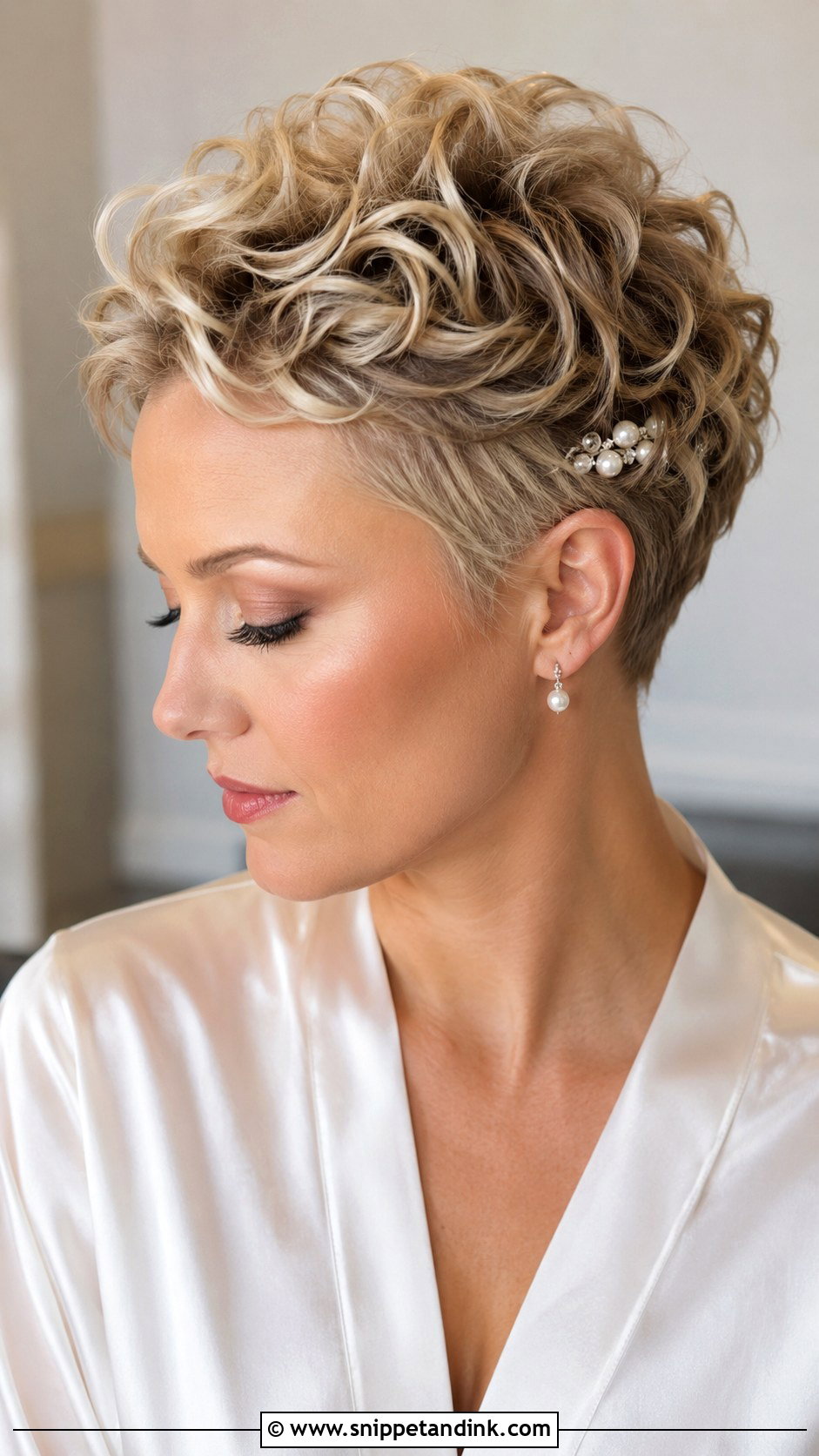
Curls add height to a pixie, and height is what makes a short cut look dressed up rather than everyday. I work with a three-quarter-inch iron on the crown and front only, curling away from the face, then break the curls apart with fingers once they’ve cooled. Tight ringlets on short hair tend to look like a set from another decade, so I keep them loose. You need a longer pixie for this, with at least a couple of inches on top. One pearl pin at the side is enough. Keep the sides flat so the volume reads as intentional.
2. Sleek Pixie Wedding Hair
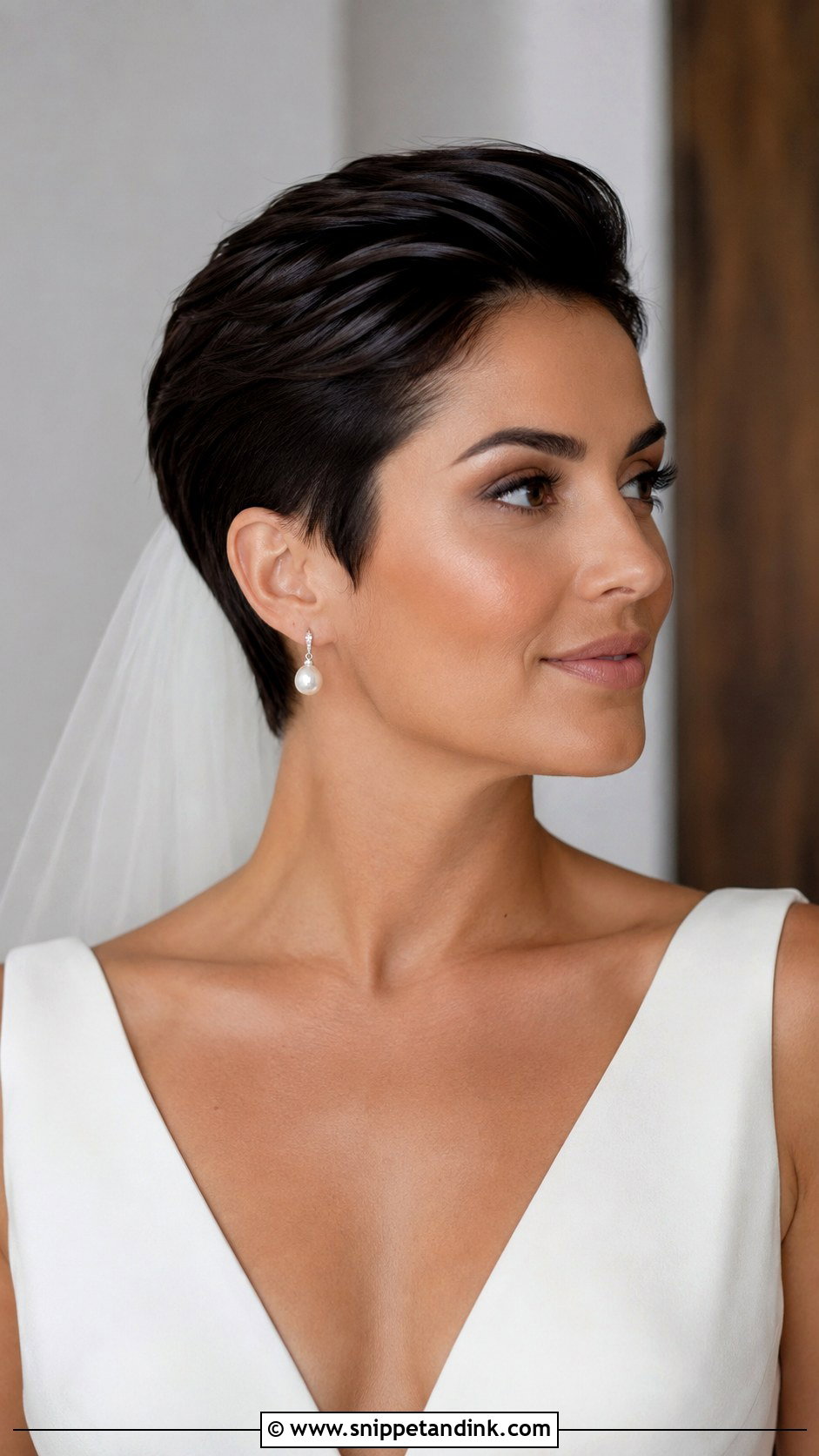
My usual pick for a courthouse ceremony or a structured satin gown. The hair goes close to the head with a styling cream or light gel, brushed while damp and dried in place so it sets glossy rather than crisp. A deep side part softens it; brushed straight back reads sharper and more fashion. Its real advantage is endurance. With no curl to drop, it looks the same at the last dance as it did at the vows. Statement earrings finish it, and you rarely need anything in the hair at all.
3. Textured Pixie Wedding Hair
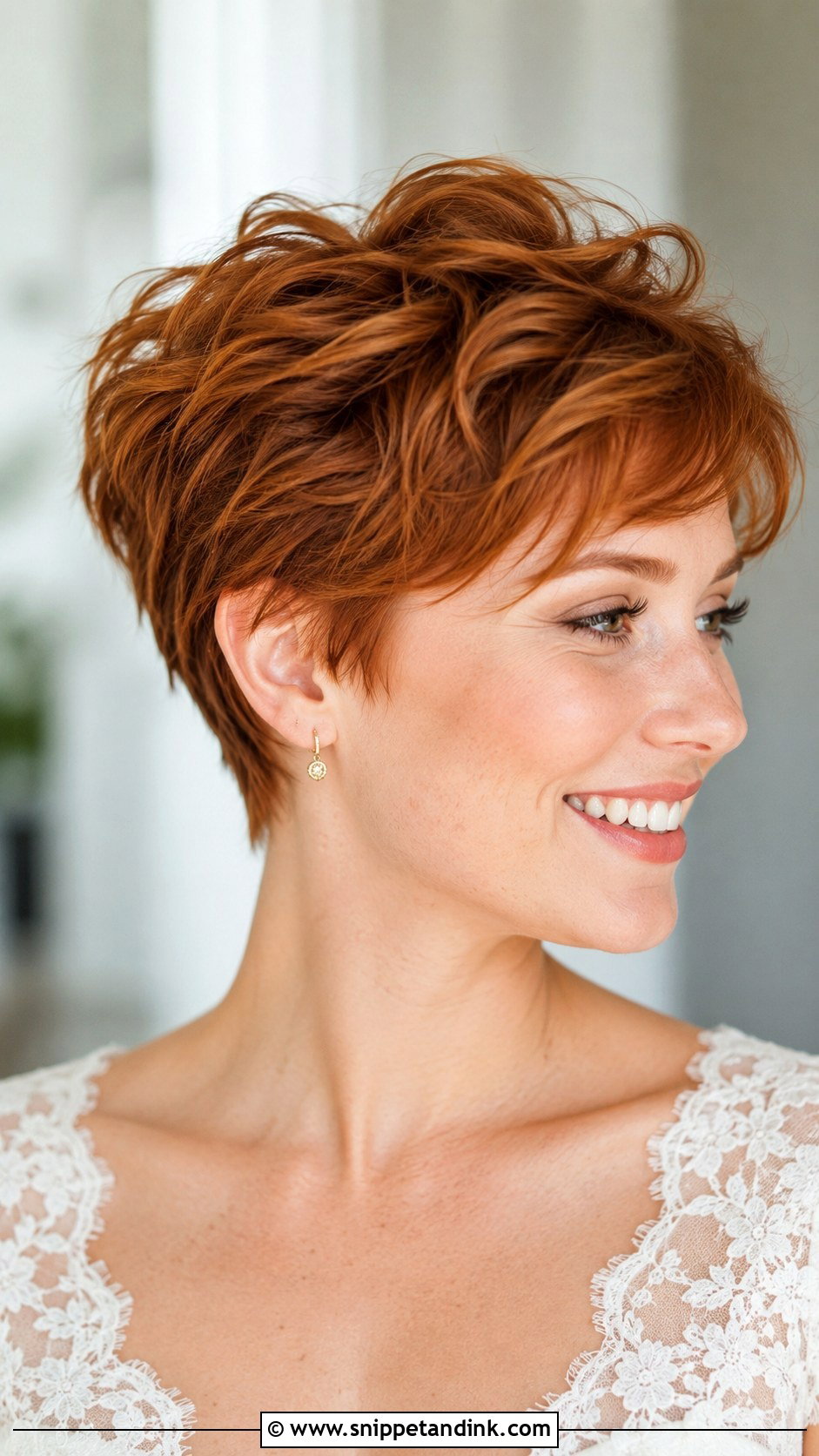
Texture is forgiving, which is why I like it for outdoor weddings, where wind and humidity would ruin a sleek finish. Instead of polishing every piece, I bend the top layers with a small flat iron in random directions, then pinch the ends with a little wax. The finish should look like it moved on its own. Sweep the front slightly to one side to give the face a frame. It’s a good match for boho dresses and garden settings, and a bad match for a very formal ballroom, where it can read underdressed.
4. Pixie Wedding Hair With Headband
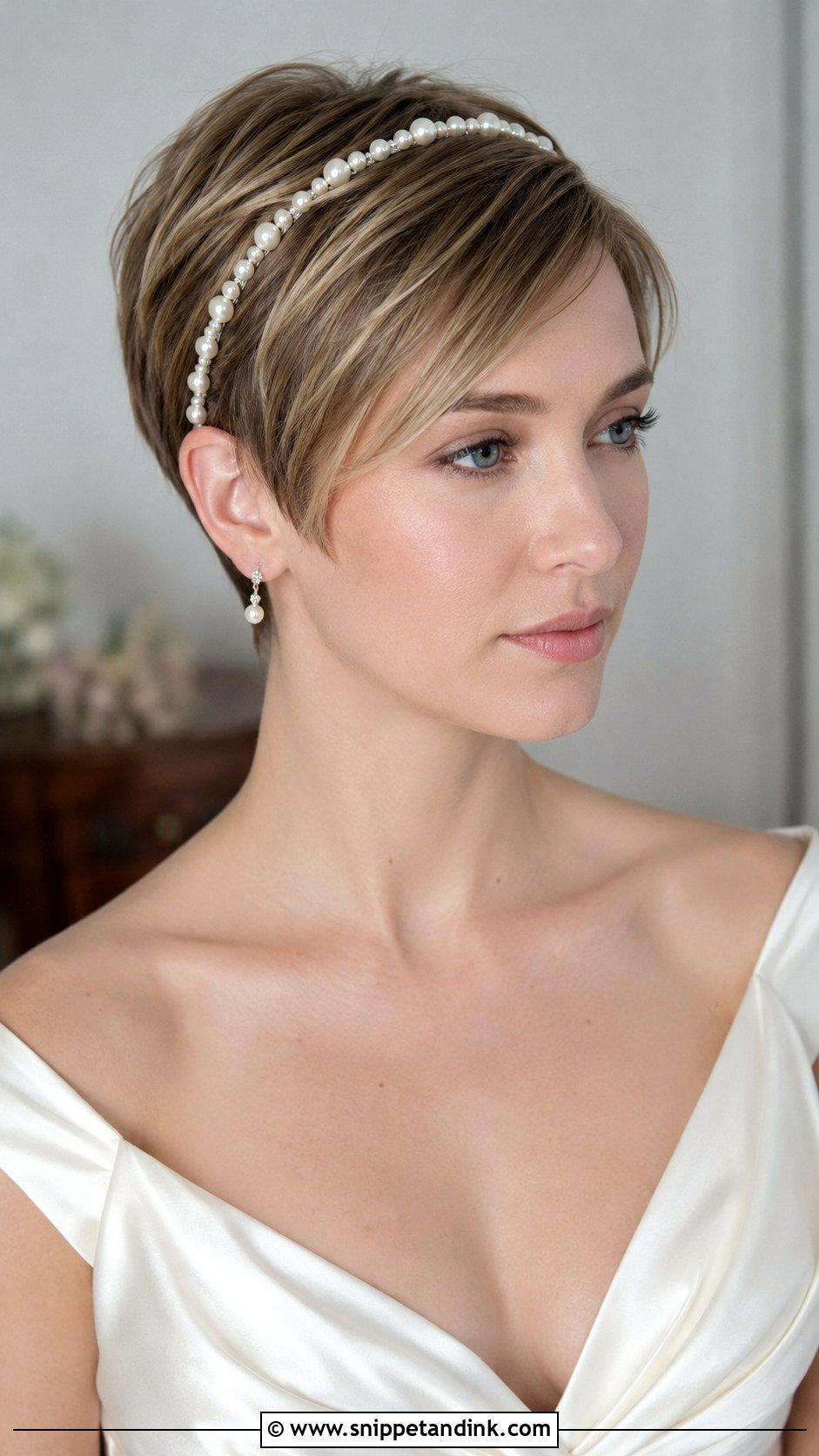
If you want one accessory that will not move all day, a headband is it. A headband adds structure and sparkle without needing any length to pin into, because it grips behind the ears instead. Pearls read classic, crystal reads evening, satin reads soft. I place it about an inch behind the hairline so the front stays visible, and if there are bangs I let them fall naturally underneath. Check the inner tips at your trial: a band that pinches behind the ear for an hour will give you a headache by the reception.
5. Pixie Wedding Hair With Veil
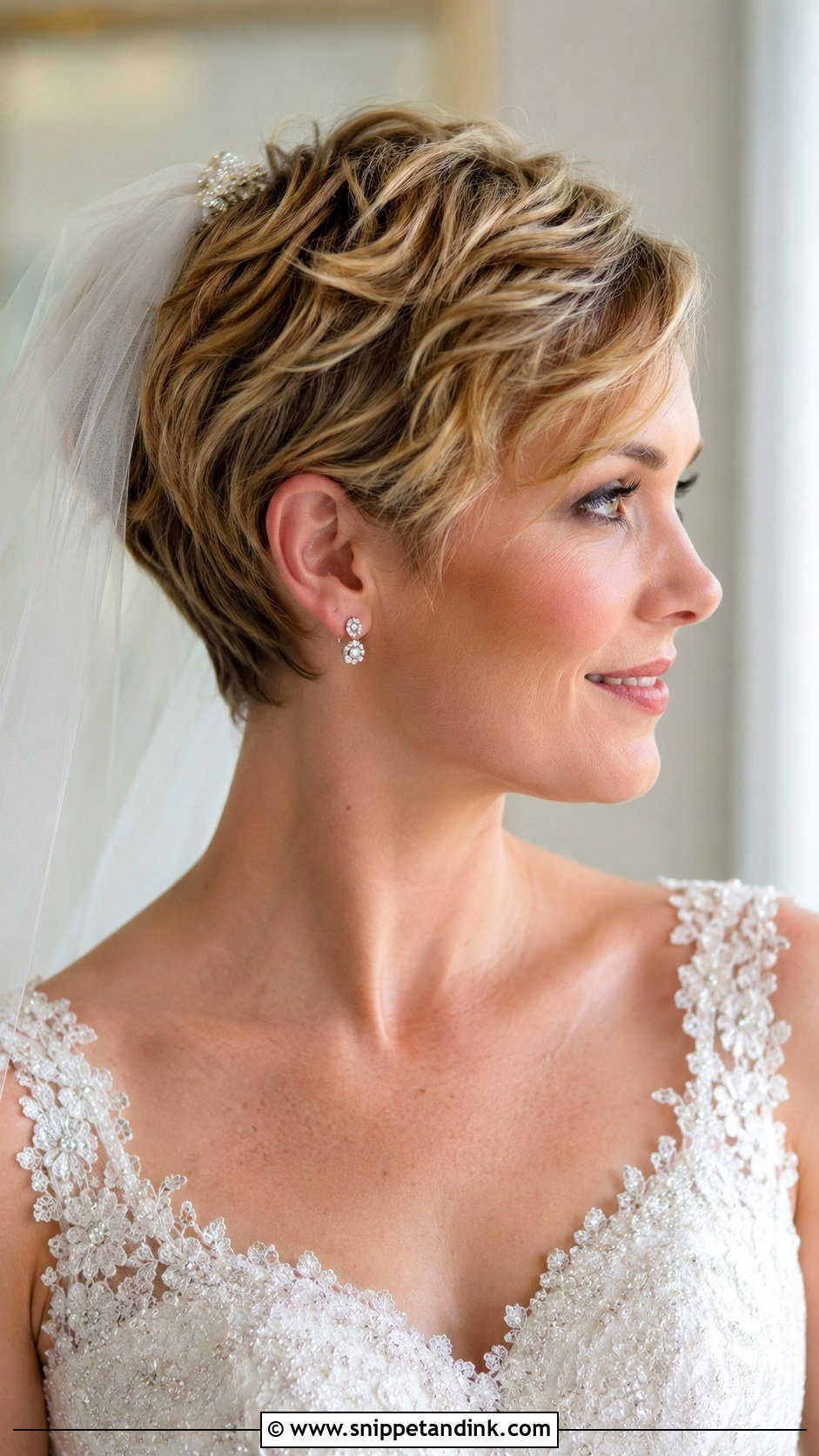
Short hair has less to grip, so the veil’s attachment matters more than its length. I tease a small section at the crown to make a base, slide in the comb, then lock it with two crossed pins. If the hair is too short for that, the veil goes on a decorative headpiece instead. A birdcage veil suits short hair especially well because its comb is small and it sits at the side; fingertip and chapel lengths are heavier and pull backward as you walk. Keep the top smooth where the comb goes in, and test the weight at your trial.
6. Pixie Wedding Hair With Side Part
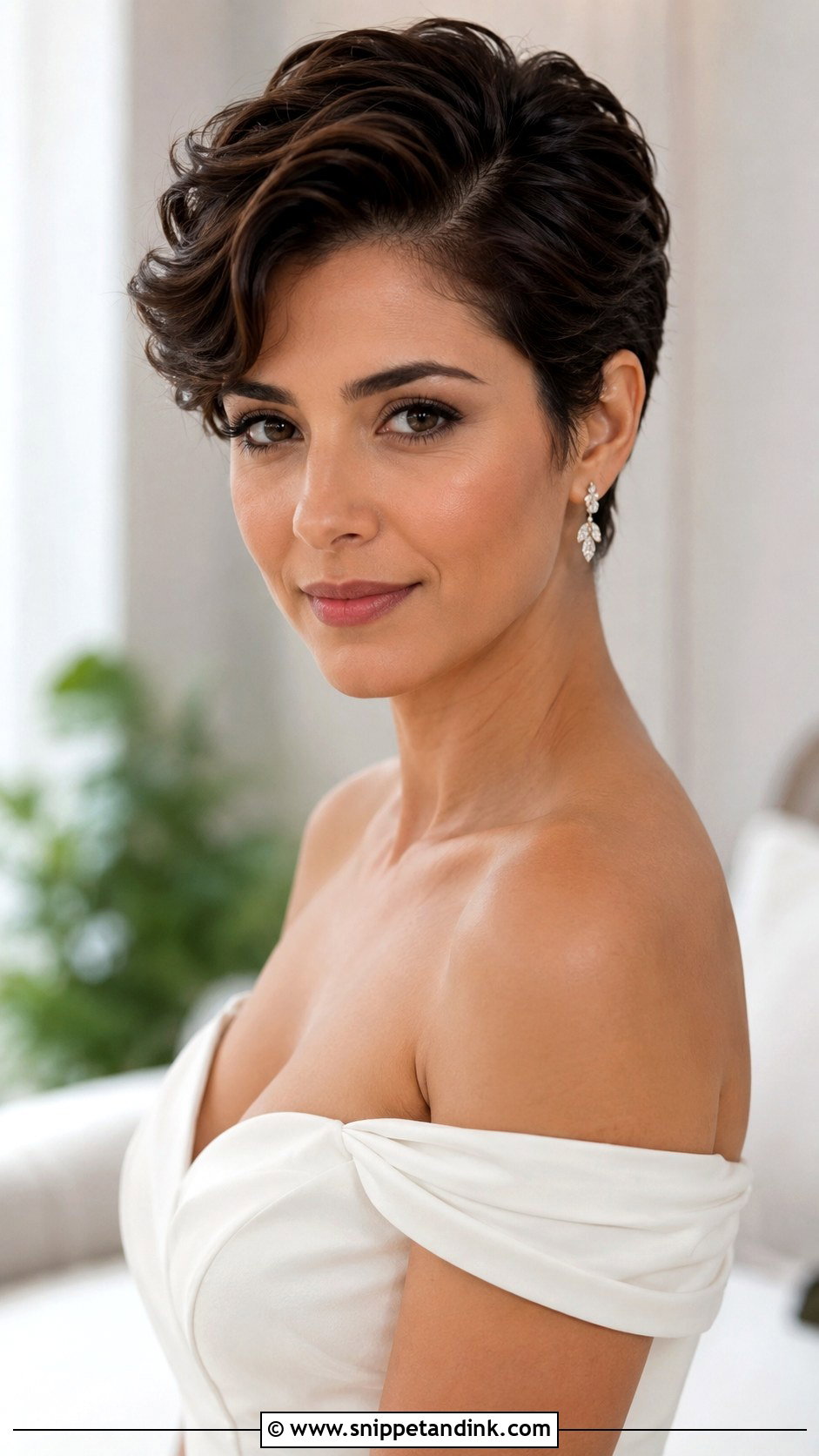
Changing where the part sits is the simplest edit you can make to a short cut. A deep part creates a sweep that frames the eyes and balances a one-shoulder dress nicely; a softer part looks more natural. Before I commit to one side, I watch where your hair falls on its own after blow-drying, because a part that fights a cowlick drifts back within hours. Tucking the shorter side behind the ear shows off earrings. A tiny floral pin adds detail if you want it, but the shape alone often does the job.
7. Wavy Pixie Wedding Hair
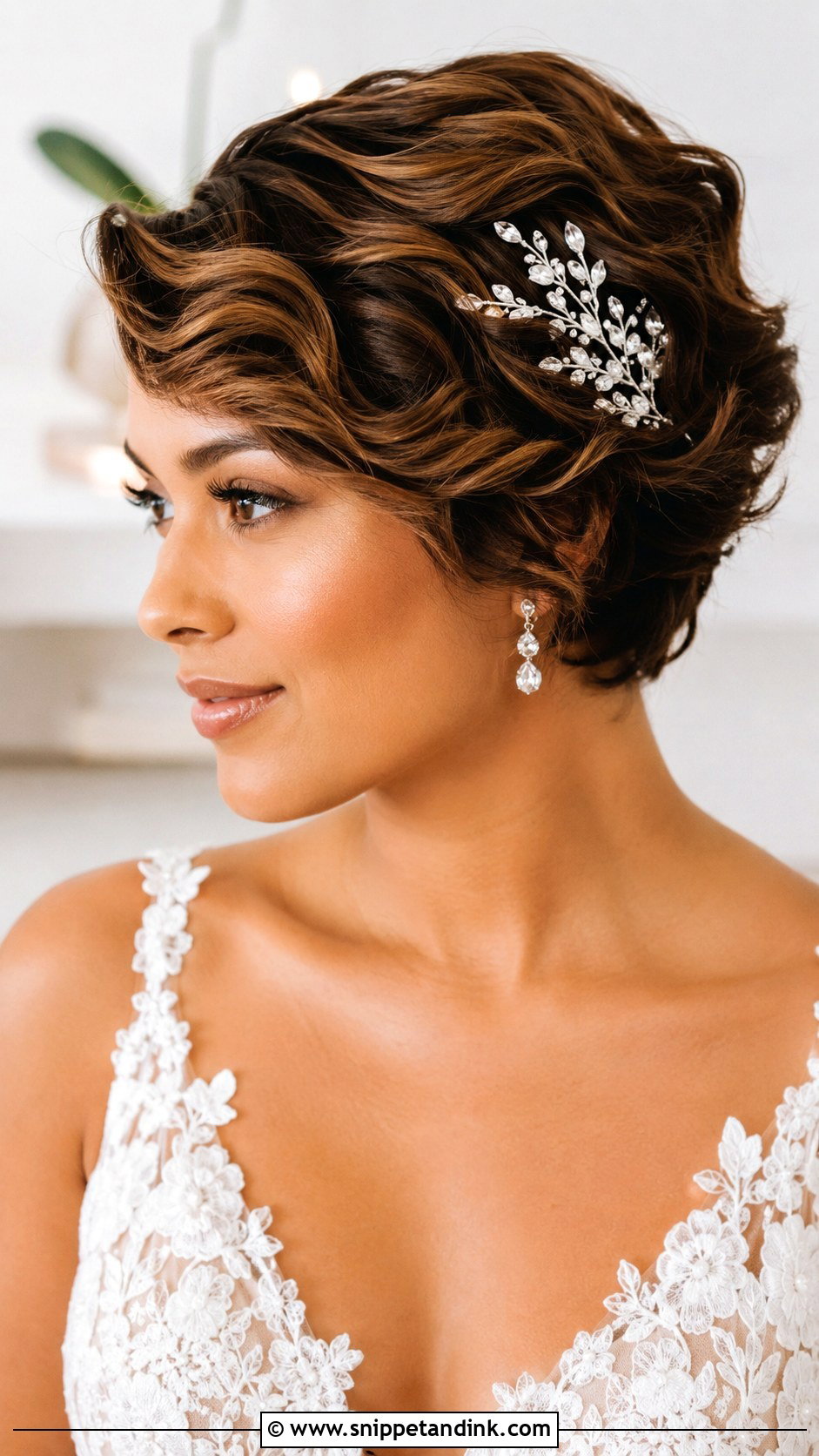
Waves need a bit of length, so they work best on a longer pixie or a bixie. I wave only the top sections with a small iron and smooth the sides flat, so the outline stays neat. Wavy pixie wedding hair sits naturally with lace, sheer sleeves and relaxed silhouettes. The mistake I see most is overdoing it: every section curled the same way turns into a uniform ripple that looks like a wig. Alternate directions, brush gently through once, and finish with flexible spray rather than a firm hold. A small comb at the temple is optional.
8. Pixie Wedding Hair With Flowers
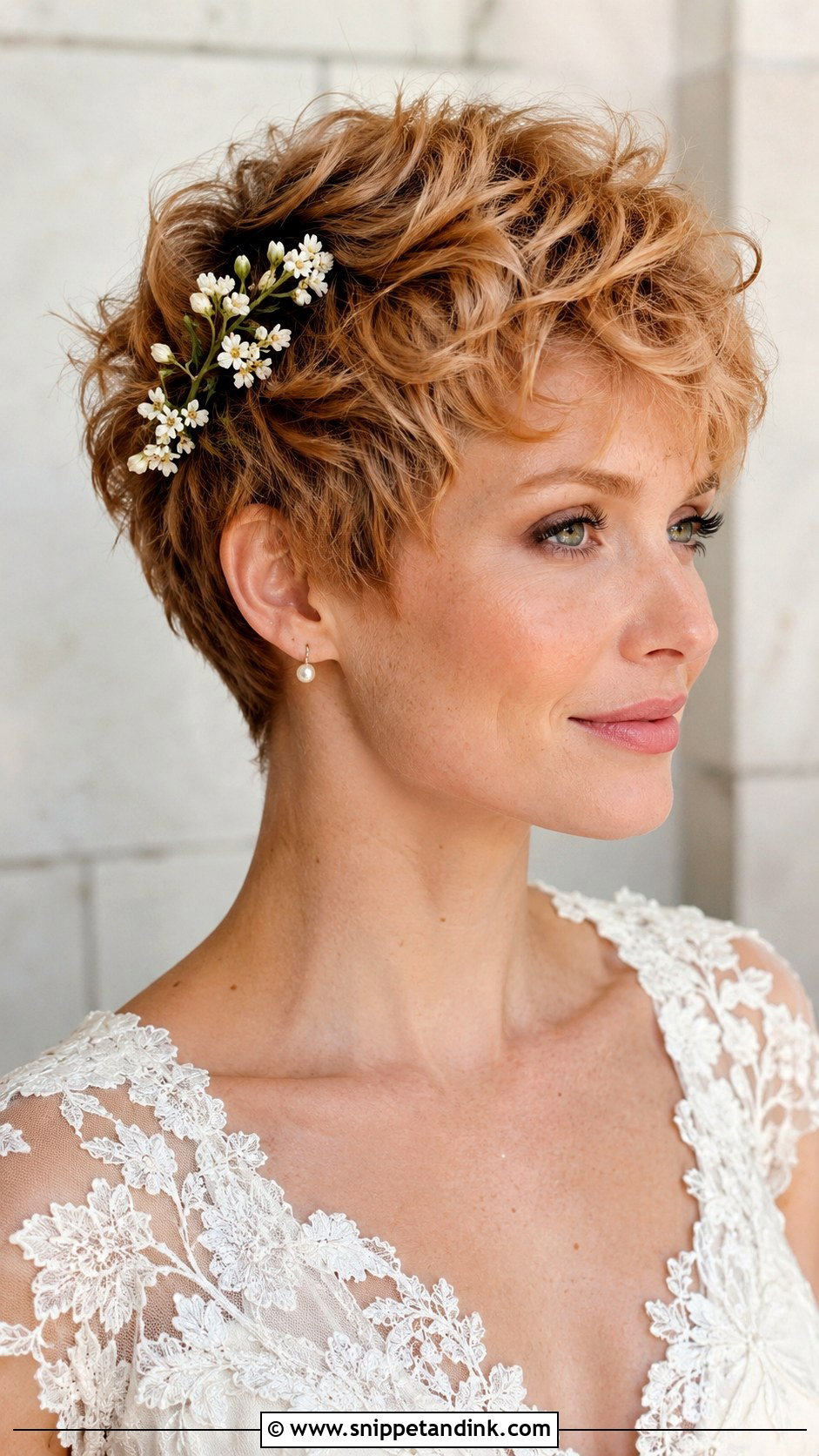
Scale is everything with flowers on short hair. Baby’s breath, wax flowers, tiny spray roses and small dried blooms sit well; a single large peony on a pixie looks like it’s about to fall off. I pin them along one side or tuck them near the crown, into texture rather than onto sleek hair, because a smooth surface gives the stems nothing to hold. Ask your florist to wire the blooms individually so they can be placed flat. Dried flowers are worth considering in summer heat. Fresh ones start to droop against a warm scalp within a few hours.
9. Vintage Pixie Wedding Hair
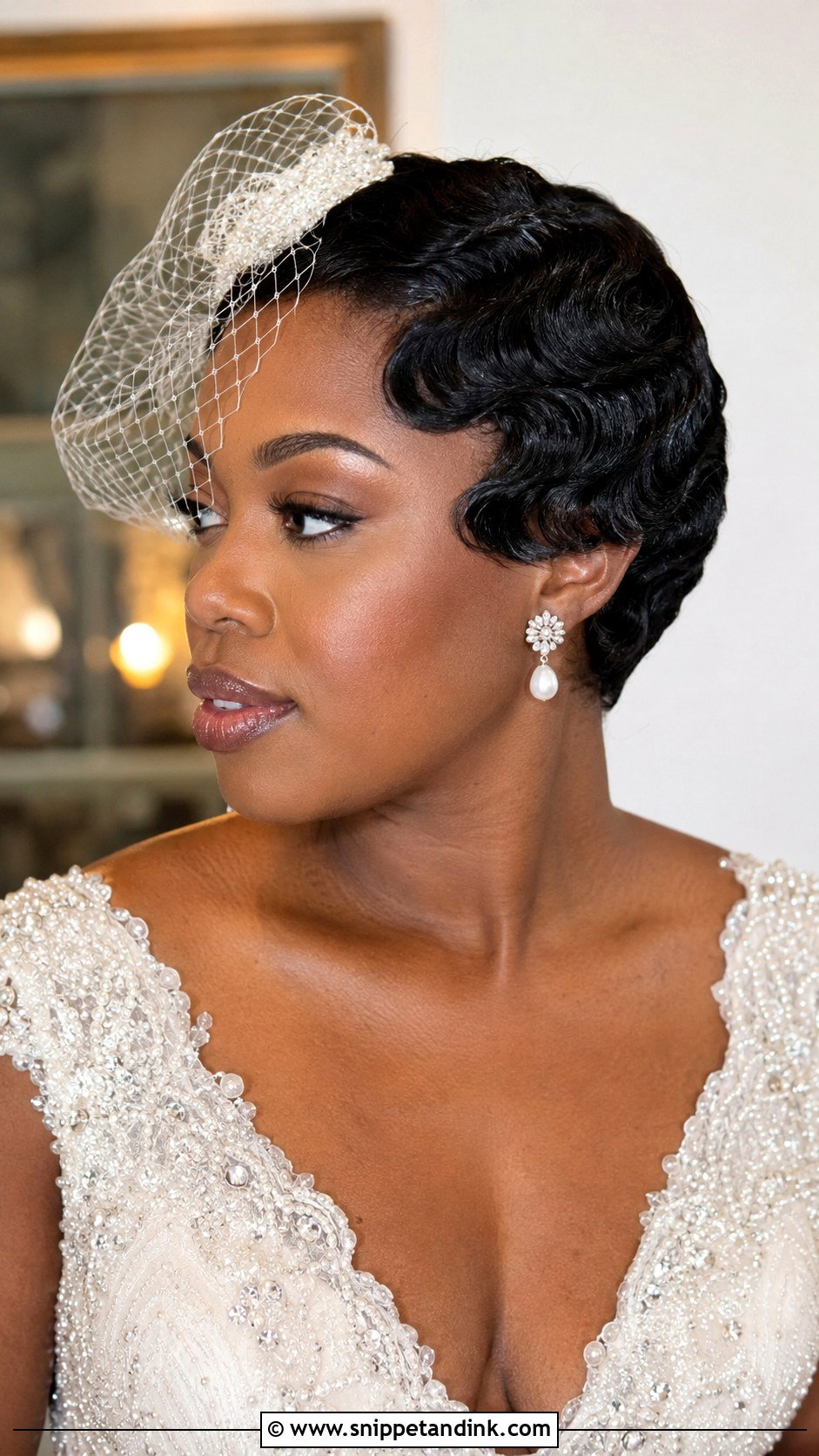
Old Hollywood polish translates surprisingly well to a pixie because the waves sit close to the head anyway. Finger waves are set wet: setting lotion, a fine comb to push each ridge into place, and clips holding it until it dries completely. Rush the drying and the pattern falls out before the ceremony. Sculpted sides and a high shine finish it. I’d keep accessories to one small pearl clip or a birdcage veil, because the wave pattern is the detail. Very coarse hair can struggle to lie flat enough for this.
10. Messy Pixie Wedding Hair
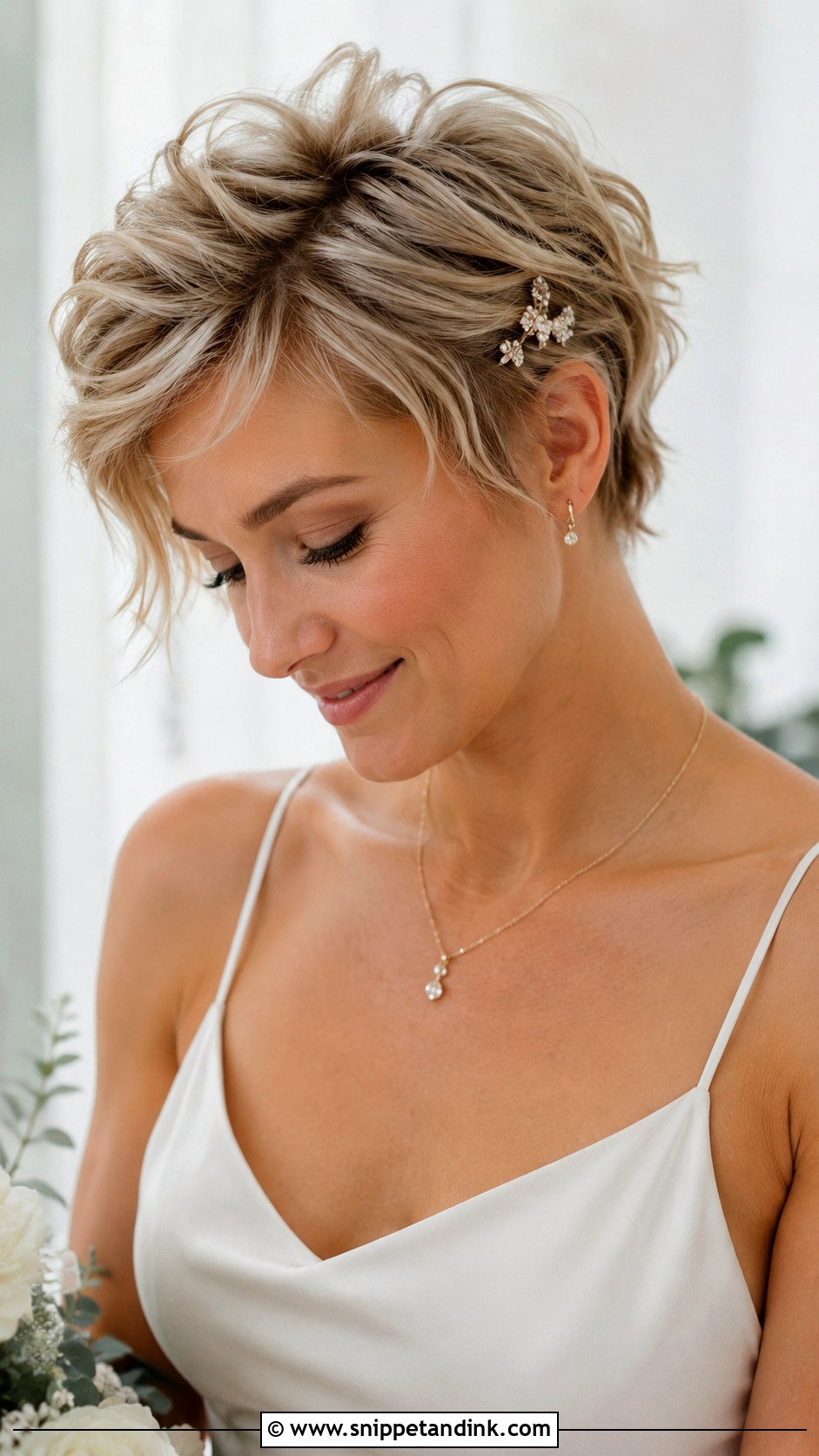
Messy is harder to do than it looks. Real messy hair has random directions and uneven lengths; styled messy has volume and separation that’s controlled at the edges so it doesn’t tip into unwashed. I lift the top with a blow-dryer, work light pomade through with fingers, and keep the sides neat so there’s a clear shape. It suits elopements, beach ceremonies and simple dresses. If your cut is very blunt, this look won’t come through, because it relies on layers to separate.
11. Pixie Wedding Hair With Long Bangs
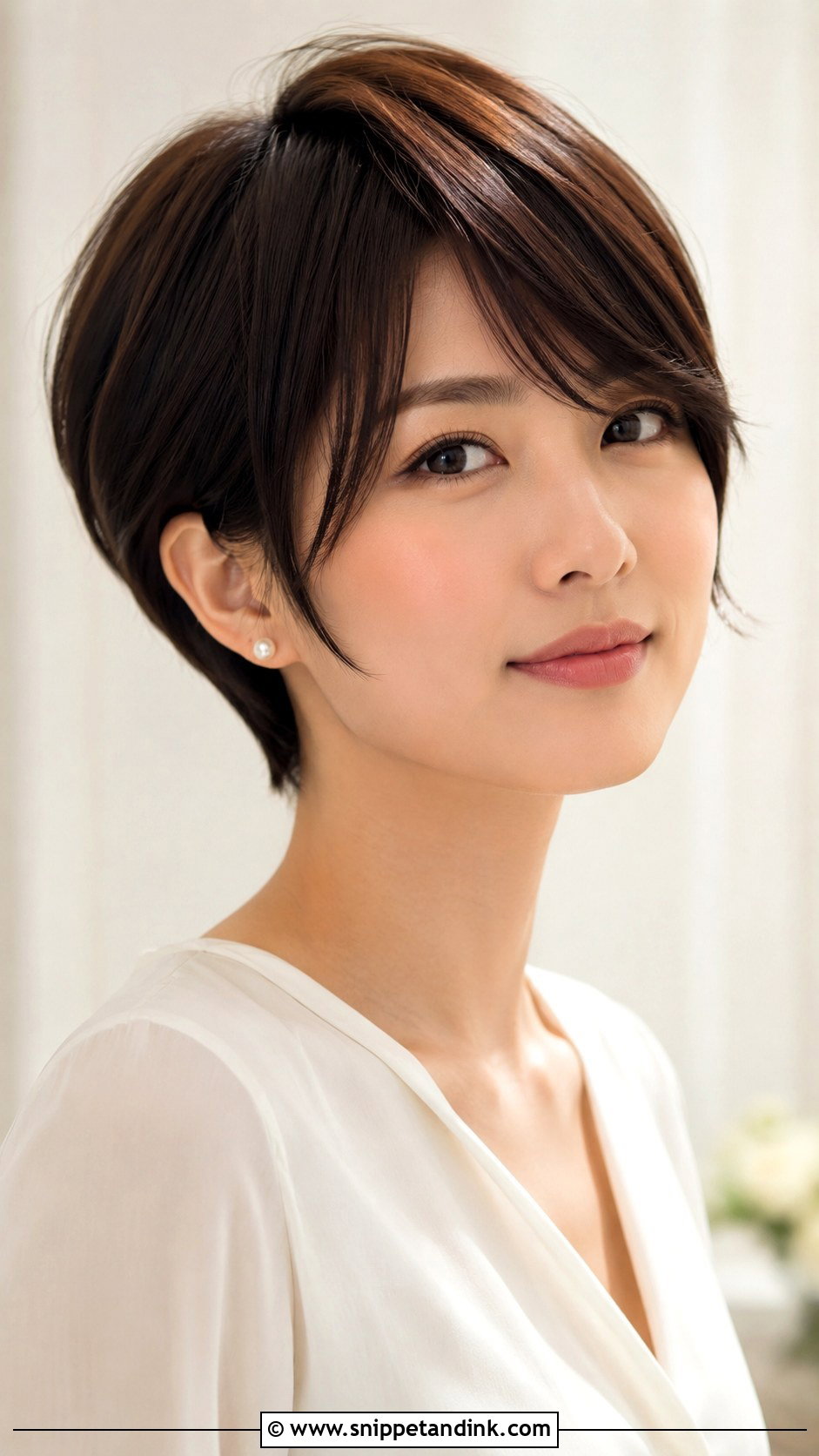
A pixie with long bangs has the most versatile front of any short cut, and the part most likely to cause trouble on the day. Swept to one side they frame the cheekbones; waved lightly they soften a strong jaw. The catch is that they fall forward when you look down at your vows or your ring. I set the sweep with a round brush while drying and put a tiny clear pin under the front section if the bride wants insurance. A touch of shine spray, held at arm’s length, keeps the fringe from looking dry under the lights.
12. Pixie Wedding Hair With Crown
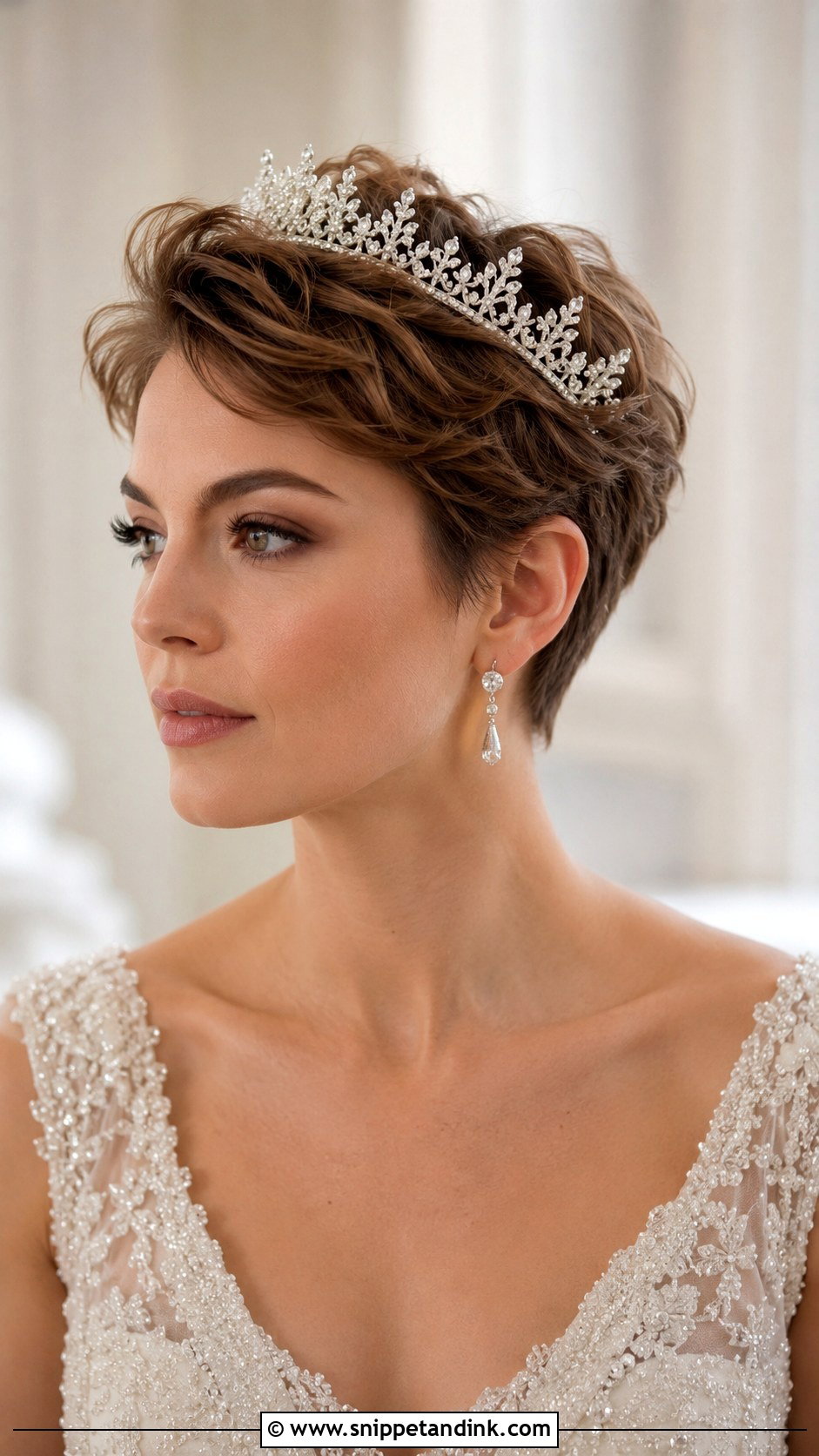
A crown on a pixie looks deliberate and regal, and it’s honestly easier to secure than on long hair. With less hair underneath, the crown sits right against the head. I keep the sides smooth and lift the crown area slightly so the piece has something to rest on and doesn’t look sunk in. It belongs with formal settings: cathedral veils, ball gowns, a ballroom. If the crown is detailed, skip every other hair accessory. Watch where its ends sit at the temples; they can press uncomfortably after a few hours if the fit is tight.
13. Curly Pixie Wedding Hair
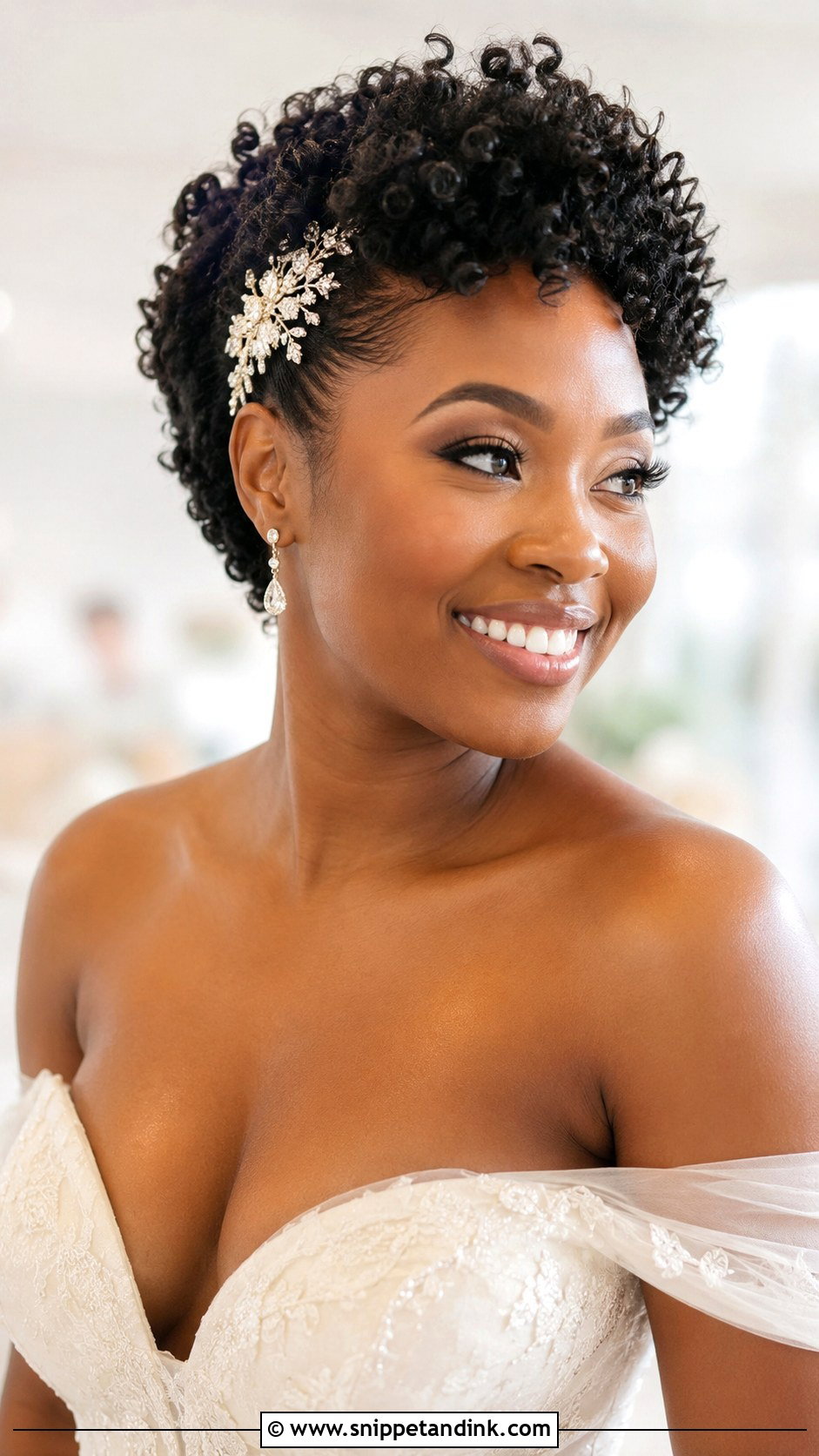
Natural curls on a short cut look their best when they’re left to do their own thing, with definition added rather than pattern changed. Cream, gel or mousse goes in on soaking wet hair, then I diffuse on low and don’t touch until fully dry. Brushing dry curls creates frizz, so all separating happens with fingertips. Shape the volume where it flatters: often at the crown and sides rather than at the back. One jeweled clip above an ear opens up the face. It sits nicely with off-the-shoulder necklines and a soft veil.
14. Pixie Wedding Hair With Pearl Pins
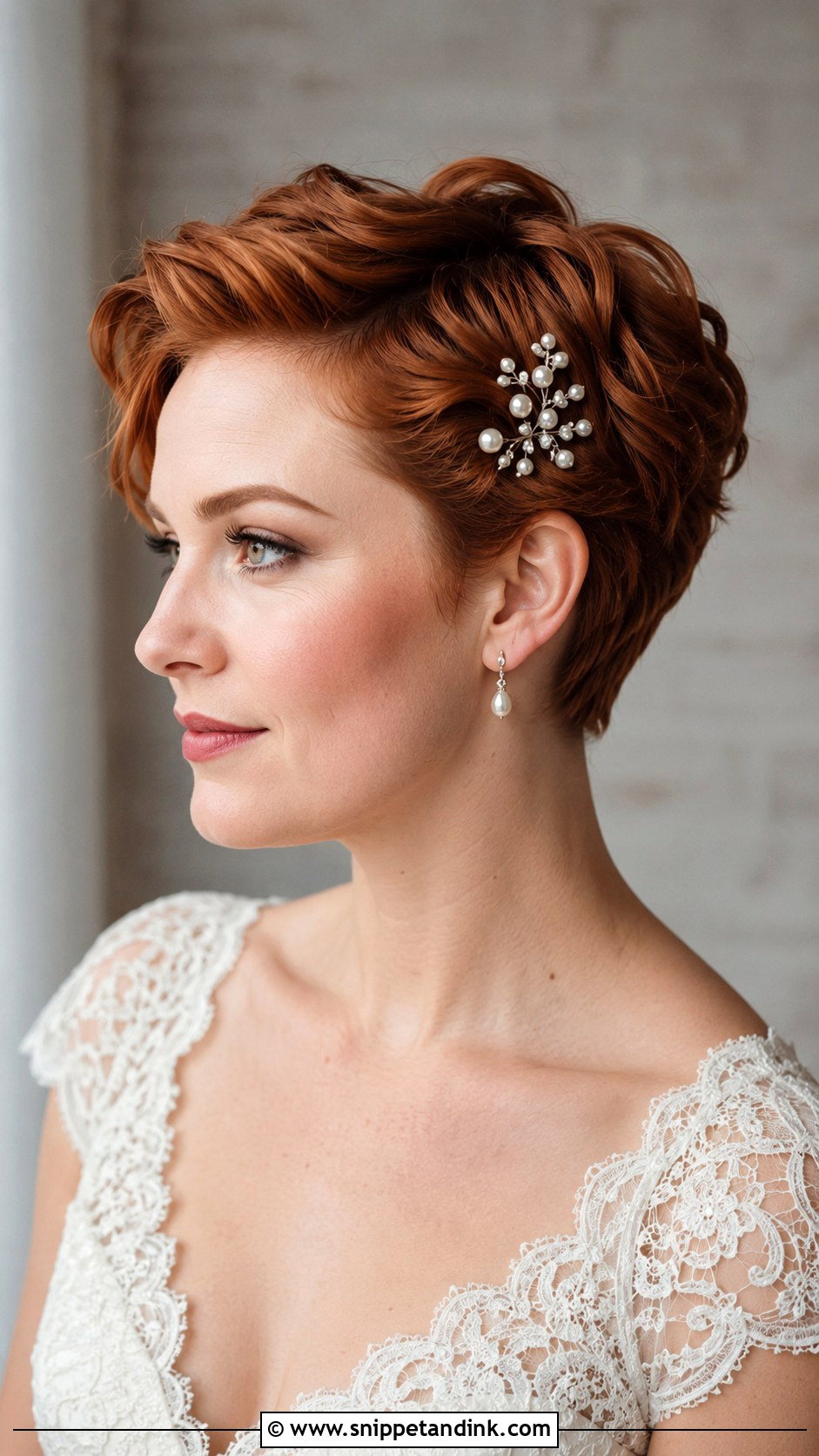
Pearl pins are the accessory I hand most often to brides with short hair, because they work on every texture and can be repositioned in seconds. Three to five pins grouped above the ear or along the part look intentional. Scatter more than that across a pixie and the haircut starts to disappear behind them. Pins with a slight bend hold better in short hair than straight ones. They show up in close-ups more than in wide shots, so they’re a good choice if you want detail without changing the overall outline.
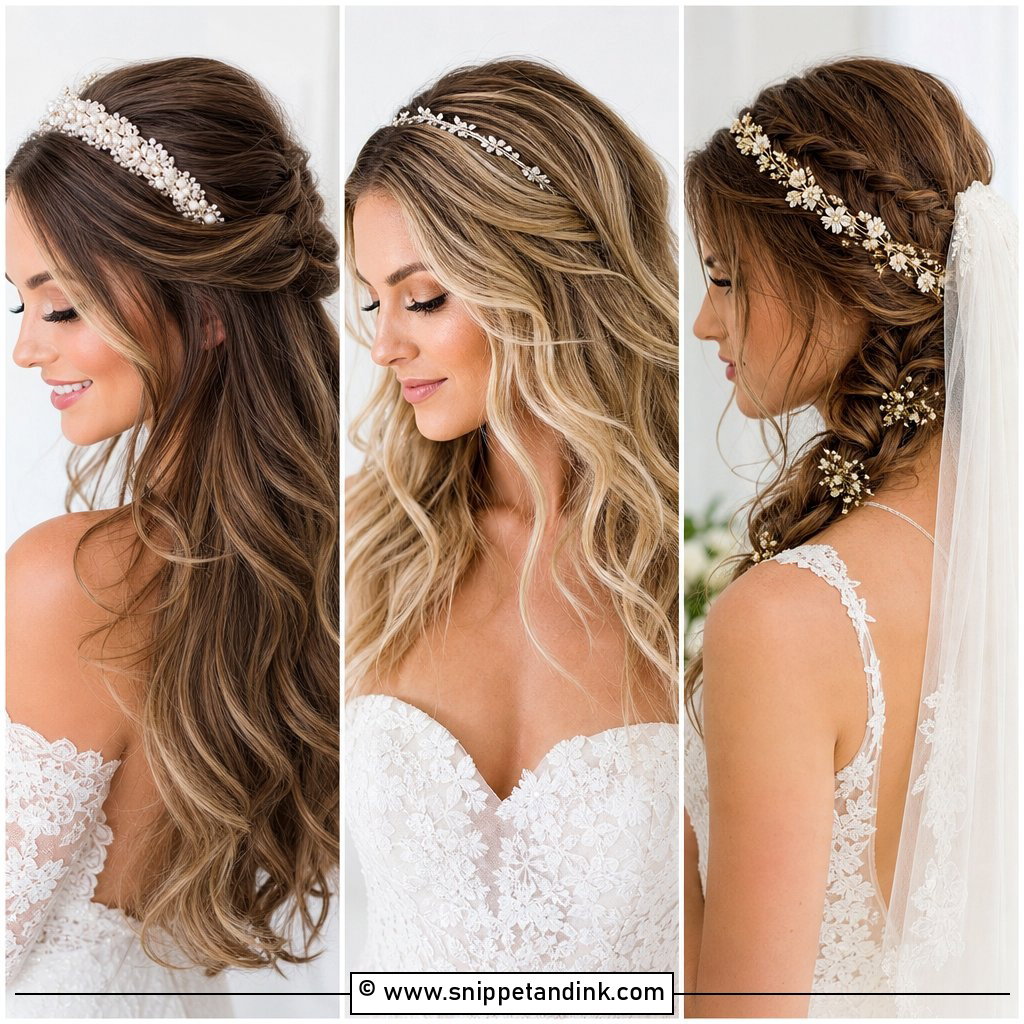
15. Bixie Wedding Hair
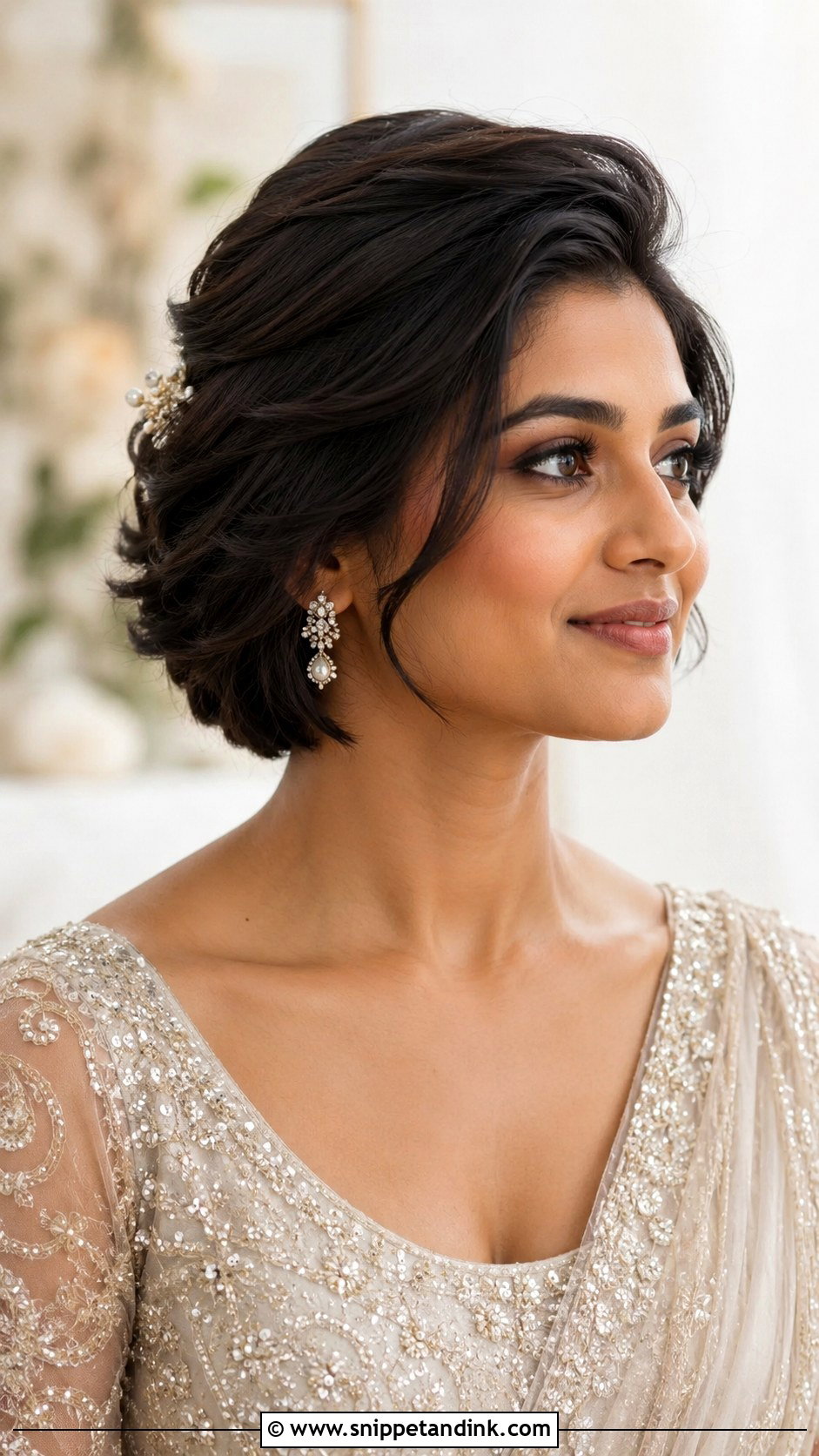
A bixie is where many brides land after growing out a pixie, and it’s a very practical length for a wedding. Bixie wedding hair sits between a bob and a pixie, so combs, veils and pins all have enough hair to grip, which removes most of the accessory headaches short hair brings. I’ll often wave the ends and tuck the sides behind the ears to show the jawline. If you’re mid grow-out, have the shape refined two or three weeks before, so the ends look soft rather than freshly blunted.
Pixies in a Bridal Party Full of Updos
When a bridesmaid or the mother of the bride has a pixie and everyone else is wearing a low bun, she often worries she’ll look like she skipped the hair appointment. She won’t, if the finish matches the group. Pick up one element the others share. If the updos are sleek, go sleek. If the bridesmaids have loose, textured buns, give the pixie soft texture. Matching the accessory, the same pearl pin or the same small flower, ties her in faster than anything else.
For guests, the rule is lighter: keep the shine controlled, avoid anything that reads like a bridal headpiece, and choose one detail at most. A slim velvet band or a single crystal pin is plenty.
What the Camera Notices on Short Hair
Photographs reveal things a mirror misses, especially on short cuts. Backlighting at an outdoor ceremony turns every flyaway at the nape and crown into a bright halo, so I smooth those with a little cream on a toothbrush before the bride walks out. Flash bounces off scalp along a deep part, which is why I add a touch of root powder or dry shampoo there on fine hair. And with no hair covering them, ears and the back of the neck are in a lot of portraits, which is worth remembering when you plan your skin prep and earrings.
Nowhere to Hide on a Wedding Pixie
What separates a good wedding pixie from an ordinary one is mostly the finish: the right product in the right amount, a part that sits with your hair rather than against it, and an accessory scaled to the length. Do a trial with your dress or at least the neckline, your earrings and anything going in your hair. Have someone photograph you from behind and from both sides, since those are the views you never see. Then get the cut refreshed one to two weeks before, and the shape will be at its best on the day.
You'll Like These Ideas:


Leave a Reply